EP2131517A2 - Method and apparatus for improving HARQ uplink transmission - Google Patents
Method and apparatus for improving HARQ uplink transmission Download PDFInfo
- Publication number
- EP2131517A2 EP2131517A2 EP09007312A EP09007312A EP2131517A2 EP 2131517 A2 EP2131517 A2 EP 2131517A2 EP 09007312 A EP09007312 A EP 09007312A EP 09007312 A EP09007312 A EP 09007312A EP 2131517 A2 EP2131517 A2 EP 2131517A2
- Authority
- EP
- European Patent Office
- Prior art keywords
- uplink
- harq
- time alignment
- alignment timer
- random access
- Prior art date
- Legal status (The legal status is an assumption and is not a legal conclusion. Google has not performed a legal analysis and makes no representation as to the accuracy of the status listed.)
- Withdrawn
Links
Images



Classifications
-
- H—ELECTRICITY
- H04—ELECTRIC COMMUNICATION TECHNIQUE
- H04W—WIRELESS COMMUNICATION NETWORKS
- H04W72/00—Local resource management
- H04W72/04—Wireless resource allocation
- H04W72/11—Semi-persistent scheduling
-
- H—ELECTRICITY
- H04—ELECTRIC COMMUNICATION TECHNIQUE
- H04L—TRANSMISSION OF DIGITAL INFORMATION, e.g. TELEGRAPHIC COMMUNICATION
- H04L1/00—Arrangements for detecting or preventing errors in the information received
- H04L1/12—Arrangements for detecting or preventing errors in the information received by using return channel
- H04L1/16—Arrangements for detecting or preventing errors in the information received by using return channel in which the return channel carries supervisory signals, e.g. repetition request signals
- H04L1/18—Automatic repetition systems, e.g. Van Duuren systems
- H04L1/1867—Arrangements specially adapted for the transmitter end
- H04L1/1874—Buffer management
-
- H—ELECTRICITY
- H04—ELECTRIC COMMUNICATION TECHNIQUE
- H04L—TRANSMISSION OF DIGITAL INFORMATION, e.g. TELEGRAPHIC COMMUNICATION
- H04L1/00—Arrangements for detecting or preventing errors in the information received
- H04L1/12—Arrangements for detecting or preventing errors in the information received by using return channel
- H04L1/16—Arrangements for detecting or preventing errors in the information received by using return channel in which the return channel carries supervisory signals, e.g. repetition request signals
- H04L1/18—Automatic repetition systems, e.g. Van Duuren systems
- H04L1/1867—Arrangements specially adapted for the transmitter end
- H04L1/1887—Scheduling and prioritising arrangements
-
- H—ELECTRICITY
- H04—ELECTRIC COMMUNICATION TECHNIQUE
- H04W—WIRELESS COMMUNICATION NETWORKS
- H04W56/00—Synchronisation arrangements
- H04W56/004—Synchronisation arrangements compensating for timing error of reception due to propagation delay
- H04W56/0045—Synchronisation arrangements compensating for timing error of reception due to propagation delay compensating for timing error by altering transmission time
-
- H—ELECTRICITY
- H04—ELECTRIC COMMUNICATION TECHNIQUE
- H04W—WIRELESS COMMUNICATION NETWORKS
- H04W72/00—Local resource management
- H04W72/20—Control channels or signalling for resource management
- H04W72/23—Control channels or signalling for resource management in the downlink direction of a wireless link, i.e. towards a terminal
- H04W72/231—Control channels or signalling for resource management in the downlink direction of a wireless link, i.e. towards a terminal the control data signalling from the layers above the physical layer, e.g. RRC or MAC-CE signalling
-
- H—ELECTRICITY
- H04—ELECTRIC COMMUNICATION TECHNIQUE
- H04W—WIRELESS COMMUNICATION NETWORKS
- H04W76/00—Connection management
- H04W76/30—Connection release
- H04W76/38—Connection release triggered by timers
-
- H—ELECTRICITY
- H04—ELECTRIC COMMUNICATION TECHNIQUE
- H04W—WIRELESS COMMUNICATION NETWORKS
- H04W72/00—Local resource management
-
- H—ELECTRICITY
- H04—ELECTRIC COMMUNICATION TECHNIQUE
- H04W—WIRELESS COMMUNICATION NETWORKS
- H04W72/00—Local resource management
- H04W72/20—Control channels or signalling for resource management
- H04W72/23—Control channels or signalling for resource management in the downlink direction of a wireless link, i.e. towards a terminal
-
- H—ELECTRICITY
- H04—ELECTRIC COMMUNICATION TECHNIQUE
- H04W—WIRELESS COMMUNICATION NETWORKS
- H04W88/00—Devices specially adapted for wireless communication networks, e.g. terminals, base stations or access point devices
- H04W88/02—Terminal devices
Definitions
- the present invention relates to a method and apparatus for improving uplink transmission of Hybrid Automatic Repeat Request (HARQ) processes in a user equipment (UE) of a wireless communication system according to the pre-characterizing clauses of claims 1 and 8.
- HARQ Hybrid Automatic Repeat Request
- LTE system Long Term Evolution wireless communication system
- MAC Medium Access Control
- RLC Radio Link Control
- a user equipment In LTE system, a user equipment (UE) needs to be synchronized with a serving base station, i.e. the serving Node B, on uplink timing to prevent signals transmitted from the UE from colliding with those sent from other UEs under the coverage of the base station.
- a Time Alignment Timer of the UE is utilized for indicating whether the UE is synchronized with the base station on uplink timing. When the Time Alignment timer is running, uplink timing is considered synchronized. If the Time Alignment timer expires, then this indicates that the UE no longer has uplink synchronization with the base station.
- a Timing Alignment Command is transmitted by the base station to update a Timing Advance value of the UE for maintenance of uplink time alignment. Definition of the Timing Advance value can be referred in related specifications, and is not given herein.
- the Timing Alignment Command is carried in a Timing Advance MAC Control Element for transmission. Otherwise, the Timing Alignment Command is transmitted through a Random Access Response message of a random access procedure.
- the UE shall start or restart the Time Alignment timer. Detailed operations about how the UE maintains the uplink time alignment is described in the following.
- the UE when a Timing Advance MAC Control Element is received, the UE shall apply the carried Timing Alignment Command unconditionally, and starts or restarts the Time Alignment timer.
- the Timing Alignment Command is received in a Random Access Response message, then the UE determines whether a Random Access Preamble and a Physical Random Access Channel (PRACH) resource used by the Random Access procedure are explicitly signaled by the base station. That is to say, the UE determines whether the random access procedure is Contention-based or Non-contention-based. If the random access procedure is Non-contention-based, the UE directly applies the Timing Alignment Command carried in the Random Access Response message, and starts or restarts the Time Alignment timer.
- PRACH Physical Random Access Channel
- the UE applies the Timing Alignment Command carried in the Random Access Response message, and starts or restarts the Time Alignment timer. If the Time Alignment timer is running, which implies previous Timing Alignment information is still valid, the UE then ignores the received Timing Alignment Command.
- the UE Under situations that the Time Alignment timer is not running or has expired, prior to any uplink transmission, the UE shall use the Random Access Procedure to obtain Timing Alignment information in order to obtain uplink time alignment. This indicates the UE should not perform any uplink transmission when the uplink timing of the UE is not synchronized with the base station.
- a Buffer Status Reporting may be triggered to provide the serving Node B with information about the amount of data in uplink buffers of the UE.
- a Scheduling Request (SR) procedure shall be triggered to request the network to allocate uplink transmission resource.
- PUCCH Physical Uplink Control Channel
- the SR procedure is performed via PUCCH signaling. Otherwise, the SR procedure is performed via the Random Access Procedure.
- the Random Access Procedure is triggered.
- the uplink timing of the UE may still be synchronized with the base station, i.e., the Time Alignment timer is still running.
- the Timing Alignment Command received in the Random Access Response message would be ignored.
- the Time Alignment timer expires after reception of the Random Access Response message, since the UE cannot update the Timing Advance value according to the latest received Timing Alignment Command, the uplink timing of the UE becomes non-synchronized.
- a Hybrid Automatic Repeat Request (HARQ) entity of the UE upon reception of the uplink grant, a Hybrid Automatic Repeat Request (HARQ) entity of the UE will instruct a corresponding HARQ process to generate a transmission of a transport block.
- HARQ Hybrid Automatic Repeat Request
- the network does not allocate uplink grants for each retransmission of the transport block, non-adaptive retransmission can be preformed based on the previously allocated uplink grant.
- the UE may still perform uplink transmission or retransmission in non-synchronized state, which causes interference to uplink transmissions from other UEs.
- the Time Alignment timer expires after the uplink grant is allocated, e.g. the UE misses the Timing Advance MAC Control Element transmitted by the base station. Since the uplink timing alignment information cannot be updated promptly, uplink transmission may be performed in non-synchronized state, causing system malfunction.
- the present invention aims at providing a method and apparatus for improving HARQ uplink transmission in a UE of a wireless communications system, so as to avoid system malfunction.
- the claimed method for improving Hybrid Automatic Repeat Request (HARQ) uplink transmission in a user equipment (UE) of a wireless communication system includes steps of instructing an HARQ process to perform transmission or retransmission of a transport block according to an uplink (UL) grant allocated to the UE by an HARQ entity of the UE; and flushing all HARQ buffers for uplink transmission in the HARQ entity when a Time Alignment Timer of the UE expires.
- UL uplink
- FIG.1 illustrates a schematic diagram of a wireless communications system 10.
- the wireless communications system 10 is preferred to be an LTE (long-term evolution) system, and is briefly composed of a network and a plurality of user equipments (UEs).
- the network and the UEs are simply utilized for illustrating the structure of the wireless communications system 10.
- the network may comprise a plurality of base stations (Node Bs), radio network controllers and so on according to actual demands, and the UEs can be devices such as mobile phones, computer systems, etc.
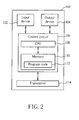
- FIG.2 is a functional block diagram of a communications device 100 in a wireless communications system.
- the communications device 100 can be utilized for realizing the UEs in FIG .1 , and the wireless communications system is preferably the LTE system.
- FIG.2 only shows an input device 102, an output device 104, a control circuit 106, a central processing unit (CPU) 108, a memory 110, a program code 112, and a transceiver 114 of the communications device 100.
- the control circuit 106 executes the program code 112 in the memory 110 through the CPU 108, thereby controlling an operation of the communications device 100.
- the communications device 100 can receive signals input by a user through the input device 102, such as a keyboard, and can output images and sounds through the output device 104, such as a monitor or speakers.
- the transceiver 114 is used to receive and transmit wireless signals, delivering received signals to the control circuit 106, and outputting signals generated by the control circuit 106 wirelessly. From a perspective of a communications protocol framework, the transceiver 114 can be seen as a portion of Layer 1, and the control circuit 106 can be utilized to realize functions of Layer 2 and Layer 3.
- FIG.3 is a diagram of the program code 112 shown in FIG.2 .
- the program code 112 includes an application layer 200, a Layer 3 202, and a Layer 2 206, and is coupled to a Layer 1 218.
- the Layer 3 202 performs radio resource control.
- the Layer 2 206 comprises a Radio Link Control (RLC) layer and a Medium Access Control (MAC) layer, and performs link control.
- the Layer 1 218 performs physical connections.
- RLC Radio Link Control
- MAC Medium Access Control
- the MAC layer performs a Random Access procedure and Hybrid Automatic Repeat Request (HARQ) processes for transmission of MAC transport blocks, i.e. MAC protocol data units (MAC PDUs).
- HARQ Hybrid Automatic Repeat Request
- MAC PDUs MAC protocol data units
- Each HARQ process is associated with an HARQ buffer, used for data storage of the HARQ process, respectively.
- the MAC layer utilizes a Time Alignment Timer for indicating whether the UE is synchronized with the base station on uplink timing. When the Time Alignment timer is running, uplink timing is considered synchronized. Conversely, if the Time Alignment timer expires, then this indicates that the UE no longer has uplink synchronization with the base station.
- the embodiment of the present invention provides an uplink transmission improving program code 220 for improving uplink transmission of the HARQ processes to avoid system malfunction.
- FIG.4 illustrates a schematic diagram of a process 40.
- the process 40 is utilized for improving HARQ uplink transmission in a UE of the wireless communications system 10, and can be compiled into the uplink transmission improving program code 220.
- the process 40 includes the following steps:
- the HARQ entity of the UE instructs an HARQ process to perform transmission or retransmission of a transport block according to an UL grant allocated to the UE. Then, the UE flushes all HARQ buffers for uplink transmission in the HARQ entity when the Time Alignment Timer of the UE expires. Consequently, the embodiment of the present invention can prevent the HARQ processes of the UE from performing uplink transmission in a non-synchronized state, and thus avoids interference to uplink transmissions from other UEs.
- a Buffer Status Reporting (BSR) when triggered by the event that the UE has new uplink data to transmit, if no uplink grant is available, a Scheduling Request (SR) procedure is further triggered to request the network to allocate uplink transmission resource.
- BSR Buffer Status Reporting
- SR Scheduling Request
- the SR procedure is performed via a Random Access Procedure.
- the Random Access procedure is a Contention-based random access procedure
- the UE when the Time Alignment timer is running, the UE shall ignore the Timing Alignment Command received in the Random Access Response message.
- the HARQ entity of the UE would instruct an HARQ process to transmit or retransmit a transport block including message 3 of the random access procedure (i.e. a MAC PDU for Contention Resolution) according to the uplink grant carried by the Random Access Response message.
- a transport block including message 3 of the random access procedure i.e. a MAC PDU for Contention Resolution
- the embodiment of the present invention flushes all HARQ buffers for uplink transmission in the HARQ entity upon expiration of the Time Alignment timer, so that uplink transmission of the UE in the non-synchronization state can be terminated. Consequently, signals transmitted from the UE can be prevented from colliding with those sent from other UEs under the coverage of the base station.
- the above embodiment is merely an exemplary illustration of the present invention.
- the process 30 of the present invention can also be applied to other cases of HARQ uplink transmissions, such as the uplink grant is transmitted via Physical Downlink Control Channel (PDCCH) signaling, which also belongs to the scope of the present invention.
- PDCCH Physical Downlink Control Channel
- the embodiment of the present invention flushes all HARQ buffers for uplink transmission in the HARQ entity upon expiration of the Time Alignment timer, so that uplink transmission of the UE in the non-synchronization state can be terminated. Consequently, the signals transmitted from the UE can be prevented from colliding with those sent from other UEs under the coverage of the base station.
Landscapes
- Engineering & Computer Science (AREA)
- Computer Networks & Wireless Communication (AREA)
- Signal Processing (AREA)
- Mobile Radio Communication Systems (AREA)
- Communication Control (AREA)
- Detection And Prevention Of Errors In Transmission (AREA)
Abstract
Description
- The present invention relates to a method and apparatus for improving uplink transmission of Hybrid Automatic Repeat Request (HARQ) processes in a user equipment (UE) of a wireless communication system according to the pre-characterizing clauses of
claims 1 and 8. - Long Term Evolution wireless communication system (LTE system), an advanced high-speed wireless communication system established upon the 3G mobile telecommunication system, supports only packet-switched transmission, and tends to implement both Medium Access Control (MAC) layer and Radio Link Control (RLC) layer in one single communication site, such as in base stations (Node Bs) alone rather than in Node Bs and RNC (Radio Network Controller) respectively, so that the system structure becomes simple.
- In LTE system, a user equipment (UE) needs to be synchronized with a serving base station, i.e. the serving Node B, on uplink timing to prevent signals transmitted from the UE from colliding with those sent from other UEs under the coverage of the base station. A Time Alignment Timer of the UE is utilized for indicating whether the UE is synchronized with the base station on uplink timing. When the Time Alignment timer is running, uplink timing is considered synchronized. If the Time Alignment timer expires, then this indicates that the UE no longer has uplink synchronization with the base station. Besides, a Timing Alignment Command is transmitted by the base station to update a Timing Advance value of the UE for maintenance of uplink time alignment. Definition of the Timing Advance value can be referred in related specifications, and is not given herein.
- In general, if the UE has established connection with the base station, the Timing Alignment Command is carried in a Timing Advance MAC Control Element for transmission. Otherwise, the Timing Alignment Command is transmitted through a Random Access Response message of a random access procedure. In addition, whenever the Timing Advance value is updated, the UE shall start or restart the Time Alignment timer. Detailed operations about how the UE maintains the uplink time alignment is described in the following.
- According to the current specifications, when a Timing Advance MAC Control Element is received, the UE shall apply the carried Timing Alignment Command unconditionally, and starts or restarts the Time Alignment timer. However, if the Timing Alignment Command is received in a Random Access Response message, then the UE determines whether a Random Access Preamble and a Physical Random Access Channel (PRACH) resource used by the Random Access procedure are explicitly signaled by the base station. That is to say, the UE determines whether the random access procedure is Contention-based or Non-contention-based. If the random access procedure is Non-contention-based, the UE directly applies the Timing Alignment Command carried in the Random Access Response message, and starts or restarts the Time Alignment timer.
- Conversely, if the random access procedure is Contention-based, only when the Time Alignment timer is not running or has expired, i.e., uplink timing of the UE is not synchronized, the UE applies the Timing Alignment Command carried in the Random Access Response message, and starts or restarts the Time Alignment timer. If the Time Alignment timer is running, which implies previous Timing Alignment information is still valid, the UE then ignores the received Timing Alignment Command.
- Under situations that the Time Alignment timer is not running or has expired, prior to any uplink transmission, the UE shall use the Random Access Procedure to obtain Timing Alignment information in order to obtain uplink time alignment. This indicates the UE should not perform any uplink transmission when the uplink timing of the UE is not synchronized with the base station.
- In the prior art, when the UE has new uplink data to transmit, a Buffer Status Reporting (BSR) may be triggered to provide the serving Node B with information about the amount of data in uplink buffers of the UE. If no uplink grant is available, a Scheduling Request (SR) procedure shall be triggered to request the network to allocate uplink transmission resource. In such a situation, if the UE has configured Physical Uplink Control Channel (PUCCH) resource, the SR procedure is performed via PUCCH signaling. Otherwise, the SR procedure is performed via the Random Access Procedure.
- In other words, when the UE has new uplink data to transmit but has no PUCCH resource for the SR procedure, the Random Access Procedure is triggered. At this time, the uplink timing of the UE may still be synchronized with the base station, i.e., the Time Alignment timer is still running. Under this situation, based on the above operation, the Timing Alignment Command received in the Random Access Response message would be ignored. However, if the Time Alignment timer expires after reception of the Random Access Response message, since the UE cannot update the Timing Advance value according to the latest received Timing Alignment Command, the uplink timing of the UE becomes non-synchronized. Consequently, even though uplink grant has been allocated to the UE, transmission (or retransmission) of a
message 3 of the Random Access procedure is not allowed since uplink transmission in non-synchronized state may result in system malfunction, e.g. cause interference to uplink transmissions from other UEs. - More specifically, according to the current MAC specification, upon reception of the uplink grant, a Hybrid Automatic Repeat Request (HARQ) entity of the UE will instruct a corresponding HARQ process to generate a transmission of a transport block. Even though the network does not allocate uplink grants for each retransmission of the transport block, non-adaptive retransmission can be preformed based on the previously allocated uplink grant. Thus, in the above case that the Time Alignment timer expires after reception of the Random Access Response message, the UE may still perform uplink transmission or retransmission in non-synchronized state, which causes interference to uplink transmissions from other UEs.
- Besides, for uplink transmission in normal connected mode, it is also possible that the Time Alignment timer expires after the uplink grant is allocated, e.g. the UE misses the Timing Advance MAC Control Element transmitted by the base station. Since the uplink timing alignment information cannot be updated promptly, uplink transmission may be performed in non-synchronized state, causing system malfunction.
- This in mind, the present invention aims at providing a method and apparatus for improving HARQ uplink transmission in a UE of a wireless communications system, so as to avoid system malfunction.
- This is achieved by a method and apparatus for improving Hybrid Automatic Repeat Request (HARQ) uplink transmission in a user equipment (UE) of a wireless communication system according to the pre-characterizing clauses of
claims 1 and 8. The dependent claims pertain to corresponding further developments and improvements. - As will be seen more clearly from the detailed description following below, the claimed method for improving Hybrid Automatic Repeat Request (HARQ) uplink transmission in a user equipment (UE) of a wireless communication system includes steps of instructing an HARQ process to perform transmission or retransmission of a transport block according to an uplink (UL) grant allocated to the UE by an HARQ entity of the UE; and flushing all HARQ buffers for uplink transmission in the HARQ entity when a Time Alignment Timer of the UE expires.
- In the following, the invention is further illustrated by way of example, taking reference to the accompanying drawings. Thereof
-
FIG.1 is a schematic diagram of a wireless communications system. -
FIG.2 is a function block diagram of a wireless communications device. -
FIG.3 is a diagram of program code ofFIG.2 . -
FIG.4 is a flowchart of a process according to an embodiment of the present invention. - Please refer to
FIG.1 , which illustrates a schematic diagram of awireless communications system 10. Thewireless communications system 10 is preferred to be an LTE (long-term evolution) system, and is briefly composed of a network and a plurality of user equipments (UEs). InFIG.1 , the network and the UEs are simply utilized for illustrating the structure of thewireless communications system 10. Practically, the network may comprise a plurality of base stations (Node Bs), radio network controllers and so on according to actual demands, and the UEs can be devices such as mobile phones, computer systems, etc. - Please refer to
FIG.2 , which is a functional block diagram of acommunications device 100 in a wireless communications system. Thecommunications device 100 can be utilized for realizing the UEs inFIG .1 , and the wireless communications system is preferably the LTE system. For the sake of brevity,FIG.2 only shows aninput device 102, anoutput device 104, acontrol circuit 106, a central processing unit (CPU) 108, amemory 110, aprogram code 112, and atransceiver 114 of thecommunications device 100. In thecommunications device 100, thecontrol circuit 106 executes theprogram code 112 in thememory 110 through theCPU 108, thereby controlling an operation of thecommunications device 100. Thecommunications device 100 can receive signals input by a user through theinput device 102, such as a keyboard, and can output images and sounds through theoutput device 104, such as a monitor or speakers. Thetransceiver 114 is used to receive and transmit wireless signals, delivering received signals to thecontrol circuit 106, and outputting signals generated by thecontrol circuit 106 wirelessly. From a perspective of a communications protocol framework, thetransceiver 114 can be seen as a portion ofLayer 1, and thecontrol circuit 106 can be utilized to realize functions ofLayer 2 andLayer 3. - Please continue to refer to
FIG.3. FIG.3 is a diagram of theprogram code 112 shown inFIG.2 . Theprogram code 112 includes anapplication layer 200, aLayer 3 202, and aLayer 2 206, and is coupled to aLayer 1 218. TheLayer 3 202 performs radio resource control. TheLayer 2 206 comprises a Radio Link Control (RLC) layer and a Medium Access Control (MAC) layer, and performs link control. TheLayer 1 218 performs physical connections. - In the LTE system, the MAC layer performs a Random Access procedure and Hybrid Automatic Repeat Request (HARQ) processes for transmission of MAC transport blocks, i.e. MAC protocol data units (MAC PDUs). Each HARQ process is associated with an HARQ buffer, used for data storage of the HARQ process, respectively. In addition, the MAC layer utilizes a Time Alignment Timer for indicating whether the UE is synchronized with the base station on uplink timing. When the Time Alignment timer is running, uplink timing is considered synchronized. Conversely, if the Time Alignment timer expires, then this indicates that the UE no longer has uplink synchronization with the base station.
- In such a situation, the embodiment of the present invention provides an uplink transmission improving
program code 220 for improving uplink transmission of the HARQ processes to avoid system malfunction. Please refer toFIG.4 , which illustrates a schematic diagram of aprocess 40. Theprocess 40 is utilized for improving HARQ uplink transmission in a UE of thewireless communications system 10, and can be compiled into the uplink transmission improvingprogram code 220. Theprocess 40 includes the following steps: - Step 400: Start.
- Step 402: Instruct an HARQ process to perform transmission or retransmission of a transport block according to an uplink (UL) grant allocated to the UE by an HARQ entity of the UE.
- Step 404: Flush all HARQ buffers for uplink transmission in the HARQ entity when a Time Alignment Timer of the UE expires.
- Step 406: End.
- According to the
process 40, the HARQ entity of the UE instructs an HARQ process to perform transmission or retransmission of a transport block according to an UL grant allocated to the UE. Then, the UE flushes all HARQ buffers for uplink transmission in the HARQ entity when the Time Alignment Timer of the UE expires. Consequently, the embodiment of the present invention can prevent the HARQ processes of the UE from performing uplink transmission in a non-synchronized state, and thus avoids interference to uplink transmissions from other UEs. - As stated in the prior art, when a Buffer Status Reporting (BSR) is triggered by the event that the UE has new uplink data to transmit, if no uplink grant is available, a Scheduling Request (SR) procedure is further triggered to request the network to allocate uplink transmission resource. In such a situation, if the UE has no configured Physical Uplink Control Channel (PUCCH) resources, the SR procedure is performed via a Random Access Procedure.
- According to the current specification, if the Random Access procedure is a Contention-based random access procedure, when the Time Alignment timer is running, the UE shall ignore the Timing Alignment Command received in the Random Access Response message. In addition, the HARQ entity of the UE would instruct an HARQ process to transmit or retransmit a transport
block including message 3 of the random access procedure (i.e. a MAC PDU for Contention Resolution) according to the uplink grant carried by the Random Access Response message. At this time, even though the network does not allocate any uplink grant for each retransmission of the transport block, non-adaptive retransmission can still be preformed based on the previously allocated uplink grant. - Thus, the embodiment of the present invention flushes all HARQ buffers for uplink transmission in the HARQ entity upon expiration of the Time Alignment timer, so that uplink transmission of the UE in the non-synchronization state can be terminated. Consequently, signals transmitted from the UE can be prevented from colliding with those sent from other UEs under the coverage of the base station.
- Please note that, the above embodiment is merely an exemplary illustration of the present invention. The process 30 of the present invention can also be applied to other cases of HARQ uplink transmissions, such as the uplink grant is transmitted via Physical Downlink Control Channel (PDCCH) signaling, which also belongs to the scope of the present invention.
- In summary, the embodiment of the present invention flushes all HARQ buffers for uplink transmission in the HARQ entity upon expiration of the Time Alignment timer, so that uplink transmission of the UE in the non-synchronization state can be terminated. Consequently, the signals transmitted from the UE can be prevented from colliding with those sent from other UEs under the coverage of the base station.
Claims (14)
- A method for improving Hybrid Automatic Repeat Request, named HARQ hereinafter, uplink transmission in a user equipment, named UE hereinafter, of a wireless communication system, the method comprises:instructing an HARQ process to perform transmission or retransmission of a transport block according to an uplink grant allocated to the UE by an HARQ entity of the UE (402); andcharacterized by flushing all HARQ buffers for uplink transmission in the HARQ entity when a Time Alignment Timer of the UE expires (404).
- The method of claim 1, characterized in that the Time Alignment Timer is utilized for indicating whether the UE is synchronized with a base station of the wireless communication system on uplink timing.
- The method of claim 2, characterized in that expiration of the Time Alignment Timer indicates that the UE is not synchronized with the base station on the uplink timing.
- The method of claim 1, characterized in that the UE starts or restarts the Time Alignment Timer when a Timing Advance value of the UE is configured or updated.
- The method of claim 1, characterized in that the uplink grant is carried by a Random Access Response message or a Physical Downlink Control Channel, named PDCCH hereinafter, signaling.
- The method of claim 5, characterized in that the Random Access Response message is generated by a Contention-based Random Access procedure.
- The method of claim 1, characterized in that the retransmission of the transport block is a non-adaptive retransmission.
- A communication device (100) for improving Hybrid Automatic Repeat Request, named HARQ hereinafter, uplink transmission in a user equipment, named UE hereinafter, of a wireless communication system, the communication device (100) comprising:a processor (108) for executing a program code (112); anda memory (110) coupled to the processor (108) for storing the program code (112); the program code (112) comprises:characterized by flushing all HARQ buffers for uplink transmission in the HARQ entity when a Time Alignment Timer of the UE expires (404).instructing an HARQ process to perform transmission or retransmission of a transport block according to an uplink grant allocated to the UE by an HARQ entity of the UE (402); and
- The communication device (100) of claim 8, characterized in that the Time Alignment Timer is utilized for indicating whether the UE is synchronized with a base station of the wireless communication system on uplink timing.
- The communication device (100) of claim 9, characterized in that expiration of the Time Alignment Timer indicates that the UE is not synchronized with the base station on the uplink timing.
- The communication device (100) of claim 8, characterized in that the Time Alignment Timer is started or re-started when a Timing Advance value of the UE is configured or updated.
- The communication device (100) of claim 8, characterized in that the uplink grant is carried by a Random Access Response message or a Physical Downlink Control Channel, named PDCCH hereinafter, signaling.
- The communication device (100) of claim 12, characterized in that the Random Access Response message is generated by a Contention-based Random Access procedure.
- The communication device (100) of claim 8, characterized in that the retransmission of the transport block is a non-adaptive retransmission.
Applications Claiming Priority (1)
| Application Number | Priority Date | Filing Date | Title |
|---|---|---|---|
| US5821508P | 2008-06-03 | 2008-06-03 |
Publications (2)
| Publication Number | Publication Date |
|---|---|
| EP2131517A2 true EP2131517A2 (en) | 2009-12-09 |
| EP2131517A3 EP2131517A3 (en) | 2010-01-20 |
Family
ID=41077585
Family Applications (2)
| Application Number | Title | Priority Date | Filing Date |
|---|---|---|---|
| EP09007313A Withdrawn EP2131624A1 (en) | 2008-06-03 | 2009-06-02 | Method and apparatus for handling semi-persistent transmission resource |
| EP09007312A Withdrawn EP2131517A3 (en) | 2008-06-03 | 2009-06-02 | Method and apparatus for improving HARQ uplink transmission |
Family Applications Before (1)
| Application Number | Title | Priority Date | Filing Date |
|---|---|---|---|
| EP09007313A Withdrawn EP2131624A1 (en) | 2008-06-03 | 2009-06-02 | Method and apparatus for handling semi-persistent transmission resource |
Country Status (6)
| Country | Link |
|---|---|
| US (2) | US20090300457A1 (en) |
| EP (2) | EP2131624A1 (en) |
| JP (2) | JP2009296588A (en) |
| KR (2) | KR20090126211A (en) |
| CN (2) | CN101599819A (en) |
| TW (2) | TW200952386A (en) |
Cited By (4)
| Publication number | Priority date | Publication date | Assignee | Title |
|---|---|---|---|---|
| CN104041150A (en) * | 2012-12-31 | 2014-09-10 | 华为技术有限公司 | Data transmission method and base station |
| CN102130713B (en) * | 2010-01-18 | 2015-04-01 | 中兴通讯股份有限公司 | Method and device for reporting channel quality indicator in non-continuous receiving mode |
| EP4145943A1 (en) * | 2007-11-05 | 2023-03-08 | Telefonaktiebolaget LM Ericsson (publ) | Improved timing alignment in an lte system |
| US12143226B2 (en) | 2020-02-13 | 2024-11-12 | Lg Electronics Inc. | Method and apparatus for flushing HARQ buffer based on configured grant in wireless communication system |
Families Citing this family (50)
| Publication number | Priority date | Publication date | Assignee | Title |
|---|---|---|---|---|
| CA2690183C (en) * | 2007-06-15 | 2016-08-02 | Sharp Kabushiki Kaisha | Base station device, mobile station device, wireless communication system, program, random access response transmitting method, and random access response receiving method |
| KR101486352B1 (en) * | 2007-06-18 | 2015-01-26 | 엘지전자 주식회사 | Uplink synchronization state control method in a terminal of a wireless communication system |
| EP2144474B1 (en) * | 2007-08-08 | 2012-02-08 | Sharp Kabushiki Kaisha | Method, radio communication system and mobile station device |
| CN101904198A (en) * | 2007-12-21 | 2010-12-01 | 爱立信电话股份有限公司 | Method and arrangement in a mobile telecommunications network |
| KR100925333B1 (en) | 2008-03-14 | 2009-11-04 | 엘지전자 주식회사 | How to perform uplink synchronization during random access |
| GB2461780B (en) | 2008-06-18 | 2011-01-05 | Lg Electronics Inc | Method for detecting failures of random access procedures |
| GB2461159B (en) | 2008-06-18 | 2012-01-04 | Lg Electronics Inc | Method for transmitting Mac PDUs |
| US9271263B2 (en) * | 2008-06-20 | 2016-02-23 | Kyoung Seok Lee | Method of error recovery in transmitting and receiving voice service in packet based mobile communication systems |
| US9094910B2 (en) * | 2008-09-09 | 2015-07-28 | Htc Corporation | Methods utilized in mobile device for handling situations when time alignment timer expires, and mobile device thereof |
| KR100917832B1 (en) | 2008-09-19 | 2009-09-18 | 엘지전자 주식회사 | Signal transmission / reception method considering time alignment timer and user equipment therefor |
| EP3297303B1 (en) * | 2008-09-29 | 2019-11-20 | BlackBerry Limited | Uplink resynchronization for use in communication systems |
| US8750218B2 (en) * | 2008-09-29 | 2014-06-10 | Blackberry Limited | Message processing in communication systems |
| KR100949972B1 (en) | 2009-01-02 | 2010-03-29 | 엘지전자 주식회사 | Random access scheme for user equipment |
| KR101122095B1 (en) * | 2009-01-05 | 2012-03-19 | 엘지전자 주식회사 | Random Access Scheme Preventing from Unnecessary Retransmission, and User Equipment For the Same |
| EP2237633A1 (en) | 2009-04-03 | 2010-10-06 | Panasonic Corporation | Buffer status reporting in a mobile communication system |
| US20100322086A1 (en) * | 2009-06-17 | 2010-12-23 | Motorola, Inc. | Enabling buffer status reports in a communication system |
| KR101623977B1 (en) * | 2009-10-09 | 2016-05-24 | 삼성전자주식회사 | Device and method for transmitting scheduling request in wireless communication system |
| JP5124028B2 (en) * | 2010-01-08 | 2013-01-23 | 創新音▲速▼股▲ふん▼有限公司 | Method and apparatus for processing semi-persistent transmission resources in a wireless communication system |
| CN102123406B (en) * | 2010-01-11 | 2015-10-21 | 中兴通讯股份有限公司 | The maintaining method of multicarrier system up link, Apparatus and system |
| EP2537386B1 (en) * | 2010-02-15 | 2019-09-18 | Telefonaktiebolaget LM Ericsson (publ) | Contention based access optimization |
| US20120314680A1 (en) * | 2010-02-25 | 2012-12-13 | Nokia Corporation | Method and Apparatus for Dynamically Modifying a Semi-Persistent Scheduling Allocation |
| JP4823371B2 (en) * | 2010-03-30 | 2011-11-24 | シャープ株式会社 | Wireless communication system, mobile station apparatus, base station apparatus, wireless communication method, and integrated circuit |
| US9084195B2 (en) | 2010-04-01 | 2015-07-14 | Nokia Technologies Oy | Multiple timing advance and carrier aggregation |
| CN101827439B (en) * | 2010-04-09 | 2013-01-16 | 上海华为技术有限公司 | Time alignment timer adjustment method, and related device and system |
| JP5723012B2 (en) * | 2010-10-04 | 2015-05-27 | テレフオンアクチーボラゲット エル エム エリクソン(パブル) | Method and apparatus in communication system |
| CN101980576B (en) * | 2010-10-19 | 2013-08-28 | 华为技术有限公司 | Random access processing method and user equipment |
| JP5307112B2 (en) * | 2010-12-17 | 2013-10-02 | シャープ株式会社 | Mobile station apparatus, base station apparatus, radio communication system, control method, and integrated circuit |
| WO2013002562A2 (en) * | 2011-06-28 | 2013-01-03 | 엘지전자 주식회사 | Method and apparatus for communication in tdd system |
| WO2013039435A1 (en) * | 2011-09-16 | 2013-03-21 | Telefonaktiebolaget L M Ericsson (Publ) | Improved contention-free random access procedure in wireless networks |
| WO2013157905A1 (en) * | 2012-04-20 | 2013-10-24 | 엘지전자 주식회사 | Method for transceiving signals, and apparatus therefor |
| US9210706B2 (en) * | 2012-09-28 | 2015-12-08 | Acer Incorporated | Mobile communication devices and methods for physical downlink control channel (PDCCH) monitoring |
| US9374200B2 (en) * | 2013-10-11 | 2016-06-21 | Broadcom Corporation | TTI bundling and collision avoidance |
| US9525466B2 (en) * | 2014-04-14 | 2016-12-20 | Lg Electronics Inc. | Method of performing interference cancellation and apparatus therefor |
| JP6532154B2 (en) * | 2015-02-04 | 2019-06-19 | シャープ株式会社 | Mobile station device |
| US10893509B2 (en) | 2015-02-11 | 2021-01-12 | Qualcomm Incorporated | Multiple tri-state HARQ processes |
| JP6587846B2 (en) * | 2015-07-03 | 2019-10-09 | 株式会社Nttドコモ | User device and intermittent reception control method |
| US10433328B2 (en) * | 2015-07-20 | 2019-10-01 | Lg Electronics Inc. | Method for receiving a signal in wireless communication system and a device therefor |
| US10819475B2 (en) * | 2016-08-12 | 2020-10-27 | Qualcomm Incorporated | Uplink semi-persistent scheduling for low latency communications |
| US10230502B2 (en) * | 2017-03-24 | 2019-03-12 | Qualcomm Incorporated | Hybrid automatic repeat request buffer configuration |
| CN108810976B (en) * | 2017-05-05 | 2023-09-29 | 华为技术有限公司 | Method and device for sending data |
| US10721755B2 (en) * | 2017-06-15 | 2020-07-21 | Ofinno, Llc | Grant free for large data size |
| WO2019066558A1 (en) | 2017-09-29 | 2019-04-04 | Lg Electronics Inc. | Method and apparatus for flushing harq buffer in wireless communication system |
| CN110463316B (en) * | 2017-11-01 | 2023-05-12 | Lg电子株式会社 | Method for handling bandwidth part operation in wireless communication system and apparatus therefor |
| KR102249948B1 (en) * | 2018-04-11 | 2021-05-10 | 한국전자통신연구원 | Method for low latency communication in communication system and apparatus for the same |
| US11330538B2 (en) | 2018-05-10 | 2022-05-10 | Apple Inc. | Cellular reporting techniques for synchronization state changes |
| US11956788B2 (en) * | 2018-07-30 | 2024-04-09 | Qualcomm Incorporated | Expiration periods for low latency communications |
| WO2020201959A1 (en) * | 2019-03-29 | 2020-10-08 | JRD Communication (Shenzhen) Ltd. | Controlling hybrid automatic repeat request feedback in sidelink communications in a wireless communications network |
| WO2020202399A1 (en) * | 2019-03-29 | 2020-10-08 | 株式会社Nttドコモ | User equipment, base station apparatus, and communication method |
| US11310833B2 (en) * | 2019-08-29 | 2022-04-19 | Qualcomm, Incorporated | RACH procedure with timing alignment |
| US11889503B2 (en) | 2021-03-26 | 2024-01-30 | Qualcomm Incorporated | UE feedback of non-preferred time-frequency resources |
Family Cites Families (9)
| Publication number | Priority date | Publication date | Assignee | Title |
|---|---|---|---|---|
| EP1465369A1 (en) * | 2003-03-31 | 2004-10-06 | Matsushita Electric Industrial Co., Ltd. | Reset synchronisation method for a retransmission protocol |
| US7643419B2 (en) * | 2004-05-07 | 2010-01-05 | Interdigital Technology Corporation | Method and apparatus for implementing a data lifespan timer for enhanced dedicated channel transmissions |
| US8848618B2 (en) * | 2006-08-22 | 2014-09-30 | Qualcomm Incorporated | Semi-persistent scheduling for traffic spurts in wireless communication |
| US7778151B2 (en) * | 2006-10-03 | 2010-08-17 | Texas Instruments Incorporated | Efficient scheduling request channel for wireless networks |
| PL3002901T3 (en) * | 2007-03-19 | 2018-10-31 | Telefonaktiebolaget Lm Ericsson (Publ) | (h)arq for semi-persistent scheduling |
| JP5044696B2 (en) * | 2007-06-15 | 2012-10-10 | リサーチ イン モーション リミテッド | System and method for semi-persistent and dynamic scheduling and discontinuous reception control |
| US20090086657A1 (en) * | 2007-10-01 | 2009-04-02 | Comsys Communication & Signal Processing Ltd. | Hybrid automatic repeat request buffer flushing mechanism |
| KR101531419B1 (en) * | 2008-02-01 | 2015-06-24 | 엘지전자 주식회사 | Operation Method of Uplink HARQ at Expiration of Time Synchronization Timer |
| US20090268693A1 (en) * | 2008-04-25 | 2009-10-29 | Nokia Corporation | Signaling part of semi-persistent configuration via downlink control channel |
-
2009
- 2009-06-02 EP EP09007313A patent/EP2131624A1/en not_active Withdrawn
- 2009-06-02 EP EP09007312A patent/EP2131517A3/en not_active Withdrawn
- 2009-06-03 KR KR1020090049127A patent/KR20090126211A/en not_active Ceased
- 2009-06-03 JP JP2009134502A patent/JP2009296588A/en not_active Withdrawn
- 2009-06-03 CN CNA2009101453366A patent/CN101599819A/en active Pending
- 2009-06-03 TW TW098118368A patent/TW200952386A/en unknown
- 2009-06-03 CN CNA2009101453385A patent/CN101600259A/en active Pending
- 2009-06-03 KR KR1020090049126A patent/KR20090126210A/en not_active Ceased
- 2009-06-03 JP JP2009134501A patent/JP2009296587A/en not_active Withdrawn
- 2009-06-03 US US12/477,137 patent/US20090300457A1/en not_active Abandoned
- 2009-06-03 US US12/477,143 patent/US20090298524A1/en not_active Abandoned
- 2009-06-03 TW TW098118369A patent/TW200952531A/en unknown
Cited By (6)
| Publication number | Priority date | Publication date | Assignee | Title |
|---|---|---|---|---|
| EP4145943A1 (en) * | 2007-11-05 | 2023-03-08 | Telefonaktiebolaget LM Ericsson (publ) | Improved timing alignment in an lte system |
| CN102130713B (en) * | 2010-01-18 | 2015-04-01 | 中兴通讯股份有限公司 | Method and device for reporting channel quality indicator in non-continuous receiving mode |
| CN104041150A (en) * | 2012-12-31 | 2014-09-10 | 华为技术有限公司 | Data transmission method and base station |
| US9775152B2 (en) | 2012-12-31 | 2017-09-26 | Huawei Technologies Co., Ltd. | Method and base station for data transmission |
| CN104041150B (en) * | 2012-12-31 | 2018-12-25 | 华为技术有限公司 | A data transmission method and base station |
| US12143226B2 (en) | 2020-02-13 | 2024-11-12 | Lg Electronics Inc. | Method and apparatus for flushing HARQ buffer based on configured grant in wireless communication system |
Also Published As
| Publication number | Publication date |
|---|---|
| US20090298524A1 (en) | 2009-12-03 |
| EP2131624A1 (en) | 2009-12-09 |
| US20090300457A1 (en) | 2009-12-03 |
| KR20090126211A (en) | 2009-12-08 |
| JP2009296588A (en) | 2009-12-17 |
| EP2131517A3 (en) | 2010-01-20 |
| CN101600259A (en) | 2009-12-09 |
| CN101599819A (en) | 2009-12-09 |
| TW200952531A (en) | 2009-12-16 |
| KR20090126210A (en) | 2009-12-08 |
| TW200952386A (en) | 2009-12-16 |
| JP2009296587A (en) | 2009-12-17 |
Similar Documents
| Publication | Publication Date | Title |
|---|---|---|
| US20090300457A1 (en) | Method and Apparatus for Improving HARQ Uplink Transmission | |
| EP2101531B1 (en) | Method and apparatus for handling a contention-based random acces procedure | |
| EP2170008B1 (en) | Method and apparatus for improving interaction between scheduling request procedure and random access procedure | |
| EP2169871B1 (en) | Method and apparatus of handling a timer for triggering buffer status report | |
| US9094910B2 (en) | Methods utilized in mobile device for handling situations when time alignment timer expires, and mobile device thereof | |
| EP2079181B1 (en) | Method and corresponding communications device for improving discontinuous reception functionality in wireless communications | |
| EP2068485B1 (en) | Method for improving discontinuous reception for a wireless communication system and related communication device | |
| US20110003555A1 (en) | Method and Apparatus for PDCCH Monitoring | |
| US20080233940A1 (en) | Method and Apparatus for Handling Random Access Procedure in a Wireless Communications System | |
| EP2293637B1 (en) | Method and apparatus for performing buffer status reporting | |
| EP2045950A2 (en) | Method and apparatus for triggering a poll function in a wireless communications system | |
| EP2148542A1 (en) | Method and apparatus for improving DRX functionality | |
| KR20090084720A (en) | Operation method of uplink HA when the time synchronization timer expires | |
| EP2353333B1 (en) | System and method of downlinking data to an unsynchronized user equipment in a telecommunications network | |
| CN101932041A (en) | Relay node connection maintenance method and device | |
| JP6945104B2 (en) | Nodes that are tolerant of delays | |
| CN112512120A (en) | Method, device, terminal equipment, base station and storage medium for transmitting status report |
Legal Events
| Date | Code | Title | Description |
|---|---|---|---|
| PUAI | Public reference made under article 153(3) epc to a published international application that has entered the european phase |
Free format text: ORIGINAL CODE: 0009012 |
|
| 17P | Request for examination filed |
Effective date: 20090602 |
|
| AK | Designated contracting states |
Kind code of ref document: A2 Designated state(s): AT BE BG CH CY CZ DE DK EE ES FI FR GB GR HR HU IE IS IT LI LT LU LV MC MK MT NL NO PL PT RO SE SI SK TR |
|
| PUAL | Search report despatched |
Free format text: ORIGINAL CODE: 0009013 |
|
| AK | Designated contracting states |
Kind code of ref document: A3 Designated state(s): AT BE BG CH CY CZ DE DK EE ES FI FR GB GR HR HU IE IS IT LI LT LU LV MC MK MT NL NO PL PT RO SE SI SK TR |
|
| AX | Request for extension of the european patent |
Extension state: AL BA RS |
|
| RIC1 | Information provided on ipc code assigned before grant |
Ipc: H04W 56/00 20090101ALI20091216BHEP Ipc: H04B 7/26 20060101ALI20091216BHEP Ipc: H04L 1/18 20060101ALI20091216BHEP Ipc: H04W 76/06 20090101AFI20091216BHEP |
|
| STAA | Information on the status of an ep patent application or granted ep patent |
Free format text: STATUS: THE APPLICATION HAS BEEN WITHDRAWN |
|
| 18W | Application withdrawn |
Effective date: 20100210 |