EP2131279B1 - System and method for a generic integration of a database into a high availability cluster - Google Patents
System and method for a generic integration of a database into a high availability cluster Download PDFInfo
- Publication number
- EP2131279B1 EP2131279B1 EP08010216A EP08010216A EP2131279B1 EP 2131279 B1 EP2131279 B1 EP 2131279B1 EP 08010216 A EP08010216 A EP 08010216A EP 08010216 A EP08010216 A EP 08010216A EP 2131279 B1 EP2131279 B1 EP 2131279B1
- Authority
- EP
- European Patent Office
- Prior art keywords
- database
- cluster server
- commands
- independent
- cluster
- Prior art date
- Legal status (The legal status is an assumption and is not a legal conclusion. Google has not performed a legal analysis and makes no representation as to the accuracy of the status listed.)
- Active
Links
Images

Classifications
-
- G—PHYSICS
- G06—COMPUTING OR CALCULATING; COUNTING
- G06F—ELECTRIC DIGITAL DATA PROCESSING
- G06F9/00—Arrangements for program control, e.g. control units
- G06F9/06—Arrangements for program control, e.g. control units using stored programs, i.e. using an internal store of processing equipment to receive or retain programs
- G06F9/46—Multiprogramming arrangements
- G06F9/54—Interprogram communication
- G06F9/545—Interprogram communication where tasks reside in different layers, e.g. user- and kernel-space
-
- G—PHYSICS
- G06—COMPUTING OR CALCULATING; COUNTING
- G06F—ELECTRIC DIGITAL DATA PROCESSING
- G06F16/00—Information retrieval; Database structures therefor; File system structures therefor
- G06F16/20—Information retrieval; Database structures therefor; File system structures therefor of structured data, e.g. relational data
- G06F16/25—Integrating or interfacing systems involving database management systems
- G06F16/252—Integrating or interfacing systems involving database management systems between a Database Management System and a front-end application
-
- G—PHYSICS
- G06—COMPUTING OR CALCULATING; COUNTING
- G06F—ELECTRIC DIGITAL DATA PROCESSING
- G06F9/00—Arrangements for program control, e.g. control units
- G06F9/06—Arrangements for program control, e.g. control units using stored programs, i.e. using an internal store of processing equipment to receive or retain programs
- G06F9/46—Multiprogramming arrangements
- G06F9/54—Interprogram communication
- G06F9/541—Interprogram communication via adapters, e.g. between incompatible applications
-
- G—PHYSICS
- G06—COMPUTING OR CALCULATING; COUNTING
- G06F—ELECTRIC DIGITAL DATA PROCESSING
- G06F9/00—Arrangements for program control, e.g. control units
- G06F9/06—Arrangements for program control, e.g. control units using stored programs, i.e. using an internal store of processing equipment to receive or retain programs
- G06F9/46—Multiprogramming arrangements
- G06F9/54—Interprogram communication
- G06F9/544—Buffers; Shared memory; Pipes
-
- Y—GENERAL TAGGING OF NEW TECHNOLOGICAL DEVELOPMENTS; GENERAL TAGGING OF CROSS-SECTIONAL TECHNOLOGIES SPANNING OVER SEVERAL SECTIONS OF THE IPC; TECHNICAL SUBJECTS COVERED BY FORMER USPC CROSS-REFERENCE ART COLLECTIONS [XRACs] AND DIGESTS
- Y10—TECHNICAL SUBJECTS COVERED BY FORMER USPC
- Y10S—TECHNICAL SUBJECTS COVERED BY FORMER USPC CROSS-REFERENCE ART COLLECTIONS [XRACs] AND DIGESTS
- Y10S707/00—Data processing: database and file management or data structures
- Y10S707/953—Organization of data
- Y10S707/956—Hierarchical
-
- Y—GENERAL TAGGING OF NEW TECHNOLOGICAL DEVELOPMENTS; GENERAL TAGGING OF CROSS-SECTIONAL TECHNOLOGIES SPANNING OVER SEVERAL SECTIONS OF THE IPC; TECHNICAL SUBJECTS COVERED BY FORMER USPC CROSS-REFERENCE ART COLLECTIONS [XRACs] AND DIGESTS
- Y10—TECHNICAL SUBJECTS COVERED BY FORMER USPC
- Y10S—TECHNICAL SUBJECTS COVERED BY FORMER USPC CROSS-REFERENCE ART COLLECTIONS [XRACs] AND DIGESTS
- Y10S707/00—Data processing: database and file management or data structures
- Y10S707/99941—Database schema or data structure
- Y10S707/99942—Manipulating data structure, e.g. compression, compaction, compilation
Definitions
- the present invention relates to a system and method for a generic integration of a database into a high availability cluster.
- a High availability cluster is a server setup serving the purpose of improving the availability of a certain service to client applications in a network.
- Mission-critical services e.g. a database service
- This class of availability is called "high availability” and is usually achieved by providing redundant servers (called nodes) in the cluster each server hosting a clone of the service.
- a high availability cluster remedies this situation by providing redundancy, so that usually one node is active and serves the client applications and the other nodes are in standby.
- a high availability cluster usually comprises a software application called "high availability cluster server” (HA cluster server), which continuously monitors the health of hardware and software of the active node.
- HA cluster server In case of a hardware or software failure on the active node, the HA cluster server immediately disables the active node and sets one of the standby nodes active without administrative intervention.
- the HA cluster server allows for continuous availability of the service.
- the described setup not only applies to databases, but is commonly used for all kinds of mission-critical services, such as file servers or web servers for electronic commerce websites.
- the HA cluster server In order to integrate a service into a high availability cluster, the HA cluster server typically provides a plugin-framework comprising commands which the HA cluster server uses for monitoring and controlling the service.
- the service developer has to implement a plugin for this framework such that the hardware or software hosting the service can become part of the monitoring of the HA cluster server.
- HA cluster server As the implementation of a HA cluster server is highly difficult and complex, the enterprises intending to make their services highly available usually obtain HA cluster server products from specialized providers of such products. Currently, there are a number of HA cluster server products available. Each one however provides a different technical framework for the service integration. Hence, in order to integrate a database into n HA cluster server products, n different plugins need to be implemented, one for each HA cluster server product. It is apparent that this manual implementation of the plugins requires substantial development efforts and involves the risk of introducing errors into the system. Furthermore, if all the plugins of the HA cluster servers have been implemented in order to integrate a specific database product into all available high availability cluster servers, the HA cluster servers are tightly coupled to this specific database product.
- the WO 03/010678 discloses a system and method for providing high availability in file server systems. It describes the use of two or more hardware nodes and means to switch between nodes in case of a failure of one node. The system further comprises means of load-balancing by migrating virtual servers from heavily loaded nodes to less heavily loaded nodes. However, The WO 03/010678 does not mention how to overcome the specific difficulties when faced with the task of integrating a database into a high availability system.
- the US 2003/0055624 discloses a method and system for integrating web services and other software resources into an application portal platform.
- the method and system builds upon the commonly known concept of visual portlets, in that such portlets are not only used for the display of visual information but also as web service proxies.
- Such portlet proxies may act as intermediaries between an application requesting a particular service and a software resource providing that service, in that the portlet proxy forwards received request messages to the respective resource.
- an interface unit computer program for connecting at least one database to at least one of a plurality of high availability cluster servers (HA cluster servers, wherein each database is adapted to execute a set of database-specific commands and each HA cluster server is adapted to output a set of HA cluster server-specific commands according to claim 1.
- HA cluster servers high availability cluster servers
- the preferred embodiment defines two interface layers which allow a seamless integration of a database into an available HA cluster server.
- the first interface layer is adapted for being compatible to at least one of the different HA cluster servers, i.e. being able to receive the sets of HA cluster server-specific commands.
- the second interface layer is adapted for being compatible to at least one of the different database products, i.e. being able to call the sets of database-specific commands of the databases to be connected to the HA cluster.
- the interface unit is further adapted so that a call of a HA cluster server-specific command received by the first interface layer may result in at least one call of a database-specific command.
- the interface unit further comprises a set of HA cluster server-independent commands, which is preferably a HA cluster server-neutral representation of the different HA cluster server-specific sets of commands.
- a set of HA cluster server-independent commands which is preferably a HA cluster server-neutral representation of the different HA cluster server-specific sets of commands.
- the interface unit further comprises a set of database-independent commands, which is preferably a database-neutral representation of the different database-specific sets of commands of the different databases to be connected to the HA cluster.
- database-independent commands is mapped to all of the corresponding different database-specific commands. This has the effect that the internal processing of the commands inside the interface unit is completely independent of the specific database product.
- the exact format of the database-independent commands is described in the detailed description of the invention.
- the interface unit is further adapted for mapping the HA cluster server-independent commands onto the database-independent commands.
- This is a 1-to-n-mapping, i.e. one command in the HA cluster server-independent representation may be translated into one or more commands in the database-independent representation. Examples of such translations can be found in the detailed description of the invention.
- the interface unit guarantees that a response to one of the HA cluster server-specific commands is provided in a predetermined amount of time. This is a requirement raised by the HA cluster servers in order to ensure the high availability of the system as a whole. This is achieved in that all of the HA cluster server-independent commands are implemented in a way that each of those commands may call a special command which terminates the further processing and sends a corresponding return value to the HA cluster server. This special command call is a last resort if one or more of the database-independent command do not respond in a predefined amount of time.
- a method for connecting at least one database to at least one of a plurality of high availability cluster servers (HA cluster servers), wherein each database is adapted to execute a set of database-specific commands and wherein each HA cluster server is adapted to output a set of HA cluster server-specific commands according to claim 9.
- HA cluster servers high availability cluster servers
- the interface unit I comprises two interface layers I1 and I2 for connecting at least one of a plurality of HA cluster servers S1, S2, ..., Sn to at least one database D1, D2, ..., Sn.
- the interface unit 1 is adapted for being able to receive commands in at least one of those HA cluster server-specific formats.
- the first interface layer I1 comprises implementations of at least one of the plugin-frameworks of the HA cluster servers S1, S2, ..., Sn. Furthermore, as each of the databases D1, D2, ..., Dn can receive commands of a set of database-specific commands DC1, DC2, ..., DCn, the interface, unit 1 is further adapted for being able to send commands in at least one of those database-specific formats from the interface layer I2.
- the interface unit 1 further comprises two internal sets of commands.
- the set of HA cluster server-independent commands C1 comprises HA cluster server-neutral representations of all the commands of the respective sets of HA cluster server-specific commands SC1, SC2, ..., SCn, i.e. abstracting from the different specific formats the HA cluster servers S1, S2, ..., Sn define.
- the interface unit 1 receives a HA cluster server-specific command SC11, ..., SC14, ..., SCn1, ..., SCn4 (see Fig. 2 ) through one of its implementations of the respective plugin, it maps it onto the corresponding HA cluster server-independent command C11, ..., C14.
- the set of HA cluster server-independent commands C1 comprises at least one of the following commands (see Fig. 2 ):
- the set of database-independent commands C2 comprises database-neutral representations of all the database-specific commands DC11, ..., DC17, ..., DCn1, ..., DCn7 of the sets of database-specific commands DC1, DC2, ..., DCn, i.e. abstracting from the different specific formats the databases D1, D2, ..., Dn define.
- Each of the database-independent commands C21, ..., C27 is mapped to all of the corresponding different database-specific commands DC11, ..., DC17, ..., DCn1, ..., DCn7. This has the effect that the internal processing of the commands inside the interface unit 1 is completely independent of the specific database product D1, D2, ..., Dn.
- the set of database-independent commands C2 comprises at least one of the following commands (see Fig. 2 ):
- Fig. 3 shows an example of the interface hierarchy between the HA cluster server S1, an embodiment of an interface unit I in accordance with the present invention and the database D1. It should be appreciated that Fig. 3 only shows the described interface hierarchy on the example of the HA cluster server S1 and the database D1, but that this structure also applies to any of the further HA cluster servers S2, ..., Sn and databases D2, ..., Dn.
- a HA cluster server S1 provides a HA cluster server plugin interface 10 providing the set of HA cluster server-specific commands SC1 described above.
- this HA cluster server plugin interface 10 There are numerous variations of implementations of this HA cluster server plugin interface 10. Some plugin-frameworks expect the implementation of a shared library plugin 101 with defined entry points, whereas some frameworks expect a scripting language interface of a script plugin 102 with defined entry points
- the shared library plugin 101 solution in itself varies widely, e.g. the name of the entry points differ and the used interface may be a plain call interface shared library 1011 or an implementation of Microsoft's COM shared library 1012.
- the script plugin 102 solution in itself also varies widely, e.g.
- the supported scripting languages may be Perl 1021, Shell 1022, Visual Basic Script 1023 or Windows Command (BAT) 1024. It should be appreciated that a variety of further implementations of both the shared library plugin 101 and the script plugin 102 may exist, which are not depicted in Fig. 3 .
- the interface layer I1 described above can provide both a generic shared library I11 which implements e.g. the call interface shared library 1011 and / or the COM shared library 1012, as well as a generic script I12 which uses e.g. Perl 1021, Shell 1022, Visual Basic Script 1023 and / or Windows Command (BAT) 1024.
- a generic shared library I11 which implements e.g. the call interface shared library 1011 and / or the COM shared library 1012
- a generic script I12 which uses e.g. Perl 1021, Shell 1022, Visual Basic Script 1023 and / or Windows Command (BAT) 1024.
- the interface layer I2 is configured so that it is able to communicate with a database API 20 which may provide the set of database-specific commands DC1 of the database D1, as already described above.
- the exemplary embodiment of the present invention allows for the construction of various flows of control for the commands of the HA cluster servers S1, S2, ..., Sn.
- example control flows are described between the HA cluster server S1, an exemplary embodiment of the presented interface unit 1 and the database D1. It should appreciated that equal control flows exist for each of the HA cluster servers S2, ..., Sn and each of the databases D2, ..., Dn.
- Fig. 4 depicts a control flow for the task of setting the database D1 active by the HA cluster server S1.
- the task is initiated by the HA cluster server S1 calling the HA cluster server-specific command online SC11 of the set of HA cluster server-specific commands SC1, which is received at the interface layer I1 of the interface unit 1.
- This results in a call of the HA cluster server-independent command online C11 of the set of HA cluster server-independent commands C1, which itself calls the database-independent command start C21 of the set of database-independent commands C2.
- the interface layer 12 consequently sends the database-specific command start DC11 of the set of database-specific commands DC1 to the database D1.
- Fig. 5 depicts a control flow for the task of shutting the database D1 down in an ordered manner by the HA cluster server S1.
- the task is initiated by the HA cluster server S1 calling the HA cluster server-specific command offline SC12 of the set of HA cluster server-specific commands SC1, which is received at the interface layer I1 of the interface unit 1.
- This results in a call of the HA cluster server-independent command offline C12 of the set of HA cluster server- independent commands C1, which itself calls the database-independent command stop C22 of the set of database-independent commands C2.
- the interface layer I2 consequently sends the database-specific command stop DC12 of the set of database-specific commands DC1 to the database D1.
- Fig. 6 depicts a control flow for the task of monitoring the database D1 by the HA cluster server S1.
- the task is initiated by the HA cluster server S1 calling the HA cluster server-specific command monitor SC13 of the set of HA cluster server-specific commands SC1, which is received at the interface layer I1 of the interface unit 1.
- This results in a call of the HA cluster server-independent command monitor C13 of the set of HA cluster server-independent commands C1, which itself calls the database-independent command monitor C23 of the set of database-independent commands C2.
- the interface layer I2 consequently sends the database-specific command update DC14 of the set of database-specific commands DC1 to the database D1.
- the database-specific command update DC14 is used, since a database D1 usually does not provide a command for monitoring the database status. Therefore, a special dummy field in the database is updated. According to the result of this update (success/failure), the availability of the database D1 is determined.
- Fig. 7 depicts a control flow for the task of cleaning up the database D1 by the HA cluster server S1.
- the task is initiated by the HA cluster server S1 calling the HA cluster server-specific command cleanup SC14 of the set of HA cluster server-specific commands SC1, which is received at the interface layer I1 of the interface unit 1.
- the database-independent command terminate C26 of the set of database-independent commands C2 is called in order to terminate the database process.
- the database-independent command cleanup C27 is called in order to free the operating system resources still bound by the database.
Landscapes
- Engineering & Computer Science (AREA)
- Theoretical Computer Science (AREA)
- Software Systems (AREA)
- Physics & Mathematics (AREA)
- General Engineering & Computer Science (AREA)
- General Physics & Mathematics (AREA)
- Databases & Information Systems (AREA)
- Data Mining & Analysis (AREA)
- Computer And Data Communications (AREA)
- Information Retrieval, Db Structures And Fs Structures Therefor (AREA)
Abstract
Description
- The present invention relates to a system and method for a generic integration of a database into a high availability cluster.
- A High availability cluster is a server setup serving the purpose of improving the availability of a certain service to client applications in a network. Mission-critical services, e.g. a database service, must be available to client applications 24 hours a day, 7 days a week, 52 weeks per year. This class of availability is called "high availability" and is usually achieved by providing redundant servers (called nodes) in the cluster each server hosting a clone of the service.
- Normally, if a server providing a certain service fails, e.g. due to a hardware crash, the service will be unavailable to client applications until maintenance personnel fixes the crashed server. A high availability cluster remedies this situation by providing redundancy, so that usually one node is active and serves the client applications and the other nodes are in standby. Furthermore, a high availability cluster usually comprises a software application called "high availability cluster server" (HA cluster server), which continuously monitors the health of hardware and software of the active node. In case of a hardware or software failure on the active node, the HA cluster server immediately disables the active node and sets one of the standby nodes active without administrative intervention. Thus, the HA cluster server allows for continuous availability of the service.
- The described setup not only applies to databases, but is commonly used for all kinds of mission-critical services, such as file servers or web servers for electronic commerce websites.
- In order to integrate a service into a high availability cluster, the HA cluster server typically provides a plugin-framework comprising commands which the HA cluster server uses for monitoring and controlling the service. The service developer has to implement a plugin for this framework such that the hardware or software hosting the service can become part of the monitoring of the HA cluster server.
- As the implementation of a HA cluster server is highly difficult and complex, the enterprises intending to make their services highly available usually obtain HA cluster server products from specialized providers of such products. Currently, there are a number of HA cluster server products available. Each one however provides a different technical framework for the service integration. Hence, in order to integrate a database into n HA cluster server products, n different plugins need to be implemented, one for each HA cluster server product. It is apparent that this manual implementation of the plugins requires substantial development efforts and involves the risk of introducing errors into the system. Furthermore, if all the plugins of the HA cluster servers have been implemented in order to integrate a specific database product into all available high availability cluster servers, the HA cluster servers are tightly coupled to this specific database product. It is common for complex services to be sometimes migrated onto another database product, e.g. a new version of the database providing better performance or a database product of a competing provider. In this case, all the manually implemented plugins are useless, since the new database product possibly requires a different set of commands. Hence, all the plugins have to be implemented again for the new database product, which is inefficient and inflexible.
- The
WO 03/010678 WO 03/010678 - Furthermore, the
US 2003/0055624 discloses a method and system for integrating web services and other software resources into an application portal platform. The method and system builds upon the commonly known concept of visual portlets, in that such portlets are not only used for the display of visual information but also as web service proxies. Such portlet proxies may act as intermediaries between an application requesting a particular service and a software resource providing that service, in that the portlet proxy forwards received request messages to the respective resource. - In view of the above, it is therefore the technical problem underlying the present invention to provide a system and method which allows a flexible, efficient and error-free integration of a database into an available HA cluster server product which at least partly overcomes the above explained disadvantages of the prior art.
- This problem is according to one aspect of the invention solved by an interface unit computer program for connecting at least one database to at least one of a plurality of high availability cluster servers (HA cluster servers, wherein each database is adapted to execute a set of database-specific commands and each HA cluster server is adapted to output a set of HA cluster server-specific commands according to
claim 1. - Accordingly, the preferred embodiment defines two interface layers which allow a seamless integration of a database into an available HA cluster server. The first interface layer is adapted for being compatible to at least one of the different HA cluster servers, i.e. being able to receive the sets of HA cluster server-specific commands. The second interface layer is adapted for being compatible to at least one of the different database products, i.e. being able to call the sets of database-specific commands of the databases to be connected to the HA cluster. The interface unit is further adapted so that a call of a HA cluster server-specific command received by the first interface layer may result in at least one call of a database-specific command.
- In one aspect of the invention, the interface unit further comprises a set of HA cluster server-independent commands, which is preferably a HA cluster server-neutral representation of the different HA cluster server-specific sets of commands. When the interface unit receives a HA cluster server-specific command, it maps this HA cluster server-specific command onto the corresponding HA cluster server-independent command. This has the effect that any further processing of the command inside the interface unit is completely independent of the specific command format of the HA cluster servers. The exact format of the HA cluster server-independent commands is described in the detailed description of the invention.
- In another aspect of the invention, the interface unit further comprises a set of database-independent commands, which is preferably a database-neutral representation of the different database-specific sets of commands of the different databases to be connected to the HA cluster. Each of the database-independent commands is mapped to all of the corresponding different database-specific commands. This has the effect that the internal processing of the commands inside the interface unit is completely independent of the specific database product. The exact format of the database-independent commands is described in the detailed description of the invention.
- In yet another aspect of the invention, the interface unit is further adapted for mapping the HA cluster server-independent commands onto the database-independent commands. This is a 1-to-n-mapping, i.e. one command in the HA cluster server-independent representation may be translated into one or more commands in the database-independent representation. Examples of such translations can be found in the detailed description of the invention.
- According to a further aspect of the invention, the interface unit guarantees that a response to one of the HA cluster server-specific commands is provided in a predetermined amount of time. This is a requirement raised by the HA cluster servers in order to ensure the high availability of the system as a whole. This is achieved in that all of the HA cluster server-independent commands are implemented in a way that each of those commands may call a special command which terminates the further processing and sends a corresponding return value to the HA cluster server. This special command call is a last resort if one or more of the database-independent command do not respond in a predefined amount of time.
- According to a further aspect of the present invention, a method is provided for connecting at least one database to at least one of a plurality of high availability cluster servers (HA cluster servers), wherein each database is adapted to execute a set of database-specific commands and wherein each HA cluster server is adapted to output a set of HA cluster server-specific commands according to claim 9.
- Further advantageous modifications of embodiments of the interface unit and the method of the invention are defined in further dependent claims.
- In the following detailed description, presently preferred embodiments of the invention are further described with reference to the following figures:
- Fig. 1:
- An overview of the main parts of an embodiment of an interface unit in accordance with the present invention;
- Fig. 2:
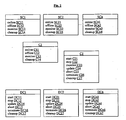
- An overview of the different sets of commands provided by the parts of an embodiment of an interface unit in accordance with the present invention and its surrounding systems;
- Fig. 3:
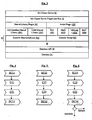
- A detailed schematic view of the interface hierarchy of an embodi- ment of an interface unit in accordance with the present invention and its surrounding systems;
- Fig. 4:
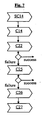
- A flow diagram of the task of setting the database active by the HA cluster server;
- Fig. 5:
- A flow diagram of the task of shutting the database down in an or- dered manner by the HA cluster server;
- Fig. 6:
- A flow diagram of the task of monitoring the database by the HA cluster server;
- Fig. 7:
- A flow diagram of the task of cleaning up the database by the HA cluster server;
- In the following, a presently preferred embodiment of the invention is described with respect to an
interface unit 1 as schematically shown inFig. 1 . As can be seen, the interface unit I comprises two interface layers I1 and I2 for connecting at least one of a plurality of HA cluster servers S1, S2, ..., Sn to at least one database D1, D2, ..., Sn. As each of the HA cluster servers S1, S2, ..., Sn sends commands of a set of HA cluster server-specific commands SC1, SC2, ..., Sn, theinterface unit 1 is adapted for being able to receive commands in at least one of those HA cluster server-specific formats. This is achieved in that the first interface layer I1 comprises implementations of at least one of the plugin-frameworks of the HA cluster servers S1, S2, ..., Sn. Furthermore, as each of the databases D1, D2, ..., Dn can receive commands of a set of database-specific commands DC1, DC2, ..., DCn, the interface,unit 1 is further adapted for being able to send commands in at least one of those database-specific formats from the interface layer I2. - The
interface unit 1 further comprises two internal sets of commands. A set of HA cluster server-independent commands C1 and a set of database-independent commands C2, which are described in the following. - The set of HA cluster server-independent commands C1 comprises HA cluster server-neutral representations of all the commands of the respective sets of HA cluster server-specific commands SC1, SC2, ..., SCn, i.e. abstracting from the different specific formats the HA cluster servers S1, S2, ..., Sn define. When the
interface unit 1 receives a HA cluster server-specific command SC11, ..., SC14, ..., SCn1, ..., SCn4 (seeFig. 2 ) through one of its implementations of the respective plugin, it maps it onto the corresponding HA cluster server-independent command C11, ..., C14. This has the effect that any further processing of the command inside theinterface unit 1 is completely independent of the specific command format of the HA cluster servers S1, S2, ..., Sn. The set of HA cluster server-independent commands C1 comprises at least one of the following commands (seeFig. 2 ): - online C11: sets the database (D1, D2, ..., Dn) active in a predetermined amount of time
- offline C12: shuts down the database (D1, D2, ..., Dn) in an ordered manner in a predetermined amount of time
- monitor C13: monitors the health of the database (D1, D2, ..., Dn). This command returns a value in a predetermined amount of time indicating whether the database (D1, D2, ..., Dn) is active or inactive
- cleanup C14: shuts down the database (D1, D2, ..., Dn) in a predetermined amount of time no matter what the current status of the database (D1, D2, ...; Dn) is. This command is called whenever the HA cluster server S1, S2, ... detects an undefined status of the the database (D1, D2, ..., Dn)
- The set of database-independent commands C2 comprises database-neutral representations of all the database-specific commands DC11, ..., DC17, ..., DCn1, ..., DCn7 of the sets of database-specific commands DC1, DC2, ..., DCn, i.e. abstracting from the different specific formats the databases D1, D2, ..., Dn define. Each of the database-independent commands C21, ..., C27 is mapped to all of the corresponding different database-specific commands DC11, ..., DC17, ..., DCn1, ..., DCn7. This has the effect that the internal processing of the commands inside the
interface unit 1 is completely independent of the specific database product D1, D2, ..., Dn. The set of database-independent commands C2 comprises at least one of the following commands (seeFig. 2 ): - start C21: starts the database (D1, D2, ..., Dn) in a predetermined amount of time
- stop C22: stops the database (D1, D2, ..., Dn) with rollback of transactions in a predetermined amount of time
- monitor C23: monitors the health of the database (D1, D2, ..., Dn) in a predetermined amount of time
- update C24: updates a timestamp in a defined location in the database (D1, D2, ..., Dn) in a predetermined amount of time
- abort C25: aborts the database (D1, D2, ..., Dn) without transaction handling in a predetermined amount of time
- terminate C26: terminates the database (D1, D2, ..., Dn) process in a predetermined amount of time
- cleanup C27: cleans up the allocated operating system resources of the database (D1, D2, ..., Dn). This command may remove persistent operating system resources used for inter-process communication
-
Fig. 3 shows an example of the interface hierarchy between the HA cluster server S1, an embodiment of an interface unit I in accordance with the present invention and the database D1. It should be appreciated thatFig. 3 only shows the described interface hierarchy on the example of the HA cluster server S1 and the database D1, but that this structure also applies to any of the further HA cluster servers S2, ..., Sn and databases D2, ..., Dn. - As can be further seen in
Fig. 3 , a HA cluster server S1 provides a HA cluster server plugin interface 10 providing the set of HA cluster server-specific commands SC1 described above. There are numerous variations of implementations of this HA cluster server plugin interface 10. Some plugin-frameworks expect the implementation of a sharedlibrary plugin 101 with defined entry points, whereas some frameworks expect a scripting language interface of ascript plugin 102 with defined entry points The sharedlibrary plugin 101 solution in itself varies widely, e.g. the name of the entry points differ and the used interface may be a plain call interface sharedlibrary 1011 or an implementation of Microsoft's COM sharedlibrary 1012. Thescript plugin 102 solution in itself also varies widely, e.g. the supported scripting languages may bePerl 1021,Shell 1022,Visual Basic Script 1023 or Windows Command (BAT) 1024. It should be appreciated that a variety of further implementations of both the sharedlibrary plugin 101 and thescript plugin 102 may exist, which are not depicted inFig. 3 . - The interface layer I1 described above can provide both a generic shared library I11 which implements e.g. the call interface shared
library 1011 and / or the COM sharedlibrary 1012, as well as a generic script I12 which uses e.g.Perl 1021,Shell 1022,Visual Basic Script 1023 and / or Windows Command (BAT) 1024. - The interface layer I2 is configured so that it is able to communicate with a
database API 20 which may provide the set of database-specific commands DC1 of the database D1, as already described above. - The exemplary embodiment of the present invention allows for the construction of various flows of control for the commands of the HA cluster servers S1, S2, ..., Sn. In the following, example control flows are described between the HA cluster server S1, an exemplary embodiment of the presented
interface unit 1 and the database D1. It should appreciated that equal control flows exist for each of the HA cluster servers S2, ..., Sn and each of the databases D2, ..., Dn. -
Fig. 4 depicts a control flow for the task of setting the database D1 active by the HA cluster server S1. The task is initiated by the HA cluster server S1 calling the HA cluster server-specific command online SC11 of the set of HA cluster server-specific commands SC1, which is received at the interface layer I1 of theinterface unit 1. This results in a call of the HA cluster server-independent command online C11 of the set of HA cluster server-independent commands C1, which itself calls the database-independent command start C21 of the set of database-independent commands C2. Theinterface layer 12 consequently sends the database-specific command start DC11 of the set of database-specific commands DC1 to the database D1. -
Fig. 5 depicts a control flow for the task of shutting the database D1 down in an ordered manner by the HA cluster server S1. The task is initiated by the HA cluster server S1 calling the HA cluster server-specific command offline SC12 of the set of HA cluster server-specific commands SC1, which is received at the interface layer I1 of theinterface unit 1. This results in a call of the HA cluster server-independent command offline C12 of the set of HA cluster server- independent commands C1, which itself calls the database-independent command stop C22 of the set of database-independent commands C2. The interface layer I2 consequently sends the database-specific command stop DC12 of the set of database-specific commands DC1 to the database D1. -
Fig. 6 depicts a control flow for the task of monitoring the database D1 by the HA cluster server S1. The task is initiated by the HA cluster server S1 calling the HA cluster server-specific command monitor SC13 of the set of HA cluster server-specific commands SC1, which is received at the interface layer I1 of theinterface unit 1. This results in a call of the HA cluster server-independent command monitor C13 of the set of HA cluster server-independent commands C1, which itself calls the database-independent command monitor C23 of the set of database-independent commands C2. The interface layer I2 consequently sends the database-specific command update DC14 of the set of database-specific commands DC1 to the database D1. The database-specific command update DC14 is used, since a database D1 usually does not provide a command for monitoring the database status. Therefore, a special dummy field in the database is updated. According to the result of this update (success/failure), the availability of the database D1 is determined. -
Fig. 7 depicts a control flow for the task of cleaning up the database D1 by the HA cluster server S1. The task is initiated by the HA cluster server S1 calling the HA cluster server-specific command cleanup SC14 of the set of HA cluster server-specific commands SC1, which is received at the interface layer I1 of theinterface unit 1. This results in a call of the HA cluster server-independent command cleanup C14 of the set of HA cluster server-independent commands C1, which itself first calls the database-independent command stop C22 of the set of database-independent commands C2 in order to shut down the database with rollback of transactions. If this command fails, the database-independent command abort C25 of the set of database-specific commands C2 is called in order to shut down the database without transaction handling. If this command also fails, the database-independent command terminate C26 of the set of database-independent commands C2 is called in order to terminate the database process. Lastly, the database-independent command cleanup C27 is called in order to free the operating system resources still bound by the database.
Claims (12)
- An interface unit computer program (1) having instructions for connecting at least one database (D1, D2, ..., Dn) to at least one of a plurality of high availability cluster servers (HA cluster servers) (S1, S2, ..., Sn), wherein each database (D1, D2, ..., Dn) is adapted to execute a set of database-specific commands (DC1, DC2, ..., DCn) and wherein each HA cluster server (S1, S2, ..., Sn) is adapted to output a set of HA cluster server-specific commands (SC1, SC2, ..., SCn), the interface unit (1) being characterized in that:a. a first interface layer (I1) adapted for receiving each of the set of HA cluster server-specific commands (SC1, SC2, ..., SCn) outputted by the HA cluster servers (S1, S2, ..., Sn); andb. a second interface layer (I2) adapted for sending each of the set of database-specific commands (DC1, DC2, ..., DCn) to the respective databases (D1, D2, ..., Dn); whereinc. the interface unit computer program (1) is further adapted to map each of the HA cluster server-specific commands (SC1, SC2, ..., SCn) to at least one of the database-specific commands (DC1, DC2, ..., DCn); andd. wherein the interface unit computer program (I) is further adapted for responding to one of the HA cluster server-specific commands (SC1, SC2, ..., SCn) even when the at least one database (D1, D2, ..., Dn) does not respond to the at least one database-specific command (DC1, DC2, ..., DCn), said responding to one of the HA cluster server-specific commands being provided in a predetermined amount of time, by mapping the respective HA cluster server-specific command. (SC1, SC2, ..., SCn) onto a corresponding HA cluster server-independent command (C1), wherein the HA cluster server-independent command (C1) is adapted for calling a special terminate command for terminating the database in a predetermined amount of time and for sending a corresponding return value to the HA cluster server (S1, S2, ..., Sn).
- The interface unit computer program of any of the preceding claims, further comprising a set of HA cluster server-independent commands (C1), wherein the interface unit computer program (1) is adapted for mapping each of the set of HA cluster server-specific commands (SC1, SC2, ..., SCn) onto the set of HA cluster server-independent commands (C1).
- The interface unit computer program of any of the preceding claims, further comprising a set of database-independent commands (C2), wherein the interface unit computer program (1) is adapted for mapping the set of database-independent commands (C2) onto each of the set of database-specific commands (DC1, DC2, ..., DCn).
- The interface unit computer program of claim 2 and 3, wherein the interface unit computer program (1) is further adapted for mapping the set of HA cluster server-independent commands (C1) onto the set of database-independent commands (C2), wherein a HA cluster server-independent command (C1) calls at least one database-independent command (C2).
- The interface unit computer program of claim 2, wherein the set of HA cluster server-independent commands (C1) comprises at least one of the group of commands comprising: setting the database (D1, D2, ..., Dn) active, shutting down the database (D1, D2, ..., Dn) in an ordered manner, monitoring the health of the database (D1, D2, ..., Dn) and / or shutting down the database (D1, D2, ..., Dn) independent of whether the database (D1, D2, ..., Dn) is currently active or inactive.
- The interface unit computer program of claim 3, wherein the set of database-independent commands (C2) comprises at least one of the group of commands comprising: starting the database (D1, D2, ..., Dn), stopping the database (D1, D2, ..., Dn) with rollback oftransactions, monitoring the health of the database (D1, D2, ..., Dn), updating a timestamp in a defined location of the database (D1, D2, ..., Dn), aborting the database (D1, D2, ..., Dn), terminating the database (D1, D2, ..., Dn) and / or cleaning up the operating system resources used by the database (D1, D2, ..., Dn).
- The interface unit computer program of any of the preceding claims, wherein the first interface layer (I1) is further adapted for implementing a shared library provided by at least one of the plurality of HA cluster servers (S1, S2, ..., Sn).
- The interface unit computer program of any of the preceding claims, wherein the first interface layer (I1) is further adapted for using a scripting language provided by at least one of the plurality of HA cluster servers (S1, S2, ..., Sn).
- A method for connecting at least one database (D1, D2, ..., Dn) to at least one of a plurality of high availability cluster servers (HA cluster servers) (S1, S2, ..., Sn), wherein each database (D1, D2, ..., Dn) is adapted to execute a set of database-specific commands (DC1, DC2, ..., DCn) and wherein each HA cluster server (S1, S2, ..., Sn) is adapted to output a set of HA cluster server-specific commands (SC1, SC2, ..., SCn), the method being characterized by the steps of:a. receiving each of the set of HA cluster server-specific commands (SC1, SC2, ..., SCn) outputted by the HA cluster servers (S1, S2, ..., Sn) at a first interface layer (I1); andb. sending each of the set of database-specific commands (DC1, DC2, ..., DCn) to the respective databases (D1, D2, ..., Dn) from a second interface layer (I2); whereinc. each of the HA cluster server-specific commands (SC1, SC2, ..., SCn) is mapped to at least one of the database-specific commands (DC1, DC2, ..., DCn); and wherein the method comprises the further step of:d. responding to one of the HA cluster server-specific commands (SC1, SC2, ..., SCn) even when the at least one database (D1, D2, ..., Dn) does not respond to the at least one database-specific command (DC1, DC2, ..., DCn) said responding to one of the HA cluster server-specific commands being provided in a predetermined amount of time, by mapping the respective HA cluster server-specific command (SC1, SC2, ..., SCn) onto a corresponding HA cluster server-independent command (C1), wherein the HA cluster server-independent command (C1) is adapted for calling a special terminate command for terminating the database in a predetermined amount of time and for sending a corresponding return value to the HA cluster server (S1, S2, ..., Sn).
- The method of claim 9, further comprising the step of mapping each of the set of HA cluster server-specific commands (SC1, SC2, ..., SCn) onto a set of HA cluster server-independent commands (C1).
- The method of claim 9, further comprising the step of mapping a set of database-independent commands (C2) onto each of the set of database-specific commands (DC1, DC2, ..., DCn).
- The method of claim 10 and 11, further comprising the step of mapping the set of HA cluster server-independent commands (C1) onto the set of database-independent commands (C2), wherein a HA cluster server-independent command (C1) calls at least one database-independent command (C2).
Priority Applications (3)
| Application Number | Priority Date | Filing Date | Title |
|---|---|---|---|
| EP08010216A EP2131279B1 (en) | 2008-06-04 | 2008-06-04 | System and method for a generic integration of a database into a high availability cluster |
| AT08010216T ATE551648T1 (en) | 2008-06-04 | 2008-06-04 | SYSTEM AND METHOD FOR A GENERAL INTEGRATION OF A DATABASE INTO A HIGH AVAILABILITY CLUSTER |
| US12/136,247 US8135765B2 (en) | 2008-06-04 | 2008-06-10 | System and method for a genetic integration of a database into a high availability cluster |
Applications Claiming Priority (1)
| Application Number | Priority Date | Filing Date | Title |
|---|---|---|---|
| EP08010216A EP2131279B1 (en) | 2008-06-04 | 2008-06-04 | System and method for a generic integration of a database into a high availability cluster |
Publications (2)
| Publication Number | Publication Date |
|---|---|
| EP2131279A1 EP2131279A1 (en) | 2009-12-09 |
| EP2131279B1 true EP2131279B1 (en) | 2012-03-28 |
Family
ID=39713875
Family Applications (1)
| Application Number | Title | Priority Date | Filing Date |
|---|---|---|---|
| EP08010216A Active EP2131279B1 (en) | 2008-06-04 | 2008-06-04 | System and method for a generic integration of a database into a high availability cluster |
Country Status (3)
| Country | Link |
|---|---|
| US (1) | US8135765B2 (en) |
| EP (1) | EP2131279B1 (en) |
| AT (1) | ATE551648T1 (en) |
Families Citing this family (5)
| Publication number | Priority date | Publication date | Assignee | Title |
|---|---|---|---|---|
| US8656211B2 (en) | 2011-02-18 | 2014-02-18 | Ca, Inc. | Avoiding failover identifier conflicts |
| US9632887B2 (en) | 2014-09-19 | 2017-04-25 | International Business Machines Corporation | Automatic client side seamless failover |
| CN105389371A (en) * | 2015-11-16 | 2016-03-09 | 天津南大通用数据技术股份有限公司 | Method and system for establishing connection with high availability for database cluster |
| US10459894B2 (en) * | 2016-09-22 | 2019-10-29 | Bank Of America Corporation | Database shutdown and restart stability optimizer |
| CN110198225A (en) * | 2018-02-27 | 2019-09-03 | 中移(苏州)软件技术有限公司 | A kind of management method and management server of more clusters |
Family Cites Families (8)
| Publication number | Priority date | Publication date | Assignee | Title |
|---|---|---|---|---|
| US7343428B2 (en) | 2001-09-19 | 2008-03-11 | International Business Machines Corporation | Dynamic, real-time integration of software resources through services of a content framework |
| US7188194B1 (en) * | 2002-04-22 | 2007-03-06 | Cisco Technology, Inc. | Session-based target/LUN mapping for a storage area network and associated method |
| US7437459B2 (en) * | 2003-08-14 | 2008-10-14 | Oracle International Corporation | Calculation of service performance grades in a multi-node environment that hosts the services |
| US20050050057A1 (en) * | 2003-08-25 | 2005-03-03 | Microsoft Corporation | System and method for integrating management of resources between application services and applications |
| US7721150B2 (en) * | 2004-03-19 | 2010-05-18 | Intel Corporation | Failover and load balancing |
| US7760626B2 (en) * | 2004-03-31 | 2010-07-20 | Intel Corporation | Load balancing and failover |
| US20060248371A1 (en) * | 2005-04-28 | 2006-11-02 | International Business Machines Corporation | Method and apparatus for a common cluster model for configuring, managing, and operating different clustering technologies in a data center |
| CN101278309A (en) * | 2005-09-29 | 2008-10-01 | 国际商业机器公司 | System and method for automatically managing It-resources in a heterogeneous environment |
-
2008
- 2008-06-04 AT AT08010216T patent/ATE551648T1/en active
- 2008-06-04 EP EP08010216A patent/EP2131279B1/en active Active
- 2008-06-10 US US12/136,247 patent/US8135765B2/en active Active
Also Published As
| Publication number | Publication date |
|---|---|
| US8135765B2 (en) | 2012-03-13 |
| US20090307246A1 (en) | 2009-12-10 |
| EP2131279A1 (en) | 2009-12-09 |
| ATE551648T1 (en) | 2012-04-15 |
Similar Documents
| Publication | Publication Date | Title |
|---|---|---|
| US7334028B2 (en) | Tiered multi-source software support using automated diagnostic-data transfers | |
| US7904567B2 (en) | Method, apparatus and computer program product for integrating heterogeneous systems | |
| AU2002322282B2 (en) | Integrating enterprise support systems | |
| US10649761B2 (en) | Application upgrade method and apparatus | |
| EP1099164B1 (en) | Method and program for processing administrative requests of a distributed network application executing in a clustered computing environment | |
| US8584081B2 (en) | Server side application integration framework | |
| US20080140857A1 (en) | Service-oriented architecture and methods for direct invocation of services utilizing a service requestor invocation framework | |
| US7735097B2 (en) | Method and system to implement a deploy service to perform deployment services to extend and enhance functionalities of deployed applications | |
| US20080140760A1 (en) | Service-oriented architecture system and methods supporting dynamic service provider versioning | |
| US20080140759A1 (en) | Dynamic service-oriented architecture system configuration and proxy object generation server architecture and methods | |
| US20020161840A1 (en) | Adapter for interfacing with a workflow engine | |
| KR20100031574A (en) | Automatically managing system downtime in a computer network | |
| AU2002322282A1 (en) | Integrating enterprise support systems | |
| JPH10260825A (en) | Collaboration of module type application | |
| CN102385637A (en) | Backup method and system for database information | |
| WO2003038810A1 (en) | Dynamic insertion of a speech recognition engine within a distributed speech recognition system | |
| WO2017166154A1 (en) | System and method for integrating transactional middleware platform with centralized audit framework | |
| US8135765B2 (en) | System and method for a genetic integration of a database into a high availability cluster | |
| US8898330B2 (en) | Server node configuration using a configuration tool | |
| CN108664343B (en) | State calling method and device for micro-service | |
| US7007280B1 (en) | Schema driven management of a component-based application | |
| US20020078182A1 (en) | Failover service method and system | |
| JP2002108838A (en) | Agent execution device and agent execution method | |
| US11513833B1 (en) | Event listener interface for container-based execution of serverless functions | |
| JP7147347B2 (en) | Atomicity assurance device and atomicity assurance method |
Legal Events
| Date | Code | Title | Description |
|---|---|---|---|
| PUAI | Public reference made under article 153(3) epc to a published international application that has entered the european phase |
Free format text: ORIGINAL CODE: 0009012 |
|
| 17P | Request for examination filed |
Effective date: 20080604 |
|
| AK | Designated contracting states |
Kind code of ref document: A1 Designated state(s): AT BE BG CH CY CZ DE DK EE ES FI FR GB GR HR HU IE IS IT LI LT LU LV MC MT NL NO PL PT RO SE SI SK TR |
|
| AX | Request for extension of the european patent |
Extension state: AL BA MK RS |
|
| AKX | Designation fees paid |
Designated state(s): AT BE BG CH CY CZ DE DK EE ES FI FR GB GR HR HU IE IS IT LI LT LU LV MC MT NL NO PL PT RO SE SI SK TR |
|
| GRAP | Despatch of communication of intention to grant a patent |
Free format text: ORIGINAL CODE: EPIDOSNIGR1 |
|
| GRAS | Grant fee paid |
Free format text: ORIGINAL CODE: EPIDOSNIGR3 |
|
| GRAA | (expected) grant |
Free format text: ORIGINAL CODE: 0009210 |
|
| AK | Designated contracting states |
Kind code of ref document: B1 Designated state(s): AT BE BG CH CY CZ DE DK EE ES FI FR GB GR HR HU IE IS IT LI LT LU LV MC MT NL NO PL PT RO SE SI SK TR |
|
| REG | Reference to a national code |
Ref country code: GB Ref legal event code: FG4D |
|
| REG | Reference to a national code |
Ref country code: CH Ref legal event code: EP |
|
| REG | Reference to a national code |
Ref country code: AT Ref legal event code: REF Ref document number: 551648 Country of ref document: AT Kind code of ref document: T Effective date: 20120415 |
|
| REG | Reference to a national code |
Ref country code: IE Ref legal event code: FG4D |
|
| REG | Reference to a national code |
Ref country code: DE Ref legal event code: R096 Ref document number: 602008014370 Country of ref document: DE Effective date: 20120524 |
|
| REG | Reference to a national code |
Ref country code: NL Ref legal event code: VDEP Effective date: 20120328 |
|
| PG25 | Lapsed in a contracting state [announced via postgrant information from national office to epo] |
Ref country code: HR Free format text: LAPSE BECAUSE OF FAILURE TO SUBMIT A TRANSLATION OF THE DESCRIPTION OR TO PAY THE FEE WITHIN THE PRESCRIBED TIME-LIMIT Effective date: 20120328 Ref country code: LT Free format text: LAPSE BECAUSE OF FAILURE TO SUBMIT A TRANSLATION OF THE DESCRIPTION OR TO PAY THE FEE WITHIN THE PRESCRIBED TIME-LIMIT Effective date: 20120328 Ref country code: NO Free format text: LAPSE BECAUSE OF FAILURE TO SUBMIT A TRANSLATION OF THE DESCRIPTION OR TO PAY THE FEE WITHIN THE PRESCRIBED TIME-LIMIT Effective date: 20120628 |
|
| LTIE | Lt: invalidation of european patent or patent extension |
Effective date: 20120328 |
|
| PG25 | Lapsed in a contracting state [announced via postgrant information from national office to epo] |
Ref country code: LV Free format text: LAPSE BECAUSE OF FAILURE TO SUBMIT A TRANSLATION OF THE DESCRIPTION OR TO PAY THE FEE WITHIN THE PRESCRIBED TIME-LIMIT Effective date: 20120328 Ref country code: FI Free format text: LAPSE BECAUSE OF FAILURE TO SUBMIT A TRANSLATION OF THE DESCRIPTION OR TO PAY THE FEE WITHIN THE PRESCRIBED TIME-LIMIT Effective date: 20120328 Ref country code: GR Free format text: LAPSE BECAUSE OF FAILURE TO SUBMIT A TRANSLATION OF THE DESCRIPTION OR TO PAY THE FEE WITHIN THE PRESCRIBED TIME-LIMIT Effective date: 20120629 |
|
| REG | Reference to a national code |
Ref country code: AT Ref legal event code: MK05 Ref document number: 551648 Country of ref document: AT Kind code of ref document: T Effective date: 20120328 |
|
| PG25 | Lapsed in a contracting state [announced via postgrant information from national office to epo] |
Ref country code: CY Free format text: LAPSE BECAUSE OF FAILURE TO SUBMIT A TRANSLATION OF THE DESCRIPTION OR TO PAY THE FEE WITHIN THE PRESCRIBED TIME-LIMIT Effective date: 20120328 |
|
| PG25 | Lapsed in a contracting state [announced via postgrant information from national office to epo] |
Ref country code: CZ Free format text: LAPSE BECAUSE OF FAILURE TO SUBMIT A TRANSLATION OF THE DESCRIPTION OR TO PAY THE FEE WITHIN THE PRESCRIBED TIME-LIMIT Effective date: 20120328 Ref country code: IS Free format text: LAPSE BECAUSE OF FAILURE TO SUBMIT A TRANSLATION OF THE DESCRIPTION OR TO PAY THE FEE WITHIN THE PRESCRIBED TIME-LIMIT Effective date: 20120728 Ref country code: SI Free format text: LAPSE BECAUSE OF FAILURE TO SUBMIT A TRANSLATION OF THE DESCRIPTION OR TO PAY THE FEE WITHIN THE PRESCRIBED TIME-LIMIT Effective date: 20120328 Ref country code: SE Free format text: LAPSE BECAUSE OF FAILURE TO SUBMIT A TRANSLATION OF THE DESCRIPTION OR TO PAY THE FEE WITHIN THE PRESCRIBED TIME-LIMIT Effective date: 20120328 Ref country code: EE Free format text: LAPSE BECAUSE OF FAILURE TO SUBMIT A TRANSLATION OF THE DESCRIPTION OR TO PAY THE FEE WITHIN THE PRESCRIBED TIME-LIMIT Effective date: 20120328 Ref country code: RO Free format text: LAPSE BECAUSE OF FAILURE TO SUBMIT A TRANSLATION OF THE DESCRIPTION OR TO PAY THE FEE WITHIN THE PRESCRIBED TIME-LIMIT Effective date: 20120328 Ref country code: BE Free format text: LAPSE BECAUSE OF FAILURE TO SUBMIT A TRANSLATION OF THE DESCRIPTION OR TO PAY THE FEE WITHIN THE PRESCRIBED TIME-LIMIT Effective date: 20120328 Ref country code: PL Free format text: LAPSE BECAUSE OF FAILURE TO SUBMIT A TRANSLATION OF THE DESCRIPTION OR TO PAY THE FEE WITHIN THE PRESCRIBED TIME-LIMIT Effective date: 20120328 |
|
| PG25 | Lapsed in a contracting state [announced via postgrant information from national office to epo] |
Ref country code: SK Free format text: LAPSE BECAUSE OF FAILURE TO SUBMIT A TRANSLATION OF THE DESCRIPTION OR TO PAY THE FEE WITHIN THE PRESCRIBED TIME-LIMIT Effective date: 20120328 Ref country code: PT Free format text: LAPSE BECAUSE OF FAILURE TO SUBMIT A TRANSLATION OF THE DESCRIPTION OR TO PAY THE FEE WITHIN THE PRESCRIBED TIME-LIMIT Effective date: 20120730 |
|
| PG25 | Lapsed in a contracting state [announced via postgrant information from national office to epo] |
Ref country code: DK Free format text: LAPSE BECAUSE OF FAILURE TO SUBMIT A TRANSLATION OF THE DESCRIPTION OR TO PAY THE FEE WITHIN THE PRESCRIBED TIME-LIMIT Effective date: 20120328 Ref country code: AT Free format text: LAPSE BECAUSE OF FAILURE TO SUBMIT A TRANSLATION OF THE DESCRIPTION OR TO PAY THE FEE WITHIN THE PRESCRIBED TIME-LIMIT Effective date: 20120328 Ref country code: NL Free format text: LAPSE BECAUSE OF FAILURE TO SUBMIT A TRANSLATION OF THE DESCRIPTION OR TO PAY THE FEE WITHIN THE PRESCRIBED TIME-LIMIT Effective date: 20120328 Ref country code: MC Free format text: LAPSE BECAUSE OF NON-PAYMENT OF DUE FEES Effective date: 20120630 |
|
| REG | Reference to a national code |
Ref country code: CH Ref legal event code: PL |
|
| PLBE | No opposition filed within time limit |
Free format text: ORIGINAL CODE: 0009261 |
|
| STAA | Information on the status of an ep patent application or granted ep patent |
Free format text: STATUS: NO OPPOSITION FILED WITHIN TIME LIMIT |
|
| REG | Reference to a national code |
Ref country code: CH Ref legal event code: PL |
|
| PG25 | Lapsed in a contracting state [announced via postgrant information from national office to epo] |
Ref country code: IT Free format text: LAPSE BECAUSE OF FAILURE TO SUBMIT A TRANSLATION OF THE DESCRIPTION OR TO PAY THE FEE WITHIN THE PRESCRIBED TIME-LIMIT Effective date: 20120328 |
|
| 26N | No opposition filed |
Effective date: 20130103 |
|
| REG | Reference to a national code |
Ref country code: IE Ref legal event code: MM4A |
|
| REG | Reference to a national code |
Ref country code: FR Ref legal event code: ST Effective date: 20130228 |
|
| REG | Reference to a national code |
Ref country code: DE Ref legal event code: R097 Ref document number: 602008014370 Country of ref document: DE Effective date: 20130103 |
|
| PG25 | Lapsed in a contracting state [announced via postgrant information from national office to epo] |
Ref country code: CH Free format text: LAPSE BECAUSE OF NON-PAYMENT OF DUE FEES Effective date: 20120630 Ref country code: FR Free format text: LAPSE BECAUSE OF NON-PAYMENT OF DUE FEES Effective date: 20120702 Ref country code: IE Free format text: LAPSE BECAUSE OF NON-PAYMENT OF DUE FEES Effective date: 20120604 Ref country code: LI Free format text: LAPSE BECAUSE OF NON-PAYMENT OF DUE FEES Effective date: 20120630 Ref country code: ES Free format text: LAPSE BECAUSE OF FAILURE TO SUBMIT A TRANSLATION OF THE DESCRIPTION OR TO PAY THE FEE WITHIN THE PRESCRIBED TIME-LIMIT Effective date: 20120709 |
|
| PG25 | Lapsed in a contracting state [announced via postgrant information from national office to epo] |
Ref country code: BG Free format text: LAPSE BECAUSE OF FAILURE TO SUBMIT A TRANSLATION OF THE DESCRIPTION OR TO PAY THE FEE WITHIN THE PRESCRIBED TIME-LIMIT Effective date: 20120628 Ref country code: MT Free format text: LAPSE BECAUSE OF FAILURE TO SUBMIT A TRANSLATION OF THE DESCRIPTION OR TO PAY THE FEE WITHIN THE PRESCRIBED TIME-LIMIT Effective date: 20120328 |
|
| PG25 | Lapsed in a contracting state [announced via postgrant information from national office to epo] |
Ref country code: TR Free format text: LAPSE BECAUSE OF FAILURE TO SUBMIT A TRANSLATION OF THE DESCRIPTION OR TO PAY THE FEE WITHIN THE PRESCRIBED TIME-LIMIT Effective date: 20120328 |
|
| PG25 | Lapsed in a contracting state [announced via postgrant information from national office to epo] |
Ref country code: LU Free format text: LAPSE BECAUSE OF NON-PAYMENT OF DUE FEES Effective date: 20120604 |
|
| PG25 | Lapsed in a contracting state [announced via postgrant information from national office to epo] |
Ref country code: HU Free format text: LAPSE BECAUSE OF FAILURE TO SUBMIT A TRANSLATION OF THE DESCRIPTION OR TO PAY THE FEE WITHIN THE PRESCRIBED TIME-LIMIT Effective date: 20080604 |
|
| REG | Reference to a national code |
Ref country code: GB Ref legal event code: 732E Free format text: REGISTERED BETWEEN 20250313 AND 20250319 |
|
| PGFP | Annual fee paid to national office [announced via postgrant information from national office to epo] |
Ref country code: DE Payment date: 20250508 Year of fee payment: 18 |
|
| REG | Reference to a national code |
Ref country code: GB Ref legal event code: 732E Free format text: REGISTERED BETWEEN 20250612 AND 20250618 |
|
| PGFP | Annual fee paid to national office [announced via postgrant information from national office to epo] |
Ref country code: GB Payment date: 20250604 Year of fee payment: 18 |
|
| REG | Reference to a national code |
Ref country code: DE Ref legal event code: R081 Ref document number: 602008014370 Country of ref document: DE Owner name: INTERNATIONAL BUSINESS MACHINES CORPORATION, A, US Free format text: FORMER OWNER: SOFTWARE AG, 64297 DARMSTADT, DE Ref country code: DE Ref legal event code: R082 Ref document number: 602008014370 Country of ref document: DE Ref country code: DE Ref legal event code: R082 Ref document number: 602008014370 Country of ref document: DE Representative=s name: KUISMA, SIRPA, FI |
|
| REG | Reference to a national code |
Ref country code: DE Ref legal event code: R082 Ref document number: 602008014370 Country of ref document: DE Representative=s name: KUISMA, SIRPA, FI |