EP2130555A1 - Stimuli-responsive hydrogel - Google Patents
Stimuli-responsive hydrogel Download PDFInfo
- Publication number
- EP2130555A1 EP2130555A1 EP08010312A EP08010312A EP2130555A1 EP 2130555 A1 EP2130555 A1 EP 2130555A1 EP 08010312 A EP08010312 A EP 08010312A EP 08010312 A EP08010312 A EP 08010312A EP 2130555 A1 EP2130555 A1 EP 2130555A1
- Authority
- EP
- European Patent Office
- Prior art keywords
- polypeptide
- hydrogel
- binding partner
- polymer
- gyrb
- Prior art date
- Legal status (The legal status is an assumption and is not a legal conclusion. Google has not performed a legal analysis and makes no representation as to the accuracy of the status listed.)
- Withdrawn
Links
- 239000000017 hydrogel Substances 0.000 title claims abstract description 122
- 229920001184 polypeptide Polymers 0.000 claims abstract description 163
- 108090000765 processed proteins & peptides Proteins 0.000 claims abstract description 163
- 102000004196 processed proteins & peptides Human genes 0.000 claims abstract description 163
- 229920000642 polymer Polymers 0.000 claims abstract description 62
- 150000001875 compounds Chemical class 0.000 claims abstract description 57
- 239000003814 drug Substances 0.000 claims abstract description 43
- 229940079593 drug Drugs 0.000 claims abstract description 42
- 230000003993 interaction Effects 0.000 claims abstract description 31
- 108020004707 nucleic acids Proteins 0.000 claims abstract description 5
- 102000039446 nucleic acids Human genes 0.000 claims abstract description 5
- 150000007523 nucleic acids Chemical class 0.000 claims abstract description 5
- 108090000623 proteins and genes Proteins 0.000 claims description 14
- 102000004169 proteins and genes Human genes 0.000 claims description 13
- 238000012377 drug delivery Methods 0.000 claims description 8
- 229920002401 polyacrylamide Polymers 0.000 claims description 8
- 239000002202 Polyethylene glycol Substances 0.000 claims description 4
- 229920001223 polyethylene glycol Polymers 0.000 claims description 4
- 108010054814 DNA Gyrase Proteins 0.000 claims description 3
- 102000009123 Fibrin Human genes 0.000 claims description 3
- 108010073385 Fibrin Proteins 0.000 claims description 3
- BWGVNKXGVNDBDI-UHFFFAOYSA-N Fibrin monomer Chemical compound CNC(=O)CNC(=O)CN BWGVNKXGVNDBDI-UHFFFAOYSA-N 0.000 claims description 3
- 229950003499 fibrin Drugs 0.000 claims description 3
- FHVDTGUDJYJELY-UHFFFAOYSA-N 6-{[2-carboxy-4,5-dihydroxy-6-(phosphanyloxy)oxan-3-yl]oxy}-4,5-dihydroxy-3-phosphanyloxane-2-carboxylic acid Chemical compound O1C(C(O)=O)C(P)C(O)C(O)C1OC1C(C(O)=O)OC(OP)C(O)C1O FHVDTGUDJYJELY-UHFFFAOYSA-N 0.000 claims description 2
- 102000008186 Collagen Human genes 0.000 claims description 2
- 108010035532 Collagen Proteins 0.000 claims description 2
- 102100024746 Dihydrofolate reductase Human genes 0.000 claims description 2
- 229920002472 Starch Polymers 0.000 claims description 2
- 102000018679 Tacrolimus Binding Proteins Human genes 0.000 claims description 2
- 108010027179 Tacrolimus Binding Proteins Proteins 0.000 claims description 2
- 229940072056 alginate Drugs 0.000 claims description 2
- 229920000615 alginic acid Polymers 0.000 claims description 2
- 235000010443 alginic acid Nutrition 0.000 claims description 2
- 229920002678 cellulose Polymers 0.000 claims description 2
- 239000001913 cellulose Substances 0.000 claims description 2
- 235000010980 cellulose Nutrition 0.000 claims description 2
- 229920001436 collagen Polymers 0.000 claims description 2
- 108020001096 dihydrofolate reductase Proteins 0.000 claims description 2
- GQOKIYDTHHZSCJ-UHFFFAOYSA-M dimethyl-bis(prop-2-enyl)azanium;chloride Chemical compound [Cl-].C=CC[N+](C)(C)CC=C GQOKIYDTHHZSCJ-UHFFFAOYSA-M 0.000 claims description 2
- OKPYIWASQZGASP-UHFFFAOYSA-N n-(2-hydroxypropyl)-2-methylprop-2-enamide Chemical compound CC(O)CNC(=O)C(C)=C OKPYIWASQZGASP-UHFFFAOYSA-N 0.000 claims description 2
- 229920000729 poly(L-lysine) polymer Polymers 0.000 claims description 2
- 239000008107 starch Substances 0.000 claims description 2
- 235000019698 starch Nutrition 0.000 claims description 2
- 125000000391 vinyl group Chemical group [H]C([*])=C([H])[H] 0.000 claims description 2
- 229920002554 vinyl polymer Polymers 0.000 claims description 2
- 101000870191 Catharanthus roseus Peptidyl-prolyl cis-trans isomerase Proteins 0.000 claims 1
- 108091028043 Nucleic acid sequence Proteins 0.000 claims 1
- WTIJXIZOODAMJT-DHFGXMAYSA-N coumermycin A1 Chemical compound O([C@@H]1[C@H](C(O[C@@H](OC=2C(=C3OC(=O)C(NC(=O)C=4C(=C(C(=O)NC=5C(OC6=C(C)C(O[C@H]7[C@@H]([C@H](OC(=O)C=8NC(C)=CC=8)[C@@H](OC)C(C)(C)O7)O)=CC=C6C=5O)=O)NC=4)C)=C(O)C3=CC=2)C)[C@@H]1O)(C)C)OC)C(=O)C1=CC=C(C)N1 WTIJXIZOODAMJT-DHFGXMAYSA-N 0.000 description 30
- YJQPYGGHQPGBLI-UHFFFAOYSA-N Novobiocin Natural products O1C(C)(C)C(OC)C(OC(N)=O)C(O)C1OC1=CC=C(C(O)=C(NC(=O)C=2C=C(CC=C(C)C)C(O)=CC=2)C(=O)O2)C2=C1C YJQPYGGHQPGBLI-UHFFFAOYSA-N 0.000 description 27
- YJQPYGGHQPGBLI-KGSXXDOSSA-N novobiocin Chemical compound O1C(C)(C)[C@H](OC)[C@@H](OC(N)=O)[C@@H](O)[C@@H]1OC1=CC=C(C(O)=C(NC(=O)C=2C=C(CC=C(C)C)C(O)=CC=2)C(=O)O2)C2=C1C YJQPYGGHQPGBLI-KGSXXDOSSA-N 0.000 description 27
- 229960002950 novobiocin Drugs 0.000 description 27
- RAXXELZNTBOGNW-UHFFFAOYSA-N imidazole Natural products C1=CNC=N1 RAXXELZNTBOGNW-UHFFFAOYSA-N 0.000 description 18
- FAPWRFPIFSIZLT-UHFFFAOYSA-M Sodium chloride Chemical compound [Na+].[Cl-] FAPWRFPIFSIZLT-UHFFFAOYSA-M 0.000 description 16
- 238000004090 dissolution Methods 0.000 description 14
- FRTGEIHSCHXMTI-UHFFFAOYSA-N dimethyl octanediimidate Chemical compound COC(=N)CCCCCCC(=N)OC FRTGEIHSCHXMTI-UHFFFAOYSA-N 0.000 description 12
- 230000015572 biosynthetic process Effects 0.000 description 11
- 238000006471 dimerization reaction Methods 0.000 description 10
- 230000000447 dimerizing effect Effects 0.000 description 10
- 239000007983 Tris buffer Substances 0.000 description 9
- LENZDBCJOHFCAS-UHFFFAOYSA-N tris Chemical compound OCC(N)(CO)CO LENZDBCJOHFCAS-UHFFFAOYSA-N 0.000 description 9
- 230000009471 action Effects 0.000 description 8
- 230000003115 biocidal effect Effects 0.000 description 8
- 239000000872 buffer Substances 0.000 description 8
- 239000000499 gel Substances 0.000 description 8
- 239000011780 sodium chloride Substances 0.000 description 8
- HRPVXLWXLXDGHG-UHFFFAOYSA-N Acrylamide Chemical compound NC(=O)C=C HRPVXLWXLXDGHG-UHFFFAOYSA-N 0.000 description 7
- XSQUKJJJFZCRTK-UHFFFAOYSA-N Urea Chemical compound NC(N)=O XSQUKJJJFZCRTK-UHFFFAOYSA-N 0.000 description 7
- 239000003242 anti bacterial agent Substances 0.000 description 7
- 229940088710 antibiotic agent Drugs 0.000 description 7
- 239000004202 carbamide Substances 0.000 description 7
- 238000000034 method Methods 0.000 description 7
- 230000008961 swelling Effects 0.000 description 7
- IAZDPXIOMUYVGZ-UHFFFAOYSA-N Dimethylsulphoxide Chemical compound CS(C)=O IAZDPXIOMUYVGZ-UHFFFAOYSA-N 0.000 description 6
- YXFVVABEGXRONW-UHFFFAOYSA-N Toluene Chemical compound CC1=CC=CC=C1 YXFVVABEGXRONW-UHFFFAOYSA-N 0.000 description 6
- 239000000539 dimer Substances 0.000 description 6
- 238000011002 quantification Methods 0.000 description 6
- 239000000243 solution Substances 0.000 description 6
- -1 Ni2+ ion Chemical class 0.000 description 5
- 210000004027 cell Anatomy 0.000 description 5
- 230000001404 mediated effect Effects 0.000 description 5
- 230000001960 triggered effect Effects 0.000 description 5
- 238000000108 ultra-filtration Methods 0.000 description 5
- KCXVZYZYPLLWCC-UHFFFAOYSA-N EDTA Chemical compound OC(=O)CN(CC(O)=O)CCN(CC(O)=O)CC(O)=O KCXVZYZYPLLWCC-UHFFFAOYSA-N 0.000 description 4
- 102000023732 binding proteins Human genes 0.000 description 4
- 108091008324 binding proteins Proteins 0.000 description 4
- ZYGHJZDHTFUPRJ-UHFFFAOYSA-N coumarin Chemical compound C1=CC=C2OC(=O)C=CC2=C1 ZYGHJZDHTFUPRJ-UHFFFAOYSA-N 0.000 description 4
- 238000004132 cross linking Methods 0.000 description 4
- 239000000706 filtrate Substances 0.000 description 4
- 238000002347 injection Methods 0.000 description 4
- 239000007924 injection Substances 0.000 description 4
- ZAHRKKWIAAJSAO-UHFFFAOYSA-N rapamycin Natural products COCC(O)C(=C/C(C)C(=O)CC(OC(=O)C1CCCCN1C(=O)C(=O)C2(O)OC(CC(OC)C(=CC=CC=CC(C)CC(C)C(=O)C)C)CCC2C)C(C)CC3CCC(O)C(C3)OC)C ZAHRKKWIAAJSAO-UHFFFAOYSA-N 0.000 description 4
- 229960002930 sirolimus Drugs 0.000 description 4
- QFJCIRLUMZQUOT-HPLJOQBZSA-N sirolimus Chemical compound C1C[C@@H](O)[C@H](OC)C[C@@H]1C[C@@H](C)[C@H]1OC(=O)[C@@H]2CCCCN2C(=O)C(=O)[C@](O)(O2)[C@H](C)CC[C@H]2C[C@H](OC)/C(C)=C/C=C/C=C/[C@@H](C)C[C@@H](C)C(=O)[C@H](OC)[C@H](O)/C(C)=C/[C@@H](C)C(=O)C1 QFJCIRLUMZQUOT-HPLJOQBZSA-N 0.000 description 4
- 238000003786 synthesis reaction Methods 0.000 description 4
- QWZHDKGQKYEBKK-UHFFFAOYSA-N 3-aminochromen-2-one Chemical compound C1=CC=C2OC(=O)C(N)=CC2=C1 QWZHDKGQKYEBKK-UHFFFAOYSA-N 0.000 description 3
- 241000588724 Escherichia coli Species 0.000 description 3
- FBOZXECLQNJBKD-ZDUSSCGKSA-N L-methotrexate Chemical compound C=1N=C2N=C(N)N=C(N)C2=NC=1CN(C)C1=CC=C(C(=O)N[C@@H](CCC(O)=O)C(O)=O)C=C1 FBOZXECLQNJBKD-ZDUSSCGKSA-N 0.000 description 3
- HEMHJVSKTPXQMS-UHFFFAOYSA-M Sodium hydroxide Chemical compound [OH-].[Na+] HEMHJVSKTPXQMS-UHFFFAOYSA-M 0.000 description 3
- LEHOTFFKMJEONL-UHFFFAOYSA-N Uric Acid Chemical compound N1C(=O)NC(=O)C2=C1NC(=O)N2 LEHOTFFKMJEONL-UHFFFAOYSA-N 0.000 description 3
- TVWHNULVHGKJHS-UHFFFAOYSA-N Uric acid Natural products N1C(=O)NC(=O)C2NC(=O)NC21 TVWHNULVHGKJHS-UHFFFAOYSA-N 0.000 description 3
- 102000005789 Vascular Endothelial Growth Factors Human genes 0.000 description 3
- 108010019530 Vascular Endothelial Growth Factors Proteins 0.000 description 3
- 238000004458 analytical method Methods 0.000 description 3
- 230000001580 bacterial effect Effects 0.000 description 3
- 238000005119 centrifugation Methods 0.000 description 3
- 238000012512 characterization method Methods 0.000 description 3
- 230000000694 effects Effects 0.000 description 3
- 238000002474 experimental method Methods 0.000 description 3
- 239000003102 growth factor Substances 0.000 description 3
- 101150013736 gyrB gene Proteins 0.000 description 3
- 229960000485 methotrexate Drugs 0.000 description 3
- 101150012629 parE gene Proteins 0.000 description 3
- AJPJDKMHJJGVTQ-UHFFFAOYSA-M sodium dihydrogen phosphate Chemical compound [Na+].OP(O)([O-])=O AJPJDKMHJJGVTQ-UHFFFAOYSA-M 0.000 description 3
- 229910000162 sodium phosphate Inorganic materials 0.000 description 3
- 230000000087 stabilizing effect Effects 0.000 description 3
- 230000001225 therapeutic effect Effects 0.000 description 3
- 229940116269 uric acid Drugs 0.000 description 3
- 239000003643 water by type Substances 0.000 description 3
- 238000005160 1H NMR spectroscopy Methods 0.000 description 2
- BZSSDSKNMXOYFT-UHFFFAOYSA-N 2-[bis(carboxymethyl)amino]-6-(prop-2-enoylamino)hexanoic acid Chemical compound OC(=O)CN(CC(O)=O)C(C(O)=O)CCCCNC(=O)C=C BZSSDSKNMXOYFT-UHFFFAOYSA-N 0.000 description 2
- 229920000936 Agarose Polymers 0.000 description 2
- 239000004475 Arginine Substances 0.000 description 2
- IJGRMHOSHXDMSA-UHFFFAOYSA-N Atomic nitrogen Chemical compound N#N IJGRMHOSHXDMSA-UHFFFAOYSA-N 0.000 description 2
- 238000009010 Bradford assay Methods 0.000 description 2
- 241000208199 Buxus sempervirens Species 0.000 description 2
- 108091026890 Coding region Proteins 0.000 description 2
- 239000004971 Cross linker Substances 0.000 description 2
- 102000001493 Cyclophilins Human genes 0.000 description 2
- 108010068682 Cyclophilins Proteins 0.000 description 2
- 108090000695 Cytokines Proteins 0.000 description 2
- 102000004127 Cytokines Human genes 0.000 description 2
- 108010093488 His-His-His-His-His-His Proteins 0.000 description 2
- 101000623857 Homo sapiens Serine/threonine-protein kinase mTOR Proteins 0.000 description 2
- 101000808011 Homo sapiens Vascular endothelial growth factor A Proteins 0.000 description 2
- KWYHDKDOAIKMQN-UHFFFAOYSA-N N,N,N',N'-tetramethylethylenediamine Chemical compound CN(C)CCN(C)C KWYHDKDOAIKMQN-UHFFFAOYSA-N 0.000 description 2
- 102100023085 Serine/threonine-protein kinase mTOR Human genes 0.000 description 2
- 150000001412 amines Chemical class 0.000 description 2
- 229910001870 ammonium persulfate Inorganic materials 0.000 description 2
- ODKSFYDXXFIFQN-UHFFFAOYSA-N arginine Natural products OC(=O)C(N)CCCNC(N)=N ODKSFYDXXFIFQN-UHFFFAOYSA-N 0.000 description 2
- 239000012298 atmosphere Substances 0.000 description 2
- 230000001588 bifunctional effect Effects 0.000 description 2
- 239000003795 chemical substances by application Substances 0.000 description 2
- 229960000956 coumarin Drugs 0.000 description 2
- 235000001671 coumarin Nutrition 0.000 description 2
- 230000008878 coupling Effects 0.000 description 2
- 238000010168 coupling process Methods 0.000 description 2
- 238000005859 coupling reaction Methods 0.000 description 2
- 238000013461 design Methods 0.000 description 2
- 239000012149 elution buffer Substances 0.000 description 2
- 238000001879 gelation Methods 0.000 description 2
- 102000058223 human VEGFA Human genes 0.000 description 2
- 210000003000 inclusion body Anatomy 0.000 description 2
- 230000001939 inductive effect Effects 0.000 description 2
- BPHPUYQFMNQIOC-NXRLNHOXSA-N isopropyl beta-D-thiogalactopyranoside Chemical compound CC(C)S[C@@H]1O[C@H](CO)[C@H](O)[C@H](O)[C@H]1O BPHPUYQFMNQIOC-NXRLNHOXSA-N 0.000 description 2
- 239000003120 macrolide antibiotic agent Substances 0.000 description 2
- 238000004519 manufacturing process Methods 0.000 description 2
- 230000003472 neutralizing effect Effects 0.000 description 2
- MGFYIUFZLHCRTH-UHFFFAOYSA-N nitrilotriacetic acid Chemical compound OC(=O)CN(CC(O)=O)CC(O)=O MGFYIUFZLHCRTH-UHFFFAOYSA-N 0.000 description 2
- 239000008188 pellet Substances 0.000 description 2
- 239000012465 retentate Substances 0.000 description 2
- 238000002415 sodium dodecyl sulfate polyacrylamide gel electrophoresis Methods 0.000 description 2
- 238000003756 stirring Methods 0.000 description 2
- 230000014616 translation Effects 0.000 description 2
- SYFQYGMJENQVQT-ZETCQYMHSA-N (2s)-6-amino-2-[bis(carboxymethyl)amino]hexanoic acid Chemical compound NCCCC[C@@H](C(O)=O)N(CC(O)=O)CC(O)=O SYFQYGMJENQVQT-ZETCQYMHSA-N 0.000 description 1
- ZHXRDXTYPCPBTI-UHFFFAOYSA-N 4-NAPHTHALIMIDOBUTYRIC ACID Chemical compound C1=CC(C(N(CCCC(=O)O)C2=O)=O)=C3C2=CC=CC3=C1 ZHXRDXTYPCPBTI-UHFFFAOYSA-N 0.000 description 1
- 101150076489 B gene Proteins 0.000 description 1
- OYPRJOBELJOOCE-UHFFFAOYSA-N Calcium Chemical compound [Ca] OYPRJOBELJOOCE-UHFFFAOYSA-N 0.000 description 1
- 108010036941 Cyclosporins Proteins 0.000 description 1
- 108020004414 DNA Proteins 0.000 description 1
- 102000004190 Enzymes Human genes 0.000 description 1
- 108090000790 Enzymes Proteins 0.000 description 1
- 241000672609 Escherichia coli BL21 Species 0.000 description 1
- 241000620209 Escherichia coli DH5[alpha] Species 0.000 description 1
- 101000801643 Homo sapiens Retinal-specific phospholipid-transporting ATPase ABCA4 Proteins 0.000 description 1
- PEEHTFAAVSWFBL-UHFFFAOYSA-N Maleimide Chemical compound O=C1NC(=O)C=C1 PEEHTFAAVSWFBL-UHFFFAOYSA-N 0.000 description 1
- 108091034117 Oligonucleotide Proteins 0.000 description 1
- 108091000080 Phosphotransferase Proteins 0.000 description 1
- 102100033617 Retinal-specific phospholipid-transporting ATPase ABCA4 Human genes 0.000 description 1
- 108010034396 Streptogramins Proteins 0.000 description 1
- 241001518258 Streptomyces pristinaespiralis Species 0.000 description 1
- 239000004098 Tetracycline Substances 0.000 description 1
- 108010022394 Threonine synthase Proteins 0.000 description 1
- 108060008539 Transglutaminase Proteins 0.000 description 1
- 241000607626 Vibrio cholerae Species 0.000 description 1
- JLCPHMBAVCMARE-UHFFFAOYSA-N [3-[[3-[[3-[[3-[[3-[[3-[[3-[[3-[[3-[[3-[[3-[[5-(2-amino-6-oxo-1H-purin-9-yl)-3-[[3-[[3-[[3-[[3-[[3-[[5-(2-amino-6-oxo-1H-purin-9-yl)-3-[[5-(2-amino-6-oxo-1H-purin-9-yl)-3-hydroxyoxolan-2-yl]methoxy-hydroxyphosphoryl]oxyoxolan-2-yl]methoxy-hydroxyphosphoryl]oxy-5-(5-methyl-2,4-dioxopyrimidin-1-yl)oxolan-2-yl]methoxy-hydroxyphosphoryl]oxy-5-(6-aminopurin-9-yl)oxolan-2-yl]methoxy-hydroxyphosphoryl]oxy-5-(6-aminopurin-9-yl)oxolan-2-yl]methoxy-hydroxyphosphoryl]oxy-5-(6-aminopurin-9-yl)oxolan-2-yl]methoxy-hydroxyphosphoryl]oxy-5-(6-aminopurin-9-yl)oxolan-2-yl]methoxy-hydroxyphosphoryl]oxyoxolan-2-yl]methoxy-hydroxyphosphoryl]oxy-5-(5-methyl-2,4-dioxopyrimidin-1-yl)oxolan-2-yl]methoxy-hydroxyphosphoryl]oxy-5-(4-amino-2-oxopyrimidin-1-yl)oxolan-2-yl]methoxy-hydroxyphosphoryl]oxy-5-(5-methyl-2,4-dioxopyrimidin-1-yl)oxolan-2-yl]methoxy-hydroxyphosphoryl]oxy-5-(5-methyl-2,4-dioxopyrimidin-1-yl)oxolan-2-yl]methoxy-hydroxyphosphoryl]oxy-5-(6-aminopurin-9-yl)oxolan-2-yl]methoxy-hydroxyphosphoryl]oxy-5-(6-aminopurin-9-yl)oxolan-2-yl]methoxy-hydroxyphosphoryl]oxy-5-(4-amino-2-oxopyrimidin-1-yl)oxolan-2-yl]methoxy-hydroxyphosphoryl]oxy-5-(4-amino-2-oxopyrimidin-1-yl)oxolan-2-yl]methoxy-hydroxyphosphoryl]oxy-5-(4-amino-2-oxopyrimidin-1-yl)oxolan-2-yl]methoxy-hydroxyphosphoryl]oxy-5-(6-aminopurin-9-yl)oxolan-2-yl]methoxy-hydroxyphosphoryl]oxy-5-(4-amino-2-oxopyrimidin-1-yl)oxolan-2-yl]methyl [5-(6-aminopurin-9-yl)-2-(hydroxymethyl)oxolan-3-yl] hydrogen phosphate Polymers Cc1cn(C2CC(OP(O)(=O)OCC3OC(CC3OP(O)(=O)OCC3OC(CC3O)n3cnc4c3nc(N)[nH]c4=O)n3cnc4c3nc(N)[nH]c4=O)C(COP(O)(=O)OC3CC(OC3COP(O)(=O)OC3CC(OC3COP(O)(=O)OC3CC(OC3COP(O)(=O)OC3CC(OC3COP(O)(=O)OC3CC(OC3COP(O)(=O)OC3CC(OC3COP(O)(=O)OC3CC(OC3COP(O)(=O)OC3CC(OC3COP(O)(=O)OC3CC(OC3COP(O)(=O)OC3CC(OC3COP(O)(=O)OC3CC(OC3COP(O)(=O)OC3CC(OC3COP(O)(=O)OC3CC(OC3COP(O)(=O)OC3CC(OC3COP(O)(=O)OC3CC(OC3COP(O)(=O)OC3CC(OC3COP(O)(=O)OC3CC(OC3CO)n3cnc4c(N)ncnc34)n3ccc(N)nc3=O)n3cnc4c(N)ncnc34)n3ccc(N)nc3=O)n3ccc(N)nc3=O)n3ccc(N)nc3=O)n3cnc4c(N)ncnc34)n3cnc4c(N)ncnc34)n3cc(C)c(=O)[nH]c3=O)n3cc(C)c(=O)[nH]c3=O)n3ccc(N)nc3=O)n3cc(C)c(=O)[nH]c3=O)n3cnc4c3nc(N)[nH]c4=O)n3cnc4c(N)ncnc34)n3cnc4c(N)ncnc34)n3cnc4c(N)ncnc34)n3cnc4c(N)ncnc34)O2)c(=O)[nH]c1=O JLCPHMBAVCMARE-UHFFFAOYSA-N 0.000 description 1
- HFBMWMNUJJDEQZ-UHFFFAOYSA-N acryloyl chloride Chemical compound ClC(=O)C=C HFBMWMNUJJDEQZ-UHFFFAOYSA-N 0.000 description 1
- 238000001042 affinity chromatography Methods 0.000 description 1
- 229940124599 anti-inflammatory drug Drugs 0.000 description 1
- 239000000427 antigen Substances 0.000 description 1
- 102000036639 antigens Human genes 0.000 description 1
- 108091007433 antigens Proteins 0.000 description 1
- 239000003443 antiviral agent Substances 0.000 description 1
- RQNWIZPPADIBDY-UHFFFAOYSA-N arsenic atom Chemical compound [As] RQNWIZPPADIBDY-UHFFFAOYSA-N 0.000 description 1
- 239000012620 biological material Substances 0.000 description 1
- 229960000074 biopharmaceutical Drugs 0.000 description 1
- 229910052791 calcium Inorganic materials 0.000 description 1
- 239000011575 calcium Substances 0.000 description 1
- 239000002775 capsule Substances 0.000 description 1
- 239000013592 cell lysate Substances 0.000 description 1
- PBAYDYUZOSNJGU-UHFFFAOYSA-N chelidonic acid Natural products OC(=O)C1=CC(=O)C=C(C(O)=O)O1 PBAYDYUZOSNJGU-UHFFFAOYSA-N 0.000 description 1
- 238000006243 chemical reaction Methods 0.000 description 1
- 239000007795 chemical reaction product Substances 0.000 description 1
- 239000013611 chromosomal DNA Substances 0.000 description 1
- 238000010276 construction Methods 0.000 description 1
- 150000004775 coumarins Chemical class 0.000 description 1
- 239000003431 cross linking reagent Substances 0.000 description 1
- 229930182912 cyclosporin Natural products 0.000 description 1
- 239000000824 cytostatic agent Substances 0.000 description 1
- 230000001085 cytostatic effect Effects 0.000 description 1
- 231100000433 cytotoxic Toxicity 0.000 description 1
- 230000001472 cytotoxic effect Effects 0.000 description 1
- 230000001419 dependent effect Effects 0.000 description 1
- 238000001514 detection method Methods 0.000 description 1
- 238000000502 dialysis Methods 0.000 description 1
- 102000004419 dihydrofolate reductase Human genes 0.000 description 1
- AFOSIXZFDONLBT-UHFFFAOYSA-N divinyl sulfone Chemical class C=CS(=O)(=O)C=C AFOSIXZFDONLBT-UHFFFAOYSA-N 0.000 description 1
- 238000010828 elution Methods 0.000 description 1
- 239000013604 expression vector Substances 0.000 description 1
- 238000004108 freeze drying Methods 0.000 description 1
- 238000005227 gel permeation chromatography Methods 0.000 description 1
- 229910001385 heavy metal Inorganic materials 0.000 description 1
- 125000000487 histidyl group Chemical group [H]N([H])C(C(=O)O*)C([H])([H])C1=C([H])N([H])C([H])=N1 0.000 description 1
- 238000011835 investigation Methods 0.000 description 1
- 150000002632 lipids Chemical class 0.000 description 1
- 230000007774 longterm Effects 0.000 description 1
- 229940041033 macrolides Drugs 0.000 description 1
- 239000000463 material Substances 0.000 description 1
- 229910021645 metal ion Inorganic materials 0.000 description 1
- 238000002156 mixing Methods 0.000 description 1
- 238000012986 modification Methods 0.000 description 1
- 230000004048 modification Effects 0.000 description 1
- 238000012544 monitoring process Methods 0.000 description 1
- 239000000178 monomer Substances 0.000 description 1
- 230000035772 mutation Effects 0.000 description 1
- 238000006386 neutralization reaction Methods 0.000 description 1
- LGQLOGILCSXPEA-UHFFFAOYSA-L nickel sulfate Chemical compound [Ni+2].[O-]S([O-])(=O)=O LGQLOGILCSXPEA-UHFFFAOYSA-L 0.000 description 1
- 229910000363 nickel(II) sulfate Inorganic materials 0.000 description 1
- 229910052757 nitrogen Inorganic materials 0.000 description 1
- 150000002894 organic compounds Chemical class 0.000 description 1
- 230000000144 pharmacologic effect Effects 0.000 description 1
- 102000020233 phosphotransferase Human genes 0.000 description 1
- 239000006187 pill Substances 0.000 description 1
- 229920001467 poly(styrenesulfonates) Polymers 0.000 description 1
- 238000002264 polyacrylamide gel electrophoresis Methods 0.000 description 1
- 229920002704 polyhistidine Polymers 0.000 description 1
- 238000006116 polymerization reaction Methods 0.000 description 1
- 230000009467 reduction Effects 0.000 description 1
- 150000003839 salts Chemical class 0.000 description 1
- 238000003118 sandwich ELISA Methods 0.000 description 1
- 238000001542 size-exclusion chromatography Methods 0.000 description 1
- 150000003384 small molecules Chemical class 0.000 description 1
- 239000002520 smart material Substances 0.000 description 1
- 229910001415 sodium ion Inorganic materials 0.000 description 1
- 230000006641 stabilisation Effects 0.000 description 1
- 238000011105 stabilization Methods 0.000 description 1
- 238000010186 staining Methods 0.000 description 1
- 239000000126 substance Substances 0.000 description 1
- 239000006228 supernatant Substances 0.000 description 1
- 239000003826 tablet Substances 0.000 description 1
- 101150024821 tetO gene Proteins 0.000 description 1
- 229960002180 tetracycline Drugs 0.000 description 1
- 229930101283 tetracycline Natural products 0.000 description 1
- 235000019364 tetracycline Nutrition 0.000 description 1
- 229940072172 tetracycline antibiotic Drugs 0.000 description 1
- 150000003522 tetracyclines Chemical class 0.000 description 1
- 150000003573 thiols Chemical class 0.000 description 1
- 231100000331 toxic Toxicity 0.000 description 1
- 230000002588 toxic effect Effects 0.000 description 1
- 102000003601 transglutaminase Human genes 0.000 description 1
- 239000011534 wash buffer Substances 0.000 description 1
- 238000005406 washing Methods 0.000 description 1
- 150000003952 β-lactams Chemical class 0.000 description 1
Images



Classifications
-
- A—HUMAN NECESSITIES
- A61—MEDICAL OR VETERINARY SCIENCE; HYGIENE
- A61K—PREPARATIONS FOR MEDICAL, DENTAL OR TOILETRY PURPOSES
- A61K47/00—Medicinal preparations characterised by the non-active ingredients used, e.g. carriers or inert additives; Targeting or modifying agents chemically bound to the active ingredient
- A61K47/30—Macromolecular organic or inorganic compounds, e.g. inorganic polyphosphates
- A61K47/42—Proteins; Polypeptides; Degradation products thereof; Derivatives thereof, e.g. albumin, gelatin or zein
-
- A—HUMAN NECESSITIES
- A61—MEDICAL OR VETERINARY SCIENCE; HYGIENE
- A61K—PREPARATIONS FOR MEDICAL, DENTAL OR TOILETRY PURPOSES
- A61K47/00—Medicinal preparations characterised by the non-active ingredients used, e.g. carriers or inert additives; Targeting or modifying agents chemically bound to the active ingredient
- A61K47/50—Medicinal preparations characterised by the non-active ingredients used, e.g. carriers or inert additives; Targeting or modifying agents chemically bound to the active ingredient the non-active ingredient being chemically bound to the active ingredient, e.g. polymer-drug conjugates
- A61K47/51—Medicinal preparations characterised by the non-active ingredients used, e.g. carriers or inert additives; Targeting or modifying agents chemically bound to the active ingredient the non-active ingredient being chemically bound to the active ingredient, e.g. polymer-drug conjugates the non-active ingredient being a modifying agent
- A61K47/56—Medicinal preparations characterised by the non-active ingredients used, e.g. carriers or inert additives; Targeting or modifying agents chemically bound to the active ingredient the non-active ingredient being chemically bound to the active ingredient, e.g. polymer-drug conjugates the non-active ingredient being a modifying agent the modifying agent being an organic macromolecular compound, e.g. an oligomeric, polymeric or dendrimeric molecule
- A61K47/58—Medicinal preparations characterised by the non-active ingredients used, e.g. carriers or inert additives; Targeting or modifying agents chemically bound to the active ingredient the non-active ingredient being chemically bound to the active ingredient, e.g. polymer-drug conjugates the non-active ingredient being a modifying agent the modifying agent being an organic macromolecular compound, e.g. an oligomeric, polymeric or dendrimeric molecule obtained by reactions only involving carbon-to-carbon unsaturated bonds, e.g. poly[meth]acrylate, polyacrylamide, polystyrene, polyvinylpyrrolidone, polyvinylalcohol or polystyrene sulfonic acid resin
-
- A—HUMAN NECESSITIES
- A61—MEDICAL OR VETERINARY SCIENCE; HYGIENE
- A61K—PREPARATIONS FOR MEDICAL, DENTAL OR TOILETRY PURPOSES
- A61K47/00—Medicinal preparations characterised by the non-active ingredients used, e.g. carriers or inert additives; Targeting or modifying agents chemically bound to the active ingredient
- A61K47/50—Medicinal preparations characterised by the non-active ingredients used, e.g. carriers or inert additives; Targeting or modifying agents chemically bound to the active ingredient the non-active ingredient being chemically bound to the active ingredient, e.g. polymer-drug conjugates
- A61K47/51—Medicinal preparations characterised by the non-active ingredients used, e.g. carriers or inert additives; Targeting or modifying agents chemically bound to the active ingredient the non-active ingredient being chemically bound to the active ingredient, e.g. polymer-drug conjugates the non-active ingredient being a modifying agent
- A61K47/56—Medicinal preparations characterised by the non-active ingredients used, e.g. carriers or inert additives; Targeting or modifying agents chemically bound to the active ingredient the non-active ingredient being chemically bound to the active ingredient, e.g. polymer-drug conjugates the non-active ingredient being a modifying agent the modifying agent being an organic macromolecular compound, e.g. an oligomeric, polymeric or dendrimeric molecule
- A61K47/59—Medicinal preparations characterised by the non-active ingredients used, e.g. carriers or inert additives; Targeting or modifying agents chemically bound to the active ingredient the non-active ingredient being chemically bound to the active ingredient, e.g. polymer-drug conjugates the non-active ingredient being a modifying agent the modifying agent being an organic macromolecular compound, e.g. an oligomeric, polymeric or dendrimeric molecule obtained otherwise than by reactions only involving carbon-to-carbon unsaturated bonds, e.g. polyureas or polyurethanes
- A61K47/60—Medicinal preparations characterised by the non-active ingredients used, e.g. carriers or inert additives; Targeting or modifying agents chemically bound to the active ingredient the non-active ingredient being chemically bound to the active ingredient, e.g. polymer-drug conjugates the non-active ingredient being a modifying agent the modifying agent being an organic macromolecular compound, e.g. an oligomeric, polymeric or dendrimeric molecule obtained otherwise than by reactions only involving carbon-to-carbon unsaturated bonds, e.g. polyureas or polyurethanes the organic macromolecular compound being a polyoxyalkylene oligomer, polymer or dendrimer, e.g. PEG, PPG, PEO or polyglycerol
-
- A—HUMAN NECESSITIES
- A61—MEDICAL OR VETERINARY SCIENCE; HYGIENE
- A61K—PREPARATIONS FOR MEDICAL, DENTAL OR TOILETRY PURPOSES
- A61K47/00—Medicinal preparations characterised by the non-active ingredients used, e.g. carriers or inert additives; Targeting or modifying agents chemically bound to the active ingredient
- A61K47/50—Medicinal preparations characterised by the non-active ingredients used, e.g. carriers or inert additives; Targeting or modifying agents chemically bound to the active ingredient the non-active ingredient being chemically bound to the active ingredient, e.g. polymer-drug conjugates
- A61K47/51—Medicinal preparations characterised by the non-active ingredients used, e.g. carriers or inert additives; Targeting or modifying agents chemically bound to the active ingredient the non-active ingredient being chemically bound to the active ingredient, e.g. polymer-drug conjugates the non-active ingredient being a modifying agent
- A61K47/56—Medicinal preparations characterised by the non-active ingredients used, e.g. carriers or inert additives; Targeting or modifying agents chemically bound to the active ingredient the non-active ingredient being chemically bound to the active ingredient, e.g. polymer-drug conjugates the non-active ingredient being a modifying agent the modifying agent being an organic macromolecular compound, e.g. an oligomeric, polymeric or dendrimeric molecule
- A61K47/61—Medicinal preparations characterised by the non-active ingredients used, e.g. carriers or inert additives; Targeting or modifying agents chemically bound to the active ingredient the non-active ingredient being chemically bound to the active ingredient, e.g. polymer-drug conjugates the non-active ingredient being a modifying agent the modifying agent being an organic macromolecular compound, e.g. an oligomeric, polymeric or dendrimeric molecule the organic macromolecular compound being a polysaccharide or a derivative thereof
-
- A—HUMAN NECESSITIES
- A61—MEDICAL OR VETERINARY SCIENCE; HYGIENE
- A61K—PREPARATIONS FOR MEDICAL, DENTAL OR TOILETRY PURPOSES
- A61K47/00—Medicinal preparations characterised by the non-active ingredients used, e.g. carriers or inert additives; Targeting or modifying agents chemically bound to the active ingredient
- A61K47/50—Medicinal preparations characterised by the non-active ingredients used, e.g. carriers or inert additives; Targeting or modifying agents chemically bound to the active ingredient the non-active ingredient being chemically bound to the active ingredient, e.g. polymer-drug conjugates
- A61K47/51—Medicinal preparations characterised by the non-active ingredients used, e.g. carriers or inert additives; Targeting or modifying agents chemically bound to the active ingredient the non-active ingredient being chemically bound to the active ingredient, e.g. polymer-drug conjugates the non-active ingredient being a modifying agent
- A61K47/62—Medicinal preparations characterised by the non-active ingredients used, e.g. carriers or inert additives; Targeting or modifying agents chemically bound to the active ingredient the non-active ingredient being chemically bound to the active ingredient, e.g. polymer-drug conjugates the non-active ingredient being a modifying agent the modifying agent being a protein, peptide or polyamino acid
- A61K47/64—Drug-peptide, drug-protein or drug-polyamino acid conjugates, i.e. the modifying agent being a peptide, protein or polyamino acid which is covalently bonded or complexed to a therapeutically active agent
-
- A—HUMAN NECESSITIES
- A61—MEDICAL OR VETERINARY SCIENCE; HYGIENE
- A61K—PREPARATIONS FOR MEDICAL, DENTAL OR TOILETRY PURPOSES
- A61K47/00—Medicinal preparations characterised by the non-active ingredients used, e.g. carriers or inert additives; Targeting or modifying agents chemically bound to the active ingredient
- A61K47/50—Medicinal preparations characterised by the non-active ingredients used, e.g. carriers or inert additives; Targeting or modifying agents chemically bound to the active ingredient the non-active ingredient being chemically bound to the active ingredient, e.g. polymer-drug conjugates
- A61K47/69—Medicinal preparations characterised by the non-active ingredients used, e.g. carriers or inert additives; Targeting or modifying agents chemically bound to the active ingredient the non-active ingredient being chemically bound to the active ingredient, e.g. polymer-drug conjugates the conjugate being characterised by physical or galenical forms, e.g. emulsion, particle, inclusion complex, stent or kit
- A61K47/6903—Medicinal preparations characterised by the non-active ingredients used, e.g. carriers or inert additives; Targeting or modifying agents chemically bound to the active ingredient the non-active ingredient being chemically bound to the active ingredient, e.g. polymer-drug conjugates the conjugate being characterised by physical or galenical forms, e.g. emulsion, particle, inclusion complex, stent or kit the form being semi-solid, e.g. an ointment, a gel, a hydrogel or a solidifying gel
-
- A—HUMAN NECESSITIES
- A61—MEDICAL OR VETERINARY SCIENCE; HYGIENE
- A61K—PREPARATIONS FOR MEDICAL, DENTAL OR TOILETRY PURPOSES
- A61K9/00—Medicinal preparations characterised by special physical form
- A61K9/0012—Galenical forms characterised by the site of application
- A61K9/0019—Injectable compositions; Intramuscular, intravenous, arterial, subcutaneous administration; Compositions to be administered through the skin in an invasive manner
-
- A—HUMAN NECESSITIES
- A61—MEDICAL OR VETERINARY SCIENCE; HYGIENE
- A61K—PREPARATIONS FOR MEDICAL, DENTAL OR TOILETRY PURPOSES
- A61K9/00—Medicinal preparations characterised by special physical form
- A61K9/06—Ointments; Bases therefor; Other semi-solid forms, e.g. creams, sticks, gels
-
- A—HUMAN NECESSITIES
- A61—MEDICAL OR VETERINARY SCIENCE; HYGIENE
- A61K—PREPARATIONS FOR MEDICAL, DENTAL OR TOILETRY PURPOSES
- A61K38/00—Medicinal preparations containing peptides
-
- Y—GENERAL TAGGING OF NEW TECHNOLOGICAL DEVELOPMENTS; GENERAL TAGGING OF CROSS-SECTIONAL TECHNOLOGIES SPANNING OVER SEVERAL SECTIONS OF THE IPC; TECHNICAL SUBJECTS COVERED BY FORMER USPC CROSS-REFERENCE ART COLLECTIONS [XRACs] AND DIGESTS
- Y02—TECHNOLOGIES OR APPLICATIONS FOR MITIGATION OR ADAPTATION AGAINST CLIMATE CHANGE
- Y02A—TECHNOLOGIES FOR ADAPTATION TO CLIMATE CHANGE
- Y02A50/00—TECHNOLOGIES FOR ADAPTATION TO CLIMATE CHANGE in human health protection, e.g. against extreme weather
- Y02A50/30—Against vector-borne diseases, e.g. mosquito-borne, fly-borne, tick-borne or waterborne diseases whose impact is exacerbated by climate change
Definitions
- the invention relates to a hydrogel comprising a polymer, a polypeptide and a polypeptide binding partner, wherein the interaction of the polypeptide with its binding partner can be modulated by a third compound.
- This hydrogel is especially useful in drug delivery.
- Stimuli-sensing hydrogels responsive to temperature, light, calcium, antigens, DNA and specific enzymes hold great promises as smart materials for drug delivery within the body (reviewed in Kopecek J., Eur J Pharm Sci 20, 1-16, 2043 ), for tissue engineering ( Lutolf M. P. and Hubbell J. A., Nat Biotechnol 23, 47-55, 2005 ) or as (nano-) valves in microfluidic applications ( Beebe D. J. et al., Nature 404, 588-90; 2000 ).
- tissue engineering Lutolf M. P. and Hubbell J. A., Nat Biotechnol 23, 47-55, 2005
- nano- valves in microfluidic applications Beebe D. J. et al., Nature 404, 588-90; 2000 ).
- Such materials commonly respond to triggers, which are difficult to apply in a patient background in the case of physical stimuli (e.g.
- the mode of action for pharmaceutical substances is designed to occur within physiologic limits and therefore, hydrogels based on a pharmacologic mode of action are expected to show high compliance with future therapeutic applications.
- the present invention relates to a hydrogel comprising a polymer, a first polypeptide and a polypeptide binding partner, wherein the polypeptide binding partner is a second polypeptide or a nucleic acid and wherein the interaction between the first polypeptide and the polypeptide binding partner is modulated by the addition or withdrawal of a modulating compound.
- the invention relates to such a hydrogel, wherein the first polypeptide and the polypeptide binding partner are linked to the polymer, and wherein the interaction between the first polypeptide and the polypeptide binding partner stabilizes the hydrogel.
- first polypeptide or the polypeptide binding partner may be linked to the polymer, and the corresponding polypeptide binding partner or the first polypeptide, respectively, linked to a compound of interest, for example a drug.
- the compound of interest may be physically entrapped in the hydrogel, or bound to the polymer forming the hydrogel.
- the interaction between the first polypeptide and the polypeptide binding partner is cleaved by the addition or withdrawal of a modulating compound.
- the invention furthermore relates to a system of drug delivery comprising the hydrogel, wherein either the first polypeptide or the polypeptide binding partner are linked to the polymer, and the corresponding polypeptide binding partner or the first polypeptide, respectively, linked to a drug, and further comprising a compound cleaving the interaction between the first polypeptide and the polypeptide binding partner.
- the invention relates to a system of drug delivery comprising the hydrogel, wherein the first polypeptide and/or the polypeptide binding partner are linked to the polymer and a drug is physically entrapped in the hydrogel structure stabilized by the interaction between the first polypeptide and the polypeptide binding partner, and further comprising a compound cleaving the interaction between the first polypeptide and the polypeptide binding partner thereby loosening the hydrogel structure to set free said drug.
- the drug may be bound to the polymer forming the hydrogel.
- the hydrogel breaks down and a drug-polymer complex is set free.
- the invention relates also to a method of delivering a drug to a patient in need thereof, wherein a hydrogel is administered to the patient, wherein either the first polypeptide or the polypeptide binding partner are linked to the polymer, and the corresponding polypeptide binding partner or the first polypeptide, respectively, are linked to the drug, and after the hydrogel has reached its intended site of action the compound cleaving the interaction between the first polypeptide and the polypeptide binding partner is administered.
- the invention relates to a method of delivering a drug to a patient in need thereof, wherein a hydrogel is administered to the patient, wherein the first polypeptide and/or the polypeptide binding partner are linked to the polymer and a drug is physically entrapped in the hydrogel structure or bound to the polymer forming the hydrogel structure stabilized by the interaction between the first polypeptide and the polypeptide binding partner, and after the hydrogel has reached its intended site of action the compound cleaving the interaction between the first polypeptide and the polypeptide binding partner is administered thereby loosening the hydrogel structure to set free said drug, or the drug bound to the polymer, respectively.
- Hydrogels are incubated in PBS in the presence of different novobiocin concentrations (0 - 1 mM) and hydrogel disintegration is measured by quantification of GyrB released into the buffer.
- FIG. 4 Human vascular endothelial growth factor 121 (VEGF 121 ) release
- VEGF 121 is incorporated into the hydrogel and incubated in the presence of increasing novobiocin concentrations. VEGF 121 release into the buffer is followed over time.
- Hydrogels incorporating partially chemically crosslinked GyrB units are incubated in the presence or absence of 1 mM novobiocin while monitoring changes in polymer size.
- the present invention relates to a hydrogel comprising a polymer, a first polypeptide and a polypeptide binding partner, wherein the polypeptide binding partner is a second polypeptide or a nucleic acid and wherein the interaction between the first polypeptide and the polypeptide binding partner is modulated by the addition or withdrawal of a modulating compound.
- Suitable polymers are, for example, poly-vinyl-based polymers like polyacrylamide, polyethylene glycol; poly-dimethyl-diallyl-ammonium chloride and N-(2-hydroxypropyl)-methacrylamide, polypeptides like fibrin, collagen and poly-L-lysine, and polycarbohydrates like alginate, cellulose and starch.
- Preferred polymers are, for example, polyethylene glycol, polyacrylamide and fibrin. Most preferred as the polymer is polyethylene glycol.
- Pairs of a first polypeptide and a polypeptide binding partner, wherein the polypeptide binding partner is a second polypeptide are for example, GyrB-GyrB (gyrase subunit B), FKBP-FRB (FK-binding protein - a domain (FRB) of the lipid kinase protein homologue FRAP (FKBP-rapamycin-associated protein)), F M -F M (F36M mutation of FK-binding protein), ToxT-ToxT (ToxT Protein of V.
- cholerae DHFR-DHFR (dihydrofolate reductase), FKBP-FKBP (FK-binding protein), FKBP-Cyp (FK-binding protein - cyclophilin) and Cyp-Cyp (Cyclophilin).
- modulating compound influencing the interaction between the polypeptides either by addition or withdrawal are, for example, coumarin antibiotics (for GyrB-GyrB), rapamycin or FK506 and derivatives (for FKBP-FRB and F M ), cyclosporins and derivatives (for Cyp), FK506 (for FKBP-FRB and F M ), virtstatin (for ToxT), and methotrexate and derivatives thereof (for DHFR-DHFR).
- Preferred as modulating compounds are small organic compounds, for example compounds of a molecular weight below 5000, in particular below 2000.
- the first polypeptide and the polypeptide binding partner are the same compound having a tendency to form dimers.
- dimerizing polypeptides are GyrB, F M , ToxT, FKBP, and DHFR.
- the hydrogel comprising such dimerizing polypeptide may further contain a compound inducing dimerization.
- a compound inducing dimerization are coumarin antibiotics, rapamycin and derivatives, virstatin, FK1012, and methotrexate and derivatives thereof. This dimerizing compound may fall under the definition of a modulating compound as set forth hereinabove or hereinbelow.
- the modulating compound influencing the interaction between the first polypeptide and the polypeptide binding partner may be a modulating compound neutralizing the activity of the dimerizing compound, and by this neutralization lead to substantial reduction of the interaction of the dimerizing polypeptide.
- modulating compound neutralizing the activity of the dimerizing compound may be a modulating compound neutralizing the activity of the dimerizing compound, and by this neutralization lead to substantial reduction of the interaction of the dimerizing polypeptide.
- Such compounds which neutralize the dimerizing effect are, for example, the same compounds mentioned above to be dimerizing compounds when used in a substantial excess, or preferably other, different representatives of the same class of dimerizing compounds, e.g. the class of coumarin antibiotics, rapamycin and derivatives, and methotrexate and derivatives thereof, and also FK506.
- Pairs of a first polypeptide and a polypeptide binding partner, wherein the polypeptide binding partner is a nucleic acid are for example, E-ETR (MphR(A) protein and its operator ETR of E. coli ), PIP-PIR (PIP protein of Streptomyces pristinaespiralis and its operator PIR), TetR-tetO (Tn10-derived tetracycline repressor TetR and its operator tetO), ArgR-argO (arginine-responsive repressor and its operator argO), ArsR-arsO (arsen-responsive repressor and its operator arsO), and HucR-hucO (uric acid-responsive repressor and its operator hucO).
- E-ETR MphR(A) protein and its operator ETR of E. coli
- PIP-PIR PIP-PIR
- TetR-tetO TetR-t
- the corresponding modulating compounds influencing the interaction between the polypeptides either by addition or withdrawal are, for example, macrolide antibiotics (for E-ETR), streptogramin antibiotics (for PIP-PIR), tetracycline antibiotics (for TetR-tetO), arginine (for ArgR-argO), heavy metals (for ArsR-arsO), and uric acid (for HuOR-hucO).
- macrolide antibiotics for E-ETR
- streptogramin antibiotics for PIP-PIR
- tetracycline antibiotics for TetR-tetO
- arginine for ArgR-argO
- heavy metals for ArsR-arsO
- uric acid for HuOR-hucO
- Particular preferred pairs of a first polypeptide and a polypeptide binding partner, together with the corresponding modulating compound aminocoumarin antibiotics e.g. coumermycin and novobiocin for GyrB-GyrB
- rapamycin e.g. rapamycin, FK506 and its derivatives AP21998 and AP22542 (for F M -F M and FKBP-FRB) are the combinations GyrB-GyrB, F M -F M and FKBP-FRB.
- GyrB-GyrB and F M -F M are preferred.
- the invention relates to such a hydrogel, wherein the first polypeptide and the polypeptide binding partner are linked to the polymer, and wherein the interaction between the first polypeptide and the polypeptide binding partner stabilizes the hydrogel.
- the combination of GyrB with coumermycin is particularly useful for stabilizing a polymer.
- the polypeptide and its binging partner can be coupled to the polymer by specific linkers like, for example, chelate-forming entities like NTA and polyhistidine binding to a multivalent metal ion, peptide bonds, thiols coupled to maleimide or vinyl-sulfones, a halotag ( Los G.V. et al., Methods Mol Biol.
- Such hydrogels are usually prepared by coupling the first polypeptide and the polypeptide binding partner to the polymer backbone mixing both reaction products and varying the concentration of the modulating compound in a way that the first polypeptide and the polypeptide binding partner interact with each other thereby forming a hydrogel.
- concentration of the modulating compound or adding a second modulating compound neutralizing the effect of the first one, the rigid structure is broken up and the hydrogel reverts to a substantially less rigid structure, e.g. a hydrosol.
- additional cross-links can be introduced by chemically crosslinking the polymer backbone or crosslinking the first polypeptide with the polypeptide binding partner.
- Suitable crosslinkers are any homo- or heterofunctional compounds showing at least two sites for binding to another molecule like the ones described in Bioconjugate Techniques (2nd Edition by Greg T. Hermanson, Academic Press, 2008 ).
- semi-interpenetrating polymer networks meaning a polymer network of two or more polymers wherein at least one polymer is crosslinked and at least one polymer is not crosslinked, as described for example in Miyata T. et al., Nature 399, 766-769, 1999 ) containing the first polypeptide and the polypeptide binding partner are as well within the scope of the invention
- Either the first polypeptide or the polypeptide binding partner may be linked to the polymer, and the corresponding polypeptide binding partner or the first polypeptide, respectively, linked to a compound of interest, for example a drug.
- the drug may be any drug selected from the classes of cytostatic and cytotoxic drugs, antibiotics, antiviral drugs, anti-inflammatory drugs, growth factors and cytokines.
- Preferred drugs are those that cannot be administered orally, like polypeptide-based drugs.
- the drug is a drug which, to exert its full potential, has first to be transported to the site of action.
- Examples are monoclonal antibodies, growth factors and cytokines.
- the drug may either be physically entrapped in the hydrogel structure or bound to the polymer forming the hydrogel, and might be released thereof as the free drug or as drug-polymer complex, respectively, by dissolution or swelling of the hydrogel induced by addition or withdrawal of the modulating compound, breaking the hydrogel structure stabilized by the interaction between polypeptide and the polypeptide binding partner.
- the drug is bound to the polypeptide binding partner, whereas the polypeptide binding partner is bound in the hydrogel to the first polypeptide. Addition or withdrawal of the modulating compound will cleave the interaction between the first polypeptides and the polypeptide binding partner thereby liberating the drug bound to the polypeptide binding partner.
- the reverse configuration, where the drug is bound to the first polypeptide and the polypeptide binding partner is immobilized in the hydrogel is as well within the scope of this invention.
- the invention furthermore relates to a system of drug delivery comprising the hydrogel wherein either the first polypeptide or the polypeptide binding partner are linked to the polymer, and the corresponding polypeptide binding partner or the first polypeptide, respectively, linked to a drug, and further comprising a compound cleaving the interaction between the first polypeptide and the polypeptide binding partner.
- Preferred components of such a drug delivery system are those hydrogels mentioned above as being preferred, e.g. comprising a preferred polymer, preferred combinations of a first polypeptide and its polypeptide binding partner, and further the suitably adapted preferred modulating compound.
- Particular situations when such a hydrogel is preferably used are, for example, when the drug must be administered repeatedly or over a longer time frame.
- the hydrogel may be applied by injection to the particular site of action, and the modulating compound might be applied orally, so that the modulating compound will diffuse to the site where the hydrogel has been injected, so that it will modulate the properties of the hydrogel (swelling or dissolution) and the liberation of the drug.
- hydrogels might be designed responsive to endogenous modulating compounds like uric acid so that a chance of the physiological concentrations of the endogenous compound will modify the properties of the gel and will modulate the liberation of the embedded drug.
- the invention relates also to a method of delivering a drug to a patient in need thereof, wherein a hydrogel is administrered to a patient, wherein either the first polypeptide or the polypeptide binding partner are linked to the polymer, and the corresponding polypeptide binding partner or the first polypeptide, respectively, are linked to the drug, and after the hydrogel has reached its intended site of action the compound cleaving the interaction between the first polypeptide and the polypeptide binding partner is administered.
- the invention relates to a method of delivering a drug to a patient in need thereof, wherein a hydrogel is administered to the patient, wherein either the first polypeptide or the polypeptide binding partner are linked to the polymer and a drug is physically entrapped in the hydrogel structure or bound to the polymer forming the hydrogel structure stabilized by the interaction between polypeptide and the polypeptide binding partner, and after the hydrogel has reached its intended site of action the compound cleaving the interaction between the first polypeptide and the polypeptide binding partner is administered thereby loosening the hydrogel structure to set free said drug or drug-polymer complex, respectively.
- the present method is much more convenient since the drug-comprising hydrogel must only be administred once by injection into the patient, and the drug can be released thereof on demand by taking an orally-available modulating compound.
- repeated injections are replaced by one injection and some orally active compound in the form of a tablet, capsule, pill, or the like.
- a particular hydrogel according to the invention is the antibiotic-responsive gel based on polyacrylamide grafted with bacterial gyrase subunit B (GyrB), which can be dimerized by the aminocoumarin antibiotic coumermycin, thereby resulting in gelation and three-dimensional stabilization of the hydrogel ( Fig. 1a ).
- GyrB polyacrylamide grafted with bacterial gyrase subunit B
- the interaction between GyrB and coumermycin is competitively inhibited, the three-dimensional structure is loosened and the hydrogel changes to the sol-state ( Fig. 1a ).
- the polymer backbone is polyacrylamide functionalized with nitrilotriacetic acid for chelating Ni 2+ ions to bind hexahistidine-tagged (His 8 ) GyrB ( Fig. 1 b ).
- NTA-AAm 2,2'-(5-acrylamido-1-carboxypentylazanediyl)diacetic acid
- AAm co-polymerized with acrylamide
- the NTA groups are charged with Ni 2+ .
- the resulting polymer poly(AAm-co-Ni 2+ -NTA-AAm) has a molecular mass of 42 kDa as judged from size exclusion chromatography with one NTA-AAm group per four acrylamide monomers as deduced from 1 H NMR analysis and reflecting the stoichiometry in synthesis.
- the gene for E. coli gyrase subunit B ( gyrB ) is tagged with the coding sequence for six histidine residues.
- the coding region is placed under the control of the phage T 7 -derived promoter and expressed in E.coli as a soluble cytoplasmatic protein.
- GyrB is purified via the hexahistidine tag using Ni 2+ -based affinity chromatography.
- GyrB is incubated in the presence or absence of coumermycin and subjected to ultrafiltration using a 50 kDa molecular weight cut-off filter. GyrB in the absence of coumermycin passes the filter efficiently (54% of protein in filtrate), whereas only background GyrB levels can be detected in the filtrate, when coumermycin-dimerized GyrB is loaded (2.8% of protein in filtrate) indicating that coumermycin-mediated GyrB dimerization is quantitative.
- Synthesis of coumermycin-crosslinked hydrogels is validated by incubating hexahistidine-tagged GyrB in the absence or presence of coumermycin or with a ten-fold molar excess of novobiocin.
- the protein is subsequently mixed with poly(AAm-co-Ni 2+ -NTA-AAm) at a ratio of one GyrB per 11 Ni 2+ ions chelated in the polymer backbone.
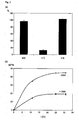
- the solutions which all become viscous are incubated in PBS for 12 hours prior to quantification of GyrB-polymer complexes released into the buffer ( Fig. 2a ).
- hydrogels Following swelling for 12 hours in PBS, the hydrogels are incubated in PBS containing 1 mM novobiocin and hydrogel dissolution is monitored by the release of GyrB-polymer complexes into the buffer ( Fig. 2b ). While coumermycin-crosslinked hydrogels are dissolved after 11 hours in the presence of novobiocin, hydrogels with DMS-crosslinked GyrB (+ DMS) are stable for the observation period of 31 hours ( Fig. 2b ). This observation confirms that the hydrogel is effectively formed by coumermycin-mediated dimerization of GyrB, which can be reversed by excess novobiocin. Specificity is further demonstrated by addition of antibiotics from other classes (e.g. ⁇ -lactams, macrolides), where no impact on gel dissolution can be observed.
- antibiotics from other classes (e.g. ⁇ -lactams, macrolides), where no impact on gel dissolution can be observed.
- VEGF 121 human vascular endothelial growth factors 121 .
- novobiocin concentrations Fig. 4
- VEGF 121 is completely released within 10 hours, while only background VEGF 121 levels are observed in the absence of the stimulus.
- intermediate novobiocin concentrations (0.25 mM)
- VEGF 121 release kinetics are slower, thereby demonstrating the trigger-adjustable growth factor release characteristics.
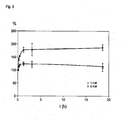
- the GyrB-based system can as well be used to design hydrogels that swell in the presence of novobiocin. Therefore, hydrogels are prepared as described above with the modification that the coumermycin-dimerized GyrB molecules are chemically crosslinked by equimolar amounts of dimethyl suberimidate. When such gels are incubated in the presence of novobiocin, swelling can be observed ( Fig. 5 ).
- Bacterial gyrase subunit B gene ( gyrB ) is amplified from E. coli DH5 ⁇ chromosomal DNA using oligonucleotides OWW866 (5'-ggtacttgcacatatgtcgaattcttatgactcctccagtatc-3', SEQ ID NO:1) and OWW867 (5'-ccagttacaagcttatggtgatggtgatggccttcatagtg-3', SEQ ID NO:2) and ligated ( Nd el/ Hin dIII) into pWW301 ( Weber C. C.
- the cell pellet is resuspended in PBS (40 ml per 1000 ml initial culture volume, 50 mM NaH 2 PO 4 , 300 mM NaCl, 10 mM imidazole, pH 8.0), disrupted using a French press (Thermo Fisher Scientific, Waltham, MA), and cell debris are eliminated by centrifugation at 15,000 x g for 20 min.
- PBS 40 ml per 1000 ml initial culture volume, 50 mM NaH 2 PO 4 , 300 mM NaCl, 10 mM imidazole, pH 8.0
- a French press Thermo Fisher Scientific, Waltham, MA
- cell debris are eliminated by centrifugation at 15,000 x g for 20 min.
- the cleared cell lysate is loaded onto an NTA-agarose Superflow column (Qiagen, Hilden, Germany, cat. no.
- Example 2 Production of VEGF 121 .
- the cell pellet is resuspended in 50 mM Tris/HCl, 2 mM EDTA, pH 8.0 (100 ml per 1000 ml initial culture volume), the cells are disrupted using a French press and the inclusion bodies are pelleted by centrifugation at 15'000 x g for 20 min at 4°C. Inclusion bodies are dissolved over night at 4°C in 6 M urea, 500 mM NaCl, 5 mM imidazole, 20 mM Tris/HCl, pH 7.9 and separated from the cell debris by centrifugation (15'000 x g, 30 min, 4°C).
- the supernatant is loaded onto an NTA-agarose Superflow column following washing (15 column volumes 6 M urea, 500 mM NaCl, 20 mM imidazole, 20 mM Tris/HCl, pH 7.9) and elution (6 M urea, 500 mM NaCl, 250 mM imidazole, 20 mM Tris/HCl, pH 7.9).
- the eluate is incubated for 30 min at 22°C with 2 mM DTT and 2 mM EDTA to reduce disulfide bonds followed by a three step dialysis (3.5 kDa MWCO, Pierce, Rockford, IL, cat. no.
- VEGF 121 is stored at -80°C. VEGF 121 is quantified using a sandwich ELISA (Peprotech, Hamburg, Germany, cat. no. 900-K10).
- GyrB Concentration of GyrB is analyzed by the Bradford method (Biorad, Ober, Germany, cat. no. 500-0006) using BSA as standard. For SDS-PAGE analysis, 12% reducing gels are used with subsequent Coomassie staining.
- NTA-AAm and 6.4 mmol acrylamide (AAm, Pharmacia Biotech, Uppsala, Sweden, cat. no. 17-1300-01) are dissolved in 48 ml 50 mM Tris/HCl, pH 8.5 under nitrogen; and polymerization is initiated by addition of 150 ⁇ l ammonium peroxodisulphate (APS, 10%, w/v) and 24 ⁇ l N,N,N',N'-tetramethylethylenediamine (TEMED) for 20 h at room temperature. The polymer is concentrated to 20 ml in vacuo and subsequently dialyzed twice (3.5 kDa MWCO, Pierce, Rockford, IL, cat. no.
- APS 150 ⁇ l ammonium peroxodisulphate
- TEMED N,N,N',N'-tetramethylethylenediamine
- the obtained molar ratio of AAm to NTA-AAm is 4 to 1 as determined by 1 H NMR (Avance 500 Bruker BioSpin AG Whyllanden, Switzerland).
- the dialysate is supplemented with 3.5 mmol NiSO 4 and dialyzed twice against 0.5x PBS for 12 h and twice against 0.1x PBS for 12 h.
- the Ni 2+ -charged polymer is concentrated 10-fold in vacuo resulting in a 6% (w/v) solution.
- Ni 2+ -charged poly(AAm-co-NTA-AAm) is analyzed by gel permeation chromatography on a Shodex OHpak SB-806 HQ (8.0 mm x 300 mm, Showa Denko, Kawasaki, Japan) column using PBS as mobile phase at a flow rate of 0.5 ml/min (Waters 2796 Alliance Bio, Waters AG, Baden, Switzerland). Detection is performed at 280 nm and 390 nm using a Waters 2487 UV-detector. As size standards, poly(styrenesulfonic acid sodium salt) (Fluka, Buchs, Switzerland) is used.
- the gel is incubated in PBS in the presence of different novobiocin (Fluka, cat. no, 74675) concentrations and the dissolution is monitored optically (GelJet Imager 2004, Intas, Göttingen, Germany) and by quantification of GyrB release into the buffer using the Bradford method. Error bars represent the standard deviation from three experiments.
- the hydrogel forms immediately and is incubated at 4°C in a humidified atmosphere for 20 h prior to incubating the hydrogel for 20 h in PBS or in PBS supplemented with 1 mM novobiocin. Swelling of the gel is monitored optically ( Fig. 5 ). Error bars represent the standard deviation from three experiments.
Landscapes
- Health & Medical Sciences (AREA)
- Life Sciences & Earth Sciences (AREA)
- Chemical & Material Sciences (AREA)
- Animal Behavior & Ethology (AREA)
- Public Health (AREA)
- Medicinal Chemistry (AREA)
- Pharmacology & Pharmacy (AREA)
- Epidemiology (AREA)
- Veterinary Medicine (AREA)
- General Health & Medical Sciences (AREA)
- Engineering & Computer Science (AREA)
- Bioinformatics & Cheminformatics (AREA)
- Proteomics, Peptides & Aminoacids (AREA)
- Inorganic Chemistry (AREA)
- Dermatology (AREA)
- Molecular Biology (AREA)
- Medicinal Preparation (AREA)
- Medicines That Contain Protein Lipid Enzymes And Other Medicines (AREA)
Abstract
The present invention relates to a hydrogel comprising a polymer, a first polypeptide and a polypeptide binding partner, wherein the polypeptide binding partner is a second polypeptide or a nucleic acid and wherein the interaction between the first polypeptide and the polypeptide binding partner stabilizes the hydrogel and is modulated by the addition of a modulating compound. A drug may be physically entrapped in the hydrogel, bound to the polymer forming the hydrogel structure, or bound to the first polypeptide or the polypeptide binding partner, and then be set free on addition of the modulating compound. Such a hydrogel comprising a drug may be injected into a patient, and drug release modulated by orally administering the modulating compound.
Description
- The invention relates to a hydrogel comprising a polymer, a polypeptide and a polypeptide binding partner, wherein the interaction of the polypeptide with its binding partner can be modulated by a third compound. This hydrogel is especially useful in drug delivery.
- Stimuli-sensing hydrogels responsive to temperature, light, calcium, antigens, DNA and specific enzymes hold great promises as smart materials for drug delivery within the body (reviewed in Kopecek J., Eur J Pharm Sci 20, 1-16, 2043), for tissue engineering (Lutolf M. P. and Hubbell J. A., Nat Biotechnol 23, 47-55, 2005) or as (nano-) valves in microfluidic applications (Beebe D. J. et al., Nature 404, 588-90; 2000). Such materials commonly respond to triggers, which are difficult to apply in a patient background in the case of physical stimuli (e.g. light, temperature) or in the case of molecule-based stimuli due to stimulus concentrations hardly achievable in a physiologic background (e.g. antibody concentrations in the g/l range). In contrast, the mode of action for pharmaceutical substances is designed to occur within physiologic limits and therefore, hydrogels based on a pharmacologic mode of action are expected to show high compliance with future therapeutic applications.
- The present invention relates to a hydrogel comprising a polymer, a first polypeptide and a polypeptide binding partner, wherein the polypeptide binding partner is a second polypeptide or a nucleic acid and wherein the interaction between the first polypeptide and the polypeptide binding partner is modulated by the addition or withdrawal of a modulating compound.
- In particular the invention relates to such a hydrogel, wherein the first polypeptide and the polypeptide binding partner are linked to the polymer, and wherein the interaction between the first polypeptide and the polypeptide binding partner stabilizes the hydrogel.
- Either the first polypeptide or the polypeptide binding partner may be linked to the polymer, and the corresponding polypeptide binding partner or the first polypeptide, respectively, linked to a compound of interest, for example a drug. Alternatively, the compound of interest may be physically entrapped in the hydrogel, or bound to the polymer forming the hydrogel.
- The interaction between the first polypeptide and the polypeptide binding partner is cleaved by the addition or withdrawal of a modulating compound.
- The invention furthermore relates to a system of drug delivery comprising the hydrogel, wherein either the first polypeptide or the polypeptide binding partner are linked to the polymer, and the corresponding polypeptide binding partner or the first polypeptide, respectively, linked to a drug, and further comprising a compound cleaving the interaction between the first polypeptide and the polypeptide binding partner.
- Likewise the invention relates to a system of drug delivery comprising the hydrogel, wherein the first polypeptide and/or the polypeptide binding partner are linked to the polymer and a drug is physically entrapped in the hydrogel structure stabilized by the interaction between the first polypeptide and the polypeptide binding partner, and further comprising a compound cleaving the interaction between the first polypeptide and the polypeptide binding partner thereby loosening the hydrogel structure to set free said drug. In a variation of this principle, the drug may be bound to the polymer forming the hydrogel. On addition of the compound cleaving the interaction between the first polypeptide and the polypeptide binding partner, the hydrogel breaks down and a drug-polymer complex is set free.
- Accordingly, the invention relates also to a method of delivering a drug to a patient in need thereof, wherein a hydrogel is administered to the patient, wherein either the first polypeptide or the polypeptide binding partner are linked to the polymer, and the corresponding polypeptide binding partner or the first polypeptide, respectively, are linked to the drug, and after the hydrogel has reached its intended site of action the compound cleaving the interaction between the first polypeptide and the polypeptide binding partner is administered.
- Likewise, the invention relates to a method of delivering a drug to a patient in need thereof, wherein a hydrogel is administered to the patient, wherein the first polypeptide and/or the polypeptide binding partner are linked to the polymer and a drug is physically entrapped in the hydrogel structure or bound to the polymer forming the hydrogel structure stabilized by the interaction between the first polypeptide and the polypeptide binding partner, and after the hydrogel has reached its intended site of action the compound cleaving the interaction between the first polypeptide and the polypeptide binding partner is administered thereby loosening the hydrogel structure to set free said drug, or the drug bound to the polymer, respectively.
-
- (a) Bacterial gyrase subunit B (GyrB) coupled to a polyacrylamide backbone is dimerized by coumermycin (+ C) resulting in gelation of the hydrogel. In the presence of novobiocin (+ N) GyrB is dissociated resulting in dissolution of the hydrogel.
- (b) Coupling of proteins to the polyacrylamide backbone. Polyacrylamide is functionalized with nitrilotriacetic acid chelating a Ni2+ ion to which GyrB can bind via a hexahistidine sequence.
-
- (a) Antibiotic-dependent hydrogel formation. Hexahistidine-tagged GyrB is incubated in the presence of coumermycin (+C, GyrB : coumermycin = 2 : 1, mol/mol), novobiocin (+N, GyrB : novobiocin = 1 : 10, mol/mol) or in the absence of any antibiotic (w/o). The GyrB complexes are mixed with Ni2+-charged poly(AAM-co-NTA-AAM) and the resulting viscous structures are incubated in PBS for 12 h prior to quantification of GyrB protein released into the buffer.
- (b) GyrB dimerization-specific hydrogel. GyrB is dimerized by coumermycin (GyrB : coumermycin = 2:1) and further incubated in the presence (+ DMS) or absence (-DMS) of the amine-specific bifunctional crosslinker dimethyl suberimidate (DMS) for covalently stabilizing the GyrB dimers. GyrB dimers are mixed with Ni2+-charged poly(AAM-co-NTA-AAM) resulting in formation of the hydrogel. Following swelling over night in PBS, the hydrogels are placed in PBS containing 1 mM novobiocin and polymer dissolution is monitored by quantifying the released GyrB protein into the buffer.
- Hydrogels are incubated in PBS in the presence of different novobiocin concentrations (0 - 1 mM) and hydrogel disintegration is measured by quantification of GyrB released into the buffer.
- VEGF121 is incorporated into the hydrogel and incubated in the presence of increasing novobiocin concentrations. VEGF121 release into the buffer is followed over time.
- Hydrogels incorporating partially chemically crosslinked GyrB units are incubated in the presence or absence of 1 mM novobiocin while monitoring changes in polymer size.
- The present invention relates to a hydrogel comprising a polymer, a first polypeptide and a polypeptide binding partner, wherein the polypeptide binding partner is a second polypeptide or a nucleic acid and wherein the interaction between the first polypeptide and the polypeptide binding partner is modulated by the addition or withdrawal of a modulating compound.
- Suitable polymers are, for example, poly-vinyl-based polymers like polyacrylamide, polyethylene glycol; poly-dimethyl-diallyl-ammonium chloride and N-(2-hydroxypropyl)-methacrylamide, polypeptides like fibrin, collagen and poly-L-lysine, and polycarbohydrates like alginate, cellulose and starch. Preferred polymers are, for example, polyethylene glycol, polyacrylamide and fibrin. Most preferred as the polymer is polyethylene glycol.
- Pairs of a first polypeptide and a polypeptide binding partner, wherein the polypeptide binding partner is a second polypeptide, are for example, GyrB-GyrB (gyrase subunit B), FKBP-FRB (FK-binding protein - a domain (FRB) of the lipid kinase protein homologue FRAP (FKBP-rapamycin-associated protein)), FM-FM (F36M mutation of FK-binding protein), ToxT-ToxT (ToxT Protein of V. cholerae), DHFR-DHFR (dihydrofolate reductase), FKBP-FKBP (FK-binding protein), FKBP-Cyp (FK-binding protein - cyclophilin) and Cyp-Cyp (Cyclophilin). The corresponding modulating compound influencing the interaction between the polypeptides either by addition or withdrawal are, for example, coumarin antibiotics (for GyrB-GyrB), rapamycin or FK506 and derivatives (for FKBP-FRB and FM), cyclosporins and derivatives (for Cyp), FK506 (for FKBP-FRB and FM), virtstatin (for ToxT), and methotrexate and derivatives thereof (for DHFR-DHFR). Preferred as modulating compounds are small organic compounds, for example compounds of a molecular weight below 5000, in particular below 2000.
- In a particular example, the first polypeptide and the polypeptide binding partner are the same compound having a tendency to form dimers. Particular examples of such dimerizing polypeptides are GyrB, FM, ToxT, FKBP, and DHFR. The hydrogel comprising such dimerizing polypeptide may further contain a compound inducing dimerization. For example such a compound inducing dimerization are coumarin antibiotics, rapamycin and derivatives, virstatin, FK1012, and methotrexate and derivatives thereof. This dimerizing compound may fall under the definition of a modulating compound as set forth hereinabove or hereinbelow. Alternatively the modulating compound influencing the interaction between the first polypeptide and the polypeptide binding partner may be a modulating compound neutralizing the activity of the dimerizing compound, and by this neutralization lead to substantial reduction of the interaction of the dimerizing polypeptide. Such compounds which neutralize the dimerizing effect are, for example, the same compounds mentioned above to be dimerizing compounds when used in a substantial excess, or preferably other, different representatives of the same class of dimerizing compounds, e.g. the class of coumarin antibiotics, rapamycin and derivatives, and methotrexate and derivatives thereof, and also FK506.
- Pairs of a first polypeptide and a polypeptide binding partner, wherein the polypeptide binding partner is a nucleic acid, are for example, E-ETR (MphR(A) protein and its operator ETR of E. coli), PIP-PIR (PIP protein of Streptomyces pristinaespiralis and its operator PIR), TetR-tetO (Tn10-derived tetracycline repressor TetR and its operator tetO), ArgR-argO (arginine-responsive repressor and its operator argO), ArsR-arsO (arsen-responsive repressor and its operator arsO), and HucR-hucO (uric acid-responsive repressor and its operator hucO). Other such pairs are the ones described by Ramos J. L. et al. (Microbiol Mol Biol Rev 69, 326-56, 2005), Martinez-Bueno M. et al. (Bioinformatics 20, 2787-91, 2004), and the ones that are listed in the database BacTregulators (http://www.bactregulators.org/). The corresponding modulating compounds influencing the interaction between the polypeptides either by addition or withdrawal are, for example, macrolide antibiotics (for E-ETR), streptogramin antibiotics (for PIP-PIR), tetracycline antibiotics (for TetR-tetO), arginine (for ArgR-argO), heavy metals (for ArsR-arsO), and uric acid (for HuOR-hucO).
- Particular preferred pairs of a first polypeptide and a polypeptide binding partner, together with the corresponding modulating compound aminocoumarin antibiotics (e.g. coumermycin and novobiocin for GyrB-GyrB), rapamycin, FK506 and its derivatives AP21998 and AP22542 (for FM-FM and FKBP-FRB) are the combinations GyrB-GyrB, FM-FM and FKBP-FRB.
- Most preferred are GyrB-GyrB and FM-FM.
- In particular, the invention relates to such a hydrogel, wherein the first polypeptide and the polypeptide binding partner are linked to the polymer, and wherein the interaction between the first polypeptide and the polypeptide binding partner stabilizes the hydrogel. For example, the combination of GyrB with coumermycin is particularly useful for stabilizing a polymer. The polypeptide and its binging partner can be coupled to the polymer by specific linkers like, for example, chelate-forming entities like NTA and polyhistidine binding to a multivalent metal ion, peptide bonds, thiols coupled to maleimide or vinyl-sulfones, a halotag (Los G.V. et al., Methods Mol Biol. 356, 195-208, 2007), a SNAP-tag or a CLIP-tag (Gautier A. et al., Chem Biol. 15, 128-36, 2008) or by a transglutaminase reaction bond (Ehrbar M, et al., Biomaterials 29, 1720-9, 2008). Such hydrogels, are usually prepared by coupling the first polypeptide and the polypeptide binding partner to the polymer backbone mixing both reaction products and varying the concentration of the modulating compound in a way that the first polypeptide and the polypeptide binding partner interact with each other thereby forming a hydrogel. When changing the concentration of the modulating compound or adding a second modulating compound neutralizing the effect of the first one, the rigid structure is broken up and the hydrogel reverts to a substantially less rigid structure, e.g. a hydrosol.
- For further stabilizing the hydrogel, additional cross-links can be introduced by chemically crosslinking the polymer backbone or crosslinking the first polypeptide with the polypeptide binding partner. Suitable crosslinkers are any homo- or heterofunctional compounds showing at least two sites for binding to another molecule like the ones described in Bioconjugate Techniques (2nd Edition by Greg T. Hermanson, Academic Press, 2008).
- Additionally, semi-interpenetrating polymer networks (semi-IPN, meaning a polymer network of two or more polymers wherein at least one polymer is crosslinked and at least one polymer is not crosslinked, as described for example in Miyata T. et al., Nature 399, 766-769, 1999) containing the first polypeptide and the polypeptide binding partner are as well within the scope of the invention
- Either the first polypeptide or the polypeptide binding partner may be linked to the polymer, and the corresponding polypeptide binding partner or the first polypeptide, respectively, linked to a compound of interest, for example a drug.
- The drug may be any drug selected from the classes of cytostatic and cytotoxic drugs, antibiotics, antiviral drugs, anti-inflammatory drugs, growth factors and cytokines. Preferred drugs are those that cannot be administered orally, like polypeptide-based drugs.
- In particular the drug is a drug which, to exert its full potential, has first to be transported to the site of action. Examples are monoclonal antibodies, growth factors and cytokines.
- The drug may either be physically entrapped in the hydrogel structure or bound to the polymer forming the hydrogel, and might be released thereof as the free drug or as drug-polymer complex, respectively, by dissolution or swelling of the hydrogel induced by addition or withdrawal of the modulating compound, breaking the hydrogel structure stabilized by the interaction between polypeptide and the polypeptide binding partner. Alternatively, the drug is bound to the polypeptide binding partner, whereas the polypeptide binding partner is bound in the hydrogel to the first polypeptide. Addition or withdrawal of the modulating compound will cleave the interaction between the first polypeptides and the polypeptide binding partner thereby liberating the drug bound to the polypeptide binding partner. The reverse configuration, where the drug is bound to the first polypeptide and the polypeptide binding partner is immobilized in the hydrogel, is as well within the scope of this invention.
- The invention furthermore relates to a system of drug delivery comprising the hydrogel wherein either the first polypeptide or the polypeptide binding partner are linked to the polymer, and the corresponding polypeptide binding partner or the first polypeptide, respectively, linked to a drug, and further comprising a compound cleaving the interaction between the first polypeptide and the polypeptide binding partner.
- Preferred components of such a drug delivery system are those hydrogels mentioned above as being preferred, e.g. comprising a preferred polymer, preferred combinations of a first polypeptide and its polypeptide binding partner, and further the suitably adapted preferred modulating compound. Particular situations when such a hydrogel is preferably used are, for example, when the drug must be administered repeatedly or over a longer time frame. For example, the hydrogel may be applied by injection to the particular site of action, and the modulating compound might be applied orally, so that the modulating compound will diffuse to the site where the hydrogel has been injected, so that it will modulate the properties of the hydrogel (swelling or dissolution) and the liberation of the drug. Alternatively, hydrogels might be designed responsive to endogenous modulating compounds like uric acid so that a chance of the physiological concentrations of the endogenous compound will modify the properties of the gel and will modulate the liberation of the embedded drug.
- Accordingly, the invention relates also to a method of delivering a drug to a patient in need thereof, wherein a hydrogel is administrered to a patient, wherein either the first polypeptide or the polypeptide binding partner are linked to the polymer, and the corresponding polypeptide binding partner or the first polypeptide, respectively, are linked to the drug, and after the hydrogel has reached its intended site of action the compound cleaving the interaction between the first polypeptide and the polypeptide binding partner is administered.
- Likewise, the invention relates to a method of delivering a drug to a patient in need thereof, wherein a hydrogel is administered to the patient, wherein either the first polypeptide or the polypeptide binding partner are linked to the polymer and a drug is physically entrapped in the hydrogel structure or bound to the polymer forming the hydrogel structure stabilized by the interaction between polypeptide and the polypeptide binding partner, and after the hydrogel has reached its intended site of action the compound cleaving the interaction between the first polypeptide and the polypeptide binding partner is administered thereby loosening the hydrogel structure to set free said drug or drug-polymer complex, respectively.
- Compared with a normal application of the drug to the patient the present method is much more convenient since the drug-comprising hydrogel must only be administred once by injection into the patient, and the drug can be released thereof on demand by taking an orally-available modulating compound. Thus repeated injections are replaced by one injection and some orally active compound in the form of a tablet, capsule, pill, or the like.
- A particular hydrogel according to the invention is the antibiotic-responsive gel based on polyacrylamide grafted with bacterial gyrase subunit B (GyrB), which can be dimerized by the aminocoumarin antibiotic coumermycin, thereby resulting in gelation and three-dimensional stabilization of the hydrogel (
Fig. 1a ). Upon addition of the aminocoumarin novobiocin (Albamacin®), the interaction between GyrB and coumermycin is competitively inhibited, the three-dimensional structure is loosened and the hydrogel changes to the sol-state (Fig. 1a ). In the particular example, the polymer backbone is polyacrylamide functionalized with nitrilotriacetic acid for chelating Ni2+ ions to bind hexahistidine-tagged (His8) GyrB (Fig. 1 b ). For construction of the polymer backbone, 2,2'-(5-acrylamido-1-carboxypentylazanediyl)diacetic acid (NTA-AAm) is synthesized, co-polymerized with acrylamide (AAm), and the NTA groups are charged with Ni2+. The resulting polymer poly(AAm-co-Ni2+-NTA-AAm) has a molecular mass of 42 kDa as judged from size exclusion chromatography with one NTA-AAm group per four acrylamide monomers as deduced from 1H NMR analysis and reflecting the stoichiometry in synthesis. - The gene for E. coli gyrase subunit B (gyrB) is tagged with the coding sequence for six histidine residues. The coding region is placed under the control of the phage T7-derived promoter and expressed in E.coli as a soluble cytoplasmatic protein. GyrB is purified via the hexahistidine tag using Ni2+-based affinity chromatography. Coumermycin-induced dimerization of genetically engineered GyrB is evaluated by incubating the protein in the presence or absence of coumermycin (GyrB : coumermycin = 2:1, mol/mol) with subsequent addition of the amine-specific bifunctional crosslinking agent dimethyl-suberimidate (DMS) and analysis of the complexes on denaturing polyacrylamide gel electrophoresis. In the absence of coumermycin, GyrB migrates predominantly at its predicted size of 27 kDa, whereas addition of the dimerizing antibiotic results in substantial dimer formation migrating at the predicted size of 54 kDa. In order to exclude that the remaining band migrating at 27 kDa in the presence of coumermycin results from inefficient antibiotic-mediated GyrB dimerization but rather from incomplete DMS-mediated covalent crosslinking, ultrafiltration experiments are performed. GyrB is incubated in the presence or absence of coumermycin and subjected to ultrafiltration using a 50 kDa molecular weight cut-off filter. GyrB in the absence of coumermycin passes the filter efficiently (54% of protein in filtrate), whereas only background GyrB levels can be detected in the filtrate, when coumermycin-dimerized GyrB is loaded (2.8% of protein in filtrate) indicating that coumermycin-mediated GyrB dimerization is quantitative.
- Synthesis of coumermycin-crosslinked hydrogels is validated by incubating hexahistidine-tagged GyrB in the absence or presence of coumermycin or with a ten-fold molar excess of novobiocin. The protein is subsequently mixed with poly(AAm-co-Ni2+-NTA-AAm) at a ratio of one GyrB per 11 Ni2+ ions chelated in the polymer backbone. The solutions which all become viscous are incubated in PBS for 12 hours prior to quantification of GyrB-polymer complexes released into the buffer (
Fig. 2a ). In the absence of coumermycin or in the presence of novobiocin, the viscous structures are completely dissolved and GyrB is quantitatively retrieved in the buffer. However, in the presence of coumermycin, GyrB-polymer release is significantly reduced and a hydrogel can be observed thereby indicating the gelling effect of this dimerizing antibiotic (Fig. 2a ). In order to demonstrate that the hydrogel formation is effectively due to coumermycin-mediated GyrB dimerization, hydrogels using coumermycin-dimerized GyrB as above or coumermycin-dimerized Gyr which had further been covalently crosslinked by DMS, are synthesized. Following swelling for 12 hours in PBS, the hydrogels are incubated in PBS containing 1 mM novobiocin and hydrogel dissolution is monitored by the release of GyrB-polymer complexes into the buffer (Fig. 2b ). While coumermycin-crosslinked hydrogels are dissolved after 11 hours in the presence of novobiocin, hydrogels with DMS-crosslinked GyrB (+ DMS) are stable for the observation period of 31 hours (Fig. 2b ). This observation confirms that the hydrogel is effectively formed by coumermycin-mediated dimerization of GyrB, which can be reversed by excess novobiocin. Specificity is further demonstrated by addition of antibiotics from other classes (e.g. β-lactams, macrolides), where no impact on gel dissolution can be observed. - Pharmacologically-triggered hydrogel formation and dissolution opens new perspectives for optimal delivery of protein-based pharmaceuticals within the body, provided that the dissolution kinetics of the hydrogel and the release properties of the biopharmaceutical can optimally be adjusted into the therapeutic window. In order to investigate adjustable hydrogel characteristics, coumermycin-dimerized hydrogel is incubated in the presence of increasing novobiocin concentrations, and gel dissolution followed by quantification of released GyrB-polymer complexes (
Fig. 3 ). In the presence of 1 mM novobiocin, the hydrogel dissolves rapidly whereas lower novobiocin concentrations correlate with slower hydrogel dissolution and slower GyrB release demonstrating adjustable dissolution and release kinetics (Fig. 3 ). The hydrogel is stable for 24 days in the absence of novobiocin. - Addition of 1 mM novobiocin at day 24 results in dissolution of the hydrogel until day 26 demonstrating the long-term functionality of the hydrogel.
- In order to demonstrate pharmacologically-triggered release of a therapeutic protein from the stimuli-sensing hydrogel, human vascular endothelial growth factors 121 (VEGF121). VEGF121 is incorporated into the hydrogel (GyrB : VEGF121 = 1000:1, mol/mol) and incubated in the presence of increasing novobiocin concentrations (
Fig. 4 ). In the presence of 1 mM novobiocin, VEGF121 is completely released within 10 hours, while only background VEGF121 levels are observed in the absence of the stimulus. At intermediate novobiocin concentrations (0.25 mM) VEGF121 release kinetics are slower, thereby demonstrating the trigger-adjustable growth factor release characteristics. - The GyrB-based system can as well be used to design hydrogels that swell in the presence of novobiocin. Therefore, hydrogels are prepared as described above with the modification that the coumermycin-dimerized GyrB molecules are chemically crosslinked by equimolar amounts of dimethyl suberimidate. When such gels are incubated in the presence of novobiocin, swelling can be observed (
Fig. 5 ). - Bacterial gyrase subunit B gene (gyrB) is amplified from E. coli DH5α chromosomal DNA using oligonucleotides OWW866 (5'-ggtacttgcacatatgtcgaattcttatgactcctccagtatc-3', SEQ ID NO:1) and OWW867 (5'-ccagttacaagcttatggtgatggtgatgatggccttcatagtg-3', SEQ ID NO:2) and ligated (Ndel/HindIII) into pWW301 (Weber C. C. et al., Biotechnol Bioeng 89, 9-17, 2005) thereby placing gyrB under the control of the phage T7 promoter. pWW873 is transformed into E. coli BL21 STAR™ (DE3) (Invitrogen, Carlsbad, CA, cat. no. C601003) and protein production is induced at OD800 = 1 by 1 mM IPTG for 3 h at 37°C. The cell pellet is resuspended in PBS (40 ml per 1000 ml initial culture volume, 50 mM NaH2PO4, 300 mM NaCl, 10 mM imidazole, pH 8.0), disrupted using a French press (Thermo Fisher Scientific, Waltham, MA), and cell debris are eliminated by centrifugation at 15,000 x g for 20 min. The cleared cell lysate is loaded onto an NTA-agarose Superflow column (Qiagen, Hilden, Germany, cat. no. 30210), which is subsequently washed with 10 column volumes PBS, 10 column volumes wash buffer (50 mM NaH2PO4, 300 mM NaCl, 20 mM imidazole, pH 8.0) and eluted with 2 column volumes elution buffer (50 mM NaH2PO4, 300 mM NaCl, 250 mM imidazole, pH 8.0). The elution buffer is exchanged to PBS by ultrafiltration (10 kDa MWCO, Sartorius, Göttingen, Germany, cat. no. VS0202), and GyrB is concentrated to 80 mg/ml.
- The expression vector pRSET-VEGF121 (Ehrbar M. et al., Circ Res 94, 1124-32, 2004) for hexahistidine-tagged human vascular endothelial growth factor 121 (VEGF121) is transformed in E. coli BL21 STAR™ (DE3), and protein production is induced at OD600 = 0.8 by addition of 1 mM IPTG for 4 h at 37°C. The cell pellet is resuspended in 50 mM Tris/HCl, 2 mM EDTA, pH 8.0 (100 ml per 1000 ml initial culture volume), the cells are disrupted using a French press and the inclusion bodies are pelleted by centrifugation at 15'000 x g for 20 min at 4°C. Inclusion bodies are dissolved over night at 4°C in 6 M urea, 500 mM NaCl, 5 mM imidazole, 20 mM Tris/HCl, pH 7.9 and separated from the cell debris by centrifugation (15'000 x g, 30 min, 4°C). The supernatant is loaded onto an NTA-agarose Superflow column following washing (15 column volumes 6 M urea, 500 mM NaCl, 20 mM imidazole, 20 mM Tris/HCl, pH 7.9) and elution (6 M urea, 500 mM NaCl, 250 mM imidazole, 20 mM Tris/HCl, pH 7.9). The eluate is incubated for 30 min at 22°C with 2 mM DTT and 2 mM EDTA to reduce disulfide bonds followed by a three step dialysis (3.5 kDa MWCO, Pierce, Rockford, IL, cat. no. 68035): 2 x 1 h in 4 M urea, 1 mM EDTA, 20 mM Tris/HCl, pH 7.5; 2 x 1 h in 3 M urea, 1 mM EDTA, 20 mM Tris/HCl, pH 7.5; 1 h in 2 M urea, 150 mM NaCl, 20 mM Tris/HCl, pH 7.5 and over night in 2 M urea, 154 mM NaCl, 20 mM Tris/HCl, pH 7.5. Purified VEGF121 is stored at -80°C. VEGF121 is quantified using a sandwich ELISA (Peprotech, Hamburg, Germany, cat. no. 900-K10).
- Concentration of GyrB is analyzed by the Bradford method (Biorad, München, Germany, cat. no. 500-0006) using BSA as standard. For SDS-PAGE analysis, 12% reducing gels are used with subsequent Coomassie staining. Antibiotic-triggered dimerization of GyrB is analyzed by incubating GyrB in the presence coumermycin A1 (GyrB: coumermycin = 2 : 1, mol/mol; Sigma, St. Louis, MO, cat. no. C9270) for 30 min at room temperature following covalent crosslinking of the dimers by addition of dimethyl suberimidate x 2 HCl (DMS, SigmaAldrich, St. Louis, MO, cat. no. 179523) at a 10-fold molar excess with respect to GyrB for 60 min at room temperature. The dimers are analyzed on SDS-PAGE. For ultrafiltration studies of the coumermycin-induced dimerization, 100 nmol GyrB in 1 ml PBS are incubated with or without 50 nmol coumermycin for 30 min at room temperature. Following addition of 4 mi PBS, the solution is subjected to ultrafiltration (50 kDa MWCO, Filtron, Northborough, MA, cat. no. OD050C36) at 5000 x g for 45 min. The retentate (1 ml) is diluted with 5 ml PBS and ultrafiltrated again prior to quantification of the GyrB concentration in the pooled filtrate and retentate.
- 3.3 mmol acryloyl chloride (ABCR, Karlsruhe, Germany, cat. no. AB172729) dissolved in 15 ml toluene are dropwise added during 4 h to an ice-cooled solution of 3 mmol N,N-bis(carboxymethyl)-L-lysine (Fluka, Buchs, Switzerland, cat. no. 14580) dissolved in 27 ml 0.44 M NaOH. The toluene is evaporated in vacuo and sodium ions are removed with Dowex® 50WX8 (Acros, Geel, Belgium, cat. no. 335351000) prior to lyophilization resulting in a viscous oil (yield: 50%).
- 1.5 mmol NTA-AAm and 6.4 mmol acrylamide (AAm, Pharmacia Biotech, Uppsala, Sweden, cat. no. 17-1300-01) are dissolved in 48
ml 50 mM Tris/HCl, pH 8.5 under nitrogen; and polymerization is initiated by addition of 150 µl ammonium peroxodisulphate (APS, 10%, w/v) and 24 µl N,N,N',N'-tetramethylethylenediamine (TEMED) for 20 h at room temperature. The polymer is concentrated to 20 ml in vacuo and subsequently dialyzed twice (3.5 kDa MWCO, Pierce, Rockford, IL, cat. no. 68035) against 2 I H2O for 12 h to eliminate salts and toxic low molecular weight compounds like residual acrylamide. The obtained molar ratio of AAm to NTA-AAm is 4 to 1 as determined by 1H NMR (Avance 500 Bruker BioSpin AG Fällanden, Switzerland). The dialysate is supplemented with 3.5 mmol NiSO4 and dialyzed twice against 0.5x PBS for 12 h and twice against 0.1x PBS for 12 h. The Ni2+-charged polymer is concentrated 10-fold in vacuo resulting in a 6% (w/v) solution. The size of Ni2+-charged poly(AAm-co-NTA-AAm) is analyzed by gel permeation chromatography on a Shodex OHpak SB-806 HQ (8.0 mm x 300 mm, Showa Denko, Kawasaki, Japan) column using PBS as mobile phase at a flow rate of 0.5 ml/min (Waters 2796 Alliance Bio, Waters AG, Baden, Switzerland). Detection is performed at 280 nm and 390 nm using a Waters 2487 UV-detector. As size standards, poly(styrenesulfonic acid sodium salt) (Fluka, Buchs, Switzerland) is used. - Purified GyrB (80 mg/ml) in PBS is mixed with coumermycin (50 mg/ml in DMSO) at a molar ratio of GyrB : coumermycin = 2:1 and incubated for 30 min at room temperature. Dimerized GyrB is subsequently added to 4.5 µl poly(AAm-co-NTA-AAM) (as 6% w/v solution in PBS) per mg GyrB and mixed by gently stirring. The hydrogel forms immediately and is incubated at 4°C in a humidified atmosphere for 20 h prior to incubating the hydrogel for 12 h in PBS. For investigation of trigger-inducible hydrogel dissolution, the gel is incubated in PBS in the presence of different novobiocin (Fluka, cat. no, 74675) concentrations and the dissolution is monitored optically (GelJet Imager 2004, Intas, Göttingen, Germany) and by quantification of GyrB release into the buffer using the Bradford method. Error bars represent the standard deviation from three experiments.
- Purified GyrB (80 mg/ml) in PBS is mixed with coumermycin (50 mg/ml in DMSO) at a molar ratio of GyrB : coumermycin = 2:1 and incubated for 30 min at room temperature. Dimerized GyrB is subsequently incubated with an equimolar amount of dimethyl suberimidate and incubated at room temperature for 60 min. Dimerized and crosslinked GyrB is subsequently added to 4.5 µl poly(AAm-co-NTA-AAM) (as 6% w/v solution in PBS) per mg GyrB and mixed by gently stirring. The hydrogel forms immediately and is incubated at 4°C in a humidified atmosphere for 20 h prior to incubating the hydrogel for 20 h in PBS or in PBS supplemented with 1 mM novobiocin. Swelling of the gel is monitored optically (
Fig. 5 ). Error bars represent the standard deviation from three experiments.
Claims (15)
- A hydrogel comprising a polymer, a first polypeptide and a polypeptide binding partner, wherein the polypeptide binding partner is a second polypeptide or a nucleic acid and wherein the interaction between the first polypeptide and the polypeptide binding partner is modulated by the addition or withdrawal of a modulating compound.
- The hydrogel of claim 1, wherein the first polypeptide and the polypeptide binding partner are linked to the polymer, and wherein the interaction between the first polypeptide and the polypeptide binding partner stabilizes the hydrogel.
- The hydrogel of claim 1, wherein the first polypeptide is linked to the polymer and the polypeptide binding partner is linked to a compound of interest.
- The hydrogel of claim 1, wherein the first polypeptide is linked to a compound of interest and the polypeptide binding partner is linked to the polymer.
- The hydrogel of claim 1 further comprising a compound of interest physically entrapped in the hydrogel or linked to the polymer.
- The hydrogel of claim 3, 4 or 5, wherein the interaction between the first polypeptide and the polypeptide binding partner is cleaved by the addition or withdrawal of a modulating compound.
- The hydrogel of claim 3, 4, 5 or 6, wherein the compound of interest is a drug.
- The hydrogel of any of the preceding claims, wherein the polymer is selected from poly-vinyl-based polymers, polypeptides and polycarbohydrates.
- The hydrogel of claim 8 wherein the polymer is selected from polyacrylamide, polyethylene glycol, poly-dimethyl-diallyl-ammonium chloride, N-(2-hydroxypropyl)-methacrylamide, fibrin, collagen, poly-L-lysine, alginate, cellulose, and starch.
- The hydrogel of any of the preceding claims, wherein the first polypeptide and the polypeptide binding partner are selected from the pairs of a protein binding to a DNA sequence or a protein binding to a second protein.
- The hydrogel of claim 11, wherein the first polypeptide and the polypeptide binding partner are GyrB-GyrB, FKBP-FRB, FM-FM, ToxT-ToxT, DHFR-DHFR, FKBP-FKBP, FKBP-Cyp, Cyp-Cyp, E-ETR, PIP-PIR, TetR-tetO, ArgR-argO, ArsR-arsO, and HucR-hucO.
- The hydrogel of claim 11, wherein the first polypeptide and the polypeptide binding partner are one polypeptide having a tendency to dimerize by addition of withdrawal of the modulating compound.
- The hydrogel of claim 13, wherein the polypeptide having a tendency to dimerize is GyrB, FM, ToxT, DHFR, FKBP, and Cyp.
- A system of drug delivery comprising the hydrogel of claim 1, wherein either the first polypeptide or the polypeptide binding partner are linked to the polymer, and the corresponding polypeptide binding partner or the first polypeptide, respectively, are linked to a drug, and further comprising a compound cleaving the interaction between the first polypeptide and the polypeptide binding partner.
- A system of drug delivery comprising the hydrogel of claim 1, wherein the first polypeptide and/or the polypeptide binding partner are linked to the polymer and a drug is physically entrapped in the hydrogel structure or bound to the polymer stabilized by the interaction between polypeptide and the polypeptide binding partner, and further comprising a compound cleaving the interaction between the first polypeptide and the polypeptide binding partner thereby loosening the hydrogel structure to set free said drug.
Priority Applications (6)
| Application Number | Priority Date | Filing Date | Title |
|---|---|---|---|
| EP08010312A EP2130555A1 (en) | 2008-06-06 | 2008-06-06 | Stimuli-responsive hydrogel |
| PCT/EP2009/004050 WO2009146929A1 (en) | 2008-06-06 | 2009-06-05 | Stimuli-responsive hydrogel |
| US12/996,492 US20110151006A1 (en) | 2008-06-06 | 2009-06-05 | Stimuli-responsive hydrogel |
| CA2726949A CA2726949A1 (en) | 2008-06-06 | 2009-06-05 | Stimuli-responsive hydrogel |
| JP2011512030A JP5524953B2 (en) | 2008-06-06 | 2009-06-05 | Stimulus-responsive hydrogel |
| EP09757312A EP2285418A1 (en) | 2008-06-06 | 2009-06-05 | Stimuli-responsive hydrogel |
Applications Claiming Priority (1)
| Application Number | Priority Date | Filing Date | Title |
|---|---|---|---|
| EP08010312A EP2130555A1 (en) | 2008-06-06 | 2008-06-06 | Stimuli-responsive hydrogel |
Publications (1)
| Publication Number | Publication Date |
|---|---|
| EP2130555A1 true EP2130555A1 (en) | 2009-12-09 |
Family
ID=40039733
Family Applications (1)
| Application Number | Title | Priority Date | Filing Date |
|---|---|---|---|
| EP08010312A Withdrawn EP2130555A1 (en) | 2008-06-06 | 2008-06-06 | Stimuli-responsive hydrogel |
Country Status (1)
| Country | Link |
|---|---|
| EP (1) | EP2130555A1 (en) |
Cited By (1)
| Publication number | Priority date | Publication date | Assignee | Title |
|---|---|---|---|---|
| WO2025184228A1 (en) * | 2024-02-26 | 2025-09-04 | Smartweave, Inc. | Smart customizable therapeutic mechanisms and systems for tissue regeneration and growth |
Citations (1)
| Publication number | Priority date | Publication date | Assignee | Title |
|---|---|---|---|---|
| US7179487B1 (en) * | 1998-06-19 | 2007-02-20 | University Of Utah Research Foundation | Hydrogels of water soluble polymers crosslinked by protein domains |
-
2008
- 2008-06-06 EP EP08010312A patent/EP2130555A1/en not_active Withdrawn
Patent Citations (1)
| Publication number | Priority date | Publication date | Assignee | Title |
|---|---|---|---|---|
| US7179487B1 (en) * | 1998-06-19 | 2007-02-20 | University Of Utah Research Foundation | Hydrogels of water soluble polymers crosslinked by protein domains |
Non-Patent Citations (19)
| Title |
|---|
| BEEBE D. J. ET AL., NATURE, vol. 404, 2000, pages 588 - 90 |
| EHRBAR M ET AL., BIOMATERIALS, vol. 29, 2008, pages 1720 - 9 |
| EHRBAR M. ET AL., CIRC RES, vol. 94, 2004, pages 1124 - 32 |
| GAUTIER A. ET AL., CHEM BIOL., vol. 15, 2008, pages 128 - 36 |
| GORMLEY N A ET AL: "The interaction of coumarin antibiotics with fragments of the DNA gyrase B protein", BIOCHEMISTRY 19960416 US, vol. 35, no. 15, 16 April 1996 (1996-04-16), pages 5083 - 5092, XP002509636, ISSN: 0006-2960 * |
| GREG T. HERMANSON: "Bioconjugate Techniques", 2008, ACADEMIC PRESS |
| KOPECEK J., EUR J PHARM SCI, vol. 20, 2043, pages 1 - 16 |
| KOPYTEK S J ET AL: "Chemically induced dimerization of dihydrofolate reductase by a homobifunctional dimer of methotrexate.", CHEMISTRY & BIOLOGY MAY 2000, vol. 7, no. 5, May 2000 (2000-05-01), pages 313 - 321, XP002509637, ISSN: 1074-5521 * |
| LOS G.V. ET AL., METHODS MOL BIOL., vol. 356, 2007, pages 195 - 208 |
| LUTOLF M P ET AL: "Repair of bone defects using synthetic mimetics of collagenous extracellular matrices", NATURE BIOTECHNOLOGY 20030501 US, vol. 21, no. 5, 1 May 2003 (2003-05-01), pages 513 - 518, XP002508395, ISSN: 1087-0156 * |
| LUTOLF M. P.; HUBBELL J. A., NAT BIOTECHNOL, vol. 23, 2005, pages 47 - 55 |
| MARTINEZ-BUENO M. ET AL., BIOINFORMATICS, vol. 20, 2004, pages 2787 - 91, Retrieved from the Internet <URL:http://www.bactregulators.org> |
| MIYATA T ASAMI N URAGAMI: "A REVERSIBLY ANTIGEN-RESPONSIVE HYDROGEL", NATURE, NATURE PUBLISHING GROUP, LONDON, UK, vol. 399, 24 June 1999 (1999-06-24), pages 766 - 769, XP002954469, ISSN: 0028-0836 * |
| MIYATA T. ET AL., NATURE, vol. 399, 1999, pages 766 - 769 |
| RAMOS J. L. ET AL., MICROBIOL MOL BIOL REV, vol. 69, 2005, pages 326 - 56 |
| TADA ET AL: "Drug release from hydrogel containing albumin as crosslinker", JOURNAL OF BIOSCIENCE AND BIOENGINEERING, ELSEVIER, AMSTERDAM, NL, vol. 100, no. 5, 1 November 2005 (2005-11-01), pages 551 - 555, XP005226110, ISSN: 1389-1723 * |
| VAYSSE L ET AL: "Development of a Self-assembling Nuclear Targeting Vector System Based on the Tetracycline Repressor Protein", JOURNAL OF BIOLOGICAL CHEMISTRY 20040213 US, vol. 279, no. 7, 13 February 2004 (2004-02-13), pages 5555 - 5564, XP002509635, ISSN: 0021-9258 * |
| WEBER C. C. ET AL., BIOTECHNOL BIOENG, vol. 89, 2005, pages 9 - 17 |
| YANG JIYUAN ET AL: "Dynamic light scattering study of self-assembly of HPMA hybrid graft copolymers", BIOMACROMOLECULES, vol. 9, no. 2, February 2008 (2008-02-01), pages 510 - 517, XP002508394, ISSN: 1525-7797 * |
Cited By (1)
| Publication number | Priority date | Publication date | Assignee | Title |
|---|---|---|---|---|
| WO2025184228A1 (en) * | 2024-02-26 | 2025-09-04 | Smartweave, Inc. | Smart customizable therapeutic mechanisms and systems for tissue regeneration and growth |
Similar Documents
| Publication | Publication Date | Title |
|---|---|---|
| Callmann et al. | Poly (peptide): Synthesis, structure, and function of peptide–polymer amphiphiles and protein-like polymers | |
| US20110151006A1 (en) | Stimuli-responsive hydrogel | |
| AU2001275226B2 (en) | Conjugate addition reactions for the controlled delivery of pharmaceutically active compounds | |
| Reguera et al. | Multicomponent reactions in ligation and bioconjugation chemistry | |
| Pelegri-O’Day et al. | Controlled radical polymerization as an enabling approach for the next generation of protein–polymer conjugates | |
| Van de Wetering et al. | Poly (ethylene glycol) hydrogels formed by conjugate addition with controllable swelling, degradation, and release of pharmaceutically active proteins | |
| Tsukiji et al. | Sortase‐mediated ligation: a gift from gram‐positive bacteria to protein engineering | |
| Krishna et al. | Protein‐and peptide‐modified synthetic polymeric biomaterials | |
| KR101724171B1 (en) | Anionic-core composition for delivery of therapeutic agents, and methods of making and using the same | |
| Kong et al. | Long acting hyaluronate–exendin 4 conjugate for the treatment of type 2 diabetes | |
| JP4744693B2 (en) | Mucus-adhesive polymer, its use and process | |
| EP2455104A1 (en) | Bio-functionalized stimulus-responsive dissolvable PEG-hydrogels | |
| US20030220245A1 (en) | Conjugate addition reactions for the controlled delivery of pharmaceutical active compounds | |
| Jo et al. | Tailoring hydrogel degradation and drug release via neighboring amino acid controlled ester hydrolysis | |
| Gil et al. | Bioengineered robust hybrid hydrogels enrich the stability and efficacy of biological drugs | |
| CA2613208A1 (en) | N, n-bis- (2-hydroxyethyl) glycine amide as linker in polymer conjugated prodrugs | |
| AU2001275226A1 (en) | Conjugate addition reactions for the controlled delivery of pharmaceutically active compounds | |
| US8569463B2 (en) | Method of covalently modifying proteins with organic molecules to prevent aggregation | |
| Teal et al. | Engineering hydrogels for affinity-based release of therapeutic proteins | |
| Absar et al. | Preparation and characterization of anionic oligopeptide-modified tissue plasminogen activator for triggered delivery: an approach for localized thrombolysis | |
| US20100112660A1 (en) | Method for Derivatization of Proteins Using Hydrostatic Pressure | |
| Li et al. | Protein-cross-linked hydrogels with tailored swelling and bioactivity performance: A comparative study | |
| Hotz et al. | Design, Synthesis, and Application of Stimulus‐Sensing Biohybrid Hydrogels | |
| Muangsiri et al. | The protein-binding and drug release properties of macromolecular conjugates containing daptomycin and dextran | |
| US20070092508A1 (en) | Detoxification depot for Alzheimer's disease |
Legal Events
| Date | Code | Title | Description |
|---|---|---|---|
| PUAI | Public reference made under article 153(3) epc to a published international application that has entered the european phase |
Free format text: ORIGINAL CODE: 0009012 |
|
| AK | Designated contracting states |
Kind code of ref document: A1 Designated state(s): AT BE BG CH CY CZ DE DK EE ES FI FR GB GR HR HU IE IS IT LI LT LU LV MC MT NL NO PL PT RO SE SI SK TR |
|
| AX | Request for extension of the european patent |
Extension state: AL BA MK RS |
|
| AKY | No designation fees paid | ||
| REG | Reference to a national code |
Ref country code: DE Ref legal event code: 8566 |
|
| STAA | Information on the status of an ep patent application or granted ep patent |
Free format text: STATUS: THE APPLICATION IS DEEMED TO BE WITHDRAWN |
|
| 18D | Application deemed to be withdrawn |
Effective date: 20100610 |