EP2129653B1 - Novel p2y12 receptor antagonists - Google Patents
Novel p2y12 receptor antagonists Download PDFInfo
- Publication number
- EP2129653B1 EP2129653B1 EP08735068.2A EP08735068A EP2129653B1 EP 2129653 B1 EP2129653 B1 EP 2129653B1 EP 08735068 A EP08735068 A EP 08735068A EP 2129653 B1 EP2129653 B1 EP 2129653B1
- Authority
- EP
- European Patent Office
- Prior art keywords
- substituted
- unsubstituted
- group
- sulfur
- oxygen
- Prior art date
- Legal status (The legal status is an assumption and is not a legal conclusion. Google has not performed a legal analysis and makes no representation as to the accuracy of the status listed.)
- Not-in-force
Links
- 0 *c(cc(c(C(c1c2cccc1)=O)c1C2=O)Nc(cc2)ccc2C(O)=O)c1N Chemical compound *c(cc(c(C(c1c2cccc1)=O)c1C2=O)Nc(cc2)ccc2C(O)=O)c1N 0.000 description 10
- DSSOPCADZJORJO-UHFFFAOYSA-N COc1ccc(CCNc(cc(c(N)c2C(c3ccccc33)=O)S(O)(=O)=O)c2C3=O)cc1OC Chemical compound COc1ccc(CCNc(cc(c(N)c2C(c3ccccc33)=O)S(O)(=O)=O)c2C3=O)cc1OC DSSOPCADZJORJO-UHFFFAOYSA-N 0.000 description 2
- DERVVUPFXYMBNQ-UHFFFAOYSA-N Nc(c(C(c1c2cccc1)=O)c(c(NCCc1ccccc1)c1)C2=O)c1S(O)(=O)=O Chemical compound Nc(c(C(c1c2cccc1)=O)c(c(NCCc1ccccc1)c1)C2=O)c1S(O)(=O)=O DERVVUPFXYMBNQ-UHFFFAOYSA-N 0.000 description 2
- ZHQRPIRGSWEALJ-UHFFFAOYSA-N Nc(c(S(O)(=O)=O)cc(Nc1cccc2c1cccc2)c1C(c2c3cccc2)=O)c1C3=O Chemical compound Nc(c(S(O)(=O)=O)cc(Nc1cccc2c1cccc2)c1C(c2c3cccc2)=O)c1C3=O ZHQRPIRGSWEALJ-UHFFFAOYSA-N 0.000 description 2
- JVNLUAVLKGWCAJ-UHFFFAOYSA-N C[S](c(c(N)c1C(c2ccccc22)=O)cc(Nc(cc3)ccc3O)c1C2=O)([Na])(=O)(=O)=O Chemical compound C[S](c(c(N)c1C(c2ccccc22)=O)cc(Nc(cc3)ccc3O)c1C2=O)([Na])(=O)(=O)=O JVNLUAVLKGWCAJ-UHFFFAOYSA-N 0.000 description 1
- UGBIMTONVOAFAF-UHFFFAOYSA-N C[S](c(cc(c(C(c1ccccc11)=O)c2C1=O)Nc1cc(Cl)ccc1)c2N)([Na])(=C)(=O)(=O)=O Chemical compound C[S](c(cc(c(C(c1ccccc11)=O)c2C1=O)Nc1cc(Cl)ccc1)c2N)([Na])(=C)(=O)(=O)=O UGBIMTONVOAFAF-UHFFFAOYSA-N 0.000 description 1
- IOMYNZZUVXABLN-UHFFFAOYSA-N Cc(cc(c(C(c1ccccc11)=O)c2C1=O)Nc(cc1S(O)(=O)=O)ccc1Nc1ccccc1)c2N Chemical compound Cc(cc(c(C(c1ccccc11)=O)c2C1=O)Nc(cc1S(O)(=O)=O)ccc1Nc1ccccc1)c2N IOMYNZZUVXABLN-UHFFFAOYSA-N 0.000 description 1
- IRXNZYNMQFGCAR-UHFFFAOYSA-N Cc1cc(Nc(cc(c(N)c2C(c3ccccc33)=O)S(O)(=O)=O)c2C3=O)ccc1Nc1ccccc1 Chemical compound Cc1cc(Nc(cc(c(N)c2C(c3ccccc33)=O)S(O)(=O)=O)c2C3=O)ccc1Nc1ccccc1 IRXNZYNMQFGCAR-UHFFFAOYSA-N 0.000 description 1
- QNQAEGCXDAVKAX-UHFFFAOYSA-N Nc(c(C(c1c2cccc1)=O)c(c(Nc(cc1)ccc1C(O)=O)c1)C2=O)c1S(O)(=O)=O Chemical compound Nc(c(C(c1c2cccc1)=O)c(c(Nc(cc1)ccc1C(O)=O)c1)C2=O)c1S(O)(=O)=O QNQAEGCXDAVKAX-UHFFFAOYSA-N 0.000 description 1
- AWDHCCPCIMVLNR-UHFFFAOYSA-N Nc(c(S(O)(=O)=O)cc(Nc(c(C(O)=O)c1)ccc1Cl)c1C(c2ccccc22)=O)c1C2=O Chemical compound Nc(c(S(O)(=O)=O)cc(Nc(c(C(O)=O)c1)ccc1Cl)c1C(c2ccccc22)=O)c1C2=O AWDHCCPCIMVLNR-UHFFFAOYSA-N 0.000 description 1
- LQUCSXOZWDCBQC-UHFFFAOYSA-N Nc1cccc(Nc(cc(c(N)c2C(c3ccccc33)=O)S(O)(=O)=O)c2C3=O)c1 Chemical compound Nc1cccc(Nc(cc(c(N)c2C(c3ccccc33)=O)S(O)(=O)=O)c2C3=O)c1 LQUCSXOZWDCBQC-UHFFFAOYSA-N 0.000 description 1
Images
Classifications
-
- C—CHEMISTRY; METALLURGY
- C07—ORGANIC CHEMISTRY
- C07C—ACYCLIC OR CARBOCYCLIC COMPOUNDS
- C07C309/00—Sulfonic acids; Halides, esters, or anhydrides thereof
- C07C309/01—Sulfonic acids
- C07C309/28—Sulfonic acids having sulfo groups bound to carbon atoms of six-membered aromatic rings of a carbon skeleton
- C07C309/45—Sulfonic acids having sulfo groups bound to carbon atoms of six-membered aromatic rings of a carbon skeleton containing nitrogen atoms, not being part of nitro or nitroso groups, bound to the carbon skeleton
- C07C309/52—Sulfonic acids having sulfo groups bound to carbon atoms of six-membered aromatic rings of a carbon skeleton containing nitrogen atoms, not being part of nitro or nitroso groups, bound to the carbon skeleton the carbon skeleton being further substituted by doubly-bound oxygen atoms
- C07C309/53—Sulfonic acids having sulfo groups bound to carbon atoms of six-membered aromatic rings of a carbon skeleton containing nitrogen atoms, not being part of nitro or nitroso groups, bound to the carbon skeleton the carbon skeleton being further substituted by doubly-bound oxygen atoms the carbon skeleton containing carbon atoms of quinone rings
-
- A—HUMAN NECESSITIES
- A61—MEDICAL OR VETERINARY SCIENCE; HYGIENE
- A61P—SPECIFIC THERAPEUTIC ACTIVITY OF CHEMICAL COMPOUNDS OR MEDICINAL PREPARATIONS
- A61P7/00—Drugs for disorders of the blood or the extracellular fluid
- A61P7/02—Antithrombotic agents; Anticoagulants; Platelet aggregation inhibitors
-
- A—HUMAN NECESSITIES
- A61—MEDICAL OR VETERINARY SCIENCE; HYGIENE
- A61P—SPECIFIC THERAPEUTIC ACTIVITY OF CHEMICAL COMPOUNDS OR MEDICINAL PREPARATIONS
- A61P9/00—Drugs for disorders of the cardiovascular system
-
- A—HUMAN NECESSITIES
- A61—MEDICAL OR VETERINARY SCIENCE; HYGIENE
- A61P—SPECIFIC THERAPEUTIC ACTIVITY OF CHEMICAL COMPOUNDS OR MEDICINAL PREPARATIONS
- A61P9/00—Drugs for disorders of the cardiovascular system
- A61P9/10—Drugs for disorders of the cardiovascular system for treating ischaemic or atherosclerotic diseases, e.g. antianginal drugs, coronary vasodilators, drugs for myocardial infarction, retinopathy, cerebrovascula insufficiency, renal arteriosclerosis
-
- C—CHEMISTRY; METALLURGY
- C07—ORGANIC CHEMISTRY
- C07C—ACYCLIC OR CARBOCYCLIC COMPOUNDS
- C07C229/00—Compounds containing amino and carboxyl groups bound to the same carbon skeleton
- C07C229/52—Compounds containing amino and carboxyl groups bound to the same carbon skeleton having amino and carboxyl groups bound to carbon atoms of six-membered aromatic rings of the same carbon skeleton
- C07C229/68—Compounds containing amino and carboxyl groups bound to the same carbon skeleton having amino and carboxyl groups bound to carbon atoms of six-membered aromatic rings of the same carbon skeleton with amino and carboxyl groups bound to carbon atoms of six-membered aromatic rings being part of the same condensed ring system
- C07C229/72—Compounds containing amino and carboxyl groups bound to the same carbon skeleton having amino and carboxyl groups bound to carbon atoms of six-membered aromatic rings of the same carbon skeleton with amino and carboxyl groups bound to carbon atoms of six-membered aromatic rings being part of the same condensed ring system the carbon skeleton being further substituted by doubly-bound oxygen atoms
- C07C229/74—Compounds containing amino and carboxyl groups bound to the same carbon skeleton having amino and carboxyl groups bound to carbon atoms of six-membered aromatic rings of the same carbon skeleton with amino and carboxyl groups bound to carbon atoms of six-membered aromatic rings being part of the same condensed ring system the carbon skeleton being further substituted by doubly-bound oxygen atoms the condensed ring system being formed by at least three rings, e.g. amino anthraquinone carboxylic acids
-
- C—CHEMISTRY; METALLURGY
- C07—ORGANIC CHEMISTRY
- C07C—ACYCLIC OR CARBOCYCLIC COMPOUNDS
- C07C309/00—Sulfonic acids; Halides, esters, or anhydrides thereof
- C07C309/01—Sulfonic acids
- C07C309/28—Sulfonic acids having sulfo groups bound to carbon atoms of six-membered aromatic rings of a carbon skeleton
- C07C309/45—Sulfonic acids having sulfo groups bound to carbon atoms of six-membered aromatic rings of a carbon skeleton containing nitrogen atoms, not being part of nitro or nitroso groups, bound to the carbon skeleton
- C07C309/46—Sulfonic acids having sulfo groups bound to carbon atoms of six-membered aromatic rings of a carbon skeleton containing nitrogen atoms, not being part of nitro or nitroso groups, bound to the carbon skeleton having the sulfo groups bound to carbon atoms of non-condensed six-membered aromatic rings
-
- C—CHEMISTRY; METALLURGY
- C07—ORGANIC CHEMISTRY
- C07C—ACYCLIC OR CARBOCYCLIC COMPOUNDS
- C07C323/00—Thiols, sulfides, hydropolysulfides or polysulfides substituted by halogen, oxygen or nitrogen atoms, or by sulfur atoms not being part of thio groups
- C07C323/23—Thiols, sulfides, hydropolysulfides or polysulfides substituted by halogen, oxygen or nitrogen atoms, or by sulfur atoms not being part of thio groups containing thio groups and nitrogen atoms, not being part of nitro or nitroso groups, bound to the same carbon skeleton
- C07C323/31—Thiols, sulfides, hydropolysulfides or polysulfides substituted by halogen, oxygen or nitrogen atoms, or by sulfur atoms not being part of thio groups containing thio groups and nitrogen atoms, not being part of nitro or nitroso groups, bound to the same carbon skeleton having the sulfur atom of at least one of the thio groups bound to a carbon atom of a six-membered aromatic ring of the carbon skeleton
- C07C323/33—Thiols, sulfides, hydropolysulfides or polysulfides substituted by halogen, oxygen or nitrogen atoms, or by sulfur atoms not being part of thio groups containing thio groups and nitrogen atoms, not being part of nitro or nitroso groups, bound to the same carbon skeleton having the sulfur atom of at least one of the thio groups bound to a carbon atom of a six-membered aromatic ring of the carbon skeleton having at least one of the nitrogen atoms bound to a carbon atom of the same non-condensed six-membered aromatic ring
- C07C323/35—Thiols, sulfides, hydropolysulfides or polysulfides substituted by halogen, oxygen or nitrogen atoms, or by sulfur atoms not being part of thio groups containing thio groups and nitrogen atoms, not being part of nitro or nitroso groups, bound to the same carbon skeleton having the sulfur atom of at least one of the thio groups bound to a carbon atom of a six-membered aromatic ring of the carbon skeleton having at least one of the nitrogen atoms bound to a carbon atom of the same non-condensed six-membered aromatic ring the thio group being a sulfide group
- C07C323/37—Thiols, sulfides, hydropolysulfides or polysulfides substituted by halogen, oxygen or nitrogen atoms, or by sulfur atoms not being part of thio groups containing thio groups and nitrogen atoms, not being part of nitro or nitroso groups, bound to the same carbon skeleton having the sulfur atom of at least one of the thio groups bound to a carbon atom of a six-membered aromatic ring of the carbon skeleton having at least one of the nitrogen atoms bound to a carbon atom of the same non-condensed six-membered aromatic ring the thio group being a sulfide group the sulfur atom of the sulfide group being further bound to a carbon atom of a six-membered aromatic ring
-
- C—CHEMISTRY; METALLURGY
- C07—ORGANIC CHEMISTRY
- C07D—HETEROCYCLIC COMPOUNDS
- C07D251/00—Heterocyclic compounds containing 1,3,5-triazine rings
- C07D251/02—Heterocyclic compounds containing 1,3,5-triazine rings not condensed with other rings
- C07D251/12—Heterocyclic compounds containing 1,3,5-triazine rings not condensed with other rings having three double bonds between ring members or between ring members and non-ring members
- C07D251/26—Heterocyclic compounds containing 1,3,5-triazine rings not condensed with other rings having three double bonds between ring members or between ring members and non-ring members with only hetero atoms directly attached to ring carbon atoms
- C07D251/40—Nitrogen atoms
- C07D251/42—One nitrogen atom
-
- C—CHEMISTRY; METALLURGY
- C07—ORGANIC CHEMISTRY
- C07D—HETEROCYCLIC COMPOUNDS
- C07D251/00—Heterocyclic compounds containing 1,3,5-triazine rings
- C07D251/02—Heterocyclic compounds containing 1,3,5-triazine rings not condensed with other rings
- C07D251/12—Heterocyclic compounds containing 1,3,5-triazine rings not condensed with other rings having three double bonds between ring members or between ring members and non-ring members
- C07D251/26—Heterocyclic compounds containing 1,3,5-triazine rings not condensed with other rings having three double bonds between ring members or between ring members and non-ring members with only hetero atoms directly attached to ring carbon atoms
- C07D251/40—Nitrogen atoms
- C07D251/42—One nitrogen atom
- C07D251/44—One nitrogen atom with halogen atoms attached to the two other ring carbon atoms
-
- C—CHEMISTRY; METALLURGY
- C07—ORGANIC CHEMISTRY
- C07D—HETEROCYCLIC COMPOUNDS
- C07D251/00—Heterocyclic compounds containing 1,3,5-triazine rings
- C07D251/02—Heterocyclic compounds containing 1,3,5-triazine rings not condensed with other rings
- C07D251/12—Heterocyclic compounds containing 1,3,5-triazine rings not condensed with other rings having three double bonds between ring members or between ring members and non-ring members
- C07D251/26—Heterocyclic compounds containing 1,3,5-triazine rings not condensed with other rings having three double bonds between ring members or between ring members and non-ring members with only hetero atoms directly attached to ring carbon atoms
- C07D251/40—Nitrogen atoms
- C07D251/42—One nitrogen atom
- C07D251/46—One nitrogen atom with oxygen or sulfur atoms attached to the two other ring carbon atoms
-
- C—CHEMISTRY; METALLURGY
- C07—ORGANIC CHEMISTRY
- C07D—HETEROCYCLIC COMPOUNDS
- C07D251/00—Heterocyclic compounds containing 1,3,5-triazine rings
- C07D251/02—Heterocyclic compounds containing 1,3,5-triazine rings not condensed with other rings
- C07D251/12—Heterocyclic compounds containing 1,3,5-triazine rings not condensed with other rings having three double bonds between ring members or between ring members and non-ring members
- C07D251/26—Heterocyclic compounds containing 1,3,5-triazine rings not condensed with other rings having three double bonds between ring members or between ring members and non-ring members with only hetero atoms directly attached to ring carbon atoms
- C07D251/40—Nitrogen atoms
- C07D251/48—Two nitrogen atoms
- C07D251/50—Two nitrogen atoms with a halogen atom attached to the third ring carbon atom
-
- C—CHEMISTRY; METALLURGY
- C07—ORGANIC CHEMISTRY
- C07C—ACYCLIC OR CARBOCYCLIC COMPOUNDS
- C07C2603/00—Systems containing at least three condensed rings
- C07C2603/02—Ortho- or ortho- and peri-condensed systems
- C07C2603/04—Ortho- or ortho- and peri-condensed systems containing three rings
- C07C2603/22—Ortho- or ortho- and peri-condensed systems containing three rings containing only six-membered rings
- C07C2603/24—Anthracenes; Hydrogenated anthracenes
Definitions
- the present invention lies on the field of pharmacology, drug design and organic chemistry and relates to novel P2Y 12 receptor antagonists useful for treating, alleviating and/or preventing diseases and disorders related to P2Y 12 receptor function as well as pharmaceutical compositions comprising such compounds and methods for preparing such compounds.
- the present invention is further directed to the use of these compounds, alone or in combination with other therapeutic agents, for the alleviation, prevention and/or treatment of diseases and disorders, especially the use as antithrombotic agents for inhibiting platelet aggregation.
- the P2 receptors are a major class of receptors in the human body ( Guile, S. D. et al., Prog. Med. Chem., 2001, 38, 115 ; Lambrecht, G. et al., Curr. Pharm. Des, 2002, 8, 2371 ; Gao, Z. G., Jacobson, K. A. Curr. Top. Med. Chem., 2004, 4, 855 ; Burnstock, G. Curr. Top. Med. Chem., 2004, 4, 793-803 ).
- P2Y G protein-coupled or "metabotropic" P2 receptors, designated P2Y
- P2X ligand-gated ion channels or "ionotropic” receptors
- Blood platelets express one P2X receptor subtype, P2X 1 , activated by ATP, and two P2Y receptor subtypes, P2Y 1 and P2Y 12 , both of which are activated by the nucleotide ADP, which induces platelet aggregation ( Gachet C., Annu. Rev. Pharmacol. Toxicol. 2006, 46, 277-300 ).
- P2Y 1 coupled to the heterotrimeric GTP-binding protein G q and phospholipase C ⁇ is responsible for the mobilization of calcium ions from internal stores mediating platelet shape change and the initial wave of rapidly reversible platelet aggregation induced by ADP.
- P2Y 12 is coupled to inhibition of adenylate cyclase through G i protein and mediates a progressive and sustained aggregation not preceded by shape change.
- the latter receptor also plays an important role in the potentiation of platelet secretion induced by several agonists, and its congenital deficiency has been shown to result in a lifelong bleeding disorder ( Leon, C. et al. Thromb. Haemost. 1999, 81: 775-781 ; Cattaneo, M., Gachet, C. Arterioscler. Thromb. Vasc. Biol. 1999, 19: 2281-2285 ).
- P2Y 12 receptor shows a limited expression in the human body. It is expressed in very high density on blood platelets ( El-Tayeb, A., Griessmeier, K.J, Mueller, C.E. Bioorg. Med. Chem. Lett. 2005, 15: 5450-52 ). Apart from that, it shows a limited expression pattern (no or only low expression in peripheral tissues and cells, some expression in the brain) making it an ideal drug target for selective therapeutic intervention ( Barnard E.A., Simon, J. Trends Pharmacol. Sci. 2001, 22: 388-391 ).
- the P2Y 12 receptor on blood platelets is the target of the antithrombotic drugs ticlopidine and clopidogrel, and the newly developed analog prasugrel ( Hollopeter, G. et al., Nature 2001, 409, 202-207 ; Zangh et al., J. Biol. Chem. 2001, 276: 8608-8615 ; Takasaki, J. et al., Mol. Pharmacol. 2001, 60: 432-439 ), representing platelet aggregation inhibitors that are effective in the prevention and treatment of arterial thrombosis.
- Ticlopidine, clopidogrel and prasugrel are no direct P2Y 12 antagonists.
- P2Y 12 antagonists that are lacking the drawbacks associated with the standard P2Y 12 antagonists such as clopidogrel and other thienopyridine derivatives.
- Inspire Pharmaceuticals Inc. developed nucleoside 5'-monophosphates and related compounds as P2Y 12 antagonists for intravenous application, e.g. for the treatment of postoperative bleeding and for blood product transfusion medicinal applications (see, for example, international patent publication WO 2006/119507 ).
- INS50589 has been evaluated in initial clinical trials ( Johnson, F.L. et al., J. Thromb. Haemost. 2005, 3 (Suppl. 1), P2206 ). The compounds are again not perorally applicable and have very short half-lives due to enzymatic dephosphorylation leading to inactive nucleosides or nucleoside analogs.
- AZD6140 nucleoside analog AZD6140 and related compounds, which are perorally active P2Y 12 antagonists, and AZD6140 is currently developed for clinical application as an antithrombotic agent ( Tantry, U.S.; Bliden, K.P.; Gurberl, P.A. Expert Opin. Investig. Drugs 2007, 16, 225-9 ; van Giezen, J.J.J., Humphries, R.G. Seminars in thrombosis and hemostasis 2005, 31, 195-204 ).
- the drug molecule is stereochemically sophisticated and requires a demanding, multi-step synthesis.
- dyspnoea as a possible side-effect of AZD6140 as well as other adenosine-related nucleoside and nucleotide derivatives and analogs due to the formation of adenosine receptor-activating metabolites ( Serebruany, V.L., Stebbing, J., Atar, D. Int. J. Clin. Pract. 2007, 61, 529-33 ).
- the anthraquinone derivative Reactive Blue 2 (RB-2) has been found to bind to a variety of nucleotide-binding proteins in the human body, including a number of different P2 receptor subtypes ( Burnstock G. Curr Top. Med. Chem. 2004, 4, 793-803 ).
- RB-2 was able to antagonize P2Y 12 receptor activation and may thus be acting as a direct P2Y 12 receptor antagonist ( Unterberger, U. et al., Br. J. Pharmacol. 2002, 135, 673-84 ; Kulick, M.B.; von kugelgen, I, J. Pharmacol. Exp. Ther. 2002, 303, 520-6 ).
- document US 7,138,412 B2 discloses polycyclic compounds, which are useful in the treatment of thromboembolic disorders such as thrombosis.
- P2Y 12 antagonists may, in addition to their use as anti-thrombotics, be used to prevent or treat CNS disorders, including neuroinflammatory conditions and neurodegenerative disorders (e.g. Alzheimer's and Parkinson's disease).
- the present invention is directed to certain or anthracene derivatives or heterocyclic analogs thereof which act as P2Y 12 antagonists and are therefore useful for inhibiting platelet aggregation.
- the invention is directed to a compound
- R 7 is unsubstituted C 6 aryl.
- Y is NH and/or wherein R 6 represents one to four substituents selected from the group consisting of hydrogen, -S(O) 2 OR, -C(O)OR, tetrazolyl, sulfonyl, carboxy, amino, halogen, C 1 -C 4 alkoxy, C 1 -C 4 alkyl, hydroxy, and nitro.
- the present invention relates to a pharmaceutical composition
- a pharmaceutical composition comprising any of the compounds or salts of the present invention and, optionally, a pharmaceutically acceptable carrier or excipient.
- This composition may additionally comprise further compounds or medicaments, such as, for example, thrombolytic agents or antithrombotics besides the invented compounds.
- the present invention relates to a compound of the invention according to alternative (A) or (B) or a pharmaceutically acceptable salt thereof for use in a method of inhibiting platelet aggregation or for use in the prevention, alleviation and/or treatment of a disease or disorder related to P2Y 12 receptor activity.
- the present invention is directed to a compound according to Formula III: wherein:
- the compound for use in the prevention, alleviation and/or treatment of a disease or disorder related to P2Y12 receptor activity is selected from the group consisting of: or pharmaceutically acceptable salts thereof.
- the disease or disorder is selected from the group of stroke, myocardial infarction, myocardial ischemia, vascular diseases, coronary artery disease, peripheral artery disease, atherosclerosis, cerebrovascular disease, embolisms and CNS disorders.
- the present invention is directed an in vitro method for antagonizing the P2Y 12 receptor function comprising the step of contacting cells expressing a P2Y 12 receptor with at least one compound as defined above.
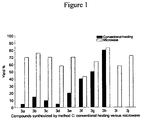
- Figure 1 shows the results of the copper-catalyzed synthesis of an anilinoanthraquinone according to the present invention with microwave irradiation compared to conventional heating.
- Alkyl refers to a saturated aliphatic hydrocarbon including straight chain, or branched chain groups.
- the alkyl group has 1 to 10 carbon atoms (whenever a numerical range; e.g.,”1-10", is stated herein, it means that the group, in this case the alkyl group, may contain 1 carbon atom, 2 carbon atoms, 3 carbon atoms, etc. up to and including 10 carbon atoms). More specifically, it may be a medium size alkyl having 1 to 6 carbon atoms or a lower alkyl having 1 to 4 carbon atoms e.
- alkyl group may be substituted or unsubstituted.
- the substituent group(s) is one or more, for example one or two groups, individually selected from the group consisting of C 3 -C 8 cycloalkyl, C 6 -C 14 aryl, 5-10 membered heteroaryl wherein 1 to 4 ring atoms are independently selected from nitrogen, oxygen or sulfur, 5-10 membered heteroalicyclic wherein 1 to 3 ring atoms are independently nitrogen, oxygen or sulfur, hydroxy, C 1 -C 10 alkoxy, C 3 -C 8 cycloalkoxy, aryloxy, mercapto, alkylthio, arylthio, cyano, halo, carbonyl, thiocarbonyl, O-carbamyl, N-carbamyl, O-thiocarbamyl, N-thiocarbamyl, C-amido, N-amido, C-carboxy, O-carboxy, nitro, silyl, sulfinyl, sulfonyl,
- a "cycloalkyl” group refers to an all-carbon monocyclic ring (i.e., rings which share an adjacent pair of carbon atoms) of 3 to 8 ring atoms wherein one of more of the rings does not have a completely conjugated pi-electron system e.g., cyclopropyl, cyclobutyl, cyclopentyl, cyclohexyl, cyclobutenyl, cyclopentenyl, cyclohexenyl, and the like.
- cycloalkyl groups examples, without limitation, are cyclopropane, cyclobutane, cyclopentane, cyclopentene, cyclohexane, adamantane, cyclohexadiene, cycloheptane and, cycloheptatriene.
- a cycloalkyl group may be substituted or unsubstituted.
- the substituent group(s) is one or more, for example one or two groups, individually selected from C 1 -C 10 alkyl, C 3 -C 8 cycloalkyl, C 6 -C 14 aryl, 5-10 membered heteroaryl wherein 1 to 4 ring atoms are independently selected from nitrogen, oxygen or sulfur, 5-10 membered heteroalicyclic wherein 1 to 3 ring atoms are independently nitrogen, oxygen or sulfur, hydroxy, C 1 -C 10 alkoxy, C 3 -C 8 cycloalkoxy, aryloxy, mercapto, alkylthio, arylthio, cyano, halo, carbonyl, thiocarbonyl, O-carbamyl, N-carbamyl, O-thiocarbamyl, N-thiocarbamyl, C-amido, N-amido, C-carboxy, O-carboxy, nitro, silyl, sulfinyl, sul
- alkenyl refers to an alkyl group, as defined herein, consisting of at least two carbon atoms and at least one carbon-carbon double bond e. g., ethenyl, propenyl, butenyl or pentenyl and their structural isomeric forms such as 1-or 2-propenyl, 1-, 2-, or 3-butenyl and the like.
- alkynyl refers to an alkyl group, as defined herein, consisting of at least two carbon atoms and at least one carbon-carbon triple bond e. g., acetylene, ethynyl, propynyl, butynyl, or pentynyl and their structural isomeric forms as described above.
- aryl group refers to an all-carbon monocyclic or fused-ring polycyclic (i.e., rings which share adjacent pairs of carbon atoms) groups of 6 to 14 ring atoms and having a completely conjugated pi-electron system. Examples, without limitation, of aryl groups are phenyl, naphthalenyl and anthracenyl. The aryl group may be substituted or unsubstituted.
- the substituted group(s) is one or more, for example one, two, or three substituents, independently selected from the group consisting of C 1 -C 10 alkyl, C 3 -C 8 cycloalkyl, C 6 -C 14 aryl, 5-10 membered heteroaryl wherein 1 to 4 ring atoms are independently selected from nitrogen, oxygen or sulfur, 5-10 membered heteroalicyclic wherein 1 to 3 ring atoms are independently nitrogen, oxygen or sulfur, hydroxy, C 1 -C 10 alkoxy, C 3 -C 8 cycloalkoxy, aryloxy, mercapto, alkylthio, arylthio, cyano, halo, trihalomethyl, carbonyl, thiocarbonyl, O-carbamyl, N-carbamyl, O-thiocarbamyl, N-thiocarbamyl, C-amido, N-amido, C-carboxy, O-carboxy, nitro,
- the substituent(s) is/are independently selected from chloro, fluoro, bromo, methyl, ethyl, hydroxy, methoxy, nitro, carboxy, methoxycarbonyl, sulfonyl, or amino.
- heteroaryl group refers to a monocyclic or fused aromatic ring (i.e., rings which share an adjacent pair of atoms) of 5 to 10 ring atoms in which one, two, three or four ring atoms are selected from the group consisting of nitrogen, oxygen and sulfur and the rest being carbon.
- heteroaryl groups are pyridyl, pyrrolyl, furyl, thienyl, imidazolyl, oxazolyl, isoxazolyl, thiazolyl, isothiazolyl, pyrazolyl, 1,2,3-triazolyl, 1,2,4-triazolyl, 1,2,3-oxadiazolyl, 1,2,4-oxadiazolyl, 1,2,5-oxadiazolyl, 1,3,4-oxadiazolyl, 1,3,4-triazinyl, 1,2,3-triazinyl, benzofuryl, isobenzofuryl, benzothienyl, benzotriazolyl, isobenzothienyl, indolyl, isoindolyl, 3H-indolyl, benzimidazolyl, benzothiazolyl, benzoxazolyl, quinolizinyl, quinazolinyl, pthalazin
- the heteroaryl group may be substituted or unsubstituted.
- the substituted group(s) is one or more, for example one or two substituents, independently selected from the group consisting of C 1 -C 10 alkyl, C 3 -C 8 cycloalkyl, C 6 -C 14 aryl, 5-10 membered heteroaryl wherein 1 to 4 ring atoms are independently selected from nitrogen, oxygen or sulfur, 5-10 membered heteroalicyclic wherein 1 to 3 ring atoms are independently nitrogen, oxygen or sulfur, hydroxy, C 1 -C 10 alkoxy, C 3 -C 8 cycloalkoxy, aryloxy, mercapto, alkylthio, arylthio, cyano, halo, trihalomethyl, carbonyl, thiocarbonyl, O-carbamyl, N-carbamyl, O-thiocarbamyl, N-thiocarbamyl, C-amido, N-amido, C
- the substituent(s) is/are independently selected from chloro, fluoro, bromo, methyl, ethyl, hydroxy, methoxy, nitro, carboxy, methoxycarbonyl, sulfonyl, or amino.
- heteroalicyclic group refers to a monocyclic or fused ring of 5 to 10 ring atoms containing one, two, or three heteroatoms in the ring which are selected from the group consisting of nitrogen, oxygen and -S(O) n where n is 0-2, the remaining ring atoms being carbon.
- the rings may also have one or more double bonds. However, the rings do not have a completely conjugated pi-electron system.
- heteroalicyclic groups are pyrrolidine, piperidine, piperazine, morpholine, imidazolidine,tetrahydropyridazine, tetrahydrofuran, thiomorpholine, tetrahydropyridine, and the like.
- the heteroalicyclic ring may be substituted or unsubstituted.
- the substituted group (s) is one or more, for example one, two, or three substituents, independently selected from the group consisting of C 1 -C 10 alkyl, C 3 -C 8 cycloalkyl, C 6 -C 14 aryl, 5-10 membered heteroaryl wherein 1 to 4 ring atoms are independently selected from nitrogen, oxygen or sulfur, 5-10 membered heteroalicyclic wherein 1 to 3 ring atoms are independently nitrogen, oxygen or sulfur, hydroxy, C 1 -C 10 alkoxy, C 3 -C 8 cycloalkoxy, aryloxy, mercapto, alkylthio, arylthio, cyano, halo, trihalomethyl, carbonyl, thiocarbonyl, O-carbamyl, N-carbamyl, O-thiocarbamyl, N-thiocarbamyl, C-amido, N-
- the substituent(s) is/are for example independently selected from chloro, fluoro, bromo, methyl, ethyl, hydroxy, methoxy, nitro, carboxy, methoxycarbonyl, sulfonyl, or amino.
- a "hydroxy” group refers to an -OH group.
- alkoxy refers to an -O-unsubstituted alkyl and -O-substituted alkyl group, as defined herein. Examples include and are not limited to methoxy, ethoxy, propoxy, butoxy, and the like.
- cycloalkoxy refers to an -O-cycloalkyl group, as defined herein.
- One example is cyclopropyloxy.
- aryloxy refers to both an -O-aryl and an -O-heteroaryl group, as defined herein. Examples include and are not limited to phenoxy, napthyloxy, pyridyloxy, furanyloxy, and the like.
- a “mercapto” group refers to an -SH group.
- alkylthio refers to both an S-alkyl and an -S-cycloalkyl group, as defined herein. Examples include and are not limited to methylthio, ethylthio, and the like.
- arylthio refers to both an -S-aryl and an -S-heteroaryl group, as defined herein. Examples include and are not limited to phenylthio, napthylthio, pyridylthio, furanylthio, and the like.
- a “sulfinyl” group refers to a -S(O)-R" group, wherein, R" is selected from the group consisting of hydrogen, hydroxy, alkyl, cycloalkyl, aryl, heteroaryl (bonded through a ring carbon) and heteroalicyclic (bonded through a ring carbon), as defined herein.
- a “sulfonyl” group refers to a -S(O) 2 R" group wherein, R" is selected from the group consisting of hydrogen, hydroxy, alkyl, cycloalkyl, aryl, heteroaryl (bonded through a ring carbon) and heteroalicyclic (bonded through a ring carbon), as defined herein.
- trihalomethyl refers to a -CX 3 group wherein X is a halo group as defined herein e. g., trifluoromethyl, trichloromethyl, tribromomethyl, dichlorofluoromethyl, and the like.
- Representative examples include and the not limited to acetyl, propionyl, benzoyl, formyl, cyclopropylcarbonyl, pyridinylcarbonyl, pyrrolidin-lylcarbonyl, and the like.
- a “carboxylic acid” group refers to a C-carboxy group in which R" is hydrogen.
- halo or halogen group refers to fluorine, chlorine, bromine or iodine.
- a "cyano" group refers to a -CN group.
- a "nitro” group refers to a -NO 2 group.
- amino group refers to an -NR 10 R 11 group, wherein R 10 and R 11 are independently hydrogen or unsubstituted lower alkyl, e.g, -NH 2 , dimethylamino, diethylamino, ethylamino, methylamino, and the like.
- R 10 is hydrogen or unsubstituted C 1 -C 4 alkyl and R 11 is hydrogen, C 1 -C 4 alkyl optionally substituted with heteroalicyclic, hydroxy, or amino.
- a “pharmaceutical composition” refers to a mixture of one or more of the compounds described herein, or physiologically/pharmaceutically acceptable salts or prodrugs thereof, with other chemical components, such as physiologically/pharmaceutically acceptable carriers and excipients.
- the purpose of a pharmaceutical composition is to facilitate administration of a compound to an organism.
- a “physiologically/pharmaceutically acceptable carrier” refers to a carrier or diluent that does not cause significant irritation to an organism and does not abrogate the biological activity and properties of the administered compound.
- a "pharmaceutically acceptable excipient” refers to an inert substance added to a pharmaceutical composition to further facilitate administration of a compound.
- excipients include calcium carbonate, calcium phosphate, various sugars and types of starch, cellulose derivatives, gelatin, vegetable oils and polyethylene glycols.
- salts refers to those salts which retain the biological effectiveness and properties of the parent compound.
- Such salts include, but are not restricted to: (1) an acid addition salt which is obtained by reaction of the free base of the parent compound with inorganic acids such as hydrochloric acid, hydrobromic acid, nitric acid, phosphoric acid, sulfuric acid, and perchloric acid and the like, or with organic acids such as acetic acid, oxalic acid, (D) or (L) malic acid, maleic acid, methanesulfonic acid, ethanesulfonic acid, p-toluenesulfonic acid, salicylic acid, tartaric acid, citric acid, succinic acid or malonic acid and the like, preferably hydrochloric acid or (L)-malic acid; or (2) salts formed when an acidic proton present in the parent compound either is replaced by a metal ion, e.
- inorganic acids such as hydrochloric acid, hydrobromic acid, ni
- an alkali metal ion such as sodium or potassium
- an alkaline earth ion such as magnesium or calcium
- an aluminum ion or coordinates with an organic base such as ethanolamine, diethanolamine, triethanolamine, tromethamine, N-methylglucamine, and the like.
- P2Y 12 related disease or disorder P2Y 12 associated disease or disorder
- P2Y 12 connected disease or disorder are used interchangeably herein to refer to a condition involving P2Y 12 activity.
- diseases and disorders are stroke, myocardial infarction, such as non-ST elevation myocardial infarction (NSTEMI), myocardial ischemia, for example manifested in stable or unstable angina, various vascular diseases, such as coronary artery disease, peripheral artery disease, atherosclerosis, and cerebrovascular disease, and embolisms, such as thromboembolisms.
- CNS disorders such as neuroinflammatory conditions and neurodegenerative disorders (e.g. Alzheimer's and Parkinson's disease).
- Treating refers to a method of alleviating or abrogating a P2Y 12 related disease or disorder and/or its attendant symptoms.
- Prevent refers to a method of hindering a P2Y 12 related disease or disorder from occuring, i.e. a prophylactic method.
- Organism refers to any living entity comprised of at least one cell.
- a living organism can be as simple as, for example, a single eukariotic cell or as complex as a mammal, including a human being.
- “Therapeutically effective amount” refers to that amount of the compound being administered which will relieve to some extent one or more of the symptoms of the disorder being treated.
- One specific group of compounds of Formula I is that, wherein Y is NH and/or wherein R 6 represents one to four substituents selected from the group consisting of hydrogen, -S(O) 2 OR, -C(O)OR, tetrazolyl, sulfonyl, carboxy, amino, halogen, C 1 -C 4 alkoxy, C 1 -C 4 alkyl, hydroxy, and nitro.
- the compounds of the invention can be administered in pharmaceutical formulations, either alone, or in combination with other pharmacologically active compounds.
- Suitable other pharmacologically active compounds may, for example, be selected from other P2Y 12 inhibitors, such as clopidogrel, or acetylsalicylic acid (Aspirin).
- the compounds of the present invention bind with high specificity and selectivity to human platelet P2Y 12 receptors.
- they bind to their target receptor P2Y 12 with at least 10-fold, more preferably at least 100-fold, most preferably 10 3 -10 8 -fold higher affinity compared to related P2Y receptors, such as, for example, human P2Y 2 , human P2Y 4 , mouse P2Y 2 and rat P2Y 6 .
- the compounds of the present invention Upon binding to P2Y 12 , the compounds of the present invention reduce or abrogate P2Y 12 signaling.
- a precise understanding of the mechanism by which the compounds of the invention inhibit P2Y 12 signalling is not required in order to practice the present invention. However, while not hereby bound to any particular mechanism or theory, it is believed that the compounds interact with amino acids of P2Y 12 in the ADP binding region or in close proximity thereto, blocking the binding of ADP and thus the activation of the receptor. Accordingly, the compounds of the present invention are useful as inhibitors of P2Y 12 signalling.
- the compounds of the invention have anti-thrombotic activity and thus can be utilized in the treatment of diseases and disorders that are connected to an inappropriate or abnormal P2Y 12 function, in particular increased P2Y 12 activity, or that involve P2Y 12 function.
- the compounds can also be used for the prevention of diseases and disorders that involve platelet aggregation, such as stroke, myocardial infarction, such as non-ST elevation myocardial infarction (NSTEMI), myocardial ischemia, for example manifested in stable or unstable angina, various vascular diseases, such as coronary artery disease, peripheral artery disease, atherosclerosis, and cerebrovascular disease, and embolisms, such as thromboembolisms.
- the present invention further encompasses an in vitro method for antagonizing the P2Y12 receptor function comprising the step of contacting cells expressing a P2Y12 receptor with at least one compound as defined above.
- compounds of the invention can be specifically selected for use as a pharmaceutical not only based on the determined binding specificity and affinity, but also based on other factors, such as bioavailability, severity of side effects caused, metabolic conversion of the compound, half-life of the compound in the organism and the like.
- a compound of the present invention or a pharmaceutically acceptable salt thereof can be administered as such to a human patient or can be administered in pharmaceutical compositions in which the foregoing materials are mixed with suitable carriers or excipient(s).
- suitable carriers or excipient(s) suitable carriers or excipient(s).
- administer refers to the delivery of a compound of Formula (I) or a pharmaceutically acceptable salt thereof or of a pharmaceutical composition containing a compound of Formula (I) or a pharmaceutically acceptable salt thereof of this invention to an organism for the purpose of prevention or treatment of a P2Y 12 -related disease or disorder.
- Suitable routes of administration may include, without limitation, oral, rectal, transmucosal or intestinal administration or intramuscular, subcutaneous, intramedullary, intrathecal, direct intraventricular, intravenous, intravitreal, intraperitoneal, intranasal, or intraocular injections.
- the preferred routes of administration are oral and parenteral.
- compositions of the present invention may be manufactured by processes well known in the art, e. g., by means of conventional mixing, dissolving, granulating, drageemaking, levigating, emulsifying, encapsulating, entrapping or lyophilizing processes.
- compositions for use in accordance with the present invention may be formulated in conventional manner using one or more physiologically acceptable carriers comprising excipients and auxiliaries which facilitate processing of the active compounds into preparations which can be used pharmaceutically. Proper formulation is dependent upon the route of administration chosen.
- the compounds of the invention may be formulated in aqueous solutions, preferably in physiologically compatible buffers such as Hanks' solution, Ringer's solution, or physiological saline buffer.
- physiologically compatible buffers such as Hanks' solution, Ringer's solution, or physiological saline buffer.
- penetrants appropriate to the barrier to be permeated are used in the formulation. Such penetrants are generally known in the art.
- the compounds can be formulated by combining the active compounds with pharmaceutically acceptable carriers well known in the art.
- Such carriers enable the compounds of the invention to be formulated as tablets, pills, lozenges, dragees, capsules, liquids, gels, syrups, slurries, suspensions and the like, for oral ingestion by a patient.
- Pharmaceutical preparations for oral use can be made using a solid excipient, optionally grinding the resulting mixture, and processing the mixture of granules, after adding other suitable auxiliaries if desired, to obtain tablets or dragee cores.
- Useful excipients are, in particular, fillers such as sugars, including lactose, sucrose, mannitol, or sorbitol, cellulose preparations such as, for example, maize starch, wheat starch, rice starch and potato starch and other materials such as gelatin, gum tragacanth, methyl cellulose, hydroxypropylmethyl-cellulose, sodium carboxymethylcellulose, and/or polyvinylpyrrolidone (PVP).
- disintegrating agents may be added, such as cross-linked polyvinyl pyrrolidone, agar, or alginic acid. A salt such as sodium alginate may also be used.
- Dragee cores are provided with suitable coatings.
- suitable coatings may be used which may optionally contain gum arabic, talc, polyvinyl pyrrolidone, carbopol gel, polyethylene glycol, and/or titanium dioxide, lacquer solutions, and suitable organic solvents or solvent mixtures.
- Dyestuffs or pigments may be added to the tablets or dragee coatings for identification or to characterize different combinations of active compound doses.
- compositions which can be used orally include push-fit capsules made of gelatin, as well as soft, sealed capsules made of gelatin and a plasticizer, such as glycerol or sorbitol.
- the push-fit capsules can contain the active ingredients in admixture with a filler such as lactose, a binder such as starch, and/or a lubricant such as talc or magnesium stearate and, optionally, stabilizers.
- the active compounds may be dissolved or suspended in suitable liquids, such as fatty oils, liquid paraffin, or liquid polyethylene glycols. Stabilizers may be added in these formulations, also.
- the compounds may also be formulated for parenteral administration, e. g., by bolus injection or continuous infusion.
- Formulations for injection may be presented in unit dosage form, e. g., in ampoules or in multi-dose containers, with an added preservative.
- the compositions may take such forms as suspensions, solutions or emulsions in oily or aqueous vehicles, and may contain formulating materials such as suspending, stabilizing and/or dispersing agents.
- compositions for parenteral administration include aqueous solutions of a water soluble form, such as, without limitation, a salt, of the active compound.
- suspensions of the active compounds may be prepared in a lipophilic vehicle.
- Suitable lipophilic vehicles include fatty oils such as sesame oil, synthetic fatty acid esters such as ethyl oleate and triglycerides, or materials such as liposomes.
- Aqueous injection suspensions may contain substances which increase the viscosity of the suspension, such as sodium carboxymethyl cellulose, sorbitol, or dextran.
- the suspension may also contain suitable stabilizers and/or agents that increase the solubility of the compounds to allow for the preparation of highly concentrated solutions.
- the active ingredient may be in powder form for constitution with a suitable vehicle, e. g., sterile, pyrogen-free water, before use.
- a suitable vehicle e. g., sterile, pyrogen-free water
- the compounds may also be formulated in rectal compositions such as suppositories or retention enemas, using, e. g., conventional suppository bases such as cocoa butter or other glycerides.
- the compounds may also be formulated as depot preparations. Such long acting formulations may be administered by implantation (for example, subcutaneously or intramuscularly) or by intramuscular injection.
- a compound of this invention may be formulated for this route of administration with suitable polymeric or hydrophobic materials (for instance, in an emulsion with a pharmacologically acceptable oil), with ion exchange resins, or as a sparingly soluble derivative such as, without limitation, a sparingly soluble salt.
- a non-limiting example of a pharmaceutical carrier for the hydrophobic compounds of the invention is a cosolvent system comprising benzyl alcohol, a nonpolar surfactant, a water-miscible organic polymer and an aqueous phase such as the VPD co-solvent system.
- VPD is a solution of 3% w/v benzyl alcohol,8% w/v of the nonpolar surfactant Polysorbate 80, and 65% w/v polyethylene glycol 300, made up to volume in absolute ethanol.
- the VPD co-solvent system (VPD: D5W) consists of VPD diluted 1: 1 with a 5% dextrose in water solution. This cosolvent system dissolves hydrophobic compounds well, and itself produces low toxicity upon systemic administration.
- co-solvent system may be varied considerably without destroying its solubility and toxicity characteristics.
- identity of the co-solvent components may be varied: for example, other lowtoxicity nonpolar surfactants may be used instead of Polysorbate 80, the fraction size of polyethylene glycol may be varied, other biocompatible polymers may replace polyethylene glycol, e.g., polyvinyl pyrrolidone, and other sugars or polysaccharides may substitute for dextrose.
- hydrophobic pharmaceutical compounds may be employed.
- Liposomes and emulsions are well known examples of delivery vehicles or carriers for hydrophobic drugs.
- certain organic solvents such as dimethylsulfoxide also may be employed, although often at the cost of greater toxicity.
- the compounds may be delivered using a sustained-release system, such as semipermeable matrices of solid hydrophobic polymers containing the therapeutic agent.
- sustained-release materials have been established and are well known by those skilled in the art.
- Sustained-release capsules may, depending on their chemical nature, release the compounds for a few weeks up to over 100 days.
- additional strategies for stabilization may be employed.
- compositions herein also may comprise suitable solid or gel phase carriers or excipients.
- suitable solid or gel phase carriers or excipients include, but are not limited to, calcium carbonate, calcium phosphate, various sugars, starch, cellulose derivatives, gelatin, and polymers such as polyethylene glycols.
- salts in which the compound forms the positively charged moiety include, without limitation, the sodium, potassium, calcium and magnesium salts formed by the reaction of a carboxylic acid or sulfonic acid group in the compound with an appropriate base (e.g. sodium hydroxide (NaOH), potassium hydroxide (KOH), Calcium hydroxide (Ca(OH) 2 ), etc.).
- an appropriate base e.g. sodium hydroxide (NaOH), potassium hydroxide (KOH), Calcium hydroxide (Ca(OH) 2 ), etc.
- compositions suitable for use in the present invention include compositions wherein the active ingredients are contained in an amount sufficient to achieve the intended purpose, e. g., the inhibition of P2Y 12 function or the treatment or prevention of a P2Y 12 -related disease or disorder.
- a therapeutically effective amount means an amount of compound effective to prevent, alleviate or ameliorate symptoms of disease or prolong the survival of the subject being treated.
- the therapeutically effective amount or dose can be estimated initially from cell culture assays. Then, the dosage can be formulated for use in animal models so as to achieve a circulating concentration range that includes the IC 50 as determined in cell culture (i. e., the concentration of the test compound which achieves a half-maximal inhibition of the P2Y 12 activity). Such information can then be used to more accurately determine useful doses in humans.
- Toxicity and therapeutic efficacy of the compounds described herein can be determined by standard pharmaceutical procedures in cell cultures or experimental animals, e.g., by determining the IC 50 and the LD 50 for a subject compound.
- the data obtained from these cell culture assays and animal studies can be used in formulating a range of dosage for use in humans.
- the dosage may vary depending upon the dosage form employed and the route of administration utilized. The exact formulation, route of administration and dosage can be chosen by the individual physician in view of the patient's condition.
- Dosage amount and interval may be adjusted individually to provide plasma levels of the active species which are sufficient to maintain the P2Y 12 inhibiting effects. These plasma levels are referred to as minimal effective concentrations (MECs).
- MECs minimal effective concentrations
- the MEC will vary for each compound but can be estimated from in vitro data, e. g., the concentration necessary to achieve 50-90% inhibition of P2Y 12 .
- HPLC assays or bioassays can be used to determine plasma concentrations.
- Dosage intervals can also be determined using MEC value.
- Compounds should be administered using a regimen that maintains plasma levels above the MEC for 10-90% of the time, preferably between 30-90% and most preferably between50-90%.
- the effective local concentration of the drug may not be related to plasma concentration and other procedures known in the art may be employed to determine the correct dosage amount and interval.
- the amount of a composition administered will, of course, be dependent on the subject being treated, the severity of the affliction, the manner of administration, the judgment of the prescribing physician, etc.
- compositions may, if desired, be presented in a pack or dispenser device, such as a kit approved by a regulatory authority, such as EMEA or FDA, which may contain one or more unit dosage forms containing the active ingredient.
- a pack or dispenser device such as a kit approved by a regulatory authority, such as EMEA or FDA, which may contain one or more unit dosage forms containing the active ingredient.
- the pack may for example comprise metal or plastic foil, such as a blister pack.
- the pack or dispenser device may be accompanied by instructions for administration.
- the pack or dispenser may also be accompanied by a notice associated with the container in a form prescribed by a governmental agency regulating the manufacture, use or sale of pharmaceuticals, which notice is reflective of approval by the agency of the form of the compositions or of human or veterinary administration.
- compositions comprising a compound of the invention formulated in a compatible pharmaceutical carrier may also be prepared, placed in an appropriate container, and labeled for treatment of an indicated condition.
- anilinoanthracene derivatives utilizes the Ullmann coupling reaction, which involves the treatment of a anthracene derivative substituted with a leaving group, such as halogen, with an arylamine in the presence of a copper catalyst (cf. Scheme 2, wherein R 1 , R 2 , R 4 , R 5 , A, B are defined as above, Z is a leaving group, and R x can be any one to five substituents).
- the reaction typically requires harsh conditions e.g., high temperatures and long reaction times, and suffers from poor yields.
- Typical reaction conditions include:
- the present invention thus discloses an improved method for the synthesis of compounds of Formulae I or III, wherein the method includes a microwave-assisted copper-catalyzed Ullmann coupling reaction according to Scheme 1 wherein R 1 , R 2 , R 3 , R 4 , R 5 , Z, R 6 , Y and R 7 are defined as above.
- the reaction mixtures were subjected to microwave irradiation, typically for only 1-30 min at 40-150 °C applying 40-100 W. All other conditions (catalyst, salts, solvent) were the same as in the classical method C. Instead of Cu(0), copper salts (Cu(I) or Cu(II)) can also be used.
- the invented method is characterized by dramatically increased yields (30-90 % isolated) especially of compounds poorly accessible without microwaves and a reaction duration of only about 1-30 minutes.
- Procedure A Ullmann coupling reactions of bromaminic acid or related derivatives with an aryl amine or an aliphatic amine or another amino-substituted compound
- a bromo-substituted phenyl derivative or another mono-, bi- or tricyclic bromo-substituted compound e.g. bromaminic acid sodium salt
- a buffer solution of Na 2 HPO 4 (pH 9.6) (4 mL) and NaH 2 PO 4 (pH 4.2) (1 mL
- a catalytic amount e.g. 0.002-0.003 g
- finely powdered elemental copper or copper(I)-salt, or copper(II)-salt, respectively
- the mixture was capped and irradiated in the microwave oven (e.g. 40-100 W) for 1-30 min at 40-150 °C. Then the reaction mixture was cooled to rt, and the product was purified using the following procedure. The contents of the vial were filtered to remove the elemental copper. Then ca. 200 mL of water was added to the filtrate and the aqueous solution was extracted with chloroform (200 mL). The extraction procedure was repeated until the chloroform layer became colorless (2-3 times). Then the aqueous layer was reduced by rotary evaporation to a volume of 10-20 mL, which was subsequently submitted to flash column chromatography using RP-18 silica gel and water as an eluent.
- the microwave oven e.g. 40-100 W
- the polarity of the eluent was then gradually decreased by the addition of methanol in the following steps: 20, 40, 60, 80, and 100 %. Fractions containing blue product were collected. For some compounds the last step of purification (RP-18 flash chromatography) had to be repeated two to three times to obtain pure product ( ⁇ 95% purity as determined by LC-MS). The pooled product-containing fractions were evaporated under vacuum to remove the methanol, and the remaining water was subsequently removed by lyophilization to yield the products (30-90%) as blue powders.
- the extraction procedure was repeated until the aqueous layer became light yellow (3-4 times). Then the aqueous layer was collected and acidified using concentrated aq. hydrochloric acid (37 %) until pH ⁇ 3 and the desired product precipitated in the acidic medium. The precipitated solid was filtered off and washed several times (2-3 times) with 100 mL water each to remove the remaining sodium chloride as well as hydrochloric acid. The product was dried in an oven at 100 °C. The purity of the product was ⁇ 95% as determined by LC-MS.
- Example 2 Sodium 1-amino-4-(3-amino-5-carboxyphenylamino)-9,10-dioxo-9,10-dihydroanthracene 2-sulfonate.
- Reaction conditions according to the general procedure A: 20 min, 120 °C, 100 W; pressure up to 10 bar.
- Example 3 Sodium 1-amino-4-(3-carboxyphenylamino)-9,10-dioxo-9,10-dihydroanthracene 2-sulfonate.
- Reaction conditions according to the general procedure A: 20 min, 120 °C, 80 W; pressure up to 10 bar.
- Example 4 Sodium 1 - amino - 4 -( 4 - carboxyphenylamino )- 9 , 10 - dioxo - 9 , 10-dihydroanthracene 2-sulfonate.
- Reaction conditions according to the general procedure A: 20 min, 120 °C, 80 W; pressure up to 10 bar.
- Example 5 Sodium 1-amino-4-(2-aminophenylamino)-9,10-dioxo-9,10-dihydroanthracene 2-sulfonate.
- Reaction conditions according to the general procedure A: 20 min, 120 °C, 80 W; pressure up to 10 bar.
- Example 6 Sodium 1-amino-4-(3-aminophenylamino)-9,10-dioxo-9,10-dihydroanthracene 2-sulfonate.
- Reaction conditions according to the general procedure A: 2 min, 120 °C, 80 W; pressure up to 10 bar.
- Example 7 Sodium 1-amino-4-(2-carboxy-4-chlorophenylamino)-9,10-dioxo-9,10-dihydro-anthracene 2-sulfonate.
- Reaction conditions according to the general procedure A: 5 min, 120 °C, 80 W; pressure up to 10 bar.
- Example 8 Sodium 1-amino-4-(2-carboxy-5-chlorophenylamino)-9,10-dioxo-9,10-dihydro-anthracene 2-sulfonate.
- Reaction conditions according to the general procedure A: 5 min, 120 °C, 80 W; pressure up to 10 bar.
- Example 9 Sodium 1-amino-4-(2-carboxyphenylamino)-9,10-dioxo-9,10-dihydroanthracene 2-sulfonate.
- Reaction conditions according to the general procedure A: 5 min, 120 °C, 80 W; pressure up to 10 bar.
- Example 10 Sodium 1-amino-4-(2-hydroxyphenylamino)-9,10-dioxo-9,10-dihydroanthracene 2-sulfonate.
- Reaction conditions according to the general procedure A: 10 min, 120 °C, 80 W; pressure up to 10 bar.
- Example 11 Sodium 1-amino-4-(4-hydroxyphenylamino)-9,10-dioxo-9,10-dihydroanthracene 2-sulfonate.
- Reaction conditions according to the general procedure A: 10 min, 120 °C, 80 W; pressure up to 10 bar.
- Example 12 Sodium 1-amino-4-(4-aminophenylamino)-9,10-dioxo-9,10-dihydroanthracene 2-sulfonate.
- Reaction conditions according to the general procedure A: 5 min, 100 °C, 60 W; pressure up to 10 bar.
- Example 13 Sodium 1-amino-9,10-dioxo-4-phenylamino-9,10-dihydroanthracene 2-sulfonate.
- Reaction conditions according to the general procedure A: 5 min, 80 °C, 40 W; pressure up to 10 bar.
- Example 14 Sodium 1-amino-4-(4-chlorophenylamino)-9,10-dioxo-9,10-dihydroanthracene 2-sulfonate.
- Reaction conditions according to the general procedure A: 5 min, 100 °C, 80 W; pressure up to 10 bar.
- Example 15 Sodium 1-amino-4-(4-carboxymethylphenylamino)-9,10-dioxo-9,10-dihydro-anthracene 2-sulfonate.
- Reaction conditions according to the general procedure A: 10 min, 100 °C, 80 W; pressure up to 10 bar.
- Example 16 Sodium 1-amino-9,10-dioxo-4-(2,4,6-trimethylphenylamino)-9,10-dihydroanthracene 2-sulfonate.
- Reaction conditions according to the general procedure A: 5 min, 120 °C, 100 W; pressure up to 10 bar.
- Example 17 Sodium 1-amino-4-(2-methoxyphenylamino)-9,10-dioxo-9,10-dihydroanthracene 2-sulfonate.
- Reaction conditions according to the general procedure A: 5 min, 100 °C, 80 W; pressure up to 10 bar.
- Example 18 Sodium 1-amino-4-(3-methoxyphenylamino)-9,10-dioxo-9,10-dihydroanthracene 2-sulfonate.
- Reaction conditions according to the general procedure A: 5 min, 100 °C, 80 W; pressure up to 10 bar.
- Example 19 Sodium 1-amino-4-(4-methoxyphenylamino)-9,10-dioxo-9,10-dihydroanthracene 2-sulfonate.
- Reaction conditions according to the general procedure A: 5 min, 100 °C, 80 W; pressure up to 10 bar.
- Example 20 Sodium 1-amino-4-(4-fluorophenylamino)-9,10-dioxo-9,10-dihydroanthracene 2-sulfonate.
- Reaction conditions according to the general procedure A: 5 min, 120 °C, 80 W; pressure up to 10 bar.
- Example 21 Sodium 1-amino-4-(3-bromophenylamino)-9,10-dioxo-9,10-dihydroanthracene 2-sulfonate.
- Reaction conditions according to the general procedure A: 20 min, 120 °C, 100 W; pressure up to 10 bar.
- Example 22 Sodium 1-amino-4-(3,5-dimethylphenylamino)-9,10-dioxo-9,10-dihydroanthracene 2-sulfonate.
- Reaction conditions according to the general procedure A: 5 min, 100 °C, 80 W; pressure up to 10 bar.
- Example 23 Sodium 1-amino-4-(3-chlorophenylamino)-9,10-dioxo-9,10-dihydroanthracene 2-sulfonate.
- Reaction conditions according to the general procedure A: 5 min, 100 °C, 80 W; pressure up to 10 bar.
- Example 24 Sodium 1-amino-4-(3-amino-2-methylphenylamino)-9,10-dioxo-9,10-dihydroanthracene 2-sulfonate.
- Reaction conditions according to the general procedure A: 5 min, 120 °C, 80 W; pressure up to 10 bar.
- Example 25 Sodium 1-amino-4-(3-carboxy-4-hydroxyphenylamino)-9,10-dioxo-9,10-dihydroanthracene 2-sulfonate.
- Reaction conditions according to the general procedure A: 5 min, 120 °C, 80 W; pressure up to 10 bar.
- Example 26 Disodium 1-amino-4-(2-sulfophenylamino)-9,10-dioxo-9,10-dihydroanthracene 2-sulfonate.
- Reaction conditions according to the general procedure A: 5 min, 120 °C, 80 W; pressure up to 10 bar.
- Example 27 Disodium 1-amino-4-(4-sulfophenylamino)-9,10-dioxo-9,10-dihydroanthracene 2-sulfonate.
- Reaction conditions according to the general procedure A: 5 min, 120 °C, 80 W; pressure up to 10 bar.
- Example 28 1-Amino-4-[4-([1,3]diazine-2-ylamino)-3-sulfonatophenylamino]-9,10-dioxo-9,10 dihydroanthracene-2-sulfonic acid disodium salt.
- Example 29 1-Amino-4-[4-phenylamino-3-sulfophenylamino]-9,10-dioxo-9,10 dihydroanthracene-2-sulfonic acid disodium salt.
- Reaction conditions according to the general procedure A: 5 min, 120 °C, 100 W; pressure up to 10 bar.
- Example 30 1-Amino-4-[4-phenoxy-3-sulfophenylamino]-9,10-dioxo-9,10 dihydroanthracene-2-sulfonic acid disodium salt.
- Reaction conditions according to the general procedure A: 5 min, 120 °C, 100 W; pressure up to 10 bar.
- Example 31 1-Amino-4-[4-phenylamino-3-carboxyphenylamino]-9,10-dioxo-9,10 dihydroanthracene-2- sulfonic acid sodium salt.
- Example 32 1-Amino-4-[4-phenylamino-3-sulfophenylamino]-9,10-dioxo-9,10 dihydroanthracene-2-carboxylic acid sodium salt.
- Reaction conditions according to the general procedure A: 5 min, 120 °C, 100 W; pressure up to 10 bar.
- Example 33 1-Amino-2-methyl-4-[4-phenylamino-3-sulfophenylamino]-9,10-dioxo-9,10 dihydroanthracene sodium salt.
- Reaction conditions according to the general procedure A: 5 min, 120 °C, 100 W; pressure up to 10 bar.
- Membranes were prepared from human outdated platelets from the blood bank. Outdated human platelets were obtained from the University of Bonn blood bank 4-5 days after donation. Platelet rich plasma was washed by centrifugation (10 min at 1000 g) in a buffer consisting of 50 mM Tris-HCl, pH 7.4, 5 mM EDTA and 150 mM NaCl. The supernatant was centrifuged twice (48400 g for 60 min) and the resultant platelet pellet were resuspended in 5 mM Tris-HCl (pH 7.4) containing 5 mM EDTA. The platelets were homogenized by a homogenizer. The final suspension was stored frozen as multiple aliquots at -80°C until needed. Protein concentrations were determined by the method of Lowry using a Sigma Chemie protein assay kit.
- Radioligand binding assays were performed using 5 nM [ 3 H]PSB-0413 and 100 ⁇ g of protein in Tris-HCl buffer 50 mM, pH 7.4, as previously described. ( El-Tayeb, A., Griessmeier, K.J, Muller, C.E. Bioorg. Med. Chem. Lett. 2005, 15, 5450-52 ; Atzler, K. Doctoral Thesis, University of Bonn, 2006 ). Competition by 10 ⁇ M of test compound was initially determined. The mixture was incubated for 1 h at rt followed by filtration through GF/B filters. Nonspecific binding was determined with 1 mM ADP or 250 ⁇ M RB 2. For potent compounds concentration-inhibition curves were determined using at least 6-7 different concentrations spanning 3 orders of magnitude. At least three independent experiments were performed each in triplicate.
- Example 58 Determination of potency as inhibitors of P2Y 2 , P2Y 4 , and P2Y 6 receptors
- 30.0 ⁇ 7.0 >>3 >>1 1.85 ⁇ 0.57 19 n.d. n.d. n.d. n.d. 0.884 ⁇ 0.525 20 n.d. n.d. n.d. n.d. >10 21 n.d. n.d. >30 >100 >10 22 n.d. n.d. n.d. n.d. 0.063 ⁇ 0.009 23 n.d. n.d. n.d. n.d. >>10 24 n.d. n.d. n.d. n.d. n.d. n.d.
Landscapes
- Chemical & Material Sciences (AREA)
- Organic Chemistry (AREA)
- Health & Medical Sciences (AREA)
- Engineering & Computer Science (AREA)
- Bioinformatics & Cheminformatics (AREA)
- Public Health (AREA)
- General Health & Medical Sciences (AREA)
- Chemical Kinetics & Catalysis (AREA)
- General Chemical & Material Sciences (AREA)
- Medicinal Chemistry (AREA)
- Nuclear Medicine, Radiotherapy & Molecular Imaging (AREA)
- Pharmacology & Pharmacy (AREA)
- Life Sciences & Earth Sciences (AREA)
- Animal Behavior & Ethology (AREA)
- Veterinary Medicine (AREA)
- Cardiology (AREA)
- Heart & Thoracic Surgery (AREA)
- Diabetes (AREA)
- Hematology (AREA)
- Urology & Nephrology (AREA)
- Vascular Medicine (AREA)
- Pharmaceuticals Containing Other Organic And Inorganic Compounds (AREA)
- Medicines That Contain Protein Lipid Enzymes And Other Medicines (AREA)
Description
- The present invention lies on the field of pharmacology, drug design and organic chemistry and relates to novel P2Y12 receptor antagonists useful for treating, alleviating and/or preventing diseases and disorders related to P2Y12 receptor function as well as pharmaceutical compositions comprising such compounds and methods for preparing such compounds. The present invention is further directed to the use of these compounds, alone or in combination with other therapeutic agents, for the alleviation, prevention and/or treatment of diseases and disorders, especially the use as antithrombotic agents for inhibiting platelet aggregation.
- The P2 receptors are a major class of receptors in the human body (Guile, S. D. et al., Prog. Med. Chem., 2001, 38, 115; Lambrecht, G. et al., Curr. Pharm. Des, 2002, 8, 2371; Gao, Z. G., Jacobson, K. A. Curr. Top. Med. Chem., 2004, 4, 855; Burnstock, G. Curr. Top. Med. Chem., 2004, 4, 793-803). They are subdivided into two main groups: G protein-coupled or "metabotropic" P2 receptors, designated P2Y, and ligand-gated ion channels or "ionotropic" receptors, termed P2X (Khakh, B.S. et al., Pharmacol. Rev. 2001, 53, 107-118; Abbracchio, M.P. et al., Pharmacol. Rev. 2006, 58, 281-341; Jacobson, K. A.; Jarvis, M.F.; Williams, M. J. Med. Chem. 2002, 45, 4057-4093; Müller, C.E. Curr. Pharm. Design 2002, 8, 2353-69). Currently, there are seven subtypes in the P2X family and 8 subtypes in the P2Y family (P2Y1,2,4,6,11,12,13,14).
- Blood platelets express one P2X receptor subtype, P2X1, activated by ATP, and two P2Y receptor subtypes, P2Y1 and P2Y12, both of which are activated by the nucleotide ADP, which induces platelet aggregation (Gachet C., Annu. Rev. Pharmacol. Toxicol. 2006, 46, 277-300).
- The combined action of both P2Y receptor subtypes on thrombocytes is required for a full aggregation response following stimulation by ADP. P2Y1, coupled to the heterotrimeric GTP-binding protein Gq and phospholipase C β is responsible for the mobilization of calcium ions from internal stores mediating platelet shape change and the initial wave of rapidly reversible platelet aggregation induced by ADP. P2Y12, on the other hand, is coupled to inhibition of adenylate cyclase through Gi protein and mediates a progressive and sustained aggregation not preceded by shape change. The latter receptor also plays an important role in the potentiation of platelet secretion induced by several agonists, and its congenital deficiency has been shown to result in a lifelong bleeding disorder (Leon, C. et al. Thromb. Haemost. 1999, 81: 775-781; Cattaneo, M., Gachet, C. Arterioscler. Thromb. Vasc. Biol. 1999, 19: 2281-2285).
- Modulation of P2 receptors in platelets appears to be of paramount importance in regulating platelet function, and, as a consequence, in controlling thrombotic diseases, which are the most common cause of morbidity and mortality in the Western world. The P2Y12 receptor shows a limited expression in the human body. It is expressed in very high density on blood platelets (El-Tayeb, A., Griessmeier, K.J, Mueller, C.E. Bioorg. Med. Chem. Lett. 2005, 15: 5450-52). Apart from that, it shows a limited expression pattern (no or only low expression in peripheral tissues and cells, some expression in the brain) making it an ideal drug target for selective therapeutic intervention (Barnard E.A., Simon, J. Trends Pharmacol. Sci. 2001, 22: 388-391).
- The P2Y12 receptor on blood platelets is the target of the antithrombotic drugs ticlopidine and clopidogrel, and the newly developed analog prasugrel (Hollopeter, G. et al., Nature 2001, 409, 202-207; Zangh et al., J. Biol. Chem. 2001, 276: 8608-8615; Takasaki, J. et al., Mol. Pharmacol. 2001, 60: 432-439), representing platelet aggregation inhibitors that are effective in the prevention and treatment of arterial thrombosis. Ticlopidine, clopidogrel and prasugrel are no direct P2Y12 antagonists. They have to be bioactivated by cytochrome P450 enzymes (oxidation) followed by ring-opening to the corresponding highly unstable thiol derivatives, which are believed to covalently react with the receptor protein forming a disulfide bond, and thus presumably act as covalent, possibly allosteric antagonists at P2Y12 receptors (Savi, P. et al., Thromb. Haemost. 2000, 84: 891-6; Sugidachi, A. et al., Br. J. Pharmacol. 2000, 129: 1439-1446).
- Major drawbacks of clopidogrel and related thienotetrahydropyridine derivatives are:
- (i) slow onset of action (up to several days) due to the required metabolism;
- (ii) long duration of action due to irreversible inhibition;
- (iii) "drug resistance" in a high percentage of patients (up to 30%);
- (iv) moderate potency, therefore high doses required;
- (v) difficulties in steering and controlling the effects.
- Therefore, it is highly desirable to develop P2Y12 antagonists that are lacking the drawbacks associated with the standard P2Y12 antagonists such as clopidogrel and other thienopyridine derivatives.
- Several companies have recently been developing competitive, reversible P2Y12 antagonists that may be superior to clopidogrel and related drugs. Most approaches started from adenine nucleotides (ATP, ADP) as lead compounds. Astra-Zeneca developed a series of ATP analogs (since ATP is an antagonist at P2Y12 receptors), including cangrelor (AR-C66096MX) and AR-C67085XX (Ingall, A.H. et al., J. Med. Chem. 1999, 42: 213-220; Boeynaems, J.-M. et al., Curr. Opin. Invest. Drugs 2005, 6: 275-282). These compounds are very polar since they are negatively charged at a physiologic pH value of 7.4, and therefore cannot be perorally applied. In addition, they are metabolically unstable due to hydrolysis by nucleotide pyrophosphatases and therefore exhibit only a very short half-life in vivo. Furthermore, they are difficult to synthesize and in particular difficult to purify in large amounts that are required for use as drugs. Their selectivity for P2Y12 receptors is unclear, since they may also bind to other nucleotide binding sites.
- K.A. Jacobson and colleagues described a series of adenosine bisphosphate derivatives, e.g. MRS-2395, as P2Y12 antagonists (Jacobson, K.A. et al., Curr. Top. Med. Chem. 2004, 4, 805-819), however with very moderate potency. In addition, the ester groups in the molecules may be metabolically unstable.
- Inspire Pharmaceuticals Inc. developed nucleoside 5'-monophosphates and related compounds as P2Y12 antagonists for intravenous application, e.g. for the treatment of postoperative bleeding and for blood product transfusion medicinal applications (see, for example, international patent publication
WO 2006/119507 ). INS50589 has been evaluated in initial clinical trials (Johnson, F.L. et al., J. Thromb. Haemost. 2005, 3 (Suppl. 1), P2206). The compounds are again not perorally applicable and have very short half-lives due to enzymatic dephosphorylation leading to inactive nucleosides or nucleoside analogs. - An important progress was achieved by the development of the nucleoside analog AZD6140 and related compounds, which are perorally active P2Y12 antagonists, and AZD6140 is currently developed for clinical application as an antithrombotic agent (Tantry, U.S.; Bliden, K.P.; Gurberl, P.A. Expert Opin. Investig. Drugs 2007, 16, 225-9; van Giezen, J.J.J., Humphries, R.G. Seminars in thrombosis and hemostasis 2005, 31, 195-204). However, the drug molecule is stereochemically sophisticated and requires a demanding, multi-step synthesis. Furthermore, recent studies have indicated dyspnoea as a possible side-effect of AZD6140 as well as other adenosine-related nucleoside and nucleotide derivatives and analogs due to the formation of adenosine receptor-activating metabolites (Serebruany, V.L., Stebbing, J., Atar, D. Int. J. Clin. Pract. 2007, 61, 529-33).
- Screening strategies have yielded P2Y12 antagonists that are not structurally related to nucleotides or nucleosides. An example is CT-50547, a benzothiazolo[2,3-c]thiadiazine derivative, which exhibits affinity for the human platelet P2Y12 receptor of greater than 100 nM (Scarborough RM et al. Bioorg. Med. Chem. Lett. 11, 1805-08, 2001;
Scarborough RM et al., EP 1734041A2, 2006 , and related patents). Two recent patent applications described other groups of non-nucleotide platelet ADP receptor antagonists (US patent application 2005/0065163 and international patent publicationWO 2005/000281 ), however no pharmacological data are given in the US patent application. - The anthraquinone derivative Reactive Blue 2 (RB-2) has been found to bind to a variety of nucleotide-binding proteins in the human body, including a number of different P2 receptor subtypes (Burnstock G. Curr Top. Med. Chem. 2004, 4, 793-803). Several publications indicated that RB-2 was able to antagonize P2Y12 receptor activation and may thus be acting as a direct P2Y12 receptor antagonist (Unterberger, U. et al., Br. J. Pharmacol. 2002, 135, 673-84; Kulick, M.B.; von Kügelgen, I, J. Pharmacol. Exp. Ther. 2002, 303, 520-6).
- Hence, a number of RB-2 derivatives were synthesized and investigated in functional studies at P2Y1 and P2X receptors (Tuluc, F. et al., Naunyn Schmiedebergs Arch. Pharmacol., 1998, 357, 111. Glänzel, M. et al., Eur. J Med. Chem., 2003, 38, 303. Glänzel, M. et al. Eur. J. Med. Chem. 2005, 40, 1262). However, no data were published on their potency at the P2Y12 receptor subtype. In a recent review article RB-2 was described as a P2Y12 antagonist with a Ki value of 1.3 µM (Abbracchio, M.P. et al., Pharmacol. Rev. 2006, 58, 281-341).
- Moreover, document
US 7,138,412 B2 discloses polycyclic compounds, which are useful in the treatment of thromboembolic disorders such as thrombosis. - However, although one anthraquinone derivative, RB-2, has shown promise as P2Y12 antagonist, the synthesis of analogs and the development of this class of compounds has been hampered to date by the available synthesis procedures that require harsh conditions e.g., high temperatures and long reaction times, and suffer from mostly poor yields.
- The efforts aiming in the direction of developing P2Y12 antagonists show that there is still need in the art for compounds that act as specific P2Y12 inhibiting agents and thus may be useful as antithrombotic agents for the inhibition of platelet aggregation. Since the P2Y12 receptor is also expressed in brain, e.g. in microglial cells (Hayes S.E. et al. Nature Neuroscience 2006, 9, 1512-1519), specific P2Y12 antagonists may, in addition to their use as anti-thrombotics, be used to prevent or treat CNS disorders, including neuroinflammatory conditions and neurodegenerative disorders (e.g. Alzheimer's and Parkinson's disease).
- Hence, it was an objective of the present invention to provide compounds that act as potent and selective P2Y12 antagonists and thus may be useful as antithrombotics and avoid essentially all of the above-mentioned drawbacks of the known drugs.
- Moreover, it was an objective of the present invention to provide methods for preparing said compounds. It was furthermore an objective of the present invention to provide compounds and pharmaceutical formulations for the treatment, alleviation and/or prevention of a host of diseases and disorders connected to P2Y12 function. It was a further objective of the present invention to provide the use of these compounds for alleviating, preventing and/or treating diseases and disorders connected to P2Y12 function, particularly for, but not limited to the use as antithrombotic agents by inhibiting platelet aggregation.
- The present invention is directed to certain or anthracene derivatives or heterocyclic analogs thereof which act as P2Y12 antagonists and are therefore useful for inhibiting platelet aggregation.
- In a first aspect, the invention is directed to a compound
- (A) according to Formula I:

- A and B are independently selected from the group consisting of CH2, O, S, NH, C=O, C=NH, C=S, or C=N-OH;
- R1 is independently selected from the group consisting of hydrogen, unsubstituted or substituted C1-C10 alkyl, unsubstituted or substituted C1-C10 alkenyl, unsubstituted or substituted C1-C10 alkynyl, unsubstituted or substituted C3-C8 cycloalkyl, unsubstituted or substituted C1-C10 alkoxy, unsubstituted or substituted C3-C8 cycloalkoxy, unsubstituted or substituted C6-C14 aryl, an unsubstituted or substituted 5- to 10-membered heteroaryl wherein 1 to 4 ring atoms are independently selected from nitrogen, oxygen or sulfur, an unsubstituted or substituted 5- to 10-membered heteroalicyclic ring wherein 1 to 3 ring atoms are independently nitrogen, oxygen or sulfur, -OR, -C(O)R, -C(O)OR, -C(O)NRR', -NRR', - S(O)2R, -S(O)2OR, and -S(O)2NRR';
- R2 is independently selected from the group consisting of unsubstituted or substituted C1-C10 alkyl, unsubstituted or substituted C1-C10 alkenyl, unsubstituted or substituted C1-C10 alkynyl, unsubstituted or substituted C3-C8 cycloalkyl, unsubstituted or substituted C1-C10 alkoxy, unsubstituted or substituted C3-C8 cycloalkoxy, unsubstituted or substituted C6-C14 aryl, an unsubstituted or substituted 5- to 10-membered heteroaryl wherein 1 to 4 ring atoms are independently selected from nitrogen, oxygen or sulfur, an unsubstituted or substituted 5- to 10-membered heteroalicyclic ring wherein 1 to 3 ring atoms are independently nitrogen, oxygen or sulfur, -OR, -C(O)R, -C(O)OR, -C(O)NRR', -NRR', - S(O)2R, -S(O)2OR, and -S(O)2NRR';
- R6 represents substituents independently selected from the group consisting of hydrogen, halogen, unsubstituted or substituted C1-C4 alkyl, alkenyl or alkynyl, an unsubstituted or substituted 5- to 10-membered heteroaryl wherein 1 to 4 ring atoms are independently selected from nitrogen, oxygen or sulfur, an unsubstituted or substituted 5-to 10-membered heteroalicyclic ring wherein 1 to 3 ring atoms are independently nitrogen, oxygen or sulfur, -OR, -NRR', -NO2, unsubstituted or substituted C1-C4 alkoxy, -C(O)R, -C(O)OR, -C(O)NRR', - S(O)2R, -S(O)2OR, and -S(O)2NRR wherein in the meta position of the aryl ring R6 is a tetrazolyl, sulfonic acid or carboxylic acid group or the respective sodium or potassium salt;
- Y is selected from the group consisting of NH, O, S, CH2, CH2CH2, C(O), C(O)O, or S(O)2O;
- R7 is unsubstituted C6-C14 aryl;
- R12 represents one to four substituents independently selected from the group consisting of hydrogen, halogen, unsubstituted or substituted C1-C4 alkyl, alkenyl or alkynyl, an unsubstituted or substituted 5- to 10-membered heteroaryl wherein 1 to 4 ring atoms are independently selected from nitrogen, oxygen or sulfur, an unsubstituted or substituted 5- to 10-membered heteroalicyclic ring wherein 1 to 3 ring atoms are independently nitrogen, oxygen or sulfur, -OR, -NRR', -NO2, unsubstituted or substituted C1-C4 alkoxy, -C(O)R, -C(O)OR, -C(O)NRR', - S(O)2R, -S(O)2OR, and -S(O)2NRR'; and
- R and R' are independently selected from the group consisting of hydrogen and unsubstituted C1-C4 alkyl;
- or a pharmaceutically acceptable salt or thereof,
wherein if the C3-C8 cycloalkyl is substituted, the substituent group(s) is one or more, for example one or two groups, individually selected from C1-C10 alkyl, C3-C8 cycloalkyl, C6-C14 aryl, 5-10 membered heteroaryl wherein 1 to 4 ring atoms are independently selected from nitrogen, oxygen or sulfur, 5-10 membered heteroalicyclic wherein 1 to 3 ring atoms are independently nitrogen, oxygen or sulfur, hydroxy, C1-C10 alkoxy, C3-C8 cycloalkoxy, aryloxy, mercapto, alkylthio, arylthio, cyano, halo, carbonyl, thiocarbonyl, O-carbamyl, N-carbamyl, O-thiocarbamyl, N-thiocarbamyl, C-amido, N-amido, C-carboxy, O-carboxy, nitro, silyl, sulfinyl, sulfonyl, amino, and NR10 R11 with R10 and R11 as defined above,
wherein if the C6-C14 aryl is substituted, the substituted group(s) is one or more, for example one, two, or three substituents, independently selected from the group consisting of C1-C10 alkyl, C3-C8 cycloalkyl, C6-C14 aryl, 5-10 membered heteroaryl wherein 1 to 4 ring atoms are independently selected from nitrogen, oxygen or sulfur, 5-10 membered heteroalicyclic wherein 1 to 3 ring atoms are independently nitrogen, oxygen or sulfur, hydroxy, C1-C10 alkoxy, C3-C8 cycloalkoxy, aryloxy, mercapto, alkylthio, arylthio, cyano, halo, trihalomethyl, carbonyl, thiocarbonyl, O-carbamyl, N-carbamyl, O-thiocarbamyl, N-thiocarbamyl, C-amido, N-amido, C-carboxy, O-carboxy, nitro, silyl, sulfinyl, sulfonyl, amino, and NR10 R11 with R10 and R11 as defined above,
wherein if the 5- to 10-membered heteroaryl is substituted, the substituted group(s) is one or more, for example one or two substituents, independently selected from the group consisting of C1-C10 alkyl, C3-C8 cycloalkyl, C6-C14 aryl, 5-10 membered heteroaryl wherein 1 to 4 ring atoms are independently selected from nitrogen, oxygen or sulfur, 5-10 membered heteroalicyclic wherein 1 to 3 ring atoms are independently nitrogen, oxygen or sulfur, hydroxy, C1-C10 alkoxy, C3-C8 cycloalkoxy, aryloxy, mercapto, alkylthio, arylthio, cyano, halo, trihalomethyl, carbonyl, thiocarbonyl, O-carbamyl, N-carbamyl, O-thiocarbamyl, N-thiocarbamyl, C-amido, N-amido, C-carboxy, O-carboxy, nitro, silyl, sulfinyl, sulfonyl, amino, and -NR10R11 with R10 and R11 as defined above, and
wherein if the 5- to 10-membered heteroalicyclic ring is substituted the the substituted group (s) is one or more, for example one, two, or three substituents, independently selected from the group consisting of C1-C10 alkyl, C3-C8 cycloalkyl, C6-C14 aryl, 5-10 membered heteroaryl wherein 1 to 4 ring atoms are independently selected from nitrogen, oxygen or sulfur, 5-10 membered heteroalicyclic wherein 1 to 3 ring atoms are independently nitrogen, oxygen or sulfur, hydroxy, C1-C10 alkoxy, C3-C8 cycloalkoxy, aryloxy, mercapto, alkylthio, arylthio, cyano, halo, trihalomethyl, carbonyl, thiocarbonyl, O-carbamyl, N-carbamyl, O-thiocarbamyl, N-thiocarbamyl, C-amido, N-amido, C-carboxy, O-carboxy, nitro, silyl, sulfinyl, sulfonyl, amino, and -NR10 R11 with R10 and R11 as defined above; - (B) selected from the group consisting of:


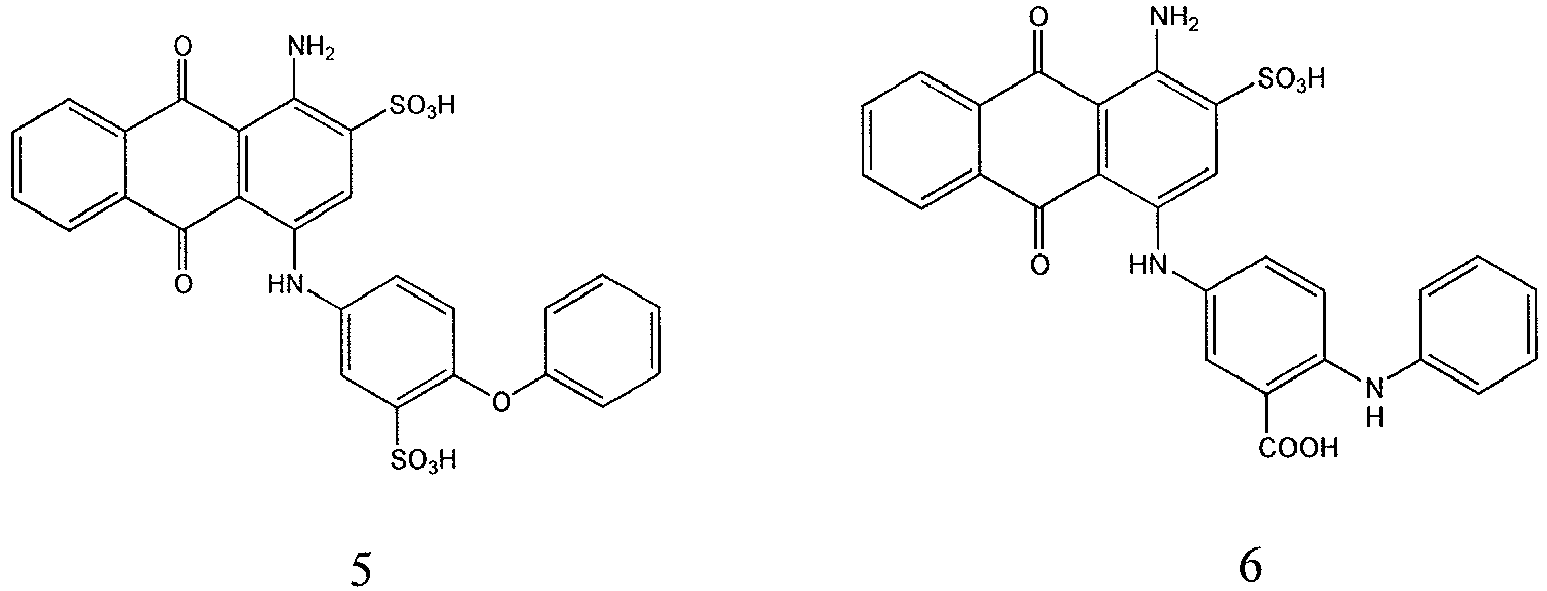


- (C) selected from the group consisting of:


- In certain embodiments, R7 is unsubstituted C6 aryl.
- In certain embodiments of the compounds of Formula I, Y is NH and/or wherein R6 represents one to four substituents selected from the group consisting of hydrogen, -S(O)2OR, -C(O)OR, tetrazolyl, sulfonyl, carboxy, amino, halogen, C1-C4 alkoxy, C1-C4 alkyl, hydroxy, and nitro.
-
- (1) R12 represents one to four substituents selected from the group consisting of hydrogen, halo, amino, unsubstituted C1-C4 alkyl or alkoxy, or hydroxy; and/or
- (2) at least one of A and B is C=O or both A and B are C=O; and/or
- (3) R1 is amino; and/or
- (4) R2 is tetrazolyl, -S(O)2OR or -C(O)OR
- In another aspect, the present invention relates to a pharmaceutical composition comprising any of the compounds or salts of the present invention and, optionally, a pharmaceutically acceptable carrier or excipient. This composition may additionally comprise further compounds or medicaments, such as, for example, thrombolytic agents or antithrombotics besides the invented compounds.
- In one aspect, the present invention relates to a compound of the invention according to alternative (A) or (B) or a pharmaceutically acceptable salt thereof for use in a method of inhibiting platelet aggregation or for use in the prevention, alleviation and/or treatment of a disease or disorder related to P2Y12 receptor activity.
- In still another aspect, the present invention is directed to a compound according to Formula III:

- A and B are C=O;
- X is NH;
- R1 is -NH2;
- R2 is selected from the group -C(O)OH and -S(O)2OH;
- R3 is selected from the group consisting of unsubstituted or substituted C1-C10 alkyl, unsubstituted or substituted C1-C10 alkenyl, unsubstituted or substituted C1-C10 alkynyl, unsubstituted or substituted C3-C8 cycloalkyl, unsubstituted or substituted C1-C10 alkoxy, unsubstituted or substituted C3-C8 cycloalkoxy, unsubstituted or substituted C6-C14 aryl, an unsubstituted or substituted 5- to 10-membered heteroaryl wherein 1 to 4 ring atoms are independently selected from nitrogen, oxygen or sulfur, an unsubstituted or substituted 5-to 10-membered heteroalicyclic ring wherein 1 to 3 ring atoms are independently nitrogen, oxygen or sulfur, alkylaryl, alkylheteroaryl, an unsubstituted or substituted 7 to 12-membered bicyclic alkyl or heterocyclic ring wherein 1 to 3 ring members are independently nitrogen, oxygen or sulfur, an unsubstituted or substituted 10 to 16-membered tricyclic alkyl or heterocyclic ring wherein 1 to 3 ring members are independently nitrogen, oxygen or sulfur,

- R6 represents one to four substituents independently selected from the group consisting of hydrogen, halogen, unsubstituted or substituted C1-C4 alkyl, alkenyl or alkynyl, an unsubstituted or substituted 5- to 10-membered heteroaryl wherein 1 to 4 ring atoms are independently selected from nitrogen, oxygen or sulfur, an unsubstituted or substituted 5- to 10-membered heteroalicyclic ring wherein 1 to 3 ring atoms are independently nitrogen, oxygen or sulfur, -OR, -NRR', -NO2, unsubstituted or substituted C1-C4 alkoxy, -C(O)R, -C(O)OR , -C(O)NRR', - S(O)2R, -S(O)2OR, and -S(O)2NRR';
- Y is selected from the group consisting of hydrogen, halogen, NH, O, S, CH2, CH2CH2, C(O), C(O)O, S(O)2O, or unsubstituted C1-C4 alkoxy, wherein when Y is hydrogen, halogen or alkoxy R7 is missing;
- R7 is selected from the group consisting of hydrogen, halogen, -OR, unsubstituted or substituted C1-C10 alkyl, alkenyl or alkynyl, unsubstituted or substituted C1-C10 alkoxy, unsubstituted or substituted C3-C8 cycloalkoxy, unsubstituted or substituted C3-C8 cycloalkyl, unsubstituted or substituted C6-C14 aryl, an unsubstituted or substituted 5- to 10-membered heteroaryl wherein 1 to 4 ring atoms are independently selected from nitrogen, oxygen or sulfur, an unsubstituted or substituted 5- to 10-membered heteroalicyclic wherein 1 to 3 ring atoms are independently nitrogen, oxygen or sulfur, - C(O)R, -C(O)OR , -C(O)NRR', -NRR', - S(O)2R, -S(O)2OR, -S(O)2NRR', and -P(O)RR';
- R12 represents one to four substituents independently selected from the group consisting of hydrogen, halogen, unsubstituted or substituted C1-C4 alkyl, alkenyl or alkynyl, an unsubstituted or substituted 5- to 10-membered heteroaryl wherein 1 to 4 ring atoms are independently selected from nitrogen, oxygen or sulfur, an unsubstituted or substituted 5- to 10-membered heteroalicyclic ring wherein 1 to 3 ring atoms are independently nitrogen, oxygen or sulfur, -OR, -NRR', -NO2, unsubstituted or substituted C1-C4 alkoxy, -C(O)R, -C(O)OR, -C(O)NRR', - S(O)2R, -S(O)2OR, and -S(O)2NRR'; and
- R and R' are independently selected from the group consisting of hydrogen and unsubstituted C1-C4 alkyl;
- In another embodiment, the compound for use in the prevention, alleviation and/or treatment of a disease or disorder related to P2Y12 receptor activity is selected from the group consisting of:


- In a further aspect, the disease or disorder is selected from the group of stroke, myocardial infarction, myocardial ischemia, vascular diseases, coronary artery disease, peripheral artery disease, atherosclerosis, cerebrovascular disease, embolisms and CNS disorders.
- In still another aspect, the present invention is directed an in vitro method for antagonizing the P2Y12 receptor function comprising the step of contacting cells expressing a P2Y12 receptor with at least one compound as defined above.
-
Figure 1 shows the results of the copper-catalyzed synthesis of an anilinoanthraquinone according to the present invention with microwave irradiation compared to conventional heating. - Unless otherwise stated the following terms used in the specification and claims have the meanings discussed below:
- "Alkyl" refers to a saturated aliphatic hydrocarbon including straight chain, or branched chain groups. Preferably, the alkyl group has 1 to 10 carbon atoms (whenever a numerical range; e.g.,"1-10", is stated herein, it means that the group, in this case the alkyl group, may contain 1 carbon atom, 2 carbon atoms, 3 carbon atoms, etc. up to and including 10 carbon atoms). More specifically, it may be a medium size alkyl having 1 to 6 carbon atoms or a lower alkyl having 1 to 4 carbon atoms e. g., methyl, ethyl, n-propyl, isopropyl, butyl, iso-butyl, tert-butyl and the like. The alkyl group may be substituted or unsubstituted. When substituted, the substituent group(s) is one or more, for example one or two groups, individually selected from the group consisting of C3-C8 cycloalkyl, C6-C14 aryl, 5-10 membered heteroaryl wherein 1 to 4 ring atoms are independently selected from nitrogen, oxygen or sulfur, 5-10 membered heteroalicyclic wherein 1 to 3 ring atoms are independently nitrogen, oxygen or sulfur, hydroxy, C1-C10 alkoxy, C3-C8 cycloalkoxy, aryloxy, mercapto, alkylthio, arylthio, cyano, halo, carbonyl, thiocarbonyl, O-carbamyl, N-carbamyl, O-thiocarbamyl, N-thiocarbamyl, C-amido, N-amido, C-carboxy, O-carboxy, nitro, silyl, sulfinyl, sulfonyl, amino, and -NR10R11 where R10 and R11 are independently selected from the group consisting of hydrogen, C1-C4 alkyl, C3-C8 cycloalkyl, C6-C14 aryl, carbonyl, acetyl, sulfonyl, amino, and trifluoromethanesulfonyl, or R10 and R11, together with the nitrogen atom to which they are attached, combine to form a five-or six-membered heteroalicyclic ring.
- A "cycloalkyl" group refers to an all-carbon monocyclic ring (i.e., rings which share an adjacent pair of carbon atoms) of 3 to 8 ring atoms wherein one of more of the rings does not have a completely conjugated pi-electron system e.g., cyclopropyl, cyclobutyl, cyclopentyl, cyclohexyl, cyclobutenyl, cyclopentenyl, cyclohexenyl, and the like. Examples, without limitation, of cycloalkyl groups are cyclopropane, cyclobutane, cyclopentane, cyclopentene, cyclohexane, adamantane, cyclohexadiene, cycloheptane and, cycloheptatriene. A cycloalkyl group may be substituted or unsubstituted. When substituted, the substituent group(s) is one or more, for example one or two groups, individually selected from C1-C10 alkyl, C3-C8 cycloalkyl, C6-C14 aryl, 5-10 membered heteroaryl wherein 1 to 4 ring atoms are independently selected from nitrogen, oxygen or sulfur, 5-10 membered heteroalicyclic wherein 1 to 3 ring atoms are independently nitrogen, oxygen or sulfur, hydroxy, C1-C10 alkoxy, C3-C8 cycloalkoxy, aryloxy, mercapto, alkylthio, arylthio, cyano, halo, carbonyl, thiocarbonyl, O-carbamyl, N-carbamyl, O-thiocarbamyl, N-thiocarbamyl, C-amido, N-amido, C-carboxy, O-carboxy, nitro, silyl, sulfinyl, sulfonyl, amino, and -NR10R11, with R10 and R11 as defined above.
- An "alkenyl" group refers to an alkyl group, as defined herein, consisting of at least two carbon atoms and at least one carbon-carbon double bond e. g., ethenyl, propenyl, butenyl or pentenyl and their structural isomeric forms such as 1-or 2-propenyl, 1-, 2-, or 3-butenyl and the like.
- An "alkynyl" group refers to an alkyl group, as defined herein, consisting of at least two carbon atoms and at least one carbon-carbon triple bond e. g., acetylene, ethynyl, propynyl, butynyl, or pentynyl and their structural isomeric forms as described above.
- An "aryl" group refers to an all-carbon monocyclic or fused-ring polycyclic (i.e., rings which share adjacent pairs of carbon atoms) groups of 6 to 14 ring atoms and having a completely conjugated pi-electron system. Examples, without limitation, of aryl groups are phenyl, naphthalenyl and anthracenyl. The aryl group may be substituted or unsubstituted. When substituted, the substituted group(s) is one or more, for example one, two, or three substituents, independently selected from the group consisting of C1-C10 alkyl, C3-C8 cycloalkyl, C6-C14 aryl, 5-10 membered heteroaryl wherein 1 to 4 ring atoms are independently selected from nitrogen, oxygen or sulfur, 5-10 membered heteroalicyclic wherein 1 to 3 ring atoms are independently nitrogen, oxygen or sulfur, hydroxy, C1-C10 alkoxy, C3-C8 cycloalkoxy, aryloxy, mercapto, alkylthio, arylthio, cyano, halo, trihalomethyl, carbonyl, thiocarbonyl, O-carbamyl, N-carbamyl, O-thiocarbamyl, N-thiocarbamyl, C-amido, N-amido, C-carboxy, O-carboxy, nitro, silyl, sulfinyl, sulfonyl, amino, and -NR10R11, with R10 and R11 as defined above. Preferably the substituent(s) is/are independently selected from chloro, fluoro, bromo, methyl, ethyl, hydroxy, methoxy, nitro, carboxy, methoxycarbonyl, sulfonyl, or amino.
- A "heteroaryl" group refers to a monocyclic or fused aromatic ring (i.e., rings which share an adjacent pair of atoms) of 5 to 10 ring atoms in which one, two, three or four ring atoms are selected from the group consisting of nitrogen, oxygen and sulfur and the rest being carbon. Examples, without limitation, of heteroaryl groups are pyridyl, pyrrolyl, furyl, thienyl, imidazolyl, oxazolyl, isoxazolyl, thiazolyl, isothiazolyl, pyrazolyl, 1,2,3-triazolyl, 1,2,4-triazolyl, 1,2,3-oxadiazolyl, 1,2,4-oxadiazolyl, 1,2,5-oxadiazolyl, 1,3,4-oxadiazolyl, 1,3,4-triazinyl, 1,2,3-triazinyl, benzofuryl, isobenzofuryl, benzothienyl, benzotriazolyl, isobenzothienyl, indolyl, isoindolyl, 3H-indolyl, benzimidazolyl, benzothiazolyl, benzoxazolyl, quinolizinyl, quinazolinyl, pthalazinyl, quinoxalinyl, cinnnolinyl, napthyridinyl, quinolyl, isoquinolyl, tetrazolyl, 5,6,7,8-tetrahydroquinolyl, 5, 6, 7, 8-tetrahydroisoquinolyl, purinyl, pteridinyl, pyridinyl, pyrimidinyl, carbazolyl, xanthenyl or benzoquinolyl. The heteroaryl group may be substituted or unsubstituted. When substituted, the substituted group(s) is one or more, for example one or two substituents, independently selected from the group consisting of C1-C10 alkyl, C3-C8 cycloalkyl, C6-C14 aryl, 5-10 membered heteroaryl wherein 1 to 4 ring atoms are independently selected from nitrogen, oxygen or sulfur, 5-10 membered heteroalicyclic wherein 1 to 3 ring atoms are independently nitrogen, oxygen or sulfur, hydroxy, C1-C10 alkoxy, C3-C8 cycloalkoxy, aryloxy, mercapto, alkylthio, arylthio, cyano, halo, trihalomethyl, carbonyl, thiocarbonyl, O-carbamyl, N-carbamyl, O-thiocarbamyl, N-thiocarbamyl, C-amido, N-amido, C-carboxy, O-carboxy, nitro, silyl, sulfinyl, sulfonyl, amino, and -NR10R11, with R10 and R11 as defined above. Preferably the substituent(s) is/are independently selected from chloro, fluoro, bromo, methyl, ethyl, hydroxy, methoxy, nitro, carboxy, methoxycarbonyl, sulfonyl, or amino.
- A "heteroalicyclic" group refers to a monocyclic or fused ring of 5 to 10 ring atoms containing one, two, or three heteroatoms in the ring which are selected from the group consisting of nitrogen, oxygen and -S(O)n where n is 0-2, the remaining ring atoms being carbon. The rings may also have one or more double bonds. However, the rings do not have a completely conjugated pi-electron system. Examples, without limitation, of heteroalicyclic groups are pyrrolidine, piperidine, piperazine, morpholine, imidazolidine,tetrahydropyridazine, tetrahydrofuran, thiomorpholine, tetrahydropyridine, and the like. The heteroalicyclic ring may be substituted or unsubstituted. When substituted, the substituted group (s) is one or more, for example one, two, or three substituents, independently selected from the group consisting of C1-C10 alkyl, C3-C8 cycloalkyl, C6-C14 aryl, 5-10 membered heteroaryl wherein 1 to 4 ring atoms are independently selected from nitrogen, oxygen or sulfur, 5-10 membered heteroalicyclic wherein 1 to 3 ring atoms are independently nitrogen, oxygen or sulfur, hydroxy, C1-C10 alkoxy, C3-C8 cycloalkoxy, aryloxy, mercapto, alkylthio, arylthio, cyano, halo, trihalomethyl, carbonyl, thiocarbonyl, O-carbamyl, N-carbamyl, O-thiocarbamyl, N-thiocarbamyl, C-amido, N-amido, C-carboxy, O-carboxy, nitro, silyl, sulfinyl, sulfonyl, amino, and -NR10R11, with R10 and R11 as defined above. The substituent(s) is/are for example independently selected from chloro, fluoro, bromo, methyl, ethyl, hydroxy, methoxy, nitro, carboxy, methoxycarbonyl, sulfonyl, or amino.
- A "hydroxy" group refers to an -OH group.
- An "alkoxy" group refers to an -O-unsubstituted alkyl and -O-substituted alkyl group, as defined herein. Examples include and are not limited to methoxy, ethoxy, propoxy, butoxy, and the like.
- A "cycloalkoxy" group refers to an -O-cycloalkyl group, as defined herein. One example is cyclopropyloxy.
- An "aryloxy" group refers to both an -O-aryl and an -O-heteroaryl group, as defined herein. Examples include and are not limited to phenoxy, napthyloxy, pyridyloxy, furanyloxy, and the like.
- A "mercapto" group refers to an -SH group.
- An "alkylthio" group refers to both an S-alkyl and an -S-cycloalkyl group, as defined herein. Examples include and are not limited to methylthio, ethylthio, and the like.
- An "arylthio" group refers to both an -S-aryl and an -S-heteroaryl group, as defined herein. Examples include and are not limited to phenylthio, napthylthio, pyridylthio, furanylthio, and the like.
- A "sulfinyl" group refers to a -S(O)-R" group, wherein, R" is selected from the group consisting of hydrogen, hydroxy, alkyl, cycloalkyl, aryl, heteroaryl (bonded through a ring carbon) and heteroalicyclic (bonded through a ring carbon), as defined herein.
- A "sulfonyl" group refers to a -S(O)2R" group wherein, R" is selected from the group consisting of hydrogen, hydroxy, alkyl, cycloalkyl, aryl, heteroaryl (bonded through a ring carbon) and heteroalicyclic (bonded through a ring carbon), as defined herein.
- A "trihalomethyl" group refers to a -CX3 group wherein X is a halo group as defined herein e. g., trifluoromethyl, trichloromethyl, tribromomethyl, dichlorofluoromethyl, and the like.
- "Carbonyl" refers to a -C(=O)-R" group, where R" is selected from the group consisting of hydrogen, alkyl, cycloalkyl, aryl, heteroaryl (bonded through a ring carbon) and heteroalicyclic (bonded through a ring carbon), as defined herein. Representative examples include and the not limited to acetyl, propionyl, benzoyl, formyl, cyclopropylcarbonyl, pyridinylcarbonyl, pyrrolidin-lylcarbonyl, and the like.
- A "thiocarbonyl" group refers to a -C(=S)-R" group, with R" as defined herein.
- "C-carboxy" and "carboxy" which are used interchangeably herein refer to a -C(=O)O-R" group, with R" as defined herein, e. g. -COOH, methoxycarbonyl, ethoxycarbonyl, benzyloxycarbonyl, and the like.
- An "O-carboxy" group refers to a -OC(=O)R" group, with R" as defined herein, e.g. methylcarbonyloxy, phenylcarbonyloxy, benzylcarbonyloxy, and the like.
- An "acetyl" group refers to a -C(=O)CH3 group.
- A "carboxylic acid" group refers to a C-carboxy group in which R" is hydrogen.
- A "halo" or "halogen" group refers to fluorine, chlorine, bromine or iodine.
- A "cyano" group refers to a -CN group.
- A "nitro" group refers to a -NO2 group.
- An "O-carbamyl" group refers to a -OC(=O)NR10R11 group, with R10 and R11 as defined herein.
- An "N-carbamyl" group refers to a R11OC (=O) NR10- group, with R10 and R11 as defined herein.
- An "O-thiocarbamyl" group refers to a -OC(=S)NR10R11 group, with R10 and R11 as defined herein.
- An "N-thiocarbamyl" group refers to a R11OC(=S)NR10- group, with R10 and R11 as defined herein.
- An "amino" group refers to an -NR10R11 group, wherein R10 and R11 are independently hydrogen or unsubstituted lower alkyl, e.g, -NH2, dimethylamino, diethylamino, ethylamino, methylamino, and the like.
- A "C-amido" group refers to a -C(=O)NR10R11 group, with R10 and R11 as defined herein. For example, R10 is hydrogen or unsubstituted C1-C4 alkyl and R11 is hydrogen, C1-C4 alkyl optionally substituted with heteroalicyclic, hydroxy, or amino. For example, C(=O)NR10R11 may be aminocarbonyl, dimethylaminocarbonyl, diethylaminocarbonyl, diethylaminoethylaminocarbonyl, ethylaminoethylaminocarbonyl, and the like.
- An "N-amido" group refers to a R11C(=O)NR10- group, with R10 and R11 as defined herein, e.g. acetylamino, and the like.
- A "pharmaceutical composition" refers to a mixture of one or more of the compounds described herein, or physiologically/pharmaceutically acceptable salts or prodrugs thereof, with other chemical components, such as physiologically/pharmaceutically acceptable carriers and excipients. The purpose of a pharmaceutical composition is to facilitate administration of a compound to an organism.
- As used herein, a "physiologically/pharmaceutically acceptable carrier" refers to a carrier or diluent that does not cause significant irritation to an organism and does not abrogate the biological activity and properties of the administered compound.
- A "pharmaceutically acceptable excipient" refers to an inert substance added to a pharmaceutical composition to further facilitate administration of a compound. Examples, without limitation, of excipients include calcium carbonate, calcium phosphate, various sugars and types of starch, cellulose derivatives, gelatin, vegetable oils and polyethylene glycols.
- As used herein, the term "pharmaceutically acceptable salt" refers to those salts which retain the biological effectiveness and properties of the parent compound. Such salts include, but are not restricted to: (1) an acid addition salt which is obtained by reaction of the free base of the parent compound with inorganic acids such as hydrochloric acid, hydrobromic acid, nitric acid, phosphoric acid, sulfuric acid, and perchloric acid and the like, or with organic acids such as acetic acid, oxalic acid, (D) or (L) malic acid, maleic acid, methanesulfonic acid, ethanesulfonic acid, p-toluenesulfonic acid, salicylic acid, tartaric acid, citric acid, succinic acid or malonic acid and the like, preferably hydrochloric acid or (L)-malic acid; or (2) salts formed when an acidic proton present in the parent compound either is replaced by a metal ion, e. g., an alkali metal ion, such as sodium or potassium, an alkaline earth ion, such as magnesium or calcium, or an aluminum ion; or coordinates with an organic base such as ethanolamine, diethanolamine, triethanolamine, tromethamine, N-methylglucamine, and the like.
- The terms "P2Y12 related disease or disorder", "P2Y12 associated disease or disorder" and "P2Y12 connected disease or disorder" are used interchangeably herein to refer to a condition involving P2Y12 activity. Examples for such diseases and disorders are stroke, myocardial infarction, such as non-ST elevation myocardial infarction (NSTEMI), myocardial ischemia, for example manifested in stable or unstable angina, various vascular diseases, such as coronary artery disease, peripheral artery disease, atherosclerosis, and cerebrovascular disease, and embolisms, such as thromboembolisms. Since the P2Y12 receptor is also expressed in brain, e.g. in microglial cells, also included are CNS disorders, such as neuroinflammatory conditions and neurodegenerative disorders (e.g. Alzheimer's and Parkinson's disease).
- "Treat", "treating" and "treatment" refer to a method of alleviating or abrogating a P2Y12 related disease or disorder and/or its attendant symptoms.
- "Prevent", "preventing" and "prevention" refer to a method of hindering a P2Y12 related disease or disorder from occuring, i.e. a prophylactic method.
- "Organism" refers to any living entity comprised of at least one cell. A living organism can be as simple as, for example, a single eukariotic cell or as complex as a mammal, including a human being.
- "Therapeutically effective amount" refers to that amount of the compound being administered which will relieve to some extent one or more of the symptoms of the disorder being treated.
- With respect to the compounds defined in the Summary of the invention, certain compounds of Formulae I or III are exemplified below.
- One specific group of compounds of Formula I is that wherein:
- wherein R7 is unsubstituted C6 aryl.
- One specific group of compounds of Formula I is that, wherein Y is NH and/or wherein R6 represents one to four substituents selected from the group consisting of hydrogen, -S(O)2OR, -C(O)OR, tetrazolyl, sulfonyl, carboxy, amino, halogen, C1-C4 alkoxy, C1-C4 alkyl, hydroxy, and nitro.
- One specific group of compounds of Formula I is that, wherein
- (1) R12 represents one to four substituents selected from the group consisting of hydrogen, halo, amino, unsubstituted C1-C4 alkyl or alkoxy, or hydroxy; and/or
- (2) at least one of A and B is C=O or both A and B are C=O; and/or
- (3) R1 is amino; and/or
- (4) R2 is tetrazolyl, -S(O)2OR or -C(O)OR.
- The compounds of the invention can be administered in pharmaceutical formulations, either alone, or in combination with other pharmacologically active compounds. Suitable other pharmacologically active compounds may, for example, be selected from other P2Y12 inhibitors, such as clopidogrel, or acetylsalicylic acid (Aspirin).
- The compounds of the present invention bind with high specificity and selectivity to human platelet P2Y12 receptors. Preferably, they bind to their target receptor P2Y12 with at least 10-fold, more preferably at least 100-fold, most preferably 103-108-fold higher affinity compared to related P2Y receptors, such as, for example, human P2Y2, human P2Y4, mouse P2Y2 and rat P2Y6.
- Upon binding to P2Y12, the compounds of the present invention reduce or abrogate P2Y12 signaling. A precise understanding of the mechanism by which the compounds of the invention inhibit P2Y12 signalling is not required in order to practice the present invention. However, while not hereby bound to any particular mechanism or theory, it is believed that the compounds interact with amino acids of P2Y12 in the ADP binding region or in close proximity thereto, blocking the binding of ADP and thus the activation of the receptor. Accordingly, the compounds of the present invention are useful as inhibitors of P2Y12 signalling. Because P2Y12 plays a critical role in platelet aggregation, the cross-linking of platelets by fibrin, via the glycoprotein IIb/IIIa pathway, the compounds of the invention have anti-thrombotic activity and thus can be utilized in the treatment of diseases and disorders that are connected to an inappropriate or abnormal P2Y12 function, in particular increased P2Y12 activity, or that involve P2Y12 function. Moreover, the compounds can also be used for the prevention of diseases and disorders that involve platelet aggregation, such as stroke, myocardial infarction, such as non-ST elevation myocardial infarction (NSTEMI), myocardial ischemia, for example manifested in stable or unstable angina, various vascular diseases, such as coronary artery disease, peripheral artery disease, atherosclerosis, and cerebrovascular disease, and embolisms, such as thromboembolisms. The present invention further encompasses an in vitro method for antagonizing the P2Y12 receptor function comprising the step of contacting cells expressing a P2Y12 receptor with at least one compound as defined above. In this context, it should be noted that for the efficacy of a compound of the invention as a pharmaceutical a number of variables besides binding affinity may play a crucial role. Accordingly, compounds of the invention can be specifically selected for use as a pharmaceutical not only based on the determined binding specificity and affinity, but also based on other factors, such as bioavailability, severity of side effects caused, metabolic conversion of the compound, half-life of the compound in the organism and the like.
- A compound of the present invention or a pharmaceutically acceptable salt thereof, can be administered as such to a human patient or can be administered in pharmaceutical compositions in which the foregoing materials are mixed with suitable carriers or excipient(s). Techniques for formulation and administration of drugs may be found in "Remington's Pharmacological Sciences," Mack Publishing Co., Easton, PA., latest edition.
- As used herein, "administer" or "administration" refers to the delivery of a compound of Formula (I) or a pharmaceutically acceptable salt thereof or of a pharmaceutical composition containing a compound of Formula (I) or a pharmaceutically acceptable salt thereof of this invention to an organism for the purpose of prevention or treatment of a P2Y12-related disease or disorder.
- Suitable routes of administration may include, without limitation, oral, rectal, transmucosal or intestinal administration or intramuscular, subcutaneous, intramedullary, intrathecal, direct intraventricular, intravenous, intravitreal, intraperitoneal, intranasal, or intraocular injections. The preferred routes of administration are oral and parenteral.
- Alternatively, one may administer the compound in a local rather than systemic manner, for example, via injection of the compound directly into a vessel, optionally in a depot or sustained release formulation.
- Pharmaceutical compositions of the present invention may be manufactured by processes well known in the art, e. g., by means of conventional mixing, dissolving, granulating, drageemaking, levigating, emulsifying, encapsulating, entrapping or lyophilizing processes.
- Pharmaceutical compositions for use in accordance with the present invention may be formulated in conventional manner using one or more physiologically acceptable carriers comprising excipients and auxiliaries which facilitate processing of the active compounds into preparations which can be used pharmaceutically. Proper formulation is dependent upon the route of administration chosen.
- For injection, the compounds of the invention may be formulated in aqueous solutions, preferably in physiologically compatible buffers such as Hanks' solution, Ringer's solution, or physiological saline buffer. For transmucosal administration, penetrants appropriate to the barrier to be permeated are used in the formulation. Such penetrants are generally known in the art.
- For oral administration, the compounds can be formulated by combining the active compounds with pharmaceutically acceptable carriers well known in the art. Such carriers enable the compounds of the invention to be formulated as tablets, pills, lozenges, dragees, capsules, liquids, gels, syrups, slurries, suspensions and the like, for oral ingestion by a patient. Pharmaceutical preparations for oral use can be made using a solid excipient, optionally grinding the resulting mixture, and processing the mixture of granules, after adding other suitable auxiliaries if desired, to obtain tablets or dragee cores. Useful excipients are, in particular, fillers such as sugars, including lactose, sucrose, mannitol, or sorbitol, cellulose preparations such as, for example, maize starch, wheat starch, rice starch and potato starch and other materials such as gelatin, gum tragacanth, methyl cellulose, hydroxypropylmethyl-cellulose, sodium carboxymethylcellulose, and/or polyvinylpyrrolidone (PVP). If desired, disintegrating agents may be added, such as cross-linked polyvinyl pyrrolidone, agar, or alginic acid. A salt such as sodium alginate may also be used.
- Dragee cores are provided with suitable coatings. For this purpose, concentrated sugar solutions may be used which may optionally contain gum arabic, talc, polyvinyl pyrrolidone, carbopol gel, polyethylene glycol, and/or titanium dioxide, lacquer solutions, and suitable organic solvents or solvent mixtures. Dyestuffs or pigments may be added to the tablets or dragee coatings for identification or to characterize different combinations of active compound doses.
- Pharmaceutical compositions which can be used orally include push-fit capsules made of gelatin, as well as soft, sealed capsules made of gelatin and a plasticizer, such as glycerol or sorbitol. The push-fit capsules can contain the active ingredients in admixture with a filler such as lactose, a binder such as starch, and/or a lubricant such as talc or magnesium stearate and, optionally, stabilizers. In soft capsules, the active compounds may be dissolved or suspended in suitable liquids, such as fatty oils, liquid paraffin, or liquid polyethylene glycols. Stabilizers may be added in these formulations, also.
- The compounds may also be formulated for parenteral administration, e. g., by bolus injection or continuous infusion. Formulations for injection may be presented in unit dosage form, e. g., in ampoules or in multi-dose containers, with an added preservative. The compositions may take such forms as suspensions, solutions or emulsions in oily or aqueous vehicles, and may contain formulating materials such as suspending, stabilizing and/or dispersing agents.
- Pharmaceutical compositions for parenteral administration include aqueous solutions of a water soluble form, such as, without limitation, a salt, of the active compound.
- Additionally, suspensions of the active compounds may be prepared in a lipophilic vehicle. Suitable lipophilic vehicles include fatty oils such as sesame oil, synthetic fatty acid esters such as ethyl oleate and triglycerides, or materials such as liposomes. Aqueous injection suspensions may contain substances which increase the viscosity of the suspension, such as sodium carboxymethyl cellulose, sorbitol, or dextran. Optionally, the suspension may also contain suitable stabilizers and/or agents that increase the solubility of the compounds to allow for the preparation of highly concentrated solutions.
- Alternatively, the active ingredient may be in powder form for constitution with a suitable vehicle, e. g., sterile, pyrogen-free water, before use.
- The compounds may also be formulated in rectal compositions such as suppositories or retention enemas, using, e. g., conventional suppository bases such as cocoa butter or other glycerides.
- In addition to the formulations described previously, the compounds may also be formulated as depot preparations. Such long acting formulations may be administered by implantation (for example, subcutaneously or intramuscularly) or by intramuscular injection. A compound of this invention may be formulated for this route of administration with suitable polymeric or hydrophobic materials (for instance, in an emulsion with a pharmacologically acceptable oil), with ion exchange resins, or as a sparingly soluble derivative such as, without limitation, a sparingly soluble salt.
- A non-limiting example of a pharmaceutical carrier for the hydrophobic compounds of the invention is a cosolvent system comprising benzyl alcohol, a nonpolar surfactant, a water-miscible organic polymer and an aqueous phase such as the VPD co-solvent system. VPD is a solution of 3% w/v benzyl alcohol,8% w/v of the nonpolar surfactant Polysorbate 80, and 65% w/v polyethylene glycol 300, made up to volume in absolute ethanol. The VPD co-solvent system (VPD: D5W) consists of VPD diluted 1: 1 with a 5% dextrose in water solution. This cosolvent system dissolves hydrophobic compounds well, and itself produces low toxicity upon systemic administration.
- Naturally, the proportions of such a co-solvent system may be varied considerably without destroying its solubility and toxicity characteristics. Furthermore, the identity of the co-solvent components may be varied: for example, other lowtoxicity nonpolar surfactants may be used instead of Polysorbate 80, the fraction size of polyethylene glycol may be varied, other biocompatible polymers may replace polyethylene glycol, e.g., polyvinyl pyrrolidone, and other sugars or polysaccharides may substitute for dextrose.
- Alternatively, other delivery systems for hydrophobic pharmaceutical compounds may be employed. Liposomes and emulsions are well known examples of delivery vehicles or carriers for hydrophobic drugs. In addition, certain organic solvents such as dimethylsulfoxide also may be employed, although often at the cost of greater toxicity.
- Additionally, the compounds may be delivered using a sustained-release system, such as semipermeable matrices of solid hydrophobic polymers containing the therapeutic agent.
- Various sustained-release materials have been established and are well known by those skilled in the art. Sustained-release capsules may, depending on their chemical nature, release the compounds for a few weeks up to over 100 days. Depending on the chemical nature and the biological stability of the therapeutic reagent, additional strategies for stabilization may be employed.
- The pharmaceutical compositions herein also may comprise suitable solid or gel phase carriers or excipients. Examples of such carriers or excipients include, but are not limited to, calcium carbonate, calcium phosphate, various sugars, starch, cellulose derivatives, gelatin, and polymers such as polyethylene glycols.
- Many of the compounds of the invention may be provided as physiologically acceptable salts wherein the claimed compound may form the negatively or the positively charged species. Examples of salts in which the compound forms the positively charged moiety include, without limitation, the sodium, potassium, calcium and magnesium salts formed by the reaction of a carboxylic acid or sulfonic acid group in the compound with an appropriate base (e.g. sodium hydroxide (NaOH), potassium hydroxide (KOH), Calcium hydroxide (Ca(OH)2), etc.).
- Pharmaceutical compositions suitable for use in the present invention include compositions wherein the active ingredients are contained in an amount sufficient to achieve the intended purpose, e. g., the inhibition of P2Y12 function or the treatment or prevention of a P2Y12-related disease or disorder.
- More specifically, a therapeutically effective amount means an amount of compound effective to prevent, alleviate or ameliorate symptoms of disease or prolong the survival of the subject being treated.
- Determination of a therapeutically effective amount is well within the capability of those skilled in the art, especially in light of the detailed disclosure provided herein.
- For any compound used in the methods of the invention, the therapeutically effective amount or dose can be estimated initially from cell culture assays. Then, the dosage can be formulated for use in animal models so as to achieve a circulating concentration range that includes the IC50 as determined in cell culture (i. e., the concentration of the test compound which achieves a half-maximal inhibition of the P2Y12 activity). Such information can then be used to more accurately determine useful doses in humans.
- Toxicity and therapeutic efficacy of the compounds described herein can be determined by standard pharmaceutical procedures in cell cultures or experimental animals, e.g., by determining the IC50 and the LD50 for a subject compound. The data obtained from these cell culture assays and animal studies can be used in formulating a range of dosage for use in humans. The dosage may vary depending upon the dosage form employed and the route of administration utilized. The exact formulation, route of administration and dosage can be chosen by the individual physician in view of the patient's condition.
- Dosage amount and interval may be adjusted individually to provide plasma levels of the active species which are sufficient to maintain the P2Y12 inhibiting effects. These plasma levels are referred to as minimal effective concentrations (MECs). The MEC will vary for each compound but can be estimated from in vitro data, e. g., the concentration necessary to achieve 50-90% inhibition of P2Y12.
- Dosages necessary to achieve the MEC will depend on individual characteristics and route of administration. HPLC assays or bioassays can be used to determine plasma concentrations.
- Dosage intervals can also be determined using MEC value.
- Compounds should be administered using a regimen that maintains plasma levels above the MEC for 10-90% of the time, preferably between 30-90% and most preferably between50-90%.
- In cases of local administration or selective uptake, the effective local concentration of the drug may not be related to plasma concentration and other procedures known in the art may be employed to determine the correct dosage amount and interval.
- The amount of a composition administered will, of course, be dependent on the subject being treated, the severity of the affliction, the manner of administration, the judgment of the prescribing physician, etc.
- The compositions may, if desired, be presented in a pack or dispenser device, such as a kit approved by a regulatory authority, such as EMEA or FDA, which may contain one or more unit dosage forms containing the active ingredient. The pack may for example comprise metal or plastic foil, such as a blister pack. The pack or dispenser device may be accompanied by instructions for administration.
- The pack or dispenser may also be accompanied by a notice associated with the container in a form prescribed by a governmental agency regulating the manufacture, use or sale of pharmaceuticals, which notice is reflective of approval by the agency of the form of the compositions or of human or veterinary administration. Compositions comprising a compound of the invention formulated in a compatible pharmaceutical carrier may also be prepared, placed in an appropriate container, and labeled for treatment of an indicated condition.
- It is also an aspect of this invention that a compound described herein, or its salt or prodrug, might be combined with other agents for the treatment of the diseases and disorders discussed above.
- The most widely employed strategy for the synthesis of anilinoanthracene derivatives utilizes the Ullmann coupling reaction, which involves the treatment of a anthracene derivative substituted with a leaving group, such as halogen, with an arylamine in the presence of a copper catalyst (cf. Scheme 2, wherein R1, R2, R4, R5, A, B are defined as above, Z is a leaving group, and Rx can be any one to five substituents). As noted above, the reaction typically requires harsh conditions e.g., high temperatures and long reaction times, and suffers from poor yields.

- Typical reaction conditions include:
- (a) reaction in the presence of CuCl, Na2CO3, and Na2SO3 in H2O at room temperature for 8-24 h, or under reflux at 120 °C for 8-10 h (method A);
- (b) reaction in the presence of CuSO4 and Na2CO3 in H2O at 120 °C for 12-48 h (method B); and
- (c) reaction in the presence of Cu0 in sodium phosphate buffer pH 6-7 at 120 °C for 2-15 h (method C).
- However, all three methods suffer from unsatisfactory product yield.
- It has been found by the inventors of the present invention that microwave irradiation could improve the Ullmann coupling reactions by increasing product yield and accelerating the reaction. The present invention thus discloses an improved method for the synthesis of compounds of Formulae I or III, wherein the method includes a microwave-assisted copper-catalyzed Ullmann coupling reaction according to Scheme 1 wherein R1, R2, R3, R4, R5, Z, R6, Y and R7 are defined as above.
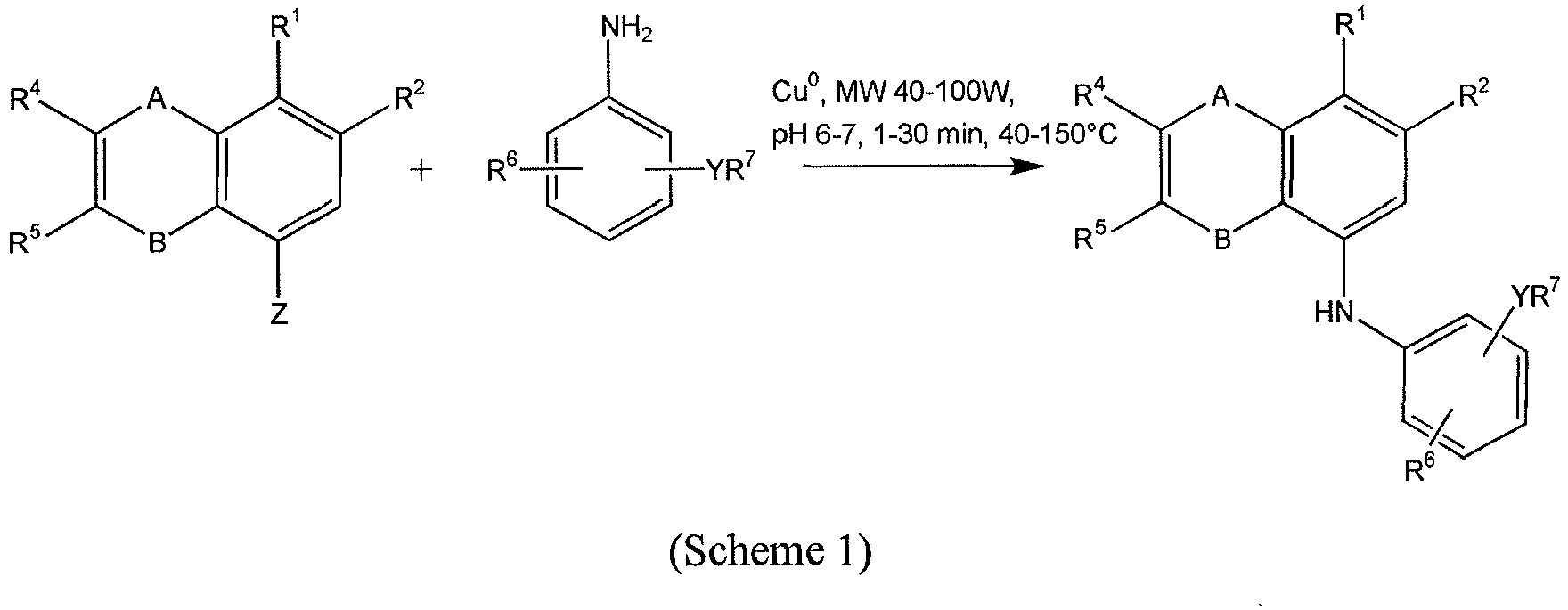
- According to the invented method, the reaction mixtures were subjected to microwave irradiation, typically for only 1-30 min at 40-150 °C applying 40-100 W. All other conditions (catalyst, salts, solvent) were the same as in the classical method C. Instead of Cu(0), copper salts (Cu(I) or Cu(II)) can also be used.
- The invented method is characterized by dramatically increased yields (30-90 % isolated) especially of compounds poorly accessible without microwaves and a reaction duration of only about 1-30 minutes.
- The present inventions will be explained in more detail in the following examples. However, the examples are only used for illustration and do not limit the scope of the present invention.
- General: All materials were used as purchased (Sigma-Aldrich or Acros, Germany). Thin-layer chromatography was performed using TLC aluminum sheets silica gel 60 F254, or TLC aluminum sheets RP silica gel 18 F254 (Merck, Darmstadt, Germany). Colored compounds were visible at daylight; other compounds were visualized under UV light (254 nm). Flash chromatography was performed on a Büchi system using silica gel RP-18 (Merck, Darmstadt, Germany). 1H- and 13C-NMR data were collected on a Bruker Avance 500 MHz NMR spectrometer at 500 MHz (1H), or 126 MHz (13C), respectively. DMSO-d6 was used as a solvent. Chemical shifts are reported in parts per million (ppm) relative to the deuterated solvent, i. e. DMSO, δ 1H: 2.49 ppm, 13C: 39.7 ppm, coupling constants J are given in Hertz and spin multiplicities are given as s (singlet), d (doublet), t (triplet), q (quartet), m (multiplet), br (broad). The purities of isolated products were determined by ESI-mass spectra obtained on an LCMS instrument (Applied Biosystems API 2000 LCMS/MS, HPLC Agilent 1100) using the following procedure: the compounds were dissolved at a concentration of 0.5 mg/ml in H2O : MeOH = 1 : 1, containing 2 mM NH4CH3COO. Then, 10 µl of the sample was injected into an HPLC column (Phenomenix Luna 3µ C18, 50 x 2.00 mm). Elution was performed with a gradient of water : methanol (containing 2 mM NH4CH3COO) from 90 : 10 to 0 : 100 for 30 min at a flow rate of 250 µl/min, starting the gradient after 10 min. UV absorption was detected from 200 to 950 nm using a diode array detector. Purity of the compounds was determined at 254 nm. For microwave reactions a CEM Focused™ Microwave Synthesis type Discover apparatus was used. A freeze dryer (CHRIST ALPHA 1-4 LSC) was used for lyophilization, reduction was achieved by using a Hogen® GC hydrogen generator from the Proton Energy System (USA) company.
-

- To a 5 mL microwave reaction vial equipped with a magnetic stirring bar were added a bromo-substituted phenyl derivative or another mono-, bi- or tricyclic bromo-substituted compound (e.g. bromaminic acid sodium salt) (0.20 mmol) and the appropriate aniline derivative or other amino-substituted compound (0.40 mmol), followed by a buffer solution of Na2HPO4 (pH 9.6) (4 mL) and NaH2PO4 (pH 4.2) (1 mL). A catalytic amount (e.g. 0.002-0.003 g) of finely powdered elemental copper (or copper(I)-salt, or copper(II)-salt, respectively) was added. The mixture was capped and irradiated in the microwave oven (e.g. 40-100 W) for 1-30 min at 40-150 °C. Then the reaction mixture was cooled to rt, and the product was purified using the following procedure. The contents of the vial were filtered to remove the elemental copper. Then ca. 200 mL of water was added to the filtrate and the aqueous solution was extracted with chloroform (200 mL). The extraction procedure was repeated until the chloroform layer became colorless (2-3 times). Then the aqueous layer was reduced by rotary evaporation to a volume of 10-20 mL, which was subsequently submitted to flash column chromatography using RP-18 silica gel and water as an eluent. The polarity of the eluent was then gradually decreased by the addition of methanol in the following steps: 20, 40, 60, 80, and 100 %. Fractions containing blue product were collected. For some compounds the last step of purification (RP-18 flash chromatography) had to be repeated two to three times to obtain pure product (≥ 95% purity as determined by LC-MS). The pooled product-containing fractions were evaporated under vacuum to remove the methanol, and the remaining water was subsequently removed by lyophilization to yield the products (30-90%) as blue powders.
- According to the following reaction scheme the results shown in Table 2 were obtained.

Table 2 entry R1 R2 R3 R4 R5 products 3 (yield [%]) b 1 H COOH H NH2 H 3a (70) 2 H COOH H H H 3b (76) 3 H H COOH H H 3c (70) 4 NH2 H H H H 3d (58) 5 H NH2 H H H 3e (70) 6 COOH H Cl H H 3f (43) 7 COOH H H Cl H 3g (64) 8 COOH H H H H 3h (83) 9 OH H H H H 3i (58) 10 H H OH H H 3j (72) 11 H H NH2 H H 3k (90) 12 H H H H H 3l (55) 13 H H Cl H H 3m (87) 14 H H 
H H 3n (44) 15 CH3 H CH3 H CH3 3o (77) 16 OMe H H H H 3p (79) 17 H OMe H H H 3q (67) 18 H H OMe H H 3r (85) 19 H H F H H 3s (76) 20 H Br H H H 3t (41) 21 H CH3 H CH3 H 3u (32) 22 H Cl H H H 3v (56) 23 CH3 NH2 H H H 3w (34) 24 H COOH OH H H 3x (30) 25 SO3H H H H H 3y (30) 26 H H SO3H H H 3z (40) "Reaction mixtures were irradiated for 2 to 20 min in sodium phosphate buffer, pH 6-7, in the presence of Cu0 at 80-120 °C.
b Isolated yields (purity of products ≥ 95% as determined by HPLC-UV (254 nm)-ESI-MS) calculated based on educt 1; true yields were higher since commercial 1 was only 90% pure (main contaminant: desbromo derivative, 8%). - For some selected compounds the obtained product yields were compared with those obtained by the conventional method C, which was proven superior to methods A and B (See above). The results of this comparison, shown in
Figure 1 , clearly demonstrate that the method of the present invention leads to improved product yields compared to the conventional method C. -

-

- An ice-cooled solution of an halogen-substituted derivative (0.5-1 mmol) in water (25 ml) and acetone (25 ml) was added to a stirred solution of compound 3 (0.5 mmol) in water (25 ml) at 0-5 °C. The resulting mixture was stirred for 1 h at 0-5 °C, then at room temperature for 4-6 h. The formation of product was monitored by RP-TLC using a mobile phase of acetone/water (2:3). After completion of the reaction the solvents were evaporated and the residue was purified by FCC RP-18 silica gel using an acetone/water eluent to obtain compound 4 (or analogs).
- An ice-cooled solution of 2-bromopyrimidine or another halogen compound (0.5-1 mmol) in water (25 ml) and acetone (25 ml) was added to a stirred solution of the respective compound 3 (0.5 mmol) in water (25 ml) at 0-5 °C. Then the temperature was graduelly increased for refluxing at 120 °C for 1-3d. The formation of product was monitored by RP-TLC using a mobile phase of methanol/water (2:3). After completion of the reaction the solvents were evaporated and the residue was purified by FCC RP-18 silica gel using an methanol/water eluent to obtain compound 4.
-

- An ice-cooled solution of an aniline derivative or another amino-substituted compound (1-2 mmol) in water (25 ml) and acetone (25 ml) was added to a stirred solution of the compound 4 (1 mmol) in water (25 ml) at 0-5 °C. Then the temperature was graduelly increased to reach 40-60 °C for 4 h. The formation of product was monitored by RP-TLC using a mobile phase of acetone/water (3:2). After completion of the reaction the solvents were evaporated and the residue was purified by FCC RP-18 silica gel using an acetone/water eluent to obtain compound 5.
- To an 80 mL microwave reaction vial equipped with a magnetic stirring bar were added 5-nitro-2-chlorobenzoic acid (2.520 g, 12.5 mmol) and an excess (e.g. 6 eq.) of the appropriate aliphatic or aromatic amine derivative (ca. 75 mmol) to obtain a homogenous mixture. The mixture was irradiated in a microwave oven (80-100 W) for 5-30 min at 80-120 °C. Then the reaction mixture was cooled to rt, and the product was purified using the following procedure. The contents of the vial were dissolved in ca. 500 mL of dichloromethane and the organic solution was extracted with diluted aq. sodium hydroxide solution (ca. 500 mL). The extraction procedure was repeated until the aqueous layer became light yellow (3-4 times). Then the aqueous layer was collected and acidified using concentrated aq. hydrochloric acid (37 %) until pH ≤ 3 and the desired product precipitated in the acidic medium. The precipitated solid was filtered off and washed several times (2-3 times) with 100 mL water each to remove the remaining sodium chloride as well as hydrochloric acid. The product was dried in an oven at 100 °C. The purity of the product was ≥ 95% as determined by LC-MS.
- To a 10 mL vial equipped with a magnetic stirring bar were added the nitro-substituted compound (VIII, 1 mmol) followed by a buffer solution of Na2HPO4 (pH 9.6) (4 mL) and NaH2PO4 (pH 4.2) (1 mL). A catalytic amount (ca. 0.005-0.010 g) of 10% palladium on activated charcoal, finely powdered, was added. The mixture was hydrogenated at 275,790 kPA - 413,685 kPa ("40-60 psi") for 3-6 h. The resulting mixture was used directly for the next step without prior purification.
- To a 5 mL microwave reaction vial equipped with a magnetic stirring bar were added bromaminic acid sodium salt, or another halogen-substituted compound, (0.20 mmol) and the mixture obtained by general procedure F without further purification, followed by a buffer solution of Na2HPO4 (pH 9.6) (4 mL) and NaH2PO4 (pH 4.2) (1 mL). A catalytic amount (ca. 0.004-0.006 g) of finely powdered elemental copper was added. The mixture was irradiated in a microwave oven (100 W) for 5 min at 120 °C, or according to the general procedure A. The purification of the compounds was the same as described in general procedure A.
-

- Reaction conditions: according to the general procedure A: 20 min, 120 °C, 100 W; pressure up to 10 bar.
- Analytical data: mp > 300 °C, blue powder. 1H-NMR: δ 5.29 (bs, 2H, 3'-NH2), 6.53 (dd, 1H, 6'-H), 7.03 (d, 1H, 2'-H), 7.08 (d, 1H, 4'-H), 7.83 (m, 2H, 6-H, 7-H), 7.96 (s, 1H, 3-H), 8.26 (m, 2H, 5-H, 8-H), 10.13 (br, 2H, 1-NH2), 12.04 (s, 1H, 4-NH). 13C-NMR: δ 109.05 (C-9a), 110.75 (C-4a), 110.93, 112.33, 112.51 (C-2', C-4', C-6'), 123.40 (C-3), 126.07 (C-5), 126.15 (C-8), 132.86 (C-6), 133.17 (C-7), 133.83 (C-10a), 134.29 (C-8a), 139.11 (C-1'), 142.12 (C-4), 142.94 (C-2, C-5'), 144.35 (C-1), 149.77 (C-3'), 172.50 (COOH), 181.78 (C-9), 182.14 (C-10). LC-MS (m/z): 471 [M-Na+NH4 +]+, 454 [M-Na]+, 452 [M-Na]-. Purity by HPLC-UV (254 nm)-ESI-MS: 95%.
-

- Reaction conditions: according to the general procedure A: 20 min, 120 °C, 80 W; pressure up to 10 bar.
- Analytical data: mp > 300 °C, blue powder. 1H-NMR: δ 7.38 (dd, 1H, 6'-H), 7.47 (dd, 1H, 5'-H), 7.76 (dd, 1H, 4'-H), 7.84 (m, 3H, 2'-H, 6-H, 7-H), 7.97 (s, 1H, 3-H), 8.26 (m, 2H, 5-H, 8-H), 10.00 (br, 2H, 1-NH2), 12.69 (s, 1H, 4-NH). 13C-NMR: δ 109.35 (C-9a), 111.72 (C-4a), 122.81 (C-3), 124.05 (C-2'), 125.45 (C-5), 125.62 (C-8), 126.11, 126.19 (C-4', C-6'), 129.38 (C-5'), 132.94 (C-6), 133.35 (C-7), 133.72 (C-10a), 134.30 (C-8a), 139.18 (C-1'), 140.95 (C-4), 142.91 (C-2), 144.51 (C-1), 145.21 (C-3'), 169.63 (COOH), 182.00 (C-9), 182.71 (C-10). LC-MS (m/z): 439 [M-Na]+, 437 [M-Na]-. Purity by HPLC-UV (254 nm)-ESI-MS: 96%.
-

- Reaction conditions: according to the general procedure A: 20 min, 120 °C, 80 W; pressure up to 10 bar.
- Analytical data: mp > 300 °C, blue powder. 1H-NMR: δ 7.17 (d, 2H, 2'-H, 6'-H), 7.84 (m, 2H, 6-H, 7-H), 7.93 (d, 2H, 3'-H, 5'-H), 8.07 (s, 1H, 3-H), 8.26 (m, 2H, 5-H, 8-H), 10.22 (br, 2H, 1-NH2), 12.07 (s, 1H, 4-NH). 13C-NMR: 109.28 (C-9a), 111.62 (C-4a), 121.43 (C-2', C-6'), 123.11 (C-3), 126.11 (C-5), 126.17 (C-8), 130.64 (C-3', C-5'), 132.91 (C-6), 133.29 (C-7), 133.74 (C-10a), 134.29 (C-8a), 136.59 (C-4'), 139.77 (C-1'), 140.78 (C-4), 142.85 (C-2), 144.53 (C-1),169.78 (COOH), 181.93 (C-9), 182.56 (C-10). LC-MS (m/z): 439 [M-Na]+, 437 [M-Na]-. Purity by HPLC-UV (254 nm)-ESI-MS: 98%.
-
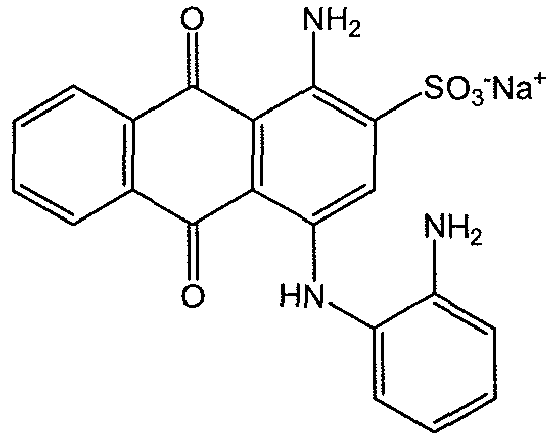
- Reaction conditions: according to the general procedure A: 20 min, 120 °C, 80 W; pressure up to 10 bar.
- Analytical data: mp > 300 °C, blue powder. 1H-NMR: δ 5.02 (bs, 2H, 2'-NH2), 6.62 (ddd, 1H, 4'-H), 6.84 (dd, 1H, 3'-H), 7.01 (m, 2H, 5'-H, 6'-H), 7.61 (s, 1H, 3-H), 7.83 (m, 2H, 6-H, 7-H), 8.27 (m, 2H, 5-H, 8-H), 10.15 (br, 2H, 1-NH2), 11.67 (s, 1H, 4-NH). 13C-NMR: 109.10 (C-9a), 110.58 (C-4a), 115.77, 116.72 (C-4', C-5'), 123.22 (C-3), 123.70, 126.01, 126.12, 126.64 (C-5, C-8, C-6', C-3'), 127.06 (C-1'), 132.71 (C-6), 132.93 (C-7), 133.96 (C-10a), 134.33 (C-8a), 143.08 (C-4), 143.66 (C-2), 144.26(C-1), 144.28 C-2'), 181.67 (C-9), 181.92 (C-10). LC-MS (m/z): 410 [M-Na]+, 408 [M-Na]-. Purity by HPLC-UV (254 nm)-ESI-MS: 95%.
-
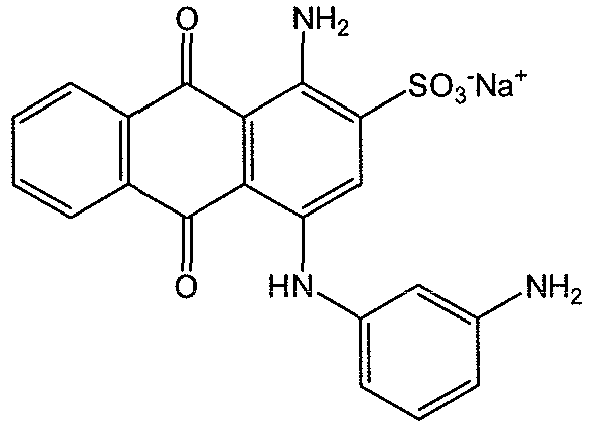
- Reaction conditions: according to the general procedure A: 2 min, 120 °C, 80 W; pressure up to 10 bar.
- Analytical data: mp > 300 °C, blue powder. 1H-NMR: δ 5.28 (bs, 2H, 3'-NH2), 6.42 (m, 3H, 2'-H, 4'-H, 6'-H), 7.06 (dd, 1H, 5'-H), 7.83 (m, 2H, 6-H, 7-H), 8.02 (s, 1H, 3-H), 8.26 (m, 2H, 5-H, 8-H), 10.12 (br, 2H, 1-NH2), 12.03 (s, 1H, 4-NH). 13C-NMR: 108.69, 109.02, 110.76, 110.83, 110.95 (C-9a, C-4a, C-2', C-4', C-6'), 123.39 (C-3), 126.05 (C-5), 126.13 (C-8), 130.06 (C-5'), 132.79 (C-6), 133.10 (C-7), 133.82 (C-10a), 134.29 (C-8a), 139.76 (C-1'), 141.86 (C-4), 143.03 (C-2), 144.39 (C-1), 150.27 (C-3'), 181.74 (C-9), 182.11 (C-10). LC-MS (m/z): 410 [M-Na]+, 408 [M-Na]-. Purity by HPLC-UV (254 nm)-ESI-MS: 95%.
-

- Reaction conditions: according to the general procedure A: 5 min, 120 °C, 80 W; pressure up to 10 bar.
- Analytical data: mp > 300 °C, blue powder. 1H-NMR: δ 7.13 (d, 1H, 6'-H), 7.29 (dd, 1H, 5'-H), 7.81 (m, 2H, 6-H, 7-H), 7.90 (d, 1H, 3'-H), 8.11 (s, 1H, 3-H), 8.22 (m, 2H, 5-H, 8-H), 9.97 (br, 2H, 1-NH2), 12.72 (s, 1H, 4-NH). 13C-NMR: δ 110.28 (C-9a), 115.81 (C-4a), 121.00 (C-3), 124.35, 126.08, 126.14 (C-2', C-4', C-6'), 125.43 (C-5, C-8), 129.50, 131.15 (C-5', C-3'), 32.92 (C-6), 133.23 (C-7), 133.93 (C-10a), 134.20 (C-8a), 136.71 (C-1'), 140.04 (C-4), 141.22 (C-2) 144.91 (C-1), signal for COOH not detectable (too broad and flat), 181.80 (C-9), 182.54 (C-10). LC-MS (m/z): 439 [M-Na]+, 437 [M-Na]-. Purity by HPLC-UV (254 nm)-ESI-MS: 95%.
-

- Reaction conditions: according to the general procedure A: 5 min, 120 °C, 80 W; pressure up to 10 bar.
- Analytical data: mp > 300 °C, blue powder. 1H-NMR: δ 6.92 (d, 1H, 6'-H), 7.05 (d, 1H, 4'-H), 7.70 (d, 1H, 3'-H), 7.80 (m , 2H, 6-H, 7-H), 8.12 (s, 1H, 3-H), 8.21 (m, 2H, 5-H, 8-H), 9.93 (br, 2H, 1-NH2), 12.65 (s, 1H, 4-NH). 13C-NMR: δ 110.58 (C-9a), 117.22, 117.50 (C-4a, C-2', C-4'), 120.02 (C-3), 125.90 (C-5'), 126.13, 126.19 (C-6', C-5, C-8) 132.91 (C-6), 133.48 (C-7), 133.78 (C-10a), 134.18 (C-8a), 135.05, 135.39 (C-3', C-1'), 141.01 (C-4), 143.26 (C-2), 145.21 (C-1), signal for COOH not detectable (too broad and flat), 182.36 (C-9), 182.69 (C-10). LC-MS (m/z): 473 [M-Na]+, 471 [M-Na]-. Purity by HPLC-UV (254 nm)-ESI-MS: 95%.
-

- Reaction conditions: according to the general procedure A: 5 min, 120 °C, 80 W; pressure up to 10 bar.
- Analytical data: mp > 300 °C, blue powder. 1H-NMR: 6.67 (dd, 1H, 4'-H), 7.13 (d, 1H, 6'-H), 7.30 (d, 1H, 5'-H), 7.80 (m, 2H, 6-H, 7-H), 8.15 (s, 1H, 3-H), 8.23 (m, 2H, 5-H, 8-H), 10.00 (br, 2H, 1-NH2), 12.69 (s, 1H, 4-NH). 13C-NMR: 110.12 (C-9a), 115.18 (C-4a), 119.75 (C-2'), 121.24 (C-3), 125.31, 126.06, 126.21 (C-6', C-4', C-5, C-8), 130.73, 131.88 (C-5', C-3'), 132.76 (C-6), 133.20 (C-7), 133.91 (C-10a), 134.23 (C-8a), 137.34 (C-1'), 140.98 (C-4), 141.40 (C-2), 144.89 (C-1), signal for COOH not detectable (too broad and flat), 181.88 (C-9), 182.37 (C-10). LC-MS (m/z): 439 [M-Na]+, 437 [M-Na]-. Purity by HPLC-UV (254 nm)-ESI-MS: 95%.
-

- Reaction conditions: according to the general procedure A: 10 min, 120 °C, 80 W; pressure up to 10 bar.
- Analytical data: mp > 300 °C, blue powder. 1H-NMR: δ 6.86 (ddd, 1H, 4'-H), 6.99 (dd, 1H, 6'-H), 7.04 (ddd, 1H, 5'-H), 7.21 (dd, H, 3'-H), 7.83 (m, 2H, 6-H, 7-H), 7.93 (s, 1H, 3-H), 8.27 (m, 2H, 5-H, 8-H), 9.87 (br, 2H, 1-NH2), 10.15 (br, 1H, 2'-OH), 11.92 (s, 1H, 4-NH). 13C-NMR: 109.19 (C-9a), 110.97 (C-4a), 116.30, 119.55, 123.24, 123.91, 125.60, 126.03, 126.12, 126.67 (C-1', C-3', C-4', C-5', C-6', C-3, C-5, C-8), 132.79 (C-6) 133.23 (C-7), 133.88 (C-10a), 134.28 (C-8a), 141.66 (C-4), 142.78 (C-2), 144.29 (C-1), 150.65 (C-2'), 181.81 (C-9), 181.99 (C-10). LC-MS (m/z): 411 [M-Na]+, 409 [M-Na]-. Purity by HPLC-UV (254 nm)-ESI-MS: 96%.
-

- Reaction conditions: according to the general procedure A: 10 min, 120 °C, 80 W; pressure up to 10 bar.
- Analytical data: mp > 300 °C, blue powder. 1H-NMR: δ 6.82 (d, 2H, 2'-H, 6'-H), 7.08 (d, 2H, 3'-H, 5'-H), 7.81 (s, 1H, 3-H), 7.83 (m, 2H, 6-H, 7-H), 8.27 (m, 2H, 5-H, 8-H), 10.15 (br, 2H, 1-NH2), 12.05 (s, 1H, 4-NH). 13C-NMR: δ 108.97 (C-9a), 110.03 (C-4a), 116.39 (C-2', C6'), 122.93 (C-3), 125.98 (C-5), 126.13 (C-8), 126.36 (C-3', C5'), 129.98 (C-1'), 132.75 (C-6), 132.96 (C-7), 133.90 (C-10a), 134.29 (C-8a), 143.22 (C-4), 143.25 (C-2), 144.19 (C-1), 155.52 (C-4'), 181.69 (C-9), 181.70 (C-10). LC-MS (m/z): 411 [M-Na]+, 409 [M-Na]-. Purity by HPLC-UV (254 nm)-ESI-MS: 95%.
-

- Reaction conditions: according to the general procedure A: 5 min, 100 °C, 60 W; pressure up to 10 bar.
- Analytical data: mp > 300 °C, blue powder. 1H-NMR: δ 5.17 (bs, 2H, 4'-NH2), 6.64 (d, 2H, 2'-H, 6'-H), 6.94 (d, 2H, 3'-H, 5'-H), 7.81 (s, 1H, 3-H), 7.82 (m, 2H, 6-H, 7-H), 8.27 (m, 2H, 5-H, 8-H), 10.17 (br, 2H, 1-NH2), 12.09 (s, 1H, 4-NH). 13C-NMR: δ 108.84 (C-9a), 109.52 (C-4a), 114.78 (C-2', C6'), 122.85 (C-3), 125.93 (C-5), 126.09 (C-8), 126.14, 126.82 (C-3', C5', C-1'), 132.65 (C-6), 132.75 (C-7), 133.99 (C-10a), 134.26 (C-8a), 143.24 (C-4), 143.88 (C-2), 144.15 (C-1), 147.08 (C-4'), 181.17 (C-9), 181.52 (C-10). LC-MS (m/z): 432 [M]+, 427 [M-Na+NH4 +]+, 410 [M-Na]+, 408 [M-Na]-. Purity by HPLC-UV (254 nm)-ESI-MS: 95%.
-

- Reaction conditions: according to the general procedure A: 5 min, 80 °C, 40 W; pressure up to 10 bar.
- Analytical data: mp > 300 °C, blue powder. 1H-NMR: δ 7.20 (ddd, 1H, 4'-H), 7.28 (dd, 2H, 2'-H, 6'-H), 7.44 (ddd, 2H, 3'-H, 5'-H), 7.84 (m, 2H, 6-H, 7-H), 8.02 (s, 1H, 3-H), 8.27 (m, 2H, 5-H, 8-H), 10.10 (br, 2H, 1-NH2), 12.04 (s, 1H, 4-NH). 13C-NMR: δ 109.30 (C-9a), 111.56 (C-4a), 122.82 (C-3), 123.20 (C-2', C6'), 124.58 (C-4'), 126.09 (C-5), 126.17 (C-8), 129.84 (C-3', C5'), 132.90 (C-6), 133.30 (C-7), 133.72 (C-10a), 134.29 (C-8a), 139.41 (C-1'), 140.93 (C-4), 142.95 (C-2), 144.50 (C-1), 181.94 (C-9), 182.62 (C-10). LC-MS (m/z): 395 [M-Na]+, 393 [M-Na]-. Purity by HPLC-UV (254 nm)-ESI-MS: 98%.
-
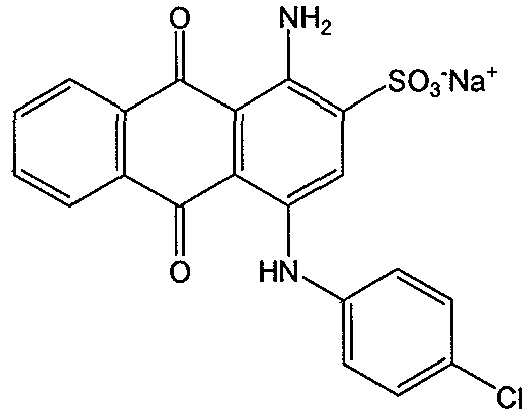
- Reaction conditions: according to the general procedure A: 5 min, 100 °C, 80 W; pressure up to 10 bar.
- Analytical data: mp > 300 °C, blue powder. 1H-NMR: δ 7.30 (d, 2H, 2'-H, 6'-H), 7.47 (d, 2H, 3'-H, 5'-H), 7.85 (m, 2H, 6-H, 7-H), 7.96 (s, 1H, 3-H), 8.26 (m, 2H, 5-H, 8-H), 10.05 (br, 2H, 1-NH2), 11.87 (s, 1H, 4-NH). 13C-NMR: δ 109.46 (C-9a), 112.24 (C-4a), 122.79 (C-3), 124.61 (C-2', C6'), 126.08 (C-2'), 126.20 (C-5), 126.20 (C-8), 128.18 (C-4'), 129.70 (C-3' and C-5'), 133.00 (C-6), 133.47 (C-7), 133.63 (C-10a), 134.28 (C-8a), 138.66 (C-1'), 140.15 (C-4), 142.80 (C-2), 144.59 (C-1), 182.08 (C-9), 182.94 (C-10). LC-MS (m/z): 446 [M-Na+NH4 +]+, 429 [M-Na]+, 427 [M-Na]-. Purity by HPLC-UV (254 nm)-ESI-MS: 96%.
-

- Reaction conditions: according to the general procedure A: 10 min, 100 °C, 80 W; pressure up to 10 bar.
- Analytical data: mp > 300 °C, blue powder. 1H-NMR: δ 3.24 (s, 2H, CH2), 7.12 (d, 2H, 2'-H, 6'-H), 7.30 (d, 2H, 3'-H, 5'-H), 7.84 (m, 2H, 6-H, 7-H), 7.99 (s, 1H, 3-H), 8.27 (m, 2H, 5-H, 8-H), 10.12 (br, 2H, 1-NH2), 12.12 (s, 1H, 4-NH). 13C-NMR: δ 45.83 (CH2), 109.11 (C-9a), 110.75 (C-4a), 122.78 (C-3), 122.99 (C-2', C6'), 126.05 (C-5), 126.15 (C-8), 130.49 (C-3', C-5'), 132.82 (C-6), 133.11 (C-7), 133.83 (C-10a) 134.30 (C-8a), 136.00, 137.11 (C-4', C-1'), 141.93 (C-4), 143.10 (C-2), 144.38 (C-1), 174.50 (COOH), 181.78 (C-9), 182.10 (C-10). LC-MS (m/z): 470 [M-Na+NH4 +]+, 453 [M-Na]+, 451 [M-Na]-. Purity by HPLC-UV (254 nm)-ESI-MS: 95%.
-

- Reaction conditions: according to the general procedure A: 5 min, 120 °C, 100 W; pressure up to 10 bar.
- Analytical data: mp > 300 °C, blue powder. 1H-NMR: δ 2.10 (s, 6H, 2'-CH3, 6'CH3), 2.30 (s, 3H, 4'-CH3), 7.03 (s, 2H, 3'-H, 5'-H), 7.13 (s, 1H, 3-H), 7.84 (m, 2H, 6-H, 7-H), 8.29 (m, 2H, 5-H, 8-H), 10.10 (br, 2H, 1-NH2), 11.73 (s, 1H, 4-NH). 13C-NMR: δ 20.71 (C4'-CH3), 18.10 (C2'-CH3, C3'-CH3), 109.20 (C-9a), 109.49 (C-4a), 121.92 (C-3), 126.04 (C-5), 126.16 (C-8), 129.38 (C-3' and C-5'), 132.77 (C-6), 133.02 (C-7), 133.43 (C-4'), 133.82 (C-10a), 134.32 (C-8a), 135.30 (C-2', C6'), 136.20 (C-1'), 143.59 (C-4), 143.86 (C-2), 144.08 (C-1), 181.77 (C-9), 182.18 (C-10). LC-MS (m/z): 454 [M-Na+NH4 +]+, 437 [M-Na]+, 435 [M-Na]-. Purity by HPLC-UV (254 nm)-ESI-MS: 95%.
-

- Reaction conditions: according to the general procedure A: 5 min, 100 °C, 80 W; pressure up to 10 bar.
- Analytical data: mp > 300 °C, blue powder. 1H-NMR: δ 3.86 (s, 3H, 3'-OCH3), 7.01 (ddd, 1H, 4'-H), 7.17 (m, 2H, 5'-H, 6'-H), 7.29 (dd, 1H, 3'-H), 7.84 (m, 2H, 6-H, 7-H), 7.96 (s, 1H, 3-H), 8.27 (m, 2H, 5-H, 8-H), 10.10 (br, 2H, 1-NH2), 11.92 (s, 1H, 4-NH). 13C-NMR: δ 55.93 (C3'-OCH3), 109.31 (C-9a), 111.56 (C-4a), 112.38, 120.93, 122.88, 123.06 (C-3', C6', C-3 C-4'), 125.32 (C-5), 126.11 (C-8), 126.15 (C-5'), 128.07 (C-6), 132.86 (C-7), 133.20 (C-10a), 133.80 (C-8a), 134.29 (C-1'), 140.81 (C-4), 142.72 (C-2), 144.38 (C-1), 151.99 (C-2'), 181.92 (C-9), 182.37 (C-10). LC-MS (m/z): 442 [M-Na+NH4 +]+, 425 [M-Na]+, 423 [M-Na]-. Purity by HPLC-UV (254 nm)-ESI-MS: 98%.
-

- Reaction conditions: according to the general procedure A: 5 min, 100 °C, 80 W; pressure up to 10 bar.
- Analytical data: mp > 300 °C, blue powder. 1H-NMR: δ 3.78 (s, 3H, 3'-OCH3), 6.75 (dd, 1H, 4'-H), 6.85 (m, 2H, 2'-H, 6'-H), 7.33 (dd, 1H, 5'-H), 7.85 (m, 2H, 6-H, 7-H), 8.09 (s, 1H, 3-H), 8.27 (m, 2H, 5-H, 8-H), 10.10 (br, 2H, 1-NH2), 11.99 (s, 1H, 4-NH). 13C-NMR: δ 55.33 (C3'-OCH3), 108.41, 110.34, (C-2', C4'), 109.32 (C-9a), 111.77 (C-4a), 115.08 (C-6'), 123.23 (C-3), 126.10 (C-5), 126.18 (C-8), 130.54 (C-5'), 132.93 (C-6), 133.35 (C-7), 133.69 (C-10a), 134.29 (C-8a), 140.61 (C-1'), 140.71 (C-4), 142.81 (C-2), 144.52 (C-1), 160.51 (C-3'), 181.97 (C-9), 182.69 (C-10). LC-MS (m/z): 442 [M-Na+NH4 +]+, 425 [M-Na]+, 423 [M-Na]-. Purity by HPLC-UV (254 nm)-ESI-MS: 100%.
-
- Reaction conditions: according to the general procedure A: 5 min, 100 °C, 80 W; pressure up to 10 bar.
- Analytical data: mp > 300 °C, blue powder. 1H-NMR: δ 3.80 (s, 3H, 4'-OCH3), 7.03 (d, 2H, 2'-H, 6'-H), 7.22 (d, 2H, 3'-H, 5'-H), 7.83 (m, 2H, 6-H, 7-H), 7.84 (s, 1H, 3-H), 8.27 (m, 2H, 5-H, 8-H), 10.10 (br, 2H, 1-NH2), 12.04 (s, 1H, 4-NH). 13C-NMR: δ 55.49 (C4'-OCH3), 109.07 (C-9a), 110.43 (C-4a), 115.13 (C-2', C6'), 122.57(C-3), 126.03, 126.15, (C-5, C-8, C-3', C-5'), 131.77 (C-6), 132.81 (C-7), 133.08 (C-10a), 133.84 (C-8a), 134.30 (C-1'), 142.71 (C-4), 143.19 (C-2), 144.26 (C-1), 157.05 (C-4') 181.77 (C-9), 181.99 (C-10). LC-MS (m/z): 442 [M-Na+NH4 +]+, 425 [M-Na]+, 423 [M-Na]-. Purity by HPLC-UV (254 nm)-ESI-MS: 100%.
-

- Reaction conditions: according to the general procedure A: 5 min, 120 °C, 80 W; pressure up to 10 bar.
- Analytical data: mp > 300 °C, blue powder. 1H-NMR: δ 7.31 (m, 4H, 2'-H, 3'-H, 5'-H, 6'-H), 7.84 (m, 2H, 6-H, 7-H), 7.88 (s, 1H, 3-H), 8.26 (m, 2H, 5-H, 8-H), 10.07 (br, 2H, 1-NH2), 11.94 (s, 1H, 4-NH). 13C-NMR: δ 109.26 (C-9a), 111.32 (C-4a), 116.48, 116.65 (d, J =22.5 Hz, C-2', C6'), 122.47 (C-3), 125.85 (C-5), 125.92 (C-8), 126.07, 126.18 (d, J =14.0 Hz, C-3', C-5'), 132.92 (C-6), 133.31 (C-7), 133.71 (C-10a), 134.30 (C-8a), 135.73 (C-1'), 141.50 (C-4), 143.06 (C-2), 144.40 (C-1), 158.46, 160.39 (d, J = 242.3 Hz, C-4') 181.96 (C-9), 182.58 (C-10). LC-MS (m/z): 430 [M-Na+NH4 +]+, 413 [M-Na]+, 411[M-Na]-. Purity by HPLC-UV (254 nm)-ESI-MS: 99%.
-

- Reaction conditions: according to the general procedure A: 20 min, 120 °C, 100 W; pressure up to 10 bar.
- Analytical data: mp > 300 °C, blue powder. 1H-NMR: δ 7.27 (dd, 1H, 4'-H), 7.33 (dd, 1H, 6'-H), 7.35 (dd, 1H, 5'-H), 7.49 (dd, 1H, 2'-H), 7.85 (m, 2H, 6-H, 7-H), 8.00 (s, 1H, 3-H), 8.26 (m, 2H, 5-H, 8-H), 10.03 (br, 2H, 1-NH2), 11.78 (s, 1H, 4-NH). 13C-NMR: δ 109.58 (C-9a), 112.89 (C-4a), 121.36, 122.52 (C-2', C6'), 123.07 (C-3), 124.97 (C-4'), 126.15, 126.22, 126.67 (C-5, C-8, C-5'), 131.53 (C-6), 133.04 (C-7), 133.57 (C3', C-10a), 134.27 (C-8a), 139.37 (C-1'), 141.96 (C-4), 142.62 (C-2), 144.72 (C-1), 182.18 (C-9), 183.19 (C-10). LC-MS (m/z): 490 [M-Na+NH4 +]+, 473 [M-Na]+, 471 [M-Na]-. Purity by HPLC-UV (254 nm)-ESI-MS: 99%.
-

- Reaction conditions: according to the general procedure A: 5 min, 100 °C, 80 W; pressure up to 10 bar.
- Analytical data: mp > 300 °C, blue powder. 1H-NMR: δ 2.29 (s, 6H, 3'-CH3, 5'-CH3), 6.85 (s, 1H, 4'-H), 6.89 (s, 2H, 2'-H, 6'-H), 7.84 (m, 2H, 6-H, 7-H), 7.99 (s, 1H, 3-H), 8.27 (m, 2H, 5-H, 8-H), 10.10 (br, 2H, 1-NH2), 12.01 (s, 1H, 4-NH). 13C-NMR: δ 21.07 (C3'-CH3, C5'-CH3), 109.18 (C-9a), 111.21 (C-4a), 121.18 (C-2', C6'), 123.11 (C-3), 126.07 (C-4'), 126.16, 126.42 (C-5, C-8), 132.87 (C-6), 133.23 (C-7), 133.76 (C-10a), 134.29 (C-8a), 139.05 (C-3' and C-5'), 139.16 (C-1'), 141.40 (C-4), 142.95 (C-2), 144.42 (C-1), 181.87 (C-9), 182.40 (C-10). LC-MS (m/z): 440 [M-Na+NH4 +]+, 422 [M-Na]+, 420 [M-Na]-. Purity by HPLC-UV (254 nm)-ESI-MS: 99%.
-

- Reaction conditions: according to the general procedure A: 5 min, 100 °C, 80 W; pressure up to 10 bar.
- Analytical data: mp > 300 °C, blue powder. 1H-NMR: δ 7.20 (dd, 1H, 6'-H), 7.23 (dd, 1H, 4'-H), 7.35 (dd, 1H, 2'-H), 7.43 (dd, 1H, 5'-H), 7.85 (m, 2H, 6-H, 7-H), 8.00 (s, 1H, 3-H), 8.24 (m, 2H, 5-H, 8-H), 10.02 (br, 2H, 1-NH2), 11.78 (s, 1H, 4-NH). 13C-NMR: δ 109.59 (C-9a), 112.90 (C-4a), 120.96 (C-6'), 122.09 (C-3), 123.10, 123.77 (C-2', C-4'), 126.16 (C-5), 126.22 (C-8), 131.28 (C-6), 133.05 (C-7), 133.58 (C-3', C-5') 134.13 (C-10a), 134.28, (C-8a), 139.37 (C-1'), 141.56 (C-4), 142.62 (C-2), 144.72 (C-1), 182.19 (C-9), 183.20 (C-10). LC-MS (m/z): 439 [M-Na]+, 437 [M-Na]-. LC-MS (m/z): 446 [M-Na+NH4 +]+, 429 [M-Na]+, 427 [M-Na]-. Purity by HPLC-UV (254 nm)-ESI-MS: 95%.
-

- Reaction conditions: according to the general procedure A: 5 min, 120 °C, 80 W; pressure up to 10 bar.
- Analytical data: mp > 300 °C, blue powder. 1H-NMR: δ 1.99 (s, 3H, C2'-CH3), 5.05 (bs, 2H, 3'-NH2), 6.44 (d, 1H, 6'-H), 6.59 (d, 1H, 4'-H), 6.96 (dd, 1H, 5'-H), 7.66 (s, 1H, 3-H), 7.83 (m, 2H, 6-H, 7-H), 8.28 (m, 2H, 5-H, 8-H), 10.17 (br, 2H, 1-NH2), 12.04 (s, 1H, 4-NH). 13C-NMR: δ 11.84 (C2'-CH3), 108.90 (C-9a), 109.96 (C-4a), 112.21 (C-6'), 113.66 (C-4'), 116.45 (C-2'), 123.14 (C-3), 126.03 (C-5), 126.13 (C-8), 126.65 (C-5'), 132.72 (C-6), 132.98 (C-7), 133.89 (C-10a), 134.33 (C-8a), 137.58 (C-1'), 143.22 (C-4), 143.44 (C-2), 144.16 (C-1), 148.27 (C-3'), 181.63 (C-9), 181.92 (C-10). LC-MS (m/z): 441 [M-Na+NH4 +]+, 424 [M-Na]+, 422 [M-Na]-. Purity by HPLC-UV (254 nm)-ESI-MS: 96%.
-
- Reaction conditions: according to the general procedure A: 5 min, 120 °C, 80 W; pressure up to 10 bar.
- Analytical data: mp > 300 °C, blue powder. 1H-NMR: δ 6.70 (d, 1H, 5'-H), 7.07 (dd, 1H, 6'-H), 7.53 (d, 1H, 2'-H), 7.75 (s, 1H, 3-H), 7.82 (m, 2H, 6-H, 7-H), 8.27 (m, 2H, 5-H, 8-H), 10.18 (br, 2H, 1-NH2), 12.07 (s, 1H, 4-NH). 13C-NMR: δ 108.86 (C-9a), 114.37 (C-4a), 116.96 (C-2'), 122.74 (C-3), 125.98 (C-5), 126.09 (C-8), 126.67 (C-6'), 128.87 (C-5'), 132.66 (C-6), 132.80 (C-7), 132.93 (C-3'), 133.59 (C-10a), 134.29 (C-8a), 134.62 (C-1'), 143.30 (C-4), 143.96 (C-2), 144.15 (C-1), 161.45 (C-4') 170.76 (COOH), 181.40 (C-9), 181.59 (C-10). LC-MS (m/z): 472 [M-Na+NH4 +]+, 455 [M-Na]+, 453 [M-Na]-. Purity by HPLC-UV (254 nm)-ESI-MS: 95%.
-

- Reaction conditions: according to the general procedure A: 5 min, 120 °C, 80 W; pressure up to 10 bar.
- Analytical data: mp > 300 °C, blue powder. 1H-NMR: 7.02 (ddd, 1H, 4'-H), 7.13 (dd, 1H, 6'-H), 7.28 (ddd, 1H, 5'-H), 7.75 (dd, 1H, 3'-H), 7.80 (m, 2H, 6-H, 7-H), 7.99 (s, 1H, 3-H), 8.23 (m, 2H, 5-H, 8-H), 10.03 (br, 2H, 1-NH2), 11.78 (s, 1H, 4-NH). 13C-NMR: 109.72 (C-9a), 113.42 (C-4a), 122.32 (C-4'), 122.69 (C-6'), 124.86 (C-3), 126.05 (C-5), 126.09 (C-8), 128.01 (C-3'), 129.45 (C-5'), 132.84 (C-6), 132.98 (C-7), 133.99 (C-10a), 134.24 (C-8a), 137.43 (C-1'), 139.14 (C-4), 139.59 (C-2'), 141.67 (C-2), 144.62 (C-1), 181.51 (C-9), 182.25 (C-10). LC-MS (m/z): 497 [M-Na]+, 495 [M-Na]-, 475 [M-2Na]+, 473 [M-2Na]-, 236 [M-2Na]2-. Purity by HPLC-UV (254 nm)-ESI-MS: 98%.
-

- Reaction conditions: according to the general procedure A: 5 min, 120 °C, 80 W; pressure up to 10 bar.
- Analytical data: mp > 300 °C, blue powder. 1H-NMR: δ 7.19 (d, 2H, 2'-H, 6'-H), 7.62 (d, 2H, 3'-H, 5'-H), 7.84 (m, 2H, 6-H, 7-H), 8.04 (s, 1H, 3-H), 8.27 (m, 2H, 5-H, 8-H), 10.10 (br, 2H, 1-NH2), 12.01 (s, 1H, 4-NH). 13C-NMR: 109.33 (C-9a), 111.87 (C-4a), 121.76 (C-2', C-6'), 122.98 (C-3), 126.12 (C-5), 126.17 (C-8), 127.14 (C-3', C-5'), 132.92 (C-6), 133.34 (C-7), 133.71 (C-10a), 134.29 (C-8a), 139.40 (C-1'), 140.45 (C-4), 142.86 (C-2), 144.56 (C-4'), 144.58 (C-1), 181.98 (C-9), 182.72 (C-10). LC-MS (m/z): 492 [M-Na+NH4 +]+, 473 [M-2Na]-, 236 [M-2Na]2-. Purity by HPLC-UV (254 nm)-ESI-MS: 96%.
-
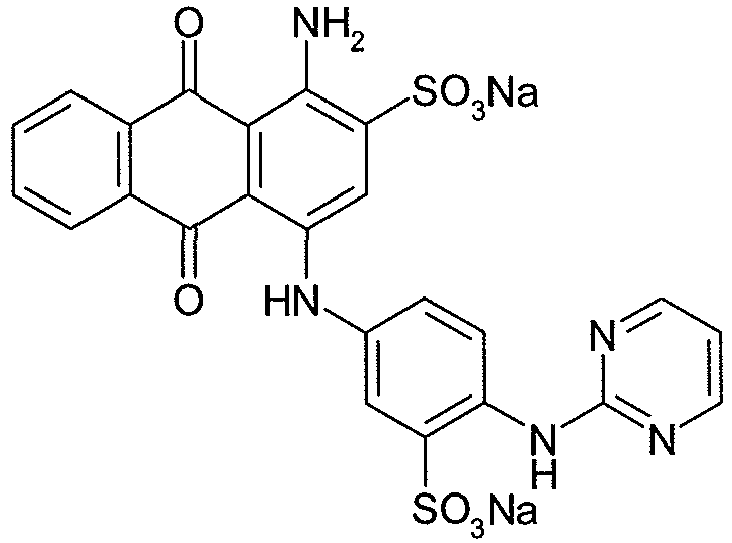
- According to the general procedure B, the solution of 160 mg (1 mmol) of 2-bromopyrimidine and 268 mg (0.5 mmol) of 1-amino-4-[4-amino-3-sulfophenylamino]-9,10-dioxo-9,10 dihydroanthracene-2-sulfonic acid disodium salt was stirred at 0-5 °C and then the temperature was increased for refluxing at 120 °C for three days. RP-FCC was performed with a methanol/water (2:3) eluent.
- Analytical data: yield (295 mg) 97 %, a blue powder, mp > 300 °C.
1H-NMR: δ 6.88 (dd, 1H, 4"-H), 7.26 (dd, 1H, 6'-H), 7.55 (d, 1H, 2'-H), 7.84 (m, 2H, 6-H, 7-H), 7.92 (s, 1H, 3-H), 8.28 (m, 2H, 5-H, 8-H), 8.52 (d, 2H, 3"-H, 5"-H), 8.58 (d, 1H, 5'-H), 10.15 (br, 2H, 1-NH2), 10.03 (br, 1H, 4'-NH), 12.12 (br, 1H, 4-NH). 13C-NMR: δ 108.89 (C-9a), 110,56 (C-4a), 112.61 (C-5"), 119.67 (C-5'), 122.41 (C-3, C-2'), 124.33 (C-6'), 125.76 (C-5, C-8), 131.23 (C-1'), 132.37 (C-6), 132.67 (C-7), 133.54 (C-4', C-10a), 134.01 (C-8a), 136.06 (C-3'), 141.78 (C-4), 142.98 (C-2), 144.12 (C-1), 157.80 (C-4", C-6"), 159.24 (C-2"), 181.51 (C-9), 181.84 (C-10). LC-MS (m/z): 585 [M-2Na+NH4 +]+. Purity by HPLC-UV (254 nm)-ESI-MS: 95%. -

- Reaction conditions: according to the general procedure A: 5 min, 120 °C, 100 W; pressure up to 10 bar.
- Analytical data: mp > 300 °C, blue powder.
1H-NMR: δ 6.91 (dd, 1H, 4"-H), 7.12 (m, 3H), 7.30 (m, 3H), 7.50 (d, 1H), 7.83 (s, 1H, 3-H), 7.83 (m, 2H, 5-H, 8-H), 8.28 (m, 2H, 6-H, 7-H), 12.12 (br, 1H, 4-NH).
13C-NMR: δ 109.11, 110.42, 115.79, 118.28, 120.98, 122.68, 124.10, 126.07, 126.13, 129.51, 132.78, 133.01, 133.89, 134.28, 135.31, 137.88, 142.38, 142.76, 143.25, 144.25, 181.75, 181.88.
LC-MS (m/z): 564 [M-2Na]-, 281[M-2Na]2-, 583 [M-2Na+NH4 +]+.
Purity by HPLC-UV (254 nm)-ESI-MS: 100%. -

- Reaction conditions: according to the general procedure A: 5 min, 120 °C, 100 W; pressure up to 10 bar.
- Analytical data: mp > 300 °C, blue powder.
1H-NMR: δ 6.84 (d, 1H), 6.98 (dd, 2H), 7.06 (dd, 1H), 7.21 (dd, 1H), 7.34 (dd, 2H), 7.63 (d, 1H), 7.84 (m, 2H, 5-H, 8-H), 7.91 (s, 1H, 3-H), 8.28 (m, 2H, 6-H, 7-H), 10.15 (br, 2H, 1-NH2), 12.07 (br, 1H, 4-NH).
13C-NMR: δ 109.22, 111.20, 119.01, 121.31, 122.61, 122.72, 124.26, 125.18, 126.14, 129.63, 132.87, 133.22, 133.80, 134.28, 140.86, 141.60, 143.14, 144.44, 150.71, 158.12, 181.91, 182.47.
LC-MS (m/z): 565 [M-2Na]-, 282 [M-2Na]2-, 584 [M-2Na+NH4 +]+.
Purity by HPLC-UV (254 nm)-ESI-MS: 99%. -

- Reaction conditions: according to the general procedures E, F, and G:
- Analytical data: mp > 300 °C, blue powder.
1H-NMR: δ 7.09 (dd, 1H, 4"-H), 7.29 (m, 3H), 7.37 (m, 3H), 7.78 (d, 1H), 7.81 (s, 1H, 3-H), 7.83 (m, 2H, 5-H, 8-H), 8.27 (m, 2H, 6-H, 7-H), 9.60 (br, 2H, 1-NH2), 10.03 (br, 1H, 4'-NH), 12.00 (br, 1H, 4-NH).
13C-NMR: δ 109.1, 110.6, 113.5, 115.3, 121.6, 122.5, 123.3, 126.0, 126.1, 127.8, 128.8, 129.7, 131.4, 132.8, 133.1, 133.8, 134.3, 140.6, 142.6, 143.19, 144.3, 144.8, 169.5, 181.8, 182.1.
LC-MS (m/z): 528 [M-Na]-, 529 [M-Na]+, 528 [M-Na]-, 547 [M-Na+NH4 +]+.
Purity by HPLC-UV (254 nm)-ESI-MS: 98%. -

- Reaction conditions: according to the general procedure A: 5 min, 120 °C, 100 W; pressure up to 10 bar.
- Analytical data: mp > 300 °C, blue powder.
1H-NMR: δ 6.93 (dd, 1H, 4"-H), 7.13 (d, 2H), 7.21 (d, 1H), 7.31 (dd, 2H), 7.35 (d, 1H), 7.56 (d, 1H), 7.88 (m, 2H, 6-H, 7-H), 8.19 (s, 1H, 3-H), 8.29 (m, 2H, 5-H, 8-H), 11.71 (br, 1H, 4-NH).
13C-NMR: δ 110.44, 113.86, 115.91, 118.25, 121.00, 122.97, 123.69, 125.92, 126.18, 126.29, 129.17, 129.7, 133.19, 133.47, 133.163, 134.13, 135.25, 137.72, 140.82, 142.37, 147.24, 167.68, 182.29, 183.13.
LC-MS (m/z): 528 [M-Na]-, 529 [M-Na]+, 528 [M-Na]-, 547 [M-Na+NH4 +]+.
Purity by HPLC-UV (254 nm)-ESI-MS: 98%. -

- Reaction conditions: according to the general procedure A: 5 min, 120 °C, 100 W; pressure up to 10 bar.
- Analytical data: mp > 300 °C, blue powder.
1H-NMR: δ 2.25 (s, 3H, CH3), 6.91 (dd, 1H, 4"-H), 7.11 (d, 2H), 7.18 (dd, 1H), 7.30 (m, 4H), 7.51 (d, 1H), 7.81 (m, 2H, 5-H, 8-H), 8.27 (m, 2H, 6-H, 7-H), 8.55 (s, 1H, 3-H), 12.27 (br, 1H, 4-NH).
13C-NMR: δ 18.77, 107.9, 108.6, 115.9, 118.2, 120.9, 123.9, 124.3, 125.9, 126.1, 126.2, 129.4, 129.5, 132.7, 134.1, 135.2, 137.6, 137.7, 142.4, 143.7, 147.0, 181.2, 181.8. LC-MS (m/z): 498 [M-Na]-, 500 [M-Na]+.
Purity by HPLC-UV (254 nm)-ESI-MS: 96%. - Membranes were prepared from human outdated platelets from the blood bank. Outdated human platelets were obtained from the University of Bonn blood bank 4-5 days after donation. Platelet rich plasma was washed by centrifugation (10 min at 1000 g) in a buffer consisting of 50 mM Tris-HCl, pH 7.4, 5 mM EDTA and 150 mM NaCl. The supernatant was centrifuged twice (48400 g for 60 min) and the resultant platelet pellet were resuspended in 5 mM Tris-HCl (pH 7.4) containing 5 mM EDTA. The platelets were homogenized by a homogenizer. The final suspension was stored frozen as multiple aliquots at -80°C until needed. Protein concentrations were determined by the method of Lowry using a Sigma Chemie protein assay kit.
- Radioligand binding assays were performed using 5 nM [3H]PSB-0413 and 100 µg of protein in Tris-
HCl buffer 50 mM, pH 7.4, as previously described. (El-Tayeb, A., Griessmeier, K.J, Muller, C.E. Bioorg. Med. Chem. Lett. 2005, 15, 5450-52; Atzler, K. Doctoral Thesis, University of Bonn, 2006). Competition by 10 µM of test compound was initially determined. The mixture was incubated for 1 h at rt followed by filtration through GF/B filters. Nonspecific binding was determined with 1 mM ADP or 250 µM RB 2. For potent compounds concentration-inhibition curves were determined using at least 6-7 different concentrations spanning 3 orders of magnitude. At least three independent experiments were performed each in triplicate. - In Table 3 Ki values of selected compounds as antagonist of human platelets are given. In order to investigate selectivity of selected compounds, potencies at other P2Y receptor subtypes were determined for comparison.
- Selected compounds were investigated for their functionality in GTP shift experiments. Radioligand binding studies as described above were performed in the presence and absence of GTP (100 µM). Agonists, such as ADP, showed a significant right-shift of the concentration-inhibition curve, while the investigated compounds (e.g. Reactive Blue 2, and entry 33 and entry 37 in Table 3) did not. These results show that the compounds behave as antagonists rather than agonists at P2Y12 receptors.
- Inhibition of agonist-induced calcium mobilization was determined as previously described (Kaulich M. et al, Drug Dev. Res. 2003, 59, 72-81) using NG108-15 cells for the mouse P2Y2 receptor, or human recombinant P2Y receptors stably expressed in human astrocytoma cells (El-Tayeb, A. et al., J. Med. Chem. 2006, 49, 7076-87).
- The data were analyzed using GraphPad Prism 4.0 (GraphPad Software, Inc., San Diego, CA). The values are presented as means of the percent inhibition at 10 µM ± SEM (n=3) or Ki value in µM ± SEM (n=3).
Table 3. Affinities of selected compounds for human platelet P2Y12 receptors and antagonistic potency of selected compounds at P2Y receptor subtypes The data represent means ± SEM of usually three separate experiments each run in triplicate. (Abbreviations: h = human, m = mouse; n.d. = not determined). Entry Structure hP2Y2 Receptor IC50 (µM ± SEM) mP2Y2 Receptor IC50 (µM ± SEM) hP2Y4 Receptor IC50 (µM ± SEM) rP2Y6 Receptor IC50 (µM ± SEM) hP2Y12 Receptor Ki [µM± SEM] vs. [3H]PSB -0413 1 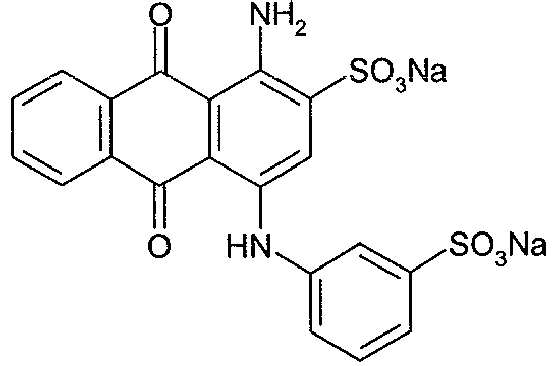
n.d. n.d. 18.5 ± 2.5 ca. 100 3.81 ± 1.08 2 
n.d. n.d. n.d. n.d. 3.13 ± 0.39 3 
n.d. n.d. n.d. n.d. >10 4 
n.d. n.d. n.d. n.d. 2.10 ± 0.47 5 
n.d. n.d. 11.0 ± 3.0 24.3 ± 3.4 2.39 ± 0.65 6 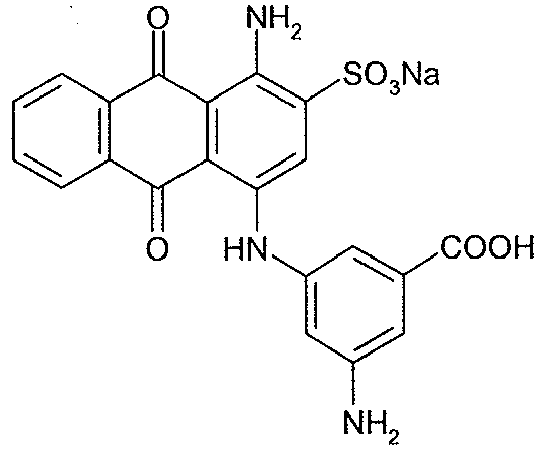
n.d. n.d. n.d. n.d. 7.07 ± 1.70 7 
n.d. n.d. n.d. n.d. 12.2 ± 0.3 8 
n.d. n.d. n.d. n.d. 25.1 ± 7.0 9 
n.d. n.d. n.d. n.d. 19.74 ± 8.27 10 
n.d. n.d. n.d. n.d. 12.3 ± 1.7 11 
n.d. n.d. n.d. n.d. ca. 10 12 
n.d. n.d. n.d. n.d. ca. 10 13 
n.d. n.d. n.d. n.d. 0.614 14 
n.d. n.d. n.d. n.d. >10 15 
4.46 ± 0.75 20.0 ± 7.0 >>3 >>10 7,35 ± 1,72 16 
n.d. n.d. n.d. n.d. >10 17 
5.61 ± 0.47 11.1 ± 3.0 n.d. n.d. 9.83 ± 2.43 18 
n.d. 30.0 ± 7.0 >>3 >>1 1.85 ± 0.57 19 
n.d. n.d. n.d. n.d. 0.884 ± 0.525 20 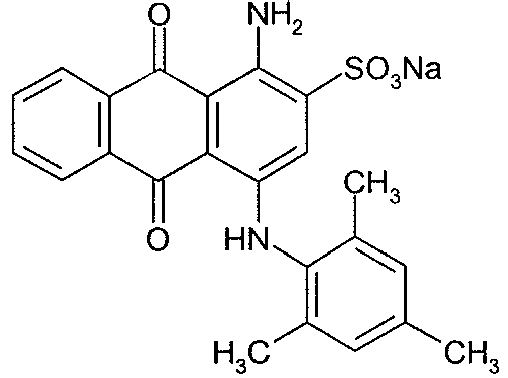
n.d. n.d. n.d. n.d. >10 21 
n.d. n.d. >30 >100 >10 22 
n.d. n.d. n.d. n.d. 0.063 ± 0.009 23 
n.d. n.d. n.d. n.d. >>10 24 
n.d. n.d. n.d. n.d. 0.0249 ± 0.0032 25 
6.67 ± 0.32 10.7 ± 1.0 10.1 ± 1.4 26.7 >10 26 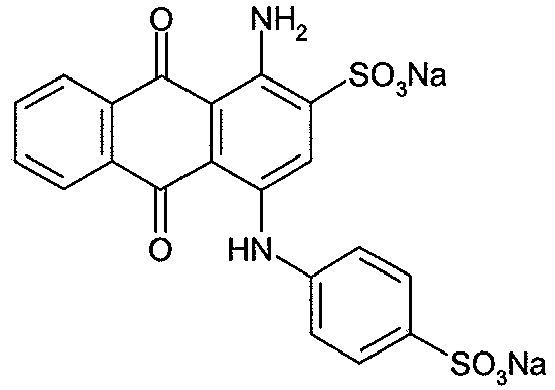
n.d. n.d. n.d. n.d. 3.13 ± 0.39 27 
24.5 ± 10.4 > 100 >> 3 >> 100 6.76 ± 2.07 28 
7.52 ± 0.82 >100 n.d. n.d. >>10 29 
n.d. n.d. n.d. n.d. >>10 30 
n.d. n.d. n.d. n.d. 0.541 31 
n.d. n.d. n.d. n.d. 17.1 ± 7.8 32 
n.d. n.d. n.d. n.d. 2.45 ± 1.00 33 
n.d. n.d. 9.04 ± 1.20 28.6 ± 2.7 0.0507 ± 0.0160 34 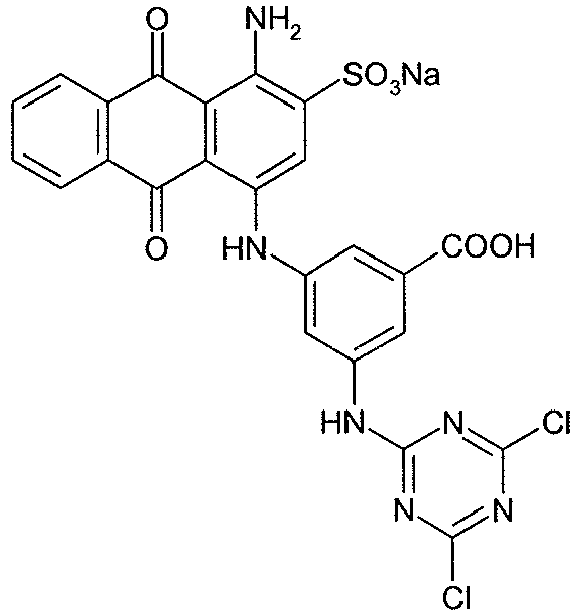
n.d. n.d. n.d. n.d. 3.76 ± 1.03 35 
n.d. n.d. n.d. n.d. 1.90 ± 0.24 36 
n.d. n.d. n.d. n.d. ca. 10 37 
n.d. n.d. n.d. n.d. 0.66 ± 0.12 38 
n.d. n.d. n.d. n.d. ca. 10 39 
n.d. n.d. n.d. n.d. >>10 40 
12.0 ± 5.7 2.90 9.79 ± 3.91 4.34 ± 0.89 0.68 ± 0.26


wherein if the C1-C10 alkyl is substituted, the substituent group(s) is one or more, for example one or two groups, individually selected from the group consisting of C3-C8 cycloalkyl, C6-C14 aryl, 5-10 membered heteroaryl wherein 1 to 4 ring atoms are independently selected from nitrogen, oxygen or sulfur, 5-10 membered heteroalicyclic wherein 1 to 3 ring atoms are independently nitrogen, oxygen or sulfur, hydroxy, C1-C10 alkoxy, C3-C8 cycloalkoxy, aryloxy, mercapto, alkylthio, arylthio, cyano, halo, carbonyl, thiocarbonyl, O-carbamyl, N-carbamyl, O-thiocarbamyl, N-thiocarbamyl, C-amido, N-amido, C-carboxy, O-carboxy, nitro, silyl, sulfinyl, sulfonyl, amino, and -NR10 R11 where R10 and R11 are independently selected from the group consisting of hydrogen, C1-C4 alkyl, C3-C8 cycloalkyl, C6-C14 aryl, carbonyl, acetyl, sulfonyl, amino, and trifluoromethanesulfonyl, or R10 and R11, together with the nitrogen atom to which they are attached, combine to form a five-or six-membered heteroalicyclic ring,
wherein if the C3-C8 cycloalkyl is substituted, the substituent group(s) is one or more, for example one or two groups, individually selected from C1-C10 alkyl, C3-C8 cycloalkyl, C6-C14 aryl, 5-10 membered heteroaryl wherein 1 to 4 ring atoms are independently selected from nitrogen, oxygen or sulfur, 5-10 membered heteroalicyclic wherein 1 to 3 ring atoms are independently nitrogen, oxygen or sulfur, hydroxy, C1-C10 alkoxy, C3-C8 cycloalkoxy, aryloxy, mercapto, alkylthio, arylthio, cyano, halo, carbonyl, thiocarbonyl, O-carbamyl, N-carbamyl, O-thiocarbamyl, N-thiocarbamyl, C-amido, N-amido, C-carboxy, 0-carboxy, nitro, silyl, sulfinyl, sulfonyl, amino, and NR10 R11 with R10 and R11 as defined above,
wherein if the C6-C14 aryl is substituted, the substituted group(s) is one or more, for example one, two, or three substituents, independently selected from the group consisting of C1-C10 alkyl, C3-C8 cycloalkyl, C6-C14 aryl, 5-10 membered heteroaryl wherein 1 to 4 ring atoms are independently selected from nitrogen, oxygen or sulfur, 5-10 membered heteroalicyclic wherein 1 to 3 ring atoms are independently nitrogen, oxygen or sulfur, hydroxy, C1-C10 alkoxy, C3-C8 cycloalkoxy, aryloxy, mercapto, alkylthio, arylthio, cyano, halo, trihalomethyl, carbonyl, thiocarbonyl, O-carbamyl, N-carbamyl, O-thiocarbamyl, N-thiocarbamyl, C-amido, N-amido, C-carboxy, O-carboxy, nitro, silyl, sulfinyl, sulfonyl, amino, and NR10 R11 with R10 and R11 as defined above,
wherein if the 5- to 10-membered heteroaryl is substituted, the substituted group(s) is one or more, for example one or two substituents, independently selected from the group consisting of C1-C10 alkyl, C3-C8 cycloalkyl, C6-C14 aryl, 5-10 membered heteroaryl wherein 1 to 4 ring atoms are independently selected from nitrogen, oxygen or sulfur, 5-10 membered heteroalicyclic wherein 1 to 3 ring atoms are independently nitrogen, oxygen or sulfur, hydroxy, C1-C10 alkoxy, C3-C8 cycloalkoxy, aryloxy, mercapto, alkylthio, arylthio, cyano, halo, trihalomethyl, carbonyl, thiocarbonyl, O-carbamyl, N-carbamyl, O-thiocarbamyl, N-thiocarbamyl, C-amido, N-amido, C-carboxy, O-carboxy, nitro, silyl, sulfinyl, sulfonyl, amino, and -NR10 R11 with R10 and R11 as defined above, and
wherein if the 5- to 10-membered heteroalicyclic ring is substituted the the substituted group (s) is one or more, for example one, two, or three substituents, independently selected from the group consisting of C1-C10 alkyl, C3-C8 cycloalkyl, C6-C14 aryl, 5-10 membered heteroaryl wherein 1 to 4 ring atoms are independently selected from nitrogen, oxygen or sulfur, 5-10 membered heteroalicyclic wherein 1 to 3 ring atoms are independently nitrogen, oxygen or sulfur, hydroxy, C1-C10 alkoxy, C3-C8 cycloalkoxy, aryloxy, mercapto, alkylthio, arylthio, cyano, halo, trihalomethyl, carbonyl, thiocarbonyl, O-carbamyl, N-carbamyl, O-thiocarbamyl, N-thiocarbamyl, C-amido, N-amido, C-carboxy, O-carboxy, nitro, silyl, sulfinyl, sulfonyl, amino, and -NR10 R11 with R10 and R11 as defined above.
Claims (10)
- A compound(A) of Formula I:
 A and B are independently selected from the group consisting of CH2, O, S, NH, C=O, C=NH, C=S, or C=N-OH;R1 is independently selected from the group consisting of hydrogen, unsubstituted or substituted C1-C10 alkyl, unsubstituted or substituted C1-C10 alkenyl, unsubstituted or substituted C1-C10 alkynyl, unsubstituted or substituted C3-C8 cycloalkyl, unsubstituted or substituted C1-C10 alkoxy, unsubstituted or substituted C3-C8 cycloalkoxy, unsubstituted or substituted C6-C14 aryl, an unsubstituted or substituted 5- to 10-membered heteroaryl wherein 1 to 4 ring atoms are independently selected from nitrogen, oxygen or sulfur, an unsubstituted or substituted 5- to 10-membered heteroalicyclic ring wherein 1 to 3 ring atoms are independently nitrogen, oxygen or sulfur, -OR, -C(O)R, -C(O)OR, -C(O)NRR', -NRR', - S(O)2R, -S(O)2OR, and -S(O)2NRR';R2 is independently selected from the group consisting of unsubstituted or substituted C1-C10 alkyl, unsubstituted or substituted C1-C10 alkenyl, unsubstituted or substituted C1-C10 alkynyl, unsubstituted or substituted C3-C8 cycloalkyl, unsubstituted or substituted C1-C10 alkoxy, unsubstituted or substituted C3-C8 cycloalkoxy, unsubstituted or substituted C6-C14 aryl, an unsubstituted or substituted 5- to 10-membered heteroaryl wherein 1 to 4 ring atoms are independently selected from nitrogen, oxygen or sulfur, an unsubstituted or substituted 5-to 10-membered heteroalicyclic ring wherein 1 to 3 ring atoms are independently nitrogen, oxygen or sulfur, -OR, -C(O)R, -C(O)OR, -C(O)NRR', -NRR', - S(O)2R, -S(O)2OR, and - S(O)2NRR';R6 represents substituents independently selected from the group consisting of hydrogen, halogen, unsubstituted or substituted C1-C4 alkyl, alkenyl or alkynyl, an unsubstituted or substituted 5- to 10-membered heteroaryl wherein 1 to 4 ring atoms are independently selected from nitrogen, oxygen or sulfur, an unsubstituted or substituted 5- to 10-membered heteroalicyclic ring wherein 1 to 3 ring atoms are independently nitrogen, oxygen or sulfur, -OR, -NRR', -NO2, unsubstituted or substituted C1-C4 alkoxy, -C(O)R, -C(O)OR, -C(O)NRR', - S(O)2R, -S(O)2OR, and -S(O)2NRR'; wherein in the meta position of the aryl ring R6 is a tetrazolyl, sulfonic acid or carboxylic acid group or the respective sodium or potassium salt;Y is selected from the group consisting of NH, O, S, CH2, CH2CH2, C(O), C(O)O, or S(O)2O;R7 is unsubstituted C6-C14 aryl;R12 represents one to four substituents independently selected from the group consisting of hydrogen, halogen, unsubstituted or substituted C1-C4 alkyl, alkenyl or alkynyl, an unsubstituted or substituted 5- to 10-membered heteroaryl wherein 1 to 4 ring atoms are independently selected from nitrogen, oxygen or sulfur, an unsubstituted or substituted 5- to 10-membered heteroalicyclic ring wherein 1 to 3 ring atoms are independently nitrogen, oxygen or sulfur, -OR, -NRR', -NO2, unsubstituted or substituted C1-C4 alkoxy, -C(O)R, -C(O)OR, -C(O)NRR', - S(O)2R, -S(O)2OR, and -S(O)2NRR'; andR and R' are independently selected from the group consisting of hydrogen and unsubstituted C1-C4 alkyl;or a pharmaceutically acceptable salt or thereofwherein if the C1-C10 alkyl is substituted, the substituent group(s) is one or more, for example one or two groups, individually selected from the group consisting of C3-C8 cycloalkyl, C6-C14 aryl, 5-10 membered heteroaryl wherein 1 to 4 ring atoms are independently selected from nitrogen, oxygen or sulfur, 5-10 membered heteroalicyclic wherein 1 to 3 ring atoms are independently nitrogen, oxygen or sulfur, hydroxy, C1-C10 alkoxy, C3-C8 cycloalkoxy, aryloxy, mercapto, alkylthio, arylthio, cyano, halo, carbonyl, thiocarbonyl, O-carbamyl, N-carbamyl, O-thiocarbamyl, N-thiocarbamyl, C-amido, N-amido, C-carboxy, O-carboxy, nitro, silyl, sulfinyl, sulfonyl, amino, and -NR10 R11 where R10 and R11 are independently selected from the group consisting of hydrogen, C1-C4 alkyl, C3-C8 cycloalkyl, C6-C14 aryl, carbonyl, acetyl, sulfonyl, amino, and trifluoromethanesulfonyl, or R10 and R11, together with the nitrogen atom to which they are attached, combine to form a five-or six-membered heteroalicyclic ring,
wherein if the C3-C8 cycloalkyl is substituted, the substituent group(s) is one or more, for example one or two groups, individually selected from C1-C10 alkyl, C3-C8 cycloalkyl, C6-C14 aryl, 5-10 membered heteroaryl wherein 1 to 4 ring atoms are independently selected from nitrogen, oxygen or sulfur, 5-10 membered heteroalicyclic wherein 1 to 3 ring atoms are independently nitrogen, oxygen or sulfur, hydroxy, C1-C10 alkoxy, C3-C8 cycloalkoxy, aryloxy, mercapto, alkylthio, arylthio, cyano, halo, carbonyl, thiocarbonyl, O-carbamyl, N-carbamyl, O-thiocarbamyl, N-thiocarbamyl, C-amido, N-amido, C-carboxy, 0-carboxy, nitro, silyl, sulfinyl, sulfonyl, amino, and NR10 R11 with R10 and R11 as defined above,
wherein if the C6-C14 aryl is substituted, the substituted group(s) is one or more, for example one, two, or three substituents, independently selected from the group consisting of C1-C10 alkyl, C3-C8 cycloalkyl, C6-C14 aryl, 5-10 membered heteroaryl wherein 1 to 4 ring atoms are independently selected from nitrogen, oxygen or sulfur, 5-10 membered heteroalicyclic wherein 1 to 3 ring atoms are independently nitrogen, oxygen or sulfur, hydroxy, C1-C10 alkoxy, C3-C8 cycloalkoxy, aryloxy, mercapto, alkylthio, arylthio, cyano, halo, trihalomethyl, carbonyl, thiocarbonyl, O-carbamyl, N-carbamyl, O-thiocarbamyl, N-thiocarbamyl, C-amido, N-amido, C-carboxy, O-carboxy, nitro, silyl, sulfinyl, sulfonyl, amino, and NR10 R11 with R10 and R11 as defined above,
wherein if the 5- to 10-membered heteroaryl is substituted, the substituted group(s) is one or more, for example one or two substituents, independently selected from the group consisting of C1-C10 alkyl, C3-C8 cycloalkyl, C6-C14 aryl, 5-10 membered heteroaryl wherein 1 to 4 ring atoms are independently selected from nitrogen, oxygen or sulfur, 5-10 membered heteroalicyclic wherein 1 to 3 ring atoms are independently nitrogen, oxygen or sulfur, hydroxy, C1-C10 alkoxy, C3-C8 cycloalkoxy, aryloxy, mercapto, alkylthio, arylthio, cyano, halo, trihalomethyl, carbonyl, thiocarbonyl, O-carbamyl, N-carbamyl, O-thiocarbamyl, N-thiocarbamyl, C-amido, N-amido, C-carboxy, O-carboxy, nitro, silyl, sulfinyl, sulfonyl, amino, and -NR10R11 with R10 and R11 as defined above, and
wherein if the 5- to 10-membered heteroalicyclic ring is substituted the the substituted group (s) is one or more, for example one, two, or three substituents, independently selected from the group consisting of C1-C10 alkyl, C3-C8 cycloalkyl, C6-C14 aryl, 5-10 membered heteroaryl wherein 1 to 4 ring atoms are independently selected from nitrogen, oxygen or sulfur, 5-10 membered heteroalicyclic wherein 1 to 3 ring atoms are independently nitrogen, oxygen or sulfur, hydroxy, C1-C10 alkoxy, C3-C8 cycloalkoxy, aryloxy, mercapto, alkylthio, arylthio, cyano, halo, trihalomethyl, carbonyl, thiocarbonyl, O-carbamyl, N-carbamyl, O-thiocarbamyl, N-thiocarbamyl, C-amido, N-amido, C-carboxy, O-carboxy, nitro, silyl, sulfinyl, sulfonyl, amino, and -NR10 R11 with R10 and R11 as defined above;(B) selected from the group consisting of: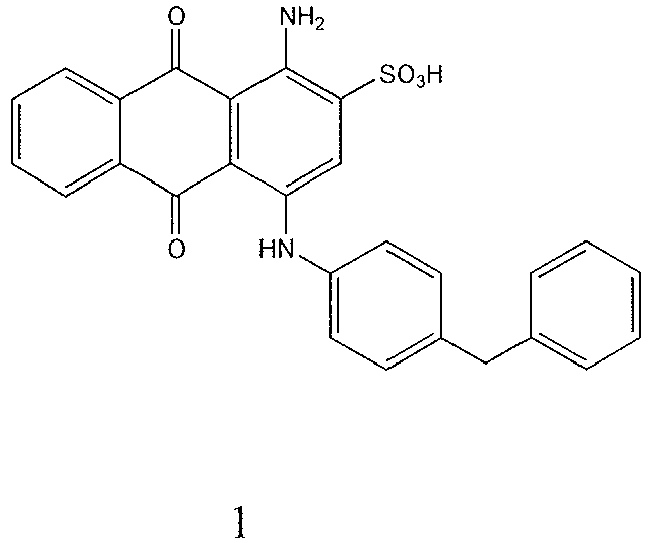


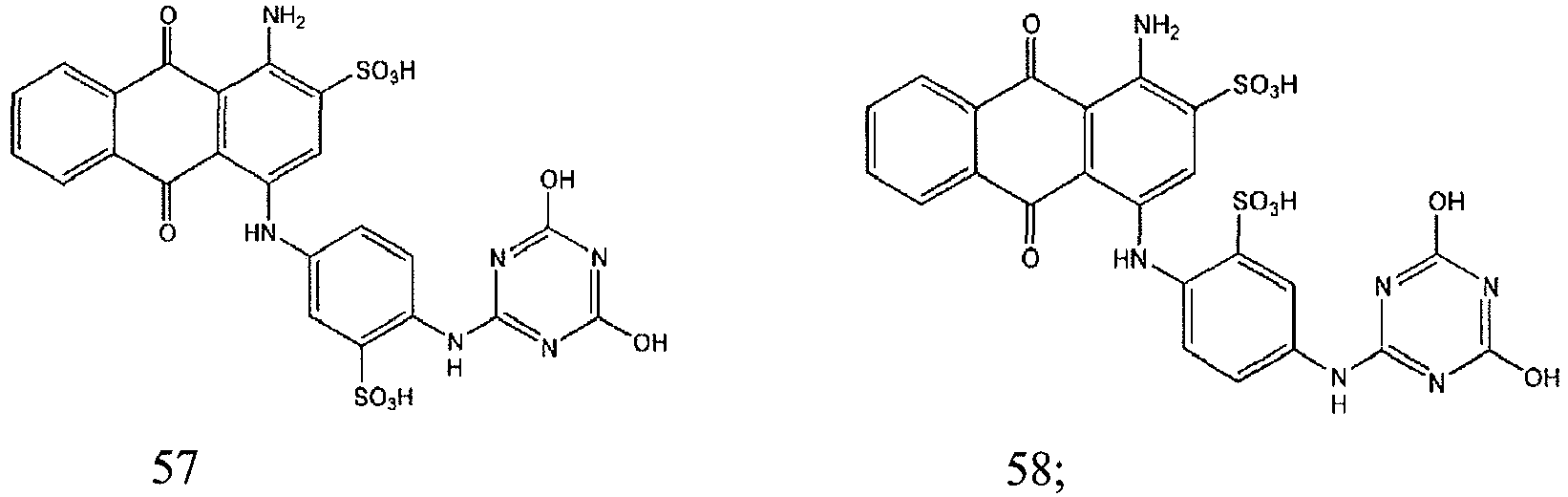 (C) selected from the group consisting of:

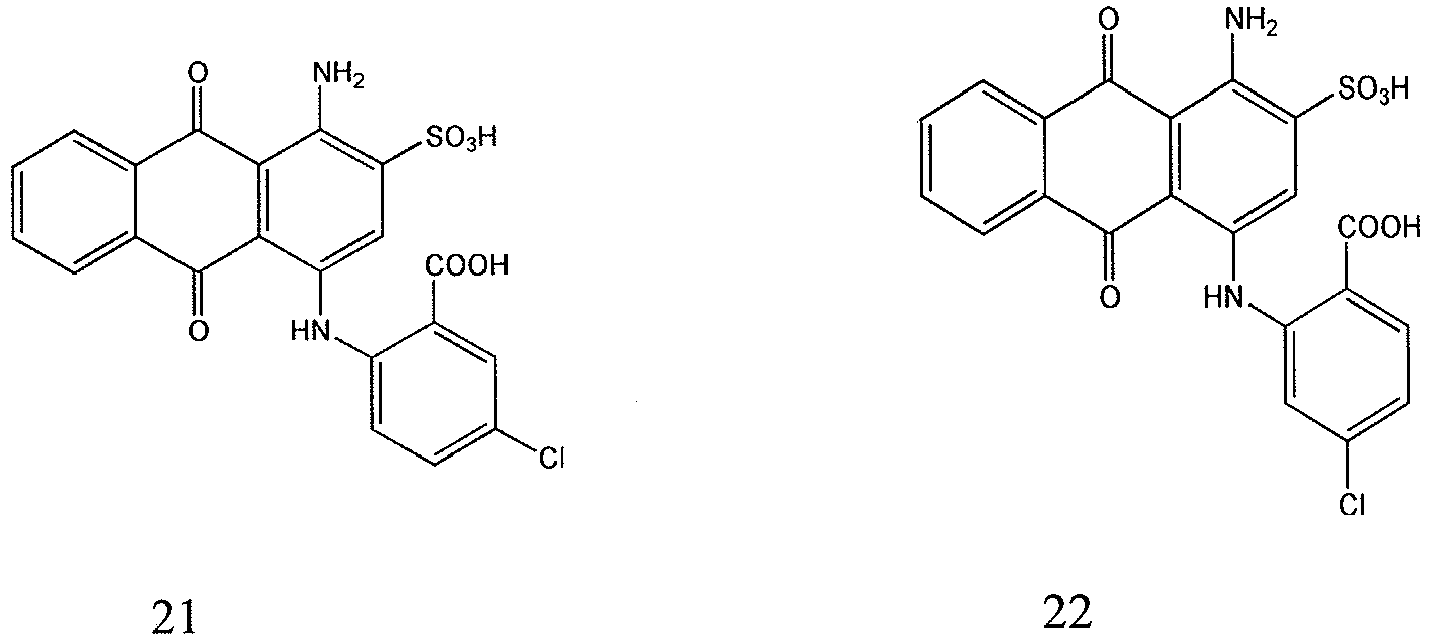


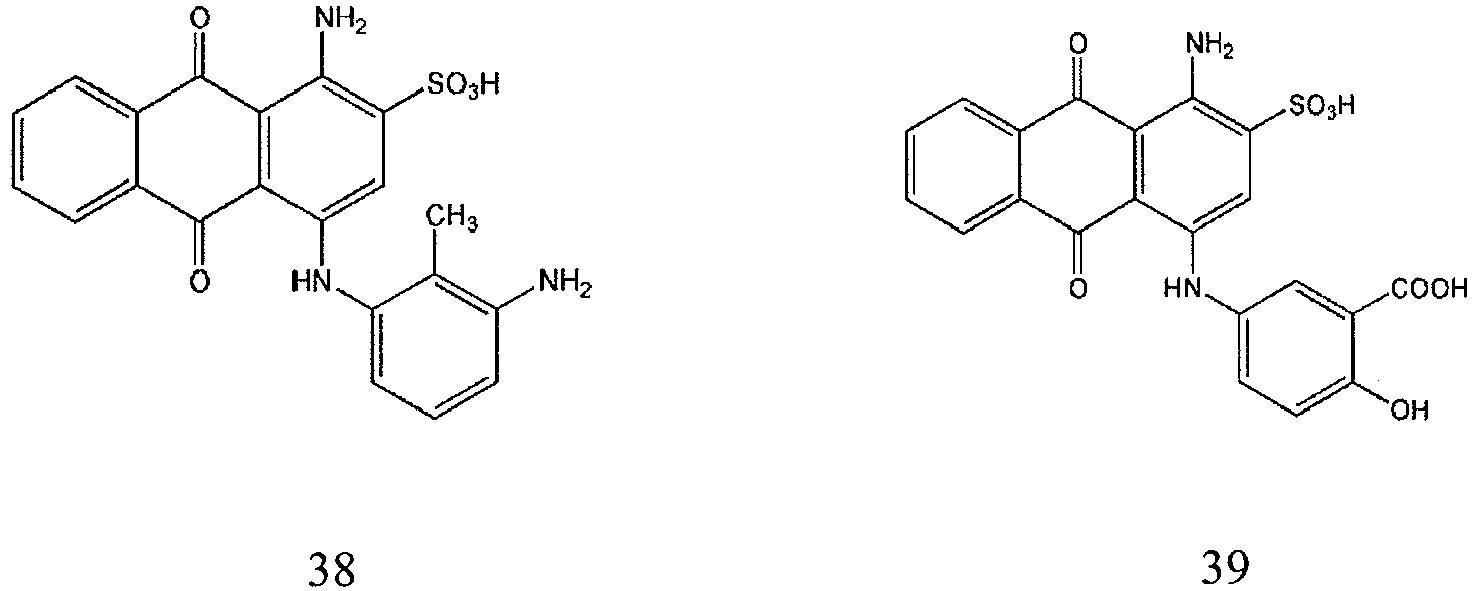


- The compound of claim 1, wherein R7 is unsubstituted C6 aryl.
- The compound of claim 1 or 2, wherein Y is NH and/or wherein R6 represents substituents selected from the group consisting of hydrogen, -S(O)2OR, -C(O)OR, tetrazolyl, sulfonyl, carboxy, amino, halogen, C1-C4 alkoxy, C1-C4 alkyl, hydroxy, and nitro.
- The compound of any one of claims 1-3, wherein(1) R12 represents one to four substituents selected from the group consisting of hydrogen, halo, amino, unsubstituted C1-C4 alkyl or alkoxy, or hydroxy; and/or(2) at least one of A and B is C=O or both A and B are C=O; and/or(3) R1 is amino; and/or(4) R2 is tetrazolyl, -S(O)2OR or -C(O)OR.
- A pharmaceutical composition comprising a compound or salt of any one of claims 1 to 4 and a pharmaceutically acceptable carrier or excipient and optionally further comprising an additional medicament or drug.
- A compound according to any one of claims 1 (A) or (B) to 4 or a pharmaceutically acceptable salt thereof for use in a method of inhibiting platelet aggregation or for use in the prevention, alleviation and/or treatment of a disease or disorder related to P2Y12 receptor activity.
- A compound according to Formula III:
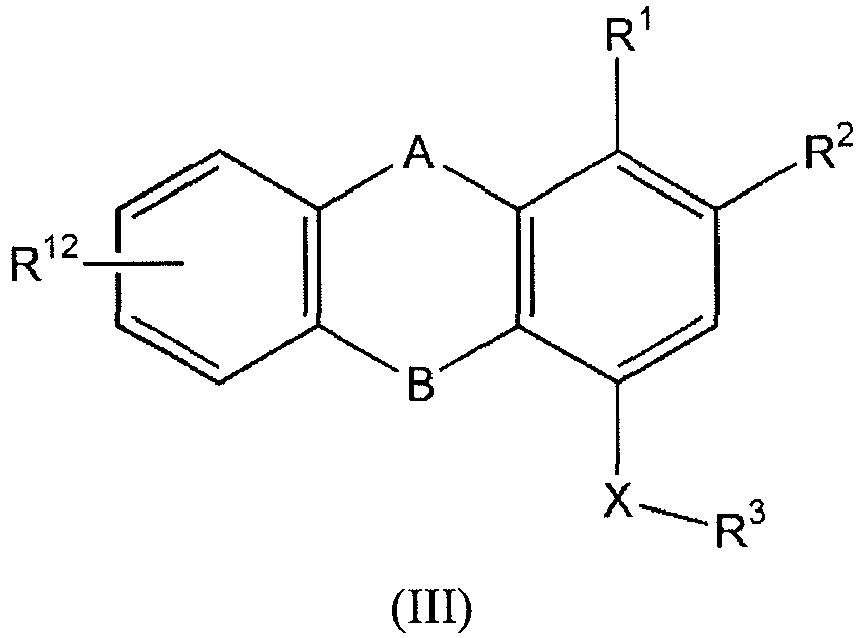 A and B are C=O;X is NH;R1 is -NH2;R2 is selected from the group -C(O)OH and -S(O)2OH;R3 is selected from the group consisting of unsubstituted or substituted C1-C10 alkyl, unsubstituted or substituted C1-C10 alkenyl, unsubstituted or substituted C1-C10 alkynyl, unsubstituted or substituted C3-C8 cycloalkyl, unsubstituted or substituted C1-C10 alkoxy, unsubstituted or substituted C3-C8 cycloalkoxy, unsubstituted or substituted C6-C14 aryl, an unsubstituted or substituted 5- to 10-membered heteroaryl wherein 1 to 4 ring atoms are independently selected from nitrogen, oxygen or sulfur, an unsubstituted or substituted 5- to 10-membered heteroalicyclic ring wherein 1 to 3 ring atoms are independently nitrogen, oxygen or sulfur, alkylaryl, alkylheteroaryl, an unsubstituted or substituted 7 to 12-membered bicyclic alkyl or heterocyclic ring wherein 1 to 3 ring members are independently nitrogen, oxygen or sulfur, an unsubstituted or substituted 10 to 16-membered tricyclic alkyl or heterocyclic ring wherein 1 to 3 ring members are independently nitrogen, oxygen or sulfur,
 R6 represents one to four substituents independently selected from the group consisting of hydrogen, halogen, unsubstituted or substituted C1-C4 alkyl, alkenyl or alkynyl, an unsubstituted or substituted 5- to 10-membered heteroaryl wherein 1 to 4 ring atoms are independently selected from nitrogen, oxygen or sulfur, an unsubstituted or substituted 5- to 10-membered heteroalicyclic ring wherein 1 to 3 ring atoms are independently nitrogen, oxygen or sulfur, -OR, -NRR', -NO2, unsubstituted or substituted C1-C4 alkoxy, -C(O)R, -C(O)OR, -C(O)NRR', - S(O)2R, -S(O)2OR, and -S(O)2NRR';Y is selected from the group consisting of hydrogen, halogen, NH, O, S, CH2, CH2CH2, C(O), C(O)O, S(O)2O, or unsubstituted C1-C4 alkoxy, wherein when Y is hydrogen, halogen or alkoxy R7 is missing;R7 is selected from the group consisting of hydrogen, halogen, -OR, unsubstituted or substituted C1-C10 alkyl, alkenyl or alkynyl, unsubstituted or substituted C1-C10 alkoxy, unsubstituted or substituted C3-C8 cycloalkoxy, unsubstituted or substituted C3-C8 cycloalkyl, unsubstituted or substituted C6-C14 aryl, an unsubstituted or substituted 5- to 10-membered heteroaryl wherein 1 to 4 ring atoms are independently selected from nitrogen, oxygen or sulfur, an unsubstituted or substituted 5- to 10-membered heteroalicyclic wherein 1 to 3 ring atoms are independently nitrogen, oxygen or sulfur, -C(O)R, -C(O)OR, -C(O)NRR', -NRR', - S(O)2R, -S(O)2OR, -S(O)2NRR', and -P(O)RR';R12 represents one to four substituents independently selected from the group consisting of hydrogen, halogen, unsubstituted or substituted C1-C4 alkyl, alkenyl or alkynyl, an unsubstituted or substituted 5- to 10-membered heteroaryl wherein 1 to 4 ring atoms are independently selected from nitrogen, oxygen or sulfur, an unsubstituted or substituted 5- to 10-membered heteroalicyclic ring wherein 1 to 3 ring atoms are independently nitrogen, oxygen or sulfur, -OR, -NRR', -NO2, unsubstituted or substituted C1-C4 alkoxy, -C(O)R, -C(O)OR, -C(O)NRR', - S(O)2R, -S(O)2OR, and -S(O)2NRR'; andR and R' are independently selected from the group consisting of hydrogen and unsubstituted C1-C4 alkyl;or a pharmaceutically acceptable salt thereof for use in the prevention, alleviation and/or treatment of a disease or disorder related to P2Y12 receptor activity,
wherein if the C1-C10 alkyl is substituted, the substituent group(s) is one or more, for example one or two groups, individually selected from the group consisting of C3-C8 cycloalkyl, C6-C14 aryl, 5-10 membered heteroaryl wherein 1 to 4 ring atoms are independently selected from nitrogen, oxygen or sulfur, 5-10 membered heteroalicyclic wherein 1 to 3 ring atoms are independently nitrogen, oxygen or sulfur, hydroxy, C1-C10 alkoxy, C3-C8 cycloalkoxy, aryloxy, mercapto, alkylthio, arylthio, cyano, halo, carbonyl, thiocarbonyl, O-carbamyl, N-carbamyl, O-thiocarbamyl, N-thiocarbamyl, C-amido, N-amido, C-carboxy, O-carboxy, nitro, silyl, sulfinyl, sulfonyl, amino, and -NR10 R11 where R10 and R11 are independently selected from the group consisting of hydrogen, C1-C4 alkyl, C3-C8 cycloalkyl, C6-C14 aryl, carbonyl, acetyl, sulfonyl, amino, and trifluoromethanesulfonyl, or R10 and R11, together with the nitrogen atom to which they are attached, combine to form a five-or six-membered heteroalicyclic ring,
wherein if the C3-C8 cycloalkyl is substituted, the substituent group(s) is one or more, for example one or two groups, individually selected from C1-C10 alkyl, C3-C8 cycloalkyl, C6-C14 aryl, 5-10 membered heteroaryl wherein 1 to 4 ring atoms are independently selected from nitrogen, oxygen or sulfur, 5-10 membered heteroalicyclic wherein 1 to 3 ring atoms are independently nitrogen, oxygen or sulfur, hydroxy, C1-C10 alkoxy, C3-C8 cycloalkoxy, aryloxy, mercapto, alkylthio, arylthio, cyano, halo, carbonyl, thiocarbonyl, O-carbamyl, N-carbamyl, O-thiocarbamyl, N-thiocarbamyl, C-amido, N-amido, C-carboxy, 0-carboxy, nitro, silyl, sulfinyl, sulfonyl, amino, and NR10 R11 with R10 and R11 as defined above,
wherein if the C6-C14 aryl is substituted, the substituted group(s) is one or more, for example one, two, or three substituents, independently selected from the group consisting of C1-C10 alkyl, C3-C8 cycloalkyl, C6-C14 aryl, 5-10 membered heteroaryl wherein 1 to 4 ring atoms are independently selected from nitrogen, oxygen or sulfur, 5-10 membered heteroalicyclic wherein 1 to 3 ring atoms are independently nitrogen, oxygen or sulfur, hydroxy, C1-C10 alkoxy, C3-C8 cycloalkoxy, aryloxy, mercapto, alkylthio, arylthio, cyano, halo, trihalomethyl, carbonyl, thiocarbonyl, O-carbamyl, N-carbamyl, O-thiocarbamyl, N-thiocarbamyl, C-amido, N-amido, C-carboxy, O-carboxy, nitro, silyl, sulfinyl, sulfonyl, amino, and NR10 R11 with R10 and R11 as defined above,
wherein if the 5- to 10-membered heteroaryl is substituted, the substituted group(s) is one or more, for example one or two substituents, independently selected from the group consisting of C1-C10 alkyl, C3-C8 cycloalkyl, C6-C14 aryl, 5-10 membered heteroaryl wherein 1 to 4 ring atoms are independently selected from nitrogen, oxygen or sulfur, 5-10 membered heteroalicyclic wherein 1 to 3 ring atoms are independently nitrogen, oxygen or sulfur, hydroxy, C1-C10 alkoxy, C3-C8 cycloalkoxy, aryloxy, mercapto, alkylthio, arylthio, cyano, halo, trihalomethyl, carbonyl, thiocarbonyl, O-carbamyl, N-carbamyl, O-thiocarbamyl, N-thiocarbamyl, C-amido, N-amido, C-carboxy, O-carboxy, nitro, silyl, sulfinyl, sulfonyl, amino, and -NR10 R11 with R10 and R11 as defined above, and
wherein if the 5- to 10-membered heteroalicyclic ring is substituted the the substituted group (s) is one or more, for example one, two, or three substituents, independently selected from the group consisting of C1-C10 alkyl, C3-C8 cycloalkyl, C6-C14 aryl, 5-10 membered heteroaryl wherein 1 to 4 ring atoms are independently selected from nitrogen, oxygen or sulfur, 5-10 membered heteroalicyclic wherein 1 to 3 ring atoms are independently nitrogen, oxygen or sulfur, hydroxy, C1-C10 alkoxy, C3-C8 cycloalkoxy, aryloxy, mercapto, alkylthio, arylthio, cyano, halo, trihalomethyl, carbonyl, thiocarbonyl, O-carbamyl, N-carbamyl, O-thiocarbamyl, N-thiocarbamyl, C-amido, N-amido, C-carboxy, O-carboxy, nitro, silyl, sulfinyl, sulfonyl, amino, and -NR10 R11 with R10 and R11 as defined above. - The compound for use according to claim 7, wherein is selected from the group consisting of:


- The compound for use according to any one of claims 6 to 8, wherein the disease or disorder is selected from the group of stroke, myocardial infarction, myocardial ischemia, vascular diseases, coronary artery disease, peripheral artery disease, atherosclerosis, cerebrovascular disease, embolisms and CNS disorders.
- An in vitro method for antagonizing the P2Y12 receptor function comprising the step of contacting cells expressing a P2Y12 receptor with at least one compound as defined in any one of claims 1 to 4 and 6 to 8.
Priority Applications (1)
| Application Number | Priority Date | Filing Date | Title |
|---|---|---|---|
| EP08735068.2A EP2129653B1 (en) | 2007-03-08 | 2008-03-07 | Novel p2y12 receptor antagonists |
Applications Claiming Priority (3)
| Application Number | Priority Date | Filing Date | Title |
|---|---|---|---|
| EP07103803A EP1967513A1 (en) | 2007-03-08 | 2007-03-08 | Novel P2Y12 receptor antagonists |
| EP08735068.2A EP2129653B1 (en) | 2007-03-08 | 2008-03-07 | Novel p2y12 receptor antagonists |
| PCT/EP2008/002748 WO2008107211A2 (en) | 2007-03-08 | 2008-03-07 | Novel p2y12 receptor antagonists |
Publications (2)
| Publication Number | Publication Date |
|---|---|
| EP2129653A2 EP2129653A2 (en) | 2009-12-09 |
| EP2129653B1 true EP2129653B1 (en) | 2017-05-17 |
Family
ID=38531741
Family Applications (2)
| Application Number | Title | Priority Date | Filing Date |
|---|---|---|---|
| EP07103803A Withdrawn EP1967513A1 (en) | 2007-03-08 | 2007-03-08 | Novel P2Y12 receptor antagonists |
| EP08735068.2A Not-in-force EP2129653B1 (en) | 2007-03-08 | 2008-03-07 | Novel p2y12 receptor antagonists |
Family Applications Before (1)
| Application Number | Title | Priority Date | Filing Date |
|---|---|---|---|
| EP07103803A Withdrawn EP1967513A1 (en) | 2007-03-08 | 2007-03-08 | Novel P2Y12 receptor antagonists |
Country Status (3)
| Country | Link |
|---|---|
| US (1) | US20100210654A1 (en) |
| EP (2) | EP1967513A1 (en) |
| WO (1) | WO2008107211A2 (en) |
Families Citing this family (7)
| Publication number | Priority date | Publication date | Assignee | Title |
|---|---|---|---|---|
| WO2012035122A1 (en) * | 2010-09-17 | 2012-03-22 | Dundalk Institute Of Technology | Anthraquinone compounds and their uses |
| WO2012174013A2 (en) * | 2011-06-14 | 2012-12-20 | Cardeus Pharmaceuticals, Inc. | Treatment of cardiovascular disease, stroke, and inflammatory conditions |
| US9539246B2 (en) | 2011-08-30 | 2017-01-10 | University Of Utah Research Foundation | Methods and compositions for treating nephrogenic diabetes insipidus |
| CA2864606C (en) | 2012-02-15 | 2021-06-15 | The United States Of America, As Represented By The Secretary, Department Of Health And Human Services | Methods of treating and preventing diseases and disorders of the central nervous system |
| US9610266B2 (en) * | 2012-05-15 | 2017-04-04 | University of Pittsburgh—of the Commonwealth System of Higher Education | Small molecule inhibitors of RNA binding motif (RBM) proteins for the treatment of acute cellular injury |
| CN103214385B (en) * | 2013-04-10 | 2015-05-13 | 中科院广州化学有限公司 | Microwave synthesis method for diarylamine compound |
| CN104341794A (en) * | 2013-08-09 | 2015-02-11 | 中国中化股份有限公司 | Reactive brilliant blue dye and preparation method thereof |
Citations (8)
| Publication number | Priority date | Publication date | Assignee | Title |
|---|---|---|---|---|
| US2081359A (en) * | 1934-12-19 | 1937-05-25 | Gen Aniline Works Inc | Anthraquinone dyestuffs capable of being chromed |
| US2870173A (en) * | 1954-12-31 | 1959-01-20 | Geigy Ag J R | Anthraquinone dyestuffs |
| US3135606A (en) * | 1962-10-26 | 1964-06-02 | Polaroid Corp | Novel photographic products and processes employing anthraquinone dye |
| GB1131787A (en) * | 1967-03-10 | 1968-10-30 | Sumitomo Chemical Co | Novel anthraquinone disperse dyes containing a carboxylic acid ester group |
| US3941742A (en) * | 1973-09-07 | 1976-03-02 | Badische Anilin- & Soda-Fabrik Aktiengesellschaft | Mass coloration of polyamides |
| PL104980B1 (en) * | 1977-10-20 | 1979-09-29 | Os Bad Rozwojowy Przem Barwni | METHOD OF OBTAINING NEW ANTHRACHINONE-DERIVATIVES |
| PL109305B2 (en) * | 1978-09-06 | 1980-05-31 | Os Bad Rozwojowy Przem Barwni | Method of obtaining new acid dyes-anthraquinone derivatives |
| US4501592A (en) * | 1982-08-23 | 1985-02-26 | Ciba-Geigy Corporation | Anthraquinone dyes, process for their preparation, and use thereof |
Family Cites Families (8)
| Publication number | Priority date | Publication date | Assignee | Title |
|---|---|---|---|---|
| DE453769C (en) * | 1925-08-21 | 1927-12-17 | I G Farbenindustrie Akt Ges | Process for the preparation of dyes of the anthracene series |
| US4043997A (en) * | 1976-05-28 | 1977-08-23 | Cutter Laboratories, Inc. | Method for isolating albumin using insoluble supports coupled to a dye |
| US4977261A (en) * | 1987-01-14 | 1990-12-11 | Sumitomo Chemical Company, Ltd. | Anthraquinone compound |
| JP2567075B2 (en) * | 1988-12-16 | 1996-12-25 | 三井東圧化学株式会社 | Dichroic dye for liquid crystal display |
| US6861424B2 (en) * | 2001-06-06 | 2005-03-01 | Schering Aktiengesellschaft | Platelet adenosine diphosphate receptor antagonists |
| US7138412B2 (en) * | 2003-03-11 | 2006-11-21 | Bristol-Myers Squibb Company | Tetrahydroquinoline derivatives useful as serine protease inhibitors |
| MY144344A (en) * | 2005-04-08 | 2011-09-15 | Ciba Holding Inc | Adsorbents comprising anthraquinone dye-ligands for the separation of biological materials |
| US20070048247A1 (en) * | 2005-08-31 | 2007-03-01 | Kimberly-Clark Worldwide, Inc. | Deodorizing tablets |
-
2007
- 2007-03-08 EP EP07103803A patent/EP1967513A1/en not_active Withdrawn
-
2008
- 2008-03-07 WO PCT/EP2008/002748 patent/WO2008107211A2/en not_active Ceased
- 2008-03-07 US US12/530,228 patent/US20100210654A1/en not_active Abandoned
- 2008-03-07 EP EP08735068.2A patent/EP2129653B1/en not_active Not-in-force
Patent Citations (8)
| Publication number | Priority date | Publication date | Assignee | Title |
|---|---|---|---|---|
| US2081359A (en) * | 1934-12-19 | 1937-05-25 | Gen Aniline Works Inc | Anthraquinone dyestuffs capable of being chromed |
| US2870173A (en) * | 1954-12-31 | 1959-01-20 | Geigy Ag J R | Anthraquinone dyestuffs |
| US3135606A (en) * | 1962-10-26 | 1964-06-02 | Polaroid Corp | Novel photographic products and processes employing anthraquinone dye |
| GB1131787A (en) * | 1967-03-10 | 1968-10-30 | Sumitomo Chemical Co | Novel anthraquinone disperse dyes containing a carboxylic acid ester group |
| US3941742A (en) * | 1973-09-07 | 1976-03-02 | Badische Anilin- & Soda-Fabrik Aktiengesellschaft | Mass coloration of polyamides |
| PL104980B1 (en) * | 1977-10-20 | 1979-09-29 | Os Bad Rozwojowy Przem Barwni | METHOD OF OBTAINING NEW ANTHRACHINONE-DERIVATIVES |
| PL109305B2 (en) * | 1978-09-06 | 1980-05-31 | Os Bad Rozwojowy Przem Barwni | Method of obtaining new acid dyes-anthraquinone derivatives |
| US4501592A (en) * | 1982-08-23 | 1985-02-26 | Ciba-Geigy Corporation | Anthraquinone dyes, process for their preparation, and use thereof |
Non-Patent Citations (5)
| Title |
|---|
| F. MAYER, ET AL.: "Umsetzung von o -halogenierten Ketonen mit schwach basischen Aminen und Aufbau von ms -Phenyl-acridin-Abkömmlingen", BERICHTE DER DEUTSCHEN CHEMISCHEN GESELLSCHAFT, vol. 55, no. 7, 8 July 1922 (1922-07-08), Verlag Chemie, Weinheim, DE, pages 2049 - 2058, XP055082799, ISSN: 0009-2940, DOI: 10.1002/cber.19220550711 * |
| F. TULUC, ET AL.: "P2-receptor antagonists: IV. Blockade of P2-receptor subtypes and ecto-nucleotidases by compounds related to reactive blue 2", NAUNYN-SCHMIEDEBERG'S ARCHIVES OF PHARMACOLOGY, vol. 357, no. 2, 1 February 1998 (1998-02-01), Springer-Verlag, Berlin, DE, pages 111 - 120, XP002662512, ISSN: 0028-1298, DOI: 10.1007/pl00005144 * |
| G. PHILIP, ET AL.: "Arylamination of aminohalogenoanthraquinones", INDIAN JOURNAL OF CHEMISTRY, vol. 22B, no. 8, August 1983 (1983-08-01), Scientific Publishers, Jodhpur, IN, pages 808 - 811, XP008165244, ISSN: 0376-4699 * |
| M.G. PELATT, ET AL.: "Photostable anthraquinone pleochroic dyes", MOLECULAR CRYSTALS AND LIQUID CRYSTALS., vol. 59, 1980, GORDON AND BREACH, LONDON., pages 299 - 316, XP009143750, ISSN: 0026-8941, DOI: 10.1080/00268948008071430 * |
| W.M. LORD, ET AL.: "New intermediates and dyestuffs for synthetic fibres. Part V. By-products of the Ullmann condensation between 1-chloroanthraquinone and aniline", JOURNAL OF THE CHEMICAL SOCIETY, SECTION C: ORGANIC CHEMISTRY, 1971, Royal Society of Chemistry, Cambridge, GB, pages 3600 - 3601, XP055082803, ISSN: 0022-4952, DOI: 10.1039/j39710003600 * |
Also Published As
| Publication number | Publication date |
|---|---|
| WO2008107211A3 (en) | 2009-01-29 |
| WO2008107211A2 (en) | 2008-09-12 |
| EP2129653A2 (en) | 2009-12-09 |
| EP1967513A1 (en) | 2008-09-10 |
| US20100210654A1 (en) | 2010-08-19 |
Similar Documents
| Publication | Publication Date | Title |
|---|---|---|
| TWI762743B (en) | Sulfonamide compounds and use thereof | |
| EP1967513A1 (en) | Novel P2Y12 receptor antagonists | |
| RU2636588C2 (en) | Polymorphs of kinase inhibitor | |
| CN110386919B (en) | Nuclear transport modulators and uses thereof | |
| CA3105506A1 (en) | Dimeric immuno-modulatory compounds against cereblon-based mechanisms | |
| CA3135740A1 (en) | Cancer treatments targeting cancer stem cells | |
| JPS63135384A (en) | N9-cyclopentyl-substituted adenine derivative and method for producing the same | |
| JP6486364B2 (en) | Trifluoromethylpyrazolylguanidine F1F0-ATPase inhibitor and therapeutic use thereof | |
| AU2021250904B2 (en) | Pyridinethiones, pharmaceutical compositions thereof, and their therapeutic use for treating a proliferative, inflammatory, neurodegenerative, or immune-mediated disease | |
| US6372719B1 (en) | ανβ3 integrin antagonists in combination with chemotherapeutic agents | |
| JP2021519297A (en) | Macrocycle as a TRK kinase inhibitor | |
| EP4155304B9 (en) | Compound used as ret kinase inhibitor and application thereof | |
| HUT72992A (en) | New derivatives of 3-hydroxyantranilic acid, process to prepare them and pharmaceutical compns. contg. them | |
| CA2946609A1 (en) | Naphthaquinone methyltransferase inhibitors and uses thereof | |
| EP4338801A2 (en) | Crystalline forms of a phosphoinositide 3-kinase (pi3k) inhibitor | |
| TWI912295B (en) | Phd inhibitor compounds, compositions, and methods of use | |
| CN108794517A (en) | A kind of arginase inhibitor and preparation method thereof and purposes | |
| JP2022538074A (en) | Compounds, compositions and methods for protein degradation | |
| EP4565586A1 (en) | Novel ectonucleotide pyrophosphatase / phosphodiesterase 1 (enpp-1) inhibitors and uses thereof | |
| WO2023107487A1 (en) | Lonp1 inhibitor compounds, uses and methods | |
| JPH01165586A (en) | Antitumor prodrug | |
| WO2022079637A1 (en) | Analogues of oleuropein and oleacein and uses thereof | |
| KR20180011949A (en) | Novel 2-amine substituted 1,4-naphthoquinone compounds and pharmaceutical composition for preventing or treating cancer comprising the same as an active ingredient | |
| KR20130055391A (en) | Metformin-gaba salt and the derivatives thereof, methods of preparing the same, and pharmaceutical composition comprising the same | |
| CN114555619A (en) | Compounds and compositions for differential modulation of nicotinamide adenine dinucleotide |
Legal Events
| Date | Code | Title | Description |
|---|---|---|---|
| PUAI | Public reference made under article 153(3) epc to a published international application that has entered the european phase |
Free format text: ORIGINAL CODE: 0009012 |
|
| 17P | Request for examination filed |
Effective date: 20090930 |
|
| AK | Designated contracting states |
Kind code of ref document: A2 Designated state(s): AT BE BG CH CY CZ DE DK EE ES FI FR GB GR HR HU IE IS IT LI LT LU LV MC MT NL NO PL PT RO SE SI SK TR |
|
| RIN1 | Information on inventor provided before grant (corrected) |
Inventor name: BAQI, YOUNIS Inventor name: MUELLER, CHRISTA E. |
|
| DAX | Request for extension of the european patent (deleted) | ||
| 17Q | First examination report despatched |
Effective date: 20120727 |
|
| REG | Reference to a national code |
Ref country code: DE Ref legal event code: R079 Ref document number: 602008050319 Country of ref document: DE Free format text: PREVIOUS MAIN CLASS: C07C0309460000 Ipc: C07C0229740000 |
|
| GRAP | Despatch of communication of intention to grant a patent |
Free format text: ORIGINAL CODE: EPIDOSNIGR1 |
|
| RIC1 | Information provided on ipc code assigned before grant |
Ipc: C07C 309/53 20060101ALI20161125BHEP Ipc: C07C 309/46 20060101ALI20161125BHEP Ipc: C07D 251/42 20060101ALI20161125BHEP Ipc: A61K 31/136 20060101ALI20161125BHEP Ipc: C07C 323/37 20060101ALI20161125BHEP Ipc: C07D 251/44 20060101ALI20161125BHEP Ipc: A61P 9/10 20060101ALI20161125BHEP Ipc: C07D 251/46 20060101ALI20161125BHEP Ipc: C07D 251/50 20060101ALI20161125BHEP Ipc: C07D 239/42 20060101ALI20161125BHEP Ipc: C07C 229/74 20060101AFI20161125BHEP Ipc: A61P 7/02 20060101ALI20161125BHEP |
|
| INTG | Intention to grant announced |
Effective date: 20161213 |
|
| GRAS | Grant fee paid |
Free format text: ORIGINAL CODE: EPIDOSNIGR3 |
|
| GRAA | (expected) grant |
Free format text: ORIGINAL CODE: 0009210 |
|
| AK | Designated contracting states |
Kind code of ref document: B1 Designated state(s): AT BE BG CH CY CZ DE DK EE ES FI FR GB GR HR HU IE IS IT LI LT LU LV MC MT NL NO PL PT RO SE SI SK TR |
|
| REG | Reference to a national code |
Ref country code: GB Ref legal event code: FG4D |
|
| REG | Reference to a national code |
Ref country code: CH Ref legal event code: EP |
|
| REG | Reference to a national code |
Ref country code: IE Ref legal event code: FG4D |
|
| REG | Reference to a national code |
Ref country code: AT Ref legal event code: REF Ref document number: 894307 Country of ref document: AT Kind code of ref document: T Effective date: 20170615 |
|
| REG | Reference to a national code |
Ref country code: DE Ref legal event code: R096 Ref document number: 602008050319 Country of ref document: DE |
|
| REG | Reference to a national code |
Ref country code: NL Ref legal event code: MP Effective date: 20170517 |
|
| REG | Reference to a national code |
Ref country code: LT Ref legal event code: MG4D |
|
| REG | Reference to a national code |
Ref country code: AT Ref legal event code: MK05 Ref document number: 894307 Country of ref document: AT Kind code of ref document: T Effective date: 20170517 |
|
| PG25 | Lapsed in a contracting state [announced via postgrant information from national office to epo] |
Ref country code: LT Free format text: LAPSE BECAUSE OF FAILURE TO SUBMIT A TRANSLATION OF THE DESCRIPTION OR TO PAY THE FEE WITHIN THE PRESCRIBED TIME-LIMIT Effective date: 20170517 Ref country code: ES Free format text: LAPSE BECAUSE OF FAILURE TO SUBMIT A TRANSLATION OF THE DESCRIPTION OR TO PAY THE FEE WITHIN THE PRESCRIBED TIME-LIMIT Effective date: 20170517 Ref country code: FI Free format text: LAPSE BECAUSE OF FAILURE TO SUBMIT A TRANSLATION OF THE DESCRIPTION OR TO PAY THE FEE WITHIN THE PRESCRIBED TIME-LIMIT Effective date: 20170517 Ref country code: AT Free format text: LAPSE BECAUSE OF FAILURE TO SUBMIT A TRANSLATION OF THE DESCRIPTION OR TO PAY THE FEE WITHIN THE PRESCRIBED TIME-LIMIT Effective date: 20170517 Ref country code: HR Free format text: LAPSE BECAUSE OF FAILURE TO SUBMIT A TRANSLATION OF THE DESCRIPTION OR TO PAY THE FEE WITHIN THE PRESCRIBED TIME-LIMIT Effective date: 20170517 Ref country code: NO Free format text: LAPSE BECAUSE OF FAILURE TO SUBMIT A TRANSLATION OF THE DESCRIPTION OR TO PAY THE FEE WITHIN THE PRESCRIBED TIME-LIMIT Effective date: 20170817 Ref country code: GR Free format text: LAPSE BECAUSE OF FAILURE TO SUBMIT A TRANSLATION OF THE DESCRIPTION OR TO PAY THE FEE WITHIN THE PRESCRIBED TIME-LIMIT Effective date: 20170818 |
|
| PG25 | Lapsed in a contracting state [announced via postgrant information from national office to epo] |
Ref country code: NL Free format text: LAPSE BECAUSE OF FAILURE TO SUBMIT A TRANSLATION OF THE DESCRIPTION OR TO PAY THE FEE WITHIN THE PRESCRIBED TIME-LIMIT Effective date: 20170517 Ref country code: BG Free format text: LAPSE BECAUSE OF FAILURE TO SUBMIT A TRANSLATION OF THE DESCRIPTION OR TO PAY THE FEE WITHIN THE PRESCRIBED TIME-LIMIT Effective date: 20170817 Ref country code: IS Free format text: LAPSE BECAUSE OF FAILURE TO SUBMIT A TRANSLATION OF THE DESCRIPTION OR TO PAY THE FEE WITHIN THE PRESCRIBED TIME-LIMIT Effective date: 20170917 Ref country code: PL Free format text: LAPSE BECAUSE OF FAILURE TO SUBMIT A TRANSLATION OF THE DESCRIPTION OR TO PAY THE FEE WITHIN THE PRESCRIBED TIME-LIMIT Effective date: 20170517 Ref country code: SE Free format text: LAPSE BECAUSE OF FAILURE TO SUBMIT A TRANSLATION OF THE DESCRIPTION OR TO PAY THE FEE WITHIN THE PRESCRIBED TIME-LIMIT Effective date: 20170517 Ref country code: LV Free format text: LAPSE BECAUSE OF FAILURE TO SUBMIT A TRANSLATION OF THE DESCRIPTION OR TO PAY THE FEE WITHIN THE PRESCRIBED TIME-LIMIT Effective date: 20170517 |
|
| PG25 | Lapsed in a contracting state [announced via postgrant information from national office to epo] |
Ref country code: DK Free format text: LAPSE BECAUSE OF FAILURE TO SUBMIT A TRANSLATION OF THE DESCRIPTION OR TO PAY THE FEE WITHIN THE PRESCRIBED TIME-LIMIT Effective date: 20170517 Ref country code: EE Free format text: LAPSE BECAUSE OF FAILURE TO SUBMIT A TRANSLATION OF THE DESCRIPTION OR TO PAY THE FEE WITHIN THE PRESCRIBED TIME-LIMIT Effective date: 20170517 Ref country code: SK Free format text: LAPSE BECAUSE OF FAILURE TO SUBMIT A TRANSLATION OF THE DESCRIPTION OR TO PAY THE FEE WITHIN THE PRESCRIBED TIME-LIMIT Effective date: 20170517 Ref country code: RO Free format text: LAPSE BECAUSE OF FAILURE TO SUBMIT A TRANSLATION OF THE DESCRIPTION OR TO PAY THE FEE WITHIN THE PRESCRIBED TIME-LIMIT Effective date: 20170517 Ref country code: CZ Free format text: LAPSE BECAUSE OF FAILURE TO SUBMIT A TRANSLATION OF THE DESCRIPTION OR TO PAY THE FEE WITHIN THE PRESCRIBED TIME-LIMIT Effective date: 20170517 |
|
| REG | Reference to a national code |
Ref country code: DE Ref legal event code: R097 Ref document number: 602008050319 Country of ref document: DE |
|
| PG25 | Lapsed in a contracting state [announced via postgrant information from national office to epo] |
Ref country code: IT Free format text: LAPSE BECAUSE OF FAILURE TO SUBMIT A TRANSLATION OF THE DESCRIPTION OR TO PAY THE FEE WITHIN THE PRESCRIBED TIME-LIMIT Effective date: 20170517 |
|
| PLBE | No opposition filed within time limit |
Free format text: ORIGINAL CODE: 0009261 |
|
| STAA | Information on the status of an ep patent application or granted ep patent |
Free format text: STATUS: NO OPPOSITION FILED WITHIN TIME LIMIT |
|
| 26N | No opposition filed |
Effective date: 20180220 |
|
| PG25 | Lapsed in a contracting state [announced via postgrant information from national office to epo] |
Ref country code: SI Free format text: LAPSE BECAUSE OF FAILURE TO SUBMIT A TRANSLATION OF THE DESCRIPTION OR TO PAY THE FEE WITHIN THE PRESCRIBED TIME-LIMIT Effective date: 20170517 |
|
| REG | Reference to a national code |
Ref country code: CH Ref legal event code: PL |
|
| PG25 | Lapsed in a contracting state [announced via postgrant information from national office to epo] |
Ref country code: MC Free format text: LAPSE BECAUSE OF FAILURE TO SUBMIT A TRANSLATION OF THE DESCRIPTION OR TO PAY THE FEE WITHIN THE PRESCRIBED TIME-LIMIT Effective date: 20170517 |
|
| REG | Reference to a national code |
Ref country code: BE Ref legal event code: MM Effective date: 20180331 |
|
| REG | Reference to a national code |
Ref country code: IE Ref legal event code: MM4A |
|
| PG25 | Lapsed in a contracting state [announced via postgrant information from national office to epo] |
Ref country code: LU Free format text: LAPSE BECAUSE OF NON-PAYMENT OF DUE FEES Effective date: 20180307 |
|
| PG25 | Lapsed in a contracting state [announced via postgrant information from national office to epo] |
Ref country code: IE Free format text: LAPSE BECAUSE OF NON-PAYMENT OF DUE FEES Effective date: 20180307 |
|
| PG25 | Lapsed in a contracting state [announced via postgrant information from national office to epo] |
Ref country code: BE Free format text: LAPSE BECAUSE OF NON-PAYMENT OF DUE FEES Effective date: 20180331 Ref country code: CH Free format text: LAPSE BECAUSE OF NON-PAYMENT OF DUE FEES Effective date: 20180331 Ref country code: LI Free format text: LAPSE BECAUSE OF NON-PAYMENT OF DUE FEES Effective date: 20180331 |
|
| PG25 | Lapsed in a contracting state [announced via postgrant information from national office to epo] |
Ref country code: FR Free format text: LAPSE BECAUSE OF NON-PAYMENT OF DUE FEES Effective date: 20180331 |
|
| PG25 | Lapsed in a contracting state [announced via postgrant information from national office to epo] |
Ref country code: MT Free format text: LAPSE BECAUSE OF NON-PAYMENT OF DUE FEES Effective date: 20180307 |
|
| PG25 | Lapsed in a contracting state [announced via postgrant information from national office to epo] |
Ref country code: TR Free format text: LAPSE BECAUSE OF FAILURE TO SUBMIT A TRANSLATION OF THE DESCRIPTION OR TO PAY THE FEE WITHIN THE PRESCRIBED TIME-LIMIT Effective date: 20170517 |
|
| PG25 | Lapsed in a contracting state [announced via postgrant information from national office to epo] |
Ref country code: HU Free format text: LAPSE BECAUSE OF FAILURE TO SUBMIT A TRANSLATION OF THE DESCRIPTION OR TO PAY THE FEE WITHIN THE PRESCRIBED TIME-LIMIT; INVALID AB INITIO Effective date: 20080307 Ref country code: PT Free format text: LAPSE BECAUSE OF FAILURE TO SUBMIT A TRANSLATION OF THE DESCRIPTION OR TO PAY THE FEE WITHIN THE PRESCRIBED TIME-LIMIT Effective date: 20170517 |
|
| PG25 | Lapsed in a contracting state [announced via postgrant information from national office to epo] |
Ref country code: CY Free format text: LAPSE BECAUSE OF FAILURE TO SUBMIT A TRANSLATION OF THE DESCRIPTION OR TO PAY THE FEE WITHIN THE PRESCRIBED TIME-LIMIT Effective date: 20170517 |
|
| REG | Reference to a national code |
Ref country code: DE Ref legal event code: R082 Ref document number: 602008050319 Country of ref document: DE Representative=s name: MAIWALD GMBH, DE |
|
| PGFP | Annual fee paid to national office [announced via postgrant information from national office to epo] |
Ref country code: DE Payment date: 20240327 Year of fee payment: 17 Ref country code: GB Payment date: 20240322 Year of fee payment: 17 |
|
| REG | Reference to a national code |
Ref country code: DE Ref legal event code: R119 Ref document number: 602008050319 Country of ref document: DE |
|
| GBPC | Gb: european patent ceased through non-payment of renewal fee |
Effective date: 20250307 |
|
| PG25 | Lapsed in a contracting state [announced via postgrant information from national office to epo] |
Ref country code: DE Free format text: LAPSE BECAUSE OF NON-PAYMENT OF DUE FEES Effective date: 20251001 |
|
| PG25 | Lapsed in a contracting state [announced via postgrant information from national office to epo] |
Ref country code: GB Free format text: LAPSE BECAUSE OF NON-PAYMENT OF DUE FEES Effective date: 20250307 |