EP2128762A1 - Policy creating device, policy creating method, and policy creating program - Google Patents
Policy creating device, policy creating method, and policy creating program Download PDFInfo
- Publication number
- EP2128762A1 EP2128762A1 EP07738854A EP07738854A EP2128762A1 EP 2128762 A1 EP2128762 A1 EP 2128762A1 EP 07738854 A EP07738854 A EP 07738854A EP 07738854 A EP07738854 A EP 07738854A EP 2128762 A1 EP2128762 A1 EP 2128762A1
- Authority
- EP
- European Patent Office
- Prior art keywords
- policy
- alternate
- integrity
- creating
- created
- Prior art date
- Legal status (The legal status is an assumption and is not a legal conclusion. Google has not performed a legal analysis and makes no representation as to the accuracy of the status listed.)
- Withdrawn
Links
Images







Classifications
-
- G—PHYSICS
- G06—COMPUTING OR CALCULATING; COUNTING
- G06F—ELECTRIC DIGITAL DATA PROCESSING
- G06F21/00—Security arrangements for protecting computers, components thereof, programs or data against unauthorised activity
- G06F21/60—Protecting data
- G06F21/604—Tools and structures for managing or administering access control systems
Definitions
- the present invention relates to a policy creating apparatus that creates a policy applied to a managed system to control autonomous operation in the managed system, and a policy creating method and a policy creating program that correspond to the policy creating apparatus.
- a policy-based autonomous system has received attention as a core technology thereof.
- a constraint that the system needs to satisfy or an executive operation is described as a policy according to a service level objective (SLO) and the like, and then, the policy is provided to the system.
- SLO service level objective
- the system to which the policy is provided autonomously interprets the policy and autonomously controls resources and the like depending on situations.
- Patent Document 1 discloses a technology in which a test scenario prepared by a system administrator is applied to an autonomous system and whether the policy properly operates in the autonomous system is validated by utilizing a simulation result of the autonomous system operated according to the test scenario.
- a system administrator devises a method for modifying the policy to prevent a system failure by modifying the policy.
- Patent Document 1 Japanese Laid-open Patent Publication No. 2005-196601
- a policy creating apparatus that creates a policy applied to a managed system to control autonomous operation of the managed system, includes: a policy receiving unit that receives an administrator created policy created by a system administrator; a model receiving unit that receives a system model obtained by modeling characteristics of the managed system; a policy validating unit that validates integrity between the administrator created policy received by the policy receiving unit and the system model received by the model receiving unit; an alternate policy creating unit that creates an alternate policy that replaces the administrator created policy when the policy validating unit determines that there is no integrity between the administrator created policy and the system model; a policy revalidating unit that revalidates integrity between the alternate policy created by the alternate policy creating unit and the system model; and an alternate policy presenting unit that presents the alternate policy to the system administrator when the policy revalidating unit determines that there is integrity between the alternate policy and the system model.
- the policy creating apparatus further includes an application example storage unit that stores therein an application example in which it is determined that there is integrity between a system and a policy.
- the alternate policy creating unit refers to the application example stored in the application example storage unit when the policy validating unit determines that there is no integrity between the administrator created policy and the system model, and, if there is a corresponding policy that corresponds to the system model, adapts the corresponding policy as the alternate policy.
- the administrator created policy includes at least a procedure to control operation of the managed system, a constraint to be observed by the managed system in operation, and an objective to be achieved by the managed system.
- the alternate policy creating unit modifies at least one of the procedure, the constraint, and the objective in the administrator created policy to create the alternate policy.
- the alternate policy creating unit relaxes at least one of threshold values adapted in the procedure, the constraint, and the objective to create the alternate policy.
- the alternate policy creating unit deletes at least one of set-up items in the constraint to create the alternate policy.
- the alternate policy creating unit limits a set-up item in the procedure to create the alternate policy.
- the alternate policy presenting unit when the alternate policy creating unit creates a plurality of alternate policies, the alternate policy presenting unit ranks the alternate policies in ascending order of number of modifications in the procedure, the constraint, and the objective, and presents the alternate policies.
- the policy creating apparatus further includes a notifying unit that notifies, when the policy validating unit determines that there is integrity between the administrator created policy and the system model, the system administrator of the integrity.
- the alternate policy creating unit each time the policy revalidating unit determines that there is no integrity between an alternate policy and the system model, the alternate policy creating unit creates a new alternate policy that replaces the alternate policy. Each time the alternate policy creating unit creates a new alternate policy, the policy revalidating unit revalidates integrity between the new alternate policy and the system model. When the policy revalidating unit has determined that there is no integrity between the new alternate policy and the system model predetermined times, the notifying unit notifies the system administrator that the alternate policy cannot be created.
- a policy creating method for creating a policy applied to a managed system to control autonomous operation of the managed system includes: receiving an administrator created policy created by a system administrator; receiving a system model obtained by modeling characteristics of the managed system; validating integrity between the administrator created policy and the system model; creating an alternate policy that replaces the administrator created policy when it is determined that there is no integrity between the administrator created policy and the system model at the validating; revalidating integrity between the alternate policy created at the creating and the system model; and presenting the alternate policy to the system administrator when it is determined that there is integrity between the alternate policy and the system model at the revalidating.
- a policy creating program causes a computer to create a policy applied to a managed system to control autonomous operation of the managed system.
- the policy creating program causes the computer to perform: receiving an administrator created policy created by a system administrator; receiving a system model obtained by modeling characteristics of the managed system; validating integrity between the administrator created policy and the system model; creating an alternate policy that replaces the administrator created policy when it is determined that there is no integrity between the administrator created policy and the system model at the validating; revalidating integrity between the alternate policy created at the creating and the system model; and presenting the alternate policy to the system administrator when it is determined that there is integrity between the alternate policy and the system model at the revalidating.
- the policy creating program further causing the computer to perform storing, in a storage unit, an application example in which it is determined that there is integrity between a system and a policy.
- the creating includes referring to the application example stored in the storage unit when it is determined that there is no integrity between the administrator created policy and the system model at the validating, and, if there is a corresponding policy that corresponds to the system model, adapting the corresponding policy as the alternate policy.
- the administrator created policy includes at least a procedure to control operation of the managed system, a constraint to be observed by the managed system in operation, and an objective to be achieved by the managed system.
- the creating includes modifying at least one of the procedure, the constraint, and the objective in the administrator created policy to create the alternate policy.
- the creating includes relaxing at least one of threshold values adapted in the procedure, the constraint, and the objective to create the alternate policy.
- the creating includes deleting at least one of set-up items in the constraint to create the alternate policy.
- the creating includes limiting a set-up item in the procedure to create the alternate policy.
- the presenting includes, when a plurality of alternate policies are created at the creating, ranking the alternate policies in ascending order of number of modifications in the procedure, the constraint, and the objective, and presenting the alternate policies.
- the policy creating program further causing the computer to perform notifying, when it is determined that there is integrity between the administrator created policy and the system model at the validating, the system administrator of the integrity.
- the creating includes creating, each time it is determined that there is no integrity between an alternate policy and the system model at the revalidating, a new alternate policy that replaces the alternate policy.
- the revalidating includes revalidating, each time a new alternate policy is created at the creating, integrity between the new alternate policy and the system model.
- the notifying includes notifying, when it is determined that there is no integrity between the new alternate policy and the system model predetermined times at the revalidating, the system administrator that the alternate policy cannot be created.
- integrity between the administrator created policy and the system model is validated. If it is determined that there is no integrity between the administrator created policy and the system model, an alternate policy is created to replace the administrator created policy. After revalidating integrity between the alternate policy and the system model, if it is determined that there is integrity between the alternate policy and the system model, the alternate policy is presented to the system administrator. Therefore, integrity between the system and the policy can be validated without using a test scenario. If no integrity is detected between a policy created by the administrator and the system, an alternate policy having integrity with the system is automatically created. Thus, a modified policy can be obtained without the need for substantial time and effort. The system administrator can use the alternate policy presented to the system administrator as a reference, and thus, can create a new policy with minimal time and effort.
- application examples in which it is determined that there is integrity between a system and a policy are stored in the policy creating apparatus. If it is determined that there is no integrity between the administrator created policy and the system model, the application examples stored therein are referred to. If there is a policy that corresponds to the system model, the policy that corresponds thereto is adapted as an alternate policy. Thus, the most appropriate policy can be adapted with reference to the previous application examples.
- a policy includes at least a procedure to control the operation performed by the managed system, a constraint to be observed by the managed system in operation, and an objective to be achieved by the managed system. At least one of the procedure, the constraint, and the objective that are created by the system administrator are modified to create an alternate policy. Therefore, an alternate policy in which a minute condition is modified can be created.
- At least one of threshold values adapted in the procedure, the constraint, and the objective that are set up as a policy are relaxed to create an alternate policy. Therefore, an alternate policy can be created with simple operation.
- At least one of the set-up items in a constraint set up as a policy is deleted to create an alternate policy. Therefore, an alternate policy with which a system does not reach a constraint violation state can be created.
- a set-up item in a procedure set up as a policy is limited to create an alternate policy. Therefore, an alternate policy with which a system does not reach a constraint violation state can be created without modifying a constraint.
- the alternate policies are ranked in ascending order of the number of modifications made to the procedure, the constraint, and the objective, and are presented. Therefore, the alternate policies corresponding to the system can be presented to the system administrator in a ranked manner.
- the system administrator if it is determined that there is integrity between the administrator created policy and the system model, the system administrator is notified of the integrity. Therefore, the system administrator can recognize that there is integrity between the policy created by the system administrator and the system.
- a new alternate policy that replaces the alternate policy is created each time it is determined that there is no integrity between the alternate policy and the system model.
- the system model is revalidated each time the new alternate policy is created.
- the system administrator is notified that an alternate policy cannot be created when the number of times it is determined that there is no integrity between the alternate policy and the system model reaches a predetermined number. Therefore, for example, the system administrator can be provided with an opportunity to review if there is any deficiency in the policy created first.
- FIG. 1 is a diagram for explaining an overview and a feature of the policy creating apparatus according to the first embodiment.
- the policy creating apparatus creates a policy applied to a system to control autonomous operation in the managed system.
- a main feature of the policy creating apparatus is, however, that integrity between the system and the policy can be validated without using a test scenario and that a modified policy can be obtained without the need for substantial time and effort.
- the policy creating apparatus receives, from a terminal operated by the system administrator, a policy created by the system administrator and a system model obtained by modeling characteristics of the managed system (see (1) in FIG. 1 ).
- a procedure to control operation performed by the managed system, a constraint to be observed by the managed system in operation, and an objective to be achieved by the managed system are set up in the policy created by the system administrator.
- the system model is created in such a manner that characteristics of the managed system is measured by using a benchmark, and, for example, the system administrator measures models the managed system by defining the managed system by using the information obtained by the measurement.
- a policy integrity validating unit of the policy creating apparatus validates integrity between the policy created by the system administrator and the system model. More specifically, the policy integrity validating unit validates if the system model can reach the objective set up in the policy without violating the constraint set up in the policy when the system model is operated according to the procedure set up in the policy.
- the policy integrity validating unit determines that there is integrity between the policy created by the system administrator and the system model when the system model can reach the objective set up in the policy without violating the constraint set up in the policy by operating the system model according to the procedure set up in the policy in any state that the system model can reach from the initial state.
- the policy integrity validating unit determines that there is integrity between the policy created by the system administrator and the managed system, the policy integrity validating unit notifies the system administrator of the integrity.
- the policy integrity validating unit determines that there is no integrity between the policy created by the system administrator and the system model in a situation such as when the system model violates the constraint set up in the policy or can not reach the objective set up in the policy when the system model is operated according to the procedure set up in the policy, and when the system model results in a livelock in which operation performed by the system is never terminated and ends up in an infinite loop when the system model is operated according to the procedure set up in the policy.
- an alternate policy creating unit creates an alternate policy that replaces the policy created by the system administrator (see (2) in FIG. 1 ).
- the policy creating apparatus includes, in advance, an application example storage unit that stores therein previous application examples in which it is determined that there is integrity between the system and the policy, and a policy modifying strategy storage unit that stores therein policy modifying strategies that are used to create an alternate policy.
- the alternate policy creating unit refers to the application examples stored in the application example storage unit and if there is a policy that corresponds to the managed system modeled as the system model, the alternate policy creating unit adapts the policy that corresponds thereto as an alternate policy.
- the alternate policy creating unit creates an alternate policy by modifying any one of or a plurality of the procedure, the constraint, and the objective set up in the policy created by the system administrator according to the policy modifying strategies stored in the policy modifying strategy storage unit.
- the policy modifying strategies includes: a threshold value relaxing method in which any one of or a plurality of the threshold values adapted in the procedure, the constraint, and the objective set up in the policy created by the system administrator are relaxed to create an alternate policy; a constraint deleting method in which one or a plurality of the set-up items in the constraint is deleted to create an alternate policy; and a procedure limiting method in which the set-up item in the procedure is limited to create an alternate policy.
- the alternate policy creating unit After creating an alternate policy, the alternate policy creating unit delivers the created alternate policy to a policy integrity validating unit (see (3) in FIG. 1 ).
- the policy integrity validating unit receives the alternate policy, and then, validates integrity between the alternate policy and the system model. If the policy integrity validating unit determines that there is integrity between the alternate policy and the system model, the policy creating apparatus presents the alternate policy to the system administrator (see (4) in FIG. 1 ).
- the policy creating apparatus may present the alternate policies in a ranked manner to the system administrator. For example, the alternate policies are ranked so that alternate policies with less modifications made to the procedure, the constraint, and the objective set up in the policy are ranked higher in recommended priority. If there are alternate policies in which the same number of modifications are made, the alternate policies are ranked so that an alternate policy in which the constraint is modified is ranked higher in recommended priority than an alternate policy in which the objective is modified and an alternate policy in which the procedure is modified is ranked higher in recommended priority than an alternate policy in which the constraint is modified.
- the system administrator receives a plurality of alternate polices presented by the policy creating apparatus via a terminal operated by the system administrator, the system administrator selects one of the alternate policies and approves the alternate policy (see (5) in FIG. 1 ).
- the system administrator may distribute and apply the approved alternate policy to the managed system, or may self-create a new policy by referring to the alternate policy.
- the policy creating apparatus stores, in the application example storage unit, information about corresponding relationship between each alternate policy in which the policy integrity validating unit has determined that there is integrity and that are distributed and applied to the managed system by the system administrator and the managed system.
- the information is stored to be later utilized for creating an alternate policy for a similar system.
- the policy creating apparatus can validate integrity between the system and the policies without using a test scenario, and also can obtain a modified policy (that is, an alternate policy) without the need for substantial time and effort.
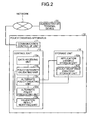
- FIG. 2 is a block diagram of a configuration of the policy creating apparatus according to the first embodiment.
- FIG. 3 is a diagram of a configuration example of a managed system.
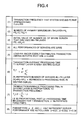
- FIG. 4 is a diagram of a configuration example of a system model.
- FIG. 5 is a diagram of a set-up example of a policy created by the system administrator.
- FIG. 6 is a diagram of an example of an alternate policy.
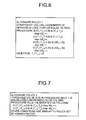
- FIG. 7 is a diagram of another example of an alternate policy.
- FIG. 8 is a diagram of still another example of an alternate policy.
- FIG. 9 is a diagram of still another example of an alternate policy.
- FIG. 10 is a diagram of still another example of an alternate policy.
- FIG. 11 is a diagram of an example of presenting an alternate policy.
- a policy creating apparatus 10 includes a communication control I/F unit 11, a storage unit 12, and a control unit 13. Among the units, the communication control I/F unit 11 controls communication of various pieces of information transmitted between an administrator terminal device 20 and the policy creating apparatus 10.
- the storage unit 12 which stores therein data and a program that are necessary for various processes performed by the control unit 13, includes, as elements closely related to the present invention, an application example storage unit 12a and a policy modifying strategy storage unit 12b.
- the application example storage unit 12a stores therein previous application examples in which it is determined that there is integrity between the system and the policy.
- the application example storage unit 12a is configured so that relationships between the system models and the policies in which it is determined that there is integrity therebetween are stored therein.
- the application example storage unit 12a stores therein information about corresponding relationships between the alternate policies in which a policy integrity validating unit 13b that is described later in detail determines that there is integrity therebetween and that are distributed and applied to the managed system by the system administrator and the managed system. This is because the information is utilized for creating an alternate policy regarding a similar system.
- the policy modifying strategy storage unit 12b stores therein policy modifying strategies for creating an alternate policy.
- the policy modifying strategy storage unit 12b is configured to store therein, as policy modifying strategies, methods such as: a threshold value relaxing method in which any one of or a plurality of the threshold values adapted in the procedure, the constraint, and the objective set up in the policy created by the system administrator are relaxed to create an alternate policy; a constraint deleting method in which any one of or a plurality of the set-up items in the constraint is deleted to create an alternate policy; and a procedure limiting method in which the set-up item in the procedure is limited to create an alternate policy.
- a threshold value relaxing method in which any one of or a plurality of the threshold values adapted in the procedure, the constraint, and the objective set up in the policy created by the system administrator are relaxed to create an alternate policy
- a constraint deleting method in which any one of or a plurality of the set-up items in the constraint is deleted to create an alternate policy
- the control unit 13 has an internal memory in which a program that prescribes a predetermined control program and various processing procedures and necessary data are stored, and performs various processes using the program and the necessary data.
- the control unit 13 includes, as elements closely related to the present invention, a data receiving unit 13a, the policy integrity validating unit 13b, an alternate policy creating unit 13c, an alternate policy presenting unit 13d, and a validation result notifying unit 13e.
- the data receiving unit 13a receives from the administrator terminal device 20, via a network 1, the policy created by the system administrator and the system model obtained by modeling the managed system.
- the system model is created in such a manner that, for example, characteristics of a managed system that is constituted of a main system and a spare system is measured (see FIG. 3 ) by using a benchmark, and the system administrator models the managed system by defining the managed system by using the information obtained by the measurement (see FIG. 4 ).
- a procedure to control operation performed by the managed system, a constraint to be observed by the managed system in operation, an objective to be achieved by the managed system are set up in the policy created by the system administrator (see FIG. 5 ).
- the data receiving unit 13a delivers the policy created by the system administrator and the system model to the policy integrity validating unit 13b.
- the policy integrity validating unit 13b performs operations such as validating integrity between the policy created by the system administrator and the system model obtained by modeling the managed system.
- the policy integrity validating unit 13b validates integrity between the policy and the system model with a general model inspecting method (see, for example, E. M. Clarke, O. Grumberg, and D. A. Peled, Model Checking, The MIT Press, 1999.).
- the policy integrity validating unit 13b receives, from the data receiving unit 13a, the policy created by the system administrator and the system model, and then, validates if the system model can reach the objective set up in the policy without violating the constraint set up in the policy when the system model is operated according to the procedure set up in the policy.
- the policy integrity validating unit 13b determines that there is integrity between the policy and the system model when the system model can reach the objective set up in the policy without violating the constraint set up in the policy by following the procedure set up in the policy in any state that the system model can reach from the initial state. If it is determined that there is integrity between the policy created by the system administrator and the system model, the policy integrity validating unit 13b delivers the validation result to the validation result notifying unit 13e that is described later in detail.
- the policy integrity validating unit 13b determines that there is no integrity between the policy created by the system administrator and the system model in a situation such as when the system model violates the constraint set up in the policy or can not reach the objective set up therein when the system model is operated according to the procedure set up in the policy, and when the system model results in a livelock in which operation performed by the system is never terminated and ends up in an infinite loop when the system model is operated according to the procedure set up in the policy.
- the policy integrity validating unit 13b delivers an alternate policy creating instruction to the alternate policy creating unit 13c.
- the policy integrity validating unit 13b validates integrity between the alternate policy and the system model. As a result of validation, if the policy integrity validating unit 13b determines that there is integrity between the alternate policy and the system model, the policy integrity validating unit 13b delivers the alternate policy to the alternate policy presenting unit 13d that is described later in detail. On the other hand, if the policy integrity validating unit 13b determines that there is no integrity between the alternate policy and the system model, the policy integrity validating unit 13b again delivers the alternate policy creating instruction to the alternate policy creating unit 13c.
- the alternate policy creating unit 13c creates an alternate policy that replaces the policy created by the system administrator upon receiving the alternate policy creating instruction from the policy integrity validating unit 13b.
- the alternate policy creating unit 13c refers to the application examples stored in the application example storage unit 12a, and if there is a policy that corresponds to the managed system modeled as the system model, the alternate policy creating unit 13c adapts the corresponding policy as an alternate policy 1 (see FIG. 6 ).
- the alternate policy creating unit 13c modifies any one of or a plurality of the procedure, the constraint, and the objective set up in the policy created by the system administrator according to a policy modifying strategy stored in the policy modifying strategy storage unit 12b to create an alternate policy.
- the alternate policy creating unit 13c creates: an alternate policy 2 (see FIG. 7 ) in which the threshold value adapted in a procedure rule 1 set up in the policy created by the system administrator (see FIG. 5 ) is 50% relaxed; an alternate policy 3 (see FIG. 8 ) in which the threshold value adapted in a procedure rule 2 is 50% relaxed; an alternate policy 4 (see FIG. 9 ) in which the threshold value adapted in the constraint is 50% relaxed and is rounded off; and an alternate policy 5 (see FIG. 10 ) in which the objective threshold value is 50% relaxed.
- the alternate policy creating unit 13c delivers the alternate policy created thereby to the policy integrity validating unit 13b.
- Processes from the validating process in which integrity between the alternate policy and the managed system is validated by the policy integrity validating unit 13b to the creating process in which the alternate policy is created by the alternate policy creating unit 13c are repeated until the policy integrity validating unit 13b determines that there is integrity between the alternate policy and the system model.
- the alternate policy presenting unit 13d delivers the alternate policy received from the policy integrity validating unit 13b to the administrator terminal device 20, and thus, presents the alternate policy to the system administrator.
- the alternate policy presenting unit 13d may present the alternate policies to the system administrator in a ranked manner (see FIG. 11 ). For example, the alternate policies are ranked so that alternate policies with less modifications made to the procedure, the constraint, and the objective set up in the policies are ranked higher in recommended priority.
- the alternate policies may be ranked so that an alternate policy in which the constraint is modified is ranked higher in recommended priority than an alternate policy in which the objective is modified and an alternate policy in which the procedure is modified is ranked higher in recommended priority than an alternate policy in which the constraint is modified.
- the alternate policies may be ranked so that an alternate policy in which items set up in the procedure, the constraint, and the objective are deleted is ranked lower than an alternate policy in which items set up therein are not deleted or so that an alternate policy that is stored in the application example storage unit 12a as an application example is ranked highest.
- the system administrator can appropriately select a ranking method of the alternate policies.
- the validation result notifying unit 13e receives the validation result from the policy integrity validating unit 13b, and sends, to the administrator terminal device 20, a notification that there is integrity between the policy created by the system administrator and the managed system. Thus, the validation result notifying unit 13e notifies the system administrator.
- the policy creating apparatus 10 can be embodied by implementing the various functions described above in an information processing device such as a known personal computer and a known workstation.
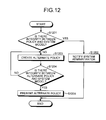
- FIG. 12 is a flowchart of the operation of the policy creating apparatus according to the first embodiment.
- the policy integrity validating unit 13b validates integrity between the policy created by the system administrator and the system model upon receiving, from the data receiving unit 13a, the policy created by the system administrator and the system model (Step S1201). More specifically, the policy integrity validating unit 13b validates if the system model can reach the objective set in the policy without violating the constraint set in the policy when the system model is operated according to the procedure set in the policy upon receiving, from the data receiving unit 13a, the policy created by the system administrator and the system model.
- the policy integrity validating unit 13b determines that there is integrity between the policy and the system model when the system model can reach the objective set up in the policy without violating the constraint set up in the policy by following the procedure set up in the policy in any state that the system model can reach from the initial state (No at Step S1201), and delivers the validation result to the validation result notifying unit 13e.
- the validation result notifying unit 13e receives the validation result from the policy integrity validating unit 13b, and sends, to the administrator terminal device 20, a notification that there is integrity between the policy created by the system administrator and the system model. Thus, the validation result notifying unit 13e notifies the system administrator (Step S1202).
- the policy integrity validating unit 13b determines that there is no integrity (No at Step S1201) between the policy created by the system administrator and the system model in a situation such as when the system model violates the constraint set up in the policy or can not reach the objective set up therein when the system model is operated according to the procedure set up in the policy, and when the system model results in a livelock in which operation performed by the system is never terminated and ends up in an infinite loop when the system model is operated according to the procedure set up in the policy. Then, the policy integrity validating unit 13b delivers an alternate policy creating instruction to the alternate policy creating unit 13c.
- the alternate policy creating unit 13c creates an alternate policy that replaces the policy created by the system administrator (Step S1203).
- the alternate policy creating unit 13c refers to the application examples stored in the application example storage unit 12a, and if there is a policy that corresponds to the managed system modeled as the system model, the alternate policy creating unit 13c adapts the corresponding policy as an alternate policy 1 (see FIG. 6 ).
- the alternate policy creating unit 13c modifies any one of or a plurality of the procedure, the constraint, and the objective set up in the policy created by the system administrator according to a policy modifying strategy stored in the policy modifying strategy storage unit 12b to create an alternate policy.
- the alternate policy creating unit 13c creates: the alternate policy 2 (see FIG. 7 ) in which the threshold value adapted in the procedure rule 1 set up in the policy created by the system administrator (see FIG. 5 ) is 50% relaxed; the alternate policy 3 (see FIG. 8 ) in which the threshold value adapted in the procedure rule 2 is 50% relaxed; the alternate policy 4 (see FIG. 9 ) in which the threshold value adapted in the constraint is 50% relaxed and is rounded off; and the alternate policy 5 (see FIG. 10 ) in which the objective threshold value is 50% relaxed.
- the alternate policy creating unit 13c delivers the created alternate policy created to the policy integrity validating unit 13b.
- the policy integrity validating unit 13b Upon receiving the alternate policy from the alternate policy creating unit 13c the policy integrity validating unit 13b validates integrity between the alternate policy and the managed system (Step S1204). As a result of the validation, if the policy integrity validating unit 13b determines that there is integrity between the alternate policy and the system model (Yes at Step S1204), the alternate policy is delivered to the alternate policy presenting unit 13d. On the other hand, if the policy integrity validating unit 13b determines that there is no integrity between the alternate policy and the system model (No at Step S1204), the policy integrity validating unit 13b again delivers the alternate policy creating instruction to the alternate policy creating unit 13c.
- Processes from the validating process in which integrity between the alternate policy and the system model is validated by the policy integrity validating unit 13b to the creating process in which the alternate policy is created by the alternate policy creating unit 13c are repeated until the policy integrity validating unit 13b determines that there is integrity between the alternate policy and the system model.
- the alternate policy presenting unit 13d presents the alternate policy to the system administrator (Step S1205).
- the alternate policy presenting unit 13d may present the alternate policies to the system administrator in a ranked manner (see FIG. 11 ).
- integrity between the administrator created policy and the system model is validated after receiving the administrator created policy created by a system administrator and the system model obtained by modeling characteristics of the managed system. If it is determined that there is no integrity between the administrator created policy and the system model, an alternate policy that replaces the administrator created policy is created. After revalidating integrity between the alternate policy and the system model, if it is determined that there is integrity between the alternate policy and the system model, the alternate policy is presented to the system administrator. Therefore, integrity between the system and the policy can be validated without using a test scenario. If no integrity is detected between the policy created by the administrator and the system, an alternate policy having integrity between the alternate policy and the system can be automatically created. Thus, a modified policy can be obtained without the need for substantial time and effort. The system administrator can create a new policy with minimal time and effort by using the alternate policy presented to the system administrator as a reference.
- application examples in which it is determined that there is integrity between the system and the policy are stored in the policy creating apparatus. If it is determined that there is no integrity between the administrator created policy and the system model, the application examples stored therein are referred to. If there is a policy that corresponds to the system model, the corresponding policy is adapted as an alternate policy. Thus, the most appropriate policy can be adapted with reference to the previous application examples.
- the policy includes at least the procedure to control operation performed by the managed system, the constraint to be observed by the managed system in operation, and the objective to be achieved by the managed system, and any one of or a plurality of the procedure, the constraint, and the objective that are created by the system administrator are modified to create an alternate policy. Therefore, an alternate policy in which a minute condition is modified can be created.
- any one of or a plurality of the threshold values adapted in the procedure, the constraint, and the objective that are set up as the policy are relaxed to create an alternate policy. Therefore, the alternate policy can be created with simple operation.
- any one of or a plurality of the set-up items in the constraint set as the policy is deleted to create an alternate policy. Therefore, the alternate policy with which the system does not reach a constraint violation state can be created.
- the set-up item in the procedure set up as the policy is limited to create an alternate policy. Therefore, the alternate policy with which the system does not reach a constraint violation state can be created without modifying the constraint.
- the alternate policies when a plurality of alternate policies is created, the alternate policies are ranked in ascending order of the number of modifications made to the procedure, the constraint, and the objective, and are presented. Therefore, the alternate policies corresponding to the system can be presented to the system administrator in a ranked manner.
- the system administrator if it is determined that there is integrity between the administrator created policy and the system model, the system administrator is notified of the integrity. Therefore, the system administrator can recognize that there is integrity between the policy created by the system administrator and the system.
- the present invention is not so limited.
- the policy creating apparatus 10 may be configured so that the system administrator is notified that an alternate policy cannot be created when the number of times the policy integrity validating unit 13b determines that there is no integrity between the alternate policy and the system model reaches a predetermined value.
- descriptions are sequentially given of a configuration of a policy creating apparatus according to the second embodiment and the operation thereof followed by a description of the effect thereof.
- a configuration of the policy creating apparatus according to the second embodiment is described in detail below.
- the configuration of the policy creating apparatus according to the second embodiment is similar to a configuration of the policy creating apparatus according to the first embodiment.
- the policy creating apparatus according to the second embodiment is, however, different from that in the first embodiment in the points described below.
- the policy integrity validating unit 13b validates integrity between an alternate policy and the system model upon receiving the alternate policy from the alternate policy creating unit 13c. If the policy integrity validating unit 13b determines that there is no integrity therebetween, the policy integrity validating unit 13b determines if the number of times the policy integrity validating unit 13b determines that there is no integrity therebetween reaches a predetermined value. As a result of the determination, if the policy integrity validating unit 13b determines that the number of times the policy integrity validating unit 13b determines that there is no integrity therebetween reaches the predetermined value, the policy integrity validating unit 13b sends the determination result to the validation result notifying unit 13e. On the other hand, as a result of determination, if the number does not reach the predetermined value, the policy integrity validating unit 13b again sends an alternate policy creating instruction to the alternate policy creating unit 13c.
- the validation result notifying unit 13e receives the determination result from the policy integrity validating unit 13b, and sends, to the administrator terminal device 20, a notification that an alternate policy cannot be created. Thus, the validation result notifying unit 13e notifies the system administrator.
- FIG. 13 is a flowchart of the operation of the policy creating apparatus according to the second embodiment. According to the second embodiment, the policy creating apparatus operates in a different manner in the points described below.
- the policy integrity validating unit 13b Upon receiving an alternate policy from the alternate policy creating unit 13c, the policy integrity validating unit 13b validates integrity between the alternate policy and the system model (Step S1304). If the policy integrity validating unit 13b determines that there is integrity between the alternate policy and the system model (Yes at Step S1304), as described in the first embodiment, the policy integrity validating unit 13b sends the alternate policy to the alternate policy presenting unit 13d that is described later in detail.
- the policy integrity validating unit 13b determines if the number of times the policy integrity validating unit 13b determines that there is no integrity therebetween reaches the predetermined value (Step S1306). As a result of the determination, if the number reaches the predetermined value (Yes at Step S1306), the policy integrity validating unit 13b sends the determination result to the validation result notifying unit 13e.
- the policy integrity validating unit 13b again sends an alternate policy creating instruction to the alternate policy creating unit 13c.
- the validation result notifying unit 13e receives the determination result from the policy integrity validating unit 13b, and sends to the administrator terminal device 20 a notification that an alternate policy cannot be created. Thus, the validation result notifying unit 13e notifies the system administrator (Step S1302).
- each time when it is determined that there is no integrity between the alternate policy and the system model a new alternate policy that replaces the alternate policy is created.
- integrity between the alternate policy and the system model is receiving unit (13a)d.
- the system administrator is notified that an alternate policy cannot be created. Therefore, the system administrator can be provided with an opportunity to review if there is any deficiency in, for example, the first created policy.
- the constituent elements of the policy creating apparatus depicted in FIG. 2 are functionally conceptual, and need not be physically configured as illustrated. In other words, the specific mode of dispersion and integration of the constituent elements of the policy creating apparatus is not limited to the ones illustrated in the drawings.
- the constituent elements of the policy creating apparatus may be divided or integrated either functionally or physically based on various types of loads or use conditions.
- the alternate policy creating unit 13c and the alternate policy presenting unit 13d may be integrated. All or some of the processing functions performed by the policy creating apparatus may be implemented by a CPU or a program that is analyzed and executed by the CPU, or by a wired-logic hardware.
- FIG. 14 is a diagram of a computer that executes the policy creating program.
- a computer 30 includes a communication control I/F unit 31, an HDD 32, a RAM 33, a ROM 34, and a CPU 35, which are connected to each other via a bus 40.
- the communication control I/F unit 31 corresponds to the communication control I/F unit 11 depicted in FIG. 2 .
- the policy creating program realizing the same function as the policy creating apparatus described in the above embodiments is stored in the ROM 34 in advance. That is, as depicted in FIG. 14 , a data receiving program 34a, a policy integrity validating program 34b, an alternate policy creating program 34c, an alternate policy presenting program 34d, and a validation result notifying program 34e are stored in the ROM 34 in advance.
- the programs 34a, 34b, 34c, 34d, and 34e may be appropriately divided or integrated, as with the constituent elements of the policy creating apparatus 10 depicted in FIG. 2 .
- the ROM 34 may be a nonvolatile "RAM".
- the CPU 35 reads the programs 34a, 34b, 34c, 34d, and 34e from the ROM 34 and executes the programs, and thus, as depicted in FIG. 14 , the programs 34a, 34b, 34c, 34d, and 34e function as a data receiving process 35a, a policy integrity validating process 35b, an alternate policy creating process 35c, an alternate policy presenting process 35d, and a validation result notifying process 35e, respectively.
- the processes 35a, 35b, 35c, 35d, and 35e correspond respectively to the data receiving unit 13a, the policy integrity validating unit 13b, the alternate policy creating unit 13c, the alternate policy presenting unit 13d, and the validation result notifying unit 13e of the policy creating apparatus 10 depicted in FIG. 2 .
- the HDD 32 includes an application example data table 32a and a modifying strategy data table 32b.
- the application example data table 32a and the modifying strategy data table 32b correspond respectively to the application example storage unit 12a and the policy modifying strategy storage unit 12b depicted in FIG. 2 .
- the CPU 35 reads application example data 33a and modifying strategy data 33b respectively from the application example data table 32a and the modifying strategy data table 32b, and stores the data 33a and 33b in the RAM 33. Then, the CPU 35 performs operation according to the application example data 33a and the modifying strategy data 33b stored in the RAM 33.
- the programs 34a, 34b, 34c, 34d, and 34e are not necessarily stored in the ROM 34 in advance.
- the programs 34a, 34b, 34c, 34d, and 34e may be stored in a "portable physical medium", such as flexible disk (FD), CD-ROM, DVD disk, magneto optical disk, and IC card, connectable to the computer 30 or in a "fixed physical medium” such as HDD provided inside or outside the computer 30.
- the programs may be stored in "another computer” connected to the computer 30 via a public line, the Internet, LAN, WAN, and the like, so that the computer 30 can download the programs therefrom to execute the programs.
- the policy creating apparatus, the policy creating method, and the policy creating program according to the present invention are useful for creating a policy applied to a managed system to control autonomous operation in the managed system. More particularly, integrity between the system and the policy can be validated without using a test scenario, and thus, the policy creating apparatus, the policy creating method, and the policy creating program are suitable for obtaining a modified policy without the need for substantial time and effort.
Landscapes
- Engineering & Computer Science (AREA)
- Theoretical Computer Science (AREA)
- Computer Security & Cryptography (AREA)
- Bioethics (AREA)
- General Health & Medical Sciences (AREA)
- Computer Hardware Design (AREA)
- Health & Medical Sciences (AREA)
- Software Systems (AREA)
- Physics & Mathematics (AREA)
- General Engineering & Computer Science (AREA)
- General Physics & Mathematics (AREA)
- Automation & Control Theory (AREA)
- Data Exchanges In Wide-Area Networks (AREA)
- Storage Device Security (AREA)
- Debugging And Monitoring (AREA)
Abstract
A policy integrity validating unit validates whether a system model can achieve an objective set up in a policy without violating a constraint set up in the policy when a system model is operated according to a procedure set up in the policy. When the policy integrity validating unit determines that there is no integrity between a policy created by a system administrator and the system model, an alternate policy creating unit creates an alternate policy that replaces the policy created by the system administrator. Upon receipt of the alternate policy, the policy integrity validating unit validates integrity between the alternate policy and the system model. When the policy integrity validating unit determines that there is integrity between the alternate policy and the system model, a policy creating apparatus presents the alternate policy to the system administrator.
Description
- The present invention relates to a policy creating apparatus that creates a policy applied to a managed system to control autonomous operation in the managed system, and a policy creating method and a policy creating program that correspond to the policy creating apparatus.
- In recent years, studies on an autonomous system are under progress to control an increasingly complex information system and to achieve stable operation thereof. A policy-based autonomous system has received attention as a core technology thereof. To explain briefly, in the policy-based system, a constraint that the system needs to satisfy or an executive operation (procedure) is described as a policy according to a service level objective (SLO) and the like, and then, the policy is provided to the system. The system to which the policy is provided autonomously interprets the policy and autonomously controls resources and the like depending on situations.
- In such an autonomous system, whether the policy operates properly in the system, that is, integrity between the policy and the system is required to be validated. For example,
Patent Document 1 discloses a technology in which a test scenario prepared by a system administrator is applied to an autonomous system and whether the policy properly operates in the autonomous system is validated by utilizing a simulation result of the autonomous system operated according to the test scenario. - If no integrity is detected between the policy and the system, a system administrator devises a method for modifying the policy to prevent a system failure by modifying the policy.
- Patent Document 1: Japanese Laid-open Patent Publication No.
2005-196601 - In the conventional technology described above, however, there has been a problem that sometimes integrity between the policy and the system cannot be validated and to modify such a policy requires substantial time and effort.
- In other words, in the conventional technology, there has been a problem that if the autonomous system does not operate according to the test scenario in the first place, integrity between the policy and the system cannot be validated although integrity of the policy can be validated if the autonomous system operates according to a test scenario and a simulation result can be thus obtained.
- Further, in validation utilizing the simulation result, there has been a problem that no integrity between the policy and the system that is very unlikely to manifest may be missed out.
- There also has been a problem that substantial time and effort are required because the system administrator is obliged to modify the policy through trail and error each time no integrity is detected between the policy and the system.
- Accordingly, to resolve the problems of the conventional technology, it is an object of the present invention to provide a policy creating apparatus, a policy creating method, and a policy creating program by which integrity between the system and the policy can be validated without using a test scenario and by which a modified policy can be obtained without the need for substantial time and effort.
- To overcome the problems and achieve the object mentioned above, according to the invention set forth in
claim 1, a policy creating apparatus that creates a policy applied to a managed system to control autonomous operation of the managed system, includes: a policy receiving unit that receives an administrator created policy created by a system administrator; a model receiving unit that receives a system model obtained by modeling characteristics of the managed system; a policy validating unit that validates integrity between the administrator created policy received by the policy receiving unit and the system model received by the model receiving unit; an alternate policy creating unit that creates an alternate policy that replaces the administrator created policy when the policy validating unit determines that there is no integrity between the administrator created policy and the system model; a policy revalidating unit that revalidates integrity between the alternate policy created by the alternate policy creating unit and the system model; and an alternate policy presenting unit that presents the alternate policy to the system administrator when the policy revalidating unit determines that there is integrity between the alternate policy and the system model. - According to the invention set forth in
claim 2, in the above invention, the policy creating apparatus further includes an application example storage unit that stores therein an application example in which it is determined that there is integrity between a system and a policy. The alternate policy creating unit refers to the application example stored in the application example storage unit when the policy validating unit determines that there is no integrity between the administrator created policy and the system model, and, if there is a corresponding policy that corresponds to the system model, adapts the corresponding policy as the alternate policy. - According to the invention set forth in
claim 3, in the above invention, the administrator created policy includes at least a procedure to control operation of the managed system, a constraint to be observed by the managed system in operation, and an objective to be achieved by the managed system. The alternate policy creating unit modifies at least one of the procedure, the constraint, and the objective in the administrator created policy to create the alternate policy. - According to the invention set forth in
claim 4, in the above invention, the alternate policy creating unit relaxes at least one of threshold values adapted in the procedure, the constraint, and the objective to create the alternate policy. - According to the invention set forth in
claim 5, in the above invention, the alternate policy creating unit deletes at least one of set-up items in the constraint to create the alternate policy. - According to the invention set forth in
claim 6, in the above invention, the alternate policy creating unit limits a set-up item in the procedure to create the alternate policy. - According to the invention set forth in
claim 7, in the above invention, when the alternate policy creating unit creates a plurality of alternate policies, the alternate policy presenting unit ranks the alternate policies in ascending order of number of modifications in the procedure, the constraint, and the objective, and presents the alternate policies. - According to the invention set forth in
claim 8, in the above invention, the policy creating apparatus further includes a notifying unit that notifies, when the policy validating unit determines that there is integrity between the administrator created policy and the system model, the system administrator of the integrity. - According to the invention set forth in claim 9, in the above invention, each time the policy revalidating unit determines that there is no integrity between an alternate policy and the system model, the alternate policy creating unit creates a new alternate policy that replaces the alternate policy. Each time the alternate policy creating unit creates a new alternate policy, the policy revalidating unit revalidates integrity between the new alternate policy and the system model. When the policy revalidating unit has determined that there is no integrity between the new alternate policy and the system model predetermined times, the notifying unit notifies the system administrator that the alternate policy cannot be created.
- According to the invention set forth in
claim 10, a policy creating method for creating a policy applied to a managed system to control autonomous operation of the managed system, includes: receiving an administrator created policy created by a system administrator; receiving a system model obtained by modeling characteristics of the managed system; validating integrity between the administrator created policy and the system model; creating an alternate policy that replaces the administrator created policy when it is determined that there is no integrity between the administrator created policy and the system model at the validating; revalidating integrity between the alternate policy created at the creating and the system model; and presenting the alternate policy to the system administrator when it is determined that there is integrity between the alternate policy and the system model at the revalidating. - According to the invention set forth in
claim 11, a policy creating program causes a computer to create a policy applied to a managed system to control autonomous operation of the managed system. The policy creating program causes the computer to perform: receiving an administrator created policy created by a system administrator; receiving a system model obtained by modeling characteristics of the managed system; validating integrity between the administrator created policy and the system model; creating an alternate policy that replaces the administrator created policy when it is determined that there is no integrity between the administrator created policy and the system model at the validating; revalidating integrity between the alternate policy created at the creating and the system model; and presenting the alternate policy to the system administrator when it is determined that there is integrity between the alternate policy and the system model at the revalidating. - According to the invention set forth in
claim 12, in the above invention, the policy creating program further causing the computer to perform storing, in a storage unit, an application example in which it is determined that there is integrity between a system and a policy. The creating includes referring to the application example stored in the storage unit when it is determined that there is no integrity between the administrator created policy and the system model at the validating, and, if there is a corresponding policy that corresponds to the system model, adapting the corresponding policy as the alternate policy. - According to the invention set forth in
claim 13, in the above invention, the administrator created policy includes at least a procedure to control operation of the managed system, a constraint to be observed by the managed system in operation, and an objective to be achieved by the managed system. The creating includes modifying at least one of the procedure, the constraint, and the objective in the administrator created policy to create the alternate policy. - According to the invention set forth in claim 14, in the above invention, the creating includes relaxing at least one of threshold values adapted in the procedure, the constraint, and the objective to create the alternate policy.
- According to the invention set forth in claim 15, in the above invention, the creating includes deleting at least one of set-up items in the constraint to create the alternate policy.
- According to the invention set forth in claim 16, in the above invention, the creating includes limiting a set-up item in the procedure to create the alternate policy.
- According to the invention set forth in claim 17, in the above invention, the presenting includes, when a plurality of alternate policies are created at the creating, ranking the alternate policies in ascending order of number of modifications in the procedure, the constraint, and the objective, and presenting the alternate policies.
- According to the invention set forth in claim 18, in the above invention, the policy creating program further causing the computer to perform notifying, when it is determined that there is integrity between the administrator created policy and the system model at the validating, the system administrator of the integrity.
- According to the invention set forth in claim 19, in the above invention, the creating includes creating, each time it is determined that there is no integrity between an alternate policy and the system model at the revalidating, a new alternate policy that replaces the alternate policy. The revalidating includes revalidating, each time a new alternate policy is created at the creating, integrity between the new alternate policy and the system model. The notifying includes notifying, when it is determined that there is no integrity between the new alternate policy and the system model predetermined times at the revalidating, the system administrator that the alternate policy cannot be created.
- According to the present invention, after receiving an administrator created policy created by a system administrator and a system model obtained by modeling characteristics of a managed system, integrity between the administrator created policy and the system model is validated. If it is determined that there is no integrity between the administrator created policy and the system model, an alternate policy is created to replace the administrator created policy. After revalidating integrity between the alternate policy and the system model, if it is determined that there is integrity between the alternate policy and the system model, the alternate policy is presented to the system administrator. Therefore, integrity between the system and the policy can be validated without using a test scenario. If no integrity is detected between a policy created by the administrator and the system, an alternate policy having integrity with the system is automatically created. Thus, a modified policy can be obtained without the need for substantial time and effort. The system administrator can use the alternate policy presented to the system administrator as a reference, and thus, can create a new policy with minimal time and effort.
- According to the present invention, application examples in which it is determined that there is integrity between a system and a policy are stored in the policy creating apparatus. If it is determined that there is no integrity between the administrator created policy and the system model, the application examples stored therein are referred to. If there is a policy that corresponds to the system model, the policy that corresponds thereto is adapted as an alternate policy. Thus, the most appropriate policy can be adapted with reference to the previous application examples.
- According to the present invention, a policy includes at least a procedure to control the operation performed by the managed system, a constraint to be observed by the managed system in operation, and an objective to be achieved by the managed system. At least one of the procedure, the constraint, and the objective that are created by the system administrator are modified to create an alternate policy. Therefore, an alternate policy in which a minute condition is modified can be created.
- According to the present invention, at least one of threshold values adapted in the procedure, the constraint, and the objective that are set up as a policy are relaxed to create an alternate policy. Therefore, an alternate policy can be created with simple operation.
- According to the present invention, at least one of the set-up items in a constraint set up as a policy is deleted to create an alternate policy. Therefore, an alternate policy with which a system does not reach a constraint violation state can be created.
- According to the present invention, a set-up item in a procedure set up as a policy is limited to create an alternate policy. Therefore, an alternate policy with which a system does not reach a constraint violation state can be created without modifying a constraint.
- According to the present invention, if a plurality of alternate policies is created, the alternate policies are ranked in ascending order of the number of modifications made to the procedure, the constraint, and the objective, and are presented. Therefore, the alternate policies corresponding to the system can be presented to the system administrator in a ranked manner.
- According to the present invention, if it is determined that there is integrity between the administrator created policy and the system model, the system administrator is notified of the integrity. Therefore, the system administrator can recognize that there is integrity between the policy created by the system administrator and the system.
- According to the present invention, a new alternate policy that replaces the alternate policy is created each time it is determined that there is no integrity between the alternate policy and the system model. The system model is revalidated each time the new alternate policy is created. The system administrator is notified that an alternate policy cannot be created when the number of times it is determined that there is no integrity between the alternate policy and the system model reaches a predetermined number. Therefore, for example, the system administrator can be provided with an opportunity to review if there is any deficiency in the policy created first.
-
- [
FIG. 1] FIG. 1 is a diagram for explaining an overview and a feature of a policy creating apparatus according to a first embodiment of the present invention. - [
FIG. 2] FIG. 2 is a block diagram of a configuration of the policy creating apparatus according to the first embodiment. - [
FIG. 3] FIG. 3 is a diagram of a configuration example of a managed system. - [
FIG. 4] FIG. 4 is a diagram of a configuration example of a system model. - [
FIG. 5] FIG. 5 is a diagram of a set-up example of a policy created by a system administrator. - [
FIG. 6] FIG. 6 is a diagram of an example of an alternate policy. - [
FIG. 7] FIG. 7 is a diagram of another example of an alternate policy. - [
FIG. 8] FIG. 8 is a diagram of still another example of an alternate policy. - [
FIG. 9] FIG. 9 is a diagram of still another example of an alternate policy. - [
FIG. 10] FIG. 10 is a diagram of still another example of an alternate policy. - [
FIG. 11] FIG. 11 is a diagram of an example of presenting an alternate policy. - [
FIG. 12] FIG. 12 is a flowchart of the operation of the policy creating apparatus according to the first embodiment. - [
FIG. 13] FIG. 13 is a flowchart of processes performed by a policy creating apparatus according to a second embodiment of the present invention. - [
FIG. 14] FIG. 14 is a diagram for explaining a computer that executes a policy creating program. -
- 1
- network
- 10
- policy creating apparatus
- 11
- communication control I/F unit
- 12
- storage unit
- 12a
- application example storage unit
- 12b
- policy modifying strategy storage unit
- 13
- control unit
- 13a
- data receiving unit
- 13b
- policy integrity validating unit
- 13c
- alternate policy creating unit
- 13d
- alternate policy presenting unit
- 13e
- validation result notifying unit
- 20
- administrator terminal device
- 30
- computer
- 31
- communication control I/F unit
- 32
- hard disk drive (HDD)
- 33
- random access memory (RAM)
- 34
- read only memory (ROM)
- 35
- central processing unit (CPU)
- 40
- bus
- Exemplary embodiments of a policy creating apparatus, a policy creating method, and a policy creating program according to the present invention are described in detail below with reference to the accompanying drawings. First, the policy creating apparatus according to a first embodiment of the present invention is described, and then other embodiments of the present invention are described.
- In the following, an overview and a feature of the policy creating apparatus according to the first embodiment, the configuration and operation thereof, and effect of the first embodiment are described.
- An overview and a feature of the policy creating apparatus according to the first embodiment are described in detail below with reference to
FIG. 1. FIG. 1 is a diagram for explaining an overview and a feature of the policy creating apparatus according to the first embodiment. - Generally, the policy creating apparatus according to the first embodiment creates a policy applied to a system to control autonomous operation in the managed system. A main feature of the policy creating apparatus is, however, that integrity between the system and the policy can be validated without using a test scenario and that a modified policy can be obtained without the need for substantial time and effort.
- To describe the main feature in detail, as depicted in
FIG. 1 , the policy creating apparatus according to the first embodiment receives, from a terminal operated by the system administrator, a policy created by the system administrator and a system model obtained by modeling characteristics of the managed system (see (1) inFIG. 1 ). - A procedure to control operation performed by the managed system, a constraint to be observed by the managed system in operation, and an objective to be achieved by the managed system are set up in the policy created by the system administrator. The system model is created in such a manner that characteristics of the managed system is measured by using a benchmark, and, for example, the system administrator measures models the managed system by defining the managed system by using the information obtained by the measurement.
- Upon receiving the policy created by the system administrator and the system model of the managed system, a policy integrity validating unit of the policy creating apparatus validates integrity between the policy created by the system administrator and the system model. More specifically, the policy integrity validating unit validates if the system model can reach the objective set up in the policy without violating the constraint set up in the policy when the system model is operated according to the procedure set up in the policy.
- The policy integrity validating unit determines that there is integrity between the policy created by the system administrator and the system model when the system model can reach the objective set up in the policy without violating the constraint set up in the policy by operating the system model according to the procedure set up in the policy in any state that the system model can reach from the initial state. When the policy integrity validating unit determines that there is integrity between the policy created by the system administrator and the managed system, the policy integrity validating unit notifies the system administrator of the integrity.
- On the other hand, the policy integrity validating unit determines that there is no integrity between the policy created by the system administrator and the system model in a situation such as when the system model violates the constraint set up in the policy or can not reach the objective set up in the policy when the system model is operated according to the procedure set up in the policy, and when the system model results in a livelock in which operation performed by the system is never terminated and ends up in an infinite loop when the system model is operated according to the procedure set up in the policy. Then, an alternate policy creating unit creates an alternate policy that replaces the policy created by the system administrator (see (2) in
FIG. 1 ). - More specifically, the policy creating apparatus includes, in advance, an application example storage unit that stores therein previous application examples in which it is determined that there is integrity between the system and the policy, and a policy modifying strategy storage unit that stores therein policy modifying strategies that are used to create an alternate policy. The alternate policy creating unit refers to the application examples stored in the application example storage unit and if there is a policy that corresponds to the managed system modeled as the system model, the alternate policy creating unit adapts the policy that corresponds thereto as an alternate policy.
- The alternate policy creating unit creates an alternate policy by modifying any one of or a plurality of the procedure, the constraint, and the objective set up in the policy created by the system administrator according to the policy modifying strategies stored in the policy modifying strategy storage unit. The policy modifying strategies includes: a threshold value relaxing method in which any one of or a plurality of the threshold values adapted in the procedure, the constraint, and the objective set up in the policy created by the system administrator are relaxed to create an alternate policy; a constraint deleting method in which one or a plurality of the set-up items in the constraint is deleted to create an alternate policy; and a procedure limiting method in which the set-up item in the procedure is limited to create an alternate policy.
- After creating an alternate policy, the alternate policy creating unit delivers the created alternate policy to a policy integrity validating unit (see (3) in
FIG. 1 ). The policy integrity validating unit receives the alternate policy, and then, validates integrity between the alternate policy and the system model. If the policy integrity validating unit determines that there is integrity between the alternate policy and the system model, the policy creating apparatus presents the alternate policy to the system administrator (see (4) inFIG. 1 ). - The policy creating apparatus may present the alternate policies in a ranked manner to the system administrator. For example, the alternate policies are ranked so that alternate policies with less modifications made to the procedure, the constraint, and the objective set up in the policy are ranked higher in recommended priority. If there are alternate policies in which the same number of modifications are made, the alternate policies are ranked so that an alternate policy in which the constraint is modified is ranked higher in recommended priority than an alternate policy in which the objective is modified and an alternate policy in which the procedure is modified is ranked higher in recommended priority than an alternate policy in which the constraint is modified.
- If the system administrator receives a plurality of alternate polices presented by the policy creating apparatus via a terminal operated by the system administrator, the system administrator selects one of the alternate policies and approves the alternate policy (see (5) in
FIG. 1 ). The system administrator may distribute and apply the approved alternate policy to the managed system, or may self-create a new policy by referring to the alternate policy. - The policy creating apparatus stores, in the application example storage unit, information about corresponding relationship between each alternate policy in which the policy integrity validating unit has determined that there is integrity and that are distributed and applied to the managed system by the system administrator and the managed system. The information is stored to be later utilized for creating an alternate policy for a similar system.
- Thus, as described in the main feature of the policy creating apparatus according to the first embodiment, the policy creating apparatus can validate integrity between the system and the policies without using a test scenario, and also can obtain a modified policy (that is, an alternate policy) without the need for substantial time and effort.
- A configuration of the policy creating apparatus according to the first embodiment is described in detail below with reference to
FIGS. 2 to 11 .FIG. 2 is a block diagram of a configuration of the policy creating apparatus according to the first embodiment.FIG. 3 is a diagram of a configuration example of a managed system.FIG. 4 is a diagram of a configuration example of a system model.FIG. 5 is a diagram of a set-up example of a policy created by the system administrator.FIG. 6 is a diagram of an example of an alternate policy.FIG. 7 is a diagram of another example of an alternate policy.FIG. 8 is a diagram of still another example of an alternate policy.FIG. 9 is a diagram of still another example of an alternate policy.FIG. 10 is a diagram of still another example of an alternate policy.FIG. 11 is a diagram of an example of presenting an alternate policy. - As depicted in
FIG. 2 , apolicy creating apparatus 10 according to the first embodiment includes a communication control I/F unit 11, astorage unit 12, and acontrol unit 13. Among the units, the communication control I/F unit 11 controls communication of various pieces of information transmitted between anadministrator terminal device 20 and thepolicy creating apparatus 10. - The
storage unit 12, which stores therein data and a program that are necessary for various processes performed by thecontrol unit 13, includes, as elements closely related to the present invention, an applicationexample storage unit 12a and a policy modifyingstrategy storage unit 12b. - Among the two storage units, the application
example storage unit 12a stores therein previous application examples in which it is determined that there is integrity between the system and the policy. For example, the applicationexample storage unit 12a is configured so that relationships between the system models and the policies in which it is determined that there is integrity therebetween are stored therein. The applicationexample storage unit 12a stores therein information about corresponding relationships between the alternate policies in which a policyintegrity validating unit 13b that is described later in detail determines that there is integrity therebetween and that are distributed and applied to the managed system by the system administrator and the managed system. This is because the information is utilized for creating an alternate policy regarding a similar system. - The policy modifying
strategy storage unit 12b stores therein policy modifying strategies for creating an alternate policy. For example, the policy modifyingstrategy storage unit 12b is configured to store therein, as policy modifying strategies, methods such as: a threshold value relaxing method in which any one of or a plurality of the threshold values adapted in the procedure, the constraint, and the objective set up in the policy created by the system administrator are relaxed to create an alternate policy; a constraint deleting method in which any one of or a plurality of the set-up items in the constraint is deleted to create an alternate policy; and a procedure limiting method in which the set-up item in the procedure is limited to create an alternate policy. - The
control unit 13 has an internal memory in which a program that prescribes a predetermined control program and various processing procedures and necessary data are stored, and performs various processes using the program and the necessary data. Thecontrol unit 13 includes, as elements closely related to the present invention, adata receiving unit 13a, the policyintegrity validating unit 13b, an alternatepolicy creating unit 13c, an alternatepolicy presenting unit 13d, and a validationresult notifying unit 13e. - Among the units, the
data receiving unit 13a receives from theadministrator terminal device 20, via anetwork 1, the policy created by the system administrator and the system model obtained by modeling the managed system. - Here, the system model is created in such a manner that, for example, characteristics of a managed system that is constituted of a main system and a spare system is measured (see
FIG. 3 ) by using a benchmark, and the system administrator models the managed system by defining the managed system by using the information obtained by the measurement (seeFIG. 4 ). - A procedure to control operation performed by the managed system, a constraint to be observed by the managed system in operation, an objective to be achieved by the managed system are set up in the policy created by the system administrator (see
FIG. 5 ). - Then, the
data receiving unit 13a delivers the policy created by the system administrator and the system model to the policyintegrity validating unit 13b. - The policy
integrity validating unit 13b performs operations such as validating integrity between the policy created by the system administrator and the system model obtained by modeling the managed system. The policyintegrity validating unit 13b validates integrity between the policy and the system model with a general model inspecting method (see, for example, E. M. Clarke, O. Grumberg, and D. A. Peled, Model Checking, The MIT Press, 1999.). - More specifically, the policy
integrity validating unit 13b receives, from thedata receiving unit 13a, the policy created by the system administrator and the system model, and then, validates if the system model can reach the objective set up in the policy without violating the constraint set up in the policy when the system model is operated according to the procedure set up in the policy. The policyintegrity validating unit 13b determines that there is integrity between the policy and the system model when the system model can reach the objective set up in the policy without violating the constraint set up in the policy by following the procedure set up in the policy in any state that the system model can reach from the initial state. If it is determined that there is integrity between the policy created by the system administrator and the system model, the policyintegrity validating unit 13b delivers the validation result to the validationresult notifying unit 13e that is described later in detail. - On the other hand, the policy
integrity validating unit 13b determines that there is no integrity between the policy created by the system administrator and the system model in a situation such as when the system model violates the constraint set up in the policy or can not reach the objective set up therein when the system model is operated according to the procedure set up in the policy, and when the system model results in a livelock in which operation performed by the system is never terminated and ends up in an infinite loop when the system model is operated according to the procedure set up in the policy. Here, the policyintegrity validating unit 13b delivers an alternate policy creating instruction to the alternatepolicy creating unit 13c. - If the policy
integrity validating unit 13b receives an alternate policy from the alternatepolicy creating unit 13c that is described later in detail, the policyintegrity validating unit 13b validates integrity between the alternate policy and the system model. As a result of validation, if the policyintegrity validating unit 13b determines that there is integrity between the alternate policy and the system model, the policyintegrity validating unit 13b delivers the alternate policy to the alternatepolicy presenting unit 13d that is described later in detail. On the other hand, if the policyintegrity validating unit 13b determines that there is no integrity between the alternate policy and the system model, the policyintegrity validating unit 13b again delivers the alternate policy creating instruction to the alternatepolicy creating unit 13c. - The alternate
policy creating unit 13c creates an alternate policy that replaces the policy created by the system administrator upon receiving the alternate policy creating instruction from the policyintegrity validating unit 13b. - More specifically, the alternate
policy creating unit 13c refers to the application examples stored in the applicationexample storage unit 12a, and if there is a policy that corresponds to the managed system modeled as the system model, the alternatepolicy creating unit 13c adapts the corresponding policy as an alternate policy 1 (seeFIG. 6 ). - The alternate
policy creating unit 13c modifies any one of or a plurality of the procedure, the constraint, and the objective set up in the policy created by the system administrator according to a policy modifying strategy stored in the policy modifyingstrategy storage unit 12b to create an alternate policy. For example, the alternatepolicy creating unit 13c creates: an alternate policy 2 (seeFIG. 7 ) in which the threshold value adapted in aprocedure rule 1 set up in the policy created by the system administrator (seeFIG. 5 ) is 50% relaxed; an alternate policy 3 (seeFIG. 8 ) in which the threshold value adapted in aprocedure rule 2 is 50% relaxed; an alternate policy 4 (seeFIG. 9 ) in which the threshold value adapted in the constraint is 50% relaxed and is rounded off; and an alternate policy 5 (seeFIG. 10 ) in which the objective threshold value is 50% relaxed. - The alternate
policy creating unit 13c delivers the alternate policy created thereby to the policyintegrity validating unit 13b. - Processes from the validating process in which integrity between the alternate policy and the managed system is validated by the policy
integrity validating unit 13b to the creating process in which the alternate policy is created by the alternatepolicy creating unit 13c are repeated until the policyintegrity validating unit 13b determines that there is integrity between the alternate policy and the system model. - The alternate
policy presenting unit 13d delivers the alternate policy received from the policyintegrity validating unit 13b to theadministrator terminal device 20, and thus, presents the alternate policy to the system administrator. The alternatepolicy presenting unit 13d may present the alternate policies to the system administrator in a ranked manner (seeFIG. 11 ). For example, the alternate policies are ranked so that alternate policies with less modifications made to the procedure, the constraint, and the objective set up in the policies are ranked higher in recommended priority. Or if there are alternate policies in which the same number of modifications are made, the alternate policies may be ranked so that an alternate policy in which the constraint is modified is ranked higher in recommended priority than an alternate policy in which the objective is modified and an alternate policy in which the procedure is modified is ranked higher in recommended priority than an alternate policy in which the constraint is modified. Or the alternate policies may be ranked so that an alternate policy in which items set up in the procedure, the constraint, and the objective are deleted is ranked lower than an alternate policy in which items set up therein are not deleted or so that an alternate policy that is stored in the applicationexample storage unit 12a as an application example is ranked highest. The system administrator can appropriately select a ranking method of the alternate policies. - The validation
result notifying unit 13e receives the validation result from the policyintegrity validating unit 13b, and sends, to theadministrator terminal device 20, a notification that there is integrity between the policy created by the system administrator and the managed system. Thus, the validationresult notifying unit 13e notifies the system administrator. - The
policy creating apparatus 10 can be embodied by implementing the various functions described above in an information processing device such as a known personal computer and a known workstation. - The operation of the policy creating apparatus according to the first embodiment is described in detail below with reference to
FIG. 12. FIG. 12 is a flowchart of the operation of the policy creating apparatus according to the first embodiment. - As depicted in
FIG. 12 , the policyintegrity validating unit 13b validates integrity between the policy created by the system administrator and the system model upon receiving, from thedata receiving unit 13a, the policy created by the system administrator and the system model (Step S1201). More specifically, the policyintegrity validating unit 13b validates if the system model can reach the objective set in the policy without violating the constraint set in the policy when the system model is operated according to the procedure set in the policy upon receiving, from thedata receiving unit 13a, the policy created by the system administrator and the system model. - Then, the policy
integrity validating unit 13b determines that there is integrity between the policy and the system model when the system model can reach the objective set up in the policy without violating the constraint set up in the policy by following the procedure set up in the policy in any state that the system model can reach from the initial state (No at Step S1201), and delivers the validation result to the validationresult notifying unit 13e. - The validation
result notifying unit 13e receives the validation result from the policyintegrity validating unit 13b, and sends, to theadministrator terminal device 20, a notification that there is integrity between the policy created by the system administrator and the system model. Thus, the validationresult notifying unit 13e notifies the system administrator (Step S1202). - Returning to the description of Step S1201, the policy
integrity validating unit 13b determines that there is no integrity (No at Step S1201) between the policy created by the system administrator and the system model in a situation such as when the system model violates the constraint set up in the policy or can not reach the objective set up therein when the system model is operated according to the procedure set up in the policy, and when the system model results in a livelock in which operation performed by the system is never terminated and ends up in an infinite loop when the system model is operated according to the procedure set up in the policy. Then, the policyintegrity validating unit 13b delivers an alternate policy creating instruction to the alternatepolicy creating unit 13c. - Then, upon receiving the alternate policy creating instruction from the policy
integrity validating unit 13b the alternatepolicy creating unit 13c creates an alternate policy that replaces the policy created by the system administrator (Step S1203). - More specifically, the alternate
policy creating unit 13c refers to the application examples stored in the applicationexample storage unit 12a, and if there is a policy that corresponds to the managed system modeled as the system model, the alternatepolicy creating unit 13c adapts the corresponding policy as an alternate policy 1 (seeFIG. 6 ). - The alternate
policy creating unit 13c modifies any one of or a plurality of the procedure, the constraint, and the objective set up in the policy created by the system administrator according to a policy modifying strategy stored in the policy modifyingstrategy storage unit 12b to create an alternate policy. For example, the alternatepolicy creating unit 13c creates: the alternate policy 2 (seeFIG. 7 ) in which the threshold value adapted in theprocedure rule 1 set up in the policy created by the system administrator (seeFIG. 5 ) is 50% relaxed; the alternate policy 3 (seeFIG. 8 ) in which the threshold value adapted in theprocedure rule 2 is 50% relaxed; the alternate policy 4 (seeFIG. 9 ) in which the threshold value adapted in the constraint is 50% relaxed and is rounded off; and the alternate policy 5 (seeFIG. 10 ) in which the objective threshold value is 50% relaxed. The alternatepolicy creating unit 13c delivers the created alternate policy created to the policyintegrity validating unit 13b. - Upon receiving the alternate policy from the alternate
policy creating unit 13c the policyintegrity validating unit 13b validates integrity between the alternate policy and the managed system (Step S1204). As a result of the validation, if the policyintegrity validating unit 13b determines that there is integrity between the alternate policy and the system model (Yes at Step S1204), the alternate policy is delivered to the alternatepolicy presenting unit 13d. On the other hand, if the policyintegrity validating unit 13b determines that there is no integrity between the alternate policy and the system model (No at Step S1204), the policyintegrity validating unit 13b again delivers the alternate policy creating instruction to the alternatepolicy creating unit 13c. - Processes from the validating process in which integrity between the alternate policy and the system model is validated by the policy
integrity validating unit 13b to the creating process in which the alternate policy is created by the alternatepolicy creating unit 13c are repeated until the policyintegrity validating unit 13b determines that there is integrity between the alternate policy and the system model. - By delivering the alternate policy received from the policy
integrity validating unit 13b to theadministrator terminal device 20, the alternatepolicy presenting unit 13d presents the alternate policy to the system administrator (Step S1205). The alternatepolicy presenting unit 13d may present the alternate policies to the system administrator in a ranked manner (seeFIG. 11 ). - As described above, according to the first embodiment, integrity between the administrator created policy and the system model is validated after receiving the administrator created policy created by a system administrator and the system model obtained by modeling characteristics of the managed system. If it is determined that there is no integrity between the administrator created policy and the system model, an alternate policy that replaces the administrator created policy is created. After revalidating integrity between the alternate policy and the system model, if it is determined that there is integrity between the alternate policy and the system model, the alternate policy is presented to the system administrator. Therefore, integrity between the system and the policy can be validated without using a test scenario. If no integrity is detected between the policy created by the administrator and the system, an alternate policy having integrity between the alternate policy and the system can be automatically created. Thus, a modified policy can be obtained without the need for substantial time and effort. The system administrator can create a new policy with minimal time and effort by using the alternate policy presented to the system administrator as a reference.
- According to the first embodiment, application examples in which it is determined that there is integrity between the system and the policy are stored in the policy creating apparatus. If it is determined that there is no integrity between the administrator created policy and the system model, the application examples stored therein are referred to. If there is a policy that corresponds to the system model, the corresponding policy is adapted as an alternate policy. Thus, the most appropriate policy can be adapted with reference to the previous application examples.
- According to the first embodiment, the policy includes at least the procedure to control operation performed by the managed system, the constraint to be observed by the managed system in operation, and the objective to be achieved by the managed system, and any one of or a plurality of the procedure, the constraint, and the objective that are created by the system administrator are modified to create an alternate policy. Therefore, an alternate policy in which a minute condition is modified can be created.
- According to the first embodiment, any one of or a plurality of the threshold values adapted in the procedure, the constraint, and the objective that are set up as the policy are relaxed to create an alternate policy. Therefore, the alternate policy can be created with simple operation.
- According to the first embodiment, any one of or a plurality of the set-up items in the constraint set as the policy is deleted to create an alternate policy. Therefore, the alternate policy with which the system does not reach a constraint violation state can be created.
- According to the first embodiment, the set-up item in the procedure set up as the policy is limited to create an alternate policy. Therefore, the alternate policy with which the system does not reach a constraint violation state can be created without modifying the constraint.
- According to the first embodiment, when a plurality of alternate policies is created, the alternate policies are ranked in ascending order of the number of modifications made to the procedure, the constraint, and the objective, and are presented. Therefore, the alternate policies corresponding to the system can be presented to the system administrator in a ranked manner.
- According to the first embodiment, if it is determined that there is integrity between the administrator created policy and the system model, the system administrator is notified of the integrity. Therefore, the system administrator can recognize that there is integrity between the policy created by the system administrator and the system.
- In the first embodiment, an example is described in which processes from the validating process in which integrity between the alternate policy and the system model is validated by the policy
integrity validating unit 13b to the creating process in which the alternate policy is created by the alternatepolicy creating unit 13c are repeated until the policyintegrity validating unit 13b determines that there is integrity between the alternate policy and the system model. However, the present invention is not so limited. Thepolicy creating apparatus 10 may be configured so that the system administrator is notified that an alternate policy cannot be created when the number of times the policyintegrity validating unit 13b determines that there is no integrity between the alternate policy and the system model reaches a predetermined value. In a second embodiment of the present invention, descriptions are sequentially given of a configuration of a policy creating apparatus according to the second embodiment and the operation thereof followed by a description of the effect thereof. - A configuration of the policy creating apparatus according to the second embodiment is described in detail below. The configuration of the policy creating apparatus according to the second embodiment is similar to a configuration of the policy creating apparatus according to the first embodiment. The policy creating apparatus according to the second embodiment is, however, different from that in the first embodiment in the points described below.
- The policy
integrity validating unit 13b validates integrity between an alternate policy and the system model upon receiving the alternate policy from the alternatepolicy creating unit 13c. If the policyintegrity validating unit 13b determines that there is no integrity therebetween, the policyintegrity validating unit 13b determines if the number of times the policyintegrity validating unit 13b determines that there is no integrity therebetween reaches a predetermined value. As a result of the determination, if the policyintegrity validating unit 13b determines that the number of times the policyintegrity validating unit 13b determines that there is no integrity therebetween reaches the predetermined value, the policyintegrity validating unit 13b sends the determination result to the validationresult notifying unit 13e. On the other hand, as a result of determination, if the number does not reach the predetermined value, the policyintegrity validating unit 13b again sends an alternate policy creating instruction to the alternatepolicy creating unit 13c. - The validation
result notifying unit 13e receives the determination result from the policyintegrity validating unit 13b, and sends, to theadministrator terminal device 20, a notification that an alternate policy cannot be created. Thus, the validationresult notifying unit 13e notifies the system administrator. - The operation of the policy creating apparatus according to the second embodiment are described in detail below with reference to
FIG. 13. FIG. 13 is a flowchart of the operation of the policy creating apparatus according to the second embodiment. According to the second embodiment, the policy creating apparatus operates in a different manner in the points described below. - Upon receiving an alternate policy from the alternate
policy creating unit 13c, the policyintegrity validating unit 13b validates integrity between the alternate policy and the system model (Step S1304). If the policyintegrity validating unit 13b determines that there is integrity between the alternate policy and the system model (Yes at Step S1304), as described in the first embodiment, the policyintegrity validating unit 13b sends the alternate policy to the alternatepolicy presenting unit 13d that is described later in detail. - On the other hand, if the policy
integrity validating unit 13b determines that there is no integrity between the alternate policy and the system model (No at Step S1304), the policyintegrity validating unit 13b determines if the number of times the policyintegrity validating unit 13b determines that there is no integrity therebetween reaches the predetermined value (Step S1306). As a result of the determination, if the number reaches the predetermined value (Yes at Step S1306), the policyintegrity validating unit 13b sends the determination result to the validationresult notifying unit 13e. On the other hand, as a result of determination, if the number of times the policyintegrity validating unit 13b determines that there is no integrity therebetween does not reach the predetermined value (No at Step S1306), the policyintegrity validating unit 13b again sends an alternate policy creating instruction to the alternatepolicy creating unit 13c. - The validation
result notifying unit 13e receives the determination result from the policyintegrity validating unit 13b, and sends to the administrator terminal device 20 a notification that an alternate policy cannot be created. Thus, the validationresult notifying unit 13e notifies the system administrator (Step S1302). - As described above, according to the second embodiment, each time when it is determined that there is no integrity between the alternate policy and the system model, a new alternate policy that replaces the alternate policy is created. Each time the new alternate policy is created, integrity between the alternate policy and the system model is receiving unit (13a)d. When the number of times it is determined that there is no integrity between the alternate policy and the system model reaches the predetermined number, the system administrator is notified that an alternate policy cannot be created. Therefore, the system administrator can be provided with an opportunity to review if there is any deficiency in, for example, the first created policy.
- While the first and second embodiments of the present invention are described above, other embodiments or modifications are also possible. In the following, such embodiments or modifications are explained.
- The constituent elements of the policy creating apparatus depicted in
FIG. 2 are functionally conceptual, and need not be physically configured as illustrated. In other words, the specific mode of dispersion and integration of the constituent elements of the policy creating apparatus is not limited to the ones illustrated in the drawings. The constituent elements of the policy creating apparatus, as a whole or in part, may be divided or integrated either functionally or physically based on various types of loads or use conditions. For example, the alternatepolicy creating unit 13c and the alternatepolicy presenting unit 13d may be integrated. All or some of the processing functions performed by the policy creating apparatus may be implemented by a CPU or a program that is analyzed and executed by the CPU, or by a wired-logic hardware. - Various processes described in the above embodiments (for example, see
FIGS. 12 and13 ) can be implemented by executing a program prepared in advance on a computer system such as a personal computer and a workstation. With reference to FIG. 14A, a detailed description is given below of an example of such a computer that executes a policy creating program realizing the same function as previously described in the embodiments.FIG. 14 is a diagram of a computer that executes the policy creating program. - As depicted in
FIG. 14 , as the policy creating apparatus, acomputer 30 includes a communication control I/F unit 31, anHDD 32, aRAM 33, a ROM 34, and aCPU 35, which are connected to each other via abus 40. The communication control I/F unit 31 corresponds to the communication control I/F unit 11 depicted inFIG. 2 . - The policy creating program realizing the same function as the policy creating apparatus described in the above embodiments is stored in the ROM 34 in advance. That is, as depicted in
FIG. 14 , a data receiving program 34a, a policy integrity validating program 34b, an alternatepolicy creating program 34c, an alternatepolicy presenting program 34d, and a validation result notifying program 34e are stored in the ROM 34 in advance. Theprograms policy creating apparatus 10 depicted inFIG. 2 . The ROM 34 may be a nonvolatile "RAM". - The
CPU 35 reads theprograms FIG. 14 , theprograms data receiving process 35a, a policyintegrity validating process 35b, an alternatepolicy creating process 35c, an alternatepolicy presenting process 35d, and a validationresult notifying process 35e, respectively. Theprocesses data receiving unit 13a, the policyintegrity validating unit 13b, the alternatepolicy creating unit 13c, the alternatepolicy presenting unit 13d, and the validationresult notifying unit 13e of thepolicy creating apparatus 10 depicted inFIG. 2 . - As depicted in
FIG. 14 , theHDD 32 includes an application example data table 32a and a modifying strategy data table 32b. The application example data table 32a and the modifying strategy data table 32b correspond respectively to the applicationexample storage unit 12a and the policy modifyingstrategy storage unit 12b depicted inFIG. 2 . TheCPU 35 readsapplication example data 33a and modifyingstrategy data 33b respectively from the application example data table 32a and the modifying strategy data table 32b, and stores thedata RAM 33. Then, theCPU 35 performs operation according to theapplication example data 33a and the modifyingstrategy data 33b stored in theRAM 33. - The
programs programs computer 30 or in a "fixed physical medium" such as HDD provided inside or outside thecomputer 30. Further, the programs may be stored in "another computer" connected to thecomputer 30 via a public line, the Internet, LAN, WAN, and the like, so that thecomputer 30 can download the programs therefrom to execute the programs. - As described above, the policy creating apparatus, the policy creating method, and the policy creating program according to the present invention are useful for creating a policy applied to a managed system to control autonomous operation in the managed system. More particularly, integrity between the system and the policy can be validated without using a test scenario, and thus, the policy creating apparatus, the policy creating method, and the policy creating program are suitable for obtaining a modified policy without the need for substantial time and effort.
Claims (19)
- A policy creating apparatus that creates a policy applied to a managed system to control autonomous operation of the managed system, the policy creating apparatus comprising:a policy receiving unit that receives an administrator created policy created by a system administrator;a model receiving unit that receives a system model obtained by modeling characteristics of the managed system;a policy validating unit that validates integrity between the administrator created policy received by the policy receiving unit and the system model received by the model receiving unit;an alternate policy creating unit that creates an alternate policy that replaces the administrator created policy when the policy validating unit determines that there is no integrity between the administrator created policy and the system model;a policy revalidating unit that revalidates integrity between the alternate policy created by the alternate policy creating unit and the system model; andan alternate policy presenting unit that presents the alternate policy to the system administrator when the policy revalidating unit determines that there is integrity between the alternate policy and the system model.
- The policy creating apparatus according to claim 1, further comprising an application example storage unit that stores therein an application example in which it is determined that there is integrity between a system and a policy, wherein
the alternate policy creating unit refers to the application example stored in the application example storage unit when the policy validating unit determines that there is no integrity between the administrator created policy and the system model, and, if there is a corresponding policy that corresponds to the system model, adapts the corresponding policy as the alternate policy. - The policy creating apparatus according to claim 1, wherein
the administrator created policy includes at least a procedure to control operation of the managed system, a constraint to be observed by the managed system in operation, and an objective to be achieved by the managed system, and
the alternate policy creating unit modifies at least one of the procedure, the constraint, and the objective in the administrator created policy to create the alternate policy. - The policy creating apparatus according to claim 3, wherein the alternate policy creating unit relaxes at least one of threshold values adapted in the procedure, the constraint, and the objective to create the alternate policy.
- The policy creating apparatus according to claim 3, wherein the alternate policy creating unit deletes at least one of set-up items in the constraint to create the alternate policy.
- The policy creating apparatus according to claim 3, wherein the alternate policy creating unit limits a set-up item in the procedure to create the alternate policy.
- The policy creating apparatus according to claim 3, wherein when the alternate policy creating unit creates a plurality of alternate policies, the alternate policy presenting unit ranks the alternate policies in ascending order of number of modifications in the procedure, the constraint, and the objective, and presents the alternate policies.
- The policy creating apparatus according to claim 1, further comprising a notifying unit that notifies, when the policy validating unit determines that there is integrity between the administrator created policy and the system model, the system administrator of the integrity.
- The policy creating apparatus according to claim 8, wherein
each time the policy revalidating unit determines that there is no integrity between an alternate policy and the system model, the alternate policy creating unit creates a new alternate policy that replaces the alternate policy,
each time the alternate policy creating unit creates a new alternate policy, the policy revalidating unit revalidates integrity between the new alternate policy and the system model, and
when the policy revalidating unit has determined that there is no integrity between the new alternate policy and the system model predetermined times, the notifying unit notifies the system administrator that the alternate policy cannot be created. - A policy creating method for creating a policy applied to a managed system to control autonomous operation of the managed system, the policy creating method comprising:receiving an administrator created policy created by a system administrator;receiving a system model obtained by modeling characteristics of the managed system;validating integrity between the administrator created policy and the system model;creating an alternate policy that replaces the administrator created policy when it is determined that there is no integrity between the administrator created policy and the system model at the validating;revalidating integrity between the alternate policy created at the creating and the system model; andpresenting the alternate policy to the system administrator when it is determined that there is integrity between the alternate policy and the system model at the revalidating.
- A policy creating program that causes a computer to create a policy applied to a managed system to control autonomous operation of the managed system, the policy creating program causes the computer to perform:receiving an administrator created policy created by a system administrator;receiving a system model obtained by modeling characteristics of the managed system;validating integrity between the administrator created policy and the system model;creating an alternate policy that replaces the administrator created policy when it is determined that there is no integrity between the administrator created policy and the system model at the validating;revalidating integrity between the alternate policy created at the creating and the system model; andpresenting the alternate policy to the system administrator when it is determined that there is integrity between the alternate policy and the system model at the revalidating.
- The policy creating program according to claim 11, further causing the computer to perform storing, in a storage unit, an application example in which it is determined that there is integrity between a system and a policy, wherein
the creating includes referring to the application example stored in the storage unit when it is determined that there is no integrity between the administrator created policy and the system model at the validating, and, if there is a corresponding policy that corresponds to the system model, adapting the corresponding policy as the alternate policy. - The policy creating program according to claim 11, wherein
the administrator created policy includes at least a procedure to control operation of the managed system, a constraint to be observed by the managed system in operation, and an objective to be achieved by the managed system, and
the creating includes modifying at least one of the procedure, the constraint, and the objective in the administrator created policy to create the alternate policy. - The policy creating program according to claim 13, wherein the creating includes relaxing at least one of threshold values adapted in the procedure, the constraint, and the objective to create the alternate policy.
- The policy creating program according to claim 13, wherein the creating includes deleting at least one of set-up items in the constraint to create the alternate policy.
- The policy creating program according to claim 13, wherein the creating includes limiting a set-up item in the procedure to create the alternate policy.
- The policy creating program according to claim 13, wherein the presenting includes, when a plurality of alternate policies are created at the creating, ranking the alternate policies in ascending order of number of modifications in the procedure, the constraint, and the objective, and presenting the alternate policies.
- The policy creating program according to claim 11, further causing the computer to perform notifying, when it is determined that there is integrity between the administrator created policy and the system model at the validating, the system administrator of the integrity.
- The policy creating program according to claim 18, wherein
the creating includes creating, each time it is determined that there is no integrity between an alternate policy and the system model at the revalidating, a new alternate policy that replaces the alternate policy,
the revalidating includes revalidating, each time a new alternate policy is created at the creating, integrity between the new alternate policy and the system model, and
the notifying includes notifying, when it is determined that there is no integrity between the new alternate policy and the system model predetermined times at the revalidating, the system administrator that the alternate policy cannot be created.
Applications Claiming Priority (1)
| Application Number | Priority Date | Filing Date | Title |
|---|---|---|---|
| PCT/JP2007/055409 WO2008114355A1 (en) | 2007-03-16 | 2007-03-16 | Policy creating device, policy creating method, and policy creating program |
Publications (2)
| Publication Number | Publication Date |
|---|---|
| EP2128762A1 true EP2128762A1 (en) | 2009-12-02 |
| EP2128762A4 EP2128762A4 (en) | 2010-04-14 |
Family
ID=39765477
Family Applications (1)
| Application Number | Title | Priority Date | Filing Date |
|---|---|---|---|
| EP07738854A Withdrawn EP2128762A4 (en) | 2007-03-16 | 2007-03-16 | POLICY CREATION DEVICE, POLICY CREATION METHOD, AND POLICY CREATION PROGRAM |
Country Status (4)
| Country | Link |
|---|---|
| US (1) | US7890450B2 (en) |
| EP (1) | EP2128762A4 (en) |
| JP (1) | JPWO2008114355A1 (en) |
| WO (1) | WO2008114355A1 (en) |
Families Citing this family (2)
| Publication number | Priority date | Publication date | Assignee | Title |
|---|---|---|---|---|
| JP5846455B2 (en) | 2011-04-22 | 2016-01-20 | 日本電気株式会社 | Policy description support system and policy description support method |
| US10096036B2 (en) | 2012-12-17 | 2018-10-09 | Nec Corporation | Optimal design assistance device, method, and recording medium |
Family Cites Families (9)
| Publication number | Priority date | Publication date | Assignee | Title |
|---|---|---|---|---|
| ATE151183T1 (en) * | 1989-02-24 | 1997-04-15 | Digital Equipment Corp | BROKER FOR SELECTING COMPUTER NETWORK SERVERS |
| US5341477A (en) | 1989-02-24 | 1994-08-23 | Digital Equipment Corporation | Broker for computer network server selection |
| US5938732A (en) * | 1996-12-09 | 1999-08-17 | Sun Microsystems, Inc. | Load balancing and failover of network services |
| JP3744361B2 (en) | 2001-02-16 | 2006-02-08 | 株式会社日立製作所 | Security management system |
| JP2003018156A (en) | 2001-06-28 | 2003-01-17 | Mitsubishi Electric Corp | VPN operation management device |
| JP2003298637A (en) | 2002-03-29 | 2003-10-17 | Ntt Comware Corp | Quality guaranteeing system of voice speed in ip network and method for guaranteeing quality of voice speed in ip network |
| JP3804585B2 (en) | 2002-07-03 | 2006-08-02 | 株式会社日立製作所 | Network construction system and construction method |
| US7370098B2 (en) * | 2003-08-06 | 2008-05-06 | International Business Machines Corporation | Autonomic management of autonomic systems |
| JP2005196601A (en) | 2004-01-09 | 2005-07-21 | Hitachi Ltd | Policy simulator for autonomous management system |
-
2007
- 2007-03-16 WO PCT/JP2007/055409 patent/WO2008114355A1/en not_active Ceased
- 2007-03-16 EP EP07738854A patent/EP2128762A4/en not_active Withdrawn
- 2007-03-16 JP JP2009504955A patent/JPWO2008114355A1/en active Pending
-
2009
- 2009-08-11 US US12/539,291 patent/US7890450B2/en not_active Expired - Fee Related
Non-Patent Citations (6)
| Title |
|---|
| ANTHONY: "A Policy-Definition Language and Prototype Implementation Library for Policy-based Autonomic Systems" AUTONOMIC COMPUTING, 2006. ICAC '06. IEEE INTERNATIONAL CONFERENCE ON DUBLIN, IRELAND 13-16 JUNE 2006, PISCATAWAY, NJ, USA,IEEE, 1 January 2006 (2006-01-01), pages 265-276, XP031016284 ISBN: 978-1-4244-0175-8 * |
| LEONIDAS LYMBEROPOULOS ET AL: "An Adaptive Policy-Based Framework for Network Services Management" JOURNAL OF NETWORK AND SYSTEMS MANAGEMENT, KLUWER ACADEMIC PUBLISHERS-PLENUM PUBLISHERS, NE, vol. 11, no. 3, 1 September 2003 (2003-09-01), pages 277-303, XP019283543 ISSN: 1573-7705 * |
| NANCY SAMAAN ET AL: "A Novel Approach Towards Autonomic Management in Context-Aware Communication Systems" 1 January 2005 (2005-01-01), MOBILITY AWARE TECHNOLOGIES AND APPLICATIONS LECTURE NOTES IN COMPUTER SCIENCE;;LNCS, SPRINGER, BERLIN, DE, PAGE(S) 374 - 383 , XP019022080 ISBN: 9783540294108 * the whole document * * |
| See also references of WO2008114355A1 * |
| SHERIDAN-SMITH N ET AL: "A Policy-Driven Autonomous System for Evolutive and Adaptive Management of Complex Services and Networks" ENGINEERING OF COMPUTER-BASED SYSTEMS, 2005. ECBS '05. 12TH IEEE INTER NATIONAL CONFERENCE AND WORKSHOPS ON THE GREENBELT, MD, USA 04-07 APRIL 2005, PISCATAWAY, NJ, USA,IEEE, 4 April 2005 (2005-04-04), pages 389-397, XP010788103 ISBN: 978-0-7695-2308-8 * |
| SIMMONS B ET AL: "A Policy-Based Framework for Managing Data Centers" NETWORK OPERATIONS AND MANAGEMENT SYMPOSIUM, 2006. NOMS 2006. 10TH IEE E/IFIP VANCOUVER, BC, CANADA 03-07 APRIL 2006, PISCATAWAY, NJ, USA,IEEE, 3 April 2006 (2006-04-03), pages 1-4, XP010935784 ISBN: 978-1-4244-0142-0 * |
Also Published As
| Publication number | Publication date |
|---|---|
| US20090299936A1 (en) | 2009-12-03 |
| WO2008114355A1 (en) | 2008-09-25 |
| US7890450B2 (en) | 2011-02-15 |
| EP2128762A4 (en) | 2010-04-14 |
| JPWO2008114355A1 (en) | 2010-06-24 |
Similar Documents
| Publication | Publication Date | Title |
|---|---|---|
| US9264445B2 (en) | Mobile application security assessment | |
| US7653902B2 (en) | Determining software deployment parameters | |
| US11762717B2 (en) | Automatically generating testing code for a software application | |
| RU2571726C2 (en) | System and method of checking expediency of installing updates | |
| US8943547B2 (en) | System and method for automatically configuring application control rules | |
| US8448181B2 (en) | Sizing an infrastructure configuration optimized for a workload mix | |
| KR102909127B1 (en) | Blockchain data recording method and apparatus thereof | |
| CN110472381B (en) | Root permission hiding method and system based on android system and storage medium | |
| US9582270B2 (en) | Effective feature location in large legacy systems | |
| CN112685410A (en) | Business rule checking method and device, computer equipment and storage medium | |
| US20130080983A1 (en) | Functional simulation redundancy reduction by state comparison and pruning | |
| Hinchey et al. | Evolving critical systems: A research agenda for computer-based systems | |
| US10572372B2 (en) | Testing program code created in a development system | |
| US20170286265A1 (en) | Privilege Test and Monitoring | |
| EP2819346A1 (en) | System and method for automatically configuring application control rules | |
| CN120470594A (en) | Large model intelligent agent configuration leakage vulnerability detection method and device | |
| EP2128762A1 (en) | Policy creating device, policy creating method, and policy creating program | |
| CN109918113A (en) | Multiple/hot update method of IOS application hot repair, server and storage medium | |
| CN107861751A (en) | The amending method and device of configuration file | |
| US20220308919A1 (en) | Prioritizing software build jobs | |
| Pietsch et al. | Generating realistic test models for model processing tools | |
| US20220292210A1 (en) | Assigment of computer privileges to user based on automated skill estimate | |
| US8667491B2 (en) | Method and apparatus for executing a transition workflow between swim lanes of a workflow | |
| CN119740529A (en) | Chip verification method, system and medium based on UVM | |
| CN114880157B (en) | Fault injection method and device |
Legal Events
| Date | Code | Title | Description |
|---|---|---|---|
| PUAI | Public reference made under article 153(3) epc to a published international application that has entered the european phase |
Free format text: ORIGINAL CODE: 0009012 |
|
| 17P | Request for examination filed |
Effective date: 20090914 |
|
| AK | Designated contracting states |
Kind code of ref document: A1 Designated state(s): AT BE BG CH CY CZ DE DK EE ES FI FR GB GR HU IE IS IT LI LT LU LV MC MT NL PL PT RO SE SI SK TR |
|
| A4 | Supplementary search report drawn up and despatched |
Effective date: 20100311 |
|
| DAX | Request for extension of the european patent (deleted) | ||
| 17Q | First examination report despatched |
Effective date: 20110218 |
|
| STAA | Information on the status of an ep patent application or granted ep patent |
Free format text: STATUS: THE APPLICATION IS DEEMED TO BE WITHDRAWN |
|
| 18D | Application deemed to be withdrawn |
Effective date: 20141001 |