EP2127668A1 - Enzyme composition and use thereof - Google Patents
Enzyme composition and use thereof Download PDFInfo
- Publication number
- EP2127668A1 EP2127668A1 EP08703523A EP08703523A EP2127668A1 EP 2127668 A1 EP2127668 A1 EP 2127668A1 EP 08703523 A EP08703523 A EP 08703523A EP 08703523 A EP08703523 A EP 08703523A EP 2127668 A1 EP2127668 A1 EP 2127668A1
- Authority
- EP
- European Patent Office
- Prior art keywords
- enzyme
- enzyme composition
- glucosyltransferase
- oligosaccharide
- ibd
- Prior art date
- Legal status (The legal status is an assumption and is not a legal conclusion. Google has not performed a legal analysis and makes no representation as to the accuracy of the status listed.)
- Granted
Links
Images



Classifications
-
- C—CHEMISTRY; METALLURGY
- C12—BIOCHEMISTRY; BEER; SPIRITS; WINE; VINEGAR; MICROBIOLOGY; ENZYMOLOGY; MUTATION OR GENETIC ENGINEERING
- C12N—MICROORGANISMS OR ENZYMES; COMPOSITIONS THEREOF; PROPAGATING, PRESERVING, OR MAINTAINING MICROORGANISMS; MUTATION OR GENETIC ENGINEERING; CULTURE MEDIA
- C12N9/00—Enzymes; Proenzymes; Compositions thereof; Processes for preparing, activating, inhibiting, separating or purifying enzymes
-
- A—HUMAN NECESSITIES
- A23—FOODS OR FOODSTUFFS; TREATMENT THEREOF, NOT COVERED BY OTHER CLASSES
- A23L—FOODS, FOODSTUFFS OR NON-ALCOHOLIC BEVERAGES, NOT OTHERWISE PROVIDED FOR; PREPARATION OR TREATMENT THEREOF
- A23L29/00—Foods or foodstuffs containing additives; Preparation or treatment thereof
- A23L29/06—Enzymes
-
- A—HUMAN NECESSITIES
- A23—FOODS OR FOODSTUFFS; TREATMENT THEREOF, NOT COVERED BY OTHER CLASSES
- A23L—FOODS, FOODSTUFFS OR NON-ALCOHOLIC BEVERAGES, NOT OTHERWISE PROVIDED FOR; PREPARATION OR TREATMENT THEREOF
- A23L33/00—Modifying nutritive qualities of foods; Dietetic products; Preparation or treatment thereof
- A23L33/10—Modifying nutritive qualities of foods; Dietetic products; Preparation or treatment thereof using additives
-
- A—HUMAN NECESSITIES
- A61—MEDICAL OR VETERINARY SCIENCE; HYGIENE
- A61K—PREPARATIONS FOR MEDICAL, DENTAL OR TOILETRY PURPOSES
- A61K38/00—Medicinal preparations containing peptides
- A61K38/16—Peptides having more than 20 amino acids; Gastrins; Somatostatins; Melanotropins; Derivatives thereof
- A61K38/43—Enzymes; Proenzymes; Derivatives thereof
- A61K38/45—Transferases (2)
-
- A—HUMAN NECESSITIES
- A61—MEDICAL OR VETERINARY SCIENCE; HYGIENE
- A61P—SPECIFIC THERAPEUTIC ACTIVITY OF CHEMICAL COMPOUNDS OR MEDICINAL PREPARATIONS
- A61P1/00—Drugs for disorders of the alimentary tract or the digestive system
-
- A—HUMAN NECESSITIES
- A61—MEDICAL OR VETERINARY SCIENCE; HYGIENE
- A61P—SPECIFIC THERAPEUTIC ACTIVITY OF CHEMICAL COMPOUNDS OR MEDICINAL PREPARATIONS
- A61P1/00—Drugs for disorders of the alimentary tract or the digestive system
- A61P1/04—Drugs for disorders of the alimentary tract or the digestive system for ulcers, gastritis or reflux esophagitis, e.g. antacids, inhibitors of acid secretion, mucosal protectants
-
- A—HUMAN NECESSITIES
- A61—MEDICAL OR VETERINARY SCIENCE; HYGIENE
- A61P—SPECIFIC THERAPEUTIC ACTIVITY OF CHEMICAL COMPOUNDS OR MEDICINAL PREPARATIONS
- A61P29/00—Non-central analgesic, antipyretic or antiinflammatory agents, e.g. antirheumatic agents; Non-steroidal antiinflammatory drugs [NSAID]
-
- C—CHEMISTRY; METALLURGY
- C12—BIOCHEMISTRY; BEER; SPIRITS; WINE; VINEGAR; MICROBIOLOGY; ENZYMOLOGY; MUTATION OR GENETIC ENGINEERING
- C12N—MICROORGANISMS OR ENZYMES; COMPOSITIONS THEREOF; PROPAGATING, PRESERVING, OR MAINTAINING MICROORGANISMS; MUTATION OR GENETIC ENGINEERING; CULTURE MEDIA
- C12N9/00—Enzymes; Proenzymes; Compositions thereof; Processes for preparing, activating, inhibiting, separating or purifying enzymes
- C12N9/10—Transferases (2.)
- C12N9/1048—Glycosyltransferases (2.4)
-
- C—CHEMISTRY; METALLURGY
- C12—BIOCHEMISTRY; BEER; SPIRITS; WINE; VINEGAR; MICROBIOLOGY; ENZYMOLOGY; MUTATION OR GENETIC ENGINEERING
- C12N—MICROORGANISMS OR ENZYMES; COMPOSITIONS THEREOF; PROPAGATING, PRESERVING, OR MAINTAINING MICROORGANISMS; MUTATION OR GENETIC ENGINEERING; CULTURE MEDIA
- C12N9/00—Enzymes; Proenzymes; Compositions thereof; Processes for preparing, activating, inhibiting, separating or purifying enzymes
- C12N9/10—Transferases (2.)
- C12N9/1048—Glycosyltransferases (2.4)
- C12N9/1051—Hexosyltransferases (2.4.1)
- C12N9/1055—Levansucrase (2.4.1.10)
-
- A—HUMAN NECESSITIES
- A23—FOODS OR FOODSTUFFS; TREATMENT THEREOF, NOT COVERED BY OTHER CLASSES
- A23V—INDEXING SCHEME RELATING TO FOODS, FOODSTUFFS OR NON-ALCOHOLIC BEVERAGES AND LACTIC OR PROPIONIC ACID BACTERIA USED IN FOODSTUFFS OR FOOD PREPARATION
- A23V2002/00—Food compositions, function of food ingredients or processes for food or foodstuffs
Definitions
- the present invention relates to an enzyme composition and the use thereof. More particularly, the present invention relates to an enzyme composition used in treatment or prevention of an inflammatory bowel disease and to a treatment method using the enzyme composition, and the like.
- IBD inflammatory bowel disease
- UC ulcerative colitis
- CD Crohn's disease
- UC ulcerative colitis
- CD Crohn's disease
- the main symptoms include abdominal pain with intestinal inflammation, diarrhea, fever, weight loss, and the like.
- the number of patients with IBD is smaller, which is 10 - 20%, as compared with the number in Western countries. Recently, however, it has been a problem that the number of the patients has been increasing by about 10% every year.
- One of the causes thereof is thought to be a growing trend toward westernization of dietary habits including, for example, high-fat diet, low dietary fiber, high intake of sugar, and the like.
- the treatment method for IBD has not been established and many studies are being made. It has been revealed that intestinal bacteria are involved in intestinal inflammation of IBD. It is thought that the state of intestinal bacterial flora is closely related to the condition of IBD. In some research reports in which probiotics such as lactic acid bacteria are given to IBD model animals, improvement of some symptoms of IBD is observed. Therefore, the increase in lactic acid bacteria in the intestinal bacterial flora may improve the symptoms of IBD. In order to improve an intestinal bacterial flora, in addition to a probiotic preparation of orally administrating lactic acid bacteria, a method of orally administrating a component called prebiotic that promotes the proliferation of lactic acid bacteria is being considered.
- probiotic preparation or prebiotic preparation has the following problems.
- the survival rate of probiotic preparation in the human intestine is different depending upon the kinds of bacteria to be orally administrated, it is necessary to select kinds of bacteria.
- kinds of bacteria to survive in the intestine are different among individuals. It is necessary to select kinds of bacteria according to the intestinal environment for every individual. However, it is not easy.
- prebiotic preparation in order to improve the intestinal bacterial flora, a large amount (5 - 10 g) of oligosaccharide needs to be orally administered, which makes administration difficult.
- diarrhea and feeling of fullness may occur, which may worsen the symptoms of IBD.
- An object of the present invention is to provide a method effective in treatment or prevention of an inflammatory bowel disease (IBD).
- IBD inflammatory bowel disease
- the inventors of the present invention have made studies and reached a method for generating oligosaccharide in a living body by using an oligosaccharide generating enzyme, that is, a method for generating oligosaccharide in a living body from taken food by using the function of an oligosaccharide generating enzyme and activating proliferation of lactic acid bacteria originally surviving in the intestine of an individual with the use of the generated oligosaccharide. Then, on the assumption that the method is effective in treatment or prevention of IBD, the inventors carry out an experiment using an animal model. As a result, significant reduction of symptoms of IBD is observed in an oligosaccharide generating enzyme administered group.
- a first aspect of the present invention relates to an enzyme composition for treating or preventing an inflammatory bowel disease (IBD).
- the enzyme composition of the present invention includes an enzyme capable of generating oligosaccharide in a living body (hereinafter, also referred to as "oligosaccharide generating enzyme").
- An enzyme acting in a living body by using a component in taken food as a substrate so as to generate oligosaccharide is used.
- kinds of enzymes to be used are not particularly limited as long as the enzyme has the above-mentioned property.
- the origin of the enzyme is not limited, and any origins such as bacteria, fungi, yeast, actinomycetes, basidiomycetes, plants, or animals can be used.
- the enzyme composition of the present invention exhibits the effect in a living body
- an enzyme capable of acting in an environment in a living body is employed.
- oligosaccharides to be generated by the action of the enzyme composition of the present invention is not particularly limited.
- An example of the oligosaccharide may include fructo-oligosaccharides (those in which 1 to 3 fructose molecules are linked to the fructose residue of sucrose at the C2-and C1-positions by ⁇ -bonding), branched oligosaccharides (oligosaccharides having ⁇ -1,6 bond), galacto-oligosaccharides (such as raffinose and stachyose), gentio-oligosaccharides (oligosaccharides having ⁇ -1,6-glucoside bond), and the like.
- More specific examples may include 4- ⁇ -glucosyl-xylose, 3- ⁇ -glucosyl-sorbose, 4- ⁇ -glucosyl-sucrose, 4- ⁇ -glucosyl-mannose, 4- ⁇ -glucosyl-glucosamine, 4- ⁇ -glucosyl-N-acetyl-glucosamine, 3-,6- ⁇ -glucosyl-mannose, 3-,4- ⁇ -glucosyl-xylose, 1-,3-,4- ⁇ -glucosyl-fructose, ⁇ -glucosyl-glycerol, riboflavin- ⁇ -glucoside, 6- ⁇ -galactosyl-fructose, 6- ⁇ -galactosyl-galactose, ⁇ -galactosyl-glycerol, 3-,4-,6- ⁇ -galactosyl-lactose, ⁇ -galactosyl-glycerol, 4- ⁇ -galactosyl-glucose, 4- ⁇ -galact
- hetero-oligosaccharides can be generated by using, for example, glucosyl transfer reaction, galactosyl transfer reaction, and fructosyl transfer reaction by glycosyltransferase.
- the glucosyl transfer reaction can use glucosyltransferase, cyclodextrin synthetase, amylomaltase, ⁇ -glucosidase, ⁇ -glucosidase, and the like.
- the galactosyl transfer reaction can use ⁇ -galactosidase, ⁇ -galactosidase, ⁇ -galactanase, and the like.
- the fructosyl transfer reaction can use fructosyltransferase, levansucrase, ⁇ -fructofuranosidase, cyclic disaccharide synthetase, and the like.
- the enzyme composition of the present invention is formed by using any one enzyme or two or more enzymes selected from glucosyltransferase, fructosyltransferase, and levansucrase.
- Glucosyltransferase is an enzyme having a function of transferring glucose to generate isomaltose, panose and other oligosaccharides.
- Glucosyltransferase derived from microorganisms such as the genus Streptococcus, the genus Bacillus, the genus Aspergillus, the genus Aureobasidium and the genus Klebsiella, and plants such as onion are known.
- glucosyltransferase derived from Aspergillus niger (trade name: Transglucosidase L "Amano” and ⁇ glucosidase “Amano” manufactured by Amano Enzyme Inc.) can be used for the enzyme composition of the present invention.
- Fructosyltransferase is an enzyme that acts mainly on sucrose to cut ⁇ -1, ⁇ -1 bonds between fructose and glucose, and then to transfer fructose to sucrose so as to generate oligosaccharides.
- Its known origins include microorganisms such as the genus Bacillus, the genus Arthrobacter, the genus Aspergillus, the genus Fusarium, the genus Gloeosporium, the genus Saccharomyces, the genus Rhodotorula, the genus Pichia, the genus Hansenula and the genus Candida, asparagus and Jerusalem artichoke.
- fructosyltransferase derived from Bacillus natto can be used for the enzyme composition of the present invention ( Denpun Kagaku, vol. 38, No. 2, 217-222 (1991 )).
- Levansucrase is an enzyme that transfers fructose of sucrose to generate various oligosaccharides such as a high molecule polysaccharide levan.
- levansucrase derived from Zymomonas mobilis IFO-13756 Journal of Fermentation and Bioengineering, vol. 79, No. 4, 367-369 (1995 )
- levansucrase derived from Rahnella aquatilis JCM-1683 can be used for the enzyme composition of the present invention.
- Such preferable enzyme compositions may include an enzyme composition containing glucosyltransferase and fructosyltransferase, an enzyme composition containing glucosyltransferase and levansucrase, an enzyme composition containing fructosyltransferase and levansucrase, and an enzyme composition containing glucosyltransferase, fructosyltransferase and levansucrase.
- Some kinds of foods to be taken may not include sufficient substrates of the oligosaccharide generating enzyme contained in the enzyme composition of the present invention. In such a case, it is desirable that a substrate of the oligosaccharide generating enzyme is formed from compositions of the food taken.
- One preferable embodiment of the enzyme composition of the present invention contains, in addition to the oligosaccharide generating enzyme, an enzyme such as amylase and invertase which is an enzyme that acts upon the taken food so as to produce a substrate of an oligosaccharide generating enzyme.
- amylase is an enzyme that acts on starch to generate disaccharides, trisaccharides and oligosaccharides that are substrates of the glycosyltransferase.
- Aspergillus amylase derived from oryzae (trade name: Biodiastase 2000, manufactured by Amano Enzyme Inc.) can be used.
- invertase is an enzyme transferring sucrose into fructose and glucose.
- invertase derived from S.cerevisiae can be used.
- arbitrary components for example, gastrointestinal preparation such as gastric antiacid and H 2 blocker
- gastrointestinal preparation such as gastric antiacid and H 2 blocker
- the enzyme composition of the present invention can be formulated according to usual methods.
- other pharmaceutically acceptable components for example, carriers, vehicles, disintegrators, buffers, emulsifying agents, suspensions, stabilizers, preservatives, antiseptic agents, physiologic saline, and the like
- An example of the vehicle may include lactose, starch, sorbitol, D-mannitol, sucrose, and the like.
- An example of the disintegrator may include starch, carboxymethyl cellulose, calcium carbonate, and the like.
- An example of the buffers may include phosphate, citrate, acetate, and the like.
- An example of the emulsifying agents may include gum Arabic, sodium alginate, traganth, and the like.
- An example of the suspension may include glyceryl monostearate, aluminium monostearate, methyl cellulose, carboxymethyl cellulose, hydroxymethyl cellulose, sodium lauryl sulfate, and the like.
- An example of the stabilizer may include propylene glycol, diethyline sulfite, ascorbic acid, and the like.
- An example of the preservative may include phenol, benzalkonium chloride, benzyl alcohol, chlorobutanol, methylparaben, and the like.
- An example of the antiseptic agent may include benzalkonium chloride, parahydroxy benzoic acid, chlorobutanol, and the like. Formulation forms are not particularly limited. A form of, for example, tablet, powder, fine granule, granule, capsule, syrup, and the like, may be employed.
- the enzyme composition of the present invention is taken before, between, and after meals, or taken together with food. Since it is necessary and important to form a state in which the enzyme contained in the enzyme composition and a substrate component in food coexist in a living body, it is preferable that the enzyme composition of the present invention is taken before, after, or at the same time of meals.
- the enzyme composition of the present invention acts on food in the initial stage of digestion. From such a viewpoint, it is preferable that the enzyme composition of the present invention is formed by using an enzyme having a property that sufficiently acts under the acidic environment in the stomach.
- glucosyltransferase derived from Aspergillus niger (trade name: Transglucosidase L “Amano” and ⁇ glucosidase “Amano,” which are manufactured by Amano Enzyme Inc.), levansucrase derived from Zymomonas mobilis IFO-13756, and amylase derived from Aspergillus oryzae (trade name: Biodiastase 2000 manufactured by Amano Enzyme Inc.) are preferable components because they excellently act even in the acidic environment.
- the "subject (patient)" to whom the enzyme composition of the present invention is applied is not particularly limited and includes human and non-human mammalians (including pet animals, domestic animals, and laboratory animals, and specifically including, for example, mouse, rat, guinea pig, hamster, monkey, cow, pig, goat, sheep, dog, cat, chicken, quail, and the like.). According to one preferable embodiment, the enzyme composition of the present invention is applied to human.
- the administration amount (dosage amount) of the enzyme composition can be arbitrarily set on the condition that a function of generating oligosaccharide in a living body is exerted.
- the administration amount can be appropriately set considering the nature and purity of an enzyme to be used, or symptom, age, sex, body weight, and the like, of the subject (patient).
- a person skilled in the art can set an appropriate dosage amount while considering these factors.
- the administration amount of the enzyme composition is set so that the amount of glucosyltransferase becomes 10000 to 5000000 units/time.
- the administration amount is set so that the amount of levansucrase becomes 2 to 50000 units/time.
- the administration amount is set so that the amount of amylase becomes 10 to 5000 units/time.
- the administration schedule can be determined to once to five times a day, once every two days, or once every three days, and the like.
- the present invention further provides food containing the above-mentioned enzyme composition.
- An example of the "food” in the present invention includes general foods (grains, vegetables, meat, various processed foods, sweets, soft drink, and alcoholic beverage, and the like), nutritional food supplement (supplement).
- the nutritional food supplement can be provided in a form of, for example, powder, granule, tablet, paste, and liquid.
- Food containing a component functioning as a substrate of the enzyme composition, or food such as cereal and furikake (condiments sprinkled on food) with which the component is taken together is included in the preferable example of the food in the present invention.
- ⁇ -methyl-D-glucoside is used as the substrate, and an enzyme solution is allowed to act thereon at 40°C and at pH 5.0.
- the amount of the enzyme generating 1 ⁇ g of glucose for 60 minutes is defined as one unit.
- Measurement is carried out using F Kit (D-Glucose / D-Fructose) (manufactured by Boehringer-Mannheim GmbH). Sucrose is used as a substrate. The amount of the enzyme generating 1 mg/ml of glucose in the reaction solution is defined as one unit.
- Measurement is carried out according to the method for testing starch saccharification activity (37°C and at pH 5.0), among the digestion activity testing methods described in The Pharmacopoeia of Japan (General Test Methods).
- the amount of the enzyme which increases the reduction power that is equivalent to 1 mg of glucose for one minute is defined as one unit.
- Glucosyltransferase derived from Aspergillus niger (trade name: ⁇ glucosidase "Amano” manufactured by Amano Enzyme Inc.) was used.
- the glucosyltransferase activity of the enzyme used was 3,000 u/mg.
- a DSS enteritis model mouse ( Sasaki M, et al. J Pharmacol Exp Ther. 2003; 305(1); 78-85 ) was used. This mouse is used as an IBD model since it has inflammation in the large intestine and presents IBD-like symptoms by administration of DSS (dextran sulfate sodium).
- DSS extran sulfate sodium
- the experiment was carried out as follows. Eight (8) week-old male C57BL/6 mice (purchased from Chubu Kagaku Shizai Co., Ltd. (Nagoya)) were allowed to acclimate by keeping them for 7 days at 24°C, with access to food ad libitum and with an alternating 12 h light/dark cycle.
- mice were divided into two groups each composed of four mice.
- One group was allowed to orally take glucosyltransferase together with foods at a dosage of 900 mg (2,700,000 u) / 60 kg / day.
- Another group was allowed to orally take only food.
- As the food a mixture of laboratory animal food MF (Oriental Yeast Co., Ltd.) and 10% (wt/wt) starch (Wako Pure Chemical Industries, Ltd.) was used.
- DAI disease activity index
- feces of the glucosyltransferase administered group and the non-administered group were collected and then microorganisms in the feces were cultured. Then, the numbers of living bacteria of anaerobic bacteria and lactic acid bacteria such as Bifidobacterium in 1 g of feces were examined. On Day 0, the number of anaerobic bacteria in 1 g of feces in the glucosyltransferase administered group was significantly larger as compared with that of the non-administered group ( Fig. 4 (a) ).
- lactic acid bacteria such as Bifidobacterium
- the number of Bifidobacteria in 1 g of feces was larger in the glucosyltransferase administered group ( Fig. 4 (b) ).
- the number of anaerobic bacteria in 1 g of feces in the glucosyltransferase administered group was larger although a significant difference was not observed ( Fig. 5(a) ).
- lactic acid bacteria such as Bifidobacterium the number of Bifidobacteria in 1 g of feces was significantly larger in the glucosyltransferase administered group ( Fig. 5(b) ).
- An enzyme composition of the present invention exhibits an effect of treating or preventing IBD through the improvement of intestinal bacterial flora. According to the enzyme composition of the present invention, it is not necessary to consider the survival of lactic acid bacteria unlike probiotic. Furthermore, as compared with the case of prebiotic, a necessary amount can be administered easily. Moreover, there is no concerns that an adverse effect due to overtake of oligosaccharide is triggered. In this way, the enzyme composition of the present invention has a large number of excellent properties as compared with conventional technologies. Much contribution of the enzyme composition to treatment or prevention of IBD is expected.
Landscapes
- Health & Medical Sciences (AREA)
- Life Sciences & Earth Sciences (AREA)
- Chemical & Material Sciences (AREA)
- Engineering & Computer Science (AREA)
- Bioinformatics & Cheminformatics (AREA)
- Organic Chemistry (AREA)
- Wood Science & Technology (AREA)
- Genetics & Genomics (AREA)
- Zoology (AREA)
- Medicinal Chemistry (AREA)
- General Health & Medical Sciences (AREA)
- Microbiology (AREA)
- Biomedical Technology (AREA)
- General Engineering & Computer Science (AREA)
- Molecular Biology (AREA)
- Biotechnology (AREA)
- Biochemistry (AREA)
- Animal Behavior & Ethology (AREA)
- Veterinary Medicine (AREA)
- Public Health (AREA)
- Pharmacology & Pharmacy (AREA)
- Nutrition Science (AREA)
- Food Science & Technology (AREA)
- Polymers & Plastics (AREA)
- Chemical Kinetics & Catalysis (AREA)
- Nuclear Medicine, Radiotherapy & Molecular Imaging (AREA)
- General Chemical & Material Sciences (AREA)
- Proteomics, Peptides & Aminoacids (AREA)
- Immunology (AREA)
- Gastroenterology & Hepatology (AREA)
- Mycology (AREA)
- Epidemiology (AREA)
- Rheumatology (AREA)
- Pain & Pain Management (AREA)
- Coloring Foods And Improving Nutritive Qualities (AREA)
- Pharmaceuticals Containing Other Organic And Inorganic Compounds (AREA)
- Enzymes And Modification Thereof (AREA)
- Medicines That Contain Protein Lipid Enzymes And Other Medicines (AREA)
- Detergent Compositions (AREA)
- Polysaccharides And Polysaccharide Derivatives (AREA)
Abstract
Description
- The present invention relates to an enzyme composition and the use thereof. More particularly, the present invention relates to an enzyme composition used in treatment or prevention of an inflammatory bowel disease and to a treatment method using the enzyme composition, and the like.
- An inflammatory bowel disease (IBD) is inflammatory disease of the digestive tracts (mainly, small intestine and large intestine) from an unknown cause, and specifically includes ulcerative colitis (UC) and Crohn's disease (CD). UC is localized in the large intestine, and the characteristic lesion is a superficial ulcer and inflammation of the mucosa. The lesion is seen continuously in the ascending direction from the rectum. The symptoms include diarrhea, mucous and bloody stool, abdominal pain, fever, and the like. Meanwhile, CD causes discontinuous deep longitudinal ulcer with cobble stone appearance and full-thickness inflammation in all digestive tracts, mainly in the small intestine and large intestine, and is characterized by the formation of noncaseating granuloma. The main symptoms include abdominal pain with intestinal inflammation, diarrhea, fever, weight loss, and the like. In Japan, the number of patients with IBD is smaller, which is 10 - 20%, as compared with the number in Western countries. Recently, however, it has been a problem that the number of the patients has been increasing by about 10% every year. One of the causes thereof is thought to be a growing trend toward westernization of dietary habits including, for example, high-fat diet, low dietary fiber, high intake of sugar, and the like.
- At present, the treatment method for IBD has not been established and many studies are being made. It has been revealed that intestinal bacteria are involved in intestinal inflammation of IBD. It is thought that the state of intestinal bacterial flora is closely related to the condition of IBD. In some research reports in which probiotics such as lactic acid bacteria are given to IBD model animals, improvement of some symptoms of IBD is observed. Therefore, the increase in lactic acid bacteria in the intestinal bacterial flora may improve the symptoms of IBD. In order to improve an intestinal bacterial flora, in addition to a probiotic preparation of orally administrating lactic acid bacteria, a method of orally administrating a component called prebiotic that promotes the proliferation of lactic acid bacteria is being considered. Although there are few reports about prebiotics, in an experiment using IBD model animals, it is shown that lactulose has an effect of reducing symptoms (see, non-patent document 1). Furthermore, since there also are few studies about reduction of symptoms of IBD by oligosaccharide that is well-known as a prebiotic, the efficacy of oral administration of oligosaccharide in reducing the symptoms of IBD has not been clarified.
- By the way, oral administration of probiotic preparation or prebiotic preparation has the following problems. In the case of the probiotic preparation, since the survival rate of probiotic preparation in the human intestine is different depending upon the kinds of bacteria to be orally administrated, it is necessary to select kinds of bacteria. Furthermore, kinds of bacteria to survive in the intestine are different among individuals. It is necessary to select kinds of bacteria according to the intestinal environment for every individual. However, it is not easy. On the other hand, in the case of prebiotic preparation, in order to improve the intestinal bacterial flora, a large amount (5 - 10 g) of oligosaccharide needs to be orally administered, which makes administration difficult. Furthermore, when a necessary amount is administered at one dose, diarrhea and feeling of fullness may occur, which may worsen the symptoms of IBD.
- [Non-patent document 1] K. L. Madsen et al: Lactobacillus species prevents colitis in interleukin 10-gene-deficient mice. Gastroenterology 116:1107-1114, 1999
- [Patent document 1] Japanese Patent Application Unexamined Publication No.
2000-325045 - An object of the present invention is to provide a method effective in treatment or prevention of an inflammatory bowel disease (IBD).
- In order to achieve the above-mentioned object, the inventors of the present invention have made studies and reached a method for generating oligosaccharide in a living body by using an oligosaccharide generating enzyme, that is, a method for generating oligosaccharide in a living body from taken food by using the function of an oligosaccharide generating enzyme and activating proliferation of lactic acid bacteria originally surviving in the intestine of an individual with the use of the generated oligosaccharide. Then, on the assumption that the method is effective in treatment or prevention of IBD, the inventors carry out an experiment using an animal model. As a result, significant reduction of symptoms of IBD is observed in an oligosaccharide generating enzyme administered group. Thus, the efficacy of the method with respect to IBD is confirmed. Note here that the use of an oligosaccharide generating enzyme to improve the intestinal bacterial flora (and an enzyme composition to be used therefor) are described in Japanese Patent Application Unexamined Publication No.
2000-325045
The present invention is based on the above-mentioned achievements and provides an enzyme composition, a treatment method, and the like, listed below. - [1] An enzyme composition for treating or preventing an inflammatory bowel disease, including an enzyme capable of generating oligosaccharide in a living body.
- [2] The enzyme composition according to [1], wherein the enzyme acts in a stomach.
- [3] The enzyme composition according to [1] or [2], wherein the enzyme catalyzes transglycosylation.
- [4] The enzyme composition according to any of [1] to [3], wherein the enzyme is at least one enzyme selected from the group consisting of glucosyltransferase, fructosyltransferase and levansucrase.
- [5] The enzyme composition according to any of [1] to [4], further including at least one enzyme selected from the group consisting of amylase and invertase.
- [6] A food containing an enzyme composition according to any of [1] to [5].
- [7] A treatment or prevention method for an inflammatory bowel disease, the method including administrating an enzyme composition including an enzyme capable of generating oligosaccharide in a living body to a subject having an inflammatory bowel disease or having a risk of developing an inflammatory bowel disease.
- [8] The treatment or prevention method according to [7], wherein the enzyme acts in a stomach.
- [9] The treatment or prevention method according to [7] or [8], wherein the enzyme catalyzes transglycosylation.
- [10] The treatment or prevention method according to any of [7] to [9], wherein the enzyme is at least one enzyme selected from the group consisting of glucosyltransferase, fructosyltransferase and levansucrase.
- [11] The treatment or prevention method according to any of [7] to [10], wherein the enzyme composition is taken before, between or after meals.
- [12] The treatment or prevention method according to any of [7] to [10], wherein the enzyme composition is taken together with food.
- [13] The treating and preventing method according to any of [7] to [12], wherein the enzyme composition further comprises at least one enzyme selected from the group consisting of amylase and invertase.
- [14] A use of an enzyme capable of generating oligosaccharide in a living body, for producing an enzyme composition for preventing or treating an inflammatory bowel disease.
- [15] The use according to [14], wherein the enzyme acts in a stomach.
- [16] The use according to [14] or [15], wherein the enzyme catalyzes transglycosylation.
- [17] The use according to any of [14] to [16], wherein the enzyme is at least one enzyme selected from the group consisting of glucosyltransferase, fructosyltransferase and levansucrase.
-
-
Fig. 1 shows a scheme of an experiment using IBD animal models. -
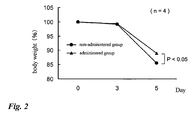
Fig. 2 is a graph showing a change over time of body weights of a glucosyltransferase administered group and a non-administered group. -
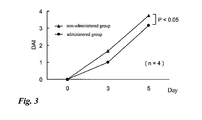
Fig. 3 is a graph showing a change over time of disease activity index (DAI) of a glucosyltransferase administered group and a non-administered group. -
Fig. 4 is a graph showing comparisons of the number of anaerobic bacteria and the number of lactic acid bacteria in 1 g of feces between a glucosyltransferase administered group and a non-administered group (onDay 0 after administration of 3% DSS). (a) A graph showing a comparison of the number of anaerobic bacteria. (b) A graph showing a comparison of lactic acid bacteria (Bifidobacterium). CFU = colony forming unit -
Fig. 5 is a graph showing comparisons of the number of anaerobic bacteria and the number of lactic acid bacteria in 1 g of feces between a glucosyltransferase administered group and a non-administered group (onDay 5 after administration of 3% DSS). (a) A graph showing a comparison of the number of anaerobic bacteria. (b) A graph showing a comparison of lactic acid bacteria (Bifidobacterium). -
Fig. 6 shows histological examination of the large intestines of a glucosyltransferase administered group and a non-administered group. Left picture: normal tissue; center picture: a non-administered group (onDay 5 after administration of 3% DSS), and right picture: a glucosyltransferase administered group (onDay 5 after administration of 3% DSS). - A first aspect of the present invention relates to an enzyme composition for treating or preventing an inflammatory bowel disease (IBD). The enzyme composition of the present invention includes an enzyme capable of generating oligosaccharide in a living body (hereinafter, also referred to as "oligosaccharide generating enzyme"). An enzyme acting in a living body by using a component in taken food as a substrate so as to generate oligosaccharide is used. Kinds of enzymes to be used are not particularly limited as long as the enzyme has the above-mentioned property. Furthermore, the origin of the enzyme is not limited, and any origins such as bacteria, fungi, yeast, actinomycetes, basidiomycetes, plants, or animals can be used. However, since the enzyme composition of the present invention exhibits the effect in a living body, an enzyme capable of acting in an environment in a living body is employed. In particular, it is preferable to use an enzyme capable of acting in the stomach stably and excellently (that is, an enzyme acting sufficiently even at low pH).
- Kinds of oligosaccharides to be generated by the action of the enzyme composition of the present invention is not particularly limited. An example of the oligosaccharide may include fructo-oligosaccharides (those in which 1 to 3 fructose molecules are linked to the fructose residue of sucrose at the C2-and C1-positions by β-bonding), branched oligosaccharides (oligosaccharides having α-1,6 bond), galacto-oligosaccharides (such as raffinose and stachyose), gentio-oligosaccharides (oligosaccharides having β-1,6-glucoside bond), and the like. More specific examples may include 4-α-glucosyl-xylose, 3-α-glucosyl-sorbose, 4-α-glucosyl-sucrose, 4-α-glucosyl-mannose, 4-α-glucosyl-glucosamine, 4-α-glucosyl-N-acetyl-glucosamine, 3-,6-α-glucosyl-mannose, 3-,4-α-glucosyl-xylose, 1-,3-,4-α-glucosyl-fructose, α-glucosyl-glycerol, riboflavin-α-glucoside, 6-α-galactosyl-fructose, 6-α-galactosyl-galactose, α-galactosyl-glycerol, 3-,4-,6-β-galactosyl-lactose, β-galactosyl-glycerol, 4-β-galactosyl-glucose, 4-β-galactosyl-mannose, β-galactosyl-glycerol, xylosyl-fructoside, galactosyl-fructoside, isomaltosyl-fructoside, lactosyl-fructoside, 1-kestose, nistose (fructo-oligosaccharide), neokestose, inulobiose,
difructofuranosyl 1,2':2,1':2,3':2,6':2'6-dianhydride, lactosucrose, and the like.
These hetero-oligosaccharides can be generated by using, for example, glucosyl transfer reaction, galactosyl transfer reaction, and fructosyl transfer reaction by glycosyltransferase. The glucosyl transfer reaction can use glucosyltransferase, cyclodextrin synthetase, amylomaltase, α-glucosidase, β-glucosidase, and the like. The galactosyl transfer reaction can use α-galactosidase, β-galactosidase, α-galactanase, and the like. The fructosyl transfer reaction can use fructosyltransferase, levansucrase, β-fructofuranosidase, cyclic disaccharide synthetase, and the like. - It is preferable that the enzyme composition of the present invention is formed by using any one enzyme or two or more enzymes selected from glucosyltransferase, fructosyltransferase, and levansucrase. Glucosyltransferase is an enzyme having a function of transferring glucose to generate isomaltose, panose and other oligosaccharides. Glucosyltransferase derived from microorganisms such as the genus Streptococcus, the genus Bacillus, the genus Aspergillus, the genus Aureobasidium and the genus Klebsiella, and plants such as onion are known. For example, glucosyltransferase derived from Aspergillus niger (trade name: Transglucosidase L "Amano" and α glucosidase "Amano" manufactured by Amano Enzyme Inc.) can be used for the enzyme composition of the present invention.
- Fructosyltransferase is an enzyme that acts mainly on sucrose to cut α-1, β-1 bonds between fructose and glucose, and then to transfer fructose to sucrose so as to generate oligosaccharides. Its known origins include microorganisms such as the genus Bacillus, the genus Arthrobacter, the genus Aspergillus, the genus Fusarium, the genus Gloeosporium, the genus Saccharomyces, the genus Rhodotorula, the genus Pichia, the genus Hansenula and the genus Candida, asparagus and Jerusalem artichoke. For example, fructosyltransferase derived from Bacillus natto can be used for the enzyme composition of the present invention (Denpun Kagaku, vol. 38, No. 2, 217-222 (1991)).
- Levansucrase is an enzyme that transfers fructose of sucrose to generate various oligosaccharides such as a high molecule polysaccharide levan. For example, levansucrase derived from Zymomonas mobilis IFO-13756 (Journal of Fermentation and Bioengineering, vol. 79, No. 4, 367-369 (1995)) and levansucrase derived from Rahnella aquatilis JCM-1683 can be used for the enzyme composition of the present invention.
- To increase the kinds of substrates capable of acting and to improve the productivity of oligosaccharide from food, it is preferable to use a plurality of enzymes whose substrate-specificities are different from each other. Examples of such preferable enzyme compositions may include an enzyme composition containing glucosyltransferase and fructosyltransferase, an enzyme composition containing glucosyltransferase and levansucrase, an enzyme composition containing fructosyltransferase and levansucrase, and an enzyme composition containing glucosyltransferase, fructosyltransferase and levansucrase.
- Some kinds of foods to be taken may not include sufficient substrates of the oligosaccharide generating enzyme contained in the enzyme composition of the present invention. In such a case, it is desirable that a substrate of the oligosaccharide generating enzyme is formed from compositions of the food taken. One preferable embodiment of the enzyme composition of the present invention contains, in addition to the oligosaccharide generating enzyme, an enzyme such as amylase and invertase which is an enzyme that acts upon the taken food so as to produce a substrate of an oligosaccharide generating enzyme. Herein, amylase is an enzyme that acts on starch to generate disaccharides, trisaccharides and oligosaccharides that are substrates of the glycosyltransferase. For example, Aspergillus amylase derived from oryzae (trade name: Biodiastase 2000, manufactured by Amano Enzyme Inc.) can be used. On the other hand, invertase is an enzyme transferring sucrose into fructose and glucose. For example, invertase derived from S.cerevisiae can be used.
- With problems of incompatibility taken into consideration, arbitrary components (for example, gastrointestinal preparation such as gastric antiacid and H2 blocker) may be contained in the enzyme composition of the present invention.
- The enzyme composition of the present invention can be formulated according to usual methods. In formulation, other pharmaceutically acceptable components (for example, carriers, vehicles, disintegrators, buffers, emulsifying agents, suspensions, stabilizers, preservatives, antiseptic agents, physiologic saline, and the like) can be contained. An example of the vehicle may include lactose, starch, sorbitol, D-mannitol, sucrose, and the like. An example of the disintegrator may include starch, carboxymethyl cellulose, calcium carbonate, and the like. An example of the buffers may include phosphate, citrate, acetate, and the like. An example of the emulsifying agents may include gum Arabic, sodium alginate, traganth, and the like. An example of the suspension may include glyceryl monostearate, aluminium monostearate, methyl cellulose, carboxymethyl cellulose, hydroxymethyl cellulose, sodium lauryl sulfate, and the like. An example of the stabilizer may include propylene glycol, diethyline sulfite, ascorbic acid, and the like. An example of the preservative may include phenol, benzalkonium chloride, benzyl alcohol, chlorobutanol, methylparaben, and the like. An example of the antiseptic agent may include benzalkonium chloride, parahydroxy benzoic acid, chlorobutanol, and the like.
Formulation forms are not particularly limited. A form of, for example, tablet, powder, fine granule, granule, capsule, syrup, and the like, may be employed. - The enzyme composition of the present invention is taken before, between, and after meals, or taken together with food. Since it is necessary and important to form a state in which the enzyme contained in the enzyme composition and a substrate component in food coexist in a living body, it is preferable that the enzyme composition of the present invention is taken before, after, or at the same time of meals.
- In order to generate oligosaccharide from taken food efficiently, it is desirable that the enzyme composition of the present invention acts on food in the initial stage of digestion. From such a viewpoint, it is preferable that the enzyme composition of the present invention is formed by using an enzyme having a property that sufficiently acts under the acidic environment in the stomach. The above-mentioned glucosyltransferase derived from Aspergillus niger (trade name: Transglucosidase L "Amano" and α glucosidase "Amano," which are manufactured by Amano Enzyme Inc.), levansucrase derived from Zymomonas mobilis IFO-13756, and amylase derived from Aspergillus oryzae (trade name: Biodiastase 2000 manufactured by Amano Enzyme Inc.) are preferable components because they excellently act even in the acidic environment.
- The "subject (patient)" to whom the enzyme composition of the present invention is applied is not particularly limited and includes human and non-human mammalians (including pet animals, domestic animals, and laboratory animals, and specifically including, for example, mouse, rat, guinea pig, hamster, monkey, cow, pig, goat, sheep, dog, cat, chicken, quail, and the like.). According to one preferable embodiment, the enzyme composition of the present invention is applied to human.
- The administration amount (dosage amount) of the enzyme composition can be arbitrarily set on the condition that a function of generating oligosaccharide in a living body is exerted. The administration amount can be appropriately set considering the nature and purity of an enzyme to be used, or symptom, age, sex, body weight, and the like, of the subject (patient). A person skilled in the art can set an appropriate dosage amount while considering these factors. For example, in the case of the enzyme composition containing the above-mentioned glucosyltransferase, the administration amount of the enzyme composition is set so that the amount of glucosyltransferase becomes 10000 to 5000000 units/time. Similarly, in the case of the enzyme composition containing levansucrase, the administration amount is set so that the amount of levansucrase becomes 2 to 50000 units/time. In the case of the enzyme composition containing amylase, the administration amount is set so that the amount of amylase becomes 10 to 5000 units/time.
The administration schedule can be determined to once to five times a day, once every two days, or once every three days, and the like. - The present invention further provides food containing the above-mentioned enzyme composition. An example of the "food" in the present invention includes general foods (grains, vegetables, meat, various processed foods, sweets, soft drink, and alcoholic beverage, and the like), nutritional food supplement (supplement). The nutritional food supplement can be provided in a form of, for example, powder, granule, tablet, paste, and liquid. Food containing a component functioning as a substrate of the enzyme composition, or food such as cereal and furikake (condiments sprinkled on food) with which the component is taken together is included in the preferable example of the food in the present invention.
- Note here that in this specification, unless otherwise specified, the enzymatic activities were measured by the following measurement method.
- α-methyl-D-glucoside is used as the substrate, and an enzyme solution is allowed to act thereon at 40°C and at pH 5.0. The amount of the enzyme generating 1 µg of glucose for 60 minutes is defined as one unit.
- Measurement is carried out using F Kit (D-Glucose / D-Fructose) (manufactured by Boehringer-Mannheim GmbH). Sucrose is used as a substrate. The amount of the enzyme generating 1 mg/ml of glucose in the reaction solution is defined as one unit.
- Measurement is carried out according to the method for testing starch saccharification activity (37°C and at pH 5.0), among the digestion activity testing methods described in The Pharmacopoeia of Japan (General Test Methods). The amount of the enzyme which increases the reduction power that is equivalent to 1 mg of glucose for one minute is defined as one unit.
- Glucosyltransferase derived from Aspergillus niger (trade name: α glucosidase "Amano" manufactured by Amano Enzyme Inc.) was used. The glucosyltransferase activity of the enzyme used was 3,000 u/mg.
- As an IBD animal model, a DSS enteritis model mouse (Sasaki M, et al. J Pharmacol Exp Ther. 2003; 305(1); 78-85) was used. This mouse is used as an IBD model since it has inflammation in the large intestine and presents IBD-like symptoms by administration of DSS (dextran sulfate sodium).
The experiment was carried out as follows. Eight (8) week-old male C57BL/6 mice (purchased from Chubu Kagaku Shizai Co., Ltd. (Nagoya)) were allowed to acclimate by keeping them for 7 days at 24°C, with access to food ad libitum and with an alternating 12 h light/dark cycle. After acclimation, mice were divided into two groups each composed of four mice. One group was allowed to orally take glucosyltransferase together with foods at a dosage of 900 mg (2,700,000 u) / 60 kg / day. Another group was allowed to orally take only food. As the food, a mixture of laboratory animal food MF (Oriental Yeast Co., Ltd.) and 10% (wt/wt) starch (Wako Pure Chemical Industries, Ltd.) was used. OnDay 2 after the start of the oral administration of the enzyme, water containing 3% (wt/vol) dextran sulfate sodium (DSS, MW: 44 kDa, TdB Consultancy AB, Uppsala, Sweden) was continued to be given to both groups and bred for further five days (Fig. 1 ). - On
Days Day 5 after administration of 3% DSS-containing water, significant difference in suppression of the body weight loss was observed (Fig. 2 ). Thus, it is shown that the administration of glucosyltransferase brought the effect of suppressing the body weight loss due to IBD. - On
Days Day 5 after the administration of 3% DSS-containing water (Fig. 3 ), obviously showing reduction of the DAI, that is, reduction of symptoms of IBD in the glucosyltransferase administered group. - On
Days Day 0, the number of anaerobic bacteria in 1 g of feces in the glucosyltransferase administered group was significantly larger as compared with that of the non-administered group (Fig. 4 (a) ). As to lactic acid bacteria such as Bifidobacterium, although a significant difference was not observed, the number of Bifidobacteria in 1 g of feces was larger in the glucosyltransferase administered group (Fig. 4 (b) ).
Also onDay 5, the number of anaerobic bacteria in 1 g of feces in the glucosyltransferase administered group was larger although a significant difference was not observed (Fig. 5(a) ). As to lactic acid bacteria such as Bifidobacterium, the number of Bifidobacteria in 1 g of feces was significantly larger in the glucosyltransferase administered group (Fig. 5(b) ). These results show that the symptoms of IBD are reduced as a result of the increase of anaerobic bacteria and lactic acid bacteria such as bifidobacterium in the glucosyltransferase administered group. - On
Day 5 after administration of 3% DSS-containing water, the large intestines were extracted from the glucosyltransferase administered group and the non-administered group and subjected to histological examination. As a result, in the non-administered group, tissue destruction due to inflammation was observed (central picture ofFig. 6 ). In the glucosyltransferase administered group, it was observed that destruction of the tissue was suppressed (right picture ofFig. 6 ). Suppression of destruction of the endothelial tissue of the large intestine due to inflammation was observed in the glucosyltransferase administered group, showing suppression of the onset of IBD and reduction of symptoms by the administration of glucosyltransferase. - An enzyme composition of the present invention exhibits an effect of treating or preventing IBD through the improvement of intestinal bacterial flora. According to the enzyme composition of the present invention, it is not necessary to consider the survival of lactic acid bacteria unlike probiotic. Furthermore, as compared with the case of prebiotic, a necessary amount can be administered easily. Moreover, there is no concerns that an adverse effect due to overtake of oligosaccharide is triggered. In this way, the enzyme composition of the present invention has a large number of excellent properties as compared with conventional technologies. Much contribution of the enzyme composition to treatment or prevention of IBD is expected.
- The present invention is not limited to the description of the above exemplary embodiments and Examples. A variety of modifications, which are within the scopes of the following claims and which can be easily achieved by a person skilled in the art, are included in the present invention.
Contents of the theses, Publication of Patent Applications, Patent Publications, and other published documents referred to in this specification are herein incorporated by reference in its entity.
Claims (17)
- An enzyme composition for treating or preventing an inflammatory bowel disease, comprising an enzyme capable of generating oligosaccharide in a living body.
- The enzyme composition according to claim 1, wherein the enzyme acts in a stomach.
- The enzyme composition according to claim 1 or 2, wherein the enzyme catalyzes transglycosylation.
- The enzyme composition according to any of claims 1 to 3, wherein the enzyme is at least one enzyme selected from the group consisting of glucosyltransferase, fructosyltransferase and levansucrase.
- The enzyme composition according to any of claims 1 to 4, further comprising at least one enzyme selected from the group consisting of amylase and invertase.
- A food containing an enzyme composition according to any of claims 1 to 5.
- A treatment or prevention method for an inflammatory bowel disease, the method comprising administrating an enzyme composition including an enzyme capable of generating oligosaccharide in a living body to a subject having an inflammatory bowel disease or having a risk of developing an inflammatory bowel disease.
- The treatment or prevention method according to claim 7, wherein the enzyme acts in a stomach.
- The treatment or prevention method according to claim 7 or 8, wherein the enzyme catalyzes transglycosylation.
- The treatment or prevention method according to any of claims 7 to 9, wherein the enzyme is at least one enzyme selected from the group consisting of glucosyltransferase, fructosyltransferase and levansucrase.
- The treatment or prevention method according to any of claims 7 to 10, wherein the enzyme composition is taken before, between or after meals.
- The treatment or prevention method according to any of claims 7 to 10, wherein the enzyme composition is taken together with food.
- The treating and preventing method according to any of claims 7 to 12, wherein the enzyme composition further comprises at least one enzyme selected from the group consisting of amylase and invertase.
- A use of an enzyme capable of generating oligosaccharide in a living body, for producing an enzyme composition for preventing or treating an inflammatory bowel disease.
- The use according to claim 14, wherein the enzyme acts in a stomach.
- The use according to claim 14 or 15, wherein the enzyme catalyzes transglycosylation.
- The use according to any of claims 14 to 16, wherein the enzyme is at least one enzyme selected from the group consisting of glucosyltransferase, fructosyltransferase and levansucrase.
Applications Claiming Priority (2)
| Application Number | Priority Date | Filing Date | Title |
|---|---|---|---|
| JP2007016892 | 2007-01-26 | ||
| PCT/JP2008/050673 WO2008090831A1 (en) | 2007-01-26 | 2008-01-21 | Enzyme composition and use thereof |
Publications (3)
| Publication Number | Publication Date |
|---|---|
| EP2127668A1 true EP2127668A1 (en) | 2009-12-02 |
| EP2127668A4 EP2127668A4 (en) | 2010-05-12 |
| EP2127668B1 EP2127668B1 (en) | 2011-08-17 |
Family
ID=39644408
Family Applications (1)
| Application Number | Title | Priority Date | Filing Date |
|---|---|---|---|
| EP08703523A Not-in-force EP2127668B1 (en) | 2007-01-26 | 2008-01-21 | Glycosyltransferase for treating Inflammatory Bowel Disease |
Country Status (6)
| Country | Link |
|---|---|
| US (1) | US20110150855A1 (en) |
| EP (1) | EP2127668B1 (en) |
| JP (1) | JP5627184B2 (en) |
| CN (1) | CN101594879B (en) |
| AT (1) | ATE520413T1 (en) |
| WO (1) | WO2008090831A1 (en) |
Families Citing this family (4)
| Publication number | Priority date | Publication date | Assignee | Title |
|---|---|---|---|---|
| US10849938B2 (en) | 2017-09-13 | 2020-12-01 | ZBiotics Company | Gene expression system for probiotic microorganisms |
| US12595251B2 (en) | 2018-06-14 | 2026-04-07 | Georgia State University Research Foundation, Inc. | Amidines and amidine analogs for the treatment of bacterial infections and potentiation antibiotics |
| US12152261B2 (en) * | 2019-02-19 | 2024-11-26 | Dsm Ip Assets B.V. | Method for reducing fructan in a food product with aid of invertase (EC 3.2.1.26) |
| CN119837855A (en) | 2019-12-19 | 2025-04-18 | 乔治亚州大学研究基金会 | Compounds for the treatment of bacterial infections and for the enhancement of antibiotics |
Family Cites Families (3)
| Publication number | Priority date | Publication date | Assignee | Title |
|---|---|---|---|---|
| JP2939491B2 (en) * | 1989-12-11 | 1999-08-25 | 株式会社アドバンス | Functional food |
| US6042823A (en) * | 1998-07-02 | 2000-03-28 | Amano Pharmaceuticals Co., Ltd. | Enzyme composition and use thereof |
| GB0229015D0 (en) * | 2002-12-12 | 2003-01-15 | Novartis Nutrition Ag | New Compound |
-
2008
- 2008-01-21 WO PCT/JP2008/050673 patent/WO2008090831A1/en not_active Ceased
- 2008-01-21 EP EP08703523A patent/EP2127668B1/en not_active Not-in-force
- 2008-01-21 US US12/449,007 patent/US20110150855A1/en not_active Abandoned
- 2008-01-21 JP JP2008555041A patent/JP5627184B2/en not_active Expired - Fee Related
- 2008-01-21 CN CN200880001606XA patent/CN101594879B/en not_active Expired - Fee Related
- 2008-01-21 AT AT08703523T patent/ATE520413T1/en not_active IP Right Cessation
Also Published As
| Publication number | Publication date |
|---|---|
| WO2008090831A1 (en) | 2008-07-31 |
| CN101594879B (en) | 2012-06-20 |
| EP2127668B1 (en) | 2011-08-17 |
| JPWO2008090831A1 (en) | 2010-05-20 |
| US20110150855A1 (en) | 2011-06-23 |
| CN101594879A (en) | 2009-12-02 |
| EP2127668A4 (en) | 2010-05-12 |
| ATE520413T1 (en) | 2011-09-15 |
| JP5627184B2 (en) | 2014-11-19 |
Similar Documents
| Publication | Publication Date | Title |
|---|---|---|
| Zúñiga et al. | Complex oligosaccharide utilization pathways in Lactobacillus | |
| Gänzle | Enzymatic synthesis of galacto-oligosaccharides and other lactose derivatives (hetero-oligosaccharides) from lactose | |
| Ibrahim | Functional oligosaccharides: Chemicals structure, manufacturing, health benefits, applications and regulations | |
| Torres et al. | Galacto‐oligosaccharides: production, properties, applications, and significance as prebiotics | |
| KR101783383B1 (en) | Compositions and methods for making alpha-(1,2)-branched alpha-(1,6) oligodextrans | |
| Gibson et al. | Dietary prebiotics: current status and new definition | |
| Mountzouris et al. | Intestinal microflora of human infants and current trends for its nutritional modulation | |
| Pokusaeva et al. | Carbohydrate metabolism in Bifidobacteria | |
| US7772212B2 (en) | Isomaltooligosaccharides to inhibit avian pathogenic intestinal bacteria | |
| Playne et al. | Galacto-oligosaccharides and other products derived from lactose | |
| JP5858547B2 (en) | Branched α-glucan, α-glucosyltransferase producing the same, production method and use thereof | |
| JP4039652B2 (en) | Enzyme composition and use thereof | |
| Rehman et al. | Influence of fermentable carbohydrates on the intestinal bacteria and enteropathogens in broilers | |
| Sarbini et al. | Prebiotics: metabolism, structure, and function | |
| Rabiu et al. | Carbohydrates: a limit on bacterial diversity within the colon | |
| JP2010100583A (en) | Lipid metabolism improver | |
| EP2127668B1 (en) | Glycosyltransferase for treating Inflammatory Bowel Disease | |
| Havenaar et al. | Inulin: Fermentation and microbial ecology in the intestinal tract | |
| KR100663656B1 (en) | Enzyme Compositions That Can Produce Oligosaccharides | |
| Kim et al. | Production and bioactivity of glucooligosaccharides and glucosides synthesized using glucansucrases | |
| Yoo | The production of glucooligosaccharides by Leuconostoc mesenteroides ATCC 13146 and Lipomyces starkeyi ATCC 74054 | |
| CN118804689A (en) | Use of Bifidobacterium longum microorganisms having the ability to degrade both HMO and polysaccharides derived from plants | |
| Thongaram | Probiotic metabolism of human milk oligosaccharides (HMOs) and prebiotics | |
| Ketabi | Prebiotic activity of isomalto-oligosaccharides | |
| Kumar | Evaluation of Probiotic Effectiveness of Certain Functional Fibers |
Legal Events
| Date | Code | Title | Description |
|---|---|---|---|
| PUAI | Public reference made under article 153(3) epc to a published international application that has entered the european phase |
Free format text: ORIGINAL CODE: 0009012 |
|
| 17P | Request for examination filed |
Effective date: 20090818 |
|
| AK | Designated contracting states |
Kind code of ref document: A1 Designated state(s): AT BE BG CH CY CZ DE DK EE ES FI FR GB GR HR HU IE IS IT LI LT LU LV MC MT NL NO PL PT RO SE SI SK TR |
|
| DAX | Request for extension of the european patent (deleted) | ||
| A4 | Supplementary search report drawn up and despatched |
Effective date: 20100412 |
|
| 17Q | First examination report despatched |
Effective date: 20100621 |
|
| GRAP | Despatch of communication of intention to grant a patent |
Free format text: ORIGINAL CODE: EPIDOSNIGR1 |
|
| RIC1 | Information provided on ipc code assigned before grant |
Ipc: A61P 29/00 20060101ALI20110315BHEP Ipc: C12N 9/98 20060101ALI20110315BHEP Ipc: A61K 38/45 20060101AFI20110315BHEP Ipc: A23L 1/305 20060101ALI20110315BHEP Ipc: A61P 1/00 20060101ALI20110315BHEP |
|
| RTI1 | Title (correction) |
Free format text: GLYCOSYLTRANSFERASE FOR TREATING INFLAMMATORY BOWEL DISEASE |
|
| GRAS | Grant fee paid |
Free format text: ORIGINAL CODE: EPIDOSNIGR3 |
|
| GRAA | (expected) grant |
Free format text: ORIGINAL CODE: 0009210 |
|
| AK | Designated contracting states |
Kind code of ref document: B1 Designated state(s): AT BE BG CH CY CZ DE DK EE ES FI FR GB GR HR HU IE IS IT LI LT LU LV MC MT NL NO PL PT RO SE SI SK TR |
|
| REG | Reference to a national code |
Ref country code: GB Ref legal event code: FG4D |
|
| REG | Reference to a national code |
Ref country code: CH Ref legal event code: EP |
|
| REG | Reference to a national code |
Ref country code: IE Ref legal event code: FG4D |
|
| REG | Reference to a national code |
Ref country code: DE Ref legal event code: R096 Ref document number: 602008008935 Country of ref document: DE Effective date: 20111020 |
|
| REG | Reference to a national code |
Ref country code: NL Ref legal event code: T3 |
|
| LTIE | Lt: invalidation of european patent or patent extension |
Effective date: 20110817 |
|
| PG25 | Lapsed in a contracting state [announced via postgrant information from national office to epo] |
Ref country code: LT Free format text: LAPSE BECAUSE OF FAILURE TO SUBMIT A TRANSLATION OF THE DESCRIPTION OR TO PAY THE FEE WITHIN THE PRESCRIBED TIME-LIMIT Effective date: 20110817 Ref country code: PT Free format text: LAPSE BECAUSE OF FAILURE TO SUBMIT A TRANSLATION OF THE DESCRIPTION OR TO PAY THE FEE WITHIN THE PRESCRIBED TIME-LIMIT Effective date: 20111219 Ref country code: NO Free format text: LAPSE BECAUSE OF FAILURE TO SUBMIT A TRANSLATION OF THE DESCRIPTION OR TO PAY THE FEE WITHIN THE PRESCRIBED TIME-LIMIT Effective date: 20111117 Ref country code: SE Free format text: LAPSE BECAUSE OF FAILURE TO SUBMIT A TRANSLATION OF THE DESCRIPTION OR TO PAY THE FEE WITHIN THE PRESCRIBED TIME-LIMIT Effective date: 20110817 Ref country code: IS Free format text: LAPSE BECAUSE OF FAILURE TO SUBMIT A TRANSLATION OF THE DESCRIPTION OR TO PAY THE FEE WITHIN THE PRESCRIBED TIME-LIMIT Effective date: 20111217 |
|
| REG | Reference to a national code |
Ref country code: AT Ref legal event code: MK05 Ref document number: 520413 Country of ref document: AT Kind code of ref document: T Effective date: 20110817 |
|
| PG25 | Lapsed in a contracting state [announced via postgrant information from national office to epo] |
Ref country code: PL Free format text: LAPSE BECAUSE OF FAILURE TO SUBMIT A TRANSLATION OF THE DESCRIPTION OR TO PAY THE FEE WITHIN THE PRESCRIBED TIME-LIMIT Effective date: 20110817 Ref country code: LV Free format text: LAPSE BECAUSE OF FAILURE TO SUBMIT A TRANSLATION OF THE DESCRIPTION OR TO PAY THE FEE WITHIN THE PRESCRIBED TIME-LIMIT Effective date: 20110817 Ref country code: AT Free format text: LAPSE BECAUSE OF FAILURE TO SUBMIT A TRANSLATION OF THE DESCRIPTION OR TO PAY THE FEE WITHIN THE PRESCRIBED TIME-LIMIT Effective date: 20110817 Ref country code: GR Free format text: LAPSE BECAUSE OF FAILURE TO SUBMIT A TRANSLATION OF THE DESCRIPTION OR TO PAY THE FEE WITHIN THE PRESCRIBED TIME-LIMIT Effective date: 20111118 Ref country code: CY Free format text: LAPSE BECAUSE OF FAILURE TO SUBMIT A TRANSLATION OF THE DESCRIPTION OR TO PAY THE FEE WITHIN THE PRESCRIBED TIME-LIMIT Effective date: 20110817 Ref country code: SI Free format text: LAPSE BECAUSE OF FAILURE TO SUBMIT A TRANSLATION OF THE DESCRIPTION OR TO PAY THE FEE WITHIN THE PRESCRIBED TIME-LIMIT Effective date: 20110817 |
|
| PG25 | Lapsed in a contracting state [announced via postgrant information from national office to epo] |
Ref country code: BE Free format text: LAPSE BECAUSE OF FAILURE TO SUBMIT A TRANSLATION OF THE DESCRIPTION OR TO PAY THE FEE WITHIN THE PRESCRIBED TIME-LIMIT Effective date: 20110817 |
|
| PG25 | Lapsed in a contracting state [announced via postgrant information from national office to epo] |
Ref country code: CZ Free format text: LAPSE BECAUSE OF FAILURE TO SUBMIT A TRANSLATION OF THE DESCRIPTION OR TO PAY THE FEE WITHIN THE PRESCRIBED TIME-LIMIT Effective date: 20110817 Ref country code: SK Free format text: LAPSE BECAUSE OF FAILURE TO SUBMIT A TRANSLATION OF THE DESCRIPTION OR TO PAY THE FEE WITHIN THE PRESCRIBED TIME-LIMIT Effective date: 20110817 |
|
| PG25 | Lapsed in a contracting state [announced via postgrant information from national office to epo] |
Ref country code: EE Free format text: LAPSE BECAUSE OF FAILURE TO SUBMIT A TRANSLATION OF THE DESCRIPTION OR TO PAY THE FEE WITHIN THE PRESCRIBED TIME-LIMIT Effective date: 20110817 Ref country code: RO Free format text: LAPSE BECAUSE OF FAILURE TO SUBMIT A TRANSLATION OF THE DESCRIPTION OR TO PAY THE FEE WITHIN THE PRESCRIBED TIME-LIMIT Effective date: 20110817 |
|
| PLBE | No opposition filed within time limit |
Free format text: ORIGINAL CODE: 0009261 |
|
| STAA | Information on the status of an ep patent application or granted ep patent |
Free format text: STATUS: NO OPPOSITION FILED WITHIN TIME LIMIT |
|
| PG25 | Lapsed in a contracting state [announced via postgrant information from national office to epo] |
Ref country code: DK Free format text: LAPSE BECAUSE OF FAILURE TO SUBMIT A TRANSLATION OF THE DESCRIPTION OR TO PAY THE FEE WITHIN THE PRESCRIBED TIME-LIMIT Effective date: 20110817 |
|
| 26N | No opposition filed |
Effective date: 20120521 |
|
| PG25 | Lapsed in a contracting state [announced via postgrant information from national office to epo] |
Ref country code: HR Free format text: LAPSE BECAUSE OF FAILURE TO SUBMIT A TRANSLATION OF THE DESCRIPTION OR TO PAY THE FEE WITHIN THE PRESCRIBED TIME-LIMIT Effective date: 20120328 |
|
| PG25 | Lapsed in a contracting state [announced via postgrant information from national office to epo] |
Ref country code: MC Free format text: LAPSE BECAUSE OF NON-PAYMENT OF DUE FEES Effective date: 20120131 |
|
| REG | Reference to a national code |
Ref country code: CH Ref legal event code: PL |
|
| REG | Reference to a national code |
Ref country code: DE Ref legal event code: R097 Ref document number: 602008008935 Country of ref document: DE Effective date: 20120521 |
|
| REG | Reference to a national code |
Ref country code: IE Ref legal event code: MM4A |
|
| PG25 | Lapsed in a contracting state [announced via postgrant information from national office to epo] |
Ref country code: LI Free format text: LAPSE BECAUSE OF NON-PAYMENT OF DUE FEES Effective date: 20120131 Ref country code: CH Free format text: LAPSE BECAUSE OF NON-PAYMENT OF DUE FEES Effective date: 20120131 |
|
| PG25 | Lapsed in a contracting state [announced via postgrant information from national office to epo] |
Ref country code: IE Free format text: LAPSE BECAUSE OF NON-PAYMENT OF DUE FEES Effective date: 20120121 |
|
| PG25 | Lapsed in a contracting state [announced via postgrant information from national office to epo] |
Ref country code: ES Free format text: LAPSE BECAUSE OF FAILURE TO SUBMIT A TRANSLATION OF THE DESCRIPTION OR TO PAY THE FEE WITHIN THE PRESCRIBED TIME-LIMIT Effective date: 20111128 |
|
| PG25 | Lapsed in a contracting state [announced via postgrant information from national office to epo] |
Ref country code: BG Free format text: LAPSE BECAUSE OF FAILURE TO SUBMIT A TRANSLATION OF THE DESCRIPTION OR TO PAY THE FEE WITHIN THE PRESCRIBED TIME-LIMIT Effective date: 20111117 |
|
| PG25 | Lapsed in a contracting state [announced via postgrant information from national office to epo] |
Ref country code: MT Free format text: LAPSE BECAUSE OF FAILURE TO SUBMIT A TRANSLATION OF THE DESCRIPTION OR TO PAY THE FEE WITHIN THE PRESCRIBED TIME-LIMIT Effective date: 20110817 |
|
| PG25 | Lapsed in a contracting state [announced via postgrant information from national office to epo] |
Ref country code: HR Free format text: LAPSE BECAUSE OF FAILURE TO SUBMIT A TRANSLATION OF THE DESCRIPTION OR TO PAY THE FEE WITHIN THE PRESCRIBED TIME-LIMIT Effective date: 20110817 |
|
| PG25 | Lapsed in a contracting state [announced via postgrant information from national office to epo] |
Ref country code: LU Free format text: LAPSE BECAUSE OF NON-PAYMENT OF DUE FEES Effective date: 20120121 |
|
| PG25 | Lapsed in a contracting state [announced via postgrant information from national office to epo] |
Ref country code: HU Free format text: LAPSE BECAUSE OF FAILURE TO SUBMIT A TRANSLATION OF THE DESCRIPTION OR TO PAY THE FEE WITHIN THE PRESCRIBED TIME-LIMIT Effective date: 20080121 |
|
| PGFP | Annual fee paid to national office [announced via postgrant information from national office to epo] |
Ref country code: NL Payment date: 20141210 Year of fee payment: 8 |
|
| PGFP | Annual fee paid to national office [announced via postgrant information from national office to epo] |
Ref country code: GB Payment date: 20150121 Year of fee payment: 8 |
|
| REG | Reference to a national code |
Ref country code: FR Ref legal event code: PLFP Year of fee payment: 9 |
|
| GBPC | Gb: european patent ceased through non-payment of renewal fee |
Effective date: 20160121 |
|
| REG | Reference to a national code |
Ref country code: NL Ref legal event code: MM Effective date: 20160201 |
|
| PG25 | Lapsed in a contracting state [announced via postgrant information from national office to epo] |
Ref country code: GB Free format text: LAPSE BECAUSE OF NON-PAYMENT OF DUE FEES Effective date: 20160121 |
|
| PG25 | Lapsed in a contracting state [announced via postgrant information from national office to epo] |
Ref country code: NL Free format text: LAPSE BECAUSE OF NON-PAYMENT OF DUE FEES Effective date: 20160201 |
|
| REG | Reference to a national code |
Ref country code: FR Ref legal event code: PLFP Year of fee payment: 10 |
|
| REG | Reference to a national code |
Ref country code: FR Ref legal event code: PLFP Year of fee payment: 11 |
|
| PGFP | Annual fee paid to national office [announced via postgrant information from national office to epo] |
Ref country code: FR Payment date: 20171211 Year of fee payment: 11 |
|
| PGFP | Annual fee paid to national office [announced via postgrant information from national office to epo] |
Ref country code: DE Payment date: 20180110 Year of fee payment: 11 Ref country code: FI Payment date: 20180110 Year of fee payment: 11 |
|
| PGFP | Annual fee paid to national office [announced via postgrant information from national office to epo] |
Ref country code: IT Payment date: 20180122 Year of fee payment: 11 Ref country code: TR Payment date: 20180119 Year of fee payment: 11 |
|
| REG | Reference to a national code |
Ref country code: DE Ref legal event code: R119 Ref document number: 602008008935 Country of ref document: DE |
|
| PG25 | Lapsed in a contracting state [announced via postgrant information from national office to epo] |
Ref country code: FI Free format text: LAPSE BECAUSE OF NON-PAYMENT OF DUE FEES Effective date: 20190121 Ref country code: DE Free format text: LAPSE BECAUSE OF NON-PAYMENT OF DUE FEES Effective date: 20190801 Ref country code: FR Free format text: LAPSE BECAUSE OF NON-PAYMENT OF DUE FEES Effective date: 20190131 |
|
| PG25 | Lapsed in a contracting state [announced via postgrant information from national office to epo] |
Ref country code: IT Free format text: LAPSE BECAUSE OF NON-PAYMENT OF DUE FEES Effective date: 20190121 |
|
| PG25 | Lapsed in a contracting state [announced via postgrant information from national office to epo] |
Ref country code: TR Free format text: LAPSE BECAUSE OF NON-PAYMENT OF DUE FEES Effective date: 20190121 |