EP2119721A1 - Polyfunctional Epoxy-Containing Organosilicon Compound, Making Method, Coating Composition, and Coated Article - Google Patents
Polyfunctional Epoxy-Containing Organosilicon Compound, Making Method, Coating Composition, and Coated Article Download PDFInfo
- Publication number
- EP2119721A1 EP2119721A1 EP09159978A EP09159978A EP2119721A1 EP 2119721 A1 EP2119721 A1 EP 2119721A1 EP 09159978 A EP09159978 A EP 09159978A EP 09159978 A EP09159978 A EP 09159978A EP 2119721 A1 EP2119721 A1 EP 2119721A1
- Authority
- EP
- European Patent Office
- Prior art keywords
- group
- epoxy
- organosilicon compound
- compound
- containing organosilicon
- Prior art date
- Legal status (The legal status is an assumption and is not a legal conclusion. Google has not performed a legal analysis and makes no representation as to the accuracy of the status listed.)
- Granted
Links
Images

Classifications
-
- C—CHEMISTRY; METALLURGY
- C07—ORGANIC CHEMISTRY
- C07F—ACYCLIC, CARBOCYCLIC OR HETEROCYCLIC COMPOUNDS CONTAINING ELEMENTS OTHER THAN CARBON, HYDROGEN, HALOGEN, OXYGEN, NITROGEN, SULFUR, SELENIUM OR TELLURIUM
- C07F7/00—Compounds containing elements of Groups 4 or 14 of the Periodic Table
- C07F7/02—Silicon compounds
- C07F7/08—Compounds having one or more C—Si linkages
- C07F7/18—Compounds having one or more C—Si linkages as well as one or more C—O—Si linkages
- C07F7/1804—Compounds having Si-O-C linkages
Definitions
- This invention relates to novel polyfunctional epoxy-containing organosilicon compounds useful as epoxy silane coupling agents, and a method for preparing the same. More particularly, it relates to polyfunctional epoxy-containing organosilicon compounds having a plurality of epoxy groups and hydrolyzable silyl groups, which are water-soluble and fully reactive with organic resins and inorganic materials, and a method for preparing the same. It also relates to coating compositions comprising the organosilicon compounds and articles coated therewith.
- Silane coupling agents are compounds including both a moiety which is reactive with inorganic matter and another moiety which is fully reactive with and soluble in organic matter, within their molecule. Since they serve as adhesive aids at the interface between inorganic and organic materials, they are widely employed as a composite resin modifier.
- the majority of silane coupling agents and partial hydrolytic condensates thereof, often referred to as siloxane oligomers, are compounds containing at least two alkoxysilyl groups per organic functional group, whereas only a few compounds having at least two organic functional groups per alkoxysilyl group are available.
- JP-A 06-172370 One exemplary organic compound containing at least two epoxy groups per alkoxysilyl group is disclosed in JP-A 06-172370 , which relates to an organic compound having two glycidoxy groups and a trimethoxysilylpropyl group attached to an aromatic ring. Because of its structure, this compound can be endowed with only two epoxy groups per alkoxysilyl group. It is impossible from the molecular design aspect to incorporate more epoxy groups therein.
- An object of the invention is to provide polyfunctional epoxy-containing organosilicon compounds having a plurality of epoxy groups capable of reacting with an organic resin portion to form bonds therewith, and useful as a primer or resin modifier; a method for preparing the compounds, a coating composition comprising the compounds, and an article coated therewith.
- the inventors have succeeded in synthesizing an organosilicon compound having a plurality of epoxy groups per alkoxysilyl group by combining a polyglycidyl ether compound having a plurality of epoxy groups and a hydroxy group in the molecule with a silane coupling agent having an isocyanate group such that the hydroxyl group on the polyglycidyl ether compound may react with the isocyanate group on the silane coupling agent.
- the ratio of epoxy groups to alkoxysilyl groups may be adjusted as desired.
- the invention provides a polyfunctional epoxy-containing organosilicon compound having the general formula (1): wherein R is each independently selected from the group consisting of hydrogen, glycidyl and alkoxysilyl of the formula (2): wherein R' is C 1 -C 6 alkyl, X is hydrogen or C 1 -C 4 alkyl, n is an integer of 1 to 3, at least one R being alkoxysilyl and at least two R's being glycidyl, and "a" is a number from 1 to 100.
- R is each independently selected from the group consisting of hydrogen, glycidyl and alkoxysilyl of the formula (2): wherein R' is C 1 -C 6 alkyl, X is hydrogen or C 1 -C 4 alkyl, n is an integer of 1 to 3, at least one R being alkoxysilyl and at least two R's being glycidyl, and "a" is a number from 1 to 100.
- the invention provides a polyfunctional epoxy-containing organosilicon compound having the general formula (3): wherein R is as defined above, b is a number from 4 to 10, c is a number from 0 to 10, d is a number from 0 to 10, and e is a number from 0 to 10.
- the invention provides a method for preparing a polyfunctional epoxy-containing organosilicon compound having at least two epoxy groups and at least one alkoxysilyl group in the molecule, comprising the step of combining a compound having at least two epoxy groups and at least one hydroxy group in the molecule with a silane coupling agent having an isocyanate group and at least one alkoxy group such that the isocyanate group reacts with the hydroxyl group.
- the compound having at least two epoxy groups and at least one hydroxy group in the molecule is a (poly)glycerin polyglycidyl ether, and the resulting polyfunctional epoxy-containing organosilicon compound is a polyfunctional epoxy-containing organosilicon compound of formula (1).
- the compound having at least two epoxy groups and at least one hydroxy group in the molecule is a sorbitol polyglycidyl ether, and the resulting polyfunctional epoxy-containing organosilicon compound is a polyfunctional epoxy-containing organosilicon compound of formula (3).
- the invention provides a coating composition comprising the polyfunctional epoxy-containing organosilicon compound of formula (1) or (3) and water and/or an organic solvent.
- the polyfunctional epoxy-containing organosilicon compound has a plurality of epoxy groups per hydrolyzable silyl group in the molecule, offers an increased number of reactive sites with an organic resin, as compared with conventional epoxy silane coupling agents, thus achieves an enhanced bond strength to the organic resin.
- glass fibers, silica and other inorganic fillers, ceramics, and metal substrates are coated and treated with the polyfunctional epoxy-containing organosilicon compound, significant adhesion improvements are achieved as compared with the conventional epoxy silane coupling agents containing epoxy and silyl groups in a 1:1 ratio within the molecule.
- Cn-Cm means a group containing from n to m carbon atoms per group.
- the first aspect of the invention provides a polyfunctional epoxy-containing organosilicon compound having the general formula (1): wherein R is each independently selected from among hydrogen, a glycidyl group and an alkoxysilyl group of the formula (2): (wherein R' is C 1 -C 6 alkyl, X is hydrogen or C 1 -C 4 alkyl, n is an integer of 1 to 3), at least one R being alkoxysilyl and at least two R's being glycidyl, and "a” is a number from 1 to 100 (i.e., 1 ⁇ a ⁇ 100).
- the second aspect of the invention provides a polyfunctional epoxy-containing organosilicon compound having the general formula (3): wherein R is each independently selected from among hydrogen, a glycidyl group and an alkoxysilyl group of the formula (2): (wherein R' is C 1 -C 6 alkyl, X is hydrogen or C 1 -C 4 alkyl, n is an integer of 1 to 3), at least one R being alkoxysilyl and at least two R's being glycidyl, b is a number from 4 to 10, c is a number from 0 to 10, d is a number from 0 to 10, and e is a number from 0 to 10.
- the subscripts "a” to "e” are preferably numbers in the range: 1 ⁇ a ⁇ 40, 4 ⁇ b s 8, 0 ⁇ c s 8, 0 ⁇ d s 8, and 0 ⁇ e ⁇ 8; and more preferably 1 ⁇ a ⁇ 30, 4 ⁇ b ⁇ 5, 0 ⁇ c ⁇ 5, 0 ⁇ d ⁇ 5, and 0 ⁇ e ⁇ 5.
- each of "c" to "e” is equal to or more than 0, and the sum c+d+e is preferably 0 to 25, and more preferably 3 to 20.
- a functional group ratio of glycidyl groups (A) to alkoxysilyl groups (B) on a molar basis is preferably in the range: 0.02 ⁇ A/B s 100, more preferably 0.05 ⁇ A/B ⁇ 50, and even more preferably 0.1 s A/B ⁇ 10.
- alkoxysilyl groups are in excess, such a design structure is difficult to synthesize, and products, if obtained, are less stable.
- A/B > 100 few alkoxysilyl groups are contained, and little of the alkoxysilyl effect is developed.
- a functional group ratio of glycidyl groups (C) to alkoxysilyl groups (D) on a molar basis is preferably in the range: 0.1 ⁇ C/D ⁇ 9, and more preferably 0.2 ⁇ C/D s 5.
- a silane coupling agent having an isocyanate group (referred to as "isocyanatosilane") is used, and thus a urethane bond forms between hydroxyl and isocyanate.
- a polyfunctional epoxy-containing organosilicon compound is prepared by combining a polyglycidyl ether compound having at least two epoxy groups and at least one hydroxy group in the molecule with a silane coupling agent having an isocyanate group and at least one alkoxy group such that the isocyanate group on the coupling agent reacts with the hydroxyl group on the ether compound, thus yielding a polyfunctional epoxy-containing organosilicon compound having at least two epoxy groups and at least one alkoxysilyl group in the molecule.
- a (poly)glycerin polyglycidyl ether is used as the polyglycidyl ether compound having at least two epoxy groups and at least one hydroxy group in the molecule, then an organosilicon compound of formula (1) is obtained; and a sorbitol polyglycidyl ether is used as the polyglycidyl ether compound having at least two epoxy groups and at least one hydroxy group in the molecule, then an organosilicon compound of formula (3) is obtained.
- the (poly)glycerin polyglycidyl ether used herein typically has the general formula (4): wherein R 1 is hydrogen or glycidyl, at least one R 1 being hydrogen and at least two R 1 's being glycidyl, and "a" is as defined above.
- a ratio of glycidyl groups (E) to hydroxyl groups (F) on a molar basis is preferably in the range: 0.01 ⁇ E/F s 100, more preferably 0.02 ⁇ E/F ⁇ 50, and even more preferably 0.1 ⁇ E/F ⁇ 40.
- the (poly)glycerin polyglycidyl ether has an epoxy equivalent of 100 to 500, more preferably 100 to 400, and even more preferably 100 to 300.
- An ether with too low an epoxy equivalent may be difficult to prepare whereas too high an epoxy equivalent corresponds to so low an epoxy content that a polyfunctional epoxy-containing organosilicon compound obtained therefrom may have unsatisfactory properties.
- the sorbitol polyglycidyl ether used herein typically has the general formula (5): wherein R 1 is hydrogen or glycidyl, at least one R 1 being hydrogen and at least two R 1 's being glycidyl, and "b" to "e” are as defined above.
- a ratio of glycidyl groups (G) to hydroxyl groups (H) on a molar basis is preferably in the range: 0.1 ⁇ G/H ⁇ 9, and more preferably 0.2 ⁇ G/H ⁇ 5.
- the sorbitol polyglycidyl ether has an epoxy equivalent of 100 to 500, more preferably 100 to 400, and even more preferably 100 to 300. An ether with too low an epoxy equivalent may be difficult to prepare whereas too high an epoxy equivalent corresponds to so low an epoxy content that a polyfunctional epoxy-containing organosilicon compound obtained therefrom may have unsatisfactory properties.
- polyglycidyl ether compounds are commercially available.
- the (poly)glycerin polyglycidyl ether is available under the trade name of SR-4GL from Sakamoto Yakuhin Kogyo Co., Ltd. and Denacol EX-1310, EX-1410 and EX-1610 from Nagase ChemteX Corp.
- the sorbitol polyglycidyl ether is available under the trade name of Denacol EX-610U from Nagase ChemteX Corp.
- silane coupling agent having a functional group which is non-reactive with an epoxy group, but selectively reactive with a hydroxyl group may be used for introducing hydrolyzable silyl groups.
- isocyanatosilanes are preferred.
- isocyanatosilane examples include 3-isocyanatopropyltrimethoxysilane,
- the polyglycidyl ether compound and the isocyanatosilane are combined in such a ratio that 0.01 to 1 mole, especially 0.1 to 1 mole of isocyanate groups on the isocyanatosilane are available per mole of hydroxyl groups on the polyglycidyl ether compound.
- the reaction temperature is preferably in the range of 25 to 90°C, and more preferably 40 to 80°C. At temperatures below 25°C, reaction may proceed at a lower rate. At temperatures above 90°C, side reactions may occur, typically ester exchange may occur between hydroxyl groups on the polyglycidyl ether and alkoxysilyl sites on the isocyanatosilane to form an alcohol.
- the reaction time is generally 10 minutes to 24 hours, but not limited thereto.
- any solvent which is inert to isocyanate groups may be used.
- Suitable solvents include hydrocarbon solvents, aromatic solvents, ketone solvents, amide solvents, ester solvents, and ether solvents.
- exemplary hydrocarbon solvents include pentane, hexane, heptane, octane, decane, and cyclohexane;
- exemplary aromatic solvents include benzene, toluene, and xylene;
- exemplary ketone solvents include acetone, methyl ethyl ketone, methyl isobutyl ketone, and cyclohexanone;
- exemplary amide solvents include formamide, dimethylformamide, pyrrolidone, and N-methylpyrrolidone;
- exemplary ester solvents include ethyl acetate, butyl acetate, and lactone; and
- exemplary ether solvents include diethyl ether, dibutyl ether, cyclopentyl methyl ether, tetrahydrofuran, and 1,4-dioxane.
- a catalyst may be used for increasing the reaction rate.
- Those catalysts which are generally used in urethane reaction may be used, for example, dibutyltin oxide, dioctyltin oxide, and tin(II) bis(2-ethylhexanoate).
- the catalyst is used in a catalytic amount, and specifically 0.001 to 1% by weight based on the total weight of the polyglycidyl ether compound and isocyanatosilane.
- the polyfunctional epoxy-containing organosilicon compound thus obtained should preferably have a weight average molecular weight (Mw) of 200 to 10,000, and more preferably 300 to 8,000, as measured by gel permeation chromatography (GPC) versus polystyrene standards.
- Mw weight average molecular weight
- GPC gel permeation chromatography
- a further aspect of the invention is a coating composition
- a coating composition comprising the polyfunctional epoxy-containing organosilicon compound as a primary component and a solvent.
- the solvent used herein is not particularly limited as long as the organosilicon compound may be dissolved therein. From the standpoints of safety, solubility and volatility, water and alcohols are preferred. Of the alcohols, methanol and ethanol are most preferred. It is acceptable to use water, alcohols and other solvents which are reactive with isocyanate groups because the isocyanate groups have been reacted at this point.
- the coating composition is preferably prepared such that the polyfunctional epoxy-containing organosilicon compound is present in an amount of 5 to 90% by weight, and more preferably 10 to 80% by weight of the overall composition, the balance being the solvent.
- the coating composition is applicable to various substrates.
- the substrates which may be coated and treated with the polyfunctional epoxy-containing organosilicon compound include inorganic materials which will react with hydrolyzable silyl groups to form bonds and organic resins which will react with epoxy groups to form bonds while their shape is not particularly limited.
- Typical inorganic materials include inorganic fillers such as (hollow) silica, titania, zirconia, and alumina, glass fibers and glass fiber articles such as glass cloth, glass tape, glass mat, and glass paper, ceramics, and metals.
- Typical organic resins include epoxy resins, phenolic resins, polyimide resins, and unsaturated polyester resins.
- the viscosity is measured at 25°C by a Brookfield rotational viscometer.
- Mw is a weight average molecular weight as measured by gel permeation chromatography (GPC) versus polystyrene standards.
- the epoxy equivalent (in g/mol) is a mass of an epoxy compound to provide 1 mole of epoxy group.
- a 1-L separable flask equipped with a stirrer, reflux condenser, dropping funnel and thermometer was charged with 100 g of polyglycerin polyglycidyl ether having an epoxy equivalent of 168 (SR-4GL, Sakamoto Yakuhin Kogyo Co., Ltd.) and heated at 80°C.
- polyglycerin polyglycidyl ether having an epoxy equivalent of 168 SR-4GL, Sakamoto Yakuhin Kogyo Co., Ltd.
- 49.0 g of 3-isocyanatopropyltriethoxysilane was added dropwise.
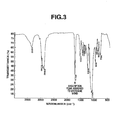
- the contents were heated and stirred at 80°C for 4 hours while the reaction process was monitored by IR spectroscopy. The completion of reaction was identified when the absorption peak assigned to an isocyanate group in the reactant disappeared and the absorption peak assigned to a urethane bond was observed instead.
- FIG. 1 is an IR spectrum of the reactant prior to reaction
- FIG. 2 is an IR spectrum of an intermediate during the reaction process
- FIG. 3 is an IR spectrum of the compound at the end of reaction.
- a 1-L separable flask equipped with a stirrer, reflux condenser, dropping funnel and thermometer was charged with 100 g of polyglycerin polyglycidyl ether having an epoxy equivalent of 168 (SR-4GL, Sakamoto Yakuhin Kogyo Co., Ltd.) and 0.6 g of dioctyltin oxide and heated at 80°C.
- 49.0 g of 3-isocyanatopropyltriethoxysilane was added dropwise. The contents were heated and stirred at 80°C for 2 hours while the reaction process was monitored by IR spectroscopy.
- a 1-L separable flask equipped with a stirrer, reflux condenser, dropping funnel and thermometer was charged with 100 g of polyglycerin polyglycidyl ether having an epoxy equivalent of 168 (SR-4GL, Sakamoto Yakuhin Kogyo Co., Ltd.) and heated at 80°C.
- polyglycerin polyglycidyl ether having an epoxy equivalent of 168 SR-4GL, Sakamoto Yakuhin Kogyo Co., Ltd.
- To the flask 24.5 g of 3-isocyanatopropyltriethoxysilane was added dropwise. The contents were heated and stirred at 80°C for 4 hours while the reaction process was monitored by IR spectroscopy. The completion of reaction was identified when the absorption peak assigned to an isocyanate group in the reactant disappeared and the absorption peak assigned to a urethane bond was observed instead.
- a 1-L separable flask equipped with a stirrer, reflux condenser, dropping funnel and thermometer was charged with 100 g of polyglycerin polyglycidyl ether having an epoxy equivalent of 168 (SR-4GL, Sakamoto Yakuhin Kogyo Co., Ltd.) and heated at 80°C.
- polyglycerin polyglycidyl ether having an epoxy equivalent of 168 SR-4GL, Sakamoto Yakuhin Kogyo Co., Ltd.
- SR-4GL Sakamoto Yakuhin Kogyo Co., Ltd.
- 3-isocyanatopropyltriethoxysilane was added dropwise.
- the contents were heated and stirred at 80°C for 4 hours while the reaction process was monitored by IR spectroscopy. The completion of reaction was identified when the absorption peak assigned to an isocyanate group in the reactant disappeared and the absorption peak assigned to a urethane bond was observed instead.
- a 1-L separable flask equipped with a stirrer, reflux condenser, dropping funnel and thermometer was charged with 100 g of polyglycerin polyglycidyl ether having an epoxy equivalent of 172 (Denacol EX-1310, Nagase ChemteX Corp.) and heated at 80°C.
- polyglycerin polyglycidyl ether having an epoxy equivalent of 172 (Denacol EX-1310, Nagase ChemteX Corp.) and heated at 80°C.
- 49.7 g of 3-isocyanatopropyltriethoxysilane was added dropwise.
- the contents were heated and stirred at 80°C for 4 hours while the reaction process was monitored by IR spectroscopy. The completion of reaction was identified when the absorption peak assigned to an isocyanate group in the reactant disappeared and the absorption peak assigned to a urethane bond was observed instead.
- a 1-L separable flask equipped with a stirrer, reflux condenser, dropping funnel and thermometer was charged with 100 g of polyglycerin polyglycidyl ether having an epoxy equivalent of 172 (Denacol EX-1410, Nagase ChemteX Corp.) and heated at 80°C.
- polyglycerin polyglycidyl ether having an epoxy equivalent of 172 (Denacol EX-1410, Nagase ChemteX Corp.) and heated at 80°C.
- 52.2 g of 3-isocyanatopropyltriethoxysilane was added dropwise.
- the contents were heated and stirred at 80°C for 4 hours while the reaction process was monitored by IR spectroscopy. The completion of reaction was identified when the absorption peak assigned to an isocyanate group in the reactant disappeared and the absorption peak assigned to a urethane bond was observed instead.
- a 1-L separable flask equipped with a stirrer, reflux condenser, dropping funnel and thermometer was charged with 100 g of polyglycerin polyglycidyl ether having an epoxy equivalent of 172 (Denacol EX-1610, Nagase ChemteX Corp.) and heated at 80°C.
- polyglycerin polyglycidyl ether having an epoxy equivalent of 172 (Denacol EX-1610, Nagase ChemteX Corp.) and heated at 80°C.
- 49.9 g of 3-isocyanatopropyltriethoxysilane was added dropwise.
- the contents were heated and stirred at 80°C for 4 hours while the reaction process was monitored by IR spectroscopy. The completion of reaction was identified when the absorption peak assigned to an isocyanate group in the reactant disappeared and the absorption peak assigned to a urethane bond was observed instead.
- a 1-L separable flask equipped with a stirrer, reflux condenser, dropping funnel and thermometer was charged with 100 g of sorbitol polyglycidyl ether having an epoxy equivalent of 220 (Denacol EX-610U, Nagase ChemteX Corp.) and heated at 80°C.
- sorbitol polyglycidyl ether having an epoxy equivalent of 220 (Denacol EX-610U, Nagase ChemteX Corp.) and heated at 80°C.
- 39.8 g of 3-isocyanatopropyltriethoxysilane was added dropwise.
- the contents were heated and stirred at 80°C for 4 hours while the reaction process was monitored by IR spectroscopy. The completion of reaction was identified when the absorption peak assigned to an isocyanate group in the reactant disappeared and the absorption peak assigned to a urethane bond was observed instead.
- Coating compositions were prepared by dissolving the polyfunctional epoxy-containing organosilicon compounds obtained in Examples 1 to 8 and ⁇ -glycidoxypropyltriethoxysilane ( KBE-403 by Shin-Etsu Chemical Co., Ltd. ) as a comparative example in methanol in an active component concentration of 10 wt%. They were used as a primer in an adhesion test to be described below.
- each of the coating compositions was brush coated and dried at 120°C for 5 minutes.
- the polyurethane elastomer was brush coated thereon and dried at 100°C for 10 minutes.
- the polyurethane coating was scribed in orthogonal directions at intervals of 1 mm to define 100 square sections.
- Adhesive (Cellophane®) tape was pressure attached to the coating and then peeled. The number of peeled sections was counted, based on which the enhancement by primer of adhesion between urethane resin and inorganic substrate was evaluated.
- the results of the adhesion test including Examples and Comparative Example are shown in Tables 1 to 3.
- the number of peeled sections was zero (0) on any of the substrates, indicating excellent adhesion enhancement.
Landscapes
- Chemical & Material Sciences (AREA)
- Organic Chemistry (AREA)
- Paints Or Removers (AREA)
- Epoxy Resins (AREA)
- Polyurethanes Or Polyureas (AREA)
Abstract
Description
- This invention relates to novel polyfunctional epoxy-containing organosilicon compounds useful as epoxy silane coupling agents, and a method for preparing the same. More particularly, it relates to polyfunctional epoxy-containing organosilicon compounds having a plurality of epoxy groups and hydrolyzable silyl groups, which are water-soluble and fully reactive with organic resins and inorganic materials, and a method for preparing the same. It also relates to coating compositions comprising the organosilicon compounds and articles coated therewith.
- Silane coupling agents are compounds including both a moiety which is reactive with inorganic matter and another moiety which is fully reactive with and soluble in organic matter, within their molecule. Since they serve as adhesive aids at the interface between inorganic and organic materials, they are widely employed as a composite resin modifier. The majority of silane coupling agents and partial hydrolytic condensates thereof, often referred to as siloxane oligomers, are compounds containing at least two alkoxysilyl groups per organic functional group, whereas only a few compounds having at least two organic functional groups per alkoxysilyl group are available.
- One exemplary organic compound containing at least two epoxy groups per alkoxysilyl group is disclosed in
JP-A 06-172370 -
- Patent Document 1:
JP-A H06-172370 - An object of the invention is to provide polyfunctional epoxy-containing organosilicon compounds having a plurality of epoxy groups capable of reacting with an organic resin portion to form bonds therewith, and useful as a primer or resin modifier; a method for preparing the compounds, a coating composition comprising the compounds, and an article coated therewith.
- The inventors have succeeded in synthesizing an organosilicon compound having a plurality of epoxy groups per alkoxysilyl group by combining a polyglycidyl ether compound having a plurality of epoxy groups and a hydroxy group in the molecule with a silane coupling agent having an isocyanate group such that the hydroxyl group on the polyglycidyl ether compound may react with the isocyanate group on the silane coupling agent. In the organosilicon compound, the ratio of epoxy groups to alkoxysilyl groups may be adjusted as desired.
- In a first aspect, the invention provides a polyfunctional epoxy-containing organosilicon compound having the general formula (1):


- In a second aspect, the invention provides a polyfunctional epoxy-containing organosilicon compound having the general formula (3):

- In a third aspect, the invention provides a method for preparing a polyfunctional epoxy-containing organosilicon compound having at least two epoxy groups and at least one alkoxysilyl group in the molecule, comprising the step of combining a compound having at least two epoxy groups and at least one hydroxy group in the molecule with a silane coupling agent having an isocyanate group and at least one alkoxy group such that the isocyanate group reacts with the hydroxyl group.
- In one preferred embodiment, the compound having at least two epoxy groups and at least one hydroxy group in the molecule is a (poly)glycerin polyglycidyl ether, and the resulting polyfunctional epoxy-containing organosilicon compound is a polyfunctional epoxy-containing organosilicon compound of formula (1). In another preferred embodiment, the compound having at least two epoxy groups and at least one hydroxy group in the molecule is a sorbitol polyglycidyl ether, and the resulting polyfunctional epoxy-containing organosilicon compound is a polyfunctional epoxy-containing organosilicon compound of formula (3).
- In a fourth aspect, the invention provides a coating composition comprising the polyfunctional epoxy-containing organosilicon compound of formula (1) or (3) and water and/or an organic solvent.
- An article coated with the coating composition is also contemplated herein.
- The polyfunctional epoxy-containing organosilicon compound has a plurality of epoxy groups per hydrolyzable silyl group in the molecule, offers an increased number of reactive sites with an organic resin, as compared with conventional epoxy silane coupling agents, thus achieves an enhanced bond strength to the organic resin. When glass fibers, silica and other inorganic fillers, ceramics, and metal substrates are coated and treated with the polyfunctional epoxy-containing organosilicon compound, significant adhesion improvements are achieved as compared with the conventional epoxy silane coupling agents containing epoxy and silyl groups in a 1:1 ratio within the molecule.
-
-
FIG. 1 is a diagram showing an IR spectrum of a reactant prior to reaction in Example 1. -
FIG. 2 is a diagram showing an IR spectrum of an intermediate in Example 1. -
FIG. 3 is a diagram showing an IR spectrum of a compound at the end of reaction in Example 1. - As used herein, the notation (Cn-Cm) means a group containing from n to m carbon atoms per group.
- The first aspect of the invention provides a polyfunctional epoxy-containing organosilicon compound having the general formula (1):


- The second aspect of the invention provides a polyfunctional epoxy-containing organosilicon compound having the general formula (3):


- The subscripts "a" to "e" are preferably numbers in the range: 1 ≤ a ≤ 40, 4 ≤
b s 8, 0 ≤c s 8, 0 ≤d s 8, and 0 ≤ e ≤ 8; and more preferably 1 ≤ a ≤ 30, 4 ≤ b ≤ 5, 0 ≤ c ≤ 5, 0 ≤ d ≤ 5, and 0 ≤ e ≤ 5. - As noted above, "a" is at least 1. The compounds of formula (1) wherein a=1 are glycerin derivatives, although preference is given to polyglycerin derivatives of formula (1) wherein "a" is at least 2, more preferably at least 3, even more preferably at least 4, for example, diglycerin derivatives of a=2 and triglycerin derivatives of a=3 because an increased number of reactive sites are available. In formula (3), each of "c" to "e" is equal to or more than 0, and the sum c+d+e is preferably 0 to 25, and more preferably 3 to 20.
- In the compound of formula (1), a functional group ratio of glycidyl groups (A) to alkoxysilyl groups (B) on a molar basis is preferably in the range: 0.02 ≤ A/B s 100, more preferably 0.05 ≤ A/B ≤ 50, and even more preferably 0.1 s A/B ≤ 10. In case of A/B < 0.02, alkoxysilyl groups are in excess, such a design structure is difficult to synthesize, and products, if obtained, are less stable. In case of A/B > 100, few alkoxysilyl groups are contained, and little of the alkoxysilyl effect is developed.
- In the compound of formula (3), a functional group ratio of glycidyl groups (C) to alkoxysilyl groups (D) on a molar basis is preferably in the range: 0.1 ≤ C/D ≤ 9, and more preferably 0.2 ≤ C/D s 5.
- In the polyfunctional epoxy-containing organosilicon compound, some hydroxyl groups in the structure of a polyglycidyl ether compound having a plurality of epoxy groups have reacted with a silane coupling agent to form bonds. Specifically, a silane coupling agent having an isocyanate group (referred to as "isocyanatosilane") is used, and thus a urethane bond forms between hydroxyl and isocyanate.
- In another aspect of the invention, a polyfunctional epoxy-containing organosilicon compound is prepared by combining a polyglycidyl ether compound having at least two epoxy groups and at least one hydroxy group in the molecule with a silane coupling agent having an isocyanate group and at least one alkoxy group such that the isocyanate group on the coupling agent reacts with the hydroxyl group on the ether compound, thus yielding a polyfunctional epoxy-containing organosilicon compound having at least two epoxy groups and at least one alkoxysilyl group in the molecule.
- In preferred embodiments of the method, a (poly)glycerin polyglycidyl ether is used as the polyglycidyl ether compound having at least two epoxy groups and at least one hydroxy group in the molecule, then an organosilicon compound of formula (1) is obtained; and a sorbitol polyglycidyl ether is used as the polyglycidyl ether compound having at least two epoxy groups and at least one hydroxy group in the molecule, then an organosilicon compound of formula (3) is obtained.
- The (poly)glycerin polyglycidyl ether used herein typically has the general formula (4):

- The sorbitol polyglycidyl ether used herein typically has the general formula (5):

- These polyglycidyl ether compounds are commercially available. For example, the (poly)glycerin polyglycidyl ether is available under the trade name of SR-4GL from Sakamoto Yakuhin Kogyo Co., Ltd. and Denacol EX-1310, EX-1410 and EX-1610 from Nagase ChemteX Corp. The sorbitol polyglycidyl ether is available under the trade name of Denacol EX-610U from Nagase ChemteX Corp.
- Any silane coupling agent having a functional group which is non-reactive with an epoxy group, but selectively reactive with a hydroxyl group may be used for introducing hydrolyzable silyl groups. Inter alia, isocyanatosilanes are preferred.
- Illustrative examples of the isocyanatosilane include 3-isocyanatopropyltrimethoxysilane,
- 3-isocyanatopropylmethyldimethoxysilane,
- 3-isocyanatopropyldimethylmethoxysilane,
- 3-isocyanatopropyltriethoxysilane,
- 3-isocyanatopropylmethyldiethoxysilane, and
- 3-isocyanatopropyldimethylethoxysilane. Inter alia, 3-isocyanatopropyltriethoxysilane and
- 3-isocyanatopropyltrimethoxysilane are preferred.
- Preferably the polyglycidyl ether compound and the isocyanatosilane are combined in such a ratio that 0.01 to 1 mole, especially 0.1 to 1 mole of isocyanate groups on the isocyanatosilane are available per mole of hydroxyl groups on the polyglycidyl ether compound.
- While the polyfunctional epoxy-containing organosilicon compound is obtainable through reaction of the polyglycidyl ether compound with the isocyanatosilane, the reaction temperature is preferably in the range of 25 to 90°C, and more preferably 40 to 80°C. At temperatures below 25°C, reaction may proceed at a lower rate. At temperatures above 90°C, side reactions may occur, typically ester exchange may occur between hydroxyl groups on the polyglycidyl ether and alkoxysilyl sites on the isocyanatosilane to form an alcohol. The reaction time is generally 10 minutes to 24 hours, but not limited thereto.
- Upon reaction of the polyglycidyl ether compound with the isocyanatosilane, any solvent which is inert to isocyanate groups may be used. Suitable solvents include hydrocarbon solvents, aromatic solvents, ketone solvents, amide solvents, ester solvents, and ether solvents. Specifically, exemplary hydrocarbon solvents include pentane, hexane, heptane, octane, decane, and cyclohexane; exemplary aromatic solvents include benzene, toluene, and xylene; exemplary ketone solvents include acetone, methyl ethyl ketone, methyl isobutyl ketone, and cyclohexanone; exemplary amide solvents include formamide, dimethylformamide, pyrrolidone, and N-methylpyrrolidone; exemplary ester solvents include ethyl acetate, butyl acetate, and lactone; and exemplary ether solvents include diethyl ether, dibutyl ether, cyclopentyl methyl ether, tetrahydrofuran, and 1,4-dioxane.
- Upon reaction of the polyglycidyl ether compound with the isocyanatosilane, a catalyst may be used for increasing the reaction rate. Those catalysts which are generally used in urethane reaction may be used, for example, dibutyltin oxide, dioctyltin oxide, and tin(II) bis(2-ethylhexanoate). The catalyst is used in a catalytic amount, and specifically 0.001 to 1% by weight based on the total weight of the polyglycidyl ether compound and isocyanatosilane.
- The polyfunctional epoxy-containing organosilicon compound thus obtained should preferably have a weight average molecular weight (Mw) of 200 to 10,000, and more preferably 300 to 8,000, as measured by gel permeation chromatography (GPC) versus polystyrene standards. A compound with too low Mw may be difficult to prepare whereas a compound with too high Mw may interfere with working.
- A further aspect of the invention is a coating composition comprising the polyfunctional epoxy-containing organosilicon compound as a primary component and a solvent. The solvent used herein is not particularly limited as long as the organosilicon compound may be dissolved therein. From the standpoints of safety, solubility and volatility, water and alcohols are preferred. Of the alcohols, methanol and ethanol are most preferred. It is acceptable to use water, alcohols and other solvents which are reactive with isocyanate groups because the isocyanate groups have been reacted at this point.
- The coating composition is preferably prepared such that the polyfunctional epoxy-containing organosilicon compound is present in an amount of 5 to 90% by weight, and more preferably 10 to 80% by weight of the overall composition, the balance being the solvent.
- The coating composition is applicable to various substrates. The substrates which may be coated and treated with the polyfunctional epoxy-containing organosilicon compound include inorganic materials which will react with hydrolyzable silyl groups to form bonds and organic resins which will react with epoxy groups to form bonds while their shape is not particularly limited. Typical inorganic materials include inorganic fillers such as (hollow) silica, titania, zirconia, and alumina, glass fibers and glass fiber articles such as glass cloth, glass tape, glass mat, and glass paper, ceramics, and metals. Typical organic resins include epoxy resins, phenolic resins, polyimide resins, and unsaturated polyester resins.
- Examples of the invention are given below by way of illustration and not by way of limitation. In Examples, the viscosity is measured at 25°C by a Brookfield rotational viscometer. Mw is a weight average molecular weight as measured by gel permeation chromatography (GPC) versus polystyrene standards. The epoxy equivalent (in g/mol) is a mass of an epoxy compound to provide 1 mole of epoxy group.
- A 1-L separable flask equipped with a stirrer, reflux condenser, dropping funnel and thermometer was charged with 100 g of polyglycerin polyglycidyl ether having an epoxy equivalent of 168 (SR-4GL, Sakamoto Yakuhin Kogyo Co., Ltd.) and heated at 80°C. To the flask, 49.0 g of 3-isocyanatopropyltriethoxysilane was added dropwise. The contents were heated and stirred at 80°C for 4 hours while the reaction process was monitored by IR spectroscopy. The completion of reaction was identified when the absorption peak assigned to an isocyanate group in the reactant disappeared and the absorption peak assigned to a urethane bond was observed instead. The reaction product was a pale yellow liquid having a Mw of 1,800, a viscosity of 1,074 mPa-s, and an epoxy equivalent of 265. It is a compound of formula (1) wherein "a" is 9 on average and a ratio A/B = 3.
FIG. 1 is an IR spectrum of the reactant prior to reaction,FIG. 2 is an IR spectrum of an intermediate during the reaction process, andFIG. 3 is an IR spectrum of the compound at the end of reaction. - A 1-L separable flask equipped with a stirrer, reflux condenser, dropping funnel and thermometer was charged with 100 g of polyglycerin polyglycidyl ether having an epoxy equivalent of 168 (SR-4GL, Sakamoto Yakuhin Kogyo Co., Ltd.) and 0.6 g of dioctyltin oxide and heated at 80°C. To the flask, 49.0 g of 3-isocyanatopropyltriethoxysilane was added dropwise. The contents were heated and stirred at 80°C for 2 hours while the reaction process was monitored by IR spectroscopy. The completion of reaction was identified when the absorption peak assigned to an isocyanate group in the reactant disappeared and the absorption peak assigned to a urethane bond was observed instead. The reaction product was a pale yellow liquid having a Mw of 1,800, a viscosity of 1,014 mPa-s, and an epoxy equivalent of 267. It is a compound of formula (1) wherein "a" is 9 on average and a ratio A/B = 3.
- A 1-L separable flask equipped with a stirrer, reflux condenser, dropping funnel and thermometer was charged with 100 g of polyglycerin polyglycidyl ether having an epoxy equivalent of 168 (SR-4GL, Sakamoto Yakuhin Kogyo Co., Ltd.) and heated at 80°C. To the flask, 24.5 g of 3-isocyanatopropyltriethoxysilane was added dropwise. The contents were heated and stirred at 80°C for 4 hours while the reaction process was monitored by IR spectroscopy. The completion of reaction was identified when the absorption peak assigned to an isocyanate group in the reactant disappeared and the absorption peak assigned to a urethane bond was observed instead. The reaction product was a pale yellow liquid having a Mw of 1,700, a viscosity of 1,184 mPa-s, and an epoxy equivalent of 219. It is a compound of formula (1) wherein "a" is 9 on average and a ratio A/B = 6.
- A 1-L separable flask equipped with a stirrer, reflux condenser, dropping funnel and thermometer was charged with 100 g of polyglycerin polyglycidyl ether having an epoxy equivalent of 168 (SR-4GL, Sakamoto Yakuhin Kogyo Co., Ltd.) and heated at 80°C. To the flask, 441.0 g of 3-isocyanatopropyltriethoxysilane was added dropwise. The contents were heated and stirred at 80°C for 4 hours while the reaction process was monitored by IR spectroscopy. The completion of reaction was identified when the absorption peak assigned to an isocyanate group in the reactant disappeared and the absorption peak assigned to a urethane bond was observed instead. The reaction product was a pale yellow liquid having a Mw of 2,500, a viscosity of 1,374 mPa-s, and an epoxy equivalent of 910. It is a compound of formula (1) wherein "a" is 9 on average and a ratio A/B = 0.3.
- A 1-L separable flask equipped with a stirrer, reflux condenser, dropping funnel and thermometer was charged with 100 g of polyglycerin polyglycidyl ether having an epoxy equivalent of 172 (Denacol EX-1310, Nagase ChemteX Corp.) and heated at 80°C. To the flask, 49.7 g of 3-isocyanatopropyltriethoxysilane was added dropwise. The contents were heated and stirred at 80°C for 4 hours while the reaction process was monitored by IR spectroscopy. The completion of reaction was identified when the absorption peak assigned to an isocyanate group in the reactant disappeared and the absorption peak assigned to a urethane bond was observed instead. The reaction product was a pale yellow liquid having a Mw of 1,870, a viscosity of 108 mPa-s, and an epoxy equivalent of 259. It is a compound of formula (1) wherein "a" is 7 on average and a ratio A/B = 3.
- A 1-L separable flask equipped with a stirrer, reflux condenser, dropping funnel and thermometer was charged with 100 g of polyglycerin polyglycidyl ether having an epoxy equivalent of 172 (Denacol EX-1410, Nagase ChemteX Corp.) and heated at 80°C. To the flask, 52.2 g of 3-isocyanatopropyltriethoxysilane was added dropwise. The contents were heated and stirred at 80°C for 4 hours while the reaction process was monitored by IR spectroscopy. The completion of reaction was identified when the absorption peak assigned to an isocyanate group in the reactant disappeared and the absorption peak assigned to a urethane bond was observed instead. The reaction product was a pale yellow liquid having a Mw of 1,700, a viscosity of 200 mPa-s, and an epoxy equivalent of 247. It is a compound of formula (1) wherein "a" is 7 on average and a ratio A/B = 3.
- A 1-L separable flask equipped with a stirrer, reflux condenser, dropping funnel and thermometer was charged with 100 g of polyglycerin polyglycidyl ether having an epoxy equivalent of 172 (Denacol EX-1610, Nagase ChemteX Corp.) and heated at 80°C. To the flask, 49.9 g of 3-isocyanatopropyltriethoxysilane was added dropwise. The contents were heated and stirred at 80°C for 4 hours while the reaction process was monitored by IR spectroscopy. The completion of reaction was identified when the absorption peak assigned to an isocyanate group in the reactant disappeared and the absorption peak assigned to a urethane bond was observed instead. The reaction product was a pale yellow liquid having a Mw of 3,800, a viscosity of 1,421 mPa-s, and an epoxy equivalent of 261. It is a compound of formula (1) wherein "a" is 16 on average and a ratio A/B = 3.
- A 1-L separable flask equipped with a stirrer, reflux condenser, dropping funnel and thermometer was charged with 100 g of sorbitol polyglycidyl ether having an epoxy equivalent of 220 (Denacol EX-610U, Nagase ChemteX Corp.) and heated at 80°C. To the flask, 39.8 g of 3-isocyanatopropyltriethoxysilane was added dropwise. The contents were heated and stirred at 80°C for 4 hours while the reaction process was monitored by IR spectroscopy. The completion of reaction was identified when the absorption peak assigned to an isocyanate group in the reactant disappeared and the absorption peak assigned to a urethane bond was observed instead. The reaction product was a pale yellow cloudy liquid having a Mw of 3,600, a viscosity of 1,114 mPa-s, and an epoxy equivalent of 315. It is a compound of formula (3) wherein b=4 and c=d=e=2, and a ratio C/D = 3.
- Coating compositions were prepared by dissolving the polyfunctional epoxy-containing organosilicon compounds obtained in Examples 1 to 8 and γ-glycidoxypropyltriethoxysilane (KBE-403 by Shin-Etsu Chemical Co., Ltd.) as a comparative example in methanol in an active component concentration of 10 wt%. They were used as a primer in an adhesion test to be described below.
- With stirring, 150 parts by weight of polyoxytetramethylene glycol having a number average molecular weight of 1,000 was mixed with 100 parts by weight of 1,6-xylene glycol, 0.5 part by weight of water, 200 parts by weight of hexamethylene diisocyanate, and 800 parts by weight of dimethylformamide. The mixture was heated at 90°C and stirred at the temperature for 2 hours for reaction. To the reaction mixture, 3 parts by weight of dibutylamine was added to quench the reaction. The excess of amine was neutralized with acetic anhydride. In this way, a polyurethane elastomer was obtained.
- To glass, iron and aluminum plates, each of the coating compositions (primers) was brush coated and dried at 120°C for 5 minutes. The polyurethane elastomer was brush coated thereon and dried at 100°C for 10 minutes. The polyurethane coating was scribed in orthogonal directions at intervals of 1 mm to define 100 square sections. Adhesive (Cellophane®) tape was pressure attached to the coating and then peeled. The number of peeled sections was counted, based on which the enhancement by primer of adhesion between urethane resin and inorganic substrate was evaluated. The results of the adhesion test including Examples and Comparative Example are shown in Tables 1 to 3.
Table 1 Substrate Primer active component Adhesion test Glass plate Example 1 100/100 Example 2 100/100 Example 3 100/100 Example 4 100/100 Example 5 100/100 Example 6 100/100 Example 7 100/100 Example 8 100/100 Comparative Example 60/100 Table 2 Substrate Primer active component Adhesion test Iron plate Example 1 100/100 Example 2 100/100 Example 3 100/100 Example 4 100/100 Example 5 100/100 Example 6 100/100 Example 7 100/100 Example 8 100/100 Comparative Example 40/100 Table 3 Substrate Primer active component Adhesion test Aluminum plate Example 1 100/100 Example 2 100/100 Example 3 100/100 Example 4 100/100 Example 5 100/100 Example 6 100/100 Example 7 100/100 Example 8 100/100 Comparative Example 40/100 - For the primers of Examples, the number of peeled sections was zero (0) on any of the substrates, indicating excellent adhesion enhancement.
- The foregoing Examples demonstrate that the polyfunctional epoxy-containing organosilicon compounds of the invention are effective in enhancing the bond at the organic/inorganic material interface.
Claims (7)
- A polyfunctional epoxy-containing organosilicon compound having the general formula (1):


- A polyfunctional epoxy-containing organosilicon compound having the general formula (3):


- A method for preparing a polyfunctional epoxy-containing organosilicon compound having at least two epoxy groups and at least one alkoxysilyl group in the molecule, comprising the step of combining a compound having at least two epoxy groups and at least one hydroxy group in the molecule with a silane coupling agent having an isocyanate group and at least one alkoxy group such that the isocyanate group reacts with the hydroxyl group.
- The method of claim 3 wherein the compound having at least two epoxy groups and at least one hydroxy group in the molecule is a (poly)glycerin polyglycidyl ether and the resulting polyfunctional epoxy-containing organosilicon compound is the polyfunctional epoxy-containing organosilicon compound of claim 1.
- The method of claim 3 wherein the compound having at least two epoxy groups and at least one hydroxy group in the molecule is a sorbitol polyglycidyl ether and the resulting polyfunctional epoxy-containing organosilicon compound is the polyfunctional epoxy-containing organosilicon compound of claim 2.
- A coating composition comprising the polyfunctional epoxy-containing organosilicon compound of claim 1 or 2 and water and/or an organic solvent.
- An article coated with the coating composition of claim 6.
Applications Claiming Priority (1)
| Application Number | Priority Date | Filing Date | Title |
|---|---|---|---|
| JP2008129488A JP5170414B2 (en) | 2008-05-16 | 2008-05-16 | Polyfunctional epoxy group-containing organosilicon compound, method for producing the same, coating agent composition, and article obtained by coating the composition |
Publications (2)
| Publication Number | Publication Date |
|---|---|
| EP2119721A1 true EP2119721A1 (en) | 2009-11-18 |
| EP2119721B1 EP2119721B1 (en) | 2012-06-20 |
Family
ID=40957582
Family Applications (1)
| Application Number | Title | Priority Date | Filing Date |
|---|---|---|---|
| EP09159978A Active EP2119721B1 (en) | 2008-05-16 | 2009-05-12 | Polyfunctional Epoxy-Containing Organosilicon Compound, Making Method, Coating Composition, and Coated Article |
Country Status (3)
| Country | Link |
|---|---|
| US (1) | US8207259B2 (en) |
| EP (1) | EP2119721B1 (en) |
| JP (1) | JP5170414B2 (en) |
Cited By (7)
| Publication number | Priority date | Publication date | Assignee | Title |
|---|---|---|---|---|
| EP2835373A4 (en) * | 2012-04-02 | 2015-11-18 | Korea Ind Tech Inst | EPOXY COMPOUND HAVING AN ALCOXYSILYL GROUP, COMPOSITION AND CURED MATERIAL COMPRISING THE SAME, USE THEREOF AND PROCESS FOR PREPARING THE EPOXY COMPOUND HAVING ALCOXYSILYL GROUP |
| US9534075B2 (en) | 2011-11-01 | 2017-01-03 | Korea Institute Of Industrial Technology | Isocyanurate epoxy compound having alkoxysilyl group, method of preparing same, composition including same, cured product of the composition, and use of the composition |
| US9670309B2 (en) | 2012-07-06 | 2017-06-06 | Korea Institute Of Industrial Technology | Novolac-based epoxy compound, production method for same, composition and cured article comprising same, and use for same |
| US9896535B2 (en) | 2011-08-25 | 2018-02-20 | Korea Institute Of Industrial Technology | Epoxy compound having alkoxysilyl group, method of preparing the same, composition and cured product comprising the same, and uses thereof |
| US9902803B2 (en) | 2012-03-14 | 2018-02-27 | Korea Institute Of Industrial Technology | Epoxy compound having alkoxy silyl group, composition comprising same, cured product, use thereof and method for preparing epoxy compound having alkoxy silyl group |
| US10324375B2 (en) * | 2012-12-27 | 2019-06-18 | Hitachi Chemical Company, Ltd. | Photosensitive resin composition, photosensitive film, and method for forming resist pattern |
| US11840601B2 (en) | 2019-11-15 | 2023-12-12 | Korea Institute Of Industrial Technology | Composition of alkoxysilyl-functionalized epoxy resin and composite thereof |
Families Citing this family (7)
| Publication number | Priority date | Publication date | Assignee | Title |
|---|---|---|---|---|
| JP5803870B2 (en) * | 2012-10-03 | 2015-11-04 | 信越化学工業株式会社 | Adhesive composition containing polyfunctional epoxy group-containing organosilicon compound, adhesive polarizing plate, and liquid crystal display device |
| EP2906647B1 (en) | 2012-10-10 | 2020-07-29 | Huntsman Advanced Materials Americas LLC | Uv resistant epoxy structural adhesive |
| JP6153631B2 (en) * | 2013-02-25 | 2017-06-28 | コリア インスティチュート オブ インダストリアル テクノロジー | Epoxy compound having alkoxysilyl group, process for producing the same, composition and cured product containing the same, and use thereof |
| JP6540452B2 (en) * | 2015-10-27 | 2019-07-10 | 住友ベークライト株式会社 | Resin composition for circuit board, prepreg, metal-clad laminate, circuit board, and semiconductor package |
| WO2017154405A1 (en) | 2016-03-10 | 2017-09-14 | 信越化学工業株式会社 | Organosilicon compound and production process therefor |
| JP7746005B2 (en) * | 2020-11-18 | 2025-09-30 | 理想テクノロジーズ株式会社 | Inkjet head and inkjet printer |
| JP7708541B2 (en) * | 2020-11-18 | 2025-07-15 | 理想テクノロジーズ株式会社 | Inkjet head and inkjet printer |
Citations (3)
| Publication number | Priority date | Publication date | Assignee | Title |
|---|---|---|---|---|
| GB834326A (en) * | 1956-10-29 | 1960-05-04 | Midland Silicones Ltd | Organosilicon compounds |
| JPH06172370A (en) | 1992-12-07 | 1994-06-21 | Shin Etsu Chem Co Ltd | Organosilicon compound and inorganic filler |
| WO2008112150A1 (en) * | 2007-03-09 | 2008-09-18 | Momentive Performance Materials Inc. | Epoxysilanes, processes for their manufacture and curable compositions containing same |
Family Cites Families (2)
| Publication number | Priority date | Publication date | Assignee | Title |
|---|---|---|---|---|
| US6426148B1 (en) * | 1998-07-23 | 2002-07-30 | E. I. Du Pont De Nemours & Company | Oligomeric epoxy/isocyanate systems |
| US7608336B2 (en) * | 2002-11-28 | 2009-10-27 | Nippon Kayaku Kabushiki Kaisha | Flame-retardant epoxy resin composition and cured product obtained therefrom |
-
2008
- 2008-05-16 JP JP2008129488A patent/JP5170414B2/en active Active
-
2009
- 2009-05-08 US US12/437,937 patent/US8207259B2/en active Active
- 2009-05-12 EP EP09159978A patent/EP2119721B1/en active Active
Patent Citations (3)
| Publication number | Priority date | Publication date | Assignee | Title |
|---|---|---|---|---|
| GB834326A (en) * | 1956-10-29 | 1960-05-04 | Midland Silicones Ltd | Organosilicon compounds |
| JPH06172370A (en) | 1992-12-07 | 1994-06-21 | Shin Etsu Chem Co Ltd | Organosilicon compound and inorganic filler |
| WO2008112150A1 (en) * | 2007-03-09 | 2008-09-18 | Momentive Performance Materials Inc. | Epoxysilanes, processes for their manufacture and curable compositions containing same |
Cited By (8)
| Publication number | Priority date | Publication date | Assignee | Title |
|---|---|---|---|---|
| US9896535B2 (en) | 2011-08-25 | 2018-02-20 | Korea Institute Of Industrial Technology | Epoxy compound having alkoxysilyl group, method of preparing the same, composition and cured product comprising the same, and uses thereof |
| US9534075B2 (en) | 2011-11-01 | 2017-01-03 | Korea Institute Of Industrial Technology | Isocyanurate epoxy compound having alkoxysilyl group, method of preparing same, composition including same, cured product of the composition, and use of the composition |
| US9902803B2 (en) | 2012-03-14 | 2018-02-27 | Korea Institute Of Industrial Technology | Epoxy compound having alkoxy silyl group, composition comprising same, cured product, use thereof and method for preparing epoxy compound having alkoxy silyl group |
| EP2835373A4 (en) * | 2012-04-02 | 2015-11-18 | Korea Ind Tech Inst | EPOXY COMPOUND HAVING AN ALCOXYSILYL GROUP, COMPOSITION AND CURED MATERIAL COMPRISING THE SAME, USE THEREOF AND PROCESS FOR PREPARING THE EPOXY COMPOUND HAVING ALCOXYSILYL GROUP |
| US10689482B2 (en) | 2012-04-02 | 2020-06-23 | Korea Institute Of Industrial Technology | Epoxy compound having alkoxysilyl group, composition and hardened material comprising same, use for same, and production method for epoxy compound having alkoxysilyl group |
| US9670309B2 (en) | 2012-07-06 | 2017-06-06 | Korea Institute Of Industrial Technology | Novolac-based epoxy compound, production method for same, composition and cured article comprising same, and use for same |
| US10324375B2 (en) * | 2012-12-27 | 2019-06-18 | Hitachi Chemical Company, Ltd. | Photosensitive resin composition, photosensitive film, and method for forming resist pattern |
| US11840601B2 (en) | 2019-11-15 | 2023-12-12 | Korea Institute Of Industrial Technology | Composition of alkoxysilyl-functionalized epoxy resin and composite thereof |
Also Published As
| Publication number | Publication date |
|---|---|
| JP5170414B2 (en) | 2013-03-27 |
| US20090286924A1 (en) | 2009-11-19 |
| JP2009275015A (en) | 2009-11-26 |
| EP2119721B1 (en) | 2012-06-20 |
| US8207259B2 (en) | 2012-06-26 |
Similar Documents
| Publication | Publication Date | Title |
|---|---|---|
| EP2119721B1 (en) | Polyfunctional Epoxy-Containing Organosilicon Compound, Making Method, Coating Composition, and Coated Article | |
| US10899926B2 (en) | Curable composition | |
| DK2636696T3 (en) | Modified alkoxylation products having at least one non-terminal alkoxysilyl group and containing several urethane groups and their use | |
| US10428252B2 (en) | Two-component composition | |
| US7060760B2 (en) | Silane-terminated polydiorganosiloxane urethane copolymer | |
| DK3050910T3 (en) | MODIFIED ALCOXYLING PRODUCTS, WHICH HAVE AT LEAST A NON-TERMINAL ALCOXYSILYL GROUP, WITH INCREASED STOCK STABILITY AND IMPROVED EXTENSION, AND THE POLYMES USED THEREOF | |
| US10100148B2 (en) | Use of guanidine reaction products in the production of polyurethane systems | |
| EP2588511B1 (en) | Low viscosity silyl-modified polymers | |
| EP3784718B1 (en) | Process for the preparation of hydroxyl-functionalized polyetherpolysiloxane block copolymers | |
| EP3594220B1 (en) | Organosilicon compound and method for producing same | |
| US10683442B2 (en) | Self-supporting adhesive body for structural bonds | |
| CN108587548A (en) | A kind of Silante terminated modified polycarbonate polyurethane adhesive resin and its preparation method and application | |
| EP3594261B1 (en) | Polyoxyalkylene group-containing organosilicon compound and method for producing same | |
| EP1564267B1 (en) | Resin composition for use in a coating composition and method of preparing the same | |
| EP4223821A1 (en) | Novel epoxy-urethane compounds and their thermosetting polymers | |
| EP1178069A1 (en) | A process for preparation of organosilicon compositions | |
| TW200407347A (en) | Moisture-curable, polyether urethanes with reactive silane groups and their use as sealants, adhesives and coatings | |
| TW200404831A (en) | Moisture-curable, polyether urethanes with reactive silane groups and their use as sealants, adhesives and coatings | |
| EP4656671A1 (en) | Q-t-siloxane-based polymeric compositions with aminophenyl, isocyanate or epoxide functionality, and method for preparing same | |
| US12054644B2 (en) | Universal adhesion promoter based on organofunctional modified polybutadienes | |
| EP4223820A1 (en) | Glycidyl urea compounds and their thermosetting polymers | |
| JPH02233667A (en) | Polyoxazolidine and preparation thereof | |
| EP4613795A1 (en) | Tin-free compositions containing silane-terminated polymers | |
| US20220363869A1 (en) | Adhesive composition containing organic silicon compound | |
| JPH0219866B2 (en) |
Legal Events
| Date | Code | Title | Description |
|---|---|---|---|
| PUAI | Public reference made under article 153(3) epc to a published international application that has entered the european phase |
Free format text: ORIGINAL CODE: 0009012 |
|
| AK | Designated contracting states |
Kind code of ref document: A1 Designated state(s): AT BE BG CH CY CZ DE DK EE ES FI FR GB GR HR HU IE IS IT LI LT LU LV MC MK MT NL NO PL PT RO SE SI SK TR |
|
| 17P | Request for examination filed |
Effective date: 20100512 |
|
| 17Q | First examination report despatched |
Effective date: 20100802 |
|
| GRAP | Despatch of communication of intention to grant a patent |
Free format text: ORIGINAL CODE: EPIDOSNIGR1 |
|
| RIN1 | Information on inventor provided before grant (corrected) |
Inventor name: TSUCHIDA, KAZUHIRO |
|
| GRAS | Grant fee paid |
Free format text: ORIGINAL CODE: EPIDOSNIGR3 |
|
| GRAA | (expected) grant |
Free format text: ORIGINAL CODE: 0009210 |
|
| AK | Designated contracting states |
Kind code of ref document: B1 Designated state(s): AT BE BG CH CY CZ DE DK EE ES FI FR GB GR HR HU IE IS IT LI LT LU LV MC MK MT NL NO PL PT RO SE SI SK TR |
|
| REG | Reference to a national code |
Ref country code: GB Ref legal event code: FG4D |
|
| REG | Reference to a national code |
Ref country code: CH Ref legal event code: EP |
|
| REG | Reference to a national code |
Ref country code: AT Ref legal event code: REF Ref document number: 563032 Country of ref document: AT Kind code of ref document: T Effective date: 20120715 |
|
| REG | Reference to a national code |
Ref country code: IE Ref legal event code: FG4D |
|
| REG | Reference to a national code |
Ref country code: DE Ref legal event code: R096 Ref document number: 602009007638 Country of ref document: DE Effective date: 20120816 |
|
| PG25 | Lapsed in a contracting state [announced via postgrant information from national office to epo] |
Ref country code: FI Free format text: LAPSE BECAUSE OF FAILURE TO SUBMIT A TRANSLATION OF THE DESCRIPTION OR TO PAY THE FEE WITHIN THE PRESCRIBED TIME-LIMIT Effective date: 20120620 Ref country code: NO Free format text: LAPSE BECAUSE OF FAILURE TO SUBMIT A TRANSLATION OF THE DESCRIPTION OR TO PAY THE FEE WITHIN THE PRESCRIBED TIME-LIMIT Effective date: 20120920 Ref country code: LT Free format text: LAPSE BECAUSE OF FAILURE TO SUBMIT A TRANSLATION OF THE DESCRIPTION OR TO PAY THE FEE WITHIN THE PRESCRIBED TIME-LIMIT Effective date: 20120620 Ref country code: SE Free format text: LAPSE BECAUSE OF FAILURE TO SUBMIT A TRANSLATION OF THE DESCRIPTION OR TO PAY THE FEE WITHIN THE PRESCRIBED TIME-LIMIT Effective date: 20120620 |
|
| REG | Reference to a national code |
Ref country code: NL Ref legal event code: VDEP Effective date: 20120620 |
|
| REG | Reference to a national code |
Ref country code: AT Ref legal event code: MK05 Ref document number: 563032 Country of ref document: AT Kind code of ref document: T Effective date: 20120620 |
|
| REG | Reference to a national code |
Ref country code: LT Ref legal event code: MG4D Effective date: 20120620 |
|
| PG25 | Lapsed in a contracting state [announced via postgrant information from national office to epo] |
Ref country code: HR Free format text: LAPSE BECAUSE OF FAILURE TO SUBMIT A TRANSLATION OF THE DESCRIPTION OR TO PAY THE FEE WITHIN THE PRESCRIBED TIME-LIMIT Effective date: 20120620 Ref country code: GR Free format text: LAPSE BECAUSE OF FAILURE TO SUBMIT A TRANSLATION OF THE DESCRIPTION OR TO PAY THE FEE WITHIN THE PRESCRIBED TIME-LIMIT Effective date: 20120921 Ref country code: SI Free format text: LAPSE BECAUSE OF FAILURE TO SUBMIT A TRANSLATION OF THE DESCRIPTION OR TO PAY THE FEE WITHIN THE PRESCRIBED TIME-LIMIT Effective date: 20120620 Ref country code: LV Free format text: LAPSE BECAUSE OF FAILURE TO SUBMIT A TRANSLATION OF THE DESCRIPTION OR TO PAY THE FEE WITHIN THE PRESCRIBED TIME-LIMIT Effective date: 20120620 |
|
| PG25 | Lapsed in a contracting state [announced via postgrant information from national office to epo] |
Ref country code: IS Free format text: LAPSE BECAUSE OF FAILURE TO SUBMIT A TRANSLATION OF THE DESCRIPTION OR TO PAY THE FEE WITHIN THE PRESCRIBED TIME-LIMIT Effective date: 20121020 Ref country code: SK Free format text: LAPSE BECAUSE OF FAILURE TO SUBMIT A TRANSLATION OF THE DESCRIPTION OR TO PAY THE FEE WITHIN THE PRESCRIBED TIME-LIMIT Effective date: 20120620 Ref country code: EE Free format text: LAPSE BECAUSE OF FAILURE TO SUBMIT A TRANSLATION OF THE DESCRIPTION OR TO PAY THE FEE WITHIN THE PRESCRIBED TIME-LIMIT Effective date: 20120620 Ref country code: CY Free format text: LAPSE BECAUSE OF FAILURE TO SUBMIT A TRANSLATION OF THE DESCRIPTION OR TO PAY THE FEE WITHIN THE PRESCRIBED TIME-LIMIT Effective date: 20120620 Ref country code: RO Free format text: LAPSE BECAUSE OF FAILURE TO SUBMIT A TRANSLATION OF THE DESCRIPTION OR TO PAY THE FEE WITHIN THE PRESCRIBED TIME-LIMIT Effective date: 20120620 Ref country code: BE Free format text: LAPSE BECAUSE OF FAILURE TO SUBMIT A TRANSLATION OF THE DESCRIPTION OR TO PAY THE FEE WITHIN THE PRESCRIBED TIME-LIMIT Effective date: 20120620 Ref country code: CZ Free format text: LAPSE BECAUSE OF FAILURE TO SUBMIT A TRANSLATION OF THE DESCRIPTION OR TO PAY THE FEE WITHIN THE PRESCRIBED TIME-LIMIT Effective date: 20120620 Ref country code: AT Free format text: LAPSE BECAUSE OF FAILURE TO SUBMIT A TRANSLATION OF THE DESCRIPTION OR TO PAY THE FEE WITHIN THE PRESCRIBED TIME-LIMIT Effective date: 20120620 |
|
| PG25 | Lapsed in a contracting state [announced via postgrant information from national office to epo] |
Ref country code: PT Free format text: LAPSE BECAUSE OF FAILURE TO SUBMIT A TRANSLATION OF THE DESCRIPTION OR TO PAY THE FEE WITHIN THE PRESCRIBED TIME-LIMIT Effective date: 20121022 Ref country code: IT Free format text: LAPSE BECAUSE OF FAILURE TO SUBMIT A TRANSLATION OF THE DESCRIPTION OR TO PAY THE FEE WITHIN THE PRESCRIBED TIME-LIMIT Effective date: 20120620 Ref country code: PL Free format text: LAPSE BECAUSE OF FAILURE TO SUBMIT A TRANSLATION OF THE DESCRIPTION OR TO PAY THE FEE WITHIN THE PRESCRIBED TIME-LIMIT Effective date: 20120620 |
|
| PG25 | Lapsed in a contracting state [announced via postgrant information from national office to epo] |
Ref country code: NL Free format text: LAPSE BECAUSE OF FAILURE TO SUBMIT A TRANSLATION OF THE DESCRIPTION OR TO PAY THE FEE WITHIN THE PRESCRIBED TIME-LIMIT Effective date: 20120620 |
|
| PLBE | No opposition filed within time limit |
Free format text: ORIGINAL CODE: 0009261 |
|
| STAA | Information on the status of an ep patent application or granted ep patent |
Free format text: STATUS: NO OPPOSITION FILED WITHIN TIME LIMIT |
|
| PG25 | Lapsed in a contracting state [announced via postgrant information from national office to epo] |
Ref country code: ES Free format text: LAPSE BECAUSE OF FAILURE TO SUBMIT A TRANSLATION OF THE DESCRIPTION OR TO PAY THE FEE WITHIN THE PRESCRIBED TIME-LIMIT Effective date: 20121001 Ref country code: DK Free format text: LAPSE BECAUSE OF FAILURE TO SUBMIT A TRANSLATION OF THE DESCRIPTION OR TO PAY THE FEE WITHIN THE PRESCRIBED TIME-LIMIT Effective date: 20120620 |
|
| 26N | No opposition filed |
Effective date: 20130321 |
|
| REG | Reference to a national code |
Ref country code: DE Ref legal event code: R097 Ref document number: 602009007638 Country of ref document: DE Effective date: 20130321 |
|
| PG25 | Lapsed in a contracting state [announced via postgrant information from national office to epo] |
Ref country code: BG Free format text: LAPSE BECAUSE OF FAILURE TO SUBMIT A TRANSLATION OF THE DESCRIPTION OR TO PAY THE FEE WITHIN THE PRESCRIBED TIME-LIMIT Effective date: 20120920 |
|
| PG25 | Lapsed in a contracting state [announced via postgrant information from national office to epo] |
Ref country code: MC Free format text: LAPSE BECAUSE OF FAILURE TO SUBMIT A TRANSLATION OF THE DESCRIPTION OR TO PAY THE FEE WITHIN THE PRESCRIBED TIME-LIMIT Effective date: 20120620 |
|
| REG | Reference to a national code |
Ref country code: CH Ref legal event code: PL |
|
| PG25 | Lapsed in a contracting state [announced via postgrant information from national office to epo] |
Ref country code: CH Free format text: LAPSE BECAUSE OF NON-PAYMENT OF DUE FEES Effective date: 20130531 Ref country code: LI Free format text: LAPSE BECAUSE OF NON-PAYMENT OF DUE FEES Effective date: 20130531 |
|
| REG | Reference to a national code |
Ref country code: IE Ref legal event code: MM4A |
|
| PG25 | Lapsed in a contracting state [announced via postgrant information from national office to epo] |
Ref country code: IE Free format text: LAPSE BECAUSE OF NON-PAYMENT OF DUE FEES Effective date: 20130512 |
|
| PG25 | Lapsed in a contracting state [announced via postgrant information from national office to epo] |
Ref country code: MT Free format text: LAPSE BECAUSE OF FAILURE TO SUBMIT A TRANSLATION OF THE DESCRIPTION OR TO PAY THE FEE WITHIN THE PRESCRIBED TIME-LIMIT Effective date: 20120620 |
|
| PG25 | Lapsed in a contracting state [announced via postgrant information from national office to epo] |
Ref country code: TR Free format text: LAPSE BECAUSE OF FAILURE TO SUBMIT A TRANSLATION OF THE DESCRIPTION OR TO PAY THE FEE WITHIN THE PRESCRIBED TIME-LIMIT Effective date: 20120620 |
|
| PG25 | Lapsed in a contracting state [announced via postgrant information from national office to epo] |
Ref country code: LU Free format text: LAPSE BECAUSE OF NON-PAYMENT OF DUE FEES Effective date: 20130512 Ref country code: HU Free format text: LAPSE BECAUSE OF FAILURE TO SUBMIT A TRANSLATION OF THE DESCRIPTION OR TO PAY THE FEE WITHIN THE PRESCRIBED TIME-LIMIT; INVALID AB INITIO Effective date: 20090512 Ref country code: MK Free format text: LAPSE BECAUSE OF FAILURE TO SUBMIT A TRANSLATION OF THE DESCRIPTION OR TO PAY THE FEE WITHIN THE PRESCRIBED TIME-LIMIT Effective date: 20120620 |
|
| REG | Reference to a national code |
Ref country code: FR Ref legal event code: PLFP Year of fee payment: 8 |
|
| REG | Reference to a national code |
Ref country code: FR Ref legal event code: PLFP Year of fee payment: 9 |
|
| REG | Reference to a national code |
Ref country code: FR Ref legal event code: PLFP Year of fee payment: 10 |
|
| REG | Reference to a national code |
Ref country code: DE Ref legal event code: R082 Ref document number: 602009007638 Country of ref document: DE Representative=s name: HL KEMPNER PATENTANWAELTE, SOLICITORS (ENGLAND, DE Ref country code: DE Ref legal event code: R082 Ref document number: 602009007638 Country of ref document: DE Representative=s name: HL KEMPNER PARTG MBB, DE Ref country code: DE Ref legal event code: R082 Ref document number: 602009007638 Country of ref document: DE Representative=s name: HL KEMPNER PATENTANWALT, RECHTSANWALT, SOLICIT, DE |
|
| REG | Reference to a national code |
Ref country code: FR Ref legal event code: PLFP Year of fee payment: 15 |
|
| PGFP | Annual fee paid to national office [announced via postgrant information from national office to epo] |
Ref country code: DE Payment date: 20250402 Year of fee payment: 17 |
|
| PGFP | Annual fee paid to national office [announced via postgrant information from national office to epo] |
Ref country code: FR Payment date: 20250401 Year of fee payment: 17 |
|
| PGFP | Annual fee paid to national office [announced via postgrant information from national office to epo] |
Ref country code: GB Payment date: 20260323 Year of fee payment: 18 |