EP2116951A2 - System and method for effectively performing data restore/migration procedures - Google Patents
System and method for effectively performing data restore/migration procedures Download PDFInfo
- Publication number
- EP2116951A2 EP2116951A2 EP09250878A EP09250878A EP2116951A2 EP 2116951 A2 EP2116951 A2 EP 2116951A2 EP 09250878 A EP09250878 A EP 09250878A EP 09250878 A EP09250878 A EP 09250878A EP 2116951 A2 EP2116951 A2 EP 2116951A2
- Authority
- EP
- European Patent Office
- Prior art keywords
- server
- vendor
- source device
- user data
- temporary key
- Prior art date
- Legal status (The legal status is an assumption and is not a legal conclusion. Google has not performed a legal analysis and makes no representation as to the accuracy of the status listed.)
- Ceased
Links
Images


Classifications
-
- G—PHYSICS
- G06—COMPUTING OR CALCULATING; COUNTING
- G06F—ELECTRIC DIGITAL DATA PROCESSING
- G06F21/00—Security arrangements for protecting computers, components thereof, programs or data against unauthorised activity
- G06F21/60—Protecting data
- G06F21/62—Protecting access to data via a platform, e.g. using keys or access control rules
- G06F21/6218—Protecting access to data via a platform, e.g. using keys or access control rules to a system of files or objects, e.g. local or distributed file system or database
- G06F21/6272—Protecting access to data via a platform, e.g. using keys or access control rules to a system of files or objects, e.g. local or distributed file system or database by registering files or documents with a third party
-
- G—PHYSICS
- G06—COMPUTING OR CALCULATING; COUNTING
- G06F—ELECTRIC DIGITAL DATA PROCESSING
- G06F11/00—Error detection; Error correction; Monitoring
- G06F11/07—Responding to the occurrence of a fault, e.g. fault tolerance
- G06F11/14—Error detection or correction of the data by redundancy in operations
- G06F11/1446—Point-in-time backing up or restoration of persistent data
- G06F11/1458—Management of the backup or restore process
- G06F11/1469—Backup restoration techniques
-
- G—PHYSICS
- G06—COMPUTING OR CALCULATING; COUNTING
- G06Q—INFORMATION AND COMMUNICATION TECHNOLOGY [ICT] SPECIALLY ADAPTED FOR ADMINISTRATIVE, COMMERCIAL, FINANCIAL, MANAGERIAL OR SUPERVISORY PURPOSES; SYSTEMS OR METHODS SPECIALLY ADAPTED FOR ADMINISTRATIVE, COMMERCIAL, FINANCIAL, MANAGERIAL OR SUPERVISORY PURPOSES, NOT OTHERWISE PROVIDED FOR
- G06Q30/00—Commerce
- G06Q30/06—Buying, selling or leasing transactions
- G06Q30/0601—Electronic shopping [e-shopping]
- G06Q30/0641—Electronic shopping [e-shopping] utilising user interfaces specially adapted for shopping
-
- G—PHYSICS
- G06—COMPUTING OR CALCULATING; COUNTING
- G06F—ELECTRIC DIGITAL DATA PROCESSING
- G06F11/00—Error detection; Error correction; Monitoring
- G06F11/07—Responding to the occurrence of a fault, e.g. fault tolerance
- G06F11/14—Error detection or correction of the data by redundancy in operations
- G06F11/1446—Point-in-time backing up or restoration of persistent data
- G06F11/1458—Management of the backup or restore process
- G06F11/1464—Management of the backup or restore process for networked environments
Definitions
- This invention relates generally to techniques for managing electronic information, and relates more particularly to a system and method for effectively performing data restore/migration procedures.
- enhanced device capability to perform various advanced data management operations may provide additional benefits to a system user, but may also place increased demands on the control and management of various system components.
- an electronic device that effectively stores electronic data may benefit from an effective implementation because of the large amount and complexity of the digital data involved.
- protecting the integrity and security of confidential electronic data is often an important factor.
- a source device initially creates a user account with an account server to participate in a data backup service.
- the account server notifies an escrow server regarding the new user account of the source device.
- the escrow server sends a permanent key to the source device so that a device user of the source device can decrypt user data backups if so desired.
- the account server notifies a datacenter regarding the new user account of the source device.
- the source device may then encrypt user data, and remotely store the encrypted user data as a backup copy onto the datacenter.
- the source device may require a vendor to perform a data restore/migration task.
- the source device may therefore contact a customer support center of the vendor to obtain a work order for performing the restore/migration task.
- the source device typically sends a task request and the foregoing work order to the account server.
- the account server responsively sends the received word order to an escrow server and the datacenter.
- the escrow server then encrypts a unique temporary key, and transmits the temporary key and the received work order to a vendor server of the vendor.
- the datacenter transfers the received work order and corresponding encrypted user data to the vendor server.
- a destination device also sends a copy of the work order corresponding to the source device's data restore/migration task to the vendor server.
- the vendor server responsively sends the temporary key and the encrypted user data to the destination device.
- the destination device may then decrypt the temporary key, and utilize the temporary key to decrypt and store the user data onto the destination device.
- the destination device may then transmit a task-complete message to the vendor server, and the vendor server may responsively delete the temporary key and the user data corresponding to the current data restore/migration procedure.
- the present invention therefore provides an improved system and method for effectively performing data restore/migration procedures.
- the present invention relates to an improvement in electronic data management techniques.
- the following description is presented to enable one of ordinary skill in the art to make and use the invention, and is provided in the context of a patent application and its requirements.
- Various modifications to the disclosed embodiments will be readily apparent to those skilled in the art, and the generic principles herein may be applied to other embodiments. Therefore, the present invention is not intended to be limited to the embodiments shown, but is to be accorded the widest scope consistent with the principles and features described herein.
- the present invention comprises a system and method for effectively supporting data transfer procedures, and includes a source device that registers with an account server to participate in a data backup service.
- the source device then encrypts and stores user data onto a datacenter.
- the source device later may request a data transfer task from a vendor.
- the datacenter responsively transfers the encrypted user data to a vendor server, and an escrow server generates and sends a temporary key to the vendor server.
- a destination device may then utilize the temporary key to decrypt and securely store the user data onto the destination device.
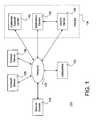
- data restore/migration system 114 may include, but is not limited to, a source device 118, an account server 126, a datacenter 130, a destination device 138, a customer support center 142, an escrow server 146, and a vendor server 150.
- data restore/migration system 114 may be implemented by utilizing components and configurations in addition to, or instead of, certain of those components and configurations discussed in conjunction with the FIG. 1 embodiment.
- the present invention provides improved techniques for allowing a vendor 134 to either migrate or restore user data from source device 118 to destination device 138 in a secure and confidential manner.
- vendor 134 may be a manufacturer or seller of a destination device 138.
- a device user may wish to replace source device 118 with a new destination device 138, and therefore compensates vendor 134 for migrating existing user data from the old source device 118 to the new destination device 138 in a secure and confidential manner.
- vendor 134 may provide technical service and support for a source device 118 that typically is experiencing a technical problem.
- source device 118 may have a defective hard drive that requires replacement.
- destination device 138 therefore represents the original source device 118 after various appropriate repairs have been completed.
- the original user data from source device 118 may then need to be restored onto the repaired destination device 138.
- a device user may thus compensate vendor 134 for restoring the original user data from the source device 118 to the repaired destination device 138 in a secure and confidential manner.
- utilizing vendor 134 to perform data restore/migration procedures provides an enhanced level of convenience for a device user.
- the confidential nature of the user data must be preserved, since vendor 134 directly handles the user data during such data restore/migration procedures.
- customer support center 142 and vendor server 150 are typically controlled and operated by vendor 134.
- account server 126 and datacenter 130 may be controlled and operated by a separate backup service, and escrow server 146 may be controlled and operated by a separate escrow service.
- communications typically occur by means of a network 122 (including, but not limited to, the Internet).
- communications between vendor server 150 and destination device 138 preferably occur over a high-speed communication link to expedite transfers of large amounts of user data.
- source device 118 initially creates a data backup account with account server 126, encrypts the user data, and remotely stores the encrypted user data on datacenter 130.
- source device 118 may obtain a corresponding work order from customer support center 142 of vendor 134.
- Source device 118 may then disseminate the work order to account server 126, datacenter 130, and escrow server 146 in any effective manner.
- escrow server 146 encodes and transmits a unique temporary key to vendor server 150.
- datacenter 130 transfers the encrypted user data to vendor server 150.
- Destination device 138 may then access and utilize the temporary key to decrypt the user data from vendor server 150 to thereby complete the data restore/migration procedure.
- the temporary key and user data may then be deleted from the vendor server 150.
- the present invention thus provides an improved mechanism to support enhanced vendor services while still preserving a high level of security for confidential user data. Further details regarding the implementation and utilization of the FIG. 1 data restore/migration system 114 are discussed below in conjunction with FIG. 9 .
- source device 118 includes, but is not limited to, a central processing unit (CPU) 222, a display 226, a memory 230, and one or more input/output interface(s) (I/O interface(s)) 240.
- CPU central processing unit
- I/O interface(s) input/output interface
- source device 118 may alternately be implemented using components and configurations in addition to, or instead of, certain of those components and configurations discussed in conjunction with the FIG. 2 embodiment.
- CPU 222 may be implemented to include any appropriate and compatible microprocessor device that preferably executes software instructions to thereby control and manage the operation of source device 118.
- the FIG. 2 display 226 may include any effective type of display technology including a cathode-ray-tube monitor or a liquid-crystal display device with an appropriate screen for displaying various information to a user.
- I/O interface(s) 240 may include one or more input and/or output interfaces to receive and/or transmit any required types of information by source device 118.
- memory 230 may be implemented to include any combination of desired storage devices, including, but not limited to, read-only memory (ROM), random-access memory (RAM), and various types of nonvolatile memory, such as floppy disks, memory sticks, compact disks, or hard disks.
- device software 234 may include program instructions that are preferably executed by CPU 222 to perform various functions and operations for source device 118. The particular nature and functionality of device software 234 typically varies depending upon factors such as the specific type and particular functionality of the corresponding source device 118.
- user data 238 may include any desired type of electronic information that is stored in memory 230.
- user data 238 may include, but is not limited to, text data, graphics data, video data, audio data, software programs, databases, and Internet information.
- source device 118 may be implemented as any appropriate type of electronic device including, but not limited to, a portable or stationary computer device, a consumer electronics device, a digital camera, a cellular telephone, a personal digital assistant, or a television settop box. The implementation and utilization of source device 118 is further discussed below in conjunction with FIG. 9 .
- account server 126 includes, but is not limited to, a central processing unit (CPU) 322, a display 326, a memory 330, and one or more input/output interface(s) (I/O interface(s)) 340.
- CPU central processing unit
- display 326 a display 326
- memory 330 a memory 330
- I/O interface(s) input/output interface(s)
- account server 126 may alternately be implemented using components and configurations in addition to, or instead of, certain of those components and configurations discussed in conjunction with the FIG. 3 embodiment.
- CPU 322 may be implemented to include any appropriate and compatible microprocessor device that preferably executes software instructions to thereby control and manage the operation of account server 126.
- the FIG. 3 display 326 may include any effective type of display technology including a cathode-ray-tube monitor or a liquid-crystal display device with an appropriate screen for displaying various information to a user.
- I/O interface(s) 340 may include one or more input and/or output interfaces to receive and/or transmit any required types of information by account server 126.
- memory 330 may be implemented to include any combination of desired storage devices, including, but not limited to, read-only memory (ROM), random-access memory (RAM), and various types of nonvolatile memory, such as floppy disks, memory sticks, compact disks, or hard disks.
- account manager 334 may include program instructions that are preferably executed by CPU 322 to perform various functions and operations for account server 126. For example, account manager 334 may coordinate a registration procedure for source device 118 to participate in a data backup service, as discussed above in conjunction with FIG. 1 .
- account data 338 may include any desired type of electronic information that is related to one or more source devices 118 and corresponding data backup services. The implementation and utilization of account server 126 is further discussed below in conjunction with FIG. 9 .
- datacenter 130 includes, but is not limited to, a central processing unit (CPU) 422, a display 426, a memory 430, and one or more input/output interface(s) (I/O interface(s)) 440.
- CPU central processing unit
- display 426 a display 426
- memory 430 a memory 430
- I/O interface(s) input/output interface(s)
- datacenter 130 may alternately be implemented using components and configurations in addition to, or instead of, certain of those components and configurations discussed in conjunction with the FIG. 4 embodiment.
- CPU 422 may be implemented to include any appropriate and compatible microprocessor device that preferably executes software instructions to thereby control and manage the operation of datacenter 130.
- the FIG. 4 display 426 may include any effective type of display technology including a cathode-ray-tube monitor or a liquid-crystal display device with an appropriate screen for displaying various information to a user.
- I/O interface(s) 440 may include one or more input and/or output interfaces to receive and/or transmit any required types of information by datacenter 130.
- memory 430 may be implemented to include any combination of desired storage devices, including, but not limited to, read-only memory (ROM), random-access memory (RAM), and various types of nonvolatile memory, such as floppy disks, memory sticks, compact disks, or hard disks.
- data manager 434 may include program instructions that are preferably executed by CPU 422 to perform various functions and operations for datacenter 130. For example, data manager 434 may coordinate data backup procedures for storing encrypted user data 238 from source device 118, as discussed above in conjunction with FIG. 1 . The implementation and utilization of datacenter 130 is further discussed below in conjunction with FIG. 9 .
- escrow server 146 includes, but is not limited to, a central processing unit (CPU) 522, a display 526, a memory 530, and one or more input/output interface(s) (I/O interface(s)) 540.
- CPU central processing unit
- display 526 a display
- memory 530 a memory 530
- I/O interface(s) input/output interface(s)
- escrow server 146 may alternately be implemented using components and configurations in addition to, or instead of, certain of those components and configurations discussed in conjunction with the FIG. 5 embodiment.
- CPU 522 may be implemented to include any appropriate and compatible microprocessor device that preferably executes software instructions to thereby control and manage the operation of escrow server 146.
- the FIG. 5 display 526 may include any effective type of display technology including a cathode-ray-tube monitor or a liquid-crystal display device with an appropriate screen for displaying various information to a user.
- I/O interface(s) 540 may include one or more input and/or output interfaces to receive and/or transmit any required types of information by escrow server 146.
- memory 530 may be implemented to include any combination of desired storage devices, including, but not limited to, read-only memory (ROM), random-access memory (RAM), and various types of nonvolatile memory, such as floppy disks, memory sticks, compact disks, or hard disks.
- key manager 534 may include program instructions that are preferably executed by CPU 522 to perform various functions and operations for escrow server 146. For example, key manager 534 may generate and encrypt temporary keys for decoding encrypted user data, as discussed above in conjunction with FIG. 1 .
- key database 538 may include any relevant information regarding the temporary keys generated by key manager 534. The implementation and utilization of escrow server 146 is further discussed below in conjunction with FIG. 9 .
- vendor server 150 includes, but is not limited to, a central processing unit (CPU) 622, a display 626, a memory 630, and one or more input/output interface(s) (I/O interface(s)) 640.
- CPU central processing unit
- display 626 a display
- memory 630 a memory 630
- I/O interface(s) input/output interface(s)
- vendor server 150 may alternately be implemented using components and configurations in addition to, or instead of, certain of those components and configurations discussed in conjunction with the FIG. 6 embodiment.
- CPU 622 may be implemented to include any appropriate and compatible microprocessor device that preferably executes software instructions to thereby control and manage the operation of vendor server 150.
- the FIG. 6 display 626 may include any effective type of display technology including a cathode-ray-tube monitor or a liquid-crystal display device with an appropriate screen for displaying various information to a user.
- I/O interface(s) 640 may include one or more input and/or output interfaces to receive and/or transmit any required types of information by vendor server 150.
- memory 630 may be implemented to include any combination of desired storage devices, including, but not limited to, read-only memory (ROM), random-access memory (RAM), and various types of nonvolatile memory, such as floppy disks, memory sticks, compact disks, or hard disks.
- server software 634 may include program instructions that are preferably executed by CPU 622 to perform various functions and operations for vendor server 150.
- server software 634 may receive a temporary key 638 from escrow server 146 for decoding encrypted user data 238 received from datacenter 130, as discussed above in conjunction with FIG. 1 .
- the implementation and utilization of vendor server 150 is further discussed below in conjunction with FIG. 9 .
- destination device 138 includes, but is not limited to, a central processing unit (CPU) 722, a display 726, a memory 730, and one or more input/output interface(s) (I/O interface(s)) 740.
- CPU central processing unit
- display 726 a display 726
- memory 730 a memory 730
- I/O interface(s) input/output interface(s)
- destination device 138 may alternately be implemented using components and configurations in addition to, or instead of, certain of those components and configurations discussed in conjunction with the FIG. 7 embodiment.
- CPU 722 may be implemented to include any appropriate and compatible microprocessor device that preferably executes software instructions to thereby control and manage the operation of destination device 138.
- the FIG. 7 display 726 may include any effective type of display technology including a cathode-ray-tube monitor or a liquid-crystal display device with an appropriate screen for displaying various information to a user.
- I/O interface(s) 740 may include one or more input and/or output interfaces to receive and/or transmit any required types of information by destination device 138.
- memory 730 may be implemented to include any combination of desired storage devices, including, but not limited to, read-only memory (ROM), random-access memory (RAM), and various types of nonvolatile memory, such as floppy disks, memory sticks, compact disks, or hard disks.
- device software 734 may include program instructions that are preferably executed by CPU 722 to perform various functions and operations for destination device 138. The particular nature and functionality of device software 734 typically varies depending upon factors such as the specific type and particular functionality of the corresponding destination device 138.
- user data 238 may include any desired type of electronic information that is decrypted using temporary key 638 and then stored in memory 730.
- temporary key 638 may be made temporary by utilizing any effective techniques. For example, temporary key 638 may be designed to be utilized only once before becoming inoperative.
- temporary key 638 is encrypted by escrow server 146, and destination device 138 must be authorized by escrow server 146 through a key authorization exchange (see FIG. 8 ) to utilize temporary key 638 for any decryption of user data 238.
- Escrow server 146 typically authorizes use of temporary key 638 only one time.
- a decryption tool on destination device 138 may disable temporary key 638 after one decryption procedure.
- destination device 138 may be implemented as any appropriate type of electronic device including, but not limited to, a portable or stationary computer device, a consumer electronics device, a digital camera, a cellular telephone, a personal digital assistant, or a television settop box. The implementation and utilization of destination device 138 is further discussed below in conjunction with FIG. 9 .
- FIG. 8 a signal flow diagram for one embodiment of a data restore/migration procedure is shown, in accordance with the present invention.
- the various elements of FIG. 1 are shown with appropriate signal flow labels.
- the FIG. 8 embodiment is presented for purposes of illustration, and in alternate embodiments, the present invention may utilize components, signals, and sequences, in addition to, or instead of, certain of those components, signals, and sequences shown in conjunction with the FIG. 8 embodiment.
- the FIG. 8 diagram may be best understood when viewed in conjunction with the following discussion of FIGS. 9A-9C .
- FIGS. 9A-C a flowchart of method steps for performing a data restore/migration procedure is shown, in accordance with one embodiment of the present invention.
- the FIG. 9 flowchart is presented for purposes of illustration, and in alternate embodiments, the present invention may utilize steps and sequences other than those steps and sequences discussed in conjunction with the FIG. 9 embodiment.
- a source device 118 initially creates a user account with an account server 126 to participate in a data backup service.
- account server 126 notifies an escrow server 146 regarding the new user account of source device 118.
- escrow server 146 sends a permanent key to source device 118 so that a device user of source device 118 can decrypt user data backups if so desired.
- step 922 account server 126 notifies a datacenter 130 regarding the new user account of source device 118.
- step 930 source device 118 may then encrypt user data 238, and remotely store the encrypted user data 238 as a backup copy on datacenter 130.
- the FIG. 9A process then advances to step 934 of FIG. 9B through connecting letter "A.”
- source device 118 may require a vendor 134 ( FIG. 1 ) to perform a data restore/migration task.
- Source device 118 therefore contacts a customer support center 142 of vendor 134 to obtain a work order for performing the restore/migration task.
- source device 118 sends a task request and the foregoing work order to the account server 126.
- account server 126 responsively sends the received word order to escrow server 146 and datacenter 130.
- step 946 escrow server 146 encrypts a unique temporary key 638, and transmits the temporary key 638 and the received work order to a vendor server 946 of vendor 134.
- step 950 the datacenter 130 transfers the received work order and encrypted user data 238 corresponding to source device 118 to vendor server 950.
- the FIG. 9B process then advances to step 954 of FIG. 9C through connecting letter "B.”
- a destination device 138 sends a copy of the work order corresponding to the source device's data restore/migration task to vendor server 150.
- the vendor server 150 responsively sends the temporary key 638 and encrypted user data 638 to the destination device 138.
- destination device 138 decrypts the temporary key 962.
- destination device 138 then utilizes the temporary key 638 to decrypt the user data 238.
- step 970 the destination device 138 may then transmit a task-complete message to the vendor server 970.
- step 974 the vendor server 150 may responsively delete the temporary key 638 and the user data 238 corresponding to the current data restore/migration procedure.
- the FIG. 9 process then terminates.
Landscapes
- Engineering & Computer Science (AREA)
- Theoretical Computer Science (AREA)
- Business, Economics & Management (AREA)
- General Physics & Mathematics (AREA)
- Physics & Mathematics (AREA)
- Accounting & Taxation (AREA)
- Finance (AREA)
- General Engineering & Computer Science (AREA)
- Databases & Information Systems (AREA)
- General Health & Medical Sciences (AREA)
- Strategic Management (AREA)
- Marketing (AREA)
- Economics (AREA)
- Health & Medical Sciences (AREA)
- Bioethics (AREA)
- General Business, Economics & Management (AREA)
- Computer Hardware Design (AREA)
- Computer Security & Cryptography (AREA)
- Software Systems (AREA)
- Development Economics (AREA)
- Quality & Reliability (AREA)
- Storage Device Security (AREA)
- Information Retrieval, Db Structures And Fs Structures Therefor (AREA)
- Management, Administration, Business Operations System, And Electronic Commerce (AREA)
Abstract
Description
- This invention relates generally to techniques for managing electronic information, and relates more particularly to a system and method for effectively performing data restore/migration procedures.
- Implementing effective methods for managing electronic data is a significant consideration for designers and manufacturers of contemporary electronic devices. However, effectively managing electronic data utilized by electronic devices may create substantial challenges for system designers. For example, enhanced demands for increased device functionality and performance may require more system processing power and require additional software resources. An increase in processing or software requirements may also result in a corresponding detrimental economic impact due to increased production costs and operational inefficiencies.
- Furthermore, enhanced device capability to perform various advanced data management operations may provide additional benefits to a system user, but may also place increased demands on the control and management of various system components. For example, an electronic device that effectively stores electronic data may benefit from an effective implementation because of the large amount and complexity of the digital data involved. In addition, protecting the integrity and security of confidential electronic data is often an important factor.
- Due to growing demands on system resources, substantially increasing data magnitudes, and data security considerations, it is apparent that developing new techniques for managing electronic data for electronic devices is a matter of concern for related electronic technologies. Therefore, for all the foregoing reasons, developing effective techniques for managing electronic data remains a significant consideration for designers, manufacturers, and users of contemporary electronic devices.
- Various respective aspects and features of the invention are defined in the appended claims. Combinations of features from the dependent claims may be combined with features of the independent claims as appropriate and not merely as explicitly set out in the claims.
- In accordance with the present invention, a system and method for effectively performing data restore/migration procedures is disclosed. In one embodiment, a source device initially creates a user account with an account server to participate in a data backup service. The account server notifies an escrow server regarding the new user account of the source device. In response, the escrow server sends a permanent key to the source device so that a device user of the source device can decrypt user data backups if so desired. The account server notifies a datacenter regarding the new user account of the source device. The source device may then encrypt user data, and remotely store the encrypted user data as a backup copy onto the datacenter.
- In certain circumstances, the source device may require a vendor to perform a data restore/migration task. The source device may therefore contact a customer support center of the vendor to obtain a work order for performing the restore/migration task. The source device typically sends a task request and the foregoing work order to the account server. The account server responsively sends the received word order to an escrow server and the datacenter.
- The escrow server then encrypts a unique temporary key, and transmits the temporary key and the received work order to a vendor server of the vendor. In addition, the datacenter transfers the received work order and corresponding encrypted user data to the vendor server. A destination device also sends a copy of the work order corresponding to the source device's data restore/migration task to the vendor server. The vendor server responsively sends the temporary key and the encrypted user data to the destination device. The destination device may then decrypt the temporary key, and utilize the temporary key to decrypt and store the user data onto the destination device.
- The destination device may then transmit a task-complete message to the vendor server, and the vendor server may responsively delete the temporary key and the user data corresponding to the current data restore/migration procedure. For at least the foregoing reasons, the present invention therefore provides an improved system and method for effectively performing data restore/migration procedures.
- Embodiments of the invention will now be described with reference to the accompanying drawings, throughout which like parts are referred to by like references, and in which:
-
FIG. 1 is a block diagram of a data restore/migration system, in accordance with one embodiment of the present invention; -
FIG. 2 is a block diagram for one embodiment of the source device ofFIG. 1 , in accordance with the present invention; -
FIG. 3 is a block diagram for one embodiment of the account server ofFIG. 1 , in accordance with the present invention; -
FIG. 4 is a block diagram for one embodiment of the datacenter ofFIG. 1 , in accordance with the present invention; -
FIG. 5 is a block diagram for one embodiment of the escrow server fromFIG. 1 , in accordance with the present invention; -
FIG. 6 is a block diagram for one embodiment of the vendor server ofFIG. 1 , in accordance with the present invention; -
FIG. 7 is a block diagram for one embodiment of the destination device ofFIG. 1 , in accordance with the present invention; -
FIG. 8 is a signal flow diagram for one embodiment of a data restore/migration procedure, in accordance with the present invention; and -
FIGS. 9A-C is a flowchart of method steps for performing a data restore/migration procedure, in accordance with one embodiment of the present invention. - The present invention relates to an improvement in electronic data management techniques. The following description is presented to enable one of ordinary skill in the art to make and use the invention, and is provided in the context of a patent application and its requirements. Various modifications to the disclosed embodiments will be readily apparent to those skilled in the art, and the generic principles herein may be applied to other embodiments. Therefore, the present invention is not intended to be limited to the embodiments shown, but is to be accorded the widest scope consistent with the principles and features described herein.
- The present invention comprises a system and method for effectively supporting data transfer procedures, and includes a source device that registers with an account server to participate in a data backup service. The source device then encrypts and stores user data onto a datacenter. The source device later may request a data transfer task from a vendor. The datacenter responsively transfers the encrypted user data to a vendor server, and an escrow server generates and sends a temporary key to the vendor server. A destination device may then utilize the temporary key to decrypt and securely store the user data onto the destination device.
- Referring now to
FIG. 1 , a block diagram of a data restore/migration system 114 is shown, in accordance with one embodiment of the present invention. In theFIG. 1 embodiment, data restore/migration system 114 may include, but is not limited to, asource device 118, anaccount server 126, adatacenter 130, adestination device 138, acustomer support center 142, anescrow server 146, and avendor server 150. In alternate embodiments, data restore/migration system 114 may be implemented by utilizing components and configurations in addition to, or instead of, certain of those components and configurations discussed in conjunction with theFIG. 1 embodiment. - The present invention provides improved techniques for allowing a
vendor 134 to either migrate or restore user data fromsource device 118 todestination device 138 in a secure and confidential manner. In a data migration scenario,vendor 134 may be a manufacturer or seller of adestination device 138. A device user may wish to replacesource device 118 with anew destination device 138, and therefore compensatesvendor 134 for migrating existing user data from theold source device 118 to thenew destination device 138 in a secure and confidential manner. - In a data restore scenario,
vendor 134 may provide technical service and support for asource device 118 that typically is experiencing a technical problem. For example,source device 118 may have a defective hard drive that requires replacement. In the data restore scenario,destination device 138 therefore represents theoriginal source device 118 after various appropriate repairs have been completed. The original user data fromsource device 118 may then need to be restored onto the repaireddestination device 138. A device user may thus compensatevendor 134 for restoring the original user data from thesource device 118 to the repaireddestination device 138 in a secure and confidential manner. - In the
FIG. 1 embodiment, utilizingvendor 134 to perform data restore/migration procedures provides an enhanced level of convenience for a device user. However, the confidential nature of the user data must be preserved, sincevendor 134 directly handles the user data during such data restore/migration procedures. In theFIG. 1 embodiment,customer support center 142 andvendor server 150 are typically controlled and operated byvendor 134. However, to enhance data security,account server 126 anddatacenter 130 may be controlled and operated by a separate backup service, andescrow server 146 may be controlled and operated by a separate escrow service. - In the
FIG. 1 embodiment, communications typically occur by means of a network 122 (including, but not limited to, the Internet). However, communications betweenvendor server 150 anddestination device 138 preferably occur over a high-speed communication link to expedite transfers of large amounts of user data. In theFIG. 1 embodiment,source device 118 initially creates a data backup account withaccount server 126, encrypts the user data, and remotely stores the encrypted user data ondatacenter 130. Whensource device 118 requires a data restore/migration procedure, then sourcedevice 118 may obtain a corresponding work order fromcustomer support center 142 ofvendor 134. -
Source device 118 may then disseminate the work order to accountserver 126,datacenter 130, andescrow server 146 in any effective manner. In response,escrow server 146 encodes and transmits a unique temporary key tovendor server 150. In addition,datacenter 130 transfers the encrypted user data tovendor server 150.Destination device 138 may then access and utilize the temporary key to decrypt the user data fromvendor server 150 to thereby complete the data restore/migration procedure. The temporary key and user data may then be deleted from thevendor server 150. The present invention thus provides an improved mechanism to support enhanced vendor services while still preserving a high level of security for confidential user data. Further details regarding the implementation and utilization of theFIG. 1 data restore/migration system 114 are discussed below in conjunction withFIG. 9 . - Referring now to
FIG. 2 , a block diagram for one embodiment of theFIG. 1 source device 118 is shown, in accordance with the present invention. In theFIG. 2 embodiment,source device 118 includes, but is not limited to, a central processing unit (CPU) 222, adisplay 226, amemory 230, and one or more input/output interface(s) (I/O interface(s)) 240. In alternate embodiments,source device 118 may alternately be implemented using components and configurations in addition to, or instead of, certain of those components and configurations discussed in conjunction with theFIG. 2 embodiment. - In the
FIG. 2 embodiment,CPU 222 may be implemented to include any appropriate and compatible microprocessor device that preferably executes software instructions to thereby control and manage the operation ofsource device 118. TheFIG. 2 display 226 may include any effective type of display technology including a cathode-ray-tube monitor or a liquid-crystal display device with an appropriate screen for displaying various information to a user. In theFIG. 2 embodiment, I/O interface(s) 240 may include one or more input and/or output interfaces to receive and/or transmit any required types of information bysource device 118. - In the
FIG. 2 embodiment,memory 230 may be implemented to include any combination of desired storage devices, including, but not limited to, read-only memory (ROM), random-access memory (RAM), and various types of nonvolatile memory, such as floppy disks, memory sticks, compact disks, or hard disks. In theFIG. 2 embodiment,device software 234 may include program instructions that are preferably executed byCPU 222 to perform various functions and operations forsource device 118. The particular nature and functionality ofdevice software 234 typically varies depending upon factors such as the specific type and particular functionality of thecorresponding source device 118. - In the
FIG. 2 embodiment,user data 238 may include any desired type of electronic information that is stored inmemory 230. For example,user data 238 may include, but is not limited to, text data, graphics data, video data, audio data, software programs, databases, and Internet information. In various embodiments,source device 118 may be implemented as any appropriate type of electronic device including, but not limited to, a portable or stationary computer device, a consumer electronics device, a digital camera, a cellular telephone, a personal digital assistant, or a television settop box. The implementation and utilization ofsource device 118 is further discussed below in conjunction withFIG. 9 . - Referring now to
FIG. 3 , a block diagram for one embodiment of theFIG. 1 account server 126 is shown, in accordance with the present invention. In theFIG. 3 embodiment,account server 126 includes, but is not limited to, a central processing unit (CPU) 322, adisplay 326, amemory 330, and one or more input/output interface(s) (I/O interface(s)) 340. In alternate embodiments,account server 126 may alternately be implemented using components and configurations in addition to, or instead of, certain of those components and configurations discussed in conjunction with theFIG. 3 embodiment. - In the
FIG. 3 embodiment,CPU 322 may be implemented to include any appropriate and compatible microprocessor device that preferably executes software instructions to thereby control and manage the operation ofaccount server 126. TheFIG. 3 display 326 may include any effective type of display technology including a cathode-ray-tube monitor or a liquid-crystal display device with an appropriate screen for displaying various information to a user. In theFIG. 3 embodiment, I/O interface(s) 340 may include one or more input and/or output interfaces to receive and/or transmit any required types of information byaccount server 126. - In the
FIG. 3 embodiment,memory 330 may be implemented to include any combination of desired storage devices, including, but not limited to, read-only memory (ROM), random-access memory (RAM), and various types of nonvolatile memory, such as floppy disks, memory sticks, compact disks, or hard disks. In theFIG. 3 embodiment,account manager 334 may include program instructions that are preferably executed byCPU 322 to perform various functions and operations foraccount server 126. For example,account manager 334 may coordinate a registration procedure forsource device 118 to participate in a data backup service, as discussed above in conjunction withFIG. 1 . In theFIG. 3 embodiment,account data 338 may include any desired type of electronic information that is related to one ormore source devices 118 and corresponding data backup services. The implementation and utilization ofaccount server 126 is further discussed below in conjunction withFIG. 9 . - Referring now to
FIG. 4 , a block diagram for one embodiment of theFIG. 1 datacenter 130 is shown, in accordance with the present invention. In theFIG. 4 embodiment,datacenter 130 includes, but is not limited to, a central processing unit (CPU) 422, adisplay 426, amemory 430, and one or more input/output interface(s) (I/O interface(s)) 440. In alternate embodiments,datacenter 130 may alternately be implemented using components and configurations in addition to, or instead of, certain of those components and configurations discussed in conjunction with theFIG. 4 embodiment. - In the
FIG. 4 embodiment,CPU 422 may be implemented to include any appropriate and compatible microprocessor device that preferably executes software instructions to thereby control and manage the operation ofdatacenter 130. TheFIG. 4 display 426 may include any effective type of display technology including a cathode-ray-tube monitor or a liquid-crystal display device with an appropriate screen for displaying various information to a user. In theFIG. 4 embodiment, I/O interface(s) 440 may include one or more input and/or output interfaces to receive and/or transmit any required types of information bydatacenter 130. - In the
FIG. 4 embodiment,memory 430 may be implemented to include any combination of desired storage devices, including, but not limited to, read-only memory (ROM), random-access memory (RAM), and various types of nonvolatile memory, such as floppy disks, memory sticks, compact disks, or hard disks. In theFIG. 4 embodiment,data manager 434 may include program instructions that are preferably executed byCPU 422 to perform various functions and operations fordatacenter 130. For example,data manager 434 may coordinate data backup procedures for storingencrypted user data 238 fromsource device 118, as discussed above in conjunction withFIG. 1 . The implementation and utilization ofdatacenter 130 is further discussed below in conjunction withFIG. 9 . - Referring now to
FIG. 5 , a block diagram for one embodiment of theFIG. 1 escrow server 146 is shown, in accordance with the present invention. In theFIG. 5 embodiment,escrow server 146 includes, but is not limited to, a central processing unit (CPU) 522, adisplay 526, amemory 530, and one or more input/output interface(s) (I/O interface(s)) 540. In alternate embodiments,escrow server 146 may alternately be implemented using components and configurations in addition to, or instead of, certain of those components and configurations discussed in conjunction with theFIG. 5 embodiment. - In the
FIG. 5 embodiment,CPU 522 may be implemented to include any appropriate and compatible microprocessor device that preferably executes software instructions to thereby control and manage the operation ofescrow server 146. TheFIG. 5 display 526 may include any effective type of display technology including a cathode-ray-tube monitor or a liquid-crystal display device with an appropriate screen for displaying various information to a user. In theFIG. 5 embodiment, I/O interface(s) 540 may include one or more input and/or output interfaces to receive and/or transmit any required types of information byescrow server 146. - In the
FIG. 5 embodiment,memory 530 may be implemented to include any combination of desired storage devices, including, but not limited to, read-only memory (ROM), random-access memory (RAM), and various types of nonvolatile memory, such as floppy disks, memory sticks, compact disks, or hard disks. In theFIG. 5 embodiment,key manager 534 may include program instructions that are preferably executed byCPU 522 to perform various functions and operations forescrow server 146. For example,key manager 534 may generate and encrypt temporary keys for decoding encrypted user data, as discussed above in conjunction withFIG. 1 . In theFIG. 5 embodiment,key database 538 may include any relevant information regarding the temporary keys generated bykey manager 534. The implementation and utilization ofescrow server 146 is further discussed below in conjunction withFIG. 9 . - Referring now to
FIG. 6 , a block diagram for one embodiment of theFIG. 1 vendor server 150 is shown, in accordance with the present invention. In theFIG. 6 embodiment,vendor server 150 includes, but is not limited to, a central processing unit (CPU) 622, adisplay 626, amemory 630, and one or more input/output interface(s) (I/O interface(s)) 640. In alternate embodiments,vendor server 150 may alternately be implemented using components and configurations in addition to, or instead of, certain of those components and configurations discussed in conjunction with theFIG. 6 embodiment. - In the
FIG. 6 embodiment,CPU 622 may be implemented to include any appropriate and compatible microprocessor device that preferably executes software instructions to thereby control and manage the operation ofvendor server 150. TheFIG. 6 display 626 may include any effective type of display technology including a cathode-ray-tube monitor or a liquid-crystal display device with an appropriate screen for displaying various information to a user. In theFIG. 6 embodiment, I/O interface(s) 640 may include one or more input and/or output interfaces to receive and/or transmit any required types of information byvendor server 150. - In the
FIG. 6 embodiment,memory 630 may be implemented to include any combination of desired storage devices, including, but not limited to, read-only memory (ROM), random-access memory (RAM), and various types of nonvolatile memory, such as floppy disks, memory sticks, compact disks, or hard disks. In theFIG. 6 embodiment,server software 634 may include program instructions that are preferably executed byCPU 622 to perform various functions and operations forvendor server 150. For example,server software 634 may receive a temporary key 638 fromescrow server 146 for decodingencrypted user data 238 received fromdatacenter 130, as discussed above in conjunction withFIG. 1 . The implementation and utilization ofvendor server 150 is further discussed below in conjunction withFIG. 9 . - Referring now to
FIG. 7 , a block diagram for one embodiment of theFIG. 1 destination device 138 is shown, in accordance with the present invention. In theFIG. 7 embodiment,destination device 138 includes, but is not limited to, a central processing unit (CPU) 722, adisplay 726, amemory 730, and one or more input/output interface(s) (I/O interface(s)) 740. In alternate embodiments,destination device 138 may alternately be implemented using components and configurations in addition to, or instead of, certain of those components and configurations discussed in conjunction with theFIG. 7 embodiment. - In the
FIG. 7 embodiment,CPU 722 may be implemented to include any appropriate and compatible microprocessor device that preferably executes software instructions to thereby control and manage the operation ofdestination device 138. TheFIG. 7 display 726 may include any effective type of display technology including a cathode-ray-tube monitor or a liquid-crystal display device with an appropriate screen for displaying various information to a user. In theFIG. 7 embodiment, I/O interface(s) 740 may include one or more input and/or output interfaces to receive and/or transmit any required types of information bydestination device 138. - In the
FIG. 7 embodiment,memory 730 may be implemented to include any combination of desired storage devices, including, but not limited to, read-only memory (ROM), random-access memory (RAM), and various types of nonvolatile memory, such as floppy disks, memory sticks, compact disks, or hard disks. In theFIG. 7 embodiment,device software 734 may include program instructions that are preferably executed byCPU 722 to perform various functions and operations fordestination device 138. The particular nature and functionality ofdevice software 734 typically varies depending upon factors such as the specific type and particular functionality of thecorresponding destination device 138. - In the
FIG. 7 embodiment,user data 238 may include any desired type of electronic information that is decrypted usingtemporary key 638 and then stored inmemory 730. In theFIG. 7 embodiment,temporary key 638 may be made temporary by utilizing any effective techniques. For example,temporary key 638 may be designed to be utilized only once before becoming inoperative. In certain embodiments,temporary key 638 is encrypted byescrow server 146, anddestination device 138 must be authorized byescrow server 146 through a key authorization exchange (seeFIG. 8 ) to utilizetemporary key 638 for any decryption ofuser data 238.Escrow server 146 typically authorizes use of temporary key 638 only one time. In alternate embodiments, a decryption tool ondestination device 138 may disabletemporary key 638 after one decryption procedure. - In various embodiments,
destination device 138 may be implemented as any appropriate type of electronic device including, but not limited to, a portable or stationary computer device, a consumer electronics device, a digital camera, a cellular telephone, a personal digital assistant, or a television settop box. The implementation and utilization ofdestination device 138 is further discussed below in conjunction withFIG. 9 . - Referring now to
FIG. 8 , a signal flow diagram for one embodiment of a data restore/migration procedure is shown, in accordance with the present invention. In theFIG. 8 embodiment, the various elements ofFIG. 1 are shown with appropriate signal flow labels. TheFIG. 8 embodiment is presented for purposes of illustration, and in alternate embodiments, the present invention may utilize components, signals, and sequences, in addition to, or instead of, certain of those components, signals, and sequences shown in conjunction with theFIG. 8 embodiment. TheFIG. 8 diagram may be best understood when viewed in conjunction with the following discussion ofFIGS. 9A-9C . - Referring now to
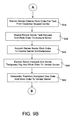
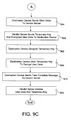
FIGS. 9A-C , a flowchart of method steps for performing a data restore/migration procedure is shown, in accordance with one embodiment of the present invention. TheFIG. 9 flowchart is presented for purposes of illustration, and in alternate embodiments, the present invention may utilize steps and sequences other than those steps and sequences discussed in conjunction with theFIG. 9 embodiment. - In
step 914 of theFIG. 9A embodiment, asource device 118 initially creates a user account with anaccount server 126 to participate in a data backup service. Instep 918,account server 126 notifies anescrow server 146 regarding the new user account ofsource device 118. In response,escrow server 146 sends a permanent key to sourcedevice 118 so that a device user ofsource device 118 can decrypt user data backups if so desired. - In
step 922,account server 126 notifies adatacenter 130 regarding the new user account ofsource device 118. Instep 930,source device 118 may then encryptuser data 238, and remotely store theencrypted user data 238 as a backup copy ondatacenter 130. TheFIG. 9A process then advances to step 934 ofFIG. 9B through connecting letter "A." - In
step 934,source device 118 may require a vendor 134 (FIG. 1 ) to perform a data restore/migration task.Source device 118 therefore contacts acustomer support center 142 ofvendor 134 to obtain a work order for performing the restore/migration task. Instep 938,source device 118 sends a task request and the foregoing work order to theaccount server 126. Instep 942,account server 126 responsively sends the received word order toescrow server 146 anddatacenter 130. - In
step 946,escrow server 146 encrypts a uniquetemporary key 638, and transmits thetemporary key 638 and the received work order to avendor server 946 ofvendor 134. Instep 950, thedatacenter 130 transfers the received work order andencrypted user data 238 corresponding to sourcedevice 118 tovendor server 950. TheFIG. 9B process then advances to step 954 ofFIG. 9C through connecting letter "B." - In
step 954, adestination device 138 sends a copy of the work order corresponding to the source device's data restore/migration task tovendor server 150. Instep 958, thevendor server 150 responsively sends thetemporary key 638 andencrypted user data 638 to thedestination device 138. Instep 962,destination device 138 decrypts thetemporary key 962. Instep 966,destination device 138 then utilizes thetemporary key 638 to decrypt theuser data 238. - In
step 970, thedestination device 138 may then transmit a task-complete message to thevendor server 970. Instep 974, thevendor server 150 may responsively delete thetemporary key 638 and theuser data 238 corresponding to the current data restore/migration procedure. TheFIG. 9 process then terminates. For at least the foregoing reasons, the present invention therefore provides an improved system and method for effectively performing data restore/migration procedures. - The invention has been explained above with reference to certain embodiments. Other embodiments will be apparent to those skilled in the art in light of this disclosure. For example, the present invention may readily be implemented using certain configurations and techniques other than those described in the specific embodiments above. Additionally, the present invention may effectively be used in conjunction with systems other than those described above. Therefore, these and other variations upon the discussed embodiments are intended to be covered by the present invention, which is limited only by the appended claims.
Claims (20)
- A system for supporting data transfer procedures, comprising:a source device that encrypts and stores user data onto a datacenter, said source device requesting a data transfer task from a vendor, said datacenter responsively transferring said user data to a vendor server;an escrow server that generates and sends a temporary key to said vendor server; anda destination device that utilizes said temporary key to decrypt and store said user data from said vendor server onto said destination device.
- The system of claim 1 wherein said user data includes confidential information that is protected during said data transfer procedures.
- The system of claim 2 wherein said source device registers for a data backup service with an account server.
- The system of claim 3 wherein said source device requests said data transfer task from a customer service center of said vendor.
- The system of claim 1 wherein said data transfer procedures include a data migration procedure during which said vendor migrates said user data from said source device to said destination device, said destination device then replacing said source device.
- The system of claim 1 wherein said data transfer procedures include a data restore procedure during which said vendor restores said user data from said source device to said destination device, said destination device being said source device after one or more servicing procedures have been performed.
- The system of claim 3 wherein said escrow server provides a permanent key to said source device.
- The system of claim 7 wherein said account server notifies said datacenter about said source device registering for said data backup service.
- The system of claim 4 wherein said customer service center issues a work order corresponding to said data transfer task to said source device.
- The system of claim 9 wherein said source device sends a task request and said work order to said account server.
- The system of claim 10 wherein said account server sends said work order to said escrow server and said datacenter.
- The system of claim 11 wherein said escrow server encrypts said temporary key, said escrow server then sending said temporary key and said work order to said vendor server.
- The system of claim 12 wherein said datacenter sends said work order and said user data to said vendor server.
- The system of claim 13 wherein said destination device obtains and sends said work order to said vendor server.
- The system of claim 14 wherein said destination device decrypts said temporary key.
- The system of claim 1 wherein said destination device sends a task-complete message to said vendor server after decrypting said user data with said temporary key, said vendor server responsively deleting said temporary key and said user data.
- The system of claim 1 wherein said temporary key is required to be utilized only once before becoming inoperative, said destination device requiring an authorization from said escrow server through a key authorization exchange to utilize said temporary key.
- The system of claim 1 wherein said temporary key is required to be utilized only once before becoming inoperative, a decryption tool on said destination device disabling said temporary key after one decryption procedure.
- The system of claim 4 wherein said customer support center and said vendor server are controlled and operated by said vendor, said account server and said datacenter being controlled and operated by a separate backup service, said escrow server being controlled and operated by a separate escrow service.
- A method for supporting data transfer procedures, comprising:utilizing a source device to encrypt and store user data onto a datacenter;requesting a data transfer task from a vendor;transferring said user data from said datacenter to a vendor server;generating and sending a temporary key to said vendor server with an escrow server; anddecrypting and storing said user data onto a destination device by utilizing said temporary key.
Applications Claiming Priority (3)
| Application Number | Priority Date | Filing Date | Title |
|---|---|---|---|
| US12663408P | 2008-05-05 | 2008-05-05 | |
| US13090308P | 2008-06-04 | 2008-06-04 | |
| US12/290,086 US8189794B2 (en) | 2008-05-05 | 2008-10-27 | System and method for effectively performing data restore/migration procedures |
Publications (2)
| Publication Number | Publication Date |
|---|---|
| EP2116951A2 true EP2116951A2 (en) | 2009-11-11 |
| EP2116951A3 EP2116951A3 (en) | 2010-06-09 |
Family
ID=40821803
Family Applications (1)
| Application Number | Title | Priority Date | Filing Date |
|---|---|---|---|
| EP09250878A Ceased EP2116951A3 (en) | 2008-05-05 | 2009-03-27 | System and method for effectively performing data restore/migration procedures |
Country Status (4)
| Country | Link |
|---|---|
| US (2) | US8189794B2 (en) |
| EP (1) | EP2116951A3 (en) |
| JP (1) | JP2009273130A (en) |
| CN (1) | CN101577720B (en) |
Cited By (1)
| Publication number | Priority date | Publication date | Assignee | Title |
|---|---|---|---|---|
| WO2013164194A1 (en) * | 2012-05-03 | 2013-11-07 | Gallego Luis | Method of securing access to a data server |
Families Citing this family (18)
| Publication number | Priority date | Publication date | Assignee | Title |
|---|---|---|---|---|
| US9075957B2 (en) * | 2008-08-04 | 2015-07-07 | Sandisk Il Ltd. | Backing up digital content that is stored in a secured storage device |
| EP2412123B1 (en) * | 2009-03-26 | 2020-07-08 | Trustcorp S.A. | Method and device for archiving a document |
| JP2011008701A (en) * | 2009-06-29 | 2011-01-13 | Sony Corp | Information processing server, information processing apparatus, and information processing method |
| US20110060945A1 (en) * | 2009-09-08 | 2011-03-10 | Softthinks Sas | Smart repair of computer systems |
| US20110302410A1 (en) * | 2010-06-07 | 2011-12-08 | Christopher Clarke | Secure document delivery |
| CN102594779B (en) * | 2011-01-05 | 2016-03-02 | 中国移动通信集团公司 | A kind of user data processing method and equipment thereof |
| CN102317910B (en) | 2011-08-03 | 2014-08-20 | 华为技术有限公司 | Virtualized data backup method, virtualized data reorganization method, device and system |
| CN103067506B (en) * | 2012-12-28 | 2015-12-02 | 中国科学院计算技术研究所 | A kind of block device asynchronous data moving method and system |
| US9331964B2 (en) * | 2013-02-26 | 2016-05-03 | Creating Revolutions Llc | System, method, and apparatus for using a virtual bucket to transfer electronic data |
| US20150046557A1 (en) * | 2013-02-10 | 2015-02-12 | Einar Rosenberg | System, method and apparatus for using a virtual bucket to transfer electronic data |
| US20140351364A1 (en) * | 2013-02-26 | 2014-11-27 | Einar Rosenberg | System, method, and apparatus for using a virtual bucket to transfer electronic data |
| CN107219999B (en) * | 2013-08-31 | 2020-06-26 | 华为技术有限公司 | A data migration method of a memory module in a server and a server |
| CN103744875B (en) * | 2013-12-19 | 2017-11-24 | 记忆科技(深圳)有限公司 | Data quick migration method and system based on file system |
| US20150268989A1 (en) * | 2014-03-24 | 2015-09-24 | Sandisk Enterprise Ip Llc | Methods and Systems for Extending the Object Store of an Application Virtual Machine |
| KR102676682B1 (en) * | 2016-03-14 | 2024-06-20 | 삼성전자주식회사 | Method of Processing Card operating information and electronic device supporting the same |
| US11374760B2 (en) | 2017-09-13 | 2022-06-28 | Microsoft Technology Licensing, Llc | Cyber physical key |
| US10546276B2 (en) * | 2017-09-13 | 2020-01-28 | Microsoft Technology Licensing, Llc | Cyber ownership transfer |
| US11315122B2 (en) * | 2019-04-18 | 2022-04-26 | Coolbitx Ltd. | Authentication method for e-wallet carrier |
Citations (3)
| Publication number | Priority date | Publication date | Assignee | Title |
|---|---|---|---|---|
| US20040236958A1 (en) | 2003-05-25 | 2004-11-25 | M-Systems Flash Disk Pioneers, Ltd. | Method and system for maintaining backup of portable storage devices |
| US20060282901A1 (en) | 2005-06-14 | 2006-12-14 | Li Yi Q | System and method for protected data transfer |
| WO2007091002A1 (en) | 2006-02-07 | 2007-08-16 | Nextenders (India) Private Limited | Document security management system |
Family Cites Families (12)
| Publication number | Priority date | Publication date | Assignee | Title |
|---|---|---|---|---|
| US5557765A (en) * | 1994-08-11 | 1996-09-17 | Trusted Information Systems, Inc. | System and method for data recovery |
| JP3481755B2 (en) * | 1995-12-06 | 2003-12-22 | 株式会社日立製作所 | Data backup / restore method and system |
| US6760708B1 (en) * | 1999-08-19 | 2004-07-06 | Dell Products L.P. | Method and system for migrating stored data to a build-to-order computing system |
| JP2002328846A (en) * | 2001-02-20 | 2002-11-15 | Sony Computer Entertainment Inc | Copy management system, computer readable storage medium in which information processing program of client terminal is stored, computer readable storage medium in which information processing program of management server is stored, information processing program of client terminal, information processing program of management server, copy managing method, information processing method of client terminal and information processing method of managing server |
| JP2004133529A (en) * | 2002-10-08 | 2004-04-30 | Hitachi Ltd | Backup contract service method and backup device |
| US7706540B2 (en) * | 2002-12-16 | 2010-04-27 | Entriq, Inc. | Content distribution using set of session keys |
| US7596703B2 (en) * | 2003-03-21 | 2009-09-29 | Hitachi, Ltd. | Hidden data backup and retrieval for a secure device |
| JP4149315B2 (en) | 2003-06-12 | 2008-09-10 | インターナショナル・ビジネス・マシーンズ・コーポレーション | Backup system |
| JP2005327235A (en) * | 2004-04-13 | 2005-11-24 | Hitachi Ltd | Encryption backup method and decryption restoration method |
| US7383462B2 (en) * | 2004-07-02 | 2008-06-03 | Hitachi, Ltd. | Method and apparatus for encrypted remote copy for secure data backup and restoration |
| JP4935015B2 (en) * | 2005-07-29 | 2012-05-23 | ソニー株式会社 | Content distribution system, content distribution method, content transmission terminal, and content reception terminal |
| JP2009506405A (en) * | 2005-08-09 | 2009-02-12 | ネクサン テクノロジーズ カナダ インコーポレイテッド | Data archiving system |
-
2008
- 2008-10-27 US US12/290,086 patent/US8189794B2/en not_active Expired - Fee Related
-
2009
- 2009-03-27 EP EP09250878A patent/EP2116951A3/en not_active Ceased
- 2009-05-01 JP JP2009112048A patent/JP2009273130A/en active Pending
- 2009-05-05 CN CN200910135957.6A patent/CN101577720B/en not_active Expired - Fee Related
-
2012
- 2012-04-09 US US13/442,067 patent/US8953808B2/en not_active Expired - Fee Related
Patent Citations (3)
| Publication number | Priority date | Publication date | Assignee | Title |
|---|---|---|---|---|
| US20040236958A1 (en) | 2003-05-25 | 2004-11-25 | M-Systems Flash Disk Pioneers, Ltd. | Method and system for maintaining backup of portable storage devices |
| US20060282901A1 (en) | 2005-06-14 | 2006-12-14 | Li Yi Q | System and method for protected data transfer |
| WO2007091002A1 (en) | 2006-02-07 | 2007-08-16 | Nextenders (India) Private Limited | Document security management system |
Cited By (2)
| Publication number | Priority date | Publication date | Assignee | Title |
|---|---|---|---|---|
| WO2013164194A1 (en) * | 2012-05-03 | 2013-11-07 | Gallego Luis | Method of securing access to a data server |
| FR2990317A1 (en) * | 2012-05-03 | 2013-11-08 | Luis Gallego | METHOD FOR SECURING ACCESS TO A DATA SERVER |
Also Published As
| Publication number | Publication date |
|---|---|
| US8189794B2 (en) | 2012-05-29 |
| US8953808B2 (en) | 2015-02-10 |
| EP2116951A3 (en) | 2010-06-09 |
| US20090276861A1 (en) | 2009-11-05 |
| JP2009273130A (en) | 2009-11-19 |
| US20120195432A1 (en) | 2012-08-02 |
| CN101577720B (en) | 2014-07-30 |
| CN101577720A (en) | 2009-11-11 |
Similar Documents
| Publication | Publication Date | Title |
|---|---|---|
| US8953808B2 (en) | System and method for effectively performing data restore/migration procedures | |
| US5812398A (en) | Method and system for escrowed backup of hotelled world wide web sites | |
| US9825932B2 (en) | Storage system and method of storing and managing data | |
| US9245260B2 (en) | Data copyright management | |
| US20150312243A1 (en) | Storage system and method of storing and managing data | |
| US20020052850A1 (en) | Digital content management system and apparatus | |
| EP1607825A2 (en) | Digital content management system and apparatus | |
| JP2006085725A (en) | Data copyright management system | |
| CN112513855B (en) | Secure operation of encrypted data | |
| US12353609B2 (en) | Method and system for a secure management of storage devices using a key management service | |
| US12235983B2 (en) | System and method for file recovery from malicious attacks | |
| CN116383870A (en) | Cloud disk management method and system | |
| US8607226B2 (en) | Solution for locally staged electronic software distribution using secure removable media | |
| CN101106451B (en) | A data transmission method and device | |
| US7660423B2 (en) | Method and apparatus for maintaining ephemeral keys in limited space | |
| JP2013045277A (en) | Program obfuscation method and remote debug system | |
| JP3984951B2 (en) | Content usage frequency limiting method, content usage terminal device, content usage system, computer program, and computer-readable recording medium | |
| JP2016151797A (en) | Information processing system, control method thereof, and program | |
| HK1138393A (en) | System and method for effectively performing data restore/migration procedures | |
| US20060136599A1 (en) | System and method of transferring packet through proxy server | |
| JP7302404B2 (en) | Information processing device and program | |
| JP2009042925A (en) | Content use method, method for determining validity of permanent viewing license, download terminal, server, download system, content management method, program, and recording medium | |
| CN119336548B (en) | Cloud hard disk backup method and device, computer equipment and storage medium | |
| JP2006014182A (en) | Data processing apparatus, encryption communication method, and computer program | |
| US20240154791A1 (en) | Electronic device, method of controlling electronic device, and program |
Legal Events
| Date | Code | Title | Description |
|---|---|---|---|
| PUAI | Public reference made under article 153(3) epc to a published international application that has entered the european phase |
Free format text: ORIGINAL CODE: 0009012 |
|
| AK | Designated contracting states |
Kind code of ref document: A2 Designated state(s): AT BE BG CH CY CZ DE DK EE ES FI FR GB GR HR HU IE IS IT LI LT LU LV MC MK MT NL NO PL PT RO SE SI SK TR |
|
| AX | Request for extension of the european patent |
Extension state: AL BA RS |
|
| PUAL | Search report despatched |
Free format text: ORIGINAL CODE: 0009013 |
|
| AK | Designated contracting states |
Kind code of ref document: A3 Designated state(s): AT BE BG CH CY CZ DE DK EE ES FI FR GB GR HR HU IE IS IT LI LT LU LV MC MK MT NL NO PL PT RO SE SI SK TR |
|
| AX | Request for extension of the european patent |
Extension state: AL BA RS |
|
| RIC1 | Information provided on ipc code assigned before grant |
Ipc: G06F 21/00 20060101ALI20100504BHEP Ipc: G06F 21/20 20060101AFI20090710BHEP |
|
| REG | Reference to a national code |
Ref country code: HK Ref legal event code: DE Ref document number: 1138393 Country of ref document: HK |
|
| 17P | Request for examination filed |
Effective date: 20101207 |
|
| AKX | Designation fees paid |
Designated state(s): DE FR GB |
|
| 17Q | First examination report despatched |
Effective date: 20110609 |
|
| STAA | Information on the status of an ep patent application or granted ep patent |
Free format text: STATUS: THE APPLICATION HAS BEEN REFUSED |
|
| 18R | Application refused |
Effective date: 20140917 |
|
| REG | Reference to a national code |
Ref country code: DE Ref legal event code: R079 Free format text: PREVIOUS MAIN CLASS: G06F0021200000 Ipc: G06F0021000000 |
|
| REG | Reference to a national code |
Ref country code: DE Ref legal event code: R079 Free format text: PREVIOUS MAIN CLASS: G06F0021200000 Ipc: G06F0021000000 Effective date: 20150316 |
|
| REG | Reference to a national code |
Ref country code: HK Ref legal event code: WD Ref document number: 1138393 Country of ref document: HK |