EP2114986B1 - Template-fixed peptidomimetics - Google Patents
Template-fixed peptidomimetics Download PDFInfo
- Publication number
- EP2114986B1 EP2114986B1 EP07701842.2A EP07701842A EP2114986B1 EP 2114986 B1 EP2114986 B1 EP 2114986B1 EP 07701842 A EP07701842 A EP 07701842A EP 2114986 B1 EP2114986 B1 EP 2114986B1
- Authority
- EP
- European Patent Office
- Prior art keywords
- lower alkyl
- chr
- alkenyl
- lower alkenyl
- aryl
- Prior art date
- Legal status (The legal status is an assumption and is not a legal conclusion. Google has not performed a legal analysis and makes no representation as to the accuracy of the status listed.)
- Not-in-force
Links
- 239000000816 peptidomimetic Substances 0.000 title description 34
- 125000000217 alkyl group Chemical group 0.000 claims description 505
- 125000003342 alkenyl group Chemical group 0.000 claims description 252
- -1 N-protected amino Chemical group 0.000 claims description 45
- 150000001875 compounds Chemical class 0.000 claims description 43
- 238000000034 method Methods 0.000 claims description 41
- 235000001014 amino acid Nutrition 0.000 claims description 39
- 125000003118 aryl group Chemical group 0.000 claims description 34
- 150000001413 amino acids Chemical class 0.000 claims description 30
- 125000004786 difluoromethoxy group Chemical group [H]C(F)(F)O* 0.000 claims description 28
- 239000000047 product Substances 0.000 claims description 28
- 125000000876 trifluoromethoxy group Chemical group FC(F)(F)O* 0.000 claims description 28
- 125000003545 alkoxy group Chemical group 0.000 claims description 22
- 239000000203 mixture Substances 0.000 claims description 22
- 125000001072 heteroaryl group Chemical group 0.000 claims description 21
- 239000007787 solid Substances 0.000 claims description 21
- 125000000180 D-prolyl group Chemical group N1[C@@H](C(=O)*)CCC1 0.000 claims description 18
- 150000003839 salts Chemical group 0.000 claims description 18
- 125000000539 amino acid group Chemical group 0.000 claims description 15
- 238000005859 coupling reaction Methods 0.000 claims description 15
- 230000008878 coupling Effects 0.000 claims description 13
- 238000010168 coupling process Methods 0.000 claims description 13
- 125000006239 protecting group Chemical group 0.000 claims description 13
- 108010016626 Dipeptides Proteins 0.000 claims description 12
- 239000003814 drug Substances 0.000 claims description 12
- 125000000524 functional group Chemical group 0.000 claims description 12
- 230000008569 process Effects 0.000 claims description 12
- 239000000243 solution Substances 0.000 claims description 12
- 238000002360 preparation method Methods 0.000 claims description 10
- 125000003275 alpha amino acid group Chemical group 0.000 claims description 8
- 208000037265 diseases, disorders, signs and symptoms Diseases 0.000 claims description 8
- 239000007858 starting material Substances 0.000 claims description 7
- 208000012902 Nervous system disease Diseases 0.000 claims description 5
- 239000002775 capsule Substances 0.000 claims description 5
- 239000007795 chemical reaction product Substances 0.000 claims description 5
- 239000005556 hormone Substances 0.000 claims description 5
- 229940088597 hormone Drugs 0.000 claims description 5
- 239000007788 liquid Substances 0.000 claims description 5
- 125000002496 methyl group Chemical group [H]C([H])([H])* 0.000 claims description 5
- 206010028980 Neoplasm Diseases 0.000 claims description 4
- 239000000725 suspension Substances 0.000 claims description 4
- 208000024172 Cardiovascular disease Diseases 0.000 claims description 3
- 208000023661 Haematological disease Diseases 0.000 claims description 3
- 208000025966 Neurological disease Diseases 0.000 claims description 3
- 201000011510 cancer Diseases 0.000 claims description 3
- 125000004122 cyclic group Chemical group 0.000 claims description 3
- 210000000750 endocrine system Anatomy 0.000 claims description 3
- 208000027866 inflammatory disease Diseases 0.000 claims description 3
- 239000007924 injection Substances 0.000 claims description 3
- 238000002347 injection Methods 0.000 claims description 3
- 238000004519 manufacturing process Methods 0.000 claims description 3
- 208000030159 metabolic disease Diseases 0.000 claims description 3
- 239000008194 pharmaceutical composition Substances 0.000 claims description 3
- 208000023504 respiratory system disease Diseases 0.000 claims description 3
- 125000002038 D-arginyl group Chemical group N[C@@H](C(=O)*)CCCNC(=N)N 0.000 claims description 2
- 239000006071 cream Substances 0.000 claims description 2
- 239000008298 dragée Substances 0.000 claims description 2
- 239000003937 drug carrier Substances 0.000 claims description 2
- 239000002674 ointment Substances 0.000 claims description 2
- 230000002685 pulmonary effect Effects 0.000 claims description 2
- 239000002002 slurry Substances 0.000 claims description 2
- 239000007921 spray Substances 0.000 claims description 2
- 239000000829 suppository Substances 0.000 claims description 2
- 239000006188 syrup Substances 0.000 claims description 2
- 235000020357 syrup Nutrition 0.000 claims description 2
- 229940080349 GPR agonist Drugs 0.000 claims 1
- 229940123344 GPR antagonist Drugs 0.000 claims 1
- 239000004480 active ingredient Substances 0.000 claims 1
- 208000016097 disease of metabolism Diseases 0.000 claims 1
- 239000011505 plaster Substances 0.000 claims 1
- 230000002265 prevention Effects 0.000 claims 1
- 230000000699 topical effect Effects 0.000 claims 1
- YMWUJEATGCHHMB-UHFFFAOYSA-N Dichloromethane Chemical compound ClCCl YMWUJEATGCHHMB-UHFFFAOYSA-N 0.000 description 62
- ZMXDDKWLCZADIW-UHFFFAOYSA-N N,N-Dimethylformamide Chemical compound CN(C)C=O ZMXDDKWLCZADIW-UHFFFAOYSA-N 0.000 description 48
- 108090000765 processed proteins & peptides Proteins 0.000 description 42
- 229920005989 resin Polymers 0.000 description 37
- 239000011347 resin Substances 0.000 description 37
- 229940024606 amino acid Drugs 0.000 description 31
- 125000001570 methylene group Chemical group [H]C([H])([*:1])[*:2] 0.000 description 23
- 102000003688 G-Protein-Coupled Receptors Human genes 0.000 description 19
- 108090000045 G-Protein-Coupled Receptors Proteins 0.000 description 19
- COLNVLDHVKWLRT-QMMMGPOBSA-N L-phenylalanine Chemical compound OC(=O)[C@@H](N)CC1=CC=CC=C1 COLNVLDHVKWLRT-QMMMGPOBSA-N 0.000 description 18
- 125000005647 linker group Chemical group 0.000 description 18
- DTQVDTLACAAQTR-UHFFFAOYSA-N Trifluoroacetic acid Chemical compound OC(=O)C(F)(F)F DTQVDTLACAAQTR-UHFFFAOYSA-N 0.000 description 17
- 238000006243 chemical reaction Methods 0.000 description 17
- 238000003786 synthesis reaction Methods 0.000 description 17
- JGFZNNIVVJXRND-UHFFFAOYSA-N N,N-Diisopropylethylamine (DIPEA) Chemical compound CCN(C(C)C)C(C)C JGFZNNIVVJXRND-UHFFFAOYSA-N 0.000 description 16
- 230000015572 biosynthetic process Effects 0.000 description 16
- XLYOFNOQVPJJNP-UHFFFAOYSA-N water Substances O XLYOFNOQVPJJNP-UHFFFAOYSA-N 0.000 description 16
- 102000004196 processed proteins & peptides Human genes 0.000 description 15
- 239000002904 solvent Substances 0.000 description 15
- KDXKERNSBIXSRK-YFKPBYRVSA-N L-lysine Chemical compound NCCCC[C@H](N)C(O)=O KDXKERNSBIXSRK-YFKPBYRVSA-N 0.000 description 11
- 239000003153 chemical reaction reagent Substances 0.000 description 11
- 210000004027 cell Anatomy 0.000 description 10
- 239000000843 powder Substances 0.000 description 10
- QTBSBXVTEAMEQO-UHFFFAOYSA-N Acetic acid Chemical compound CC(O)=O QTBSBXVTEAMEQO-UHFFFAOYSA-N 0.000 description 9
- WHUUTDBJXJRKMK-VKHMYHEASA-N L-glutamic acid Chemical compound OC(=O)[C@@H](N)CCC(O)=O WHUUTDBJXJRKMK-VKHMYHEASA-N 0.000 description 9
- AYFVYJQAPQTCCC-GBXIJSLDSA-N L-threonine Chemical compound C[C@@H](O)[C@H](N)C(O)=O AYFVYJQAPQTCCC-GBXIJSLDSA-N 0.000 description 9
- OKKJLVBELUTLKV-UHFFFAOYSA-N Methanol Chemical compound OC OKKJLVBELUTLKV-UHFFFAOYSA-N 0.000 description 9
- 238000004458 analytical method Methods 0.000 description 9
- 238000009472 formulation Methods 0.000 description 9
- 239000001257 hydrogen Substances 0.000 description 9
- 229910052739 hydrogen Inorganic materials 0.000 description 9
- MTCFGRXMJLQNBG-REOHCLBHSA-N (2S)-2-Amino-3-hydroxypropansäure Chemical compound OC[C@H](N)C(O)=O MTCFGRXMJLQNBG-REOHCLBHSA-N 0.000 description 8
- MYRTYDVEIRVNKP-UHFFFAOYSA-N 1,2-Divinylbenzene Chemical compound C=CC1=CC=CC=C1C=C MYRTYDVEIRVNKP-UHFFFAOYSA-N 0.000 description 8
- XUJNEKJLAYXESH-REOHCLBHSA-N L-Cysteine Chemical compound SC[C@H](N)C(O)=O XUJNEKJLAYXESH-REOHCLBHSA-N 0.000 description 8
- 229910019142 PO4 Inorganic materials 0.000 description 8
- NQRYJNQNLNOLGT-UHFFFAOYSA-N Piperidine Chemical compound C1CCNCC1 NQRYJNQNLNOLGT-UHFFFAOYSA-N 0.000 description 8
- 239000004793 Polystyrene Substances 0.000 description 8
- WYURNTSHIVDZCO-UHFFFAOYSA-N Tetrahydrofuran Chemical compound C1CCOC1 WYURNTSHIVDZCO-UHFFFAOYSA-N 0.000 description 8
- 108010011107 Urotensins Proteins 0.000 description 8
- 102000026557 Urotensins Human genes 0.000 description 8
- 229960003767 alanine Drugs 0.000 description 8
- 238000003776 cleavage reaction Methods 0.000 description 8
- 150000002148 esters Chemical group 0.000 description 8
- 235000021317 phosphate Nutrition 0.000 description 8
- 150000003013 phosphoric acid derivatives Chemical class 0.000 description 8
- 239000000780 urotensin Substances 0.000 description 8
- WEVYAHXRMPXWCK-UHFFFAOYSA-N Acetonitrile Chemical compound CC#N WEVYAHXRMPXWCK-UHFFFAOYSA-N 0.000 description 7
- 102100022718 Atypical chemokine receptor 2 Human genes 0.000 description 7
- 102100028990 C-X-C chemokine receptor type 3 Human genes 0.000 description 7
- 0 Cc1cc2ccccc2[n]1* Chemical compound Cc1cc2ccccc2[n]1* 0.000 description 7
- 101000678892 Homo sapiens Atypical chemokine receptor 2 Proteins 0.000 description 7
- 101000916050 Homo sapiens C-X-C chemokine receptor type 3 Proteins 0.000 description 7
- DCXYFEDJOCDNAF-REOHCLBHSA-N L-asparagine Chemical compound OC(=O)[C@@H](N)CC(N)=O DCXYFEDJOCDNAF-REOHCLBHSA-N 0.000 description 7
- OUYCCCASQSFEME-QMMMGPOBSA-N L-tyrosine Chemical compound OC(=O)[C@@H](N)CC1=CC=C(O)C=C1 OUYCCCASQSFEME-QMMMGPOBSA-N 0.000 description 7
- KDXKERNSBIXSRK-UHFFFAOYSA-N Lysine Natural products NCCCCC(N)C(O)=O KDXKERNSBIXSRK-UHFFFAOYSA-N 0.000 description 7
- 150000001371 alpha-amino acids Chemical class 0.000 description 7
- 235000008206 alpha-amino acids Nutrition 0.000 description 7
- 230000003042 antagnostic effect Effects 0.000 description 7
- 238000004895 liquid chromatography mass spectrometry Methods 0.000 description 7
- 102000005962 receptors Human genes 0.000 description 7
- 108020003175 receptors Proteins 0.000 description 7
- 238000007363 ring formation reaction Methods 0.000 description 7
- 230000007017 scission Effects 0.000 description 7
- LFQSCWFLJHTTHZ-UHFFFAOYSA-N Ethanol Chemical compound CCO LFQSCWFLJHTTHZ-UHFFFAOYSA-N 0.000 description 6
- DHMQDGOQFOQNFH-UHFFFAOYSA-N Glycine Chemical compound NCC(O)=O DHMQDGOQFOQNFH-UHFFFAOYSA-N 0.000 description 6
- 101000777558 Homo sapiens C-C chemokine receptor type 10 Proteins 0.000 description 6
- RHGKLRLOHDJJDR-BYPYZUCNSA-N L-citrulline Chemical compound NC(=O)NCCC[C@H]([NH3+])C([O-])=O RHGKLRLOHDJJDR-BYPYZUCNSA-N 0.000 description 6
- ZDXPYRJPNDTMRX-VKHMYHEASA-N L-glutamine Chemical compound OC(=O)[C@@H](N)CCC(N)=O ZDXPYRJPNDTMRX-VKHMYHEASA-N 0.000 description 6
- HNDVDQJCIGZPNO-YFKPBYRVSA-N L-histidine Chemical compound OC(=O)[C@@H](N)CC1=CN=CN1 HNDVDQJCIGZPNO-YFKPBYRVSA-N 0.000 description 6
- 239000004472 Lysine Substances 0.000 description 6
- SCIFESDRCALIIM-VIFPVBQESA-N N-methyl-L-phenylalanine Chemical compound C[NH2+][C@H](C([O-])=O)CC1=CC=CC=C1 SCIFESDRCALIIM-VIFPVBQESA-N 0.000 description 6
- 150000001408 amides Chemical class 0.000 description 6
- 235000013877 carbamide Nutrition 0.000 description 6
- 238000004113 cell culture Methods 0.000 description 6
- 239000003795 chemical substances by application Substances 0.000 description 6
- 238000002330 electrospray ionisation mass spectrometry Methods 0.000 description 6
- 238000004108 freeze drying Methods 0.000 description 6
- 230000002209 hydrophobic effect Effects 0.000 description 6
- 239000003446 ligand Substances 0.000 description 6
- 230000002441 reversible effect Effects 0.000 description 6
- 125000001424 substituent group Chemical group 0.000 description 6
- 125000003088 (fluoren-9-ylmethoxy)carbonyl group Chemical group 0.000 description 5
- FUOOLUPWFVMBKG-UHFFFAOYSA-N 2-Aminoisobutyric acid Chemical group CC(C)(N)C(O)=O FUOOLUPWFVMBKG-UHFFFAOYSA-N 0.000 description 5
- WHUUTDBJXJRKMK-UHFFFAOYSA-N Glutamic acid Natural products OC(=O)C(N)CCC(O)=O WHUUTDBJXJRKMK-UHFFFAOYSA-N 0.000 description 5
- KFZMGEQAYNKOFK-UHFFFAOYSA-N Isopropanol Chemical compound CC(C)O KFZMGEQAYNKOFK-UHFFFAOYSA-N 0.000 description 5
- QIVBCDIJIAJPQS-VIFPVBQESA-N L-tryptophane Chemical compound C1=CC=C2C(C[C@H](N)C(O)=O)=CNC2=C1 QIVBCDIJIAJPQS-VIFPVBQESA-N 0.000 description 5
- KZSNJWFQEVHDMF-BYPYZUCNSA-N L-valine Chemical compound CC(C)[C@H](N)C(O)=O KZSNJWFQEVHDMF-BYPYZUCNSA-N 0.000 description 5
- 150000001298 alcohols Chemical class 0.000 description 5
- 229940079593 drug Drugs 0.000 description 5
- 230000000694 effects Effects 0.000 description 5
- 238000004128 high performance liquid chromatography Methods 0.000 description 5
- 229920002223 polystyrene Polymers 0.000 description 5
- 150000003141 primary amines Chemical class 0.000 description 5
- 230000001225 therapeutic effect Effects 0.000 description 5
- 125000002221 trityl group Chemical group [H]C1=C([H])C([H])=C([H])C([H])=C1C([*])(C1=C(C(=C(C(=C1[H])[H])[H])[H])[H])C1=C([H])C([H])=C([H])C([H])=C1[H] 0.000 description 5
- XJODGRWDFZVTKW-LURJTMIESA-N (2s)-4-methyl-2-(methylamino)pentanoic acid Chemical compound CN[C@H](C(O)=O)CC(C)C XJODGRWDFZVTKW-LURJTMIESA-N 0.000 description 4
- IADUEWIQBXOCDZ-VKHMYHEASA-N (S)-azetidine-2-carboxylic acid Chemical compound OC(=O)[C@@H]1CCN1 IADUEWIQBXOCDZ-VKHMYHEASA-N 0.000 description 4
- FPIRBHDGWMWJEP-UHFFFAOYSA-N 1-hydroxy-7-azabenzotriazole Chemical compound C1=CN=C2N(O)N=NC2=C1 FPIRBHDGWMWJEP-UHFFFAOYSA-N 0.000 description 4
- NIGWMJHCCYYCSF-QMMMGPOBSA-N 4-chloro-L-phenylalanine Chemical compound OC(=O)[C@@H](N)CC1=CC=C(Cl)C=C1 NIGWMJHCCYYCSF-QMMMGPOBSA-N 0.000 description 4
- 102100028989 C-X-C chemokine receptor type 2 Human genes 0.000 description 4
- 102100031650 C-X-C chemokine receptor type 4 Human genes 0.000 description 4
- 108010088144 CCR10 Receptors Proteins 0.000 description 4
- 102000008683 CCR10 Receptors Human genes 0.000 description 4
- 239000004215 Carbon black (E152) Substances 0.000 description 4
- 101000922348 Homo sapiens C-X-C chemokine receptor type 4 Proteins 0.000 description 4
- VBGCPJBKUXRYDA-DSYPUSFNSA-N Ile-Trp-Lys Chemical compound CC[C@H](C)[C@@H](C(=O)N[C@@H](CC1=CNC2=CC=CC=C21)C(=O)N[C@@H](CCCCN)C(=O)O)N VBGCPJBKUXRYDA-DSYPUSFNSA-N 0.000 description 4
- 108010018951 Interleukin-8B Receptors Proteins 0.000 description 4
- AHLPHDHHMVZTML-BYPYZUCNSA-N L-Ornithine Chemical compound NCCC[C@H](N)C(O)=O AHLPHDHHMVZTML-BYPYZUCNSA-N 0.000 description 4
- ODKSFYDXXFIFQN-BYPYZUCNSA-N L-arginine Chemical compound OC(=O)[C@@H](N)CCCN=C(N)N ODKSFYDXXFIFQN-BYPYZUCNSA-N 0.000 description 4
- AGPKZVBTJJNPAG-WHFBIAKZSA-N L-isoleucine Chemical compound CC[C@H](C)[C@H](N)C(O)=O AGPKZVBTJJNPAG-WHFBIAKZSA-N 0.000 description 4
- LRQKBLKVPFOOQJ-YFKPBYRVSA-N L-norleucine Chemical compound CCCC[C@H]([NH3+])C([O-])=O LRQKBLKVPFOOQJ-YFKPBYRVSA-N 0.000 description 4
- 125000000174 L-prolyl group Chemical group [H]N1C([H])([H])C([H])([H])C([H])([H])[C@@]1([H])C(*)=O 0.000 description 4
- SCIFESDRCALIIM-UHFFFAOYSA-N N-Me-Phenylalanine Natural products CNC(C(O)=O)CC1=CC=CC=C1 SCIFESDRCALIIM-UHFFFAOYSA-N 0.000 description 4
- AKCRVYNORCOYQT-YFKPBYRVSA-N N-methyl-L-valine Chemical compound CN[C@@H](C(C)C)C(O)=O AKCRVYNORCOYQT-YFKPBYRVSA-N 0.000 description 4
- 102000007079 Peptide Fragments Human genes 0.000 description 4
- 108010033276 Peptide Fragments Proteins 0.000 description 4
- ABLZXFCXXLZCGV-UHFFFAOYSA-N Phosphorous acid Chemical class OP(O)=O ABLZXFCXXLZCGV-UHFFFAOYSA-N 0.000 description 4
- 239000004473 Threonine Substances 0.000 description 4
- RHQDFWAXVIIEBN-UHFFFAOYSA-N Trifluoroethanol Chemical compound OCC(F)(F)F RHQDFWAXVIIEBN-UHFFFAOYSA-N 0.000 description 4
- XSQUKJJJFZCRTK-UHFFFAOYSA-N Urea Chemical compound NC(N)=O XSQUKJJJFZCRTK-UHFFFAOYSA-N 0.000 description 4
- 239000002253 acid Substances 0.000 description 4
- 125000000129 anionic group Chemical group 0.000 description 4
- ODKSFYDXXFIFQN-UHFFFAOYSA-N arginine Natural products OC(=O)C(N)CCCNC(N)=N ODKSFYDXXFIFQN-UHFFFAOYSA-N 0.000 description 4
- 238000003556 assay Methods 0.000 description 4
- 125000001797 benzyl group Chemical group [H]C1=C([H])C([H])=C(C([H])=C1[H])C([H])([H])* 0.000 description 4
- 239000006227 byproduct Substances 0.000 description 4
- 125000004432 carbon atom Chemical group C* 0.000 description 4
- 125000003178 carboxy group Chemical group [H]OC(*)=O 0.000 description 4
- 239000000969 carrier Substances 0.000 description 4
- 229960002173 citrulline Drugs 0.000 description 4
- XUJNEKJLAYXESH-UHFFFAOYSA-N cysteine Natural products SCC(N)C(O)=O XUJNEKJLAYXESH-UHFFFAOYSA-N 0.000 description 4
- 229960002433 cysteine Drugs 0.000 description 4
- 150000002170 ethers Chemical group 0.000 description 4
- 229960002989 glutamic acid Drugs 0.000 description 4
- 229960002885 histidine Drugs 0.000 description 4
- 229930195733 hydrocarbon Natural products 0.000 description 4
- NPZTUJOABDZTLV-UHFFFAOYSA-N hydroxybenzotriazole Substances O=C1C=CC=C2NNN=C12 NPZTUJOABDZTLV-UHFFFAOYSA-N 0.000 description 4
- 231100000518 lethal Toxicity 0.000 description 4
- 230000001665 lethal effect Effects 0.000 description 4
- 230000014759 maintenance of location Effects 0.000 description 4
- 229960003104 ornithine Drugs 0.000 description 4
- 239000000546 pharmaceutical excipient Substances 0.000 description 4
- 229960005190 phenylalanine Drugs 0.000 description 4
- 150000003140 primary amides Chemical class 0.000 description 4
- FSYKKLYZXJSNPZ-UHFFFAOYSA-N sarcosine Chemical compound C[NH2+]CC([O-])=O FSYKKLYZXJSNPZ-UHFFFAOYSA-N 0.000 description 4
- 150000003334 secondary amides Chemical class 0.000 description 4
- 150000003335 secondary amines Chemical class 0.000 description 4
- 229960001153 serine Drugs 0.000 description 4
- 150000003512 tertiary amines Chemical class 0.000 description 4
- YLQBMQCUIZJEEH-UHFFFAOYSA-N tetrahydrofuran Natural products C=1C=COC=1 YLQBMQCUIZJEEH-UHFFFAOYSA-N 0.000 description 4
- 150000003568 thioethers Chemical group 0.000 description 4
- 150000003573 thiols Chemical class 0.000 description 4
- 150000003585 thioureas Chemical class 0.000 description 4
- 229960002898 threonine Drugs 0.000 description 4
- 150000003672 ureas Chemical class 0.000 description 4
- OGNSCSPNOLGXSM-UHFFFAOYSA-N 2,4-diaminobutyric acid Chemical compound NCCC(N)C(O)=O OGNSCSPNOLGXSM-UHFFFAOYSA-N 0.000 description 3
- PECYZEOJVXMISF-REOHCLBHSA-N 3-amino-L-alanine Chemical compound [NH3+]C[C@H](N)C([O-])=O PECYZEOJVXMISF-REOHCLBHSA-N 0.000 description 3
- HBAQYPYDRFILMT-UHFFFAOYSA-N 8-[3-(1-cyclopropylpyrazol-4-yl)-1H-pyrazolo[4,3-d]pyrimidin-5-yl]-3-methyl-3,8-diazabicyclo[3.2.1]octan-2-one Chemical class C1(CC1)N1N=CC(=C1)C1=NNC2=C1N=C(N=C2)N1C2C(N(CC1CC2)C)=O HBAQYPYDRFILMT-UHFFFAOYSA-N 0.000 description 3
- OYPRJOBELJOOCE-UHFFFAOYSA-N Calcium Chemical group [Ca] OYPRJOBELJOOCE-UHFFFAOYSA-N 0.000 description 3
- CURLTUGMZLYLDI-UHFFFAOYSA-N Carbon dioxide Chemical compound O=C=O CURLTUGMZLYLDI-UHFFFAOYSA-N 0.000 description 3
- 102000001189 Cyclic Peptides Human genes 0.000 description 3
- 108010069514 Cyclic Peptides Proteins 0.000 description 3
- CKLJMWTZIZZHCS-UHFFFAOYSA-N D-OH-Asp Natural products OC(=O)C(N)CC(O)=O CKLJMWTZIZZHCS-UHFFFAOYSA-N 0.000 description 3
- 102000004190 Enzymes Human genes 0.000 description 3
- 108090000790 Enzymes Proteins 0.000 description 3
- BETSEXMYBWCDAE-SZMVWBNQSA-N Gln-Trp-Lys Chemical compound C1=CC=C2C(=C1)C(=CN2)C[C@@H](C(=O)N[C@@H](CCCCN)C(=O)O)NC(=O)[C@H](CCC(=O)N)N BETSEXMYBWCDAE-SZMVWBNQSA-N 0.000 description 3
- 241000282412 Homo Species 0.000 description 3
- OGNSCSPNOLGXSM-VKHMYHEASA-N L-2,4-diaminobutyric acid Chemical compound NCC[C@H](N)C(O)=O OGNSCSPNOLGXSM-VKHMYHEASA-N 0.000 description 3
- QNAYBMKLOCPYGJ-REOHCLBHSA-N L-alanine Chemical compound C[C@H](N)C(O)=O QNAYBMKLOCPYGJ-REOHCLBHSA-N 0.000 description 3
- CKLJMWTZIZZHCS-REOHCLBHSA-N L-aspartic acid Chemical compound OC(=O)[C@@H](N)CC(O)=O CKLJMWTZIZZHCS-REOHCLBHSA-N 0.000 description 3
- FFEARJCKVFRZRR-BYPYZUCNSA-N L-methionine Chemical compound CSCC[C@H](N)C(O)=O FFEARJCKVFRZRR-BYPYZUCNSA-N 0.000 description 3
- 125000000510 L-tryptophano group Chemical group [H]C1=C([H])C([H])=C2N([H])C([H])=C(C([H])([H])[C@@]([H])(C(O[H])=O)N([H])[*])C2=C1[H] 0.000 description 3
- SECXISVLQFMRJM-UHFFFAOYSA-N N-Methylpyrrolidone Chemical compound CN1CCCC1=O SECXISVLQFMRJM-UHFFFAOYSA-N 0.000 description 3
- YRHRGNUAXGUPTO-PMVMPFDFSA-N Phe-Trp-Lys Chemical compound C1=CC=C(C=C1)C[C@@H](C(=O)N[C@@H](CC2=CNC3=CC=CC=C32)C(=O)N[C@@H](CCCCN)C(=O)O)N YRHRGNUAXGUPTO-PMVMPFDFSA-N 0.000 description 3
- 229920002472 Starch Polymers 0.000 description 3
- YXFVVABEGXRONW-UHFFFAOYSA-N Toluene Chemical compound CC1=CC=CC=C1 YXFVVABEGXRONW-UHFFFAOYSA-N 0.000 description 3
- 230000002378 acidificating effect Effects 0.000 description 3
- 238000010171 animal model Methods 0.000 description 3
- 239000005557 antagonist Substances 0.000 description 3
- 238000013459 approach Methods 0.000 description 3
- 229960001230 asparagine Drugs 0.000 description 3
- 229960005261 aspartic acid Drugs 0.000 description 3
- 239000002585 base Substances 0.000 description 3
- 239000011575 calcium Substances 0.000 description 3
- 229910052791 calcium Inorganic materials 0.000 description 3
- 238000010511 deprotection reaction Methods 0.000 description 3
- BGRWYRAHAFMIBJ-UHFFFAOYSA-N diisopropylcarbodiimide Natural products CC(C)NC(=O)NC(C)C BGRWYRAHAFMIBJ-UHFFFAOYSA-N 0.000 description 3
- 239000003085 diluting agent Substances 0.000 description 3
- BTCSSZJGUNDROE-UHFFFAOYSA-N gamma-aminobutyric acid Chemical compound NCCCC(O)=O BTCSSZJGUNDROE-UHFFFAOYSA-N 0.000 description 3
- 239000007789 gas Substances 0.000 description 3
- 229960000310 isoleucine Drugs 0.000 description 3
- 238000011068 loading method Methods 0.000 description 3
- 229960004452 methionine Drugs 0.000 description 3
- 229910052757 nitrogen Inorganic materials 0.000 description 3
- 235000013855 polyvinylpyrrolidone Nutrition 0.000 description 3
- 229920000036 polyvinylpyrrolidone Polymers 0.000 description 3
- 230000004044 response Effects 0.000 description 3
- 238000013268 sustained release Methods 0.000 description 3
- 239000012730 sustained-release form Substances 0.000 description 3
- 239000003826 tablet Substances 0.000 description 3
- 238000012360 testing method Methods 0.000 description 3
- 229940124597 therapeutic agent Drugs 0.000 description 3
- 229960004799 tryptophan Drugs 0.000 description 3
- 229960004441 tyrosine Drugs 0.000 description 3
- 229960004295 valine Drugs 0.000 description 3
- IADUEWIQBXOCDZ-UHFFFAOYSA-N (2S)-azetidine-2-carboxylic acid Natural products OC(=O)C1CCN1 IADUEWIQBXOCDZ-UHFFFAOYSA-N 0.000 description 2
- SXGMVGOVILIERA-NFJMKROFSA-N (2s)-2,3-diaminobutanoic acid Chemical compound CC(N)[C@H](N)C(O)=O SXGMVGOVILIERA-NFJMKROFSA-N 0.000 description 2
- FPDYKABXINADKS-LURJTMIESA-N (2s)-2-(methylazaniumyl)hexanoate Chemical compound CCCC[C@H](NC)C(O)=O FPDYKABXINADKS-LURJTMIESA-N 0.000 description 2
- DJZAVKNBQZFEAL-QMMMGPOBSA-N (2s)-2-amino-3-(2-aminophenyl)propanoic acid Chemical compound OC(=O)[C@@H](N)CC1=CC=CC=C1N DJZAVKNBQZFEAL-QMMMGPOBSA-N 0.000 description 2
- NRCSJHVDTAAISV-QMMMGPOBSA-N (2s)-2-amino-3-(3,4-dichlorophenyl)propanoic acid Chemical compound OC(=O)[C@@H](N)CC1=CC=C(Cl)C(Cl)=C1 NRCSJHVDTAAISV-QMMMGPOBSA-N 0.000 description 2
- DDLYNVBJVVOUGB-QMMMGPOBSA-N (2s)-2-amino-3-(3-aminophenyl)propanoic acid Chemical compound OC(=O)[C@@H](N)CC1=CC=CC(N)=C1 DDLYNVBJVVOUGB-QMMMGPOBSA-N 0.000 description 2
- NIOKQPJRXDRREF-QMMMGPOBSA-N (2s)-2-amino-3-(3-carbamimidoylphenyl)propanoic acid Chemical compound OC(=O)[C@@H](N)CC1=CC=CC(C(N)=N)=C1 NIOKQPJRXDRREF-QMMMGPOBSA-N 0.000 description 2
- XPRCPVGCTGELMN-QMMMGPOBSA-N (2s)-2-amino-3-(4-carbamimidoylphenyl)propanoic acid Chemical compound OC(=O)[C@@H](N)CC1=CC=C(C(N)=N)C=C1 XPRCPVGCTGELMN-QMMMGPOBSA-N 0.000 description 2
- ZIHWPYSIZIGNDJ-QMMMGPOBSA-N (2s)-2-amino-3-[3-(diaminomethylideneamino)phenyl]propanoic acid Chemical compound OC(=O)[C@@H](N)CC1=CC=CC(NC(N)=N)=C1 ZIHWPYSIZIGNDJ-QMMMGPOBSA-N 0.000 description 2
- FYMNTAQFDTZISY-QMMMGPOBSA-N (2s)-2-amino-3-[4-(diaminomethylideneamino)phenyl]propanoic acid Chemical compound OC(=O)[C@@H](N)CC1=CC=C(N=C(N)N)C=C1 FYMNTAQFDTZISY-QMMMGPOBSA-N 0.000 description 2
- SRGOJUDAJKUDAZ-LURJTMIESA-N (2s)-2-amino-3-cyclobutylpropanoic acid Chemical compound OC(=O)[C@@H](N)CC1CCC1 SRGOJUDAJKUDAZ-LURJTMIESA-N 0.000 description 2
- LPBSHGLDBQBSPI-YFKPBYRVSA-N (2s)-2-amino-4,4-dimethylpentanoic acid Chemical compound CC(C)(C)C[C@H](N)C(O)=O LPBSHGLDBQBSPI-YFKPBYRVSA-N 0.000 description 2
- KDYAKYRBGLKMAK-ZETCQYMHSA-N (2s)-2-azaniumyl-3-cyclopentylpropanoate Chemical compound [O-]C(=O)[C@@H]([NH3+])CC1CCCC1 KDYAKYRBGLKMAK-ZETCQYMHSA-N 0.000 description 2
- RYHBNJHYFVUHQT-UHFFFAOYSA-N 1,4-Dioxane Chemical compound C1COCCO1 RYHBNJHYFVUHQT-UHFFFAOYSA-N 0.000 description 2
- ASOKPJOREAFHNY-UHFFFAOYSA-N 1-Hydroxybenzotriazole Chemical compound C1=CC=C2N(O)N=NC2=C1 ASOKPJOREAFHNY-UHFFFAOYSA-N 0.000 description 2
- CVZZNRXMDCOHBG-QMMMGPOBSA-N 2-Chloro-L-phenylalanine Chemical compound OC(=O)[C@@H](N)CC1=CC=CC=C1Cl CVZZNRXMDCOHBG-QMMMGPOBSA-N 0.000 description 2
- UJRQFVTXRAMXHD-UHFFFAOYSA-N 2-[5-(aminomethyl)-3,6-dimethoxy-9,9-dimethylxanthen-4-yl]acetic acid Chemical group COC1=CC=C2C(C)(C)C3=CC=C(OC)C(CN)=C3OC2=C1CC(O)=O UJRQFVTXRAMXHD-UHFFFAOYSA-N 0.000 description 2
- MXHKOHWUQAULOV-UHFFFAOYSA-N 2-azaniumyl-4-cyclohexylbutanoate Chemical compound OC(=O)C(N)CCC1CCCCC1 MXHKOHWUQAULOV-UHFFFAOYSA-N 0.000 description 2
- NYCRCTMDYITATC-QMMMGPOBSA-N 2-fluoro-L-phenylalanine Chemical compound OC(=O)[C@@H](N)CC1=CC=CC=C1F NYCRCTMDYITATC-QMMMGPOBSA-N 0.000 description 2
- PECYZEOJVXMISF-UHFFFAOYSA-N 3-aminoalanine Chemical compound [NH3+]CC(N)C([O-])=O PECYZEOJVXMISF-UHFFFAOYSA-N 0.000 description 2
- JJDJLFDGCUYZMN-QMMMGPOBSA-N 3-chloro-L-phenylalanine Chemical compound OC(=O)[C@@H](N)CC1=CC=CC(Cl)=C1 JJDJLFDGCUYZMN-QMMMGPOBSA-N 0.000 description 2
- HXOYWJCDYVODON-UHFFFAOYSA-N 4-[4-(hydroxymethyl)-3-methoxyphenoxy]butanoic acid Chemical compound COC1=CC(OCCCC(O)=O)=CC=C1CO HXOYWJCDYVODON-UHFFFAOYSA-N 0.000 description 2
- CMUHFUGDYMFHEI-QMMMGPOBSA-N 4-amino-L-phenylalanine Chemical compound OC(=O)[C@@H](N)CC1=CC=C(N)C=C1 CMUHFUGDYMFHEI-QMMMGPOBSA-N 0.000 description 2
- XWHHYOYVRVGJJY-QMMMGPOBSA-N 4-fluoro-L-phenylalanine Chemical compound OC(=O)[C@@H](N)CC1=CC=C(F)C=C1 XWHHYOYVRVGJJY-QMMMGPOBSA-N 0.000 description 2
- 239000004475 Arginine Substances 0.000 description 2
- XKRFYHLGVUSROY-UHFFFAOYSA-N Argon Chemical compound [Ar] XKRFYHLGVUSROY-UHFFFAOYSA-N 0.000 description 2
- IJGRMHOSHXDMSA-UHFFFAOYSA-N Atomic nitrogen Chemical compound N#N IJGRMHOSHXDMSA-UHFFFAOYSA-N 0.000 description 2
- YNXLOPYTAAFMTN-SBUIBGKBSA-N C([C@H](N)C(=O)N1CCC[C@H]1C(=O)N[C@@H]([C@@H](C)CC)C(=O)N[C@@H](CCCCN)C(=O)N1[C@@H](CCC1)C(=O)N[C@@H](CCC(O)=O)C(=O)N[C@@H](C)C(=O)N1[C@@H](CCC1)C(=O)NCC(=O)N[C@@H](CCC(O)=O)C(=O)N[C@@H](CC(O)=O)C(=O)N[C@@H](C)C(=O)N[C@@H](CO)C(=O)N1[C@@H](CCC1)C(=O)N[C@@H](CCC(O)=O)C(=O)N[C@@H](CCC(O)=O)C(=O)N[C@@H](CC(C)C)C(=O)N[C@@H](CC(N)=O)C(=O)N[C@@H](CCCNC(N)=N)C(=O)N[C@@H](CC=1C=CC(O)=CC=1)C(=O)N[C@@H](CC=1C=CC(O)=CC=1)C(=O)N[C@@H](C)C(=O)N[C@@H](CO)C(=O)N[C@@H](CC(C)C)C(=O)N[C@@H](CCCNC(N)=N)C(=O)N[C@@H](CC=1NC=NC=1)C(=O)N[C@@H](CC=1C=CC(O)=CC=1)C(=O)N[C@@H](CC(C)C)C(=O)N[C@@H](CC(N)=O)C(=O)N[C@@H](CC(C)C)C(=O)N[C@@H](C(C)C)C(=O)N[C@@H]([C@@H](C)O)C(=O)N[C@@H](CCCNC(N)=N)C(=O)N[C@@H](CCC(N)=O)C(=O)N[C@@H](CCCNC(N)=N)C(=O)N[C@@H](CC=1C=CC(O)=CC=1)C(N)=O)C1=CC=C(O)C=C1 Chemical compound C([C@H](N)C(=O)N1CCC[C@H]1C(=O)N[C@@H]([C@@H](C)CC)C(=O)N[C@@H](CCCCN)C(=O)N1[C@@H](CCC1)C(=O)N[C@@H](CCC(O)=O)C(=O)N[C@@H](C)C(=O)N1[C@@H](CCC1)C(=O)NCC(=O)N[C@@H](CCC(O)=O)C(=O)N[C@@H](CC(O)=O)C(=O)N[C@@H](C)C(=O)N[C@@H](CO)C(=O)N1[C@@H](CCC1)C(=O)N[C@@H](CCC(O)=O)C(=O)N[C@@H](CCC(O)=O)C(=O)N[C@@H](CC(C)C)C(=O)N[C@@H](CC(N)=O)C(=O)N[C@@H](CCCNC(N)=N)C(=O)N[C@@H](CC=1C=CC(O)=CC=1)C(=O)N[C@@H](CC=1C=CC(O)=CC=1)C(=O)N[C@@H](C)C(=O)N[C@@H](CO)C(=O)N[C@@H](CC(C)C)C(=O)N[C@@H](CCCNC(N)=N)C(=O)N[C@@H](CC=1NC=NC=1)C(=O)N[C@@H](CC=1C=CC(O)=CC=1)C(=O)N[C@@H](CC(C)C)C(=O)N[C@@H](CC(N)=O)C(=O)N[C@@H](CC(C)C)C(=O)N[C@@H](C(C)C)C(=O)N[C@@H]([C@@H](C)O)C(=O)N[C@@H](CCCNC(N)=N)C(=O)N[C@@H](CCC(N)=O)C(=O)N[C@@H](CCCNC(N)=N)C(=O)N[C@@H](CC=1C=CC(O)=CC=1)C(N)=O)C1=CC=C(O)C=C1 YNXLOPYTAAFMTN-SBUIBGKBSA-N 0.000 description 2
- 102100031172 C-C chemokine receptor type 1 Human genes 0.000 description 2
- 101710149814 C-C chemokine receptor type 1 Proteins 0.000 description 2
- 102100031151 C-C chemokine receptor type 2 Human genes 0.000 description 2
- 101710149815 C-C chemokine receptor type 2 Proteins 0.000 description 2
- 102100024167 C-C chemokine receptor type 3 Human genes 0.000 description 2
- 101710149862 C-C chemokine receptor type 3 Proteins 0.000 description 2
- 101710149863 C-C chemokine receptor type 4 Proteins 0.000 description 2
- 102100037853 C-C chemokine receptor type 4 Human genes 0.000 description 2
- 102100035875 C-C chemokine receptor type 5 Human genes 0.000 description 2
- 101710149870 C-C chemokine receptor type 5 Proteins 0.000 description 2
- 102100036301 C-C chemokine receptor type 7 Human genes 0.000 description 2
- 102100036305 C-C chemokine receptor type 8 Human genes 0.000 description 2
- 102100025074 C-C chemokine receptor-like 2 Human genes 0.000 description 2
- 102100036166 C-X-C chemokine receptor type 1 Human genes 0.000 description 2
- 102100025618 C-X-C chemokine receptor type 6 Human genes 0.000 description 2
- 102000009410 Chemokine receptor Human genes 0.000 description 2
- 108050000299 Chemokine receptor Proteins 0.000 description 2
- QNAYBMKLOCPYGJ-UHFFFAOYSA-N D-alpha-Ala Natural products CC([NH3+])C([O-])=O QNAYBMKLOCPYGJ-UHFFFAOYSA-N 0.000 description 2
- QOSSAOTZNIDXMA-UHFFFAOYSA-N Dicylcohexylcarbodiimide Chemical compound C1CCCCC1N=C=NC1CCCCC1 QOSSAOTZNIDXMA-UHFFFAOYSA-N 0.000 description 2
- ZAFNJMIOTHYJRJ-UHFFFAOYSA-N Diisopropyl ether Chemical compound CC(C)OC(C)C ZAFNJMIOTHYJRJ-UHFFFAOYSA-N 0.000 description 2
- IAZDPXIOMUYVGZ-UHFFFAOYSA-N Dimethylsulphoxide Chemical compound CS(C)=O IAZDPXIOMUYVGZ-UHFFFAOYSA-N 0.000 description 2
- 108010010803 Gelatin Proteins 0.000 description 2
- DTHNMHAUYICORS-KTKZVXAJSA-N Glucagon-like peptide 1 Chemical compound C([C@@H](C(=O)N[C@@H]([C@@H](C)CC)C(=O)N[C@@H](C)C(=O)N[C@@H](CC=1C2=CC=CC=C2NC=1)C(=O)N[C@@H](CC(C)C)C(=O)N[C@@H](C(C)C)C(=O)N[C@@H](CCCCN)C(=O)NCC(=O)N[C@@H](CCCNC(N)=N)C(N)=O)NC(=O)[C@H](CCC(O)=O)NC(=O)[C@H](CCCCN)NC(=O)[C@H](C)NC(=O)[C@H](C)NC(=O)[C@H](CCC(N)=O)NC(=O)CNC(=O)[C@H](CCC(O)=O)NC(=O)[C@H](CC(C)C)NC(=O)[C@H](CC=1C=CC(O)=CC=1)NC(=O)[C@H](CO)NC(=O)[C@H](CO)NC(=O)[C@@H](NC(=O)[C@H](CC(O)=O)NC(=O)[C@H](CO)NC(=O)[C@@H](NC(=O)[C@H](CC=1C=CC=CC=1)NC(=O)[C@@H](NC(=O)CNC(=O)[C@H](CCC(O)=O)NC(=O)[C@H](C)NC(=O)[C@@H](N)CC=1N=CNC=1)[C@@H](C)O)[C@@H](C)O)C(C)C)C1=CC=CC=C1 DTHNMHAUYICORS-KTKZVXAJSA-N 0.000 description 2
- 102400000322 Glucagon-like peptide 1 Human genes 0.000 description 2
- 239000012981 Hank's balanced salt solution Substances 0.000 description 2
- 101000716068 Homo sapiens C-C chemokine receptor type 6 Proteins 0.000 description 2
- 101000716065 Homo sapiens C-C chemokine receptor type 7 Proteins 0.000 description 2
- 101000716063 Homo sapiens C-C chemokine receptor type 8 Proteins 0.000 description 2
- 101000716070 Homo sapiens C-C chemokine receptor type 9 Proteins 0.000 description 2
- 101000947174 Homo sapiens C-X-C chemokine receptor type 1 Proteins 0.000 description 2
- 101000856683 Homo sapiens C-X-C chemokine receptor type 6 Proteins 0.000 description 2
- QNAYBMKLOCPYGJ-UWTATZPHSA-N L-Alanine Natural products C[C@@H](N)C(O)=O QNAYBMKLOCPYGJ-UWTATZPHSA-N 0.000 description 2
- CKLJMWTZIZZHCS-UWTATZPHSA-N L-Aspartic acid Natural products OC(=O)[C@H](N)CC(O)=O CKLJMWTZIZZHCS-UWTATZPHSA-N 0.000 description 2
- QUOGESRFPZDMMT-UHFFFAOYSA-N L-Homoarginine Natural products OC(=O)C(N)CCCCNC(N)=N QUOGESRFPZDMMT-UHFFFAOYSA-N 0.000 description 2
- FFFHZYDWPBMWHY-UHFFFAOYSA-N L-Homocysteine Natural products OC(=O)C(N)CCS FFFHZYDWPBMWHY-UHFFFAOYSA-N 0.000 description 2
- 235000019766 L-Lysine Nutrition 0.000 description 2
- FFEARJCKVFRZRR-UHFFFAOYSA-N L-Methionine Natural products CSCCC(N)C(O)=O FFEARJCKVFRZRR-UHFFFAOYSA-N 0.000 description 2
- GDFAOVXKHJXLEI-UHFFFAOYSA-N L-N-Boc-N-methylalanine Natural products CNC(C)C(O)=O GDFAOVXKHJXLEI-UHFFFAOYSA-N 0.000 description 2
- ZGUNAGUHMKGQNY-ZETCQYMHSA-N L-alpha-phenylglycine zwitterion Chemical compound OC(=O)[C@@H](N)C1=CC=CC=C1 ZGUNAGUHMKGQNY-ZETCQYMHSA-N 0.000 description 2
- 235000014852 L-arginine Nutrition 0.000 description 2
- 229930064664 L-arginine Natural products 0.000 description 2
- ODKSFYDXXFIFQN-BYPYZUCNSA-P L-argininium(2+) Chemical compound NC(=[NH2+])NCCC[C@H]([NH3+])C(O)=O ODKSFYDXXFIFQN-BYPYZUCNSA-P 0.000 description 2
- 239000004201 L-cysteine Substances 0.000 description 2
- 235000013878 L-cysteine Nutrition 0.000 description 2
- 229930182816 L-glutamine Natural products 0.000 description 2
- QUOGESRFPZDMMT-YFKPBYRVSA-O L-homoarginine(1+) Chemical compound OC(=O)[C@@H](N)CCCCNC([NH3+])=N QUOGESRFPZDMMT-YFKPBYRVSA-O 0.000 description 2
- FFFHZYDWPBMWHY-VKHMYHEASA-N L-homocysteine Chemical compound OC(=O)[C@@H](N)CCS FFFHZYDWPBMWHY-VKHMYHEASA-N 0.000 description 2
- JTTHKOPSMAVJFE-VIFPVBQESA-N L-homophenylalanine Chemical compound OC(=O)[C@@H](N)CCC1=CC=CC=C1 JTTHKOPSMAVJFE-VIFPVBQESA-N 0.000 description 2
- 229930182844 L-isoleucine Natural products 0.000 description 2
- 229930195722 L-methionine Natural products 0.000 description 2
- VVNCNSJFMMFHPL-GSVOUGTGSA-N L-penicillamine Chemical compound CC(C)(S)[C@H](N)C(O)=O VVNCNSJFMMFHPL-GSVOUGTGSA-N 0.000 description 2
- GUBGYTABKSRVRQ-QKKXKWKRSA-N Lactose Natural products OC[C@H]1O[C@@H](O[C@H]2[C@H](O)[C@@H](O)C(O)O[C@@H]2CO)[C@H](O)[C@@H](O)[C@H]1O GUBGYTABKSRVRQ-QKKXKWKRSA-N 0.000 description 2
- 241001465754 Metazoa Species 0.000 description 2
- NTWVQPHTOUKMDI-YFKPBYRVSA-N N-Methyl-arginine Chemical compound CN[C@H](C(O)=O)CCCN=C(N)N NTWVQPHTOUKMDI-YFKPBYRVSA-N 0.000 description 2
- GDFAOVXKHJXLEI-VKHMYHEASA-N N-methyl-L-alanine Chemical compound C[NH2+][C@@H](C)C([O-])=O GDFAOVXKHJXLEI-VKHMYHEASA-N 0.000 description 2
- KSPIYJQBLVDRRI-WDSKDSINSA-N N-methyl-L-isoleucine Chemical compound CC[C@H](C)[C@H](NC)C(O)=O KSPIYJQBLVDRRI-WDSKDSINSA-N 0.000 description 2
- RHGKLRLOHDJJDR-UHFFFAOYSA-N Ndelta-carbamoyl-DL-ornithine Natural products OC(=O)C(N)CCCNC(N)=O RHGKLRLOHDJJDR-UHFFFAOYSA-N 0.000 description 2
- 101100441075 Neosartorya fumigata (strain ATCC MYA-4609 / Af293 / CBS 101355 / FGSC A1100) crf2 gene Proteins 0.000 description 2
- KAFHLONDOVSENM-HNNXBMFYSA-N O-Benzyl-L-tyrosine Chemical compound C1=CC(C[C@H](N)C(O)=O)=CC=C1OCC1=CC=CC=C1 KAFHLONDOVSENM-HNNXBMFYSA-N 0.000 description 2
- AHLPHDHHMVZTML-UHFFFAOYSA-N Orn-delta-NH2 Natural products NCCCC(N)C(O)=O AHLPHDHHMVZTML-UHFFFAOYSA-N 0.000 description 2
- 108010088847 Peptide YY Proteins 0.000 description 2
- 102100029909 Peptide YY Human genes 0.000 description 2
- 108010077895 Sarcosine Proteins 0.000 description 2
- MTCFGRXMJLQNBG-UHFFFAOYSA-N Serine Natural products OCC(N)C(O)=O MTCFGRXMJLQNBG-UHFFFAOYSA-N 0.000 description 2
- MYNYCUXMIIWUNW-IEGACIPQSA-N Thr-Trp-Lys Chemical compound C[C@H]([C@@H](C(=O)N[C@@H](CC1=CNC2=CC=CC=C21)C(=O)N[C@@H](CCCCN)C(=O)O)N)O MYNYCUXMIIWUNW-IEGACIPQSA-N 0.000 description 2
- AYFVYJQAPQTCCC-UHFFFAOYSA-N Threonine Natural products CC(O)C(N)C(O)=O AYFVYJQAPQTCCC-UHFFFAOYSA-N 0.000 description 2
- AKRHKDCELJLTMD-BVSLBCMMSA-N Tyr-Trp-Arg Chemical compound C1=CC=C2C(=C1)C(=CN2)C[C@@H](C(=O)N[C@@H](CCCN=C(N)N)C(=O)O)NC(=O)[C@H](CC3=CC=C(C=C3)O)N AKRHKDCELJLTMD-BVSLBCMMSA-N 0.000 description 2
- 101150058257 UTR2 gene Proteins 0.000 description 2
- 101150056450 UTS2R gene Proteins 0.000 description 2
- SORGEQQSQGNZFI-UHFFFAOYSA-N [azido(phenoxy)phosphoryl]oxybenzene Chemical compound C=1C=CC=CC=1OP(=O)(N=[N+]=[N-])OC1=CC=CC=C1 SORGEQQSQGNZFI-UHFFFAOYSA-N 0.000 description 2
- CLZISMQKJZCZDN-UHFFFAOYSA-N [benzotriazol-1-yloxy(dimethylamino)methylidene]-dimethylazanium Chemical compound C1=CC=C2N(OC(N(C)C)=[N+](C)C)N=NC2=C1 CLZISMQKJZCZDN-UHFFFAOYSA-N 0.000 description 2
- 229960000583 acetic acid Drugs 0.000 description 2
- 230000004913 activation Effects 0.000 description 2
- 239000000556 agonist Substances 0.000 description 2
- VREFGVBLTWBCJP-UHFFFAOYSA-N alprazolam Chemical compound C12=CC(Cl)=CC=C2N2C(C)=NN=C2CN=C1C1=CC=CC=C1 VREFGVBLTWBCJP-UHFFFAOYSA-N 0.000 description 2
- 150000003862 amino acid derivatives Chemical class 0.000 description 2
- 125000003277 amino group Chemical group 0.000 description 2
- 125000004202 aminomethyl group Chemical group [H]N([H])C([H])([H])* 0.000 description 2
- 230000008485 antagonism Effects 0.000 description 2
- 239000007864 aqueous solution Substances 0.000 description 2
- 235000009697 arginine Nutrition 0.000 description 2
- 235000003704 aspartic acid Nutrition 0.000 description 2
- 210000003719 b-lymphocyte Anatomy 0.000 description 2
- WTOFYLAWDLQMBZ-LURJTMIESA-N beta(2-thienyl)alanine Chemical compound OC(=O)[C@@H](N)CC1=CC=CS1 WTOFYLAWDLQMBZ-LURJTMIESA-N 0.000 description 2
- OQFSQFPPLPISGP-UHFFFAOYSA-N beta-carboxyaspartic acid Natural products OC(=O)C(N)C(C(O)=O)C(O)=O OQFSQFPPLPISGP-UHFFFAOYSA-N 0.000 description 2
- 239000000872 buffer Substances 0.000 description 2
- 230000003185 calcium uptake Effects 0.000 description 2
- 239000004202 carbamide Substances 0.000 description 2
- 150000001718 carbodiimides Chemical class 0.000 description 2
- 150000001735 carboxylic acids Chemical class 0.000 description 2
- 210000003169 central nervous system Anatomy 0.000 description 2
- 208000015114 central nervous system disease Diseases 0.000 description 2
- 235000013477 citrulline Nutrition 0.000 description 2
- 238000001816 cooling Methods 0.000 description 2
- 235000018417 cysteine Nutrition 0.000 description 2
- 239000003405 delayed action preparation Substances 0.000 description 2
- 238000011161 development Methods 0.000 description 2
- PXBRQCKWGAHEHS-UHFFFAOYSA-N dichlorodifluoromethane Chemical compound FC(F)(Cl)Cl PXBRQCKWGAHEHS-UHFFFAOYSA-N 0.000 description 2
- 125000000118 dimethyl group Chemical group [H]C([H])([H])* 0.000 description 2
- 201000010099 disease Diseases 0.000 description 2
- 208000035475 disorder Diseases 0.000 description 2
- 239000003596 drug target Substances 0.000 description 2
- 230000002526 effect on cardiovascular system Effects 0.000 description 2
- 239000000839 emulsion Substances 0.000 description 2
- 238000001704 evaporation Methods 0.000 description 2
- 230000008020 evaporation Effects 0.000 description 2
- 229960003692 gamma aminobutyric acid Drugs 0.000 description 2
- 239000000499 gel Substances 0.000 description 2
- 229920000159 gelatin Polymers 0.000 description 2
- 239000008273 gelatin Substances 0.000 description 2
- 235000019322 gelatine Nutrition 0.000 description 2
- 235000011852 gelatine desserts Nutrition 0.000 description 2
- 235000013922 glutamic acid Nutrition 0.000 description 2
- 239000004220 glutamic acid Substances 0.000 description 2
- 239000003102 growth factor Substances 0.000 description 2
- 229910052736 halogen Inorganic materials 0.000 description 2
- 125000005843 halogen group Chemical group 0.000 description 2
- 238000010438 heat treatment Methods 0.000 description 2
- 125000005842 heteroatom Chemical group 0.000 description 2
- HNDVDQJCIGZPNO-UHFFFAOYSA-N histidine Natural products OC(=O)C(N)CC1=CN=CN1 HNDVDQJCIGZPNO-UHFFFAOYSA-N 0.000 description 2
- 235000014304 histidine Nutrition 0.000 description 2
- 230000003301 hydrolyzing effect Effects 0.000 description 2
- 208000015181 infectious disease Diseases 0.000 description 2
- 229960004592 isopropanol Drugs 0.000 description 2
- BRHPBVXVOVMTIQ-ZLELNMGESA-N l-leucine l-leucine Chemical compound CC(C)C[C@H](N)C(O)=O.CC(C)C[C@H](N)C(O)=O BRHPBVXVOVMTIQ-ZLELNMGESA-N 0.000 description 2
- HXEACLLIILLPRG-RXMQYKEDSA-N l-pipecolic acid Natural products OC(=O)[C@H]1CCCCN1 HXEACLLIILLPRG-RXMQYKEDSA-N 0.000 description 2
- 239000008101 lactose Substances 0.000 description 2
- 235000018977 lysine Nutrition 0.000 description 2
- VWHRYODZTDMVSS-QMMMGPOBSA-N m-fluoro-L-phenylalanine Chemical compound OC(=O)[C@@H](N)CC1=CC=CC(F)=C1 VWHRYODZTDMVSS-QMMMGPOBSA-N 0.000 description 2
- 239000000463 material Substances 0.000 description 2
- 239000012528 membrane Substances 0.000 description 2
- OFYAYGJCPXRNBL-LBPRGKRZSA-N naphthalen-2-yl-3-alanine Chemical compound C1=CC=C2C(C[C@H](N)C(O)=O)=CC=CC2=C1 OFYAYGJCPXRNBL-LBPRGKRZSA-N 0.000 description 2
- 239000003921 oil Substances 0.000 description 2
- 229910052760 oxygen Inorganic materials 0.000 description 2
- TVIDEEHSOPHZBR-AWEZNQCLSA-N para-(benzoyl)-phenylalanine Chemical compound C1=CC(C[C@H](N)C(O)=O)=CC=C1C(=O)C1=CC=CC=C1 TVIDEEHSOPHZBR-AWEZNQCLSA-N 0.000 description 2
- 238000010647 peptide synthesis reaction Methods 0.000 description 2
- 230000002263 peptidergic effect Effects 0.000 description 2
- 230000002093 peripheral effect Effects 0.000 description 2
- 208000027232 peripheral nervous system disease Diseases 0.000 description 2
- 125000001997 phenyl group Chemical group [H]C1=C([H])C([H])=C(*)C([H])=C1[H] 0.000 description 2
- COLNVLDHVKWLRT-UHFFFAOYSA-N phenylalanine Natural products OC(=O)C(N)CC1=CC=CC=C1 COLNVLDHVKWLRT-UHFFFAOYSA-N 0.000 description 2
- XYFCBTPGUUZFHI-UHFFFAOYSA-O phosphonium Chemical compound [PH4+] XYFCBTPGUUZFHI-UHFFFAOYSA-O 0.000 description 2
- 230000036470 plasma concentration Effects 0.000 description 2
- 239000001267 polyvinylpyrrolidone Substances 0.000 description 2
- 230000003389 potentiating effect Effects 0.000 description 2
- 238000002953 preparative HPLC Methods 0.000 description 2
- 235000018102 proteins Nutrition 0.000 description 2
- 102000004169 proteins and genes Human genes 0.000 description 2
- 108090000623 proteins and genes Proteins 0.000 description 2
- 238000000746 purification Methods 0.000 description 2
- 239000000376 reactant Substances 0.000 description 2
- 238000004007 reversed phase HPLC Methods 0.000 description 2
- 229920006395 saturated elastomer Polymers 0.000 description 2
- 235000004400 serine Nutrition 0.000 description 2
- 125000006850 spacer group Chemical group 0.000 description 2
- 230000000087 stabilizing effect Effects 0.000 description 2
- 235000019698 starch Nutrition 0.000 description 2
- 239000008107 starch Substances 0.000 description 2
- 238000003756 stirring Methods 0.000 description 2
- 239000000126 substance Substances 0.000 description 2
- 235000000346 sugar Nutrition 0.000 description 2
- 229910052717 sulfur Inorganic materials 0.000 description 2
- 235000008521 threonine Nutrition 0.000 description 2
- 231100000331 toxic Toxicity 0.000 description 2
- 230000002588 toxic effect Effects 0.000 description 2
- 231100000419 toxicity Toxicity 0.000 description 2
- 230000001988 toxicity Effects 0.000 description 2
- 239000003039 volatile agent Substances 0.000 description 2
- 238000005406 washing Methods 0.000 description 2
- JPZXHKDZASGCLU-LBPRGKRZSA-N β-(2-naphthyl)-alanine Chemical compound C1=CC=CC2=CC(C[C@H](N)C(O)=O)=CC=C21 JPZXHKDZASGCLU-LBPRGKRZSA-N 0.000 description 2
- ORQXBVXKBGUSBA-QMMMGPOBSA-N β-cyclohexyl-alanine Chemical compound OC(=O)[C@@H](N)CC1CCCCC1 ORQXBVXKBGUSBA-QMMMGPOBSA-N 0.000 description 2
- LNAZSHAWQACDHT-XIYTZBAFSA-N (2r,3r,4s,5r,6s)-4,5-dimethoxy-2-(methoxymethyl)-3-[(2s,3r,4s,5r,6r)-3,4,5-trimethoxy-6-(methoxymethyl)oxan-2-yl]oxy-6-[(2r,3r,4s,5r,6r)-4,5,6-trimethoxy-2-(methoxymethyl)oxan-3-yl]oxyoxane Chemical compound CO[C@@H]1[C@@H](OC)[C@H](OC)[C@@H](COC)O[C@H]1O[C@H]1[C@H](OC)[C@@H](OC)[C@H](O[C@H]2[C@@H]([C@@H](OC)[C@H](OC)O[C@@H]2COC)OC)O[C@@H]1COC LNAZSHAWQACDHT-XIYTZBAFSA-N 0.000 description 1
- BWKMGYQJPOAASG-VIFPVBQESA-N (3s)-1,2,3,4-tetrahydroisoquinoline-3-carboxylic acid Chemical compound C1=CC=C2CN[C@H](C(=O)O)CC2=C1 BWKMGYQJPOAASG-VIFPVBQESA-N 0.000 description 1
- BWKMGYQJPOAASG-UHFFFAOYSA-N 1,2,3,4-tetrahydroisoquinoline-3-carboxylic acid Chemical compound C1=CC=C2CNC(C(=O)O)CC2=C1 BWKMGYQJPOAASG-UHFFFAOYSA-N 0.000 description 1
- ADFXKUOMJKEIND-UHFFFAOYSA-N 1,3-dicyclohexylurea Chemical compound C1CCCCC1NC(=O)NC1CCCCC1 ADFXKUOMJKEIND-UHFFFAOYSA-N 0.000 description 1
- BDNKZNFMNDZQMI-UHFFFAOYSA-N 1,3-diisopropylcarbodiimide Chemical compound CC(C)N=C=NC(C)C BDNKZNFMNDZQMI-UHFFFAOYSA-N 0.000 description 1
- JFLSOKIMYBSASW-UHFFFAOYSA-N 1-chloro-2-[chloro(diphenyl)methyl]benzene Chemical compound ClC1=CC=CC=C1C(Cl)(C=1C=CC=CC=1)C1=CC=CC=C1 JFLSOKIMYBSASW-UHFFFAOYSA-N 0.000 description 1
- IXPNQXFRVYWDDI-UHFFFAOYSA-N 1-methyl-2,4-dioxo-1,3-diazinane-5-carboximidamide Chemical compound CN1CC(C(N)=N)C(=O)NC1=O IXPNQXFRVYWDDI-UHFFFAOYSA-N 0.000 description 1
- FMZPWUNPTQDABJ-UHFFFAOYSA-N 2-(3-methylbutylazaniumyl)acetate Chemical compound CC(C)CCNCC(O)=O FMZPWUNPTQDABJ-UHFFFAOYSA-N 0.000 description 1
- KGSVNOLLROCJQM-UHFFFAOYSA-N 2-(benzylamino)acetic acid Chemical compound OC(=O)CNCC1=CC=CC=C1 KGSVNOLLROCJQM-UHFFFAOYSA-N 0.000 description 1
- BUOQVRZPWJORPW-UHFFFAOYSA-N 2-[(4-hydroxyphenyl)methylamino]acetic acid Chemical compound OC(=O)CNCC1=CC=C(O)C=C1 BUOQVRZPWJORPW-UHFFFAOYSA-N 0.000 description 1
- JKMHFZQWWAIEOD-UHFFFAOYSA-N 2-[4-(2-hydroxyethyl)piperazin-1-yl]ethanesulfonic acid Chemical compound OCC[NH+]1CCN(CCS([O-])(=O)=O)CC1 JKMHFZQWWAIEOD-UHFFFAOYSA-N 0.000 description 1
- HZLCGUXUOFWCCN-UHFFFAOYSA-N 2-hydroxynonadecane-1,2,3-tricarboxylic acid Chemical compound CCCCCCCCCCCCCCCCC(C(O)=O)C(O)(C(O)=O)CC(O)=O HZLCGUXUOFWCCN-UHFFFAOYSA-N 0.000 description 1
- 125000003903 2-propenyl group Chemical group [H]C([*])([H])C([H])=C([H])[H] 0.000 description 1
- IMPDSJJLYGGTPW-UHFFFAOYSA-N 4-(hydroxymethyl)-3-methoxyphenol Chemical compound COC1=CC(O)=CC=C1CO IMPDSJJLYGGTPW-UHFFFAOYSA-N 0.000 description 1
- KHABBYNLBYZCKP-UHFFFAOYSA-N 4-aminopiperidin-1-ium-4-carboxylate Chemical compound OC(=O)C1(N)CCNCC1 KHABBYNLBYZCKP-UHFFFAOYSA-N 0.000 description 1
- SLXKOJJOQWFEFD-UHFFFAOYSA-N 6-aminohexanoic acid Chemical compound NCCCCCC(O)=O SLXKOJJOQWFEFD-UHFFFAOYSA-N 0.000 description 1
- JKUDJCOGFRIXGQ-UHFFFAOYSA-N 9h-fluoren-9-ylmethyl 2-amino-4-[2-[[4-[amino(phenyl)methyl]phenyl]methyl]hydrazinyl]-2-(2,4-dimethoxyphenyl)-4-oxo-3-phenoxybutanoate Chemical compound COC1=CC(OC)=CC=C1C(N)(C(=O)OCC1C2=CC=CC=C2C2=CC=CC=C21)C(C(=O)NNCC=1C=CC(=CC=1)C(N)C=1C=CC=CC=1)OC1=CC=CC=C1 JKUDJCOGFRIXGQ-UHFFFAOYSA-N 0.000 description 1
- 229920001817 Agar Polymers 0.000 description 1
- GUBGYTABKSRVRQ-XLOQQCSPSA-N Alpha-Lactose Chemical compound O[C@@H]1[C@@H](O)[C@@H](O)[C@@H](CO)O[C@H]1O[C@@H]1[C@@H](CO)O[C@H](O)[C@H](O)[C@H]1O GUBGYTABKSRVRQ-XLOQQCSPSA-N 0.000 description 1
- 108700023418 Amidases Proteins 0.000 description 1
- 102000004400 Aminopeptidases Human genes 0.000 description 1
- 108090000915 Aminopeptidases Proteins 0.000 description 1
- DCXYFEDJOCDNAF-UHFFFAOYSA-N Asparagine Natural products OC(=O)C(N)CC(N)=O DCXYFEDJOCDNAF-UHFFFAOYSA-N 0.000 description 1
- 241000416162 Astragalus gummifer Species 0.000 description 1
- 101001086405 Bos taurus Rhodopsin Proteins 0.000 description 1
- 108010061300 CXCR3 Receptors Proteins 0.000 description 1
- 102000011963 CXCR3 Receptors Human genes 0.000 description 1
- KCZQNAOFWQGLCN-UHFFFAOYSA-N Cc(cc1)cc2c1[o]cc2 Chemical compound Cc(cc1)cc2c1[o]cc2 KCZQNAOFWQGLCN-UHFFFAOYSA-N 0.000 description 1
- DOHZWDWNQFZIKH-UHFFFAOYSA-N Cc(cc1)cc2c1[s]cc2 Chemical compound Cc(cc1)cc2c1[s]cc2 DOHZWDWNQFZIKH-UHFFFAOYSA-N 0.000 description 1
- OCOLIBYZTNPPAB-UHFFFAOYSA-N Cc1c(cccc2)c2cnc1 Chemical compound Cc1c(cccc2)c2cnc1 OCOLIBYZTNPPAB-UHFFFAOYSA-N 0.000 description 1
- FVVXWRGARUACNW-UHFFFAOYSA-N Cc1cc(cccc2)c2cn1 Chemical compound Cc1cc(cccc2)c2cn1 FVVXWRGARUACNW-UHFFFAOYSA-N 0.000 description 1
- DTBDAFLSBDGPEA-UHFFFAOYSA-N Cc1cnc(cccc2)c2c1 Chemical compound Cc1cnc(cccc2)c2c1 DTBDAFLSBDGPEA-UHFFFAOYSA-N 0.000 description 1
- SMUQFGGVLNAIOZ-UHFFFAOYSA-N Cc1nc(cccc2)c2cc1 Chemical compound Cc1nc(cccc2)c2cc1 SMUQFGGVLNAIOZ-UHFFFAOYSA-N 0.000 description 1
- DQSHFKPKFISSNM-UHFFFAOYSA-N Cc1nc2ccccc2[o]1 Chemical compound Cc1nc2ccccc2[o]1 DQSHFKPKFISSNM-UHFFFAOYSA-N 0.000 description 1
- DXYYSGDWQCSKKO-UHFFFAOYSA-N Cc1nc2ccccc2[s]1 Chemical compound Cc1nc2ccccc2[s]1 DXYYSGDWQCSKKO-UHFFFAOYSA-N 0.000 description 1
- ZCHCHJQEWYIJDQ-UHFFFAOYSA-N Cc1ncc[o]1 Chemical compound Cc1ncc[o]1 ZCHCHJQEWYIJDQ-UHFFFAOYSA-N 0.000 description 1
- VZWOXDYRBDIHMA-UHFFFAOYSA-N Cc1ncc[s]1 Chemical compound Cc1ncc[s]1 VZWOXDYRBDIHMA-UHFFFAOYSA-N 0.000 description 1
- PBYMYAJONQZORL-UHFFFAOYSA-N Cc1nccc2c1cccc2 Chemical compound Cc1nccc2c1cccc2 PBYMYAJONQZORL-UHFFFAOYSA-N 0.000 description 1
- 108010012236 Chemokines Proteins 0.000 description 1
- 102000019034 Chemokines Human genes 0.000 description 1
- 229920002261 Corn starch Polymers 0.000 description 1
- FBPFZTCFMRRESA-FSIIMWSLSA-N D-Glucitol Natural products OC[C@H](O)[C@H](O)[C@@H](O)[C@H](O)CO FBPFZTCFMRRESA-FSIIMWSLSA-N 0.000 description 1
- FBPFZTCFMRRESA-KVTDHHQDSA-N D-Mannitol Chemical compound OC[C@@H](O)[C@@H](O)[C@H](O)[C@H](O)CO FBPFZTCFMRRESA-KVTDHHQDSA-N 0.000 description 1
- ONIBWKKTOPOVIA-SCSAIBSYSA-N D-Proline Chemical compound OC(=O)[C@H]1CCCN1 ONIBWKKTOPOVIA-SCSAIBSYSA-N 0.000 description 1
- FBPFZTCFMRRESA-JGWLITMVSA-N D-glucitol Chemical compound OC[C@H](O)[C@@H](O)[C@H](O)[C@H](O)CO FBPFZTCFMRRESA-JGWLITMVSA-N 0.000 description 1
- 229930182820 D-proline Natural products 0.000 description 1
- 239000004338 Dichlorodifluoromethane Substances 0.000 description 1
- RTZKZFJDLAIYFH-UHFFFAOYSA-N Diethyl ether Chemical compound CCOCC RTZKZFJDLAIYFH-UHFFFAOYSA-N 0.000 description 1
- 241000660443 Encyclops Species 0.000 description 1
- 102000002045 Endothelin Human genes 0.000 description 1
- 108050009340 Endothelin Proteins 0.000 description 1
- 101710198884 GATA-type zinc finger protein 1 Proteins 0.000 description 1
- 101800001586 Ghrelin Proteins 0.000 description 1
- 102400000442 Ghrelin-28 Human genes 0.000 description 1
- YOTHMZZSJKKEHZ-SZMVWBNQSA-N Glu-Trp-Lys Chemical compound C1=CC=C2C(C[C@@H](C(=O)N[C@@H](CCCCN)C(O)=O)NC(=O)[C@@H](N)CCC(O)=O)=CNC2=C1 YOTHMZZSJKKEHZ-SZMVWBNQSA-N 0.000 description 1
- 101800000224 Glucagon-like peptide 1 Proteins 0.000 description 1
- 239000004471 Glycine Substances 0.000 description 1
- 239000007995 HEPES buffer Substances 0.000 description 1
- 101000897494 Homo sapiens C-C motif chemokine 27 Proteins 0.000 description 1
- 101000858088 Homo sapiens C-X-C motif chemokine 10 Proteins 0.000 description 1
- 206010020751 Hypersensitivity Diseases 0.000 description 1
- ONIBWKKTOPOVIA-BYPYZUCNSA-N L-Proline Chemical compound OC(=O)[C@@H]1CCCN1 ONIBWKKTOPOVIA-BYPYZUCNSA-N 0.000 description 1
- ROHFNLRQFUQHCH-YFKPBYRVSA-N L-leucine Chemical compound CC(C)C[C@H](N)C(O)=O ROHFNLRQFUQHCH-YFKPBYRVSA-N 0.000 description 1
- QEFRNWWLZKMPFJ-YGVKFDHGSA-N L-methionine S-oxide Chemical compound CS(=O)CC[C@H](N)C(O)=O QEFRNWWLZKMPFJ-YGVKFDHGSA-N 0.000 description 1
- QEFRNWWLZKMPFJ-UHFFFAOYSA-N L-methionine sulphoxide Natural products CS(=O)CCC(N)C(O)=O QEFRNWWLZKMPFJ-UHFFFAOYSA-N 0.000 description 1
- 229930182821 L-proline Natural products 0.000 description 1
- ROHFNLRQFUQHCH-UHFFFAOYSA-N Leucine Natural products CC(C)CC(N)C(O)=O ROHFNLRQFUQHCH-UHFFFAOYSA-N 0.000 description 1
- 102000004882 Lipase Human genes 0.000 description 1
- 108090001060 Lipase Proteins 0.000 description 1
- 239000004367 Lipase Substances 0.000 description 1
- 235000019759 Maize starch Nutrition 0.000 description 1
- 229930195725 Mannitol Natural products 0.000 description 1
- 108010008364 Melanocortins Proteins 0.000 description 1
- 102000016193 Metabotropic glutamate receptors Human genes 0.000 description 1
- 108010010914 Metabotropic glutamate receptors Proteins 0.000 description 1
- HSHXDCVZWHOWCS-UHFFFAOYSA-N N'-hexadecylthiophene-2-carbohydrazide Chemical compound CCCCCCCCCCCCCCCCNNC(=O)c1cccs1 HSHXDCVZWHOWCS-UHFFFAOYSA-N 0.000 description 1
- VEYYWZRYIYDQJM-ZETCQYMHSA-N N(2)-acetyl-L-lysine Chemical compound CC(=O)N[C@H](C([O-])=O)CCCC[NH3+] VEYYWZRYIYDQJM-ZETCQYMHSA-N 0.000 description 1
- 108010033272 Nitrilase Proteins 0.000 description 1
- 102000016978 Orphan receptors Human genes 0.000 description 1
- 108070000031 Orphan receptors Proteins 0.000 description 1
- 102000035195 Peptidases Human genes 0.000 description 1
- 108091005804 Peptidases Proteins 0.000 description 1
- 239000002202 Polyethylene glycol Substances 0.000 description 1
- 239000004365 Protease Substances 0.000 description 1
- 102000002020 Protease-activated receptors Human genes 0.000 description 1
- 108050009310 Protease-activated receptors Proteins 0.000 description 1
- 102100037136 Proteinase-activated receptor 1 Human genes 0.000 description 1
- 101710121440 Proteinase-activated receptor 1 Proteins 0.000 description 1
- 229930006000 Sucrose Natural products 0.000 description 1
- CZMRCDWAGMRECN-UGDNZRGBSA-N Sucrose Chemical compound O[C@H]1[C@H](O)[C@@H](CO)O[C@@]1(CO)O[C@@H]1[C@H](O)[C@@H](O)[C@H](O)[C@@H](CO)O1 CZMRCDWAGMRECN-UGDNZRGBSA-N 0.000 description 1
- 239000012317 TBTU Substances 0.000 description 1
- 102000003141 Tachykinin Human genes 0.000 description 1
- 229920001615 Tragacanth Polymers 0.000 description 1
- DZHDVYLBNKMLMB-ZFWWWQNUSA-N Trp-Lys Chemical compound C1=CC=C2C(C[C@H](N)C(=O)N[C@@H](CCCCN)C(O)=O)=CNC2=C1 DZHDVYLBNKMLMB-ZFWWWQNUSA-N 0.000 description 1
- KWTRGSQOQHZKIA-PMVMPFDFSA-N Trp-Lys-Tyr Chemical compound C([C@H](NC(=O)[C@@H](NC(=O)[C@@H](N)CC=1C2=CC=CC=C2NC=1)CCCCN)C(O)=O)C1=CC=C(O)C=C1 KWTRGSQOQHZKIA-PMVMPFDFSA-N 0.000 description 1
- QIVBCDIJIAJPQS-UHFFFAOYSA-N Tryptophan Natural products C1=CC=C2C(CC(N)C(O)=O)=CNC2=C1 QIVBCDIJIAJPQS-UHFFFAOYSA-N 0.000 description 1
- 102000050488 Urotensin II Human genes 0.000 description 1
- 108010018369 Urotensin II Proteins 0.000 description 1
- KZSNJWFQEVHDMF-UHFFFAOYSA-N Valine Natural products CC(C)C(N)C(O)=O KZSNJWFQEVHDMF-UHFFFAOYSA-N 0.000 description 1
- 108010004977 Vasopressins Proteins 0.000 description 1
- 102000002852 Vasopressins Human genes 0.000 description 1
- 241000700605 Viruses Species 0.000 description 1
- 241000289690 Xenarthra Species 0.000 description 1
- XAKBSHICSHRJCL-UHFFFAOYSA-N [CH2]C(=O)C1=CC=CC=C1 Chemical group [CH2]C(=O)C1=CC=CC=C1 XAKBSHICSHRJCL-UHFFFAOYSA-N 0.000 description 1
- DPXJVFZANSGRMM-UHFFFAOYSA-N acetic acid;2,3,4,5,6-pentahydroxyhexanal;sodium Chemical compound [Na].CC(O)=O.OCC(O)C(O)C(O)C(O)C=O DPXJVFZANSGRMM-UHFFFAOYSA-N 0.000 description 1
- 150000007513 acids Chemical class 0.000 description 1
- 239000013543 active substance Substances 0.000 description 1
- 125000004442 acylamino group Chemical group 0.000 description 1
- 230000010933 acylation Effects 0.000 description 1
- 238000005917 acylation reaction Methods 0.000 description 1
- 239000000654 additive Substances 0.000 description 1
- 230000000996 additive effect Effects 0.000 description 1
- 239000000443 aerosol Substances 0.000 description 1
- 239000008272 agar Substances 0.000 description 1
- 235000010419 agar Nutrition 0.000 description 1
- 229940040563 agaric acid Drugs 0.000 description 1
- 238000013019 agitation Methods 0.000 description 1
- 239000003570 air Substances 0.000 description 1
- 235000004279 alanine Nutrition 0.000 description 1
- 235000010443 alginic acid Nutrition 0.000 description 1
- 239000000783 alginic acid Substances 0.000 description 1
- 229920000615 alginic acid Polymers 0.000 description 1
- 229960001126 alginic acid Drugs 0.000 description 1
- 150000004781 alginic acids Chemical class 0.000 description 1
- 230000007815 allergy Effects 0.000 description 1
- 102000005922 amidase Human genes 0.000 description 1
- 238000010976 amide bond formation reaction Methods 0.000 description 1
- 125000003368 amide group Chemical group 0.000 description 1
- 238000004873 anchoring Methods 0.000 description 1
- 239000002260 anti-inflammatory agent Substances 0.000 description 1
- 229940121363 anti-inflammatory agent Drugs 0.000 description 1
- 239000004599 antimicrobial Substances 0.000 description 1
- 239000002246 antineoplastic agent Substances 0.000 description 1
- 229910052786 argon Inorganic materials 0.000 description 1
- 238000003491 array Methods 0.000 description 1
- 235000009582 asparagine Nutrition 0.000 description 1
- 239000012131 assay buffer Substances 0.000 description 1
- 238000003149 assay kit Methods 0.000 description 1
- 230000004888 barrier function Effects 0.000 description 1
- 230000009286 beneficial effect Effects 0.000 description 1
- 230000008901 benefit Effects 0.000 description 1
- WGNZRLMOMHJUSP-UHFFFAOYSA-N benzotriazol-1-yloxy(tripyrrolidin-1-yl)phosphanium Chemical compound C1CCCN1[P+](N1CCCC1)(N1CCCC1)ON1C2=CC=CC=C2N=N1 WGNZRLMOMHJUSP-UHFFFAOYSA-N 0.000 description 1
- 230000001588 bifunctional effect Effects 0.000 description 1
- 239000011230 binding agent Substances 0.000 description 1
- 238000004166 bioassay Methods 0.000 description 1
- 238000010170 biological method Methods 0.000 description 1
- 230000031018 biological processes and functions Effects 0.000 description 1
- JCZLABDVDPYLRZ-AWEZNQCLSA-N biphenylalanine Chemical compound C1=CC(C[C@H](N)C(O)=O)=CC=C1C1=CC=CC=C1 JCZLABDVDPYLRZ-AWEZNQCLSA-N 0.000 description 1
- 229910052794 bromium Inorganic materials 0.000 description 1
- 210000004899 c-terminal region Anatomy 0.000 description 1
- 239000001569 carbon dioxide Substances 0.000 description 1
- 229910002092 carbon dioxide Inorganic materials 0.000 description 1
- 235000011089 carbon dioxide Nutrition 0.000 description 1
- 239000001768 carboxy methyl cellulose Substances 0.000 description 1
- 150000007942 carboxylates Chemical class 0.000 description 1
- 125000002843 carboxylic acid group Chemical group 0.000 description 1
- 239000003054 catalyst Substances 0.000 description 1
- 239000001913 cellulose Substances 0.000 description 1
- 229920002678 cellulose Polymers 0.000 description 1
- 229910052801 chlorine Inorganic materials 0.000 description 1
- 229940110456 cocoa butter Drugs 0.000 description 1
- 235000019868 cocoa butter Nutrition 0.000 description 1
- 239000003086 colorant Substances 0.000 description 1
- 239000002299 complementary DNA Substances 0.000 description 1
- 238000010276 construction Methods 0.000 description 1
- 230000018044 dehydration Effects 0.000 description 1
- 238000006297 dehydration reaction Methods 0.000 description 1
- 230000001419 dependent effect Effects 0.000 description 1
- 238000001514 detection method Methods 0.000 description 1
- 235000019404 dichlorodifluoromethane Nutrition 0.000 description 1
- ZZVUWRFHKOJYTH-UHFFFAOYSA-N diphenhydramine Chemical group C=1C=CC=CC=1C(OCCN(C)C)C1=CC=CC=C1 ZZVUWRFHKOJYTH-UHFFFAOYSA-N 0.000 description 1
- 239000002270 dispersing agent Substances 0.000 description 1
- 239000002552 dosage form Substances 0.000 description 1
- 231100000673 dose–response relationship Toxicity 0.000 description 1
- 238000007876 drug discovery Methods 0.000 description 1
- 230000001804 emulsifying effect Effects 0.000 description 1
- 238000010931 ester hydrolysis Methods 0.000 description 1
- 125000001495 ethyl group Chemical group [H]C([H])([H])C([H])([H])* 0.000 description 1
- 230000005284 excitation Effects 0.000 description 1
- 230000001747 exhibiting effect Effects 0.000 description 1
- 239000000284 extract Substances 0.000 description 1
- 238000000605 extraction Methods 0.000 description 1
- 239000000945 filler Substances 0.000 description 1
- 239000000706 filtrate Substances 0.000 description 1
- 239000000796 flavoring agent Substances 0.000 description 1
- 229910052731 fluorine Inorganic materials 0.000 description 1
- 235000013355 food flavoring agent Nutrition 0.000 description 1
- 230000037406 food intake Effects 0.000 description 1
- 150000003948 formamides Chemical class 0.000 description 1
- 239000012458 free base Substances 0.000 description 1
- 238000007429 general method Methods 0.000 description 1
- GNKDKYIHGQKHHM-RJKLHVOGSA-N ghrelin Chemical compound C([C@H](NC(=O)[C@@H](NC(=O)[C@H](CO)NC(=O)CN)COC(=O)CCCCCCC)C(=O)N[C@@H](CC(C)C)C(=O)N[C@@H](CO)C(=O)N1[C@@H](CCC1)C(=O)N[C@@H](CCC(O)=O)C(=O)N[C@@H](CC=1N=CNC=1)C(=O)N[C@@H](CCC(N)=O)C(=O)N[C@@H](CCCNC(N)=N)C(=O)N[C@@H](C(C)C)C(=O)N[C@@H](CCC(N)=O)C(=O)N[C@@H](CCC(N)=O)C(=O)N[C@@H](CCCNC(N)=N)C(=O)N[C@@H](CCCCN)C(=O)N[C@@H](CCC(O)=O)C(=O)N[C@@H](CO)C(=O)N[C@@H](CCCCN)C(=O)N[C@@H](CCCCN)C(=O)N1[C@@H](CCC1)C(=O)N1[C@@H](CCC1)C(=O)N[C@@H](C)C(=O)N[C@@H](CCCCN)C(=O)N[C@@H](CC(C)C)C(=O)N[C@@H](CCC(N)=O)C(=O)N1[C@@H](CCC1)C(=O)N[C@@H](CCCNC(N)=N)C(O)=O)C1=CC=CC=C1 GNKDKYIHGQKHHM-RJKLHVOGSA-N 0.000 description 1
- 239000012362 glacial acetic acid Substances 0.000 description 1
- ZDXPYRJPNDTMRX-UHFFFAOYSA-N glutamine Natural products OC(=O)C(N)CCC(N)=O ZDXPYRJPNDTMRX-UHFFFAOYSA-N 0.000 description 1
- 235000004554 glutamine Nutrition 0.000 description 1
- 229960002743 glutamine Drugs 0.000 description 1
- 150000004676 glycans Chemical class 0.000 description 1
- 125000005456 glyceride group Chemical group 0.000 description 1
- 150000002334 glycols Chemical class 0.000 description 1
- 239000003979 granulating agent Substances 0.000 description 1
- 125000002795 guanidino group Chemical group C(N)(=N)N* 0.000 description 1
- 238000013537 high throughput screening Methods 0.000 description 1
- 102000057623 human CCL27 Human genes 0.000 description 1
- 102000050835 human CCR10 Human genes 0.000 description 1
- 102000046438 human CXCL10 Human genes 0.000 description 1
- 230000007062 hydrolysis Effects 0.000 description 1
- 238000006460 hydrolysis reaction Methods 0.000 description 1
- 125000001165 hydrophobic group Chemical group 0.000 description 1
- 125000002887 hydroxy group Chemical group [H]O* 0.000 description 1
- 239000001866 hydroxypropyl methyl cellulose Substances 0.000 description 1
- 235000010979 hydroxypropyl methyl cellulose Nutrition 0.000 description 1
- 229920003088 hydroxypropyl methyl cellulose Polymers 0.000 description 1
- 238000002513 implantation Methods 0.000 description 1
- 238000000099 in vitro assay Methods 0.000 description 1
- 238000001727 in vivo Methods 0.000 description 1
- 238000010952 in-situ formation Methods 0.000 description 1
- 238000010348 incorporation Methods 0.000 description 1
- 238000007689 inspection Methods 0.000 description 1
- 230000003834 intracellular effect Effects 0.000 description 1
- 238000007918 intramuscular administration Methods 0.000 description 1
- 239000007927 intramuscular injection Substances 0.000 description 1
- 238000010255 intramuscular injection Methods 0.000 description 1
- 239000007928 intraperitoneal injection Substances 0.000 description 1
- 238000007913 intrathecal administration Methods 0.000 description 1
- 238000001990 intravenous administration Methods 0.000 description 1
- 239000003456 ion exchange resin Substances 0.000 description 1
- 229920003303 ion-exchange polymer Polymers 0.000 description 1
- 125000000959 isobutyl group Chemical group [H]C([H])([H])C([H])(C([H])([H])[H])C([H])([H])* 0.000 description 1
- AGPKZVBTJJNPAG-UHFFFAOYSA-N isoleucine Natural products CCC(C)C(N)C(O)=O AGPKZVBTJJNPAG-UHFFFAOYSA-N 0.000 description 1
- 125000001449 isopropyl group Chemical group [H]C([H])([H])C([H])(*)C([H])([H])[H] 0.000 description 1
- 229960003136 leucine Drugs 0.000 description 1
- 235000019421 lipase Nutrition 0.000 description 1
- 239000002502 liposome Substances 0.000 description 1
- 239000007937 lozenge Substances 0.000 description 1
- 238000003760 magnetic stirring Methods 0.000 description 1
- 239000000594 mannitol Substances 0.000 description 1
- 235000010355 mannitol Nutrition 0.000 description 1
- 230000001404 mediated effect Effects 0.000 description 1
- 239000002865 melanocortin Substances 0.000 description 1
- 229930182817 methionine Natural products 0.000 description 1
- 229920000609 methyl cellulose Polymers 0.000 description 1
- 239000001923 methylcellulose Substances 0.000 description 1
- 235000010981 methylcellulose Nutrition 0.000 description 1
- 230000000813 microbial effect Effects 0.000 description 1
- 230000003278 mimic effect Effects 0.000 description 1
- 238000002156 mixing Methods 0.000 description 1
- 230000004048 modification Effects 0.000 description 1
- 238000012986 modification Methods 0.000 description 1
- 238000012544 monitoring process Methods 0.000 description 1
- JLTCWSBVQSZVLT-UHFFFAOYSA-N n-[6-amino-1-[(2-amino-2-oxoethyl)amino]-1-oxohexan-2-yl]-1-[19-amino-7-(2-amino-2-oxoethyl)-10-(3-amino-3-oxopropyl)-13-benzyl-16-[(4-hydroxyphenyl)methyl]-6,9,12,15,18-pentaoxo-1,2-dithia-5,8,11,14,17-pentazacycloicosane-4-carbonyl]pyrrolidine-2-carboxa Chemical compound NCCCCC(C(=O)NCC(N)=O)NC(=O)C1CCCN1C(=O)C1NC(=O)C(CC(N)=O)NC(=O)C(CCC(N)=O)NC(=O)C(CC=2C=CC=CC=2)NC(=O)C(CC=2C=CC(O)=CC=2)NC(=O)C(N)CSSC1.N1C(=O)C(CC=2C=CC(O)=CC=2)NC(=O)C(N)CSSCC(C(=O)N2C(CCC2)C(=O)NC(CCCN=C(N)N)C(=O)NCC(N)=O)NC(=O)C(CC(N)=O)NC(=O)C(CCC(N)=O)NC(=O)C1CC1=CC=CC=C1 JLTCWSBVQSZVLT-UHFFFAOYSA-N 0.000 description 1
- 125000004108 n-butyl group Chemical group [H]C([H])([H])C([H])([H])C([H])([H])C([H])([H])* 0.000 description 1
- 125000004123 n-propyl group Chemical group [H]C([H])([H])C([H])([H])C([H])([H])* 0.000 description 1
- 125000001624 naphthyl group Chemical group 0.000 description 1
- 239000006199 nebulizer Substances 0.000 description 1
- 238000006386 neutralization reaction Methods 0.000 description 1
- FEMOMIGRRWSMCU-UHFFFAOYSA-N ninhydrin Chemical compound C1=CC=C2C(=O)C(O)(O)C(=O)C2=C1 FEMOMIGRRWSMCU-UHFFFAOYSA-N 0.000 description 1
- 150000002825 nitriles Chemical class 0.000 description 1
- 231100000956 nontoxicity Toxicity 0.000 description 1
- 239000003960 organic solvent Substances 0.000 description 1
- 230000020477 pH reduction Effects 0.000 description 1
- 230000000144 pharmacologic effect Effects 0.000 description 1
- UYWQUFXKFGHYNT-UHFFFAOYSA-N phenylmethyl ester of formic acid Natural products O=COCC1=CC=CC=C1 UYWQUFXKFGHYNT-UHFFFAOYSA-N 0.000 description 1
- PARWUHTVGZSQPD-UHFFFAOYSA-N phenylsilane Chemical compound [SiH3]C1=CC=CC=C1 PARWUHTVGZSQPD-UHFFFAOYSA-N 0.000 description 1
- 230000035790 physiological processes and functions Effects 0.000 description 1
- 239000002504 physiological saline solution Substances 0.000 description 1
- 239000006187 pill Substances 0.000 description 1
- HXEACLLIILLPRG-UHFFFAOYSA-N pipecolic acid Chemical compound OC(=O)C1CCCCN1 HXEACLLIILLPRG-UHFFFAOYSA-N 0.000 description 1
- 239000002798 polar solvent Substances 0.000 description 1
- 229920002401 polyacrylamide Polymers 0.000 description 1
- 229920001223 polyethylene glycol Polymers 0.000 description 1
- 229920000642 polymer Polymers 0.000 description 1
- 229920005990 polystyrene resin Polymers 0.000 description 1
- 229920001592 potato starch Polymers 0.000 description 1
- 238000011533 pre-incubation Methods 0.000 description 1
- 239000002243 precursor Substances 0.000 description 1
- 239000003755 preservative agent Substances 0.000 description 1
- 125000002924 primary amino group Chemical group [H]N([H])* 0.000 description 1
- 238000012545 processing Methods 0.000 description 1
- 229960002429 proline Drugs 0.000 description 1
- 239000003380 propellant Substances 0.000 description 1
- 230000029983 protein stabilization Effects 0.000 description 1
- 230000004850 protein–protein interaction Effects 0.000 description 1
- 239000003586 protic polar solvent Substances 0.000 description 1
- 125000004076 pyridyl group Chemical group 0.000 description 1
- 230000006340 racemization Effects 0.000 description 1
- 150000003254 radicals Chemical class 0.000 description 1
- 230000035484 reaction time Effects 0.000 description 1
- 230000009257 reactivity Effects 0.000 description 1
- 230000027425 release of sequestered calcium ion into cytosol Effects 0.000 description 1
- 230000003252 repetitive effect Effects 0.000 description 1
- 238000011160 research Methods 0.000 description 1
- 230000000717 retained effect Effects 0.000 description 1
- 238000012552 review Methods 0.000 description 1
- 229940100486 rice starch Drugs 0.000 description 1
- 239000000523 sample Substances 0.000 description 1
- 229940043230 sarcosine Drugs 0.000 description 1
- 238000012216 screening Methods 0.000 description 1
- 210000002966 serum Anatomy 0.000 description 1
- 230000019491 signal transduction Effects 0.000 description 1
- 235000010413 sodium alginate Nutrition 0.000 description 1
- 239000000661 sodium alginate Substances 0.000 description 1
- 229940005550 sodium alginate Drugs 0.000 description 1
- 235000019812 sodium carboxymethyl cellulose Nutrition 0.000 description 1
- 229920001027 sodium carboxymethylcellulose Polymers 0.000 description 1
- 239000007909 solid dosage form Substances 0.000 description 1
- 238000007614 solvation Methods 0.000 description 1
- 239000011877 solvent mixture Substances 0.000 description 1
- 239000000600 sorbitol Substances 0.000 description 1
- 239000003381 stabilizer Substances 0.000 description 1
- 238000010561 standard procedure Methods 0.000 description 1
- 239000008223 sterile water Substances 0.000 description 1
- 239000011550 stock solution Substances 0.000 description 1
- 238000007920 subcutaneous administration Methods 0.000 description 1
- 239000005720 sucrose Substances 0.000 description 1
- 150000008163 sugars Chemical class 0.000 description 1
- 239000003930 superacid Substances 0.000 description 1
- 239000002511 suppository base Substances 0.000 description 1
- 239000000375 suspending agent Substances 0.000 description 1
- 230000008961 swelling Effects 0.000 description 1
- 208000024891 symptom Diseases 0.000 description 1
- 238000001308 synthesis method Methods 0.000 description 1
- 238000007910 systemic administration Methods 0.000 description 1
- 230000009885 systemic effect Effects 0.000 description 1
- 108060008037 tachykinin Proteins 0.000 description 1
- 230000008685 targeting Effects 0.000 description 1
- 150000003511 tertiary amides Chemical group 0.000 description 1
- 231100001274 therapeutic index Toxicity 0.000 description 1
- 125000003396 thiol group Chemical group [H]S* 0.000 description 1
- 238000011200 topical administration Methods 0.000 description 1
- 125000002088 tosyl group Chemical group [H]C1=C([H])C(=C([H])C([H])=C1C([H])([H])[H])S(*)(=O)=O 0.000 description 1
- 230000002110 toxicologic effect Effects 0.000 description 1
- 231100000027 toxicology Toxicity 0.000 description 1
- 230000009466 transformation Effects 0.000 description 1
- 125000006000 trichloroethyl group Chemical group 0.000 description 1
- OUYCCCASQSFEME-UHFFFAOYSA-N tyrosine Natural products OC(=O)C(N)CC1=CC=C(O)C=C1 OUYCCCASQSFEME-UHFFFAOYSA-N 0.000 description 1
- 125000005500 uronium group Chemical group 0.000 description 1
- HFNHAPQMXICKCF-USJMABIRSA-N urotensin-ii Chemical compound N([C@@H](CC(O)=O)C(=O)N[C@H]1CSSC[C@H](NC(=O)[C@H](CC=2C=CC(O)=CC=2)NC(=O)[C@H](CCCCN)NC(=O)[C@H](CC=2C3=CC=CC=C3NC=2)NC(=O)[C@H](CC=2C=CC=CC=2)NC1=O)C(=O)N[C@@H](C(C)C)C(O)=O)C(=O)[C@@H]1CCCN1C(=O)[C@@H](NC(=O)[C@@H](N)CCC(O)=O)[C@@H](C)O HFNHAPQMXICKCF-USJMABIRSA-N 0.000 description 1
- 239000004474 valine Substances 0.000 description 1
- 239000003981 vehicle Substances 0.000 description 1
- 239000003643 water by type Substances 0.000 description 1
- 229940100445 wheat starch Drugs 0.000 description 1
- 238000010626 work up procedure Methods 0.000 description 1
- 238000002424 x-ray crystallography Methods 0.000 description 1
Classifications
-
- C—CHEMISTRY; METALLURGY
- C07—ORGANIC CHEMISTRY
- C07K—PEPTIDES
- C07K7/00—Peptides having 5 to 20 amino acids in a fully defined sequence; Derivatives thereof
- C07K7/64—Cyclic peptides containing only normal peptide links
-
- A—HUMAN NECESSITIES
- A61—MEDICAL OR VETERINARY SCIENCE; HYGIENE
- A61P—SPECIFIC THERAPEUTIC ACTIVITY OF CHEMICAL COMPOUNDS OR MEDICINAL PREPARATIONS
- A61P35/00—Antineoplastic agents
-
- A—HUMAN NECESSITIES
- A61—MEDICAL OR VETERINARY SCIENCE; HYGIENE
- A61P—SPECIFIC THERAPEUTIC ACTIVITY OF CHEMICAL COMPOUNDS OR MEDICINAL PREPARATIONS
- A61P7/00—Drugs for disorders of the blood or the extracellular fluid
-
- A—HUMAN NECESSITIES
- A61—MEDICAL OR VETERINARY SCIENCE; HYGIENE
- A61P—SPECIFIC THERAPEUTIC ACTIVITY OF CHEMICAL COMPOUNDS OR MEDICINAL PREPARATIONS
- A61P9/00—Drugs for disorders of the cardiovascular system
-
- C—CHEMISTRY; METALLURGY
- C07—ORGANIC CHEMISTRY
- C07K—PEPTIDES
- C07K5/00—Peptides containing up to four amino acids in a fully defined sequence; Derivatives thereof
- C07K5/02—Peptides containing up to four amino acids in a fully defined sequence; Derivatives thereof containing at least one abnormal peptide link
-
- C—CHEMISTRY; METALLURGY
- C07—ORGANIC CHEMISTRY
- C07K—PEPTIDES
- C07K5/00—Peptides containing up to four amino acids in a fully defined sequence; Derivatives thereof
- C07K5/04—Peptides containing up to four amino acids in a fully defined sequence; Derivatives thereof containing only normal peptide links
- C07K5/10—Tetrapeptides
- C07K5/1002—Tetrapeptides with the first amino acid being neutral
- C07K5/1005—Tetrapeptides with the first amino acid being neutral and aliphatic
- C07K5/101—Tetrapeptides with the first amino acid being neutral and aliphatic the side chain containing 2 to 4 carbon atoms, e.g. Val, Ile, Leu
-
- C—CHEMISTRY; METALLURGY
- C07—ORGANIC CHEMISTRY
- C07K—PEPTIDES
- C07K5/00—Peptides containing up to four amino acids in a fully defined sequence; Derivatives thereof
- C07K5/04—Peptides containing up to four amino acids in a fully defined sequence; Derivatives thereof containing only normal peptide links
- C07K5/10—Tetrapeptides
- C07K5/1002—Tetrapeptides with the first amino acid being neutral
- C07K5/1005—Tetrapeptides with the first amino acid being neutral and aliphatic
- C07K5/1013—Tetrapeptides with the first amino acid being neutral and aliphatic the side chain containing O or S as heteroatoms, e.g. Cys, Ser
-
- C—CHEMISTRY; METALLURGY
- C07—ORGANIC CHEMISTRY
- C07K—PEPTIDES
- C07K5/00—Peptides containing up to four amino acids in a fully defined sequence; Derivatives thereof
- C07K5/04—Peptides containing up to four amino acids in a fully defined sequence; Derivatives thereof containing only normal peptide links
- C07K5/10—Tetrapeptides
- C07K5/1002—Tetrapeptides with the first amino acid being neutral
- C07K5/1016—Tetrapeptides with the first amino acid being neutral and aromatic or cycloaliphatic
-
- C—CHEMISTRY; METALLURGY
- C07—ORGANIC CHEMISTRY
- C07K—PEPTIDES
- C07K5/00—Peptides containing up to four amino acids in a fully defined sequence; Derivatives thereof
- C07K5/04—Peptides containing up to four amino acids in a fully defined sequence; Derivatives thereof containing only normal peptide links
- C07K5/10—Tetrapeptides
- C07K5/1021—Tetrapeptides with the first amino acid being acidic
-
- C—CHEMISTRY; METALLURGY
- C07—ORGANIC CHEMISTRY
- C07K—PEPTIDES
- C07K5/00—Peptides containing up to four amino acids in a fully defined sequence; Derivatives thereof
- C07K5/04—Peptides containing up to four amino acids in a fully defined sequence; Derivatives thereof containing only normal peptide links
- C07K5/10—Tetrapeptides
- C07K5/1024—Tetrapeptides with the first amino acid being heterocyclic
-
- C—CHEMISTRY; METALLURGY
- C07—ORGANIC CHEMISTRY
- C07K—PEPTIDES
- C07K7/00—Peptides having 5 to 20 amino acids in a fully defined sequence; Derivatives thereof
- C07K7/04—Linear peptides containing only normal peptide links
- C07K7/06—Linear peptides containing only normal peptide links having 5 to 11 amino acids
-
- C—CHEMISTRY; METALLURGY
- C07—ORGANIC CHEMISTRY
- C07K—PEPTIDES
- C07K7/00—Peptides having 5 to 20 amino acids in a fully defined sequence; Derivatives thereof
- C07K7/04—Linear peptides containing only normal peptide links
- C07K7/08—Linear peptides containing only normal peptide links having 12 to 20 amino acids
-
- A—HUMAN NECESSITIES
- A61—MEDICAL OR VETERINARY SCIENCE; HYGIENE
- A61K—PREPARATIONS FOR MEDICAL, DENTAL OR TOILETRY PURPOSES
- A61K38/00—Medicinal preparations containing peptides
Definitions
- the present invention provides template-fixed beta-hairpin peptidomimetics incorporating a template-fixed chain of 4 ⁇ -amino acid residues which, depending on their positions in the chain, are Gly or Pro or of certain types, as defined herein below.
- These template-fixed beta-hairpin mimetics have an agonizing or antagonizing activity against G-protein-coupled receptors (GPCR's), particularly the urotensin, CXCR3 and the CCR10 receptor and show high selectivity against certain GPCR receptors.
- GPCR's G-protein-coupled receptors
- the present invention provides an efficient synthetic process by which these compounds can, if desired, be made in parallel library-format.
- GPCRs include receptors for hormones, neurotranmitters growth factors and viruses ( Th. Klabunde, G. Hessler, ChemBioChem 2002, 3, 928-44 ). Whereas for an additional 230 receptors the natural ligand is known, another 160, so-called orphan receptors, have been identified within the human genome, for which the (patho)physiological function is unknown ( A. Wise, K. Gearing, S. Rees, Drug Discovery Today, 2002, 7,235-46 ).
- the GPCR's can be grouped into three major families: family A (rhodopsin-like or adrenergic-like family), family B (glucagon-receptor-like or secretin-receptor-like family), and family C (metabotropic glutamate receptors). Within each receptor family a certain sequence pattern (so-called fingerprint) and several structural features beyond the generally shared membrane topology are conserved ( T. K. Attwood, Trends Pharmacol. Sci 2001, 22, 165-65 ). Family A is by far the largest class. GPCR's are membrane-bound, and characterized by a conserved seven helix transmembrane-spanning domain.
- the present invention describes a novel general approach to discover potent, selective and drugable ligands having agonizing or antagonizing activity against GPCR receptors. Within the scope of the present invention, this approach is particularly suited to discover ligands for peptidergic and protein-liganded GPCR's.
- a new strategy is introduced to stabilize beta-hairpin conformations in backbone-cyclic beta peptide mimetics exhibiting selective agonizing or antagonizing activity against G-protein-coupled receptors (GPCR's), particularly the urotensin, CXCR3 and the CCR10 receptor.
- GPCR's G-protein-coupled receptors
- This involves transplanting key hairpin sequence onto a template, whose function is to restrain the peptide loop backbone into a hairpin geometry.
- beta-hairpin peptidomimetics obtained by the approach described here are useful as anticancer agents or anti inflammatory agents or for treating or preventing cardiovascular and peripheral and central nervous system disorder.
- the beta-hairpin peptidomimetics of the present invention is a compound of the formula
- the peptidomimetics of the present invention can also be enantiomers of the compounds of formula I. These enantiomers can be prepared by a modification of the above process in which enantiomers of all chiral starting materials are used.
- alkyl taken alone or in combinations, designates saturated, straight-chain or branched hydrocarbon radicals having up to 24, preferably up to 12, carbon atoms, optionally substituted with halogen.
- alkenyl designates straight chain or branched hydrocarbon radicals having up to 24, preferably up to 12, carbon atoms and containing at least one or, depending on the chain length, up to four olefinic double bonds, optionally substituted with halogen.
- lower designates radicals and compounds having up to 6 carbon atoms.
- lower alkyl designates saturated, straight-chain or branched hydrocarbon radicals having up to 6 carbon atoms, such as methyl, ethyl, n-propyl, isopropyl, n-butyl, sec.-butyl, isobutyl, tert.-butyl and the like.
- aryl designates aromatic carbocyclic hydrocarbon radicals containing one or two six-membered rings, such as phenyl or naphthyl, which may be substituted by up to three substituents such as Br, Cl, F, CF 3 , OCF 3 OCHF 2 , NO 2 , lower alkyl or lower alkenyl.
- heteroaryl designates aromatic heterocyclic radicals containing one or two five- and/or six-membered rings, at least one of them containing up to three heteroatoms selected from the group consisting of O, S and N and said ring(s) being optionally substituted; representative examples of such optionally substituted heteroaryl radicals are indicated hereinabove in connection with the definition of R 69 .
- Templates (b1) and (c1) constitute building blocks which have an N-terminus and a C-terminus oriented in space in such a way that the distance between those two groups may lie between 4.0-5.5A.
- a peptide chain Z is linked to the C-terminus and the N-terminus of the templates (b1) and (c1) via the corresponding N- and C-termini so that the template and the chain form a cyclic structure such as that depicted in formula I.
- the template will induce the H-bond network necessary for the formation of a beta-hairpin conformation in the peptide chain Z.
- template and peptide chain form a beta-hairpin mimetic.
- the beta -hairpin conformation is highly relevant for the agonizing or antagonizing activity activity of the beta-hairpin mimetics of the present invention.
- the beta-hairpin stabilizing conformational properties of the templates (b1) and (c1) play a key role not only for the agonizing or antagonizing activity but also for the synthesis process defined hereinabove, as incorporation of the templates at the beginning of the linear protected peptide precursors enhances cyclization yields significantly.
- the peptidic chain Z of the beta-hairpin mimetics described herein is generally defined in terms of amino acid residues belonging to one of the following groups:
- Gly can also be an amino acid residue in chain Z.
- a heteroaromatic amino acid residue refers to a hydrophobic amino acid having a side chain containing at least one ring having a conjugated ⁇ -system incorporating at least one heteroatom such as (but not limited to) O, S and N according to the general definition for substituent R 69 .
- residues may contain hydrogen bond donor groups such as (but not limited to) primary and secondary amides, primary and secondary amines and the corresponding protonated salts thereof, thiols, alcohols, phosphonates, phosphates, ureas or thioureas, and hydrogen bond acceptor groups such as (but not limited to) ethers, thioethers, esters, tetriary amides, alkyl- or aryl phosphonates -and phosphates or tertiary amines.
- Hydro bond donor groups such as (but not limited to) primary and secondary amides, primary and secondary amines and the corresponding protonated salts thereof, thiols, alcohols, phosphonates, phosphates, ureas or thioureas, and hydrogen bond acceptor groups such as (but not limited to) ethers, thioethers, esters, tetriary amides, alkyl- or aryl phosphonates
- amino acid residues in chain Z are those derived from natural ⁇ -amino acids.
- amino acids which, or the residues of which, are suitable for the purposes of the present invention, the abbreviations corresponding to generally adopted usual practice: three letter code one letter code Ala L-Alanine A Arg L-Arginine R Asn L-Asparagine N Asp L-Aspartic acid D Cys L-Cysteine C Glu L-Glutamic acid E Gln L-Glutamine Q Gly Glycine G His L-Histidine H Ile L-Isoleucine I Leu L-Leucine L Lys L-Lysine K Met L-Methionine M Phe L-Phenylalanine F Pro L-Proline P D Pro D-Proline D P Ser L-Serine S Thr L-Threonine T Trp L-Tryptophan W Tyr L-Tyrosine Y Val L-Valine V
- residues for group C are: Ala L-Alanine Ile L-Isoleucine Leu L-Leucine Met L-Methionine Val L-Valine tBuA L-t-Butylalanine t-BuG L-tert.-Butylglycine Cha L-Cyclohexylalanine C 4 al L-3-Cyclobutylalanine C 5 al L-3-Cyclopentylalanine Nle L-Norleucine hCha L-Homo-cyclohexylalanine OctG L-Octylglycine MePhe L-N-Methylphenylalanine MeNle L-N-Methylnorleucine MeAla L-N-Methylalanine Melle L-N-Methylisoleucine MeVal L-N-Methylvaline MeLeu L-N-Methylleucine Azt L-azetidine-2-carboxylic acid
- residues for group D are: His L-Histidine Phe L-Phenylalanine Trp L-Tryptophan Tyr L-Tyrosine Phg L-Phenylglycine 2-Nal L-2-Naphthylalanine 1-Nal L-1-Naphthylalanine 4Cl-Phe L-4-Chlorophenylalanine 3Cl-Phe L-3-Chlorophenylalanine 2Cl-Phe L-2-Chlorophenylalanine 3,4Cl 2 -Phe L-3,4-Dichlorophenylalanine 4F-Phe L-4-Fluorophenylalanine 3F-Phe L-3-Fluorophenylalanine 2F-Phe L-2-Fluorophenylalanine Thi L-beta-2-Thienylalanine Tza L-2-Thiazolylalanine Y(Bzl) L-O-Benzyltyros
- residues for group F are Asn L-Asparagine Asp L-Aspartic acid Cys L-Cysteine Gln L-Glutamine Glu L-Glutamic acid Ser L-Serine Thr L-Threonine Cit L-Citrulline Pen L-Penicillamine AcLys L-N ⁇ -Acetyllysine hCys L-Homo-cysteine hSer L-Homo-serine
- the peptidic chain Z within the beta-hairpin mimetics of the invention comprises 4 amino acid residues.
- the positions P1 to P4 of each amino acid residue in the chain Z are unequivocally defined as follows: P1 represents the first amino acid in the chain Z that is coupled with its N-terminus to the C-terminus of the templates ( b1 ) and ( c1 ); and P4 represents the last amino acid in the chain Z that is coupled with its C-terminus to the N-terminus of the templates (b1) and (c1).
- Each of the positions P1 to P4 will contain an amino acid residue belonging to one of the above types C D, E, F, or being Gly, as follows:
- beta-peptidomimetics of the invention include those described in Examples 2 and 15.
- the processes of the invention can advantageously be carried out as parallel array syntheses to yield libraries of template-fixed beta-hairpin peptidomimetics of the above general formula I.
- Such parallel syntheses allow one to obtain arrays of numerous (normally 24 to 192, typically 96) compounds of general formula I in high yields and defined purities, minimizing the formation of dimeric and polymeric by-products.
- the proper choice of the functionalized solid-support (i.e. solid support plus linker molecule), templates and site of cyclization play thereby key roles.
- the functionalized solid support is conveniently derived from polystyrene crosslinked with, preferably 1-5%, divinylbenzene; polystyrene coated with polyethyleneglycol spacers (Tentagel R ); and polyacrylamide resins (see also Obrecht, D.; Villalgordo, J.-M, “Solid-Supported Combinatorial and Parallel Synthesis of Small-Molecular-Weight Compound Libraries", Tetrahedron Organic Chemistry Series, Vol. 17, Pergamon, Elsevier Science, 1998 ).
- the solid support is functionalized by means of a linker, i.e. a bifunctional spacer molecule which contains on one end an anchoring group for attachment to the solid support and on the other end a selectively cleavable functional group used for the subsequent chemical transformations and cleavage procedures.
- a linker i.e. a bifunctional spacer molecule which contains on one end an anchoring group for attachment to the solid support and on the other end a selectively cleavable functional group used for the subsequent chemical transformations and cleavage procedures.
- linker i.e. a bifunctional spacer molecule which contains on one end an anchoring group for attachment to the solid support and on the other end a selectively cleavable functional group used for the subsequent chemical transformations and cleavage procedures.
- reaction vessels normally 24 to 192, typically 96
- 25 to 1000 mg preferably 100 mg
- the appropriate functionalized solid support which is preferably derived from polystyrene cross-linked with 1 to 3% of divinylbenzene, or from Tentagel resin.
- the solvent to be used must be capable of swelling the resin and includes, but is not limited to, dichloromethane (DCM), dimethylformamide (DMF), N-methylpyrrolidone (NMP), dioxane, toluene, tetrahydrofuran (THF), ethanol (EtOH), trifluoroethanol (TFE), isopropylalcohol and the like.
- Solvent mixtures containing as at least one component a polar solvent e. g. 20% TFE/DCM, 35% THF/NMP
- Suitable protecting groups for amino acids and, respectively, for their residues are, for example, - for the amino group (as is present e. g. also in the side-chain of lysine)
- Trt triphenymethyl or trityl - for the carboxyl group (as is present e. g.
- the 9-fluorenylmethoxycarbonyl- (Fmoc)-protected amino acid derivatives are preferably used as the building blocks for the construction of the template-fixed beta-hairpin loop mimetics of formula I.
- the quantity of the reactant i. e. of the amino acid derivative, is usually 1 to 20 equivalents based on the milliequivalents per gram (meq/g) loading of the functionalized solid support (typically 0.1 to 2.85 meq/g for polystyrene resins) originally weighed into the reaction tube. Additional equivalents of reactants can be used, if required, to drive the reaction to completion in a reasonable time.
- the reaction tubes, in combination with the holder block and the manifold, are reinserted into the reservoir block and the apparatus is fastened together. Gas flow through the manifold is initiated to provide a controlled environment, for example, nitrogen, argon, air and the like. The gas flow may also be heated or chilled prior to flow through the manifold.
- Heating or cooling of the reaction wells is achieved by heating the reaction block or cooling externally with isopropanol/dry ice and the like to bring about the desired synthetic reactions. Agitation is achieved by shaking or magnetic stirring (within the reaction tube).
- the preferred workstations are Labsource's Combi-chem station and MultiSyn Tech's-Syro synthesizer.
- Amide bond formation requires the activation of the ⁇ -carboxyl group for the acylation step.
- this activation is being carried out by means of the commonly used carbodiimides such as dicyclohexylcarbodiimide (DCC, Sheehan & Hess, J. Am. Chem. Soc. 1955, 77, 1067-1068 ) or diisopropylcarbodiimide (DIC, Sarantakis et al Biochem. Biophys. Res. Commun.1976, 73, 336-342 ), the resulting dicyclohexylurea and diisopropylurea is insoluble and, respectively, soluble in the solvents generally used.
- DCC dicyclohexylcarbodiimide
- DIC Diisopropylcarbodiimide
- 1-hydroxybenzotriazole In a variation of the carbodiimide method 1-hydroxybenzotriazole (HOBt, König & Geiger, Chem. Ber 1970, 103, 788-798 ) is included as an additive to the coupling mixture. HOBt prevents dehydration, suppresses racemization of the activated amino acids and acts as a catalyst to improve the sluggish coupling reactions.
- Certain phosphonium reagents have been used as direct coupling reagents, such as benzotriazol-1-yl-oxy-tris-(dimethylamino)-phosphonium hexafluorophosphate (BOP, Castro et al., Tetrahedron Lett.
- these phosphonium and uronium reagents are also suitable for in situ formation of HOBt esters with the protected amino acid derivatives. More recently diphenoxyphosphoryl azide (DPPA) or O-(7-aza-benzotriazol-1-yl)-N,N,N',N'-tetramethyluronium tetrafluoroborate (TATU) or O-(7-aza-benzotriazol-1-yl)-N,N,N',N'-tetramethyluronium hexafluorophosphate (HATU)/7-aza-1-hydroxy benzotriazole (HOAt, Carpino et al., Tetrahedron Lett. 1994, 35, 2279-2281 ) have also been used as coupling reagents.
- DPPA diphenoxyphosphoryl azide
- TATU O-(7-aza-benzotriazol-1-yl)-N,N,N',N'-tetramethyluronium te
- the resin-bound intermediate within each reaction tube is washed free of excess of retained reagents, of solvents, and of by-products by repetitive exposure to pure solvent(s).
- Washing procedures are repeated up to about 50 times (preferably about 10 times), monitoring the efficiency of reagent, solvent, and by-product removal by methods such as TLC, GC, LC-MS or inspection of the washings.
- the solvent is removed by evaporation, the fully protected cyclic peptide derivative is dissolved in a solvent which is not miscible with water, such as DCM, and the solution is extracted with water or a mixture of water-miscible solvents, in order to remove any excess of the coupling reagent.
- a solvent which is not miscible with water such as DCM
- the fully protected peptide derivative is treated with 95% TFA, 2.5% H 2 O, 2.5% TIS or another combination of scavengers for effecting the cleavage of protecting groups.
- the cleavage reaction time is commonly 30 minutes to 12 hours, preferably about 2.5 hours.
- the volatiles are evaporated to dryness and the crude peptide is dissolved in 20% AcOH in water and extracted with isopropyl ether or other solvents which are suitable therefor.
- the aqueous layer is collected and evaporated to dryness, and the fully deprotected cyclic peptide derivative of formula I is obtained as end-product.
- this peptide derivative can be used directly for biological assays, or it has to be further purified, for example by preparative HPLC.
- An especially useful method for the synthesis of optically active ⁇ -amino acids relevant for this invention includes kinetic resolution using hydrolytic enzymes ( M. A. Verhovskaya, I. A. Yamskov, Russian Chem. Rev. 1991, 60, 1163-1179 ; R. M. Williams, "Synthesis of optically active ⁇ -amino acids", Tetrahedron Organic Chemistry Series, Vol.7, J. E. Baldwin, P. D. Magnus (Eds.), Pergamon Press., Oxford 1989, Chapter 7, p.257-279 ).
- Hydrolytic enzymes involve hydrolysis of amides and nitriles by aminopeptidases or nitrilases, cleavage of N-acyl groups by acylases, and ester hydrolysis by lipases or proteases. It is well documented that certain enzymes will lead specifically to pure (L)-enantiomers whereas others yield the corresponding (D)-enantiomers (e.g. : R. Duthaler, Tetrahedron Report 1994, 349, 1540-1650 ; R. M. Williams, "Synthesis of optically active ⁇ -amino acids", Tetrahedron Organic Chemistry Series, Vol.7, J. E. Baldwin, P. D. Magnus (Eds.), Pergamon Press., Oxford 1989 ).
- beta-hairpin peptidomimetics of the invention can be used in a wide range of applications in order to agonize or to antagonize GPCR receptors.
- cardiovascular disorders for example, for treating or preventing cardiovascular disorders, dermatological disorders, endocrine system and hormone disorders, metabolic diseases, inflammatory diseases, neurological diseases, respiratory diseases, haematological diseases and cancer.
- beta-hairpin peptidomimetics can be administered singly, as mixtures of several beta-hairpin peptidomimetics or in combination with other pharmaceutically active agents.
- the beta-hairpin peptidomimetics may be administered per se or may be applied as an appropriate formulation together with carriers, diluents or excipients well known in the art.
- compositions comprising beta-hairpin peptidomimetics of the invention may be manufactured by means of conventional mixing, dissolving, granulating, coated tablet-making, levigating, emulsifying, encapsulating, entrapping or lyophilizing processes.
- Pharmaceutical compositions may be formulated in conventional manner using one or more physiologically acceptable carriers, diluents, excipients or auxiliaries which facilitate processing of the active beta-hairpin peptidomimetics into preparations which can be used pharmaceutically. Proper formulation depends upon the method of administration chosen.
- beta-hairpin peptidomimetics of the invention may be formulated as solutions, gels, ointments, creams, suspensions, etc. as are well-known in the art.
- Systemic formulations include those designed for administration by injection, e.g. subcutaneous, intravenous, intramuscular, intrathecal or intraperitoneal injection, as well as those designed for transdermal, transmucosal, oral or pulmonary administration.
- the beta-hairpin peptidomimetics of the invention may be formulated in adequate solutions, preferably in physiologically compatible buffers such as Hink's solution, Ringer's solution, or physiological saline buffer.
- the solution may contain formulatory agents such as suspending, stabilizing and/or dispersing agents.
- the beta-hairpin peptidomimetics of the invention may be in powder form for combination with a suitable vehicle, e.g., sterile pyrogen-free water, before use.
- penetrants appropriate to the barrier to be permeated are used in the formulation as known in the art.
- the compounds can be readily formulated by combining the active beta-hairpin peptidomimetics of the invention with pharmaceutically acceptable carriers well known in the art.
- Such carriers enable the beta-hairpin peptidomimetics of the invention to be formulated as tablets, pills, dragees, capsules, liquids, gels, syrups, slurries, suspensions etc., for oral ingestion of a patient to be treated.
- suitable excipients include fillers such as sugars, such as lactose, sucrose, mannitol and sorbitol; cellulose preparations such as maize starch, wheat starch, rice starch, potato starch, gelatin, gum tragacanth, methyl cellulose, hydroxypropylmethyl cellulose, sodium carboxymethylcellulose, and/or polyvinylpyrrolidone (PVP); granulating agents; and binding agents.
- desintegrating agents may be added, such as cross-linked polyvinylpyrrolidones, agar, or alginic acid or a salt thereof, such as sodium alginate.
- solid dosage forms may be sugar-coated or enteric-coated using standard techniques.
- suitable carriers, excipients or diluents include water, glycols, oils, alcohols, etc.
- flavoring agents, preservatives, coloring agents and the like may be added.
- the composition may take the form of tablets, lozenges, etc. formulated as usual.
- the beta-hairpin peptidomimetics of the invention are conveniently delivered in form of an aeorosol spray from pressurized packs or a nebulizer, with the use of a suitable propellant, e.g. dichlorodifluoromethane, trichlorofluromethane, carbon dioxide or another suitable gas.
- a suitable propellant e.g. dichlorodifluoromethane, trichlorofluromethane, carbon dioxide or another suitable gas.
- the dose unit may be determined by providing a valve to deliver a metered amount.
- Capsules and cartridges of e.g. gelatin for use in an inhaler or insufflator may be formulated containing a powder mix of the beta-hairpin peptidomimetics of the invention and a suitable powder base such as lactose or starch.
- the compounds may also be formulated in rectal or vaginal compositions such as suppositories together with appropriate suppository bases such as cocoa butter or other glycerides.
- the beta-hairpin peptidomimetics of the invention may also be formulated as depot preparations. Such long acting formulations may be administered by implantation (e.g. subcutaneously or intramuscularly) or by intramuscular injection.
- the beta-hairpin peptidomimetics of the invention may be formulated with suitable polymeric or hydrophobic materials (e.g. as an emulsion in an acceptable oil) or ion exchange resins, or as sparingly soluble salts.
- beta-hairpin peptidomimetics of the invention may be delivered using a sustained-release system, such as semipermeable matrices of solid polymers containing the therapeutic agent.
- sustained-release materials have been established and are well known by those skilled in the art. Sustained-release capsules may, depending on their chemical nature, release the compounds for a few weeks up to over 100 days. Depending on the chemical nature and the biological stability of the therapeutic agent, additional strategies for protein stabilization may be employed.
- beta-hairpin pepdidomimetics of the invention may contain charged residues, they may be included in any of the above-described formulations as such or as pharmaceutically acceptable salts.
- Pharmaceutically acceptable salts tend to be more soluble in aqueous and other protic solvents than are the corresponding free base forms.
- beta-hairpin peptidomimetics of the invention will generally be used in an amount effective to achieve the intended purpose. It is to be understood that the amount used will depend on a particular application.
- therapeutically effective amount is meant an amount effective in ameliorating the symptoms of, or in ameliorating, treating or preventing microbial infections or diseases related thereto. Determination of a therapeutically effective amount is well within the capacities of those skilled in the art, especially in view of the detailed disclosure provided herein.
- a therapeutically effective dose can be estimated initially from in vitro assays.
- a dose can be formulated in animal models to achieve a circulating beta-hairpin peptidomimetic concentration range that includes the IC50 as determined in the cell culture (i.e. the concentration of a test compound that is lethal to 50% of a cell culture), the MIC, as determined in cell culture (i.e. the concentration of a test compound that is lethal to 100% of a cell culture).
- IC50 as determined in the cell culture
- the MIC as determined in cell culture
- Such information can be used to more accurately determine useful doses in humans.
- Initial dosages can also be determined from in vivo data, e.g. animal models, using techniques that are well known in the art. One having ordinary skills in the art could readily optimize administration to humans based on animal data.
- Dosage amount for applications as antimicrobial agents may be adjusted individually to provide plasma levels of the beta-hairpin peptidomimetics of the invention which are sufficient to maintain the therapeutic effect.
- Therapeutically effective serum levels may be achieved by administering multiple doses each day.
- the effective local concentration of the beta-hairpin peptidomimetics of the invention may not be related to plasma concentration.
- One having the skills in the art will be able to optimize therapeutically effective local dosages without undue experimentation.
- beta-hairpin peptidomimetics administered will, of course, be dependent on the subject being treated, on the subject's weight, the severity of the affliction, the manner of administration and the judgement of the prescribing physician.
- a therapeutically effective dose of the beta-hairpin peptidomimetics described herein will provide therapeutic benefit without causing substantial toxicity.
- Toxicity of the beta-hairpin peptidomimetics of the invention herein can be determined by standard pharmaceutical procedures in cell cultures or experimental animals, e.g., by determining the LD 50 (the dose lethal to 50% of the population) or the LD 100 (the dose lethal to 100% of the population).
- the dose ratio between toxic and therapeutic effect is the therapeutic index. Compounds which exhibit high therapeutic indices are preferred.
- the data obtained from these cell culture assays and animal studies can be used in formulating a dosage range that is not toxic for use in humans.
- the dosage of the beta-hairpin peptidomimetics of the invention lies preferably within a range of circulating concentrations that include the effective dose with little or no toxicity.
- the dosage may vary within the range depending upon the dosage form employed and the route of administration utilized.
- the exact formulation, route of administration and dose can be chosen by the individual physician in view of the patient's condition (see, e.g. Fingl et al. 1975, In : The Pharmacological Basis of Therapeutics, Ch.1, p.1 ).
- the resin was shaken (CH 2 Cl 2 /MeOH/DIEA : 17/2/1), 30 ml for 30 min; then washed in the following order with CH 2 Cl 2 (1x), DMF (1x), CH 2 Cl 2 (1x), MeOH (1x), CH 2 Cl 2 (1x), MeOH (1x), CH 2 Cl 2 (2x), Et 2 O (2x) and dried under vacuum for 6 hours. Loading was typically 0.6-0.9 mMol/g.
- Steps 3 to 6 are repeated to add each amino-acid.
- the resin was suspended in 1 ml (0.14 mMol) of 1% TFA in CH 2 Cl 2 (v/v) for 3 minutes and filtered, and the filtrate was neutralized with 1 ml (1.15 mMol) of 20% DIEA in CH 2 Cl 2 (v/v). This procedure was repeated twice to ensure completion of the cleavage.
- the resin was washed three times with 1 ml of CH 2 Cl 2 .
- the CH 2 Cl 2 layer was evaporated to dryness.
- the fully protected linear peptide was solubilised in 8 ml of dry DMF. Then 2 eq. of HATU in dry DMF (1ml) and 4 eq. of DIEA in dry DMF (1 ml) were added to the peptide, followed by stirring for 16 h. The volatiles were evaporated to dryness. The crude cyclic peptide was dissolved in 7 ml of CH 2 Cl 2 and extracted with 10% acetonitrile in water (4.5 ml), three times. The CH 2 Cl 2 layer was evaporated to dryness.
- Examples 1-3, 17-19 are shown in Table 1 .
- the peptides were synthesized starting with the amino acid L-Tic which was grafted to the resin.
- Starting resin was Fmoc-Tic-2-chlorotrityl resin, which was prepared as described above.
- the linear peptides were synthesized on solid support according to the procedure described above in the following sequence: Resin-Tic- D Pro-P4-P3-P2-P1. The products were cleaved from the resin, cyclized, deprotected and purified as indicated by preparative reverse phase LC-MS.
- HPLC-retention times were determined using the analytical method as described above.
- Examples 4-7 are also shown in Table 1.
- the peptides were synthesized starting with the amino acid L-Azt which was grafted to the resin.
- Starting resin was Fmoc-Azt-2-chlorotrityl resin, which was prepared as described above.
- the linear peptides were synthesized on solid support according to the procedure described above in the following sequence: Resin-Azt- D Pro-P4-P3-P2-P1. The products were cleaved from the resin, cyclized, deprotected and purified as indicated by preparative reverse phase LC-MS.
- HPLC-retention times were determined using the analytical method as described above.
- Examples 8-13 are likewise shown in Table 1 .
- the peptides were synthesized starting with the template c1-x which was grafted to the resin.
- Starting resin was Fmoc-c1-x-2-chlorotrityl resin, which was prepared as described above.
- the linear peptides were synthesized on solid support according to the procedure described above in the following sequence: Resin-c1-x-P4-P3-P2-P1. The products were cleaved from the resin, cyclized, deprotected and purified as indicated by preparative reverse phase LC-MS.
- HPLC-retention times were determined using the analytical method as described above.
- Examples 14 is shown in Table 1 , too.
- the peptide was synthesized starting with the template b1-x which was grafted to the resin.
- Starting resin was Fmoc-b1-x-2-chlorotrityl resin, which was prepared as described above.
- the linear peptide was synthesized on solid support according to the procedure described above in the following sequence: Resin-b1-x-P4-P3-P2-P1. The product was cleaved from the resin, cyclized, deprotected and purified as indicated by preparative reverse phase LC-MS.
- Examples 15-16 are also shown in Table 1.
- the peptides were synthesized starting with the amino acid L-Azt which was grafted to the resin.
- Starting resin was Fmoc-Azt-2-chlorotrityl resin, which was prepared as described above.
- the linear peptides were synthesized on solid support according to the procedure described above in the following sequence: Resin-Azt- D Pro-P4-P3-P2-P1. The products were cleaved from the resin, cyclized, deprotected and purified as indicated by preparative reverse phase LC-MS.
- b1-x is (2S,6S,9S)-6-amino-2-carboxymethyl-3,8-diazabicyclo-[4,3,0]-nonane-1,4-dione
- c1-x is (5-aminomethyl-3,6-dimethoxy-9,9-dimethyl-9H-xanthen-4yl-acetic acid
- Lyophilized peptides were weighed on a Microbalance (Mettler MX5) and dissolved in sterile water to a final concentration of 1 mM less stated otherwise. Stock solutions were kept at +4°C, and protected from light.
- the mouse pre-B cell line 300-19 was stably transfected with the cDNA encoding the human UTR2 receptor (GenBank Acc# NM_018949), and expression was confirmed with a positive calcium signal in response to human urotensin (Sigma Aldrich). Increases in intracellular calcium were monitored using a Flexstation 384 (Molecular Devices, Sunnyvale, CA). The cells were batch loaded with the Calcium 3 Assay kit (Molecular Devices) in assay buffer (Hanks Balanced salt solution, HBSS, 20 mM HEPES, pH 7.4, 0.1% BSA) for 1 h at room temperature and labeled cells were dispensed into either black 96 well or 384 well assay plates (Greiner).
- assay buffer Hanks Balanced salt solution, HBSS, 20 mM HEPES, pH 7.4, 0.1% BSA
- Examples 15 and 16 were highly selective at 10 ⁇ M against the following chemokine receptors: CCR1, CCR2, CCR3, CCR4, CCR5, CCR6, CCR7, CCR8, CCR9, CCR10, CXCR1, CXCR2, CXCR2, CXCR4, CXCR6 and CXCCR1.
Landscapes
- Chemical & Material Sciences (AREA)
- Organic Chemistry (AREA)
- Health & Medical Sciences (AREA)
- Life Sciences & Earth Sciences (AREA)
- General Health & Medical Sciences (AREA)
- Medicinal Chemistry (AREA)
- Biochemistry (AREA)
- Biophysics (AREA)
- Genetics & Genomics (AREA)
- Molecular Biology (AREA)
- Proteomics, Peptides & Aminoacids (AREA)
- Veterinary Medicine (AREA)
- Public Health (AREA)
- Animal Behavior & Ethology (AREA)
- Pharmacology & Pharmacy (AREA)
- Chemical Kinetics & Catalysis (AREA)
- General Chemical & Material Sciences (AREA)
- Nuclear Medicine, Radiotherapy & Molecular Imaging (AREA)
- Bioinformatics & Cheminformatics (AREA)
- Engineering & Computer Science (AREA)
- Heart & Thoracic Surgery (AREA)
- Cardiology (AREA)
- Diabetes (AREA)
- Hematology (AREA)
- Medicines That Contain Protein Lipid Enzymes And Other Medicines (AREA)
- Pharmaceuticals Containing Other Organic And Inorganic Compounds (AREA)
- Organic Low-Molecular-Weight Compounds And Preparation Thereof (AREA)
- Peptides Or Proteins (AREA)
Description
- The present invention provides template-fixed beta-hairpin peptidomimetics incorporating a template-fixed chain of 4 α-amino acid residues which, depending on their positions in the chain, are Gly or Pro or of certain types, as defined herein below. These template-fixed beta-hairpin mimetics have an agonizing or antagonizing activity against G-protein-coupled receptors (GPCR's), particularly the urotensin, CXCR3 and the CCR10 receptor and show high selectivity against certain GPCR receptors. In addition, the present invention provides an efficient synthetic process by which these compounds can, if desired, be made in parallel library-format.
- Many medically significant biological processes are mediated by signal transduction that involves GPCR's. The family of GPCRs include receptors for hormones, neurotranmitters growth factors and viruses (Th. Klabunde, G. Hessler, ChemBioChem 2002, 3, 928-44). Whereas for an additional 230 receptors the natural ligand is known, another 160, so-called orphan receptors, have been identified within the human genome, for which the (patho)physiological function is unknown (A. Wise, K. Gearing, S. Rees, Drug Discovery Today, 2002, 7,235-46).
- Compounds with structures, which show some similarity to the structures of the beta-hairpin peptidomimetics of the invention, are known from
WO-A-2004096838 , which describes compounds useful as antagonists of the chemokine receptor CXCR4 andWO-A-200116161 - The GPCR's can be grouped into three major families: family A (rhodopsin-like or adrenergic-like family), family B (glucagon-receptor-like or secretin-receptor-like family), and family C (metabotropic glutamate receptors). Within each receptor family a certain sequence pattern (so-called fingerprint) and several structural features beyond the generally shared membrane topology are conserved (T. K. Attwood, Trends Pharmacol. Sci 2001, 22, 165-65). Family A is by far the largest class. GPCR's are membrane-bound, and characterized by a conserved seven helix transmembrane-spanning domain. Recently, the 3D structure of bovine rhodopsin by X-ray crystallography was reported (K. Palczewsky et al. Science 2000, 289, 739-45) as the first GPCR structure at atomic resolution. Based on this structure several models for other GPCR's have been reported using homology modeling (M. C. Gershengorn et al. Endocrinology 2001, 142, 2-10; S. Shacham et al. Med. Res. Rev. 2001, 21, 472-83).
Although over the past 15 years, nearly 350 therapeutic agents targeting GPCR receptors have been successfully introduced into the market (Th. Klabunde, G. Hessler, ChemBioChem 2002, 3, 928-44; G. Vauquelin et al. Fundam. Clin. Pharmacol. 2005, 19, 45-56), several toxicological problems which arose from mainly lack of selectivity of some of those drugs, need to be further investigated. Clearly there is a need for new selective compounds for treating or preventing diseases including, but not limited to, infections, cancers, allergies, cardiovascular and peripheral and central nervous system disorder. - The present invention describes a novel general approach to discover potent, selective and drugable ligands having agonizing or antagonizing activity against GPCR receptors. Within the scope of the present invention, this approach is particularly suited to discover ligands for peptidergic and protein-liganded GPCR's. Some of the peptidergic GPCR ligands/receptors that are of therapeutic relevance are:
- Somatostatins (A. V. Schally et al. Cell. Mol. Life Sci. 2004, 61, 1042-68), neurokinins, neurotensins (W. Rostène et al. Encyclop. Biol. Chem. 2004, 3, 3236; M. Boules et al. Expert. Opin. Investig. Drugs 2005, 14, 359-69; P. Kitabgi, Curr. Opin. Drug Disc. Devel. 2002, 5, 764-76), bradykinins (F. Marceau et al. Nat. Rev. Drug Disc. 2004, 3, 845-52), vasopressins (M. Ashton et al. Comb. Chem. And High Throughput Screening 2004, 7, 441-53), tachykinins, bombesins (E. R. Spindel et al. Recent Progress in Hormone Research 1993, 48, 365-91; R. T. Jensen et al. Growth Factors, Peptides, and Receptors, p. 225-237, Ed. By T. W. Moody, Plenum Press, New York, 1993; A. V. Schally et al. Cell. Mol. Life Sci. 2004, 61, 1042-68), endothelins (G. Ertl et al. Drugs 2004, 64, 1029-40), urotensin II ( F. D. Russell, Pharmacol. Ther. 2004, 103, 223-43), GH-RH (A. V. Schally et al. Cell. Mol. Life Sci. 2004, 61, 1042-68), ghrelin (A. V. Schally et al. Cell. Mol. Life Sci. 2004, 61, 1042-68; E. Ghio et al. Clin. Endocrinol. 2005, 62, 1-17), melanocortins (B. G. Irani et al. Curr. Pharm. Des. 2004, 10, 3443-79), glucagon-like peptide 1 (GLP-1, C. J. Small et al. Curr. Drug Targets CNS Neurol. Disord. 2004, 3, 379-88), peptide YY (PYY, C. J. Small et al. Curr. Drug Targets CNS Neurol. Disord. 2004, 3, 379-88), VIP (A. V. Schally et al. Cell. Mol. Life Sci. 2004, 61, 1042-68), and protease-activated receptors 1 and 2 (PAR-1 and 2, H. G. Selnick et al. Curr. Med. Chem. Cardiovasc. Hematol. Agents 2003, 1, 47-59; V. S. Ossovskaya et al. Physiol. Rev. 2004, 84, 579-621; A. M. Coelho et al. Curr. Med. Chem. Cardiovasc. Hematol. Agents 2003, 1, 61-72; M. Steinhoff et al. Endocrin. Rev. 2005, 26, 1-43).
- In the compounds described below, a new strategy is introduced to stabilize beta-hairpin conformations in backbone-cyclic beta peptide mimetics exhibiting selective agonizing or antagonizing activity against G-protein-coupled receptors (GPCR's), particularly the urotensin, CXCR3 and the CCR10 receptor. This involves transplanting key hairpin sequence onto a template, whose function is to restrain the peptide loop backbone into a hairpin geometry.
- Template-bound hairpin mimetic peptides have been described in the literature (D, Obrecht, M. Altorfer, J. A. Robinson, Adv. Med. Chem. 1999, 4, 1-68; J. A. Robinson, Syn. Lett. 2000, 4, 429-441), but such molecules have not previously been evaluated or disclosed for development of antagonizing or agonizing activity against G-protein-coupled receptors (GPCR's), particularly the urotensin, CXCR3 and the CCR10 receptor. However, the ability to generate beta-hairpin peptidomimetics using combinatorial and parallel synthesis methods has now been established (L. Jiang, K. Moehle, B. Dhanapal, D. Obrecht, J. A. Robinson, Helv. Chim. Acta. 2000, 83, 3097-3112). These methods allow the synthesis and screening of large hairpin mimetic libraries, which in turn considerably facilitates structure-activity studies, and hence the discovery of new molecules with potent selective agonizing or antagonizing activity.
- beta-hairpin peptidomimetics obtained by the approach described here are useful as anticancer agents or anti inflammatory agents or for treating or preventing cardiovascular and peripheral and central nervous system disorder.
- The beta-hairpin peptidomimetics of the present invention, is a compound of the formula

- (i) in which


- in which formula b1
- R1 is H; lower alkyl; lower alkenyl; -(CH2)p(CHR53)sOR47; -(CH2)p(CHR53)sSR48; -(CH2)p(CHR53)sNR23R24; -(CH2)p(CHR53)sOCONR50R67; - (CH2)p(CHR53)NR11CONR50R51; -(CH2)p(CHR53)sNRCOR56; -(CH2)o(CHR53)sCOOR49; -(CH2)o(CHR53)sCONR50R51; -(CH2)o(CHR53)sPO(OR52)2; -(CH2)o(CHR53)sSO2R54; or-(CH2)o(CHR53)sR69; and
- R17 is H; lower alkyl; lower alkenyl; -(CH2)m(CHR53)sOR47; -(CH2)m(CHR53)sSR48; -(CH2)m(CHR53)sNR23R24; -(CH2)m(CHR53)sOCONR50R67; -(CH2)m(CHR53)sNR11CONR50R51; -(CH2)m(CHR53)sNR11COR56; - (CH2)r(CHR53)sCOOR49; -(CH2)r(CHR53)sCONR50R51; -(CH2)r(CHR53)sPO(OR52)2; -(CH2)r(CHR53)sSO2R54; or -(CH2)o(CHR53)sR69,
- in which meanings of the variables R1 and R17
- R11 is H; lower alkyl; lower alkenyl; or aryl-lower alkyl;
- R23 is H; lower alkyl; lower alkenyl; -(CH2)m(CHR53)sOR47; -(CH2)m(CHR53)sNR24R55; -(CH2)m(CHR53)sOCONR50R67; -(CH2)m(CHR53)sNR11CONR50R51; -(CH2)m(CHR53)sNR11COR56; -(CH2)o(CHR53)sCOOR49; -(CH2)o(CHR53)CONR50R51; -(CH2)o(CHR53)sCOR56; -(CH2)o(CHR53)sPO(OR52)2; -(CH2)o(CHR53)sSO2R54; or -(CH2)o(CHR53)sR69;
- R24 is H; lower alkyl; aryl, or aryl-lower alkyl; or
- R23 and R24, taken together, are -(CH2)2-6-; -(CH2)2O(CH2)2-; -(CH2)2S(CH2)2-; or -(CH2)2NR57(CH2)2-;
- R47 is H; lower alkyl; lower alkenyl; aryl-lower alkyl; -(CH2)m(CHR53)sOR49; -(CH2)m(CHR53)sNR23R24; -(CH2)m(CHR53)sOCONR50R67; -(CH2)m(CHR53)sNR11CONR50R51; -(CH2)m(CHR53)sNR11COR56; -(CH2)o(CHR53)sCOOR49; -(CH2)o(CHR53)sCONR50R51; or -(CH2)o(CHR53)sR69;
- R48 is H; lower alkyl; lower alkenyl; aryl-lower alkyl; -(CH2)m(CHR53)sOR49; -(CH2)m(CHR53)sNR23R24; -(CH2)m(CHR53)sOCONR50R67; -(CH2)m(CHR53)sNR11CONR50R51; -(CH2)m(CHR53)sNR11COR56; -(CH2)o(CHR53)sCOOR49; or -(CH2)o(CHR53)sCONR50R51;
- R49 is H; lower alkyl; lower alkenyl; aryl lower alkyl; or heteroaryl lower alkyl;
- R50 is H; lower alkyl; lower alkenyl; aryl; heteroaryl; aryl-lower alkyl; or heteroaryl-lower alkyl;
- R51 is H; lower alkyl; lower alkenyl; aryl; heteroaryl; aryl-lower alkyl; or heteroaryl-lower alkyl; or
- R50 and R51, taken together, are -(CH2)2-6-; -(CH2)2O(CH2)2-; -(CH2)2S(CH2)2-; or -(CH2)2NR49(CH2)2-;
- R52 is H; lower alkyl; lower alkenyl; aryl; or aryl-lower alkyl;
- R53 is H, lower alkyl; lower alkenyl; aryl; heteroaryl; aryl-lower alkyl; heteroaryl-lower alkyl; -(CH2)pOR47; -(CH2)pOCONR50R67; -(CH2)pNR11CONR50R51; -(CH2)pNR11COR56; -(CH2)oCOOR49; -(CH2)oCONR50R51; or -(CH2)oPO(OR52)2;
- R54 is lower alkyl; lower alkenyl; aryl, heteroaryl; or aryl-lower alkyl;
- R56 is H; lower alkyl; lower alkenyl; -(CH2)p(CHR53)sOR57; -(CH2)p(CHR53)sSR58; -(CH2)p(CHR53)sNR24R55; -(CH2)p(CHR53)sOCONR50R67; -(CH2)p(CHR53)sNR11CONR50R51; -(CH2)p(CHR53)NR11COR56; or -(CH2)o(CHR53)sR69;
- R67 is lower alkyl; lower alkenyl; or aryl-lower alkyl; or
- R50 and R67, taken together, are -(CH2)2-6-; -(CH2)2O(CH2)2-; -(CH2)2S(CH2)2-; or -(CH2)2NR49(CH2)2-;
- R69 is -C6R59R60R61R62R68; or a heteroaryl group of one of the formulae


- m is 2 to 4;
- o is 0 to 4;
- p is 1 to 4;
- r is 1 or 2; and
- s is 0 or 1,
- in which meanings of the variables R23, R24, R47, R48, R50, R51, R53, R56, R67 and R69 each of the variables R11, R23, R24, R47, R49, R50, R51, R52, R53, R54, R56, R67, R69, m, o, p and s has one of the meanings defined hereinbefore;
- R55 is H; lower alkyl; lower alkenyl; aryl; heteroaryl; aryl-lower alkyl; heteroaryl-lower alkyl; -COR56; -COOR49; -CONR50R51; -SO2R54; or -PO(OR52)2; or
- R24 and R55, taken together, are -(CH2)2-6-; -(CH2)2O(CH2)2-; -(CH2)2S(CH2)2-;or -(CH2)2NR57(CH2)2-;
- R57 is H; lower alkyl; lower alkenyl; aryl, aryl-lower alkyl; heteroaryl-lower alkyl; - COR56; -COOR49; or -CONR50R51;
- R58 is H; lower alkyl; lower alkenyl; aryl; aryl-lower alkyl; heteroaryl-lower alkyl; or -CONR50R51 ;
- R59 is H; Cl; Br; F; NO2; CF3; CN; OCF3; OCHF2; -NR24COR56; lower alkyl; or lower alkenyl;
- R60 is H; Cl; Br; F; NO2; CF3; CN; OCF3; OCHF2; -NR24COR56; lower alkyl; or lower alkenyl;
- R61 is H; Cl; Br; F; NO2; CF3; CN; OCF3; OCHF2; -NR24COR56; lower alkyl; or lower alkenyl;
- R62 is H; Cl; Br; F; NO2; CF3; CN; OCF3; OCHF2; -NR24COR56; lower alkyl; or lower alkenyl;
- with the proviso, that at least two of R59, R60, R61 and R62 are H;
- R68 is H; lower alkyl; lower alkenyl; aryl-lower alkyl; -(CH2)oOR64; -(CH2)oSR64; -(CH2)oNR23R24; -(CH2)oOCONR50R67; -(CH2)oNR11CONR50R51; -(CH2)oNR11COR56; -(CH2)oCOOR67; -(CH2)oCONR50R51; -(CH2)oPO(OR52)2; -(CH2)oSO2R54; or -(CH2)oCOR56;
- R73 is H; lower alkyl; or aryl-lower alkyl;
- R74 is H; lower alkyl; aryl; heteroaryl; or aryl-lower alkyl; and
- R75 is H; lower alkyl; aryl; or -NR70R71,
- in which meanings of the variables R55, R57, R58, R59, R60, R61, R62, R68 and R75 each of the variables R11, R23, R24, R49, R50, R51, R52, R54, R56, R57, R67 and o has one of the meanings defined hereinbefore;
- R64 is H; lower alkyl; lower alkenyl; -(CH2)p(CHR78)OR77; or -(CH2)p(CHR78)sSR77;
- R70 is H; lower alkyl; aryl; or aryl-lower alkyl; and
- R71 is H; lower alkyl; aryl; or aryl-lower alkyl; or
- R70 and R71, taken together, are -(CH2)2-7-; -(CH2)2O(CH2)2-; or -(CH2)2NR57(CH2)2-, in which meanings of the variables R64,R70 and R71 each of the variables R57, p and s has one of the meanings defined hereinbefore; R77 is lower alkyl; or lower alkenyl; and
- R78 is H; lower alkyl; lower alkenyl; -(CH2)pOR77; or -(CH2)pSR77,
- in which meanings of the variable R78
- each of the variables R77 and p has one of the meanings defined hereinbefore,
- in which formulae b1 and c1
- R11 is H; or lower alkyl,
- in which formula b1
- R21 is H; lower alkyl; lower alkenyl; -(CH2)pOR47 (where R47: lower alkyl; or lower alkenyl); -(CH2)pNR23R24 (where R23: lower alkyl; or lower alkenyl; R24 : H; or lower alkyl; or R23 and R24, taken together, are: -(CH2)2-6-; -(CH2)2O(CH2)2-; H2)2S(CH2)2-; or
-(CH2)2NR49(CH2)2-; where R49: H; or lower alkyl); -(CH2)pOCONR50R67 (where R50: H; or lower alkyl; or lower alkenyl; R67: lower alkyl; or R50 and R67, taken together, are:
-(CH2)2-6-; -(CH2)2O(CH2)2-; -(CH2)2S(CH2)2-;or -(CH2)2NR49(CH2)2-; where R49: H; or lower alkyl); -(CH2)pNR11CONR50R51 (where R11: H; or lower alkyl; R50: H; or lower alkyl; or lower alkenyl; R51: H; or lower alkyl; or R50 and R51, taken together, are: - (CH2)2-6-;
-(CH2)2O(CH2)2-; -(CH2)2S(CH2)2-;or -(CH2)2NR49(CH2)2-; where R49: H; or lower alkyl);
-(CH2)pN(R11)COR56 (where: R11: H; or lower alkyl; R56: lower alkyl; or lower alkenyl); -(CH2)oCOOR49 (where R49: lower alkyl; or lower alkenyl); (-CH2)oCONR50R51 (where R50: lower alkyl, or lower alkenyl; R51: H; lower alkyl; or R50 and R51, taken together, are:
-(CH2)2-6-; -(CH2)2O(CH2)2-; -(CH2)2S(CH2)2-;or -(CH2)2NR49(CH2)2-; where R49: H; or lower alkyl); -(CH2)oPO(OR52)2 (where R52: lower alkyl; or lower alkenyl); - (CH2)oSO2R54 (where R54: lower alkyl; or lower alkenyl); or -(CH2)rC6H4R3 (where R3: H; F; Cl; CF3; OCF3; OCHF2; lower alkyl; lower alkenyl; or lower alkoxy), - in which meanings of the variable R21
- each of the variables o, p and r has one of the meanings defined hereinbefore, and
- R22 is H, methyl; and
- R21 is H; lower alkyl; lower alkenyl; -(CH2)pOR47 (where R47: lower alkyl; or lower alkenyl); -(CH2)pNR23R24 (where R23: lower alkyl; or lower alkenyl; R24 : H; or lower alkyl; or R23 and R24, taken together, are: -(CH2)2-6-; -(CH2)2O(CH2)2-; H2)2S(CH2)2-; or
- in which formula c1
- R25 is H; lower alkyl; lower alkenyl; -(CH2)mOR47 (where R47: lower alkyl; or lower alkenyl); -(CH2)mNR23R24 (where R23: lower alkyl; or lower alkenyl; R24 : H; or lower alkyl; or R23and R24, taken together, are: -(CH2)2-6-; -(CH2)2O(CH2)2-; CH2)2S(CH2)2-; or
-(CH2)2NR49(CH2)2-; where R49: H; or lower alkyl); -(CH2)mOCONR50R67 (where R50: H; or lower alkyl; or lower alkenyl; R67: lower alkyl; or R50 and R67, taken together, are:
-(CH2)2-6-(CH2)2O(CH2)2-; -(CH2)2S(CH2)2-;or -(CH2)2NR49(CH2)2-; where R49: H; or lower alkyl); -(CH2)nNR11CONR50R51 (where R11: H; or lower alkyl; R50: H; or lower alkyl; or lower alkenyl; R51: H; or lower alkyl; or R50 and R51, taken together, are: - (CH2)2-6-;
-(CH2)2O(CH2)2-; -(CH2)2S(CH2)2-;or -(CH2)2NR49(CH2)2-; where R49: H; or lower alkyl);
-(CH2)mN(R11)COR56 (where: R11: H; or lower alkyl; R56: lower alkyl; or lower alkenyl); -(CH2)oCOOR49 (where R49: lower alkyl; or lower alkenyl); -(CH2)oCONR50R51 (where R50: lower alkyl; or lower alkenyl; R51: H; lower alkyl; or R50 and R51, taken together, are:
-(CH2)2-6-; -(CH2)2O(CH2)2-; -(CH2)2S(CH2)2-; or -(CH2)2NR49(CH2)2-; where R49: H; or lower alkyl); or (CH2)pC6H4R3 (where R3: H; F; Cl; CF3; OCF3; OCHF2; lower alkyl; lower alkenyl; or lower alkoxy); - R26 is lower alkyl; lower alkenyl; aryl-lower alkyl; or (CH2)pC6H4R3 (where R3: H; F; Cl; CF3; OCF3; OCHF2; lower alkyl; lower alkenyl; or lower alkoxy);
- R27 is H; lower alkyl; lower alkenyl; -(CH2)pOR47 (where R47: lower alkyl; or lower alkenyl); -(CH2)pNR23R24 (where R23: lower alkyl; or lower alkenyl; R24: H; or lower alkyl; or R23 and R24, taken together, are: -(CH2)2-6-; -(CH2)2O(CH2)2-; -(CH2)2S(CH2)2-; or
-(CH2)2NR49(CH2)2-; where R49: H; or lower alkyl); -(CH2)pOCONR50R67 (where R50: H; lower alkyl; or lower alkenyl; R67: lower alkyl; or R50 and R67, taken together, are: -(CH2)2-6-; -(CH2)2O(CH2)2-; -(CH2)2S(CH2)2-;or -(CH2)2NR49(CH2)2-; where R49: H; or lower alkyl); -(CH2)pNR11CONR50R51 (where R11: H; or lower alkyl; R50: H; lower alkyl; or lower alkenyl; R51: H; or lower alkyl; or R50 and R51, taken together, are: -(CH2)2-6-; -(CH2)2O(CH2)2-; -(CH2)2S(CH2)2-;or -(CH2)2NR49(CH2)2-; where R49: H; or lower alkyl); -(CH2)pN(R11)COR56 (where: R11: H; or lower alkyl; R56: lower alkyl; or lower alkenyl); -(CH2)oCOOR49 (where R49: lower alkyl; or lower alkenyl); -(CH2)oCONR50R51 (where R50: lower alkyl, or lower alkenyl; R51: H; or lower alkyl; or R50 and R51, taken together, are:
-(CH2)2-6-; -(CH2)2O(CH2)2-; -(CH2)2S(CH2)2-; or -(CH2)2NR49(CH2)2-; where R49: H; or lower alkyl); -(CH2)oPO(OR52)2 (where R52: lower alkyl; or lower alkenyl); - (CH2)oSO2R54 (where R54: lower alkyl; or lower alkenyl); or -(CH2)qC6H4R3 (where R3: H; F; Cl; CF3; OCF3; OCHF2; lower alkyl; lower alkenyl; or lower alkoxy); and R28 is H; lower alkyl; lower alkenyl; -(CH2)pOR47 (where R47: lower alkyl; or lower alkenyl); -(CH2)pNR23R24 (where R23: lower alkyl; or lower alkenyl; R24: H; or lower alkyl; or R23 and R24, taken together, are: -(CH2)2-6-; -(CH2)2O(CH2)2-; -(CH2)2S(CH2)2-; or
-(CH2)2NR49(CH2)2-; where R49: H; or lower alkyl); -(CH2)pOCONR50R67 (where R50: H; lower alkyl; or lower alkenyl; R67: lower alkyl; or R50 and R67, taken together, are: -(CH2)2-6-; -(CH2)2O(CH2)2-; -(CH2)2S(CH2)2-; or -(CH2)2NR49(CH2)2-; where R49: H; or lower alkyl); -(CH2)pNR11CONR50R51 (where R11: H; or lower alkyl; R50: H; lower alkyl; or lower alkenyl; R51: H; or lower alkyl; or R50 and R51, taken together, are: -(CH2)2-6-; -(CH2)2O(CH2)2-; -(CH2)2S(CH2)2-; or -(CH2)2NR49(CH2)2-; where R49: H; or lower alkyl);
-(CH2)pN(R11)COR56 (where: R11: H; or lower alkyl; R56: lower alkyl; or lower alkenyl); -(CH2)oCOOR49 (where R49: lower alkyl; or lower alkenyl); -(CH2)oCONR50R51 (where R50: lower alkyl, or lower alkenyl; R51: H; or lower alkyl; or R50 and R51, taken together, are
-(CH2)2-6-; -(CH2)2O(CH2)2-; -(CH2)2S(CH2)2-; or -(CH2)2NR49(CH2)2-; where R49: H; or lower alkyl); -(CH2)oPO(OR52)2 (where R52: lower alkyl; or lower alkenyl); - (CH2)oSO2R54 (where R54: lower alkyl; or lower alkenyl); or -(CH2)qC6H4R3 (where R3: H; F; Cl; CF3; lower alkyl; lower alkenyl; or lower alkoxy), - in which meanings of the variables R25, R26, R27 and R28
- each of the variables m, o, p and q has one of the meanings defined hereinbefore, or (b) a dipeptide residue made up of two different amino acid building blocks, the dipeptide being selected from the group consisting of DProLAzt and DProLTic, and Z is a tetrapeptide chain made up of four alpha-amino acid residues, in which the P1 residue is Gly or of type C, D, E or F;
- the P2 residue is Gly or of type C, D or E;
- the P3 residue is Gly or of type D or E; and
- the P4 residue is Gly or of type C, D, E or F,
- at positions P2 and P3 also D-isomers being possible,
- the residue of type C being -NR11CH(R64)CO-;
- the residue of type D being -NR11CH(R65)CO-;
- the residue of type E being -NR11CH(R66)CO-; and
- the residue of type F being -NR11CH(R76)CO-,
- in which residues of type C, D, E or F
- each of the variables R11 and R64 has one of the meanings defined hereinbefore;
- R65 is -(CH2)oR69; -(CH2)rO(CH2)oR69; -(CH2)rS(CH2)oR69; or -(CH2)rNR11CH2)oR69;
- R66 is -(CH2)pNR70R71; -(CH2)pNR69R72; -(CH2)pC(=NR72)NR70R71; -(CH2)pC(=NOR42)NR70R71; -(CH2)pC(=NNR70R71)NR70R71; - (CH2)pNR72C(=NR72)NR70R71;
-(CH2)pN=C(NR70R72)NR71R72; -(CH2)pC6H4NR70R71; -(CH2)pC6H4NR69R72; -(CH2)pC6H4C(=NR72)NR70R71; -(CH2)pC6H4C(=NOR42)NR70R71; -(CH2)pC6H4C(=NNR70R71)NR70R71; -(CH2)pC6H4NR72C(=NR72)NR70R71; -(CH2)pC6H4N=C(NR70R72)NR71R72; -(CH2)rO(CH2)mNR70R71; -(CH2)rO(CH2)mNR69R72; -(CH2)rO(CH2)pC(=NR72)NR70R71; -(CH2)rO(CH2)pC(=NOR42)NR70R71; -(CH2)rO(CH2)pC(=NNR70R71)NR70R71; -(CH2)rO(CH2)mNR72C(=NR72)NR70R71; -(CH2)rO(CH2)mN=C(NR70R72)NR71R72; -(CH2)rO(CH2)pC6H4CNR70R71; -(CH2)rO(CH2)pC6H4C(=NR72)NR70R71; -(CH2)rO(CH2)pC6H4C(=NOR42)NR70R71; -(CH2)rO(CH2)pC6H4C(=NNR70R71)NR70R71; - (CH2)rO(CH2)pC6H4NR72C(=NR72)NR70R71;
-(CH2)rS(CH2)mNR70R71; -(CH2)rS(CH2)mNR69R72; -(CH2)r-S(CH2)pC(=NR72)NR70R71; -(CH2)rS(CH2)pC(=NOR42)NR70R71; -(CH2)rS(CH2)pC(=NNR70R71)NR70R71; -(CH2)rS(CH2)mNR72C(=NR72)NR70R71; -(CH2)rS(CH2)mN=C(NR70R72)NR71R72; -(CH2)rS(CH2)pC6H4CNR70R71; -(CH2)rS(CH2)pC6H4C(=NR72)NR70R71; -(CH2)rS(CH2)pC6H4C(=NOR42)NR70R71; -(CH2)rS(CH2)pC6H4C(=NNR70R71)NR70R71; -(CH2)rS(CH2)pC6H4NR72C(=NR72)NR70R71; -(CH2)pNR72COR56; or -(CH2)pNR72COR69; and - R76 is -(CH2)p(CHR79)OH; -(CH2)p(CHR79)sCONR70R71; -(CH2)p(CHR79)sCOOR49; -(CH2)p(CHR79)sNR72CONR70R71; -(CH2)p(CHR79)sNR11COR56; - (CH2)pC6H4CONR70R71; or
-(CH2)pC6H4NR72CONR70R71, - in which meanings of the variables R66 and R76
- each of the variables R11, R49, R56, R69, R70, R71, m, o, p, r and s has one of the meanings defined hereinbefore;
- R42 is lower alkyl; lower alkenyl; or aryl-lower alkyl;
- R72 is H; or lower alkyl;
- R69 and R72, taken together, are -(CH2)2-6-; -(CH2)2O(CH2)2-; -(CH2)2S(CH2)2-;or -(CH2)2NR49(CH2)2-; and
- R79 is H; lower alkyl; lower alkenyl; aryl; heteroaryl; aryl-lower alkyl; -(CH2)pOR77; -(CH2)pOCONR50R67; -(CH2)pNR11CONR50R67; -(CH2)pNR11COR56; -(CH2)oCOOR49; -(CH2)oCONR50R51; -(CH2)oPO(OR52)2; or-(CH2)oSO2R54,
- in which meanings of the variables R69, R72 and R79
- each of the variables R11, R49, R50, R51, R52, R54, R56, R67, R77, o and p has one of the meanings defined hereinbefore, or
- R25 is H; lower alkyl; lower alkenyl; -(CH2)mOR47 (where R47: lower alkyl; or lower alkenyl); -(CH2)mNR23R24 (where R23: lower alkyl; or lower alkenyl; R24 : H; or lower alkyl; or R23and R24, taken together, are: -(CH2)2-6-; -(CH2)2O(CH2)2-; CH2)2S(CH2)2-; or
- in which formula b1
- (ii) in which

- Z is a tetrapeptide chain made up of four alpha-amino acid residues, in which the P1 residue is Ile;
- the P2 residue is DArg;
- the P3 residue is Aib; and
- the P4 residue is Ile,
- in each case in free form or in pharmaceutically acceptable salt form.
In accordance with the present invention these beta-hairpin peptidomimetics can be prepared by a process which comprises- (a) coupling an appropriately functionalized solid support with a compound of the formula II,
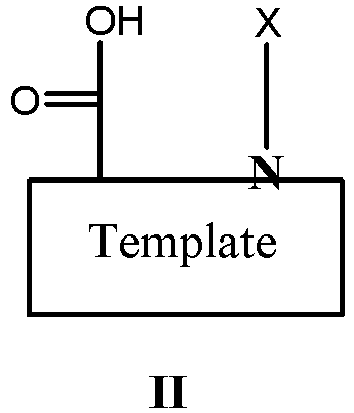

- (b) removing the N-protecting group from the product obtained in step (a);
- (c) coupling the product thus obtained with an appropriately N-protected derivative of that amino acid, which in the desired end-product is in position 4, any functional group, which may be present in said N-protected amino acid derivative, being likewise appropriately protected;
- (d) removing the N-protecting group from the product thus obtained;
- (e) coupling the product thus obtained with an appropriately N-protected derivative of that amino acid, which in the desired end-product is one position farther away from position 4, any functional group, which may be present in said N-protected amino acid derivative, being likewise appropriately protected;
- (f) removing the N-protecting group from the product thus obtained;
- (g) repeating steps (e) and (f), until all amino acid residues have been introduced;
- (h) if desired, selectively deprotecting one or several protected functional group(s) present in the molecule and appropriately substituting the reactive group(s) thus liberated;
- (i) detaching the product thus obtained from the solid support;
- (j) cyclizing the product cleaved from the solid support;
- (k) removing any protecting groups present on functional groups of any amino acid residues in the cyclic product thus obtained and, if desired, any protecting group(s), which may in addition be present in the molecule thus obtained; and
- (l) if desired, converting a compound of the formula I in free form thus obtained into a pharmaceutically acceptable salt, or converting a pharmaceutically acceptable, or unacceptable, salt thus obtained into the corresponding compound of the formula I in free form or into a different, pharmaceutically acceptable, salt.
- (a) coupling an appropriately functionalized solid support with a compound of the formula II,
- The peptidomimetics of the present invention can also be enantiomers of the compounds of formula I. These enantiomers can be prepared by a modification of the above process in which enantiomers of all chiral starting materials are used.
As used in this description, the term "alkyl", taken alone or in combinations, designates saturated, straight-chain or branched hydrocarbon radicals having up to 24, preferably up to 12, carbon atoms, optionally substituted with halogen. Similarly, the term "alkenyl" designates straight chain or branched hydrocarbon radicals having up to 24, preferably up to 12, carbon atoms and containing at least one or, depending on the chain length, up to four olefinic double bonds, optionally substituted with halogen. The term "lower" designates radicals and compounds having up to 6 carbon atoms. Thus, for example, the term "lower alkyl" designates saturated, straight-chain or branched hydrocarbon radicals having up to 6 carbon atoms, such as methyl, ethyl, n-propyl, isopropyl, n-butyl, sec.-butyl, isobutyl, tert.-butyl and the like. The term "aryl" designates aromatic carbocyclic hydrocarbon radicals containing one or two six-membered rings, such as phenyl or naphthyl, which may be substituted by up to three substituents such as Br, Cl, F, CF3, OCF3 OCHF2, NO2, lower alkyl or lower alkenyl. The term "heteroaryl" designates aromatic heterocyclic radicals containing one or two five- and/or six-membered rings, at least one of them containing up to three heteroatoms selected from the group consisting of O, S and N and said ring(s) being optionally substituted; representative examples of such optionally substituted heteroaryl radicals are indicated hereinabove in connection with the definition of R69. - Templates (b1) and (c1) constitute building blocks which have an N-terminus and a C-terminus oriented in space in such a way that the distance between those two groups may lie between 4.0-5.5A. A peptide chain Z is linked to the C-terminus and the N-terminus of the templates (b1) and (c1) via the corresponding N- and C-termini so that the template and the chain form a cyclic structure such as that depicted in formula I. In a case as here where the distance between the N- and C- termini of the template lies between 4.0-5.5A the template will induce the H-bond network necessary for the formation of a beta-hairpin conformation in the peptide chain Z. Thus template and peptide chain form a beta-hairpin mimetic.
- The beta -hairpin conformation is highly relevant for the agonizing or antagonizing activity activity of the beta-hairpin mimetics of the present invention. The beta-hairpin stabilizing conformational properties of the templates (b1) and (c1) play a key role not only for the agonizing or antagonizing activity but also for the synthesis process defined hereinabove, as incorporation of the templates at the beginning of the linear protected peptide precursors enhances cyclization yields significantly.
- For templates (b1) and (c1), the preferred values for the various symbols are the following:
- R3 : H; F; Cl; CF3; lower alkyl; lower alkenyl; -(CH2)oOR47 (where R47: lower alkyl; or lower alkenyl); -(CH2)oSR48 (where R48: lower alkyl; or lower alkenyl); -(CH2)oNR23R24 (where R23: lower alkyl; or lower alkenyl; R24: H; or lower alkyl; or R23 and R24 taken together form: -((CH2)2-6-; -(CH2)2O(CH2)2-; -(CH2)2S(CH2)2-; or -(CH2)2NR49(CH2)2-; where R49: H; or lower alkyl); -(CH2)oOCONR50R67 (where R50: H; or lower alkyl; or lower alkenyl; R67: lower alkyl; or R50 and R67 taken together form: -((CH2)2-6-; -(CH2)2O(CH2)2-; -(CH2)2S(CH2)2-; or -(CH2)2NR49(CH2)2-; where R49: H; or lower alkyl); -(CH2)oNR11CONR50R51 (where R11: H; or lower lower alkyl; R50: H; or lower alkyl; or lower alkenyl; R82: H; or lower alkyl; or R50 and R51 taken together form: -(CH2)2-6-; -(CH2)2O(CH2)2-; -(CH2)2S(CH2)2-; or -(CH2)2NR49(CH2)2-; where R49: H; or lower alkyl); -(CH2)oN(R11)COR56 (where: R11: H; or lower alkyl; R56: lower alkyl; or lower alkenyl); -(CH2)oCOOR49 (where R49: lower alkyl; or lower alkenyl); -(CH2)oCONR50R51 (where R50: lower alkyl; or lower alkenyl; and R51: H; or lower alkyl; or R50 and R51 taken together form: -(CH2)2-6-; -(CH2)2O(CH2)2-; -(CH2)2S(CH2)2-; or -(CH2)2NR49(CH2)2-; where R49: H; or lower alkyl); -(CH2)oPO(OR52)2 (where R52: lower alkyl; or lower alkenyl); -(CH2)oSO2R54 (where R54: lower alkyl; or lower alkenyl); or -(CH2)qC6H4R3 (where R3: H; F; Cl; CF3; ; OCF3; OCHF2, lower alkyl; lower alkenyl; or lower alkoxy).
- R11 : H; or lower alkyl.
- R21 : H; lower alkyl; lower alkenyl; -(CH2)pOR47 (where R47: lower alkyl; or lower alkenyl); -(CH2)pNR23R24 (where R23: lower alkyl; or lower alkenyl; R24: H; or lower alkyl; or R23 and R24 taken together form: -(CH2)2-6-; -(CH2)2O(CH2)2-; -(CH2)2S(CH2)2-; or -(CH2)2NR49(CH2)2-; where R49: H; or lower alkyl); -(CH2)pOCONR50R67 (where R50: H; or lower alkyl; or lower alkenyl; R67: lower alkyl; or R50 and R67 taken together form: -(CH2)2-6-; -(CH2)2O(CH2)2-; -(CH2)2S(CH2)2-; or -(CH2)2NR49(CH2)2-; where R49: H; or lower alkyl); -(CH2)pNR11CONR50R51 (where R11: H; or lower lower alkyl; R50: H; or lower alkyl; or lower alkenyl; R51: H; or lower alkyl; or R50 and R51 taken together form: -(CH2)2-6-; -(CH2)2O(CH2)2-; -(CH2)2S(CH2)2-; or -(CH2)2NR49(CH2)2-; where R49: H; or lower alkyl); -(CH2)pN(R11)COR56 (where: R11: H; or lower alkyl; R56: lower alkyl; or lower alkenyl); -(CH2)oCOOR49 (where R49: lower alkyl; or lower alkenyl); (-CH2)oCONR50R51 (where R50: lower alkyl, or lower alkenyl; and R51: H; lower alkyl; or R50 and R51 taken together form: -(CH2)2-6-; -(CH2)2O(CH2)2-; -(CH2)2S(CH2)2-; or -(CH2)2NR49(CH2)2-; where R49: H; or lower alkyl); -(CH2)oPO(OR52)2 (where R52: lower alkyl; or lower alkenyl); -(CH2)oSO2R54 (where R54: lower alkyl; or lower alkenyl); or -(CH2)rC6H4R3 (where R3: H; F; Cl; CF3; OCF3; OCHF2; lower alkyl; lower alkenyl; or lower alkoxy); most preferred is -CH2CONR50R51 (R50: H; or lower alkyl; R51: lower alkyl; or lower alkenyl).
- R22 : H, methyl.
- R23 : H; lower alkyl; lower alkenyl; -(CH2)mOR47 (where R47: lower alkyl; or lower alkenyl); -(CH2)mNR23R24 (where R23: lower alkyl; or lower alkenyl; R24: H; or lower alkyl; or R23 and R24 taken together form: -(CH2)2-6-; -(CH2)2O(CH2)2-; -(CH2)2S(CH2)2-; or -(CH2)2NR49(CH2)2-; where R49: H; or lower alkyl) ; (CH2)mOCONR50R67 (where R50: lower alkyl; or lower alkenyl; R67: H; or lower alkyl; or R50 and R67 taken together form: -(CH2)2-6-; -(CH2)2O(CH2)2-; -(CH2)2S(CH2)2-; or -(CH2)2NR49(CH2)2-; where R49: H; or lower alkyl); -(CH2)mNR11CONR50R51 (where R11: H; or lower lower alkyl; R50: H; or lower alkyl; or lower alkenyl; R51: H; or lower alkyl; or R50 and R51 taken together form: -(CH2)2-6-; -(CH2)2O(CH2)2-; -(CH2)2S(CH2)2-; or -(CH2)2NR49(CH2)2-; where R49: H; or lower alkyl); -(CH2)mN(R11)COR56 (where: R11: H; or lower alkyl; R56: lower alkyl; or lower alkenyl); -(CH2)oCOOR49 (where R49: lower alkyl; or lower alkenyl); -(CH2)oCONR50R51 (where R50: lower alkyl; or lower alkenyl; and R51: H; lower alkyl; or R50 and R51 taken together form: -(CH2)2-6-; -(CH2)2O(CH2)2-; -(CH2)2S(CH2)2-; or -(CH2)2NR49(CH2)2-; where R49: H; or lower alkyl).
- R24 : H; or lower alkyl.
- R25 : H; lower alkyl; lower alkenyl; -(CH2)mOR47 (where R47: lower alkyl; or lower alkenyl); -(CH2)mNR23R24 (where R23: lower alkyl; or lower alkenyl; R24: H; or lower alkyl; or R23 and R24 taken together form: -(CH2)2-6-; -(CH2)2O(CH2)2-; -(CH2)2S(CH2)2-; or -(CH2)2NR49(CH2)2-; where R49: H; or lower alkyl); -(CH2)mOCONR50R67 (where R50: H; or lower alkyl; or lower alkenyl; R67: lower alkyl; or R50 and R67 taken together form: -(CH2)2-6-; -(CH2)2O(CH2)2-; -(CH2)2S(CH2)2-; or -(CH2)2NR49(CH2)2-; where R49: H; or lower alkyl); -(CH2)mNR11CONR50R51 (where R11: H; or lower lower alkyl; R50: H; or lower alkyl; or lower alkenyl; R51: H; or lower alkyl; or R50 and R51 taken together form: -(CH2)2-6-; -(CH2)2O(CH2)2-; -(CH2)2S(CH2)2-; or -(CH2)2NR49(CH2)2-; where R49: H; or lower alkyl); -(CH2)mN(R11)COR56 (where: R11: H; or lower alkyl; R56: lower alkyl; or lower alkenyl); -(CH2)oCOOR49 (where R49: lower alkyl; or lower alkenyl); -(CH2)oCONR50R51 (where R50: lower alkyl; or lower alkenyl; and R51: H; lower alkyl; or R50 and R51 taken together form: -(CH2)2-6-; -(CH2)2O(CH2)2-; -(CH2)2S(CH2)2-; or -(CH2)2NR49(CH2)2-; where R49: H; lower alkyl); or (CH2)pC6H4R3 (where R3: H; F; Cl; CF3; OCF3; OCHF2; lower alkyl; lower alkenyl; or lower alkoxy).
- R26 : lower alkyl; lower alkenyl; aryl-lower alkyl; or (CH2)pC6H4R3 (where R3: H; F; Cl; CF3; OCF3; OCHF2; lower alkyl; lower alkenyl; or lower alkoxy)..
- R27 : H; lower alkyl; lower alkenyl; -(CH2)pOR47 (where R47: lower alkyl; or lower alkenyl); -(CH2)pNR23R24 (where R23: lower alkyl; or lower alkenyl; R24: H; or lower alkyl; or R23 and R24 taken together form: -(CH2)2-6-; -(CH2)2O(CH2)2-; -(CH2)2S(CH2)2-; or -(CH2)2NR49(CH2)2-; where R49: H; or lower alkyl); -(CH2)pOCONR50R67 (where R50: H; or lower alkyl; or lower alkenyl; R67: lower alkyl; or R50 and R67 taken together form: -(CH2)2-6-; -(CH2)2O(CH2)2-; -(CH2)2S(CH2)2-; or -(CH2)2NR49(CH2)2-; where R49: H; or lower alkyl); -(CH2)pNR11CONR50R51 (where R11: H; or lower alkyl; R50: H; or lower alkyl; or lower alkenyl; R51: H; or lower alkyl; or R50 and R51 taken together form: -(CH2)2-6-; -(CH2)2O(CH2)2-; -(CH2)2S(CH2)2-; or -(CH2)2NR49(CH2)2-; where R49: H; or lower alkyl); -(CH2)pN(R11)COR56 (where: R11: H; or lower alkyl; R56: lower alkyl; or lower alkenyl); -(CH2)oCOOR49 (where R49: lower alkyl; or lower alkenyl); -(CH2)oCONR50R51 (where R50: lower alkyl, or lower alkenyl; and R51: H; lower alkyl; or R50 and R51 taken together form: -(CH2)2-6-; -(CH2)2O(CH2)2-; -(CH2)2S(CH2)2-; or -(CH2)2NR49(CH2)2-; where R49: H; or lower alkyl); -(CH2)oPO(OR52)2 (where R52: lower alkyl; or lower alkenyl); -(CH2)oSO2R54 (where R54: lower alky; or lower alkenyl); or -(CH2)qC6H4R3 (where R3: H; F; Cl; CF3; OCF3; OCHF2; lower alkyl; lower alkenyl; or lower alkoxy).
- R28 : H; lower alkyl; lower alkenyl; -(CH2)pOR47 (where R47: lower alkyl; or lower alkenyl); -(CH2)pNR23R24 (where R23: lower alkyl; or lower alkenyl; R24: H; or lower alkyl; or R23 and R24 taken together form: -(CH2)2-6-; -(CH2)2O(CH2)2-; -(CH2)2S(CH2)2-; or -(CH2)2NR49(CH2)2-; where R49: H; or lower alkyl); -(CH2)pOCONR50R67 (where R50: H; or lower alkyl; or lower alkenyl; R67: lower alkyl; or R17 and R78 taken together form: -(CH2)2-6-; -(CH2)2O(CH2)2-; -(CH2)2S(CH2)2-; or -(CH2)2NR49(CH2)2-; where R49: H; or lower alkyl); -(CH2)pNR11CONR50R51 (where R11: H; or lower lower alkyl; R50: H; or lower alkyl; or lower alkenyl; R51: H; or lower alkyl; or R50 and R52 taken together form: -(CH2)2-6-; -(CH2)2O(CH2)2-; -(CH2)2S(CH2)2-; or -(CH2)2NR49(CH2)2-; where R49: H; or lower alkyl); -(CH2)pN(R11)COR56 (where: R11: H; or lower alkyl; R56: lower alkyl; or lower alkenyl); -(CH2)oCOOR49 (where R49: lower alkyl; or lower alkenyl); -(CH2)oCONR50R51 (where R50: lower alkyl, or lower alkenyl; and R51: H; lower alkyl; or R50 and R51 taken together form: -(CH2)2-6-; -(CH2)2O(CH2)2-; -(CH2)2S(CH2)2-; or -(CH2)2NR49(CH2)2-; where R49: H; or lower alkyl); -(CH2)oPO(OR52)2 (where R52: lower alkyl; or lower alkenyl); -(CH2)oSO2R54 (where R54: lower alkyl; or lower alkenyl); or -(CH2)qC6H4R3 (where R3: H; F; Cl; CF3; lower alkyl; lower alkenyl; or lower alkoxy).
- R29 : H; lower alkyl; lower alkeny; OCF3; OCHF2; ary-lower alkyl;.
- R30 : lower alkyl; lower alkenyl; or aryl-lower alkyl.
- R31 : H; lower alkyl; lower alkenyl; -(CH2)pOR47 (where R47: lower alkyl; or lower alkenyl); -(CH2)pNR23R24 (where R23: lower alkyl; or lower alkenyl; R24: H; or lower alkyl; or R23 and R24 taken together form: -(CH2)2-6-; -(CH2)2O(CH2)2-; -(CH2)2S(CH2)2-; or -(CH2)2NR49(CH2)2-; where R49: H; or lower alkyl); -(CH2)pOCONR50R67 (where R50: H; or lower alkyl; or lower alkenyl; R67: lower alkyl; or R50 and R67 taken together form: -(CH2)2-6-; -(CH2)2O(CH2)2-; -(CH2)2S(CH2)2-; or -(CH2)2NR49(CH2)2-; where R49: H; or lower alkyl); -(CH2)pNR11CONR50R51 (where R11: H; or lower lower alkyl; R50: H; or lower alkyl; or lower alkenyl; R51: H; or lower alkyl; or R50 and R51 taken together form: -(CH2)2-6-; -(CH2)2O(CH2)2-; -(CH2)2S(CH2)2-; or -(CH2)2NR49(CH2)2-; where R49: H; or lower alkyl); -(CH2)pN(R11)COR56 (where: R11: H; or lower alkyl; R56: lower alkyl; or lower alkenyl); -(CH2)oCOOR49 (where R49: lower alkyl; or lower alkenyl); -(CH2)oCONR50R51 (where R50: lower alkyl, or lower alkenyl; and R51: H; lower alky; or R50 and R51 taken together form: -(CH2)2-6-; -(CH2)2O(CH2)2-; -(CH2)2S(CH2)2-; or -(CH2)2NR49(CH2)2-; where R49: H; or lower alkyl); -(CH2)oPO(OR52)2 (where R52: lower alkyl; or lower alkenyl); -(CH2)oSO2R54 (where R54: lower alkyl; or lower alkenyl); or -(CH2)qC6H4R3 (where R3: H; F; Cl; CF3; ; OCF3; OCHF2, lower alkyl; lower alkenyl; or lower alkoxy).
- R32 : H; lower alkyl; lower alkenyl; -(CH2)pOR47 (where R47: lower alkyl; or lower alkenyl); -(CH2)pNR23R24 (where R23: lower alkyl; or lower alkenyl; R24: H; or lower alkyl; or R23 and R24 taken together form: -(CH2)2-6-; -(CH2)2O(CH2)2-; -(CH2)2S(CH2)2-; or -(CH2)2NR49(CH2)2-; where R49: H; or lower alkyl); -(CH2)pOCONR50R67 (where R50: H; or lower alkyl; or lower alkenyl; R67: lower alkyl; or R50 and R67 taken together form: -(CH2)2-6-; -(CH2)2O(CH2)2-; -(CH2)2S(CH2)2-; or -(CH2)2NR49(CH2)2-; where R49: H; or lower alkyl); -(CH2)pNR11CONR50R51 (where R11: H; or lower lower alkyl; R50: H; or lower alkyl; or lower alkenyl; R51: H; or lower alkyl; or R50 and R51 taken together form: -(CH2)2-6-; -(CH2)2O(CH2)2-; -(CH2)2S(CH2)2-; or -(CH2)2NR49(CH2)2-; where R49: H; or lower alkyl); -(CH2)pN(R11)COR56 (where: R11: H; or lower alkyl; R56: lower alkyl; or lower alkenyl); -(CH2)oCOOR49 (where R49: lower alkyl; or lower alkenyl); -(CH2)oCONR50R51 (where R50: lower alkyl, or lower alkenyl; and R51: H; lower alkyl; or R50 and R51 taken together form: -(CH2)2-6-; -(CH2)2O(CH2)2-; -(CH2)2S(CH2)2-; or -(CH2)2NR49(CH2)2-; where R49: H; or lower alkyl); -(CH2)oPO(OR52)2 (where R52: lower alkyl; or lower alkenyl); -(CH2)oSO2R54 (where R54: lower alkyl; or lower alkenyl); or -(CH2)qC6H4R3 (where R3: H; F; Cl; CF3; ; OCF3; OCHF2 ; lower alkyl; lower alkenyl; or lower alkoxy).
- R33 : H; lower alkyl; lower alkenyl; -(CH2)mOR47 (where R47: lower alkyl; or lower alkenyl); -(CH2)mSR48 (where R48: lower alkyl; or lower alkenyl); -(CH2)mNR23R24 (where R23: lower alkyl; or lower alkenyl; R24: H; or lower alkyl; or R23 and R24 taken together form: -(CH2)2-6-; -(CH2)2O(CH2)2-; -(CH2)2S(CH2)2-; or -(CH2)2NR49(CH2)2-; where R49: H; or lower alkyl); -(CH2)mOCONR50R67 (where R50: H; or lower alkyl; or lower alkenyl; R67: lower alkyl; or R50 and R67 taken together form: -((CH2)2-6-; -(CH2)2O(CH2)2-; -(CH2)2S(CH2)2-; or -(CH2)2NR49(CH2)2-; where R49: H; or lower alkyl); -(CH2)mNR11CONR50R51 (where R11: H; or lower lower alkyl; R50: H; or lower alkyl; or lower alkenyl; R51: H; or lower alkyl; or R50 and R51 taken together form: -(CH2)2-6-; -(CH2)2O(CH2)2-; -(CH2)2S(CH2)2-; or -(CH2)2NR49(CH2)2-; where R49: H; or lower alkyl); -(CH2)mN(R11)COR56 (where: R11: H; or lower alkyl; R56: lower alkyl; or lower alkenyl); -(CH2)oCOOR49 (where R49: lower alkyl; or lower alkenyl); -(CH2)oCONR50R51 (where R50: lower alkyl; or lower alkenyl; and R51: H; lower alkyl; or R50 and R51 taken together form: -(CH2)2-6-; -(CH2)2O(CH2)2-; -(CH2)2S(CH2)2-; or -(CH2)2NR49(CH2)2-; where R49: H; or lower alkyl); -(CH2)oPO(OR52)2 (where R52: lower alkyl; or lower alkenyl); -(CH2)oSO2R54 (where R54: lower alkyl; or lower alkenyl); or -(CH2)qC6H4R3 (where R3: H; F; Cl; CF3; ; OCF3; OCHF2; lower alkyl; lower alkenyl; or lower alkoxy).
- R34 : H; lower alkyl; lower alkenyl; or -(CH2)0C6H4R3 (where R3: H; F; Cl; CF3; OCF3; OCHF2; lower alkyl; lower alkenyl; or lower alkoxy).
- R35 is R34 .
- R36 : H; (CH2)oOR47 (where R47: lower alkyl; or lower alkenyl); -(CH2)oC6H4R3 (where R3: H; F; Cl; CF3; OCF3; OCHF2; lower alkyl; lower alkenyl; or lower alkoxy).
- R37 is R34.
- R38 is R34 .
- R39 is R34 .
- R40 is R34 .
- R41 is R34 .
- R42 : H; (CH2)oOR47 (where R47: lower alkyl; or lower alkenyl);
- R43 is R17 .
- R44 is R17 .
- R45 is R12 .
- R46 : H; lower alkyl; -(CH2)oCOOR49 (where R49: lower alkyl; or lower alkenyl); -(CH2)oCONR50R51 (where R50: lower alkyl; or lower alkenyl; and R51: H; lower alkyl; or R50 and R51 taken together form: -(CH2)2-6-; -(CH)2O(CH2)2-; -(CH2)2S(CH2)2-; or -(CH2)2NR49(CH2)2-; where R49: H; or lower alkyl); or (CH2)sC6H4R3 (where R3: H; F; Cl; CF3; CF3; OCF3; OCHF2, lower alkyl; lower alkenyl; or lower alkoxy).
- The peptidic chain Z of the beta-hairpin mimetics described herein is generally defined in terms of amino acid residues belonging to one of the following groups:
- Group C -NR11CH(R64)CO-; "hydrophobic: small to medium-sized"
- Group D -NR11CH(R65)CO-; "hydrophobic: large aromatic or heteroaromatic"
- Group E -NR11CH(R66)CO-; "polar-cationic" and "urea-derived"
- Group F -NR11CH(R76)CO-; "polar-non-charged or anionic"
- Furthermore, Gly can also be an amino acid residue in chain Z.
- Group C comprises amino acid residues with small to medium-sized hydrophobic side chain groups according to the general definition for substituent R64. A hydrophobic residue refers to an amino acid side chain that is uncharged at physiological pH and that is repelled by aqueous solution. Furthermore these side chains generally do not contain hydrogen bond donor groups, such as (but not limited to) primary and secondary amides, primary and secondary amines and the corresponding protonated salts thereof, thiols, alcohols, phosphonates, phosphates, ureas or thioureas. However, they may contain hydrogen bond acceptor groups such as ethers, thioethers, esters, tertiary amides, alkyl- or aryl phosphonates and phosphates or tertiary amines. Genetically encoded small-to-medium-sized amino acids include alanine, isoleucine, leucine, methionine and valine.
- Group D comprises amino acid residues with aromatic and heteroaromatic side chain groups according to the general definition for substituent R65. An aromatic amino acid residue refers to a hydrophobic amino acid having a side chain containing at least one ring having a conjugated π-electron system (aromatic group). In addition they may contain hydrogen bond donor groups such as (but not limited to) primary and secondary amides, primary and secondary amines and the corresponding protonated salts thereof, thiols, alcohols, phosphonates, phosphates, ureas or thioureas, and hydrogen bond acceptor groups such as (but not limited to) ethers, thioethers, esters, tetriary amides, alkyl- or aryl phosphonates -and phosphates or tertiary amines. Genetically encoded aromatic amino acids include phenylalanine and tyrosine.
- A heteroaromatic amino acid residue refers to a hydrophobic amino acid having a side chain containing at least one ring having a conjugated π-system incorporating at least one heteroatom such as (but not limited to) O, S and N according to the general definition for substituent R69. In addition such residues may contain hydrogen bond donor groups such as (but not limited to) primary and secondary amides, primary and secondary amines and the corresponding protonated salts thereof, thiols, alcohols, phosphonates, phosphates, ureas or thioureas, and hydrogen bond acceptor groups such as (but not limited to) ethers, thioethers, esters, tetriary amides, alkyl- or aryl phosphonates -and phosphates or tertiary amines. Genetically encoded heteroaromatic amino acids include tryptophan and histidine.
- Group E comprises amino acids containing side chains with polar-cationic (e.g. amino, guanidino, amidino and, acylamino -derived residues according to the general definition for substituen R66. Polar-cationic refers to a basic side chain which is protonated at physiological pH. Genetically encoded polar-cationic amino acids include arginine, lysine, and histidine.
- Group F comprises amino acids containing side chains with polar-non-charged or anionic residues according to the general definition for substituent R76. A polar-non-charged or anionic residue refers to a hydrophilic side chain that is uncharged and, respectively anionic at physiological pH (carboxylic acids being included), but that is not repelled by aqueous solutions. Such side chains typically contain hydrogen bond donor groups such as (but not limited to) primary and secondary amides, carboxyclic acids and esters, primary and secondary amines, thiols, alcohols, phosphonates, phosphates, ureas or thioureas. Citrulline is an example for an urea derived amino acid residue. These groups can form hydrogen bond networks with water molecules. In addition they may also contain hydrogen bond acceptor groups such as (but not limited to) ethers, thioethers, esters, tetriary amides, carboxylic acids and carboxylates, alkyl- or aryl phosphonates -and phosphates or tertiary amines. Genetically encoded polar-non-charged amino acids include asparagine, cysteine, glutamine, serine and threonine, but also aspartic acid, glutamic acid, and citrulline.
- Most preferred amino acid residues in chain Z are those derived from natural α-amino acids. Hereinafter follows a list of amino acids which, or the residues of which, are suitable for the purposes of the present invention, the abbreviations corresponding to generally adopted usual practice:
three letter code one letter code Ala L-Alanine A Arg L-Arginine R Asn L-Asparagine N Asp L-Aspartic acid D Cys L-Cysteine C Glu L-Glutamic acid E Gln L-Glutamine Q Gly Glycine G His L-Histidine H Ile L-Isoleucine I Leu L-Leucine L Lys L-Lysine K Met L-Methionine M Phe L-Phenylalanine F Pro L-Proline P DPro D-Proline DP Ser L-Serine S Thr L-Threonine T Trp L-Tryptophan W Tyr L-Tyrosine Y Val L-Valine V - Other α-amino acids which, or the residues of which, are suitable for the purposes of the present invention include:
Cit L-Citrulline Orn L-Ornithine tBuA L-t-Butylalanine Sar Sarcosine Pen L-Penicillamine t-BuG L-tert.-Butylglycine 4AmPhe L-para-Aminophenylalanine 3AmPhe L-meta-Aminophenylalanine 2AmPhe L-ortho-Aminophenylalanine Phe(mC(NH2)=NH) L-meta-Amidinophenylalanine Phe(pC(NH2)=NH) L-para-Amidinophenylalanine Phe(mNHC (NH2)=NH) L-meta-Guanidinophenylalanine Phe(pNHC (NH2)=NH) L-para-Guanidinophenylalanine Phg L-Phenylglycine Cha L-Cyclohexylalanine C4al L-3-Cyclobutylalanine C5al L-3-Cyclopentylalanine Nle L-Norleucine 2-Nal L-2-Naphthylalanine 1-Nal L-1-Naphthylalanine 4Cl-Phe L-4-Chlorophenylalanine 3Cl-Phe L-3-Chlorophenylalanine 2Cl-Phe L-2-Chlorophenylalanine 3,4Cl2-Phe L-3,4-Dichlorophenylalanine 4F-Phe L-4-Fluorophenylalanine 3F-Phe L-3 Fluorophenylalanine 2F-Phe L-2-Fluorophenylalanine Tic 1,2,3,4-Tetrahydroisoquinoline-3-carboxylic acid Thi L-beta-2-Thienylalanine Tza L-2-Thiazolylalanine Mso L-Methionine sulfoxide AcLys N-Acetyllysine Dpr 2,3-Diaminopropionic acid A2Bu 2,4-Diaminobutyric acid Dbu (S)-2,3-Diaminobutyric acid Abu γ-Aminobutyric acid (GABA) Aha ε-Aminohexanoic acid Aib α-Aminoisobutyric acid Y(Bzl) L-O-Benzyltyrosine Bip L-(4-phenyl)phenylalanine S (Bzl) L-O-Benzylserine T(Bzl) L-O-Benzylthreonine hCha L-Homo-cyclohexylalanine hCys L-Homo-cysteine hSer L-Homo-serine hArg L-Homo-arginine hPhe L-Homo-phenylalanine Bpa L-4-Benzoylphenylalanine 4-AmPyrr1 (2S,4S)-4-Amino-pyrrolidine-L-carboxylic acid 4-AmPyrr2 (2S,4R)-4-Amino-pyrrolidine-L-carboxylic acid 4-PhePyrr1 (2S,5R)-4-Phenyl-pyrrolidine-L-carboxylic acid 4-PhePyrr2 (2S,5S)-4-Phenyl-pyrrolidine-L-carboxylic acid 5-PhePyrr1 (2S,5R)-5-Phenyl-pyrrolidine-L-carboxylic acid 5-PhePyrr2 (2S,5S)-5-Phenyl-pyrrolidine-L-carboxylic acid Pro(4-OH)1 (4S)-L-Hydroxyproline Pro(4-OH)2 (4R)-L-Hydroxyproline Pip L-Pipecolic acid DPip D-Pipecolic acid OctG L-Octylglycine NGly N-Methylglycine MePhe L-N-Methylphenylalanine MeNle L-N-Methylnorleucine MeAla L-N-Methylalanine Melle L-N-Methylisoleucine MeVal L-N-Methylvaline MeLeu L-N-Methylleucine DimK L-(N',N'Dimethyl)-lysine Lpzp L-Piperazinic acid Dpzp D-Piperazinic acid Isorn L-(N',N'-diisobutyl)-ornithine PipAla L-2-(4'-piperidinyl)-alanine PirrAla L-2-(3'-pyrrolidinyl)-alanine Ampc 4-Amino-piperidine-4-carboxylic acid NMeR L-N-Methylarginine NMeK L-N-Methyllysine NMePhe L-N-Methylphenylalanine BnG N-Benzylglycine (4-OH)BnG N-4-Hydroxy-benzylglycine IaG N-Isoamylglycine IbG N-Isobutlyglycine Azt L-azetidine-2-carboxylic acid - Particularly preferred residues for group C are:
Ala L-Alanine Ile L-Isoleucine Leu L-Leucine Met L-Methionine Val L-Valine tBuA L-t-Butylalanine t-BuG L-tert.-Butylglycine Cha L-Cyclohexylalanine C4al L-3-Cyclobutylalanine C5al L-3-Cyclopentylalanine Nle L-Norleucine hCha L-Homo-cyclohexylalanine OctG L-Octylglycine MePhe L-N-Methylphenylalanine MeNle L-N-Methylnorleucine MeAla L-N-Methylalanine Melle L-N-Methylisoleucine MeVal L-N-Methylvaline MeLeu L-N-Methylleucine Azt L-azetidine-2-carboxylic acid - Particularly preferred residues for group D are:
His L-Histidine Phe L-Phenylalanine Trp L-Tryptophan Tyr L-Tyrosine Phg L-Phenylglycine 2-Nal L-2-Naphthylalanine 1-Nal L-1-Naphthylalanine 4Cl-Phe L-4-Chlorophenylalanine 3Cl-Phe L-3-Chlorophenylalanine 2Cl-Phe L-2-Chlorophenylalanine 3,4Cl2-Phe L-3,4-Dichlorophenylalanine 4F-Phe L-4-Fluorophenylalanine 3F-Phe L-3-Fluorophenylalanine 2F-Phe L-2-Fluorophenylalanine Thi L-beta-2-Thienylalanine Tza L-2-Thiazolylalanine Y(Bzl) L-O-Benzyltyrosine Bip L-Biphenylalanine S(Bzl) L-O-Benzylserine T(Bzl) L-O-Benzylthreonine hPhe L-Homo-phenylalanine Bpa L-4-Benzoylphenylalanine PirrAla L-2-(3'-pyrrolidinyl)-alanine NMePhe L-N-Methylphenylalanine 4-PyrAla L-2-(4'Pyridyl)-alanine - Particularly preferred residues for group E are
Arg L-Arginine Lys L-Lysine Orn L-Ornithine Dpr L-2,3-Diaminopropionic acid A2Bu L-2,4-Diaminobutyric acid Dbu (S)-2,3-Diaminobutyric acid Phe(pNH2) L-para-Aminophenylalanine Phe(mNH2) L-meta-Aminophenylalanine Phe(oNH2) L-ortho-Aminophenylalanine hArg L-Homo-arginine Phe(mC(NH2)=NH) L-meta-Amidinophenylalanine Phe(pC(NH2)=NH) L-para-Amidinophenylalanine Phe(mNHC (NH2)=NH) L-meta-Guanidinophenylalanine Phe(pNHC (NH2)=NH) L-para-Guanidinophenylalanine DimK L-(N',N'Dimethyl)-lysine Isorn L-(N',N'-diisobutyl)-ornithine NMeR L-N-Methylarginine NMeK L-N-Methyllysine OrnPyr L-2-Amino-5-[(2'carbonylpyrazine)]amino-pentanoic PipAla L-2-(4'-piperidinyl)-alanine - Particularly preferred residues for group F are
Asn L-Asparagine Asp L-Aspartic acid Cys L-Cysteine Gln L-Glutamine Glu L-Glutamic acid Ser L-Serine Thr L-Threonine Cit L-Citrulline Pen L-Penicillamine AcLys L-Nε-Acetyllysine hCys L-Homo-cysteine hSer L-Homo-serine - Generally, the peptidic chain Z within the beta-hairpin mimetics of the invention comprises 4 amino acid residues. The positions P1 to P4 of each amino acid residue in the chain Z are unequivocally defined as follows: P1 represents the first amino acid in the chain Z that is coupled with its N-terminus to the C-terminus of the templates (b1) and (c1); and P4 represents the last amino acid in the chain Z that is coupled with its C-terminus to the N-terminus of the templates (b1) and (c1). Each of the positions P1 to P4 will contain an amino acid residue belonging to one of the above types C D, E, F, or being Gly, as follows:
- The α-amino acid residues in positions 1 to 4 of the chain Z are preferably:
- P1: of type C, or of type D or of type E or of type F or the residue is Gly;
- P2: of type D or of type E or of type C or the residue is Gly;
- P3: of type D or of type E or the residue is Gly;
- P4: of type C, or of type D or of type E or of type F, or the residue is Gly;
- The α-amino acid residues in positions 1 to 4 are most preferably:
- P1: Phe, Ile, Gln, Thr, Trp, Glu, Tyr;
- P2: Trp, Lys, DVal;
- P3: Lys, Tyr, Arg, Trp;
- P4: Tyr, His, Gly, Ala, Orn, Lys;
- Particularly preferred beta-peptidomimetics of the invention include those described in Examples 2 and 15.
- The processes of the invention can advantageously be carried out as parallel array syntheses to yield libraries of template-fixed beta-hairpin peptidomimetics of the above general formula I. Such parallel syntheses allow one to obtain arrays of numerous (normally 24 to 192, typically 96) compounds of general formula I in high yields and defined purities, minimizing the formation of dimeric and polymeric by-products. The proper choice of the functionalized solid-support (i.e. solid support plus linker molecule), templates and site of cyclization play thereby key roles.
- The functionalized solid support is conveniently derived from polystyrene crosslinked with, preferably 1-5%, divinylbenzene; polystyrene coated with polyethyleneglycol spacers (TentagelR); and polyacrylamide resins (see also Obrecht, D.; Villalgordo, J.-M, "Solid-Supported Combinatorial and Parallel Synthesis of Small-Molecular-Weight Compound Libraries", Tetrahedron Organic Chemistry Series, Vol. 17, Pergamon, Elsevier Science, 1998).
- The solid support is functionalized by means of a linker, i.e. a bifunctional spacer molecule which contains on one end an anchoring group for attachment to the solid support and on the other end a selectively cleavable functional group used for the subsequent chemical transformations and cleavage procedures. For the purposes of the present invention two types of linkers are used:
- Type 1 linkers are designed to release the amide group under acidic conditions (Rink H, Tetrahedron Lett. 1987, 28, 3783-3790). Linkers of this kind form amides of the carboxyl group of the amino acids; examples of resins functionalized by such linker structures include 4-[(((2,4-dimethoxyphenyl)Fmoc-aminomethyl)phenoxyacetamido) aminomethyl] PS resin, 4-[(((2,4-dimethoxyphenyl)Fmoc-aminomethyl)phenoxyacetamido) aminomethyl] -4-methylbenzydrylamine PS resin (Rink amide MBHA PS Resin), and 4-[(((2,4-dimethoxyphenyl)Fmoc-aminomethyl)phenoxyacetamido) aminomethyl] benzhydrylamine PS-resin (Rink amide BHA PS resin). Preferably, the support is derived from polystyrene crosslinked with, most preferably 1-5%, divinylbenzene and functionalized by means of the 4-(((2,4-dimethoxyphenyl)Fmoc-aminomethyl)phenoxyacetamido) linker.
- Type 2 linkers are designed to eventually release the carboxyl group under acidic conditions. Linkers of this kind form acid-labile esters with the carboxyl group of the amino acids, usually acid-labile benzyl, benzhydryl and trityl esters; examples of such linker structures include 2-methoxy-4-hydroxymethylphenoxy (SasrinR linker), 4-(2,4-dimethoxyphenyl-hydroxymethyl)-phenoxy (Rink linker), 4-(4-hydroxymethyl-3-methoxyphenoxy)butyric acid (HMPB linker), trityl and 2-chlorotrityl. Preferably, the support is derived from polystyrene crosslinked with, most preferably 1-5%, divinylbenzene and functionalized by means of the 2-chlorotrityl linker.
- When carried out as parallel array syntheses the processes of the invention can be advantageously carried out as described herein below but it will be immediately apparent to those skilled in the art how these procedures will have to be modified in case it is desired to synthesize one single compound of the above formula I.
- A number of reaction vessels (normally 24 to 192, typically 96) equal to the total number of compounds to be synthesized by the parallel method are loaded with 25 to 1000 mg, preferably 100 mg, of the appropriate functionalized solid support which is preferably derived from polystyrene cross-linked with 1 to 3% of divinylbenzene, or from Tentagel resin.
- The solvent to be used must be capable of swelling the resin and includes, but is not limited to, dichloromethane (DCM), dimethylformamide (DMF), N-methylpyrrolidone (NMP), dioxane, toluene, tetrahydrofuran (THF), ethanol (EtOH), trifluoroethanol (TFE), isopropylalcohol and the like. Solvent mixtures containing as at least one component a polar solvent (e. g. 20% TFE/DCM, 35% THF/NMP) are beneficial for ensuring high reactivity and solvation of the resin-bound peptide chains (Fields, G. B., Fields, C. G., J. Am. Chem. Soc. 1991, 113, 4202-4207).
- With the development of various linkers that release the C-terminal carboxylic acid group under mild acidic conditions, not affecting acid-labile groups protecting functional groups in the side chain(s), considerable progresses have been made in the synthesis of protected peptide fragments. The 2-methoxy-4-hydroxybenzylalcohol-derived linker (SasrinR linker, Mergler et al., Tetrahedron Lett. 1988, 29 4005-4008) is cleavable with diluted trifluoroacetic acid (0.5-1% TFA in DCM) and is stable to Fmoc deprotection conditions during the peptide synthesis, Boc/tBu-based additional protecting groups being compatible with this protection scheme. Other linkers which are suitable for the processes of the invention include the super acid labile 4-(2,4-dimethoxyphenyl-hydroxymethyl)-phenoxy linker (Rink linker, Rink, H. Tetrahedron Lett. 1987, 28, 3787-3790), where the removal of the peptide requires 10% acetic acid in DCM or 0.2% trifluoroacetic acid in DCM; the 4-(4-hydroxymethyl-3-methoxyphenoxy)butyric acid-derived linker (HMPB-linker, Flörsheimer & Riniker, Peptides 1991,1990 131) which is also cleaved with 1%TFA/DCM in order to yield a peptide fragment containing all acid labile side-chain protective groups; and, in addition, the 2-chlorotritylchloride linker (Barlos et al., Tetrahedron Lett. 1989, 30, 3943-3946), which allows the peptide detachment using a mixture of glacial acetic acid/trifluoroethanol/DCM (1:2:7) for 30 min.
- Suitable protecting groups for amino acids and, respectively, for their residues are, for example,
- for the amino group (as is present e. g. also in the side-chain of lysine)Cbz benzyloxycarbonyl Boc tert.-butyloxycarbonyl Fmoc 9-fluorenylmethoxycarbonyl Alloc allyloxycarbonyl Teoc trimethylsilylethoxycarbonyl Tcc trichloroethoxycarbonyl Nps o-nitrophenylsulfonyl; Trt triphenymethyl or trityl
- for the carboxyl group (as is present e. g. also in the side-chain of aspartic and glutamic acid) by conversion into esters with the alcohol componentstBu tert.-butyl Bn benzyl Me methyl Ph phenyl Pac Phenacyl Allyl Tse trimethylsilylethyl Tce trichloroethyl;
- for the guanidino group (as is present e. g. in the side-chain of arginine)Pmc 2,2,5,7,8-pentamethylchroman-6-sulfonyl Ts tosyl (i. e. p-toluenesulfonyl) Cbz benzyloxycarbonyl Pbf 2,2,4,6,7-pentamethyldihydrobenzofuran-5-sulfonyl
- for the hydroxy group (as is present e. g. in the side-chain of threonine and serine)tBu tert.-butyl Bn benzyl Trt trityl
- and for the mercapto group (as is present e. g. in the side-chain of cysteine)Acm acetamidomethyl tBu tert.-butyl Bn benzyl Trt trityl Mtr 4-methoxytrityl. - The 9-fluorenylmethoxycarbonyl- (Fmoc)-protected amino acid derivatives are preferably used as the building blocks for the construction of the template-fixed beta-hairpin loop mimetics of formula I. For the deprotection, i. e. cleaving off of the Fmoc group, 20% piperidine in DMF or 2% DBU/2% piperidine in DMF can be used.
- The quantity of the reactant, i. e. of the amino acid derivative, is usually 1 to 20 equivalents based on the milliequivalents per gram (meq/g) loading of the functionalized solid support (typically 0.1 to 2.85 meq/g for polystyrene resins) originally weighed into the reaction tube. Additional equivalents of reactants can be used, if required, to drive the reaction to completion in a reasonable time. The reaction tubes, in combination with the holder block and the manifold, are reinserted into the reservoir block and the apparatus is fastened together. Gas flow through the manifold is initiated to provide a controlled environment, for example, nitrogen, argon, air and the like. The gas flow may also be heated or chilled prior to flow through the manifold. Heating or cooling of the reaction wells is achieved by heating the reaction block or cooling externally with isopropanol/dry ice and the like to bring about the desired synthetic reactions. Agitation is achieved by shaking or magnetic stirring (within the reaction tube). The preferred workstations (without, however, being limited thereto) are Labsource's Combi-chem station and MultiSyn Tech's-Syro synthesizer.
- Amide bond formation requires the activation of the α-carboxyl group for the acylation step. When this activation is being carried out by means of the commonly used carbodiimides such as dicyclohexylcarbodiimide (DCC, Sheehan & Hess, J. Am. Chem. Soc. 1955, 77, 1067-1068) or diisopropylcarbodiimide (DIC, Sarantakis et al Biochem. Biophys. Res. Commun.1976, 73, 336-342), the resulting dicyclohexylurea and diisopropylurea is insoluble and, respectively, soluble in the solvents generally used. In a variation of the carbodiimide method 1-hydroxybenzotriazole (HOBt, König & Geiger, Chem. Ber 1970, 103, 788-798) is included as an additive to the coupling mixture. HOBt prevents dehydration, suppresses racemization of the activated amino acids and acts as a catalyst to improve the sluggish coupling reactions. Certain phosphonium reagents have been used as direct coupling reagents, such as benzotriazol-1-yl-oxy-tris-(dimethylamino)-phosphonium hexafluorophosphate (BOP, Castro et al., Tetrahedron Lett. 1975, 14, 1219-1222; Synthesis, 1976, 751-752), or benzotriazol-1-yl-oxy-tris-pyrrolidino-phosphonium hexafluorophoshate (Py-BOP, Coste et al., Tetrahedron Lett. 1990, 31, 205-208), or 2-(1H-benzotriazol-1-yl-)1,1,3,3-tetramethyluronium tetrafluoroborate (TBTU), or hexafluorophosphate (HBTU, Knorr et al., Tetrahedron Lett. 1989, 30, 1927-1930); these phosphonium and uronium reagents are also suitable for in situ formation of HOBt esters with the protected amino acid derivatives. More recently diphenoxyphosphoryl azide (DPPA) or O-(7-aza-benzotriazol-1-yl)-N,N,N',N'-tetramethyluronium tetrafluoroborate (TATU) or O-(7-aza-benzotriazol-1-yl)-N,N,N',N'-tetramethyluronium hexafluorophosphate (HATU)/7-aza-1-hydroxy benzotriazole (HOAt, Carpino et al., Tetrahedron Lett. 1994, 35, 2279-2281) have also been used as coupling reagents.
- Due to the fact that near-quantitative coupling reactions are essential, it is desirable to have experimental evidence for completion of the reactions. The ninhydrin test (Kaiser et al., Anal. Biochemistry 1970, 34, 595), where a positive colorimetric response to an aliquot of resin-bound peptide indicates qualitatively the presence of the primary amine, can easily and quickly be performed after each coupling step. Fmoc chemistry allows the spectrophotometric detection of the Fmoc chromophore when it is released with the base (Meienhofer et al., Int. J. Peptide Protein Res. 1979, 13, 35-42).
- The resin-bound intermediate within each reaction tube is washed free of excess of retained reagents, of solvents, and of by-products by repetitive exposure to pure solvent(s).
- Washing procedures are repeated up to about 50 times (preferably about 10 times), monitoring the efficiency of reagent, solvent, and by-product removal by methods such as TLC, GC, LC-MS or inspection of the washings.
- The above described procedure of reacting the resin-bound compound with reagents within the reaction wells followed by removal of excess reagents, by-products, and solvents is repeated with each successive transformation until the final resin-bound fully protected linear peptide has been obtained.
- Before this fully protected linear peptide is detached from the solid support, it is possible, if desired, to selectively deprotect one or several protected functional group(s) present in the molecule and to appropriately substitute the reactive group(s) thus liberated. To this effect, the functional group(s) in question must initially be protected by a protecting group which can be selectively removed without affecting the remaining protecting groups present. Alloc (allyloxycarbonyl) is an example for such an amino protecting group which can be selectively removed, e.g. by means of Pd° and phenylsilane in CH2Cl2, without affecting the remaining protecting groups, such as Fmoc, present in the molecule. The reactive group thus liberated can then be treated with an agent suitable for introducing the desired substituent. Thus, for example, an amino group can be acylated by means of an acylating agent corresponding to the acyl substituent to be introduced.
- After detachment of the fully protected linear peptide from the solid support the individual solutions/extracts are then manipulated as needed to isolate the final compounds. Typical manipulations include, but are not limited to, evaporation, concentration, liquid/liquid extraction, acidification, basification, neutralization or additional reactions in solution.
- The solutions containing fully protected linear peptide derivatives which have been cleaved off from the solid support and neutralized with a base, are evaporated. Cyclization is then effected in solution using solvents such as DCM, DMF, dioxane, THF and the like. Various coupling reagents which were mentioned earlier can be used for the cyclization. The duration of the cyclization is about 6-48 hours, preferably about 16 hours. The progress of the reaction is followed, e. g. by RP-HPLC (Reverse Phase High Performance Liquid Chromatography). Then the solvent is removed by evaporation, the fully protected cyclic peptide derivative is dissolved in a solvent which is not miscible with water, such as DCM, and the solution is extracted with water or a mixture of water-miscible solvents, in order to remove any excess of the coupling reagent.
- Finally, the fully protected peptide derivative is treated with 95% TFA, 2.5% H2O, 2.5% TIS or another combination of scavengers for effecting the cleavage of protecting groups. The cleavage reaction time is commonly 30 minutes to 12 hours, preferably about 2.5 hours. The volatiles are evaporated to dryness and the crude peptide is dissolved in 20% AcOH in water and extracted with isopropyl ether or other solvents which are suitable therefor. The aqueous layer is collected and evaporated to dryness, and the fully deprotected cyclic peptide derivative of formula I is obtained as end-product.
- Depending on its purity, this peptide derivative can be used directly for biological assays, or it has to be further purified, for example by preparative HPLC.
- As mentioned earlier, it is thereafter possible, if desired, to convert a fully deprotected product of formula I thus obtained into a pharmaceutically acceptable salt or to convert a pharmaceutically acceptable, or unacceptable, salt thus obtained into the corresponding free compound of formula I or into a different, pharmaceutically acceptable, salt. Any of these operations can be carried out by methods well known in the art.
- The starting materials used in the process of the invention, pre-starting materials therefore, and the preparation of these starting and pre-starting materials will now be discussed in detail.
- Building blocks of type A can be synthesized according to the literature methods described below. The corresponding amino acids have been described either as unprotected or as Boc- or Fmoc-protected racemates, (D)- or (L)-isomers. It will be appreciated that unprotected amino acid building blocks can be easily transformed into the corresponding Fmoc-protected amino acid building blocks required for the present invention by standard protecting group manipulations. Reviews describing general methods for the synthesis of α-amino acids include: R. Duthaler, Tetrahedron (Report) 1994, 349, 1540-1650; R. M. Williams, "Synthesis of optically active α-amino acids", Tetrahedron Organic Chemistry Series, Vol.7, J. E. Baldwin, P. D. Magnus (Eds.), Pergamon Press., Oxford 1989. An especially useful method for the synthesis of optically active α-amino acids relevant for this invention includes kinetic resolution using hydrolytic enzymes (M. A. Verhovskaya, I. A. Yamskov, Russian Chem. Rev. 1991, 60, 1163-1179; R. M. Williams, "Synthesis of optically active α-amino acids", Tetrahedron Organic Chemistry Series, Vol.7, J. E. Baldwin, P. D. Magnus (Eds.), Pergamon Press., Oxford 1989, Chapter 7, p.257-279). Hydrolytic enzymes involve hydrolysis of amides and nitriles by aminopeptidases or nitrilases, cleavage of N-acyl groups by acylases, and ester hydrolysis by lipases or proteases. It is well documented that certain enzymes will lead specifically to pure (L)-enantiomers whereas others yield the corresponding (D)-enantiomers (e.g. : R. Duthaler, Tetrahedron Report 1994, 349, 1540-1650; R. M. Williams, "Synthesis of optically active α-amino acids", Tetrahedron Organic Chemistry Series, Vol.7, J. E. Baldwin, P. D. Magnus (Eds.), Pergamon Press., Oxford 1989).
- Templates of type (b1): The preparation of these starting and pre-starting materials are described in International Application
PCT/EP02/01711 of the same applicants, published asWO 02/070547 A1 - Templates of type (c1): The preparation of these starting and pre-starting materials are described in International Application
PCT/EP02/01711 of the same applicants, published asWO 02/070547 A1 - The beta-hairpin peptidomimetics of the invention can be used in a wide range of applications in order to agonize or to antagonize GPCR receptors.
- They can be used, for example, for treating or preventing cardiovascular disorders, dermatological disorders, endocrine system and hormone disorders, metabolic diseases, inflammatory diseases, neurological diseases, respiratory diseases, haematological diseases and cancer.
- For use as medicaments the beta-hairpin peptidomimetics can be administered singly, as mixtures of several beta-hairpin peptidomimetics or in combination with other pharmaceutically active agents. The beta-hairpin peptidomimetics may be administered per se or may be applied as an appropriate formulation together with carriers, diluents or excipients well known in the art.
- Pharmaceutical compositions comprising beta-hairpin peptidomimetics of the invention may be manufactured by means of conventional mixing, dissolving, granulating, coated tablet-making, levigating, emulsifying, encapsulating, entrapping or lyophilizing processes. Pharmaceutical compositions may be formulated in conventional manner using one or more physiologically acceptable carriers, diluents, excipients or auxiliaries which facilitate processing of the active beta-hairpin peptidomimetics into preparations which can be used pharmaceutically. Proper formulation depends upon the method of administration chosen.
- For topical administration the beta-hairpin peptidomimetics of the invention may be formulated as solutions, gels, ointments, creams, suspensions, etc. as are well-known in the art.
- Systemic formulations include those designed for administration by injection, e.g. subcutaneous, intravenous, intramuscular, intrathecal or intraperitoneal injection, as well as those designed for transdermal, transmucosal, oral or pulmonary administration.
- For injections, the beta-hairpin peptidomimetics of the invention may be formulated in adequate solutions, preferably in physiologically compatible buffers such as Hink's solution, Ringer's solution, or physiological saline buffer. The solution may contain formulatory agents such as suspending, stabilizing and/or dispersing agents. Alternatively, the beta-hairpin peptidomimetics of the invention may be in powder form for combination with a suitable vehicle, e.g., sterile pyrogen-free water, before use.
- For transmucosal administration, penetrants appropriate to the barrier to be permeated are used in the formulation as known in the art.
- For oral administration, the compounds can be readily formulated by combining the active beta-hairpin peptidomimetics of the invention with pharmaceutically acceptable carriers well known in the art. Such carriers enable the beta-hairpin peptidomimetics of the invention to be formulated as tablets, pills, dragees, capsules, liquids, gels, syrups, slurries, suspensions etc., for oral ingestion of a patient to be treated. For oral formulations such as, for example, powders, capsules and tablets, suitable excipients include fillers such as sugars, such as lactose, sucrose, mannitol and sorbitol; cellulose preparations such as maize starch, wheat starch, rice starch, potato starch, gelatin, gum tragacanth, methyl cellulose, hydroxypropylmethyl cellulose, sodium carboxymethylcellulose, and/or polyvinylpyrrolidone (PVP); granulating agents; and binding agents. If desired, desintegrating agents may be added, such as cross-linked polyvinylpyrrolidones, agar, or alginic acid or a salt thereof, such as sodium alginate. If desired, solid dosage forms may be sugar-coated or enteric-coated using standard techniques.
- For oral liquid preparations such as, for example, suspensions, elixirs and solutions, suitable carriers, excipients or diluents include water, glycols, oils, alcohols, etc. In addition, flavoring agents, preservatives, coloring agents and the like may be added.
- For buccal administration, the composition may take the form of tablets, lozenges, etc. formulated as usual.
- For administration by inhalation, the beta-hairpin peptidomimetics of the invention are conveniently delivered in form of an aeorosol spray from pressurized packs or a nebulizer, with the use of a suitable propellant, e.g. dichlorodifluoromethane, trichlorofluromethane, carbon dioxide or another suitable gas. In the case of a pressurized aerosol the dose unit may be determined by providing a valve to deliver a metered amount. Capsules and cartridges of e.g. gelatin for use in an inhaler or insufflator may be formulated containing a powder mix of the beta-hairpin peptidomimetics of the invention and a suitable powder base such as lactose or starch.
- The compounds may also be formulated in rectal or vaginal compositions such as suppositories together with appropriate suppository bases such as cocoa butter or other glycerides.
- In addition to the formulations described previously, the beta-hairpin peptidomimetics of the invention may also be formulated as depot preparations. Such long acting formulations may be administered by implantation (e.g. subcutaneously or intramuscularly) or by intramuscular injection. For the manufacture of such depot preparations the beta-hairpin peptidomimetics of the invention may be formulated with suitable polymeric or hydrophobic materials (e.g. as an emulsion in an acceptable oil) or ion exchange resins, or as sparingly soluble salts.
- In addition, other pharmaceutical delivery systems may be employed such as liposomes and emulsions well known in the art. Certain organic solvents such as dimethylsulfoxide also may be employed. Additionally, the beta-hairpin peptidomimetics of the invention may be delivered using a sustained-release system, such as semipermeable matrices of solid polymers containing the therapeutic agent. Various sustained-release materials have been established and are well known by those skilled in the art. Sustained-release capsules may, depending on their chemical nature, release the compounds for a few weeks up to over 100 days. Depending on the chemical nature and the biological stability of the therapeutic agent, additional strategies for protein stabilization may be employed.
- As the beta-hairpin pepdidomimetics of the invention may contain charged residues, they may be included in any of the above-described formulations as such or as pharmaceutically acceptable salts. Pharmaceutically acceptable salts tend to be more soluble in aqueous and other protic solvents than are the corresponding free base forms.
- The beta-hairpin peptidomimetics of the invention, or compositions thereof, will generally be used in an amount effective to achieve the intended purpose. It is to be understood that the amount used will depend on a particular application.
- For use to treating or preventing cardiovascular disorders, dermatological disorders, endocrine system and hormone disorders, metabolic diseases, inflammatory diseases, neurological diseases, respiratory diseases, haematological diseases and cancer, the beta-hairpin pepidomimetics of the invention, or compositions thereof, are administered or applied in a therapeutically effective amount. By therapeutically effective amount is meant an amount effective in ameliorating the symptoms of, or in ameliorating, treating or preventing microbial infections or diseases related thereto. Determination of a therapeutically effective amount is well within the capacities of those skilled in the art, especially in view of the detailed disclosure provided herein.
- For systemic administration, a therapeutically effective dose can be estimated initially from in vitro assays. For example, a dose can be formulated in animal models to achieve a circulating beta-hairpin peptidomimetic concentration range that includes the IC50 as determined in the cell culture (i.e. the concentration of a test compound that is lethal to 50% of a cell culture), the MIC, as determined in cell culture (i.e. the concentration of a test compound that is lethal to 100% of a cell culture). Such information can be used to more accurately determine useful doses in humans.
- Initial dosages can also be determined from in vivo data, e.g. animal models, using techniques that are well known in the art. One having ordinary skills in the art could readily optimize administration to humans based on animal data.
- Dosage amount for applications as antimicrobial agents may be adjusted individually to provide plasma levels of the beta-hairpin peptidomimetics of the invention which are sufficient to maintain the therapeutic effect. Therapeutically effective serum levels may be achieved by administering multiple doses each day.
- In cases of local administration or selective uptake, the effective local concentration of the beta-hairpin peptidomimetics of the invention may not be related to plasma concentration. One having the skills in the art will be able to optimize therapeutically effective local dosages without undue experimentation.
- The amount of beta-hairpin peptidomimetics administered will, of course, be dependent on the subject being treated, on the subject's weight, the severity of the affliction, the manner of administration and the judgement of the prescribing physician.
- Normally, a therapeutically effective dose of the beta-hairpin peptidomimetics described herein will provide therapeutic benefit without causing substantial toxicity.
- Toxicity of the beta-hairpin peptidomimetics of the invention herein can be determined by standard pharmaceutical procedures in cell cultures or experimental animals, e.g., by determining the LD50 (the dose lethal to 50% of the population) or the LD100 (the dose lethal to 100% of the population). The dose ratio between toxic and therapeutic effect is the therapeutic index. Compounds which exhibit high therapeutic indices are preferred. The data obtained from these cell culture assays and animal studies can be used in formulating a dosage range that is not toxic for use in humans. The dosage of the beta-hairpin peptidomimetics of the invention lies preferably within a range of circulating concentrations that include the effective dose with little or no toxicity. The dosage may vary within the range depending upon the dosage form employed and the route of administration utilized. The exact formulation, route of administration and dose can be chosen by the individual physician in view of the patient's condition (see, e.g. Fingl et al. 1975, In : The Pharmacological Basis of Therapeutics, Ch.1, p.1).
- The following Examples illustrate the invention in more detail but are not intended to limit its scope in any way. The following abbreviations are used in these Examples:
- HBTU:
- 1-benzotriazol-1-yl-tetramethylurounium hexafluorophosphate (Knorr et al. Tetrahedron Lett. 1989, 30, 1927-1930);
- HCTU:
- 1-Benzotriazol 1-[bis(dimethylamino)methylene]-5chloro-hexafluorophosphate-(1-),3 -oxide
- HOBt:
- 1-hydroxybenzotriazole;
- DIEA:
- diisopropylethylamine;
- HOAT:
- 7-aza-1-hydroxybenzotriazole;
- HATU:
- O-(7-aza-benzotriazole-1-yl)-N,N,N',N'-tetramethyluronoium hexafluorophosphate (Carpino et al. Tetrahedron Lett. 1994, 35, 2279-2281).
- 0.5 g of 2-chlorotritylchloride resin (Barlos et al. Tetrahedron Lett. 1989, 30, 3943-3946) (1.4 mMol/g, 0.7 mmol) was filled into a dried flask. The resin was suspended in CH2Cl2 (2.5 ml) and allowed to swell at room temperature under constant stirring for 30 min. The resin was treated with 0.49 mMol (0.7 eq) of the first suitably protected amino acid residue or building block (see below) and 488 µl (4eq) of diisopropylethylamine (DIEA) in CH2Cl2 (2.5 ml), the mixture was shaken at 25°C for 4 hours. The resin was shaken (CH2Cl2 /MeOH/DIEA : 17/2/1), 30 ml for 30 min; then washed in the following order with CH2Cl2 (1x), DMF (1x), CH2Cl2 (1x), MeOH (1x), CH2Cl2(1x), MeOH (1x), CH2Cl2 (2x), Et2O (2x) and dried under vacuum for 6 hours.
Loading was typically 0.6-0.9 mMol/g. - The following preloaded resins were prepared: Fmoc-Tic-2-chlorotritylresin, Fmoc-Azt-2-chlorotritylresin, Fmoc-b1-x1-2-chlorotritylresin, Fmoc-c1-x2-2-chlorotritylresin,
1b1-x is (2S,6S,9S)-6-amino-2-carboxymethyl-3,8-diazabicyclo-[4,3,0]-nonane-1,4-dione
2cl-x is 5-aminomethyl-3,6-dimethoxy-9,9-dimethyl-9H-xanthen-4-yl-acetic acid - The synthesis was carried out on a Syro-peptide synthesizer (MultiSynTech GmbH) using 24 to 96 reaction vessels. In each vessel were placed approximately 60 mg (weight of the resin before loading) of the above resin. The following reaction cycles were programmed and carried out:
Step Reagent Time 1 CH2Cl2, wash and swell (manual) 1 x 3 min. 2 DMF, wash and swell 1 x 60 min 3 40 % piperidine/DMF 2 x 5 min. 4 DMF, wash 5 x 1 min. 5 5 equiv. Fmoc amino acid/DMF + 5 eq. HCTU + 10 eq. DIEA 2 x 60 min. 6 DMF, wash 5 x 1 min. 7 40 % piperidine/DMF 2 x 5 min. 8 DMF, wash 5 x 1 min. 9 CH2Cl2, wash (at the end of the synthesis) 3 x 1 min. - Steps 3 to 6 are repeated to add each amino-acid.
- After the synthesis of the fully protected peptide fragment had been terminated, the cleavage, cyclization and work up procedure as described hereinbelow, was used for the preparation of the peptides.
- Analytical HPLC retention times (RT, in minutes) were determined using an Jupiter Proteo 90A, 150 x 2.0 mm, (cod. 00F4396-B0 - Phenomenex) with the following solvents A (H2O + 0.1% TFA) and B (CH3CN + 0.1% TFA) and the gradient: 0-0.5 min: 95%A, 5%B; 15 min: 40%A 60%B; 15.05-21.0 min: 0%A, 100%B; 21.1-30 min: 95% A, 5%B.
- Analytical HPLC retention times (RT, in minutes) were determined using an Jupiter Proteo 90A, 50 x 2.0 mm, (cod. 00B-4396-B0 - Phenomenex) with the following solvents A (H2O + 0.1% TFA) and B (CH3CN + 0.1% TFA) and the gradient: 0-0.5 min: 95%A, 5%B; 20 min: 40%A 60%B; 20.5-27 min: 0%A, 100%B; 27.1-40 min: 95% A, 5%B.
- Analytical HPLC retention times (RT, in minutes) were determined using an ACQUITY UPLC™ BEH C18 2.1x100mm 1.7µm (cod. 186002352 - WATERS) with the following solvents A (H2O + 0.1% TFA) and B (CH3CN/H2O 95/5 + 0.085% TFA) and the gradient: 0-0.2 min: 95%A, 5%B; 4 min: 35%A 65%B; 4.2 min: 5%A, 95%B; 4.25 min: 95% A, 5%B.
- Analytical HPLC retention times (RT, in minutes) were determined using an Jupiter Proteo 90A, 50 x 2.0 mm, (cod. 00B-4396-B0 - Phenomenex) with the following solvents A (H2O + 0.1% TFA) and B (CH3CN + 0.1% TFA) and the gradient: 0-0.5 min: 95%A, 5%B; 10 min: 40%A 60%B; 10.05-15.0 min: 0%A, 100%B; 15.1-20 min: 95% A, 5%B.
- After assembly of linear peptide, the resin was suspended in 1 ml (0.14 mMol) of 1% TFA in CH2Cl2 (v/v) for 3 minutes and filtered, and the filtrate was neutralized with 1 ml (1.15 mMol) of 20% DIEA in CH2Cl2 (v/v). This procedure was repeated twice to ensure completion of the cleavage. The resin was washed three times with 1 ml of CH2Cl2. The CH2Cl2 layer was evaporated to dryness.
- The fully protected linear peptide was solubilised in 8 ml of dry DMF. Then 2 eq. of HATU in dry DMF (1ml) and 4 eq. of DIEA in dry DMF (1 ml) were added to the peptide, followed by stirring for 16 h. The volatiles were evaporated to dryness. The crude cyclic peptide was dissolved in 7 ml of CH2Cl2 and extracted with 10% acetonitrile in water (4.5 ml), three times. The CH2Cl2 layer was evaporated to dryness. To fully deprotect the peptide, 4 ml of cleavage cocktail TFA:TIS:H2O (95:2.5:2.5) were added, and the mixture was stirred for 4 h at room temperature. The volatile was evaporated to dryness and the crude peptide was dissolved in 20% AcOH in water (7 ml) and extracted with diisopropyl ether (4 ml) for three times. The aqueous layer was collected and evaporated to dryness, and the residue was purified by preparative reverse phase LC-MS.
- After lyophilisation the products were obtained as white powders and analysed by HPLC-ESI-MS methods as described above. Analytical data after preparative HPLC purification are shown in Table 1.
- Examples 1-3, 17-19 , are shown in Table 1. The peptides were synthesized starting with the amino acid L-Tic which was grafted to the resin. Starting resin was Fmoc-Tic-2-chlorotrityl resin, which was prepared as described above. The linear peptides were synthesized on solid support according to the procedure described above in the following sequence: Resin-Tic-DPro-P4-P3-P2-P1. The products were cleaved from the resin, cyclized, deprotected and purified as indicated by preparative reverse phase LC-MS.
- After lyophilisation the products were obtained as white powders and analysed by HPLC-ESI-MS method A as described above for 1-3, method C as described above for 17 and 18 and method D as described above for 19.
- HPLC-retention times (minutes) were determined using the analytical method as described above.
- Examples 4-7 are also shown in Table 1. The peptides were synthesized starting with the amino acid L-Azt which was grafted to the resin. Starting resin was Fmoc-Azt-2-chlorotrityl resin, which was prepared as described above. The linear peptides were synthesized on solid support according to the procedure described above in the following sequence: Resin-Azt-DPro-P4-P3-P2-P1. The products were cleaved from the resin, cyclized, deprotected and purified as indicated by preparative reverse phase LC-MS.
- After lyophilisation the products were obtained as white powders and analysed by HPLC-ESI-MS method A as described above.
- HPLC-retention times (minutes) were determined using the analytical method as described above.
- Examples 8-13, are likewise shown in Table 1. The peptides were synthesized starting with the template c1-x which was grafted to the resin. Starting resin was Fmoc-c1-x-2-chlorotrityl resin, which was prepared as described above. The linear peptides were synthesized on solid support according to the procedure described above in the following sequence: Resin-c1-x-P4-P3-P2-P1. The products were cleaved from the resin, cyclized, deprotected and purified as indicated by preparative reverse phase LC-MS.
- After lyophilisation the products were obtained as white powders and analysed by HPLC-ESI-MS method A as described above.
- HPLC-retention times (minutes) were determined using the analytical method as described above.
- Examples 14, is shown in Table 1, too. The peptide was synthesized starting with the template b1-x which was grafted to the resin. Starting resin was Fmoc-b1-x-2-chlorotrityl resin, which was prepared as described above. The linear peptide was synthesized on solid support according to the procedure described above in the following sequence: Resin-b1-x-P4-P3-P2-P1. The product was cleaved from the resin, cyclized, deprotected and purified as indicated by preparative reverse phase LC-MS.
- After lyophilisation the product was obtained as white powder and analysed by HPLC-ESI-MS method A as described above.
HPLC-retention time (minutes) was determined using the analytical method as described above. - Examples 15-16, finally, are also shown in Table 1. The peptides were synthesized starting with the amino acid L-Azt which was grafted to the resin. Starting resin was Fmoc-Azt-2-chlorotrityl resin, which was prepared as described above. The linear peptides were synthesized on solid support according to the procedure described above in the following sequence: Resin-Azt- DPro-P4-P3-P2-P1. The products were cleaved from the resin, cyclized, deprotected and purified as indicated by preparative reverse phase LC-MS.
- After lyophilisation the products were obtained as white powders and analysed by HPLC-ESI-MS method B as described above.
- HPLC-retention times (minutes) were determined using the analytical method as described above.
Table 1: Examples Example Sequ.ID P1 P2 P3 P4 Template Purity%a) [M+ H] RT 1 SEQ ID NO: 1 Phe Trp Lys Tyr DProLTic 95 881.2 12.63 2 SEQ ID NO:2 Ile Trp Lys Tyr DProLTic 92 847.2 12.48 3 SEQ ID NO 3 Gln Trp Lys Tyr DProLTic 91 862.2 9.59 4 SEQ ID NO 4 Phe Trp Lys Tyr DProLAzt 95 805.2 10.68 5 SEQ ID NO:5 Ile Trp Lys Tyr DProLAzt 92 771.4 10.49 6 SEQ ID NO:6 Gln Trp Lys Tyr DProLAzt 88 786.2 7.67 7 SEQ ID NO:7 Thr Trp Lys Tyr DProLAzt 89 759.2 8.21 8 SEQ ID NO:8 Phe Trp Lys Tyr c1-x 92 964.2 14.41 9 SEQ ID NO:9 Thr Trp Lys Tyr c1-x 92 918.3 12.97 10 SEQ ID NO:10 Gln Trp Lys Tyr c1-x 95 945.1 12.01 11 SEQ ID NO:11 Ile Trp Lys Tyr c1-x 95 930.2 14.18 12 SEQ ID NO:12 Trp Lys Tyr His c1-x 95 954.5 11.64 13 SEQ ID NO:13 Glu Trp Lys Tyr c1-x 92 946.2 12.39 14 SEQ ID NO:14 Ile Trp Lys Tyr b1-x 84 800.6 10.84 15 SEQ ID NO:15 Tyr Trp Arg Gly DProLAzt 95 742.8 9.17 16 SEQ ID NO:16 Tyr Trp Arg Ala DProLAzt 93 756.8 10.10 17 SEQ ID NO:17 Trp DVal Trp Orn DProLTic 95 842.8 3.22 18 SEQ ID NO:18 Trp DVal Trp Lys DProLTic 95 856.8 3.26 19 SEQ ID NO 19 Ile DArg Aib Ile DProLTic 92 724.2 8.38 a) %-purity of compounds after prep. HPLC.
b1-x is (2S,6S,9S)-6-amino-2-carboxymethyl-3,8-diazabicyclo-[4,3,0]-nonane-1,4-dione
c1-x is (5-aminomethyl-3,6-dimethoxy-9,9-dimethyl-9H-xanthen-4yl-acetic acid - Lyophilized peptides were weighed on a Microbalance (Mettler MX5) and dissolved in sterile water to a final concentration of 1 mM less stated otherwise. Stock solutions were kept at +4°C, and protected from light.
- The mouse pre-B cell line 300-19 was stably transfected with the cDNA encoding the human UTR2 receptor (GenBank Acc# NM_018949), and expression was confirmed with a positive calcium signal in response to human urotensin (Sigma Aldrich). Increases in intracellular calcium were monitored using a Flexstation 384 (Molecular Devices, Sunnyvale, CA). The cells were batch loaded with the Calcium 3 Assay kit (Molecular Devices) in assay buffer (Hanks Balanced salt solution, HBSS, 20 mM HEPES, pH 7.4, 0.1% BSA) for 1 h at room temperature and labeled cells were dispensed into either black 96 well or 384 well assay plates (Greiner). Calcium mobilization induced by urotensin or compounds was measured in the Flexstation 384 (excitation, 485 nM; emission, 525 nM) for 70 seconds. Agonist activity was determined by direct addition of ligand or peptides, while antagonists were identified by pre-incubation of compounds with cells prior to urotensin addition. A dose response curve (compound concentration versus % maximum response for urotensin) was determined for each active agonist and antagonist and was fitted to a four parameter logistic equation using SoftmaxPro 4.6 (Molecular Devices), from which EC50% and IC50% values were calculated.
- Peptides for CCR10 (Marchese et. al. 1994, Homey et. al.) and CXCR3 (Loetscher et. al. 1998, Marchese et. al. 1995) antagonism were assayed in a mouse pre-B cell line 300-19 stably transfected with either human CCR10 or CXCR3 (Marchese et. al. 1995). Antagonism at each receptor was measured with a calcium flux assay in these cells as described above for UTR2 assays using human CCL27 and human CXCL10 (Cole et. al.) for CCR10 and CXCR3 respectively.
- Selectivity was measured using the calcium flux asssay on a panel of human chemokine receptor bearing cell lines (CCR1, CCR2, CCR3, CCR4, CCR5, CCR6, CCR7, CCR8, CCR9, CCR10, CXCR1, CXCR2, CXCR2, CXCR4, CXCR6 and CXCCR1) using the same method as above
-
Table 1 Ex. EC50% (nM) ±SD, Urotensin receptor 1 54±12 2 68±32 3 82±13 4 20±5 5 45±22 6 134±61 7 286±66 8 18±3 9 160±81 10 170±40 11 192±14 12 218 13 274±5 14 189±13 Table 2 Ex. IC50% (µM) ±SD, Urotensin receptor 19 6.2±1.5 - Examples 1-14 were highly selective at 10µM against the CXCR4 chemokine receptor
Table 3 Ex. IC50% (µM) ±SD, CXCR3 receptor 15 IC50%= 8.6±1.9 µM 16 IC50%= 8.1±2.6 µM - Examples 15 and 16 were highly selective at 10µM against the following chemokine receptors: CCR1, CCR2, CCR3, CCR4, CCR5, CCR6, CCR7, CCR8, CCR9, CCR10, CXCR1, CXCR2, CXCR2, CXCR4, CXCR6 and CXCCR1.
Table 4 Ex. IC50% (µM), CCR10 receptor 17 IC50%=0.31 µM 18 IC50%= 0.29 µM -
- 1. Cole KE, Strick CA, Paradis TJ, Ogborne KT, Loetscher M, Gladue RP, Lin W, Boyd JG, Moser B, Wood DE, Sahagan BG, Neote K. J Exp Med. 1998 Jun 15;187(12):2009-21.
- 1. Marchese, A.; Docherty, J. M.; Nguyen, T.; Heiber, M.; Cheng, R.; Heng, H. H. Q.; Tsui, L.-C.; Shi, X.; George, S. R.; O'Dowd, B. F. Genomics 23: 609-618, 1994.
- 6. Homey, B.; Wang, W.; Soto, H.; Buchanan, M. E.; Wiesenborn, A.; Catron, D.; Muller, A.; McClanahan, T. K.; Dieu-Nosjean, M.-C.; Orozco, R.; Ruzicka, T.; Lehmann, P.; Oldham, E.; Zlotnik, A. J. Immun. 164: 3465-3470, 2000.
- 7. Loetscher, M.; Loetscher, P.; Brass, N.; Meese, E.; Moser, B. Europ. J. Immun. 28: 3696-3705, 1998.
- 8. Marchese, A.; Heiber, M.; Nguyen, T.; Heng, H. H. Q.; Saldivia, V. R.; Cheng, R.; Murphy, P. M.; Tsui, L.-C.; Shi, X.; Gregor, P.; George, S. R.; O'Dowd, B. F.; Docherty, J. M. Genomics 29: 335-344, 1995
Claims (13)
- A compound of the formula
 (i) in which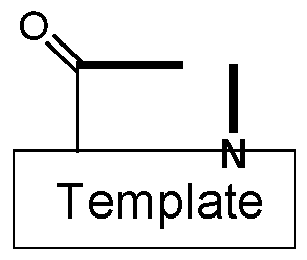
 - in which formula b1R1 is H; lower alkyl; lower alkenyl; -(CH2)p(CHR53)sOR47; -(CH2)p(CHR53)sSR48; -(CH2)p(CHR53)sNR23R24; -(CH2)p(CHR53)sOCONR50R67; -(CH2)p(CHR53)sNR11CONR50R51; -(CH2)p(CHR53)sNR11COR56; -(CH2)o(CHR53)sCOOR49; -(CH2)o(CHR53)sCONR50R51; -(CH2)o(CHR53)sPO(OR52)2; -(CH2)o(CHR53)sSO2R54; or -(CH2)o(CHR53)sR69; and R17 is H; lower alkyl; lower alkenyl; -(CH2)m(CHR53)sOR47; -(CH2)m(CHR53)sSR48; -(CH2)m(CHR53)sNR23R24; -(CH2)m(CHR53)sOCONR50R67;
-(CH2)m(CHR53)sNR11CONR50R51; -(CH2)m(CHR53)sNR11COR56; -(CH2)r(CHR53)sCOOR49; -(CH2)r(CHR53)sCONR50R51; -(CH2)r(CHR53)sPO(OR52)2; -(CH2)r(CHR53)sSO2R54; or -(CH2)o(CHR53)sR69,in which meanings of the variables R1 and R17R11 is H; lower alkyl; lower alkenyl; or aryl-lower alkyl;R23 is H; lower alkyl; lower alkenyl; -(CH2)m(CHR53)sOR47; -(CH2)m(CHR53)sNR24R55; -(CH2)m(CHR53)sOCONR50R67; -(CH2)m(CHR53)sNR11CONR50R51; -(CH2)m(CHR53)sNR11COR56; -(CH2)o(CHR53)sCOOR49; -(CH2)o(CHR53)sCONR50R51; -(CH2)o(CHR53)sCOR56; -(CH2)o(CHR53)sPO(OR52)2; -(CH2)o(CHR53)sSO2R54; or -(CH2)o(CHR53)sR69;R24 is H; lower alkyl; aryl, or aryl-lower alkyl; orR23 and R24, taken together, are -(CH2)2-6-; -(CH2)2O(CH2)2-; -(CH2)2S(CH2)2-; or -(CH2)2NR57(CH2)2-;R47 is H; lower alkyl; lower alkenyl; aryl-lower alkyl; -(CH2)m(CHR53)sOR49; -(CH2)m(CHR53)sNR23R24; -(CH2)m(CHR53)sOCONR50R67; -(CH2)m(CHR53)sNR11CONR50R51; -(CH2)m(CHR53)sNR11COR56; -(CH2)o(CHR53)sCOOR49; -(CH2)o(CHR53)sCONR50R51; or -(CH2)o(CHR53)sR69;R48 is H; lower alkyl; lower alkenyl; aryl-lower alkyl; -(CH2)m(CHR53)sOR49; -(CH2)m(CHR53)sNR23R24; -(CH2)m(CHR53)sOCONR50R67; -(CH2)m(CHR53)sNR11CONR50R51; -(CH2)m(CHR53)sNR11COR56; -(CH2)o(CHR53)sCOOR49; or -(CH2)o(CHR53)sCONR50R51;R49 is H; lower alkyl; lower alkenyl; aryl lower alkyl; or heteroaryl lower alkyl;R50 is H; lower alkyl; lower alkenyl; aryl; heteroaryl; aryl-lower alkyl; or heteroaryl-lower alkyl;R51 is H; lower alkyl; lower alkenyl; aryl; heteroaryl; aryl-lower alkyl; or heteroaryl-lower alkyl; orR50 and R51, taken together, are -(CH2)2-6-; -(CH2)2O(CH2)2-; -(CH2)2S(CH2)2-; or -(CH2)2NR49(CH2)2-;R52 is H; lower alkyl; lower alkenyl; aryl; or aryl-lower alkyl;R53 is H, lower alkyl; lower alkenyl; aryl; heteroaryl; aryl-lower alkyl; heteroaryl-lower alkyl; -(CH2)pOR47; -(CH2)pOCONR50R67; -(CH2)pNR11CONR50R51; -(CH2)pNR11COR56); -(CH2)oCOOR49; -(CH2)oCONR50R51; or -(CH2)oPO(OR52)2;R54 is lower alkyl; lower alkenyl; aryl, heteroaryl; or aryl-lower alkyl;R56 is H; lower alkyl; lower alkenyl; -(CH2)p(CHR53)sOR57; -(CH2)p(CHR53)sSR58; -(CH2)p(CHR53)sNR24R55; -(CH2)P(CHR53)sOCONR50R67; -(CH2)P(CHR53)sNR11CONR50R51; -(CH2)p(CHR53)sNR11COR56); or -(CH2)o(CHR53)sR69;R67 is lower alkyl; lower alkenyl; or aryl-lower alkyl; orR50 and R67, taken together, are -(CH2)2-6-; -(CH2)2O(CH2)2-; -(CH2)2S(CH2)2-; or -(CH2)2NR49(CH2)2-;R69 is -C6R59R60R61 R62R68; or a heteroaryl group of one of the formulae


 m is 2 to 4;o is 0 to 4;p is 1 to 4;r is 1 or 2; ands is 0 or 1,in which meanings of the variables R23, R24, R47, R48, R50, R51, R53, R56, R67 and R69 each of the variables R11, R23, R24, R47, R49, R50, R51, R52, R53, R54, R56, R67, R69, m, o, p and s has one of the meanings defined hereinbefore;R55 is H; lower alkyl; lower alkenyl; aryl; heteroaryl; aryl-lower alkyl; heteroaryl-lower alkyl; -COR56; -COOR49; -CONR 50R51; -SO2R54; or -PO(OR52)2; orR24 and R55, taken together, are -(CH2)2-6-; -(CH2)2O(CH2)2-; -(CH2)2S(CH2)2-; or -(CH2)2NR57(CH2)2-;R57 is H; lower alkyl; lower alkenyl; aryl, aryl-lower alkyl; heteroaryl-lower alkyl; -COR56; -COOR49; or -CONR50R51;R58 is H; lower alkyl; lower alkenyl; aryl; aryl-lower alkyl; heteroaryl-lower alkyl; or -CONR50R51;R59 is H; Cl; Br; F; NO2; CF3; CN; OCF3; OCHF2; -NR24COR56; lower alkyl; or lower alkenyl;R60 is H; Cl; Br; F; NO2; CF3; CN; OCF3; OCHF2; -NR24COR56; lower alkyl; or lower alkenyl;R61 is H; Cl; Br; F; NO2; CF3; CN; OCF3; OCHF2; -NR24COR56; lower alkyl; or lower alkenyl;R62 is H; Cl; Br; F; NO2; CF3; CN; OCF3; OCHF2; -NR24COR56; lower alkyl; or lower alkenyl;with the proviso, that at least two of R59, R60, R61 and R62 are H;R68 is H; lower alkyl; lower alkenyl; aryl-lower alkyl; -(CH2)oOR64; -(CH2)oSR64; -(CH2)oNR23R24; -(CH2)oOCONR50R67; -(CH2)oNR11CONR50R51; -(CH2)oNR11COR56; -(CH2)oCOOR67; -(CH2)oCONR50R51; -(CH2)oPO(OR52)2; -(CH2)oSO2R54; or -(CH2)oCOR56;R73 is H; lower alkyl; or aryl-lower alkyl;R74 is H; lower alkyl; aryl; heteroaryl; or aryl-lower alkyl; andR75 is H; lower alkyl; aryl; or -NR70R71,in which meanings of the variables R55, R57, R58, R59, R60, R61, R62, R68 and R75 each of the variables R11, R23, R24, R49, R50, R51, R52, R54, R56, R57, R67 and o has one of the meanings defined hereinbefore;R64 is H; lower alkyl; lower alkenyl; -(CH2)p(CHR78)sOR77; or -(CH2)p(CHR78)sSR77;R70 is H; lower alkyl; aryl; or aryl-lower alkyl; andR71 is H; lower alkyl; aryl; or aryl-lower alkyl; orR70 and R71, taken together, are -(CH2)2-7-; -(CH2)2O(CH2)2-; or -(CH2)2NR57(CH2)2-, in which meanings of the variables R64, R70 and R71 each of the variables R57, p and s has one of the meanings defined hereinbefore;R77 is lower alkyl; or lower alkenyl; andR78 is H; lower alkyl; lower alkenyl; -(CH2)pOR77; or -(CH2)pSR77, in which meanings of the variable R78 each of the variables R77 and p has one of the meanings defined hereinbefore, in which formulae b1 and c1R11 is H; or lower alkyl,- in which formula b1R21 is H; lower alkyl; lower alkenyl; -(CH2)pOR47 (where R47: lower alkyl; or lower alkenyl); -(CH2)pNR23R24 (where R23: lower alkyl; or lower alkenyl; R24: H; or lower alkyl; or R23 and R24, taken together, are: -(CH2)2-6-; -(CH2)2O(CH2)2-; -(CH2)2S(CH2)2-; or -(CH2)2NR49(CH2)2-; where R49: H; or lower alkyl); -(CH2)pOCONR50R67 (where R50 : H; or lower alkyl; or lower alkenyl; R67: lower alkyl; or R50 and R67, taken together, are: -(CH2)2-6-; -(CH2)2O(CH2)2-; -(CH2)2S(CH2)2-; or -(CH2)2NR49(CH2)2-; where R49: H; or lower alkyl); -(CH2)pNR11CONR50R51 (where R11: H; or lower alkyl; R50 : H; or lower alkyl; or lower alkenyl; R51 : H; or lower alkyl; or R50 and R51, taken together, are: -(CH2)2-6-; -(CH2)2O(CH2)2-; -(CH2)2S(CH2)2-; or -(CH2)2NR49(CH2)2-; where R49: H; or lower alkyl); -(CH2)pN(R11)COR56 (where: R11: H; or lower alkyl; R56: lower alkyl; or lower alkenyl); -(CH2)oCOOR49 (where R49: lower alkyl; or lower alkenyl); (-CH2)oCONR50R51 (where R50: lower alkyl, or lower alkenyl; R51: H; lower alkyl; or R50 and R51, taken together, are: -(CH2)2-6-; -(CH2)2O(CH2)2-; -(CH2)2S(CH2)2-; or -(CH2)2NR49(CH2)2-; where R49: H; or lower alkyl); -(CH2)oPO(OR52)2 (where R52: lower alkyl; or lower alkenyl); -(CH2)oSO2R54 (where R54: lower alkyl; or lower alkenyl); or -(CH2)rC6H4R3 (where R3: H; F; Cl; CF3; OCF3; OCHF2 ; lower alkyl; lower alkenyl; or lower alkoxy),in which meanings of the variable R21each of the variables o, p and r has one of the meanings defined hereinbefore, andR22 is H, methyl; and- in which formula c1R25 is H; lower alkyl; lower alkenyl; -(CH2)mOR47 (where R47: lower alkyl; or lower alkenyl); -(CH2)mNR23R24 (where R23: lower alkyl; or lower alkenyl; R24: H; or lower alkyl; or R23 and R24, taken together, are: -(CH2)2-6-; -(CH2)2O(CH2)2-; -(CH2)2S(CH2)2-; or -(CH2)2NR49(CH2)2-; where R49: H; or lower alkyl); -(CH2)mOCONR50R67 (where R50 : H; or lower alkyl; or lower alkenyl; R67: lower alkyl; or R50 and R67, taken together, are: -(CH2)2-6-(CH2)2O(CH2)2-; -(CH2)2S(CH2)2-; or -(CH2)2NR49(CH2)2-; where R49: H; or lower alkyl); -(CH2)mNR11CONR50R51 (where R11: H; or lower alkyl; R50 : H; or lower alkyl; or lower alkenyl; R51: H; or lower alkyl; or R50 and R51, taken together, are: -(CH2)2-6-; -(CH2)2O(CH2)2-; -(CH2)2S(CH2)2-; or -(CH2)2NR49(CH2)2-; where R49: H; or lower alkyl); -(CH2)mN(R11)COR56 (where: R11: H; or lower alkyl; R56: lower alkyl; or lower alkenyl); -(CH2)oCOOR49 (where R49: lower alkyl; or lower alkenyl); -(CH2)oCONR50R51 (where R50: lower alkyl; or lower alkenyl; R51: H; lower alkyl; or R50 and R51, taken together, are: -(CH2)2-6-; -(CH2)2O(CH2)2-; -(CH2)2S(CH2)2-; or -(CH2)2NR49(CH2)2-; where R49: H; or lower alkyl); or (CH2)pC6H4R3 (where R3: H; F; Cl; CF3; OCF3; OCHF2; lower alkyl; lower alkenyl; or lower alkoxy);R26 is lower alkyl; lower alkenyl; aryl-lower alkyl; or (CH2)pC6H4R3 (where R3: H; F; Cl; CF3; OCF3; OCHF2; lower alkyl; lower alkenyl; or lower alkoxy);R27 is H; lower alkyl; lower alkenyl; -(CH2)pOR47 (where R47: lower alkyl; or lower alkenyl); -(CH2)pNR23R24 (where R23: lower alkyl; or lower alkenyl; R24: H; or lower alkyl;or R23 and R24, taken together, are: -(CH2)2-6-; -(CH2)2O(CH2)2-; -(CH2)2S(CH2)2-; or -(CH2)2NR49(CH2)2-; where R49: H; or lower alkyl); -(CH2)pOCONR50R67 (where R50: H; lower alkyl; or lower alkenyl; R67: lower alkyl; or R50 and R67, taken together, are: -(CH2)2-6-; -(CH2)2O(CH2)2-; -(CH2)2S(CH2)2-; or -(CH2)2NR49(CH2)2-; where R49: H; or lower alkyl); -(CH2)pNR11CONR50R51 (where R11: H; or lower alkyl; R50 : H; lower alkyl; or lower alkenyl; R51: H; or lower alkyl; or R50 and R51, taken together, are: -(CH2)2-6-; -(CH2)2O(CH2)2-; -(CH2)2S(CH2)2-; or -(CH2)2NR49(CH2)2-; where R49: H; or lower alkyl); -(CH2)pN(R11)COR56 (where: R11: H; or lower alkyl; R56: lower alkyl; or lower alkenyl); -(CH2)oCOOR49 (where R49: lower alkyl; or lower alkenyl); -(CH2)oCONR50R51 (where R50: lower alkyl, or lower alkenyl; R51: H; or lower alkyl; or R50 and R51, taken together, are: -(CH2)2-6-; -(CH2)2O(CH2)2-; -(CH2)2S(CH2)2-; or -(CH2)2NR49(CH2)2-; where R49: H; or lower alkyl); -(CH2)oPO(OR52)2 (where R52: lower alkyl; or lower alkenyl); -(CH2)oSO2R54 (where R54: lower alkyl; or lower alkenyl); or -(CH2)qC6H4R3 (where R3: H; F; Cl; CF3; OCF3; OCHF2; lower alkyl; lower alkenyl; or lower alkoxy); andR28 is H; lower alkyl; lower alkenyl; -(CH2)pOR47 (where R47: lower alkyl; or lower alkenyl); -(CH2)pNR23R24 (where R23: lower alkyl; or lower alkenyl; R24: H; or lower alkyl; or R23 and R24, taken together, are: -(CH2)2-6-; -(CH2)2O(CH2)2-; -(CH2)2S(CH2)2-; or -(CH2)2NR49(CH2)2-; where R49: H; or lower alkyl); -(CH2)pOCONR50R67 (where R50: H; lower alkyl; or lower alkenyl; R67: lower alkyl; or R50 and R67, taken together, are: -(CH2)2-6-; -(CH2)2O(CH2)2-; -(CH2)2S(CH2)2-; or -(CH2)2NR49(CH2)2-; where R49: H; or lower alkyl); -(CH2)pNR11CONR50R51 (where R11: H; or lower alkyl; R50 : H; lower alkyl; or lower alkenyl; R51: H; or lower alkyl; or R50 and R51, taken together, are: -(CH2)2-6-; -(CH2)2O(CH2)2-; -(CH2)2S(CH2)2-; or -(CH2)2NR49(CH2)2-; where R49: H; or lower alkyl); -(CH2)pN(R11)COR56 (where: R11: H; or lower alkyl; R56: lower alkyl; or lower alkenyl); -(CH2)oCOOR49 (where R49: lower alkyl; or lower alkenyl); -(CH2)oCONR50R51 (where R50: lower alkyl, or lower alkenyl; R51: H; or lower alkyl; or R50 and R51, taken together, are -(CH2)2-6-; -(CH2)2O(CH2)2-; -(CH2)2S(CH2)2-; or -(CH2)2NR49(CH2)2-; where R49: H; or lower alkyl); -(CH2)oPO(OR52)2 (where R52: lower alkyl; or lower alkenyl); -(CH2)oSO2R54 (where R54: lower alkyl; or lower alkenyl); or -(CH2)qC6H4R3 (where R3: H; F; Cl; CF3; lower alkyl; lower alkenyl; or lower alkoxy),in which meanings of the variables R25, R26, R27 and R28each of the variables m, o, p and q has one of the meanings defined hereinbefore, or (b) a dipeptide residue made up of two different amino acid building blocks, the dipeptide being selected from the group consisting of DProLAzt and DproLTic, and Z is a tetrapeptide chain made up of four alpha-amino acid residues, in whichthe P1 residue is Gly or of type C, D, E or F;the P2 residue is Gly or of type C, D or E;the P3 residue is Gly or of type D or E; andthe P4 residue is Gly or of type C, D, E or F,at positions P2 and P3 also D-isomers being possible,the residue of type C being -NR11CH(R64)CO-;the residue of type D being -NR11CH(R65)CO-;the residue of type E being -NR11CH(R66)CO-; andthe residue of type F being -NR11CH(R76)CO-,in which residues of type C, D, E or Feach of the variables R11 and R64 has one of the meanings defined hereinbefore;R65 is -(CH2)oR69; -(CH2)rO(CH2)oR69; -(CH2)rS(CH2)oR69; or -(CH2)rNR11(CH2)oR69;R66 is -(CH)pNR70R71; -(CH2)pNR69R72; -(CH2)pC(=NR72)NR70R71; -(CH2)pC(=NOR42)NR70R71; -(CH2)pC(=NNR70R71)NR70R71; -(CH2)pNR72C(=NR72)NR70R71; -(CH2)pN=C(NR70R72)NR71R72. -(CH2)pC6H4NR70R71; -(CH2)pC6H4NR69R72; -(CH2)pC6H4C(=NR72)NR70R71; -(CH2)pC6H4C(=NOR42)NR70R71; -(CH2)pC6H4C(=NNR70R71)NR70R71; -(CH2)pC6H4NR72C(=NR72)NR70R71; -(CH2)pC6H4N=C(NR70R72)NR71R72; -(CH2)rO(CH2)mNR70R71; -(CH2)rO(CH2)mNR69R72; -(CH2)rO(CH2)pC(=NR72)NR70R71; -(CH2)rO(CH2)pC(=NOR42)NR70R71; -(CH2)rO(CH2)pC(=NNR70R71)NR70R71; -(CH2)rO(CH2)mNR72C(=NR72)NR70R71; -(CH2)rO(CH2)mN=C(NR70R72)NR71R72; -(CH2)rO(CH2)pC6H4CNR70R71; -(CH2)rO(CH2)pC6H4C(=NR72)NR70R71; -(CH2)rO(CH2)pC6H4C(=NOR42)NR70R71; -(CH2)rO(CH2)pC6H4C(=NNR70R71)NR70R71; -(CH2)rO(CH2)pC6H4NR72C(=NR72)NR70R71; -(CH2)rS(CH2)mNR70R71; -(CH2)rS(CH2)mNR69R72; -(CH2)rS(CH2)pC(=NR72)NR70R71; -(CH2)rS(CH2)pC(=NOR42)NR70R71; -(CH2)rS(CH2)pC(=NNR70R71)NR70R71; -(CH2)rS(CH2)mNR72C(=NR72)NR70R71; -(CH2)rS(CH2)mN=C(NR70R72)NR71R72; -(CH2)rS(CH2)pC6H4CNR70R71; -(CH2)rS(CH2)pC6H4C(=NR72)NR70R71; -(CH2)rS(CH2)pC6H4C(=NOR42)NR70R71; -(CH2)rS(CH2)pC6H4C(=NNR70R71)NR70R71; -(CH2)rS(CH2)pC6H4NR72C(=NR72)NR70R71; -(CH2)pNR72COR56; or -(CH2)pNR72COR69; andR76 is -(CH2)p(CHR79)sOH; -(CH2)p(CHR79)sCONR70R71; -(CH2)p(CHR79)sCOOR49; -(CH2)p(CHR79)sNR72CONR70R71; -(CH2)p(CHR79)sNR11COR56. -(CH2)pC6H4CONR70R71; or
-(CH2)pC6H4NR72CONR70R71,in which meanings of the variables R66 and R76each of the variables R11, R49, R56, R69, R70, R71, m, o, p, r and s has one of the meanings defined hereinbefore;R42 is lower alkyl; lower alkenyl; or aryl-lower alkyl;R72 is H; or lower alkyl;R69 and R72, taken together, are -(CH2)2-6-; -(CH2)2O(CH2)2-; -(CH2)2S(CH2)2-; or -(CH2)2NR49(CH2)2-; andR79 is H; lower alkyl; lower alkenyl; aryl; heteroaryl; aryl-lower alkyl; -(CH2)pOR77; -(CH2)pOCONR50R67; -(CH2)pNR11CONR50R67; -(CH2)pNR11COR56; -(CH2)oCOOR49; -(CH2)oCONR50R51; -(CH2)oPO(OR52)2; or -(CH2)oSO2R54,in which meanings of the variables R69, R72 and R79 each of the variables R11, R49, R50, R51, R52, R54, R56, R67, R77, o and p has one of the meanings defined hereinbefore, or(ii) in which is a dipeptide residue made up of two different amino acid building blocks, the dipeptide being DproLTic, andZ is a tetrapeptide chain made up of four alpha-amino acid residues, in which the P1 residue is Ile;the P2 residue is DArg;the P3 residue is Aib; andthe P4 residue is Ile,in each case in free form or in pharmaceutically acceptable salt form.
 - A compound according to claim 1 of the formula I, in which, in the tetrapeptide chain Z,
the P1 residue is Phe, Ile, Gln, Thr, Trp, Glu or Tyr;
the P2 residue is Trp, Lys or DVal;
the P3 residue is Lys, Tyr, Arg or Trp; and
the P4 residue is Tyr, His, Gly, Ala, Orn or Lys. - A compound according to claim 2 of the formula I, in which
 is a dipeptide residue made up of two different amino acid building blocks, the dipeptide being DproLTic, and, in the tetrapeptide chain Z,the P1 residue is Ile;the P2 residue is Trp;the P3 residue is Lys; andthe P4 residue is Tyr.
 - A compound according to claim 2 of the formula I, in which
 is a dipeptide residue made up of two different amino acid building blocks, the dipeptide being DProLAzt, and, in the tetrapeptide chain Z,the P1 residue is Tyr;the P2 residue is Trp;the P3 residue is Arg; andthe P4 residue is Gly.
 - A compound according to claim 1 of the formula I in the form of an enantiomer.
- A compound according to any one of claims 1 to 5 of the formula I for use as a medicament.
- A compound according to any one of claims 1 to 6 of the formula I for use as a selective G-protein-coupled receptor antagonist or agonist.
- A pharmaceutical composition comprising a compound as defined in any one of claims 1 to 7 of the formula I as active ingredient and a pharmaceutically acceptable carrier.
- A composition according to claim 8 in a form suitable for oral, topical, transdermal, injection, buccal, transmucosal, pulmonary or inhalation administration.
- A composition according to claim 8 or claim 9 in the form of a tablet, a dragee, a capsule, a solution, a liquid, a gel, a plaster, a cream, an ointment, a syrup, a slurry, a suspension, a spray, a nebuliser or a suppository.
- The use of a compound as defined in any one of claims 1 to 7 of the formula I for the manufacture of a medicament for the treatment or prevention of a cardiovascular disorder, a dermatological disorder, an endocrine system and hormone disorder, a metabolic disease, an inflammatory disease, a neurological disease, a respiratory disease, a haematological disease or a cancer.
- A process for the preparation of a compound as defined in any one of claims 1 to 7 of the formula I, which comprises(a) coupling an appropriately functionalized solid support with a compound of the formula II,

 (b) removing the N-protecting group from the product obtained in step (a);(c) coupling the product thus obtained with an appropriately N-protected derivative of that amino acid, which in the desired end-product is in position 4, any functional group, which may be present in said N-protected amino acid derivative, being likewise appropriately protected;(d) removing the N-protecting group from the product thus obtained;(e) coupling the product thus obtained with an appropriately N-protected derivative of that amino acid, which in the desired end-product is one position farther away from position 4, any functional group, which may be present in said N-protected amino acid derivative, being likewise appropriately protected;(f) removing the N-protecting group from the product thus obtained;(g) repeating steps (e) and (f), until all amino acid residues have been introduced;(h) if desired, selectively deprotecting one or several protected functional group(s) present in the molecule and appropriately substituting the reactive group(s) thus liberated;(i) detaching the product thus obtained from the solid support;(j) cyclizing the product cleaved from the solid support;(k) removing any protecting groups present on functional groups of any amino acid residues in the cyclic product thus obtained and, if desired, any protecting group(s), which may in addition be present in the molecule thus obtained; and(l) if desired, converting a compound of the formula I in free form thus obtained into a pharmaceutically acceptable salt, or converting a pharmaceutically acceptable, or unacceptable, salt thus obtained into the corresponding compound of the formula I in free form or into a different, pharmaceutically acceptable, salt.
 - A process according to claim 12 for the preparation of a compound as defined in claim 5 of the formula I, which comprises using any chiral starting material in the form of an enantiomer.
Applications Claiming Priority (1)
| Application Number | Priority Date | Filing Date | Title |
|---|---|---|---|
| PCT/CH2007/000038 WO2008092281A1 (en) | 2007-01-29 | 2007-01-29 | Template-fixed peptidomimetics |
Publications (2)
| Publication Number | Publication Date |
|---|---|
| EP2114986A1 EP2114986A1 (en) | 2009-11-11 |
| EP2114986B1 true EP2114986B1 (en) | 2013-05-22 |
Family
ID=38468928
Family Applications (1)
| Application Number | Title | Priority Date | Filing Date |
|---|---|---|---|
| EP07701842.2A Not-in-force EP2114986B1 (en) | 2007-01-29 | 2007-01-29 | Template-fixed peptidomimetics |
Country Status (6)
| Country | Link |
|---|---|
| US (2) | US8633163B2 (en) |
| EP (1) | EP2114986B1 (en) |
| AU (1) | AU2007345497B2 (en) |
| CA (1) | CA2676865C (en) |
| ES (1) | ES2425575T3 (en) |
| WO (1) | WO2008092281A1 (en) |
Families Citing this family (18)
| Publication number | Priority date | Publication date | Assignee | Title |
|---|---|---|---|---|
| WO2007079597A1 (en) | 2006-01-16 | 2007-07-19 | Polyphor Ltd. | Template - fixed peptidomimetics with antimicrobial activity |
| AU2007345497B2 (en) * | 2007-01-29 | 2013-01-17 | Polyphor Ltd. | Template-fixed peptidomimetics |
| PL2118123T3 (en) | 2007-01-31 | 2016-06-30 | Dana Farber Cancer Inst Inc | Stabilized p53 peptides and uses thereof |
| AU2007348171B2 (en) | 2007-02-28 | 2012-09-06 | Polyphor Ltd. | Template-fixed peptidomimetics |
| JP5631201B2 (en) | 2007-03-28 | 2014-11-26 | プレジデント アンド フェローズ オブ ハーバード カレッジ | Stitched polypeptide |
| WO2010015287A2 (en) * | 2008-08-08 | 2010-02-11 | Polyphor Ag | Template-fixed peptidomimetics |
| WO2011060832A1 (en) * | 2009-11-20 | 2011-05-26 | Polyphor Ag | Template-fixed peptidomimetics with ccr10 antagonistic activity |
| WO2011095218A1 (en) | 2010-02-05 | 2011-08-11 | Polyphor Ag | Template-fixed pep tidomime tics with cxcr7 modulating activity |
| CA2789030C (en) | 2010-02-05 | 2020-07-21 | Polyphor Ag | Template - fixed peptidomimetics with cxcr7 modulating activity |
| KR102104762B1 (en) | 2010-08-13 | 2020-04-24 | 에일러론 테라퓨틱스 인코포레이티드 | Peptidomimetic macrocycles |
| EP2768518A4 (en) | 2011-10-18 | 2015-05-27 | Aileron Therapeutics Inc | PEPTIDOMIMETIC MACROCYCLES |
| CA2864120A1 (en) | 2012-02-15 | 2013-08-22 | Aileron Therapeutics, Inc. | Triazole-crosslinked and thioether-crosslinked peptidomimetic macrocycles |
| RU2642299C2 (en) | 2012-02-15 | 2018-01-24 | Эйлерон Терапьютикс, Инк. | p53 PEPTIDOMIMETIC MACROCYCLES |
| BR112015009470A2 (en) | 2012-11-01 | 2019-12-17 | Aileron Therapeutics Inc | disubstituted amino acids and their methods of preparation and use |
| CN107106642B (en) | 2014-09-24 | 2021-02-26 | 艾瑞朗医疗公司 | Peptidomimetic macrocycles and formulations thereof |
| EP3197478A4 (en) | 2014-09-24 | 2018-05-30 | Aileron Therapeutics, Inc. | Peptidomimetic macrocycles and uses thereof |
| JP2018516844A (en) | 2015-03-20 | 2018-06-28 | エルロン・セラピューティクス・インコーポレイテッドAileron Therapeutics,Inc. | Peptidomimetic macrocycles and uses thereof |
| EP3347372A4 (en) | 2015-09-10 | 2019-09-04 | Aileron Therapeutics, Inc. | PEPTIDOMIMETIC MACROCYCLES AS MODULATORS OF MCL-1 |
Family Cites Families (24)
| Publication number | Priority date | Publication date | Assignee | Title |
|---|---|---|---|---|
| CA2101599A1 (en) * | 1992-08-31 | 1994-03-01 | Wilhelm Bannwarth | Tri- and tetracyclic compounds |
| CN1367789B (en) | 1999-08-30 | 2012-06-06 | 波利弗尔股份公司 | Synthesis of template-fixed beta-hairpin loop mimetics |
| BRPI0207502B1 (en) | 2001-02-23 | 2018-10-09 | Polyphor Ltd | compounds, enantiomers, pharmaceutical composition, use of compounds, and process for the manufacture of compounds |
| CN101157924A (en) | 2001-12-11 | 2008-04-09 | 人体基因组科学有限公司 | neutrophil factor alpha |
| EP1532164B1 (en) | 2002-08-20 | 2012-09-26 | Polyphor Ltd. | Template-fixed peptidomimetics with antibacterial activity |
| US7855179B2 (en) | 2002-10-02 | 2010-12-21 | Polyphor Ltd. | Template-fixed peptidomimetics with antimicrobial activity |
| WO2004096839A1 (en) | 2003-05-02 | 2004-11-11 | Polyphor Ag | Template-fixed beta-hairpin peptidomimetics with cxcr4 antagonizing activity |
| DE60321053D1 (en) | 2003-05-02 | 2008-06-26 | Polyphor Ag | MATRIC FIXED PEPTIDE MIMETICS AS MEDICAMENTS AGAINST HIV AND CANCER |
| US7269036B2 (en) * | 2003-05-12 | 2007-09-11 | Siemens Vdo Automotive Corporation | Method and apparatus for adjusting wakeup time in electrical power converter systems and transformer isolation |
| CN100595277C (en) | 2003-11-15 | 2010-03-24 | 波利弗尔有限公司 | Template-immobilized β-hairpin loop mimics and their use in phage display |
| CA2598360C (en) | 2005-02-17 | 2016-12-20 | Universitat Zurich | Template-fixed beta-hairpin peptidomimetics with protease inhibitory activity |
| EP1879911B1 (en) | 2005-05-02 | 2011-08-17 | Polyphor Ltd. | Dye conjugates of template-fixed peptidomimetics |
| WO2007079597A1 (en) | 2006-01-16 | 2007-07-19 | Polyphor Ltd. | Template - fixed peptidomimetics with antimicrobial activity |
| AU2007345497B2 (en) * | 2007-01-29 | 2013-01-17 | Polyphor Ltd. | Template-fixed peptidomimetics |
| AU2007348171B2 (en) | 2007-02-28 | 2012-09-06 | Polyphor Ltd. | Template-fixed peptidomimetics |
| WO2010015287A2 (en) | 2008-08-08 | 2010-02-11 | Polyphor Ag | Template-fixed peptidomimetics |
| US8883720B2 (en) | 2008-11-26 | 2014-11-11 | Polyphor Ag | Template-fixed beta-hairpin peptidomimetics with CXCR4 antagonizing activity |
| WO2010127704A1 (en) | 2009-05-07 | 2010-11-11 | Polyphor Ag | Beta-hairpin peptidomimetics having cxcr4 antagonizing activity |
| JP5727479B2 (en) | 2009-08-05 | 2015-06-03 | ポリフォー・アクチェンゲゼルシャフトPolyphor Ag | Synthetic macrocyclic compounds with fixed conformation |
| WO2011060832A1 (en) | 2009-11-20 | 2011-05-26 | Polyphor Ag | Template-fixed peptidomimetics with ccr10 antagonistic activity |
| WO2011066869A1 (en) | 2009-12-04 | 2011-06-09 | Polyphor Ag | Beta-hairpin peptidomimetics |
| CA2789030C (en) | 2010-02-05 | 2020-07-21 | Polyphor Ag | Template - fixed peptidomimetics with cxcr7 modulating activity |
| WO2011095218A1 (en) | 2010-02-05 | 2011-08-11 | Polyphor Ag | Template-fixed pep tidomime tics with cxcr7 modulating activity |
| US8895499B2 (en) | 2010-08-05 | 2014-11-25 | Polyphor Ag | β-hairpin peptidomimetics |
-
2007
- 2007-01-29 AU AU2007345497A patent/AU2007345497B2/en not_active Ceased
- 2007-01-29 CA CA2676865A patent/CA2676865C/en not_active Expired - Fee Related
- 2007-01-29 ES ES07701842T patent/ES2425575T3/en active Active
- 2007-01-29 WO PCT/CH2007/000038 patent/WO2008092281A1/en not_active Ceased
- 2007-01-29 US US12/524,862 patent/US8633163B2/en not_active Expired - Fee Related
- 2007-01-29 EP EP07701842.2A patent/EP2114986B1/en not_active Not-in-force
-
2013
- 2013-12-19 US US14/134,566 patent/US10000535B2/en not_active Expired - Fee Related
Also Published As
| Publication number | Publication date |
|---|---|
| EP2114986A1 (en) | 2009-11-11 |
| CA2676865A1 (en) | 2008-08-07 |
| AU2007345497A1 (en) | 2008-08-07 |
| ES2425575T3 (en) | 2013-10-16 |
| US10000535B2 (en) | 2018-06-19 |
| US8633163B2 (en) | 2014-01-21 |
| CA2676865C (en) | 2018-09-25 |
| WO2008092281A8 (en) | 2009-09-03 |
| US20100093644A1 (en) | 2010-04-15 |
| US20140107031A1 (en) | 2014-04-17 |
| WO2008092281A1 (en) | 2008-08-07 |
| AU2007345497B2 (en) | 2013-01-17 |
Similar Documents
| Publication | Publication Date | Title |
|---|---|---|
| US10000535B2 (en) | Template-fixed peptidomimetics | |
| US9518092B2 (en) | Template-fixed beta-hairpin peptidomimetics with CXCR4 antagonizing activity | |
| US10562933B2 (en) | Template-fixed beta-hairpin peptidomimetics with protease inhibitory activity | |
| EP2531204B1 (en) | Template - fixed peptidomimetics with cxcr7 modulating activity | |
| EP1622930B9 (en) | Template-fixed peptidomimetics as medicaments against hiv and cancer | |
| US20170369523A1 (en) | Template-fixed beta-hairpin peptidomimetics that are ligands for g-protein-coupled receptors (gpcrs) and are modulators of transcription factors and coactivators | |
| US20110312879A1 (en) | Template-fixed beta-hairpin peptidomimetics with cxcr4 antagonizing activity |
Legal Events
| Date | Code | Title | Description |
|---|---|---|---|
| PUAI | Public reference made under article 153(3) epc to a published international application that has entered the european phase |
Free format text: ORIGINAL CODE: 0009012 |
|
| 17P | Request for examination filed |
Effective date: 20090819 |
|
| AK | Designated contracting states |
Kind code of ref document: A1 Designated state(s): AT BE BG CH CY CZ DE DK EE ES FI FR GB GR HU IE IS IT LI LT LU LV MC NL PL PT RO SE SI SK TR |
|
| DAX | Request for extension of the european patent (deleted) | ||
| 17Q | First examination report despatched |
Effective date: 20110215 |
|
| GRAP | Despatch of communication of intention to grant a patent |
Free format text: ORIGINAL CODE: EPIDOSNIGR1 |
|
| GRAS | Grant fee paid |
Free format text: ORIGINAL CODE: EPIDOSNIGR3 |
|
| GRAA | (expected) grant |
Free format text: ORIGINAL CODE: 0009210 |
|
| AK | Designated contracting states |
Kind code of ref document: B1 Designated state(s): AT BE BG CH CY CZ DE DK EE ES FI FR GB GR HU IE IS IT LI LT LU LV MC NL PL PT RO SE SI SK TR |
|
| REG | Reference to a national code |
Ref country code: GB Ref legal event code: FG4D |
|
| REG | Reference to a national code |
Ref country code: CH Ref legal event code: EP |
|
| REG | Reference to a national code |
Ref country code: AT Ref legal event code: REF Ref document number: 613187 Country of ref document: AT Kind code of ref document: T Effective date: 20130615 |
|
| REG | Reference to a national code |
Ref country code: IE Ref legal event code: FG4D |
|
| REG | Reference to a national code |
Ref country code: DE Ref legal event code: R096 Ref document number: 602007030578 Country of ref document: DE Effective date: 20130718 |
|
| REG | Reference to a national code |
Ref country code: CH Ref legal event code: NV Representative=s name: BRAUNPAT BRAUN EDER AG, CH |
|
| REG | Reference to a national code |
Ref country code: AT Ref legal event code: MK05 Ref document number: 613187 Country of ref document: AT Kind code of ref document: T Effective date: 20130522 |
|
| REG | Reference to a national code |
Ref country code: ES Ref legal event code: FG2A Ref document number: 2425575 Country of ref document: ES Kind code of ref document: T3 Effective date: 20131016 |
|
| RAP2 | Party data changed (patent owner data changed or rights of a patent transferred) |
Owner name: POLYPHOR LTD. |
|
| REG | Reference to a national code |
Ref country code: LT Ref legal event code: MG4D |
|
| PG25 | Lapsed in a contracting state [announced via postgrant information from national office to epo] |
Ref country code: SE Free format text: LAPSE BECAUSE OF FAILURE TO SUBMIT A TRANSLATION OF THE DESCRIPTION OR TO PAY THE FEE WITHIN THE PRESCRIBED TIME-LIMIT Effective date: 20130522 Ref country code: FI Free format text: LAPSE BECAUSE OF FAILURE TO SUBMIT A TRANSLATION OF THE DESCRIPTION OR TO PAY THE FEE WITHIN THE PRESCRIBED TIME-LIMIT Effective date: 20130522 Ref country code: LT Free format text: LAPSE BECAUSE OF FAILURE TO SUBMIT A TRANSLATION OF THE DESCRIPTION OR TO PAY THE FEE WITHIN THE PRESCRIBED TIME-LIMIT Effective date: 20130522 Ref country code: GR Free format text: LAPSE BECAUSE OF FAILURE TO SUBMIT A TRANSLATION OF THE DESCRIPTION OR TO PAY THE FEE WITHIN THE PRESCRIBED TIME-LIMIT Effective date: 20130823 Ref country code: IS Free format text: LAPSE BECAUSE OF FAILURE TO SUBMIT A TRANSLATION OF THE DESCRIPTION OR TO PAY THE FEE WITHIN THE PRESCRIBED TIME-LIMIT Effective date: 20130922 Ref country code: AT Free format text: LAPSE BECAUSE OF FAILURE TO SUBMIT A TRANSLATION OF THE DESCRIPTION OR TO PAY THE FEE WITHIN THE PRESCRIBED TIME-LIMIT Effective date: 20130522 Ref country code: SI Free format text: LAPSE BECAUSE OF FAILURE TO SUBMIT A TRANSLATION OF THE DESCRIPTION OR TO PAY THE FEE WITHIN THE PRESCRIBED TIME-LIMIT Effective date: 20130522 Ref country code: PT Free format text: LAPSE BECAUSE OF FAILURE TO SUBMIT A TRANSLATION OF THE DESCRIPTION OR TO PAY THE FEE WITHIN THE PRESCRIBED TIME-LIMIT Effective date: 20130923 |
|
| REG | Reference to a national code |
Ref country code: NL Ref legal event code: VDEP Effective date: 20130522 |
|
| PG25 | Lapsed in a contracting state [announced via postgrant information from national office to epo] |
Ref country code: PL Free format text: LAPSE BECAUSE OF FAILURE TO SUBMIT A TRANSLATION OF THE DESCRIPTION OR TO PAY THE FEE WITHIN THE PRESCRIBED TIME-LIMIT Effective date: 20130522 Ref country code: BG Free format text: LAPSE BECAUSE OF FAILURE TO SUBMIT A TRANSLATION OF THE DESCRIPTION OR TO PAY THE FEE WITHIN THE PRESCRIBED TIME-LIMIT Effective date: 20130822 |
|
| PG25 | Lapsed in a contracting state [announced via postgrant information from national office to epo] |
Ref country code: LV Free format text: LAPSE BECAUSE OF FAILURE TO SUBMIT A TRANSLATION OF THE DESCRIPTION OR TO PAY THE FEE WITHIN THE PRESCRIBED TIME-LIMIT Effective date: 20130522 |
|
| PG25 | Lapsed in a contracting state [announced via postgrant information from national office to epo] |
Ref country code: CZ Free format text: LAPSE BECAUSE OF FAILURE TO SUBMIT A TRANSLATION OF THE DESCRIPTION OR TO PAY THE FEE WITHIN THE PRESCRIBED TIME-LIMIT Effective date: 20130522 Ref country code: SK Free format text: LAPSE BECAUSE OF FAILURE TO SUBMIT A TRANSLATION OF THE DESCRIPTION OR TO PAY THE FEE WITHIN THE PRESCRIBED TIME-LIMIT Effective date: 20130522 Ref country code: EE Free format text: LAPSE BECAUSE OF FAILURE TO SUBMIT A TRANSLATION OF THE DESCRIPTION OR TO PAY THE FEE WITHIN THE PRESCRIBED TIME-LIMIT Effective date: 20130522 Ref country code: BE Free format text: LAPSE BECAUSE OF FAILURE TO SUBMIT A TRANSLATION OF THE DESCRIPTION OR TO PAY THE FEE WITHIN THE PRESCRIBED TIME-LIMIT Effective date: 20130522 Ref country code: DK Free format text: LAPSE BECAUSE OF FAILURE TO SUBMIT A TRANSLATION OF THE DESCRIPTION OR TO PAY THE FEE WITHIN THE PRESCRIBED TIME-LIMIT Effective date: 20130522 |
|
| PG25 | Lapsed in a contracting state [announced via postgrant information from national office to epo] |
Ref country code: NL Free format text: LAPSE BECAUSE OF FAILURE TO SUBMIT A TRANSLATION OF THE DESCRIPTION OR TO PAY THE FEE WITHIN THE PRESCRIBED TIME-LIMIT Effective date: 20130522 Ref country code: RO Free format text: LAPSE BECAUSE OF FAILURE TO SUBMIT A TRANSLATION OF THE DESCRIPTION OR TO PAY THE FEE WITHIN THE PRESCRIBED TIME-LIMIT Effective date: 20130522 |
|
| PLBE | No opposition filed within time limit |
Free format text: ORIGINAL CODE: 0009261 |
|
| STAA | Information on the status of an ep patent application or granted ep patent |
Free format text: STATUS: NO OPPOSITION FILED WITHIN TIME LIMIT |
|
| 26N | No opposition filed |
Effective date: 20140225 |
|
| REG | Reference to a national code |
Ref country code: DE Ref legal event code: R097 Ref document number: 602007030578 Country of ref document: DE Effective date: 20140225 |
|
| PG25 | Lapsed in a contracting state [announced via postgrant information from national office to epo] |
Ref country code: LU Free format text: LAPSE BECAUSE OF FAILURE TO SUBMIT A TRANSLATION OF THE DESCRIPTION OR TO PAY THE FEE WITHIN THE PRESCRIBED TIME-LIMIT Effective date: 20140129 Ref country code: MC Free format text: LAPSE BECAUSE OF FAILURE TO SUBMIT A TRANSLATION OF THE DESCRIPTION OR TO PAY THE FEE WITHIN THE PRESCRIBED TIME-LIMIT Effective date: 20130522 |
|
| REG | Reference to a national code |
Ref country code: IE Ref legal event code: MM4A |
|
| PG25 | Lapsed in a contracting state [announced via postgrant information from national office to epo] |
Ref country code: IE Free format text: LAPSE BECAUSE OF NON-PAYMENT OF DUE FEES Effective date: 20140129 |
|
| REG | Reference to a national code |
Ref country code: DE Ref legal event code: R082 Ref document number: 602007030578 Country of ref document: DE Representative=s name: GRAMM, LINS & PARTNER PATENT- UND RECHTSANWAEL, DE |
|
| REG | Reference to a national code |
Ref country code: FR Ref legal event code: PLFP Year of fee payment: 10 |
|
| PG25 | Lapsed in a contracting state [announced via postgrant information from national office to epo] |
Ref country code: CY Free format text: LAPSE BECAUSE OF FAILURE TO SUBMIT A TRANSLATION OF THE DESCRIPTION OR TO PAY THE FEE WITHIN THE PRESCRIBED TIME-LIMIT Effective date: 20130522 |
|
| PG25 | Lapsed in a contracting state [announced via postgrant information from national office to epo] |
Ref country code: HU Free format text: LAPSE BECAUSE OF FAILURE TO SUBMIT A TRANSLATION OF THE DESCRIPTION OR TO PAY THE FEE WITHIN THE PRESCRIBED TIME-LIMIT; INVALID AB INITIO Effective date: 20070129 Ref country code: TR Free format text: LAPSE BECAUSE OF FAILURE TO SUBMIT A TRANSLATION OF THE DESCRIPTION OR TO PAY THE FEE WITHIN THE PRESCRIBED TIME-LIMIT Effective date: 20130522 |
|
| REG | Reference to a national code |
Ref country code: FR Ref legal event code: PLFP Year of fee payment: 11 |
|
| REG | Reference to a national code |
Ref country code: FR Ref legal event code: PLFP Year of fee payment: 12 |
|
| PGFP | Annual fee paid to national office [announced via postgrant information from national office to epo] |
Ref country code: GB Payment date: 20180124 Year of fee payment: 12 Ref country code: CH Payment date: 20180130 Year of fee payment: 12 Ref country code: ES Payment date: 20180201 Year of fee payment: 12 Ref country code: DE Payment date: 20180117 Year of fee payment: 12 |
|
| REG | Reference to a national code |
Ref country code: CH Ref legal event code: PCAR Free format text: NEW ADDRESS: HOLEESTRASSE 87, 4054 BASEL (CH) |
|
| PGFP | Annual fee paid to national office [announced via postgrant information from national office to epo] |
Ref country code: FR Payment date: 20180111 Year of fee payment: 12 Ref country code: IT Payment date: 20180122 Year of fee payment: 12 |
|
| REG | Reference to a national code |
Ref country code: DE Ref legal event code: R119 Ref document number: 602007030578 Country of ref document: DE |
|
| REG | Reference to a national code |
Ref country code: CH Ref legal event code: PL |
|
| GBPC | Gb: european patent ceased through non-payment of renewal fee |
Effective date: 20190129 |
|
| PG25 | Lapsed in a contracting state [announced via postgrant information from national office to epo] |
Ref country code: DE Free format text: LAPSE BECAUSE OF NON-PAYMENT OF DUE FEES Effective date: 20190801 Ref country code: FR Free format text: LAPSE BECAUSE OF NON-PAYMENT OF DUE FEES Effective date: 20190131 |
|
| PG25 | Lapsed in a contracting state [announced via postgrant information from national office to epo] |
Ref country code: CH Free format text: LAPSE BECAUSE OF NON-PAYMENT OF DUE FEES Effective date: 20190131 Ref country code: GB Free format text: LAPSE BECAUSE OF NON-PAYMENT OF DUE FEES Effective date: 20190129 Ref country code: LI Free format text: LAPSE BECAUSE OF NON-PAYMENT OF DUE FEES Effective date: 20190131 |
|
| PG25 | Lapsed in a contracting state [announced via postgrant information from national office to epo] |
Ref country code: IT Free format text: LAPSE BECAUSE OF NON-PAYMENT OF DUE FEES Effective date: 20190129 |
|
| REG | Reference to a national code |
Ref country code: ES Ref legal event code: FD2A Effective date: 20200310 |
|
| PG25 | Lapsed in a contracting state [announced via postgrant information from national office to epo] |
Ref country code: ES Free format text: LAPSE BECAUSE OF NON-PAYMENT OF DUE FEES Effective date: 20190130 |