EP2114030A1 - Methods and devices for preemptively transmitting a signal in accordance with an MCS other than a network commanded MCS - Google Patents
Methods and devices for preemptively transmitting a signal in accordance with an MCS other than a network commanded MCS Download PDFInfo
- Publication number
- EP2114030A1 EP2114030A1 EP08305140A EP08305140A EP2114030A1 EP 2114030 A1 EP2114030 A1 EP 2114030A1 EP 08305140 A EP08305140 A EP 08305140A EP 08305140 A EP08305140 A EP 08305140A EP 2114030 A1 EP2114030 A1 EP 2114030A1
- Authority
- EP
- European Patent Office
- Prior art keywords
- mcs
- encoded data
- accordance
- data block
- transmission
- Prior art date
- Legal status (The legal status is an assumption and is not a legal conclusion. Google has not performed a legal analysis and makes no representation as to the accuracy of the status listed.)
- Granted
Links
Images

Classifications
-
- H—ELECTRICITY
- H04—ELECTRIC COMMUNICATION TECHNIQUE
- H04L—TRANSMISSION OF DIGITAL INFORMATION, e.g. TELEGRAPHIC COMMUNICATION
- H04L1/00—Arrangements for detecting or preventing errors in the information received
- H04L1/0001—Systems modifying transmission characteristics according to link quality, e.g. power backoff
- H04L1/0023—Systems modifying transmission characteristics according to link quality, e.g. power backoff characterised by the signalling
- H04L1/0032—Without explicit signalling
-
- H—ELECTRICITY
- H04—ELECTRIC COMMUNICATION TECHNIQUE
- H04L—TRANSMISSION OF DIGITAL INFORMATION, e.g. TELEGRAPHIC COMMUNICATION
- H04L1/00—Arrangements for detecting or preventing errors in the information received
- H04L1/0001—Systems modifying transmission characteristics according to link quality, e.g. power backoff
- H04L1/0002—Systems modifying transmission characteristics according to link quality, e.g. power backoff by adapting the transmission rate
- H04L1/0003—Systems modifying transmission characteristics according to link quality, e.g. power backoff by adapting the transmission rate by switching between different modulation schemes
-
- H—ELECTRICITY
- H04—ELECTRIC COMMUNICATION TECHNIQUE
- H04L—TRANSMISSION OF DIGITAL INFORMATION, e.g. TELEGRAPHIC COMMUNICATION
- H04L1/00—Arrangements for detecting or preventing errors in the information received
- H04L1/0001—Systems modifying transmission characteristics according to link quality, e.g. power backoff
- H04L1/0009—Systems modifying transmission characteristics according to link quality, e.g. power backoff by adapting the channel coding
-
- H—ELECTRICITY
- H04—ELECTRIC COMMUNICATION TECHNIQUE
- H04L—TRANSMISSION OF DIGITAL INFORMATION, e.g. TELEGRAPHIC COMMUNICATION
- H04L1/00—Arrangements for detecting or preventing errors in the information received
- H04L1/0001—Systems modifying transmission characteristics according to link quality, e.g. power backoff
- H04L1/0023—Systems modifying transmission characteristics according to link quality, e.g. power backoff characterised by the signalling
- H04L1/0025—Transmission of mode-switching indication
-
- H—ELECTRICITY
- H04—ELECTRIC COMMUNICATION TECHNIQUE
- H04L—TRANSMISSION OF DIGITAL INFORMATION, e.g. TELEGRAPHIC COMMUNICATION
- H04L1/00—Arrangements for detecting or preventing errors in the information received
- H04L1/0001—Systems modifying transmission characteristics according to link quality, e.g. power backoff
- H04L1/0023—Systems modifying transmission characteristics according to link quality, e.g. power backoff characterised by the signalling
- H04L1/0026—Transmission of channel quality indication
Definitions
- MCS Modulation and Coding Scheme
- GSM Global System Mobile Communications
- 3GPP Third Generation Partnership Project
- 3GPP-enabled mobile communication devices are capable of transmitting and receiving substantially higher data throughput than 2G.
- Current 3GPP standards incorporate the latest revision of the GSM standards.
- CDMA Code Division Multiple Access
- 3GPP2 3 rd Generation Partnership Project 2
- GPRS General Packet Radio Service
- WAP Wireless Application Protocol
- SMS Short Message Service
- MMS Multimedia Messaging Service
- GSM and GPRS networks both employ Gaussian filtered Minimum Shift Keying (GMSK) as a modulation scheme because of its narrow bandwidth, robustness to fading and phase noise as it has a low modulation level and may employ a high number of redundancy bits, and relatively low implementation complexity.
- GMSK's modulation carries one bit per channel symbol.
- EGPRS Enhanced General Packet Radio Service
- GMSK Enhanced General Packet Radio Service
- 8-PSK Eight Phase Shift Keying
- MCSs Modulation and Coding Schemes
- EGPRS networks utilize both GMSK and 8-PSK.
- MCS-1 through MSC-4 are GMSK.
- MCS-4 through MCS-9 are 8-PSK.
- GMSK is more robust than 8-PSK.
- MCS-4 is less robust than MCS-3, and so on.
- 3GPP has also released a new version of EGPRS called EDGE Evolution.
- EDGE Evolution With EDGE Evolution, latencies are reduced and bit rates are increased up to 1 MBit/s.
- Higher symbol rate and higher-order modulation 32 quadrature amplitude modulation, 32QAM, and 16QAM instead of 8-PSK are used with new MCS called UAS and UBS (EGPRS2 Uplink level A modulation and coding Schemes and EGPRS2 Uplink level B modulation and coding Schemes).
- UAS and UBS EGPRS2 Uplink level A modulation and coding Schemes
- EGPRS2 Uplink level B modulation and coding Schemes EGPRS2 Uplink level B modulation and coding Schemes
- the MS when data needs to be transferred from the mobile station (MS) to the network (NW), the MS initiates the establishment of an uplink Temporary Block Flow (TBF).
- TBF Temporary Block Flow
- the NW will allocate radio resources to be used by the MS to transfer uplink data.
- a typical scenario is the following (known as "two phases access").
- the MS first sends a CHANNEL_REQUEST or PACKET CHANNEL REQUEST for resource allocation.
- the NW allocates in return limited resources (1 or 2 radio blocks).
- the allocated radio resources are transmitted to the MS in a PACKET UPLINK ASSIGNMENT or IMMEDIATE ASSIGNMENT message.
- the MS transmits a PACKET RESOURCE REQUEST message to the network by using the limited allocated radio resources.
- the network may then assign radio resources for the uplink TBF with a PACKET UPLINK ASSIGNMENT message.
- the network indicates the MCS to be used by the MS to transmit data blocks in uplink. This MCS is referred as the "commanded MCS" .
- the NW directly assigns the radio resources to the MS when receiving the CHANNEL REQUEST, without the limited resource assignment / PACKET RESOURCE REQUEST sending step.
- the CHANNEL_REQUEST and PACKET_CHANNEL_REQUEST are encoded using GMSK modulation and a robust coding scheme.
- the PACKET RESOURCE REQUEST message in the case of two phase access, is encoded using GMSK modulation and a robust coding scheme.
- an EGPRS network commands the type of Modulation and Coding Scheme (MCS) that the mobile communication device will use to transmit data to the network.
- MCS Modulation and Coding Scheme
- the EGPRS network may command that the mobile communication device transmit data at the highest rate that the network is capable of receiving and processing, e.g. using a less robust 8-PSK MCS.
- the initial request messages (CHANNEL_REQUEST, PACKET_CHANNEL_REQUEST, PACKET RESOURCE REQUEST message) are encoded using GMSK modulation and a robust coding scheme, whereas the uplink data using the commanded less robust MCS, it can happen that the network is not able to decode the uplink data even if it has correctly decoded the initial access request messages.
- a mobile communication device may be located near the boundary of its serving network cell (typically, the MS may be far from any NW radio stations). Also, a mobile communication device may cross from one network cell range into another network cell range. Additionally, there may be some type of signal disturbance or interference. Therefore, the failure to transmit in accordance with the commanded MCS may be self-rectified when the mobile communication device roams into an optimal range or a signal disturbance ceases. Also, the NW may command an 8PSK MCS and ask for the maximum output power from the MS. Since typically the maximum output power of the MS is lower in 8PSK than in GMSK, this can increase the probability of having the uplink data not decoded by the NW.
- the mobile communication device will continue to attempt to transmit data in the commanded MCS until it receives acknowledgement from the network that the data has been received, or a non-acknowledgement message indicating which data blocks have not been received by the NW.
- NW could assign a different "commanded MCS" more robust than the initial one, in order to adapt the uplink transmission to the radio conditions (this is known as link adaptation).
- link adaptation this is known as link adaptation.
- receiving such a message can take some time. This is dependent on the NW implementation. Typically the NW could wait for receiving some data from the MS before sending such a message.
- the NW may hardly notice that the MS has started transmitting with the commanded MCS, and as a result may either delay the sending of a non-acknowledgement message, or may not even send any non-acknowledgement message.
- the MS Since the MS must use the less robust commanded MCS to transmit uplink data, there may be no way to improve the uplink transmission. Even the sending of a small amount of data (which is typically the case for mobility signaling procedures for instance) can fail. Impacts are multiple. While repeatedly failing to successfully transmit data to the EGPRS network in accordance with the commanded MCS, the current drain of the mobile communication device may be substantial, particularly if finally receiving the data of the transfer takes a substantial amount of time. Moreover, with repeated failed attempts service availability suffers.
- a user may be unable to receive circuit switched calls during such attempts.
- impact may be worse since the MS will try several times to perform this procedure, and may finally have to change its serving cell.
- An improvement in the uplink data transmission procedure may be beneficial.
- the device determines that no response has been received from a network, to a transmission of an encoded data block in accordance with a commanded MCS, within a predetermined period of time.
- the device determines an alternative MCS having a robustness that is different from the commanded MCS' robustness and preemptively transmits the encoded data block in accordance with the alternative MCS. In this way the mobile communication device does not continue failed attempts to transmit data in accordance with the commanded MCS.
- Some 3GPP networks can transmit an Uplink Block Error Rate (UL BLER) value to the device.
- UL BLER Uplink Block Error Rate
- the device upon receipt of the UL BLER from the network, the device determines if it exceeds a predetermined threshold, and if so determines an alternative MCS having a robustness that is different from the commanded MCS' robustness and preemptively transmits the encoded data block in accordance with the alternative MCS. Similarly, in this embodiment the mobile communication device does not continue failed attempts to transmit data in accordance with the commanded MCS.
- the device After the device receives notice of successful transmission of the encoded data block with the alternative MCS, the device will resume the use of the commanded MCS to transmit other encoded data blocks. In the event that the device does not receive a response or determines that the UL BLER exceeds a predetermined threshold, the device may transmit the encoded data block with another alternative MCS. After the device receives notice of successful transmission of the encoded data block with the other alternative MCS, the device will resume the use of the commanded MCS to transmit the next encoded data blocks. Since the failure to transmit in accordance with the commanded MCS is most likely temporary, resuming the use of the commanded MCS as soon as possible will make sure the optimal data throughput of the radio link is used.
- inventive functionality and inventive principles may be implemented with or in software programs or instructions and integrated circuits (ICs) such as application specific ICs.
- ICs integrated circuits
- discussion of such software and ICs, if any, is limited to certain aspects relevant to the principles and concepts within the preferred embodiments.
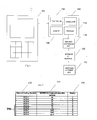
- FIG. 1 depicts a mobile communication device 102 including controller 104, a transceiver 106, a memory 108 including instruction modules 110 configured to preemptively change the MCS utilized to transmit an encoded data block.
- the depicted mobile communication device 102 may be implemented as a cellular telephone (also called a mobile phone).
- the mobile communication device 102 represents a wide variety of devices that have been developed for use within various networks. Such handheld communication devices include, for example, cellular telephones, messaging devices, personal digital assistants (PDAs), notebook or laptop computers incorporating communication modems, mobile data terminals, application specific gaming devices, video gaming devices incorporating wireless modems, and the like. Any of these portable devices may be referred to as a mobi le station or user equipment.
- wireless communication technologies may include, for example, voice communication, the capability of transferring digital data, SMS messaging, Internet access, multi-media content access and/or voice over internet protocol (VoIP).
- VoIP voice over internet protocol
- the controller 104 is coupled to the transceiver 106 which is configured to receive a transmission including a commanded modulation and coding scheme (MCS) having a particular robustness.
- MCS modulation and coding scheme
- the current standards for 3GPP include Channel Coding Schemes MCS-1 through MCS-9 as depicted in FIG. 2 . Similar to the standards shown in FIG. 2 are new MCS standards called UAS and UBS. It is understood that the discussed methods and devices for preemptively transmitting a signal in accordance with a MCS other than a network commanded MCS are applicable to newer generations as standards continue to evolve.
- the controller 104 in conjunction with the transceiver 106 is configured to transmit a transmission of an encoded data block in response to a network commanded MCS in accordance with the "Transmit Commanded MCS" module 148.
- the controller 104 is further configured to determine when no response to the transmission of the encoded data block in accordance with the commanded MCS was received from the network within a predetermined period of time.
- the "Determine If Response" module 150 may include such instructions.
- the controller 104 is also configured to determine an alternative MCS, having a second robustness that is different or more robust than the particular robustness of the commanded MCS, after determining that no response to the transmission of the encoded data block in accordance with the commanded MCS was received from the network.
- the "Determine Alternative MCS" module 152 may include such instructions.
- the controller 104 and the transceiver 106 are further configured to preemptively transmit a transmission of the encoded data block in accordance with the alternative MCS. In this way, with a different or more robust signal it is likely that the network will receive the encoded data block.
- the modules 148, 150, and 152 can carry out certain processes of the methods as described herein.
- the modules can be implemented in software, such as in the form of one or more sets of prestored instructions, and/or hardware, which can facilitate the operation of the mobile station or electronic device as discussed below.
- the modules may be installed at the factory or can be installed after distribution by, for example, a downloading operation. The operations in accordance with the modules will be discussed in more detail below. It is understood that other modules or different modules may support the functions of the controller 104.
- FIG. 2 is a table including channel coding schemes 220, the data capacity 222 for a time T, and the families 224 correlated with the channel coding schemes 220.
- 8PSK includes MCS-5 through MCS-9.
- the data capacity 222 for an encoded data block increases in relation to the numerical increments of the channel coding schemes 220 increase.
- MCS-1 is more robust than MCS-9.
- the commanded MCS is provided as part of that signal.
- the commanded MCS belongs to a family 224.
- the alternative MCS when transmitting a transmission of the encoded data block in accordance with the alternative MCS, the alternative MCS may be in the same family 224 as the commanded MCS. For example, if the commanded MCS is MCS-7 which is in family B, the alternative MCS may be MCS-2 which is also in family B. It is understood that certain criteria may apply to the choice of the alternative MSC and such criteria are within the scope of this discussion.
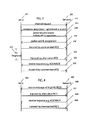
- FIG. 3 is a signal diagram depicting an embodiment of the disclosed methods.
- a mobile communication device 302 similar to that depicted in FIG. 1 may roam out of optimal range of network station 330.
- the network station or server 330 is depicted as a remote server within a wireless communication network.
- the network station 330 of course may be any type of wireless network including an ad hoc or wireless personal area network, a WiFi or wireless local area network, and a cellular or wireless wide area network.
- the network station 330 may be of any suitable configuration.
- the network station 330 may be implemented as a single server or as a plurality of servers in communication in any arrangement.
- the operations of the network station 330 may be distributed among different servers or devices that may communicate in any manner. It is understood that the depiction of a network 330 in FIG. 3 is for illustrative purposes.
- the mobile communication device 302 may send a channel request 340 signal for a single block packet access to the network station 330, usually utilizing the GMSK modulation.
- the network station 330 may transmit an immediate assignment 342.
- the response of the mobile communication device 302 may be a packet resource request 344 that includes MCS capabilities, again normally utilizing GMSK and a robust coding scheme.
- the network 330 may transmit a packet uplink assignment 346 including a commanded MCS.
- the mobile communication device 302 may transmit an encoded data block in accordance with the commanded MCS 348.
- the Transmit Commanded MCS module 148 (see FIG. 1 ) can provide instructions to the controller 104 to transmit an encoded data block in accordance with the commanded MCS 348.
- the signal diagram of FIG. 3 represents an example of signal transfers.
- the commanded and alternative coding of information schemes may be chosen in accordance with new standards. It is understood that any methods and devices to preemptively change or force any MCS used to transmit data by a mobile communication device that is different from a network commanded MCS is within the scope of this discussion. Future generations of communication standards may refer to a coding of information scheme in a different manner than an MCS, but it is understood that the same meaning shall be imparted to that technology.
- the mobile communication device 302 may determine whether there is no satisfactory response, which may include that there is no response, in accordance with the Determine If Response module 150 (see FIG. 1 ). If there is no response 350 to a transmission 348 by the mobile communication device 302 utilizing the commanded MCS to the network 330 within a predetermined time, such as 1 second, or any suitable amount of time, the mobile communication device 302 may preemptively transmit the same data in an encoded data block in accordance with an MCS of a different robustness. This predetermined time may depend on the number of times the uplink data has already been sent.
- the signal that the mobile communication device 302 may normally receive in response to a successful transmission is a Packet Uplink Acknowledgement or Non-Acknowledgement (ACK/NACK) signal.
- ACK/NACK Packet Uplink Acknowledgement
- the mobile communication device determines that no response 350 has been received from a network to a transmission of an encoded data block in accordance with a commanded MCS, within a predetermined period of time, the device then determines an alternative MCS having a robustness that is different from the commanded MCS' robustness and preemptively transmits the encoded data block in accordance with the alternative MCS 352.
- the mobile communication device 302 may determine the alternative MCS in accordance with the Determine Alternative MCS module (see FIG. 1 ). In one embodiment, the robustness of the alternative MCS is greater than the commanded MCS as discussed with reference to FIG. 2 .
- the mobile communication device 302 will not continue failed attempts to transmit data. Accordingly, current drain of the device may be reduced since sending the encoded data block in accordance with a more robust MCS is more likely to be received by the network. That is, in accordance with the disclosed methods and devices, fewer attempts at the transmission of the encoded data block may be made before a response to the transmission is be received by the device. Service availability is therefore less likely to be substantially slowed or interrupted. Since the device determines whether the communication between the device and the network is successful, the process is transparent to a user, and the user may not be aware of the disruption.
- the mobile communication device 302 may receive a response such as an ACK/NACK response 354. The mobile communication device 302 may then resume the use of the commanded MCS to transmit subsequent encoded data blocks 356. In the event that the device does not receive a response 350 again, the device may transmit the encoded data block with the alternative MCS 352 or another alternative MCS. After the device receives notice of successful transmission of the encoded data block with the alternative MCS, the device 302 may again resume the use of the commanded MCS to transmit the next encoded data blocks. Since the failure to transmit in accordance with the commanded MCS is most likely temporary, resuming the use of the commanded MCS as soon as possible can provide the high data throughput benefit of initial commanded MCS.
- FIG. 4 depicts a signal diagram of an embodiment of the disclosed methods involving a network 430 that can transmit an Uplink Block Error Rate (UL BLER) value to a mobile communication device 402.
- UL BLER Uplink Block Error Rate
- the device Upon receipt of the UL BLER from the network 460 which is not a satisfactory response, the device then determines an alternative MCS having a robustness that is different from the commanded MCS' robustness and preemptively transmits the encoded data block in accordance with the alternative MCS 462. As in the embodiment described above, the mobile communication device 402 may not continue failed attempts to transmit data in accordance with the commanded MCS. After the mobile communication device 402 receives notice of successful transmission of the encoded data block with the alternative MCS 464, the device 402 will resume the use of the commanded MCS to transmit the next encoded data blocks 466.
- UL BLER Uplink Block Error Rate
- IR Incremental Redundancy
- transmitting a transmission of the encoded data block in accordance with the commanded MCS includes transmitting different punctured versions of the encoded data block prior to transmitting a transmission of the encoded data block in accordance with the alternative MCS
- transmitting the encoded data block in accordance with the alternative MCS includes transmitting different punctured versions of the encoded data block.
- FIG. 5 is a flow chart depicting an embodiment of the disclosed methods where multiple attempts at transmission of an encoded data block may be made.
- a commanded MCS is MCS-9 of family A in step 548, and no response 550 is received
- an alternative MCS may be determined 552 that is a more robust, such as MCS-8 also of family A.
- MCS-8 a response
- the transmissions may continue with the commanded MCS 570.
- the loop between steps 550 and 572 indicates that the process may be recursive. There may be more than two choices of an alternative MCS.
- a transmission 572 with an alternate MCS for example MCS-8 may be made, and again if no response is received 552, another alternative MSC may be determined that is more robust such as MCS-6 also of family A. If there is a response such as an ACK/NACK signal, then the transmissions 570 may continue with the commanded MCS.
- a transmission 572 with an alternate MCS, in this example MCS-6 may be made, and a determination 550 made and if no response is received 552, another alternative MSC may be determined 552 that is more robust such as MCS-3 also of family A. If there is a response such as an ACK/NACK signal, then the transmissions 570 may continue with the commanded MCS.
- the criteria for selecting an alternative MCS is that the MCS is in the same family as the commanded MCS. Accordingly, there may be many opportunities for the mobile communication device to force the transmission of the encoded data block depending upon the criteria for determining an alternative MCS when the commanded MCS fails.
- the device since the device preemptively re-transmits an encoded data block if no response is received from a network in response to an original transmission of an encoded data block, fewer attempts at the transmission by the network of the encoded data block are made before a response to the transmission may be received by the device. Service availability is therefore less likely to be substantially slowed or interrupted. Since the device determines whether the communication between the device and the network is successful, the process may be transparent to a user, and the user may not be aware of the disruption.
Landscapes
- Engineering & Computer Science (AREA)
- Quality & Reliability (AREA)
- Computer Networks & Wireless Communication (AREA)
- Signal Processing (AREA)
- Mobile Radio Communication Systems (AREA)
Abstract
Description
- Disclosed are methods and device for preemptively transmitting a signal in accordance with a MCS (Modulation and Coding Scheme) other than a network commanded MCS, and more particularly transmitting a signal in accordance with a more robust MCS than the commanded MCS.
- The Global System Mobile Communications (GSM) is used by over 80% of the global mobile market, that is, it is used by over 2 billion users in more than 212 countries and territories. GSM is a substantial improvement over its predecessors in that both signaling and speech channels are digital call quality. GSM is considered a Second Generation (2G) mobile communication system. The newer 3rd Generation Partnership Project (3GPP) networks and 3GPP-enabled mobile communication devices are capable of transmitting and receiving substantially higher data throughput than 2G. Current 3GPP standards incorporate the latest revision of the GSM standards. On the other hand, the other 20% of the global mobile market utilizes Code Division Multiple Access (CDMA) which specifies standards for another 3G technology, 3rd Generation Partnership Project 2 (3GPP2). Both standards continue to evolve.
- For data transfer under a GSM air interface, General Packet Radio Service (GPRS) provides a packet oriented (digital) Mobile Data Service. GPRS may be used for data transfers such as Wireless Application Protocol (WAP) access, Short Message Service (SMS) Multimedia Messaging Service (MMS) and for Internet communication services. GSM and GPRS networks both employ Gaussian filtered Minimum Shift Keying (GMSK) as a modulation scheme because of its narrow bandwidth, robustness to fading and phase noise as it has a low modulation level and may employ a high number of redundancy bits, and relatively low implementation complexity. GMSK's modulation carries one bit per channel symbol. For higher data throughput, a data capacity improvement to GPRS is the Enhanced General Packet Radio Service (EGPRS) which squeezes more data carrying capacity out of the GSM air interface than GPRS. In addition to GMSK, EGPRS uses Eight Phase Shift Keying (8-PSK) modulation which has three times the bit-per-symbol density of GMSK. The drawback is that 8-PSK is less robust than GMSK.
- Nine different Modulation and Coding Schemes (MCSs), identified as MCS-1 through MCS-9, are defined by the current EGPRS system specifications. EGPRS networks utilize both GMSK and 8-PSK. MCS-1 through MSC-4 are GMSK. MCS-4 through MCS-9 are 8-PSK. As mentioned above, GMSK is more robust than 8-PSK. Moreover, the higher the MCS number, the less reliable the coding scheme. For example, MCS-4 is less robust than MCS-3, and so on.
- 3GPP has also released a new version of EGPRS called EDGE Evolution. With EDGE Evolution, latencies are reduced and bit rates are increased up to 1 MBit/s. Higher symbol rate and higher-order modulation (32 quadrature amplitude modulation, 32QAM, and 16QAM instead of 8-PSK) are used with new MCS called UAS and UBS (EGPRS2 Uplink level A modulation and coding Schemes and EGPRS2 Uplink level B modulation and coding Schemes). The same remark on robustness applies to UAS and UBS coding schemes.
- In 2G networks, when data needs to be transferred from the mobile station (MS) to the network (NW), the MS initiates the establishment of an uplink Temporary Block Flow (TBF). The NW will allocate radio resources to be used by the MS to transfer uplink data. There are several variants of this procedure. A typical scenario is the following (known as "two phases access"). The MS first sends a CHANNEL_REQUEST or PACKET CHANNEL REQUEST for resource allocation. The NW allocates in return limited resources (1 or 2 radio blocks). The allocated radio resources are transmitted to the MS in a PACKET UPLINK ASSIGNMENT or IMMEDIATE ASSIGNMENT message. The MS transmits a PACKET RESOURCE REQUEST message to the network by using the limited allocated radio resources. The network may then assign radio resources for the uplink TBF with a PACKET UPLINK ASSIGNMENT message. In the PACKET UPLINK ASSIGNMENT message, the network indicates the MCS to be used by the MS to transmit data blocks in uplink. This MCS is referred as the "commanded MCS" .In another scenario, known as "one phase access", the NW directly assigns the radio resources to the MS when receiving the CHANNEL REQUEST, without the limited resource assignment / PACKET RESOURCE REQUEST sending step.
- In the current EGPRS standards, the CHANNEL_REQUEST and PACKET_CHANNEL_REQUEST are encoded using GMSK modulation and a robust coding scheme. Similarly, under standards, the PACKET RESOURCE REQUEST message, in the case of two phase access, is encoded using GMSK modulation and a robust coding scheme. However, as soon as network allocates radio resources for the uplink TBF, the MS uses the MCS commanded in the PACKET UPLINK ASSIGNMENT message to transmit the uplink data. Indeed, an EGPRS network commands the type of Modulation and Coding Scheme (MCS) that the mobile communication device will use to transmit data to the network. In particular, the EGPRS network may command that the mobile communication device transmit data at the highest rate that the network is capable of receiving and processing, e.g. using a less robust 8-PSK MCS.
- However, since the initial request messages (CHANNEL_REQUEST, PACKET_CHANNEL_REQUEST, PACKET RESOURCE REQUEST message) are encoded using GMSK modulation and a robust coding scheme, whereas the uplink data using the commanded less robust MCS, it can happen that the network is not able to decode the uplink data even if it has correctly decoded the initial access request messages.
- Failure of uplink data transmissions using a less robust MCS may occur for different reasons. In particular, a mobile communication device may be located near the boundary of its serving network cell (typically, the MS may be far from any NW radio stations). Also, a mobile communication device may cross from one network cell range into another network cell range. Additionally, there may be some type of signal disturbance or interference. Therefore, the failure to transmit in accordance with the commanded MCS may be self-rectified when the mobile communication device roams into an optimal range or a signal disturbance ceases. Also, the NW may command an 8PSK MCS and ask for the maximum output power from the MS. Since typically the maximum output power of the MS is lower in 8PSK than in GMSK, this can increase the probability of having the uplink data not decoded by the NW.
- The mobile communication device will continue to attempt to transmit data in the commanded MCS until it receives acknowledgement from the network that the data has been received, or a non-acknowledgement message indicating which data blocks have not been received by the NW. In such message, NW could assign a different "commanded MCS" more robust than the initial one, in order to adapt the uplink transmission to the radio conditions (this is known as link adaptation). However, receiving such a message can take some time. This is dependent on the NW implementation. Typically the NW could wait for receiving some data from the MS before sending such a message. In case of bad radio conditions, the NW may hardly notice that the MS has started transmitting with the commanded MCS, and as a result may either delay the sending of a non-acknowledgement message, or may not even send any non-acknowledgement message. Since the MS must use the less robust commanded MCS to transmit uplink data, there may be no way to improve the uplink transmission. Even the sending of a small amount of data (which is typically the case for mobility signaling procedures for instance) can fail. Impacts are multiple. While repeatedly failing to successfully transmit data to the EGPRS network in accordance with the commanded MCS, the current drain of the mobile communication device may be substantial, particularly if finally receiving the data of the transfer takes a substantial amount of time. Moreover, with repeated failed attempts service availability suffers. For example, a user may be unable to receive circuit switched calls during such attempts. Moreover, if the uplink data transfer is linked to a mobility signaling procedure, impact may be worse since the MS will try several times to perform this procedure, and may finally have to change its serving cell. An improvement in the uplink data transmission procedure may be beneficial.
- The accompanying figures, where like reference numerals refer to identical or functionally similar elements throughout the separate views and which together with the detailed description below are incorporated in and form part of the specification, serve to further illustrate various embodiments and to explain various principles and advantages all in accordance with the present invention.
-
FIG. 1 depicts a mobile communication device including controller, atransceiver 106, a memory including instruction modules configured to preemptively change the MCS utilized to transmit an encoded data block; -
FIG. 2 is a table including channel coding schemes, the data capacity for a time T, and the families correlated with the channel coding schemes; -
FIG. 3 is a signal diagram depicting an embodiment of the disclosed methods where a mobile communication device for example may roam out of optimal range of network station; -
FIG. 4 depicts a signal diagram of an embodiment of the disclosed methods involving a network that can transmit an Uplink Block Error Rate (UL BLER) value to a mobile communication device when a transmission from the device fails; and -
FIG. 5 is a flow chart depicting an embodiment of the disclosed methods where multiple attempts at transmission of an encoded data block may be made. - Disclosed are mobile communication devices and methods of a mobile communication device that preemptively changes the MCS it uses to transmit data to a network to a more robust MCS. In a first embodiment, the device determines that no response has been received from a network, to a transmission of an encoded data block in accordance with a commanded MCS, within a predetermined period of time. The device then determines an alternative MCS having a robustness that is different from the commanded MCS' robustness and preemptively transmits the encoded data block in accordance with the alternative MCS. In this way the mobile communication device does not continue failed attempts to transmit data in accordance with the commanded MCS. Accordingly, there is less current drain on the device since sending the encoded data block in accordance with a more robust MCS is more likely to be received by the network. That is, in accordance with the disclosed methods and devices, fewer attempts at the transmission of the encoded data block may be made before a response to the transmission may be received by the device. Service availability is therefore less likely to be substantially slowed or interrupted. Since the device determines whether the communication between the device and the network are successful, the process is transparent to the user, who may not be aware of the brief service slowness.
- Some 3GPP networks can transmit an Uplink Block Error Rate (UL BLER) value to the device. In another embodiment upon receipt of the UL BLER from the network, the device determines if it exceeds a predetermined threshold, and if so determines an alternative MCS having a robustness that is different from the commanded MCS' robustness and preemptively transmits the encoded data block in accordance with the alternative MCS. Similarly, in this embodiment the mobile communication device does not continue failed attempts to transmit data in accordance with the commanded MCS.
- After the device receives notice of successful transmission of the encoded data block with the alternative MCS, the device will resume the use of the commanded MCS to transmit other encoded data blocks. In the event that the device does not receive a response or determines that the UL BLER exceeds a predetermined threshold, the device may transmit the encoded data block with another alternative MCS. After the device receives notice of successful transmission of the encoded data block with the other alternative MCS, the device will resume the use of the commanded MCS to transmit the next encoded data blocks. Since the failure to transmit in accordance with the commanded MCS is most likely temporary, resuming the use of the commanded MCS as soon as possible will make sure the optimal data throughput of the radio link is used.
- The instant disclosure is provided to explain in an enabling fashion the best modes of making and using various embodiments in accordance with the present invention. The disclosure is further offered to enhance an understanding and appreciation for the invention principles and advantages thereof, rather than to limit in any manner the invention. While the preferred embodiments of the invention are illustrated and described here, it is clear that the invention is not so limited. Numerous modifications, changes, variations, substitutions, and equivalents will occur to those skilled in the art having the benefit of this disclosure without departing from the spirit and scope of the present invention as defined by the following claims. It is understood that relational terms, if any, such as first and second, up and down, and the like are used solely to distinguish one from another entity or action without necessarily requiring or implying any actual such relationship or order between such entities or actions.
- At least some inventive functionality and inventive principles may be implemented with or in software programs or instructions and integrated circuits (ICs) such as application specific ICs. In the interest of brevity and minimization of any risk of obscuring the principles and concepts according to the present invention, discussion of such software and ICs, if any, is limited to certain aspects relevant to the principles and concepts within the preferred embodiments.
-
FIG. 1 depicts amobile communication device 102 includingcontroller 104, atransceiver 106, amemory 108 includinginstruction modules 110 configured to preemptively change the MCS utilized to transmit an encoded data block. The depictedmobile communication device 102 may be implemented as a cellular telephone (also called a mobile phone). Themobile communication device 102 represents a wide variety of devices that have been developed for use within various networks. Such handheld communication devices include, for example, cellular telephones, messaging devices, personal digital assistants (PDAs), notebook or laptop computers incorporating communication modems, mobile data terminals, application specific gaming devices, video gaming devices incorporating wireless modems, and the like. Any of these portable devices may be referred to as a mobi le station or user equipment. Herein, wireless communication technologies may include, for example, voice communication, the capability of transferring digital data, SMS messaging, Internet access, multi-media content access and/or voice over internet protocol (VoIP). - The
controller 104 is coupled to thetransceiver 106 which is configured to receive a transmission including a commanded modulation and coding scheme (MCS) having a particular robustness. The current standards for 3GPP include Channel Coding Schemes MCS-1 through MCS-9 as depicted inFIG. 2 . Similar to the standards shown inFIG. 2 are new MCS standards called UAS and UBS. It is understood that the discussed methods and devices for preemptively transmitting a signal in accordance with a MCS other than a network commanded MCS are applicable to newer generations as standards continue to evolve. Thecontroller 104 in conjunction with thetransceiver 106 is configured to transmit a transmission of an encoded data block in response to a network commanded MCS in accordance with the "Transmit Commanded MCS"module 148. Thecontroller 104 is further configured to determine when no response to the transmission of the encoded data block in accordance with the commanded MCS was received from the network within a predetermined period of time. The "Determine If Response"module 150 may include such instructions. Thecontroller 104 is also configured to determine an alternative MCS, having a second robustness that is different or more robust than the particular robustness of the commanded MCS, after determining that no response to the transmission of the encoded data block in accordance with the commanded MCS was received from the network. The "Determine Alternative MCS"module 152 may include such instructions. Thecontroller 104 and thetransceiver 106 are further configured to preemptively transmit a transmission of the encoded data block in accordance with the alternative MCS. In this way, with a different or more robust signal it is likely that the network will receive the encoded data block. - The
modules controller 104. -
FIG. 2 is a table includingchannel coding schemes 220, thedata capacity 222 for a time T, and thefamilies 224 correlated with thechannel coding schemes 220. As noted above, 8PSK includes MCS-5 through MCS-9. Thedata capacity 222 for an encoded data block increases in relation to the numerical increments of thechannel coding schemes 220 increase. However, the robustness of the signal is, in a manner of speaking, inversely proportional to the increase in data throughput. Therefore, MCS-1 is more robust than MCS-9. - When a network (see
FIG. 3 signal diagram including network) provides a packet uplink assignment signal to the mobile communication device 102 (seeFIG. 1 ), the commanded MCS is provided as part of that signal. The commanded MCS belongs to afamily 224. In one embodiment, when transmitting a transmission of the encoded data block in accordance with the alternative MCS, the alternative MCS may be in thesame family 224 as the commanded MCS. For example, if the commanded MCS is MCS-7 which is in family B, the alternative MCS may be MCS-2 which is also in family B. It is understood that certain criteria may apply to the choice of the alternative MSC and such criteria are within the scope of this discussion. -
FIG. 3 is a signal diagram depicting an embodiment of the disclosed methods. Amobile communication device 302 similar to that depicted inFIG. 1 , for example, may roam out of optimal range ofnetwork station 330. The network station orserver 330 is depicted as a remote server within a wireless communication network. Thenetwork station 330 of course may be any type of wireless network including an ad hoc or wireless personal area network, a WiFi or wireless local area network, and a cellular or wireless wide area network. Likewise, thenetwork station 330 may be of any suitable configuration. Thenetwork station 330 may be implemented as a single server or as a plurality of servers in communication in any arrangement. The operations of thenetwork station 330 may be distributed among different servers or devices that may communicate in any manner. It is understood that the depiction of anetwork 330 inFIG. 3 is for illustrative purposes. - The
mobile communication device 302 as discussed above, may send achannel request 340 signal for a single block packet access to thenetwork station 330, usually utilizing the GMSK modulation. Thenetwork station 330 may transmit animmediate assignment 342. The response of themobile communication device 302 may be apacket resource request 344 that includes MCS capabilities, again normally utilizing GMSK and a robust coding scheme. Thenetwork 330 may transmit apacket uplink assignment 346 including a commanded MCS. Themobile communication device 302 may transmit an encoded data block in accordance with the commandedMCS 348. The Transmit Commanded MCS module 148 (seeFIG. 1 ) can provide instructions to thecontroller 104 to transmit an encoded data block in accordance with the commandedMCS 348. - It is understood that the signal diagram of
FIG. 3 represents an example of signal transfers. Moreover, as the standards evolve, the commanded and alternative coding of information schemes may be chosen in accordance with new standards. It is understood that any methods and devices to preemptively change or force any MCS used to transmit data by a mobile communication device that is different from a network commanded MCS is within the scope of this discussion. Future generations of communication standards may refer to a coding of information scheme in a different manner than an MCS, but it is understood that the same meaning shall be imparted to that technology. - The
mobile communication device 302 may determine whether there is no satisfactory response, which may include that there is no response, in accordance with the Determine If Response module 150 (seeFIG. 1 ). If there is noresponse 350 to atransmission 348 by themobile communication device 302 utilizing the commanded MCS to thenetwork 330 within a predetermined time, such as 1 second, or any suitable amount of time, themobile communication device 302 may preemptively transmit the same data in an encoded data block in accordance with an MCS of a different robustness. This predetermined time may depend on the number of times the uplink data has already been sent. The signal that themobile communication device 302 may normally receive in response to a successful transmission is a Packet Uplink Acknowledgement or Non-Acknowledgement (ACK/NACK) signal. - After the mobile communication device determines that no
response 350 has been received from a network to a transmission of an encoded data block in accordance with a commanded MCS, within a predetermined period of time, the device then determines an alternative MCS having a robustness that is different from the commanded MCS' robustness and preemptively transmits the encoded data block in accordance with thealternative MCS 352. Themobile communication device 302 may determine the alternative MCS in accordance with the Determine Alternative MCS module (seeFIG. 1 ). In one embodiment, the robustness of the alternative MCS is greater than the commanded MCS as discussed with reference toFIG. 2 . Because it is likely that thenetwork 330 will receive a signal of greater robustness where the signal of a lesser robustness failed, it is likely themobile communication device 302 will not continue failed attempts to transmit data. Accordingly, current drain of the device may be reduced since sending the encoded data block in accordance with a more robust MCS is more likely to be received by the network. That is, in accordance with the disclosed methods and devices, fewer attempts at the transmission of the encoded data block may be made before a response to the transmission is be received by the device. Service availability is therefore less likely to be substantially slowed or interrupted. Since the device determines whether the communication between the device and the network is successful, the process is transparent to a user, and the user may not be aware of the disruption. - In the event that the
network 330 receives the more robust signal, themobile communication device 302 may receive a response such as an ACK/NACK response 354. Themobile communication device 302 may then resume the use of the commanded MCS to transmit subsequent encoded data blocks 356. In the event that the device does not receive aresponse 350 again, the device may transmit the encoded data block with thealternative MCS 352 or another alternative MCS. After the device receives notice of successful transmission of the encoded data block with the alternative MCS, thedevice 302 may again resume the use of the commanded MCS to transmit the next encoded data blocks. Since the failure to transmit in accordance with the commanded MCS is most likely temporary, resuming the use of the commanded MCS as soon as possible can provide the high data throughput benefit of initial commanded MCS. -
FIG. 4 depicts a signal diagram of an embodiment of the disclosed methods involving anetwork 430 that can transmit an Uplink Block Error Rate (UL BLER) value to amobile communication device 402. It is understood that an response including a UL BLER is not a satisfactory response. It is understood that any other type of non-satisfactory responses are within the scope of this discussion. Upon receipt of the UL BLER from thenetwork 460 which is not a satisfactory response, the device then determines an alternative MCS having a robustness that is different from the commanded MCS' robustness and preemptively transmits the encoded data block in accordance with the alternative MCS 462. As in the embodiment described above, themobile communication device 402 may not continue failed attempts to transmit data in accordance with the commanded MCS. After themobile communication device 402 receives notice of successful transmission of the encoded data block with thealternative MCS 464, thedevice 402 will resume the use of the commanded MCS to transmit the next encoded data blocks 466. - Different processes are used to ensure that a network and a mobile communication device can decode an encoded data block. One such performance enhancing process is the use of redundancy and in particular punctured versions (also known as puncturing schemes). A same data block is retransmitted by the MS with a given MCS but with different punctured versions. The NW may combine received signals from these different punctured versions to enhance the decoding of the data block. This is known as Incremental Redundancy (IR). In one embodiment of the disclosed methods, transmitting a transmission of the encoded data block in accordance with the commanded MCS includes transmitting different punctured versions of the encoded data block prior to transmitting a transmission of the encoded data block in accordance with the alternative MCS, Also, the disclosed methods include transmitting the encoded data block in accordance with the alternative MCS includes transmitting different punctured versions of the encoded data block. It is understood that the disclosed methods and devices may include additional steps or alternative steps not necessarily discussed, but within the scope of the discussion.
-
FIG. 5 is a flow chart depicting an embodiment of the disclosed methods where multiple attempts at transmission of an encoded data block may be made. Briefly referring toFIG. 2 including thefamilies 224 of thechannel coding scheme 220, if a commanded MCS is MCS-9 of family A instep 548, and noresponse 550 is received, an alternative MCS may be determined 552 that is a more robust, such as MCS-8 also of family A. As discussed above, if there is a response such as an ACK/NACK signal, then the transmissions may continue with the commandedMCS 570. The loop betweensteps - A
transmission 572 with an alternate MCS, for example MCS-8 may be made, and again if no response is received 552, another alternative MSC may be determined that is more robust such as MCS-6 also of family A. If there is a response such as an ACK/NACK signal, then thetransmissions 570 may continue with the commanded MCS. Atransmission 572 with an alternate MCS, in this example MCS-6 may be made, and adetermination 550 made and if no response is received 552, another alternative MSC may be determined 552 that is more robust such as MCS-3 also of family A. If there is a response such as an ACK/NACK signal, then thetransmissions 570 may continue with the commanded MCS. In this example, the criteria for selecting an alternative MCS is that the MCS is in the same family as the commanded MCS. Accordingly, there may be many opportunities for the mobile communication device to force the transmission of the encoded data block depending upon the criteria for determining an alternative MCS when the commanded MCS fails. - In accordance with the disclosed methods and devices, since the device preemptively re-transmits an encoded data block if no response is received from a network in response to an original transmission of an encoded data block, fewer attempts at the transmission by the network of the encoded data block are made before a response to the transmission may be received by the device. Service availability is therefore less likely to be substantially slowed or interrupted. Since the device determines whether the communication between the device and the network is successful, the process may be transparent to a user, and the user may not be aware of the disruption.
- This disclosure is intended to explain how to fashion and use various embodiments in accordance with the technology rather than to limit the true, intended, and fair scope and spirit thereof. The foregoing description is not intended to be exhaustive or to be limited to the precise forms disclosed. Modifications or variations are possible in light of the above teachings. The embodiment(s) was chosen and described to provide the best illustration of the principle of the described technology and its practical application, and to enable one of ordinary skill in the art to utilize the technology in various embodiments and with various modifications as are suited to the particular use contemplated. All such modifications and variations are within the scope of the invention as determined by the appended claims, as may be amended during the pendency of this application for patent, and all equivalents thereof, when interpreted in accordance with the breadth to which they are fairly, legally and equitably entitled.
Claims (15)
- A method of a mobile communication device for improving uplink transmission, comprising:receiving a transmission including a commanded modulation and coding scheme (MCS) having a first robustness;transmitting a transmission of an encoded data block in accordance with the commanded MCS;determining that no satisfactory response to the transmission of the encoded data block in accordance with the commanded MCS was received within a predetermined period of time;determining an alternative MCS having a second robustness that is different from the commanded MCS having first robustness when determining that no response to the transmission of the encoded data block in accordance with the commanded MCS was received with the predetermined period of time; andtransmitting a transmission of the encoded data block in accordance with the alternative MCS.
- The method of Claim 1 wherein determining that no satisfactory response to the transmission of the encoded data block in accordance with the commanded MCS was received comprises determining that no response has been received to the transmission of the encoded data block in accordance with the commanded MCS.
- The method of Claim 2 wherein determining that no response to the transmission of the encoded data block in accordance with the commanded MCS was received comprises:determining that no acknowledgement or negative acknowledgement for the encoded data block was received within the predetermined period of time.
- The method of Claim 1 wherein determining that no satisfactory response to the transmission of the encoded data block in accordance with the commanded MCS was received comprises:receiving a transmission from a network including a high uplink block error rate for the transmission of the encoded data block in accordance with the commanded MCS.
- The method of any one of Claims 1 to 4, wherein determining an alternative MCS having a second robustness that is different from the commanded MCS having first robustness further comprises determining a second robustness more robust than the first robustness.
- The method of any one of Claims 1 to 5, wherein determining an alternative MCS having a second robustness that is different from the commanded MCS having first robustness further comprises determining that the commanded MCS and the alternative MCS are in a same MCS family.
- The method of any one of Claims 1 to 6, further comprises:determining that a response to the transmission of the encoded data block in accordance with the alternative MCS was received; andtransmitting a subsequent transmission of another encoded data block in accordance with the commanded MCS.
- The method of any previous Claim further comprises:determining that a response to the transmission of the encoded data block in accordance with the alternative MCS was not received; andtransmitting a subsequent transmission of another encoded data block in accordance with the commanded MCS.
- The method of any previous Claim, wherein transmitting a transmission of the encoded data block in accordance with the alternative MCS includes transmitting different punctured versions of the encoded data block.
- The method of any one of Claims 1 to 7, or 9, further comprises:determining that no response to the transmission of the encoded data block in accordance with the alternative MCS was received;determining another alternative MCS having a third robustness that is different from the alternative MCS having second robustness when determining that no response to the transmission of the encoded data block in accordance with the alternative MCS was received; andtransmitting a transmission of the encoded data block in accordance with the another alternative MCS.
- The method of Claim 3 further comprising:determining that no response to the transmission of the encoded data block in accordance with the alternative MCS was received within a predetermined period of time;determining another alternative MCS having a second robustness that is different from the commanded MCS having first robustness when determining that no response to the transmission of the encoded data block in accordance with the commanded MCS was received with the predetermined period of time; andtransmitting a transmission of the encoded data block in accordance with the alternative MCS.
- The method of Claim 11 wherein determining that no response to the transmission of the encoded data block in accordance with the alternative MCS comprises:determining that no acknowledgement or negative acknowledgement for the encoded data block was received within the predetermined period of time.
- A mobile communication device, the device, comprising:a transceiver configured to receive a transmission including a commanded modulation and coding scheme (MCS) having a first robustness and configured to transmit a transmission of an encoded data block in accordance with the commanded MCS; anda controller configured to determine when no response to the transmission of the encoded data block in accordance with the commanded MCS was received within a predetermined period of time and configured to determine an alternative MCS having a second robustness that is different from the commanded MCS having first robustness when determining that no response to the transmission of the encoded data block in accordance with the commanded MCS was received, wherein:the transceiver is further configured to transmit a transmission of the encoded data block in accordance with the alternative MCS.
- The device of Claim 13 wherein the alternative MCS having a second robustness that is different from the commanded MCS having first robustness is more robust than the first robustness.
- The device of Claim 13 wherein the commanded MCS and the alternative MCS are in a same MCS family.
Priority Applications (3)
| Application Number | Priority Date | Filing Date | Title |
|---|---|---|---|
| EP08305140.9A EP2114030B1 (en) | 2008-04-30 | 2008-04-30 | Methods and devices for preemptively transmitting a signal in accordance with an MCS other than a network commanded MCS |
| US12/369,202 US8837519B2 (en) | 2008-04-30 | 2009-02-11 | Method and device for preemptively transmitting a signal in accordance with a MCS other than a network commanded MCS |
| PCT/US2009/040456 WO2009134613A1 (en) | 2008-04-30 | 2009-04-14 | Method and device for preemptively transmitting a signal in accordance with a mcs other than a network commanded mcs |
Applications Claiming Priority (1)
| Application Number | Priority Date | Filing Date | Title |
|---|---|---|---|
| EP08305140.9A EP2114030B1 (en) | 2008-04-30 | 2008-04-30 | Methods and devices for preemptively transmitting a signal in accordance with an MCS other than a network commanded MCS |
Publications (2)
| Publication Number | Publication Date |
|---|---|
| EP2114030A1 true EP2114030A1 (en) | 2009-11-04 |
| EP2114030B1 EP2114030B1 (en) | 2020-09-16 |
Family
ID=39758719
Family Applications (1)
| Application Number | Title | Priority Date | Filing Date |
|---|---|---|---|
| EP08305140.9A Not-in-force EP2114030B1 (en) | 2008-04-30 | 2008-04-30 | Methods and devices for preemptively transmitting a signal in accordance with an MCS other than a network commanded MCS |
Country Status (3)
| Country | Link |
|---|---|
| US (1) | US8837519B2 (en) |
| EP (1) | EP2114030B1 (en) |
| WO (1) | WO2009134613A1 (en) |
Families Citing this family (4)
| Publication number | Priority date | Publication date | Assignee | Title |
|---|---|---|---|---|
| JP2012507960A (en) * | 2008-10-31 | 2012-03-29 | インターデイジタル パテント ホールディングス インコーポレイテッド | Method and apparatus for wireless transmission using multiple uplink carriers |
| US8620334B2 (en) | 2009-03-13 | 2013-12-31 | Interdigital Patent Holdings, Inc. | Method and apparatus for carrier assignment, configuration and switching for multicarrier wireless communications |
| US20130039266A1 (en) * | 2011-08-08 | 2013-02-14 | Research In Motion Limited | System and method to increase link adaptation performance with multi-level feedback |
| US9584179B2 (en) * | 2012-02-23 | 2017-02-28 | Silver Spring Networks, Inc. | System and method for multi-channel frequency hopping spread spectrum communication |
Citations (2)
| Publication number | Priority date | Publication date | Assignee | Title |
|---|---|---|---|---|
| US20050276266A1 (en) * | 2004-06-10 | 2005-12-15 | Interdigital Technology Corporation | Method and apparatus for dynamically adjusting data transmission parameters and controlling H-ARQ processes |
| WO2008073103A1 (en) * | 2006-12-14 | 2008-06-19 | Thomson Licensing | Rateless codes decoding method for communication systems |
Family Cites Families (18)
| Publication number | Priority date | Publication date | Assignee | Title |
|---|---|---|---|---|
| US5490168A (en) * | 1994-07-08 | 1996-02-06 | Motorola, Inc. | Method and system for automatic optimization of data throughput using variable packet length and code parameters |
| US6208663B1 (en) * | 1997-08-29 | 2001-03-27 | Telefonaktiebolaget Lm Ericsson (Publ) | Method and system for block ARQ with reselection of FEC coding and/or modulation |
| US6567416B1 (en) * | 1997-10-14 | 2003-05-20 | Lucent Technologies Inc. | Method for access control in a multiple access system for communications networks |
| US6865233B1 (en) * | 1999-02-19 | 2005-03-08 | Telefonaktiebolaget Lm Ericsson (Publ) | Method and system for control signalling enabling flexible link adaptation in a radiocommunication system |
| US6567375B2 (en) * | 2000-03-13 | 2003-05-20 | Lucent Technologies Inc. | Method and apparatus for packet size dependent link adaptation for wireless packet |
| US20020071407A1 (en) * | 2000-07-08 | 2002-06-13 | Samsung Electronics Co., Ltd. | HARQ method in a CDMA mobile communication system |
| US6643322B1 (en) * | 2000-09-20 | 2003-11-04 | Aperto Networks, Inc. | Dynamic wireless link adaptation |
| US7302628B2 (en) * | 2000-12-14 | 2007-11-27 | Telefonaktiebolaget L M Ericsson (Publ) | Data compression with incremental redundancy |
| EP1255368A1 (en) | 2001-04-30 | 2002-11-06 | Siemens Information and Communication Networks S.p.A. | Method to perform link adaptation in enhanced cellular communication systems with several modulation and coding schemes |
| US7043210B2 (en) * | 2001-06-05 | 2006-05-09 | Nortel Networks Limited | Adaptive coding and modulation |
| US7027420B2 (en) * | 2001-07-24 | 2006-04-11 | Nokia Mobile Phones Ltd. | Method for determining whether to perform link adaptation in WCDMA communications |
| US7287206B2 (en) * | 2002-02-13 | 2007-10-23 | Interdigital Technology Corporation | Transport block set transmission using hybrid automatic repeat request |
| US6975650B2 (en) * | 2002-02-13 | 2005-12-13 | Interdigital Technology Corporation | Transport block set segmentation |
| US7149245B2 (en) | 2002-04-29 | 2006-12-12 | Lucent Technologies Inc. | Link adaption in enhanced general packet radio service networks |
| US7146171B2 (en) * | 2003-05-30 | 2006-12-05 | Nokia Corporation | Method and apparatus providing enhanced reservation access mode for a CDMA reverse channel |
| GB2404539B (en) * | 2003-07-31 | 2006-06-14 | Fujitsu Ltd | Adaptive modulation and coding |
| JP4220435B2 (en) * | 2004-05-28 | 2009-02-04 | 株式会社東芝 | Wireless communication system and wireless terminal |
| FR2910201B1 (en) * | 2006-12-18 | 2009-03-20 | Commissariat Energie Atomique | BINDING ADAPTATION TELECOMMUNICATION SYSTEM |
-
2008
- 2008-04-30 EP EP08305140.9A patent/EP2114030B1/en not_active Not-in-force
-
2009
- 2009-02-11 US US12/369,202 patent/US8837519B2/en not_active Expired - Fee Related
- 2009-04-14 WO PCT/US2009/040456 patent/WO2009134613A1/en not_active Ceased
Patent Citations (2)
| Publication number | Priority date | Publication date | Assignee | Title |
|---|---|---|---|---|
| US20050276266A1 (en) * | 2004-06-10 | 2005-12-15 | Interdigital Technology Corporation | Method and apparatus for dynamically adjusting data transmission parameters and controlling H-ARQ processes |
| WO2008073103A1 (en) * | 2006-12-14 | 2008-06-19 | Thomson Licensing | Rateless codes decoding method for communication systems |
Non-Patent Citations (1)
| Title |
|---|
| "3GPP TR 25.814 V7.1.0; 3rd Generation Partnership Project; Technical Specification Group Radio Access Network; Physical Layer Aspects for Evolved UTRA (Release 7)", 19000101, 1 January 1900 (1900-01-01), XP002437719 * |
Also Published As
| Publication number | Publication date |
|---|---|
| US20090275324A1 (en) | 2009-11-05 |
| WO2009134613A1 (en) | 2009-11-05 |
| US8837519B2 (en) | 2014-09-16 |
| EP2114030B1 (en) | 2020-09-16 |
Similar Documents
| Publication | Publication Date | Title |
|---|---|---|
| JP4713595B2 (en) | Apparatus and method for efficient transmission of acknowledgments | |
| US8625652B2 (en) | Collision-free group hopping in a wireless communication system | |
| CN101107790B (en) | Multi-carrier incremental redundancy for packet-based wireless communications | |
| EP2274859B1 (en) | Pre-emptive acknowledgement for data transmission in a communication system | |
| CN100382640C (en) | Improved feedback system using dynamic decoding | |
| CN100508639C (en) | Method and apparatus for acknowledging receipt of data packets in a CDMA communication system | |
| TWI455513B (en) | Method and apparatus for time-based fast ack/nack response operation with enhanced general packet radio service 2 uplink | |
| MXPA04003142A (en) | Method and system for efficient and reliable data packet transmission. | |
| WO2009102798A2 (en) | Control of data transmission based on harq in a wireless communication system | |
| US8045501B2 (en) | Method and apparatus for signaling uplink scheduling information | |
| US6993352B2 (en) | Acknowledging missed messages broadcast on a control channel | |
| WO2014179574A1 (en) | Increased information carrying capacity in an enhanced general packet radio service control channel | |
| US8837519B2 (en) | Method and device for preemptively transmitting a signal in accordance with a MCS other than a network commanded MCS | |
| CN102598569B (en) | Method of controlling the HSDPA downlink data rate received by a user equipment | |
| US6804253B2 (en) | Method for determining mobile station coding scheme adaptation capability | |
| AU2009214896B2 (en) | Control of data transmission based on HARQ in a wireless communication system | |
| HK1075346A (en) | Acknowledging missed messages broadcast on a control channel | |
| HK1084797A (en) | Method and apparatus for acknowledging a reception of a data packet in a cdma communication system | |
| HK1153065A (en) | Control of data transmission based on harq in a wireless communication system |
Legal Events
| Date | Code | Title | Description |
|---|---|---|---|
| PUAI | Public reference made under article 153(3) epc to a published international application that has entered the european phase |
Free format text: ORIGINAL CODE: 0009012 |
|
| AK | Designated contracting states |
Kind code of ref document: A1 Designated state(s): AT BE BG CH CY CZ DE DK EE ES FI FR GB GR HR HU IE IS IT LI LT LU LV MC MT NL NO PL PT RO SE SI SK TR |
|
| AX | Request for extension of the european patent |
Extension state: AL BA MK RS |
|
| 17P | Request for examination filed |
Effective date: 20100503 |
|
| AKX | Designation fees paid |
Designated state(s): AT BE BG CH CY CZ DE DK EE ES FI FR GB GR HR HU IE IS IT LI LT LU LV MC MT NL NO PL PT RO SE SI SK TR |
|
| 17Q | First examination report despatched |
Effective date: 20100623 |
|
| RAP1 | Party data changed (applicant data changed or rights of an application transferred) |
Owner name: MOTOROLA MOBILITY, INC. |
|
| RAP1 | Party data changed (applicant data changed or rights of an application transferred) |
Owner name: MOTOROLA MOBILITY LLC |
|
| RAP1 | Party data changed (applicant data changed or rights of an application transferred) |
Owner name: GOOGLE TECHNOLOGY HOLDINGS LLC |
|
| STAA | Information on the status of an ep patent application or granted ep patent |
Free format text: STATUS: EXAMINATION IS IN PROGRESS |
|
| GRAP | Despatch of communication of intention to grant a patent |
Free format text: ORIGINAL CODE: EPIDOSNIGR1 |
|
| STAA | Information on the status of an ep patent application or granted ep patent |
Free format text: STATUS: GRANT OF PATENT IS INTENDED |
|
| INTG | Intention to grant announced |
Effective date: 20200417 |
|
| RIN1 | Information on inventor provided before grant (corrected) |
Inventor name: BAGLIN, MATTHIEU Inventor name: MARCO, OLIVIER |
|
| GRAS | Grant fee paid |
Free format text: ORIGINAL CODE: EPIDOSNIGR3 |
|
| GRAA | (expected) grant |
Free format text: ORIGINAL CODE: 0009210 |
|
| STAA | Information on the status of an ep patent application or granted ep patent |
Free format text: STATUS: THE PATENT HAS BEEN GRANTED |
|
| AK | Designated contracting states |
Kind code of ref document: B1 Designated state(s): AT BE BG CH CY CZ DE DK EE ES FI FR GB GR HR HU IE IS IT LI LT LU LV MC MT NL NO PL PT RO SE SI SK TR |
|
| REG | Reference to a national code |
Ref country code: GB Ref legal event code: FG4D |
|
| REG | Reference to a national code |
Ref country code: CH Ref legal event code: EP |
|
| REG | Reference to a national code |
Ref country code: DE Ref legal event code: R096 Ref document number: 602008063253 Country of ref document: DE |
|
| REG | Reference to a national code |
Ref country code: NL Ref legal event code: FP Ref country code: IE Ref legal event code: FG4D |
|
| REG | Reference to a national code |
Ref country code: AT Ref legal event code: REF Ref document number: 1315107 Country of ref document: AT Kind code of ref document: T Effective date: 20201015 |
|
| REG | Reference to a national code |
Ref country code: DE Ref legal event code: R082 Ref document number: 602008063253 Country of ref document: DE Representative=s name: VENNER SHIPLEY GERMANY LLP, DE Ref country code: DE Ref legal event code: R082 Ref document number: 602008063253 Country of ref document: DE Representative=s name: VENNER SHIPLEY LLP, DE |
|
| PG25 | Lapsed in a contracting state [announced via postgrant information from national office to epo] |
Ref country code: BG Free format text: LAPSE BECAUSE OF FAILURE TO SUBMIT A TRANSLATION OF THE DESCRIPTION OR TO PAY THE FEE WITHIN THE PRESCRIBED TIME-LIMIT Effective date: 20201216 Ref country code: GR Free format text: LAPSE BECAUSE OF FAILURE TO SUBMIT A TRANSLATION OF THE DESCRIPTION OR TO PAY THE FEE WITHIN THE PRESCRIBED TIME-LIMIT Effective date: 20201217 Ref country code: NO Free format text: LAPSE BECAUSE OF FAILURE TO SUBMIT A TRANSLATION OF THE DESCRIPTION OR TO PAY THE FEE WITHIN THE PRESCRIBED TIME-LIMIT Effective date: 20201216 Ref country code: SE Free format text: LAPSE BECAUSE OF FAILURE TO SUBMIT A TRANSLATION OF THE DESCRIPTION OR TO PAY THE FEE WITHIN THE PRESCRIBED TIME-LIMIT Effective date: 20200916 Ref country code: HR Free format text: LAPSE BECAUSE OF FAILURE TO SUBMIT A TRANSLATION OF THE DESCRIPTION OR TO PAY THE FEE WITHIN THE PRESCRIBED TIME-LIMIT Effective date: 20200916 Ref country code: FI Free format text: LAPSE BECAUSE OF FAILURE TO SUBMIT A TRANSLATION OF THE DESCRIPTION OR TO PAY THE FEE WITHIN THE PRESCRIBED TIME-LIMIT Effective date: 20200916 |
|
| REG | Reference to a national code |
Ref country code: AT Ref legal event code: MK05 Ref document number: 1315107 Country of ref document: AT Kind code of ref document: T Effective date: 20200916 |
|
| PG25 | Lapsed in a contracting state [announced via postgrant information from national office to epo] |
Ref country code: LV Free format text: LAPSE BECAUSE OF FAILURE TO SUBMIT A TRANSLATION OF THE DESCRIPTION OR TO PAY THE FEE WITHIN THE PRESCRIBED TIME-LIMIT Effective date: 20200916 |
|
| REG | Reference to a national code |
Ref country code: LT Ref legal event code: MG4D |
|
| PG25 | Lapsed in a contracting state [announced via postgrant information from national office to epo] |
Ref country code: EE Free format text: LAPSE BECAUSE OF FAILURE TO SUBMIT A TRANSLATION OF THE DESCRIPTION OR TO PAY THE FEE WITHIN THE PRESCRIBED TIME-LIMIT Effective date: 20200916 Ref country code: CZ Free format text: LAPSE BECAUSE OF FAILURE TO SUBMIT A TRANSLATION OF THE DESCRIPTION OR TO PAY THE FEE WITHIN THE PRESCRIBED TIME-LIMIT Effective date: 20200916 Ref country code: RO Free format text: LAPSE BECAUSE OF FAILURE TO SUBMIT A TRANSLATION OF THE DESCRIPTION OR TO PAY THE FEE WITHIN THE PRESCRIBED TIME-LIMIT Effective date: 20200916 Ref country code: PT Free format text: LAPSE BECAUSE OF FAILURE TO SUBMIT A TRANSLATION OF THE DESCRIPTION OR TO PAY THE FEE WITHIN THE PRESCRIBED TIME-LIMIT Effective date: 20210118 Ref country code: LT Free format text: LAPSE BECAUSE OF FAILURE TO SUBMIT A TRANSLATION OF THE DESCRIPTION OR TO PAY THE FEE WITHIN THE PRESCRIBED TIME-LIMIT Effective date: 20200916 |
|
| PG25 | Lapsed in a contracting state [announced via postgrant information from national office to epo] |
Ref country code: PL Free format text: LAPSE BECAUSE OF FAILURE TO SUBMIT A TRANSLATION OF THE DESCRIPTION OR TO PAY THE FEE WITHIN THE PRESCRIBED TIME-LIMIT Effective date: 20200916 Ref country code: IS Free format text: LAPSE BECAUSE OF FAILURE TO SUBMIT A TRANSLATION OF THE DESCRIPTION OR TO PAY THE FEE WITHIN THE PRESCRIBED TIME-LIMIT Effective date: 20210116 Ref country code: ES Free format text: LAPSE BECAUSE OF FAILURE TO SUBMIT A TRANSLATION OF THE DESCRIPTION OR TO PAY THE FEE WITHIN THE PRESCRIBED TIME-LIMIT Effective date: 20200916 Ref country code: AT Free format text: LAPSE BECAUSE OF FAILURE TO SUBMIT A TRANSLATION OF THE DESCRIPTION OR TO PAY THE FEE WITHIN THE PRESCRIBED TIME-LIMIT Effective date: 20200916 |
|
| REG | Reference to a national code |
Ref country code: DE Ref legal event code: R097 Ref document number: 602008063253 Country of ref document: DE |
|
| PG25 | Lapsed in a contracting state [announced via postgrant information from national office to epo] |
Ref country code: SK Free format text: LAPSE BECAUSE OF FAILURE TO SUBMIT A TRANSLATION OF THE DESCRIPTION OR TO PAY THE FEE WITHIN THE PRESCRIBED TIME-LIMIT Effective date: 20200916 |
|
| PLBE | No opposition filed within time limit |
Free format text: ORIGINAL CODE: 0009261 |
|
| STAA | Information on the status of an ep patent application or granted ep patent |
Free format text: STATUS: NO OPPOSITION FILED WITHIN TIME LIMIT |
|
| 26N | No opposition filed |
Effective date: 20210617 |
|
| PG25 | Lapsed in a contracting state [announced via postgrant information from national office to epo] |
Ref country code: SI Free format text: LAPSE BECAUSE OF FAILURE TO SUBMIT A TRANSLATION OF THE DESCRIPTION OR TO PAY THE FEE WITHIN THE PRESCRIBED TIME-LIMIT Effective date: 20200916 Ref country code: DK Free format text: LAPSE BECAUSE OF FAILURE TO SUBMIT A TRANSLATION OF THE DESCRIPTION OR TO PAY THE FEE WITHIN THE PRESCRIBED TIME-LIMIT Effective date: 20200916 |
|
| PG25 | Lapsed in a contracting state [announced via postgrant information from national office to epo] |
Ref country code: IT Free format text: LAPSE BECAUSE OF FAILURE TO SUBMIT A TRANSLATION OF THE DESCRIPTION OR TO PAY THE FEE WITHIN THE PRESCRIBED TIME-LIMIT Effective date: 20200916 |
|
| PGFP | Annual fee paid to national office [announced via postgrant information from national office to epo] |
Ref country code: NL Payment date: 20210426 Year of fee payment: 14 |
|
| PG25 | Lapsed in a contracting state [announced via postgrant information from national office to epo] |
Ref country code: MC Free format text: LAPSE BECAUSE OF FAILURE TO SUBMIT A TRANSLATION OF THE DESCRIPTION OR TO PAY THE FEE WITHIN THE PRESCRIBED TIME-LIMIT Effective date: 20200916 |
|
| PG25 | Lapsed in a contracting state [announced via postgrant information from national office to epo] |
Ref country code: LU Free format text: LAPSE BECAUSE OF NON-PAYMENT OF DUE FEES Effective date: 20210430 |
|
| REG | Reference to a national code |
Ref country code: BE Ref legal event code: MM Effective date: 20210430 |
|
| PG25 | Lapsed in a contracting state [announced via postgrant information from national office to epo] |
Ref country code: CH Free format text: LAPSE BECAUSE OF NON-PAYMENT OF DUE FEES Effective date: 20210430 Ref country code: LI Free format text: LAPSE BECAUSE OF NON-PAYMENT OF DUE FEES Effective date: 20210430 Ref country code: FR Free format text: LAPSE BECAUSE OF NON-PAYMENT OF DUE FEES Effective date: 20210430 |
|
| PG25 | Lapsed in a contracting state [announced via postgrant information from national office to epo] |
Ref country code: IE Free format text: LAPSE BECAUSE OF NON-PAYMENT OF DUE FEES Effective date: 20210430 |
|
| PG25 | Lapsed in a contracting state [announced via postgrant information from national office to epo] |
Ref country code: IS Free format text: LAPSE BECAUSE OF FAILURE TO SUBMIT A TRANSLATION OF THE DESCRIPTION OR TO PAY THE FEE WITHIN THE PRESCRIBED TIME-LIMIT Effective date: 20210116 |
|
| PG25 | Lapsed in a contracting state [announced via postgrant information from national office to epo] |
Ref country code: BE Free format text: LAPSE BECAUSE OF NON-PAYMENT OF DUE FEES Effective date: 20210430 |
|
| REG | Reference to a national code |
Ref country code: NL Ref legal event code: MM Effective date: 20220501 |
|
| PG25 | Lapsed in a contracting state [announced via postgrant information from national office to epo] |
Ref country code: NL Free format text: LAPSE BECAUSE OF NON-PAYMENT OF DUE FEES Effective date: 20220501 |
|
| PG25 | Lapsed in a contracting state [announced via postgrant information from national office to epo] |
Ref country code: HU Free format text: LAPSE BECAUSE OF FAILURE TO SUBMIT A TRANSLATION OF THE DESCRIPTION OR TO PAY THE FEE WITHIN THE PRESCRIBED TIME-LIMIT; INVALID AB INITIO Effective date: 20080430 Ref country code: CY Free format text: LAPSE BECAUSE OF FAILURE TO SUBMIT A TRANSLATION OF THE DESCRIPTION OR TO PAY THE FEE WITHIN THE PRESCRIBED TIME-LIMIT Effective date: 20200916 |
|
| P01 | Opt-out of the competence of the unified patent court (upc) registered |
Effective date: 20230511 |
|
| PG25 | Lapsed in a contracting state [announced via postgrant information from national office to epo] |
Ref country code: TR Free format text: LAPSE BECAUSE OF FAILURE TO SUBMIT A TRANSLATION OF THE DESCRIPTION OR TO PAY THE FEE WITHIN THE PRESCRIBED TIME-LIMIT Effective date: 20200916 |
|
| PGFP | Annual fee paid to national office [announced via postgrant information from national office to epo] |
Ref country code: GB Payment date: 20240429 Year of fee payment: 17 |
|
| PGFP | Annual fee paid to national office [announced via postgrant information from national office to epo] |
Ref country code: DE Payment date: 20240429 Year of fee payment: 17 |
|
| PG25 | Lapsed in a contracting state [announced via postgrant information from national office to epo] |
Ref country code: MT Free format text: LAPSE BECAUSE OF FAILURE TO SUBMIT A TRANSLATION OF THE DESCRIPTION OR TO PAY THE FEE WITHIN THE PRESCRIBED TIME-LIMIT Effective date: 20200916 |
|
| REG | Reference to a national code |
Ref country code: DE Ref legal event code: R119 Ref document number: 602008063253 Country of ref document: DE |
|
| GBPC | Gb: european patent ceased through non-payment of renewal fee |
Effective date: 20250430 |
|
| PG25 | Lapsed in a contracting state [announced via postgrant information from national office to epo] |
Ref country code: DE Free format text: LAPSE BECAUSE OF NON-PAYMENT OF DUE FEES Effective date: 20251104 |
|
| PG25 | Lapsed in a contracting state [announced via postgrant information from national office to epo] |
Ref country code: GB Free format text: LAPSE BECAUSE OF NON-PAYMENT OF DUE FEES Effective date: 20250430 |