EP2113872A1 - Communications network deployment simulator - Google Patents
Communications network deployment simulator Download PDFInfo
- Publication number
- EP2113872A1 EP2113872A1 EP09006035A EP09006035A EP2113872A1 EP 2113872 A1 EP2113872 A1 EP 2113872A1 EP 09006035 A EP09006035 A EP 09006035A EP 09006035 A EP09006035 A EP 09006035A EP 2113872 A1 EP2113872 A1 EP 2113872A1
- Authority
- EP
- European Patent Office
- Prior art keywords
- service
- model
- technology
- business
- analysis
- Prior art date
- Legal status (The legal status is an assumption and is not a legal conclusion. Google has not performed a legal analysis and makes no representation as to the accuracy of the status listed.)
- Ceased
Links
Images


Classifications
-
- G—PHYSICS
- G06—COMPUTING OR CALCULATING; COUNTING
- G06Q—INFORMATION AND COMMUNICATION TECHNOLOGY [ICT] SPECIALLY ADAPTED FOR ADMINISTRATIVE, COMMERCIAL, FINANCIAL, MANAGERIAL OR SUPERVISORY PURPOSES; SYSTEMS OR METHODS SPECIALLY ADAPTED FOR ADMINISTRATIVE, COMMERCIAL, FINANCIAL, MANAGERIAL OR SUPERVISORY PURPOSES, NOT OTHERWISE PROVIDED FOR
- G06Q10/00—Administration; Management
- G06Q10/06—Resources, workflows, human or project management; Enterprise or organisation planning; Enterprise or organisation modelling
Definitions
- Companies such as traditional communications network service providers (e.g., cellular service providers, cable service providers, satellite service providers, etc.), application-specific service providers, and other types of companies face great competitive pressure to provide the best service to their customers and to develop and deploy new services to the marketplace faster than their competitors.
- traditional communications network service providers e.g., cellular service providers, cable service providers, satellite service providers, etc.
- application-specific service providers e.g., application-specific service providers, and other types of companies face great competitive pressure to provide the best service to their customers and to develop and deploy new services to the marketplace faster than their competitors.
- fourth generation wireless (4G) network technology e.g. WIMAX, Long Term Evolution (LTE), etc.
- 4G network technology e.g. WIMAX, Long Term Evolution (LTE), etc.
- 3G wireless networks e.g. WIMAX, Long Term Evolution (LTE), etc.
- 3G wireless broadband services e.g. WIMAX, Long Term Evolution (LTE), etc.
- Figure 1 illustrates a decision management system, according to an embodiment
- Figures 2 illustrates domains in a communications network service, according to an embodiment
- Figure 3 illustrates relationships between values in models, according to an embodiment
- Figure 4 illustrates an analysis report of a candidate solution, according to an embodiment
- Figure 5 illustrates a method for simulating service deployment, according to an embodiment
- Figure 6 illustrates a computer system that may be used as a ptatform for the decision management system and executing various functions, according to an embodiment.
- a comprehensive decision management system uses quantative methods and changeable parameters to simulate and analyze different communication network service deployments. The simulations and analysis may then be used to identify optimal service deployment scenarios to maximize business as well as technological objectives. Also, the decision management system may be used by companies or other entities to strategize about their existing network investments while simultaneously deploying new technologies and services.
- a service as used herein includes the supplying or providing of information over a network, and is also referred to as a communications network service.
- Examples of services include 4G broadband services, any voice, data or video service provided over a network, smart-grid network, digital telephone service, cellular service, Internet protocol television (IPTV), etc.
- the decision management system includes a scenario-based simulator to simulate different scenarios encompassing different changeable parameters or variables for services to be deployed.
- the simulator uses a multi-linear simulation engine to run simulations for different scenarios.
- the output of the simulator includes an analysis of each scenario and an analysis of business and technology sub-solutions for each simulation.
- a solution includes an analysis of different factors for deploying a service given changeable parameters, constraints, and existing service parameters, if any.
- Sub-solutions provide an analysis of different categories of the factors.
- a business sub-solution includes an analysis of business factors.
- a technology sub-solution includes an analysis of technology factors.
- the simulations are operable to take into consideration existing implementations of infrastructure, operations and services, and can be used to evaluate the impact on the existing services.
- the decision management system provides a complete, holistic, end-to-end analytic and support solution that helps companies engage in sophisticated modeling and "what-if" planning based on different business, technology and cost variables.
- the decision management system is operable to consider business cost variables, operational cost variables, and technological variables, and provides a comprehensive analysis across all these domains as well as an indication of how the variables in the different domains impact each other.
- a domain is a logical sectioning of a service.
- domains of a 4G service include a radio domain, a backhaul domain, a core network domain, and an operations domain. Changes in one domain may impact changes in another domain, which is captured in the modeling described herein.
- This type of decision management system is invaluable for communications providers to get a complete picture and understanding of costs and potential profits for service deployments, as well as providing practical guidelines and what-if analysis for evaluating various network solutions. Furthermore, the decision management system can provide analysis of different scenarios in real time. Thus, the impact of changing different variables in different domains to achieve a business objective can be quickly evaluated.
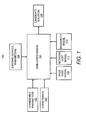
- Figure 1 illustrates a decision management system 100, according to an embodiment.
- the decision management system 100 includes a simulation engine 101, a base case model 110, a network cost model 111, and a bandwidth model 112.
- the simulation engine 101 receives inputs, including one or more of changeable parameters 102, constraints 103, and existing service parameters 104, that may be entered by a user on a graphical user interface. From these inputs and the models 110-112, the simulation engine 101 simulates the deployment of a communications network service.
- the simulation engine 101 generates an analysis of the simulation, which is shown as candidate solution 120.
- a candidate solution is a solution that may be selected to be used to deploy the service. Multiple candidate solutions can be determined and one may be selected for deploying the service.
- the changeable parameters 102 may be varied to generate different candidate solutions.
- Each candidate solution can be analyzed to determine the solution that best satisfies one or more objectives.
- one or more reports may be generated for each candidate solution that presents an analysis of the candidate solution.
- a user may compare the analyses of each candidate solution For example, a solution may be selected that minimizes costs but provides the best customer experience based on quality of service (QoS) or Radio Frequency (RF) coverage constraints related to technology.
- QoS quality of service
- RF Radio Frequency
- the constraints 103 are requirements that may be provided by the service provider.
- the constraints 103 must be met by the deployed service.
- One example of a constraint is a QoS constraint.
- Another constraint may be a budget constraint.
- the existing service parameters 104 describe existing network infrastructure and services. The deployment of a new service may impact or be impacted by existing network infrastructure and services. For example, a new service may be cheaper to implement when largely supported by the existing network infrastructure. In another example, existing operations, such as customer help desk or technicians, may be leveraged to support new services.
- the base case model 110, network cost model 111, and bandwidth model 112 take into consideration business and technology factors across multiple domains that can be used to simulate deploying of a communications network service. These factors are implemented in the models, and these factors when implemented in the models are referred to as model parameters. Relationships, described below, between the model parameters are used during the simulations to generate the candidate solutions for deploying the service. Deploying of a service may include building network infrastructure, providing the service, and maintaining the service after it is operational.
- Each of the models 110-112 include different business and technology model parameters that may be derived from a historical analysis of various communication network service deployments, and also may be derived from a determination of the type of information that is needed to analyze deployment of a service. For example, if a particular type of equipment is needed for a service deployment, then cost of that equipment may be used as a model parameter.
- the model parameters may include but are not limited to traditional types of costs and traditional technology variables that affect the service. Examples of different model parameters for each of the models 110-112 are described below.
- Models may be provided based on domain.
- a model may include model parameters that are associated with one domain or mostly associated with one domain. However, models do not need to be based on domain.
- the simulation generates values for the model parameters.
- a value for a model parameter is an instance of the model parameter. For example, if a model parameter is capital cost for equipment, then a value for that factor is a monetary amount, such as 28.3 million dollars.
- the values determined for the factors are estimations based on relationships between the model parameters as well as inputs, such as the changeable parameters and/or other inputs for the simulation.
- model parameters that are related are referred to as dependent model parameters. If a model parameter is dependent on another model parameter in the same or a different model, those model parameters may also be referred to as corresponding parameters that are dependent.
- the relationships between dependent model parameters are stored in each of the models, and these relationships may be stored as relationship curves or some other type of mapping.
- a curve can describe the relationships between dependent model parameters. For example, a curve may capture that if a value of a dependent model parameter exceeds a threshold, then the value for the corresponding dependent model parameter may level off and maintain a certain value even if the other dependent model parameter continues to get larger. Examples of relationships are described in further detail below. Note that the values in the curves may be derived from a historical analysis of the model parameters. Also, note that the relationships in the models may be between one or more inputs to the simulation engine 101 and one or more model parameters. Additionally, relationships may exist between more than two model parameters, and relationships may be dependent on other relationships. Also, relationships may be between different domains.
- the base case model 110 analyses both capital and operational costs. Examples of values for capital cost include labor rates and capital costs for building and operating the network to provide the communications network service.
- the operation costs estimate the ongoing costs of running the service. These costs are based on the operational aspect of the service, such as labor rates for end-user customer support and network infrastructure maintenance personnel.
- Material costs may include cost of replacement equipment. These values may vary depending on the type of technology selected for deploying the service.
- the network cost model 111 helps estimate the expenditures associated with building the network for providing the service.
- the network cost model 111 may include values that impact capital and operational costs in the base case model 110.
- Examples of costs in the network cost model 111 for a wireless service, such as a 4G service include radio costs, such as cell site costs, backhaul costs, which are related to infrastructure costs from the core network to the edge (e.g., cell sites), and core network costs, such as switches and building space.
- the bandwidth model 112 helps estimate network bandwidth requirements for the service or combinations of services, such as voice, data and video services.
- the bandwidth model is especially useful for these type of services, because each of these types of services offers a different profile from a capacity, a coverage and a performance standpoint. Operators can factor findings from this analysis into their network cost model to provide a more detailed picture of build-out costs.
- the bandwidth model 112 helps set the dimensions of the transport network and predicts yearly bandwidth costs. For example, the bandwidth model 112 is used to determine bandwidth needed based on coverage area, number of customers, type of service, and other values.
- the models identify relationships between domains as well as relationships between different model parameters in different models. These relationships are stored in the models.
- the simulation engine 101 uses the relationships to generate the candidate solution 120. Furthermore, as a result of varying one or more of the changeable parameters 102, these relationships may identify changes to different costs associated with different models, and ultimately are used to generate different candidate solutions.
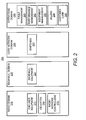
- FIG. 2 shows different domains for a communications network service deployment.
- the service being deployed is a 4G service, and thus needs a wireless cellular network as well as a backhaul and core network with connections to the Internet.
- the 4G service may include providing multimedia applications to the user via a 4G network.
- the domains include a radio domain 210, a backhaul domain 220, a core network domain 230, and an operations domain 240.
- the radio domain 210 may include end user equipment 211 with a cellular interface, such as cell phones, laptops, etc.
- the radio domain 210 may also include cell sites 212, and radio network controllers 213.
- the backhaul domain 220 includes backhaul equipment 221.
- the core network domain 230 includes switches 231.
- the switches 231 may include general packet radio service (GPRS) nodes commonly used for global system for mobile communications (GSM) systems for transmitting Internet Protocol (IP) packets.
- GPRS general packet radio service
- GSM global system for mobile communications
- IP Internet Protocol
- the operations domain 240 may include multiple systems, such as a fault management system 241, a performance management system 242, an equipment provisioning system 243, a billing system 244, and a customer care system 245, as well as equipment and personnel needed for each system and aspect of operations.
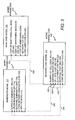
- Figure 3 shows examples of model parameters 310, 320, and 330 for the base case model 110, network cost model 111 and the bandwidth model 112, respectively, from figure 1 .
- Figure 3 also shows relationships between the model parameters 310-330 in the different models 110-112 and also identifies the domains 210-240 associated with the model parameters.
- the radio domain 210, the backhaul domain 220, the core network domain 230, and the operations domain 240 are shown in figure 3 as RD 210, BHD 220, CND 230, and OD 240, respectively, for each of the model parameters 310-330.
- the changeable parameters 102 shown in figure 1 may identify an end user coverage area to receive the 4G service, an estimated number of users in various areas in the coverage area, and may also identify a downlink bandwidth of 124 kbps to the end user. Based on these parameters, the simulation engine 110 uses the bandwidth model 112 to identify bandwidth requirements for the domains.
- the downlink bandwidth was provided in this example as a changeable parameter, and is shown as a model parameter for the bandwidth model 112.
- the downlink bandwidth as well as an uplink bandwidth may be estimated by the simulation engine 101 based on the type of service being deployed and other factors.
- Another model parameter for the radio domain is the total spectrum required. If less spectrum is available, then more cell sites may be needed to account for demand.
- model parameters determined using the bandwidth model 112 may include bandwidth needed per channel for the backhaul domain 220 and the core network domain 230. These model parameters may be determined based on the bandwidth requirements for the type of service being deployed, the number of end users, and other factors.
- the model parameters 320 for the network cost model 111 may include number of cell sites, cell site cost, and deployment cost, which can vary depending on whether the site is co-located with another site or a new build, backhaul cost, and core network cost. Relationships between different model parameters in the models are shown as lines connecting the values. For example, relationship 341 shows that the number of cell sites may vary according to the bandwidth spectrum needed for the service. If less spectrum is available, then more cell sites may be needed to account for demand. Spectrum and number of cell sites are referred to as dependent parameters because there is a relationship between the parameters. Also, each dependent parameter has at least one corresponding dependent parameter in a relationship. For example, the number of cell sites is a dependent parameter and the spectrum is the corresponding dependent parameter or vice versa.
- Relationship 344 indicates a relationship between cell site bandwidth (e.g., uplink and downlink) and backhaul and core network costs.
- backhaul costs are driven by the cost per megabit (Mb) needed at the site and for the backhaul transport.
- Core network costs are also driven by the bandwidth needed at the cell site.
- Relationships 341 and 344 represent inter-model relationships. Intra-model relationships among model parameters also exist. For example, the backhaul and network costs shown under network cost model 111 may increase as the cell site density increase (shown as relationship 345).
- Relationships may be inverse or direct.
- relationship 342 shown for network cost model 111 is between the number of cell sites and the antenna height. This relationship is inverse, because a decrease in antenna height per cell site results in less coverage, and as a result more cell sites are needed.
- Other relationships are direct.
- relationship 343 represents that using antennas with greater height increases cost per cell site. It should be noted that relationships, whether inverse or direct, may not be linear. For example, after a certain cell site density is reached, an increase in coverage requirement or an increase in bandwidth requirement may be accommodated by the current cell site density.
- the model parameters 310 are for the base case model 110.
- Examples of the model parameters 310 may include costs of maintaining cell sites, the backhaul, and core network and a cost for customer care.
- Relationship 346 represents a relationship between number of cell sites and cost of maintaining the cell sites. For example, as the number of cell sites increases, maintenance costs may also increase.
- the costs of maintaining the backhaul and core network may have similar relationships based on the size of the backhaul and core network. Customer care costs are related to the number of subscribers.
- relationships may be between different model parameters in different models as well as between model parameters in the same model. Relationships may be inverse or direct. Also, the relationships may be between domains. For example, relationship 344 represents a relationship between the radio domain 210 and the backhaul and core network domains 220 and 230. Furthermore, a relationship may be between a single model parameter and multiple model parameters or may be between a first set of multiple model parameters and a second set of multiple model parameters. In addition, the relationship may be a multi-hop relationship. For example, an increase in spectrum requirements may cause an increase in the number of cell sites (e.g., relationship 341), which causes an increase in the cost of maintaining the cell sites (e.g., relationship 346).
- the relationships are stored in the models 110-112.
- model parameters in the models or the changeable parameters are varied, the resulting changes to other model parameters are captured by the simulation performed by the simulation engine 101 shown in figure 1 . Furthermore, the resulting changes are identified in different candidate solutions generated by the simulation engine 101.
- the simulation engine 101 uses curves or other types of mappings (e.g., tables) in the models to estimate values for dependent model parameters.
- the values in the curves may be substantially fixed or may be changed to improve the accuracy of the simulation.
- the values for the curves involving that model parameter may not be changed unless the standard changes or the vendor changes.
- the model parameters are not as static.
- data may be retrieved from external sources to determine values for the curve. This may include real-time gathering, such as accessing information on the Internet or accessing public or private databases, to retrieve information that may be pertinent to the dependent model parameters. For example, if a model parameter is an equipment cost, then costs for different equipment manufacturers may be retrieved and averaged to determine values for curves using that model parameter. This type of value updating may improve the accuracy of the simulation because the curves are updated with the most recent information.
- the candidate solutions provide an analysis of different factors given the changeable parameters 102, the constraints 103, and existing service parameters 104, if any.
- the analysis may be presented in reports generated by the simulation engine 101.
- the reports express values for the model parameters from the models 110-112 and other values, which may be derived from the values in the models 110-112.
- Figure 4 shows a simplistic example of information in a report 400 providing a breakdown of costs for the domains 210-240 of figure 2 .
- the changeable parameters in this example are a percentage of area coverage 401 and a percentage of population coverage 402. These changeable parameters may be varied by the user. Although not shown, constraints may be specified.
- the report 400 shows the domain 410, the description 420, the capital expenditure (CAPEX) 430, and the operations expenditure (OPEX) 440.
- the domain 410 includes the radio domain, the backhaul domain, the core network domain, and the operations domain.
- the description 420 provides a description of the costs for each domain.
- the CAPEX 430 shows the costs for each domain.
- the OPEX 440 shows the operational costs for each domain estimated for a 5 year run rate. Examples of other information that may be provided in the report include but are not limited to an estimation of consolidated financials and valuation of products and services, subscriber penetration projections, and revenue estimations.
- a user may vary the changeable parameters to generate different candidate solutions.
- a service provider is weighing different market penetration scenarios as well as different bandwidth requirements to help determine an optimal wireless broadband networking strategy.
- the decision management system 100 generates candidate solutions in real-time projecting business results for a 4 percent market penetration versus a 2 percent penetration.
- the service provider also assesses the cost impacts of different network speeds, such as a 124kbps downlink versus a 64kbps downlink.
- the candidate solutions help determine the impact of different strategic and technological options based on a five-year cost structure and on a net present value.
- the decision management system 100 provides decision-making confidence across multiple business and technology dimensions.
- the decision management system 100 may also be used to sort through the pros and cons of a variety of different access technologies, which enables the analysis of strengths and weaknesses in a company's existing technology infrastructure.
- the system 100 can be used as a planning tool to create the most cost-effective and integrated approach to a company's business support systems and operations support systems.
- Filters may also be used to generate reports with the desired model parameters.
- a filter filters out the model parameters that are not needed for the report. For example, a chief technology officer may need to focus on model parameters in a technology sub-solution.
- a filter can be used that generates a report including only model parameters related to the technology sub-solution for the service deployment. Reports can be customized with the desired model parameters as needed.
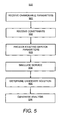
- Figure 5 illustrates a method 500 for modeling and analyzing scenarios for a communications network service to be deployed.
- the method 500 is described with respect to one or more of figures 1-4 by way of example.
- the method 500 may be practiced in other systems.
- changeable parameters are received.
- the changeable parameters 102 shown in figure 1 may include business and technology changeable parameters.
- Business parameters are related to financial data for the service to be provided, such as costs, revenue, profit, budget, etc.
- Technology parameters relate to technology data for the service. Examples include coverage area, downlink bandwidth, QoS, etc.
- the changeable parameters may be provided from a user via a user interface.
- constraints are received. These may include parameters that must be met by the service to be deployed. For example, a certain level of QoS for a service may be required to provide the service, and a budget constraint identifies maximum expenditure.
- existing service parameters are received. These parameters describe an existing service. For example, a service provider planning on deploying a 4G service, may already provide 3G services. Business and technology parameters describing the 3G service are provided.
- the service to be deployed is simulated using one or more of the changeable parameters, constraints, and existing service parameters.
- the system 100 is used to simulate the service.
- the simulation is performed using the base case model 110, the network cost model 111, and the bandwidth model 112.
- the models 110-112 store relationships between model parameters.
- the inputs, such as the changeable parameters, constraints, and existing service parameters, are determined. Values for a first set of model parameters dependent on these inputs are determined based on the stored relationships. Also, values for a second set of model parameters dependent on the first set of model parameters are determined based on stored relationship, and so on until values are determined for all or most of the model parameters.
- the relationship 341 shown in figure 3 represents that the number of cell sites may vary according to the bandwidth spectrum needed for the service.
- the number of cell sites is described as a dependent model parameter dependent on the corresponding spectrum model parameter.
- the relationship may indicate that if less spectrum is available, then more cell sites may be needed to account for demand.
- the bandwidth model 112 stores an indicator that the spectrum model parameter is related to the number of cell sites model parameter in the network cost model 111.
- the bandwidth model 112 may also store a relationship curve that is used to identify the estimated number of cell sites for a spectrum model parameter value. Thus, given a value for the spectrum model parameter, a value for the number of cell sites model parameter is determined from the curve.
- the models may store a relationship between number of cell sites and capital costs, and a value for capital costs may be determined at least partially based on the number of cell sites.
- Curves may be based on historic values for existing services.
- the simulation engine 101 uses the curves to estimate the values for model parameters. These type of mappings for the relationships may be stored for sets of related values, and are used to make educated estimations for the candidate solution.
- a candidate solution is determined from the simulation, and at step 506 an analysis is generated describing the candidate solution.
- the candidate solution include the business and technology sub-solutions related to financial data and technology data describing the service to be deployed.
- the generated analysis may include reports describing the sub-solutions.
- Figure 4 shows an example of a report.
- the reports include the values for the model parameters determined from the simulations.
- the reports may be used to compare different candidate solutions. For example, the method 500 is repeated for different sets of changeable parameters. Each candidate solution is analyzed to determine which best satisfies business and technology objectives.
- Figure 6 shows a computer system 600 that may be used with the embodiments described herein.
- the computer system 600 represents a generic platform that includes components that may be in a server or other computer system.
- the computer system 600 may be used as a platform for executing one or more of the methods, functions, and steps described herein. These steps may be embodied as software stored on one or more computer readable storage mediums.
- the computer system 600 includes a processor 602 that may implement or execute software instructions performing some or all of the methods, functions and other steps described herein. Commands and data from the processor 602 are communicated over a communication bus 604.
- the computer system 600 also includes a main memory 606, such as a random access memory (RAM), where the software and data for processor 602 may reside during runtime, and a secondary data storage 608, which may be non-volatile and stores software and data.
- main memory 606 such as a random access memory (RAM)
- secondary data storage 608 which may be non-volatile and stores software and data.
- the memory and data storage are examples of computer readable storage mediums.
- the computer system 600 may include one or more I/O devices 610, such as a keyboard, a mouse, a display, etc.
- the computer system 600 may include a network interface 612 for connecting to a network. It will be apparent to one of ordinary skill in the art that other known electronic components may be added or substituted in the computer system 600.
- the models 110-112 in the decision management system 100 may be stored in a database provided in the secondary data storage 608.
- the simulation engine 101 may be executed by the processor 602 to generate the candidate solution 120.
- a user interface for the system 100 may be generated by the processor 602 and presented using the I/O device 610.
- the user interface can output reports for the candidate solutions and receive user input, which may include parameters 102 and 104 and constraints 103.
- One or more of the steps of the methods described herein and other steps described herein and one or more of the components of the systems described herein may be implemented as computer code stored on a computer readable storage medium, such as the memory and/or secondary storage, and executed on a computer system, for example, by a processor, application-specific integrated circuit (ASIC), or other controller.
- the code may exist as software program(s) comprised of program instructions in source code, object code, executable code or other formats. Examples of computer readable storage medium include conventional computer system RAM (random access memory), ROM (read only memory), EPROM (erasable, programmable ROM), EEPROM (electrically erasable, programmable ROM), hard drives, and flash memory.
- an aspect of the present application may relate to a computer readable storage medium including instructions executed by a computer system to perform a method for simulating and analyzing one or more scenarios for a communications network service to be deployed, the method comprising: receiving business and technology changeable parameters describing the communications network service to be deployed; simulating the service using the business and technology changeable parameters, a base case model, a network cost model and a bandwidth model to determine at least one candidate solution for deploying the service, wherein the at least one candidate solution includes business and technology sub-solutions; and generating an analysis of the at least one candidate solution to evaluate an impact of the changeable parameters.
- a computer aided tool that allows a user to see and/or verify the outcome of possible changes to the system, without the necessity to specifically implement different communications networks while being in a position to determine and analyze the outcome and/or operability of such networks having different configurations.
- the present application allows the improved use of computing resources, in particular the improved use of network resources due to the simulation tool, which avoids unnecessary consumption of network resources which is conventionally necessary in a trial and error process using and analyzing networks having different configurations.
- the base case model and/or the network cost model and/or the bandwidth model each may include a dependent model parameter that is dependent on a corresponding dependent model parameter in the model or in at least one of the other models.
- each dependent model parameter may vary based on a predetermined relationship with its corresponding dependent model parameter.
- the computer readable storage medium may further comprise storing mappings that represent the predetermined relationships.
- the computer readable storage medium may further comprise changing values in the mappings based on information from external sources.
- the computer readable storage medium may further comprise: receiving parameters describing existing technology or services; and/or the simulating uses the received parameters describing the existing technology or services.
- simulating the service may further comprise simulating the service to determine multiple candidate solutions; and/or generating the analysis may include generating the analysis for each of the multiple candidate solutions, wherein the analysis of each of the candidate solutions is usable to identify a candidate solution that satisfies a business objective and a technology objective.
- the business objective may include minimizing cost, and/or the technology objective may include satisfying network quality of service constraints for the service.
- the base case model may model operational costs and capital expenditures for deploying the service.
- the network cost model may model network infrastructure costs for deploying the service.
- the bandwidth model may model bandwidth consumed for deploying the service.
- the analysis may include an analysis of the at least one candidate solution across multiple domains of the service, wherein each domain is associated with a different technology for providing the service.
- the analysis may include cost and revenue projections over a predetermined period of time for deploying the service and/or technology requirements for deploying the service over the predetermined period of time.
- an aspect of the present application may relate to a decision management system comprising: data storage storing a base case model, a network cost model and a bandwidth model; and a processor executing a simulation engine to simulate a communications network service deployment using business and technology changeable parameters, the base case model, the network cost model and the bandwidth model, wherein the simulation engine generates a candidate solution from the simulation including an analysis of business and technology sub-solutions in the candidate solution.
- the candidate solution may include estimations of business and technology parameters describing deployment of the service over a period of time into the future.
- the decision management may further comprise a user interface receiving the business and technology changeable parameters from a user and outputting the analysis of the candidate solution to the user.
- the simulation engine may simulate the communications network service deployment using business and/or technology constraints and/or parameters describing an existing service.
- an aspect of the present application may relate to a method, in particular to a computer implemented method for analyzing a plurality of scenarios for deploying a communications network service, the method comprising: receiving a plurality of different sets of business and technology changeable parameters describing the communications network service to be deployed; a computer system simulating the service multiple times, each time using a different set of the sets of business and technology changeable parameters, wherein each simulation also uses a base case model, a network cost model and a bandwidth model to determine a candidate solution for deploying the service, wherein the candidate solution includes business and technology sub-solutions; and generating an analysis for each candidate solution to evaluate an impact of the different sets of the changeable parameters on deploying the service.
- the base case model and/or the network cost model and/or the bandwidth model each may include a dependent model parameter that is dependent on a corresponding model parameter in at least one of the other models.
- each dependent model parameter may vary in response to the corresponding model parameter in at least one of the other models being varied.
- an aspect of the present application may relate to a product, in particular to a computer program product preferably stored on a computer readable memory and/or provided as a signal and/or as a data stream, comprising computer readable instructions, which when loaded in the memory of a computer and executed by the computer urge the computer to carry out the method according to the present application, in particular the computer implemented method described above.
Landscapes
- Engineering & Computer Science (AREA)
- Business, Economics & Management (AREA)
- Human Resources & Organizations (AREA)
- Strategic Management (AREA)
- Economics (AREA)
- Entrepreneurship & Innovation (AREA)
- Educational Administration (AREA)
- Game Theory and Decision Science (AREA)
- Development Economics (AREA)
- Marketing (AREA)
- Operations Research (AREA)
- Quality & Reliability (AREA)
- Tourism & Hospitality (AREA)
- Physics & Mathematics (AREA)
- General Business, Economics & Management (AREA)
- General Physics & Mathematics (AREA)
- Theoretical Computer Science (AREA)
- Data Exchanges In Wide-Area Networks (AREA)
- Telephonic Communication Services (AREA)
Abstract
Description
- This application claims priority to
U.S. provisional patent application serial number 61/049,726, filed May 1, 2008 - Companies, such as traditional communications network service providers (e.g., cellular service providers, cable service providers, satellite service providers, etc.), application-specific service providers, and other types of companies face great competitive pressure to provide the best service to their customers and to develop and deploy new services to the marketplace faster than their competitors.
- For example, fourth generation wireless (4G) network technology (e.g. WIMAX, Long Term Evolution (LTE), etc.) is widely accepted as the next major milestone in wireless technology evolution, and impacts business models in the wireless industry as well as wireless technology. Most cellular service providers have hardly had time to profit from their third-generation (3G) wireless networks, and now they need to strategize about how to realize a return on that investment while simultaneously making a move to 4G wireless broadband services.
- To be competitive, companies try to minimize short-term risks while at the same time support longer-term capabilities that enable the rapid creation of innovative and profitable services. However, it is difficult to undergo a comprehensive analysis to enable educated decisions for the rapid creation and deployment of innovative and profitable services. For example, in the case of a company strategizing about how to maximize a return on investment while simultaneously making a move to 4G wireless broadband services, the company would ideally undergo a comprehensive analysis on the impact of deploying 4G services on their current services as well as the impact on short and long term profits. However, due to the cost, difficulty and know-how needed for undergoing such an analysis, many companies may fall short in their analysis, possibly resulting in lost profits. Furthermore, building or expanding a wireless network is highly capital intensive. It requires holistic and programmatic decision making. One incorrect assumption can mean lost revenue opportunity and conversely cost over-runs costing jobs and economic productivity.
- The embodiments of the invention will be described in detail in the following description with reference to the following figures.
-
Figure 1 illustrates a decision management system, according to an embodiment; -
Figures 2 illustrates domains in a communications network service, according to an embodiment; -
Figure 3 illustrates relationships between values in models, according to an embodiment; -
Figure 4 illustrates an analysis report of a candidate solution, according to an embodiment; -
Figure 5 illustrates a method for simulating service deployment, according to an embodiment; and -
Figure 6 illustrates a computer system that may be used as a ptatform for the decision management system and executing various functions, according to an embodiment. - For simplicity and illustrative purposes, the principles of the embodiments are described by referring mainly to examples thereof. In the following description, numerous specific details are set forth in order to provide a thorough understanding of the embodiments. It will be apparent, however, to one of ordinary skill in the art, that the embodiments may be practiced without limitation to these specific details. In some instances, well known methods and structures have not been described in detail so as not to unnecessarily obscure the embodiments.
- According to an embodiment, a comprehensive decision management system uses quantative methods and changeable parameters to simulate and analyze different communication network service deployments. The simulations and analysis may then be used to identify optimal service deployment scenarios to maximize business as well as technological objectives. Also, the decision management system may be used by companies or other entities to strategize about their existing network investments while simultaneously deploying new technologies and services.
- A service as used herein includes the supplying or providing of information over a network, and is also referred to as a communications network service. Examples of services include 4G broadband services, any voice, data or video service provided over a network, smart-grid network, digital telephone service, cellular service, Internet protocol television (IPTV), etc.
- The decision management system includes a scenario-based simulator to simulate different scenarios encompassing different changeable parameters or variables for services to be deployed. The simulator uses a multi-linear simulation engine to run simulations for different scenarios. The output of the simulator includes an analysis of each scenario and an analysis of business and technology sub-solutions for each simulation. A solution includes an analysis of different factors for deploying a service given changeable parameters, constraints, and existing service parameters, if any. Sub-solutions provide an analysis of different categories of the factors. For example, a business sub-solution includes an analysis of business factors. A technology sub-solution includes an analysis of technology factors. The simulations are operable to take into consideration existing implementations of infrastructure, operations and services, and can be used to evaluate the impact on the existing services.
- The decision management system provides a complete, holistic, end-to-end analytic and support solution that helps companies engage in sophisticated modeling and "what-if" planning based on different business, technology and cost variables. The decision management system is operable to consider business cost variables, operational cost variables, and technological variables, and provides a comprehensive analysis across all these domains as well as an indication of how the variables in the different domains impact each other. A domain is a logical sectioning of a service. In one example, domains of a 4G service include a radio domain, a backhaul domain, a core network domain, and an operations domain. Changes in one domain may impact changes in another domain, which is captured in the modeling described herein. This type of decision management system is invaluable for communications providers to get a complete picture and understanding of costs and potential profits for service deployments, as well as providing practical guidelines and what-if analysis for evaluating various network solutions. Furthermore, the decision management system can provide analysis of different scenarios in real time. Thus, the impact of changing different variables in different domains to achieve a business objective can be quickly evaluated.
-
Figure 1 illustrates adecision management system 100, according to an embodiment. Thedecision management system 100 includes asimulation engine 101, abase case model 110, anetwork cost model 111, and abandwidth model 112. Thesimulation engine 101 receives inputs, including one or more ofchangeable parameters 102,constraints 103, and existing service parameters 104, that may be entered by a user on a graphical user interface. From these inputs and the models 110-112, thesimulation engine 101 simulates the deployment of a communications network service. Thesimulation engine 101 generates an analysis of the simulation, which is shown ascandidate solution 120. A candidate solution is a solution that may be selected to be used to deploy the service. Multiple candidate solutions can be determined and one may be selected for deploying the service. For example, thechangeable parameters 102 may be varied to generate different candidate solutions. Each candidate solution can be analyzed to determine the solution that best satisfies one or more objectives. According to a preferred embodiment of the invention, one or more reports may be generated for each candidate solution that presents an analysis of the candidate solution. A user may compare the analyses of each candidate solution For example, a solution may be selected that minimizes costs but provides the best customer experience based on quality of service (QoS) or Radio Frequency (RF) coverage constraints related to technology. - The
constraints 103 are requirements that may be provided by the service provider. Theconstraints 103 must be met by the deployed service. One example of a constraint is a QoS constraint. Another constraint may be a budget constraint. The existing service parameters 104 describe existing network infrastructure and services. The deployment of a new service may impact or be impacted by existing network infrastructure and services. For example, a new service may be cheaper to implement when largely supported by the existing network infrastructure. In another example, existing operations, such as customer help desk or technicians, may be leveraged to support new services. - As described in more detail later, the
base case model 110,network cost model 111, andbandwidth model 112 take into consideration business and technology factors across multiple domains that can be used to simulate deploying of a communications network service. These factors are implemented in the models, and these factors when implemented in the models are referred to as model parameters. Relationships, described below, between the model parameters are used during the simulations to generate the candidate solutions for deploying the service. Deploying of a service may include building network infrastructure, providing the service, and maintaining the service after it is operational. - Each of the models 110-112 include different business and technology model parameters that may be derived from a historical analysis of various communication network service deployments, and also may be derived from a determination of the type of information that is needed to analyze deployment of a service. For example, if a particular type of equipment is needed for a service deployment, then cost of that equipment may be used as a model parameter. The model parameters may include but are not limited to traditional types of costs and traditional technology variables that affect the service. Examples of different model parameters for each of the models 110-112 are described below.
- Models may be provided based on domain. A model may include model parameters that are associated with one domain or mostly associated with one domain. However, models do not need to be based on domain.
- The simulation generates values for the model parameters. A value for a model parameter is an instance of the model parameter. For example, if a model parameter is capital cost for equipment, then a value for that factor is a monetary amount, such as 28.3 million dollars. The values determined for the factors are estimations based on relationships between the model parameters as well as inputs, such as the changeable parameters and/or other inputs for the simulation. As used herein, model parameters that are related are referred to as dependent model parameters. If a model parameter is dependent on another model parameter in the same or a different model, those model parameters may also be referred to as corresponding parameters that are dependent.
- The relationships between dependent model parameters are stored in each of the models, and these relationships may be stored as relationship curves or some other type of mapping. A curve can describe the relationships between dependent model parameters. For example, a curve may capture that if a value of a dependent model parameter exceeds a threshold, then the value for the corresponding dependent model parameter may level off and maintain a certain value even if the other dependent model parameter continues to get larger. Examples of relationships are described in further detail below. Note that the values in the curves may be derived from a historical analysis of the model parameters. Also, note that the relationships in the models may be between one or more inputs to the
simulation engine 101 and one or more model parameters. Additionally, relationships may exist between more than two model parameters, and relationships may be dependent on other relationships. Also, relationships may be between different domains. - The
base case model 110 analyses both capital and operational costs. Examples of values for capital cost include labor rates and capital costs for building and operating the network to provide the communications network service. The operation costs estimate the ongoing costs of running the service. These costs are based on the operational aspect of the service, such as labor rates for end-user customer support and network infrastructure maintenance personnel. Material costs may include cost of replacement equipment. These values may vary depending on the type of technology selected for deploying the service. - The
network cost model 111 helps estimate the expenditures associated with building the network for providing the service. Thenetwork cost model 111 may include values that impact capital and operational costs in thebase case model 110. Examples of costs in thenetwork cost model 111 for a wireless service, such as a 4G service, include radio costs, such as cell site costs, backhaul costs, which are related to infrastructure costs from the core network to the edge (e.g., cell sites), and core network costs, such as switches and building space. - The
bandwidth model 112 helps estimate network bandwidth requirements for the service or combinations of services, such as voice, data and video services. The bandwidth model is especially useful for these type of services, because each of these types of services offers a different profile from a capacity, a coverage and a performance standpoint. Operators can factor findings from this analysis into their network cost model to provide a more detailed picture of build-out costs. Based on the expected bandwidth demand, thebandwidth model 112 helps set the dimensions of the transport network and predicts yearly bandwidth costs. For example, thebandwidth model 112 is used to determine bandwidth needed based on coverage area, number of customers, type of service, and other values. - The models identify relationships between domains as well as relationships between different model parameters in different models. These relationships are stored in the models. The
simulation engine 101 uses the relationships to generate thecandidate solution 120. Furthermore, as a result of varying one or more of thechangeable parameters 102, these relationships may identify changes to different costs associated with different models, and ultimately are used to generate different candidate solutions. -
Figure 2 shows different domains for a communications network service deployment. In this example, the service being deployed is a 4G service, and thus needs a wireless cellular network as well as a backhaul and core network with connections to the Internet. The 4G service may include providing multimedia applications to the user via a 4G network. The domains include aradio domain 210, abackhaul domain 220, acore network domain 230, and anoperations domain 240. Theradio domain 210 may include end user equipment 211 with a cellular interface, such as cell phones, laptops, etc. Theradio domain 210 may also includecell sites 212, andradio network controllers 213. Thebackhaul domain 220 includesbackhaul equipment 221. This may include controllers and cabling, such as optical fiber carrying data between the cellular network and the core network. Thecore network domain 230 includesswitches 231. Theswitches 231 may include general packet radio service (GPRS) nodes commonly used for global system for mobile communications (GSM) systems for transmitting Internet Protocol (IP) packets. Theoperations domain 240 may include multiple systems, such as afault management system 241, aperformance management system 242, anequipment provisioning system 243, abilling system 244, and acustomer care system 245, as well as equipment and personnel needed for each system and aspect of operations. -
Figure 3 shows examples ofmodel parameters base case model 110,network cost model 111 and thebandwidth model 112, respectively, fromfigure 1 .Figure 3 also shows relationships between the model parameters 310-330 in the different models 110-112 and also identifies the domains 210-240 associated with the model parameters. Theradio domain 210, thebackhaul domain 220, thecore network domain 230, and theoperations domain 240 are shown infigure 3 asRD 210,BHD 220,CND 230, andOD 240, respectively, for each of the model parameters 310-330. Thechangeable parameters 102 shown infigure 1 may identify an end user coverage area to receive the 4G service, an estimated number of users in various areas in the coverage area, and may also identify a downlink bandwidth of 124 kbps to the end user. Based on these parameters, thesimulation engine 110 uses thebandwidth model 112 to identify bandwidth requirements for the domains. The downlink bandwidth was provided in this example as a changeable parameter, and is shown as a model parameter for thebandwidth model 112. In another example, the downlink bandwidth as well as an uplink bandwidth may be estimated by thesimulation engine 101 based on the type of service being deployed and other factors. Another model parameter for the radio domain is the total spectrum required. If less spectrum is available, then more cell sites may be needed to account for demand. - Other model parameters determined using the
bandwidth model 112 may include bandwidth needed per channel for thebackhaul domain 220 and thecore network domain 230. These model parameters may be determined based on the bandwidth requirements for the type of service being deployed, the number of end users, and other factors. - The
model parameters 320 for thenetwork cost model 111 may include number of cell sites, cell site cost, and deployment cost, which can vary depending on whether the site is co-located with another site or a new build, backhaul cost, and core network cost. Relationships between different model parameters in the models are shown as lines connecting the values. For example,relationship 341 shows that the number of cell sites may vary according to the bandwidth spectrum needed for the service. If less spectrum is available, then more cell sites may be needed to account for demand. Spectrum and number of cell sites are referred to as dependent parameters because there is a relationship between the parameters. Also, each dependent parameter has at least one corresponding dependent parameter in a relationship. For example, the number of cell sites is a dependent parameter and the spectrum is the corresponding dependent parameter or vice versa. -
Relationship 344 indicates a relationship between cell site bandwidth (e.g., uplink and downlink) and backhaul and core network costs. For example, backhaul costs are driven by the cost per megabit (Mb) needed at the site and for the backhaul transport. Core network costs are also driven by the bandwidth needed at the cell site. -
Relationships network cost model 111 may increase as the cell site density increase (shown as relationship 345). - Relationships may be inverse or direct. For example,
relationship 342 shown fornetwork cost model 111 is between the number of cell sites and the antenna height. This relationship is inverse, because a decrease in antenna height per cell site results in less coverage, and as a result more cell sites are needed. Other relationships are direct. For example,relationship 343 represents that using antennas with greater height increases cost per cell site. It should be noted that relationships, whether inverse or direct, may not be linear. For example, after a certain cell site density is reached, an increase in coverage requirement or an increase in bandwidth requirement may be accommodated by the current cell site density. - The
model parameters 310 are for thebase case model 110. Examples of themodel parameters 310 may include costs of maintaining cell sites, the backhaul, and core network and a cost for customer care.Relationship 346 represents a relationship between number of cell sites and cost of maintaining the cell sites. For example, as the number of cell sites increases, maintenance costs may also increase. The costs of maintaining the backhaul and core network may have similar relationships based on the size of the backhaul and core network. Customer care costs are related to the number of subscribers. - As shown by the example of relationships 341-346, relationships may be between different model parameters in different models as well as between model parameters in the same model. Relationships may be inverse or direct. Also, the relationships may be between domains. For example,
relationship 344 represents a relationship between theradio domain 210 and the backhaul andcore network domains - The relationships are stored in the models 110-112. Thus, as model parameters in the models or the changeable parameters are varied, the resulting changes to other model parameters are captured by the simulation performed by the
simulation engine 101 shown infigure 1 . Furthermore, the resulting changes are identified in different candidate solutions generated by thesimulation engine 101. - As described above, the
simulation engine 101 uses curves or other types of mappings (e.g., tables) in the models to estimate values for dependent model parameters. The values in the curves may be substantially fixed or may be changed to improve the accuracy of the simulation. For example, if a model parameter is based on a standard or is vendor-specific, the values for the curves involving that model parameter may not be changed unless the standard changes or the vendor changes. In other instances, the model parameters are not as static. In these instances, data may be retrieved from external sources to determine values for the curve. This may include real-time gathering, such as accessing information on the Internet or accessing public or private databases, to retrieve information that may be pertinent to the dependent model parameters. For example, if a model parameter is an equipment cost, then costs for different equipment manufacturers may be retrieved and averaged to determine values for curves using that model parameter. This type of value updating may improve the accuracy of the simulation because the curves are updated with the most recent information. - The candidate solutions provide an analysis of different factors given the
changeable parameters 102, theconstraints 103, and existing service parameters 104, if any. The analysis may be presented in reports generated by thesimulation engine 101. The reports express values for the model parameters from the models 110-112 and other values, which may be derived from the values in the models 110-112. -
Figure 4 shows a simplistic example of information in areport 400 providing a breakdown of costs for the domains 210-240 offigure 2 . The changeable parameters in this example are a percentage ofarea coverage 401 and a percentage ofpopulation coverage 402. These changeable parameters may be varied by the user. Although not shown, constraints may be specified. - The
report 400 shows thedomain 410, thedescription 420, the capital expenditure (CAPEX) 430, and the operations expenditure (OPEX) 440. Thedomain 410 includes the radio domain, the backhaul domain, the core network domain, and the operations domain. Thedescription 420 provides a description of the costs for each domain. TheCAPEX 430 shows the costs for each domain. The OPEX 440 shows the operational costs for each domain estimated for a 5 year run rate. Examples of other information that may be provided in the report include but are not limited to an estimation of consolidated financials and valuation of products and services, subscriber penetration projections, and revenue estimations. - A user may vary the changeable parameters to generate different candidate solutions. For example, a service provider is weighing different market penetration scenarios as well as different bandwidth requirements to help determine an optimal wireless broadband networking strategy. The
decision management system 100 generates candidate solutions in real-time projecting business results for a 4 percent market penetration versus a 2 percent penetration. The service provider also assesses the cost impacts of different network speeds, such as a 124kbps downlink versus a 64kbps downlink. The candidate solutions help determine the impact of different strategic and technological options based on a five-year cost structure and on a net present value. Thedecision management system 100 provides decision-making confidence across multiple business and technology dimensions. - For a 4G service, the
decision management system 100 may also be used to sort through the pros and cons of a variety of different access technologies, which enables the analysis of strengths and weaknesses in a company's existing technology infrastructure. Thesystem 100 can be used as a planning tool to create the most cost-effective and integrated approach to a company's business support systems and operations support systems. - Filters may also be used to generate reports with the desired model parameters. A filter filters out the model parameters that are not needed for the report. For example, a chief technology officer may need to focus on model parameters in a technology sub-solution. A filter can be used that generates a report including only model parameters related to the technology sub-solution for the service deployment. Reports can be customized with the desired model parameters as needed.
-
Figure 5 illustrates amethod 500 for modeling and analyzing scenarios for a communications network service to be deployed. Themethod 500 is described with respect to one or more offigures 1-4 by way of example. Themethod 500 may be practiced in other systems. - At
step 501, changeable parameters are received. For example, thechangeable parameters 102 shown infigure 1 may include business and technology changeable parameters. Business parameters are related to financial data for the service to be provided, such as costs, revenue, profit, budget, etc. Technology parameters relate to technology data for the service. Examples include coverage area, downlink bandwidth, QoS, etc. The changeable parameters may be provided from a user via a user interface. - At
step 502, constraints are received. These may include parameters that must be met by the service to be deployed. For example, a certain level of QoS for a service may be required to provide the service, and a budget constraint identifies maximum expenditure. - At
step 503, existing service parameters are received. These parameters describe an existing service. For example, a service provider planning on deploying a 4G service, may already provide 3G services. Business and technology parameters describing the 3G service are provided. - At
step 504, the service to be deployed is simulated using one or more of the changeable parameters, constraints, and existing service parameters. Thesystem 100 is used to simulate the service. The simulation is performed using thebase case model 110, thenetwork cost model 111, and thebandwidth model 112. For example, the models 110-112 store relationships between model parameters. The inputs, such as the changeable parameters, constraints, and existing service parameters, are determined. Values for a first set of model parameters dependent on these inputs are determined based on the stored relationships. Also, values for a second set of model parameters dependent on the first set of model parameters are determined based on stored relationship, and so on until values are determined for all or most of the model parameters. - For example, the
relationship 341 shown infigure 3 represents that the number of cell sites may vary according to the bandwidth spectrum needed for the service. The number of cell sites is described as a dependent model parameter dependent on the corresponding spectrum model parameter. The relationship may indicate that if less spectrum is available, then more cell sites may be needed to account for demand. Thebandwidth model 112 stores an indicator that the spectrum model parameter is related to the number of cell sites model parameter in thenetwork cost model 111. Thebandwidth model 112 may also store a relationship curve that is used to identify the estimated number of cell sites for a spectrum model parameter value. Thus, given a value for the spectrum model parameter, a value for the number of cell sites model parameter is determined from the curve. Then, the models may store a relationship between number of cell sites and capital costs, and a value for capital costs may be determined at least partially based on the number of cell sites. Curves may be based on historic values for existing services. Thesimulation engine 101 uses the curves to estimate the values for model parameters. These type of mappings for the relationships may be stored for sets of related values, and are used to make educated estimations for the candidate solution. - At
step 505, a candidate solution is determined from the simulation, and atstep 506 an analysis is generated describing the candidate solution. The candidate solution include the business and technology sub-solutions related to financial data and technology data describing the service to be deployed. The generated analysis may include reports describing the sub-solutions.Figure 4 shows an example of a report. The reports include the values for the model parameters determined from the simulations. The reports may be used to compare different candidate solutions. For example, themethod 500 is repeated for different sets of changeable parameters. Each candidate solution is analyzed to determine which best satisfies business and technology objectives. -
Figure 6 shows acomputer system 600 that may be used with the embodiments described herein. Thecomputer system 600 represents a generic platform that includes components that may be in a server or other computer system. Thecomputer system 600 may be used as a platform for executing one or more of the methods, functions, and steps described herein. These steps may be embodied as software stored on one or more computer readable storage mediums. - The
computer system 600 includes aprocessor 602 that may implement or execute software instructions performing some or all of the methods, functions and other steps described herein. Commands and data from theprocessor 602 are communicated over acommunication bus 604. Thecomputer system 600 also includes amain memory 606, such as a random access memory (RAM), where the software and data forprocessor 602 may reside during runtime, and asecondary data storage 608, which may be non-volatile and stores software and data. The memory and data storage are examples of computer readable storage mediums. - The
computer system 600 may include one or more I/O devices 610, such as a keyboard, a mouse, a display, etc. Thecomputer system 600 may include anetwork interface 612 for connecting to a network. It will be apparent to one of ordinary skill in the art that other known electronic components may be added or substituted in thecomputer system 600. - The models 110-112 in the
decision management system 100 may be stored in a database provided in thesecondary data storage 608. Thesimulation engine 101 may be executed by theprocessor 602 to generate thecandidate solution 120. Also, a user interface for thesystem 100 may be generated by theprocessor 602 and presented using the I/O device 610. The user interface can output reports for the candidate solutions and receive user input, which may includeparameters 102 and 104 andconstraints 103. - One or more of the steps of the methods described herein and other steps described herein and one or more of the components of the systems described herein may be implemented as computer code stored on a computer readable storage medium, such as the memory and/or secondary storage, and executed on a computer system, for example, by a processor, application-specific integrated circuit (ASIC), or other controller. The code may exist as software program(s) comprised of program instructions in source code, object code, executable code or other formats. Examples of computer readable storage medium include conventional computer system RAM (random access memory), ROM (read only memory), EPROM (erasable, programmable ROM), EEPROM (electrically erasable, programmable ROM), hard drives, and flash memory.
- While the embodiments have been described with reference to examples, those skilled in the art will be able to make various modifications to the described embodiments without departing from the scope of the claimed embodiments.
- Exemplary, an aspect of the present application may relate to a computer readable storage medium including instructions executed by a computer system to perform a method for simulating and analyzing one or more scenarios for a communications network service to be deployed, the method comprising: receiving business and technology changeable parameters describing the communications network service to be deployed; simulating the service using the business and technology changeable parameters, a base case model, a network cost model and a bandwidth model to determine at least one candidate solution for deploying the service, wherein the at least one candidate solution includes business and technology sub-solutions; and generating an analysis of the at least one candidate solution to evaluate an impact of the changeable parameters.
- In other words, according to the present application, there is provided a computer aided tool, that allows a user to see and/or verify the outcome of possible changes to the system, without the necessity to specifically implement different communications networks while being in a position to determine and analyze the outcome and/or operability of such networks having different configurations.
- Hence, using this simulation, the internal state of the system representing the internal state of the simulated communications networks is provided to the user, thereby improving the man-machine interaction. Consequently, the present application allows the improved use of computing resources, in particular the improved use of network resources due to the simulation tool, which avoids unnecessary consumption of network resources which is conventionally necessary in a trial and error process using and analyzing networks having different configurations.
- Exemplary, the base case model and/or the network cost model and/or the bandwidth model each may include a dependent model parameter that is dependent on a corresponding dependent model parameter in the model or in at least one of the other models.
- Exemplary, each dependent model parameter may vary based on a predetermined relationship with its corresponding dependent model parameter.
- Exemplary, the computer readable storage medium may further comprise storing mappings that represent the predetermined relationships.
- Exemplary, the computer readable storage medium may further comprise changing values in the mappings based on information from external sources.
- Exemplary, the computer readable storage medium may further comprise: receiving parameters describing existing technology or services; and/or the simulating uses the received parameters describing the existing technology or services.
- Exemplary, simulating the service may further comprise simulating the service to determine multiple candidate solutions; and/or generating the analysis may include generating the analysis for each of the multiple candidate solutions, wherein the analysis of each of the candidate solutions is usable to identify a candidate solution that satisfies a business objective and a technology objective.
- Exemplary, the business objective may include minimizing cost, and/or the technology objective may include satisfying network quality of service constraints for the service.
- Exemplary, the base case model may model operational costs and capital expenditures for deploying the service.
- Exemplary, the network cost model may model network infrastructure costs for deploying the service.
- Exemplary, the bandwidth model may model bandwidth consumed for deploying the service.
- Exemplary, the analysis may include an analysis of the at least one candidate solution across multiple domains of the service, wherein each domain is associated with a different technology for providing the service.
- Exemplary, the analysis may include cost and revenue projections over a predetermined period of time for deploying the service and/or technology requirements for deploying the service over the predetermined period of time.
- Exemplary, an aspect of the present application may relate to a decision management system comprising: data storage storing a base case model, a network cost model and a bandwidth model; and a processor executing a simulation engine to simulate a communications network service deployment using business and technology changeable parameters, the base case model, the network cost model and the bandwidth model, wherein the simulation engine generates a candidate solution from the simulation including an analysis of business and technology sub-solutions in the candidate solution.
- Exemplary, the candidate solution may include estimations of business and technology parameters describing deployment of the service over a period of time into the future.
- Exemplary, the decision management may further comprise a user interface receiving the business and technology changeable parameters from a user and outputting the analysis of the candidate solution to the user.
- Exemplary, the simulation engine may simulate the communications network service deployment using business and/or technology constraints and/or parameters describing an existing service.
- Exemplary, an aspect of the present application may relate to a method, in particular to a computer implemented method for analyzing a plurality of scenarios for deploying a communications network service, the method comprising: receiving a plurality of different sets of business and technology changeable parameters describing the communications network service to be deployed; a computer system simulating the service multiple times, each time using a different set of the sets of business and technology changeable parameters, wherein each simulation also uses a base case model, a network cost model and a bandwidth model to determine a candidate solution for deploying the service, wherein the candidate solution includes business and technology sub-solutions; and generating an analysis for each candidate solution to evaluate an impact of the different sets of the changeable parameters on deploying the service.
- Exemplary, the base case model and/or the network cost model and/or the bandwidth model each may include a dependent model parameter that is dependent on a corresponding model parameter in at least one of the other models.
- Exemplary, each dependent model parameter may vary in response to the corresponding model parameter in at least one of the other models being varied.
- Exemplary, an aspect of the present application may relate to a product, in particular to a computer program product preferably stored on a computer readable memory and/or provided as a signal and/or as a data stream, comprising computer readable instructions, which when loaded in the memory of a computer and executed by the computer urge the computer to carry out the method according to the present application, in particular the computer implemented method described above.
Claims (15)
- A computer readable storage medium including instructions executed by a computer system to perform a method for simulating and analyzing one or more scenarios for a communications network service to be deployed, the method comprising:receiving business and technology changeable parameters describing the communications network service to be deployed;simulating the service using the business and technology changeable parameters, a base case model, a network cost model and a bandwidth model to determine at least one candidate solution for deploying the service, wherein the at least one candidate solution includes business and technology sub-solutions; andgenerating an analysis of the at least one candidate solution to evaluate an impact of the changeable parameters.
- The computer readable storage medium of claim 1, wherein the base case model, the network cost model, and the bandwidth model each include a dependent model parameter that is dependent on a corresponding dependent model parameter in the model or in at least one of the other models.
- The computer readable storage medium of claim 2, wherein each dependent model parameter varies based on a predetermined relationship with its corresponding dependent model parameter.
- The computer readable storage medium according to any one of the preceding claims, further comprising:storing mappings that represent the predetermined relationships.
- The computer readable storage medium according to any one of the preceding claims, further comprising:changing values in the mappings based on information from external sources.
- The computer readable storage medium according to any one of the preceding claims, wherein the method further comprises:receiving parameters describing existing technology or services; andthe simulating uses the received parameters describing the existing technology or services.
- The computer readable storage medium according to any one of the preceding claims, wherein simulating the service further comprises simulating the service to determine multiple candidate solutions; and
generating the analysis includes generating the analysis for each of the multiple candidate solutions, wherein the analysis of each of the candidate solutions is usable to identify a candidate solution that satisfies a business objective and a technology objective. - The computer readable storage medium of claim 7, wherein the business objective include minimizing cost, and the technology objective includes satisfying network quality of service constraints for the service.
- The computer readable storage medium according to any one of the preceding claims, wherein the base case model models operational costs and capital expenditures for deploying the service and/or wherein the network cost model models network infrastructure costs for deploying the service and/or wherein the bandwidth model models bandwidth consumed for deploying the service.
- The computer readable storage medium according to any one of the preceding claims, wherein the analysis includes an analysis of the at least one candidate solution across multiple domains of the service, wherein each domain is associated with a different technology for providing the service and/or wherein the analysis includes cost and revenue projections over a predetermined period of time for deploying the service and technology requirements for deploying the service over the predetermined period of time.
- A decision management system comprising:data storage storing a base case model, a network cost model and a bandwidth model; anda processor executing a simulation engine to simulate a communications network service deployment using business and technology changeable parameters, the base case model, the network cost model and the bandwidth model,wherein the simulation engine generates a candidate solution from the simulation including an analysis of business and technology sub-solutions in the candidate solution.
- The decision management system of claim 11, wherein the candidate solution includes estimations of business and technology parameters describing deployment of the service over a period of time into the future.
- The decision management system of claim 11 or 12, further comprising:a user interface receiving the business and technology changeable parameters from a user and outputting the analysis of the candidate solution to the user and/or wherein the simulation engine simulates the communications network service deployment using business and technology constraints and parameters describing an existing service.
- A method for analyzing a plurality of scenarios for deploying a communications network service, the method comprising:receiving a plurality of different sets of business and technology changeable parameters describing the communications network service to be deployed;a computer system simulating the service multiple times, each time using a different set of the sets of business and technology changeable parameters, wherein each simulation also uses a base case model, a network cost model and a bandwidth model to determine a candidate solution for deploying the service, wherein the candidate solution includes business and technology sub-solutions; andgenerating an analysis for each candidate solution to evaluate an impact of the different sets of the changeable parameters on deploying the service.
- The method of claim 14, wherein the base case model, the network cost model, and the bandwidth model each include a dependent model parameter that is dependent on a corresponding model parameter in at least one of the other models and/or wherein each dependent model parameter varies in response to the corresponding model parameter in at least one of the other models being varied.
Applications Claiming Priority (1)
| Application Number | Priority Date | Filing Date | Title |
|---|---|---|---|
| US4972608P | 2008-05-01 | 2008-05-01 |
Publications (1)
| Publication Number | Publication Date |
|---|---|
| EP2113872A1 true EP2113872A1 (en) | 2009-11-04 |
Family
ID=40821610
Family Applications (1)
| Application Number | Title | Priority Date | Filing Date |
|---|---|---|---|
| EP09006035A Ceased EP2113872A1 (en) | 2008-05-01 | 2009-04-30 | Communications network deployment simulator |
Country Status (5)
| Country | Link |
|---|---|
| US (1) | US8316112B2 (en) |
| EP (1) | EP2113872A1 (en) |
| CN (1) | CN101572893A (en) |
| AU (1) | AU2009201740B2 (en) |
| CA (1) | CA2665118C (en) |
Cited By (1)
| Publication number | Priority date | Publication date | Assignee | Title |
|---|---|---|---|---|
| US10764363B2 (en) | 2019-01-24 | 2020-09-01 | Oracle International Corporation | Network peering discovery system and method |
Families Citing this family (18)
| Publication number | Priority date | Publication date | Assignee | Title |
|---|---|---|---|---|
| US8940265B2 (en) | 2009-02-17 | 2015-01-27 | Mcalister Technologies, Llc | Sustainable economic development through integrated production of renewable energy, materials resources, and nutrient regimes |
| US8868452B2 (en) | 2008-05-01 | 2014-10-21 | Accenture Global Services Limited | Smart grid deployment simulator |
| US8814983B2 (en) | 2009-02-17 | 2014-08-26 | Mcalister Technologies, Llc | Delivery systems with in-line selective extraction devices and associated methods of operation |
| US8808529B2 (en) * | 2009-02-17 | 2014-08-19 | Mcalister Technologies, Llc | Systems and methods for sustainable economic development through integrated full spectrum production of renewable material resources using solar thermal |
| US9231267B2 (en) * | 2009-02-17 | 2016-01-05 | Mcalister Technologies, Llc | Systems and methods for sustainable economic development through integrated full spectrum production of renewable energy |
| US9097152B2 (en) | 2009-02-17 | 2015-08-04 | Mcalister Technologies, Llc | Energy system for dwelling support |
| GB2469508C (en) * | 2009-04-16 | 2012-08-29 | Aircom Internat | Modelling apparatus and method |
| US9065285B2 (en) * | 2011-07-20 | 2015-06-23 | Youtech, Inc. | Method and apparatus for preventing misoperation in an electric power system |
| US20140095263A1 (en) * | 2011-08-12 | 2014-04-03 | Mcalister Technologies, Llc | Comprehensive cost modeling of sustainably autogenous systems and processes for the production of energy, material resources and nutrient regimes |
| US9137161B2 (en) * | 2013-05-29 | 2015-09-15 | Telefonaktiebolaget L M Ericsson (Publ) | Method and system of bandwidth-aware service placement for service chaining |
| US9824320B2 (en) | 2013-09-27 | 2017-11-21 | At&T Intellectual Property I, L.P. | System and method for providing reconfigurable workflows |
| US10542330B2 (en) | 2017-05-31 | 2020-01-21 | Netscout Systems, Inc. | Automatic adaptive network planning |
| US10425280B2 (en) * | 2017-10-17 | 2019-09-24 | City University Of Hong Kong | Method for determining optimal laying arrangement of infrastructure link |
| CN113296909B (en) * | 2021-05-14 | 2022-11-11 | 上海交通大学 | Optimized service deployment method in mobile edge computing |
| US20230117824A1 (en) * | 2021-10-15 | 2023-04-20 | T-Mobile Usa, Inc. | Simulating performance metrics for target systems based on sensor data, such as for use in 5g networks |
| US12530183B2 (en) * | 2022-08-30 | 2026-01-20 | T-Mobile Usa, Inc. | Framework for automated productization in telecommunications networks |
| EP4695741A1 (en) * | 2023-05-16 | 2026-02-18 | Urbio SA | Computer-implemented method for generation of specific scenarios for urban planning |
| CN118612514B (en) * | 2024-06-07 | 2025-11-14 | 帕科视讯科技(杭州)股份有限公司 | A capacity assessment method and storage medium for an IPTV service platform system |
Family Cites Families (17)
| Publication number | Priority date | Publication date | Assignee | Title |
|---|---|---|---|---|
| US5809282A (en) * | 1995-06-07 | 1998-09-15 | Grc International, Inc. | Automated network simulation and optimization system |
| US6141565A (en) * | 1997-11-13 | 2000-10-31 | Metawave Communications Corporation | Dynamic mobile parameter optimization |
| US6609128B1 (en) * | 1999-07-30 | 2003-08-19 | Accenture Llp | Codes table framework design in an E-commerce architecture |
| US6859768B1 (en) * | 2000-03-03 | 2005-02-22 | The Beck Technology | Computer-implemented automated building design and modeling and project cost estimation and scheduling system |
| US7167821B2 (en) * | 2000-06-06 | 2007-01-23 | Microsoft Corporation | Evaluating hardware models having resource contention |
| CA2474879C (en) * | 2001-07-03 | 2013-04-09 | Imagine Broadband Limited | Method and system for monitoring service performance over a virtual private network connection by simulating end user activity |
| US6829491B1 (en) * | 2001-08-15 | 2004-12-07 | Kathrein-Werke Kg | Dynamic and self-optimizing smart network |
| US6917816B2 (en) | 2001-09-07 | 2005-07-12 | Lucent Technologies Inc. | Method and apparatus for analyzing and designing various network configuration scenarios |
| EP1635590B1 (en) * | 2003-06-16 | 2011-08-10 | NEC Corporation | Radio network modification support system and radio network modification support method |
| US20050010468A1 (en) | 2003-07-10 | 2005-01-13 | Gerard Power | Service-driven network planning method |
| US8010643B2 (en) * | 2003-08-01 | 2011-08-30 | Opnet Technologies Inc | System and methods for simulating traffic generation |
| US7920867B2 (en) * | 2005-01-28 | 2011-04-05 | Telcordia Technologies, Inc. | Modified overhead adjustment function |
| US20070067296A1 (en) * | 2005-08-19 | 2007-03-22 | Malloy Patrick J | Network capacity planning |
| US20080037532A1 (en) * | 2005-08-20 | 2008-02-14 | Sykes Edward A | Managing service levels on a shared network |
| FR2893476B1 (en) * | 2005-11-14 | 2008-01-25 | Radiotelephone Sfr | METHOD AND SYSTEM FOR SIMULATION AND RESOURCE MANAGEMENT OF A MOBILE TELEPHONY NETWORK. |
| US20070299746A1 (en) * | 2006-06-22 | 2007-12-27 | International Business Machines Corporation | Converged tool for simulation and adaptive operations combining it infrastructure performance, quality of experience, and finance parameters |
| US7668112B2 (en) * | 2006-07-31 | 2010-02-23 | Sap Portals Israel Ltd. | Method for application modeling |
-
2009
- 2009-04-30 CN CNA200910136953XA patent/CN101572893A/en active Pending
- 2009-04-30 EP EP09006035A patent/EP2113872A1/en not_active Ceased
- 2009-05-01 US US12/434,167 patent/US8316112B2/en not_active Expired - Fee Related
- 2009-05-01 AU AU2009201740A patent/AU2009201740B2/en not_active Ceased
- 2009-05-01 CA CA2665118A patent/CA2665118C/en active Active
Non-Patent Citations (1)
| Title |
|---|
| The technical aspects identified in the present application (Art. 92 EPC) are considered part of common general knowledge. Due to their notoriety no documentary evidence is found to be required. For further details see the accompanying Opinion and the reference below. * |
Cited By (1)
| Publication number | Priority date | Publication date | Assignee | Title |
|---|---|---|---|---|
| US10764363B2 (en) | 2019-01-24 | 2020-09-01 | Oracle International Corporation | Network peering discovery system and method |
Also Published As
| Publication number | Publication date |
|---|---|
| US20090276265A1 (en) | 2009-11-05 |
| US8316112B2 (en) | 2012-11-20 |
| AU2009201740B2 (en) | 2012-08-02 |
| AU2009201740A1 (en) | 2009-11-19 |
| CA2665118C (en) | 2014-03-25 |
| CA2665118A1 (en) | 2009-11-01 |
| CN101572893A (en) | 2009-11-04 |
Similar Documents
| Publication | Publication Date | Title |
|---|---|---|
| US8316112B2 (en) | Communications network service deployment simulator | |
| US8868452B2 (en) | Smart grid deployment simulator | |
| EP3025456B1 (en) | Service provider network migration | |
| CN104023342B (en) | For the system and method for the scale for determining cellular telecommunication network | |
| CN105898762B (en) | Base station optimization and deployment method and device | |
| US10200877B1 (en) | Systems and methods for telecommunications network design, improvement, expansion, and deployment | |
| EP3367311A1 (en) | Machine learning for preventive assurance and recovery action optimization | |
| Koratagere Anantha Kumar et al. | Techno-economic assessment of 5G infrastructure sharing business models in rural areas | |
| US20110194456A1 (en) | Hybrid coverage planner and cost estimator | |
| CN113837541A (en) | OTN sinking government enterprise private network access method, system, equipment and computer readable medium | |
| Smura et al. | Future scenarios for local area access: industry structure and access fragmentation | |
| Krizanovic et al. | Techno-economic analyses of wireline and wireless broadband access networks deployment in Croatian rural areas | |
| Hastyo et al. | Spectrum demand for mobile broadband: A review and simulations for case of Indonesia | |
| Frias et al. | Measuring Mobile Broadband Challenges and Implications for Policymaking | |
| AU2015201542A1 (en) | Smart grid deployment simulator | |
| Bollapragada et al. | Budget-constrained, capacitated hub location to maximize expected demand coverage in fixed-wireless telecommunication networks | |
| Laitsou et al. | Comparative Techno-Economic Evaluation of 5G mobile network deployments in different scale urban areas | |
| Kokkinis et al. | A 6G Techno-Economic Framework for evaluating the feasibility of the proposed technology enablers and business models | |
| Wilson | Does Public Competition Crowd Out Private Investment? Evidence from Municipal Provision of Internet Access | |
| Myllärniemi et al. | Performance variability in software product lines: A case study in the telecommunication domain | |
| Gao et al. | Model-based semi-physical simulation platform architecting for satellite communication system | |
| US7929515B2 (en) | Method and apparatus for designing radio access networks including broadband wireless links | |
| CA2798545C (en) | Smart grid deployment simulator | |
| Djomadji et al. | Dynamic Resource Allocation in LTE Radio Access Network Using Machine Learning Techniques [J] | |
| Marentes et al. | Assigning capacity and prices for telecommunication services to increase possibilities of investment in rural networks |
Legal Events
| Date | Code | Title | Description |
|---|---|---|---|
| PUAI | Public reference made under article 153(3) epc to a published international application that has entered the european phase |
Free format text: ORIGINAL CODE: 0009012 |
|
| AK | Designated contracting states |
Kind code of ref document: A1 Designated state(s): AT BE BG CH CY CZ DE DK EE ES FI FR GB GR HR HU IE IS IT LI LT LU LV MC MK MT NL NO PL PT RO SE SI SK TR |
|
| 17P | Request for examination filed |
Effective date: 20100504 |
|
| 17Q | First examination report despatched |
Effective date: 20101223 |
|
| RAP1 | Party data changed (applicant data changed or rights of an application transferred) |
Owner name: ACCENTURE GLOBAL SERVICES LIMITED |
|
| APBK | Appeal reference recorded |
Free format text: ORIGINAL CODE: EPIDOSNREFNE |
|
| APBN | Date of receipt of notice of appeal recorded |
Free format text: ORIGINAL CODE: EPIDOSNNOA2E |
|
| APBR | Date of receipt of statement of grounds of appeal recorded |
Free format text: ORIGINAL CODE: EPIDOSNNOA3E |
|
| APAF | Appeal reference modified |
Free format text: ORIGINAL CODE: EPIDOSCREFNE |
|
| APBT | Appeal procedure closed |
Free format text: ORIGINAL CODE: EPIDOSNNOA9E |
|
| STAA | Information on the status of an ep patent application or granted ep patent |
Free format text: STATUS: THE APPLICATION HAS BEEN REFUSED |
|
| 18R | Application refused |
Effective date: 20180717 |