EP2113378B1 - Film and method and plant to make said film - Google Patents
Film and method and plant to make said film Download PDFInfo
- Publication number
- EP2113378B1 EP2113378B1 EP09158062.1A EP09158062A EP2113378B1 EP 2113378 B1 EP2113378 B1 EP 2113378B1 EP 09158062 A EP09158062 A EP 09158062A EP 2113378 B1 EP2113378 B1 EP 2113378B1
- Authority
- EP
- European Patent Office
- Prior art keywords
- film
- layer
- layers
- stretching
- barrier layer
- Prior art date
- Legal status (The legal status is an assumption and is not a legal conclusion. Google has not performed a legal analysis and makes no representation as to the accuracy of the status listed.)
- Active
Links
Images
Classifications
-
- B—PERFORMING OPERATIONS; TRANSPORTING
- B32—LAYERED PRODUCTS
- B32B—LAYERED PRODUCTS, i.e. PRODUCTS BUILT-UP OF STRATA OF FLAT OR NON-FLAT, e.g. CELLULAR OR HONEYCOMB, FORM
- B32B27/00—Layered products comprising a layer of synthetic resin
- B32B27/32—Layered products comprising a layer of synthetic resin comprising polyolefins
-
- B—PERFORMING OPERATIONS; TRANSPORTING
- B29—WORKING OF PLASTICS; WORKING OF SUBSTANCES IN A PLASTIC STATE IN GENERAL
- B29C—SHAPING OR JOINING OF PLASTICS; SHAPING OF MATERIAL IN A PLASTIC STATE, NOT OTHERWISE PROVIDED FOR; AFTER-TREATMENT OF THE SHAPED PRODUCTS, e.g. REPAIRING
- B29C55/00—Shaping by stretching, e.g. drawing through a die; Apparatus therefor
- B29C55/02—Shaping by stretching, e.g. drawing through a die; Apparatus therefor of plates or sheets
- B29C55/023—Shaping by stretching, e.g. drawing through a die; Apparatus therefor of plates or sheets using multilayered plates or sheets
-
- B—PERFORMING OPERATIONS; TRANSPORTING
- B29—WORKING OF PLASTICS; WORKING OF SUBSTANCES IN A PLASTIC STATE IN GENERAL
- B29C—SHAPING OR JOINING OF PLASTICS; SHAPING OF MATERIAL IN A PLASTIC STATE, NOT OTHERWISE PROVIDED FOR; AFTER-TREATMENT OF THE SHAPED PRODUCTS, e.g. REPAIRING
- B29C55/00—Shaping by stretching, e.g. drawing through a die; Apparatus therefor
- B29C55/02—Shaping by stretching, e.g. drawing through a die; Apparatus therefor of plates or sheets
- B29C55/10—Shaping by stretching, e.g. drawing through a die; Apparatus therefor of plates or sheets multiaxial
- B29C55/12—Shaping by stretching, e.g. drawing through a die; Apparatus therefor of plates or sheets multiaxial biaxial
- B29C55/14—Shaping by stretching, e.g. drawing through a die; Apparatus therefor of plates or sheets multiaxial biaxial successively
- B29C55/143—Shaping by stretching, e.g. drawing through a die; Apparatus therefor of plates or sheets multiaxial biaxial successively firstly parallel to the direction of feed and then transversely thereto
-
- B—PERFORMING OPERATIONS; TRANSPORTING
- B32—LAYERED PRODUCTS
- B32B—LAYERED PRODUCTS, i.e. PRODUCTS BUILT-UP OF STRATA OF FLAT OR NON-FLAT, e.g. CELLULAR OR HONEYCOMB, FORM
- B32B15/00—Layered products comprising a layer of metal
- B32B15/04—Layered products comprising a layer of metal comprising metal as the main or only constituent of a layer, which is next to another layer of the same or of a different material
- B32B15/08—Layered products comprising a layer of metal comprising metal as the main or only constituent of a layer, which is next to another layer of the same or of a different material of synthetic resin
-
- B—PERFORMING OPERATIONS; TRANSPORTING
- B32—LAYERED PRODUCTS
- B32B—LAYERED PRODUCTS, i.e. PRODUCTS BUILT-UP OF STRATA OF FLAT OR NON-FLAT, e.g. CELLULAR OR HONEYCOMB, FORM
- B32B27/00—Layered products comprising a layer of synthetic resin
- B32B27/06—Layered products comprising a layer of synthetic resin as the main or only constituent of a layer, which is next to another layer of the same or of a different material
- B32B27/08—Layered products comprising a layer of synthetic resin as the main or only constituent of a layer, which is next to another layer of the same or of a different material of synthetic resin
-
- B—PERFORMING OPERATIONS; TRANSPORTING
- B32—LAYERED PRODUCTS
- B32B—LAYERED PRODUCTS, i.e. PRODUCTS BUILT-UP OF STRATA OF FLAT OR NON-FLAT, e.g. CELLULAR OR HONEYCOMB, FORM
- B32B27/00—Layered products comprising a layer of synthetic resin
- B32B27/06—Layered products comprising a layer of synthetic resin as the main or only constituent of a layer, which is next to another layer of the same or of a different material
- B32B27/10—Layered products comprising a layer of synthetic resin as the main or only constituent of a layer, which is next to another layer of the same or of a different material of paper or cardboard
-
- B—PERFORMING OPERATIONS; TRANSPORTING
- B32—LAYERED PRODUCTS
- B32B—LAYERED PRODUCTS, i.e. PRODUCTS BUILT-UP OF STRATA OF FLAT OR NON-FLAT, e.g. CELLULAR OR HONEYCOMB, FORM
- B32B27/00—Layered products comprising a layer of synthetic resin
- B32B27/18—Layered products comprising a layer of synthetic resin characterised by the use of special additives
-
- B—PERFORMING OPERATIONS; TRANSPORTING
- B32—LAYERED PRODUCTS
- B32B—LAYERED PRODUCTS, i.e. PRODUCTS BUILT-UP OF STRATA OF FLAT OR NON-FLAT, e.g. CELLULAR OR HONEYCOMB, FORM
- B32B27/00—Layered products comprising a layer of synthetic resin
- B32B27/18—Layered products comprising a layer of synthetic resin characterised by the use of special additives
- B32B27/20—Layered products comprising a layer of synthetic resin characterised by the use of special additives using fillers, pigments, thixotroping agents
-
- B—PERFORMING OPERATIONS; TRANSPORTING
- B32—LAYERED PRODUCTS
- B32B—LAYERED PRODUCTS, i.e. PRODUCTS BUILT-UP OF STRATA OF FLAT OR NON-FLAT, e.g. CELLULAR OR HONEYCOMB, FORM
- B32B27/00—Layered products comprising a layer of synthetic resin
- B32B27/30—Layered products comprising a layer of synthetic resin comprising vinyl (co)polymers; comprising acrylic (co)polymers
- B32B27/306—Layered products comprising a layer of synthetic resin comprising vinyl (co)polymers; comprising acrylic (co)polymers comprising vinyl acetate or vinyl alcohol (co)polymers
-
- B—PERFORMING OPERATIONS; TRANSPORTING
- B32—LAYERED PRODUCTS
- B32B—LAYERED PRODUCTS, i.e. PRODUCTS BUILT-UP OF STRATA OF FLAT OR NON-FLAT, e.g. CELLULAR OR HONEYCOMB, FORM
- B32B7/00—Layered products characterised by the relation between layers; Layered products characterised by the relative orientation of features between layers, or by the relative values of a measurable parameter between layers, i.e. products comprising layers having different physical, chemical or physicochemical properties; Layered products characterised by the interconnection of layers
- B32B7/04—Interconnection of layers
- B32B7/12—Interconnection of layers using interposed adhesives or interposed materials with bonding properties
-
- B—PERFORMING OPERATIONS; TRANSPORTING
- B29—WORKING OF PLASTICS; WORKING OF SUBSTANCES IN A PLASTIC STATE IN GENERAL
- B29K—INDEXING SCHEME ASSOCIATED WITH SUBCLASSES B29B, B29C OR B29D, RELATING TO MOULDING MATERIALS OR TO MATERIALS FOR MOULDS, REINFORCEMENTS, FILLERS OR PREFORMED PARTS, e.g. INSERTS
- B29K2023/00—Use of polyalkenes or derivatives thereof as moulding material
- B29K2023/04—Polymers of ethylene
- B29K2023/08—Copolymers of ethylene
- B29K2023/086—EVOH, i.e. ethylene vinyl alcohol copolymer
-
- B—PERFORMING OPERATIONS; TRANSPORTING
- B29—WORKING OF PLASTICS; WORKING OF SUBSTANCES IN A PLASTIC STATE IN GENERAL
- B29K—INDEXING SCHEME ASSOCIATED WITH SUBCLASSES B29B, B29C OR B29D, RELATING TO MOULDING MATERIALS OR TO MATERIALS FOR MOULDS, REINFORCEMENTS, FILLERS OR PREFORMED PARTS, e.g. INSERTS
- B29K2023/00—Use of polyalkenes or derivatives thereof as moulding material
- B29K2023/10—Polymers of propylene
- B29K2023/12—PP, i.e. polypropylene
-
- B—PERFORMING OPERATIONS; TRANSPORTING
- B32—LAYERED PRODUCTS
- B32B—LAYERED PRODUCTS, i.e. PRODUCTS BUILT-UP OF STRATA OF FLAT OR NON-FLAT, e.g. CELLULAR OR HONEYCOMB, FORM
- B32B2255/00—Coating on the layer surface
- B32B2255/10—Coating on the layer surface on synthetic resin layer or on natural or synthetic rubber layer
-
- B—PERFORMING OPERATIONS; TRANSPORTING
- B32—LAYERED PRODUCTS
- B32B—LAYERED PRODUCTS, i.e. PRODUCTS BUILT-UP OF STRATA OF FLAT OR NON-FLAT, e.g. CELLULAR OR HONEYCOMB, FORM
- B32B2255/00—Coating on the layer surface
- B32B2255/20—Inorganic coating
- B32B2255/205—Metallic coating
-
- B—PERFORMING OPERATIONS; TRANSPORTING
- B32—LAYERED PRODUCTS
- B32B—LAYERED PRODUCTS, i.e. PRODUCTS BUILT-UP OF STRATA OF FLAT OR NON-FLAT, e.g. CELLULAR OR HONEYCOMB, FORM
- B32B2307/00—Properties of the layers or laminate
- B32B2307/40—Properties of the layers or laminate having particular optical properties
- B32B2307/402—Coloured
- B32B2307/4026—Coloured within the layer by addition of a colorant, e.g. pigments, dyes
-
- B—PERFORMING OPERATIONS; TRANSPORTING
- B32—LAYERED PRODUCTS
- B32B—LAYERED PRODUCTS, i.e. PRODUCTS BUILT-UP OF STRATA OF FLAT OR NON-FLAT, e.g. CELLULAR OR HONEYCOMB, FORM
- B32B2307/00—Properties of the layers or laminate
- B32B2307/40—Properties of the layers or laminate having particular optical properties
- B32B2307/412—Transparent
-
- B—PERFORMING OPERATIONS; TRANSPORTING
- B32—LAYERED PRODUCTS
- B32B—LAYERED PRODUCTS, i.e. PRODUCTS BUILT-UP OF STRATA OF FLAT OR NON-FLAT, e.g. CELLULAR OR HONEYCOMB, FORM
- B32B2307/00—Properties of the layers or laminate
- B32B2307/50—Properties of the layers or laminate having particular mechanical properties
- B32B2307/514—Oriented
- B32B2307/518—Oriented bi-axially
-
- B—PERFORMING OPERATIONS; TRANSPORTING
- B32—LAYERED PRODUCTS
- B32B—LAYERED PRODUCTS, i.e. PRODUCTS BUILT-UP OF STRATA OF FLAT OR NON-FLAT, e.g. CELLULAR OR HONEYCOMB, FORM
- B32B2307/00—Properties of the layers or laminate
- B32B2307/70—Other properties
- B32B2307/724—Permeability to gases, adsorption
- B32B2307/7242—Non-permeable
- B32B2307/7244—Oxygen barrier
-
- B—PERFORMING OPERATIONS; TRANSPORTING
- B32—LAYERED PRODUCTS
- B32B—LAYERED PRODUCTS, i.e. PRODUCTS BUILT-UP OF STRATA OF FLAT OR NON-FLAT, e.g. CELLULAR OR HONEYCOMB, FORM
- B32B2439/00—Containers; Receptacles
- B32B2439/70—Food packaging
-
- B—PERFORMING OPERATIONS; TRANSPORTING
- B32—LAYERED PRODUCTS
- B32B—LAYERED PRODUCTS, i.e. PRODUCTS BUILT-UP OF STRATA OF FLAT OR NON-FLAT, e.g. CELLULAR OR HONEYCOMB, FORM
- B32B2519/00—Labels, badges
-
- B—PERFORMING OPERATIONS; TRANSPORTING
- B32—LAYERED PRODUCTS
- B32B—LAYERED PRODUCTS, i.e. PRODUCTS BUILT-UP OF STRATA OF FLAT OR NON-FLAT, e.g. CELLULAR OR HONEYCOMB, FORM
- B32B2553/00—Packaging equipment or accessories not otherwise provided for
Definitions
- the present invention concerns a film made of several co-extruded layers with an axially bi-orientated polypropylene (BOPP) base inside which there is also a barrier layer with an ethylene vinyl alcohol (EVOH) base.
- BOPP axially bi-orientated polypropylene
- EVOH ethylene vinyl alcohol
- the present invention also concerns a method and a plant to make the film, by means of the technique of flat head co-extrusion and sequential stretching.
- the film according to the present invention is usable to make packing, typically of the flexible type, in the food sector, labels both of the type wrapping around a container (wrap around), and of the type incorporated into the container (in-mould label), fastenings, laminated products and similar products, and has effective properties as a barrier against oxygen.
- a film, used to package food made from at least one filling layer or core, with a polypropylene homopolymer base and two lateral layers or external layers, with a polypropylene copolymer, terpolymer and/or homopolymer base.
- Two further internal layers (interlayers) can be provided, always based on a mix of the above materials, according to requirements.
- MD stretching a stretching in the longitudinal direction of the machine
- TD stretching a subsequent stretching in the transverse direction
- a film as described above has good barrier properties against humidity and oxygen, but the barrier against oxygen is not sufficient for more critical applications.
- the barrier against oxygen is an important property for a film used for packing foods.
- a metalized film can be made by depositing a thin metal layer on the film (lacquering).
- ethylene vinyl alcohol EVOH
- ethylene vinyl alcohol is not normally compatible with the polypropylene as indicated above and with the processing parameters provided in the standard technique of making the films in question. It is very rigid and can only be stretched with great difficulty by means of said technique with sequential stretching.
- US 2004/131868 A1 discloses a laminate film comprising a biaxially oriented polymer film substrate, a metal-containing layer; and an EVOH layer coextruded or laminated directly on the metal-containing layer.
- Purpose of the present invention is to make a film, and to perfect a method and a plant for making said film, made of layers with a base of axially bi-orientated polypropylene, which has good properties as a barrier against oxygen, which can be made cheaply using the standard and economical technique of flat head co-extrusion with sequential stretching.
- the Applicant has devised, tested and embodied the present invention to overcome the shortcomings of the state of the art and to obtain these and other purposes and advantages.
- the trimming step of the edges does not affect the barrier layer, as there is a safety distance between the lateral ends of said barrier layer and the lateral ends of said intermediate product.
- the co-extrusion is made so that the value of the distance of one of the lateral ends of the barrier layer from the relative lateral end of the intermediate product itself, before the trimming of the selvages, is greater than or equal to about 50 mm.
- the value of the distance is comprised between about 50 and 120 mm, preferably between about 55 and 100 mm, even more preferably between about 60 and 80 mm.
- This distance allows to obtain a co-extruded film with ethylene vinyl alcohol incorporated which is easily stretched by means of sequential stretching, in the desired stretching ratios, to obtain overall thicknesses of the film and in particular of the barrier layer, suitable to create an oxygen barrier effect.
- the stretching ratio of the second stretching operation is advantageously comprised between about 1:6 and about 1:12.
- the stretching time of said second stretching operation can be comprised between 2 and 10 seconds.
- the method also comprises a recirculation step able to recirculate the material of the selvages cut by the trimming unit to the extrusion unit, with obvious advantages in terms of cost of the raw material.
- the distance of the barrier layer from the end of the intermediate co-extrusion product represents a safety measure by means of which the material based on ethylene vinyl alcohol is guaranteed not to be cut/trimmed and therefore re-circulated.
- the material based on ethylene vinyl alcohol for the barrier layer may be obtained by means of copolymerization of ethylene and vinyl alcohol, where the ethylene is present in a percentage in weight comprised between 24% and 48%.
- This innovative starting composition for the copolymerization of ethylene vinyl alcohol achieves a good compromise between the required performance of processability and as oxygen barrier.
- this composition allows to have a stretching temperature, in the second stretching operation, which is advantageously comprised between about 140°C and 200°C, that is, a temperature of the conventional type, but substantially without the disadvantages due to the crystallization of ethylene vinyl alcohol.
- the stretching temperature which is used in said first stretching operation can be comprised between about 70°C and 150°C.
- the thickness of the barrier layer is comprised between about 0.5 and 14 micron ( ⁇ m), more preferably between about 1 and 7 micron ( ⁇ m), even more preferably between 3 and 5 micron ( ⁇ m), so as to obtain the desired oxygen barrier effect.
- the film which is obtained from the present invention is made by means of the standard and economical technique of flat head co-extrusion with sequential stretching, as described above.
- the film can advantageously be transparent.
- the film can also be metalized, obtaining better barrier performances with respect to a traditional metalized BOPP film.
- the film can have an aesthetic white appearance, thanks to the insertion of TiO 2 in the filling or core layer.
- the external aesthetic appearance can also be made pearly, thanks to the insertion of CaCO 3 in the filling or core layer.
- a film with an axially bi-orientated polypropylene (BOPP) base obtainable by the method of the invention, and suitable to make packing, flexible packages, laminated products and labels, comprises at least a partial oxygen barrier effect, the film being formed by a plurality of layers having a polypropylene base, wherein said layers comprise at least a core layer with a polypropylene homopolymer base, a first and a second external layers based on polypropylene copolymer, terpolymer and/or homopolymer, the film further comprising a barrier layer, positioned intermediate said core layer and one of said external layers and having an ethylene vinyl alcohol (EVOH) base, at least an adhesive layer to couple, at least on one side, the barrier layer with a respective adjoining layer, and a layer with a polypropylene copolymer, terpolymer and/or homopolymer base, provided between the core layer and the first external layer.
- BOPP axially bi-orientated polypropylene
- a plant 30 is used to make a final film 10 formed by seven layers 12, 14, 16, 18, 20, 22 and 24 positioned one above the other.
- the final film 10 is used preferentially, even if not exclusively, to make welded/hermetically closed containers by means of thermo-welding, or labels, as indicated above.
- the plant 30 is of the flat head co-extrusion type with sequential stretching and comprises:
- the co-extrusion of the ethylene vinyl alcohol for the barrier layer 14 is achieved by feeding the raw material at a temperature comprised between 15°C and 120°C. There is then an extrusion zone (fusion, filter and adapter) between 180°C and 260°C.
- the extrusion unit 46 has an asymmetric configuration, directly correlated with the asymmetric geometry of the final film 10 which is to be obtained.
- This configuration allows a greater versatility and flexibility in production, allowing to pass from making a film of the traditional type, of the type with 3 or 5 layers as in the state of the art, to the film according to the present invention, without modifications to the plant itself.
- the co-extruded intermediate film 15 comes out of the extrusion unit 46 which, once cast onto the cooling roll 52, is subjected to sequential stretching, is trimmed, treated and refined by means of slitting so as to make the final film 10 final, which is then packed.
- the width of the co-extruded intermediate film 15 exiting from the extrusion head of the extrusion unit 46 determines the so-called width of the productive draw-plate 11 of the plant 30, as one would see looking in the direction indicated by the arrow G in fig. 1 and as schematically shown also in section in fig. 3 .
- Fig. 2 illustrates, on the other hand, a schematic section of a productive draw-plate F for a film P known in the state of the art, consisting of a filling or core layer, S 1 of polypropylene homopolymer and of two external layers S2 and S3 of polypropylene copolymer, terpolymer and/or homopolymer.
- the width of the state-of-the-art draw-plate F can be identified as the distance indicated by L1, between the ends of the co-extruded film P exiting from the extruder, while the distance L2 indicates the width of the layers S2 and S3 and, finally, the segments L3 indicate the distance of said layers S2 and S3 from the ends of the film P.
- the width of the draw-plate 11, univocally determined by the width of the extrusion head, is represented by the distance D1 between the ends of the co-extruded intermediate film 15 exiting from the extrusion unit 46.
- the width of the extrusion head substantially coincides with the value of the distance D 1.
- the distance D2 represents the width of each of the layers 16, 18 and 20, while the segment D3 represents the distance of each of said layers 16, 18, and 20 from the ends of the co-extruded intermediate film 15.
- the distance D4 represents the width of each of the layers 14, 22 and 24, while the segment D5 represents the distance of the barrier layer 14 from the corresponding end, left or right, of the intermediate film 15, before the selvages are cut ( fig. 3 ).
- the segment D6 consists of material that is generated in excess at the sides of the co-extruded intermediate film 15 to define a gripping zone, used by the grippers 60 for the transverse stretching.
- the value D6 is normally constant for any thickness of the film and for any width of the draw-plate, usually equal to 25 mm for the present invention.
- the barrier layer 14 must have a distance D5 from the ends of the co-extruded intermediate film 15, before the selvages are cut, such as to prevent even the partial cutting of the barrier layer 14 itself.
- the distance D5 therefore constitutes a safety measure to prevent the recycling of ethylene vinyl alcohol.
- segment D6 it is necessary to provide a segment where the cut may be made safely.
- the length of the segment D5 is greater than or equal to 50 mm, advantageously comprised between about 50 mm and 120 mm, preferably between 55 and 100 mm, more preferably between 60 and 80 mm.
- Table 1 shows examples of values in millimeters for the values of L1, L2 and L3 in the state of the art, and also for values of D1, D2, D3, D4, D5 and D6 of the present invention.
- Table 1 D1 D2 D3 D4 D5 D6 684 594 45 540 72 25 L1 L2 L3 630 540 45
- the distance of the barrier layer 14 from the ends of the co-extruded intermediate film 15 has been increased, with respect to the same distance L3 of the innermost layer S3 in the state of the art.
- the width of the draw-plate D1 has been increased with respect to the analogous value of L1 and the value of the length L2, which in the state of the art related to the layers S2 and S3, corresponds, in the present invention, to the value D4 of the width of the barrier layer 14, whereas the value D2 of the width of the layers 16, 18 and 20 has been increased.
- Another fundamental parameter is the ratio of transverse stretching, that is, the ratio between the transverse size before and after stretching TD.
- Table 2 shows the ranges of values advantageously adopted for transverse stretching TD (temperature in °C, time in seconds). Table 2 Temperature preheating rolls of 140 - 200 Temperature stretching rolls of 140 - 200 Temperature stabilizer rolls of 140 - 200 Stretching ratio 1:6 - 1:12 Stretching time 2 - 10
- the co-extruded intermediate film 15 will have a width of 684 mm, and once it has been cast on the cooling roll 52, it cools and shrinks to a width of 640 mm. Afterward, we have the longitudinal stretching and the film shrinks to about 580 mm. Then, the co-extruded intermediate film 15 is gripped at the sides and the transverse stretching is carried out, with a stretching ratio of 1:9.
- the starting mixture is formed by a composition (percentage in moles) of ethylene comprised between about 24% and 48%, the rest being substantially vinyl alcohol.
- the characteristic composition according to the present invention provides the desired and optimum balance between the oxygen barrier properties and the processability and working of the copolymer.
- the stretching step is extremely important, since it determines the BOPP structure of the final film; the ratios of sequential stretching applied to the co-extruded intermediate film 15 also influence the thickness of the various layers 12, 14, 16, 18, 20, 22 and 24.
- the thicknesses of the various layers 12, 14, 16, 18, 20, 22 and 24 are directly correlated to the effectiveness of the respective properties that they must confer on the final film 10 (mechanical properties, oxygen barrier, adhesion, thermo-weldability, etc).
- Table 3 shows the ranges of thicknesses obtainable with the present invention for said various layers, as the overall thickness of the film varies (thicknesses in micron ⁇ m).
- the thicknesses of the adhesive layers 22 and 24 are the same.
- Table 4 shows the oxygen barrier values, expressed in cm 3 /m 2 d at 23°C and at 0% relative humidity, method ASTM D 3985-81, as the thickness (in micron ⁇ m) of the barrier layer 14 varies.
- the oxygen barrier properties increase, but also the overall cost of the final film.
- the barrier layer 14 preferably has a thickness of at least 3 micron ( ⁇ m), so as to have a good compromise between optimum oxygen barrier properties and cost of the film.
- the thickness of each of the adhesive layers 22 and 24 should preferably not go below 0.7 micron ( ⁇ m), whereas optimum conditions are obtained with a thickness of around 2-3 microns ( ⁇ m).
- the thicknesses depend on the type of adhesive used, and it is not excluded that lower optimum thicknesses may be achieved with other adhesives.
- the thickness of each of the external layers 16 and 18 should preferably not go below 0.6 micron ( ⁇ m).
- a preferred final film 10 has an overall thickness of 20 micron ( ⁇ m) and provides the core layer 12 of 6 micron ( ⁇ m), the barrier layer 14 of 4 micron ( ⁇ m), layer 16 and layer 18 of 1 micron ( ⁇ m) each, layer 20 of 2 ( ⁇ m), and the adhesive layers 22 and 24 of 3 micron ( ⁇ m) each.
- the trimming operation entails the recycling of the cut material, the percentage in weight of which with respect to the core is much higher than in the state of the art. For a film with 6 or 7 layers, therefore, we have a high percentage weight of re-circled scales, normally even higher than the percentage in weight or quantity that is dosed by the dosing unit 32.
- the feed mouth for standard production (lines of 4m, 6.5m and 8m) has a diameter that can vary from 200 mm to 250 mm, therefore with a section from about 31000 mm 2 to about 50000 mm 2 .
- the flow rate of the extrusion line is constant, so that the plant 30 can be used in a versatile manner, both to achieve films of a known type, and also for the film according to the present invention. Therefore, when the new film is produced, the percentage weight in the core of the scales deriving from the trimming increases by as much as 50 - 60% by virtue of the reduction in thickness of the filling layer or core 12.
- the scales make up at most 20% of the material that is extruded in the main extruder.
- the possibility of versatility and flexibility of the plant 30, which allows to pass from traditional production to that according to the present invention, is facilitated by the asymmetric configuration of the final film 10 which is produced, as described above.
- the usable surface A ( fig. 5 ) of the standard type feed mouth has proved to be insufficient for the passage of the main feed and the large quantity of re-circled material as described above.
- the sizes of the feed mouth must be such as to allow a greater feed by a multiplication factor from 1.5 to 3.0 with respect to that of standard productions.
- the usable surface A is also made supersized by said multiplication factor of 1.5 to 3.0.
- the multiplication factor with respect to standard production is equal to 2.
- the section or usable surface A of the feed mouth 49 can be substantially rectangular, with beveled angles, with a length (M1 and M2) of the two sides of the rectangle respectively of 330 mm and 280 mm.
- the extrusion screw must necessarily have a larger section, compatible with the increase in the re-circled material. In this way, thanks to this surface A of the feed mouth 49, it is possible to prevent blockages of the feed due to excess feed.
- the barrier layer 14 made of the same material as in the final film 10 is substantially at the center of the film 110, in a symmetrical position, with the adhesive layers 22 and 24 at the sides, all of this surrounded by the material of the core layer 12 which therefore makes up two layers, 112a upper and 112b lower.
- the adhesive layers 22 and 24 stick the barrier layer 14 of ethylene vinyl alcohol directly to the polypropylene homopolymer of the layers 112a, 112b.
Landscapes
- Engineering & Computer Science (AREA)
- Mechanical Engineering (AREA)
- Laminated Bodies (AREA)
- Extrusion Moulding Of Plastics Or The Like (AREA)
- Materials For Medical Uses (AREA)
- Prostheses (AREA)
Description
- The present invention concerns a film made of several co-extruded layers with an axially bi-orientated polypropylene (BOPP) base inside which there is also a barrier layer with an ethylene vinyl alcohol (EVOH) base.
- The present invention also concerns a method and a plant to make the film, by means of the technique of flat head co-extrusion and sequential stretching.
- In particular, the film according to the present invention is usable to make packing, typically of the flexible type, in the food sector, labels both of the type wrapping around a container (wrap around), and of the type incorporated into the container (in-mould label), fastenings, laminated products and similar products, and has effective properties as a barrier against oxygen.
- It is known to make a film, used to package food, made from at least one filling layer or core, with a polypropylene homopolymer base and two lateral layers or external layers, with a polypropylene copolymer, terpolymer and/or homopolymer base. Two further internal layers (interlayers) can be provided, always based on a mix of the above materials, according to requirements.
- To make the films, the standard and most economical technique, and thus preferred in the field, is flat head co-extrusion with sequential stretching.
- After the co-extruded product has been cast onto the cooling roll, a stretching in the longitudinal direction of the machine is provided (MD stretching) and a subsequent stretching in the transverse direction (TD stretching).
- This determines the known axially bi-orientated structure of polypropylene (BOPP).
- A film as described above has good barrier properties against humidity and oxygen, but the barrier against oxygen is not sufficient for more critical applications.
- The barrier against oxygen is an important property for a film used for packing foods.
- To obtain the barrier effect against oxygen a metalized film can be made by depositing a thin metal layer on the film (lacquering).
- If we want to avoid lacquering by means of metallization and still obtain a film with a barrier against oxygen, the use of ethylene vinyl alcohol (EVOH) is in general known, because of its good properties as a barrier against oxygen.
- However, ethylene vinyl alcohol is not normally compatible with the polypropylene as indicated above and with the processing parameters provided in the standard technique of making the films in question. It is very rigid and can only be stretched with great difficulty by means of said technique with sequential stretching.
- Moreover, its crystallization temperature is near to the stretching temperature traditionally used, so that, during stretching, the crystals can break and there is a drastic reduction in the effect of the oxygen barrier.
-
US 2004/131868 A1 discloses a laminate film comprising a biaxially oriented polymer film substrate, a metal-containing layer; and an EVOH layer coextruded or laminated directly on the metal-containing layer. - For these reasons, so far it has not been possible to make a film with a polypropylene base inside which there is a barrier layer of ethylene vinyl alcohol, using the technique of flat head co-extrusion with sequential stretching.
- There are films commonly available with a polypropylene cast base or films with a bi-orientated polypropylene base produced with bubble film technology. These techniques are not very economical, however.
- Purpose of the present invention is to make a film, and to perfect a method and a plant for making said film, made of layers with a base of axially bi-orientated polypropylene, which has good properties as a barrier against oxygen, which can be made cheaply using the standard and economical technique of flat head co-extrusion with sequential stretching.
- The Applicant has devised, tested and embodied the present invention to overcome the shortcomings of the state of the art and to obtain these and other purposes and advantages.
- The present invention is set forth and characterized in the independent claims, while the dependent claims describe other characteristics of the invention or variants to the main inventive idea.
- According to one feature of the present invention, a method to make a film based on axially bi-orientated polypropylene (BOPP), suitable for making packaging for food having a barrier effect against oxygen and formed by a plurality of layers one on top of the other having a polypropylene base, wherein the layers comprise at least a core layer with a polypropylene homopolymer base, and a first and a second external layers based on polypropylene copolymer, terpolymer and/or homopolymer and additives, the film further comprising a barrier layer, positioned intermediate said core layer and one of said external layers and having an ethylene vinyl alcohol EVOH base, at least an adhesive layer to couple, at least on one side, the barrier layer with a respective adjoining layer, and a layer with a polypropylene copolymer, terpolymer and/or homopolymer base, provided between the filling layer and the first external layer, comprises the following steps:
- a first step of co-extrusion, by means of a flat head extrusion unit to make an intermediate co-extruded product, in the form of a film, formed from said layers and by said barrier layer;
- a second step of sequential stretching, respectively in the machine direction (MD) and in a direction transverse to the machine (TD), of the intermediate product, so as to determine the desired axially bi-orientated structure (BOPP) and influence the final thickness of each of the layers. The stretching step provides a first stretching operation in a first longitudinal direction, in the direction of advance of the intermediate product and, subsequently to the first stretching operation, a second stretching operation in a second direction transverse to the first direction;
- a third trimming step, in the longitudinal direction, in which the lateral material (known in technical jargon as "selvage") of the intermediate product exceeding the desired final width is cut, so as to define the final film.
- According to one characteristic of the present invention, the trimming step of the edges does not affect the barrier layer, as there is a safety distance between the lateral ends of said barrier layer and the lateral ends of said intermediate product. Advantageously, the co-extrusion is made so that the value of the distance of one of the lateral ends of the barrier layer from the relative lateral end of the intermediate product itself, before the trimming of the selvages, is greater than or equal to about 50 mm.
- Advantageously, the value of the distance is comprised between about 50 and 120 mm, preferably between about 55 and 100 mm, even more preferably between about 60 and 80 mm.
- This distance allows to obtain a co-extruded film with ethylene vinyl alcohol incorporated which is easily stretched by means of sequential stretching, in the desired stretching ratios, to obtain overall thicknesses of the film and in particular of the barrier layer, suitable to create an oxygen barrier effect.
- In fact, thanks to said value of the distance adopted in the first step, once the stretching ratio has been defined as the ratio between the transverse dimension of the intermediate product before and after the stretching operation, in order to have the desired final properties of the film, the stretching ratio of the second stretching operation is advantageously comprised between about 1:6 and about 1:12.
- The stretching time of said second stretching operation can be comprised between 2 and 10 seconds.
- Advantageously, the method also comprises a recirculation step able to recirculate the material of the selvages cut by the trimming unit to the extrusion unit, with obvious advantages in terms of cost of the raw material.
- The distance of the barrier layer from the end of the intermediate co-extrusion product represents a safety measure by means of which the material based on ethylene vinyl alcohol is guaranteed not to be cut/trimmed and therefore re-circulated.
- The material based on ethylene vinyl alcohol for the barrier layer may be obtained by means of copolymerization of ethylene and vinyl alcohol, where the ethylene is present in a percentage in weight comprised between 24% and 48%.
- This innovative starting composition for the copolymerization of ethylene vinyl alcohol achieves a good compromise between the required performance of processability and as oxygen barrier.
- In particular this composition allows to have a stretching temperature, in the second stretching operation, which is advantageously comprised between about 140°C and 200°C, that is, a temperature of the conventional type, but substantially without the disadvantages due to the crystallization of ethylene vinyl alcohol.
- The stretching temperature which is used in said first stretching operation can be comprised between about 70°C and 150°C.
- Preferably, the thickness of the barrier layer is comprised between about 0.5 and 14 micron (µm), more preferably between about 1 and 7 micron (µm), even more preferably between 3 and 5 micron (µm), so as to obtain the desired oxygen barrier effect.
- The film which is obtained from the present invention is made by means of the standard and economical technique of flat head co-extrusion with sequential stretching, as described above.
- The film can advantageously be transparent.
- Alternatively, the film can also be metalized, obtaining better barrier performances with respect to a traditional metalized BOPP film.
- Moreover, the film can have an aesthetic white appearance, thanks to the insertion of TiO2 in the filling or core layer.
- The external aesthetic appearance can also be made pearly, thanks to the insertion of CaCO3 in the filling or core layer.
- The combination which is obtained by inserting both TiO2 and CaCOs in the filling or core layer, allows to obtain a white, expanded film.
- The presence of a single barrier layer of ethylene vinyl alcohol contributes to rendering the film made according to the present invention economically convenient, at the same time also obtaining the desired oxygen barrier effect.
- According to a further feature of the present invention, a film with an axially bi-orientated polypropylene (BOPP) base obtainable by the method of the invention, and suitable to make packing, flexible packages, laminated products and labels, comprises at least a partial oxygen barrier effect, the film being formed by a plurality of layers having a polypropylene base, wherein said layers comprise at least a core layer with a polypropylene homopolymer base, a first and a second external layers based on polypropylene copolymer, terpolymer and/or homopolymer, the film further comprising a barrier layer, positioned intermediate said core layer and one of said external layers and having an ethylene vinyl alcohol (EVOH) base, at least an adhesive layer to couple, at least on one side, the barrier layer with a respective adjoining layer, and a layer with a polypropylene copolymer, terpolymer and/or homopolymer base, provided between the core layer and the first external layer.
- These and other characteristics of the present invention will become apparent from the following description of a preferential form of embodiment, given as a non-restrictive example with reference to the attached drawings wherein:
-
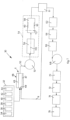
fig. 1 is a schematic representation of a plant to make a film according to the present invention; -
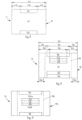
fig. 2 is a schematic section of a film in a draw-plate of the plant as in the state of the art; -
fig. 3 is a schematic section of a film in a draw-plate of a plant used in the present invention; -
fig. 4 is a schematic section of a variant of a film in a draw-plate used in the present invention: -
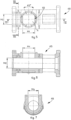
fig. 5 is a front view of a part of the plant infig. 1 ; -
fig. 6 is a section from VI to VI infig. 5 ; -
fig. 7 is a section from VII to VII infig. 5 . - With reference to the attached drawings, a
plant 30 is used to make afinal film 10 formed by sevenlayers - The
final film 10 is used preferentially, even if not exclusively, to make welded/hermetically closed containers by means of thermo-welding, or labels, as indicated above. - In particular there is the following sequence and disposition, so-called asymmetrical, for the layers of the
final film 10, as shown infig. 3 : - a filling or core layer, 12 with a polypropylene homopolymer base. The filling
layer 12 constitutes the core of thefinal film 10 and substantially governs its mechanical properties and rigidity, as well as the heat stability; - a
barrier layer 14, with an ethylene vinyl alcohol base, for the barrier against oxygen of thefinal film 10; - a first
external layer 16 and a secondexternal layer 18, or layers of skin, based on polypropylene copolymer, terpolymer and/or homopolymer and additives, for example sliding not migrating, even if other type of additives can be used. Theexternal layer 16 is the one that normally faces toward the inside of the container, that is toward the (food) product contained. Theexternal layer 16, in particular, has thermo-weldability characteristics and is suitable to close the packing hermetically. Theexternal layer 18 is normally the layer located on the outside of the packing, which can be coupled with paper, tin foil or other appropriate material, or it can be directly printed, for example with ink or similar. It is clear that, alternatively, the layer facing toward the inside can belayer 18, and the layer facing toward the outside can belayer 16; -
layer 20, called "interlayer", with a polypropylene copolymer, terpolymer and/or homopolymer base, which in this case is adjacent to the firstexternal layer 16, toward the inside of thefinal film 10; - two
adhesive layers core layer 12 and thebarrier layer 14 to each other, which are disposed adjacent, on one side and the other, to thebarrier layer 14. Theadhesive layer 22 couples thebarrier layer 14 directly to the secondexternal layer 18, while theadhesive layer 24 couples thebarrier layer 14 directly to thecore layer 12. A suitable adhesive could be a polyolefin modified with maleic anhydride. - The
plant 30 is of the flat head co-extrusion type with sequential stretching and comprises: - a
dosage unit 32, having at least a plurality oftanks layers - a flat
head extrusion unit 46, connected downstream of thedosage unit 32, to produce a product or co-extrudedintermediate film 15 formed by saidlayers extrusion unit 46 is configured to make the asymmetrical disposition of thefinal film 10 as described above. Theextrusion unit 46 is provided with amain extruder 47, for the extrusion of thecore layer 12, and with secondary co-extruders, indicated as a whole, for convenience of representation, by thereference number 45, for the co-extrusion of the remaininglayers main extruder 47 has a feeder body 48 (figs 5, 6 and 7 ) with afeed mouth 49 in which the polypropylene homopolymer is fed for the extrusion of thecore layer 12; - a
cooling roll 52 or chill roll, onto which theintermediate film 15 co-extruded at exit from theextrusion unit 46 is cast, as indicated by thearrow 50; - a stretching
unit 54 to carry out the sequential stretching of the co-extrudedintermediate film 15 and which comprises afirst stretching device 56, to stretch the co-extrudedintermediate film 15 in a longitudinal direction, that is, parallel to the direction of advance, or machine direction (arrow MD) and asecond stretching device 58, to stretch transversely to the machine direction (arrow TD), by means of lateral grippers 60 (shown only schematically infig. 1 ), the co-extrudedintermediate film 15; - a
trimming unit 61, able to cut lateral strips (selvages) of the co-extrudedintermediate film 15, to eliminate the excess material at the sides, which is recycled to thefeeder mouth 49 of themain extruder 46, as indicated by the arrow R (re-circulation line); - a station to control the
thickness 62; - a
flame treatment unit 64; - a
crown treatment unit 66, or plasma treatment or both. These known treatments, like the flame treatment, have the function of modifying the surface roughness and/or of oxidizing the external surface,layer 18, of the film in order to render it more receptive with respect to the elements used to confer on the externally visible part of the packing the desired aesthetic configuration; - a winding
roll 68 to wind the film; - a
quality control station 70; - an ageing
station 72; - a slitting
station 74 to cut the mother spools produced into the formats required by the market/clients; - a
packing unit 76. - In particular, the co-extrusion of the ethylene vinyl alcohol for the
barrier layer 14 is achieved by feeding the raw material at a temperature comprised between 15°C and 120°C. There is then an extrusion zone (fusion, filter and adapter) between 180°C and 260°C. - It must be noted that, due to the different chemical-physical characteristics, among which the melting temperature in particular, the feed of ethylene vinyl alcohol is distinct from that of the other materials, in particular from the polypropylene homopolymer extruded by the
main extruder 47. - As has been said, the
extrusion unit 46 has an asymmetric configuration, directly correlated with the asymmetric geometry of thefinal film 10 which is to be obtained. - This configuration allows a greater versatility and flexibility in production, allowing to pass from making a film of the traditional type, of the type with 3 or 5 layers as in the state of the art, to the film according to the present invention, without modifications to the plant itself.
- The co-extruded
intermediate film 15 comes out of theextrusion unit 46 which, once cast onto thecooling roll 52, is subjected to sequential stretching, is trimmed, treated and refined by means of slitting so as to make thefinal film 10 final, which is then packed. - The width of the co-extruded
intermediate film 15 exiting from the extrusion head of theextrusion unit 46, in particular the width of the extrusion head used, determines the so-called width of the productive draw-plate 11 of theplant 30, as one would see looking in the direction indicated by the arrow G infig. 1 and as schematically shown also in section infig. 3 . -
Fig. 2 illustrates, on the other hand, a schematic section of a productive draw-plate F for a film P known in the state of the art, consisting of a filling or core layer,S 1 of polypropylene homopolymer and of two external layers S2 and S3 of polypropylene copolymer, terpolymer and/or homopolymer. - In this case the width of the state-of-the-art draw-plate F can be identified as the distance indicated by L1, between the ends of the co-extruded film P exiting from the extruder, while the distance L2 indicates the width of the layers S2 and S3 and, finally, the segments L3 indicate the distance of said layers S2 and S3 from the ends of the film P.
- With regard to the present invention, the width of the draw-
plate 11, univocally determined by the width of the extrusion head, is represented by the distance D1 between the ends of the co-extrudedintermediate film 15 exiting from theextrusion unit 46. The width of the extrusion head substantially coincides with the value of thedistance D 1. - The distance D2 represents the width of each of the
layers intermediate film 15. - Finally, the distance D4 represents the width of each of the
layers barrier layer 14 from the corresponding end, left or right, of theintermediate film 15, before the selvages are cut (fig. 3 ). - The segment D6 consists of material that is generated in excess at the sides of the co-extruded
intermediate film 15 to define a gripping zone, used by thegrippers 60 for the transverse stretching. The value D6 is normally constant for any thickness of the film and for any width of the draw-plate, usually equal to 25 mm for the present invention. - As we said, to obtain the
final film 10 it is necessary to have the trimming operation to eliminate the selvages at the sides (usually a segment with a width of about 7 - 8 mm), which entails the production of scales of cut off lateral material which are normally re-circulated to themain extruder 46. - In the recirculation material only polypropylene homopolymer must be present, and not ethylene vinyl alcohol too, since the presence of ethylene vinyl alcohol, which is a polymer incompatible with polypropylene, would entail the presence of serious aesthetic defects.
- Therefore, to ensure that the trimming operation does not also cut strips of material containing ethylene vinyl alcohol, according to the present invention the
barrier layer 14 must have a distance D5 from the ends of the co-extrudedintermediate film 15, before the selvages are cut, such as to prevent even the partial cutting of thebarrier layer 14 itself. The distance D5 therefore constitutes a safety measure to prevent the recycling of ethylene vinyl alcohol. Taking into account the space necessary for gripping, segment D6, it is necessary to provide a segment where the cut may be made safely. Keeping this in mind, according to the present invention, the length of the segment D5 is greater than or equal to 50 mm, advantageously comprised between about 50 mm and 120 mm, preferably between 55 and 100 mm, more preferably between 60 and 80 mm. - The following Table 1 shows examples of values in millimeters for the values of L1, L2 and L3 in the state of the art, and also for values of D1, D2, D3, D4, D5 and D6 of the present invention.
Table 1 D1 D2 D3 D4 D5 D6 684 594 45 540 72 25 L1 L2 L3 630 540 45 - As we can see, the distance of the
barrier layer 14 from the ends of the co-extrudedintermediate film 15 has been increased, with respect to the same distance L3 of the innermost layer S3 in the state of the art. - Furthermore, again in comparison with the state of the art, the width of the draw-plate D1 has been increased with respect to the analogous value of L1 and the value of the length L2, which in the state of the art related to the layers S2 and S3, corresponds, in the present invention, to the value D4 of the width of the
barrier layer 14, whereas the value D2 of the width of thelayers - Another fundamental parameter is the ratio of transverse stretching, that is, the ratio between the transverse size before and after stretching TD.
- Generally speaking, the ratios of stretching in the present invention are reduced with respect to what is known in the state of the art.
- As a correlation, the stretching temperature and the stretching times have consequently been optimized.
- Table 2 shows the ranges of values advantageously adopted for transverse stretching TD (temperature in °C, time in seconds).
Table 2 Temperature preheating rolls of 140 - 200 Temperature stretching rolls of 140 - 200 Temperature stabilizer rolls of 140 - 200 Stretching ratio 1:6 - 1:12 Stretching time 2 - 10 - For example, for a draw-plate with a width of 684 mm, the co-extruded
intermediate film 15 will have a width of 684 mm, and once it has been cast on thecooling roll 52, it cools and shrinks to a width of 640 mm. Afterward, we have the longitudinal stretching and the film shrinks to about 580 mm. Then, the co-extrudedintermediate film 15 is gripped at the sides and the transverse stretching is carried out, with a stretching ratio of 1:9. - The optimum values of stretching ratio, a compromise between the rigidity of ethylene vinyl alcohol and the necessary stretching, are advantageously obtained also by using a particular starting mixture in the copolymerization of ethylene and vinyl alcohol, to obtain ethylene vinyl alcohol.
- Normally, the higher the ethylene content, the better the processing properties are and the lower the oxygen barrier properties.
- The starting mixture is formed by a composition (percentage in moles) of ethylene comprised between about 24% and 48%, the rest being substantially vinyl alcohol. The characteristic composition according to the present invention provides the desired and optimum balance between the oxygen barrier properties and the processability and working of the copolymer.
- The stretching step is extremely important, since it determines the BOPP structure of the final film; the ratios of sequential stretching applied to the co-extruded
intermediate film 15 also influence the thickness of thevarious layers - In turn, the thicknesses of the
various layers - The following Table 3 shows the ranges of thicknesses obtainable with the present invention for said various layers, as the overall thickness of the film varies (thicknesses in micron µm). The thicknesses of the
adhesive layers - It should be noted that for each overall thickness of the
final film 10, the values of thicknesses of the various layers that make it up are provided between a minimum value and a maximum value, but it is clear that the choice of individual thicknesses is determined by production needs, so as to have in any case the desired final properties of the film, with the desired final thickness.Table 3 Tot. Layer 12Layer 14Layer 16Layer 18Layer 20Layer 2215 6-10 0.8-5 0.6-2 0.6-2 1-6 0.7-6 20 6-15 0.8-6 0.6-2 0.6-2 1-10 1-10 25 6-20 1-6.5 0.6-2 0.6-2 1.5-11 1.5-11 30 6-25 1-7 0.6-2.5 0.6-2.5 2-13 2-13 35 6-30 1-8 0.6-3 0.6-3 2-14 2-14 40 6-35 1-10 0.6-3.5 0.6-3.5 2-15 2-15 50 6-40 1-12 0.6-4 0.6-4 2-17 2-17 60 6-50 1-14 0.6-4.5 0.6-4.5 2-18 2-18 - The following Table 4 shows the oxygen barrier values, expressed in cm3/m2 d at 23°C and at 0% relative humidity, method ASTM D 3985-81, as the thickness (in micron µm) of the
barrier layer 14 varies. The lower the permeability to oxygen, the greater the barrier effect is. - It is clear that these values are examples, which indicate the effectiveness of the present invention as an oxygen barrier, and that these values depend not only on the thickness but also on the composition of the starting mixture for the copolymerization of the ethylene vinyl alcohol.
Table 4 Thickness Permeability O2 3 8 5 6 7 5 - By increasing the thickness of the
barrier layer 14, the oxygen barrier properties increase, but also the overall cost of the final film. - According to the present invention, the
barrier layer 14 preferably has a thickness of at least 3 micron (µm), so as to have a good compromise between optimum oxygen barrier properties and cost of the film. - To have sufficient adhesion properties, using the adhesive with the polyolefin base modified with maleic anhydride, the thickness of each of the
adhesive layers - The thicknesses depend on the type of adhesive used, and it is not excluded that lower optimum thicknesses may be achieved with other adhesives.
- For thermo-weldability of the final film, the thickness of each of the
external layers - A preferred
final film 10 has an overall thickness of 20 micron (µm) and provides thecore layer 12 of 6 micron (µm), thebarrier layer 14 of 4 micron (µm),layer 16 andlayer 18 of 1 micron (µm) each,layer 20 of 2 (µm), and theadhesive layers - As we said, the trimming operation entails the recycling of the cut material, the percentage in weight of which with respect to the core is much higher than in the state of the art. For a film with 6 or 7 layers, therefore, we have a high percentage weight of re-circled scales, normally even higher than the percentage in weight or quantity that is dosed by the
dosing unit 32. - In the state of the art, the feed mouth for standard production (lines of 4m, 6.5m and 8m) has a diameter that can vary from 200 mm to 250 mm, therefore with a section from about 31000 mm2 to about 50000 mm2.
- For example, for a draw-plate 630 mm wide (L1) and with a width of 540 mm (L2) of the layer S2, we have a feed mouth with a circular section with a diameter of 220 mm, and therefore with a surface of about 38000 mm2.
- Normally, the flow rate of the extrusion line is constant, so that the
plant 30 can be used in a versatile manner, both to achieve films of a known type, and also for the film according to the present invention. Therefore, when the new film is produced, the percentage weight in the core of the scales deriving from the trimming increases by as much as 50 - 60% by virtue of the reduction in thickness of the filling layer orcore 12. In the state of the art, instead, in order to achieve the traditional film shown infig. 2 , the scales make up at most 20% of the material that is extruded in the main extruder. The possibility of versatility and flexibility of theplant 30, which allows to pass from traditional production to that according to the present invention, is facilitated by the asymmetric configuration of thefinal film 10 which is produced, as described above. - For one reason and the other, the usable surface A (
fig. 5 ) of the standard type feed mouth has proved to be insufficient for the passage of the main feed and the large quantity of re-circled material as described above. - It has therefore been necessary to modify and oversize the
feed mouth 49 of themain extruder 47, varying and increasing the section or usable surface A for the passage of polypropylene, with respect to the state of the art. - Therefore, the value of surface A will be directly correlated to the quantity of re-circled material.
- To this purpose, the sizes of the feed mouth must be such as to allow a greater feed by a multiplication factor from 1.5 to 3.0 with respect to that of standard productions.
- Consequently, the usable surface A is also made supersized by said multiplication factor of 1.5 to 3.0.
- Preferably, the multiplication factor with respect to standard production is equal to 2.
- As can be seen in
figs. 5, 6 and 7 , the section or usable surface A of thefeed mouth 49 can be substantially rectangular, with beveled angles, with a length (M1 and M2) of the two sides of the rectangle respectively of 330 mm and 280 mm. Obviously, the extrusion screw must necessarily have a larger section, compatible with the increase in the re-circled material. In this way, thanks to this surface A of thefeed mouth 49, it is possible to prevent blockages of the feed due to excess feed. - Apart from the asymmetric configuration of the
final film 10, as described above, alternatively there can also be a symmetrical disposition, so as to achieve afinal film 110 as infig. 4 . In this case, anintermediate film 115 is produced, and the disposition and material of thelayers intermediate film 15 and thefinal film 10. Instead, thebarrier layer 14, made of the same material as in thefinal film 10, is substantially at the center of thefilm 110, in a symmetrical position, with theadhesive layers core layer 12 which therefore makes up two layers, 112a upper and 112b lower. In this case therefore, theadhesive layers barrier layer 14 of ethylene vinyl alcohol directly to the polypropylene homopolymer of thelayers 112a, 112b. - It is clear that modifications and/or additions of parts and/or steps may be made to the method and flat head extrusion unit (46) to make the film as described heretofore, without departing from the field and scope of the present invention.
Claims (10)
- Method to make a film with an axially bi-orientated polypropylene (BOPP) base and suitable to make packages and labels having at least a partial barrier effect against oxygen and formed by a plurality of layers having a polypropylene base (12, 112a, 112b; 16; 18; 20, 22, 24), wherein said layers comprise at least a core layer (12) with a polypropylene homopolymer base, a first (16) and a second (18) external layers based on polypropylene copolymer, terpolymer and/or homopolymer, the film further comprising a barrier layer (14), positioned intermediate said core layer (12) and one of said external layers (16, 18) and having an ethylene vinyl alcohol (EVOH) base, at least an adhesive layer (22, 24) to couple, at least on one side, the barrier layer (14) with a respective adjoining layer, and a layer (20) with a polypropylene copolymer, terpolymer and/or homopolymer base, provided between the core layer (12) and the first external layer (16), the method comprising the following steps,- a first co-extrusion step, by means of a flat head extrusion unit (46), to make a co-extruded intermediate product (15, 115), in the form of a film, formed by said layers (12, 112a, 112b; 14, 16; 18; 20, 22, 24) and by said barrier layer (14),- a second step of sequential stretching, respectively in the machine direction (MD) and in a direction transverse to the machine (TD), of the intermediate product (15, 115), so as to determine the desired axially bi-orientated structure (BOPP) and define the final thickness of each of the layers (12, 112a, 112b; 16; 18; 20);- a third trimming step, along the longitudinal direction, by means of which the edges of the intermediate product (15, 115) in excess of the desired final width are cut, so as to define the final film;characterized in that the trimming step of the edges does not affect the barrier layer (14), as there is a safety distance (D5) between the lateral ends of said barrier layer (14) and the lateral ends of said intermediate product (15, 115).
- Method as in claim 1, characterized in that, having defined the stretching ratio as the ratio between the transverse dimension of the intermediate product (15, 115) before and after a stretching operation, the stretching ratio of the second stretching operation in a direction transverse to the machine is comprised between about 1:6 and about 1:12.
- Method as in claim 1 and 2, characterized in that the stretching temperature of said second stretching operation is comprised between about 140°C and 200°C and the stretching time of said second stretching operation is comprised between about 2 and 10 seconds.
- Method as in claim 1, characterized in that as the quantity of material which is re-circulated after the trimming of the edges is directly correlated to the distance (D5) of the barrier layer (14) from the end of the intermediate product (15, 115), the usable surface (A) of the feed mouth (49) of the main extruder (48) of the extrusion unit (46) is oversized by a factor that is directly correlated to the quantity of recycled material.
- Film with an axially bi-orientated polypropylene (BOPP) base obtainable by the method according to claim 1, and suitable to make packing, flexible packages, laminated products and labels, having at least a partial oxygen barrier effect, the film being formed by a plurality of layers having a polypropylene base (12, 112a, 112b; 16; 18; 20), characterized in that said layers comprise at least a core layer (12) with a polypropylene homopolymer base, a first (16) and a second (18) external layers based on polypropylene copolymer, terpolymer and/or homopolymer, the film further comprising a barrier layer (14), positioned intermediate said core layer (12) and one of said external layers (16, 18) and having an ethylene vinyl alcohol (EVOH) base, at least an adhesive layer (22, 24) to couple, at least on one side, the barrier layer (14) with a respective adjoining layer, and a layer (20) with a polypropylene copolymer, terpolymer and/or homopolymer base, provided between the core layer (12) and the first external layer (16).
- Film as in claim 5, characterized in that the barrier layer (14) has a width (D4) which is less than that (D2) of the external layers (16, 18).
- Film as in claim 5 or 6, characterized in that the ethylene vinyl alcohol of the barrier layer (14) is obtained by means of copolymerization of ethylene and vinyl alcohol, in which the ethylene is present to a percentage in weight comprised between 24% and 48% in moles.
- Film as in any claim from 5 to 7, characterized in that the thickness of the barrier layer (14) is comprised between about 0.8 and 14 micron (µm), advantageously between about 1 and 7 micron (µm), even more advantageously between about 3 and 5 micron (µm).
- Film as in any claim from 5 to 8, characterized in that it comprises a further layer of metallization.
- Film as in claim 5, characterized in that it comprises one or other of TiO2, or CaCO3, or a mix of them, incorporated in the filling layer (12).
Applications Claiming Priority (1)
| Application Number | Priority Date | Filing Date | Title |
|---|---|---|---|
| IT000084A ITUD20080084A1 (en) | 2008-04-17 | 2008-04-17 | FILM AND PROCEDURE AND PLANT TO REALIZE THIS FILM |
Publications (2)
| Publication Number | Publication Date |
|---|---|
| EP2113378A1 EP2113378A1 (en) | 2009-11-04 |
| EP2113378B1 true EP2113378B1 (en) | 2024-11-20 |
Family
ID=40297375
Family Applications (1)
| Application Number | Title | Priority Date | Filing Date |
|---|---|---|---|
| EP09158062.1A Active EP2113378B1 (en) | 2008-04-17 | 2009-04-16 | Film and method and plant to make said film |
Country Status (5)
| Country | Link |
|---|---|
| EP (1) | EP2113378B1 (en) |
| ES (1) | ES3001530T3 (en) |
| HU (1) | HUE069732T2 (en) |
| IT (1) | ITUD20080084A1 (en) |
| PL (1) | PL2113378T3 (en) |
Families Citing this family (5)
| Publication number | Priority date | Publication date | Assignee | Title |
|---|---|---|---|---|
| JP2010162907A (en) * | 2010-04-28 | 2010-07-29 | Kuraray Co Ltd | Method for manufacturing multilayered structure |
| DE202013103437U1 (en) * | 2013-07-10 | 2013-09-20 | Flexopack S.A. | Thin foil for waste packaging cassettes |
| EP2960054B1 (en) * | 2014-06-26 | 2022-10-12 | Taghleef Industries SPA | Surface-treated films with polypropylene base |
| GB2577105B (en) | 2018-09-14 | 2022-04-06 | Innovia Films Ltd | Barrier film |
| TW202544147A (en) * | 2024-01-24 | 2025-11-16 | 日商二村化學股份有限公司 | Polypropylene films and laminates containing recycled resin raw materials |
Family Cites Families (7)
| Publication number | Priority date | Publication date | Assignee | Title |
|---|---|---|---|---|
| US20030211298A1 (en) * | 1999-12-30 | 2003-11-13 | Migliorini Robert A. | Multi-layer oriented polypropylene films with modified core |
| DE60331710D1 (en) * | 2002-08-20 | 2010-04-29 | Curwood Inc | Packaging film, packaging and process for aseptic packaging |
| US7252878B2 (en) * | 2002-10-23 | 2007-08-07 | Toray Plastics (America), Inc. | High barrier flexible packaging structure |
| TR200300275A2 (en) * | 2003-03-05 | 2004-10-21 | Süper Fi̇lm Ambalaj Sanayi̇ Ve Ti̇caret A.Ş. | Packaging material suitable for dried and ground oily powder food packaging |
| US20070082154A1 (en) * | 2005-10-12 | 2007-04-12 | Benoit Ambroise | Multi-layer films, methods of manufacture and articles made therefrom |
| WO2007134911A1 (en) * | 2006-05-19 | 2007-11-29 | Unilever Plc | Novel wrappers |
| DE102006026306A1 (en) * | 2006-06-02 | 2007-12-06 | Wipak Walothen Gmbh | Cover composite film, method for its production and use in a packaging unit |
-
2008
- 2008-04-17 IT IT000084A patent/ITUD20080084A1/en unknown
-
2009
- 2009-04-16 EP EP09158062.1A patent/EP2113378B1/en active Active
- 2009-04-16 ES ES09158062T patent/ES3001530T3/en active Active
- 2009-04-16 HU HUE09158062A patent/HUE069732T2/en unknown
- 2009-04-16 PL PL09158062.1T patent/PL2113378T3/en unknown
Also Published As
| Publication number | Publication date |
|---|---|
| HUE069732T2 (en) | 2025-04-28 |
| EP2113378A1 (en) | 2009-11-04 |
| ES3001530T3 (en) | 2025-03-05 |
| PL2113378T3 (en) | 2025-02-24 |
| ITUD20080084A1 (en) | 2009-10-18 |
Similar Documents
| Publication | Publication Date | Title |
|---|---|---|
| US8877308B2 (en) | Easily opened multilayer laminated package | |
| RU2500540C2 (en) | Sandwich structures with circular profiles, method and device for their production | |
| JP2679823B2 (en) | Biaxially stretched multilayer barrier film and method for producing the same | |
| DE69921506T2 (en) | MULTILAYER PACKAGING AND PACKAGING CONTAINER MANUFACTURED THEREFROM, AND METHOD FOR PRODUCING THIS STRUCTURE | |
| US20170259546A1 (en) | Packaging and method of making packaging | |
| HU210360B (en) | Sheet- or ribbon-shaped, flexible packaging material | |
| CN106739356A (en) | A kind of multi-layer co-extruded shrink film and production technology | |
| EP2113378A1 (en) | Film and method and plant to make said film | |
| EP2671720A1 (en) | Oxygen-absorbing film, oxygen-absorbing laminate, oxygen -absorbing packaging material comprising oxygen-absorbing laminate, and oxygen-absorbing resin composition | |
| CN110856442A (en) | Recyclable packaging laminate with improved heat resistance when sealed | |
| EP4032702A1 (en) | Packaging body | |
| WO2016194002A1 (en) | Soft and velvet touch barrier laminate | |
| EP2117838B1 (en) | Film and method for producing said film | |
| US20160107420A1 (en) | Metallized multi-layer structure film for in-mold labels, printed in-mold labels formed from such film and methods of applying the printed labels to an article during the molding of the article | |
| US20140134370A1 (en) | Polypropylene homo-polymer based layered film and laminate thereof | |
| JP2002036462A (en) | Laminated film for large sized bag | |
| JP7217455B2 (en) | Lid material for deep drawing packaging containing biaxially oriented polybutylene terephthalate film | |
| CN103085366B (en) | A laminated packaging material | |
| JP6988190B2 (en) | Films for packaging materials, and packaging materials and packaging materials using them. | |
| CN101300177B (en) | Cigarette package provided with internal envelops made from polymer film | |
| WO2014178000A1 (en) | A laminate structure | |
| JP2022067473A (en) | Easy-openable packaging bag and manufacturing method of the same | |
| CN1092015A (en) | Uniaxially co-oriented thermoplastic film, its manufacturing method and formed bag | |
| JP2003200969A (en) | Pillow packing bag | |
| CN103042800B (en) | Method for manufacturing laminated packaging material |
Legal Events
| Date | Code | Title | Description |
|---|---|---|---|
| PUAI | Public reference made under article 153(3) epc to a published international application that has entered the european phase |
Free format text: ORIGINAL CODE: 0009012 |
|
| AK | Designated contracting states |
Kind code of ref document: A1 Designated state(s): AT BE BG CH CY CZ DE DK EE ES FI FR GB GR HR HU IE IS IT LI LT LU LV MC MK MT NL NO PL PT RO SE SI SK TR |
|
| RAP1 | Party data changed (applicant data changed or rights of an application transferred) |
Owner name: TAGHLEEF INDUSTRIES SPA CON SOCIO UNICO |
|
| 17P | Request for examination filed |
Effective date: 20100421 |
|
| 17Q | First examination report despatched |
Effective date: 20100811 |
|
| STAA | Information on the status of an ep patent application or granted ep patent |
Free format text: STATUS: EXAMINATION IS IN PROGRESS |
|
| P01 | Opt-out of the competence of the unified patent court (upc) registered |
Effective date: 20230414 |
|
| GRAP | Despatch of communication of intention to grant a patent |
Free format text: ORIGINAL CODE: EPIDOSNIGR1 |
|
| STAA | Information on the status of an ep patent application or granted ep patent |
Free format text: STATUS: GRANT OF PATENT IS INTENDED |
|
| GRAJ | Information related to disapproval of communication of intention to grant by the applicant or resumption of examination proceedings by the epo deleted |
Free format text: ORIGINAL CODE: EPIDOSDIGR1 |
|
| STAA | Information on the status of an ep patent application or granted ep patent |
Free format text: STATUS: EXAMINATION IS IN PROGRESS |
|
| GRAP | Despatch of communication of intention to grant a patent |
Free format text: ORIGINAL CODE: EPIDOSNIGR1 |
|
| STAA | Information on the status of an ep patent application or granted ep patent |
Free format text: STATUS: GRANT OF PATENT IS INTENDED |
|
| INTG | Intention to grant announced |
Effective date: 20240515 |
|
| INTC | Intention to grant announced (deleted) | ||
| INTG | Intention to grant announced |
Effective date: 20240612 |
|
| GRAS | Grant fee paid |
Free format text: ORIGINAL CODE: EPIDOSNIGR3 |
|
| GRAA | (expected) grant |
Free format text: ORIGINAL CODE: 0009210 |
|
| STAA | Information on the status of an ep patent application or granted ep patent |
Free format text: STATUS: THE PATENT HAS BEEN GRANTED |
|
| AK | Designated contracting states |
Kind code of ref document: B1 Designated state(s): AT BE BG CH CY CZ DE DK EE ES FI FR GB GR HR HU IE IS IT LI LT LU LV MC MK MT NL NO PL PT RO SE SI SK TR |
|
| REG | Reference to a national code |
Ref country code: GB Ref legal event code: FG4D |
|
| REG | Reference to a national code |
Ref country code: CH Ref legal event code: EP |
|
| REG | Reference to a national code |
Ref country code: DE Ref legal event code: R096 Ref document number: 602009065399 Country of ref document: DE |
|
| REG | Reference to a national code |
Ref country code: IE Ref legal event code: FG4D |
|
| REG | Reference to a national code |
Ref country code: LT Ref legal event code: MG9D |
|
| REG | Reference to a national code |
Ref country code: NL Ref legal event code: MP Effective date: 20241120 |
|
| PG25 | Lapsed in a contracting state [announced via postgrant information from national office to epo] |
Ref country code: IS Free format text: LAPSE BECAUSE OF FAILURE TO SUBMIT A TRANSLATION OF THE DESCRIPTION OR TO PAY THE FEE WITHIN THE PRESCRIBED TIME-LIMIT Effective date: 20250320 Ref country code: HR Free format text: LAPSE BECAUSE OF FAILURE TO SUBMIT A TRANSLATION OF THE DESCRIPTION OR TO PAY THE FEE WITHIN THE PRESCRIBED TIME-LIMIT Effective date: 20241120 Ref country code: PT Free format text: LAPSE BECAUSE OF FAILURE TO SUBMIT A TRANSLATION OF THE DESCRIPTION OR TO PAY THE FEE WITHIN THE PRESCRIBED TIME-LIMIT Effective date: 20250320 |
|
| PG25 | Lapsed in a contracting state [announced via postgrant information from national office to epo] |
Ref country code: NL Free format text: LAPSE BECAUSE OF FAILURE TO SUBMIT A TRANSLATION OF THE DESCRIPTION OR TO PAY THE FEE WITHIN THE PRESCRIBED TIME-LIMIT Effective date: 20241120 Ref country code: FI Free format text: LAPSE BECAUSE OF FAILURE TO SUBMIT A TRANSLATION OF THE DESCRIPTION OR TO PAY THE FEE WITHIN THE PRESCRIBED TIME-LIMIT Effective date: 20241120 |
|
| PG25 | Lapsed in a contracting state [announced via postgrant information from national office to epo] |
Ref country code: NO Free format text: LAPSE BECAUSE OF FAILURE TO SUBMIT A TRANSLATION OF THE DESCRIPTION OR TO PAY THE FEE WITHIN THE PRESCRIBED TIME-LIMIT Effective date: 20250220 |
|
| PG25 | Lapsed in a contracting state [announced via postgrant information from national office to epo] |
Ref country code: GR Free format text: LAPSE BECAUSE OF FAILURE TO SUBMIT A TRANSLATION OF THE DESCRIPTION OR TO PAY THE FEE WITHIN THE PRESCRIBED TIME-LIMIT Effective date: 20250221 Ref country code: LV Free format text: LAPSE BECAUSE OF FAILURE TO SUBMIT A TRANSLATION OF THE DESCRIPTION OR TO PAY THE FEE WITHIN THE PRESCRIBED TIME-LIMIT Effective date: 20241120 |
|
| REG | Reference to a national code |
Ref country code: HU Ref legal event code: AG4A Ref document number: E069732 Country of ref document: HU |
|
| PGFP | Annual fee paid to national office [announced via postgrant information from national office to epo] |
Ref country code: DE Payment date: 20250428 Year of fee payment: 17 |
|
| PG25 | Lapsed in a contracting state [announced via postgrant information from national office to epo] |
Ref country code: DK Free format text: LAPSE BECAUSE OF FAILURE TO SUBMIT A TRANSLATION OF THE DESCRIPTION OR TO PAY THE FEE WITHIN THE PRESCRIBED TIME-LIMIT Effective date: 20241120 |
|
| PGFP | Annual fee paid to national office [announced via postgrant information from national office to epo] |
Ref country code: ES Payment date: 20250516 Year of fee payment: 17 |
|
| PGFP | Annual fee paid to national office [announced via postgrant information from national office to epo] |
Ref country code: HU Payment date: 20250407 Year of fee payment: 17 |
|
| PGFP | Annual fee paid to national office [announced via postgrant information from national office to epo] |
Ref country code: BE Payment date: 20250424 Year of fee payment: 17 Ref country code: IT Payment date: 20250416 Year of fee payment: 17 |
|
| PG25 | Lapsed in a contracting state [announced via postgrant information from national office to epo] |
Ref country code: EE Free format text: LAPSE BECAUSE OF FAILURE TO SUBMIT A TRANSLATION OF THE DESCRIPTION OR TO PAY THE FEE WITHIN THE PRESCRIBED TIME-LIMIT Effective date: 20241120 |
|
| PGFP | Annual fee paid to national office [announced via postgrant information from national office to epo] |
Ref country code: FR Payment date: 20250424 Year of fee payment: 17 |
|
| PGFP | Annual fee paid to national office [announced via postgrant information from national office to epo] |
Ref country code: BG Payment date: 20250424 Year of fee payment: 17 |
|
| PG25 | Lapsed in a contracting state [announced via postgrant information from national office to epo] |
Ref country code: RO Free format text: LAPSE BECAUSE OF FAILURE TO SUBMIT A TRANSLATION OF THE DESCRIPTION OR TO PAY THE FEE WITHIN THE PRESCRIBED TIME-LIMIT Effective date: 20241120 |
|
| PGFP | Annual fee paid to national office [announced via postgrant information from national office to epo] |
Ref country code: AT Payment date: 20250422 Year of fee payment: 17 |
|
| PG25 | Lapsed in a contracting state [announced via postgrant information from national office to epo] |
Ref country code: SK Free format text: LAPSE BECAUSE OF FAILURE TO SUBMIT A TRANSLATION OF THE DESCRIPTION OR TO PAY THE FEE WITHIN THE PRESCRIBED TIME-LIMIT Effective date: 20241120 |
|
| PG25 | Lapsed in a contracting state [announced via postgrant information from national office to epo] |
Ref country code: CZ Free format text: LAPSE BECAUSE OF FAILURE TO SUBMIT A TRANSLATION OF THE DESCRIPTION OR TO PAY THE FEE WITHIN THE PRESCRIBED TIME-LIMIT Effective date: 20241120 |
|
| REG | Reference to a national code |
Ref country code: DE Ref legal event code: R097 Ref document number: 602009065399 Country of ref document: DE |
|
| PG25 | Lapsed in a contracting state [announced via postgrant information from national office to epo] |
Ref country code: SE Free format text: LAPSE BECAUSE OF FAILURE TO SUBMIT A TRANSLATION OF THE DESCRIPTION OR TO PAY THE FEE WITHIN THE PRESCRIBED TIME-LIMIT Effective date: 20241120 |
|
| PLBE | No opposition filed within time limit |
Free format text: ORIGINAL CODE: 0009261 |
|
| STAA | Information on the status of an ep patent application or granted ep patent |
Free format text: STATUS: NO OPPOSITION FILED WITHIN TIME LIMIT |
|
| 26N | No opposition filed |
Effective date: 20250821 |
|
| REG | Reference to a national code |
Ref country code: CH Ref legal event code: H13 Free format text: ST27 STATUS EVENT CODE: U-0-0-H10-H13 (AS PROVIDED BY THE NATIONAL OFFICE) Effective date: 20251125 |
|
| PG25 | Lapsed in a contracting state [announced via postgrant information from national office to epo] |
Ref country code: LU Free format text: LAPSE BECAUSE OF NON-PAYMENT OF DUE FEES Effective date: 20250416 |
|
| PG25 | Lapsed in a contracting state [announced via postgrant information from national office to epo] |
Ref country code: MC Free format text: LAPSE BECAUSE OF FAILURE TO SUBMIT A TRANSLATION OF THE DESCRIPTION OR TO PAY THE FEE WITHIN THE PRESCRIBED TIME-LIMIT Effective date: 20241120 |
|
| PG25 | Lapsed in a contracting state [announced via postgrant information from national office to epo] |
Ref country code: CH Free format text: LAPSE BECAUSE OF NON-PAYMENT OF DUE FEES Effective date: 20250430 |
|
| REG | Reference to a national code |
Ref country code: AT Ref legal event code: UEP Ref document number: 1743235 Country of ref document: AT Kind code of ref document: T Effective date: 20241120 |
|
| PGFP | Annual fee paid to national office [announced via postgrant information from national office to epo] |
Ref country code: GB Payment date: 20260309 Year of fee payment: 18 |
|
| PG25 | Lapsed in a contracting state [announced via postgrant information from national office to epo] |
Ref country code: IE Free format text: LAPSE BECAUSE OF NON-PAYMENT OF DUE FEES Effective date: 20250416 |
|
| PGFP | Annual fee paid to national office [announced via postgrant information from national office to epo] |
Ref country code: TR Payment date: 20260330 Year of fee payment: 18 |
|
| PGFP | Annual fee paid to national office [announced via postgrant information from national office to epo] |
Ref country code: PL Payment date: 20260320 Year of fee payment: 18 |