EP2107834A1 - Apparatus and method for providing an efficient handover in a telecommunications system - Google Patents
Apparatus and method for providing an efficient handover in a telecommunications system Download PDFInfo
- Publication number
- EP2107834A1 EP2107834A1 EP08006863A EP08006863A EP2107834A1 EP 2107834 A1 EP2107834 A1 EP 2107834A1 EP 08006863 A EP08006863 A EP 08006863A EP 08006863 A EP08006863 A EP 08006863A EP 2107834 A1 EP2107834 A1 EP 2107834A1
- Authority
- EP
- European Patent Office
- Prior art keywords
- access node
- message
- handover
- access
- user equipment
- Prior art date
- Legal status (The legal status is an assumption and is not a legal conclusion. Google has not performed a legal analysis and makes no representation as to the accuracy of the status listed.)
- Granted
Links
Images

Classifications
-
- H—ELECTRICITY
- H04—ELECTRIC COMMUNICATION TECHNIQUE
- H04W—WIRELESS COMMUNICATION NETWORKS
- H04W36/00—Hand-off or reselection arrangements
- H04W36/0005—Control or signalling for completing the hand-off
- H04W36/0055—Transmission or use of information for re-establishing the radio link
-
- H—ELECTRICITY
- H04—ELECTRIC COMMUNICATION TECHNIQUE
- H04W—WIRELESS COMMUNICATION NETWORKS
- H04W28/00—Network traffic management; Network resource management
- H04W28/16—Central resource management; Negotiation of resources or communication parameters, e.g. negotiating bandwidth or QoS [Quality of Service]
- H04W28/26—Resource reservation
Definitions
- the invention is used in telecommunications systems ,to ensure that handovers are executed in an efficient manner.
- UEs User Equipments
- a UE can move or roam within the systems within one cell or from one cell to another and/or even change from one system to another.
- a UE can be at least one of the following: a mobile telephone (MT), a portable computer, a laptop, a cellular telephone, a portable internet device, a mobile station (MS).
- MT mobile telephone
- MS mobile station
- a UE or a MS is connected to a network such as a PSTN (Public Switched Telephone Network) or the internet via a wireless connection to an access node (AN).
- the AN is part of a radio access network which provides the required bi-directional connectivity.
- An AN can preferably be one of the following: a base station (BS), a radio network controller (RNC), a base station controller (BSC), a nodeB.
- a UE When a UE moves or roams within the telecommunications system due to the limited area of coverage of an AN, it may become necessary to switch from one AN to another AN at certain points in time.
- the switching or changing of an AN is termed as a handover or handoff.
- a handover can be requested by a UE when for example a power level or a signal to noise ratio of a received signal or message from the currently attached AN falls below a predefined threshold.
- a handover can also be instigated by an AN if it senses that the UE is approaching the edge of its are of coverage or cell, similarly by monitoring a power level or a signal to noise ratio of a received signal or message from the UE. In this case it notifies the UE that it needs to request a handover.
- a UE has the possibility to attach itself to one of several possible target ANs after it disconnects from its serving AN.
- the radio access network RAN
- the radio access network will prepare the possible target ANs for an eventual attachment of the UE.
- This preparation is initiated by the serving AN after having receiving a handover request and consists of installing the UE specific context information and reserving resources for the UE at the different target ANs.
- a UE specific data path may be established between each target AN and the anchor data path function.
- the UE selects a target AN and indicates the selected AN to the current or serving AN in a handover indication (MOB_HO-IND) message.
- the serving AN uses this indication transmitted by the UE as a trigger to inform the selected target AN of the arrival of the UE by transmitting a handover confirm (HO_Confirm) message.
- the serving AN may initiate the release of the resources that were reserved at the ANs that were not selected by the UE, by transmitting a HO_Confirm message containing a specific indication to cancel and release any resources reserved for the UE.
- the UE does not attach itself to the AN indicated in the MOB_HO-IND message but to another AN. Due to the fact that the AN in question will have released and reserved resources, the AN will have no context information about the UE that has just attached itself to it, even though prior to the release of the resources the AN was aware of the UE.
- a UE can re-join the RAN by attaching itself to an AN that was not prepared for the arrival of an UE, that is a different AN from the target ANs indicated hereinabove.
- the serving AN is not notified when the UE completes the re-joining process at the new AN, and therefore will not initiate the release of resources at the different target ANs, as mentioned herein above.
- each AN having timers.
- a target AN reserves resources for a UE, it will also start a timer or watchdog timer that monitors the reserved resources. If the timer expires after a specified time period and the UE has not attached itself to the target AN, the target AN then releases the resources including the pre-established data path.
- the timers are not synchronised they expire at different time instances and so there will always be a large time period wherein resources are reserved and are not released back to the network.
- Said independent method claim 1 provides for as efficient handover of at least one user equipment from a first access node to at least one further access node of a plurality of access nodes in a telecommunications system, said method comprising the steps of: said first access node, upon reception of a handover request from said user equipment, preparing a group of further access nodes of said plurality as possible target access nodes; upon attachment of said user equipment to said one further access node, said one further access node transmitting a message to said first access node, and upon reception of said message by said first access node, said first access node transmitting a further message to said possible target access nodes.
- the invention has the following advantages:
- Fig. 1 depicts a telecommunications system 1000 wherein the invention is implemented.
- Telecommunications system 1000 permits a user equipment (UE) or a mobile station (MS) 10 to connect to a core network such as a PSTN (Public Switched Telephone Network) or the internet via a wireless connection to an access node (AN) 50, 100, 200.
- the AN is part of a radio access network (RAN) which provides the required bi-directional connectivity to and from the core network and covers an area defined as a "cell", in which a UE 10 can transmit and receive messages.
- RAN radio access network
- An AN 50, 100, 200 can preferably be one of the following: a base station (BS), a radio network controller (RNC), a base station controller (BSC), a nodeB.
- BS base station
- RNC radio network controller
- BSC base station controller
- a UE 10 located within the cell of AN 50 communicates with AN 50 via a wireless connection.
- the power level of received signals from AN 50, which UE 10 monitors will fall below a predefined threshold.
- UE 10 will request a handover from AN 50 to another AN.
- the serving AN 50 prepares a group of further ANs 100 as possible target ANs to which UE 10 can attach itself. This preparation is initiated by the serving AN 50 after having receiving a handover request and consists of installing the UE 10 specific context information, path information and reserving resources for UE 10 at the different target ANs 100.
- a UE 10 specific data path may be established between each target AN 100 and the anchor data path function to AN 50.
- the new AN 100, 200 transmits a message to the first AN 50 indicating that the handover is complete (HO_Complete message).
- the first AN 50 Upon reception of this message by the first AN 50, the first AN 50 in turn transmits a further message to the possible target ANs 100.
- This further message (HO_Confirm message) instructs the possible target ANs 100 to release any reserved resources reserved for UE 10.
- UE 10 attaches itself to an AN 100 that is part of the group of potential target ANs 100. In another embodiment of the invention, UE 10 attaches itself to an AN 200 that belongs to a further group of access nodes of the plurality of ANs of system 1000, this further group being different from the group of possible target ANs 100.
- the transmitted message indicating that the handover is complete (HO_Complete message) is mandatory. Until reception of this message the HO_Confirm message is not transmitted as the handover is not yet complete and the reserved resources need to be remain reserved.
- Fig. 2 depicts a flow chart showing the steps of the inventive method.
- a first (or serving) AN 50 upon reception of a handover request from a UE 10 which is attached to it, prepares a group of further ANs 100 of a plurality of ANs of a telecommunications system 1000, as possible target ANs.
- the one further AN 100, 200 upon attachment of the UE 10 to one further AN 100, 200, transmits a message to the first AN 50, and in step 3 upon reception of this message the first AN 50 in turn transmits a further message to the possible target ANs.
- the message sent to the first AN 50 indicates that the handover is complete (HO_Complete message).
- the further message transmitted to the possible target ANs 100 is a Ho_Confirm message, which instructs the possible target ANs 100 to release any reserved resources reserved for UE 10.
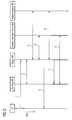
- Fig. 3 is a time diagram depicting a typical handover according to the WiMAX specification, wherein the invention is applicable.
- a UE transmits a ranging request (RNG-REQ) message to a target AN.
- the target AN sets up a two-way path to carry data over a R4 interface with the serving AN of the UE (R4-Context Retrieval Procedure of UE).
- the target AN will further set up a two-way path to carry data over a R4 interface with an authenticator AN, in order to retrieve authentication data (Authentication (AK) Context).
- AK Authentication
- the target AN will further set up a two-way path to carry data over a R4 interface with an anchor AN, in order to register the data path (R4-Data Path Registration).
- the target AN transmits a ranging response (RNG-RSP) to the UE in reply to the ranging request transmitted in 1.
- RNG-RSP ranging response
- the target AN will further set up a two-way path to carry data over a R4 interface with an authenticator AN, in order to execute a Cipher based Message Authentication code (CMAC) key count update procedure.
- CMAC Cipher based Message Authentication code
- the target AN transmits a message to the serving AN, indicating that the UE has now attached itself to the target AN.
- the message transmitted is a Handover Complete (HO_Complete) message.
- the serving AN will set up a two-way path to carry data over a R4 interface with the anchor AN in order to de-register the data path.
- AN 50, 100, 200 having means arranged to execute the steps of the method of the independent claim.
- AN 50, 100, 200 is at least one of the following: a base station, an access node, a nodeB, a radio network controller, a base station controller.
- WiMAX NWG stage 2 & 3 WiMAX End-to-End Network System Architecture
- IEEE 802.16e "Physical and Medium Access Control Layers for Combined Fixed and Mobile Operation in Licensed Bands", March 2006 .
Landscapes
- Engineering & Computer Science (AREA)
- Computer Networks & Wireless Communication (AREA)
- Signal Processing (AREA)
- Mobile Radio Communication Systems (AREA)
Abstract
Description
- The invention is used in telecommunications systems ,to ensure that handovers are executed in an efficient manner.
- In today's telecommunications systems, especially in cellular or mobile telecommunications systems UEs (User Equipments) can move or roam within the systems within one cell or from one cell to another and/or even change from one system to another. A UE can be at least one of the following: a mobile telephone (MT), a portable computer, a laptop, a cellular telephone, a portable internet device, a mobile station (MS).
- In telecommunications systems a UE or a MS is connected to a network such as a PSTN (Public Switched Telephone Network) or the internet via a wireless connection to an access node (AN). The AN is part of a radio access network which provides the required bi-directional connectivity. An AN can preferably be one of the following: a base station (BS), a radio network controller (RNC), a base station controller (BSC), a nodeB.
- When a UE moves or roams within the telecommunications system due to the limited area of coverage of an AN, it may become necessary to switch from one AN to another AN at certain points in time. The switching or changing of an AN is termed as a handover or handoff.
- A handover can be requested by a UE when for example a power level or a signal to noise ratio of a received signal or message from the currently attached AN falls below a predefined threshold. A handover can also be instigated by an AN if it senses that the UE is approaching the edge of its are of coverage or cell, similarly by monitoring a power level or a signal to noise ratio of a received signal or message from the UE. In this case it notifies the UE that it needs to request a handover.
- Once a handover request is generated, a UE has the possibility to attach itself to one of several possible target ANs after it disconnects from its serving AN. At the beginning of the handover procedure, the radio access network (RAN) will prepare the possible target ANs for an eventual attachment of the UE. This preparation is initiated by the serving AN after having receiving a handover request and consists of installing the UE specific context information and reserving resources for the UE at the different target ANs. Optionally, during the preparation a UE specific data path may be established between each target AN and the anchor data path function. At the beginning of the handover execution, the UE selects a target AN and indicates the selected AN to the current or serving AN in a handover indication (MOB_HO-IND) message. The serving AN uses this indication transmitted by the UE as a trigger to inform the selected target AN of the arrival of the UE by transmitting a handover confirm (HO_Confirm) message. At the same time the serving AN may initiate the release of the resources that were reserved at the ANs that were not selected by the UE, by transmitting a HO_Confirm message containing a specific indication to cancel and release any resources reserved for the UE.
- It can occur, however, that the UE does not attach itself to the AN indicated in the MOB_HO-IND message but to another AN. Due to the fact that the AN in question will have released and reserved resources, the AN will have no context information about the UE that has just attached itself to it, even though prior to the release of the resources the AN was aware of the UE.
- This issue is resolved by handling the handover as an uncontrolled handover between the UE and the target AN. In such a case however, a prolonged handover procedure will take place reducing the handover performance and negatively affecting the services being provided by a network operator. For example, if the services provided require real-time delivery to a UE, such a suboptimal procedure will reduce the efficiency of the system as well as increase the amount of network traffic due to retransmissions of lost data.
- In addition, a UE can re-join the RAN by attaching itself to an AN that was not prepared for the arrival of an UE, that is a different AN from the target ANs indicated hereinabove. In this case the serving AN is not notified when the UE completes the re-joining process at the new AN, and therefore will not initiate the release of resources at the different target ANs, as mentioned herein above. Thus wasting valuable bandwidth and furthermore reducing the overall efficiency of the RAN.
- This issue is resolved by each AN having timers. During the handover preparation phase, when a target AN reserves resources for a UE, it will also start a timer or watchdog timer that monitors the reserved resources. If the timer expires after a specified time period and the UE has not attached itself to the target AN, the target AN then releases the resources including the pre-established data path. However, as the timers are not synchronised they expire at different time instances and so there will always be a large time period wherein resources are reserved and are not released back to the network.
- A need therefore exists for a technique that can provide for an efficient handover procedure without affecting the efficiency and without wasting resources of the network.
- With the present invention, the above mentioned issues are resolved. The technique is achieved by the teachings contained in the
independent method claim 1. - Said
independent method claim 1 provides for as efficient handover of at least one user equipment from a first access node to at least one further access node of a plurality of access nodes in a telecommunications system, said method comprising the steps of: said first access node, upon reception of a handover request from said user equipment, preparing a group of further access nodes of said plurality as possible target access nodes; upon attachment of said user equipment to said one further access node, said one further access node transmitting a message to said first access node, and upon reception of said message by said first access node, said first access node transmitting a further message to said possible target access nodes. - Further advantageous embodiments can be seen in the dependent claims.
- By transmitting said message by the one further access node to which the user equipment has attached itself to, the invention has the following advantages:
- In the case that the user equipment attaches itself to an access node that was aware of a possible handover, the handover will be performed as a controlled or predictive handover and the serving access node upon reception of the message will transmit a further message commanding the release of the reserved resources.
- In the case that the user equipment attaches itself to an access node that was not aware of a possible handover, the serving access node upon reception of the message will' be able to also begin the initiation process for the release of the reserved resources in a timely manner.
- In this way, resources are not reserved when not necessary any longer and can be released back to the network in a timely and optimised manner, thus increasing the efficiency of the overall system.
- The present invention will become more fully understood from the description given herein below and the accompanying drawings which are given by way of illustration only and thus are not limitative of the present invention, and wherein:
-
Fig. 1 shows a telecommunications system in which the invention is implemented. -
Fig. 2 depicts a flow chart showing the steps of the inventive method. -
Fig. 3 is a time diagram depicting a typical handover according to the WiMAX specification, wherein the invention is applicable. -
Fig. 1 depicts atelecommunications system 1000 wherein the invention is implemented.Telecommunications system 1000 permits a user equipment (UE) or a mobile station (MS) 10 to connect to a core network such as a PSTN (Public Switched Telephone Network) or the internet via a wireless connection to an access node (AN) 50, 100, 200. The AN is part of a radio access network (RAN) which provides the required bi-directional connectivity to and from the core network and covers an area defined as a "cell", in which aUE 10 can transmit and receive messages. For reasons of clarity these connections are not depicted, however a person skilled in the art would be aware of them. AnAN AN 50 communicates withAN 50 via a wireless connection. At some point in time, when UE 10 reaches the boundary of the cell, the power level of received signals fromAN 50, which UE 10 monitors, will fall below a predefined threshold. When this occurs, UE 10 will request a handover fromAN 50 to another AN. - Once a handover request is generated, the serving AN 50 prepares a group of
further ANs 100 as possible target ANs to which UE 10 can attach itself. This preparation is initiated by the serving AN 50 after having receiving a handover request and consists of installing the UE 10 specific context information, path information and reserving resources for UE 10 at thedifferent target ANs 100. Optionally, during the preparation a UE 10 specific data path may be established between eachtarget AN 100 and the anchor data path function toAN 50. - According to the invention, once UE 10 has attached itself to an
AN new AN first AN 50 indicating that the handover is complete (HO_Complete message). Upon reception of this message by thefirst AN 50, thefirst AN 50 in turn transmits a further message to thepossible target ANs 100. This further message (HO_Confirm message) instructs thepossible target ANs 100 to release any reserved resources reserved for UE 10. - In one embodiment of the invention, UE 10 attaches itself to an
AN 100 that is part of the group ofpotential target ANs 100. In another embodiment of the invention, UE 10 attaches itself to anAN 200 that belongs to a further group of access nodes of the plurality of ANs ofsystem 1000, this further group being different from the group ofpossible target ANs 100. - In both embodiments the transmitted message indicating that the handover is complete (HO_Complete message), is mandatory. Until reception of this message the HO_Confirm message is not transmitted as the handover is not yet complete and the reserved resources need to be remain reserved.
-
Fig. 2 depicts a flow chart showing the steps of the inventive method. - In
step 1, upon reception of a handover request from aUE 10 which is attached to it, a first (or serving) AN 50, prepares a group offurther ANs 100 of a plurality of ANs of atelecommunications system 1000, as possible target ANs. Instep 2, upon attachment of theUE 10 to one further AN 100, 200, the one further AN 100, 200 transmits a message to thefirst AN 50, and instep 3 upon reception of this message the first AN 50 in turn transmits a further message to the possible target ANs. - The message sent to the
first AN 50 indicates that the handover is complete (HO_Complete message). The further message transmitted to thepossible target ANs 100 is a Ho_Confirm message, which instructs thepossible target ANs 100 to release any reserved resources reserved forUE 10. -
Fig. 3 is a time diagram depicting a typical handover according to the WiMAX specification, wherein the invention is applicable. - In
step 1, a UE transmits a ranging request (RNG-REQ) message to a target AN. Instep 2, the target AN sets up a two-way path to carry data over a R4 interface with the serving AN of the UE (R4-Context Retrieval Procedure of UE). Instep 3, the target AN will further set up a two-way path to carry data over a R4 interface with an authenticator AN, in order to retrieve authentication data (Authentication (AK) Context). Instep 4, the target AN will further set up a two-way path to carry data over a R4 interface with an anchor AN, in order to register the data path (R4-Data Path Registration). Instep 5, the target AN transmits a ranging response (RNG-RSP) to the UE in reply to the ranging request transmitted in 1. Instep 6, the target AN will further set up a two-way path to carry data over a R4 interface with an authenticator AN, in order to execute a Cipher based Message Authentication code (CMAC) key count update procedure. In step 7, once the handover procedure is complete, the target AN transmits a message to the serving AN, indicating that the UE has now attached itself to the target AN. The message transmitted is a Handover Complete (HO_Complete) message. In step 8, the serving AN will set up a two-way path to carry data over a R4 interface with the anchor AN in order to de-register the data path. - The invention can be implemented in an
AN - Although the invention has been described in terms of preferred embodiments and refinements described herein, those skilled in the art will appreciate other embodiments and modifications which can be made without departing from the scope of the teachings of the invention. All such modifications are intended to be included within the scope of the claims appended hereto.
-
WiMAX NWG stage 2 & 3, "WiMAX End-to-End Network System Architecture", March 2007 - IEEE 802.16, "Air Interface for Fixed and Mobile Broadband wireless Access Systems", October 2004.
- IEEE 802.16e, "Physical and Medium Access Control Layers for Combined Fixed and Mobile Operation in Licensed Bands", March 2006.
Claims (7)
- Method for an efficient handover of at least one user equipment (10) from a first access node (50) to at least one further access node of a plurality of access nodes in a telecommunications system (1000), said method comprising the steps of:- said first access node (50), upon reception of a handover request from said user equipment (10), preparing a group of further access nodes of said plurality as possible target access nodes;- upon attachment of said user equipment (10) to said one further access node (100, 200), said one further access node (100, 200) transmitting a message to said first access node (50), and- upon reception of said message by said first access node (50), said first access node (50) transmitting a further message to said possible target access nodes.
- Method according to claim 1, wherein said message indicates that said handover is completed.
- Method according to claim 1, wherein said further message instructs said possible target access nodes to release reserved resources, said reserved resources having been reserved for said user equipment (10).
- Method according to any previous claim, wherein said further access node (100) is one of said possible target access nodes.
- Method according to any one of claims 1 to 3, wherein said further access node (200) belongs to a further group of access nodes of said plurality, said further group being different from said group of further access nodes.
- Apparatus (50, 100, 200) having means arranged to execute the steps of claims 1 to 5.
- Apparatus (50, 100, 200) according to claim 6, wherein said apparatus is at least one of the following: a base station, an access node, a nodeB, a radio network controller, a base station controller.
Priority Applications (2)
| Application Number | Priority Date | Filing Date | Title |
|---|---|---|---|
| EP08006863.8A EP2107834B1 (en) | 2008-04-04 | 2008-04-04 | Apparatus and method for providing an efficient handover in a telecommunications system |
| US12/418,856 US8457634B2 (en) | 2008-04-04 | 2009-04-06 | Method and apparatus for providing an efficient handover in a telecommunications system |
Applications Claiming Priority (1)
| Application Number | Priority Date | Filing Date | Title |
|---|---|---|---|
| EP08006863.8A EP2107834B1 (en) | 2008-04-04 | 2008-04-04 | Apparatus and method for providing an efficient handover in a telecommunications system |
Publications (2)
| Publication Number | Publication Date |
|---|---|
| EP2107834A1 true EP2107834A1 (en) | 2009-10-07 |
| EP2107834B1 EP2107834B1 (en) | 2014-06-25 |
Family
ID=39709208
Family Applications (1)
| Application Number | Title | Priority Date | Filing Date |
|---|---|---|---|
| EP08006863.8A Active EP2107834B1 (en) | 2008-04-04 | 2008-04-04 | Apparatus and method for providing an efficient handover in a telecommunications system |
Country Status (2)
| Country | Link |
|---|---|
| US (1) | US8457634B2 (en) |
| EP (1) | EP2107834B1 (en) |
Families Citing this family (2)
| Publication number | Priority date | Publication date | Assignee | Title |
|---|---|---|---|---|
| CN110428855B (en) | 2013-07-27 | 2023-09-22 | 奈特力斯股份有限公司 | Memory modules with local separately synchronized |
| JP6490327B2 (en) * | 2017-02-27 | 2019-03-27 | 三菱電機株式会社 | Terrestrial radio station |
Family Cites Families (5)
| Publication number | Priority date | Publication date | Assignee | Title |
|---|---|---|---|---|
| CA2655954C (en) * | 2006-06-20 | 2013-06-18 | Interdigital Technology Corporation | Methods and system for performing handover in a wireless communication system |
| GB0616682D0 (en) * | 2006-08-22 | 2006-10-04 | Nec Corp | Mobile telecommunications |
| US20080049676A1 (en) * | 2006-08-23 | 2008-02-28 | Futurewei Technologies, Inc. | Method and system for resource allocation in a wireless communication network |
| US8374150B2 (en) * | 2006-10-03 | 2013-02-12 | Qualcomm Incorporated | Re-synchronization of temporary UE IDs in a wireless communication system |
| CA2662572A1 (en) * | 2006-10-03 | 2008-04-10 | Qualcomm Incorporated | Handover to any cell of a target base station in a wireless communication system |
-
2008
- 2008-04-04 EP EP08006863.8A patent/EP2107834B1/en active Active
-
2009
- 2009-04-06 US US12/418,856 patent/US8457634B2/en active Active
Non-Patent Citations (5)
| Title |
|---|
| "Air Interface for Fixed and Mobile Broadband Wireless Access Systems", IEEE 802.16, October 2004 (2004-10-01) |
| "Physical and Medium Access Control Layers for Combined Fixed and Mobile Operation in Licensed Bands", IEEE 802.16E, March 2006 (2006-03-01) |
| "WiMAX End-to-End Network System Architecture", WIMAX NWG, March 2007 (2007-03-01) |
| VODAFONE GROUP: "Mobility in LTE ACTIVE state", 3RD GENERATION PARTNERSHIP PROJECT (3GPP); TECHNICALSPECIFICATION GROUP (TSG) RADIO ACCESS NETWORK (RAN); WORKINGGROUP 2 (WG2), XX, XX, vol. R2-072823, 29 June 2007 (2007-06-29), pages 1 - 6, XP002467180 * |
| WIMAX FORUM: "WiMAX Forum Network Architecture ? Stage 3 ? Detailed Protocols and Procedures - Release 1, Version 1.2", 11 January 2008 (2008-01-11), WiMAX FORUM - 2007-2008 WiMAX Forum, pages 0 - 571, XP002494396, Retrieved from the Internet <URL:http://www.wimaxforum.org/technology/documents/WiMAX_Forum_Network_Architecture_Stage_2-3_Rel_1v1.2.zip> [retrieved on 20080903] * |
Also Published As
| Publication number | Publication date |
|---|---|
| US20090298503A1 (en) | 2009-12-03 |
| US8457634B2 (en) | 2013-06-04 |
| EP2107834B1 (en) | 2014-06-25 |
Similar Documents
| Publication | Publication Date | Title |
|---|---|---|
| US20230345312A1 (en) | User mobility method and device | |
| US9839002B2 (en) | Mobility management method and device | |
| KR101917339B1 (en) | Data forwarding method, device, and communications system | |
| US8280381B2 (en) | Intra-system handoff method | |
| US9462510B2 (en) | Circuit switched fallback handover method and apparatus, and base station | |
| CN102165809B (en) | Method and arrangement for saving radio resources | |
| EP3165042B1 (en) | A method for assisting a wireless device to perform uplink transmissions | |
| CN104113875B (en) | A kind of cell switching method, device and equipment | |
| US10993158B2 (en) | Mobile terminal apparatus, base station apparatus, communication system, and communication control method | |
| EP3063987B1 (en) | Method and apparatus to reduce service interruptions | |
| CN104349409A (en) | Cell switching method and base station | |
| EP2584841A1 (en) | Wireless base station and method for mobile communication system | |
| EP2611232B1 (en) | Base station, service providing device, mobile station, mobile communication system, and communication control method therefor | |
| WO2006062338A1 (en) | Method and system for relocating serving radio network controller in a network sharing system | |
| CN101527899A (en) | Method and system for initiating updating of tracking area in switching process and user equipment | |
| CN102300336B (en) | Method and equipment for processing local internet protocol access (LIPA) bearing | |
| US20240205782A1 (en) | Robust mobile terminal handover | |
| CN113316947A (en) | Wireless communication method, terminal equipment and network equipment | |
| EP2107834B1 (en) | Apparatus and method for providing an efficient handover in a telecommunications system | |
| EP2627121A1 (en) | A method for efficient mobility handling in a mobile communication system | |
| EP2637449A1 (en) | Mobile device, communication control device, and handover control method | |
| WO2022207078A1 (en) | Robust mobile terminal handover | |
| KR20090113581A (en) | Apparatus and method for processing hand-over in the mobile communication system |
Legal Events
| Date | Code | Title | Description |
|---|---|---|---|
| PUAI | Public reference made under article 153(3) epc to a published international application that has entered the european phase |
Free format text: ORIGINAL CODE: 0009012 |
|
| AK | Designated contracting states |
Kind code of ref document: A1 Designated state(s): AT BE BG CH CY CZ DE DK EE ES FI FR GB GR HR HU IE IS IT LI LT LU LV MC MT NL NO PL PT RO SE SI SK TR |
|
| AX | Request for extension of the european patent |
Extension state: AL BA MK RS |
|
| 17P | Request for examination filed |
Effective date: 20100407 |
|
| 17Q | First examination report despatched |
Effective date: 20100517 |
|
| AKX | Designation fees paid |
Designated state(s): AT BE BG CH CY CZ DE DK EE ES FI FR GB GR HR HU IE IS IT LI LT LU LV MC MT NL NO PL PT RO SE SI SK TR |
|
| RAP1 | Party data changed (applicant data changed or rights of an application transferred) |
Owner name: NOKIA SOLUTIONS AND NETWORKS OY |
|
| REG | Reference to a national code |
Ref country code: DE Ref legal event code: R079 Ref document number: 602008032931 Country of ref document: DE Free format text: PREVIOUS MAIN CLASS: H04W0004000000 Ipc: H04W0036000000 |
|
| RIC1 | Information provided on ipc code assigned before grant |
Ipc: H04W 28/26 20090101ALN20131211BHEP Ipc: H04W 36/00 20090101AFI20131211BHEP |
|
| GRAP | Despatch of communication of intention to grant a patent |
Free format text: ORIGINAL CODE: EPIDOSNIGR1 |
|
| INTG | Intention to grant announced |
Effective date: 20140226 |
|
| GRAS | Grant fee paid |
Free format text: ORIGINAL CODE: EPIDOSNIGR3 |
|
| GRAA | (expected) grant |
Free format text: ORIGINAL CODE: 0009210 |
|
| AK | Designated contracting states |
Kind code of ref document: B1 Designated state(s): AT BE BG CH CY CZ DE DK EE ES FI FR GB GR HR HU IE IS IT LI LT LU LV MC MT NL NO PL PT RO SE SI SK TR |
|
| REG | Reference to a national code |
Ref country code: GB Ref legal event code: FG4D |
|
| REG | Reference to a national code |
Ref country code: CH Ref legal event code: EP |
|
| REG | Reference to a national code |
Ref country code: AT Ref legal event code: REF Ref document number: 675328 Country of ref document: AT Kind code of ref document: T Effective date: 20140715 |
|
| REG | Reference to a national code |
Ref country code: IE Ref legal event code: FG4D |
|
| REG | Reference to a national code |
Ref country code: DE Ref legal event code: R096 Ref document number: 602008032931 Country of ref document: DE Effective date: 20140814 |
|
| PG25 | Lapsed in a contracting state [announced via postgrant information from national office to epo] |
Ref country code: LT Free format text: LAPSE BECAUSE OF FAILURE TO SUBMIT A TRANSLATION OF THE DESCRIPTION OR TO PAY THE FEE WITHIN THE PRESCRIBED TIME-LIMIT Effective date: 20140625 Ref country code: FI Free format text: LAPSE BECAUSE OF FAILURE TO SUBMIT A TRANSLATION OF THE DESCRIPTION OR TO PAY THE FEE WITHIN THE PRESCRIBED TIME-LIMIT Effective date: 20140625 Ref country code: NO Free format text: LAPSE BECAUSE OF FAILURE TO SUBMIT A TRANSLATION OF THE DESCRIPTION OR TO PAY THE FEE WITHIN THE PRESCRIBED TIME-LIMIT Effective date: 20140925 Ref country code: CY Free format text: LAPSE BECAUSE OF FAILURE TO SUBMIT A TRANSLATION OF THE DESCRIPTION OR TO PAY THE FEE WITHIN THE PRESCRIBED TIME-LIMIT Effective date: 20140625 Ref country code: GR Free format text: LAPSE BECAUSE OF FAILURE TO SUBMIT A TRANSLATION OF THE DESCRIPTION OR TO PAY THE FEE WITHIN THE PRESCRIBED TIME-LIMIT Effective date: 20140926 |
|
| REG | Reference to a national code |
Ref country code: AT Ref legal event code: MK05 Ref document number: 675328 Country of ref document: AT Kind code of ref document: T Effective date: 20140625 |
|
| REG | Reference to a national code |
Ref country code: NL Ref legal event code: VDEP Effective date: 20140625 |
|
| REG | Reference to a national code |
Ref country code: LT Ref legal event code: MG4D |
|
| PG25 | Lapsed in a contracting state [announced via postgrant information from national office to epo] |
Ref country code: HR Free format text: LAPSE BECAUSE OF FAILURE TO SUBMIT A TRANSLATION OF THE DESCRIPTION OR TO PAY THE FEE WITHIN THE PRESCRIBED TIME-LIMIT Effective date: 20140625 Ref country code: LV Free format text: LAPSE BECAUSE OF FAILURE TO SUBMIT A TRANSLATION OF THE DESCRIPTION OR TO PAY THE FEE WITHIN THE PRESCRIBED TIME-LIMIT Effective date: 20140625 Ref country code: SE Free format text: LAPSE BECAUSE OF FAILURE TO SUBMIT A TRANSLATION OF THE DESCRIPTION OR TO PAY THE FEE WITHIN THE PRESCRIBED TIME-LIMIT Effective date: 20140625 |
|
| PG25 | Lapsed in a contracting state [announced via postgrant information from national office to epo] |
Ref country code: RO Free format text: LAPSE BECAUSE OF FAILURE TO SUBMIT A TRANSLATION OF THE DESCRIPTION OR TO PAY THE FEE WITHIN THE PRESCRIBED TIME-LIMIT Effective date: 20140625 Ref country code: ES Free format text: LAPSE BECAUSE OF FAILURE TO SUBMIT A TRANSLATION OF THE DESCRIPTION OR TO PAY THE FEE WITHIN THE PRESCRIBED TIME-LIMIT Effective date: 20140625 Ref country code: PT Free format text: LAPSE BECAUSE OF FAILURE TO SUBMIT A TRANSLATION OF THE DESCRIPTION OR TO PAY THE FEE WITHIN THE PRESCRIBED TIME-LIMIT Effective date: 20141027 Ref country code: SK Free format text: LAPSE BECAUSE OF FAILURE TO SUBMIT A TRANSLATION OF THE DESCRIPTION OR TO PAY THE FEE WITHIN THE PRESCRIBED TIME-LIMIT Effective date: 20140625 Ref country code: EE Free format text: LAPSE BECAUSE OF FAILURE TO SUBMIT A TRANSLATION OF THE DESCRIPTION OR TO PAY THE FEE WITHIN THE PRESCRIBED TIME-LIMIT Effective date: 20140625 Ref country code: CZ Free format text: LAPSE BECAUSE OF FAILURE TO SUBMIT A TRANSLATION OF THE DESCRIPTION OR TO PAY THE FEE WITHIN THE PRESCRIBED TIME-LIMIT Effective date: 20140625 |
|
| PG25 | Lapsed in a contracting state [announced via postgrant information from national office to epo] |
Ref country code: NL Free format text: LAPSE BECAUSE OF FAILURE TO SUBMIT A TRANSLATION OF THE DESCRIPTION OR TO PAY THE FEE WITHIN THE PRESCRIBED TIME-LIMIT Effective date: 20140625 Ref country code: IS Free format text: LAPSE BECAUSE OF FAILURE TO SUBMIT A TRANSLATION OF THE DESCRIPTION OR TO PAY THE FEE WITHIN THE PRESCRIBED TIME-LIMIT Effective date: 20141025 Ref country code: PL Free format text: LAPSE BECAUSE OF FAILURE TO SUBMIT A TRANSLATION OF THE DESCRIPTION OR TO PAY THE FEE WITHIN THE PRESCRIBED TIME-LIMIT Effective date: 20140625 Ref country code: AT Free format text: LAPSE BECAUSE OF FAILURE TO SUBMIT A TRANSLATION OF THE DESCRIPTION OR TO PAY THE FEE WITHIN THE PRESCRIBED TIME-LIMIT Effective date: 20140625 |
|
| REG | Reference to a national code |
Ref country code: DE Ref legal event code: R097 Ref document number: 602008032931 Country of ref document: DE |
|
| PG25 | Lapsed in a contracting state [announced via postgrant information from national office to epo] |
Ref country code: IT Free format text: LAPSE BECAUSE OF FAILURE TO SUBMIT A TRANSLATION OF THE DESCRIPTION OR TO PAY THE FEE WITHIN THE PRESCRIBED TIME-LIMIT Effective date: 20140625 Ref country code: DK Free format text: LAPSE BECAUSE OF FAILURE TO SUBMIT A TRANSLATION OF THE DESCRIPTION OR TO PAY THE FEE WITHIN THE PRESCRIBED TIME-LIMIT Effective date: 20140625 |
|
| PLBE | No opposition filed within time limit |
Free format text: ORIGINAL CODE: 0009261 |
|
| STAA | Information on the status of an ep patent application or granted ep patent |
Free format text: STATUS: NO OPPOSITION FILED WITHIN TIME LIMIT |
|
| 26N | No opposition filed |
Effective date: 20150326 |
|
| PG25 | Lapsed in a contracting state [announced via postgrant information from national office to epo] |
Ref country code: BE Free format text: LAPSE BECAUSE OF FAILURE TO SUBMIT A TRANSLATION OF THE DESCRIPTION OR TO PAY THE FEE WITHIN THE PRESCRIBED TIME-LIMIT Effective date: 20140625 |
|
| PG25 | Lapsed in a contracting state [announced via postgrant information from national office to epo] |
Ref country code: MC Free format text: LAPSE BECAUSE OF FAILURE TO SUBMIT A TRANSLATION OF THE DESCRIPTION OR TO PAY THE FEE WITHIN THE PRESCRIBED TIME-LIMIT Effective date: 20140625 Ref country code: LU Free format text: LAPSE BECAUSE OF FAILURE TO SUBMIT A TRANSLATION OF THE DESCRIPTION OR TO PAY THE FEE WITHIN THE PRESCRIBED TIME-LIMIT Effective date: 20150404 Ref country code: SI Free format text: LAPSE BECAUSE OF FAILURE TO SUBMIT A TRANSLATION OF THE DESCRIPTION OR TO PAY THE FEE WITHIN THE PRESCRIBED TIME-LIMIT Effective date: 20140625 |
|
| REG | Reference to a national code |
Ref country code: CH Ref legal event code: PL |
|
| REG | Reference to a national code |
Ref country code: IE Ref legal event code: MM4A |
|
| PG25 | Lapsed in a contracting state [announced via postgrant information from national office to epo] |
Ref country code: LI Free format text: LAPSE BECAUSE OF NON-PAYMENT OF DUE FEES Effective date: 20150430 Ref country code: CH Free format text: LAPSE BECAUSE OF NON-PAYMENT OF DUE FEES Effective date: 20150430 |
|
| REG | Reference to a national code |
Ref country code: FR Ref legal event code: ST Effective date: 20151231 |
|
| PG25 | Lapsed in a contracting state [announced via postgrant information from national office to epo] |
Ref country code: FR Free format text: LAPSE BECAUSE OF NON-PAYMENT OF DUE FEES Effective date: 20150430 |
|
| PG25 | Lapsed in a contracting state [announced via postgrant information from national office to epo] |
Ref country code: IE Free format text: LAPSE BECAUSE OF NON-PAYMENT OF DUE FEES Effective date: 20150404 |
|
| PG25 | Lapsed in a contracting state [announced via postgrant information from national office to epo] |
Ref country code: MT Free format text: LAPSE BECAUSE OF FAILURE TO SUBMIT A TRANSLATION OF THE DESCRIPTION OR TO PAY THE FEE WITHIN THE PRESCRIBED TIME-LIMIT Effective date: 20140625 |
|
| PG25 | Lapsed in a contracting state [announced via postgrant information from national office to epo] |
Ref country code: HU Free format text: LAPSE BECAUSE OF FAILURE TO SUBMIT A TRANSLATION OF THE DESCRIPTION OR TO PAY THE FEE WITHIN THE PRESCRIBED TIME-LIMIT; INVALID AB INITIO Effective date: 20080404 Ref country code: BG Free format text: LAPSE BECAUSE OF FAILURE TO SUBMIT A TRANSLATION OF THE DESCRIPTION OR TO PAY THE FEE WITHIN THE PRESCRIBED TIME-LIMIT Effective date: 20140625 |
|
| PG25 | Lapsed in a contracting state [announced via postgrant information from national office to epo] |
Ref country code: TR Free format text: LAPSE BECAUSE OF FAILURE TO SUBMIT A TRANSLATION OF THE DESCRIPTION OR TO PAY THE FEE WITHIN THE PRESCRIBED TIME-LIMIT Effective date: 20140625 |
|
| REG | Reference to a national code |
Ref country code: DE Ref legal event code: R081 Ref document number: 602008032931 Country of ref document: DE Owner name: NOKIA TECHNOLOGIES OY, FI Free format text: FORMER OWNER: NOKIA SOLUTIONS AND NETWORKS OY, ESPOO, FI |
|
| REG | Reference to a national code |
Ref country code: GB Ref legal event code: 732E Free format text: REGISTERED BETWEEN 20200402 AND 20200408 |
|
| PGFP | Annual fee paid to national office [announced via postgrant information from national office to epo] |
Ref country code: DE Payment date: 20250305 Year of fee payment: 18 |
|
| PGFP | Annual fee paid to national office [announced via postgrant information from national office to epo] |
Ref country code: GB Payment date: 20260312 Year of fee payment: 19 |