EP2106803A1 - Method to design and uses of overlapping peptides for monitoring T-cell responses in HIV patients - Google Patents
Method to design and uses of overlapping peptides for monitoring T-cell responses in HIV patients Download PDFInfo
- Publication number
- EP2106803A1 EP2106803A1 EP08103387A EP08103387A EP2106803A1 EP 2106803 A1 EP2106803 A1 EP 2106803A1 EP 08103387 A EP08103387 A EP 08103387A EP 08103387 A EP08103387 A EP 08103387A EP 2106803 A1 EP2106803 A1 EP 2106803A1
- Authority
- EP
- European Patent Office
- Prior art keywords
- seq
- peptides
- hiv
- peptide
- cells
- Prior art date
- Legal status (The legal status is an assumption and is not a legal conclusion. Google has not performed a legal analysis and makes no representation as to the accuracy of the status listed.)
- Withdrawn
Links
- 108090000765 processed proteins & peptides Proteins 0.000 title claims abstract description 336
- 102000004196 processed proteins & peptides Human genes 0.000 title claims abstract description 140
- 238000000034 method Methods 0.000 title claims abstract description 35
- 230000005867 T cell response Effects 0.000 title claims description 34
- 238000013461 design Methods 0.000 title claims description 17
- 238000012544 monitoring process Methods 0.000 title claims description 11
- 210000001744 T-lymphocyte Anatomy 0.000 claims abstract description 93
- 239000000427 antigen Substances 0.000 claims abstract description 64
- 108091007433 antigens Proteins 0.000 claims abstract description 64
- 102000036639 antigens Human genes 0.000 claims abstract description 64
- 230000000750 progressive effect Effects 0.000 claims abstract description 6
- 241000713772 Human immunodeficiency virus 1 Species 0.000 claims description 54
- 101710149951 Protein Tat Proteins 0.000 claims description 48
- 241000725303 Human immunodeficiency virus Species 0.000 claims description 24
- 238000001514 detection method Methods 0.000 claims description 23
- 150000001413 amino acids Chemical class 0.000 claims description 22
- 108090000623 proteins and genes Proteins 0.000 claims description 15
- 229960005486 vaccine Drugs 0.000 claims description 15
- 102000004169 proteins and genes Human genes 0.000 claims description 14
- 125000003275 alpha amino acid group Chemical group 0.000 claims description 10
- 239000012472 biological sample Substances 0.000 claims description 10
- 230000007774 longterm Effects 0.000 claims description 10
- 108091035707 Consensus sequence Proteins 0.000 claims description 8
- 238000011161 development Methods 0.000 claims description 7
- 230000036436 anti-hiv Effects 0.000 claims description 6
- 239000012634 fragment Substances 0.000 claims description 6
- 239000000523 sample Substances 0.000 claims description 6
- 230000001681 protective effect Effects 0.000 claims description 5
- 239000003814 drug Substances 0.000 claims description 4
- 125000000539 amino acid group Chemical group 0.000 claims description 3
- 229910052799 carbon Inorganic materials 0.000 claims description 3
- 238000009169 immunotherapy Methods 0.000 claims description 3
- 125000001433 C-terminal amino-acid group Chemical group 0.000 claims description 2
- 229940033332 HIV-1 vaccine Drugs 0.000 claims description 2
- 108091036078 conserved sequence Proteins 0.000 claims description 2
- 238000013507 mapping Methods 0.000 claims description 2
- 239000012646 vaccine adjuvant Substances 0.000 claims description 2
- 229940124931 vaccine adjuvant Drugs 0.000 claims description 2
- 230000002163 immunogen Effects 0.000 abstract description 6
- 230000001225 therapeutic effect Effects 0.000 abstract description 5
- 230000004044 response Effects 0.000 description 51
- 102000001326 Chemokine CCL4 Human genes 0.000 description 39
- 108010055165 Chemokine CCL4 Proteins 0.000 description 39
- 210000001266 CD8-positive T-lymphocyte Anatomy 0.000 description 35
- 210000004027 cell Anatomy 0.000 description 29
- 102100037850 Interferon gamma Human genes 0.000 description 28
- 108010074328 Interferon-gamma Proteins 0.000 description 28
- 210000003819 peripheral blood mononuclear cell Anatomy 0.000 description 19
- 210000001151 cytotoxic T lymphocyte Anatomy 0.000 description 14
- 238000013459 approach Methods 0.000 description 13
- 238000003556 assay Methods 0.000 description 13
- 230000028993 immune response Effects 0.000 description 13
- 238000011225 antiretroviral therapy Methods 0.000 description 11
- 230000003612 virological effect Effects 0.000 description 11
- 208000031886 HIV Infections Diseases 0.000 description 10
- 238000004458 analytical method Methods 0.000 description 9
- 241000700605 Viruses Species 0.000 description 8
- 239000000203 mixture Substances 0.000 description 8
- 239000013642 negative control Substances 0.000 description 8
- 238000010186 staining Methods 0.000 description 8
- 238000003114 enzyme-linked immunosorbent spot assay Methods 0.000 description 7
- 239000003550 marker Substances 0.000 description 7
- 238000012216 screening Methods 0.000 description 7
- 238000002560 therapeutic procedure Methods 0.000 description 7
- IAZDPXIOMUYVGZ-UHFFFAOYSA-N Dimethylsulphoxide Chemical compound CS(C)=O IAZDPXIOMUYVGZ-UHFFFAOYSA-N 0.000 description 6
- 241000282414 Homo sapiens Species 0.000 description 5
- 102000000588 Interleukin-2 Human genes 0.000 description 5
- 108010002350 Interleukin-2 Proteins 0.000 description 5
- 210000004369 blood Anatomy 0.000 description 5
- 239000008280 blood Substances 0.000 description 5
- 208000015181 infectious disease Diseases 0.000 description 5
- 238000011282 treatment Methods 0.000 description 5
- 108700028369 Alleles Proteins 0.000 description 4
- 102100032937 CD40 ligand Human genes 0.000 description 4
- 102000004127 Cytokines Human genes 0.000 description 4
- 108090000695 Cytokines Proteins 0.000 description 4
- 101000868215 Homo sapiens CD40 ligand Proteins 0.000 description 4
- 238000002474 experimental method Methods 0.000 description 4
- 230000006870 function Effects 0.000 description 4
- 238000011534 incubation Methods 0.000 description 4
- 230000003834 intracellular effect Effects 0.000 description 4
- 238000002255 vaccination Methods 0.000 description 4
- OBMZMSLWNNWEJA-XNCRXQDQSA-N C1=CC=2C(C[C@@H]3NC(=O)[C@@H](NC(=O)[C@H](NC(=O)N(CC#CCN(CCCC[C@H](NC(=O)[C@@H](CC4=CC=CC=C4)NC3=O)C(=O)N)CC=C)NC(=O)[C@@H](N)C)CC3=CNC4=C3C=CC=C4)C)=CNC=2C=C1 Chemical compound C1=CC=2C(C[C@@H]3NC(=O)[C@@H](NC(=O)[C@H](NC(=O)N(CC#CCN(CCCC[C@H](NC(=O)[C@@H](CC4=CC=CC=C4)NC3=O)C(=O)N)CC=C)NC(=O)[C@@H](N)C)CC3=CNC4=C3C=CC=C4)C)=CNC=2C=C1 OBMZMSLWNNWEJA-XNCRXQDQSA-N 0.000 description 3
- 208000037357 HIV infectious disease Diseases 0.000 description 3
- 108700020134 Human immunodeficiency virus 1 nef Proteins 0.000 description 3
- 108700018351 Major Histocompatibility Complex Proteins 0.000 description 3
- 101710176384 Peptide 1 Proteins 0.000 description 3
- 208000036142 Viral infection Diseases 0.000 description 3
- 230000002378 acidificating effect Effects 0.000 description 3
- 239000010432 diamond Substances 0.000 description 3
- 238000011156 evaluation Methods 0.000 description 3
- 208000002672 hepatitis B Diseases 0.000 description 3
- 208000033519 human immunodeficiency virus infectious disease Diseases 0.000 description 3
- 229920001184 polypeptide Polymers 0.000 description 3
- 125000002924 primary amino group Chemical group [H]N([H])* 0.000 description 3
- 230000028327 secretion Effects 0.000 description 3
- 230000020382 suppression by virus of host antigen processing and presentation of peptide antigen via MHC class I Effects 0.000 description 3
- 238000012360 testing method Methods 0.000 description 3
- 230000029812 viral genome replication Effects 0.000 description 3
- 230000009385 viral infection Effects 0.000 description 3
- 101710132601 Capsid protein Proteins 0.000 description 2
- 238000009007 Diagnostic Kit Methods 0.000 description 2
- 238000011510 Elispot assay Methods 0.000 description 2
- 229940033330 HIV vaccine Drugs 0.000 description 2
- 241000282412 Homo Species 0.000 description 2
- 102000043129 MHC class I family Human genes 0.000 description 2
- 108091054437 MHC class I family Proteins 0.000 description 2
- 208000037581 Persistent Infection Diseases 0.000 description 2
- 108010067390 Viral Proteins Proteins 0.000 description 2
- 238000010171 animal model Methods 0.000 description 2
- 230000000798 anti-retroviral effect Effects 0.000 description 2
- 210000000612 antigen-presenting cell Anatomy 0.000 description 2
- 230000000890 antigenic effect Effects 0.000 description 2
- 230000008901 benefit Effects 0.000 description 2
- 239000006285 cell suspension Substances 0.000 description 2
- 238000012512 characterization method Methods 0.000 description 2
- 238000002405 diagnostic procedure Methods 0.000 description 2
- 201000010099 disease Diseases 0.000 description 2
- 208000037265 diseases, disorders, signs and symptoms Diseases 0.000 description 2
- 229940079593 drug Drugs 0.000 description 2
- 238000000684 flow cytometry Methods 0.000 description 2
- 230000001900 immune effect Effects 0.000 description 2
- 210000000987 immune system Anatomy 0.000 description 2
- 230000006698 induction Effects 0.000 description 2
- 238000007689 inspection Methods 0.000 description 2
- 230000021633 leukocyte mediated immunity Effects 0.000 description 2
- 210000004698 lymphocyte Anatomy 0.000 description 2
- 239000000463 material Substances 0.000 description 2
- 230000001404 mediated effect Effects 0.000 description 2
- 239000002609 medium Substances 0.000 description 2
- 239000013641 positive control Substances 0.000 description 2
- 230000009467 reduction Effects 0.000 description 2
- 230000003248 secreting effect Effects 0.000 description 2
- 230000000638 stimulation Effects 0.000 description 2
- 238000005406 washing Methods 0.000 description 2
- OZFAFGSSMRRTDW-UHFFFAOYSA-N (2,4-dichlorophenyl) benzenesulfonate Chemical compound ClC1=CC(Cl)=CC=C1OS(=O)(=O)C1=CC=CC=C1 OZFAFGSSMRRTDW-UHFFFAOYSA-N 0.000 description 1
- QRXMUCSWCMTJGU-UHFFFAOYSA-L (5-bromo-4-chloro-1h-indol-3-yl) phosphate Chemical compound C1=C(Br)C(Cl)=C2C(OP([O-])(=O)[O-])=CNC2=C1 QRXMUCSWCMTJGU-UHFFFAOYSA-L 0.000 description 1
- 101150024461 86 gene Proteins 0.000 description 1
- 208000030507 AIDS Diseases 0.000 description 1
- IVRMZWNICZWHMI-UHFFFAOYSA-N Azide Chemical compound [N-]=[N+]=[N-] IVRMZWNICZWHMI-UHFFFAOYSA-N 0.000 description 1
- BQENDLAVTKRQMS-SBBGFIFASA-L Carbenoxolone sodium Chemical compound [Na+].[Na+].C([C@H]1C2=CC(=O)[C@H]34)[C@@](C)(C([O-])=O)CC[C@]1(C)CC[C@@]2(C)[C@]4(C)CC[C@@H]1[C@]3(C)CC[C@H](OC(=O)CCC([O-])=O)C1(C)C BQENDLAVTKRQMS-SBBGFIFASA-L 0.000 description 1
- 208000035473 Communicable disease Diseases 0.000 description 1
- 206010061818 Disease progression Diseases 0.000 description 1
- 239000012591 Dulbecco’s Phosphate Buffered Saline Substances 0.000 description 1
- 238000002965 ELISA Methods 0.000 description 1
- 108090000790 Enzymes Proteins 0.000 description 1
- 102000004190 Enzymes Human genes 0.000 description 1
- QTANTQQOYSUMLC-UHFFFAOYSA-O Ethidium cation Chemical compound C12=CC(N)=CC=C2C2=CC=C(N)C=C2[N+](CC)=C1C1=CC=CC=C1 QTANTQQOYSUMLC-UHFFFAOYSA-O 0.000 description 1
- 208000005176 Hepatitis C Diseases 0.000 description 1
- 102000008949 Histocompatibility Antigens Class I Human genes 0.000 description 1
- 108010088652 Histocompatibility Antigens Class I Proteins 0.000 description 1
- 101000994375 Homo sapiens Integrin alpha-4 Proteins 0.000 description 1
- 101000738771 Homo sapiens Receptor-type tyrosine-protein phosphatase C Proteins 0.000 description 1
- 101000914514 Homo sapiens T-cell-specific surface glycoprotein CD28 Proteins 0.000 description 1
- 241000701024 Human betaherpesvirus 5 Species 0.000 description 1
- 102100032818 Integrin alpha-4 Human genes 0.000 description 1
- 238000012313 Kruskal-Wallis test Methods 0.000 description 1
- 241000282553 Macaca Species 0.000 description 1
- 206010028980 Neoplasm Diseases 0.000 description 1
- 101710121003 Oxygen-evolving enhancer protein 3, chloroplastic Proteins 0.000 description 1
- 102000004160 Phosphoric Monoester Hydrolases Human genes 0.000 description 1
- 108090000608 Phosphoric Monoester Hydrolases Proteins 0.000 description 1
- 108010047620 Phytohemagglutinins Proteins 0.000 description 1
- 102100037422 Receptor-type tyrosine-protein phosphatase C Human genes 0.000 description 1
- 241000580858 Simian-Human immunodeficiency virus Species 0.000 description 1
- 230000024932 T cell mediated immunity Effects 0.000 description 1
- 102100027213 T-cell-specific surface glycoprotein CD28 Human genes 0.000 description 1
- 206010058874 Viraemia Diseases 0.000 description 1
- 238000001793 Wilcoxon signed-rank test Methods 0.000 description 1
- 230000007503 antigenic stimulation Effects 0.000 description 1
- 150000001540 azides Chemical class 0.000 description 1
- KQNZDYYTLMIZCT-KQPMLPITSA-N brefeldin A Chemical compound O[C@@H]1\C=C\C(=O)O[C@@H](C)CCC\C=C\[C@@H]2C[C@H](O)C[C@H]21 KQNZDYYTLMIZCT-KQPMLPITSA-N 0.000 description 1
- JUMGSHROWPPKFX-UHFFFAOYSA-N brefeldin-A Natural products CC1CCCC=CC2(C)CC(O)CC2(C)C(O)C=CC(=O)O1 JUMGSHROWPPKFX-UHFFFAOYSA-N 0.000 description 1
- 210000004899 c-terminal region Anatomy 0.000 description 1
- 238000004364 calculation method Methods 0.000 description 1
- 239000006143 cell culture medium Substances 0.000 description 1
- 229940030156 cell vaccine Drugs 0.000 description 1
- 239000003593 chromogenic compound Substances 0.000 description 1
- 230000001684 chronic effect Effects 0.000 description 1
- 239000003086 colorant Substances 0.000 description 1
- 238000007405 data analysis Methods 0.000 description 1
- 229910003460 diamond Inorganic materials 0.000 description 1
- 230000004069 differentiation Effects 0.000 description 1
- 230000005750 disease progression Effects 0.000 description 1
- BFMYDTVEBKDAKJ-UHFFFAOYSA-L disodium;(2',7'-dibromo-3',6'-dioxido-3-oxospiro[2-benzofuran-1,9'-xanthene]-4'-yl)mercury;hydrate Chemical compound O.[Na+].[Na+].O1C(=O)C2=CC=CC=C2C21C1=CC(Br)=C([O-])C([Hg])=C1OC1=C2C=C(Br)C([O-])=C1 BFMYDTVEBKDAKJ-UHFFFAOYSA-L 0.000 description 1
- 230000003828 downregulation Effects 0.000 description 1
- 239000000975 dye Substances 0.000 description 1
- 238000005516 engineering process Methods 0.000 description 1
- 239000007850 fluorescent dye Substances 0.000 description 1
- 238000009472 formulation Methods 0.000 description 1
- 238000010230 functional analysis Methods 0.000 description 1
- PCHJSUWPFVWCPO-UHFFFAOYSA-N gold Chemical compound [Au] PCHJSUWPFVWCPO-UHFFFAOYSA-N 0.000 description 1
- 230000003053 immunization Effects 0.000 description 1
- 238000002649 immunization Methods 0.000 description 1
- 230000005847 immunogenicity Effects 0.000 description 1
- 206010022000 influenza Diseases 0.000 description 1
- 238000011835 investigation Methods 0.000 description 1
- 238000004519 manufacturing process Methods 0.000 description 1
- 230000035800 maturation Effects 0.000 description 1
- 238000005259 measurement Methods 0.000 description 1
- 230000000813 microbial effect Effects 0.000 description 1
- 239000003068 molecular probe Substances 0.000 description 1
- 230000003472 neutralizing effect Effects 0.000 description 1
- 244000052769 pathogen Species 0.000 description 1
- 230000001575 pathological effect Effects 0.000 description 1
- 230000002688 persistence Effects 0.000 description 1
- 230000002085 persistent effect Effects 0.000 description 1
- 239000008194 pharmaceutical composition Substances 0.000 description 1
- 230000001885 phytohemagglutinin Effects 0.000 description 1
- 108010086652 phytohemagglutinin-P Proteins 0.000 description 1
- 238000002203 pretreatment Methods 0.000 description 1
- 230000008569 process Effects 0.000 description 1
- 238000012545 processing Methods 0.000 description 1
- 230000002035 prolonged effect Effects 0.000 description 1
- 238000011002 quantification Methods 0.000 description 1
- 230000001105 regulatory effect Effects 0.000 description 1
- 238000007423 screening assay Methods 0.000 description 1
- 238000011896 sensitive detection Methods 0.000 description 1
- 235000013599 spices Nutrition 0.000 description 1
- 238000007619 statistical method Methods 0.000 description 1
- 238000006467 substitution reaction Methods 0.000 description 1
- 230000004083 survival effect Effects 0.000 description 1
- 230000009897 systematic effect Effects 0.000 description 1
- 238000010257 thawing Methods 0.000 description 1
- 238000004448 titration Methods 0.000 description 1
- 230000001173 tumoral effect Effects 0.000 description 1
- 241001529453 unidentified herpesvirus Species 0.000 description 1
- 229940125575 vaccine candidate Drugs 0.000 description 1
- 230000035899 viability Effects 0.000 description 1
Images





Classifications
-
- G—PHYSICS
- G01—MEASURING; TESTING
- G01N—INVESTIGATING OR ANALYSING MATERIALS BY DETERMINING THEIR CHEMICAL OR PHYSICAL PROPERTIES
- G01N33/00—Investigating or analysing materials by specific methods not covered by groups G01N1/00 - G01N31/00
- G01N33/48—Biological material, e.g. blood, urine; Haemocytometers
- G01N33/50—Chemical analysis of biological material, e.g. blood, urine; Testing involving biospecific ligand binding methods; Immunological testing
- G01N33/53—Immunoassay; Biospecific binding assay; Materials therefor
- G01N33/569—Immunoassay; Biospecific binding assay; Materials therefor for microorganisms, e.g. protozoa, bacteria, viruses
- G01N33/56983—Viruses
- G01N33/56988—HIV or HTLV
-
- A—HUMAN NECESSITIES
- A61—MEDICAL OR VETERINARY SCIENCE; HYGIENE
- A61P—SPECIFIC THERAPEUTIC ACTIVITY OF CHEMICAL COMPOUNDS OR MEDICINAL PREPARATIONS
- A61P31/00—Antiinfectives, i.e. antibiotics, antiseptics, chemotherapeutics
- A61P31/12—Antivirals
- A61P31/14—Antivirals for RNA viruses
- A61P31/18—Antivirals for RNA viruses for HIV
-
- A—HUMAN NECESSITIES
- A61—MEDICAL OR VETERINARY SCIENCE; HYGIENE
- A61P—SPECIFIC THERAPEUTIC ACTIVITY OF CHEMICAL COMPOUNDS OR MEDICINAL PREPARATIONS
- A61P37/00—Drugs for immunological or allergic disorders
- A61P37/02—Immunomodulators
-
- A—HUMAN NECESSITIES
- A61—MEDICAL OR VETERINARY SCIENCE; HYGIENE
- A61P—SPECIFIC THERAPEUTIC ACTIVITY OF CHEMICAL COMPOUNDS OR MEDICINAL PREPARATIONS
- A61P37/00—Drugs for immunological or allergic disorders
- A61P37/02—Immunomodulators
- A61P37/04—Immunostimulants
-
- G—PHYSICS
- G01—MEASURING; TESTING
- G01N—INVESTIGATING OR ANALYSING MATERIALS BY DETERMINING THEIR CHEMICAL OR PHYSICAL PROPERTIES
- G01N33/00—Investigating or analysing materials by specific methods not covered by groups G01N1/00 - G01N31/00
- G01N33/48—Biological material, e.g. blood, urine; Haemocytometers
- G01N33/50—Chemical analysis of biological material, e.g. blood, urine; Testing involving biospecific ligand binding methods; Immunological testing
- G01N33/5005—Chemical analysis of biological material, e.g. blood, urine; Testing involving biospecific ligand binding methods; Immunological testing involving human or animal cells
- G01N33/5094—Chemical analysis of biological material, e.g. blood, urine; Testing involving biospecific ligand binding methods; Immunological testing involving human or animal cells for blood cell populations
-
- G—PHYSICS
- G01—MEASURING; TESTING
- G01N—INVESTIGATING OR ANALYSING MATERIALS BY DETERMINING THEIR CHEMICAL OR PHYSICAL PROPERTIES
- G01N2333/00—Assays involving biological materials from specific organisms or of a specific nature
- G01N2333/005—Assays involving biological materials from specific organisms or of a specific nature from viruses
- G01N2333/08—RNA viruses
- G01N2333/15—Retroviridae, e.g. bovine leukaemia virus, feline leukaemia virus, feline leukaemia virus, human T-cell leukaemia-lymphoma virus
- G01N2333/155—Lentiviridae, e.g. visna-maedi virus, equine infectious virus, FIV, SIV
- G01N2333/16—HIV-1, HIV-2
- G01N2333/163—Regulatory proteins, e.g. tat, nef, rev, vif, vpu, vpr, vpt, vpx
-
- G—PHYSICS
- G01—MEASURING; TESTING
- G01N—INVESTIGATING OR ANALYSING MATERIALS BY DETERMINING THEIR CHEMICAL OR PHYSICAL PROPERTIES
- G01N2800/00—Detection or diagnosis of diseases
- G01N2800/52—Predicting or monitoring the response to treatment, e.g. for selection of therapy based on assay results in personalised medicine; Prognosis
Definitions
- the present invention relates to a method for designing a set of overlapping immunogenic peptides of a variable antigen, the set of overlapping immunogenic peptides obtained and uses thereof, in particular for diagnostic and therapeutic purposes.
- the present invention relates also to a sub-population of CD8 T cells and its use for the diagnostic of HIV infected subjects.
- bioinformatics approach which utilizes predictive algorithms containing peptide-binding 'motifs' and 'supermotifs' for the major histo-compatibility complex (MHC) class I and II molecules to predict epitope (9) or via overlapping peptides that span the viral proteins of interest (2, 6, 10). In this latter case the length and degree of overlap of peptides are further motif of scientific debate (6, 10, 11).
- MHC major histo-compatibility complex
- WO0116163 discloses a peptide mixture, a pharmaceutical composition and a vaccine against a chronic infection caused by a virus comprising a mixture of 10 to 30 amino acids (aa) long peptides each with a 5 to 25 aa overlap of the adjacent overlapping peptide spanning the amino acid sequence of a viral protein of said virus, e.g. Hepatitis B, Hepatitis C, GBvirus-C, HIV and Herpes viruses.
- Hepatitis B has been used as an example and it is demonstrated that a peptide mixture composed of seventeen 20 to 23 aa long peptides spanning the amino acids 1 to 183 of the hepatitis B core antigen (HBcAg) could activate specific T cells regardless of the host MHC/HLA genotype that recognize the native protein processed by professional antigen presenting cells (APCs). Further, a method is described for the treatment of a viral infection, particularly a non-resolving chronic viral infection, making use of the novel peptide mixture immunogen.
- WO2004031345 provides compositions containing HIV epitopes, which are recognized by cytotoxic T lymphocytes (CTL). Such polypeptides are used in vaccines and immunotherapies. HIV-1 epitopes represent early targets in a naturally-occurring response against HIV-1 infection.
- an immunogenic composition comprising an HLA class I restricted HIV-1 polypeptide, wherein said polypeptide consists essentially of 8-12 amino acids and wherein said peptide is characterized as an early CTL target in HIV-1 infection is claimed.
- WO2005015207 discloses a method and diagnostic tests based on flow cytometric analysis of antigen-specific T lymphocytes. However the document does not define a specific population of T-cells and the method does not allow the diagnostic of the non progressive status in an HIV-1 infected subject.
- Vardas et al. (26) discloses a method for designing HIV Tat specific overlapping peptides for HIV vaccine trials.
- Optimal epitopes are protein fragments that are best recognized by T lymphocytes due to their efficient binding.
- Optimal CTL epitopes are 8-11 amino acid residues in length, and, therefore, an overlap of at least 10 residues between adjacent overlapping peptides is required to ensure that no 11-mer is missed in the screening process.
- Increasing the number of overlapped amino acids (11 vs 10 amino acids) has not produced a clear advantage in detecting CTL responses (10), beside a substantial increase in the number of peptide necessary to perform a complete HIV-1 peptide-scan (746 vs 600).
- a CD8 T-cell response to an epitope present within a longer peptide is best detected when the epitope is situated at the peptide C-terminus, both when peptides were designed to include the optimal epitope at every possible position and when responses towards optimal epitopes and corresponding overlapping peptides were compared in a larger group of subjects (10). Furthermore, even overlapping 15-mers are less efficient than optimized epitopes in detecting low frequency CD8 responses (200 SFU/million PBMC), when the epitope is located centrally in the peptide (5).
- the authors present a new strategy of T-cell epitope screening that, without compromising the detection of the full-range of CTL and T-helper responses, limits both the amount of human material and assay cost.
- the method was used to generate two sets of overlapping peptides derived by the HIV-1 regulatory antigens Tat and Nef that are superior in detecting CD8 CTL responses without loosing the ability to uncover the CD4 T-helper responses. Moreover, the new peptides pools were used together with an immunocytofluorimetric assay to investigate the T-cell immune response of a selected group of HIV-infected individuals. This approach allowed the identification of a new T-cell population exclusively associated with the control of the HIV-infection in long term non progressors (LTNP).
- LTNP long term non progressors
- the authors propose the new peptide strategy for designing a feasible strategy for the screening of a significant number of HIV candidate vaccine antigens in large cohorts of European and African individuals, and the use of the new peptide pools combined with the immunocytofluorimetric technique for the identification of the peculiar T-cell population that act as a marker to monitor efficacious anti-HIV T-cell responses.
- the invention consists in a new method (called Variable Overlapping Peptide Scanning Design, VOPSD) to design overlapping peptides (10 to 19 aa long).
- VOPSD Variable Overlapping Peptide Scanning Design
- Such peptides may be used for the detection of both CD4 and CD8 T-cell responses derived from any type of well defined microbial or tumor derived antigen.
- the peptides sets generated following this method possess several relevant industrial applications. As a matter of facts, they can be used as a complete set, covering the complete sequence of a known antigen, for screening system to individuate the human T-cell mediated immune responses relevant for the development of T-cell based vaccines.
- the peptides may be used as vaccine components and they can be the major components of diagnostic kits for the detection of T-cell based immune responses.
- the sets of peptides generated using the HIV-1 encoded Tat and Nef antigens belonging either to clade B or C can be used as above described.
- the present invention discloses also a novel CD8 T-cell population exclusively present in HIV-infected subjects with a non-progressive course of the HIV disease. The detection of such a population will allow the monitoring of HIV-infected individuals for the presence of an efficacious anti HIV-1 T-cell response.
- a kit able to detect this population will be useful to evaluate, in HIV-seronegative individuals subjected to preventative anti HIV-1 vaccination programs, the elicitation of anti HIV-specific protective CD8 T-cell responses and, in HIV-infected individuals subjected to therapeutic vaccination protocols with HIV-encoded antigens, the appearance/increase of anti HIV-specific protective CD8 T-cell responses.
- kits able to measure such population will be useful to evaluate in patients na ⁇ ve for antiretroviral therapy (ART) the timing for the therapeutic intervention.
- ART antiretroviral therapy
- glycos refers to the fact that the following peptide starts between 0-8 aa. downstream of the aa. protein sequence. It is a common terminology for people experienced in the field.
- the method comprises new features providing unexpected properties of the designed peptides.
- the length of peptides was optimized (between 10 and 19 amino acids) and it was found that each of the set of overlapping peptides should have a gap not longer than 8 amino acids with its closest overlapping peptide.
- overlapping peptides must contain at their termini previously characterized T-cell epitopes or immunodominant fragments. The choice for positioning such epitopes in the N- terminus or in the C-terminus of the longer scanning peptides is based upon the evaluation of the HLA binding motifs proper of the epitope under investigation.
- variable antigen is an HIV antigen. More preferably the HIV antigen is an HIV-1 antigen. Still preferably the HIV antigen is an HIV-1 Tat antigen or an HIV-1 Nef antigen.
- the set of overlapping peptides is of the variable Tat antigen of HIV-1. More preferably, the set of overlapping peptides consists of peptides belonging to any of the following groups:
- the set of overlapping peptides is of the variable Nef antigen of HIV-1.
- the set of overlapping peptides consists of peptides belonging to any of the following groups:
- the set of overlapping peptides are used for monitoring CD4 and/or CD8 T cell responses in HIV patients ex vivo, in particular, for the development of immunological diagnostic test or kits.
- the peptides of the invention can be used for the development of any immunological test that it is based on measuring either the amount of T-cells that are specific for a given antigen or the function of the same cells.
- the set of overlapping peptides are used for identifying and/or selecting and/or monitoring a HIV-1 negative population for anti HIV-1 vaccine development; for the detection, in a biological sample, of a population of T cells belonging to any of the following groups:
- the set of overlapping peptides of the invention can be used also for monitoring T-cell responses in HIV-negative individuals, subjected to preventative anti-HIV vaccine experimentations or in HIV seropositive individual subjected to therapeutic vaccination trials, independently from the need for the identification of the CD45 RA+ MIP1 ⁇ + cells.
- Such specific cell population can be advantageously used as a marker for the non-progressive status of HIV-infected subjects, or as immune therapy.
- expanded cells can then be re-infused in HIV infected patients.
- the HIV-1 infected subject may be a subject not assuming antiretroviral therapy in which the capacity to control HIV disease and determine the timing of introduction of antiretroviral treatment is to be determined. More preferably the CD45RA + IFN ⁇ - MIP1 ⁇ + CD8 T cell population is Nef specific.
- the CD45RA + IFN ⁇ - MIP1 ⁇ + CD8 T cell population may be used for measuring the efficacy of an HIV derived antigen vaccine in a vaccinated subject.
- the vaccinated subject can be HIV seropositive or not.
- CD45RA + IFN ⁇ - MIP1 ⁇ + CD8 T cells are preferably detected using the VOSPD overlapping peptides of the invention.
- the detection of the CD45RA + IFN ⁇ - MIP1 ⁇ + CD8 T cell can be performed also using the standard 20mers pools or any other antigenic formulation known to those skilled in the art.
- the invention comprises also a method for detecting a CD45RA + IFN ⁇ - MIP1 ⁇ + CD8 T cell population in a biological sample comprising incubating said sample with a set of peptides belonging to any of the following groups:
- the detection of the CD45RA + IFN ⁇ - MIP1 ⁇ + CD8 T cell population can be performed with assays known to those skilled in the art like, for example, Bioplex, ELISPOT and ELISA.
- assays known to those skilled in the art like, for example, Bioplex, ELISPOT and ELISA.
- ELISPOT ELISA
- the detection of the CD45RA + IFN ⁇ - MIP1 ⁇ + CD8 T cell population is performed with an intracellular cytokine staining and the VOSPD overlapping peptides of the invention.
- the detection of the CD45RA + IFN ⁇ - MIP1 ⁇ + CD8 T cell population can be performed also with a secretion assay. In this way CD45RA + IFN ⁇ - MIP1 ⁇ + CD8 T cells are still alive after the staining allowing a successive sorting of such a population.
- the invention comprises also a kit to detect a CD45RA + IFN ⁇ - MIP1 ⁇ + CD8 T cell population in a biological sample comprising a set of peptides belonging to any of the following groups:
- the kit is used to detect CD45RA + IFN ⁇ - MIP1 ⁇ + CD8 T cells if found to be specific for any pathological status either upon viral infection (i.e. HIV, HCV, HBV) or tumoral status.
- the standard pool Tat 15mer comprises: TC27 1-15 MEPVDPRLEPWKHPG SEQ ID 87 TC28 6-20 PRLEPWKHPGS Q PKT SEQ ID 88 TC29 11-25 WKHPGS Q PKTACTNC SEQ ID 89 TC30 16-30 S Q PKTACTNCYCKKC SEQ ID 90 TC31 21-35 ACTNCYCKKCCFHCQ SEQ ID 91 TC32 26-40 YCKKCCFHCQVCF I T SEQ ID 92 TC33 31-45 CFHCQVCF I TKALGI SEQ ID 93 TC34 36-50 VCF I TKALGISYGRK SEQ ID 94 TC35 41-55 KALGISYGRKKRRQR SEQ ID 95 TC36 46-60 SYGRKKRRQRRR PP Q SEQ ID 96 TC37 51-65 KRRQRRR PP Q G SQTH SEQ ID 97 TC38 56-70 RR PP Q G SQTHQ V SLS
- the pool or set Tat-VOPSD comprises, Peptide N°1 MEPVDPRLEPW 11 mer SEQ ID 1 Peptide N°2 LEPWKHPGSQPKTACTNCY 19 mer (7aa gap) SEQ ID 2 Peptide N°3 GSQPKTACTNCYCKKCCF 18 mer (7aa gap) SEQ ID 3 Peptide N°4 ACTNCYCKKCCFHCQVCF 18 mer (6aa gap) SEQ ID 4 Peptide N°5 KKCCFHCQVCFITKALGI 18 mer (7aa gap) SEQ ID 5 Peptide N°6 QVCFITKALGISYGR 15 mer (7aa gap) SEQ ID 6 Peptide N°7 LGISYGRKKRRQRR 14 mer (8aa gap) SEQ ID 7 Peptide N°8 KKRRQRRRPPQGSQTHQV 18 mer (7aa gap) SEQ ID 8 Peptide N°9 RPPQGSQTHQVSLSK
- the standard pool Tat 20mer is described in http://www.nibsc.ac.uk/spotlight/aidsreagent/index.html under the reference number EV779.1 to EVA779.8 at page 123, as follows: ARP779.1 EPVDPRLEPWKHPGSQPKTA SEQ ID 123 ARP779.2 KHPGSQPKTACTTCYCKKCC SEQ ID 124 ARP779.3 CTTCYCKKCCFHCQVCFTTK SEQ ID 125 ARP779.4 FHCQVCFTTKALGISYGRKK SEQ ID 126 ARP779.5 ALGISYGRKKRRQRRRPPQG SEQ ID 127 ARP779.6 RRQRRRPPQGSQTHQVSLSK SEQ ID 128 ARP779.7 SQTHQVSLSKQPTSQPRGD SEQ ID 129 ARP779.8 QPTSQPRGDPTGPKE SEQ ID 130.
- the pool Nef N-ter VOPSD (HIV-1B Nef Bru) comprises, Peptide N°1 MGGKWSKSSVVGWPTVR 17 mer SEQ ID 12 Peptide N°2 SVVGWPTVRERMRRAEPAA 19 mer (8aa gap) SEQ ID 13 Peptide N°3 VRERMRRAEPAADGVGAA 18 mer (7aa gap) SEQ ID 14 Peptide N°4 AEPAADGVGAASRDLEK 17 mer (7aa gap) SEQ ID 15 Peptide N°5 GVGAASRDLEKHGAIT 16 mer (6aa gap) SEQ ID 16 Peptide N°6 DLEKHGAITSSNTAATNA 18 mer (7aa gap) SEQ ID 17 Peptide N°7 ITSSNTAATNAACAWL 16 mer (7aa gap) SEQ ID 18 Peptide N°8 ATNAACAWLEAQEEEEV 17 mer (7aa gap) SEQ ID 19 Peptide N° 9 CAWLEAQEEEE 11 mer (5a
- the pool Nef C-ter VOPSD (HIV-1B Nef Bru) comprises, Peptide N°16 LEGLIHSQRRQDILDLWIY 19 mer (7aa gap) SEQ ID 27 Peptide N°17 QRRQDILDLWIYHTQGY 17 mer (7aa gap) SEQ ID 28 Peptide N°18 LDLWIYHTQGYFPDWQNY 18 mer (6aa gap) SEQ ID 29 Peptide N°19 YHTQGYFPDWQNYT 14 mer (6aa gap) SEQ ID 30 Peptide N°20 YFPDWQNYTPGPGVRY 16 mer (5aa gap) SEQ ID 31 Peptide N°21 QNYTPGPGVRYPLTFGW 17 mer (5aa gap) SEQ ID 32 Peptide N°22 GPGVRYPLTFGWCYKL 16 mer (5aa gap) SEQ ID 33 Peptide N°23 TFGWCYKLVPVEPDKVEEA 19 mer (8aa gap) SEQ ID
- the pool Tat C VOPSD (HIV-1B Tat consensus C) comprises: Peptide N°1 MEPVDPNLEPW 11 mer SEQ ID 42 Peptide N°2 LEPWNHPGSQPKTACNTCY 19 mer (7aa gap) SEQ ID 43 Peptide N°3 GSQPKTACNTCYCKKCSY 18 mer (7aa gap) SEQ ID 44 Peptide N°4 ACNTCYCKKCSYHCLVCF 18 mer (6aa gap) SEQ ID 45 Peptide N°5 KKCSYHCLVCFQTKGLGI 18 mer (7aa gap) SEQ ID 46 Peptide N°6 LVCFITKGLGISYGR 15 mer (7aa gap) SEQ ID 47 Peptide N°7 KKRRQRRSAPPSSEDHQN 18 mer (7aa gap) SEQ ID 48 Peptide N°8 SAPPSSEDHQNPISKQPL 18 mer (7aa gap) SEQ ID 49 Peptide N°9 HQNPISKQPLPRTLGDPT
- the pool Nef C N-ter VOPSD (HIV-1 Nef Consensus C) comprises: Peptide N°1 MGGKWSKCSIVGWPAVR 17 mer SEQ ID 52 Peptide N°2 SIVGWPAVRERMRRTEPAA 19 mer (8aa gap) SEQ ID 53 Peptide N°3 VRERMRRTEPAAEGVGAA 18 mer (7aa gap) SEQ ID 54 Peptide N°4 TEPAAEGVGAASQDLDK 17 mer (7aa gap) SEQ ID 55 Peptide N°5 GVGAASQDLDKHGALT 16 mer (6aa gap) SEQ ID 56 Peptide N°6 DLDKHGALTSSNTAANNA 18 mer (7aa gap) SEQ ID 57 Peptide N°7 LTSSNTAANNADCAWL 16 mer (7aa gap) SEQ ID 58 Peptide N°8 ANNADCAWLEAQEEEEEV 18 mer (7aa gap) SEQ ID 59 Peptide N°9 CAWLEAQEE
- the pool Nef C C-ter VOPSD (HIV-1 Nef Consensus C) comprises: Peptide N°16 LEGLIYSKKRQEILDLWVY 19 mer (7aa gap) SEQ ID 64 Peptide N°17 KKRQEILDLWVYHTQGY 17 mer (7aa gap) SEQ ID 65 Peptide N°18 LDLWVYHTQGYFPDWQNY 18 mer (6aa gap) SEQ ID 66 Peptide N°19 YHTQGYFPDWQNYT 14 mer (6aa gap) SEQ ID 30 Peptide N°20 YFPDWQNYTPGPGVRY 16 mer (5aa gap) SEQ ID 31 Peptide N°21 QNYTPGPGVRYPLTFGW 17 mer (5aa gap) SEQ ID 32 Peptide N°22 GPGVRYPLTFGWCFKL 16 mer (5aa gap) SEQ ID 67 Peptide N°23 TFGWCFKLVPVDPREVEEA 19
- Nef C SA VOPSD HAV-1C South African Nef Consensus
- the pool Nef C SA VOPSD comprises, Peptide N°1 YHTQGFFPDWQNYT 14 mer SEQ ID 77 Peptide N°2 FFPDWQNYTPGPGVRY 16 mer SEQ ID 78 Peptide N°3 DLDKHGALTSSNTAHNNA 18 mer SEQ ID 79 Peptide N°4 LTSSNTAHNNADCAWL 16 mer SEQ ID 80 Peptide N°5 HNNADCAWLEAQEEEEEV 18 mer SEQ ID 81 Peptide N°6 LDLWVYHTQGFFPDWQNY 18 mer SEQ ID 82 Peptide N°7 PMSQHGMEDEDREVLKWK 18 mer SEQ ID 83 Peptide N°8 EDEDREVLKWKFDSSLAR 18 mer SEQ ID 84 Peptide N°9 VLKWKFDSSLARRHMAREL 19 mer SEQ ID 85 Peptide N°10
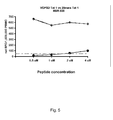
- Panel 4A Recognition of the Tat VOPSD (grey line with filled diamond) and its 20mer standard homolog (Tat 20mer) (black line with filled circle) by PBMC derived from patient HSR-006.
- Panel 4B Recognition of VOPSD Nef N-terminus peptide pool and its standard 20mer homolog (NefN-terminus 20mers) by patient HSR-018. Simbols and line colors are reported as above described.
- the dotted line individuates the negative cut-off of the assay in both panels.
- the dotted line individuates the negative cut-off of the assay.
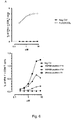
- Panel 6A recognition of the minimal epitope Class I B 08 restricted FLKEKGGL (SEQ ID 131) by CD8 T-cell belonging to patient V4 PBMC from subject V4 were stimulated with the FLKEKGGL peptide (grey diamond) or with an equivalent volume of DMSO (black circles), before staining for the detection of intracellular IFN- ⁇ .
- Panel 6B recognition of the overlapping peptides containing the FLKEKGGL epitope.
- PBMC were stimulated with two Nef derived peptide from the Nef N-ter VOPSD set (FLKEKGGLEGLI, SEQ ID No. 26, black squares; AVDLSHFLKEKGGLEGL, SEQ ID No. 25 black triangles) and one peptide from the classical Nef 20mer set (KAAVDLSHFLKEKGGLEGLI, SEQ ID No. 111, open squares).
- PBMCs were stimulated with medium alone containing an equal volume of DMSO (black circles).
- Figure 7 Gating strategy.
- the pseudo-colour dot plots show an example of gating strategy applied on CD8+ CD3+ living lymphocytes. A mock stimulated (none) and Nef C-termVOPSD (Nef 5) stimulated samples are shown.
- FIG. 8 Single data representation for the interesting populations and representative dot plots. Frequencies of CD8 T-cell responses (A, B and C) and % of the total response (D, E and F) are shown for the population discussed in the text: CD45RA+ IFN- ⁇ - IL-2- MIP-1 ⁇ + (A and D), CD45RA+ IFN- ⁇ + IL-2- MIP-1 ⁇ + (B and E) and CD45RA- IFN- ⁇ - IL-2- MIP-1 ⁇ + (C and F). Each point represents one patient. Medians are shown for each cohort. In (G) representative dot plots from a long term non progressor (LTNP), a late progressor (LP) and a chronically infected individual (CHI) are shown. Depicted events were previously gated on MIP-1 ⁇ + CD8 T-cells. The vertical line in each dot plot separates CD45RA positive and negative cells. IFN- ⁇ + cells are depicted in blue.
- LTNP long term non progressor
- LP late
- FIG. 9 Single data representation for the percentage of the Tat-specific CD45RA+ IFN- ⁇ - IL-2- MIP-1 ⁇ + responding CD8 T-cells. Each point represents one patient. Medians are shown for each cohort.
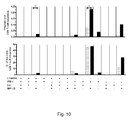
- FIG. 10 Characterization of the Nef-specific CD8 T-cell responses before and after therapy interruption. Absolute and relative frequencies of the Nef-specific response patterns for CD8 T-cells. The histogram plot shows the median frequency of the responding T-cells. Responses to the pools Nef N-term VOPSD and Nef C-term VOPSD are summed together to obtain the response to the entire Nef antigen. Asterisks indicate significant differences. The grey bars represent values before therapy interruption, the black bars represent the values after therapy interruption.
- FIG 11 Comparison between VOPSD, a pool of Nef derived optimal CD8 T-cell epitopes and the standard 20 mer in detecting the CD45RA+ IFN- ⁇ - IL-2- MIP-1 ⁇ + CD8 T-cell population. Absolute frequencies of Nef-specific response patterns for CD8 T-cells are shown. The histogram plot shows the frequency of the responding T-cells. Responses detected with the pools Nef N-term VOPSD and Nef C-term VOPSD (white bars), the optimal pool (grey bar) and with the standard 20mer (black bars) are shown.
- Table I Three cohorts of HIV-1 seropositive individuals and two cohorts of HIV-seronegative healthy blood donors were enrolled for the study (Table I).
- HIV-1 infected individuals with variable CD4 T cell counts (median 549; 1°-3° quartile 464 and 838 CD4/ ⁇ l) and HIV-1 plasma load (median 10,685; 1°-3° quartile 860 and 28,423 genome equivalents/ml), as well as for length of the HIV-1 infection (from few weeks to over 22 years), route of infection and antiretroviral therapy (ART).
- Patients HSR 006, 018 and 028 belonged to this cohort.
- Patient V4 belonged to this cohort.
- the authors enrolled a total of 35 HIV-1 infected individuals belonging to three different groups of patients.
- the first group was composed by 9 long term non progressors (LTNP) HIV-seropositive patients for more than 13 years, median CD4 T cell count of 502 cell/ ⁇ l (1°-3° quartile 441 and 775) and median HIV-1 plasma load of 1083 genome equivalents/ml (1°-3° quartile 351 and 5377).
- the second group was composed by 3 late progressors (LP) patients that were HIV-seropositive for >20 years, They progressed to AIDS during the last year of observation and one (LP01) was not yet ART-treated when the blood sample was withdrawn.
- LTNP long term non progressors
- LP late progressors
- the third group included 23 chronically infected individuals (CHI) HIV-seropositive and under ART for >2 years
- the median CD4 T-cell count was 488 cell/ ⁇ l (1°-3° quartile 351 and 698) and viral load was undetectable in all but three subject (CHI-011 3,362 genome equivalents/ml; CHI-012: 36,600 genome equivalents/ml; CHI-3V: 13,965 genome equivalents/ml).
- CHI patients Six CHI patients were tested again after an interruption of highly active antiretroviral therapy (HAART) for 2-4 weeks; the therapy was reintroduced when the viral load was higher than 100,000 genome equivalent /ml.
- HAART highly active antiretroviral therapy
- HBD HIV-seronegative healthy blood donors
- Overlapping sets of peptides covering the HIV-1 encoded Tat (BH-10 strain; aa 1- 86 Gene bank accession number M15654) and Nef antigen (Bru strain; aa 1-205 gene bank accession number K02013 ) were used.
- Tat antigen both standard strategies of protein scanning design were utilized building-up two pools of peptides composed by either 15mers overlapped by 10 aa residues (designated Tat15mer) or 20mers overlapped by 10aa residues (designated Tat20mer).
- Nef antigen Only one peptide set formed by 20mers overlapped by 10aa residues was used for the Nef antigen (the set is composed by peptides Nef N-ter 20mers and Nef C-ter 20mers) to validate the new overlapping peptide antigen scanning strategy.
- a peptide pool composed by 32 CD8 immunodominant restricted epitopes derived from Influenza, citomegalo and Ebstain-Barr viruses was used as HIV-1-unrelated positive control for monitoring the level of T-cell responses.
- the Fec pool is described in http://www.nibsc.ac.uk/spotlight/aidsreagent/index.html under the reference number ARP7099 at page 135 .
- PBMC Peripheral blood mononuclear cells
- Biotinylated anti-IFN- ⁇ detection monoclonal antibody (B-G1; Diaclone) was added for 2 h, followed by the addition of streptavidin-alkaline phosphatase conjugate (Amersham Pharmacia Biotech Europe GmbH, Freiburg, Germany) for 1 h.
- streptavidin-alkaline phosphatase conjugate (Amersham Pharmacia Biotech Europe GmbH, Freiburg, Germany) for 1 h.
- a chromogenic substrate (nitroblue tetrazolium-BCIP [5-bromo-4-chloro-3-indolylphosphate]; Sigma, St. Louis, Mo.) was added for 10 min.
- the individual spots were counted by using an Automated ELISA-Spot Assay Video Analysis System, Eli-Scan with the software Eli.Analyse V4.2 (A.EL.VIS, Hannover, Germany).
- the responses were empirically scored as positive if the test wells contained a mean number of spot-forming cells (SFC) higher than the mean value plus two standard deviations in negative control wells, and if the number of SFC per million PBMC in stimulated wells (subtracted of the values of negative control wells) was ⁇ 50.
- PBMC in medium alone were used to establish the negative control background, that had to be not higher than 50 SFC per million of cells (10 SFC/ well).
- PHA-P phytohemagglutinin
- PBMC peripheral blood mononuclear cells
- 10 6 PBMC/well were incubated with 1.3 ⁇ g/ml of antibody to CD28 and with 1.3 ⁇ g/ml of antibody to CD49d (Becton Dickinson, Heidelberg, Germany) together with defined peptide pools. For each individual, a sample without peptides was included to calculate the background staining. Following one-hour incubation, 10 ⁇ g/ml of Brefeldin A were added to the cell suspension and the incubation carried out for additional 4 hours.
- Stimulated cells were then resuspended in Stain Buffer (0,2% BSA, 0,09% Na Azide in DPBS; Becton Dickinson) and incubated with the photoreactive fluorescent label ethidium monoazide (EMA; Molecular Probes, Leiden, The Netherlands) used as viability dye. After washing, cells were fixed and permeabilized using the BD Cytofix/CytopermTM Kit, (Becton Dickinson).
- Stain Buffer 0.,2% BSA, 0,09% Na Azide in DPBS; Becton Dickinson
- EMA photoreactive fluorescent label ethidium monoazide
- fluorochrome-conjugated antibodies were added to the cell suspension: CD3-AmCyan, CD4-PerCP, CD45RA-PECy7, CD154-FITC, IFN ⁇ -A1700, IL2-APC and MIP1 ⁇ -PE from Becton Dickinson and CD8-PacB from DAKO (Hamburg, Germany). Incubation was carried out on ice for 30 min and after washing, cells were acquired using an LSRII flow cytometer (Becton Dickinson) equipped with a high throughput system. Sample analysis was performed using FlowJo version 8.5.3.
- Lymphocytes were gated on a forward scatter area versus side scatter area pseudo-color dot plot and dead cells removed according to EMA staining. Events were gated on CD3+ events versus IFN- ⁇ , IL-2, MIP-1 ⁇ and CD154 to account for down-regulation. Then, CD3+ events were combined together using the Boolean operator "Or”. The same procedure was used to successively gate CD8+ events. CD4+ events were excluded before creating a gate for each function or phenotype as shown in Figure 7 .
- the new approach of peptide design combines the empirical-based approach with database information such as consensus antigen sequences belonging to different HIV-1 clades, immunodominat antigenic region and optimal epitope so far described.
- the authors have aligned the protein sequence of candidate Tat (derived from the BH-10 strain belonging to clade B viruses) and Nef vaccine antigens (derived from the Bru strain belonging to clade B viruses) with the consensus clade C sequences of the homologous antigen, as presented below (Scheme 1, HIV-1B: SEQ ID No. 132, NEF-SA-CON-C: SEQ ID No. 133, HIV-1C: SEQ ID No. 134).
- the authors have mapped within these sequences all the reported immuno-dominant regions and optimal epitopes so far described.
- they have individuated conserved regions longer than 10 aa residues that were covered by a specific set of peptides (common peptides), completing the overlapping peptide scanning of both antigens with a set of peptides which contain all the protein fragment that differ for one or more amino acidic residues between the vaccine candidate and the consensus sequences.
- All the derived peptides were biased at the C-terminus avoiding seven amino acidic residues that were never found among optimal CTL epitopes and class I binding motifs (Asn, Asp, Gln, Glu, Gly, His, Ser).
- the overlapping peptides were design placing the known optimal epitopes right in their N- or C-terminus of the longer scanning peptides.
- the derived peptides had variable length (from 10 to 19 aa residues) and degree of overlap (with a gap not larger than 8 aa).
- degree of overlap and overall peptide length were tuned accordingly to the frequency of known T-cell epitopes (higher overlap and shorter peptide length in epitope-rich regions and, conversely, wider not-overlapping fragment and maximal peptide length in epitope- poor regions).
- the length of the peptide was chosen in order to fit either the higher number of epitopes or the epitope described for the most frequent Class I HLA allele, Moreover, we also considered, in the case of multiple partially overlapping epitopes, placing the ones that do not fit properly in the C-terminus of a given scanning peptides at the N-terminus of a different scanning peptide, Therefore, since variability in peptide length and degree of overlap is a distinctive novel feature of this peptide design strategy, the newly generated HIV-1 derived peptide sets were denominated Tat VOPSD, Nef N-ter VOPSD, Nef C-ter VOPSD, TatC VOPSD, NefC N-ter VOPSD, NefC C-ter VOPSD.
- a cohort of 75 HIV-seronegative individuals with different ethnical and geographical origin was employed to measure the level of background T-cell responses generated by each peptide set.
- the IFN- ⁇ elispot assay used showed an extremely low level of background signal (median 5 SFU/1,000,000 cells; 1-3 quartile: 2,5 and 10 SFU/1,000,000 cells) falling well below the maximum accepted threshold for negative controls ( ⁇ 50 SFU/1,000,000 cells; ⁇ 10 SFU/well).
- Tat specific peptide pools showed a negligible background of cross-reactive responses with both median and mean values not significantly different from the ones measured on negative controls (Table II).
- VOPSD Nef-specific peptide sets showed a higher background as compared to their homolog 20mers peptide sets or the negative control. However, also in this case both median, mean and mean + 2 deviation standard values of SFU were well below the accepted threshold for negative controls.
- the same cohort of HIV-seropositive individuals was investigated to directly compare the ability of Nef specific VOPSD set against a peptide set composed by 20mers with a fix overlap of 10aa in detecting Nef-specific responses.
- Two pools for each peptide set were prepared: the first two covered the N-terminus and first half of the protein (aa 1-101 for the Nef N-ter VOPSD set and aa 1-110 for the Nef N-ter 20mers peptide set) whereas the other two covered the C-terminus and the other half of the protein (aa 96- 205 and aa 100-205 for Nef C-ter VOPSD and Nef C-ter 20mers, respectively).
- the authors extended the analysis to a smaller independent cohort of HIV-infected patients (14 individuals), using a multiparameter cytoflurimetric approach that allows combining the recognition of the T cell phenotype (CD4 or CD8) with the functional analysis (IFN- ⁇ secretion) of the Nef specific T-cells. In this way, the authors could establish whether the higher number of individual responses measured with the new set of overlapping peptides was restricted to the CD8 compartment or interested also CD4 T-cell recognition. As shown in Figure 3 , the majority of the HIV-infected patients recognized both Nef-specific peptide pools.
- CD8 responses measured by the new peptide set were brighter than the responses obtained with the classical 20mers pools ( Figure 3A-B ).
- the new peptide set detected a higher number of responses of the pools prepared with 20mers overlapping peptides (8 and 4, respectively), a system that is considered more suited for monitoring CD4 T-cell responses.
- VOPSD peptide pools Higher efficiency of T-cell epitope recognition is ensured by VOPSD peptide pools
- PBMC derived from HSR-006 recognized VOPS Tat peptide pool at concentration as low as 0,5 ⁇ M.
- the homolog 20mer pool was not yet detected at concentration eight times higher.
- PBMC from patients HSR-018 showed an increasing ability to recognize the VOPSD N-terminus Nef peptide pool starting from the concentration of 2 ⁇ M, but failed to recognize the 20mer Nef pool at the higher concentration tested.
- PBMC obtained from patient V4 a subject whose Nef-specific T-cell responses were previously characterized (8), were tested against all the peptides belonging either to the VOPSD or the 20mer sets of Nef-specific peptides set containing the epitope over a range of different concentrations.
- Subject V4 demonstrated a strong CD8 T-cell response to the B8 restricted FLKEKGGL epitope ( Figure 6A ).
- Nef and Tat specific CD8 T-cells in LTNP produce MIP-1 ⁇ but not IFN- ⁇ and have a CD45RA+ phenotype
- HIV-1 establishes a persistent chronic infection in human beings and long term survival of HIV-1 infected patients requires the administration of a special cocktail of antiretroviral drugs termed highly active antiretroviral therapy (HAART).
- HAART highly active antiretroviral therapy
- Administration of HAART does not clear HIV-1 that, even under the strong pressure of the drugs, continues to replicate.
- interruption of HAART leads to a rise of the viral load that reaches pre-treatment levels in the majority of the patients.
- An exception to this scenario is represented by a cohort of HIV-1 infected individuals, named long-term non progressor (LTNP) that is able to naturally control viral replication and maintain a competent immune system without the help of HAART. Understanding why LTNP patients maintain an effective control of viral replication is of extreme relevance to the design of future vaccines and therapies against HIV-1.
- LTNP long-term non progressor
- T-cells specific for a certain antigen The capacity to detect the complete repertoire of T-cells specific for a certain antigen is an important aspect for characterizing the adaptative immune response.
- multiple epitope recognition is associated with low steady-state viremia (14).
- functional and phenotypic heterogeneity between T-cells specific to different epitopes have been observed in several infectious diseases, such as EBV (7), HCMV (25), and
- HIV-1 (12).
- the characterization of the immune responses via the analysis of few T-cell specificities may be misleading.
- the authors decided to combine the new peptide sets with a highly sophisticated polychromatic flow cytometry approach to analyze PBMC derived from HIV+ patients after stimulation with Nef and Tat peptide pools. They coupled the simultaneous detection of four functional markers, IFN- ⁇ , IL-2, CD154 and MIP-1 ⁇ with the measurement of the expression of CD45RA, a marker of T-cells maturation ( Figure 7 ).
- the authors analysed the functional and differentiation phenotype of Nef and Tat specific CD8 T-cells in LTNP, late progressor (LP), chronically HIV-1 infected (CHI) individual under HAART and chronically HIV-1 infected individuals undergoing one cycle of treatment interruption.
- the simultaneous analysis of the immune response in these four cohorts allowed a clear discrimination between phenotypes associated with long term viral control and phenotypes that are the consequence of the exposure to the antigen.
- LTNP showed higher frequencies of Nef-specific CD8 T-cells than LP and CHI, but differences resulted to be not statistically significant (data not shown). Nef-specific responses were composed of MIP-1 ⁇ + or MIP-1 ⁇ + IFN- ⁇ + cells while frequencies of IL-2 producing cells were generally low.
- CD45RA+ IFN- ⁇ - IL-2- MIP-1 ⁇ + and CD45RA+ IFN- ⁇ + IL-2- MIP-1 ⁇ + CD8 T-cells were found in CD45RA+ IFN- ⁇ - IL-2- MIP-1 ⁇ + and CD45RA+ IFN- ⁇ + IL-2- MIP-1 ⁇ + CD8 T-cells.
- the frequency of CD45RA+ IFN- ⁇ - IL-2- MIP-1 ⁇ + CD8 T-cells was significantly higher in LTNP than CHI with an extremely low p value (p ⁇ 0.0001, Fig. 8a ).
- a more accurate evaluation of the quality of the Nef specific response was assessed calculating the contribution of each population to the total CD8 T-cell response ( Fig. 8 d, e and f ).
- CD45RA+ IFN- ⁇ - IL-2- MIP-1 ⁇ + responding CD8 T-cells were almost exclusively present in LTNP. In fact, they were observed in 7 out of 9 LTNP, 1 out of 3 LP and they were completely undetectable in all 23 CHI ( Fig. 8 a and d).
- Terminally differentiated CD8 T-cells defined as CD45RA+ CCR7- that are able to express IFN- ⁇
- LTNP Terminally differentiated CD8 T-cells
- Figure 8b and e the authors confirmed these findings.
- a significant higher frequency of CD45RA+ IFN- ⁇ + IL-2- MIP-1 ⁇ + CD8 T-cells was observed in LTNP when compared to CHI.
- the difference was not significant when the quality of the immune response was taken in consideration and CD45RA+ IFN- ⁇ + IL-2- MIP-1 ⁇ + CD8 T-cells were present in the three cohorts analyzed. Thus, they not constitute an exclusive marker for the LTNP status.
- IL-2 expression does not represent an essential marker to define CD45RA+ IFN- ⁇ - MIP-1 ⁇ + CD8 T-cells in LTNP.
- Tat specific immune responses were analyzed and as expected, Tat specific immune responses were detected only in a minority of subjects, 5/9 LTNPs, 2/3 LPs and 7/23 CHI ( Fig 9a )
- CD45RA+ IFN- ⁇ - IL-2- MIP-1 ⁇ + responding CD8 T-cells were found only in two LTNP ( Fig. 9b ).
- CD45RA+ IFN- ⁇ -MIP-1 ⁇ + responding CD8 T-cells represent a positive marker of correlation for the long-term capacity of HIV-1 infected individuals to control viral replication.
- MIP-1 ⁇ + IFN- ⁇ - IL-2- CD45RA+ CD8 T-cells are not induced by exposure to antigen load
- Antigen level and persistence contribute to the determination of the function and phenotype of the responding T-cells (15).
- the authors' cohorts of LTNP and CHI individuals are both characterized by a prolonged exposure to HIV-1 antigens. However, the plasma viral load in LTNP was significantly higher than in CHI individuals (see Materials and Methods section).
- the authors analysed Nef and Tat specific CD8 T-cell responses after one cycle of treatment interruption in six CHI patients. Following the interruption of the treatment, the viral loads became detectable in all the patients within day 5 and 21. Therapy was resumed with viral loads higher than 100,000 RNA copies/ml.
- VOPSD peptides enhance detection of CD45RA+ IFN- ⁇ - IL-2- MIP-1 ⁇ + CD8 T-cells
- VOPSD peptides are superior in detecting CD8 and CD4 responses using an IFN- ⁇ -based ELISPOT and an IFN- ⁇ -based ICS.
- the combination of the use of the VOPSD peptides and of the immunocytometric assay lead to the identification of the CD45RA+ IFN- ⁇ - IL-2- MIP-1 ⁇ + CD8 T-cell population almost exclusively present in LTNP.
- the authors compared Nef responses after stimulation with the VOPSD, a pool of Nef derived optimal CD8 T-cell epitopes (ref. 8) and the homolog 20mer set of Nef peptides in a subject with a strong Nef specific response (subject V4).
- the optimal pool was a set of peptides representing 16 optimally defined Nef CD8 epitopes (ref. 8; WPTVRERM : SEQ ID No. 135; ALTSSNTAA : SEQ ID No. 136; FPVTPQVPLR : SEQ ID No. 137; FPVRPQVPL : SEQ ID No. 138; RPQVPLRPMTY : SEQ ID No.
- VOPSD peptides increase the probability to detect CD45RA+ IFN- ⁇ -IL-2- MIP-1 ⁇ + CD8 T-cells.
Landscapes
- Health & Medical Sciences (AREA)
- Life Sciences & Earth Sciences (AREA)
- Immunology (AREA)
- Engineering & Computer Science (AREA)
- Chemical & Material Sciences (AREA)
- Molecular Biology (AREA)
- Biomedical Technology (AREA)
- Hematology (AREA)
- Urology & Nephrology (AREA)
- Medicinal Chemistry (AREA)
- General Health & Medical Sciences (AREA)
- Virology (AREA)
- Cell Biology (AREA)
- Tropical Medicine & Parasitology (AREA)
- Biochemistry (AREA)
- Food Science & Technology (AREA)
- Physics & Mathematics (AREA)
- Analytical Chemistry (AREA)
- Microbiology (AREA)
- Biotechnology (AREA)
- General Physics & Mathematics (AREA)
- Pathology (AREA)
- Nuclear Medicine, Radiotherapy & Molecular Imaging (AREA)
- Public Health (AREA)
- General Chemical & Material Sciences (AREA)
- AIDS & HIV (AREA)
- Organic Chemistry (AREA)
- Pharmacology & Pharmacy (AREA)
- Animal Behavior & Ethology (AREA)
- Chemical Kinetics & Catalysis (AREA)
- Veterinary Medicine (AREA)
- Bioinformatics & Cheminformatics (AREA)
- Ecology (AREA)
- Communicable Diseases (AREA)
- Oncology (AREA)
- Peptides Or Proteins (AREA)
- Medicines Containing Antibodies Or Antigens For Use As Internal Diagnostic Agents (AREA)
Abstract
The present invention relates to a method for designing a set of overlapping immunogenic peptides of a variable antigen, set of overlapping immunogenic peptides obtained and uses thereof, in particular for diagnostic and therapeutic purposes. The present invention relates also to a sub-population of CD8 T cells associated with the non-progressive status in HIV-infected subjects.
Description
- The present invention relates to a method for designing a set of overlapping immunogenic peptides of a variable antigen, the set of overlapping immunogenic peptides obtained and uses thereof, in particular for diagnostic and therapeutic purposes. The present invention relates also to a sub-population of CD8 T cells and its use for the diagnostic of HIV infected subjects.
- The growing knowledge of how the human immune system deals with different types of pathogens is allowing to better define the immune correlates that leads to the protective effects exerted by efficacious vaccines. Therefore, delineation of the immune correlates of protection occurring during natural infection and after vaccination has become a fundamental step in the development of new vaccines. Important steps toward the identification of the immune correlates relevant for protection from HIV have been made mimicking HIV-1 infection in animal models and studying the natural course of the HIV-mediated disease in different cohorts of HIV-seropositive individuals. Indeed, studies of passive immunization and immune depletion in animal models strongly suggest that both humoral (neutralizing antibodies) and cell-mediated immune responses may provide effective protection from infection and disease progression in HIV-1 infection (3, 24).
- Indeed, induction of strong and durable T lymphocytes responses against HIV-1-infected cells has become an important immunogenicity outcome in vaccine trials, given the increasing evidence that HIV-1-specific cell-mediated immune responses partially protect macaques experimentally infected with SHIV (4, 24) and contribute substantially to control HIV-1 disease in humans (16, 18, 20, 22). Therefore, increasing efforts are directed towards the development of effective vaccines through induction of virus-specific T cell responses, which play a significant role in determining viral set point in HIV infection.
- In recent years, methods for detecting both CD4 and CD8 T cell responses have been significantly improved by the introduction of cytokine enzyme-linked immonospot assays (particularly IFN-γ Elispot) and intracellular cytokine staining (ICS) assays (6, 23). This has led to more sensitive detection and quantification of the cellular immune response but, despite greater ease and rapidity of assessment these approaches have left a number of issues unresolved and there is not yet a consensus on the best methods for assaying the magnitude and the breadth of these responses. In this regard, two mayor issues are still debated among scientists: the choice of the HIV-1 sequence/s to use for the generation of the screening peptides since HIV is a highly variable virus, and the best type of approach for defining cytotoxic T lymphocytes (CTL) and T-helper epitopes. Indeed, differences in sequence between two HIV-1 isolates within the same clade range between 7-15% and between viruses belonging to different clades can be as high as 30%. Constructing a consensus sequence may represent a compromise for this problem (13), although it has to be kept in mind that it is very difficult to generate artificial sequences at the hyper-variable regions and that viral escape from immune detection has been consistently linked to amino acid substitutions in HIV-1 T cell epitopes (10, 19). Regarding the second issue, two are the strategies currently used to define T cell epitopes: bioinformatics approach which utilizes predictive algorithms containing peptide-binding 'motifs' and 'supermotifs' for the major histo-compatibility complex (MHC) class I and II molecules to predict epitope (9) or via overlapping peptides that span the viral proteins of interest (2, 6, 10). In this latter case the length and degree of overlap of peptides are further motif of scientific debate (6, 10, 11). The use of computer-assisted bioinformatics approaches, based on HLA peptide binding motifs and available viral sequences, has been shown to be a useful tool for identifying CTL epitopes derived from HIV-1(9). However, since binding motifs have not yet been defined for all HLA alleles, HLA profiling of population belonging to developing countries is scanty and peptide binding is not the sole determinant of epitope dominance, not all CTL epitopes will be identified by HLA motif-screening algorithms. On the other hand, the methods based on a comprehensive screening of HIV-1 encoded antigens via overlapping peptide pools are attractive because makes no assumptions about peptides that do not conform exactly to the peptide-binding motif, although they still do not detect all the T cell responses present in HIV-infected individuals (5). The main limitation to this type of screening assays is that a consensus on the best design with regards to peptide length and overlap has not been reached yet. Indeed, the length and degree of peptide overlap not only influence the detection of T cell responses but also has a major impact on cost, labor intensiveness and amount of blood needed to perform such studies.
-
WO0116163 amino acids 1 to 183 of the hepatitis B core antigen (HBcAg) could activate specific T cells regardless of the host MHC/HLA genotype that recognize the native protein processed by professional antigen presenting cells (APCs). Further, a method is described for the treatment of a viral infection, particularly a non-resolving chronic viral infection, making use of the novel peptide mixture immunogen. -
WO2004031345 provides compositions containing HIV epitopes, which are recognized by cytotoxic T lymphocytes (CTL). Such polypeptides are used in vaccines and immunotherapies. HIV-1 epitopes represent early targets in a naturally-occurring response against HIV-1 infection. In particular, an immunogenic composition comprising an HLA class I restricted HIV-1 polypeptide, wherein said polypeptide consists essentially of 8-12 amino acids and wherein said peptide is characterized as an early CTL target in HIV-1 infection is claimed. -
WO2005015207 discloses a method and diagnostic tests based on flow cytometric analysis of antigen-specific T lymphocytes. However the document does not define a specific population of T-cells and the method does not allow the diagnostic of the non progressive status in an HIV-1 infected subject. - Vardas et al. (26) discloses a method for designing HIV Tat specific overlapping peptides for HIV vaccine trials.
- There is the need for identifying an optimal peptide design strategy. Optimal epitopes are protein fragments that are best recognized by T lymphocytes due to their efficient binding. Optimal CTL epitopes are 8-11 amino acid residues in length, and, therefore, an overlap of at least 10 residues between adjacent overlapping peptides is required to ensure that no 11-mer is missed in the screening process. Increasing the number of overlapped amino acids (11 vs 10 amino acids) has not produced a clear advantage in detecting CTL responses (10), beside a substantial increase in the number of peptide necessary to perform a complete HIV-1 peptide-scan (746 vs 600). This leads to a 20% increase in the cost of the assay and on the amount of cells needed, thus reducing the feasibility of such approach. A documented disadvantage of overlapping peptides is that epitopes situated in the middle of longer peptides may not be always detectable because of suboptimal epitope presentation. This implies that longer peptide sets (20 mers) may be less sensitive in detecting CD8 T cell responses (6, 10), whereas they seems to be more efficient in resolving Class II restricted CD4 responses (10). Indeed, a CD8 T-cell response to an epitope present within a longer peptide is best detected when the epitope is situated at the peptide C-terminus, both when peptides were designed to include the optimal epitope at every possible position and when responses towards optimal epitopes and corresponding overlapping peptides were compared in a larger group of subjects (10). Furthermore, even overlapping 15-mers are less efficient than optimized epitopes in detecting low frequency CD8 responses (200 SFU/million PBMC), when the epitope is located centrally in the peptide (5).
- Taking advantage of the well establish notion that only a minority of the 20 possible amino acidic residues at the peptide C-terminus, a primary anchor position that contributes substantially to binding of the peptide to the MHC class I molecule will be present in CTL epitopes (only 9 of them served as the C-terminal anchor position in 96% of described optimal epitopes and in 95% of peptide-binding motifs described for over 60 HLA class I alleles), a novel strategy that combines database information with the systematic experimental procedure has been recently experimented (10). The direct comparison between gold standard 15/11 and 15/10 overlapping residue peptide sets has demonstrated the efficacy of this approach that, allowing the use of longer peptide (18mers) without losing in detection of magnitude and breath of the immune response, permits a conspicuous reduction in the number of peptide needed (410 vs 746 for a complete HIV-1 genome scanning). Although an optimal overlapping set has still to be obtained (13% of the CTL responses were not shared between different peptide sets), this result suggests that more rational approaches to overlapping peptides design are feasible though, in some instances, the number of peptide needed is greatly increased (17).
- In the present invention, the authors present a new strategy of T-cell epitope screening that, without compromising the detection of the full-range of CTL and T-helper responses, limits both the amount of human material and assay cost.
- Departing from the teaching of Vardas et al. (26) the authors optimized a method of peptide designing and were able to set up different set of peptides. These peptides were able to identify a new T-cell population exclusively associated with the control of the HIV-infection in long term non progressors (LTNP).
- The method was used to generate two sets of overlapping peptides derived by the HIV-1 regulatory antigens Tat and Nef that are superior in detecting CD8 CTL responses without loosing the ability to uncover the CD4 T-helper responses. Moreover, the new peptides pools were used together with an immunocytofluorimetric assay to investigate the T-cell immune response of a selected group of HIV-infected individuals. This approach allowed the identification of a new T-cell population exclusively associated with the control of the HIV-infection in long term non progressors (LTNP).
- Therefore, the authors propose the new peptide strategy for designing a feasible strategy for the screening of a significant number of HIV candidate vaccine antigens in large cohorts of European and African individuals, and the use of the new peptide pools combined with the immunocytofluorimetric technique for the identification of the peculiar T-cell population that act as a marker to monitor efficacious anti-HIV T-cell responses.
- According to one aspect, the invention consists in a new method (called Variable Overlapping Peptide Scanning Design, VOPSD) to design overlapping peptides (10 to 19 aa long). Such peptides may be used for the detection of both CD4 and CD8 T-cell responses derived from any type of well defined microbial or tumor derived antigen. Given the superior ability of the VOPSD strategy to detect T-cell responses in humans the peptides sets generated following this method possess several relevant industrial applications. As a matter of facts, they can be used as a complete set, covering the complete sequence of a known antigen, for screening system to individuate the human T-cell mediated immune responses relevant for the development of T-cell based vaccines. The peptides may be used as vaccine components and they can be the major components of diagnostic kits for the detection of T-cell based immune responses. In particular the sets of peptides generated using the HIV-1 encoded Tat and Nef antigens belonging either to clade B or C can be used as above described. The present invention discloses also a novel CD8 T-cell population exclusively present in HIV-infected subjects with a non-progressive course of the HIV disease. The detection of such a population will allow the monitoring of HIV-infected individuals for the presence of an efficacious anti HIV-1 T-cell response. A kit able to detect this population will be useful to evaluate, in HIV-seronegative individuals subjected to preventative anti HIV-1 vaccination programs, the elicitation of anti HIV-specific protective CD8 T-cell responses and, in HIV-infected individuals subjected to therapeutic vaccination protocols with HIV-encoded antigens, the appearance/increase of anti HIV-specific protective CD8 T-cell responses.
- In addition, a kit able to measure such population will be useful to evaluate in patients naïve for antiretroviral therapy (ART) the timing for the therapeutic intervention.
- Therefore it is an object of the present invention a method for designing a set of overlapping peptides of an antigen comprising the steps of:
- a) aligning the amino acid sequence of a variant of the antigen with one amino acid consensus sequence of the same antigen;
- b) mapping on said aligned amino acid sequences known immunodominant regions and optimal epitope regions;
- c) individuating a first sub-set of peptides consisting of conserved sequence regions between the amino acid sequence of the variant and the amino acid consensus sequence of the variable antigen, said peptides being longer than 10 amino acids ;
- d) completing the overlapping peptide design by individuating a second sub-set of peptides, each peptide containing a protein fragment of the amino acid sequence of the variant that differs for one or more amino acid residues from the amino acid consensus sequence of the variable antigen, and optionally one or more immunodominant region and/or a optimal epitope region or portions thereof at its N or C terminus,
- The wording "gap" refers to the fact that the following peptide starts between 0-8 aa. downstream of the aa. protein sequence. It is a common terminology for people experienced in the field.
- With respect to the method disclosed by Vardas et al. (26), the method comprises new features providing unexpected properties of the designed peptides. The length of peptides was optimized (between 10 and 19 amino acids) and it was found that each of the set of overlapping peptides should have a gap not longer than 8 amino acids with its closest overlapping peptide. Moreover, overlapping peptides must contain at their termini previously characterized T-cell epitopes or immunodominant fragments. The choice for positioning such epitopes in the N- terminus or in the C-terminus of the longer scanning peptides is based upon the evaluation of the HLA binding motifs proper of the epitope under investigation. Furthermore, it is also new with respect to Vardas et al (26) that, when different optimal epitopes are partially overlapped in the protein sequence, the choice for the best placement in the C-terminus of the epitopes is dictated by the frequency in the human population of the HLA allele/s restricting the epitope recognition and by the possibility to place it, as an alternative, to the N-terminus of a different scanning peptide.
- Preferably, the variable antigen is an HIV antigen. More preferably the HIV antigen is an HIV-1 antigen. Still preferably the HIV antigen is an HIV-1 Tat antigen or an HIV-1 Nef antigen.
- It is an object of the invention a set of overlapping peptides obtainable according to the method of the invention. Preferably the set of overlapping peptides is of the variable Tat antigen of HIV-1. More preferably, the set of overlapping peptides consists of peptides belonging to any of the following groups:
- a) peptides of SEQ ID No. 1 to SEQ ID No. 11;
- b) peptides of SEQ ID No. 42 to SEQ ID No. 51 and SEQ ID No. 7.
- In an alternative embodiment, the set of overlapping peptides is of the variable Nef antigen of HIV-1. Preferably the set of overlapping peptides consists of peptides belonging to any of the following groups:
- a) peptides of SEQ ID No. 12 to SEQ ID No. 26;
- b) peptides of SEQ ID No. 27 to SEQ ID No. 41;
- c) peptides of SEQ ID No. 12 to SEQ ID No. 41;
- d) peptides of SEQ ID No. 52 to SEQ ID No.63 and SEQ ID No. 20, SEQ ID No. 23 and SEQ ID No. 26;
- e) peptides of SEQ ID No. 64 to SEQ ID No. 76 and SEQ ID No. 30, SEQ ID No. 31 and SEQ ID No.32;
- f) peptides of SEQ ID No. 52 to SEQ ID No. 76 and SEQ ID No. 20, SEQ ID No. 23, SEQ ID No. 26, SEQ ID No. 30, SEQ ID No. 31 and SEQ ID No.32;
- g) peptides of SEQ ID No. 77 to SEQ ID No. 86.
- It is a further object of the invention the set of overlapping peptides as defined above for use as a medicament, a vaccine or a vaccine adjuvant.
- The set of overlapping peptides are used for monitoring CD4 and/or CD8 T cell responses in HIV patients ex vivo, in particular, for the development of immunological diagnostic test or kits. The peptides of the invention can be used for the development of any immunological test that it is based on measuring either the amount of T-cells that are specific for a given antigen or the function of the same cells.
- The set of overlapping peptides are used for identifying and/or selecting and/or monitoring a HIV-1 negative population for anti HIV-1 vaccine development; for the detection, in a biological sample, of a population of T cells belonging to any of the following groups:
- a) CD4 T cells;
- b) CD8 T cells;
- c) CD45RA+IFNγ- MIP1β+ CD8 T cells.
- The set of overlapping peptides of the invention can be used also for monitoring T-cell responses in HIV-negative individuals, subjected to preventative anti-HIV vaccine experimentations or in HIV seropositive individual subjected to therapeutic vaccination trials, independently from the need for the identification of the CD45 RA+ MIP1β+ cells.
- It is a further object of the invention an isolated population of CD45RA+IFNγ- MIP1β+ CD8 T cells. Such specific cell population can be advantageously used as a marker for the non-progressive status of HIV-infected subjects, or as immune therapy. As a matter of facts, after sorting and expansion, expanded cells can then be re-infused in HIV infected patients.
- The HIV-1 infected subject may be a subject not assuming antiretroviral therapy in which the capacity to control HIV disease and determine the timing of introduction of antiretroviral treatment is to be determined. More preferably the CD45RA+ IFNγ- MIP1β+ CD8 T cell population is Nef specific.
- The CD45RA+ IFNγ- MIP1β+ CD8 T cell population may be used for measuring the efficacy of an HIV derived antigen vaccine in a vaccinated subject. The vaccinated subject can be HIV seropositive or not.
- CD45RA+ IFNγ- MIP1β+ CD8 T cells are preferably detected using the VOSPD overlapping peptides of the invention. However, the detection of the CD45RA+ IFNγ- MIP1β+ CD8 T cell can be performed also using the standard 20mers pools or any other antigenic formulation known to those skilled in the art.
- Therefore the invention comprises also a method for detecting a CD45RA+ IFNγ- MIP1β+ CD8 T cell population in a biological sample comprising incubating said sample with a set of peptides belonging to any of the following groups:
- a) the set of overlapping peptides according as above defined;
- b) standard pools of overlapping peptides;
- c) pools of optimal CD8 T-cell epitopes.
- The detection of the CD45RA+ IFNγ- MIP1β+ CD8 T cell population can be performed with assays known to those skilled in the art like, for example, Bioplex, ELISPOT and ELISA. For example, using the ELISPOT technology it is possible to pre-select CD8+CD45RA+ cells directly on the plate, perform the antigenic stimulation and detect simultaneously the production of MIP-1β and IFN-γ.
- Preferably, the detection of the CD45RA+ IFNγ- MIP1β+ CD8 T cell population is performed with an intracellular cytokine staining and the VOSPD overlapping peptides of the invention..
- The detection of the CD45RA+ IFNγ- MIP1β+ CD8 T cell population can be performed also with a secretion assay. In this way CD45RA+ IFNγ- MIP1β+ CD8 T cells are still alive after the staining allowing a successive sorting of such a population.
- The invention comprises also a kit to detect a CD45RA+ IFNγ- MIP1β+ CD8 T cell population in a biological sample comprising a set of peptides belonging to any of the following groups:
- a) the set of overlapping peptides according as above defined;
- b) standard pools of overlapping peptides;
- c) pools of optimal CD8 T-cell epitopes.
- The kit is used to detect CD45RA+ IFNγ- MIP1β+ CD8 T cells if found to be specific for any pathological status either upon viral infection (i.e. HIV, HCV, HBV) or tumoral status.
- It is another object of the invention a method for the diagnostic of a long-term non-progressive (LTNP) status, or for monitoring the anti-HIV-specific protective CD8 T cell response, in a biological sample from an HIV-1 infected subject, comprising the steps of:
- a) detecting the CD45RA+IFNγ- MIP1β+ CD8 T cell population, and
- b) measuring the % thereof with respect to the total CD8 T cells or to the total responding CD8 T cells.
- It is another object of the invention a method for measuring the efficacy of an HIV derived antigen vaccine in a biological sample from a vaccinated HIV-1 infected subject, comprising the steps of:
- a) detecting the CD45RA+IFNγ- MIP1β+ CD8 T cell population, and
- b) measuring the % thereof with respect to the total CD8 T cells or to the total responding CD8 T cells.
- In the present invention the standard pool Tat 15mer comprises:
TC27 1-15 MEPVDPRLEPWKHPG SEQ ID 87 TC28 6-20 PRLEPWKHPGSQPKT SEQ ID 88 TC29 11-25 WKHPGSQPKTACTNC SEQ ID 89 TC30 16-30 SQPKTACTNCYCKKC SEQ ID 90 TC31 21-35 ACTNCYCKKCCFHCQ SEQ ID 91 TC32 26-40 YCKKCCFHCQVCFIT SEQ ID 92 TC33 31-45 CFHCQVCFITKALGI SEQ ID 93 TC34 36-50 VCFITKALGISYGRK SEQ ID 94 TC35 41-55 KALGISYGRKKRRQR SEQ ID 95 TC36 46-60 SYGRKKRRQRRRPPQ SEQ ID 96 TC37 51-65 KRRQRRRPPQGSQTH SEQ ID 97 TC38 56-70 RRPPQGSQTHQVSLS SEQ ID 98 TC39 61-75 GSQTHQVSLSKQPTS SEQ ID 99 TC40 66-80 QVSLSKQPTSQSRGD SEQ ID 100 TC41 71-85 KQPTSQSRGDPTGPK SEQ ID 101 TC42 76-90 QSRGDPTGPKEQKKK SEQ ID 102. - The pool or set Tat-VOPSD (HIV-1B Tat Bh-10) comprises,
Peptide N°1 MEPVDPRLEPW 11 mer SEQ ID 1 Peptide N°2 LEPWKHPGSQPKTACTNCY 19 mer (7aa gap) SEQ ID 2Peptide N°3 GSQPKTACTNCYCKKCCF 18 mer (7aa gap) SEQ ID 3 Peptide N°4 ACTNCYCKKCCFHCQVCF 18 mer (6aa gap) SEQ ID 4Peptide N°5 KKCCFHCQVCFITKALGI 18 mer (7aa gap) SEQ ID 5Peptide N°6 QVCFITKALGISYGR 15 mer (7aa gap) SEQ ID 6Peptide N°7 LGISYGRKKRRQRR 14 mer (8aa gap) SEQ ID 7 Peptide N°8 KKRRQRRRPPQGSQTHQV 18 mer (7aa gap) SEQ ID 8Peptide N°9 RPPQGSQTHQVSLSKQPT 18 mer (7aa gap) SEQ ID 9Peptide N°10 HQVSLSKQPTSQSRGDPT 18 mer (8aa gap) SEQ ID 10Peptide N°11 KQPTSQSRGDPTGPK 15 mer (6aa gap) SEQ ID 11; - The standard pool Tat 20mer is described in http://www.nibsc.ac.uk/spotlight/aidsreagent/index.html under the reference number EV779.1 to EVA779.8 at page 123, as follows:
ARP779.1 EPVDPRLEPWKHPGSQPKTA SEQ ID 123 ARP779.2 KHPGSQPKTACTTCYCKKCC SEQ ID 124 ARP779.3 CTTCYCKKCCFHCQVCFTTK SEQ ID 125 ARP779.4 FHCQVCFTTKALGISYGRKK SEQ ID 126 ARP779.5 ALGISYGRKKRRQRRRPPQG SEQ ID 127 ARP779.6 RRQRRRPPQGSQTHQVSLSK SEQ ID 128 ARP779.7 SQTHQVSLSKQPTSQPRGD SEQ ID 129 ARP779.8 QPTSQPRGDPTGPKE SEQ ID 130. - The pool Nef N-ter VOPSD (HIV-1B Nef Bru) comprises,
Peptide N°1 MGGKWSKSSVVGWPTVR 17 mer SEQ ID 12 Peptide N°2 SVVGWPTVRERMRRAEPAA 19 mer (8aa gap) SEQ ID 13 Peptide N°3 VRERMRRAEPAADGVGAA 18 mer (7aa gap) SEQ ID 14 Peptide N°4 AEPAADGVGAASRDLEK 17 mer (7aa gap) SEQ ID 15 Peptide N°5 GVGAASRDLEKHGAIT 16 mer (6aa gap) SEQ ID 16 Peptide N°6 DLEKHGAITSSNTAATNA 18 mer (7aa gap) SEQ ID 17 Peptide N°7 ITSSNTAATNAACAWL 16 mer (7aa gap) SEQ ID 18Peptide N°8 ATNAACAWLEAQEEEEV 17 mer (7aa gap) SEQ ID 19Peptide N° 9 CAWLEAQEEEE 11 mer (5aa gap) SEQ ID 20Peptide N°10 QEEEEVGFPVTPQVPLR 17 mer (5aa gap) SEQ ID 21Peptide N°11 VGFPVTPQVPLRPMTYK 17 mer (5aa gap) SEQ ID 22 Peptide N°12 PQVPLRPMTY 10 mer (6aa gap) SEQ ID 23 Peptide N°13 RPMTYKAAVDLSHFLK 16 mer (5aa gap) SEQ ID 24 Peptide N°14 AVDLSHFLKEKGGLEGL 17 mer (7aa gap) SEQ ID 25 Peptide N°15 FLKEKGGLEGLI 12 mer (6aa gap) SEQ ID 26. - The pool Nef C-ter VOPSD (HIV-1B Nef Bru) comprises,
Peptide N°16 LEGLIHSQRRQDILDLWIY 19 mer (7aa gap) SEQ ID 27 Peptide N°17 QRRQDILDLWIYHTQGY 17 mer (7aa gap) SEQ ID 28 Peptide N°18 LDLWIYHTQGYFPDWQNY 18 mer (6aa gap) SEQ ID 29 Peptide N°19 YHTQGYFPDWQNYT 14 mer (6aa gap) SEQ ID 30Peptide N°20 YFPDWQNYTPGPGVRY 16 mer (5aa gap) SEQ ID 31 Peptide N°21 QNYTPGPGVRYPLTFGW 17 mer (5aa gap) SEQ ID 32 Peptide N°22 GPGVRYPLTFGWCYKL 16 mer (5aa gap) SEQ ID 33 Peptide N°23 TFGWCYKLVPVEPDKVEEA 19 mer (8aa gap) SEQ ID 34 Peptide N°24 VPVEPDKVEEANKGENTSL 19 mer (8aa gap) SEQ ID 35 Peptide N°25 KVEEANKGENTSLLHPV 17 mer (6aa gap) SEQ ID 36 Peptide N°26 ENTSLLHPVSLHGMDDPER 19 mer (8aa gap) SEQ ID 37 Peptide N°27 PVSLHGMDDPEREVLEWR 18 mer (7aa gap) SEQ ID 38 Peptide N°28 DDPEREVLEWRFDSRLAF 18 mer (7aa gap) SEQ ID 39 Peptide N°29 VLEWRFDSRLAFHHVAREL 19 mer (6aa gap) SEQ ID 40Peptide N°30 DSRLAFHHVARELHPEYF 18 mer (6aa gap) SEQ ID 41. - The standard pool Nef N-ter 20mers is described in http://www.nibsc.ac.uk/spotlight/aidsreagent/index.html under the reference number ARP7074.1 to ARP7074.10 at page 121, as follows:
ARP7074.1 GGKWSKSSVVGWPTVRERMR SEQ ID 103 ARP7074.2 GWPTVRERMRRAEPAADGVG SEQ ID 104 ARP7074.3 RAEPAADGVGAASRDLEKHG SEQ ID 105 ARP7074.4 AASRDLEKHGAITSSNTAAT SEQ ID 106 ARP7074.5 AITSSNTAATNAACAWLEAQ SEQ ID 107 ARP7074.6 NAACAWLEAQEEEEVGFPVT SEQ ID 108 ARP7074.7 EEEEVGFPVTPQVPLRPMTY SEQ ID 109 ARP7074.8 PQVPLRPMTYKAAVDLSHFL SEQ ID 110 ARP7074.9 KAAVDLSHFLKEKGGLEGLI SEQ ID 111 ARP7074.10 KEKGGLEGLIHSQRRQDILD SEQ ID 112 - The standard pool Nef C-ter 20mers is described in http://www.nibsc.ac.uk/spotlight/aidsreagent/index.html under the reference number ARP7074.11 to ARP7074.20 at page 121 , as follows:
ARP7074.11 HSQRRQDILDLWIYHTQGYF SEQ ID 113 ARP7074.12 LWIYHTQGYFPDWQNYTPGP SEQ ID 114 ARP7074.13 PDWQNYTPGPGVRYPLTFGW SEQ ID 115 ARP7074.14 GVRYPLTFGWCYKLVPVEPD SEQ ID 116 ARP7074.15 CYKLVPVEPDKVEEANKGEN SEQ ID 117 ARP7074.16 KVEEANKGENTSLLHPVSLH SEQ ID 118 ARP7074.17 TSLLHPVSLHGMDDPEREVL SEQ ID 119 ARP7074.18 GMDDPEREVLEWRFDSRLAF SEQ ID 120 ARP7074.19 EWRFDSRLAFHHVARELHPE SEQ ID 121 ARP7074.20 HHVARELHPEYFKNC SEQ ID 122 - The pool Tat C VOPSD (HIV-1B Tat consensus C) comprises:
Peptide N°1 MEPVDPNLEPW 11 mer SEQ ID 42 Peptide N°2 LEPWNHPGSQPKTACNTCY 19 mer (7aa gap) SEQ ID 43 Peptide N°3 GSQPKTACNTCYCKKCSY 18 mer (7aa gap) SEQ ID 44 Peptide N°4 ACNTCYCKKCSYHCLVCF 18 mer (6aa gap) SEQ ID 45 Peptide N°5 KKCSYHCLVCFQTKGLGI 18 mer (7aa gap) SEQ ID 46 Peptide N°6 LVCFITKGLGISYGR 15 mer (7aa gap) SEQ ID 47 Peptide N°7 KKRRQRRSAPPSSEDHQN 18 mer (7aa gap) SEQ ID 48 Peptide N°8 SAPPSSEDHQNPISKQPL 18 mer (7aa gap) SEQ ID 49Peptide N°9 HQNPISKQPLPRTLGDPT 18 mer (8aa gap) SEQ ID 50Peptide N°10 KQPLPRTLGDPTGSE 15 mer (6aa gap) SEQ ID 51 and the Peptide LGISYGRKKRRQRR,SEQID7; - The pool Nef C N-ter VOPSD (HIV-1 Nef Consensus C) comprises:
Peptide N°1 MGGKWSKCSIVGWPAVR 17 mer SEQ ID 52 Peptide N°2 SIVGWPAVRERMRRTEPAA 19 mer (8aa gap) SEQ ID 53 Peptide N°3 VRERMRRTEPAAEGVGAA 18 mer (7aa gap) SEQ ID 54 Peptide N°4 TEPAAEGVGAASQDLDK 17 mer (7aa gap) SEQ ID 55 Peptide N°5 GVGAASQDLDKHGALT 16 mer (6aa gap) SEQ ID 56 Peptide N°6 DLDKHGALTSSNTAANNA 18 mer (7aa gap) SEQ ID 57 Peptide N°7 LTSSNTAANNADCAWL 16 mer (7aa gap) SEQ ID 58 Peptide N°8 ANNADCAWLEAQEEEEEV 18 mer (7aa gap) SEQ ID 59 Peptide N°9 CAWLEAQEEEE 11 mer (5aa gap) SEQ ID 20Peptide N°10 QEEEEEVGFPVRPQVPLR 18 mer (6aa gap) SEQ ID 60Peptide N°11 VGFPVRPQVPLRPMTYK 17 mer (5aa gap) SEQ ID 61 Peptide N°12 PQVPLRPMTY 10 mer (6aa gap) SEQ ID 23 Peptide N°13 RPMTYKAAFDLSFFLK 16 mer (5aa gap) SEQ ID 62 Peptide N°14 AFDLSFFLKEKGGLEGL 17 mer (7aa gap) SEQ ID 63 Peptide N°15 FLKEKGGLEGLI 12 mer (6aa gap) SEQ ID 26. - The pool Nef C C-ter VOPSD (HIV-1 Nef Consensus C) comprises:
Peptide N°16 LEGLIYSKKRQEILDLWVY 19 mer (7aa gap) SEQ ID 64 Peptide N°17 KKRQEILDLWVYHTQGY 17 mer (7aa gap) SEQ ID 65 Peptide N°18 LDLWVYHTQGYFPDWQNY 18 mer (6aa gap) SEQ ID 66 Peptide N°19 YHTQGYFPDWQNYT 14 mer (6aa gap) SEQ ID 30Peptide N°20 YFPDWQNYTPGPGVRY 16 mer (5aa gap) SEQ ID 31 Peptide N°21 QNYTPGPGVRYPLTFGW 17 mer (5aa gap) SEQ ID 32 Peptide N°22 GPGVRYPLTFGWCFKL 16 mer (5aa gap) SEQ ID 67 Peptide N°23 TFGWCFKLVPVDPREVEEA 19 mer (8aa gap) SEQ ID 68 Peptide N°24 VPVDPREVEEANEGENNCL 19 mer (8aa gap) SEQ ID 69 Peptide N°25 EVEEANEGENNCLLHPM 17 mer (6aa gap) SEQ ID 70 Peptide N°26 ENNCLLHPMSQHGMEDEHR 19 mer (8aa gap) SEQ ID 71 Peptide N°27 PMSQHGMEDEHREVLKWK 18 mer (7aa gap) SEQ ID 72 Peptide N°28 EDEHREVLKWKFDSHLAR 18 mer (7aa gap) SEQ ID 73 Peptide N°29 VLKWKFDSHLARRHMAREL 19 mer (6aa gap) SEQ ID 74 Peptide N°30 DSHLARRHMARELHPEYY 18 mer (6aa gap) SEQ ID 75 Peptide N°31 RHMARELHPEYYKDC; 15 mer (6aa gap) SEQ ID 76; - the pool Nef C SA VOPSD (HIV-1C South African Nef Consensus) comprises,
Peptide N°1 YHTQGFFPDWQNYT 14 mer SEQ ID 77 Peptide N°2 FFPDWQNYTPGPGVRY 16 mer SEQ ID 78 Peptide N°3 DLDKHGALTSSNTAHNNA 18 mer SEQ ID 79 Peptide N°4 LTSSNTAHNNADCAWL 16 mer SEQ ID 80 Peptide N°5 HNNADCAWLEAQEEEEEV 18 mer SEQ ID 81 Peptide N°6 LDLWVYHTQGFFPDWQNY 18 mer SEQ ID 82 Peptide N°7 PMSQHGMEDEDREVLKWK 18 mer SEQ ID 83 Peptide N°8 EDEDREVLKWKFDSSLAR 18 mer SEQ ID 84 Peptide N°9 VLKWKFDSSLARRHMAREL 19 mer SEQ ID 85 Peptide N°10 DSSLARRHMARELHPEYY 18 mer SEQ ID 86. - The present invention shall be disclosed in detail also by means of non limiting examples referring to the following figures.
- Comparison between Tat VOPSD and Tat 15mers responses (
Figure 1A ) and between Tat VOPSD and Tat 20mers (Figure 1B ). The circle individuates the two responses not detected by the Tat VOPSD pool. Ellipses individuate the responses detected only using the Tat VOPSD peptide pools. The data reported on the x and y axes are expressed as SFU/1,000,000 cells. - Comparison between VOPSD peptide pools and standard pools. (2A) Nef N-terminus VOPSD encoding the protein N-terminus vs Nef N-ter 20mers. (2B) Nef C-terminus VOPSD encoding the protein C-terminus vs. Nef C-ter 20mers C-terminus. Hexagons individuate the responses detected only using the VOPSD peptide pools. The data reported on the x and y axes are expressed as SFU/1,000,000 cells.
- Comparison between the CD8 responses (A and B) and the CD4 responses (C and D) obtained using the peptide pools (VOPSD N-terminus and Nef N-terminus 20mers) encompassing the protein N-terminus (A and C) or C-terminus (VOPSD C-terminus and Nef N-terminus 20mers) (B and D).
- Panel 4A: Recognition of the Tat VOPSD (grey line with filled diamond) and its 20mer standard homolog (Tat 20mer) (black line with filled circle) by PBMC derived from patient HSR-006.
- Panel 4B: Recognition of VOPSD Nef N-terminus peptide pool and its standard 20mer homolog (NefN-terminus 20mers) by patient HSR-018. Simbols and line colors are reported as above described.
- The dotted line individuates the negative cut-off of the assay in both panels.
- Recognition of the VOPSD Tat peptide 1 (greyline with filled diamond) and its standar Tat 20mer homolog (black line with filled circle) by PBMC derived from patient HSR-028.
- The dotted line individuates the negative cut-off of the assay.
- Panel 6A: recognition of the minimal epitope Class I B 08 restricted FLKEKGGL (SEQ ID 131) by CD8 T-cell belonging to patient V4 PBMC from subject V4 were stimulated with the FLKEKGGL peptide (grey diamond) or with an equivalent volume of DMSO (black circles), before staining for the detection of intracellular IFN-γ.
- Panel 6B: recognition of the overlapping peptides containing the FLKEKGGL epitope. PBMC were stimulated with two Nef derived peptide from the Nef N-ter VOPSD set (FLKEKGGLEGLI, SEQ ID No. 26, black squares; AVDLSHFLKEKGGLEGL, SEQ ID No. 25 black triangles) and one peptide from the classical Nef 20mer set (KAAVDLSHFLKEKGGLEGLI, SEQ ID No. 111, open squares). As negative control, PBMCs were stimulated with medium alone containing an equal volume of DMSO (black circles).
-
Figure 7 . Gating strategy. The pseudo-colour dot plots show an example of gating strategy applied on CD8+ CD3+ living lymphocytes. A mock stimulated (none) and Nef C-termVOPSD (Nef 5) stimulated samples are shown. -
Figure 8 . Single data representation for the interesting populations and representative dot plots. Frequencies of CD8 T-cell responses (A, B and C) and % of the total response (D, E and F) are shown for the population discussed in the text: CD45RA+ IFN-γ- IL-2- MIP-1β+ (A and D), CD45RA+ IFN-γ+ IL-2- MIP-1β+ (B and E) and CD45RA- IFN-γ- IL-2- MIP-1β+ (C and F). Each point represents one patient. Medians are shown for each cohort. In (G) representative dot plots from a long term non progressor (LTNP), a late progressor (LP) and a chronically infected individual (CHI) are shown. Depicted events were previously gated on MIP-1β+ CD8 T-cells. The vertical line in each dot plot separates CD45RA positive and negative cells. IFN-γ+ cells are depicted in blue. -
Figure 9 . Single data representation for the percentage of the Tat-specific CD45RA+ IFN-γ- IL-2- MIP-1β+ responding CD8 T-cells. Each point represents one patient. Medians are shown for each cohort. -
Figure 10 . Characterization of the Nef-specific CD8 T-cell responses before and after therapy interruption. Absolute and relative frequencies of the Nef-specific response patterns for CD8 T-cells. The histogram plot shows the median frequency of the responding T-cells. Responses to the pools Nef N-term VOPSD and Nef C-term VOPSD are summed together to obtain the response to the entire Nef antigen. Asterisks indicate significant differences. The grey bars represent values before therapy interruption, the black bars represent the values after therapy interruption. -
Figure 11 . Comparison between VOPSD, a pool of Nef derived optimal CD8 T-cell epitopes and the standard 20 mer in detecting the CD45RA+ IFN-γ- IL-2- MIP-1β+ CD8 T-cell population. Absolute frequencies of Nef-specific response patterns for CD8 T-cells are shown. The histogram plot shows the frequency of the responding T-cells. Responses detected with the pools Nef N-term VOPSD and Nef C-term VOPSD (white bars), the optimal pool (grey bar) and with the standard 20mer (black bars) are shown. - Three cohorts of HIV-1 seropositive individuals and two cohorts of HIV-seronegative healthy blood donors were enrolled for the study (Table I).
Table I: Summary of parameters for HIV-1 seropositive cohorts enrolled for the study Cohort CD4 T cell count HIV plasma load Years of known seropositi vity ART median 1° -3° quartile median 1° - 3°quartile 1 (n = 75) 549 464-838 10685 860-28423 Weeks-22 yrs 2 (n = 14) 417 375-593 50 50-472 3 (n = 9) 502 441-775 1083 351-5377 > 13 yrs 395 50 > 20 yrs 3 (n = 3) 488 351-698 50 > 2 yrs ART for > 2 yrs 3 (n = 23) - In the largest cohort, used for the IFN-γ based ELISPOT, the authors enrolled 76 HIV-1 infected individuals with variable CD4 T cell counts (median 549; 1°-3° quartile 464 and 838 CD4/µl) and HIV-1 plasma load (median 10,685; 1°-3° quartile 860 and 28,423 genome equivalents/ml), as well as for length of the HIV-1 infection (from few weeks to over 22 years), route of infection and antiretroviral therapy (ART).
Patients HSR quartile 50 and 472 genome equivalents/ml). Patient V4 belonged to this cohort. In the third one the authors enrolled a total of 35 HIV-1 infected individuals belonging to three different groups of patients. The first group was composed by 9 long term non progressors (LTNP) HIV-seropositive patients for more than 13 years, median CD4 T cell count of 502 cell/µl (1°-3° quartile 441 and 775) and median HIV-1 plasma load of 1083 genome equivalents/ml (1°-3° quartile 351 and 5377). The second group was composed by 3 late progressors (LP) patients that were HIV-seropositive for >20 years, They progressed to AIDS during the last year of observation and one (LP01) was not yet ART-treated when the blood sample was withdrawn. The third group included 23 chronically infected individuals (CHI) HIV-seropositive and under ART for >2 years The median CD4 T-cell count was 488 cell/µl (1°-3° quartile 351 and 698) and viral load was undetectable in all but three subject (CHI-011 3,362 genome equivalents/ml; CHI-012: 36,600 genome equivalents/ml; CHI-3V: 13,965 genome equivalents/ml). - Six CHI patients were tested again after an interruption of highly active antiretroviral therapy (HAART) for 2-4 weeks; the therapy was reintroduced when the viral load was higher than 100,000 genome equivalent /ml.
- Finally, to assess the background responses generated by cross-reactive T-cells a cohort of 75 HIV-seronegative healthy blood donors (HBD) was investigated using the ELISPOT technique, whereas a second small cohort of 5 HBD was used for the immunocytofluorimetric assay.
- Overlapping sets of peptides covering the HIV-1 encoded Tat (BH-10 strain; aa 1- 86 Gene bank accession number M15654) and Nef antigen (Bru strain; aa 1-205 gene bank accession number K02013 ) were used. For the Tat antigen both standard strategies of protein scanning design were utilized building-up two pools of peptides composed by either 15mers overlapped by 10 aa residues (designated Tat15mer) or 20mers overlapped by 10aa residues (designated Tat20mer). Only one peptide set formed by 20mers overlapped by 10aa residues was used for the Nef antigen (the set is composed by peptides Nef N-ter 20mers and Nef C-ter 20mers) to validate the new overlapping peptide antigen scanning strategy.
- A peptide pool composed by 32 CD8 immunodominant restricted epitopes derived from Influenza, citomegalo and Ebstain-Barr viruses (FEC pool) was used as HIV-1-unrelated positive control for monitoring the level of T-cell responses.
the Fec pool is described in http://www.nibsc.ac.uk/spotlight/aidsreagent/index.html under the reference number ARP7099 at page 135 . - Peripheral blood mononuclear cells (PBMC) were seeded in duplicate at 2X10⁵ cells/well in 96-well plates (MAIPS4510; Millipore, Bedford, Mass.) precoated with anti-IFN-γ capture monoclonal antibody (B-B1; Diaclone, Besançon, France) and stimulated with the different peptide pools at the fixed concentration of 3 µg/ml of each peptide for 18 h at 37°C in air plus 5% CO2. Biotinylated anti-IFN-γ detection monoclonal antibody (B-G1; Diaclone) was added for 2 h, followed by the addition of streptavidin-alkaline phosphatase conjugate (Amersham Pharmacia Biotech Europe GmbH, Freiburg, Germany) for 1 h. A chromogenic substrate (nitroblue tetrazolium-BCIP [5-bromo-4-chloro-3-indolylphosphate]; Sigma, St. Louis, Mo.) was added for 10 min. The individual spots were counted by using an Automated ELISA-Spot Assay Video Analysis System, Eli-Scan with the software Eli.Analyse V4.2 (A.EL.VIS, Hannover, Germany).
- The responses were empirically scored as positive if the test wells contained a mean number of spot-forming cells (SFC) higher than the mean value plus two standard deviations in negative control wells, and if the number of SFC per million PBMC in stimulated wells (subtracted of the values of negative control wells) was ≥50. PBMC in medium alone were used to establish the negative control background, that had to be not higher than 50 SFC per million of cells (10 SFC/ well). PBMC stimulated with phytohemagglutinin (PHA-P; Sigma) at 5 mg/ml or the FEC peptide pool containing 1,5 µg/ml of each peptide were used as positive controls.
- After thawing, PBMC were washed trice at room temperature in complete cell culture medium and plated in round bottom 96 wells/plates. All the incubations were carried out in round bottom 96 wells/plates to allow high throughput processing of the probes. 106 PBMC/well were incubated with 1.3 µg/ml of antibody to CD28 and with 1.3 µg/ml of antibody to CD49d (Becton Dickinson, Heidelberg, Germany) together with defined peptide pools. For each individual, a sample without peptides was included to calculate the background staining. Following one-hour incubation, 10 µg/ml of Brefeldin A were added to the cell suspension and the incubation carried out for additional 4 hours. Stimulated cells were then resuspended in Stain Buffer (0,2% BSA, 0,09% Na Azide in DPBS; Becton Dickinson) and incubated with the photoreactive fluorescent label ethidium monoazide (EMA; Molecular Probes, Leiden, The Netherlands) used as viability dye. After washing, cells were fixed and permeabilized using the BD Cytofix/Cytoperm™ Kit, (Becton Dickinson). Then, the following fluorochrome-conjugated antibodies were added to the cell suspension: CD3-AmCyan, CD4-PerCP, CD45RA-PECy7, CD154-FITC, IFNγ-A1700, IL2-APC and MIP1β-PE from Becton Dickinson and CD8-PacB from DAKO (Hamburg, Germany). Incubation was carried out on ice for 30 min and after washing, cells were acquired using an LSRII flow cytometer (Becton Dickinson) equipped with a high throughput system. Sample analysis was performed using FlowJo version 8.5.3. Lymphocytes were gated on a forward scatter area versus side scatter area pseudo-color dot plot and dead cells removed according to EMA staining. Events were gated on CD3+ events versus IFN-γ, IL-2, MIP-1β and CD154 to account for down-regulation. Then, CD3+ events were combined together using the Boolean operator "Or". The same procedure was used to successively gate CD8+ events. CD4+ events were excluded before creating a gate for each function or phenotype as shown in
Figure 7 . - Then, the authors created a series of Boolean gates that represent all the combination of the gate shown in
Figure 7 . - Since background levels varied between subpopulations, i.e. CD154 staining showed a higher background than IFN-γ and the combination of three or more functions had extremely low background, the authors calculated a threshold level for each subpopulation. Following background subtraction, the threshold level was calculated using the 90 percentile of the negative values. Then all the resulting negative values were set to zero and all values > 0 were considered as positive responses. SPICE version 4.1.5 was used for threshold calculation and graphical representation of the data. Statistical analysis was performed using SAS Version 9.1 and GraphPad Prism version 5.01. To account for multiple comparisons, the authors performed the Kruskal Wallis test before pair-wise comparisons by the Wilcoxon test. Statistical comparisons were considered moderately significant with a p value < 0.05 (*) significant with a p value <0.01 (**) and highly significant with a p value < 0.001 (***).
- The new approach of peptide design combines the empirical-based approach with database information such as consensus antigen sequences belonging to different HIV-1 clades, immunodominat antigenic region and optimal epitope so far described.
- As a first step the authors have aligned the protein sequence of candidate Tat (derived from the BH-10 strain belonging to clade B viruses) and Nef vaccine antigens (derived from the Bru strain belonging to clade B viruses) with the consensus clade C sequences of the homologous antigen, as presented below (
Scheme 1, HIV-1B: SEQ ID No. 132, NEF-SA-CON-C: SEQ ID No. 133, HIV-1C: SEQ ID No. 134).
- Secondly, the authors have mapped within these sequences all the reported immuno-dominant regions and optimal epitopes so far described. Thirdly, they have individuated conserved regions longer than 10 aa residues that were covered by a specific set of peptides (common peptides), completing the overlapping peptide scanning of both antigens with a set of peptides which contain all the protein fragment that differ for one or more amino acidic residues between the vaccine candidate and the consensus sequences. All the derived peptides were biased at the C-terminus avoiding seven amino acidic residues that were never found among optimal CTL epitopes and class I binding motifs (Asn, Asp, Gln, Glu, Gly, His, Ser). Moreover, the overlapping peptides were design placing the known optimal epitopes right in their N- or C-terminus of the longer scanning peptides.
- In order to fit all of the above-mentioned design features, the derived peptides had variable length (from 10 to 19 aa residues) and degree of overlap (with a gap not larger than 8 aa).
- Moreover, degree of overlap and overall peptide length were tuned accordingly to the frequency of known T-cell epitopes (higher overlap and shorter peptide length in epitope-rich regions and, conversely, wider not-overlapping fragment and maximal peptide length in epitope- poor regions). In addition, when multiple epitopes partially overlapped, the length of the peptide was chosen in order to fit either the higher number of epitopes or the epitope described for the most frequent Class I HLA allele, Moreover, we also considered, in the case of multiple partially overlapping epitopes, placing the ones that do not fit properly in the C-terminus of a given scanning peptides at the N-terminus of a different scanning peptide, Therefore, since variability in peptide length and degree of overlap is a distinctive novel feature of this peptide design strategy, the the newly generated HIV-1 derived peptide sets were denominated Tat VOPSD, Nef N-ter VOPSD, Nef C-ter VOPSD, TatC VOPSD, NefC N-ter VOPSD, NefC C-ter VOPSD.
- A cohort of 75 HIV-seronegative individuals with different ethnical and geographical origin was employed to measure the level of background T-cell responses generated by each peptide set. As shown in Table II, the IFN-γ elispot assay used showed an extremely low level of background signal (median 5 SFU/1,000,000 cells; 1-3 quartile: 2,5 and 10 SFU/1,000,000 cells) falling well below the maximum accepted threshold for negative controls (<50 SFU/1,000,000 cells; <10 SFU/well).

- All the Tat specific peptide pools showed a negligible background of cross-reactive responses with both median and mean values not significantly different from the ones measured on negative controls (Table II). VOPSD Nef-specific peptide sets showed a higher background as compared to their homolog 20mers peptide sets or the negative control. However, also in this case both median, mean and mean + 2 deviation standard values of SFU were well below the accepted threshold for negative controls.
- Next, the authors evaluated in a cohorts of 76 HIV-infected patients heterogeneous for CD4 T cell counts, HIV-1-load, time and route of infection, the number of Tat specific T-cell responses detected by each set of overlapping peptides. Fifteen out of the seventy-six individuals recognized Tat specific peptides pools (20%). Interestingly, 13/15 responses were detected using the new peptide VOPSD set, whereas only 4/15 and 6/15 of the total responses were detected using the peptide pools composed by classical Tat 15mers and Tat 20mers peptide pools respectively (
Figure 1 A-B ). Moreover, this peptide set revealed 3/4 and 5/6 responses detected with the other two pools respectively, and in 2/3 and in 3/5 cases these responses were significantly higher when the VOPSD pool was used (Figure 1A-B ). - The same cohort of HIV-seropositive individuals was investigated to directly compare the ability of Nef specific VOPSD set against a peptide set composed by 20mers with a fix overlap of 10aa in detecting Nef-specific responses. Two pools for each peptide set were prepared: the first two covered the N-terminus and first half of the protein (aa 1-101 for the Nef N-ter VOPSD set and aa 1-110 for the Nef N-ter 20mers peptide set) whereas the other two covered the C-terminus and the other half of the protein (aa 96- 205 and aa 100-205 for Nef C-ter VOPSD and Nef C-ter 20mers, respectively).
- In total 95 Nef specific T-cell responses were measured in 59/76 (78%) patients using the two VOPSD pools whereas only 81 responses in 51/76 (67%) patients were detected using the 20mers pools (
Figure 2A-B ). Interestingly, almost all the responses detected with the 20mers pools (80/81) were shared with the VOPSD pools. Overall, the analysis of the responses shared between the two sets of N-terminus (Figure 2A ) and C-terminus pools (Figure 2B ) showed that the vast majority of responses (66/80) were comparable, although in a significant fraction of cases (15/80) the SFU detected with the new peptide set were higher than the ones measured with the 20mer set (≥100% increase in the total spot number). - Since the Elispot approach used (IFN-γ secretion of total PBMC) do not permit to recognize the phenotype of the responding T cell, the authors extended the analysis to a smaller independent cohort of HIV-infected patients (14 individuals), using a multiparameter cytoflurimetric approach that allows combining the recognition of the T cell phenotype (CD4 or CD8) with the functional analysis (IFN-γ secretion) of the Nef specific T-cells. In this way, the authors could establish whether the higher number of individual responses measured with the new set of overlapping peptides was restricted to the CD8 compartment or interested also CD4 T-cell recognition. As shown in
Figure 3 , the majority of the HIV-infected patients recognized both Nef-specific peptide pools. As expected, since VOPSD has been particularly studied for the detection of MHC class I epitopes, CD8 responses measured by the new peptide set were brighter than the responses obtained with the classical 20mers pools (Figure 3A-B ). Interestingly, when the CD4 T cell were considered, the new peptide set detected a higher number of responses of the pools prepared with 20mers overlapping peptides (8 and 4, respectively), a system that is considered more suited for monitoring CD4 T-cell responses. - Next, the authors investigated whether the small differences in molar concentration due to the different peptide length and peptide composition of the Tat Specific (1.4µM for the VOPS pool and 1.2µM for the 20mers) and Nef-specific peptide sets (1.5 µM and 1.2 µM for the N and C-terminus VOPS pools respectively, and 1.2 µM and 1.1 µM for the homolog 20mers pools respectively) were responsible for the observed differences in HIV-encoded antigens recognition. In this regard, two patients (patient HSR-006 and 018) showing a clear cut positive recognition of the sole VOPSD Tat or Nef pools when tested at the fixed single dose concentration in IFN-γ Elispot experiment (3µg/ml for each peptide) were selected for peptide-pool titration experiments. As shown, (
Figure 4A ) PBMC derived from HSR-006 recognized VOPS Tat peptide pool at concentration as low as 0,5 µM. On the contrary, the homolog 20mer pool was not yet detected at concentration eight times higher. Analogously, PBMC from patients HSR-018 showed an increasing ability to recognize the VOPSD N-terminus Nef peptide pool starting from the concentration of 2µM, but failed to recognize the 20mer Nef pool at the higher concentration tested. - The authors further tested the efficacy of the VOPSD peptide design at the level of recognition of individual peptide (
Figure 5 ) as well as of a defined minimal T-cell epitope (Figure 6A,B ). - PBMC derived from patient HSR-028 that in a previous experiment were shown to recognize only peptide n°1 of the VOPSD Tat pool, were tested against increasing concentrations of
VOPSD Tat peptide 1 and its 20mer homolog. Maximal recognition ofVOPSD peptide 1 was reached at peptide concentrations as low as 0,5 µM whereas its homolog was recognized only at the highest concentration tested (Figure 5 ). - To test the efficacy of VOPSD peptides in presenting T-cell minimal epitopes, PBMC obtained from patient V4, a subject whose Nef-specific T-cell responses were previously characterized (8), were tested against all the peptides belonging either to the VOPSD or the 20mer sets of Nef-specific peptides set containing the epitope over a range of different concentrations. Subject V4 demonstrated a strong CD8 T-cell response to the B8 restricted FLKEKGGL epitope (
Figure 6A ). Detection of the MHC class I minimal epitope FLKEKGGL was drastically improved by the new peptide design strategy as demonstrated by the marked reduction of peptide needed for the detection of the positive response (from 2 to 0,25µM) and by the higher number of peptide specific CD8 T cell measured with the two peptides belonging to the VOPSD set (Figure 6B ). - HIV-1 establishes a persistent chronic infection in human beings and long term survival of HIV-1 infected patients requires the administration of a special cocktail of antiretroviral drugs termed highly active antiretroviral therapy (HAART). Administration of HAART does not clear HIV-1 that, even under the strong pressure of the drugs, continues to replicate. In fact, interruption of HAART leads to a rise of the viral load that reaches pre-treatment levels in the majority of the patients. An exception to this scenario is represented by a cohort of HIV-1 infected individuals, named long-term non progressor (LTNP) that is able to naturally control viral replication and maintain a competent immune system without the help of HAART. Understanding why LTNP patients maintain an effective control of viral replication is of extreme relevance to the design of future vaccines and therapies against HIV-1.
- The capacity to detect the complete repertoire of T-cells specific for a certain antigen is an important aspect for characterizing the adaptative immune response. In fact, in HIV-1 infected individuals multiple epitope recognition is associated with low steady-state viremia (14). Furthermore, functional and phenotypic heterogeneity between T-cells specific to different epitopes have been observed in several infectious diseases, such as EBV (7), HCMV (25), and
- HIV-1 (12). As a consequence, the characterization of the immune responses via the analysis of few T-cell specificities may be misleading.
- Given the superior ability of both Tat and Nef-specific VOPSD sets in detecting T-cell specific immune responses, the authors decided to combine the new peptide sets with a highly sophisticated polychromatic flow cytometry approach to analyze PBMC derived from HIV+ patients after stimulation with Nef and Tat peptide pools. They coupled the simultaneous detection of four functional markers, IFN-γ, IL-2, CD154 and MIP-1β with the measurement of the expression of CD45RA, a marker of T-cells maturation (
Figure 7 ). The authors analysed the functional and differentiation phenotype of Nef and Tat specific CD8 T-cells in LTNP, late progressor (LP), chronically HIV-1 infected (CHI) individual under HAART and chronically HIV-1 infected individuals undergoing one cycle of treatment interruption. The simultaneous analysis of the immune response in these four cohorts allowed a clear discrimination between phenotypes associated with long term viral control and phenotypes that are the consequence of the exposure to the antigen. - The authors detected CD8 T-cell responses specific to Nef in the majority of the individuals. As expected, they did not find CD8 T-cells expressing CD154 and this marker was excluded from the analysis. Overall, LTNP showed higher frequencies of Nef-specific CD8 T-cells than LP and CHI, but differences resulted to be not statistically significant (data not shown). Nef-specific responses were composed of MIP-1β+ or MIP-1β+ IFN-γ+ cells while frequencies of IL-2 producing cells were generally low. Of particular interest, statistical significant differences between frequencies of CD8 T-cell responses in LTNP, LP and CHI individuals were found in CD45RA+ IFN-γ- IL-2- MIP-1β+ and CD45RA+ IFN-γ+ IL-2- MIP-1β+ CD8 T-cells. The frequency of CD45RA+ IFN-γ- IL-2- MIP-1β+ CD8 T-cells was significantly higher in LTNP than CHI with an extremely low p value (p<0.0001,
Fig. 8a ). A more accurate evaluation of the quality of the Nef specific response was assessed calculating the contribution of each population to the total CD8 T-cell response (Fig. 8 d, e and f ). This data representation allows for the evaluation of the quality of the response independently from the magnitude. Statistical significant differences were again observed in CD45RA+ IFN-γ- IL-2-MIP-1β+ CD8 T-cells. The proportion of responding CD45RA+ IFN-γ- IL-2- MIP-1β+ CD8 T-cells was significantly higher in LTNP than CHI (p<0.0001;Fig. 8d ). - A close inspection to the individual data values revealed that CD45RA+ IFN-γ- IL-2- MIP-1β+ responding CD8 T-cells were almost exclusively present in LTNP. In fact, they were observed in 7 out of 9 LTNP, 1 out of 3 LP and they were completely undetectable in all 23 CHI (
Fig. 8 a and d). - Terminally differentiated CD8 T-cells, defined as CD45RA+ CCR7- that are able to express IFN-γ, have been found in LTNP (1) and in early infections with future control of HIV-1 (21). As shown in
Figure 8b and e , the authors confirmed these findings. A significant higher frequency of CD45RA+ IFN-γ+ IL-2- MIP-1β+ CD8 T-cells was observed in LTNP when compared to CHI. However, the difference was not significant when the quality of the immune response was taken in consideration and CD45RA+ IFN-γ+ IL-2- MIP-1β+ CD8 T-cells were present in the three cohorts analyzed. Thus, they not constitute an exclusive marker for the LTNP status. - The frequency and proportion CD45RA- IFN-γ- IL-2- MIP-1β+ CD8 T-cell in LTNP was higher than CHI (
Fig. 8c and f ), nevertheless differences did not reach statistical significance. A close inspection of the percentage of the total response relative to each individual revealed a high variability between individuals belonging to the same cohort and high percentages of CD45RA- IFN-γ- IL-2- MIP-1β+ CD8 T-cell were equally observed in LTNP, LP and CHI (Fig. 8c and f ). - Since IL-2 producing cells were rarely detected, the authors reanalyzed the data considering only the combination of expression of CD45RA, IFN-γ and MIP-1β in the responding CD8 T-cells. The frequency of CD45RA+ IFN-γ- MIP-1β+ CD8 T-cells was significantly higher in LTNP than in CHI (p=0.0001),
Fig. 8g . In addition, the proportion of responding CD45RA+ IFN-γ- MIP-1β+ CD8 T-cells was also significantly higher in LTNP than in CHI (p=0.0001), -
Fig. 8g . This analysis indicates that IL-2 expression does not represent an essential marker to define CD45RA+ IFN-γ- MIP-1β+ CD8 T-cells in LTNP. - Blood samples derived from study subjects LP02, LTNP13, LTNP14, LTNP15 and LTNP16 were drawn again nine months later and CD45RA+ IFN-γ- MIP-1β+ responding CD8 T-cells were still present; thus indicating a stability of the phenotype over the time (data not shown).
- Tat specific immune responses were analyzed and as expected, Tat specific immune responses were detected only in a minority of subjects, 5/9 LTNPs, 2/3 LPs and 7/23 CHI (
Fig 9a ) Interestingly, CD45RA+ IFN-γ- IL-2- MIP-1β+ responding CD8 T-cells were found only in two LTNP (Fig. 9b ). Overall, these data strongly support the idea that CD45RA+ IFN-γ-MIP-1β+ responding CD8 T-cells represent a positive marker of correlation for the long-term capacity of HIV-1 infected individuals to control viral replication. - Antigen level and persistence contribute to the determination of the function and phenotype of the responding T-cells (15). The authors' cohorts of LTNP and CHI individuals are both characterized by a prolonged exposure to HIV-1 antigens. However, the plasma viral load in LTNP was significantly higher than in CHI individuals (see Materials and Methods section). To investigate the role of the antigen level in the generation of the MIP-1β+ IFN-γ- IL-2-CD45RA+ CD8 T-cells, the authors analysed Nef and Tat specific CD8 T-cell responses after one cycle of treatment interruption in six CHI patients. Following the interruption of the treatment, the viral loads became detectable in all the patients within
day Fig. 10 ). Interestingly, the quality of the CD8 immune response remained unchanged despite the significant increase observed in the magnitude of the response. Immune response to Tat resulted to be almost undetectable before and after the interruption of the therapy (data not shown). These data demonstrate that MIP-1β+ IFN-γ- IL-2- CD45RA+ CD8 T-cells are not directly induced by the exposure to the antigen. - The authors have shown that VOPSD peptides are superior in detecting CD8 and CD4 responses using an IFN-γ-based ELISPOT and an IFN-γ-based ICS. The combination of the use of the VOPSD peptides and of the immunocytometric assay lead to the identification of the CD45RA+ IFN-γ- IL-2- MIP-1β+ CD8 T-cell population almost exclusively present in LTNP. The question arises whether the use of the VOPSD peptides increases the capacity to detect not only IFN-γ+ CD8 T-cells but also CD45RA+ IFN-γ- IL-2- MIP-1β+ CD8 T-cells. To this aim, the authors compared Nef responses after stimulation with the VOPSD, a pool of Nef derived optimal CD8 T-cell epitopes (ref. 8) and the homolog 20mer set of Nef peptides in a subject with a strong Nef specific response (subject V4). The optimal pool was a set of peptides representing 16 optimally defined Nef CD8 epitopes (ref. 8; WPTVRERM : SEQ ID No. 135; ALTSSNTAA : SEQ ID No. 136; FPVTPQVPLR : SEQ ID No. 137; FPVRPQVPL : SEQ ID No. 138; RPQVPLRPMTY : SEQ ID No. 139; QVPLRPMTYK : SEQ ID No. 140; VPLRPMTY : SEQ ID No. 141; RPMTYKAAL : SEQ ID No. 142; AVDLSHFLK : SEQ ID No. 143; FLKEKGGL : SEQ ID No. 144; RRQDILDLWI : SEQ ID No. 145; TPGPGVRYPL : SEQ ID No. 146; YPLTFGWCY : SEQ ID No. 147; PLTFGWCFKL : SEQ ID No. 148; LTFGWCFKL : SEQ ID No. 149; VLEWRFDSRL : SEQ ID No. 150).
- As shown in
Figure 11 , higher frequencies of responses were detected using the VOPDS peptides. The authors detected 0.83% CD45RA+ IFN-γ- IL-2- MIP-1β+ CD8 T-cells using the VOPSD peptides, 0.55% CD45RA+ IFN-γ- IL-2- MIP-1β+ CD8 T-cells using the optimal pool and 0.38% CD45RA+ IFN-γ- IL-2- MIP-1β+ CD8 T-cells using the 20mer set of peptides. - These data indicate that VOPSD peptides increase the probability to detect CD45RA+ IFN-γ-IL-2- MIP-1β+ CD8 T-cells.
-
- 1. Addo, M. M., et al., 2007. PLoS ONE 2:e321.
- 2. Addo, M. M., et al., 2003. J Virol 77:2081-92.
- 3. Baba, T. W., et al., 2000. Nat Med 6:200-6.
- 4. Barouch, D. H., et al., 2000. Science 290:486-92.
- 5. Beattie, T., et al., 2004. Aids 18:1595-8.
- 6. Betts, M. R., et al., 2001. J Virol 75:11983-91.
- 7. Catalina, M. D., et al., 2002. J Immunol 168:4184-91.
- 8. Cosma, A., et al., 2003. Vaccine 22:21-9.
- 9. De Groot, A. S., et al., 2003. Vaccine 21:4486-504.
- 10. Draenert, R., et al., 2003. J Immunol Methods 275:19-29.
- 11. Draenert, R., C. et al., 2004. Aids 18:871-6.
- 12. Fujiwara, M., et al., 2005. J Virol 79:12536-43.
- 13. Gaschen, B., et al., 2002. Science 296:2354-60.
- 14. Geldmacher, C., et al., 2007. J Virol 81:2440-8.
- 15. Harari, A., et al., 2006. Immunol Rev 211:236-54.
- 16. Koup, R. A., et al., 1994. J Virol 68:4650-5.
- 17. Malhotra, U., et al., 2007. J Virol 81:5225-37.
- 18. Mazzoli, S., et al., 1997. Nat Med 3:1250-7.
- 19. McMichael, A. J., and R. E. Phillips. 1997. Annu Rev Immunol 15:271-96.
- 20. Musey, L., et al., 1997. N Engl J Med 337:1267-74.
- 21. Northfield, J. W., et al., 2007. J Virol 81:5759-65.
- 22. Ogg, G. S., et al., 1998. Science 279:2103-6.
- 23. Schmittel, A., et al., 1997. J Immunol Methods 210:167-74.
- 24. Schmitz, J. E., et al., 1999. Science 283:857-60.
- 25. Wills, M. R., et al., 2002. J Immunol 168:5455-64.
- 26. Vardas E. et al., 2005. Microbes and Infec. 7:1436-1444.
and wherein each of the set of overlapping peptides has a gap not longer than 8 amino acids with its closest overlapping peptide.




Claims (19)
- A method for designing a set of overlapping peptides of an antigen comprising the steps of:a) aligning the amino acid sequence of a variant of the antigen with one amino acid consensus sequence of the same antigen;b) mapping on said aligned amino acid sequences known immunodominant regions and optimal epitope regions;c) individuating a first sub-set of peptides consisting of conserved sequence regions between the amino acid sequence of the variant and the amino acid consensus sequence of the variable antigen, said peptides being longer than 10 amino acids ;d) completing the overlapping peptide design by individuating a second sub-set of peptides, each peptide containing a protein fragment of the amino acid sequence of the variant that differs for one or more amino acid residues from the amino acid consensus sequence of the variable antigen, and optionally one or more immunodominant region and/or a optimal epitope region or portions thereof at its N or C terminus,wherein each of said peptides of said second sub-set of peptides is between 10 and 19 amino acids long and does not have as the last C-terminal amino acid any of the following amino acids: Asn, Asp, Gln, Glu, Gly, His, Ser;
and wherein each of the set of overlapping peptides has a gap not longer than 8 amino acids with its closest overlapping peptide. - The method of claim 1 wherein the variable antigen is an HIV antigen.
- The method of claim 2 wherein the HIV antigen is an HIV-1 antigen.
- The method of claim 3 wherein the HIV antigen is an HIV-1 Tat antigen or a Nef antigen.
- A set of overlapping peptides obtainable according to the method of claim 1 to 4.
- The set of overlapping peptides according to claim 5 being of the variable Tat antigen of HIV-1.
- The set of overlapping peptides according to claim 6 consisting of peptides belonging to any of the following groups:a) peptides of SEQ ID No. 1 to SEQ ID No. 11;b) peptides of SEQ ID No. 42 to SEQ ID No. 51 and SEQ ID No. 7.
- The set of overlapping peptides according to claim 5 being of the variable Nef antigen of HIV-1.
- The set of overlapping peptides according to claim 8 consisting of peptides belonging to any of the following groups:a) peptides of SEQ ID No. 12 to SEQ ID No. 26;b) peptides of SEQ ID No. 27 to SEQ ID No. 41;c) peptides of SEQ ID No. 12 to SEQ ID No. 41;d) peptides of SEQ ID No. 52 to SEQ ID No.63 and SEQ ID No. 20, SEQ ID No. 23 and SEQ ID No. 26;e) peptides of SEQ ID No. 64 to SEQ ID No. 76 and SEQ ID No. 30, SEQ ID No. 31 and SEQ ID No.32;f) peptides of SEQ ID No. 52 to SEQ ID No. 76 and SEQ ID No. 20, SEQ ID No. 23, SEQ ID No. 26, SEQ ID No. 30, SEQ ID No. 31 and SEQ ID No.32;g) peptides of SEQ ID No. 77 to SEQ ID No. 86.
- The set of overlapping peptides according to claims 5 to 9 for use as a medicament, a vaccine or a vaccine adjuvant.
- Use of the set of overlapping peptides according to claims 5 to 9 for monitoring CD4 and/or CD8 T cell responses in HIV patients ex vivo.
- Use of the set of overlapping peptides according to claim 5 to 9 for identifying and/or selecting and/or monitoring a HIV-1 negative population for anti HIV-1 vaccine development.
- Use of the set of overlapping peptides according to claims 5 to 9 for the detection, in a biological sample, of a population of T cells belonging to any of the following groups:a) CD4 T cells;b) CD8 T cells;c) CD45RA+IFNγ- MIP1β+ CD8 T cells.
- An isolated population of CD45RA+IFNγ MIP1β+ CD8 T cells.
- Use of a CD45RA+IFNγ MIP1β+ CD8 T cell population as immune therapy.
- A kit to detect a CD45RA+ IFNγ- MIP1β+ CD8 T cell population in a biological sample comprising a set of peptides belonging to any of the following groups:a) a set of overlapping peptides according to claims 5 to 9;b) standard pools of overlapping peptides;c) pools of optimal CD8 T-cell epitopes.
- A method for detecting a CD45RA+ IFNγ- MIP1β+ CD8 T cell population in a biological sample comprising incubating said sample with a set of peptides belonging to any of the following groups:a) a set of overlapping peptides according to claims 5 to 9;b) standard pools of overlapping peptides;c) pools of optimal CD8 T-cell epitopes.
- A method for the diagnostic of a long-term non-progressive (LTNP) status, or for monitoring the anti-HIV-specific protective CD8 T cell response, in a biological sample from a HIV-1 infected subject, comprising the steps of:a) detecting the CD45RA+IFNγ- MIP1β+ CD8 T cell population according to claim 17, andb) measuring the % thereof with respect to the total CD8 T cells or to the total responding CD8 T cells.
- A method for measuring the efficacy of an HIV derived antigen vaccine in a biological sample from a vaccinated HIV-1 infected subject, comprising the steps of:a) detecting the CD45RA+IFNγ- MIP1β+ CD8 T cell population according to claim 17, andb) measuring the % thereof with respect to the total CD8 T cells or to the total responding CD8 T cells.
Priority Applications (4)
| Application Number | Priority Date | Filing Date | Title |
|---|---|---|---|
| EP08103387A EP2106803A1 (en) | 2008-04-04 | 2008-04-04 | Method to design and uses of overlapping peptides for monitoring T-cell responses in HIV patients |
| US12/936,370 US20110236409A1 (en) | 2008-04-04 | 2009-03-30 | Overlapping peptides from variable antigens, t cell populations and uses thereof |
| EP09727171A EP2280730A2 (en) | 2008-04-04 | 2009-03-30 | Method to design and uses of overlapping peptides for monitoring t-cell responses in hiv patients |
| PCT/EP2009/053750 WO2009121845A2 (en) | 2008-04-04 | 2009-03-30 | Overlapping peptides from variable antigens, t cell populations and uses thereof |
Applications Claiming Priority (1)
| Application Number | Priority Date | Filing Date | Title |
|---|---|---|---|
| EP08103387A EP2106803A1 (en) | 2008-04-04 | 2008-04-04 | Method to design and uses of overlapping peptides for monitoring T-cell responses in HIV patients |
Publications (1)
| Publication Number | Publication Date |
|---|---|
| EP2106803A1 true EP2106803A1 (en) | 2009-10-07 |
Family
ID=39869987
Family Applications (2)
| Application Number | Title | Priority Date | Filing Date |
|---|---|---|---|
| EP08103387A Withdrawn EP2106803A1 (en) | 2008-04-04 | 2008-04-04 | Method to design and uses of overlapping peptides for monitoring T-cell responses in HIV patients |
| EP09727171A Withdrawn EP2280730A2 (en) | 2008-04-04 | 2009-03-30 | Method to design and uses of overlapping peptides for monitoring t-cell responses in hiv patients |
Family Applications After (1)
| Application Number | Title | Priority Date | Filing Date |
|---|---|---|---|
| EP09727171A Withdrawn EP2280730A2 (en) | 2008-04-04 | 2009-03-30 | Method to design and uses of overlapping peptides for monitoring t-cell responses in hiv patients |
Country Status (3)
| Country | Link |
|---|---|
| US (1) | US20110236409A1 (en) |
| EP (2) | EP2106803A1 (en) |
| WO (1) | WO2009121845A2 (en) |
Families Citing this family (4)
| Publication number | Priority date | Publication date | Assignee | Title |
|---|---|---|---|---|
| EP4556906A3 (en) * | 2011-06-29 | 2025-08-06 | QIAGEN Australia Holding Pty. Ltd. | A cell mediated immune response assay with enhanced sensitivity |
| SI3421997T1 (en) | 2012-12-28 | 2020-10-30 | Cellestis Limited | A cell mediated immune response assay |
| US20210401976A1 (en) * | 2018-11-12 | 2021-12-30 | Imcyse Sa | Immunogenic peptides with improved oxidoreductase motifs |
| EP4146255A1 (en) * | 2020-05-06 | 2023-03-15 | Imcyse SA | Immunogenic peptides with new oxidoreductase motifs |
Citations (4)
| Publication number | Priority date | Publication date | Assignee | Title |
|---|---|---|---|---|
| WO2001016163A2 (en) | 1999-08-27 | 2001-03-08 | Eurodiagnostica Ab | Peptide mixture and vaccine against a chronic viral infection |
| EP1279404A1 (en) * | 2001-07-26 | 2003-01-29 | Istituto Superiore di Sanità | Use of HIV-1 tat, fragments or derivatives thereof, to target or to activate antigen-presenting cells, to deliver cargo molecules for vaccination or to treat other diseases |
| WO2004031345A2 (en) | 2002-05-20 | 2004-04-15 | The General Hospital Corporation | Cytotoxic t-cell epitopes of hiv-1 virus |
| WO2005015207A2 (en) | 2003-08-05 | 2005-02-17 | Istituto Nazionale Per Le Malattie Infettive 'lazzaro Spallanzani' Irccs | Method and diagnostic tests based on flow cytometric analysis of antigen-specific t lymphocytes |
-
2008
- 2008-04-04 EP EP08103387A patent/EP2106803A1/en not_active Withdrawn
-
2009
- 2009-03-30 US US12/936,370 patent/US20110236409A1/en not_active Abandoned
- 2009-03-30 WO PCT/EP2009/053750 patent/WO2009121845A2/en not_active Ceased
- 2009-03-30 EP EP09727171A patent/EP2280730A2/en not_active Withdrawn
Patent Citations (4)
| Publication number | Priority date | Publication date | Assignee | Title |
|---|---|---|---|---|
| WO2001016163A2 (en) | 1999-08-27 | 2001-03-08 | Eurodiagnostica Ab | Peptide mixture and vaccine against a chronic viral infection |
| EP1279404A1 (en) * | 2001-07-26 | 2003-01-29 | Istituto Superiore di Sanità | Use of HIV-1 tat, fragments or derivatives thereof, to target or to activate antigen-presenting cells, to deliver cargo molecules for vaccination or to treat other diseases |
| WO2004031345A2 (en) | 2002-05-20 | 2004-04-15 | The General Hospital Corporation | Cytotoxic t-cell epitopes of hiv-1 virus |
| WO2005015207A2 (en) | 2003-08-05 | 2005-02-17 | Istituto Nazionale Per Le Malattie Infettive 'lazzaro Spallanzani' Irccs | Method and diagnostic tests based on flow cytometric analysis of antigen-specific t lymphocytes |
Non-Patent Citations (28)
| Title |
|---|
| ADDO, M. M. ET AL., J VIROL, vol. 77, 2003, pages 2081 - 92 |
| ADDO, M. M. ET AL., PLOS ONE, vol. 2, 2007, pages 321 |
| BABA, T. W. ET AL., NAT MED, vol. 6, 2000, pages 200 - 6 |
| BAROUCH, D. H. ET AL., SCIENCE, vol. 290, 2000, pages 486 - 92 |
| BEATTIE, T. ET AL., AIDS, vol. 18, 2004, pages 1595 - 8 |
| BETTS, M. R. ET AL., J VIROL, vol. 75, 2001, pages 11983 - 91 |
| CATALINA, M. D. ET AL., J IMMUNOL, vol. 168, 2002, pages 4184 - 91 |
| COSMA, A. ET AL., VACCINE, vol. 22, 2003, pages 21 - 9 |
| DE GROOT, A. S. ET AL., VACCINE, vol. 21, 2003, pages 4486 - 504 |
| DRAENERT R ET AL: "Comparison of overlapping peptide sets for detection of antiviral CD8 and CD4 T cell responses", JOURNAL OF IMMUNOLOGICAL METHODS, ELSEVIER SCIENCE PUBLISHERS B.V.,AMSTERDAM, NL, vol. 275, no. 1-2, 1 April 2003 (2003-04-01), pages 19 - 29, XP004416748, ISSN: 0022-1759 * |
| DRAENERT, R. ET AL., J IMMUNOL METHODS, vol. 275, 2003, pages 19 - 29 |
| DRAENERT, R., C. ET AL., AIDS, vol. 18, 2004, pages 871 - 6 |
| FUJIWARA, M. ET AL., J VIROL, vol. 79, 2005, pages 12536 - 43 |
| GASCHEN, B. ET AL., SCIENCE, vol. 296, 2002, pages 2354 - 60 |
| GELDMACHER, C. ET AL., J VIROL, vol. 81, 2007, pages 2440 - 8 |
| HARARI, A. ET AL., IMMUNOL REV, vol. 211, 2006, pages 236 - 54 |
| KOUP, R. A. ET AL., J VIROL, vol. 68, 1994, pages 4650 - 5 |
| MALHOTRA, U. ET AL., J VIROL, vol. 81, 2007, pages 5225 - 37 |
| MAZZOLI, S. ET AL., NAT MED, vol. 3, 1997, pages 1250 - 7 |
| MCMICHAEL, A. J.; R. E. PHILLIPS, ANNU REV IMMUNOL, vol. 15, 1997, pages 271 - 96 |
| MUSEY, L. ET AL., N ENGL J MED, vol. 337, 1997, pages 1267 - 74 |
| NORTHFIELD, J. W. ET AL., J VIROL, vol. 81, 2007, pages 5759 - 65 |
| OGG, G. S. ET AL., SCIENCE, vol. 279, 1998, pages 2103 - 6 |
| SCHMITTEL, A. ET AL., J IMMUNOL METHODS, vol. 210, 1997, pages 167 - 74 |
| SCHMITZ, J. E. ET AL., SCIENCE, vol. 283, 1999, pages 857 - 60 |
| VARDAS E. ET AL., MICROBES AND INFEC., vol. 7, 2005, pages 1436 - 1444 |
| VARDAS ET AL: "Preparing for phase II/III HIV vaccine trials in Africa", MICROBES AND INFECTION, ELSEVIER, PARIS, FR, vol. 7, no. 14, 1 November 2005 (2005-11-01), pages 1436 - 1444, XP005171718, ISSN: 1286-4579 * |
| WILLS, M. R. ET AL., J IMMUNOL, vol. 168, 2002, pages 5455 - 64 |
Also Published As
| Publication number | Publication date |
|---|---|
| US20110236409A1 (en) | 2011-09-29 |
| EP2280730A2 (en) | 2011-02-09 |
| WO2009121845A3 (en) | 2010-04-22 |
| WO2009121845A2 (en) | 2009-10-08 |
Similar Documents
| Publication | Publication Date | Title |
|---|---|---|
| CN102004155B (en) | Kit and method for detecting mycobacterium tuberculosis infection and application | |
| US20070178533A1 (en) | Method and diagnostic tests based on flow cytometric analysis of antigen-specific t lymphocytes | |
| WO2022023727A1 (en) | Polypeptide panels and uses thereof | |
| EP2106803A1 (en) | Method to design and uses of overlapping peptides for monitoring T-cell responses in HIV patients | |
| Currier et al. | CTL epitope distribution patterns in the Gag and Nef proteins of HIV-1 from subtype A infected subjects in Kenya: use of multiple peptide sets increases the detectable breadth of the CTL response | |
| US9121855B2 (en) | Method for the detection of HIV-1 antibodies utilizing a peptide containing a novel gp41 epitope | |
| Peng et al. | Broad and strong memory CD4 (?) and CD8 (?) T cells induced by SARS-CoV-2 in UK convalescent COVID-19 patients | |
| WO2005090988A2 (en) | Mycobacterium tuberculosis infection diagnostic test | |
| CN113754740B (en) | Novel coronavirus-specific antigenic peptides and their uses | |
| Somogyi et al. | Peptide vaccine candidate mimics the heterogeneity of natural SARS-CoV-2 immunity in convalescent humans and induces broad T cell responses in mice models | |
| Bansal et al. | T cell responses in HIV type 1-infected adolescent minorities share similar epitope specificities with whites despite significant differences in HLA class I alleles | |
| EP2433132B1 (en) | Compositions and methods for the detection of hiv-1/hiv-2 infection | |
| US20090263828A1 (en) | Novel assay for precursor T-cells having high proliferative capacity (PHPC-asay) | |
| Coulon et al. | High frequencies of PD-1+ Tim3+ TIGIT+ Ctla4+ functionally exhausted SARS-CoV-2-specific CD4+ and CD8+ T cells associated with severe disease in critically ill COVID-19 patients | |
| Malnati et al. | A new antigen scanning strategy for monitoring HIV-1 specific T-cell immune responses | |
| Kashi et al. | HIV-1 Tat-specific IgG antibodies in high-responders target a B-cell epitope in the cysteine-rich domain and block extracellular Tat efficiently | |
| Ono et al. | Characterization of In Vitro Expanded Virus-Specific T cells for Adoptive Immunotherapy against Virus Infection | |
| US20090012261A1 (en) | HLA Epitope Identification | |
| Ngandu et al. | CTL response to HIV type 1 subtype C is poorly predicted by known epitope motifs | |
| WO2009024789A1 (en) | Hiv-2 antigenic peptides | |
| EP1123419B1 (en) | Method for determining prognosis of hiv infected individuals | |
| GB2635905A (en) | Peptide pool | |
| Kawashima et al. | Identification and characterization of HIV-1 epitopes presented by HLA-A* 2603: comparison between HIV-1 epitopes presented by A* 2601 and A* 2603 | |
| JP2005506283A (en) | Neph protein-derived peptide mixture and its application | |
| US5580772A (en) | Association between a novel human intracisternal A-type retroviral particle-type II (HIAP-II) and idiopathic CD4+ T-lymphocytopenia (ICL) |
Legal Events
| Date | Code | Title | Description |
|---|---|---|---|
| PUAI | Public reference made under article 153(3) epc to a published international application that has entered the european phase |
Free format text: ORIGINAL CODE: 0009012 |
|
| AK | Designated contracting states |
Kind code of ref document: A1 Designated state(s): AT BE BG CH CY CZ DE DK EE ES FI FR GB GR HR HU IE IS IT LI LT LU LV MC MT NL NO PL PT RO SE SI SK TR |
|
| AX | Request for extension of the european patent |
Extension state: AL BA MK RS |
|
| AKX | Designation fees paid | ||
| REG | Reference to a national code |
Ref country code: DE Ref legal event code: 8566 |
|
| STAA | Information on the status of an ep patent application or granted ep patent |
Free format text: STATUS: THE APPLICATION IS DEEMED TO BE WITHDRAWN |
|
| 18D | Application deemed to be withdrawn |
Effective date: 20100408 |