EP2106144A1 - Method, apparatus, and system for inserting a recovery point in a moving image - Google Patents
Method, apparatus, and system for inserting a recovery point in a moving image Download PDFInfo
- Publication number
- EP2106144A1 EP2106144A1 EP20080169508 EP08169508A EP2106144A1 EP 2106144 A1 EP2106144 A1 EP 2106144A1 EP 20080169508 EP20080169508 EP 20080169508 EP 08169508 A EP08169508 A EP 08169508A EP 2106144 A1 EP2106144 A1 EP 2106144A1
- Authority
- EP
- European Patent Office
- Prior art keywords
- frame
- poc
- decoding
- recovery point
- cycle
- Prior art date
- Legal status (The legal status is an assumption and is not a legal conclusion. Google has not performed a legal analysis and makes no representation as to the accuracy of the status listed.)
- Withdrawn
Links
Images




Classifications
-
- H—ELECTRICITY
- H04—ELECTRIC COMMUNICATION TECHNIQUE
- H04N—PICTORIAL COMMUNICATION, e.g. TELEVISION
- H04N19/00—Methods or arrangements for coding, decoding, compressing or decompressing digital video signals
- H04N19/50—Methods or arrangements for coding, decoding, compressing or decompressing digital video signals using predictive coding
- H04N19/503—Methods or arrangements for coding, decoding, compressing or decompressing digital video signals using predictive coding involving temporal prediction
- H04N19/51—Motion estimation or motion compensation
- H04N19/573—Motion compensation with multiple frame prediction using two or more reference frames in a given prediction direction
-
- H—ELECTRICITY
- H04—ELECTRIC COMMUNICATION TECHNIQUE
- H04N—PICTORIAL COMMUNICATION, e.g. TELEVISION
- H04N19/00—Methods or arrangements for coding, decoding, compressing or decompressing digital video signals
- H04N19/70—Methods or arrangements for coding, decoding, compressing or decompressing digital video signals characterised by syntax aspects related to video coding, e.g. related to compression standards
Definitions
- the embodiment(s) discussed herein is(are) directed to a technique for processing moving images.
- a POC Picture Order Count
- the POC is used for determination of the initial order of a reference picture in decoding of a B picture.
- the POC also indicates the difference in the picture order between frames or fields concerning the calculation of motion vectors in a time direct mode.
- the POC is also used for implicit mode weighted prediction of the B picture and a compatibility check of a decoder. Therefore, the POC needs to be correctly decoded.
- the POC is decoded in any one of three kinds of method depending on the type of the POC.
- the decoding method of type 1 is explained in section 8.2.1.2 of the H.264/MPEG-4 AVC standard (see, e.g., H.264 Advanced Video Coding for Generic Audiovisual Services, ITU-T Standard).
- Fig. 8 is a flowchart of the process procedure of a conventional POC decoding process based on the H.264/MPEG-4 AVC standard. As depicted in Fig. 8 , in the conventional POC decoding process, the decoder calculates a frame number offset (FrameNumOffset) (Step S1).
- a frame number offset FraeNumOffset
- the frame number offset is an offset value of a frame number (frame_num) relative to the newest IDR frame (Instantaneous Decoding Refresh frame). Each frame has a relative number from the IDR frame. The relative number is calculated from the frame number (0 to MaxFrameNum: the frame number maximal value) and the frame number offset. The frame number is a number that is counted up when the reference frame appears and that is not counted up when non-reference frame appears.
- Fig. 9A lists codes for calculating the frame number offset.
- "prevFrameNum” is the frame number of the immediately previous frame
- "prevFrameNumOffset” is a frame number offset of the immediately previous frame.
- the decoder calculates an absolute frame number (absFrameNum) from the frame number offset (Step S2).
- the absolute frame number is a relative number from the newest IDR frame.
- the term "absolute” is used herein meaning that the absolute frame number is a number that does not use the frame number offset.
- Fig. 9B lists codes for calculating an absolute frame number.
- num_ref_frames_in_pic_order_cnt_cycle that is, the number of reference frames within a POC cycle is a constant that indicates the number of reference frames within a POC cycle.
- a POC cycle is a repetitive group of a reference frame and a non-reference frame.
- the decoder calculates the POC cycle number (picOrderCntCycleCnt) and the frame number within a POC cycle (frameNumInPicOrderCntCycle) (Step S3).
- the frame number within a POC cycle is a number that indicates the position of a frame within a POC cycle and that takes a value from zero to the number of the reference frames within the POC cycle.
- This frame number within a POC cycle is a very important variable that is used for calculating the value of the reference frame offset (offset_for_ref_frame) used for accessing a list of the reference frames in a POC cycle.
- Fig. 9C lists codes for calculating a POC cycle number and a frame number within a POC cycle.
- the decoder calculates a POC expected value (expectedPicOrderCnt) (Step S4).
- the POC expected value of a reference frame is calculated from an offset value given from the delta expected value of the POC cycle (expectedDeltaPerPicOrderCntCycle), the POC cycle number, and an offset list corresponding to the reference frame (offset_for_ref_frame[i]).
- the delta expected value of each POC cycle is calculated as a sum of the offset values for the reference frame of the POC cycle.
- the offset value for the non-reference frame of the POC cycle is used for the POC expected value of a non-reference frame.
- Fig. 9D lists codes for calculating the delta expected value of each POC cycle.
- Fig. 9E lists codes for calculating the POC expected value.
- the decoder calculates the POC value of the top field/bottom field (Step S5).
- Fig. 9F lists codes for calculating the POC value of the top field/bottom field.
- “TopFieldOrderCnt” represents the POC value of the top field
- “BottomFieldOrderCnt” represents the POC value of the bottom field.
- Figs. 9A to 9F "nal_unit_type”, “frame_num”, “MaxFrameNum”, “num_ref_frames_in_pic_order_cnt_cycle”, “nal_ref_idc”, “offset_for_ref_frame[i]”, “offset_for_non_ref_pic”, “field_pic_flag”, “delta_pic_order_cnt[0]”, “delta_pic_order_cnt[1]”, “bottom_field_flag”, and “offset_for_top_to_bottom_field” are obtained from the syntax of the encoded image data.
- Fig. 10 depicts an exemplary calculation of a POC.
- the frame number offset is first set to be zero when an IDR frame is present and, for each of the subsequent frames, the frame number offset of the immediately previous frame is set as its frame number offset when the frame number is equal to or larger than the immediately previous frame number.
- the "random access point” is a position at which information that enables the random access is included.
- additional information indicating a recovery point (RPSEI: Recovery Point Supplemental Enhancement Information) is used.
- the RPSEI Recovery Point SEI is complementary information that enables the decoder to correctly decode frames at and after the recovery point.
- the frame number offset initially is not correctly set because the frame number offset of the immediately previous frame is unknown. Therefore, the value of the absolute frame number is not correctly calculated and the frame number within the POC cycle is not correctly calculated. As a result, no correct access is able to be made to the offset list and the POC is not able to be correctly decoded. Therefore, to correctly decode a POC, the frame number offset needs to initially be correctly set and the frame number within the POC cycle needs to be correctly calculated.
- an encoding apparatus encodes a picture order count (POC) while inserting a recovery point
- the encoding apparatus includes an insertion permission/rejection determining unit that determines whether a frame to be encoded is a reference frame and its frame number from an instantaneous decoding refresh frame is a positive integer times as large as a number of reference frames within a POC cycle, and a recovery point inserting unit that inserts a recovery point into the frame when the insertion permission/rejection determining unit determines that the frame is a reference frame and its frame number from the instantaneous decoding refresh frame is a positive integer times as large as the number of reference frames within the POC cycle.
- POC picture order count
- a decoding apparatus decodes a moving image whose POC is encoded while a recovery point is inserted, and the decoding apparatus includes a POC decoding unit that decodes the POC by executing an initializing process such that a frame number within a POC cycle used in decoding the POC becomes zero, when decoding by random accessing is started.
- a moving image processing method includes encoding a moving image by encoding a picture order count (POC) while inserting a recovery point.
- the encoding includes determining, for a frame to be encoded, whether the frame is a reference frame and its frame number from an instantaneous decoding refresh frame is a positive integer times as large as a number of reference frames within a POC cycle, and inserting the recovery point into the frame when it is determined in the determining that the frame is a reference frame and its frame number from the instantaneous decoding refresh frame is a positive integer times as large as the number of reference frames within the POC cycle.
- the moving image processing method further includes decoding the moving image that is encoded in the encoding.
- the decoding includes further decoding the POC by executing an initializing process such that a frame number within the POC cycle used in decoding the POC becomes zero, when decoding by random accessing is started.
- a moving image processing system includes an encoding apparatus that encodes a moving image by encoding a picture order count (POC) while inserting a recovery point.
- the encoding apparatus includes an insertion permission/rejection determining unit that determines, for a frame to be encoded, whether the frame is a reference frame and its frame number from an instantaneous decoding refresh frame is a positive integer times as large as a number of reference frames within a POC cycle, and a recovery point inserting unit that inserts the recovery point into the frame when the insertion permission/rejection determining unit determines that the frame is a reference frame and its frame number from the instantaneous decoding refresh frame is a positive integer times as large as the number of reference frames within the POC cycle.
- the moving image processing system further includes a decoding apparatus that decodes the moving image that is encoded by the encoding apparatus, and the decoding apparatus includes a POC decoding unit that decodes the POC by executing an initializing process such that the frame number within the POC cycle used in decoding the POC becomes zero, when decoding by random accessing is started.
- a computer program product has a computer readable medium including programmed instructions for encoding a moving image by encoding a picture order count (POC) while inserting a recovery point.
- the instructions When the instructions are executed by a computer, the instructions cause the computer to perform determining, for a frame to be encoded, whether the frame is a reference frame and its frame number from an instantaneous decoding refresh frame is a positive integer times as large as a number of reference frames within a POC cycle, and inserting the recovery point into the frame when it is determined in the determining that the frame is a reference frame and its frame number from the instantaneous decoding refresh frame is a positive integer times as large as the number of reference frames within the POC cycle.
- a computer program product has a computer readable medium including programmed instructions for decoding a moving image whose picture order count (POC) is encoded while a recovery point is inserted.
- POC picture order count
- the instructions When the instructions are executed by a computer, the instructions cause the computer to perform decoding the POC by executing an initializing process such that a frame number within a POC cycle used in decoding the POC becomes zero, when decoding by random accessing is started.
- Fig. 1 is an explanatory view of the RPSEI inserting position limit by an encoder according to the embodiment.
- Fig. 1 illustrates a frame sequence that starts from an IDR frame and that continues as B, P, B, B, P, B, P, B, B, P, and B.
- P represents a reference frame
- B represents a non-reference frame.
- a reference frame counter is a counter that counts the number of reference frames.
- a frame counter is a counter that counts the number of frames including the non-reference frames.
- the encoder inserts the RPSEI into only the reference frames whose reference frame counter value is an integer times (n times) as large as the number of the reference frames within the POC cycle or an integer times (n times) of an integer times (m times) as large as the number of the reference frames within the POC cycle.
- the decoder when the decoder according to the embodiment first detects a frame with the RPSEI inserted thereinto other than the IDR frame, the decoder initializes the frame number offset to a value of the frame number, whose sign is inverted. As a result, for the next reference frame, the frame number within the POC cycle is able to be set to zero and the frame number within the POC cycle (frameNumInPicOrderCntCycle) is able to be set to a correct value that is zero. Thereby, relative to the first detected frame with the RPSEI (the recovery point SEI) inserted thereinto as a criterion (zero), the relative POC of each of all the subsequent frames is able to be correctly decoded.
- the encoder limits the frames each with the RPSEI inserted thereinto, the decoder initially sets properly the frame number offset and, thereby, the POC is able to be correctly decoded even during the random accessing. Therefore, the decoder is able to correctly decode a moving image even when the decoder starts the decoding by the random accessing.
- FIG. 2 depicts the configurations of the encoder and the decoder according to the embodiment.
- an encoder 100 according to the embodiment includes an RPSEI inserting unit 110 and a decoder 200 includes a POC decoding unit 210.
- the RPSEI inserting unit 110 is a processing unit that inserts RPSEI into a frame.
- the RPSEI inserting unit 110 inserts the RPSEI into only each of the reference frames, whose reference frame counter value is an integer times as large as the number of the reference frames within the POC cycle or an integer times (n times) of an integer times (m times) as large as the number of the reference frames within the POC cycle.
- the decoder initializes the frame number offset to a value of the frame number, whose sign is inverted.
- the RPSEI inserting unit 110 limits the positions to insert the RPSEI and the POC decoding unit 210 initially sets properly the frame number offset and, thereby, the POC is able to be correctly decoded even during the random accessing.
- Fig. 3 is a flowchart of the process procedure of the encoding process by the encoder 100.
- Each frame includes an SEI, an SPS (Sequence Parameter Set), a PPS (Picture Parameter Set), and a slice (frame data).
- SEI Sequence Parameter Set
- PPS Physical Parameter Set
- slice slice
- the encoder 100 first executes an initializing process necessary for the encoding process (Step S101). More specifically, determination of the frame reference structure, determination of the parameter values concerning the POC type 1, and initialization of variables such as the reference frame counter are executed.
- the encoder 100 encodes the IDR frame and increments the reference frame counter by one (Step S102) and the encoder 100 initializes the variable "n" that represents the frame number and sets the variable "n” to one (Step S103).
- the encoder 100 determines whether an n-th frame is a reference frame and the remainder left by dividing the reference frame counter by the number of reference frames within the POC cycle is zero (Step S104).
- the encoder 100 encodes the RPSEI, the SPS, and the PPS (Step S105).
- the encoder 100 encodes the n-th frame (Step S106) and determines whether the n-th frame is a reference frame (Step S107). As a result, when the n-th frame is a reference frame, the encoder 100 increments the reference frame counter by one (Step S108).
- the encoder increments "n" by one (Step S109) and determines whether n is larger than the encoding frame number (Step S110). As a result, when n is not larger than the encoding frame number, the procedure returns to Step S104 and the next frame is processed. When n is larger than the encoding frame number, the encoding process comes to an end.
- the encoder 100 inserts the RPSEI into only each of the reference frames for which the remainder left by dividing its reference frame counter by the number of reference frames within the POC cycle is zero and, thereby, the decoder 100 is able to correctly decode the POC.
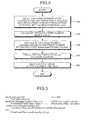
- Fig. 4 is a flowchart of the process procedure of the POC decoding process by the POC decoding unit 210. As depicted in Fig. 4 , the POC decoding unit 210 calculates the frame number offset (FrameNumOffset) (Step S10).
- Fig. 5 lists codes that correspond to a process at Step S10.
- the POC decoding unit 210 executes the processes of Steps S20 to S50.
- the processes of Steps S20 to S50 respectively correspond to the processes of Steps S2 to S5 of Fig. 8 .
- the POC decoding unit 210 when the POC decoding unit 210 first detects the RPSEI for a frame other than the IDR frame, the POC decoding unit 210 initializes the frame number offset to a value of the frame number, whose sign is inverted and, thereby, the POC is able to be correctly decoded.
- Fig. 6 is a chart of an exemplary calculation of a POC during random accessing.
- the RPSEI is first detected for a frame other than the IDR and the frame number offset (FrameNumOffset) is initialized to -2.
- the frame number offset (FrameNumOffset) is initialized to -2.
- zero is correctly calculated as the value of the frame number within the POC cycle (frameNumInPicOrderCntCycle).
- the POC value is set at a value that is decreased by 12 from the original value, the relative value between the frames is preserved.
- the RPSEI inserting unit 110 of the encoder 100 limits the insertion position of the RPSEI and the POC decoding unit 210 of the decoder 200 initially sets properly the frame number offset and, thereby, the decoder 200 is able to correctly decode the POC even during the random accessing.
- the frame number offset is initialized to a value of the frame number, whose sign is inverted, when the RPSEI is first detected for a frame other than the IDR frame.
- the frame number within a POC cycle is correctly calculated for the next reference frame of the reference frame for which the RPSEI is first detected.
- the frame number within a POC cycle is also able to be correctly calculated for the reference frame for which the RPSEI is first detected. More specifically, the RPSEI is inserted into only each of the reference frames whose value of the reference frame counter is one or larger for the encoder and for which the remainder left by dividing the "reference frame counter-1" by the value of the reference frame within the POC cycle is zero.
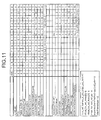
- Fig. 11 is a chart of exemplary calculation of a POC during the random accessing in the example.
- the encoder 100 and the decoder 200 are explained. However, by realizing by software the configuration that the encoder 100 or the decoder 200 has, an encoding program or a decoding program having the same function is able to be obtained. A computer that executes the encoding program will hereinafter be described. The decoding program is able to be executed by a computer having the same configuration.
- Fig. 7 is a functional block diagram of the configuration of a computer that executes an encoding program according to the embodiment.
- a computer 300 includes a RAM 310, a CPU 320, an HDD 330, a LAN interface 340, an input/output interface 350, and a DVD drive 360.
- the RAM 310 is a memory that stores therein programs, intermediate results of the execution of each of a program, etc.
- the CPU 320 is a central processing unit that reads a program from the RAM 310 and executes the program.
- the HDD 330 is a disc apparatus that stores therein the programs and data.
- the LAN interface 340 is an interface to connect the computer 300 to another computer through a LAN.
- the input/output interface 350 is an interface to connect an input apparatus such as a mouse or a keyboard and a displaying apparatus.
- the DVD drive 360 is an apparatus that reads from and writes into a DVD.
- An encoding program 311 that is executed on the computer 300 is stored in a DVD; is read from the DVD by the DVD drive 360; and is installed in the computer 300. Otherwise, the encoding program 311 is stored in a database, etc., of another computer system that is connected through the LAN interface 340, is read from the database, and is installed in the computer 300.
- the installed encoding program 311 is stored in the HDD 330, is read by the RAM 310, and is executed by the CPU 320.
- the recovery point is inserted when it is determined that a frame to be encoded is a reference frame and its frame number from an instantaneous decoding refresh frame is a positive integer times as large as the number of reference frames within a POC cycle. Therefore, the decoding apparatus can correctly decode a POC even during random accessing.
- a method, an apparatus, a system, a computer program, a recording medium, a data structure, etc., applied with the elements, expressions, or any arbitrary combination of the elements of the present invention are also effective to solve the above problems.
- an advantageous effect can be obtained that a moving image is able to be correctly decoded because a POC is able to be correctly decoded even during random accessing.
Landscapes
- Engineering & Computer Science (AREA)
- Multimedia (AREA)
- Signal Processing (AREA)
- Compression Or Coding Systems Of Tv Signals (AREA)
- Television Signal Processing For Recording (AREA)
Abstract
Description
- This application is based upon and claims the benefit of priority of the prior Japanese Patent Application No.
2008-108241, filed on April 17, 2008 2008-076391, filed on March 24, 2008 - The embodiment(s) discussed herein is(are) directed to a technique for processing moving images.
- In the H.264/MPEG-4 AVC standard, a POC (Picture Order Count) is a parameter that indicates the order of displaying frames and fields. The POC is used for determination of the initial order of a reference picture in decoding of a B picture. The POC also indicates the difference in the picture order between frames or fields concerning the calculation of motion vectors in a time direct mode. The POC is also used for implicit mode weighted prediction of the B picture and a compatibility check of a decoder. Therefore, the POC needs to be correctly decoded.
- The POC is decoded in any one of three kinds of method depending on the type of the POC. The decoding method of
type 1 is explained in section 8.2.1.2 of the H.264/MPEG-4 AVC standard (see, e.g., H.264 Advanced Video Coding for Generic Audiovisual Services, ITU-T Standard). -
Fig. 8 is a flowchart of the process procedure of a conventional POC decoding process based on the H.264/MPEG-4 AVC standard. As depicted inFig. 8 , in the conventional POC decoding process, the decoder calculates a frame number offset (FrameNumOffset) (Step S1). - The frame number offset is an offset value of a frame number (frame_num) relative to the newest IDR frame (Instantaneous Decoding Refresh frame). Each frame has a relative number from the IDR frame. The relative number is calculated from the frame number (0 to MaxFrameNum: the frame number maximal value) and the frame number offset. The frame number is a number that is counted up when the reference frame appears and that is not counted up when non-reference frame appears.
-
Fig. 9A lists codes for calculating the frame number offset. InFig. 9A , "nal_unit_type==5" represents that a frame is an IDR frame, "prevFrameNum" is the frame number of the immediately previous frame, and "prevFrameNumOffset" is a frame number offset of the immediately previous frame. - The decoder calculates an absolute frame number (absFrameNum) from the frame number offset (Step S2). The absolute frame number is a relative number from the newest IDR frame. The term "absolute" is used herein meaning that the absolute frame number is a number that does not use the frame number offset.
-
Fig. 9B lists codes for calculating an absolute frame number. InFig. 9B , num_ref_frames_in_pic_order_cnt_cycle, that is, the number of reference frames within a POC cycle is a constant that indicates the number of reference frames within a POC cycle. On the other hand, "nal_ref_idc==0" represents that a frame is a non-reference frame. A POC cycle is a repetitive group of a reference frame and a non-reference frame. - The decoder calculates the POC cycle number (picOrderCntCycleCnt) and the frame number within a POC cycle (frameNumInPicOrderCntCycle) (Step S3). The frame number within a POC cycle is a number that indicates the position of a frame within a POC cycle and that takes a value from zero to the number of the reference frames within the POC cycle. This frame number within a POC cycle is a very important variable that is used for calculating the value of the reference frame offset (offset_for_ref_frame) used for accessing a list of the reference frames in a POC cycle.
Fig. 9C lists codes for calculating a POC cycle number and a frame number within a POC cycle. - The decoder calculates a POC expected value (expectedPicOrderCnt) (Step S4). The POC expected value of a reference frame is calculated from an offset value given from the delta expected value of the POC cycle (expectedDeltaPerPicOrderCntCycle), the POC cycle number, and an offset list corresponding to the reference frame (offset_for_ref_frame[i]). In this case, the delta expected value of each POC cycle is calculated as a sum of the offset values for the reference frame of the POC cycle.
- The offset value for the non-reference frame of the POC cycle is used for the POC expected value of a non-reference frame.
Fig. 9D lists codes for calculating the delta expected value of each POC cycle.Fig. 9E lists codes for calculating the POC expected value. - The decoder calculates the POC value of the top field/bottom field (Step S5).
Fig. 9F lists codes for calculating the POC value of the top field/bottom field. InFig. 9F , "TopFieldOrderCnt" represents the POC value of the top field and "BottomFieldOrderCnt" represents the POC value of the bottom field. - In
Figs. 9A to 9F , "nal_unit_type", "frame_num", "MaxFrameNum", "num_ref_frames_in_pic_order_cnt_cycle", "nal_ref_idc", "offset_for_ref_frame[i]", "offset_for_non_ref_pic", "field_pic_flag", "delta_pic_order_cnt[0]", "delta_pic_order_cnt[1]", "bottom_field_flag", and "offset_for_top_to_bottom_field" are obtained from the syntax of the encoded image data.Fig. 10 depicts an exemplary calculation of a POC. - In the conventional POC calculation, as illustrated in
Fig. 9A , the frame number offset is first set to be zero when an IDR frame is present and, for each of the subsequent frames, the frame number offset of the immediately previous frame is set as its frame number offset when the frame number is equal to or larger than the immediately previous frame number. - However, when the decoding is started from a random access point, a problem arises that a POC is not able to be correctly calculated. The "random access point" is a position at which information that enables the random access is included. When the random access may be executed, additional information indicating a recovery point (RPSEI: Recovery Point Supplemental Enhancement Information) is used. The RPSEI (Recovery Point SEI) is complementary information that enables the decoder to correctly decode frames at and after the recovery point.
- That is, even in the case where correct decoding is attempted from the recovery point using the RPSEI, when the random access is executed, the frame number offset initially is not correctly set because the frame number offset of the immediately previous frame is unknown. Therefore, the value of the absolute frame number is not correctly calculated and the frame number within the POC cycle is not correctly calculated. As a result, no correct access is able to be made to the offset list and the POC is not able to be correctly decoded. Therefore, to correctly decode a POC, the frame number offset needs to initially be correctly set and the frame number within the POC cycle needs to be correctly calculated.
- It is an object of the present invention to at least partially solve the problems in the conventional technology.
- According to one aspect of an embodiment, an encoding apparatus encodes a picture order count (POC) while inserting a recovery point, and the encoding apparatus includes an insertion permission/rejection determining unit that determines whether a frame to be encoded is a reference frame and its frame number from an instantaneous decoding refresh frame is a positive integer times as large as a number of reference frames within a POC cycle, and a recovery point inserting unit that inserts a recovery point into the frame when the insertion permission/rejection determining unit determines that the frame is a reference frame and its frame number from the instantaneous decoding refresh frame is a positive integer times as large as the number of reference frames within the POC cycle.
- According to another aspect of an embodiment, a decoding apparatus decodes a moving image whose POC is encoded while a recovery point is inserted, and the decoding apparatus includes a POC decoding unit that decodes the POC by executing an initializing process such that a frame number within a POC cycle used in decoding the POC becomes zero, when decoding by random accessing is started.
- According to still another aspect of an embodiment, a moving image processing method includes encoding a moving image by encoding a picture order count (POC) while inserting a recovery point. The encoding includes determining, for a frame to be encoded, whether the frame is a reference frame and its frame number from an instantaneous decoding refresh frame is a positive integer times as large as a number of reference frames within a POC cycle, and inserting the recovery point into the frame when it is determined in the determining that the frame is a reference frame and its frame number from the instantaneous decoding refresh frame is a positive integer times as large as the number of reference frames within the POC cycle. The moving image processing method further includes decoding the moving image that is encoded in the encoding. The decoding includes further decoding the POC by executing an initializing process such that a frame number within the POC cycle used in decoding the POC becomes zero, when decoding by random accessing is started.
- According to still another aspect of an embodiment, a moving image processing system includes an encoding apparatus that encodes a moving image by encoding a picture order count (POC) while inserting a recovery point. The encoding apparatus includes an insertion permission/rejection determining unit that determines, for a frame to be encoded, whether the frame is a reference frame and its frame number from an instantaneous decoding refresh frame is a positive integer times as large as a number of reference frames within a POC cycle, and a recovery point inserting unit that inserts the recovery point into the frame when the insertion permission/rejection determining unit determines that the frame is a reference frame and its frame number from the instantaneous decoding refresh frame is a positive integer times as large as the number of reference frames within the POC cycle. The moving image processing system further includes a decoding apparatus that decodes the moving image that is encoded by the encoding apparatus, and the decoding apparatus includes a POC decoding unit that decodes the POC by executing an initializing process such that the frame number within the POC cycle used in decoding the POC becomes zero, when decoding by random accessing is started.
- According to still another aspect of an embodiment, a computer program product has a computer readable medium including programmed instructions for encoding a moving image by encoding a picture order count (POC) while inserting a recovery point. When the instructions are executed by a computer, the instructions cause the computer to perform determining, for a frame to be encoded, whether the frame is a reference frame and its frame number from an instantaneous decoding refresh frame is a positive integer times as large as a number of reference frames within a POC cycle, and inserting the recovery point into the frame when it is determined in the determining that the frame is a reference frame and its frame number from the instantaneous decoding refresh frame is a positive integer times as large as the number of reference frames within the POC cycle.
- According to still another aspect of an embodiment, a computer program product has a computer readable medium including programmed instructions for decoding a moving image whose picture order count (POC) is encoded while a recovery point is inserted. When the instructions are executed by a computer, the instructions cause the computer to perform decoding the POC by executing an initializing process such that a frame number within a POC cycle used in decoding the POC becomes zero, when decoding by random accessing is started.
- Additional objects and advantages of the invention will be set forth in part in the description which follows, and in part will be obvious from the description, or may be learned by practice of the invention. The object and advantages of the invention will be realized and attained by means of the elements and combinations particularly pointed out in the appended claims.
- It is to be understood that both the foregoing general description and the following detailed description are exemplary and explanatory only and are not restrictive of the invention, as claimed.
-
-
Fig. 1 is an explanatory view of RPSEI inserting position limit by an encoder according to an embodiment; -
Fig. 2 depicts configurations of the encoder and a decoder according to the embodiment; -
Fig. 3 is a flowchart of process procedure of an encoding process by the encoder; -
Fig. 4 is a flowchart of process procedure of a POC decoding process by a POC decoding unit; -
Fig. 5 lists codes that correspond to a process at Step S10 ofFig. 4 ; -
Fig. 6 is a chart of an exemplary calculation of a POC during random accessing; -
Fig. 7 is a functional block diagram of a configuration of a computer that executes an encoding program according to the embodiment; -
Fig. 8 is a flowchart of process procedure of a conventional POC decoding process; -
Figs. 9A to 9F list codes of the conventional POC decoding process; -
Fig. 10 depicts exemplary calculation of a POC; and -
Fig. 11 is a chart of exemplary calculation of a POC during random accessing. - Referring to the accompanying drawings, exemplary embodiments will now be explained in detail of an encoding apparatus, a decoding apparatus, a moving image processing method, a moving image processing system, an encoding program, and a decoding program according to the present invention. The "recovery point" used in claims indicates the RESEI.
- The RPSEI inserting position limit by an encoder according to the embodiment will hereinafter be explained.
Fig. 1 is an explanatory view of the RPSEI inserting position limit by an encoder according to the embodiment.Fig. 1 illustrates a frame sequence that starts from an IDR frame and that continues as B, P, B, B, P, B, P, B, B, P, and B. In this case, "P" represents a reference frame and "B" represents a non-reference frame. A reference frame counter is a counter that counts the number of reference frames. A frame counter is a counter that counts the number of frames including the non-reference frames. - The encoder according to the embodiment inserts the RPSEI into only the reference frames whose reference frame counter value is an integer times (n times) as large as the number of the reference frames within the POC cycle or an integer times (n times) of an integer times (m times) as large as the number of the reference frames within the POC cycle.
- In
Fig. 1 , the number of the reference frames within the POC cycle is two. Therefore, the encoder inserts the RPSEI into each of the reference frames whose reference frame counter values are an integer times (n=1, m=1) as large as two, that is, the reference frames whose reference frame counter values respectively are zero (the IDR frame), two, and four. Taking another example of the case where n=3 and m=1, the decoder inserts the RPSEI into each of the reference frames whose reference frame counter values respectively are zero, six, 12, 18,... and, when n=2 and M=5, the decoder inserts the RPSEI into each of the reference frames whose reference frame counter values respectively are zero, 20, 40, 60, and so on. - On the other hand, as explained later, when the decoder according to the embodiment first detects a frame with the RPSEI inserted thereinto other than the IDR frame, the decoder initializes the frame number offset to a value of the frame number, whose sign is inverted. As a result, for the next reference frame, the frame number within the POC cycle is able to be set to zero and the frame number within the POC cycle (frameNumInPicOrderCntCycle) is able to be set to a correct value that is zero. Thereby, relative to the first detected frame with the RPSEI (the recovery point SEI) inserted thereinto as a criterion (zero), the relative POC of each of all the subsequent frames is able to be correctly decoded.
- In this manner, in the embodiment, the encoder limits the frames each with the RPSEI inserted thereinto, the decoder initially sets properly the frame number offset and, thereby, the POC is able to be correctly decoded even during the random accessing. Therefore, the decoder is able to correctly decode a moving image even when the decoder starts the decoding by the random accessing.
- The configurations of the encoder and the decoder according to the embodiment will hereinafter be explained.
Fig. 2 depicts the configurations of the encoder and the decoder according to the embodiment. As depicted inFig. 2 , anencoder 100 according to the embodiment includes anRPSEI inserting unit 110 and adecoder 200 includes aPOC decoding unit 210. - The
RPSEI inserting unit 110 is a processing unit that inserts RPSEI into a frame. TheRPSEI inserting unit 110 inserts the RPSEI into only each of the reference frames, whose reference frame counter value is an integer times as large as the number of the reference frames within the POC cycle or an integer times (n times) of an integer times (m times) as large as the number of the reference frames within the POC cycle. - On the other hand, when the
POC decoding unit 210 first detects a frame with the RPSEI inserted thereinto other than the IDR frame, the decoder initializes the frame number offset to a value of the frame number, whose sign is inverted. - In this manner, the
RPSEI inserting unit 110 limits the positions to insert the RPSEI and thePOC decoding unit 210 initially sets properly the frame number offset and, thereby, the POC is able to be correctly decoded even during the random accessing. - The process procedure of an encoding process by the
encoder 100 will hereinafter be explained.Fig. 3 is a flowchart of the process procedure of the encoding process by theencoder 100. Each frame includes an SEI, an SPS (Sequence Parameter Set), a PPS (Picture Parameter Set), and a slice (frame data). However, the SEI, the SPS and the PPS are optional. - A case will hereinafter be explained where one IDR frame and a series of subsequent frames are encoded. By repeating the process procedure depicted in
Fig. 3 , image data including a plurality of IDRs is able to be encoded. - As depicted in
Fig. 3 , theencoder 100 first executes an initializing process necessary for the encoding process (Step S101). More specifically, determination of the frame reference structure, determination of the parameter values concerning thePOC type 1, and initialization of variables such as the reference frame counter are executed. - The
encoder 100 encodes the IDR frame and increments the reference frame counter by one (Step S102) and theencoder 100 initializes the variable "n" that represents the frame number and sets the variable "n" to one (Step S103). Theencoder 100 determines whether an n-th frame is a reference frame and the remainder left by dividing the reference frame counter by the number of reference frames within the POC cycle is zero (Step S104). - As a result, when the n-th frame is a reference frame and the remainder left by dividing the reference frame counter by the number of reference frames within the POC cycle is zero, the
encoder 100 encodes the RPSEI, the SPS, and the PPS (Step S105). - The
encoder 100 encodes the n-th frame (Step S106) and determines whether the n-th frame is a reference frame (Step S107). As a result, when the n-th frame is a reference frame, theencoder 100 increments the reference frame counter by one (Step S108). - The encoder increments "n" by one (Step S109) and determines whether n is larger than the encoding frame number (Step S110). As a result, when n is not larger than the encoding frame number, the procedure returns to Step S104 and the next frame is processed. When n is larger than the encoding frame number, the encoding process comes to an end.
- As above, the
encoder 100 inserts the RPSEI into only each of the reference frames for which the remainder left by dividing its reference frame counter by the number of reference frames within the POC cycle is zero and, thereby, thedecoder 100 is able to correctly decode the POC. - A POC decoding process by the
POC decoding unit 210 will hereinafter be explained.Fig. 4 is a flowchart of the process procedure of the POC decoding process by thePOC decoding unit 210. As depicted inFig. 4 , thePOC decoding unit 210 calculates the frame number offset (FrameNumOffset) (Step S10). - However, when the
POC decoding unit 210 first detects the RPSEI for a frame other than the IDR frame, thePOC decoding unit 210 initializes the frame number offset to a value of the frame number, whose sign is inverted.Fig. 5 lists codes that correspond to a process at Step S10. InFig. 5 , "sei_message->payloadType==6" represents that the RPSEI is inserted and, in this case, "FrameNumOffset=-frame_Num" and the frame number offset are initialized as expressed in Equation (1). - The
POC decoding unit 210 executes the processes of Steps S20 to S50. InFig. 4 , the processes of Steps S20 to S50 respectively correspond to the processes of Steps S2 to S5 ofFig. 8 . - As above, when the
POC decoding unit 210 first detects the RPSEI for a frame other than the IDR frame, thePOC decoding unit 210 initializes the frame number offset to a value of the frame number, whose sign is inverted and, thereby, the POC is able to be correctly decoded. -
Fig. 6 is a chart of an exemplary calculation of a POC during random accessing. In this example, the RPSEI is first detected for a frame other than the IDR and the frame number offset (FrameNumOffset) is initialized to -2. For the next reference frame, zero is correctly calculated as the value of the frame number within the POC cycle (frameNumInPicOrderCntCycle). Though the POC value is set at a value that is decreased by 12 from the original value, the relative value between the frames is preserved. - As above, in the embodiment, the
RPSEI inserting unit 110 of theencoder 100 limits the insertion position of the RPSEI and thePOC decoding unit 210 of thedecoder 200 initially sets properly the frame number offset and, thereby, thedecoder 200 is able to correctly decode the POC even during the random accessing. - In the embodiment, as described above, the frame number offset is initialized to a value of the frame number, whose sign is inverted, when the RPSEI is first detected for a frame other than the IDR frame. However, to correctly calculate the frame number within the POC for the next reference frame, from
Fig. 9C , "absolute frame number (absFrameNum)-1" only needs to be an integer times as large as the number of reference frames within the POC cycle (num_ref_frames_in_pic_order_cnt_cycle). Therefore, the frame number offset is also able to be initialized to a value obtained by multiplying the value of the frame number whose sign is inverted by a value an integer times as large as the number of reference frames within the POC cycle.
That is, instead of Equation (1) ofFig. 5 ,
"FrameNumOffset=-
frame_Num+M*num_ref_frames_in_pic_order_cnt_cycle" may be used, where M is an integer. - In the above embodiment, the frame number within a POC cycle is correctly calculated for the next reference frame of the reference frame for which the RPSEI is first detected. However, the frame number within a POC cycle is also able to be correctly calculated for the reference frame for which the RPSEI is first detected. More specifically, the RPSEI is inserted into only each of the reference frames whose value of the reference frame counter is one or larger for the encoder and for which the remainder left by dividing the "reference frame counter-1" by the value of the reference frame within the POC cycle is zero. The decoder uses FrameNumOffset=num_ref_frames_in_pic_order_cnt_cycle-
frame_num+ 1 instead of Equation (1) ofFig. 5 in the calculation of FrameNumOffset for the reference frame for which the RPSEI is first detected.Fig. 11 is a chart of exemplary calculation of a POC during the random accessing in the example. - In the embodiment, the
encoder 100 and thedecoder 200 are explained. However, by realizing by software the configuration that theencoder 100 or thedecoder 200 has, an encoding program or a decoding program having the same function is able to be obtained. A computer that executes the encoding program will hereinafter be described. The decoding program is able to be executed by a computer having the same configuration. -
Fig. 7 is a functional block diagram of the configuration of a computer that executes an encoding program according to the embodiment. As depicted inFig. 7 , acomputer 300 includes a RAM 310, aCPU 320, anHDD 330, aLAN interface 340, an input/output interface 350, and aDVD drive 360. - The RAM 310 is a memory that stores therein programs, intermediate results of the execution of each of a program, etc. The
CPU 320 is a central processing unit that reads a program from the RAM 310 and executes the program. TheHDD 330 is a disc apparatus that stores therein the programs and data. TheLAN interface 340 is an interface to connect thecomputer 300 to another computer through a LAN. The input/output interface 350 is an interface to connect an input apparatus such as a mouse or a keyboard and a displaying apparatus. TheDVD drive 360 is an apparatus that reads from and writes into a DVD. - An
encoding program 311 that is executed on the computer 300: is stored in a DVD; is read from the DVD by theDVD drive 360; and is installed in thecomputer 300. Otherwise, theencoding program 311 is stored in a database, etc., of another computer system that is connected through theLAN interface 340, is read from the database, and is installed in thecomputer 300. The installedencoding program 311 is stored in theHDD 330, is read by the RAM 310, and is executed by theCPU 320. - According to an embodiment of the present invention, the recovery point is inserted when it is determined that a frame to be encoded is a reference frame and its frame number from an instantaneous decoding refresh frame is a positive integer times as large as the number of reference frames within a POC cycle. Therefore, the decoding apparatus can correctly decode a POC even during random accessing.
- A method, an apparatus, a system, a computer program, a recording medium, a data structure, etc., applied with the elements, expressions, or any arbitrary combination of the elements of the present invention are also effective to solve the above problems.
- According to an embodiment of the present invention, an advantageous effect can be obtained that a moving image is able to be correctly decoded because a POC is able to be correctly decoded even during random accessing.
- All examples and conditional language recited herein are intended for pedagogical purposes to aid the reader in understanding the principles of the invention and the concepts contributed by the inventor to furthering the art, and are to be construed as being without limitation to such specifically recited examples and conditions, nor does the organization of such examples in the specification relate to a showing of the superiority and inferiority of the invention. Although the embodiment(s) of the present invention has(have) been described in detail, it should be understood that the various changes, substitutions, and alterations could be made hereto without departing from the spirit and scope of the invention.
Claims (7)
- An encoding apparatus that encodes a picture order count (POC) while inserting a recovery point, the apparatus comprising:an insertion permission/rejection determining unit that determines whether a frame to be encoded is a reference frame and its frame number from an instantaneous decoding refresh frame is a positive integer times as large as a number of reference frames within a POC cycle; anda recovery point inserting unit that inserts a recovery point into the frame when the insertion permission/rejection determining unit determines that the frame is a reference frame and its frame number from the instantaneous decoding refresh frame is a positive integer times as large as the number of reference frames within the POC cycle.
- A decoding apparatus that decodes a moving image whose picture order count (POC) is encoded while a recovery point is inserted, the apparatus comprising
a POC decoding unit that decodes the POC by executing an initializing process such that a frame number within a POC cycle used in decoding the POC becomes zero, when decoding by random accessing is started. - The decoding apparatus according to claim 2, wherein
when the POC decoding unit first detects the recovery point for a frame other than an instantaneous decoding refresh frame, the POC decoding unit executes an initializing process such that the frame number within the POC cycle becomes zero, by initially setting a frame number offset to a value obtained by adding a value of a frame number from an instantaneous decoding refresh frame, whose sign is inverted, and a value that is an integer times as large as a number of reference frames within the POC cycle. - A moving image processing method comprising:encoding a moving image by encoding a picture order count (POC) while inserting a recovery point, the encoding includingdetermining, for a frame to be encoded, whether the frame is a reference frame and its frame number from an instantaneous decoding refresh frame is a positive integer times as large as a number of reference frames within a POC cycle, andinserting the recovery point into the frame when it is determined in the determining that the frame is a reference frame and its frame number from the instantaneous decoding refresh frame is a positive integer times as large as the number of reference frames within the POC cycle; anddecoding the moving image that is encoded in the encoding, the decoding includingfurther decoding the POC by executing an initializing process such that a frame number within the POC cycle used in decoding the POC becomes zero, when decoding by random accessing is started.
- A moving image processing system comprising:an encoding apparatus that encodes a moving image by encoding a picture order count (POC) while inserting a recovery point, the encoding apparatus includingan insertion permission/rejection determining unit that determines, for a frame to be encoded, whether the frame is a reference frame and its frame number from an instantaneous decoding refresh frame is a positive integer times as large as a number of reference frames within a POC cycle, anda recovery point inserting unit that inserts the recovery point into the frame when the insertion permission/rejection determining unit determines that the frame is a reference frame and its frame number from the instantaneous decoding refresh frame is a positive integer times as large as the number of reference frames within the POC cycle; anda decoding apparatus that decodes the moving image that is encoded by the encoding apparatus, the decoding apparatus includinga POC decoding unit that decodes the POC by executing an initializing process such that the frame number within the POC cycle used in decoding the POC becomes zero, when decoding by random accessing is started.
- A computer program product having a computer readable medium including programmed instructions for encoding a moving image by encoding a picture order count (POC) while inserting a recovery point, wherein the instructions when executed by a computer, cause the computer to perform:determining, for a frame to be encoded, whether the frame is a reference frame and its frame number from an instantaneous decoding refresh frame is a positive integer times as large as a number of reference frames within a POC cycle; andinserting the recovery point into the frame when it is determined in the determining that the frame is a reference frame and its frame number from the instantaneous decoding refresh frame is a positive integer times as large as the number of reference frames within the POC cycle.
- A computer program product having a computer readable medium including programmed instructions for decoding a moving image whose picture order count (POC) is encoded while a recovery point is inserted, wherein the instructions when executed by a computer, cause the computer to perform:decoding the POC by executing an initializing process such that a frame number within a POC cycle used in decoding the POC becomes zero, when decoding by random accessing is started.
Applications Claiming Priority (2)
| Application Number | Priority Date | Filing Date | Title |
|---|---|---|---|
| JP2008076391 | 2008-03-24 | ||
| JP2008108241A JP2009260736A (en) | 2008-03-24 | 2008-04-17 | Encoding apparatus, decoding apparatus, moving image processing method, moving image processing system, encoding program, and decoding program |
Publications (1)
| Publication Number | Publication Date |
|---|---|
| EP2106144A1 true EP2106144A1 (en) | 2009-09-30 |
Family
ID=40347913
Family Applications (1)
| Application Number | Title | Priority Date | Filing Date |
|---|---|---|---|
| EP20080169508 Withdrawn EP2106144A1 (en) | 2008-03-24 | 2008-11-20 | Method, apparatus, and system for inserting a recovery point in a moving image |
Country Status (3)
| Country | Link |
|---|---|
| US (1) | US20090238261A1 (en) |
| EP (1) | EP2106144A1 (en) |
| JP (1) | JP2009260736A (en) |
Families Citing this family (10)
| Publication number | Priority date | Publication date | Assignee | Title |
|---|---|---|---|---|
| KR101631774B1 (en) * | 2011-06-30 | 2016-06-24 | 텔레폰악티에볼라겟엘엠에릭슨(펍) | Absolute or explicit reference picture signaling |
| ES2595732T3 (en) | 2011-06-30 | 2017-01-03 | Telefonaktiebolaget Lm Ericsson (Publ) | Reference image signaling |
| US10034018B2 (en) | 2011-09-23 | 2018-07-24 | Velos Media, Llc | Decoded picture buffer management |
| CN103037209B (en) * | 2011-09-30 | 2016-05-04 | 腾讯科技(深圳)有限公司 | The decoding processing method of frame of video and device |
| US9264717B2 (en) | 2011-10-31 | 2016-02-16 | Qualcomm Incorporated | Random access with advanced decoded picture buffer (DPB) management in video coding |
| CN108833926B (en) | 2012-04-16 | 2021-12-21 | 三星电子株式会社 | Method and apparatus for determining reference picture set of image |
| CN104754334A (en) * | 2015-03-02 | 2015-07-01 | 深圳市金立通信设备有限公司 | Video processing method |
| EP4284114B1 (en) | 2018-04-05 | 2025-07-16 | Telefonaktiebolaget LM Ericsson (publ) | Multi-stage sidelink control information |
| CN112231196B (en) * | 2020-12-14 | 2021-03-16 | 平安科技(深圳)有限公司 | APP embedded point behavior classification method and device, computer equipment and storage medium |
| CN113407138B (en) * | 2021-06-30 | 2022-07-29 | 腾讯科技(深圳)有限公司 | Application program picture processing method and device, electronic equipment and storage medium |
Citations (2)
| Publication number | Priority date | Publication date | Assignee | Title |
|---|---|---|---|---|
| JP2008076391A (en) | 2006-09-20 | 2008-04-03 | Dr Johannes Heidenhain Gmbh | Angle measuring system and method for manufacturing this angle measuring system |
| JP2008108241A (en) | 2006-09-22 | 2008-05-08 | Hewlett-Packard Development Co Lp | Managing application associated with installation |
Family Cites Families (3)
| Publication number | Priority date | Publication date | Assignee | Title |
|---|---|---|---|---|
| JP4002878B2 (en) * | 2003-01-17 | 2007-11-07 | 松下電器産業株式会社 | Image coding method |
| US8194751B2 (en) * | 2003-02-19 | 2012-06-05 | Panasonic Corporation | Moving picture coding method and moving picture decoding method |
| WO2005074295A1 (en) * | 2004-01-16 | 2005-08-11 | General Instrument Corporation | Method, protocol, and apparatus for transporting advanced video coding content |
-
2008
- 2008-04-17 JP JP2008108241A patent/JP2009260736A/en not_active Withdrawn
- 2008-11-10 US US12/292,020 patent/US20090238261A1/en not_active Abandoned
- 2008-11-20 EP EP20080169508 patent/EP2106144A1/en not_active Withdrawn
Patent Citations (2)
| Publication number | Priority date | Publication date | Assignee | Title |
|---|---|---|---|---|
| JP2008076391A (en) | 2006-09-20 | 2008-04-03 | Dr Johannes Heidenhain Gmbh | Angle measuring system and method for manufacturing this angle measuring system |
| JP2008108241A (en) | 2006-09-22 | 2008-05-08 | Hewlett-Packard Development Co Lp | Managing application associated with installation |
Non-Patent Citations (6)
| Title |
|---|
| "Text of ISO/IEC 14496-10:200X / FDIS Advanced Video Coding (4th edition)", 81. MPEG MEETING;2-6-2007 - 6-6-2007; LAUSANNE; (MOTION PICTURE EXPERT GROUP OR ISO/IEC JTC1/SC29/WG11),, no. N9198, 28 October 2007 (2007-10-28), XP030015692 * |
| GABBOUJ M ET AL: "Isolated Regions in Video Coding", IEEE TRANSACTIONS ON MULTIMEDIA, IEEE SERVICE CENTER, PISCATAWAY, NJ, US, vol. 6, no. 2, 1 April 2004 (2004-04-01), pages 259 - 267, XP011109137, ISSN: 1520-9210 * |
| IGVIDE: "POC Wrap, RAP, and Missing frames&fields", O STANDARDS AND DRAFTS, XX, XX, no. JVT-F098-L, 13 December 2002 (2002-12-13), XP030005663 * |
| SULLIVAN G.: "Preliminary Invitation to the Sixth JVT Meeting JVT-F-TD-00", ITU-T SG16/Q.6, 7 November 2002 (2002-11-07), INTERNATIONAL TELECOMMUNICATION UNION, GENEVA, pages 1 - 13, XP007910771 * |
| SULLIVAN G.: "Report of Awaji JVT Meeting", JOINT VIDEO TEAM (JVT) OF ISO/IEC MPEG & ITU-T VCEG(ISO/IEC JTC1/SC29/WG11 AND ITU-T SG16 Q6), 13 December 2002 (2002-12-13), GENEVA, pages 1 - 37, XP030005577 * |
| SULLIVAN G: "List of Documents JVT-F000", ITU-T SG16/Q.6, 13 December 2002 (2002-12-13), GENEVA, pages 1 - 2, XP007910770, Retrieved from the Internet <URL:http://wftp3.itu.int/av-arch/jvt-site/2002_12_Awaji/JVT-F000r0.txt> [retrieved on 20091203] * |
Also Published As
| Publication number | Publication date |
|---|---|
| JP2009260736A (en) | 2009-11-05 |
| US20090238261A1 (en) | 2009-09-24 |
Similar Documents
| Publication | Publication Date | Title |
|---|---|---|
| EP2106144A1 (en) | Method, apparatus, and system for inserting a recovery point in a moving image | |
| US10271048B2 (en) | Method of background residual prediction for video coding | |
| US8385407B2 (en) | Moving image coding apparatus, moving image decoding apparatus, moving image coding method and moving image decoding method | |
| EP2618583B1 (en) | Image signal decoding method and apparatus | |
| EP3331242B1 (en) | Image prediction method and device | |
| US8699561B2 (en) | System and methods for detecting and handling errors in a multi-threaded video data decoder | |
| CN103843340B (en) | Reference picture list processing | |
| KR100851859B1 (en) | Scalable MPEG-2 Video Decoder | |
| EP3185557A1 (en) | Predictive coding/decoding method, corresponding coder/decoder, and electronic device | |
| EP2400759A1 (en) | Multi-view image coding method, multi-view image decoding method, multi-view image coding device, multi-view image decoding device, multi-view image coding program, and multi-view image decoding program | |
| US20160227221A1 (en) | Method of Residue Differential Pulse-Code Modulation for HEVC Range Extension | |
| US20060133507A1 (en) | Picture information decoding method and picture information encoding method | |
| US20100241920A1 (en) | Image decoding apparatus, image decoding method, and computer-readable recording medium | |
| US10027969B2 (en) | Parallel decoder with inter-prediction of video pictures | |
| EP2320655B1 (en) | Apparatus and method of compressing image using filter information | |
| US20120230396A1 (en) | Method for Embedding Decoding Information in Quantized Transform Coefficients | |
| CN108605131B (en) | Method and apparatus for encoding and decoding data, and corresponding recording medium | |
| EP2571267A1 (en) | Code amount control method and apparatus | |
| US20140254690A1 (en) | Multi-view video coding and decoding methods and apparatuses, coder, and decoder | |
| KR20140052788A (en) | Video decoding method and apparatus based on parallel processing | |
| CN107911705B (en) | Method for analyzing AVS2.0 key parameter and checking error frame after decoding | |
| US20230396803A1 (en) | Encoding and decoding method and apparatus for immersive video | |
| CN119094792A (en) | A short-term reference image parameter set parsing method and code stream updating method | |
| HK1233807A1 (en) | Predictive coding/decoding method, corresponding coder/decoder, and electronic device | |
| HK1166906B (en) | Image signal decoding device, image signal decoding method, image signal encoding device and image signal encoding method |
Legal Events
| Date | Code | Title | Description |
|---|---|---|---|
| PUAI | Public reference made under article 153(3) epc to a published international application that has entered the european phase |
Free format text: ORIGINAL CODE: 0009012 |
|
| AK | Designated contracting states |
Kind code of ref document: A1 Designated state(s): AT BE BG CH CY CZ DE DK EE ES FI FR GB GR HR HU IE IS IT LI LT LU LV MC MT NL NO PL PT RO SE SI SK TR |
|
| AX | Request for extension of the european patent |
Extension state: AL BA MK RS |
|
| 17P | Request for examination filed |
Effective date: 20091106 |
|
| 17Q | First examination report despatched |
Effective date: 20091217 |
|
| AKX | Designation fees paid |
Designated state(s): DE FR GB |
|
| STAA | Information on the status of an ep patent application or granted ep patent |
Free format text: STATUS: THE APPLICATION IS DEEMED TO BE WITHDRAWN |
|
| 18D | Application deemed to be withdrawn |
Effective date: 20100428 |