EP2106069A2 - Receiving apparatus, transmitting apparatus, communication system and method of detecting buffer setting of relay server - Google Patents
Receiving apparatus, transmitting apparatus, communication system and method of detecting buffer setting of relay server Download PDFInfo
- Publication number
- EP2106069A2 EP2106069A2 EP20090003973 EP09003973A EP2106069A2 EP 2106069 A2 EP2106069 A2 EP 2106069A2 EP 20090003973 EP20090003973 EP 20090003973 EP 09003973 A EP09003973 A EP 09003973A EP 2106069 A2 EP2106069 A2 EP 2106069A2
- Authority
- EP
- European Patent Office
- Prior art keywords
- data
- dummy data
- size
- bytes
- relayed
- Prior art date
- Legal status (The legal status is an assumption and is not a legal conclusion. Google has not performed a legal analysis and makes no representation as to the accuracy of the status listed.)
- Granted
Links
Images




Classifications
-
- H—ELECTRICITY
- H04—ELECTRIC COMMUNICATION TECHNIQUE
- H04L—TRANSMISSION OF DIGITAL INFORMATION, e.g. TELEGRAPHIC COMMUNICATION
- H04L49/00—Packet switching elements
- H04L49/90—Buffering arrangements
Definitions
- the present invention contains subject matter related to Japanese Patent Application JP 2008-075915 filed in the Japan Patent Office on March 24, 2008, the entire content of which being incorporated herein by reference.
- the present invention relates to a receiving apparatus, a transmitting apparatus, a communication system, and a method of detecting a buffer setting of a relay server.
- a computer performing communication transmits/receives data via a proxy server.
- a proxy server buffers data on a proxy server based on the setting and relays data transmitted from a transmitting apparatus to a receiving apparatus. In particular, if data whose data size is not clear is transmitted by HTTP tunneling or the like, buffering may occur.
- Japanese Patent Application National Publication No. 2005-525656 discloses a technique related to a method of automatically detecting a proxy server used by a computer such as a transmitting apparatus or a receiving apparatus on the computer.
- Buffer settings of proxy servers are different from each other and it is difficult to estimate the buffer setting of a proxy server on a transmitting apparatus. Therefore, it is also difficult to estimate data size covering capacity of buffering to be added in the transmitting apparatus in order to assure that data requiring immediacy is received promptly by a receiving apparatus.
- the transmitting apparatus adds data unnecessarily having a large data size and transmits data requiring immediacy without estimating buffer setting of a proxy server by the transmitting apparatus, an unnecessary load is applied to a network, and an adverse influence may be exerted on communication performed on the network.
- the present invention has been achieved in view of the issues and it is desirable to provide a receiving apparatus, a transmitting apparatus, a communication system, and a method of detecting buffer setting of relay server which are novel and improved, capable of transmitting data requiring immediacy while suppressing load on a network.
- a receiving apparatus including: a relayed dummy data receiving unit for receiving relayed dummy data including dummy data of n bytes (n ⁇ 1) and/or dummy data of N bytes (N ⁇ n) from a relay server, and the relayed dummy data is sequentially and repetitively transmitted from a transmitting apparatus to the relay server; and a buffer setting detecting unit for detecting a buffer setting of the relay server based on a first size value indicative of data size of relayed dummy data received for the first time by the relayed dummy data receiving unit and a second size value indicative of not larger data size of relayed dummy data received for the second time and relayed dummy data received for the third time.
- the buffer setting detecting unit may detect that the relay server has a buffer characteristic in which buffering data is not performed.
- the buffer setting detecting unit may detect that the relay server has a buffer characteristic in which buffering a predetermined amount of data is performed only once if the first size value is not n bytes and the second size value is n bytes, and the buffer setting detecting unit may detect that the relay server has a buffer characteristic in which buffering of a predetermined amount of data is performed each time if each of the first and second size values is not n bytes.
- the buffer setting detecting unit may detect the first size value as buffer size of the relay server if the first size value is not n bytes and the second size value is n bytes, and detect the first or second size value as buffer size of the relay server if each of the first and second size values is not n bytes.
- the receiving apparatus may further include a buffer setting information transmitting unit for transmitting buffer setting of the relay server detected by the buffer setting detecting unit to the transmitting apparatus.
- the transmitting apparatus and the receiving apparatus may perform communication by HTTP or HTTPS
- the relay server is an HTTP proxy server
- the relayed dummy data is transmitted in response to a GET response or a POST request
- information of the buffer setting may be transmitted as response information to the POST request if the relayed dummy data is transmitted in response to the POST request.
- a transmitting apparatus including: a dummy data transmitting unit for transmitting dummy data of n bytes (n ⁇ 1) and dummy data of N bytes (N ⁇ n) sequentially and repetitively to a relay server, and the relayed dummy data including the dummy data of n bytes and/or the dummy data of N bytes is received by a receiving apparatus, and a buffer setting of the relay server is detected based on size of the relayed dummy data by the receiving apparatus.
- the transmitting apparatus may further include: a compensation data size determining unit for determining size d (d ⁇ 0) of compensation dummy data added to transmission data in accordance with the buffer setting of the relay server notified from the receiving apparatus; and a data transmitting unit transmits transmission data with compensation dummy data added thereto, and the compensation dummy data has the size d determined by the compensation data size determining unit.
- the compensation data size determining unit may set size d of the compensation dummy data to be 0.
- the data transmitting unit may transmit transmission data with compensation dummy added thereto only once.
- the data transmitting unit may transmit transmission data with compensation dummy data added thereto each time.
- the dummy data transmitting unit may dynamically change N each time the dummy data of n bytes (n ⁇ 1) and dummy data of N bytes (N ⁇ n) is sequentially and repetitively transmitted.
- the transmitting apparatus may further include a storing unit for storing a buffer setting of the relay server received from the receiving apparatus. Based on the buffer setting stored in the storing unit, the compensation data size determining unit may determine size of compensation dummy data, and the data transmitting unit may add compensation dummy data to transmission data.
- the transmitting apparatus may further include a detecting unit for detecting that a relay server for relaying communication between the transmitting apparatus and the receiving apparatus is changed.
- the dummy data of n bytes and the dummy data of N bytes may be transmitted based on a detection result of the detecting unit.
- the detecting unit may detect that the relay server is changed using, as a trigger, UP/DOWN of a network interface of the transmitting apparatus or a change of an IP address of the transmitting apparatus.
- a communication system including a transmitting apparatus having a dummy data transmitting unit for transmitting dummy data of n bytes (n ⁇ 1) and dummy data of N bytes (N ⁇ n) sequentially and repetitively to a relay server.
- the relay server transmits relayed dummy data to a receiving apparatus, the relayed dummy data being obtained by relaying, based on a buffer setting, the dummy data of n bytes and/or the dummy data of N bytes received from the transmitting apparatus, and the receiving apparatus includes: a relayed dummy data receiving unit for receiving the relayed dummy data from the relay server; and a buffer setting detecting unit for detecting a buffer setting of the relay server based on a first size value indicative of data size of relayed dummy data received for the first time by the relayed dummy data receiving unit and a second size value indicative of not larger data size of relayed dummy data received for the second time and relayed dummy data received for the third time.
- a method of detecting a buffer setting of a relay server for relaying communication between a transmitting apparatus and a receiving apparatus including the steps of: transmitting dummy data of n bytes (n ⁇ 1) and dummy data of N bytes (N ⁇ n) sequentially and repetitively to the relay server by the transmitting apparatus; transmitting relayed dummy data obtained by relaying, based on a buffer setting, the dummy data of n bytes and/ or the dummy data of N bytes received from the transmitting apparatus; receiving the relayed dummy data from the relay server by the receiving apparatus; and detecting a buffer setting of the relay server based on a first size value indicative of data size of relayed dummy data received for the first time and a second size value indicative of not larger data size of relayed dummy data received for the second time and relayed dummy data received for the third time.
- a receiving apparatus a transmitting apparatus, a communication system, and a method of detecting buffer setting of relay server which are novel and improved, capable of transmitting data requiring immediacy while suppressing load on a network.
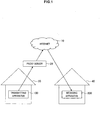
- FIG. 1 is a network configuration diagram of the first embodiment of the invention.
- a transmitting apparatus 100 of the embodiment sequentially and repetitively transmits dummy data of n bytes (n ⁇ 1) and dummy data of N bytes (N ⁇ n) to a proxy server 20 as an example of a relay server in order to detect buffer setting of the relay server.
- the transmitting apparatus 100 is connected to the Internet 10 as an example of a computer network via the proxy server 20.
- the buffer settings include a buffer characteristic and a buffer size.
- the buffer characteristic is a characteristic of buffering operation performed when a relay server relays data.
- the buffer size denotes the size of data buffered on the relay server.
- a receiving apparatus 200 of the embodiment receives relayed dummy data from the proxy server 20 and detects the buffer settings of the proxy server 20.
- the relayed dummy data is the n-byte dummy data and the N-byte dummy data sequentially and repetitively transmitted from the transmitting apparatus, relayed by the proxy server 20, and transmitted to the receiving apparatus.
- the receiving apparatus 200 is connected to the proxy server 20 via the Internet 10.
- the proxy server 20 is an example of the relay server and relays communication between the transmitting apparatus 100 and the receiving apparatus 200. That is, data transmitted from the transmitting apparatus 100 is received by the receiving apparatus 200 via the proxy server 20. The n-byte dummy data and the N-byte dummy data transmitted from the transmitting apparatus 100 is relayed by the proxy server 20, and the relayed dummy data is received by the receiving apparatus 200.
- the proxy server 20 is connected to the transmitting apparatus 100 and the Internet 10 as an example of the computer network.
- the transmitting apparatus 100 exists in a home network 30, and the receiving apparatus 200 exits in a home network 40.
- the transmitting apparatus 100 and the receiving apparatus 200 may exist in the same home network (for example, the home network 30).
- the transmitting apparatus 100 and the receiving apparatus 200 are explained as two apparatuses in the embodiment, the transmitting apparatus 100 and the receiving apparatus 200 may be included in a single communicating apparatus.
- the transmitting apparatus 100 and the receiving apparatus 200 can be any computers capable of performing HTTP communication such as personal computers, cellular phones, PDAs, home intelligent appliances conformed with DLNA (Digital Living Network Alliance), AV devices, and the like.
- the proxy server 20 may be an HTTP proxy server for relaying communication using the HTTP protocol.
- the proxy servers 20 are classified into a plurality of types based on the buffer characteristics.
- the plurality of types include a proxy server having the buffer characteristic that data is not buffered, a proxy server having the buffer characteristic of buffering a predetermined amount of data only once, and a proxy server having the buffer characteristic of buffering a predetermined amount of data each time.
- the data relaying operation of the proxy servers of those types will be described below with reference to FIGS. 2 to 4 .
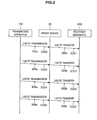
- FIG. 2 is a sequence diagram showing an example of the buffering operation of a proxy server having the buffer characteristic of buffering no data.
- the proxy server 20 promptly relays the data and transmits the relayed data 302b to the receiving apparatus 200 (S351). Also in the case where data 304a of seven bytes is transmitted (S352), similarly, the proxy server 20 promptly relays the data and transmits the relayed data 304b to the receiving apparatus 200 (S353).
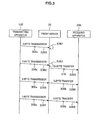
- FIG. 3 is a sequence diagram showing an example of the buffering operation of a proxy server having the buffer characteristic of buffering a predetermined amount of data only once.
- FIG. 3 shows, as an example, the proxy server 20 whose buffer size is 10 bytes.
- the proxy server 20 whose buffer size is 10 bytes.
- data 302a of three bytes is transmitted from the transmitting apparatus 100 (S360)
- the data 302a is received by the proxy server 20 and buffered (S361).
- data 304a of seven bytes is transmitted from the transmitting apparatus 100 (S362)
- the data 304a is received by the proxy server 20 and buffered (S363).
- the total amount of data buffered on the proxy server 20 becomes 10 bytes, and the buffered data 302a and 304a is transmitted as data 310 of 10 bytes from the proxy server 20 to the receiving apparatus 200 (S364).
- the proxy server 20 promptly relays the data and transmits the relayed data 306b to the receiving apparatus 200 (S366).
- the proxy server 20 promptly relays the data, and transmits the relayed data 308b to the receiving apparatus 200 (S368).
- the proxy server having the buffer characteristic of buffering the predetermined amount of data once promptly relays the data without buffering it.
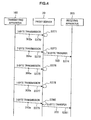
- FIG. 4 is a sequence diagram showing an example of the buffering operation of a proxy server having the buffer characteristic of buffering a predetermined amount of data only once.
- FIG. 4 shows, as an example, the proxy server 20 whose buffer size is 10 bytes.
- the proxy server 20 whose buffer size is 10 bytes.
- data 302a of three bytes is transmitted from the transmitting apparatus 100 (S370)
- the data 302a is received by the proxy server 20 and buffered (S371).
- data 304a of seven bytes is transmitted from the transmitting apparatus 100 (S372)
- the data 304a is received by the proxy server 20 and buffered (S373).
- the total amount of data buffered on the proxy server 20 becomes 10 bytes, and the buffered data 302a and 304a is transmitted as data 320 of 10 bytes from the proxy server 20 to the receiving apparatus 200 (S374).
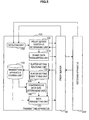
- FIG. 5 is a functional block diagram of the transmitting apparatus of the embodiment.
- the transmitting apparatus 100 has a proxy server existence determining unit 102, a dummy data transmitting unit 110, a buffer setting receiving unit 120, a data transmitting unit 130, a transmitting apparatus storing unit 140, a detecting unit 150, and a compensation data size determining unit 160.
- the proxy server existence determining unit 102 performs pre-process necessary for detecting a buffer setting of the embodiment. More specifically, the proxy server existence determining unit 102 determines the proxy server 20 used at the time of transmitting data from the transmitting apparatus 100 to the receiving apparatus 200 and establishes connection to the receiving apparatus 200 via the determined proxy server 20.
- the proxy server existence determining unit 102 obtains information of a proxy server set in the transmitting apparatus 100.
- the proxy server 20 is set in the transmitting apparatus 100.
- a process of establishing connection to the receiving apparatus 200 using the proxy server 20 and a process of establishing connection to the receiving apparatus 200 without using the proxy server 20 are simultaneously tried.
- processes of establishing connection to the receiving apparatus 200 using the set proxy servers are simultaneously tried.
- the process is performed by the dummy data transmitting unit 110 which will be described later.
- the direction connection is preferentially used.
- the proxy server existence determining unit 102 also checks the properties other than the buffer settings of the proxy server 20.
- the properties other than the buffer settings of the proxy server include whether chunk data can be relayed or not and maximum relayable data length. By checking whether chunk data can be relayed or not, data whose data transmission amount total value is unknown by the HTTP tunneling or the like can be transmitted. When chunk data can be relayed, data whose data transmission amount total value is unknown can be transmitted in the chunk form from the transmitting apparatus 100. In the case where chunk data can hardly be relayed, data whose data transmission amount total value is unknown is divided in maximum relayable data length determined by the proxy server existence determining unit 102, and the divided data is transmitted from the transmitting apparatus 100.
- the dummy data transmitting unit 110 is a function unit of sequentially and repetitively transmitting dummy data of n bytes (n ⁇ 1) and dummy data of N bytes (N ⁇ n) every predetermined time intervals of X seconds to the receiving apparatus 200 via the proxy server 20 in order to detect the buffer settings of the proxy server 20.
- the dummy data transmitting unit 110 transmits the dummy data of n bytes and N bytes using the connection established by the proxy server existence determining unit 102.
- n and N are integers.
- n is one byte
- N is a fixed value in the range of 1 kilobyte to 10 kilobytes. Therefore, in the embodiment, dummy data is transmitted from the dummy data transmitting unit 110 every X seconds in order of dummy data of one byte, dummy data of N bytes, dummy data of one byte, dummy data of N bytes, ....
- N (Values of n and N)
- N can be an arbitrary value satisfying N ⁇ n.
- the data size N of the dummy data may be one byte or 10 megabytes.
- the data size N of dummy data may be dynamically changed while dummy data of n bytes and N bytes is sequentially and repetitively transmitted. For example, when the data size n of dummy data is one byte, the data size N of dummy data is one byte at the first transmission. The data size N is two bytes at the second transmission, and is four bytes at the third transmission. After that, N may be doubled at each transmission.
- data is transmitted from the dummy data transmitting unit 110 in order of dummy data of one byte, dummy data of one byte, dummy data of one byte, dummy data of two bytes, dummy data of one byte, dummy data of four bytes, ....
- time for detecting the buffer setting is shorter than that in the case where N is fixed to one byte.
- the detected buffer size is more accurate than that in the case where N is fixed to a very large value (for example, 10 megabytes).
- N is 10 bytes at the first transmission, and 10 bytes may be added to the value of N transmitted last time.
- N is 5 kilobytes at the first transmission, and the value of N may be halved every transmission.
- dummy data is transmitted while dynamically changing the data size N of dummy data and the way of changing is adjusted, thereby enabling detection time and accuracy of the buffer setting to be adjusted.
- a transmission interval X of transmission of data from the dummy data transmitting unit has to be a value larger than the total of round trip time (RTT) between the transmitting apparatus 100 and the proxy server 20 and round trip time between the receiving apparatus 200 and the proxy server 20. More preferably, the transmission interval X is a value sufficiently larger than the total of round trip time between the transmitting apparatus 100 and the proxy server 20 and round trip time between the receiving apparatus 200 and the proxy server 20.
- RTT round trip time
- the transmission interval X is a value sufficiently larger than the total of round trip time between the transmitting apparatus 100 and the proxy server 20 and round trip time between the receiving apparatus 200 and the proxy server 20.
- the optimum transmission interval X may be determined by, for example, measuring response time from the receiving apparatus 200 when data is transmitted from the transmitting apparatus 100 to the receiving apparatus 200 via the proxy server 20.
- data to be transmitted has to be data known as data which is not buffered by the proxy server.
- the data may be a POST request in which information of "content length" is written in the header.
- the receiving apparatus 200 transmits a response to the received POST request to the transmitting apparatus 100.
- the transmitting apparatus 100 measures time since the POST request is transmitted until the response to the POST request is received, and can determine the transmission interval X in the dummy data transmitting unit 110.
- the buffer setting receiving unit 120 receives the information of the buffer setting detected by the receiving apparatus 200 via the proxy server 20 from the receiving apparatus 200.
- the buffer setting receiving unit 120 has a buffer setting identifying unit 122.
- the buffer setting identifying unit 122 identifies that the received buffer setting information indicates the buffer characteristic of buffering no data, the buffer characteristic of buffering a predetermined amount of data only once, or the buffer characteristic of buffering a predetermined amount of data each time.
- the buffer setting identifying unit 122 also identifies the buffer size.
- the information of the buffer setting received by the buffer setting receiving unit 120 is used to determine the data size of compensation dummy data in the compensation data size determining unit 160.
- the buffer setting information is also used for determining a timing of adding the compensation dummy data in the data transmitting unit 130.
- the buffer setting received by the buffer setting receiving unit 120 is stored in the transmitting apparatus storing unit 140.
- the stored buffer setting may be used for a process in the compensation data size determining unit 160 and the data transmitting unit 130.
- the compensation data size determining unit 160 determines data size d of compensation dummy data based on the buffer size received by the buffer setting receiving unit 120.
- the compensation dummy data is data having a data size covering buffering capacity, which is added to data in order to assure that data is promptly received by the receiving apparatus 200 at the time of transmitting data requiring immediacy. Based on the data size d of the compensation dummy data determined by the compensation data size determining unit 160, the compensation dummy data is added to transmission data by the data transmitting unit 130.
- the compensation data size determining unit 160 determines that the data size d of the compensation dummy data is 0. In the case where the buffer characteristic received by the buffer setting receiving unit 120 is the buffer characteristic of buffering data only once, or the buffer characteristic of buffering data each time, the compensation data size determining unit 160 determines the data size d of the compensation dummy data based on the buffer size received by the buffer setting receiving unit 120.
- the information of the buffer setting used in the compensation data size determining unit 160 may be information stored in the transmitting apparatus storing unit 140.
- Data Transmitting Unit 130 In the case of transmitting data requiring immediacy, based on the buffer characteristic included in the buffer setting information received by the buffer setting receiving unit 120, the data transmitting unit 130 adds compensation dummy data and transmits the resultant data. In the case where the buffer characteristic received by the buffer setting receiving unit 120 is the buffer characteristic of buffering no data, the data transmitting unit 130 transmits the data requiring immediacy without adding the compensation dummy data.
- the data transmitting unit 130 adds the compensation dummy data having the data size determined by the compensation data size determining unit 160 to the transmission data only once and transmits data requiring immediacy.
- the data transmitting unit 130 adds the compensation dummy data having the data size determined by the compensation data size determining unit 160 every transmission of data requiring immediacy and transmits the resultant data.
- the network load applied due to the addition of the compensation dummy data can be decreased.
- the information of the buffer setting used in the data transmitting unit 130 may be information stored in the transmitting apparatus storing unit 140.
- the transmitting apparatus storing unit 140 stores the buffer setting received by the buffer setting receiving unit 120.
- the information of the buffer setting stored in the transmitting apparatus storing unit 140 is used to determine the data size d of the compensation dummy data by the compensation data size determining unit 160.
- the information of the buffer setting stored in the transmitting apparatus storing unit 140 is also used for addition of compensation dummy data to the data requiring immediacy in the data transmitting unit 130.
- the detecting unit 150 detects that the proxy server 20 for relaying communication between the transmitting apparatus 100 and the receiving apparatus 200 is changed.
- the change of the proxy server 20 may be detected using, for example, UP/DOWN of the network interface of at least one of the transmitting apparatus 100, the proxy server 20, and the receiving apparatus 200, or a change of the IP address as a trigger.
- a change is detected by the detecting unit 150, a connection is established by the proxy server existence determining unit 102, and dummy data of n bytes and N bytes is transmitted from the dummy data transmitting unit 110.
- FIG. 6 is a functional block diagram of the receiving apparatus of the embodiment.
- the receiving apparatus 200 has a relay dummy data receiving unit 210, a buffer setting detecting unit 220, a receiving apparatus storing unit 230, and a buffer setting information transmitting unit 240.
- the relay dummy data receiving unit 210 is a functioning unit of receiving relay dummy data from the proxy server 20.
- the relay dummy data is dummy data of n bytes and N bytes transmitted from the transmitting apparatus 100 for detecting the buffer setting of the proxy server 20, relayed by the proxy server and, as a result, transmitted to the receiving apparatus 200.
- the relay dummy data received by the relay dummy data receiving unit 210 is used for detecting the buffer setting of the buffer setting detecting unit 220.
- the buffer setting detecting unit 220 detects the buffer setting of the proxy server 20 based on the relay dummy data received by the relay dummy data receiving unit 210.
- the relay dummy data may be dummy data received by the relay dummy data receiving unit 210 and stored in the receiving apparatus storing unit 230.
- the buffer setting detecting unit 220 has a buffer characteristic detecting unit 222 and a buffer size detecting unit 224.
- the buffer characteristic detecting unit 222 detects the buffer characteristic of the proxy server 20.
- the buffer size detecting unit 224 detects the buffer size of the proxy server 20.
- the information of the buffer setting detected by the buffer setting detecting unit 220 is transmitted from the buffer setting information transmitting unit 240 to the transmitting apparatus.
- the information of the buffer setting detected by the buffer setting detecting unit 220 is stored in the receiving apparatus storing unit 230, and the stored information of the buffer setting may be transmitted from the buffer setting information transmitting unit 240.
- the buffer setting detecting unit 220 detects a first size value as a data size of relay dummy data received first by the relay dummy data receiving unit 210 (hereinbelow, called first relay dummy data).
- the buffer setting detecting unit 220 compares the data size of relay dummy data received second time by the relay dummy data receiving unit 210 (hereinbelow, called second relay dummy data) with that of relay dummy data received third time (hereinbelow, called third relay dummy data).
- the smaller data size is detected as a second size value.
- the data size of the second relay dummy data and that of the third relay dummy data are equal to each other as a result of the comparison, the data size is detected as a second size value.
- the buffer characteristic detecting unit compares the first size value and the second size value to detect the buffer characteristic. More specifically, in the case where each of the first and second size values is one byte, the buffer characteristic of buffering no data is detected. In the case where the first size value is not one byte and the second size value is one byte, the buffer characteristic of buffering a predetermined amount of data only once is detected. Further, in the case any of the first and second size values is not one byte, the buffer characteristic of buffering a predetermined amount of data each time is detected.
- the buffer size detecting unit compares the first size value and the second size value to detect the buffer size. More specifically, in the case where each of the first and second size values is one byte, the buffer size is not detected or the buffer size is detected as 0. In the case where the first size value is not one byte and the second size value is one byte, the first size value is detected as a buffer size. Further, in the case any of the first and second size values is not one byte, the first size value or the second size value is detected as a buffer size. In this case, the first and second size values are equal to each other.
- FIG. 11 is a sequence diagram showing the case where dummy data is transmitted via the proxy server having the buffer characteristic of buffering no data.
- dummy data of n bytes and N bytes is transmitted using the HTTP POST request.
- a request header 802a of HTTP POST transmitted from the transmitting apparatus 100 (S840) is relayed by the proxy server 20 (S841), and a request header 802b of the HTTP POST is received by the receiving apparatus 200.
- dummy data 804a of one byte, dummy data 806a of N bytes, and dummy data 808a of one byte is transmitted from the transmitting apparatus 100 every predetermined time interval of X seconds (S842, S845, and S848).
- the proxy server since the proxy server has the buffer characteristic of buffering no data, the dummy data 804a is promptly relayed by the proxy server 20 (S843), and relayed dummy data 804b is received by the receiving apparatus 200 (S844).
- the dummy data 806a and 808a is promptly relayed by the proxy server 20 (S846 and S849), and relayed dummy data 806b and 808b is received by the receiving apparatus 200 (S847 and S850).
- the first size value detected by the buffer setting detecting unit 220 is data size of the relayed dummy data 804b and is one byte.
- the second size value detected by the buffer setting detecting unit 220 is the data size of the relayed dummy data 808b and is one byte.
- the proxy server 20 has the buffer characteristic of buffering no data.
- FIG. 12 is a sequence diagram showing the case where dummy data is transmitted via the proxy server having the buffer characteristic of buffering a predetermined amount of data only once.
- the proxy server 20 shown in FIG. 12 has a buffer size of N+5 bytes.
- dummy data of n bytes and N bytes is transmitted using the HTTP POST request.
- a request header 802a of HTTP POST transmitted from the transmitting apparatus 100 (S851) is relayed by the proxy server 20 (S852), and a request header 802b of the HTTP POST is received by the receiving apparatus 200.
- dummy data 804a of one byte, dummy data 806a of N bytes, dummy data 808a of one byte, dummy data 810a of N bytes, dummy data 812a of one byte, and dummy data 814a of N bytes is transmitted from the transmitting apparatus 100 every predetermined time interval of X seconds (S853, S855, S857, S859, S863, and S865).
- the proxy server 20 shown in FIG. 12 has the buffer characteristic of buffering a predetermined amount of data only once and the buffer size is N+5 bytes, the dummy data of n bytes and N bytes transmitted from the transmitting apparatus 100 is buffered on the proxy server 20 until the total of the data sizes becomes N+5 bytes or more. Therefore, the data from the dummy data 804a to dummy data 808a is received by the proxy server 20 and buffered on the proxy server 20 (S854, S856, and S858). The size of data buffered on the proxy server 20 is N+2 bytes. When the proxy server 20 receives the dummy data 810a, the dummy data 810a is buffered on the proxy server 20 (S860).
- the total of the data size of the dummy data buffered on the proxy server 20 becomes 2N+2 bytes.
- N lies in the range of 1 kilobyte to 10 kilobytes, so that the total of the data size of dummy data buffered on the proxy server 20 becomes the buffer size (2N+2 > N+5) of the proxy server 20 or more. Therefore, the relayed dummy data 820 having the data size of 2N+2 bytes is transmitted from the proxy server 20 (S861) and received by the receiving apparatus 200 (S862).
- the proxy server 20 transmits the buffered data to the receiving apparatus 200 and, after that, receives the dummy data 812a transmitted (S863) from the transmitting apparatus 100. Since the proxy server 20 has the buffer characteristic of buffering a predetermined amount of data only once, the dummy data 812a is promptly relayed by the proxy server 20 (S864), and relayed dummy data 812b is received by the receiving apparatus 200 (S865). Similarly, dummy data 814a transmitted from the transmitting apparatus 100 (S866) is also promptly relayed by the proxy server 20 (S867), and relayed dummy data 814b is received by the receiving apparatus 200 (S868).
- the first size value detected by the buffer setting detecting unit 220 is data size of the relayed dummy data 820 and is 2N+2 bytes.
- the second size value detected by the buffer setting detecting unit 220 is the data size of the relayed dummy data 812b and is one byte.
- the proxy server 20 has the buffer characteristic of buffering a predetermined amount of data only once.
- the buffer size of the proxy server 20 is set to (a*N)+b where a ⁇ 0 and b ⁇ 0.
- the number of transmission times of dummy data from the transmitting apparatus 100 is set to z, and z ⁇ 0.
- the size of relayed dummy data received for the first time by the receiving apparatus 200 is also the data size expressed by the equation (1).
- dummy data of one byte is transmitted from the transmitting apparatus 100. Since the proxy server 20 has the buffer characteristic of buffering a predetermined amount of data only once, the dummy data is promptly relayed by the proxy server 20, and the relayed dummy data of one byte is received by the receiving apparatus 200. Subsequently, dummy data of N bytes is transmitted from the transmitting apparatus 100. In a manner similar to the above, the dummy data is promptly relayed by the proxy server 20, and the relayed dummy data of N bytes is received by the receiving apparatus 200.
- the receiving apparatus 200 receives the relayed dummy data of z+(z*N) bytes, that of one bytes, and that of N bytes in order.
- the first size value detected by the buffer setting detecting unit 220 is z+(z*N) bytes
- the second size value is one byte. That is, the first size value is not one byte, and the second size value is one byte.
- the size of relayed dummy data received for the first time by the receiving apparatus 200 is also the data size expressed by the equation (2).
- dummy data of N bytes is transmitted from the transmitting apparatus 100. Since the proxy server 20 has the buffer characteristic of buffering a predetermined amount of data only once, the dummy data is promptly relayed by the proxy server 20, and the relayed dummy data of N bytes is received by the receiving apparatus 200. Subsequently, dummy data of one byte is transmitted from the transmitting apparatus 100. In a manner similar to the above, the dummy data is promptly relayed by the proxy server 20, and the relayed dummy data of one byte is received by the receiving apparatus 200.
- the receiving apparatus 200 receives the relayed dummy data of z+(z-1)*N bytes, that of N bytes, and that of one byte in order.
- the first size value detected by the buffer setting detecting unit 220 is z+(z-1)*N bytes, and the second size value is one byte. That is, the first size value is not one byte, and the second size value is one byte.
- the value of N can be adjusted according to the precision of the necessary buffer size.
- data to which compensation dummy data based on the detected buffer size is added is transmitted only once. Therefore, the possibility that transmission of the data to which the compensation dummy data based on the detected buffer size becomes a cause of a load on the network is extremely low.
- FIG. 13 is a sequence diagram showing the case where dummy data is transmitted via the proxy server having the buffer characteristic of buffering a predetermined amount of data each time.
- the proxy server 20 shown in FIG. 13 has a buffer size of N+5 bytes.
- dummy data of n bytes and N bytes is transmitted using the HTTP POST request.
- a request header 802a of HTTP POST transmitted from the transmitting apparatus 100 (S869) is relayed by the proxy server 20 (S870), and a request header 802b of the HTTP POST is received by the receiving apparatus 200.
- dummy data 804a of one byte, dummy data 806a of N bytes, dummy data 808a of one byte, dummy data 810a of N bytes, dummy data 812a of one byte, dummy data 814a of N bytes, dummy data 816a of one byte, and dummy data 818a of N bytes is transmitted from the transmitting apparatus 100 every predetermined time interval of X seconds (S871, S873, S875, S877, S881, S881, S883, S887, and S889).
- the proxy server 20 shown in FIG. 13 has the buffer characteristic of buffering a predetermined amount of data each time and the buffer size is N+5 bytes
- the dummy data of n bytes and N bytes transmitted from the transmitting apparatus 100 is buffered on the proxy server 20 until the total of the data sizes becomes N+5 bytes or more. Therefore, the data from the dummy data 804a to dummy data 808a is received by the proxy server 20 and buffered on the proxy server 20 (S872, S874, and S876).
- the size of data buffered on the proxy server 20 is N+2 bytes.
- the dummy data 810a is buffered on the proxy server 20 (S878).
- the total of the data size of the dummy data buffered on the proxy server 20 becomes 2N+2 bytes.
- N lies in the range of 1 kilobyte to 10 kilobytes, so that the total of the data size of dummy data buffered on the proxy server 20 becomes the buffer size (2N+2 > N+5) of the proxy server 20 or more. Therefore, the relayed dummy data 830 is transmitted from the proxy server 20 (S879) and received by the receiving apparatus 200 (S880).
- the size of the relayed dummy data transmitted at this time is N+5 bytes, and data of the size expressed by the following equation (3) is buffered on the proxy server 20.
- the proxy server 20 transmits the buffered data to the receiving apparatus 200 and, after that, receives the dummy data 812a transmitted (S881) from the transmitting apparatus 100 and buffers it (S882).
- the size of the data buffered on the proxy server 20 at the time point is N-2 bytes.
- the proxy server 20 receives dummy data 814a transmitted (S883) from the transmitting apparatus 100 and buffers it (S884).
- the size of the data buffered on the proxy server 20 at the time point is 2N-2 bytes.
- N lies in the range from 1 kilobyte to 10 kilobytes, so that the total of the data size of dummy data buffered on the proxy server 20 becomes the buffer size (2N-2 > N+5) of the proxy server 20 or more. Therefore, the relayed dummy data 832 is transmitted from the proxy server 20 (S885) and received by the receiving apparatus 200 (S886).
- the data size of the relayed dummy data transmitted at this time is N+5 bytes, and data having the size expressed by the following equation (4) is buffered on the proxy server 20.
- the proxy server 20 receives dummy data 816a transmitted (S887) from the transmitting apparatus 100 and buffers it (S888). At this time point, the size of data buffered on the proxy server 20 becomes N-6 bytes. Subsequently, the proxy server 20 receives the dummy data 818a transmitted from the transmitting apparatus 100 (S889) and buffers it (S890). At this time point, the size of data buffered on the proxy server 20 becomes 2N-6 bytes. Therefore, in a manner similar to the above, the total of the size of the dummy data buffered on the proxy server 20 becomes equal to or larger than the buffer size (2N-6 > N+5 bytes) of the proxy server 20.
- Relayed dummy data 834 is transmitted from the proxy server 20 (S891) and received by the receiving apparatus 200 (S892).
- the size of the relayed dummy data transmitted at this time is N+5 bytes.
- data having the size expressed by the following equation (5) is buffered.
- the first size value detected by the buffer setting detecting unit 220 is data size of the relayed dummy data 830 and is N+5 bytes.
- the second size value detected by the buffer setting detecting unit 220 is also N+5 bytes.
- the proxy server 20 has the buffer characteristic of buffering a predetermined amount of data each time.
- the buffer size of the proxy server 20 will be generalized as (a*N)+b where a ⁇ 0 and b ⁇ 0 and description will be given.
- the proxy server 20 having the buffer characteristic of buffering a predetermined amount of data each time transmits, as relayed dummy data, data having a data size equal to the buffer size. Therefore, the receiving apparatus 200 receives relayed dummy data having the data size of (a*N)+b each time.
- the first and second size values detected by the buffer setting detecting unit 220 are equal to each other, and the buffer size becomes the buffer size (a*N)+b bytes of the actual proxy server 20. That is, the first size value is not one byte, and the second size value is not one byte.
- the buffer characteristic of buffering a predetermined amount of data each time can be detected. It is also understood that the first size value and the second size value become equal to the buffer size of the actual proxy server 20. Therefore, the first size value or the second size value is detected as a buffer size, based on the detected value, data size d of the compensation dummy data in the transmitting apparatus 100 is determined, and the compensation dummy data having the determined data size is added to transmission data. By transmitting the data in such a manner, the data can be reliably promptly relayed to the proxy server 20.
- the receiving apparatus storing unit 230 stores the relayed dummy data received by the relayed dummy data receiving unit 210.
- the stored relayed dummy data is used for detecting the buffer setting in the buffer setting detecting unit 220.
- the receiving apparatus storing unit 230 stores the buffer setting detected by the buffer setting detecting unit 220.
- the stored buffer setting is transmitted by the buffer setting information transmitting unit 240 to the transmitting apparatus 100.
- the buffer setting information transmitting unit 240 transmits the information of the buffer setting detected by the buffer setting detecting unit 220 to the transmitting apparatus 100 via the proxy server 20.
- the information of the buffer setting transmitted from the buffer setting information transmitting unit 240 may be information of buffer setting detected by the buffer setting detecting unit 220 and stored in the receiving apparatus storing unit 230.
- information of the buffer setting detected may be written in a response header to an HTTP POST request and transmitted to the transmitting apparatus 100. It is also possible to establish another connection and transmit the information to the transmitting apparatus 100.
- the data receiving unit 250 receives data transmitted from the transmitting apparatus 100. For example, transmission data to which compensation dummy data is added, transmitted from the data transmitting unit 130 of the transmitting apparatus is received by the data receiving unit 250 via the proxy server 20.
- FIGS. 7 to 9 the flow of processes in the transmitting apparatus 100 and the receiving apparatus 200 in the embodiment will be described.
- proxy server existence determining process performed by the proxy server existence determining unit 102 of the transmitting apparatus 100 will be described.
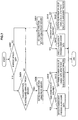
- FIG. 7 shows the flowchart as an example of the proxy server existence determining process in the embodiment.
- step S402 whether the proxy server 20 to be used is set or not is determined.
- setting information of the proxy server 20 is obtained. For example, by obtaining proxy setting set in the browser of the OS of the transmitting apparatus 100 from the registry, the setting information of the proxy server 20 may be obtained.
- step S404 follows.
- step S414 follows.
- step S404 an attempt is made to see whether or not a connection to the receiving apparatus 200 can be established using the proxy server 20 shown in the proxy server setting obtained in step S402.
- step S406 follows and the connection using the proxy server 20 is established.
- step S414 follows.
- step S408 when the connection is established using the proxy server 20 in step S406, step S408 follows.
- step S408 whether the proxy server 20 used can relay chunk data or not is determined. Whether the proxy server 20 can relay chunk data or not is determined by transmitting an HTTP header to the receiving apparatus 200. In the case where an HTTP error code "501 Not Implemented" or "411 Length Required" is received as a result of the transmission of the HTTP header, the proxy server 20 can hardly relay chunk data, and the process continues to step S412. In the other cases, the proxy server 20 can relay chunk data, and the process continues step S410. After that, in step S410, subsequent process is performed by the dummy data transmitting unit 110 using chunk data.
- the maximum value of usable data length (hereinbelow, called maximum data length) is determined in step S412.
- the maximum data length is determined by a method of transmitting data having a large data length and, in the case where an HTTP error code "413 Request Entity Too Large" is received, decreasing the data length. After determination of the maximum data length by the above-described method, subsequent process is performed by the dummy data transmitting unit 110 based on the determined maximum data length.
- step S414 a connection to the receiving apparatus 200 is established without using the proxy server 20. After the connection to the receiving apparatus 200 is established in step S414, step S416 follows.
- step S416 determining process similar to that of step S408 is performed.
- the reason why the determining process is performed in step S416 is because, even in the case where the proxy server 20 is not set or establishment of a connection using the proxy server 20 fails, there is the possibility that a transparent proxy server exists.
- the process continues to step S420.
- a transparent proxy server can relay chunk data, and the process continues to step S418.
- subsequent process is performed by the dummy data transmitting unit 110 using chunk data in step s418.
- the maximum data length is determined in step S420 and, based on the determined maximum data length, subsequent process is performed in the dummy data transmitting unit 110.
- the process described with reference to FIG. 7 is an example of the proxy server existence determining process of the embodiment.
- the proxy server existence determining unit 102 is not limited to the above-described process but performs information collection, a process and the like as necessary.
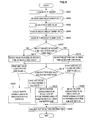
- FIG. 8 shows a flowchart of process of transmitting dummy data of n bytes and N bytes in the embodiment.
- step S502 using the connection established by the proxy existence determining unit 102, an HTTP header is transmitted to the receiving apparatus 200.
- step S504 dummy data of one byte is transmitted to the receiving apparatus 200 via the proxy server 20.
- step S506 the data transmitting unit 110 waits for X seconds as the transmission interval.
- step S508 whether the connection is disconnected or not is determined. In the case where the connection is disconnected, the process is finished.
- step S510 follows.
- step S510 dummy data of N bytes is transmitted to the receiving apparatus 200 via the proxy server 20.
- step S512 the dummy data processing unit 110 waits for predetermined time interval of X seconds.
- step S514 whether the connection is disconnected or not is determined. In the case where the connection is disconnected, the process is finished. In the case where the connection continues, the unit returns to step S504 and dummy data of one byte is transmitted. As described above, dummy data transmitted from the dummy data transmitting unit 110 of the transmitting apparatus 100 is relayed by the proxy server 20 and the relayed dummy data is received by the receiving apparatus 200.
- FIG. 9 shows a flowchart of buffer setting detecting process in the embodiment.
- step S602 the HTTP header transmitted from the transmitting apparatus 100 in step S502 in FIG. 8 is received by the relayed dummy data receiving unit 210 in the receiving apparatus 200.
- step S604 the relayed dummy data transmitted from the transmitting apparatus 100 and relayed by the proxy server 20 is received for the first time by the relayed dummy data receiving unit 210.
- step S606 the buffer setting detecting unit 220 detects a first size value as the size of the relayed dummy data received in step S604.
- step S608 the relayed dummy data is received for the second time by the relayed dummy data receiving unit 210.
- step S610 the relayed dummy data is received for the third time by the relayed dummy data receiving unit 210.
- the buffer setting detecting unit 220 compares the data sizes of the relayed dummy data received in steps S608 and S610 with each other to detect the second size value. In the case where the size of the relayed dummy data received in the step S608 is equal to that of the relayed dummy data received in step S610 or smaller than that of the relayed dummy data received in step S610, in step S614, the buffer setting detecting unit 220 detects the data size of the relayed dummy data received in step S608 as the second size value.
- step S616 the buffer setting detecting unit 220 detects the size of the relayed dummy data received in step S610 as a second size value.
- step S618 the buffer setting detecting unit 220 compares the first size value detected in step S606 and the second size value detected in step S614 or S616.
- step S620 follows, and the buffering characteristic of buffering no data is detected by the buffer characteristic detecting unit 222.
- step S622 follows, and the buffer characteristic detecting unit 222 detects the buffer characteristic of buffering a predetermined amount of data only once.
- the buffer size detecting unit 224 detects the first size value as a buffer size.
- step S624 follows, and the buffer characteristic detecting unit 222 detects the buffer characteristic of buffering a predetermined amount of data each time.
- the buffer size detecting unit 224 detects the buffer size. The first and second size values are equal to each other, and the size value is detected as the buffer size.
- step S626 the buffer setting including the buffer characteristic and the buffer size is transmitted from the buffer setting information transmitting unit 240 to the transmitting apparatus 100 via the proxy server 20.
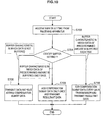
- FIG. 10 is a flowchart showing buffer setting information receiving process and compensation dummy data transmitting process in the embodiment.
- step S702 the buffer setting transmitted from the receiving apparatus 200 via the proxy server 20 is received by the buffer setting receiving unit 120 in the transmitting apparatus 100.
- step S704 the buffer setting received by the buffer setting identifying unit 122 is identified as any of the buffer characteristic of buffering no data, the buffer characteristic of buffering a predetermined amount of data only once, and the buffer characteristic of buffering a predetermined amount of data each time.
- the buffer size is also identified.
- step S704 When it is identified in step S704 that the buffer setting received in step S702 is the buffer characteristic of buffering no data, the compensation data size determining unit 160 determines the data size d of compensation dummy data as 0 in step S706. Further, the data transmitting unit 130 transmits data requiring immediacy without adding compensation dummy data.
- step S704 when it is identified in step S704 that the buffer setting received in step S702 is the buffer characteristic of buffering a predetermined amount of data only once, in step S708, the compensation data size determining unit 160 determines the data size d of compensation dummy data based on the buffer size identified in step S704. Further, the data transmitting unit 130 adds compensation dummy data having the data size d determined by the compensation data size determining unit 160 only once and transmits data requiring immediacy.
- step S710 the compensation data size determining unit 160 determines the data size d of compensation dummy data based on the buffer size identified in step S704. Further, the data transmitting unit 130 adds compensation dummy data having the data size d determined by the compensation data size determining unit 160 at each transmission of data requiring immediacy and transmits the resultant data.
- FIG. 14 shows an example of the HTTP POST request.
- An HTTP POST request 900 is constructed by a request header 902 and a request body 904. In the embodiment, sequential repetitive transmission of dummy data of n bytes and N bytes from the transmitting apparatus 100 is equivalent to addition of data to the request body 904 in the HTTP POST request 900.
- FIG. 15 shows an example of buffer setting information transmitted from the receiving apparatus 200 to the transmitting apparatus 100.
- the buffer setting may be written in a response header 950 to the HTTP POST request of transmitting dummy data of n bytes and N bytes from the transmitting apparatus 100 to the receiving apparatus 200, and transmitted to the transmitting apparatus 100.
- the first size value detected by the receiving apparatus 200 is written in X-FIRST-DUMMY-SIZE field 952, and is 1,024 bytes.
- the second size value is written in X-SECOND-DUMMY-SIZE field 952, and is 1,024 bytes.
- the response header 950 shown in FIG. 15 is an example of the response header transmitted from the receiving apparatus 200 to the transmitting apparatus 100.
- the buffer setting written in the response header may be a buffer characteristic and a buffer size.
- the transmitting apparatus 100 is an HTTP client, and the receiving apparatus 200 is an HTTP server.
- the transmitting apparatus 100 is an HTTP server, and the receiving apparatus 200 is an HTTP client.
- the buffer setting detected by the receiving apparatus 200 is written in the response header for the HTTP POST and the resultant data may be transmitted to the transmitting apparatus 100, or transmitted to the transmitting apparatus 100 using another connection.
- the buffer setting detected by the receiving apparatus 200 is transmitted to the transmitting apparatus 100 via a connection different from the HTTP connection in which the dummy data is transmitted.
- the buffer setting detecting unit 220 in the receiving apparatus 200 compares the first and second size values with each other, and detects the buffer setting. It is also possible to detect the first and second size values in the buffer setting detecting unit 220, and the buffer characteristic and the buffer size may be detected by the buffer setting identifying unit 122 in the transmitting apparatus 100. In this case, the buffer setting transmitted from the receiving apparatus 200 to the transmitting apparatus 100 is the first and second size values.
Landscapes
- Engineering & Computer Science (AREA)
- Computer Networks & Wireless Communication (AREA)
- Signal Processing (AREA)
- Data Exchanges In Wide-Area Networks (AREA)
- Information Transfer Between Computers (AREA)
- Communication Control (AREA)
Abstract
Description
- The present invention contains subject matter related to Japanese Patent Application
JP 2008-075915 - The present invention relates to a receiving apparatus, a transmitting apparatus, a communication system, and a method of detecting a buffer setting of a relay server.
- In recent years, generally, computers connected to a network perform communication via a relay server. Many of such communications are performed using a communication protocol such as the HTTP protocol. A computer performing communication transmits/receives data via a proxy server. A proxy server buffers data on a proxy server based on the setting and relays data transmitted from a transmitting apparatus to a receiving apparatus. In particular, if data whose data size is not clear is transmitted by HTTP tunneling or the like, buffering may occur.
- In communications performed via such a proxy server, there is the case that data requiring immediacy such as sound and video images is transmitted/received. In this case, by adding data having a size covering the buffering capacity of the proxy server to the data requiring immediacy and transmitting the resultant data, the data requiring immediacy transmitted from a transmitting apparatus can be immediately received by a receiving apparatus.
- Japanese Patent Application National Publication No.
2005-525656 - Buffer settings of proxy servers are different from each other and it is difficult to estimate the buffer setting of a proxy server on a transmitting apparatus. Therefore, it is also difficult to estimate data size covering capacity of buffering to be added in the transmitting apparatus in order to assure that data requiring immediacy is received promptly by a receiving apparatus. When the transmitting apparatus adds data unnecessarily having a large data size and transmits data requiring immediacy without estimating buffer setting of a proxy server by the transmitting apparatus, an unnecessary load is applied to a network, and an adverse influence may be exerted on communication performed on the network.
- The present invention has been achieved in view of the issues and it is desirable to provide a receiving apparatus, a transmitting apparatus, a communication system, and a method of detecting buffer setting of relay server which are novel and improved, capable of transmitting data requiring immediacy while suppressing load on a network.
- According to an embodiment of the present invention, there is provided a receiving apparatus including: a relayed dummy data receiving unit for receiving relayed dummy data including dummy data of n bytes (n ≥ 1) and/or dummy data of N bytes (N ≥ n) from a relay server, and the relayed dummy data is sequentially and repetitively transmitted from a transmitting apparatus to the relay server; and a buffer setting detecting unit for detecting a buffer setting of the relay server based on a first size value indicative of data size of relayed dummy data received for the first time by the relayed dummy data receiving unit and a second size value indicative of not larger data size of relayed dummy data received for the second time and relayed dummy data received for the third time.
- If each of the first size value and the second size value is n bytes. the buffer setting detecting unit may detect that the relay server has a buffer characteristic in which buffering data is not performed.
- The buffer setting detecting unit may detect that the relay server has a buffer characteristic in which buffering a predetermined amount of data is performed only once if the first size value is not n bytes and the second size value is n bytes, and the buffer setting detecting unit may detect that the relay server has a buffer characteristic in which buffering of a predetermined amount of data is performed each time if each of the first and second size values is not n bytes.
- The buffer setting detecting unit may detect the first size value as buffer size of the relay server if the first size value is not n bytes and the second size value is n bytes, and detect the first or second size value as buffer size of the relay server if each of the first and second size values is not n bytes.
- The receiving apparatus may further include a buffer setting information transmitting unit for transmitting buffer setting of the relay server detected by the buffer setting detecting unit to the transmitting apparatus.
- The transmitting apparatus and the receiving apparatus may perform communication by HTTP or HTTPS, the relay server is an HTTP proxy server, the relayed dummy data is transmitted in response to a GET response or a POST request, and information of the buffer setting may be transmitted as response information to the POST request if the relayed dummy data is transmitted in response to the POST request.
- According to another embodiment of the present invention, there is provided a transmitting apparatus including: a dummy data transmitting unit for transmitting dummy data of n bytes (n ≥ 1) and dummy data of N bytes (N ≥ n) sequentially and repetitively to a relay server, and the relayed dummy data including the dummy data of n bytes and/or the dummy data of N bytes is received by a receiving apparatus, and a buffer setting of the relay server is detected based on size of the relayed dummy data by the receiving apparatus.
- The transmitting apparatus may further include: a compensation data size determining unit for determining size d (d ≥ 0) of compensation dummy data added to transmission data in accordance with the buffer setting of the relay server notified from the receiving apparatus; and a data transmitting unit transmits transmission data with compensation dummy data added thereto, and the compensation dummy data has the size d determined by the compensation data size determining unit.
- When the relay server has a buffer setting in which buffering is not performed, the compensation data size determining unit may set size d of the compensation dummy data to be 0.
- When the relay server has a buffer setting in which buffering is performed only once, the data transmitting unit may transmit transmission data with compensation dummy added thereto only once.
- When the relay server has a buffer setting in which buffering is performed each time, the data transmitting unit may transmit transmission data with compensation dummy data added thereto each time.
- The dummy data transmitting unit may dynamically change N each time the dummy data of n bytes (n ≥ 1) and dummy data of N bytes (N ≥ n) is sequentially and repetitively transmitted.
- The transmitting apparatus may further include a storing unit for storing a buffer setting of the relay server received from the receiving apparatus. Based on the buffer setting stored in the storing unit, the compensation data size determining unit may determine size of compensation dummy data, and the data transmitting unit may add compensation dummy data to transmission data.
- The transmitting apparatus may further include a detecting unit for detecting that a relay server for relaying communication between the transmitting apparatus and the receiving apparatus is changed. The dummy data of n bytes and the dummy data of N bytes may be transmitted based on a detection result of the detecting unit.
- The detecting unit may detect that the relay server is changed using, as a trigger, UP/DOWN of a network interface of the transmitting apparatus or a change of an IP address of the transmitting apparatus.
- According to another embodiment of the present invention, there is provided a communication system including a transmitting apparatus having a dummy data transmitting unit for transmitting dummy data of n bytes (n ≥ 1) and dummy data of N bytes (N ≥ n) sequentially and repetitively to a relay server. The relay server transmits relayed dummy data to a receiving apparatus, the relayed dummy data being obtained by relaying, based on a buffer setting, the dummy data of n bytes and/or the dummy data of N bytes received from the transmitting apparatus, and the receiving apparatus includes: a relayed dummy data receiving unit for receiving the relayed dummy data from the relay server; and a buffer setting detecting unit for detecting a buffer setting of the relay server based on a first size value indicative of data size of relayed dummy data received for the first time by the relayed dummy data receiving unit and a second size value indicative of not larger data size of relayed dummy data received for the second time and relayed dummy data received for the third time.
- According to another embodiment of the present invention, there is provided a method of detecting a buffer setting of a relay server for relaying communication between a transmitting apparatus and a receiving apparatus, including the steps of: transmitting dummy data of n bytes (n ≥ 1) and dummy data of N bytes (N ≥ n) sequentially and repetitively to the relay server by the transmitting apparatus; transmitting relayed dummy data obtained by relaying, based on a buffer setting, the dummy data of n bytes and/ or the dummy data of N bytes received from the transmitting apparatus; receiving the relayed dummy data from the relay server by the receiving apparatus; and detecting a buffer setting of the relay server based on a first size value indicative of data size of relayed dummy data received for the first time and a second size value indicative of not larger data size of relayed dummy data received for the second time and relayed dummy data received for the third time.
- According to the embodiments of the present invention described above, there are provided a receiving apparatus, a transmitting apparatus, a communication system, and a method of detecting buffer setting of relay server which are novel and improved, capable of transmitting data requiring immediacy while suppressing load on a network.
-
-
FIG. 1 is a configuration diagram of a network according to a first embodiment of the present invention; -
FIG. 2 is a sequence diagram showing an example of buffering operation of a proxy server having a buffer characteristic that data is not buffered; -
FIG. 3 is a sequence diagram showing an example of the buffering operation of a proxy server having a buffer characteristic of buffering a predetermined amount of data only once; -
FIG. 4 is a sequence diagram showing an example of the buffering operation of a proxy server having a buffer characteristic of buffering a predetermined amount of data each time; -
FIG. 5 is a functional block diagram of a transmitting apparatus according to the first embodiment of the invention; -
FIG. 6 is a functional block diagram of a receiving apparatus according to the first embodiment of the invention; -
FIG. 7 is a flowchart showing an example of a proxy server existence determining process according to the first embodiment of the invention; -
FIG. 8 is a flowchart showing process of transmitting n-byte and N-byte dummy data according to the first embodiment of the invention; -
FIG. 9 is a flowchart showing buffer setting detecting process according to the first embodiment of the invention; -
FIG. 10 is a flowchart showing processes of receiving buffer setting information and transmitting compensation dummy data according to the first embodiment of the invention; -
FIG. 11 is a sequence diagram in the case of transmitting dummy data via a proxy server having a buffer characteristic that data is not buffered; -
FIG. 12 is a sequence diagram in the case of transmitting dummy data via a proxy server having a buffer characteristic of buffering a predetermined amount of data only once; -
FIG. 13 is a sequence diagram in the case of transmitting dummy data via a proxy server having a buffer characteristic of buffering a predetermined amount of data each time; -
FIG. 14 is an explanatory diagram showing an example of an HTTP POST request; and -
FIG. 15 is an explanatory diagram showing an example of buffer setting information transmitted from a receiving apparatus to a transmitting apparatus. - Hereinafter, preferred embodiments of the present invention will be described in detail with reference to the appended drawings. Note that, in this specification and the appended drawings, structural elements that have substantially the same function and structure are denoted with the same reference numerals, and repeated explanation of these structural elements is omitted.
- (First Embodiment)
(Explanation of Network Configuration)
First, a network configuration according to a first embodiment of the present invention will be described.FIG. 1 is a network configuration diagram of the first embodiment of the invention. A transmittingapparatus 100 of the embodiment sequentially and repetitively transmits dummy data of n bytes (n ≥ 1) and dummy data of N bytes (N ≥ n) to aproxy server 20 as an example of a relay server in order to detect buffer setting of the relay server. The transmittingapparatus 100 is connected to the Internet 10 as an example of a computer network via theproxy server 20. - (Definition of Buffer Settings)
The buffer settings include a buffer characteristic and a buffer size. The buffer characteristic is a characteristic of buffering operation performed when a relay server relays data. The buffer size denotes the size of data buffered on the relay server. - A receiving
apparatus 200 of the embodiment receives relayed dummy data from theproxy server 20 and detects the buffer settings of theproxy server 20. The relayed dummy data is the n-byte dummy data and the N-byte dummy data sequentially and repetitively transmitted from the transmitting apparatus, relayed by theproxy server 20, and transmitted to the receiving apparatus. The receivingapparatus 200 is connected to theproxy server 20 via theInternet 10. - The
proxy server 20 is an example of the relay server and relays communication between the transmittingapparatus 100 and the receivingapparatus 200. That is, data transmitted from the transmittingapparatus 100 is received by the receivingapparatus 200 via theproxy server 20. The n-byte dummy data and the N-byte dummy data transmitted from the transmittingapparatus 100 is relayed by theproxy server 20, and the relayed dummy data is received by the receivingapparatus 200. Theproxy server 20 is connected to the transmittingapparatus 100 and theInternet 10 as an example of the computer network. - In
FIG. 1 , the transmittingapparatus 100 exists in ahome network 30, and the receivingapparatus 200 exits in ahome network 40. The transmittingapparatus 100 and the receivingapparatus 200 may exist in the same home network (for example, the home network 30). Although the transmittingapparatus 100 and the receivingapparatus 200 are explained as two apparatuses in the embodiment, the transmittingapparatus 100 and the receivingapparatus 200 may be included in a single communicating apparatus. - The transmitting
apparatus 100 and the receivingapparatus 200 can be any computers capable of performing HTTP communication such as personal computers, cellular phones, PDAs, home intelligent appliances conformed with DLNA (Digital Living Network Alliance), AV devices, and the like. Theproxy server 20 may be an HTTP proxy server for relaying communication using the HTTP protocol. - (Explanation of Buffer Characteristics of Proxy)
Theproxy servers 20 are classified into a plurality of types based on the buffer characteristics. The plurality of types include a proxy server having the buffer characteristic that data is not buffered, a proxy server having the buffer characteristic of buffering a predetermined amount of data only once, and a proxy server having the buffer characteristic of buffering a predetermined amount of data each time. The data relaying operation of the proxy servers of those types will be described below with reference toFIGS. 2 to 4 . - (Buffer Characteristic of Buffering No Data)
FIG. 2 is a sequence diagram showing an example of the buffering operation of a proxy server having the buffer characteristic of buffering no data. First, whendata 302a of three bytes is transmitted from the transmitting apparatus 100 (S350), theproxy server 20 promptly relays the data and transmits the relayeddata 302b to the receiving apparatus 200 (S351). Also in the case wheredata 304a of seven bytes is transmitted (S352), similarly, theproxy server 20 promptly relays the data and transmits the relayeddata 304b to the receiving apparatus 200 (S353). Similarly, whensubsequent data 306a of two bytes anddata 308a of one byte is transmitted from the transmitting apparatus 100 (S354 and S356), the data is promptly relayed by the proxy server 20 (S355 and S357), the relayeddata apparatus 200. - (Buffer Characteristic of Buffering Data Only Once)
FIG. 3 is a sequence diagram showing an example of the buffering operation of a proxy server having the buffer characteristic of buffering a predetermined amount of data only once.FIG. 3 shows, as an example, theproxy server 20 whose buffer size is 10 bytes. First, whendata 302a of three bytes is transmitted from the transmitting apparatus 100 (S360), thedata 302a is received by theproxy server 20 and buffered (S361). Next, whendata 304a of seven bytes is transmitted from the transmitting apparatus 100 (S362), thedata 304a is received by theproxy server 20 and buffered (S363). The total amount of data buffered on theproxy server 20 becomes 10 bytes, and the buffereddata data 310 of 10 bytes from theproxy server 20 to the receiving apparatus 200 (S364). - Next, when
data 306a of two bytes is transmitted from the transmitting apparatus 100 (S365), theproxy server 20 promptly relays the data and transmits the relayeddata 306b to the receiving apparatus 200 (S366). Similarly, after that, whendata 308a of one byte is transmitted from the transmitting apparatus 100 (S367), theproxy server 20 promptly relays the data, and transmits the relayeddata 308b to the receiving apparatus 200 (S368). As described above, after data whose size is equal to or larger than the buffer size is buffered once, also in the case of relaying data whose size is smaller than the buffer size, the proxy server having the buffer characteristic of buffering the predetermined amount of data once promptly relays the data without buffering it. - (Buffering Characteristic of Buffering Data Each Time)
FIG. 4 is a sequence diagram showing an example of the buffering operation of a proxy server having the buffer characteristic of buffering a predetermined amount of data only once.FIG. 4 shows, as an example, theproxy server 20 whose buffer size is 10 bytes. First, whendata 302a of three bytes is transmitted from the transmitting apparatus 100 (S370), thedata 302a is received by theproxy server 20 and buffered (S371). Next, whendata 304a of seven bytes is transmitted from the transmitting apparatus 100 (S372), thedata 304a is received by theproxy server 20 and buffered (S373). The total amount of data buffered on theproxy server 20 becomes 10 bytes, and the buffereddata data 320 of 10 bytes from theproxy server 20 to the receiving apparatus 200 (S374). - Next, when
data 306a of two bytes,data 308a of one byte, anddata 310a of seven bytes is transmitted from the transmitting apparatus 100 (S375, S377, and S379), in a manner similar to the above, thedata proxy server 20 and buffered (S376, S378, and S380). At this time, the data buffered on theproxy server 20 becomes total 10 bytes, and thedata data 322 of 10 bytes from the proxy server to the receiving apparatus 200 (S381). - (Explanation of Transmitting Apparatus)
The transmittingapparatus 100 for detecting the buffer settings of theproxy server 20 explained with reference toFIGS. 2 to 4 will be described.FIG. 5 is a functional block diagram of the transmitting apparatus of the embodiment. The transmittingapparatus 100 has a proxy serverexistence determining unit 102, a dummydata transmitting unit 110, a buffersetting receiving unit 120, adata transmitting unit 130, a transmittingapparatus storing unit 140, a detectingunit 150, and a compensation datasize determining unit 160. - (Proxy Server Existence Determining Unit 102)
The proxy serverexistence determining unit 102 performs pre-process necessary for detecting a buffer setting of the embodiment. More specifically, the proxy serverexistence determining unit 102 determines theproxy server 20 used at the time of transmitting data from the transmittingapparatus 100 to the receivingapparatus 200 and establishes connection to the receivingapparatus 200 via thedetermined proxy server 20. - First, the proxy server
existence determining unit 102 obtains information of a proxy server set in the transmittingapparatus 100. In the embodiment, theproxy server 20 is set in the transmittingapparatus 100. Next, a process of establishing connection to the receivingapparatus 200 using theproxy server 20 and a process of establishing connection to the receivingapparatus 200 without using theproxy server 20 are simultaneously tried. In the case where a plurality of proxy servers are set in the transmittingapparatus 100, processes of establishing connection to the receivingapparatus 200 using the set proxy servers are simultaneously tried.
After that, using a connection established by the trial, the process is performed by the dummydata transmitting unit 110 which will be described later. In the case where a plurality of usable connections are established, the direction connection is preferentially used. In the case where a plurality of usable connections which are not direct connections are established, a connection established via a proxy server which responded fastest is preferentially used. By trying establishment of connections on a plurality of set proxy servers simultaneously in the case of using the set proxy server and in the case of using no proxy server, time for establishing a usable connection can be shortened. - The proxy server
existence determining unit 102 also checks the properties other than the buffer settings of theproxy server 20. The properties other than the buffer settings of the proxy server include whether chunk data can be relayed or not and maximum relayable data length. By checking whether chunk data can be relayed or not, data whose data transmission amount total value is unknown by the HTTP tunneling or the like can be transmitted. When chunk data can be relayed, data whose data transmission amount total value is unknown can be transmitted in the chunk form from the transmittingapparatus 100. In the case where chunk data can hardly be relayed, data whose data transmission amount total value is unknown is divided in maximum relayable data length determined by the proxy serverexistence determining unit 102, and the divided data is transmitted from the transmittingapparatus 100. - (Dummy Data Transmitting Unit 110)
Next, the dummydata transmitting unit 110 will be described. The dummydata transmitting unit 110 is a function unit of sequentially and repetitively transmitting dummy data of n bytes (n ≥ 1) and dummy data of N bytes (N ≥ n) every predetermined time intervals of X seconds to the receivingapparatus 200 via theproxy server 20 in order to detect the buffer settings of theproxy server 20. The dummydata transmitting unit 110 transmits the dummy data of n bytes and N bytes using the connection established by the proxy serverexistence determining unit 102. Herein, n and N are integers. In the embodiment, n is one byte, and N is a fixed value in the range of 1 kilobyte to 10 kilobytes. Therefore, in the embodiment, dummy data is transmitted from the dummydata transmitting unit 110 every X seconds in order of dummy data of one byte, dummy data of N bytes, dummy data of one byte, dummy data of N bytes, .... - (Values of n and N)
Although the data size N of dummy data is set in the range from 1 kilobyte to 10 kilobytes, N can be an arbitrary value satisfying N ≥ n. For example, when the data size n of dummy data is one byte, the data size N of the dummy data may be one byte or 10 megabytes. The smaller the value of N is, more accurate buffer size is detected but it takes time to detect the buffer setting. On the contrary, the larger the value of N is, the shorter time for detecting the buffer setting is, but the buffer size detected is not accurate. - (In The Case Where N Is Variable)
The data size N of dummy data may be dynamically changed while dummy data of n bytes and N bytes is sequentially and repetitively transmitted. For example, when the data size n of dummy data is one byte, the data size N of dummy data is one byte at the first transmission. The data size N is two bytes at the second transmission, and is four bytes at the third transmission. After that, N may be doubled at each transmission. In this case, data is transmitted from the dummydata transmitting unit 110 in order of dummy data of one byte, dummy data of one byte, dummy data of one byte, dummy data of two bytes, dummy data of one byte, dummy data of four bytes, .... In this case, time for detecting the buffer setting is shorter than that in the case where N is fixed to one byte. The detected buffer size is more accurate than that in the case where N is fixed to a very large value (for example, 10 megabytes). - Although the example of transmitting dummy data while doubling the value of N each transmission has been described, the way of changing N is not limited to the above. For example, N is 10 bytes at the first transmission, and 10 bytes may be added to the value of N transmitted last time. Alternatively, N is 5 kilobytes at the first transmission, and the value of N may be halved every transmission. As described above, dummy data is transmitted while dynamically changing the data size N of dummy data and the way of changing is adjusted, thereby enabling detection time and accuracy of the buffer setting to be adjusted.
- (Predetermined Time Interval X) A transmission interval X of transmission of data from the dummy data transmitting unit has to be a value larger than the total of round trip time (RTT) between the transmitting
apparatus 100 and theproxy server 20 and round trip time between the receivingapparatus 200 and theproxy server 20. More preferably, the transmission interval X is a value sufficiently larger than the total of round trip time between the transmittingapparatus 100 and theproxy server 20 and round trip time between the receivingapparatus 200 and theproxy server 20. The above is necessary to avoid dummy data of n bytes and N bytes transmitted from the dummydata transmitting unit 110 from being coupled on a network for a reason other than the buffering of theproxy server 20. - The optimum transmission interval X may be determined by, for example, measuring response time from the receiving
apparatus 200 when data is transmitted from the transmittingapparatus 100 to the receivingapparatus 200 via theproxy server 20. In this case, data to be transmitted has to be data known as data which is not buffered by the proxy server. The data may be a POST request in which information of "content length" is written in the header. When the POST request is received, the receivingapparatus 200 transmits a response to the received POST request to the transmittingapparatus 100. The transmittingapparatus 100 measures time since the POST request is transmitted until the response to the POST request is received, and can determine the transmission interval X in the dummydata transmitting unit 110. - (Buffer Setting Receiving Unit 120)
The buffersetting receiving unit 120 receives the information of the buffer setting detected by the receivingapparatus 200 via theproxy server 20 from the receivingapparatus 200. The buffersetting receiving unit 120 has a buffersetting identifying unit 122. The buffersetting identifying unit 122 identifies that the received buffer setting information indicates the buffer characteristic of buffering no data, the buffer characteristic of buffering a predetermined amount of data only once, or the buffer characteristic of buffering a predetermined amount of data each time. The buffersetting identifying unit 122 also identifies the buffer size. - The information of the buffer setting received by the buffer
setting receiving unit 120 is used to determine the data size of compensation dummy data in the compensation datasize determining unit 160. The buffer setting information is also used for determining a timing of adding the compensation dummy data in thedata transmitting unit 130. The buffer setting received by the buffersetting receiving unit 120 is stored in the transmittingapparatus storing unit 140. The stored buffer setting may be used for a process in the compensation datasize determining unit 160 and thedata transmitting unit 130. - (Compensation Data Size Determining Unit 160) The compensation data
size determining unit 160 determines data size d of compensation dummy data based on the buffer size received by the buffersetting receiving unit 120. The compensation dummy data is data having a data size covering buffering capacity, which is added to data in order to assure that data is promptly received by the receivingapparatus 200 at the time of transmitting data requiring immediacy. Based on the data size d of the compensation dummy data determined by the compensation datasize determining unit 160, the compensation dummy data is added to transmission data by thedata transmitting unit 130. - In the case where the buffer characteristic received by the buffer
setting receiving unit 120 is the buffer characteristic of buffering no data, the compensation datasize determining unit 160 determines that the data size d of the compensation dummy data is 0. In the case where the buffer characteristic received by the buffersetting receiving unit 120 is the buffer characteristic of buffering data only once, or the buffer characteristic of buffering data each time, the compensation datasize determining unit 160 determines the data size d of the compensation dummy data based on the buffer size received by the buffersetting receiving unit 120. - In the above, the case of performing the process in the compensation data
size determining unit 160 based on the information of the buffer setting received by the buffersetting receiving unit 120 has been described. The information of the buffer setting used in the compensation datasize determining unit 160 may be information stored in the transmittingapparatus storing unit 140. - (Data Transmitting Unit 130) In the case of transmitting data requiring immediacy, based on the buffer characteristic included in the buffer setting information received by the buffer
setting receiving unit 120, thedata transmitting unit 130 adds compensation dummy data and transmits the resultant data. In the case where the buffer characteristic received by the buffersetting receiving unit 120 is the buffer characteristic of buffering no data, thedata transmitting unit 130 transmits the data requiring immediacy without adding the compensation dummy data. - On the other side, in the case where the buffer characteristic received by the buffer
setting receiving unit 120 is the buffer characteristic of buffering a predetermined amount of data only once, thedata transmitting unit 130 adds the compensation dummy data having the data size determined by the compensation datasize determining unit 160 to the transmission data only once and transmits data requiring immediacy. In the case where the buffer characteristic received by the buffersetting receiving unit 120 is the buffer characteristic of buffering of the predetermined amount of data each time, thedata transmitting unit 130 adds the compensation dummy data having the data size determined by the compensation datasize determining unit 160 every transmission of data requiring immediacy and transmits the resultant data. - By adding compensation dummy data based on the buffer characteristic, the network load applied due to the addition of the compensation dummy data can be decreased. Although the case of performing the process in the
data transmitting unit 130 based on the information of the buffer setting received by the buffersetting receiving unit 120 has been described, the information of the buffer setting used in thedata transmitting unit 130 may be information stored in the transmittingapparatus storing unit 140. - (Transmitting Apparatus Storing Unit 140)
The transmittingapparatus storing unit 140 stores the buffer setting received by the buffersetting receiving unit 120. The information of the buffer setting stored in the transmittingapparatus storing unit 140 is used to determine the data size d of the compensation dummy data by the compensation datasize determining unit 160. The information of the buffer setting stored in the transmittingapparatus storing unit 140 is also used for addition of compensation dummy data to the data requiring immediacy in thedata transmitting unit 130. - (Detecting Unit 150) The detecting
unit 150 detects that theproxy server 20 for relaying communication between the transmittingapparatus 100 and the receivingapparatus 200 is changed. The change of theproxy server 20 may be detected using, for example, UP/DOWN of the network interface of at least one of the transmittingapparatus 100, theproxy server 20, and the receivingapparatus 200, or a change of the IP address as a trigger. When a change is detected by the detectingunit 150, a connection is established by the proxy serverexistence determining unit 102, and dummy data of n bytes and N bytes is transmitted from the dummydata transmitting unit 110. - (Explanation of Receiving Apparatus) The receiving
apparatus 200 for detecting the buffer setting of the proxy server will now be described.FIG. 6 is a functional block diagram of the receiving apparatus of the embodiment. The receivingapparatus 200 has a relay dummydata receiving unit 210, a buffersetting detecting unit 220, a receivingapparatus storing unit 230, and a buffer settinginformation transmitting unit 240. - (Relay Dummy Data Receiving Unit 210) The relay dummy
data receiving unit 210 is a functioning unit of receiving relay dummy data from theproxy server 20. The relay dummy data is dummy data of n bytes and N bytes transmitted from the transmittingapparatus 100 for detecting the buffer setting of theproxy server 20, relayed by the proxy server and, as a result, transmitted to the receivingapparatus 200. The relay dummy data received by the relay dummydata receiving unit 210 is used for detecting the buffer setting of the buffersetting detecting unit 220. - (Buffer Setting Detecting Unit 220) The buffer
setting detecting unit 220 detects the buffer setting of theproxy server 20 based on the relay dummy data received by the relay dummydata receiving unit 210. The relay dummy data may be dummy data received by the relay dummydata receiving unit 210 and stored in the receivingapparatus storing unit 230. The buffersetting detecting unit 220 has a buffercharacteristic detecting unit 222 and a buffersize detecting unit 224. The buffercharacteristic detecting unit 222 detects the buffer characteristic of theproxy server 20. The buffersize detecting unit 224 detects the buffer size of theproxy server 20. The information of the buffer setting detected by the buffersetting detecting unit 220 is transmitted from the buffer settinginformation transmitting unit 240 to the transmitting apparatus. The information of the buffer setting detected by the buffersetting detecting unit 220 is stored in the receivingapparatus storing unit 230, and the stored information of the buffer setting may be transmitted from the buffer settinginformation transmitting unit 240. - (Details of Process of Buffer Setting Detecting Unit: Detection of First Size Value and Second Size Value) The buffer
setting detecting unit 220 will be described in more details below. First, the buffersetting detecting unit 220 detects a first size value as a data size of relay dummy data received first by the relay dummy data receiving unit 210 (hereinbelow, called first relay dummy data). The buffersetting detecting unit 220 compares the data size of relay dummy data received second time by the relay dummy data receiving unit 210 (hereinbelow, called second relay dummy data) with that of relay dummy data received third time (hereinbelow, called third relay dummy data). When the data size of the second relay dummy data and that of the third relay dummy data are different from each other as a result of comparison, the smaller data size is detected as a second size value. When the data size of the second relay dummy data and that of the third relay dummy data are equal to each other as a result of the comparison, the data size is detected as a second size value. - (Details of Process of Buffer Setting Detecting Unit: Detection of Buffer Characteristic) After that, the buffer characteristic detecting unit compares the first size value and the second size value to detect the buffer characteristic. More specifically, in the case where each of the first and second size values is one byte, the buffer characteristic of buffering no data is detected. In the case where the first size value is not one byte and the second size value is one byte, the buffer characteristic of buffering a predetermined amount of data only once is detected. Further, in the case any of the first and second size values is not one byte, the buffer characteristic of buffering a predetermined amount of data each time is detected.
- (Details of Process of Buffer Setting Detecting Unit: Detection of Buffer Size) On the other hand, the buffer size detecting unit compares the first size value and the second size value to detect the buffer size. More specifically, in the case where each of the first and second size values is one byte, the buffer size is not detected or the buffer size is detected as 0. In the case where the first size value is not one byte and the second size value is one byte, the first size value is detected as a buffer size. Further, in the case any of the first and second size values is not one byte, the first size value or the second size value is detected as a buffer size. In this case, the first and second size values are equal to each other.
- (
Explanation 1 of Sequence: In The Case Where Data Is Not Buffered) In the following, with reference toFIGS. 11 to 13 , the process in the buffersetting detecting unit 220 will be described in more detail.FIG. 11 is a sequence diagram showing the case where dummy data is transmitted via the proxy server having the buffer characteristic of buffering no data. InFIG. 11 , dummy data of n bytes and N bytes is transmitted using the HTTP POST request. First, arequest header 802a of HTTP POST transmitted from the transmitting apparatus 100 (S840) is relayed by the proxy server 20 (S841), and arequest header 802b of the HTTP POST is received by the receivingapparatus 200. Next,dummy data 804a of one byte,dummy data 806a of N bytes, anddummy data 808a of one byte is transmitted from the transmittingapparatus 100 every predetermined time interval of X seconds (S842, S845, and S848). In this case, since the proxy server has the buffer characteristic of buffering no data, thedummy data 804a is promptly relayed by the proxy server 20 (S843), and relayeddummy data 804b is received by the receiving apparatus 200 (S844). Similarly, thedummy data dummy data - Therefore, the first size value detected by the buffer
setting detecting unit 220 is data size of the relayeddummy data 804b and is one byte. On the other hand, since the data size (N bytes) of the relayeddummy data 806b is larger than the data size (1 byte) of the relayeddummy data 808b, the second size value detected by the buffersetting detecting unit 220 is the data size of the relayeddummy data 808b and is one byte. As described above, when both of the first and second size values are one byte, theproxy server 20 has the buffer characteristic of buffering no data. - (
Explanation 2 of Sequence: Buffer Characteristic Of Buffering Data Only Once)FIG. 12 is a sequence diagram showing the case where dummy data is transmitted via the proxy server having the buffer characteristic of buffering a predetermined amount of data only once. Theproxy server 20 shown inFIG. 12 has a buffer size of N+5 bytes. InFIG. 12 , dummy data of n bytes and N bytes is transmitted using the HTTP POST request.
First, in a manner similar to the case ofFIG. 11 , arequest header 802a of HTTP POST transmitted from the transmitting apparatus 100 (S851) is relayed by the proxy server 20 (S852), and arequest header 802b of the HTTP POST is received by the receivingapparatus 200. Next,dummy data 804a of one byte,dummy data 806a of N bytes,dummy data 808a of one byte,dummy data 810a of N bytes,dummy data 812a of one byte, anddummy data 814a of N bytes is transmitted from the transmittingapparatus 100 every predetermined time interval of X seconds (S853, S855, S857, S859, S863, and S865). - Since the
proxy server 20 shown inFIG. 12 has the buffer characteristic of buffering a predetermined amount of data only once and the buffer size is N+5 bytes, the dummy data of n bytes and N bytes transmitted from the transmittingapparatus 100 is buffered on theproxy server 20 until the total of the data sizes becomes N+5 bytes or more. Therefore, the data from thedummy data 804a todummy data 808a is received by theproxy server 20 and buffered on the proxy server 20 (S854, S856, and S858). The size of data buffered on theproxy server 20 is N+2 bytes. When theproxy server 20 receives thedummy data 810a, thedummy data 810a is buffered on the proxy server 20 (S860). The total of the data size of the dummy data buffered on theproxy server 20 becomes 2N+2 bytes. In the embodiment, N lies in the range of 1 kilobyte to 10 kilobytes, so that the total of the data size of dummy data buffered on theproxy server 20 becomes the buffer size (2N+2 > N+5) of theproxy server 20 or more. Therefore, the relayeddummy data 820 having the data size of 2N+2 bytes is transmitted from the proxy server 20 (S861) and received by the receiving apparatus 200 (S862). - Subsequently, the
proxy server 20 transmits the buffered data to the receivingapparatus 200 and, after that, receives thedummy data 812a transmitted (S863) from the transmittingapparatus 100. Since theproxy server 20 has the buffer characteristic of buffering a predetermined amount of data only once, thedummy data 812a is promptly relayed by the proxy server 20 (S864), and relayeddummy data 812b is received by the receiving apparatus 200 (S865). Similarly,dummy data 814a transmitted from the transmitting apparatus 100 (S866) is also promptly relayed by the proxy server 20 (S867), and relayeddummy data 814b is received by the receiving apparatus 200 (S868). - Therefore, the first size value detected by the buffer
setting detecting unit 220 is data size of the relayeddummy data 820 and is 2N+2 bytes. On the other hand, since the data size (1 byte) of the relayeddummy data 812b is smaller than the data size (N bytes) of the relayeddummy data 814b, the second size value detected by the buffersetting detecting unit 220 is the data size of the relayeddummy data 812b and is one byte. As described above, when the first size value is not one byte and the second size value is one byte, theproxy server 20 has the buffer characteristic of buffering a predetermined amount of data only once. - Detection of the buffer characteristic of buffering a predetermined amount of data only by once will be further generalized and described. The buffer size of the
proxy server 20 is set to (a*N)+b where a ≥ 0 and b ≥ 0. The number of transmission times of dummy data from the transmittingapparatus 100 is set to z, and z ≥ 0. In the following, the case where data exceeds the buffer size of theproxy server 20 at the time point when dummy data of N bytes transmitted at the z-th time from the transmittingapparatus 100 is received by theproxy server 20 and the case where data exceeds the buffer size of theproxy server 20 at the time point when dummy data of one byte transmitted at the z-th time from the transmittingapparatus 100 is received by theproxy server 20 will be described. - First, the case where data exceeds the buffer size of the
proxy server 20 at the time point when dummy data of N bytes transmitted at the z-th time from the transmittingapparatus 100 is received by theproxy server 20 will be described. At the time point when dummy data of N bytes transmitted at the z-th time is received by theproxy server 20, dummy data of one byte is received z times and dummy data of N bytes is received z times by theproxy server 20. Therefore, the size of data buffered on theproxy server 20 is expressed by the following equation (1). -

- Consequently, the size of relayed dummy data received for the first time by the receiving
apparatus 200 is also the data size expressed by the equation (1). Subsequently, dummy data of one byte is transmitted from the transmittingapparatus 100. Since theproxy server 20 has the buffer characteristic of buffering a predetermined amount of data only once, the dummy data is promptly relayed by theproxy server 20, and the relayed dummy data of one byte is received by the receivingapparatus 200. Subsequently, dummy data of N bytes is transmitted from the transmittingapparatus 100. In a manner similar to the above, the dummy data is promptly relayed by theproxy server 20, and the relayed dummy data of N bytes is received by the receivingapparatus 200. Therefore, the receivingapparatus 200 receives the relayed dummy data of z+(z*N) bytes, that of one bytes, and that of N bytes in order. As a result, the first size value detected by the buffersetting detecting unit 220 is z+(z*N) bytes, and the second size value is one byte. That is, the first size value is not one byte, and the second size value is one byte. - Next, the case where data exceeds the buffer size of the
proxy server 20 at the time point when dummy data of one byte transmitted at the z-th time from the transmittingapparatus 100 is received by theproxy server 20 will be described. At the time point when dummy data of one byte transmitted at the z-th time is received by theproxy server 20, dummy data of one byte is received z times and dummy data of N bytes is received (z-1) times by theproxy server 20. Therefore, the size of data buffered on theproxy server 20 is expressed by the following equation (2). -

- Consequently, the size of relayed dummy data received for the first time by the receiving
apparatus 200 is also the data size expressed by the equation (2). Subsequently, dummy data of N bytes is transmitted from the transmittingapparatus 100. Since theproxy server 20 has the buffer characteristic of buffering a predetermined amount of data only once, the dummy data is promptly relayed by theproxy server 20, and the relayed dummy data of N bytes is received by the receivingapparatus 200. Subsequently, dummy data of one byte is transmitted from the transmittingapparatus 100. In a manner similar to the above, the dummy data is promptly relayed by theproxy server 20, and the relayed dummy data of one byte is received by the receivingapparatus 200. Therefore, the receivingapparatus 200 receives the relayed dummy data of z+(z-1)*N bytes, that of N bytes, and that of one byte in order. As a result, the first size value detected by the buffersetting detecting unit 220 is z+(z-1)*N bytes, and the second size value is one byte. That is, the first size value is not one byte, and the second size value is one byte. - It is understood from the above that, when the first size value is not 1 and the second size value is 1, the buffer characteristic of buffering a predetermined amount of data only once irrespective of the buffer size of the
proxy server 20 and the number of transmission times of dummy data. It is also understood that the first size value may become larger than the buffer size of theactual proxy server 20. Therefore, by detecting the first size value as a buffer size, based on the detected first size value, adding compensation dummy data in the transmittingapparatus 100, and transmitting the resultant data, the data can be reliably promptly relayed to theproxy server 20. In this case, the first size value depends on the value of N and does not accurately match the actual buffer size (a*N)+b of theproxy server 20. However, as described above, the value of N can be adjusted according to the precision of the necessary buffer size. In the buffer characteristic of buffering a predetermined amount of data only once, data to which compensation dummy data based on the detected buffer size is added is transmitted only once. Therefore, the possibility that transmission of the data to which the compensation dummy data based on the detected buffer size becomes a cause of a load on the network is extremely low. - (
Explanation 3 of Sequence: Buffer Characteristic Of Buffering Data Each Time)FIG. 13 is a sequence diagram showing the case where dummy data is transmitted via the proxy server having the buffer characteristic of buffering a predetermined amount of data each time. Theproxy server 20 shown inFIG. 13 has a buffer size of N+5 bytes. InFIG. 13 , dummy data of n bytes and N bytes is transmitted using the HTTP POST request. - First, in a manner similar to the cases of
FIGS. 11 and12 , arequest header 802a of HTTP POST transmitted from the transmitting apparatus 100 (S869) is relayed by the proxy server 20 (S870), and arequest header 802b of the HTTP POST is received by the receivingapparatus 200. Next,dummy data 804a of one byte,dummy data 806a of N bytes,dummy data 808a of one byte,dummy data 810a of N bytes,dummy data 812a of one byte,dummy data 814a of N bytes,dummy data 816a of one byte, anddummy data 818a of N bytes is transmitted from the transmittingapparatus 100 every predetermined time interval of X seconds (S871, S873, S875, S877, S881, S881, S883, S887, and S889). - Since the
proxy server 20 shown inFIG. 13 has the buffer characteristic of buffering a predetermined amount of data each time and the buffer size is N+5 bytes, the dummy data of n bytes and N bytes transmitted from the transmittingapparatus 100 is buffered on theproxy server 20 until the total of the data sizes becomes N+5 bytes or more. Therefore, the data from thedummy data 804a todummy data 808a is received by theproxy server 20 and buffered on the proxy server 20 (S872, S874, and S876). The size of data buffered on theproxy server 20 is N+2 bytes. - When the
proxy server 20 receives thedummy data 810a, thedummy data 810a is buffered on the proxy server 20 (S878). The total of the data size of the dummy data buffered on theproxy server 20 becomes 2N+2 bytes. In the embodiment, N lies in the range of 1 kilobyte to 10 kilobytes, so that the total of the data size of dummy data buffered on theproxy server 20 becomes the buffer size (2N+2 > N+5) of theproxy server 20 or more. Therefore, the relayeddummy data 830 is transmitted from the proxy server 20 (S879) and received by the receiving apparatus 200 (S880). The size of the relayed dummy data transmitted at this time is N+5 bytes, and data of the size expressed by the following equation (3) is buffered on theproxy server 20. -

- Subsequently, the
proxy server 20 transmits the buffered data to the receivingapparatus 200 and, after that, receives thedummy data 812a transmitted (S881) from the transmittingapparatus 100 and buffers it (S882). The size of the data buffered on theproxy server 20 at the time point is N-2 bytes. Subsequently, theproxy server 20 receivesdummy data 814a transmitted (S883) from the transmittingapparatus 100 and buffers it (S884). The size of the data buffered on theproxy server 20 at the time point is 2N-2 bytes. In the embodiment, N lies in the range from 1 kilobyte to 10 kilobytes, so that the total of the data size of dummy data buffered on theproxy server 20 becomes the buffer size (2N-2 > N+5) of theproxy server 20 or more. Therefore, the relayeddummy data 832 is transmitted from the proxy server 20 (S885) and received by the receiving apparatus 200 (S886). The data size of the relayed dummy data transmitted at this time is N+5 bytes, and data having the size expressed by the following equation (4) is buffered on theproxy server 20. -

- Further, the
proxy server 20 receivesdummy data 816a transmitted (S887) from the transmittingapparatus 100 and buffers it (S888). At this time point, the size of data buffered on theproxy server 20 becomes N-6 bytes. Subsequently, theproxy server 20 receives thedummy data 818a transmitted from the transmitting apparatus 100 (S889) and buffers it (S890). At this time point, the size of data buffered on theproxy server 20 becomes 2N-6 bytes. Therefore, in a manner similar to the above, the total of the size of the dummy data buffered on theproxy server 20 becomes equal to or larger than the buffer size (2N-6 > N+5 bytes) of theproxy server 20. Relayeddummy data 834 is transmitted from the proxy server 20 (S891) and received by the receiving apparatus 200 (S892). The size of the relayed dummy data transmitted at this time is N+5 bytes. On theproxy server 20, data having the size expressed by the following equation (5) is buffered. -

- Therefore, the first size value detected by the buffer
setting detecting unit 220 is data size of the relayeddummy data 830 and is N+5 bytes. On the other hand, since the data size of the relayeddummy data 832 and that of the relayeddummy data 834 are equal to each other and are N+5 bytes, the second size value detected by the buffersetting detecting unit 220 is also N+5 bytes. As described above, when the first size value is not one byte and the second size value is not one byte, theproxy server 20 has the buffer characteristic of buffering a predetermined amount of data each time. - The buffer size of the
proxy server 20 will be generalized as (a*N)+b where a ≥ 0 and b ≥ 0 and description will be given. When the size of data buffered on theproxy server 20 exceeds the buffer size, theproxy server 20 having the buffer characteristic of buffering a predetermined amount of data each time transmits, as relayed dummy data, data having a data size equal to the buffer size. Therefore, the receivingapparatus 200 receives relayed dummy data having the data size of (a*N)+b each time. As a result, the first and second size values detected by the buffersetting detecting unit 220 are equal to each other, and the buffer size becomes the buffer size (a*N)+b bytes of theactual proxy server 20. That is, the first size value is not one byte, and the second size value is not one byte. - It is understood from the above that, when the first size value is not 1 and the second size value is not 1, the buffer characteristic of buffering a predetermined amount of data each time can be detected. It is also understood that the first size value and the second size value become equal to the buffer size of the
actual proxy server 20. Therefore, the first size value or the second size value is detected as a buffer size, based on the detected value, data size d of the compensation dummy data in the transmittingapparatus 100 is determined, and the compensation dummy data having the determined data size is added to transmission data. By transmitting the data in such a manner, the data can be reliably promptly relayed to theproxy server 20. - (Receiving Apparatus Storing Unit 230)
Referring again toFIG. 6 , the receivingapparatus storing unit 230 stores the relayed dummy data received by the relayed dummydata receiving unit 210. The stored relayed dummy data is used for detecting the buffer setting in the buffersetting detecting unit 220. The receivingapparatus storing unit 230 stores the buffer setting detected by the buffersetting detecting unit 220. The stored buffer setting is transmitted by the buffer settinginformation transmitting unit 240 to the transmittingapparatus 100. - (Buffer Setting Information Transmitting Unit 240) The buffer setting
information transmitting unit 240 transmits the information of the buffer setting detected by the buffersetting detecting unit 220 to the transmittingapparatus 100 via theproxy server 20. The information of the buffer setting transmitted from the buffer settinginformation transmitting unit 240 may be information of buffer setting detected by the buffersetting detecting unit 220 and stored in the receivingapparatus storing unit 230. In the case where dummy data of n bytes and N bytes is transmitted from the transmittingapparatus 100 using the HTTP POST connection, information of the buffer setting detected may be written in a response header to an HTTP POST request and transmitted to the transmittingapparatus 100. It is also possible to establish another connection and transmit the information to the transmittingapparatus 100. - (Data Receiving Unit 250)
Thedata receiving unit 250 receives data transmitted from the transmittingapparatus 100. For example, transmission data to which compensation dummy data is added, transmitted from thedata transmitting unit 130 of the transmitting apparatus is received by thedata receiving unit 250 via theproxy server 20. - (Flow of Processes: Proxy Server Existence Determining Process) With reference to
FIGS. 7 to 9 , the flow of processes in the transmittingapparatus 100 and the receivingapparatus 200 in the embodiment will be described. First, proxy server existence determining process performed by the proxy serverexistence determining unit 102 of the transmittingapparatus 100 will be described.FIG. 7 shows the flowchart as an example of the proxy server existence determining process in the embodiment. - First, in step S402, whether the
proxy server 20 to be used is set or not is determined. In the case where theproxy server 20 is set, setting information of theproxy server 20 is obtained. For example, by obtaining proxy setting set in the browser of the OS of the transmittingapparatus 100 from the registry, the setting information of theproxy server 20 may be obtained. In the case where a proxy server is set in step S402, step S404 follows. In the case where a proxy server is not set in step S402, step S414 follows. - In step S404, an attempt is made to see whether or not a connection to the receiving
apparatus 200 can be established using theproxy server 20 shown in the proxy server setting obtained in step S402. In the case where the attempt to establish a connection using theproxy server 20 succeeds in step S404, step S406 follows and the connection using theproxy server 20 is established. In the case where the attempt to establish a connecting using a proxy server fails in step S404, step S414 follows. - Further, when the connection is established using the
proxy server 20 in step S406, step S408 follows. In step S408, whether theproxy server 20 used can relay chunk data or not is determined. Whether theproxy server 20 can relay chunk data or not is determined by transmitting an HTTP header to the receivingapparatus 200. In the case where an HTTP error code "501 Not Implemented" or "411 Length Required" is received as a result of the transmission of the HTTP header, theproxy server 20 can hardly relay chunk data, and the process continues to step S412. In the other cases, theproxy server 20 can relay chunk data, and the process continues step S410. After that, in step S410, subsequent process is performed by the dummydata transmitting unit 110 using chunk data. - On the other hand, in the case where the proxy server can hardly relay chunk data, the maximum value of usable data length (hereinbelow, called maximum data length) is determined in step S412. The maximum data length is determined by a method of transmitting data having a large data length and, in the case where an HTTP error code "413 Request Entity Too Large" is received, decreasing the data length. After determination of the maximum data length by the above-described method, subsequent process is performed by the dummy
data transmitting unit 110 based on the determined maximum data length. - In the case where the
proxy server 20 is not set in step S402 or in the case where an attempt to establish a connecting using theproxy server 20 fails in step S404, in step S414, a connection to the receivingapparatus 200 is established without using theproxy server 20. After the connection to the receivingapparatus 200 is established in step S414, step S416 follows. - In step S416, determining process similar to that of step S408 is performed. The reason why the determining process is performed in step S416 is because, even in the case where the
proxy server 20 is not set or establishment of a connection using theproxy server 20 fails, there is the possibility that a transparent proxy server exists. In the case where it is determined in step S416 that a transparent proxy server can hardly relay chunk data, the process continues to step S420. In the other cases, a transparent proxy server can relay chunk data, and the process continues to step S418. After that, in step S418, subsequent process is performed by the dummydata transmitting unit 110 using chunk data in step s418. - On the other hand, in the case where a transparent proxy server can hardly relay chunk data, like the step S412, the maximum data length is determined in step S420 and, based on the determined maximum data length, subsequent process is performed in the dummy
data transmitting unit 110. - The process described with reference to
FIG. 7 is an example of the proxy server existence determining process of the embodiment. The proxy serverexistence determining unit 102 is not limited to the above-described process but performs information collection, a process and the like as necessary. - (Flow of Processes: Dummy Data Transmitting Process) Next, the process of transmitting dummy data of n bytes and N bytes to be performed in the dummy
data transmitting unit 110 of the transmittingapparatus 100 will be described.
FIG. 8 shows a flowchart of process of transmitting dummy data of n bytes and N bytes in the embodiment. - First, in step S502, using the connection established by the proxy
existence determining unit 102, an HTTP header is transmitted to the receivingapparatus 200. In step S504, dummy data of one byte is transmitted to the receivingapparatus 200 via theproxy server 20. Further, in step S506, thedata transmitting unit 110 waits for X seconds as the transmission interval. After that, in step S508, whether the connection is disconnected or not is determined. In the case where the connection is disconnected, the process is finished. In the case where the connection is continued, step S510 follows. In step S510, dummy data of N bytes is transmitted to the receivingapparatus 200 via theproxy server 20.
Further, in step S512, the dummydata processing unit 110 waits for predetermined time interval of X seconds. After that, in step S514, whether the connection is disconnected or not is determined. In the case where the connection is disconnected, the process is finished. In the case where the connection continues, the unit returns to step S504 and dummy data of one byte is transmitted. As described above, dummy data transmitted from the dummydata transmitting unit 110 of the transmittingapparatus 100 is relayed by theproxy server 20 and the relayed dummy data is received by the receivingapparatus 200. - (Flow of Processes: Buffer Setting Detecting Process) Subsequently, the process of receiving dummy data relayed by the
proxy server 20 by the receivingapparatus 200 and detecting a buffer setting will be described.FIG. 9 shows a flowchart of buffer setting detecting process in the embodiment. - First, in step S602, the HTTP header transmitted from the transmitting
apparatus 100 in step S502 inFIG. 8 is received by the relayed dummydata receiving unit 210 in the receivingapparatus 200. Next, in step S604, the relayed dummy data transmitted from the transmittingapparatus 100 and relayed by theproxy server 20 is received for the first time by the relayed dummydata receiving unit 210. Further, in step S606, the buffersetting detecting unit 220 detects a first size value as the size of the relayed dummy data received in step S604. After that, in step S608, the relayed dummy data is received for the second time by the relayed dummydata receiving unit 210. Subsequently, in step S610, the relayed dummy data is received for the third time by the relayed dummydata receiving unit 210. - Further, in step S612, the buffer
setting detecting unit 220 compares the data sizes of the relayed dummy data received in steps S608 and S610 with each other to detect the second size value. In the case where the size of the relayed dummy data received in the step S608 is equal to that of the relayed dummy data received in step S610 or smaller than that of the relayed dummy data received in step S610, in step S614, the buffersetting detecting unit 220 detects the data size of the relayed dummy data received in step S608 as the second size value. On the contrary, in the case where the size of the relayed dummy data received in step S608 is larger than that of the relayed dummy data received in step S610, in step S616, the buffersetting detecting unit 220 detects the size of the relayed dummy data received in step S610 as a second size value. - After that, in step S618, the buffer
setting detecting unit 220 compares the first size value detected in step S606 and the second size value detected in step S614 or S616. In the embodiment, n is one byte (n=1). In the case where the first size value is one byte and the second size value is one byte, step S620 follows, and the buffering characteristic of buffering no data is detected by the buffercharacteristic detecting unit 222. - On the other hand, in the case where the first size value is not one byte and the second size value is one byte, step S622 follows, and the buffer
characteristic detecting unit 222 detects the buffer characteristic of buffering a predetermined amount of data only once. In step S622, the buffersize detecting unit 224 detects the first size value as a buffer size. - Further, in the case where the first size value is not one byte and the second size value is not one byte, step S624 follows, and the buffer
characteristic detecting unit 222 detects the buffer characteristic of buffering a predetermined amount of data each time. In step S624, the buffersize detecting unit 224 detects the buffer size. The first and second size values are equal to each other, and the size value is detected as the buffer size. - After that, in step S626, the buffer setting including the buffer characteristic and the buffer size is transmitted from the buffer setting
information transmitting unit 240 to the transmittingapparatus 100 via theproxy server 20. - (Flow of Processes: Compensation Dummy Data Transmitting Process) The process of receiving the buffer setting transmitted from the receiving
apparatus 200 by a receiving apparatus and transmitting compensation dummy data will be described.
FIG. 10 is a flowchart showing buffer setting information receiving process and compensation dummy data transmitting process in the embodiment. - First, in step S702, the buffer setting transmitted from the receiving
apparatus 200 via theproxy server 20 is received by the buffersetting receiving unit 120 in the transmittingapparatus 100. Subsequently, in step S704, the buffer setting received by the buffersetting identifying unit 122 is identified as any of the buffer characteristic of buffering no data, the buffer characteristic of buffering a predetermined amount of data only once, and the buffer characteristic of buffering a predetermined amount of data each time. In the identification of the buffer setting in step S704, the buffer size is also identified. - When it is identified in step S704 that the buffer setting received in step S702 is the buffer characteristic of buffering no data, the compensation data
size determining unit 160 determines the data size d of compensation dummy data as 0 in step S706. Further, thedata transmitting unit 130 transmits data requiring immediacy without adding compensation dummy data. - On the other hand, when it is identified in step S704 that the buffer setting received in step S702 is the buffer characteristic of buffering a predetermined amount of data only once, in step S708, the compensation data
size determining unit 160 determines the data size d of compensation dummy data based on the buffer size identified in step S704. Further, thedata transmitting unit 130 adds compensation dummy data having the data size d determined by the compensation datasize determining unit 160 only once and transmits data requiring immediacy. - When it is identified in step S704 that the buffer setting received in step S702 is the buffer characteristic of buffering a predetermined amount of data each time, in step S710, the compensation data
size determining unit 160 determines the data size d of compensation dummy data based on the buffer size identified in step S704. Further, thedata transmitting unit 130 adds compensation dummy data having the data size d determined by the compensation datasize determining unit 160 at each transmission of data requiring immediacy and transmits the resultant data. - (Example of HTTP POST Request)
An example of data transmitted/received between the transmittingapparatus 100 and the receivingapparatus 200 in the embodiment will be described.FIG. 14 shows an example of the HTTP POST request. AnHTTP POST request 900 is constructed by arequest header 902 and arequest body 904. In the embodiment, sequential repetitive transmission of dummy data of n bytes and N bytes from the transmittingapparatus 100 is equivalent to addition of data to therequest body 904 in theHTTP POST request 900. - (Example of Transmission of Detection Result)
FIG. 15 shows an example of buffer setting information transmitted from the receivingapparatus 200 to the transmittingapparatus 100. The buffer setting may be written in aresponse header 950 to the HTTP POST request of transmitting dummy data of n bytes and N bytes from the transmittingapparatus 100 to the receivingapparatus 200, and transmitted to the transmittingapparatus 100. In the example ofFIG. 15 , the first size value detected by the receivingapparatus 200 is written in X-FIRST-DUMMY-SIZE field 952, and is 1,024 bytes. The second size value is written in X-SECOND-DUMMY-SIZE field 952, and is 1,024 bytes.
Theresponse header 950 shown inFIG. 15 is an example of the response header transmitted from the receivingapparatus 200 to the transmittingapparatus 100. The buffer setting written in the response header may be a buffer characteristic and a buffer size. - In the embodiment, the case of transmitting dummy data of n bytes and N bytes using the HTTP POST request from the transmitting
apparatus 100 and detecting the buffer setting has been described. For transmission of the dummy data, an HTTP GET response may be used. In the case of transmitting dummy data of n bytes and N bytes using the HTTP POST request, the transmittingapparatus 100 is an HTTP client, and the receivingapparatus 200 is an HTTP server. In the case of transmitting dummy data of n bytes and N bytes using an HTTP GET response, the transmittingapparatus 100 is an HTTP server, and the receivingapparatus 200 is an HTTP client. - In the case of transmitting dummy data of n bytes and N bytes using the HTTP POST, the buffer setting detected by the receiving
apparatus 200 is written in the response header for the HTTP POST and the resultant data may be transmitted to the transmittingapparatus 100, or transmitted to the transmittingapparatus 100 using another connection. On the other hand, in the case of transmitting dummy data of n bytes and N bytes using the HTTP GET request, the buffer setting detected by the receivingapparatus 200 is transmitted to the transmittingapparatus 100 via a connection different from the HTTP connection in which the dummy data is transmitted. - In the embodiment, the buffer
setting detecting unit 220 in the receivingapparatus 200 compares the first and second size values with each other, and detects the buffer setting. It is also possible to detect the first and second size values in the buffersetting detecting unit 220, and the buffer characteristic and the buffer size may be detected by the buffersetting identifying unit 122 in the transmittingapparatus 100. In this case, the buffer setting transmitted from the receivingapparatus 200 to the transmittingapparatus 100 is the first and second size values. - It should be understood by those skilled in the art that various modifications, combination, sub-combinations and alterations may occur depending on design requirements and other factors insofar as they are within the scope of the appended claims or the equivalents thereof. Further embodiments are:
- 1. A receiving apparatus comprising:
- a relayed dummy data receiving unit for receiving relayed dummy data including dummy data of n bytes (n ≥ 1) and/or dummy data of N bytes (N ≥ n) from a relay server, and the relayed dummy data is sequentially and repetitively transmitted from a transmitting apparatus to the relay server; and
- a buffer setting detecting unit for detecting a buffer setting of the relay server based on a first size value indicative of data size of relayed dummy data received for the first time by the relayed dummy data receiving unit and a second size value indicative of not larger data size of relayed dummy data received for the second time and relayed dummy data received for the third time.
- 2. The receiving apparatus according to
item 1,
wherein the buffer setting detecting unit detects that the relay server has a buffer characteristic in which buffering data is not performed, if each of the first size value and the second size value is n bytes. - 3. The receiving apparatus according to
item 2,
wherein the buffer setting detecting unit detects that the relay server has a buffer characteristic in which buffering of a predetermined amount of data is performed only once if the first size value is not n bytes and the second size value is n bytes, and the buffer setting detecting unit detects that the relay server has a buffer characteristic in which buffering of a predetermined amount of data is performed each time if each of the first and second size values is not n bytes. - 4. The receiving apparatus according to
item 1,
wherein the buffer setting detecting unit detects the first size value as buffer size of the relay server if the first size value is not n bytes and the second size value is n bytes, and the buffer setting detecting unit detects the first or second size value as buffer size of the relay server if each of the first and second size values is not n bytes. - 5. The receiving apparatus according to
item 1, further comprising a buffer setting information transmitting unit for transmitting buffer setting of the relay server detected by the buffer setting detecting unit to the transmitting apparatus. - 6. The receiving apparatus according to
item 1,
wherein the transmitting apparatus and the receiving apparatus perform communication by HTTP or HTTPS, the relay server is an HTTP proxy server, the relayed dummy data is transmitted in response to a GET response or a POST request, and information of the buffer setting is transmitted as response information to the POST request, if the relayed dummy data is transmitted in response to the POST request. - 7. A transmitting apparatus comprising, a dummy data transmitting unit for transmitting dummy data of n bytes (n ≥ 1) and dummy data of N bytes (N ≥ n) sequentially and repetitively to a relay server,
wherein relayed dummy data including the dummy data of n bytes and/or the dummy data of N bytes is received by a receiving apparatus, and a buffer setting of the relay server is detected based on size of the received relayed dummy data by the receiving apparatus. - 8. The transmitting apparatus according to
item 7, further comprising : a compensation data size determining unit for determining size d (d ≥ 0) of compensation dummy data added to transmission data in accordance with the buffer setting of the relay server notified from the receiving apparatus; and a data transmitting unit transmits transmission data with compensation dummy data added thereto, and the compensation dummy data has the size d determined by the compensation data size determining unit. - 9. The transmitting apparatus according to item 8,
wherein the compensation data size determining unit sets size d of the compensation dummy data to be 0, if the relay server has a buffer setting in which buffering is not performed. - 10. The transmitting apparatus according to item 8,
wherein the data transmitting unit transmits transmission data with compensation dummy added thereto only once, if the relay server has a buffer setting in which buffering is performed only once. - 11. The transmitting apparatus according to item 8,
wherein the data transmitting unit transmits transmission data with compensation dummy data added thereto each time, if the relay server has a buffer setting in which buffering is performed each time. - 12. The transmitting apparatus according to
item 7,
wherein the dummy data transmitting unit dynamically changes N each time the dummy data of n bytes (n ≥ 1) and dummy data of N bytes (N ≥ n) is sequentially and repetitively transmitted. - 13. The transmitting apparatus according to item 8, further comprising a storing unit for storing a buffer setting of the relay server received from the receiving apparatus,
wherein the compensation data size determining unit determines size of compensation dummy data in accordance with the buffer setting stored in the storing unit, and the data transmitting unit adds compensation dummy data to transmission data. - 14. The transmitting apparatus according to
item 7, further comprising a detecting unit for detecting that a relay server for relaying communication between the transmitting apparatus and the receiving apparatus is changed,
wherein the dummy data of n bytes and the dummy data of N bytes is transmitted based on a detection result of the detecting unit. - 15. The transmitting apparatus according to item 14,
wherein the detecting unit detects that the relay server is changed using, as a trigger, UP/DOWN of a network interface of the transmitting apparatus or a change of an IP address of the transmitting apparatus. - 16. A communication system including a transmitting apparatus comprising a dummy data transmitting unit for transmitting dummy data of n bytes (n ≥ 1) and dummy data of N bytes (N ≥ n) sequentially and repetitively to a relay server,
wherein the relay server transmits relayed dummy data to a receiving apparatus, the relayed dummy data being obtained by relaying, in conformity to a buffer setting, the dummy data of n bytes and/or the dummy data of N bytes received from the transmitting apparatus, and the receiving apparatus includes:- a relayed dummy data receiving unit for receiving the relayed dummy data from the relay server; and
- a buffer setting detecting unit for detecting a buffer setting of the relay server based on a first size value indicative of data size of relayed dummy data received for the first time by the relayed dummy data receiving unit and a second size value indicative of not larger data size of relayed dummy data received for the second time and relayed dummy data received for the third time.
- 17. A method of detecting a buffer setting of a relay server for relaying communication between a transmitting apparatus and a receiving apparatus, comprising the steps of: transmitting dummy data of n bytes (n ≥1) and dummy data of N bytes (N ≥ n) sequentially and repetitively to the relay server by the transmitting apparatus; transmitting relayed dummy data obtained by relaying, based on a buffer setting, the dummy data of n bytes and/or the dummy data of N bytes received from the transmitting apparatus; receiving the relayed dummy data from the relay server by the receiving apparatus; and detecting a buffer setting of the relay server based on a first size value indicative of data size of relayed dummy data received for the first time and a second size value indicative of not larger data size of relayed dummy data received for the second time and relayed dummy data received for the third time.
Claims (15)
- A receiving apparatus comprising:a relayed dummy data receiving unit for receiving relayed dummy data including dummy data of n bytes (n ≥ 1) and/or dummy data of N bytes (N ≥ n) from a relay server, and the relayed dummy data is sequentially and repetitively transmitted from a transmitting apparatus to the relay server; anda buffer setting detecting unit for detecting a buffer setting of the relay server based on a first size value indicative of data size of relayed dummy data received for the first time by the relayed dummy data receiving unit and a second size value indicative of not larger data size of relayed dummy data received for the second time and relayed dummy data received for the third time.
- The receiving apparatus according to claim 1,
wherein the buffer setting detecting unit detects that the relay server has a buffer characteristic in which buffering data is not performed, if each of the first size value and the second size value is n bytes. - The receiving apparatus according to claim 2,
wherein the buffer setting detecting unit detects that the relay server has a buffer characteristic in which buffering of a predetermined amount of data is performed only once if the first size value is not n bytes and the second size value is n bytes, and the buffer setting detecting unit detects that the relay server has a buffer characteristic in which buffering of a predetermined amount of data is performed each time if each of the first and second size values is not n bytes. - The receiving apparatus according to claim 1,
wherein the buffer setting detecting unit detects the first size value as buffer size of the relay server if the first size value is not n bytes and the second size value is n bytes, and the buffer setting detecting unit detects the first or second size value as buffer size of the relay server if each of the first and second size values is not n bytes. - The receiving apparatus according to any of the preceding claims, further comprising a buffer setting information transmitting unit for transmitting buffer setting of the relay server detected by the buffer setting detecting unit to the transmitting apparatus.
- The receiving apparatus according to any of the preceding claims,
wherein the transmitting apparatus and the receiving apparatus perform communication by HTTP or HTTPS, the relay server is an HTTP proxy server, the relayed dummy data is transmitted in response to a GET response or a POST request, and information of the buffer setting is transmitted as response information to the POST request, if the relayed dummy data is transmitted in response to the POST request. - A transmitting apparatus comprising, a dummy data transmitting unit for transmitting dummy data of n bytes (n ≥ 1) and dummy data of N bytes (N ≥ n) sequentially and repetitively to a relay server,
wherein relayed dummy data including the dummy data of n bytes and/ or the dummy data of N bytes is received by a receiving apparatus, and a buffer setting of the relay server is detected based on size of the received relayed dummy data by the receiving apparatus. - The transmitting apparatus according to claim 7, further comprising : a compensation data size determining unit for determining size d (d ≥ 0) of compensation dummy data added to transmission data in accordance with the buffer setting of the relay server notified from the receiving apparatus; and a data transmitting unit transmits transmission data with compensation dummy data added thereto, and the compensation dummy data has the size d determined by the compensation data size determining unit.
- The transmitting apparatus according to claim 8,
wherein the compensation data size determining unit sets size d of the compensation dummy data to be 0, if the relay server has a buffer setting in which buffering is not performed. - The transmitting apparatus according to claim 8,
wherein the data transmitting unit transmits transmission data with compensation dummy added thereto only once, if the relay server has a buffer setting in which buffering is performed only once. - The transmitting apparatus according to claim 8,
wherein the data transmitting unit transmits transmission data with compensation dummy data added thereto each time, if the relay server has a buffer setting in which buffering is performed each time. - The transmitting apparatus according to claim 7,
wherein the dummy data transmitting unit dynamically changes N each time the dummy data of n bytes (n ≥ 1) and dummy data of N bytes (N ≥ n) is sequentially and repetitively transmitted. - The transmitting apparatus according to any of claims 8 to 12, further comprising a storing unit for storing a buffer setting of the relay server received from the receiving apparatus,
wherein the compensation data size determining unit determines size of compensation dummy data in accordance with the buffer setting stored in the storing unit, and the data transmitting unit adds compensation dummy data to transmission data. - A communication system including a transmitting apparatus comprising a dummy data transmitting unit for transmitting dummy data of n bytes (n ≥ 1) and dummy data of N bytes (N ≥ n) sequentially and repetitively to a relay server,
wherein the relay server transmits relayed dummy data to a receiving apparatus, the relayed dummy data being obtained by relaying, in conformity to a buffer setting, the dummy data of n bytes and/ or the dummy data of N bytes received from the transmitting apparatus, and the receiving apparatus includes:a relayed dummy data receiving unit for receiving the relayed dummy data from the relay server; anda buffer setting detecting unit for detecting a buffer setting of the relay server based on a first size value indicative of data size of relayed dummy data received for the first time by the relayed dummy data receiving unit and a second size value indicative of not larger data size of relayed dummy data received for the second time and relayed dummy data received for the third time. - A method of detecting a buffer setting of a relay server for relaying communication between a transmitting apparatus and a receiving apparatus, comprising the steps of: transmitting dummy data of n bytes (n ≥ 1) and dummy data of N bytes (N ≥n) sequentially and repetitively to the relay server by the transmitting apparatus; transmitting relayed dummy data obtained by relaying, based on a buffer setting, the dummy data of n bytes and/ or the dummy data of N bytes received from the transmitting apparatus; receiving the relayed dummy data from the relay server by the receiving apparatus; and detecting a buffer setting of the relay server based on a first size value indicative of data size of relayed dummy data received for the first time and a second size value indicative of not larger data size of relayed dummy data received for the second time and relayed dummy data received for the third time.
Applications Claiming Priority (1)
| Application Number | Priority Date | Filing Date | Title |
|---|---|---|---|
| JP2008075915A JP4525780B2 (en) | 2008-03-24 | 2008-03-24 | Reception device, transmission device, communication system, and relay server buffer setting detection method |
Publications (3)
| Publication Number | Publication Date |
|---|---|
| EP2106069A2 true EP2106069A2 (en) | 2009-09-30 |
| EP2106069A3 EP2106069A3 (en) | 2010-05-05 |
| EP2106069B1 EP2106069B1 (en) | 2011-05-11 |
Family
ID=40852481
Family Applications (1)
| Application Number | Title | Priority Date | Filing Date |
|---|---|---|---|
| EP20090003973 Not-in-force EP2106069B1 (en) | 2008-03-24 | 2009-03-19 | Receiving apparatus, transmitting apparatus, communication system and method of detecting buffer setting of relay server |
Country Status (4)
| Country | Link |
|---|---|
| US (1) | US8447878B2 (en) |
| EP (1) | EP2106069B1 (en) |
| JP (1) | JP4525780B2 (en) |
| CN (1) | CN101547151B (en) |
Families Citing this family (5)
| Publication number | Priority date | Publication date | Assignee | Title |
|---|---|---|---|---|
| US20150271225A1 (en) * | 2014-03-18 | 2015-09-24 | Qualcomm Incorporated | Transport accelerator implementing extended transmission control functionality |
| TWI538425B (en) * | 2014-04-14 | 2016-06-11 | 微晶片科技公司 | Data transmission system and method for bluetooth interface |
| EP3002720A1 (en) * | 2014-10-02 | 2016-04-06 | Unify GmbH & Co. KG | Method, device and software product for filling an address field of an electronic message |
| EP3629558B1 (en) | 2014-12-04 | 2021-07-28 | Sony Group Corporation | Data processing apparatus, data processing method, and program |
| JP6579884B2 (en) * | 2015-09-24 | 2019-09-25 | キヤノン株式会社 | Communication device, control method, and program |
Citations (2)
| Publication number | Priority date | Publication date | Assignee | Title |
|---|---|---|---|---|
| JP2005525656A (en) | 2002-05-15 | 2005-08-25 | インテル コーポレイション | Proxy auto detection |
| JP2008075915A (en) | 2006-09-20 | 2008-04-03 | Sanyo Electric Co Ltd | Grill device |
Family Cites Families (12)
| Publication number | Priority date | Publication date | Assignee | Title |
|---|---|---|---|---|
| JPH02200040A (en) * | 1989-01-30 | 1990-08-08 | Hitachi Ltd | Stuff system for picture signal |
| JPH04333155A (en) * | 1991-05-08 | 1992-11-20 | Tokyo Electric Co Ltd | Commodity data input terminal equipment |
| US6119167A (en) * | 1997-07-11 | 2000-09-12 | Phone.Com, Inc. | Pushing and pulling data in networks |
| NL1010295C2 (en) * | 1998-10-12 | 2000-04-13 | Koninkl Kpn Nv | ATM Connection Admission Control body for DBR connections. |
| JP2001094625A (en) * | 1999-09-27 | 2001-04-06 | Canon Inc | Data communication device, data communication method, and storage medium |
| WO2002098075A1 (en) * | 2001-05-25 | 2002-12-05 | Mitsubishi Denki Kabushiki Kaisha | Internet communication system, internet communication method, session control server, communication adapter, communication relay server and program |
| JP3609811B2 (en) * | 2002-09-30 | 2005-01-12 | 株式会社東芝 | Network relay device and network relay method |
| JP4333155B2 (en) | 2003-02-14 | 2009-09-16 | ソニー株式会社 | Signal processing apparatus and method, recording medium, and program |
| US20050015488A1 (en) * | 2003-05-30 | 2005-01-20 | Pavan Bayyapu | Selectively managing data conveyance between computing devices |
| JP2006211015A (en) * | 2005-01-25 | 2006-08-10 | Matsushita Electric Ind Co Ltd | Wireless communication terminal apparatus and wireless communication control method |
| US20070025342A1 (en) * | 2005-07-14 | 2007-02-01 | Gemini Mobile Technology, Inc. | Protocol optimization for wireless networks |
| US20070276954A1 (en) * | 2006-05-19 | 2007-11-29 | Hong Kong University Of Science And Technology | Low-Delay High Quality Video Streaming Using TCP |
-
2008
- 2008-03-24 JP JP2008075915A patent/JP4525780B2/en not_active Expired - Fee Related
-
2009
- 2009-03-19 EP EP20090003973 patent/EP2106069B1/en not_active Not-in-force
- 2009-03-23 US US12/409,450 patent/US8447878B2/en not_active Expired - Fee Related
- 2009-03-24 CN CN2009101293827A patent/CN101547151B/en not_active Expired - Fee Related
Patent Citations (2)
| Publication number | Priority date | Publication date | Assignee | Title |
|---|---|---|---|---|
| JP2005525656A (en) | 2002-05-15 | 2005-08-25 | インテル コーポレイション | Proxy auto detection |
| JP2008075915A (en) | 2006-09-20 | 2008-04-03 | Sanyo Electric Co Ltd | Grill device |
Also Published As
| Publication number | Publication date |
|---|---|
| JP2009232216A (en) | 2009-10-08 |
| JP4525780B2 (en) | 2010-08-18 |
| EP2106069B1 (en) | 2011-05-11 |
| US20090240832A1 (en) | 2009-09-24 |
| US8447878B2 (en) | 2013-05-21 |
| CN101547151B (en) | 2012-09-05 |
| CN101547151A (en) | 2009-09-30 |
| EP2106069A3 (en) | 2010-05-05 |
Similar Documents
| Publication | Publication Date | Title |
|---|---|---|
| EP2106069B1 (en) | Receiving apparatus, transmitting apparatus, communication system and method of detecting buffer setting of relay server | |
| CN102148863A (en) | Method and device for delivering M2M (machine to machine) service messages | |
| CN114422885B (en) | Route searching method, device, equipment and medium based on topology route | |
| CN101924695A (en) | Method and system based on the packet classification of efficiency | |
| KR20100063755A (en) | Wireless terminal and wireless communication method | |
| US8538455B2 (en) | Storage medium storing relay control program, relay server device, and relay control method | |
| CN109417750A (en) | Method and device for establishing auxiliary connection | |
| US20150358227A1 (en) | Data Transmission Method and Device | |
| JP2016531372A (en) | Memory module access method and apparatus | |
| US20130318244A1 (en) | System and method for assigning server to terminal and efficiently delivering messages to the terminal | |
| CN102497441A (en) | Information synchronization method between mobile phone and computer and system thereof | |
| CN113115291A (en) | Bluetooth automatic reconnection method and system based on low-power-consumption Bluetooth | |
| JP6951380B2 (en) | Gateway device, communication method and program | |
| CN107483330A (en) | A repeater bridging method and gateway | |
| CN108769367A (en) | Method of controlling antenna and Related product | |
| CN114902800B (en) | Communication method and device | |
| CN104980481A (en) | Method and system for transmitting data between electronic terminals and electronic terminal | |
| WO2025157098A1 (en) | Inference method and apparatus based on pre-stored context information in large model | |
| CN111278063B (en) | Data offloading transmission method, network master node MN, network slave node SN and storage medium | |
| WO2021206304A1 (en) | Integrated gateway linked with ai speaker platform, and ai multi-speaker linking method using same | |
| CN113630762B (en) | Information interaction method, USIM, mobile equipment and user terminal | |
| CN119678540A (en) | Scheduling method and device for artificial intelligence (AI) services | |
| CN113660323B (en) | Method, device and computer-readable storage medium for communication between devices | |
| JP4819918B2 (en) | Wireless network architecture, wireless network base station and communication method thereof | |
| CN101599816B (en) | Communication message feedback method, system and server of network centralized service management |
Legal Events
| Date | Code | Title | Description |
|---|---|---|---|
| PUAI | Public reference made under article 153(3) epc to a published international application that has entered the european phase |
Free format text: ORIGINAL CODE: 0009012 |
|
| 17P | Request for examination filed |
Effective date: 20090319 |
|
| AK | Designated contracting states |
Kind code of ref document: A2 Designated state(s): AT BE BG CH CY CZ DE DK EE ES FI FR GB GR HR HU IE IS IT LI LT LU LV MC MK MT NL NO PL PT RO SE SI SK TR |
|
| AX | Request for extension of the european patent |
Extension state: AL BA RS |
|
| PUAL | Search report despatched |
Free format text: ORIGINAL CODE: 0009013 |
|
| AK | Designated contracting states |
Kind code of ref document: A3 Designated state(s): AT BE BG CH CY CZ DE DK EE ES FI FR GB GR HR HU IE IS IT LI LT LU LV MC MK MT NL NO PL PT RO SE SI SK TR |
|
| AX | Request for extension of the european patent |
Extension state: AL BA RS |
|
| RIC1 | Information provided on ipc code assigned before grant |
Ipc: H04L 12/26 20060101AFI20100519BHEP Ipc: H04L 12/56 20060101ALI20100519BHEP |
|
| 17Q | First examination report despatched |
Effective date: 20100601 |
|
| GRAP | Despatch of communication of intention to grant a patent |
Free format text: ORIGINAL CODE: EPIDOSNIGR1 |
|
| AKX | Designation fees paid |
Designated state(s): DE FR GB |
|
| GRAS | Grant fee paid |
Free format text: ORIGINAL CODE: EPIDOSNIGR3 |
|
| GRAA | (expected) grant |
Free format text: ORIGINAL CODE: 0009210 |
|
| AK | Designated contracting states |
Kind code of ref document: B1 Designated state(s): DE FR GB |
|
| REG | Reference to a national code |
Ref country code: GB Ref legal event code: FG4D |
|
| REG | Reference to a national code |
Ref country code: DE Ref legal event code: R096 Ref document number: 602009001253 Country of ref document: DE Effective date: 20110622 |
|
| PLBE | No opposition filed within time limit |
Free format text: ORIGINAL CODE: 0009261 |
|
| STAA | Information on the status of an ep patent application or granted ep patent |
Free format text: STATUS: NO OPPOSITION FILED WITHIN TIME LIMIT |
|
| 26N | No opposition filed |
Effective date: 20120214 |
|
| REG | Reference to a national code |
Ref country code: DE Ref legal event code: R097 Ref document number: 602009001253 Country of ref document: DE Effective date: 20120214 |
|
| PGFP | Annual fee paid to national office [announced via postgrant information from national office to epo] |
Ref country code: DE Payment date: 20140328 Year of fee payment: 6 |
|
| PGFP | Annual fee paid to national office [announced via postgrant information from national office to epo] |
Ref country code: FR Payment date: 20140319 Year of fee payment: 6 |
|
| PGFP | Annual fee paid to national office [announced via postgrant information from national office to epo] |
Ref country code: GB Payment date: 20140319 Year of fee payment: 6 |
|
| REG | Reference to a national code |
Ref country code: DE Ref legal event code: R119 Ref document number: 602009001253 Country of ref document: DE |
|
| GBPC | Gb: european patent ceased through non-payment of renewal fee |
Effective date: 20150319 |
|
| REG | Reference to a national code |
Ref country code: FR Ref legal event code: ST Effective date: 20151130 |
|
| PG25 | Lapsed in a contracting state [announced via postgrant information from national office to epo] |
Ref country code: GB Free format text: LAPSE BECAUSE OF NON-PAYMENT OF DUE FEES Effective date: 20150319 Ref country code: DE Free format text: LAPSE BECAUSE OF NON-PAYMENT OF DUE FEES Effective date: 20151001 |
|
| PG25 | Lapsed in a contracting state [announced via postgrant information from national office to epo] |
Ref country code: FR Free format text: LAPSE BECAUSE OF NON-PAYMENT OF DUE FEES Effective date: 20150331 |