EP2105436B1 - Lactam-containing compounds and derivatives thereof as factor XA inhibitors - Google Patents
Lactam-containing compounds and derivatives thereof as factor XA inhibitors Download PDFInfo
- Publication number
- EP2105436B1 EP2105436B1 EP09075313A EP09075313A EP2105436B1 EP 2105436 B1 EP2105436 B1 EP 2105436B1 EP 09075313 A EP09075313 A EP 09075313A EP 09075313 A EP09075313 A EP 09075313A EP 2105436 B1 EP2105436 B1 EP 2105436B1
- Authority
- EP
- European Patent Office
- Prior art keywords
- compound
- treating
- thromboembolic disorder
- agent
- disorder
- Prior art date
- Legal status (The legal status is an assumption and is not a legal conclusion. Google has not performed a legal analysis and makes no representation as to the accuracy of the status listed.)
- Expired - Lifetime
Links
- VLVCDUSVTXIWGW-UHFFFAOYSA-N Nc(cc1)ccc1I Chemical compound Nc(cc1)ccc1I VLVCDUSVTXIWGW-UHFFFAOYSA-N 0.000 description 1
- LXFHLDJQBIZFOP-UHFFFAOYSA-N Nc(cc1)ccc1N(C=CC=C1)C1=O Chemical compound Nc(cc1)ccc1N(C=CC=C1)C1=O LXFHLDJQBIZFOP-UHFFFAOYSA-N 0.000 description 1
- UBQKCCHYAOITMY-UHFFFAOYSA-N O=C1NC=CC=C1 Chemical compound O=C1NC=CC=C1 UBQKCCHYAOITMY-UHFFFAOYSA-N 0.000 description 1
Classifications
-
- C—CHEMISTRY; METALLURGY
- C07—ORGANIC CHEMISTRY
- C07D—HETEROCYCLIC COMPOUNDS
- C07D471/00—Heterocyclic compounds containing nitrogen atoms as the only ring hetero atoms in the condensed system, at least one ring being a six-membered ring with one nitrogen atom, not provided for by groups C07D451/00 - C07D463/00
- C07D471/02—Heterocyclic compounds containing nitrogen atoms as the only ring hetero atoms in the condensed system, at least one ring being a six-membered ring with one nitrogen atom, not provided for by groups C07D451/00 - C07D463/00 in which the condensed system contains two hetero rings
- C07D471/04—Ortho-condensed systems
-
- A—HUMAN NECESSITIES
- A61—MEDICAL OR VETERINARY SCIENCE; HYGIENE
- A61J—CONTAINERS SPECIALLY ADAPTED FOR MEDICAL OR PHARMACEUTICAL PURPOSES; DEVICES OR METHODS SPECIALLY ADAPTED FOR BRINGING PHARMACEUTICAL PRODUCTS INTO PARTICULAR PHYSICAL OR ADMINISTERING FORMS; DEVICES FOR ADMINISTERING FOOD OR MEDICINES ORALLY; BABY COMFORTERS; DEVICES FOR RECEIVING SPITTLE
- A61J1/00—Containers specially adapted for medical or pharmaceutical purposes
-
- A—HUMAN NECESSITIES
- A61—MEDICAL OR VETERINARY SCIENCE; HYGIENE
- A61J—CONTAINERS SPECIALLY ADAPTED FOR MEDICAL OR PHARMACEUTICAL PURPOSES; DEVICES OR METHODS SPECIALLY ADAPTED FOR BRINGING PHARMACEUTICAL PRODUCTS INTO PARTICULAR PHYSICAL OR ADMINISTERING FORMS; DEVICES FOR ADMINISTERING FOOD OR MEDICINES ORALLY; BABY COMFORTERS; DEVICES FOR RECEIVING SPITTLE
- A61J1/00—Containers specially adapted for medical or pharmaceutical purposes
- A61J1/03—Containers specially adapted for medical or pharmaceutical purposes for pills or tablets
-
- A—HUMAN NECESSITIES
- A61—MEDICAL OR VETERINARY SCIENCE; HYGIENE
- A61J—CONTAINERS SPECIALLY ADAPTED FOR MEDICAL OR PHARMACEUTICAL PURPOSES; DEVICES OR METHODS SPECIALLY ADAPTED FOR BRINGING PHARMACEUTICAL PRODUCTS INTO PARTICULAR PHYSICAL OR ADMINISTERING FORMS; DEVICES FOR ADMINISTERING FOOD OR MEDICINES ORALLY; BABY COMFORTERS; DEVICES FOR RECEIVING SPITTLE
- A61J1/00—Containers specially adapted for medical or pharmaceutical purposes
- A61J1/05—Containers specially adapted for medical or pharmaceutical purposes for collecting, storing or administering blood, plasma or medical fluids ; Infusion or perfusion containers
-
- A—HUMAN NECESSITIES
- A61—MEDICAL OR VETERINARY SCIENCE; HYGIENE
- A61K—PREPARATIONS FOR MEDICAL, DENTAL OR TOILETRY PURPOSES
- A61K31/00—Medicinal preparations containing organic active ingredients
- A61K31/33—Heterocyclic compounds
- A61K31/395—Heterocyclic compounds having nitrogen as a ring hetero atom, e.g. guanethidine or rifamycins
- A61K31/435—Heterocyclic compounds having nitrogen as a ring hetero atom, e.g. guanethidine or rifamycins having six-membered rings with one nitrogen as the only ring hetero atom
- A61K31/4353—Heterocyclic compounds having nitrogen as a ring hetero atom, e.g. guanethidine or rifamycins having six-membered rings with one nitrogen as the only ring hetero atom ortho- or peri-condensed with heterocyclic ring systems
- A61K31/4365—Heterocyclic compounds having nitrogen as a ring hetero atom, e.g. guanethidine or rifamycins having six-membered rings with one nitrogen as the only ring hetero atom ortho- or peri-condensed with heterocyclic ring systems the heterocyclic ring system having sulfur as a ring hetero atom, e.g. ticlopidine
-
- A—HUMAN NECESSITIES
- A61—MEDICAL OR VETERINARY SCIENCE; HYGIENE
- A61K—PREPARATIONS FOR MEDICAL, DENTAL OR TOILETRY PURPOSES
- A61K31/00—Medicinal preparations containing organic active ingredients
- A61K31/33—Heterocyclic compounds
- A61K31/395—Heterocyclic compounds having nitrogen as a ring hetero atom, e.g. guanethidine or rifamycins
- A61K31/435—Heterocyclic compounds having nitrogen as a ring hetero atom, e.g. guanethidine or rifamycins having six-membered rings with one nitrogen as the only ring hetero atom
- A61K31/4353—Heterocyclic compounds having nitrogen as a ring hetero atom, e.g. guanethidine or rifamycins having six-membered rings with one nitrogen as the only ring hetero atom ortho- or peri-condensed with heterocyclic ring systems
- A61K31/437—Heterocyclic compounds having nitrogen as a ring hetero atom, e.g. guanethidine or rifamycins having six-membered rings with one nitrogen as the only ring hetero atom ortho- or peri-condensed with heterocyclic ring systems the heterocyclic ring system containing a five-membered ring having nitrogen as a ring hetero atom, e.g. indolizine, beta-carboline
-
- A—HUMAN NECESSITIES
- A61—MEDICAL OR VETERINARY SCIENCE; HYGIENE
- A61K—PREPARATIONS FOR MEDICAL, DENTAL OR TOILETRY PURPOSES
- A61K31/00—Medicinal preparations containing organic active ingredients
- A61K31/33—Heterocyclic compounds
- A61K31/395—Heterocyclic compounds having nitrogen as a ring hetero atom, e.g. guanethidine or rifamycins
- A61K31/435—Heterocyclic compounds having nitrogen as a ring hetero atom, e.g. guanethidine or rifamycins having six-membered rings with one nitrogen as the only ring hetero atom
- A61K31/44—Non condensed pyridines; Hydrogenated derivatives thereof
- A61K31/4427—Non condensed pyridines; Hydrogenated derivatives thereof containing further heterocyclic ring systems
- A61K31/444—Non condensed pyridines; Hydrogenated derivatives thereof containing further heterocyclic ring systems containing a six-membered ring with nitrogen as a ring heteroatom, e.g. amrinone
-
- A—HUMAN NECESSITIES
- A61—MEDICAL OR VETERINARY SCIENCE; HYGIENE
- A61K—PREPARATIONS FOR MEDICAL, DENTAL OR TOILETRY PURPOSES
- A61K31/00—Medicinal preparations containing organic active ingredients
- A61K31/33—Heterocyclic compounds
- A61K31/395—Heterocyclic compounds having nitrogen as a ring hetero atom, e.g. guanethidine or rifamycins
- A61K31/435—Heterocyclic compounds having nitrogen as a ring hetero atom, e.g. guanethidine or rifamycins having six-membered rings with one nitrogen as the only ring hetero atom
- A61K31/44—Non condensed pyridines; Hydrogenated derivatives thereof
- A61K31/445—Non condensed piperidines, e.g. piperocaine
- A61K31/4523—Non condensed piperidines, e.g. piperocaine containing further heterocyclic ring systems
- A61K31/454—Non condensed piperidines, e.g. piperocaine containing further heterocyclic ring systems containing a five-membered ring with nitrogen as a ring hetero atom, e.g. pimozide, domperidone
-
- A—HUMAN NECESSITIES
- A61—MEDICAL OR VETERINARY SCIENCE; HYGIENE
- A61K—PREPARATIONS FOR MEDICAL, DENTAL OR TOILETRY PURPOSES
- A61K31/00—Medicinal preparations containing organic active ingredients
- A61K31/33—Heterocyclic compounds
- A61K31/395—Heterocyclic compounds having nitrogen as a ring hetero atom, e.g. guanethidine or rifamycins
- A61K31/435—Heterocyclic compounds having nitrogen as a ring hetero atom, e.g. guanethidine or rifamycins having six-membered rings with one nitrogen as the only ring hetero atom
- A61K31/44—Non condensed pyridines; Hydrogenated derivatives thereof
- A61K31/445—Non condensed piperidines, e.g. piperocaine
- A61K31/4523—Non condensed piperidines, e.g. piperocaine containing further heterocyclic ring systems
- A61K31/4545—Non condensed piperidines, e.g. piperocaine containing further heterocyclic ring systems containing a six-membered ring with nitrogen as a ring hetero atom, e.g. pipamperone, anabasine
-
- A—HUMAN NECESSITIES
- A61—MEDICAL OR VETERINARY SCIENCE; HYGIENE
- A61K—PREPARATIONS FOR MEDICAL, DENTAL OR TOILETRY PURPOSES
- A61K31/00—Medicinal preparations containing organic active ingredients
- A61K31/33—Heterocyclic compounds
- A61K31/395—Heterocyclic compounds having nitrogen as a ring hetero atom, e.g. guanethidine or rifamycins
- A61K31/495—Heterocyclic compounds having nitrogen as a ring hetero atom, e.g. guanethidine or rifamycins having six-membered rings with two or more nitrogen atoms as the only ring heteroatoms, e.g. piperazine or tetrazines
- A61K31/496—Non-condensed piperazines containing further heterocyclic rings, e.g. rifampin, thiothixene or sparfloxacin
-
- A—HUMAN NECESSITIES
- A61—MEDICAL OR VETERINARY SCIENCE; HYGIENE
- A61K—PREPARATIONS FOR MEDICAL, DENTAL OR TOILETRY PURPOSES
- A61K31/00—Medicinal preparations containing organic active ingredients
- A61K31/33—Heterocyclic compounds
- A61K31/395—Heterocyclic compounds having nitrogen as a ring hetero atom, e.g. guanethidine or rifamycins
- A61K31/495—Heterocyclic compounds having nitrogen as a ring hetero atom, e.g. guanethidine or rifamycins having six-membered rings with two or more nitrogen atoms as the only ring heteroatoms, e.g. piperazine or tetrazines
- A61K31/505—Pyrimidines; Hydrogenated pyrimidines, e.g. trimethoprim
- A61K31/513—Pyrimidines; Hydrogenated pyrimidines, e.g. trimethoprim having oxo groups directly attached to the heterocyclic ring, e.g. cytosine
-
- A—HUMAN NECESSITIES
- A61—MEDICAL OR VETERINARY SCIENCE; HYGIENE
- A61K—PREPARATIONS FOR MEDICAL, DENTAL OR TOILETRY PURPOSES
- A61K31/00—Medicinal preparations containing organic active ingredients
- A61K31/33—Heterocyclic compounds
- A61K31/395—Heterocyclic compounds having nitrogen as a ring hetero atom, e.g. guanethidine or rifamycins
- A61K31/55—Heterocyclic compounds having nitrogen as a ring hetero atom, e.g. guanethidine or rifamycins having seven-membered rings, e.g. azelastine, pentylenetetrazole
-
- A—HUMAN NECESSITIES
- A61—MEDICAL OR VETERINARY SCIENCE; HYGIENE
- A61K—PREPARATIONS FOR MEDICAL, DENTAL OR TOILETRY PURPOSES
- A61K45/00—Medicinal preparations containing active ingredients not provided for in groups A61K31/00 - A61K41/00
- A61K45/06—Mixtures of active ingredients without chemical characterisation, e.g. antiphlogistics and cardiaca
-
- A—HUMAN NECESSITIES
- A61—MEDICAL OR VETERINARY SCIENCE; HYGIENE
- A61P—SPECIFIC THERAPEUTIC ACTIVITY OF CHEMICAL COMPOUNDS OR MEDICINAL PREPARATIONS
- A61P13/00—Drugs for disorders of the urinary system
- A61P13/12—Drugs for disorders of the urinary system of the kidneys
-
- A—HUMAN NECESSITIES
- A61—MEDICAL OR VETERINARY SCIENCE; HYGIENE
- A61P—SPECIFIC THERAPEUTIC ACTIVITY OF CHEMICAL COMPOUNDS OR MEDICINAL PREPARATIONS
- A61P7/00—Drugs for disorders of the blood or the extracellular fluid
-
- A—HUMAN NECESSITIES
- A61—MEDICAL OR VETERINARY SCIENCE; HYGIENE
- A61P—SPECIFIC THERAPEUTIC ACTIVITY OF CHEMICAL COMPOUNDS OR MEDICINAL PREPARATIONS
- A61P7/00—Drugs for disorders of the blood or the extracellular fluid
- A61P7/02—Antithrombotic agents; Anticoagulants; Platelet aggregation inhibitors
-
- A—HUMAN NECESSITIES
- A61—MEDICAL OR VETERINARY SCIENCE; HYGIENE
- A61P—SPECIFIC THERAPEUTIC ACTIVITY OF CHEMICAL COMPOUNDS OR MEDICINAL PREPARATIONS
- A61P7/00—Drugs for disorders of the blood or the extracellular fluid
- A61P7/04—Antihaemorrhagics; Procoagulants; Haemostatic agents; Antifibrinolytic agents
-
- A—HUMAN NECESSITIES
- A61—MEDICAL OR VETERINARY SCIENCE; HYGIENE
- A61P—SPECIFIC THERAPEUTIC ACTIVITY OF CHEMICAL COMPOUNDS OR MEDICINAL PREPARATIONS
- A61P9/00—Drugs for disorders of the cardiovascular system
-
- A—HUMAN NECESSITIES
- A61—MEDICAL OR VETERINARY SCIENCE; HYGIENE
- A61P—SPECIFIC THERAPEUTIC ACTIVITY OF CHEMICAL COMPOUNDS OR MEDICINAL PREPARATIONS
- A61P9/00—Drugs for disorders of the cardiovascular system
- A61P9/08—Vasodilators for multiple indications
-
- A—HUMAN NECESSITIES
- A61—MEDICAL OR VETERINARY SCIENCE; HYGIENE
- A61P—SPECIFIC THERAPEUTIC ACTIVITY OF CHEMICAL COMPOUNDS OR MEDICINAL PREPARATIONS
- A61P9/00—Drugs for disorders of the cardiovascular system
- A61P9/10—Drugs for disorders of the cardiovascular system for treating ischaemic or atherosclerotic diseases, e.g. antianginal drugs, coronary vasodilators, drugs for myocardial infarction, retinopathy, cerebrovascula insufficiency, renal arteriosclerosis
-
- B—PERFORMING OPERATIONS; TRANSPORTING
- B65—CONVEYING; PACKING; STORING; HANDLING THIN OR FILAMENTARY MATERIAL
- B65D—CONTAINERS FOR STORAGE OR TRANSPORT OF ARTICLES OR MATERIALS, e.g. BAGS, BARRELS, BOTTLES, BOXES, CANS, CARTONS, CRATES, DRUMS, JARS, TANKS, HOPPERS, FORWARDING CONTAINERS; ACCESSORIES, CLOSURES, OR FITTINGS THEREFOR; PACKAGING ELEMENTS; PACKAGES
- B65D81/00—Containers, packaging elements, or packages, for contents presenting particular transport or storage problems, or adapted to be used for non-packaging purposes after removal of contents
- B65D81/32—Containers, packaging elements, or packages, for contents presenting particular transport or storage problems, or adapted to be used for non-packaging purposes after removal of contents for packaging two or more different materials which must be maintained separate prior to use in admixture
- B65D81/3216—Rigid containers disposed one within the other
-
- C—CHEMISTRY; METALLURGY
- C07—ORGANIC CHEMISTRY
- C07D—HETEROCYCLIC COMPOUNDS
- C07D213/00—Heterocyclic compounds containing six-membered rings, not condensed with other rings, with one nitrogen atom as the only ring hetero atom and three or more double bonds between ring members or between ring members and non-ring members
- C07D213/02—Heterocyclic compounds containing six-membered rings, not condensed with other rings, with one nitrogen atom as the only ring hetero atom and three or more double bonds between ring members or between ring members and non-ring members having three double bonds between ring members or between ring members and non-ring members
- C07D213/04—Heterocyclic compounds containing six-membered rings, not condensed with other rings, with one nitrogen atom as the only ring hetero atom and three or more double bonds between ring members or between ring members and non-ring members having three double bonds between ring members or between ring members and non-ring members having no bond between the ring nitrogen atom and a non-ring member or having only hydrogen or carbon atoms directly attached to the ring nitrogen atom
- C07D213/60—Heterocyclic compounds containing six-membered rings, not condensed with other rings, with one nitrogen atom as the only ring hetero atom and three or more double bonds between ring members or between ring members and non-ring members having three double bonds between ring members or between ring members and non-ring members having no bond between the ring nitrogen atom and a non-ring member or having only hydrogen or carbon atoms directly attached to the ring nitrogen atom with hetero atoms or with carbon atoms having three bonds to hetero atoms with at the most one bond to halogen, e.g. ester or nitrile radicals, directly attached to ring carbon atoms
- C07D213/72—Nitrogen atoms
- C07D213/75—Amino or imino radicals, acylated by carboxylic or carbonic acids, or by sulfur or nitrogen analogues thereof, e.g. carbamates
-
- C—CHEMISTRY; METALLURGY
- C07—ORGANIC CHEMISTRY
- C07D—HETEROCYCLIC COMPOUNDS
- C07D213/00—Heterocyclic compounds containing six-membered rings, not condensed with other rings, with one nitrogen atom as the only ring hetero atom and three or more double bonds between ring members or between ring members and non-ring members
- C07D213/02—Heterocyclic compounds containing six-membered rings, not condensed with other rings, with one nitrogen atom as the only ring hetero atom and three or more double bonds between ring members or between ring members and non-ring members having three double bonds between ring members or between ring members and non-ring members
- C07D213/04—Heterocyclic compounds containing six-membered rings, not condensed with other rings, with one nitrogen atom as the only ring hetero atom and three or more double bonds between ring members or between ring members and non-ring members having three double bonds between ring members or between ring members and non-ring members having no bond between the ring nitrogen atom and a non-ring member or having only hydrogen or carbon atoms directly attached to the ring nitrogen atom
- C07D213/60—Heterocyclic compounds containing six-membered rings, not condensed with other rings, with one nitrogen atom as the only ring hetero atom and three or more double bonds between ring members or between ring members and non-ring members having three double bonds between ring members or between ring members and non-ring members having no bond between the ring nitrogen atom and a non-ring member or having only hydrogen or carbon atoms directly attached to the ring nitrogen atom with hetero atoms or with carbon atoms having three bonds to hetero atoms with at the most one bond to halogen, e.g. ester or nitrile radicals, directly attached to ring carbon atoms
- C07D213/78—Carbon atoms having three bonds to hetero atoms, with at the most one bond to halogen, e.g. ester or nitrile radicals
- C07D213/81—Amides; Imides
-
- C—CHEMISTRY; METALLURGY
- C07—ORGANIC CHEMISTRY
- C07D—HETEROCYCLIC COMPOUNDS
- C07D213/00—Heterocyclic compounds containing six-membered rings, not condensed with other rings, with one nitrogen atom as the only ring hetero atom and three or more double bonds between ring members or between ring members and non-ring members
- C07D213/02—Heterocyclic compounds containing six-membered rings, not condensed with other rings, with one nitrogen atom as the only ring hetero atom and three or more double bonds between ring members or between ring members and non-ring members having three double bonds between ring members or between ring members and non-ring members
- C07D213/04—Heterocyclic compounds containing six-membered rings, not condensed with other rings, with one nitrogen atom as the only ring hetero atom and three or more double bonds between ring members or between ring members and non-ring members having three double bonds between ring members or between ring members and non-ring members having no bond between the ring nitrogen atom and a non-ring member or having only hydrogen or carbon atoms directly attached to the ring nitrogen atom
- C07D213/60—Heterocyclic compounds containing six-membered rings, not condensed with other rings, with one nitrogen atom as the only ring hetero atom and three or more double bonds between ring members or between ring members and non-ring members having three double bonds between ring members or between ring members and non-ring members having no bond between the ring nitrogen atom and a non-ring member or having only hydrogen or carbon atoms directly attached to the ring nitrogen atom with hetero atoms or with carbon atoms having three bonds to hetero atoms with at the most one bond to halogen, e.g. ester or nitrile radicals, directly attached to ring carbon atoms
- C07D213/78—Carbon atoms having three bonds to hetero atoms, with at the most one bond to halogen, e.g. ester or nitrile radicals
- C07D213/81—Amides; Imides
- C07D213/82—Amides; Imides in position 3
-
- C—CHEMISTRY; METALLURGY
- C07—ORGANIC CHEMISTRY
- C07D—HETEROCYCLIC COMPOUNDS
- C07D401/00—Heterocyclic compounds containing two or more hetero rings, having nitrogen atoms as the only ring hetero atoms, at least one ring being a six-membered ring with only one nitrogen atom
- C07D401/02—Heterocyclic compounds containing two or more hetero rings, having nitrogen atoms as the only ring hetero atoms, at least one ring being a six-membered ring with only one nitrogen atom containing two hetero rings
- C07D401/10—Heterocyclic compounds containing two or more hetero rings, having nitrogen atoms as the only ring hetero atoms, at least one ring being a six-membered ring with only one nitrogen atom containing two hetero rings linked by a carbon chain containing aromatic rings
-
- C—CHEMISTRY; METALLURGY
- C07—ORGANIC CHEMISTRY
- C07D—HETEROCYCLIC COMPOUNDS
- C07D401/00—Heterocyclic compounds containing two or more hetero rings, having nitrogen atoms as the only ring hetero atoms, at least one ring being a six-membered ring with only one nitrogen atom
- C07D401/02—Heterocyclic compounds containing two or more hetero rings, having nitrogen atoms as the only ring hetero atoms, at least one ring being a six-membered ring with only one nitrogen atom containing two hetero rings
- C07D401/12—Heterocyclic compounds containing two or more hetero rings, having nitrogen atoms as the only ring hetero atoms, at least one ring being a six-membered ring with only one nitrogen atom containing two hetero rings linked by a chain containing hetero atoms as chain links
-
- C—CHEMISTRY; METALLURGY
- C07—ORGANIC CHEMISTRY
- C07D—HETEROCYCLIC COMPOUNDS
- C07D401/00—Heterocyclic compounds containing two or more hetero rings, having nitrogen atoms as the only ring hetero atoms, at least one ring being a six-membered ring with only one nitrogen atom
- C07D401/14—Heterocyclic compounds containing two or more hetero rings, having nitrogen atoms as the only ring hetero atoms, at least one ring being a six-membered ring with only one nitrogen atom containing three or more hetero rings
-
- C—CHEMISTRY; METALLURGY
- C07—ORGANIC CHEMISTRY
- C07D—HETEROCYCLIC COMPOUNDS
- C07D403/00—Heterocyclic compounds containing two or more hetero rings, having nitrogen atoms as the only ring hetero atoms, not provided for by group C07D401/00
- C07D403/02—Heterocyclic compounds containing two or more hetero rings, having nitrogen atoms as the only ring hetero atoms, not provided for by group C07D401/00 containing two hetero rings
- C07D403/12—Heterocyclic compounds containing two or more hetero rings, having nitrogen atoms as the only ring hetero atoms, not provided for by group C07D401/00 containing two hetero rings linked by a chain containing hetero atoms as chain links
-
- C—CHEMISTRY; METALLURGY
- C07—ORGANIC CHEMISTRY
- C07D—HETEROCYCLIC COMPOUNDS
- C07D403/00—Heterocyclic compounds containing two or more hetero rings, having nitrogen atoms as the only ring hetero atoms, not provided for by group C07D401/00
- C07D403/14—Heterocyclic compounds containing two or more hetero rings, having nitrogen atoms as the only ring hetero atoms, not provided for by group C07D401/00 containing three or more hetero rings
-
- C—CHEMISTRY; METALLURGY
- C07—ORGANIC CHEMISTRY
- C07D—HETEROCYCLIC COMPOUNDS
- C07D409/00—Heterocyclic compounds containing two or more hetero rings, at least one ring having sulfur atoms as the only ring hetero atoms
- C07D409/02—Heterocyclic compounds containing two or more hetero rings, at least one ring having sulfur atoms as the only ring hetero atoms containing two hetero rings
- C07D409/12—Heterocyclic compounds containing two or more hetero rings, at least one ring having sulfur atoms as the only ring hetero atoms containing two hetero rings linked by a chain containing hetero atoms as chain links
-
- C—CHEMISTRY; METALLURGY
- C07—ORGANIC CHEMISTRY
- C07D—HETEROCYCLIC COMPOUNDS
- C07D413/00—Heterocyclic compounds containing two or more hetero rings, at least one ring having nitrogen and oxygen atoms as the only ring hetero atoms
- C07D413/14—Heterocyclic compounds containing two or more hetero rings, at least one ring having nitrogen and oxygen atoms as the only ring hetero atoms containing three or more hetero rings
-
- C—CHEMISTRY; METALLURGY
- C07—ORGANIC CHEMISTRY
- C07D—HETEROCYCLIC COMPOUNDS
- C07D417/00—Heterocyclic compounds containing two or more hetero rings, at least one ring having nitrogen and sulfur atoms as the only ring hetero atoms, not provided for by group C07D415/00
- C07D417/02—Heterocyclic compounds containing two or more hetero rings, at least one ring having nitrogen and sulfur atoms as the only ring hetero atoms, not provided for by group C07D415/00 containing two hetero rings
- C07D417/12—Heterocyclic compounds containing two or more hetero rings, at least one ring having nitrogen and sulfur atoms as the only ring hetero atoms, not provided for by group C07D415/00 containing two hetero rings linked by a chain containing hetero atoms as chain links
-
- C—CHEMISTRY; METALLURGY
- C07—ORGANIC CHEMISTRY
- C07D—HETEROCYCLIC COMPOUNDS
- C07D417/00—Heterocyclic compounds containing two or more hetero rings, at least one ring having nitrogen and sulfur atoms as the only ring hetero atoms, not provided for by group C07D415/00
- C07D417/14—Heterocyclic compounds containing two or more hetero rings, at least one ring having nitrogen and sulfur atoms as the only ring hetero atoms, not provided for by group C07D415/00 containing three or more hetero rings
Definitions
- This invention relates generally to lactam-containing compounds and derivatives thereof which are inhibitors of trypsin-like serine protease enzymes, especially factor Xa, pharmaceutical compositions containing the same, and methods of using the same as anticoagulant agents for treatment of thromboembolic disorders.
- WO94/20460 describes angiotensin II compounds of the following formula: wherein X can be a number of substituents and Het can be a nitrogen-containing heterobicycle. However, WO94/20460 does not suggest Factor Xa inhibition or exemplify compounds like those of the present invention.
- WO96/12720 depicts phosphodiesterase type IV and TNF production inhibitors of the following formula: wherein X can be oxygen and R 2 and R 3 can a number of substituents including heterocycle, heterocycloalkyl, and phenyl.
- X can be oxygen and R 2 and R 3 can a number of substituents including heterocycle, heterocycloalkyl, and phenyl.
- the presently claimed compounds do not correspond to the compounds of WO96/12720 .
- WO96/12720 does not suggest Factor Xa inhibition.
- WO98/52948 details inhibitors of ceramide-mediated signal transduction.
- One of the types of inhibitors described is of the following formula: wherein Y 1 can be N-R 6 , R 6 can be unsubstituted aryl-alkyl or unsubstituted heterocyclic-alkyl and R 1 can be a substituted aryl group.
- WO98/52948 does not mention factor Xa inhibition or show compounds like those of the present invention.
- U.S. Patent Nos. 3,365,459 , 3,340,269 , and 3,423,414 illustrate anti-inflammatory inhibitors of the following formula: wherein A is 2-3 carbon atoms, X can be O, and R 1 and R 3 can be substituted or unsubstituted aromatic groups. Neither of these patents, however, exemplifies compounds of the present invention.
- WO99/32477 reports Factor Xa inhibitors of the following formula: wherein the inhibitors contain at least three aryl or heterocyclic groups (i.e., C, B, and R 3 ) separated by two linking groups (i.e., E and D). Compounds of this sort are not considered to be part of the present invention.
- WO00/39131 describes heterobicyclic Factor Xa inhibitors of which the following is an example formula: wherein Z is C or N, G is a mono- or bicyclic group, A is a cyclic moiety and B is a basic group or a cyclic moiety. Compounds specifically described in WO00/39131 are not considered to be part of the present invention.
- WO98/28269 , WO98/28282 , WO99/32454 , US 6,020,357 , and US 6,271,237 describe Factor Xa inhibitors of the following formula: wherein ring M is a heterocycle, Z is a linker, A is a ring, B is a basic or cylic group, D is a basic moiety, and E is a ring.
- Compounds specifically described in WO98/28269 , WO98/28282 , WO99/32454 , US 6,020,357 , and US 6,271,237 are not considered to be part of the present invention.
- WO98/57951 describes Factor Xa inhibitors of the following formula: wherein ring M can be a variety of heterocycles and rings D-E represent a heterobicyclic group. Compounds specifically described in WO98/57951 are not considered to be part of the present invention.
- WO98/57934 and US 6,060,491 describe Factor Xa inhibitors of the following formula: wherein ring M is a 6-membered heteroaryl, Z is a linker, A is a ring, B is a basic or cylic group, D is a basic moiety, and E is a ring.
- Compounds specifically described in WO98/57934 and US 6,060,491 are not considered to be part of the present invention.
- WO98/57937 and US 5,998,424 describe Factor Xa inhibitors of the following formula: wherein ring M is a variety of rings, ring D is an aromatic ring, and R and E are non-basic groups. Compounds specifically described in WO98/57937 and US 5,998,424 are not considered to be part of the present invention.
- WO99/50255 and US 6,191,159 describe pyrazoline and triazoline Factor Xa inhibitors of the following formulas: Compounds specifically described in WO99/50255 and US 6,191,159 are not considered to be part of the present invention.
- WO00/59902 describes Factor Xa inhibitors of the following formula: wherein ring M can be a variety of rings all of which are substituted with Z-A-B, Z is a linker, A is a ring, B is a sulfonyl-containing heterobicycle, and rings D-E represent a heterobicyclic group or a 6-membered ring.
- ring M can be a variety of rings all of which are substituted with Z-A-B, Z is a linker, A is a ring, B is a sulfonyl-containing heterobicycle, and rings D-E represent a heterobicyclic group or a 6-membered ring.
- Compounds specifically described in WO00/59902 are not considered to be part of the present invention.
- WO01/32628 describes cyano-pyrroles, cyano-imidazoles, cyano-pyrazoles, and cyano-triazoles that are Factor Xa inhibitors. Compounds specifically described in WO01/32628 are not considered to be part of the present invention.
- WO01/05784 describes Factor Xa inhibitors of the following formulas: wherein Z is C or N, G is a mono- or bicyclic ring M, A is a linker, B is a basic or cyclic group. Compounds specifically described in WO01/05784 are not considered to be part of the present invention.
- WO00/39108 describes Factor Xa inhibitors of the following formula: wherein ring M can be a variety of heterocycles and rings D-E represent a heterobicyclic group. Compounds specifically described in WO00/39108 are not considered to be part of the present invention.
- WO01/19798 describes factor Xa inhibitors of the following formula: A-Q-D-E-G-J-X wherein A, D, G, and X can be phenyl or heterocycle.
- A, D, G, and X can be phenyl or heterocycle.
- Activated factor Xa whose major practical role is the generation of thrombin by the limited proteolysis of prothrombin, holds a central position that links the intrinsic and extrinsic activation mechanisms in the final common pathway of blood coagulation.
- the generation of thrombin, the final serine protease in the pathway to generate a fibrin clot, from its precursor is amplified by formation of prothrombinase complex (factor Xa, factor V, Ca 2+ and phospholipid).
- factor Xa Since it is calculated that one molecule of factor Xa can generate 138 molecules of thrombin ( Elodi, S., Varadi, K.: Optimization of conditions for the catalytic effect of the factor IXa-factor VIII Complex: Probable role of the complex in the amplification of blood coagulation. Thromb. Res. 1979, 15, 617-629 ), inhibition of factor Xa may be more efficient than inactivation of thrombin in interrupting the blood coagulation system.
- factor Xa factor Xa inhibitors
- compositions e.g., solubility, permeability, and amenability to sustained release formulations
- dosage requirements e.g., lower dosages and/or once-daily dosing
- factors which decrease blood concentration peak-to-trough characteristics e.g., clearance and/or volume of distribution
- factors that increase the concentration of active drug at the receptor e.g., protein binding, volume of distribution
- factors that decrease the liability for clinical drug-drug interactions e.g., cytochrome P450 enzyme inhibition or induction
- factors that decrease the potential for adverse side-effects e.g., pharmacological selectivity beyond serine proteases, potential chemical or metabolic reactivity, and limited CNS penetration
- factors that improve manufacturing costs or feasibility e.g., difficulty of synthesis, number of chiral centers, chemical stability, and
- the present invention provides a novel lactam-containing compound which is represented by formula (1) : that is useful as a factor Xa inhibitor or pharmaceutically acceptable salts thereof.
- the present invention provides pharmaceutical compositions comprising a pharmaceutically acceptable carrier and a therapeutically effective amount of the compound of the present invention or a pharmaceutically acceptable salt thereof.
- the present invention provides the novel lactam-containing compound or a pharmaceutically acceptable salt thereof for use in therapy.
- the present invention provides the compound of the present invention or a pharmaceutically acceptable salt thereof for use in treating thromboembolic disorders.
- a patient in need of thromboembolic disorder treatment may be treated by a method comprising: administering the compound of the present invention or a pharmaceutically acceptable salt form thereof in an amount effective to treat a thromboembolic disorder.
- the present invention provides the use of novel lactam-containing compounds for the manufacture of a medicament for the treatment of a thromboembolic disorder.
- lactam-containing compound of Formula (1): or pharmaceutically acceptable salt forms thereof are effective factor Xa inhibitors.
- the present invention provides a novel compound of Formula (1): or a pharmaceutically acceptable salt thereof.
- the present invention provides the novel compound 3-(1-hydroxy-1-methyl-ethyl)-1-(4-methoxy-phenyl)-6-[4-(2-oxo-2H-pyridin-1-yl)-phenyl]-1,4,5,6-tetrahydropyrazolo[3,4-c]pyridin-7-one; or a pharmaceutically acceptable salt form thereof.
- the present invention provides a novel pharmaceutical composition, comprising: a pharmaceutically acceptable carrier and a therapeutically effective amount of the compound of formula (1) or a pharmaceutically acceptable salt form thereof.
- the present invention provides the compound of formula (1) or a pharmaceutically acceptable salt form thereof for use in treating a thromboembolic disorder.
- the thromboembolic disorder is selected from the group consisting of arterial cardiovascular thromboembolic disorders, venous cardiovascular thromboembolic disorders, and thromboembolic disorders in the chambers of the heart.
- the thromboembolic disorder is selected from unstable angina, an acute coronary syndrome, first myocardial infarction, recurrent myocardial infarction, ischemic sudden death, transient ischemic attack, stroke, atherosclerosis, peripheral occlusive arterial disease, venous thrombosis, deep vein thrombosis, thrombophlebitis, arterial embolism, coronary arterial thrombosis, cerebral arterial thrombosis, cerebral embolism, kidney embolism, pulmonary embolism, and thrombosis resulting from (a) prosthetic valves or other implants, (b) indwelling catheters, (c) stents, (d) cardiopulmonary bypass, (e) hemodialysis, or (f) other procedures in which blood is exposed to an artificial surface that promotes thrombosis.
- a patient in need of thromboembolic disorder treatment may be treated by administering the compound of formula (1) or a pharmaceutically acceptable salt form thereof in an amount effective to treat a thromboembolic disorder.
- the present invention provides a first and second therapeutic agent for use in treating a thromboembolic disorder, wherein the first therapeutic agent is the compound of formula (1) or a pharmaceutically acceptable salt thereof and the second therapeutic agent is at least one agent selected from a second factor Xa inhibitor, an anti-coagulant agent, an anti-platelet agent, a thrombin inhibiting agent, a thrombolytic agent, and a fibrinolytic agent.
- the first therapeutic agent is the compound of formula (1) or a pharmaceutically acceptable salt thereof
- the second therapeutic agent is at least one agent selected from a second factor Xa inhibitor, an anti-coagulant agent, an anti-platelet agent, a thrombin inhibiting agent, a thrombolytic agent, and a fibrinolytic agent.
- a patient in need of thromboembolic disorder treatment may be treated by administering a therapeutically effective amount of said first and second therapeutic agent.
- the second therapeutic agent is at least one agent selected from warfarin, unfractionated heparin, low molecular weight heparin, synthetic pentasaccharide, hirudin, argatrobanas, aspirin, ibuprofen, naproxen, sulindac, indomethacin, mefenamate, droxicam, diclofenac, sulfinpyrazone, piroxicam, ticlopidine, clopidogrel, tirofiban, eptifibatide, abciximab, melagatran, disulfatohirudin, tissue plasminogen activator, modified tissue plasminogen activator, anistreplase, urokinase, and streptokinase.
- warfarin unfractionated heparin, low molecular weight heparin, synthetic pentasaccharide, hirudin, argatrobanas, aspirin, ibuprofen, nap
- the second therapeutic agent is at least one anti-platelet agent.
- the anti-platelet agent is at least one of aspirin and clopidogrel.
- the anti-platelet agent is clopidogrel.
- the novel article of manufacture further comprises:
- the novel article of manufacture further comprises:
- the present invention provides novel compounds as described above for use in therapy.
- the present invention provides the use of novel compounds as described above for the manufacture of a medicament for the treatment of a thromboembolic disorder.
- the present invention is intended to include all isotopes of atoms occurring in the present compounds.
- Isotopes include those atoms having the same atomic number but different mass numbers.
- isotopes of hydrogen include tritium and deuterium.
- isotopes of carbon include C-13 and C-14.
- phrases "pharmaceutically acceptable” is employed herein to refer to those compounds, materials, compositions, and/or dosage forms which are, within the scope of sound medical judgment, suitable for use in contact with the tissues of human beings and animals without excessive toxicity, irritation, allergic response, or other problem or complication, commensurate with a reasonable benefit/risk ratio.
- pharmaceutically acceptable salts refer to derivatives of the disclosed compound wherein the parent compound is modified by making acid or base salts thereof.
- pharmaceutically acceptable salts include, but are not limited to, mineral or organic acid salts of basic residues such as amines; alkali or organic salts of acidic residues such as carboxylic acids; and the like.
- the pharmaceutically acceptable salts include the conventional non-toxic salts or the quaternary ammonium salts of the parent compound formed, for example, from non-toxic inorganic or organic acids.
- such conventional non-toxic salts include those derived from inorganic acids such as hydrochloric, hydrobromic, sulfuric, sulfamic, phosphoric, nitric and the like; and the salts prepared from organic acids such as acetic, propionic, succinic, glycolic, stearic, lactic, malic, tartaric, citric, ascorbic, pamoic, maleic, hydroxymaleic, phenylacetic, glutamic, benzoic, salicyclic, sulfanilic, 2-acetoxybenzoic, fumaric, toluenesulfonic, methanesulfonic, ethane disulfonic, oxalic, isethionic, and the like.
- inorganic acids such as hydrochloric, hydrobromic, sulfuric, sulfamic, phosphoric, nitric and the like
- organic acids such as acetic, propionic, succinic, glycolic, stearic, lactic
- the pharmaceutically acceptable salts of the present invention can be synthesized from the parent compound that contains a basic or acidic moiety by conventional chemical methods.
- such salts can be prepared by reacting the free acid or base forms of these compounds with a stoichiometric amount of the appropriate base or acid in water or in an organic solvent, or in a mixture of the two; generally, non-aqueous media like ether, ethyl acetate, ethanol, isopropanol, or acetonitrile are preferred. Lists of suitable salts are found in Remington's Pharmaceutical Sciences, 17th ed., Mack Publishing Company, Easton, PA, 1985, p. 1418 .
- prodrugs are known to enhance numerous desirable qualities of pharmaceuticals (e.g., solubility, bioavailability, manufacturing, etc.) the compound of the present invention may be delivered in prodrug form.
- prodrugs of the presently claimed compound methods of delivering the same and compositions containing the same are described herein.
- Prodrugs are intended to include any covalently bonded carriers that release an active parent drug of the present invention in vivo when such prodrug is administered to a mammalian subject.
- Prodrugs of the compound of the present invention are prepared by modifying functional groups present in the compound in such a way that the modifications are cleaved, either in routine manipulation or in vivo, to the parent compound.
- Prodrugs include compounds wherein a hydroxy, amino, or sulfhydryl group is bonded to any group that, when the prodrug is administered to a mammalian subject, it cleaves to form a free hydroxyl, free amino, or free sulfhydryl group, respectively.
- Examples of prodrugs include, but are not limited to, acetate, formate, and benzoate derivatives of alcohol and amine functional groups in the compound of the present invention.
- Solid compound and “stable structure” are meant to indicate a compound that is sufficiently robust to survive isolation to a useful degree of purity from a reaction mixture, and formulation into an efficacious therapeutic agent.
- treating cover the treatment of a disease-state in a mammal, particularly in a human, and include: (a) preventing the disease-state from occurring in a mammal, in particular, when such mammal is predisposed to the disease-state but has not yet been diagnosed as having it; (b) inhibiting the disease-state, i.e., arresting it development; and/or (c) relieving the disease-state, i.e., causing regression of the disease state.
- Therapeutically effective amount is intended to include an amount of a compound of the present invention that is effective when administered alone or in combination to inhibit factor Xa.
- “Therapeutically effective amount” is also intended to include an amount of the combination of compounds claimed that is effective to inhibit factor Xa.
- the combination of compounds is preferably a synergistic combination. Synergy, as described, for example, by Chou and Talalay, Adv. Enzyme Regul. 1984, 22:27-55 , occurs when the effect (in this case, inhibition of factor Xa) of the compounds when administered in combination is greater than the additive effect of the compounds when administered alone as a single agent. In general, a synergistic effect is most clearly demonstrated at sub-optimal concentrations of the compounds. Synergy can be in terms of lower cytotoxicity, increased antithrombotic effect, or some other beneficial effect of the combination compared with the individual components.
- the compounds of the present invention can be prepared in a number of ways known to one skilled in the art of organic synthesis.
- the compounds of the present invention can be synthesized using the methods described below, together with synthetic methods known in the art of synthetic organic chemistry, or by variations thereon as appreciated by those skilled in the art. Preferred methods include, but are not limited to, those described below.
- the reactions are performed in a solvent appropriate to the reagents and materials employed and suitable for the transformations being effected. It will be understood by those skilled in the art of organic synthesis that the functionality present on the molecule should be consistent with the transformations proposed. This will sometimes require a judgment to modify the order of the synthetic steps or to select one particular process scheme over another in order to obtain the desired compound of the invention.
- P-M is 3-(1-Hydroxy-1-methyl-ethyl)-1,4,5,6-tetrahydro-pyrazolo[3,4-c]pyridin-7-one
- Z is a bond.
- A-B intermediates can be obtained via Ullman or Buchwald methodologies that are outlined in the scheme below.
- Scheme 2 describes a method of preparing A-B intermediates that can then be coupled with other appropriate intermediates to form the compounds of the present invention.
- Schemes 2 and 10 describe how to make the A-B moiety of the present invention and how to couple it to prepare the compounds of the present invention.
- the Z group is not present.
- the coupling portion of the A-B group could be incorporated into ring M.
- G-G 1 -P-M-Z G-G 1 -M-P-Z
- G-G 1 -P-M G-G 1 -M-P
- G-G 1 -M-Z G-G 1 -M-Z
- G-G 1 -M G-G 1 -M-Z
- G-G 1 -M can be prepared using methods known to those of ordinary skill in the art.
- G is a ring substituted with a non-basic group
- one of ordinary skill in the art can look to US 5,998,424 , WO00/39131 , WO00/059902 , WO01/32628 , USSN 09/892,319 , USSN 60/313,552 , USSN 60/246,108 , USSN 60/246,125 , USSN 60/292,665 , USSN 60/278,173 , and USSN 60/278,165 for starting materials and intermediates to form the present G-G 1 -P-M-Z, G-G 1 -M-P-Z, G-G 1 -P-M-Z-A, and/or G-G 1 -M-P-Z-A groups to which the present B and/or A-B groups can be coupled.
- Scheme 16 shows some of the numerous pyrazole intermediates that can be used to prepare the compounds of the present invention. These intermediates are described in the above-noted patents and publications.
- Scheme 19 depicts an intermediate useful for making the compounds of the present invention wherein ring P is fused to ring M.
- U is OH or morpholine and V is H or C(O)R 1a .
- This intermediate, derivatives thereof, and their modification are described in the above-noted patents and publications.
- Scheme 20 shows another intermediate useful for making the compounds of the present invention wherein ring P is fused to ring M. This intermediate, derivatives thereof, and their modification are described in the above-noted patents and publications.
- the compounds of this invention are inhibitors of factor Xa and are useful as anticoagulants for the treatment or prevention of thromboembolic disorders in mammals (i.e., factor Xa-associated disorders).
- a thromboembolic disorder is a circulatory disease caused by blood clots (i.e., diseases involving fibrin formation, platelet activation, and/or platelet aggregation).
- blood clots i.e., diseases involving fibrin formation, platelet activation, and/or platelet aggregation.
- thromboembolic disorders as used herein includes arterial cardiovascular thromboembolic disorders, venous cardiovascular thromboembolic disorders, and thromboembolic disorders in the chambers of the heart.
- thromboembolic disorders also includes specific disorders selected from, but not limited to, unstable angina or other acute coronary syndromes, first or recurrent myocardial infarction, ischemic sudden death, transient ischemic attack, stroke, atherosclerosis, peripheral occlusive arterial disease, venous thrombosis, deep vein thrombosis, thrombophlebitis, arterial embolism, coronary arterial thrombosis, cerebral arterial thrombosis, cerebral embolism, kidney embolism, pulmonary embolism, and thrombosis resulting from (a) prosthetic valves or other implants, (b) indwelling catheters, (c) stents, (d) cardiopulmonary bypass, (e) hemodialysis, or (f) other procedures in which blood is exposed to an artificial surface that promotes thrombosis.
- thrombosis includes occlusion (e.g. after a bypass) and reocclusion (e.g., during or after percutaneous transluminal coronary angioplasty).
- the thromboembolic disorders may result from conditions including but not limited to atherosclerosis, surgery or surgical complications, prolonged immobilization, arterial fibrillation, congenital thrombophilia, cancer, diabetes, effects of medications or hormones, and complications of pregnancy.
- the anticoagulant effect of compounds of the present invention is believed to be due to inhibition of factor Xa or thrombin.
- the effectiveness of compounds of the present invention as inhibitors of factor Xa was determined using purified human factor Xa and synthetic substrate.
- the rate of factor Xa hydrolysis of chromogenic substrate S2222 (Diapharma/Chromogenix, West Chester, OH) was measured both in the absence and presence of compounds of the present invention. Hydrolysis of the substrate resulted in the release of pNA, which was monitored spectrophotometrically by measuring the increase in absorbance at 405 nm. A decrease in the rate of absorbance change at 405 nm in the presence of inhibitor is indicative of enzyme inhibition.
- the results of this assay are expressed as inhibitory constant, Ki.
- Ki values were determined in 0.10 M sodium phosphate buffer, pH 7.5, containing 0.20 M NaCl, and 0.5% PEG 8000.
- Preferred compounds of the present invention have K i 's of ⁇ 1 ⁇ M. More preferred compounds of the present invention have K i 's of ⁇ 0.1 ⁇ M. Even more preferred compounds of the present invention have K i 's of ⁇ 0.01 ⁇ M. Still more preferred compounds of the present invention have K i 's of ⁇ 0.001 ⁇ M. Using the methodology described above, a number of compounds of the present invention were found to exhibit K i 's of ⁇ 10 ⁇ M, thereby confirming the utility of the compounds of the present invention as effective Xa inhibitors.
- the antithrombotic effect of compounds of the present invention can be demonstrated in a rabbit arterio-venous (AV) shunt thrombosis model.
- AV arterio-venous
- rabbits weighing 2-3 kg anesthetized with a mixture of xylazine (10 mg/kg i.m.) and ketamine (50 mg/kg i.m.) are used.
- a saline-filled AV shunt device is connected between the femoral arterial and the femoral venous cannulae.
- the AV shunt device consists of a piece of 6-cm tygon tubing that contains a piece of silk thread. Blood will flow from the femoral artery via the AV-shunt into the femoral vein.
- the exposure of flowing blood to a silk thread will induce the formation of a significant thrombus.
- the shunt is disconnected and the silk thread covered with thrombus is weighed.
- Test agents or vehicle will be given (i.v., i.p., s.c., or orally) prior to the opening of the AV shunt.
- the percentage inhibition of thrombus formation is determined for each treatment group.
- the ID 50 values dose which produces 50% inhibition of thrombus formation) are estimated by linear regression.
- the compounds of the present invention may also be useful as inhibitors of serine proteases, notably human thrombin, Factor VIIa, Factor IXa, Factor XIa, urokinase, plasma kallikrein, and plasmin. Because of their inhibitory action, these compounds are indicated for use in the prevention or treatment of physiological reactions, blood coagulation and inflammation, catalyzed by the aforesaid class of enzymes. Specifically, the compounds have utility as drugs for the treatment of diseases arising from elevated thrombin activity such as myocardial infarction, and as reagents used as anticoagulants in the processing of blood to plasma for diagnostic and other commercial purposes.
- serine proteases notably human thrombin, Factor VIIa, Factor IXa, Factor XIa, urokinase, plasma kallikrein, and plasmin. Because of their inhibitory action, these compounds are indicated for use in the prevention or treatment of physiological reactions, blood coagulation and inflammation, cat
- Some compounds of the present invention were shown to be direct acting inhibitors of the serine protease thrombin by their ability to inhibit the cleavage of small molecule substrates by thrombin in a purified system.
- In vitro inhibition constants were determined by the method described by Kettner et al. in J. Biol. Chem. 265, 18289-18297 (1990 ).
- thrombin-mediated hydrolysis of the chromogenic substrate S2238 Helena Laboratories, Beaumont, TX
- Addition of an inhibitor to the assay mixture results in decreased absorbance and is indicative of thrombin inhibition.
- Human thrombin (Enzyme Research Laboratories, Inc., South Bend, IN) at a concentration of 0.2 nM in 0.10 M sodium phosphate buffer, pH 7.5, 0.20 M NaCl, and 0.5% PEG 6000, was incubated with various substrate concentrations ranging from 0.20 to 0.02 mM. After 25 to 30 min of incubation, thrombin activity was assayed by monitoring the rate of increase in absorbance at 405 nm that arises owing to substrate hydrolysis. Inhibition constants were derived from reciprocal plots of the reaction velocity as a function of substrate concentration using the standard method of Lineweaver and Burk. Using the methodology described above, some compounds of this invention were evaluated and found to exhibit a Ki of less than 10 ⁇ M, thereby confirming the utility of the compounds of the present invention as effective thrombin inhibitors.
- the compounds are administered to a mammal in a therapeutically effective amount.
- therapeutically effective amount it is meant an amount of a compound of the present invention that, when administered alone or in combination with an additional therapeutic agent to a mammal, is effective to treat a thromboembolic condition or disease.
- the compounds of the present invention can be administered alone or in combination with one or more additional therapeutic agents.
- administered in combination or “combination therapy” it is meant that a compound of the present invention and one or more additional therapeutic agents are administered concurrently to the mammal being treated.
- each component may be administered at the same time or sequentially in any order at different points in time.
- each component may be administered separately but sufficiently closely in time so as to provide the desired therapeutic effect.
- Additional therapeutic agents include other anti-coagulant or coagulation inhibitory agents, anti-platelet or platelet inhibitory agents, thrombin inhibitors, thrombolytic or fibrinolytic agents, anti-arrythmic agents, anti-hypertensive agents, calcium channel blockers (L-type and T-type), cardiac glycosides, diruetics, mineralocorticoid receptor antagonists, phospodiesterase inhibitors, cholesterol/lipid lowering agents and lipid profile therapies, anti-diabetic agents, anti-depressants, anti-inflammatory agents (steroidal and non-steroidal), anti-osteoporosis agents, hormone replacement therapies, oral contraceptives, anti-obesity agents, anti-anxiety agents, anti-proliferative agents, anti-tumor agents, anti-ulcer and gastroesophageal reflux disease agents, growth hormone and/or growth hormone secretagogues, thyroid mimetics (including thyroid receptor antagonist), anti-infective agents, anti-viral agents, anti-bacterial agents, and anti-
- anticoagulant agents or coagulation inhibitory agents
- warfarin and heparin either unfractionated heparin or any commercially available low molecular weight heparin
- synthetic pentasaccharide either unfractionated heparin or any commercially available low molecular weight heparin
- direct acting thrombin inhibitors including hirudin and argatrobanas well as other factor Xa inhibitors such as those described in the publications identified above under Background of the Invention.
- anti-platelet agents denotes agents that inhibit platelet function, for example by inhibiting the aggregation, adhesion or granular secretion of platelets.
- Agents include, but are not limited to, the various known non-steroidal anti-inflammatory drugs (NSAIDS) such as aspirin, ibuprofen, naproxen, sulindac, indomethacin, mefenamate, droxicam, diclofenac, sulfinpyrazone, piroxicam, and pharmaceutically acceptable salts or prodrugs thereof.
- NSAIDS non-steroidal anti-inflammatory drugs
- aspirin acetylsalicyclic acid or ASA
- piroxicam are preferred.
- platelet inhibitory agents include IIb/IIIa antagonists (e.g., tirofiban, eptifibatide, and abciximab), thromboxane-A2-receptor antagonists (e.g., ifetroban), thromboxane-A2-synthetase inhibitors, PDE-III inhibitors (e.g., dipyridamole), and pharmaceutically acceptable salts or prodrugs thereof.
- IIb/IIIa antagonists e.g., tirofiban, eptifibatide, and abciximab
- thromboxane-A2-receptor antagonists e.g., ifetroban
- thromboxane-A2-synthetase inhibitors e.g., dipyridamole
- PDE-III inhibitors e.g., dipyridamole
- anti-platelet agents is also intended to include ADP (adenosine diphosphate) receptor antagonists, preferably antagonists of the purinergic receptors P 2 Y 1 and P 2 Y 12 , with P 2 Y 12 being even more preferred.
- Preferred P 2 Y 12 receptor antagonists include ticlopidine and clopidogrel, including pharmaceutically acceptable salts or prodrugs thereof. Clopidogrel is an even more preferred agent. Ticlopidine and clopidogrel are also preferred compounds since they are known to be gentle on the gastro-intestinal tract in use.
- thrombin inhibitors denotes inhibitors of the serine protease thrombin.
- various thrombin-mediated processes such as thrombin-mediated platelet activation (that is, for example, the aggregation of platelets, and/or the granular secretion of plasminogen activator inhibitor-1 and/or serotonin) and/or fibrin formation are disrupted.
- thrombin inhibitors are known to one of skill in the art and these inhibitors are contemplated to be used in combination with the present compounds.
- Such inhibitors include, but are not limited to, boroarginine derivatives, boropeptides, heparins, hirudin, argatroban, and melagatran, including pharmaceutically acceptable salts and prodrugs thereof.
- Boroarginine derivatives and boropeptides include N-acetyl and peptide derivatives of boronic acid, such as C-terminal ⁇ -aminoboronic acid derivatives of lysine, ornithine, arginine, homoarginine and corresponding isothiouronium analogs thereof.
- hirudin includes suitable derivatives or analogs of hirudin, referred to herein as hirulogs, such as disulfatohirudin.
- thrombolytics or fibrinolytic agents denote agents that lyse blood clots (thrombi).
- agents include tissue plasminogen activator (natural or recombinant) and modified forms thereof, anistreplase, urokinase, streptokinase, tenecteplase (TNK), lanoteplase (nPA), factor VIIa inhibitors, PAI-1 inhibitors (i.e., inactivators of tissue plasminogen activator inhibitors), alpha2-antiplasmin inhibitors, and anisoylated plasminogen streptokinase activator complex, including pharmaceutically acceptable salts or prodrugs thereof.
- anistreplase refers to anisoylated plasminogen streptokinase activator complex, as described, for example, in EP 028,489 .
- urokinase as used herein, is intended to denote both dual and single chain urokinase, the latter also being referred to herein as prourokinase.
- Suitable anti-arrythmic agents for use in combination with the present compounds include: Class I agents (such as propafenone); Class II agents (such as carvadiol and propranolol); Class III agents (such as sotalol, dofetilide, amiodarone, azimilide and ibutilide); Class IV agents (such as ditiazem and verapamil); K + channel openers such as I Ach inhibitors, and I Kur inhibitors (e.g., compounds such as those disclosed in WO01/40231 ).
- Class I agents such as propafenone
- Class II agents such as carvadiol and propranolol
- Class III agents such as sotalol, dofetilide, amiodarone, azimilide and ibutilide
- Class IV agents such as ditiazem and verapamil
- K + channel openers such as I Ach inhibitors, and I Kur inhibitors (e.g., compounds such as those disclosed in WO01
- Suitable anti-hypertensive agents for use in combination with the compounds of the present invention include: alpha adrenergic blockers; beta adrenergic blockers; calcium channel blockers (e.g., diltiazem, verapamil, nifedipine, amlodipine and mybefradil); diruetics (e.g., chlorothiazide, hydrochlorothiazide, flumethiazide, hydroflumethiazide, bendroflumethiazide, methylchlorothiazide, trichloromethiazide, polythiazide, benzthiazide, ethacrynic acid tricrynafen, chlorthalidone, furosemide, musolimine, bumetanide, triamtrenene, amiloride, spironolactone); renin inhibitors; ACE inhibitors (e.g., captopril, zofenopril
- Dual ET/AII antagonist e.g., compounds disclosed in WO 00/01389
- neutral endopeptidase (NEP) inhibitors neutral endopeptidase (NEP) inhibitors
- vasopepsidase inhibitors dual NEP-ACE inhibitors
- omapatrilat, gemopatrilat and nitrates e.g., omapatrilat, gemopatrilat and nitrates
- Suitable calcium channel blockers for use in combination with the compounds of the present invention include diltiazem, verapamil, nifedipine, amlodipine and mybefradil.
- Suitable diruetics for use in combination with the compounds of the present invention include: chlorothiazide, hydrochlorothiazide, flumethiazide, hydroflumethiazide, bendroflumethiazide, methylchlorothiazide, trichloromethiazide, polythiazide, benzthiazide, ethacrynic acid tricrynafen, chlorthalidone, furosemide, musolimine, bumetanide, triamtrenene, amiloride, and spironolactone.
- Suitable phospodiesterase inhibitors for use in combination with the compounds of the present invention include: PDE III inhibitors (such as cilostazol); and PDE V inhibitors (such as sildenafil).
- Suitable cholesterol/lipid lowering agents and lipid profile therapies for use in combination with the compounds of the present invention include: HMG-CoA reductase inhibitors (e.g., pravastatin, lovastatin, atorvastatin, simvastatin, fluvastatin, NK-104 (a.k.a. itavastatin, or nisvastatin or nisbastatin) and ZD-4522 (a.k.a.
- HMG-CoA reductase inhibitors e.g., pravastatin, lovastatin, atorvastatin, simvastatin, fluvastatin, NK-104 (a.k.a. itavastatin, or nisvastatin or nisbastatin)
- ZD-4522 a.k.a.
- rosuvastatin, or atavastatin or visastatin rosuvastatin, or atavastatin or visastatin
- squalene synthetase inhibitors include fibrates; bile acid sequestrants (such as questran); ACAT inhibitors; MTP inhibitors; lipooxygenase inhibitors; choesterol absorption inhibitors; and cholesterol ester transfer protein inhibitors (e.g., CP-529414).
- Suitable anti-diabetic agents for use in combination with the compounds of the present invention include: biguanides (e.g., metformin); glucosidase inhibitors (e.g., acarbose); insulins (including insulin secretagogues or insulin sensitizers); meglitinides (e.g., repaglinide); sulfonylureas (e.g., glimepiride, glyburide and glipizide); biguanide/glyburide combinations (e.g., glucovance), thiozolidinediones (e.g., troglitazone, rosiglitazone and pioglitazone), PPAR-alpha agonists, PPAR-gamma agonists, PPAR alpha/gamma dual agonists, SGLT2 inhibitors, inhibitors of fatty acid binding protein (aP2) such as those disclosed in WO00/59506 , gluca
- Suitable anti-depressant agents for use in combination with the compounds of the present invention include nefazodone and sertraline.
- Suitable anti-inflammatory agents for use in combination with the compounds of the present invention include: prednisone; dexamethasone; enbrel; protien tyrosine kinase (PTK) inhibitors; cyclooxygenase inhibitors (including NSAIDs, and COX-1 and/or COX-2 inhibitors); aspirin; indomethacin; ibuprofen; prioxicam; naproxen; celecoxib; and/or rofecoxib.
- PTK protien tyrosine kinase
- cyclooxygenase inhibitors including NSAIDs, and COX-1 and/or COX-2 inhibitors
- aspirin indomethacin
- ibuprofen prioxicam
- naproxen naproxen
- celecoxib celecoxib
- rofecoxib examples include: aspirin; indomethacin; ibuprofen; prioxicam; naprox
- Suitable anti-osteoporosis agents for use in combination with the compounds of the present invention include alendronate and raloxifene.
- suitable hormone replacement therapies for use in combination with the compounds of the present invention include estrogen (e.g., congugated estrogens) and estradiol.
- heparins e.g., unfractioned and low molecular weight heparins such as enoxaparin and dalteparin.
- Suitable anti-obesity agents for use in combination with the compounds of the present invention include orlistat and aP2 inhibitors (such as those disclosed in WO00/59506 ).
- Suitable anti-anxiety agents for use in combination with the compounds of the present invention include diazepam, lorazepam, buspirone, and hydroxyzine pamoate.
- Suitable anti-proliferative agents for use in combination with the compounds of the present invention include cyclosporin A, paclitaxel, adriamycin; epithilones, cisplatin, and carboplatin.
- Suitable anti-ulcer and gastroesophageal reflux disease agents for use in combination with the compounds of the present invention include famotidine, ranitidine, and omeprazole.
- Administration of the compounds of the present invention i.e., a first therapeutic agent in combination with at least one additional therapeutic agent (i.e., a second therapeutic agent), preferably affords an efficacy advantage over the compounds and agents alone, preferably while permitting the use of lower doses of each (i.e., a synergistic combination).
- a lower dosage minimizes the potential of side effects, thereby providing an increased margin of safety.
- at least one of the therapeutic agents is administered in a sub-therapeutic dose. It is even more preferred that all of the therapeutic agents be administered in sub-therapeutic doses.
- Sub-therapeutic is intended to mean an amount of a therapeutic agent that by itself does not give the desired therapeutic effect for the condition or disease being treated.
- Synergistic combination is intended to mean that the observed effect of the combination is greater than the sum of the individual agents administered alone.
- the compounds of the present invention are also useful as standard or reference compounds, for example as a quality standard or control, in tests or assays involving the inhibition of factor Xa.
- Such compounds may be provided in a commercial kit, for example, for use in pharmaceutical research involving factor Xa.
- a compound of the present invention could be used as a reference in an assay to compare its known activity to a compound with an unknown activity. This would ensure the experimenter that the assay was being performed properly and provide a basis for comparison, especially if the test compound was a derivative of the reference compound.
- compounds according to the present invention could be used to test their effectiveness.
- the compounds of the present invention may also be used in diagnostic assays involving factor Xa.
- the presence of factor Xa in an unknown sample could be determined by addition of chromogenic substrate S2222 to a series of solutions containing test sample and optionally one of the compounds of the present invention. If production of pNA is observed in the solutions containing test sample, but not in the presence of a compound of the present invention, then one would conclude factor Xa was present.
- Compounds of the present invention may further be useful as diagnostic agents and adjuncts.
- the present compounds may be useful in maintaining whole and fractionated blood in the fluid phase such as required for analytical and biological testing.
- article of manufacture is intended to include, but not be limited to, kits and packages.
- the article of manufacture comprises: (a) a first container; (b) a pharmaceutical composition located within the first container, wherein the composition, comprises: a first therapeutic agent, comprising: a compound of the present invention or a pharmaceutically acceptable salt form thereof; and, (c) a package insert stating that the pharmaceutical composition can be used for the treatment of a thromboembolic disorder (as defined previously).
- the package insert may also state that the pharmaceutical composition can be used in combination (as defined previously) with a second therapeutic agent to treat a thromboembolic disorder.
- the article of manufacture can further comprise: (d) a second container, wherein components (a) and (b) are located within the second container and component (c) is located within or outside of the second container. Located within the first and second containers means that the respective container holds the item within its boundaries.
- the first container is a receptacle used to hold a pharmaceutical composition.
- This container can be for manufacturing, storing, shipping, and/or individual/bulk selling.
- First container is intended to cover a bottle, jar, vial, flask, syringe, tube (e.g., for a cream preparation), or any other container used to manufacture, hold, store, or distribute a pharmaceutical product.
- the second container is one used to hold the first container and, optionally, the package insert.
- the second container include, but are not limited to, boxes (e.g., cardboard or plastic), crates, cartons, bags (e.g., paper or plastic bags), pouches, and sacks.
- the package insert can be physically attached to the outside of the first container via tape, glue, staple, or another method of attachment, or it can rest inside the second container without any physical means of attachment to the first container.
- the package insert is located on the outside of the second container. When located on the outside of the second container, it is preferable that the package insert is physically attached via tape, glue, staple, or another method of attachment. Alternatively, it can be adjacent to or touching the outside of the second container without being physically attached.
- the package insert is a label, tag, marker, etc. that recites information relating to the pharmaceutical composition located within the first container.
- the information recited will usually be determined by the regulatory agency governing the area in which the article of manufacture is to be sold (e.g., the United States Food and Drug Administration).
- the package insert specifically recites the indications for which the pharmaceutical composition has been approved.
- the package insert may be made of any material on which a person can read information contained therein or thereon.
- the package insert is a printable material (e.g., paper, plastic, cardboard, foil, adhesive-backed paper or plastic, etc.) on which the desired information has been formed (e.g., printed or applied).
- the compounds of this invention can be administered in such oral dosage forms as tablets, capsules (each of which includes sustained release or timed release formulations), pills, powders, granules, elixirs, tinctures, suspensions, syrups, and emulsions. They may also be administered in intravenous (bolus or infusion), intraperitoneal, subcutaneous, or intramuscular form, all using dosage forms well known to those of ordinary skill in the pharmaceutical arts. They can be administered alone, but generally will be administered with a pharmaceutical carrier selected on the basis of the chosen route of administration and standard pharmaceutical practice.
- the dosage regimen for the compounds of the present invention will, of course, vary depending upon known factors, such as the pharmacodynamic characteristics of the particular agent and its mode and route of administration; the species, age, sex, health, medical condition, and weight of the recipient; the nature and extent of the symptoms; the kind of concurrent treatment; the frequency of treatment; the route of administration, the renal and hepatic function of the patient, and the effect desired.
- a physician or veterinarian can determine and prescribe the effective amount of the drug required to prevent, counter, or arrest the progress of the thromboembolic disorder.
- the daily oral dosage of each active ingredient when used for the indicated effects, will range between about 0.001 to 1000 mg/kg of body weight, preferably between about 0.01 to 100 mg/kg of body weight per day, and most preferably between about 1.0 to 20 mg/kg/day.
- the most preferred doses will range from about 1 to about 10 mg/kg/min during a constant rate infusion.
- Compounds of this invention may be administered in a single daily dose, or the total daily dosage may be administered in divided doses of two, three, or four times daily.
- Compounds of this invention can be administered in intranasal form via topical use of suitable intranasal vehicles, or via transdermal routes, using transdermal skin patches.
- suitable intranasal vehicles or via transdermal routes, using transdermal skin patches.
- the dosage administration will, of course, be continuous rather than intermittent throughout the dosage regimen.
- the compounds are typically administered in admixture with suitable pharmaceutical diluents, excipients, or carriers (collectively referred to herein as pharmaceutical carriers) suitably selected with respect to the intended form of administration, that is, oral tablets, capsules, elixirs, syrups and the like, and consistent with conventional pharmaceutical practices.
- suitable pharmaceutical diluents, excipients, or carriers suitably selected with respect to the intended form of administration, that is, oral tablets, capsules, elixirs, syrups and the like, and consistent with conventional pharmaceutical practices.
- the active drug component can be combined with an oral, non-toxic, pharmaceutically acceptable, inert carrier such as lactose, starch, sucrose, glucose, methyl cellulose, magnesium stearate, dicalcium phosphate, calcium sulfate, mannitol, sorbitol and the like; for oral administration in liquid form, the oral drug components can be combined with any oral, non-toxic, pharmaceutically acceptable inert carrier such as ethanol, glycerol, water, and the like.
- suitable binders, lubricants, disintegrating agents, and coloring agents can also be incorporated into the mixture.
- Suitable binders include starch, gelatin, natural sugars such as glucose or beta-lactose, corn sweeteners, natural and synthetic gums such as acacia, tragacanth, or sodium alginate, carboxymethylcellulose, polyethylene glycol, waxes, and the like.
- Lubricants used in these dosage forms include sodium oleate, sodium stearate, magnesium stearate, sodium benzoate, sodium acetate, sodium chloride, and the like.
- Disintegrators include, without limitation, starch, methyl cellulose, agar, bentonite, xanthan gum, and the like.
- the compounds of the present invention can also be administered in the form of liposome delivery systems, such as small unilamellar vesicles, large unilamellar vesicles, and multilamellar vesicles.
- Liposomes can be formed from a variety of phospholipids, such as cholesterol, stearylamine, or phosphatidylcholines.
- Compounds of the present invention may also be coupled with soluble polymers as targetable drug carriers.
- soluble polymers can include polyvinylpyrrolidone, pyran copolymer, polyhydroxypropylmethacrylamide-phenol, polyhydroxyethylaspartamidephenol, or polyethyleneoxide-polylysine substituted with palmitoyl residues.
- the compounds of the present invention may be coupled to a class of biodegradable polymers useful in achieving controlled release of a drug, for example, polylactic acid, polyglycolic acid, copolymers of polylactic and polyglycolic acid, polyepsilon caprolactone, polyhydroxy butyric acid, polyorthoesters, polyacetals, polydihydropyrans, polycyanoacylates, and crosslinked or amphipathic block copolymers of hydrogels.
- a drug for example, polylactic acid, polyglycolic acid, copolymers of polylactic and polyglycolic acid, polyepsilon caprolactone, polyhydroxy butyric acid, polyorthoesters, polyacetals, polydihydropyrans, polycyanoacylates, and crosslinked or amphipathic block copolymers of hydrogels.
- Dosage forms suitable for administration may contain from about 1 mg to about 100 mg of active ingredient per dosage unit.
- the active ingredient will ordinarily be present in an amount of about 0.5-95% by weight based on the total weight of the composition.
- Gelatin capsules may contain the active ingredient and powdered carriers, such as lactose, starch, cellulose derivatives, magnesium stearate, stearic acid, and the like. Similar diluents can be used to make compressed tablets. Both tablets and capsules can be manufactured as sustained release products to provide for continuous release of medication over a period of hours. Compressed tablets can be sugar coated or film coated to mask any unpleasant taste and protect the tablet from the atmosphere, or enteric coated for selective disintegration in the gastrointestinal tract.
- powdered carriers such as lactose, starch, cellulose derivatives, magnesium stearate, stearic acid, and the like. Similar diluents can be used to make compressed tablets. Both tablets and capsules can be manufactured as sustained release products to provide for continuous release of medication over a period of hours. Compressed tablets can be sugar coated or film coated to mask any unpleasant taste and protect the tablet from the atmosphere, or enteric coated for selective disintegration in the gastrointestinal tract.
- Liquid dosage forms for oral administration can contain coloring and flavoring to increase patient acceptance.
- parenteral solutions In general, water, a suitable oil, saline, aqueous dextrose (glucose), and related sugar solutions and glycols such as propylene glycol or polyethylene glycols are suitable carriers for parenteral solutions.
- Solutions for parenteral administration preferably contain a water soluble salt of the active ingredient, suitable stabilizing agents, and if necessary, buffer substances.
- Antioxidizing agents such as sodium bisulfite, sodium sulfite, or ascorbic acid, either alone or combined, are suitable stabilizing agents.
- citric acid and its salts and sodium EDTA are also used.
- parenteral solutions can contain preservatives, such as benzalkonium chloride, methyl-or propyl-paraben, and chlorobutanol.
- Suitable pharmaceutical carriers are described in Remington's Pharmaceutical Sciences, Mack Publishing Company , a standard reference text in this field.
- Representative useful pharmaceutical dosage-forms for administration of the compounds of this invention can be illustrated as follows:
- a large number of unit capsules can be prepared by filling standard two-piece hard gelatin capsules each with 100 mg of powdered active ingredient, 150 mg of lactose, 50 mg of cellulose, and 6 mg magnesium stearate.
- a mixture of active ingredient in a digestible oil such as soybean oil, cottonseed oil or olive oil may be prepared and injected by means of a positive displacement pump into gelatin to form soft gelatin capsules containing 100 mg of the active ingredient.
- the capsules should be washed and dried.
- Tablets may be prepared by conventional procedures so that the dosage unit is 100 mg of active ingredient, 0.2 mg of colloidal silicon dioxide, 5 mg of magnesium stearate, 275 mg of microcrystalline cellulose, 11 mg of starch and 98.8 mg of lactose. Appropriate coatings may be applied to increase palatability or delay absorption.
- a parenteral composition suitable for administration by injection may be prepared by stirring 1.5% by weight of active ingredient in 10% by volume propylene glycol and water. The solution should be made isotonic with sodium chloride and sterilized.
- An aqueous suspension can be prepared for oral administration so that each 5 mL contain 100 mg of finely divided active ingredient, 200 mg of sodium carboxymethyl cellulose, 5 mg of sodium benzoate, 1.0 g of sorbitol solution, U.S.P, and 0.025 mL of vanillin.
- a daily dosage may be about 0.1 to 100 mg of the compound of Formula (1) and about 1 to 7.5 mg of the second anticoagulant, per kilogram of patient body weight.
- the compounds of this invention generally may be present in an amount of about 5 to 10 mg per dosage unit, and the second anti-coagulant in an amount of about 1 to 5 mg per dosage unit.
- a daily dosage may be about 0.01 to 25 mg of the compound of Formula (1) and about 50 to 150 mg of the anti-platelet agent, preferably about 0.1 to 1 mg of the compound of Formula (1) and about 1 to 3 mg of antiplatelet agents, per kilogram of patient body weight.
- a daily dosage may be about 0.1 to 1 mg of the compound of the present invention, per kilogram of patient body weight and, in the case of the thrombolytic agents, the usual dosage of the thrombolyic agent when administered alone may be reduced by about 70-80% when administered with a compound of the present invention.
- the amount of each component in a typical daily dosage and typical dosage form may be reduced relative to the usual dosage of the agent when administered alone, in view of the additive or synergistic effect of the therapeutic agents when administered in combination.
- one active ingredient may be enteric coated.
- enteric coating one of the active ingredients it is possible not only to minimize the contact between the combined active ingredients, but also, it is possible to control the release of one of these components in the gastrointestinal tract such that one of these components is not released in the stomach but rather is released in the intestines.
- One of the active ingredients may also be coated with a material that affects a sustained-release throughout the gastrointestinal tract and also serves to minimize physical contact between the combined active ingredients.
- the sustained-released component can be additionally enteric coated such that the release of this component occurs only in the intestine.
- Still another approach would involve the formulation of a combination product in which the one component is coated with a sustained and/or enteric release polymer, and the other component is also coated with a polymer such as a lowviscosity grade of hydroxypropyl methylcellulose (HPMC) or other appropriate materials as known in the art, in order to further separate the active components.
- HPMC hydroxypropyl methylcellulose
- the polymer coating serves to form an additional barrier to interaction with the other component.
- Part F To ester from Part E (4.8 g, 0.009 mol) was added 5% NH 3 in ethylene glycol (40 mL) and the mixture was heated to 120 °C for 4 h in sealed vessel. Water was added and the resulting solid was collected. Purification by silica gel chromatography using 0-10% MeOH/ CH 2 Cl 2 as eluent afforded 3.5 g of a white solid. A portion of the solid was recrystallized from CH 2 Cl 2 / EtOAc to afford 2.5 g of the title compound.
Landscapes
- Chemical & Material Sciences (AREA)
- Organic Chemistry (AREA)
- Health & Medical Sciences (AREA)
- Life Sciences & Earth Sciences (AREA)
- Pharmacology & Pharmacy (AREA)
- Veterinary Medicine (AREA)
- Public Health (AREA)
- General Health & Medical Sciences (AREA)
- Animal Behavior & Ethology (AREA)
- Medicinal Chemistry (AREA)
- Epidemiology (AREA)
- Engineering & Computer Science (AREA)
- Bioinformatics & Cheminformatics (AREA)
- Nuclear Medicine, Radiotherapy & Molecular Imaging (AREA)
- General Chemical & Material Sciences (AREA)
- Chemical Kinetics & Catalysis (AREA)
- Hematology (AREA)
- Heart & Thoracic Surgery (AREA)
- Cardiology (AREA)
- Diabetes (AREA)
- Urology & Nephrology (AREA)
- Mechanical Engineering (AREA)
- Vascular Medicine (AREA)
- Pharmaceuticals Containing Other Organic And Inorganic Compounds (AREA)
- Nitrogen Condensed Heterocyclic Rings (AREA)
- Peptides Or Proteins (AREA)
- Medicines That Contain Protein Lipid Enzymes And Other Medicines (AREA)
- Plural Heterocyclic Compounds (AREA)
- Hydrogenated Pyridines (AREA)
- Pyrrole Compounds (AREA)
Description
- This invention relates generally to lactam-containing compounds and derivatives thereof which are inhibitors of trypsin-like serine protease enzymes, especially factor Xa, pharmaceutical compositions containing the same, and methods of using the same as anticoagulant agents for treatment of thromboembolic disorders.
-
WO94/20460 
WO94/20460 -
WO96/12720 
WO96/12720 WO96/12720 -
WO98/52948 
WO98/52948 -
U.S. Patent Nos. 3,365,459 ,3,340,269 , and3,423,414 illustrate anti-inflammatory inhibitors of the following formula:
-
WO99/32477 
-
WO00/39131 
WO00/39131 -
WO98/28269 WO98/28282 WO99/32454 US 6,020,357 , andUS 6,271,237 describe Factor Xa inhibitors of the following formula:
WO98/28269 WO98/28282 WO99/32454 US 6,020,357 , andUS 6,271,237 are not considered to be part of the present invention. -
WO98/57951 
WO98/57951 -
WO98/57934 US 6,060,491 describe Factor Xa inhibitors of the following formula:
WO98/57934 US 6,060,491 are not considered to be part of the present invention. -
WO98/57937 US 5,998,424 describe Factor Xa inhibitors of the following formula: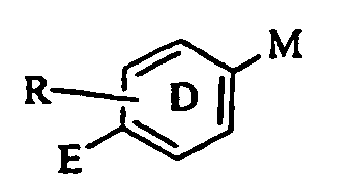
WO98/57937 US 5,998,424 are not considered to be part of the present invention. -
WO99/50255 US 6,191,159 describe pyrazoline and triazoline Factor Xa inhibitors of the following formulas:
WO99/50255 US 6,191,159 are not considered to be part of the present invention. -
WO00/59902 
WO00/59902 -
WO01/32628 WO01/32628 -
WO01/05784 
WO01/05784 -
WO00/39108 
WO00/39108 -
WO01/19798
A-Q-D-E-G-J-X
wherein A, D, G, and X can be phenyl or heterocycle. However, none of the presently claimed compounds are exemplified or suggested inWO01/19798 - Activated factor Xa, whose major practical role is the generation of thrombin by the limited proteolysis of prothrombin, holds a central position that links the intrinsic and extrinsic activation mechanisms in the final common pathway of blood coagulation. The generation of thrombin, the final serine protease in the pathway to generate a fibrin clot, from its precursor is amplified by formation of prothrombinase complex (factor Xa, factor V, Ca2+ and phospholipid). Since it is calculated that one molecule of factor Xa can generate 138 molecules of thrombin (Elodi, S., Varadi, K.: Optimization of conditions for the catalytic effect of the factor IXa-factor VIII Complex: Probable role of the complex in the amplification of blood coagulation. Thromb. Res. 1979, 15, 617-629), inhibition of factor Xa may be more efficient than inactivation of thrombin in interrupting the blood coagulation system.
- Therefore, efficacious and specific inhibitors of factor Xa are needed as potentially valuable therapeutic agents for the treatment of thromboembolic disorders. It is thus desirable to discover new factor Xa inhibitors. In addition, it is also desirable to find new compounds with improved pharmacological characteristics compared with known factor Xa inhibitors. For example, it is preferred to find new compounds with improved factor Xa inhibitory activity and selectivity for factor Xa versus other serine proteases (i.e., trypsin). It is also desirable and preferable to find compounds with advantageous and improved characteristics in one or more of the following categories, but are not limited to: (a) pharmaceutical properties (e.g., solubility, permeability, and amenability to sustained release formulations); (b) dosage requirements (e.g., lower dosages and/or once-daily dosing); (c) factors which decrease blood concentration peak-to-trough characteristics (e.g., clearance and/or volume of distribution); (d) factors that increase the concentration of active drug at the receptor (e.g., protein binding, volume of distribution); (e) factors that decrease the liability for clinical drug-drug interactions (e.g., cytochrome P450 enzyme inhibition or induction); (f) factors that decrease the potential for adverse side-effects (e.g., pharmacological selectivity beyond serine proteases, potential chemical or metabolic reactivity, and limited CNS penetration); and, (g) factors that improve manufacturing costs or feasibility (e.g., difficulty of synthesis, number of chiral centers, chemical stability, and ease of handling).
- Accordingly, the present invention provides a novel lactam-containing compound which is represented by formula (1) :

- The present invention provides pharmaceutical compositions comprising a pharmaceutically acceptable carrier and a therapeutically effective amount of the compound of the present invention or a pharmaceutically acceptable salt thereof.
- The present invention provides the novel lactam-containing compound or a pharmaceutically acceptable salt thereof for use in therapy.
- The present invention provides the compound of the present invention or a pharmaceutically acceptable salt thereof for use in treating thromboembolic disorders.
- A patient in need of thromboembolic disorder treatment may be treated by a method comprising: administering the compound of the present invention or a pharmaceutically acceptable salt form thereof in an amount effective to treat a thromboembolic disorder.
- The present invention provides the use of novel lactam-containing compounds for the manufacture of a medicament for the treatment of a thromboembolic disorder.
- These and other objects, which will become apparent during the following detailed description, have been achieved by the inventors' discovery that the lactam-containing compound of Formula (1):

- In one embodiment, the present invention provides a novel compound of Formula (1):

- In one embodiment, the present invention provides the novel compound
3-(1-hydroxy-1-methyl-ethyl)-1-(4-methoxy-phenyl)-6-[4-(2-oxo-2H-pyridin-1-yl)-phenyl]-1,4,5,6-tetrahydropyrazolo[3,4-c]pyridin-7-one;
or a pharmaceutically acceptable salt form thereof. - In another embodiment, the present invention provides a novel pharmaceutical composition, comprising: a pharmaceutically acceptable carrier and a therapeutically effective amount of the compound of formula (1) or a pharmaceutically acceptable salt form thereof.
- In another embodiment, the present invention provides the compound of formula (1) or a pharmaceutically acceptable salt form thereof for use in treating a thromboembolic disorder.
- It is preferred that the thromboembolic disorder is selected from the group consisting of arterial cardiovascular thromboembolic disorders, venous cardiovascular thromboembolic disorders, and thromboembolic disorders in the chambers of the heart.
- It is further preferred that the thromboembolic disorder is selected from unstable angina, an acute coronary syndrome, first myocardial infarction, recurrent myocardial infarction, ischemic sudden death, transient ischemic attack, stroke, atherosclerosis, peripheral occlusive arterial disease, venous thrombosis, deep vein thrombosis, thrombophlebitis, arterial embolism, coronary arterial thrombosis, cerebral arterial thrombosis, cerebral embolism, kidney embolism, pulmonary embolism, and thrombosis resulting from (a) prosthetic valves or other implants, (b) indwelling catheters, (c) stents, (d) cardiopulmonary bypass, (e) hemodialysis, or (f) other procedures in which blood is exposed to an artificial surface that promotes thrombosis.
- A patient in need of thromboembolic disorder treatment may be treated by administering the compound of formula (1) or a pharmaceutically acceptable salt form thereof in an amount effective to treat a thromboembolic disorder.
- In another embodiment, the present invention provides a first and second therapeutic agent for use in treating a thromboembolic disorder, wherein the first therapeutic agent is the compound of formula (1) or a pharmaceutically acceptable salt thereof and the second therapeutic agent is at least one agent selected from a second factor Xa inhibitor, an anti-coagulant agent, an anti-platelet agent, a thrombin inhibiting agent, a thrombolytic agent, and a fibrinolytic agent.
- A patient in need of thromboembolic disorder treatment may be treated by administering a therapeutically effective amount of said first and second therapeutic agent.
- It is preferred that the second therapeutic agent is at least one agent selected from warfarin, unfractionated heparin, low molecular weight heparin, synthetic pentasaccharide, hirudin, argatrobanas, aspirin, ibuprofen, naproxen, sulindac, indomethacin, mefenamate, droxicam, diclofenac, sulfinpyrazone, piroxicam, ticlopidine, clopidogrel, tirofiban, eptifibatide, abciximab, melagatran, disulfatohirudin, tissue plasminogen activator, modified tissue plasminogen activator, anistreplase, urokinase, and streptokinase.
- It is further preferred that the second therapeutic agent is at least one anti-platelet agent.
- It is further preferred that the anti-platelet agent is at least one of aspirin and clopidogrel.
- It is further preferred that the anti-platelet agent is clopidogrel.
- Moreover, a novel article of manufacture is described herein, comprising:
- (a) a first container;
- (b) a pharmaceutical composition located within the first container, wherein the composition, comprises: a first therapeutic agent, comprising: the compound of the present invention or a pharmaceutically acceptable salt form thereof; and,
- (c) a package insert stating that the pharmaceutical composition can be used for the treatment of a thromboembolic disorder.
- Preferably, the novel article of manufacture, further comprises:
- (d) a second container;
- Further, another novel article of manufacture is described herein, comprising:
- (a) a first container;
- (b) a pharmaceutical composition located within the first container, wherein the composition, comprises: a first therapeutic agent, comprising: the compound of the present invention or a pharmaceutically acceptable salt form thereof; and,
- (c) a package insert stating that the pharmaceutical composition can be used in combination with a second therapeutic agent to treat a thromboembolic disorder.
- Preferably, the novel article of manufacture, further comprises:
- (d) a second container;
- In another embodiment, the present invention provides novel compounds as described above for use in therapy.
- In another embodiment, the present invention provides the use of novel compounds as described above for the manufacture of a medicament for the treatment of a thromboembolic disorder.
- The present invention is intended to include all isotopes of atoms occurring in the present compounds. Isotopes include those atoms having the same atomic number but different mass numbers. By way of general example and without limitation, isotopes of hydrogen include tritium and deuterium. Isotopes of carbon include C-13 and C-14.
- The phrase "pharmaceutically acceptable" is employed herein to refer to those compounds, materials, compositions, and/or dosage forms which are, within the scope of sound medical judgment, suitable for use in contact with the tissues of human beings and animals without excessive toxicity, irritation, allergic response, or other problem or complication, commensurate with a reasonable benefit/risk ratio.
- As used herein, "pharmaceutically acceptable salts" refer to derivatives of the disclosed compound wherein the parent compound is modified by making acid or base salts thereof. Examples of pharmaceutically acceptable salts include, but are not limited to, mineral or organic acid salts of basic residues such as amines; alkali or organic salts of acidic residues such as carboxylic acids; and the like. The pharmaceutically acceptable salts include the conventional non-toxic salts or the quaternary ammonium salts of the parent compound formed, for example, from non-toxic inorganic or organic acids. For example, such conventional non-toxic salts include those derived from inorganic acids such as hydrochloric, hydrobromic, sulfuric, sulfamic, phosphoric, nitric and the like; and the salts prepared from organic acids such as acetic, propionic, succinic, glycolic, stearic, lactic, malic, tartaric, citric, ascorbic, pamoic, maleic, hydroxymaleic, phenylacetic, glutamic, benzoic, salicyclic, sulfanilic, 2-acetoxybenzoic, fumaric, toluenesulfonic, methanesulfonic, ethane disulfonic, oxalic, isethionic, and the like.
- The pharmaceutically acceptable salts of the present invention can be synthesized from the parent compound that contains a basic or acidic moiety by conventional chemical methods. Generally, such salts can be prepared by reacting the free acid or base forms of these compounds with a stoichiometric amount of the appropriate base or acid in water or in an organic solvent, or in a mixture of the two; generally, non-aqueous media like ether, ethyl acetate, ethanol, isopropanol, or acetonitrile are preferred. Lists of suitable salts are found in Remington's Pharmaceutical Sciences, 17th ed., Mack Publishing Company, Easton, PA, 1985, p. 1418.
- Since prodrugs are known to enhance numerous desirable qualities of pharmaceuticals (e.g., solubility, bioavailability, manufacturing, etc.) the compound of the present invention may be delivered in prodrug form. Thus, prodrugs of the presently claimed compound, methods of delivering the same and compositions containing the same are described herein. "Prodrugs" are intended to include any covalently bonded carriers that release an active parent drug of the present invention in vivo when such prodrug is administered to a mammalian subject. Prodrugs of the compound of the present invention are prepared by modifying functional groups present in the compound in such a way that the modifications are cleaved, either in routine manipulation or in vivo, to the parent compound. Prodrugs include compounds wherein a hydroxy, amino, or sulfhydryl group is bonded to any group that, when the prodrug is administered to a mammalian subject, it cleaves to form a free hydroxyl, free amino, or free sulfhydryl group, respectively. Examples of prodrugs include, but are not limited to, acetate, formate, and benzoate derivatives of alcohol and amine functional groups in the compound of the present invention.
- "Stable compound" and "stable structure" are meant to indicate a compound that is sufficiently robust to survive isolation to a useful degree of purity from a reaction mixture, and formulation into an efficacious therapeutic agent.
- As used herein, "treating" or "treatment" cover the treatment of a disease-state in a mammal, particularly in a human, and include: (a) preventing the disease-state from occurring in a mammal, in particular, when such mammal is predisposed to the disease-state but has not yet been diagnosed as having it; (b) inhibiting the disease-state, i.e., arresting it development; and/or (c) relieving the disease-state, i.e., causing regression of the disease state.
- "Therapeutically effective amount" is intended to include an amount of a compound of the present invention that is effective when administered alone or in combination to inhibit factor Xa. "Therapeutically effective amount" is also intended to include an amount of the combination of compounds claimed that is effective to inhibit factor Xa. The combination of compounds is preferably a synergistic combination. Synergy, as described, for example, by Chou and Talalay, Adv. Enzyme Regul. 1984, 22:27-55, occurs when the effect (in this case, inhibition of factor Xa) of the compounds when administered in combination is greater than the additive effect of the compounds when administered alone as a single agent. In general, a synergistic effect is most clearly demonstrated at sub-optimal concentrations of the compounds. Synergy can be in terms of lower cytotoxicity, increased antithrombotic effect, or some other beneficial effect of the combination compared with the individual components.
- The compounds of the present invention can be prepared in a number of ways known to one skilled in the art of organic synthesis. The compounds of the present invention can be synthesized using the methods described below, together with synthetic methods known in the art of synthetic organic chemistry, or by variations thereon as appreciated by those skilled in the art. Preferred methods include, but are not limited to, those described below. The reactions are performed in a solvent appropriate to the reagents and materials employed and suitable for the transformations being effected. It will be understood by those skilled in the art of organic synthesis that the functionality present on the molecule should be consistent with the transformations proposed. This will sometimes require a judgment to modify the order of the synthetic steps or to select one particular process scheme over another in order to obtain the desired compound of the invention.
- It will also be recognized that another major consideration in the planning of any synthetic route in this field is the judicious choice of the protecting group used for protection of the reactive functional groups present in the compounds described in this invention. An authoritative account describing the many alternatives to the trained practitioner is Greene and Wuts (Protective Groups In Organic Synthesis, Wiley and Sons, 1991).
- The synthesis of compounds of the present invention that involves the usage of intermediate A-B, wherein A is phen-1,4-diyl and B is 2-oxo-pyrid-1-yl, is accomplished via standard methods known to those skilled in the art. The general route that involves this type of methodology is outlined in Scheme 1.

- P4 (= G-G1) is 4-methoxyphenyl, P-M is 3-(1-Hydroxy-1-methyl-ethyl)-1,4,5,6-tetrahydro-pyrazolo[3,4-c]pyridin-7-one, Z is a bond.
- A-B intermediates can be obtained via Ullman or Buchwald methodologies that are outlined in the scheme below.
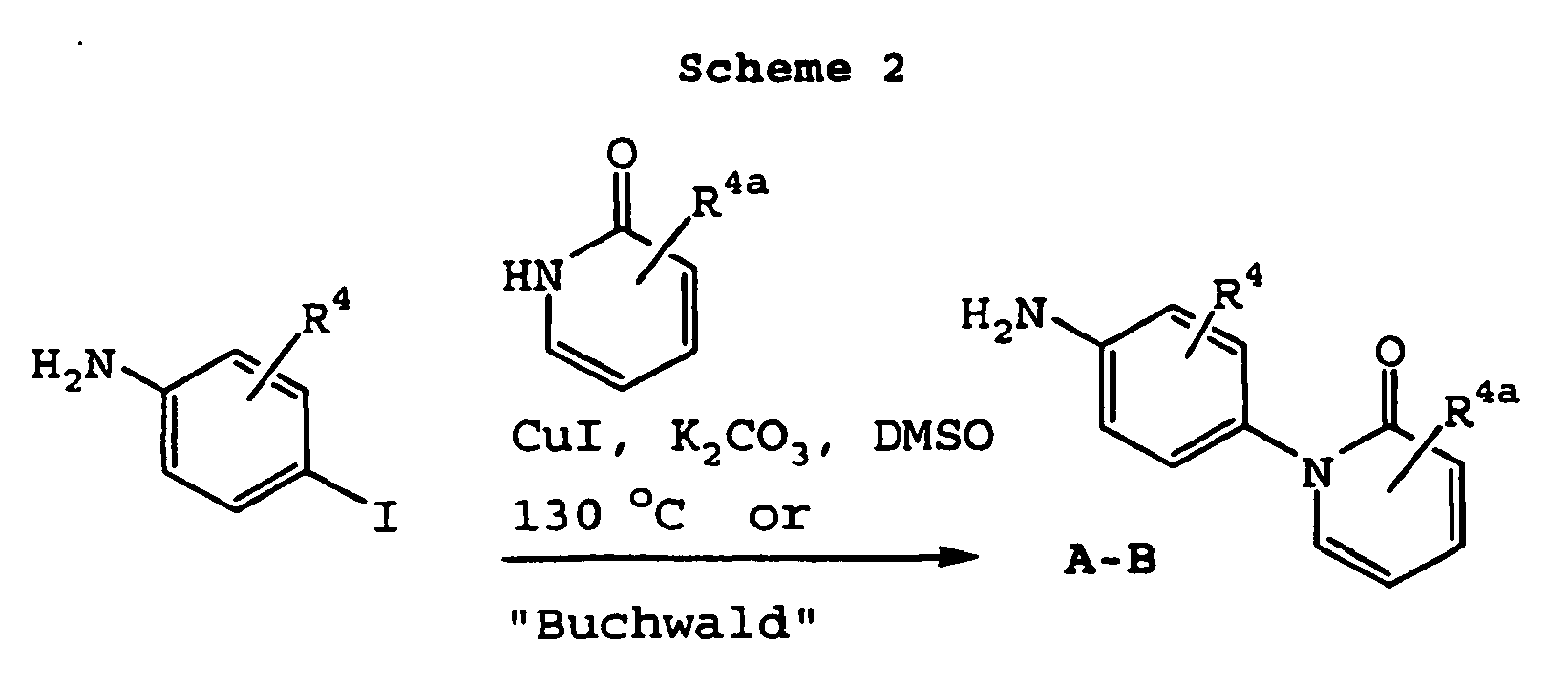
- Scheme 2 describes a method of preparing A-B intermediates that can then be coupled with other appropriate intermediates to form the compounds of the present invention. The halogenated intermediates illustrated in the scheme shown above when subjected to the Ullman or the Buchwald-Goldman coupling methodologies afford the compound of this invention.
- In cases wherein an intermediate of the present invention has a reactive group, the Ullman or the Buchwald-Goldman couplings are usually performed at an earlier stage of the synthesis. This intermediate may be modified later by those skilled in the art to afford the compounds of the present invention (see Scheme 10).

- Schemes 2 and 10 describe how to make the A-B moiety of the present invention and how to couple it to prepare the compounds of the present invention. In the above schemes, the Z group is not present. The coupling portion of the A-B group could be incorporated into ring M.
- The remaining portions of the compounds of the present invention, G-G1-P-M-Z, G-G1-M-P-Z, G-G1-P-M, G-G1-M-P, G-G1-M-Z, and G-G1-M, can be prepared using methods known to those of ordinary skill in the art. For the compounds of the present invention wherein ring P is fused to ring M (i.e., a bicyclic moiety is present), one of ordinary skill in the art can look to
WO00/39131 USSN 60/246,125 USSN 60/292,665 USSN 60/278,173 USSN 60/278,165 USSN 09/887,850
For the compounds of the present invention wherein G is a ring substituted with a non-basic group, one of ordinary skill in the art can look toUS 5,998,424 ,WO00/39131 WO00/059902 WO01/32628 USSN 09/892,319 USSN 60/313,552 USSN 60/246,108 USSN 60/246,125 USSN 60/292,665 USSN 60/278,173 USSN 60/278,165 - Scheme 16 shows some of the numerous pyrazole intermediates that can be used to prepare the compounds of the present invention. These intermediates are described in the above-noted patents and publications.
- Scheme 19 depicts an intermediate useful for making the compounds of the present invention wherein ring P is fused to ring M. In Scheme 19, U is OH or morpholine and V is H or C(O)R1a. This intermediate, derivatives thereof, and their modification are described in the above-noted patents and publications.

- Scheme 20 shows another intermediate useful for making the compounds of the present invention wherein ring P is fused to ring M. This intermediate, derivatives thereof, and their modification are described in the above-noted patents and publications.

- The compounds of this invention are inhibitors of factor Xa and are useful as anticoagulants for the treatment or prevention of thromboembolic disorders in mammals (i.e., factor Xa-associated disorders). In general, a thromboembolic disorder is a circulatory disease caused by blood clots (i.e., diseases involving fibrin formation, platelet activation, and/or platelet aggregation). The term "thromboembolic disorders" as used herein includes arterial cardiovascular thromboembolic disorders, venous cardiovascular thromboembolic disorders, and thromboembolic disorders in the chambers of the heart. The term "thromboembolic disorders" as used herein also includes specific disorders selected from, but not limited to, unstable angina or other acute coronary syndromes, first or recurrent myocardial infarction, ischemic sudden death, transient ischemic attack, stroke, atherosclerosis, peripheral occlusive arterial disease, venous thrombosis, deep vein thrombosis, thrombophlebitis, arterial embolism, coronary arterial thrombosis, cerebral arterial thrombosis, cerebral embolism, kidney embolism, pulmonary embolism, and thrombosis resulting from (a) prosthetic valves or other implants, (b) indwelling catheters, (c) stents, (d) cardiopulmonary bypass, (e) hemodialysis, or (f) other procedures in which blood is exposed to an artificial surface that promotes thrombosis. It is noted that thrombosis includes occlusion (e.g. after a bypass) and reocclusion (e.g., during or after percutaneous transluminal coronary angioplasty). The thromboembolic disorders may result from conditions including but not limited to atherosclerosis, surgery or surgical complications, prolonged immobilization, arterial fibrillation, congenital thrombophilia, cancer, diabetes, effects of medications or hormones, and complications of pregnancy. The anticoagulant effect of compounds of the present invention is believed to be due to inhibition of factor Xa or thrombin.
- The effectiveness of compounds of the present invention as inhibitors of factor Xa was determined using purified human factor Xa and synthetic substrate. The rate of factor Xa hydrolysis of chromogenic substrate S2222 (Diapharma/Chromogenix, West Chester, OH) was measured both in the absence and presence of compounds of the present invention. Hydrolysis of the substrate resulted in the release of pNA, which was monitored spectrophotometrically by measuring the increase in absorbance at 405 nm. A decrease in the rate of absorbance change at 405 nm in the presence of inhibitor is indicative of enzyme inhibition. The results of this assay are expressed as inhibitory constant, Ki.
- Factor Xa determinations were made in 0.10 M sodium phosphate buffer, pH 7.5, containing 0.20 M NaCl, and 0.5% PEG 8000. The Michaelis constant, Km, for substrate hydrolysis was determined at 25 °C using the method of Lineweaver and Burk. Values of Ki were determined by allowing 0.2-0.5 nM human factor Xa (Enzyme Research Laboratories, South Bend, IN) to react with the substrate (0.20 mM - 1 mM) in the presence of inhibitor. Reactions were allowed to go for 30 min and the velocities (rate of absorbance change vs. time) were measured in the time frame of 25-30 min. The following relationship was used to calculate Ki values:

where: - vO is the velocity of the control in the absence of inhibitor;
- vS is the velocity in the presence of inhibitor;
- I is the concentration of inhibitor;
- Ki is the dissociation constant of the enzyme:inhibitor complex;
- S is the concentration of substrate;
- Km is the Michaelis constant.
- Compounds tested in the above assay are considered to be active if they exhibit a Ki of ≥ 10 µM. Preferred compounds of the present invention have Ki's of ≤ 1 µM. More preferred compounds of the present invention have Ki's of ≤ 0.1 µM. Even more preferred compounds of the present invention have Ki's of ≤ 0.01 µM. Still more preferred compounds of the present invention have Ki's of ≤ 0.001 µM. Using the methodology described above, a number of compounds of the present invention were found to exhibit Ki's of ≤ 10 µM, thereby confirming the utility of the compounds of the present invention as effective Xa inhibitors.
- The antithrombotic effect of compounds of the present invention can be demonstrated in a rabbit arterio-venous (AV) shunt thrombosis model. In this model, rabbits weighing 2-3 kg anesthetized with a mixture of xylazine (10 mg/kg i.m.) and ketamine (50 mg/kg i.m.) are used. A saline-filled AV shunt device is connected between the femoral arterial and the femoral venous cannulae. The AV shunt device consists of a piece of 6-cm tygon tubing that contains a piece of silk thread. Blood will flow from the femoral artery via the AV-shunt into the femoral vein. The exposure of flowing blood to a silk thread will induce the formation of a significant thrombus. After 40 min, the shunt is disconnected and the silk thread covered with thrombus is weighed. Test agents or vehicle will be given (i.v., i.p., s.c., or orally) prior to the opening of the AV shunt. The percentage inhibition of thrombus formation is determined for each treatment group. The ID50 values (dose which produces 50% inhibition of thrombus formation) are estimated by linear regression.
- The compounds of the present invention may also be useful as inhibitors of serine proteases, notably human thrombin, Factor VIIa, Factor IXa, Factor XIa, urokinase, plasma kallikrein, and plasmin. Because of their inhibitory action, these compounds are indicated for use in the prevention or treatment of physiological reactions, blood coagulation and inflammation, catalyzed by the aforesaid class of enzymes. Specifically, the compounds have utility as drugs for the treatment of diseases arising from elevated thrombin activity such as myocardial infarction, and as reagents used as anticoagulants in the processing of blood to plasma for diagnostic and other commercial purposes.
- Some compounds of the present invention were shown to be direct acting inhibitors of the serine protease thrombin by their ability to inhibit the cleavage of small molecule substrates by thrombin in a purified system. In vitro inhibition constants were determined by the method described by Kettner et al. in J. Biol. Chem. 265, 18289-18297 (1990). In these assays, thrombin-mediated hydrolysis of the chromogenic substrate S2238 (Helena Laboratories, Beaumont, TX) was monitored spectrophotometrically. Addition of an inhibitor to the assay mixture results in decreased absorbance and is indicative of thrombin inhibition. Human thrombin (Enzyme Research Laboratories, Inc., South Bend, IN) at a concentration of 0.2 nM in 0.10 M sodium phosphate buffer, pH 7.5, 0.20 M NaCl, and 0.5% PEG 6000, was incubated with various substrate concentrations ranging from 0.20 to 0.02 mM. After 25 to 30 min of incubation, thrombin activity was assayed by monitoring the rate of increase in absorbance at 405 nm that arises owing to substrate hydrolysis. Inhibition constants were derived from reciprocal plots of the reaction velocity as a function of substrate concentration using the standard method of Lineweaver and Burk. Using the methodology described above, some compounds of this invention were evaluated and found to exhibit a Ki of less than 10 µM, thereby confirming the utility of the compounds of the present invention as effective thrombin inhibitors.
- The compounds are administered to a mammal in a therapeutically effective amount. By "therapeutically effective amount" it is meant an amount of a compound of the present invention that, when administered alone or in combination with an additional therapeutic agent to a mammal, is effective to treat a thromboembolic condition or disease.
- The compounds of the present invention can be administered alone or in combination with one or more additional therapeutic agents. By "administered in combination" or "combination therapy" it is meant that a compound of the present invention and one or more additional therapeutic agents are administered concurrently to the mammal being treated. When administered in combination each component may be administered at the same time or sequentially in any order at different points in time. Thus, each component may be administered separately but sufficiently closely in time so as to provide the desired therapeutic effect.
- Additional therapeutic agents include other anti-coagulant or coagulation inhibitory agents, anti-platelet or platelet inhibitory agents, thrombin inhibitors, thrombolytic or fibrinolytic agents, anti-arrythmic agents, anti-hypertensive agents, calcium channel blockers (L-type and T-type), cardiac glycosides, diruetics, mineralocorticoid receptor antagonists, phospodiesterase inhibitors, cholesterol/lipid lowering agents and lipid profile therapies, anti-diabetic agents, anti-depressants, anti-inflammatory agents (steroidal and non-steroidal), anti-osteoporosis agents, hormone replacement therapies, oral contraceptives, anti-obesity agents, anti-anxiety agents, anti-proliferative agents, anti-tumor agents, anti-ulcer and gastroesophageal reflux disease agents, growth hormone and/or growth hormone secretagogues, thyroid mimetics (including thyroid receptor antagonist), anti-infective agents, anti-viral agents, anti-bacterial agents, and anti-fungal agents.
- Other anticoagulant agents (or coagulation inhibitory agents) that may be used in combination with the compounds of this invention include warfarin and heparin (either unfractionated heparin or any commercially available low molecular weight heparin), synthetic pentasaccharide, direct acting thrombin inhibitors including hirudin and argatrobanas well as other factor Xa inhibitors such as those described in the publications identified above under Background of the Invention.
- The term anti-platelet agents (or platelet inhibitory agents), as used herein, denotes agents that inhibit platelet function, for example by inhibiting the aggregation, adhesion or granular secretion of platelets. Agents include, but are not limited to, the various known non-steroidal anti-inflammatory drugs (NSAIDS) such as aspirin, ibuprofen, naproxen, sulindac, indomethacin, mefenamate, droxicam, diclofenac, sulfinpyrazone, piroxicam, and pharmaceutically acceptable salts or prodrugs thereof. Of the NSAIDS, aspirin (acetylsalicyclic acid or ASA) and piroxicam are preferred. Other suitable platelet inhibitory agents include IIb/IIIa antagonists (e.g., tirofiban, eptifibatide, and abciximab), thromboxane-A2-receptor antagonists (e.g., ifetroban), thromboxane-A2-synthetase inhibitors, PDE-III inhibitors (e.g., dipyridamole), and pharmaceutically acceptable salts or prodrugs thereof.
- The term anti-platelet agents (or platelet inhibitory agents), as used herein, is also intended to include ADP (adenosine diphosphate) receptor antagonists, preferably antagonists of the purinergic receptors P2Y1 and P2Y12, with P2Y12 being even more preferred. Preferred P2Y12 receptor antagonists include ticlopidine and clopidogrel, including pharmaceutically acceptable salts or prodrugs thereof. Clopidogrel is an even more preferred agent. Ticlopidine and clopidogrel are also preferred compounds since they are known to be gentle on the gastro-intestinal tract in use.
- The term thrombin inhibitors (or anti-thrombin agents), as used herein, denotes inhibitors of the serine protease thrombin. By inhibiting thrombin, various thrombin-mediated processes, such as thrombin-mediated platelet activation (that is, for example, the aggregation of platelets, and/or the granular secretion of plasminogen activator inhibitor-1 and/or serotonin) and/or fibrin formation are disrupted. A number of thrombin inhibitors are known to one of skill in the art and these inhibitors are contemplated to be used in combination with the present compounds. Such inhibitors include, but are not limited to, boroarginine derivatives, boropeptides, heparins, hirudin, argatroban, and melagatran, including pharmaceutically acceptable salts and prodrugs thereof. Boroarginine derivatives and boropeptides include N-acetyl and peptide derivatives of boronic acid, such as C-terminal α-aminoboronic acid derivatives of lysine, ornithine, arginine, homoarginine and corresponding isothiouronium analogs thereof. The term hirudin, as used herein, includes suitable derivatives or analogs of hirudin, referred to herein as hirulogs, such as disulfatohirudin.
- The term thrombolytics or fibrinolytic agents (or thrombolytics or fibrinolytics), as used herein, denote agents that lyse blood clots (thrombi). Such agents include tissue plasminogen activator (natural or recombinant) and modified forms thereof, anistreplase, urokinase, streptokinase, tenecteplase (TNK), lanoteplase (nPA), factor VIIa inhibitors, PAI-1 inhibitors (i.e., inactivators of tissue plasminogen activator inhibitors), alpha2-antiplasmin inhibitors, and anisoylated plasminogen streptokinase activator complex, including pharmaceutically acceptable salts or prodrugs thereof. The term anistreplase, as used herein, refers to anisoylated plasminogen streptokinase activator complex, as described, for example, in
EP 028,489 - Examples of suitable anti-arrythmic agents for use in combination with the present compounds include: Class I agents (such as propafenone); Class II agents (such as carvadiol and propranolol); Class III agents (such as sotalol, dofetilide, amiodarone, azimilide and ibutilide); Class IV agents (such as ditiazem and verapamil); K+ channel openers such as IAch inhibitors, and IKur inhibitors (e.g., compounds such as those disclosed in
WO01/40231 - Examples of suitable anti-hypertensive agents for use in combination with the compounds of the present invention include: alpha adrenergic blockers; beta adrenergic blockers; calcium channel blockers (e.g., diltiazem, verapamil, nifedipine, amlodipine and mybefradil); diruetics (e.g., chlorothiazide, hydrochlorothiazide, flumethiazide, hydroflumethiazide, bendroflumethiazide, methylchlorothiazide, trichloromethiazide, polythiazide, benzthiazide, ethacrynic acid tricrynafen, chlorthalidone, furosemide, musolimine, bumetanide, triamtrenene, amiloride, spironolactone); renin inhibitors; ACE inhibitors (e.g., captopril, zofenopril, fosinopril, enalapril, ceranopril, cilazopril, delapril, pentopril, quinapril, ramipril, lisinopril); AT-1 receptor antagonists (e.g., losartan, irbesartan, valsartan); ET receptor antagonists (e.g., sitaxsentan, atrsentan and compounds disclosed in
U.S. Patent Nos. 5,612,359 and6,043,265 ); Dual ET/AII antagonist (e.g., compounds disclosed inWO 00/01389 - Examples of suitable calcium channel blockers (L-type or T-type) for use in combination with the compounds of the present invention include diltiazem, verapamil, nifedipine, amlodipine and mybefradil.
- Examples of suitable cardiac glycosides for use in combination with the compounds of the present invention include digitalis and ouabain.
- Examples of suitable diruetics for use in combination with the compounds of the present invention include: chlorothiazide, hydrochlorothiazide, flumethiazide, hydroflumethiazide, bendroflumethiazide, methylchlorothiazide, trichloromethiazide, polythiazide, benzthiazide, ethacrynic acid tricrynafen, chlorthalidone, furosemide, musolimine, bumetanide, triamtrenene, amiloride, and spironolactone.
- Examples of suitable mineralocorticoid receptor antagonists for use in combination with the compounds of the present invention include sprionolactone and eplirinone.
- Examples of suitable phospodiesterase inhibitors for use in combination with the compounds of the present invention include: PDE III inhibitors (such as cilostazol); and PDE V inhibitors (such as sildenafil).
- Examples of suitable cholesterol/lipid lowering agents and lipid profile therapies for use in combination with the compounds of the present invention include: HMG-CoA reductase inhibitors (e.g., pravastatin, lovastatin, atorvastatin, simvastatin, fluvastatin, NK-104 (a.k.a. itavastatin, or nisvastatin or nisbastatin) and ZD-4522 (a.k.a. rosuvastatin, or atavastatin or visastatin)); squalene synthetase inhibitors; fibrates; bile acid sequestrants (such as questran); ACAT inhibitors; MTP inhibitors; lipooxygenase inhibitors; choesterol absorption inhibitors; and cholesterol ester transfer protein inhibitors (e.g., CP-529414).
- Examples of suitable anti-diabetic agents for use in combination with the compounds of the present invention include: biguanides (e.g., metformin); glucosidase inhibitors (e.g., acarbose); insulins (including insulin secretagogues or insulin sensitizers); meglitinides (e.g., repaglinide); sulfonylureas (e.g., glimepiride, glyburide and glipizide); biguanide/glyburide combinations (e.g., glucovance), thiozolidinediones (e.g., troglitazone, rosiglitazone and pioglitazone), PPAR-alpha agonists, PPAR-gamma agonists, PPAR alpha/gamma dual agonists, SGLT2 inhibitors, inhibitors of fatty acid binding protein (aP2) such as those disclosed in
WO00/59506 - Examples of suitable anti-depressant agents for use in combination with the compounds of the present invention include nefazodone and sertraline.
- Examples of suitable anti-inflammatory agents for use in combination with the compounds of the present invention include: prednisone; dexamethasone; enbrel; protien tyrosine kinase (PTK) inhibitors; cyclooxygenase inhibitors (including NSAIDs, and COX-1 and/or COX-2 inhibitors); aspirin; indomethacin; ibuprofen; prioxicam; naproxen; celecoxib; and/or rofecoxib.
- Examples of suitable anti-osteoporosis agents for use in combination with the compounds of the present invention include alendronate and raloxifene.
- Examples of suitable hormone replacement therapies for use in combination with the compounds of the present invention include estrogen (e.g., congugated estrogens) and estradiol.
- Examples of suitable anti-coagulants for use in combination with the compounds of the present invention include heparins (e.g., unfractioned and low molecular weight heparins such as enoxaparin and dalteparin).
- Examples of suitable anti-obesity agents for use in combination with the compounds of the present invention include orlistat and aP2 inhibitors (such as those disclosed in
WO00/59506 - Examples of suitable anti-anxiety agents for use in combination with the compounds of the present invention include diazepam, lorazepam, buspirone, and hydroxyzine pamoate.
- Examples of suitable anti-proliferative agents for use in combination with the compounds of the present invention include cyclosporin A, paclitaxel, adriamycin; epithilones, cisplatin, and carboplatin.
- Examples of suitable anti-ulcer and gastroesophageal reflux disease agents for use in combination with the compounds of the present invention include famotidine, ranitidine, and omeprazole.
- Administration of the compounds of the present invention (i.e., a first therapeutic agent) in combination with at least one additional therapeutic agent (i.e., a second therapeutic agent), preferably affords an efficacy advantage over the compounds and agents alone, preferably while permitting the use of lower doses of each (i.e., a synergistic combination). A lower dosage minimizes the potential of side effects, thereby providing an increased margin of safety. It is preferred that at least one of the therapeutic agents is administered in a sub-therapeutic dose. It is even more preferred that all of the therapeutic agents be administered in sub-therapeutic doses. Sub-therapeutic is intended to mean an amount of a therapeutic agent that by itself does not give the desired therapeutic effect for the condition or disease being treated. Synergistic combination is intended to mean that the observed effect of the combination is greater than the sum of the individual agents administered alone.
- The compounds of the present invention are also useful as standard or reference compounds, for example as a quality standard or control, in tests or assays involving the inhibition of factor Xa. Such compounds may be provided in a commercial kit, for example, for use in pharmaceutical research involving factor Xa. For example, a compound of the present invention could be used as a reference in an assay to compare its known activity to a compound with an unknown activity. This would ensure the experimenter that the assay was being performed properly and provide a basis for comparison, especially if the test compound was a derivative of the reference compound. When developing new assays or protocols, compounds according to the present invention could be used to test their effectiveness.
- The compounds of the present invention may also be used in diagnostic assays involving factor Xa. For example, the presence of factor Xa in an unknown sample could be determined by addition of chromogenic substrate S2222 to a series of solutions containing test sample and optionally one of the compounds of the present invention. If production of pNA is observed in the solutions containing test sample, but not in the presence of a compound of the present invention, then one would conclude factor Xa was present.
- Compounds of the present invention may further be useful as diagnostic agents and adjuncts. For example, the present compounds may be useful in maintaining whole and fractionated blood in the fluid phase such as required for analytical and biological testing.
- Further, an article of manufacture is described herein. As used herein, article of manufacture is intended to include, but not be limited to, kits and packages. The article of manufacture comprises: (a) a first container; (b) a pharmaceutical composition located within the first container, wherein the composition, comprises: a first therapeutic agent, comprising: a compound of the present invention or a pharmaceutically acceptable salt form thereof; and, (c) a package insert stating that the pharmaceutical composition can be used for the treatment of a thromboembolic disorder (as defined previously). The package insert may also state that the pharmaceutical composition can be used in combination (as defined previously) with a second therapeutic agent to treat a thromboembolic disorder. The article of manufacture can further comprise: (d) a second container, wherein components (a) and (b) are located within the second container and component (c) is located within or outside of the second container. Located within the first and second containers means that the respective container holds the item within its boundaries.
- The first container is a receptacle used to hold a pharmaceutical composition. This container can be for manufacturing, storing, shipping, and/or individual/bulk selling. First container is intended to cover a bottle, jar, vial, flask, syringe, tube (e.g., for a cream preparation), or any other container used to manufacture, hold, store, or distribute a pharmaceutical product.
- The second container is one used to hold the first container and, optionally, the package insert. Examples of the second container include, but are not limited to, boxes (e.g., cardboard or plastic), crates, cartons, bags (e.g., paper or plastic bags), pouches, and sacks. The package insert can be physically attached to the outside of the first container via tape, glue, staple, or another method of attachment, or it can rest inside the second container without any physical means of attachment to the first container. Alternatively, the package insert is located on the outside of the second container. When located on the outside of the second container, it is preferable that the package insert is physically attached via tape, glue, staple, or another method of attachment. Alternatively, it can be adjacent to or touching the outside of the second container without being physically attached.
- The package insert is a label, tag, marker, etc. that recites information relating to the pharmaceutical composition located within the first container. The information recited will usually be determined by the regulatory agency governing the area in which the article of manufacture is to be sold (e.g., the United States Food and Drug Administration). Preferably, the package insert specifically recites the indications for which the pharmaceutical composition has been approved. The package insert may be made of any material on which a person can read information contained therein or thereon. Preferably, the package insert is a printable material (e.g., paper, plastic, cardboard, foil, adhesive-backed paper or plastic, etc.) on which the desired information has been formed (e.g., printed or applied).
- The compounds of this invention can be administered in such oral dosage forms as tablets, capsules (each of which includes sustained release or timed release formulations), pills, powders, granules, elixirs, tinctures, suspensions, syrups, and emulsions. They may also be administered in intravenous (bolus or infusion), intraperitoneal, subcutaneous, or intramuscular form, all using dosage forms well known to those of ordinary skill in the pharmaceutical arts. They can be administered alone, but generally will be administered with a pharmaceutical carrier selected on the basis of the chosen route of administration and standard pharmaceutical practice.
- The dosage regimen for the compounds of the present invention will, of course, vary depending upon known factors, such as the pharmacodynamic characteristics of the particular agent and its mode and route of administration; the species, age, sex, health, medical condition, and weight of the recipient; the nature and extent of the symptoms; the kind of concurrent treatment; the frequency of treatment; the route of administration, the renal and hepatic function of the patient, and the effect desired. A physician or veterinarian can determine and prescribe the effective amount of the drug required to prevent, counter, or arrest the progress of the thromboembolic disorder.
- By way of general guidance, the daily oral dosage of each active ingredient, when used for the indicated effects, will range between about 0.001 to 1000 mg/kg of body weight, preferably between about 0.01 to 100 mg/kg of body weight per day, and most preferably between about 1.0 to 20 mg/kg/day. Intravenously, the most preferred doses will range from about 1 to about 10 mg/kg/min during a constant rate infusion. Compounds of this invention may be administered in a single daily dose, or the total daily dosage may be administered in divided doses of two, three, or four times daily.
- Compounds of this invention can be administered in intranasal form via topical use of suitable intranasal vehicles, or via transdermal routes, using transdermal skin patches. When administered in the form of a transdermal delivery system, the dosage administration will, of course, be continuous rather than intermittent throughout the dosage regimen.
- The compounds are typically administered in admixture with suitable pharmaceutical diluents, excipients, or carriers (collectively referred to herein as pharmaceutical carriers) suitably selected with respect to the intended form of administration, that is, oral tablets, capsules, elixirs, syrups and the like, and consistent with conventional pharmaceutical practices.
- For instance, for oral administration in the form of a tablet or capsule, the active drug component can be combined with an oral, non-toxic, pharmaceutically acceptable, inert carrier such as lactose, starch, sucrose, glucose, methyl cellulose, magnesium stearate, dicalcium phosphate, calcium sulfate, mannitol, sorbitol and the like; for oral administration in liquid form, the oral drug components can be combined with any oral, non-toxic, pharmaceutically acceptable inert carrier such as ethanol, glycerol, water, and the like. Moreover, when desired or necessary, suitable binders, lubricants, disintegrating agents, and coloring agents can also be incorporated into the mixture. Suitable binders include starch, gelatin, natural sugars such as glucose or beta-lactose, corn sweeteners, natural and synthetic gums such as acacia, tragacanth, or sodium alginate, carboxymethylcellulose, polyethylene glycol, waxes, and the like. Lubricants used in these dosage forms include sodium oleate, sodium stearate, magnesium stearate, sodium benzoate, sodium acetate, sodium chloride, and the like. Disintegrators include, without limitation, starch, methyl cellulose, agar, bentonite, xanthan gum, and the like.
- The compounds of the present invention can also be administered in the form of liposome delivery systems, such as small unilamellar vesicles, large unilamellar vesicles, and multilamellar vesicles. Liposomes can be formed from a variety of phospholipids, such as cholesterol, stearylamine, or phosphatidylcholines.
- Compounds of the present invention may also be coupled with soluble polymers as targetable drug carriers. Such polymers can include polyvinylpyrrolidone, pyran copolymer, polyhydroxypropylmethacrylamide-phenol, polyhydroxyethylaspartamidephenol, or polyethyleneoxide-polylysine substituted with palmitoyl residues. Furthermore, the compounds of the present invention may be coupled to a class of biodegradable polymers useful in achieving controlled release of a drug, for example, polylactic acid, polyglycolic acid, copolymers of polylactic and polyglycolic acid, polyepsilon caprolactone, polyhydroxy butyric acid, polyorthoesters, polyacetals, polydihydropyrans, polycyanoacylates, and crosslinked or amphipathic block copolymers of hydrogels.
- Dosage forms (pharmaceutical compositions) suitable for administration may contain from about 1 mg to about 100 mg of active ingredient per dosage unit. In these pharmaceutical compositions the active ingredient will ordinarily be present in an amount of about 0.5-95% by weight based on the total weight of the composition.
- Gelatin capsules may contain the active ingredient and powdered carriers, such as lactose, starch, cellulose derivatives, magnesium stearate, stearic acid, and the like. Similar diluents can be used to make compressed tablets. Both tablets and capsules can be manufactured as sustained release products to provide for continuous release of medication over a period of hours. Compressed tablets can be sugar coated or film coated to mask any unpleasant taste and protect the tablet from the atmosphere, or enteric coated for selective disintegration in the gastrointestinal tract.
- Liquid dosage forms for oral administration can contain coloring and flavoring to increase patient acceptance.
- In general, water, a suitable oil, saline, aqueous dextrose (glucose), and related sugar solutions and glycols such as propylene glycol or polyethylene glycols are suitable carriers for parenteral solutions. Solutions for parenteral administration preferably contain a water soluble salt of the active ingredient, suitable stabilizing agents, and if necessary, buffer substances. Antioxidizing agents such as sodium bisulfite, sodium sulfite, or ascorbic acid, either alone or combined, are suitable stabilizing agents. Also used are citric acid and its salts and sodium EDTA. In addition, parenteral solutions can contain preservatives, such as benzalkonium chloride, methyl-or propyl-paraben, and chlorobutanol.
- Suitable pharmaceutical carriers are described in Remington's Pharmaceutical Sciences, Mack Publishing Company, a standard reference text in this field.
- Representative useful pharmaceutical dosage-forms for administration of the compounds of this invention can be illustrated as follows:
- A large number of unit capsules can be prepared by filling standard two-piece hard gelatin capsules each with 100 mg of powdered active ingredient, 150 mg of lactose, 50 mg of cellulose, and 6 mg magnesium stearate.
- A mixture of active ingredient in a digestible oil such as soybean oil, cottonseed oil or olive oil may be prepared and injected by means of a positive displacement pump into gelatin to form soft gelatin capsules containing 100 mg of the active ingredient. The capsules should be washed and dried.
- Tablets may be prepared by conventional procedures so that the dosage unit is 100 mg of active ingredient, 0.2 mg of colloidal silicon dioxide, 5 mg of magnesium stearate, 275 mg of microcrystalline cellulose, 11 mg of starch and 98.8 mg of lactose. Appropriate coatings may be applied to increase palatability or delay absorption.
- A parenteral composition suitable for administration by injection may be prepared by stirring 1.5% by weight of active ingredient in 10% by volume propylene glycol and water. The solution should be made isotonic with sodium chloride and sterilized.
- An aqueous suspension can be prepared for oral administration so that each 5 mL contain 100 mg of finely divided active ingredient, 200 mg of sodium carboxymethyl cellulose, 5 mg of sodium benzoate, 1.0 g of sorbitol solution, U.S.P, and 0.025 mL of vanillin.
- Where the compounds of this invention are combined with other anticoagulant agents, for example, a daily dosage may be about 0.1 to 100 mg of the compound of Formula (1) and about 1 to 7.5 mg of the second anticoagulant, per kilogram of patient body weight. For a tablet dosage form, the compounds of this invention generally may be present in an amount of about 5 to 10 mg per dosage unit, and the second anti-coagulant in an amount of about 1 to 5 mg per dosage unit.
- Where the compounds of the present invention are administered in combination with an anti-platelet agent, by way of general guidance, typically a daily dosage may be about 0.01 to 25 mg of the compound of Formula (1) and about 50 to 150 mg of the anti-platelet agent, preferably about 0.1 to 1 mg of the compound of Formula (1) and about 1 to 3 mg of antiplatelet agents, per kilogram of patient body weight.
- Where the compounds of the present invention are administered in combination with thrombolytic agent, typically a daily dosage may be about 0.1 to 1 mg of the compound of the present invention, per kilogram of patient body weight and, in the case of the thrombolytic agents, the usual dosage of the thrombolyic agent when administered alone may be reduced by about 70-80% when administered with a compound of the present invention.
- Where two or more of the foregoing second therapeutic agents are administered with the compound of the present invention, generally the amount of each component in a typical daily dosage and typical dosage form may be reduced relative to the usual dosage of the agent when administered alone, in view of the additive or synergistic effect of the therapeutic agents when administered in combination.
- Particularly when provided as a single dosage unit, the potential exists for a chemical interaction between the combined active ingredients. For this reason, when the compound of the present invention and a second therapeutic agent are combined in a single dosage unit they are formulated such that although the active ingredients are combined in a single dosage unit, the physical contact between the active ingredients is minimized (that is, reduced). For example, one active ingredient may be enteric coated. By enteric coating one of the active ingredients, it is possible not only to minimize the contact between the combined active ingredients, but also, it is possible to control the release of one of these components in the gastrointestinal tract such that one of these components is not released in the stomach but rather is released in the intestines. One of the active ingredients may also be coated with a material that affects a sustained-release throughout the gastrointestinal tract and also serves to minimize physical contact between the combined active ingredients. Furthermore, the sustained-released component can be additionally enteric coated such that the release of this component occurs only in the intestine. Still another approach would involve the formulation of a combination product in which the one component is coated with a sustained and/or enteric release polymer, and the other component is also coated with a polymer such as a lowviscosity grade of hydroxypropyl methylcellulose (HPMC) or other appropriate materials as known in the art, in order to further separate the active components. The polymer coating serves to form an additional barrier to interaction with the other component.
- These as well as other ways of minimizing contact between the components of combination products of the present invention, whether administered in a single dosage form or administered in separate forms but at the same time by the same manner, will be readily apparent to those skilled in the art, once armed with the present disclosure.
- Other features of the invention will become apparent in the course of the following descriptions of exemplary embodiments that are afforded for illustration of the invention and are not intended to be limiting thereof.
- was prepared following the procedure employed for the preparation of 3-(1-Hydroxy-1-methyl-ethyl)-1-(4-methoxyphenyl)-6-[4-(2-oxo-piperidin-1-yl)-phenyl]-1,4,5,6-tetrahydropyrazolo[3,4-c]pyridin-7-one described below.
ESI MS m/z 471 (M+H). - To 1-(4-methoxy-phenyl)-7-oxo-6-[4-(2-oxo-piperidin-1-yl)-phenyl]-4,5,6,7-tetrahydro-1H-pyrazolo[3,4-c]pyridine-3-carboxylic acid ethyl ester (0.1, 0.2 mmol) in THF (15 mL) at 0 °C was added MeMgBr (0.21 mL,0.6 mmol) and the reaction was stirred at rt for 24 h. The reaction was quenched with water and purified by HPLC to afford 47 mg (48%) of a white solid; Mass Spec (M+H)+ 475.
- was made according to Part E of the prepration of 1-(4-methoxyphenyl)-7-oxo-6-[4-(2-oxo-1-piperidinyl)phenyl-4,5,6,7-tetrahydro-1H-pyrazole-[3,4-c]pyridine-3-carboxamide described below. High Resolution Mass Spec (M+H) + for C27H25N4O5 485.1827.
- Part A. 4-iodoaniline (45.82 g, 209.2 mmol) and triethylamine (65.61 mL, 470.7 mmol) were dissolved into THF (800 mL) and cooled to 0 °C. 5-Bromovaleryl chloride (50.0 g, 251.1 mmol) dissolved in THF (200 mL) was added dropwise to the reaction. The reaction was warmed to rt and stirred overnight. Reaction was cooled to 0 °C and potassium tert-butoxide (70.43 g, 627.6 mmol) was slowly added. The reaction was warmed to rt and stirred overnight. The reaction was concentrated and then redissolved in ethyl acetate (500 mL) and 3N HCl (500 mL), extracted with ethyl acetate (2x250 mL), washed with 1N HCl (3x250 mL), washed with brine (1x250 mL), and dried (Na2SO4). Purification by silica gel chromatography using 0%-100%ethyl acetate/hexane gradient as eluent to afford 51.03g (81%): 1H NMR (CDCl3) δ 7.70 (d, j=8.4Hz, 2H), 7.03 (d,j=8.8Hz, 2H), 3.62 (t,j=5.9Hz, 2H), 2.56 (t,j=5.7Hz, 2H), 2.50-1.88 (m, 4H) ppm.
- Part B. The above lactam intermediate from Part A (85.17 g, 282.8 mmol) and phosphorus pentachloride (205.91 g, 990.0 mmol) were dissolved into CHCl3 (750 mL) and refluxed for 3½ h. Reaction was poured over ice and then quenched further with water, extracted with CHCl3 (3x400 mL), washed with brine (1x400 mL), dried (MgSO4), and concentrated. This residue was dissolved in morpholine (400 mL) and refluxed overnight. Reaction was concentrated and purified by silica gel chromatography using 0%-100% ethyl acetate/hexane gradient as eluent to afford 68 g (63%): 1H NMR (CDCl3) δ 7.68 (d,j=8.8Hz, 2H), 7.11 (d,j=8.8Hz, 2H), 5.66 (t,j=4.8Hz, 1H), 3.82 (t,j=4.8Hz, 4H), 3.77 (t,j=6.8Hz, 2H), 2.89 (t,j=4.8Hz, 4H), 2.53-2.47 (m, 2H) ppm.
- Part C. To p-anisidine (16 g, 0.129 mol) in conc. HCl (40 mL) and water (100 mL) at 0 °C was slowly added sodium nitrite (9.4 g, 0.136 mol) in water (60 mL). The reaction was stirred cold for 0.5 h. To the above reaction was poured a mixture of ethylchloroacetoacetate (22 g, 0.133 mol), ethanol (100 mL), sodium acetate (32 g, 0.389 mmol), and water (400 mL). The reaction was stirred 2 h at rt. The precipitate was filtered-off and dried to afford the hydrazone as a red gum (30.3 g, 91%): 1H NMR (CDCl3) δ 8.28 (s, 1H), 7.18 (d,j=9.1Hz, 2H), 6.90 (d,j=9.2Hz, 2H), 4.41(q,j=8Hz, 2H), 3.80 (s, 3H), 1.42 (t,j=6.9Hz, 3H) ppm.
- Part D. To the hydrazone from Part C (0.7 g, 2.7 mmol) and the morpholine compound from Part B (0.7 g, 1.8mol) in toluene (25 mL) was added triethylamine (2 mL, 14.2 mmol) and the reaction was heated to reflux for 6 h. The reaction was cooled to rt and water was added. The mixture was extracted with ethyl acetate, washed with water, 1N HCl, sat'd NaHCO3 and dried (Na2SO4). Purification on silica gel using 3:2 hexanes/ethyl acetate afforded a morpholine intermediate that was dissolved in CH2Cl2 (50 mL) and TFA (2 mL). After 24 h the reaction was diluted with CH2Cl2, washed with water and sat'd NaHCO3 and dried (Na2SO4) to afford 0.17g (18%) foam: 1H NMR (CDCl3) δ 7.70 (d,j=8.5Hz, 2H), 7.47 (d,j=9.1Hz, 2H), 7.09 (d,j=8.8Hz, 2H), 6.93 (d,j=9.2Hz, 2H), 4.49(q,j=6.9Hz, 2H), 4.12 (t,j=6.5Hz, 2H), 3.81 (s, 3H), 3.34 (t,j=6.6Hz, 2H), 1.45 (t,j=6.9Hz, 3H) ppm; Mass Spec ESI(M+H)+ 517.9.
- Part E. To iodo compound from Part D (25 g, 0.048mol) was added γ-valerolactam (6.7 g, 0.067mol), K2CO3 (8 g, 0.058 mol), degassed DMSO (100 mL) and CuI (1.84 g, 0.009 mol). The reaction was heated to 130 °C for 24 h. The reaction was cooled, partitioned with EtOAc/H2O, extracted and dried (MgSO4). Purification by silica gel chromatography using 0-10% MeOH/ CH2Cl2 as eluent afforded 5 g (21%) of ethyl 1-(4-meyhoxyphenyl)-7-oxo-6[4-(2-oxo-1-piperidinyl)phenyl]-4,5,6,7-tetrahydro-1H-pyrazolo[3,4-c]pyridine-3-carboxylate as a tan foam; 1H NMR (CDCl3) δ 7.49 (d,j=9.2Hz, 2H), 7.35 (d,j=8.8Hz, 2H), 7.26 (d,j=8.1Hz, 2H), 6.92 (d,j=8.8Hz, 2H), 4.49(q,j=7.3Hz, 2H), 4.13 (t,j=6.6Hz, 2H), 3.81 (s, 3H), 3.59 (m, 2H), 3.39 (t,j=6.6Hz, 2H), 2.55 (m, 2H), 1.91 (m, 4H), 1.45 (t,j=7.3Hz, 3H) ppm.
- Part F. To ester from Part E (4.8 g, 0.009 mol) was added 5% NH3 in ethylene glycol (40 mL) and the mixture was heated to 120 °C for 4 h in sealed vessel. Water was added and the resulting solid was collected. Purification by silica gel chromatography using 0-10% MeOH/ CH2Cl2 as eluent afforded 3.5 g of a white solid. A portion of the solid was recrystallized from CH2Cl2/ EtOAc to afford 2.5 g of the title compound. The remaining solid and filtrate material was recrystallized from isopropyl alcohol to afford an additional 0.57 g for a total of 3.07 g (68%): 1H NMR (CDCl3) δ 7.49 (d,j=8.8Hz, 2H), 7.37 (d,j=9.1Hz, 2H), 7.26 (d,j=8.8Hz, 2H), 6.98 (s, 1H) 6.95 (d,j=9.2Hz, 2H), 6.28 (s, 1H), 4.14 (t,j=6.6Hz, 2H), 3.81 (s, 3H), 3.61 (m, 2H), 3.39 (t,j=6.6Hz, 2H), 2.63 (t,j=6.2Hz, 2H), 1.96 (m, 4H) ppm.
Claims (29)
- A compound, which is represented by formula (1):

- A compound according to claim 1, which is represented by the formula (1).
- A pharmaceutical composition, comprising: a pharmaceutically acceptable carrier and a therapeutically effective amount of the compound of the formula (1) of claim 1 or a pharmaceutically acceptable salt thereof.
- A pharmaceutical composition, comprising: the pharmaceutically acceptable carrier and a therapeutically effective amount of the compound of claim 2.
- A compound of claim 1 or 2 for use in therapy.
- A pharmaceutical composition of claim 3 or 4 for use in therapy.
- A compound of claim 1 or 2 for use in treating a thromboembolic disorder.
- A pharmaceutical composition of claim 3 or 4 for use in treating a thromboembolic disorder.
- Use of a compound of claim 1 or 2 in the manufacture of a medicament for use in treating a thromboembolic disorder.
- Use of a pharmaceutical composition of claim 3 or 4 in the manufacture of a medicament for use in treating a thromboembolic disorder.
- A compound for use in treating a thromboembolic disorder according to claim 7 or use of a compound according to claim 9, wherein the thromboembolic disorder is selected from the group consisting of arterial cardiovascular thromboembolic disorders, venous cardiovascular thromboembolic disorders, and thromboembolic disorders in the chambers of the heart.
- A compound for use in treating a thromboembolic disorder according to claim 7 or use of a compound according to claim 9, wherein the thromboembolic disorder is selected from unstable angina, an acute coronary syndrome, first myocardial infarction, recurrent myocardial infarction, ischemic sudden death, transient ischemic attack, stroke, atherosclerosis, peripheral occlusive arterial disease, venous thrombosis, deep vein thrombosis, thrombophlebitis, arterial embolism, coronary arterial thrombosis, cerebral arterial thrombosis, cerebral embolism, kidney embolism, pulmonary embolism, and thrombosis resulting from (a) prosthetic valves or other implants, (b) indwelling catheters, (c) stents, (d) cardiopulmonary bypass, (e) hemodialysis, or (f) other procedures in which blood is exposed to an artificial surface that promotes thrombosis.
- A compound for use in treating a thromboembolic disorder according to claim 12 or use of a compound according to claim 12, wherein the thromboembolic disorder is an acute coronary syndrome.
- A compound for use in treating a thromboembolic disorder according to claim 12 or use of a compound according to claim 12, wherein the thromboembolic disorder is ischemic sudden death, transient ischemic attack, or stroke.
- A compound for use in treating a thromboembolic disorder according to claim 12 or use of a compound according to claim 12, wherein the thromboembolic disorder is deep vein thrombosis.
- A compound for use in treating a thromboembolic disorder according to claim 12 or use of a compound according to claim 12, wherein the thromboembolic disorder is pulmonary embolism.
- A pharmaceutical composition for use in treating a thromboembolic disorder according to claim 8 or use of a pharmaceutical composition according to claim 10, wherein the thromboembolic disorder is selected from the group consisting of arterial cardiovascular thromboembolic disorders, venous cardiovascular thromboembolic disorders, and thromboembolic disorders in the chambers of the heart.
- A pharmaceutical composition for use in treating a thromboembolic disorder according to claim 8 or use of a pharmaceutical composition according to claim 10, herein the thromboembolic disorder is selected from unstable angina, an acute coronary syndrome, first myocardial infarction, recurrent myocardial infarction, ischemic sudden death, transient ischemic attack, stroke, atherosclerosis, peripheral occlusive arterial disease, venous thrombosis, deep vein thrombosis, thrombophlebitis, arterial embolism, coronary arterial thrombosis, cerebral arterial thrombosis, cerebral embolism, kidney embolism, pulmonary embolism, and thrombosis resulting from (a) prosthetic valves or other implants, (b) indwelling catheters, (c) stents, (d) cardiopulmonary bypass, (e) hemodialysis, or (f) other procedures in which blood is exposed to an artificial surface that promotes thrombosis.
- A pharmaceutical compositon for use in treating a thromboembolic disorder according to claim 18 or use of a pharmaceutical composition according to claim 18, wherein the thromboembolic disorder is an acute coronary syndrome.
- A pharmaceutical composition for use in treating a thromboembolic disorder according to claim 18 or use of a pharmaceutical composition according to claim 18, wherein the thromboembolic disorder is ischemic sudden death, transient ischemic attack, or stroke.
- A pharmaceutical composition for use in treating a thromboembolic disorder according to claim 18 or use of a pharmaceutical composition according to claim 18, wherein the thromboembolic disorder is deep vein thrombosis.
- A pharmaceutical composition for use in treating thromboembolic disorder according to claim 18 or use of a pharmaceutical composition according to claim 18, wherein the thromboembolic disorder is pulmonary embolism.
- A compound and a second therapeutic agent, for use in a treating a thrombolytic disorder, wherein the compound is a compound of claim 2 and the second therapeutic agent is at least one agent selected from a second factor Xa inhibitor, an anti-coagulant agent, an anti-platelet agent, a thrombin agent, a thrombolytic agent, and a fibrinolytic agent.
- Use of a compound and a second therapeutic agent in the manufacture of a medicament for use in treating a thrombolytic disorder, wherein the compound is a compound of claim2 and the second therapeutic agent is at least one agent selected from a second factor Xa inhibitor, an anti-coagulant agent, an anti-platelet agent, a thrombin inhibiting agent, a thrombolytic agent, and a fribrinolytic agent.
- A compound and a second therapeutic agent, for use in treating a thrombolytic disorder, according to claim 23 or use of a compound and a second therapeutic agent according to claim 24, wherein the second therapeutic agent is at least one agent selected from warfarin, unfractionated heparin, low molecular weight heparin, synthetic pentasaccharide, hirudin, argatroban, aspirin, ibuprofen, naproxen, sulindac, indomethacin, mefenamate, droxicam, diclofenac, sulfinpyrazone, piroxicam, ticlopidine, clopidogrel, tirofiban, eptifibatide, abciximab, melagatran, disulfatohirudin, tissue plasminogen activator, modified tissue plasminogen activator, anistreplase, urokinase, and streptokinase.
- A compound and a second therapeutic agent, for use in treating a thrombolytic disorder, according to claim 23 or use of a compound and second therapeutic agent according to claim 24, wherein the second therapeutic agent is at least one anti-platelet agent.
- A compound and a second therapeutic agent, for use in treating a thrombolytic disorder, according to claim 26 or use of a compound and a second therapeutic agent according to claim 26, wherein the second therapeutic agent is at least one of aspirin and clopidogrel.
- A compound and a second therapeutic agent, for use in treating a thrombolytic disorder, according to claim 27 or use of a compound and a second therapeutic agent according to claim 27, wherein the anti-platelet agent is clopidogrel.
- A compound and a second therapeutic agent, for use in treating a thrombolytic disorder, according to claim 27 or use of a compound and a second therapeutic agent according to claim 27, wherein the anti-platelet agent is aspirin.
Applications Claiming Priority (2)
| Application Number | Priority Date | Filing Date | Title |
|---|---|---|---|
| US32416501P | 2001-09-21 | 2001-09-21 | |
| EP02775843A EP1427415B1 (en) | 2001-09-21 | 2002-09-17 | Lactam-containing compounds and derivatives thereof as factor xa inhibitors |
Related Parent Applications (2)
| Application Number | Title | Priority Date | Filing Date |
|---|---|---|---|
| EP02775843A Division EP1427415B1 (en) | 2001-09-21 | 2002-09-17 | Lactam-containing compounds and derivatives thereof as factor xa inhibitors |
| EP02775843.2 Division | 2002-09-17 |
Publications (2)
| Publication Number | Publication Date |
|---|---|
| EP2105436A1 EP2105436A1 (en) | 2009-09-30 |
| EP2105436B1 true EP2105436B1 (en) | 2012-02-08 |
Family
ID=23262376
Family Applications (2)
| Application Number | Title | Priority Date | Filing Date |
|---|---|---|---|
| EP02775843A Expired - Lifetime EP1427415B1 (en) | 2001-09-21 | 2002-09-17 | Lactam-containing compounds and derivatives thereof as factor xa inhibitors |
| EP09075313A Expired - Lifetime EP2105436B1 (en) | 2001-09-21 | 2002-09-17 | Lactam-containing compounds and derivatives thereof as factor XA inhibitors |
Family Applications Before (1)
| Application Number | Title | Priority Date | Filing Date |
|---|---|---|---|
| EP02775843A Expired - Lifetime EP1427415B1 (en) | 2001-09-21 | 2002-09-17 | Lactam-containing compounds and derivatives thereof as factor xa inhibitors |
Country Status (39)
| Country | Link |
|---|---|
| US (11) | US7338963B2 (en) |
| EP (2) | EP1427415B1 (en) |
| JP (2) | JP4249621B2 (en) |
| KR (2) | KR100908176B1 (en) |
| CN (5) | CN110894196A (en) |
| AR (2) | AR037092A1 (en) |
| AT (2) | ATE544750T1 (en) |
| AU (2) | AU2002341693B2 (en) |
| BE (1) | BE2011C034I2 (en) |
| BR (1) | BRPI0212726B8 (en) |
| CA (2) | CA2461202C (en) |
| CH (1) | CH1427415H1 (en) |
| CL (1) | CL2008002717A1 (en) |
| CO (1) | CO5560567A2 (en) |
| CY (2) | CY1110509T1 (en) |
| DE (2) | DE60233335D1 (en) |
| DK (1) | DK1427415T3 (en) |
| ES (1) | ES2329881T3 (en) |
| FR (1) | FR11C0042I2 (en) |
| GE (1) | GEP20074098B (en) |
| HR (2) | HRP20040280B1 (en) |
| HU (2) | HU228195B1 (en) |
| IL (3) | IL160693A0 (en) |
| IS (2) | IS3006B (en) |
| LT (1) | LTC1427415I2 (en) |
| LU (1) | LU91888I2 (en) |
| ME (2) | ME00090B (en) |
| MX (1) | MXPA04002526A (en) |
| MY (1) | MY137830A (en) |
| NO (4) | NO328558B1 (en) |
| NZ (1) | NZ531616A (en) |
| PL (2) | PL204263B1 (en) |
| PT (1) | PT1427415E (en) |
| RS (2) | RS20080517A (en) |
| RU (2) | RU2345993C2 (en) |
| SI (1) | SI1427415T1 (en) |
| UA (1) | UA78232C2 (en) |
| WO (1) | WO2003026652A1 (en) |
| ZA (1) | ZA200402184B (en) |
Families Citing this family (171)
| Publication number | Priority date | Publication date | Assignee | Title |
|---|---|---|---|---|
| TWI290136B (en) | 2000-04-05 | 2007-11-21 | Daiichi Seiyaku Co | Ethylenediamine derivatives |
| WO2003000657A1 (en) | 2001-06-20 | 2003-01-03 | Daiichi Pharmaceutical Co., Ltd. | Diamine derivatives |
| CN100545160C (en) * | 2001-08-09 | 2009-09-30 | 第一制药株式会社 | Diamine derivatives |
| SE0102764D0 (en) | 2001-08-17 | 2001-08-17 | Astrazeneca Ab | Compounds |
| TWI331526B (en) * | 2001-09-21 | 2010-10-11 | Bristol Myers Squibb Pharma Co | Lactam-containing compounds and derivatives thereof as factor xa inhibitors |
| EP1427415B1 (en) | 2001-09-21 | 2009-08-12 | Brystol-Myers Squibb Company | Lactam-containing compounds and derivatives thereof as factor xa inhibitors |
| TW200303201A (en) | 2001-12-10 | 2003-09-01 | Bristol Myers Squibb Co | Synthesis of 4,5-dihydro-pyrazolo [3,4-c] pyrid-2-ones |
| WO2004058722A1 (en) * | 2002-12-24 | 2004-07-15 | Arena Pharmaceuticals, Inc. | Diarylamine and arylheteroarylamine pyrazole derivatives as modulators of 5ht2a |
| MXPA05006989A (en) * | 2002-12-25 | 2005-09-22 | Daiichi Seiyaku Co | Diamine derivatives. |
| JP4630267B2 (en) * | 2002-12-25 | 2011-02-09 | 第一三共株式会社 | Diamine derivatives |
| US7205318B2 (en) * | 2003-03-18 | 2007-04-17 | Bristol-Myers Squibb Company | Lactam-containing cyclic diamines and derivatives as a factor Xa inhibitors |
| US7135469B2 (en) * | 2003-03-18 | 2006-11-14 | Bristol Myers Squibb, Co. | Linear chain substituted monocyclic and bicyclic derivatives as factor Xa inhibitors |
| CA2518465A1 (en) | 2003-03-25 | 2004-10-14 | Takeda San Diego, Inc. | Dipeptidyl peptidase inhibitors |
| US7638638B2 (en) | 2003-05-14 | 2009-12-29 | Takeda San Diego, Inc. | Dipeptidyl peptidase inhibitors |
| EP1558582B1 (en) | 2003-07-22 | 2005-12-21 | Arena Pharmaceuticals, Inc. | Diaryl and arylheteroaryl urea derivatives as modulators of the 5-ht2a serotonin receptor useful for the prophylaxis and treatment of disorders related thereto |
| US7169926B1 (en) | 2003-08-13 | 2007-01-30 | Takeda Pharmaceutical Company Limited | Dipeptidyl peptidase inhibitors |
| KR20060041309A (en) | 2003-08-13 | 2006-05-11 | 다케다 야쿠힌 고교 가부시키가이샤 | 4-pyrimidone derivatives and their use as peptidyl peptidase inhibitors |
| US7678909B1 (en) | 2003-08-13 | 2010-03-16 | Takeda Pharmaceutical Company Limited | Dipeptidyl peptidase inhibitors |
| JP2007505121A (en) | 2003-09-08 | 2007-03-08 | 武田薬品工業株式会社 | Dipeptidyl peptidase inhibitor |
| TW200512181A (en) * | 2003-09-26 | 2005-04-01 | Tanabe Seiyaku Co | Amide-type carboxamide derivatives |
| US20050119266A1 (en) * | 2003-10-01 | 2005-06-02 | Yan Shi | Pyrrolidine and piperidine derivatives as factor Xa inhibitors |
| EP1670739A4 (en) * | 2003-10-08 | 2007-08-08 | Bristol Myers Squibb Co | Cyclic diamines and derivatives as factor xa inhibitors |
| EP2910125B1 (en) | 2004-02-24 | 2018-05-02 | Sumitomo Chemical Company, Limited | Insecticide compositions |
| US7371743B2 (en) | 2004-02-28 | 2008-05-13 | Boehringer Ingelheim International Gmbh | Carboxylic acid amides, the preparation thereof and their use as medicaments |
| US7732446B1 (en) | 2004-03-11 | 2010-06-08 | Takeda Pharmaceutical Company Limited | Dipeptidyl peptidase inhibitors |
| EA013427B1 (en) | 2004-03-15 | 2010-04-30 | Такеда Фармасьютикал Компани Лимитед | DIPEPTIDYLPEPTIDASE INHIBITORS |
| CN1926114B (en) * | 2004-03-23 | 2011-08-24 | 艾尼纳制药公司 | Process for the preparation of substituted N-aryl-N'-'3-(1H-pyrazol-5-yl)phenylureas and intermediates thereof |
| US7550499B2 (en) | 2004-05-12 | 2009-06-23 | Bristol-Myers Squibb Company | Urea antagonists of P2Y1 receptor useful in the treatment of thrombotic conditions |
| TWI396686B (en) | 2004-05-21 | 2013-05-21 | Takeda Pharmaceutical | Cyclic guanamine derivatives, as well as their products and usage |
| ITMI20041032A1 (en) * | 2004-05-24 | 2004-08-24 | Neuroscienze S C A R L | PHARMACEUTICAL COMPOSITES |
| JP2008501714A (en) | 2004-06-04 | 2008-01-24 | 武田薬品工業株式会社 | Dipeptidyl peptidase inhibitor |
| WO2006019965A2 (en) | 2004-07-16 | 2006-02-23 | Takeda San Diego, Inc. | Dipeptidyl peptidase inhibitors |
| US7396932B2 (en) * | 2004-09-28 | 2008-07-08 | Bristol-Myers Squibb Company | Process for preparing 4,5-dihydro-pyrazolo[3,4-c]pyrid-2-ones |
| US7304157B2 (en) * | 2004-09-28 | 2007-12-04 | Bristol-Myers Squibb Company | Efficient synthesis of 4,5-dihydro-pyrazolo[3,4-c]pyrid-2-ones |
| CN101068812B (en) * | 2004-09-28 | 2010-09-29 | 布里斯托尔-迈尔斯斯奎布公司 | Efficient synthesis of 4, 5-dihydro-pyrazolo [3,4-c ] pyridin-2-ones |
| US20060069085A1 (en) * | 2004-09-28 | 2006-03-30 | Rulin Zhao | Preparation of 4,5-dihydro-pyrazolo[3,4-c]pyrid-2-ones |
| US7388096B2 (en) | 2004-09-28 | 2008-06-17 | Bristol-Myers Squibb Company | Crystalline forms of a factor Xa inhibitor |
| US7381732B2 (en) * | 2004-10-26 | 2008-06-03 | Bristol-Myers Squibb Company | Pyrazolobenzamides and derivatives as factor Xa inhibitors |
| PE20061130A1 (en) | 2004-11-19 | 2007-01-05 | Arena Pharm Inc | 3-PHENYL-PIRAZOLE DERIVATIVES AS MODULATORS OF THE SEROTONIN 5-HT2A RECEPTOR |
| DE102004059219A1 (en) * | 2004-12-09 | 2006-06-14 | Bayer Healthcare Ag | Pyrazine dicarboxylic acid amides and their use |
| CA2589886A1 (en) * | 2004-12-15 | 2006-06-22 | Bristol-Myers Squibb Company | Crystalline forms of a factor xa inhibitor |
| EP1828192B1 (en) | 2004-12-21 | 2014-12-03 | Takeda Pharmaceutical Company Limited | Dipeptidyl peptidase inhibitors |
| AU2006206611A1 (en) | 2005-01-19 | 2006-07-27 | Bristol-Myers Squibb Company | 2-phenoxy-N- (1, 3 , 4-thiadizol-2-yl) pyridin-3-amine derivatives and related compounds as P2Y1 receptor inhibitors for the treatment of thromboembolic disorders |
| US20060160841A1 (en) * | 2005-01-19 | 2006-07-20 | Chenkou Wei | Crystallization via high-shear transformation |
| JP2006298909A (en) * | 2005-03-25 | 2006-11-02 | Tanabe Seiyaku Co Ltd | Pharmaceutical composition |
| DE602006020871D1 (en) | 2005-06-27 | 2011-05-05 | Bristol Myers Squibb Co | LINEAR UREA MIMETIC ANTAGONISTS OF THE P2Y1 RECEPTOR FOR THE TREATMENT OF THROMBOSELEIDES |
| US7714002B2 (en) | 2005-06-27 | 2010-05-11 | Bristol-Myers Squibb Company | Carbocycle and heterocycle antagonists of P2Y1 receptor useful in the treatment of thrombotic conditions |
| WO2007002635A2 (en) | 2005-06-27 | 2007-01-04 | Bristol-Myers Squibb Company | C-linked cyclic antagonists of p2y1 receptor useful in the treatment of thrombotic conditions |
| US7728008B2 (en) | 2005-06-27 | 2010-06-01 | Bristol-Myers Squibb Company | N-linked heterocyclic antagonists of P2Y1 receptor useful in the treatment of thrombotic conditions |
| NZ564608A (en) | 2005-07-09 | 2009-09-25 | Astrazeneca Ab | Heteroaryl benzamide derivatives for use as GLK activators in the treatment of diabetes |
| US20070191306A1 (en) * | 2005-08-17 | 2007-08-16 | Bristol-Myers Squibb Company | FACTOR Xa INHIBITOR FORMULATION AND METHOD |
| AU2006290205B2 (en) | 2005-09-14 | 2012-12-13 | Takeda Pharmaceutical Company Limited | Dipeptidyl peptidase inhibitors for treating diabetes |
| CA2622642C (en) | 2005-09-16 | 2013-12-31 | Takeda Pharmaceutical Company Limited | Dipeptidyl peptidase inhibitors |
| TW200734304A (en) * | 2005-11-08 | 2007-09-16 | Astellas Pharma Inc | Benzene derivative or salt thereof |
| EP1978964A4 (en) * | 2006-01-24 | 2009-12-09 | Merck & Co Inc | INHIBITION OF TYROSINE KINASE JAK2 |
| WO2007087245A2 (en) * | 2006-01-24 | 2007-08-02 | Merck & Co., Inc. | Ret tyrosine kinase inhibition |
| USRE45336E1 (en) | 2006-05-18 | 2015-01-13 | Arena Pharmaceuticals, Inc. | Primary amines and derivatives thereof as modulators of the 5-HT2A serotonin receptor useful for the treatment of disorders related thereto |
| WO2007136680A2 (en) | 2006-05-18 | 2007-11-29 | Arena Pharmaceuticals, Inc. | 3-pyraz0lyl-benzamide-4-ethers, secondary amines and derivatives thereof as modulators of the 5-ht2a serotonin receptor useful for the treatment of disorders related thereto |
| EA016675B1 (en) | 2006-05-18 | 2012-06-29 | Арена Фармасьютикалз, Инк. | Processes for the preparation of phenyl-pyrazoles and a crystalline form of phenyl-pyrazole derivative |
| DE102006025314A1 (en) | 2006-05-31 | 2007-12-06 | Bayer Healthcare Ag | Aryl-substituted heterocycles and their use |
| DE102006025315A1 (en) * | 2006-05-31 | 2007-12-06 | Bayer Healthcare Ag | Tetrahydro-pyrrolopyridine, tetrahydro-pyrazolopyridine, tetrahydro-imidazopyridine and tetrahydro-triazolopyridine derivatives and their use |
| US8324383B2 (en) | 2006-09-13 | 2012-12-04 | Takeda Pharmaceutical Company Limited | Methods of making polymorphs of benzoate salt of 2-[[6-[(3R)-3-amino-1-piperidinyl]-3,4-dihydro-3-methyl-2,4-dioxo-1(2H)-pyrimidinyl]methyl]-benzonitrile |
| TWI415845B (en) | 2006-10-03 | 2013-11-21 | Arena Pharm Inc | Pyrazole derivatives as modulators of the 5-ht2a serotonin receptor useful for the treatment of disorders related thereto |
| US7960569B2 (en) | 2006-10-17 | 2011-06-14 | Bristol-Myers Squibb Company | Indole antagonists of P2Y1 receptor useful in the treatment of thrombotic conditions |
| DE102006051625A1 (en) | 2006-11-02 | 2008-05-08 | Bayer Materialscience Ag | Combination therapy of substituted oxazolidinones |
| TW200838536A (en) | 2006-11-29 | 2008-10-01 | Takeda Pharmaceutical | Polymorphs of succinate salt of 2-[6-(3-amino-piperidin-1-yl)-3-methyl-2,4-dioxo-3,4-dihydro-2H-pyrimidin-1-ylmethy]-4-fluor-benzonitrile and methods of use therefor |
| EP2102189B1 (en) | 2006-12-15 | 2015-07-29 | Bristol-Myers Squibb Company | Arylpropionamide, arylacrylamide, arylpropynamide, or arylmethylurea analogs as factor xia inhibitors |
| PE20081775A1 (en) | 2006-12-20 | 2008-12-18 | Bristol Myers Squibb Co | MACROCYCLIC COMPOUNDS AS INHIBITORS OF FACTOR VIIA |
| US8093236B2 (en) | 2007-03-13 | 2012-01-10 | Takeda Pharmaceuticals Company Limited | Weekly administration of dipeptidyl peptidase inhibitors |
| CA2684644A1 (en) | 2007-04-23 | 2008-10-30 | Sanofi-Aventis | Quinoline-carboxamide derivatives as p2y12 antagonists |
| DE102007028319A1 (en) | 2007-06-20 | 2008-12-24 | Bayer Healthcare Ag | Substituted oxazolidinones and their use |
| DE102007028406A1 (en) | 2007-06-20 | 2008-12-24 | Bayer Healthcare Ag | Substituted oxazolidinones and their use |
| DE102007028407A1 (en) | 2007-06-20 | 2008-12-24 | Bayer Healthcare Ag | Substituted oxazolidinones and their use |
| DE102007032344A1 (en) | 2007-07-11 | 2009-01-15 | Bayer Healthcare Ag | Prodrug derivatives of 1- (4-methoxyphenyl) -7-oxo-6- [4- (2-oxopiperidin-1-yl) phenyl] -4,5,6,7-tetrahydro-1H-pyrazolo [3,4 -c] pyridine-3-carboxamide |
| US9567327B2 (en) | 2007-08-15 | 2017-02-14 | Arena Pharmaceuticals, Inc. | Imidazo[1,2-a]pyridine derivatives as modulators of the 5-HT2A serotonin receptor useful for the treatment of disorders related thereto |
| JP5504171B2 (en) | 2007-12-26 | 2014-05-28 | サノフイ | Heterocyclic pyrazole-carboxamides as P2Y12 antagonists |
| US20110021538A1 (en) * | 2008-04-02 | 2011-01-27 | Arena Pharmaceuticals, Inc. | Processes for the preparation of pyrazole derivatives useful as modulators of the 5-ht2a serotonin receptor |
| WO2009134203A1 (en) * | 2008-04-30 | 2009-11-05 | Fredrik Almqvist | New peptidomimetic compounds |
| TR201805216T4 (en) | 2008-10-28 | 2018-06-21 | Arena Pharm Inc | COMPOSITIONS OF A USEFUL 5-HT2A SEROTONINE RECEPTOR MODULATOR FOR THE TREATMENT OF RELATED DISORDERS |
| WO2010062321A1 (en) | 2008-10-28 | 2010-06-03 | Arena Pharmaceuticals, Inc. | Processes useful for the preparation of 1-[3-(4-bromo-2-methyl-2h-pyrazol-3-yl)-4-methoxy-phenyl]-3-(2,4-difluoro-phenyl)-urea and crystalline forms related thereto |
| WO2011075596A1 (en) | 2009-12-18 | 2011-06-23 | Arena Pharmaceuticals, Inc. | Crystalline forms of certain 3-phenyl-pyrazole derivatives as modulators of the 5-ht2a serotonin receptor useful for the treatment of disorders related thereto |
| CA2789622C (en) | 2010-02-11 | 2018-04-03 | Bristol-Myers Squibb Company | Macrocycles as factor xia inhibitors |
| SMT201900650T1 (en) * | 2010-02-25 | 2020-01-14 | Pfizer | Apixaban formulations |
| CN103619883A (en) | 2011-01-19 | 2014-03-05 | 拜耳知识产权有限责任公司 | Binding proteins to inhibitors of coagulation factors |
| JP2014516072A (en) | 2011-06-10 | 2014-07-07 | ディフアルマ フランチス ソシエタ ア レスポンサビリタ リミタータ | Apixaban production method |
| ITMI20111047A1 (en) * | 2011-06-10 | 2012-12-11 | Dipharma Francis Srl | CRYSTAL FORM OF APIXABAN |
| EP2554159A1 (en) | 2011-08-04 | 2013-02-06 | ratiopharm GmbH | Dosage forms comprising apixaban and content uniformity enhancer |
| TW201311689A (en) | 2011-08-05 | 2013-03-16 | 必治妥美雅史谷比公司 | Novel macrocyclic compounds as factor XIA inhibitors |
| TW201319068A (en) | 2011-08-05 | 2013-05-16 | 必治妥美雅史谷比公司 | Cyclic P1 linkers as factor XIa inhibitors |
| SI2766346T1 (en) | 2011-10-14 | 2017-05-31 | Bristol-Myers Squibb Company | Substituted tetrahydroisoquinoline compounds as factor xia inhibitors |
| EP2899183B1 (en) | 2011-10-14 | 2018-09-19 | Bristol-Myers Squibb Company | Substituted Tetrahydroisoquinoline Compounds as Factor Xia Inhibitors |
| WO2013056034A1 (en) | 2011-10-14 | 2013-04-18 | Bristol-Myers Squibb Company | Substituted tetrahydroisoquinoline compounds as factor xia inhibitors |
| CN202271910U (en) * | 2011-10-31 | 2012-06-13 | 潘磊 | Multifunctional rearview mirror of automobile |
| CN103242310A (en) * | 2012-02-10 | 2013-08-14 | 苏州迈泰生物技术有限公司 | Pyrazolo pyridone compound and its application in preparation of anticoagulant |
| WO2013132253A1 (en) | 2012-03-07 | 2013-09-12 | Institute Of Cancer Research: Royal Cancer Hospital (The) | 3-aryl-5-substituted-isoquinolin-1-one compounds and their therapeutic use |
| EP2832734A4 (en) * | 2012-03-28 | 2015-08-26 | Takeda Pharmaceutical | Heterocyclic compound |
| WO2013174498A1 (en) | 2012-05-24 | 2013-11-28 | Ratiopharm Gmbh | Dosage forms comprising apixaban and matrix former |
| LT2882734T (en) | 2012-08-03 | 2016-12-12 | Bristol-Myers Squibb Company | DIHYDROPYRIDONE AS FACTOR XIa INHIBITORS |
| PT2880026T (en) | 2012-08-03 | 2017-05-03 | Bristol Myers Squibb Co | Dihydropyridone p1 as factor xia inhibitors |
| WO2014044107A1 (en) * | 2012-09-18 | 2014-03-27 | 上海恒瑞医药有限公司 | Pyrazol[3,4-c] pyridine derivative, preparation method and use in medicine thereof |
| JP6248112B2 (en) * | 2012-09-26 | 2017-12-13 | ブリストル−マイヤーズ・スクイブ・ホールディングス・アイルランドBristol−Myers Squibb Holdings Ireland | Apixaban liquid formulation |
| WO2014056434A1 (en) * | 2012-10-10 | 2014-04-17 | Sunshine Lake Pharma Co., Ltd. | Crystalline form and amorphous form of apixaban and preparation thereof |
| KR20150105302A (en) | 2012-11-05 | 2015-09-16 | 난트 홀딩스 아이피, 엘엘씨 | Cyclic sulfonamide containing derivatives as inhibitors of hedgehog signaling pathway |
| CZ304846B6 (en) * | 2012-11-13 | 2014-12-03 | Zentiva, K.S. | Process for preparing APIXABAN |
| EP2752414A1 (en) | 2013-01-04 | 2014-07-09 | Sandoz AG | Crystalline form of apixaban |
| EP2948187B1 (en) * | 2013-01-24 | 2019-10-16 | Universita' Degli Studi di Bari | Heterocycles and their radiolabeled analogs useful as cox-1 selective inhibitors |
| CN103539795A (en) * | 2013-03-18 | 2014-01-29 | 齐鲁制药有限公司 | Apixaban polymorph and preparation method thereof |
| EP2978751B1 (en) | 2013-03-25 | 2018-12-05 | Bristol-Myers Squibb Company | Tetrahydroisoquinolines containing substituted azoles as factor xia inhibitors |
| CN104109165A (en) * | 2013-04-19 | 2014-10-22 | 四川海思科制药有限公司 | 4,5-dihydro-pyrazolo[3,4-c]pyrid-2-one derivatives, and preparation method and application thereof |
| CZ2013305A3 (en) | 2013-04-23 | 2014-11-05 | Zentiva, K.S. | Novel crystalline forms of APIXABAN and process of their preparation |
| WO2014203275A2 (en) | 2013-06-18 | 2014-12-24 | Cadila Healthcare Limited | An improved process for the preparation of apixaban and intermediates thereof |
| CN104370902A (en) * | 2013-08-12 | 2015-02-25 | 药源药物化学(上海)有限公司 | Apixaban novel crystal form and preparation method thereof |
| EP3044221B1 (en) | 2013-09-11 | 2018-02-21 | Institute of Cancer Research: Royal Cancer Hospital (The) | 3-aryl-5-substituted-isoquinolin-1-one compounds and their therapeutic use |
| CN104650072B (en) | 2013-11-18 | 2016-03-16 | 成都苑东生物制药股份有限公司 | A kind of pyridine derivatives |
| BR112016014180A2 (en) | 2013-12-18 | 2017-09-26 | Astex Therapeutics Ltd | nrf2 regulators |
| KR20240017118A (en) | 2014-01-31 | 2024-02-06 | 브리스톨-마이어스 스큅 컴퍼니 | Macrocycles with hetrocyclic p2' groups as factor xia inhibitors |
| NO2760821T3 (en) | 2014-01-31 | 2018-03-10 | ||
| CN103923080B (en) * | 2014-04-04 | 2016-06-22 | 苏州景泓生物技术有限公司 | A kind of method preparing antithrombotic reagent Eliquis |
| WO2015176625A1 (en) * | 2014-05-22 | 2015-11-26 | 南京明德新药研发股份有限公司 | HYDRAZINE COMPOUND AS BLOOD COAGULATION FACTOR Xa INHIBITOR |
| CN105085515B (en) * | 2014-05-22 | 2019-02-01 | 华北制药股份有限公司 | Hydrazide kind compound as coagulation factor xa inhibitors |
| WO2015177801A1 (en) * | 2014-05-23 | 2015-11-26 | Symed Labs Limited | Novel process for the preparation of a lactam-containing compound |
| DE102014108210A1 (en) | 2014-06-11 | 2015-12-17 | Dietrich Gulba | rodenticide |
| HU231122B1 (en) | 2014-08-06 | 2020-11-30 | Egis Gyógyszergyár Zrt | Process for the preparation of apixaban |
| CN105384739B (en) * | 2014-09-02 | 2020-03-20 | 石药集团中奇制药技术(石家庄)有限公司 | Pyrazolo [3,4-c ] pyridine derivatives |
| CN104311557B (en) * | 2014-09-19 | 2016-01-06 | 广东东阳光药业有限公司 | Containing diketone substituent pyrazolo piperidone compounds and composition thereof and purposes |
| CN104311555B (en) * | 2014-09-19 | 2016-04-20 | 广东东阳光药业有限公司 | Pyrazolo piperidone compounds and composition thereof and purposes |
| CN104311541B (en) * | 2014-09-19 | 2017-12-05 | 广东东阳光药业有限公司 | Containing substituted pyrazole compound of ketone and combinations thereof and purposes |
| CN104277041B (en) * | 2014-09-19 | 2016-01-06 | 广东东阳光药业有限公司 | Aromatic nucleus containing substituent methyl substituent pyrazolo piperidone compounds and composition thereof and purposes |
| CN104277040B (en) * | 2014-09-19 | 2016-04-20 | 广东东阳光药业有限公司 | Containing acyl piperazine ketone substituent pyrazolo piperidone compounds and composition thereof and purposes |
| CN104327074B (en) * | 2014-09-19 | 2016-01-06 | 广东东阳光药业有限公司 | Containing lactan substituent pyrazolo piperidone compounds and composition thereof and purposes |
| CN104277039B (en) * | 2014-09-19 | 2016-06-01 | 广东东阳光药业有限公司 | Contain the pyrazoles piperidone compounds and composition thereof and purposes that replace butynyl |
| NO2721243T3 (en) | 2014-10-01 | 2018-10-20 | ||
| HU230991B1 (en) | 2014-11-19 | 2019-08-28 | Egis Gyógyszergyár Zrt. | Intermediate and process for the preparation of apixaban |
| US9603846B2 (en) | 2014-11-25 | 2017-03-28 | Cadila Healthcare Limited | Process for the preparation of apixaban |
| CN104530080B (en) * | 2014-12-10 | 2017-01-11 | 广东东阳光药业有限公司 | Oxazolidinone compounds and application thereof in drugs |
| CN104513239B (en) * | 2014-12-10 | 2017-08-22 | 沈阳药科大学 | The ketone compounds of pyrazolo [3,4 c] pyridine 7 and its application |
| EP3078378B1 (en) | 2015-04-08 | 2020-06-24 | Vaiomer | Use of factor xa inhibitors for regulating glycemia |
| CN104892601B (en) * | 2015-06-09 | 2017-09-19 | 江苏中邦制药有限公司 | A kind of preparation method of antithrombotic reagent Eliquis |
| HK1245660A1 (en) | 2015-06-12 | 2018-08-31 | Axovant Sciences Gmbh | Diaryl and arylheteroaryl urea derivatives useful for the prophylaxis and treatment of rem sleep behavior disorder |
| PH12017502255B1 (en) | 2015-06-15 | 2022-07-22 | Astex Therapeutics Ltd | Nrf2 regulators |
| KR20180018684A (en) | 2015-06-15 | 2018-02-21 | 글락소스미스클라인 인털렉츄얼 프로퍼티 디벨로프먼트 리미티드 | NRF2 modulator |
| JP6742348B2 (en) | 2015-06-19 | 2020-08-19 | ブリストル−マイヤーズ スクイブ カンパニーBristol−Myers Squibb Company | Diamide macrocycles as factor XIA inhibitors |
| WO2017011767A2 (en) | 2015-07-15 | 2017-01-19 | Axovant Sciences Ltd. | Diaryl and arylheteroaryl urea derivatives as modulators of the 5-ht2a serotonin receptor useful for the prophylaxis and treatment of hallucinations associated with a neurodegenerative disease |
| US10676477B2 (en) | 2015-07-29 | 2020-06-09 | Bristol-Myers Squibb Company | Factor XIa macrocycle inhibitors bearing a non-aromatic P2' group |
| CN108137549B (en) | 2015-08-05 | 2021-07-20 | 百时美施贵宝公司 | Substituted glycine-derived FXIA inhibitors |
| PL3355890T3 (en) * | 2015-10-01 | 2022-02-21 | Biocryst Pharmaceuticals, Inc. | Human plasma kallikrein inhibitors |
| EP3359532A1 (en) | 2015-10-06 | 2018-08-15 | GlaxoSmithKline Intellectual Property Development Limited | Biaryl pyrazoles as nrf2 regulators |
| WO2017088841A1 (en) | 2015-11-26 | 2017-06-01 | Zentiva, K.S. | Preparation of a drug form containing amorphous apixaban |
| WO2017151746A1 (en) | 2016-03-02 | 2017-09-08 | Bristol-Myers Squibb Company | Diamide macrocycles having factor xia inhibiting activity |
| WO2017221209A1 (en) | 2016-06-23 | 2017-12-28 | Lupin Limited | Pharmaceutical formulations of apixaban |
| TW201813963A (en) | 2016-09-23 | 2018-04-16 | 美商基利科學股份有限公司 | Phosphatidylinositol 3-kinase inhibitors |
| TW201815787A (en) | 2016-09-23 | 2018-05-01 | 美商基利科學股份有限公司 | Phosphatidylinositol 3-kinase inhibitors |
| TW201825465A (en) | 2016-09-23 | 2018-07-16 | 美商基利科學股份有限公司 | Phosphatidylinositol 3-kinase inhibitors |
| JP7626588B2 (en) * | 2016-10-03 | 2025-02-04 | シギロン セラピューティクス, インコーポレイテッド | Compounds, devices and uses thereof |
| CN107064367B (en) * | 2017-04-20 | 2019-09-13 | 青岛理工大学 | A method for the analysis and detection of four heterocyclic pesticides in environmental water samples |
| WO2019123194A1 (en) * | 2017-12-20 | 2019-06-27 | Pi Industries Ltd. | Anthranilamides, their use as insecticide and processes for preparing the same. |
| AU2019339777B2 (en) | 2018-09-12 | 2022-09-01 | Novartis Ag | Antiviral pyridopyrazinedione compounds |
| KR102188341B1 (en) | 2018-10-24 | 2020-12-08 | 하나제약 주식회사 | Method for Preparation of Apixaban |
| EP3886854A4 (en) | 2018-11-30 | 2022-07-06 | Nuvation Bio Inc. | PYRROLE AND PYRAZOLE COMPOUNDS AND METHODS OF USE THEREOF |
| US11248001B2 (en) | 2019-01-18 | 2022-02-15 | Astrazeneca Ab | PCSK9 inhibitors and methods of use thereof |
| EA202191890A1 (en) | 2019-01-18 | 2022-02-03 | Астразенека Аб | PCSK9 INHIBITORS AND METHODS FOR THEIR USE |
| EP3753924A1 (en) * | 2019-06-18 | 2020-12-23 | AnaMar AB | New tricyclic 5-ht2 antagonists |
| US11667613B2 (en) | 2019-09-26 | 2023-06-06 | Novartis Ag | Antiviral pyrazolopyridinone compounds |
| MX2022006865A (en) | 2019-12-06 | 2022-07-11 | Vertex Pharma | Substituted tetrahydrofurans as modulators of sodium channels. |
| EP4132928B1 (en) * | 2020-04-09 | 2025-12-24 | Disarm Therapeutics, Inc. | Condensed pyrazole derivatives as inhibitors of sarm1 |
| WO2022115051A1 (en) | 2020-11-27 | 2022-06-02 | Santa Farma Ilac Sanayii A.S. | Direct compression method for non-micronised apixaban formulations |
| WO2022115052A1 (en) | 2020-11-27 | 2022-06-02 | Santa Farma Ilac Sanayii A.S. | Improved wet granulation processes for apixaban comprising formulations |
| CN117794920A (en) | 2021-06-04 | 2024-03-29 | 沃泰克斯药物股份有限公司 | N-(Hydroxyalkyl(hetero)aryl)tetrahydrofurancarboxamide as a sodium channel modulator |
| NL2029536B1 (en) | 2021-10-27 | 2023-05-26 | Pharma Data S A | Apixaban suspension and preparation method |
| US12214075B2 (en) | 2021-10-27 | 2025-02-04 | Pharma-Data Research And Development Single Member S.A. | Apixaban suspension and preparation method |
| IL320326A (en) * | 2022-10-19 | 2025-06-01 | Kalvista Pharmaceuticals Ltd | History of 3A,6,5,4-Tetrahydro-1H-pyrazolo[4,3-C]pyridin-7(7HA)-one as Factor XIIA inhibitors |
Family Cites Families (57)
| Publication number | Priority date | Publication date | Assignee | Title |
|---|---|---|---|---|
| US3340269A (en) | 1964-09-08 | 1967-09-05 | Ciba Geigy Corp | 1-substituted 4-acyl-2, 3-dioxo-piperidine |
| US3365459A (en) | 1964-09-08 | 1968-01-23 | Ciba Geigy Corp | Certain tetrahydro pyrazolo-pyridine and pyrazolo-piperidine derivatives |
| US3423414A (en) | 1966-01-13 | 1969-01-21 | Ciba Geigy Corp | Pyrazolopyridines |
| EP0028489B1 (en) | 1979-11-05 | 1983-10-05 | Beecham Group Plc | Enzyme derivatives, and their preparation |
| WO1994020460A1 (en) | 1993-03-11 | 1994-09-15 | Smithkline Beecham Corporation | Chemical compounds |
| AU695301B2 (en) * | 1993-07-06 | 1998-08-13 | Pfizer Inc. | Bicyclic tetrahydro pyrazolopyridines |
| US5612359A (en) | 1994-08-26 | 1997-03-18 | Bristol-Myers Squibb Company | Substituted biphenyl isoxazole sulfonamides |
| EP0787132A1 (en) | 1994-10-20 | 1997-08-06 | Pfizer Inc. | Bicyclic tetrahydro pyrazolopyridines and their use as medicaments |
| US6323201B1 (en) | 1994-12-29 | 2001-11-27 | The Regents Of The University Of California | Compounds for inhibition of ceramide-mediated signal transduction |
| US5939418A (en) | 1995-12-21 | 1999-08-17 | The Dupont Merck Pharmaceutical Company | Isoxazoline, isothiazoline and pyrazoline factor Xa inhibitors |
| US5925635A (en) | 1996-04-17 | 1999-07-20 | Dupont Pharmaceuticals Company | N-(amidinophenyl) cyclourea analogs as factor XA inhibitors |
| US6057342A (en) | 1996-08-16 | 2000-05-02 | Dupont Pharmaceutical Co. | Amidinophenyl-pyrrolidines, -pyrrolines, and -isoxazolidines and derivatives thereof |
| US6187797B1 (en) | 1996-12-23 | 2001-02-13 | Dupont Pharmaceuticals Company | Phenyl-isoxazoles as factor XA Inhibitors |
| US6548512B1 (en) | 1996-12-23 | 2003-04-15 | Bristol-Myers Squibb Pharma Company | Nitrogen containing heteroaromatics as factor Xa inhibitors |
| US6020357A (en) | 1996-12-23 | 2000-02-01 | Dupont Pharmaceuticals Company | Nitrogen containing heteroaromatics as factor Xa inhibitors |
| CN1246847A (en) | 1996-12-23 | 2000-03-08 | 杜邦药品公司 | Nitrogen containing heteroaromatics as factor Xa inhibitors |
| ES2196396T3 (en) | 1996-12-23 | 2003-12-16 | Bristol Myers Squibb Pharma Co | HETEROAROMATIC COMPOUNDS OF 5 MEMBERS CONTAINING OXYGEN OR SULFUR AS INHIBITORS OF THE XA FACTOR. |
| TW536540B (en) | 1997-01-30 | 2003-06-11 | Bristol Myers Squibb Co | Endothelin antagonists: N-[[2'-[[(4,5-dimethyl-3-isoxazolyl)amino]sulfonyl]-4-(2-oxazolyl)[1,1'-biphenyl]-2-yl]methyl]-N,3,3-trimethylbutanamide and N-(4,5-dimethyl-3-isoxazolyl)-2'-[(3,3-dimethyl-2-oxo-1-pyrrolidinyl)methyl]-4'-(2-oxazolyl)[1,1'-biphe |
| EP0993448A1 (en) | 1997-06-19 | 2000-04-19 | The Du Pont Merck Pharmaceutical Company | (AMIDINO)6-MEMBERED AROMATICS AS FACTOR Xa INHIBITORS |
| US5998424A (en) | 1997-06-19 | 1999-12-07 | Dupont Pharmaceuticals Company | Inhibitors of factor Xa with a neutral P1 specificity group |
| US6060491A (en) | 1997-06-19 | 2000-05-09 | Dupont Pharmaceuticals | 6-membered aromatics as factor Xa inhibitors |
| HRP980334A2 (en) | 1997-06-19 | 1999-04-30 | Mimi Lifen Quan | INHIBITORS OF FACTOR Xa WITH A NEUTRAL P1 SPECIFICITY GROUP |
| ZA985247B (en) | 1997-06-19 | 1999-12-17 | Du Pont Merck Pharma | Guanidine mimics as factor Xa inhibitors. |
| US6339099B1 (en) | 1997-06-20 | 2002-01-15 | Dupont Pharmaceuticals Company | Guanidine mimics as factor Xa inhibitors |
| NZ503809A (en) | 1997-12-19 | 2002-04-26 | Schering Ag | Ortho-anthranilamide derivatives as anti-coagulants |
| CA2314401A1 (en) | 1997-12-22 | 1999-07-01 | Du Pont Pharmaceuticals Company | Nitrogen containing heteroaromatics with ortho-substituted p1's as factor xa inhibitors |
| US6271237B1 (en) | 1997-12-22 | 2001-08-07 | Dupont Pharmaceuticals Company | Nitrogen containing heteromatics with ortho-substituted P1s as factor Xa inhabitors |
| AU3110999A (en) | 1998-03-27 | 1999-10-18 | Du Pont Pharmaceuticals Company | Disubstituted pyrazolines and triazolines as factor xa inhibitors |
| PT1094816E (en) | 1998-07-06 | 2009-03-10 | Bristol Myers Squibb Co | Biphenyl sulfonamides as dual angiotensin endothelin receptor antagonists |
| US6249205B1 (en) * | 1998-11-20 | 2001-06-19 | Steward, Inc. | Surface mount inductor with flux gap and related fabrication methods |
| FR2787708B1 (en) * | 1998-12-23 | 2002-09-13 | Oreal | DYEING PROCESS USING AN ACTIVE METHYLENE COMPOUND AND A COMPOUND CHOSEN FROM AN ALDEHYDE, A KETONE, A QUINONE AND A DERIVATIVE OF DI-IMINO-ISOINDOLINE OR 3-AMINO-ISOINDOLONE |
| US6858616B2 (en) | 1998-12-23 | 2005-02-22 | Bristol-Myers Squibb Pharma Company | Nitrogen containing heterobicycles as factor Xa inhibitors |
| CA2348740A1 (en) | 1998-12-23 | 2000-07-06 | Ruth R. Wexler | Thrombin or factor xa inhibitors |
| CN100340559C (en) | 1998-12-23 | 2007-10-03 | 布里斯托尔-迈尔斯斯奎布药品公司 | Nitrogen containing heterobicycles as factor XA inhibitors |
| EP1175419B1 (en) | 1999-04-02 | 2003-05-28 | Bristol-Myers Squibb Pharma Company | Aryl sulfonyls as factor xa inhibitors |
| DE19932813A1 (en) | 1999-07-14 | 2001-01-18 | Bayer Ag | Substituted phenyluracile |
| EP1196412B1 (en) | 1999-07-16 | 2004-06-09 | Bristol-Myers Squibb Pharma Company | Nitrogen containing heterobicycles as factor xa inhibitors |
| JP2003509412A (en) * | 1999-09-17 | 2003-03-11 | シーオーアール セラピューティクス インコーポレイテッド | Factor Xa inhibitor |
| US6407256B1 (en) | 1999-11-03 | 2002-06-18 | Bristol Myers Squibb Co | Cyano-pyrrole, cyano-imidazole, cyano-pyrazole, and cyano-triazole compounds as factor Xa inhibitors |
| EP1226123A1 (en) | 1999-11-03 | 2002-07-31 | Du Pont Pharmaceuticals Company | Cyano compounds as factor xa inhibitors |
| MY125533A (en) | 1999-12-06 | 2006-08-30 | Bristol Myers Squibb Co | Heterocyclic dihydropyrimidine compounds |
| PT1156569E (en) * | 2000-05-19 | 2003-11-28 | Usm Holding Ag | CABLING FOR A MODULAR FURNITURE SYSTEM |
| DE10112768A1 (en) * | 2001-03-16 | 2002-09-19 | Merck Patent Gmbh | New heterocyclic-substituted phenyl compounds, are Factor Xa and Factor VIIa inhibitors useful e.g. for treating thrombosis, myocardial infarction, inflammation, restenosis or tumor diseases |
| US6998408B2 (en) | 2001-03-23 | 2006-02-14 | Bristol-Myers Squibb Pharma Company | 6-5, 6-6, or 6-7 Heterobicycles as factor Xa inhibitors |
| US6960595B2 (en) | 2001-03-23 | 2005-11-01 | Bristol-Myers Squibb Pharma Company | 5-6 to 5-7 Heterobicycles as factor Xa inhibitors |
| CA2441772A1 (en) | 2001-04-18 | 2002-10-31 | Bristol-Myers Squibb Company | 1,4,5,6-tetrahydropyrazolo-¬3,4-c|-pyridin-7-ones as factor xa inhibitors |
| US6750225B2 (en) | 2001-04-18 | 2004-06-15 | Bristol-Myers Squibb Pharms Company | 1,4,5,6-tetrahydropyrazolo-[3,4,-c]-pyridin-7-ones useful as factor Xa inhibitors |
| US7668863B2 (en) | 2001-07-20 | 2010-02-23 | Compulaw, Llc | Method and apparatus for management of court schedules |
| EP1427415B1 (en) | 2001-09-21 | 2009-08-12 | Brystol-Myers Squibb Company | Lactam-containing compounds and derivatives thereof as factor xa inhibitors |
| TWI331526B (en) | 2001-09-21 | 2010-10-11 | Bristol Myers Squibb Pharma Co | Lactam-containing compounds and derivatives thereof as factor xa inhibitors |
| TW200302225A (en) | 2001-12-04 | 2003-08-01 | Bristol Myers Squibb Co | Substituted amino methyl factor Xa inhibitors |
| WO2003048081A2 (en) | 2001-12-04 | 2003-06-12 | Bristol-Myers Squibb Company | Glycinamides as factor xa inhibitors |
| TW200303201A (en) * | 2001-12-10 | 2003-09-01 | Bristol Myers Squibb Co | Synthesis of 4,5-dihydro-pyrazolo [3,4-c] pyrid-2-ones |
| AU2003273179A1 (en) | 2002-05-10 | 2003-12-12 | Bristol-Myers Squibb Company | 1,1-disubstituted cycloalkyl derivatives as factor xa inhibitors |
| US7122557B2 (en) | 2003-03-18 | 2006-10-17 | Bristol-Myers Squibb Company | Sulfonyl-amidino-containing and tetrahydropyrimidino-containing compounds as factor Xa inhibitors |
| US7135469B2 (en) | 2003-03-18 | 2006-11-14 | Bristol Myers Squibb, Co. | Linear chain substituted monocyclic and bicyclic derivatives as factor Xa inhibitors |
| US6927187B2 (en) | 2003-07-11 | 2005-08-09 | Exxonmobil Chemical Patents Inc. | Synthesis of silicoaluminophosphates |
-
2002
- 2002-09-17 EP EP02775843A patent/EP1427415B1/en not_active Expired - Lifetime
- 2002-09-17 CN CN201910724975.1A patent/CN110894196A/en active Pending
- 2002-09-17 HU HU0402463A patent/HU228195B1/en active Protection Beyond IP Right Term
- 2002-09-17 RS RSP-2008/0517A patent/RS20080517A/en unknown
- 2002-09-17 PL PL373299A patent/PL204263B1/en unknown
- 2002-09-17 CN CNA200810210432XA patent/CN101357914A/en not_active Withdrawn
- 2002-09-17 PT PT02775843T patent/PT1427415E/en unknown
- 2002-09-17 KR KR1020047004025A patent/KR100908176B1/en not_active Expired - Lifetime
- 2002-09-17 SI SI200230849T patent/SI1427415T1/en unknown
- 2002-09-17 RS YUP-227/04A patent/RS51444B/en unknown
- 2002-09-17 ME MEP-2008-87A patent/ME00090B/en unknown
- 2002-09-17 CA CA2461202A patent/CA2461202C/en not_active Expired - Lifetime
- 2002-09-17 UA UA20040402985A patent/UA78232C2/en unknown
- 2002-09-17 MX MXPA04002526A patent/MXPA04002526A/en active IP Right Grant
- 2002-09-17 HR HRP20040280AA patent/HRP20040280B1/en active IP Right Review Request
- 2002-09-17 KR KR1020087018676A patent/KR100909141B1/en not_active Expired - Fee Related
- 2002-09-17 BR BRPI0212726A patent/BRPI0212726B8/en active IP Right Grant
- 2002-09-17 IL IL16069302A patent/IL160693A0/en unknown
- 2002-09-17 CN CN028215370A patent/CN1578660B/en not_active Expired - Lifetime
- 2002-09-17 NZ NZ531616A patent/NZ531616A/en not_active IP Right Cessation
- 2002-09-17 PL PL386232A patent/PL204653B1/en not_active IP Right Cessation
- 2002-09-17 CN CN2012100339134A patent/CN102617567A/en active Pending
- 2002-09-17 CA CA2726702A patent/CA2726702A1/en not_active Abandoned
- 2002-09-17 JP JP2003530289A patent/JP4249621B2/en not_active Expired - Lifetime
- 2002-09-17 AT AT09075313T patent/ATE544750T1/en active
- 2002-09-17 WO PCT/US2002/029491 patent/WO2003026652A1/en not_active Ceased
- 2002-09-17 DK DK02775843T patent/DK1427415T3/en active
- 2002-09-17 HR HR20080382A patent/HRP20080382A2/en not_active Application Discontinuation
- 2002-09-17 AT AT02775843T patent/ATE439360T1/en active
- 2002-09-17 ES ES02775843T patent/ES2329881T3/en not_active Expired - Lifetime
- 2002-09-17 EP EP09075313A patent/EP2105436B1/en not_active Expired - Lifetime
- 2002-09-17 GE GE5556A patent/GEP20074098B/en unknown
- 2002-09-17 CN CN201510072782.4A patent/CN104744461A/en active Pending
- 2002-09-17 DE DE60233335T patent/DE60233335D1/en not_active Expired - Lifetime
- 2002-09-17 IS IS8803A patent/IS3006B/en unknown
- 2002-09-17 CH CH02775843T patent/CH1427415H1/en unknown
- 2002-09-17 AU AU2002341693A patent/AU2002341693B2/en active Active
- 2002-09-17 RU RU2004112191/04A patent/RU2345993C2/en active Protection Beyond IP Right Term
- 2002-09-17 ME MEP-2008-581A patent/ME00384B/en unknown
- 2002-09-20 MY MYPI20023503A patent/MY137830A/en unknown
- 2002-09-20 AR ARP020103556A patent/AR037092A1/en active IP Right Grant
-
2004
- 2004-03-02 IL IL160693A patent/IL160693A/en active Protection Beyond IP Right Term
- 2004-03-16 IS IS7184A patent/IS2824B/en unknown
- 2004-03-18 ZA ZA2004/02184A patent/ZA200402184B/en unknown
- 2004-03-18 CO CO04025932A patent/CO5560567A2/en not_active Application Discontinuation
- 2004-03-19 NO NO20041163A patent/NO328558B1/en active Protection Beyond IP Right Term
-
2005
- 2005-08-05 US US11/198,801 patent/US7338963B2/en not_active Expired - Lifetime
-
2007
- 2007-12-13 US US11/955,678 patent/US7531535B2/en not_active Expired - Lifetime
-
2008
- 2008-08-15 AR ARP080103585A patent/AR067965A2/en active IP Right Grant
- 2008-08-22 RU RU2008134413/04A patent/RU2008134413A/en not_active Application Discontinuation
- 2008-08-26 AU AU2008207537A patent/AU2008207537B8/en not_active Ceased
- 2008-08-27 NO NO20083684A patent/NO20083684L/en not_active Application Discontinuation
- 2008-09-12 CL CL2008002717A patent/CL2008002717A1/en unknown
- 2008-10-14 JP JP2008265280A patent/JP4889705B2/en not_active Expired - Lifetime
-
2009
- 2009-03-10 US US12/401,401 patent/US7691846B2/en not_active Expired - Lifetime
- 2009-10-21 CY CY20091101090T patent/CY1110509T1/en unknown
-
2010
- 2010-01-22 US US12/691,895 patent/US7960411B2/en not_active Expired - Fee Related
- 2010-01-26 IL IL203533A patent/IL203533A/en not_active IP Right Cessation
-
2011
- 2011-05-05 US US13/101,536 patent/US8188120B2/en not_active Expired - Fee Related
- 2011-09-26 NO NO2011021C patent/NO2011021I2/en unknown
- 2011-09-27 FR FR11C0042C patent/FR11C0042I2/en active Active
- 2011-09-28 BE BE2011C034C patent/BE2011C034I2/fr unknown
- 2011-09-28 CY CY2011016C patent/CY2011016I1/en unknown
- 2011-09-28 DE DE201112100050 patent/DE122011100050I1/en active Pending
- 2011-09-29 LT LTPA2011012C patent/LTC1427415I2/en unknown
- 2011-10-19 LU LU91888C patent/LU91888I2/en unknown
-
2012
- 2012-04-12 US US13/444,999 patent/US8470854B2/en not_active Expired - Fee Related
-
2013
- 2013-04-24 HU HUS1300014C patent/HUS1300014I1/en unknown
- 2013-05-10 US US13/891,548 patent/US20140113892A1/en not_active Abandoned
-
2015
- 2015-04-08 US US14/681,743 patent/US20150210691A1/en not_active Abandoned
-
2016
- 2016-11-07 US US15/345,045 patent/US9975891B2/en not_active Expired - Lifetime
-
2018
- 2018-04-30 US US15/967,149 patent/US20180244673A1/en not_active Abandoned
-
2020
- 2020-01-08 US US16/737,261 patent/US20200140436A1/en not_active Abandoned
-
2023
- 2023-08-17 NO NO2023030C patent/NO2023030I1/en unknown
Also Published As
Similar Documents
| Publication | Publication Date | Title |
|---|---|---|
| US7157470B2 (en) | Sulfonylaminovalerolactams and derivatives thereof as factor Xa inhibitors | |
| US7135469B2 (en) | Linear chain substituted monocyclic and bicyclic derivatives as factor Xa inhibitors | |
| US20040132732A1 (en) | Quinazolinones and derivatives thereof as factor Xa inhibitors | |
| US7122557B2 (en) | Sulfonyl-amidino-containing and tetrahydropyrimidino-containing compounds as factor Xa inhibitors | |
| PL204653B1 (en) | Derivative of pyrazolo [3,4-c] pyridine, the use thereof and pharmaceutical composition | |
| US20050119266A1 (en) | Pyrrolidine and piperidine derivatives as factor Xa inhibitors | |
| US7199149B2 (en) | Monocyclic and bicyclic lactams as factor Xa inhibitors | |
| US7381732B2 (en) | Pyrazolobenzamides and derivatives as factor Xa inhibitors | |
| US20070129361A1 (en) | LACTAM-CONTAINING DIAMINOALKYL, Beta-AMINOACIDS, Alpha-AMINOACIDS AND DERIVATIVES THEREOF AS FACTOR XA INHIBITORS | |
| WO2001032628A1 (en) | Cyano compounds as factor xa inhibitors | |
| WO2003048081A2 (en) | Glycinamides as factor xa inhibitors | |
| US20060074103A1 (en) | Cyclic beta-amino acid derivatives as factor Xa inhibitors | |
| WO2003047520A2 (en) | SUBSTITUTED AMINO METHYL FACTOR Xa INHIBITORS | |
| US7115646B2 (en) | Cyclic diamines and derivatives as factor Xa inhibitors | |
| US6730689B2 (en) | N-[4-(1H-imidazol-1-yl)-2-fluorophenyl]-3-(trifluoromethyl)-1H-pyrazole-5-carboxamides as factor Xa inhibitors | |
| US20020177713A1 (en) | 1,4,5,6-tetrahydropyrazolo-[3,4,-c]-pyridin-7-ones useful as factor Xa inhibitors | |
| US7250415B2 (en) | 1,1-Disubstitutedcycloalkyl-, glycinamidyl-, sulfonyl-amidino-, and tetrahydropyrimidinyl-containing diaminoalkyl, β-aminoacids, α-aminoacids and derivatives thereof as factor Xa inhibitors | |
| CZ2003835A3 (en) | Method for efficient preparation of Xa factor inhibitor |
Legal Events
| Date | Code | Title | Description |
|---|---|---|---|
| PUAI | Public reference made under article 153(3) epc to a published international application that has entered the european phase |
Free format text: ORIGINAL CODE: 0009012 |
|
| AC | Divisional application: reference to earlier application |
Ref document number: 1427415 Country of ref document: EP Kind code of ref document: P |
|
| AK | Designated contracting states |
Kind code of ref document: A1 Designated state(s): AT BE BG CH CY CZ DE DK EE ES FI FR GB GR IE IT LI LU MC NL PT SE SK TR |
|
| REG | Reference to a national code |
Ref country code: HK Ref legal event code: DE Ref document number: 1133646 Country of ref document: HK |
|
| 17P | Request for examination filed |
Effective date: 20100329 |
|
| 17Q | First examination report despatched |
Effective date: 20100730 |
|
| GRAP | Despatch of communication of intention to grant a patent |
Free format text: ORIGINAL CODE: EPIDOSNIGR1 |
|
| RAP1 | Party data changed (applicant data changed or rights of an application transferred) |
Owner name: BRISTOL-MYERS SQUIBB COMPANY |
|
| GRAS | Grant fee paid |
Free format text: ORIGINAL CODE: EPIDOSNIGR3 |
|
| GRAA | (expected) grant |
Free format text: ORIGINAL CODE: 0009210 |
|
| AC | Divisional application: reference to earlier application |
Ref document number: 1427415 Country of ref document: EP Kind code of ref document: P |
|
| AK | Designated contracting states |
Kind code of ref document: B1 Designated state(s): AT BE BG CH CY CZ DE DK EE ES FI FR GB GR IE IT LI LU MC NL PT SE SK TR |
|
| AX | Request for extension of the european patent |
Extension state: AL LT LV MK RO SI |
|
| REG | Reference to a national code |
Ref country code: GB Ref legal event code: FG4D |
|
| REG | Reference to a national code |
Ref country code: AT Ref legal event code: REF Ref document number: 544750 Country of ref document: AT Kind code of ref document: T Effective date: 20120215 Ref country code: CH Ref legal event code: EP |
|
| REG | Reference to a national code |
Ref country code: DE Ref legal event code: R096 Ref document number: 60242202 Country of ref document: DE Effective date: 20120405 |
|
| REG | Reference to a national code |
Ref country code: NL Ref legal event code: VDEP Effective date: 20120208 |
|
| LTIE | Lt: invalidation of european patent or patent extension |
Effective date: 20120208 |
|
| PG25 | Lapsed in a contracting state [announced via postgrant information from national office to epo] |
Ref country code: NL Free format text: LAPSE BECAUSE OF FAILURE TO SUBMIT A TRANSLATION OF THE DESCRIPTION OR TO PAY THE FEE WITHIN THE PRESCRIBED TIME-LIMIT Effective date: 20120208 |
|
| PG25 | Lapsed in a contracting state [announced via postgrant information from national office to epo] |
Ref country code: FI Free format text: LAPSE BECAUSE OF FAILURE TO SUBMIT A TRANSLATION OF THE DESCRIPTION OR TO PAY THE FEE WITHIN THE PRESCRIBED TIME-LIMIT Effective date: 20120208 Ref country code: BE Free format text: LAPSE BECAUSE OF FAILURE TO SUBMIT A TRANSLATION OF THE DESCRIPTION OR TO PAY THE FEE WITHIN THE PRESCRIBED TIME-LIMIT Effective date: 20120208 Ref country code: PT Free format text: LAPSE BECAUSE OF FAILURE TO SUBMIT A TRANSLATION OF THE DESCRIPTION OR TO PAY THE FEE WITHIN THE PRESCRIBED TIME-LIMIT Effective date: 20120608 Ref country code: GR Free format text: LAPSE BECAUSE OF FAILURE TO SUBMIT A TRANSLATION OF THE DESCRIPTION OR TO PAY THE FEE WITHIN THE PRESCRIBED TIME-LIMIT Effective date: 20120509 |
|
| REG | Reference to a national code |
Ref country code: AT Ref legal event code: MK05 Ref document number: 544750 Country of ref document: AT Kind code of ref document: T Effective date: 20120208 |
|
| PG25 | Lapsed in a contracting state [announced via postgrant information from national office to epo] |
Ref country code: CY Free format text: LAPSE BECAUSE OF FAILURE TO SUBMIT A TRANSLATION OF THE DESCRIPTION OR TO PAY THE FEE WITHIN THE PRESCRIBED TIME-LIMIT Effective date: 20120208 |
|
| PG25 | Lapsed in a contracting state [announced via postgrant information from national office to epo] |
Ref country code: EE Free format text: LAPSE BECAUSE OF FAILURE TO SUBMIT A TRANSLATION OF THE DESCRIPTION OR TO PAY THE FEE WITHIN THE PRESCRIBED TIME-LIMIT Effective date: 20120208 Ref country code: DK Free format text: LAPSE BECAUSE OF FAILURE TO SUBMIT A TRANSLATION OF THE DESCRIPTION OR TO PAY THE FEE WITHIN THE PRESCRIBED TIME-LIMIT Effective date: 20120208 Ref country code: CZ Free format text: LAPSE BECAUSE OF FAILURE TO SUBMIT A TRANSLATION OF THE DESCRIPTION OR TO PAY THE FEE WITHIN THE PRESCRIBED TIME-LIMIT Effective date: 20120208 Ref country code: SE Free format text: LAPSE BECAUSE OF FAILURE TO SUBMIT A TRANSLATION OF THE DESCRIPTION OR TO PAY THE FEE WITHIN THE PRESCRIBED TIME-LIMIT Effective date: 20120208 |
|
| PG25 | Lapsed in a contracting state [announced via postgrant information from national office to epo] |
Ref country code: SK Free format text: LAPSE BECAUSE OF FAILURE TO SUBMIT A TRANSLATION OF THE DESCRIPTION OR TO PAY THE FEE WITHIN THE PRESCRIBED TIME-LIMIT Effective date: 20120208 Ref country code: IT Free format text: LAPSE BECAUSE OF FAILURE TO SUBMIT A TRANSLATION OF THE DESCRIPTION OR TO PAY THE FEE WITHIN THE PRESCRIBED TIME-LIMIT Effective date: 20120208 |
|
| PLBE | No opposition filed within time limit |
Free format text: ORIGINAL CODE: 0009261 |
|
| STAA | Information on the status of an ep patent application or granted ep patent |
Free format text: STATUS: NO OPPOSITION FILED WITHIN TIME LIMIT |
|
| 26N | No opposition filed |
Effective date: 20121109 |
|
| PG25 | Lapsed in a contracting state [announced via postgrant information from national office to epo] |
Ref country code: AT Free format text: LAPSE BECAUSE OF FAILURE TO SUBMIT A TRANSLATION OF THE DESCRIPTION OR TO PAY THE FEE WITHIN THE PRESCRIBED TIME-LIMIT Effective date: 20120208 |
|
| REG | Reference to a national code |
Ref country code: DE Ref legal event code: R097 Ref document number: 60242202 Country of ref document: DE Effective date: 20121109 |
|
| PG25 | Lapsed in a contracting state [announced via postgrant information from national office to epo] |
Ref country code: MC Free format text: LAPSE BECAUSE OF NON-PAYMENT OF DUE FEES Effective date: 20120930 Ref country code: ES Free format text: LAPSE BECAUSE OF FAILURE TO SUBMIT A TRANSLATION OF THE DESCRIPTION OR TO PAY THE FEE WITHIN THE PRESCRIBED TIME-LIMIT Effective date: 20120519 |
|
| REG | Reference to a national code |
Ref country code: CH Ref legal event code: PL |
|
| REG | Reference to a national code |
Ref country code: IE Ref legal event code: MM4A |
|
| PG25 | Lapsed in a contracting state [announced via postgrant information from national office to epo] |
Ref country code: CH Free format text: LAPSE BECAUSE OF NON-PAYMENT OF DUE FEES Effective date: 20120930 Ref country code: LI Free format text: LAPSE BECAUSE OF NON-PAYMENT OF DUE FEES Effective date: 20120930 Ref country code: IE Free format text: LAPSE BECAUSE OF NON-PAYMENT OF DUE FEES Effective date: 20120917 Ref country code: BG Free format text: LAPSE BECAUSE OF FAILURE TO SUBMIT A TRANSLATION OF THE DESCRIPTION OR TO PAY THE FEE WITHIN THE PRESCRIBED TIME-LIMIT Effective date: 20120508 |
|
| PG25 | Lapsed in a contracting state [announced via postgrant information from national office to epo] |
Ref country code: TR Free format text: LAPSE BECAUSE OF FAILURE TO SUBMIT A TRANSLATION OF THE DESCRIPTION OR TO PAY THE FEE WITHIN THE PRESCRIBED TIME-LIMIT Effective date: 20120208 |
|
| PG25 | Lapsed in a contracting state [announced via postgrant information from national office to epo] |
Ref country code: LU Free format text: LAPSE BECAUSE OF NON-PAYMENT OF DUE FEES Effective date: 20120917 |
|
| REG | Reference to a national code |
Ref country code: HK Ref legal event code: WD Ref document number: 1133646 Country of ref document: HK |
|
| REG | Reference to a national code |
Ref country code: FR Ref legal event code: PLFP Year of fee payment: 15 |
|
| REG | Reference to a national code |
Ref country code: FR Ref legal event code: TP Owner name: BRISTOL-MYERS SQUIBB HOLDINGS IRELAND, CH Effective date: 20161108 |
|
| REG | Reference to a national code |
Ref country code: GB Ref legal event code: 732E Free format text: REGISTERED BETWEEN 20170202 AND 20170208 |
|
| REG | Reference to a national code |
Ref country code: DE Ref legal event code: R081 Ref document number: 60242202 Country of ref document: DE Owner name: BRISTOL-MYERS SQUIBB HOLDINGS IRELAND UNLIMITE, CH Free format text: FORMER OWNER: BRISTOL-MYERS SQUIBB COMPANY, PRINCETON, N.J., US Ref country code: DE Ref legal event code: R081 Ref document number: 60242202 Country of ref document: DE Owner name: BRISTOL-MYERS SQUIBB HOLDINGS IRELAND, CH Free format text: FORMER OWNER: BRISTOL-MYERS SQUIBB COMPANY, PRINCETON, N.J., US Ref country code: DE Ref legal event code: R082 Ref document number: 60242202 Country of ref document: DE Representative=s name: MARKS & CLERK (LUXEMBOURG) LLP, LU |
|
| REG | Reference to a national code |
Ref country code: FR Ref legal event code: PLFP Year of fee payment: 16 |
|
| REG | Reference to a national code |
Ref country code: FR Ref legal event code: PLFP Year of fee payment: 17 |
|
| REG | Reference to a national code |
Ref country code: DE Ref legal event code: R082 Ref document number: 60242202 Country of ref document: DE Representative=s name: MARKS & CLERK (LUXEMBOURG) LLP, LU Ref country code: DE Ref legal event code: R081 Ref document number: 60242202 Country of ref document: DE Owner name: BRISTOL-MYERS SQUIBB HOLDINGS IRELAND UNLIMITE, CH Free format text: FORMER OWNER: BRISTOL-MYERS SQUIBB HOLDINGS IRELAND, STEINHAUSEN, CH |
|
| PGFP | Annual fee paid to national office [announced via postgrant information from national office to epo] |
Ref country code: FR Payment date: 20210812 Year of fee payment: 20 |
|
| PGFP | Annual fee paid to national office [announced via postgrant information from national office to epo] |
Ref country code: GB Payment date: 20210811 Year of fee payment: 20 Ref country code: DE Payment date: 20210810 Year of fee payment: 20 |
|
| REG | Reference to a national code |
Ref country code: DE Ref legal event code: R071 Ref document number: 60242202 Country of ref document: DE |
|
| REG | Reference to a national code |
Ref country code: GB Ref legal event code: PE20 Expiry date: 20220916 |
|
| PG25 | Lapsed in a contracting state [announced via postgrant information from national office to epo] |
Ref country code: GB Free format text: LAPSE BECAUSE OF EXPIRATION OF PROTECTION Effective date: 20220916 |
|
| P01 | Opt-out of the competence of the unified patent court (upc) registered |
Effective date: 20230418 |