EP2104535B9 - Compounds and compositions as channel activating protease inhibitors - Google Patents
Compounds and compositions as channel activating protease inhibitors Download PDFInfo
- Publication number
- EP2104535B9 EP2104535B9 EP07854747A EP07854747A EP2104535B9 EP 2104535 B9 EP2104535 B9 EP 2104535B9 EP 07854747 A EP07854747 A EP 07854747A EP 07854747 A EP07854747 A EP 07854747A EP 2104535 B9 EP2104535 B9 EP 2104535B9
- Authority
- EP
- European Patent Office
- Prior art keywords
- compound
- alkyl
- optionally substituted
- pharmaceutically acceptable
- compounds
- Prior art date
- Legal status (The legal status is an assumption and is not a legal conclusion. Google has not performed a legal analysis and makes no representation as to the accuracy of the status listed.)
- Active
Links
- 0 CC(C)CCC(**)N** Chemical compound CC(C)CCC(**)N** 0.000 description 19
- WQKLMEQPFNTSAY-NNFJYWIMSA-N CBc1cc(F)c(CO[C@H](C[C@H]2C(NCc3cccc(C(F)(F)F)c3)=O)CN2C([C@@H](CCC2CCNCC2)N[S-](CCC)(O)=O)=O)cc1 Chemical compound CBc1cc(F)c(CO[C@H](C[C@H]2C(NCc3cccc(C(F)(F)F)c3)=O)CN2C([C@@H](CCC2CCNCC2)N[S-](CCC)(O)=O)=O)cc1 WQKLMEQPFNTSAY-NNFJYWIMSA-N 0.000 description 1
- YWRWOXGCBCRUIZ-UHFFFAOYSA-N CC=C1CCNCC1 Chemical compound CC=C1CCNCC1 YWRWOXGCBCRUIZ-UHFFFAOYSA-N 0.000 description 1
- IIEWJVIFRVWJOD-UHFFFAOYSA-N CCC1CCCCC1 Chemical compound CCC1CCCCC1 IIEWJVIFRVWJOD-UHFFFAOYSA-N 0.000 description 1
- KWHPWBXOLZTZMJ-UHFFFAOYSA-N CCC1CCNCC1 Chemical compound CCC1CCNCC1 KWHPWBXOLZTZMJ-UHFFFAOYSA-N 0.000 description 1
- YEJFTVJRCUPIOV-UHFFFAOYSA-N CCC1CNC1 Chemical compound CCC1CNC1 YEJFTVJRCUPIOV-UHFFFAOYSA-N 0.000 description 1
- JRLPEMVDPFPYPJ-UHFFFAOYSA-N CCc1ccc(C)cc1 Chemical compound CCc1ccc(C)cc1 JRLPEMVDPFPYPJ-UHFFFAOYSA-N 0.000 description 1
- KMZMOVMJASDXKN-UHFFFAOYSA-N CCc1ccc(CC(C)C2(C)C(CN)C2)[nH]1 Chemical compound CCc1ccc(CC(C)C2(C)C(CN)C2)[nH]1 KMZMOVMJASDXKN-UHFFFAOYSA-N 0.000 description 1
- DSNHSQKRULAAEI-UHFFFAOYSA-N CCc1ccc(CC)cc1 Chemical compound CCc1ccc(CC)cc1 DSNHSQKRULAAEI-UHFFFAOYSA-N 0.000 description 1
- WIHGYJLQHDPFDC-ARMFNRFLSA-N CN[C@H](CCc1ccccc1)C(N(C[C@@H](C1)OCc(cc2)ccc2Cl)[C@@H]1C(NCc1cc(C(N)=N)c[s]1)=O)=O Chemical compound CN[C@H](CCc1ccccc1)C(N(C[C@@H](C1)OCc(cc2)ccc2Cl)[C@@H]1C(NCc1cc(C(N)=N)c[s]1)=O)=O WIHGYJLQHDPFDC-ARMFNRFLSA-N 0.000 description 1
- CNXXUTRJEDBNKD-KPYCJCSPSA-N CS(/N=C/C(N(CCC1)[C@@H]1C(NCc1cc(C=N)c[s]1)=O)=O)(=O)=O Chemical compound CS(/N=C/C(N(CCC1)[C@@H]1C(NCc1cc(C=N)c[s]1)=O)=O)(=O)=O CNXXUTRJEDBNKD-KPYCJCSPSA-N 0.000 description 1
- BATNSCCFLPBWET-JRFVFWCSSA-N CS(N[C@H](CCC1CCNCC1)C(N(C[C@@H](C1)OCc(cc2)ccc2OC(F)(F)F)[C@@H]1C(NCc1ccc(C(N)=N)[s]1)=O)=O)(=O)=O Chemical compound CS(N[C@H](CCC1CCNCC1)C(N(C[C@@H](C1)OCc(cc2)ccc2OC(F)(F)F)[C@@H]1C(NCc1ccc(C(N)=N)[s]1)=O)=O)(=O)=O BATNSCCFLPBWET-JRFVFWCSSA-N 0.000 description 1
- YGNAEOHKOAPWOK-MVNQZMKCSA-N CS(N[C@H](CCC1CCNCC1)C(N(C[C@@H](C1)OCc(ccc(Br)c2)c2F)[C@@H]1C(NCc(c(F)c1)ccc1F)=O)=O)(=O)=O Chemical compound CS(N[C@H](CCC1CCNCC1)C(N(C[C@@H](C1)OCc(ccc(Br)c2)c2F)[C@@H]1C(NCc(c(F)c1)ccc1F)=O)=O)(=O)=O YGNAEOHKOAPWOK-MVNQZMKCSA-N 0.000 description 1
- HUUBACXLFQPRRC-HUVFLSCGSA-N CS(N[C@H](CCC1CCNCC1)C(N(C[C@@H](C1)OCc(ccc(Cl)c2)c2Cl)[C@@H]1C(NCc1ccc(C(N)=N)[s]1)=O)=O)(=O)=O Chemical compound CS(N[C@H](CCC1CCNCC1)C(N(C[C@@H](C1)OCc(ccc(Cl)c2)c2Cl)[C@@H]1C(NCc1ccc(C(N)=N)[s]1)=O)=O)(=O)=O HUUBACXLFQPRRC-HUVFLSCGSA-N 0.000 description 1
- MZXDOXMOVWGWGL-KZQOYIJHSA-N Cc1c(CNC([C@H](C[C@H](C2)OCc(ccc(Br)c3)c3F)N2C([C@@H](CCC2CCNCC2)NS(C)(=O)=O)=O)=O)cccc1 Chemical compound Cc1c(CNC([C@H](C[C@H](C2)OCc(ccc(Br)c3)c3F)N2C([C@@H](CCC2CCNCC2)NS(C)(=O)=O)=O)=O)cccc1 MZXDOXMOVWGWGL-KZQOYIJHSA-N 0.000 description 1
Classifications
-
- C—CHEMISTRY; METALLURGY
- C07—ORGANIC CHEMISTRY
- C07D—HETEROCYCLIC COMPOUNDS
- C07D207/00—Heterocyclic compounds containing five-membered rings not condensed with other rings, with one nitrogen atom as the only ring hetero atom
- C07D207/02—Heterocyclic compounds containing five-membered rings not condensed with other rings, with one nitrogen atom as the only ring hetero atom with only hydrogen or carbon atoms directly attached to the ring nitrogen atom
- C07D207/04—Heterocyclic compounds containing five-membered rings not condensed with other rings, with one nitrogen atom as the only ring hetero atom with only hydrogen or carbon atoms directly attached to the ring nitrogen atom having no double bonds between ring members or between ring members and non-ring members
- C07D207/08—Heterocyclic compounds containing five-membered rings not condensed with other rings, with one nitrogen atom as the only ring hetero atom with only hydrogen or carbon atoms directly attached to the ring nitrogen atom having no double bonds between ring members or between ring members and non-ring members with hydrocarbon radicals, substituted by hetero atoms, attached to ring carbon atoms
-
- C—CHEMISTRY; METALLURGY
- C07—ORGANIC CHEMISTRY
- C07K—PEPTIDES
- C07K5/00—Peptides containing up to four amino acids in a fully defined sequence; Derivatives thereof
- C07K5/04—Peptides containing up to four amino acids in a fully defined sequence; Derivatives thereof containing only normal peptide links
- C07K5/06—Dipeptides
- C07K5/06191—Dipeptides containing heteroatoms different from O, S, or N
-
- A—HUMAN NECESSITIES
- A61—MEDICAL OR VETERINARY SCIENCE; HYGIENE
- A61K—PREPARATIONS FOR MEDICAL, DENTAL OR TOILETRY PURPOSES
- A61K31/00—Medicinal preparations containing organic active ingredients
- A61K31/33—Heterocyclic compounds
- A61K31/395—Heterocyclic compounds having nitrogen as a ring hetero atom, e.g. guanethidine or rifamycins
- A61K31/40—Heterocyclic compounds having nitrogen as a ring hetero atom, e.g. guanethidine or rifamycins having five-membered rings with one nitrogen as the only ring hetero atom, e.g. sulpiride, succinimide, tolmetin, buflomedil
- A61K31/401—Proline; Derivatives thereof, e.g. captopril
-
- A—HUMAN NECESSITIES
- A61—MEDICAL OR VETERINARY SCIENCE; HYGIENE
- A61K—PREPARATIONS FOR MEDICAL, DENTAL OR TOILETRY PURPOSES
- A61K31/00—Medicinal preparations containing organic active ingredients
- A61K31/33—Heterocyclic compounds
- A61K31/395—Heterocyclic compounds having nitrogen as a ring hetero atom, e.g. guanethidine or rifamycins
- A61K31/41—Heterocyclic compounds having nitrogen as a ring hetero atom, e.g. guanethidine or rifamycins having five-membered rings with two or more ring hetero atoms, at least one of which being nitrogen, e.g. tetrazole
- A61K31/425—Thiazoles
-
- A—HUMAN NECESSITIES
- A61—MEDICAL OR VETERINARY SCIENCE; HYGIENE
- A61P—SPECIFIC THERAPEUTIC ACTIVITY OF CHEMICAL COMPOUNDS OR MEDICINAL PREPARATIONS
- A61P11/00—Drugs for disorders of the respiratory system
-
- A—HUMAN NECESSITIES
- A61—MEDICAL OR VETERINARY SCIENCE; HYGIENE
- A61P—SPECIFIC THERAPEUTIC ACTIVITY OF CHEMICAL COMPOUNDS OR MEDICINAL PREPARATIONS
- A61P11/00—Drugs for disorders of the respiratory system
- A61P11/06—Antiasthmatics
-
- A—HUMAN NECESSITIES
- A61—MEDICAL OR VETERINARY SCIENCE; HYGIENE
- A61P—SPECIFIC THERAPEUTIC ACTIVITY OF CHEMICAL COMPOUNDS OR MEDICINAL PREPARATIONS
- A61P11/00—Drugs for disorders of the respiratory system
- A61P11/08—Bronchodilators
-
- A—HUMAN NECESSITIES
- A61—MEDICAL OR VETERINARY SCIENCE; HYGIENE
- A61P—SPECIFIC THERAPEUTIC ACTIVITY OF CHEMICAL COMPOUNDS OR MEDICINAL PREPARATIONS
- A61P11/00—Drugs for disorders of the respiratory system
- A61P11/10—Expectorants
-
- A—HUMAN NECESSITIES
- A61—MEDICAL OR VETERINARY SCIENCE; HYGIENE
- A61P—SPECIFIC THERAPEUTIC ACTIVITY OF CHEMICAL COMPOUNDS OR MEDICINAL PREPARATIONS
- A61P29/00—Non-central analgesic, antipyretic or antiinflammatory agents, e.g. antirheumatic agents; Non-steroidal antiinflammatory drugs [NSAID]
-
- A—HUMAN NECESSITIES
- A61—MEDICAL OR VETERINARY SCIENCE; HYGIENE
- A61P—SPECIFIC THERAPEUTIC ACTIVITY OF CHEMICAL COMPOUNDS OR MEDICINAL PREPARATIONS
- A61P31/00—Antiinfectives, i.e. antibiotics, antiseptics, chemotherapeutics
- A61P31/04—Antibacterial agents
-
- A—HUMAN NECESSITIES
- A61—MEDICAL OR VETERINARY SCIENCE; HYGIENE
- A61P—SPECIFIC THERAPEUTIC ACTIVITY OF CHEMICAL COMPOUNDS OR MEDICINAL PREPARATIONS
- A61P35/00—Antineoplastic agents
-
- A—HUMAN NECESSITIES
- A61—MEDICAL OR VETERINARY SCIENCE; HYGIENE
- A61P—SPECIFIC THERAPEUTIC ACTIVITY OF CHEMICAL COMPOUNDS OR MEDICINAL PREPARATIONS
- A61P43/00—Drugs for specific purposes, not provided for in groups A61P1/00-A61P41/00
-
- C—CHEMISTRY; METALLURGY
- C07—ORGANIC CHEMISTRY
- C07K—PEPTIDES
- C07K5/00—Peptides containing up to four amino acids in a fully defined sequence; Derivatives thereof
- C07K5/04—Peptides containing up to four amino acids in a fully defined sequence; Derivatives thereof containing only normal peptide links
- C07K5/06—Dipeptides
- C07K5/06008—Dipeptides with the first amino acid being neutral
- C07K5/06078—Dipeptides with the first amino acid being neutral and aromatic or cycloaliphatic
-
- C—CHEMISTRY; METALLURGY
- C07—ORGANIC CHEMISTRY
- C07K—PEPTIDES
- C07K5/00—Peptides containing up to four amino acids in a fully defined sequence; Derivatives thereof
- C07K5/04—Peptides containing up to four amino acids in a fully defined sequence; Derivatives thereof containing only normal peptide links
- C07K5/06—Dipeptides
- C07K5/06086—Dipeptides with the first amino acid being basic
-
- A—HUMAN NECESSITIES
- A61—MEDICAL OR VETERINARY SCIENCE; HYGIENE
- A61K—PREPARATIONS FOR MEDICAL, DENTAL OR TOILETRY PURPOSES
- A61K38/00—Medicinal preparations containing peptides
Definitions
- the present invention provides pharmaceutical compositions comprising a compound of Formula (1) or (2), and a pharmaceutically acceptable excipient.
- terapéuticaally effective amount means the amount of the subject compound that will elicit a biological or medical response in a cell, tissue, organ, system, animal or human that is being sought by the researcher, veterinarian, medical doctor or other clinician.
- the composition when it comprises a dry powder formulation, it may contain, for example, the channel activating protease inhibitor having a particle diameter up to 10 microns, optionally together with a diluent or carrier, such as lactose, of the desired particle size distribution and a compound that helps to protect against product performance deterioration due to moisture e.g. magnesium stearate.
- a diluent or carrier such as lactose
- the composition when it comprises a nebulised formulation, it may contain, for example, the channel activating protease inhibitor either dissolved, or suspended, in a vehicle containing water, a co-solvent such as ethanol or propylene glycol and a stabilizer, which may be a surfactant.
- the invention provides compounds of Formula (1) or (2) in inhalable form, e.g. in an aerosol or other atomisable composition or in inhalable particulate, e.g. micronised, form.
- the invention also provides an inhalable medicament comprising compounds of the invention in inhalable form; a pharmaceutical product comprising compounds of the invention in inhalable form in association with an inhalation device; and an inhalation device comprising compounds of the invention in inhalable form.
- the diastereomers may be separated by chromatography, or by separation/resolution techniques based upon differences in solubility.
- the optically pure enantiomer is then recovered, along with the resolving agent, by any practical means that would not result in racemization.
- a more detailed description of the techniques applicable to the resolution of stereoisomers of compounds from their racemic mixture may be found in Jean Jacques, Andre Collet, Samuel H. Wilen, "Enantiomers, Racemates and Resolutions", John Wiley And Sons, Inc., 1981 .
Landscapes
- Health & Medical Sciences (AREA)
- Chemical & Material Sciences (AREA)
- Organic Chemistry (AREA)
- Medicinal Chemistry (AREA)
- Life Sciences & Earth Sciences (AREA)
- General Health & Medical Sciences (AREA)
- Public Health (AREA)
- Veterinary Medicine (AREA)
- Pharmacology & Pharmacy (AREA)
- Animal Behavior & Ethology (AREA)
- Chemical Kinetics & Catalysis (AREA)
- General Chemical & Material Sciences (AREA)
- Nuclear Medicine, Radiotherapy & Molecular Imaging (AREA)
- Proteomics, Peptides & Aminoacids (AREA)
- Genetics & Genomics (AREA)
- Molecular Biology (AREA)
- Biochemistry (AREA)
- Biophysics (AREA)
- Engineering & Computer Science (AREA)
- Bioinformatics & Cheminformatics (AREA)
- Pulmonology (AREA)
- Epidemiology (AREA)
- Rheumatology (AREA)
- Pain & Pain Management (AREA)
- Oncology (AREA)
- Communicable Diseases (AREA)
- Pharmaceuticals Containing Other Organic And Inorganic Compounds (AREA)
- Medicines That Contain Protein Lipid Enzymes And Other Medicines (AREA)
- Plural Heterocyclic Compounds (AREA)
- Peptides Or Proteins (AREA)
- Acyclic And Carbocyclic Compounds In Medicinal Compositions (AREA)
- Pyrrole Compounds (AREA)
Abstract
Description
- The invention generally relates to channel activating protease (CAP) inhibitors.
- Prostasin is a trypsin-like serine protease that is present in a variety of mammalian tissues. It is a membrane anchored protease that is expressed on the extracellular membrane of cells but that may also be secreted into body fluids such as semen, urine and airway surface liquid. Prostasin (PRSS8), together with proteases such as matriptase, CAP2, CAP3, trypsin, PRSS22, TMPRSS11, cathepsin A, and neutrophil elastase, may stimulate the activity of the amiloride-sensitive epithelial sodium channel (ENaC). Inhibiting these enzymes may induce changes in epithelial ion transport and therefore fluid homeostasis across epithelial membranes. For example, CAP inhibition in the kidney is thought to promote diuresis, whilst CAP inhibition in the airways promotes the clearance of mucus and sputum in lung. CAP inhibition in the kidney may therefore be used therapeutically to treat hypertension. CAP inhibition in the airways prevents the stagnation of respiratory secretions that otherwise tends to make sufferers vulnerable to secondary bacterial infections.
WO2006/108643 andUS2004/0186060 disclose exemplary CAP inhibitors. - The invention provides compounds, pharmaceutical compositions and compounds for modulating channel activating proteases (CAP). For example, the compounds and compositions of the invention may be used for modulating prostasin, PRSS22, TMPRSS11 (e.g., TMPRSS11B, TMPRSS11E), TMPRSS2, TMPRSS3, TMPRSS4 (MTSP-2), matriptase (MTSP-1), CAP2, CAP3, trypsin, cathepsin A, and neutrophil elastase.
- In one aspect, the present invention provides compounds of Formula (1):

O-(CR2)p-R2 is a substituent at any position on ring A;
J is a 5-13 membered monocyclic or fused carbocyclic ring, heterocyclic ring comprising N, O and/or S; aryl or heteroaryl ring, provided J is not triazolyl;
B is
Y is a bond, -SO2-, -NHCO- or -O-(CO)-;
R1 is halo, -(CR2)l-NR6R7, -(CR2)l-NRC(=NR)-NR6R7, -(CR2)l-C(=NR)-NR6R7, -C(O)-(CR2)l -NR6R7, -(CR2)l-NR-SO2R6, -(CR2)l-NR-C(O)-R6, -(CR2)l-SO2NR6R7, or -(CR2)l-OR6, or an optionally substituted C1-6alkoxy, C1-6 alkyl, C2-6 alkenyl or C2-6-alkynyl; or an optionally substituted carbocyclic ring, heterocyclic ring, aryl or heteroaryl;
R3 is C1-6 alkyl, C2-6 alkenyl, C2-6 alkynyl or -(CR2)l-R5;
alternatively, NH-Y-R3 together form NH2;
R2, R4 and R5 are independently an optionally substituted 5-12 membered carbocyclic ring, heterocyclic ring, aryl or heteroaryl; or R4 is H, C1-6 alkyl, C2-6 alkenyl, C2-6
alkynyl, or
R6 and R7 are independently H, C1-6alkyl, C2-6alkenyl, C2-6alkynyl or -(CR2)l-R5; each R is H, or C1-6alkyl, C2-6alkenyl, or C2-6alkynyl;
l is 0-6;
k, m, n and p are independently 1-6;
x is 0-4;
provided R4 is piperidinyl when NH-Y-R3 together form NH2; and further provided that R5 is piperidinyl when B is (CR2)k-R5. - In the above Formula (1), J may be thiophenyl, thiazolyl, phenyl, pyridyl, indazolyl, piperidinyl or pyrrolidinyl. In other examples, R2 may be phenyl or cyclohexyl, each of which may be optionally substituted with halo, SO2(C1-6 alkyl), or an optionally substituted C1-6alkyl or C1-6alkoxy, such as an optionally halogenated C1-6 alkyl or C1-6 alkoxy.
- In one embodiment, the invention provides compounds of Formula (2):

R3 is C1-6alkyl, C2-6alkenyl, C2-6alkynyl or -(CR2)l-R5; or NH-Y-R3 together form NH2;
each R in (CR2) is H or C1-6 alkyl; and
m, n and p are independently 1-2. - In the above Formula (1) and (2); Y may be a bond, SO2 or -O-(CO)-. In other example, R1 is halo, C1-6 alkyl, CF3, OCF3, phenyl, -(CR2)l-NR6R7, -(CR2)l-C(=NR)-NR6R7, -C(O)-(CR2)l-NR6R7, -(CR2)l-NR-SO2R6, -(CR2)l-NR-C(O)-R6, -(CR2)l-SO2NR6R7, or -(CR2)l-OR6, wherein each l is 0-1; and R, R6 and R7 are independently H or C1-6alkyl.
- In the above Formula (1) and (2), R4 may be an optionally substituted 5-6 membered carbocyclic ring, heterocyclic ring, aryl, heteroaryl, or


- In particular examples, R3 in Formula (2) is C1-6alkyl or an optionally substituted benzyl. In some examples, Y is SO2. In other examples, R4 is an optionally substituted piperidinyl. In yet other examples, J and R2 are independently optionally substituted phenyl. For example, J may be substituted with 1-3 R1 (i.e., wherein x is 1-3), and R2 may optionally be substituted with halo.
- In another aspect, the present invention provides pharmaceutical compositions comprising a compound of Formula (1) or (2), and a pharmaceutically acceptable excipient.
- The invention also provides compounds for modulating a channel activating protease, which can be administered to a system or a mammal, a therapeutically effective amount of a compound having Formula (1) or (2), or pharmaceutically acceptable salts or pharmaceutical compositions thereof, thereby modulating said channel activating protease.
- In one embodiment, the invention provides compounds for inhibiting a channel activating protease, which can be administered to a cell or tissue system or to a mammal, a therapeutically effective amount of a compound having Formula (1) or (2), or pharmaceutically acceptable salts or pharmaceutical compositions thereof; wherein said channel activating protease is prostasin, PRSS22, TMPRSS11 (e.g., TMPRSS11B, TMPRSS11E), TMPRSS2, TMPRSS3, TMPRSS4 (MTSP-2), matriptase (MTSP-1), CAP2, CAP3, trypsin, cathepsin A, or neutrophil elastase, thereby inhibiting said channel activating protease. In particular examples, the invention provides compounds for inhibiting prostasin.
- In another aspect, the invention provides compounds for ameliorating or treating a condition mediated by a channel activating protease, which can be administered to a cell or tissue system or to a mammal, an effective amount of a compound having Formula (1) or (2), or pharmaceutically acceptable salts or pharmaceutical compositions thereof, and optionally in combination with a second therapeutic agent; wherein said channel activating protease is prostasin, PRSS22, TMPRSS11 (e.g., TMPRSS11B, TMPRSS11E), TMPRSS2, TMPRSS3, TMPRSS4 (MTSP-2), matriptase (MTSP-1), CAP2, CAP3, trypsin, cathepsin A, or neutrophil elastase, thereby treating said condition.
- Furthermore, the present invention provides compounds of Formula (1) or (2), for use in a method for treating a condition mediated by a channel activating protease. The present invention also provides the use of a compound of Formula (1) or (2), and optionally in combination with a second therapeutic agent, in the manufacture of a medicament for treating a condition mediated by a channel activating protease.
- In particular examples, the compounds of the invention may be used for treating a prostasin-mediated condition. In one embodiment, the second therapeutic agent may be an anti-inflammatory, bronchodilatory, antihistamine, anti-tussive, antibiotic or DNase, and is administered prior to, simultaneously with, or after the compound of Formula (1) or (2). In some example, the compounds of the invention are administered to bronchial epithelial cells, particularly human bronchial epithelial cells.
- Examples of conditions which may be ameliorated or treated using the compounds of the invention include a condition associated with the movement of fluid across ion transporting epithelia or the accumulation of mucus and sputum in respiratory tissues, or a combination thereof. In some examples, the condition which may be mediated using the compounds of the invention is cystic fibrosis, primary ciliary dyskinesia, lung carcinoma, chronic bronchitis, chronic obstructive pulmonary disease, asthma or a respiratory tract infection.
- "Alkyl" refers to a moiety and as a structural element of other groups, for example halo-substituted-alkyl and alkoxy, and may be straight-chained or branched. An optionally substituted alkyl, alkenyl or alkynyl as used herein may be optionally halogenated (e.g., CF3), or may have one or more carbons that is substituted or replaced with a heteroatom, such as NR, O or S (e.g., -OCH2CH2O-, alkylthiols, thioalkoxy, alkylamines, etc).
- "Aryl" refers to a monocyclic or fused bicyclic aromatic ring containing carbon atoms. For example, aryl may be phenyl or naphthyl. "Arylene" means a divalent radical derived from an aryl group.
- "Heteroaryl" as used herein is as defined for aryl above, where one or more of the ring members is a heteroatom. Examples of heteroaryls include pyridyl, indolyl, indazolyl, quinoxalinyl, quinolinyl, benzofuranyl, benzopyranyl, benzothiopyranyl, benzo[1,3]dioxole, imidazolyl, benzo-imidazolyl, pyrimidinyl, furanyl, oxazolyl, isoxazolyl, triazolyl, tetrazolyl, pyrazolyl, thienyl, etc.
- A "carbocyclic ring" as used herein refers to a saturated or partially unsaturated, monocyclic, fused bicyclic or bridged polycyclic ring containing carbon atoms, which may optionally be substituted, for example, with =O. Examples of carbocyclic rings include cyclopropyl, cyclobutyl, cyclopentyl, cyclohexyl, cyclopropylene, cyclohexanone, etc.
- A "heterocyclic ring" as used herein is as defined for a carbocyclic ring above, wherein one or more ring carbons is a heteroatom. For example, a heterocyclic ring may contain N, O, S, -N=, -S-, -S(O), -S(O)2-, or -NR- wherein R may be hydrogen, C1-4alkyl or a protecting group. Examples of heterocyclic rings include morpholino, pyrrolidinyl, pyrrolidinyl-2-one, piperazinyl, piperidinyl, piperidinylone, 1,4-dioxa-8-aza-spiro[4.5]dec-8-yl, etc.
- Unless otherwise indicated, when a substituent is deemed to be "optionally substituted," it is meant that the substituent is a group that may be substituted with one or more group(s) individually and independently selected from, for example, an optionally halogenated alkyl, alkenyl, alkynyl, alkoxy, alkylamine, alkylthio, alkynyl, amide, amino, including mono- and di-substituted amino groups, aryl, aryloxy, arylthio, carbonyl, carbocyclic, cyano, cycloalkyl, halogen, heteroalkyl, heteroalkenyl, heteroalkynyl, heteroaryl, heterocyclic, hydroxy, isocyanato, isothiocyanato, mercapto, nitro, O-carbamyl, N-carbamyl, O-thiocarbamyl, N-thiocarbamyl, C-amido, N-amido, S-sulfonamido, N-sulfonamido, C-carboxy, O-carboxy, perhaloalkyl, perfluoroalkyl, silyl, sulfonyl, thiocarbonyl, thiocyanato, trihalomethanesulfonyl, and the protected compounds thereof. The protecting groups that may form the protected compounds of the above substituents are known to those of skill in the art and may be found in references such as Greene and Wuts, Protective Groups in Organic Synthesis, 3rd Ed., John Wiley & Sons, New York, NY, 1999, and Kocienski, Protective Groups, Thieme Verlag, New York, NY, 1994.
- The terms "co-administration" or "combined administration" as used herein are meant to encompass administration of the selected therapeutic agents to a single patient, and are intended to include treatment regimens in which the agents are not necessarily administered by the same route of administration or at the same time.
- The term "pharmaceutical combination" as used herein refers to a product obtained from mixing or combining active ingredients, and includes both fixed and non-fixed combinations of the active ingredients. The term "fixed combination" means that the active ingredients, e.g. a compound of Formula (1) and a co-agent, are both administered to a patient simultaneously in the form of a single entity or dosage. The term "non-fixed combination" means that the active ingredients, e.g. a compound of Formula (1) and a co-agent, are both administered to a patient as separate entities either simultaneously, concurrently or sequentially with no specific time limits, wherein such administration provides therapeutically effective levels of the active ingredients in the body of the patient. The latter also applies to cocktail therapy, e.g. the administration of three or more active ingredients.
- The term "therapeutically effective amount" means the amount of the subject compound that will elicit a biological or medical response in a cell, tissue, organ, system, animal or human that is being sought by the researcher, veterinarian, medical doctor or other clinician.
- The term "administration" and or "administering" of the subject compound should be understood to mean as providing a compound of the invention including a prodrug of a compound of the invention to the individual in need of treatment.
- As used herein, the terms "treat", "treating" and "treatment" refer to a method of alleviating or abating a disease and/or its attendant symptoms.
- The term "prostasin" may also be referred to as: human channel-activating protease (hCAP); channel-activating protease-1; and PRSS8, MERPOPS ID S01.159.
- The invention provides compounds, pharmaceutical compositions and of compounds for modulating channel activating proteases (CAP).
- In one aspect, the present invention provides compounds of Formula (1):

O-(CR2)p-R2 is a substituent at any position on ring A;
J is a 5-12 membered monocyclic or fused carbocyclic ring, heterocyclic ring comprising N, O and/or S; aryl or heteroaryl ring, provided J is not triazolyl;
B is
Y is a bond, -SO2-, -NHCO- or -O-(CO)-;
R1 is halo, -(CR2)l-NR6R7, -(CR2)l-NRC(=NR)-NR6R7, -(CR2)l-C(=NR)-NR6R7, -C(O)-(CR2)l-NR6R7, -(CR2)l-NR-SO2R6, -(CR2)l-NR-C(O)-R6, -(CR2)l-SO2NR6R7, or -(CR2)l-OR6, or an optionally substituted C1-6alkoxy, C1-6alkyl, C2-6alkenyl or C2-6alkynyl; or an optionally substituted carbocyclic ring, heterocyclic ring, aryl or heteroaryl;
R3 is C1-6alkyl, C2-6alkenyl, C2-6alkynyl or -(CR2)l-R5;
alternatively, NH-Y-R3 together form NH2;
R2, R4 and R5 are independently an optionally substituted 5-12 membered carbocyclic ring, heterocyclic ring, aryl or heteroaryl; or R4 is H, C1-6alkyl, C2-6 alkenyl, C2-6
alkynyl, or
R6 and R7 are independently H, C1-6alkyl, C2-6alkenyl, C2-6alkynyl or -(CR2)l-R5;
each R is H, or C1-6alkyl, C2-6 alkenyl, or C2-6 alkynyl;
l is 0-6;
k, m, n and p are independently 1-6;
x is 0-4;
provided R4 is piperidinyl when NH-Y-R3 together form NH2; and
further provided that R5 is piperidinyl when B is (CR2)k-R5. - In other embodiments, the invention provides a compound of Formula (2):
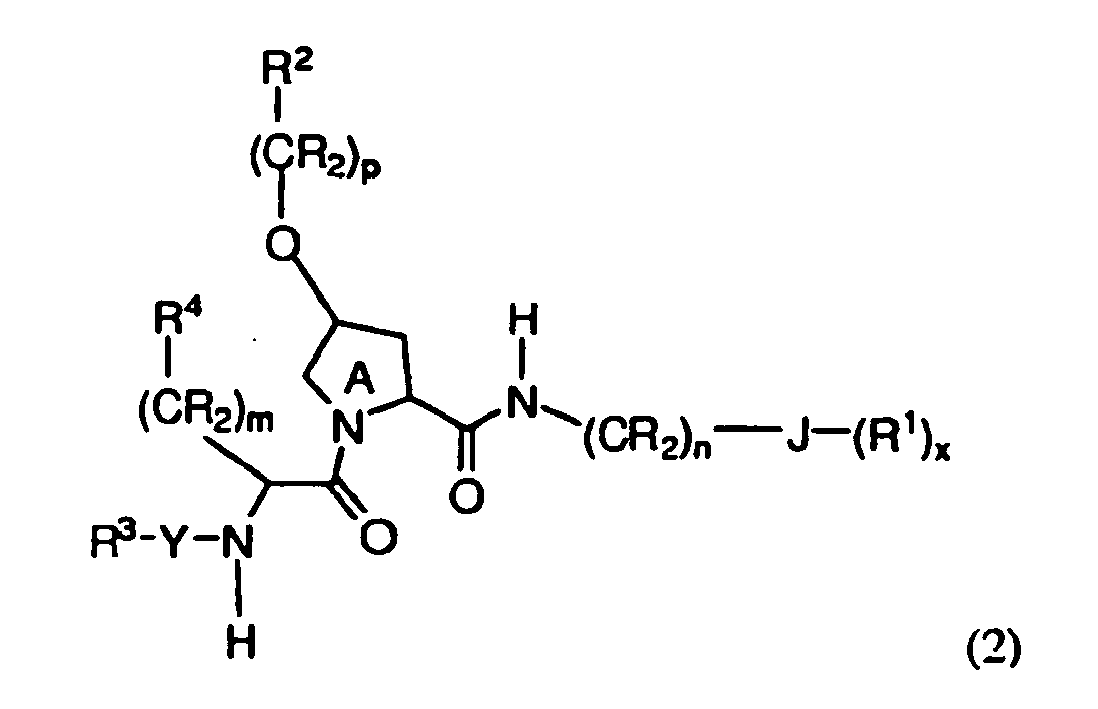
R3 is C1-6alkyl, C2-6alkenyl, C2-6alkynyl or -(CR2)l-R5; or NH-Y-R3 together form NH2;
each R in (CR2) is H or C1-6 alkyl; and
m, n and p are independently 1-2. - Alternatively, k, m, n and p in the above Formula (1) and (2) may independently be 0-6. In particular examples, k in Formula (1) is 2-3 and J is a heteroaryl, such as thiophenyl. In other alternative embodiments, Y in Formula (1) and (2) may be -CO-.
- In each of the above formula, J may also be selected from the group consisting of

- In some example, at least two of Z1, Z2, Z3, Z4, Z5, Z6 and Z7 are a heteroatom selected from N, NR, O or S wherein R is H or C1-6alkyl, and the other Z1-Z7 atoms are CH.
- In the above Formula (1) and (2), wherein each optionally substituted moiety may be substituted with halo, =O, amino, guanidinyl, amidino, an optionally substituted C1-6 alkoxy; C1-6 alkyl, C2-6 alkenyl or C2-6 alkynyl, each of which may optionally be halogenated or may optionally have a carbon that may be replaced or substituted with N, O or S; CO2R8, -O-(CR2)lC(O) -R8; -(CR2)l-R8, -(CR2)l-C(O)-R8, or -(CR2)lSO2-R8; or a combination thereof, wherein each R8 is H, C1-6 alkyl, or an optionally substituted carbocyclic ring, heterocyclic ring, aryl or heteroaryl.
- The present invention also includes all suitable isotopic variations of the compounds of the invention, or pharmaceutically acceptable salts thereof. An isotopic variation of a compound of the invention or a pharmaceutically acceptable salt thereof is defined as one in which at least one atom is replaced by an atom having the same atomic number but an atomic mass different from the atomic mass usually found in nature. Examples of isotopes that may be incorporated into the compounds of the invention and pharmaceutically acceptable salts thereof include but are not limited to isotopes of hydrogen, carbon, nitrogen and oxygen such as 2H, 3H, 13C, 14C, 15N, 17O, 18O, 35S, 18F, and 36Cl. Certain isotopic variations of the compounds of the invention and pharmaceutically acceptable salts thereof, for example, those in which a radioactive isotope such as 3H or 14C is incorporated, are useful in drug and/or substrate tissue distribution studies. In particular examples , 3H and 14C isotopes may be used for their ease of preparation and detectability. In other examples, substitution with isotopes such as 2H may afford certain therapeutic advantages resulting from greater metabolic stability, such as increased in vivo half-life or reduced dosage requirements. Isotopic variations of the compounds of the invention or pharmaceutically acceptable salts thereof can generally be prepared by conventional procedures using appropriate isotopic variations of suitable reagents.
- The compounds and compositions of the invention may be useful for modulating a channel activating protease. Examples of channel activating proteases which may be modulated using the compounds and compositions of the invention include prostasin, PRSS22, TMPRSS11 (e.g., TMPRSS11B, TMPRSS11E), TMPRSS2, TMPRSS3, TMPRSS4 (MTSP-2), matriptase (MTSP-1), CAP2, CAP3, trypsin, cathepsin A, or neutrophil elastase. The compounds of this invention may also inhibit the activity of proteases that stimulate the activity of ion channels, such as the epithelial sodium channel, and may be useful in the treatment of CAP-associated diseases.
- Compounds of the invention modulate the activity of channel activating protease, particularly trypsin-like serine proteases such as prostasin, and as such, are useful for treating diseases or disorders in which prostasin, for example, contributes to the pathology and/or symptomology of the disease.
- Diseases mediated by inhibition of a channel activating protease, particularly by a trypsin-like serine protease such as prostasin, include diseases associated with the regulation of fluid volumes across epithelial membranes. For example, the volume of airway surface liquid is a key regulator of mucociliary clearance and the maintenance of lung health. The inhibition of a channel activating protease will promote fluid accumulation on the mucosal side of the airway epithelium thereby promoting mucus clearance and preventing the accumulation of mucus and sputum in respiratory tissues (including lung airways). Such diseases include respiratory diseases such as cystic fibrosis, primary ciliary dyskinesia, chronic bronchitis, chronic obstructive pulmonary disease (COPD), asthma, respiratory tract infections (acute and chronic; viral and bacterial) and lung carcinoma. Diseases mediated by inhibition of channel activating proteases also include diseases other than respiratory diseases that are associated with abnormal fluid regulation across an epithelium, perhaps involving abnormal physiology of the protective surface liquids on their surface, for example xerostomia (dry mouth) or keratoconjunctivitis sire (dry eye). Furthermore, CAP regulation of ENaC in the kidney could be used to promote diuresis and thereby induce a hypotensive effect.
- Chronic obstructive pulmonary disease includes chronic bronchitis or dyspnoea associated therewith, emphysema, as well as exacerbation of airways hyper reactivity consequent to other drug therapy, in particular other inhaled drug therapy. The invention is also applicable to the treatment of bronchitis of whatever type or genesis including, for example, acute, arachidic, catarrhal, croupus, chronic or phthinoid bronchitis.
- Asthma includes intrinsic (non-allergic) asthma and extrinsic (allergic) asthma, mild asthma, moderate asthma, severe asthma, bronchitic asthma, exercise-induced asthma, occupational asthma and asthma induced following bacterial infection. Asthma also encompasses a condition referred to as "wheezy-infant syndrome," which involves subjects less than 4 or 5 years of age who exhibit wheezing symptoms and diagnosed or diagnosable as "wheezy infants," an established patient category of major medical concern and often identified as incipient or early-phase asthmatics.
- The suitability of a channel activating protease inhibitor such as a prostasin inhibitor for the treatment of a disease mediated by inhibition of a channel activating protease, may be tested by determining the inhibitory effect of the channel activating protease inhibitor according to the assays described below and following methods known in the art.
- In accordance with the foregoing, the present invention further provides compounds for preventing or treating any of the diseases or disorders described above in a subject in need of such treatment, which compounds are administered to said subject in a therapeutically effective amount of a compound of Formula (1) or (2), or a pharmaceutically acceptable salt thereof. For any of the above uses, the required dosage will vary depending on the mode of administration, the particular condition to be treated and the effect desired. (See, "Administration and Pharmaceutical Compositions", infra).
- In general, compounds of the invention will be administered in therapeutically effective amounts via any of the usual and acceptable modes known in the art, either singly or in combination with one or more therapeutic agents.
- Channel activating protease inhibitors of the invention are also useful as co-therapeutic agents for use in combination with another therapeutic agent. For example, a channel activating protease inhibitor may be used in combination with an anti-inflammatory, bronchodilatory, antihistamine or anti-tussive, antibiotic or DNase therapeutic agent. The channel activating protease inhibitor and other therapeutic agent may be in the same or different pharmaceutical composition. The channel activating protease inhibitor may be mixed with the other therapeutic agent in a fixed pharmaceutical composition, or it may be administered separately, before, simultaneously with or after the other therapeutic agent. The combination may be useful particularly in the treatment of cystic fibrosis or obstructive or inflammatory airways diseases such as those mentioned hereinbefore, for example as potentiators of therapeutic activity of such drugs or as a means of reducing required dosaging or potential side effects of such drugs.
- Suitable anti-inflammatory therapeutic agents include steroids, in particular glucocorticosteroids such as budesonide, beclamethasone dipropionate, fluticasone propionate, ciclesonide or mometasone furoate, or steroids described in international patent application
WO 02/88167 WO 02/12266 WO 02/100879 WO 02/00679 WO 03/35668 WO 03/48181 WO 03/62259 WO 03/64445 WO 03/72592 WO 04/39827 WO 04/66920 DE 10261874 ,WO 00/00531 WO 02/10143 WO 03/82280 WO 03/82787 WO 03/86294 WO 03/104195 WO 03/101932 WO 04/05229 WO 04/18429 WO 04/19935 WO 04/26248 WO 92/19594 WO 93/19749 WO 93/19750 WO 93/19751 WO 98/18796 WO 99/16766 WO 01/13953 WO 03/104204 WO 03/104205 WO 03/39544 WO 04/000814 WO 04/000839 WO 04/005258 WO 04/018450 WO 04/018451 WO 04/018457 WO 04/018465 WO 04/018431 WO 04/018449 WO 04/018450 WO 04/018451 WO 04/018457 WO 04/018465 WO 04/019944 WO 04/019945 WO 04/045607 WO 04/037805 WO 02/42298 - Suitable bronchodilatory therapeutic agents include beta-2 adrenoceptor agonists such as albuterol (salbutamol), metaproterenol, terbutaline, salmeterol fenoterol, procaterol, formoterol, carmoterol, or pharmaceutically acceptable salts thereof; and compounds (in free or salt or solvate form) of Formula (1) as described in
WO 00/75114 
WO 04/16601 EP 1440966 ,JP 05025045 WO 93/18007 WO 99/64035 US 2002/0055651 ,WO 01/42193 WO 01/83462 WO 02/66422 WO 02/70490 WO 02/76933 WO 03/24439 WO 03/42160 WO 03/42164 WO 03/72539 WO 03/91204 WO 03/99764 WO 04/16578 WO 04/22547 WO 04/32921 WO 04/33412 WO 04/37768 WO 04/37773 WO 04/37807 WO 04/39762 WO 04/39766 WO 04/45618 WO 04/46083 WO 04/80964 - Suitable bronchodilatory therapeutic agents also include anticholinergic or antimuscarinic agents, in particular ipratropium bromide, oxitropium bromide, tiotropium salts and CHF 4226 (Chiesi), and glycopyrrolate, but also those described in
EP 42402 1 US 3714357 ,US 5171744 ,WO 01/04118 WO 02/00652 WO 02/51841 WO 02/53564 WO 03/00840 WO 03/33495 WO 03/53966 WO 03/87094 WO 04/018422 WO 04/05285 - Suitable dual anti-inflammatory and bronchodilatory therapeutic agents include dual beta-2 adrenoceptor agonist / muscarinic antagonists such as those disclosed in
US 2004/0167167 ,WO 04/74246 WO 04/74812 - Suitable antihistamine therapeutic agents include cetirizine hydrochloride, acetaminophen, clemastine fumarate, promethazine, loratidine, desloratidine, diphenhydramine and fexofenadine hydrochloride, activastine, astemizole, azelastine, ebastine, epinastine, mizolastine and tefenadine as well as those disclosed in
JP 2004107299 WO 03/099807 WO 04/026841 - Suitable antibiotics include macrolide antibiotics, for example tobramycin (TOBI™).
- Suitable DNase therapeutic agents include dornase alfa (PULMOZYME™), a highly purified solution of recombinant human deoxyribonuclease I (rhDNase), which selectively cleaves DNA. Dornase alfa is used to treat cystic fibrosis.
- Other useful combinations of channel activating protease inhibitors with anti-inflammatory therapeutic agents are those with antagonists of chemokine receptors, e.g. CCR-1, CCR-2, CCR-3, CCR-4, CCR-5, CCR-6, CCR-7, CCR-8, CCR-9 and CCR10, CXCR1, CXCR2, CXCR3, CXCR4, CXCR5, particularly CCR-5 antagonists such as Schering-Plough antagonists SC-351125, SCH-55700 and SCH-D, Takeda antagonists such as N-[[4-[[[6,7-dihydro-2-(4-methyl-phenyl)-5H-benzo-cyclohepten-8-yl]carbonyl]amino]phenyl]-methyl]tetrahydro-N,N-dimethyl-2H-pyran-4-amin-ium chloride (TAK-770), and CCR-5 antagonists described in
US 6166037 ,WO 00/66558 WO 00/66559 WO 04/018425 WO 04/026873 - In the treatment of a disease mediated by inhibition of prostasin , a channel activating protease inhibitor of the invention, in free form or in pharmaceutically acceptable salt form, may be administered by any appropriate route, for example orally, e.g. in tablet, capsule or liquid form, parenterally, for example in the form of an injectable solution or suspension, or intranasally, for example in the form of an aerosol or other atomisable formulation using an appropriate intranasal delivery device, e.g. a nasal spray such as those known in the art, or by inhalation, particularly for use with a nebulizer.
- The channel activating protease inhibitor may be administered in a pharmaceutical composition together with a pharmaceutically acceptable diluent or carrier. Such compositions may be dry powders, tablets, capsules and liquids, but also injection solutions, infusion solutions or inhalation suspensions, which may be prepared using other formulating ingredients and techniques known in the art.
- The dosage of the channel activating protease inhibitor in free form or in pharmaceutically acceptable salt form can depend on various factors, such as the activity and duration of action of the active ingredient, the severity of the condition to be treated, the mode of administration, the species, sex, ethnic origin, age and weight of the subject and/or its individual condition. A typical daily dose for administration, for example oral administration to a warm-blooded animal, particularly a human being weighing about 75 kg, is estimated to be from approximately 0.7 mg to approximately 1400 mg, more particularly from approximately 5 mg to approximately 200 mg. That dose may be administered, for example, in a single dose or in several part doses of, for example, from 5 to 200 mg.
- When the composition comprises an aerosol formulation, it may contain, for example, a hydro-fluoro-alkane (HFA) propellant such as HFA134a or HFA227 or a mixture of these, and may contain one or more co-solvents known in the art such as ethanol (up to 20% by weight), and/or one or more surfactants such as oleic acid or sorbitan trioleate, and/or one or more bulking agents such as lactose. When the composition comprises a dry powder formulation, it may contain, for example, the channel activating protease inhibitor having a particle diameter up to 10 microns, optionally together with a diluent or carrier, such as lactose, of the desired particle size distribution and a compound that helps to protect against product performance deterioration due to moisture e.g. magnesium stearate. When the composition comprises a nebulised formulation, it may contain, for example, the channel activating protease inhibitor either dissolved, or suspended, in a vehicle containing water, a co-solvent such as ethanol or propylene glycol and a stabilizer, which may be a surfactant.
- In particular embodiments, the invention provides compounds of Formula (1) or (2) in inhalable form, e.g. in an aerosol or other atomisable composition or in inhalable particulate, e.g. micronised, form. The invention also provides an inhalable medicament comprising compounds of the invention in inhalable form; a pharmaceutical product comprising compounds of the invention in inhalable form in association with an inhalation device; and an inhalation device comprising compounds of the invention in inhalable form.
- The compounds of the invention may be prepared, following procedures exemplified in the Examples.
- In the reactions described, reactive functional groups, where desired in the final product (e.g., hydroxy, amino, imino, thio or carboxy groups), may be protected using protecting groups known in the art, to avoid their unwanted participation in the reactions. Conventional protecting groups may be used in accordance with standard practice, for example, see T.W. Greene and P. G. M. Wuts in "Protective Groups in Organic Chemistry", John Wiley and Sons, 1991.
- Compounds of the invention may also be prepared as a pharmaceutically acceptable acid addition salt by reacting the free base form of the compound with a pharmaceutically acceptable inorganic or organic acid. Alternatively, a pharmaceutically acceptable base addition salt of a compound of the invention may be prepared by reacting the free acid form of the compound with a pharmaceutically acceptable inorganic or organic base. Alternatively, salt forms of the compounds of the invention may be prepared using salts of the starting materials or intermediates.
- The free acid or free base forms of the compounds of the invention may be prepared from the corresponding base addition salt or acid addition salt from, respectively. For example, a compound of the invention in an acid addition salt form may be converted to the corresponding free base by treating with a suitable base (e.g., ammonium hydroxide solution, sodium hydroxide ). A compound of the invention in a base addition salt form may be converted to the corresponding free acid by treating with a suitable acid (e.g., hydrochloric acid).
- Compounds of the invention in unoxidized form may be prepared from N-oxides of compounds of the invention by treating with a reducing agent (e.g., sulfur, sulfur dioxide, triphenyl phosphine, lithium borohydride, sodium borohydride, phosphorus trichloride, tribromide, or the like) in a suitable inert organic solvent (e.g. acetonitrile, ethanol, aqueous dioxane, or the like) at 0 to 80°C.
- Prodrug derivatives of the compounds of the invention may be prepared by methods known to those of ordinary skill in the art (e.g., for further details see Saulnier et al., (1994), Bioorganic and Medicinal Chemistry Letters, Vol. 4, p. 1985). For example, appropriate prodrugs may be prepared by reacting a non-derivatized compound of the invention with a suitable carbamylating agent (e.g., 1,1-acyloxyalkylcarbanochloridate, paranitrophenyl carbonate, or the like).
- Protected derivatives of the compounds of the invention may be made by means known to those of ordinary skill in the art. A detailed description of techniques applicable to the creation of protecting groups and their removal may be found in T. W. Greene, "Protecting Groups in Organic Chemistry", 3rd edition, John Wiley and Sons, Inc., 1999.
- Compounds of the present invention may be conveniently prepared, or formed during the process of the invention, as solvates (e.g., hydrates). Hydrates of compounds of the present invention may be conveniently prepared by recrystallization from an aqueous/organic solvent mixture, using organic solvents such as dioxin, tetrahydrofuran or methanol.
- Compounds of the invention may be prepared as their individual stereoisomers by reacting a racemic mixture of the compound with an optically active resolving agent to form a pair of diastereoisomeric compounds, separating the diastereomers and recovering the optically pure enantiomers. While resolution of enantiomers may be carried out using covalent diastereomeric derivatives of the compounds of the invention, dissociable complexes are preferred (e.g., crystalline diastereomeric salts). Diastereomers have distinct physical properties (e.g., melting points, boiling points, solubilities, reactivity, etc.) and may be readily separated by taking advantage of these dissimilarities. The diastereomers may be separated by chromatography, or by separation/resolution techniques based upon differences in solubility. The optically pure enantiomer is then recovered, along with the resolving agent, by any practical means that would not result in racemization. A more detailed description of the techniques applicable to the resolution of stereoisomers of compounds from their racemic mixture may be found in Jean Jacques, Andre Collet, Samuel H. Wilen, "Enantiomers, Racemates and Resolutions", John Wiley And Sons, Inc., 1981.
- In summary, the compounds of the invention may be prepared as exemplified in the Examples, and Formula (1) and (2) may be made by a process, which involves:
- (a) optionally converting a compound of the invention into a pharmaceutically acceptable salt;
- (b) optionally converting a salt form of a compound of the invention to a non-salt form;
- (c) optionally converting an unoxidized form of a compound of the invention into a pharmaceutically acceptable N-oxide;
- (d) optionally converting an N-oxide form of a compound of the invention to its unoxidized form;
- (e) optionally resolving an individual isomer of a compound of the invention from a mixture of isomers;
- (f) optionally converting a non-derivatized compound of the invention into a pharmaceutically acceptable prodrug derivative; and
- (g) optionally converting a prodrug derivative of a compound of the invention to its non-derivatized form.
- Insofar as the production of the starting materials is not particularly described, the compounds are known or may be prepared analogously to methods known in the art or as disclosed in the Examples hereinafter. One of skill in the art will appreciate that the above transformations are only representative of methods for preparation of the compounds of the present invention, and that other well-known methods may similarly be used. The present invention is further exemplified, by the following intermediates (Reference compounds) and Examples that illustrate the preparation of the compounds of the invention.
-

- 1-B: 4-piperidine ethanol (1-A) (5 g, 39.7 mmol) is dissolved in THF (120 mL). Triethylamine (5.6 mL, 40 mmol) is added and the solution is cooled to 0 °C. Boc2O (9.59 g, 44 mmol) is added, and the reaction is stirred overnight at room temperature. Solvent is removed in vacuo, and the crude residue is dissolved in ethyl acetate (120 mL). The solution is washed with 0.1 N HCl (3x100 mL) and brine (1x100 mL), dried with MgSO4, filtered and solvent evaporated in vacuo to give 1-B as a clear oil.
- 1-C: Trichloroisocyanuric acid (2.66 g, 11.46 mmol) is added to a solution of the alcohol 1-B (2.39 g, 10.42 mmol) in DCM, and the solution is stirred and maintained at 0 °C, followed by addition of a catalytic amount of TEMPO. After the addition, the mixture is warmed to room temperature and stirred for an hour and then filtered on Celite®. The organic phase is washed with saturated aqueous Na2CO3, followed by 1N HCl and brine. The organic layer is dried (MgSO4) and the solvent is evaporated to give 1-C. 1H NMR (CDCl3, 400 MHz) δ 89.72 (1H, s), 4.07-4.01 (2H, m), 2.70-2.57 (2H, m), 3.35-3.31 (2H, m), 2.05-1.94 (1H, m), 1.64-1.46 (2H, m), 1.39 (9H, s), 1.30-1.02 (2H, m).
- 1-D: To a solution of Cbz-α-phosphonoglycine trimethyl ester (2.8 g, 8.45 mmol) in THF at -78 °C is added 1,1,3,3-tetramethyl-guanidine (1.022 ml, 8.14 mmol). After 10 minutes, the aldehyde 1-C (1.76 g, 7.76 mmol) is added. The solution is then placed in an ice bath at 0 °C for 1 hour, and then allowed to warm to room temperature and stirred for one more hour. The solution is diluted with EtOAc, washed with 1M NaHSO4, dried (MgSO3) and concentrated in vacuo. The residue is purified by silica gel flash chromatography with Ethyl acetate/Hexane 0 to 100% to afford 1-D as a white solid. MS m/z 333.2 (M + 1), 1H NMR (CDCl3, 400 MHz) δ. 7.35-7.33 (5H, m), 6.63 (1H, t, J = 8 Hz), 6.30 (1H, bs), 5.12 (2H, s), 4.10-4.04 (2H, m), 3.73 (3H, s), 2.67-2.62 (2H, m), 2.14 (2H, t, J = 6.8 Hz), 1.63-1.46 (3H, m), 1.43 (9H, s), 1.14-1.06 (2H, m).
- 1-E: A Parr vessel is charged with 1-D (1 g, 2.31 mmol) and MeOH (100 mL) under nitrogen. The solution is subjected to 3 cycles of vacuum and nitrogen bubbling, and the catalyst (R,R)-Ethyl-DuPHOS-Rh(COD) triflate is added (30 mg, 0.04 mmol). The mixture is placed under 60 psi of hydrogen gas at room temperature for 24 h. The conversion to 1-E is complete after 24 h with >99% e.e., the solvent is removed in vacuo, and the crude product is purified by silica gel chromatography (hexanes/EtOAc).
- 1-F: Intermediate 1-E is dissolved in MeOH. The solution is flushed with nitrogen, and Pd/Carbon (5% wt, Degussa) is added. The mixture is placed under 50 psi of hydrogen gas at room temperature and shaken for 24h. The mixture is flushed with nitrogen and filtered through Celite®. The cake is washed with MeOH, and the combined organic solution is concentrated under vacuum. Hexanes is added and then evaporated to azeotrope the remaining methanol to afford 1-F as an oil, which is then used in the next step without further purification. MS m/z 201.4 (M + 1 - Boc), 1H NMR (CDCl3, 400 MHz) δ. 4.06-3.97 (2H, m), 3.63 (3H, s), 3.36-3.31 (1H, m), 2.63-2.50 (2H, m), 1.70-1.61 (1H, m), 1.61-1.43 (3H, m), 1.36 (3H, s), 1.55 (6H, s), 1.34-1.15 (3H, m), 1.02-1.97 (2H, m).
- 1-G: Crude 1-F (0.6 g, 1.99 mmol) is dissolved in THF (10 mL), and 2,4,6-collidine (315 mg, 2.38 mmol) and methanesulfonyl chloride (0.170 ml, 2.19 mmol) are added to the solution and stirred for 2 hours. The reaction is diluted with EtOAc (50 mL), and solution is washed with 1M NaHSO4 (2 × 25 mL), brine (25 mL), and dried (MgSO4). The solvent is removed in vacuo and the crude residue is purified by flash chromatography using a gradient of hexanes and EtOAc to afford 1-G. MS m/z 279.4 (M + 1 - Boc), 1H NMR (CDCl3, 400 MHz) δ. 5.60-5.42 (1H, m), 3.99-3.96 (3H, m), 3.68 (3H, s), 2.86 (3H, m), 2.60-2.54 (2H, m), 1.79-1.77 (1H, m), 1.60-1.45 (2H, m), 1.35 (9H, s), 1.35-1.26 (3H, m), 1.16-0.95 (2H, m).
- 1-H: Compound 1-G (0.70 g, 1.84 mmol) is dissolved in dioxane (7 mL), and LiOH · H2O (232 mg, 5.55 mmol) dissolved in water (4 mL) is added. The reaction mixture is stirred for 1 h. The solvent is evaporated; and the residue is diluted with EtOAc (25 mL) and washed with 1N NaHSO4 (25 mL) and brine (25 mL), and dried (MgSO4). The solvent is removed in vacuo and the crude residue is purified by silica gel chromatography (Hexanes/EtOAc gradient) to afford Reference Compound I as a white solid. MS m/z 265.4 (M + 1 - Boc), 1H NMR (CDCl3, 400 MHz) δ. 8.97 (1H, broad s), 5.44 (1H, d, J = 8.8 Hz), 4.15-3.90 (3H, m), 2.94 (3H, s), 2.77-2.55 (2H, m), 1.88-1.87 (1H, m), 1.78-1.58 (3H), 1.42-1.37 (12H, m), 1.16-0.94 (2H, m).
-

- Intermediate 1-E is saponified with LiOH·H2O following the same procedure used to obtain the compound 1-H. MS m/z 421.5 (M + 1), 1H NMR (CDCl3, 400 MHz) δ. 9.75 (1H, broad s), 7.26-7.41 (5H, m), 5.39 (1H, s), 5.10 (2H, s), 4.41-4.34 (1H, m), 4.46-4.03 (2H, m), 2.68-2.61 (2H, m), 1.94 -1.82 (1H, m), 1.78-1.53 (3H, m), 1.44 (9H, s), 1.44-1.19 (3H, m), 1.09-1.03 (2H, m).
-

- 3-B: The compound 3-A (2 g, 9.28 mmol) is combined with CBr4 (4.46 g, 13.47 mmol) and triphenylphosphine (3.28 g, 12.54 mmol) in THF (0.2 M), and the solution is stirred overnight. The reaction mixture is then filtered and the solvent evaporated. A large portion of the triphenylphosphine oxide is precipitated by slow addition of the crude mixture to a large volume of ether. After filtration and concentration, the residue is purified by chromatography (EtOAc:Hexanes gradient) to afford compound 3-B. 1H-NMR (CDCl3, 400 MHz) δ. 4.05-3.99 (1H, m), 3.83-3.78 (1H, m), 3.27-3.34 (2H, m), 2.84-2.77 (1H, m), 2.66-2.59 (1H, m), 1.91-1.74 (2H, m), 1.67-1.56 (1H, m), 1.42 (9H, s), 1.32-1.20 (2H, m).
- 3-C: A mixture of 3-B (1 g, 3.6 mmol) and KCN (281 mg, 4.3 mmol) in anhydrous DMF (20 mL) is stirred under reflux overnight. The residue is dissolved in EtOAc (50 ml), washed successively with 1N NaHSO4 (2×50 mL) and brine (2×50 mL), and dried over MgSO4. The solvent is evaporated and the crude material purified by chromatography (EtOAc:Hexanes gradient) to afford compound 3-C as an oil. 1H-NMR (CDCl3, 400 MHz) δ. 3.83-3.78 (1H, m), 3.78-3.69 (1H, m), 2.87-2.73 (2H, m), 2.28-2.15 (2H, m), 1.84-1.72 (2H, m), 1.61-1.52 (1H, m), 1.42-1.15 (11H, m).
- 3-D: To a solution of 3-C (750 mg, 3.34 mmol) in THF (20 mL) is added DIBAL (solution 1M in THF, 5 ml) at -78°C. This mixture is allowed to reach room temperature, and stirred at room temperature for 1h. The mixture is cooled to 0°C and water (0.2 mL), and 15% NaOH aq. (0.2 mL) and water (0.5 mL) are successively added. After addition of MgSO4, the mixture is vigorously stirred and filtered. The evaporation of solvents yields the compound 3-D as an colorless oil. This compound is used in the following step without further purification. 1H-NMR (CDCl3, 400 MHz) δ. 3.78-3.67 (1H, m), 3.67-3.64 (1H, m), 2.81-2.71 (1H, m), 2.71-2.50 (1H, m), 2.24-2.09 (2H, m), 1.79-1.66 (2H, m), 1.56-1.48 (1H, m), 1.39-1.13 (11H, m).
- 3-E: This compound is prepared from 3-D using methods analogous to those described for the preparation of Reference Compound 1-D.
- 3-F: This compound is prepared from 3-E using methods analogous to those described for the preparation of Reference Compound 1-F.
- 3-G: This compound is prepared from 3-F using methods analogous to those described for the preparation of Reference Compound 1-G.
- 3-H: This compound is prepared from 3-G using methods analogous to those described for the preparation of Reference Compound 1-H.
-

- 4-B: D-Homophenylalanine ethyl ester hydrochloride (5.00 g, 20.5 mmol) and DIEA (8.7 mL, 51.25 mmol) are dissolved in THF (100 mL) and stirred at room temperature. Mesyl chloride (1.67 mL, 21.52 mmol) is added dropwise, and the reaction stirred for 6h at room temp. The THF is evaporated; and the crude residue is dissolved in EtOAc (100 mL), washed with water (100 mL), 1N HCl (2 × 100 mL) and brine (100 mL), an dried (MgSO4). The solvent is removed in vacuo and the crude material is purified with flash chromatography (Hexanes:EtOAc) to afford the ethyl ester.
- 4-C: Ethyl ester 4-B is dissolved in dioxane (50 mL) and stirred at room temperature. LiOH·H2O (1.00 mg, 24 mmol) dissolved in water (20 mL) is added and the reaction stirred until the ethyl ester has disappeared (by TLC and LCMS). The solvent is removed in vacuo and the crude material is partitioned with EtOAc (50 mL) and 1N HCl (50 mL). The aqueous layer is extracted with EtOAc (2 × 50 mL), and the combined organic phases are washed with 1M NaHSO4 (2 × 50 mL) and brine (50 mL), and dried with MgSO4.
- The solvent is evaporated and the crude material is purified by flash chromatography (EtOAc:Hexanes gradient) to afford Reference Compound 4 as a white powder.
-

- Boc-D-homophenylalanine (1.0 g, 3.58 mmol) is dissolved in THF (10 mL), and water (18 µL, 0.72 mmol) is added to a suspension of NaH (60% dispersion in mineral oil; 10.0 mmol) in tetrahydrofuran (12 mL) dropwise over a period of 20 min while maintaining an internal temperature of 20 °C. The mixture is stirred at the same temperature for 10 min, and dimethyl sulfate (1.05 mL, 6.44 mmol) is added over a period of 20 min while maintaining a temperature of 20 °C. The reaction is stirred for 2h before being quenched with 30% ammonium hydroxide (6 mL) over a period of 10 min. while maintaining an internal temperature of 30 °C. Stirring is continued for an additional 1 h (to ensure complete destruction of dimethyl sulfate). The mixture is diluted with EtOAc (20 mL) and water (20 mL). The organic layer is separated, washed with water (10 mL), dried (MgSO4), and evaporated in vacuo to give Reference Compound 5 as a white solid.
-

- 6-B: D-Homophenylalanine ethyl ester hydrochloride (6-A) (25.0 g, 102.5 mmol) is dissolved in 10% aqueous EtOH (500 mL). A catalytic amount of 5% Rh/C is added, and the reaction placed under an atmosphere of H2 (1000 psi), stirred, and heated to 50 °C. After 18h, the reaction is cooled to room temperature, the H2 gas supply is removed, and the vessel brought to atmospheric pressure. The catalyst is filtered through Celite®, and the solvent removed in vacuo, to afford D-Homocyclohexylalanine ethyl ester hydrochloride as a white powder.
- 6-C: This compound is prepared from 6-B using methods analogous to those described for the preparation of Reference Compound 4-B.
- 6-D: This compound is prepared from 6-C using methods analogous to those described for the preparation of Reference Compound 4-C.
-

- 7-A: D-Homocyclohexylalanine ethyl ester hydrochloride (3.83 g, 18.0 mmol) and N-(Benzyloxycarbonyloxy)succinimide (Cbz-OSu) (4.49 g, 18.0 mmol) are added to a round bottomed flask containing THF (60 mL) and water (20 mL). The mixture is stirred at room temperature and Et3N (10.1 mL, 72.0 mmol) is added, and the reaction is stirred overnight at room temperature. The clear solution is diluted with EtOAc (200 mL) and washed with 1N HCl (3 x 100 mL) and brine (1 x 100 mL) and dried with MgSO4. Solvent is evaporated in vacuo to afford the desired product as a white solid which is used without further purification.
- 7-B: This compound is prepared from 7-A using methods analogous to those described for the preparation of Reference Compound 4-C.
-

- 8-B: Finely powdered KOH (19.4 g, 0.346 mol) is dissolved in DMSO and stirred at room temperature for 20 min and then cooled to 0°C. N-Boc-trans-4-hydroxy-L-proline (Boc-Hyp-OH, 8-A) (10 g, 43.3 mmol) is dissolved in DMSO (10 mL) and added, and the reaction mixture is stirred for an additional 10 min at 0 °C. Next, 4-chlorobenzyl chloride (33 g, 0.204 mol) is added, and the reaction mixture is stirred at 0° C for an additional 15 min. Thereafter, the ice bath is removed and the reaction mixture is allowed to warm to room temperature and stirred for 4 h. The reaction mixture is poured into water (300 mL) and the reaction vessel is rinsed with an additional aliquot of water (300 mL). The combined aqueous layer is extracted with ether (2 × 300 mL) and discarded. The aqueous layer is acidified with 87% H3PO4 to pH 2.3 and then extracted with ether (3 × 300 mL). The combined ether extracts are washed with water (2 × 400 mL) and brine (2 × 400 mL) and then dried over MgSO4, filtered and concentrated in vacuo. The residue is purified by chromatography on silica gel with EtOAc/Hexanes (gradient 0 to 100%) to yield the compound 8-B as a clear oil. MS m/z 256.1 (M + 1 - Boc); 1H NMR (DMSO-D6, 400 MHz) δ 7.39-7.31 (4H, m), 4.52-4.40 (2H, m), 4.16-4.10 (2H, m), 3.48-3.41 (2H, m), 2.40-2.30 (1H, m), 2.03-1.94 (1H, m), 1.39-1.34 (9H, m).
- 8-C: A solution of TFA in dichloromethane (50/50) is added to 8-B and the mixture is stirred until complete removal of the Boc. The reaction mixture is then concentrated in vacuo, and the crude residue is used in the next step without further purification. MS m/z 256.1 (M + 1); 1H NMR (CDCl3, 400 MHz) δ. 8.32 (1H, broad s), 7.16-6.93 (4H, m), 4.41-4.12 (4H, m), 4.10-3.75 (2H, m), 3.70-3.53 (1H, m), 3.51-3.30 (1H, m), 2.38-2.24 (1H, m), 2.06-1.88 (1 H, m).
- 8-D: Intermediate 8-C is dissolved in 200 ml of a solution of 1,4-dioxane/H2O (1:1). NaHCO3 (17.9 g, 0.213 mol) is added, followed by Fmoc-Cl (12 g, 46.3 mmol). The mixture is stirred overnight. The solution is then acidified with 1N HCl, and the precipitate is filtered and dried (MgSO4) to afford 8-D as a white solid. 1H-NMR (CDCl3, 400 MHz) δ. 8.11 (1H, broad s), 7.77-7.66 (2H, m), 7.58-7.52 (2H, m), 7.42-7.21 (8H, m), 4.54-4.26 (4H, m), 4.24 (1H, t, J = 7.2 Hz), 4.23-4.10 (1H, m), 3.69-3.61 (2H, m), 3.50-2.38 (1H, m), 2.24-2.12 (1H, m).
-

- The reagents and conditions for the above reaction scheme are: (a) SOCl2 (3.0 equiv.), MeOH, 0 °C, 100%; (b) Mesyl chloride (1.2 equiv.), Et3N (3.0 equiv.), cat. DMAP, THF, 23 °C, 79%; (c) Hoveyda-Grubbs metathesis catalyst (8 mol%), N-Boc-4-methylenepiperidine (3.0 equiv.), DCM, 40 °C, 51%; (d) LiOH, dioxanes, H2O, 23 °C, 100%.
- 9-A: D-allylglycine (5.03 g, 43.73 mmol, 1.0 equiv) is slurried in a suspension of methanol (70 mL) in an ice-water bath. Thionyl chloride (9.6 mL, 131.19 mmol, 3.0 equiv.) is added dropwise over 10 minutes. The reaction is warmed to room temperature and judged to completeness by LC/MS. The solvent is evaporated and the resulting white solid of 9-A is directly used in the next step.
- 9-B: D-allylglycine methyl ester hydrochloride (9-A, 7.20 g, 43.73 mmol), Et3N (18 mL, 131.19 mmol, 3.0 equiv.) and DMAP (10 mg, catalytic) are dissolved in THF (110 mL) and stirred at room temperature. Mesyl chloride (4.0 mL, 52.48 mmol, 1.2 equiv.) is added dropwise, and the reaction is stirred for 6h at room temp. The THF is evaporated; and the crude residue is dissolved in EtOAc (100 mL) and washed with water (100 mL), 1N HCl (2 × 100 mL) and brine (100 mL), and dried (MgSO4). The solvent is removed in vacuo, and the crude material is purified with flash chromatography (Hexanes:EtOAc) to afford 7 9-B as a yellow oil.
- 9-C: Anhydrous dichloromethane (10 mL, 0.1 M) is added via syringe to 9-B (2.15 g, 10.37 mmol, 1.0 equiv.) and Hoveyda-Grubbs 2nd Generation metathesis catalyst [(1,3-Bis-(2,4,6-trimethylphenyl)-2-imidazolidinylidene) dichloro (o-isopropoxyphenylmethylene) ruthenium II dichloride) (510 mg, 0.815 mmol, 8 mol %)] under a nitrogen atmosphere. N-Boc-4-methylenepiperidine (6 mL, 31.11 mmol, 3.0 eq.) is added via syringe and the reaction is fitted with a reflux condenser and heated to 40 °C for 12 hours. After the reaction is complete by LC/MS, the reaction mixture is directly purified by automated silica-gel purification (0-100% ethyl acetate in hexanes) to provide 9-C as a dark green oil. MS m/z 277.2 (M-Boc + 1).
- Reference Compound 9: The saponification of 9-C is accomplished using the procedure previously described for the preparation of Reference Compound 4.
-

- Reference compound 10 is prepared using methods analogous to those described for the preparation of Reference Compound 8.
-

- 1-A: Loading of the PAL resin: 5-cyano-2-methylamino-thiophene (3 equiv.) is added to a solution of the resin (1 meq/g) in DMF in the presence of AcOH (8 equiv.). The mixture is shaken for 1hr before adding NaH(AcO)3 (3 equiv.) and letting the mixture react overnight. The resin is then washed with DMF (×2), DCM (×2), MeOH (×2) and DCM (×2).
- 1-B: The Fmoc-protected amino acid 8-D (3 equiv.) is added to 200 mg of resin 1-A in DMF in the presence of HOBt (3.5 equiv.) and DIC (3.5 equiv.). The mixture is shaken for 3hrs. The resin is washed with DMF (×2), DCM (x2), MeOH (×2) and DCM (×2).
- 1-C: The resin is shaken in a solution of 20% piperidine in DMF for 30 min, and washed with DMF (×2) and DCM (×2).
- 1-D : The amino acid is coupled to the resin 1-C using the same procedure as 1-B.
- 1-E : A solution of hydroxylamine hydrochloride (40 equiv.) and DIEA (40 equiv.) in DMF is added to the resin 1-D, and the mixture is shaken overnight. The resin is washed with DMF (×2), DCM (×2), MeOH (×2) and DCM (×2).
- 1-F : To a solution of the resin 1-E in DCM is added acetic anhydride (10 equiv.). The mixture is shaken for 2 hrs, and then washed with DCM (×2), DMF (x2) and DCM (×2).
- 1-G : The resin 1-F is washed with anhydrous THF (×2) before a solution of SmI2 (0.1M in THF) is added under nitrogen. The mixture is shaken for 2hrs, and the resin is washed with DMF (×2), MeOH (×2) DMF (×2) and DCM (×2).
- 1-H : The final compound 1-H is obtained following cleavage from the resin in presence of a solution of TFA/DCM/H2O (45:45:10). The filtrate is concentrated in vacuo, dissolved in acetonitrile and purified by reverse phase HPLC (H2O-ACN gradient). After lyophilization, the TFA salt of 1-H is obtained as a white powder. MS m/z 639.5 (M + 1); 1H-NMR (CD3CN, 400 MHz) δ 9.30 (1H, s), 7.89 (1H, s), 7.72 (1H, d, J = 4 Hz), 7.36-7.26 (4H, m), 7.09 (1H, d, J = 4 Hz), 6.06 (1H, d, J = 8 Hz), 4.60-4.41 (5H, m), 4.33-4.21 (1H, m), 4.11-4.05 (1H, m), 3.82-3.65 (2H, m), 3.29-3.27 (2H, m), 2.86 (3H, s), 2.86-2.76 (2H, m), 2.46-2.36 (1H, m), 2.15-2.07 (1H, m), 1.75-1.68 (2H, m), 1.63-1.46 (2H, m), 1.46-1.31 (2H, m), 1.31-1.37 (3H, m).
- Examples 2-31 are synthesized using methods analogous to those described for the synthesis of Example 1.
-

- Reagent 32-A is prepared from benzylamine and Pal-resin using methods analogous to those described for the preparation of Example 1-A. Intermediate 32-B is prepared from immobilized 32-A using methods analogous to those described for the preparation of Example 1-B. The intermediates 32-C and 32-D are prepared from support-bound 32-B and 32-C respectively, following methods analogous to those described for Example 1-C and 1-D, respectively. Final compound 32-E is prepared by cleaving 32-D from the resin following methods analogous to those for the preparation of Example 1-H.
- Examples 33-54 are synthesized using methods analogous to those described for the synthesis of Example 32.
-

- 55-A: Compound 1-H (1.9 g, 5.2 mmol) is added to a solution of the HCl salt of the methyl ester 8-C (1.6 g, 5.2 mmol), PyBOP (3.79 g, 7.28 mmol) and DIEA (2.7 mL, 15.6 mmol) in DCM (50 mL). The mixture is stirred overnight, then washed with a solution of 1M NaHSO4 (2 × 50 mL), NaHCO3 saturated (2 × 50 mL) and brine (1 × 50 mL). The organic phase is dried on MgSO4 and concentrated in vacuo. The residue is purified by flash chromatography (Hexanes:EtOAc), and the compound 55-A is obtained as a white solid. MS m/z 616.2 (M+1).
- 55-B: Methyl ester 55-A (2.2 g, 3.72 mmol) is dissolved in dioxane (20 mL) and stirred at room temperature. LiOH·H2O (467 mg, 11.12 mmol) dissolved in water (50 mL) is added and the reaction is stirred until the ethyl ester has disappeared (by TLC and LCMS). The solution is acidified by addition of 1M NaHSO4 and extracted with EtOAc (2 × 50 mL). The combined organic phases are washed with brine (50 mL), and dried with MgSO4. The solvent is evaporated to afford the compound 55.B as a white powder. MS m/z 602.2 (M + 1); 1H NMR (CDCl3, 400 MHz) δ 7.33 (2H, d, J = 8.4 Hz ), 7.22 (2H, d, J = 8.4 Hz), 5.87 (1H, d, J = 9.6 Hz ), 4.43-4.57 (4H, m), 4.39-4.32 (1H, m), 3.95-4.17 (4H, m), 3.87-3.93 (1H, m), 3.60-3.64 (1H, m), 2.89 (3H, s), 2.58-2.64 (2H, m), 2.45-3.51 (1H, m), 2.15-2.51 (1H, m), 1.48-1.70 (3H, m), 1.44 (9H, s), 1.22-1.35 (2H, m), 0.95-1.10 (2H, m).
- 55-C: To a solution of compound 55-B (60 mg, 0.1 mmol) in dichloromethane (10 mL) is added HATU (55 mg, 0.14 mmol), DIEA(0.035 ml, 0.2 mmol), and 2,5-dichlorobenzylamine (23 mg, 0.13 mmol). The mixture is stirred overnight at room temperature, then washed successively with 1M NaHSO4 (10 ml), NaHCO3 saturated (10 ml) and brine (10 ml). The solution is dried on MgSO4, filtered, evaporated and directly used in the next step. MS m/z 659.2 (M + 1 - Boc).
- 55-D : To the solution of 55-C in DCM is slowly added a solution of 50% TFA in DCM. The mixture is stirred for 30 minutes, then the solvents are evaporated and the residue is dissolved in acetonitrile and purified by reverse phase HPLC. After lyophilization of the solvents, the TFA salt of the compound 55-D is obtained as a white powder. MS m/z 659.2 (M + 1); 1H NMR (CDCl3, 400 MHz) δ 9.30 (1H, bs), 8.56 (1H, bs), 7.31 (1H, d, J = 2 Hz), 7.07-7.27 (6H, m), 5.88 (1H, d, J = 8.4 Hz ), 4.26-4.57 (6H, m), 3.93-4.02 (1H, m), 3.77-3.86 (1H, m), 3.47-3.86 (1H, m), 3.21-3.34 (5H, m), 2.74 (3H, s), 2.49-2.88 (4H, m), 2.17-2.36 (2H, m), 1.18-1.73 (9H, m).
- Examples 56-70 are synthesized using methods analogous to those described for the synthesis of Example 55.
- Table 1 shows compounds of Formula (I), as described in Examples 1-70.
Table 1 Structure Physical Data
MS (m/z), Elemental Analysis, and 1H NMR 400 MHz (DMSO-d6 )1 
MS m/z 639.5 (M + 1); 1H NMR (CD3CN, 400 MHz) δ 9.30(1H, s), 7.89 (1H, s), 7.72 (1H, d, J = 4 Hz), 7.36-7.26 (4 H, m), 7.09 (1H, d, J = 4 Hz), 6.06 (1H, d, J = 8 Hz), 4.60-0.41 (5H, m), 4.33-4.21 (1H, m), 4.11-4.05 (1H, m), 3.82-3.65 (2H, m), 3.29-3.27 (2H, m), 2.86 (3H, s), 2.86-2.76 (2H, m), 2.46-2.36 (1H, m), 2.15-2.07 (1H, m), 1.75-1.68 (2H, m), 1.63-1.46 (2H, m), 1.46-1.31 (2H, m), 1.31-1.27 (3H, m). 2 
MS m/z 701.2 (M + 1); Anal. Calcd. for C34H41BrF10N6O11S2 (3 TFA): C, 39.13; H, 3.96; N, 8.21; Found: C, 39.24; H, 4.25; N, 8.21;1H NMR (CD3CN, 400 MHz) δ9.99 (1H, s), 7.95-7.74 (2H, m), 7.74 (1H, d, J = 4 Hz), 7.42-7.32 (3H, m), 7.11 (1H, d, J = 4 Hz), 6.13 (1H,d, J= 8.4 Hz), 4.59-4.35 (5H, m), 4.15-4.08 (1H, m), 4.15-4.02 (1N, m), 3.84-3.68 (2H, m), 3.31-3.28 (2H, m), 2.87-2.79 (5H, m), 2.45-2.38 (1H, m), 2.18-2.10 (1H, m), 1.76-1.69 (2H, m), 1.69-1.49 (2H, m), 1.49-1.39 (2H, m), 1.39-1.29 (3H, m). 3 
MS m/z 352 [(M + 1)/2] 4 
MS m/z 683.1 (M + 1)); Anal. Calcd. for C34H41BrF9N6O11S2 (3 TFA): C, 39.81; H, 4.13; N, 8.19; Found: C, 40.48; H, 4.34; N, 8.46; 1H NMR (CD3CN, 400 MHz) δ9.81 (1H, s), 7.92-7.77 (2H, m), 7.71 (1H, d, J= 4 Hz), 7.49 (2H, d, J= 8.4 Hz), 7.23 (2H, d, J = 8 Hz), 7.08 (1H, d, J = 4 Hz), 6.16-6.02 (1H, m), 4.55-4.43 (5H, m), 4.28 (1H, s), 4.12-4.05 (1H, m), 3.80-3.69 (2H, m), 3.27-3.24 (2H, m), 2.84-2.70 (5H, m), 2.42-2.33 (1H, m), 2.11-2.03 (1H, m), 1.76-1.62 (2H, m), 1.62-1.46 (2H, m), 1.46-1.39 (2H, m), 1.38-1.18 (3H, m). 5 
MS m/z 673.2 (M + 1); 1H NMR (CD3CN, 400 MHz) δ 10.07 (1H, s), 7.72 (1H, d, J= 4 Hz), 7.63-7.55 (2H, m), 7.52 (1H, d, J = 2 Hz), 7.46 (2H, d, J = 8 Hz), 7.37 (1H, dd, J = 8 Hz, 2 Hz), 7.14 (1H, d, J = 4Hz), 5.88 (1H, d, J = 9.2 Hz), 4.68-4.50 (4H, m), 4.46 (1 H, t, J = 7.6 Hz), 4.38 (1H, s), 4.18-4.05 (1H, m), 3.86-3.73 (2H, m), 3.31-3.28 (2H, m), 2.85-2.76 (5H, m), 2.50-2.43 (1H, m), 2.22-2.12 (1H, m), 1.81-1.66 (2H, m), 1.65-1.48 (2H, m), 1.48-1.39 (2H, m), 1.39-1.23 (3H, m). 6 
MS m/z 657.2 (M + 1) 7 
MS m/z 619.3 (M + 1); 1H NMR (CD3CN, 400 MHz) δ 10.01 (1H, s), 7.73 (1H, d, J = 4 Hz), 7.69-7.55 (2H, m), 7.17-7.24 (4H, m), 7.12 (1H, d, J = 4 Hz), 5.97 (1H, d, J = 9.2 Hz), 4.56-4.40 (5H, m), 4.30 (1H, s), 4.14-4.09 (1H, m), 3.82-3:70 (2H, m), 3.30-3.24 (2H, m), 2.85-2.77 (5H, m), 2.43-2.34 (1H, m), 2.34 (3H, s), 2.17-2.08 (1H, m), 1.79-1.71 (2H, m), 1.68-1.50 (2H, m), 1.50-1.39 (2H, m), 1.35-1.26 (3H, m). 8 
MS m/z 672.7 (M + 1) 9 
MS m/z 640.2 (M + 1) 10 
MS m/z 673.1 (M + 1); Anal. Calcd. for C34H43Cl2F9N6O12S2 (3 TFA, 1 H2O): C, 39.50; H, 4.19; N, 8.13; Found: C, 39.54; H, 4.30; N, 7.89; 1H NMR (CD3CN, 400 MHz) δ 10.02 (1H, s), 7.70 (1H, d, J = 4 Hz), 7.51 (2H, d, J = 8 Hz), 7.23 (1 H, dd, J = 8 Hz, 2 Hz), 7.12 (1H, d, J = 4 Hz), 5.86-5.78 (1 H, m), 4.59-4.39 (5H, m), 4.34-4.29 (1 H, m), 4.13-4.02 (1 H, m), 3.84-3.65 (2H, m), 3.34-3.23 (2H, m), 2.88-2.76 (5 H, m), 2.45-2.36 (1H, m), 2.7-2.07 (1H, m), 1.81-1.67 (2H, m), 1.67-1.46 (2H, m), 1.46-1.36 (2H, m), 1.36-1.24 (3H, m). 11 
MS m/z 695.3 (M + 1);1H NMR (CD3CN, 400 MHz) δ9.82 (1H, s), 7.69 (1H, d, J = 4 Hz), 7.53-7.45 (2H, m), 7.43-7.49 (9H, m), 7.10 (1H, d, J = 4 Hz), 6.22-6.14 (1H, m); 5.06-4.87 (2H, m), 4.60-4.44 (5H, m), 4.32-4.18 (2H, m), 3.88-3.72 (2H, m), 3.35-3.24 (2H, m), 2.92-2.77 (2H, m), 2.45-2.34 (1 H, m), 2.24-2.11 (1H, m), 1.86-1.51 (4H, m), 1-50-1.21 (5H, m). 12 
MS m/z 689.2 (M + 1); ); 1H NMR (CD3CN, 400 MHz) δ 10.05 (1H, s), 7.86-7.81 (3H, m), 7.43 (1H, d, J = 4 Hz), 7.43 (2H, d, J = 8 Hz), 7.29 (2H, d, J = 8 Hz), 7.11 (1H, d, J = 4 Hz), 6.13 (1 H, d, J = 9.2 Hz), 4.61-4.43 (5H, m), 4.33 (1 H, s), 4.19-4.1 (1H, m), 3.86-3.70 (2H, m), 3.29-3.27)2H, m), 2.85 (3H, s), 2.89-2.80 (2H, m), 2.45-2.36 (1H, m), 2.19-2.09 (1H, m), 1.81-1.64 (2H, m), 1.64-1.50 (2H, m), 1.50-1.43 (2H, m), 1.43-1.30 (3H). 13 
MS m/z 641.2 (M + 1); 1H NMR (CD3CN, 400 MHz) δ 9.79 (1 H, s), 7.80 ( 1 H, s), 7.73 (1 H, d, J = 4 Hz), 7.67-7.52 (2H, m), 7.51-7.38 (1H, m), 7.12 (1H, d, J = 4 Hz), 7.02-6.93 (2H, m), 6.03 (1H, d, J = 9.2 Hz), 4.62-4.48 (4H, m), 4.43 (1H, t, J = 7.6 Hz), 4.34 (1H, s), 4.15-4.09 (1H, m), 3.86-3.82 (2H, m), 3.32-3.29 (2H, m), 2.86-2.80 (5H, m), 2.44-2.34 (1H, m), 2.19-2.10 (1H, m), 1.83-1.70 )2H, m), 1.70-1.50 (2H, m), 1.50-1.34 (2H, m), 1.34-1.25 (3H, m). 14 
MS m/z 703.1 (M + 1) 15 
MS m/z 639.2 (M + 1); 1H NMR (CD3CN, 400 MHz) δ 9.48 (1H, s), 8.15 (1H, s), 7.84 (1H, s), 7.62-7.59 (1 H, m), 7.46-7.25 (6H, m), 6.05 (1H, d, J = 8.8 Hz), 4.74-4.09 (5 H, m), 4.32 (1H, m), 4.14-4.09 (1H, m), 3.87-3.70 (2H, m), 3.32-3.24 (2H, m), 2.91-2.78 (5H, m), 2.49-2.36 (1 H, m), 2.16-2.08 (1H, m), 1.83-1.68 (2H, m), 1.67-1.51 (2H, m), 1.49-1.41 (2H, m), 1.38-1.29 (3H, m). 16 
MS m/z 695.3 (M + 1); 1H NMR (CD3CN, 400 MHz) δ 9.47 (1 H, s), 8.12 (1H, s), 7.83 (1H, s), 7.70-7.67 (1H, m),7.47 (1H, s), 7.40-7.25 (9H, m), 6.40 (1H, d, J = 6.8 Hz), 5.03-4.76 (2H, m), 4.60-0.39 (5H, m), 4.32-4.18 (2H, m), 3.35-3.24 (2H, m), 2.91-2.75 (2H, m), 2.48-2.38 (1H, m), 2.17-2.05 (1H, m), 1.81-1.52 (4H, m), 1.52-1.97 (5H, m). 17 
MS m/z 640.2 (M + 1); Anal. Calcd. for C33H41ClF9N7O11S2 (3 TFA): C, 40.35; H, 4.21; N, 9.98; Found: C, 40.39; H, 4.10; N, 10.00; 1H NMR (CD3CN, 400 MHz) δ 9.80 (1H, s), 8.43 (1H, s), 8.17-7.80 (2H, m), 7.72-7.61 1H, m), 7.40-7.12 (4H, m), 5.87 (1H, d, J = 9.2 Hz), 4.64-4.43 (5H, m), 4.34-4.25 (1H, m), 4.14-4.05 (1H, m), 3.86-3.70 (2H, m), 3.37-3.23 (2H, m), 2.90-2.77 (5H, m), 2.49-2.38 (1H, m), 2.18-2.05 (1H, m), 1.81-1.67 (2H, m), 1.66-1.49 (2H, m), 1.49-1.37 (2H, m), 1.35-1.19 (3H, m). 18 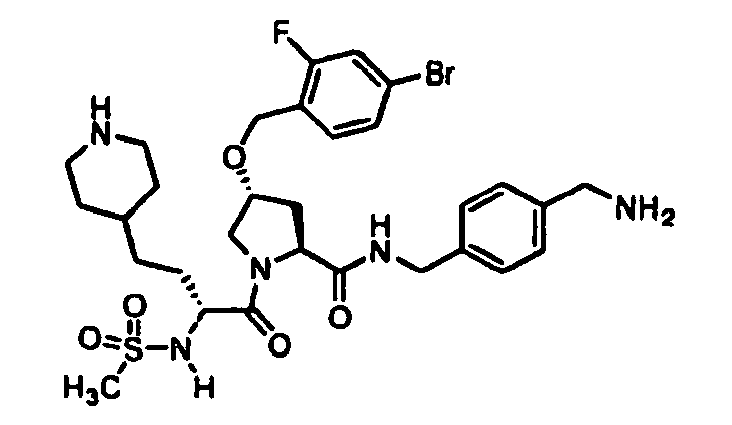
MS m/z 682.4 (M + 1) 19 
MS m/z 637.2 (M + 1) 20 
MS m/z 664.2 (M + 1); 1H NMR (CD3CN, 400 MHz) δ 7.55-7.26 (8H, m), 6.03-5.91 (1H, m), 4.58-4.40 (3H, m), 4.39-4.23 (3H, m), 4.09-4.04 (3H, m), 3.84-3.70 (2H, m), 3.34-3.27 (2H, m), 2.86-2.79 (5H, m), 2.46-2.38 (1H, m), 2.14-2.06 (1H, m), 1.83-1.67 (2H, m), 1.67-1.48 (2H, m), 10.48-1.42 (2H, m), 1.42-1.25 (3H, m). 21 
MS m/z (M + 1) 22 
MS m/z 611.3 (M + 1); Anal. Calcd. for C32H52F6N6O11S2 (2 TFA, 2 H2O): C, 43.93; H, 5.99; N, 9.61; Found: C, 43.80; H, 5.60; N, 9.17;1H NMR (CD3CN, 400 MHz) 8 9.34(1 H, s), 7.87-7.81 (2H, m), 7.72 (1H, d, J = 3.6 Hz), 7.60-7.34 (2H, m), 7.10 (1H, s, J = 3.2 Hz), 6.07-5.98 (1H, m), 4.56-4.47 (2H, m), 4.37 (1H, t, J = 7.6 Hz), 4.12-4.02 (2H, m), 3.79-3.61 (2H, m), 3.35-3.32 (2H, m), 3.27-3.18 (2H, m), 2.91-2.82 (5H, m), 2.36-2.26 (1H, m), 2.09-1.98 (1H, m), 1.84-1.81 (2H, m), 1.75-1.64 (6H, m), 1.58-1.10 (10H, m), 0.95-0.83 (2H, m). 23 
MS m/z 661.3 (M+ 1) 24 
MS m/z (M + 1) 25 
MS m/z 683.2 (M + 1); 1H NMR (CD3CN, 400 MHz) 8 10.19(1 H, s), 7.93 (2H, d, J = 8.4 Hz), 7.73 (1H, d, J = 4 Hz), 7.58 (2H, d, J = 8.4 Hz), 7.52-7.40 (2H, m), 7.15 (1H, d, J = 4 Hz), 5.81-5.73 (1H, m), 4.74-4.61 (2H, m), 4.57 (2H, d, J = 5.2 Hz), 4.46 (1 H, t, J = 7.6 Hz), 4.39-4.34 (1H, m), 4.15-4.06 (1H, m), 3.86-3.26 (2H, m), 3.35-3.26 (2H, m), 3.09 (3H, s), 2.89-2.77 (5H, m), 2.49-2.39 (1H, m), 2.22-2.11 (1 H, m), 1.82-1.70 (2H, m), 1.77-1.50 (2H, m), 1.50 (2H, m), 1.38-1.21 (3H, m). 26 
MS m/z 638.2 (M + 1) 27 
MS m/z (M + 1) 28 
MS m/z (M + 1) 29 
MS m/z (m + 1) 30 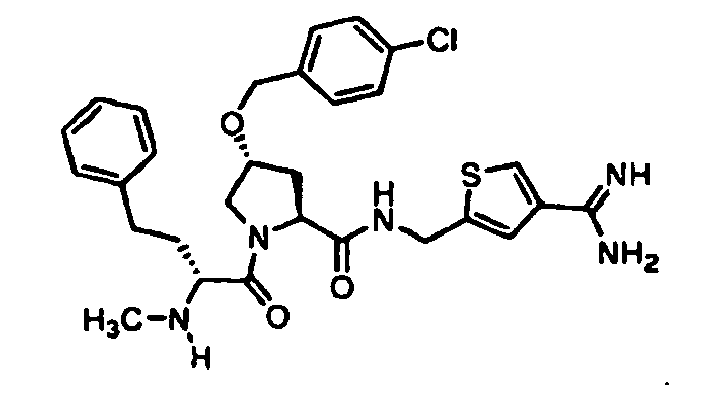
MS m/z 568.2 (M + 1) 31 
MS m/z 688.5 (M + 1) 32 
MS m/z 653.2 (M + 1) 33 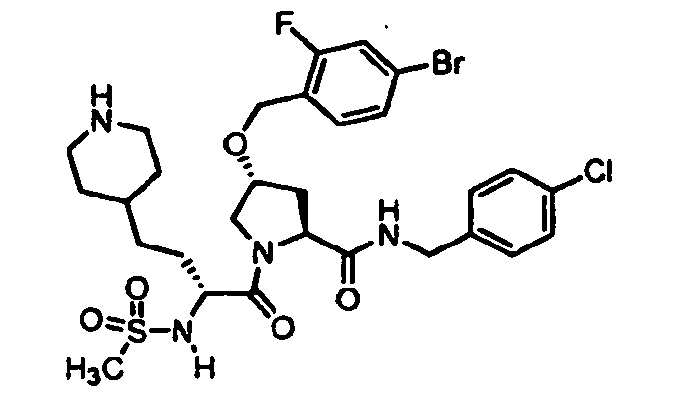
MS m/z 687.3 (M+1) 34 
MS m/z 668.3 (M + 1) 35 
MS m/z 659.3 (M + 1) 36 
MS m/z 671.2 (M + 1) 37 
MS m/z 689.2 (M + 1) 38 
MS m/z 689.2 (M + 1) 39 
MS m/z 687.2 (M + 1) 40 
MS m/z 721.3 (M + 1) 41 
MS m/z 667.3 (M + 1) 42 
MS m/z 683.3 (M + 1) 43 
MS m/z 737.3 (M + 1) 44 
MS m/z 731.2 (M + 1) 45 
MS m/z 667.3 (M + 1) 46 
MS m/z 737.3 (M + 1) 47 
MS m/z 721.3 (M + 1) 48 
MS m/z 687.3 (M + 1) 49 
MS m/z 671.3 (M + 1) 50 
MS m/z 721.2 (M + 1) 51 
MS m/z 731.2 (M + 1) 52 
MS m/z 705.3 (M + 1) 53 
MS m/z 701.3(M + 1) 54 
MS m/z 701.3 (M + 1) 55 
MS m/z 659.2 (M + 1), 1H NMR (CDCl3, 400 MHz) δ 9.30 (1H, bs), 8.56 (1H, bs), 7.31 (1H, d, J = 2 Hz ), 7.07-7.27 (6H, m), 5.88 (1H, d, J = 8.4 Hz), 4.26-4.57 (6H, m), 3.93-4.02 (1H, m), 3.77-3.86 (1 H, m), 3.47-3.86 (1H, m), 3.21-3.34 (5 H, m), 2.74 (3H, s), 2.49-2.88 (4H, m), 2.17-2.36 (2H, m), 1.18-1.73 (9H, m). 56 
MS m/z 625.2 (M + 1) 57 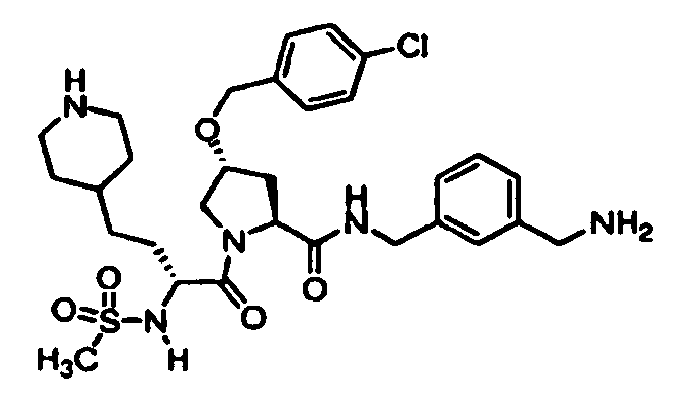
MS m/z 620.2 (M + 1) 58 
MS m/z 620.2 (M + 1) 59 
MS m/z 639.2 (M + 1) 60 
MS m/z 598.2 (M + 1) 61 
MS m/z 612.2 (M + 1) 62 
MS m/z 654.3 (M + 1) 63 
MS m/z 643.2 (M + 1) 64 
MS m/z 687.2 (M + 1) 65 
MS m/z 669.2 (M + 1) 66 
MS m/z 668.3 (M + 1) 67 
MS m/z 732.3 (M + 1) 68 
MS m/z 696.3 (M + 1) 69 
MS m/z 704.2 (M + 1) 70 
MS m/z 655.3 (M + 1) - The suitability of a channel activating protease inhibitor such as a prostasin inhibitor for the treatment of a disease mediated by inhibition of a channel activating protease may be tested by determining the inhibitory effect of the channel activating protease inhibitor on: (1) the native, isolated, purified or recombinant channel activating protease, using a suitable biochemical assay format, using the method described in Shipway et al.; Biochemical and Biophysical Research Communications 2004; 324(2):953-63; and/or (2) the ion channel/ion transport function in suitable isolated cells or confluent epithelia, using the methods described in Bridges et al.; American Journal of Physiology Lung Cell Molecular Physiology 2001; 281(1):L16-23; and Donaldson et al.; Journal of Biological Chemistry 2002; 277(10):8338-45.
- Recombinant human prostasin and matriptase and guinea pig prostasin are generated according to methods described in Shipway et al., Biochem, and Biophys. Res. Commun. 2004; 324(2):953-63. The recombinant enzymes are incubated in an electrolyte buffer containing the test compounds or vehicle in a suitable multiple well assay plate such as a 96 or 384 well plate. At a defined time after the mixing of enzyme with compound or vehicle, a suitable fluorescent peptide substrate is added to the assay mixture. As substrate becomes cleaved by the active enzyme, fluorescence (measured, using a suitable fluorescence plate reader) increases and the rate of turnover of substrate (i.e. enzyme activity) may be quantified and thus the inhibitory effect of any test compound. The efficacy of test compounds is expressed as the concentration that induces 50% attenuation in the enzyme activity (Ki).
- In general, compounds of the invention may have Ki values from 0.1 nM to 5 µM. In some examples, compounds of the invention may have Ki values from 0.1 nM to 500 nM; from 0.1 nM to 50 nM; from 0.1 nM to 5 nM; or from 0.1 nM to 0.5 nM. In particular examples, compounds of the invention may have Ki values from 0.1 nM to 0.5 nM; from 0.5 nM to 5 nM; from 5 nM to 50 nM; from 50 nM to 500 nM; or from 500 nM to 5 µM. In yet other examples, compounds may have Ki values less than 0.1 nM or more than 5 µM.
- Human bronchial epithelial cells are cultured according to methods described in Danahay et al., Am. J. Physiol. Lung Cell Mol. Physiol. 2002; 282(2):L226-36. When suitably differentiated (days 14-21 after establishing an apical-air interface), epithelial cells are treated with either vehicle, aprotinin (200 µg/ml) or test compound for 90 minutes. Epithelia are then placed into chambers as described in Danahay et al., supra, maintaining the concentration of vehicle, aprotinin or test compound on the apical side of the epithelia. Short circuit current (ISC) is then measured by voltage clamping the epithelia to zero millivolts. The amiloride-sensitive ISC is then measured by the addition of amiloride (10 µM) to the apical surface of the epithelia. The potency of the test compound is expressed as the concentration inducing a 50% inhibition of the total aprotinin-sensitive component of the amiloride-sensitive ISC.
- In general, compounds of the invention may have IC50 values from 1 nM to 10 µM. In some examples, compounds of the invention may have IC50 values from 1 nM to 1 µM; or more particularly from 1 nM to 100 nM. In yet other examples, compounds of the invention may have IC50 values from 100 nM to 1 µM, or from 1 µM to 10 µM. In yet other examples, compounds may have IC50 values less than 1 nM or more than 10 µM.
- Guinea pigs are anaesthetized, using a short acting inhalation anaesthesia such as halothane and N20. While under short acting anaesthesia, an oral gavage needle is inserted into the trachea via the oropharangeal route. Once inside the trachea, a small volume (50-200 µl) of vehicle or test compound, in a suitable aqueous-based diluent, is instilled into the airways. Animals then recover and become fully ambulatory. Alternatively, test compounds may be administered to animals, using aerosol or dry powder dosing. At a defined time after dosing, the animals are surgically anaesthetized, using a suitable anaesthesia such as ketamine and xylazine. The trachea is then exposed and a plastic agar bridge electrode is inserted into the tracheal lumen. A reference electrode is also inserted into the layers of muscle in the animal's neck. The tracheal potential difference is then measured, using a suitable high impedance voltmeter as described in Takahashi et al., Toxicol Appl Pharmacol. 1995; 131(1):31-6. The potency of the test compound is expressed as the dose inducing a 50% reduction in the sensitive-component of the tracheal potential difference.
Claims (27)
- A compound of Formula (1):

O-(CR2)p-R2 is a substituent at any position on ring A;
J is a 5-12 membered monocyclic or fused carbocyclic ring, heterocyclic ring comprising N, O and/or S; aryl or heteroaryl ring, provided J is not triazolyl;
B is
Y is a bond, -SO2-, -NHCO- or -O-(CO)-;
R1 is halo, -(CR2)l-NR6R7, -(CR2)l-NRC(=NR)-NR6R7, -(CR2)l-C(=NR)-NR6R7, -C(O)-(CR2)l-NR6R7, -(CR2)l-NR-SO2R6, -(CR2)l-NR-C(O)-R6, -(CR2)l-SO2NR6R7, or -(CR2)l-OR6, or an optionally substituted C1-6 alkoxy, C1-6 alkyl, C2-6 alkenyl or C2-6 alkynyl; or an optionally substituted carbocyclic ring, heterocyclic ring, aryl or heteroaryl;
R3 is C1-6 alkyl, C2-6 alkenyl, C2-6 alkynyl or -(CR2)l-R5;
alternatively, NH-Y-R3 together fonn NH2;
R2, R4 and R5 are independently an optionally substituted 5-12 membered carbocyclic ring, heterocyclic ring, aryl or heteroaryl; or R4 is H, C1-6 alkyl, C2-6 alkenyl, C2-6 alkynyl, or
R6 and R7 are independently H, C1-6 alkyl, C2-6 alkenyl, C2-6 alkynyl or -(CR2)l-R5;
each R is H, or C1-6 alkyl, C2-6 alkenyl, or C2-6 alkynyl;
l is 0-6;
k, m, n and p are independently 1-6;
x is 0-4;
provided R4 is piperidinyl when NH-Y-R3 together form NH2; and
further provided that R5 is piperidinyl when B is (CR2)k-R5. - The compound of claim 1, wherein J is thiophenyl, thiazolyl, phenyl, pyridyl, indazolyl, piperidinyl or pyrrolidinyl.
- The compound of claim 1, wherein R1 is halo, C1-6alkyl, CF3, OCF3, phenyl, -(CR2)l-NR6R7, -(CR2)l-C(=NR)-NR6R7, -C(O)-(CR2)l-NR6R7, -(CR2)l-NR-SO2R6, -(CR2)l-NR-C(O)-R6, -(CR2)l-SO2NR6R7, or-(CR2)l-OR6; wherein each l is 0-1; and
R, R6 and R7 are independently H or C1-6 alkyl. - The compound of claim 1, wherein R2 is phenyl or cyclohexyl, each of which optionally substituted with halo, SO2(C1-6 alkyl), or an optionally halogenated C1-6 alkyl or C1-6 alkoxy.
- The compound of claim 1, wherein R4 is an optionally substituted piperidinyl, cyclohexyl, phenyl,

- The compound of claim 1, wherein Y is a bond, SO2 or -O-(CO)-.
- The compound of claim 1, wherein said compound is of Formula (2):
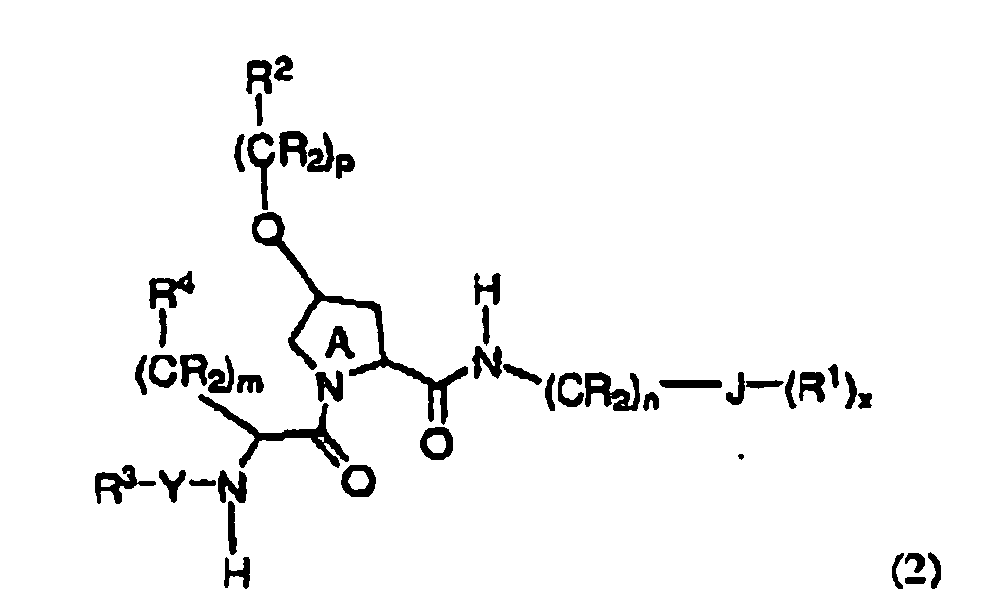
m, n and p are independently 1-2,
or pharmaceutically acceptable salts thereof. - The compound of claim 7, wherein R2 and J are independendy an optionally substituted phenyl.
- The compound of claim 7, wherein x is 1-3.
- The compound of claim 7, wherein Y is SO2.
- The compound of claim 7, wherein R3 is C1-6 alkyl or an optionally substituted benzyl.
- The compound of claim 7, wherein R4 is an optionally substituted piperidinyl.
- The compound of claim 1, wherein said compound is selected from thte group consisting of:
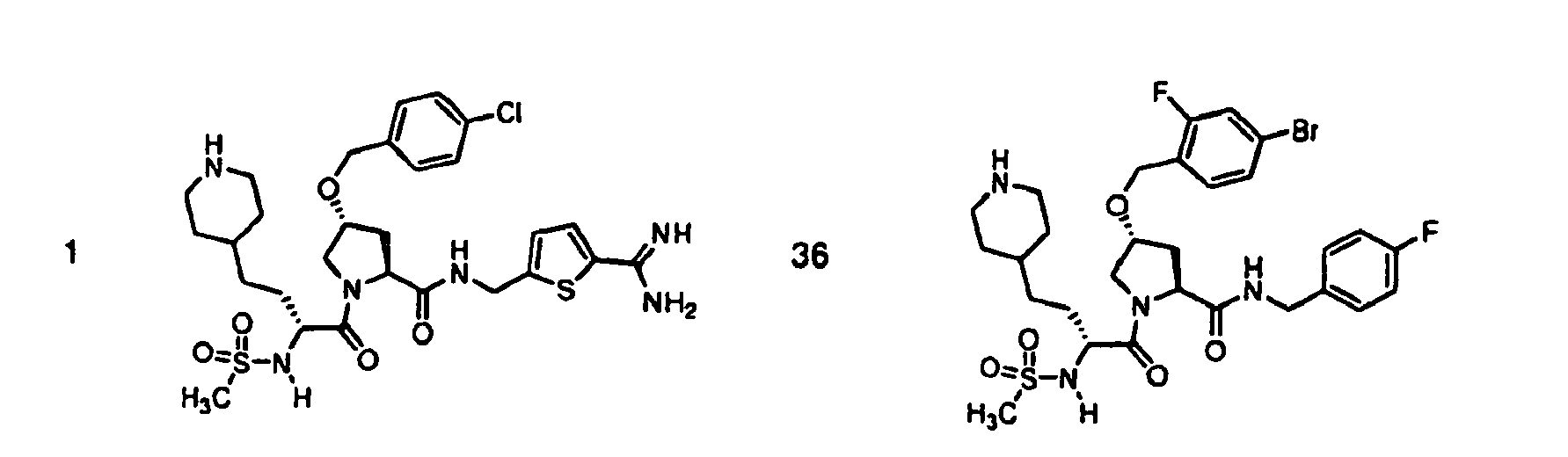
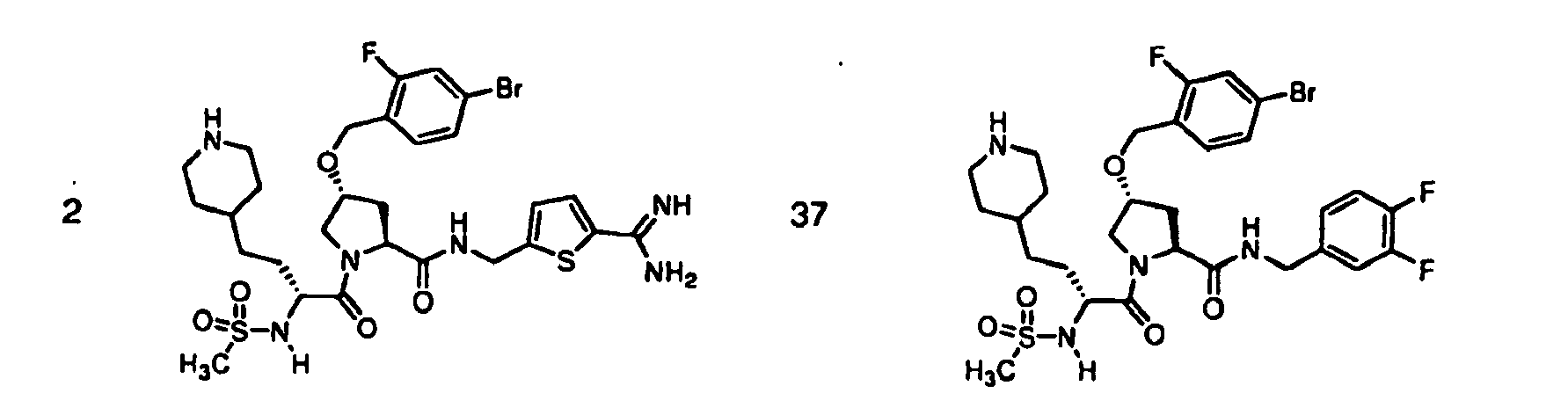


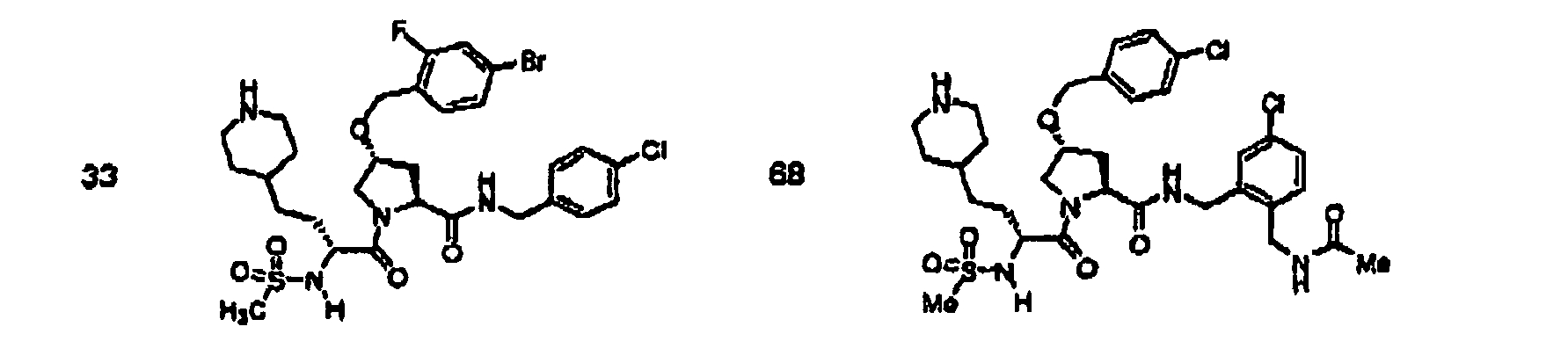


- The compound of claim 1, wherein said compound is selected from the group consisting of:

- The compound of claim 1, wherein said compound is selected from the group consisting of:

- The compound of claim 1, wherein said compound is selected from the group consisting of:

- The compound of claim 1, wherein said compound is

- The compound of claim 1, wherein said compound is

- The compound of claim 1, wherein said compound is

- A pharmaceutical composition comprising a therapeutically effective amount of a compound according to any of claims 1-19.
- A compound of any one of claims 1-19 for inhibiting a channel activating protease in a cell or tissue system or in a mammal, wherein said channel activating procease is prostasin, PRSS22, TMPRSS11 (e.g.. TMPRSS11B, TMPRSS11E), TMPRSS2, TMPRSS3, TMPRSS4 (MTSP-2), matriptase (MTSP-1), CAP2, CAP3, trypsin, cathepsin A, or neutrophil elastase.
- Use of a compound of any one of claim 1-19 for the manufacture of a medicament for treating a condition mediated by a channel activating protease in a cell or tissue system or in a mammal, and optionally in combination with a second therapeutic agent; wherein said channel activating protease is prostasin, PRSS22, TMPRSS11 (e.g., TMPRSS 11B, TMPRSS11E), TMPRSS2. TMPRSS3, TMPRSS4 (MTSP-2), matriptase (MTSP-1), CAP2, CAP3, trypsin, cathepsin A, or neutrophil elastase.
- The use of claim 22 wherein said condition is associated with the movement of fluid across ion transporting epithelia or the accumulation of mucus and sputum in respiratory tissues, or a combination thereof.
- The use of claim 22, wherein said condition is cystic fibrosis, primary ciliary dyskinesia, lung carcinoma, chronic bronchitis, chronic obstructive pulmonary disease, asthma or a respiratory tract infection.
- The use of claim 22, wherein said second therapeutic agent is an anti-inflammatory, bronchodilatory, antihistamine, anti-tussive, antibiotic or DNase, and is administered prior to, simultaneously with, or after the compound according to any of claims 19.
- The compound of claim 21 or use of 22, wherein said channel activating protease is prostasin.
- The compound of claim 21 or use of 22, wherein said cell or tissue system comprises bronchial epithelial cells.
Priority Applications (4)
| Application Number | Priority Date | Filing Date | Title |
|---|---|---|---|
| PL07854747T PL2104535T3 (en) | 2007-01-10 | 2007-11-21 | Compounds and compositions as channel activating protease inhibitors |
| SI200730542T SI2104535T1 (en) | 2007-01-10 | 2007-11-21 | Compounds and compositions as channel activating protease inhibitors |
| EP10013675A EP2279777A2 (en) | 2007-01-10 | 2007-11-21 | Compounds and compositions as channel activating protease inhibitors |
| CY20111100283T CY1111340T1 (en) | 2007-01-10 | 2011-03-14 | UNIONS AND COMPOSITIONS AS SUSPENSIONS OF BATTERY ACTIVATION PROJECTS |
Applications Claiming Priority (3)
| Application Number | Priority Date | Filing Date | Title |
|---|---|---|---|
| US88433407P | 2007-01-10 | 2007-01-10 | |
| US89147407P | 2007-02-23 | 2007-02-23 | |
| PCT/US2007/085366 WO2008085608A1 (en) | 2007-01-10 | 2007-11-21 | Compounds and compositions as channel activating protease inhibitors |
Related Child Applications (1)
| Application Number | Title | Priority Date | Filing Date |
|---|---|---|---|
| EP10013675.3 Division-Into | 2010-10-15 |
Publications (3)
| Publication Number | Publication Date |
|---|---|
| EP2104535A1 EP2104535A1 (en) | 2009-09-30 |
| EP2104535B1 EP2104535B1 (en) | 2010-12-29 |
| EP2104535B9 true EP2104535B9 (en) | 2011-06-15 |
Family
ID=39148650
Family Applications (2)
| Application Number | Title | Priority Date | Filing Date |
|---|---|---|---|
| EP10013675A Withdrawn EP2279777A2 (en) | 2007-01-10 | 2007-11-21 | Compounds and compositions as channel activating protease inhibitors |
| EP07854747A Active EP2104535B9 (en) | 2007-01-10 | 2007-11-21 | Compounds and compositions as channel activating protease inhibitors |
Family Applications Before (1)
| Application Number | Title | Priority Date | Filing Date |
|---|---|---|---|
| EP10013675A Withdrawn EP2279777A2 (en) | 2007-01-10 | 2007-11-21 | Compounds and compositions as channel activating protease inhibitors |
Country Status (32)
| Country | Link |
|---|---|
| US (1) | US20080176901A1 (en) |
| EP (2) | EP2279777A2 (en) |
| JP (1) | JP2010515729A (en) |
| KR (1) | KR101084787B1 (en) |
| AR (1) | AR064841A1 (en) |
| AT (1) | ATE493174T1 (en) |
| AU (1) | AU2007342223B2 (en) |
| BR (1) | BRPI0720799A2 (en) |
| CA (1) | CA2673803A1 (en) |
| CL (1) | CL2008000060A1 (en) |
| CO (1) | CO6190626A2 (en) |
| CU (1) | CU23762B7 (en) |
| CY (1) | CY1111340T1 (en) |
| DE (1) | DE602007011670D1 (en) |
| DK (1) | DK2104535T3 (en) |
| EA (1) | EA016199B1 (en) |
| EC (1) | ECSP099517A (en) |
| GT (1) | GT200900196A (en) |
| HN (1) | HN2009001282A (en) |
| HR (1) | HRP20110201T1 (en) |
| MA (1) | MA31037B1 (en) |
| MX (1) | MX2009007476A (en) |
| NO (1) | NO20092817L (en) |
| NZ (1) | NZ577939A (en) |
| PE (1) | PE20081566A1 (en) |
| PL (1) | PL2104535T3 (en) |
| PT (1) | PT2104535E (en) |
| RS (1) | RS51644B (en) |
| SV (1) | SV2009003330A (en) |
| TN (1) | TN2009000294A1 (en) |
| TW (1) | TW200845981A (en) |
| WO (1) | WO2008085608A1 (en) |
Families Citing this family (16)
| Publication number | Priority date | Publication date | Assignee | Title |
|---|---|---|---|---|
| EP2027143A2 (en) * | 2006-05-23 | 2009-02-25 | Irm Llc | Compounds and compositions as channel activating protease inhibitors |
| JP5208963B2 (en) | 2007-01-10 | 2013-06-12 | エフ.ホフマン−ラ ロシュ アーゲー | Sulfonamide derivatives as chymase inhibitors |
| CA2677487A1 (en) * | 2007-02-09 | 2008-08-14 | Irm Llc | Compounds and compositions as channel activating protease inhibitors |
| SG175711A1 (en) | 2009-05-18 | 2011-12-29 | Orion Corp | Protease inhibitors |
| US10399940B2 (en) * | 2016-10-07 | 2019-09-03 | Abbvie S.Á.R.L. | Substituted pyrrolidines and methods of use |
| GB201805174D0 (en) | 2018-03-29 | 2018-05-16 | Univ Leeds Innovations Ltd | Compounds |
| WO2019231935A1 (en) | 2018-05-29 | 2019-12-05 | Omeros Corporation | Masp-2 inhibitors and methods of use |
| MX2021011507A (en) | 2019-03-22 | 2021-12-15 | Achillion Pharmaceuticals Inc | PHARMACEUTICAL COMPOUNDS FOR THE TREATMENT OF COMPLEMENT MEDIATED DISORDERS. |
| AU2020349353A1 (en) | 2019-09-17 | 2022-04-14 | Duke University | Alvelestat for use in the treatment of graft rejection, bronchiolitis obliterans syndrome and graft versus host disease |
| AU2020395306B2 (en) * | 2019-12-04 | 2025-04-24 | Omeros Corporation | MASP-2 inhibitors and methods of use |
| JP7699389B2 (en) | 2019-12-04 | 2025-06-27 | オメロス コーポレーション | MASP-2 inhibitors and methods of use |
| BR112022010895A2 (en) | 2019-12-04 | 2022-09-06 | Omeros Corp | COMPOUND, PHARMACEUTICAL COMPOSITION, AND METHOD FOR TREATMENT A DISEASE OR DISORDER ASSOCIATED WITH SERINE PROTEASE-2 ASSOCIATED WITH MANAN-BINDING LECTIN |
| CN115052862A (en) | 2019-12-04 | 2022-09-13 | 奥默罗斯公司 | MASP-2 inhibitors and methods of use |
| HUE064089T2 (en) | 2020-04-16 | 2024-02-28 | Mereo Biopharma 4 Ltd | Methods involving neutrophil elastase inhibitor alvelestat for treating respiratory disease mediated by alpha-1 antitrypsin deficiency |
| AU2022373971A1 (en) | 2021-10-20 | 2024-04-04 | Mereo Biopharma 4 Limited | Neutrophil elastase inhibitors for use in the treatment of fibrosis |
| WO2023183405A2 (en) * | 2022-03-22 | 2023-09-28 | Alexion Pharmaceuticals, Inc. | Pharmaceutical compounds for the treatment of complement mediated disorders |
Family Cites Families (108)
| Publication number | Priority date | Publication date | Assignee | Title |
|---|---|---|---|---|
| GB1219606A (en) | 1968-07-15 | 1971-01-20 | Rech S Et D Applic Scient Soge | Quinuclidinol derivatives and preparation thereof |
| JPS6235216A (en) | 1985-08-09 | 1987-02-16 | Noritoshi Nakabachi | Method and device for measuring thickness of heterogeneous material layer nondestructively |
| GB8923590D0 (en) | 1989-10-19 | 1989-12-06 | Pfizer Ltd | Antimuscarinic bronchodilators |
| PT100441A (en) | 1991-05-02 | 1993-09-30 | Smithkline Beecham Corp | PIRROLIDINONES, ITS PREPARATION PROCESS, PHARMACEUTICAL COMPOSITIONS THAT CONTAIN THEM AND USE |
| WO1993018007A1 (en) | 1992-03-13 | 1993-09-16 | Tokyo Tanabe Company Limited | Novel carbostyril derivative |
| JP3192424B2 (en) | 1992-04-02 | 2001-07-30 | スミスクライン・ビーチャム・コーポレイション | Compounds for the treatment of allergic or inflammatory diseases |
| FI944549L (en) | 1992-04-02 | 1994-11-30 | Smithkline Beecham Corp | Compounds useful in the treatment of allergic and inflammatory diseases |
| WO1993019751A1 (en) | 1992-04-02 | 1993-10-14 | Smithkline Beecham Corporation | Compounds useful for treating inflammatory diseases and inhibiting production of tumor necrosis factor |
| US5705487A (en) * | 1994-03-04 | 1998-01-06 | Eli Lilly And Company | Antithrombotic agents |
| US5707966A (en) * | 1994-03-04 | 1998-01-13 | Eli Lilly And Company | Antithrombotic agents |
| US5726159A (en) * | 1994-03-04 | 1998-03-10 | Eli Lilly And Company | Antithrombotic agents |
| ZA951617B (en) * | 1994-03-04 | 1997-02-27 | Lilly Co Eli | Antithrombotic agents. |
| US5914319A (en) * | 1995-02-27 | 1999-06-22 | Eli Lilly And Company | Antithrombotic agents |
| GB2299455B (en) * | 1995-03-31 | 1999-12-22 | Motorola Inc | Self phased antenna element with dielectric and associated method |
| JP2000514788A (en) * | 1996-06-25 | 2000-11-07 | イーライ・リリー・アンド・カンパニー | Anticoagulant |
| GB9622386D0 (en) | 1996-10-28 | 1997-01-08 | Sandoz Ltd | Organic compounds |
| US6166037A (en) | 1997-08-28 | 2000-12-26 | Merck & Co., Inc. | Pyrrolidine and piperidine modulators of chemokine receptor activity |
| WO1999016766A1 (en) | 1997-10-01 | 1999-04-08 | Kyowa Hakko Kogyo Co., Ltd. | Benzodioxole derivatives |
| US6362371B1 (en) | 1998-06-08 | 2002-03-26 | Advanced Medicine, Inc. | β2- adrenergic receptor agonists |
| KR100563395B1 (en) | 1998-06-30 | 2006-03-23 | 다우 글로벌 테크놀로지스 인크. | Polymer Polyols and Methods for Making the Same |
| GB9913083D0 (en) | 1999-06-04 | 1999-08-04 | Novartis Ag | Organic compounds |
| PL203117B1 (en) | 1999-05-04 | 2009-08-31 | Schering Corp | Piperidine derivatives useful as ccr5 antagonists |
| SK286641B6 (en) | 1999-05-04 | 2009-03-05 | Schering Corporation | Piperazine derivatives useful as CCR5 antagonists, pharmaceutical compositions comprising them and their use |
| US6683115B2 (en) | 1999-06-02 | 2004-01-27 | Theravance, Inc. | β2-adrenergic receptor agonists |
| ES2165768B1 (en) | 1999-07-14 | 2003-04-01 | Almirall Prodesfarma Sa | NEW DERIVATIVES OF QUINUCLIDINE AND PHARMACEUTICAL COMPOSITIONS THAT CONTAIN THEM. |
| PL200923B1 (en) | 1999-08-21 | 2009-02-27 | Nycomed Gmbh | SYNERGISTIC COMBINATION OF PDE INHIBITORS AND ß₂ ADRENOCEPTOR AGONIST |
| OA11558A (en) | 1999-12-08 | 2004-06-03 | Advanced Medicine Inc | Beta 2-adrenergic receptor agonists. |
| HUP0300832A2 (en) | 2000-04-27 | 2003-08-28 | Boehringer Ingelheim Pharma Gmbh & Co. Kg | Novel, slow-acting betamimetics, a method for their production and their use as medicaments and pharmaceutical compositions containing them |
| AU2001266100B9 (en) | 2000-06-27 | 2005-10-06 | Laboratorios S.A.L.V.A.T., S.A. | Carbamates derived from arylalkylamines |
| GB0015876D0 (en) | 2000-06-28 | 2000-08-23 | Novartis Ag | Organic compounds |
| DE10038639A1 (en) | 2000-07-28 | 2002-02-21 | Schering Ag | New and known N-aryl 2-hydroxy-omega-arylalkanamide derivatives, useful e.g. for treating inflammatory diseases such as rheumatism |
| CA2417826A1 (en) | 2000-08-05 | 2002-02-14 | Glaxo Group Limited | 17.beta.-carbothioate 17.alpha.-arylcarbonyloxyloxy androstane derivative as anti-inflammatory agents |
| GB0028383D0 (en) | 2000-11-21 | 2001-01-03 | Novartis Ag | Organic compounds |
| EP1345937B1 (en) | 2000-12-22 | 2005-09-28 | Almirall Prodesfarma AG | Quinuclidine carbamate derivatives and their use as m3 antagonists |
| SI1353919T1 (en) | 2000-12-28 | 2006-12-31 | Almirall Prodesfarma Ag | Novel quinuclidine derivatives and medicinal compositions containing the same |
| GB0103630D0 (en) | 2001-02-14 | 2001-03-28 | Glaxo Group Ltd | Chemical compounds |
| JP2004526720A (en) | 2001-03-08 | 2004-09-02 | グラクソ グループ リミテッド | β-adrenergic receptor agonist |
| ATE381537T1 (en) | 2001-03-22 | 2008-01-15 | Glaxo Group Ltd | FORMANILIDE DERIVATIVES AS BETA2 ADRENORECEPTOR AGONISTS |
| AR033290A1 (en) | 2001-04-30 | 2003-12-10 | Glaxo Group Ltd | ANDROSTANO ANTIINFLAMATORY DERIVATIVES |
| EP1395604B1 (en) | 2001-06-12 | 2008-06-25 | Glaxo Group Limited | Novel anti inflammatory 17.alpha.-heterocyclic-esters of 17.beta.-carbothioate androstane derivatives |
| EP2039762A3 (en) | 2001-06-21 | 2009-07-29 | Verenium Corporation | Nitralases |
| WO2003013571A1 (en) * | 2001-08-10 | 2003-02-20 | Palatin Technologies, Inc. | Peptidomimetics of biologically active metallopeptides |
| ES2438985T3 (en) | 2001-09-14 | 2014-01-21 | Glaxo Group Limited | Inhalation formulation comprising phenetanolamine derivatives for the treatment of respiratory diseases |
| RU2004110717A (en) | 2001-10-17 | 2005-10-20 | Юсиби, С.А. (Be) | Quinuclidine derivatives, methods for their preparation and their use as both M2- and / or M3-muscarinic receptors |
| GB0125259D0 (en) | 2001-10-20 | 2001-12-12 | Glaxo Group Ltd | Novel compounds |
| AR037517A1 (en) | 2001-11-05 | 2004-11-17 | Novartis Ag | DERIVATIVES OF NAFTIRIDINES, A PROCESS FOR THE PREPARATION, PHARMACEUTICAL COMPOSITION AND THE USE OF THEM FOR THE PREPARATION OF A MEDICINAL PRODUCT FOR THE TREATMENT OF AN INFLAMMATORY DISEASE |
| US6653323B2 (en) | 2001-11-13 | 2003-11-25 | Theravance, Inc. | Aryl aniline β2 adrenergic receptor agonists |
| TWI249515B (en) | 2001-11-13 | 2006-02-21 | Theravance Inc | Aryl aniline beta2 adrenergic receptor agonists |
| AU2002356759A1 (en) | 2001-12-01 | 2003-06-17 | Glaxo Group Limited | 17.alpha. -cyclic esters of 16-methylpregnan-3,20-dione as anti-inflammatory agents |
| CA2470956C (en) | 2001-12-20 | 2011-08-02 | Laboratorios S.A.L.V.A.T., S.A. | 1-alkyl-1-azoniabicyclo[2.2.2]octane carbamate derivatives and their use as muscarinic receptor antagonists |
| AU2003202044A1 (en) | 2002-01-15 | 2003-09-09 | Glaxo Group Limited | 17.alpha-cycloalkyl/cycloylkenyl esters of alkyl-or haloalkyl-androst-4-en-3-on-11.beta.,17.alpha.-diol 17.beta.-carboxylates as anti-inflammatory agents |
| AU2003201693A1 (en) | 2002-01-21 | 2003-09-02 | Glaxo Group Limited | Non-aromatic 17.alpha.-esters of androstane-17.beta.-carboxylate esters as anti-inflammatory agents |
| GB0202216D0 (en) | 2002-01-31 | 2002-03-20 | Glaxo Group Ltd | Novel compounds |
| GB0204719D0 (en) | 2002-02-28 | 2002-04-17 | Glaxo Group Ltd | Medicinal compounds |
| JP4324480B2 (en) | 2002-03-26 | 2009-09-02 | ベーリンガー インゲルハイム ファーマシューティカルズ インコーポレイテッド | Glucocorticoid mimetics, their preparation, pharmaceutical compositions, and uses |
| EP1490317A1 (en) | 2002-03-26 | 2004-12-29 | Boehringer Ingelheim Pharmaceuticals Inc. | Glucocorticoid mimetics, methods of making them, pharmaceutical compositions, and uses thereof |
| WO2003086294A2 (en) | 2002-04-11 | 2003-10-23 | Merck & Co., Inc. | 1h-benzo[f]indazol-5-yl derivatives as selective glucocorticoid receptor modulators |
| ES2206021B1 (en) | 2002-04-16 | 2005-08-01 | Almirall Prodesfarma, S.A. | NEW DERIVATIVES OF PIRROLIDINIO. |
| ATE381535T1 (en) | 2002-04-25 | 2008-01-15 | Glaxo Group Ltd | PHENETHANOLAMINE DERIVATIVES |
| EP1507754A1 (en) | 2002-05-28 | 2005-02-23 | Theravance, Inc. | Alkoxy aryl beta-2 adrenergic receptor agonists |
| US7186864B2 (en) | 2002-05-29 | 2007-03-06 | Boehringer Ingelheim Pharmaceuticals, Inc. | Glucocorticoid mimetics, methods of making them, pharmaceutical compositions, and uses thereof |
| ES2201907B1 (en) | 2002-05-29 | 2005-06-01 | Almirall Prodesfarma, S.A. | NEW DERIVATIVES OF INDOLILPIPERIDINE AS POWERFUL ANTIHISTAMINIC AND ANTIALERGIC AGENTS. |
| DE10224888A1 (en) | 2002-06-05 | 2003-12-24 | Merck Patent Gmbh | pyridazine |
| US7074806B2 (en) | 2002-06-06 | 2006-07-11 | Boehringer Ingelheim Pharmaceuticals, Inc. | Glucocorticoid mimetics, methods of making them, pharmaceutical compositions, and uses thereof |
| DE10225574A1 (en) | 2002-06-10 | 2003-12-18 | Merck Patent Gmbh | New 1-acyl-3-phenyl-5,6-dihydro-4H-pyridazine derivatives, are phosphodiesterase IV inhibitors useful e.g. for treating asthma, allergy, inflammation, autoimmune diseases or myocardial diseases |
| DE10227269A1 (en) | 2002-06-19 | 2004-01-08 | Merck Patent Gmbh | thiazole |
| WO2004000814A1 (en) | 2002-06-25 | 2003-12-31 | Merck Frosst Canada & Co. | 8-(biaryl) quinoline pde4 inhibitors |
| ES2204295B1 (en) | 2002-07-02 | 2005-08-01 | Almirall Prodesfarma, S.A. | NEW DERIVATIVES OF QUINUCLIDINE-AMIDE. |
| US20060004056A1 (en) | 2002-07-02 | 2006-01-05 | Bernard Cote | Di-aryl-substituted-ethan pyridone pde4 inhibitors |
| WO2004005229A1 (en) | 2002-07-08 | 2004-01-15 | Pfizer Products Inc. | Modulators of the glucocorticoid receptor |
| GB0217225D0 (en) | 2002-07-25 | 2002-09-04 | Glaxo Group Ltd | Medicinal compounds |
| AR040962A1 (en) | 2002-08-09 | 2005-04-27 | Novartis Ag | COMPOUNDS DERIVED FROM TIAZOL 1,3-2-ONA, PHARMACEUTICAL COMPOSITION AND COMPOSITE PREPARATION PROCESS |
| HRP20050198A2 (en) | 2002-08-10 | 2006-04-30 | Altana Pharma Ag | PIPERIDINE-PYRIDAZONE AND PTHALAZONE AS INHIBITORS OF PDE4 |
| WO2004018449A1 (en) | 2002-08-10 | 2004-03-04 | Altana Pharma Ag | Piperidine-derivatives as pde4 inhibitors |
| US20060166995A1 (en) | 2002-08-10 | 2006-07-27 | Altana Pharma Ag | Piperidine-n-oxide-derivatives |
| US20060167001A1 (en) | 2002-08-10 | 2006-07-27 | Sterk Jan G | Pyridazinone-derivatives as pde4 inhibitors |
| CA2495597A1 (en) | 2002-08-17 | 2004-03-04 | Altana Pharma Ag | Novel phenanthridines |
| AU2003263216A1 (en) | 2002-08-17 | 2004-03-11 | Nycomed Gmbh | Benzonaphthyridines with PDE 3/4 inhibiting activity |
| CA2496175A1 (en) | 2002-08-21 | 2004-03-04 | Boehringer Ingelheim Pharmaceuticals, Inc. | Substituted hihydroquinolines as glucocorticoid mimetics, methods of making them, pharmaceutical compositions, and uses thereof |
| SE0202483D0 (en) | 2002-08-21 | 2002-08-21 | Astrazeneca Ab | Chemical compounds |
| EP1534675B1 (en) | 2002-08-23 | 2009-02-25 | Ranbaxy Laboratories, Ltd. | Fluoro and sulphonylamino containing 3,6-disubstituted azabicyclo¬3.1.0 hexane derivatives as muscarinic receptor antagonists |
| NZ538932A (en) | 2002-08-29 | 2007-04-27 | Boehringer Ingelheim Pharma | 3-(sulfonamidoethyl)-indole derivatives for use as glucocorticoid mimetics in the treatment of inflammatory, allergic and proliferative disease |
| CA2496459C (en) | 2002-08-29 | 2013-06-25 | Altana Pharma Ag | 3-hydroxy-6-phenylphenanthridines as pde-4 inhibitors |
| AU2003255493B8 (en) | 2002-08-29 | 2009-03-26 | Takeda Gmbh | 2-hydroxy-6-phenylphenanthridines as PDE-4 inhibitors |
| GB0220730D0 (en) | 2002-09-06 | 2002-10-16 | Glaxo Group Ltd | Medicinal compounds |
| JP2006096662A (en) | 2002-09-18 | 2006-04-13 | Sumitomo Pharmaceut Co Ltd | Novel 6-substituted uracil derivatives and therapeutic agents for allergic diseases |
| JPWO2004026873A1 (en) | 2002-09-18 | 2006-01-19 | 小野薬品工業株式会社 | Triazaspiro [5.5] undecane derivatives and drugs containing them as active ingredients |
| AU2003270783C1 (en) | 2002-09-20 | 2010-05-20 | Merck Sharp & Dohme Corp. | Octahydro-2-H-naphtho[1,2-F] indole-4-carboxamide derivatives as selective glucocorticoid receptor modulators |
| JP2004107299A (en) | 2002-09-20 | 2004-04-08 | Japan Energy Corp | Novel 1-substituted uracil derivatives and therapeutic agents for allergic diseases |
| DE10246374A1 (en) | 2002-10-04 | 2004-04-15 | Boehringer Ingelheim Pharma Gmbh & Co. Kg | New 4-(2-alkylamino-1-hydroxyethyl)-3-alkoxy-benzene-1,2-diol derivatives, are beta-mimetics having a long duration of action, useful e.g. for treating asthma, chronic obstructive pulmonary disease or arrhythmia |
| MXPA05003866A (en) | 2002-10-11 | 2005-06-22 | Pfizer | Indole derivatives as beta-2 agonists. |
| EP1440966A1 (en) | 2003-01-10 | 2004-07-28 | Pfizer Limited | Indole derivatives useful for the treatment of diseases |
| AU2003298094A1 (en) | 2002-10-22 | 2004-05-13 | Glaxo Group Limited | Medicinal arylethanolamine compounds |
| KR20050065624A (en) | 2002-10-23 | 2005-06-29 | 그렌마크 파머수티칼스 엘티디. | Novel tricyclic compounds useful for the treatment of inflammatory and allergic disorders, process for their preparation and pharmaceutical compositions containing them |
| GB0225030D0 (en) | 2002-10-28 | 2002-12-04 | Glaxo Group Ltd | Medicinal compounds |
| DE60320007T2 (en) | 2002-10-28 | 2009-06-18 | Glaxo Group Ltd., Greenford | Phenthanolamine derivatives for the treatment of respiratory diseases |
| GB0225287D0 (en) | 2002-10-30 | 2002-12-11 | Glaxo Group Ltd | Novel compounds |
| GB0225540D0 (en) | 2002-11-01 | 2002-12-11 | Glaxo Group Ltd | Medicinal compounds |
| GB0225535D0 (en) | 2002-11-01 | 2002-12-11 | Glaxo Group Ltd | Medicinal compounds |
| DE10253220A1 (en) | 2002-11-15 | 2004-05-27 | Boehringer Ingelheim Pharma Gmbh & Co. Kg | New 2-(N-phenylalkyl-amino)-1-phenyl-ethanol derivatives, are beta-adrenergic agents especially useful for treating inflammatory and obstructive respiratory diseases such as asthma or COPD |
| DE10253426B4 (en) | 2002-11-15 | 2005-09-22 | Elbion Ag | Novel hydroxyindoles, their use as inhibitors of phosphodiesterase 4 and methods for their preparation |
| DE10253282A1 (en) | 2002-11-15 | 2004-05-27 | Boehringer Ingelheim Pharma Gmbh & Co. Kg | Treatment of chronic obstructive pulmonary disease, using new or known N-substituted 2-amino-1-(benz-(1,4)-oxazin-3-on-8-yl)-ethanol derivative beta-mimetic agents, suitable for once-daily administration |
| DE10261874A1 (en) | 2002-12-20 | 2004-07-08 | Schering Ag | Nonsteroidal anti-inflammatories |
| US7019019B2 (en) * | 2002-12-23 | 2006-03-28 | Dendreon Corporation | Matriptase inhibitors and methods of use |
| AU2004207482B2 (en) | 2003-01-21 | 2009-10-08 | Merck Sharp & Dohme Corp. | 17-carbamoyloxy cortisol derivatives as selective glucocorticoid receptor modulators |
| PE20040950A1 (en) | 2003-02-14 | 2005-01-01 | Theravance Inc | BIPHENYL DERIVATIVES AS AGONISTS OF ß2-ADRENERGIC RECEPTORS AND AS ANTAGONISTS OF MUSCARINAL RECEPTORS |
| EP1460064A1 (en) | 2003-03-14 | 2004-09-22 | Pfizer Limited | Indole-2-carboxamide derivatives useful as beta-2 agonists |
| GB0507577D0 (en) * | 2005-04-14 | 2005-05-18 | Novartis Ag | Organic compounds |
-
2007
- 2007-11-21 AU AU2007342223A patent/AU2007342223B2/en not_active Ceased
- 2007-11-21 US US11/943,845 patent/US20080176901A1/en not_active Abandoned
- 2007-11-21 KR KR1020097014455A patent/KR101084787B1/en not_active Expired - Fee Related
- 2007-11-21 RS RS20110129A patent/RS51644B/en unknown
- 2007-11-21 EA EA200900920A patent/EA016199B1/en not_active IP Right Cessation
- 2007-11-21 BR BRPI0720799-9A patent/BRPI0720799A2/en not_active IP Right Cessation
- 2007-11-21 NZ NZ577939A patent/NZ577939A/en not_active IP Right Cessation
- 2007-11-21 DE DE602007011670T patent/DE602007011670D1/en active Active
- 2007-11-21 EP EP10013675A patent/EP2279777A2/en not_active Withdrawn
- 2007-11-21 AT AT07854747T patent/ATE493174T1/en active
- 2007-11-21 PL PL07854747T patent/PL2104535T3/en unknown
- 2007-11-21 DK DK07854747.8T patent/DK2104535T3/en active
- 2007-11-21 PT PT07854747T patent/PT2104535E/en unknown
- 2007-11-21 EP EP07854747A patent/EP2104535B9/en active Active
- 2007-11-21 HR HR20110201T patent/HRP20110201T1/en unknown
- 2007-11-21 WO PCT/US2007/085366 patent/WO2008085608A1/en not_active Ceased
- 2007-11-21 MX MX2009007476A patent/MX2009007476A/en active IP Right Grant
- 2007-11-21 CA CA002673803A patent/CA2673803A1/en not_active Abandoned
- 2007-11-21 JP JP2009545545A patent/JP2010515729A/en not_active Ceased
-
2008
- 2008-01-10 CL CL200800060A patent/CL2008000060A1/en unknown
- 2008-01-10 PE PE2008000105A patent/PE20081566A1/en not_active Application Discontinuation
- 2008-01-10 TW TW097101044A patent/TW200845981A/en unknown
- 2008-01-10 AR ARP080100104A patent/AR064841A1/en not_active Application Discontinuation
-
2009
- 2009-06-30 MA MA32060A patent/MA31037B1/en unknown
- 2009-07-08 TN TNP2009000294A patent/TN2009000294A1/en unknown
- 2009-07-08 HN HN2009001282A patent/HN2009001282A/en unknown
- 2009-07-08 GT GT200900196A patent/GT200900196A/en unknown
- 2009-07-10 CU CU20090122A patent/CU23762B7/en not_active IP Right Cessation
- 2009-07-10 SV SV2009003330A patent/SV2009003330A/en not_active Application Discontinuation
- 2009-07-13 CO CO09072488A patent/CO6190626A2/en not_active Application Discontinuation
- 2009-07-15 EC EC2009009517A patent/ECSP099517A/en unknown
- 2009-08-10 NO NO20092817A patent/NO20092817L/en not_active Application Discontinuation
-
2011
- 2011-03-14 CY CY20111100283T patent/CY1111340T1/en unknown
Also Published As
Similar Documents
| Publication | Publication Date | Title |
|---|---|---|
| EP2104535B1 (en) | Compounds and compositions as channel activating protease inhibitors | |
| US8338469B2 (en) | Compounds and compositions as channel activating protease inhibitors | |
| AU2008214217B2 (en) | Compounds and compositions as channel activating protease inhibitors | |
| KR101069089B1 (en) | Compounds and Compositions as Channel Activating Protease Inhibitors | |
| AU2008214214B2 (en) | Compounds and compositions as channel activating protease inhibitors | |
| HK1129860B (en) | Compounds and compositions as channel activating protease inhibitors | |
| HK1148703A (en) | Compounds and compositions as channel activating protease inhibitors | |
| ES2358857T3 (en) | COMPOUNDS AND COMPOSITIONS AS INHIBITORS OF CHANNEL ACTIVATING PROTEASES. | |
| KR101131238B1 (en) | Compounds and compositions as channel activating protease inhibitors | |
| CN101578120A (en) | Compounds and compositions as channel activating protease inhibitors |
Legal Events
| Date | Code | Title | Description |
|---|---|---|---|
| PUAI | Public reference made under article 153(3) epc to a published international application that has entered the european phase |
Free format text: ORIGINAL CODE: 0009012 |
|
| 17P | Request for examination filed |
Effective date: 20090715 |
|
| AK | Designated contracting states |
Kind code of ref document: A1 Designated state(s): AT BE BG CH CY CZ DE DK EE ES FI FR GB GR HU IE IS IT LI LT LU LV MC MT NL PL PT RO SE SI SK TR |
|
| AX | Request for extension of the european patent |
Extension state: AL BA HR MK RS |
|
| REG | Reference to a national code |
Ref country code: HK Ref legal event code: DE Ref document number: 1129860 Country of ref document: HK |
|
| GRAP | Despatch of communication of intention to grant a patent |
Free format text: ORIGINAL CODE: EPIDOSNIGR1 |
|
| GRAS | Grant fee paid |
Free format text: ORIGINAL CODE: EPIDOSNIGR3 |
|
| GRAA | (expected) grant |
Free format text: ORIGINAL CODE: 0009210 |
|
| AK | Designated contracting states |
Kind code of ref document: B1 Designated state(s): AT BE BG CH CY CZ DE DK EE ES FI FR GB GR HU IE IS IT LI LT LU LV MC MT NL PL PT RO SE SI SK TR |
|
| AX | Request for extension of the european patent |
Extension state: AL BA HR MK RS |
|
| REG | Reference to a national code |
Ref country code: GB Ref legal event code: FG4D |
|
| REG | Reference to a national code |
Ref country code: CH Ref legal event code: EP |
|
| REG | Reference to a national code |
Ref country code: IE Ref legal event code: FG4D |
|
| REF | Corresponds to: |
Ref document number: 602007011670 Country of ref document: DE Date of ref document: 20110210 Kind code of ref document: P |
|
| REG | Reference to a national code |
Ref country code: DE Ref legal event code: R096 Ref document number: 602007011670 Country of ref document: DE Effective date: 20110210 |
|
| REG | Reference to a national code |
Ref country code: RO Ref legal event code: EPE |
|
| REG | Reference to a national code |
Ref country code: HR Ref legal event code: TUEP Ref document number: P20110201 Country of ref document: HR |
|
| REG | Reference to a national code |
Ref country code: NL Ref legal event code: T3 |
|
| REG | Reference to a national code |
Ref country code: PT Ref legal event code: SC4A Free format text: AVAILABILITY OF NATIONAL TRANSLATION Effective date: 20110324 |
|
| REG | Reference to a national code |
Ref country code: DK Ref legal event code: T3 |
|
| REG | Reference to a national code |
Ref country code: SE Ref legal event code: TRGR |
|
| REG | Reference to a national code |
Ref country code: GR Ref legal event code: EP Ref document number: 20110400578 Country of ref document: GR Effective date: 20110412 |
|
| REG | Reference to a national code |
Ref country code: ES Ref legal event code: FG2A Ref document number: 2358857 Country of ref document: ES Kind code of ref document: T3 Effective date: 20110504 |
|
| REG | Reference to a national code |
Ref country code: PL Ref legal event code: T3 |
|
| REG | Reference to a national code |
Ref country code: HK Ref legal event code: GR Ref document number: 1129860 Country of ref document: HK |
|
| REG | Reference to a national code |
Ref country code: SK Ref legal event code: T3 Ref document number: E 9011 Country of ref document: SK |
|
| REG | Reference to a national code |
Ref country code: HU Ref legal event code: AG4A Ref document number: E010509 Country of ref document: HU |
|
| REG | Reference to a national code |
Ref country code: EE Ref legal event code: LD4A Ref document number: E005250 Country of ref document: EE |
|
| REG | Reference to a national code |
Ref country code: NL Ref legal event code: T3 |
|
| REG | Reference to a national code |
Ref country code: HR Ref legal event code: T1PR Ref document number: P20110201 Country of ref document: HR |
|
| REG | Reference to a national code |
Ref country code: SE Ref legal event code: RPOT |
|
| PLBE | No opposition filed within time limit |
Free format text: ORIGINAL CODE: 0009261 |
|
| STAA | Information on the status of an ep patent application or granted ep patent |
Free format text: STATUS: NO OPPOSITION FILED WITHIN TIME LIMIT |
|
| REG | Reference to a national code |
Ref country code: HR Ref legal event code: ODRP Ref document number: P20110201 Country of ref document: HR Payment date: 20111117 Year of fee payment: 5 |
|
| 26N | No opposition filed |
Effective date: 20110930 |
|
| REG | Reference to a national code |
Ref country code: DE Ref legal event code: R097 Ref document number: 602007011670 Country of ref document: DE Effective date: 20110930 |
|
| PGFP | Annual fee paid to national office [announced via postgrant information from national office to epo] |
Ref country code: CH Payment date: 20111114 Year of fee payment: 5 Ref country code: BG Payment date: 20111117 Year of fee payment: 5 Ref country code: IS Payment date: 20111010 Year of fee payment: 5 Ref country code: IE Payment date: 20111110 Year of fee payment: 5 Ref country code: DK Payment date: 20111110 Year of fee payment: 5 Ref country code: LT Payment date: 20111013 Year of fee payment: 5 Ref country code: EE Payment date: 20111012 Year of fee payment: 5 Ref country code: LU Payment date: 20111128 Year of fee payment: 5 Ref country code: MC Payment date: 20111026 Year of fee payment: 5 Ref country code: FI Payment date: 20111110 Year of fee payment: 5 Ref country code: CZ Payment date: 20111031 Year of fee payment: 5 Ref country code: HU Payment date: 20111115 Year of fee payment: 5 Ref country code: SE Payment date: 20111115 Year of fee payment: 5 Ref country code: NL Payment date: 20111117 Year of fee payment: 5 Ref country code: PT Payment date: 20111121 Year of fee payment: 5 |
|
| PGFP | Annual fee paid to national office [announced via postgrant information from national office to epo] |
Ref country code: BE Payment date: 20111114 Year of fee payment: 5 |
|
| PGFP | Annual fee paid to national office [announced via postgrant information from national office to epo] |
Ref country code: CY Payment date: 20111115 Year of fee payment: 5 |
|
| PGFP | Annual fee paid to national office [announced via postgrant information from national office to epo] |
Ref country code: FR Payment date: 20121130 Year of fee payment: 6 Ref country code: DE Payment date: 20121114 Year of fee payment: 6 |
|
| PG25 | Lapsed in a contracting state [announced via postgrant information from national office to epo] |
Ref country code: MT Free format text: LAPSE BECAUSE OF FAILURE TO SUBMIT A TRANSLATION OF THE DESCRIPTION OR TO PAY THE FEE WITHIN THE PRESCRIBED TIME-LIMIT Effective date: 20101229 |
|
| PGFP | Annual fee paid to national office [announced via postgrant information from national office to epo] |
Ref country code: GB Payment date: 20121121 Year of fee payment: 6 Ref country code: ES Payment date: 20121212 Year of fee payment: 6 Ref country code: IT Payment date: 20121116 Year of fee payment: 6 |
|
| REG | Reference to a national code |
Ref country code: HR Ref legal event code: PBON Ref document number: P20110201 Country of ref document: HR Effective date: 20121122 |
|
| REG | Reference to a national code |
Ref country code: PT Ref legal event code: MM4A Free format text: LAPSE DUE TO NON-PAYMENT OF FEES Effective date: 20130521 |
|
| BERE | Be: lapsed |
Owner name: IRM LLC Effective date: 20121130 |
|
| REG | Reference to a national code |
Ref country code: NL Ref legal event code: V1 Effective date: 20130601 |
|
| REG | Reference to a national code |
Ref country code: LT Ref legal event code: MM4D Effective date: 20121121 |
|
| REG | Reference to a national code |
Ref country code: CH Ref legal event code: PL |
|
| REG | Reference to a national code |
Ref country code: DK Ref legal event code: EBP |
|
| PG25 | Lapsed in a contracting state [announced via postgrant information from national office to epo] |
Ref country code: CZ Free format text: LAPSE BECAUSE OF NON-PAYMENT OF DUE FEES Effective date: 20121121 Ref country code: SK Free format text: LAPSE BECAUSE OF NON-PAYMENT OF DUE FEES Effective date: 20121121 Ref country code: CY Free format text: LAPSE BECAUSE OF NON-PAYMENT OF DUE FEES Effective date: 20121121 Ref country code: SE Free format text: LAPSE BECAUSE OF NON-PAYMENT OF DUE FEES Effective date: 20121122 Ref country code: CH Free format text: LAPSE BECAUSE OF NON-PAYMENT OF DUE FEES Effective date: 20121130 Ref country code: IS Free format text: LAPSE BECAUSE OF FAILURE TO SUBMIT A TRANSLATION OF THE DESCRIPTION OR TO PAY THE FEE WITHIN THE PRESCRIBED TIME-LIMIT Effective date: 20130531 Ref country code: EE Free format text: LAPSE BECAUSE OF NON-PAYMENT OF DUE FEES Effective date: 20121130 Ref country code: LI Free format text: LAPSE BECAUSE OF NON-PAYMENT OF DUE FEES Effective date: 20121130 Ref country code: LT Free format text: LAPSE BECAUSE OF NON-PAYMENT OF DUE FEES Effective date: 20121121 |
|
| REG | Reference to a national code |
Ref country code: SK Ref legal event code: MM4A Ref document number: E 9011 Country of ref document: SK Effective date: 20121121 |
|
| REG | Reference to a national code |
Ref country code: IE Ref legal event code: MM4A |
|
| REG | Reference to a national code |
Ref country code: EE Ref legal event code: MM4A Ref document number: E005250 Country of ref document: EE Effective date: 20121130 |
|
| PG25 | Lapsed in a contracting state [announced via postgrant information from national office to epo] |
Ref country code: GR Free format text: LAPSE BECAUSE OF NON-PAYMENT OF DUE FEES Effective date: 20130604 Ref country code: SI Free format text: LAPSE BECAUSE OF NON-PAYMENT OF DUE FEES Effective date: 20121122 Ref country code: NL Free format text: LAPSE BECAUSE OF NON-PAYMENT OF DUE FEES Effective date: 20130601 Ref country code: HU Free format text: LAPSE BECAUSE OF NON-PAYMENT OF DUE FEES Effective date: 20121122 Ref country code: PT Free format text: LAPSE BECAUSE OF NON-PAYMENT OF DUE FEES Effective date: 20130521 Ref country code: BE Free format text: LAPSE BECAUSE OF NON-PAYMENT OF DUE FEES Effective date: 20121130 Ref country code: FI Free format text: LAPSE BECAUSE OF NON-PAYMENT OF DUE FEES Effective date: 20121121 Ref country code: LV Free format text: LAPSE BECAUSE OF NON-PAYMENT OF DUE FEES Effective date: 20121121 |
|
| REG | Reference to a national code |
Ref country code: GR Ref legal event code: ML Ref document number: 20110400578 Country of ref document: GR Effective date: 20130604 Ref country code: SI Ref legal event code: KO00 Effective date: 20130704 |
|
| PG25 | Lapsed in a contracting state [announced via postgrant information from national office to epo] |
Ref country code: IE Free format text: LAPSE BECAUSE OF NON-PAYMENT OF DUE FEES Effective date: 20121121 Ref country code: DK Free format text: LAPSE BECAUSE OF NON-PAYMENT OF DUE FEES Effective date: 20121130 |
|
| PGFP | Annual fee paid to national office [announced via postgrant information from national office to epo] |
Ref country code: RO Payment date: 20121127 Year of fee payment: 6 |
|
| REG | Reference to a national code |
Ref country code: AT Ref legal event code: MM01 Ref document number: 493174 Country of ref document: AT Kind code of ref document: T Effective date: 20121130 |
|
| PG25 | Lapsed in a contracting state [announced via postgrant information from national office to epo] |
Ref country code: AT Free format text: LAPSE BECAUSE OF NON-PAYMENT OF DUE FEES Effective date: 20121130 |
|
| PG25 | Lapsed in a contracting state [announced via postgrant information from national office to epo] |
Ref country code: PL Free format text: LAPSE BECAUSE OF NON-PAYMENT OF DUE FEES Effective date: 20121121 |
|
| PG25 | Lapsed in a contracting state [announced via postgrant information from national office to epo] |
Ref country code: MC Free format text: LAPSE BECAUSE OF NON-PAYMENT OF DUE FEES Effective date: 20121130 |
|
| PG25 | Lapsed in a contracting state [announced via postgrant information from national office to epo] |
Ref country code: TR Free format text: LAPSE BECAUSE OF NON-PAYMENT OF DUE FEES Effective date: 20121121 Ref country code: LU Free format text: LAPSE BECAUSE OF NON-PAYMENT OF DUE FEES Effective date: 20121121 |
|
| REG | Reference to a national code |
Ref country code: DE Ref legal event code: R119 Ref document number: 602007011670 Country of ref document: DE |
|
| GBPC | Gb: european patent ceased through non-payment of renewal fee |
Effective date: 20131121 |
|
| REG | Reference to a national code |
Ref country code: FR Ref legal event code: ST Effective date: 20140731 |
|
| PG25 | Lapsed in a contracting state [announced via postgrant information from national office to epo] |
Ref country code: BG Free format text: LAPSE BECAUSE OF NON-PAYMENT OF DUE FEES Effective date: 20121130 Ref country code: RO Free format text: LAPSE BECAUSE OF NON-PAYMENT OF DUE FEES Effective date: 20131121 Ref country code: IT Free format text: LAPSE BECAUSE OF NON-PAYMENT OF DUE FEES Effective date: 20131121 Ref country code: DE Free format text: LAPSE BECAUSE OF NON-PAYMENT OF DUE FEES Effective date: 20140603 |
|
| REG | Reference to a national code |
Ref country code: DE Ref legal event code: R119 Ref document number: 602007011670 Country of ref document: DE Effective date: 20140603 |
|
| PG25 | Lapsed in a contracting state [announced via postgrant information from national office to epo] |
Ref country code: GB Free format text: LAPSE BECAUSE OF NON-PAYMENT OF DUE FEES Effective date: 20131121 Ref country code: FR Free format text: LAPSE BECAUSE OF NON-PAYMENT OF DUE FEES Effective date: 20131202 |
|
| REG | Reference to a national code |
Ref country code: ES Ref legal event code: FD2A Effective date: 20150708 |
|
| PG25 | Lapsed in a contracting state [announced via postgrant information from national office to epo] |
Ref country code: ES Free format text: LAPSE BECAUSE OF NON-PAYMENT OF DUE FEES Effective date: 20131122 |