EP2103871A2 - Illumination device, in particular for motor vehicle lights - Google Patents
Illumination device, in particular for motor vehicle lights Download PDFInfo
- Publication number
- EP2103871A2 EP2103871A2 EP09154839A EP09154839A EP2103871A2 EP 2103871 A2 EP2103871 A2 EP 2103871A2 EP 09154839 A EP09154839 A EP 09154839A EP 09154839 A EP09154839 A EP 09154839A EP 2103871 A2 EP2103871 A2 EP 2103871A2
- Authority
- EP
- European Patent Office
- Prior art keywords
- led
- support
- optical
- illumination device
- holder
- Prior art date
- Legal status (The legal status is an assumption and is not a legal conclusion. Google has not performed a legal analysis and makes no representation as to the accuracy of the status listed.)
- Granted
Links
- 238000005286 illumination Methods 0.000 title claims abstract description 25
- 230000003287 optical effect Effects 0.000 claims abstract description 58
- 230000008878 coupling Effects 0.000 claims abstract description 11
- 238000010168 coupling process Methods 0.000 claims abstract description 11
- 238000005859 coupling reaction Methods 0.000 claims abstract description 11
- 239000000463 material Substances 0.000 claims description 14
- 229920003023 plastic Polymers 0.000 claims description 14
- 239000004033 plastic Substances 0.000 claims description 14
- 230000000295 complement effect Effects 0.000 claims description 3
- 239000004020 conductor Substances 0.000 claims description 3
- 229910052751 metal Inorganic materials 0.000 claims description 2
- 239000002184 metal Substances 0.000 claims 1
- 238000004519 manufacturing process Methods 0.000 description 5
- 238000010276 construction Methods 0.000 description 1
- 238000005516 engineering process Methods 0.000 description 1
- 238000007667 floating Methods 0.000 description 1
Images




Classifications
-
- F—MECHANICAL ENGINEERING; LIGHTING; HEATING; WEAPONS; BLASTING
- F21—LIGHTING
- F21V—FUNCTIONAL FEATURES OR DETAILS OF LIGHTING DEVICES OR SYSTEMS THEREOF; STRUCTURAL COMBINATIONS OF LIGHTING DEVICES WITH OTHER ARTICLES, NOT OTHERWISE PROVIDED FOR
- F21V19/00—Fastening of light sources or lamp holders
- F21V19/001—Fastening of light sources or lamp holders the light sources being semiconductors devices, e.g. LEDs
-
- B—PERFORMING OPERATIONS; TRANSPORTING
- B60—VEHICLES IN GENERAL
- B60Q—ARRANGEMENT OF SIGNALLING OR LIGHTING DEVICES, THE MOUNTING OR SUPPORTING THEREOF OR CIRCUITS THEREFOR, FOR VEHICLES IN GENERAL
- B60Q1/00—Arrangement of optical signalling or lighting devices, the mounting or supporting thereof or circuits therefor
- B60Q1/26—Arrangement of optical signalling or lighting devices, the mounting or supporting thereof or circuits therefor the devices being primarily intended to indicate the vehicle, or parts thereof, or to give signals, to other traffic
- B60Q1/2696—Mounting of devices using LEDs
-
- F—MECHANICAL ENGINEERING; LIGHTING; HEATING; WEAPONS; BLASTING
- F21—LIGHTING
- F21S—NON-PORTABLE LIGHTING DEVICES; SYSTEMS THEREOF; VEHICLE LIGHTING DEVICES SPECIALLY ADAPTED FOR VEHICLE EXTERIORS
- F21S43/00—Signalling devices specially adapted for vehicle exteriors, e.g. brake lamps, direction indicator lights or reversing lights
- F21S43/10—Signalling devices specially adapted for vehicle exteriors, e.g. brake lamps, direction indicator lights or reversing lights characterised by the light source
- F21S43/13—Signalling devices specially adapted for vehicle exteriors, e.g. brake lamps, direction indicator lights or reversing lights characterised by the light source characterised by the type of light source
- F21S43/14—Light emitting diodes [LED]
-
- F—MECHANICAL ENGINEERING; LIGHTING; HEATING; WEAPONS; BLASTING
- F21—LIGHTING
- F21S—NON-PORTABLE LIGHTING DEVICES; SYSTEMS THEREOF; VEHICLE LIGHTING DEVICES SPECIALLY ADAPTED FOR VEHICLE EXTERIORS
- F21S43/00—Signalling devices specially adapted for vehicle exteriors, e.g. brake lamps, direction indicator lights or reversing lights
- F21S43/10—Signalling devices specially adapted for vehicle exteriors, e.g. brake lamps, direction indicator lights or reversing lights characterised by the light source
- F21S43/19—Attachment of light sources or lamp holders
-
- F—MECHANICAL ENGINEERING; LIGHTING; HEATING; WEAPONS; BLASTING
- F21—LIGHTING
- F21Y—INDEXING SCHEME ASSOCIATED WITH SUBCLASSES F21K, F21L, F21S and F21V, RELATING TO THE FORM OR THE KIND OF THE LIGHT SOURCES OR OF THE COLOUR OF THE LIGHT EMITTED
- F21Y2115/00—Light-generating elements of semiconductor light sources
- F21Y2115/10—Light-emitting diodes [LED]
Definitions
- the present invention relates to an illumination device, in particular for motor vehicle lights, of the type comprising a plurality of LEDs, a support on which said plurality of LEDs is mounted, a transparent element fixed to the support and defining a plurality of optical elements each associated with a respective LED, in which the LEDs are held by respective LED-holder elements which are mounted on said support.
- An LED illumination device of this type is known, for example, from US 6406173 B1 .
- the main object of the present invention is to provide an LED illumination device of the type mentioned at the outset of the present description which is of simple and economical construction and, in particular, is easy and quick to assemble and which also ensures that each LED is precisely positioned relative to the optical element connected thereto.
- the invention relates to an illumination device of the aforementioned type, characterised in that the LEDs are held, individually or in sub-groups, by the aforementioned LED-holder elements, in that said LED-holder elements are mounted on said support so as to each be free to move slightly at least in two directions orthogonal to one another, transversely to the optical axis of the LEDs, and in that each LED-holder element and the optical element, or optical elements, connected thereto have coupling and centring means which correctly position each LED relative to the optical element connected thereto when the transparent element is fixed to said support.
- the LEDs may be pre-assembled on the support outside the production line, even if the support is made with fairly liberal manufacturing tolerances, since when the transparent element is fixed to the support the coupling of the LEDs to the respective optical elements ensures that said LEDs are centred and correctly positioned. Production time and costs are thus drastically reduced without reducing the optical qualities of the light.
- the support is made of plastics material and comprises a plurality of seats each able to receive therein an LED-holder element.
- each LED-holder element comprises a plastics material body having a front portion able to receive at least one LED and a rear portion defining a cavity for receiving therein an electrical connector, to which a plurality of electrical conductors which supply power to the LED-holder element is connected.
- the front portion of the LED-holder element comprises two moulded tabs which project from the plastics material body and define a mouth able to receive and retain the LED.
- each optical element of the transparent element comprises a rear portion which has a seat shaped so as to complement the shape of said mouth formed in the front portion of the LED-holder element, said seat enabling a positive connection in such a way that the LED is correctly centred relative to the optical element when the transparent element is fixed to said support.
- said seat is tapered so as to centre said LED-holder element relative to said optical element once the transparent element has been coupled to the support.
- the LED-holder elements are floating in the seats formed on the support and owing to the shape of the coupling and centring means, the LEDs are perfectly centred relative to the corresponding optical elements by simply fixing the transparent element to the support.
- reference numeral 1 denotes the entire illumination device, in particular a portion or sub-group of a rear motor vehicle optical group.
- a rear motor vehicle optical group typically comprises more portions or sub-groups having various optical functions, for example a portion which acts as a sidelight, a portion which acts as a brake light, a portion which acts as an indicator light or a rear fog light or a reverse light. Any of these portions may be formed, according to the invention, by the structure shown in the drawings.
- the device 1 comprises a support 2 having a complex shape, extending three-dimensionally and defining a stepped surface with more rows of "platforms" arranged side by side and in a stepped manner.
- the support 2 is made of plastics material and comprises a plurality of casings projecting orthogonally from each "platform" and each defining a seat 4. Each seat 4 is able to receive therein an LED-holder element indicated as a whole by reference numeral 5.
- the transparent element 3 is fixed to the support 2 once the LED-holder elements 5 have been assembled thereon, in such a way that a respective optical element for collimating the light beam emitted by the LED is connected to each LED.
- each LED-holder element 5 comprises a plastics material body 8 having a front portion 9 which is shaped so as to receive and to hold an LED 7.
- two moulded tabs 15 are defined on the front portion 9 which project from the body 8 of the LED-holder element 5.
- the two tabs 15 define a mouth 16 (see Fig. 8 ) able to receive and hold therein the LED 7.
- the two moulded tabs 15 have a C-shaped cross-section in a plane orthogonal to the optical axis A.
- each LED-holder element 5 holds a single LED 7, but embodiments in which a small sub-group of LEDs 7, for example 3 or 4 LEDs, is mounted on each individual LED-holder element 5 are not excluded a priori.
- the reference A denotes the optical emission axis of each LED, orthogonal to the surface on which the LED is supported.
- seats 13 formed in the front portion 9 of the body 8 of the LED-holder element 5 can be seen which are able to receive and hold in position electrical contacts 14 which are to be connected to the LED 7 with the relative power supply, as will be described in detail below.
- the electrical contacts 14 are preferably formed by cutting and folding one or more sheet metal elements and each comprise a front portion which extends substantially in the plane of a front wall of the body 8 and is received inside the corresponding seat 13, and a rear portion orthogonal to said plane in such a way that it is received through a respective opening formed in the aforementioned front wall and extends through an inner cavity in the body 8 arranged behind said front wall.
- the electrical connector 11 is connected to a plurality of electrical conductors 12 ( Figs. 5 to 7 ) which supply power to the contacts 14 connected to the LED-holder element 5. Consequently, the LED-holder element 5 and the connector 11 ensure the electrical connection between the LED 7 and the power supply in a simple and efficient manner.
- each LED-holder element 5 is coupled to a respective seat 4 in the respective casing forming part of the plastics material support 2 via releasable coupling means, which comprise a retaining tongue 17 (see Fig. 5A ) press-formed in the wall of the casing and a projection 18 formed on the central portion of the body 8 in the vicinity of the rear portion 10 of the LED-holder element 5.
- each optical element 6 formed on the transparent element 3 comprises a rear portion 19 which defines a seat 20 shaped so as to complement the shape of the mouth 16 formed in the front portion 9 of the LED-holder element 5.
- the seat 20 defined in the rear portion 19 of the optical element 6 enables a positive connection with the moulded tabs 15 formed on the front portion 9 of the LED-holder element 5. This positive connection ensures that the LED 7 is centred correctly relative to the corresponding connected optical element 6 when the transparent element 3 is fixed to the support 2.
- the seat 20 defined in the rear portion 19 of the optical element 6 is tapered so as to facilitate coupling between the transparent element 3 and the support 2[e1].
- the moulded tabs 15 projecting from the body 8 of the LED-holder element 5 are also tapered. This facilitates centring when the transparent element 3 is coupled to the support 2.
- the optical element 6 also has a substantially paraboloid central region 21 which is able to shape and focus the light beam emitted from the LED 7 in a direction substantially parallel to the optical axis A of the LED 7.
- the optical element 6 has a substantially tubular front portion 22 which guides the light beam towards the exterior of the[e2] illumination device 1.
- Figs. 3 and 4 also show the play, indicated with reference numeral 23, which exists between each LED-holder element 5 and the respective seat 4 formed in the support 2, both in the horizontal direction of Fig. 3 and in the horizontal direction of Fig. 4 .
- This play 23 thus enables the LED-holder element 5 to move slightly in two directions which are orthogonal to one another and transversely to the optical axis A of the LED 7.
- play 24 also preferably exists which enables the LED-holder element 5 to move slightly in the direction of the optical axis A, relative to the seat 4 of the support 2.
- movement slightly in the present description and in the claims which follow means movement which is typically no greater than some tenths of a millimetre and, at any rate, movement to an extent which is sufficient to ensure the possibility that each LED 7 is centred relative to the corresponding optical element 6 following the mutual coupling thereof.
- the illumination device according to the invention has advantages, both from the point of view of reducing manufacturing costs, above all with regard to producing the plastics material support 2 which does not necessarily have to be made with extremely strict tolerances, and from the point of view of simple and easy assembly owing to the possibility of pre-assembling all the LEDs on the support 2 before fixing the optical element 6 and also owing to the simple manner in which the LEDs are wired, which is achieved by using the connectors 11.
- the provision of relative play between the elements 5 and seats 4 and the presence of coupling and centring means ensure that each LED is positioned correctly relative to the corresponding optical element when the support 2 with the LEDs 7 pre-assembled thereon is connected to the transparent element 3.
- the possibility of arranging the LED-holder elements so as to float in at least two directions inside the seats formed in the plastics material support is exploited so as to obtain a correct positioning of the LEDs relative to the optical elements.
- each of the portions which forms the optical group is defined by a different support whilst a single transparent element is present, to which the various supports of the portions forming the group are fixed.
Landscapes
- Engineering & Computer Science (AREA)
- General Engineering & Computer Science (AREA)
- Mechanical Engineering (AREA)
- Physics & Mathematics (AREA)
- Microelectronics & Electronic Packaging (AREA)
- Optics & Photonics (AREA)
- Non-Portable Lighting Devices Or Systems Thereof (AREA)
- Led Device Packages (AREA)
- Lighting Device Outwards From Vehicle And Optical Signal (AREA)
Abstract
Description
- The present invention relates to an illumination device, in particular for motor vehicle lights, of the type comprising a plurality of LEDs, a support on which said plurality of LEDs is mounted, a transparent element fixed to the support and defining a plurality of optical elements each associated with a respective LED, in which the LEDs are held by respective LED-holder elements which are mounted on said support.
- An LED illumination device of this type is known, for example, from
US 6406173 B1 . - In recent years it has become increasingly common to use LED sources in order to produce rear or front motor vehicle lights. When first applied, this use was limited to lights having a relatively simple shape and geometry, for which it was possible to arrange a group of LEDs on a single flat printed circuit which also acted as a support. However, more recently it has become necessary to apply the illumination technology using LED groups to lights having more complex shapes and extending three-dimensionally in any direction.
- In applications of this type, there is the problem of ensuring precise relative positioning between each LED and the relative optical element which collimates the light beam, the optical characteristics of the light otherwise being lost.
- If the geometry of the shape is complex, it is thus difficult to arrange the preliminary assembly of the LEDs on a common support, since when the transparent element including the optical elements to be connected to the LEDs is fitted on said support, precise relative positioning between each LED and the respective optical element is not ensured, unless extremely limited tolerances are adopted when constructing the support, which would considerably increase production costs.
- The main object of the present invention is to provide an LED illumination device of the type mentioned at the outset of the present description which is of simple and economical construction and, in particular, is easy and quick to assemble and which also ensures that each LED is precisely positioned relative to the optical element connected thereto.
- With a view to achieving this object, the invention relates to an illumination device of the aforementioned type, characterised in that the LEDs are held, individually or in sub-groups, by the aforementioned LED-holder elements, in that said LED-holder elements are mounted on said support so as to each be free to move slightly at least in two directions orthogonal to one another, transversely to the optical axis of the LEDs, and in that each LED-holder element and the optical element, or optical elements, connected thereto have coupling and centring means which correctly position each LED relative to the optical element connected thereto when the transparent element is fixed to said support.
- Since there is some play between the LED-holder elements and the respective seats in the support, the LEDs may be pre-assembled on the support outside the production line, even if the support is made with fairly liberal manufacturing tolerances, since when the transparent element is fixed to the support the coupling of the LEDs to the respective optical elements ensures that said LEDs are centred and correctly positioned. Production time and costs are thus drastically reduced without reducing the optical qualities of the light.
- In a preferred embodiment of the invention, the support is made of plastics material and comprises a plurality of seats each able to receive therein an LED-holder element. Furthermore, each LED-holder element comprises a plastics material body having a front portion able to receive at least one LED and a rear portion defining a cavity for receiving therein an electrical connector, to which a plurality of electrical conductors which supply power to the LED-holder element is connected. In this case, owing to the shape of the LED-holder element, simple wiring is ensured which makes it possible to correctly supply power to the LEDs.
- Even in the specific case of the aforementioned preferred embodiment, the front portion of the LED-holder element comprises two moulded tabs which project from the plastics material body and define a mouth able to receive and retain the LED. Furthermore, each optical element of the transparent element comprises a rear portion which has a seat shaped so as to complement the shape of said mouth formed in the front portion of the LED-holder element, said seat enabling a positive connection in such a way that the LED is correctly centred relative to the optical element when the transparent element is fixed to said support. Lastly, said seat is tapered so as to centre said LED-holder element relative to said optical element once the transparent element has been coupled to the support.
- As already mentioned, since the LED-holder elements are floating in the seats formed on the support and owing to the shape of the coupling and centring means, the LEDs are perfectly centred relative to the corresponding optical elements by simply fixing the transparent element to the support.
- Other features and advantages of the present invention will become clear from the following description which is given with reference to the appended drawings which are provided purely by way of non-limiting example and in which:
-
Fig. 1 is a perspective view of an illumination device according to an embodiment of the invention, in which the transparent element is not fixed to the support; -
Fig. 2 is an enlarged view, partly in section, of the illumination device ofFig. 1 , in which the transparent element is fixed to the support; -
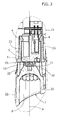
Fig. 3 is an enlarged detail ofFig. 2 ; -
Fig. 4 is a sectional view taken along a plane orthogonal to the plane shown inFig. 3 ; - A, B and C in
Fig. 5 are three perspective views of a portion of the support, an LED-holder element and an electrical connector respectively; -
Fig. 6 is a perspective view which shows the elements ofFig. 5 coupled to one another; -
Fig. 7 is a perspective view of an LED-holder element; and -
Fig. 8 is a perspective exploded view showing the assembly phase of the LED and the electrical contacts on the LED-holder element. - With reference to
Fig. 1 ,reference numeral 1 denotes the entire illumination device, in particular a portion or sub-group of a rear motor vehicle optical group. A rear motor vehicle optical group typically comprises more portions or sub-groups having various optical functions, for example a portion which acts as a sidelight, a portion which acts as a brake light, a portion which acts as an indicator light or a rear fog light or a reverse light. Any of these portions may be formed, according to the invention, by the structure shown in the drawings. Thedevice 1 comprises asupport 2 having a complex shape, extending three-dimensionally and defining a stepped surface with more rows of "platforms" arranged side by side and in a stepped manner. Thesupport 2 is made of plastics material and comprises a plurality of casings projecting orthogonally from each "platform" and each defining aseat 4. Eachseat 4 is able to receive therein an LED-holder element indicated as a whole byreference numeral 5. Atransparent element 3, which can be seen in part inFigs. 1 to 4 and is also made of plastics material, is fixed to thesupport 2, for example by means of screws (not shown), on which transparent element a plurality ofoptical elements 6 is defined. Thetransparent element 3 is fixed to thesupport 2 once the LED-holder elements 5 have been assembled thereon, in such a way that a respective optical element for collimating the light beam emitted by the LED is connected to each LED. - With reference in particular to
Figs. 2 to 4 and7 to 8 , each LED-holder element 5 comprises aplastics material body 8 having afront portion 9 which is shaped so as to receive and to hold anLED 7. For this purpose, twomoulded tabs 15 are defined on thefront portion 9 which project from thebody 8 of the LED-holder element 5. The twotabs 15 define a mouth 16 (seeFig. 8 ) able to receive and hold therein theLED 7. In the case of the example shown, the twomoulded tabs 15 have a C-shaped cross-section in a plane orthogonal to the optical axis A. - In the example shown, each LED-
holder element 5 holds asingle LED 7, but embodiments in which a small sub-group ofLEDs 7, for example 3 or 4 LEDs, is mounted on each individual LED-holder element 5 are not excluded a priori. - The reference A denotes the optical emission axis of each LED, orthogonal to the surface on which the LED is supported.
- In
Fig. 8 ,seats 13 formed in thefront portion 9 of thebody 8 of the LED-holder element 5 can be seen which are able to receive and hold in positionelectrical contacts 14 which are to be connected to theLED 7 with the relative power supply, as will be described in detail below. Theelectrical contacts 14 are preferably formed by cutting and folding one or more sheet metal elements and each comprise a front portion which extends substantially in the plane of a front wall of thebody 8 and is received inside thecorresponding seat 13, and a rear portion orthogonal to said plane in such a way that it is received through a respective opening formed in the aforementioned front wall and extends through an inner cavity in thebody 8 arranged behind said front wall. - The rear portions of the
contacts 14 connected to eachelement 5 are connected to the power supply by means of anelectrical connector 11 which is removably received inside said cavity in thebody 8 which leads into the rear face of thebody 8, denoted byreference numeral 10. - The
electrical connector 11 is connected to a plurality of electrical conductors 12 (Figs. 5 to 7 ) which supply power to thecontacts 14 connected to the LED-holder element 5. Consequently, the LED-holder element 5 and theconnector 11 ensure the electrical connection between theLED 7 and the power supply in a simple and efficient manner. - With reference to
Figs. 5 and 6 , each LED-holder element 5 is coupled to arespective seat 4 in the respective casing forming part of theplastics material support 2 via releasable coupling means, which comprise a retaining tongue 17 (seeFig. 5A ) press-formed in the wall of the casing and aprojection 18 formed on the central portion of thebody 8 in the vicinity of therear portion 10 of the LED-holder element 5. - With reference to
Figs. 3 and4 , eachoptical element 6 formed on thetransparent element 3 comprises arear portion 19 which defines aseat 20 shaped so as to complement the shape of themouth 16 formed in thefront portion 9 of the LED-holder element 5. - The
seat 20 defined in therear portion 19 of theoptical element 6 enables a positive connection with themoulded tabs 15 formed on thefront portion 9 of the LED-holder element 5. This positive connection ensures that theLED 7 is centred correctly relative to the corresponding connectedoptical element 6 when thetransparent element 3 is fixed to thesupport 2. - Again with reference to
Figs. 3 and4 , theseat 20 defined in therear portion 19 of theoptical element 6 is tapered so as to facilitate coupling between thetransparent element 3 and the support 2[e1]. - In the case of the example shown, the
moulded tabs 15 projecting from thebody 8 of the LED-holder element 5 are also tapered. This facilitates centring when thetransparent element 3 is coupled to thesupport 2. - Again with reference to
Figs. 3 and4 , theoptical element 6 also has a substantially paraboloidcentral region 21 which is able to shape and focus the light beam emitted from theLED 7 in a direction substantially parallel to the optical axis A of theLED 7. Lastly, theoptical element 6 has a substantiallytubular front portion 22 which guides the light beam towards the exterior of the[e2]illumination device 1. -
Figs. 3 and4 also show the play, indicated withreference numeral 23, which exists between each LED-holder element 5 and therespective seat 4 formed in thesupport 2, both in the horizontal direction ofFig. 3 and in the horizontal direction ofFig. 4 . Thisplay 23 thus enables the LED-holder element 5 to move slightly in two directions which are orthogonal to one another and transversely to the optical axis A of theLED 7. Furthermore, play 24 (seeFig. 4 ) also preferably exists which enables the LED-holder element 5 to move slightly in the direction of the optical axis A, relative to theseat 4 of thesupport 2. - The term "move slightly" in the present description and in the claims which follow means movement which is typically no greater than some tenths of a millimetre and, at any rate, movement to an extent which is sufficient to ensure the possibility that each
LED 7 is centred relative to the correspondingoptical element 6 following the mutual coupling thereof. - It is obvious from the above description that the illumination device according to the invention has advantages, both from the point of view of reducing manufacturing costs, above all with regard to producing the
plastics material support 2 which does not necessarily have to be made with extremely strict tolerances, and from the point of view of simple and easy assembly owing to the possibility of pre-assembling all the LEDs on thesupport 2 before fixing theoptical element 6 and also owing to the simple manner in which the LEDs are wired, which is achieved by using theconnectors 11. The provision of relative play between theelements 5 andseats 4 and the presence of coupling and centring means ensure that each LED is positioned correctly relative to the corresponding optical element when thesupport 2 with theLEDs 7 pre-assembled thereon is connected to thetransparent element 3. - In conclusion, the possibility of arranging the LED-holder elements so as to float in at least two directions inside the seats formed in the plastics material support is exploited so as to obtain a correct positioning of the LEDs relative to the optical elements.
- Obviously, the teaching upon which the present invention is based may be applied to one or more portions of a single optical group.
- In a preferred embodiment, each of the portions which forms the optical group is defined by a different support whilst a single transparent element is present, to which the various supports of the portions forming the group are fixed.
Claims (14)
- Illumination device (1), in particular for a motor vehicle light, comprising:- a plurality of LEDs (7), each having an optical axis (A),- a support (2) on which said plurality of LEDs (7) is mounted,- a transparent element (3) fixed to the support (2) and defining a plurality of optical elements (6) each associated with a respective LED (7),- the LEDs (7) being held by respective LED-holder elements (5) which are mounted on said support (2),characterised in that:- the LEDs (7) are held, individually or in sub-groups, by said LED-holder elements (5),- said LED-holder elements (5) are mounted on said support (2) so as to each be free to move slightly at least in two directions orthogonal to one another[e3], transversely to or along the optical axis (A) of the LEDs (7), and in that- each LED-holder element (5) and the optical element (6), or optical elements, connected thereto have coupling and centring means (15, 16, 19, 20) which correctly position each LED (7) relative to the optical element (6) connected thereto when the transparent element (3) is fixed to said support (2).
- Illumination device according to claim 1, characterised in that said support (2) is made of plastics material and comprises a plurality of seats (4) each able to receive therein an LED-holder element (5).
- Illumination device according to claim 2, characterised in that each LED-holder element (5) is coupled to a respective seat (4) of the plastics material support (2) via releasable coupling means (17, 18).
- Illumination device according to either claim 2 or claim 3, characterised in that each LED-holder element (5) is received in the respective seat (4) of the support (2) with play (24, 23) both in the direction of said optical axis (A) and in two directions orthogonal to one another and perpendicular to the optical axis (A).
- Illumination device according to any one of the preceding claims, characterised in that each LED-holder element (5) comprises a plastics material body (8) having a front portion (9) able to receive at least one LED (7) of said plurality, and a rear portion (10) defining a cavity for receiving therein an electrical connector (11), to which a plurality of electrical conductors (12) which supply power to the LED-holder element (5) is connected.
- Illumination device according to claim 5, characterised in that said front portion (9) of the LED-holder element (5) is shaped so as to receive and hold in position a plurality of electrical contacts (14) which are in turn shaped so as to be electrically connected to said electrical connector (11) so as to supply power to said LED (7).
- Illumination device according to claim 6, characterised in that each of said electrical contacts (14) is formed by cutting and folding a sheet metal element.
- Illumination device according to either claim 6 or claim 7, characterised in that said front portion (9) of the LED-holder element (5) comprises at least two moulded tabs (15) which project from the plastics material body (8) and define a mouth (16) able to receive and retain said LED (7).
- Illumination device according to claim 8, characterised in that each optical element (6) of the transparent element (3) comprises a rear portion (19) which has a seat (20) shaped so as to complement the shape of said mouth (16) formed in the front portion (9) of the LED-holder element (5), said seat (20) enabling a positive connection in such a way that the LED (7) is correctly centred relative to the optical element (6) when the transparent element (3) is fixed to said support (2).
- Illumination device according to claim 9, characterised in that at least said seat (20) is tapered so as to centre said LED-holder element (5) relative to said optical element (6) following said coupling.
- Illumination device according to either claim 9 or claim 10, characterised in that each optical element (6) also has a substantially paraboloid central portion (21) which is able to shape and focus the light beam emitted from the LED (7) in a direction substantially parallel to the axis (A) of the LED, and a substantially tubular front portion (22) which guides the light beam outwardly.
- Illumination device according to any one of the preceding claims, characterised in that the shape of said plastics material support (2) expands three-dimensionally[e4].
- Rear motor vehicle optical group comprising a plurality of optical portions having different illumination functions, characterised in that each of said portions is formed by a device (1) according to any one of the preceding claims.
- Optical group according to claim 13, characterised in that each of said portions has a respective support (2) defining the seats (4) for the LED-holder elements (5), said group comprising a single transparent element (3) to which the supports of the various portions are fixed.
Applications Claiming Priority (1)
| Application Number | Priority Date | Filing Date | Title |
|---|---|---|---|
| IT000206A ITTO20080206A1 (en) | 2008-03-18 | 2008-03-18 | LIGHTING DEVICE, PARTICULARLY FOR VEHICLE LIGHTS |
Publications (3)
| Publication Number | Publication Date |
|---|---|
| EP2103871A2 true EP2103871A2 (en) | 2009-09-23 |
| EP2103871A3 EP2103871A3 (en) | 2010-12-08 |
| EP2103871B1 EP2103871B1 (en) | 2011-11-02 |
Family
ID=40293281
Family Applications (1)
| Application Number | Title | Priority Date | Filing Date |
|---|---|---|---|
| EP09154839A Not-in-force EP2103871B1 (en) | 2008-03-18 | 2009-03-11 | Illumination device, in particular for motor vehicle lights |
Country Status (3)
| Country | Link |
|---|---|
| EP (1) | EP2103871B1 (en) |
| AT (1) | ATE532006T1 (en) |
| IT (1) | ITTO20080206A1 (en) |
Cited By (2)
| Publication number | Priority date | Publication date | Assignee | Title |
|---|---|---|---|---|
| EP2395281A1 (en) * | 2010-06-10 | 2011-12-14 | odelo GmbH | Motor vehicle light |
| JP2012155963A (en) * | 2011-01-25 | 2012-08-16 | Stanley Electric Co Ltd | Vehicular lamp tool |
Citations (1)
| Publication number | Priority date | Publication date | Assignee | Title |
|---|---|---|---|---|
| US6406173B1 (en) | 1999-02-23 | 2002-06-18 | Koito Manufacturing Company, Ltd. | Vehicle lamp having light-emitting elements with connecting structure |
Family Cites Families (4)
| Publication number | Priority date | Publication date | Assignee | Title |
|---|---|---|---|---|
| FR2707223B1 (en) * | 1993-07-07 | 1995-09-29 | Valeo Vision | Improved signaling light with light-emitting diodes. |
| DE20314664U1 (en) * | 2003-09-23 | 2003-12-04 | Hella Kg Hueck & Co. | Signaling lamp for road vehicle, incorporates array of LED's with curved top surfaces fitting into lenses which refract light rays to form beams with small angle of divergence |
| JP2005310584A (en) * | 2004-04-22 | 2005-11-04 | Koito Mfg Co Ltd | Vehicle lamp |
| US20090213587A1 (en) * | 2005-03-07 | 2009-08-27 | The Furukawa Electric Co., Ltd. | Led lighting device |
-
2008
- 2008-03-18 IT IT000206A patent/ITTO20080206A1/en unknown
-
2009
- 2009-03-11 EP EP09154839A patent/EP2103871B1/en not_active Not-in-force
- 2009-03-11 AT AT09154839T patent/ATE532006T1/en active
Patent Citations (1)
| Publication number | Priority date | Publication date | Assignee | Title |
|---|---|---|---|---|
| US6406173B1 (en) | 1999-02-23 | 2002-06-18 | Koito Manufacturing Company, Ltd. | Vehicle lamp having light-emitting elements with connecting structure |
Cited By (2)
| Publication number | Priority date | Publication date | Assignee | Title |
|---|---|---|---|---|
| EP2395281A1 (en) * | 2010-06-10 | 2011-12-14 | odelo GmbH | Motor vehicle light |
| JP2012155963A (en) * | 2011-01-25 | 2012-08-16 | Stanley Electric Co Ltd | Vehicular lamp tool |
Also Published As
| Publication number | Publication date |
|---|---|
| EP2103871B1 (en) | 2011-11-02 |
| ATE532006T1 (en) | 2011-11-15 |
| EP2103871A3 (en) | 2010-12-08 |
| ITTO20080206A1 (en) | 2009-09-19 |
Similar Documents
| Publication | Publication Date | Title |
|---|---|---|
| US9989697B2 (en) | Vehicle lamp | |
| US9068709B2 (en) | Optical unit for signaling and/or lighting device | |
| JP5349933B2 (en) | Vehicle lighting | |
| US9927082B2 (en) | Method for producing a headlight assembly | |
| EP2277741B1 (en) | Light guide turn signal indicator rear view mirror | |
| US11193642B2 (en) | Vehicle headlamp having light guide | |
| US10442345B2 (en) | Vehicular lamp and light source unit | |
| CN103359210A (en) | Lamp for vehicle | |
| CN107110459A (en) | Illumination and/or signal indicating device including light guide | |
| CN103867981A (en) | Lighting device for a motor vehicle | |
| JP2010272469A (en) | Vehicle lighting | |
| US8985823B2 (en) | Vehicle lamp having an LED and a drip-preventive cover | |
| EP2103871B1 (en) | Illumination device, in particular for motor vehicle lights | |
| JP5571828B2 (en) | Vehicle lighting | |
| US20150176786A1 (en) | Systems and methods for simulating neon lighting using light emitting diodes | |
| US9862308B2 (en) | Vehicle side mirror | |
| JP6313563B2 (en) | Vehicle lamp | |
| JP2017195147A (en) | Lighting fixture | |
| CN209744278U (en) | Vehicle headlamp | |
| JP2010052442A (en) | Vehicular lamp and door mirror incorporating the vehicular lamp | |
| US20160186950A1 (en) | Lighting system, in particular for a motor vehicle lighting member, comprising a printed circuit board inclined in relation to the lighting direction | |
| CN109882795A (en) | Motor vehicles illumination and/or signal indicating device | |
| CN209926267U (en) | Dot matrix screen car light and vehicle that has it | |
| EP2998646A1 (en) | Head lamp for vehicle | |
| US20120034814A1 (en) | Receptacle connector |
Legal Events
| Date | Code | Title | Description |
|---|---|---|---|
| PUAI | Public reference made under article 153(3) epc to a published international application that has entered the european phase |
Free format text: ORIGINAL CODE: 0009012 |
|
| AK | Designated contracting states |
Kind code of ref document: A2 Designated state(s): AT BE BG CH CY CZ DE DK EE ES FI FR GB GR HR HU IE IS IT LI LT LU LV MC MK MT NL NO PL PT RO SE SI SK TR |
|
| AX | Request for extension of the european patent |
Extension state: AL BA RS |
|
| PUAL | Search report despatched |
Free format text: ORIGINAL CODE: 0009013 |
|
| AK | Designated contracting states |
Kind code of ref document: A3 Designated state(s): AT BE BG CH CY CZ DE DK EE ES FI FR GB GR HR HU IE IS IT LI LT LU LV MC MK MT NL NO PL PT RO SE SI SK TR |
|
| AX | Request for extension of the european patent |
Extension state: AL BA RS |
|
| GRAP | Despatch of communication of intention to grant a patent |
Free format text: ORIGINAL CODE: EPIDOSNIGR1 |
|
| 17P | Request for examination filed |
Effective date: 20110509 |
|
| RIC1 | Information provided on ipc code assigned before grant |
Ipc: F21Y 101/02 20060101ALN20110525BHEP Ipc: F21W 101/14 20060101ALN20110525BHEP Ipc: F21S 8/10 20060101ALI20110525BHEP Ipc: F21V 19/00 20060101AFI20110525BHEP |
|
| AKX | Designation fees paid |
Designated state(s): AT BE BG CH CY CZ DE DK EE ES FI FR GB GR HR HU IE IS IT LI LT LU LV MC MK MT NL NO PL PT RO SE SI SK TR |
|
| GRAS | Grant fee paid |
Free format text: ORIGINAL CODE: EPIDOSNIGR3 |
|
| GRAA | (expected) grant |
Free format text: ORIGINAL CODE: 0009210 |
|
| AK | Designated contracting states |
Kind code of ref document: B1 Designated state(s): AT BE BG CH CY CZ DE DK EE ES FI FR GB GR HR HU IE IS IT LI LT LU LV MC MK MT NL NO PL PT RO SE SI SK TR |
|
| REG | Reference to a national code |
Ref country code: GB Ref legal event code: FG4D |
|
| REG | Reference to a national code |
Ref country code: CH Ref legal event code: EP |
|
| REG | Reference to a national code |
Ref country code: IE Ref legal event code: FG4D |
|
| REG | Reference to a national code |
Ref country code: DE Ref legal event code: R096 Ref document number: 602009003381 Country of ref document: DE Effective date: 20120119 |
|
| REG | Reference to a national code |
Ref country code: NL Ref legal event code: VDEP Effective date: 20111102 |
|
| LTIE | Lt: invalidation of european patent or patent extension |
Effective date: 20111102 |
|
| PG25 | Lapsed in a contracting state [announced via postgrant information from national office to epo] |
Ref country code: LT Free format text: LAPSE BECAUSE OF FAILURE TO SUBMIT A TRANSLATION OF THE DESCRIPTION OR TO PAY THE FEE WITHIN THE PRESCRIBED TIME-LIMIT Effective date: 20111102 Ref country code: NO Free format text: LAPSE BECAUSE OF FAILURE TO SUBMIT A TRANSLATION OF THE DESCRIPTION OR TO PAY THE FEE WITHIN THE PRESCRIBED TIME-LIMIT Effective date: 20120202 Ref country code: IS Free format text: LAPSE BECAUSE OF FAILURE TO SUBMIT A TRANSLATION OF THE DESCRIPTION OR TO PAY THE FEE WITHIN THE PRESCRIBED TIME-LIMIT Effective date: 20120302 |
|
| PG25 | Lapsed in a contracting state [announced via postgrant information from national office to epo] |
Ref country code: SI Free format text: LAPSE BECAUSE OF FAILURE TO SUBMIT A TRANSLATION OF THE DESCRIPTION OR TO PAY THE FEE WITHIN THE PRESCRIBED TIME-LIMIT Effective date: 20111102 Ref country code: SE Free format text: LAPSE BECAUSE OF FAILURE TO SUBMIT A TRANSLATION OF THE DESCRIPTION OR TO PAY THE FEE WITHIN THE PRESCRIBED TIME-LIMIT Effective date: 20111102 Ref country code: BE Free format text: LAPSE BECAUSE OF FAILURE TO SUBMIT A TRANSLATION OF THE DESCRIPTION OR TO PAY THE FEE WITHIN THE PRESCRIBED TIME-LIMIT Effective date: 20111102 Ref country code: NL Free format text: LAPSE BECAUSE OF FAILURE TO SUBMIT A TRANSLATION OF THE DESCRIPTION OR TO PAY THE FEE WITHIN THE PRESCRIBED TIME-LIMIT Effective date: 20111102 Ref country code: PT Free format text: LAPSE BECAUSE OF FAILURE TO SUBMIT A TRANSLATION OF THE DESCRIPTION OR TO PAY THE FEE WITHIN THE PRESCRIBED TIME-LIMIT Effective date: 20120302 Ref country code: GR Free format text: LAPSE BECAUSE OF FAILURE TO SUBMIT A TRANSLATION OF THE DESCRIPTION OR TO PAY THE FEE WITHIN THE PRESCRIBED TIME-LIMIT Effective date: 20120203 Ref country code: LV Free format text: LAPSE BECAUSE OF FAILURE TO SUBMIT A TRANSLATION OF THE DESCRIPTION OR TO PAY THE FEE WITHIN THE PRESCRIBED TIME-LIMIT Effective date: 20111102 Ref country code: HR Free format text: LAPSE BECAUSE OF FAILURE TO SUBMIT A TRANSLATION OF THE DESCRIPTION OR TO PAY THE FEE WITHIN THE PRESCRIBED TIME-LIMIT Effective date: 20111102 Ref country code: PL Free format text: LAPSE BECAUSE OF FAILURE TO SUBMIT A TRANSLATION OF THE DESCRIPTION OR TO PAY THE FEE WITHIN THE PRESCRIBED TIME-LIMIT Effective date: 20111102 |
|
| PG25 | Lapsed in a contracting state [announced via postgrant information from national office to epo] |
Ref country code: CY Free format text: LAPSE BECAUSE OF FAILURE TO SUBMIT A TRANSLATION OF THE DESCRIPTION OR TO PAY THE FEE WITHIN THE PRESCRIBED TIME-LIMIT Effective date: 20111102 |
|
| PG25 | Lapsed in a contracting state [announced via postgrant information from national office to epo] |
Ref country code: EE Free format text: LAPSE BECAUSE OF FAILURE TO SUBMIT A TRANSLATION OF THE DESCRIPTION OR TO PAY THE FEE WITHIN THE PRESCRIBED TIME-LIMIT Effective date: 20111102 Ref country code: SK Free format text: LAPSE BECAUSE OF FAILURE TO SUBMIT A TRANSLATION OF THE DESCRIPTION OR TO PAY THE FEE WITHIN THE PRESCRIBED TIME-LIMIT Effective date: 20111102 Ref country code: DK Free format text: LAPSE BECAUSE OF FAILURE TO SUBMIT A TRANSLATION OF THE DESCRIPTION OR TO PAY THE FEE WITHIN THE PRESCRIBED TIME-LIMIT Effective date: 20111102 Ref country code: CZ Free format text: LAPSE BECAUSE OF FAILURE TO SUBMIT A TRANSLATION OF THE DESCRIPTION OR TO PAY THE FEE WITHIN THE PRESCRIBED TIME-LIMIT Effective date: 20111102 Ref country code: BG Free format text: LAPSE BECAUSE OF FAILURE TO SUBMIT A TRANSLATION OF THE DESCRIPTION OR TO PAY THE FEE WITHIN THE PRESCRIBED TIME-LIMIT Effective date: 20120202 |
|
| PG25 | Lapsed in a contracting state [announced via postgrant information from national office to epo] |
Ref country code: RO Free format text: LAPSE BECAUSE OF FAILURE TO SUBMIT A TRANSLATION OF THE DESCRIPTION OR TO PAY THE FEE WITHIN THE PRESCRIBED TIME-LIMIT Effective date: 20111102 |
|
| PLBE | No opposition filed within time limit |
Free format text: ORIGINAL CODE: 0009261 |
|
| STAA | Information on the status of an ep patent application or granted ep patent |
Free format text: STATUS: NO OPPOSITION FILED WITHIN TIME LIMIT |
|
| REG | Reference to a national code |
Ref country code: AT Ref legal event code: MK05 Ref document number: 532006 Country of ref document: AT Kind code of ref document: T Effective date: 20111102 |
|
| 26N | No opposition filed |
Effective date: 20120803 |
|
| PG25 | Lapsed in a contracting state [announced via postgrant information from national office to epo] |
Ref country code: MC Free format text: LAPSE BECAUSE OF NON-PAYMENT OF DUE FEES Effective date: 20120331 |
|
| REG | Reference to a national code |
Ref country code: DE Ref legal event code: R097 Ref document number: 602009003381 Country of ref document: DE Effective date: 20120803 |
|
| REG | Reference to a national code |
Ref country code: IE Ref legal event code: MM4A |
|
| PG25 | Lapsed in a contracting state [announced via postgrant information from national office to epo] |
Ref country code: IE Free format text: LAPSE BECAUSE OF NON-PAYMENT OF DUE FEES Effective date: 20120311 Ref country code: AT Free format text: LAPSE BECAUSE OF FAILURE TO SUBMIT A TRANSLATION OF THE DESCRIPTION OR TO PAY THE FEE WITHIN THE PRESCRIBED TIME-LIMIT Effective date: 20111102 |
|
| PG25 | Lapsed in a contracting state [announced via postgrant information from national office to epo] |
Ref country code: MK Free format text: LAPSE BECAUSE OF FAILURE TO SUBMIT A TRANSLATION OF THE DESCRIPTION OR TO PAY THE FEE WITHIN THE PRESCRIBED TIME-LIMIT Effective date: 20111102 |
|
| PG25 | Lapsed in a contracting state [announced via postgrant information from national office to epo] |
Ref country code: ES Free format text: LAPSE BECAUSE OF FAILURE TO SUBMIT A TRANSLATION OF THE DESCRIPTION OR TO PAY THE FEE WITHIN THE PRESCRIBED TIME-LIMIT Effective date: 20120213 |
|
| PG25 | Lapsed in a contracting state [announced via postgrant information from national office to epo] |
Ref country code: FI Free format text: LAPSE BECAUSE OF FAILURE TO SUBMIT A TRANSLATION OF THE DESCRIPTION OR TO PAY THE FEE WITHIN THE PRESCRIBED TIME-LIMIT Effective date: 20111102 |
|
| PG25 | Lapsed in a contracting state [announced via postgrant information from national office to epo] |
Ref country code: MT Free format text: LAPSE BECAUSE OF FAILURE TO SUBMIT A TRANSLATION OF THE DESCRIPTION OR TO PAY THE FEE WITHIN THE PRESCRIBED TIME-LIMIT Effective date: 20111102 |
|
| REG | Reference to a national code |
Ref country code: CH Ref legal event code: PL |
|
| GBPC | Gb: european patent ceased through non-payment of renewal fee |
Effective date: 20130311 |
|
| PG25 | Lapsed in a contracting state [announced via postgrant information from national office to epo] |
Ref country code: CH Free format text: LAPSE BECAUSE OF NON-PAYMENT OF DUE FEES Effective date: 20130331 Ref country code: GB Free format text: LAPSE BECAUSE OF NON-PAYMENT OF DUE FEES Effective date: 20130311 Ref country code: LI Free format text: LAPSE BECAUSE OF NON-PAYMENT OF DUE FEES Effective date: 20130331 |
|
| PG25 | Lapsed in a contracting state [announced via postgrant information from national office to epo] |
Ref country code: TR Free format text: LAPSE BECAUSE OF FAILURE TO SUBMIT A TRANSLATION OF THE DESCRIPTION OR TO PAY THE FEE WITHIN THE PRESCRIBED TIME-LIMIT Effective date: 20111102 |
|
| PG25 | Lapsed in a contracting state [announced via postgrant information from national office to epo] |
Ref country code: LU Free format text: LAPSE BECAUSE OF NON-PAYMENT OF DUE FEES Effective date: 20120311 |
|
| PG25 | Lapsed in a contracting state [announced via postgrant information from national office to epo] |
Ref country code: HU Free format text: LAPSE BECAUSE OF FAILURE TO SUBMIT A TRANSLATION OF THE DESCRIPTION OR TO PAY THE FEE WITHIN THE PRESCRIBED TIME-LIMIT Effective date: 20090311 |
|
| REG | Reference to a national code |
Ref country code: FR Ref legal event code: PLFP Year of fee payment: 8 |
|
| REG | Reference to a national code |
Ref country code: FR Ref legal event code: PLFP Year of fee payment: 9 |
|
| REG | Reference to a national code |
Ref country code: FR Ref legal event code: PLFP Year of fee payment: 10 |
|
| PGFP | Annual fee paid to national office [announced via postgrant information from national office to epo] |
Ref country code: DE Payment date: 20220118 Year of fee payment: 14 |
|
| PGFP | Annual fee paid to national office [announced via postgrant information from national office to epo] |
Ref country code: IT Payment date: 20220210 Year of fee payment: 14 |
|
| PGFP | Annual fee paid to national office [announced via postgrant information from national office to epo] |
Ref country code: FR Payment date: 20230110 Year of fee payment: 15 |
|
| REG | Reference to a national code |
Ref country code: DE Ref legal event code: R119 Ref document number: 602009003381 Country of ref document: DE |
|
| PG25 | Lapsed in a contracting state [announced via postgrant information from national office to epo] |
Ref country code: DE Free format text: LAPSE BECAUSE OF NON-PAYMENT OF DUE FEES Effective date: 20231003 |
|
| PG25 | Lapsed in a contracting state [announced via postgrant information from national office to epo] |
Ref country code: IT Free format text: LAPSE BECAUSE OF NON-PAYMENT OF DUE FEES Effective date: 20230311 |
|
| PG25 | Lapsed in a contracting state [announced via postgrant information from national office to epo] |
Ref country code: FR Free format text: LAPSE BECAUSE OF NON-PAYMENT OF DUE FEES Effective date: 20240331 |
|
| PG25 | Lapsed in a contracting state [announced via postgrant information from national office to epo] |
Ref country code: FR Free format text: LAPSE BECAUSE OF NON-PAYMENT OF DUE FEES Effective date: 20240331 |