EP2102712B1 - Polymeric charge adjuvants in electrostatic inks - Google Patents
Polymeric charge adjuvants in electrostatic inks Download PDFInfo
- Publication number
- EP2102712B1 EP2102712B1 EP07869783A EP07869783A EP2102712B1 EP 2102712 B1 EP2102712 B1 EP 2102712B1 EP 07869783 A EP07869783 A EP 07869783A EP 07869783 A EP07869783 A EP 07869783A EP 2102712 B1 EP2102712 B1 EP 2102712B1
- Authority
- EP
- European Patent Office
- Prior art keywords
- poas
- ink
- ncd
- lfc
- toner
- Prior art date
- Legal status (The legal status is an assumption and is not a legal conclusion. Google has not performed a legal analysis and makes no representation as to the accuracy of the status listed.)
- Not-in-force
Links
- 239000002671 adjuvant Substances 0.000 title claims description 56
- 239000000976 ink Substances 0.000 title description 107
- 239000007788 liquid Substances 0.000 claims description 23
- 229920000642 polymer Polymers 0.000 claims description 19
- CEGOLXSVJUTHNZ-UHFFFAOYSA-K aluminium tristearate Chemical compound [Al+3].CCCCCCCCCCCCCCCCCC([O-])=O.CCCCCCCCCCCCCCCCCC([O-])=O.CCCCCCCCCCCCCCCCCC([O-])=O CEGOLXSVJUTHNZ-UHFFFAOYSA-K 0.000 claims description 17
- 238000000034 method Methods 0.000 claims description 17
- 229920005989 resin Polymers 0.000 claims description 15
- 239000011347 resin Substances 0.000 claims description 15
- 239000002002 slurry Substances 0.000 claims description 15
- 229940063655 aluminum stearate Drugs 0.000 claims description 13
- QIQXTHQIDYTFRH-UHFFFAOYSA-N octadecanoic acid Chemical compound CCCCCCCCCCCCCCCCCC(O)=O QIQXTHQIDYTFRH-UHFFFAOYSA-N 0.000 claims description 11
- 238000002156 mixing Methods 0.000 claims description 9
- 238000004519 manufacturing process Methods 0.000 claims description 6
- 239000000049 pigment Substances 0.000 claims description 5
- 239000002245 particle Substances 0.000 description 23
- 229920003298 Nucrel® Polymers 0.000 description 17
- 239000007787 solid Substances 0.000 description 8
- 239000003086 colorant Substances 0.000 description 7
- 150000001875 compounds Chemical class 0.000 description 7
- -1 polyethylene Polymers 0.000 description 7
- 230000002441 reversible effect Effects 0.000 description 7
- 239000000203 mixture Substances 0.000 description 6
- 239000000654 additive Substances 0.000 description 5
- 239000002904 solvent Substances 0.000 description 5
- SMZOUWXMTYCWNB-UHFFFAOYSA-N 2-(2-methoxy-5-methylphenyl)ethanamine Chemical compound COC1=CC=C(C)C=C1CCN SMZOUWXMTYCWNB-UHFFFAOYSA-N 0.000 description 4
- CERQOIWHTDAKMF-UHFFFAOYSA-N Methacrylic acid Chemical compound CC(=C)C(O)=O CERQOIWHTDAKMF-UHFFFAOYSA-N 0.000 description 4
- 239000002253 acid Substances 0.000 description 4
- 150000001338 aliphatic hydrocarbons Chemical class 0.000 description 4
- 230000008901 benefit Effects 0.000 description 4
- 230000008859 change Effects 0.000 description 4
- 150000002430 hydrocarbons Chemical class 0.000 description 4
- 238000005259 measurement Methods 0.000 description 4
- 238000007639 printing Methods 0.000 description 4
- 150000003460 sulfonic acids Chemical class 0.000 description 4
- 229910052788 barium Inorganic materials 0.000 description 3
- DSAJWYNOEDNPEQ-UHFFFAOYSA-N barium atom Chemical compound [Ba] DSAJWYNOEDNPEQ-UHFFFAOYSA-N 0.000 description 3
- 229920001577 copolymer Polymers 0.000 description 3
- 229930195733 hydrocarbon Natural products 0.000 description 3
- OYPRJOBELJOOCE-UHFFFAOYSA-N Calcium Chemical compound [Ca] OYPRJOBELJOOCE-UHFFFAOYSA-N 0.000 description 2
- VGGSQFUCUMXWEO-UHFFFAOYSA-N Ethene Chemical compound C=C VGGSQFUCUMXWEO-UHFFFAOYSA-N 0.000 description 2
- 239000005977 Ethylene Substances 0.000 description 2
- 239000004793 Polystyrene Substances 0.000 description 2
- 125000000217 alkyl group Chemical group 0.000 description 2
- 239000011575 calcium Substances 0.000 description 2
- 229910052791 calcium Inorganic materials 0.000 description 2
- 150000002148 esters Chemical class 0.000 description 2
- 239000001023 inorganic pigment Substances 0.000 description 2
- 229940053080 isosol Drugs 0.000 description 2
- 230000007774 longterm Effects 0.000 description 2
- 239000000463 material Substances 0.000 description 2
- 230000007246 mechanism Effects 0.000 description 2
- 239000003607 modifier Substances 0.000 description 2
- 230000007935 neutral effect Effects 0.000 description 2
- 239000012860 organic pigment Substances 0.000 description 2
- 150000002902 organometallic compounds Chemical class 0.000 description 2
- 230000008569 process Effects 0.000 description 2
- IIZPXYDJLKNOIY-JXPKJXOSSA-N 1-palmitoyl-2-arachidonoyl-sn-glycero-3-phosphocholine Chemical compound CCCCCCCCCCCCCCCC(=O)OC[C@H](COP([O-])(=O)OCC[N+](C)(C)C)OC(=O)CCC\C=C/C\C=C/C\C=C/C\C=C/CCCCC IIZPXYDJLKNOIY-JXPKJXOSSA-N 0.000 description 1
- QLZJUIZVJLSNDD-UHFFFAOYSA-N 2-(2-methylidenebutanoyloxy)ethyl 2-methylidenebutanoate Chemical compound CCC(=C)C(=O)OCCOC(=O)C(=C)CC QLZJUIZVJLSNDD-UHFFFAOYSA-N 0.000 description 1
- GOXQRTZXKQZDDN-UHFFFAOYSA-N 2-Ethylhexyl acrylate Chemical compound CCCCC(CC)COC(=O)C=C GOXQRTZXKQZDDN-UHFFFAOYSA-N 0.000 description 1
- NIXOWILDQLNWCW-UHFFFAOYSA-N 2-Propenoic acid Natural products OC(=O)C=C NIXOWILDQLNWCW-UHFFFAOYSA-N 0.000 description 1
- KUDUQBURMYMBIJ-UHFFFAOYSA-N 2-prop-2-enoyloxyethyl prop-2-enoate Chemical compound C=CC(=O)OCCOC(=O)C=C KUDUQBURMYMBIJ-UHFFFAOYSA-N 0.000 description 1
- 229920000178 Acrylic resin Polymers 0.000 description 1
- 239000004925 Acrylic resin Substances 0.000 description 1
- LSNNMFCWUKXFEE-UHFFFAOYSA-M Bisulfite Chemical class OS([O-])=O LSNNMFCWUKXFEE-UHFFFAOYSA-M 0.000 description 1
- 239000004215 Carbon black (E152) Substances 0.000 description 1
- DGAQECJNVWCQMB-PUAWFVPOSA-M Ilexoside XXIX Chemical compound C[C@@H]1CC[C@@]2(CC[C@@]3(C(=CC[C@H]4[C@]3(CC[C@@H]5[C@@]4(CC[C@@H](C5(C)C)OS(=O)(=O)[O-])C)C)[C@@H]2[C@]1(C)O)C)C(=O)O[C@H]6[C@@H]([C@H]([C@@H]([C@H](O6)CO)O)O)O.[Na+] DGAQECJNVWCQMB-PUAWFVPOSA-M 0.000 description 1
- VVQNEPGJFQJSBK-UHFFFAOYSA-N Methyl methacrylate Chemical compound COC(=O)C(C)=C VVQNEPGJFQJSBK-UHFFFAOYSA-N 0.000 description 1
- 239000004952 Polyamide Substances 0.000 description 1
- 239000004698 Polyethylene Substances 0.000 description 1
- 239000004743 Polypropylene Substances 0.000 description 1
- 150000007513 acids Chemical class 0.000 description 1
- 150000001298 alcohols Chemical class 0.000 description 1
- 125000005907 alkyl ester group Chemical group 0.000 description 1
- AZDRQVAHHNSJOQ-UHFFFAOYSA-N alumane Chemical class [AlH3] AZDRQVAHHNSJOQ-UHFFFAOYSA-N 0.000 description 1
- 150000004945 aromatic hydrocarbons Chemical class 0.000 description 1
- 125000004432 carbon atom Chemical group C* 0.000 description 1
- 239000003153 chemical reaction reagent Substances 0.000 description 1
- 125000000753 cycloalkyl group Chemical group 0.000 description 1
- 230000003247 decreasing effect Effects 0.000 description 1
- 230000003111 delayed effect Effects 0.000 description 1
- 230000000694 effects Effects 0.000 description 1
- 230000005518 electrochemistry Effects 0.000 description 1
- 239000003822 epoxy resin Substances 0.000 description 1
- 150000002170 ethers Chemical class 0.000 description 1
- 229920006242 ethylene acrylic acid copolymer Polymers 0.000 description 1
- 229920006226 ethylene-acrylic acid Polymers 0.000 description 1
- 229920006244 ethylene-ethyl acrylate Polymers 0.000 description 1
- 239000005042 ethylene-ethyl acrylate Substances 0.000 description 1
- 125000005456 glyceride group Chemical group 0.000 description 1
- VOZRXNHHFUQHIL-UHFFFAOYSA-N glycidyl methacrylate Chemical compound CC(=C)C(=O)OCC1CO1 VOZRXNHHFUQHIL-UHFFFAOYSA-N 0.000 description 1
- 239000000040 green colorant Substances 0.000 description 1
- 150000008282 halocarbons Chemical class 0.000 description 1
- LNEPOXFFQSENCJ-UHFFFAOYSA-N haloperidol Chemical compound C1CC(O)(C=2C=CC(Cl)=CC=2)CCN1CCCC(=O)C1=CC=C(F)C=C1 LNEPOXFFQSENCJ-UHFFFAOYSA-N 0.000 description 1
- 238000000265 homogenisation Methods 0.000 description 1
- 238000003384 imaging method Methods 0.000 description 1
- 229910052500 inorganic mineral Inorganic materials 0.000 description 1
- 229920000554 ionomer Polymers 0.000 description 1
- 239000000787 lecithin Substances 0.000 description 1
- 229940067606 lecithin Drugs 0.000 description 1
- 235000010445 lecithin Nutrition 0.000 description 1
- 229920003145 methacrylic acid copolymer Polymers 0.000 description 1
- 239000011707 mineral Substances 0.000 description 1
- 238000012986 modification Methods 0.000 description 1
- 230000004048 modification Effects 0.000 description 1
- 238000007645 offset printing Methods 0.000 description 1
- 230000003287 optical effect Effects 0.000 description 1
- 239000001061 orange colorant Substances 0.000 description 1
- 239000003208 petroleum Substances 0.000 description 1
- 230000000704 physical effect Effects 0.000 description 1
- 229920001200 poly(ethylene-vinyl acetate) Polymers 0.000 description 1
- 229920000058 polyacrylate Polymers 0.000 description 1
- 229920002647 polyamide Polymers 0.000 description 1
- 229920000647 polyepoxide Polymers 0.000 description 1
- 229920000728 polyester Polymers 0.000 description 1
- 229920000573 polyethylene Polymers 0.000 description 1
- 229920001155 polypropylene Polymers 0.000 description 1
- 229920002223 polystyrene Polymers 0.000 description 1
- 229920002102 polyvinyl toluene Polymers 0.000 description 1
- 230000009467 reduction Effects 0.000 description 1
- 239000004576 sand Substances 0.000 description 1
- 229920006395 saturated elastomer Polymers 0.000 description 1
- 229910052708 sodium Inorganic materials 0.000 description 1
- 239000011734 sodium Substances 0.000 description 1
- 159000000000 sodium salts Chemical class 0.000 description 1
- 235000015096 spirit Nutrition 0.000 description 1
- 229920003048 styrene butadiene rubber Polymers 0.000 description 1
- 125000001424 substituent group Chemical group 0.000 description 1
- 239000000758 substrate Substances 0.000 description 1
- 150000003871 sulfonates Chemical class 0.000 description 1
- 150000003459 sulfonic acid esters Chemical class 0.000 description 1
- 150000003505 terpenes Chemical class 0.000 description 1
- 235000007586 terpenes Nutrition 0.000 description 1
- 229920001897 terpolymer Polymers 0.000 description 1
- 229920001169 thermoplastic Polymers 0.000 description 1
- 239000004416 thermosoftening plastic Substances 0.000 description 1
- 239000001060 yellow colorant Substances 0.000 description 1
Images




Classifications
-
- C—CHEMISTRY; METALLURGY
- C09—DYES; PAINTS; POLISHES; NATURAL RESINS; ADHESIVES; COMPOSITIONS NOT OTHERWISE PROVIDED FOR; APPLICATIONS OF MATERIALS NOT OTHERWISE PROVIDED FOR
- C09D—COATING COMPOSITIONS, e.g. PAINTS, VARNISHES OR LACQUERS; FILLING PASTES; CHEMICAL PAINT OR INK REMOVERS; INKS; CORRECTING FLUIDS; WOODSTAINS; PASTES OR SOLIDS FOR COLOURING OR PRINTING; USE OF MATERIALS THEREFOR
- C09D11/00—Inks
- C09D11/02—Printing inks
- C09D11/10—Printing inks based on artificial resins
- C09D11/106—Printing inks based on artificial resins containing macromolecular compounds obtained by reactions only involving carbon-to-carbon unsaturated bonds
- C09D11/107—Printing inks based on artificial resins containing macromolecular compounds obtained by reactions only involving carbon-to-carbon unsaturated bonds from unsaturated acids or derivatives thereof
-
- C—CHEMISTRY; METALLURGY
- C09—DYES; PAINTS; POLISHES; NATURAL RESINS; ADHESIVES; COMPOSITIONS NOT OTHERWISE PROVIDED FOR; APPLICATIONS OF MATERIALS NOT OTHERWISE PROVIDED FOR
- C09D—COATING COMPOSITIONS, e.g. PAINTS, VARNISHES OR LACQUERS; FILLING PASTES; CHEMICAL PAINT OR INK REMOVERS; INKS; CORRECTING FLUIDS; WOODSTAINS; PASTES OR SOLIDS FOR COLOURING OR PRINTING; USE OF MATERIALS THEREFOR
- C09D11/00—Inks
- C09D11/02—Printing inks
- C09D11/10—Printing inks based on artificial resins
- C09D11/106—Printing inks based on artificial resins containing macromolecular compounds obtained by reactions only involving carbon-to-carbon unsaturated bonds
-
- C—CHEMISTRY; METALLURGY
- C09—DYES; PAINTS; POLISHES; NATURAL RESINS; ADHESIVES; COMPOSITIONS NOT OTHERWISE PROVIDED FOR; APPLICATIONS OF MATERIALS NOT OTHERWISE PROVIDED FOR
- C09D—COATING COMPOSITIONS, e.g. PAINTS, VARNISHES OR LACQUERS; FILLING PASTES; CHEMICAL PAINT OR INK REMOVERS; INKS; CORRECTING FLUIDS; WOODSTAINS; PASTES OR SOLIDS FOR COLOURING OR PRINTING; USE OF MATERIALS THEREFOR
- C09D11/00—Inks
- C09D11/02—Printing inks
- C09D11/10—Printing inks based on artificial resins
- C09D11/106—Printing inks based on artificial resins containing macromolecular compounds obtained by reactions only involving carbon-to-carbon unsaturated bonds
- C09D11/108—Hydrocarbon resins
Definitions
- One method includes the use of an intermediate transfer member.
- a liquid image which includes a liquid carrier having ink particles dispersed therein, is transferred to a photoconductive member or drum and from there to a surface ( e.g ., a release layer or blanket) of the intermediate transfer member.
- the liquid image is attracted from the photoconductive surface to the surface of the intermediate transfer member.
- the liquid carrier is removed from the surface of the intermediate transfer member and the ink particles are compacted on the surface in the image configuration. Thereafter, the ink particles are transferred from the surface of the intermediate transfer member to a substrate in the image configuration.
- ElectrolnkTM Modem liquid toner electrostatic imaging began with the invention of a new class of toners referred to as ElectrolnkTM.
- This type of toner is characterized by its toner particles being dispersed in a carrier liquid, where the toner particles include a core of a polymer with fibrous extensions extending from the core.
- the toner particles When the toner particles are dispersed in the carrier liquid in a low concentration, the particles remain separate.
- the concentration of toner particles increases and the fibrous extensions interlock.
- embodiments of this disclosure includes ink toners, methods of making ink, methods of changing viscosity, and the like.
- One exemplary embodiment of an ink toner includes: a charge adjuvant, a carrier liquid, a resin, a pigment, and a charge director, wherein the charge adjuvant is a polymeric organometallic compound, and wherein the ink toner does not include aluminum stearate.
- One exemplary embodiment of a method of making an ink includes: grinding a carrier liquid, a resin, and a pigment, to form a slurry; and mixing a charge adjuvant and a charge director with the ink slurry after grinding, wherein the charge adjuvant is a polymer of a polyoxoaluminium stearate and wherein the ink toner does not include aluminum stearate.
- One exemplary embodiment of a method of making changing the viscosity of an ink includes: changing the viscosity of an electrostatic ink by adding a charge adjuvant to an ink slurry, wherein the charge adjuvant is a polymer of a polyoxoaluminium stearate and wherein the ink slurry does not include aluminum stearate.
- Embodiments of the present disclosure will employ, unless otherwise indicated, techniques of synthetic organic chemistry, ink chemistry, media chemistry, printing chemistry, electrochemistry, polymer chemistry, chemistry of conducting compounds, and the like, that are within the skill of the art. Such techniques are explained fully in the literature.
- Embodiments of the present disclosure include ink toners including polyoxoaluminum stearate as the charge adjuvant, where the polymer replaces the use of aluminum stearate as the charge adjuvant.
- embodiments of the present disclosure include methods of making ink toners including a polymer of a polyoxoaluminium stearate as the charge adjuvant.
- Replacing aluminum stearate with the polymeric compound enables the user to tune the characteristics (e.g., physical and/or electrical characteristics) of the ink toner.
- a concentration of polyoxoaluminum stearate can be used to chemically alter the viscosity and/or the electrical characteristics of the ink toner.
- the concentration of the charge adjuvant that is used in the ink toner is lower when the polymer is used as the charge adjuvant, which reduces cost and complexity.
- the components of the ink toner can be mixed in the same manner or in a different order than previously conducted using aluminum stearate as the charge adjuvant.
- the charge adjuvant is added prior to grinding, but embodiments of the present disclosure provide for the former and adding polymer homogeneously to the ink toner after grinding. Additionally, the order in which the components of the ink toner are added can be changed.
- the polyoxo aluminium stearate can be added prior to grinding.
- a carrier liquid and a resin are mixed in a mixer (e.g ., double planetary mixer and the like).
- Other components such as, but not limited to, the charge adjuvant, organic/inorganic pigments, surface modifiers, and additives, can be added to the slurry at this stage and/or during the next stage.
- the slurry is added to a grinder (e.g ., an attritor, a disk mill, a sand mill, an impeller attrition mill, a vibro-energy mill, or the like), and ground for a period of time to form the ink toner.
- a grinder e.g ., an attritor, a disk mill, a sand mill, an impeller attrition mill, a vibro-energy mill, or the like
- ink toner having characteristics (e.g ., physical and/or electrical characteristics) comparable to or better than ink toners including aluminum stearate as the charge adjuvant.
- characteristics e.g ., physical and/or electrical characteristics
- the use of polymeric compounds mixed homogeneously within the grinding mixture provides for better homogenation and for singular dispersal over the particle surface.
- the compound is a single polymer species and as such provides much better batch repeatability than aluminum stearate, which comes as a mixture of four compounds and is heterogeneous in the grinding mixture, causing much greater batch differences. Additional results and discussion are provided in the Examples.
- the polymeric compound can be added after grinding of components in the ink toner (e.g ., the carrier liquid, the resin, and the like). Addition of the charge adjuvant after grinding allows the user to tune the characteristics of the ink toner for particular applications.
- the characteristics that can be tuned include, but are not limited to, viscosity, low field conductivity, high field conductivity, particle conductivity, particle size, particle mobility and combinations thereof.
- the viscosity of the ink toner can be chemically modified ( e.g ., decreased) by changing the amount of charge adjuvant added to the ink toner.
- a larger concentration of the charge adjuvant can be added to an ink toner having lower quality (e.g ., poor quality being defined as ink which develops a low particle conductivity in standard conditions that will exhibit itself in poor printing characteristics, low optical density, poor print quality, poor transfer of small dots, low solid consistence, poor fixing qualities, and the like), while a lower concentration of charge adjuvant can be added to an ink toner having a higher quality.
- the amount of charge adjuvant used in the ink toner can be adjusted for the particular ink toner composition and/or use of the in ink toner in a particular developing apparatus.
- the electrical characteristics of the ink toner can be tuned for a specific developing apparatus, since the electrical characteristics of each developing apparatus are unique. The ability to tune the ink toner enables the user to produce a superior printed product.
- the polyoxo aluminium stearate could be added prior to the charge director, after the charge director, or simultaneously with the charge director.
- the addition of the charge director prior to the charge adjuvant and addition of the charge adjuvant and the charge director simultaneously could not be done when the charge adjuvant is aluminum stearate.
- the order in which the charge adjuvant and the charge director are added may be used to modify characteristics of the ink toner.
- the advantages of adding the charge director prior to the charge adjuvant or adding the charge adjuvant and the charge director simultaneously include greater freedom in tuning the electrical characteristics of the charged ink.
- the ink toner includes, but is not limited to, a charge adjuvant, a carrier liquid, a resin, an organic/inorganic pigment, a charge director, a surface modifier, compatibility additives, charging additives, transfer additives, and other additives.
- the charge adjuvant can be added to the mixture prior to grinding or after grinding.
- the charge adjuvant can be added before, after, or at the same time as the charge director. The physical and electrical characteristics are described in more detail after the components of the ink toner are described.
- the charge adjuvant is a polymer of a polyoxoaluminium stearate.
- the polymeric compound is soluble in carrier liquids, which permits the addition of the compound after grinding and allows a smaller amount of the polymeric organometallic compound to be added to the ink toner.
- the polymeric compound e.g ., 0 to about 50% weight %) is soluble in the carrier liquid.
- Exemplary embodiments include polyoxoaluminum stearate.
- the charge adjuvant is about 0 to 5% by total weight of the ink toner, 1 to 4% by total weight of the ink toner, and about 1.5 to 4% by total weight of the ink toner.
- the carrier liquid can include, but is not limited to, a low dielectric constant, nonpolar liquid that is used as the medium for toner particles.
- the carrier liquid can usually include compounds that have a resistivity in excess of about 10 9 ohm-cm and a dielectric constant below about 3.0, however, higher conductivities can be used as less preferred applications on presses or as working points in other applications.
- the carrier liquid can include, but is not limited to, hydrocarbons, halogenated hydrocarbons, cyclic hydrocarbons, functionalized hydrocarbons (where functionalized can include alcohols, acids, esters, ethers, sulfonic acids, sulfonic acid esters, and the like).
- the hydrocarbon can include, but is not limited to, an aliphatic hydrocarbon, an isomerized aliphatic hydrocarbon, branched chain aliphatic hydrocarbons, aromatic hydrocarbons, and combinations thereof.
- Illustrative carrier liquids include, but are not limited to, aliphatic hydrocarbon, isoparaffinic compounds, paraffinic compounds, dearomatized hydrocarbon compounds, and the like.
- the carrier liquids can include, but are not limited to, Isopar-GTM, Isopar-HTM, Isopar-LTM, Isopar-MTM, Isopar-KTM, Isopar-VTM, Norpar 12TM, Norpar 13TM, Norpar 15TM, Exxol D40TM, Exxol D80TM, Exxol D100TM, Exxol D130TM, and Exxol D140TM (each sold by EXXON CORPORATION); Teclen N-16TM, Teclen N-20TM, Teclen N-22TM, Nisseki Naphthesol LTM, Nisseki Naphthesol MTM , Nisseki Naphthesol HTM, #0 Solvent LTM, #0 Solvent MTM, #0 Solvent HTM
- the resin can include, but is not limited to, thermoplastic toner resins.
- the resin can include, but is not limited to, ethylene acid copolymers; ethylene acrylic acid copolymers; methacrylic acid copolymers; ethylene vinyl acetate copolymers; copolymers of ethylene (80 to 99.9%), acrylic, or methacrylic acid (20 to 0.1 %)/alkyl (C1 to C5) ester of methacrylic or acrylic acid (0.1 to 20%); polyethylene; polystyrene; isotactic polypropylene (crystalline); ethylene ethyl acrylate; polyesters; polyvinyl toluene; polyamides; styrene/butadiene copolymers; epoxy resins; acrylic resins ( e.g ., copolymer of acrylic or methacrylic acid and at least one alkyl ester of acrylic or methacrylic acid wherein alkyl is from 1 to about 20 carbon atoms, like methyl methacryl
- the resin can include the Nucrel family of resins (e.g ., Nucrel 403TM, Nucrel 407TM Nucrel 609HSTM, Nucrel 908HSTM, Nucrel 1202HCTM, Nucrel 30707TM, Nucrel 1214TM, Nucrel 903TM, Nucrel 3990TM, Nucrel 910TM, Nucrel 925TM, Nucrel 699TM, Nucrel 599TM, Nucrel 960TM, Nucrel RX 76TM, Nucrel 2806TM, Bynell 2002, Bynell 2014, and Bynell 2020 (sold by E. I. du PONT)), the Aclyn family of resins (e.g ., Nucrel 403TM, Nucrel 407TM Nucrel 609HSTM, Nucrel 908HSTM, Nucrel 1202HCTM, Nucrel 30707TM, Nucrel 1214TM, Nucrel 903TM, Nucrel 3990TM, Nucrel 910TM, Nucrel 925
- Aaclyn 201, Aclyn 246, Aclyn 285, and Aclyn 295), and the Lotader family of resins e.g . Lotader 2210, Lotader, 3430, and Lotader 8200 (sold by Arkema)).
- the resin is about 5% to 100% by total weight of the ink toner.
- the colorants can include, but are not limited to, cyan colorants, magenta colorants, yellow colorants, violet colorants, orange colorants, green colorants colorants, black colorants, and combinations thereof. Colorants used in conjunction with ElectroInk® based systems are known in the art. The pigment is about 0% to 80% by total weight of the ink toner.
- the charge director can include, but is not limited to, lecithin, oil-soluble petroleum sulfonates (e.g ., neutral Calcium PetronateTM, neutral Barium PetronateTM, and basic Barium PetronateTM), polybutylene succinimides (e.g ., OLOATM 1200 and Amoco 575), and glyceride salts (e.g ., sodium salts of phosphated mono- and diglycerides with unsaturated and saturated acid substituents), sulfonic acid salts including, but not limited to, barium, sodium, calcium, and aluminum salts of sulfonic acid.
- oil-soluble petroleum sulfonates e.g ., neutral Calcium PetronateTM, neutral Barium PetronateTM, and basic Barium PetronateTM
- polybutylene succinimides e.g ., OLOATM 1200 and Amoco 575
- glyceride salts e.g ., sodium salts of phosphat
- the sulfonic acids may include, but are not limited to, alkyl sulfonic acids, aryl sulfonic acids, and sulfonic acids of alkyl succinates.
- the charge director as described in can be used as well. The charge director is about 0.001 to 1% by total weight of the solid fraction of the ink toner.
- the ink toner has a viscosity of about 50 to 2000 depending of ink particle morphology.
- the viscosity of the ink toner can be modified by changing the concentration of the charge adjuvant added to the ink toner. The viscosity change takes place while maintaining the original ink morphology. This can be benefit fixing qualities, usually obtainable, from lower viscosity inks, which are difficult to print.
- the production of ink at very low viscosities enables placing much higher concentrations in the ink cans, which has both a financial advantage and a technical advantage in that there are fewer limitations as to at what concentration the ink can be developed at.
- the ink toner has a low field conductivity of about 4 to >200.
- the low field conductivity of the ink toner can be modified by changing the concentration of the charge adjuvant added to the ink toner.
- the ink toner has a high field conductivity of about 10 to 500.
- the high field conductivity of the ink toner can be modified by changing the concentration of the charge adjuvant added to the ink toner.
- ink refers to ElectroInk 5.0 rev. 1.1 Cyan with the exception of the amount of charge adjuvant which will be specified for each ink prepared
- VCA and POAS at different levels of charge adjuvant
- 1%, 2%, 4% were prepared by grinding in the 1S attritor according to the accepted practices.
- the ground ink was diluted to 2% and was charged by different amounts of SCD (SCD refers to SCD mark IV prepared in house): 2 mg/g, 5 mg/g, 10 mg/g and 20 mg/g solids, where NCD (NCD refers to NCD 4.0) was added as reference by an addition of about 40mg/g solids to obtain a low field conductivity of about 70pS.
- SCD SCD mark IV prepared in house
- ink without charge adjuvant was charged with SCD at 2, 5, 10, 20 mg/g, and NCD 40mg/g solids to 70 pS.
- POAS is added homogeneously to ink prepared without charge adjuvant is compared to VCA is added to ink during grinding.
- Ink was prepared without charge adjuvant.
- POAS was added in a relative amount of 1%, 2%, 4%. These inks were charged with SCD in the amounts of 2, 5, 10, 20 mg/g solids and NCD to a LF of 70pS. The inks were tested for PC ( FIG. 5 ).
- a second addition of POAS of 0.5%, 1%, 2% was added to the inks in part 1. In total 12 inks were prepared
- Table C 2-1 PC (pS) LFC (pS) dc (pS) HFC (pS) Sample C 5.01%POAS+ 0.5% POAS 158 8 0 166 2 336 12 1 348 5 383 19 2 402 10 442 41 5 483 20 15 8 0 23 NCD Table C 2-2: PC (pS) LFC (pS) dc (pS) HFC (pS) Sample C 5.0 1%POAS+ 1% POAS 147 7 0 154 2 360 12 2 372 5 414 19 3 433 10 490 41 6 531 20 40 9 0 49 NCD Table C 2-3: PC (pS) LFC (pS) dc (pS) HFC (pS) Sample C 5.0 1%POAS+ 2% POAS 167 7 1 174 2 342 10 2 352 5 450 19 3 469 10 520 44 7 564 20 31 8 0 39 NCD Table C 2-4: PC (pS) LFC (pS) dc (pS) HFC
- ratios, concentrations, amounts, and other numerical data may be expressed herein in a range format. It is to be understood that such a range format is used for convenience and brevity, and thus, should be interpreted in a flexible manner to include not only the numerical values explicitly recited as the limits of the range, but also to include all the individual numerical values or sub-ranges encompassed within that range as if each numerical value and sub-range is explicitly recited.
- a concentration range of "about 0.1 % to about 5%” should be interpreted to include not only the explicitly recited concentration of about 0.1 wt% to about 5 wt%, but also include individual concentrations ( e.g ., 1%, 2%, 3%, and 4%) and the sub-ranges ( e.g ., 0.5%, 1.1%, 2.2%, 3.3%, and 4.4%) within the indicated range.
Landscapes
- Chemical & Material Sciences (AREA)
- Chemical Kinetics & Catalysis (AREA)
- Life Sciences & Earth Sciences (AREA)
- Engineering & Computer Science (AREA)
- Materials Engineering (AREA)
- Wood Science & Technology (AREA)
- Organic Chemistry (AREA)
- Liquid Developers In Electrophotography (AREA)
- Inks, Pencil-Leads, Or Crayons (AREA)
Description
- This application is related to copending U.S utility patent application entitled "CHARGE ADJUVANTS IN ELECTROSTATIC INKS" filed on the date here evenwith, to Silcoff et al., and accorded serial number [xx/xxx,xxx], which is entirely incorporated herein by reference.
- Various techniques for electrostatic image transfer are known. One method includes the use of an intermediate transfer member. A liquid image, which includes a liquid carrier having ink particles dispersed therein, is transferred to a photoconductive member or drum and from there to a surface (e.g., a release layer or blanket) of the intermediate transfer member. The liquid image is attracted from the photoconductive surface to the surface of the intermediate transfer member. The liquid carrier is removed from the surface of the intermediate transfer member and the ink particles are compacted on the surface in the image configuration. Thereafter, the ink particles are transferred from the surface of the intermediate transfer member to a substrate in the image configuration.
- Modem liquid toner electrostatic imaging began with the invention of a new class of toners referred to as Electrolnk™. This type of toner is characterized by its toner particles being dispersed in a carrier liquid, where the toner particles include a core of a polymer with fibrous extensions extending from the core. When the toner particles are dispersed in the carrier liquid in a low concentration, the particles remain separate. Although not intending to be bound by theory, when the toner develops an electrostatic image, the concentration of toner particles increases and the fibrous extensions interlock. A large number of patents and patent applications are directed toward this type of toner (e.g.,
U.S. Pat. Nos. 4,794,651 ;4,842,974 ;5,047,306 ;5,407,307 ;5,192,638 ;5,208,130 ;5,225,306 ;5,264,312 ;5,266,435 ;5,286,593 ;5,300,390 ;5,346,796 ;5,407,771 ;5,554,476 ;5,655,194 ;5,792,584 and5,5923,929 PCT Patent publication WO/92/17823 - It has been discovered that this type of toner allows for high quality offset printing quality at high speed. This type of printing is described the following patents
4,678,317 ;4,860,924 ;4,980,259 ;4,985,732 ;5,028,964 ;5,034,778 ;5,047,808 ;5,078,504 ;5,117,263 ;5,148,222 ;5,157,238 ;5,166,734 ;5,208,130 ;5,231,454 ;5,255,058 ;5,266,435 ;5,268,687 ;5,270,776 ;5,276,492 ;5,278,615 ;5,280,326 ;5,286,948 ;5,289,238 ;5,315,321 ;5,335,054 ;5,337,131 ;5,376,491 ;5,380,611 ;5,426,491 ;5,436,706 ;5,497,222 ;5,508,790 ;5,527,652 ;5,552,875 ;5,555,185 ;5,557,376 ;5,558,970; and5,570,193 ; the entire disclosures of which are incorporated herein by reference. - Briefly described, embodiments of this disclosure includes ink toners, methods of making ink, methods of changing viscosity, and the like. One exemplary embodiment of an ink toner, among others, includes: a charge adjuvant, a carrier liquid, a resin, a pigment, and a charge director, wherein the charge adjuvant is a polymeric organometallic compound, and wherein the ink toner does not include aluminum stearate.
- One exemplary embodiment of a method of making an ink, among others, includes: grinding a carrier liquid, a resin, and a pigment, to form a slurry; and mixing a charge adjuvant and a charge director with the ink slurry after grinding, wherein the charge adjuvant is a polymer of a polyoxoaluminium stearate and wherein the ink toner does not include aluminum stearate.
- One exemplary embodiment of a method of making changing the viscosity of an ink, among others, includes: changing the viscosity of an electrostatic ink by adding a charge adjuvant to an ink slurry, wherein the charge adjuvant is a polymer of a polyoxoaluminium stearate and wherein the ink slurry does not include aluminum stearate.
- Many aspects of this disclosure can be better understood with reference to the following drawings. The components in the drawings are not necessarily to scale. Moreover, in the drawings, like reference numerals designate corresponding parts throughout the several views.
-
FIGS. 1A-1F illustrate graphs of embodiments of the charging of ink at differing levels of aluminum stearate (VCA) and/or polyoxoaluminum stearate (POAS) added to the grinding process as a function of time. In particular,FIGS. 1A-1F illustrate graphs of the VCA reference inks at differing charging levels as opposed to graphs of similar ink prepared with POAS as a function of time. -
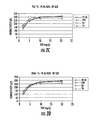
FIGS. 2A-2K illustrate graphs of embodiments of the charging of ink at differing levels of VCA and/or POAS added to the grinding process as a function of charge director concentration.FIGS. 2A-2F illustrate graphs of the VCA reference inks at differing charging levels as opposed to graphs of similar ink prepared with POAS.FIG. 2G-2I illustrate graphs comparing POAS and VCA at different concentrations.FIGS. 2J and2K are three-dimensional projections of the charging of ink ground with VCA and POAS -
FIGS. 3A-3D illustrate graphs of embodiments of the charging of ink at differing levels of POAS added post grinding as a function of time and at different charge director concentrations.FIG. 3A illustrates a graph of the reference ink without any charge adjuvant at differing charging levels.FIGS. 3B-3D illustrate graphs at different levels of POAS. -
FIGS. 4A-4D illustrate graphs of embodiments of the charging of ink at differing levels of POAS added post grinding as a function of time and at different charge director concentrations using different addition methods.FIG. 4a illustrates a graph of the reference ink where the charge adjuvant (POAS) is added first and followed by the charge director (delayed addition).FIG. 4B illustrates a graph of an ink where the CA and CD are added simultaneously (simultaneous addition).FIG. 4C illustrates a graph of ink where the CD is added prior to the charge adjuvant (reverse addition).FIG. 4D illustrates a summary graph comparing the different addition mechanisms of POAS. -
FIG. 5 illustrates a graph of the multi-step charging of embodiments of the charging ink at differing levels of POAS added post grinding as a function of time and at different charge director concentrations using different addition methods. In this embodiment, the charging ink was charged to three initial concentrations and then the charging ink was charged to a second concentration. -
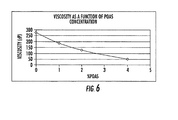
FIG. 6 illustrates a graph of the change in viscosity of embodiments of the charging ink as a function of the amount of POAS added to ink prepared with charge adjuvant. - Embodiments of the present disclosure will employ, unless otherwise indicated, techniques of synthetic organic chemistry, ink chemistry, media chemistry, printing chemistry, electrochemistry, polymer chemistry, chemistry of conducting compounds, and the like, that are within the skill of the art. Such techniques are explained fully in the literature.
- The following examples are put forth so as to provide those of ordinary skill in the art with a complete disclosure and description of how to perform the methods and use the compositions disclosed and claimed herein. Efforts have been made to ensure accuracy with respect to numbers (e.g., amounts, temperature, etc.) but some errors and deviations should be accounted for. Unless indicated otherwise, parts are parts by weight, temperature is in °C, and pressure is at or near atmospheric. Standard temperature and pressure are defined as 20°C and 1 atmosphere.
- Before the embodiments of the present disclosure are described in detail, it is to be understood that, unless otherwise indicated, the present disclosure is not limited to particular materials, reagents, reaction materials, manufacturing processes, or the like, as such can vary. It is also to be understood that the terminology used herein is for purposes of describing particular embodiments only, and is not intended to be limiting. It is also possible in the present disclosure that steps can be executed in different sequence where this is logically possible.
- It must be noted that, as used in the specification and the appended claims, the singular forms "a," "an," and "the" include plural referents unless the context clearly dictates otherwise. Thus, for example, reference to "a support" includes a plurality of supports. In this specification and in the claims that follow, reference will be made to a number of terms that shall be defined to have the following meanings unless a contrary intention is apparent.
- Embodiments of the present disclosure include ink toners including polyoxoaluminum stearate as the charge adjuvant, where the polymer replaces the use of aluminum stearate as the charge adjuvant. In addition, embodiments of the present disclosure include methods of making ink toners including a polymer of a polyoxoaluminium stearate as the charge adjuvant.
- Replacing aluminum stearate with the polymeric compound enables the user to tune the characteristics (e.g., physical and/or electrical characteristics) of the ink toner. In this regard, a concentration of polyoxoaluminum stearate can be used to chemically alter the viscosity and/or the electrical characteristics of the ink toner. Further, the concentration of the charge adjuvant that is used in the ink toner is lower when the polymer is used as the charge adjuvant, which reduces cost and complexity.
- In addition, the components of the ink toner can be mixed in the same manner or in a different order than previously conducted using aluminum stearate as the charge adjuvant. Typically, the charge adjuvant is added prior to grinding, but embodiments of the present disclosure provide for the former and adding polymer homogeneously to the ink toner after grinding. Additionally, the order in which the components of the ink toner are added can be changed.
- In an embodiment, the polyoxo aluminium stearate can be added prior to grinding. In this regard, a carrier liquid and a resin are mixed in a mixer (e.g., double planetary mixer and the like). Other components such as, but not limited to, the charge adjuvant, organic/inorganic pigments, surface modifiers, and additives, can be added to the slurry at this stage and/or during the next stage. Next, the slurry is added to a grinder (e.g., an attritor, a disk mill, a sand mill, an impeller attrition mill, a vibro-energy mill, or the like), and ground for a period of time to form the ink toner. Using the polymeric compound as the charge adjuvant produces an ink toner having characteristics (e.g., physical and/or electrical characteristics) comparable to or better than ink toners including aluminum stearate as the charge adjuvant. However, the use of polymeric compounds mixed homogeneously within the grinding mixture provides for better homogenation and for singular dispersal over the particle surface. In addition the compound is a single polymer species and as such provides much better batch repeatability than aluminum stearate, which comes as a mixture of four compounds and is heterogeneous in the grinding mixture, causing much greater batch differences. Additional results and discussion are provided in the Examples.
- In another embodiment, the polymeric compound can be added after grinding of components in the ink toner (e.g., the carrier liquid, the resin, and the like). Addition of the charge adjuvant after grinding allows the user to tune the characteristics of the ink toner for particular applications. The characteristics that can be tuned include, but are not limited to, viscosity, low field conductivity, high field conductivity, particle conductivity, particle size, particle mobility and combinations thereof. For example, the viscosity of the ink toner can be chemically modified (e.g., decreased) by changing the amount of charge adjuvant added to the ink toner.
- In another example, a larger concentration of the charge adjuvant can be added to an ink toner having lower quality (e.g., poor quality being defined as ink which develops a low particle conductivity in standard conditions that will exhibit itself in poor printing characteristics, low optical density, poor print quality, poor transfer of small dots, low solid consistence, poor fixing qualities, and the like), while a lower concentration of charge adjuvant can be added to an ink toner having a higher quality. In an embodiment, the amount of charge adjuvant used in the ink toner can be adjusted for the particular ink toner composition and/or use of the in ink toner in a particular developing apparatus. For example, the electrical characteristics of the ink toner can be tuned for a specific developing apparatus, since the electrical characteristics of each developing apparatus are unique. The ability to tune the ink toner enables the user to produce a superior printed product.
- It should also be noted that the polyoxo aluminium stearate could be added prior to the charge director, after the charge director, or simultaneously with the charge director. The addition of the charge director prior to the charge adjuvant and addition of the charge adjuvant and the charge director simultaneously could not be done when the charge adjuvant is aluminum stearate. The order in which the charge adjuvant and the charge director are added may be used to modify characteristics of the ink toner. The advantages of adding the charge director prior to the charge adjuvant or adding the charge adjuvant and the charge director simultaneously include greater freedom in tuning the electrical characteristics of the charged ink. By adding the charge adjuvant first followed by the charge director provides an addition method to tune the inks electrical characteristics to the level necessary for the particular application and control the amount of molecules of the family of the charge director which can have various other side effects, both positive and negative, on the ink and printing system. Simultaneous addition provides a production protocol that requires much less capital equipment and saves time and money. Additional results and discussion are provided in the Examples.
- As mentioned above, the ink toner includes, but is not limited to, a charge adjuvant, a carrier liquid, a resin, an organic/inorganic pigment, a charge director, a surface modifier, compatibility additives, charging additives, transfer additives, and other additives. As mentioned above, the charge adjuvant can be added to the mixture prior to grinding or after grinding. In addition, the charge adjuvant can be added before, after, or at the same time as the charge director. The physical and electrical characteristics are described in more detail after the components of the ink toner are described.
- The charge adjuvant is a polymer of a polyoxoaluminium stearate. The polymeric compound is soluble in carrier liquids, which permits the addition of the compound after grinding and allows a smaller amount of the polymeric organometallic compound to be added to the ink toner. The polymeric compound (e.g., 0 to about 50% weight %) is soluble in the carrier liquid.
- Exemplary embodiments include polyoxoaluminum stearate.
- The charge adjuvant is about 0 to 5% by total weight of the ink toner, 1 to 4% by total weight of the ink toner, and about 1.5 to 4% by total weight of the ink toner.
- The carrier liquid can include, but is not limited to, a low dielectric constant, nonpolar liquid that is used as the medium for toner particles. The carrier liquid can usually include compounds that have a resistivity in excess of about 109 ohm-cm and a dielectric constant below about 3.0, however, higher conductivities can be used as less preferred applications on presses or as working points in other applications. The carrier liquid can include, but is not limited to, hydrocarbons, halogenated hydrocarbons, cyclic hydrocarbons, functionalized hydrocarbons (where functionalized can include alcohols, acids, esters, ethers, sulfonic acids, sulfonic acid esters, and the like). The hydrocarbon can include, but is not limited to, an aliphatic hydrocarbon, an isomerized aliphatic hydrocarbon, branched chain aliphatic hydrocarbons, aromatic hydrocarbons, and combinations thereof.
- Illustrative carrier liquids include, but are not limited to, aliphatic hydrocarbon, isoparaffinic compounds, paraffinic compounds, dearomatized hydrocarbon compounds, and the like. In particular, the carrier liquids can include, but are not limited to, Isopar-G™, Isopar-H™, Isopar-L™, Isopar-M™, Isopar-K™, Isopar-V™,
Norpar 12™, Norpar 13™,Norpar 15™, Exxol D40TM, Exxol D80™, Exxol D100™, Exxol D130™, and Exxol D140™ (each sold by EXXON CORPORATION); Teclen N-16™, Teclen N-20™, Teclen N-22™, Nisseki Naphthesol L™, Nisseki Naphthesol M™ , Nisseki Naphthesol H™, #0 Solvent L™, #0 Solvent M™, #0 Solvent H™,Nisseki Isosol 300™,Nisseki Isosol 400™, AF-4™, AF-5™, AF-6™ and AF-7™ (each sold by NIPPON OIL CORPORATION); IP Solvent 1620™ and IP Solvent 2028™ (each sold by IDEMITSU PETROCHEMICAL CO., LTD.); Amsco OMS™ and Amsco 460™ (each sold by AMERICAN MINERAL SPIRITS CORP.); and electron, positron, new II, purogen HF (100% synthetic terpenes) (sold by ECOLINK). The carrier liquid is about 55 to 99% by total weight of the ink toner. - The resin can include, but is not limited to, thermoplastic toner resins. In particular, the resin can include, but is not limited to, ethylene acid copolymers; ethylene acrylic acid copolymers; methacrylic acid copolymers; ethylene vinyl acetate copolymers; copolymers of ethylene (80 to 99.9%), acrylic, or methacrylic acid (20 to 0.1 %)/alkyl (C1 to C5) ester of methacrylic or acrylic acid (0.1 to 20%); polyethylene; polystyrene; isotactic polypropylene (crystalline); ethylene ethyl acrylate; polyesters; polyvinyl toluene; polyamides; styrene/butadiene copolymers; epoxy resins; acrylic resins (e.g., copolymer of acrylic or methacrylic acid and at least one alkyl ester of acrylic or methacrylic acid wherein alkyl is from 1 to about 20 carbon atoms, like methyl methacrylate (50 to 90%)/methacryltic acid (0 to 20 percent/ethylhexylacrylate (10 to 50%)); ethylene-acrylate terpolymers: ethylene-acrylic esters-maleic anhydride (MAH) or glycidyl methacrylate (GMA) terpolymers; low molecular weight ethylene-acrylic acid ionomers and combinations thereof.
- In an embodiment, the resin can include the Nucrel family of resins (e.g., Nucrel 403™, Nucrel 407™ Nucrel 609HS™, Nucrel 908HS™, Nucrel 1202HC™, Nucrel 30707™, Nucrel 1214™, Nucrel 903™, Nucrel 3990™, Nucrel 910™, Nucrel 925™, Nucrel 699™, Nucrel 599™, Nucrel 960™, Nucrel RX 76™, Nucrel 2806™, Bynell 2002, Bynell 2014, and Bynell 2020 (sold by E. I. du PONT)), the Aclyn family of resins (e.g. Aaclyn 201, Aclyn 246, Aclyn 285, and Aclyn 295), and the Lotader family of resins (e.g. Lotader 2210, Lotader, 3430, and Lotader 8200 (sold by Arkema)). The resin is about 5% to 100% by total weight of the ink toner.
- The colorants can include, but are not limited to, cyan colorants, magenta colorants, yellow colorants, violet colorants, orange colorants, green colorants colorants, black colorants, and combinations thereof. Colorants used in conjunction with ElectroInk® based systems are known in the art. The pigment is about 0% to 80% by total weight of the ink toner.
- The charge director can include, but is not limited to, lecithin, oil-soluble petroleum sulfonates (e.g., neutral Calcium Petronate™, neutral Barium Petronate™, and basic Barium Petronate™), polybutylene succinimides (e.g., OLOA™ 1200 and Amoco 575), and glyceride salts (e.g., sodium salts of phosphated mono- and diglycerides with unsaturated and saturated acid substituents), sulfonic acid salts including, but not limited to, barium, sodium, calcium, and aluminum salts of sulfonic acid. The sulfonic acids may include, but are not limited to, alkyl sulfonic acids, aryl sulfonic acids, and sulfonic acids of alkyl succinates. In addition, the charge director as described in (
PCT/US2006/018297 filed on May 10, 2006 , which is incorporated herein by reference) can be used as well. The charge director is about 0.001 to 1% by total weight of the solid fraction of the ink toner. - The ink toner has a viscosity of about 50 to 2000 depending of ink particle morphology. The viscosity of the ink toner can be modified by changing the concentration of the charge adjuvant added to the ink toner. The viscosity change takes place while maintaining the original ink morphology. This can be benefit fixing qualities, usually obtainable, from lower viscosity inks, which are difficult to print. In addition, the production of ink at very low viscosities enables placing much higher concentrations in the ink cans, which has both a financial advantage and a technical advantage in that there are fewer limitations as to at what concentration the ink can be developed at.
- The ink toner has a low field conductivity of about 4 to >200. The low field conductivity of the ink toner can be modified by changing the concentration of the charge adjuvant added to the ink toner.
- The ink toner has a high field conductivity of about 10 to 500. The high field conductivity of the ink toner can be modified by changing the concentration of the charge adjuvant added to the ink toner. While embodiments of the present disclosure are described in connection with Examples 1-5 and the corresponding text and figures, there is no intent to limit the disclosure to the embodiments in these descriptions. On the contrary, the intent is to cover all alternatives, modifications, and equivalents included within the spirit and scope of embodiments of the present disclosure.
- Six inks (ink refers to ElectroInk 5.0 rev. 1.1 Cyan with the exception of the amount of charge adjuvant which will be specified for each ink prepared) with VCA and POAS at different levels of charge adjuvant, 1%, 2%, 4% were prepared by grinding in the 1S attritor according to the accepted practices. The ground ink was diluted to 2% and was charged by different amounts of SCD (SCD refers to SCD mark IV prepared in house): 2 mg/g, 5 mg/g, 10 mg/g and 20 mg/g solids, where NCD (NCD refers to NCD 4.0) was added as reference by an addition of about 40mg/g solids to obtain a low field conductivity of about 70pS.
- In the second part, ink without charge adjuvant was charged with SCD at 2, 5, 10, 20 mg/g, and NCD 40mg/g solids to 70 pS.
- The charged samples of ink were tested for low field conductivity (LFC), high field conductivity (HFC), and dc conductivity. Particle conductivity (PC) through time was calculated. Measurement data are summarized below in tables and
FIGS. 1A and2K :Table A 1-1: 2% VCA Time=1.25h Sample HFC(pS) dc(pS) LFC(pS) PC(pS) 2 191 1 11 180 5 268 2 16 252 10 332 3 27 305 20 375 4 54 321 NCD 198 8 73 125 Table A 1-2: 2% VCA Time=6h Sample HFC(pS) dc(pS) LFC(pS) PC(pS) 2 220 1 11 209 5 310 2 16 294 10 375 3 29 346 20 406 4 54 352 NCD 165 6 63 102 Table A 1-3: 2% VCA Time=24h Sample HFC(pS) dc(pS) LFC PC 2 214 1 10 204 5 326 2 14 312 10 396 3 24 372 20 437 5 49 388 NCD 200 8 52 148 Table A 1-4: 2% VCA Time=48.5h Sample HFC(pS) dc(pS) LFC(pS) PC(pS) 2 184 1 9 175 5 300 2 13 287 10 360 3 24 336 20 395 5 51 344 NCD 195 8 50 145 Table A 1-5: 2% POAS Time=1h Sample HFC(pS) dc(pS) LFC(pS) PC(pS) 2 165 0 10 155 5 249 1 17 232 10 297 2 31 266 20 328 4 65 263 NCD 165 6 76 89 Table A 1-6: 2% POAS Time=6h Sample HFC(pS) dc(pS) LFC(pS) PC(pS) 2 188 1 11 177 5 290 1 16 274 10 340 2 31 309 20 367 4 62 305 NCD 202 8 47 155 Table A 1-7: 2% POAS Time=24h Sample HFC(pS) dc(pS) LFC(pS) PC(pS) 2 189 I 9 180 5 315 1 14 301 10 364 3 25 339 20 418 5 52 366 NCD 169 6 50 119 Table A 1-8: 2% POAS Time=48.5h Sample HFC(pS) dc(pS) LFC(pS) PC(pS) 2 167 1 9 158 5 288 1 14 274 10 351 2 25 326 20 381 4 50 331 NCD 166 5 48 118 Table A 1-9 1%VCA Time=1h Sample HFC(pS) dc(pS) LFC(pS) PC(pS) 2 175 1 9 166 5 259 1 17 242 10 311 2 31 280 20 343 4 62 281 NCD 167 5 75 92 Table A 1-10: 1%VCA Time=6h Sample HFC(pS) dc(pS) LFC(pS) PC(pS) 2 182 1 10 172 5 283 2 17 266 10 332 3 30 302 20 367 5 58 309 NCD 163 5 66 97 Table A 1-11: 1% VCA Time=24h Sample HFC(pS) dc(pS) LFC(pS) PC(pS) 2 149 1 8 141 5 260 2 13 247 10 315 3 25 290 20 366 5 50 316 NCD 149 5 54 96 Table A 1-12: 1%VCA Time=49.5h Sample HFC(pS) dc(pS) LFC(pS) PC(pS) 2 130 1 7 123 5 259 1 12 247 10 316 3 23 293 20 356 4 46 310 NCD 152 5 52 100 Table A 1-13: 1%POAS Time=1h Sample HFC(pS) dc(pS) LFC(pS) PC(pS) 2 150 1 9 141 5 232 1 16 216 10 286 2 32 254 20 328 4 69 259 NCD 137 4 79 58 Table A 1-14: 1%POAS Time=6h Sample HFC(pS) dc(pS) LFC(pS) PC(pS) 2 151 1 9 142 5 248 1 16 232 10 303 2 33 270 20 356 4 66 290 NCD 133 4 67 66 Table A 1-15: 1%POAS Time=24h Sample HFC(pS) dc(pS) LFC(pS) PC(pS) 2 120 0 7 113 5 227 1 13 214 10 293 2 25 268 20 342 4 51 291 NCD 119 4 58 61 Table A 1-16: 1%POAS Time=49.5h Sample HFC(pS) dc(pS) LFC(pS) PC(pS) 2 109 0 6 103 5 226 1 12 214 10 302 2 23 279 20 340 4 56 284 NCD 118 4 58 60 Table A 1-17: 4%VCA Time=1.25h Sample HFC(pS) dc(pS) LFC(pS) PC(pS) 2 225 1 10 215 5 325 2 15 310 10 396 4 26 370 20 422 6 50 372 NCD 252 10 70 182 Table A 1-18: 4%VCA Time=6.25h Sample HFC(pS) dc(pS) LFC(pS) PC(pS) 2 210 1 11 199 5 317 2 14 303 10 397 4 22 375 20 424 6 35 389 NCD 248 10 55 193 Table A 1-19: 4%VCA Time= 24.25h Sample HFC(pS) dc(pS) LFC(pS) PC(pS) 2 202 1 9 193 5 335 2 13 322 10 398 3 21 377 20 439 6 35 404 NCD 233 9 49 198 Table A 1-20: 4%VCA Time=46.5 Sample HFC(pS) dc(pS) LFC(pS) PC(pS) 2 168 1 8 160 5 307 2 12 295 10 399 4 20 379 20 439 7 38 401 NCD 247 9 49 198 Table A 1-21: 4%POAS Time=1.25h Sample HFC(pS) dc(pS) LFC(pS) PC(pS) 2 186 1 10 176 5 304 2 16 288 10 345 3 29 316 20 391 5 58 333 NCD 237 8 71 166 Table A 1-22: 4%POAS Time=6.25h Sample HFC(pS) dc(pS) LFC(pS) PC(pS) 2 203 1 10 193 5 315 2 15 300 10 378 3 26 352 20 423 5 52 371 NCD 238 8 65 173 Table A 1-23: 4%POAS Time= 24.25h Sample HFC(pS) dc(pS) LFC(pS) PC(pS) 2 198 1 9 189 5 333 3 13 320 10 392 5 22 370 20 473 8 97 377 NCD 254 10 48 206 Table A 1-24: 4%POAS Time=46.5h Sample HFC(pS) dc(pS) LFC(pS) PC(pS) 2 201 1 9 192 5 348 2 12 336 10 421 3 20 401 20 453 6 40 413 NCD 238 8 52 186 - Long term measurements of a week after charging were conducted in order to determine the final electrical characteristics of the system. The table below summarizes the data of these measurements for the 6 Cyan inks for their different amounts of VCA and POAS. The PC of NCD samples is much smaller than that of SCD samples at long term. The trend observed for PC is also observed in the viscosity measurements where the viscosity difference between POAS and VCA increases. The particle size is about the same, although there is a slightly higher particle size in POAS as compared to VCA ink.
Table A 1-8: PC(Ps) LF(pS) dc(pS) HF(pS) POAS PC(pS) LF(pS) dc(pS) HF(pS) VCA SCD(mg/g) 110 6 4 116 1% 144 7 5 151 1% 2 221 12 1 233 236 12 1 248 5 288 25 2 313 316 23 2 339 10 332 53 4 385 362 48 5 410 20 58 54 4 112 92 53 5 145 NCD 134 8 1 142 2% 127 8 1 135 2% 2 251 13 1 264 260 13 2 273 5 331 23 3 354 332 22 3 354 10 355 44 5 399 373 38 5 411 20 120 55 5 175 125 73 8 198 NCD 210 9 1 219 4% 148 8 1 156 4% 2 391 12 2 403 322 12 2 334 5 463 22 4 485 426 17 4 443 10 463 46 7 509 465 39 7 504 20 199 55 8 254 213 52 9 265 NCD - In this example POAS is added homogeneously to ink prepared without charge adjuvant is compared to VCA is added to ink during grinding.
- The charging level was obtained by measuring HFC, dc, and LFC and the related particle conductivity of ink particles. The data of this charging is detailed in tables and
FIGS. 3A-3D .Table A 2-1: SCD charging without CA Time= 1h Sample HFC(pS) dc(pS) LFC(pS) PC(pS) 2 84 0 7 77 5 145 1 15 130 10 192 1 31 161 20 230 2 66 164 NCD 84 3 79 5 Table A 2-2: SCD charging without CA Time= 6h Sample HFC(pS) dc(pS) LFC(pS) PC(pS) 2 68 0 7 61 5 145 1 14 131 10 196 1 28 168 20 237 2 58 179 NCD 83 3 70 13 Table A 2-3: SCD charging without CA Time=2 5.5h Sample HFC(pS) dc(pS) LFC(pS) PC(pS) 2 52 0 6 46 5 145 1 14 131 10 200 1 27 173 20 254 2 55 199 NCD 70 2 58 12 Table A 2-4: SCD charging without CA Time= 49h Sample HFC(pS) dc(pS) LFC(pS) PC(pS) 2 664 0 6 58 5 164 1 13 151 10 226 1 25 201 20 265 2 52 213 NCD 81 2 52 29 - Alternative addition mechanisms for POAS
- In addition to normal addition, alternatively different addition ways were preformed:
- Simultaneous addition: Simultaneous addition of 2% POAS and SCD at 2, 5, 10, 20mg/g and NCD 40mg/g solids for having a LF of 70pS was done. Reverse addition: Ink was charged with charged SCD at 2, 5, 10, 20mg/g and NCD 40mg/g solids for having 70pS and incubated for a day. This was followed by the addition of 2% POAS. The result are summerised in
FIGS. 4A-4D . - Ink was prepared without charge adjuvant. To this ink POAS was added in a relative amount of 1%, 2%, 4%. These inks were charged with SCD in the amounts of 2, 5, 10, 20 mg/g solids and NCD to a LF of 70pS. The inks were tested for PC (
FIG. 5 ). In the second part a second addition of POAS of 0.5%, 1%, 2% was added to the inks inpart 1. In total 12 inks were prepared - Cyan 5.0 with 1% POAS.
- Cyan 5.0 with 2% POAS.
- Cyan 5.0 with 4% POAS
- Cyan 5.0 with 1% POAS + 0.5% of POAS.
- Cyan 5.0 with 1% POAS + 1% of POAS.
- Cyan 5.0 with 1% POAS + 2% of POAS.
- Cyan 5.0 with 2% POAS + 0.5% of POAS.
- Cyan 5.0 with 2% POAS + 1% of POAS.
- Cyan 5.0 with 2% POAS + 2% of POAS.
- Cyan 5.0 with 4% POAS + 0.5% of POAS.
- Cyan 5.0 with 4% POAS + 1% of POAS.
- Cyan 5.0 with 4% POAS + 2% of POAS.
-
Table C 2-1: PC(pS) LFC(pS) dc(pS) HFC(pS) Sample C 5.01%POAS+ 0.5% POAS 158 8 0 166 2 336 12 1 348 5 383 19 2 402 10 442 41 5 483 20 15 8 0 23 NCD Table C 2-2: PC(pS) LFC(pS) dc(pS) HFC(pS) Sample C 5.0 1%POAS+ 1% POAS 147 7 0 154 2 360 12 2 372 5 414 19 3 433 10 490 41 6 531 20 40 9 0 49 NCD Table C 2-3: PC(pS) LFC(pS) dc(pS) HFC(pS) Sample C 5.0 1%POAS+ 2% POAS 167 7 1 174 2 342 10 2 352 5 450 19 3 469 10 520 44 7 564 20 31 8 0 39 NCD Table C 2-4: PC(pS) LFC(pS) dc(pS) HFC(pS) Sample C 5.0 2%POAS+ 0.5% POAS 170 8 I 178 2 352 10 2 362 5 459 20 4 479 10 513 41 6 554 20 35 8 0 43 NCD Table C 2-5: PC(pS) LFC(pS) dc(pS) HFC(pS) Sample C 5.0 2%POAS+ 1 % POAS 170 7 1 177 2 395 12 2 407 5 470 19 4 489 10 531 41 7 572 20 31 8 0 39 NCD Table C 2-6: PC(pS) LFC(pS) dc(pS) HFC(pS) Sample C 5.0 2%POAS+ 2% POAS 162 8 1 170 2 341 11 2 352 5 465 19 4 484 10 539 41 7 580 20 39 9 0 48 NCD Table C 2-7: PC(pS) LFC(pS) dc(pS) HFC(pS) Sample C 5.0 4%POAS+ 0.5% POAS 160 8 1 168 2 365 11 2 376 5 463 17 4 480 10 520 41 7 561 20 29 9 0 38 NCD Table C 2-8: PC(pS) LFC(pS) dc(pS) HFC(pS) Sample C 5.0 4%POAS+ 1% POAS 151 8 0 159 2 359 14 2 373 5 447 20 4 467 10 512 38 7 550 20 17 8 0 25 NCD Table C 2-9: PC(pS) LFC(pS) dc(pS) HFC(pS) Sample C 5.0 4%POAS+ 2% POAS 140 11 1 151 2 334 20 2 354 5 447 31 5 478 10 518 44 7 562 20 23 9 0 32 NCD - Other physical properties such as viscosity and particle size were also measured. The reduction of viscosity as a function of POAS concentration did not produce a noticeable change in PS and possible change in particle morphology. The results and are given in the table below and
FIG. 6 .Table C_1-13: Particle size(µm) Viscositv(cPoise) Sample 7.077 275.6 Cyan 5.0(no CA) 7.511 185.1 Cyan 5.0(no CA)+1% POAS 6.509 125.1 Cyan 5.0(no CA)+2% POAS 7.159 49.5 Cyan 5.0(no CA)+4% POAS - It should be noted that ratios, concentrations, amounts, and other numerical data may be expressed herein in a range format. It is to be understood that such a range format is used for convenience and brevity, and thus, should be interpreted in a flexible manner to include not only the numerical values explicitly recited as the limits of the range, but also to include all the individual numerical values or sub-ranges encompassed within that range as if each numerical value and sub-range is explicitly recited. To illustrate, a concentration range of "about 0.1 % to about 5%" should be interpreted to include not only the explicitly recited concentration of about 0.1 wt% to about 5 wt%, but also include individual concentrations (e.g., 1%, 2%, 3%, and 4%) and the sub-ranges (e.g., 0.5%, 1.1%, 2.2%, 3.3%, and 4.4%) within the indicated range.
| Simultaneous addition of 2%POAS and SCD | Time= 1h | Sample | HFC(pS) | dc(pS) | LFC(pS) | PC(pS) |
| 2 | 95 | 0 | 29 | 66 | ||
| 5 | 259 | 1 | 57 | 202 | ||
| 10 | 332 | 3 | 143 | 189 | ||
| 20 | 357 | 5 | 66 | 291 | ||
| NCD | 157 | 4 | 89 | 68 |
| Simultaneous addition of 2% POAS and SCD | Time= 6h | Sample | HFC(pS) | dc(pS) | LFC(pS) | PC(pS) |
| 2 | 81 | 0 | 12 | 69 | ||
| 5 | 267 | 1 | 32 | 235 | ||
| 10 | 347 | 3 | 75 | 272 | ||
| 20 | 398 | 5 | 103 | 295 | ||
| NCD | 156 | 4 | 78 | 78 |
| Simultaneous addition of 2% POAS and SCD | Time= 25.5h | Sample | HFC(pS) | dc(pS) | LFC(pS) | PC(pS) |
| 2 | 99 | 0 | 10 | 89 | ||
| 5 | 326 | 1 | 21 | 305 | ||
| 10 | 410 | 3 | 58 | 352 | ||
| 20 | 445 | 4 | 81 | 364 | ||
| NCD | 168 | 3 | 67 | 101 |
| Simultaneous addition of 2% POAS and SCD | Time= 49h | Sample | HFC(pS) | dc(pS) | LFC(pS) | PC(pS) |
| 2 | 137 | 0 | 9 | 128 | ||
| 5 | 366 | 2 | 18 | 348 | ||
| 10 | 453 | 3 | 53 | 400 | ||
| 20 | 471 | 5 | 71 | 409 | ||
| NCD | 165 | 2 | 59 | 106 |
| PC results of reverse addition of POAS and SCD |
| Reverse addition of POAS and SCD | Time= 1h | Sample | HFC(pS) | dc(pS) | LFC(pS) | PC(pS) |
| 2 | 54 | 0 | 10 | 44 | ||
| 5 | 209 | 1 | 25 | 184 | ||
| 10 | 316 | 2 | 54 | 262 | ||
| 20 | 374 | 4 | 95 | 279 | ||
| NCD | 114 | 3 | 62 | 52 |
| Reverse addition of POAS and SCD | Time= 5h | Sample | HFC(pS) | dc(pS) | LFC(pS) | PC(pS) |
| 2 | 64 | 0 | 8 | 56 | ||
| 5 | 230 | 1 | 18 | 212 | ||
| 10 | 351 | 2 | 41 | 310 | ||
| 20 | 410 | 4 | 82 | 328 | ||
| NCD | 123 | 3 | 60 | 63 |
| Reverse addition of POAS and SCD | Time= 24h | Sample | HFC(pS) | dc(pS) | LFC(pS) | PC(pS) |
| 2 | 96 | 0 | 8 | 88 | ||
| 5 | 277 | 1 | 14 | 263 | ||
| 10 | 407 | 3 | 32 | 375 | ||
| 20 | 452 | 5 | 69 | 383 | ||
| NCD | 140 | 3 | 61 | 79 |
| Reverse addition of POAS and SCD | Time= 48h | Sample | HFC(pS) | dc(pS) | LFC(pS) | PC(pS) |
| 2 | 96 | 0 | 8 | 88 | ||
| 5 | 268 | 1 | 12 | 256 | ||
| 10 | 413 | 3 | 29 | 384 | ||
| 20 | 433 | 5 | 60 | 373 | ||
| NCD | 138 | 3 | 58 | 80 |
| Addition of 1 % POAS | Time= 1h | Sample | HFC(pS) | dc(pS) | LFC(pS) | PC(pS) |
| 2 | 138 | 0 | 8 | 130 | ||
| 5 | 256 | 1 | 14 | 242 | ||
| 10 | 335 | 2 | 29 | 306 | ||
| 20 | 393 | 3 | 67 | 326 | ||
| NCD | 154 | 3 | 79 | 75 |
| Addition of 1% POAS | Time= 6h | Sample | HFC(pS) | dc(pS) | LFC(pS) | PC(pS) |
| 2 | 151 | 0 | 8 | 143 | ||
| 5 | 273 | 1 | 14 | 259 | ||
| 10 | 369 | 2 | 27 | 342 | ||
| 20 | 425 | 4 | 59 | 366 | ||
| NCD | 163 | 3 | 74 | 89 |
| Addition of 1% POAS | Time=24h | Sample | HFC(pS) | dc(pS) | LFC(pS) | PC(pS) |
| 2 | 134 | 0 | 8 | 126 | ||
| 5 | 269 | 1 | 14 | 255 | ||
| 10 | 361 | 2 | 23 | 338 | ||
| 20 | 424 | 3 | 44 | 380 | ||
| NCD | 152 | 2 | 57 | 95 |
| Addition of 1% POAS | Time=48h | Sample | HFC(pS) | dc(pS) | LFC(pS) | PC(pS) |
| 2 | 132 | 0 | 8 | 124 | ||
| 5 | 289 | 1 | 13 | 276 | ||
| 10 | 375 | 2 | 23 | 352 | ||
| 20 | 414 | 4 | 50 | 364 | ||
| NCD | 148 | 3 | 54 | 94 |
| Addition of 2% POAS | Time= 1h | Sample | HFC(pS) | dc(pS) | LFC(pS) | PC(pS) |
| 2 | 160 | 0 | 8 | 152 | ||
| 5 | 340 | 2 | 13 | 327 | ||
| 10 | 396 | 2 | 26 | 370 | ||
| 20 | 469 | 5 | 60 | 409 | ||
| NCD | 203 | 3 | 79 | 124 |
| Addition of 2% POAS | Time= 6h | Sample | HFC(pS) | dc(pS) | LFC(pS) | PC(pS) |
| 2 | 166 | 0 | 9 | 157 | ||
| 5 | 326 | 1 | 13 | 313 | ||
| 10 | 423 | 3 | 24 | 399 | ||
| 20 | 499 | 5 | 54 | 445 | ||
| NCD | 206 | 3 | 75 | 131 |
| Addition of 2% POAS | Time=24h | Sample | HFC(pS) | dc(pS) | LFC(pS) | PC(pS) |
| 2 | 143 | 0 | 8 | 135 | ||
| 5 | 333 | 1 | 12 | 321 | ||
| 10 | 433 | 2 | 22 | 411 | ||
| 20 | 509 | 5 | 46 | 470 | ||
| NCD | 202 | 3 | 61 | 144 |
| Addition of 2% POAS | Time=48h | Sample | HFC(pS) | dc(pS) | LFC(pS) | PC(pS) |
| 2 | 152 | 0 | 8 | 144 | ||
| 5 | 348 | 1 | 12 | 336 | ||
| 10 | 446 | 3 | 22 | 424 | ||
| 20 | 495 | 5 | 46 | 449 | ||
| NCD | 198 | 3 | 61 | 137 |
| Addition of 4% POAS | Time= 1h | Sample | HFC(pS) | dc(pS) | LFC(pS) | PC(pS) |
| 2 | 189 | 1 | 9 | 180 | ||
| 5 | 339 | 2 | 14 | 325 | ||
| 10 | 436 | 3 | 26 | 410 | ||
| 20 | 515 | 6 | 58 | 457 | ||
| NCD | 232 | 4 | 81 | 151 |
| Addition of 4% POAS | Time= 6h | Sample | HFC(pS) | dc(pS) | LFC(pS) | PC(pS) |
| 2 | 180 | 0 | 10 | 170 | ||
| 5 | 357 | 2 | 16 | 341 | ||
| 10 | 461 | 3 | 27 | 434 | ||
| 20 | 539 | 6 | 57 | 482 | ||
| NCD | 230 | 4 | 76 | 154 |
| Addition of 4% POAS | Time=24h | Sample | HFC(pS) | dc(pS) | LFC(pS) | PC(pS) |
| 2 | 150 | 0 | 9 | 141 | ||
| 5 | 358 | 2 | 15 | 343 | ||
| 10 | 466 | 3 | 25 | 441 | ||
| 20 | 547 | 6 | 46 | 501 | ||
| NCD | 231 | 4 | 55 | 176 |
| Addition of 4% POAS | Time=48h | Sample | HFC(pS) | dc(pS) | LFC(pS) | PC(pS) |
| 2 | 152 | 0 | 9 | 143 | ||
| 5 | 367 | 2 | 15 | 352 | ||
| 10 | 483 | 4 | 26 | 457 | ||
| 20 | 542 | 6 | 48 | 494 | ||
| NCD | 225 | 3 | 63 | 162 |
Claims (7)
- An ink toner, comprising:a charge adjuvant, a carrier liquid, a resin, a pigment, and a charge director, wherein the charge adjuvant is a polymer of a polyoxoaluminum stearate, and wherein the ink toner does not include aluminum stearate.
- The ink toner of claim 1, wherein ink toner has a viscosity of about 50 to 3000 cP.
- A method of making an ink, comprising:grinding a carrier liquid, a resin, and a pigment, to form a slurry;
andmixing a charge adjuvant and a charge director with the ink slurry after grinding, wherein the charge adjuvant is a polymer of a polyoxoaluminum stearate, and wherein the ink toner does not include aluminum stearate. - The method of claim 3, wherein mixing includes: mixing the charge adjuvant with the slurry homogeneously prior to mixing the charge director with the slurry.
- The method of claim 3, wherein mixing includes: mixing the charge adjuvant and the charge director with the slurry simultaneously.
- The method of claim 3, mixing the charge director with the slurry homogeneously prior to mixing the charge adjuvant with the slurry.
- A method of changing the viscosity of an ink, comprising:changing the viscosity of an electrostatic ink by adding a charge adjuvant to an ink slurry, wherein the charge adjuvant is a polymer of a polyoxoaluminum stearate, and wherein the ink slurry does not include aluminum stearate.
Applications Claiming Priority (2)
| Application Number | Priority Date | Filing Date | Title |
|---|---|---|---|
| US11/651,279 US7951520B2 (en) | 2007-01-09 | 2007-01-09 | Polymeric charge adjuvants in electrostatic inks |
| PCT/US2007/088613 WO2008085707A1 (en) | 2007-01-09 | 2007-12-21 | Polymeric charge adjuvants in electrostatic inks |
Publications (3)
| Publication Number | Publication Date |
|---|---|
| EP2102712A1 EP2102712A1 (en) | 2009-09-23 |
| EP2102712A4 EP2102712A4 (en) | 2011-07-06 |
| EP2102712B1 true EP2102712B1 (en) | 2013-02-27 |
Family
ID=39593182
Family Applications (1)
| Application Number | Title | Priority Date | Filing Date |
|---|---|---|---|
| EP07869783A Not-in-force EP2102712B1 (en) | 2007-01-09 | 2007-12-21 | Polymeric charge adjuvants in electrostatic inks |
Country Status (4)
| Country | Link |
|---|---|
| US (1) | US7951520B2 (en) |
| EP (1) | EP2102712B1 (en) |
| TW (1) | TWI417350B (en) |
| WO (1) | WO2008085707A1 (en) |
Families Citing this family (6)
| Publication number | Priority date | Publication date | Assignee | Title |
|---|---|---|---|---|
| CN105068391B (en) * | 2008-11-05 | 2020-04-17 | 惠普开发有限公司 | Liquid electrophotographic inks with charge director systems |
| WO2010053480A1 (en) * | 2008-11-05 | 2010-05-14 | Hewlett-Packard Development Company, L.P. | Liquid electrophotographic ink with a charge director system |
| US20130038667A1 (en) * | 2009-09-25 | 2013-02-14 | Eyal Bachar | Ink Container |
| US9017802B2 (en) | 2011-03-11 | 2015-04-28 | Hewlett-Packard Indigo B.V. | Method for improving the durability of an ink printed on a substrate and substrate formed from such a method |
| CN103391978B (en) | 2011-03-30 | 2015-12-16 | 惠普深蓝有限责任公司 | Liquid toner composition |
| CN103518162B (en) * | 2011-03-30 | 2018-02-06 | 惠普印迪戈股份公司 | electrostatic ink composition |
Family Cites Families (6)
| Publication number | Priority date | Publication date | Assignee | Title |
|---|---|---|---|---|
| US5366840A (en) * | 1993-08-30 | 1994-11-22 | Xerox Corporation | Liquid developer compositions |
| US5451483A (en) * | 1994-06-30 | 1995-09-19 | Xerox Corporation | Liquid developer compositions |
| US5942365A (en) * | 1996-02-26 | 1999-08-24 | Xerox Corporation | Developer compositions and imaging processes |
| US6002893A (en) | 1998-01-08 | 1999-12-14 | Xerox Corporation | High and low pigment loadings for custom colors |
| US6376147B1 (en) * | 2000-11-27 | 2002-04-23 | Xerox Corporation | Method of producing liquid toner with metallic sheen |
| US7070900B2 (en) * | 2003-09-30 | 2006-07-04 | Samsung Electronics Company | Adjuvants for positively charged toners |
-
2007
- 2007-01-09 US US11/651,279 patent/US7951520B2/en not_active Expired - Fee Related
- 2007-12-21 WO PCT/US2007/088613 patent/WO2008085707A1/en not_active Ceased
- 2007-12-21 EP EP07869783A patent/EP2102712B1/en not_active Not-in-force
- 2007-12-24 TW TW096149727A patent/TWI417350B/en not_active IP Right Cessation
Also Published As
| Publication number | Publication date |
|---|---|
| TWI417350B (en) | 2013-12-01 |
| US7951520B2 (en) | 2011-05-31 |
| TW200840845A (en) | 2008-10-16 |
| EP2102712A4 (en) | 2011-07-06 |
| WO2008085707A1 (en) | 2008-07-17 |
| US20080163788A1 (en) | 2008-07-10 |
| EP2102712A1 (en) | 2009-09-23 |
Similar Documents
| Publication | Publication Date | Title |
|---|---|---|
| EP2102713B1 (en) | Charge adjuvants in electrostatic inks | |
| EP2804911B1 (en) | Electrostatic printing | |
| EP2691814B1 (en) | Electrostatic ink composition | |
| US7977023B2 (en) | Ink formulations and methods of making ink formulations | |
| EP2760946B1 (en) | An electrostatic ink composition | |
| US7951520B2 (en) | Polymeric charge adjuvants in electrostatic inks | |
| US9657189B2 (en) | Electrostatic inks and printing | |
| US8669034B2 (en) | Treated fluoropolymer particles, methods of making treated fluoropolymer particles, toner compositions, and methods of making toner compositions | |
| EP3174942B1 (en) | Liquid electrophotographic ink composition | |
| EP3174941B1 (en) | Liquid electrophotographic ink composition | |
| US20170205724A1 (en) | Electrostatic ink compositions | |
| US20160062258A1 (en) | Electrophotographic printing | |
| US10042278B2 (en) | Electrostatic ink compositions | |
| EP2922702B1 (en) | Methods of printing and electrostatic ink compositions | |
| CN110214165B (en) | Liquid electrophotographic ink |
Legal Events
| Date | Code | Title | Description |
|---|---|---|---|
| PUAI | Public reference made under article 153(3) epc to a published international application that has entered the european phase |
Free format text: ORIGINAL CODE: 0009012 |
|
| 17P | Request for examination filed |
Effective date: 20090716 |
|
| AK | Designated contracting states |
Kind code of ref document: A1 Designated state(s): AT BE BG CH CY CZ DE DK EE ES FI FR GB GR HU IE IS IT LI LT LU LV MC MT NL PL PT RO SE SI SK TR |
|
| DAX | Request for extension of the european patent (deleted) | ||
| A4 | Supplementary search report drawn up and despatched |
Effective date: 20110608 |
|
| GRAP | Despatch of communication of intention to grant a patent |
Free format text: ORIGINAL CODE: EPIDOSNIGR1 |
|
| GRAS | Grant fee paid |
Free format text: ORIGINAL CODE: EPIDOSNIGR3 |
|
| GRAA | (expected) grant |
Free format text: ORIGINAL CODE: 0009210 |
|
| AK | Designated contracting states |
Kind code of ref document: B1 Designated state(s): AT BE BG CH CY CZ DE DK EE ES FI FR GB GR HU IE IS IT LI LT LU LV MC MT NL PL PT RO SE SI SK TR |
|
| REG | Reference to a national code |
Ref country code: GB Ref legal event code: FG4D |
|
| REG | Reference to a national code |
Ref country code: CH Ref legal event code: EP |
|
| REG | Reference to a national code |
Ref country code: AT Ref legal event code: REF Ref document number: 598798 Country of ref document: AT Kind code of ref document: T Effective date: 20130315 |
|
| REG | Reference to a national code |
Ref country code: IE Ref legal event code: FG4D |
|
| REG | Reference to a national code |
Ref country code: DE Ref legal event code: R096 Ref document number: 602007028829 Country of ref document: DE Effective date: 20130425 |
|
| REG | Reference to a national code |
Ref country code: NL Ref legal event code: T3 |
|
| REG | Reference to a national code |
Ref country code: AT Ref legal event code: MK05 Ref document number: 598798 Country of ref document: AT Kind code of ref document: T Effective date: 20130227 |
|
| REG | Reference to a national code |
Ref country code: LT Ref legal event code: MG4D |
|
| PG25 | Lapsed in a contracting state [announced via postgrant information from national office to epo] |
Ref country code: ES Free format text: LAPSE BECAUSE OF FAILURE TO SUBMIT A TRANSLATION OF THE DESCRIPTION OR TO PAY THE FEE WITHIN THE PRESCRIBED TIME-LIMIT Effective date: 20130607 Ref country code: SE Free format text: LAPSE BECAUSE OF FAILURE TO SUBMIT A TRANSLATION OF THE DESCRIPTION OR TO PAY THE FEE WITHIN THE PRESCRIBED TIME-LIMIT Effective date: 20130227 Ref country code: LT Free format text: LAPSE BECAUSE OF FAILURE TO SUBMIT A TRANSLATION OF THE DESCRIPTION OR TO PAY THE FEE WITHIN THE PRESCRIBED TIME-LIMIT Effective date: 20130227 Ref country code: BG Free format text: LAPSE BECAUSE OF FAILURE TO SUBMIT A TRANSLATION OF THE DESCRIPTION OR TO PAY THE FEE WITHIN THE PRESCRIBED TIME-LIMIT Effective date: 20130527 Ref country code: IS Free format text: LAPSE BECAUSE OF FAILURE TO SUBMIT A TRANSLATION OF THE DESCRIPTION OR TO PAY THE FEE WITHIN THE PRESCRIBED TIME-LIMIT Effective date: 20130627 Ref country code: AT Free format text: LAPSE BECAUSE OF FAILURE TO SUBMIT A TRANSLATION OF THE DESCRIPTION OR TO PAY THE FEE WITHIN THE PRESCRIBED TIME-LIMIT Effective date: 20130227 |
|
| PG25 | Lapsed in a contracting state [announced via postgrant information from national office to epo] |
Ref country code: PT Free format text: LAPSE BECAUSE OF FAILURE TO SUBMIT A TRANSLATION OF THE DESCRIPTION OR TO PAY THE FEE WITHIN THE PRESCRIBED TIME-LIMIT Effective date: 20130627 Ref country code: PL Free format text: LAPSE BECAUSE OF FAILURE TO SUBMIT A TRANSLATION OF THE DESCRIPTION OR TO PAY THE FEE WITHIN THE PRESCRIBED TIME-LIMIT Effective date: 20130227 Ref country code: GR Free format text: LAPSE BECAUSE OF FAILURE TO SUBMIT A TRANSLATION OF THE DESCRIPTION OR TO PAY THE FEE WITHIN THE PRESCRIBED TIME-LIMIT Effective date: 20130528 Ref country code: BE Free format text: LAPSE BECAUSE OF FAILURE TO SUBMIT A TRANSLATION OF THE DESCRIPTION OR TO PAY THE FEE WITHIN THE PRESCRIBED TIME-LIMIT Effective date: 20130227 Ref country code: SI Free format text: LAPSE BECAUSE OF FAILURE TO SUBMIT A TRANSLATION OF THE DESCRIPTION OR TO PAY THE FEE WITHIN THE PRESCRIBED TIME-LIMIT Effective date: 20130227 Ref country code: LV Free format text: LAPSE BECAUSE OF FAILURE TO SUBMIT A TRANSLATION OF THE DESCRIPTION OR TO PAY THE FEE WITHIN THE PRESCRIBED TIME-LIMIT Effective date: 20130227 Ref country code: FI Free format text: LAPSE BECAUSE OF FAILURE TO SUBMIT A TRANSLATION OF THE DESCRIPTION OR TO PAY THE FEE WITHIN THE PRESCRIBED TIME-LIMIT Effective date: 20130227 |
|
| PG25 | Lapsed in a contracting state [announced via postgrant information from national office to epo] |
Ref country code: RO Free format text: LAPSE BECAUSE OF FAILURE TO SUBMIT A TRANSLATION OF THE DESCRIPTION OR TO PAY THE FEE WITHIN THE PRESCRIBED TIME-LIMIT Effective date: 20130227 Ref country code: EE Free format text: LAPSE BECAUSE OF FAILURE TO SUBMIT A TRANSLATION OF THE DESCRIPTION OR TO PAY THE FEE WITHIN THE PRESCRIBED TIME-LIMIT Effective date: 20130227 Ref country code: DK Free format text: LAPSE BECAUSE OF FAILURE TO SUBMIT A TRANSLATION OF THE DESCRIPTION OR TO PAY THE FEE WITHIN THE PRESCRIBED TIME-LIMIT Effective date: 20130227 Ref country code: CZ Free format text: LAPSE BECAUSE OF FAILURE TO SUBMIT A TRANSLATION OF THE DESCRIPTION OR TO PAY THE FEE WITHIN THE PRESCRIBED TIME-LIMIT Effective date: 20130227 Ref country code: SK Free format text: LAPSE BECAUSE OF FAILURE TO SUBMIT A TRANSLATION OF THE DESCRIPTION OR TO PAY THE FEE WITHIN THE PRESCRIBED TIME-LIMIT Effective date: 20130227 |
|
| PG25 | Lapsed in a contracting state [announced via postgrant information from national office to epo] |
Ref country code: CY Free format text: LAPSE BECAUSE OF FAILURE TO SUBMIT A TRANSLATION OF THE DESCRIPTION OR TO PAY THE FEE WITHIN THE PRESCRIBED TIME-LIMIT Effective date: 20130227 |
|
| PG25 | Lapsed in a contracting state [announced via postgrant information from national office to epo] |
Ref country code: IT Free format text: LAPSE BECAUSE OF FAILURE TO SUBMIT A TRANSLATION OF THE DESCRIPTION OR TO PAY THE FEE WITHIN THE PRESCRIBED TIME-LIMIT Effective date: 20130227 |
|
| PLBE | No opposition filed within time limit |
Free format text: ORIGINAL CODE: 0009261 |
|
| STAA | Information on the status of an ep patent application or granted ep patent |
Free format text: STATUS: NO OPPOSITION FILED WITHIN TIME LIMIT |
|
| 26N | No opposition filed |
Effective date: 20131128 |
|
| REG | Reference to a national code |
Ref country code: DE Ref legal event code: R097 Ref document number: 602007028829 Country of ref document: DE Effective date: 20131128 |
|
| REG | Reference to a national code |
Ref country code: CH Ref legal event code: PL |
|
| PG25 | Lapsed in a contracting state [announced via postgrant information from national office to epo] |
Ref country code: LU Free format text: LAPSE BECAUSE OF FAILURE TO SUBMIT A TRANSLATION OF THE DESCRIPTION OR TO PAY THE FEE WITHIN THE PRESCRIBED TIME-LIMIT Effective date: 20131221 Ref country code: MC Free format text: LAPSE BECAUSE OF FAILURE TO SUBMIT A TRANSLATION OF THE DESCRIPTION OR TO PAY THE FEE WITHIN THE PRESCRIBED TIME-LIMIT Effective date: 20130227 |
|
| REG | Reference to a national code |
Ref country code: IE Ref legal event code: MM4A |
|
| PG25 | Lapsed in a contracting state [announced via postgrant information from national office to epo] |
Ref country code: CH Free format text: LAPSE BECAUSE OF NON-PAYMENT OF DUE FEES Effective date: 20131231 Ref country code: IE Free format text: LAPSE BECAUSE OF NON-PAYMENT OF DUE FEES Effective date: 20131221 Ref country code: LI Free format text: LAPSE BECAUSE OF NON-PAYMENT OF DUE FEES Effective date: 20131231 |
|
| PG25 | Lapsed in a contracting state [announced via postgrant information from national office to epo] |
Ref country code: TR Free format text: LAPSE BECAUSE OF FAILURE TO SUBMIT A TRANSLATION OF THE DESCRIPTION OR TO PAY THE FEE WITHIN THE PRESCRIBED TIME-LIMIT Effective date: 20130227 |
|
| PG25 | Lapsed in a contracting state [announced via postgrant information from national office to epo] |
Ref country code: HU Free format text: LAPSE BECAUSE OF FAILURE TO SUBMIT A TRANSLATION OF THE DESCRIPTION OR TO PAY THE FEE WITHIN THE PRESCRIBED TIME-LIMIT; INVALID AB INITIO Effective date: 20071221 |
|
| PG25 | Lapsed in a contracting state [announced via postgrant information from national office to epo] |
Ref country code: MT Free format text: LAPSE BECAUSE OF FAILURE TO SUBMIT A TRANSLATION OF THE DESCRIPTION OR TO PAY THE FEE WITHIN THE PRESCRIBED TIME-LIMIT Effective date: 20130227 |
|
| REG | Reference to a national code |
Ref country code: FR Ref legal event code: PLFP Year of fee payment: 9 |
|
| PGFP | Annual fee paid to national office [announced via postgrant information from national office to epo] |
Ref country code: NL Payment date: 20151119 Year of fee payment: 9 |
|
| REG | Reference to a national code |
Ref country code: FR Ref legal event code: PLFP Year of fee payment: 10 |
|
| REG | Reference to a national code |
Ref country code: NL Ref legal event code: MM Effective date: 20170101 |
|
| PG25 | Lapsed in a contracting state [announced via postgrant information from national office to epo] |
Ref country code: NL Free format text: LAPSE BECAUSE OF NON-PAYMENT OF DUE FEES Effective date: 20170101 |
|
| REG | Reference to a national code |
Ref country code: FR Ref legal event code: PLFP Year of fee payment: 11 |
|
| PGFP | Annual fee paid to national office [announced via postgrant information from national office to epo] |
Ref country code: FR Payment date: 20191120 Year of fee payment: 13 |
|
| PGFP | Annual fee paid to national office [announced via postgrant information from national office to epo] |
Ref country code: GB Payment date: 20191122 Year of fee payment: 13 |
|
| GBPC | Gb: european patent ceased through non-payment of renewal fee |
Effective date: 20201221 |
|
| PG25 | Lapsed in a contracting state [announced via postgrant information from national office to epo] |
Ref country code: FR Free format text: LAPSE BECAUSE OF NON-PAYMENT OF DUE FEES Effective date: 20201231 |
|
| PG25 | Lapsed in a contracting state [announced via postgrant information from national office to epo] |
Ref country code: GB Free format text: LAPSE BECAUSE OF NON-PAYMENT OF DUE FEES Effective date: 20201221 |
|
| PGFP | Annual fee paid to national office [announced via postgrant information from national office to epo] |
Ref country code: DE Payment date: 20211117 Year of fee payment: 15 |
|
| REG | Reference to a national code |
Ref country code: DE Ref legal event code: R119 Ref document number: 602007028829 Country of ref document: DE |
|
| PG25 | Lapsed in a contracting state [announced via postgrant information from national office to epo] |
Ref country code: DE Free format text: LAPSE BECAUSE OF NON-PAYMENT OF DUE FEES Effective date: 20230701 |