EP2101489A2 - Informative and commercial utilization of televisions - Google Patents
Informative and commercial utilization of televisions Download PDFInfo
- Publication number
- EP2101489A2 EP2101489A2 EP09154370A EP09154370A EP2101489A2 EP 2101489 A2 EP2101489 A2 EP 2101489A2 EP 09154370 A EP09154370 A EP 09154370A EP 09154370 A EP09154370 A EP 09154370A EP 2101489 A2 EP2101489 A2 EP 2101489A2
- Authority
- EP
- European Patent Office
- Prior art keywords
- frame
- memory space
- text format
- screen
- background colour
- Prior art date
- Legal status (The legal status is an assumption and is not a legal conclusion. Google has not performed a legal analysis and makes no representation as to the accuracy of the status listed.)
- Ceased
Links
- 238000000034 method Methods 0.000 claims abstract description 23
- 238000004519 manufacturing process Methods 0.000 claims description 3
- 230000007704 transition Effects 0.000 description 7
- 230000009471 action Effects 0.000 description 4
- 230000008859 change Effects 0.000 description 4
- 238000005516 engineering process Methods 0.000 description 4
- 239000003086 colorant Substances 0.000 description 3
- 230000004048 modification Effects 0.000 description 3
- 238000012986 modification Methods 0.000 description 3
- 239000003973 paint Substances 0.000 description 2
- 238000003860 storage Methods 0.000 description 2
- 230000003247 decreasing effect Effects 0.000 description 1
- 238000011161 development Methods 0.000 description 1
- 230000018109 developmental process Effects 0.000 description 1
- 238000010586 diagram Methods 0.000 description 1
- 230000003993 interaction Effects 0.000 description 1
- 230000008569 process Effects 0.000 description 1
- 238000004904 shortening Methods 0.000 description 1
- 230000001960 triggered effect Effects 0.000 description 1
- 230000000007 visual effect Effects 0.000 description 1
Images
Classifications
-
- H—ELECTRICITY
- H04—ELECTRIC COMMUNICATION TECHNIQUE
- H04N—PICTORIAL COMMUNICATION, e.g. TELEVISION
- H04N21/00—Selective content distribution, e.g. interactive television or video on demand [VOD]
- H04N21/40—Client devices specifically adapted for the reception of or interaction with content, e.g. set-top-box [STB]; Operations thereof
- H04N21/43—Processing of content or additional data, e.g. demultiplexing additional data from a digital video stream; Elementary client operations, e.g. monitoring of home network or synchronising decoder's clock; Client middleware
- H04N21/438—Interfacing the downstream path of the transmission network originating from a server, e.g. retrieving encoded video stream packets from an IP network
- H04N21/4383—Accessing a communication channel
- H04N21/4384—Accessing a communication channel involving operations to reduce the access time, e.g. fast-tuning for reducing channel switching latency
-
- H—ELECTRICITY
- H04—ELECTRIC COMMUNICATION TECHNIQUE
- H04N—PICTORIAL COMMUNICATION, e.g. TELEVISION
- H04N21/00—Selective content distribution, e.g. interactive television or video on demand [VOD]
- H04N21/40—Client devices specifically adapted for the reception of or interaction with content, e.g. set-top-box [STB]; Operations thereof
- H04N21/41—Structure of client; Structure of client peripherals
- H04N21/426—Internal components of the client ; Characteristics thereof
Definitions
- This invention relates to a method for utilizing the time gaps arising during some applications, such as switching channels, turning-on and turning-off or during no signal situations, in a television system.
- JP2000041197 a method for shortening the time gap, that is caused when the channels are switched, and for attaining the smooth switching of channels is provided, by adding a storage unit to a TV receiver.
- This storage unit is used for storing the video still pictures on plural screens and displaying the stored images before the broadcasted images are actually outputted on screen in a channel switching mode.
- CN1463143 in process of changing TV station, a stable still image frame is displayed, so that the light ray in the environment is not changed and visual impaction is eliminated. Annoyance in the time for waiting the channel to be changed can be alleviated.
- the object of the present invention is to utilize the time gaps in television systems by providing a method which displays an image frame, text frame or frame set (previously stored in a memory) on the screen during these time gaps, after changing its colour or text format in order to put into a most suitable form for a smooth transition.
- Another object of the present invention is to provide the opportunity of storing any image frame, text frame or frame set (to be displayed on the screen during any time gap) to the user.
- a time period comes into being during switching channels or several applications (turn-on, turn-off). With the help of the developments in the technology, this time gap is reduced below 1.5 seconds in television systems. During this time period or during no signal situations, generally a black screen, a still frame or a frame sequence is shown as the background of image.
- the main idea of the present invention is to utilize the identification of the current text format and dominant colours on the screen and to use this knowledge to paint the screen with an identified text frame, image frame or frame set located in a memory location (which may be stored there previously during the production or remotely by any kind of method such as over IP, RF, digital connection or may be stored by the user).
- the previously stored text frames, image frames or frame sets are taken from the memory.
- these frames are modified and generated in a suitable colour and/or text format.
- Said frames or frame sets are modified in order to have the same or nearly the same colour and text format with said current screen's background.
- the text frame, frame set or image frame to be displayed on the screen not only can be stored in a memory but also it can be set or triggered by the broadcast or through a network. These frames can be previously loaded to the TV by the manufacturer, can be loaded by the user, or can be taken through a network connection, by a network connection card.
- the data (including the text frame, frame set, image frame to be displayed on the screen) is stored in a specific memory location and this location is checked when any one of the system turn-on, turn-off, channel change (or else) action is taken, or no signal situation is identified. If there exists a frame, or a frame set stored in this memory location, the system gets this data from the memory, modifies it and paints the screen with this modified data.
- the system periodically identifies the current screen's dominant picture color and text format, and stores this information into a second memory space.
- this information is taken from the second memory space, and by using this information the most suitable text, image or frame set is selected from the first memory, and modified according to the information taken from the second memory. For example if the current screen's dominant color is purple, the selected image frame, text frame or frame set will be painted to purple. This selection and modification can be done by a microcontroller.
- any frame or frame set to be displayed on the screen during the time gap is stored in a first memory space.
- An identification unit identifies the current screens dominant background color and text format and this information are stored in a second memory space. This identification procedure can be performed by using any of several known methods. Also for digital broadcasting the dominant background color and text format information can be taken in mpeg format and again stored in the second memory. This identification can be performed at the instant of any of the actions causing the time gap (such as when a channel change, turn-on, turn-off action is taken or a no-signal situation is occurred) is taken, or can be performed periodically.
- a processor activates necessary parts when a time gap is identified and, takes the text format and dominant background color information from the second memory space, selects a suitable frame or frame set from the first memory space, and modifies this selected frame or frame set according to the information taken from the first memory space; applies the modified frame or frame set to the screen, and replaces the applied frame or frame set when the time gap is finished, and applies the channel signal to the screen.
- the lastly updated background color and text format information can be used and the selected frame or frame set can be modified according to this information.
- This method provides an efficient utilization for the disturbing time gaps occurring in some applications such as channel change, turn-on and turn-off or no-signal situations and provides a smooth transition of colours and text format.
- Several technologies may be used to display a frame or frame set to the screen, for modifying the image or text frame to be displayed on the screen or to identify the current text format and colour.
Landscapes
- Engineering & Computer Science (AREA)
- Multimedia (AREA)
- Signal Processing (AREA)
- Studio Circuits (AREA)
- Controls And Circuits For Display Device (AREA)
- Testing, Inspecting, Measuring Of Stereoscopic Televisions And Televisions (AREA)
Abstract
Description
- This invention relates to a method for utilizing the time gaps arising during some applications, such as switching channels, turning-on and turning-off or during no signal situations, in a television system.
- In television technology, one of the main problems to be solved is the time gaps arising during some applications such as switching channels, turning-on and turning-off or during no signal situations. This time period is inevitable due to technological limitations. The blank frame being formed during this period can disturb the users because of sharp colour transits.
- In the prior art, there are several applications developed for decreasing the time gap arising when channels are switched. Also some applications are developed such as displaying a most familiar image stored in a memory on the screen, for providing a smooth view transition, and a less human eye interaction during these time gaps. (Such as if a football match is on the screen, in channel switching period the screen will be painted to a stored frame in the memory which most resembles to green)
- In
JP2000041197 - In
CN1463143 , in process of changing TV station, a stable still image frame is displayed, so that the light ray in the environment is not changed and visual impaction is eliminated. Annoyance in the time for waiting the channel to be changed can be alleviated. - Current technologies can handle the situations where no signal is available in the channel frequency. In this situation, user or video recorder is informed by a message or a test pattern to signify and handle the no signal situation. During this gap usually a black screen is painted. Some of the methods in the prior art are aiming to shorten the transition time. The others are aiming to employ the time gap, with a still image. In these methods, generally a previously stored image is displayed on the screen during the transition, directly without any modification. Generally the most suitable image is chosen from the memory, which has the nearest colour with the current screen background, in order to provide a smooth transition. Since these images are not adaptively used, but directly chosen and displayed, the colour alternatives are limited with the colours of those images previously stored. So that, these methods can not provide a perfect smooth transition unless there exists images for any colour possibility in the memory, which also necessitates a large memory space for this application.
- The object of the present invention is to utilize the time gaps in television systems by providing a method which displays an image frame, text frame or frame set (previously stored in a memory) on the screen during these time gaps, after changing its colour or text format in order to put into a most suitable form for a smooth transition.
- Another object of the present invention is to provide the opportunity of storing any image frame, text frame or frame set (to be displayed on the screen during any time gap) to the user.
-
-
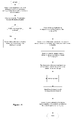
Figure 1 : Block diagram of one embodiment of the present method. - Due to some limitations in tuner, main board architecture, ICs or else, a time period comes into being during switching channels or several applications (turn-on, turn-off). With the help of the developments in the technology, this time gap is reduced below 1.5 seconds in television systems. During this time period or during no signal situations, generally a black screen, a still frame or a frame sequence is shown as the background of image.
- The main idea of the present invention is to utilize the identification of the current text format and dominant colours on the screen and to use this knowledge to paint the screen with an identified text frame, image frame or frame set located in a memory location (which may be stored there previously during the production or remotely by any kind of method such as over IP, RF, digital connection or may be stored by the user).
- The previously stored text frames, image frames or frame sets are taken from the memory. By using the dominant colour and text format information, these frames are modified and generated in a suitable colour and/or text format. Said frames or frame sets are modified in order to have the same or nearly the same colour and text format with said current screen's background. As a result of this solution an effective use of these time gaps is provided.
- The text frame, frame set or image frame to be displayed on the screen not only can be stored in a memory but also it can be set or triggered by the broadcast or through a network. These frames can be previously loaded to the TV by the manufacturer, can be loaded by the user, or can be taken through a network connection, by a network connection card.
- The data (including the text frame, frame set, image frame to be displayed on the screen) is stored in a specific memory location and this location is checked when any one of the system turn-on, turn-off, channel change (or else) action is taken, or no signal situation is identified. If there exists a frame, or a frame set stored in this memory location, the system gets this data from the memory, modifies it and paints the screen with this modified data.
- In an embodiment of the invention, there exists more than one still frame (text or image) or frame set in the memory, or uploaded from the network; and the system has the chance to select any one of them. The system periodically identifies the current screen's dominant picture color and text format, and stores this information into a second memory space. When a channel change, turn-on, turn-off action is taken or no signal situation is identified, firstly this information is taken from the second memory space, and by using this information the most suitable text, image or frame set is selected from the first memory, and modified according to the information taken from the second memory. For example if the current screen's dominant color is purple, the selected image frame, text frame or frame set will be painted to purple. This selection and modification can be done by a microcontroller.
- Since the current color and text format of the screen is identified and taken as the basis for the modification of the image or text frame (or frame set) to be displayed, different alternatives from the first memory can be used.
- In digital broadcasting the color variation, dominant background color and text format information is given to the system in mpeg format, so in another embodiment of the invention this necessary information can be obtained directly from the broadcasting signal.
- In another embodiment of the invention, any frame or frame set to be displayed on the screen during the time gap is stored in a first memory space. An identification unit identifies the current screens dominant background color and text format and this information are stored in a second memory space. This identification procedure can be performed by using any of several known methods. Also for digital broadcasting the dominant background color and text format information can be taken in mpeg format and again stored in the second memory. This identification can be performed at the instant of any of the actions causing the time gap (such as when a channel change, turn-on, turn-off action is taken or a no-signal situation is occurred) is taken, or can be performed periodically. For the systems performing the identification of the background color and text format periodically, information in the second memory can be updated, and for necessary conditions the lastly updated information can be used. A processor activates necessary parts when a time gap is identified and, takes the text format and dominant background color information from the second memory space, selects a suitable frame or frame set from the first memory space, and modifies this selected frame or frame set according to the information taken from the first memory space; applies the modified frame or frame set to the screen, and replaces the applied frame or frame set when the time gap is finished, and applies the channel signal to the screen. For the time gaps arising when the system is turned-on, the lastly updated background color and text format information can be used and the selected frame or frame set can be modified according to this information.
- This method provides an efficient utilization for the disturbing time gaps occurring in some applications such as channel change, turn-on and turn-off or no-signal situations and provides a smooth transition of colours and text format. Several technologies may be used to display a frame or frame set to the screen, for modifying the image or text frame to be displayed on the screen or to identify the current text format and colour.
Claims (18)
- A method for utilizing the time gaps arising during some applications such as switching channels, turning-on and turning-off or during no signal situations in a television system comprising the steps of; storing at least one image frame, text frame or frame set in a first memory space, identifying the current screen's background colour and text format information, characterized by further comprising the steps of:- storing the identified background colour and text format information into a second memory space- taking a frame or frame set from the first memory space- taking the background colour and text format information from the second memory space- modifying the frame or frame set according to said background colour and text format information- when a time gap starts, displaying the modified frame or frame set on the screen- removing the frame or frame set and displaying the broadcasting signal on the screen when the time gap finishes
- A method for utilizing the time gaps arising during some applications such as switching channels, turning-on and turning-off or during no signal situations in a television system comprising the steps of; storing at least one image frame, text frame or frame set in a first memory space, identifying the current screen's background colour and text format information, characterized by further comprising the steps of:- taking a frame or frame set from the first memory space- modifying the frame or frame set according to said background colour and text format information- when a time gap starts, displaying the modified frame or frame set on the screen- removing the frame or frame set and displaying the broadcasting signal on the screen when the time gap finishes
- A method according to claim 1 or 2 wherein, said frames or frame sets are loaded to the first memory space by the manufacturer during the production.
- A method according to claim 1 or 2 wherein, said frames or frame sets are loaded to the first memory space by the user.
- A method according to claim 1 or 2 wherein, said frames or frame sets are loaded to the first memory space remotely through a network connection.
- A method according to claim 1 or 2 wherein, said frames or frame sets are modified in order to have the same or nearly the same colour and text format with said current screen's background.
- A method according to claim 1 wherein, said current screen's background colour and text format is periodically identified and the information in the second memory space is updated.
- A method according to claim 1 or 2 wherein, said current screen's background colour and text format is identified when a time gap is occurred.
- A method according to claim 1 wherein, said current screen's background colour and text format information are obtained directly from the broadcasting signal.
- A television system for utilizing the time gaps arising during some applications such as switching channels, turning-on and turning-off or during no signal situations comprising a first memory space for storing image frames, text frames or frame sets and a unit for identifying the current screen's background colour and text format information characterized by further comprising:- a second memory space for storing the identified background colour and text format information- a processor for:○ taking a frame or frame set from the first memory space○ taking the background colour and text format information from the second memory space○ modifying the frame or frame set according to said background colour and text format information○ when a time gap starts, displaying the modified frame or frame set on the screen○ removing the frame or frame set and applying the broadcasting signal to the screen when the time gap finishes
- A television system for utilizing the time gaps arising during some applications such as switching channels, turning-on and turning-off or during no signal situations comprising a first memory space for storing image frames, text frames or frame sets and a unit for identifying the current screen's background colour and text format information characterized by further comprising:- a processor for:○ taking a frame or frame set from the first memory space○ modifying the frame or frame set according to said background colour and text format information○ when a time gap starts, displaying the modified frame or frame set on the screen○ removing the frame or frame set and displaying the broadcasting signal on the screen when the time gap finishes
- A system according to claim 10 or 11 wherein, said frames or frame sets are loaded to the first memory space by the manufacturer during the production.
- A system according to claim 10 or 11 wherein, said frames or frame sets are loaded to the first memory space by the user.
- A system according to claim 10 or 11 wherein, said frames or frame sets are loaded to the first memory space remotely through a network connection.
- A system according to claim 10 or 11 wherein, said frames or frame sets are modified in order to have the same or nearly the same colour and text format with said current screen's background.
- A system according to claim 10 wherein, said current screen's background colour and text format is periodically identified and the information in the second memory space is updated.
- A system according to claim 10 or 11 wherein, said current screen's background colour and text format is identified when a time gap is occurred.
- A system according to claim 10 wherein, said current screen's background colour and text format information are obtained directly from the broadcasting signal.
Applications Claiming Priority (1)
| Application Number | Priority Date | Filing Date | Title |
|---|---|---|---|
| TR2008/01597A TR200801597A2 (en) | 2008-03-11 | 2008-03-11 | Use of television as information and advertising transmitter. |
Publications (2)
| Publication Number | Publication Date |
|---|---|
| EP2101489A2 true EP2101489A2 (en) | 2009-09-16 |
| EP2101489A3 EP2101489A3 (en) | 2010-03-10 |
Family
ID=40791158
Family Applications (1)
| Application Number | Title | Priority Date | Filing Date |
|---|---|---|---|
| EP09154370A Ceased EP2101489A3 (en) | 2008-03-11 | 2009-03-05 | Informative and commercial utilization of televisions |
Country Status (2)
| Country | Link |
|---|---|
| EP (1) | EP2101489A3 (en) |
| TR (1) | TR200801597A2 (en) |
Citations (2)
| Publication number | Priority date | Publication date | Assignee | Title |
|---|---|---|---|---|
| JP2000041197A (en) | 1998-07-24 | 2000-02-08 | Matsushita Electric Ind Co Ltd | Television receiver |
| CN1463143A (en) | 2003-06-02 | 2003-12-24 | 海信集团有限公司 | Processing method of changing channels in still TV screen |
Family Cites Families (6)
| Publication number | Priority date | Publication date | Assignee | Title |
|---|---|---|---|---|
| JP3631123B2 (en) * | 2000-10-03 | 2005-03-23 | 三洋電機株式会社 | Digital broadcast receiver |
| EP1694071A1 (en) * | 2005-02-11 | 2006-08-23 | Vemotion Limited | Interactive video applications |
| JP5058462B2 (en) * | 2005-07-28 | 2012-10-24 | 京セラ株式会社 | Display device and display control method |
| KR100736935B1 (en) * | 2005-09-08 | 2007-07-10 | 삼성전자주식회사 | Video mute screen display using graphic processing and method |
| KR20070102162A (en) * | 2006-04-14 | 2007-10-18 | 삼성전자주식회사 | How to change the background color of your mobile device |
| KR20080000314A (en) * | 2006-06-27 | 2008-01-02 | 주식회사 대우일렉트로닉스 | No Signal Backdrop Display |
-
2008
- 2008-03-11 TR TR2008/01597A patent/TR200801597A2/en unknown
-
2009
- 2009-03-05 EP EP09154370A patent/EP2101489A3/en not_active Ceased
Patent Citations (2)
| Publication number | Priority date | Publication date | Assignee | Title |
|---|---|---|---|---|
| JP2000041197A (en) | 1998-07-24 | 2000-02-08 | Matsushita Electric Ind Co Ltd | Television receiver |
| CN1463143A (en) | 2003-06-02 | 2003-12-24 | 海信集团有限公司 | Processing method of changing channels in still TV screen |
Also Published As
| Publication number | Publication date |
|---|---|
| EP2101489A3 (en) | 2010-03-10 |
| TR200801597A2 (en) | 2009-10-21 |
Similar Documents
| Publication | Publication Date | Title |
|---|---|---|
| KR100526740B1 (en) | A system and method for controlling video level by region and content of information displayed | |
| US7250978B2 (en) | Multi-vision system and method of controlling the same | |
| US20100134633A1 (en) | Method and apparatus for transitioning from a first display format to a second display format | |
| EP2317757B1 (en) | Image processing apparatus, image processing method, program and storage medium | |
| JP2006141030A (en) | Method for providing information during channel change in digital broadcast receiver | |
| US20040165113A1 (en) | Apparatus and method for adjusting screen | |
| JP6965051B2 (en) | Electronic devices and display methods | |
| US20100066661A1 (en) | Liquid crystal panel, video display device, and video display method | |
| EP1267573B1 (en) | Television system with electronic programme guide | |
| US8428430B2 (en) | Image processing system, image processing method, and program | |
| US20110261255A1 (en) | Video display control device, video display device, and recording medium having video display program recorded thereon | |
| EP1600005B2 (en) | Processing signals for a color sequential display | |
| US20110157211A1 (en) | Display control device and display control method | |
| US20130229575A1 (en) | Digital TV Data Processing Method and System Thereof | |
| US20090219443A1 (en) | Video signal processing apparatus, and digital television broadcast receiver controlling method | |
| KR101441689B1 (en) | Apparatus and method for removing afterimage from a video display device | |
| JP2003323168A (en) | Projector device | |
| US20140375675A1 (en) | Image output apparatus and display device | |
| EP1389872A1 (en) | Method and apparatus for combining video signals | |
| JP2000341623A (en) | Auxiliary display method and device for character images on TV monitor | |
| EP3780639A1 (en) | System and method for displaying electronic program guide data | |
| KR20040079101A (en) | Apparatus for processing video and audio information of TV system | |
| JP2017156366A (en) | Image projection device | |
| KR101606280B1 (en) | Display, control method thereof, recording medium for recording program for executing the control method, application saved in the recording medium for executing the control method being combined with hardware | |
| US20060232703A1 (en) | Picture display device |
Legal Events
| Date | Code | Title | Description |
|---|---|---|---|
| PUAI | Public reference made under article 153(3) epc to a published international application that has entered the european phase |
Free format text: ORIGINAL CODE: 0009012 |
|
| AK | Designated contracting states |
Kind code of ref document: A2 Designated state(s): AT BE BG CH CY CZ DE DK EE ES FI FR GB GR HR HU IE IS IT LI LT LU LV MC MK MT NL NO PL PT RO SE SI SK TR |
|
| AX | Request for extension of the european patent |
Extension state: AL BA RS |
|
| PUAL | Search report despatched |
Free format text: ORIGINAL CODE: 0009013 |
|
| AK | Designated contracting states |
Kind code of ref document: A3 Designated state(s): AT BE BG CH CY CZ DE DK EE ES FI FR GB GR HR HU IE IS IT LI LT LU LV MC MK MT NL NO PL PT RO SE SI SK TR |
|
| AX | Request for extension of the european patent |
Extension state: AL BA RS |
|
| 17P | Request for examination filed |
Effective date: 20100827 |
|
| AKX | Designation fees paid |
Designated state(s): AT BE BG CH CY CZ DE DK EE ES FI FR GB GR HR HU IE IS IT LI LT LU LV MC MK MT NL NO PL PT RO SE SI SK TR |
|
| 17Q | First examination report despatched |
Effective date: 20111028 |
|
| STAA | Information on the status of an ep patent application or granted ep patent |
Free format text: STATUS: THE APPLICATION HAS BEEN REFUSED |
|
| 18R | Application refused |
Effective date: 20011030 |
|
| R18R | Application refused (corrected) |
Effective date: 20121030 |