EP2098506B1 - Production of lactams by ammoximation of cyclic ketones - Google Patents
Production of lactams by ammoximation of cyclic ketones Download PDFInfo
- Publication number
- EP2098506B1 EP2098506B1 EP08003291A EP08003291A EP2098506B1 EP 2098506 B1 EP2098506 B1 EP 2098506B1 EP 08003291 A EP08003291 A EP 08003291A EP 08003291 A EP08003291 A EP 08003291A EP 2098506 B1 EP2098506 B1 EP 2098506B1
- Authority
- EP
- European Patent Office
- Prior art keywords
- reaction
- carried out
- catalyst
- reactor
- ammonia
- Prior art date
- Legal status (The legal status is an assumption and is not a legal conclusion. Google has not performed a legal analysis and makes no representation as to the accuracy of the status listed.)
- Not-in-force
Links
- 150000003997 cyclic ketones Chemical class 0.000 title claims description 10
- 150000003951 lactams Chemical class 0.000 title description 3
- 238000004519 manufacturing process Methods 0.000 title description 2
- 239000003054 catalyst Substances 0.000 claims abstract description 55
- QGZKDVFQNNGYKY-UHFFFAOYSA-N Ammonia Chemical compound N QGZKDVFQNNGYKY-UHFFFAOYSA-N 0.000 claims abstract description 37
- MHAJPDPJQMAIIY-UHFFFAOYSA-N Hydrogen peroxide Chemical compound OO MHAJPDPJQMAIIY-UHFFFAOYSA-N 0.000 claims abstract description 31
- 229910021529 ammonia Inorganic materials 0.000 claims abstract description 15
- 239000000463 material Substances 0.000 claims abstract description 14
- 239000007791 liquid phase Substances 0.000 claims abstract description 9
- 239000002808 molecular sieve Substances 0.000 claims abstract description 6
- URGAHOPLAPQHLN-UHFFFAOYSA-N sodium aluminosilicate Chemical compound [Na+].[Al+3].[O-][Si]([O-])=O.[O-][Si]([O-])=O URGAHOPLAPQHLN-UHFFFAOYSA-N 0.000 claims abstract description 6
- 238000006243 chemical reaction Methods 0.000 claims description 65
- 238000000034 method Methods 0.000 claims description 40
- 238000003756 stirring Methods 0.000 claims description 21
- 239000000203 mixture Substances 0.000 claims description 15
- LFQSCWFLJHTTHZ-UHFFFAOYSA-N Ethanol Chemical compound CCO LFQSCWFLJHTTHZ-UHFFFAOYSA-N 0.000 claims description 14
- 239000002904 solvent Substances 0.000 claims description 14
- 125000004432 carbon atom Chemical group C* 0.000 claims description 8
- 230000001590 oxidative effect Effects 0.000 claims description 8
- XLYOFNOQVPJJNP-UHFFFAOYSA-N water Substances O XLYOFNOQVPJJNP-UHFFFAOYSA-N 0.000 claims description 8
- 239000007864 aqueous solution Substances 0.000 claims description 7
- WEVYAHXRMPXWCK-UHFFFAOYSA-N Acetonitrile Chemical compound CC#N WEVYAHXRMPXWCK-UHFFFAOYSA-N 0.000 claims description 6
- OKKJLVBELUTLKV-UHFFFAOYSA-N Methanol Chemical compound OC OKKJLVBELUTLKV-UHFFFAOYSA-N 0.000 claims description 6
- 239000002638 heterogeneous catalyst Substances 0.000 claims description 6
- 239000007800 oxidant agent Substances 0.000 claims description 6
- 229910001868 water Inorganic materials 0.000 claims description 6
- CSCPPACGZOOCGX-UHFFFAOYSA-N Acetone Chemical compound CC(C)=O CSCPPACGZOOCGX-UHFFFAOYSA-N 0.000 claims description 4
- LRHPLDYGYMQRHN-UHFFFAOYSA-N N-Butanol Chemical compound CCCCO LRHPLDYGYMQRHN-UHFFFAOYSA-N 0.000 claims description 4
- DKGAVHZHDRPRBM-UHFFFAOYSA-N Tert-Butanol Chemical compound CC(C)(C)O DKGAVHZHDRPRBM-UHFFFAOYSA-N 0.000 claims description 4
- 239000011521 glass Substances 0.000 claims description 4
- BDERNNFJNOPAEC-UHFFFAOYSA-N propan-1-ol Chemical compound CCCO BDERNNFJNOPAEC-UHFFFAOYSA-N 0.000 claims description 4
- 229910052796 boron Inorganic materials 0.000 claims description 3
- -1 cyclic lactam Chemical class 0.000 claims description 3
- 125000005842 heteroatom Chemical group 0.000 claims description 3
- 239000001257 hydrogen Substances 0.000 claims description 3
- 229910052739 hydrogen Inorganic materials 0.000 claims description 3
- 125000004435 hydrogen atom Chemical class [H]* 0.000 claims description 3
- 238000011069 regeneration method Methods 0.000 claims description 3
- 229910001220 stainless steel Inorganic materials 0.000 claims description 3
- 239000010935 stainless steel Substances 0.000 claims description 3
- 229910052719 titanium Inorganic materials 0.000 claims description 3
- 125000004400 (C1-C12) alkyl group Chemical group 0.000 claims description 2
- KFZMGEQAYNKOFK-UHFFFAOYSA-N Isopropanol Chemical compound CC(C)O KFZMGEQAYNKOFK-UHFFFAOYSA-N 0.000 claims description 2
- 150000001298 alcohols Chemical class 0.000 claims description 2
- 125000003342 alkenyl group Chemical group 0.000 claims description 2
- 125000006193 alkinyl group Chemical group 0.000 claims description 2
- 229910052782 aluminium Inorganic materials 0.000 claims description 2
- 125000003118 aryl group Chemical group 0.000 claims description 2
- QVGXLLKOCUKJST-UHFFFAOYSA-N atomic oxygen Chemical compound [O] QVGXLLKOCUKJST-UHFFFAOYSA-N 0.000 claims description 2
- BTANRVKWQNVYAZ-UHFFFAOYSA-N butan-2-ol Chemical compound CCC(C)O BTANRVKWQNVYAZ-UHFFFAOYSA-N 0.000 claims description 2
- 229910052802 copper Inorganic materials 0.000 claims description 2
- 229910052733 gallium Inorganic materials 0.000 claims description 2
- 229910052732 germanium Inorganic materials 0.000 claims description 2
- 229910052742 iron Inorganic materials 0.000 claims description 2
- 229910052748 manganese Inorganic materials 0.000 claims description 2
- 229910052750 molybdenum Inorganic materials 0.000 claims description 2
- 229910052758 niobium Inorganic materials 0.000 claims description 2
- 239000001301 oxygen Substances 0.000 claims description 2
- 229910052760 oxygen Inorganic materials 0.000 claims description 2
- 238000004064 recycling Methods 0.000 claims description 2
- 230000008929 regeneration Effects 0.000 claims description 2
- 229910052710 silicon Inorganic materials 0.000 claims description 2
- 229910052718 tin Inorganic materials 0.000 claims description 2
- 229910052723 transition metal Inorganic materials 0.000 claims description 2
- 150000003624 transition metals Chemical class 0.000 claims description 2
- 229910052720 vanadium Inorganic materials 0.000 claims description 2
- 238000005406 washing Methods 0.000 claims 1
- JHIVVAPYMSGYDF-UHFFFAOYSA-N cyclohexanone Chemical compound O=C1CCCCC1 JHIVVAPYMSGYDF-UHFFFAOYSA-N 0.000 abstract description 54
- JBKVHLHDHHXQEQ-UHFFFAOYSA-N epsilon-caprolactam Chemical compound O=C1CCCCCN1 JBKVHLHDHHXQEQ-UHFFFAOYSA-N 0.000 abstract description 50
- 230000015572 biosynthetic process Effects 0.000 abstract description 12
- 239000013335 mesoporous material Substances 0.000 abstract description 7
- 238000003786 synthesis reaction Methods 0.000 abstract description 6
- 230000003197 catalytic effect Effects 0.000 abstract description 4
- VEZUQRBDRNJBJY-UHFFFAOYSA-N cyclohexanone oxime Chemical compound ON=C1CCCCC1 VEZUQRBDRNJBJY-UHFFFAOYSA-N 0.000 description 20
- VYPSYNLAJGMNEJ-UHFFFAOYSA-N silicon dioxide Inorganic materials O=[Si]=O VYPSYNLAJGMNEJ-UHFFFAOYSA-N 0.000 description 17
- 239000000243 solution Substances 0.000 description 15
- HNPSIPDUKPIQMN-UHFFFAOYSA-N dioxosilane;oxo(oxoalumanyloxy)alumane Chemical compound O=[Si]=O.O=[Al]O[Al]=O HNPSIPDUKPIQMN-UHFFFAOYSA-N 0.000 description 8
- 239000011541 reaction mixture Substances 0.000 description 8
- PNEYBMLMFCGWSK-UHFFFAOYSA-N aluminium oxide Inorganic materials [O-2].[O-2].[O-2].[Al+3].[Al+3] PNEYBMLMFCGWSK-UHFFFAOYSA-N 0.000 description 7
- 238000002425 crystallisation Methods 0.000 description 7
- 230000008025 crystallization Effects 0.000 description 7
- 239000000047 product Substances 0.000 description 7
- 239000000377 silicon dioxide Substances 0.000 description 7
- 239000010457 zeolite Substances 0.000 description 7
- 229910021536 Zeolite Inorganic materials 0.000 description 6
- 238000006555 catalytic reaction Methods 0.000 description 5
- 239000000376 reactant Substances 0.000 description 5
- 230000035484 reaction time Effects 0.000 description 5
- GWEVSGVZZGPLCZ-UHFFFAOYSA-N Titan oxide Chemical compound O=[Ti]=O GWEVSGVZZGPLCZ-UHFFFAOYSA-N 0.000 description 4
- 235000011114 ammonium hydroxide Nutrition 0.000 description 4
- 230000000694 effects Effects 0.000 description 4
- 239000010936 titanium Substances 0.000 description 4
- NLXLAEXVIDQMFP-UHFFFAOYSA-N Ammonium chloride Substances [NH4+].[Cl-] NLXLAEXVIDQMFP-UHFFFAOYSA-N 0.000 description 3
- VHUUQVKOLVNVRT-UHFFFAOYSA-N Ammonium hydroxide Chemical compound [NH4+].[OH-] VHUUQVKOLVNVRT-UHFFFAOYSA-N 0.000 description 3
- 229910052681 coesite Inorganic materials 0.000 description 3
- 229910052906 cristobalite Inorganic materials 0.000 description 3
- 238000001914 filtration Methods 0.000 description 3
- 238000004817 gas chromatography Methods 0.000 description 3
- 238000001027 hydrothermal synthesis Methods 0.000 description 3
- 239000012229 microporous material Substances 0.000 description 3
- 229910000069 nitrogen hydride Inorganic materials 0.000 description 3
- 229910052682 stishovite Inorganic materials 0.000 description 3
- QAOWNCQODCNURD-UHFFFAOYSA-N sulfuric acid Substances OS(O)(=O)=O QAOWNCQODCNURD-UHFFFAOYSA-N 0.000 description 3
- 229910052905 tridymite Inorganic materials 0.000 description 3
- QQZOPKMRPOGIEB-UHFFFAOYSA-N 2-Oxohexane Chemical compound CCCCC(C)=O QQZOPKMRPOGIEB-UHFFFAOYSA-N 0.000 description 2
- QTBSBXVTEAMEQO-UHFFFAOYSA-N Acetic acid Chemical compound CC(O)=O QTBSBXVTEAMEQO-UHFFFAOYSA-N 0.000 description 2
- 229910002012 Aerosil® Inorganic materials 0.000 description 2
- NBIIXXVUZAFLBC-UHFFFAOYSA-N Phosphoric acid Chemical compound OP(O)(O)=O NBIIXXVUZAFLBC-UHFFFAOYSA-N 0.000 description 2
- BOTDANWDWHJENH-UHFFFAOYSA-N Tetraethyl orthosilicate Chemical compound CCO[Si](OCC)(OCC)OCC BOTDANWDWHJENH-UHFFFAOYSA-N 0.000 description 2
- 229910000323 aluminium silicate Inorganic materials 0.000 description 2
- 229910052799 carbon Inorganic materials 0.000 description 2
- HGCIXCUEYOPUTN-UHFFFAOYSA-N cyclohexene Chemical compound C1CCC=CC1 HGCIXCUEYOPUTN-UHFFFAOYSA-N 0.000 description 2
- 238000000354 decomposition reaction Methods 0.000 description 2
- 239000008367 deionised water Substances 0.000 description 2
- 229910021641 deionized water Inorganic materials 0.000 description 2
- 238000002474 experimental method Methods 0.000 description 2
- 239000007789 gas Substances 0.000 description 2
- 239000012456 homogeneous solution Substances 0.000 description 2
- 239000011148 porous material Substances 0.000 description 2
- 238000010992 reflux Methods 0.000 description 2
- 239000007787 solid Substances 0.000 description 2
- 229940073455 tetraethylammonium hydroxide Drugs 0.000 description 2
- LRGJRHZIDJQFCL-UHFFFAOYSA-M tetraethylazanium;hydroxide Chemical compound [OH-].CC[N+](CC)(CC)CC LRGJRHZIDJQFCL-UHFFFAOYSA-M 0.000 description 2
- VXUYXOFXAQZZMF-UHFFFAOYSA-N titanium(IV) isopropoxide Chemical compound CC(C)O[Ti](OC(C)C)(OC(C)C)OC(C)C VXUYXOFXAQZZMF-UHFFFAOYSA-N 0.000 description 2
- WHXCGIRATPOBAY-VOTSOKGWSA-N (ne)-n-hexan-2-ylidenehydroxylamine Chemical compound CCCC\C(C)=N\O WHXCGIRATPOBAY-VOTSOKGWSA-N 0.000 description 1
- GVNVAWHJIKLAGL-UHFFFAOYSA-N 2-(cyclohexen-1-yl)cyclohexan-1-one Chemical class O=C1CCCCC1C1=CCCCC1 GVNVAWHJIKLAGL-UHFFFAOYSA-N 0.000 description 1
- 239000004254 Ammonium phosphate Substances 0.000 description 1
- 238000006237 Beckmann rearrangement reaction Methods 0.000 description 1
- ZOXJGFHDIHLPTG-UHFFFAOYSA-N Boron Chemical compound [B] ZOXJGFHDIHLPTG-UHFFFAOYSA-N 0.000 description 1
- CXRFDZFCGOPDTD-UHFFFAOYSA-M Cetrimide Chemical compound [Br-].CCCCCCCCCCCCCC[N+](C)(C)C CXRFDZFCGOPDTD-UHFFFAOYSA-M 0.000 description 1
- XDTMQSROBMDMFD-UHFFFAOYSA-N Cyclohexane Chemical compound C1CCCCC1 XDTMQSROBMDMFD-UHFFFAOYSA-N 0.000 description 1
- AVXURJPOCDRRFD-UHFFFAOYSA-N Hydroxylamine Chemical compound ON AVXURJPOCDRRFD-UHFFFAOYSA-N 0.000 description 1
- MXRIRQGCELJRSN-UHFFFAOYSA-N O.O.O.[Al] Chemical compound O.O.O.[Al] MXRIRQGCELJRSN-UHFFFAOYSA-N 0.000 description 1
- BPQQTUXANYXVAA-UHFFFAOYSA-N Orthosilicate Chemical compound [O-][Si]([O-])([O-])[O-] BPQQTUXANYXVAA-UHFFFAOYSA-N 0.000 description 1
- ISWSIDIOOBJBQZ-UHFFFAOYSA-N Phenol Chemical compound OC1=CC=CC=C1 ISWSIDIOOBJBQZ-UHFFFAOYSA-N 0.000 description 1
- 239000004698 Polyethylene Substances 0.000 description 1
- 239000004809 Teflon Substances 0.000 description 1
- 229920006362 Teflon® Polymers 0.000 description 1
- RTAQQCXQSZGOHL-UHFFFAOYSA-N Titanium Chemical compound [Ti] RTAQQCXQSZGOHL-UHFFFAOYSA-N 0.000 description 1
- 239000000443 aerosol Substances 0.000 description 1
- WNROFYMDJYEPJX-UHFFFAOYSA-K aluminium hydroxide Chemical compound [OH-].[OH-].[OH-].[Al+3] WNROFYMDJYEPJX-UHFFFAOYSA-K 0.000 description 1
- 229910000147 aluminium phosphate Inorganic materials 0.000 description 1
- 229910000148 ammonium phosphate Inorganic materials 0.000 description 1
- 235000019289 ammonium phosphates Nutrition 0.000 description 1
- BFNBIHQBYMNNAN-UHFFFAOYSA-N ammonium sulfate Chemical compound N.N.OS(O)(=O)=O BFNBIHQBYMNNAN-UHFFFAOYSA-N 0.000 description 1
- 229910052921 ammonium sulfate Inorganic materials 0.000 description 1
- 235000011130 ammonium sulphate Nutrition 0.000 description 1
- PYKYMHQGRFAEBM-UHFFFAOYSA-N anthraquinone Natural products CCC(=O)c1c(O)c2C(=O)C3C(C=CC=C3O)C(=O)c2cc1CC(=O)OC PYKYMHQGRFAEBM-UHFFFAOYSA-N 0.000 description 1
- 150000004056 anthraquinones Chemical class 0.000 description 1
- KGBXLFKZBHKPEV-UHFFFAOYSA-N boric acid Chemical compound OB(O)O KGBXLFKZBHKPEV-UHFFFAOYSA-N 0.000 description 1
- 239000004327 boric acid Substances 0.000 description 1
- 238000001354 calcination Methods 0.000 description 1
- 238000005119 centrifugation Methods 0.000 description 1
- 239000003795 chemical substances by application Substances 0.000 description 1
- 150000001875 compounds Chemical class 0.000 description 1
- 238000007796 conventional method Methods 0.000 description 1
- 238000001816 cooling Methods 0.000 description 1
- 238000005260 corrosion Methods 0.000 description 1
- 230000007797 corrosion Effects 0.000 description 1
- 238000010908 decantation Methods 0.000 description 1
- 230000003247 decreasing effect Effects 0.000 description 1
- PLMFYJJFUUUCRZ-UHFFFAOYSA-M decyltrimethylammonium bromide Chemical compound [Br-].CCCCCCCCCC[N+](C)(C)C PLMFYJJFUUUCRZ-UHFFFAOYSA-M 0.000 description 1
- 238000006356 dehydrogenation reaction Methods 0.000 description 1
- 230000001419 dependent effect Effects 0.000 description 1
- MNNHAPBLZZVQHP-UHFFFAOYSA-N diammonium hydrogen phosphate Chemical compound [NH4+].[NH4+].OP([O-])([O-])=O MNNHAPBLZZVQHP-UHFFFAOYSA-N 0.000 description 1
- 239000012154 double-distilled water Substances 0.000 description 1
- NAQMVNRVTILPCV-UHFFFAOYSA-N hexane-1,6-diamine Chemical class NCCCCCCN NAQMVNRVTILPCV-UHFFFAOYSA-N 0.000 description 1
- 239000008240 homogeneous mixture Substances 0.000 description 1
- 230000036571 hydration Effects 0.000 description 1
- 238000006703 hydration reaction Methods 0.000 description 1
- 238000005984 hydrogenation reaction Methods 0.000 description 1
- 150000002576 ketones Chemical class 0.000 description 1
- 238000006386 neutralization reaction Methods 0.000 description 1
- 230000003647 oxidation Effects 0.000 description 1
- 238000007254 oxidation reaction Methods 0.000 description 1
- 238000006146 oximation reaction Methods 0.000 description 1
- 150000002923 oximes Chemical class 0.000 description 1
- 239000012071 phase Substances 0.000 description 1
- 229920001281 polyalkylene Polymers 0.000 description 1
- 229920000573 polyethylene Polymers 0.000 description 1
- 229920000642 polymer Polymers 0.000 description 1
- 239000012429 reaction media Substances 0.000 description 1
- 238000006462 rearrangement reaction Methods 0.000 description 1
- 238000012552 review Methods 0.000 description 1
- 238000000926 separation method Methods 0.000 description 1
- RMAQACBXLXPBSY-UHFFFAOYSA-N silicic acid Chemical compound O[Si](O)(O)O RMAQACBXLXPBSY-UHFFFAOYSA-N 0.000 description 1
- 229910001388 sodium aluminate Inorganic materials 0.000 description 1
- 239000011973 solid acid Substances 0.000 description 1
- 239000011949 solid catalyst Substances 0.000 description 1
- 239000012265 solid product Substances 0.000 description 1
- 239000007858 starting material Substances 0.000 description 1
- 230000003068 static effect Effects 0.000 description 1
- 229920000428 triblock copolymer Polymers 0.000 description 1
- 239000012808 vapor phase Substances 0.000 description 1
Images
Classifications
-
- C—CHEMISTRY; METALLURGY
- C07—ORGANIC CHEMISTRY
- C07D—HETEROCYCLIC COMPOUNDS
- C07D201/00—Preparation, separation, purification or stabilisation of unsubstituted lactams
- C07D201/02—Preparation of lactams
- C07D201/04—Preparation of lactams from or via oximes by Beckmann rearrangement
- C07D201/06—Preparation of lactams from or via oximes by Beckmann rearrangement from ketones by simultaneous oxime formation and rearrangement
-
- C—CHEMISTRY; METALLURGY
- C07—ORGANIC CHEMISTRY
- C07D—HETEROCYCLIC COMPOUNDS
- C07D201/00—Preparation, separation, purification or stabilisation of unsubstituted lactams
- C07D201/02—Preparation of lactams
-
- C—CHEMISTRY; METALLURGY
- C07—ORGANIC CHEMISTRY
- C07D—HETEROCYCLIC COMPOUNDS
- C07D211/00—Heterocyclic compounds containing hydrogenated pyridine rings, not condensed with other rings
- C07D211/04—Heterocyclic compounds containing hydrogenated pyridine rings, not condensed with other rings with only hydrogen or carbon atoms directly attached to the ring nitrogen atom
- C07D211/68—Heterocyclic compounds containing hydrogenated pyridine rings, not condensed with other rings with only hydrogen or carbon atoms directly attached to the ring nitrogen atom having one double bond between ring members or between a ring member and a non-ring member
- C07D211/72—Heterocyclic compounds containing hydrogenated pyridine rings, not condensed with other rings with only hydrogen or carbon atoms directly attached to the ring nitrogen atom having one double bond between ring members or between a ring member and a non-ring member with hetero atoms or with carbon atoms having three bonds to hetero atoms, with at the most one bond to halogen, directly attached to ring carbon atoms
- C07D211/74—Oxygen atoms
- C07D211/76—Oxygen atoms attached in position 2 or 6
Definitions
- Present invention describes the direct catalytic liquid phase synthesis of caprolactam from cyclohexanone, hydrogen peroxide and ammonia.
- the invention can be carried out by using mesoporous materials amongst the MMS family (mesoporous molecular sieves) as catalysts, such as Ti-MCM-41, Al-MCM-41 and Ti-SBA-15 materials at temperatures between 20 and 120 °C.
- caprolactam is produced by Beckmann rearrangement, where cyclohexanone oxime was transformed into caprolactam in the presence of concentrated sulfuric acid or phosphoric acid as catalysts, followed by neutralization with liquid ammonia.
- the cyclohexanone oxime needed thereby, is obtained by the oximation of cyclohexanone either via hydroxylamine in the presence of sulfuric acid or via H 2 O 2 /NH 3 mixture over TS-1 zeolite.
- TS-1 zeolite means titanium-silica zeolite with MFI-structure (pentasil zeolite structure).
- Cyclohexanone oxime is produced by the EniChem process by ammoximation of cyclohexanone with hydrogen peroxide and ammonia in presence of TS-1 catalyst ( US 4,794,198 ; EP 0 267 362 ; ACS Symposium Series (1996), 626 (Green Chemistry), 33-48 ).
- the main objective of the present invention is therefore the synthesis of caprolactam by one step synthesis from cyclohexanone and a mixture of ammonia and hydrogen peroxide in presence of mesoporous and/or zeolitic materials as catalysts under liquid phase reaction conditions.
- a method of producing a cyclic lactam of the generic formula I is provided, starting from cyclic ketones of the generic formula II wherein in both formulae I and II n is 2 to 20, and R 1 independently is selected from the group consisting of hydrogen, linear or branched C 1 -C 12 -alkyl, linear or branched alkenyl with up to 12 carbon atoms, linear or branched alkinyl with up to 12 carbon atoms, aromatic residues with 6 to 18 carbon atoms, aralphatic residues with 7 to 20 carbon atoms and/or residues which contain heteroatoms, by reacting the cyclic ketone in presence of at least one heterogeneous catalyst system with ammonia and at least one oxidant by conducting the reaction in one step and in liquid phase, by using an aqueous solution of hydrogen peroxide as oxidant.
- caprolactam is produced by the cyclohexanone ammoximation method, in which cyclohexanone is reacted with hydrogen peroxide and ammonia preferably in the presence of MMS family materials as catalysts under liquid phase reaction conditions.
- the heterogeneous catalyst system contains at least one material which includes transition metals and/or IIA and/or IIIA and/or IVA main group elements.
- the catalyst system can contain a material with mesoporous structure and/or zeolitic structure and/or a material selected from the group of the mesoporous molecular sieves.
- Especially preferred examples for the mesoporous molecular sieves are selected from the group consisting of materials with MCM-41-structure, MCM-48-structure, HMS-structure and/or SBA-15-structure.
- mesoporous materials examples include Ti-MCM-41, Al-MCM-41 and Ti-SBA-15 catalysts ( US 5,712,402 ; US 6,770,258 ).
- silica substituted materials with hetero atoms have been showing considerable activity, due to easily accessible active sites within their framework.
- catalysts such as MFI structure zeolites, TS-1, SnS-1, Ti-Sn-S-1, and TiO 2 on SiO 2 support, were also used and further more for the comparison study with MMS family catalysts.
- Ti-MCM-41 material was prepared by following hydrothermal method ( Microporous and Mesoporous Materials (1998), 21(1-3), 67-74 ).
- hydrothermal method Microporous and Mesoporous Materials (1998), 21(1-3), 67-74 ).
- silica aerosil and water were mixed to form a homogeneous solution.
- Decyltrimethyl ammoniumbromide was added as structure agent to this solution and stirred for 1 h.
- a colorless solution formed.
- the required amount of 40 wt% TEAOH tetra-ethylammoniumhydroxide
- Al-MCM-41 was prepared according to a slightly altered method of the reference mentioned above.
- 10,5 g tetraethylammonium hydroxide (TEAOH, 40 wt% aqueous) 0,21 g NaAlO 2 and 50 g H 2 O were mixed together and stirred at room temperature for 1 h, followed by the addition of 10 g tetradecyltrimethylammonium bromide. The resulting mixture was stirred for 4 h.
- TEAOH tetraethylammonium hydroxide
- Ludox-HS-40 (means a silicasol, Tradename of DuPont, Wilmington) were added dropwise over a period of 1 h, following by vigorous stirring at ambient temperature for 4 h.
- the solid was dried at 120 °C overnight, followed by calcination under static air at 540 °C for 6 h.
- Ti-SBA-15 was prepared by using a SBA-15 (it is a name of a mesoporous material) template by the hydrothermal synthesis method.
- the hydrothermal synthesis of almost Al-free Ti-SBA-15 Si/Ti 42.45 was carried out.
- 10 g of triblock polymer polyalkylene oxid triblock copolymer
- the resultant solution was stirred with 300 g of 2 M HCl solution containing the requisite amount of TPOT (tetraisopropylorthotitanate) to obtain a homogeneous solution.
- TPOT tetraisopropylorthotitanate
- TEOS tetraethoxysilane
- the catalyst contains Al, Si, Ti, Mn, Sn, V, Mo, Cu, Co, Fe, B, Ga, Ge, Nb and/or Mg as active centres of the catalyst system.
- the starting material of this invention i.e. the cyclic ketone according to formula II, e.g. cyclohexanone, was obtained by different methods, for example cyclohexane oxidation, cyclohexene hydration and hydrogenation or dehydrogenation of phenol.
- Hydrogen peroxide is usually produced by anthraquinone process and is commercially available in the form of an aqueous solution having a concentration of 10 % by weight to 70 % by weight. In the present invention, preferably 30 wt% hydrogen peroxide in the form of aqueous solution was used.
- the relative molecular amount of the hydrogen peroxide to be used is preferably in the range between 0,5 mol and about 3 mol. It is more preferably in the range between 0,5 mol and 1,5 mol, based on 1 mol of the cyclohexanone.
- Ammonia used in the invention is either in gas form or in aqueous solution. In this invention 28 wt% ammonia solution is used. But also more diluted or more concentrated ammonia solutions can be applied as well as gaseous pure ammonia.
- the relative amount of ammonia used in the invention is in between 0,5 and 3 mol, preferably 1 mol or more, and more preferably about 2 mol, based on 1 mol of the cyclohexanone.
- solvents are employed in the reaction to form a homogeneous mixture of reactants.
- Solvents which do not react or interact with the mixture of reactants and/or the catalyst under reaction conditions are especially advantageous.
- Useful solvents in these reactions are alcohols, such as methanol, ethanol, n-propanol, i-propanol, n-butanol, s-butanol, t-butanol and/or acetone, acetonitrile, water and/or mixtures thereof.
- 0 to 100 wt%, preferably 5 to 50 wt% of solvents based on the sum of the reactants are used.
- Preferably, about 10 wt% of the solvent is used.
- the titled method is preferably carried out in a liquid phase batch reactor, although stirred tank reactor, loop reactor, continuous flow reactor, fluidized bed or other types of reactors can be useful, too.
- the reaction temperature is in the range of about room temperature to about 120 °C, and more preferably between about 60 °C to about 100 °C. Optimum temperature is around 70 to 80°C.
- reaction can be carried out at atmospheric pressure, reduced and elevated pressure from about 0,5 bars to about 40 bars, and more preferably from about 10 bars to about 30 bars can be applied.
- the present invention is preferably carried out with magnetic stirrer speeds about 500 to 1500 rotations per minute (RPM).
- Optimum stirring speed for the reaction is around 900 to 1100 rpm.
- the stirring speed as well as the kind of stirrers such as different stirrer types and the way, how is stirred have a strong influence on the reaction.
- the amount of catalyst used in the reaction was about 0,01 to 2 g per 10 g of ketone, preferably 0,5 to 1 g.
- the reaction duration is about 2 to 24 h, preferably, the reaction is carried out at least up to 4 h to obtain maximum caprolactam yield.
- Catalyst recycling is achieved by recovering the spent catalyst from the reaction mixture by filtration or decantation. The recovered catalyst is tested again for its catalytic activity in this reaction. After stopping the reaction after a certain time, the reaction mixture is cooled down to room temperature and the catalyst is filtered off from the reaction mixture.
- the recovered catalyst can be washed with solvents, dried and finally calcined in an oven if necessary, after being separated from the reaction mixture.
- the recovered catalyst can be used again in the reaction for several runs.
- the catalyst can be regenerated via oxidative regeneration with an oxidant, e.g. oxygen.
- caprolactam is preferably conducted in a batchwise manner.
- the reaction medium was heated to reaction temperature and in the reactor, it was charged with the required amount of cyclohexanone, ammonia, solvent and catalyst.
- Hydrogen peroxide is introduced continuously for 2 h by slow addition into the reaction mixture under stirring for avoiding decomposition.
- the reactions were carried out using a mechanical stirrer; the amount of catalysts and the molar ratio of reactants were varied.
- cyclohexanone was subjected to ammoximation with a mixture of ammonia and hydrogen peroxide by using Ti-MCM-41, Al-MCM-41 and Ti-SBA-15 as catalysts for producing high yields of caprolactam.
- cyclohexanone, cyclohexanone oxime, caprolactam and other compounds such as 2-cyclohexenylcyclohexanone isomers were analyzed by gas-chromatography. Conversion of cyclohexanone and selectivity of the caprolactam was calculated on the basis of analytical results.
- a 50 ml 2 necked round bottom (RB) glass flask was charged with cyclohexanone, aqueous ammonia solution (28 wt% solution), solvent ethanol (10 wt%) and catalyst amount 0.2 g.
- This RB flask was fitted with a reflux condenser for cooling down the reactants and products.
- This charged flask had been submerged in an oil bath where required temperature was adjusted.
- the RPM of the magnetic stirrer and the desired temperature were adjusted.
- the required amount of hydrogen peroxide (30 wt %) was introduced into the reactor by continuous addition for 2 h by using syringe through the septum.
- Reaction conditions were as follows H 2 O 2 /cyclohexanone-1.32(molar ratio) and NH 3 /cyclohexanone-1.94(molar ratio); solvent ethanol(10 wt%) and catalyst amount 0.2 g and reaction time was 4 h.
- the reaction was performed at a temperature 80 °C under ambient pressure with reaction time of 240 minutes. Afterwards, the reactor was cooled down to room temperature. Products and catalysts were separated by filtration or centrifuging method. To this separated reaction mixture, an external standard was added and samples were analyzed by gas-chromatography.
- Ti-MCM-41 (0,2 g) was used as a catalyst and the reaction was carried out by the following method.
- the reaction was performed at a temperature of 80 °C under ambient pressure with a reaction time of 240 minutes. After 240 minutes of the reaction time, the reactor was cooled down to room temperature. Products and catalysts were separated by filtration or centrifugation. To this separated reaction mixture, an external standard was added and samples were taken and analyzed by gas-chromatography.
- reaction was carried out as in example 1, except Ti-MCM-41 is replaced by Al-MCM-41 as catalyst.
- the reaction was performed for 240 minutes. High cyclohexanone conversion and high selectivity to caprolactam were observed.
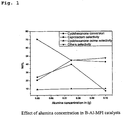
- Fig. 1 shows that with increasing the alumina concentration from 0.05 g to 0.075 g, the cyclohexanone conversion increased from about 25 % to 40 % and caprolactam selectivity increased from about 20 % to 45 %. With further increase, the alumina concentration from 0.075 g to 0.1 g the cyclohexanone conversion and caprolactam selectivity decreased as well. However, in all cases, the constant cyclohexanone oxime selectivity observed.
Landscapes
- Chemical & Material Sciences (AREA)
- Organic Chemistry (AREA)
- Catalysts (AREA)
- Other In-Based Heterocyclic Compounds (AREA)
- Organic Low-Molecular-Weight Compounds And Preparation Thereof (AREA)
- Pyrrole Compounds (AREA)
- Low-Molecular Organic Synthesis Reactions Using Catalysts (AREA)
Abstract
Description
- Present invention describes the direct catalytic liquid phase synthesis of caprolactam from cyclohexanone, hydrogen peroxide and ammonia. The invention can be carried out by using mesoporous materials amongst the MMS family (mesoporous molecular sieves) as catalysts, such as Ti-MCM-41, Al-MCM-41 and Ti-SBA-15 materials at temperatures between 20 and 120 °C.
- In a conventional method, caprolactam is produced by Beckmann rearrangement, where cyclohexanone oxime was transformed into caprolactam in the presence of concentrated sulfuric acid or phosphoric acid as catalysts, followed by neutralization with liquid ammonia. The cyclohexanone oxime needed thereby, is obtained by the oximation of cyclohexanone either via hydroxylamine in the presence of sulfuric acid or via H2O2/NH3 mixture over TS-1 zeolite. TS-1 zeolite means titanium-silica zeolite with MFI-structure (pentasil zeolite structure).
- These methods have a number of disadvantages, such as the separation of caprolactam from the product mixture, undesirable large quantities of ammonium sulfate or ammonium phosphate formation as well as equipment corrosion.
- To overcome these problems, there has been proposed a method of cyclohexanone oxime rearrangement reaction in the presence of heterogeneous catalysts, such as solid acid catalysts and zeolite catalysts which showed excellent activity and selectivity to caprolactam (
EP 1 193 251 ;US 6,531,595 ; Catalysis Reviews 43(4), 381-441 (2001); Journal of Catalysis 194, 122-129 (2000). - These reactions are carried out in vapor phase or liquid phase reaction conditions.
- Cyclohexanone oxime is produced by the EniChem process by ammoximation of cyclohexanone with hydrogen peroxide and ammonia in presence of TS-1 catalyst (
US 4,794,198 ;EP 0 267 362 ; ACS Symposium Series (1996), 626 (Green Chemistry), 33-48). - In this process, reactions are operated under mild liquid phase conditions and high yields of cyclohexanone oxime using TS-1 catalyst are obtained.
- Gas phase ammoximation of cyclohexanone was first reported by J.N. Armor et al. in 1979. In this reaction cyclohexanone vapor reacts with air and ammonia in the presence of solid catalysts e.g. (1) amorphous silica/alumina gel (
US 4,281,194 ) or (2) alumina silicate catalysts (US 4,163,756 ; Journal of Catalysis 70, 72 (1981); Journal of Catalysis 70, 91 (1981); Journal of Catalysis 72, 66 (1981). - The main objective of the present invention is therefore the synthesis of caprolactam by one step synthesis from cyclohexanone and a mixture of ammonia and hydrogen peroxide in presence of mesoporous and/or zeolitic materials as catalysts under liquid phase reaction conditions.
- This objective is solved by the features of patent claim 1. The dependent claims describe advantageous embodiments.
- According to present invention, a method of producing a cyclic lactam of the generic formula I


n is 2 to 20, and
R1 independently is selected from the group consisting of hydrogen, linear or branched C1-C12-alkyl, linear or branched alkenyl with up to 12 carbon atoms, linear or branched alkinyl with up to 12 carbon atoms, aromatic residues with 6 to 18 carbon atoms, aralphatic residues with 7 to 20 carbon atoms and/or residues which contain heteroatoms,
by reacting the cyclic ketone in presence of at least one heterogeneous catalyst system with ammonia and at least one oxidant by conducting the reaction in one step and in liquid phase, by using an aqueous solution of hydrogen peroxide as oxidant. - In such, caprolactam is produced by the cyclohexanone ammoximation method, in which cyclohexanone is reacted with hydrogen peroxide and ammonia preferably in the presence of MMS family materials as catalysts under liquid phase reaction conditions.
- It is preferred, if the heterogeneous catalyst system contains at least one material which includes transition metals and/or IIA and/or IIIA and/or IVA main group elements. In a further advantageous embodiment, the catalyst system can contain a material with mesoporous structure and/or zeolitic structure and/or a material selected from the group of the mesoporous molecular sieves. Especially preferred examples for the mesoporous molecular sieves are selected from the group consisting of materials with MCM-41-structure, MCM-48-structure, HMS-structure and/or SBA-15-structure.
- Examples of the mesoporous materials are Ti-MCM-41, Al-MCM-41 and Ti-SBA-15 catalysts (
US 5,712,402 ;
US 6,770,258 ). - Among the mesoporous materials, silica substituted materials with hetero atoms have been showing considerable activity, due to easily accessible active sites within their framework.
- In the present invention, catalysts, such as MFI structure zeolites, TS-1, SnS-1, Ti-Sn-S-1, and TiO2 on SiO2 support, were also used and further more for the comparison study with MMS family catalysts.
- Ti-MCM-41 material was prepared by following hydrothermal method (Microporous and Mesoporous Materials (1998), 21(1-3), 67-74). In a teflon vessel, silica aerosil and water were mixed to form a homogeneous solution. Decyltrimethyl ammoniumbromide was added as structure agent to this solution and stirred for 1 h. A colorless solution formed. To this colorless solution, the required amount of 40 wt% TEAOH (tetra-ethylammoniumhydroxide) was added under vigorous stirring. The resulting solution was stirred for 1 h at room temperature. Then, [(NH4)3[Ti(O2)F5] was added to the mixture and stirred for another 1 h at room temperature. A yellow solution formed. To this solution, the required amount of silica aerosil was added and stirred for 5 h at room temperature, after which a yellow color gel formed. This gel was transferred into an autoclave and heated at 100 °C for 7 days to complete crystallization. After crystallization, the product was filtered off, washed with deionized water and dried at 100 °C for 12 h. A finally dried sample was calcined at 500 °C for 8 h.
- In case of the Ti-MCM-41 sample, a titanium source and in the case of Al-MCM-41 catalysts, an alumina source was used (Microporous Material 5 (1995), 211). Al-MCM-41 was prepared according to a slightly altered method of the reference mentioned above. In a 250 ml polyethylene flask, 10,5 g tetraethylammonium hydroxide (TEAOH, 40 wt% aqueous), 0,21 g NaAlO2 and 50 g H2O were mixed together and stirred at room temperature for 1 h, followed by the addition of 10 g tetradecyltrimethylammonium bromide. The resulting mixture was stirred for 4 h. Then, 15,23 g Ludox-HS-40 (means a silicasol, Tradename of DuPont, Wilmington) were added dropwise over a period of 1 h, following by vigorous stirring at ambient temperature for 4 h. The crystallization.took place at 105 ° C for 6 days. After the third and fifth day, the pH was adjusted to 10,2 using CH3COOH (10 wt % aqueous). After crystallization, the solid was dried at 120 °C overnight, followed by calcination under static air at 540 °C for 6 h.
- Ti-SBA-15 was prepared by using a SBA-15 (it is a name of a mesoporous material) template by the hydrothermal synthesis method. The hydrothermal synthesis of almost Al-free Ti-SBA-15 Si/Ti 42.45 was carried out. In a typical synthesis, 10 g of triblock polymer (polyalkylene oxid triblock copolymer) was dispersed in 75 g of double-distilled water at 40 °C. The resultant solution was stirred with 300 g of 2 M HCl solution containing the requisite amount of TPOT (tetraisopropylorthotitanate) to obtain a homogeneous solution. Finally, 21,25 g of TEOS (tetraethoxysilane) was added to the above mixture at 40 °C under vigorous stirring for 2 h. This solution was aged without stirring at 40 °C for 12 h and 80 °C for 24 h. The solid products were recovered, washed, and air-dried at room temperature. The solid was calcined by slowly increasing the temperature from room temperature to 500 °C over 8 h after which the temperature was maintained at 500 °C for a further 6 h. Examples of microporous materials TS-1, titanostannosilicalites, and stannosilicates were prepared according to the method (
US 4,410,501 ,US 5,780,654 ; J. CHEM. SOC., CHEM. COMMUN., 1933-1994 (1994). - However, it is also possible, if the catalyst contains Al, Si, Ti, Mn, Sn, V, Mo, Cu, Co, Fe, B, Ga, Ge, Nb and/or Mg as active centres of the catalyst system.
- The starting material of this invention, i.e. the cyclic ketone according to formula II, e.g. cyclohexanone, was obtained by different methods, for example cyclohexane oxidation, cyclohexene hydration and hydrogenation or dehydrogenation of phenol.
- Hydrogen peroxide is usually produced by anthraquinone process and is commercially available in the form of an aqueous solution having a concentration of 10 % by weight to 70 % by weight. In the present invention, preferably 30 wt% hydrogen peroxide in the form of aqueous solution was used. The relative molecular amount of the hydrogen peroxide to be used is preferably in the range between 0,5 mol and about 3 mol. It is more preferably in the range between 0,5 mol and 1,5 mol, based on 1 mol of the cyclohexanone.
- Ammonia used in the invention is either in gas form or in aqueous solution. In this invention 28 wt% ammonia solution is used. But also more diluted or more concentrated ammonia solutions can be applied as well as gaseous pure ammonia.
- The relative amount of ammonia used in the invention is in between 0,5 and 3 mol, preferably 1 mol or more, and more preferably about 2 mol, based on 1 mol of the cyclohexanone.
- Preferably, solvents are employed in the reaction to form a homogeneous mixture of reactants. Solvents which do not react or interact with the mixture of reactants and/or the catalyst under reaction conditions are especially advantageous. Useful solvents in these reactions are alcohols, such as methanol, ethanol, n-propanol, i-propanol, n-butanol, s-butanol, t-butanol and/or acetone, acetonitrile, water and/or mixtures thereof.
- In this invention, 0 to 100 wt%, preferably 5 to 50 wt% of solvents based on the sum of the reactants are used. Preferably, about 10 wt% of the solvent is used.
- The titled method is preferably carried out in a liquid phase batch reactor, although stirred tank reactor, loop reactor, continuous flow reactor, fluidized bed or other types of reactors can be useful, too. The reaction temperature is in the range of about room temperature to about 120 °C, and more preferably between about 60 °C to about 100 °C. Optimum temperature is around 70 to 80°C.
- Although the reaction can be carried out at atmospheric pressure, reduced and elevated pressure from about 0,5 bars to about 40 bars, and more preferably from about 10 bars to about 30 bars can be applied.
- At lower temperatures, the reaction kinetics is rather slow while at higher temperatures the negative effect of both parallel reactions and consecutive reactions becomes predominant (decomposition of H2O to H2O + O2).
- The present invention is preferably carried out with magnetic stirrer speeds about 500 to 1500 rotations per minute (RPM). Optimum stirring speed for the reaction is around 900 to 1100 rpm. The stirring speed as well as the kind of stirrers such as different stirrer types and the way, how is stirred have a strong influence on the reaction.
- It was observed that at higher stirring speeds the formation of caprolactam selectivity increases. It is assumed that at higher stirring speeds products more easily desorpt from the active sites of the catalyst.
- The amount of catalyst used in the reaction was about 0,01 to 2 g per 10 g of ketone, preferably 0,5 to 1 g.
- Usually, the reaction duration is about 2 to 24 h, preferably, the reaction is carried out at least up to 4 h to obtain maximum caprolactam yield.
- Catalyst recycling is achieved by recovering the spent catalyst from the reaction mixture by filtration or decantation. The recovered catalyst is tested again for its catalytic activity in this reaction. After stopping the reaction after a certain time, the reaction mixture is cooled down to room temperature and the catalyst is filtered off from the reaction mixture.
- The recovered catalyst can be washed with solvents, dried and finally calcined in an oven if necessary, after being separated from the reaction mixture. The recovered catalyst can be used again in the reaction for several runs. Alternatively or in addition, the catalyst can be regenerated via oxidative regeneration with an oxidant, e.g. oxygen.
- The production of caprolactam is preferably conducted in a batchwise manner. In this batchwise manner, the reaction medium was heated to reaction temperature and in the reactor, it was charged with the required amount of cyclohexanone, ammonia, solvent and catalyst. Hydrogen peroxide is introduced continuously for 2 h by slow addition into the reaction mixture under stirring for avoiding decomposition.
- It is preferred to use a glass reactor and/or a stainless steel autoclave reactor.
- In general, the reactions were carried out using a mechanical stirrer; the amount of catalysts and the molar ratio of reactants were varied.
- In accordance with present invention, cyclohexanone was subjected to ammoximation with a mixture of ammonia and hydrogen peroxide by using Ti-MCM-41, Al-MCM-41 and Ti-SBA-15 as catalysts for producing high yields of caprolactam.
- Reaction results demonstrate that in presence of non mesoporous materials as catalysts, both higher conversion rates and selectivity of cyclohexanone to cyclohexanone oxime instead of conversion into the corresponding caprolactam were observed. This might be due to the limitation of the pore sizes of the catalysts. However, the reaction can also take place at the outer surface and at the pore mouth.
- The catalytic results derived from a reaction that is carried out using 5 % TiO2 impregnated on a SiO2 support also have shown high cyclohexanone conversion with higher cyclohexanone oxime formation than caprolactam formation.
- In order to better understand the present invention, the following illustrative examples are provided.
- In these examples cyclohexanone, cyclohexanone oxime, caprolactam and other compounds such as 2-cyclohexenylcyclohexanone isomers, were analyzed by gas-chromatography. Conversion of cyclohexanone and selectivity of the caprolactam was calculated on the basis of analytical results.
- A 50 ml 2 necked round bottom (RB) glass flask was charged with cyclohexanone, aqueous ammonia solution (28 wt% solution), solvent ethanol (10 wt%) and catalyst amount 0.2 g. This RB flask was fitted with a reflux condenser for cooling down the reactants and products. This charged flask had been submerged in an oil bath where required temperature was adjusted. The RPM of the magnetic stirrer and the desired temperature were adjusted. The required amount of hydrogen peroxide (30 wt %) was introduced into the reactor by continuous addition for 2 h by using syringe through the septum.
- Reaction conditions were as follows H2O2/cyclohexanone-1.32(molar ratio) and NH3/cyclohexanone-1.94(molar ratio); solvent ethanol(10 wt%) and catalyst amount 0.2 g and reaction time was 4 h. The reaction was performed at a
temperature 80 °C under ambient pressure with reaction time of 240 minutes. Afterwards, the reactor was cooled down to room temperature. Products and catalysts were separated by filtration or centrifuging method. To this separated reaction mixture, an external standard was added and samples were analyzed by gas-chromatography. - Ti-MCM-41 (0,2 g) was used as a catalyst and the reaction was carried out by the following method.
- A 50 ml 2 necked round bottom (RB) glass flask equipped with a reflux condenser was charged with cyclohexanone (2,5 g), aqueous ammonia solution (28 wt%, 3 g), solvent ethanol (10 wt%, 0,93 g) and catalyst (0,2 g). This charged flask was submerged in an oil bath where the required temperature was adjusted. The speed of the magnetic stirrer was controlled. The required amount of hydrogen peroxide (30 wt%, 3,836 g) was introduced into the reactor by continuous addition for 2 h via a syringe.
- The reaction was performed at a temperature of 80 °C under ambient pressure with a reaction time of 240 minutes. After 240 minutes of the reaction time, the reactor was cooled down to room temperature. Products and catalysts were separated by filtration or centrifugation. To this separated reaction mixture, an external standard was added and samples were taken and analyzed by gas-chromatography.
- The reaction was carried out as in example 1, except Ti-MCM-41 is replaced by Al-MCM-41 as catalyst. The reaction was performed for 240 minutes. High cyclohexanone conversion and high selectivity to caprolactam were observed.
- The procedures as described in example 1 were repeated with TS-1 instead of Ti-MCM-41 as catalyst. The reaction results showed that this catalyst is highly active and selective for simultaneous cyclohexanone oxime and caprolactam formation.
- The reaction was carried out with Ti-SBA-15 following the procedure of example 1. After 240 minutes, high cyclohexanone conversion and caprolactam selectivity was observed.
- In order to reproduce the results, the reactions were repeated several times with Al-MCM-41 catalyst under identical reaction conditions as described in example 1. After repeating the reaction five times, the results showed roughly constant conversion and selectivity on the formation of caprolactam.
- The influence of the stirring speed in the reaction was studied by using Al-MCM-41 catalyst. Experiments were carried out in the same manner as in example 1, except changing the different stirring speeds. The results show that the caprolactam selectivity and yield increased by increasing the stirring speeds to an optimum near 900 to 1100 rpm.
-
NH3: cyclohexanone = 1.95 (molar ratio); H2O2: cyclohexanone = 1.35 (molar ratio) Catalyst weight: 0.2 g Pressure: Atmospheric Solvent: Ethanol (10 wt%) Stirring speed: 900 rpm Reaction time: 4 h Temperature: 80 °C Table 1 Ex. Catalysts C.Hexanone conversion wt% C.Hexanone oxime selectivity % C.Lactam selectivity % Others selectivity % 7 B-MFI 6.84 9.06 34.23 56.71 8 Al-ZSM-5(Si/Al-300) 13.10 4.72 18.12 77.14 9 B-Al-MFI-BA-17 (Al-0.1 g) 7.18 9.93 42.64 47.43 10 B-Al-MFI-BA-22 (Al-0.075 g) 39.92 10.04 45.03 44.93 11 B-Al-MFI-BA-19 (Al-0.05 g) 24.36 9.08 20.54 70.38 - All these catalysts in examples 7 to 11 were prepared by following the method (W. Hoelderich et. al, Proceedings of the 6th International Zeolite Conference, Butterworths, Guilford, London, 1984, 545-55). 11.7 g of SiO2 (aerosol) was dissolved in 180 g of 50 wt% aqueous hexamethylenediamines (HMD) solution and this mixture was stirred at room temperature for 3 h. Separately, in another beaker, 2.2 g of boric acid was dissolved in 9 g of HMD aqueous solution and this mixture solution was stirred at room temperature for 3 h. After 3 h stirring the mixture solution, two solutions were mixed in one beaker. Resulting to this solution mixture, 0.1 g of aluminum hydroxide was added and the whole reaction mixture was stirred at room temperature for another 2 h before transferred into stainless steel autoclave for crystallization. The complete crystallization took place at 170 °C for 5 days. After crystallization, the product was filtered off, washed with deionized water and dried at 110 °C for 12 h. Finally dried sample was calcined at 550 °C for 6 h.
- In case of borosilicate, only boron source was used and in the case of aluminosilicate, only alumina source was used. But, in case of boroaluminosilicate, both sources were used simultaneously.
- There is strong dependence up on the alumina concentration in cyclohexanone conversion and caprolactam selectivity.
Fig. 1 shows that with increasing the alumina concentration from 0.05 g to 0.075 g, the cyclohexanone conversion increased from about 25 % to 40 % and caprolactam selectivity increased from about 20 % to 45 %. With further increase, the alumina concentration from 0.075 g to 0.1 g the cyclohexanone conversion and caprolactam selectivity decreased as well. However, in all cases, the constant cyclohexanone oxime selectivity observed. - The influence of the stirring speed in the reaction was studied by using Al-MCM-41 catalyst. Experiments were carried out in the same manner as in example 1, except changing the different stirring speeds. Reaction results are shown in table 2.
Table 2 Ex. Stirring speed 1/m C.Hexanone conversion wt% C.Lactam selectivity % C.Oxime selectivity % 12 500 17.2 26.0 4.1 13 900 18.3 42.7 3.9 14 1100 18.9 41.3 5.6 - Results in table 2 demonstrate that the caprolactam selectivity and yield increased by increasing the stirring speeds.
Claims (20)
- Method of producing a cyclic lactam of the generic formula I


n is 2 to 20, and
R1 independently is selected from the group consisting of hydrogen, linear or branched C1-C12-alkyl, linear or branched alkenyl with up to 12 carbon atoms, linear or branched alkinyl with up to 12 carbon atoms, aromatic residues with 6 to 18 carbon atoms, aralphatic residues with 7 to 20 carbon atoms and/or residues which contain heteroatoms,
by reacting the cyclic ketone in presence of at least one heterogeneous catalyst system with ammonia and an aqueous solution of hydrogen peroxide as at least one oxidant by conducting the reaction in one step and in liquid phase,
characterized in that
the catalyst system contains a material with mesoporous structure and/or zeolitic structure. - Method according to claim 1, characterized in that the heterogeneous catalyst system contains at least one material which includes transition metals and/or IIIA and/or IVA main group elements.
- Method according to one of the preceding claims, characterized in that the catalyst contains a material selected from the group of the mesoporous molecular sieves.
- Method according to the preceding claim, characterized in that the mesoporous molecular sieves are selected from the group consisting of materials with MCM-41-structure, MCM-48-structure, HMS-structure and/or SBA-15-structure.
- Method according to one of the preceding claims, characterized in that the catalyst system contains Al, Si, Ti, Mn, Sn, V, Mo, Cu, Co, Fe, B, Ga, Ge, Nb and/or Mg and mixtures thereof.
- Method according to one of the preceding claims, characterized in that the reaction is carried out at temperatures from 0 °C to 120 °C, preferably from 60 °C to 100 °C, especially preferred from 70 °C to 90 °C.
- Method according to one of the preceding claims, characterized in that the reaction is carried out at pressures from 0,1 to 100 bar, preferably from 0,5 to 40 bar, especially preferred from 10 to 30 bar.
- Method according to one of the preceding claims, characterized in that the at least one oxidant is used in a molar ratio to the cyclic ketone of the generic formula II from 0,5 to 3, preferably from 0,5 to 1,5, most preferably from 1 to 1,3.
- Method according to one of the preceding claims, characterized in that ammonia is used in aqueous solution.
- Method according to one of the preceding claims, characterized in that ammonia is used in a molar ratio to the cyclic ketone of the generic formula II from 0,5 to 3, preferably from 1 to 2,5, in particular from 1,5 to 2.
- Method according to one of the preceding claims, characterized in that the at least one heterogeneous catalyst system is used in a weight ratio to the cyclic ketone of the generic formula II from 2 to 40, preferably from 4 to 12.
- Method according to one of the preceding claims, characterized in that the reaction is carried out under stirring, especially at stirring speeds ranging from 500 to 1500 rpm, preferably from 500 to 1100 rpm, especially preferred from 900 to 1100 rpm.
- Method according to one of the preceding claims, characterized in that the reaction is carried out in at least one solvent, being selected from the group consisting of alcohols, especially methanol, ethanol, n-propanol, i-propanol, n-butanol, s-butanol, t-butanol and/or acetone, acetonitrile, water and/or mixtures thereof.
- Method according to the preceding claim, characterized in that the at least one solvent is used in a weight ratio to the cyclic ketone of the formula II from 0 to 100 weight-%, preferably from 5 to 30 weight-%.
- Method according to one of the preceding claims, characterized in that the reaction is carried out over 0,5 to 24 h, preferably 2 to 12 h, most preferably 2 to 6 h.
- Method according to one of the preceding claims, characterized in that the catalyst is recycled and reused after completion of the reaction.
- Method according to the preceding claim, characterized in that after recycling of the catalyst a regeneration procedure of the catalyst is carried out, preferably by washing the catalyst with solvents and/or via oxidative regeneration with an oxidant, e.g. oxygen.
- Method according to one of the preceding claims, characterized in that the reaction is carried out in a glass reactor and/or a stainless steel reactor.
- Method according to one of the preceding claims, characterized in that the reaction is carried out in a batch reactor, autoclave, loop reactor, continuous flow fixed bed reactor, trickle bed reactor and/or moving bed reactor.
- Method according to one of the preceding claims, characterized in that n is 6 or 12 and R1 is hydrogen.
Priority Applications (4)
| Application Number | Priority Date | Filing Date | Title |
|---|---|---|---|
| EP08003291A EP2098506B1 (en) | 2008-02-22 | 2008-02-22 | Production of lactams by ammoximation of cyclic ketones |
| AT08003291T ATE475644T1 (en) | 2008-02-22 | 2008-02-22 | PRODUCTION OF LACTAMES BY AMMOXIMATION OF CYCLIC KETONES |
| DE602008001964T DE602008001964D1 (en) | 2008-02-22 | 2008-02-22 | Production of lactams by ammoximation of cyclic ketones |
| PCT/EP2009/001251 WO2009103560A1 (en) | 2008-02-22 | 2009-02-20 | PRODUCTION OF LACTAMS BY AMMOXIMATIσN OF CYCLIC KETONES |
Applications Claiming Priority (1)
| Application Number | Priority Date | Filing Date | Title |
|---|---|---|---|
| EP08003291A EP2098506B1 (en) | 2008-02-22 | 2008-02-22 | Production of lactams by ammoximation of cyclic ketones |
Publications (2)
| Publication Number | Publication Date |
|---|---|
| EP2098506A1 EP2098506A1 (en) | 2009-09-09 |
| EP2098506B1 true EP2098506B1 (en) | 2010-07-28 |
Family
ID=39595636
Family Applications (1)
| Application Number | Title | Priority Date | Filing Date |
|---|---|---|---|
| EP08003291A Not-in-force EP2098506B1 (en) | 2008-02-22 | 2008-02-22 | Production of lactams by ammoximation of cyclic ketones |
Country Status (4)
| Country | Link |
|---|---|
| EP (1) | EP2098506B1 (en) |
| AT (1) | ATE475644T1 (en) |
| DE (1) | DE602008001964D1 (en) |
| WO (1) | WO2009103560A1 (en) |
Families Citing this family (5)
| Publication number | Priority date | Publication date | Assignee | Title |
|---|---|---|---|---|
| JP2012020966A (en) * | 2010-07-15 | 2012-02-02 | Sumitomo Chemical Co Ltd | Method for producing oxime |
| CN102500407A (en) * | 2011-10-09 | 2012-06-20 | 南京大学 | Preparation method of bimetal-doped mesoporous material SBA-15 catalyst and bimetal-doped SBA-15 catalyst |
| TW201609681A (en) * | 2014-05-12 | 2016-03-16 | 微麥得斯公司 | Methods of producing compounds from 5-(halomethyl)furfural |
| CN104826664B (en) * | 2015-01-05 | 2017-10-24 | 广东工业大学 | Catalyst and its preparation, reaction method for being catalyzed cyclohexane selectivity oxidation reaction |
| CN115254183A (en) * | 2022-09-05 | 2022-11-01 | 湖南工学院 | Sphere-shaped composite catalyst material and preparation method thereof, and preparation method of cyclohexanone oxime |
Family Cites Families (8)
| Publication number | Priority date | Publication date | Assignee | Title |
|---|---|---|---|---|
| US4163756A (en) | 1978-04-11 | 1979-08-07 | Allied Chemical Corporation | Direct oximation of ketones |
| IT1127311B (en) | 1979-12-21 | 1986-05-21 | Anic Spa | SYNTHETIC, CRYSTALLINE, POROUS MATERIAL CONSTITUTED BY SILICON AND TITANIUM OXIDES, METHOD FOR ITS PREPARATION AND ITS USES |
| US4281194A (en) | 1980-02-28 | 1981-07-28 | Allied Chemical Corporation | Process for ammoximation of cyclohexanone |
| JPH0610181B2 (en) | 1986-11-14 | 1994-02-09 | モンテデイペ・ソチエタ・ペル・アツイオニ | Contact method for oxime production |
| US5712402A (en) | 1994-08-22 | 1998-01-27 | Board Of Trustees Operating Michigan State University | Catalytic applications of mesoporous metallosilicate molecular sieves and methods for their preparation |
| US5780654A (en) | 1997-04-22 | 1998-07-14 | Uop Llc | Titanostannosilicalites: epoxidation of olefins |
| US6585952B1 (en) | 2000-05-25 | 2003-07-01 | Board Of Trustees Operating Michigan State University | Ultrastable hexagonal, cubic and wormhole aluminosilicate mesostructures |
| EP1193251B1 (en) | 2000-09-29 | 2011-08-17 | Sumitomo Chemical Company, Limited | Method for producing Epsilon-caprolactam |
-
2008
- 2008-02-22 DE DE602008001964T patent/DE602008001964D1/en active Active
- 2008-02-22 EP EP08003291A patent/EP2098506B1/en not_active Not-in-force
- 2008-02-22 AT AT08003291T patent/ATE475644T1/en not_active IP Right Cessation
-
2009
- 2009-02-20 WO PCT/EP2009/001251 patent/WO2009103560A1/en not_active Ceased
Also Published As
| Publication number | Publication date |
|---|---|
| ATE475644T1 (en) | 2010-08-15 |
| EP2098506A1 (en) | 2009-09-09 |
| WO2009103560A1 (en) | 2009-08-27 |
| DE602008001964D1 (en) | 2010-09-09 |
Similar Documents
| Publication | Publication Date | Title |
|---|---|---|
| TWI353971B (en) | Process for producing oxime | |
| Saxton | Crystalline microporous titanium silicates | |
| EP0659685A1 (en) | Epoxidation process and catalyst therefor | |
| EP2098506A1 (en) | Production of lactams by ammoximation of cyclic ketones | |
| JP4433795B2 (en) | Method for producing lactam | |
| JP5235406B2 (en) | Process for simultaneous production of olefin epoxidation process and nylon precursor | |
| US7081552B2 (en) | Catalysts for cycloalkanes oxidation and decomposition of cycloalkyl hydroperoxide | |
| US7060645B2 (en) | Method for manufacturing zeolite and method for manufacturing ε-caprolactam | |
| EP0301486A2 (en) | Process for producing cyclohexanone oxime | |
| JP2012158501A (en) | METHOD FOR PRODUCING ZEOLITE AND METHOD FOR PRODUCING ε-CAPROLACTAM | |
| JP4633337B2 (en) | Method for producing cyclohexanone oxime | |
| JP2011153047A (en) | Method for producing zeolite and method for producing ε-caprolactam | |
| US7232784B2 (en) | Metal oxide-containing kenyaite catalyst, method for preparing the same, and method for preparing ε-caprolactam using the same | |
| EP2877439B1 (en) | Cycloalkane oxidation catalysts and method to produce alcohols and ketones | |
| US20040158103A1 (en) | Cyclohexane oxidation catalysts | |
| KR20060069273A (en) | Manufacturing method of oxime | |
| EP1717222B1 (en) | Process for producing cycloalkanone oximes | |
| US6051706A (en) | Method of producing ε-caprolactam | |
| US5466869A (en) | Process for perparing 4-hydroxyacetophenone oxime | |
| EP3277664B1 (en) | An efficient process for the synthesis of cyclic amides | |
| JP2013147356A (en) | METHOD FOR PRODUCING ZEOLITE AND METHOD FOR PRODUCING ε-CAPROLACTAM | |
| JPH10291948A (en) | Method for producing dihydric phenols | |
| JP2000026387A (en) | Method for producing cyclohexanone oxime | |
| KR20070060017A (en) | Method for producing cyclohexanone oxime | |
| JP2005225821A (en) | Method for producing cyclic amide compound |
Legal Events
| Date | Code | Title | Description |
|---|---|---|---|
| PUAI | Public reference made under article 153(3) epc to a published international application that has entered the european phase |
Free format text: ORIGINAL CODE: 0009012 |
|
| GRAP | Despatch of communication of intention to grant a patent |
Free format text: ORIGINAL CODE: EPIDOSNIGR1 |
|
| 17P | Request for examination filed |
Effective date: 20090218 |
|
| AK | Designated contracting states |
Kind code of ref document: A1 Designated state(s): AT BE BG CH CY CZ DE DK EE ES FI FR GB GR HR HU IE IS IT LI LT LU LV MC MT NL NO PL PT RO SE SI SK TR |
|
| AX | Request for extension of the european patent |
Extension state: AL BA MK RS |
|
| GRAJ | Information related to disapproval of communication of intention to grant by the applicant or resumption of examination proceedings by the epo deleted |
Free format text: ORIGINAL CODE: EPIDOSDIGR1 |
|
| GRAP | Despatch of communication of intention to grant a patent |
Free format text: ORIGINAL CODE: EPIDOSNIGR1 |
|
| AKX | Designation fees paid |
Designated state(s): AT BE BG CH CY CZ DE DK EE ES FI FR GB GR HR HU IE IS IT LI LT LU LV MC MT NL NO PL PT RO SE SI SK TR |
|
| GRAS | Grant fee paid |
Free format text: ORIGINAL CODE: EPIDOSNIGR3 |
|
| GRAA | (expected) grant |
Free format text: ORIGINAL CODE: 0009210 |
|
| AK | Designated contracting states |
Kind code of ref document: B1 Designated state(s): AT BE BG CH CY CZ DE DK EE ES FI FR GB GR HR HU IE IS IT LI LT LU LV MC MT NL NO PL PT RO SE SI SK TR |
|
| REG | Reference to a national code |
Ref country code: GB Ref legal event code: FG4D |
|
| REG | Reference to a national code |
Ref country code: CH Ref legal event code: EP |
|
| REG | Reference to a national code |
Ref country code: IE Ref legal event code: FG4D |
|
| REF | Corresponds to: |
Ref document number: 602008001964 Country of ref document: DE Date of ref document: 20100909 Kind code of ref document: P |
|
| REG | Reference to a national code |
Ref country code: NL Ref legal event code: VDEP Effective date: 20100728 |
|
| LTIE | Lt: invalidation of european patent or patent extension |
Effective date: 20100728 |
|
| PG25 | Lapsed in a contracting state [announced via postgrant information from national office to epo] |
Ref country code: NO Free format text: LAPSE BECAUSE OF FAILURE TO SUBMIT A TRANSLATION OF THE DESCRIPTION OR TO PAY THE FEE WITHIN THE PRESCRIBED TIME-LIMIT Effective date: 20101028 Ref country code: NL Free format text: LAPSE BECAUSE OF FAILURE TO SUBMIT A TRANSLATION OF THE DESCRIPTION OR TO PAY THE FEE WITHIN THE PRESCRIBED TIME-LIMIT Effective date: 20100728 Ref country code: LT Free format text: LAPSE BECAUSE OF FAILURE TO SUBMIT A TRANSLATION OF THE DESCRIPTION OR TO PAY THE FEE WITHIN THE PRESCRIBED TIME-LIMIT Effective date: 20100728 Ref country code: AT Free format text: LAPSE BECAUSE OF FAILURE TO SUBMIT A TRANSLATION OF THE DESCRIPTION OR TO PAY THE FEE WITHIN THE PRESCRIBED TIME-LIMIT Effective date: 20100728 Ref country code: FI Free format text: LAPSE BECAUSE OF FAILURE TO SUBMIT A TRANSLATION OF THE DESCRIPTION OR TO PAY THE FEE WITHIN THE PRESCRIBED TIME-LIMIT Effective date: 20100728 |
|
| PG25 | Lapsed in a contracting state [announced via postgrant information from national office to epo] |
Ref country code: HR Free format text: LAPSE BECAUSE OF FAILURE TO SUBMIT A TRANSLATION OF THE DESCRIPTION OR TO PAY THE FEE WITHIN THE PRESCRIBED TIME-LIMIT Effective date: 20100728 Ref country code: PL Free format text: LAPSE BECAUSE OF FAILURE TO SUBMIT A TRANSLATION OF THE DESCRIPTION OR TO PAY THE FEE WITHIN THE PRESCRIBED TIME-LIMIT Effective date: 20100728 Ref country code: SI Free format text: LAPSE BECAUSE OF FAILURE TO SUBMIT A TRANSLATION OF THE DESCRIPTION OR TO PAY THE FEE WITHIN THE PRESCRIBED TIME-LIMIT Effective date: 20100728 Ref country code: BG Free format text: LAPSE BECAUSE OF FAILURE TO SUBMIT A TRANSLATION OF THE DESCRIPTION OR TO PAY THE FEE WITHIN THE PRESCRIBED TIME-LIMIT Effective date: 20101028 Ref country code: CY Free format text: LAPSE BECAUSE OF FAILURE TO SUBMIT A TRANSLATION OF THE DESCRIPTION OR TO PAY THE FEE WITHIN THE PRESCRIBED TIME-LIMIT Effective date: 20100728 Ref country code: IS Free format text: LAPSE BECAUSE OF FAILURE TO SUBMIT A TRANSLATION OF THE DESCRIPTION OR TO PAY THE FEE WITHIN THE PRESCRIBED TIME-LIMIT Effective date: 20101128 |
|
| PG25 | Lapsed in a contracting state [announced via postgrant information from national office to epo] |
Ref country code: BE Free format text: LAPSE BECAUSE OF FAILURE TO SUBMIT A TRANSLATION OF THE DESCRIPTION OR TO PAY THE FEE WITHIN THE PRESCRIBED TIME-LIMIT Effective date: 20100728 Ref country code: SE Free format text: LAPSE BECAUSE OF FAILURE TO SUBMIT A TRANSLATION OF THE DESCRIPTION OR TO PAY THE FEE WITHIN THE PRESCRIBED TIME-LIMIT Effective date: 20100728 Ref country code: GR Free format text: LAPSE BECAUSE OF FAILURE TO SUBMIT A TRANSLATION OF THE DESCRIPTION OR TO PAY THE FEE WITHIN THE PRESCRIBED TIME-LIMIT Effective date: 20101029 Ref country code: LV Free format text: LAPSE BECAUSE OF FAILURE TO SUBMIT A TRANSLATION OF THE DESCRIPTION OR TO PAY THE FEE WITHIN THE PRESCRIBED TIME-LIMIT Effective date: 20100728 |
|
| PG25 | Lapsed in a contracting state [announced via postgrant information from national office to epo] |
Ref country code: DK Free format text: LAPSE BECAUSE OF FAILURE TO SUBMIT A TRANSLATION OF THE DESCRIPTION OR TO PAY THE FEE WITHIN THE PRESCRIBED TIME-LIMIT Effective date: 20100728 |
|
| PG25 | Lapsed in a contracting state [announced via postgrant information from national office to epo] |
Ref country code: RO Free format text: LAPSE BECAUSE OF FAILURE TO SUBMIT A TRANSLATION OF THE DESCRIPTION OR TO PAY THE FEE WITHIN THE PRESCRIBED TIME-LIMIT Effective date: 20100728 Ref country code: IT Free format text: LAPSE BECAUSE OF FAILURE TO SUBMIT A TRANSLATION OF THE DESCRIPTION OR TO PAY THE FEE WITHIN THE PRESCRIBED TIME-LIMIT Effective date: 20100728 Ref country code: CZ Free format text: LAPSE BECAUSE OF FAILURE TO SUBMIT A TRANSLATION OF THE DESCRIPTION OR TO PAY THE FEE WITHIN THE PRESCRIBED TIME-LIMIT Effective date: 20100728 Ref country code: EE Free format text: LAPSE BECAUSE OF FAILURE TO SUBMIT A TRANSLATION OF THE DESCRIPTION OR TO PAY THE FEE WITHIN THE PRESCRIBED TIME-LIMIT Effective date: 20100728 Ref country code: SK Free format text: LAPSE BECAUSE OF FAILURE TO SUBMIT A TRANSLATION OF THE DESCRIPTION OR TO PAY THE FEE WITHIN THE PRESCRIBED TIME-LIMIT Effective date: 20100728 |
|
| PLBE | No opposition filed within time limit |
Free format text: ORIGINAL CODE: 0009261 |
|
| STAA | Information on the status of an ep patent application or granted ep patent |
Free format text: STATUS: NO OPPOSITION FILED WITHIN TIME LIMIT |
|
| PG25 | Lapsed in a contracting state [announced via postgrant information from national office to epo] |
Ref country code: ES Free format text: LAPSE BECAUSE OF FAILURE TO SUBMIT A TRANSLATION OF THE DESCRIPTION OR TO PAY THE FEE WITHIN THE PRESCRIBED TIME-LIMIT Effective date: 20101108 |
|
| 26N | No opposition filed |
Effective date: 20110429 |
|
| REG | Reference to a national code |
Ref country code: DE Ref legal event code: R097 Ref document number: 602008001964 Country of ref document: DE Effective date: 20110429 |
|
| PG25 | Lapsed in a contracting state [announced via postgrant information from national office to epo] |
Ref country code: MC Free format text: LAPSE BECAUSE OF NON-PAYMENT OF DUE FEES Effective date: 20110228 |
|
| REG | Reference to a national code |
Ref country code: FR Ref legal event code: ST Effective date: 20111102 |
|
| REG | Reference to a national code |
Ref country code: IE Ref legal event code: MM4A |
|
| PG25 | Lapsed in a contracting state [announced via postgrant information from national office to epo] |
Ref country code: MT Free format text: LAPSE BECAUSE OF FAILURE TO SUBMIT A TRANSLATION OF THE DESCRIPTION OR TO PAY THE FEE WITHIN THE PRESCRIBED TIME-LIMIT Effective date: 20100728 |
|
| REG | Reference to a national code |
Ref country code: DE Ref legal event code: R119 Ref document number: 602008001964 Country of ref document: DE Effective date: 20110901 |
|
| PG25 | Lapsed in a contracting state [announced via postgrant information from national office to epo] |
Ref country code: FR Free format text: LAPSE BECAUSE OF NON-PAYMENT OF DUE FEES Effective date: 20110228 Ref country code: IE Free format text: LAPSE BECAUSE OF NON-PAYMENT OF DUE FEES Effective date: 20110222 |
|
| REG | Reference to a national code |
Ref country code: CH Ref legal event code: PL |
|
| GBPC | Gb: european patent ceased through non-payment of renewal fee |
Effective date: 20120222 |
|
| PG25 | Lapsed in a contracting state [announced via postgrant information from national office to epo] |
Ref country code: LI Free format text: LAPSE BECAUSE OF NON-PAYMENT OF DUE FEES Effective date: 20120229 Ref country code: CH Free format text: LAPSE BECAUSE OF NON-PAYMENT OF DUE FEES Effective date: 20120229 |
|
| PG25 | Lapsed in a contracting state [announced via postgrant information from national office to epo] |
Ref country code: GB Free format text: LAPSE BECAUSE OF NON-PAYMENT OF DUE FEES Effective date: 20120222 |
|
| PG25 | Lapsed in a contracting state [announced via postgrant information from national office to epo] |
Ref country code: LU Free format text: LAPSE BECAUSE OF NON-PAYMENT OF DUE FEES Effective date: 20110222 |
|
| PG25 | Lapsed in a contracting state [announced via postgrant information from national office to epo] |
Ref country code: DE Free format text: LAPSE BECAUSE OF NON-PAYMENT OF DUE FEES Effective date: 20110901 |
|
| PG25 | Lapsed in a contracting state [announced via postgrant information from national office to epo] |
Ref country code: PT Free format text: LAPSE BECAUSE OF NON-PAYMENT OF DUE FEES Effective date: 20100728 |
|
| PG25 | Lapsed in a contracting state [announced via postgrant information from national office to epo] |
Ref country code: TR Free format text: LAPSE BECAUSE OF FAILURE TO SUBMIT A TRANSLATION OF THE DESCRIPTION OR TO PAY THE FEE WITHIN THE PRESCRIBED TIME-LIMIT Effective date: 20100728 |
|
| PG25 | Lapsed in a contracting state [announced via postgrant information from national office to epo] |
Ref country code: HU Free format text: LAPSE BECAUSE OF FAILURE TO SUBMIT A TRANSLATION OF THE DESCRIPTION OR TO PAY THE FEE WITHIN THE PRESCRIBED TIME-LIMIT Effective date: 20100728 |