EP2098256B1 - Blood-coagulation inhibiting material, coating material and in vivo indwelling members made by using the material, and method of treatment - Google Patents
Blood-coagulation inhibiting material, coating material and in vivo indwelling members made by using the material, and method of treatment Download PDFInfo
- Publication number
- EP2098256B1 EP2098256B1 EP07832058.7A EP07832058A EP2098256B1 EP 2098256 B1 EP2098256 B1 EP 2098256B1 EP 07832058 A EP07832058 A EP 07832058A EP 2098256 B1 EP2098256 B1 EP 2098256B1
- Authority
- EP
- European Patent Office
- Prior art keywords
- blood
- structural unit
- blood anticoagulant
- formula
- present
- Prior art date
- Legal status (The legal status is an assumption and is not a legal conclusion. Google has not performed a legal analysis and makes no representation as to the accuracy of the status listed.)
- Not-in-force
Links
- 239000000463 material Substances 0.000 title claims description 111
- 230000023555 blood coagulation Effects 0.000 title claims description 31
- 239000011248 coating agent Substances 0.000 title claims description 18
- 238000000576 coating method Methods 0.000 title claims description 18
- 238000000034 method Methods 0.000 title description 20
- 238000001727 in vivo Methods 0.000 title 1
- 230000002401 inhibitory effect Effects 0.000 title 1
- 239000008280 blood Substances 0.000 claims description 93
- 210000004369 blood Anatomy 0.000 claims description 92
- 239000003146 anticoagulant agent Substances 0.000 claims description 62
- 229940127219 anticoagulant drug Drugs 0.000 claims description 60
- -1 poly(ethylene glycol) Polymers 0.000 claims description 53
- 229920006030 multiblock copolymer Polymers 0.000 claims description 34
- JVTAAEKCZFNVCJ-UHFFFAOYSA-N lactic acid Chemical compound CC(O)C(O)=O JVTAAEKCZFNVCJ-UHFFFAOYSA-N 0.000 claims description 19
- AEMRFAOFKBGASW-UHFFFAOYSA-N Glycolic acid Chemical compound OCC(O)=O AEMRFAOFKBGASW-UHFFFAOYSA-N 0.000 claims description 12
- 125000001931 aliphatic group Chemical group 0.000 claims description 11
- 229920001223 polyethylene glycol Polymers 0.000 claims description 10
- 239000004310 lactic acid Substances 0.000 claims description 8
- 235000014655 lactic acid Nutrition 0.000 claims description 8
- 150000002148 esters Chemical class 0.000 claims description 6
- PAPBSGBWRJIAAV-UHFFFAOYSA-N ε-Caprolactone Chemical compound O=C1CCCCCO1 PAPBSGBWRJIAAV-UHFFFAOYSA-N 0.000 claims description 6
- 125000004432 carbon atom Chemical group C* 0.000 claims description 5
- DNIAPMSPPWPWGF-GSVOUGTGSA-N (R)-(-)-Propylene glycol Chemical compound C[C@@H](O)CO DNIAPMSPPWPWGF-GSVOUGTGSA-N 0.000 claims description 3
- 150000007933 aliphatic carboxylic acids Chemical class 0.000 claims description 3
- 206010002383 Angina Pectoris Diseases 0.000 claims description 2
- 125000001183 hydrocarbyl group Chemical group 0.000 claims 1
- 238000012360 testing method Methods 0.000 description 41
- 229920001577 copolymer Polymers 0.000 description 29
- 229940079593 drug Drugs 0.000 description 26
- 239000003814 drug Substances 0.000 description 26
- 238000006243 chemical reaction Methods 0.000 description 22
- 230000000052 comparative effect Effects 0.000 description 19
- 229920000642 polymer Polymers 0.000 description 19
- 230000002429 anti-coagulating effect Effects 0.000 description 15
- 239000002904 solvent Substances 0.000 description 15
- DNIAPMSPPWPWGF-UHFFFAOYSA-N Propylene glycol Chemical group CC(O)CO DNIAPMSPPWPWGF-UHFFFAOYSA-N 0.000 description 12
- 238000006116 polymerization reaction Methods 0.000 description 12
- 210000004204 blood vessel Anatomy 0.000 description 11
- 150000001875 compounds Chemical class 0.000 description 11
- 238000013270 controlled release Methods 0.000 description 11
- 229920000747 poly(lactic acid) Polymers 0.000 description 11
- 239000000126 substance Substances 0.000 description 11
- HEDRZPFGACZZDS-UHFFFAOYSA-N Chloroform Chemical compound ClC(Cl)Cl HEDRZPFGACZZDS-UHFFFAOYSA-N 0.000 description 10
- RTZKZFJDLAIYFH-UHFFFAOYSA-N Diethyl ether Chemical group CCOCC RTZKZFJDLAIYFH-UHFFFAOYSA-N 0.000 description 10
- LYCAIKOWRPUZTN-UHFFFAOYSA-N Ethylene glycol Chemical group OCCO LYCAIKOWRPUZTN-UHFFFAOYSA-N 0.000 description 10
- 239000004721 Polyphenylene oxide Substances 0.000 description 10
- TVIDDXQYHWJXFK-UHFFFAOYSA-N dodecanedioic acid Chemical compound OC(=O)CCCCCCCCCCC(O)=O TVIDDXQYHWJXFK-UHFFFAOYSA-N 0.000 description 10
- 125000000816 ethylene group Chemical group [H]C([H])([*:1])C([H])([H])[*:2] 0.000 description 10
- 239000000178 monomer Substances 0.000 description 10
- 229920000570 polyether Polymers 0.000 description 10
- JVTAAEKCZFNVCJ-REOHCLBHSA-N L-lactic acid Chemical compound C[C@H](O)C(O)=O JVTAAEKCZFNVCJ-REOHCLBHSA-N 0.000 description 9
- 239000003054 catalyst Substances 0.000 description 9
- 125000000383 tetramethylene group Chemical group [H]C([H])([*:1])C([H])([H])C([H])([H])C([H])([H])[*:2] 0.000 description 9
- USIUVYZYUHIAEV-UHFFFAOYSA-N diphenyl ether Chemical compound C=1C=CC=CC=1OC1=CC=CC=C1 USIUVYZYUHIAEV-UHFFFAOYSA-N 0.000 description 8
- 125000001570 methylene group Chemical group [H]C([H])([*:1])[*:2] 0.000 description 8
- 125000004817 pentamethylene group Chemical group [H]C([H])([*:2])C([H])([H])C([H])([H])C([H])([H])C([H])([H])[*:1] 0.000 description 8
- 229920001693 poly(ether-ester) Polymers 0.000 description 8
- 125000004805 propylene group Chemical group [H]C([H])([H])C([H])([*:1])C([H])([H])[*:2] 0.000 description 8
- 239000013543 active substance Substances 0.000 description 7
- 125000000219 ethylidene group Chemical group [H]C(=[*])C([H])([H])[H] 0.000 description 7
- 229960000448 lactic acid Drugs 0.000 description 7
- 230000003902 lesion Effects 0.000 description 7
- 229910052751 metal Inorganic materials 0.000 description 7
- 239000002184 metal Substances 0.000 description 7
- 150000002739 metals Chemical class 0.000 description 7
- 239000011347 resin Substances 0.000 description 7
- 229920005989 resin Polymers 0.000 description 7
- OFOBLEOULBTSOW-UHFFFAOYSA-N Malonic acid Chemical group OC(=O)CC(O)=O OFOBLEOULBTSOW-UHFFFAOYSA-N 0.000 description 6
- OKKJLVBELUTLKV-UHFFFAOYSA-N Methanol Chemical compound OC OKKJLVBELUTLKV-UHFFFAOYSA-N 0.000 description 6
- YXFVVABEGXRONW-UHFFFAOYSA-N Toluene Chemical compound CC1=CC=CC=C1 YXFVVABEGXRONW-UHFFFAOYSA-N 0.000 description 6
- 239000002246 antineoplastic agent Substances 0.000 description 6
- 239000011247 coating layer Substances 0.000 description 6
- 229920000728 polyester Polymers 0.000 description 6
- 125000003258 trimethylene group Chemical group [H]C([H])([*:2])C([H])([H])C([H])([H])[*:1] 0.000 description 6
- IJGRMHOSHXDMSA-UHFFFAOYSA-N Atomic nitrogen Chemical compound N#N IJGRMHOSHXDMSA-UHFFFAOYSA-N 0.000 description 5
- 125000004836 hexamethylene group Chemical group [H]C([H])([*:2])C([H])([H])C([H])([H])C([H])([H])C([H])([H])C([H])([H])[*:1] 0.000 description 5
- XLYOFNOQVPJJNP-UHFFFAOYSA-N water Substances O XLYOFNOQVPJJNP-UHFFFAOYSA-N 0.000 description 5
- 210000000013 bile duct Anatomy 0.000 description 4
- 229940088623 biologically active substance Drugs 0.000 description 4
- 125000004122 cyclic group Chemical group 0.000 description 4
- 238000005227 gel permeation chromatography Methods 0.000 description 4
- 239000011521 glass Substances 0.000 description 4
- 238000005259 measurement Methods 0.000 description 4
- 238000002360 preparation method Methods 0.000 description 4
- 239000000047 product Substances 0.000 description 4
- KSBAEPSJVUENNK-UHFFFAOYSA-L tin(ii) 2-ethylhexanoate Chemical compound [Sn+2].CCCCC(CC)C([O-])=O.CCCCC(CC)C([O-])=O KSBAEPSJVUENNK-UHFFFAOYSA-L 0.000 description 4
- 210000003437 trachea Anatomy 0.000 description 4
- 210000003708 urethra Anatomy 0.000 description 4
- WEVYAHXRMPXWCK-UHFFFAOYSA-N Acetonitrile Chemical compound CC#N WEVYAHXRMPXWCK-UHFFFAOYSA-N 0.000 description 3
- 208000031481 Pathologic Constriction Diseases 0.000 description 3
- DKGAVHZHDRPRBM-UHFFFAOYSA-N Tert-Butanol Chemical compound CC(C)(C)O DKGAVHZHDRPRBM-UHFFFAOYSA-N 0.000 description 3
- 239000003963 antioxidant agent Substances 0.000 description 3
- 235000006708 antioxidants Nutrition 0.000 description 3
- 229940127218 antiplatelet drug Drugs 0.000 description 3
- 230000017531 blood circulation Effects 0.000 description 3
- 230000000747 cardiac effect Effects 0.000 description 3
- 210000004351 coronary vessel Anatomy 0.000 description 3
- 230000003247 decreasing effect Effects 0.000 description 3
- 150000002430 hydrocarbons Chemical group 0.000 description 3
- 239000003112 inhibitor Substances 0.000 description 3
- 239000010410 layer Substances 0.000 description 3
- 229910052757 nitrogen Inorganic materials 0.000 description 3
- 239000008363 phosphate buffer Substances 0.000 description 3
- 239000000106 platelet aggregation inhibitor Substances 0.000 description 3
- 238000001556 precipitation Methods 0.000 description 3
- 230000002265 prevention Effects 0.000 description 3
- 238000000746 purification Methods 0.000 description 3
- 230000035484 reaction time Effects 0.000 description 3
- 208000037803 restenosis Diseases 0.000 description 3
- 229910001220 stainless steel Inorganic materials 0.000 description 3
- 239000010935 stainless steel Substances 0.000 description 3
- 230000036262 stenosis Effects 0.000 description 3
- 208000037804 stenosis Diseases 0.000 description 3
- 238000003756 stirring Methods 0.000 description 3
- 125000001424 substituent group Chemical group 0.000 description 3
- 238000009864 tensile test Methods 0.000 description 3
- 210000000626 ureter Anatomy 0.000 description 3
- KWKAKUADMBZCLK-UHFFFAOYSA-N 1-octene Chemical group CCCCCCC=C KWKAKUADMBZCLK-UHFFFAOYSA-N 0.000 description 2
- 239000005541 ACE inhibitor Substances 0.000 description 2
- KWOLFJPFCHCOCG-UHFFFAOYSA-N Acetophenone Chemical compound CC(=O)C1=CC=CC=C1 KWOLFJPFCHCOCG-UHFFFAOYSA-N 0.000 description 2
- 229940127291 Calcium channel antagonist Drugs 0.000 description 2
- 102000004127 Cytokines Human genes 0.000 description 2
- 108090000695 Cytokines Proteins 0.000 description 2
- JVTAAEKCZFNVCJ-UWTATZPHSA-N D-lactic acid Chemical compound C[C@@H](O)C(O)=O JVTAAEKCZFNVCJ-UWTATZPHSA-N 0.000 description 2
- IAYPIBMASNFSPL-UHFFFAOYSA-N Ethylene oxide Chemical group C1CO1 IAYPIBMASNFSPL-UHFFFAOYSA-N 0.000 description 2
- 229940121710 HMGCoA reductase inhibitor Drugs 0.000 description 2
- 102000003745 Hepatocyte Growth Factor Human genes 0.000 description 2
- 108090000100 Hepatocyte Growth Factor Proteins 0.000 description 2
- 241000282414 Homo sapiens Species 0.000 description 2
- VEXZGXHMUGYJMC-UHFFFAOYSA-N Hydrochloric acid Chemical compound Cl VEXZGXHMUGYJMC-UHFFFAOYSA-N 0.000 description 2
- NWIBSHFKIJFRCO-WUDYKRTCSA-N Mytomycin Chemical compound C1N2C(C(C(C)=C(N)C3=O)=O)=C3[C@@H](COC(N)=O)[C@@]2(OC)[C@@H]2[C@H]1N2 NWIBSHFKIJFRCO-WUDYKRTCSA-N 0.000 description 2
- PXHVJJICTQNCMI-UHFFFAOYSA-N Nickel Chemical compound [Ni] PXHVJJICTQNCMI-UHFFFAOYSA-N 0.000 description 2
- 229930012538 Paclitaxel Natural products 0.000 description 2
- 108010038512 Platelet-Derived Growth Factor Proteins 0.000 description 2
- 102000010780 Platelet-Derived Growth Factor Human genes 0.000 description 2
- 239000002202 Polyethylene glycol Substances 0.000 description 2
- GOOHAUXETOMSMM-UHFFFAOYSA-N Propylene oxide Chemical group CC1CO1 GOOHAUXETOMSMM-UHFFFAOYSA-N 0.000 description 2
- WYURNTSHIVDZCO-UHFFFAOYSA-N Tetrahydrofuran Chemical compound C1CCOC1 WYURNTSHIVDZCO-UHFFFAOYSA-N 0.000 description 2
- ATJFFYVFTNAWJD-UHFFFAOYSA-N Tin Chemical compound [Sn] ATJFFYVFTNAWJD-UHFFFAOYSA-N 0.000 description 2
- 108010073929 Vascular Endothelial Growth Factor A Proteins 0.000 description 2
- 102000005789 Vascular Endothelial Growth Factors Human genes 0.000 description 2
- 108010019530 Vascular Endothelial Growth Factors Proteins 0.000 description 2
- HCHKCACWOHOZIP-UHFFFAOYSA-N Zinc Chemical compound [Zn] HCHKCACWOHOZIP-UHFFFAOYSA-N 0.000 description 2
- XLOMVQKBTHCTTD-UHFFFAOYSA-N Zinc monoxide Chemical compound [Zn]=O XLOMVQKBTHCTTD-UHFFFAOYSA-N 0.000 description 2
- 238000010521 absorption reaction Methods 0.000 description 2
- RJURFGZVJUQBHK-UHFFFAOYSA-N actinomycin D Natural products CC1OC(=O)C(C(C)C)N(C)C(=O)CN(C)C(=O)C2CCCN2C(=O)C(C(C)C)NC(=O)C1NC(=O)C1=C(N)C(=O)C(C)=C2OC(C(C)=CC=C3C(=O)NC4C(=O)NC(C(N5CCCC5C(=O)N(C)CC(=O)N(C)C(C(C)C)C(=O)OC4C)=O)C(C)C)=C3N=C21 RJURFGZVJUQBHK-UHFFFAOYSA-N 0.000 description 2
- WNLRTRBMVRJNCN-UHFFFAOYSA-N adipic acid Chemical compound OC(=O)CCCCC(O)=O WNLRTRBMVRJNCN-UHFFFAOYSA-N 0.000 description 2
- 229940100198 alkylating agent Drugs 0.000 description 2
- 239000002168 alkylating agent Substances 0.000 description 2
- 239000002160 alpha blocker Substances 0.000 description 2
- VSCWAEJMTAWNJL-UHFFFAOYSA-K aluminium trichloride Chemical compound Cl[Al](Cl)Cl VSCWAEJMTAWNJL-UHFFFAOYSA-K 0.000 description 2
- 229940044094 angiotensin-converting-enzyme inhibitor Drugs 0.000 description 2
- RDOXTESZEPMUJZ-UHFFFAOYSA-N anisole Chemical compound COC1=CC=CC=C1 RDOXTESZEPMUJZ-UHFFFAOYSA-N 0.000 description 2
- 239000002260 anti-inflammatory agent Substances 0.000 description 2
- 229940121363 anti-inflammatory agent Drugs 0.000 description 2
- 230000000340 anti-metabolite Effects 0.000 description 2
- 239000000043 antiallergic agent Substances 0.000 description 2
- 239000003524 antilipemic agent Substances 0.000 description 2
- 239000002256 antimetabolite Substances 0.000 description 2
- 229940100197 antimetabolite Drugs 0.000 description 2
- 239000003972 antineoplastic antibiotic Substances 0.000 description 2
- 239000003435 antirheumatic agent Substances 0.000 description 2
- 229960004676 antithrombotic agent Drugs 0.000 description 2
- 239000002473 artificial blood Substances 0.000 description 2
- 239000002876 beta blocker Substances 0.000 description 2
- WERYXYBDKMZEQL-UHFFFAOYSA-N butane-1,4-diol Chemical compound OCCCCO WERYXYBDKMZEQL-UHFFFAOYSA-N 0.000 description 2
- 235000021466 carotenoid Nutrition 0.000 description 2
- 150000001747 carotenoids Chemical class 0.000 description 2
- 150000001765 catechin Chemical class 0.000 description 2
- ADRVNXBAWSRFAJ-UHFFFAOYSA-N catechin Natural products OC1Cc2cc(O)cc(O)c2OC1c3ccc(O)c(O)c3 ADRVNXBAWSRFAJ-UHFFFAOYSA-N 0.000 description 2
- 235000005487 catechin Nutrition 0.000 description 2
- 230000015271 coagulation Effects 0.000 description 2
- 238000005345 coagulation Methods 0.000 description 2
- 238000009833 condensation Methods 0.000 description 2
- 230000005494 condensation Effects 0.000 description 2
- 238000007334 copolymerization reaction Methods 0.000 description 2
- NNBZCPXTIHJBJL-UHFFFAOYSA-N decalin Chemical compound C1CCCC2CCCCC21 NNBZCPXTIHJBJL-UHFFFAOYSA-N 0.000 description 2
- 125000001142 dicarboxylic acid group Chemical group 0.000 description 2
- 238000004090 dissolution Methods 0.000 description 2
- 230000000694 effects Effects 0.000 description 2
- 239000003527 fibrinolytic agent Substances 0.000 description 2
- 239000002471 hydroxymethylglutaryl coenzyme A reductase inhibitor Substances 0.000 description 2
- 229960003444 immunosuppressant agent Drugs 0.000 description 2
- 239000003018 immunosuppressive agent Substances 0.000 description 2
- QPJVMBTYPHYUOC-UHFFFAOYSA-N methyl benzoate Chemical compound COC(=O)C1=CC=CC=C1 QPJVMBTYPHYUOC-UHFFFAOYSA-N 0.000 description 2
- 229910001000 nickel titanium Inorganic materials 0.000 description 2
- 229960001592 paclitaxel Drugs 0.000 description 2
- 229960002797 pitavastatin Drugs 0.000 description 2
- 229940096701 plain lipid modifying drug hmg coa reductase inhibitors Drugs 0.000 description 2
- 229920001432 poly(L-lactide) Polymers 0.000 description 2
- 229920001451 polypropylene glycol Polymers 0.000 description 2
- 229920000053 polysorbate 80 Polymers 0.000 description 2
- 238000000425 proton nuclear magnetic resonance spectrum Methods 0.000 description 2
- 210000003491 skin Anatomy 0.000 description 2
- 239000002344 surface layer Substances 0.000 description 2
- RCINICONZNJXQF-MZXODVADSA-N taxol Chemical compound O([C@@H]1[C@@]2(C[C@@H](C(C)=C(C2(C)C)[C@H](C([C@]2(C)[C@@H](O)C[C@H]3OC[C@]3([C@H]21)OC(C)=O)=O)OC(=O)C)OC(=O)[C@H](O)[C@@H](NC(=O)C=1C=CC=CC=1)C=1C=CC=CC=1)O)C(=O)C1=CC=CC=C1 RCINICONZNJXQF-MZXODVADSA-N 0.000 description 2
- 229960000103 thrombolytic agent Drugs 0.000 description 2
- 150000003606 tin compounds Chemical class 0.000 description 2
- 230000005068 transpiration Effects 0.000 description 2
- 229940121358 tyrosine kinase inhibitor Drugs 0.000 description 2
- 230000002792 vascular Effects 0.000 description 2
- DNIAPMSPPWPWGF-VKHMYHEASA-N (+)-propylene glycol Chemical compound C[C@H](O)CO DNIAPMSPPWPWGF-VKHMYHEASA-N 0.000 description 1
- LSHVYAFMTMFKBA-TZIWHRDSSA-N (-)-epicatechin-3-O-gallate Chemical compound O([C@@H]1CC2=C(O)C=C(C=C2O[C@@H]1C=1C=C(O)C(O)=CC=1)O)C(=O)C1=CC(O)=C(O)C(O)=C1 LSHVYAFMTMFKBA-TZIWHRDSSA-N 0.000 description 1
- LJRDOKAZOAKLDU-UDXJMMFXSA-N (2s,3s,4r,5r,6r)-5-amino-2-(aminomethyl)-6-[(2r,3s,4r,5s)-5-[(1r,2r,3s,5r,6s)-3,5-diamino-2-[(2s,3r,4r,5s,6r)-3-amino-4,5-dihydroxy-6-(hydroxymethyl)oxan-2-yl]oxy-6-hydroxycyclohexyl]oxy-4-hydroxy-2-(hydroxymethyl)oxolan-3-yl]oxyoxane-3,4-diol;sulfuric ac Chemical compound OS(O)(=O)=O.N[C@@H]1[C@@H](O)[C@H](O)[C@H](CN)O[C@@H]1O[C@H]1[C@@H](O)[C@H](O[C@H]2[C@@H]([C@@H](N)C[C@@H](N)[C@@H]2O)O[C@@H]2[C@@H]([C@@H](O)[C@H](O)[C@@H](CO)O2)N)O[C@@H]1CO LJRDOKAZOAKLDU-UDXJMMFXSA-N 0.000 description 1
- NAALWFYYHHJEFQ-ZASNTINBSA-N (2s,5r,6r)-6-[[(2r)-2-[[6-[4-[bis(2-hydroxyethyl)sulfamoyl]phenyl]-2-oxo-1h-pyridine-3-carbonyl]amino]-2-(4-hydroxyphenyl)acetyl]amino]-3,3-dimethyl-7-oxo-4-thia-1-azabicyclo[3.2.0]heptane-2-carboxylic acid Chemical compound N([C@@H](C(=O)N[C@H]1[C@H]2SC([C@@H](N2C1=O)C(O)=O)(C)C)C=1C=CC(O)=CC=1)C(=O)C(C(N1)=O)=CC=C1C1=CC=C(S(=O)(=O)N(CCO)CCO)C=C1 NAALWFYYHHJEFQ-ZASNTINBSA-N 0.000 description 1
- ZGGHKIMDNBDHJB-NRFPMOEYSA-M (3R,5S)-fluvastatin sodium Chemical compound [Na+].C12=CC=CC=C2N(C(C)C)C(\C=C\[C@@H](O)C[C@@H](O)CC([O-])=O)=C1C1=CC=C(F)C=C1 ZGGHKIMDNBDHJB-NRFPMOEYSA-M 0.000 description 1
- KMSKQZKKOZQFFG-YXRRJAAWSA-N (7S,9S)-7-[[(2R,4S,5S,6S)-4-amino-6-methyl-5-[[(2R)-2-oxanyl]oxy]-2-oxanyl]oxy]-6,9,11-trihydroxy-9-(2-hydroxy-1-oxoethyl)-4-methoxy-8,10-dihydro-7H-tetracene-5,12-dione Chemical compound O([C@H]1[C@@H](N)C[C@@H](O[C@H]1C)O[C@H]1C[C@@](O)(CC=2C(O)=C3C(=O)C=4C=CC=C(C=4C(=O)C3=C(O)C=21)OC)C(=O)CO)[C@@H]1CCCCO1 KMSKQZKKOZQFFG-YXRRJAAWSA-N 0.000 description 1
- MWWSFMDVAYGXBV-FGBSZODSSA-N (7s,9s)-7-[(2r,4s,5r,6s)-4-amino-5-hydroxy-6-methyloxan-2-yl]oxy-6,9,11-trihydroxy-9-(2-hydroxyacetyl)-4-methoxy-8,10-dihydro-7h-tetracene-5,12-dione;hydron;chloride Chemical compound Cl.O([C@H]1C[C@@](O)(CC=2C(O)=C3C(=O)C=4C=CC=C(C=4C(=O)C3=C(O)C=21)OC)C(=O)CO)[C@H]1C[C@H](N)[C@@H](O)[C@H](C)O1 MWWSFMDVAYGXBV-FGBSZODSSA-N 0.000 description 1
- ULPMRIXXHGUZFA-UHFFFAOYSA-N (R)-4-Methyl-3-hexanone Natural products CCC(C)C(=O)CC ULPMRIXXHGUZFA-UHFFFAOYSA-N 0.000 description 1
- YPFDHNVEDLHUCE-UHFFFAOYSA-N 1,3-propanediol Substances OCCCO YPFDHNVEDLHUCE-UHFFFAOYSA-N 0.000 description 1
- 229940035437 1,3-propanediol Drugs 0.000 description 1
- 125000004955 1,4-cyclohexylene group Chemical group [H]C1([H])C([H])([H])C([H])([*:1])C([H])([H])C([H])([H])C1([H])[*:2] 0.000 description 1
- DURPTKYDGMDSBL-UHFFFAOYSA-N 1-butoxybutane Chemical compound CCCCOCCCC DURPTKYDGMDSBL-UHFFFAOYSA-N 0.000 description 1
- 238000005160 1H NMR spectroscopy Methods 0.000 description 1
- FEDJGPQLLNQAIY-UHFFFAOYSA-N 2-[(6-oxo-1h-pyridazin-3-yl)oxy]acetic acid Chemical compound OC(=O)COC=1C=CC(=O)NN=1 FEDJGPQLLNQAIY-UHFFFAOYSA-N 0.000 description 1
- SKEZDZQGPKHHSH-UHFFFAOYSA-J 2-hydroxypropanoate;tin(4+) Chemical compound [Sn+4].CC(O)C([O-])=O.CC(O)C([O-])=O.CC(O)C([O-])=O.CC(O)C([O-])=O SKEZDZQGPKHHSH-UHFFFAOYSA-J 0.000 description 1
- WMRCTEPOPAZMMN-UHFFFAOYSA-N 2-undecylpropanedioic acid Chemical compound CCCCCCCCCCCC(C(O)=O)C(O)=O WMRCTEPOPAZMMN-UHFFFAOYSA-N 0.000 description 1
- PFCHFHIRKBAQGU-UHFFFAOYSA-N 3-hexanone Chemical compound CCCC(=O)CC PFCHFHIRKBAQGU-UHFFFAOYSA-N 0.000 description 1
- KABRXLINDSPGDF-UHFFFAOYSA-N 7-bromoisoquinoline Chemical compound C1=CN=CC2=CC(Br)=CC=C21 KABRXLINDSPGDF-UHFFFAOYSA-N 0.000 description 1
- 229940123413 Angiotensin II antagonist Drugs 0.000 description 1
- BSYNRYMUTXBXSQ-UHFFFAOYSA-N Aspirin Chemical compound CC(=O)OC1=CC=CC=C1C(O)=O BSYNRYMUTXBXSQ-UHFFFAOYSA-N 0.000 description 1
- XUKUURHRXDUEBC-KAYWLYCHSA-N Atorvastatin Chemical compound C=1C=CC=CC=1C1=C(C=2C=CC(F)=CC=2)N(CC[C@@H](O)C[C@@H](O)CC(O)=O)C(C(C)C)=C1C(=O)NC1=CC=CC=C1 XUKUURHRXDUEBC-KAYWLYCHSA-N 0.000 description 1
- XUKUURHRXDUEBC-UHFFFAOYSA-N Atorvastatin Natural products C=1C=CC=CC=1C1=C(C=2C=CC(F)=CC=2)N(CCC(O)CC(O)CC(O)=O)C(C(C)C)=C1C(=O)NC1=CC=CC=C1 XUKUURHRXDUEBC-UHFFFAOYSA-N 0.000 description 1
- 241000283690 Bos taurus Species 0.000 description 1
- UXVMQQNJUSDDNG-UHFFFAOYSA-L Calcium chloride Chemical compound [Cl-].[Cl-].[Ca+2] UXVMQQNJUSDDNG-UHFFFAOYSA-L 0.000 description 1
- 239000004215 Carbon black (E152) Substances 0.000 description 1
- 239000004970 Chain extender Substances 0.000 description 1
- VYZAMTAEIAYCRO-UHFFFAOYSA-N Chromium Chemical compound [Cr] VYZAMTAEIAYCRO-UHFFFAOYSA-N 0.000 description 1
- 229910000531 Co alloy Inorganic materials 0.000 description 1
- 229910000599 Cr alloy Inorganic materials 0.000 description 1
- CMSMOCZEIVJLDB-UHFFFAOYSA-N Cyclophosphamide Chemical compound ClCCN(CCCl)P1(=O)NCCCO1 CMSMOCZEIVJLDB-UHFFFAOYSA-N 0.000 description 1
- PMATZTZNYRCHOR-CGLBZJNRSA-N Cyclosporin A Chemical compound CC[C@@H]1NC(=O)[C@H]([C@H](O)[C@H](C)C\C=C\C)N(C)C(=O)[C@H](C(C)C)N(C)C(=O)[C@H](CC(C)C)N(C)C(=O)[C@H](CC(C)C)N(C)C(=O)[C@@H](C)NC(=O)[C@H](C)NC(=O)[C@H](CC(C)C)N(C)C(=O)[C@H](C(C)C)NC(=O)[C@H](CC(C)C)N(C)C(=O)CN(C)C1=O PMATZTZNYRCHOR-CGLBZJNRSA-N 0.000 description 1
- 229930105110 Cyclosporin A Natural products 0.000 description 1
- 108010036949 Cyclosporine Proteins 0.000 description 1
- 108010092160 Dactinomycin Proteins 0.000 description 1
- FDJCVHVKXFIEPJ-JCNFZFLDSA-N Delapril hydrochloride Chemical compound Cl.C([C@@H](C(=O)OCC)N[C@@H](C)C(=O)N(CC(O)=O)C1CC2=CC=CC=C2C1)CC1=CC=CC=C1 FDJCVHVKXFIEPJ-JCNFZFLDSA-N 0.000 description 1
- MWWSFMDVAYGXBV-RUELKSSGSA-N Doxorubicin hydrochloride Chemical compound Cl.O([C@H]1C[C@@](O)(CC=2C(O)=C3C(=O)C=4C=CC=C(C=4C(=O)C3=C(O)C=21)OC)C(=O)CO)[C@H]1C[C@H](N)[C@H](O)[C@H](C)O1 MWWSFMDVAYGXBV-RUELKSSGSA-N 0.000 description 1
- LSHVYAFMTMFKBA-UHFFFAOYSA-N ECG Natural products C=1C=C(O)C(O)=CC=1C1OC2=CC(O)=CC(O)=C2CC1OC(=O)C1=CC(O)=C(O)C(O)=C1 LSHVYAFMTMFKBA-UHFFFAOYSA-N 0.000 description 1
- 108010061435 Enalapril Proteins 0.000 description 1
- LFQSCWFLJHTTHZ-UHFFFAOYSA-N Ethanol Chemical compound CCO LFQSCWFLJHTTHZ-UHFFFAOYSA-N 0.000 description 1
- SXRSQZLOMIGNAQ-UHFFFAOYSA-N Glutaraldehyde Chemical compound O=CCCCC=O SXRSQZLOMIGNAQ-UHFFFAOYSA-N 0.000 description 1
- AXSPHUWXYSZPBG-UHFFFAOYSA-N Gusperimus hydrochloride Chemical compound Cl.Cl.Cl.NCCCNCCCCNC(=O)C(O)NC(=O)CCCCCCN=C(N)N AXSPHUWXYSZPBG-UHFFFAOYSA-N 0.000 description 1
- HTTJABKRGRZYRN-UHFFFAOYSA-N Heparin Chemical compound OC1C(NC(=O)C)C(O)OC(COS(O)(=O)=O)C1OC1C(OS(O)(=O)=O)C(O)C(OC2C(C(OS(O)(=O)=O)C(OC3C(C(O)C(O)C(O3)C(O)=O)OS(O)(=O)=O)C(CO)O2)NS(O)(=O)=O)C(C(O)=O)O1 HTTJABKRGRZYRN-UHFFFAOYSA-N 0.000 description 1
- 102000007625 Hirudins Human genes 0.000 description 1
- 108010007267 Hirudins Proteins 0.000 description 1
- XDXDZDZNSLXDNA-TZNDIEGXSA-N Idarubicin Chemical compound C1[C@H](N)[C@H](O)[C@H](C)O[C@H]1O[C@@H]1C2=C(O)C(C(=O)C3=CC=CC=C3C3=O)=C3C(O)=C2C[C@@](O)(C(C)=O)C1 XDXDZDZNSLXDNA-TZNDIEGXSA-N 0.000 description 1
- 102000014150 Interferons Human genes 0.000 description 1
- 108010050904 Interferons Proteins 0.000 description 1
- 229910000575 Ir alloy Inorganic materials 0.000 description 1
- FBOZXECLQNJBKD-ZDUSSCGKSA-N L-methotrexate Chemical compound C=1N=C2N=C(N)N=C(N)C2=NC=1CN(C)C1=CC=C(C(=O)N[C@@H](CCC(O)=O)C(O)=O)C=C1 FBOZXECLQNJBKD-ZDUSSCGKSA-N 0.000 description 1
- OUYCCCASQSFEME-QMMMGPOBSA-N L-tyrosine Chemical compound OC(=O)[C@@H](N)CC1=CC=C(O)C=C1 OUYCCCASQSFEME-QMMMGPOBSA-N 0.000 description 1
- 108010007859 Lisinopril Proteins 0.000 description 1
- QPJBONAWFAURGB-UHFFFAOYSA-L Lobenzarit disodium Chemical compound [Na+].[Na+].[O-]C(=O)C1=CC=CC=C1NC1=CC(Cl)=CC=C1C([O-])=O QPJBONAWFAURGB-UHFFFAOYSA-L 0.000 description 1
- UPYKUZBSLRQECL-UKMVMLAPSA-N Lycopene Natural products CC(=C/C=C/C=C(C)/C=C/C=C(C)/C=C/C1C(=C)CCCC1(C)C)C=CC=C(/C)C=CC2C(=C)CCCC2(C)C UPYKUZBSLRQECL-UKMVMLAPSA-N 0.000 description 1
- JEVVKJMRZMXFBT-XWDZUXABSA-N Lycophyll Natural products OC/C(=C/CC/C(=C\C=C\C(=C/C=C/C(=C\C=C\C=C(/C=C/C=C(\C=C\C=C(/CC/C=C(/CO)\C)\C)/C)\C)/C)\C)/C)/C JEVVKJMRZMXFBT-XWDZUXABSA-N 0.000 description 1
- HZQDCMWJEBCWBR-UUOKFMHZSA-N Mizoribine Chemical compound OC1=C(C(=O)N)N=CN1[C@H]1[C@H](O)[C@H](O)[C@@H](CO)O1 HZQDCMWJEBCWBR-UUOKFMHZSA-N 0.000 description 1
- PCZOHLXUXFIOCF-UHFFFAOYSA-N Monacolin X Natural products C12C(OC(=O)C(C)CC)CC(C)C=C2C=CC(C)C1CCC1CC(O)CC(=O)O1 PCZOHLXUXFIOCF-UHFFFAOYSA-N 0.000 description 1
- FNJSWIPFHMKRAT-UHFFFAOYSA-N Monomethyl phthalate Chemical compound COC(=O)C1=CC=CC=C1C(O)=O FNJSWIPFHMKRAT-UHFFFAOYSA-N 0.000 description 1
- ZDZOTLJHXYCWBA-VCVYQWHSSA-N N-debenzoyl-N-(tert-butoxycarbonyl)-10-deacetyltaxol Chemical compound O([C@H]1[C@H]2[C@@](C([C@H](O)C3=C(C)[C@@H](OC(=O)[C@H](O)[C@@H](NC(=O)OC(C)(C)C)C=4C=CC=CC=4)C[C@]1(O)C3(C)C)=O)(C)[C@@H](O)C[C@H]1OC[C@]12OC(=O)C)C(=O)C1=CC=CC=C1 ZDZOTLJHXYCWBA-VCVYQWHSSA-N 0.000 description 1
- 238000005481 NMR spectroscopy Methods 0.000 description 1
- 229910000990 Ni alloy Inorganic materials 0.000 description 1
- FAIIFDPAEUKBEP-UHFFFAOYSA-N Nilvadipine Chemical compound COC(=O)C1=C(C#N)NC(C)=C(C(=O)OC(C)C)C1C1=CC=CC([N+]([O-])=O)=C1 FAIIFDPAEUKBEP-UHFFFAOYSA-N 0.000 description 1
- CTQNGGLPUBDAKN-UHFFFAOYSA-N O-Xylene Chemical compound CC1=CC=CC=C1C CTQNGGLPUBDAKN-UHFFFAOYSA-N 0.000 description 1
- 108010057150 Peplomycin Proteins 0.000 description 1
- 108010035030 Platelet Membrane Glycoprotein IIb Proteins 0.000 description 1
- 229920000954 Polyglycolide Polymers 0.000 description 1
- RYMZZMVNJRMUDD-UHFFFAOYSA-N SJ000286063 Natural products C12C(OC(=O)C(C)(C)CC)CC(C)C=C2C=CC(C)C1CCC1CC(O)CC(=O)O1 RYMZZMVNJRMUDD-UHFFFAOYSA-N 0.000 description 1
- KDYFGRWQOYBRFD-UHFFFAOYSA-N Succinic acid Natural products OC(=O)CCC(O)=O KDYFGRWQOYBRFD-UHFFFAOYSA-N 0.000 description 1
- QAOWNCQODCNURD-UHFFFAOYSA-L Sulfate Chemical compound [O-]S([O-])(=O)=O QAOWNCQODCNURD-UHFFFAOYSA-L 0.000 description 1
- 229910001362 Ta alloys Inorganic materials 0.000 description 1
- QJJXYPPXXYFBGM-LFZNUXCKSA-N Tacrolimus Chemical compound C1C[C@@H](O)[C@H](OC)C[C@@H]1\C=C(/C)[C@@H]1[C@H](C)[C@@H](O)CC(=O)[C@H](CC=C)/C=C(C)/C[C@H](C)C[C@H](OC)[C@H]([C@H](C[C@H]2C)OC)O[C@@]2(O)C(=O)C(=O)N2CCCC[C@H]2C(=O)O1 QJJXYPPXXYFBGM-LFZNUXCKSA-N 0.000 description 1
- VXFJYXUZANRPDJ-WTNASJBWSA-N Trandopril Chemical compound C([C@@H](C(=O)OCC)N[C@@H](C)C(=O)N1[C@@H](C[C@H]2CCCC[C@@H]21)C(O)=O)CC1=CC=CC=C1 VXFJYXUZANRPDJ-WTNASJBWSA-N 0.000 description 1
- 206010053648 Vascular occlusion Diseases 0.000 description 1
- JXLYSJRDGCGARV-WWYNWVTFSA-N Vinblastine Natural products O=C(O[C@H]1[C@](O)(C(=O)OC)[C@@H]2N(C)c3c(cc(c(OC)c3)[C@]3(C(=O)OC)c4[nH]c5c(c4CCN4C[C@](O)(CC)C[C@H](C3)C4)cccc5)[C@@]32[C@H]2[C@@]1(CC)C=CCN2CC3)C JXLYSJRDGCGARV-WWYNWVTFSA-N 0.000 description 1
- 229910001080 W alloy Inorganic materials 0.000 description 1
- HZEWFHLRYVTOIW-UHFFFAOYSA-N [Ti].[Ni] Chemical compound [Ti].[Ni] HZEWFHLRYVTOIW-UHFFFAOYSA-N 0.000 description 1
- 229960001138 acetylsalicylic acid Drugs 0.000 description 1
- 239000002253 acid Substances 0.000 description 1
- 150000007513 acids Chemical class 0.000 description 1
- USZYSDMBJDPRIF-SVEJIMAYSA-N aclacinomycin A Chemical compound O([C@H]1[C@@H](O)C[C@@H](O[C@H]1C)O[C@H]1[C@H](C[C@@H](O[C@H]1C)O[C@H]1C[C@]([C@@H](C2=CC=3C(=O)C4=CC=CC(O)=C4C(=O)C=3C(O)=C21)C(=O)OC)(O)CC)N(C)C)[C@H]1CCC(=O)[C@H](C)O1 USZYSDMBJDPRIF-SVEJIMAYSA-N 0.000 description 1
- 229960004176 aclarubicin Drugs 0.000 description 1
- RJURFGZVJUQBHK-IIXSONLDSA-N actinomycin D Chemical compound C[C@H]1OC(=O)[C@H](C(C)C)N(C)C(=O)CN(C)C(=O)[C@@H]2CCCN2C(=O)[C@@H](C(C)C)NC(=O)[C@H]1NC(=O)C1=C(N)C(=O)C(C)=C2OC(C(C)=CC=C3C(=O)N[C@@H]4C(=O)N[C@@H](C(N5CCC[C@H]5C(=O)N(C)CC(=O)N(C)[C@@H](C(C)C)C(=O)O[C@@H]4C)=O)C(C)C)=C3N=C21 RJURFGZVJUQBHK-IIXSONLDSA-N 0.000 description 1
- 230000001154 acute effect Effects 0.000 description 1
- 239000001361 adipic acid Substances 0.000 description 1
- 235000011037 adipic acid Nutrition 0.000 description 1
- OENHQHLEOONYIE-UKMVMLAPSA-N all-trans beta-carotene Natural products CC=1CCCC(C)(C)C=1/C=C/C(/C)=C/C=C/C(/C)=C/C=C/C=C(C)C=CC=C(C)C=CC1=C(C)CCCC1(C)C OENHQHLEOONYIE-UKMVMLAPSA-N 0.000 description 1
- SHGAZHPCJJPHSC-YCNIQYBTSA-N all-trans-retinoic acid Chemical compound OC(=O)\C=C(/C)\C=C\C=C(/C)\C=C\C1=C(C)CCCC1(C)C SHGAZHPCJJPHSC-YCNIQYBTSA-N 0.000 description 1
- 229910045601 alloy Inorganic materials 0.000 description 1
- 239000000956 alloy Substances 0.000 description 1
- AZDRQVAHHNSJOQ-UHFFFAOYSA-N alumane Chemical class [AlH3] AZDRQVAHHNSJOQ-UHFFFAOYSA-N 0.000 description 1
- XAGFODPZIPBFFR-UHFFFAOYSA-N aluminium Chemical compound [Al] XAGFODPZIPBFFR-UHFFFAOYSA-N 0.000 description 1
- DIZPMCHEQGEION-UHFFFAOYSA-H aluminium sulfate (anhydrous) Chemical compound [Al+3].[Al+3].[O-]S([O-])(=O)=O.[O-]S([O-])(=O)=O.[O-]S([O-])(=O)=O DIZPMCHEQGEION-UHFFFAOYSA-H 0.000 description 1
- 239000002333 angiotensin II receptor antagonist Substances 0.000 description 1
- 239000005557 antagonist Substances 0.000 description 1
- 235000010208 anthocyanin Nutrition 0.000 description 1
- 239000004410 anthocyanin Substances 0.000 description 1
- 229930002877 anthocyanin Natural products 0.000 description 1
- 150000004636 anthocyanins Chemical class 0.000 description 1
- 239000003242 anti bacterial agent Substances 0.000 description 1
- 229940088710 antibiotic agent Drugs 0.000 description 1
- 229960005370 atorvastatin Drugs 0.000 description 1
- 229960002170 azathioprine Drugs 0.000 description 1
- LMEKQMALGUDUQG-UHFFFAOYSA-N azathioprine Chemical compound CN1C=NC([N+]([O-])=O)=C1SC1=NC=NC2=C1NC=N2 LMEKQMALGUDUQG-UHFFFAOYSA-N 0.000 description 1
- 229960004916 benidipine Drugs 0.000 description 1
- QZVNQOLPLYWLHQ-ZEQKJWHPSA-N benidipine Chemical compound C1([C@H]2C(=C(C)NC(C)=C2C(=O)OC)C(=O)O[C@H]2CN(CC=3C=CC=CC=3)CCC2)=CC=CC([N+]([O-])=O)=C1 QZVNQOLPLYWLHQ-ZEQKJWHPSA-N 0.000 description 1
- RWCCWEUUXYIKHB-UHFFFAOYSA-N benzophenone Chemical compound C=1C=CC=CC=1C(=O)C1=CC=CC=C1 RWCCWEUUXYIKHB-UHFFFAOYSA-N 0.000 description 1
- 239000012965 benzophenone Substances 0.000 description 1
- 235000013734 beta-carotene Nutrition 0.000 description 1
- 239000011648 beta-carotene Substances 0.000 description 1
- TUPZEYHYWIEDIH-WAIFQNFQSA-N beta-carotene Natural products CC(=C/C=C/C=C(C)/C=C/C=C(C)/C=C/C1=C(C)CCCC1(C)C)C=CC=C(/C)C=CC2=CCCCC2(C)C TUPZEYHYWIEDIH-WAIFQNFQSA-N 0.000 description 1
- 229960002747 betacarotene Drugs 0.000 description 1
- 238000006065 biodegradation reaction Methods 0.000 description 1
- 239000012620 biological material Substances 0.000 description 1
- 230000015572 biosynthetic process Effects 0.000 description 1
- 229920001400 block copolymer Polymers 0.000 description 1
- 210000000988 bone and bone Anatomy 0.000 description 1
- KDYFGRWQOYBRFD-NUQCWPJISA-N butanedioic acid Chemical compound O[14C](=O)CC[14C](O)=O KDYFGRWQOYBRFD-NUQCWPJISA-N 0.000 description 1
- 239000006227 byproduct Substances 0.000 description 1
- 239000001110 calcium chloride Substances 0.000 description 1
- 229910001628 calcium chloride Inorganic materials 0.000 description 1
- 229960000830 captopril Drugs 0.000 description 1
- FAKRSMQSSFJEIM-RQJHMYQMSA-N captopril Chemical compound SC[C@@H](C)C(=O)N1CCC[C@H]1C(O)=O FAKRSMQSSFJEIM-RQJHMYQMSA-N 0.000 description 1
- 239000000919 ceramic Substances 0.000 description 1
- GPUADMRJQVPIAS-QCVDVZFFSA-M cerivastatin sodium Chemical compound [Na+].COCC1=C(C(C)C)N=C(C(C)C)C(\C=C\[C@@H](O)C[C@@H](O)CC([O-])=O)=C1C1=CC=C(F)C=C1 GPUADMRJQVPIAS-QCVDVZFFSA-M 0.000 description 1
- 229940052311 cerivastatin sodium Drugs 0.000 description 1
- 239000011651 chromium Substances 0.000 description 1
- 229960001265 ciclosporin Drugs 0.000 description 1
- 229960005025 cilazapril Drugs 0.000 description 1
- HHHKFGXWKKUNCY-FHWLQOOXSA-N cilazapril Chemical compound C([C@@H](C(=O)OCC)N[C@@H]1C(N2[C@@H](CCCN2CCC1)C(O)=O)=O)CC1=CC=CC=C1 HHHKFGXWKKUNCY-FHWLQOOXSA-N 0.000 description 1
- 238000004040 coloring Methods 0.000 description 1
- 230000006835 compression Effects 0.000 description 1
- 238000007906 compression Methods 0.000 description 1
- 229920002770 condensed tannin Polymers 0.000 description 1
- 239000000498 cooling water Substances 0.000 description 1
- 238000007887 coronary angioplasty Methods 0.000 description 1
- 230000007797 corrosion Effects 0.000 description 1
- 238000005260 corrosion Methods 0.000 description 1
- 150000004292 cyclic ethers Chemical class 0.000 description 1
- 229960004397 cyclophosphamide Drugs 0.000 description 1
- 229930182912 cyclosporin Natural products 0.000 description 1
- 229960000640 dactinomycin Drugs 0.000 description 1
- 229960003109 daunorubicin hydrochloride Drugs 0.000 description 1
- 230000018044 dehydration Effects 0.000 description 1
- 238000006297 dehydration reaction Methods 0.000 description 1
- 229960003957 dexamethasone Drugs 0.000 description 1
- UREBDLICKHMUKA-CXSFZGCWSA-N dexamethasone Chemical compound C1CC2=CC(=O)C=C[C@]2(C)[C@]2(F)[C@@H]1[C@@H]1C[C@@H](C)[C@@](C(=O)CO)(O)[C@@]1(C)C[C@@H]2O UREBDLICKHMUKA-CXSFZGCWSA-N 0.000 description 1
- 238000000502 dialysis Methods 0.000 description 1
- 150000001991 dicarboxylic acids Chemical class 0.000 description 1
- 238000000113 differential scanning calorimetry Methods 0.000 description 1
- 229960005316 diltiazem hydrochloride Drugs 0.000 description 1
- 208000037265 diseases, disorders, signs and symptoms Diseases 0.000 description 1
- 208000035475 disorder Diseases 0.000 description 1
- 239000002934 diuretic Substances 0.000 description 1
- 230000001882 diuretic effect Effects 0.000 description 1
- 229960003668 docetaxel Drugs 0.000 description 1
- 229960002918 doxorubicin hydrochloride Drugs 0.000 description 1
- 238000001035 drying Methods 0.000 description 1
- 229960000309 enalapril maleate Drugs 0.000 description 1
- OYFJQPXVCSSHAI-QFPUQLAESA-N enalapril maleate Chemical compound OC(=O)\C=C/C(O)=O.C([C@@H](C(=O)OCC)N[C@@H](C)C(=O)N1[C@@H](CCC1)C(O)=O)CC1=CC=CC=C1 OYFJQPXVCSSHAI-QFPUQLAESA-N 0.000 description 1
- 229960003265 epirubicin hydrochloride Drugs 0.000 description 1
- SIHZWGODIRRSRA-ONEGZZNKSA-N erbstatin Chemical compound OC1=CC=C(O)C(\C=C\NC=O)=C1 SIHZWGODIRRSRA-ONEGZZNKSA-N 0.000 description 1
- 239000003759 ester based solvent Substances 0.000 description 1
- 239000004210 ether based solvent Substances 0.000 description 1
- 125000001033 ether group Chemical group 0.000 description 1
- 239000000835 fiber Substances 0.000 description 1
- 238000001914 filtration Methods 0.000 description 1
- 229930003935 flavonoid Natural products 0.000 description 1
- 150000002215 flavonoids Chemical class 0.000 description 1
- 235000017173 flavonoids Nutrition 0.000 description 1
- 229960000868 fluvastatin sodium Drugs 0.000 description 1
- 238000004108 freeze drying Methods 0.000 description 1
- 229940045109 genistein Drugs 0.000 description 1
- 235000006539 genistein Nutrition 0.000 description 1
- TZBJGXHYKVUXJN-UHFFFAOYSA-N genistein Natural products C1=CC(O)=CC=C1C1=COC2=CC(O)=CC(O)=C2C1=O TZBJGXHYKVUXJN-UHFFFAOYSA-N 0.000 description 1
- ZCOLJUOHXJRHDI-CMWLGVBASA-N genistein 7-O-beta-D-glucoside Chemical compound O[C@@H]1[C@@H](O)[C@H](O)[C@@H](CO)O[C@H]1OC1=CC(O)=C2C(=O)C(C=3C=CC(O)=CC=3)=COC2=C1 ZCOLJUOHXJRHDI-CMWLGVBASA-N 0.000 description 1
- 230000009477 glass transition Effects 0.000 description 1
- 150000002334 glycols Chemical class 0.000 description 1
- 229940015045 gold sodium thiomalate Drugs 0.000 description 1
- 210000004013 groin Anatomy 0.000 description 1
- 239000003102 growth factor Substances 0.000 description 1
- 239000003966 growth inhibitor Substances 0.000 description 1
- 229960002706 gusperimus Drugs 0.000 description 1
- 229960002897 heparin Drugs 0.000 description 1
- 229920000669 heparin Polymers 0.000 description 1
- 238000004128 high performance liquid chromatography Methods 0.000 description 1
- WQPDUTSPKFMPDP-OUMQNGNKSA-N hirudin Chemical compound C([C@@H](C(=O)N[C@@H](CCC(O)=O)C(=O)N[C@@H](CCC(O)=O)C(=O)N[C@@H]([C@@H](C)CC)C(=O)N1[C@@H](CCC1)C(=O)N[C@@H](CCC(O)=O)C(=O)N[C@@H](CCC(O)=O)C(=O)N[C@@H](CC=1C=CC(OS(O)(=O)=O)=CC=1)C(=O)N[C@@H](CC(C)C)C(=O)N[C@@H](CCC(N)=O)C(O)=O)NC(=O)[C@H](CC(O)=O)NC(=O)CNC(=O)[C@H](CC(O)=O)NC(=O)[C@H](CC(N)=O)NC(=O)[C@H](CC=1NC=NC=1)NC(=O)[C@H](CO)NC(=O)[C@H](CCC(N)=O)NC(=O)[C@H]1N(CCC1)C(=O)[C@H](CCCCN)NC(=O)[C@H]1N(CCC1)C(=O)[C@@H](NC(=O)CNC(=O)[C@H](CCC(O)=O)NC(=O)CNC(=O)[C@@H](NC(=O)[C@@H](NC(=O)[C@H]1NC(=O)[C@H](CCC(N)=O)NC(=O)[C@H](CC(N)=O)NC(=O)[C@H](CCCCN)NC(=O)[C@H](CCC(O)=O)NC(=O)CNC(=O)[C@H](CC(O)=O)NC(=O)[C@H](CO)NC(=O)CNC(=O)[C@H](CC(C)C)NC(=O)[C@H]([C@@H](C)CC)NC(=O)[C@@H]2CSSC[C@@H](C(=O)N[C@@H](CCC(O)=O)C(=O)NCC(=O)N[C@@H](CO)C(=O)N[C@@H](CC(N)=O)C(=O)N[C@H](C(=O)N[C@H](C(NCC(=O)N[C@@H](CCC(N)=O)C(=O)NCC(=O)N[C@@H](CC(N)=O)C(=O)N[C@@H](CCCCN)C(=O)N2)=O)CSSC1)C(C)C)NC(=O)[C@H](CC(C)C)NC(=O)[C@H]1NC(=O)[C@H](CC(C)C)NC(=O)[C@H](CC(N)=O)NC(=O)[C@H](CCC(N)=O)NC(=O)CNC(=O)[C@H](CO)NC(=O)[C@H](CCC(O)=O)NC(=O)[C@H]([C@@H](C)O)NC(=O)[C@@H](NC(=O)[C@H](CC(O)=O)NC(=O)[C@@H](NC(=O)[C@H](CC=2C=CC(O)=CC=2)NC(=O)[C@@H](NC(=O)[C@@H](N)C(C)C)C(C)C)[C@@H](C)O)CSSC1)C(C)C)[C@@H](C)O)[C@@H](C)O)C1=CC=CC=C1 WQPDUTSPKFMPDP-OUMQNGNKSA-N 0.000 description 1
- 229940006607 hirudin Drugs 0.000 description 1
- 229920001519 homopolymer Polymers 0.000 description 1
- 229940088597 hormone Drugs 0.000 description 1
- 239000005556 hormone Substances 0.000 description 1
- 229930195733 hydrocarbon Natural products 0.000 description 1
- 229960001176 idarubicin hydrochloride Drugs 0.000 description 1
- 238000011534 incubation Methods 0.000 description 1
- 239000011261 inert gas Substances 0.000 description 1
- 108010044426 integrins Proteins 0.000 description 1
- 102000006495 integrins Human genes 0.000 description 1
- 229940079322 interferon Drugs 0.000 description 1
- 239000003456 ion exchange resin Substances 0.000 description 1
- 229920003303 ion-exchange polymer Polymers 0.000 description 1
- GKOZUEZYRPOHIO-UHFFFAOYSA-N iridium atom Chemical compound [Ir] GKOZUEZYRPOHIO-UHFFFAOYSA-N 0.000 description 1
- UWKQSNNFCGGAFS-XIFFEERXSA-N irinotecan Chemical compound C1=C2C(CC)=C3CN(C(C4=C([C@@](C(=O)OC4)(O)CC)C=4)=O)C=4C3=NC2=CC=C1OC(=O)N(CC1)CCC1N1CCCCC1 UWKQSNNFCGGAFS-XIFFEERXSA-N 0.000 description 1
- 229960004768 irinotecan Drugs 0.000 description 1
- 230000007794 irritation Effects 0.000 description 1
- 239000005453 ketone based solvent Substances 0.000 description 1
- JJTUDXZGHPGLLC-UHFFFAOYSA-N lactide Chemical compound CC1OC(=O)C(C)OC1=O JJTUDXZGHPGLLC-UHFFFAOYSA-N 0.000 description 1
- 229940030627 lipid modifying agent Drugs 0.000 description 1
- 239000007788 liquid Substances 0.000 description 1
- 229960002394 lisinopril Drugs 0.000 description 1
- RLAWWYSOJDYHDC-BZSNNMDCSA-N lisinopril Chemical compound C([C@H](N[C@@H](CCCCN)C(=O)N1[C@@H](CCC1)C(O)=O)C(O)=O)CC1=CC=CC=C1 RLAWWYSOJDYHDC-BZSNNMDCSA-N 0.000 description 1
- 229960004844 lovastatin Drugs 0.000 description 1
- PCZOHLXUXFIOCF-BXMDZJJMSA-N lovastatin Chemical compound C([C@H]1[C@@H](C)C=CC2=C[C@H](C)C[C@@H]([C@H]12)OC(=O)[C@@H](C)CC)C[C@@H]1C[C@@H](O)CC(=O)O1 PCZOHLXUXFIOCF-BXMDZJJMSA-N 0.000 description 1
- QLJODMDSTUBWDW-UHFFFAOYSA-N lovastatin hydroxy acid Natural products C1=CC(C)C(CCC(O)CC(O)CC(O)=O)C2C(OC(=O)C(C)CC)CC(C)C=C21 QLJODMDSTUBWDW-UHFFFAOYSA-N 0.000 description 1
- 210000004072 lung Anatomy 0.000 description 1
- 235000012661 lycopene Nutrition 0.000 description 1
- 239000001751 lycopene Substances 0.000 description 1
- OAIJSZIZWZSQBC-GYZMGTAESA-N lycopene Chemical compound CC(C)=CCC\C(C)=C\C=C\C(\C)=C\C=C\C(\C)=C\C=C\C=C(/C)\C=C\C=C(/C)\C=C\C=C(/C)CCC=C(C)C OAIJSZIZWZSQBC-GYZMGTAESA-N 0.000 description 1
- 229960004999 lycopene Drugs 0.000 description 1
- 238000004519 manufacturing process Methods 0.000 description 1
- 238000002844 melting Methods 0.000 description 1
- 230000008018 melting Effects 0.000 description 1
- 229960000485 methotrexate Drugs 0.000 description 1
- UZKWTJUDCOPSNM-UHFFFAOYSA-N methoxybenzene Substances CCCCOC=C UZKWTJUDCOPSNM-UHFFFAOYSA-N 0.000 description 1
- VKQFCGNPDRICFG-UHFFFAOYSA-N methyl 2-methylpropyl 2,6-dimethyl-4-(2-nitrophenyl)-1,4-dihydropyridine-3,5-dicarboxylate Chemical compound COC(=O)C1=C(C)NC(C)=C(C(=O)OCC(C)C)C1C1=CC=CC=C1[N+]([O-])=O VKQFCGNPDRICFG-UHFFFAOYSA-N 0.000 description 1
- 229940095102 methyl benzoate Drugs 0.000 description 1
- 229960004857 mitomycin Drugs 0.000 description 1
- 238000002156 mixing Methods 0.000 description 1
- 239000000203 mixture Substances 0.000 description 1
- 229950000844 mizoribine Drugs 0.000 description 1
- YWWHKOHZGJFMIE-UHFFFAOYSA-N monoethyl phthalate Chemical compound CCOC(=O)C1=CC=CC=C1C(O)=O YWWHKOHZGJFMIE-UHFFFAOYSA-N 0.000 description 1
- 229960004866 mycophenolate mofetil Drugs 0.000 description 1
- RTGDFNSFWBGLEC-SYZQJQIISA-N mycophenolate mofetil Chemical compound COC1=C(C)C=2COC(=O)C=2C(O)=C1C\C=C(/C)CCC(=O)OCCN1CCOCC1 RTGDFNSFWBGLEC-SYZQJQIISA-N 0.000 description 1
- 229960001597 nifedipine Drugs 0.000 description 1
- HYIMSNHJOBLJNT-UHFFFAOYSA-N nifedipine Chemical compound COC(=O)C1=C(C)NC(C)=C(C(=O)OC)C1C1=CC=CC=C1[N+]([O-])=O HYIMSNHJOBLJNT-UHFFFAOYSA-N 0.000 description 1
- 229960005366 nilvadipine Drugs 0.000 description 1
- 229960000227 nisoldipine Drugs 0.000 description 1
- 239000003865 nucleic acid synthesis inhibitor Substances 0.000 description 1
- 125000000962 organic group Chemical group 0.000 description 1
- TWNQGVIAIRXVLR-UHFFFAOYSA-N oxo(oxoalumanyloxy)alumane Chemical compound O=[Al]O[Al]=O TWNQGVIAIRXVLR-UHFFFAOYSA-N 0.000 description 1
- 229960001639 penicillamine Drugs 0.000 description 1
- 229950003180 peplomycin Drugs 0.000 description 1
- QIMGFXOHTOXMQP-GFAGFCTOSA-N peplomycin Chemical compound N([C@H](C(=O)N[C@H](C)[C@@H](O)[C@H](C)C(=O)N[C@@H]([C@H](O)C)C(=O)NCCC=1SC=C(N=1)C=1SC=C(N=1)C(=O)NCCCN[C@@H](C)C=1C=CC=CC=1)[C@@H](O[C@H]1[C@H]([C@@H](O)[C@H](O)[C@H](CO)O1)O[C@@H]1[C@H]([C@@H](OC(N)=O)[C@H](O)[C@@H](CO)O1)O)C=1NC=NC=1)C(=O)C1=NC([C@H](CC(N)=O)NC[C@H](N)C(N)=O)=NC(N)=C1C QIMGFXOHTOXMQP-GFAGFCTOSA-N 0.000 description 1
- IYNMDWMQHSMDDE-MHXJNQAMSA-N perindopril erbumine Chemical compound CC(C)(C)N.C1CCC[C@@H]2N(C(=O)[C@H](C)N[C@@H](CCC)C(=O)OCC)[C@H](C(O)=O)C[C@@H]21 IYNMDWMQHSMDDE-MHXJNQAMSA-N 0.000 description 1
- 229960003929 perindopril erbumine Drugs 0.000 description 1
- 230000000704 physical effect Effects 0.000 description 1
- VGYFMXBACGZSIL-MCBHFWOFSA-N pitavastatin Chemical compound OC(=O)C[C@H](O)C[C@H](O)\C=C\C1=C(C2CC2)N=C2C=CC=CC2=C1C1=CC=C(F)C=C1 VGYFMXBACGZSIL-MCBHFWOFSA-N 0.000 description 1
- RHGYHLPFVJEAOC-FFNUKLMVSA-L pitavastatin calcium Chemical compound [Ca+2].[O-]C(=O)C[C@H](O)C[C@H](O)\C=C\C1=C(C2CC2)N=C2C=CC=CC2=C1C1=CC=C(F)C=C1.[O-]C(=O)C[C@H](O)C[C@H](O)\C=C\C1=C(C2CC2)N=C2C=CC=CC2=C1C1=CC=C(F)C=C1 RHGYHLPFVJEAOC-FFNUKLMVSA-L 0.000 description 1
- 229920002463 poly(p-dioxanone) polymer Polymers 0.000 description 1
- 229920001610 polycaprolactone Polymers 0.000 description 1
- 239000004632 polycaprolactone Substances 0.000 description 1
- 238000006068 polycondensation reaction Methods 0.000 description 1
- 239000000622 polydioxanone Substances 0.000 description 1
- 229920000166 polytrimethylene carbonate Polymers 0.000 description 1
- TUZYXOIXSAXUGO-PZAWKZKUSA-N pravastatin Chemical compound C1=C[C@H](C)[C@H](CC[C@@H](O)C[C@@H](O)CC(O)=O)[C@H]2[C@@H](OC(=O)[C@@H](C)CC)C[C@H](O)C=C21 TUZYXOIXSAXUGO-PZAWKZKUSA-N 0.000 description 1
- 229960001495 pravastatin sodium Drugs 0.000 description 1
- 229960005205 prednisolone Drugs 0.000 description 1
- OIGNJSKKLXVSLS-VWUMJDOOSA-N prednisolone Chemical compound O=C1C=C[C@]2(C)[C@H]3[C@@H](O)C[C@](C)([C@@](CC4)(O)C(=O)CO)[C@@H]4[C@@H]3CCC2=C1 OIGNJSKKLXVSLS-VWUMJDOOSA-N 0.000 description 1
- 229960003912 probucol Drugs 0.000 description 1
- FYPMFJGVHOHGLL-UHFFFAOYSA-N probucol Chemical compound C=1C(C(C)(C)C)=C(O)C(C(C)(C)C)=CC=1SC(C)(C)SC1=CC(C(C)(C)C)=C(O)C(C(C)(C)C)=C1 FYPMFJGVHOHGLL-UHFFFAOYSA-N 0.000 description 1
- 238000012545 processing Methods 0.000 description 1
- 229940002612 prodrug Drugs 0.000 description 1
- 239000000651 prodrug Substances 0.000 description 1
- 150000003180 prostaglandins Chemical class 0.000 description 1
- 229960003042 quinapril hydrochloride Drugs 0.000 description 1
- IBBLRJGOOANPTQ-JKVLGAQCSA-N quinapril hydrochloride Chemical compound Cl.C([C@@H](C(=O)OCC)N[C@@H](C)C(=O)N1[C@@H](CC2=CC=CC=C2C1)C(O)=O)CC1=CC=CC=C1 IBBLRJGOOANPTQ-JKVLGAQCSA-N 0.000 description 1
- 229920005604 random copolymer Polymers 0.000 description 1
- ZAHRKKWIAAJSAO-UHFFFAOYSA-N rapamycin Natural products COCC(O)C(=C/C(C)C(=O)CC(OC(=O)C1CCCCN1C(=O)C(=O)C2(O)OC(CC(OC)C(=CC=CC=CC(C)CC(C)C(=O)C)C)CCC2C)C(C)CC3CCC(O)C(C3)OC)C ZAHRKKWIAAJSAO-UHFFFAOYSA-N 0.000 description 1
- 239000011541 reaction mixture Substances 0.000 description 1
- 230000001172 regenerating effect Effects 0.000 description 1
- 238000012827 research and development Methods 0.000 description 1
- 239000011369 resultant mixture Substances 0.000 description 1
- 229930002330 retinoic acid Natural products 0.000 description 1
- 238000007493 shaping process Methods 0.000 description 1
- 229960002855 simvastatin Drugs 0.000 description 1
- RYMZZMVNJRMUDD-HGQWONQESA-N simvastatin Chemical compound C([C@H]1[C@@H](C)C=CC2=C[C@H](C)C[C@@H]([C@H]12)OC(=O)C(C)(C)CC)C[C@@H]1C[C@@H](O)CC(=O)O1 RYMZZMVNJRMUDD-HGQWONQESA-N 0.000 description 1
- 229960002930 sirolimus Drugs 0.000 description 1
- QFJCIRLUMZQUOT-HPLJOQBZSA-N sirolimus Chemical compound C1C[C@@H](O)[C@H](OC)C[C@@H]1C[C@@H](C)[C@H]1OC(=O)[C@@H]2CCCCN2C(=O)C(=O)[C@](O)(O2)[C@H](C)CC[C@H]2C[C@H](OC)/C(C)=C/C=C/C=C/[C@@H](C)C[C@@H](C)C(=O)[C@H](OC)[C@H](O)/C(C)=C/[C@@H](C)C(=O)C1 QFJCIRLUMZQUOT-HPLJOQBZSA-N 0.000 description 1
- AGHLUVOCTHWMJV-UHFFFAOYSA-J sodium;gold(3+);2-sulfanylbutanedioate Chemical compound [Na+].[Au+3].[O-]C(=O)CC(S)C([O-])=O.[O-]C(=O)CC(S)C([O-])=O AGHLUVOCTHWMJV-UHFFFAOYSA-J 0.000 description 1
- 238000001228 spectrum Methods 0.000 description 1
- 150000003431 steroids Chemical class 0.000 description 1
- 238000006467 substitution reaction Methods 0.000 description 1
- 238000001356 surgical procedure Methods 0.000 description 1
- 229960001967 tacrolimus Drugs 0.000 description 1
- GUVRBAGPIYLISA-UHFFFAOYSA-N tantalum atom Chemical compound [Ta] GUVRBAGPIYLISA-UHFFFAOYSA-N 0.000 description 1
- 229960004084 temocapril Drugs 0.000 description 1
- FIQOFIRCTOWDOW-BJLQDIEVSA-N temocapril Chemical compound C([C@@H](C(=O)OCC)N[C@@H]1C(N(CC(O)=O)C[C@H](SC1)C=1SC=CC=1)=O)CC1=CC=CC=C1 FIQOFIRCTOWDOW-BJLQDIEVSA-N 0.000 description 1
- YLQBMQCUIZJEEH-UHFFFAOYSA-N tetrahydrofuran Natural products C=1C=COC=1 YLQBMQCUIZJEEH-UHFFFAOYSA-N 0.000 description 1
- 229960002961 ticlopidine hydrochloride Drugs 0.000 description 1
- MTKNGOHFNXIVOS-UHFFFAOYSA-N ticlopidine hydrochloride Chemical compound [H+].[Cl-].ClC1=CC=CC=C1CN1CC(C=CS2)=C2CC1 MTKNGOHFNXIVOS-UHFFFAOYSA-N 0.000 description 1
- XOLBLPGZBRYERU-UHFFFAOYSA-N tin dioxide Chemical compound O=[Sn]=O XOLBLPGZBRYERU-UHFFFAOYSA-N 0.000 description 1
- 229910001887 tin oxide Inorganic materials 0.000 description 1
- HPGGPRDJHPYFRM-UHFFFAOYSA-J tin(iv) chloride Chemical compound Cl[Sn](Cl)(Cl)Cl HPGGPRDJHPYFRM-UHFFFAOYSA-J 0.000 description 1
- 229960002051 trandolapril Drugs 0.000 description 1
- NZHGWWWHIYHZNX-CSKARUKUSA-N tranilast Chemical compound C1=C(OC)C(OC)=CC=C1\C=C\C(=O)NC1=CC=CC=C1C(O)=O NZHGWWWHIYHZNX-CSKARUKUSA-N 0.000 description 1
- 229960005342 tranilast Drugs 0.000 description 1
- ZCIHMQAPACOQHT-ZGMPDRQDSA-N trans-isorenieratene Natural products CC(=C/C=C/C=C(C)/C=C/C=C(C)/C=C/c1c(C)ccc(C)c1C)C=CC=C(/C)C=Cc2c(C)ccc(C)c2C ZCIHMQAPACOQHT-ZGMPDRQDSA-N 0.000 description 1
- WFKWXMTUELFFGS-UHFFFAOYSA-N tungsten Chemical compound [W] WFKWXMTUELFFGS-UHFFFAOYSA-N 0.000 description 1
- 239000010937 tungsten Substances 0.000 description 1
- 229960004441 tyrosine Drugs 0.000 description 1
- OUYCCCASQSFEME-UHFFFAOYSA-N tyrosine Natural products OC(=O)C(N)CC1=CC=C(O)C=C1 OUYCCCASQSFEME-UHFFFAOYSA-N 0.000 description 1
- 239000005483 tyrosine kinase inhibitor Substances 0.000 description 1
- VBEQCZHXXJYVRD-GACYYNSASA-N uroanthelone Chemical compound C([C@@H](C(=O)N[C@H](C(=O)N[C@@H](CS)C(=O)N[C@@H](CC(N)=O)C(=O)N[C@@H](CS)C(=O)N[C@H](C(=O)N[C@@H]([C@@H](C)CC)C(=O)NCC(=O)N[C@@H](CC=1C=CC(O)=CC=1)C(=O)N[C@@H](CO)C(=O)NCC(=O)N[C@@H](CC(O)=O)C(=O)N[C@@H](CCCNC(N)=N)C(=O)N[C@@H](CS)C(=O)N[C@@H](CCC(N)=O)C(=O)N[C@@H]([C@@H](C)O)C(=O)N[C@@H](CCCNC(N)=N)C(=O)N[C@@H](CC(O)=O)C(=O)N[C@@H](CC(C)C)C(=O)N[C@@H](CCCNC(N)=N)C(=O)N[C@@H](CC=1C2=CC=CC=C2NC=1)C(=O)N[C@@H](CC=1C2=CC=CC=C2NC=1)C(=O)N[C@@H](CCC(O)=O)C(=O)N[C@@H](CC(C)C)C(=O)N[C@@H](CCCNC(N)=N)C(O)=O)C(C)C)[C@@H](C)O)NC(=O)[C@H](CO)NC(=O)[C@H](CC(O)=O)NC(=O)[C@H](CC(C)C)NC(=O)[C@H](CO)NC(=O)[C@H](CCC(O)=O)NC(=O)[C@@H](NC(=O)[C@H](CC=1NC=NC=1)NC(=O)[C@H](CCSC)NC(=O)[C@H](CS)NC(=O)[C@@H](NC(=O)CNC(=O)CNC(=O)[C@H](CC(N)=O)NC(=O)[C@H](CC(C)C)NC(=O)[C@H](CS)NC(=O)[C@H](CC=1C=CC(O)=CC=1)NC(=O)CNC(=O)[C@H](CC(O)=O)NC(=O)[C@H](CC=1C=CC(O)=CC=1)NC(=O)[C@H](CO)NC(=O)[C@H](CO)NC(=O)[C@H]1N(CCC1)C(=O)[C@H](CS)NC(=O)CNC(=O)[C@H]1N(CCC1)C(=O)[C@H](CC=1C=CC(O)=CC=1)NC(=O)[C@H](CO)NC(=O)[C@@H](N)CC(N)=O)C(C)C)[C@@H](C)CC)C1=CC=C(O)C=C1 VBEQCZHXXJYVRD-GACYYNSASA-N 0.000 description 1
- 208000021331 vascular occlusion disease Diseases 0.000 description 1
- 210000004509 vascular smooth muscle cell Anatomy 0.000 description 1
- 210000003462 vein Anatomy 0.000 description 1
- PXXNTAGJWPJAGM-UHFFFAOYSA-N vertaline Natural products C1C2C=3C=C(OC)C(OC)=CC=3OC(C=C3)=CC=C3CCC(=O)OC1CC1N2CCCC1 PXXNTAGJWPJAGM-UHFFFAOYSA-N 0.000 description 1
- KDQAABAKXDWYSZ-PNYVAJAMSA-N vinblastine sulfate Chemical compound OS(O)(=O)=O.C([C@H](C[C@]1(C(=O)OC)C=2C(=CC3=C([C@]45[C@H]([C@@]([C@H](OC(C)=O)[C@]6(CC)C=CCN([C@H]56)CC4)(O)C(=O)OC)N3C)C=2)OC)C[C@@](C2)(O)CC)N2CCC2=C1NC1=CC=CC=C21 KDQAABAKXDWYSZ-PNYVAJAMSA-N 0.000 description 1
- 229960004982 vinblastine sulfate Drugs 0.000 description 1
- AQTQHPDCURKLKT-JKDPCDLQSA-N vincristine sulfate Chemical compound OS(O)(=O)=O.C([C@@H](C[C@]1(C(=O)OC)C=2C(=CC3=C([C@]45[C@H]([C@@]([C@H](OC(C)=O)[C@]6(CC)C=CCN([C@H]56)CC4)(O)C(=O)OC)N3C=O)C=2)OC)C[C@@](C2)(O)CC)N2CCC2=C1NC1=CC=CC=C21 AQTQHPDCURKLKT-JKDPCDLQSA-N 0.000 description 1
- 229960002110 vincristine sulfate Drugs 0.000 description 1
- 229960005212 vindesine sulfate Drugs 0.000 description 1
- 210000000707 wrist Anatomy 0.000 description 1
- 239000008096 xylene Substances 0.000 description 1
- 239000011701 zinc Substances 0.000 description 1
- 229910052725 zinc Inorganic materials 0.000 description 1
- 150000003752 zinc compounds Chemical class 0.000 description 1
- 239000011787 zinc oxide Substances 0.000 description 1
- NWONKYPBYAMBJT-UHFFFAOYSA-L zinc sulfate Chemical compound [Zn+2].[O-]S([O-])(=O)=O NWONKYPBYAMBJT-UHFFFAOYSA-L 0.000 description 1
- 229960001763 zinc sulfate Drugs 0.000 description 1
- 229910000368 zinc sulfate Inorganic materials 0.000 description 1
- FYQZGCBXYVWXSP-STTFAQHVSA-N zinostatin stimalamer Chemical compound O1[C@H](C)[C@H](O)[C@H](O)[C@@H](NC)[C@H]1OC1C/2=C/C#C[C@H]3O[C@@]3([C@H]3OC(=O)OC3)C#CC\2=C[C@H]1OC(=O)C1=C(C)C=CC2=C(C)C=C(OC)C=C12 FYQZGCBXYVWXSP-STTFAQHVSA-N 0.000 description 1
- 229950009233 zinostatin stimalamer Drugs 0.000 description 1
- OENHQHLEOONYIE-JLTXGRSLSA-N β-Carotene Chemical compound CC=1CCCC(C)(C)C=1\C=C\C(\C)=C\C=C\C(\C)=C\C=C\C=C(/C)\C=C\C=C(/C)\C=C\C1=C(C)CCCC1(C)C OENHQHLEOONYIE-JLTXGRSLSA-N 0.000 description 1
Images


Classifications
-
- A—HUMAN NECESSITIES
- A61—MEDICAL OR VETERINARY SCIENCE; HYGIENE
- A61L—METHODS OR APPARATUS FOR STERILISING MATERIALS OR OBJECTS IN GENERAL; DISINFECTION, STERILISATION OR DEODORISATION OF AIR; CHEMICAL ASPECTS OF BANDAGES, DRESSINGS, ABSORBENT PADS OR SURGICAL ARTICLES; MATERIALS FOR BANDAGES, DRESSINGS, ABSORBENT PADS OR SURGICAL ARTICLES
- A61L33/00—Antithrombogenic treatment of surgical articles, e.g. sutures, catheters, prostheses, or of articles for the manipulation or conditioning of blood; Materials for such treatment
- A61L33/06—Use of macromolecular materials
- A61L33/068—Use of macromolecular materials obtained otherwise than by reactions only involving carbon-to-carbon unsaturated bonds
-
- C—CHEMISTRY; METALLURGY
- C08—ORGANIC MACROMOLECULAR COMPOUNDS; THEIR PREPARATION OR CHEMICAL WORKING-UP; COMPOSITIONS BASED THEREON
- C08L—COMPOSITIONS OF MACROMOLECULAR COMPOUNDS
- C08L53/00—Compositions of block copolymers containing at least one sequence of a polymer obtained by reactions only involving carbon-to-carbon unsaturated bonds; Compositions of derivatives of such polymers
-
- C—CHEMISTRY; METALLURGY
- C09—DYES; PAINTS; POLISHES; NATURAL RESINS; ADHESIVES; COMPOSITIONS NOT OTHERWISE PROVIDED FOR; APPLICATIONS OF MATERIALS NOT OTHERWISE PROVIDED FOR
- C09D—COATING COMPOSITIONS, e.g. PAINTS, VARNISHES OR LACQUERS; FILLING PASTES; CHEMICAL PAINT OR INK REMOVERS; INKS; CORRECTING FLUIDS; WOODSTAINS; PASTES OR SOLIDS FOR COLOURING OR PRINTING; USE OF MATERIALS THEREFOR
- C09D153/00—Coating compositions based on block copolymers containing at least one sequence of a polymer obtained by reactions only involving carbon-to-carbon unsaturated bonds; Coating compositions based on derivatives of such polymers
Definitions
- the present invention relates to a blood anticoagulant material comprising a multiblock copolymer, a coating material and an indwelling device comprising the blood anticoagulant material, and treatment using the blood anticoagulant material.
- indwelling devices used in medical fields may be indwelled in contact with blood in or on bodies of various living organisms including human beings (hereinafter referred to as "indwelling devices").
- indwelling devices include stents, catheters, balloons, vascular prostheses, artificial blood vessels, artificial skins, transdermal devices, adhesion-preventing materials, and wound dressings.
- Stents are used in treatment of, for example, stenosis and occlusion of body lumens such as blood vessels, bile ducts, tracheas, esophagi, alimentary canal, ureters, and urethras in living bodies.
- the stents are hollow tubes which can be indwelled on lessons such as stenosis and occlusion of body lumens to dilate the lumens and keep them open in treatment of various disorders due to stenosis or occlusion of body lumers such as blood vessels.
- stents are used in cardiac coronary arteries to prevent restenosis after percutaneous transluminal coronary angioplasty (PTCA). Dwelling such stents in body lumens such as blood vessels after surgery can reduce incidence of acute vascular occlusion and restenosis.
- PTCA percutaneous transluminal coronary angioplasty
- Patent Documents 1 to 4 To solve such a problem, techniques have been proposed to coat the surfaces of stents with various resins in order to prevent blood coagulation (for example, Patent Documents 1 to 4).
- Patent Documents 1 to 4 have the following disadvantages: the resins coated on surfaces of stents have insufficient expandability, contain substances which have undesired influences on living bodies, and can not prevent blood coagulation sufficiently.
- US2003139567 , US4438253 , and WO9918142 disclose multiblock copolymers comprising various polylactide, polycaprolactone, and polyethylene glycol repeating units.
- an object of the present invention is to provide a blood anticoagulant material that has high expandability and reduced influence on living bodies, and can efficiently prevent blood coagulation.
- an object of the present invention is to provide a coating material and an indwelling device comprising the blood anticoagulant material.
- an object of the present invention is to provide treatment using a medical device comprising the blood anticoagulant material.
- a blood anticoagulant-material which has high expandability and reduced influence on living bodies, and can efficiently prevent blood coagulation can be prepared using a multiblock copolymer having at least structural units represented by Formulas (1) to (3) (polyether block, polyester block, and dicarboxylic acid unit), and accomplished the present invention.
- one aspect of the present invention consists in a blood anticoagulant material comprising a multiblock copolymer as described in claim 1.
- the total content of the structural unit represented by Formula (1) and the structural unit represented by Formula (3) in the multiblock copolymer is preferably 5 to 50% by weight (claim 2).
- the structural unit represented by Formula (1) is preferably a polyethylene glycol block (claim 3).
- the structural unit represented by Formula (2) preferably comprises at least one monomeric component selected from a group consisting of lactic acid, glycolic acid, and caprolactone (claim 4).
- R 3 in Formula (3) is preferably a divalent hydrocarbon group having ten or less carbon atoms (claim 5).
- Another aspect of the present invention consists in a coating material comprising the blood anticoagulant material described above (claim 6).
- Another aspect of the present' invention consists in an indwelling device of which a surface is coated with the coating material described above (claim 7).
- Another aspect of the present invention consists in an indwelling device comprising the blood anticoagulant material described above (claim 8).
- the indwelling device is preferably a stent (claim 9).
- the above blood anticoagulant material is preferably used in order to prevent blood coagulation while an indwelling device is indwelled in a living body (claim 10)
- Another aspect of the present invention consists in treatment using a medical device comprising the blood anticoagulant material described above (claim 11).
- the present invention can provide a blood anticoagulant material which has high expendability and reduced influence on living bodies, and can efficiently prevent blood coagulation.
- polymers used herein collectively refers to "homopolymer” (that is, polymer composed of a single monomer) and “copolymer” (that is, polymer composed of different monomers. Copolymer.) unless otherwise specified. Furthermore, the term “polymer” used herein is taken as synonymous with the term “polymer” and “monomer” used herein is taken as synonymous with the term “monomer” unless otherwise specified.
- the structural unit derived from a certain monomer compound may be represented by the name of the monomer compound with "unit”.
- the structural unit derived from dicarboxylic acid may be represented by "dicarboxylic acid unit”.
- the structural unit derived from a certain polymer compound may be represented by the name of the polymer compound with "block”.
- the structural unit derived from polyether may be represented by "polyether block”.
- (one or more) compounds which can be a material for a certain structural unit may be correctively referred to as the name of the structural unit with "component” instead of “units” or "block".
- a compound which can be a material for the dicarboxylic acid unit may be correctively referred to as "dicarboxylic acid component”
- a compound which can be a material for the polyether block may be correctively referred to as "polyether component”.
- the blood anticoagulant material of the present invention comprises a specific multiblock copolymer.
- This specific multiblock copolymer (hereinafter optionally referred to as “the copolymer of the present invention") will be describe below, followed by the description of the blood anticoagulant material of the present invention, and then the indwelling device of the present invention.
- the Copolymer of the present invention is a multiblock Copolymer having at least a structural unit represented by Formula (1) (hereinafter optionally referred to as “the structural unit (1)”), a structural unit represented by Formula (2) (hereinafter optionally referred to as “the structural unit (2)”), and a structural unit represented by Formula (3) (hereinafter optionally referred to as “the structural unit (3)”):
- R 1 , R 2 , and R 3 in Formulas (1) to (3) each independently represent a divalent organic group, and m and n each independently represent an integer of 2. to 5000.
- the structural unit (1) is a polyether block composed of structural units represented by -R 1 -O- (optionally referred to as ether unit).
- m is an integer indicating the number, of the repeating structural units, each represented by -R 1 -O- (ether unit). It is generally 2 or more, preferably 10 or more, and generally 5000 or less, preferably 1000 or less.
- R 1 in Formula (1) represents a divalent aliphtatic hydrocarbon group
- the aliphatic hydrocarbon group may be linear, branched, cyclic, or any combination of these forms.
- the number of carbon atoms in R 1 is generally 1 or more, preferably 2 or more, and generally 6 or less, preferably 4 or less.
- Examples of the divalent aliphatic hydrocarbon group include a methylene group, an ethylene group, a propylene group, a butylene group, a pentylene group, a hexylene group, an octylene group, and a trimethylene group.
- a methylene group an ethylene group, a propylene group, a trimethylene group, and a butylene group
- a 1,2-ethylene group and a 1,2-propylene group and most preferred is a 1,2-ethylene group.
- R 1 is a 1,2-ethylene group
- the structural unit represented by -R 1 -O- is an ethylene glycol unit (ethylene oxide unit).
- R 1 is a 1, 2-propylene, group
- the structural unit represented by -R 1 -O- is a propylene glycol unit (propylene oxide unit).
- the m R 1 s (where m represents the number of R 1 s) may be the same or different.
- the structural units represented by Formula (1) may be composed of only one type of R 1 or two or more types of R 1 s in any combination at any ratio.
- Different types of R 1 s (that is, different types of ether units) may be present at random or in the form of blocks for every type.
- Examples of the particularly preferred structural unit represented by Formula (1) (polyether block) include a poly(ethylene glycol) block (that is, a structural unit composed of an ethylene glycol unit), a poly(propylene glycol) block (that is, a structural unit composed of a propylene glycol unit), and a poly(ethylene glycol)-poly(propylene glycol) block (that is, a structural unit comprising a block composed of an ethylene glycol unit combined with a block composed of a propylene glycol unit).
- a poly (ethylene glycol) block that is, a structural unit composed of an ethylene glycol unit
- a poly(propylene glycol) block that is, a structural unit composed of a propylene glycol unit
- a poly(ethylene glycol)-poly(propylene glycol) block that is, a structural unit comprising a block composed of an ethylene glycol unit combined with a block composed of a propylene glycol unit.
- examples of the preferred polyether block include a structural unit formed by copolymerization of ethylene glycol units and/or propylene glycol units with one or more other ether units.
- the ratio of the total number of the ethylene glycol units and/or the propylene glycol units to m (number of repetitions) of the polyether block is generally 50% or more, and preferably 70% or more.
- the structural unit (1) may have any substituent within the intended scope of the present invention.
- the structural unit (2) is a polyester block composed of structural units represented by -CO-R 2 -O- (optionally referred to as ester unit).
- n is an integer indicating the number of the repeating structural units each represented by -CO-R 2 -O-(ester unit). It is generally 2 or more, preferably 20 or more, and generally 5000 or less, preferably 1000 or less.
- R 2 in Formula (2) represents a divalent aliphatic hydrocarbon group and/or an ester of an aliphatic carboxylic acid and an aliphatic alcohol.
- the aliphatic hydrocarbon group may be linear, branched, cyclic, or any combination of these forms.
- the number of carbon atoms in R 2 is generally 1 or more, preferably 2 or more, and generally 10 or less, preferably 5 or less.
- divalent aliphatic hydrocarbon group examples include a methylene group, an ethylene group, a propylene group, a butylene group, a pentylene group, a hexylene group, an ethylidene group, and a trimethylene group.
- a methylene group (equivalent to a glycolic acid unit), an ethylidene group (equivalent to a lactic acid unit), a propylene group, an ethylidene group, and a pentylene group (equivalent to a caprolactone unit), and more preferred are a methylene group and an ethylidene group.
- the structural unit represented by -CO-R 2 -O- is a unit derived from glycolic acid (glycolic acid unit).
- the structural unit represented by -CO-R 2 -O- is a unit derived from lactic acid, (lactic acid unit).
- the structural unit represented by -CO-R 2 -O- is a unit derived from caprolactone (caprolactone unit).
- the lactic acid unit include a unit derived from L-lactic acid (L-lactic acid unit) and a unit derived from R-lactic acid (R-lactic acid unit), and preferred is the L-lactic acid unit.
- R 2 is an ester of an aliphatic carboxylic acid and an aliphatic alcohol
- R 2 is represented by -R 4 -CO-O-R 5 -.
- examples of R 4 include a methylene group, an ethylene group, a propylene group, a butylene group, a pentylene group, a hexylene group, an ethylidene group, and a trimethylene group.
- R 4 include a methylene group, an ethylene group, a propylene group, a butylene group, a pentylene group, a hexylene group, an ethylidene group, and a trimethylene group.
- ethylene group a trimethylene group
- a butylene group are preferred.
- R 5 examples include a methylene group, an ethylene group, a propylene group, a butylene group, a pentylene, group, a hexylene group, an ethylidene group, and a trimethylene group.
- a methylene group an ethylene group, a propylene group, a butylene group, and a pentylene group, and more preferred is an ethylene group.
- R 2 s (where n represents the number of R 2 s) may be the same or different.
- the structural units represented by Formula (2) may be composed of only one type of R 2 or two or more types of R 2 s in any combination at any ratio.
- Different types of R 2 s that is, different types of ester units may be present at random or in the form of blocks for every type.
- Examples of the particularly preferred structural unit represented by Formula (2) include a poly(lactic acid) block (that is, a structural unit formed by polymerisation of lactic acid units).
- Another Example of the preferred polyester block is a structural unit formed by copolymerization of lactic acid units with one or more types of other ester units.
- the ratio of the number of the lactic acid units to n (number of repetitions) of the polyester block is generally 40% or more, preferably 60% or more.
- the structural unit (2) may also have any substituent within the intended scope of the present invention.
- the structural unit (3) represented by -CO-R 3 -CO- is a dicarboxylic acid unit.
- R 3 in Formula (3) represents a divalent aliphatic hydrocarbon group.
- the aliphatic hydrocarbon group may be linear, branched, cyclic, or any combination of these forms.
- the number of carbon atoms in R 3 is generally 1 or more, preferably 2 or more, and generally 18 or less, preferably 10 or less.
- divalent aliphatic hydrocarbon group examples include a methylene group, an ethylene group, a propylene group, a butylene group, a pentylene group, a hexylene group, an octylene group, a 1, 4-cyclohexylene group, a decanylene group, and a dodecanylene group.
- a methylene group an ethylene group, a butylene group, and a decanylene group, and more preferred is a 1,10-decanylene group.
- the structural unit (3) may also have any substituent within the intended scope of the present invention.
- Each number of the structural units (1) to (3) in the copolymer of the present invention should be 2 or more as a lower limit.
- the upper limits of the numbers are not particularly limited, and depend on the structure of the structural units (1) to (3) and the upper limit of the molecular weight described below.
- the numbers of the structural units (1) to (3) may be the same or different.
- a plurality of types may be present as described above, and these may be the same or different.
- structural units (1) to (3) may be combined with each other in any order.
- the copolymer of the present invention is prepared according to the methods described in, for example, [I-5. Method for preparation of multiblock copolymer] and [Examples] in this application, and Japanese Unexamined Patent Application. Publication No. 11-255873 .
- the copolymer of the present invention prepared according to these methods can have two or more blocks of each structural unit (1) to (3) (that is, "multiblock copolymer")
- multiblock copolymer is based on the description in, for example, " Journal of Japanese Society for Biomaterials", Vol.21, 2003, January, No.1, p.37 .
- the copolymer of the present invention substantially contains no chain extender such as a diisocyanate compound.
- the content of the Structural unit (1) in the copolymer of the present invention is generally 5% by weight or more, preferably 6% by weight or more, more preferably 8% by weight or more, and generally 80% by weight or less, preferably 60% by weight or less, more preferably 50% by weight or less, most preferably 40% or less.
- a lower content of the structural unit (1) may lead to poor flexibility and expendability and a decreased blood anticoagulant effect.
- a higher content of the unit may cause the product to be water-soluble, leading to a decreased-blood anticoagulant effect and poor dimensional stability due to water absorption.
- the content of the structural unit (2) in the copolymer of the present invention is generally 20% by weight or more, preferably 40% by weight or more, more preferably 50% by weight or more, most preferably 60% or more, and generally 95% by weight or less, preferably 94% by weight or less, more preferably 92% by weight or less.
- a lower content of the structural unit (2) may cause products to be water-soluble which preclude keeping the form of the material, and lead to a significantly high drug-release rate, resulting in undurable products.
- a higher content of the unit may lead to poor dimensional stability due to water absorption, a decreased blood anticoagulant effect, a significantly low drug-release rate, and poor expandability.
- the content of the Structural unit (3) in the copolymer of the present invention is generally 0.01% by weight or more, preferably 0.05% by weight or more, more preferably 0.1% by weight or more, and generally 20% by weight or less, preferably 10% by weight or less, more preferably 1% by weight or less.
- the molar number of the structural unit (3) used is substantially equivalent to that of the structural unit (1).
- a lower or higher content of the structural unit (3) may preclude an increase in the molecular weight of the copolymer.
- the total content of the structural unit (1) and.the structural unit (3) in the copolymer of the present invention is within the range of the structural unit (1) as described above, that is, generally 5% by weight or more, preferably 6% by weight or more, more preferably 8% by weight or more, and generally 80% by weight or less, preferably 60% by weight or less, more preferably 50% by weight or less, most preferably 40% by weight or less.
- the copolymer of the present invention may have another structural unit (hereinafter referred to as "The structural unit (4) ") other than the structural units (1) to (3).
- the type of the structural unit (4) is not particularly limited within the scope of the present invention.
- the content of the Structural unit (4) in the copolymer of the present invention is generally 10% by weight or less, -preferably 5% by weight or less, more preferably 1% by weight or less. A higher content of the structural unit (4) may impair the safety to living bodies and lead to poor physical properties.
- the content of each structural unit in the copolymer can be determined from a 1 H-NMR (nuclear magnetic resonance) spectrum measured with the copolymer.
- the number average molecular weight of the copolymer of the present invention is generally 10000 or more, preferably 20000 or more, more preferably 30000 or more, and generally 200000 or less, preferably 100000 or less, more preferably 80000 or less.
- the weight-average molecular weight of the copolymer of the present invention is generally 12000 or more, preferably 24000 or more, more preferably 36000 or more, and generally 400000 or less, preferably 200000 or less, more preferably 160000 or less.
- a lower molecular weight of the copolymer may lead to accelerated biodegradation and poor mechanical strength. On the other hand, a higher molecular weight may lead to difficulty in processing such as coating.
- the number average molecular weight and the weight-average molecular weight of the copolymer can be determined by gel permeation chromatography (GPC).
- Methods for the preparation of copolymer of the present invention are not particularly limited. It is generally prepared by polymerization reaction of materials for the structural units (1) to (3).
- Examples of the material for the structural unit (1) include monomers generating the structural unit represented by -R 1 -O-(ether unit) (e.g., glycols such as ethylene oxide, ethylene glycol, propylene oxide, propylene glycol, 1, 3-propanediol, 1,4-butanediol, and tetrahydrofuran; and cyclic ethers), and oligomers and polymers derived from these monomers.
- monomers generating the structural unit represented by -R 1 -O-(ether unit) e.g., glycols such as ethylene oxide, ethylene glycol, propylene oxide, propylene glycol, 1, 3-propanediol, 1,4-butanediol, and tetrahydrofuran; and cyclic ethers
- Examples of the material for the structural unit (2) include monomers generating the structural unit represented by -CO-R 2 -O-(ester unit) (e.g., alpha-hydroxylic acids such as glycolic acid, lactic acid, and caprolactone; and cyclic esters), and oligomers and polymers derived from these monomers.
- monomers generating the structural unit represented by -CO-R 2 -O-(ester unit) e.g., alpha-hydroxylic acids such as glycolic acid, lactic acid, and caprolactone; and cyclic esters
- Examples of the material for the structural unit (3) include dicarboxylic acids generating the structural unit represented by -CO-R 3 -CO- (dicarboxylic acid unit) (e.g., 1,10-decanedicarboxylic acid, succinic acid, and adipic acid).
- dicarboxylic acids generating the structural unit represented by -CO-R 3 -CO- (dicarboxylic acid unit) (e.g., 1,10-decanedicarboxylic acid, succinic acid, and adipic acid).
- the materials used for these structural units (1) to (3) and the amounts of the materials may be appropriately selected depending on the composition of the copolymer of the present invention to be prepared.
- any other material may be optionally used in combination.
- the materials for the structural units (1) to (4) may be used alone or in combination at any ratio of two or more.
- the polymerization reaction is preferably conducted in the presence of a catalyst.
- the catalyst examples include metallic tin such as tin powder and tin compounds such as stannous octoate, tin oxide, tin chloride, and tin lactate; metallic zinc such as zinc powder and zinc compounds such as zinc oxide and zinc sulfate; and metallic aluminum and aluminum compounds such as aluminum oxide, aluminum chloride, and aluminum sulfate.
- metallic tin such as tin powder and tin compounds such as stannous octoate, tin oxide, tin chloride, and tin lactate
- metallic zinc such as zinc powder and zinc compounds such as zinc oxide and zinc sulfate
- metallic aluminum and aluminum compounds such as aluminum oxide, aluminum chloride, and aluminum sulfate.
- the amount of the catalyst used is not particularly limited, but is generally 0.00001% by weight or more, preferably 0.0001% by weight or more, more preferably 0.001% by weight or more, and generally 10% by weight or less, preferably 5% by weight or less, more preferably 1% by weight or less based on the total feeding amount (total amount of the materials, the catalyst, and the solvent).
- a lower catalyst content may lead to a low-rate reaction, whereas a higher catalyst content may cause safety problems or excess load to a purification process.
- the polymerization reaction is preferably conducted in the presence of solvent.
- any solvent that can dissolve or disperse the materials and catalysts described above can be employed.
- solvents include ether solvents such as diphenyl ether, dibutyl ether, and anisole; hydrocarbon solvents such as toluene, xylene, and decalin; ketone solvents such as 3-hexanone, acetophenone, and benzophenone; and ester solvents such as methyl benzoate, monomethyl phthalate, and monoethyl phthalate.
- ether solvents such as diphenyl ether, dibutyl ether, and anisole
- hydrocarbon solvents such as toluene, xylene, and decalin
- ketone solvents such as 3-hexanone, acetophenone, and benzophenone
- ester solvents such as methyl benzoate, monomethyl phthalate, and monoethyl phthalate.
- diphenyl ether and toluene specifically diphenyl ether.
- solvents used is not particularly limited, it is generally 25% by weight or more, preferably 30% by weight or more, more preferably 40% by weight or more, and generally 90% by weight or less, preferably 80% by weight or less, more preferably 70% by weight or less based on the total amount of the materials.
- a lower solvent content may preclude stirring due to high viscosity of the reaction solution, whereas a higher content' may lead to a low-rate reaction.
- the polymerization reaction is generally conducted batchwise.
- the materials, catalyst, and solvent described above are mixed in a reactor for the polymerization.
- the mixing may be conducted in any order.
- reaction In the case of polycondensation reaction, the reaction is conducted while condensation water is removed from the reaction system.
- the reaction temperature is generally 130°C or higher, preferably 150°C or higher, and generally 220°C or lower, preferably 200°C or lower. A lower reaction temperature may lead to a low-rate reaction, whereas a higher temperature may lead to decreased yield.
- the reaction pressure is generally 50 Pa or higher, preferably 100 Pa or higher, and generally 0.1 MPa or lower, preferably 0.01 MPa or lower.
- a lower reaction pressure may lead to formation of cyclic byproducts in large amounts, whereas a higher pressure may lead to a low-rate reaction.
- the reaction atmosphere is not particularly limited, but the reaction is generally conducted under an inert gas atmosphere or an inert atmosphere such as a vacuum condition.
- stirring can also be conducted during the reaction.
- the reaction time varies depending on the reaction temperature and pressure, but is generally 1 hour or longer, preferably 4 hours or longer, and generally 100 hours or shorter, preferably 50 hours or shorter. A shorter reaction time may preclude controlled reaction, whereas a longer reaction time may cause coloring.
- Whether polymerization reaction reaches the end point can be confirmed by, for example, measurement of viscosity of the reaction solution and the amount of effluent.
- copolymer of the present invention formed by the polymerization reaction described above can be applied, as it is, to the blood anticoagulant material of the present invention, but may be optionally subjected to post-treatment, for example, purification. Purification can be achieved by, for example, precipitation or use of ion-exchange resins.
- the blood anticoagulant material of the present invention comprises at least the copolymer of the present invention.
- the copolymers of the present invention may be used alone or in combination at any ratio of two or more.
- the blood anticoagulant material of the present invention may be composed of only the copolymer of the present invention, but may also contain one or more other components.
- the other components are not particularly limited and can be appropriately selected depending on their intended use and application described below.
- the blood anticoagulant material of the present invention can be used in any form.
- the blood anticoagulant material of the present invention can be formed into any shape to provide a shaped product suitable for its application. Any known shaping process and shape can be employed.
- the blood anticoagulant material of the present invention can be used as a coating material (the coating material of the present invention) to coat surfaces of other devices.
- Any known device can be coated with the coating material of the present invention by any coating technique.
- the blood anticoagulant material of the present invention has both high expandability (for example, excellent initial modulus of elasticity and elongation at break) and a blood anticoagulant effect.
- the blood anticoagulant material of the present invention has high :safety to living bodies since it has no component having undesired influences on living bodies.
- the blood anticoagulant material of the present invention can be used in combination with drugs having a blood anticoagulant effect.
- characteristics such as biodegradability and controlled-release of drugs can be obtained depending on materials selected.
- the blood anticoagulant material of the present invention can be applied to various cases requiring a blood anticoagulant effect.
- the blood anticoagulant material of the present invention is preferably used in order to prevent blood coagulation while various indwelling devices described below are indwelled in living bodies.
- the indwelling device of the present invention is composed of the blood anticoagulant material of the present invention described above. Specific examples of the indwelling device include the following two embodiments.
- the "indwelling device” herein refers to a device indwelled in contact with blood in or on bodies of various living organisms including human beings as described above.
- the indwelling device include stents, catheters, balloons, vascular prostheses, artificial blood vessels, artificial skins, transdermal devices, adhesion-preventing materials, and wound dressings.
- indwelling devices of the present invention are stents.
- the indwelling devices of the present invention (i) and (ii) will be described below referring to stents as such examples.
- One embodiment of the stent of the indwelling device of the present invention (i) (optionally referred to as “the stent (i)") is composed of a stent body (device body) and a coating layer formed by coating a surface of the stent body with the blood anticoagulant material of the present invention as a coating material.
- the material, the shape, and the size of the stent are not particularly limited as long as it can be indwelled on lesions of lumens such as blood vessels, bile ducts, tracheas, esophagi, alimentary canal, ureters, and urethras in living bodies, and has mechanical strength enough to endure expanding operation when indwelled in the lumens.
- lumens such as blood vessels, bile ducts, tracheas, esophagi, alimentary canal, ureters, and urethras in living bodies, and has mechanical strength enough to endure expanding operation when indwelled in the lumens.
- the material forming the stent body may be appropriately selected from materials having mechanical strength enough to endure expanding operation when indwelled in the lumens, according to its applied site.
- the material include metals, ceramics, and resins.
- making the stent body from metals can ensure dwelling of the stent on lesions, since metals have excellent mechanical strength.
- metals examples include stainless steel, nickel-titanium alloy, tantalum, nickel, chromium, iridium, tungsten, and cobalt alloys.
- Particularly preferred stainless steel is SUS316L having high corrosion resistance.
- stent bodies made of metals can be expanded with balloons.
- stent bodies made of so-called pseudoelastic metals for example, nickel-titanium alloys that have high strain under constant stress or gradually increased strain with increased stress can self-expand. Accordingly, releasing the compression applied in advance of stent bodies on lesions allows them to self-expand due to their elastic force.
- the shape of the stent body is not particularly limited as long as it has mechanical strength enough to be stably indwelled on lumens in living bodies.
- the stent body may preferably be coiled, cylindrical, mesh cylindrical, or porous cylindrical.
- the size of the stent body may be appropriately selected according to its applied site.
- the outer diameter of the stent body before expanding is generally 0.5 mm or more, preferably 1 mm or more, and generally 10 mm or less, preferably 3 mm or less.
- the length of the stent body is generally 1 mm or more, preferably 5 mm or more, and generally 100 mm or less, preferably 50 mm or less.
- a surface of this stent body is coated with the blood anticoagulant material of the present invention as a coating material to form a coating layer.
- the coating layer is preferably formed on at least a part of the surface of the stent body, but more preferably on its entire surface.
- Coating techniques are not particularly limited.
- the blood anticoagulant material of the present invention may dissolved or dispersed in an appropriate solvent to prepare a coating solution, which is applied onto a surface of the stent body, and then the solvent is removed by, for example, drying.
- the blood anticoagulant material of the present invention may be shaped into fibers which are bonded to a surface of the stent body.
- the thickness of the coating layer varies depending on application and is not particularly limited, and it is generally 0.01 ⁇ m or more, preferably 0.1 ⁇ m or more, and generally 2 mm or less, preferably 1 mm or less according to a general standard.
- two or more coating layers may be provided using two or more blood anticoagulant materials of the present invention or using the blood anticoagulant material of the present invention in combination with other materials.
- the surface layer (that is, a layer in contact with blood in use) of the stent is preferably formed from the blood anticoagulant material of the present invention.
- the stent body is composed of the blood anticoagulant material of the present invention.
- the material, the shape, and the size of the stent body are also not particularly limited as long as the stent body of the stent (ii) can be indwelled on lesions of lumens such as blood vessels, bile ducts, tracheas, esophagi, and urethras in living bodies and has mechanical strength enough to endure expanding operation when indwelled in the lumens.
- lumens such as blood vessels, bile ducts, tracheas, esophagi, and urethras in living bodies and has mechanical strength enough to endure expanding operation when indwelled in the lumens.
- the material used for the stent body is the blood anticoagulant material of the present invention.
- the blood anticoagulant materials of the present invention can be used alone, but are preferably used with one or more other resins in any combination at any ratio in view of mechanical strength.
- the type of other resin is not particularly limited, and any known resin can be optionally selected in view of application of the stent.
- the blood anticoagulant material of the present invention is generally 10% by weight or more, preferably 20% by weight or more in the material for the stent body.
- the details such as the shape and the size of the stent body are the same as the stent (i).
- the stent body having a plurality of layers or being made of different materials for parts can be formed using two or more different materials.
- the surface layer (that is, a layer in contact with blood in use) of the stent is preferably formed from the blood anticoagulant material of the present invention.
- the stents (i) and (ii) configured as described above are indwelled on lesions of lumens such as blood vessels, bile ducts, tracheas, esophagi, alimentary canal, ureters, and urethras in living bodies.
- the stents can be indwelled by, for example, balloon dilatation. If the stent body is elastic, the self-expandability due to its elastic force can also be utilized.
- the drug to be fixed examples include biologically active substances.
- the biologically active substances refer to a single substance or a compound group' that is physiologically or pharmacologically active in living organisms regardless of whether it is derived from living bodies or is a synthetic substance.
- Another example of the drug is so-called prodrug that is metabolized into an active form in living bodies.
- Examples of the preferred biologically active substance include substances that can prevent restenosis while stents are indwelled on lesions of lumens.
- the type of biologically active substance is not particularly limited.
- Examples of the biologically active substance include anticancer agents such as antineoplastic antibiotics, alkaloidal drugs, alkylating agents, antimetabolites, tyrosine kinasease inhibitors, and DNA synthesis inhibitors; depressors such as ACE inhibitors, calcium antagonists, beta-adrenergic antagonists, alpha-adrenergic antagonists, alpha/beta-adrenergic antagonists, angiotensin II antagonists & inhibitors, and diuretic hypotensors; immunosuppressant agents; antirheumatic drugs; antihyperlipidemic agents such as HMG-CoA reductase inhibitors, probucol, and lipid-modifying agents; antiarteriosclerotic drugs such as vascular smooth muscle cell growth inhibitors, integrin inhibitors, and
- Examples of the preferred antineoplastic antibiotics as the anticancer agents include mitomycin C, doxorubicin hydrochloride, actinomycin D, daunorubicin hydrochloride, idarubicin hydrochloride, pirarubicine hydrochloride, aclarubicin hydrochloride, epirubicin hydrochloride, peplomycin hydrochloride, and zinostatin stimalamer.
- Examples of the preferred alkaloidal drugs as the anticancer agents include vincristine sulfate, vinblastine sulfate, vindesine sulfate, irinotecan sulfate, paclitaxel, and docetaxel hydrate.
- Examples of the preferred alkylating agents as the anticancer agents include cyclophosphamide.
- Examples of the preferred antimetabolites as the anticancer agents include methotrexate.
- Examples of the preferred tyrosine kinase inhibitors as the anticancer agents include genistein, tyrphostin, and erbstatin.
- Examples of the preferred ACE inhibitors as the depressors include quinapril hydrochloride, perindopril erbumine, trandolapril cilazapril, temocapril hydrochloride, delapril hydrochloride, enalapril maleate, lisinopril, and captopril.
- Examples of the preferred calcium antagonists as the depressors include nifedipine, nilvadipine, diltiazem hydrochloride, benidipine hydrochloride, and nisoldipine.
- immunosuppressant agents examples include sirolimus, tacrolimus hydrate, azathioprine, cyclosporin, mycophenolate mofetil, gusperimus hydrochloride, and mizoribine.
- Examples of the preferred antirheumatic drugs include gold sodium thiomalate, penicillamine, and lobenzarit disodium.
- HMG-CoA reductase inhibitors examples include cerivastatin sodium, atorvastatin, nisvastatin, pitavastatin, fluvastatin sodium, simvastatin, lovastatin, and pravastatin sodium.
- Examples of the preferred antithrombotic agents include antiplatelet agents, thrombolytic agents, heparin, ticlopidine hydrochloride, and hirudin.
- Examples of the preferred antiplatelet agents include GP IIb/IIIa antagonists.
- Examples of the preferred antiallergic agents include tranilast.
- Examples of the preferred antiinflammatory agents include steroids such as dexamethasone and prednisolone ; and aspirin.
- Examples of the preferred carotenoids as the antioxidants include retinoids, anthocyanins, proanthocyanidins, lycopene, and beta-carotene.
- Examples of the preferred retinoids include all-trans retinoic acid.
- Examples of the preferred catechins as the antioxidants include epicatechin gallate.
- Examples of the preferred cytokines as the biological substances include interferon, epidermal growth factor (EGF), vascular endothelial growth factor (VEGF), hepatocyte growth factor (HGF), platelet derived growth factor (PDGF), and basic fibrolast growth factor (bFGF).
- EGF epidermal growth factor
- VEGF vascular endothelial growth factor
- HGF hepatocyte growth factor
- PDGF platelet derived growth factor
- bFGF basic fibrolast growth factor
- These biologically active substances may be used alone or in combination at any ratio of two or more.
- Methods of fixing biologically active substances to the outermost surface of the stent are not particularly limited.
- the biologically active substances may be melted and applied onto the outermost surface of the stent.
- the biologically active substances may be dissolved in a solvent to prepare a solution, in which the stent is immersed and then took out to remove the solvent by transpiration or any other means.
- the solution may be sprayed over the outermost surface of the stent, and the solvent is removed by transpiration or any other means.
- the thickness of the biologically active substance fixed to the outermost surface of the stent are determined within the range in which the performance of the stent body such as accessibility (delivery property) to lesions, irritation to blood vessel walls, and a blood anticoagulant effect can be maintained, and the effect of the biologically active substances can be obtained. Specifically, it is generally 0.2 ⁇ m or more, preferably 1 ⁇ m or more, and generally 100 ⁇ m or less, preferably 50 ⁇ m or less, more preferably 10 ⁇ m or less.
- the stents (i) and (ii) have been described above as an example of the indwelling device of the present invention. But the indwelling device of the present invention is not limited to these stents (i) and (ii), and various embodiments of the present invention can be implemented within the scope of the present invention.
- the treatment of the present invention uses a medical device composed of the blood anticoagulant material of the present invention.
- medical devices include not only the indwelling device described above, but also other devices that are not indwelled in living bodies.
- the blood anticoagulant material of the present invention is preferably applied to medical devices of which parts come into contact with blood. Examples of such devices include artificial heart lung machines, dialysis machines, and surgical devices.
- Examples of the treatment using the medical device composed of the blood anticoagulant material of the present invention include treatment of angina pectoris.
- a stent coated with the blood anticoagulant material of the present invention is inserted into blood vessels from, for example, a groin, a wrist, and an elbow. And then, the stent is moved to narrowed sites of, for example, cardiac coronary arteries, and expanded with, for example, a balloon to dilate the blood vessels.
- the start point was when blood was drawn into a dry sterile syringe by puncture of an antecubital vein in a rat. About 2.5 mL of blood was collected, and 1 mL of which was taken into each of two small test tubes kept in a thermostat bath at 37°C. The tube containing the blood was allowed to stand in the thermostat bath at 37°C. After three minutes, one of the test tubes was inclined every 30 seconds to observe the blood flow. After the blood flow stopped due to blood coagulation, the sam procedure was repeated with the other test tube. The test was terminated when the blood flow stopped in the other test tube to observe the blood coagulation in the test tube.
- a glass petri dish having a diameter of 42 mm was placed 2.4 mL of 7.5 wt%-polymer/chloroform solution containing paclitaxel (0.2mg/mL). The solution was air-dried overnight at ordinary temperature, and was vacuum-dried for 12 hours to form a cast film. The resultant cast film was punched out with a stainless-steel punch having a diameter of 6 mm to prepare a sample for the controlled-release test.
- a controlled-release test was carried out with the resultant sample, which was immersed in 10 mL of 0.1w/v%-Tween80/PBS (phosphate buffer), and incubated under shaking at 37°C.
- the drug-release rate was measured with an LC-MS (liquid chromatograph mass spectrometer).
- the system used was LC-10A manufactured by SHIMADZU Corporation, and the column used was Inertsil ODS-3 (2.1 ⁇ 100mm, 3um) manufactured by GL Sciences Inc.
- the resultant polymerization solution was placed in a large amount of methanol for precipitation.
- the resultant polymer was purified by repeating dissolution in chloroform and placement into a large amount of methanol, and dried with a hot air dryer to form a white multiblock copolymer.
- the yield of the resultant multibloc copolymer was 78%.
- the number average molecular weight and the weight-average molecular weight of this multiblock copolymer by GPC were 35, 800 and 59,900, respectively.
- a cast film having a thickness of 80 ⁇ m was formed with a chloroform solution of the resultant multiblock copolymer, and was punched out to prepare samples haying a width of 4 mm and a length of 20 mm. These samples were subjected to a tensile test using a tensile tester at a pension rate of 100 mm/min. The results showed that the initial modulus of elasticity was 3.0 MPa, the tensile strength was 2.3 MPa, and the elongation at break was 360%.
- the chloroform solution of the resultant multiblock copolymer was placed into a glass test tube to apply the solution onto the inside of the test tube, and the test tube was dried, whereby the inside of the test tube was coated with the multiblock copolymer.
- the blood coagulation test (1) was carried out with this test tube according to the procedure described above. Partial coagulation of the blood was observed after 5 minutes from the start of the test.
- Figs. 1 to 5 are photographs showing the appearance of blood and the SEM observation.
- Figs. 1 to 4 and Figs. 6 to 8 are photographs showing the appearance of blood and the SEM observation.
- Fig. 7 shows the parts without blood coagulation in Example 3
- Fig. 8 shows the parts with blood coagulation in Example 3.
- the polymerization reaction was carried out as in Example 1 except that poly (ethylene glycol) and 1,10-decanedicarboxylic acid were not used, whereby poly(L-lactic acid) was produced.
- the results showed that the initial modulus of elasticity was 530 MPa, the tensile strength was 11 MPa, and the elongation at break was 20%.
- test tube The inside of the test tube was coated with this poly(L-lactic acid) and the blood coagulation test was carried out as in Example 1. Partial coagulation of the blood was observed within 5 minutes from the start of the test.
- Figs. 1 to 4 are photographs showing the appearance of blood and SEM observation.
- the blood coagulation test (1) was carried out with an uncoated glass test tube as in Example 1. The blood completely coagulated within 3 minutes from the start of the test.
- lactic acid oligomer manufactured by Musashino Chemical Laboratory, Ltd.
- poly(ethylene glycol) 4000 manufactured by Wako Pure Chemical Industries, Lad.
- dodecanedicarboxylic acid manufactured by Wako Pure Chemical Industries, Ltd.
- stannous octoate manufactured by Nacalai Tesque, Inc.
- This polymerization tube was placed in an oil bath at 180°C for the reaction for 2 hours. Then, the oil bath was heated to 200°C over 30 minutes for further reaction at 200°C for 2 hours. Next, the reaction mixture in the tube was evacuated to 133 Pa or less for 1.5 hours, and the redaction was continued for 12 hours while the produced lactide was removed from the reaction system.
- the resultant polymer was separated by filtration and vacuum-dried at room temperature for 8 hours.
- the ratio by weight of the poly(ether ester) block to the poly (L-lactic acid) block determined from a 1 H-NMR spectrum of the resultant multiblock copolymer was 14/86.
- the number average molecular weight and the weight-average molecular weight of the multiblock copolymer by GPC were 48100 and 71400, respectively.
- the tensile test was carried out as in Example 1. The results showed that the initial modulus of elasticity was 1.8 MPa, the tensile strength was 4.9 MPa, and the elongation at break was 380%.
- Example 1 Coating material Weight-average molecular weight Initial modulus of elasticity [MPa] Tensile strength [MPa] Elongation at break [%] Blood anticoagulant effect* Drug-release rate** 1 [hr] 3 [hr] 6 [hr] 24 [hr]
- Example 3 Multiblock copolymer (poly(lactic acid) block/poly(ether ester) block 97wt%/3wt%) 33,200 *1 *1 *1 B 2%
- the multiblock copolymer of Example 1 evidently exhibits excellent controlled-release of drugs compared with poly(lactic acid) or a copolymer in which the content of a poly(ether ester) block is more than 50% by weight.
- the present invention can be applied to various areas requiring prevention of blood coagulation, and in particular, is preferably used in prevention of blood coagulation while an indwelling device such as a stent composed of a blood anticoagulant material is indwelled in a living body.
- an indwelling device such as a stent composed of a blood anticoagulant material
- the invention can be applied to treatment using a medical device composed of the blood anticoagulant material.
Landscapes
- Chemical & Material Sciences (AREA)
- Health & Medical Sciences (AREA)
- Life Sciences & Earth Sciences (AREA)
- Engineering & Computer Science (AREA)
- Materials Engineering (AREA)
- Organic Chemistry (AREA)
- Chemical Kinetics & Catalysis (AREA)
- Hematology (AREA)
- Animal Behavior & Ethology (AREA)
- General Health & Medical Sciences (AREA)
- Public Health (AREA)
- Veterinary Medicine (AREA)
- Epidemiology (AREA)
- Wood Science & Technology (AREA)
- Surgery (AREA)
- Medicinal Chemistry (AREA)
- Polymers & Plastics (AREA)
- Materials For Medical Uses (AREA)
Description
- The present invention relates to a blood anticoagulant material comprising a multiblock copolymer, a coating material and an indwelling device comprising the blood anticoagulant material, and treatment using the blood anticoagulant material.
- Devices used in medical fields may be indwelled in contact with blood in or on bodies of various living organisms including human beings (hereinafter referred to as "indwelling devices"). Examples of the indwelling device include stents, catheters, balloons, vascular prostheses, artificial blood vessels, artificial skins, transdermal devices, adhesion-preventing materials, and wound dressings.
- Stents are used in treatment of, for example, stenosis and occlusion of body lumens such as blood vessels, bile ducts, tracheas, esophagi, alimentary canal, ureters, and urethras in living bodies. Specifically, the stents are hollow tubes which can be indwelled on lessons such as stenosis and occlusion of body lumens to dilate the lumens and keep them open in treatment of various disorders due to stenosis or occlusion of body lumers such as blood vessels. For example, stents are used in cardiac coronary arteries to prevent restenosis after percutaneous transluminal coronary angioplasty (PTCA). Dwelling such stents in body lumens such as blood vessels after surgery can reduce incidence of acute vascular occlusion and restenosis.
- Conventionally, various metals or resins have been used for stents in view of durability and expendability.
- These materials, however, have a problem in that blood, adheres to surfaces of the stents and clots over time.
- To solve such a problem, techniques have been proposed to coat the surfaces of stents with various resins in order to prevent blood coagulation (for example, Patent Documents 1 to 4).
-
- [Patent Document 1] International publication No.
WO2003/090807 - [Patent Document 2] International publication No.
WO2003/080147 - [Patent Document 3]
US Patent No. 6211249 - [Patent Document 4] International publication No.
WO99/02168 - The techniques disclosed in Patent Documents 1 to 4, however, have the following disadvantages: the resins coated on surfaces of stents have insufficient expandability, contain substances which have undesired influences on living bodies, and can not prevent blood coagulation sufficiently.
US2003139567 ,US4438253 , andWO9918142 - In the regenerative medical field, research and development using a carrier (scaffold) such as poly(glycolic acid) have been conducted In addition, poly(lacticacid) for bone fixation pins, polydioxanone for surgical sutures, and various random copolymers have been widely used in a clinical practice. However, only characteristics such as high mechanical strength, high. elasticity, and flexibility have been required for these materials, in addition to bioabsorbability. Accordingly, materials which have excellent compatibility among expandability, high safety to living bodies, and prevention of blood coagulation are not yet known.
- For the reasons described above, materials which have high expandability and reduced influence on living bodies, and can efficiently prevent blood coagulation on a surface of an indwelling device such as a stent have been remanded.
- The present invention was made in view of this situation. That is, an object of the present invention is to provide a blood anticoagulant material that has high expandability and reduced influence on living bodies, and can efficiently prevent blood coagulation. In addition, an object of the present invention is to provide a coating material and an indwelling device comprising the blood anticoagulant material. Furthermore, an object of the present invention is to provide treatment using a medical device comprising the blood anticoagulant material.
- To solve the above problems, the inventors have made extensive studies and have found that a blood anticoagulant-material which has high expandability and reduced influence on living bodies, and can efficiently prevent blood coagulation can be prepared using a multiblock copolymer having at least structural units represented by Formulas (1) to (3) (polyether block, polyester block, and dicarboxylic acid unit), and accomplished the present invention.
- That is, one aspect of the present invention consists in a blood anticoagulant material comprising a multiblock copolymer as described in claim 1.
- In this case, the total content of the structural unit represented by Formula (1) and the structural unit represented by Formula (3) in the multiblock copolymer is preferably 5 to 50% by weight (claim 2).
- The structural unit represented by Formula (1) is preferably a polyethylene glycol block (claim 3).
- The structural unit represented by Formula (2) preferably comprises at least one monomeric component selected from a group consisting of lactic acid, glycolic acid, and caprolactone (claim 4).
- R3 in Formula (3) is preferably a divalent hydrocarbon group having ten or less carbon atoms (claim 5).
- Another aspect of the present invention consists in a coating material comprising the blood anticoagulant material described above (claim 6).
- Another aspect of the present' invention consists in an indwelling device of which a surface is coated with the coating material described above (claim 7).
- Another aspect of the present invention consists in an indwelling device comprising the blood anticoagulant material described above (claim 8).
- In both cases, the indwelling device is preferably a stent (claim 9).
- The above blood anticoagulant material is preferably used in order to prevent blood coagulation while an indwelling device is indwelled in a living body (claim 10)
- Another aspect of the present invention consists in treatment using a medical device comprising the blood anticoagulant material described above (claim 11).
- The present invention can provide a blood anticoagulant material which has high expendability and reduced influence on living bodies, and can efficiently prevent blood coagulation.
- The present invention will be described in detail below.
- The term "polymers" used herein collectively refers to "homopolymer" (that is, polymer composed of a single monomer) and "copolymer" (that is, polymer composed of different monomers. Copolymer.) unless otherwise specified. Furthermore, the term "polymer" used herein is taken as synonymous with the term "polymer" and "monomer" used herein is taken as synonymous with the term "monomer" unless otherwise specified.
- Among the structural units in a polymer or a compound herein, the structural unit derived from a certain monomer compound may be represented by the name of the monomer compound with "unit". For example, the structural unit derived from dicarboxylic acid may be represented by "dicarboxylic acid unit".
- Among the structural units in a polymer or a compound herein, the structural unit derived from a certain polymer compound may be represented by the name of the polymer compound with "block". For example, the structural unit derived from polyether may be represented by "polyether block".
- Among the structural units in a polymer or a compound herein, (one or more) compounds which can be a material for a certain structural unit may be correctively referred to as the name of the structural unit with "component" instead of "units" or "block". For example, a compound which can be a material for the dicarboxylic acid unit may be correctively referred to as "dicarboxylic acid component", and a compound which can be a material for the polyether block may be correctively referred to as "polyether component".
- The blood anticoagulant material of the present invention comprises a specific multiblock copolymer. This specific multiblock copolymer (hereinafter optionally referred to as "the copolymer of the present invention") will be describe below, followed by the description of the blood anticoagulant material of the present invention, and then the indwelling device of the present invention.
- The Copolymer of the present invention is a multiblock Copolymer having at least a structural unit represented by Formula (1) (hereinafter optionally referred to as "the structural unit (1)"), a structural unit represented by Formula (2) (hereinafter optionally referred to as "the structural unit (2)"), and a structural unit represented by Formula (3) (hereinafter optionally referred to as "the structural unit (3)"):


- R1, R2, and R3 in Formulas (1) to (3) each independently represent a divalent organic group, and m and n each independently represent an integer of 2. to 5000.
- These structural units will be individually described below.
- The structural unit (1) is a polyether block composed of structural units represented by -R1-O- (optionally referred to as ether unit).
- In Formula (1), m is an integer indicating the number, of the repeating structural units, each represented by -R1-O- (ether unit). It is generally 2 or more, preferably 10 or more, and generally 5000 or less, preferably 1000 or less.
- R1 in Formula (1) represents a divalent aliphtatic hydrocarbon group,
- The aliphatic hydrocarbon group may be linear, branched, cyclic, or any combination of these forms.
- The number of carbon atoms in R1 is generally 1 or more, preferably 2 or more, and generally 6 or less, preferably 4 or less.
- Examples of the divalent aliphatic hydrocarbon group include a methylene group, an ethylene group, a propylene group, a butylene group, a pentylene group, a hexylene group, an octylene group, and a trimethylene group. Among these preferred are an ethylene group, a propylene group, a trimethylene group, and a butylene group, and more preferred are a 1,2-ethylene group and a 1,2-propylene group, and most preferred is a 1,2-ethylene group. When R1 is a 1,2-ethylene group, the structural unit represented by -R1-O- is an ethylene glycol unit (ethylene oxide unit). When R1 is a 1, 2-propylene, group, the structural unit represented by -R1-O- is a propylene glycol unit (propylene oxide unit).
- The m R1s (where m represents the number of R1s) may be the same or different. In other words, the structural units represented by Formula (1) may be composed of only one type of R1 or two or more types of R1s in any combination at any ratio. Different types of R1s (that is, different types of ether units) may be present at random or in the form of blocks for every type.
- Examples of the particularly preferred structural unit represented by Formula (1) (polyether block) include a poly(ethylene glycol) block (that is, a structural unit composed of an ethylene glycol unit), a poly(propylene glycol) block (that is, a structural unit composed of a propylene glycol unit), and a poly(ethylene glycol)-poly(propylene glycol) block (that is, a structural unit comprising a block composed of an ethylene glycol unit combined with a block composed of a propylene glycol unit). Among these preferred is a poly (ethylene glycol) block.
- In addition, examples of the preferred polyether block include a structural unit formed by copolymerization of ethylene glycol units and/or propylene glycol units with one or more other ether units. In this case, the ratio of the total number of the ethylene glycol units and/or the propylene glycol units to m (number of repetitions) of the polyether block is generally 50% or more, and preferably 70% or more.
- The structural unit (1) may have any substituent within the intended scope of the present invention.
- The structural unit (2) is a polyester block composed of structural units represented by -CO-R2-O- (optionally referred to as ester unit).
- In Formula (2), n is an integer indicating the number of the repeating structural units each represented by -CO-R2-O-(ester unit). It is generally 2 or more, preferably 20 or more, and generally 5000 or less, preferably 1000 or less.
- R2 in Formula (2) represents a divalent aliphatic hydrocarbon group and/or an ester of an aliphatic carboxylic acid and an aliphatic alcohol.
- The aliphatic hydrocarbon group may be linear, branched, cyclic, or any combination of these forms.
- The number of carbon atoms in R2 is generally 1 or more, preferably 2 or more, and generally 10 or less, preferably 5 or less.
- Examples of the divalent aliphatic hydrocarbon group include a methylene group, an ethylene group, a propylene group, a butylene group, a pentylene group, a hexylene group, an ethylidene group, and a trimethylene group. Among these preferred are a methylene group (equivalent to a glycolic acid unit), an ethylidene group (equivalent to a lactic acid unit), a propylene group, an ethylidene group, and a pentylene group (equivalent to a caprolactone unit), and more preferred are a methylene group and an ethylidene group. When R2 is a methylene group, the structural unit represented by -CO-R2-O- is a unit derived from glycolic acid (glycolic acid unit). When R2 is an ethylidene group, the structural unit represented by -CO-R2-O- is a unit derived from lactic acid, (lactic acid unit). When R2 is a pentylene group, the structural unit represented by -CO-R2-O- is a unit derived from caprolactone (caprolactone unit). Examples of the lactic acid unit include a unit derived from L-lactic acid (L-lactic acid unit) and a unit derived from R-lactic acid (R-lactic acid unit), and preferred is the L-lactic acid unit.
- When R2 is an ester of an aliphatic carboxylic acid and an aliphatic alcohol, R2 is represented by -R4-CO-O-R5-. In this case, examples of R4 include a methylene group, an ethylene group, a propylene group, a butylene group, a pentylene group, a hexylene group, an ethylidene group, and a trimethylene group. Among these preferred are an ethylene group, a trimethylene group, and a butylene group. Examples of R5 include a methylene group, an ethylene group, a propylene group, a butylene group, a pentylene, group, a hexylene group, an ethylidene group, and a trimethylene group. Among these preferred are an ethylene group, a propylene group, a butylene group, and a pentylene group, and more preferred is an ethylene group.
- The n R2s (where n represents the number of R2s) may be the same or different. In other words, the structural units represented by Formula (2) may be composed of only one type of R2 or two or more types of R2s in any combination at any ratio. Different types of R2s (that is, different types of ester units) may be present at random or in the form of blocks for every type.
- Examples of the particularly preferred structural unit represented by Formula (2) (polyester block) include a poly(lactic acid) block (that is, a structural unit formed by polymerisation of lactic acid units).
- Another Example of the preferred polyester block is a structural unit formed by copolymerization of lactic acid units with one or more types of other ester units. In this case, the ratio of the number of the lactic acid units to n (number of repetitions) of the polyester block is generally 40% or more, preferably 60% or more.
- The structural unit (2) may also have any substituent within the intended scope of the present invention.
- The structural unit (3) represented by -CO-R3-CO- is a dicarboxylic acid unit.
- R3 in Formula (3) represents a divalent aliphatic hydrocarbon group.
- The aliphatic hydrocarbon group may be linear, branched, cyclic, or any combination of these forms.
- The number of carbon atoms in R3 is generally 1 or more, preferably 2 or more, and generally 18 or less, preferably 10 or less.
- Examples of the divalent aliphatic hydrocarbon group include a methylene group, an ethylene group, a propylene group, a butylene group, a pentylene group, a hexylene group, an octylene group, a 1, 4-cyclohexylene group, a decanylene group, and a dodecanylene group. Among these preferred are an ethylene group, a butylene group, and a decanylene group, and more preferred is a 1,10-decanylene group.
- The structural unit (3) may also have any substituent within the intended scope of the present invention.
- Each number of the structural units (1) to (3) in the copolymer of the present invention should be 2 or more as a lower limit. On the other hand, the upper limits of the numbers are not particularly limited, and depend on the structure of the structural units (1) to (3) and the upper limit of the molecular weight described below.
- The numbers of the structural units (1) to (3) may be the same or different.
- In addition, for each of the structural units (1) to (3), a plurality of types may be present as described above, and these may be the same or different.
- Moreover, the structural units (1) to (3) may be combined with each other in any order.
- The copolymer of the present invention is prepared according to the methods described in, for example, [I-5. Method for preparation of multiblock copolymer] and [Examples] in this application, and Japanese Unexamined Patent Application. Publication No.
11-255873 - The definition of "multiblock copolymer" is based on the description in, for example, "Journal of Japanese Society for Biomaterials", Vol.21, 2003, January, No.1, p.37.
- It is preferred that the copolymer of the present invention (multiblock copolymer) substantially contains no chain extender such as a diisocyanate compound.
- The content of the Structural unit (1) in the copolymer of the present invention is generally 5% by weight or more, preferably 6% by weight or more, more preferably 8% by weight or more, and generally 80% by weight or less, preferably 60% by weight or less, more preferably 50% by weight or less, most preferably 40% or less. A lower content of the structural unit (1) may lead to poor flexibility and expendability and a decreased blood anticoagulant effect. On the other hand, a higher content of the unit may cause the product to be water-soluble, leading to a decreased-blood anticoagulant effect and poor dimensional stability due to water absorption.
- The content of the structural unit (2) in the copolymer of the present invention is generally 20% by weight or more, preferably 40% by weight or more, more preferably 50% by weight or more, most preferably 60% or more, and generally 95% by weight or less, preferably 94% by weight or less, more preferably 92% by weight or less. A lower content of the structural unit (2) may cause products to be water-soluble which preclude keeping the form of the material, and lead to a significantly high drug-release rate, resulting in undurable products. On the other hand, a higher content of the unit may lead to poor dimensional stability due to water absorption, a decreased blood anticoagulant effect, a significantly low drug-release rate, and poor expandability.
- The content of the Structural unit (3) in the copolymer of the present invention is generally 0.01% by weight or more, preferably 0.05% by weight or more, more preferably 0.1% by weight or more, and generally 20% by weight or less, preferably 10% by weight or less, more preferably 1% by weight or less. The molar number of the structural unit (3) used is substantially equivalent to that of the structural unit (1). A lower or higher content of the structural unit (3) may preclude an increase in the molecular weight of the copolymer.
- Since the content of the structural unit (3) is generally far smaller than the content of the structural unit (1), the total content of the structural unit (1) and.the structural unit (3) in the copolymer of the present invention is within the range of the structural unit (1) as described above, that is, generally 5% by weight or more, preferably 6% by weight or more, more preferably 8% by weight or more, and generally 80% by weight or less, preferably 60% by weight or less, more preferably 50% by weight or less, most preferably 40% by weight or less.
- The copolymer of the present invention may have another structural unit (hereinafter referred to as "The structural unit (4) ") other than the structural units (1) to (3). The type of the structural unit (4) is not particularly limited within the scope of the present invention. The content of the Structural unit (4) in the copolymer of the present invention is generally 10% by weight or less, -preferably 5% by weight or less, more preferably 1% by weight or less. A higher content of the structural unit (4) may impair the safety to living bodies and lead to poor physical properties.
- The content of each structural unit in the copolymer can be determined from a 1H-NMR (nuclear magnetic resonance) spectrum measured with the copolymer.
- The number average molecular weight of the copolymer of the present invention is generally 10000 or more, preferably 20000 or more, more preferably 30000 or more, and generally 200000 or less, preferably 100000 or less, more preferably 80000 or less. The weight-average molecular weight of the copolymer of the present invention is generally 12000 or more, preferably 24000 or more, more preferably 36000 or more, and generally 400000 or less, preferably 200000 or less, more preferably 160000 or less. A lower molecular weight of the copolymer may lead to accelerated biodegradation and poor mechanical strength. On the other hand, a higher molecular weight may lead to difficulty in processing such as coating. The number average molecular weight and the weight-average molecular weight of the copolymer can be determined by gel permeation chromatography (GPC).
- Methods for the preparation of copolymer of the present invention are not particularly limited. It is generally prepared by polymerization reaction of materials for the structural units (1) to (3).
- Examples of the material for the structural unit (1) include monomers generating the structural unit represented by -R1-O-(ether unit) (e.g., glycols such as ethylene oxide, ethylene glycol, propylene oxide, propylene glycol, 1, 3-propanediol, 1,4-butanediol, and tetrahydrofuran; and cyclic ethers), and oligomers and polymers derived from these monomers.
- Examples of the material for the structural unit (2) include monomers generating the structural unit represented by -CO-R2-O-(ester unit) (e.g., alpha-hydroxylic acids such as glycolic acid, lactic acid, and caprolactone; and cyclic esters), and oligomers and polymers derived from these monomers.
- Examples of the material for the structural unit (3) include dicarboxylic acids generating the structural unit represented by -CO-R3-CO- (dicarboxylic acid unit) (e.g., 1,10-decanedicarboxylic acid, succinic acid, and adipic acid).
- The materials used for these structural units (1) to (3) and the amounts of the materials may be appropriately selected depending on the composition of the copolymer of the present invention to be prepared.
- In addition to the materials for the structural units (1) to (3), any other material (a material for the structural unit (4)) may be optionally used in combination.
- The materials for the structural units (1) to (4) may be used alone or in combination at any ratio of two or more.
- The polymerization reaction is preferably conducted in the presence of a catalyst.
- Examples of the catalyst include metallic tin such as tin powder and tin compounds such as stannous octoate, tin oxide, tin chloride, and tin lactate; metallic zinc such as zinc powder and zinc compounds such as zinc oxide and zinc sulfate; and metallic aluminum and aluminum compounds such as aluminum oxide, aluminum chloride, and aluminum sulfate. These catalysts may be used alone or in combination at any ratio of two or more. Among these preferred are tin compounds, specifically stannous octoate.
- The amount of the catalyst used is not particularly limited, but is generally 0.00001% by weight or more, preferably 0.0001% by weight or more, more preferably 0.001% by weight or more, and generally 10% by weight or less, preferably 5% by weight or less, more preferably 1% by weight or less based on the total feeding amount (total amount of the materials, the catalyst, and the solvent). A lower catalyst content may lead to a low-rate reaction, whereas a higher catalyst content may cause safety problems or excess load to a purification process.
- The polymerization reaction is preferably conducted in the presence of solvent.
- Any solvent that can dissolve or disperse the materials and catalysts described above can be employed. Examples of such solvents include ether solvents such as diphenyl ether, dibutyl ether, and anisole; hydrocarbon solvents such as toluene, xylene, and decalin; ketone solvents such as 3-hexanone, acetophenone, and benzophenone; and ester solvents such as methyl benzoate, monomethyl phthalate, and monoethyl phthalate. These solvents may be used alone or in combination at any ratio of two or more. Among them preferred are diphenyl ether and toluene, specifically diphenyl ether.
- While the content of solvents used is not particularly limited, it is generally 25% by weight or more, preferably 30% by weight or more, more preferably 40% by weight or more, and generally 90% by weight or less, preferably 80% by weight or less, more preferably 70% by weight or less based on the total amount of the materials. A lower solvent content may preclude stirring due to high viscosity of the reaction solution, whereas a higher content' may lead to a low-rate reaction.
- The polymerization reaction is generally conducted batchwise.
- Generally, the materials, catalyst, and solvent described above are mixed in a reactor for the polymerization. The mixing may be conducted in any order.
- In the case of polycondensation reaction, the reaction is conducted while condensation water is removed from the reaction system.
- The reaction temperature is generally 130°C or higher, preferably 150°C or higher, and generally 220°C or lower, preferably 200°C or lower. A lower reaction temperature may lead to a low-rate reaction, whereas a higher temperature may lead to decreased yield.
- The reaction pressure is generally 50 Pa or higher, preferably 100 Pa or higher, and generally 0.1 MPa or lower, preferably 0.01 MPa or lower. A lower reaction pressure may lead to formation of cyclic byproducts in large amounts, whereas a higher pressure may lead to a low-rate reaction.
- The reaction atmosphere is not particularly limited, but the reaction is generally conducted under an inert gas atmosphere or an inert atmosphere such as a vacuum condition.
- Optionally, stirring can also be conducted during the reaction.
- The reaction time varies depending on the reaction temperature and pressure, but is generally 1 hour or longer, preferably 4 hours or longer, and generally 100 hours or shorter, preferably 50 hours or shorter. A shorter reaction time may preclude controlled reaction, whereas a longer reaction time may cause coloring.
- Whether polymerization reaction reaches the end point can be confirmed by, for example, measurement of viscosity of the reaction solution and the amount of effluent.
- The copolymer of the present invention formed by the polymerization reaction described above can be applied, as it is, to the blood anticoagulant material of the present invention, but may be optionally subjected to post-treatment, for example, purification. Purification can be achieved by, for example, precipitation or use of ion-exchange resins.
- The blood anticoagulant material of the present invention comprises at least the copolymer of the present invention. The copolymers of the present invention may be used alone or in combination at any ratio of two or more.
- The blood anticoagulant material of the present invention may be composed of only the copolymer of the present invention, but may also contain one or more other components. The other components are not particularly limited and can be appropriately selected depending on their intended use and application described below.
- The blood anticoagulant material of the present invention can be used in any form.
- Specifically, the blood anticoagulant material of the present invention can be formed into any shape to provide a shaped product suitable for its application. Any known shaping process and shape can be employed.
- Alternatively, the blood anticoagulant material of the present invention can be used as a coating material (the coating material of the present invention) to coat surfaces of other devices. Any known device can be coated with the coating material of the present invention by any coating technique.
- The blood anticoagulant material of the present invention has both high expandability (for example, excellent initial modulus of elasticity and elongation at break) and a blood anticoagulant effect.
- In addition, the blood anticoagulant material of the present invention has high :safety to living bodies since it has no component having undesired influences on living bodies.
- Furthermore, the blood anticoagulant material of the present invention can be used in combination with drugs having a blood anticoagulant effect.
- Moreover, characteristics such as biodegradability and controlled-release of drugs can be obtained depending on materials selected.
- In view of the effects described above, the blood anticoagulant material of the present invention can be applied to various cases requiring a blood anticoagulant effect.
- In particular, the blood anticoagulant material of the present invention is preferably used in order to prevent blood coagulation while various indwelling devices described below are indwelled in living bodies.
- The indwelling device of the present invention is composed of the blood anticoagulant material of the present invention described above. Specific examples of the indwelling device include the following two embodiments.
-
- (i) An indwelling device of which a surface is coated with the blood anticoagulant material of the present invention (hereinafter referred to as "the indwelling device of the present invention (i)").
- (ii) An indwelling device which itself is composed of the blood anticoagulant material of the present invention (hereinafter referred to as "the indwelling device of the present invention (ii) ").
- The "indwelling device" herein refers to a device indwelled in contact with blood in or on bodies of various living organisms including human beings as described above. Examples of the indwelling device include stents, catheters, balloons, vascular prostheses, artificial blood vessels, artificial skins, transdermal devices, adhesion-preventing materials, and wound dressings.
- Among these preferred indwelling devices of the present invention are stents. The indwelling devices of the present invention (i) and (ii) will be described below referring to stents as such examples.
- One embodiment of the stent of the indwelling device of the present invention (i) (optionally referred to as "the stent (i)") is composed of a stent body (device body) and a coating layer formed by coating a surface of the stent body with the blood anticoagulant material of the present invention as a coating material.
- The material, the shape, and the size of the stent are not particularly limited as long as it can be indwelled on lesions of lumens such as blood vessels, bile ducts, tracheas, esophagi, alimentary canal, ureters, and urethras in living bodies, and has mechanical strength enough to endure expanding operation when indwelled in the lumens.
- Specifically, the material forming the stent body may be appropriately selected from materials having mechanical strength enough to endure expanding operation when indwelled in the lumens, according to its applied site. Examples of the material include metals, ceramics, and resins. In particular, making the stent body from metals can ensure dwelling of the stent on lesions, since metals have excellent mechanical strength.
- Examples of the metals include stainless steel, nickel-titanium alloy, tantalum, nickel, chromium, iridium, tungsten, and cobalt alloys. Particularly preferred stainless steel is SUS316L having high corrosion resistance.
- Most of stent bodies made of metals can be expanded with balloons. In addition, stent bodies made of so-called pseudoelastic metals, for example, nickel-titanium alloys that have high strain under constant stress or gradually increased strain with increased stress can self-expand. Accordingly, releasing the compression applied in advance of stent bodies on lesions allows them to self-expand due to their elastic force.
- The shape of the stent body is not particularly limited as long as it has mechanical strength enough to be stably indwelled on lumens in living bodies. For example, the stent body may preferably be coiled, cylindrical, mesh cylindrical, or porous cylindrical.
- The size of the stent body may be appropriately selected according to its applied site. For example, when the stent is used in cardiac coronary arteries, the outer diameter of the stent body before expanding is generally 0.5 mm or more, preferably 1 mm or more, and generally 10 mm or less, preferably 3 mm or less. The length of the stent body is generally 1 mm or more, preferably 5 mm or more, and generally 100 mm or less, preferably 50 mm or less.
- A surface of this stent body is coated with the blood anticoagulant material of the present invention as a coating material to form a coating layer. The coating layer is preferably formed on at least a part of the surface of the stent body, but more preferably on its entire surface.
- Coating techniques are not particularly limited. For example, the blood anticoagulant material of the present invention may dissolved or dispersed in an appropriate solvent to prepare a coating solution, which is applied onto a surface of the stent body, and then the solvent is removed by, for example, drying. Alternatively, the blood anticoagulant material of the present invention may be shaped into fibers which are bonded to a surface of the stent body.
- The thickness of the coating layer varies depending on application and is not particularly limited, and it is generally 0.01 µm or more, preferably 0.1 µm or more, and generally 2 mm or less, preferably 1 mm or less according to a general standard.
- In addition, two or more coating layers may be provided using two or more blood anticoagulant materials of the present invention or using the blood anticoagulant material of the present invention in combination with other materials. In this case, however, the surface layer (that is, a layer in contact with blood in use) of the stent is preferably formed from the blood anticoagulant material of the present invention.
- On the other hand, in another embodiment of the stent of the indwelling device of the present invention (ii) (hereinafter optionally refereed to as "the stent (ii)"), the stent body (device body) is composed of the blood anticoagulant material of the present invention.
- Similarly to the stent (i), the material, the shape, and the size of the stent body are also not particularly limited as long as the stent body of the stent (ii) can be indwelled on lesions of lumens such as blood vessels, bile ducts, tracheas, esophagi, and urethras in living bodies and has mechanical strength enough to endure expanding operation when indwelled in the lumens.
- Specifically, the material used for the stent body is the blood anticoagulant material of the present invention. The blood anticoagulant materials of the present invention can be used alone, but are preferably used with one or more other resins in any combination at any ratio in view of mechanical strength. The type of other resin is not particularly limited, and any known resin can be optionally selected in view of application of the stent. In order to ensure the blood anticoagulant effect by the blood anticoagulant material of the present invention, the blood anticoagulant material of the present invention is generally 10% by weight or more, preferably 20% by weight or more in the material for the stent body.
- The details such as the shape and the size of the stent body are the same as the stent (i).
- The stent body having a plurality of layers or being made of different materials for parts can be formed using two or more different materials. In this case, however, the surface layer (that is, a layer in contact with blood in use) of the stent is preferably formed from the blood anticoagulant material of the present invention.
- The stents (i) and (ii) configured as described above are indwelled on lesions of lumens such as blood vessels, bile ducts, tracheas, esophagi, alimentary canal, ureters, and urethras in living bodies. The stents can be indwelled by, for example, balloon dilatation. If the stent body is elastic, the self-expandability due to its elastic force can also be utilized.
- It is also possible to fix drugs to the outermost surfaces of the stent (i) and (ii) (the surface of the coating layer in the case of stent (i) and the surface of the stent body in the case of the stent (ii)) and to have them controlled-released in living bodies. Examples of the drug to be fixed include biologically active substances. Note that the biologically active substances refer to a single substance or a compound group' that is physiologically or pharmacologically active in living organisms regardless of whether it is derived from living bodies or is a synthetic substance. Another example of the drug is so-called prodrug that is metabolized into an active form in living bodies.
- Examples of the preferred biologically active substance include substances that can prevent restenosis while stents are indwelled on lesions of lumens. The type of biologically active substance is not particularly limited. Examples of the biologically active substance include anticancer agents such as antineoplastic antibiotics, alkaloidal drugs, alkylating agents, antimetabolites, tyrosine kinasease inhibitors, and DNA synthesis inhibitors; depressors such as ACE inhibitors, calcium antagonists, beta-adrenergic antagonists, alpha-adrenergic antagonists, alpha/beta-adrenergic antagonists, angiotensin II antagonists & inhibitors, and diuretic hypotensors; immunosuppressant agents; antirheumatic drugs; antihyperlipidemic agents such as HMG-CoA reductase inhibitors, probucol, and lipid-modifying agents; antiarteriosclerotic drugs such as vascular smooth muscle cell growth inhibitors, integrin inhibitors, and prostaglandin derivatives; antithrombotic agents such as antiplatelet agents and thrombolytic agents; antibiotics; antiallergic agents; antiinflammatory agents; NO production accelerators; antioxidants such as flavonoid, carotenoid, and catechins; and biological substances such as cytokine, hormone, and lymphokine.
- Examples of the preferred antineoplastic antibiotics as the anticancer agents include mitomycin C, doxorubicin hydrochloride, actinomycin D, daunorubicin hydrochloride, idarubicin hydrochloride, pirarubicine hydrochloride, aclarubicin hydrochloride, epirubicin hydrochloride, peplomycin hydrochloride, and zinostatin stimalamer.
- Examples of the preferred alkaloidal drugs as the anticancer agents include vincristine sulfate, vinblastine sulfate, vindesine sulfate, irinotecan sulfate, paclitaxel, and docetaxel hydrate.
- Examples of the preferred alkylating agents as the anticancer agents include cyclophosphamide.
- Examples of the preferred antimetabolites as the anticancer agents include methotrexate.
- Examples of the preferred tyrosine kinase inhibitors as the anticancer agents include genistein, tyrphostin, and erbstatin.
- Examples of the preferred ACE inhibitors as the depressors include quinapril hydrochloride, perindopril erbumine, trandolapril cilazapril, temocapril hydrochloride, delapril hydrochloride, enalapril maleate, lisinopril, and captopril.
- Examples of the preferred calcium antagonists as the depressors include nifedipine, nilvadipine, diltiazem hydrochloride, benidipine hydrochloride, and nisoldipine.
- Examples of the preferred immunosuppressant agents include sirolimus, tacrolimus hydrate, azathioprine, cyclosporin, mycophenolate mofetil, gusperimus hydrochloride, and mizoribine.
- Examples of the preferred antirheumatic drugs include gold sodium thiomalate, penicillamine, and lobenzarit disodium.
- Examples of the preferred HMG-CoA reductase inhibitors as the antihyperlipidemic agents include cerivastatin sodium, atorvastatin, nisvastatin, pitavastatin, fluvastatin sodium, simvastatin, lovastatin, and pravastatin sodium.
- Examples of the preferred antithrombotic agents include antiplatelet agents, thrombolytic agents, heparin, ticlopidine hydrochloride, and hirudin. Examples of the preferred antiplatelet agents include GP IIb/IIIa antagonists.
- Examples of the preferred antiallergic agents include tranilast.
- Examples of the preferred antiinflammatory agents include steroids such as dexamethasone and prednisolone ; and aspirin.
- Examples of the preferred carotenoids as the antioxidants include retinoids, anthocyanins, proanthocyanidins, lycopene, and beta-carotene. Examples of the preferred retinoids include all-trans retinoic acid.
- Examples of the preferred catechins as the antioxidants include epicatechin gallate.
- Examples of the preferred cytokines as the biological substances include interferon, epidermal growth factor (EGF), vascular endothelial growth factor (VEGF), hepatocyte growth factor (HGF), platelet derived growth factor (PDGF), and basic fibrolast growth factor (bFGF).
- These biologically active substances may be used alone or in combination at any ratio of two or more.
- Methods of fixing biologically active substances to the outermost surface of the stent are not particularly limited. For example, the biologically active substances may be melted and applied onto the outermost surface of the stent. Alternatively, the biologically active substances may be dissolved in a solvent to prepare a solution, in which the stent is immersed and then took out to remove the solvent by transpiration or any other means. Alternatively, the solution may be sprayed over the outermost surface of the stent, and the solvent is removed by transpiration or any other means.
- The thickness of the biologically active substance fixed to the outermost surface of the stent are determined within the range in which the performance of the stent body such as accessibility (delivery property) to lesions, irritation to blood vessel walls, and a blood anticoagulant effect can be maintained, and the effect of the biologically active substances can be obtained. Specifically, it is generally 0.2 µm or more, preferably 1 µm or more, and generally 100 µm or less, preferably 50 µm or less, more preferably 10 µm or less.
- The stents (i) and (ii) have been described above as an example of the indwelling device of the present invention. But the indwelling device of the present invention is not limited to these stents (i) and (ii), and various embodiments of the present invention can be implemented within the scope of the present invention.
- The treatment of the present invention uses a medical device composed of the blood anticoagulant material of the present invention. Examples of such medical devices include not only the indwelling device described above, but also other devices that are not indwelled in living bodies. In particular, the blood anticoagulant material of the present invention is preferably applied to medical devices of which parts come into contact with blood. Examples of such devices include artificial heart lung machines, dialysis machines, and surgical devices.
- Examples of the treatment using the medical device composed of the blood anticoagulant material of the present invention include treatment of angina pectoris. In such treatment, a stent coated with the blood anticoagulant material of the present invention is inserted into blood vessels from, for example, a groin, a wrist, and an elbow. And then, the stent is moved to narrowed sites of, for example, cardiac coronary arteries, and expanded with, for example, a balloon to dilate the blood vessels.
- The present invention will now be described in more detail by reference to the following examples.
- Note that the term "parts" represents "parts by weight" throughout the following description unless otherwise specified. In addition, the term "wt%" represents "% by weight".
- Blood coagulation tests for each of Example and Comparative Example described below were performed according to the following two methods.
- The start point was when blood was drawn into a dry sterile syringe by puncture of an antecubital vein in a rat. About 2.5 mL of blood was collected, and 1 mL of which was taken into each of two small test tubes kept in a thermostat bath at 37°C. The tube containing the blood was allowed to stand in the thermostat bath at 37°C. After three minutes, one of the test tubes was inclined every 30 seconds to observe the blood flow. After the blood flow stopped due to blood coagulation, the sam procedure was repeated with the other test tube. The test was terminated when the blood flow stopped in the other test tube to observe the blood coagulation in the test tube.
- A sample (10 mm in diameter, 70 µm in thickness) was immersed in bovine preserved blood containing 50 mM of calcium chloride. The sample was collected after a period of time (30 minutes, 1, 3, 6, 12, or 24 hours) to observe appearance of the sample. Through glutaraldehyde immobilization, alcohol dehydration, and lyophilization from tert-butyl alcohol, the sample was observed with a SEM. The results are shown on the column "blood anticoagulant effect" in Table 1.
Figs. 1 to 8 are representative photographs showing the appearance of the sample and the SEM observation. -
-
Figs. 1 to 4 are photographs showing the appearance of blood in the blood coagulation test (2).Fig. 1 shows untested samples in which Sample A was obtained from Comparative Example 1, Sample B from Example 3, Sample C from Example 1, and Sample D from Example 2.Fig. 2 shows samples after 0.5 hours from the start of the test in which A was obtained from Comparative Example 1, B from Example 3, C from Example 1, and D from Example 2.Fig. 3 shows samples after 12 hours from the start of the test in which A was obtained from Comparative Example 1, B from Example 3, C from Example 1, and D from Example 2.Fig. 4 shows samples after 24 hours from the start of the test in which A was obtained from Comparative Example 1, B from Example 3, C from Example 1, and D from Example 2. -
Figs. 5 to 8 are photographs (1,000 to 1,100-fold) obtained from the SEM observation in the blood coagulation test' (2). Each photograph shows a sample after 0.5 hours from the start of the test. Specifically,Fig. 5 shows Example 1,Fig. 6 shows Example 2,Fig. 7 shows the parts without blood coagulation in Example 3, andFig. 8 shows the part with blood coagulation in Example 3. - Into a glass petri dish having a diameter of 42 mm was placed 2.4 mL of 7.5 wt%-polymer/chloroform solution containing paclitaxel (0.2mg/mL). The solution was air-dried overnight at ordinary temperature, and was vacuum-dried for 12 hours to form a cast film. The resultant cast film was punched out with a stainless-steel punch having a diameter of 6 mm to prepare a sample for the controlled-release test.
- A controlled-release test was carried out with the resultant sample, which was immersed in 10 mL of 0.1w/v%-Tween80/PBS (phosphate buffer), and incubated under shaking at 37°C.
- After a certain period of time, 0.5 mL of solution (measurement sample) was collected, and the same amount (0.5 mg) of 0.1 w/v%-Tween80/PBS was further added to the solution for continuation of incubation.
- The drug-release rate was measured with an LC-MS (liquid chromatograph mass spectrometer). The system used was LC-10A manufactured by SHIMADZU Corporation, and the column used was Inertsil ODS-3 (2.1×100mm, 3um) manufactured by GL Sciences Inc.
- The measurement was carried out in the column vessel kept at 40°C with water/acetonitrile (for HPLC manufactured by Kanto Chemical Co., Inc.)=40/60 as a mobile phase at a flow rate of 0.2mL/min.
- Into a flask equipped with a stirrer and a condenser having an oil separator were placed 9 parts of poly (ethylene glycol) (number average molecular weight=2000, manufactured by Wako Pure Chemical Industries, Ltd..), 0.246 parts of 1, 10-decanedicarboxylic acid, 21 parts of L-lactic acid oligomer (prepared according to the description in Journal of Polymer Science: Part A, Vol. 37, 1513-1521 (1999)), 0.3 parts of stannous octoate, and 30 parts of diphenyl ether. The resultant mixture was evacuated over 2 hours and polymerized at 1.3 kPa at 180°C" for 40 hours. During the polymerization, cooling water was maintained at 60°C, and condensation water was removed from the reaction system, while the solvent was recycled to the system. The resultant polymerization solution was placed in a large amount of methanol for precipitation. The resultant polymer was purified by repeating dissolution in chloroform and placement into a large amount of methanol, and dried with a hot air dryer to form a white multiblock copolymer.
- The yield of the resultant multibloc copolymer was 78%.
- The ratio by weight of the poly (ether ester) block (copolymer block of poly (ethylene glycol) and 1,10-decanedicarboxylic acid) to the poly (L-lacticacid) block determined from a 1H-NMR spectrum was (poly(ether ester) block) / (poly(L-lactic acid)block)=31/69.
- The number average molecular weight and the weight-average molecular weight of this multiblock copolymer by GPC were 35, 800 and 59,900, respectively.
- Neither the melting point nor glass transition temperature was observed by differential scanning calorimetry (DSC) of this multiblock copolymer.
- A cast film having a thickness of 80 µm was formed with a chloroform solution of the resultant multiblock copolymer, and was punched out to prepare samples haying a width of 4 mm and a length of 20 mm. These samples were subjected to a tensile test using a tensile tester at a pension rate of 100 mm/min. The results showed that the initial modulus of elasticity was 3.0 MPa, the tensile strength was 2.3 MPa, and the elongation at break was 360%.
- In addition, the chloroform solution of the resultant multiblock copolymer was placed into a glass test tube to apply the solution onto the inside of the test tube, and the test tube was dried, whereby the inside of the test tube was coated with the multiblock copolymer. The blood coagulation test (1) was carried out with this test tube according to the procedure described above. Partial coagulation of the blood was observed after 5 minutes from the start of the test.
- The blood coagulation test (2) was also carried out according to the procedure described above. The results are shown on the column "Blood anticoagulant effect" in Table 1.
Figs. 1 to 5 are photographs showing the appearance of blood and the SEM observation. - Moreover, the controlled-release test of drugs was carried out according to the procedure described above. The results are shown on the column "Drug-release rate" in Table 1.
- The multiblock copolymer was prepared as in Example 1 except that the ratio of poly (ethylene glycol) (number average molecular weight=2000, manufactured by Wako Pure Chemical Industries, Ltd.),1,10-decanedicarboxylic acid, and L-lactic acid oligomer was changed as shown in Table 1.
- The blood coagulation test (2) was carried out with the resultant multiblock copolymer according to the procedure described above. The results are shown on the column "Blood anticoagulant effect" in Table 1.
Figs. 1 to 4 andFigs. 6 to 8 are photographs showing the appearance of blood and the SEM observation.Fig. 7 shows the parts without blood coagulation in Example 3 andFig. 8 shows the parts with blood coagulation in Example 3. - In addition, a controlled-release test of drugs was carried out according to the procedure described above. The results are shown on the column "Drug-release rate" in Table 1.
- The polymerization reaction was carried out as in Example 1 except that poly (ethylene glycol) and 1,10-decanedicarboxylic acid were not used, whereby poly(L-lactic acid) was produced.
- The tensile test was carried out with poly(L-lactic acid) (number average molecular weight Mn=100200, weight-average molecular weight Mw=196000) as in Example 1. The results showed that the initial modulus of elasticity was 530 MPa, the tensile strength was 11 MPa, and the elongation at break was 20%.
- The inside of the test tube was coated with this poly(L-lactic acid) and the blood coagulation test was carried out as in Example 1. Partial coagulation of the blood was observed within 5 minutes from the start of the test.
- The blood coagulation test (2) was also carried out according to the procedure described above. The results are shown on the column "Blood anticoagulant effect" in Table 1.
Figs. 1 to 4 are photographs showing the appearance of blood and SEM observation. - Moreover, the controlled-release test of drugs was carried out according to the procedure described above. The results are shown on the column "Drug-release rate" in Table 1.
- The blood coagulation test (1) was carried out with an uncoated glass test tube as in Example 1. The blood completely coagulated within 3 minutes from the start of the test.
- Into a glass polymerization tube equipped with a stirring blade, a nitrogen inlet, and a vacuum port were placed 70.0 parts of lactic acid oligomer (manufactured by Musashino Chemical Laboratory, Ltd.), 30.0 parts of poly(ethylene glycol) 4000 (manufactured by Wako Pure Chemical Industries, Lad.), 2.302 parts of dodecanedicarboxylic acid (manufactured by Wako Pure Chemical Industries, Ltd.), and 0.20 parts of stannous octoate (manufactured by Nacalai Tesque, Inc.). After evacuation-nitrogen substitution was repeated three times, the tube was nitrogen-sealed.
- This polymerization tube was placed in an oil bath at 180°C for the reaction for 2 hours. Then, the oil bath was heated to 200°C over 30 minutes for further reaction at 200°C for 2 hours. Next, the reaction mixture in the tube was evacuated to 133 Pa or less for 1.5 hours, and the redaction was continued for 12 hours while the produced lactide was removed from the reaction system.
- After the reaction, the pressure in the tube was recovered with nitrogen, and the bottom of the tube was broken to drawn out the produced polymer into a strand form. This polymer was dissolved in a 4-fold amount of chloroform, and the resultant solution was transferred in a 10-fold amount of diethyl ether for the precipitation of the polymer.
- The resultant polymer was separated by filtration and vacuum-dried at room temperature for 8 hours. The ratio by weight of the poly(ether ester) block to the poly (L-lactic acid) block determined from a 1H-NMR spectrum of the resultant multiblock copolymer was 14/86. The number average molecular weight and the weight-average molecular weight of the multiblock copolymer by GPC were 48100 and 71400, respectively.
- The tensile test was carried out as in Example 1. The results showed that the initial modulus of elasticity was 1.8 MPa, the tensile strength was 4.9 MPa, and the elongation at break was 380%.
- The controlled-release test of drugs was also carried out. The results are shown on the column "Drug-release rate" in Table 1.
- The results of Examples and Comparative Examples are shown in Table1 1 wherein wt% represents % by weight and hr represents hour.
[Table 1]Table 1 Coating material Weight-average molecular weight Initial modulus of elasticity [MPa] Tensile strength [MPa] Elongation at break [%] Blood anticoagulant effect* Drug-release rate** 1 [hr] 3 [hr] 6 [hr] 24 [hr] Example 1 Multiblock copolymer (poly(lactic acid) block/poly(ether ester) block=69wt%/31wt%) 59,900 3.0 2.3 360 A 6% 1.7% 30% 75% Example 2 Multiblock copolymer (poly(lactic acid) block/poly(ether ester) block=58wt%/42wt% 34,900 3.9 1.8 350 A 6% 13% 27% 56% Example 3 Multiblock copolymer (poly(lactic acid) block/poly(ether ester) block=97wt%/3wt%) 33,200 *1 *1 *1 B 2% 2% 2% 2% Comparative Example 1 Poly(lactic acid) 196,000 530 11 20 C 0% 0% 2% 2% Comparative Examples 2 None - - - - C - - - - Comparative Example 3 Multiblock copolymer (poly(lactic acid) block/poly (ether ester) block=14wt%/86wt% 71,500 1.8 4.9 380 *2 98% 98% 100% - *Blood anticoagulant effect: A=high, B= moderate, C=none
** Drug-release rate: the ratio of the amount of eluted drugs to the amount of fed drugs (% by weight)
*1 : Not measured due to fragility
*2 : Not tested due to dissolution - The results in Table 1. show that the multiblock copolymers (the blood anticoagulant materials of the present invention) of Examples 1 to 3 have excellent mechanical properties compared with the poly(lactic acid) of Comparative Example 1.
- Furthermore, the results in Table 1 and
Figs. 1 to 8 show that the multiblock copolymers (the blood anticoagulant materials of the present invention) of Examples 1 to 3 have a excellent blood anticoagulant effect compared with the poly(lactic acid). - Moreover, the multiblock copolymer of Example 1 evidently exhibits excellent controlled-release of drugs compared with poly(lactic acid) or a copolymer in which the content of a poly(ether ester) block is more than 50% by weight.
- The present invention can be applied to various areas requiring prevention of blood coagulation, and in particular, is preferably used in prevention of blood coagulation while an indwelling device such as a stent composed of a blood anticoagulant material is indwelled in a living body. In addition, the invention can be applied to treatment using a medical device composed of the blood anticoagulant material.
-
-
Fig. 1 is a photograph, instead of a drawing, showing the results of Examples or Comparative Example of the present invention. -
Fig. 2 is a photograph, instead of a drawing, showing the results of Examples or Comparative Example of the present invention. -
Fig. 3 is a photograph, instead of a drawing, showing the results of Examples or Comparative Example of the present invention. -
Fig. 4 is a photograph, instead of a drawing, showing the results of Examples or Comparative Example of the present invention. -
Fig. 5 is a photograph, instead of a drawing, showing the result of Example of the present invention. -
Fig. 6 is a photograph, instead of a drawing, showing the result of Example of the present invention. -
Fig. 7 is a photograph, instead of a drawing, showing the result of Example of the present invention. -
Fig. 8 is a photograph, instead of a drawing, showing the result of Example of the present invention.
Claims (11)
- A blood anticoagulant material comprising a multiblock copolymer having at least a structural unit represented by Formula (1), and a structural unit represented by Formula (2), and a structural unit represented by Formula (3):
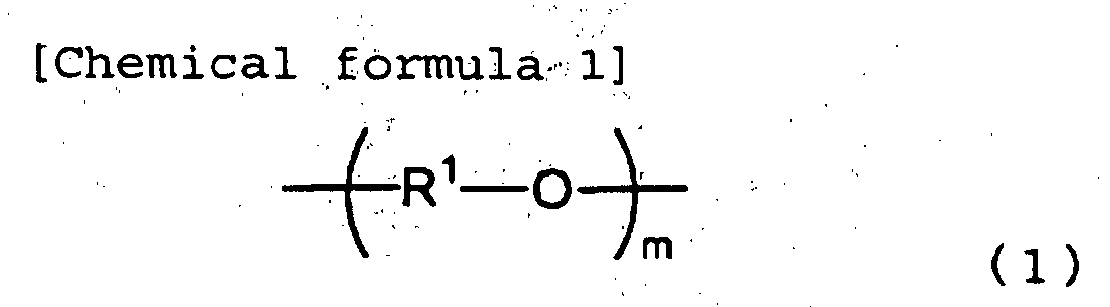


- The blood anticoagulant material according to the Claim 1, wherein the total content of the structural unit represented by Formula (1) and the structural unit represented by Formula (3) in the multiblock copolymer is 5% to 50% by weight.
- The blood anticoagulant material according to Claim 1 or 2, wherein the structural unit represented by Formula (1) is a poly(ethylene glycol) block.
- The blood anticoagulant material according to any one of Claims 1 to 3, wherein the structural unit represented by Formula (2) is a structural unit comprising at least one monomeric component selected from a group consisting of lactic acid, glycolic acid, and caprolactone.
- The blood anticoagulant material according to any one of Claims 1 to 4, wherein R3 in Formula (3) is a divalent hydrocarbon group having ten or less carbon atoms.
- A coating material comprising the blood anticoagulant material according to any one of Claims 1 to 5.
- An indwelling device of which a surface is coated with the coating material according to Claim 6.
- An indwelling device comprising the blood anticoagulant material according to any one of Claims 1 to 5.
- The indwelling device according to Claim 7 or 8, wherein the indwelling device is a stent.
- The blood anticoagulant material according to any one of Claims 1 to 5, wherein the blood anticoagulant material is used in order to prevent blood coagulation while an indwelling device is indwelled in a living body.
- A medical device comprising the blood anticoagulant material according to any one of Claims 1 to 5 for use in the treatment of angina pectoris.
Applications Claiming Priority (2)
| Application Number | Priority Date | Filing Date | Title |
|---|---|---|---|
| JP2006312167 | 2006-11-17 | ||
| PCT/JP2007/072328 WO2008059975A1 (en) | 2006-11-17 | 2007-11-16 | Blood-coagulation inhibiting material, coating material and in vivo indwelling members made by using the material, and method of treatment |
Publications (3)
| Publication Number | Publication Date |
|---|---|
| EP2098256A1 EP2098256A1 (en) | 2009-09-09 |
| EP2098256A4 EP2098256A4 (en) | 2009-11-25 |
| EP2098256B1 true EP2098256B1 (en) | 2016-06-08 |
Family
ID=39401779
Family Applications (1)
| Application Number | Title | Priority Date | Filing Date |
|---|---|---|---|
| EP07832058.7A Not-in-force EP2098256B1 (en) | 2006-11-17 | 2007-11-16 | Blood-coagulation inhibiting material, coating material and in vivo indwelling members made by using the material, and method of treatment |
Country Status (4)
| Country | Link |
|---|---|
| US (1) | US8871242B2 (en) |
| EP (1) | EP2098256B1 (en) |
| JP (1) | JP5297632B2 (en) |
| WO (1) | WO2008059975A1 (en) |
Families Citing this family (2)
| Publication number | Priority date | Publication date | Assignee | Title |
|---|---|---|---|---|
| TW202031211A (en) * | 2018-08-31 | 2020-09-01 | 日商東麗股份有限公司 | Cylindrical body for implant |
| PL448716A1 (en) * | 2024-05-29 | 2025-12-01 | Uniwersytet Jagielloński | Arylazolyrazole photoswitch-functionalized block copolymer with photoswitchable anticoagulant activity and application of the block polymer |
Family Cites Families (22)
| Publication number | Priority date | Publication date | Assignee | Title |
|---|---|---|---|---|
| US4189425A (en) * | 1975-04-11 | 1980-02-19 | Edward Shanbrom, Inc. | Method of preserving blood plasma I |
| US4438253A (en) * | 1982-11-12 | 1984-03-20 | American Cyanamid Company | Poly(glycolic acid)/poly(alkylene glycol) block copolymers and method of manufacturing the same |
| JPH0699566B2 (en) | 1986-12-26 | 1994-12-07 | 宇部興産株式会社 | Process for producing polyetheramide-polyalkylene oxide block copolymer |
| US5211878A (en) * | 1988-03-10 | 1993-05-18 | Merck Patent Gesellschaft Mit Beschrankter Haftung | Difluorobenzonitrile derivatives |
| JP3471109B2 (en) | 1995-03-08 | 2003-11-25 | トヨタ自動車株式会社 | Polylactic acid copolymer and molded product thereof |
| US6120536A (en) | 1995-04-19 | 2000-09-19 | Schneider (Usa) Inc. | Medical devices with long term non-thrombogenic coatings |
| US6211249B1 (en) | 1997-07-11 | 2001-04-03 | Life Medical Sciences, Inc. | Polyester polyether block copolymers |
| JP4503825B2 (en) | 1997-08-27 | 2010-07-14 | カリフォルニア インスティテュート オブ テクノロジー | Methods and compositions for preventing adhesion formation in biological tissues |
| KR20010030891A (en) * | 1997-10-03 | 2001-04-16 | 마크로메드 인코퍼레이션 | BIODEGRADABLE LOW MOLECULAR WEIGHT TRIBLOCK POLY(LACTIDE-co-GLYCOLIDE) POLYETHYLENE GLYCOL COPOLYMERS HAVING REVERSE THERMAL GELATION PROPERTIES |
| US6201072B1 (en) * | 1997-10-03 | 2001-03-13 | Macromed, Inc. | Biodegradable low molecular weight triblock poly(lactide-co- glycolide) polyethylene glycol copolymers having reverse thermal gelation properties |
| JP3582347B2 (en) | 1998-03-13 | 2004-10-27 | 三菱化学株式会社 | Block copolymers, films and fibers |
| JPH11299901A (en) | 1998-04-16 | 1999-11-02 | Johnson & Johnson Medical Kk | Stent and method for manufacturing the same |
| EP1293197A1 (en) * | 2000-06-23 | 2003-03-19 | Takeda Chemical Industries, Ltd. | Process for producing phospholipid-containing drugs |
| DE60129838T2 (en) * | 2000-11-09 | 2008-04-30 | Astrazeneca Ab | ORAL PHARMACEUTICAL COMPOSITION WITH A BLOCK COPOLYMER |
| KR100453130B1 (en) * | 2001-11-21 | 2004-10-15 | 한국과학기술연구원 | Sequentially Ordered Biodegradable Lactide(Glycolide or Lactide/Glycolide)/ε-Caprolactone Multi-Block Copolymer and Process for the Preparation Thereof |
| AU2003225882A1 (en) | 2002-03-20 | 2003-10-08 | Advanced Cardiovascular Systems, Inc. | Biodegradable hydrophobic polymer for stents |
| WO2003090807A1 (en) | 2002-04-24 | 2003-11-06 | Poly-Med, Inc. | Multifaceted endovascular stent coating for preventing restenosis |
| US8591782B2 (en) * | 2002-08-23 | 2013-11-26 | National Cerebral And Cardiovascular Center | Process for producing stent |
| EP1555278A1 (en) * | 2004-01-15 | 2005-07-20 | Innocore Technologies B.V. | Biodegradable multi-block co-polymers |
| US8357391B2 (en) * | 2004-07-30 | 2013-01-22 | Advanced Cardiovascular Systems, Inc. | Coatings for implantable devices comprising poly (hydroxy-alkanoates) and diacid linkages |
| KR100668046B1 (en) * | 2006-03-15 | 2007-01-16 | 한국화학연구원 | Biocompatible and temperature sensitive polyethylene glycol / polyester block copolymers and preparation methods thereof |
| JP4844221B2 (en) | 2006-04-28 | 2011-12-28 | 富士ゼロックス株式会社 | Toner cartridge |
-
2007
- 2007-11-16 US US12/515,365 patent/US8871242B2/en not_active Expired - Fee Related
- 2007-11-16 JP JP2007298711A patent/JP5297632B2/en not_active Expired - Fee Related
- 2007-11-16 EP EP07832058.7A patent/EP2098256B1/en not_active Not-in-force
- 2007-11-16 WO PCT/JP2007/072328 patent/WO2008059975A1/en not_active Ceased
Also Published As
| Publication number | Publication date |
|---|---|
| US20100030325A1 (en) | 2010-02-04 |
| JP2008142534A (en) | 2008-06-26 |
| JP5297632B2 (en) | 2013-09-25 |
| EP2098256A1 (en) | 2009-09-09 |
| WO2008059975A1 (en) | 2008-05-22 |
| EP2098256A4 (en) | 2009-11-25 |
| US8871242B2 (en) | 2014-10-28 |
Similar Documents
| Publication | Publication Date | Title |
|---|---|---|
| US8021679B2 (en) | Nitric oxide-releasing biodegradable polymers useful as medical devices and coatings therefore | |
| EP1842507B1 (en) | Intravascular implant | |
| JP5044409B2 (en) | Implantable device containing bioabsorbable star polymer and method of manufacture | |
| US20070053952A1 (en) | Nitric oxide-releasing polymers derived from modified polymers | |
| JP5695107B2 (en) | Copolymer containing phosphorylcholine group and method for producing and using the same | |
| AU2006214100B2 (en) | Drugs with improved hydrophobicity for incorporation in medical devices | |
| JP5188971B2 (en) | Polymer composition based on 4-aza-caprolactone useful as a biodegradable medical device manufacturing and medical device coating | |
| JP2009505726A (en) | Medical devices and coatings with improved functionality by including biodegradable polymers | |
| US8871242B2 (en) | Blood anticoagulant material, coating material and indwelling device comprising the same, and treatment using blood anticoagulant material | |
| JP2009061021A (en) | In-vivo indwelling containing branched biodegradable polyester | |
| KR101242392B1 (en) | Cardiovascular graft structure having elasticity and biodegradation period adjustable copolymer | |
| JPWO2008123108A1 (en) | In-vivo medical device | |
| WO2015020527A1 (en) | Biodegradable radiopaque stents and other implants | |
| JP2008237677A (en) | In vivo indwelling | |
| AU2012202903B2 (en) | Drugs with improved hydrophobicity for incorporation in medical devices | |
| JP2007105368A (en) | Medical materials excluding tissue replacement and bonding materials | |
| JP2008113827A (en) | In vivo indwelling | |
| AU2015201194A1 (en) | Drugs with improved hydrophobicity for incorporation in medical devices | |
| JP2007089917A (en) | In vivo indwelling |
Legal Events
| Date | Code | Title | Description |
|---|---|---|---|
| PUAI | Public reference made under article 153(3) epc to a published international application that has entered the european phase |
Free format text: ORIGINAL CODE: 0009012 |
|
| 17P | Request for examination filed |
Effective date: 20090527 |
|
| AK | Designated contracting states |
Kind code of ref document: A1 Designated state(s): AT BE BG CH CY CZ DE DK EE ES FI FR GB GR HU IE IS IT LI LT LU LV MC MT NL PL PT RO SE SI SK TR |
|
| A4 | Supplementary search report drawn up and despatched |
Effective date: 20091026 |
|
| DAX | Request for extension of the european patent (deleted) | ||
| RAP1 | Party data changed (applicant data changed or rights of an application transferred) |
Owner name: NATIONAL CEREBRAL AND CARDIOVASCULAR CENTER Owner name: MITSUBISHI CHEMICAL CORPORATION |
|
| RAP1 | Party data changed (applicant data changed or rights of an application transferred) |
Owner name: NATIONAL CEREBRAL AND CARDIOVASCULAR CENTER |
|
| RIC1 | Information provided on ipc code assigned before grant |
Ipc: C08L 53/00 20060101ALI20151021BHEP Ipc: A61L 33/00 20060101AFI20151021BHEP Ipc: A61M 25/00 20060101ALI20151021BHEP Ipc: A61F 2/06 20130101ALI20151021BHEP Ipc: C09D 153/00 20060101ALI20151021BHEP |
|
| GRAP | Despatch of communication of intention to grant a patent |
Free format text: ORIGINAL CODE: EPIDOSNIGR1 |
|
| INTG | Intention to grant announced |
Effective date: 20151223 |
|
| GRAS | Grant fee paid |
Free format text: ORIGINAL CODE: EPIDOSNIGR3 |
|
| GRAA | (expected) grant |
Free format text: ORIGINAL CODE: 0009210 |
|
| AK | Designated contracting states |
Kind code of ref document: B1 Designated state(s): AT BE BG CH CY CZ DE DK EE ES FI FR GB GR HU IE IS IT LI LT LU LV MC MT NL PL PT RO SE SI SK TR |
|
| REG | Reference to a national code |
Ref country code: GB Ref legal event code: FG4D |
|
| REG | Reference to a national code |
Ref country code: CH Ref legal event code: EP |
|
| REG | Reference to a national code |
Ref country code: IE Ref legal event code: FG4D |
|
| REG | Reference to a national code |
Ref country code: AT Ref legal event code: REF Ref document number: 804753 Country of ref document: AT Kind code of ref document: T Effective date: 20160715 |
|
| REG | Reference to a national code |
Ref country code: DE Ref legal event code: R096 Ref document number: 602007046614 Country of ref document: DE |
|
| REG | Reference to a national code |
Ref country code: LT Ref legal event code: MG4D |
|
| REG | Reference to a national code |
Ref country code: NL Ref legal event code: MP Effective date: 20160608 |
|
| PG25 | Lapsed in a contracting state [announced via postgrant information from national office to epo] |
Ref country code: FI Free format text: LAPSE BECAUSE OF FAILURE TO SUBMIT A TRANSLATION OF THE DESCRIPTION OR TO PAY THE FEE WITHIN THE PRESCRIBED TIME-LIMIT Effective date: 20160608 Ref country code: LT Free format text: LAPSE BECAUSE OF FAILURE TO SUBMIT A TRANSLATION OF THE DESCRIPTION OR TO PAY THE FEE WITHIN THE PRESCRIBED TIME-LIMIT Effective date: 20160608 |
|
| REG | Reference to a national code |
Ref country code: AT Ref legal event code: MK05 Ref document number: 804753 Country of ref document: AT Kind code of ref document: T Effective date: 20160608 |
|
| REG | Reference to a national code |
Ref country code: FR Ref legal event code: PLFP Year of fee payment: 10 |
|
| PG25 | Lapsed in a contracting state [announced via postgrant information from national office to epo] |
Ref country code: GR Free format text: LAPSE BECAUSE OF FAILURE TO SUBMIT A TRANSLATION OF THE DESCRIPTION OR TO PAY THE FEE WITHIN THE PRESCRIBED TIME-LIMIT Effective date: 20160909 Ref country code: LV Free format text: LAPSE BECAUSE OF FAILURE TO SUBMIT A TRANSLATION OF THE DESCRIPTION OR TO PAY THE FEE WITHIN THE PRESCRIBED TIME-LIMIT Effective date: 20160608 Ref country code: SE Free format text: LAPSE BECAUSE OF FAILURE TO SUBMIT A TRANSLATION OF THE DESCRIPTION OR TO PAY THE FEE WITHIN THE PRESCRIBED TIME-LIMIT Effective date: 20160608 Ref country code: ES Free format text: LAPSE BECAUSE OF FAILURE TO SUBMIT A TRANSLATION OF THE DESCRIPTION OR TO PAY THE FEE WITHIN THE PRESCRIBED TIME-LIMIT Effective date: 20160608 Ref country code: NL Free format text: LAPSE BECAUSE OF FAILURE TO SUBMIT A TRANSLATION OF THE DESCRIPTION OR TO PAY THE FEE WITHIN THE PRESCRIBED TIME-LIMIT Effective date: 20160608 |
|
| PG25 | Lapsed in a contracting state [announced via postgrant information from national office to epo] |
Ref country code: RO Free format text: LAPSE BECAUSE OF FAILURE TO SUBMIT A TRANSLATION OF THE DESCRIPTION OR TO PAY THE FEE WITHIN THE PRESCRIBED TIME-LIMIT Effective date: 20160608 Ref country code: EE Free format text: LAPSE BECAUSE OF FAILURE TO SUBMIT A TRANSLATION OF THE DESCRIPTION OR TO PAY THE FEE WITHIN THE PRESCRIBED TIME-LIMIT Effective date: 20160608 Ref country code: CZ Free format text: LAPSE BECAUSE OF FAILURE TO SUBMIT A TRANSLATION OF THE DESCRIPTION OR TO PAY THE FEE WITHIN THE PRESCRIBED TIME-LIMIT Effective date: 20160608 Ref country code: IS Free format text: LAPSE BECAUSE OF FAILURE TO SUBMIT A TRANSLATION OF THE DESCRIPTION OR TO PAY THE FEE WITHIN THE PRESCRIBED TIME-LIMIT Effective date: 20161008 Ref country code: SK Free format text: LAPSE BECAUSE OF FAILURE TO SUBMIT A TRANSLATION OF THE DESCRIPTION OR TO PAY THE FEE WITHIN THE PRESCRIBED TIME-LIMIT Effective date: 20160608 Ref country code: IT Free format text: LAPSE BECAUSE OF FAILURE TO SUBMIT A TRANSLATION OF THE DESCRIPTION OR TO PAY THE FEE WITHIN THE PRESCRIBED TIME-LIMIT Effective date: 20160608 |
|
| PGFP | Annual fee paid to national office [announced via postgrant information from national office to epo] |
Ref country code: GB Payment date: 20161104 Year of fee payment: 10 Ref country code: FR Payment date: 20161124 Year of fee payment: 10 Ref country code: DE Payment date: 20161122 Year of fee payment: 10 |
|
| PG25 | Lapsed in a contracting state [announced via postgrant information from national office to epo] |
Ref country code: BE Free format text: LAPSE BECAUSE OF FAILURE TO SUBMIT A TRANSLATION OF THE DESCRIPTION OR TO PAY THE FEE WITHIN THE PRESCRIBED TIME-LIMIT Effective date: 20160608 Ref country code: PL Free format text: LAPSE BECAUSE OF FAILURE TO SUBMIT A TRANSLATION OF THE DESCRIPTION OR TO PAY THE FEE WITHIN THE PRESCRIBED TIME-LIMIT Effective date: 20160608 Ref country code: PT Free format text: LAPSE BECAUSE OF FAILURE TO SUBMIT A TRANSLATION OF THE DESCRIPTION OR TO PAY THE FEE WITHIN THE PRESCRIBED TIME-LIMIT Effective date: 20161010 Ref country code: AT Free format text: LAPSE BECAUSE OF FAILURE TO SUBMIT A TRANSLATION OF THE DESCRIPTION OR TO PAY THE FEE WITHIN THE PRESCRIBED TIME-LIMIT Effective date: 20160608 |
|
| REG | Reference to a national code |
Ref country code: DE Ref legal event code: R097 Ref document number: 602007046614 Country of ref document: DE |
|
| PLBE | No opposition filed within time limit |
Free format text: ORIGINAL CODE: 0009261 |
|
| STAA | Information on the status of an ep patent application or granted ep patent |
Free format text: STATUS: NO OPPOSITION FILED WITHIN TIME LIMIT |
|
| 26N | No opposition filed |
Effective date: 20170309 |
|
| PG25 | Lapsed in a contracting state [announced via postgrant information from national office to epo] |
Ref country code: DK Free format text: LAPSE BECAUSE OF FAILURE TO SUBMIT A TRANSLATION OF THE DESCRIPTION OR TO PAY THE FEE WITHIN THE PRESCRIBED TIME-LIMIT Effective date: 20160608 Ref country code: SI Free format text: LAPSE BECAUSE OF FAILURE TO SUBMIT A TRANSLATION OF THE DESCRIPTION OR TO PAY THE FEE WITHIN THE PRESCRIBED TIME-LIMIT Effective date: 20160608 |
|
| REG | Reference to a national code |
Ref country code: CH Ref legal event code: PL |
|
| PG25 | Lapsed in a contracting state [announced via postgrant information from national office to epo] |
Ref country code: CH Free format text: LAPSE BECAUSE OF NON-PAYMENT OF DUE FEES Effective date: 20161130 Ref country code: LI Free format text: LAPSE BECAUSE OF NON-PAYMENT OF DUE FEES Effective date: 20161130 |
|
| REG | Reference to a national code |
Ref country code: IE Ref legal event code: MM4A |
|
| PG25 | Lapsed in a contracting state [announced via postgrant information from national office to epo] |
Ref country code: LU Free format text: LAPSE BECAUSE OF NON-PAYMENT OF DUE FEES Effective date: 20161130 |
|
| PG25 | Lapsed in a contracting state [announced via postgrant information from national office to epo] |
Ref country code: IE Free format text: LAPSE BECAUSE OF NON-PAYMENT OF DUE FEES Effective date: 20161116 |
|
| PG25 | Lapsed in a contracting state [announced via postgrant information from national office to epo] |
Ref country code: CY Free format text: LAPSE BECAUSE OF FAILURE TO SUBMIT A TRANSLATION OF THE DESCRIPTION OR TO PAY THE FEE WITHIN THE PRESCRIBED TIME-LIMIT Effective date: 20160608 Ref country code: HU Free format text: LAPSE BECAUSE OF FAILURE TO SUBMIT A TRANSLATION OF THE DESCRIPTION OR TO PAY THE FEE WITHIN THE PRESCRIBED TIME-LIMIT; INVALID AB INITIO Effective date: 20071116 |
|
| REG | Reference to a national code |
Ref country code: DE Ref legal event code: R119 Ref document number: 602007046614 Country of ref document: DE |
|
| PG25 | Lapsed in a contracting state [announced via postgrant information from national office to epo] |
Ref country code: MC Free format text: LAPSE BECAUSE OF FAILURE TO SUBMIT A TRANSLATION OF THE DESCRIPTION OR TO PAY THE FEE WITHIN THE PRESCRIBED TIME-LIMIT Effective date: 20160608 Ref country code: TR Free format text: LAPSE BECAUSE OF FAILURE TO SUBMIT A TRANSLATION OF THE DESCRIPTION OR TO PAY THE FEE WITHIN THE PRESCRIBED TIME-LIMIT Effective date: 20160608 |
|
| GBPC | Gb: european patent ceased through non-payment of renewal fee |
Effective date: 20171116 |
|
| PG25 | Lapsed in a contracting state [announced via postgrant information from national office to epo] |
Ref country code: BG Free format text: LAPSE BECAUSE OF FAILURE TO SUBMIT A TRANSLATION OF THE DESCRIPTION OR TO PAY THE FEE WITHIN THE PRESCRIBED TIME-LIMIT Effective date: 20160608 |
|
| REG | Reference to a national code |
Ref country code: FR Ref legal event code: ST Effective date: 20180731 |
|
| PG25 | Lapsed in a contracting state [announced via postgrant information from national office to epo] |
Ref country code: MT Free format text: LAPSE BECAUSE OF NON-PAYMENT OF DUE FEES Effective date: 20161116 |
|
| PG25 | Lapsed in a contracting state [announced via postgrant information from national office to epo] |
Ref country code: DE Free format text: LAPSE BECAUSE OF NON-PAYMENT OF DUE FEES Effective date: 20180602 Ref country code: FR Free format text: LAPSE BECAUSE OF NON-PAYMENT OF DUE FEES Effective date: 20171130 |
|
| PG25 | Lapsed in a contracting state [announced via postgrant information from national office to epo] |
Ref country code: GB Free format text: LAPSE BECAUSE OF NON-PAYMENT OF DUE FEES Effective date: 20171116 |