EP2096180A1 - Combination of marker genes for characterizing a Lactobacillus sakei strain - Google Patents
Combination of marker genes for characterizing a Lactobacillus sakei strain Download PDFInfo
- Publication number
- EP2096180A1 EP2096180A1 EP08300118A EP08300118A EP2096180A1 EP 2096180 A1 EP2096180 A1 EP 2096180A1 EP 08300118 A EP08300118 A EP 08300118A EP 08300118 A EP08300118 A EP 08300118A EP 2096180 A1 EP2096180 A1 EP 2096180A1
- Authority
- EP
- European Patent Office
- Prior art keywords
- seq
- fgp332
- strains
- sakei
- strain
- Prior art date
- Legal status (The legal status is an assumption and is not a legal conclusion. Google has not performed a legal analysis and makes no representation as to the accuracy of the status listed.)
- Withdrawn
Links
- 108090000623 proteins and genes Proteins 0.000 title claims abstract description 181
- 241000186612 Lactobacillus sakei Species 0.000 title claims abstract description 137
- 239000003550 marker Substances 0.000 title claims abstract description 57
- 238000000034 method Methods 0.000 claims description 39
- 239000000523 sample Substances 0.000 claims description 19
- 101150100487 sipA gene Proteins 0.000 claims description 12
- 101150059275 sspA gene Proteins 0.000 claims description 12
- 239000011159 matrix material Substances 0.000 claims description 11
- 101100223401 Dictyostelium discoideum spiA gene Proteins 0.000 claims description 10
- 101100476896 Salmonella typhimurium (strain 14028s / SGSC 2262) sctC2 gene Proteins 0.000 claims description 10
- 238000003753 real-time PCR Methods 0.000 claims description 5
- 230000003321 amplification Effects 0.000 claims description 4
- 238000009396 hybridization Methods 0.000 claims description 4
- 238000003199 nucleic acid amplification method Methods 0.000 claims description 4
- 238000004458 analytical method Methods 0.000 description 27
- 102000004169 proteins and genes Human genes 0.000 description 22
- 235000018102 proteins Nutrition 0.000 description 18
- 210000000349 chromosome Anatomy 0.000 description 15
- 235000013372 meat Nutrition 0.000 description 15
- 235000013305 food Nutrition 0.000 description 13
- 108010052285 Membrane Proteins Proteins 0.000 description 12
- 102000018697 Membrane Proteins Human genes 0.000 description 12
- 230000001580 bacterial effect Effects 0.000 description 12
- 108020004705 Codon Proteins 0.000 description 11
- 238000001514 detection method Methods 0.000 description 9
- 238000009826 distribution Methods 0.000 description 9
- 235000013580 sausages Nutrition 0.000 description 9
- ULGZDMOVFRHVEP-RWJQBGPGSA-N Erythromycin Chemical compound O([C@@H]1[C@@H](C)C(=O)O[C@@H]([C@@]([C@H](O)[C@@H](C)C(=O)[C@H](C)C[C@@](C)(O)[C@H](O[C@H]2[C@@H]([C@H](C[C@@H](C)O2)N(C)C)O)[C@H]1C)(C)O)CC)[C@H]1C[C@@](C)(OC)[C@@H](O)[C@H](C)O1 ULGZDMOVFRHVEP-RWJQBGPGSA-N 0.000 description 8
- 241001134659 Lactobacillus curvatus Species 0.000 description 8
- 108700010070 Codon Usage Proteins 0.000 description 7
- 108020004414 DNA Proteins 0.000 description 7
- 239000002253 acid Substances 0.000 description 7
- 230000002068 genetic effect Effects 0.000 description 7
- 239000000203 mixture Substances 0.000 description 7
- 239000002243 precursor Substances 0.000 description 7
- 108090000765 processed proteins & peptides Proteins 0.000 description 7
- 238000002474 experimental method Methods 0.000 description 6
- 230000002103 transcriptional effect Effects 0.000 description 6
- 238000004422 calculation algorithm Methods 0.000 description 5
- 210000004027 cell Anatomy 0.000 description 5
- 239000012634 fragment Substances 0.000 description 5
- 238000003906 pulsed field gel electrophoresis Methods 0.000 description 5
- 241000894007 species Species 0.000 description 5
- 241000251468 Actinopterygii Species 0.000 description 4
- 241000894006 Bacteria Species 0.000 description 4
- 108010062877 Bacteriocins Proteins 0.000 description 4
- 101710116034 Immunity protein Proteins 0.000 description 4
- 102000004316 Oxidoreductases Human genes 0.000 description 4
- 108090000854 Oxidoreductases Proteins 0.000 description 4
- 108050008314 Polysaccharide export proteins Proteins 0.000 description 4
- 238000012952 Resampling Methods 0.000 description 4
- 108010006873 Threonine Dehydratase Proteins 0.000 description 4
- 229940024606 amino acid Drugs 0.000 description 4
- 235000001014 amino acid Nutrition 0.000 description 4
- 235000015278 beef Nutrition 0.000 description 4
- 238000011161 development Methods 0.000 description 4
- 229960003276 erythromycin Drugs 0.000 description 4
- 235000019688 fish Nutrition 0.000 description 4
- 230000006870 function Effects 0.000 description 4
- JVTAAEKCZFNVCJ-UHFFFAOYSA-N lactic acid Chemical compound CC(O)C(O)=O JVTAAEKCZFNVCJ-UHFFFAOYSA-N 0.000 description 4
- 102000004196 processed proteins & peptides Human genes 0.000 description 4
- 108010015742 Cytochrome P-450 Enzyme System Proteins 0.000 description 3
- 102000003849 Cytochrome P450 Human genes 0.000 description 3
- 108700023372 Glycosyltransferases Proteins 0.000 description 3
- 102000051366 Glycosyltransferases Human genes 0.000 description 3
- 102000003673 Symporters Human genes 0.000 description 3
- 108090000088 Symporters Proteins 0.000 description 3
- 150000001413 amino acids Chemical class 0.000 description 3
- 238000013459 approach Methods 0.000 description 3
- 230000002368 bacteriocinic effect Effects 0.000 description 3
- 230000027455 binding Effects 0.000 description 3
- 238000005516 engineering process Methods 0.000 description 3
- 239000000499 gel Substances 0.000 description 3
- 150000007523 nucleic acids Chemical group 0.000 description 3
- 239000013612 plasmid Substances 0.000 description 3
- 235000015277 pork Nutrition 0.000 description 3
- 238000002360 preparation method Methods 0.000 description 3
- 230000010076 replication Effects 0.000 description 3
- 238000011160 research Methods 0.000 description 3
- 102100025230 2-amino-3-ketobutyrate coenzyme A ligase, mitochondrial Human genes 0.000 description 2
- 108010034869 6-phospho-beta-glucosidase Proteins 0.000 description 2
- 229920001817 Agar Polymers 0.000 description 2
- 241000972773 Aulopiformes Species 0.000 description 2
- 101710142637 Bacteriocin sakacin-P Proteins 0.000 description 2
- 102000014914 Carrier Proteins Human genes 0.000 description 2
- 108010078791 Carrier Proteins Proteins 0.000 description 2
- 241000588724 Escherichia coli Species 0.000 description 2
- 108090000371 Esterases Proteins 0.000 description 2
- 101710158368 Extracellular lipase Proteins 0.000 description 2
- 101710198693 Invasin Proteins 0.000 description 2
- 235000019687 Lamb Nutrition 0.000 description 2
- 101000693526 Latilactobacillus sakei Bacteriocin sakacin-P Proteins 0.000 description 2
- TWRXJAOTZQYOKJ-UHFFFAOYSA-L Magnesium chloride Chemical compound [Mg+2].[Cl-].[Cl-] TWRXJAOTZQYOKJ-UHFFFAOYSA-L 0.000 description 2
- BRGMHAYQAZFZDJ-ZTVVOAFPSA-N N-acetyl-D-mannosamine 6-phosphate Chemical compound CC(=O)N[C@@H]1C(O)O[C@H](COP(O)(O)=O)[C@@H](O)[C@@H]1O BRGMHAYQAZFZDJ-ZTVVOAFPSA-N 0.000 description 2
- 238000010222 PCR analysis Methods 0.000 description 2
- 101710193192 Putative transcriptional regulator Proteins 0.000 description 2
- JUJWROOIHBZHMG-UHFFFAOYSA-N Pyridine Chemical class C1=CC=NC=C1 JUJWROOIHBZHMG-UHFFFAOYSA-N 0.000 description 2
- 102100027287 Serpin H1 Human genes 0.000 description 2
- 108050008290 Serpin H1 Proteins 0.000 description 2
- 101710128940 Triacylglycerol lipase Proteins 0.000 description 2
- 239000008272 agar Substances 0.000 description 2
- 210000004899 c-terminal region Anatomy 0.000 description 2
- 239000003795 chemical substances by application Substances 0.000 description 2
- 239000013611 chromosomal DNA Substances 0.000 description 2
- 238000011109 contamination Methods 0.000 description 2
- XLJMAIOERFSOGZ-UHFFFAOYSA-M cyanate Chemical compound [O-]C#N XLJMAIOERFSOGZ-UHFFFAOYSA-M 0.000 description 2
- 210000003608 fece Anatomy 0.000 description 2
- 150000004676 glycans Chemical class 0.000 description 2
- 230000036039 immunity Effects 0.000 description 2
- 101150062200 lacC gene Proteins 0.000 description 2
- 101150073784 lacG gene Proteins 0.000 description 2
- 235000014655 lactic acid Nutrition 0.000 description 2
- 239000004310 lactic acid Substances 0.000 description 2
- 238000004519 manufacturing process Methods 0.000 description 2
- 238000013507 mapping Methods 0.000 description 2
- 238000004949 mass spectrometry Methods 0.000 description 2
- 238000005259 measurement Methods 0.000 description 2
- 108020004707 nucleic acids Proteins 0.000 description 2
- 102000039446 nucleic acids Human genes 0.000 description 2
- 150000002978 peroxides Chemical class 0.000 description 2
- 229920001282 polysaccharide Polymers 0.000 description 2
- 239000005017 polysaccharide Substances 0.000 description 2
- 235000019515 salmon Nutrition 0.000 description 2
- 235000021108 sauerkraut Nutrition 0.000 description 2
- 238000002415 sodium dodecyl sulfate polyacrylamide gel electrophoresis Methods 0.000 description 2
- 238000013519 translation Methods 0.000 description 2
- 238000012795 verification Methods 0.000 description 2
- QKNYBSVHEMOAJP-UHFFFAOYSA-N 2-amino-2-(hydroxymethyl)propane-1,3-diol;hydron;chloride Chemical compound Cl.OCC(N)(CO)CO QKNYBSVHEMOAJP-UHFFFAOYSA-N 0.000 description 1
- 101710110482 2-amino-3-ketobutyrate coenzyme A ligase Proteins 0.000 description 1
- 108010017192 4-hydroxy-4-methyl-2-oxoglutarate aldolase Proteins 0.000 description 1
- 108010063198 6-phospho-beta-galactosidase Proteins 0.000 description 1
- 102000005416 ATP-Binding Cassette Transporters Human genes 0.000 description 1
- 108010006533 ATP-Binding Cassette Transporters Proteins 0.000 description 1
- 101710157736 ATP-dependent 6-phosphofructokinase Proteins 0.000 description 1
- 101710200244 ATP-dependent 6-phosphofructokinase isozyme 2 Proteins 0.000 description 1
- 102100029589 Acylpyruvase FAHD1, mitochondrial Human genes 0.000 description 1
- 108010052875 Adenine deaminase Proteins 0.000 description 1
- 108010021809 Alcohol dehydrogenase Proteins 0.000 description 1
- 102000007698 Alcohol dehydrogenase Human genes 0.000 description 1
- 108020004774 Alkaline Phosphatase Proteins 0.000 description 1
- 102000002260 Alkaline Phosphatase Human genes 0.000 description 1
- 108700023418 Amidases Proteins 0.000 description 1
- 102000052866 Amino Acyl-tRNA Synthetases Human genes 0.000 description 1
- 108700028939 Amino Acyl-tRNA Synthetases Proteins 0.000 description 1
- 108091093088 Amplicon Proteins 0.000 description 1
- 241000442425 Aristeomorpha foliacea Species 0.000 description 1
- 235000001258 Cinchona calisaya Nutrition 0.000 description 1
- KRKNYBCHXYNGOX-UHFFFAOYSA-K Citrate Chemical compound [O-]C(=O)CC(O)(CC([O-])=O)C([O-])=O KRKNYBCHXYNGOX-UHFFFAOYSA-K 0.000 description 1
- 239000003298 DNA probe Substances 0.000 description 1
- 102000052510 DNA-Binding Proteins Human genes 0.000 description 1
- 101710096438 DNA-binding protein Proteins 0.000 description 1
- 241000238557 Decapoda Species 0.000 description 1
- 101100278592 Desulfovibrio vulgaris (strain ATCC 29579 / DSM 644 / NCIMB 8303 / VKM B-1760 / Hildenborough) dsvB gene Proteins 0.000 description 1
- 102000004190 Enzymes Human genes 0.000 description 1
- 108090000790 Enzymes Proteins 0.000 description 1
- 108050001049 Extracellular proteins Proteins 0.000 description 1
- WQZGKKKJIJFFOK-GASJEMHNSA-N Glucose Natural products OC[C@H]1OC(O)[C@H](O)[C@@H](O)[C@@H]1O WQZGKKKJIJFFOK-GASJEMHNSA-N 0.000 description 1
- 102000004157 Hydrolases Human genes 0.000 description 1
- 108090000604 Hydrolases Proteins 0.000 description 1
- 102100030764 Inactive L-threonine 3-dehydrogenase, mitochondrial Human genes 0.000 description 1
- 241000961787 Josa Species 0.000 description 1
- 108010043075 L-threonine 3-dehydrogenase Proteins 0.000 description 1
- 108700009548 Lactobacillus sakacin P Proteins 0.000 description 1
- 241001582341 Lactobacillus sakei subsp. carnosus Species 0.000 description 1
- 241001582342 Lactobacillus sakei subsp. sakei Species 0.000 description 1
- 238000007476 Maximum Likelihood Methods 0.000 description 1
- 108090000301 Membrane transport proteins Proteins 0.000 description 1
- 102000003939 Membrane transport proteins Human genes 0.000 description 1
- 102000005431 Molecular Chaperones Human genes 0.000 description 1
- 108010006519 Molecular Chaperones Proteins 0.000 description 1
- 102000048245 N-acetylneuraminate lyases Human genes 0.000 description 1
- 108700023220 N-acetylneuraminate lyases Proteins 0.000 description 1
- 108010077365 N-acylglucosamine-6-phosphate 2-epimerase Proteins 0.000 description 1
- 239000004677 Nylon Substances 0.000 description 1
- 108091034117 Oligonucleotide Proteins 0.000 description 1
- 108010069823 Oxaloacetate decarboxylase Proteins 0.000 description 1
- 238000012408 PCR amplification Methods 0.000 description 1
- 229910019142 PO4 Inorganic materials 0.000 description 1
- 108050008880 Polysaccharide biosynthesis proteins Proteins 0.000 description 1
- 108010029485 Protein Isoforms Proteins 0.000 description 1
- 102000001708 Protein Isoforms Human genes 0.000 description 1
- 108010026552 Proteome Proteins 0.000 description 1
- 101710119363 Putative glycosyltransferases Proteins 0.000 description 1
- LOUPRKONTZGTKE-WZBLMQSHSA-N Quinine Natural products C([C@H]([C@H](C1)C=C)C2)C[N@@]1[C@@H]2[C@H](O)C1=CC=NC2=CC=C(OC)C=C21 LOUPRKONTZGTKE-WZBLMQSHSA-N 0.000 description 1
- 108090001066 Racemases and epimerases Proteins 0.000 description 1
- 108050001702 Rhodanese-like domains Proteins 0.000 description 1
- 102000010179 Rhodanese-like domains Human genes 0.000 description 1
- 102000002278 Ribosomal Proteins Human genes 0.000 description 1
- 108010000605 Ribosomal Proteins Proteins 0.000 description 1
- VMETVXNVLXCEFC-UHFFFAOYSA-N Sakacin P Chemical compound NC(=O)C(=O)C(C)NC(=O)OC(C)(C)C VMETVXNVLXCEFC-UHFFFAOYSA-N 0.000 description 1
- 241000277331 Salmonidae Species 0.000 description 1
- 101710142587 Short-chain dehydrogenase/reductase Proteins 0.000 description 1
- 238000002105 Southern blotting Methods 0.000 description 1
- 229930006000 Sucrose Natural products 0.000 description 1
- CZMRCDWAGMRECN-UGDNZRGBSA-N Sucrose Chemical compound O[C@H]1[C@H](O)[C@@H](CO)O[C@@]1(CO)O[C@@H]1[C@H](O)[C@@H](O)[C@H](O)[C@@H](CO)O1 CZMRCDWAGMRECN-UGDNZRGBSA-N 0.000 description 1
- 102000002933 Thioredoxin Human genes 0.000 description 1
- 108010073429 Type V Secretion Systems Proteins 0.000 description 1
- HCHKCACWOHOZIP-UHFFFAOYSA-N Zinc Chemical compound [Zn] HCHKCACWOHOZIP-UHFFFAOYSA-N 0.000 description 1
- JLCPHMBAVCMARE-UHFFFAOYSA-N [3-[[3-[[3-[[3-[[3-[[3-[[3-[[3-[[3-[[3-[[3-[[5-(2-amino-6-oxo-1H-purin-9-yl)-3-[[3-[[3-[[3-[[3-[[3-[[5-(2-amino-6-oxo-1H-purin-9-yl)-3-[[5-(2-amino-6-oxo-1H-purin-9-yl)-3-hydroxyoxolan-2-yl]methoxy-hydroxyphosphoryl]oxyoxolan-2-yl]methoxy-hydroxyphosphoryl]oxy-5-(5-methyl-2,4-dioxopyrimidin-1-yl)oxolan-2-yl]methoxy-hydroxyphosphoryl]oxy-5-(6-aminopurin-9-yl)oxolan-2-yl]methoxy-hydroxyphosphoryl]oxy-5-(6-aminopurin-9-yl)oxolan-2-yl]methoxy-hydroxyphosphoryl]oxy-5-(6-aminopurin-9-yl)oxolan-2-yl]methoxy-hydroxyphosphoryl]oxy-5-(6-aminopurin-9-yl)oxolan-2-yl]methoxy-hydroxyphosphoryl]oxyoxolan-2-yl]methoxy-hydroxyphosphoryl]oxy-5-(5-methyl-2,4-dioxopyrimidin-1-yl)oxolan-2-yl]methoxy-hydroxyphosphoryl]oxy-5-(4-amino-2-oxopyrimidin-1-yl)oxolan-2-yl]methoxy-hydroxyphosphoryl]oxy-5-(5-methyl-2,4-dioxopyrimidin-1-yl)oxolan-2-yl]methoxy-hydroxyphosphoryl]oxy-5-(5-methyl-2,4-dioxopyrimidin-1-yl)oxolan-2-yl]methoxy-hydroxyphosphoryl]oxy-5-(6-aminopurin-9-yl)oxolan-2-yl]methoxy-hydroxyphosphoryl]oxy-5-(6-aminopurin-9-yl)oxolan-2-yl]methoxy-hydroxyphosphoryl]oxy-5-(4-amino-2-oxopyrimidin-1-yl)oxolan-2-yl]methoxy-hydroxyphosphoryl]oxy-5-(4-amino-2-oxopyrimidin-1-yl)oxolan-2-yl]methoxy-hydroxyphosphoryl]oxy-5-(4-amino-2-oxopyrimidin-1-yl)oxolan-2-yl]methoxy-hydroxyphosphoryl]oxy-5-(6-aminopurin-9-yl)oxolan-2-yl]methoxy-hydroxyphosphoryl]oxy-5-(4-amino-2-oxopyrimidin-1-yl)oxolan-2-yl]methyl [5-(6-aminopurin-9-yl)-2-(hydroxymethyl)oxolan-3-yl] hydrogen phosphate Polymers Cc1cn(C2CC(OP(O)(=O)OCC3OC(CC3OP(O)(=O)OCC3OC(CC3O)n3cnc4c3nc(N)[nH]c4=O)n3cnc4c3nc(N)[nH]c4=O)C(COP(O)(=O)OC3CC(OC3COP(O)(=O)OC3CC(OC3COP(O)(=O)OC3CC(OC3COP(O)(=O)OC3CC(OC3COP(O)(=O)OC3CC(OC3COP(O)(=O)OC3CC(OC3COP(O)(=O)OC3CC(OC3COP(O)(=O)OC3CC(OC3COP(O)(=O)OC3CC(OC3COP(O)(=O)OC3CC(OC3COP(O)(=O)OC3CC(OC3COP(O)(=O)OC3CC(OC3COP(O)(=O)OC3CC(OC3COP(O)(=O)OC3CC(OC3COP(O)(=O)OC3CC(OC3COP(O)(=O)OC3CC(OC3COP(O)(=O)OC3CC(OC3CO)n3cnc4c(N)ncnc34)n3ccc(N)nc3=O)n3cnc4c(N)ncnc34)n3ccc(N)nc3=O)n3ccc(N)nc3=O)n3ccc(N)nc3=O)n3cnc4c(N)ncnc34)n3cnc4c(N)ncnc34)n3cc(C)c(=O)[nH]c3=O)n3cc(C)c(=O)[nH]c3=O)n3ccc(N)nc3=O)n3cc(C)c(=O)[nH]c3=O)n3cnc4c3nc(N)[nH]c4=O)n3cnc4c(N)ncnc34)n3cnc4c(N)ncnc34)n3cnc4c(N)ncnc34)n3cnc4c(N)ncnc34)O2)c(=O)[nH]c1=O JLCPHMBAVCMARE-UHFFFAOYSA-N 0.000 description 1
- 101710186794 [Citrate [pro-3S]-lyase] ligase Proteins 0.000 description 1
- 230000006978 adaptation Effects 0.000 description 1
- 239000011543 agarose gel Substances 0.000 description 1
- 102000005922 amidase Human genes 0.000 description 1
- 239000000427 antigen Substances 0.000 description 1
- 108091007433 antigens Proteins 0.000 description 1
- 102000036639 antigens Human genes 0.000 description 1
- 101150010487 are gene Proteins 0.000 description 1
- -1 aromatic amino acid Chemical class 0.000 description 1
- 238000003491 array Methods 0.000 description 1
- 235000009582 asparagine Nutrition 0.000 description 1
- 150000001508 asparagines Chemical class 0.000 description 1
- 235000015241 bacon Nutrition 0.000 description 1
- 210000003578 bacterial chromosome Anatomy 0.000 description 1
- 230000003115 biocidal effect Effects 0.000 description 1
- 244000309464 bull Species 0.000 description 1
- 230000003915 cell function Effects 0.000 description 1
- 238000012512 characterization method Methods 0.000 description 1
- LOUPRKONTZGTKE-UHFFFAOYSA-N cinchonine Natural products C1C(C(C2)C=C)CCN2C1C(O)C1=CC=NC2=CC=C(OC)C=C21 LOUPRKONTZGTKE-UHFFFAOYSA-N 0.000 description 1
- 108010057605 citrate (pro-3S)-lyase ligase Proteins 0.000 description 1
- 238000007621 cluster analysis Methods 0.000 description 1
- 239000003086 colorant Substances 0.000 description 1
- 230000002860 competitive effect Effects 0.000 description 1
- 239000002299 complementary DNA Substances 0.000 description 1
- 239000000356 contaminant Substances 0.000 description 1
- 230000001351 cycling effect Effects 0.000 description 1
- 235000018417 cysteine Nutrition 0.000 description 1
- XUJNEKJLAYXESH-UHFFFAOYSA-N cysteine Natural products SCC(N)C(O)=O XUJNEKJLAYXESH-UHFFFAOYSA-N 0.000 description 1
- 108010042194 dextransucrase Proteins 0.000 description 1
- 230000029087 digestion Effects 0.000 description 1
- 238000010790 dilution Methods 0.000 description 1
- 239000012895 dilution Substances 0.000 description 1
- 201000010099 disease Diseases 0.000 description 1
- 208000037265 diseases, disorders, signs and symptoms Diseases 0.000 description 1
- 101150116515 dsrB gene Proteins 0.000 description 1
- 238000001962 electrophoresis Methods 0.000 description 1
- ZMMJGEGLRURXTF-UHFFFAOYSA-N ethidium bromide Chemical compound [Br-].C12=CC(N)=CC=C2C2=CC=C(N)C=C2[N+](CC)=C1C1=CC=CC=C1 ZMMJGEGLRURXTF-UHFFFAOYSA-N 0.000 description 1
- 229960005542 ethidium bromide Drugs 0.000 description 1
- 238000000605 extraction Methods 0.000 description 1
- 238000001502 gel electrophoresis Methods 0.000 description 1
- 238000012268 genome sequencing Methods 0.000 description 1
- 239000011521 glass Substances 0.000 description 1
- 239000008103 glucose Substances 0.000 description 1
- 108010074299 glycine acetyltransferase Proteins 0.000 description 1
- 230000034659 glycolysis Effects 0.000 description 1
- 238000009499 grossing Methods 0.000 description 1
- 230000036541 health Effects 0.000 description 1
- 125000002887 hydroxy group Chemical group [H]O* 0.000 description 1
- 238000012405 in silico analysis Methods 0.000 description 1
- 238000000126 in silico method Methods 0.000 description 1
- 230000002779 inactivation Effects 0.000 description 1
- 238000003780 insertion Methods 0.000 description 1
- 230000037431 insertion Effects 0.000 description 1
- 238000002955 isolation Methods 0.000 description 1
- 238000002372 labelling Methods 0.000 description 1
- 229910001629 magnesium chloride Inorganic materials 0.000 description 1
- 238000012423 maintenance Methods 0.000 description 1
- 239000000463 material Substances 0.000 description 1
- 238000001840 matrix-assisted laser desorption--ionisation time-of-flight mass spectrometry Methods 0.000 description 1
- 235000013622 meat product Nutrition 0.000 description 1
- 239000012528 membrane Substances 0.000 description 1
- 108020004999 messenger RNA Proteins 0.000 description 1
- 230000000813 microbial effect Effects 0.000 description 1
- 244000005700 microbiome Species 0.000 description 1
- 238000013508 migration Methods 0.000 description 1
- 230000005012 migration Effects 0.000 description 1
- 235000013336 milk Nutrition 0.000 description 1
- 239000008267 milk Substances 0.000 description 1
- 210000004080 milk Anatomy 0.000 description 1
- 238000012986 modification Methods 0.000 description 1
- 230000004048 modification Effects 0.000 description 1
- 238000001823 molecular biology technique Methods 0.000 description 1
- 239000002773 nucleotide Substances 0.000 description 1
- 125000003729 nucleotide group Chemical group 0.000 description 1
- 235000008935 nutritious Nutrition 0.000 description 1
- 229920001778 nylon Polymers 0.000 description 1
- 230000004792 oxidative damage Effects 0.000 description 1
- 244000052769 pathogen Species 0.000 description 1
- 238000000955 peptide mass fingerprinting Methods 0.000 description 1
- NBIIXXVUZAFLBC-UHFFFAOYSA-K phosphate Chemical compound [O-]P([O-])([O-])=O NBIIXXVUZAFLBC-UHFFFAOYSA-K 0.000 description 1
- 239000010452 phosphate Substances 0.000 description 1
- 238000007747 plating Methods 0.000 description 1
- 229920001184 polypeptide Polymers 0.000 description 1
- 230000002335 preservative effect Effects 0.000 description 1
- 230000037452 priming Effects 0.000 description 1
- 238000012545 processing Methods 0.000 description 1
- UMJSCPRVCHMLSP-UHFFFAOYSA-N pyridine Natural products COC1=CC=CN=C1 UMJSCPRVCHMLSP-UHFFFAOYSA-N 0.000 description 1
- 229960000948 quinine Drugs 0.000 description 1
- 230000002285 radioactive effect Effects 0.000 description 1
- 101150044854 repA gene Proteins 0.000 description 1
- 235000019992 sake Nutrition 0.000 description 1
- 238000005070 sampling Methods 0.000 description 1
- 238000012216 screening Methods 0.000 description 1
- 238000012163 sequencing technique Methods 0.000 description 1
- 238000011524 similarity measure Methods 0.000 description 1
- 238000010561 standard procedure Methods 0.000 description 1
- 239000007858 starting material Substances 0.000 description 1
- 238000003860 storage Methods 0.000 description 1
- 239000000126 substance Substances 0.000 description 1
- 239000005720 sucrose Substances 0.000 description 1
- 101150003509 tag gene Proteins 0.000 description 1
- 108060008226 thioredoxin Proteins 0.000 description 1
- 229940094937 thioredoxin Drugs 0.000 description 1
- 238000012546 transfer Methods 0.000 description 1
- 238000000539 two dimensional gel electrophoresis Methods 0.000 description 1
- 238000010200 validation analysis Methods 0.000 description 1
- 239000011701 zinc Substances 0.000 description 1
- 229910052725 zinc Inorganic materials 0.000 description 1
Images


Classifications
-
- C—CHEMISTRY; METALLURGY
- C12—BIOCHEMISTRY; BEER; SPIRITS; WINE; VINEGAR; MICROBIOLOGY; ENZYMOLOGY; MUTATION OR GENETIC ENGINEERING
- C12Q—MEASURING OR TESTING PROCESSES INVOLVING ENZYMES, NUCLEIC ACIDS OR MICROORGANISMS; COMPOSITIONS OR TEST PAPERS THEREFOR; PROCESSES OF PREPARING SUCH COMPOSITIONS; CONDITION-RESPONSIVE CONTROL IN MICROBIOLOGICAL OR ENZYMOLOGICAL PROCESSES
- C12Q1/00—Measuring or testing processes involving enzymes, nucleic acids or microorganisms; Compositions therefor; Processes of preparing such compositions
- C12Q1/68—Measuring or testing processes involving enzymes, nucleic acids or microorganisms; Compositions therefor; Processes of preparing such compositions involving nucleic acids
- C12Q1/6876—Nucleic acid products used in the analysis of nucleic acids, e.g. primers or probes
- C12Q1/6888—Nucleic acid products used in the analysis of nucleic acids, e.g. primers or probes for detection or identification of organisms
- C12Q1/689—Nucleic acid products used in the analysis of nucleic acids, e.g. primers or probes for detection or identification of organisms for bacteria
Definitions
- the present invention relates to a combination of marker genes for characterizing a Lactobacillus sakei strain.
- the present invention concerns the use of a pattern of presence or absence of marker genes in the genome of the strain to be characterized for classifying and identifying said strain.
- Fresh meat and fish are nutritious but highly perishable foods. During production and storage they are exposed to unavoidable microbial contamination from the processing environment. Such contamination may include spoilage organisms and pathogens. It is therefore a priority for food processors to restrict the growth of contaminants so that they do not develop to potentially dangerous levels.
- One of the methods employed is the use of safe bacteria to curb growth of spoilage and disease-causing micro-organisms.
- the meat-borne lactic acid bacterium Lactobacillus sakei shows in this view excellent properties.
- L. sakei has the ability to survive and grow on fresh meat, forming the dominant population when selective techniques are applied. Some strains are widely used in Europe for artisanal and larger scale manufacture of fermented sausages because of their useful preservative properties. But they could also be used as meat biopreservative by preventing the growth of unwanted bacteria ( Vermeiren et al. 2004 Int. J. Food Microbiol. 96:149-164 ).
- An aim of the present invention is to provide better methods of classification, characterization and identification of L. sakei strains, which could in particular be used to identify L. sakei strains present on food or in a cocktail of bacteria used as biopreservative.
- the inventors of the present invention have herein identified, based on an in silico study of the L. sakei genome and on experimental validation on a large collection of L. sakei strains, a combination of markers for characterizing and detecting these strains.
- 29 marker genes have been isolated, whose combination provides an optimal way of characterizing L. sakei strains.
- the present invention thus relates to a combination of markers enabling for characterizing a L. sakei strain which comprises at least two marker genes selected from the group consisting of LSA1641 (SEQ ID NO:1), LSA1182 (SEQ ID NO:2), LSA1183_c (SEQ ID NO: 3), LSA0172 (SEQ ID NO:4), LSA1731 (SEQ ID NO:5), LSA0211 (SEQ ID NO:6), LSA0212 (SEQ ID NO:7), LSA1579 (SEQ ID NO:8), LSA1580 (SEQ ID NO:9), LSA0118 (SEQ ID NO:10), LSA0529 (SEQ ID NO:11), LSA0439 (SEQ ID NO:12), LSA0572 (SEQ ID NO:13), LSA0219b (SEQ ID NO:14), LSA0564_a (SEQ ID NO:15), LSA0564_b (SEQ ID NO:16), LSA0564_c (SEQ ID NO:17), FGP2
- said combination comprises all of the marker genes SEQ ID NO:1 to SEQ ID NO:29.
- the present invention also relates to a method for characterizing a L. sakei strain which comprises the step consisting of determining the presence or absence of at least one marker gene selected from the group consisting of LSA1641 (SEQ ID NO:1), LSA1182 (SEQ ID NO:2), LSA1183_c (SEQ ID NO: 3), LSA0172 (SEQ ID NO:4), LSA1731 (SEQ ID NO:5), LSA0211 (SEQ ID NO:6), LSA0212 (SEQ ID NO:7), LSA1579 (SEQ ID NO:8), LSA1580 (SEQ ID NO:9), LSA0118 (SEQ ID NO:10), LSA0529 (SEQ ID NO:11), LSA0439 (SEQ ID NO:12), LSA0572 (SEQ ID NO:13), LSA0219b (SEQ ID NO:14), LSA0564_a (SEQ ID NO:15), LSA0564_b (SEQ ID NO:16), LSA0564_c (SEQ
- the presence or absence of all of said marker genes SEQ ID NO: 1 to SEQ ID NO: 29 is determined.
- the presence or absence of said marker gene(s) is determined by amplification, or by hybridization with probes specific of said marker gene(s).
- a classification of said L. sakei strain is performed by analyzing the pattern of presence or absence of the above marker gene(s) and calculating a Jacquard index or Dice Coefficient or any binary distance matrix with regard to a set of reference L. sakei strains.
- the present invention also concerns a DNA array which comprises a combination of markers as defined above.
- Another aspect of the present invention concerns a method of comparing at least two L. sakei strains comprising the steps consisting of
- the above method of comparing at least two L. sakei strains further comprises the step of analysing the pattern of presence or absence of said marker genes by calculating a Jacquard index, or a Dice coefficient or any binary distance matrix.
- Another aspect of the present invention relates to a method of quantifying a specific L . sakei strain in a sample comprising the steps consisting of:
- the inventors In order to identify marker genes that could be used to characterize specifically a L. sakei strain compared with other L. sakei strains, the inventors first identified variable genomic islands in the genome of L. sakei 23K that were likely to contain variable genes displaying a high diversity according to the species (step described in Example 1). Then, they performed a classification of L. sakei strains according to the presence or absence of genes from genomic islands previously identified and compared the so obtained classification with the one obtained using several other typing techniques (step described in Example 2). Finally, they identified an optimal combination of a minimum number of genes from the genomic islands that could be used to obtain a reliable classification of L. sakei strains compared to the one obtained with a high number of variable genes (step described in Example 3).
- a combination of markers enabling for characterizing a L. sakei strain comprises at least two marker genes selected from the group consisting of LSA1641 (SEQ ID NO:1), LSA1182 (SEQ ID NO:2), LSA1183_c (SEQ ID NO: 3), LSA0172 (SEQ ID NO:4), LSA1731 (SEQ ID NO:5), LSA0211 (SEQ ID NO:6), LSA0212 (SEQ ID NO:7), LSA1579 (SEQ ID NO:8), LSA1580 (SEQ ID NO:9), LSA0118 (SEQ ID NO:10), LSA0529 (SEQ ID NO:11), LSA0439 (SEQ ID NO:12), LSA0572 (SEQ ID NO:13), LSA0219b (SEQ ID NO:14), LSA0564_a (SEQ ID NO:15), LSA0564_b (SEQ ID NO:16), LSA0564_c (SEQ ID NO:17), FGP21-0
- marker » refers to any biological, chemical or physical mean allowing identifying the presence, and possibly quantifying the expression of a target gene in a bacterial strain. Such markers are well known from one skilled in the art.
- the markers according to the invention are gene markers.
- Table 1 gives the correspondence between the above referenced locus tag and sequence of marker genes and the name of the genes.
- Table 1 Correspondence between the locus tag and the name of the gene markers.
- said combination consists of the marker genes SEQ ID NO: 1 to SEQ ID NO: 29.
- the present invention also relates to a method for characterizing a L. sakei strain which comprises the step consisting of determining the presence or absence of at least one marker gene selected from the group consisting of LSA1641 (SEQ ID NO:1), LSA1182 (SEQ ID NO:2), LSA1183_c (SEQ ID NO: 3), LSA0172 (SEQ ID NO:4), LSA1731 (SEQ ID NO:5), LSA0211 (SEQ ID NO:6), LSA0212 (SEQ ID NO:7), LSA1579 (SEQ ID NO:8), LSA1580 (SEQ ID NO:9), LSA0118 (SEQ ID NO:10), LSA0529 (SEQ ID NO:11), LSA0439 (SEQ ID NO:12), LSA0572 (SEQ ID NO:13), LSA0219b (SEQ ID NO:14), LSA0564_a (SEQ ID NO:15), LSA0564_b (SEQ ID NO:16), LSA0564_c (SEQ
- determining the presence or absence of a gene in a bacterial strain are well known from one skilled in the art. These methods include, without being limited, the use of an antibody specifically binding to an antigen which is constituted by the expression product of said marker gene(s), the detection of mRNA, cDNA or polypeptide from said marker gene(s), or of fragments thereof.
- the presence or absence of said marker gene(s) is determined according to the invention by amplification, or by hybridization with DNA probes specific of said marker gene(s).
- the combination of probes of these marker genes is assembled on a same support, preferably a standardized support.
- These supports are known from one skilled in the art. Their size can vary according to the apparatuses used to detect the presence or absence of said marker gene(s).
- the combination of marker genes according to the invention is in form of a DNA matrix, comprising a support on which nucleic acids fragments likely to hybridize to target genes are deposed, preferably in a standardized way.
- the size of such supports varies according to the preparation and detection methods used. Such small supports are also referred to DNA array.
- Another aspect of the present invention thus concerns a DNA array which comprises a combination of markers as defined above.
- DNA array refers to a set of genes, fragment of genes, oligonucleotides deposited on a support (glass slide, nylon membrane%) with a high density. Numerous scientific publications about the preparation and the use of DNA arrays are available.
- a classification of said L. sakei strain is performed by analyzing the pattern of presence or absence of the above marker gene(s) and calculating a Jacquard index or Dice coefficient or any binary distance matrix with regard to a set of reference L. sakei strains.
- the Jacquard index can be calculated as described in Jacquard and Feingold, 1974 ( Jacquard and Feingold, 1974 Theor. Popul. Biol. 6:21-34 ).
- the Dice coefficient can be calculated as described by Van Rijsbergen, 1979 ( Van Rijsbergen, 1979, Information Retrieval, London: Butterworths ).
- classification refers to organizing the strains in different subfamilies according to their genetic pattern. In particular, strains that display the same pattern of genes belong to the same subfamily.
- reference L. sakei strains refers to a set or collection of L. sakei strains in which the presence or absence of said marker gene(s) has already been determined according to the invention and to which said L. sakei strain to be classified is compared. Namely said reference L. sakei strains were used to constitute subfamilies or clusters of L. sakei strains in which said L . sakei strain to be classified is intended to be positioned.
- the set of reference L. sakei strains according to the invention comprises the strains disclosed in Table 2. Nevertheless, other known L. sakei strains can be used as reference strains, and are well known from one skilled in the art.
- said subfamilies of L. sakei strains constituted by said reference L. sakei strains are as defined in Example 3.
- clustering can evolve according to the identification of new strains. Accordingly, the use of the method according to the present invention to classify L. sakei strains in clusters which are not specifically described herein is under the scope of the present invention.
- Jacquard index is a statistic used for comparing the similarity and diversity of sample sets.
- calculating of the Jacquard Index is performed via the software R (R Development Core Team, 2006 R: A language and environment for statistical computing. Vienna, Austria. R Foundation for Statistical Computing) which eventually provides a clustering tree displaying the location of said L. sakei strain among the different subfamilies of reference L . sakei strains.
- Dice coefficient is a similarity measure related to the Jacquard index.
- Another aspect of the present invention concerns a method of comparing at least two L. sakei strains comprising the steps consisting of :
- the above method of comparing at least two L. sakei strains further comprises the step of analysing the pattern of presence or absence of said marker genes by calculating a Jacquard index, a Dice coefficient or any binary distance matrix as defined above.
- the above defined methods according to the present invention are of particular interest to identify L. sakei strains in a cocktail of strains that can be used as biopreservative on meat and/or fish. Another issue of characterizing such cocktail of strains is to quantify each strain present in said cocktail.
- Another aspect of the present invention relates to a method of quantifying a specific L. sakei strain in a sample, which comprises the steps consisting of:
- sample encompasses samples in which one or several L. sakei strain(s) is/are present, optionally in combination with other bacterial species.
- the above method of quantifying a specific L. sakei strain in a sample may include a prior step of individualizing said strain from other strains present in the sample.
- Example 1 Detection and analysis of genomic islands in Lactobacillus sakei 23K chromosome
- This example describes the identification by the inventors of genomic islands in L. sakei 23K chromosome, which carry the genes used as markers in the present invention.
- the aim of the present study is therefore to identify the putative variable genomic islands in the genome of L. sakei 23K and to characterize the cellular functions, estimated to be ecologically important, that could be ascribed to HGT.
- the codon usage signature of highly expressed genes was searched by using the CAI introduced by Sharp and Weng-Hsiung ( Sharp and Weng-Hsiung 1987 Nucleic Acids Res. 15:1281-1295 ).
- the codon frequencies used as a reference for CAI computation were estimated on the genes encoding ribosomal proteins and aminoacyl-tRNA synthetases found in the L. sakei 23K genome.
- unsupervised clustering of the coding sequences was performed on the basis of their usage of the synonymous codons with an algorithm designed by the inventors. This approach is based on the use of a mixture model that accounts for the choice of synonymous codons in different gene classes. Briefly, once the number of gene classes is defined by the user, the model is fitted to the sequences using an iterative algorithm and the final clustering associates each CDS to its most probable class.
- n denote the number of codon usage class, or component, of the mixture model.
- Each class u is characterized by its incidence in the mixture q u and a set probabilities (f u,i,j ), 1 ⁇ i ⁇ 20 , 1 ⁇ j ⁇ s i where f u,i,j corresponds to the probability of using the j th synonymous codon for amino acid i and s i denotes the number of synonymous codon for amino acid i .
- Maximum Likelihood estimates of the model parameters q u and f u,i,j are obtained using the Expectation-Maximization algorithm.
- p k (u) is proportional to q u ⁇ f u,i,j c(k,i,j) where p k (u) denotes the probability that CDS k belongs to class u and c(k,i,j) counts the occurrences of the j th synonymous codon for amino-acid i in CDS k .
- p k (u) denotes the probability that CDS k belongs to class u
- c(k,i,j) counts the occurrences of the j th synonymous codon for amino-acid i in CDS k .
- L. sakei codon usage is shaped by chromosome replication and translation efficiency
- Unsupervised clustering of the complete gene pool allowed identifying four groups of genes. Genes of the first and second groups account for 74.5% of the total gene pool. They are highly preferentially located on the leading strand of chromosome replication (93%) and are distinguished by their expression level as measured with the CAI (reflecting the protein expression level): group 1 genes have low or average CAI values whereas group 2 genes show high CAI values. This last group comprises typical highly expressed genes such as S-layer-like proteins, Cpl-like chaperones and highly expressed metabolically important enzymes such as those of the glycolytic pathway. Group 3 encompasses 18.5% of the total gene pool and contains mostly genes located on the lagging strand (87%).
- the models allowed demarcating a fourth group of genes (7% of the total gene pool) with atypical A+T-rich content and low CAI value.
- the compositional pattern of this fourth group may have been shaped by HGT as genes with low G+C-content have been described to be related to HGT in many bacteria ( Médigue al., 1991 J. Mol. Biol. 222:851-856 ).
- genes with atypical codon usage were often encoding products homologous to proteins only found in phylogenetic distant bacterial genera.
- the putative HGT gene pool was thus comprised of 27 genomic islands (from 1.6 to 28 kb with an average size of 7.3 kb) and of 49 single genes, covering altogether 235 kb (12.5%) of L . sakei 23K chromosome. It has also been assumed that the 27 genomic islands may pertain to the dispensable L. sakei 23K genome.
- Example 2 Intra-species genomic diversity and natural population structure of the meat-borne lactic acid bacterium Lactobacillus sakei
- This example describes the classification, by the inventors, of L. sakei strains using marker genes.
- PFGE pulse-field gel electrophoresis
- PCR-based detection of genetic markers taken from a pool of variable genes identified by the inventors (see example 1) for hierarchical clustering of the strains, and finally, a proteomic comparison to evaluate their respective phenotypic diversity. Isolates from diverse laboratory collections corresponding to various geographical locations and to various sources of meat- or fish-related products have been specifically chosen, based on the expectation that these undomesticated strains would represent the diversity of the natural L. sakei population.
- PFGE pulse-field gel electrophoresis
- Substrative suppressive hybridization (HSS) of L. sakei 332F was performed as follows : to prepare tester strain 332F, cured from its endogenous plasmid pRV500 ( Alpert et al.,, 2003 Appl Environ Microbiol. 69:5574-5584 ), the parent L. sakei 332 was electroporated by the method of Berthier et al., ( Berthier et al., 1996 Appl. Envir. Microbiol. 62:3037-3041 ) with pRV566 plasmid carrying resistance to erythromycin and derived from pRV500 replicon ( Alpert et al., 2003 Appl. Envir. Microbiol. 69:5574-5584 ).
- PCR cycling conditions were 94°C for 4 min followed by 30 cycles of 94°C for 1 min, 55°C for 1 min and 72°C for 3 min. All PCR products were examined using 1% agarose gels and stained with ethidium bromide.
- 10 ⁇ l of the amplicons were treated with 0.1 unit of Shrimp alkaline phosphatase (USB corporation) and 1 U of exonuclase I ( E. coli ) (Biolabs) in 20 mM Tris-HCl pH 8.0, 10 mM MgCl 2 buffer for 1 hour at 37°C, followed by 10 min inactivation at 94°C. The products were then sequenced using standard technology (http://www.themwg.com).
- Pulse-field gel electrophoresis and I- Ceu I digestion pattern analysis were carried out as described by Dudez et al ., 2002 ( Dudez et al., 2002 Microbiology. 148:421-31 ). An average of 4 gels was performed for each strain. The distribution of the strains according to their genome size was examined using the H IST function and the probability DENSITY function of the R statistical package (R Development Core Team 2006 R: A language and environment for statistical computing. Vienna, Austria: R Foundation for Statistical Computing). A Gaussian probability distribution and a smoothing bandwidth of 30 (average standard deviation of genome size estimation) were chosen for the analyses.
- the gene contents of the strains tested were described by using a two-character matrix (genes x isolates) with 0 for absence and 1 for presence of a gene. Genes truncated by IS elements were considered as distinct genetic identities than their wild-type counterpart. Similarities between the strains were determined using the Jacquard's correlation coefficient ( Jacquard and Feingold, 1974 Theor Popul Biol. 6:21-34 ). The unsupervised hierarchical clustering was performed using the complete linkage on the similarity matrix. The following functions : D IST , H CLUST and D ENDROGRAM of the R statistical package (R Development Core Team 2006 R: A language and environment for statistical computing. Vienna, Austria: R Foundation for Statistical Computing) were used to generate the clustering dendrogram.
- the R package P VCLUST ( Suzuki and Shimodeira, 2006 Bioinformatics. 22:1540-1542 ) was used for multiscale bootstrap resampling to assess the statistical stability of each node.
- the number of bootstrap replicates was 1,000.
- MS-Fit Universality of California San Francisco Mass Spectrometry Facility; http://prospector.ucsf.edu
- Mascot Mobilex Science Inc., Boston, MA; http://www.matrixscience.com/search_form_select.html
- All searches were performed against the L. sakei 23K database ( http://www.migale.jouy.inra.fr/sakei).
- L. sakei strains were selected from 14 different laboratory collections geographically scattered within Europe, Asia and New-Zealand. A total of 73 L. sakei strains were selected and analysed ( Table 2 ) as well as two Lactobacillus curvatus strains, a close relative to L. sakei species taken as external species reference (outgroup reference).
- example 1 describing an in silico analysis of L. sakei 23K chromosome
- the inventors identified its putative flexible gene pool comprising 27 genomic islands and 49 independent genes. They decided to check the presence or absence of this pool of gene (assumed to be variable between strains) for clustering analysis of the L. sakei isolates and by using conventional PCR.
- the inventors attempted to classify the L. sakei natural isolates by using unsupervised complete-linkage hierarchical clustering algorithm and by estimating P-values via multiscale bootstrap resampling to assess the uncertainty of the clustering analysis ( Figure 1 ). From the resulting dendrogram, at least 11 bootstrap-supported clusters of strains divided in three main groups were clearly identified by the inventors.
- Cluster A comprises the reference strain 23K and clusters B to D comprise strains closely related to this cluster forming together group 1.
- the other groups represent clusters of strains which are hierarchically less related to group 1 and comprise the L. sakei subsp. carnosus type strain CIP 105422T (cluster G, group 2) and the L. sakei subsp. sakei type strain ATCC 15521 T (cluster K, group 3), the latter being the most distantly related to group 1.
- Three strains (332, 21 and LTH2070) from group 3 could not be clustered with certainty between cluster H and cluster I.
- the inventors investigated the extent of genome size variation between L. sakei isolates by PFGE analysis of I- Ceu I-digested fragments.
- I- Ceu I-mapping of L. sakei chromosome is resulting in seven DNA fragments ( Dudez et al., 2002 Microbiology. 148:421-31 ) of various size and is an efficient tool in resolving overall genome size and geometry between L. sakei strains.
- Genomic Island Gene name or locus-tag Product description GenBank Accession N° Island 1 LSA0088 Adenine deaminase CR936503 Island 2 LSA0118 Hypothetical protein (Putative cell-surface collagen-binding protein) CR936503 Island 3 LSA0157 Putative hydroxyl/aromatic amino acid symporter CR936503 Island 5 LSA0165 Putative oxidoreductase, short chain dehydrogenase/reductase family CR936503 Island 6 LSA0172 CscC-type cell-surface protein with Invasin/Mucin-like domain and WxL CR936503 LSA0178 domain CR936503 MarR-type Transcriptional regulator Island 7 LSA0211/0212 CscC-type cell-surface protein with adhesin-like domain and WxL domain CR936503 (authentic frameshifted gene) CR936503 LSA0216 MarR-type Transcriptional regulator Island 8 LSA0217 Putative
- the inventors then used two-dimensional electrophoresis to compare the proteomes of a selection of 12 strains chosen from the various genotypic clusters A to K as a final verification of the clustering. Although an average of ⁇ 400 spots were commonly observed in the Pi range of 4 to 7, they noticed a remarkable variation of more than 20% in this number of spots detected between the strains.
- the inventors provided a first insight into the possible number of molecular subtypes within the L. sakei species. From the above results this natural population can be observed as three main groups of strains, each of them subdivided into 3 to 4 clusters. There is a substantial difference in genome size between isolates of group 1 (avg. 1,915 kb) from those of groups 2 and 3 (avg. ⁇ 2,075 kb for both).
- the inventors evaluated the extent of intra-species genomic variation of L. sakei species and generated, for the first time, a comprehensive classification of the natural isolates.
- the inventors have performed a PCR-based detection of 29 genetic markers taken from a pool of variable genes for hierarchical clustering of the strains.
- the gene contents of the strains tested were described by using a two-character matrix (genes x isolates) with 0 for absence and 1 for presence of a gene. Similarities between the strains were determined using the Jacquard's correlation coefficient (or Jacquard index) as defined above.
- the present inventors were able to identify 29 genes that were sufficient to classify correctly the L. sakei natural isolates.
Landscapes
- Chemical & Material Sciences (AREA)
- Life Sciences & Earth Sciences (AREA)
- Analytical Chemistry (AREA)
- Proteomics, Peptides & Aminoacids (AREA)
- Organic Chemistry (AREA)
- Zoology (AREA)
- Wood Science & Technology (AREA)
- Health & Medical Sciences (AREA)
- Engineering & Computer Science (AREA)
- Microbiology (AREA)
- Bioinformatics & Cheminformatics (AREA)
- Molecular Biology (AREA)
- Biotechnology (AREA)
- Biophysics (AREA)
- Physics & Mathematics (AREA)
- Biochemistry (AREA)
- Immunology (AREA)
- General Engineering & Computer Science (AREA)
- General Health & Medical Sciences (AREA)
- Genetics & Genomics (AREA)
- Measuring Or Testing Involving Enzymes Or Micro-Organisms (AREA)
- Apparatus Associated With Microorganisms And Enzymes (AREA)
- Micro-Organisms Or Cultivation Processes Thereof (AREA)
Abstract
The present invention relates to a new combination of marker genes for characterizing a Lactobacillus sakei strain. In particular, the present invention concerns the use of a pattern of presence or absence of marker genes in the genome of the strain to be characterized for classifying and identifying said strain.
Description
- The present invention relates to a combination of marker genes for characterizing a Lactobacillus sakei strain. In particular, the present invention concerns the use of a pattern of presence or absence of marker genes in the genome of the strain to be characterized for classifying and identifying said strain.
- Fresh meat and fish are nutritious but highly perishable foods. During production and storage they are exposed to unavoidable microbial contamination from the processing environment. Such contamination may include spoilage organisms and pathogens. It is therefore a priority for food processors to restrict the growth of contaminants so that they do not develop to potentially dangerous levels. One of the methods employed is the use of safe bacteria to curb growth of spoilage and disease-causing micro-organisms. The meat-borne lactic acid bacterium Lactobacillus sakei shows in this view excellent properties.
- L. sakei has the ability to survive and grow on fresh meat, forming the dominant population when selective techniques are applied. Some strains are widely used in Europe for artisanal and larger scale manufacture of fermented sausages because of their useful preservative properties. But they could also be used as meat biopreservative by preventing the growth of unwanted bacteria (Vermeiren et al. 2004 Int. J. Food Microbiol. 96:149-164).
- Strains of L. sakei can display an important variability in phenotypic traits and have for long been considered difficult to classify. Previous studies have disclosed approaches for L. sakei strains classification. Studies using numerical analysis of RAPD patterns (Berthier and Ehrlich 1999 Int. J. Syst. Bacteriol. 49:997-1007) or SDS-PAGE soluble protein content patterns have suggested the division of the strains into two subgroups, although weakly defined and not comparable according to the studies.
- Thus, L. sakei strains classification obtained through these approaches remains unsatisfactory. An aim of the present invention is to provide better methods of classification, characterization and identification of L. sakei strains, which could in particular be used to identify L. sakei strains present on food or in a cocktail of bacteria used as biopreservative.
- The inventors of the present invention have herein identified, based on an in silico study of the L. sakei genome and on experimental validation on a large collection of L. sakei strains, a combination of markers for characterizing and detecting these strains. In particular, 29 marker genes have been isolated, whose combination provides an optimal way of characterizing L. sakei strains.
- The present invention thus relates to a combination of markers enabling for characterizing a L. sakei strain which comprises at least two marker genes selected from the group consisting of LSA1641 (SEQ ID NO:1), LSA1182 (SEQ ID NO:2), LSA1183_c (SEQ ID NO: 3), LSA0172 (SEQ ID NO:4), LSA1731 (SEQ ID NO:5), LSA0211 (SEQ ID NO:6), LSA0212 (SEQ ID NO:7), LSA1579 (SEQ ID NO:8), LSA1580 (SEQ ID NO:9), LSA0118 (SEQ ID NO:10), LSA0529 (SEQ ID NO:11), LSA0439 (SEQ ID NO:12), LSA0572 (SEQ ID NO:13), LSA0219b (SEQ ID NO:14), LSA0564_a (SEQ ID NO:15), LSA0564_b (SEQ ID NO:16), LSA0564_c (SEQ ID NO:17), FGP21-0001 (SEQ ID NO:18), sspA (SEQ ID NO:19), spiA (SEQ ID NO:20), FGP332-0001 (SEQ ID NO:21), FGP332-0002 (SEQ ID NO:22), FGP332-0007 (SEQ ID NO:23), FGP332-0008 (SEQ ID NO:24), FGP332-0009 (SEQ ID NO:25), FGP332-0010 (SEQ ID NO:26), FGP332-0011 (SEQ ID NO:27), FGP332-0012 (SEQ ID NO:28), and FGP332-0013 (SEQ ID NO:29).
- In a preferred embodiment, said combination comprises all of the marker genes SEQ ID NO:1 to SEQ ID NO:29.
- The present invention also relates to a method for characterizing a L. sakei strain which comprises the step consisting of determining the presence or absence of at least one marker gene selected from the group consisting of LSA1641 (SEQ ID NO:1), LSA1182 (SEQ ID NO:2), LSA1183_c (SEQ ID NO: 3), LSA0172 (SEQ ID NO:4), LSA1731 (SEQ ID NO:5), LSA0211 (SEQ ID NO:6), LSA0212 (SEQ ID NO:7), LSA1579 (SEQ ID NO:8), LSA1580 (SEQ ID NO:9), LSA0118 (SEQ ID NO:10), LSA0529 (SEQ ID NO:11), LSA0439 (SEQ ID NO:12), LSA0572 (SEQ ID NO:13), LSA0219b (SEQ ID NO:14), LSA0564_a (SEQ ID NO:15), LSA0564_b (SEQ ID NO:16), LSA0564_c (SEQ ID NO:17), FGP21-0001 (SEQ ID NO:18), sspA (SEQ ID NO:19), spiA (SEQ ID NO:20), FGP332-0001 (SEQ ID NO:21), FGP332-0002 (SEQ ID NO:22), FGP332-0007 (SEQ ID NO:23), FGP332-0008 (SEQ ID NO:24), FGP332-0009 (SEQ ID NO:25), FGP332-0010 (SEQ ID NO:26), FGP332-0011 (SEQ ID NO:27), FGP332-0012 (SEQ ID NO:28), and FGP332-0013 (SEQ ID NO:29) in said L. sakei strain.
- In a preferred embodiment, the presence or absence of all of said marker genes SEQ ID NO: 1 to SEQ ID NO: 29 is determined.
- Preferably, the presence or absence of said marker gene(s) is determined by amplification, or by hybridization with probes specific of said marker gene(s).
- In a preferred embodiment, a classification of said L. sakei strain is performed by analyzing the pattern of presence or absence of the above marker gene(s) and calculating a Jacquard index or Dice Coefficient or any binary distance matrix with regard to a set of reference L. sakei strains.
- The present invention also concerns a DNA array which comprises a combination of markers as defined above.
- Another aspect of the present invention concerns a method of comparing at least two L. sakei strains comprising the steps consisting of
- a) determining the presence or absence of at least one marker gene selected from the group consisting of LSA1641 (SEQ ID NO:1), LSA1182 (SEQ ID NO:2), LSA1183_c (SEQ ID NO: 3), LSA0172 (SEQ ID NO:4), LSA1731 (SEQ ID NO:5), LSA0211 (SEQ ID NO:6), LSA0212 (SEQ ID NO:7), LSA1579 (SEQ ID NO:8), LSA1580 (SEQ ID NO:9), LSA0118 (SEQ ID NO:10), LSA0529 (SEQ ID NO:11), LSA0439 (SEQ ID NO:12), LSA0572 (SEQ ID NO:13), LSA0219b (SEQ ID NO:14), LSA0564_a (SEQ ID NO:15), LSA0564_b (SEQ ID NO:16), LSA0564_c (SEQ ID NO:17), FGP21-0001 (SEQ ID NO:18), sspA (SEQ ID NO:19), spiA (SEQ ID NO:20), FGP332-0001 (SEQ ID NO:21), FGP332-0002 (SEQ ID NO:22), FGP332-0007 (SEQ ID NO:23), FGP332-0008 (SEQ ID NO:24), FGP332-0009 (SEQ ID NO:25), FGP332-0010 (SEQ ID NO:26), FGP332-0011 (SEQ ID NO:27), FGP332-0012 (SEQ ID NO:28), and FGP332-0013 (SEQ ID NO:29), in a first L. sakei strain, and
- b) determining the presence or absence of said at least one marker gene in a second L. sakei strain,
- In a particular embodiment, the above method of comparing at least two L. sakei strains further comprises the step of analysing the pattern of presence or absence of said marker genes by calculating a Jacquard index, or a Dice coefficient or any binary distance matrix.
- Another aspect of the present invention relates to a method of quantifying a specific L. sakei strain in a sample comprising the steps consisting of:
- a) identifying and/or characterizing the L. sakei strains present in said sample by a method as defined above,
- b) determining the marker gene(s) which is(are) differently present in said specific L. strain with respect to other strains present in said sample, and
- c) amplifying said gene(s) by quantitative PCR.
-
-
Figure 1 : L. sakei genomic diversity. Distribution of the 60 genetic markers among the 73 L. sakei isolates and the 2 L. curvatus isolates taken as outgroup reference. Genes are ordered on the left of the table by their position in the 23K chromosome, i.e. LSA0088, LSA0118, LSA0157, LSA0165, LSA0172, LSA0178, LSA0212, LSA0216, LSA0217, LSA0218, LSA0219_b, LSA0306, LSA0439, LSA509, LSA510, LSA0530, LSA0564_ac, LSA0565, LSA0567, LSA0572, LSA724, LSA727, LSA1006, LSA1182/3, LSA1220, LSA1222, LSA1227, LSA1232, LSA1283, LSA1509, LSA1510, LSA1512, LSA1510_a, LSA1510_g, LSA1572, LSA1579/80, LSA1581, LSA1584, LSA1641, LSA1640, LSA1640, LSA1720, LSA1724, LSA1730, LSA1731, LSA1806, LSA1809, LSA1874, sspT, sspA, FGP21-0001, DrsA, FGP332-0001, FGP332-0002, FGP332-0003, FGP332-0006, FGP332-0005, lacC, lacG. Colours: white, absent; black, present. The dendrogram showing estimates of genomic relationships of the strains was constructed by complete linkage hierarchical analysis. The scale represents the distance at each node. A coefficient of 1 would denote complete independence, and zero would indicate absolute identity. P-values at node indicate confidence of the clustering by multiscale bootstrap resampling using the PVCLUST program. Strains were grouped on the basis of cluster branches which confidence was above 90% and with a maximum distance of 0.5 between isolates. Main groups of strains are indicated with their respective percentage of the total population. The subspecies type strains and the reference strain L. sakei 23K are indicated by vertical rectangle. -
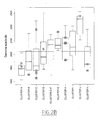
Figure 2 : (A) Histogram distribution of genome size among L. sakei isolates. Strains are represented by rug bars above the genome size axis. Histogram bars are representing the number of strains within a genome size window of 30 kb (average standard deviation of PFGE measurements). The Gaussian probability distribution of genome size in the population (estimated density on the right axis) is shown by the grey smooth line. The subspecies type strains andstrain 23K are indicated by asterisks (B) Boxplot showing genome size distribution of L. sakei isolates according to their genotypic clustering. The horizontal black line is showing the average genome size of 2,020 kb. Clusters E and F showing few variations between them were pooled together for the analysis. For clarity, unclassified strains 332, LTH2070 and 21 were grouped with cluster H. -
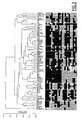
Figure 3 : Dendrogram showing estimates of genomic relationships of the strains was constructed by complete linkage hierarchical analysis. The scale represents the distance at each node. Strains were grouped on the basis of cluster branches which confidence was above 90% and with a maximum distance of 0.5 between isolates. In the matrix of gene content, a black colour indicates the presence of the gene (1) and a white colour indicates the absence of the gene (0). The genes on the left are ordered as in Table 1. - In order to identify marker genes that could be used to characterize specifically a L. sakei strain compared with other L. sakei strains, the inventors first identified variable genomic islands in the genome of
L. sakei 23K that were likely to contain variable genes displaying a high diversity according to the species (step described in Example 1). Then, they performed a classification of L. sakei strains according to the presence or absence of genes from genomic islands previously identified and compared the so obtained classification with the one obtained using several other typing techniques (step described in Example 2). Finally, they identified an optimal combination of a minimum number of genes from the genomic islands that could be used to obtain a reliable classification of L. sakei strains compared to the one obtained with a high number of variable genes (step described in Example 3). - Accordingly, according to the invention, a combination of markers enabling for characterizing a L. sakei strain comprises at least two marker genes selected from the group consisting of LSA1641 (SEQ ID NO:1), LSA1182 (SEQ ID NO:2), LSA1183_c (SEQ ID NO: 3), LSA0172 (SEQ ID NO:4), LSA1731 (SEQ ID NO:5), LSA0211 (SEQ ID NO:6), LSA0212 (SEQ ID NO:7), LSA1579 (SEQ ID NO:8), LSA1580 (SEQ ID NO:9), LSA0118 (SEQ ID NO:10), LSA0529 (SEQ ID NO:11), LSA0439 (SEQ ID NO:12), LSA0572 (SEQ ID NO:13), LSA0219b (SEQ ID NO:14), LSA0564_a (SEQ ID NO:15), LSA0564_b (SEQ ID NO:16), LSA0564_c (SEQ ID NO:17), FGP21-0001 (SEQ ID NO:18), sspA (SEQ ID NO:19), spiA (SEQ ID NO:20), FGP332-0001 (SEQ ID NO:21), FGP332-0002 (SEQ ID NO:22), FGP332-0007 (SEQ ID NO:23), FGP332-0008 (SEQ ID NO:24), FGP332-0009 (SEQ ID NO:25), FGP332-0010 (SEQ ID NO:26), FGP332-0011 (SEQ ID NO:27), FGP332-0012 (SEQ ID NO:28), and FGP332-0013 (SEQ ID NO:29).
- As used herein, the term « marker » refers to any biological, chemical or physical mean allowing identifying the presence, and possibly quantifying the expression of a target gene in a bacterial strain. Such markers are well known from one skilled in the art. Advantageously, the markers according to the invention are gene markers.
- Table 1 gives the correspondence between the above referenced locus tag and sequence of marker genes and the name of the genes.
Table 1 : Correspondence between the locus tag and the name of the gene markers. SEQ ID NO Locus Tag Gene name 1 LSA1641 N-acetylmannosamine-6-phosphate 2-epimerase (N- acetylmannosamine-6-phosphate 2 epimerase)) 2 LSA1182 Putative Cytochrome P450 (authentic frameshifted gene) C-terminal part 3 LSA1183_c Putative Cytochrome P450 (authentic frameshifted gene) N-terminal part 4 LSA0172 CscC-type cell-surface protein with Invasin/Mucin-like domain and WxL domain 5 LSA1731 CscC-type cell-surface protein with Haemagluttinine-like domain and WxL domain 6 LSA0211 CscC-type cell-surface protein with adhesion-like domain and WxL domain (authentic frameshifted gene) N- terminal part 7 LSA0212 CscC-type cell-surface protein with adhesion-like domain and WxL domain (authentic frameshifted gene) C- terminal part 8 LSA1579 Putative teichoic acid/polysaccharide export protein complex 9 LSA1580 Putative teichoic acid/polysaccharide export protein complex 10 LSA0118 Hypothetical protein (Putative cell-surface collagen- binding protein) 11 LSA0529 MarR-type Transcriptional regulator, putative peroxide stress regulator OhrR 12 LSA0439 Hypothetical extracellular lipase/esterase precursor 13 LSA0572 Threonine deaminase (Threonine ammonia-lyase) 14 LSA0219_b Putative cyanate transport protein 15 LSA0564_a Hypothetical small peptide 16 LSA0564_b Hypothetical small peptide 17 LSA0564_c Putative bacteriocin Immunity protein 18 FGP21-0001 Putative bacteriocin Immunity protein 19 sspA Bacteriocin sakacin P precursor (Sakacin 674) 20 spiA Sakach P immunity protein 21 Fop332-0001 Putative 6-phospho-beta-glucosidase 22 FGP332-0002 CscC-type cell-surface protein with bacterial adhesion- like domain and WxL domain 23 FGP332-0007 Putative autotransporter 24 Fop332-0008 Hypothetical protein 25 FGP332-0009 Hypothetical protein 26 FGP332-0010 Hypothetical protein 27 FGP332-0011 Putative transcriptional regulator, LysR family 28 FGP332-0012 Putative quinine oxidoreductase 29 FGP332-0013 Putative asparagines synthase - The presence or absence of one or a combination of some of these genes can be used to discriminate a particular L. sakei strain from another closely related strain.
- As described in Example 3, the inventors have demonstrated that these 29 marker genes were optimal to characterize a L. sakei strain among other L. sakei strains. Therefore, in a preferred embodiment, said combination consists of the marker genes SEQ ID NO: 1 to SEQ ID NO: 29.
- The present invention also relates to a method for characterizing a L. sakei strain which comprises the step consisting of determining the presence or absence of at least one marker gene selected from the group consisting of LSA1641 (SEQ ID NO:1), LSA1182 (SEQ ID NO:2), LSA1183_c (SEQ ID NO: 3), LSA0172 (SEQ ID NO:4), LSA1731 (SEQ ID NO:5), LSA0211 (SEQ ID NO:6), LSA0212 (SEQ ID NO:7), LSA1579 (SEQ ID NO:8), LSA1580 (SEQ ID NO:9), LSA0118 (SEQ ID NO:10), LSA0529 (SEQ ID NO:11), LSA0439 (SEQ ID NO:12), LSA0572 (SEQ ID NO:13), LSA0219b (SEQ ID NO:14), LSA0564_a (SEQ ID NO:15), LSA0564_b (SEQ ID NO:16), LSA0564_c (SEQ ID NO:17), FGP21-0001 (SEQ ID NO:18), sspA (SEQ ID NO:19), spiA (SEQ ID NO:20), FGP332-0001 (SEQ ID NO:21), FGP332-0002 (SEQ ID NO:22), FGP332-0007 (SEQ ID NO:23), FGP332-0008 (SEQ ID NO:24), FGP332-0009 (SEQ ID NO:25), FGP332-0010 (SEQ ID NO:26), FGP332-0011 (SEQ ID NO:27), FGP332-0012 (SEQ ID NO:28), and FGP332-0013 (SEQ ID NO:29) in said L. sakei strain.
- Numerous methods allowing determining the presence or absence of a gene in a bacterial strain are well known from one skilled in the art. These methods include, without being limited, the use of an antibody specifically binding to an antigen which is constituted by the expression product of said marker gene(s), the detection of mRNA, cDNA or polypeptide from said marker gene(s), or of fragments thereof. Preferably, the presence or absence of said marker gene(s) is determined according to the invention by amplification, or by hybridization with DNA probes specific of said marker gene(s).
- More preferably, the presence or absence of all of said marker genes SEQ ID NO:1 to SEQ ID NO:29 is determined.
- In a particular embodiment, the combination of probes of these marker genes is assembled on a same support, preferably a standardized support. These supports are known from one skilled in the art. Their size can vary according to the apparatuses used to detect the presence or absence of said marker gene(s).
- Advantageously, the combination of marker genes according to the invention is in form of a DNA matrix, comprising a support on which nucleic acids fragments likely to hybridize to target genes are deposed, preferably in a standardized way. The size of such supports varies according to the preparation and detection methods used. Such small supports are also referred to DNA array.
- Another aspect of the present invention thus concerns a DNA array which comprises a combination of markers as defined above.
- As used herein, the term "DNA array" refers to a set of genes, fragment of genes, oligonucleotides deposited on a support (glass slide, nylon membrane...) with a high density. Numerous scientific publications about the preparation and the use of DNA arrays are available.
- In another aspect of the invention, a classification of said L. sakei strain is performed by analyzing the pattern of presence or absence of the above marker gene(s) and calculating a Jacquard index or Dice coefficient or any binary distance matrix with regard to a set of reference L. sakei strains. The Jacquard index can be calculated as described in Jacquard and Feingold, 1974 (Jacquard and Feingold, 1974 Theor. Popul. Biol. 6:21-34). The Dice coefficient can be calculated as described by Van Rijsbergen, 1979 (Van Rijsbergen, 1979, Information Retrieval, London: Butterworths).
- As used herein, the term "classification" refers to organizing the strains in different subfamilies according to their genetic pattern. In particular, strains that display the same pattern of genes belong to the same subfamily.
- As used herein, the term "reference L. sakei strains" refers to a set or collection of L. sakei strains in which the presence or absence of said marker gene(s) has already been determined according to the invention and to which said L. sakei strain to be classified is compared. Namely said reference L. sakei strains were used to constitute subfamilies or clusters of L. sakei strains in which said L. sakei strain to be classified is intended to be positioned.
- Preferably, the set of reference L. sakei strains according to the invention comprises the strains disclosed in Table 2. Nevertheless, other known L. sakei strains can be used as reference strains, and are well known from one skilled in the art.
- Preferably, said subfamilies of L. sakei strains constituted by said reference L. sakei strains are as defined in Example 3. However, one skilled in the art knows that clustering can evolve according to the identification of new strains. Accordingly, the use of the method according to the present invention to classify L. sakei strains in clusters which are not specifically described herein is under the scope of the present invention.
- As used herein, the term "Jacquard index" is a statistic used for comparing the similarity and diversity of sample sets. The Jacquard index is defined as the size of the intersection divided by the size of the union of the sample sets, according to the following formula: J(A,B)= |A∩B|/| A U B|.
- Preferably, calculating of the Jacquard Index according to the invention is performed via the software R (R Development Core Team, 2006 R: A language and environment for statistical computing. Vienna, Austria. R Foundation for Statistical Computing) which eventually provides a clustering tree displaying the location of said L. sakei strain among the different subfamilies of reference L. sakei strains.
- As used herein the term "Dice coefficient" is a similarity measure related to the Jacquard index. The Dice coefficient is similar to Jacquard index but gives twice the weight to agreements according to the formula s=2|A∩B|/(|A|+|B|).
- Another aspect of the present invention concerns a method of comparing at least two L. sakei strains comprising the steps consisting of :
- a) determining the presence or absence of at least one marker gene selected from the group consisting of LSA1641 (SEQ ID NO:1), LSA1182 (SEQ ID NO:2), LSA1183_c (SEQ ID NO: 3), LSA0172 (SEQ ID NO:4), LSA1731 (SEQ ID NO:5), LSA0211 (SEQ ID NO:6), LSA0212 (SEQ ID NO:7), LSA1579 (SEQ ID NO:8), LSA1580 (SEQ ID NO:9), LSA0118 (SEQ ID NO:10), LSA0529 (SEQ ID NO:11), LSA0439 (SEQ ID NO:12), LSA0572 (SEQ ID NO:13), LSA0219b (SEQ ID NO:14), LSA0564_a (SEQ ID NO:15), LSA0564_b (SEQ ID NO:16), LSA0564_c (SEQ ID NO:17), FGP21-0001 (SEQ ID NO:18), sspA (SEQ ID NO:19), spiA (SEQ ID NO:20), FGP332-0001 (SEQ ID NO:21), FGP332-0002 (SEQ ID NO:22), FGP332-0007 (SEQ ID NO:23), FGP332-0008 (SEQ ID NO:24), FGP332-0009 (SEQ ID NO:25), FGP332-0010 (SEQ ID NO:26), FGP332-0011 (SEQ ID NO:27), FGP332-0012 (SEQ ID NO:28), and FGP332-0013 (SEQ ID NO29), in a first L. sakei strain, and
- b) determining the presence or absence of said at least one marker gene in a second L. sakei strain, as defined above
- In particular, the above method of comparing at least two L. sakei strains further comprises the step of analysing the pattern of presence or absence of said marker genes by calculating a Jacquard index, a Dice coefficient or any binary distance matrix as defined above.
- The above defined methods according to the present invention are of particular interest to identify L. sakei strains in a cocktail of strains that can be used as biopreservative on meat and/or fish. Another issue of characterizing such cocktail of strains is to quantify each strain present in said cocktail.
- Accordingly, another aspect of the present invention relates to a method of quantifying a specific L. sakei strain in a sample, which comprises the steps consisting of:
- a) identifying and/or characterizing the L. sakei strains present in said sample by a method as defined above,
- b) determining the marker gene(s) which is(are) differently present in said specific L. sakei strain with respect to other strains present in said sample, and
- c) amplifying said gene(s) by quantitative PCR. Methods of quantitative PCR are well-known in the art and include real-time PCR, competitive PCR and radioactive PCR.
- As used herein the term "sample" encompasses samples in which one or several L. sakei strain(s) is/are present, optionally in combination with other bacterial species.
- Accordingly, the above method of quantifying a specific L. sakei strain in a sample may include a prior step of individualizing said strain from other strains present in the sample.
- The following examples further describe the way the present inventors have identified said marker genes. These examples are illustrative, without being limited, of the above defined methods.
- This example describes the identification by the inventors of genomic islands in
L. sakei 23K chromosome, which carry the genes used as markers in the present invention. - It is admitted that bacterial chromosomes are divided into two sets of genes:
- the core gene pool, that comprises genes that persisted in the species for long enough to show maintenance among strains, and the flexible gene pool, that comprises variable and auxiliary genes generally clustered in islands and often
- acquired by horizontal gene transfer (HGT).
- The aim of the present study is therefore to identify the putative variable genomic islands in the genome of
L. sakei 23K and to characterize the cellular functions, estimated to be ecologically important, that could be ascribed to HGT. - The codon usage signature of highly expressed genes was searched by using the CAI introduced by Sharp and Weng-Hsiung (Sharp and Weng-Hsiung 1987 Nucleic Acids Res. 15:1281-1295). The codon frequencies used as a reference for CAI computation were estimated on the genes encoding ribosomal proteins and aminoacyl-tRNA synthetases found in the L. sakei 23K genome. Secondly, unsupervised clustering of the coding sequences (CDSs) was performed on the basis of their usage of the synonymous codons with an algorithm designed by the inventors. This approach is based on the use of a mixture model that accounts for the choice of synonymous codons in different gene classes. Briefly, once the number of gene classes is defined by the user, the model is fitted to the sequences using an iterative algorithm and the final clustering associates each CDS to its most probable class.
- Here follows a more formal description of the mixture models and of the clustering procedure: let n denote the number of codon usage class, or component, of the mixture model. Each class u is characterized by its incidence in the mixture qu and a set probabilities (fu,i,j), 1≤i≤20, 1≤j≤si where fu,i,j corresponds to the probability of using the jth synonymous codon for amino acid i and si denotes the number of synonymous codon for amino acid i. Maximum Likelihood estimates of the model parameters qu and fu,i,j are obtained using the Expectation-Maximization algorithm. Finally, the final clustering is obtained after computing the probability of each class u for each CDS k with Bayes' formula: pk(u) is proportional to qu Π fu,i,j c(k,i,j) where pk(u) denotes the probability that CDS k belongs to class u and c(k,i,j) counts the occurrences of the jth synonymous codon for amino-acid i in CDS k. A detailed presentation of the mixture model framework can be found in McLachlan and Peel (McLachlan and ). Finally, a correspondence analysis was performed to allow the graphical display of the cloud of CDSs in a similar way as described in Médigue et al., 1991 (Médigue et al., 1991 J. Mol. Biol. 222:851-856). Short CDSs (less than 300 bps - 100 aa long) and the two cysteine codons were omitted from the correspondence analysis as they do not allow accurate estimation of the associated relative codon frequencies. In addition, codon frequency estimates were smoothed by adding a pseudo-count 1 to all counts.
- All analysis were performed with an ad-hoc Perl script named CODONUSAGE.PL responsible for computing A+T-content and CAI and also for calling both a C++ program that performs the new cluster analysis described above and a R script that performs the correspondence analysis with the CA function of the MULTIV package (R Development Core Team 2006 R: A language and environment for statistical computing. Vienne, Austria: R Foundation for Statistical Computing). All programs can be downloaded at URL: http://genome.jouy.inra.fr/∼pnicolas/codonmixture/.
- In order to detect possible HGT events, an array of statistical measurements was used to characterize the compositional trends of the L. sakei 23K gene pool including G+C content analysis, Codon Adaptation Index (CAI) computations, correspondence analysis of synonymous codon usage and unsupervised clustering of the gene pool with a new method based on a mixture modelling of the usage of synonymous codons as described above.
- Unsupervised clustering of the complete gene pool allowed identifying four groups of genes. Genes of the first and second groups account for 74.5% of the total gene pool. They are highly preferentially located on the leading strand of chromosome replication (93%) and are distinguished by their expression level as measured with the CAI (reflecting the protein expression level):
group 1 genes have low or average CAI values whereasgroup 2 genes show high CAI values. This last group comprises typical highly expressed genes such as S-layer-like proteins, Cpl-like chaperones and highly expressed metabolically important enzymes such as those of the glycolytic pathway.Group 3 encompasses 18.5% of the total gene pool and contains mostly genes located on the lagging strand (87%). - Therefore, three groups of genes whose codon usage are strongly shaped by their orientation relative to the chromosome replication and by their putative level of translation efficiency were able to be revealed.
- More importantly, the models allowed demarcating a fourth group of genes (7% of the total gene pool) with atypical A+T-rich content and low CAI value. The compositional pattern of this fourth group may have been shaped by HGT as genes with low G+C-content have been described to be related to HGT in many bacteria (Médigue al., 1991 J. Mol. Biol. 222:851-856).
- To verify the HGT-related origin of this fourth group of genes, their corresponding genetic context in the chromosome was further looked at in more details. It was presently first noticed that most of these atypical CDSs are grouped to form large islands of functionally related genes often located nearby mobile elements, a classical feature of horizontally transferred genetic clusters (Ochman et al., 2000 Nature 405:299-304).
- Furthermore, genes with atypical codon usage were often encoding products homologous to proteins only found in phylogenetic distant bacterial genera.
- From these data, the inventors demonstrated that the putative HGT gene pool was thus comprised of 27 genomic islands (from 1.6 to 28 kb with an average size of 7.3 kb) and of 49 single genes, covering altogether 235 kb (12.5%) of
L . sakei 23K chromosome. It has also been assumed that the 27 genomic islands may pertain to thedispensable L. sakei 23K genome. - This example describes the classification, by the inventors, of L. sakei strains using marker genes.
- In this study, the inventors have performed a combination of several typing techniques including pulse-field gel electrophoresis (PFGE) genome mapping, PCR-based detection of genetic markers taken from a pool of variable genes identified by the inventors (see example 1) for hierarchical clustering of the strains, and finally, a proteomic comparison to evaluate their respective phenotypic diversity. Isolates from diverse laboratory collections corresponding to various geographical locations and to various sources of meat- or fish-related products have been specifically chosen, based on the expectation that these undomesticated strains would represent the diversity of the natural L. sakei population.
- These results provide an integrated genomic-based framework for classifying the repertoire of molecular subtypes of L. sakei isolates.
- All L. sakei and L. curvatus strains used in this study are described in Table 2. Bacterial strains were grown to midlog exponentional phase in MRS broth medium (Difco) (De man et al., 1960 J. Appl. Bacteriol. 23:133-135) at 30°C. For proteomic studies, bacterial strains were grown at 30°C in chemically defined medium MCD (Lauret et al., 1996 Appl Environ Microbiol. 62:1922-1927) supplemented with 0.5% glucose.
- Substrative suppressive hybridization (HSS) of L. sakei 332F was performed as follows : to prepare tester strain 332F, cured from its endogenous plasmid pRV500 (Alpert et al.,, 2003 Appl Environ Microbiol. 69:5574-5584), the parent L. sakei 332 was electroporated by the method of Berthier et al., (Berthier et al., 1996 Appl. Envir. Microbiol. 62:3037-3041) with pRV566 plasmid carrying resistance to erythromycin and derived from pRV500 replicon (Alpert et al., 2003 Appl. Envir. Microbiol. 69:5574-5584).
- One Erythromycin resistant clone was further cultivated for 200 generations in MRS broth without antibiotic at 30°C. Several dilutions from the last culture were plated on MRS agar. Replica plating of 200 clones on MRS agar with or without erythromycin (5 µg/ml) allowed selecting one erythromycin sensitive clone. The loss of pR566 plasmid was verified by Southern blotting (ECL™ direct nucleic acid labelling, Amersham Biosciences) using a probe specific of the repA gene. The corresponding strain was named 332F.
- HSS experiment was carried out with Clontech PCR-selected™ bacterial genome subtraction kit according to the manufacturer recommendations and by using
L. sakei 23K as driver. This technique led to the identification of 8 new genes absent fromL. sakei 23K. FGP21-0001 gene from L. sakei 21 was identified after sequencing of a PCR product (LSA0565 to LSA566) giving an unexpected size and revealing a new type of bacteriocin immunity-like protein-encoding gene.Table 2 : L. sakei and L. curvatus strains used in this study. Laboratory Collection - Country Number of strains Names (synonyms) Isolated from Reference PART 1: L. sakei strains INRA - Jouy en Josas - FRANCE Unité Flore Lactique & Environnement carné 12 23K, 14, 18, 21, 33, 64, 72, 112, Various French-style fermented dry sausages Berthier et al., 1999 Int. J. 134, 156 Syst. Bacteriol. 49:997-1007 160K Fresh horse meat Berthier et al., 1999 Int. J. Syst. Bacteriol. 49:997- 1007 JG3 Fresh beef meat Berthier et al., 1999 Int. J. Syst. Bacteriol. 49:997- 1007 INRA - Theix - France Station de Recherches sur la Viande 11 195, 205, 300, 332 Vacuum-packed beef meat Champomier et al., 1987Ann Inst Pasteur Microbiol. 138:751-758 331, 495, 504, 532, 710, 741 Vacuum-packed pork meat Montel et al., 1991 J Appl Bacteriol 70:469-472 L110 Starter for French-style fermented dry sausage Champomier et al., 1987 Ann Inst PasteurMicrobiol. 138:751-758 IFREMER - Nantes - France Laboratoire de Génie Alimentaire 5 SF770, SF771, SF841, SF842, Smoked salmon Joffraud et al., 2006 Int. J. SF843 Food Microbiol. 112 :51- 61 IRTA - Monells - SPAIN Meat Technology Center 10 CTC014, CTC041, CTC163, CTC287, CTC335, CTC427, CTC429, CTC494, CTC6469, CTC6626 Various Spanish-style fermented dry sausages (including Chorizo) Hugas et al., 1995 J. Appl. Bacteriol. 79 :332- 330 Hugas et al., 1993 Int J Food Microbiol 18:107- 113 ARC - Langford, Bristol - UNITED 6 LV5, LV21, LV92 Vacuum-packed pork meat - bacon Shaw et al., 1984 J Appl KINGDOM Bacteriol 56:25-40 Meat Research Institute LV52, LV59 Vacuum-packed lamb meat Shaw et al., 1984 J Appl Bacteriol 56:25-40 LV34 Vacuum-packed beef meat Shaw et al., 1984 J Appl Bacteriol 56:25-40 AgResearch - Hamilton - NEW ZEALAND Meat Science Group 4 AG R46, AG R48, AGR51, AGR53 Chilled lamb meat This study Mahidol University - Bangkok - THAILAND Faculty of Science 2 TISTR890, TISTR911 Nham (Thai-style fermented pork sausage) Tanasupawat et al., 1983 J. Gen. Appl. Microbiol. 29:487:506 Noonpakdee et al., 1996 Asia Pacific J. Mol. Biol. Biotechnol. 4:229-235 Universität Hohenheim - GERMANY Institüt für Libbensmitteltechnologie 9 LTH673, LTH675, LTH677, LTH5728 Various German-style fermented moist-type sausages Vogel et al., 1991 FEMS Microbiol Lett 68:183-190 LTH1764, LTH2070 Sauerkraut Vogel et al., 1993 J Appl Bacteriol 74:295-300 LTH5588, LTH5589, LTH5590 Human feces Walter et al., 2001 Appl. Envir. Microbiol. 67:2578- 2585. Universität Berlin - GERMANY Institute of Meat Hygiene & Technology 1 CIP105422T (CCUG31331) Raw German-style sausage Klein et al., 1996 Int. J. Sys. Bacteriol.46:367- 376 Kulmbach - GERMANY Federal Centre for Meat Research 1 Lb706 Fresh beef meat Schillinger et al., 1987 Food Microbiol. 4:199- 208 MATFORSK - Ǻs - NORWAY Norwegian Food Research Institute 6 MF1048, MF2091, MF2092 Smoked salmon Rakfisk (Scandinavian fermented trout) This study MF2088, MF2089, MF209 This study CONICET - Tucumán - ARGENTINA Centro de Referencia para Lactobacilos (CERELA) 1 CRL1467 Argentinean-style Fontana et al., 2005 J Microbiol Methods 63:254-263 fermented dry sausage American Type Culture Collection (Original isolate from JAPAN) 1 ATCC15521T (DSM20017) Spoiled moto for Saké Katagiri et al., 1934 Bull. Agr. Chem. Soc. Jpn. 10:156-157 manufacture University of Tokyo - JAPAN National Institute of Health 5 YMN243, YME344, YMN540, YMN557, V553 Various fresh meat products Morishita et al., 1986 Int. J. Food Microbiol. 3:19-29 Part 2 : L. curvatus strains American Type Culture Collection (Original isolate from GERMANY) 1 ATCC25601T (DSM20019) Milk Torriani et al., 1996 IRTA - Monells - SPAIN Meat Technology Centre 1 CTC424 Spanish-style fermented dry sausage Hugas et al., 1993 Int J Food Microbiol 18:107- 113 - The presence or absence of the flexible gene pool identified by the inventors was investigated using conventional PCR-based detection and verification of genomic islands for strain clustering as follows:
- PCR template was 100 ng of chromosomal DNA extracted from the 73 L. sakei strains and from the 2 L. curvatus strains. Experiments were conducted twice to confirm the negative results. In case of weak or spurious amplifications, PCR products were sequenced to check nucleotide polymorphism between strains. If necessary, primers were redesigned.
- Extraction of chromosomal DNA from L. sakei and L. curvatus was performed by the method of Anderson & McKay (Anderson and McKay, 1983 Appl Environ Microbiol. 46:549-552). For each PCR amplification, the pair of primers was designed so that the expected length of the products was less than 2 kb.
- The PCR cycling conditions were 94°C for 4 min followed by 30 cycles of 94°C for 1 min, 55°C for 1 min and 72°C for 3 min. All PCR products were examined using 1% agarose gels and stained with ethidium bromide. To confirm the truncation of some genes or the products of unexpected sizes, 10 µl of the amplicons were treated with 0.1 unit of Shrimp alkaline phosphatase (USB corporation) and 1 U of exonuclase I (E. coli) (Biolabs) in 20 mM Tris-HCl pH 8.0, 10 mM MgCl2 buffer for 1 hour at 37°C, followed by 10 min inactivation at 94°C. The products were then sequenced using standard technology (http://www.themwg.com).
- Pulse-field gel electrophoresis and I-CeuI digestion pattern analysis were carried out as described by Dudez et al., 2002 (Dudez et al., 2002 Microbiology. 148:421-31). An average of 4 gels was performed for each strain. The distribution of the strains according to their genome size was examined using the HIST function and the probability DENSITY function of the R statistical package (R Development Core Team 2006 R: A language and environment for statistical computing. Vienna, Austria: R Foundation for Statistical Computing). A Gaussian probability distribution and a smoothing bandwidth of 30 (average standard deviation of genome size estimation) were chosen for the analyses.
- The gene contents of the strains tested were described by using a two-character matrix (genes x isolates) with 0 for absence and 1 for presence of a gene. Genes truncated by IS elements were considered as distinct genetic identities than their wild-type counterpart. Similarities between the strains were determined using the Jacquard's correlation coefficient (Jacquard and Feingold, 1974 Theor Popul Biol. 6:21-34). The unsupervised hierarchical clustering was performed using the complete linkage on the similarity matrix. The following functions : DIST, HCLUST and DENDROGRAM of the R statistical package (R Development Core Team 2006 R: A language and environment for statistical computing. Vienna, Austria: R Foundation for Statistical Computing) were used to generate the clustering dendrogram. The R package PVCLUST (Suzuki and Shimodeira, 2006 Bioinformatics. 22:1540-1542) was used for multiscale bootstrap resampling to assess the statistical stability of each node. The number of bootstrap replicates was 1,000. Approximately unbiased P-values ≥ 90% and Jacquard's similarity coefficient ≥ 50% were used to discriminate the possible strain clusters.
- Bacterial-extract preparation, electrophoresis were performed by standard methods (Jofré et al., 2007 Res. Microbiol. 158:512-520). Gels were analyzed by Image Master software (Amersham Pharmacia Biotech). Spots were excised from Coomassie-stained gels as described by Marceau et al., (Marceau et al., 2004 Appl Environ Microbiol. 70:7260-7268) and Mass spectrometry analyses were performed as previously described by Guillot et al., (Guillot et al., 2000 Int J Food Microbiol. 55:47-51). MS-Fit (University of California San Francisco Mass Spectrometry Facility; http://prospector.ucsf.edu) and Mascot (Matrix Science Inc., Boston, MA; http://www.matrixscience.com/search_form_select.html), installed on a local server, were used to identify proteins from peptide mass fingerprints. All searches were performed against the
L. sakei 23K database ( http://www.migale.jouy.inra.fr/sakei). - To carefully estimate the biodiversity of the natural L. sakei population, the inventors took care to analyse strains which were isolated from a variety of meat-or fish-related food products (raw or fermented) or from other sources including Sauerkraut and Human faeces. In addition, since a possible sampling bias might exist in single laboratory bacterial collections because of the isolation procedure used or the type of food materials analyzed, the L. sakei strains were selected from 14 different laboratory collections geographically scattered within Europe, Asia and New-Zealand. A total of 73 L. sakei strains were selected and analysed (Table 2) as well as two Lactobacillus curvatus strains, a close relative to L. sakei species taken as external species reference (outgroup reference).
- In example 1 describing an in silico analysis of
L. sakei 23K chromosome, the inventors identified its putative flexible gene pool comprising 27 genomic islands and 49 independent genes. They decided to check the presence or absence of this pool of gene (assumed to be variable between strains) for clustering analysis of the L. sakei isolates and by using conventional PCR. - This strategy was first tested on a preliminary PCR experiments on a set of 20 strains to demonstrate the intra-species variation of these genes. Only 5 islands revealed to be highly conserved and were therefore removed from the analysis. To avoid clustering disturbance due to the highly laterally transferable mobile elements (Insertion sequences, phage and Restriction/modification systems), these genes were also discarded from the analysis. Furthermore, the inventors showed that most genes inside each genomic island were usually displaying similar patterns of variations (the whole island is usually present or absent). Therefore, to avoid a bias from the large genomic clusters (containing more genes than the smaller ones), a selection of
maximum 4 genes (those eventually showing a different pattern of variation) were taken for each cluster. - In addition, 11 chromosomally-encoded genes from other L. sakei strains that were absent from L. sakei 23K chromosome, were incorporated in the analysis. These genes were partly chosen from previously published clusters and partly taken from partial genome sequencing of other L. sakei strains. This selection resulted thus in ∼80% of genes originated from
L. sakei 23K (representing 21 genomic islands and 4 independent genes) and ∼20% of genes from other strains. The characteristics of these 60 genes are summarized in Tables 3 and 4. - Based on the PCR analysis of the 60 genes, the inventors attempted to classify the L. sakei natural isolates by using unsupervised complete-linkage hierarchical clustering algorithm and by estimating P-values via multiscale bootstrap resampling to assess the uncertainty of the clustering analysis (
Figure 1 ). From the resulting dendrogram, at least 11 bootstrap-supported clusters of strains divided in three main groups were clearly identified by the inventors. - Cluster A comprises the
reference strain 23K and clusters B to D comprise strains closely related to this cluster forming togethergroup 1. The other groups represent clusters of strains which are hierarchically less related togroup 1 and comprise the L. sakei subsp. carnosus type strain CIP 105422T (cluster G, group 2) and the L. sakei subsp. sakei type strain ATCC 15521 T (cluster K, group 3), the latter being the most distantly related togroup 1. Three strains (332, 21 and LTH2070) fromgroup 3 could not be clustered with certainty between cluster H and cluster I. - The inventors then investigated the extent of genome size variation between L. sakei isolates by PFGE analysis of I-CeuI-digested fragments. I-CeuI-mapping of L. sakei chromosome is resulting in seven DNA fragments (Dudez et al., 2002 Microbiology. 148:421-31) of various size and is an efficient tool in resolving overall genome size and geometry between L. sakei strains.
- This analysis revealed important differences in genome size between the L. sakei strains. The mean chromosome size is 2,020 ± 30 kb for the species, but the size is ranging from 1,814 ± 30 kb (strain CTC427) to 2,309 ± 79 kb (strain LTH677) representing thus about ∼25% of genome variation (∼500 kb). More striking is the observation that the chromosome size of L. sakei strains was not homogeneously distributed along this range (
Figure 2A ) and a Gaussian probability distribution of the genome size data was suggesting a possible division of the strains into sub-populations. - To assess whether the PGFE subpopulations could be explained by the distribution of the strains in the various genotypic clusters, the inventors analysed the genome size distribution across the 11 clusters (
Figure 2B ). They demonstrated that the genome size was relatively uniform among strain clusters. They also showed that L. sakei isolates from group 1 (clusters A, B, C and D) generally harbour small genome (average size of 1,915 kb ± 79 kb), whereas groups 2 (clusters E, F and G) and 3 (clusters H, I, J and K) comprise most of isolates with larger genome (average size of 2,055 kb ± 80 kb and 2,080 kb ± 80 kb, respectively). - This good agreement found between genotypic clusters and PGFE subpopulations prompted the inventors to analyse the correlation between the genome size of the whole chromosome and that of each of the I-CeuI-digested fragments in the 73 L. sakei isolates. A good correlation was observed, as these two parameters were showing proportional increase from the smallest L. sakei genome to the largest one.
Table 3: Description of genes from the flexible gene pool of L. sakei 23K strain used for clustering analysis.Genomic Island Gene name or locus-tag Product description GenBank Accession N° Island 1 LSA0088 Adenine deaminase CR936503 Island 2 LSA0118 Hypothetical protein (Putative cell-surface collagen-binding protein) CR936503 Island 3 LSA0157 Putative hydroxyl/aromatic amino acid symporter CR936503 Island 5 LSA0165 Putative oxidoreductase, short chain dehydrogenase/reductase family CR936503 Island 6 LSA0172 CscC-type cell-surface protein with Invasin/Mucin-like domain and WxL CR936503 LSA0178 domain CR936503 MarR-type Transcriptional regulator Island 7 LSA0211/0212 CscC-type cell-surface protein with adhesin-like domain and WxL domain CR936503 (authentic frameshifted gene) CR936503 LSA0216 MarR-type Transcriptional regulator Island 8 LSA0217 Putative transcriptional regulator with a Rhodanese-like domain, ArsR family CR936503 LSA0218 Thioredoxin, TrxA1 CR936503 LSA0219_b Putative cyanate transport protein CR936503 Independent gene LSA0306 L-aspartate-beta-decarboxylase CR936503 Independent gene LSA0439 Hypothetical extracellular lipase/esterase precursor CR936503 Island 11 LSA0509 2-amino-3-ketobutyrate coenzyme A ligase (Glycine acetyltransferase) CR936503 LSA0510/511 L-threonine dehydrogenase (authentic frameshifted gene) CR936503 Independent gene LSA0529 MarR-type Transcriptional regulator, putative peroxide stress regulator OhrR CR936503 Island 12 LSA0564_a to_c Putative bacteriocin-like peptides (LSA0564_ab) and cognate immunity CR936503 protein (LSA0564_c) CR936503 LSA0565 to 0566 Putative bacteriocin-like peptides CR936503 LSA0567 to 0569_b Putative bacteriocin-like peptides (LSA0569_ab) and cognate immunity CR936503 proteins (LSA0567 and LSA0568) Independent gene LSA0572 Threonine deaminase (Threonine ammonia-lyase) CR936503 Island 14 LSA0724 to 0725 Hypothetical proteins CR936503 LSA0727 Hypothetical cell-surface precursor CR936503 Island 15 LSA1006 Putative zinc-containing alcohol dehydrogenase (oxidoreductase) CR936503 Island 16 LSA1182/1183 Putative Cytochrome P450 (authentic frameshifted gene) CR936503 Island 17 LSA1220 Triphosphoribosyl-dephospho-coenzymeA synthase CR936503 LSA1222 Oxaloacetate decarboxylase, alpha subunit CR936503 LSA1227 Citrate (pro-3S)-lyase ligase (citrate lyase synthetase) CR936503 LSA1232 Citrate:Mg(2+)(H+) symporter CR936503 Island 18 LSA1283 CscC-type cell-surface protein with WxL domain CR936503 Island 19 LSA1509 Hypothetical protein, sigma factor-related CR936503 LSA1510_a to _c Putative teichoic acid/polysaccharide export protein complex CR936503 LSA1510_d to _f Putative Glycosyl transferases complex CR936503 LSA1510_g Putative priming glycosyl transferase CR936503 LSA1512/1513 Putative polysaccharide biosynthesis protein, chain length determination CR936503 Island 20 LSA1572 Putative teichoic acid/polysaccharide glycosyl transferase CR936503 LSA1579/1580 Putative teichoic acid/polysaccharide export protein complex CR936503 LSA1581 Putative teichoic acid-binding N-acetylmuramoyl L-alalanine amidase (cell CR936503 wall hydrolase) LSA1584/1585 Putative teichoic acid/polysaccharide glycosyl transferase CR936503 Island 21 LSA1640 N-acetylneuraminate lyase CR936503 LSA1641 N-acylglucosamine-6-phosphate 2-epimerase (N-acetylmannosamine-6- CR936503 phosphate 2-epimerase) LSA1642 Putative Solute:Na(+) symporter CR936503 - LSA1720 Hypothetical protein (E.coli plasmidic gene) CR936503 Island 22 LSA1724 MarR-type Transcriptional regulator CR936503 LSA1730 CscC-type cell-surface protein with bacterial adhesin-like domain and WxL CR936503 domain LSA1731 CscC-type cell-surface protein with Haemagluttinine-like domain and WxL CR936503 domain Island 24 LSA1806 Hypothetical protein associated with CSC-type cluster CR936503 LSA1809 Hypothetical extracellular protein precursor associated with CSC-type cluster CR936503 Island 27 LSA1874 MarR-type Transcriptional regulator CR936503 Lb674 sspT Sakacin P ABC-transporter, ATP-binding and permease protein sspT Z48542 Lb674 sspA Bacteriocin sakacin P precursor (Sakacin 674) Z48542 21 FGP21-0001 Putative bacteriocin immunity protein EU391636 KG15 dsrB Cell-surface dextransucrase precursor (sucrose 6-glycosyltransferase) AY697434 332F FGP332-0001 Putative 6-phospho-beta-glucosidase EU402602 332F FGP332-0002 CscC-type cell-surface protein with bacterial adhesin-like domain and WxL EU402603 domain 332F FGP332-0003 Hypothetical cell-surface protein EU402604 332F FGP332-0005 Putative pyridine nucleotide-disulfide oxidoreductase EU402605 332F FGP332-0006 Putative ferritin-like DNA-binding protein (oxidative damage protectant) (dps- EU402605 type) 332F lacC Putative tagatose-6-phosphate kinase EU402605 332F lacG Putative 6-phospho-beta-galactosidase EU402605 - * nomenclature used was as follow: Flexible Gene Pool-strain nam-CDS number
- The inventors then used two-dimensional electrophoresis to compare the proteomes of a selection of 12 strains chosen from the various genotypic clusters A to K as a final verification of the clustering. Although an average of ∼400 spots were commonly observed in the Pi range of 4 to 7, they noticed a remarkable variation of more than 20% in this number of spots detected between the strains.
- Spots representing major differences were identified by using MALDI-TOF mass spectroscopy. Most of the differences revealed to be strain specific spots of moderately or weakly expressed proteins or to proteins likely encoded by genes not present in
L. sakei 23K since they could not be identified in the protein database from this reference genome. Some variations in the 2D-protein pattern were also found to be the consequence of migration differences of some strain-specific isoforms of highly expressed proteins. This information was particularly interesting because analysis of SDS-PAGE protein profiles, the technique used in other studies to define the L. sakei subspecies, is mainly based on the detection of highly expressed proteins. These data further confirmed the hierarchical clustering shown inFigure 1 . - In conclusion, the inventors provided a first insight into the possible number of molecular subtypes within the L. sakei species. From the above results this natural population can be observed as three main groups of strains, each of them subdivided into 3 to 4 clusters. There is a substantial difference in genome size between isolates of group 1 (avg. 1,915 kb) from those of
groups 2 and 3 (avg. ∼ 2,075 kb for both). - The inventors evaluated the extent of intra-species genomic variation of L. sakei species and generated, for the first time, a comprehensive classification of the natural isolates.
- In this example, the inventors have performed a PCR-based detection of 29 genetic markers taken from a pool of variable genes for hierarchical clustering of the strains.
- All of the L. sakei and L. curvatus strains used in this study are described in Table 2.
- The gene contents of the strains tested were described by using a two-character matrix (genes x isolates) with 0 for absence and 1 for presence of a gene. Similarities between the strains were determined using the Jacquard's correlation coefficient (or Jacquard index) as defined above.
- A screening similar to the one described in example 2 was performed by the inventors, and resulted in the selection of only 29 marker genes summarized in Table 1.
- Based on the PCR analysis of these only 29 genes, the inventors classified the L. sakei natural isolates by using unsupervised complete-linkage hierarchical clustering algorithm and by estimating P-values via multiscale bootstrap resampling to assess the uncertainty of the clustering analysis. From the resulting dendrogram, 11 bootstrap-supported clusters of strains were clearly identified, designated A to K (
Figure 3 ). These clusters of strains are very similar to the ones described in Example 2, obtained using about 60 marker genes. - Accordingly, the present inventors were able to identify 29 genes that were sufficient to classify correctly the L. sakei natural isolates.


Claims (12)
- A combination of markers enabling for characterizing a Lactobacillus sakei strain which comprises at least two marker genes selected from the group consisting of LSA1641 (SEQ ID NO:1), LSA1182 (SEQ ID NO:2), LSA1183_c (SEQ ID NO:3), LSA0172 (SEQ ID NO:4), LSA1731 (SEQ ID NO:5), LSA0211 (SEQ ID NO:6), LSA0212 (SEQ ID NO:7), LSA1579 (SEQ ID NO:8), LSA1580 (SEQ ID NO:9), LSA0118 (SEQ ID NO:10), LSA0529 (SEQ ID NO:11), LSA0439 (SEQ ID NO:12), LSA0572 (SEQ ID NO:13), LSA0219b (SEQ ID NO:14), LSA0564_a (SEQ ID NO:15), LSA0564_b (SEQ ID NO:16), LSA0564_c (SEQ ID NO:17), FGP21-0001 (SEQ ID NO:18), sspA (SEQ ID NO:19), spiA (SEQ ID NO:20), FGP332-0001 (SEQ ID NO:21), FGP332-0002 (SEQ ID NO:22), FGP332-0007 (SEQ ID NO:23), FGP332-0008 (SEQ ID NO:24), FGP332-0009 (SEQ ID NO:25), FGP332-0010 (SEQ ID NO:26), FGP332-0011 (SEQ ID NO:27), FGP332-0012 (SEQ ID NO:28), and FGP332-0013 (SEQ ID NO:29).
- The combination according to claim 1, which comprises the marker genes SEQ ID NO:1 to SEQ ID NO:29.
- A method for characterizing a Lactobacillus sakei strain which comprises the step consisting of determining the presence or absence of at least one marker gene selected from the group consisting of LSA1641 (SEQ ID NO:1), LSA1182 (SEQ ID NO:2), LSA1183_c (SEQ ID NO: 3), LSA0172 (SEQ ID NO:4), LSA1731 (SEQ ID NO:5), LSA0211 (SEQ ID NO:6), LSA0212 (SEQ ID NO:7), LSA1579 (SEQ ID NO:8), LSA1580 (SEQ ID NO:9), LSA0118 (SEQ ID NO:10), LSA0529 (SEQ ID NO:11), LSA0439 (SEQ ID NO:12), LSA0572 (SEQ ID NO:13), LSA0219b (SEQ ID NO:14), LSA0564_a (SEQ ID NO:15), LSA0564_b (SEQ ID NO:16), LSA0564_c (SEQ ID NO:17), FGP21-0001 (SEQ ID NO:18), sspA (SEQ ID NO:19), spiA (SEQ ID NO:20), FGP332-0001 (SEQ ID NO:21), FGP332-0002 (SEQ ID NO:22), FGP332-0007 (SEQ ID NO:23), FGP332-0008 (SEQ ID NO:24), FGP332-0009 (SEQ ID NO:25), FGP332-0010 (SEQ ID NO:26), FGP332-0011 (SEQ ID NO:27), FGP332-0012 (SEQ ID NO:28), and FGP332-0013 (SEQ ID NO:29) in said Lactobacillus sakei strain.
- The method according to claim 3, wherein the presence or absence of said marker genes SEQ ID NO:1 to SEQ ID NO:29 is determined.
- The method according to claim 3 or 4, wherein the presence or absence of said marker gene(s) is determined by amplification.
- The method according to claim 3 or 4, wherein the presence or absence of said marker gene(s) is determined by hybridization with probes specific of said marker gene(s).
- The method according to any one of claims 3 to 6, wherein a classification of said Lactobacillus sakei strain is performed by analyzing the pattern of presence or absence of said marker gene(s) and calculating a Jacquard index or Dice Coefficient or any binary distance matrix with regard to a set of reference Lactobacillus sakei strains.
- A method of quantifying a specific Lactobacillus sakei strain in a sample comprising the steps consisting of :a) identifying and/or characterizing the Lactobacillus sakei strains present in said sample by a method as defined in any one of claims 3 to 7,b) determining the marker gene(s) which is(are) differently present in said specific Lactobacillus sakei strain with respect to other strains present in said sample, andc) amplifying said gene(s) by quantitative PCR.
- The method according to claim 8, which includes a prior step of individualizing said strain from other strains present in the sample.
- A DNA array which comprises a combination of markers according to claim 1 or 2.
- A method of comparing at least two Lactobacillus sakei strains comprising the steps consisting ofa) determining the presence or absence of at least one marker gene selected from the group consisting of LSA1641 (SEQ ID NO:1), LSA1182 (SEQ ID NO:2), LSA1183_c (SEQ ID NO: 3), LSA0172 (SEQ ID NO:4), LSA1731 (SEQ ID NO:5), LSA0211 (SEQ ID NO:6), LSA0212 (SEQ ID NO:7), LSA1579 (SEQ ID NO:8), LSA1580 (SEQ ID NO:9), LSA0118 (SEQ ID NO:10), LSA0529 (SEQ ID NO:11), LSA0439 (SEQ I D NO:12), LSA0572 (SEQ ID NO:13), LSA0219b (SEQ ID NO:14), LSA0564_a (SEQ ID NO:15), LSA0564_b (SEQ ID NO:16), LSA0564_c (SEQ ID NO:17), FGP21-0001 (SEQ ID NO:18), sspA (SEQ ID NO:19), spiA (SEQ ID NO:20), FGP332-0001 (SEQ ID NO:21), FGP332-0002 (SEQ ID NO:22), FGP332-0007 (SEQ ID NO:23), FGP332-0008 (SEQ ID NO:24), FGP332-0009 (SEQ ID NO:25), FGP332-0010 (SEQ ID NO:26), FGP332-0011 (SEQ ID NO:27), FGP332-0012 (SEQ ID NO:28), and FGP332-0013 (SEQ ID NO:29), in a first Lactobacillus sakei strain, andb) determining the presence or absence of said at least one marker gene in a second Lactobacillus sakei strain,
wherein, if the pattern of presence or absence of said at least one marker gene is different between said first and said second Lactobacillus sakei strains, then the Lactobacillus sakei strains are different. - The method according to claim 11, which further comprises the step of analysing the pattern of presence or absence of said marker genes by calculating a Jacquard index or Dice coefficient or any binary distance.
Priority Applications (11)
| Application Number | Priority Date | Filing Date | Title |
|---|---|---|---|
| EP08300118A EP2096180A1 (en) | 2008-02-27 | 2008-02-27 | Combination of marker genes for characterizing a Lactobacillus sakei strain |
| PCT/EP2009/052075 WO2009106491A1 (en) | 2008-02-27 | 2009-02-20 | Combination of marker genes for characterizing a lactobacillus sakei strain |
| US12/920,057 US8329402B2 (en) | 2008-02-27 | 2009-02-20 | Combination of marker genes for characterizing a Lactobacillus sakei strain |
| AU2009218562A AU2009218562A1 (en) | 2008-02-27 | 2009-02-20 | Combination of marker genes for characterizing a Lactobacillus sakei strain |
| MX2010009343A MX2010009343A (en) | 2008-02-27 | 2009-02-20 | Combination of marker genes for characterizing a lactobacillus. |
| CA2716545A CA2716545A1 (en) | 2008-02-27 | 2009-02-20 | Combination of marker genes for characterizing a lactobacillus sakei strain |
| NZ587421A NZ587421A (en) | 2008-02-27 | 2009-02-20 | Combination of marker genes for characterizing a lactobacillus sakei strain |
| JP2010548083A JP2011524158A (en) | 2008-02-27 | 2009-02-20 | Combination of marker genes for characterizing Lactobacillus sakei strains |
| EP09715157A EP2255016A1 (en) | 2008-02-27 | 2009-02-20 | Combination of marker genes for characterizing a lactobacillus sakei strain |
| UY0001031675A UY31675A (en) | 2008-02-27 | 2009-02-25 | COMBINATION OF MARKER GENES TO CHARACTERIZE A LACTOBACILLUS SAKEI CEPA |
| ARP090100670A AR070496A1 (en) | 2008-02-27 | 2009-02-26 | COMBINATION OF MARKER GENES TO CHARACTERIZE A LACTOBACILLUS SAKEI CEPA |
Applications Claiming Priority (1)
| Application Number | Priority Date | Filing Date | Title |
|---|---|---|---|
| EP08300118A EP2096180A1 (en) | 2008-02-27 | 2008-02-27 | Combination of marker genes for characterizing a Lactobacillus sakei strain |
Publications (1)
| Publication Number | Publication Date |
|---|---|
| EP2096180A1 true EP2096180A1 (en) | 2009-09-02 |
Family
ID=39665938
Family Applications (2)
| Application Number | Title | Priority Date | Filing Date |
|---|---|---|---|
| EP08300118A Withdrawn EP2096180A1 (en) | 2008-02-27 | 2008-02-27 | Combination of marker genes for characterizing a Lactobacillus sakei strain |
| EP09715157A Withdrawn EP2255016A1 (en) | 2008-02-27 | 2009-02-20 | Combination of marker genes for characterizing a lactobacillus sakei strain |
Family Applications After (1)
| Application Number | Title | Priority Date | Filing Date |
|---|---|---|---|
| EP09715157A Withdrawn EP2255016A1 (en) | 2008-02-27 | 2009-02-20 | Combination of marker genes for characterizing a lactobacillus sakei strain |
Country Status (10)
| Country | Link |
|---|---|
| US (1) | US8329402B2 (en) |
| EP (2) | EP2096180A1 (en) |
| JP (1) | JP2011524158A (en) |
| AR (1) | AR070496A1 (en) |
| AU (1) | AU2009218562A1 (en) |
| CA (1) | CA2716545A1 (en) |
| MX (1) | MX2010009343A (en) |
| NZ (1) | NZ587421A (en) |
| UY (1) | UY31675A (en) |
| WO (1) | WO2009106491A1 (en) |
Cited By (1)
| Publication number | Priority date | Publication date | Assignee | Title |
|---|---|---|---|---|
| US8329402B2 (en) | 2008-02-27 | 2012-12-11 | Institut National De La Recherche Agronomique | Combination of marker genes for characterizing a Lactobacillus sakei strain |
Families Citing this family (4)
| Publication number | Priority date | Publication date | Assignee | Title |
|---|---|---|---|---|
| FR2994372B1 (en) | 2012-08-13 | 2014-08-15 | Agronomique Inst Nat Rech | COMPOSITION COMPRISING AT LEAST THREE DIFFERENT STRAINS OF L. SAKEI FOR THE CONSERVATION OF EDIBLE PRODUCTS |
| KR101616180B1 (en) * | 2014-04-04 | 2016-04-27 | 건국대학교 산학협력단 | A COMPOSITION FOR IDENTIFYING KEFIR FERMENTED MILK AND QUANTITATIVE IDENTIFYING SPECIFIC FOR Lactobacillus kefiranofaciens AND A METHOD USING THE SAME |
| KR102145408B1 (en) * | 2019-09-16 | 2020-08-18 | 한국식품연구원 | A Primer set for specifically detecting Lactobacillus sakei and uses thereof |
| CN114315997B (en) * | 2022-03-17 | 2022-05-31 | 中国农业科学院北京畜牧兽医研究所 | A method for modulating the ability of a WxL domain-containing protein Lb630 to bind insoluble cellulose and xylan |
Citations (1)
| Publication number | Priority date | Publication date | Assignee | Title |
|---|---|---|---|---|
| WO2005103294A1 (en) * | 2004-04-24 | 2005-11-03 | Korea Research Institute Of Bioscience And Biotechnology | Genomic microarray for detecting lactic acid bacteria and method for diagnosing lactic acid bacteria using it |
Family Cites Families (1)
| Publication number | Priority date | Publication date | Assignee | Title |
|---|---|---|---|---|
| EP2096180A1 (en) | 2008-02-27 | 2009-09-02 | Institut National de la Recherche Agronomique (INRA) | Combination of marker genes for characterizing a Lactobacillus sakei strain |
-
2008
- 2008-02-27 EP EP08300118A patent/EP2096180A1/en not_active Withdrawn
-
2009
- 2009-02-20 NZ NZ587421A patent/NZ587421A/en not_active IP Right Cessation
- 2009-02-20 US US12/920,057 patent/US8329402B2/en not_active Expired - Fee Related
- 2009-02-20 CA CA2716545A patent/CA2716545A1/en not_active Abandoned
- 2009-02-20 AU AU2009218562A patent/AU2009218562A1/en not_active Abandoned
- 2009-02-20 JP JP2010548083A patent/JP2011524158A/en active Pending
- 2009-02-20 WO PCT/EP2009/052075 patent/WO2009106491A1/en not_active Ceased
- 2009-02-20 EP EP09715157A patent/EP2255016A1/en not_active Withdrawn
- 2009-02-20 MX MX2010009343A patent/MX2010009343A/en active IP Right Grant
- 2009-02-25 UY UY0001031675A patent/UY31675A/en not_active Application Discontinuation
- 2009-02-26 AR ARP090100670A patent/AR070496A1/en not_active Application Discontinuation
Patent Citations (1)
| Publication number | Priority date | Publication date | Assignee | Title |
|---|---|---|---|---|
| WO2005103294A1 (en) * | 2004-04-24 | 2005-11-03 | Korea Research Institute Of Bioscience And Biotechnology | Genomic microarray for detecting lactic acid bacteria and method for diagnosing lactic acid bacteria using it |
Non-Patent Citations (25)
| Title |
|---|
| ALPERT ET AL., APPL ENVIRON MICROBIOL, vol. 69, 2003, pages 5574 - 5584 |
| ALPERT ET AL., APPL. ENVIR. MICROBIOL, vol. 69, 2003, pages 5574 - 5584 |
| AMMOR S ET AL: "Characterization and selection of Lactobacillus sakei strains isolated from traditional dry sausage for their potential use as starter cultures", FOOD MICROBIOLOGY, ACADEMIC PRESS LTD, LONDON, GB, vol. 22, no. 6, 1 December 2005 (2005-12-01), pages 529 - 538, XP004866296, ISSN: 0740-0020 * |
| ANDERSON; MCKAY, APPL ENVIRON MICROBIOL, vol. 46, 1983, pages 549 - 552 |
| ANONYMOUS: "Array Ready Oligo Sets and Cooperative Research Sets", 2004, XP002491285, Retrieved from the Internet <URL:http://omad.operon.com/download/index.php> [retrieved on 20080806] * |
| ANONYMOUS: "Operon Lactobacllus sakei Genome Array Ready Oligo Set Version 1.0, Datasheet", 2004, XP002491286, Retrieved from the Internet <URL:http://omad.operon.com/download/storage/lactobacillus_sakei_V1.0.2_datasheet.pdf> [retrieved on 20080806] * |
| BERTHIER ET AL., APPL. ENVIR. MICROBIOL, vol. 62, 1996, pages 3037 - 3041 |
| BERTHIER FRANCOISE ET AL: "Genetic diversity within Lactobacillus sakei and Lactobacillus curvatus and design of PCR primers for its detection using randomly amplified polymorphic DNA", INTERNATIONAL JOURNAL OF SYSTEMATIC BACTERIOLOGY, SOCIETY FOR GENERAL MICROBIOLOGY, READING, GB, vol. 49, no. 3, 1 July 1999 (1999-07-01), pages 997 - 1007, XP009103446, ISSN: 0020-7713 * |
| BERTHIER; EHRLICH, INT. J. SYST. BACTERIOL., vol. 49, 1999, pages 997 - 1007 |
| CHAILLOU STEPHANE ET AL: "The complete genome sequence of the meat-borne lactic acid bacterium Lactobacillus sakei 23K", NATURE BIOTECHNOLOGY, NATURE PUBLISHING GROUP, NEW YORK, NY, US, vol. 23, no. 12, 1 December 2005 (2005-12-01), pages 1527 - 1533, XP009090308, ISSN: 1087-0156 * |
| DE MAN ET AL., J. APPL. BACTERIOL, vol. 23, 1960, pages 133 - 135 |
| DUDEZ ET AL., MICROBIOLOGY, vol. 148, 2002, pages 421 - 31 |
| GUILLOT ET AL., INT J FOOD MICROBIOL, vol. 55, 2000, pages 47 - 51 |
| JACQUARD; FEINGOLD, THEOR POPUL BIOL, vol. 6, 1974, pages 21 - 34 |
| JACQUARD; FEINGOLD, THEOR. POPUL. BIOL, vol. 6, 1974, pages 21 - 34 |
| JOFRE ET AL., RES. MICROBIOL, vol. 158, 2007, pages 512 - 520 |
| LAURET ET AL., APPL ENVIRON MICROBIOL, vol. 62, 1996, pages 1922 - 1927 |
| MARCEAU ET AL., APPL ENVIRON MICROBIOL., vol. 70, 2004, pages 7260 - 7268 |
| MCLACHLAN; PEEL: "Finite mixture models", 2000, WILEY-INTERSCIENCE |
| MÉDIGUE ET AL., J. MOL. BIOL., vol. 222, 1991, pages 851 - 856 |
| MÉDIGUE, J. MOL. BIOL., vol. 222, 1991, pages 851 - 856 |
| OCHMAN ET AL., NATURE, vol. 405, 2000, pages 299 - 304 |
| SHARP; WENG-HSIUNG, NUCLEIC ACIDS RES, vol. 15, 1987, pages 1281 - 1295 |
| SUZUKI; SHIMODEIRA, BIOINFORMATICS., vol. 22, 2006, pages 1540 - 1542 |
| VERMEIREN ET AL., INT. J. FOOD MICROBIOL, vol. 96, 2004, pages 149 - 164 |
Cited By (1)
| Publication number | Priority date | Publication date | Assignee | Title |
|---|---|---|---|---|
| US8329402B2 (en) | 2008-02-27 | 2012-12-11 | Institut National De La Recherche Agronomique | Combination of marker genes for characterizing a Lactobacillus sakei strain |
Also Published As
| Publication number | Publication date |
|---|---|
| UY31675A (en) | 2010-07-30 |
| EP2255016A1 (en) | 2010-12-01 |
| US20110172112A1 (en) | 2011-07-14 |
| AR070496A1 (en) | 2010-04-07 |
| MX2010009343A (en) | 2010-12-20 |
| CA2716545A1 (en) | 2009-09-03 |
| JP2011524158A (en) | 2011-09-01 |
| AU2009218562A1 (en) | 2009-09-03 |
| WO2009106491A1 (en) | 2009-09-03 |
| US8329402B2 (en) | 2012-12-11 |
| NZ587421A (en) | 2012-05-25 |
Similar Documents
| Publication | Publication Date | Title |
|---|---|---|
| Chaillou et al. | Intraspecies genomic diversity and natural population structure of the meat-borne lactic acid bacterium Lactobacillus sakei | |
| Jamshidi et al. | Significance and characteristics of Listeria monocytogenes in poultry products | |
| Böhme et al. | Species differentiation of seafood spoilage and pathogenic gram-negative bacteria by MALDI-TOF mass fingerprinting | |
| Mayo et al. | Impact of next generation sequencing techniques in food microbiology | |
| Agrimonti et al. | Application of real-time PCR (qPCR) for characterization of microbial populations and type of milk in dairy food products | |
| Andrighetto et al. | RAPD‐PCR characterization of lactobacilli isolated from artisanal meat plants and traditional fermented sausages of Veneto region (Italy) | |
| Jaffrès et al. | Study of the bacterial ecosystem in tropical cooked and peeled shrimps using a polyphasic approach | |
| Zuber et al. | Molecular characterization of Listeria monocytogenes isolates from a small-scale meat processor in Montenegro, 2011–2014 | |
| US8329402B2 (en) | Combination of marker genes for characterizing a Lactobacillus sakei strain | |
| CN104673902B (en) | SNP molecular marker related to breast muscle weight and breast muscle percentage of chicken and application of SNP molecular marker | |
| Bozoudi et al. | Assessment of microbial diversity of the dominant microbiota in fresh and mature PDO Feta cheese made at three mountainous areas of Greece | |
| Cocolin et al. | Analysis of PCR-based methods for characterization of Listeria monocytogenes strains isolated from different sources | |
| Kim et al. | Rapid identification of Staphylococcus species isolated from food samples by matrix-assisted laser desorption/ionization time-of-flight mass spectrometry | |
| Nero et al. | Lactic microbiota of the minas artisanal cheese produced in the serro region, Minas Gerais, Brazil | |
| Maćkiw et al. | Genetic diversity of Listeria monocytogenes isolated from ready-to-eat food products in retail in Poland | |
| Manno et al. | Genetic and phenotypic features defining industrial relevant Lactococcus lactis, L. cremoris and L. lactis biovar. diacetylactis strains | |
| Arguedas-Villa et al. | Cold growth behaviour and genetic comparison of Canadian and Swiss Listeria monocytogenes strains associated with the food supply chain and human listeriosis cases | |
| Soman et al. | Detecting mislabelling in meat products using PCR–FINS | |
| Chang et al. | Microsatellite analysis of genetic diversity and population structure of Chinese mitten crab (Eriocheir sinensis) | |
| Ferrari et al. | Validation of PCR methods for confirmation and species identification of thermotolerant Campylobacter as part of EN ISO 10272-Microbiology of the food chain-Horizontal method for detection and enumeration of Campylobacter spp. | |
| Rodrigues et al. | Application of molecular tools to elucidate the microbiota of seafood | |
| CN118389709A (en) | FAM124A gene molecular marker related to chicken weight traits and application thereof | |
| Rozman et al. | Exploring the resistome of probiotics, starter cultures, and cheeses via metagenomic analysis | |
| Matucci et al. | Isolation and characterization of an atypical Mycoplasma gallisepticum strain showing a new mgc2 variant | |
| Nisiotou et al. | Old targets, new weapons: food microbial communities revealed with molecular tools |
Legal Events
| Date | Code | Title | Description |
|---|---|---|---|
| PUAI | Public reference made under article 153(3) epc to a published international application that has entered the european phase |
Free format text: ORIGINAL CODE: 0009012 |
|
| AK | Designated contracting states |
Kind code of ref document: A1 Designated state(s): AT BE BG CH CY CZ DE DK EE ES FI FR GB GR HR HU IE IS IT LI LT LU LV MC MT NL NO PL PT RO SE SI SK TR |
|
| AX | Request for extension of the european patent |
Extension state: AL BA MK RS |
|
| AKX | Designation fees paid | ||
| REG | Reference to a national code |
Ref country code: DE Ref legal event code: 8566 |
|
| STAA | Information on the status of an ep patent application or granted ep patent |
Free format text: STATUS: THE APPLICATION IS DEEMED TO BE WITHDRAWN |
|
| 18D | Application deemed to be withdrawn |
Effective date: 20100303 |