EP2094724B1 - Protein composition for inducing an immune response in a vertebrate comprising a plurality of protein variants covering the heterogeneity of a single antigen, ama1 - Google Patents
Protein composition for inducing an immune response in a vertebrate comprising a plurality of protein variants covering the heterogeneity of a single antigen, ama1 Download PDFInfo
- Publication number
- EP2094724B1 EP2094724B1 EP06829835A EP06829835A EP2094724B1 EP 2094724 B1 EP2094724 B1 EP 2094724B1 EP 06829835 A EP06829835 A EP 06829835A EP 06829835 A EP06829835 A EP 06829835A EP 2094724 B1 EP2094724 B1 EP 2094724B1
- Authority
- EP
- European Patent Office
- Prior art keywords
- protein
- ama1
- dico
- seq
- amino acid
- Prior art date
- Legal status (The legal status is an assumption and is not a legal conclusion. Google has not performed a legal analysis and makes no representation as to the accuracy of the status listed.)
- Not-in-force
Links
- 108090000623 proteins and genes Proteins 0.000 title claims description 101
- 102000004169 proteins and genes Human genes 0.000 title claims description 100
- 239000000203 mixture Substances 0.000 title claims description 36
- 241000251539 Vertebrata <Metazoa> Species 0.000 title claims description 9
- 239000000427 antigen Substances 0.000 title description 30
- 108091007433 antigens Proteins 0.000 title description 30
- 102000036639 antigens Human genes 0.000 title description 30
- 230000028993 immune response Effects 0.000 title description 20
- 230000001939 inductive effect Effects 0.000 title description 14
- 101100038180 Caenorhabditis briggsae rpb-1 gene Proteins 0.000 title 1
- 150000007523 nucleic acids Chemical group 0.000 claims description 18
- 108091028043 Nucleic acid sequence Proteins 0.000 claims description 16
- 238000002360 preparation method Methods 0.000 claims description 15
- 241000235058 Komagataella pastoris Species 0.000 claims description 10
- 239000013604 expression vector Substances 0.000 claims description 10
- 201000004792 malaria Diseases 0.000 claims description 8
- 238000002255 vaccination Methods 0.000 claims description 5
- 239000003814 drug Substances 0.000 claims description 2
- 235000018102 proteins Nutrition 0.000 description 91
- 235000001014 amino acid Nutrition 0.000 description 54
- 150000001413 amino acids Chemical group 0.000 description 54
- 101150078331 ama-1 gene Proteins 0.000 description 47
- 229960005486 vaccine Drugs 0.000 description 28
- 241000283973 Oryctolagus cuniculus Species 0.000 description 26
- 241000223960 Plasmodium falciparum Species 0.000 description 21
- 230000005764 inhibitory process Effects 0.000 description 19
- 108020004414 DNA Proteins 0.000 description 15
- 244000045947 parasite Species 0.000 description 15
- 239000012678 infectious agent Substances 0.000 description 14
- PEDCQBHIVMGVHV-UHFFFAOYSA-N Glycerine Chemical compound OCC(O)CO PEDCQBHIVMGVHV-UHFFFAOYSA-N 0.000 description 12
- 241001465754 Metazoa Species 0.000 description 12
- 239000002609 medium Substances 0.000 description 12
- 230000001681 protective effect Effects 0.000 description 11
- 238000011144 upstream manufacturing Methods 0.000 description 11
- 230000012010 growth Effects 0.000 description 10
- 238000006467 substitution reaction Methods 0.000 description 10
- 108700028369 Alleles Proteins 0.000 description 9
- 238000003556 assay Methods 0.000 description 7
- QVGXLLKOCUKJST-UHFFFAOYSA-N atomic oxygen Chemical compound [O] QVGXLLKOCUKJST-UHFFFAOYSA-N 0.000 description 7
- 210000004027 cell Anatomy 0.000 description 7
- 238000011161 development Methods 0.000 description 7
- 230000013595 glycosylation Effects 0.000 description 7
- 238000006206 glycosylation reaction Methods 0.000 description 7
- 238000002649 immunization Methods 0.000 description 7
- 230000002401 inhibitory effect Effects 0.000 description 7
- 229910052760 oxygen Inorganic materials 0.000 description 7
- 239000001301 oxygen Substances 0.000 description 7
- 101100119854 Candida albicans FCR3 gene Proteins 0.000 description 6
- OKKJLVBELUTLKV-UHFFFAOYSA-N Methanol Chemical compound OC OKKJLVBELUTLKV-UHFFFAOYSA-N 0.000 description 6
- 230000009036 growth inhibition Effects 0.000 description 6
- 238000000338 in vitro Methods 0.000 description 6
- 230000001965 increasing effect Effects 0.000 description 6
- 108091035707 Consensus sequence Proteins 0.000 description 5
- 238000002965 ELISA Methods 0.000 description 5
- 101710154606 Hemagglutinin Proteins 0.000 description 5
- 101710093908 Outer capsid protein VP4 Proteins 0.000 description 5
- 101710135467 Outer capsid protein sigma-1 Proteins 0.000 description 5
- 101710176177 Protein A56 Proteins 0.000 description 5
- 238000000855 fermentation Methods 0.000 description 5
- 230000004151 fermentation Effects 0.000 description 5
- 239000000185 hemagglutinin Substances 0.000 description 5
- 230000002163 immunogen Effects 0.000 description 5
- 208000015181 infectious disease Diseases 0.000 description 5
- 230000004044 response Effects 0.000 description 5
- 241000224016 Plasmodium Species 0.000 description 4
- 240000004808 Saccharomyces cerevisiae Species 0.000 description 4
- 230000008827 biological function Effects 0.000 description 4
- 239000003795 chemical substances by application Substances 0.000 description 4
- 230000000694 effects Effects 0.000 description 4
- 210000000987 immune system Anatomy 0.000 description 4
- 206010022000 influenza Diseases 0.000 description 4
- 238000000034 method Methods 0.000 description 4
- 238000001262 western blot Methods 0.000 description 4
- DHMQDGOQFOQNFH-UHFFFAOYSA-N Glycine Chemical compound NCC(O)=O DHMQDGOQFOQNFH-UHFFFAOYSA-N 0.000 description 3
- 241000235648 Pichia Species 0.000 description 3
- 108700005078 Synthetic Genes Proteins 0.000 description 3
- 238000004458 analytical method Methods 0.000 description 3
- 238000013459 approach Methods 0.000 description 3
- 210000004369 blood Anatomy 0.000 description 3
- 239000008280 blood Substances 0.000 description 3
- 238000013461 design Methods 0.000 description 3
- 239000010432 diamond Substances 0.000 description 3
- 238000005516 engineering process Methods 0.000 description 3
- 210000003743 erythrocyte Anatomy 0.000 description 3
- 108020001507 fusion proteins Proteins 0.000 description 3
- 102000037865 fusion proteins Human genes 0.000 description 3
- 230000009545 invasion Effects 0.000 description 3
- 229940124735 malaria vaccine Drugs 0.000 description 3
- 229910052757 nitrogen Inorganic materials 0.000 description 3
- 102000054765 polymorphisms of proteins Human genes 0.000 description 3
- 230000009467 reduction Effects 0.000 description 3
- 150000003839 salts Chemical class 0.000 description 3
- 229940125575 vaccine candidate Drugs 0.000 description 3
- YBJHBAHKTGYVGT-ZKWXMUAHSA-N (+)-Biotin Chemical compound N1C(=O)N[C@@H]2[C@H](CCCCC(=O)O)SC[C@@H]21 YBJHBAHKTGYVGT-ZKWXMUAHSA-N 0.000 description 2
- IJGRMHOSHXDMSA-UHFFFAOYSA-N Atomic nitrogen Chemical compound N#N IJGRMHOSHXDMSA-UHFFFAOYSA-N 0.000 description 2
- 241000588724 Escherichia coli Species 0.000 description 2
- CKLJMWTZIZZHCS-REOHCLBHSA-N L-aspartic acid Chemical compound OC(=O)[C@@H](N)CC(O)=O CKLJMWTZIZZHCS-REOHCLBHSA-N 0.000 description 2
- 102000018697 Membrane Proteins Human genes 0.000 description 2
- 108010052285 Membrane Proteins Proteins 0.000 description 2
- 230000004988 N-glycosylation Effects 0.000 description 2
- 101150051118 PTM1 gene Proteins 0.000 description 2
- NBIIXXVUZAFLBC-UHFFFAOYSA-N Phosphoric acid Chemical compound OP(O)(O)=O NBIIXXVUZAFLBC-UHFFFAOYSA-N 0.000 description 2
- 239000012980 RPMI-1640 medium Substances 0.000 description 2
- 108020004511 Recombinant DNA Proteins 0.000 description 2
- 101710086987 X protein Proteins 0.000 description 2
- 239000002671 adjuvant Substances 0.000 description 2
- 238000000540 analysis of variance Methods 0.000 description 2
- -1 aspartic acid (Asp) Chemical class 0.000 description 2
- 230000033228 biological regulation Effects 0.000 description 2
- 210000004899 c-terminal region Anatomy 0.000 description 2
- 238000005119 centrifugation Methods 0.000 description 2
- 239000013078 crystal Substances 0.000 description 2
- 239000012228 culture supernatant Substances 0.000 description 2
- 210000005220 cytoplasmic tail Anatomy 0.000 description 2
- 230000001419 dependent effect Effects 0.000 description 2
- 239000000835 fiber Substances 0.000 description 2
- 229910052588 hydroxylapatite Inorganic materials 0.000 description 2
- 230000036039 immunity Effects 0.000 description 2
- 230000003053 immunization Effects 0.000 description 2
- 230000006698 induction Effects 0.000 description 2
- 239000003550 marker Substances 0.000 description 2
- 210000003936 merozoite Anatomy 0.000 description 2
- XYJRXVWERLGGKC-UHFFFAOYSA-D pentacalcium;hydroxide;triphosphate Chemical group [OH-].[Ca+2].[Ca+2].[Ca+2].[Ca+2].[Ca+2].[O-]P([O-])([O-])=O.[O-]P([O-])([O-])=O.[O-]P([O-])([O-])=O XYJRXVWERLGGKC-UHFFFAOYSA-D 0.000 description 2
- 239000000047 product Substances 0.000 description 2
- 238000000746 purification Methods 0.000 description 2
- 210000002966 serum Anatomy 0.000 description 2
- 238000001542 size-exclusion chromatography Methods 0.000 description 2
- 238000002415 sodium dodecyl sulfate polyacrylamide gel electrophoresis Methods 0.000 description 2
- 239000012064 sodium phosphate buffer Substances 0.000 description 2
- 230000014616 translation Effects 0.000 description 2
- 239000013598 vector Substances 0.000 description 2
- XSYUPRQVAHJETO-WPMUBMLPSA-N (2s)-2-[[(2s)-2-[[(2s)-2-[[(2s)-2-[[(2s)-2-[[(2s)-2-amino-3-(1h-imidazol-5-yl)propanoyl]amino]-3-(1h-imidazol-5-yl)propanoyl]amino]-3-(1h-imidazol-5-yl)propanoyl]amino]-3-(1h-imidazol-5-yl)propanoyl]amino]-3-(1h-imidazol-5-yl)propanoyl]amino]-3-(1h-imidaz Chemical compound C([C@H](N)C(=O)N[C@@H](CC=1NC=NC=1)C(=O)N[C@@H](CC=1NC=NC=1)C(=O)N[C@@H](CC=1NC=NC=1)C(=O)N[C@@H](CC=1NC=NC=1)C(=O)N[C@@H](CC=1NC=NC=1)C(O)=O)C1=CN=CN1 XSYUPRQVAHJETO-WPMUBMLPSA-N 0.000 description 1
- FWMNVWWHGCHHJJ-SKKKGAJSSA-N 4-amino-1-[(2r)-6-amino-2-[[(2r)-2-[[(2r)-2-[[(2r)-2-amino-3-phenylpropanoyl]amino]-3-phenylpropanoyl]amino]-4-methylpentanoyl]amino]hexanoyl]piperidine-4-carboxylic acid Chemical compound C([C@H](C(=O)N[C@H](CC(C)C)C(=O)N[C@H](CCCCN)C(=O)N1CCC(N)(CC1)C(O)=O)NC(=O)[C@H](N)CC=1C=CC=CC=1)C1=CC=CC=C1 FWMNVWWHGCHHJJ-SKKKGAJSSA-N 0.000 description 1
- 102000002260 Alkaline Phosphatase Human genes 0.000 description 1
- 108020004774 Alkaline Phosphatase Proteins 0.000 description 1
- VHUUQVKOLVNVRT-UHFFFAOYSA-N Ammonium hydroxide Chemical compound [NH4+].[OH-] VHUUQVKOLVNVRT-UHFFFAOYSA-N 0.000 description 1
- UXVMQQNJUSDDNG-UHFFFAOYSA-L Calcium chloride Chemical compound [Cl-].[Cl-].[Ca+2] UXVMQQNJUSDDNG-UHFFFAOYSA-L 0.000 description 1
- 108700010070 Codon Usage Proteins 0.000 description 1
- CEAZRRDELHUEMR-URQXQFDESA-N Gentamicin Chemical compound O1[C@H](C(C)NC)CC[C@@H](N)[C@H]1O[C@H]1[C@H](O)[C@@H](O[C@@H]2[C@@H]([C@@H](NC)[C@@](C)(O)CO2)O)[C@H](N)C[C@@H]1N CEAZRRDELHUEMR-URQXQFDESA-N 0.000 description 1
- 229930182566 Gentamicin Natural products 0.000 description 1
- 239000004471 Glycine Substances 0.000 description 1
- 102000003886 Glycoproteins Human genes 0.000 description 1
- 108090000288 Glycoproteins Proteins 0.000 description 1
- QNAYBMKLOCPYGJ-REOHCLBHSA-N L-alanine Chemical compound C[C@H](N)C(O)=O QNAYBMKLOCPYGJ-REOHCLBHSA-N 0.000 description 1
- 102000012750 Membrane Glycoproteins Human genes 0.000 description 1
- 108010090054 Membrane Glycoproteins Proteins 0.000 description 1
- 229910017621 MgSO4-7H2O Inorganic materials 0.000 description 1
- 230000004989 O-glycosylation Effects 0.000 description 1
- 229910019142 PO4 Inorganic materials 0.000 description 1
- 208000009182 Parasitemia Diseases 0.000 description 1
- 208000030852 Parasitic disease Diseases 0.000 description 1
- 239000001888 Peptone Substances 0.000 description 1
- 108010080698 Peptones Proteins 0.000 description 1
- 101900058136 Plasmodium falciparum Apical membrane antigen 1 Proteins 0.000 description 1
- 241000288906 Primates Species 0.000 description 1
- 241000283984 Rodentia Species 0.000 description 1
- MTCFGRXMJLQNBG-UHFFFAOYSA-N Serine Natural products OCC(N)C(O)=O MTCFGRXMJLQNBG-UHFFFAOYSA-N 0.000 description 1
- 108091081024 Start codon Proteins 0.000 description 1
- 239000012505 Superdex™ Substances 0.000 description 1
- 230000002378 acidificating effect Effects 0.000 description 1
- 235000004279 alanine Nutrition 0.000 description 1
- 125000000539 amino acid group Chemical group 0.000 description 1
- 230000002141 anti-parasite Effects 0.000 description 1
- 230000005875 antibody response Effects 0.000 description 1
- 235000003704 aspartic acid Nutrition 0.000 description 1
- OQFSQFPPLPISGP-UHFFFAOYSA-N beta-carboxyaspartic acid Natural products OC(=O)C(N)C(C(O)=O)C(O)=O OQFSQFPPLPISGP-UHFFFAOYSA-N 0.000 description 1
- 229960002685 biotin Drugs 0.000 description 1
- 235000020958 biotin Nutrition 0.000 description 1
- 239000011616 biotin Substances 0.000 description 1
- 239000001110 calcium chloride Substances 0.000 description 1
- 229910001628 calcium chloride Inorganic materials 0.000 description 1
- 229940041514 candida albicans extract Drugs 0.000 description 1
- 238000012512 characterization method Methods 0.000 description 1
- 238000004587 chromatography analysis Methods 0.000 description 1
- 238000010367 cloning Methods 0.000 description 1
- 230000002596 correlated effect Effects 0.000 description 1
- 230000000875 corresponding effect Effects 0.000 description 1
- 125000000151 cysteine group Chemical group N[C@@H](CS)C(=O)* 0.000 description 1
- 230000034994 death Effects 0.000 description 1
- 231100000517 death Toxicity 0.000 description 1
- 238000010790 dilution Methods 0.000 description 1
- 239000012895 dilution Substances 0.000 description 1
- 239000003623 enhancer Substances 0.000 description 1
- 238000001914 filtration Methods 0.000 description 1
- 238000009472 formulation Methods 0.000 description 1
- 239000012634 fragment Substances 0.000 description 1
- 230000006870 function Effects 0.000 description 1
- 230000002068 genetic effect Effects 0.000 description 1
- 229960002518 gentamicin Drugs 0.000 description 1
- 239000001963 growth medium Substances 0.000 description 1
- 238000005534 hematocrit Methods 0.000 description 1
- 230000001900 immune effect Effects 0.000 description 1
- 229960003971 influenza vaccine Drugs 0.000 description 1
- 230000010354 integration Effects 0.000 description 1
- 230000003993 interaction Effects 0.000 description 1
- 238000011835 investigation Methods 0.000 description 1
- 238000002955 isolation Methods 0.000 description 1
- 238000000464 low-speed centrifugation Methods 0.000 description 1
- 238000004519 manufacturing process Methods 0.000 description 1
- 239000000463 material Substances 0.000 description 1
- 238000013508 migration Methods 0.000 description 1
- 230000005012 migration Effects 0.000 description 1
- 108020004707 nucleic acids Proteins 0.000 description 1
- 102000039446 nucleic acids Human genes 0.000 description 1
- 239000002773 nucleotide Substances 0.000 description 1
- 125000003729 nucleotide group Chemical group 0.000 description 1
- 230000036961 partial effect Effects 0.000 description 1
- 235000019319 peptone Nutrition 0.000 description 1
- 239000010452 phosphate Substances 0.000 description 1
- 239000013612 plasmid Substances 0.000 description 1
- OTYBMLCTZGSZBG-UHFFFAOYSA-L potassium sulfate Chemical compound [K+].[K+].[O-]S([O-])(=O)=O OTYBMLCTZGSZBG-UHFFFAOYSA-L 0.000 description 1
- 229910052939 potassium sulfate Inorganic materials 0.000 description 1
- 238000012545 processing Methods 0.000 description 1
- 230000002797 proteolythic effect Effects 0.000 description 1
- 230000009257 reactivity Effects 0.000 description 1
- 238000003259 recombinant expression Methods 0.000 description 1
- 230000002829 reductive effect Effects 0.000 description 1
- 230000010076 replication Effects 0.000 description 1
- 238000011160 research Methods 0.000 description 1
- 210000001563 schizont Anatomy 0.000 description 1
- 230000028327 secretion Effects 0.000 description 1
- 238000012163 sequencing technique Methods 0.000 description 1
- 239000000243 solution Substances 0.000 description 1
- 210000003046 sporozoite Anatomy 0.000 description 1
- 238000010561 standard procedure Methods 0.000 description 1
- 238000007619 statistical method Methods 0.000 description 1
- 229910052717 sulfur Inorganic materials 0.000 description 1
- 239000006228 supernatant Substances 0.000 description 1
- 230000001360 synchronised effect Effects 0.000 description 1
- 230000001225 therapeutic effect Effects 0.000 description 1
- 230000005026 transcription initiation Effects 0.000 description 1
- 230000009466 transformation Effects 0.000 description 1
- 230000003612 virological effect Effects 0.000 description 1
- XLYOFNOQVPJJNP-UHFFFAOYSA-N water Substances O XLYOFNOQVPJJNP-UHFFFAOYSA-N 0.000 description 1
- 210000005253 yeast cell Anatomy 0.000 description 1
- 239000012138 yeast extract Substances 0.000 description 1
Images


Classifications
-
- A—HUMAN NECESSITIES
- A61—MEDICAL OR VETERINARY SCIENCE; HYGIENE
- A61K—PREPARATIONS FOR MEDICAL, DENTAL OR TOILETRY PURPOSES
- A61K39/00—Medicinal preparations containing antigens or antibodies
- A61K39/002—Protozoa antigens
- A61K39/015—Hemosporidia antigens, e.g. Plasmodium antigens
-
- A—HUMAN NECESSITIES
- A61—MEDICAL OR VETERINARY SCIENCE; HYGIENE
- A61P—SPECIFIC THERAPEUTIC ACTIVITY OF CHEMICAL COMPOUNDS OR MEDICINAL PREPARATIONS
- A61P37/00—Drugs for immunological or allergic disorders
- A61P37/02—Immunomodulators
- A61P37/04—Immunostimulants
-
- C—CHEMISTRY; METALLURGY
- C07—ORGANIC CHEMISTRY
- C07K—PEPTIDES
- C07K14/00—Peptides having more than 20 amino acids; Gastrins; Somatostatins; Melanotropins; Derivatives thereof
- C07K14/435—Peptides having more than 20 amino acids; Gastrins; Somatostatins; Melanotropins; Derivatives thereof from animals; from humans
- C07K14/44—Peptides having more than 20 amino acids; Gastrins; Somatostatins; Melanotropins; Derivatives thereof from animals; from humans from protozoa
- C07K14/445—Plasmodium
-
- Y—GENERAL TAGGING OF NEW TECHNOLOGICAL DEVELOPMENTS; GENERAL TAGGING OF CROSS-SECTIONAL TECHNOLOGIES SPANNING OVER SEVERAL SECTIONS OF THE IPC; TECHNICAL SUBJECTS COVERED BY FORMER USPC CROSS-REFERENCE ART COLLECTIONS [XRACs] AND DIGESTS
- Y02—TECHNOLOGIES OR APPLICATIONS FOR MITIGATION OR ADAPTATION AGAINST CLIMATE CHANGE
- Y02A—TECHNOLOGIES FOR ADAPTATION TO CLIMATE CHANGE
- Y02A50/00—TECHNOLOGIES FOR ADAPTATION TO CLIMATE CHANGE in human health protection, e.g. against extreme weather
- Y02A50/30—Against vector-borne diseases, e.g. mosquito-borne, fly-borne, tick-borne or waterborne diseases whose impact is exacerbated by climate change
Definitions
- the present invention relates to a protein composition for inducing an immune response in a vertebrate comprising a plurality of protein variants covering the heterogeneity of a single antigen.
- the present invention further relates to nucleic acids encoding the protein variants and expression vectors and host cells for producing the protein variants according to the present invention.
- the protein composition according to the present invention is especially suitable for providing an immune response against the malaria causing infectious agent Plasmodium, such as Plasmodium falciparum.
- an infectious agent such as Plasmodium or influenza
- the (protective) immune response inducing agents, or antigens are one or more surface proteins of the infectious agent and the changes involve amino acid substitution in these surface proteins.
- Such substituted proteins can be referred to as protein variants or polymorphic proteins of the immune response inducing agent or antigen.
- amino acid substitutions are in general limited to a specific subset of amino acid positions, because biological function(s) of the (protective) immune response inducing protein. For example, if the biological function of the (protective) immune response inducing protein is attachment to the outer wall of a host cell, the subset of amino acid positions which can be substituted in order to escape the immune system of the host is limited to those amino acid positions not affecting the attachment.
- substitution of an acidic amino acid, such as aspartic acid (Asp), for a polar amino acid, such as serine (Ser), could affect the function of the immune response inducing protein and could therefore be not a suitable amino acid substitution for the infectious agent to escape the immune system of the host.
- an acidic amino acid such as aspartic acid (Asp)
- a polar amino acid such as serine (Ser)
- HA hemagglutinin
- the possible substitutable amino acid positions in this glycoprotein are so high that each year the most prevalent (regional) protein variants of HA have to be selected to provide an effective influenza vaccine for only that year.
- Another example is the PfAMA-1 protein of the malaria causing infectious agent Plasmodium falciparum .
- Plasmodium falciparum Apical Membrane Antigen 1 (PfAMA1 or AMA1), encoded by a single copy gene.
- the immune system In endemic areas the immune system generates anti-AMA1 antibodies in response to infection and these may correlate with protection.
- AMA-1 ( Fig. 1 ) is an 83 kDa protein comprising a large N-terminal ectodomain, a transmembrane region and a approximately 50 amino acid C-terminal cytoplasmic tail.
- the ectodomain contains 16 conserved cysteine residues that form eight intramolecular disulphide bonds defining a potential three domain structure.
- Recent crystal structures for AMA1 confirms this three domain structure, but suggests there is considerable interaction between the domains.
- AMA1 is also present on sporozoite stages of development suggesting vaccination with AMA1 may target more than just asexual erythrocytic development.
- AMA1 is known to be liable to amino acid substitutions providing an escape from an earlier acquired (protective) immune response.
- An rather obvious vaccine strategy against an infectious agent such as influenza or Plasmodium, would be to include all known, or even all theoretically possible, protein variants or polymorphic forms of an antigen in one vaccine preparation in order to induce an effective (protective) immune response against all known, and even future, variants or polymorphs of the infectious agent.
- Such vaccine preparations are not only difficult, laborious, and expensive to produce, even using the present days recombinant DNA technologies, their therapeutic effectiveness in inducing an immune response would also be questionable.
- some protein variants, or parts thereof When presented in a single vaccine preparation to the immune system, some protein variants, or parts thereof, would inherently be more immunogenic thereby inhibiting, or even preventing, the development of an immune response against less immunogenic protein variant or parts thereof.
- Still a further objective of the present invention is to provide a protein composition or vaccine preparation which can be relatively easy to produce.
- Still another object of the present invention is to provide a protein composition or vaccine preparation which is relatively cheap and therefore economically feasible.
- a single vaccine preparation can be provided effective against known and, possibly, future (highly) polymorphic infectious agents.
- Such protein composition or vaccine preparation will be easier to produce and more costs effective compared to a protein composition or vaccine preparation comprising all known naturally occurring protein variants of a polymorphic infectious agent.
- the relatively small number protein variants will reduce, or even eliminate, any immunogenic dominance of certain protein variants or parts thereof.
- the single antigen in the protein composition is the AMA1 protein of Plasmodium falciparum.
- the number of known variants of the AMA1 protein of Plasmodium is already well above 300.
- the number of variable amino acid positions in this protein is well over 40.
- the present invention provides a single protein composition capable of immunogenically covering, using a limited number of protein variants, such high variability, the protein composition according to the present invention is especially suited to be used for a vaccine based on the AMA1 protein.
- the protein composition according to the present invention comprises three protein variants comprising SEQ ID No 1, SEQ ID No 2, and SEQ ID No 3.
- the protein variants of the present protein composition are linked.
- Such linkage can be provided either chemically or through recombinant DNA technology using standard method well known to the skilled person.
- nucleic acid sequences encoding the different protein variants can be linked by, for example PCR or ligation, using a linker nucleic acid sequence. After inserting such linked construct in a suitable expression vector, the construct encoding the linked protein variants is expressed as a single protein molecule which can be, after suitable isolation, be incorporated in the protein composition.
- the present invention also relates to nucleic acid sequences encoding the above protein variants, preferably SEQ ID Nos 12 to 18, and more preferably SEQ ID Nos 12 to 14.
- nucleic acid sequences can be suitably inserted, ligated or recombined in an expression vector under the control of, and operably linked to, suitable regulation and propagation signals such as a promoter, a terminator, secretion signals, enhancer(s), origin(s) of replication, a selection market, etc.
- the present invention also relates to expression vectors comprising a DNA sequence according to the present invention, preferably pPicZalpha or pPIC9, allowing expression of the protein variants in the preferred methylotropic yeast Pichia pastoris.
- Such expression vector is preferably transformed or transfected, although integration into the genome can also be envisaged, in a suitable host cell allowing expressing of the protein variants according to the present invention.
- the present invention also relates to a host organism transformed or transfected with the above defined expression vectors.
- the host organism is preferably Pichia pastoris.
- the invention also relates to the use of a protein composition according to the present invention for the preparation of a medicament for vaccinating a vertebrate, preferably against malaria.
- the vertebrate is preferably a human.
- the protein composition according to the present invention can be obtained using a method for producing a protein composition, comprising:
- the design of the at least X protein variants further represents, in combination, at least 75% of the linkage between the variable amino acid positions.
- Step (c) can comprise designing protein variants Y 1 to Y x by assigning to a variable amino acid position in protein variant Y 1 the most frequent occurring amino acid at this position and to Y X the less frequent occurring amino acid at this position, assigning to the corresponding amino acid position in protein variants Y 2 to Y X-1 either the remaining amino acid(s) or the same amino acids depending on their frequency of occurrence under the proviso that the established linkage between the variable amino acid positions is preserved in at least 75% of the cases.
- Plasmodium falciparum AMA1 (PfAMA1 a candidate malaria vaccine, is polymorphic. This polymorphism is believed to be generated predominantly under immune selection pressure, and as a result may compromise attempts at vaccination.
- Rabbits were immunized with FVO strain PfAMA1 or with the DiCo's either individually or as a mixture. Antibody titers and the ability to inhibit parasite growth in vitro were determined. Animals immunized with the DiCo mix performed similarly to animals immunized with FVO AMA1 when measured against FVO strain parasites, but outperformed animals immunized with FVO AMA1 when assessed against other strains. The levels of growth inhibition (70%) induced by the mix of three DiCo's were comparable for FVO, 3D7 and HB3, suggesting a considerable degree of variation in AMA1 is adequately covered.
- Synthetic genes with optimised codon usage for Pichia pastoris were designed for AMA1 proteins comprising domains I, II and III of DiCo1, DiCo2 and DiCo3 (DNA2.0, San Diego). These sequences were PCR-amplified with primers X1 (5' gcg aat tca ttg aaa ttg ttg aaa gat c 3', SEQ ID No: 26) and Y1 (5' ggg gta cca aca tct tat cgt aag ttg g 3', SEQ ID No: 27), X1 and Y2 (5' ggg gta ccg aca tgt tat cgt aag ttg gc 3', SEQ ID No: 28) and X1 and Y1 for DiCo 1, 2 and 3 respectively.
- the PCR products were cloned into the Eco RI -Kpn I sites of the pPicZA vector (Invitrogen, Groningen) whereby the atg start codon (Met) of this vector was used for transcription initiation and used to transform Escherichia coli DH5 cells.
- plasmids were isolated, checked for the presence of the expected restriction sites and then used to transform Pichia pastoris KM71H following manufacturer's protocols.
- Transformed Pichia pastoris colonies were tested for protein production by culture in 10 mL glycerol-containing medium a 50 ml tube for 48 hours at 29-30°C under vigorous shaking. Cells were harvested by centrifugation (5 minutes at 2500 rpm, table top centrifuge) and resuspended in 4 ml methanol-containing medium, and then cultured for 24 hours at 29-30°C under vigorous shaking. After low-speed centrifugation, the culture supernatant was harvested and 20 ⁇ L was tested on SDS-gel for proteins with the expected size. The identity was confirmed by western blotting with the reduction-sensitive monoclonal antibody 4G2.
- Fermentation runs were performed in either 3 or 7 litres fermentors (Applikon, Schiedam, The Netherlands), with initial starting volumes of 1 and 2 litres, respectively.
- the Pichia pastoris clones were grown in BMGY (1% yeast extract, 2% peptone, 1.34% yeast nitrogen base, 1% glycerol, 0.4 mg of biotin per litre, 0.1 M K-phosphate, pH 6.0) at 30°C for 24 hours.
- the culture was fed 50% glycerol fortified with 12 mL/litre PTM1 trace salts at a rate of 32 mL/hour per litre initial medium volume for 20 to 24 hours.
- the medium was sparged with 100% oxygen to keep the dissolved oxygen concentration at 21%.
- the culture was induced by the addition of methanol. The first 3 hours at a rate of 1 mL/hour per litre initial medium volume, increasing to 3 mL/hour per litre initial medium volume in 3 hours, continuing at this rate for approximately 18 hours.
- oxygen levels were maintained at 21% with 100% oxygen, but air was sparged continuously into the medium as well (at 1 litre per litre initial fermentation medium), as it was observed that keeping the oxygen level at 21% with 100% oxygen only prevented expression of some proteins.
- the protein in the culture supernatants (2 or more Litres) were concentrated to approximately 100 mL using a Quixstand with a 10kDa cut-off hollow fibre column, and diluted with an equal volume of demineralised water and concentrated again. This procedure was repeated four times.
- the proteins were bound to a hydroxyapatite column (REF), equilibrated with 1 mM sodium phosphate buffer pH 8.0.
- the protein was eluted from the column with 50 mM sodium phosphate buffer pH 8.0. This fraction was concentrated to less than 1 ml and subsequently put on a Superdex 75 preparative size exclusion chromatography column (REF).
- the fractions containing the DiCo protein were pooled, concentrated and sterilized by filtration trough a 0.22 ⁇ m filter.
- Enzyme-linked immunosorbent assay was performed in duplicate on serum samples in 96 well flat-bottomed microtitre plates (Greiner, Alphen a/d Rijn, The Netherlands), coated with 500 ng/mL purified AMA1 antigens according to published methods (Kocken 2002).
- the secondary antibody was anti-rabbit IgG conjugated to alkaline phosphatase (Pierce, Rockford, IL). A standard curve was applied on each plate and titres of the unknowns were calculated by a four-parameter fit. Titres are expressed as arbitrary units, where 1 AU yields an OD of 1.0. Thus the amount of AU of a sample is the reciprocal dilution at which an OD of 1 will be achieved.
- Antibodies to be used for parasite inhibition assays were purified on protein A columns (Sigma, St Louis, MO) using standard protocols ENRfu(8), exchanged into RPMI 1640 using Amicon concentrators (30 kDa cutoff), filter-sterilised and stored at -20°C until use. IgG concentrations were determined using a Nanodrop ND-1000 spectrophotometer (Nanodrop Technologies, Wilmington, DE, USA).
- FCR3 AMA-1 (accession no. M34553) differs by 1 amino acid in the pro-sequence from FVO AMA-1 (accession no. AJ277646).
- the effect of purified IgG antibodies on parasite invasion was evaluated in triplicate using 96 well flat-bottomed plates (Greiner) with in vitro matured Plasmodium falciparum schizonts at a starting parasitemia of 0.2-0.4%, a haematocrit of 2.0% and a final volume of 100 ⁇ L containing 10% normal human serum, 20 ⁇ g mL -1 gentamicin in RPMI 1640.
- Control IgG was isolated from rabbits that had been immunised with adjuvant only.
- IgG titres were compared with Analysis of Variance (ANOVA) using log-transformed IgG titres as dependent variable and vaccine antigen as independent variable.
- PIA titres were analysed with linear mixed effects models, to allow for the simultaneous comparison of various IgG concentrations, whilst correcting for pseudoreplication (Paterson et al).
- the PIA titre was entered as the dependent variable and log-transformed total IgG and treatment group as independent variables.
- Various models were fitted for each strain tested and the best fitting model was selected based on log-likelihood.
- polymorphic positions were defined as those that varied between sequences such that two or more of the 355 sequences carried the same amino acid substitution at that site.
- 64 of 622 amino acid positions were designated polymorphic; 9 in the prosequence (aa 1-96; 9.4%), 33 in domain 1 (aa 97-315; 15.1%), 8 in domain 2 (aa 316-425; 7.3%), 11 in domain 3 (aa 426-545; 9.2%), none in the transmembrane region (aa 546-567; 0%) and 3 in the cytoplasmic tail (aa 568-622; 5.5%).
- the alignment also showed that the presence of a particular amino acid at one polymorphic position was often linked to the presence of particular amino acids down- ( Fig 4 ) as well as upstream ( Fig. 3 ) (i.e. in the direction of the C-terminus or N-terminus, respectively) of the protein.
- DiCo Diversity-covering
- DiCo1 SEQ ID Nos: 1 and 4
- DiCo2 SEQ ID Nos: 2 and 5
- DiCo3 SEQ ID Nos 3 and 6
- E206 is restricted by D197/D200/L201, while DiCo3 incorporates K206.
- N225 is normally restricted by L201; in DiCo3 1225 is incorporated.
- Two upstream linkages were not compliant: H200 and F201 are restricted by K206, but D200 and L201 are included.
- Non-linked polymorphisms were subsequently incorporated respectively into DiCo1, DiCo2 and DiCo3 backbones according to their frequency of occurrence. Because AMA1 is not believed to be glycosylated in malaria parasites, NxS/NxT motifs were also changed to remove potential N-glycosylation sites (SEQ ID Nos 1 to 3). Non-polymorphic residues were changed as previously described (Kocken 2002) (T288 -> V, S373 -> D, N422 -> D, S423 -> K and N499 -> Q). Because N162 of DiCo 1 and DiCo2 is a linked polymorphic residue as well as a potential N-glycosylation site it was changed to Q162 to avoid introducing restrictions.
- Fig. 5 shows all resultant DiCo sequences (SEQ ID Nos 1 to 3) in alignment with HB3 (SEQ ID NO: 30), 3D7 (SEQ ID No: 29) and FVO (SEQ ID NO: 31) strain AMA1 and with the consensus sequence (SEQ ID NO: 25) derived from alignment of all 355 input sequences.
- the differences between sequences are summarised in Fig. 6 , which includes a profile of differences according to AMA1 domain.
- DiCo1 is close to the consensus sequence (differing at only 4 positions, all of which are in Domain I); as expected DiCo2 and DiCo3 differ markedly from the consensus sequence and overall the DiCo sequences differ quite considerably from one another.
- DiCo1 was purified using Ni-IMAC chromatography. Although a hexa-His tag was also incorporated into DiCo2 and DiCo3 these did not bind to Ni-IMAC and were instead purified by sequential hydroxyapatite and size exclusion chromatography.
- DiCo proteins were assessed for integrity and purity by SDS-PAGE and for antigenicity by Western blot using the reduction sensitive monoclonal antibody 4G2 ( Fig. 7 ).
- the main band for all three DiCo proteins migrated with the expected size (50 kDa) and reacted with 4G2.
- a proportion of DiCo1 appears in a more slowly migrating band; as has been previously reported (REF) some AMA1 molecules expressed in Pichia may undergo O-glycosylation.
- Antibody levels to the immunising antigen and to AMA1 from three laboratory strains were determined by ELISA ( Figs. 8 and 9 ). Although none of these DiCo sequences have been observed in nature, overall they were all well recognised by antibodies from rabbits that had been immunised with FVO AMA1 and elicited antibodies that were reactive with the FVO, 3D7 and HB3 antigens, further suggestive that they attained appropriate conformation.
- IgG purified from rabbit sera obtained two weeks after the final immunisation was added to synchronised asexual blood stage cultures of 3D7, FCR3 and HB3 strains ( Fig. 10 ).
- the DiCoMix was always amongst the three best performing antigens with about 70% inhibition at 6 mg/mL for all three strains tested in the inhibition assay.
- the DiCoMix performed nearly as well as the homologous (FVO) antigen for FCR3. All separate DiCo antigens elicited antibodies in rabbits that were active in inhibiting parasite growth.
- the DiCo3 antigen was not very effective for FCR-3, but it induced good functional responses to 3D7 and HB3, despite the difference of 17 or 18 amino acids for 3D7 and HB3, respectively. These observations again suggest that all antigens attained an appropriate conformation.
- Plasmodium falciparum AMA1-based vaccine is difficult because of the polymorphic nature of the vaccine candidate and the immune selection pressure exerted upon it.
- An effective vaccine is expected to induce responses to conserved determinants as well as to the broadest range of allele-specific determinants. Failure to cover a sufficient amount of the allele-specific determinants found in AMA1 will, most likely, favor the breakthrough of variants and thereby compromise vaccine efficacy.
- AMA1-based vaccines currently in development are based on one or two naturally occurring allelic forms of AMA1 (BPRC, NIH, WRAIR, Pan CPII) and may therefore not cover an amount of variation sufficient to prevent the escape of certain allelic forms.
- Coverage can be improved by simply extending the number of alleles included, but cost constraints dictate that only a limited number of alleles can be included. This becomes even more important when several different vaccine candidates are to be combined, as the total numbers and amounts of protein to be included in a malaria vaccine are limited too.
- the DiCo approach could be considered somewhat naive, as many epitopes within AMA1 are conformational and may also be discontinuous (crystal structure papers, Thomas refs). However, by incorporating most of the linked residues, stretches of naturally occurring amino acids are present in each single DiCo and therefore a number of conformational epitopes are likely to be preserved. This is corroborated by the observation that all individual DiCo sequences induce growth-inhibiting antibodies to the three laboratory strains tested.
- the data presented show that a combination of 3 artificial alleles induces levels of growth inhibiting antibodies to the three strains investigated that are comparable to the levels induced by a homologous antigen (e.g. FVO antigen on FCR3), indicating that a considerable amount diversity is covered by the combination.
- a homologous antigen e.g. FVO antigen on FCR3
- the DiCo3 antigen yielded high levels ( ⁇ 70%) of growth inhibiting antibody to the 3D7 and HB3 strains, despite being 17 and 18 amino acids different from the 3D7 and HB3 antigens, respectively.
- DiCo proteins can be combined into fusion proteins thereby further reducing the amount of components in a malaria vaccine.
- This fusion protein can then be further extended by the inclusion of other, preferably small, vaccine candidates.
- One such candidate is the MSP1 19 , for which a fusion protein with AMA1 has been produced.
Landscapes
- Health & Medical Sciences (AREA)
- Life Sciences & Earth Sciences (AREA)
- Chemical & Material Sciences (AREA)
- Tropical Medicine & Parasitology (AREA)
- Immunology (AREA)
- Medicinal Chemistry (AREA)
- Organic Chemistry (AREA)
- General Health & Medical Sciences (AREA)
- Public Health (AREA)
- Pharmacology & Pharmacy (AREA)
- Veterinary Medicine (AREA)
- Animal Behavior & Ethology (AREA)
- Zoology (AREA)
- Genetics & Genomics (AREA)
- Proteomics, Peptides & Aminoacids (AREA)
- Molecular Biology (AREA)
- Epidemiology (AREA)
- Biophysics (AREA)
- Biochemistry (AREA)
- Mycology (AREA)
- Toxicology (AREA)
- Microbiology (AREA)
- Gastroenterology & Hepatology (AREA)
- Nuclear Medicine, Radiotherapy & Molecular Imaging (AREA)
- General Chemical & Material Sciences (AREA)
- Chemical Kinetics & Catalysis (AREA)
- Bioinformatics & Cheminformatics (AREA)
- Engineering & Computer Science (AREA)
- Medicines Containing Antibodies Or Antigens For Use As Internal Diagnostic Agents (AREA)
- Peptides Or Proteins (AREA)
Description
- The present invention relates to a protein composition for inducing an immune response in a vertebrate comprising a plurality of protein variants covering the heterogeneity of a single antigen. The present invention further relates to nucleic acids encoding the protein variants and expression vectors and host cells for producing the protein variants according to the present invention. The protein composition according to the present invention is especially suitable for providing an immune response against the malaria causing infectious agent Plasmodium, such as Plasmodium falciparum.
- In a relatively large number of cases, an infectious agent, such as Plasmodium or influenza, escapes a previous acquired (protective) immune response by changing one or more of its immune response inducing agents. Because of this, a previous acquired (protective) immune response, for example through vaccination or a previous infection, does no longer suffice to control the establishment of the infectious agent.
- In a number of cases, the (protective) immune response inducing agents, or antigens, are one or more surface proteins of the infectious agent and the changes involve amino acid substitution in these surface proteins. Such substituted proteins can be referred to as protein variants or polymorphic proteins of the immune response inducing agent or antigen.
- The amino acid substitutions are in general limited to a specific subset of amino acid positions, because biological function(s) of the (protective) immune response inducing protein. For example, if the biological function of the (protective) immune response inducing protein is attachment to the outer wall of a host cell, the subset of amino acid positions which can be substituted in order to escape the immune system of the host is limited to those amino acid positions not affecting the attachment.
- Further, because of the associated biological function(s), also the number of possible amino acid substitutions at a specific amino acid position is limited.
- For example, substitution of an acidic amino acid, such as aspartic acid (Asp), for a polar amino acid, such as serine (Ser), could affect the function of the immune response inducing protein and could therefore be not a suitable amino acid substitution for the infectious agent to escape the immune system of the host.
- Furthermore, there appears to be a linkage, or correlation, between certain specific amino acid substitutions at specific positions of the antigen. In other words, the presence of, for example, an alanine (Ala) at a certain position in the antigen can be linked or correlated with the presence of, for example, a glycine (Gly) at a nearby or remote amino acid position in the antigen.
- However, although the number of possible amino acid substitutions in a (protective) immune response inducing protein is limited, the number of possible variants of this protein remains still very high.
- An example of this is the immunogenic hemagglutinin (HA) surface glycoprotein of the viral infectious agent influenza. The possible substitutable amino acid positions in this glycoprotein are so high that each year the most prevalent (regional) protein variants of HA have to be selected to provide an effective influenza vaccine for only that year.
- Another example is the PfAMA-1 protein of the malaria causing infectious agent Plasmodium falciparum.
- Malaria is estimated to cause up to 500 million clinical cases and 2 million deaths annually. Most of the severe morbidity and mortality occurs through infection with Plasmodium falciparum in young children and pregnant women of sub-Saharan Africa.
- Several potential (protective) immune response inducing agents have been identified for vaccine development, one of these being Plasmodium falciparum Apical Membrane Antigen 1 (PfAMA1 or AMA1), encoded by a single copy gene.
- Kennedy al., Infection and Immunity (2002), disclose the characterization of two naturally occurring allelic forms (FVO and 3D7) of AMA1 produced in Pichia pastoris. A combination of the allelic forms was used to immunize rabbits and a broadening of allelic diversity coverage was reported.
- Haeler et al., Molecular Microbiology (2004), discloses the use of Plasmodium falciparum AMA1 allelic exchange to examine the relationship between genetic diversity and susceptibility. Diversity within the AMA1 sequences is reported to be responsible for major differences in susceptibility of different Plasmodium falciparum strains to growth-inhibitory antibodies.
- Evidence from rodent and non-human primate malaria models shows that antibody responses to AMA1 can reduce levels of infection and that antibodies to AMA1 inhibit asexual parasite multiplication in vitro.
- In endemic areas the immune system generates anti-AMA1 antibodies in response to infection and these may correlate with protection.
- AMA-1 (
Fig. 1 ) is an 83 kDa protein comprising a large N-terminal ectodomain, a transmembrane region and a approximately 50 amino acid C-terminal cytoplasmic tail. The ectodomain contains 16 conserved cysteine residues that form eight intramolecular disulphide bonds defining a potential three domain structure. Recent crystal structures for AMA1 confirms this three domain structure, but suggests there is considerable interaction between the domains. - Antibodies to AMA1 block merozoite invasion of erythrocytes, merozoite reorientation at the erythrocyte surface, block proteolytic processing, and asexual blood stage parasites devoid of AMA1 appear not to be viable, suggesting that AMA1 provides a critical and non-redundant biological function during erythrocyte invasion.
- AMA1 is also present on sporozoite stages of development suggesting vaccination with AMA1 may target more than just asexual erythrocytic development.
- However, similar to hemagglutinin (HA) of influenza, AMA1 is known to be liable to amino acid substitutions providing an escape from an earlier acquired (protective) immune response.
- This is exemplified by immunization studies in rabbits showing that, although antibodies obtained to PfAMA1 from one strain of malaria inhibit the growth of the homologous strain well, other strains are inhibited to a variably lesser degree. This suggests that PfAMA1 amino acid substitutions or polymorphism may diminish the efficacy of PfAMA1 based vaccines.
- An rather obvious vaccine strategy against an infectious agent, such as influenza or Plasmodium, would be to include all known, or even all theoretically possible, protein variants or polymorphic forms of an antigen in one vaccine preparation in order to induce an effective (protective) immune response against all known, and even future, variants or polymorphs of the infectious agent.
- However, such vaccine strategy would be rather unpractical or even impossible because of the large number of protein variants or polymorphic forms involved. Only for Plasmodium falciparum, already more than 300 different protein variants or polymorphic forms of the AMA1 protein are known. As a consequence, a vaccine preparation effective against only the known Plasmodium falciparum polymorphs would already comprise more than 300 protein variants.
- Such vaccine preparations are not only difficult, laborious, and expensive to produce, even using the present days recombinant DNA technologies, their therapeutic effectiveness in inducing an immune response would also be questionable. When presented in a single vaccine preparation to the immune system, some protein variants, or parts thereof, would inherently be more immunogenic thereby inhibiting, or even preventing, the development of an immune response against less immunogenic protein variant or parts thereof.
- Further, such vaccine preparation, comprising all known variants of an antigen, would probably not be effective against future strains of the infectious agent which are likely to develop because of the evolutionary pressure of such vaccine preparation.
- Therefore, it is an objective of the present invention to provide a protein composition or vaccine preparation suitable for inducing a (protective) immune response in a vertebrate against an infectious agent obviating the above drawbacks.
- It is a further objective of the present invention to provide a protein composition or vaccine preparation suitable for inducing a (protective) immune response in a vertebrate effective against polymorphic antigens (of infectious agents).
- Still a further objective of the present invention is to provide a protein composition or vaccine preparation which can be relatively easy to produce.
- Still another object of the present invention is to provide a protein composition or vaccine preparation which is relatively cheap and therefore economically feasible.
- These objects and other objects and advantages of the present invention are met by a protein composition as defined in the appended claims.
- Specifically, the above objects and other objects and advantages of the present invention are met by a protein composition as defined in
claim 1. - Using the above defined protein composition, the present inventors have surprisingly discovered that a single vaccine preparation can be provided effective against known and, possibly, future (highly) polymorphic infectious agents.
- Because of the relatively small number of protein variants, such protein composition or vaccine preparation will be easier to produce and more costs effective compared to a protein composition or vaccine preparation comprising all known naturally occurring protein variants of a polymorphic infectious agent.
- Further, the relatively small number protein variants will reduce, or even eliminate, any immunogenic dominance of certain protein variants or parts thereof.
- According to the present invention , the single antigen in the protein composition is the AMA1 protein of Plasmodium falciparum.
- As already indicated above, the number of known variants of the AMA1 protein of Plasmodium is already well above 300. In addition, the number of variable amino acid positions in this protein is well over 40.
- Because the present invention provides a single protein composition capable of immunogenically covering, using a limited number of protein variants, such high variability, the protein composition according to the present invention is especially suited to be used for a vaccine based on the AMA1 protein.
- The protein composition according to the present invention comprises three protein variants comprising
SEQ ID No 1,SEQ ID No 2, andSEQ ID No 3. - In a particularly preferred embodiment, the protein variants of the present protein composition are linked. Such linkage can be provided either chemically or through recombinant DNA technology using standard method well known to the skilled person.
- For example, separate nucleic acid sequences encoding the different protein variants can be linked by, for example PCR or ligation, using a linker nucleic acid sequence. After inserting such linked construct in a suitable expression vector, the construct encoding the linked protein variants is expressed as a single protein molecule which can be, after suitable isolation, be incorporated in the protein composition.
- The present invention also relates to nucleic acid sequences encoding the above protein variants, preferably SEQ ID Nos 12 to 18, and more preferably SEQ ID Nos 12 to 14.
- These nucleic acid sequences can be suitably inserted, ligated or recombined in an expression vector under the control of, and operably linked to, suitable regulation and propagation signals such as a promoter, a terminator, secretion signals, enhancer(s), origin(s) of replication, a selection market, etc.
- Hence, the present invention also relates to expression vectors comprising a DNA sequence according to the present invention, preferably pPicZalpha or pPIC9, allowing expression of the protein variants in the preferred methylotropic yeast Pichia pastoris.
- Such expression vector is preferably transformed or transfected, although integration into the genome can also be envisaged, in a suitable host cell allowing expressing of the protein variants according to the present invention. Hence the present invention also relates to a host organism transformed or transfected with the above defined expression vectors. The host organism is preferably Pichia pastoris.
- Because of the advantageous immunogenic properties of the protein composition according to the present invention, the invention also relates to the use of a protein composition according to the present invention for the preparation of a medicament for vaccinating a vertebrate, preferably against malaria. The vertebrate is preferably a human.
- The protein composition according to the present invention can be obtained using a method for producing a protein composition, comprising:
- a) determining, in an antigen, the variable amino acid positions; the frequency of occurrence of each amino acid at said variable amino acid positions; and the linkage between the variable amino acid positions;
- b) determining the variable amino acid position comprising the maximal number X of different amino acids, wherein the frequency of occurrence of each different amino acid is at least 10-20%;
- c) designing at least X protein variants representing, in combination, the frequency of occurrence of each amino acid at each variable position.
- The design of the at least X protein variants further represents, in combination, at least 75% of the linkage between the variable amino acid positions.
- Step (c) can comprise designing protein variants Y1 to Yx by assigning to a variable amino acid position in protein variant Y1 the most frequent occurring amino acid at this position and to YX the less frequent occurring amino acid at this position, assigning to the corresponding amino acid position in protein variants Y2 to YX-1 either the remaining amino acid(s) or the same amino acids depending on their frequency of occurrence under the proviso that the established linkage between the variable amino acid positions is preserved in at least 75% of the cases.
- The present invention will be further illustrated using an example showing, in detail, a preferred embodiment thereof. In the example reference is made to the appended figures wherein:
-
- Fig 1
- is a schematic representation of the AMAI protein of Plasmodium falciparum;
- Fig 2
- shows a summary of the frequency of occurrence of the amino acids of the AMA1 protein of plasmodium falciparum. Indicated are the amino acid position, the amino acids at the position, their frequencies and the number of AMA1 sequences in which the indicated amino acid was found;
- Fig 3
- shows the upstream linkages between the different variable amino acid positions from variable
amino acid position 162; - Fig 4
- shows the downstream linkages between the different variable amino acid positions from variable
amino acid position 162; - Fig 5
- shows allignment of DiCo1, DiCo2, DiCo3 and the yeast expressed HB3-AMA1, 3D7-AMA1 and FVO-AMA1, as well as the consensus sequence that was derived from the allignment of the 356 PfAMA1 sequences obtained from the Genbank database;
- Fig 6
- shows differences between Pichia-expressed sequences in
domains 1 to 3. Upper right: total differences between alleles and lower left: differences according to domain; - Fig 7
- panel A shows SDS-PAGE of purified DiCo's.
Lane 1, Bench mark marker;lane 2,DiCo 1;lane 3,DiCo 2;lane 4.DiCo 3;lane 5, DiCo mix. Panel B shows a Western blot with 4G2 as primary antibody.Lane 1, molecular weight marker;lane 2,DiCo 1;lane 3,DiCo 2;lane 4.DiCo 3;lane 5, DiCo mix. Samples were not reduced; - Fig 8
- shows IgG antibody levels to various AMA-1 variants. Symbols refer to single rabbits. Within each treatment group, the same symbols represent the same animals. Circles:
rabbit 1, crosses:rabbit 2, triangles:rabbit 3, squares:rabbit 4 and diamonds:rabbit 5 - Fig 9
- shows growth inhibiting titres versus IgG. concentration on individual rabbits according to vaccine antigen and assay strain. Symbols refer to single rabbits. Within each treatment group, the same symbols represent the same animals. Circles:
rabbit 1, crosses:rabbit 2, triangles:rabbit 3, squares:rabbit 4 and diamonds:rabbit 5; and - Fig 10
- shows growth inhibiting titres versus IgG concentration groups of rabbits according to vaccine antigen and assay strain. Open circles: DiCo mix, crosses:
DiCo 1, triangles:DiCo 2, squares:DiCo 3 and diamonds: FVO-AMA-1. - Plasmodium falciparum AMA1 (PfAMA1 a candidate malaria vaccine, is polymorphic. This polymorphism is believed to be generated predominantly under immune selection pressure, and as a result may compromise attempts at vaccination.
- 355 PfAMA1 sequences obtained predominantly from parasites in endemic areas were aligned and analysed and it was shown that about 10% of the 622 amino acid residues have potential to vary between alleles (
Fig. 2 ). Linkages between polymorphic residues have also been identified (Figs. 3 and4 ). From this analysis three Diversity-Covering (DiCo) PfAMA1 sequences were generated that take account of linkages and when taken together incorporate 80% of all amino acid variability. For each of the three DiCo sequences a synthetic gene was constructed and used to transform the methylothrophic yeast Pichia pastor is, allowing recombinant expression at yields between 50 and 100 mg/L. All three DiCo proteins were reactive with the reduction sensitive monoclonal antibody 4G2, indicating that the DiCo's had a similar conformation to naturally occurring PfAMA1. - Rabbits were immunized with FVO strain PfAMA1 or with the DiCo's either individually or as a mixture. Antibody titers and the ability to inhibit parasite growth in vitro were determined. Animals immunized with the DiCo mix performed similarly to animals immunized with FVO AMA1 when measured against FVO strain parasites, but outperformed animals immunized with FVO AMA1 when assessed against other strains. The levels of growth inhibition (70%) induced by the mix of three DiCo's were comparable for FVO, 3D7 and HB3, suggesting a considerable degree of variation in AMA1 is adequately covered.
- This indicates that vaccines based upon the DiCo mix approach provide a broader functional immunity than immunisation with a single allele.
- Synthetic genes with optimised codon usage for Pichia pastoris were designed for AMA1 proteins comprising domains I, II and III of DiCo1, DiCo2 and DiCo3 (DNA2.0, San Diego). These sequences were PCR-amplified with primers X1 (5' gcg aat tca ttg aaa ttg ttg aaa gat c 3', SEQ ID No: 26) and Y1 (5' ggg gta cca aca tct tat cgt aag ttg g 3', SEQ ID No: 27), X1 and Y2 (5' ggg gta ccg aca tgt tat cgt aag ttg gc 3', SEQ ID No: 28) and X1 and Y1 for
DiCo - The PCR products were cloned into the EcoRI-KpnI sites of the pPicZA vector (Invitrogen, Groningen) whereby the atg start codon (Met) of this vector was used for transcription initiation and used to transform Escherichia coli DH5 cells. After transformation of the Escherichia coli DH5 cells, plasmids were isolated, checked for the presence of the expected restriction sites and then used to transform Pichia pastoris KM71H following manufacturer's protocols.
- Transformed Pichia pastoris colonies were tested for protein production by culture in 10 mL glycerol-containing medium a 50 ml tube for 48 hours at 29-30°C under vigorous shaking. Cells were harvested by centrifugation (5 minutes at 2500 rpm, table top centrifuge) and resuspended in 4 ml methanol-containing medium, and then cultured for 24 hours at 29-30°C under vigorous shaking. After low-speed centrifugation, the culture supernatant was harvested and 20 µL was tested on SDS-gel for proteins with the expected size. The identity was confirmed by western blotting with the reduction-sensitive monoclonal antibody 4G2.
- Fermentation runs were performed in either 3 or 7 litres fermentors (Applikon, Schiedam, The Netherlands), with initial starting volumes of 1 and 2 litres, respectively. The Pichia pastoris clones were grown in BMGY (1% yeast extract, 2% peptone, 1.34% yeast nitrogen base, 1% glycerol, 0.4 mg of biotin per litre, 0.1 M K-phosphate, pH 6.0) at 30°C for 24 hours. 50 ml/litre was used to inoculate the fermentor containing minimal salt fermentation medium (per litre of medium: MgSO4-7H2O, 14.9 grams; K2SO4,, 18.2 grams; CaCl2, 0.65 grams; KOH, 4.13 grams,
glycerol 40 grams, 26.7 ml 85% H3PO4 and 12 ml PTM1 trace salts solution). - During the batch phase air was sparged at 1 litre per litre initial medium volume. Temperature was kept constant throughout the fermentation at 30°C, pH was kept at 6.0, using 25% NH4OH and 85% H3PO4. Fed batch was started after the dissolved oxygen levels were back to 21%, after being down to (almost) zero, generally between 18 and 24 hours.
- Subsequently, the culture was fed 50% glycerol fortified with 12 mL/litre PTM1 trace salts at a rate of 32 mL/hour per litre initial medium volume for 20 to 24 hours. During this fed-batch phase of the fermentation, the medium was sparged with 100% oxygen to keep the dissolved oxygen concentration at 21%. Lastly, the culture was induced by the addition of methanol. The first 3 hours at a rate of 1 mL/hour per litre initial medium volume, increasing to 3 mL/hour per litre initial medium volume in 3 hours, continuing at this rate for approximately 18 hours.
- During the induction phase oxygen levels were maintained at 21% with 100% oxygen, but air was sparged continuously into the medium as well (at 1 litre per litre initial fermentation medium), as it was observed that keeping the oxygen level at 21% with 100% oxygen only prevented expression of some proteins.
- After induction the pH of medium was increased to pH 7.8 and cooled with a cryostat to 15°C or lower. Cells were removed by centrifugation (25 minutes, 5000xg, 4°C) and culture medium was filtered through a 0.22 µm filter using a Quixstand hollow fibre cartridge (GE Healthcare, Etten-Leur, The Netherlands) to remove all remaining yeast cells.
- The protein in the culture supernatants (2 or more Litres) were concentrated to approximately 100 mL using a Quixstand with a 10kDa cut-off hollow fibre column, and diluted with an equal volume of demineralised water and concentrated again. This procedure was repeated four times.
- Thereafter, the proteins were bound to a hydroxyapatite column (REF), equilibrated with 1 mM sodium phosphate buffer pH 8.0. The protein was eluted from the column with 50 mM sodium phosphate buffer pH 8.0. This fraction was concentrated to less than 1 ml and subsequently put on a Superdex 75 preparative size exclusion chromatography column (REF). The fractions containing the DiCo protein were pooled, concentrated and sterilized by filtration trough a 0.22 µm filter.
- Rabbits were housed, immunised and blood was sampled by Eurogentec SA, Seraing, Belgium according to national animal welfare regulations. Five groups of five rabbits were immunised on
days 0, 28 and 56 with Pichia-expressed DiCo1 (30 µg), DiCo2 (30 µg) or DiCo3 (30 µg), FVO PfAMA-1 D123 (30 µg), or a mixture of DiCo1, DiCo2 and DiCo3 (10 µg each, in total 30 µg). Montanide ISA 51 (SEPPIC, Paris, France) was used as the adjuvant. Vaccine formulations were prepared according to the manufacturers instructions (50/50 mass/mass). Antisera obtained two weeks after the third immunisation (day 70) were tested for reactivity by ELISA, and functional capacity by the in vitro Parasite Inhibition Assay. - Enzyme-linked immunosorbent assay (ELISA) was performed in duplicate on serum samples in 96 well flat-bottomed microtitre plates (Greiner, Alphen a/d Rijn, The Netherlands), coated with 500 ng/mL purified AMA1 antigens according to published methods (Kocken 2002).
- The secondary antibody was anti-rabbit IgG conjugated to alkaline phosphatase (Pierce, Rockford, IL). A standard curve was applied on each plate and titres of the unknowns were calculated by a four-parameter fit. Titres are expressed as arbitrary units, where 1 AU yields an OD of 1.0. Thus the amount of AU of a sample is the reciprocal dilution at which an OD of 1 will be achieved.
- Antibodies to be used for parasite inhibition assays were purified on protein A columns (Sigma, St Louis, MO) using standard protocols ENRfu(8), exchanged into RPMI 1640 using Amicon concentrators (30 kDa cutoff), filter-sterilised and stored at -20°C until use. IgG concentrations were determined using a Nanodrop ND-1000 spectrophotometer (Nanodrop Technologies, Wilmington, DE, USA).
- P. falciparum strains NF54, FCR3, HB3 were cultured in vitro using standard Plasmodium falciparum culture techniques in an atmosphere of 5% CO2, 5% O2 and 90% N2. FCR3 AMA-1 (accession no. M34553) differs by 1 amino acid in the pro-sequence from FVO AMA-1 (accession no. AJ277646).
- The effect of purified IgG antibodies on parasite invasion was evaluated in triplicate using 96 well flat-bottomed plates (Greiner) with in vitro matured Plasmodium falciparum schizonts at a starting parasitemia of 0.2-0.4%, a haematocrit of 2.0% and a final volume of 100µL containing 10% normal human serum, 20 µg mL-1 gentamicin in RPMI 1640.
- After 40 to 42 hours, cultures were resuspended, and 50 µL was transferred into 200 µL ice-cold PBS. The cultures were then centrifuged, the supernatant removed and the plates were frozen. Inhibition of parasite growth was estimated using the pLDH assay as previously described (Kennedy 2002). Parasite growth inhibition, reported as a percentage, was calculated as follows:

- Control IgG was isolated from rabbits that had been immunised with adjuvant only.
- IgG titres were compared with Analysis of Variance (ANOVA) using log-transformed IgG titres as dependent variable and vaccine antigen as independent variable. PIA titres were analysed with linear mixed effects models, to allow for the simultaneous comparison of various IgG concentrations, whilst correcting for pseudoreplication (Paterson et al).
- The PIA titre was entered as the dependent variable and log-transformed total IgG and treatment group as independent variables. Various models were fitted for each strain tested and the best fitting model was selected based on log-likelihood.
- All Plasmodium falciparum AMA1 sequences, complete sequences and fragments, available on January 3, 2005 (360 in total), were retrieved from a nucleotide search in the Pubmed database (www.ncbi.nlm.nih.gov/entrez/). Duplicates were removed (U84348 [3D7], AU087598 [FVO], U33274 [3D7] and AF061332 [KF1916]) and two partial sequences for the NF7 strain were combined (U33280 and M27957). The ensuing 355 sequences were aligned with an Excel macro and polymorphic residues were identified.
- To reduce the risk of incorporating data resultant from sequencing errors, polymorphic positions were defined as those that varied between sequences such that two or more of the 355 sequences carried the same amino acid substitution at that site. Using this definition, 64 of 622 amino acid positions were designated polymorphic; 9 in the prosequence (aa 1-96; 9.4%), 33 in domain 1 (aa 97-315; 15.1%), 8 in domain 2 (aa 316-425; 7.3%), 11 in domain 3 (aa 426-545; 9.2%), none in the transmembrane region (aa 546-567; 0%) and 3 in the cytoplasmic tail (aa 568-622; 5.5%). The alignment also showed that the presence of a particular amino acid at one polymorphic position was often linked to the presence of particular amino acids down- (
Fig 4 ) as well as upstream (Fig. 3 ) (i.e. in the direction of the C-terminus or N-terminus, respectively) of the protein. - Software written to identify these linkages revealed upstream linkage for 24 residues at 22 polymorphic sites. The most N-terminal member of each downstream linkage group tended not to be the predominant residue at that position (in 53 of 55 cases), although it tended to be linked to downstream residues that were the predominant (consensus) residue. Unusually, at
position 197 two possible amino acids (G and D) showed downstream linkage. As exceptions in bothposition position 200 both the predominant and minor residues are linked. - Upstream linkage was observed for 26 (27) residues at 22 polymorphic sites. The most C-terminal member of the linkage group tended not to be the predominant residue at that position and the linked upstream residues were generally the predominant (consensus) residues. Exceptionally, at
position 197 all residues showed upstream linkage withposition 196. The E atposition 285 showed an unusual upstream linkage, in that it is linked to the non-consensus L283 and R503 is upstream linked to the non-consensus residue M496. - To reduce the complexity of downstream vaccine development it was felt that a maximum of three diversity-covering (DiCo) sequences could be accommodated. These DiCo's (DiCo1, DiCo2 and DiCo3), each of which comprised domains I, II and III (aa 97-545), were designed such that, when taken together, the maximal number of naturally occurring residues was incorporated, with the proviso that residues with the lowest frequencies were linked, thereby restricting the sequences. Thus over 80% of amino acids present at any given position in naturally occurring sequences and most linkages can be found back in the DiCo combination.
- To restrict it to three DiCo's, 12 positions at which less than 10% of the sequences showed variation [residues: 121 (99% E), 189 (92% L), 199 (99% R), 224 (99% M), 228 (97% N), 244 (92% D), 245 (96% K), 269 (96% K), 325 (98% H), 330 (91% S), 395 (92% K) and 505 (96% F)] and four positions at which between 10 and 16% of sequences showed variation [173 (85.7% N), 175 (89.6% D), 207 (83.7% Y) and 407 (84.4% Q] were excluded. Thus, of the 52 polymorphic positions the 36 most variable were included in the design of the DiCo proteins (22/33 positions, 4/8 and 10/11 in domains I, II and III, respectively).
- Three backbones were designed, taking linkages into account. DiCo1 (SEQ ID Nos: 1 and 4) was fully compliant to the down- and upstream linkages. DiCo2 (SEQ ID Nos: 2 and 5) broke downstream linkage in that H296 is linked to N448 rather than D448 as in natural AMA1 sequences and upstream linkage in that D296 is restricted by N448 whilst H296 is included. DiCo3 (
SEQ ID Nos 3 and 6) incorporated the least prevalent amino acids and two restricted downstream positions were not compliant. - Normally E206 is restricted by D197/D200/L201, while DiCo3 incorporates K206. In addition, N225 is normally restricted by L201; in DiCo3 1225 is incorporated. Two upstream linkages were not compliant: H200 and F201 are restricted by K206, but D200 and L201 are included.
- Non-linked polymorphisms were subsequently incorporated respectively into DiCo1, DiCo2 and DiCo3 backbones according to their frequency of occurrence. Because AMA1 is not believed to be glycosylated in malaria parasites, NxS/NxT motifs were also changed to remove potential N-glycosylation sites (
SEQ ID Nos 1 to 3). Non-polymorphic residues were changed as previously described (Kocken 2002) (T288 -> V, S373 -> D, N422 -> D, S423 -> K and N499 -> Q). Because N162 ofDiCo 1 and DiCo2 is a linked polymorphic residue as well as a potential N-glycosylation site it was changed to Q162 to avoid introducing restrictions. -
Fig. 5 shows all resultant DiCo sequences (SEQ ID Nos 1 to 3) in alignment with HB3 (SEQ ID NO: 30), 3D7 (SEQ ID No: 29) and FVO (SEQ ID NO: 31) strain AMA1 and with the consensus sequence (SEQ ID NO: 25) derived from alignment of all 355 input sequences. The differences between sequences are summarised inFig. 6 , which includes a profile of differences according to AMA1 domain. DiCo1 is close to the consensus sequence (differing at only 4 positions, all of which are in Domain I); as expected DiCo2 and DiCo3 differ markedly from the consensus sequence and overall the DiCo sequences differ quite considerably from one another. - Expression in small-scale fermentors resulted in protein levels of 40 mg/L or more before purification. DiCo1 was purified using Ni-IMAC chromatography. Although a hexa-His tag was also incorporated into DiCo2 and DiCo3 these did not bind to Ni-IMAC and were instead purified by sequential hydroxyapatite and size exclusion chromatography.
- Purified DiCo proteins were assessed for integrity and purity by SDS-PAGE and for antigenicity by Western blot using the reduction sensitive monoclonal antibody 4G2 (
Fig. 7 ). The main band for all three DiCo proteins migrated with the expected size (50 kDa) and reacted with 4G2. A proportion of DiCo1 appears in a more slowly migrating band; as has been previously reported (REF) some AMA1 molecules expressed in Pichia may undergo O-glycosylation. - Gel analysis by a stain specific for glycosylation moieties (data not shown) suggests that this may be occurring for DiCo1, an observation that may explain the observed heterogeneity in migration.
- Western blot analysis also revealed dimerisation for all three DiCo proteins, this has previously been observed with the full-length ectodomain (aa 25-545) GMP product, where it did not result in loss of potency.
- Groups of 5 rabbits were immunized three times with 30 µg of Pichia expressed and purified AMA1 from either FVO strain, DiCo1, DiCo2 or DiCo3 or with a mix of 10 µg of each of the three DiCo's (DiCoMix).
- Antibody levels to the immunising antigen and to AMA1 from three laboratory strains were determined by ELISA (
Figs. 8 and9 ). Although none of these DiCo sequences have been observed in nature, overall they were all well recognised by antibodies from rabbits that had been immunised with FVO AMA1 and elicited antibodies that were reactive with the FVO, 3D7 and HB3 antigens, further suggestive that they attained appropriate conformation. - Rabbits immunised with DiCoMix showed responses that overall were comparable to those obtained by immunisation with single components. Moreover, for all antigens under investigation, the variation in IgG titres was smallest in the group immunised with the DiCoMix. The responses to the FVO, 3D7 and HB3 antigens did not differ significantly between the treatment groups (p=0.27, 0.48 and 0.35, respectively).
- For DiCo1 there was a tendency for the FVO immunised animals to have lower titres than the DiCo1 and DiCoMix groups (p=0.09). For DiCo2, animals immunised with DiCo2 tended to have higher titres than those immunised with DiCoMix and DiCo1 and DiCo3 immunised animals had lower titres than animals immunised with DiCo2 (p=0.0035). The animals immunised with DiCo3 had significantly higher DiCo3 titres than the animals immunised with DiCo1, DiCo2 and DiCoMix (p=0.002).
- To assess anti-parasitic effects, IgG purified from rabbit sera obtained two weeks after the final immunisation was added to synchronised asexual blood stage cultures of 3D7, FCR3 and HB3 strains (
Fig. 10 ). The DiCoMix was always amongst the three best performing antigens with about 70% inhibition at 6 mg/mL for all three strains tested in the inhibition assay. Moreover, the DiCoMix performed nearly as well as the homologous (FVO) antigen for FCR3. All separate DiCo antigens elicited antibodies in rabbits that were active in inhibiting parasite growth. The DiCo3 antigen was not very effective for FCR-3, but it induced good functional responses to 3D7 and HB3, despite the difference of 17 or 18 amino acids for 3D7 and HB3, respectively. These observations again suggest that all antigens attained an appropriate conformation. - For the FCR3 strain the highest levels of growth inhibition were observed for the DiCo2 group, followed by FVO, DiCoMix, DiCo1 and DiCo3, respectively. For each doubling in total IgG levels, inhibition levels increased by 16% (95% CI: 13% to 19%) for all groups except DiCo3, where the increase of inhibition per IgG doubling was significantly lower [-6.3 (95% CI: -10.5 to -2.0)]. The level of inhibition in the DiCoMix group at 1 mg/mL IgG was estimated at 31% (95% CI: 18 to 45%). There was a tendency for an increased level of inhibition at 1 mg/mL for the DiCo2 group (16% higher 95% CI: - 4 to 35%), whereas the level of inhibition at 1 mg/mL IgG was significantly lower in the DiCo3 group (-21%, 95% CI -41 to -2).
- For the HB3 strain the highest levels of growth inhibition were observed for the DiCoMix group, followed by DiCo3, DiCo1, FVO and DiCo2, respectively. Growth inhibition levels increased by 12% (95% CI: 11 to 14) for each doubling of total IgG. There were no significant between group differences for the effect of IgG on inhibition. The level of inhibition at 1 mg/mL total IgG was estimated at 38% (95% CI: 27 to 49%). There was a tendency for the DiCo2 and FVO groups to have lower levels of inhibition at 1 mg/mL [-13 (95% CI: -29 to 3] and -14 (95% CI: -30 to 2), respectively].
- For the 3D7 strain the highest levels of inhibition were observed for the DiCo3 and DiCoMix groups, followed by DiCo1, FVO and DiCo2, respectively. Inhibition levels increased by 11% (95% CI: 10 to 12) for each doubling in total IgG. There were no significant between group differences for the effect of IgG on inhibition. The level of inhibition at 1 mg/mL total IgG was estimated at 46% (95% CI: 37 to 55%). Both
DiCo 2 and FVO had significantly lower levels of inhibition at 1 mg/mL total IgG [-17 (95% CI -30 to -4) and -17 (95% CI -30 to -3), respectively). - The development of an effective Plasmodium falciparum AMA1-based vaccine is difficult because of the polymorphic nature of the vaccine candidate and the immune selection pressure exerted upon it. An effective vaccine is expected to induce responses to conserved determinants as well as to the broadest range of allele-specific determinants. Failure to cover a sufficient amount of the allele-specific determinants found in AMA1 will, most likely, favor the breakthrough of variants and thereby compromise vaccine efficacy.
- The AMA1-based vaccines currently in development are based on one or two naturally occurring allelic forms of AMA1 (BPRC, NIH, WRAIR, Pan CPII) and may therefore not cover an amount of variation sufficient to prevent the escape of certain allelic forms.
- Coverage can be improved by simply extending the number of alleles included, but cost constraints dictate that only a limited number of alleles can be included. This becomes even more important when several different vaccine candidates are to be combined, as the total numbers and amounts of protein to be included in a malaria vaccine are limited too.
- An alternative way to improve coverage is through the use of a limited number of artificial variants designed to optimally cover polymorphisms. From the data presented here we can conclude that diversity covering sequences can be produced, including a sequence that is very close to the consensus. The proteins all react with a conformation-sensitive monoclonal antibody. Moreover, sera elicited by the DiCo sequences all react with naturally occurring alleles and these sequences elicit antibodies that inhibit parasite growth. Indicative that each single DiCo protein is conformationally correct.
- The DiCo approach could be considered somewhat naive, as many epitopes within AMA1 are conformational and may also be discontinuous (crystal structure papers, Thomas refs). However, by incorporating most of the linked residues, stretches of naturally occurring amino acids are present in each single DiCo and therefore a number of conformational epitopes are likely to be preserved. This is corroborated by the observation that all individual DiCo sequences induce growth-inhibiting antibodies to the three laboratory strains tested.
- The data presented show that a combination of 3 artificial alleles induces levels of growth inhibiting antibodies to the three strains investigated that are comparable to the levels induced by a homologous antigen (e.g. FVO antigen on FCR3), indicating that a considerable amount diversity is covered by the combination.
- Moreover, the DiCo3 antigen yielded high levels (± 70%) of growth inhibiting antibody to the 3D7 and HB3 strains, despite being 17 and 18 amino acids different from the 3D7 and HB3 antigens, respectively.
- A further aspect of the DiCo proteins is that they can be combined into fusion proteins thereby further reducing the amount of components in a malaria vaccine. This fusion protein can then be further extended by the inclusion of other, preferably small, vaccine candidates. One such candidate is the MSP119, for which a fusion protein with AMA1 has been produced.
- It is possible to make 3 DiCo's that completely incorporate linkage patterns. However, the strategy used here was to assign the residues according to observed prevalence, with the most prevalent going into DiCo1 and the least prevalent into DiCo3. This has led to a number of linkage breaks in DiCo's 2 and 3.
-
- <110> Biomedical Primate Research Centre (BPRC)
- <120> Protein composition for inducing an immune response in a vertebrate comprsing a plurality of protein variants covering the heterogeneity of a single antigen
- <130> 4/2DB69/1
- <160> 31
- <170> PatentIn version 3.3
- <210> 1
<211> 449
<212> PRT
<213> Artificial - <220>
<223> Diversity covering (DiCo)protein variant 1 without glycosylation sites - <400> 1


- <210> 2
<211> 449
<212> PRT
<213> Artificial - <220>
<223> Diversity covering (DiCo)protein variant 2 without glycosylation sites - <400> 2


- <210> 3
<211> 449
<212> PRT
<213> Artificial - <220>
<223> Diversity covering (DiCo)protein variant 3 without glycosylation sites - <400> 3


- <210> 4
<211> 449
<212> PRT
<213> Artificial - <220>
<223> Diversity covering (DiCo)protein variant 1 - <400> 4


- <210> 5
<211> 449
<212> PRT
<213> Artificial - <220>
<223> Diversity covering (DiCo)protein variant 2 - <400> 5


- <210> 6
<211> 449
<212> PRT
<213> Artificial - <220>
<223> Diversity covering (DiCo)protein variant 3 - <400> 6


- <210> 7
<211> 449
<212> PRT
<213> Artificial - <220>
<223> Diversity covering (DiCo)protein variant 4 without glycosylation sites - <400> 7


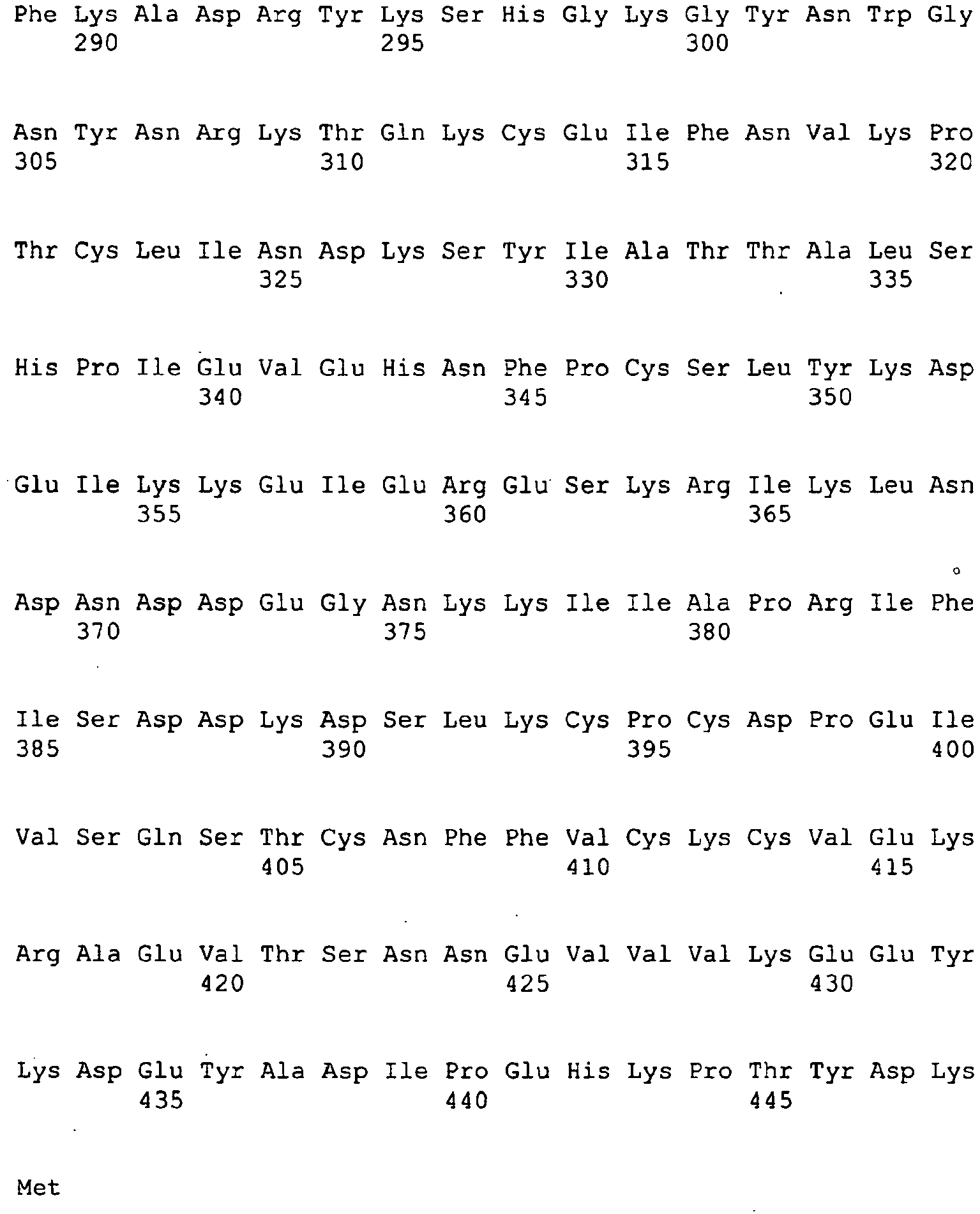
- <210> 8
<211> 449
<212> PRT
<213> Artificial - <220>
<223> Diversity covering (DiCo)protein variant 5 without glycosylation sites - <400> 8


- <210> 9
<211> 449
<212> PRT
<213> Artificial - <220>
<223> Diversity covering (DiCo)protein variant 6 without glycosylation sites - <400> 9


- <210> 10
<211> 449
<212> PRT
<213> Artificial - <220>
<223> Diversity covering (DiCo)protein variant 4 - <400> 10


- <210> 11
<211> 449
<212> PRT
<213> Artificial - <220>
<223> Diversity covering (DiCo)protein variant 5 - <400> 11


- <210> 12
<211> 449
<212> PRT
<213> Artificial - <220>
<223> Diversity covering (DiCo)protein variant 6 - <400> 12


- <210> 13
<211> 1353
<212> DNA
<213> Artificial - <220>
<223> nucleic acid sequence encoding SEQ ID NO: 1 - <400> 13

- <210> 14
<211> 1350
<212> DNA
<213> Artificial - <220>
<223> nucleic acid sequence encoding SEQ ID NO: 2 - <400> 14

- <210> 15
<211> 1350
<212> DNA
<213> Artificial - <220>
<223> nucleic acid sequence encoding SEQ ID NO: 3 - <400> 15

- <210> 16
<211> 1350
<212> DNA
<213> Artificial - <220>
<223> nucleic acid sequence encoding SEQ ID NO: 4 - <400> 16

- <210> 17
<211> 1350
<212> DNA
<213> Artificial - <220>
<223> nucleic acid sequence encoding SEQ ID NO: 5 - <400> 17


- <210> 18
<211> 1350
<212> DNA
<213> Artificial - <220>
<223> nucleic acid sequence encoding SEQ ID NO: 6 - <400> 18


- <210> 19
<211> 1350
<212> DNA
<213> Artificial - <220>
<223> nucleic acid sequence encoding SEQ ID NO: 7 - <400> 19
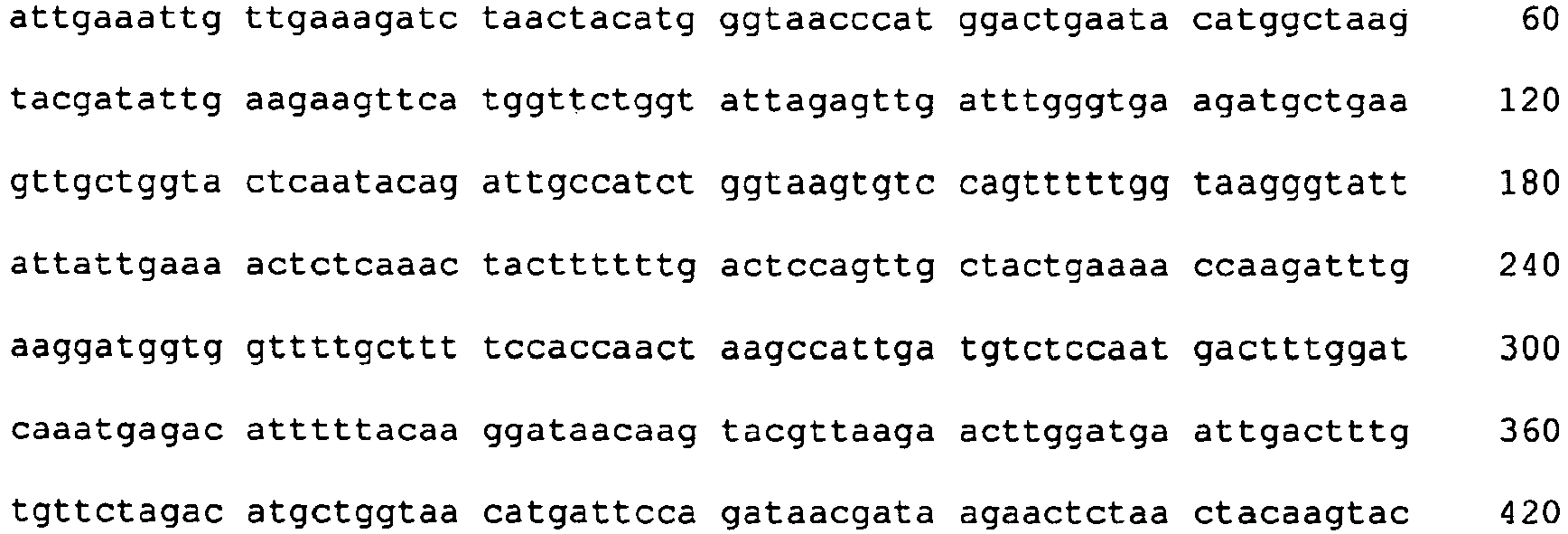

- <210> 20
<211> 1350
<212> DNA
<213> Artificial - <220>
<223> nucleic acid sequence encoding SEQ ID NO: 8 - <400> 20


- <210> 21
<211> 1350
<212> DNA
<213> Artificial - <220>
<223> nucleic acid sequence encoding SEQ ID NO: 9 - <400> 21


- <210> 22
<211> 1350
<212> DNA
<213> Artificial - <220>
<223> nucleic acid sequence encoding SEQ ID NO: 10 - <400> 22


- <210> 23
<211> 1350
<212> DNA
<213> Artificial - <220>
<223> nucleic acid sequence encoding SEQ ID NO: 11 - <400> 23

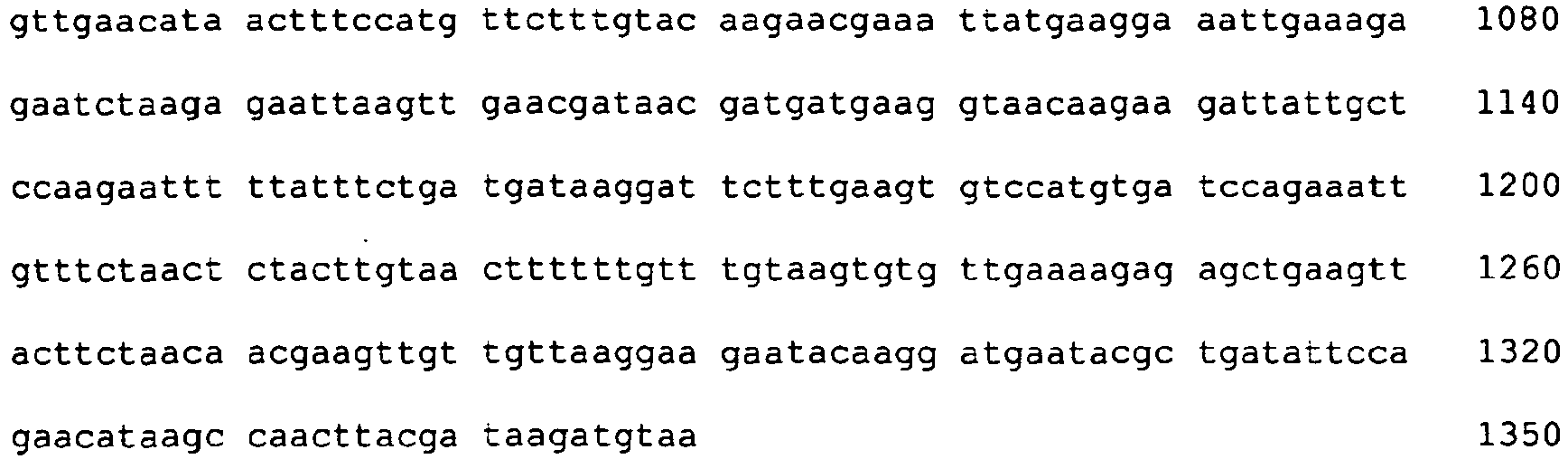
- <210> 24
<211> 1350
<212> DNA
<213> Artificial - <220>
<223> nucleic acid sequence encoding SEQ ID NO: 12 - <400> 24


- <210> 25
<211> 449
<212> PRT
<213> Artificial - <220>
<223> consensus sequence AMA1 plasmodium falciparum - <400> 25


- <210> 26
<211> 28
<212> DNA
<213> Artificial - <220>
<223> X1 primer sequence - <400> 26
gcgaattcat tgaaattgtt gaaagatc 28 - <210> 27
<211> 28
<212> DNA
<213> Artificial - <220>
<223> Y1 primer sequence - <400> 27
ggggtaccaa catcttatcg taagttgg 28 - <210> 28
<211> 29
<212> DNA
<213> Artificial - <220>
<223> Y2 primer sequence - <400> 28
ggggtaccga catgttatcg taagttggc 29 - <210> 29
<211> 449
<212> PRT
<213> Plasmodium falciparum - <400> 29


- <210> 30
<211> 449
<212> PRT
<213> Plasmodium falciparum - <400> 30



- <210> 31
<211> 449
<212> PRT
<213> Plasmodium falciparum - <400> 31


Claims (10)
- Protein composition comprising three artificial protein variants comprising SEQ ID No. 1, SEQ ID No. 2, and SEQ ID No. 3, or comprising three artificial protein variants comprising SEQ ID No. 4, SEQ ID No. 5, and SEQ ID No. 6.
- Protein composition according to claim 1,
wherein the artificial protein variants are linked. - Nucleic acid sequence encoding an artificial protein variant according to claim 1 or claim 2.
- Expression vector comprising a nucleic acid sequence according to claim 3.
- Expression vector according to claim 4, wherein the expression vector is pPicZalpha or pPIC9.
- Host organism transformed or transfected with an expression vector according to claim 4 or claim 5.
- Host organism according to claim 6, wherein the host organism is Pichia pastoris.
- Protein composition according to claim 1 or claim 2 for use in the preparation of a medicament for vaccinating a vertebrate.
- Use according claim 8, wherein the vaccination is a vaccination against malaria.
- Use according to claim 8 or claim 9, wherein the vertebrates is a human.
Applications Claiming Priority (1)
| Application Number | Priority Date | Filing Date | Title |
|---|---|---|---|
| PCT/EP2006/012444 WO2008074356A1 (en) | 2006-12-21 | 2006-12-21 | Protein composition for inducing an immune response in a vertebrate comprising a plurality of protein variants covering the heterogeneity of a single antigen, ama1 |
Publications (2)
| Publication Number | Publication Date |
|---|---|
| EP2094724A1 EP2094724A1 (en) | 2009-09-02 |
| EP2094724B1 true EP2094724B1 (en) | 2012-09-26 |
Family
ID=37806270
Family Applications (1)
| Application Number | Title | Priority Date | Filing Date |
|---|---|---|---|
| EP06829835A Not-in-force EP2094724B1 (en) | 2006-12-21 | 2006-12-21 | Protein composition for inducing an immune response in a vertebrate comprising a plurality of protein variants covering the heterogeneity of a single antigen, ama1 |
Country Status (4)
| Country | Link |
|---|---|
| US (1) | US8741305B2 (en) |
| EP (1) | EP2094724B1 (en) |
| CN (1) | CN101595127B (en) |
| WO (1) | WO2008074356A1 (en) |
Families Citing this family (3)
| Publication number | Priority date | Publication date | Assignee | Title |
|---|---|---|---|---|
| CN101969991A (en) * | 2008-01-18 | 2011-02-09 | Aeras全球Tb疫苗基金会 | Malaria vaccine compositions and constituents which elicit cell mediated immunity |
| US20110117120A1 (en) * | 2009-11-13 | 2011-05-19 | Martha Sedegah | Plasmodium falciparum HLA class I restricted T-cell epitopes |
| US20150004631A1 (en) * | 2010-11-09 | 2015-01-01 | Martha Sedegah | Plasmodium falciparum HLA class I restricted T-cell epitopes |
Family Cites Families (3)
| Publication number | Priority date | Publication date | Assignee | Title |
|---|---|---|---|---|
| AUPM368994A0 (en) | 1994-02-04 | 1994-02-24 | Saramane Pty Ltd | Malaria merozoite antigen subunit vaccine |
| EP1346049B1 (en) | 2000-12-22 | 2012-08-01 | Stichting Biomedical Primate Research Centre | Efficient expression of plasmodium apical membrane antigen 1 in yeast cells |
| EP1669370A1 (en) * | 2004-10-06 | 2006-06-14 | Institut Pasteur | Identification of regions of apical membrane antigen 1 of apicomplexan parasites suitable for targeting by vaccines and drugs by derivation and analysis of the three-dimensional structure |
-
2006
- 2006-12-21 US US12/520,344 patent/US8741305B2/en not_active Expired - Fee Related
- 2006-12-21 WO PCT/EP2006/012444 patent/WO2008074356A1/en not_active Ceased
- 2006-12-21 CN CN2006800567256A patent/CN101595127B/en not_active Expired - Fee Related
- 2006-12-21 EP EP06829835A patent/EP2094724B1/en not_active Not-in-force
Non-Patent Citations (2)
| Title |
|---|
| KUSI KWADWO A ET AL: "Generation of humoral immune responses to multi-allele PfAMA1 vaccines; effect of adjuvant and number of component alleles on the breadth of response.", PLOS ONE 2010 LNKD- PUBMED:21082025, vol. 5, no. 11, 2010, pages e15391, ISSN: 1932-6203 * |
| KUSI KWADWO A ET AL: "Immunization with different PfAMA1 alleles in sequence induces clonal imprint humoral responses that are similar to responses induced by the same alleles as a vaccine cocktail in rabbits.", MALARIA JOURNAL 2011 LNKD- PUBMED:21320299, vol. 10, 2011, pages 40, ISSN: 1475-2875 * |
Also Published As
| Publication number | Publication date |
|---|---|
| WO2008074356A1 (en) | 2008-06-26 |
| CN101595127B (en) | 2013-11-06 |
| US8741305B2 (en) | 2014-06-03 |
| US20100172923A1 (en) | 2010-07-08 |
| EP2094724A1 (en) | 2009-09-02 |
| CN101595127A (en) | 2009-12-02 |
Similar Documents
| Publication | Publication Date | Title |
|---|---|---|
| Remarque et al. | A diversity-covering approach to immunization with Plasmodium falciparum apical membrane antigen 1 induces broader allelic recognition and growth inhibition responses in rabbits | |
| US10131697B2 (en) | Vaccines against apicomplexan pathogens | |
| Cunha et al. | Comparison of the immunogenic properties of recombinant proteins representing the Plasmodium vivax vaccine candidate MSP119 expressed in distinct bacterial vectors | |
| US20170106071A1 (en) | Multi-component-multistage malaria vaccines | |
| US20070003562A1 (en) | GLURP-MSP3 fusion protein, immunogenic compositions and malarial vaccines containing it | |
| Li et al. | Differential localization of processed fragments of Plasmodium falciparum serine repeat antigen and further processing of its N-terminal 47 kDa fragment | |
| AU2003275949B2 (en) | Malaria vaccine | |
| US9422347B2 (en) | Algal produced malarial transmission blocking vaccines | |
| US6120770A (en) | Plasmodium proteins useful for preparing vaccine compositions | |
| CN100516219C (en) | Plasmodium falciparum antigen polypeptide SE36, its purification method, and vaccines and diagnostic reagents using the purified antigen | |
| Hadj-Kaddour et al. | Recombinant protein Bd37 protected gerbils against heterologous challenges with isolates of Babesia divergens polymorphic for the bd37 gene | |
| Hisaeda et al. | Antibodies to Plasmodium vivax transmission-blocking vaccine candidate antigens Pvs25 and Pvs28 do not show synergism | |
| US8741305B2 (en) | Protein composition for inducing an immune response in a vertebrate comprising a plurality of protein variants covering the heterogeneity of a single antigen, AMA1 | |
| US20040063190A1 (en) | Preparation and usage of plasmodium fusion antigen | |
| Wu et al. | Construction and immunogenicity in mice of attenuated Salmonella typhi expressing Plasmodium falciparum merozoite surface protein 1 (MSP-1) fused to tetanus toxin fragment C | |
| US6855316B1 (en) | Baculovirus produced Plasmodium falciparum vaccine | |
| Leung et al. | Expression of an immunologically reactive merozoite surface protein (MSP-142) in E. coli | |
| US6420523B1 (en) | Baculovirus produced plasmodium falciparum vaccine | |
| US7749519B2 (en) | Unique DNA and polypeptide sequences based on the circumsporozoite protein of Plasmodium vivax | |
| US8501926B2 (en) | Malaria vaccine | |
| EP2223937A1 (en) | Polypeptides for the prevention or treatment of malaria | |
| Tachibanaa et al. | ACCEPTED M | |
| IE910966A1 (en) | Plasmodium Sporozoite Antigen | |
| Fischer et al. | LLLLGGG GGGGGGG GGG LLL GGGGGG | |
| HK1058948B (en) | Malria plasmodium antigen polypeptide se36, method of purifying the same and vaccine and diagnostic with the use of the thus obtained antigen |
Legal Events
| Date | Code | Title | Description |
|---|---|---|---|
| PUAI | Public reference made under article 153(3) epc to a published international application that has entered the european phase |
Free format text: ORIGINAL CODE: 0009012 |
|
| 17P | Request for examination filed |
Effective date: 20090615 |
|
| AK | Designated contracting states |
Kind code of ref document: A1 Designated state(s): AT BE BG CH CY CZ DE DK EE ES FI FR GB GR HU IE IS IT LI LT LU LV MC NL PL PT RO SE SI SK TR |
|
| DAX | Request for extension of the european patent (deleted) | ||
| 17Q | First examination report despatched |
Effective date: 20110216 |
|
| GRAP | Despatch of communication of intention to grant a patent |
Free format text: ORIGINAL CODE: EPIDOSNIGR1 |
|
| GRAS | Grant fee paid |
Free format text: ORIGINAL CODE: EPIDOSNIGR3 |
|
| GRAA | (expected) grant |
Free format text: ORIGINAL CODE: 0009210 |
|
| AK | Designated contracting states |
Kind code of ref document: B1 Designated state(s): AT BE BG CH CY CZ DE DK EE ES FI FR GB GR HU IE IS IT LI LT LU LV MC NL PL PT RO SE SI SK TR |
|
| REG | Reference to a national code |
Ref country code: GB Ref legal event code: FG4D |
|
| REG | Reference to a national code |
Ref country code: CH Ref legal event code: EP Ref country code: CH Ref legal event code: NV Representative=s name: ARNOLD & SIEDSMA AG |
|
| REG | Reference to a national code |
Ref country code: AT Ref legal event code: REF Ref document number: 577015 Country of ref document: AT Kind code of ref document: T Effective date: 20121015 |
|
| REG | Reference to a national code |
Ref country code: IE Ref legal event code: FG4D |
|
| REG | Reference to a national code |
Ref country code: DE Ref legal event code: R096 Ref document number: 602006032187 Country of ref document: DE Effective date: 20121122 |
|
| REG | Reference to a national code |
Ref country code: NL Ref legal event code: T3 |
|
| PG25 | Lapsed in a contracting state [announced via postgrant information from national office to epo] |
Ref country code: FI Free format text: LAPSE BECAUSE OF FAILURE TO SUBMIT A TRANSLATION OF THE DESCRIPTION OR TO PAY THE FEE WITHIN THE PRESCRIBED TIME-LIMIT Effective date: 20120926 Ref country code: LT Free format text: LAPSE BECAUSE OF FAILURE TO SUBMIT A TRANSLATION OF THE DESCRIPTION OR TO PAY THE FEE WITHIN THE PRESCRIBED TIME-LIMIT Effective date: 20120926 |
|
| REG | Reference to a national code |
Ref country code: AT Ref legal event code: MK05 Ref document number: 577015 Country of ref document: AT Kind code of ref document: T Effective date: 20120926 |
|
| REG | Reference to a national code |
Ref country code: LT Ref legal event code: MG4D Effective date: 20120926 |
|
| PG25 | Lapsed in a contracting state [announced via postgrant information from national office to epo] |
Ref country code: GR Free format text: LAPSE BECAUSE OF FAILURE TO SUBMIT A TRANSLATION OF THE DESCRIPTION OR TO PAY THE FEE WITHIN THE PRESCRIBED TIME-LIMIT Effective date: 20121227 Ref country code: SI Free format text: LAPSE BECAUSE OF FAILURE TO SUBMIT A TRANSLATION OF THE DESCRIPTION OR TO PAY THE FEE WITHIN THE PRESCRIBED TIME-LIMIT Effective date: 20120926 Ref country code: LV Free format text: LAPSE BECAUSE OF FAILURE TO SUBMIT A TRANSLATION OF THE DESCRIPTION OR TO PAY THE FEE WITHIN THE PRESCRIBED TIME-LIMIT Effective date: 20120926 Ref country code: SE Free format text: LAPSE BECAUSE OF FAILURE TO SUBMIT A TRANSLATION OF THE DESCRIPTION OR TO PAY THE FEE WITHIN THE PRESCRIBED TIME-LIMIT Effective date: 20120926 |
|
| PG25 | Lapsed in a contracting state [announced via postgrant information from national office to epo] |
Ref country code: IS Free format text: LAPSE BECAUSE OF FAILURE TO SUBMIT A TRANSLATION OF THE DESCRIPTION OR TO PAY THE FEE WITHIN THE PRESCRIBED TIME-LIMIT Effective date: 20130126 Ref country code: CZ Free format text: LAPSE BECAUSE OF FAILURE TO SUBMIT A TRANSLATION OF THE DESCRIPTION OR TO PAY THE FEE WITHIN THE PRESCRIBED TIME-LIMIT Effective date: 20120926 Ref country code: ES Free format text: LAPSE BECAUSE OF FAILURE TO SUBMIT A TRANSLATION OF THE DESCRIPTION OR TO PAY THE FEE WITHIN THE PRESCRIBED TIME-LIMIT Effective date: 20130106 Ref country code: EE Free format text: LAPSE BECAUSE OF FAILURE TO SUBMIT A TRANSLATION OF THE DESCRIPTION OR TO PAY THE FEE WITHIN THE PRESCRIBED TIME-LIMIT Effective date: 20120926 Ref country code: RO Free format text: LAPSE BECAUSE OF FAILURE TO SUBMIT A TRANSLATION OF THE DESCRIPTION OR TO PAY THE FEE WITHIN THE PRESCRIBED TIME-LIMIT Effective date: 20120926 |
|
| PG25 | Lapsed in a contracting state [announced via postgrant information from national office to epo] |
Ref country code: PL Free format text: LAPSE BECAUSE OF FAILURE TO SUBMIT A TRANSLATION OF THE DESCRIPTION OR TO PAY THE FEE WITHIN THE PRESCRIBED TIME-LIMIT Effective date: 20120926 Ref country code: PT Free format text: LAPSE BECAUSE OF FAILURE TO SUBMIT A TRANSLATION OF THE DESCRIPTION OR TO PAY THE FEE WITHIN THE PRESCRIBED TIME-LIMIT Effective date: 20130128 Ref country code: SK Free format text: LAPSE BECAUSE OF FAILURE TO SUBMIT A TRANSLATION OF THE DESCRIPTION OR TO PAY THE FEE WITHIN THE PRESCRIBED TIME-LIMIT Effective date: 20120926 Ref country code: CY Free format text: LAPSE BECAUSE OF FAILURE TO SUBMIT A TRANSLATION OF THE DESCRIPTION OR TO PAY THE FEE WITHIN THE PRESCRIBED TIME-LIMIT Effective date: 20120926 |
|
| PG25 | Lapsed in a contracting state [announced via postgrant information from national office to epo] |
Ref country code: AT Free format text: LAPSE BECAUSE OF FAILURE TO SUBMIT A TRANSLATION OF THE DESCRIPTION OR TO PAY THE FEE WITHIN THE PRESCRIBED TIME-LIMIT Effective date: 20120926 |
|
| PG25 | Lapsed in a contracting state [announced via postgrant information from national office to epo] |
Ref country code: BG Free format text: LAPSE BECAUSE OF FAILURE TO SUBMIT A TRANSLATION OF THE DESCRIPTION OR TO PAY THE FEE WITHIN THE PRESCRIBED TIME-LIMIT Effective date: 20121226 Ref country code: MC Free format text: LAPSE BECAUSE OF NON-PAYMENT OF DUE FEES Effective date: 20121231 Ref country code: DK Free format text: LAPSE BECAUSE OF FAILURE TO SUBMIT A TRANSLATION OF THE DESCRIPTION OR TO PAY THE FEE WITHIN THE PRESCRIBED TIME-LIMIT Effective date: 20120926 |
|
| PLBE | No opposition filed within time limit |
Free format text: ORIGINAL CODE: 0009261 |
|
| STAA | Information on the status of an ep patent application or granted ep patent |
Free format text: STATUS: NO OPPOSITION FILED WITHIN TIME LIMIT |
|
| PG25 | Lapsed in a contracting state [announced via postgrant information from national office to epo] |
Ref country code: IT Free format text: LAPSE BECAUSE OF FAILURE TO SUBMIT A TRANSLATION OF THE DESCRIPTION OR TO PAY THE FEE WITHIN THE PRESCRIBED TIME-LIMIT Effective date: 20120926 |
|
| 26N | No opposition filed |
Effective date: 20130627 |
|
| REG | Reference to a national code |
Ref country code: IE Ref legal event code: MM4A |
|
| REG | Reference to a national code |
Ref country code: DE Ref legal event code: R097 Ref document number: 602006032187 Country of ref document: DE Effective date: 20130627 |
|
| PG25 | Lapsed in a contracting state [announced via postgrant information from national office to epo] |
Ref country code: IE Free format text: LAPSE BECAUSE OF NON-PAYMENT OF DUE FEES Effective date: 20121221 |
|
| PG25 | Lapsed in a contracting state [announced via postgrant information from national office to epo] |
Ref country code: TR Free format text: LAPSE BECAUSE OF FAILURE TO SUBMIT A TRANSLATION OF THE DESCRIPTION OR TO PAY THE FEE WITHIN THE PRESCRIBED TIME-LIMIT Effective date: 20120926 |
|
| PG25 | Lapsed in a contracting state [announced via postgrant information from national office to epo] |
Ref country code: LU Free format text: LAPSE BECAUSE OF NON-PAYMENT OF DUE FEES Effective date: 20121221 |
|
| PG25 | Lapsed in a contracting state [announced via postgrant information from national office to epo] |
Ref country code: HU Free format text: LAPSE BECAUSE OF FAILURE TO SUBMIT A TRANSLATION OF THE DESCRIPTION OR TO PAY THE FEE WITHIN THE PRESCRIBED TIME-LIMIT Effective date: 20061221 |
|
| REG | Reference to a national code |
Ref country code: FR Ref legal event code: PLFP Year of fee payment: 10 |
|
| REG | Reference to a national code |
Ref country code: FR Ref legal event code: PLFP Year of fee payment: 11 |
|
| REG | Reference to a national code |
Ref country code: FR Ref legal event code: PLFP Year of fee payment: 12 |
|
| PGFP | Annual fee paid to national office [announced via postgrant information from national office to epo] |
Ref country code: BE Payment date: 20181227 Year of fee payment: 13 Ref country code: FR Payment date: 20181226 Year of fee payment: 13 Ref country code: GB Payment date: 20181227 Year of fee payment: 13 |
|
| PGFP | Annual fee paid to national office [announced via postgrant information from national office to epo] |
Ref country code: CH Payment date: 20190103 Year of fee payment: 13 Ref country code: DE Payment date: 20181231 Year of fee payment: 13 Ref country code: NL Payment date: 20181226 Year of fee payment: 13 |
|
| REG | Reference to a national code |
Ref country code: DE Ref legal event code: R119 Ref document number: 602006032187 Country of ref document: DE |
|
| REG | Reference to a national code |
Ref country code: CH Ref legal event code: PL |
|
| REG | Reference to a national code |
Ref country code: NL Ref legal event code: MM Effective date: 20200101 |
|
| REG | Reference to a national code |
Ref country code: BE Ref legal event code: MM Effective date: 20191231 |
|
| GBPC | Gb: european patent ceased through non-payment of renewal fee |
Effective date: 20191221 |
|
| PG25 | Lapsed in a contracting state [announced via postgrant information from national office to epo] |
Ref country code: NL Free format text: LAPSE BECAUSE OF NON-PAYMENT OF DUE FEES Effective date: 20200101 |
|
| PG25 | Lapsed in a contracting state [announced via postgrant information from national office to epo] |
Ref country code: GB Free format text: LAPSE BECAUSE OF NON-PAYMENT OF DUE FEES Effective date: 20191221 Ref country code: DE Free format text: LAPSE BECAUSE OF NON-PAYMENT OF DUE FEES Effective date: 20200701 Ref country code: FR Free format text: LAPSE BECAUSE OF NON-PAYMENT OF DUE FEES Effective date: 20191231 |
|
| PG25 | Lapsed in a contracting state [announced via postgrant information from national office to epo] |
Ref country code: LI Free format text: LAPSE BECAUSE OF NON-PAYMENT OF DUE FEES Effective date: 20191231 Ref country code: CH Free format text: LAPSE BECAUSE OF NON-PAYMENT OF DUE FEES Effective date: 20191231 Ref country code: BE Free format text: LAPSE BECAUSE OF NON-PAYMENT OF DUE FEES Effective date: 20191231 |