EP2094055A2 - Shifting a communication state for performing a high speed uplink packet communication - Google Patents
Shifting a communication state for performing a high speed uplink packet communication Download PDFInfo
- Publication number
- EP2094055A2 EP2094055A2 EP09002517A EP09002517A EP2094055A2 EP 2094055 A2 EP2094055 A2 EP 2094055A2 EP 09002517 A EP09002517 A EP 09002517A EP 09002517 A EP09002517 A EP 09002517A EP 2094055 A2 EP2094055 A2 EP 2094055A2
- Authority
- EP
- European Patent Office
- Prior art keywords
- communication
- mobile station
- high speed
- state
- uplink packet
- Prior art date
- Legal status (The legal status is an assumption and is not a legal conclusion. Google has not performed a legal analysis and makes no representation as to the accuracy of the status listed.)
- Withdrawn
Links
Images




Classifications
-
- H—ELECTRICITY
- H04—ELECTRIC COMMUNICATION TECHNIQUE
- H04W—WIRELESS COMMUNICATION NETWORKS
- H04W28/00—Network traffic management; Network resource management
- H04W28/16—Central resource management; Negotiation of resources or communication parameters, e.g. negotiating bandwidth or QoS [Quality of Service]
- H04W28/18—Negotiating wireless communication parameters
- H04W28/22—Negotiating communication rate
-
- H—ELECTRICITY
- H04—ELECTRIC COMMUNICATION TECHNIQUE
- H04W—WIRELESS COMMUNICATION NETWORKS
- H04W76/00—Connection management
- H04W76/20—Manipulation of established connections
Definitions
- the present invention relates to a mobile communication system, a mobile communication method, and a radio network controller which are configured so that a mobile station shifts from a first communication state to a second communication state.
- the first communication state is a state in which the mobile station performs high speed downlink packet communication by using a high speed downlink packet communication compliant radio link, and performs uplink packet communication by using at least one radio link not including a high speed uplink packet communication compliant radio link.
- the second communication state is a state in which the mobile station performs high speed downlink packet communication by using a high speed downlink packet communication compliant radio link, and performs high speed uplink packet communication by using a high speed uplink packet communication compliant radio link.
- a mobile station UE In a mobile communication system adopting an Enhanced Uplink (EUL) or a High Speed Uplink Packet Access (HSUPA) scheme, and a High Speed Downlink Packet Access (HSDPA) scheme defined in 3GPP, a mobile station UE is capable of performing high speed downlink packet communication (HSDPA communication) by using a HSDPA communication compliant radio link, and is also performing high speed uplink packet communication (EUL communication) by using an EUL communication compliant radio link (see Published Japanese translation of a PCT application No. 2000-505261 ).
- EUL Enhanced Uplink
- HSDPA High Speed Uplink Packet Access
- EUL communication high speed uplink packet communication
- the mobile station UE cannot establish the EUL communication compliant radio link with a non EUL compliant base station which is not compliant with the EUL communication. Accordingly, when existing in a cell under the control of the non EUL compliant base station, the mobile station UE cannot perform EUL communication.
- the mobile station UE when the mobile station UE is in a cell A under the control of a non EUL compliant base station #1 which is compliant with the HSDPA communication but not compliant with the EUL communication, as shown in FIG. 1 , the mobile station UE is configured to perform HSDPA communication by using the HSDPA communication compliant radio link and uplink packet communication (R99 communication, usual uplink packet communication) by a Release 99 scheme by using a non EUL communication compliant radio link (a usual radio link) (first communication state). This is because the mobile station UE is incapable of performing EUL communication by using the EUL communication compliant radio link.
- R99 communication usual uplink packet communication
- 3GPP does not define a trigger of shift of the mobile station UE from the first communication state to a second communication state in which the mobile station UE performs HSDPA communication by using the HSDPA communication compliant radio link, and EUL communication by using the EUL communication compliant radio link. For this reason, there is a problem that even when the mobile station UE which has been in the first communication state is currently present in a cell B under the control of an EUL compliant base station #2 compliant with both the HSDPA communication and the EUL communication, the mobile station UE is not capable of changing into the second communication state.
- a first aspect of the present invention is summarized as a mobile communication system in which a mobile station shifts from a first communication state to a second communication state, the first communication state being a state in which the mobile station performs high speed downlink packet communication by using a high speed downlink packet communication compliant radio link, and performs uplink packet communication by using at least one radio link not including a high speed uplink packet communication compliant radio link, the second communication state being a state in which the mobile station performs the high speed downlink packet communication by using the high speed downlink packet communication compliant radio link, and performs high speed uplink packet communication by using the high speed uplink packet communication compliant radio link.
- the mobile station in the first communication state shifts to the second communication state.
- the mobile station in the first communication state when at least one high speed uplink packet communication compliant radio link is established by the mobile station in the first communication state, and when an amount of data in a transmission buffer of the mobile station in the first communication state exceeds a predetermined threshold value, the mobile station in the first communication state shifts to the second communication state.
- the mobile station in the first communication state shifts to the second communication state.
- the mobile station in the first communication state shifts to the second communication state.
- the mobile station in the first communication state when at least one high speed uplink packet communication compliant radio link is established by the mobile station in the first communication state, and when a serving cell for the high speed downlink packet communication of the mobile station in the first communication state is switched to a base station with which the high speed uplink packet communication compliant radio link has been established, the mobile station in the first communication state shifts to the second communication state.
- a second aspect of the present invention is summarized as a mobile communication system in which a mobile station shifts from a first communication state to a second communication state, the first communication state being a state in which the mobile station performs high speed downlink packet communication by using a high speed downlink packet communication compliant radio link, and performs uplink packet communication by using at least one radio link not including a high speed uplink packet communication compliant radio link, the second communication state being a state in which the mobile station performs the high speed downlink packet communication by using the high speed downlink packet communication compliant radio link, and performs high speed uplink packet communication by using the high speed uplink packet communication compliant radio link.
- the mobile station in the first communication state shifts to the second communication state.
- the mobile station in the first communication state when all radio links for the uplink packet communication of the mobile station in the first communication state are established as the high speed uplink packet communication compliant radio links, and when an amount of data in a transmission buffer of the mobile station in the first communication state exceeds a predetermined threshold value, the mobile station in the first communication state shifts to the second communication state.
- the mobile station in the first communication state shifts to the second communication state.
- the mobile station in the first communication state shifts to the second communication state.
- a third aspect of the present invention is summarized as a mobile communication method by which a mobile station shifts from a first communication state to a second communication state, the first communication state being a state in which the mobile station performs high speed downlink packet communication by using a high speed downlink packet communication compliant radio link, and performs uplink packet communication by using at least one radio link not including a high speed uplink packet communication compliant radio link, the second communication state being a state in which the mobile station performs the high speed downlink packet communication by using the high speed downlink packet communication compliant radio link, and performs high speed uplink packet communication by using the high speed uplink packet communication compliant radio link.
- the mobile communication method includes; causing the mobile station in the first communication state to shift to the second communication state when at least one high speed uplink packet communication compliant radio link is established by the mobile station in the first communication state.
- a fourth aspect of the present invention is summarized as a mobile communication method by which a mobile station shifts from a first communication state to a second communication state, the first communication state being a state in which the mobile station performs high speed downlink packet communication by using a high speed downlink packet communication compliant radio link, and performs uplink packet communication by using at least one radio link not including a high speed uplink packet communication compliant radio link, the second communication state being a state in which the mobile station performs the high speed downlink packet communication by using the high speed downlink packet communication compliant radio link, and performs high speed uplink packet communication by using the high speed uplink packet communication compliant radio link.
- the mobile communication method includes; causing the mobile station in the first communication state to shift to the second communication state when all radio links for the uplink packet communication of the mobile station in the first communication state are established as high speed uplink packet communication compliant radio links.
- a fifth aspect of the present invention is summarized as a radio network controller used in a mobile communication system in which a mobile station shifts from a first communication state to a second communication state, the first communication state being a state in which the mobile station performs high speed downlink packet communication by using a high speed downlink packet communication compliant radio link, and performs uplink packet communication by using at least one radio link not including a high speed uplink packet communication compliant radio link, the second communication state being a state in which the mobile station performs the high speed downlink packet communication by using the high speed downlink packet communication compliant radio link, and performs high speed uplink packet communication by using the high speed uplink packet communication compliant radio link.
- the radio network controller instructs the mobile station in the first communication state to shift to the second communication state.
- the radio network controller when at least one high speed uplink packet communication compliant radio link is established by the mobile station in the first communication state, and when an amount of data in a transmission buffer of the mobile station in the first communication state exceeds a predetermined threshold value, the radio network controller instructs the mobile station in the first communication state to shift to the second communication state.
- the radio network controller instructs the mobile station in the first communication state to shift to the second communication state.
- the radio network controller instructs the mobile station in the first communication state to shift to the second communication state.
- the radio network controller instructs the mobile station in the first communication state to shift to the second communication state.
- a sixth aspect of the present invention is summarized as a radio network controller used in a mobile communication system in which a mobile station shifts from a first communication state to a second communication state, the first communication state being a state in which the mobile station performs high speed downlink packet communication by using a high speed downlink packet communication compliant radio link, and performs uplink packet communication by using at least one radio link not including a high speed uplink packet communication compliant radio link, the second communication state being a state in which the mobile station performs the high speed downlink packet communication by using the high speed downlink packet communication compliant radio link, and performs high speed uplink packet communication by using the high speed uplink packet communication compliant radio link.
- the radio network controller instructs the mobile station in the first communication state to shift to the second communication state.
- the radio network controller instructs the mobile station in the first communication state to shift to the second communication state.
- the radio network controller instructs the mobile station in the first communication state to shift to the second communication state.
- the radio network controller instructs the mobile station in the first communication state to shift to the second communication state.
- FIGs. 1 to 2 A configuration of a mobile communication system according to a first embodiment of the present invention is described with reference to FIGs. 1 to 2 .
- the mobile communication system includes a radio network controller RNC, a non EUL compliant base station #1, an EUL compliant base station #2, and a mobile station UE.
- RNC radio network controller
- the EUL compliant base station #2 is a base station compliant with both the EUL communication and the HSDPA communication
- the non EUL compliant base station #1 is a base station compliant with the HSDPA communication but not compliant with the EUL communication.
- the mobile station UE can perform high speed downlink packet communication (HSDPA communication) by using a HSDPA communication compliant radio link, and perform R99 communication (uplink packet communication) by using at least one radio link not including an EUL communication compliant radio link (high speed uplink packet communication) (first communication state).
- HSDPA communication high speed downlink packet communication
- R99 communication uplink packet communication
- the mobile station UE when being present in the cell B under the control of the EUL compliant base station #2, the mobile station UE can perform HSDPA communication by using a HSDPA communication compliant radio link, and perform EUL communication by using an EUL communication compliant radio link (second communication state).
- the radio network controller RNC includes a mobile station interface 11, a base station interface 12, a communication state controlling unit 13, and a determination unit 14.
- the mobile station interface 11 is configured to serve as an interface with the mobile station UE. More specifically, the mobile station interface 11 is configured to perform communication with the mobile station UE by using RRC signaling and others.
- the base station interface 12 is configured to serve as an interface with the non EUL compliant base station #1 and the EUL compliant base station #2. More specifically, the base station interface 12 is configured to perform communication with the non EUL compliant base station #1 and the EUL compliant base station #2 by using NBAP signaling and others.
- the communication state controlling unit 13 instructs the mobile station UE in the first communication state to shift to the second communication state when an EUL connection condition #1 and an EUL connection condition are both fulfilled.
- the communication state controlling unit 13 notifies the EUL compliant base station #2, via the base station interface 12, of a message (NBAP signaling) indicating "Radio Link Reconfiguration Commit,” and, further, notifies the mobile station UE, via the mobile station interface 11, of a message (RRC signaling) indicating "Radio Bearer Reconfiguration". Accordingly, a R99 communication compliant radio link established between the EUL compliant base station #2 and the mobile station UE is switched to an EUL communication compliant radio link.
- NBAP signaling indicating "Radio Link Reconfiguration Commit”
- RRC signaling indicating "Radio Bearer Reconfiguration
- the determination unit 14 is configured to determine whether or not the EUL connection condition #1 and the EUL connection condition #2 are fulfilled.
- At least one EUL communication compliant radio link (high speed uplink packet communication) is established by a mobile station UE", that is, “among radio links included in an active set of the mobile station UE, at least one radio link becomes an EUL communication compliant radio link"
- the "active set” represents a set of radio links established by the mobile station UE.
- the EUL connection condition #1 may be that "all the radio links for uplink packet communication of the mobile station UE are established as high speed uplink packet communication compliant radio links", that is, "all the radio links included in the active set of the mobile station UE become EUL communication compliant radio links".
- An amount of data in a transmission buffer of a mobile station UE exceeds a predetermined threshold value
- a mobile station UE establishes, in a state A, a HSDPA communication compliant radio link and at least one radio link not including an EUL communication compliant radio link only with the non EUL compliant base station #1.
- the mobile station UE After moving from a cell A in a direction toward a cell B, the mobile station UE maintains, in a state B, the HSDPA communication compliant radio link and at least one radio link not including an EUL communication compliant radio link, with the cell A under the control of the non EUL compliant base station #1, and at the same time establishes a HSDPA communication compliant radio link and an EUL communication compliant radio link with the cell B under the control of the EUL compliant base station #2.
- the mobile station UE releases, in a state C, the radio links with the cell A under the control of the non EUL compliant base station #1, and maintains the HSDPA communication compliant radio link and the EUL communication compliant radio link only with the cell B under the control of the EUL compliant base station #2.
- a mobile station UE performs HSDPA communication by using a HSDPA communication compliant radio link, and performs uplink packet communication (R99 communication) by using at least one radio link not including an EUL communication compliant radio link, with a cell A under the control of an non EUL compliant base station #1, in a state A (first communication state).
- R99 communication uplink packet communication
- Step S1001 when a predetermined condition is satisfied, in Step S1001, the mobile station UE transmits, to a radio network controller RNC, a message 1A (RRC signaling) indicating "Measurement Report".
- RNC radio network controller
- Step S1002 in response to the received message 1A of "Measurement Report", the radio network controller RNC determines to establish an EUL communication compliant radio link between the mobile station UE and a cell B under the control of an EUL compliant base station #2, and transmits, to the EUL compliant base station #2, a message (NBAP signaling) indicating "Radio Link Addition Request" for notifying the above determination.
- NBAP signaling indicating "Radio Link Addition Request" for notifying the above determination.
- Step S1003 in response to the message of "Radio Link Addition Request", the EUL compliant base station #2 transmits a message (NBAP signaling) indicating "Radio Link Addition Response" to the radio network controller RNC.
- NBAP signaling indicating "Radio Link Addition Response
- Step S1004 the radio network controller RNC transmits, to the mobile station UE, a message (RRC signaling) indicating "Active Set Update" for notifying that the EUL communication compliant radio link is to be established between the mobile station UE and the cell B under the control of the EUL compliant base station #2.
- a message RRC signaling
- Step S1005 in response to the message of "Active Set Update", the mobile station UE transmits a message (RRC signaling) indicating "Active Set Update Complete" to the radio network controller RNC.
- RRC signaling indicating "Active Set Update Complete
- Step S1006 the mobile station UE establishes a HSDPA communication compliant radio link and the EUL communication compliant radio link with the cell B under the control of the EUL compliant base station #2.
- Step S1006 it is determined that the EUL connection condition #1 has been fulfilled. However, in this state, EUL communication via the EUL compliant base station #2 has not been commenced yet.
- a mobile station UE performs HSDPA communication by using a HSDPA communication compliant radio link and uplink packet communication (R99 communication) by using at least one radio link not including an EUL communication compliant radio link, with a cell A under the control of a non EUL compliant base station #1, while performing HSDPA communication by using a HSDPA communication compliant radio link and uplink packet communication (R99 communication) by using an EUL communication compliant radio link, with a cell B under the control of an EUL compliant base station #2, in a state B.
- HSDPA communication compliant radio link and uplink packet communication R99 communication
- Step S2001 when a predetermined condition is satisfied, the mobile station UE transmits a message 1B (RRC signaling) indicating "Measurement Report" to a radio network controller RNC.
- RRC signaling indicating "Measurement Report”
- Step S2002 in response to the received message 1B of "Measurement Report", the radio network controller RNC determines to delete the non EUL communication compliant radio link established between the mobile station UE and the cell A under the control of the non EUL compliant base station #1, and transmits, to the mobile station UE, a message (RRC signaling) indicating "Active Set Update” for notifying the above determination.
- Step S2003 in response to the message of "Active Set Update", the mobile station UE transmits a message (RRC signaling) indicating "Active Set Update Complete" to the radio network controller RNC.
- RRC signaling indicating "Active Set Update Complete
- Step S2004 the radio network controller RNC transmits, to the non EUL compliant base station #1, a message (NBAP signaling) indicating "Radio Link Deletion Request" for notifying the deletion of the EUL communication compliant radio link established between the mobile station UE and the cell A under the control of the non EUL compliant base station #1.
- NBAP signaling indicating "Radio Link Deletion Request” for notifying the deletion of the EUL communication compliant radio link established between the mobile station UE and the cell A under the control of the non EUL compliant base station #1.
- Step S2005 in response to the message of "Radio Link Deletion Request", the non EUL compliant base station #1 transmits a message (NBAP signaling) indicating "Radio Link Deletion Response" to the radio network controller RNC.
- NBAP signaling indicating "Radio Link Deletion Response
- Step S2006 the mobile station UE releases the HSDPA communication compliant radio link and the EUL communication compliant radio link established with the cell A under the control of the non EUL compliant base station #1.
- Step S2006 it is determined that the EUL connection condition #1 has been fulfilled. However, in this state, EUL communication via the EUL compliant base station #2 has not been commenced yet.
- a radio network controller RNC transmits a message (NBAP signaling) indicating "Radio Link Reconfiguration Prepare" to an EUL compliant base station #2, in Step S3002A.
- Step S3002B the EUL compliant base station #2 transmits a message (NBAP signaling) indicating "Radio Link Reconfiguration Ready" to the radio network controller RNC.
- NBAP signaling indicating "Radio Link Reconfiguration Ready
- the radio network controller RNC transmits, to the EUL compliant base station #2 and a mobile station UE, a message (NBAP signaling) indicating "Radio Link Reconfiguration Commit” and a message (RRC signaling) indicating "Radio Bearer Reconfiguration,” respectively, for instructing the EUL compliant base station #2 and the mobile station UE to commence the EUL communication via the EUL communication compliant radio link (that is, instructing to shift the mobile station UE from a first communication state to a second communication state).
- NBAP signaling indicating "Radio Link Reconfiguration Commit”
- RRC signaling indicating "Radio Bearer Reconfiguration
- Step S3004 in response to the message of "Radio Bearer Reconfiguration," the mobile station UE transmits a message (RRC signaling) indicating "Radio Bearer Reconfiguration Complete" to the radio network controller RNC.
- RRC signaling indicating "Radio Bearer Reconfiguration Complete
- Step S3005 EUL communication to be performed by the mobile station UE via the EUL communication compliant radio link is commenced, that is, the communication state of the mobile station UE shifts from the first communication state to the second communication state.
- the EUL connection condition #1 corresponds to one shown in FIG. 4
- the HSDPA communication compliant radio link and the EUL communication compliant radio link established between the mobile station UE and the non EUL compliant base station #1 are released before the commencement of the EUL communication in Step S3005.
- Step S4000 an EUL connection condition #1 is fulfilled.
- Step S4001 when a predetermined condition is satisfied (for example, when an amount of data in a transmission buffer exceeds a predetermined threshold value), a mobile station UE transmits a message 4A (RRC signaling) indicating "Measurement Report" to a radio network controller RNC.
- a predetermined condition for example, when an amount of data in a transmission buffer exceeds a predetermined threshold value
- a mobile station UE transmits a message 4A (RRC signaling) indicating "Measurement Report" to a radio network controller RNC.
- Step S4002 in response to the received message 4A of "Measurement Report", when determining that the amount of data in the transmission buffer of the mobile station UE has exceeded the predetermined threshold value, the radio network controller RNC determines that the EUL connection condition #2 has been fulfilled.
- Steps S4003A to S4006 are the same as those of Steps S3002A to S3005 shown in FIG. 6 .
- Step S5000 an EUL connection condition #1 is fulfilled.
- Step S5001 when a predetermined period has elapsed after the fulfillment of the EUL connection condition #1, that is, when an EUL shift-up timer started in Step S5001 has expired, a radio network controller RNC determines that the EUL connection condition #2 has been fulfilled, in Step S5002.
- Steps S5003A to S5006 are the same as those of Steps S3002A to S3005 shown in FIG. 6 .
- Step S6000 an EUL connection condition #1 is fulfilled.
- Step S6001 when a predetermined condition is satisfied (for example when a predetermined resource is available, or when a predetermined resource is not available), an EUL compliant base station #2 transmits, to a radio network controller RNC, a message (NBAP signaling) indicating °Common Measurement Report" for notifying an available resource of the EUL compliant base station #2.
- a predetermined condition for example when a predetermined resource is available, or when a predetermined resource is not available
- RNC radio network controller
- Step S6002 in response to the received message of "Common Measurement Report", when determining that the predetermined available resource exists in the EUL compliant base station #2, the radio network controller RNC determines that the EUL connection condition #2 has been fulfilled.
- Steps S6003A to S6006 are the same as those of Steps S3002A to S3005 shown in FIG. 6 .
- a mobile station UE in a first communication state can shift to a second state. Accordingly, even when the mobile station UE in the first communication state has moved to a cell B under the control of an EUL compliant base station #2 compliant with both HSDPA communication and EUL communication, it is possible to solve the problem that the mobile station UE is not capable of commencing the EUL communication.
- the system can be configured not to commence EUL communication even when the EUL connection condition #1 is fulfilled, on the basis of determination that the EUL communication is not necessary when an amount of data in a transmission buffer of the mobile station UE does not exceed a predetermined threshold value.
- the system can be configured not to commence the EUL communication until a predetermined period of time elapses even when the EUL connection condition #1 is fulfilled. Therefore, the EUL communication can be commenced after a determination is performed that the present environment is not one in which an UEL communication compliant radio link established by the mobile station UE is released.
- the system can be configured not to commence the EUL communication even when the EUL connection condition #1 is fulfilled, on the basis of a determination that the EUL communication cannot be performed when a predetermined resource is not available in the EUL compliant base station #2.
- EUL connection condition #1 "At least one EUL communication compliant radio link (high speed uplink packet communication) is established by a mobile station UE," that is, “among radio links included in an active set of the mobile station UE, at least one radio link becomes an UEL communication compliant radio link".
- EUL connection condition #2 A serving cell for high speed downlink packet communication (HSDPA communication) of the mobile station UE in the first state is switched to a base station with which a high speed uplink packet communication (EUL communication) compliant radio link is established.
- HSDPA communication high speed downlink packet communication
- EUL communication high speed uplink packet communication
- the "serving cell” is a cell which can control mainly radio communication of the mobile station UE.
- 3GPP defines that a serving cell for high speed downlink packet communication (HSDPA communication) and a serving cell for high speed uplink packet communication (EUL communication) are the same in the mobile station UE.
- HSDPA communication high speed downlink packet communication
- EUL communication high speed uplink packet communication
- the mobile communication system according to the modification 1 is described below with reference to FIG. 10 while comparing with the mobile communication system according to the above-mentioned first embodiment.
- EUL connection condition #1 the following is used, "At least, one EUL communication (high speed uplink packet communication) compliant radio link is established by a mobile station UE", and as an EUL connection condition #2, "No condition” is used (cases shown in FIGs. 4 and 6 ).
- an active set (for uplink packet communication) of the mobile station UE includes only a radio link for uplink packet communication established with a cell A under the control of an non EUL, compliant base station #1, and a serving cell (a serving cell for HSDPA communication) of the mobile station UE is the cell A.
- the mobile station UE shifts to a second communication state, and the active set (for uplink packet communication) of the mobile station UE is switched so as to include only a radio link for uplink packet communication established with the cell B under the control of an EUL compliant base station #2, and the serving cell(the serving cell for HSDPA communication and EUL communication) for the mobile station UE is switched to the cell B.
- EUL connection condition #1 the following is used, "All the radio links for uplink packet communication in a mobile station UE are established as high speed uplink packet communication (EUL communication) compliant radio links", as an EUL connection condition #2, "No condition” is used (cases shown in FIGs. 5 and 6 ).
- the mobile station UE in a period until T1, the mobile station UE is in a first communication state, and an active set (for uplink packet communication) of the mobile station UE includes only a radio link for uplink packet communication established with a cell A under the control of a non EUL compliant base station #1, and a serving cell (a serving cell for HSDPA communication) of the mobile station UE is the cell A.
- an active set (for uplink packet communication) of the mobile station UE is switched so as to include both a radio link for uplink packet communication established with the cell A under the control of the non EUL compliant base station #1, and a radio link for uplink packet communication established with the cell B under the control of an EUL compliant base station #2.
- the mobile station UE is still in the first communication state, and the serving cell (the serving cell for HSDPA communication) of the mobile station UE is still the cell A.
- the serving cell the serving cell for HSDPA communication
- the serving cell the serving cell for HSDPA communication
- the mobile station UE shifts to a second communication state for the first time.
- a mobile station UE in a period until T1, a mobile station UE is in a first communication state, and an active set (for uplink packet communication) of the mobile station UE includes only a radio link for uplink packet communication established with a cell A under the control of a non EUL compliant base station #1, and a serving cell (a serving cell for HSDPA communication) of the mobile station UE is the cell A.
- an active set (for uplink packet communication) of the mobile station UE is switched so as to include both a radio link for uplink packet communication established with the cell A under the control of the non EUL compliant base station #1, and a radio link for uplink packet communication established with the cell B under the control of an EUL compliant base station #2.
- the mobile station UE is still in the first communication state, and the serving cell (the serving cell for HSDPA communication) of the mobile station UE is still the cell A.
- the mobile station UE shifts to a second communication state, and the serving cell (the serving cell for HSDPA communication) is switched to the cell B.
- the performances of the above-mentioned mobile station UE, the radio base station NodeB and the radio network controller RNC may be implemented by hardware, by a software module executed by a processor, or by a combination of the two.
- the software module may be provided in a storage medium of any form such as a RAM (Random Access Memory), a flash memory, a ROM(Read Only Memory), an EPROM(Erasable Programmable ROM), an EEPROM(Electronically Erasable and Programmable ROM), a register, a hard disk, a removable disk, and a CD-ROM.
- a RAM Random Access Memory
- flash memory a ROM(Read Only Memory)
- EPROM Erasable Programmable ROM
- EEPROM Electrically Erasable and Programmable ROM
- register a hard disk, a removable disk, and a CD-ROM.
- the storage medium is connected to a processor so that the processor can read and write information from and to the storage medium.
- the storage medium may otherwise be integrated in a processor.
- the storage medium and the processor may be provided within an ASIC, and the ASIC may be provided in a mobile station UE, a radio base station NodeB and a radio network controller RNC. Otherwise, the storage medium and the processor may be provided in each of a mobile station UE, a radio base station NodeB and a radio network controller RNC as discrete components.
Landscapes
- Engineering & Computer Science (AREA)
- Quality & Reliability (AREA)
- Computer Networks & Wireless Communication (AREA)
- Signal Processing (AREA)
- Mobile Radio Communication Systems (AREA)
Abstract
Description
- This application is based upon and claims the benefit of priority from prior Japanese Patent Application No.
2008-043539, filed on February 25, 2008 - The present invention relates to a mobile communication system, a mobile communication method, and a radio network controller which are configured so that a mobile station shifts from a first communication state to a second communication state. Specifically, the first communication state is a state in which the mobile station performs high speed downlink packet communication by using a high speed downlink packet communication compliant radio link, and performs uplink packet communication by using at least one radio link not including a high speed uplink packet communication compliant radio link. The second communication state is a state in which the mobile station performs high speed downlink packet communication by using a high speed downlink packet communication compliant radio link, and performs high speed uplink packet communication by using a high speed uplink packet communication compliant radio link.
- In a mobile communication system adopting an Enhanced Uplink (EUL) or a High Speed Uplink Packet Access (HSUPA) scheme, and a High Speed Downlink Packet Access (HSDPA) scheme defined in 3GPP, a mobile station UE is capable of performing high speed downlink packet communication (HSDPA communication) by using a HSDPA communication compliant radio link, and is also performing high speed uplink packet communication (EUL communication) by using an EUL communication compliant radio link (see Published Japanese translation of a
PCT application No. 2000-505261 - In the above-described mobile communication system, the mobile station UE cannot establish the EUL communication compliant radio link with a non EUL compliant base station which is not compliant with the EUL communication. Accordingly, when existing in a cell under the control of the non EUL compliant base station, the mobile station UE cannot perform EUL communication.
- Specifically, when the mobile station UE is in a cell A under the control of a non EUL compliant
base station # 1 which is compliant with the HSDPA communication but not compliant with the EUL communication, as shown inFIG. 1 , the mobile station UE is configured to perform HSDPA communication by using the HSDPA communication compliant radio link and uplink packet communication (R99 communication, usual uplink packet communication) by a Release 99 scheme by using a non EUL communication compliant radio link (a usual radio link) (first communication state). This is because the mobile station UE is incapable of performing EUL communication by using the EUL communication compliant radio link. - However, 3GPP does not define a trigger of shift of the mobile station UE from the first communication state to a second communication state in which the mobile station UE performs HSDPA communication by using the HSDPA communication compliant radio link, and EUL communication by using the EUL communication compliant radio link. For this reason, there is a problem that even when the mobile station UE which has been in the first communication state is currently present in a cell B under the control of an EUL compliant
base station # 2 compliant with both the HSDPA communication and the EUL communication, the mobile station UE is not capable of changing into the second communication state. - A first aspect of the present invention is summarized as a mobile communication system in which a mobile station shifts from a first communication state to a second communication state, the first communication state being a state in which the mobile station performs high speed downlink packet communication by using a high speed downlink packet communication compliant radio link, and performs uplink packet communication by using at least one radio link not including a high speed uplink packet communication compliant radio link, the second communication state being a state in which the mobile station performs the high speed downlink packet communication by using the high speed downlink packet communication compliant radio link, and performs high speed uplink packet communication by using the high speed uplink packet communication compliant radio link. When at least one high speed uplink packet communication compliant radio link is established by the mobile station in the first communication state, the mobile station in the first communication state shifts to the second communication state.
- In the first aspect of the present invention, when at least one high speed uplink packet communication compliant radio link is established by the mobile station in the first communication state, and when an amount of data in a transmission buffer of the mobile station in the first communication state exceeds a predetermined threshold value, the mobile station in the first communication state shifts to the second communication state.
- In the first aspect of the present invention, when a predetermined period has elapsed after at least one high speed uplink packet communication compliant radio link is established by the mobile station in the first communication state, the mobile station in the first communication state shifts to the second communication state.
- In the first aspect of the present invention, when at least one high speed uplink packet communication compliant radio link is established by the mobile station in the first communication state, and when a predetermined available resource exists in a base station with which the high speed uplink packet communication compliant radio link has been established, the mobile station in the first communication state shifts to the second communication state.
- In the first aspect of the present invention, when at least one high speed uplink packet communication compliant radio link is established by the mobile station in the first communication state, and when a serving cell for the high speed downlink packet communication of the mobile station in the first communication state is switched to a base station with which the high speed uplink packet communication compliant radio link has been established, the mobile station in the first communication state shifts to the second communication state.
- A second aspect of the present invention is summarized as a mobile communication system in which a mobile station shifts from a first communication state to a second communication state, the first communication state being a state in which the mobile station performs high speed downlink packet communication by using a high speed downlink packet communication compliant radio link, and performs uplink packet communication by using at least one radio link not including a high speed uplink packet communication compliant radio link, the second communication state being a state in which the mobile station performs the high speed downlink packet communication by using the high speed downlink packet communication compliant radio link, and performs high speed uplink packet communication by using the high speed uplink packet communication compliant radio link. When all radio links for the uplink packet communication of the mobile station in the first communication state are established as high speed uplink packet communication compliant radio links, the mobile station in the first communication state shifts to the second communication state.
- In the second aspect of the present invention, when all radio links for the uplink packet communication of the mobile station in the first communication state are established as the high speed uplink packet communication compliant radio links, and when an amount of data in a transmission buffer of the mobile station in the first communication state exceeds a predetermined threshold value, the mobile station in the first communication state shifts to the second communication state.
- In the second aspect of the present invention, when a predetermined period has elapsed after all radio links for the uplink packet communication of the mobile station in the first communication state are established as the high speed uplink packet communication compliant radio links, the mobile station in the first communication state shifts to the second communication state.
- In the second aspect of the present invention, when all radio links for the uplink packet communication of the mobile station in the first communication state are established as the high speed uplink packet communication compliant radio links, and when a predetermined available resource exists in a base station with which the high speed uplink packet communication compliant radio link has been established, the mobile station in the first communication state shifts to the second communication state.
- A third aspect of the present invention is summarized as a mobile communication method by which a mobile station shifts from a first communication state to a second communication state, the first communication state being a state in which the mobile station performs high speed downlink packet communication by using a high speed downlink packet communication compliant radio link, and performs uplink packet communication by using at least one radio link not including a high speed uplink packet communication compliant radio link, the second communication state being a state in which the mobile station performs the high speed downlink packet communication by using the high speed downlink packet communication compliant radio link, and performs high speed uplink packet communication by using the high speed uplink packet communication compliant radio link. The mobile communication method includes; causing the mobile station in the first communication state to shift to the second communication state when at least one high speed uplink packet communication compliant radio link is established by the mobile station in the first communication state.
- A fourth aspect of the present invention is summarized as a mobile communication method by which a mobile station shifts from a first communication state to a second communication state, the first communication state being a state in which the mobile station performs high speed downlink packet communication by using a high speed downlink packet communication compliant radio link, and performs uplink packet communication by using at least one radio link not including a high speed uplink packet communication compliant radio link, the second communication state being a state in which the mobile station performs the high speed downlink packet communication by using the high speed downlink packet communication compliant radio link, and performs high speed uplink packet communication by using the high speed uplink packet communication compliant radio link. The mobile communication method includes; causing the mobile station in the first communication state to shift to the second communication state when all radio links for the uplink packet communication of the mobile station in the first communication state are established as high speed uplink packet communication compliant radio links.
- A fifth aspect of the present invention is summarized as a radio network controller used in a mobile communication system in which a mobile station shifts from a first communication state to a second communication state, the first communication state being a state in which the mobile station performs high speed downlink packet communication by using a high speed downlink packet communication compliant radio link, and performs uplink packet communication by using at least one radio link not including a high speed uplink packet communication compliant radio link, the second communication state being a state in which the mobile station performs the high speed downlink packet communication by using the high speed downlink packet communication compliant radio link, and performs high speed uplink packet communication by using the high speed uplink packet communication compliant radio link. When at least one high speed uplink packet communication compliant radio link is established by the mobile station in the first communication state, the radio network controller instructs the mobile station in the first communication state to shift to the second communication state.
- In the fifth aspect of the present invention, when at least one high speed uplink packet communication compliant radio link is established by the mobile station in the first communication state, and when an amount of data in a transmission buffer of the mobile station in the first communication state exceeds a predetermined threshold value, the radio network controller instructs the mobile station in the first communication state to shift to the second communication state.
- In the fifth aspect of the present invention, when a predetermined period has elapsed after at least one high speed uplink packet communication compliant radio link is established by the mobile station in the first communication state, the radio network controller instructs the mobile station in the first communication state to shift to the second communication state.
- In the fifth aspect of the present invention, when at least one high speed uplink packet communication compliant radio link is established by the mobile station in the first communication state, and when a predetermined available resource exists in a base station with which the high speed uplink packet communication compliant radio link has been established, the radio network controller instructs the mobile station in the first communication state to shift to the second communication state.
- In the fifth aspect of the present invention, when at least one high speed uplink packet communication compliant radio link is established by the mobile station in the first communication state, and when a serving cell for the high speed downlink packet communication of the mobile station in the first communication state is switched to a base station with which the high speed uplink packet communication compliant radio link has been established, the radio network controller instructs the mobile station in the first communication state to shift to the second communication state.
- A sixth aspect of the present invention is summarized as a radio network controller used in a mobile communication system in which a mobile station shifts from a first communication state to a second communication state, the first communication state being a state in which the mobile station performs high speed downlink packet communication by using a high speed downlink packet communication compliant radio link, and performs uplink packet communication by using at least one radio link not including a high speed uplink packet communication compliant radio link, the second communication state being a state in which the mobile station performs the high speed downlink packet communication by using the high speed downlink packet communication compliant radio link, and performs high speed uplink packet communication by using the high speed uplink packet communication compliant radio link. When all radio links for the uplink packet communication of the mobile station in the first communication state are established as high speed uplink packet communication compliant radio links, the radio network controller instructs the mobile station in the first communication state to shift to the second communication state.
- In the sixth aspect of the present invention, when all radio links for the uplink packet communication of the mobile station in the first communication state are established as the high speed uplink packet communication compliant radio links, and when an amount of data in a transmission buffer of the mobile station in the first communication state exceeds a predetermined threshold value, the radio network controller instructs the mobile station in the first communication state to shift to the second communication state.
- In the sixth aspect of the present invention, In the sixth aspect of the present invention, when a predetermined period has elapsed after all radio links for the uplink packet communication of the mobile station in the first communication state are established as the high speed uplink packet communication compliant radio links, the radio network controller instructs the mobile station in the first communication state to shift to the second communication state.
- In the sixth aspect of the present invention, when all radio links for the uplink packet communication of the mobile station in the first communication state are established as the high speed uplink packet communication compliant radio links, and when a predetermined available resource exists in a base station with which the high speed uplink packet communication compliant radio link has been established, the radio network controller instructs the mobile station in the first communication state to shift to the second communication state.
-
-
FIG. 1 is an overall block diagram of a mobile communication system according to a first embodiment of the present invention. -
FIG. 2 is a functional block diagram of a radio network controller according to the first embodiment of the present invention. -
FIG. 3 is a view for explaining change of a communication state of the mobile communication system according to the first embodiment of the present invention. -
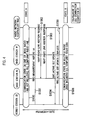
FIG. 4 is a sequence diagram showing an example of operation in which an EULconnection condition # 1 is fulfilled in the mobile communication system according to the first embodiment of the present invention. -
FIG. 5 is a sequence diagram showing an example of operation in which an EULconnection condition # 1 is fulfilled in the mobile communication system according to the first embodiment of the present invention. -
FIG. 6 is a sequence diagram showing an example of operation in which an EULconnection condition # 2 is fulfilled in the mobile communication system according to the first embodiment of the present invention. -
FIG. 7 is a sequence diagram showing an example of operation in which an EULconnection condition # 2 is fulfilled in the mobile communication system according to the first embodiment of the present invention. -
FIG. 8 is a sequence diagram showing an example of operation in which an EULconnection condition # 2 is fulfilled in the mobile communication system according to the first embodiment of the present invention. -
FIG. 9 is a sequence diagram showing an example of operation in which an EULconnection condition # 2 is fulfilled in the mobile communication system according to the first embodiment of the present invention. -
FIG. 10 is a view for explaining a mobile communication system according to a modification of the present invention. - (Configuration of a Mobile Communication System according to a First Embodiment of the Present Invention)
- A configuration of a mobile communication system according to a first embodiment of the present invention is described with reference to
FIGs. 1 to 2 . - In this embodiment, description is given of the mobile communication system in which an HSDPA scheme and an EUL scheme defined in 3GPP are adopted as an example. However, the present invention is not limited to this example.
- As shown in
FIG. 1 , the mobile communication system according to this embodiment includes a radio network controller RNC, a non EUL compliantbase station # 1, an EUL compliantbase station # 2, and a mobile station UE. - Here, the EUL compliant
base station # 2 is a base station compliant with both the EUL communication and the HSDPA communication, and the non EUL compliantbase station # 1 is a base station compliant with the HSDPA communication but not compliant with the EUL communication. - Further, when being present in the cell A under the control of the non EUL compliant
base station # 1, the mobile station UE can perform high speed downlink packet communication (HSDPA communication) by using a HSDPA communication compliant radio link, and perform R99 communication (uplink packet communication) by using at least one radio link not including an EUL communication compliant radio link (high speed uplink packet communication) (first communication state). - Meanwhile, when being present in the cell B under the control of the EUL compliant
base station # 2, the mobile station UE can perform HSDPA communication by using a HSDPA communication compliant radio link, and perform EUL communication by using an EUL communication compliant radio link (second communication state). - As shown in
FIG. 2 , the radio network controller RNC includes amobile station interface 11, abase station interface 12, a communicationstate controlling unit 13, and adetermination unit 14. - The
mobile station interface 11 is configured to serve as an interface with the mobile station UE. More specifically, themobile station interface 11 is configured to perform communication with the mobile station UE by using RRC signaling and others. - The
base station interface 12 is configured to serve as an interface with the non EUL compliantbase station # 1 and the EUL compliantbase station # 2. More specifically, thebase station interface 12 is configured to perform communication with the non EUL compliantbase station # 1 and the EUL compliantbase station # 2 by using NBAP signaling and others. - The communication
state controlling unit 13 instructs the mobile station UE in the first communication state to shift to the second communication state when an EULconnection condition # 1 and an EUL connection condition are both fulfilled. - To be more specific, when the EUL
connection condition # 1 and the EULconnection condition # 2 are both fulfilled, the communicationstate controlling unit 13 notifies the EUL compliantbase station # 2, via thebase station interface 12, of a message (NBAP signaling) indicating "Radio Link Reconfiguration Commit," and, further, notifies the mobile station UE, via themobile station interface 11, of a message (RRC signaling) indicating "Radio Bearer Reconfiguration". Accordingly, a R99 communication compliant radio link established between the EUL compliantbase station # 2 and the mobile station UE is switched to an EUL communication compliant radio link. - The
determination unit 14 is configured to determine whether or not the EULconnection condition # 1 and the EULconnection condition # 2 are fulfilled. - For an example of the EUL
connection condition # 1, the following is cited: "At least one EUL communication compliant radio link (high speed uplink packet communication) is established by a mobile station UE", that is, "among radio links included in an active set of the mobile station UE, at least one radio link becomes an EUL communication compliant radio link" - The "active set" represents a set of radio links established by the mobile station UE.
- Alternatively, the EUL
connection condition # 1 may be that "all the radio links for uplink packet communication of the mobile station UE are established as high speed uplink packet communication compliant radio links", that is, "all the radio links included in the active set of the mobile station UE become EUL communication compliant radio links". - Next, as examples of the EUL
connection condition # 2, the followings are cited. · No condition exists; - · An amount of data in a transmission buffer of a mobile station UE exceeds a predetermined threshold value;
- · After the fulfillment of the EUL
connection condition # 1, a predetermined period elapses; and - · In a base station in which the above-described EUL communication compliant radio link has been established, a predetermined available resource exists.
- (Operation of the Mobile Communication System of the First Embodiment of the Present Invention)
- Operation of the mobile communication system according to the first embodiment of the present invention is described with reference to
FIGs. 3 to 9 . - As shown in
FIG. 3 , a mobile station UE establishes, in a state A, a HSDPA communication compliant radio link and at least one radio link not including an EUL communication compliant radio link only with the non EUL compliantbase station # 1. - Further, after moving from a cell A in a direction toward a cell B, the mobile station UE maintains, in a state B, the HSDPA communication compliant radio link and at least one radio link not including an EUL communication compliant radio link, with the cell A under the control of the non EUL compliant
base station # 1, and at the same time establishes a HSDPA communication compliant radio link and an EUL communication compliant radio link with the cell B under the control of the EUL compliantbase station # 2. - Thereafter, after further moving from the cell A in the direction toward the cell B, the mobile station UE releases, in a state C, the radio links with the cell A under the control of the non EUL compliant
base station # 1, and maintains the HSDPA communication compliant radio link and the EUL communication compliant radio link only with the cell B under the control of the EUL compliantbase station # 2. - Firstly, with reference to
FIG. 4 , description is given of a first operation at the time of the fulfillment of an EULconnection condition # 1 in the mobile communication system according to this embodiment. - As shown in
FIG. 4 , in Step S1000, a mobile station UE performs HSDPA communication by using a HSDPA communication compliant radio link, and performs uplink packet communication (R99 communication) by using at least one radio link not including an EUL communication compliant radio link, with a cell A under the control of an non EUL compliantbase station # 1, in a state A (first communication state). - In Step S1001, when a predetermined condition is satisfied, in Step S1001, the mobile station UE transmits, to a radio network controller RNC, a
message 1A (RRC signaling) indicating "Measurement Report". - In Step S1002, in response to the received
message 1A of "Measurement Report", the radio network controller RNC determines to establish an EUL communication compliant radio link between the mobile station UE and a cell B under the control of an EUL compliantbase station # 2, and transmits, to the EUL compliantbase station # 2, a message (NBAP signaling) indicating "Radio Link Addition Request" for notifying the above determination. - In Step S1003, in response to the message of "Radio Link Addition Request", the EUL compliant
base station # 2 transmits a message (NBAP signaling) indicating "Radio Link Addition Response" to the radio network controller RNC. - In Step S1004, the radio network controller RNC transmits, to the mobile station UE, a message (RRC signaling) indicating "Active Set Update" for notifying that the EUL communication compliant radio link is to be established between the mobile station UE and the cell B under the control of the EUL compliant
base station # 2. - In Step S1005, in response to the message of "Active Set Update", the mobile station UE transmits a message (RRC signaling) indicating "Active Set Update Complete" to the radio network controller RNC.
- In Step S1006, the mobile station UE establishes a HSDPA communication compliant radio link and the EUL communication compliant radio link with the cell B under the control of the EUL compliant
base station # 2. - In the first operation, in Step S1006, it is determined that the EUL
connection condition # 1 has been fulfilled. However, in this state, EUL communication via the EUL compliantbase station # 2 has not been commenced yet. - Secondly, with reference to
FIG. 5 , description is given of a second operation at the time of the fulfillment of the EULconnection condition # 1 in the mobile communication system according to this embodiment. - In Step S2000, a mobile station UE performs HSDPA communication by using a HSDPA communication compliant radio link and uplink packet communication (R99 communication) by using at least one radio link not including an EUL communication compliant radio link, with a cell A under the control of a non EUL compliant
base station # 1, while performing HSDPA communication by using a HSDPA communication compliant radio link and uplink packet communication (R99 communication) by using an EUL communication compliant radio link, with a cell B under the control of an EUL compliantbase station # 2, in a state B. - In Step S2001, when a predetermined condition is satisfied, the mobile station UE transmits a
message 1B (RRC signaling) indicating "Measurement Report" to a radio network controller RNC. - In Step S2002, in response to the received
message 1B of "Measurement Report", the radio network controller RNC determines to delete the non EUL communication compliant radio link established between the mobile station UE and the cell A under the control of the non EUL compliantbase station # 1, and transmits, to the mobile station UE, a message (RRC signaling) indicating "Active Set Update" for notifying the above determination. - In Step S2003, in response to the message of "Active Set Update", the mobile station UE transmits a message (RRC signaling) indicating "Active Set Update Complete" to the radio network controller RNC.
- In Step S2004, the radio network controller RNC transmits, to the non EUL compliant
base station # 1, a message (NBAP signaling) indicating "Radio Link Deletion Request" for notifying the deletion of the EUL communication compliant radio link established between the mobile station UE and the cell A under the control of the non EUL compliantbase station # 1. - In Step S2005, in response to the message of "Radio Link Deletion Request", the non EUL compliant
base station # 1 transmits a message (NBAP signaling) indicating "Radio Link Deletion Response" to the radio network controller RNC. - In Step S2006, the mobile station UE releases the HSDPA communication compliant radio link and the EUL communication compliant radio link established with the cell A under the control of the non EUL compliant
base station # 1. - In the second operation, in Step S2006, it is determined that the EUL
connection condition # 1 has been fulfilled. However, in this state, EUL communication via the EUL compliantbase station # 2 has not been commenced yet. - Thirdly, with reference to
FIG. 6 , description is given of a first operation at the time of the fulfillment of an EULconnection condition # 2 in the mobile communication system according to this embodiment. - As shown in
FIG. 6 , when the EULconnection condition # 1 is established in Step S3000 and it is determined that the EULconnection condition # 2 is unconditionally fulfilled in Step S3001, a radio network controller RNC transmits a message (NBAP signaling) indicating "Radio Link Reconfiguration Prepare" to an EUL compliantbase station # 2, in Step S3002A. - Thereafter, when the EUL compliant
base station # 2 successfully secures an amount of resource large enough to configure an EUL communication compliant radio link, in Step S3002B, the EUL compliantbase station # 2 transmits a message (NBAP signaling) indicating "Radio Link Reconfiguration Ready" to the radio network controller RNC. - Thereafter, in Steps S3002C and S3003, the radio network controller RNC transmits, to the EUL compliant
base station # 2 and a mobile station UE, a message (NBAP signaling) indicating "Radio Link Reconfiguration Commit" and a message (RRC signaling) indicating "Radio Bearer Reconfiguration," respectively, for instructing the EUL compliantbase station # 2 and the mobile station UE to commence the EUL communication via the EUL communication compliant radio link (that is, instructing to shift the mobile station UE from a first communication state to a second communication state). - In Step S3004, in response to the message of "Radio Bearer Reconfiguration," the mobile station UE transmits a message (RRC signaling) indicating "Radio Bearer Reconfiguration Complete" to the radio network controller RNC.
- In Step S3005, EUL communication to be performed by the mobile station UE via the EUL communication compliant radio link is commenced, that is, the communication state of the mobile station UE shifts from the first communication state to the second communication state.
- Meanwhile, when the EUL
connection condition # 1 corresponds to one shown inFIG. 4 , the HSDPA communication compliant radio link and the EUL communication compliant radio link established between the mobile station UE and the non EUL compliantbase station # 1 are released before the commencement of the EUL communication in Step S3005. - Fourth, with reference to
FIG. 7 , description is given of a second operation at the time of the fulfillment of the EULconnection condition # 2 in the mobile communication system according to this embodiment. - As shown in
FIG. 7 , in Step S4000, an EULconnection condition # 1 is fulfilled. - In Step S4001, when a predetermined condition is satisfied (for example, when an amount of data in a transmission buffer exceeds a predetermined threshold value), a mobile station UE transmits a
message 4A (RRC signaling) indicating "Measurement Report" to a radio network controller RNC. - In Step S4002, in response to the received
message 4A of "Measurement Report", when determining that the amount of data in the transmission buffer of the mobile station UE has exceeded the predetermined threshold value, the radio network controller RNC determines that the EULconnection condition # 2 has been fulfilled. - Operations of Steps S4003A to S4006 are the same as those of Steps S3002A to S3005 shown in
FIG. 6 . - Fifthly, with reference to
FIG. 8 , description is given of a third operation at the time of the fulfillment of the EULconnection condition # 2 in the mobile communication system according to this embodiment. - As shown in
FIG. 8 , in Step S5000, an EULconnection condition # 1 is fulfilled. - In Step S5001, when a predetermined period has elapsed after the fulfillment of the EUL
connection condition # 1, that is, when an EUL shift-up timer started in Step S5001 has expired, a radio network controller RNC determines that the EULconnection condition # 2 has been fulfilled, in Step S5002. - Operations of Steps S5003A to S5006 are the same as those of Steps S3002A to S3005 shown in
FIG. 6 . - Sixth, with reference to
FIG. 9 , description is given of a fourth operation at the time of the fulfillment of the EULconnection condition # 2 in the mobile communication system according to this embodiment. - As shown in
FIG. 9 , in Step S6000, an EULconnection condition # 1 is fulfilled. - In Step S6001, when a predetermined condition is satisfied (for example when a predetermined resource is available, or when a predetermined resource is not available), an EUL compliant
base station # 2 transmits, to a radio network controller RNC, a message (NBAP signaling) indicating °Common Measurement Report" for notifying an available resource of the EUL compliantbase station # 2. - In Step S6002, in response to the received message of "Common Measurement Report", when determining that the predetermined available resource exists in the EUL compliant
base station # 2, the radio network controller RNC determines that the EULconnection condition # 2 has been fulfilled. - Operations of Steps S6003A to S6006 are the same as those of Steps S3002A to S3005 shown in
FIG. 6 . - In the mobile communication system according to this embodiment, when both EUL
connection conditions # 1 and #2 are fulfilled, a mobile station UE in a first communication state can shift to a second state. Accordingly, even when the mobile station UE in the first communication state has moved to a cell B under the control of an EUL compliantbase station # 2 compliant with both HSDPA communication and EUL communication, it is possible to solve the problem that the mobile station UE is not capable of commencing the EUL communication. - Further, in the mobile communication system according to this embodiment, the system can be configured not to commence EUL communication even when the EUL
connection condition # 1 is fulfilled, on the basis of determination that the EUL communication is not necessary when an amount of data in a transmission buffer of the mobile station UE does not exceed a predetermined threshold value. - Further, in the mobile communication system according to this embodiment, the system can be configured not to commence the EUL communication until a predetermined period of time elapses even when the EUL
connection condition # 1 is fulfilled. Therefore, the EUL communication can be commenced after a determination is performed that the present environment is not one in which an UEL communication compliant radio link established by the mobile station UE is released. - Still further, in the mobile communication system according to this embodiment, the system can be configured not to commence the EUL communication even when the EUL
connection condition # 1 is fulfilled, on the basis of a determination that the EUL communication cannot be performed when a predetermined resource is not available in the EUL compliantbase station # 2. - In a mobile communication system according to a
modification 1 of the present invention, the following is used as an EULconnection condition # 1, "At least one EUL communication compliant radio link (high speed uplink packet communication) is established by a mobile station UE," that is, "among radio links included in an active set of the mobile station UE, at least one radio link becomes an UEL communication compliant radio link". - Further, in the mobile communication system according to the
modification 1, the following is used as an EULconnection condition # 2, A serving cell for high speed downlink packet communication (HSDPA communication) of the mobile station UE in the first state is switched to a base station with which a high speed uplink packet communication (EUL communication) compliant radio link is established. - The "serving cell" is a cell which can control mainly radio communication of the mobile station UE. Meanwhile, 3GPP defines that a serving cell for high speed downlink packet communication (HSDPA communication) and a serving cell for high speed uplink packet communication (EUL communication) are the same in the mobile station UE.
- The mobile communication system according to the
modification 1 is described below with reference toFIG. 10 while comparing with the mobile communication system according to the above-mentioned first embodiment. - Firstly, a case A shown in
FIG. 10 is described. In the case A, as an EULconnection condition # 1, the following is used, "At least, one EUL communication (high speed uplink packet communication) compliant radio link is established by a mobile station UE", and as an EULconnection condition # 2, "No condition" is used (cases shown inFIGs. 4 and6 ). - In the case A, in a period until T1, the mobile station UE is in a first communication state, and an active set (for uplink packet communication) of the mobile station UE includes only a radio link for uplink packet communication established with a cell A under the control of an non EUL, compliant
base station # 1, and a serving cell (a serving cell for HSDPA communication) of the mobile station UE is the cell A. - Thereafter, at time T1 when, in the mobile station UE, a difference between a reception level from the cell A and a reception level from a cell B reaches a threshold value for addition, the mobile station UE shifts to a second communication state, and the active set (for uplink packet communication) of the mobile station UE is switched so as to include only a radio link for uplink packet communication established with the cell B under the control of an EUL compliant
base station # 2, and the serving cell(the serving cell for HSDPA communication and EUL communication) for the mobile station UE is switched to the cell B. - Secondly, a case B shown in
FIG. 10 is described. In the case B as an EULconnection condition # 1, the following is used, "All the radio links for uplink packet communication in a mobile station UE are established as high speed uplink packet communication (EUL communication) compliant radio links", as an EULconnection condition # 2, "No condition" is used (cases shown inFIGs. 5 and6 ). - In the case B, in a period until T1, the mobile station UE is in a first communication state, and an active set (for uplink packet communication) of the mobile station UE includes only a radio link for uplink packet communication established with a cell A under the control of a non EUL compliant
base station # 1, and a serving cell (a serving cell for HSDPA communication) of the mobile station UE is the cell A. - Subsequently, at time T1 when, in the mobile station UE, a difference between a reception level from the cell A and a reception level from a cell B reaches a threshold value for addition, an active set (for uplink packet communication) of the mobile station UE is switched so as to include both a radio link for uplink packet communication established with the cell A under the control of the non EUL compliant
base station # 1, and a radio link for uplink packet communication established with the cell B under the control of an EUL compliantbase station # 2. However, at this time, the mobile station UE is still in the first communication state, and the serving cell (the serving cell for HSDPA communication) of the mobile station UE is still the cell A. - At time T2 when, in the mobile station UE, a reception level from the cell B becomes larger than that from the cell A and a difference between the reception levels from the cells A and B becomes a cell change hysteresis, the serving cell (the serving cell for HSDPA communication) of the mobile station UE is switched to the cell B. However, even at this time, the mobile station UE is still in the first communication state.
- Thereafter, at time T3 when, in the mobile station UE, a difference between the reception levels from the cells A and B reaches a threshold value for deletion, the mobile station UE shifts to a second communication state for the first time.
- Thirdly, a case C (that is, a case of this modification 1) shown in
FIG. 10 is described. - In the case C, in a period until T1, a mobile station UE is in a first communication state, and an active set (for uplink packet communication) of the mobile station UE includes only a radio link for uplink packet communication established with a cell A under the control of a non EUL compliant
base station # 1, and a serving cell (a serving cell for HSDPA communication) of the mobile station UE is the cell A. - Subsequently, at time T1 when, in the mobile station UE, a difference between a reception level from the cell A and a reception level from a cell B reaches a threshold value for addition, an active set (for uplink packet communication) of the mobile station UE is switched so as to include both a radio link for uplink packet communication established with the cell A under the control of the non EUL compliant
base station # 1, and a radio link for uplink packet communication established with the cell B under the control of an EUL compliantbase station # 2. However, at this time, the mobile station UE is still in the first communication state, and the serving cell (the serving cell for HSDPA communication) of the mobile station UE is still the cell A. - Thereafter, at time T2 when, in the mobile station UE, a reception level from the cell B becomes larger than that from the cell A and a difference between the reception levels from the cells A and B becomes a cell change hysteresis, the mobile station UE shifts to a second communication state, and the serving cell (the serving cell for HSDPA communication) is switched to the cell B.
- Note that the performances of the above-mentioned mobile station UE, the radio base station NodeB and the radio network controller RNC may be implemented by hardware, by a software module executed by a processor, or by a combination of the two.
- The software module may be provided in a storage medium of any form such as a RAM (Random Access Memory), a flash memory, a ROM(Read Only Memory), an EPROM(Erasable Programmable ROM), an EEPROM(Electronically Erasable and Programmable ROM), a register, a hard disk, a removable disk, and a CD-ROM.
- The storage medium is connected to a processor so that the processor can read and write information from and to the storage medium. The storage medium may otherwise be integrated in a processor. The storage medium and the processor may be provided within an ASIC, and the ASIC may be provided in a mobile station UE, a radio base station NodeB and a radio network controller RNC. Otherwise, the storage medium and the processor may be provided in each of a mobile station UE, a radio base station NodeB and a radio network controller RNC as discrete components.
- Hereinabove, the present invention has been described in detail by use of the embodiment. However, it is obvious to those skilled in the art that the present invention is not limited to the embodiment described herein. The present invention may be implemented as a modification and a variation, within the spirit and scope of the present invention defined by the scope of claims. Accordingly, the present specification aims to provide an exemplary description and does not limit the present invention in any way.
Claims (20)
- A mobile communication system in which a mobile station shifts from a first communication state to a second communication state, the first communication state being a state in which the mobile station performs high speed downlink packet communication by using a high speed downlink packet communication compliant radio link, and performs uplink packet communication by using at least one radio link not including a high speed uplink packet communication compliant radio link, the second communication state being a state in which the mobile station performs the high speed downlink packet communication by using the high speed downlink packet communication compliant radio link, and performs high speed uplink packet communication by using the high speed uplink packet communication compliant radio link, wherein
when at least one high speed uplink packet communication compliant radio link is established by the mobile station in the first communication state, the mobile station in the first communication state shifts to the second communication state. - The mobile communication system according to claim 1, wherein
when at least one high speed uplink packet communication compliant radio link is established by the mobile station in the first communication state, and when an amount of data in a transmission buffer of the mobile station in the first communication state exceeds a predetermined threshold value, the mobile station in the first communication state shifts to the second communication state. - The mobile communication system according to claim 1, wherein
when a predetermined period has elapsed after at least one high speed uplink packet communication compliant radio link is established by the mobile station in the first communication state, the mobile station in the first communication state shifts to the second communication state. - The mobile communication system according to claim 1, wherein
when at least one high speed uplink packet communication compliant radio link is established by the mobile station in the first communication state, and when a predetermined available resource exists in a base station with which the high speed uplink packet communication compliant radio link has been established, the mobile station in the first communication state shifts to the second communication state. - The mobile communication system according to claim 1, wherein
when at least one high speed uplink packet communication compliant radio link is established by the mobile station in the first communication state, and when a serving cell for the high speed downlink packet communication of the mobile station in the first communication state is switched to a base station with which the high speed uplink packet communication compliant radio link has been established, the mobile station in the first communication state shifts to the second communication state. - A mobile communication system in which a mobile station shifts from a first communication state to a second communication state, the first communication state being a state in which the mobile station performs high speed downlink packet communication by using a high speed downlink packet communication compliant radio link, and performs uplink packet communication by using at least one radio link not including a high speed uplink packet communication compliant radio link, the second communication state being a state in which the mobile station performs the high speed downlink packet communication by using the high speed downlink packet communication compliant radio link, and performs high speed uplink packet communication by using the high speed uplink packet communication compliant radio link, wherein
when all radio links for the uplink packet communication of the mobile station in the first communication state are established as high speed uplink packet communication compliant radio links, the mobile station in the first communication state shifts to the second communication state. - The mobile communication system according to claim 6, wherein
when all radio links for the uplink packet communication of the mobile station in the first communication state are established as the high speed uplink packet communication compliant radio links, and when an amount of data in a transmission buffer of the mobile station in the first communication state exceeds a predetermined threshold value, the mobile station in the first communication state shifts to the second communication state. - The mobile communication system according to claim 6, wherein
when a predetermined period has elapsed after all radio links for the uplink packet communication of the mobile station in the first communication state are established as the high speed uplink packet communication compliant radio links, the mobile station in the first communication state shifts to the second communication state. - The mobile communication system according to claim 6, wherein
when all radio links for the uplink packet communication of the mobile station in the first communication state are established as the high speed uplink packet communication compliant radio links, and when a predetermined available resource exists in a base station with which the high speed uplink packet communication compliant radio link has been established, the mobile station in the first communication state shifts to the second communication state. - A mobile communication method by which a mobile station shifts from a first communication state to a second communication state, the first communication state being a state in which the mobile station performs high speed downlink packet communication by using a high speed downlink packet communication compliant radio link, and performs uplink packet communication by using at least one radio link not including a high speed uplink packet communication compliant radio link, the second communication state being a state in which the mobile station performs the high speed downlink packet communication by using the high speed downlink packet communication compliant radio link, and performs high speed uplink packet communication by using the high speed uplink packet communication compliant radio link, the method comprising;
causing the mobile station in the first communication state to shift to the second communication state when at least one high speed uplink packet communication compliant radio link is established by the mobile station in the first communication state. - A mobile communication method by which a mobile station shifts from a first communication state to a second communication state, the first communication state being a state in which the mobile station performs high speed downlink packet communication by using a high speed downlink packet communication compliant radio link, and performs uplink packet communication by using at least one radio link not including a high speed uplink packet communication compliant radio link, the second communication state being a state in which the mobile station performs the high speed downlink packet communication by using the high speed downlink packet communication compliant radio link, and performs high speed uplink packet communication by using the high speed uplink packet communication compliant radio link, the method comprising;
causing the mobile station in the first communication state to shift to the second communication state when all radio links for the uplink packet communication of the mobile station in the first communication state are established as high speed uplink packet communication compliant radio links. - A radio network controller used in a mobile communication system in which a mobile station shifts from a first communication state to a second communication state, the first communication state being a state in which the mobile station performs high speed downlink packet communication by using a high speed downlink packet communication compliant radio link, and performs uplink packet communication by using at least one radio link not including a high speed uplink packet communication compliant radio link, the second communication state being a state in which the mobile station performs the high speed downlink packet communication by using the high speed downlink packet communication compliant radio link, and performs high speed uplink packet communication by using the high speed uplink packet communication compliant radio link, wherein
when at least one high speed uplink packet communication compliant radio link is established by the mobile station in the first communication state, the radio network controller instructs the mobile station in the first communication state to shift to the second communication state. - The radio network controller according to claim 12, wherein
when at least one high speed uplink packet communication compliant radio link is established by the mobile station in the first communication state, and when an amount of data in a transmission buffer of the mobile station in the first communication state exceeds a predetermined threshold value, the radio network controller instructs the mobile station in the first communication state to shift to the second communication state. - The radio network controller according to claim 12, wherein
when a predetermined period has elapsed after at least one high speed uplink packet communication compliant radio link is established by the mobile station in the first communication state, the radio network controller instructs the mobile station in the first communication state to shift to the second communication state. - The radio network controller according to claim 12, wherein
when at least one high speed uplink packet communication compliant radio link is established by the mobile station in the first communication state, and when a predetermined available resource exists in a base station with which the high speed uplink packet communication compliant radio link has been established, the radio network controller instructs the mobile station in the first communication state to shift to the second communication state. - The radio network controller according to claim 12, wherein
when at least one high speed uplink packet communication compliant radio link is established by the mobile station in the first communication state, and when a serving cell for the high speed downlink packet communication of the mobile station in the first communication state is switched to a base station with which the high speed uplink packet communication compliant radio link has been established, the radio network controller instructs the mobile station in the first communication state to shift to the second communication state. - A radio network controller used in a mobile communication system in which a mobile station shifts from a first communication state to a second communication state, the first communication state being a state in which the mobile station performs high speed downlink packet communication by using a high speed downlink packet communication compliant radio link, and performs uplink packet communication by using at least one radio link not including a high speed uplink packet communication compliant radio link, the second communication state being a state in which the mobile station performs the high speed downlink packet communication by using the high speed downlink packet communication compliant radio link, and performs high speed uplink packet communication by using the high speed uplink packet communication compliant radio link, wherein
when all radio links for the uplink packet communication of the mobile station in the first communication state are established as high speed uplink packet communication compliant radio links, the radio network controller instructs the mobile station in the first communication state to shift to the second communication state. - The radio network controller according to claim 17, wherein
when all radio links for the uplink packet communication of the mobile station in the first communication state are established as the high speed uplink packet communication compliant radio links, and when an amount of data in a transmission buffer of the mobile station in the first communication state exceeds a predetermined threshold value, the radio network controller instructs the mobile station in the first communication state to shift to the second communication state. - The radio network controller according to claim 17, wherein
when a predetermined period has elapsed after all radio links for the uplink packet communication of the mobile station in the first communication state are established as the high speed uplink packet communication compliant radio links, the radio network controller instructs the mobile station in the first communication state to shift to the second communication state. - The radio network controller according to claim 17, wherein
when all radio links for the uplink packet communication of the mobile station in the first communication state are established as the high speed uplink packet communication compliant radio links, and when a predetermined available resource exists in a base station with which the high speed uplink packet communication compliant radio link has been established, the radio network controller instructs the mobile station in the first communication state to shift to the second communication state.
Applications Claiming Priority (1)
| Application Number | Priority Date | Filing Date | Title |
|---|---|---|---|
| JP2008043539A JP5184139B2 (en) | 2008-02-25 | 2008-02-25 | Mobile communication system, mobile communication method, and radio control apparatus |
Publications (2)
| Publication Number | Publication Date |
|---|---|
| EP2094055A2 true EP2094055A2 (en) | 2009-08-26 |
| EP2094055A3 EP2094055A3 (en) | 2011-12-07 |
Family
ID=40688458
Family Applications (1)
| Application Number | Title | Priority Date | Filing Date |
|---|---|---|---|
| EP09002517A Withdrawn EP2094055A3 (en) | 2008-02-25 | 2009-02-23 | Shifting a communication state for performing a high speed uplink packet communication |
Country Status (4)
| Country | Link |
|---|---|
| US (1) | US8179850B2 (en) |
| EP (1) | EP2094055A3 (en) |
| JP (1) | JP5184139B2 (en) |
| CN (1) | CN101521906B (en) |
Families Citing this family (1)
| Publication number | Priority date | Publication date | Assignee | Title |
|---|---|---|---|---|
| JP2015103863A (en) * | 2013-11-21 | 2015-06-04 | 株式会社Nttドコモ | Network management system, communication system, and network management method |
Citations (2)
| Publication number | Priority date | Publication date | Assignee | Title |
|---|---|---|---|---|
| JP2000505261A (en) | 1996-02-23 | 2000-04-25 | カルコム・インコーポレーテッド | Method and system for coexisting GSM and CDMA wireless communication systems |
| JP2002345019A (en) * | 2001-05-11 | 2002-11-29 | Kyocera Corp | Portable communication terminal and wireless communication system |
Family Cites Families (16)
| Publication number | Priority date | Publication date | Assignee | Title |
|---|---|---|---|---|
| JP4180236B2 (en) * | 1999-12-28 | 2008-11-12 | 株式会社エヌ・ティ・ティ・ドコモ | Handover control method and system |
| JP2004297426A (en) * | 2003-03-27 | 2004-10-21 | Toshiba Corp | Wireless communication device and wireless base station |
| GB0323245D0 (en) * | 2003-10-03 | 2003-11-05 | Fujitsu Ltd | Soft handover techniques |
| KR100713442B1 (en) * | 2004-02-14 | 2007-05-02 | 삼성전자주식회사 | Transmission Method of Scheduling Information through Enhanced Reverse Dedicated Channel in Mobile Communication System |
| KR100933156B1 (en) * | 2004-08-12 | 2009-12-21 | 삼성전자주식회사 | Method and apparatus for transmitting and receiving uplink data in handoff area using transport channels for uplink service |
| FR2874302B1 (en) * | 2004-08-16 | 2006-11-17 | Nortel Networks Ltd | METHOD FOR MANAGING RESOURCES IN A COMMUNICATION SYSTEM AND EQUIPMENT FOR IMPLEMENTING SAID METHOD |
| EP1838125B1 (en) * | 2004-08-31 | 2009-06-03 | Panasonic Corporation | Efficient rise over thermal (RoT) control during soft handover |
| CN100515114C (en) * | 2005-02-07 | 2009-07-15 | 上海贝尔阿尔卡特股份有限公司 | Admission control algorithm and device for HSUPA service |
| KR100921511B1 (en) * | 2005-03-28 | 2009-10-12 | 미쓰비시덴키 가부시키가이샤 | Mobile object communication system, handover control method, base station control apparatus and mobile terminal |
| WO2006106561A1 (en) * | 2005-03-29 | 2006-10-12 | Mitsubishi Denki Kabushiki Kaisha | Handover control method, base station control apparatus, and mobile station |
| JP2007151167A (en) * | 2005-03-28 | 2007-06-14 | Mitsubishi Electric Corp | Mobile communication system, handover control method, base station control apparatus, and mobile terminal |
| EP2662997B1 (en) * | 2005-04-20 | 2021-01-06 | Mitsubishi Denki K. K. | Communication method, base station and mobile station |
| JP5132055B2 (en) | 2005-12-26 | 2013-01-30 | 富士通株式会社 | Apparatus and method for performing physical channel reconfiguration |
| CN100442935C (en) * | 2006-03-01 | 2008-12-10 | 华为技术有限公司 | A high-speed downlink packet access handover method |
| JP4779776B2 (en) * | 2006-04-03 | 2011-09-28 | 日本電気株式会社 | Radio terminal apparatus, radio base station selection method, and radio base station selection program |
| KR101473010B1 (en) * | 2007-10-17 | 2014-12-15 | 엘지전자 주식회사 | How to provide circuit services using packet network |
-
2008
- 2008-02-25 JP JP2008043539A patent/JP5184139B2/en active Active
-
2009
- 2009-02-19 US US12/388,724 patent/US8179850B2/en active Active
- 2009-02-23 EP EP09002517A patent/EP2094055A3/en not_active Withdrawn
- 2009-02-24 CN CN2009100077498A patent/CN101521906B/en not_active Expired - Fee Related
Patent Citations (2)
| Publication number | Priority date | Publication date | Assignee | Title |
|---|---|---|---|---|
| JP2000505261A (en) | 1996-02-23 | 2000-04-25 | カルコム・インコーポレーテッド | Method and system for coexisting GSM and CDMA wireless communication systems |
| JP2002345019A (en) * | 2001-05-11 | 2002-11-29 | Kyocera Corp | Portable communication terminal and wireless communication system |
Non-Patent Citations (2)
| Title |
|---|
| "MICROSYSTEM TECHNOLOGIES", vol. 14, 15 April 2008, BERLIN, DE, ISSN: 0946-7076, article RALF KREHER ET AL: "UMTS Signaling : UMTS Interfaces, Protocols, Message Flows and Procedures Analyzed and Explained", pages: 266 - 267, XP055447165 * |
| "UMTS Network Planning, Optimization, and Inter-Operation with GSM", 15 April 2008, JOHN WILEY & SONS, INCORPORATED, ISBN: 978-0-470-82302-6, article MOE RAHNEMA: "UMTS Network Planning, Optimization, and Inter-Operation with GSM", pages: 166 - 167, XP055447181 * |
Also Published As
| Publication number | Publication date |
|---|---|
| CN101521906A (en) | 2009-09-02 |
| JP5184139B2 (en) | 2013-04-17 |
| CN101521906B (en) | 2013-03-27 |
| US20090225715A1 (en) | 2009-09-10 |
| EP2094055A3 (en) | 2011-12-07 |
| JP2009201073A (en) | 2009-09-03 |
| US8179850B2 (en) | 2012-05-15 |
Similar Documents
| Publication | Publication Date | Title |
|---|---|---|
| CN101483898B (en) | Method and apparatus for accelerating RRC connection establishment | |
| US8050222B2 (en) | Mobile communications system, handover controlling method, radio network controller, and mobile terminal | |
| JP5205236B2 (en) | Mobile communication method, mobile station, and network device | |
| AU2009283500B2 (en) | Mobile communication method, mobile switching centre, and radio base station | |
| KR20060006072A (en) | Management of Uplink Scheduling Modes in a Wireless Communication System | |
| EP2713667A1 (en) | Mobile communication method and radio base station | |
| CN103404211A (en) | Power control in a mobile device | |
| CA2777580A1 (en) | Mobile communication method, mobility management node, and packet exchanger | |
| EP2296424A1 (en) | Mobile communication method and mobile station | |
| JP5421969B2 (en) | Mobile communication method, mobile management node, packet switch and mobile station | |
| EP2528394A1 (en) | Mobile communication system, network apparatus and mobile communication method | |
| EP2094055A2 (en) | Shifting a communication state for performing a high speed uplink packet communication | |
| WO2006106561A1 (en) | Handover control method, base station control apparatus, and mobile station | |
| CN104902559A (en) | Dual connectivity communication method and device | |
| CN103037473B (en) | A kind of application method and terminal of terminal-pair up-link wireless public resource | |
| US20080026754A1 (en) | Call handover between radio network subsystems | |
| EP2538722A1 (en) | Mobile communication system, network device, and mobile communication method | |
| JP4999724B2 (en) | Mobile communication method, mobile communication system, and radio base station | |
| EP3442270A1 (en) | Mobile communication method for dual connectivity | |
| EP2903340A1 (en) | Mobile communication method | |
| JP6270332B2 (en) | Mobile communication method and mobile communication terminal | |
| US20130045768A1 (en) | Mobile communication system, network apparatus, and mobile communication method | |
| JP2012010111A (en) | Mobile communication method and radio access network device | |
| WO2015155653A1 (en) | System and method for mitigating congestion handling during hs cell change | |
| WO2010087441A1 (en) | Wireless control apparatus and mobile communication method |
Legal Events
| Date | Code | Title | Description |
|---|---|---|---|
| PUAI | Public reference made under article 153(3) epc to a published international application that has entered the european phase |
Free format text: ORIGINAL CODE: 0009012 |
|
| 17P | Request for examination filed |
Effective date: 20090223 |
|
| AK | Designated contracting states |
Kind code of ref document: A2 Designated state(s): AT BE BG CH CY CZ DE DK EE ES FI FR GB GR HR HU IE IS IT LI LT LU LV MC MK MT NL NO PL PT RO SE SI SK TR |
|
| AX | Request for extension of the european patent |
Extension state: AL BA RS |
|
| PUAL | Search report despatched |
Free format text: ORIGINAL CODE: 0009013 |
|
| AK | Designated contracting states |
Kind code of ref document: A3 Designated state(s): AT BE BG CH CY CZ DE DK EE ES FI FR GB GR HR HU IE IS IT LI LT LU LV MC MK MT NL NO PL PT RO SE SI SK TR |
|
| AX | Request for extension of the european patent |
Extension state: AL BA RS |
|
| RIC1 | Information provided on ipc code assigned before grant |
Ipc: H04W 88/06 20090101ALN20111028BHEP Ipc: H04W 36/06 20090101AFI20111028BHEP Ipc: H04W 36/18 20090101ALN20111028BHEP |
|
| AKX | Designation fees paid |
Designated state(s): DE GB |
|
| 17Q | First examination report despatched |
Effective date: 20170516 |
|
| RIC1 | Information provided on ipc code assigned before grant |
Ipc: H04W 36/18 20090101ALN20190516BHEP Ipc: H04W 76/20 20180101ALN20190516BHEP Ipc: H04W 36/06 20090101AFI20190516BHEP |
|
| GRAP | Despatch of communication of intention to grant a patent |
Free format text: ORIGINAL CODE: EPIDOSNIGR1 |
|
| INTG | Intention to grant announced |
Effective date: 20190624 |
|
| RAP1 | Party data changed (applicant data changed or rights of an application transferred) |
Owner name: NTT DOCOMO, INC. |
|
| STAA | Information on the status of an ep patent application or granted ep patent |
Free format text: STATUS: THE APPLICATION IS DEEMED TO BE WITHDRAWN |
|
| 18D | Application deemed to be withdrawn |
Effective date: 20191105 |