EP2088194A1 - Method for selecting hop line and breeding marker and primer set used for selecting hop line - Google Patents
Method for selecting hop line and breeding marker and primer set used for selecting hop line Download PDFInfo
- Publication number
- EP2088194A1 EP2088194A1 EP07830755A EP07830755A EP2088194A1 EP 2088194 A1 EP2088194 A1 EP 2088194A1 EP 07830755 A EP07830755 A EP 07830755A EP 07830755 A EP07830755 A EP 07830755A EP 2088194 A1 EP2088194 A1 EP 2088194A1
- Authority
- EP
- European Patent Office
- Prior art keywords
- nucleotide sequence
- hop
- nucleotide
- ratio
- contents
- Prior art date
- Legal status (The legal status is an assumption and is not a legal conclusion. Google has not performed a legal analysis and makes no representation as to the accuracy of the status listed.)
- Granted
Links
- 238000000034 method Methods 0.000 title claims abstract description 51
- 239000003550 marker Substances 0.000 title claims abstract description 43
- 238000009395 breeding Methods 0.000 title claims abstract description 39
- 230000001488 breeding effect Effects 0.000 title claims abstract description 39
- 241000218228 Humulus Species 0.000 claims abstract description 157
- 239000002773 nucleotide Substances 0.000 claims abstract description 143
- 125000003729 nucleotide group Chemical group 0.000 claims abstract description 143
- DRSITEVYZGOOQG-UHFFFAOYSA-N Cohumulone Chemical compound CC(C)C(=O)C1=C(O)C(CC=C(C)C)=C(O)C(O)(CC=C(C)C)C1=O DRSITEVYZGOOQG-UHFFFAOYSA-N 0.000 claims abstract description 94
- DRSITEVYZGOOQG-HXUWFJFHSA-N Cohumulone Natural products CC(C)C(=O)C1=C(O)C(CC=C(C)C)=C(O)[C@](O)(CC=C(C)C)C1=O DRSITEVYZGOOQG-HXUWFJFHSA-N 0.000 claims abstract description 94
- JSNRRGGBADWTMC-UHFFFAOYSA-N (6E)-7,11-dimethyl-3-methylene-1,6,10-dodecatriene Chemical compound CC(C)=CCCC(C)=CCCC(=C)C=C JSNRRGGBADWTMC-UHFFFAOYSA-N 0.000 claims abstract description 90
- CDOSHBSSFJOMGT-UHFFFAOYSA-N linalool Chemical compound CC(C)=CCCC(C)(O)C=C CDOSHBSSFJOMGT-UHFFFAOYSA-N 0.000 claims abstract description 89
- 238000012216 screening Methods 0.000 claims abstract description 52
- GEXOPZHAKQAGLU-UHFFFAOYSA-N Colupulone Natural products CC(C)C(=O)C1=C(O)C(CC=C(C)C)(CC=C(C)C)C(=O)C(CC=C(C)C)=C1O GEXOPZHAKQAGLU-UHFFFAOYSA-N 0.000 claims abstract description 45
- UNCDMWKTFLUPHZ-UHFFFAOYSA-N colupulone Chemical compound CC(C)C(=O)C1=C(O)C(CC=C(C)C)=C(O)C(CC=C(C)C)(CC=C(C)C)C1=O UNCDMWKTFLUPHZ-UHFFFAOYSA-N 0.000 claims abstract description 45
- CXENHBSYCFFKJS-UHFFFAOYSA-N (3E,6E)-3,7,11-Trimethyl-1,3,6,10-dodecatetraene Natural products CC(C)=CCCC(C)=CCC=C(C)C=C CXENHBSYCFFKJS-UHFFFAOYSA-N 0.000 claims abstract description 44
- 239000001490 (3R)-3,7-dimethylocta-1,6-dien-3-ol Substances 0.000 claims abstract description 44
- CDOSHBSSFJOMGT-JTQLQIEISA-N (R)-linalool Natural products CC(C)=CCC[C@@](C)(O)C=C CDOSHBSSFJOMGT-JTQLQIEISA-N 0.000 claims abstract description 44
- 229930009668 farnesene Natural products 0.000 claims abstract description 44
- 229930007744 linalool Natural products 0.000 claims abstract description 44
- 108091033319 polynucleotide Proteins 0.000 claims abstract description 37
- 239000002157 polynucleotide Substances 0.000 claims abstract description 37
- 102000040430 polynucleotide Human genes 0.000 claims abstract description 37
- 239000012634 fragment Substances 0.000 claims description 63
- 108091008146 restriction endonucleases Proteins 0.000 claims description 50
- 244000025221 Humulus lupulus Species 0.000 claims description 39
- 235000008694 Humulus lupulus Nutrition 0.000 claims description 39
- 230000029087 digestion Effects 0.000 claims description 26
- VMSLCPKYRPDHLN-UHFFFAOYSA-N (R)-Humulone Chemical compound CC(C)CC(=O)C1=C(O)C(CC=C(C)C)=C(O)C(O)(CC=C(C)C)C1=O VMSLCPKYRPDHLN-UHFFFAOYSA-N 0.000 claims description 19
- 230000000295 complement effect Effects 0.000 claims description 12
- 238000000605 extraction Methods 0.000 claims description 10
- 238000001514 detection method Methods 0.000 claims description 9
- GFFGJBXGBJISGV-UHFFFAOYSA-N Adenine Chemical compound NC1=NC=NC2=C1N=CN2 GFFGJBXGBJISGV-UHFFFAOYSA-N 0.000 claims description 8
- 229930024421 Adenine Natural products 0.000 claims description 8
- 229960000643 adenine Drugs 0.000 claims description 8
- QRDZSRWEULKVNW-UHFFFAOYSA-N 6-hydroxy-2-oxo-1h-quinoline-4-carboxylic acid Chemical compound C1=C(O)C=C2C(C(=O)O)=CC(=O)NC2=C1 QRDZSRWEULKVNW-UHFFFAOYSA-N 0.000 claims description 4
- 108020004414 DNA Proteins 0.000 description 143
- 239000002253 acid Substances 0.000 description 13
- 238000001962 electrophoresis Methods 0.000 description 12
- 150000007513 acids Chemical class 0.000 description 11
- 210000004907 gland Anatomy 0.000 description 11
- 229930186179 lupulin Natural products 0.000 description 11
- 108091028043 Nucleic acid sequence Proteins 0.000 description 10
- 238000007894 restriction fragment length polymorphism technique Methods 0.000 description 10
- 239000000523 sample Substances 0.000 description 10
- 239000002299 complementary DNA Substances 0.000 description 9
- SHIBSTMRCDJXLN-UHFFFAOYSA-N Digoxigenin Natural products C1CC(C2C(C3(C)CCC(O)CC3CC2)CC2O)(O)C2(C)C1C1=CC(=O)OC1 SHIBSTMRCDJXLN-UHFFFAOYSA-N 0.000 description 8
- QONQRTHLHBTMGP-UHFFFAOYSA-N digitoxigenin Natural products CC12CCC(C3(CCC(O)CC3CC3)C)C3C11OC1CC2C1=CC(=O)OC1 QONQRTHLHBTMGP-UHFFFAOYSA-N 0.000 description 8
- SHIBSTMRCDJXLN-KCZCNTNESA-N digoxigenin Chemical compound C1([C@@H]2[C@@]3([C@@](CC2)(O)[C@H]2[C@@H]([C@@]4(C)CC[C@H](O)C[C@H]4CC2)C[C@H]3O)C)=CC(=O)OC1 SHIBSTMRCDJXLN-KCZCNTNESA-N 0.000 description 8
- 238000004458 analytical method Methods 0.000 description 7
- 108090000623 proteins and genes Proteins 0.000 description 7
- 229920000936 Agarose Polymers 0.000 description 6
- OKKJLVBELUTLKV-UHFFFAOYSA-N Methanol Chemical compound OC OKKJLVBELUTLKV-UHFFFAOYSA-N 0.000 description 6
- 238000002105 Southern blotting Methods 0.000 description 6
- RTZKZFJDLAIYFH-UHFFFAOYSA-N Diethyl ether Chemical compound CCOCC RTZKZFJDLAIYFH-UHFFFAOYSA-N 0.000 description 5
- 235000013405 beer Nutrition 0.000 description 5
- 238000003776 cleavage reaction Methods 0.000 description 5
- 230000002068 genetic effect Effects 0.000 description 5
- 238000013508 migration Methods 0.000 description 5
- 230000005012 migration Effects 0.000 description 5
- 230000007017 scission Effects 0.000 description 5
- 108091032973 (ribonucleotides)n+m Proteins 0.000 description 4
- KKXFYHZSOIALRM-UHFFFAOYSA-N 3,4-dihydroxy-5-(3-methylbut-2-enyl)-4-(4-methylpent-3-enoyl)-2-(2-methylpropanoyl)cyclopent-2-en-1-one Chemical compound CC(C)C(=O)C1=C(O)C(O)(C(=O)CC=C(C)C)C(CC=C(C)C)C1=O KKXFYHZSOIALRM-UHFFFAOYSA-N 0.000 description 4
- OLHLJBVALXTBSQ-UHFFFAOYSA-N Lupulone Natural products CC(C)CC(=O)C1C(=O)C(CC=C(C)C)C(=O)C(CC=C(C)C)(CC=C(C)C)C1=O OLHLJBVALXTBSQ-UHFFFAOYSA-N 0.000 description 4
- 239000004677 Nylon Substances 0.000 description 4
- WPVSVIXDXMNGGN-UHFFFAOYSA-N beta-bitter acid Natural products CC(C)CC(=O)C1=C(O)C(CC=C(C)C)(CC=C(C)C)C(=O)C(CC=C(C)C)=C1O WPVSVIXDXMNGGN-UHFFFAOYSA-N 0.000 description 4
- 235000019658 bitter taste Nutrition 0.000 description 4
- 238000002372 labelling Methods 0.000 description 4
- KWGKDLIKAYFUFQ-UHFFFAOYSA-M lithium chloride Chemical compound [Li+].[Cl-] KWGKDLIKAYFUFQ-UHFFFAOYSA-M 0.000 description 4
- LSDULPZJLTZEFD-UHFFFAOYSA-N lupulone Chemical compound CC(C)CC(=O)C1=C(O)C(CC=C(C)C)=C(O)C(CC=C(C)C)(CC=C(C)C)C1=O LSDULPZJLTZEFD-UHFFFAOYSA-N 0.000 description 4
- 239000012528 membrane Substances 0.000 description 4
- 239000000203 mixture Substances 0.000 description 4
- 229920001778 nylon Polymers 0.000 description 4
- 102000054765 polymorphisms of proteins Human genes 0.000 description 4
- 238000002360 preparation method Methods 0.000 description 4
- 241000196324 Embryophyta Species 0.000 description 3
- RMFGNMMNUZWCRZ-UHFFFAOYSA-N Humulone Natural products CC(C)CC(=O)C1=C(O)C(O)(CC=C(C)C)C(O)=C(CC=C(C)C)C1=O RMFGNMMNUZWCRZ-UHFFFAOYSA-N 0.000 description 3
- 238000000246 agarose gel electrophoresis Methods 0.000 description 3
- 230000015572 biosynthetic process Effects 0.000 description 3
- 238000004364 calculation method Methods 0.000 description 3
- 230000002596 correlated effect Effects 0.000 description 3
- 238000009402 cross-breeding Methods 0.000 description 3
- ZMMJGEGLRURXTF-UHFFFAOYSA-N ethidium bromide Chemical compound [Br-].C12=CC(N)=CC=C2C2=CC=C(N)C=C2[N+](CC)=C1C1=CC=CC=C1 ZMMJGEGLRURXTF-UHFFFAOYSA-N 0.000 description 3
- 229960005542 ethidium bromide Drugs 0.000 description 3
- 238000005194 fractionation Methods 0.000 description 3
- 239000000499 gel Substances 0.000 description 3
- VMSLCPKYRPDHLN-NRFANRHFSA-N humulone Chemical compound CC(C)CC(=O)C1=C(O)C(CC=C(C)C)=C(O)[C@@](O)(CC=C(C)C)C1=O VMSLCPKYRPDHLN-NRFANRHFSA-N 0.000 description 3
- QARXXMMQVDCYGZ-UHFFFAOYSA-N isohumulone Chemical compound CC(C)CC(=O)C1=C(O)C(O)(C(=O)CC=C(C)C)C(CC=C(C)C)C1=O QARXXMMQVDCYGZ-UHFFFAOYSA-N 0.000 description 3
- 238000010369 molecular cloning Methods 0.000 description 3
- 229920002401 polyacrylamide Polymers 0.000 description 3
- 239000000126 substance Substances 0.000 description 3
- 238000012360 testing method Methods 0.000 description 3
- 238000009281 ultraviolet germicidal irradiation Methods 0.000 description 3
- YBJHBAHKTGYVGT-ZKWXMUAHSA-N (+)-Biotin Chemical compound N1C(=O)N[C@@H]2[C@H](CCCCC(=O)O)SC[C@@H]21 YBJHBAHKTGYVGT-ZKWXMUAHSA-N 0.000 description 2
- LDXMPKMQIKGJFN-OKKPIIHCSA-N (6r)-3,5,6-trihydroxy-2-(2-methylbutanoyl)-4,6-bis(3-methylbut-2-enyl)cyclohexa-2,4-dien-1-one Chemical compound CCC(C)C(=O)C1=C(O)C(CC=C(C)C)=C(O)[C@](O)(CC=C(C)C)C1=O LDXMPKMQIKGJFN-OKKPIIHCSA-N 0.000 description 2
- KDCGOANMDULRCW-UHFFFAOYSA-N 7H-purine Chemical compound N1=CNC2=NC=NC2=C1 KDCGOANMDULRCW-UHFFFAOYSA-N 0.000 description 2
- LDXMPKMQIKGJFN-SPLOXXLWSA-N Adhumulone Natural products O=C([C@@H](CC)C)C=1C(=O)[C@@](O)(C/C=C(\C)/C)C(O)=C(C/C=C(\C)/C)C=1O LDXMPKMQIKGJFN-SPLOXXLWSA-N 0.000 description 2
- QXPOWGXRDUFAQW-LJQANCHMSA-N Adlupulone Natural products O=C([C@@H](CC)C)C=1C(=O)C(C/C=C(\C)/C)(C/C=C(\C)/C)C(O)=C(C/C=C(\C)/C)C=1O QXPOWGXRDUFAQW-LJQANCHMSA-N 0.000 description 2
- IJGRMHOSHXDMSA-UHFFFAOYSA-N Atomic nitrogen Chemical compound N#N IJGRMHOSHXDMSA-UHFFFAOYSA-N 0.000 description 2
- LZZYPRNAOMGNLH-UHFFFAOYSA-M Cetrimonium bromide Chemical compound [Br-].CCCCCCCCCCCCCCCC[N+](C)(C)C LZZYPRNAOMGNLH-UHFFFAOYSA-M 0.000 description 2
- HEDRZPFGACZZDS-UHFFFAOYSA-N Chloroform Chemical compound ClC(Cl)Cl HEDRZPFGACZZDS-UHFFFAOYSA-N 0.000 description 2
- 102000016928 DNA-directed DNA polymerase Human genes 0.000 description 2
- 108010014303 DNA-directed DNA polymerase Proteins 0.000 description 2
- VEXZGXHMUGYJMC-UHFFFAOYSA-N Hydrochloric acid Chemical compound Cl VEXZGXHMUGYJMC-UHFFFAOYSA-N 0.000 description 2
- 229930193815 Isohumulone Natural products 0.000 description 2
- 108091034117 Oligonucleotide Proteins 0.000 description 2
- 239000013614 RNA sample Substances 0.000 description 2
- FAPWRFPIFSIZLT-UHFFFAOYSA-M Sodium chloride Chemical compound [Na+].[Cl-] FAPWRFPIFSIZLT-UHFFFAOYSA-M 0.000 description 2
- QXPOWGXRDUFAQW-UHFFFAOYSA-N adlupulone Chemical compound CCC(C)C(=O)C1=C(O)C(CC=C(C)C)=C(O)C(CC=C(C)C)(CC=C(C)C)C1=O QXPOWGXRDUFAQW-UHFFFAOYSA-N 0.000 description 2
- 239000003795 chemical substances by application Substances 0.000 description 2
- 238000010367 cloning Methods 0.000 description 2
- 238000012217 deletion Methods 0.000 description 2
- 230000037430 deletion Effects 0.000 description 2
- 230000000694 effects Effects 0.000 description 2
- 238000011331 genomic analysis Methods 0.000 description 2
- 238000004128 high performance liquid chromatography Methods 0.000 description 2
- 238000009396 hybridization Methods 0.000 description 2
- 238000003780 insertion Methods 0.000 description 2
- 230000037431 insertion Effects 0.000 description 2
- PHTQWCKDNZKARW-UHFFFAOYSA-N isoamylol Chemical compound CC(C)CCO PHTQWCKDNZKARW-UHFFFAOYSA-N 0.000 description 2
- 230000035772 mutation Effects 0.000 description 2
- VLKZOEOYAKHREP-UHFFFAOYSA-N n-Hexane Chemical compound CCCCCC VLKZOEOYAKHREP-UHFFFAOYSA-N 0.000 description 2
- BWHMMNNQKKPAPP-UHFFFAOYSA-L potassium carbonate Chemical compound [K+].[K+].[O-]C([O-])=O BWHMMNNQKKPAPP-UHFFFAOYSA-L 0.000 description 2
- 239000002244 precipitate Substances 0.000 description 2
- 239000000243 solution Substances 0.000 description 2
- 230000006641 stabilisation Effects 0.000 description 2
- 238000011105 stabilization Methods 0.000 description 2
- 239000006228 supernatant Substances 0.000 description 2
- 238000003786 synthesis reaction Methods 0.000 description 2
- XLYOFNOQVPJJNP-UHFFFAOYSA-N water Substances O XLYOFNOQVPJJNP-UHFFFAOYSA-N 0.000 description 2
- JSNRRGGBADWTMC-QINSGFPZSA-N (E)-beta-Farnesene Natural products CC(C)=CCC\C(C)=C/CCC(=C)C=C JSNRRGGBADWTMC-QINSGFPZSA-N 0.000 description 1
- QHRQNLXYMFCGPB-UHFFFAOYSA-N 3,4-dihydroxy-2-(2-methylbutanoyl)-5-(3-methylbut-2-enyl)-4-(4-methylpent-3-enoyl)cyclopent-2-en-1-one Chemical compound CCC(C)C(=O)C1=C(O)C(O)(C(=O)CC=C(C)C)C(CC=C(C)C)C1=O QHRQNLXYMFCGPB-UHFFFAOYSA-N 0.000 description 1
- FWMNVWWHGCHHJJ-SKKKGAJSSA-N 4-amino-1-[(2r)-6-amino-2-[[(2r)-2-[[(2r)-2-[[(2r)-2-amino-3-phenylpropanoyl]amino]-3-phenylpropanoyl]amino]-4-methylpentanoyl]amino]hexanoyl]piperidine-4-carboxylic acid Chemical compound C([C@H](C(=O)N[C@H](CC(C)C)C(=O)N[C@H](CCCCN)C(=O)N1CCC(N)(CC1)C(O)=O)NC(=O)[C@H](N)CC=1C=CC=CC=1)C1=CC=CC=C1 FWMNVWWHGCHHJJ-SKKKGAJSSA-N 0.000 description 1
- 108020003215 DNA Probes Proteins 0.000 description 1
- 238000007400 DNA extraction Methods 0.000 description 1
- 239000003298 DNA probe Substances 0.000 description 1
- AHCYMLUZIRLXAA-SHYZEUOFSA-N Deoxyuridine 5'-triphosphate Chemical compound O1[C@H](COP(O)(=O)OP(O)(=O)OP(O)(O)=O)[C@@H](O)C[C@@H]1N1C(=O)NC(=O)C=C1 AHCYMLUZIRLXAA-SHYZEUOFSA-N 0.000 description 1
- 208000035240 Disease Resistance Diseases 0.000 description 1
- KCXVZYZYPLLWCC-UHFFFAOYSA-N EDTA Chemical compound OC(=O)CN(CC(O)=O)CCN(CC(O)=O)CC(O)=O KCXVZYZYPLLWCC-UHFFFAOYSA-N 0.000 description 1
- 108090000790 Enzymes Proteins 0.000 description 1
- 102000004190 Enzymes Human genes 0.000 description 1
- 206010028980 Neoplasm Diseases 0.000 description 1
- 235000008331 Pinus X rigitaeda Nutrition 0.000 description 1
- 235000011613 Pinus brutia Nutrition 0.000 description 1
- 241000018646 Pinus brutia Species 0.000 description 1
- 108010021757 Polynucleotide 5'-Hydroxyl-Kinase Proteins 0.000 description 1
- 102000008422 Polynucleotide 5'-hydroxyl-kinase Human genes 0.000 description 1
- CZPWVGJYEJSRLH-UHFFFAOYSA-N Pyrimidine Chemical compound C1=CN=CN=C1 CZPWVGJYEJSRLH-UHFFFAOYSA-N 0.000 description 1
- 108091028664 Ribonucleotide Proteins 0.000 description 1
- 238000012300 Sequence Analysis Methods 0.000 description 1
- 239000007983 Tris buffer Substances 0.000 description 1
- JLCPHMBAVCMARE-UHFFFAOYSA-N [3-[[3-[[3-[[3-[[3-[[3-[[3-[[3-[[3-[[3-[[3-[[5-(2-amino-6-oxo-1H-purin-9-yl)-3-[[3-[[3-[[3-[[3-[[3-[[5-(2-amino-6-oxo-1H-purin-9-yl)-3-[[5-(2-amino-6-oxo-1H-purin-9-yl)-3-hydroxyoxolan-2-yl]methoxy-hydroxyphosphoryl]oxyoxolan-2-yl]methoxy-hydroxyphosphoryl]oxy-5-(5-methyl-2,4-dioxopyrimidin-1-yl)oxolan-2-yl]methoxy-hydroxyphosphoryl]oxy-5-(6-aminopurin-9-yl)oxolan-2-yl]methoxy-hydroxyphosphoryl]oxy-5-(6-aminopurin-9-yl)oxolan-2-yl]methoxy-hydroxyphosphoryl]oxy-5-(6-aminopurin-9-yl)oxolan-2-yl]methoxy-hydroxyphosphoryl]oxy-5-(6-aminopurin-9-yl)oxolan-2-yl]methoxy-hydroxyphosphoryl]oxyoxolan-2-yl]methoxy-hydroxyphosphoryl]oxy-5-(5-methyl-2,4-dioxopyrimidin-1-yl)oxolan-2-yl]methoxy-hydroxyphosphoryl]oxy-5-(4-amino-2-oxopyrimidin-1-yl)oxolan-2-yl]methoxy-hydroxyphosphoryl]oxy-5-(5-methyl-2,4-dioxopyrimidin-1-yl)oxolan-2-yl]methoxy-hydroxyphosphoryl]oxy-5-(5-methyl-2,4-dioxopyrimidin-1-yl)oxolan-2-yl]methoxy-hydroxyphosphoryl]oxy-5-(6-aminopurin-9-yl)oxolan-2-yl]methoxy-hydroxyphosphoryl]oxy-5-(6-aminopurin-9-yl)oxolan-2-yl]methoxy-hydroxyphosphoryl]oxy-5-(4-amino-2-oxopyrimidin-1-yl)oxolan-2-yl]methoxy-hydroxyphosphoryl]oxy-5-(4-amino-2-oxopyrimidin-1-yl)oxolan-2-yl]methoxy-hydroxyphosphoryl]oxy-5-(4-amino-2-oxopyrimidin-1-yl)oxolan-2-yl]methoxy-hydroxyphosphoryl]oxy-5-(6-aminopurin-9-yl)oxolan-2-yl]methoxy-hydroxyphosphoryl]oxy-5-(4-amino-2-oxopyrimidin-1-yl)oxolan-2-yl]methyl [5-(6-aminopurin-9-yl)-2-(hydroxymethyl)oxolan-3-yl] hydrogen phosphate Polymers Cc1cn(C2CC(OP(O)(=O)OCC3OC(CC3OP(O)(=O)OCC3OC(CC3O)n3cnc4c3nc(N)[nH]c4=O)n3cnc4c3nc(N)[nH]c4=O)C(COP(O)(=O)OC3CC(OC3COP(O)(=O)OC3CC(OC3COP(O)(=O)OC3CC(OC3COP(O)(=O)OC3CC(OC3COP(O)(=O)OC3CC(OC3COP(O)(=O)OC3CC(OC3COP(O)(=O)OC3CC(OC3COP(O)(=O)OC3CC(OC3COP(O)(=O)OC3CC(OC3COP(O)(=O)OC3CC(OC3COP(O)(=O)OC3CC(OC3COP(O)(=O)OC3CC(OC3COP(O)(=O)OC3CC(OC3COP(O)(=O)OC3CC(OC3COP(O)(=O)OC3CC(OC3COP(O)(=O)OC3CC(OC3COP(O)(=O)OC3CC(OC3CO)n3cnc4c(N)ncnc34)n3ccc(N)nc3=O)n3cnc4c(N)ncnc34)n3ccc(N)nc3=O)n3ccc(N)nc3=O)n3ccc(N)nc3=O)n3cnc4c(N)ncnc34)n3cnc4c(N)ncnc34)n3cc(C)c(=O)[nH]c3=O)n3cc(C)c(=O)[nH]c3=O)n3ccc(N)nc3=O)n3cc(C)c(=O)[nH]c3=O)n3cnc4c3nc(N)[nH]c4=O)n3cnc4c(N)ncnc34)n3cnc4c(N)ncnc34)n3cnc4c(N)ncnc34)n3cnc4c(N)ncnc34)O2)c(=O)[nH]c1=O JLCPHMBAVCMARE-UHFFFAOYSA-N 0.000 description 1
- 238000002835 absorbance Methods 0.000 description 1
- 239000011543 agarose gel Substances 0.000 description 1
- 230000003321 amplification Effects 0.000 description 1
- 230000000844 anti-bacterial effect Effects 0.000 description 1
- 230000001093 anti-cancer Effects 0.000 description 1
- 230000003110 anti-inflammatory effect Effects 0.000 description 1
- 229960002685 biotin Drugs 0.000 description 1
- 235000020958 biotin Nutrition 0.000 description 1
- 239000011616 biotin Substances 0.000 description 1
- 201000011510 cancer Diseases 0.000 description 1
- 238000010276 construction Methods 0.000 description 1
- 238000007405 data analysis Methods 0.000 description 1
- 239000005547 deoxyribonucleotide Substances 0.000 description 1
- 125000002637 deoxyribonucleotide group Chemical group 0.000 description 1
- 239000006185 dispersion Substances 0.000 description 1
- 239000003814 drug Substances 0.000 description 1
- 229940079593 drug Drugs 0.000 description 1
- 238000006911 enzymatic reaction Methods 0.000 description 1
- 238000002474 experimental method Methods 0.000 description 1
- 239000007850 fluorescent dye Substances 0.000 description 1
- 239000006260 foam Substances 0.000 description 1
- 235000013305 food Nutrition 0.000 description 1
- 238000004817 gas chromatography Methods 0.000 description 1
- 125000005842 heteroatom Chemical group 0.000 description 1
- 238000006317 isomerization reaction Methods 0.000 description 1
- 239000007788 liquid Substances 0.000 description 1
- 238000004519 manufacturing process Methods 0.000 description 1
- 239000000463 material Substances 0.000 description 1
- 238000005259 measurement Methods 0.000 description 1
- 229910052757 nitrogen Inorganic materials 0.000 description 1
- 238000010899 nucleation Methods 0.000 description 1
- 238000003199 nucleic acid amplification method Methods 0.000 description 1
- 239000002777 nucleoside Substances 0.000 description 1
- 125000003835 nucleoside group Chemical group 0.000 description 1
- 150000003014 phosphoric acid esters Chemical class 0.000 description 1
- 230000026731 phosphorylation Effects 0.000 description 1
- 238000006366 phosphorylation reaction Methods 0.000 description 1
- 229910000027 potassium carbonate Inorganic materials 0.000 description 1
- 239000013074 reference sample Substances 0.000 description 1
- 238000011160 research Methods 0.000 description 1
- 239000002336 ribonucleotide Substances 0.000 description 1
- 125000002652 ribonucleotide group Chemical group 0.000 description 1
- 230000001624 sedative effect Effects 0.000 description 1
- 239000011780 sodium chloride Substances 0.000 description 1
- 239000000758 substrate Substances 0.000 description 1
- 235000000346 sugar Nutrition 0.000 description 1
- 150000008163 sugars Chemical group 0.000 description 1
- 239000000725 suspension Substances 0.000 description 1
- LENZDBCJOHFCAS-UHFFFAOYSA-N tris Chemical compound OCC(N)(CO)CO LENZDBCJOHFCAS-UHFFFAOYSA-N 0.000 description 1
- 244000045561 useful plants Species 0.000 description 1
- 238000010792 warming Methods 0.000 description 1
- DGVVWUTYPXICAM-UHFFFAOYSA-N β‐Mercaptoethanol Chemical compound OCCS DGVVWUTYPXICAM-UHFFFAOYSA-N 0.000 description 1
Images

Classifications
-
- C—CHEMISTRY; METALLURGY
- C12—BIOCHEMISTRY; BEER; SPIRITS; WINE; VINEGAR; MICROBIOLOGY; ENZYMOLOGY; MUTATION OR GENETIC ENGINEERING
- C12Q—MEASURING OR TESTING PROCESSES INVOLVING ENZYMES, NUCLEIC ACIDS OR MICROORGANISMS; COMPOSITIONS OR TEST PAPERS THEREFOR; PROCESSES OF PREPARING SUCH COMPOSITIONS; CONDITION-RESPONSIVE CONTROL IN MICROBIOLOGICAL OR ENZYMOLOGICAL PROCESSES
- C12Q1/00—Measuring or testing processes involving enzymes, nucleic acids or microorganisms; Compositions therefor; Processes of preparing such compositions
- C12Q1/68—Measuring or testing processes involving enzymes, nucleic acids or microorganisms; Compositions therefor; Processes of preparing such compositions involving nucleic acids
- C12Q1/6876—Nucleic acid products used in the analysis of nucleic acids, e.g. primers or probes
- C12Q1/6888—Nucleic acid products used in the analysis of nucleic acids, e.g. primers or probes for detection or identification of organisms
- C12Q1/6895—Nucleic acid products used in the analysis of nucleic acids, e.g. primers or probes for detection or identification of organisms for plants, fungi or algae
-
- A—HUMAN NECESSITIES
- A01—AGRICULTURE; FORESTRY; ANIMAL HUSBANDRY; HUNTING; TRAPPING; FISHING
- A01H—NEW PLANTS OR NON-TRANSGENIC PROCESSES FOR OBTAINING THEM; PLANT REPRODUCTION BY TISSUE CULTURE TECHNIQUES
- A01H1/00—Processes for modifying genotypes ; Plants characterised by associated natural traits
- A01H1/04—Processes of selection involving genotypic or phenotypic markers; Methods of using phenotypic markers for selection
- A01H1/045—Processes of selection involving genotypic or phenotypic markers; Methods of using phenotypic markers for selection using molecular markers
-
- C—CHEMISTRY; METALLURGY
- C12—BIOCHEMISTRY; BEER; SPIRITS; WINE; VINEGAR; MICROBIOLOGY; ENZYMOLOGY; MUTATION OR GENETIC ENGINEERING
- C12Q—MEASURING OR TESTING PROCESSES INVOLVING ENZYMES, NUCLEIC ACIDS OR MICROORGANISMS; COMPOSITIONS OR TEST PAPERS THEREFOR; PROCESSES OF PREPARING SUCH COMPOSITIONS; CONDITION-RESPONSIVE CONTROL IN MICROBIOLOGICAL OR ENZYMOLOGICAL PROCESSES
- C12Q1/00—Measuring or testing processes involving enzymes, nucleic acids or microorganisms; Compositions therefor; Processes of preparing such compositions
- C12Q1/68—Measuring or testing processes involving enzymes, nucleic acids or microorganisms; Compositions therefor; Processes of preparing such compositions involving nucleic acids
- C12Q1/6844—Nucleic acid amplification reactions
- C12Q1/686—Polymerase chain reaction [PCR]
-
- C—CHEMISTRY; METALLURGY
- C12—BIOCHEMISTRY; BEER; SPIRITS; WINE; VINEGAR; MICROBIOLOGY; ENZYMOLOGY; MUTATION OR GENETIC ENGINEERING
- C12Q—MEASURING OR TESTING PROCESSES INVOLVING ENZYMES, NUCLEIC ACIDS OR MICROORGANISMS; COMPOSITIONS OR TEST PAPERS THEREFOR; PROCESSES OF PREPARING SUCH COMPOSITIONS; CONDITION-RESPONSIVE CONTROL IN MICROBIOLOGICAL OR ENZYMOLOGICAL PROCESSES
- C12Q2600/00—Oligonucleotides characterized by their use
- C12Q2600/13—Plant traits
-
- C—CHEMISTRY; METALLURGY
- C12—BIOCHEMISTRY; BEER; SPIRITS; WINE; VINEGAR; MICROBIOLOGY; ENZYMOLOGY; MUTATION OR GENETIC ENGINEERING
- C12Q—MEASURING OR TESTING PROCESSES INVOLVING ENZYMES, NUCLEIC ACIDS OR MICROORGANISMS; COMPOSITIONS OR TEST PAPERS THEREFOR; PROCESSES OF PREPARING SUCH COMPOSITIONS; CONDITION-RESPONSIVE CONTROL IN MICROBIOLOGICAL OR ENZYMOLOGICAL PROCESSES
- C12Q2600/00—Oligonucleotides characterized by their use
- C12Q2600/156—Polymorphic or mutational markers
Definitions
- the present invention relates to a method for screening of hop varieties and to a breeding marker and primer set to be used for screening of hop varieties.
- Hops the primary material for beer, impart a refreshing bitterness and aroma to beer.
- the known bittering agents in hops include ⁇ acids such as humulone, cohumulone and adhumulone, and ⁇ acids such as lupulone, colupulone and adlupulone.
- the ⁇ acids exhibit antibacterial activity, anticancer activity, anti-inflammatory effects and so on, and the ⁇ acids exhibit sedative effects and so on, and thus, they are both being considered also as drug sources (Non-patent document 1).
- the ⁇ acid contained in hops when it is treated with heat during a beer production process, is isomerized into iso- ⁇ acid (iso-humulone, iso-cohumulone and iso-adhumulone). It is known that when iso-humulone and iso-cohumulone (which occupy a major part of iso ⁇ acids) are compared, iso-cohumulone is inferior in sensuality, more specifically, the quality of bitterness is low, and also inferior in beer-foam stabilization (Non-Patent Document 2).
- iso-cohumulone is produced by isomerization of cohumulone, it is desired to screen for hop varieties having a low ratio of the cohumulone contents (herein after, cohumulone ratio) relative to the contents of the ⁇ acid contents in hops, in breeding hops.
- Non-Patent Document 3 In the ⁇ -acids contained in hops, lupulone and colupulone are mostly included. It is known that degree of bitterness can be reduced (milder) or increased (stronger) depending upon the contents of ⁇ -acids in hops (Non-Patent Document 3).
- Non-Patent Document 2 Farnesene and linalool contained in hops are considered as an important component for characterizing beer in breeding hops.
- Methods used for breeding of useful plants include methods in which high-grade varieties are crossed and the obtained hybrid progeny are cultivated until expression of the desired traits and screened, and molecular screening methods in which the genomic DNA of hybrid progeny are examined at the seed or seedling stage and screened based on breeding markers (DNA markers).
- DNA markers breeding markers
- the invention provides breeding markers, represented by any one of the following (a) to (d), to be used for screening of hop varieties with low ratio of cohumulone contents relative to ⁇ acid contents (cohumulone ratio) in hops.
- the present inventors have discovered the 623rd nucleotide (having adenine) and the 1820th nucleotide (having adenine) of the polynucleotide consisting of the nucleotide sequence as set forth in SEQ ID NO: 5, as a polymorphism found to be common to hop varieties with low cohumulone ratio, from a cDNA library prepared from the lupulin gland of hop cones.
- No breeding marker for anticipation of low cohumulone ratio that can be applied to all hops has been reported to date, but it was found that this breeding marker allows screening of hop varieties with low cohumulone ratio among hybrid progeny obtained by crossing various hop lines. Also, it was demonstrated that the hop varieties screened with the breeding marker also have low colupulone ratio and high contents of farnesene and/or linalool.
- hop varieties having the same sequence as the breeding marker are selected, it is possible to screen for hop varieties with low cohumulone ratio at the seed or seedling stage without waiting for the hops to grow and form cones. Moreover, determining the presence of the breeding marker allows objective, genomic information-based identification of the combinations of crossed lines, that has hitherto depended on intuition and experience.
- the breeding marker may also be suitably used for screening of hop varieties with low colupulone ratio and with high contents of farnesene and/or linalool.
- hop varieties with low cohumulone ratio refers to hop varieties in groups with low average values for cohumulone ratio, when groups of hybrid progeny are categorized according to whether or not they have the same sequence as the aforementioned breeding marker.
- hop varieties with low colupulone ratio refers to hop varieties in groups with low average values for colupulone ratio, when groups of hybrid progeny are categorized according to whether or not they have the same sequence as the aforementioned breeding marker.
- hop varieties with high contents of farnesene and/or linalool refers to hop varieties in groups with high average values for contents of farnesene and/or linalool, when groups of hybrid progeny are categorized according to whether or not they have the same sequence as the aforementioned breeding marker.
- the invention still further provides a screening method for hop varieties with low ratio of cohumulone contents relative to ⁇ acid contents (low cohumulone ratio) in hops, comprising: an extraction step in which genomic DNA is extracted from a hop variety specimen; a digestion step in which the genomic DNA is digested with restriction enzyme XbaI to obtain digested genomic DNA fragments; a detection step in which the digested genomic DNA fragments are separated and genomic DNA fragments that hybridize to any one of the polynucleotide of (a) to (d) above are detected; And a judging step in which it is judged that the variety has low cohumulone ratio when a genomic DNA fragment of about 8.6 kbp is not detected in the detection step above.
- this screening method it is possible to screen for hop varieties with low cohumulone ratio, hop varieties with low colupulone ratio, and hop varieties with high contens of farnesene and/or linalool, by using any one of the polynucleotide of (a) to (d) as a probe and examining Restriction Fragment Length Polymorphisms (RFLP) with restriction enzyme XbaI. Since genome fragment sizes can be visually discriminated, it is possible to objectively and rapidly screen for hop varieties having these features without examining the nucleotide sequences of the genomic DNA.
- RFLP Restriction Fragment Length Polymorphisms
- the invention yet further provides a method for screening of hop varieties with low ratio of cohumulone contents relative to ⁇ acid contents (low cohumulone ratio) in hops, which comprises an extraction step in which genomic DNA is extracted from a hop variety specimen, and an identifying step in which genomic DNA polymorphism at the 623rd nucleotide position of the nucleotide sequence as set forth in SEQ ID NO: 5 is identified.
- the identifying step preferably comprises a PCR step in which DNA is synthesized by PCR using the aforementioned genomic DNA as template, a primer consisting of a nucleotide sequence of 18-50 contiguous nucleotides located toward the 5'-end from the 623rd nucleotide of the nucleotide sequence as set forth in SEQ ID NO: 5 and a primer consisting of the sequence complementary to a nucleotide sequence of 18-50 contiguous nucleotides located toward the 3'-end from the 623rd nucleotide of the nucleotide sequence as set forth in SEQ ID NO: 5, a digestion step in which the DNA is digested with restriction enzyme PacI, and a judging step in which the variety is judged to have low cohumulone ratio when the DNA is not cleaved with restriction enzyme PacI in the digestion step above.
- a PCR step in which DNA is synthesized by PCR using the aforementioned genomic DNA as template, a primer consisting of a
- PCR is performed using the extracted genomic DNA as a template and whether or not the amplified DNA is cleaved with restriction enzyme PacI is used as an index. Therefore no Southern hybridization is necessary. If the sizes of the DNA fragments after the digestion step are confirmed based on, for example, fractionation by agarose electrophoresis, whether or not the synthesized DNA in the PCR step was cleaved by restriction enzyme PacI can be easily determined, thus allowing screening of hop varieties with low cohumulone ratio or hop varieties with low colupulone ratio as well as low cohumulone ratio, and hop varieties with high contents of farnesene and/or linalool.
- the present invention also provides a method for screening of hop varieties with low ratio of cohumulone contents relative to ⁇ acid contents (cohumulone ratio) in hops which comprises: an extraction step in which genomic DNA is extracted from a hop variety specimen; and an identifying step in which genomic DNA polymorphism at the 1820th nucleotide position of the nucleotide sequence as set forth in SEQ ID NO: 5 is identified.
- the identifying step comprises: a PCR step in which DNA is synthesized by PCR using the aforementioned genomic DNA as template, a primer consisting of a nucleotide sequence of 18-50 contiguous nucleotides located toward the 5'-end from the 1820th nucleotide of the nucleotide sequence as set forth in SEQ ID NO: 5 and a primer consisting of the sequence complementary to a nucleotide sequence of 18-50 contiguous nucleotides located toward the 3'-end from the 1820th nucleotide of the nucleotide sequence as set forth in SEQ ID NO: 5; a digestion step in which the DNA is digested with restriction enzyme HpaI; and a judging step in which the variety is judged to have low cohumulone ratio when all kinds of the DNA are cleaved with restriction enzyme HpaI in the digestion step above.
- PCR is performed using the extracted genomic DNA as a template and whether or not the amplified DNA is cleaved with restriction enzyme HpaI is used as an index. Therefore no Southern hybridization is necessary. If the sizes of the DNA fragments after the digestion step are confirmed based on, for example, fractionation by agarose electrophoresis, whether or not the synthesized DNA in the PCR step was cleaved by restriction enzyme HpaI can be easily determined, thus allowing screening of hop varieties with low cohumulone ratio or hop varieties with low colupulone ratio as well as low cohumulone ratio, and hop varieties with high contents of farnesene and/or linalool.
- the identifying step comprises: a PCR step in which DNA is synthesized by PCR using the aforementioned genomic DNA as template, a primer including the nucleotide sequence as set forth in SEQ ID NO: 7 and a primer including the nucleotide sequence as set forth in SEQ ID NO: 8; a digestion step in which the DNA is digested with restriction enzyme HpaI; and a judging step in which the variety is judged to have low cohumulone ratio when a DNA fragment of about 1304 bp is not contained in the DNA fragments obtained by the digestion step above.
- a primer containing the nucleotide sequence as set forth in SEQ ID NO: 7 and a primer containing the nucleotide sequence as set forth in SEQ ID NO: 8 only the target DNA fragment is efficiently and specifically amplified.
- the sizes of the DNA fragments obtained by the digestion step are confirmed based on, for example, fractionation by agarose electrophoresis, whether or not an approximately 1304 bp fragment is present can be easily determined, thus allowing screening of hop varieties with low cohumulone ratio or hop varieties with low colupulone ratio as well as low cohumulone ratio, and hop varieties with high contents of farnesene and/or linalool.
- the present invention also provides a primer set to be used for screening of hop varieties with low ratio of cohumulone contents relative to ⁇ acid contents (cohumulone ratio )in hops, the primer set comprising: a primer containing the nucleotide sequence as set forth in SEQ ID NO: 7; And a primer containing the nucleotide sequence as set forth in SEQ ID NO: 8.
- this primer set allows specific amplification of only the DNA fragment containing the 1820th nucleotide of the nucleotide sequence as set forth in SEQ ID NO: 5, using the extracted genomic DNA as template.
- the primer set can be appropriately utilized for screening of hop varieties with low cohumulone ratio or hop varieties with low colupulone ratio as well as low cohumulone ratio, and hop varieties with high contents of farnesene and/or linalool.
- hop varieties with low cohumulone ratio or hop varieties with low colupulone ratio as well as low cohumulone ratio and hop varieties with high contents of farnesene and/or linalool.
- the breeding markers of the invention are characterized by being represented by any one of the following (a) to (d), which is used for screening of hop varieties with low ratio of cohumulone contents relative to ⁇ acid contents (cohumulone ratio) in hops.
- breeding marker means a DNA marker used for breeding, and it is a DNA sequence that exists in a genome near a gene associated with a trait of interest and operates together with the gene.
- a breeding marker allows identification of traits that cannot be distinguished by the naked eye, such as disease resistance, or traits that appear in the mature phase, by using genomic DNA from seeds or seedlings of the plant specimen.
- the breeding marker may be the gene itself, or DNA other than the gene.
- cohumulone ratio means the ratio of cohumulone contents relative to the contents of ⁇ acid in hops.
- colupulone ratio means the ratio of the colupulone contents relative to the contents of ⁇ acid in hops.
- ⁇ acid refers to a bitter substance in hops that is primarily humulone and its analogs including cohumulone, adhumulone and so on.
- ⁇ acid refers to a bitter substance in hops that is primarily lupulone and its analogs including colupulone, adlupulone and so on.
- hops refers to the perennial plant (Humulus lupulus L.) itself, and “cones” refers to the female flower produced by female hops, where the perichaetium has formed a pine cone-shaped chamber.
- hop variety means each hybrid progeny obtained by breeding hops.
- polynucleotide refers to a molecule with a plurality of bonded phosphoric acid esters of nucleosides comprising purine or pyrimidine bases that are ⁇ -N-glycoside bonded to sugars (ribonucleotides or deoxyribonucleotides).
- the polynucleotides represented by (a) to (d) above may be cloned from a hop genomic library using a labeled DNA probe synthesized based on the nucleotide sequence information of SEQ ID NO: 5, according to the method described in, for example, Molecular cloning (Maniatis et al., 1989, Cold Spring Harbor Laboratory Press ).
- the polynucleotides represented by (a) to (d) may also be synthesized by PCR using a primer set designed based on the nucleotide sequence information of SEQ ID NO: 5, with genomic DNA extracted from tissue of hop leaves or the like as template. Also, partial sequences of the polynucleotide represented by (a) to (d) may be synthesized with a DNA synthesizer and linked by an enzymatic method and subcloning, to obtain a polynucleotide of the target size.
- the breeding marker may be used for screening of hop varieties with low cohumulone ratio, but it is preferably used for screening of hop varieties with low colupulone ratio as well as low cohumulone ratio, and hop varieties with high contents of farnesene and/or linalool.
- the screening method according to the invention which is for hop varieties with low ratio of cohumulone contents relative to ⁇ acid contents in hops, is characterized by comprising: an extraction step in which genomic DNA is extracted from a hop variety specimen; a digestion step in which the genomic DNA is digested with restriction enzyme XbaI to obtain digested genomic DNA fragments; a detection step in which the digested genomic DNA fragments are separated and genomic DNA fragments that hybridize to any one of the polynucleotide of (a) to (d) above are detected; and a judging step in which it is judged that the variety has low cohumulone ratio when a genomic DNA fragment of about 8.6 kbp is not detected in the detection step above.
- Methods utilizing RFLP may be mentioned as examples of such screening methods. Specifically, this method compares the sizes of DNA fragments produced after treatment with a restriction enzyme, based on mutations or nucleotide insertions or deletions at a restriction enzyme recognition site in the genomic DNA, to determine whether or not a certain trait is present.
- the detection step it is possible to detect genomic DNA fragments that hybridize to the polynucleotides represented by (a) to (d) by genomic Southern hybridization, as described in Molecular cloning (Maniatis et al., 1989, Cold Spring Harbor Laboratory Press ), for example.
- genomic Southern hybridization as described in Molecular cloning (Maniatis et al., 1989, Cold Spring Harbor Laboratory Press ), for example.
- the digested genomic DNA fragments of a hop specimen digested with restriction enzyme XbaI are fractionated by agarose gel electrophoresis, the fractionated genomic DNA fragments are transferred to a nylon membrane, a labeled polynucleotide represented by (a) to (d) above is used as a probe for hybridization, and the hybridized bands are detected based on the probe labeling.
- the probe labeling method may be a method in which a DNA polymerase such as Klenow enzyme is used to incorporate substrate nucleotides that are labeled with an isotope such as 32 P, a fluorescent dye, digoxigenin (DIG) or biotin, using random hexamer oligonucleotides and the like as primer (random primer method), or a method in which T4 polynucleotide kinase is used for phosphorylation of the 5'-end of the oligonucleotide with 32 P or the like for labeling.
- a DNA polymerase such as Klenow enzyme is used to incorporate substrate nucleotides that are labeled with an isotope such as 32 P, a fluorescent dye, digoxigenin (DIG) or biotin
- DIG digoxigenin
- biotin random hexamer oligonucleotides and the like as primer (random primer method)
- digested genomic DNA fragments from a hop variety specimen may be electrophoresed with a DNA size marker and transferred to a nylon membrane, with the well positions and size marker migration positions marked on the nylon membrane, thus allowing the sizes of the digested genomic DNA fragments from hybridized hop variety specimens to be calculated based on the relationship between migration distance from the well and DNA size marker size.
- the hop variety specimen may be judged to be a variety with low cohumulone ratio.
- the screening method according to the invention which is for hop varieties with low ratio of cohumulone contents relative to ⁇ acid contents in hops, is characterized by comprising: an extraction step in which genomic DNA is extracted from a hop variety specimen; and an identifying step in which genomic DNA polymorphism at the 623rd nucleotide position of the nucleotide sequence as set forth in SEQ ID NO: 5 is identified.
- the identifying step preferably comprises: a PCR step in which DNA is synthesized by PCR using the aforementioned genomic DNA as template, a primer consisting of a nucleotide sequence of 18-50 contiguous nucleotides located toward the 5'-end from the 623rd nucleotide of the nucleotide sequence as set forth in SEQ ID NO: 5 and a primer consisting of the sequence complementary to a nucleotide sequence of 18-50 contiguous nucleotides located toward the 3'-end from the 623rd nucleotide of the nucleotide sequence as set forth in SEQ ID NO: 5; a digestion step in which the DNA is digested with restriction enzyme PacI; and a judging step in which the variety is judged to have low cohumulone ratio when the DNA is not cleaved with restriction enzyme PacI in the digestion step above.
- Methods utilizing PCR-RFLP may be mentioned as examples of such a screening method. Specifically, such methods compare the sizes of DNA fragments produced after treatment with a restriction enzyme, based on mutations or nucleotide insertions or deletions at a restriction enzyme recognition site in the genomic DNA or a DNA fragment amplified by PCR using cDNA as template, to determine whether or not a certain trait is present.
- the primer used in the PCR step may be synthesized with a DNA synthesizer, selecting a nucleotide sequence of 18-50 contiguous nucleotides from the nucleotide sequence as set forth in SEQ ID NO: 5.
- the size of the primer is preferably at least 18 and no greater than 30 nucleotides, and more preferably at least 20 and no greater than 22 nucleotides.
- DNA fragments from a hop variety specimen digested with restriction enzyme PacI may be fractionated by agarose electrophoresis or polyacrylamide electrophoresis together with a DNA size marker, thus allowing calculation of the sizes of the digested DNA fragments from hop variety specimens based on the relationship between migration distance of the DNA size marker from the well and the sizes of the DNA size marker. If the sizes of the DNA fragments from the hop variety specimen are known, then it is possible to easily judge whether or not the synthesized DNA in the PCR step was cleaved by restriction enzyme PacI, so that the hop variety specimen can be judged as a variety with low cohumulone ratio when cleavage has been confirmed.
- the digested DNA fragments and size marker in the gel after electrophoresis may be detected under UV irradiation after treatment with, for example, ethidium bromide or SYBR Green.
- the screening method of the present invention is a method for screening of hop varieties with low ratio of cohumulone contents relative to ⁇ acid contents in hops (cohumulone ratio) which comprises: an extraction step in which genomic DNA is extracted from a hop variety specimen; and an identifying step in which genomic DNA polymorphism at the 1820th nucleotide position of the nucleotide sequence as set forth in SEQ ID NO: 5 is identified.
- the identifying step comprises: a PCR step in which DNA is synthesized by PCR using the aforementioned genomic DNA as template, a primer consisting of a nucleotide sequence of 18-50 contiguous nucleotides located toward the 5'-end from the 1820th nucleotide of the nucleotide sequence as set forth in SEQ ID NO: 5 and a primer consisting of the sequence complementary to a nucleotide sequence of 18-50 contiguous nucleotides located toward the 3'-end from the 1820th nucleotide of the nucleotide sequence as set forth in SEQ ID NO: 5; a digestion step in which the DNA is digested with restriction enzyme HpaI; and a judging step in which the variety is judged to have low cohumulone ratio when all kinds of the DNA are cleaved with restriction enzyme HpaI in the digestion step above.
- primers are preferably not less than 18 and not more than 30 bases, and further preferably not less than 20 and not more than 22 bases.
- DNA fragments from a hop variety specimen digested with restriction enzyme HpaI may be fractionated by agarose electrophoresis or polyacrylamide electrophoresis together with a DNA size marker, thus allowing calculation of the sizes of the digested DNA fragments from hop variety specimens based on the relationship between migration distance of the DNA size marker from the well and the sizes of the DNA size marker. If the sizes of the DNA fragments from the hop variety specimen are known, then it is possible to easily judge whether or not the synthesized DNA in the PCR step was cleaved by restriction enzyme HpaI, so that the hop variety specimen can be judged as a variety with low cohumulone ratio when cleavage has been confirmed.
- the digested DNA fragments and size marker in the gel after electrophoresis may be detected under UV irradiation after treatment with, for example, ethidium bromide or SYBR Green.
- the identifying step comprises: a PCR step in which DNA is synthesized by PCR using the aforementioned genomic DNA as template, a primer including the nucleotide sequence as set forth in SEQ ID NO: 7 and a primer including the nucleotide sequence as set forth in SEQ ID NO: 8; a digestion step in which the DNA is digested with restriction enzyme HpaI; and a judging step in which the variety is judged to have low cohumulone ratio when a DNA fragment of about 1304 bp is not contained in the DNA fragments obtained by the digestion step above.
- the primers to be used in the aforementioned PCR step can be synthesized by a DNA synthesizer separately based on the nucleotide sequence as set forth in SEQ ID NO: 7 and the nucleotide sequence as set forth in SEQ ID NO: 8.
- DNA fragments from a hop variety specimen digested with restriction enzyme HpaI may be fractionated by agarose electrophoresis or polyacrylamide electrophoresis together with a DNA size marker, thus allowing calculation of the sizes of the digested DNA fragments from hop variety specimens based on the relationship between migration distance of the DNA size marker from the well and the sizes of the DNA size marker.
- the hop variety specimen can be judged as a variety having low cohumulone ratio.
- the digested DNA fragments and size marker in the gel after electrophoresis may be detected under UV irradiation after treatment with, for example, ethidium bromide or SYBR Green.
- the screening method of the invention may be used for screening of hop varieties with low cohumulone ratio, but it is preferably used for screening of hop varieties with low colupulone ratio, and hop varieties with high contents of farnesene and/or linalool, as well as hop varieties with low cohumulone ratio.
- the primer set of the present invention is a primer set to be used for screening of hop varieties with low ratio of cohumulone contents relative to ⁇ acid contents in hops, the primer set comprising: a primer containing the nucleotide sequence as set forth in SEQ ID NO: 7; And a primer containing the nucleotide sequence as set forth in SEQ ID NO: 8.
- the primer set may be synthesized with a DNA synthesizer based on the nucleotide sequence as set forth in SEQ ID NO: 7 and the nucleotide sequence as set forth in SEQ ID NO: 8.
- the quantities of ⁇ acids in the hop cones were measured by a modified mode of the official method of the American Society of Brewing Chemists (ASBC). Specifically, 1 g of pulverized hop cones was first placed in a 100 mL stoppered Erlenmeyer flask, and then 4 mL of methanol and 20 mL of diethyl ether were added prior to shaking for 30 minutes. Next, 8 mL of 0.1 M hydrochloric acid was added prior to shaking for 10 minutes, and after standing, 0.2 mL of the ether layer was sampled, methanol was added to a volume of 10 mL and a portion was analyzed by high performance liquid chromatography (HPLC). The HPLC conditions were based on Official Method 7.7 of the European Brewery Convention (EBC), and the ⁇ acids, ⁇ acids were detected and quantified at a wavelength of 314 nm.
- ASBC American Society of Brewing Chemists
- the cohumulone ratio and colupulone ratio were calculated in comparison with the amounts of humulone, cohumulone, lupulone and colupulone of the reference sample of a bittering agent of hop, namely, ICE-2 (manufactured by Labor Veritas AG).
- the quantity of farnesene and linalool in hop cones was determined by the following procedure. First, 1 g of pulverized hop cones was placed in a 10 mL stoppered centrifuge tube, and then 6 mL of n-hexane was added prior to shaking for 45 minutes, after which the mixture was centrifuged at 3,000 rpm, 20°C for 10 minutes.
- the frozen cones of female hop plants were crushed and the fraction that passed through a 250 ⁇ m mesh diameter sieve was used as the lupulin gland fraction.
- the lupulin gland fraction was then homogenized in liquid nitrogen, a 2% CTAB solution (2% cetyltrimethylammonium bromide, 20 mM EDTA, 1.4 M NaCl. 5% ⁇ -mercaptoethanol, 0.1 M Tris, pH 9.5) was added to create a suspension, and after warming at 65°C for 10 minutes, extraction was performed twice with chloroform/isoamyl alcohol (24:1).
- a 1/3-fold amount of 10 M lithium chloride was added to the obtained water-soluble fraction, and the mixture was allowed to stand overnight and then centrifuged at 15,000 rpm for 10 minutes, after which the obtained precipitate was dissolved in RNase-free sterilized water.
- a 1/3-fold amount of 10 M lithium chloride was further added to the resulting solution, and the mixture was allowed to stand overnight and then centrifuged at 15,000 rpm for 10 minutes, after which the obtained precipitate was dissolved in RNase-free sterilized water for use as the total RNA sample.
- RNA sample was quantitated by measurement of the absorbance at 260 nm using a spectrophotometer, and then Oligotex-dT30 Super by Takara Bio, Inc. was used for preparation of poly A + RNA following the manufacturer's protocol.
- a Creator SMART cDNA Library Construction Kit by BD Biosciences was used to prepare a hop cone lupulin gland cDNA library from the poly A + RNA obtained from hop cone lupulin gland.
- the procedure for preparation of the cDNA library was according to the manufacturer's protocol supplied with the kit.
- Example 1 Search for breeding markers related to cohumulone ratio, colupulone ratio, farnesene contents and linalool contents.
- clones were randomly selected from a hop cone (Saaz variety) lupulin gland cDNA library, and lupulin gland cDNA introduced into each clone was used as template for PCR in the presence of digoxigenin (DIG)-labeled dUTP, to create DIG-labeled probes.
- DIG-labeled probes were created by PCR using a PCR DIG probe synthesis kit by Roche Diagnostics K.K.
- genomic DNA was extracted from 110 hybrid progeny of Chinook and SaM hop varieties stocked by Sapporo Breweries Ltd. and analyzed by RFLP using combinations of the aforementioned DIG-labeled probes and restriction enzymes EcoT22I or XbaI, and a search was conducted for breeding markers that can detect polymorphisms correlated with cohumulone ratio, colupulone ratio, farnesene contents and linalool contents.
- the genomic DNA extraction and genomic Southern hybridization were conducted according to the method described in Molecular cloning (Maniatis et al., 1989, Cold Spring Harbor Laboratory Press ).
- polymorphism detected with the combination of the cDNA clone 3D03 (hereinafter “3D03”) from lupulin gland and restriction enzyme XbaI (hereinafter, "XbaI/3D03 polymorphism”) was shown to be correlated with cohumulone ratio, colupulone ratio, farnesene contents and linalool contents, suggesting that it can be utilized as a breeding marker.
- Example 2 it was examined whether 3D03 can be utilized as a breeding marker correlated with cohumulone ratio, colupulone ratio, farnesene contents and linalool contents in a wide range of hop lines other than the hybrid progeny of the Chinook and SaM varieties.
- the nucleotide sequence of 3D03 is listed as SEQ ID NO: 1.
- hop lines stocked by Sapporo Breweries Ltd. (Daimanshu, 980690, M916001003, Hokusenzairai, 0004B, 971174, 980573, Monica, M843501246) were selected and crossbred to obtain hybrid progeny, the cohumulone ratio, colupulone ratio, farnesene contents and linalool contents of the hop cones were examined, and their correlation with XbaI/3D03 polymorphism was determined.
- the cross breeding was carried out with the combinations Daimanshu ⁇ 980690, Daimanshu ⁇ M916001003, Hokusenzairai ⁇ 980690, 0004B ⁇ 971174, 0004B ⁇ 980573, Monica ⁇ M843501246, Monica ⁇ 980573, and the cohumulone ratio, colupulone ratio, farnesene contents and linalool contents in the cones of the obtained hybrid progeny were examined.
- Correlation between the XbaI/3D03 polymorphism and cohumulone ratio, colupulone ratio, farnesene contents and linalool contents was judged by dividing the hybrid progeny obtained by cross breeding into groups based on XbaI/3D03 polymorphism, calculating the mean values for the component contents in each group, and determining statistically significant difference by T test.
- T test the difference in variance of measured values among the XbaI/3D03 polymorphisms was investigated by F test for each hop line combination, and homoskedasticity was assumed when no difference in variance was found, while variance was assumed to be unequal when a difference in variance was found.
- the contribution ratio representing the effect of XbaI/3D03 polymorphisms on cohumulone ratio, colupulone ratio, farnesene contents and linalool contents was calculated as genetic variance/population variance.
- the genetic variance was the dispersion for a theoretical population experiencing no factors other than the subject genotype 3D03 (no influence by other gene loci or environment).
- the mean value for the parent population is represented as XP
- the population variance as VP the mean value for a population with genotypes 1, 2, ... as X1, X2, ... and the number of individuals in each genotype as N1, N2
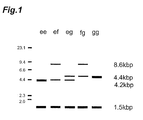
- Fig. 1 is an image showing XbaI/3D03 polymorphism, obtained by digestion of genomic DNA of different hop varieties with restriction enzyme XbaI, and genomic Southern hybridization.
- the hybrid progeny obtained by the different cross breeding combinations exhibited five different patterns, ee-type, ef-type, eg-type, fg-type and gg-type.
- Table 1 shows the correlation between XbaI/3D03 polymorphism and cohumulone ratio.
- the significant difference is shown at a significance level of 5% or less.
- the difference between a and b is significant; whereas, the differences between a and ab, and ab and b are not significant.
- N.S. represents no significant difference.
- Table 2 shows the correlation between XbaI/3D03 polymorphism and colupulone ratio.
- the significant difference is shown at a significance level of 5% or less.
- the difference between a and b is significant; whereas, the differences between a and ab, and ab and b are not significant.
- N.S. represents no significant difference.
- Table 3 shows the correlation between XbaI/3D03 polymorphism and farnesene contents.
- the significant difference is shown at a significance level of 5% or less.
- the difference between a and b is significant; whereas, the differences between a and ab, and ab and b are not significant.
- N.S. represents no significant difference.
- Table 4 shows the correlation between XbaI/3D03 polymorphism and linalool contents.
- the significant difference is shown at a significance level of 5% or less.
- the difference between a and b is significant; whereas, the differences between a and ab, and ab and b are not significant.
- N.S. represents no significant difference.
- the nucleotide sequence of 3D03 was used for cloning of e-type, f-type and g-type genomic DNA fragments, and difference of nucleotide sequences thereof was analized. In this manner, identification of polymorphism at 3D03 gene locus was attempted.
- genomic DNA was extracted from Chinook varieties carrying hetero genomes of e-type and f-type and a SaM variety carrying homologous genomes of g-type
- PCR was conducted using the p3D03-F1 primer and p3D03-R1 primer, and the specifically amplified genomic DNA fragments were cloned.
- the nucleotide sequences were analyzed for the clones of the DNA fragments cloned from the Chinook variety genomic DNA and the clones of the DNA fragments cloned from the SaM variety genomic DNA.
- the PCR was conducted using PrimeSTAR HS DNA Polymerase by Takara Bio, Inc., according to the manufacturer's protocol.
- the nucleotide sequence analysis was carried out utilizing the Macrogen Data Analysis Service.
- the DNA fragments cloned from the genomic DNA of breed Chinook were classified into two types of nucleotide sequences. One of them was cleaved by restriction enzyme HpaI, whereas the other one was not cleaved by restriction enzyme HpaI.
- HpaI restriction enzyme
- PCR was performed using p3D03-F1 primer and p3D03-R1 primer and whether the specifically amplified DNA fragments were cleaved by restriction enzyme HpaI or not was checked. As a result, it was found that the DNA fragment derived from the e-type genome is cleaved by restriction enzyme HpaI.
- nucleotide sequences cleaved by restriction enzyme HpaI were identified as e-type and the nucleotide sequences not cleaved by restriction enzyme HpaI were identified as f-type.
- nucleotide sequences of the DNA fragments cloned form the genomic DNA of breed SaM were identified as g-type.
- the nucleotide sequence of e-type genomic DNA fragment (e-type g3DO3) is shown in SEQ ID NO: 4 of the sequence listing.
- the nucleotide sequence of f-type genomic DNA fragment (f-type g3DO3) is shown in SEQ ID NO: 5.
- the nucleotide sequence of g-type genomic DNA fragment (g-type g3DO3) is shown in SEQ ID No: 6.
- Fig. 2 shows homology of the nucleotide sequences of e-type g3DO3, f-type g3DO3 and g-type g3DO3. According to the results, a single nucleotide polymorphism was found at the 623rd nucleotide of f-type g3DO3 indicated by the arrow in Fig. 2 (A) , and at the 1820th nucleotide of f-type g3DO3 indicated by the arrow in Fig. 2 (B) .
- a single nucleotide polymorphism at the 623rd nucleotide of f-type g3DO3 can be distinguished from e-type g3DO3 and g-type g3DO3 by cleavage with restriction enzyme PacI
- a single nucleotide polymorphism at the 1820th nucleotide of f-type g3DO3 can be distinguished from e-type g3DO3 and g-type g3DO3 by no cleavage with restriction enzyme HpaI.
- f-type g3DO3 contains a single nucleotide polymorphism that can be distinguished by no cleavage with restriction enzyme HpaI, it was then investigated whether this single nucleotide polymorphism can be utilized to screen for hop varieties with low cohumulone ratio and colupulone ratio, and high farnesene contents and linalool contents, in the same manner as the XbaI/3D03 polymorphism.
- the genomic DNA of 9 hop lines (Daimanshu, 980690, M916001003, Hokusenzairai, 0004B, 971174, 980573, Monica, M843501246) were used for PCR-RFLP analysis using a combination of restriction enzyme HpaI and the following primer set consisting of p3DO3-F2 primer and p3DO3-R2 primer, and the resulting polymorphism (hereinafter referred to as "HpaI /g3D03 polymorphism”) was detected.
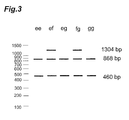
- DNA was synthesized by PCR using the genomic DNA of the 9 hop lines as template with p3D03-F2 primer and p3D03-R2 primer, and then the DNA was digested with restriction enzyme HpaI, the digested DNA fragments were fractionated by 1% agarose gel electrophoresis, and the band pattern of the fractionated DNA fragments in the agarose gel was examined. Detection of an approximately 1304 bp band in analysis of the HpaI/g3D03 polymorphism means that the genomic DNA has the f-type genome, while detection of an approximately 1138 bp band means that the genomic DNA has the 1-type genome.
- Fig. 3 shows a typical band pattern for HpaI/g3D03 polymorphism, obtained by PCR-RFLP analysis of hop varieties
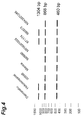
- Fig. 4 shows HpaI/g3D03 polymorphism obtained by analysis of the genomic DNA of the 9 hop lines.
- genomic DNA from the same 9 hop lines was used for RFLP analysis with a combination of restriction enzyme XbaI and 3D03, and the obtained XbaI/g3D03 polymorphisms were examined to confirm whether or not the determined results based on HpaI/g3D03 polymorphism were correct.
- the genomic DNA of each of the 9 hop lines was cleaved with restriction enzyme, XbaI, the digested genomic DNA fragments were fractionated by 1% agarose gel electrophoresis, the fractionated genomic DNA fragments were transferred to a nylon membrane, labeled 3D03 was used as a probe for hybridization, and the hybridized bands were detected based on the probe labeling.
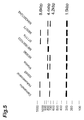
- Fig. 5 is an image showing XbaI/g3DO3 polymorphism, obtained by genomic analysis of the 9 hop lines.
- the breeding marker for hop varieties with low cohumulone ratio, the breeding marker also being usable as a breeding marker for hop varieties with low colupulone ratio, and for hop varieties with high farnesene contents and/or linalool contents. According to the invention it is also possible to objectively and rapidly screen for hop varieties with low cohumulone ratio and colupulone ratio, and high farnesene contents and linalool contents.
Landscapes
- Life Sciences & Earth Sciences (AREA)
- Chemical & Material Sciences (AREA)
- Health & Medical Sciences (AREA)
- Organic Chemistry (AREA)
- Engineering & Computer Science (AREA)
- Genetics & Genomics (AREA)
- Analytical Chemistry (AREA)
- Proteomics, Peptides & Aminoacids (AREA)
- Zoology (AREA)
- Physics & Mathematics (AREA)
- Biotechnology (AREA)
- Botany (AREA)
- General Health & Medical Sciences (AREA)
- Wood Science & Technology (AREA)
- Molecular Biology (AREA)
- Immunology (AREA)
- Mycology (AREA)
- Biochemistry (AREA)
- Bioinformatics & Cheminformatics (AREA)
- General Engineering & Computer Science (AREA)
- Microbiology (AREA)
- Biophysics (AREA)
- Spectroscopy & Molecular Physics (AREA)
- Developmental Biology & Embryology (AREA)
- Environmental Sciences (AREA)
- Measuring Or Testing Involving Enzymes Or Micro-Organisms (AREA)
- Radio Relay Systems (AREA)
- Analysing Materials By The Use Of Radiation (AREA)
Abstract
Description
- The present invention relates to a method for screening of hop varieties and to a breeding marker and primer set to be used for screening of hop varieties.
- Hops, the primary material for beer, impart a refreshing bitterness and aroma to beer. The known bittering agents in hops include α acids such as humulone, cohumulone and adhumulone, and β acids such as lupulone, colupulone and adlupulone. The α acids exhibit antibacterial activity, anticancer activity, anti-inflammatory effects and so on, and the β acids exhibit sedative effects and so on, and thus, they are both being considered also as drug sources (Non-patent document 1).
- The α acid contained in hops, when it is treated with heat during a beer production process, is isomerized into iso-α acid (iso-humulone, iso-cohumulone and iso-adhumulone). It is known that when iso-humulone and iso-cohumulone (which occupy a major part of iso α acids) are compared, iso-cohumulone is inferior in sensuality, more specifically, the quality of bitterness is low, and also inferior in beer-foam stabilization (Non-Patent Document 2). Since iso-cohumulone is produced by isomerization of cohumulone, it is desired to screen for hop varieties having a low ratio of the cohumulone contents (herein after, cohumulone ratio) relative to the contents of the α acid contents in hops, in breeding hops.
- In the β-acids contained in hops, lupulone and colupulone are mostly included. It is known that degree of bitterness can be reduced (milder) or increased (stronger) depending upon the contents of β-acids in hops (Non-Patent Document 3).
- It is kwon that farnesene is a component detected only in the top-grade hops called fine aroma hop, whereas linalool imparts rose-like flower scent to beer (Non-Patent Document 2). Farnesene and linalool contained in hops are considered as an important component for characterizing beer in breeding hops.
- Methods used for breeding of useful plants include methods in which high-grade varieties are crossed and the obtained hybrid progeny are cultivated until expression of the desired traits and screened, and molecular screening methods in which the genomic DNA of hybrid progeny are examined at the seed or seedling stage and screened based on breeding markers (DNA markers).
-
- [Non-Patent Document 1] Gerhaeuser, European Journal of Cancer, 2005, Vol. 41, No. 13, p.1941-1954
- [Non-Patent Document 2] Peacock et al., European Brewing Convention monograph XXII Symposium on hops Zoeterwoude, 1994, p.247-250
- [Non-Patent Document 3] Kowaka et al., EBC proceedings, 1983, Vol. 19, p.71-78
- [Non-Patent Document 4] Peacock et al., J. Agric. Food Chem., 1980, Vol. 28, p.774-777
- However, virtually no genetic research has been conducted on male hop plants, which produce no cones, and virtually none of the genes involved in biosynthesis of the aforementioned components associated with hop bitterness and aroma have been identified even in female plants. Consequently, it has not been possible to utilize molecular screening methods based on breeding markers, for screening of hop varieties based on ratio of cohumulone and/or colupulone and contents of farnesene and/or linalool.
- In addition, since α acids, β acids, farnesene and linalool accumulate specifically in the lupulin gland of hop cones, screening of hop varieties with high levels of these components can only be done after seeding and waiting for forming of the cones, and at least several years of cultivation have been necessary for stabilization of these traits.
- It is therefore an object of the present invention to utilize a breeding marker-based molecular screening method for screening of hop varieties with low cohumulone ratio, within a shorter time period. It is another object of the invention to screen for hop varieties with low ratio of cohumulone and colupulone, and with high contents of farnesene and/or linalool, within a shorter time period.
- In order to achieve the objects stated above, the invention provides breeding markers, represented by any one of the following (a) to (d), to be used for screening of hop varieties with low ratio of cohumulone contents relative to α acid contents (cohumulone ratio) in hops.
- (a) A polynucleotide consisting of a nucleotide sequence of 20-3434 continuous nucleotides including nucleotide No.623 of the polynucleotide consisting of the nucleotide sequence as set forth in SEQ ID NO: 5 (wherein the 623th nucleotide has adenine).
- (b) A polynucleotide consisting of the sequence complementary to the polynucleotide of (a) above.
- (c) A polynucleotide consisting of a nucleotide sequence of 20-3434 continuous nucleotides including nucleotide No.1820 of the polynucleotide consisting of the nucleotide sequence as set forth in SEQ ID NO: 5 (wherein the 1820th nucleotide has adenine).
- (d) A polynucleotide consisting of the sequence complementary to the polynucleotide of (c) above.
- The present inventors have discovered the 623rd nucleotide (having adenine) and the 1820th nucleotide (having adenine) of the polynucleotide consisting of the nucleotide sequence as set forth in SEQ ID NO: 5, as a polymorphism found to be common to hop varieties with low cohumulone ratio, from a cDNA library prepared from the lupulin gland of hop cones. No breeding marker for anticipation of low cohumulone ratio that can be applied to all hops has been reported to date, but it was found that this breeding marker allows screening of hop varieties with low cohumulone ratio among hybrid progeny obtained by crossing various hop lines. Also, it was demonstrated that the hop varieties screened with the breeding marker also have low colupulone ratio and high contents of farnesene and/or linalool.
- If, during breeding of hop varieties, those hop varieties having the same sequence as the breeding marker are selected, it is possible to screen for hop varieties with low cohumulone ratio at the seed or seedling stage without waiting for the hops to grow and form cones. Moreover, determining the presence of the breeding marker allows objective, genomic information-based identification of the combinations of crossed lines, that has hitherto depended on intuition and experience. The breeding marker may also be suitably used for screening of hop varieties with low colupulone ratio and with high contents of farnesene and/or linalool.
- Here, the phrase "hop varieties with low cohumulone ratio" refers to hop varieties in groups with low average values for cohumulone ratio, when groups of hybrid progeny are categorized according to whether or not they have the same sequence as the aforementioned breeding marker. The phrase "hop varieties with low colupulone ratio" refers to hop varieties in groups with low average values for colupulone ratio, when groups of hybrid progeny are categorized according to whether or not they have the same sequence as the aforementioned breeding marker. The phrase "hop varieties with high contents of farnesene and/or linalool" refers to hop varieties in groups with high average values for contents of farnesene and/or linalool, when groups of hybrid progeny are categorized according to whether or not they have the same sequence as the aforementioned breeding marker.
- The invention still further provides a screening method for hop varieties with low ratio of cohumulone contents relative to α acid contents (low cohumulone ratio) in hops, comprising: an extraction step in which genomic DNA is extracted from a hop variety specimen; a digestion step in which the genomic DNA is digested with restriction enzyme XbaI to obtain digested genomic DNA fragments; a detection step in which the digested genomic DNA fragments are separated and genomic DNA fragments that hybridize to any one of the polynucleotide of (a) to (d) above are detected; And a judging step in which it is judged that the variety has low cohumulone ratio when a genomic DNA fragment of about 8.6 kbp is not detected in the detection step above.
- With this screening method it is possible to screen for hop varieties with low cohumulone ratio, hop varieties with low colupulone ratio, and hop varieties with high contens of farnesene and/or linalool, by using any one of the polynucleotide of (a) to (d) as a probe and examining Restriction Fragment Length Polymorphisms (RFLP) with restriction enzyme XbaI. Since genome fragment sizes can be visually discriminated, it is possible to objectively and rapidly screen for hop varieties having these features without examining the nucleotide sequences of the genomic DNA.
- The invention yet further provides a method for screening of hop varieties with low ratio of cohumulone contents relative to α acid contents (low cohumulone ratio) in hops, which comprises an extraction step in which genomic DNA is extracted from a hop variety specimen, and an identifying step in which genomic DNA polymorphism at the 623rd nucleotide position of the nucleotide sequence as set forth in SEQ ID NO: 5 is identified.
- The identifying step preferably comprises a PCR step in which DNA is synthesized by PCR using the aforementioned genomic DNA as template, a primer consisting of a nucleotide sequence of 18-50 contiguous nucleotides located toward the 5'-end from the 623rd nucleotide of the nucleotide sequence as set forth in SEQ ID NO: 5 and a primer consisting of the sequence complementary to a nucleotide sequence of 18-50 contiguous nucleotides located toward the 3'-end from the 623rd nucleotide of the nucleotide sequence as set forth in SEQ ID NO: 5, a digestion step in which the DNA is digested with restriction enzyme PacI, and a judging step in which the variety is judged to have low cohumulone ratio when the DNA is not cleaved with restriction enzyme PacI in the digestion step above.
- In this screening method, PCR is performed using the extracted genomic DNA as a template and whether or not the amplified DNA is cleaved with restriction enzyme PacI is used as an index. Therefore no Southern hybridization is necessary. If the sizes of the DNA fragments after the digestion step are confirmed based on, for example, fractionation by agarose electrophoresis, whether or not the synthesized DNA in the PCR step was cleaved by restriction enzyme PacI can be easily determined, thus allowing screening of hop varieties with low cohumulone ratio or hop varieties with low colupulone ratio as well as low cohumulone ratio, and hop varieties with high contents of farnesene and/or linalool.
- The present invention also provides a method for screening of hop varieties with low ratio of cohumulone contents relative to α acid contents (cohumulone ratio) in hops which comprises: an extraction step in which genomic DNA is extracted from a hop variety specimen; and an identifying step in which genomic DNA polymorphism at the 1820th nucleotide position of the nucleotide sequence as set forth in SEQ ID NO: 5 is identified.
- It is preferred that the identifying step comprises: a PCR step in which DNA is synthesized by PCR using the aforementioned genomic DNA as template, a primer consisting of a nucleotide sequence of 18-50 contiguous nucleotides located toward the 5'-end from the 1820th nucleotide of the nucleotide sequence as set forth in SEQ ID NO: 5 and a primer consisting of the sequence complementary to a nucleotide sequence of 18-50 contiguous nucleotides located toward the 3'-end from the 1820th nucleotide of the nucleotide sequence as set forth in SEQ ID NO: 5; a digestion step in which the DNA is digested with restriction enzyme HpaI; and a judging step in which the variety is judged to have low cohumulone ratio when all kinds of the DNA are cleaved with restriction enzyme HpaI in the digestion step above.
- In this screening method, PCR is performed using the extracted genomic DNA as a template and whether or not the amplified DNA is cleaved with restriction enzyme HpaI is used as an index. Therefore no Southern hybridization is necessary. If the sizes of the DNA fragments after the digestion step are confirmed based on, for example, fractionation by agarose electrophoresis, whether or not the synthesized DNA in the PCR step was cleaved by restriction enzyme HpaI can be easily determined, thus allowing screening of hop varieties with low cohumulone ratio or hop varieties with low colupulone ratio as well as low cohumulone ratio, and hop varieties with high contents of farnesene and/or linalool.
- It is preferred that the identifying step comprises: a PCR step in which DNA is synthesized by PCR using the aforementioned genomic DNA as template, a primer including the nucleotide sequence as set forth in SEQ ID NO: 7 and a primer including the nucleotide sequence as set forth in SEQ ID NO: 8; a digestion step in which the DNA is digested with restriction enzyme HpaI; and a judging step in which the variety is judged to have low cohumulone ratio when a DNA fragment of about 1304 bp is not contained in the DNA fragments obtained by the digestion step above.
- In this screening method, since PCR is conducted using the extracted genomic DNA as template, a primer containing the nucleotide sequence as set forth in SEQ ID NO: 7 and a primer containing the nucleotide sequence as set forth in SEQ ID NO: 8, only the target DNA fragment is efficiently and specifically amplified. In addition, if the sizes of the DNA fragments obtained by the digestion step are confirmed based on, for example, fractionation by agarose electrophoresis, whether or not an approximately 1304 bp fragment is present can be easily determined, thus allowing screening of hop varieties with low cohumulone ratio or hop varieties with low colupulone ratio as well as low cohumulone ratio, and hop varieties with high contents of farnesene and/or linalool.
- The present invention also provides a primer set to be used for screening of hop varieties with low ratio of cohumulone contents relative to α acid contents (cohumulone ratio )in hops, the primer set comprising: a primer containing the nucleotide sequence as set forth in SEQ ID NO: 7; And a primer containing the nucleotide sequence as set forth in SEQ ID NO: 8.
- Using this primer set allows specific amplification of only the DNA fragment containing the 1820th nucleotide of the nucleotide sequence as set forth in SEQ ID NO: 5, using the extracted genomic DNA as template. The primer set can be appropriately utilized for screening of hop varieties with low cohumulone ratio or hop varieties with low colupulone ratio as well as low cohumulone ratio, and hop varieties with high contents of farnesene and/or linalool.
- According to the invention it is possible to provide a breeding marker for hop varieties with low cohumulone ratio or hop varieties with low colupulone ratio as well as low cohumulone ratio, and hop varieties with high contents of farnesene and/or linalool. According to the invention it is also possible to objectively and rapidly screen for hop varieties with low cohumulone ratio or hop varieties with low colupulone ratio as well as low cohumulone ratio, and hop varieties with high contents of farnesene and/or linalool, using hop seeds or seedlings, without waiting for the hops to form cones and develop stabilized traits.
-
-
Fig. 1 is an image showing XbaI/3D03 polymorphism, obtained by digestion of genomic DNA of hop varieties with restriction enzyme XbaI, and genomic Southern hybridization. -
Fig. 2 shows a single nucleotide polymorphism obtained by analysis of homology of the nucleotide sequences of e-type g3D03, f-type g3D03 and g-type g3D03m. -
Fig. 3 shows a typical band pattern for HpaI/g3D03 polymorphism, obtained by PCR-RFLP of hop varieties. -
Fig. 4 is an image showing HpaI/g3D03 polymorphism, obtained by analysis of genomic DNA of 9 hop lines. -
Fig. 5 is an image showing XbaI/3D03 polymorphism, obtained by genomic analysis of 9 hop lines. - Preferred embodiments of the invention will now be described in detail.
- The breeding markers of the invention are characterized by being represented by any one of the following (a) to (d), which is used for screening of hop varieties with low ratio of cohumulone contents relative to α acid contents (cohumulone ratio) in hops.
- (a) A polynucleotide consisting of a nucleotide sequence of 20-3434 continuous nucleotides including nucleotide No.623 of the polynucleotide consisting of the nucleotide sequence as set forth in SEQ ID NO: 5 (wherein the 623th nucleotide has adenine).
- (b) A polynucleotide consisting of the sequence complementary to the polynucleotide of (a) above.
- (c) A polynucleotide consisting of a nucleotide sequence of 20-3434 continuous nucleotides including nucleotide No.1820 of the polynucleotide consisting of the nucleotide sequence as set forth in SEQ ID NO: 5 (wherein the 1820th nucleotide has adenine).
- (d) A polynucleotide consisting of the sequence complementary to the polynucleotide of (c) above.
- The term "breeding marker" means a DNA marker used for breeding, and it is a DNA sequence that exists in a genome near a gene associated with a trait of interest and operates together with the gene. A breeding marker allows identification of traits that cannot be distinguished by the naked eye, such as disease resistance, or traits that appear in the mature phase, by using genomic DNA from seeds or seedlings of the plant specimen. The breeding marker may be the gene itself, or DNA other than the gene.
- The term "cohumulone ratio" means the ratio of cohumulone contents relative to the contents of α acid in hops. The term "colupulone ratio" means the ratio of the colupulone contents relative to the contents of β acid in hops. The term "α acid" refers to a bitter substance in hops that is primarily humulone and its analogs including cohumulone, adhumulone and so on. The term "β acid" refers to a bitter substance in hops that is primarily lupulone and its analogs including colupulone, adlupulone and so on.
- Throughout the present specification, "hops" refers to the perennial plant (Humulus lupulus L.) itself, and "cones" refers to the female flower produced by female hops, where the perichaetium has formed a pine cone-shaped chamber. The term "hop variety" means each hybrid progeny obtained by breeding hops.
- The term "polynucleotide" refers to a molecule with a plurality of bonded phosphoric acid esters of nucleosides comprising purine or pyrimidine bases that are β-N-glycoside bonded to sugars (ribonucleotides or deoxyribonucleotides).
- The polynucleotides represented by (a) to (d) above may be cloned from a hop genomic library using a labeled DNA probe synthesized based on the nucleotide sequence information of SEQ ID NO: 5, according to the method described in, for example, Molecular cloning (Maniatis et al., 1989, Cold Spring Harbor Laboratory Press).
- The polynucleotides represented by (a) to (d) may also be synthesized by PCR using a primer set designed based on the nucleotide sequence information of SEQ ID NO: 5, with genomic DNA extracted from tissue of hop leaves or the like as template. Also, partial sequences of the polynucleotide represented by (a) to (d) may be synthesized with a DNA synthesizer and linked by an enzymatic method and subcloning, to obtain a polynucleotide of the target size.
- The breeding marker may be used for screening of hop varieties with low cohumulone ratio, but it is preferably used for screening of hop varieties with low colupulone ratio as well as low cohumulone ratio, and hop varieties with high contents of farnesene and/or linalool.
- Also, the screening method according to the invention, which is for hop varieties with low ratio of cohumulone contents relative to α acid contents in hops, is characterized by comprising: an extraction step in which genomic DNA is extracted from a hop variety specimen; a digestion step in which the genomic DNA is digested with restriction enzyme XbaI to obtain digested genomic DNA fragments; a detection step in which the digested genomic DNA fragments are separated and genomic DNA fragments that hybridize to any one of the polynucleotide of (a) to (d) above are detected; anda judging step in which it is judged that the variety has low cohumulone ratio when a genomic DNA fragment of about 8.6 kbp is not detected in the detection step above.
- Methods utilizing RFLP may be mentioned as examples of such screening methods. Specifically, this method compares the sizes of DNA fragments produced after treatment with a restriction enzyme, based on mutations or nucleotide insertions or deletions at a restriction enzyme recognition site in the genomic DNA, to determine whether or not a certain trait is present.
- In the detection step, it is possible to detect genomic DNA fragments that hybridize to the polynucleotides represented by (a) to (d) by genomic Southern hybridization, as described in Molecular cloning (Maniatis et al., 1989, Cold Spring Harbor Laboratory Press), for example. Specifically, the digested genomic DNA fragments of a hop specimen digested with restriction enzyme XbaI are fractionated by agarose gel electrophoresis, the fractionated genomic DNA fragments are transferred to a nylon membrane, a labeled polynucleotide represented by (a) to (d) above is used as a probe for hybridization, and the hybridized bands are detected based on the probe labeling.
- The probe labeling method may be a method in which a DNA polymerase such as Klenow enzyme is used to incorporate substrate nucleotides that are labeled with an isotope such as 32P, a fluorescent dye, digoxigenin (DIG) or biotin, using random hexamer oligonucleotides and the like as primer (random primer method), or a method in which T4 polynucleotide kinase is used for phosphorylation of the 5'-end of the oligonucleotide with 32P or the like for labeling.
- In the judging step, digested genomic DNA fragments from a hop variety specimen may be electrophoresed with a DNA size marker and transferred to a nylon membrane, with the well positions and size marker migration positions marked on the nylon membrane, thus allowing the sizes of the digested genomic DNA fragments from hybridized hop variety specimens to be calculated based on the relationship between migration distance from the well and DNA size marker size. As a result, if a digested genomic DNA fragment of approximately 8.6 kbp is not detected, the hop variety specimen may be judged to be a variety with low cohumulone ratio.
- Also, the screening method according to the invention, which is for hop varieties with low ratio of cohumulone contents relative to α acid contents in hops, is characterized by comprising: an extraction step in which genomic DNA is extracted from a hop variety specimen; and an identifying step in which genomic DNA polymorphism at the 623rd nucleotide position of the nucleotide sequence as set forth in SEQ ID NO: 5 is identified.
- The identifying step preferably comprises: a PCR step in which DNA is synthesized by PCR using the aforementioned genomic DNA as template, a primer consisting of a nucleotide sequence of 18-50 contiguous nucleotides located toward the 5'-end from the 623rd nucleotide of the nucleotide sequence as set forth in SEQ ID NO: 5 and a primer consisting of the sequence complementary to a nucleotide sequence of 18-50 contiguous nucleotides located toward the 3'-end from the 623rd nucleotide of the nucleotide sequence as set forth in SEQ ID NO: 5; a digestion step in which the DNA is digested with restriction enzyme PacI; and a judging step in which the variety is judged to have low cohumulone ratio when the DNA is not cleaved with restriction enzyme PacI in the digestion step above.
- Methods utilizing PCR-RFLP may be mentioned as examples of such a screening method. Specifically, such methods compare the sizes of DNA fragments produced after treatment with a restriction enzyme, based on mutations or nucleotide insertions or deletions at a restriction enzyme recognition site in the genomic DNA or a DNA fragment amplified by PCR using cDNA as template, to determine whether or not a certain trait is present.
- The primer used in the PCR step may be synthesized with a DNA synthesizer, selecting a nucleotide sequence of 18-50 contiguous nucleotides from the nucleotide sequence as set forth in SEQ ID NO: 5. The size of the primer is preferably at least 18 and no greater than 30 nucleotides, and more preferably at least 20 and no greater than 22 nucleotides.
- In the judging step, DNA fragments from a hop variety specimen digested with restriction enzyme PacI may be fractionated by agarose electrophoresis or polyacrylamide electrophoresis together with a DNA size marker, thus allowing calculation of the sizes of the digested DNA fragments from hop variety specimens based on the relationship between migration distance of the DNA size marker from the well and the sizes of the DNA size marker. If the sizes of the DNA fragments from the hop variety specimen are known, then it is possible to easily judge whether or not the synthesized DNA in the PCR step was cleaved by restriction enzyme PacI, so that the hop variety specimen can be judged as a variety with low cohumulone ratio when cleavage has been confirmed. The digested DNA fragments and size marker in the gel after electrophoresis may be detected under UV irradiation after treatment with, for example, ethidium bromide or SYBR Green.
- Furthermore, the screening method of the present invention is a method for screening of hop varieties with low ratio of cohumulone contents relative to α acid contents in hops (cohumulone ratio) which comprises: an extraction step in which genomic DNA is extracted from a hop variety specimen; and an identifying step in which genomic DNA polymorphism at the 1820th nucleotide position of the nucleotide sequence as set forth in SEQ ID NO: 5 is identified.
- It is preferred that the identifying step comprises: a PCR step in which DNA is synthesized by PCR using the aforementioned genomic DNA as template, a primer consisting of a nucleotide sequence of 18-50 contiguous nucleotides located toward the 5'-end from the 1820th nucleotide of the nucleotide sequence as set forth in SEQ ID NO: 5 and a primer consisting of the sequence complementary to a nucleotide sequence of 18-50 contiguous nucleotides located toward the 3'-end from the 1820th nucleotide of the nucleotide sequence as set forth in SEQ ID NO: 5; a digestion step in which the DNA is digested with restriction enzyme HpaI; and a judging step in which the variety is judged to have low cohumulone ratio when all kinds of the DNA are cleaved with restriction enzyme HpaI in the digestion step above.
- As such a method, for example, a PCR-RFLP method may be mentioned. The specific procedure of the method and synthesis of primers are as mentioned above. The size of primers are preferably not less than 18 and not more than 30 bases, and further preferably not less than 20 and not more than 22 bases.
- In the judging step, DNA fragments from a hop variety specimen digested with restriction enzyme HpaI may be fractionated by agarose electrophoresis or polyacrylamide electrophoresis together with a DNA size marker, thus allowing calculation of the sizes of the digested DNA fragments from hop variety specimens based on the relationship between migration distance of the DNA size marker from the well and the sizes of the DNA size marker. If the sizes of the DNA fragments from the hop variety specimen are known, then it is possible to easily judge whether or not the synthesized DNA in the PCR step was cleaved by restriction enzyme HpaI, so that the hop variety specimen can be judged as a variety with low cohumulone ratio when cleavage has been confirmed. The digested DNA fragments and size marker in the gel after electrophoresis may be detected under UV irradiation after treatment with, for example, ethidium bromide or SYBR Green.
- It is preferred that the identifying step comprises: a PCR step in which DNA is synthesized by PCR using the aforementioned genomic DNA as template, a primer including the nucleotide sequence as set forth in SEQ ID NO: 7 and a primer including the nucleotide sequence as set forth in SEQ ID NO: 8; a digestion step in which the DNA is digested with restriction enzyme HpaI; and a judging step in which the variety is judged to have low cohumulone ratio when a DNA fragment of about 1304 bp is not contained in the DNA fragments obtained by the digestion step above.
- The primers to be used in the aforementioned PCR step can be synthesized by a DNA synthesizer separately based on the nucleotide sequence as set forth in SEQ ID NO: 7 and the nucleotide sequence as set forth in SEQ ID NO: 8.
- In the judging step, DNA fragments from a hop variety specimen digested with restriction enzyme HpaI may be fractionated by agarose electrophoresis or polyacrylamide electrophoresis together with a DNA size marker, thus allowing calculation of the sizes of the digested DNA fragments from hop variety specimens based on the relationship between migration distance of the DNA size marker from the well and the sizes of the DNA size marker. As a result, if the size of at least one type of DNA fragment derived from the hop variety specimen is not detected in the proximity of a size of 1304 bp, the hop variety specimen can be judged as a variety having low cohumulone ratio. The digested DNA fragments and size marker in the gel after electrophoresis may be detected under UV irradiation after treatment with, for example, ethidium bromide or SYBR Green.
- The screening method of the invention may be used for screening of hop varieties with low cohumulone ratio, but it is preferably used for screening of hop varieties with low colupulone ratio, and hop varieties with high contents of farnesene and/or linalool, as well as hop varieties with low cohumulone ratio.
- The primer set of the present invention is a primer set to be used for screening of hop varieties with low ratio of cohumulone contents relative to α acid contents in hops, the primer set comprising: a primer containing the nucleotide sequence as set forth in SEQ ID NO: 7; And a primer containing the nucleotide sequence as set forth in SEQ ID NO: 8.
- The primer set may be synthesized with a DNA synthesizer based on the nucleotide sequence as set forth in SEQ ID NO: 7 and the nucleotide sequence as set forth in SEQ ID NO: 8.
- The present invention will now be explained in greater detail with reference to examples, with the understanding that the invention is not meant to be limited to these examples.
- The quantities of β acids in the hop cones were measured by a modified mode of the official method of the American Society of Brewing Chemists (ASBC). Specifically, 1 g of pulverized hop cones was first placed in a 100 mL stoppered Erlenmeyer flask, and then 4 mL of methanol and 20 mL of diethyl ether were added prior to shaking for 30 minutes. Next, 8 mL of 0.1 M hydrochloric acid was added prior to shaking for 10 minutes, and after standing, 0.2 mL of the ether layer was sampled, methanol was added to a volume of 10 mL and a portion was analyzed by high performance liquid chromatography (HPLC). The HPLC conditions were based on Official Method 7.7 of the European Brewery Convention (EBC), and the α acids, β acids were detected and quantified at a wavelength of 314 nm.
- The cohumulone ratio and colupulone ratio were calculated in comparison with the amounts of humulone, cohumulone, lupulone and colupulone of the reference sample of a bittering agent of hop, namely, ICE-2 (manufactured by Labor Veritas AG).
- The quantity of farnesene and linalool in hop cones was determined by the following procedure. First, 1 g of pulverized hop cones was placed in a 10 mL stoppered centrifuge tube, and then 6 mL of n-hexane was added prior to shaking for 45 minutes, after which the mixture was centrifuged at 3,000 rpm, 20°C for 10 minutes. Next, 1.5 mL of the supernatant was sampled in a 10 mL stoppered centrifuge tube, and 3 mL of 5% potassium carbonate was added prior to shaking for 5 minutes, after which the mixture was centrifuged at 3,000 rpm, 20°C for 10 minutes and the supernatant was analyzed by gas chromatography (HP5890; manufactured by Hewlett-Packard Company). As the column, a J&W capillary column (DB-1, 0.25 mm × 30 cm × 1.0 µm; manufactured by GL Sciences Inc.) was used. As reference samples for farnesene and linalool, (E)-β-farnesene (manufactured by Wako Pure Chemical Industries Ltd.) and (±)-Linalool (manufactured by SIGMA) were used.
- First, the frozen cones of female hop plants were crushed and the fraction that passed through a 250 µm mesh diameter sieve was used as the lupulin gland fraction. The lupulin gland fraction was then homogenized in liquid nitrogen, a 2% CTAB solution (2% cetyltrimethylammonium bromide, 20 mM EDTA, 1.4 M NaCl. 5% β-mercaptoethanol, 0.1 M Tris, pH 9.5) was added to create a suspension, and after warming at 65°C for 10 minutes, extraction was performed twice with chloroform/isoamyl alcohol (24:1). A 1/3-fold amount of 10 M lithium chloride was added to the obtained water-soluble fraction, and the mixture was allowed to stand overnight and then centrifuged at 15,000 rpm for 10 minutes, after which the obtained precipitate was dissolved in RNase-free sterilized water. Next, a 1/3-fold amount of 10 M lithium chloride was further added to the resulting solution, and the mixture was allowed to stand overnight and then centrifuged at 15,000 rpm for 10 minutes, after which the obtained precipitate was dissolved in RNase-free sterilized water for use as the total RNA sample.
- The obtained total RNA sample was quantitated by measurement of the absorbance at 260 nm using a spectrophotometer, and then Oligotex-dT30 Super by Takara Bio, Inc. was used for preparation of poly A+ RNA following the manufacturer's protocol.
- A Creator SMART cDNA Library Construction Kit by BD Biosciences was used to prepare a hop cone lupulin gland cDNA library from the poly A+ RNA obtained from hop cone lupulin gland. The procedure for preparation of the cDNA library was according to the manufacturer's protocol supplied with the kit.
- First, clones were randomly selected from a hop cone (Saaz variety) lupulin gland cDNA library, and lupulin gland cDNA introduced into each clone was used as template for PCR in the presence of digoxigenin (DIG)-labeled dUTP, to create DIG-labeled probes. The DIG-labeled probes were created by PCR using a PCR DIG probe synthesis kit by Roche Diagnostics K.K.
- Next, genomic DNA was extracted from 110 hybrid progeny of Chinook and SaM hop varieties stocked by Sapporo Breweries Ltd. and analyzed by RFLP using combinations of the aforementioned DIG-labeled probes and restriction enzymes EcoT22I or XbaI, and a search was conducted for breeding markers that can detect polymorphisms correlated with cohumulone ratio, colupulone ratio, farnesene contents and linalool contents. The genomic DNA extraction and genomic Southern hybridization were conducted according to the method described in Molecular cloning (Maniatis et al., 1989, Cold Spring Harbor Laboratory Press).
- As a result, polymorphism detected with the combination of the cDNA clone 3D03 (hereinafter "3D03") from lupulin gland and restriction enzyme XbaI (hereinafter, "XbaI/3D03 polymorphism") was shown to be correlated with cohumulone ratio, colupulone ratio, farnesene contents and linalool contents, suggesting that it can be utilized as a breeding marker.
- In Example 2 it was examined whether 3D03 can be utilized as a breeding marker correlated with cohumulone ratio, colupulone ratio, farnesene contents and linalool contents in a wide range of hop lines other than the hybrid progeny of the Chinook and SaM varieties. The nucleotide sequence of 3D03 is listed as SEQ ID NO: 1.
- Nine hop lines stocked by Sapporo Breweries Ltd. (Daimanshu, 980690, M916001003, Hokusenzairai, 0004B, 971174, 980573, Monica, M843501246) were selected and crossbred to obtain hybrid progeny, the cohumulone ratio, colupulone ratio, farnesene contents and linalool contents of the hop cones were examined, and their correlation with XbaI/3D03 polymorphism was determined.
- The cross breeding was carried out with the combinations Daimanshu × 980690, Daimanshu × M916001003, Hokusenzairai × 980690, 0004B × 971174, 0004B × 980573, Monica × M843501246, Monica × 980573, and the cohumulone ratio, colupulone ratio, farnesene contents and linalool contents in the cones of the obtained hybrid progeny were examined.
- Correlation between the XbaI/3D03 polymorphism and cohumulone ratio, colupulone ratio, farnesene contents and linalool contents was judged by dividing the hybrid progeny obtained by cross breeding into groups based on XbaI/3D03 polymorphism, calculating the mean values for the component contents in each group, and determining statistically significant difference by T test. For the T test, the difference in variance of measured values among the XbaI/3D03 polymorphisms was investigated by F test for each hop line combination, and homoskedasticity was assumed when no difference in variance was found, while variance was assumed to be unequal when a difference in variance was found. The contribution ratio representing the effect of XbaI/3D03 polymorphisms on cohumulone ratio, colupulone ratio, farnesene contents and linalool contents was calculated as genetic variance/population variance. The genetic variance was the dispersion for a theoretical population experiencing no factors other than the subject genotype 3D03 (no influence by other gene loci or environment). Specifically, if the mean value for the parent population is represented as XP, the population variance as VP, the mean value for a population with genotypes 1, 2, ... as X1, X2, ... and the number of individuals in each genotype as N1, N2, then the genetic variance (VG) and contribution ratio (H) may be calculated by the following formulas.


-
Fig. 1 is an image showing XbaI/3D03 polymorphism, obtained by digestion of genomic DNA of different hop varieties with restriction enzyme XbaI, and genomic Southern hybridization. The hybrid progeny obtained by the different cross breeding combinations exhibited five different patterns, ee-type, ef-type, eg-type, fg-type and gg-type. - Table 1 shows the correlation between XbaI/3D03 polymorphism and cohumulone ratio.
-

- As a result, it was observed that the hybrid progeny represented by ef type and fg type tend to have high cohumulone ratio; whereas, the hybrid progeny represented by ee type, eg type and gg type tend to have low cohumulone ratio. These results suggested that a hop variety without an f-type genome has a lower cohumulone ratio than a hop variety containing at least one f-type genome.
- Table 2 shows the correlation between XbaI/3D03 polymorphism and colupulone ratio.
-

- As a result, it was observed that the hybrid progeny represented by ef type and fg type tend to have high colupulone ratio; whereas, the hybrid progeny represented by ee type, eg type and gg type tend to have low colupulone ratio. These results suggested that a hop variety without an f-type genome has a lower colupulone ratio than a hop variety containing at least one f-type genome.
- Table 3 shows the correlation between XbaI/3D03 polymorphism and farnesene contents.
-

- As a result, it was observed that the hybrid progeny represented by ef type and fg type tend to have low farnesene contents; whereas, the hybrid progeny represented by ee type, eg type and gg type tend to have high farnesene contents. These results suggested that a hop variety without an f-type genome has a higher farnesene contents than a hop variety containing at least one f-type genome.
- Table 4 shows the correlation between XbaI/3D03 polymorphism and linalool contents.
-

- As a result, it was observed that the hybrid progeny represented by ef type and fg type tend to have low linalool contents; whereas, the cross progenies of ee type, eg type and gg type tend to have high linalool contents. These results suggested that a hop variety without an f-type genome has a higher linalool contents than a hop variety containing at least one f-type genome.
- The results mentioned above suggest that whether cohumulone ratio, colupulone ratio, farnesene contents and linalool contents are high or low can be estimated by analyzing an arbitrarily chosen hop variety for an XbaI/3D03 polymorphism, and that a hop variety without an f-type genome is one having low cohumulone ratio and colupulone ratio, and high farnesene contents and linalool contents.
- Since it was suggested that a hop variety without f-type genome has low cohumulone ratio and colupulone ratio, and high farnesene contens and linalool contens, the nucleotide sequence of 3D03 was used for cloning of e-type, f-type and g-type genomic DNA fragments, and difference of nucleotide sequences thereof was analized. In this manner, identification of polymorphism at 3D03 gene locus was attempted.
- First, the following primers were designed based on the sequences at both end regions of 3D03.
- p3D03-F1 primer: 5'-ACTAGTTTCTCTCCACAATCTCTGC-3' (SEQ ID NO: 2)
- p3D03-R1 primer: 5'-GGTGGAATATCATTATTGTGTCAGC-3' (SEQ ID NO: 3)
- Next, genomic DNA was extracted from Chinook varieties carrying hetero genomes of e-type and f-type and a SaM variety carrying homologous genomes of g-type, PCR was conducted using the p3D03-F1 primer and p3D03-R1 primer, and the specifically amplified genomic DNA fragments were cloned. The nucleotide sequences were analyzed for the clones of the DNA fragments cloned from the Chinook variety genomic DNA and the clones of the DNA fragments cloned from the SaM variety genomic DNA. The PCR was conducted using PrimeSTAR HS DNA Polymerase by Takara Bio, Inc., according to the manufacturer's protocol. The nucleotide sequence analysis was carried out utilizing the Macrogen Data Analysis Service.
- As a result, the DNA fragments cloned from the genomic DNA of breed Chinook were classified into two types of nucleotide sequences. One of them was cleaved by restriction enzyme HpaI, whereas the other one was not cleaved by restriction enzyme HpaI. Using the genomic DNA of breed Nugget having homologous genomes of e-type as a template, PCR was performed using p3D03-F1 primer and p3D03-R1 primer and whether the specifically amplified DNA fragments were cleaved by restriction enzyme HpaI or not was checked. As a result, it was found that the DNA fragment derived from the e-type genome is cleaved by restriction enzyme HpaI. Of the DNA fragments cloned from the genomic DNA of breed Chinook, the nucleotide sequences cleaved by restriction enzyme HpaI were identified as e-type and the nucleotide sequences not cleaved by restriction enzyme HpaI were identified as f-type. Furthermore, since breed SaM has homologous genomes of g type, the nucleotide sequences of the DNA fragments cloned form the genomic DNA of breed SaM were identified as g-type. The nucleotide sequence of e-type genomic DNA fragment (e-type g3DO3) is shown in SEQ ID NO: 4 of the sequence listing. The nucleotide sequence of f-type genomic DNA fragment (f-type g3DO3) is shown in SEQ ID NO: 5. The nucleotide sequence of g-type genomic DNA fragment (g-type g3DO3) is shown in SEQ ID No: 6.
-
Fig. 2 shows homology of the nucleotide sequences of e-type g3DO3, f-type g3DO3 and g-type g3DO3. According to the results, a single nucleotide polymorphism was found at the 623rd nucleotide of f-type g3DO3 indicated by the arrow inFig. 2 (A) , and at the 1820th nucleotide of f-type g3DO3 indicated by the arrow inFig. 2 (B) . It was demonstrated that a single nucleotide polymorphism at the 623rd nucleotide of f-type g3DO3 can be distinguished from e-type g3DO3 and g-type g3DO3 by cleavage with restriction enzyme PacI, and a single nucleotide polymorphism at the 1820th nucleotide of f-type g3DO3 can be distinguished from e-type g3DO3 and g-type g3DO3 by no cleavage with restriction enzyme HpaI. - Since it had been determined that f-type g3DO3 contains a single nucleotide polymorphism that can be distinguished by no cleavage with restriction enzyme HpaI, it was then investigated whether this single nucleotide polymorphism can be utilized to screen for hop varieties with low cohumulone ratio and colupulone ratio, and high farnesene contents and linalool contents, in the same manner as the XbaI/3D03 polymorphism.
- First, the genomic DNA of 9 hop lines (Daimanshu, 980690, M916001003, Hokusenzairai, 0004B, 971174, 980573, Monica, M843501246) were used for PCR-RFLP analysis using a combination of restriction enzyme HpaI and the following primer set consisting of p3DO3-F2 primer and p3DO3-R2 primer, and the resulting polymorphism (hereinafter referred to as "HpaI /g3D03 polymorphism") was detected.
- p3D03-F2 primer: 5'-TGCTGTTTCTAAGGGATTCG-3' (SEQ ID NO: 7)
- p3D03-R2 primer: 5'-TTTCCAGGACCTATTCTCTG-3' (SEQ ID NO: 8)
- Specifically, DNA was synthesized by PCR using the genomic DNA of the 9 hop lines as template with p3D03-F2 primer and p3D03-R2 primer, and then the DNA was digested with restriction enzyme HpaI, the digested DNA fragments were fractionated by 1% agarose gel electrophoresis, and the band pattern of the fractionated DNA fragments in the agarose gel was examined. Detection of an approximately 1304 bp band in analysis of the HpaI/g3D03 polymorphism means that the genomic DNA has the f-type genome, while detection of an approximately 1138 bp band means that the genomic DNA has the 1-type genome.
-
Fig. 3 shows a typical band pattern for HpaI/g3D03 polymorphism, obtained by PCR-RFLP analysis of hop varieties, andFig. 4 shows HpaI/g3D03 polymorphism obtained by analysis of the genomic DNA of the 9 hop lines. - The results suggested that Daimanshu, Hokusenzairai, 971174 and 980573 are hop lines with the f-type genome, 0004B, Monica, 980690, M916001003 and M843501246 are hop lines without the f-type genome.
- Next, genomic DNA from the same 9 hop lines was used for RFLP analysis with a combination of restriction enzyme XbaI and 3D03, and the obtained XbaI/g3D03 polymorphisms were examined to confirm whether or not the determined results based on HpaI/g3D03 polymorphism were correct.
- Specifically, the genomic DNA of each of the 9 hop lines was cleaved with restriction enzyme, XbaI, the digested genomic DNA fragments were fractionated by 1% agarose gel electrophoresis, the fractionated genomic DNA fragments were transferred to a nylon membrane, labeled 3D03 was used as a probe for hybridization, and the hybridized bands were detected based on the probe labeling.
-
Fig. 5 is an image showing XbaI/g3DO3 polymorphism, obtained by genomic analysis of the 9 hop lines. - The results suggested that Daimanshu, Hokusenzairai, 971174 and 980573 are hop lines with the f-type genome, 0004B, Monica, 980690, M916001003 and M843501246 are hop lines without the f-type genome.
- The results described above demonstrated that analysis of HpaI/g3D03 polymorphism, like analysis of XbaI/g3D03 polymorphism, can determine whether or not a hop variety has the f-type genome, thus suggesting that it can be used as a screening method for hop varieties with low cohumulone ratio and colupulone ratio, and high farnesene contents and linalool contents.
- According to the invention it is possible to provide a breeding marker for hop varieties with low cohumulone ratio, the breeding marker also being usable as a breeding marker for hop varieties with low colupulone ratio, and for hop varieties with high farnesene contents and/or linalool contents. According to the invention it is also possible to objectively and rapidly screen for hop varieties with low cohumulone ratio and colupulone ratio, and high farnesene contents and linalool contents.


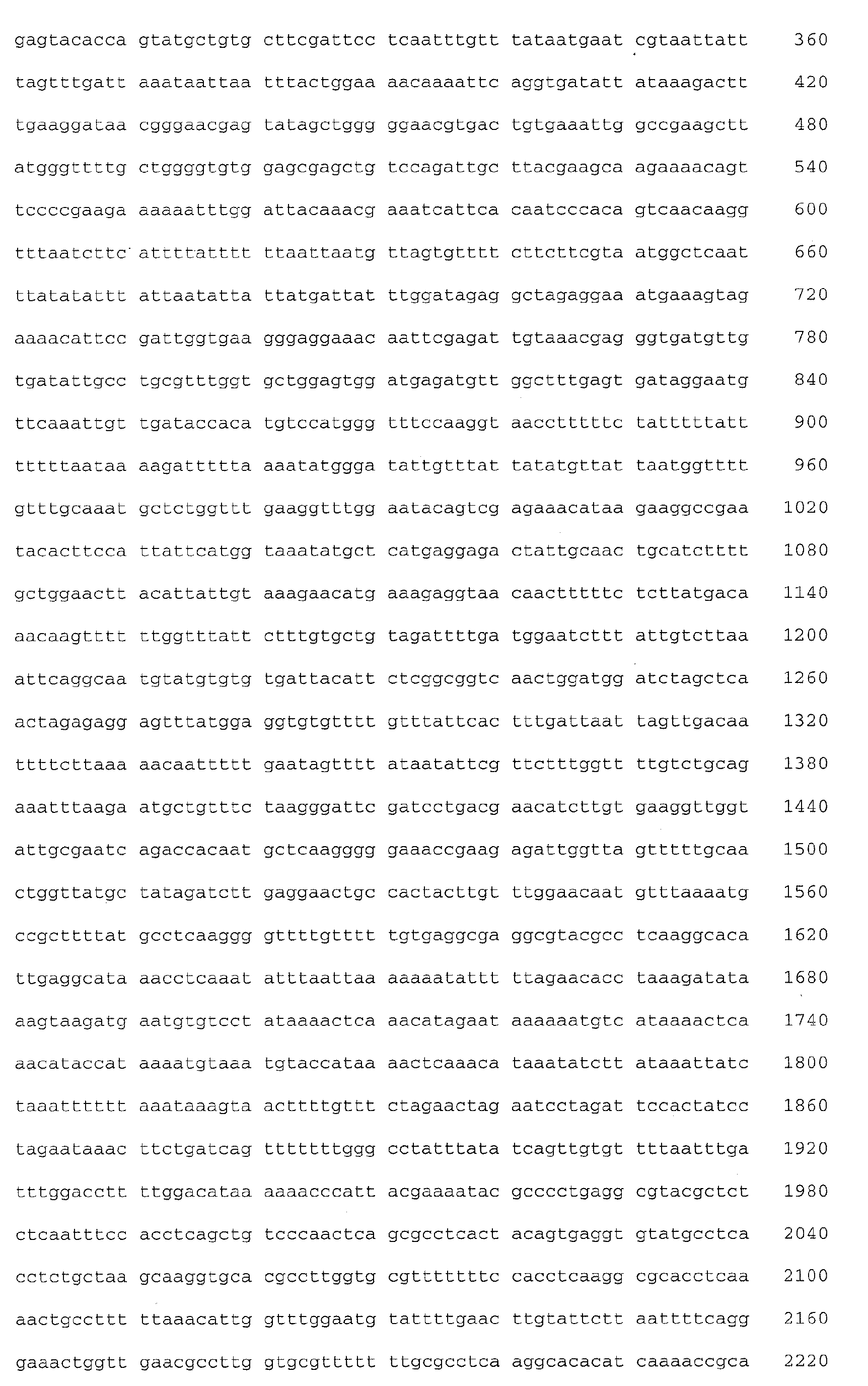


Claims (12)
- A breeding marker represented by any one of the following (a) to (d), which is used for screening of hop varieties with low ratio of cohumulone contents relative to α acid contents in hops.(a) A polynucleotide consisting of a nucleotide sequence of 20-3434 continuous nucleotides including nucleotide No.623 of the polynucleotide consisting of the nucleotide sequence as set forth in SEQ ID NO: 5 (wherein the 623th nucleotide has adenine).(b) A polynucleotide consisting of the sequence complementary to the polynucleotide of (a) above.(c) A polynucleotide consisting of a nucleotide sequence of 20-3434 continuous nucleotides including nucleotide No.1820 of the polynucleotide consisting of the nucleotide sequence as set forth in SEQ ID NO: 5 (wherein the 1820th nucleotide has adenine).(d) A polynucleotide consisting of the sequence complementary to the polynucleotide of (c) above.
- A breeding marker according to claim 1, which is used for screening of hop varieties with low ratio of colupulone contents relative to β acid contents in hops.
- A breeding marker according to claim 1 or 2, which is used for screening of hop varieties with high contents of farnesene and/or linalool.
- A screening method for hop varieties with low ratio of cohumulone contents relative to α acid contents in hops, comprisingan extraction step in which genomic DNA is extracted from a hop variety specimen,a digestion step in which the genomic DNA is digested with restriction enzyme XbaI to obtain digested genomic DNA fragments,a detection step in which the digested genomic DNA fragments are separated and genomic DNA fragments that hybridize to any one of the polynucleotide of (a) to (d) above are detected, anda judging step in which it is judged that the variety has low cohumulone ratio when a genomic DNA fragment of about 8.6 kbp is not detected in the detection step above.
- A method for screening of hop varieties with low ratio of cohumulone contents relative to α acid contents in hops which comprises
an extraction step in which genomic DNA is extracted from a hop variety specimen, and
an identifying step in which genomic DNA polymorphism at the 623rd nucleotide position of the nucleotide sequence as set forth in SEQ ID NO: 5 is identified. - A screening method according to claim 5, wherein the identifying step comprises
a PCR step in which DNA is synthesized by PCR using the aforementioned genomic DNA as template, a primer consisting of a nucleotide sequence of 18-50 contiguous nucleotides located toward the 5'-end from the 623rd nucleotide of the nucleotide sequence as set forth in SEQ ID NO: 5 and a primer consisting of the sequence complementary to a nucleotide sequence of 18-50 contiguous nucleotides located toward the 3'-end from the 623rd nucleotide of the nucleotide sequence as set forth in SEQ ID NO: 5,
a digestion step in which the DNA is digested with restriction enzyme PacI, and
a judging step in which the variety is judged to have low cohumulone ratio when the DNA is not cleaved with restriction enzyme PacI in the digestion step above. - A method for screening of hop varieties with low ratio of cohumulone contents relative to α acid contents in hops which comprises
an extraction step in which genomic DNA is extracted from a hop variety specimen, and
an identifying step in which genomic DNA polymorphism at the 1820th nucleotide position of the nucleotide sequence as set forth in SEQ ID NO: 5 is identified. - A screening method according to claim 7, wherein the identifying step comprises
a PCR step in which DNA is synthesized by PCR using the aforementioned genomic DNA as template, a primer consisting of a nucleotide sequence of 18-50 contiguous nucleotides located toward the 5'-end from the 1820th nucleotide of the nucleotide sequence as set forth in SEQ ID NO: 5 and a primer consisting of the sequence complementary to a nucleotide sequence of 18-50 contiguous nucleotides located toward the 3'-end from the 1820th nucleotide of the nucleotide sequence as set forth in SEQ ID NO: 5,
a digestion step in which the DNA is digested with restriction enzyme HpaI, and
a judging step in which the variety is judged to have low cohumulone ratio when all kinds of the DNA are cleaved with restriction enzyme HpaI in the digestion step above. - A screening method according to claim 7, wherein the identifying step comprises
a PCR step in which DNA is synthesized by PCR using the aforementioned genomic DNA as template, a primer including the nucleotide sequence as set forth in SEQ ID NO: 7 and a primer including the nucleotide sequence as set forth in SEQ ID NO: 8,
a digestion step in which the DNA is digested with restriction enzyme HpaI, and
a judging step in which the variety is judged to have low cohumulone ratio when a DNA fragment of about 1304 bp is not contained in the DNA fragments obtained by the digestion step above. - A screening method according to any one of claims 4 to 9, which is a method for screening of hop varieties with low ratio of colupulone contents relative to β acid contents in hops.
- A screening method according to any one of claims 4 to 9, which is a method for screening of hop varieties with high contents of farnesene and/or linalool.
- A primer set to be used for screening of hop varieties with low ratio of cohumulone contents relative to α acid contents in hops, the primer set comprising
a primer containing the nucleotide sequence as set forth in SEQ ID NO: 7 and
a primer containing the nucleotide sequence as set forth in SEQ ID NO: 8.
Priority Applications (2)
| Application Number | Priority Date | Filing Date | Title |
|---|---|---|---|
| PL07830755T PL2088194T3 (en) | 2006-10-30 | 2007-10-29 | Method for selecting hop line and breeding marker and primer set used for selecting hop line |
| SI200730530T SI2088194T1 (en) | 2006-10-30 | 2007-10-29 | Method for selecting hop line and breeding marker and primer set used for selecting hop line |
Applications Claiming Priority (2)
| Application Number | Priority Date | Filing Date | Title |
|---|---|---|---|
| JP2006294798 | 2006-10-30 | ||
| PCT/JP2007/071021 WO2008053834A1 (en) | 2006-10-30 | 2007-10-29 | Method for selecting hop line and breeding marker and primer set used for selecting hop line |
Publications (3)
| Publication Number | Publication Date |
|---|---|
| EP2088194A1 true EP2088194A1 (en) | 2009-08-12 |
| EP2088194A4 EP2088194A4 (en) | 2009-11-04 |
| EP2088194B1 EP2088194B1 (en) | 2011-01-12 |
Family
ID=39344175
Family Applications (1)
| Application Number | Title | Priority Date | Filing Date |
|---|---|---|---|
| EP07830755A Not-in-force EP2088194B1 (en) | 2006-10-30 | 2007-10-29 | Method for selecting hop line and breeding marker and primer set used for selecting hop line |
Country Status (10)
| Country | Link |
|---|---|
| US (1) | US20100279284A1 (en) |
| EP (1) | EP2088194B1 (en) |
| JP (1) | JPWO2008053834A1 (en) |
| AT (1) | ATE495250T1 (en) |
| AU (1) | AU2007315107A1 (en) |
| DE (1) | DE602007011970D1 (en) |
| NZ (1) | NZ576708A (en) |
| PL (1) | PL2088194T3 (en) |
| SI (1) | SI2088194T1 (en) |
| WO (1) | WO2008053834A1 (en) |
Cited By (1)
| Publication number | Priority date | Publication date | Assignee | Title |
|---|---|---|---|---|
| EP2860249A4 (en) * | 2012-06-07 | 2016-08-10 | Suntory Holdings Ltd | METHOD FOR IDENTIFYING A VARIETY OF HOPS |
Families Citing this family (1)
| Publication number | Priority date | Publication date | Assignee | Title |
|---|---|---|---|---|
| WO2008035702A1 (en) * | 2006-09-20 | 2008-03-27 | Sapporo Breweries Limited | Method for selection of hop strain, bleeding marker for use in selection of hop strain, and primer set |
Family Cites Families (2)
| Publication number | Priority date | Publication date | Assignee | Title |
|---|---|---|---|---|
| WO2002088350A1 (en) * | 2001-04-27 | 2002-11-07 | Sapporo Breweries Limited | Novel chalcone synthase-like genes and proteins |
| JP2006075030A (en) * | 2004-09-07 | 2006-03-23 | Sapporo Breweries Ltd | LytB GENE DERIVED FROM HOP, RECOMBINANT VECTOR, TRANSFORMANT AND LytB PROTEIN DERIVED FROM HOP |
-
2007
- 2007-10-29 SI SI200730530T patent/SI2088194T1/en unknown
- 2007-10-29 AU AU2007315107A patent/AU2007315107A1/en not_active Abandoned
- 2007-10-29 US US12/447,987 patent/US20100279284A1/en not_active Abandoned
- 2007-10-29 DE DE602007011970T patent/DE602007011970D1/en active Active
- 2007-10-29 EP EP07830755A patent/EP2088194B1/en not_active Not-in-force
- 2007-10-29 AT AT07830755T patent/ATE495250T1/en not_active IP Right Cessation
- 2007-10-29 PL PL07830755T patent/PL2088194T3/en unknown
- 2007-10-29 NZ NZ576708A patent/NZ576708A/en unknown
- 2007-10-29 WO PCT/JP2007/071021 patent/WO2008053834A1/en not_active Ceased
- 2007-10-29 JP JP2008542098A patent/JPWO2008053834A1/en not_active Withdrawn
Non-Patent Citations (4)
| Title |
|---|
| CERENAK ANDREJA; SATOVIC ZLATKO; JAVORNIK BRANKA: "Genetic mapping of hop (Humulus lupulus L.) applied to the detection of QTLs for alpha-acid content" GENOME, vol. 49, no. 5, May 2006 (2006-05), pages 485-494, XP002547531 ISSN: 0831-2796 * |
| KOIE K; INABA A; OKADA Y; KANEKO T; ITO K: "Construction of the genetic linkage map and QTL analysis on hop (Humulus lupulus L)" ACTA HORTICULTURAE, WAGENINGEN, NL, vol. 668, 1 January 2005 (2005-01-01), pages 59-66, XP008112287 ISSN: 0567-7572 * |
| MURAKAMI A: "Genetic Distance Based on RAPD and its Application to Hop Breeding" BREEDING SCIENCE, JAPANESE SOCIETY OF BREEDING, TOKYO, JP, vol. 50, 1 January 2000 (2000-01-01), pages 23-28, XP003024705 ISSN: 1344-7610 * |
| See also references of WO2008053834A1 * |
Cited By (4)
| Publication number | Priority date | Publication date | Assignee | Title |
|---|---|---|---|---|
| EP2860249A4 (en) * | 2012-06-07 | 2016-08-10 | Suntory Holdings Ltd | METHOD FOR IDENTIFYING A VARIETY OF HOPS |
| US9816146B2 (en) | 2012-06-07 | 2017-11-14 | Suntory Holdings Limited | Method for identifying variety of hop |
| EP3467127A1 (en) * | 2012-06-07 | 2019-04-10 | Suntory Holdings Limited | Method for identifying variety of hop |
| US10450618B2 (en) | 2012-06-07 | 2019-10-22 | Suntory Holdings Limited | Method for identifying variety of hop |
Also Published As
| Publication number | Publication date |
|---|---|
| PL2088194T3 (en) | 2011-05-31 |
| WO2008053834A1 (en) | 2008-05-08 |
| EP2088194B1 (en) | 2011-01-12 |
| US20100279284A1 (en) | 2010-11-04 |
| EP2088194A4 (en) | 2009-11-04 |
| AU2007315107A1 (en) | 2008-05-08 |
| SI2088194T1 (en) | 2011-04-29 |
| NZ576708A (en) | 2011-03-31 |
| JPWO2008053834A1 (en) | 2010-02-25 |
| ATE495250T1 (en) | 2011-01-15 |
| DE602007011970D1 (en) | 2011-02-24 |
Similar Documents
| Publication | Publication Date | Title |
|---|---|---|
| US20230366039A1 (en) | Genetic markers for myb28 | |
| AU2020361455B2 (en) | Methods for preparing mutant plants | |
| JP2012521189A (en) | Xanthomonas campestris pathogenic campestris-resistant Brassica plants and their preparation | |
| EP2088194B1 (en) | Method for selecting hop line and breeding marker and primer set used for selecting hop line | |
| JP2020043858A (en) | Disease resistance locus in onion | |
| EP2067860A1 (en) | Method for selection of hop strain, bleeding marker for use in selection of hop strain, and primer set | |
| EP0785281B1 (en) | Genetic variety identifying method in hop | |
| JPWO1997005281A1 (en) | Methods for Genetic Variety Identification in Hops | |
| Kaur et al. | Characterization of bolting behaviour in garlic (Allium sativum) using SNP | |
| JP6499817B2 (en) | Function deficient glucorafasatin synthase gene and use thereof | |
| KR102799054B1 (en) | Primers for detecting SNP markers specific to mutant citrus 'Ara-unshiu' cultivars and uses thereof | |
| RU2821992C2 (en) | Tomato plants with improved traits | |
| WO2024015712A9 (en) | Novel loci in grapes | |
| WO2024076897A2 (en) | Methods for producing high protein soybeans | |
| KR20240050496A (en) | Marker composition for predicting capsaicinoid content in Capsicum resource and uses thereof | |
| EA049983B1 (en) | METHODS OF OBTAINING MUTANT PLANTS |
Legal Events
| Date | Code | Title | Description |
|---|---|---|---|
| PUAI | Public reference made under article 153(3) epc to a published international application that has entered the european phase |
Free format text: ORIGINAL CODE: 0009012 |
|
| 17P | Request for examination filed |
Effective date: 20090513 |
|
| AK | Designated contracting states |
Kind code of ref document: A1 Designated state(s): AT BE BG CH CY CZ DE DK EE ES FI FR GB GR HU IE IS IT LI LT LU LV MC MT NL PL PT RO SE SI SK TR |
|
| A4 | Supplementary search report drawn up and despatched |
Effective date: 20091007 |
|
| 17Q | First examination report despatched |
Effective date: 20100111 |
|
| DAX | Request for extension of the european patent (deleted) | ||
| RIC1 | Information provided on ipc code assigned before grant |
Ipc: C12N 15/09 20060101AFI20100521BHEP Ipc: C12Q 1/68 20060101ALI20100521BHEP |
|
| GRAP | Despatch of communication of intention to grant a patent |
Free format text: ORIGINAL CODE: EPIDOSNIGR1 |
|
| GRAS | Grant fee paid |
Free format text: ORIGINAL CODE: EPIDOSNIGR3 |
|
| GRAA | (expected) grant |
Free format text: ORIGINAL CODE: 0009210 |
|
| AK | Designated contracting states |
Kind code of ref document: B1 Designated state(s): AT BE BG CH CY CZ DE DK EE ES FI FR GB GR HU IE IS IT LI LT LU LV MC MT NL PL PT RO SE SI SK TR |
|
| REG | Reference to a national code |
Ref country code: GB Ref legal event code: FG4D |
|
| REG | Reference to a national code |
Ref country code: CH Ref legal event code: EP |
|
| REG | Reference to a national code |
Ref country code: IE Ref legal event code: FG4D |
|
| REF | Corresponds to: |
Ref document number: 602007011970 Country of ref document: DE Date of ref document: 20110224 Kind code of ref document: P |
|
| REG | Reference to a national code |
Ref country code: DE Ref legal event code: R096 Ref document number: 602007011970 Country of ref document: DE Effective date: 20110224 |
|
| REG | Reference to a national code |
Ref country code: NL Ref legal event code: VDEP Effective date: 20110112 |
|
| REG | Reference to a national code |
Ref country code: PL Ref legal event code: T3 |
|
| LTIE | Lt: invalidation of european patent or patent extension |
Effective date: 20110112 |
|
| PG25 | Lapsed in a contracting state [announced via postgrant information from national office to epo] |
Ref country code: IS Free format text: LAPSE BECAUSE OF FAILURE TO SUBMIT A TRANSLATION OF THE DESCRIPTION OR TO PAY THE FEE WITHIN THE PRESCRIBED TIME-LIMIT Effective date: 20110512 Ref country code: PT Free format text: LAPSE BECAUSE OF FAILURE TO SUBMIT A TRANSLATION OF THE DESCRIPTION OR TO PAY THE FEE WITHIN THE PRESCRIBED TIME-LIMIT Effective date: 20110512 Ref country code: LT Free format text: LAPSE BECAUSE OF FAILURE TO SUBMIT A TRANSLATION OF THE DESCRIPTION OR TO PAY THE FEE WITHIN THE PRESCRIBED TIME-LIMIT Effective date: 20110112 Ref country code: SE Free format text: LAPSE BECAUSE OF FAILURE TO SUBMIT A TRANSLATION OF THE DESCRIPTION OR TO PAY THE FEE WITHIN THE PRESCRIBED TIME-LIMIT Effective date: 20110112 Ref country code: LV Free format text: LAPSE BECAUSE OF FAILURE TO SUBMIT A TRANSLATION OF THE DESCRIPTION OR TO PAY THE FEE WITHIN THE PRESCRIBED TIME-LIMIT Effective date: 20110112 Ref country code: GR Free format text: LAPSE BECAUSE OF FAILURE TO SUBMIT A TRANSLATION OF THE DESCRIPTION OR TO PAY THE FEE WITHIN THE PRESCRIBED TIME-LIMIT Effective date: 20110413 Ref country code: ES Free format text: LAPSE BECAUSE OF FAILURE TO SUBMIT A TRANSLATION OF THE DESCRIPTION OR TO PAY THE FEE WITHIN THE PRESCRIBED TIME-LIMIT Effective date: 20110423 |
|
| PG25 | Lapsed in a contracting state [announced via postgrant information from national office to epo] |
Ref country code: FI Free format text: LAPSE BECAUSE OF FAILURE TO SUBMIT A TRANSLATION OF THE DESCRIPTION OR TO PAY THE FEE WITHIN THE PRESCRIBED TIME-LIMIT Effective date: 20110112 Ref country code: CY Free format text: LAPSE BECAUSE OF FAILURE TO SUBMIT A TRANSLATION OF THE DESCRIPTION OR TO PAY THE FEE WITHIN THE PRESCRIBED TIME-LIMIT Effective date: 20110112 Ref country code: NL Free format text: LAPSE BECAUSE OF FAILURE TO SUBMIT A TRANSLATION OF THE DESCRIPTION OR TO PAY THE FEE WITHIN THE PRESCRIBED TIME-LIMIT Effective date: 20110112 Ref country code: BE Free format text: LAPSE BECAUSE OF FAILURE TO SUBMIT A TRANSLATION OF THE DESCRIPTION OR TO PAY THE FEE WITHIN THE PRESCRIBED TIME-LIMIT Effective date: 20110112 Ref country code: AT Free format text: LAPSE BECAUSE OF FAILURE TO SUBMIT A TRANSLATION OF THE DESCRIPTION OR TO PAY THE FEE WITHIN THE PRESCRIBED TIME-LIMIT Effective date: 20110112 Ref country code: BG Free format text: LAPSE BECAUSE OF FAILURE TO SUBMIT A TRANSLATION OF THE DESCRIPTION OR TO PAY THE FEE WITHIN THE PRESCRIBED TIME-LIMIT Effective date: 20110412 |
|
| PG25 | Lapsed in a contracting state [announced via postgrant information from national office to epo] |
Ref country code: EE Free format text: LAPSE BECAUSE OF FAILURE TO SUBMIT A TRANSLATION OF THE DESCRIPTION OR TO PAY THE FEE WITHIN THE PRESCRIBED TIME-LIMIT Effective date: 20110112 Ref country code: DK Free format text: LAPSE BECAUSE OF FAILURE TO SUBMIT A TRANSLATION OF THE DESCRIPTION OR TO PAY THE FEE WITHIN THE PRESCRIBED TIME-LIMIT Effective date: 20110112 |
|
| PLBE | No opposition filed within time limit |
Free format text: ORIGINAL CODE: 0009261 |
|
| STAA | Information on the status of an ep patent application or granted ep patent |
Free format text: STATUS: NO OPPOSITION FILED WITHIN TIME LIMIT |
|
| PG25 | Lapsed in a contracting state [announced via postgrant information from national office to epo] |
Ref country code: RO Free format text: LAPSE BECAUSE OF FAILURE TO SUBMIT A TRANSLATION OF THE DESCRIPTION OR TO PAY THE FEE WITHIN THE PRESCRIBED TIME-LIMIT Effective date: 20110112 Ref country code: SK Free format text: LAPSE BECAUSE OF FAILURE TO SUBMIT A TRANSLATION OF THE DESCRIPTION OR TO PAY THE FEE WITHIN THE PRESCRIBED TIME-LIMIT Effective date: 20110112 |
|
| 26N | No opposition filed |
Effective date: 20111013 |
|
| PG25 | Lapsed in a contracting state [announced via postgrant information from national office to epo] |
Ref country code: IT Free format text: LAPSE BECAUSE OF FAILURE TO SUBMIT A TRANSLATION OF THE DESCRIPTION OR TO PAY THE FEE WITHIN THE PRESCRIBED TIME-LIMIT Effective date: 20110112 |
|
| REG | Reference to a national code |
Ref country code: DE Ref legal event code: R097 Ref document number: 602007011970 Country of ref document: DE Effective date: 20111013 |
|
| PG25 | Lapsed in a contracting state [announced via postgrant information from national office to epo] |
Ref country code: MC Free format text: LAPSE BECAUSE OF NON-PAYMENT OF DUE FEES Effective date: 20111031 |
|
| REG | Reference to a national code |
Ref country code: CH Ref legal event code: PL |
|
| GBPC | Gb: european patent ceased through non-payment of renewal fee |
Effective date: 20111029 |
|
| REG | Reference to a national code |
Ref country code: SI Ref legal event code: KO00 Effective date: 20120531 |
|
| REG | Reference to a national code |
Ref country code: FR Ref legal event code: ST Effective date: 20120629 |
|
| PG25 | Lapsed in a contracting state [announced via postgrant information from national office to epo] |
Ref country code: DE Free format text: LAPSE BECAUSE OF NON-PAYMENT OF DUE FEES Effective date: 20120501 Ref country code: LI Free format text: LAPSE BECAUSE OF NON-PAYMENT OF DUE FEES Effective date: 20111031 Ref country code: CH Free format text: LAPSE BECAUSE OF NON-PAYMENT OF DUE FEES Effective date: 20111031 Ref country code: CZ Free format text: LAPSE BECAUSE OF NON-PAYMENT OF DUE FEES Effective date: 20111029 |
|
| REG | Reference to a national code |
Ref country code: IE Ref legal event code: MM4A |
|
| REG | Reference to a national code |
Ref country code: DE Ref legal event code: R119 Ref document number: 602007011970 Country of ref document: DE Effective date: 20120501 |
|
| PG25 | Lapsed in a contracting state [announced via postgrant information from national office to epo] |
Ref country code: FR Free format text: LAPSE BECAUSE OF NON-PAYMENT OF DUE FEES Effective date: 20111102 Ref country code: GB Free format text: LAPSE BECAUSE OF NON-PAYMENT OF DUE FEES Effective date: 20111029 |
|
| PG25 | Lapsed in a contracting state [announced via postgrant information from national office to epo] |
Ref country code: IE Free format text: LAPSE BECAUSE OF NON-PAYMENT OF DUE FEES Effective date: 20111029 Ref country code: SI Free format text: LAPSE BECAUSE OF NON-PAYMENT OF DUE FEES Effective date: 20111030 |
|
| REG | Reference to a national code |
Ref country code: PL Ref legal event code: LAPE |
|
| PG25 | Lapsed in a contracting state [announced via postgrant information from national office to epo] |
Ref country code: PL Free format text: LAPSE BECAUSE OF NON-PAYMENT OF DUE FEES Effective date: 20111029 Ref country code: MT Free format text: LAPSE BECAUSE OF FAILURE TO SUBMIT A TRANSLATION OF THE DESCRIPTION OR TO PAY THE FEE WITHIN THE PRESCRIBED TIME-LIMIT Effective date: 20110112 |
|
| PG25 | Lapsed in a contracting state [announced via postgrant information from national office to epo] |
Ref country code: LU Free format text: LAPSE BECAUSE OF NON-PAYMENT OF DUE FEES Effective date: 20111029 |
|
| PG25 | Lapsed in a contracting state [announced via postgrant information from national office to epo] |
Ref country code: TR Free format text: LAPSE BECAUSE OF FAILURE TO SUBMIT A TRANSLATION OF THE DESCRIPTION OR TO PAY THE FEE WITHIN THE PRESCRIBED TIME-LIMIT Effective date: 20110112 |
|
| PG25 | Lapsed in a contracting state [announced via postgrant information from national office to epo] |
Ref country code: HU Free format text: LAPSE BECAUSE OF FAILURE TO SUBMIT A TRANSLATION OF THE DESCRIPTION OR TO PAY THE FEE WITHIN THE PRESCRIBED TIME-LIMIT Effective date: 20110112 |