EP2086358B1 - Method of producing a reduced-calorie food product - Google Patents
Method of producing a reduced-calorie food product Download PDFInfo
- Publication number
- EP2086358B1 EP2086358B1 EP07842392.8A EP07842392A EP2086358B1 EP 2086358 B1 EP2086358 B1 EP 2086358B1 EP 07842392 A EP07842392 A EP 07842392A EP 2086358 B1 EP2086358 B1 EP 2086358B1
- Authority
- EP
- European Patent Office
- Prior art keywords
- juice
- nano
- filtration
- brix
- primary
- Prior art date
- Legal status (The legal status is an assumption and is not a legal conclusion. Google has not performed a legal analysis and makes no representation as to the accuracy of the status listed.)
- Active
Links
Images



Classifications
-
- A—HUMAN NECESSITIES
- A23—FOODS OR FOODSTUFFS; TREATMENT THEREOF, NOT COVERED BY OTHER CLASSES
- A23L—FOODS, FOODSTUFFS OR NON-ALCOHOLIC BEVERAGES, NOT OTHERWISE PROVIDED FOR; PREPARATION OR TREATMENT THEREOF
- A23L33/00—Modifying nutritive qualities of foods; Dietetic products; Preparation or treatment thereof
- A23L33/20—Reducing nutritive value; Dietetic products with reduced nutritive value
-
- A—HUMAN NECESSITIES
- A23—FOODS OR FOODSTUFFS; TREATMENT THEREOF, NOT COVERED BY OTHER CLASSES
- A23L—FOODS, FOODSTUFFS OR NON-ALCOHOLIC BEVERAGES, NOT OTHERWISE PROVIDED FOR; PREPARATION OR TREATMENT THEREOF
- A23L2/00—Non-alcoholic beverages; Dry compositions or concentrates therefor; Preparation or treatment thereof
- A23L2/02—Non-alcoholic beverages; Dry compositions or concentrates therefor; Preparation or treatment thereof containing fruit or vegetable juices
-
- A—HUMAN NECESSITIES
- A23—FOODS OR FOODSTUFFS; TREATMENT THEREOF, NOT COVERED BY OTHER CLASSES
- A23L—FOODS, FOODSTUFFS OR NON-ALCOHOLIC BEVERAGES, NOT OTHERWISE PROVIDED FOR; PREPARATION OR TREATMENT THEREOF
- A23L2/00—Non-alcoholic beverages; Dry compositions or concentrates therefor; Preparation or treatment thereof
- A23L2/02—Non-alcoholic beverages; Dry compositions or concentrates therefor; Preparation or treatment thereof containing fruit or vegetable juices
- A23L2/04—Extraction of juices
- A23L2/06—Extraction of juices from citrus fruits
-
- A—HUMAN NECESSITIES
- A23—FOODS OR FOODSTUFFS; TREATMENT THEREOF, NOT COVERED BY OTHER CLASSES
- A23L—FOODS, FOODSTUFFS OR NON-ALCOHOLIC BEVERAGES, NOT OTHERWISE PROVIDED FOR; PREPARATION OR TREATMENT THEREOF
- A23L2/00—Non-alcoholic beverages; Dry compositions or concentrates therefor; Preparation or treatment thereof
- A23L2/70—Clarifying or fining of non-alcoholic beverages; Removing unwanted matter
- A23L2/72—Clarifying or fining of non-alcoholic beverages; Removing unwanted matter by filtration
- A23L2/74—Clarifying or fining of non-alcoholic beverages; Removing unwanted matter by filtration using membranes, e.g. osmosis, ultrafiltration
Definitions
- the present invention relates generally to food products, and more particularly to a method of producing reduced-calorie food products.
- low-calorie foods tend to lack flavor due to low sugar content or low perceived sweetness.
- Manufacturers have tried to counter this problem by adding high amounts of unnatural sugar substitutes and flavorings to make the food taste more like natural products.
- low-calorie orange juice is produced by diluting reduced sugar orange juice and adding large quantities of artificial sweeteners, coloring and flavorings to make it resemble natural orange juice.
- artificial ingredients produce an off-taste or lingering bitter aftertaste.
- certain artificial ingredients are believed to cause serious health problems and hence are not well-received by consumers. This is particularly true with low-calorie beverages.
- WO 92/10948 describes a process and system for selectively removing sugar from beverages.
- WO 89/10703 describes a process and installation for selective removal of sugar from beverages.
- US 2004/0234658 describes a process for the controlled reduction of the sugar content of fruit juice and device for practicing this process.
- the present invention relates to reducing calories in food products.
- the food product can be a juice such as a fruit or a vegetable juice.
- a method is disclosed which reduces calories by selectively removing more sucrose than primary sugars.
- Primary sugars include, for example, glucose and fructose.
- An acceptable flavor profile with a high perceived sweetness per calorie can be achieved since the primary sugars have a higher perceived sweetness than sucrose.
- a food processing system for reducing calories in juices.
- the food processing system comprises a micro-filtration stage for filtering a juice to produce a clarified juice and a nano-filtration stage for selectively removing more sucrose than primary sugars from the clarified juice to produce a clarified low-calorie juice having an acceptable flavor profile.
- the present invention relates generally to food products and beverages having reduced calorie content. Calorie reduction is achieved with no or less reliance on artificial sugars than conventional low calorie beverages.
- the low calorie beverage comprises of not-from-concentrate (NFC) or from-concentrate (FC) juices. Juice can be formed from fruit or vegetable sources.
- the beverage comprises citrus juices. More preferably, the beverage comprises a not-from-concentrate (NFC) juice.
- fruit or vegetable juices include but are not limited to apricot, apple, grapefruit, lemon, tangerine, tangelo, kumquat, mango, pear, peach, pineapple, papaya, passion fruit, grape, strawberry, raspberry, currant, blueberry, blackberry, acai, lychee, kiwi, pomegranate, aronia, tomato, celery, onion, watercress, cucumber, carrot, parsley, beet, asparagus, potato, turnip, rutabaga, and any combination thereof.
- Fig. 1 shows a process 100 for forming a reduced calorie beverage in accordance with one embodiment of the invention.
- the process forms an NFC orange juice. Forming other types of juices is also useful.
- the process includes providing a feed juice 105 for processing.
- the feed juice comprises a single strength juice derived by various conventional techniques. Such techniques include, for example, mechanical extraction and finishing or reconstitution of juice concentrate with potable water.
- the single strength juice has a brix of about 7° to about 22°, and preferably from about 9° to 14°. In one embodiment, the single strength juice has a brix of at least 7°, preferably at least 9°. In yet another embodiment, the single strength juice has a Brix of less than or equal to 22°, preferably less than or equal to 18°, more preferably less than or equal to 14°.
- brix levels are also useful.
- Lower or higher brix levels can be provided by mixing various fruit and/or vegetable juices, or by creating mixed drinks, beverages or smoothie-type products.
- the feed juice can include various additional ingredients such as vitamins and minerals, as desired. Other additives may also be useful. Ingredients can be added early or later in the process.
- the feed juice is processed at step 110. Processing includes filtering the feed juice to produce a permeate portion 160.
- the permeate comprises a low brix clarified juice.
- Clarified juice is a juice in which the sinking solids have been separated from the feed juice.
- Sinking solids for example, include pulp, cloud components and other types of solids.
- the sinking solids form a primary retentate portion 135.
- the permeate has a brix which is less than the brix of the feed juice.
- the permeate would then have a brix which is less than 12°.
- the brix of the permeate is about 0 to 30 percent less than the brix of the feed juice, preferably 0 to 20 percent less than the brix of the feed juice.
- Providing a permeate having a brix which is lower than the brix of the feed juice by other percentages may also be useful, depending on the application.
- the brix of the permeate is about 5 to 8. Other brix values of the permeate less than the brix of the feed juice are also useful.
- the sugar content in the feed juice comprises sucrose, glucose and fructose.
- sucrose, glucose and fructose typically, the ratio of sucrose, glucose and fructose in the feed juice is 2:1:1.
- glucose and fructose are referred to as primary sugars.
- the ratio of sucrose and primary sugars in the feed juice is 1:1.
- carbohydrates are selectively separated.
- sugars are selectively separated.
- sucrose is selectively removed while retaining primary sugars in the permeate.
- the retentate forms a high brix solution 155, having a brix which is greater than brix of the feed juice.
- the brix of the retentate is about 15° to about 25°, and preferably about 20°. Providing other brix values for the retentate which is greater than brix of the feed juice is also be useful.
- sugar content of the permeate comprises a sucrose to primary sugars ratio which is lower than the sucrose to primary sugars ratio of the feed juice. This is achieved by reducing the amount of sucrose in the sugar content of the permeate. In one embodiment, the sucrose content of the sugar contained in the permeate is reduced to about 0 - 30 wt% while the primary sugars content is about 70 - 100 wt%.
- the ratio of sucrose, glucose and fructose of the permeate in one embodiment, is about 2:1:1 to 1:2:2.
- the ratio of sucrose and fructose of the permeate in one embodiment, is about 1:40 to about 4:1, and preferably between about 1:20 to about 2:1.
- the permeate is mixed with ingredients to form the final low brix juice.
- One of the ingredients added is the primary retentate 135 containing solids from the feed juice.
- PH adjusters such as monopotassium phosphate, potassium citrate, citric acid, malic acid, or a combination thereof can be added to adjust the pH of the juice.
- Other ingredients such as vitamins, flavorings including orange oil (e.g., PPOJ BN #95768) can also be added as desired.
- the total amount of vitamins and flavoring can be about 0.9 wt% and 0.006 wt%, respectively. Other amounts are also useful.
- a vitamin premix comprising about Bl, B6, C, magnesium, sucralose and acesulfame potassium.
- the premix for example, includes about 0.2 wt% of Bl, 0.1 wt% of B6, 46 wt% of C, 23 wt% of magnesium, 15.35 wt% of sucralose and 15.35 wt% of acesulfame potassium. About 0.09 wt% of the vitamin premix is added to the clarified juice. Other formulations including other ingredients are also useful.
- Final processing of the juice is performed at step 180.
- the juice for example, is sterilized and packaged.
- the juice is packaged into, for example, suitable cartons, jugs, cans or bottles.
- the packaged products may then be labeled and packaged for shipping.
- the low brix clarified juice is obtained using a multi-stage filtering process.
- the multi-stage filtering process includes an initial stage for coarse filtering and a secondary stage for fine filtering.
- the coarse and fine filtering stages can each include one or more sub-filtering stages.
- the sub-filtering stages can be in sequence, parallel or a combination thereof.
- the coarse and fine filtering stages are implemented with membrane technology.
- Membrane technology includes microfiltration, nano-filtration and ultra-filtration. Other techniques, such as centrifugation, are also useful.
- the coarse filtering stage produces primary retentate and primary permeate streams.
- the primary retentate contains the sinking solids of the feed juice while the primary permeate contains the clarified juice.
- the primary permeate is filtered by the fine filtering stage.
- the fine filtering stage selectively separates the carbohydrates or sugars from the clarified juice.
- Secondary retentate and secondary permeate streams are produced by the fine filtering stage.
- the secondary retentate contains a high brix solution while the secondary permeate contains the low brix clarified juice.
- the permeate contains a higher ratio of fructose to sucrose than the retentate. This advantageously reduces the number of calories in the low brix clarified juice while maintaining an acceptable flavor profile of the juice. Preferably, the ratio is sufficient to maintain an acceptable flavor profile. In one embodiment, flavor profiles are found to be acceptable when the ratio of fructose to sucrose in the permeate is between about 1:4 and about 40:1, and more preferably between about 1:2 to about 20:1.
- Juices may also contain other sugars that can be selectively separated using the method of the instant invention.
- Table 1 shows an example of the composition of a final orange juice product having only about 50 calories per 226.89 g (8 oz.) serving in contrast to the conventional 110 calories per 226.89 g (8 oz.) serving, in accordance with one embodiment of the invention.
- This invention can be applied to derive other higher or lower calorie products.
- Table 1 Ingredient % weight g/serving (8 fl oz) Coarse filtration 50 125 Fine filtration Permeate 50 125 Orange Oil 0.006 0.015 Monopotassium 0.15 0.375 Vitamin premix 0.09 0.225
- Figs. 2-5 show filtering processes in accordance with various embodiments of the invention.
- a multi-stage filtering process 210 comprising a coarse filtering stage 220 and a fine filtering stage 250 is shown.
- the coarse filtering stage 220 comprises a micro-filtration unit 221 which receives a feed juice 205.
- the micro-filtration (MF) unit 221 comprises a micro-filter membrane to clarify the feed juice 205.
- the micro-filter membrane separates the feed juice into a stream of sinking solids 235 (primary or MF retentate) and a stream of clarified juice 236 (primary or MF permeate).
- the MF unit produces an MF retentate of about 2x to 5x concentration.
- the MF retentate is about 3X concentration. Other concentrations may also be useful. Higher concentrations, although may be useful, have been found to extend processing time and/or require additional membrane units.
- the MF unit comprises a micro-filtration skid from Koch Membrane Systems (USA).
- Other types of membranes are, such as those manufactured by Dow Chemical Company (US) and SCT Membralox (France), can be used, as well as other known systems.
- the pore size of the micro-filter membrane is preferably small enough to prevent larger undesirable molecules from passing through the membrane and affecting the efficiency of downstream filtration. In one embodiment, the pore size is about 0.1 to 10 micrometers, which corresponds to a molecular weight cut-off (MWCO) of about 100,000 to about 5,000,000.
- MWCO molecular weight cut-off
- the filtering is designed to have a predetermined output, e.g., gallons per minute (gpm).
- the predetermined output is selected to satisfy the desired throughput.
- a production line for processing orange juice has an output of about 378.5 L/min (100 gpm).
- Other predetermined output levels are also useful.
- Pressure of the filtering process can be adjusted to achieve the predetermined output.
- the feed stream is passed through the micro-filtration skid at a pressure sufficient to pass the desirable aroma, flavor and nutrient components through micro-filtration skid.
- One skilled in the art will know how to adjust the pressure, flow rate and other process conditions as required using the micro-filtration skid of this present invention.
- the MF permeate stream or clarified juice is processed by the fine filtering stage.
- the fine filtration unit comprises a nano-filtration (NF) unit which reduces sugar from the clarified juice to produce a low brix clarified juice (NF permeate) 260.
- NF permeate a low brix clarified juice
- the separated sugar forms a high brix solution (NF retentate) 255.
- the NF unit selectively removes sucrose in the clarified juice.
- the selective removal of sucrose results in a sucrose concentration of about 15 Brix to about 25 Brix.
- the sucrose concentration is about 20 Brix.
- the NF retentate in one embodiment, is about 2X - 5X concentration of the clarified juice.
- the NF retentate is about 2X concentration of the clarified juice. Higher concentrations, although may be useful, have been found to extend processing time and/or require additional membrane units.
- NF membranes are employed.
- Various types of NF membranes can be used in the NF unit.
- the pore-size of the NF membrane is small enough to prevent more sucrose molecules than primary sugar molecules from passing through.
- Sucrose has a molecular weight (MW) of about 342 while the primary sugars such as fructose and glucose have a molecular weight of about 180.
- the pore size is about 0.001 microns, which corresponds to a molecular weight cut-off (MWCO) of about 200.
- the pressure and flow rate are selected to cause a stream containing the smaller primary sugar molecules to pass through the NF membrane and collected in the NF permeate stream 260, while retaining the larger sucrose molecules in the NF retentate stream 255.
- One skilled in the art will know how to adjust the pressure as required using the NF membrane of this present invention.
- the overall calorie reduction process can be carried out in various temperatures.
- the overall process is performed at refrigerated temperatures to produce a higher quality product.
- Refrigerated temperatures are preferably less than about 7.22 °C (45°F), and more preferably between about 0-3.33°C (32° to 38° F).
- the system can be operated in batch mode or continuous close-coupled mode.
- interim stabilization of the juice by heat pasteurization is useful to prevent enzyme and microbiological degradation.
- intermediate pasteurization may be avoided.
- the low brix clarified juice is then further processed, such as blending with MF retentate in the desired ratios.
- Other processes include those described in steps 178 and 180 of Fig. 1 .
- Fig. 3 shows another filtering process 310 in accordance with one embodiment of the invention.
- the coarse or micro-filtration stage 320 is similar to that described in Fig. 2 .
- a feed juice 305 is processed by a MF unit 321, producing a MF retentate stream 335 containing sinking solids and MF permeate stream 336 containing clarified juice which is processed by the fine or nano-filtration stage 350.
- the NF filtration stage 350 comprises first and second substages 351 and 355.
- the first sub-stage comprises a first NF (NF1) filtration unit 352, similar to the NF filtration unit described in Fig. 2 .
- the MF permeate 336 is processed by the NF1 filtration unit 352, forming NF1 permeate 354 containing a low brix clarified juice and NF1 retentate 353 containing a high brix solution.
- the high brix solution comprises a sucrose concentration of about 15 Brix to about 25 Brix, preferably about 20 Brix.
- the second sub-stage 355 comprises a reverse osmosis (RO) unit 356.
- RO reverse osmosis
- Any suitable RO membrane system such as the ones manufactured by Koch Membrane Systems (USA) can be used, as well as other known systems.
- the RO filtration unit further concentrates the NF1 retentate stream 353 to produce an RO permeate 360 containing very low brix water (e.g., about 1 Brix or less) and an RO retentate 362 containing a very high brix solution (e.g., 40 Brix).
- the RO permeate water stream can be recycled in the process for various purposes, including but not limited to blending or washing.
- the water may be blended with the reduced-calorie NF permeate stream 354 and the MF retentate stream 335 to form the final juice product.
- the RO retentate (i.e. high sugar by-product) can be used as a supplementary sweetener in other juice products (not the low calorie product discussed in the present invention).
- the proportions of the respective components from the overall calorie reduction system are chosen to sustain the mass balance between the various fractions and generate only a high sugar by-product that may be utilized as a supplementary sweetener.
- the high sugar by-product comprises, in one embodiment, the NF retentate stream 255, such as shown in Fig. 2 .
- the NF retentate stream can be further concentrated by a reverse osmosis unit to produce the high sugar by-product 362, as shown in Fig. 3 .
- the high sugar by-product can be surged in a hold tank and re-used in other product types as needed.
- a smaller surge tank may be required, but an additional water surge tank may be required for the water permeate.
- NF2 NF2 filtration unit 456.
- the NF1 permeate stream 354 is processed by the NF2 unit to form NF2 permeate 464 containing a low brix clarified juice and NF2 retentate 462 containing a high brix solution.
- the low brix solution comprises a sucrose concentration of about 5 Brix.
- Alternative configurations are also useful. The number of units used is determined by efficiency and cost considerations.
- Fig. 5 shows a filtering process 510 in accordance with another embodiment of the invention.
- the filtering process further includes a volatile recovery unit 520 coupled to the NF1 permeate stream.
- the volatiles recovery unit can improve the flavor of the final beverage product by preserving aroma and flavor volatile compounds that can easily be lost due to volatilization during processing.
- aroma and flavor volatile compounds include, for example, low molecular weight alcohols or oils, such as ethanol and methanol, as well as aldehydes and esters.
- the volatiles recovery unit heats the NF1 permeate stream and strips it with a stripping agent to remove aroma or flavor volatiles.
- the stripping agent can be steam or an inert gas, such as nitrogen or carbon dioxide. Heating can be carried out using heat exchangers or live steam injection to a stripping temperature above the equilibrium temperature.
- the stripped volatiles 530 may then, optionally, be condensed and recombined with the NF2 permeate 464 and the RO permeate 360 to form the final juice product.
Landscapes
- Engineering & Computer Science (AREA)
- Life Sciences & Earth Sciences (AREA)
- Health & Medical Sciences (AREA)
- Nutrition Science (AREA)
- Chemical & Material Sciences (AREA)
- Food Science & Technology (AREA)
- Polymers & Plastics (AREA)
- Water Supply & Treatment (AREA)
- Mycology (AREA)
- Non-Alcoholic Beverages (AREA)
- Preparation Of Fruits And Vegetables (AREA)
- Coloring Foods And Improving Nutritive Qualities (AREA)
Description
- This application claims the priority benefit of
U.S. Utility Application Serial No. 11/541,610, filed on September 30, 2006 - The present invention relates generally to food products, and more particularly to a method of producing reduced-calorie food products.
- High caloric intake has been associated with various concerns, such as weight gain, leading to health problems. As consumers become more health and weight conscious, the calorie contents of foods are increasingly becoming a significant consideration. Food manufacturers have marketed wellness foods with lower calorie contents to attract health and weight conscious consumers. A significant market now exists for low-calorie foods.
- However, low-calorie foods tend to lack flavor due to low sugar content or low perceived sweetness. Manufacturers have tried to counter this problem by adding high amounts of unnatural sugar substitutes and flavorings to make the food taste more like natural products. For example, low-calorie orange juice is produced by diluting reduced sugar orange juice and adding large quantities of artificial sweeteners, coloring and flavorings to make it resemble natural orange juice. However, such artificial ingredients produce an off-taste or lingering bitter aftertaste. Furthermore, certain artificial ingredients are believed to cause serious health problems and hence are not well-received by consumers. This is particularly true with low-calorie beverages.
- From the foregoing discussion, it is desirable to provide a natural, reduced-calorie beverage without the negative characteristics of conventional low-calorie beverages.
-
WO 92/10948 -
WO 89/10703 -
US 5510125 , describes a process for selective removal of sugar from beverages. -
US 2004/0234658 describes a process for the controlled reduction of the sugar content of fruit juice and device for practicing this process. -
US 4933197 describes a process to make juice products with improved flavors. - The present invention relates to reducing calories in food products. The food product can be a juice such as a fruit or a vegetable juice. In one aspect of the invention, a method is disclosed which reduces calories by selectively removing more sucrose than primary sugars. Primary sugars include, for example, glucose and fructose. An acceptable flavor profile with a high perceived sweetness per calorie can be achieved since the primary sugars have a higher perceived sweetness than sucrose.
- In another aspect, a food processing system is disclosed for reducing calories in juices. The food processing system comprises a micro-filtration stage for filtering a juice to produce a clarified juice and a nano-filtration stage for selectively removing more sucrose than primary sugars from the clarified juice to produce a clarified low-calorie juice having an acceptable flavor profile.
- These and other objects, along with advantages and features of the present invention herein disclosed, will become apparent through reference to the following description and the accompanying drawings. Furthermore, it is to be understood that the features of the various embodiments described herein are not mutually exclusive and can exist in various combinations and permutations.
- In the drawings, like reference characters generally refer to the same parts throughout the different views. Also, the drawings are not necessarily to scale, emphasis instead generally being placed upon illustrating the principles of the invention. In the following description, various embodiments of the present invention are described with reference to the following drawings, in which:
-
Fig. 1 shows a process for forming a food product in accordance with one embodiment of the invention; and -
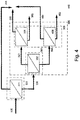
Figs. 2-5 show filtration processes in accordance with various embodiments of the invention. - The present invention relates generally to food products and beverages having reduced calorie content. Calorie reduction is achieved with no or less reliance on artificial sugars than conventional low calorie beverages. In one embodiment, the low calorie beverage comprises of not-from-concentrate (NFC) or from-concentrate (FC) juices. Juice can be formed from fruit or vegetable sources. Preferably, the beverage comprises citrus juices. More preferably, the beverage comprises a not-from-concentrate (NFC) juice. Other types of fruit or vegetable juices include but are not limited to apricot, apple, grapefruit, lemon, tangerine, tangelo, kumquat, mango, pear, peach, pineapple, papaya, passion fruit, grape, strawberry, raspberry, currant, blueberry, blackberry, acai, lychee, kiwi, pomegranate, aronia, tomato, celery, onion, watercress, cucumber, carrot, parsley, beet, asparagus, potato, turnip, rutabaga, and any combination thereof.
-
Fig. 1 shows aprocess 100 for forming a reduced calorie beverage in accordance with one embodiment of the invention. In one embodiment, the process forms an NFC orange juice. Forming other types of juices is also useful. The process includes providing afeed juice 105 for processing. The feed juice comprises a single strength juice derived by various conventional techniques. Such techniques include, for example, mechanical extraction and finishing or reconstitution of juice concentrate with potable water. - Typically, the single strength juice has a brix of about 7° to about 22°, and preferably from about 9° to 14°. In one embodiment, the single strength juice has a brix of at least 7°, preferably at least 9°. In yet another embodiment, the single strength juice has a Brix of less than or equal to 22°, preferably less than or equal to 18°, more preferably less than or equal to 14°.
- The use of a single strength juices with other brix levels are also useful. Lower or higher brix levels, for example, can be provided by mixing various fruit and/or vegetable juices, or by creating mixed drinks, beverages or smoothie-type products. The feed juice can include various additional ingredients such as vitamins and minerals, as desired. Other additives may also be useful. Ingredients can be added early or later in the process.
- The feed juice is processed at
step 110. Processing includes filtering the feed juice to produce apermeate portion 160. In one embodiment, the permeate comprises a low brix clarified juice. Clarified juice is a juice in which the sinking solids have been separated from the feed juice. Sinking solids, for example, include pulp, cloud components and other types of solids. The sinking solids form aprimary retentate portion 135. - The permeate has a brix which is less than the brix of the feed juice. For example, in the case where the feed juice has a brix of about 12°, the permeate would then have a brix which is less than 12°. In one embodiment, the brix of the permeate is about 0 to 30 percent less than the brix of the feed juice, preferably 0 to 20 percent less than the brix of the feed juice. Providing a permeate having a brix which is lower than the brix of the feed juice by other percentages may also be useful, depending on the application. In one embodiment, the brix of the permeate is about 5 to 8. Other brix values of the permeate less than the brix of the feed juice are also useful.
- The sugar content in the feed juice comprises sucrose, glucose and fructose. Typically, the ratio of sucrose, glucose and fructose in the feed juice is 2:1:1. For purposes of discussion, glucose and fructose are referred to as primary sugars. As such, the ratio of sucrose and primary sugars in the feed juice is 1:1.
- To reduce the amount of calorie content in the juice, carbohydrates are selectively separated. In one embodiment, sugars are selectively separated. Preferably, sucrose is selectively removed while retaining primary sugars in the permeate. The retentate forms a
high brix solution 155, having a brix which is greater than brix of the feed juice. In one embodiment, the brix of the retentate is about 15° to about 25°, and preferably about 20°. Providing other brix values for the retentate which is greater than brix of the feed juice is also be useful. - In accordance with one embodiment of the invention, sugar content of the permeate comprises a sucrose to primary sugars ratio which is lower than the sucrose to primary sugars ratio of the feed juice. This is achieved by reducing the amount of sucrose in the sugar content of the permeate. In one embodiment, the sucrose content of the sugar contained in the permeate is reduced to about 0 - 30 wt% while the primary sugars content is about 70 - 100 wt%. The ratio of sucrose, glucose and fructose of the permeate, in one embodiment, is about 2:1:1 to 1:2:2. The ratio of sucrose and fructose of the permeate, in one embodiment, is about 1:40 to about 4:1, and preferably between about 1:20 to about 2:1.
- At
step 170, the permeate is mixed with ingredients to form the final low brix juice. One of the ingredients added is theprimary retentate 135 containing solids from the feed juice. PH adjusters, such as monopotassium phosphate, potassium citrate, citric acid, malic acid, or a combination thereof can be added to adjust the pH of the juice. Other ingredients, such as vitamins, flavorings including orange oil (e.g., PPOJ BN #95768) can also be added as desired. The total amount of vitamins and flavoring can be about 0.9 wt% and 0.006 wt%, respectively. Other amounts are also useful. In one embodiment, a vitamin premix comprising about Bl, B6, C, magnesium, sucralose and acesulfame potassium. The premix, for example, includes about 0.2 wt% of Bl, 0.1 wt% of B6, 46 wt% of C, 23 wt% of magnesium, 15.35 wt% of sucralose and 15.35 wt% of acesulfame potassium. About 0.09 wt% of the vitamin premix is added to the clarified juice. Other formulations including other ingredients are also useful. - Final processing of the juice is performed at
step 180. The juice, for example, is sterilized and packaged. The juice is packaged into, for example, suitable cartons, jugs, cans or bottles. The packaged products may then be labeled and packaged for shipping. - In accordance with the invention, the low brix clarified juice is obtained using a multi-stage filtering process. The multi-stage filtering process includes an initial stage for coarse filtering and a secondary stage for fine filtering. The coarse and fine filtering stages can each include one or more sub-filtering stages. The sub-filtering stages can be in sequence, parallel or a combination thereof. In one embodiment, the coarse and fine filtering stages are implemented with membrane technology. Membrane technology includes microfiltration, nano-filtration and ultra-filtration. Other techniques, such as centrifugation, are also useful.
- The coarse filtering stage produces primary retentate and primary permeate streams. The primary retentate contains the sinking solids of the feed juice while the primary permeate contains the clarified juice. The primary permeate is filtered by the fine filtering stage. The fine filtering stage selectively separates the carbohydrates or sugars from the clarified juice. Secondary retentate and secondary permeate streams are produced by the fine filtering stage. The secondary retentate contains a high brix solution while the secondary permeate contains the low brix clarified juice.
- In one embodiment, the permeate contains a higher ratio of fructose to sucrose than the retentate. This advantageously reduces the number of calories in the low brix clarified juice while maintaining an acceptable flavor profile of the juice. Preferably, the ratio is sufficient to maintain an acceptable flavor profile. In one embodiment, flavor profiles are found to be acceptable when the ratio of fructose to sucrose in the permeate is between about 1:4 and about 40:1, and more preferably between about 1:2 to about 20:1.
- Since sugars, such as fructose, are generally perceived to be sweeter by about 10-70% than sucrose, a higher perceived sweetness per calorie can be achieved by having a higher ratio of fructose to sucrose. Less or no artificial sweeteners need to be added to the final beverage blend to achieve an acceptable flavor profile, advantageously creating a more "natural" beverage product. Juices may also contain other sugars that can be selectively separated using the method of the instant invention.
- Table 1 shows an example of the composition of a final orange juice product having only about 50 calories per 226.89 g (8 oz.) serving in contrast to the conventional 110 calories per 226.89 g (8 oz.) serving, in accordance with one embodiment of the invention. This invention can be applied to derive other higher or lower calorie products.
Table 1 Ingredient % weight g/serving (8 fl oz) Coarse filtration 50 125 Fine filtration Permeate 50 125 Orange Oil 0.006 0.015 Monopotassium 0.15 0.375 Vitamin premix 0.09 0.225 -
Figs. 2-5 show filtering processes in accordance with various embodiments of the invention. Referring toFig. 2 , amulti-stage filtering process 210 comprising acoarse filtering stage 220 and afine filtering stage 250 is shown. In one embodiment, thecoarse filtering stage 220 comprises amicro-filtration unit 221 which receives afeed juice 205. - In one embodiment, the micro-filtration (MF)
unit 221 comprises a micro-filter membrane to clarify thefeed juice 205. However, any other method known to those skilled in the art, such as centrifugation or ultra-filtration, can be used. The micro-filter membrane separates the feed juice into a stream of sinking solids 235 (primary or MF retentate) and a stream of clarified juice 236 (primary or MF permeate). In one embodiment, the MF unit produces an MF retentate of about 2x to 5x concentration. Preferably, the MF retentate is about 3X concentration. Other concentrations may also be useful. Higher concentrations, although may be useful, have been found to extend processing time and/or require additional membrane units. - Various types of micro-filtration skids can be used to achieve the target concentration. In one embodiment, the MF unit comprises a micro-filtration skid from Koch Membrane Systems (USA). Other types of membranes are, such as those manufactured by Dow Chemical Company (US) and SCT Membralox (France), can be used, as well as other known systems. The pore size of the micro-filter membrane is preferably small enough to prevent larger undesirable molecules from passing through the membrane and affecting the efficiency of downstream filtration. In one embodiment, the pore size is about 0.1 to 10 micrometers, which corresponds to a molecular weight cut-off (MWCO) of about 100,000 to about 5,000,000.
- The filtering is designed to have a predetermined output, e.g., gallons per minute (gpm). The predetermined output is selected to satisfy the desired throughput. For example, a production line for processing orange juice has an output of about 378.5 L/min (100 gpm). Other predetermined output levels are also useful. Pressure of the filtering process can be adjusted to achieve the predetermined output. Preferably, the feed stream is passed through the micro-filtration skid at a pressure sufficient to pass the desirable aroma, flavor and nutrient components through micro-filtration skid. One skilled in the art will know how to adjust the pressure, flow rate and other process conditions as required using the micro-filtration skid of this present invention.
- The MF permeate stream or clarified juice is processed by the fine filtering stage. The fine filtration unit comprises a nano-filtration (NF) unit which reduces sugar from the clarified juice to produce a low brix clarified juice (NF permeate) 260. The separated sugar forms a high brix solution (NF retentate) 255.
- In one embodiment, the NF unit selectively removes sucrose in the clarified juice. The selective removal of sucrose results in a sucrose concentration of about 15 Brix to about 25 Brix. Preferably, the sucrose concentration is about 20 Brix. The NF retentate, in one embodiment, is about 2X - 5X concentration of the clarified juice. Preferably, the NF retentate is about 2X concentration of the clarified juice. Higher concentrations, although may be useful, have been found to extend processing time and/or require additional membrane units.
- To selectively remove sucrose, NF membranes are employed. Various types of NF membranes can be used in the NF unit. In one embodiment, the pore-size of the NF membrane is small enough to prevent more sucrose molecules than primary sugar molecules from passing through. Sucrose has a molecular weight (MW) of about 342 while the primary sugars such as fructose and glucose have a molecular weight of about 180. In one embodiment, the pore size is about 0.001 microns, which corresponds to a molecular weight cut-off (MWCO) of about 200.
- The pressure and flow rate are selected to cause a stream containing the smaller primary sugar molecules to pass through the NF membrane and collected in the
NF permeate stream 260, while retaining the larger sucrose molecules in theNF retentate stream 255. One skilled in the art will know how to adjust the pressure as required using the NF membrane of this present invention. - The overall calorie reduction process can be carried out in various temperatures. Preferably, the overall process is performed at refrigerated temperatures to produce a higher quality product. Refrigerated temperatures are preferably less than about 7.22 °C (45°F), and more preferably between about 0-3.33°C (32° to 38° F).
- The system can be operated in batch mode or continuous close-coupled mode. When the system is operated in batch mode, interim stabilization of the juice by heat pasteurization is useful to prevent enzyme and microbiological degradation. When the system is operated in continuous mode, intermediate pasteurization may be avoided.
- The low brix clarified juice is then further processed, such as blending with MF retentate in the desired ratios. Other processes include those described in
steps 178 and 180 ofFig. 1 . -
Fig. 3 shows anotherfiltering process 310 in accordance with one embodiment of the invention. The coarse ormicro-filtration stage 320, as shown, is similar to that described inFig. 2 . For example, afeed juice 305 is processed by aMF unit 321, producing aMF retentate stream 335 containing sinking solids and MF permeatestream 336 containing clarified juice which is processed by the fine or nano-filtration stage 350. - As shown, the
NF filtration stage 350 comprises first andsecond substages filtration unit 352, similar to the NF filtration unit described inFig. 2 . The MF permeate 336 is processed by theNF1 filtration unit 352, forming NF1 permeate 354 containing a low brix clarified juice andNF1 retentate 353 containing a high brix solution. In one embodiment, the high brix solution comprises a sucrose concentration of about 15 Brix to about 25 Brix, preferably about 20 Brix. - In one embodiment, the
second sub-stage 355 comprises a reverse osmosis (RO)unit 356. Any suitable RO membrane system, such as the ones manufactured by Koch Membrane Systems (USA) can be used, as well as other known systems. The RO filtration unit further concentrates theNF1 retentate stream 353 to produce anRO permeate 360 containing very low brix water (e.g., about 1 Brix or less) and anRO retentate 362 containing a very high brix solution (e.g., 40 Brix). The RO permeate water stream can be recycled in the process for various purposes, including but not limited to blending or washing. For example, the water may be blended with the reduced-calorieNF permeate stream 354 and theMF retentate stream 335 to form the final juice product. - The RO retentate (i.e. high sugar by-product) can be used as a supplementary sweetener in other juice products (not the low calorie product discussed in the present invention). Preferably, the proportions of the respective components from the overall calorie reduction system are chosen to sustain the mass balance between the various fractions and generate only a high sugar by-product that may be utilized as a supplementary sweetener. The high sugar by-product comprises, in one embodiment, the
NF retentate stream 255, such as shown inFig. 2 . - Alternatively, the NF retentate stream can be further concentrated by a reverse osmosis unit to produce the high sugar by-
product 362, as shown inFig. 3 . The high sugar by-product can be surged in a hold tank and re-used in other product types as needed. In the embodiment where reverse osmosis is used, a smaller surge tank may be required, but an additional water surge tank may be required for the water permeate. By maximizing use of lower calorie streams in producing the final juice product, cost of raw materials, such as water and artificial sweeteners, is advantageously reduced, while at the same time, producing a product closer to a "natural" reduced calorie product. - There can be additional NF units, preferably in parallel, but may also be in series, or a combination thereof. For example,
Fig. 4 shows afiltering process 410 that includes asecond sub-stage 355 that comprises a second NF (NF2)filtration unit 456. The NF1 permeatestream 354 is processed by the NF2 unit to form NF2 permeate 464 containing a low brix clarified juice andNF2 retentate 462 containing a high brix solution. In one embodiment, the low brix solution comprises a sucrose concentration of about 5 Brix. Alternative configurations are also useful. The number of units used is determined by efficiency and cost considerations. -
Fig. 5 shows afiltering process 510 in accordance with another embodiment of the invention. The filtering process further includes avolatile recovery unit 520 coupled to the NF1 permeate stream. The volatiles recovery unit can improve the flavor of the final beverage product by preserving aroma and flavor volatile compounds that can easily be lost due to volatilization during processing. Such aroma and flavor volatile compounds include, for example, low molecular weight alcohols or oils, such as ethanol and methanol, as well as aldehydes and esters. - In one embodiment, the volatiles recovery unit heats the NF1 permeate stream and strips it with a stripping agent to remove aroma or flavor volatiles. The stripping agent can be steam or an inert gas, such as nitrogen or carbon dioxide. Heating can be carried out using heat exchangers or live steam injection to a stripping temperature above the equilibrium temperature. The stripped
volatiles 530 may then, optionally, be condensed and recombined with the NF2 permeate 464 and the RO permeate 360 to form the final juice product. - While the invention has been particularly shown and described with reference to various embodiments, it will be recognized by those skilled in the art that modifications and changes may be made to the present invention without departing from the spirit and scope thereof. The scope of the invention should therefore be determined not with reference to the above description but with reference to the appended claims along with their full scope of equivalents.
Claims (12)
- A method for processing a juice product comprising:providing a juice; andprocessing the juice by way of micro filtration to produce a clarified juice which is subsequently subjected to nano-filtration to selectively remove more sucrose than primary sugars, for example glucose and fructose, and thereby produce aa juice product wherein sugar content of the juice product comprises 0 to 30 wt. % sucrose.
- The method of claim 1, wherein the juice comprises a fruit juice, a vegetable juice, or any combination of fruit juice and vegetable juice, preferably wherein the juice comprises not-from-concentrate orange juice, or wherein the juice comprises from-concentrate orange juice.
- The method of claim 1, wherein the juice comprises a single strength juice having a brix of about 7° to about 22°, preferably wherein the clarified low-calorie juice comprises a brix of less than the brix of the single strength juice, or wherein the brix of the clarified low-calorie juice is about 0 to 30% less than the brix of the single strength juice, or wherein the brix of the clarified low-calorie juice is about 10 to 20% less than the brix of the single strength juice, or wherein the clarified low-calorie juice comprises a brix of about 5 to 8.
- The method of claim 1, wherein the primary sugars comprise fructose, or wherein the clarified low-calorie juice comprises a ratio of sucrose to fructose of between about 1:40 to about 4:1, preferably wherein the clarified low-calorie juice comprises a ratio of sucrose to fructose of between about 1:20 to about 2:1.
- The method of claim 1, wherein the step of processing the juice comprises:coarse filtering the juice to produce a primary retentate stream and a primary permeate stream, the primary retentate stream comprises sinking solids of the juice and the primary permeate stream comprises a clarified juice; andfine filtering the primary permeate stream to selectively remove more sucrose than primary sugars, the fine filtering produces a secondary retentate stream and a secondary permeate stream, the secondary retentate stream comprises a high brix solution and the secondary permeate stream comprises the clarified low-calorie juice, preferably wherein the clarified low-calorie juice comprises a ratio of sucrose to fructose of between about 1:40 to about 4:1, more preferably wherein the clarified low-calorie juice comprises a ratio of sucrose to fructose of between about 1:20 to about 2:1.
- The method of claim 5, wherein the coarse filtering step comprises microfiltering, preferably wherein the microfiltering comprises passing the juice through a micro-filtration membrane having a molecular cut-off of about 100,000 to about 5,000,000, or wherein the fine filtering step comprises nano-filtering, preferably wherein the nano-filtering comprises passing the primary permeate stream through a nano-filtration membrane having a molecular cut-off of about 200.
- The method of claim 5, wherein the fine filtering step comprises nano-filtering, preferably wherein the nano-filtering comprises passing the primary permeate stream through a nano-filtration membrane having a molecular cut-off of about 200.
- A juice product processing apparatus comprising:a micro-filtration stage operative for filtering a juice to produce a primary retentate stream and a primary permeate stream, the primary retentate stream comprising sinking solids of the juice and the primary permeate stream comprises a clarified juice; anda nano-filtration stage for removing more sucrose than primary sugars from the clarified juice, the nano-filtration stage operative for producing a secondary retentate stream and a secondary permeate stream, the secondary retentate stream comprising a high brix solution having a higher Brix than the juice and the secondary permeate stream having a sugar content comprising 0 to 30 wt. % sucrose,wherein the nano-filtration stage comprising a nano-filtration membrane having a pore-size of 0.001 microns.
- The juice product processing apparatus of claim 8, wherein the clarified low-calorie juice comprises a ratio of sucrose to fructose of between about 1:40 to about 4:1, preferably wherein the clarified low-calorie juice comprises a ratio of sucrose to fructose of between about 1:20 to about 2:1, or wherein the micro-filtration stage comprises a micro-filtration membrane having a molecular cut-off of about 100,000 to about 5,000,000, or wherein the nano-filtration stage comprises a nano-filtration membrane having a molecular cut-off of about 200, or wherein the nano-filtration stage comprises a first nano-filtration sub-stage and a second nano-filtration sub-stage, the first nano-filtration sub-stage processes the primary permeate stream to produce a first nano-filtration retentate stream and a first nano-filtration permeate stream, the second nano-filtration sub-stage processes the first nano-filtration retentate stream to produce a second nano-filtration retentate stream and a second nano-filtration permeate stream.
- The juice product processing apparatus of claim 9, wherein the first nano-filtration sub-stage comprises a nano-filtration unit, preferably wherein the second nano-filtration sub-stage comprises a reverse osmosis unit, for example wherein second nano-filtration permeate stream comprises a low brix water by-product that is recycled in the processing apparatus, preferably wherein the low brix water by-product comprises a brix of less than or equal to about 1°, or wherein the second nano-filtration retentate stream comprises a high sugar by-product that is used as a supplementary sweetener, preferably wherein the high sugar byproduct comprises a brix of about 40°.
- The juice product processing apparatus of claim 9, further comprising a volatiles recovery unit for stripping volatiles from the first nano-filtration permeate stream, preferably wherein the stripped volatiles are recombined with the second nano-filtration permeate stream to form the clarified low-calorie juice.
- Use of a juice product processing apparatus in a method according to any of the claims 8-11 for producing a processed juice product.
Applications Claiming Priority (2)
| Application Number | Priority Date | Filing Date | Title |
|---|---|---|---|
| US11/541,610 US9220291B2 (en) | 2006-09-30 | 2006-09-30 | Method of producing a reduced-calorie food product |
| PCT/US2007/078360 WO2008039646A2 (en) | 2006-09-30 | 2007-09-13 | Method of producing a reduced-calorie food product |
Publications (2)
| Publication Number | Publication Date |
|---|---|
| EP2086358A2 EP2086358A2 (en) | 2009-08-12 |
| EP2086358B1 true EP2086358B1 (en) | 2019-12-18 |
Family
ID=39230862
Family Applications (1)
| Application Number | Title | Priority Date | Filing Date |
|---|---|---|---|
| EP07842392.8A Active EP2086358B1 (en) | 2006-09-30 | 2007-09-13 | Method of producing a reduced-calorie food product |
Country Status (9)
| Country | Link |
|---|---|
| US (2) | US9220291B2 (en) |
| EP (1) | EP2086358B1 (en) |
| JP (2) | JP4880037B2 (en) |
| KR (2) | KR20120065444A (en) |
| CN (1) | CN101522059B (en) |
| BR (1) | BRPI0716530A2 (en) |
| RU (1) | RU2431416C2 (en) |
| UA (1) | UA97114C2 (en) |
| WO (1) | WO2008039646A2 (en) |
Families Citing this family (21)
| Publication number | Priority date | Publication date | Assignee | Title |
|---|---|---|---|---|
| BR112012028948A2 (en) * | 2010-05-11 | 2015-09-15 | State Of Queensland Acting Through The Dept Of Agriculture Fisheries And Forestry | herbal electrolyte composition |
| US20120027892A1 (en) * | 2010-07-30 | 2012-02-02 | S T Agri Global Inc. | Juice beverage |
| HRP20201664T1 (en) | 2012-01-01 | 2020-12-25 | Botanical Water Technologies Ip Ltd | Methods for preparation of plant based beverages |
| JP6359287B2 (en) * | 2014-02-21 | 2018-07-18 | アサヒ飲料株式会社 | Acai beverage |
| US9925494B2 (en) * | 2014-11-17 | 2018-03-27 | Massachusetts Institute Of Technology | Concentration control in filtration systems, and associated methods |
| JP7053172B2 (en) * | 2017-06-15 | 2022-04-12 | 大阪ガスケミカル株式会社 | Method for purifying a solution containing solid content and its equipment |
| MX2020005421A (en) | 2017-11-28 | 2020-12-10 | Blue Tree Tech Ltd | METHODS AND SYSTEMS TO PRODUCE DRINKS WITH LOW SUGAR CONTENT. |
| CN108094772A (en) * | 2017-12-08 | 2018-06-01 | 桂林莱茵生物科技股份有限公司 | A kind of grosvenor momordica fruit juice and preparation method thereof |
| US20200093159A1 (en) * | 2018-09-25 | 2020-03-26 | Tropicana Products, Inc. | Compositions and Methods for Reducing Sugar Content in Juices |
| ES2986730T3 (en) * | 2018-09-27 | 2024-11-12 | Tetra Laval Holdings & Finance | Orange juice production |
| US12465067B2 (en) | 2019-03-15 | 2025-11-11 | Versuni Holding B.V. | Sugar reduction of food products |
| EP3725162A1 (en) * | 2019-04-16 | 2020-10-21 | Koninklijke Philips N.V. | Sugar reduction of food products |
| JP2020171231A (en) * | 2019-04-11 | 2020-10-22 | 株式会社 伊藤園 | Dry powder for green juice beverages |
| US11412764B2 (en) | 2019-08-29 | 2022-08-16 | Tropicana Products, Inc. | Reduced calorie food product and methods of making |
| US11324238B2 (en) | 2019-11-21 | 2022-05-10 | Donaldson Company, Inc. | System and method for filtering beverages |
| WO2021116437A2 (en) * | 2019-12-12 | 2021-06-17 | Cambridge Glycoscience Ltd | Low sugar multiphase foodstuffs |
| JP7508224B2 (en) * | 2019-12-27 | 2024-07-01 | キリンホールディングス株式会社 | Reduced sugar fruit drink and its manufacturing method |
| WO2021167970A1 (en) * | 2020-02-18 | 2021-08-26 | The Coca-Cola Company | Juice filtration system and methods |
| US12490759B2 (en) | 2020-08-07 | 2025-12-09 | Innovative Strategic Design, Llc | Reduced-sugar fruit juice and fruit must |
| WO2022198183A1 (en) * | 2021-03-15 | 2022-09-22 | Welch Foods Inc., A Cooperative | Reduced sugar juice and process for making |
| EP4590128A2 (en) | 2022-09-22 | 2025-07-30 | Bluetree Technologies Ltd | Methods and systems for producing low sugar beverages |
Family Cites Families (21)
| Publication number | Priority date | Publication date | Assignee | Title |
|---|---|---|---|---|
| JPS5283966A (en) * | 1975-12-31 | 1977-07-13 | Hayashibara Biochem Lab | Process for removing sucrose from succharide mixture |
| CA1092884A (en) | 1978-06-14 | 1981-01-06 | Takeshi Matsuura | Method of concentrating natural fruit juices by reverse osmosis |
| US4333770A (en) | 1980-09-08 | 1982-06-08 | Uop Inc. | Extraction of sucrose from molasses |
| GB8303611D0 (en) * | 1983-02-09 | 1983-03-16 | Ag Patents Ltd | Concentration of alcoholic beverages |
| US5510125A (en) | 1988-05-04 | 1996-04-23 | Bucher-Guyer Ag Maschinenfabrik | Process for selective removal of sugar from beverages |
| CH679459A5 (en) | 1988-05-04 | 1992-02-28 | Bucher Guyer Ag Masch | |
| US4959237A (en) * | 1989-06-07 | 1990-09-25 | E. I. Du Pont De Nemours And Company | Reverse osmosis concentration of juice products with improved flavor |
| US4933197A (en) | 1989-06-07 | 1990-06-12 | Separasystems Lp | Process to make juice products with improved flavor |
| US4971811A (en) | 1989-07-14 | 1990-11-20 | The Procter & Gamble Company | Process for making concentrated fruit juice |
| CH682636A5 (en) | 1990-12-21 | 1993-10-29 | Bucher Guyer Ag Masch | A method for the selective removal of sugar from beverages. |
| BR9205506A (en) * | 1991-10-15 | 1994-03-01 | Nutrasweet Co | PROCESSES TO SEPARATE A FRUIT JUICE AND TO MAKE A COMPOSITION OF LOW AND HIGH RATIO FRUIT JUICE, COMPOSITION |
| CH684048A5 (en) | 1992-01-29 | 1994-07-15 | Bucher Guyer Ag Masch | Process for producing a low-sugar, non-alcoholic beverage or a low-alcohol fermented beverage. |
| CN1191692A (en) * | 1997-02-28 | 1998-09-02 | 上海亚珊机械设备有限公司 | Juice preparing technology |
| JP3343327B2 (en) | 1997-03-28 | 2002-11-11 | 株式会社愛媛柑橘資源開発研究所 | Method for producing low calorie juice |
| JP3643921B2 (en) | 1998-05-08 | 2005-04-27 | 味の素株式会社 | Novel sweetener composition |
| EP0966889B1 (en) * | 1998-06-24 | 2007-05-02 | DSM IP Assets B.V. | Vitamin powders for beverage applications |
| CN1161031C (en) * | 2001-05-30 | 2004-08-11 | 深圳市深宝华城食品有限公司 | Concentrated tea juice with original flavor maintained and its production process |
| JP4271385B2 (en) | 2001-06-05 | 2009-06-03 | 三栄源エフ・エフ・アイ株式会社 | A sweetener composition, an edible product containing the composition, and a method for enhancing sweetness. |
| JP2002360216A (en) | 2001-06-05 | 2002-12-17 | Sanei Gen Ffi Inc | Sweetener composition, edible product containing the composition, and method for increasing sweetness |
| FR2852493B1 (en) | 2003-03-19 | 2005-06-17 | Vaslin Bucher | METHOD FOR CONTROLLED REDUCTION OF THE SUGAR CONTENT OF FRUIT JUICE AND DEVICE FOR IMPLEMENTING SAID PROCESS |
| CN1545942A (en) * | 2003-11-28 | 2004-11-17 | 南宁领标生物技术有限责任公司 | Productive technology of compound fruit juice of pumpkin, bitter gourd and Momordica grosvenori |
-
2006
- 2006-09-30 US US11/541,610 patent/US9220291B2/en active Active
-
2007
- 2007-09-13 CN CN2007800365600A patent/CN101522059B/en not_active Expired - Fee Related
- 2007-09-13 KR KR1020127011822A patent/KR20120065444A/en not_active Ceased
- 2007-09-13 RU RU2009107723/10A patent/RU2431416C2/en active
- 2007-09-13 JP JP2009530517A patent/JP4880037B2/en not_active Expired - Fee Related
- 2007-09-13 BR BRPI0716530-7A2A patent/BRPI0716530A2/en not_active IP Right Cessation
- 2007-09-13 EP EP07842392.8A patent/EP2086358B1/en active Active
- 2007-09-13 UA UAA200901981A patent/UA97114C2/en unknown
- 2007-09-13 WO PCT/US2007/078360 patent/WO2008039646A2/en not_active Ceased
- 2007-09-13 KR KR1020097005307A patent/KR101283380B1/en not_active Expired - Fee Related
-
2009
- 2009-03-06 US US12/399,601 patent/US9241509B2/en active Active
-
2011
- 2011-11-25 JP JP2011257701A patent/JP2012034711A/en active Pending
Non-Patent Citations (1)
| Title |
|---|
| None * |
Also Published As
| Publication number | Publication date |
|---|---|
| JP4880037B2 (en) | 2012-02-22 |
| WO2008039646A3 (en) | 2008-09-04 |
| US20090159518A1 (en) | 2009-06-25 |
| KR20120065444A (en) | 2012-06-20 |
| KR101283380B1 (en) | 2013-07-08 |
| US9220291B2 (en) | 2015-12-29 |
| KR20090052877A (en) | 2009-05-26 |
| JP2012034711A (en) | 2012-02-23 |
| RU2431416C2 (en) | 2011-10-20 |
| EP2086358A2 (en) | 2009-08-12 |
| US20080081096A1 (en) | 2008-04-03 |
| BRPI0716530A2 (en) | 2013-09-17 |
| RU2009107723A (en) | 2010-11-20 |
| CN101522059A (en) | 2009-09-02 |
| CN101522059B (en) | 2013-09-04 |
| UA97114C2 (en) | 2012-01-10 |
| WO2008039646A2 (en) | 2008-04-03 |
| US9241509B2 (en) | 2016-01-26 |
| JP2010520743A (en) | 2010-06-17 |
Similar Documents
| Publication | Publication Date | Title |
|---|---|---|
| US9241509B2 (en) | Method of producing a reduced-calorie food product | |
| JP2725889B2 (en) | Separation of sugar from juices | |
| EP0404390B1 (en) | Reverse osmosis concentration of juice products with improved flavor | |
| JP6652579B2 (en) | Vegetable beverage and method for preparing the same | |
| EP0402121B1 (en) | Process to make juice products with improved flavor | |
| JP4517197B2 (en) | Edible flavor improver, method for producing and using the same | |
| US20120135124A1 (en) | Juice beverages | |
| WO2013126662A1 (en) | Multi-stage membrane concentration methods and products | |
| EP3628170B1 (en) | Production of orange juice | |
| US6506427B1 (en) | Method for obtaining natural super-cloud compositions | |
| JP3343327B2 (en) | Method for producing low calorie juice | |
| WO2019178442A1 (en) | Membrane-based production of high ethanol content solutions | |
| US20230345974A1 (en) | Juice filtration system and methods | |
| Meher et al. | Future Scope of Membrane Technology in Pineapple Juice Processing: A Review | |
| US8945645B2 (en) | Method for simultaneous concentration and rectification of grape must using nanofiltration and electrodialysis | |
| JP2814467B2 (en) | Highly concentrated fruit juice | |
| MXPA05013545A (en) | Process for concentrating fruit and vegetable juices, and concentrates thereby obtained. |
Legal Events
| Date | Code | Title | Description |
|---|---|---|---|
| PUAI | Public reference made under article 153(3) epc to a published international application that has entered the european phase |
Free format text: ORIGINAL CODE: 0009012 |
|
| 17P | Request for examination filed |
Effective date: 20090327 |
|
| AK | Designated contracting states |
Kind code of ref document: A2 Designated state(s): AT BE BG CH CY CZ DE DK EE ES FI FR GB GR HU IE IS IT LI LT LU LV MC MT NL PL PT RO SE SI SK TR |
|
| AX | Request for extension of the european patent |
Extension state: AL BA HR MK RS |
|
| DAX | Request for extension of the european patent (deleted) | ||
| 17Q | First examination report despatched |
Effective date: 20140207 |
|
| STAA | Information on the status of an ep patent application or granted ep patent |
Free format text: STATUS: EXAMINATION IS IN PROGRESS |
|
| REG | Reference to a national code |
Ref country code: DE Ref legal event code: R079 Ref document number: 602007059646 Country of ref document: DE Free format text: PREVIOUS MAIN CLASS: A23L0002740000 Ipc: A23L0033200000 |
|
| GRAP | Despatch of communication of intention to grant a patent |
Free format text: ORIGINAL CODE: EPIDOSNIGR1 |
|
| STAA | Information on the status of an ep patent application or granted ep patent |
Free format text: STATUS: GRANT OF PATENT IS INTENDED |
|
| RIC1 | Information provided on ipc code assigned before grant |
Ipc: A23L 2/06 20060101ALI20190704BHEP Ipc: A23L 2/02 20060101ALI20190704BHEP Ipc: A23L 33/20 20160101AFI20190704BHEP Ipc: A23L 2/74 20060101ALI20190704BHEP |
|
| INTG | Intention to grant announced |
Effective date: 20190801 |
|
| GRAS | Grant fee paid |
Free format text: ORIGINAL CODE: EPIDOSNIGR3 |
|
| GRAA | (expected) grant |
Free format text: ORIGINAL CODE: 0009210 |
|
| STAA | Information on the status of an ep patent application or granted ep patent |
Free format text: STATUS: THE PATENT HAS BEEN GRANTED |
|
| AK | Designated contracting states |
Kind code of ref document: B1 Designated state(s): AT BE BG CH CY CZ DE DK EE ES FI FR GB GR HU IE IS IT LI LT LU LV MC MT NL PL PT RO SE SI SK TR |
|
| REG | Reference to a national code |
Ref country code: GB Ref legal event code: FG4D |
|
| REG | Reference to a national code |
Ref country code: CH Ref legal event code: EP |
|
| REG | Reference to a national code |
Ref country code: DE Ref legal event code: R096 Ref document number: 602007059646 Country of ref document: DE |
|
| REG | Reference to a national code |
Ref country code: IE Ref legal event code: FG4D |
|
| REG | Reference to a national code |
Ref country code: AT Ref legal event code: REF Ref document number: 1213587 Country of ref document: AT Kind code of ref document: T Effective date: 20200115 |
|
| REG | Reference to a national code |
Ref country code: NL Ref legal event code: MP Effective date: 20191218 |
|
| PG25 | Lapsed in a contracting state [announced via postgrant information from national office to epo] |
Ref country code: BG Free format text: LAPSE BECAUSE OF FAILURE TO SUBMIT A TRANSLATION OF THE DESCRIPTION OR TO PAY THE FEE WITHIN THE PRESCRIBED TIME-LIMIT Effective date: 20200318 Ref country code: FI Free format text: LAPSE BECAUSE OF FAILURE TO SUBMIT A TRANSLATION OF THE DESCRIPTION OR TO PAY THE FEE WITHIN THE PRESCRIBED TIME-LIMIT Effective date: 20191218 Ref country code: GR Free format text: LAPSE BECAUSE OF FAILURE TO SUBMIT A TRANSLATION OF THE DESCRIPTION OR TO PAY THE FEE WITHIN THE PRESCRIBED TIME-LIMIT Effective date: 20200319 Ref country code: LT Free format text: LAPSE BECAUSE OF FAILURE TO SUBMIT A TRANSLATION OF THE DESCRIPTION OR TO PAY THE FEE WITHIN THE PRESCRIBED TIME-LIMIT Effective date: 20191218 Ref country code: SE Free format text: LAPSE BECAUSE OF FAILURE TO SUBMIT A TRANSLATION OF THE DESCRIPTION OR TO PAY THE FEE WITHIN THE PRESCRIBED TIME-LIMIT Effective date: 20191218 Ref country code: LV Free format text: LAPSE BECAUSE OF FAILURE TO SUBMIT A TRANSLATION OF THE DESCRIPTION OR TO PAY THE FEE WITHIN THE PRESCRIBED TIME-LIMIT Effective date: 20191218 |
|
| REG | Reference to a national code |
Ref country code: LT Ref legal event code: MG4D |
|
| PG25 | Lapsed in a contracting state [announced via postgrant information from national office to epo] |
Ref country code: PT Free format text: LAPSE BECAUSE OF FAILURE TO SUBMIT A TRANSLATION OF THE DESCRIPTION OR TO PAY THE FEE WITHIN THE PRESCRIBED TIME-LIMIT Effective date: 20200513 Ref country code: EE Free format text: LAPSE BECAUSE OF FAILURE TO SUBMIT A TRANSLATION OF THE DESCRIPTION OR TO PAY THE FEE WITHIN THE PRESCRIBED TIME-LIMIT Effective date: 20191218 Ref country code: NL Free format text: LAPSE BECAUSE OF FAILURE TO SUBMIT A TRANSLATION OF THE DESCRIPTION OR TO PAY THE FEE WITHIN THE PRESCRIBED TIME-LIMIT Effective date: 20191218 Ref country code: RO Free format text: LAPSE BECAUSE OF FAILURE TO SUBMIT A TRANSLATION OF THE DESCRIPTION OR TO PAY THE FEE WITHIN THE PRESCRIBED TIME-LIMIT Effective date: 20191218 Ref country code: CZ Free format text: LAPSE BECAUSE OF FAILURE TO SUBMIT A TRANSLATION OF THE DESCRIPTION OR TO PAY THE FEE WITHIN THE PRESCRIBED TIME-LIMIT Effective date: 20191218 |
|
| PG25 | Lapsed in a contracting state [announced via postgrant information from national office to epo] |
Ref country code: SK Free format text: LAPSE BECAUSE OF FAILURE TO SUBMIT A TRANSLATION OF THE DESCRIPTION OR TO PAY THE FEE WITHIN THE PRESCRIBED TIME-LIMIT Effective date: 20191218 Ref country code: IS Free format text: LAPSE BECAUSE OF FAILURE TO SUBMIT A TRANSLATION OF THE DESCRIPTION OR TO PAY THE FEE WITHIN THE PRESCRIBED TIME-LIMIT Effective date: 20200418 |
|
| REG | Reference to a national code |
Ref country code: DE Ref legal event code: R097 Ref document number: 602007059646 Country of ref document: DE |
|
| REG | Reference to a national code |
Ref country code: AT Ref legal event code: MK05 Ref document number: 1213587 Country of ref document: AT Kind code of ref document: T Effective date: 20191218 |
|
| PLBE | No opposition filed within time limit |
Free format text: ORIGINAL CODE: 0009261 |
|
| STAA | Information on the status of an ep patent application or granted ep patent |
Free format text: STATUS: NO OPPOSITION FILED WITHIN TIME LIMIT |
|
| PG25 | Lapsed in a contracting state [announced via postgrant information from national office to epo] |
Ref country code: DK Free format text: LAPSE BECAUSE OF FAILURE TO SUBMIT A TRANSLATION OF THE DESCRIPTION OR TO PAY THE FEE WITHIN THE PRESCRIBED TIME-LIMIT Effective date: 20191218 Ref country code: ES Free format text: LAPSE BECAUSE OF FAILURE TO SUBMIT A TRANSLATION OF THE DESCRIPTION OR TO PAY THE FEE WITHIN THE PRESCRIBED TIME-LIMIT Effective date: 20191218 |
|
| 26N | No opposition filed |
Effective date: 20200921 |
|
| PG25 | Lapsed in a contracting state [announced via postgrant information from national office to epo] |
Ref country code: AT Free format text: LAPSE BECAUSE OF FAILURE TO SUBMIT A TRANSLATION OF THE DESCRIPTION OR TO PAY THE FEE WITHIN THE PRESCRIBED TIME-LIMIT Effective date: 20191218 Ref country code: SI Free format text: LAPSE BECAUSE OF FAILURE TO SUBMIT A TRANSLATION OF THE DESCRIPTION OR TO PAY THE FEE WITHIN THE PRESCRIBED TIME-LIMIT Effective date: 20191218 |
|
| PG25 | Lapsed in a contracting state [announced via postgrant information from national office to epo] |
Ref country code: IT Free format text: LAPSE BECAUSE OF FAILURE TO SUBMIT A TRANSLATION OF THE DESCRIPTION OR TO PAY THE FEE WITHIN THE PRESCRIBED TIME-LIMIT Effective date: 20191218 |
|
| PG25 | Lapsed in a contracting state [announced via postgrant information from national office to epo] |
Ref country code: PL Free format text: LAPSE BECAUSE OF FAILURE TO SUBMIT A TRANSLATION OF THE DESCRIPTION OR TO PAY THE FEE WITHIN THE PRESCRIBED TIME-LIMIT Effective date: 20191218 |
|
| REG | Reference to a national code |
Ref country code: DE Ref legal event code: R119 Ref document number: 602007059646 Country of ref document: DE |
|
| PG25 | Lapsed in a contracting state [announced via postgrant information from national office to epo] |
Ref country code: MC Free format text: LAPSE BECAUSE OF FAILURE TO SUBMIT A TRANSLATION OF THE DESCRIPTION OR TO PAY THE FEE WITHIN THE PRESCRIBED TIME-LIMIT Effective date: 20191218 |
|
| REG | Reference to a national code |
Ref country code: CH Ref legal event code: PL |
|
| REG | Reference to a national code |
Ref country code: BE Ref legal event code: MM Effective date: 20200930 |
|
| PG25 | Lapsed in a contracting state [announced via postgrant information from national office to epo] |
Ref country code: LU Free format text: LAPSE BECAUSE OF NON-PAYMENT OF DUE FEES Effective date: 20200913 |
|
| PG25 | Lapsed in a contracting state [announced via postgrant information from national office to epo] |
Ref country code: DE Free format text: LAPSE BECAUSE OF NON-PAYMENT OF DUE FEES Effective date: 20210401 |
|
| PG25 | Lapsed in a contracting state [announced via postgrant information from national office to epo] |
Ref country code: CH Free format text: LAPSE BECAUSE OF NON-PAYMENT OF DUE FEES Effective date: 20200930 Ref country code: BE Free format text: LAPSE BECAUSE OF NON-PAYMENT OF DUE FEES Effective date: 20200930 Ref country code: LI Free format text: LAPSE BECAUSE OF NON-PAYMENT OF DUE FEES Effective date: 20200930 Ref country code: IE Free format text: LAPSE BECAUSE OF NON-PAYMENT OF DUE FEES Effective date: 20200913 |
|
| PG25 | Lapsed in a contracting state [announced via postgrant information from national office to epo] |
Ref country code: TR Free format text: LAPSE BECAUSE OF FAILURE TO SUBMIT A TRANSLATION OF THE DESCRIPTION OR TO PAY THE FEE WITHIN THE PRESCRIBED TIME-LIMIT Effective date: 20191218 Ref country code: MT Free format text: LAPSE BECAUSE OF FAILURE TO SUBMIT A TRANSLATION OF THE DESCRIPTION OR TO PAY THE FEE WITHIN THE PRESCRIBED TIME-LIMIT Effective date: 20191218 Ref country code: CY Free format text: LAPSE BECAUSE OF FAILURE TO SUBMIT A TRANSLATION OF THE DESCRIPTION OR TO PAY THE FEE WITHIN THE PRESCRIBED TIME-LIMIT Effective date: 20191218 |
|
| P01 | Opt-out of the competence of the unified patent court (upc) registered |
Effective date: 20230516 |
|
| PGFP | Annual fee paid to national office [announced via postgrant information from national office to epo] |
Ref country code: GB Payment date: 20250929 Year of fee payment: 19 |
|
| PGFP | Annual fee paid to national office [announced via postgrant information from national office to epo] |
Ref country code: FR Payment date: 20250925 Year of fee payment: 19 |