EP2085886A1 - Memory management device applied to shared-memory multiprocessor - Google Patents
Memory management device applied to shared-memory multiprocessor Download PDFInfo
- Publication number
- EP2085886A1 EP2085886A1 EP08253820A EP08253820A EP2085886A1 EP 2085886 A1 EP2085886 A1 EP 2085886A1 EP 08253820 A EP08253820 A EP 08253820A EP 08253820 A EP08253820 A EP 08253820A EP 2085886 A1 EP2085886 A1 EP 2085886A1
- Authority
- EP
- European Patent Office
- Prior art keywords
- memory
- page
- pages
- size
- allocated
- Prior art date
- Legal status (The legal status is an assumption and is not a legal conclusion. Google has not performed a legal analysis and makes no representation as to the accuracy of the status listed.)
- Withdrawn
Links
Images


Classifications
-
- G—PHYSICS
- G06—COMPUTING OR CALCULATING; COUNTING
- G06F—ELECTRIC DIGITAL DATA PROCESSING
- G06F12/00—Accessing, addressing or allocating within memory systems or architectures
- G06F12/02—Addressing or allocation; Relocation
- G06F12/0223—User address space allocation, e.g. contiguous or non contiguous base addressing
- G06F12/023—Free address space management
Definitions
- This invention relates to a memory management device applied to, for example, a plurality of microprocessors and a shared-memory multiprocessor shared by the microprocessors.
- a first fit method and a best fit method are known (refer to, for example, " Data Structures Using Java,” Author: Langsam, Yediyah/Augenstein, Moshe J./Tenenbaum, Aaron M., Publisher: Pearson Education Limited Published 2003/04, ISBN:9780130477217 ).
- These methods are to connect free memory areas in list form, search for a necessary and sufficient memory area, and allocate the connected area to the searched area. Since the free memory areas are managed in list form, exclusive control by locking is indispensable. Moreover, in a case where the memory area is unlocked, when a free memory area adjacent to the memory area is merged, the list of free memory areas is left locked while the memory areas are being merged, which makes the locked states more liable to collide with one another.
- a hybrid of the first fit method and the memory pool method (refer to, for example, Jpn. Pat. Appln. KOKAI Publication No. 2005-50010 ) and a memory area management method capable of using memory effectively for not only steady traffic but also burst traffic (refer to, for example, Jpn. Pat. Appln. KOKAI Publication No. 2006-126973 ).
- a continuous process of continuous data such as a video replay (hereinafter, referred to as a stream process) is characterized by repeatedly allocating and deallocating memory areas which are of a fixed length and have a similar duration of use. Moreover, the stream process is characterized in that the necessary amount of memory varies according to the load to be processed. Accordingly, neither of the above methods can manage the memory efficiently. Therefore, a memory management device capable of managing the memory efficiently in processing data by use of a shared memory shared by a plurality of processors has been desired.
- a memory management device comprising: a plurality of processors capable of parallel operation; and a memory which is shared by said plurality of processors and which has an allocated memory size indicating the size of an area allocated to an allocatable area in the memory at the request of one of said plurality of processors and a deallocated memory size indicating the size of a deallocated area in the allocated area, wherein one of said plurality of processors compares the allocated memory size with the deallocated memory size, thereby determining whether the memory is reusable.
- a memory management method of managing memory with a plurality of processors capable of parallel operation comprising: comparing an allocated memory size with a deallocated memory size stored in the memory with one of said plurality of processors, thereby determining whether the memory is reusable, the allocated memory size indicating the size of an area allocated to an allocatable area in the memory, and the deallocated memory size indicating the size of an area deallocated in the allocated area; if the memory is reusable, resetting the allocated memory size and deallocated memory size; and allocating an area of a requested size to the allocatable area of the memory.
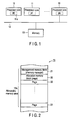
- FIG. 1 schematically shows an example of the hardware configuration of a shared-memory multiprocessor system according to a first embodiment of the invention.
- a plurality of processors 11 are connected to a bus 12.
- a memory 13 shared by the processors 11 is connected.
- Each of the processors 11 has, for example, a register 11a.
- Each of the registers 11a stores an identification number which differs from one processor 11 to another and is used to identify, for example, a 0-th to an n-th processor.
- FIG. 2 schematically shows the configuration of the memory 13.
- the memory 13 has an allocatable memory area 13a.
- the allocatable memory area 13a is composed of a management memory block (memory manager) 21 which manages the allocatable memory area 13a and a plurality of allocation memory blocks (pages) 22.
- the memory manager 21 and pages 22 are not necessarily provided consecutively as shown in FIG. 2 and may be provided without dependence on the order or location.
- FIG. 3 shows a configuration of the allocatable memory area 13a shown in FIG. 2 .
- the memory manager 21 stores a first page pointer 21a showing the location of a first one of a plurality of pages 22, a page size 21b showing the capacity (size) of one page, the minimum number of pages 21c and the maximum number of pages 21d in the allocatable memory area 13a, and the number of pages showing the number of pages presently allocated.
- the setting of the maximum number of pages 21d may be omitted.
- the page manager 22a manages the pages 22.
- the page body 22b is a memory area (storage unit) used for processing tasks or the like.
- the page manager 22a is composed of a preceding page pointer 22c, a following page pointer 22d, an allocated memory size 22e (first storage capacity information), ant at least one deallocated memory size (second storage capacity).
- the preceding page pointer 22c indicates the location of a page 22 linked to a page before the page 22 to which the page manager 22a belongs.
- the following page pointer 22d indicates a page 22 linked to a page after the page 22 to which the page manager 22a belongs.
- the allocated memory size 22e shows the size of a memory block allocated to the page body 22b belonging to the page manager 22a.
- the deallocated memory size 22f shows the size of a memory block deallocated by the processor.
- the deallocated memory size 22f is stored so as to correspond to the identification number of each processor (or the core number of each processor).
- the page manager 22a is set as a header at the beginning of each page, the location of the page manager 22a is not limited, provided that it lies within the page 22 to which it belongs.
- the page manager 22a may be set as a footer.
- the page body 22b is composed of an allocated memory area 22g, a free memory area 22i, and a page manager pointer 22j.
- the allocated memory area 22g is a memory block allocated when a task or the like is processed.
- the allocated memory area 22g stores, for example, at its end, a memory block pointer 22h showing the location (address) of the page manager pointer 22j stored in the same page body 22b.
- the location (the leading address) of the page manager 22a may be stored.
- the free memory area 22i which is an unused memory block, is allocated when a task or the like is processed.
- the page manager pointer 22j indicates the location of the page manager 22a of the page 22 to which the pointer 22j belongs.
- the page manager pointer 22j is stored at the end of the page body 22b.
- the pages 22 can be increased and decreased by the memory manager 21. That is, the number of pages can be increased using a memory area of the memory 13. To return a memory area to the memory 13, the number of pages can be decreased.
- Each of the plurality of pages 22 has the same configuration.
- the pages are linked by the preceding page pointer 22c and following page pointer 22d, with the result that the pages are circularly connected.
- FIG. 4 is a flowchart to help explain an example of a memory block allocation process in the embodiment.
- the number of tasks of allocating memory blocks to the allocatable memory area 13a (hereinafter, abbreviated as allocation tasks) is only one.
- the allocation task is carried out on one of the plurality of processors.
- the pointer to the memory manager 21 and a requested memory size are input to the memory 13 (S401).
- the location of the allocatable memory area 13a having the memory manager 21 is calculated.
- the location of the page manager 22a of the page 22 set as the first page is calculated. For example, in an arbitrary task, it is determined whether the total of the allocated memory size 22e set in the selected page manager 22a and the input requested memory size is less than or equal to the size of one page (page size) set in the memory manager 21 (S402).
- the requested memory block is allocated to the page body 22b of the first page (S403). Thereafter, the memory size of a newly allocated memory block is added to the allocated memory size 22e of the page manager 22a, thereby updating the size (S404). Moreover, as shown in FIG. 3 , the memory block pointer 22h is set at the end of the allocated memory block (S405) and a pointer to the allocated memory block is output, thereby completing the allocation.
- step S402 if the total of the allocated memory size 22e of the first page and the required memory size is larger than the page size, it is determined whether the required memory size is larger than the page size (S406). If the required memory size is larger than the page size, it is determined that the required memory block cannot be allocated to the allocatable memory area 13a. Then, the allocation task terminates the allocation of memory blocks to the allocatable memory area 13a.
- step S406 if the required memory size is less than or equal to the page size, the location of the next page is calculated on the basis of the following page pointer 22a set in the page manager 22a of the first page. Then, referring to the page manager 22a of the page 22 shown by the following page pointer 22d, it is determined whether a set allocated memory size 22e is equal to the sum of deallocated memory sizes 22f (S407). If the allocated memory size 22e set in the page manager 22a of the selected page 22 is equal to the sum of deallocated memory sizes 22f, this indicates that the page body 22b belonging to the selected page 22 has no memory area now being used and is reusable.
- the allocated memory size 22e set in the page manager 22a and the deallocated memory size 22f are all reset (S408) and, for example, an allocation task allocates the requested memory block to the page body 22b of the selected page (S409).
- the first page pointer 21a of the memory manager 21 is updated on the basis of data that indicates the location of the selected page 22.
- the page 22 is set as a first page (S410).
- the memory size of a newly allocated memory block is added to the allocated memory size 22e of the page manager 22a of the selected page, thereby updating the memory size (S404).
- a memory block pointer 22h is set at the end of the allocated memory block (S405) and a pointer to the allocated memory block, which completes the allocation.
- step S407 if the allocated memory size 22e set in the page manager 22a of the selected page 22 is not equal to the sum of deallocated memory sizes 22f, the next page 22 is selected on the basis of the following page pointer 22d set in the page manager 22a and the decision in step S407 is made. If the condition in step S407 is not satisfied, step S407 is executed repeatedly until the first page shown by the first page pointer 21a set in the memory manager 21 has been selected. If the determination in step S407 is made on all the pages managed by the allocatable memory area 13a and there is no page that satisfies the condition, it is determined that the pages are running short (S407).
- the present number of pages 21e set in the memory manager 21 is compared with the maximum number of pages 21d (S411). If the present number of pages 21e is greater than or equal to the maximum number of pages 21d, for example, the allocation is terminated since pages have been secured to a limit value. In this case, the allocation may not be terminated and may be forced to wait for the memory to be deallocated and for a free area to be formed.
- step S411 if the present number of pages 21e is less than the maximum number of pages 21d, for example, a memory manager (e.g., an operating system) lower in level than the memory manager 21 is required to secure a new page 22 using an area of the memory 13 (S412). Thereafter, it is determined whether there is free space for a new page 22 in the memory 13 (S413). If free space for a new page 22 cannot be secured in the memory 13, the securing of pages fails. In this case, too, the device may be configured to wait until a page has been secured as described above.
- a memory manager e.g., an operating system
- step S413 if a page has been secured, the secured memory area is added as a new page 22 to the allocatable memory area 13a and the present number of pages 21e in the memory manager 21 is updated (S414). Then, a memory block is allocated to the page body 22b of the new page 22 (S415), the first page pointer 21a of the memory manager 21 is updated to a pointer to the new page 22, and the new page 22 is set as a first page (S416). Thereafter, the memory size of a newly allocated memory block is added to the allocated memory size 22e of the page manager 22a, thereby updating the memory size (S404). Moreover, a memory block pointer 22h is set at the end of the allocated memory block (S405) and the pointer to the allocated memory block is output, which completes the allocation.
- step S402 and step S406 are interchanged with each other in FIG. 4 , the embodiment can be implemented.
- deallocation tasks Although the number of tasks of allocating memory blocks is only one, the number of tasks of deallocating memory blocks (hereinafter, abbreviated as deallocation tasks) is not limited.
- Input data to a deallocation task includes a pointer to the allocated memory area 22g and an allocated memory size 22e.
- the deallocation process produces no output.
- the pointer to the allocated memory area 22g and the allocated memory size are input to a deallocation task (S501).
- the deallocation task calculates the location of the memory block to be deallocated on the basis of the pointer to the allocated memory area 22g. That is, on the basis of the memory block pointer 22h set at the end of the allocated memory area 22g shown in FIG. 3 , the location of the page manager pointer 22j is calculated. On the basis of the page manager pointer 22j, the location of the page manager 22a to which pointer 22j belongs is calculated (S502).
- the identification number set in the register of a processor to deallocate the allocated memory area 22g is referred to (S503).
- the register is referred to using a known instruction.
- the deallocated memory size is added to the deallocated memory size 22f corresponding to the identification number of the processor set in the page manager 22a (S504). This completes the deallocation of the memory block.
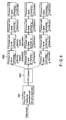
- FIG. 6 schematically shows the operation when the system of FIG. 1 carries out a stream process, such as an MPEG reproduction process.
- a video stream analysis task analyzes the video stream and takes out parameter sets, such as difference pictures.
- An allocation task receives a memory block allocation request to store the parameter sets (S601).
- the parameter sets stored in the memory block are supplied sequentially to a first-in/first-out (FIFO) buffer (or a queue) (S602).
- FIFO first-in/first-out
- Each signal processing task operates on the corresponding one of the processors, receiving data sequentially from the FIFO.
- the parameter sets are subjected to signal processing by the next signal processing task on the corresponding processor. In the signal processing, one decoding result is produced for a new parameter set.
- a memory block for storing the decoding result is requested from the allocation task.
- the allocation task allocates memory blocks as described above.
- the allocated memory block including intermediate data is deallocated (S603).
- a deallocation task deallocates the memory block as described above according to the request of the signal processing task which has completed the process.
- the deallocated memory block is allocated as a new memory block by the allocation task.
- page 22 is a memory area of a fixed length.
- Each page has at least the allocated memory size 22e and the deallocated memory size 22f for each processor core.
- the page manager 22a manages the total of the capacities of the memory blocks allocated to the page body 22b as the allocated memory size 22e and the capacity of the memory block deallocated for each processor 11 as the deallocated memory size 22f for each processor 11. Accordingly, the page manager 22a manages the allocated memory size 22e and the sum total of deallocated memory sizes 22f for each processor 11 and compares these, which makes it possible to determine whether there is a reusable memory area in the page body 22b. This makes exclusive control (locking) of processor cores unnecessary.
- the allocation task is unique and another task will never increase the allocated memory area 22g, while the allocation task is allocating a memory block.
- the memory blocks can be deallocated freely on a task basis. Accordingly, another task might increase the deallocated memory size 22f.
- the feature makes it unnecessary to exclusively control processor cores 11 to prevent another task from allocating a memory block at the time of memory block allocation.
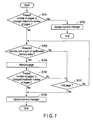
- FIG. 7 shows an example of a method of changing the maximum number of pages 21d in the embodiment.
- the present number of pages 21e set in the memory manager 21 is compared with the changed maximum number of pages 21d (S701). If the present number of pages 21e is less than or equal to the changed maximum number of pages 21d, the maximum number of pages 21d in the memory manager 21 has only to be updated (S702).
- step S701 if the present number of pages 21e exceeds the changed maximum number of pages 21d, the next page 22 is selected on the basis of the following page pointer 22d set in the page manager 22a of the first page and it is determined whether the allocated memory size 22e is equal to the sum of deallocated memory sizes 22f (S703). If the allocated memory size 22e is equal to the sum of deallocated memory sizes 22f, this page is in an unused state. Therefore, the link of the page is cancelled and page 22 is removed (S704). Then, the present number of pages 21e is compared with the changed maximum number of pages 21d (S705). If the present number of pages 21e is less than or equal to the changed maximum number of pages 21d, the memory manager 21 is updated (S706).
- step 703 if the allocated memory size 22e is not equal to the sum of deallocated memory sizes 22f, it is determined whether the presently selected page 22 is the page 22 indicated by the first page pointer 21a set in the memory manager 21 (S707). If the presently selected page 22 is not the first page, the next page 22 is selected on the basis of the following page pointer 22d set in the page manager 22a and the determination in step S703 is made.
- step S705 If in step S705, the present number of pages 21e does not satisfy the condition that the present number is less than or equal to the changed maximum number of pages 21d, it is determined in step S707 whether the selected page is the first page.
- step S707 if the selected page 22 is the first page, the memory manager is updated (S706). However, if the selected page 22 is the first page, this means that all the pages 22 belonging to the allocatable memory area 13a have been determined and the present number of pages 21e has failed to meet the condition that the present number is less than or equal to the changed maximum number of pages 21d, and therefore the change of the maximum number of pages 21d has failed. If the change has failed, for example, the pointer or return code indicating the failure is output.
- step S705 even if the present number of pages 21e satisfies the condition that the present number is less than or equal to the changed maximum number of pages 21d, all the pages 22 may be determined.
- Means for changing the maximum number of pages 21d is not limited to the flowchart of FIG. 7 .
- FIG. 8 shows an example of a method of changing the minimum number of pages 21c in the embodiment.
- the present number of pages 21e set in the memory manager 21 is compared with the changed minimum number of pages 21c (S801). If the present number of pages 21e is greater than or equal to the changed minimum number of pages 21c, the minimum number of pages 21c in the memory manager 21 has only to be updated (S802).
- step 801 if the present number of pages 21e is less than the changed minimum number of pages 21c, it is determined whether there is free space for a new page 22 in the memory 13 (S803). If a memory area for a new page 22 has been secured in the memory 13, the secured memory area is added as a new page 22 to the allocatable memory area 13a and the present number of pages 21e set in the memory manager 21 is compared with the changed minimum number of pages 21c (S801).
- step S803 if a page has not been secured, the change of the minimum number of pages 21c fails. If the change has failed, for example, the pointer or return code indicating the failure is output.
- the setting of the minimum number of pages may be omitted.
- the number of pages which can be used by the allocatable memory area 13a is managed by the memory manager 21.
- the allocated memory size 22e set in the page manager 22a is compared with the sum of deallocated memory sizes 22f. If the allocated memory size 22e is equal to the sum, this means that the page has not been used at all and therefore it is determined that the page is reusable. Accordingly, since the memory area can be increased or decreased as needed, the memory 13 can be used efficiently. Moreover, since the number of pages specified by the minimum number of pages 21c has been secured, it is guaranteed that memory blocks are allocated successfully.
Landscapes
- Engineering & Computer Science (AREA)
- Theoretical Computer Science (AREA)
- Physics & Mathematics (AREA)
- General Engineering & Computer Science (AREA)
- General Physics & Mathematics (AREA)
- Memory System (AREA)
- Memory System Of A Hierarchy Structure (AREA)
Abstract
Description
- This invention relates to a memory management device applied to, for example, a plurality of microprocessors and a shared-memory multiprocessor shared by the microprocessors.
- With this type of shared-memory multiprocessor, when a software program that processes continuous data continuously as in a video replay or a digital signal process is created, it is necessary to guarantee that a memory shared by a plurality of microprocessors is updated exclusively (refer to, for example, Jpn. Pat. Appln. KOKAI Publication No.
9-305418 - Furthermore, when processing is done by a plurality of microprocessors, the order in which the memory areas are freed is moved forward or back, depending on the contents of the process or the state of the processor. Accordingly, a conventional single-processor memory management method of, when freeing a memory area, merging its adjacent ones is not necessarily effective.
- As general memory management realization methods, a first fit method and a best fit method are known (refer to, for example, "Data Structures Using Java," Author: Langsam, Yediyah/Augenstein, Moshe J./Tenenbaum, Aaron M., Publisher: Pearson Education Limited Published 2003/04, ISBN:9780130477217). These methods are to connect free memory areas in list form, search for a necessary and sufficient memory area, and allocate the connected area to the searched area. Since the free memory areas are managed in list form, exclusive control by locking is indispensable. Moreover, in a case where the memory area is unlocked, when a free memory area adjacent to the memory area is merged, the list of free memory areas is left locked while the memory areas are being merged, which makes the locked states more liable to collide with one another.
- When free memory areas are managed in list form in a memory pool method generally used in many embedded systems, the memory areas have to be controlled exclusively by locking. Since this method need not merge free memory areas, the collision of the locked states is alleviated. However, in the memory pool method, a pool is prepared for the size of each memory to be allocated. Therefore, it is necessary to secure memory pools in advance according to the maximum amount of memory to be used, which decreases the memory use efficiency considerably.
- As for related technology, the following have been developed: a hybrid of the first fit method and the memory pool method (refer to, for example, Jpn. Pat. Appln. KOKAI Publication No.
2005-50010 2006-126973 - A continuous process of continuous data, such as a video replay (hereinafter, referred to as a stream process) is characterized by repeatedly allocating and deallocating memory areas which are of a fixed length and have a similar duration of use. Moreover, the stream process is characterized in that the necessary amount of memory varies according to the load to be processed. Accordingly, neither of the above methods can manage the memory efficiently. Therefore, a memory management device capable of managing the memory efficiently in processing data by use of a shared memory shared by a plurality of processors has been desired.
- According to a first aspect of the invention, there is provided a memory management device comprising: a plurality of processors capable of parallel operation; and a memory which is shared by said plurality of processors and which has an allocated memory size indicating the size of an area allocated to an allocatable area in the memory at the request of one of said plurality of processors and a deallocated memory size indicating the size of a deallocated area in the allocated area, wherein one of said plurality of processors compares the allocated memory size with the deallocated memory size, thereby determining whether the memory is reusable.
- According to a second aspect of the invention, there is provided a memory management method of managing memory with a plurality of processors capable of parallel operation, the memory management method comprising: comparing an allocated memory size with a deallocated memory size stored in the memory with one of said plurality of processors, thereby determining whether the memory is reusable, the allocated memory size indicating the size of an area allocated to an allocatable area in the memory, and the deallocated memory size indicating the size of an area deallocated in the allocated area; if the memory is reusable, resetting the allocated memory size and deallocated memory size; and allocating an area of a requested size to the allocatable area of the memory.
- The invention can be more fully understood from the following detailed description when taken in conjunction with the accompanying drawings, in which:
-
FIG. 1 is a block diagram showing a hardware configuration according to an embodiment of the invention; -
FIG. 2 schematically shows a configuration of the memory shown inFIG. 1 ; -
FIG. 3 shows a configuration of the memory shown inFIG. 2 ; -
FIG. 4 is a flowchart to help explain an example of a memory block allocation process in the embodiment; -
FIG. 5 is a flowchart to help explain an example of a memory block freeing process in the embodiment; -
FIG. 6 is a diagram to help explain an example of the operation of a stream process in the embodiment; -
FIG. 7 is a flowchart to help explain an example of the process of changing the maximum number of pages in the embodiment; and -
FIG. 8 is a flowchart to help explain an example of the process of changing the minimum number of pages in the embodiment. - Hereinafter, referring to the accompanying drawings, an embodiment of the invention will be explained in detail.
-
FIG. 1 schematically shows an example of the hardware configuration of a shared-memory multiprocessor system according to a first embodiment of the invention. InFIG. 1 , a plurality ofprocessors 11 are connected to abus 12. To thebus 12, amemory 13 shared by theprocessors 11 is connected. Each of theprocessors 11 has, for example, aregister 11a. Each of theregisters 11a stores an identification number which differs from oneprocessor 11 to another and is used to identify, for example, a 0-th to an n-th processor. -
FIG. 2 schematically shows the configuration of thememory 13. Thememory 13 has anallocatable memory area 13a. Theallocatable memory area 13a is composed of a management memory block (memory manager) 21 which manages theallocatable memory area 13a and a plurality of allocation memory blocks (pages) 22. Thememory manager 21 andpages 22 are not necessarily provided consecutively as shown inFIG. 2 and may be provided without dependence on the order or location. -
FIG. 3 shows a configuration of theallocatable memory area 13a shown inFIG. 2 . - The
memory manager 21 stores afirst page pointer 21a showing the location of a first one of a plurality ofpages 22, apage size 21b showing the capacity (size) of one page, the minimum number ofpages 21c and the maximum number ofpages 21d in theallocatable memory area 13a, and the number of pages showing the number of pages presently allocated. - In a case where virtual storage or the like is provided, when the upper limit of the used amount of the
memory 13 is not restricted, the setting of the maximum number ofpages 21d may be omitted. - Each of the
pages 22, which is a memory area of a fixed length, is composed of apage manager 22a and apage body 22b. Thepage manager 22a manages thepages 22. Thepage body 22b is a memory area (storage unit) used for processing tasks or the like. - The
page manager 22a is composed of a precedingpage pointer 22c, a followingpage pointer 22d, an allocatedmemory size 22e (first storage capacity information), ant at least one deallocated memory size (second storage capacity). The precedingpage pointer 22c indicates the location of apage 22 linked to a page before thepage 22 to which thepage manager 22a belongs. The followingpage pointer 22d indicates apage 22 linked to a page after thepage 22 to which thepage manager 22a belongs. The allocatedmemory size 22e shows the size of a memory block allocated to thepage body 22b belonging to thepage manager 22a. The deallocated memory size 22f shows the size of a memory block deallocated by the processor. The deallocated memory size 22f is stored so as to correspond to the identification number of each processor (or the core number of each processor). - Although the
page manager 22a is set as a header at the beginning of each page, the location of thepage manager 22a is not limited, provided that it lies within thepage 22 to which it belongs. For example, thepage manager 22a may be set as a footer. - The
page body 22b is composed of an allocatedmemory area 22g, afree memory area 22i, and apage manager pointer 22j. The allocatedmemory area 22g is a memory block allocated when a task or the like is processed. Moreover, the allocatedmemory area 22g stores, for example, at its end, a memory block pointer 22h showing the location (address) of thepage manager pointer 22j stored in thesame page body 22b. In the memory block pointer 22h, the location (the leading address) of thepage manager 22a may be stored. Thefree memory area 22i, which is an unused memory block, is allocated when a task or the like is processed. Thepage manager pointer 22j indicates the location of thepage manager 22a of thepage 22 to which thepointer 22j belongs. Moreover, thepage manager pointer 22j is stored at the end of thepage body 22b. - The
pages 22 can be increased and decreased by thememory manager 21. That is, the number of pages can be increased using a memory area of thememory 13. To return a memory area to thememory 13, the number of pages can be decreased. - Each of the plurality of
pages 22 has the same configuration. The pages are linked by the precedingpage pointer 22c and followingpage pointer 22d, with the result that the pages are circularly connected. -
FIG. 4 is a flowchart to help explain an example of a memory block allocation process in the embodiment. - In the embodiment, the number of tasks of allocating memory blocks to the
allocatable memory area 13a (hereinafter, abbreviated as allocation tasks) is only one. The allocation task is carried out on one of the plurality of processors. - In the allocation task, the pointer to the
memory manager 21 and a requested memory size are input to the memory 13 (S401). On the basis of the pointer to thememory manager 21, the location of theallocatable memory area 13a having thememory manager 21 is calculated. On the basis of thefirst page pointer 21a set in thememory manager 21, the location of thepage manager 22a of thepage 22 set as the first page is calculated. For example, in an arbitrary task, it is determined whether the total of the allocatedmemory size 22e set in the selectedpage manager 22a and the input requested memory size is less than or equal to the size of one page (page size) set in the memory manager 21 (S402). If the total of the allocatedmemory size 22e of the first page and the requested memory size is less than or equal to the page size, the requested memory block is allocated to thepage body 22b of the first page (S403). Thereafter, the memory size of a newly allocated memory block is added to the allocatedmemory size 22e of thepage manager 22a, thereby updating the size (S404). Moreover, as shown inFIG. 3 , the memory block pointer 22h is set at the end of the allocated memory block (S405) and a pointer to the allocated memory block is output, thereby completing the allocation. - In step S402, if the total of the allocated
memory size 22e of the first page and the required memory size is larger than the page size, it is determined whether the required memory size is larger than the page size (S406). If the required memory size is larger than the page size, it is determined that the required memory block cannot be allocated to theallocatable memory area 13a. Then, the allocation task terminates the allocation of memory blocks to theallocatable memory area 13a. - In step S406, if the required memory size is less than or equal to the page size, the location of the next page is calculated on the basis of the following
page pointer 22a set in thepage manager 22a of the first page. Then, referring to thepage manager 22a of thepage 22 shown by the followingpage pointer 22d, it is determined whether a set allocatedmemory size 22e is equal to the sum of deallocated memory sizes 22f (S407). If the allocatedmemory size 22e set in thepage manager 22a of the selectedpage 22 is equal to the sum of deallocated memory sizes 22f, this indicates that thepage body 22b belonging to the selectedpage 22 has no memory area now being used and is reusable. In this case, the allocatedmemory size 22e set in thepage manager 22a and the deallocated memory size 22f are all reset (S408) and, for example, an allocation task allocates the requested memory block to thepage body 22b of the selected page (S409). Moreover, thefirst page pointer 21a of thememory manager 21 is updated on the basis of data that indicates the location of the selectedpage 22. Thepage 22 is set as a first page (S410). Then, the memory size of a newly allocated memory block is added to the allocatedmemory size 22e of thepage manager 22a of the selected page, thereby updating the memory size (S404). Moreover, a memory block pointer 22h is set at the end of the allocated memory block (S405) and a pointer to the allocated memory block, which completes the allocation. - In step S407, if the allocated
memory size 22e set in thepage manager 22a of the selectedpage 22 is not equal to the sum of deallocated memory sizes 22f, thenext page 22 is selected on the basis of the followingpage pointer 22d set in thepage manager 22a and the decision in step S407 is made. If the condition in step S407 is not satisfied, step S407 is executed repeatedly until the first page shown by thefirst page pointer 21a set in thememory manager 21 has been selected. If the determination in step S407 is made on all the pages managed by theallocatable memory area 13a and there is no page that satisfies the condition, it is determined that the pages are running short (S407). - In this case, the present number of
pages 21e set in thememory manager 21 is compared with the maximum number ofpages 21d (S411). If the present number ofpages 21e is greater than or equal to the maximum number ofpages 21d, for example, the allocation is terminated since pages have been secured to a limit value. In this case, the allocation may not be terminated and may be forced to wait for the memory to be deallocated and for a free area to be formed. - In step S411, if the present number of
pages 21e is less than the maximum number ofpages 21d, for example, a memory manager (e.g., an operating system) lower in level than thememory manager 21 is required to secure anew page 22 using an area of the memory 13 (S412). Thereafter, it is determined whether there is free space for anew page 22 in the memory 13 (S413). If free space for anew page 22 cannot be secured in thememory 13, the securing of pages fails. In this case, too, the device may be configured to wait until a page has been secured as described above. - In step S413, if a page has been secured, the secured memory area is added as a
new page 22 to theallocatable memory area 13a and the present number ofpages 21e in thememory manager 21 is updated (S414). Then, a memory block is allocated to thepage body 22b of the new page 22 (S415), thefirst page pointer 21a of thememory manager 21 is updated to a pointer to thenew page 22, and thenew page 22 is set as a first page (S416). Thereafter, the memory size of a newly allocated memory block is added to the allocatedmemory size 22e of thepage manager 22a, thereby updating the memory size (S404). Moreover, a memory block pointer 22h is set at the end of the allocated memory block (S405) and the pointer to the allocated memory block is output, which completes the allocation. - Even if step S402 and step S406 are interchanged with each other in
FIG. 4 , the embodiment can be implemented. - Next, using
FIG. 5 , an example of a memory deallocation process in the embodiment will be explained. - Although the number of tasks of allocating memory blocks is only one, the number of tasks of deallocating memory blocks (hereinafter, abbreviated as deallocation tasks) is not limited.
- Input data to a deallocation task includes a pointer to the allocated
memory area 22g and an allocatedmemory size 22e. The deallocation process produces no output. - When the memory block allocated to the
allocatable memory area 13a is deallocated, the pointer to the allocatedmemory area 22g and the allocated memory size are input to a deallocation task (S501). The deallocation task calculates the location of the memory block to be deallocated on the basis of the pointer to the allocatedmemory area 22g. That is, on the basis of the memory block pointer 22h set at the end of the allocatedmemory area 22g shown inFIG. 3 , the location of thepage manager pointer 22j is calculated. On the basis of thepage manager pointer 22j, the location of thepage manager 22a to whichpointer 22j belongs is calculated (S502). Thereafter, for example, the identification number set in the register of a processor to deallocate the allocatedmemory area 22g is referred to (S503). The register is referred to using a known instruction. On the basis of the identification number of the processor obtained by the above process, the deallocated memory size is added to the deallocated memory size 22f corresponding to the identification number of the processor set in thepage manager 22a (S504). This completes the deallocation of the memory block. - Hereinafter, a concrete example will be explained.
-
FIG. 6 schematically shows the operation when the system ofFIG. 1 carries out a stream process, such as an MPEG reproduction process. - When a stream process, such as a compressed motion picture reproduction process, is executed, for example, a video stream analysis task analyzes the video stream and takes out parameter sets, such as difference pictures. An allocation task receives a memory block allocation request to store the parameter sets (S601). The parameter sets stored in the memory block are supplied sequentially to a first-in/first-out (FIFO) buffer (or a queue) (S602). Each signal processing task operates on the corresponding one of the processors, receiving data sequentially from the FIFO. The parameter sets are subjected to signal processing by the next signal processing task on the corresponding processor. In the signal processing, one decoding result is produced for a new parameter set. A memory block for storing the decoding result is requested from the allocation task. According to the request of each task, the allocation task allocates memory blocks as described above. After the signal processing task has completed the process, the allocated memory block including intermediate data is deallocated (S603). A deallocation task deallocates the memory block as described above according to the request of the signal processing task which has completed the process. The deallocated memory block is allocated as a new memory block by the allocation task.
- In the embodiment,
page 22 is a memory area of a fixed length. Each page has at least the allocatedmemory size 22e and the deallocated memory size 22f for each processor core. Specifically, thepage manager 22a manages the total of the capacities of the memory blocks allocated to thepage body 22b as the allocatedmemory size 22e and the capacity of the memory block deallocated for eachprocessor 11 as the deallocated memory size 22f for eachprocessor 11. Accordingly, thepage manager 22a manages the allocatedmemory size 22e and the sum total of deallocated memory sizes 22f for eachprocessor 11 and compares these, which makes it possible to determine whether there is a reusable memory area in thepage body 22b. This makes exclusive control (locking) of processor cores unnecessary. - That is, the allocation task is unique and another task will never increase the allocated
memory area 22g, while the allocation task is allocating a memory block. The memory blocks can be deallocated freely on a task basis. Accordingly, another task might increase the deallocated memory size 22f. At the same time, the feature makes it unnecessary to exclusively controlprocessor cores 11 to prevent another task from allocating a memory block at the time of memory block allocation. - Moreover, since the deallocated memory size 22f is updated after the memory block is deallocated, a memory block will not be allocated to the memory block now being deallocated, which makes it unnecessary to lock the
processor cores 11. In addition, since the memory area is caused to have a fixed length, there is no need to mergefree memory areas 22i, which makes it unnecessary to lock theprocessor cores 11. Therefore, even if the number ofprocessor cores 11 is increased, there is no need to lock the processor cores. This makes it possible to prevent a decrease in the processing capability due to a collision of the locked states and improve the capability in a scalable manner as the number ofprocessor cores 11 increases. -
FIG. 7 shows an example of a method of changing the maximum number ofpages 21d in the embodiment. - When the maximum number of
pages 21d is changed by an allocation task, the present number ofpages 21e set in thememory manager 21 is compared with the changed maximum number ofpages 21d (S701). If the present number ofpages 21e is less than or equal to the changed maximum number ofpages 21d, the maximum number ofpages 21d in thememory manager 21 has only to be updated (S702). - In step S701, if the present number of
pages 21e exceeds the changed maximum number ofpages 21d, thenext page 22 is selected on the basis of the followingpage pointer 22d set in thepage manager 22a of the first page and it is determined whether the allocatedmemory size 22e is equal to the sum of deallocated memory sizes 22f (S703). If the allocatedmemory size 22e is equal to the sum of deallocated memory sizes 22f, this page is in an unused state. Therefore, the link of the page is cancelled andpage 22 is removed (S704). Then, the present number ofpages 21e is compared with the changed maximum number ofpages 21d (S705). If the present number ofpages 21e is less than or equal to the changed maximum number ofpages 21d, thememory manager 21 is updated (S706). - In
step 703, if the allocatedmemory size 22e is not equal to the sum of deallocated memory sizes 22f, it is determined whether the presently selectedpage 22 is thepage 22 indicated by thefirst page pointer 21a set in the memory manager 21 (S707). If the presently selectedpage 22 is not the first page, thenext page 22 is selected on the basis of the followingpage pointer 22d set in thepage manager 22a and the determination in step S703 is made. - If in step S705, the present number of
pages 21e does not satisfy the condition that the present number is less than or equal to the changed maximum number ofpages 21d, it is determined in step S707 whether the selected page is the first page. - In step S707, if the selected
page 22 is the first page, the memory manager is updated (S706). However, if the selectedpage 22 is the first page, this means that all thepages 22 belonging to theallocatable memory area 13a have been determined and the present number ofpages 21e has failed to meet the condition that the present number is less than or equal to the changed maximum number ofpages 21d, and therefore the change of the maximum number ofpages 21d has failed. If the change has failed, for example, the pointer or return code indicating the failure is output. - Here, in step S705, even if the present number of
pages 21e satisfies the condition that the present number is less than or equal to the changed maximum number ofpages 21d, all thepages 22 may be determined. Means for changing the maximum number ofpages 21d is not limited to the flowchart ofFIG. 7 . -
FIG. 8 shows an example of a method of changing the minimum number ofpages 21c in the embodiment. - When an allocation task changes the minimum number of
pages 21c, the present number ofpages 21e set in thememory manager 21 is compared with the changed minimum number ofpages 21c (S801). If the present number ofpages 21e is greater than or equal to the changed minimum number ofpages 21c, the minimum number ofpages 21c in thememory manager 21 has only to be updated (S802). - In step 801, if the present number of
pages 21e is less than the changed minimum number ofpages 21c, it is determined whether there is free space for anew page 22 in the memory 13 (S803). If a memory area for anew page 22 has been secured in thememory 13, the secured memory area is added as anew page 22 to theallocatable memory area 13a and the present number ofpages 21e set in thememory manager 21 is compared with the changed minimum number ofpages 21c (S801). - In step S803, if a page has not been secured, the change of the minimum number of
pages 21c fails. If the change has failed, for example, the pointer or return code indicating the failure is output. - Here, if a memory area never fails to be secured as needed, the setting of the minimum number of pages may be omitted.
- With the embodiment, the number of pages which can be used by the
allocatable memory area 13a is managed by thememory manager 21. The allocatedmemory size 22e set in thepage manager 22a is compared with the sum of deallocated memory sizes 22f. If the allocatedmemory size 22e is equal to the sum, this means that the page has not been used at all and therefore it is determined that the page is reusable. Accordingly, since the memory area can be increased or decreased as needed, thememory 13 can be used efficiently. Moreover, since the number of pages specified by the minimum number ofpages 21c has been secured, it is guaranteed that memory blocks are allocated successfully.
Claims (10)
- A memory management device characterized by comprising:a plurality of processors (11) capable of parallel operation; anda memory (13) which is shared by said plurality of processors and which has an allocated memory size (22e) indicating the size of an area allocated to an allocatable area in the memory at the request of one of said plurality of processors and a deallocated memory size (22f) indicating the size of a deallocated area in the allocated area,wherein one of said plurality of processors (11) compares the allocated memory size with the deallocated memory size, thereby determining whether the memory is reusable.
- The memory management device according to claim 1, characterized in that the deallocated memory size (22e) is provided for said plurality of processors in a one-to-one correspondence and is updated by said plurality of processors, and
one of said plurality of processors determines whether the memory is reusable, on the basis of the sum of the deallocated memory sizes. - The memory management device according to claim 2, characterized in that the memory (13) has at least one page (22) of a fixed length including the allocatable area and a page management block (22a) which manages the allocated memory size and the deallocated memory sizes on a page basis.
- The memory management device according to claim 3, characterized in that the memory (13) stores the maximum number of pages (21d) and
one of said plurality of processors, if the allocatable area in a page does not satisfy a memory size requested by any one of said plurality of processors, sets a new page in the memory within the range of the maximum number of pages. - The memory management device according to claim 4, characterized in that the memory (13) stores the minimum number of pages (21c) and has as many pages as specified by the minimum number of pages.
- The memory management device according to claim 5, characterized in that the memory (13) has a memory management block 21 which manages the at least one page, the memory management block storing a first page pointer (21a) indicating the location of a first page, a page size (21b) indicating the capacity of one page, the minimum number of pages (21c) in the allocatable memory area, the maximum number of pages (21d) in the allocatable memory area, and the present number of pages (21e) in the allocatable memory area.
- The memory management device according to claim 3, characterized in that the page management block (22a) further stores a first page pointer (22c) indicating the location of the preceding page and a second page pointer (22d) indicating the location of the following page.
- The memory management device according to claim 4, characterized in that each of said plurality of processors (11) has a register (11a), each register storing an identification number for identifying the corresponding processor.
- The memory management device according to claim 8, characterized in that each of said plurality of processors (11), when deallocating the memory, calculates the location of a page management block to which the allocated memory belongs, acquires the identification number set in the register of a processor deallocating an area in the allocated memory, and adds the deallocated memory size corresponding to the acquired identification number.
- The memory management device according to claim 6, characterized in that one of said plurality of processors (11), when updating the maximum number of pages, compares the present number of pages with the changed maximum number of pages and, if the present number of pages is larger than the changed maximum number of pages, compares the allocated memory size with the sum of deallocated memory sizes to detect unused pages, and removes the unused pages.
Applications Claiming Priority (1)
| Application Number | Priority Date | Filing Date | Title |
|---|---|---|---|
| JP2008018035A JP2009181213A (en) | 2008-01-29 | 2008-01-29 | Memory management device |
Publications (1)
| Publication Number | Publication Date |
|---|---|
| EP2085886A1 true EP2085886A1 (en) | 2009-08-05 |
Family
ID=40512381
Family Applications (1)
| Application Number | Title | Priority Date | Filing Date |
|---|---|---|---|
| EP08253820A Withdrawn EP2085886A1 (en) | 2008-01-29 | 2008-11-26 | Memory management device applied to shared-memory multiprocessor |
Country Status (3)
| Country | Link |
|---|---|
| US (1) | US20090193220A1 (en) |
| EP (1) | EP2085886A1 (en) |
| JP (1) | JP2009181213A (en) |
Families Citing this family (3)
| Publication number | Priority date | Publication date | Assignee | Title |
|---|---|---|---|---|
| JP5270924B2 (en) * | 2008-01-30 | 2013-08-21 | 株式会社東芝 | Fixed-length memory block management apparatus and control method for fixed-length memory block management apparatus |
| JP2012093882A (en) | 2010-10-26 | 2012-05-17 | Toshiba Corp | Memory management device, multiprocessor system, and memory management method |
| US11169993B2 (en) * | 2014-06-06 | 2021-11-09 | The Mathworks, Inc. | Datastore mechanism for managing out-of-memory data |
Citations (8)
| Publication number | Priority date | Publication date | Assignee | Title |
|---|---|---|---|---|
| JPH09305418A (en) | 1996-05-15 | 1997-11-28 | Nec Corp | Shared memory managing system |
| US6065019A (en) * | 1997-10-20 | 2000-05-16 | International Business Machines Corporation | Method and apparatus for allocating and freeing storage utilizing multiple tiers of storage organization |
| US6353829B1 (en) * | 1998-12-23 | 2002-03-05 | Cray Inc. | Method and system for memory allocation in a multiprocessing environment |
| WO2003009144A1 (en) * | 2001-07-19 | 2003-01-30 | Wind River Systems, Inc. | Memory management system |
| US6701420B1 (en) * | 1999-02-01 | 2004-03-02 | Hewlett-Packard Company | Memory management system and method for allocating and reusing memory |
| US20040221120A1 (en) * | 2003-04-25 | 2004-11-04 | International Business Machines Corporation | Defensive heap memory management |
| JP2005050010A (en) | 2003-07-31 | 2005-02-24 | Kyocera Mita Corp | Memory management method |
| JP2006126973A (en) | 2004-10-26 | 2006-05-18 | Mitsubishi Electric Corp | Storage area management method, storage area allocation program, garbage collection processing program, storage area management program, and message management program |
Family Cites Families (6)
| Publication number | Priority date | Publication date | Assignee | Title |
|---|---|---|---|---|
| US5367636A (en) * | 1990-09-24 | 1994-11-22 | Ncube Corporation | Hypercube processor network in which the processor indentification numbers of two processors connected to each other through port number n, vary only in the nth bit |
| JP3287901B2 (en) * | 1993-03-12 | 2002-06-04 | シャープ株式会社 | Identification Data Confirmation Method in Data Driven Information Processing System |
| EP0817998A4 (en) * | 1995-03-31 | 1998-09-23 | Intel Corp | Memory testing in a multiple processor computer system |
| US8533716B2 (en) * | 2004-03-31 | 2013-09-10 | Synopsys, Inc. | Resource management in a multicore architecture |
| US7533237B1 (en) * | 2006-05-11 | 2009-05-12 | Nvidia Corporation | Off-chip memory allocation for a unified shader |
| JP5101128B2 (en) * | 2007-02-21 | 2012-12-19 | 株式会社東芝 | Memory management system |
-
2008
- 2008-01-29 JP JP2008018035A patent/JP2009181213A/en active Pending
- 2008-11-26 EP EP08253820A patent/EP2085886A1/en not_active Withdrawn
- 2008-12-15 US US12/334,973 patent/US20090193220A1/en not_active Abandoned
Patent Citations (8)
| Publication number | Priority date | Publication date | Assignee | Title |
|---|---|---|---|---|
| JPH09305418A (en) | 1996-05-15 | 1997-11-28 | Nec Corp | Shared memory managing system |
| US6065019A (en) * | 1997-10-20 | 2000-05-16 | International Business Machines Corporation | Method and apparatus for allocating and freeing storage utilizing multiple tiers of storage organization |
| US6353829B1 (en) * | 1998-12-23 | 2002-03-05 | Cray Inc. | Method and system for memory allocation in a multiprocessing environment |
| US6701420B1 (en) * | 1999-02-01 | 2004-03-02 | Hewlett-Packard Company | Memory management system and method for allocating and reusing memory |
| WO2003009144A1 (en) * | 2001-07-19 | 2003-01-30 | Wind River Systems, Inc. | Memory management system |
| US20040221120A1 (en) * | 2003-04-25 | 2004-11-04 | International Business Machines Corporation | Defensive heap memory management |
| JP2005050010A (en) | 2003-07-31 | 2005-02-24 | Kyocera Mita Corp | Memory management method |
| JP2006126973A (en) | 2004-10-26 | 2006-05-18 | Mitsubishi Electric Corp | Storage area management method, storage area allocation program, garbage collection processing program, storage area management program, and message management program |
Non-Patent Citations (1)
| Title |
|---|
| LANGSAM, YEDIYAH; AUGENSTEIN, MOSHE J.; TENENBAUM, AARON M.: "Data Structures Using Java", April 2003, PEARSON EDUCATION LIMITED |
Also Published As
| Publication number | Publication date |
|---|---|
| US20090193220A1 (en) | 2009-07-30 |
| JP2009181213A (en) | 2009-08-13 |
Similar Documents
| Publication | Publication Date | Title |
|---|---|---|
| US5159678A (en) | Method for efficient non-virtual main memory management | |
| WO2017131187A1 (en) | Accelerator control device, accelerator control method and program | |
| US11226852B2 (en) | System for inter-process communication | |
| JPH06202936A (en) | Computer main storage area management system and method thereof | |
| US20090193212A1 (en) | Fixed length memory block management apparatus and control method thereof | |
| US10782970B1 (en) | Scalable multi-producer and single-consumer progressive chunked queue | |
| JP4357473B2 (en) | Data processing system and program | |
| CN103593606B (en) | Context information management method and system | |
| US20090193220A1 (en) | Memory management device applied to shared-memory multiprocessor | |
| US20220138010A1 (en) | Quiescent state-based reclaiming strategy for progressive chunked queue | |
| US20100153678A1 (en) | Memory management apparatus and method | |
| CN113867925A (en) | Memory management method, apparatus, device and storage medium | |
| CN115729702A (en) | Application program memory configuration method, electronic device, computer storage medium | |
| US7100009B2 (en) | Method and system for selective memory coalescing across memory heap boundaries | |
| CN103703449A (en) | Memory coalescing computer-implemented method, system and apparatus | |
| US11960933B2 (en) | Versioned progressive chunked queue for a scalable multi-producer and multi-consumer queue | |
| US6338125B1 (en) | Dynamic slot allocation and tracking of multiple memory requests | |
| CN113254223A (en) | Resource allocation method and system after system restart and related components | |
| US20110047553A1 (en) | Apparatus and method for input/output processing of multi-thread | |
| EP4603981A1 (en) | Memory defragmentation method and apparatus, and device and storage medium | |
| CN116260876B (en) | AI application scheduling method, device and electronic device based on K8s | |
| JP7217341B2 (en) | How processors and registers are inherited | |
| CN113282382B (en) | Task processing method, device, computer equipment and storage medium | |
| CN115357427A (en) | Cross-process data copying method and device and storage medium | |
| KR101391957B1 (en) | Method for scheduling resource block in wireless communicatoin system and apparatus thereof |
Legal Events
| Date | Code | Title | Description |
|---|---|---|---|
| PUAI | Public reference made under article 153(3) epc to a published international application that has entered the european phase |
Free format text: ORIGINAL CODE: 0009012 |
|
| 17P | Request for examination filed |
Effective date: 20081202 |
|
| AK | Designated contracting states |
Kind code of ref document: A1 Designated state(s): AT BE BG CH CY CZ DE DK EE ES FI FR GB GR HR HU IE IS IT LI LT LU LV MC MT NL NO PL PT RO SE SI SK TR |
|
| AX | Request for extension of the european patent |
Extension state: AL BA MK RS |
|
| 17Q | First examination report despatched |
Effective date: 20100309 |
|
| AKX | Designation fees paid |
Designated state(s): DE FR GB |
|
| STAA | Information on the status of an ep patent application or granted ep patent |
Free format text: STATUS: THE APPLICATION IS DEEMED TO BE WITHDRAWN |
|
| 18D | Application deemed to be withdrawn |
Effective date: 20100720 |