EP2085261A1 - Device for closing a tank automatically - Google Patents
Device for closing a tank automatically Download PDFInfo
- Publication number
- EP2085261A1 EP2085261A1 EP08425052A EP08425052A EP2085261A1 EP 2085261 A1 EP2085261 A1 EP 2085261A1 EP 08425052 A EP08425052 A EP 08425052A EP 08425052 A EP08425052 A EP 08425052A EP 2085261 A1 EP2085261 A1 EP 2085261A1
- Authority
- EP
- European Patent Office
- Prior art keywords
- tank
- cover
- closure device
- chamber
- duct
- Prior art date
- Legal status (The legal status is an assumption and is not a legal conclusion. Google has not performed a legal analysis and makes no representation as to the accuracy of the status listed.)
- Withdrawn
Links
- 230000013011 mating Effects 0.000 claims abstract description 24
- 239000000945 filler Substances 0.000 claims abstract description 18
- 238000003780 insertion Methods 0.000 claims abstract description 15
- 230000037431 insertion Effects 0.000 claims abstract description 15
- 239000000446 fuel Substances 0.000 claims description 12
- OKTJSMMVPCPJKN-UHFFFAOYSA-N Carbon Chemical compound [C] OKTJSMMVPCPJKN-UHFFFAOYSA-N 0.000 claims description 6
- 239000003344 environmental pollutant Substances 0.000 claims description 6
- 230000007257 malfunction Effects 0.000 claims description 6
- 231100000719 pollutant Toxicity 0.000 claims description 6
- 229940023032 activated charcoal Drugs 0.000 claims description 3
- 238000010521 absorption reaction Methods 0.000 claims description 2
- 238000006243 chemical reaction Methods 0.000 claims description 2
- 230000008878 coupling Effects 0.000 claims description 2
- 238000010168 coupling process Methods 0.000 claims description 2
- 238000005859 coupling reaction Methods 0.000 claims description 2
- 230000002452 interceptive effect Effects 0.000 claims 1
- 230000008901 benefit Effects 0.000 description 3
- 230000004913 activation Effects 0.000 description 2
- 230000000670 limiting effect Effects 0.000 description 2
- 239000007788 liquid Substances 0.000 description 2
- 239000000463 material Substances 0.000 description 2
- 239000000126 substance Substances 0.000 description 2
- 230000000295 complement effect Effects 0.000 description 1
- 230000006835 compression Effects 0.000 description 1
- 238000007906 compression Methods 0.000 description 1
- 230000001010 compromised effect Effects 0.000 description 1
- 230000006866 deterioration Effects 0.000 description 1
- 230000005489 elastic deformation Effects 0.000 description 1
- 230000008030 elimination Effects 0.000 description 1
- 238000003379 elimination reaction Methods 0.000 description 1
- 238000001704 evaporation Methods 0.000 description 1
- 230000008020 evaporation Effects 0.000 description 1
- 239000012535 impurity Substances 0.000 description 1
- 238000000034 method Methods 0.000 description 1
- 238000012986 modification Methods 0.000 description 1
- 230000004048 modification Effects 0.000 description 1
- 230000008569 process Effects 0.000 description 1
- 230000000750 progressive effect Effects 0.000 description 1
- 238000007789 sealing Methods 0.000 description 1
- 238000000926 separation method Methods 0.000 description 1
- 230000000153 supplemental effect Effects 0.000 description 1
Images




Classifications
-
- B—PERFORMING OPERATIONS; TRANSPORTING
- B60—VEHICLES IN GENERAL
- B60K—ARRANGEMENT OR MOUNTING OF PROPULSION UNITS OR OF TRANSMISSIONS IN VEHICLES; ARRANGEMENT OR MOUNTING OF PLURAL DIVERSE PRIME-MOVERS IN VEHICLES; AUXILIARY DRIVES FOR VEHICLES; INSTRUMENTATION OR DASHBOARDS FOR VEHICLES; ARRANGEMENTS IN CONNECTION WITH COOLING, AIR INTAKE, GAS EXHAUST OR FUEL SUPPLY OF PROPULSION UNITS IN VEHICLES
- B60K15/00—Arrangement in connection with fuel supply of combustion engines or other fuel consuming energy converters, e.g. fuel cells; Mounting or construction of fuel tanks
- B60K15/03—Fuel tanks
- B60K15/04—Tank inlets
- B60K15/0403—Anti-siphoning devices
-
- B—PERFORMING OPERATIONS; TRANSPORTING
- B60—VEHICLES IN GENERAL
- B60K—ARRANGEMENT OR MOUNTING OF PROPULSION UNITS OR OF TRANSMISSIONS IN VEHICLES; ARRANGEMENT OR MOUNTING OF PLURAL DIVERSE PRIME-MOVERS IN VEHICLES; AUXILIARY DRIVES FOR VEHICLES; INSTRUMENTATION OR DASHBOARDS FOR VEHICLES; ARRANGEMENTS IN CONNECTION WITH COOLING, AIR INTAKE, GAS EXHAUST OR FUEL SUPPLY OF PROPULSION UNITS IN VEHICLES
- B60K15/00—Arrangement in connection with fuel supply of combustion engines or other fuel consuming energy converters, e.g. fuel cells; Mounting or construction of fuel tanks
- B60K15/03—Fuel tanks
- B60K15/04—Tank inlets
-
- B—PERFORMING OPERATIONS; TRANSPORTING
- B60—VEHICLES IN GENERAL
- B60K—ARRANGEMENT OR MOUNTING OF PROPULSION UNITS OR OF TRANSMISSIONS IN VEHICLES; ARRANGEMENT OR MOUNTING OF PLURAL DIVERSE PRIME-MOVERS IN VEHICLES; AUXILIARY DRIVES FOR VEHICLES; INSTRUMENTATION OR DASHBOARDS FOR VEHICLES; ARRANGEMENTS IN CONNECTION WITH COOLING, AIR INTAKE, GAS EXHAUST OR FUEL SUPPLY OF PROPULSION UNITS IN VEHICLES
- B60K15/00—Arrangement in connection with fuel supply of combustion engines or other fuel consuming energy converters, e.g. fuel cells; Mounting or construction of fuel tanks
- B60K15/03—Fuel tanks
- B60K2015/03328—Arrangements or special measures related to fuel tanks or fuel handling
- B60K2015/03447—Arrangements or special measures related to fuel tanks or fuel handling for improving the sealing
-
- B—PERFORMING OPERATIONS; TRANSPORTING
- B60—VEHICLES IN GENERAL
- B60K—ARRANGEMENT OR MOUNTING OF PROPULSION UNITS OR OF TRANSMISSIONS IN VEHICLES; ARRANGEMENT OR MOUNTING OF PLURAL DIVERSE PRIME-MOVERS IN VEHICLES; AUXILIARY DRIVES FOR VEHICLES; INSTRUMENTATION OR DASHBOARDS FOR VEHICLES; ARRANGEMENTS IN CONNECTION WITH COOLING, AIR INTAKE, GAS EXHAUST OR FUEL SUPPLY OF PROPULSION UNITS IN VEHICLES
- B60K15/00—Arrangement in connection with fuel supply of combustion engines or other fuel consuming energy converters, e.g. fuel cells; Mounting or construction of fuel tanks
- B60K15/03—Fuel tanks
- B60K15/04—Tank inlets
- B60K15/0406—Filler caps for fuel tanks
- B60K2015/0419—Self-sealing closure caps, e.g. that don't have to be removed manually
- B60K2015/0429—Self-sealing closure caps, e.g. that don't have to be removed manually actuated by the nozzle
-
- B—PERFORMING OPERATIONS; TRANSPORTING
- B60—VEHICLES IN GENERAL
- B60K—ARRANGEMENT OR MOUNTING OF PROPULSION UNITS OR OF TRANSMISSIONS IN VEHICLES; ARRANGEMENT OR MOUNTING OF PLURAL DIVERSE PRIME-MOVERS IN VEHICLES; AUXILIARY DRIVES FOR VEHICLES; INSTRUMENTATION OR DASHBOARDS FOR VEHICLES; ARRANGEMENTS IN CONNECTION WITH COOLING, AIR INTAKE, GAS EXHAUST OR FUEL SUPPLY OF PROPULSION UNITS IN VEHICLES
- B60K15/00—Arrangement in connection with fuel supply of combustion engines or other fuel consuming energy converters, e.g. fuel cells; Mounting or construction of fuel tanks
- B60K15/03—Fuel tanks
- B60K15/04—Tank inlets
- B60K15/0406—Filler caps for fuel tanks
- B60K2015/0432—Filler caps for fuel tanks having a specific connection between the cap and the vehicle or tank opening
- B60K2015/0445—Filler caps for fuel tanks having a specific connection between the cap and the vehicle or tank opening using hinges
Definitions
- the present invention relates to a device for closing a tank automatically.
- the directive 70/221/EC recently modified by 2008/8/EC, provides that it is possible to approve only tanks in which measures have been taken in order to limit emissions caused by evaporation and to avoid accidental leakage of fuel even if the vehicle is overturned.
- Caps for closing the filler of tanks are therefore known in which a portion of the cap is capable of providing a shape mating with a gasket which is fixed to a corresponding inlet formed on the filler, thus achieving the hermetic closure of the tank.
- the cap which is articulated to the filler, is kept pressed against the gasket by a preloaded torsion spring; in this manner, the cap is normally arranged so as to close the tank.
- an elastic means such as the spring, allows automatic reclosure after extracting the nozzle.
- the hermetic seal can also be compromised for example as a consequence of the repeated insertion of the nozzle in the filler over time.
- the manner in which the nozzle is inserted in fact causes said nozzle to bear and rest always on the same portion of the inlet of the filler: therefore, over time one runs the risk of a progressive misalignment between said inlet and the cap, with consequent impossibility to provide correct mating.
- the aim of the present invention is to solve the above-mentioned problems, by providing a closure device in which the sealing function of the hermetic closure has characteristics of high reliability over time, even in case of any wear and plays that might occur between the mated parts.
- an object of the present invention is to provide a closure device which allows to compensate for any overpressures or pressures which exceed the operating pressures in compliance with the applicable statutory provisions.
- Another object of the invention is to provide a closure device provided with means for reducing the concentration of pollutants contained in fuel vapors.
- Another object of the invention is to provide a closure device which can be easily obtained starting from commonly commercially available elements and materials.
- Another object of the invention is to provide a closure device which has a low cost, is relatively simple to provide in practice and is safe in application.
- a device for closing a tank which comprises a substantially disk-like body which can be fixed to a filler of a tank to close the chamber delimited by said tank, said body being perforated, so as to form a passage port for the insertion of a nozzle for filling the tank, said body accommodating a cover, which is elastically articulated to said body about a first rotation axis which is parallel to the plane of arrangement of said body, said cover being elastically movable for detachable mating with the internal inlet of said port, for the hermetic seal between said cover and said port, characterized in that said cover has a substantially flat annular portion, said annular portion abutting against a shoulder which is formed at said internal inlet of said port, in order to close the tank, a gasket being interposed between said annular portion and said shoulder and being fixed to said shoulder.
- a closure device generally designated by the reference numeral 1, comprises a body 2, which has a substantially disk-like shape and can be fixed to a filler 3 of a tank, so as to close a chamber 4 arranged inside the tank, intended for example to contain combustible liquid to be sent to the engine of a vehicle for its propulsion.
- the body 2 comprises a first part 2a and a second part 2b, which have different shapes and are mated rigidly, along respective complementary surfaces, for example by way of fixing screws 2c.
- the body 2 thus composed can be fixed to the filler 3 by means of a plurality of connecting screws 5 (for example five, as in the accompanying figures), to be inserted in suitable openings angularly and uniformly arranged on the body 2, and in female threads which can be coupled thereto and are formed on the filler 3; according to an alternative solution, shown in the accompanying figures, the connecting screws 5 are self-threading and engage in holes formed in the port 3.
- a plurality of connecting screws 5 for example five, as in the accompanying figures
- the body 2 is perforated, thus forming a passage port 7.
- the body 2 accommodates a cover 8, which is elastically articulated to the body 2 along a first rotation axis A which is substantially parallel to the plane of arrangement of said body.
- the cover 8 is elastically forced with pressure against the body 2, detachably mating with the internal inlet of the port 7, thus providing the hermetic seal between the port 7 and the cover 8.
- the insertion of the nozzle 8 causes the rotation, about the first rotation axis A, of the cover 8, which is thus arranged in the position indicated in dot-and-dash lines in Figures 3 , 13 and 15 , in order to allow the filling of the tank.
- the cover 8 has an annular portion 8a, which is substantially flat and abuts, in order to close the tank, against a shoulder 7a which is formed on the internal inlet of the port 7. Between the annular portion 8a and the shoulder 7a, there is an interposed gasket 9, which is compressed by the cover 8 when said cover is mated with the port 7, in order to achieve the desired hermetic seal.
- the device 1 comprises a torsion spring 10, whose elastic reaction is such as to force the cover 8 on the gasket 9: in this manner, the provided mating ensures the necessary hermetic seal by way of the elastic deformation of the gasket 9, which is compressed, instead of by means of a simple shape mating, which is used in the apparatuses of the background art. Accordingly, any permanent deformation of the gasket 9 does not compromise the hermetic nature of the closure, achieving the intended aim.
- the gasket 9, as shown in particular in Figures 6 and 7 , has a first end portion 9a, which is connected to a second end portion 9c through a central connecting portion 9b.
- the first end portion 9a is clamped between the first part 2a and the second part 2b, in order to ensure the fixing of the gasket 9 to the body 2 (the end portion 9a is therefore substantially annular).
- the second end portion 9c which is substantially curved, is compressed by the annular portion 8a of the cover 8 on the shoulder 7a of the port 7.
- the end portion 9c is thicker than the adjacent central connecting portion 9b.
- the closure device 1 comprises means 11 for adjusting the mating between the cover 8 and the port 7, by means of which any misalignments between the two units involved are compensated during assembly.
- the adjustment means 11 comprise a seat which is articulated to the body 2 and is adapted for adjustable mating, according to infinite configurations, with the cover 8.
- the fastening of the cover 8 on said seat to be performed during the assembly of the device 1 according to the invention, allows conveniently to compensate for the possible above cited misalignments.
- the adjustment means 11 comprise a bar 12, which constitutes said seat and is articulated at one of its ends to the body 2 and has, at its other end, a hole 12a, in which a stem 13, which supports the cover 8, is inserted.
- a section 13a of the stem 13 is cambered in order to mate with a respective end of the hole 12a (which is substantially goblet-shaped): the resulting mating allows small sliding movements, during the fastening of the stem 13 in the hole 12a, which allow to compensate, during assembly, any misalignments between the cover 8 and the port 7.
- the stem 13 has a first axis of symmetry B, while the port 7 has a second axis of symmetry C; in the closed configuration of the port 7, the first axis of symmetry B and the second axis of symmetry C are substantially parallel, so as to form a predefined center distance (eccentricity).
- the resulting eccentricity facilitates correct mating between the cover 8 and the port 7; more specifically, it allows better mating during the rotation of the stem 13 and of the cover 8 about the first rotation axis A, in order to close the port 7.
- the closure device 1 comprises means for controlling the pressure that can be detected in the chamber 4 of the tank; said control means can be activated, if dangerous conditions occur, in order to restore in the chamber 4 the normal operating pressure, which can depend on the type and size of the tank, and which must adapt to the safety requirements that the device 1 must ensure.
- a first danger condition occurs if the pressure inside the chamber 4 is higher than the operating pressure by at least one first preset increment: this is a situation which can occur in case of high external temperatures, which can indeed lead to a dangerous rise in the pressure of the chamber 4.
- Currently applicable statutory provisions (particularly directive 70/221/EC, recently modified by 2008/8/EC) require, in cases like this, the presence of devices capable of eliminating overpressures.
- a second danger condition occurs if the pressure within the chamber 4 is lower than the operating pressure by at least one first preset decrement: this possibility can be observed as a consequence of normal operation due to the drawing of fuel by the engine.
- a first constructive solution on the body 2 there is a first through duct 14a, which connects the chamber 4 of the tank to the outside environment.
- the control means comprise therefore a control valve (of the double-acting type), which is normally arranged so as to close the first through duct 14a: the occurrence of the first danger condition or of the second danger condition causes the opening of the control valve, thus placing the outside environment in contact with the chamber 4, which is returned to the operating pressure.
- a control valve of the double-acting type
- first through duct 14a and a second through duct 14b are instead provided on the body 2: as shown in particular by Figures 6 and 7 , both connect the chamber 4 of the tank to the outside environment.
- the control means thus comprise a first single-acting valve 15a and a second single-acting valve 15b, both of which are normally arranged so as to close respectively the first through duct 14a and the second through duct 14b.
- the occurrence of the first danger condition opens the first single-acting valve 15a (which is in practice a vent valve), allowing to eliminate the overpressure that occurs within the chamber 4, which is connected to the outside environment by means of the first through duct 14a.
- the occurrence of the second danger condition opens the second single-acting valve 15b (which is a suction valve), allowing to restore the normal operating pressure within the chamber 4, which is connected to the outside environment by means of the second through duct 14b.
- the second single-acting valve 15b which is a suction valve
- the safety device 1 can comprise safety means 16 for restoring the operating pressure within the chamber 4.
- the safety means 16 are indeed activated in case of a malfunction of the control means, for example in the case of an obstruction provided along the first through duct 14a which does not allow to connect the chamber 4 to the outside environment, with the risk of seeing the overpressure inside the tank rise dangerously.
- first additional duct 17 also provided so as to connect the chamber 4 of the tank to the outside environment.
- the safety means 16 comprise a safety valve (also of the double-acting type), which can be normally arranged so as to close a first duct which is connected to a first end portion 17a of the first additional duct 17: if the pressure of the chamber 4 reaches a value which exceeds the operating value by at least one second preset increment or a value which is lower by at least one second preset decrement, the safety valve is arranged so as to connect the chamber 4 to the outside environment, in order to restore the correct pressure value inside the chamber 4.
- a safety valve also of the double-acting type
- the first duct preferably has a considerable length, in order to maintain a substantial separation distance between said safety valve and the tank, so that any impurities that exit from the tank cannot contaminate and/or block the double-acting valve.
- the second preset increment is conveniently greater than the first one, so as to cause the activation of the safety means 16 only in case of malfunction of the control means if the first danger condition occurs.
- the second preset decrement is greater than the first one, again so as to cause the activation of the safety means 16 only in case of malfunction of the control means if the second danger condition occurs.
- the safety means 16 instead comprise a third single-acting valve, which is normally arranged so as to close the first duct, which is connected to the first end portion 17a of the first additional duct 17: the third valve is arranged so as to connect the chamber 4 to the outside environment only if the pressure of the chamber 4 reaches a value which is higher than the operating value by at least the second preset increment (which is greater than the first increment) in order to eliminate the overpressure.
- control means can also comprise a fourth single-acting valve, which is normally arranged so as to close a second duct which is connected to a second end portion of a second additional duct: the fourth valve is arranged so as to connect the chamber 4 to the outside environment only if the pressure of the chamber 4 reaches a value which is lower than the operating value by at least the second preset decrement (greater than the first one) in order to eliminate the negative pressure.
- the body 2 comprises a channel 18, which is arranged in series to the first through duct 14a and leads, by means of its third end portion 18a, to a circuit provided with the means for absorbing the pollutants that can be present in the vapors emitted by the fuel contained in the chamber 4 of the tank.
- the first through duct 14a in fact allows to eliminate any overpressures that occur in the chamber 4 by connecting it to the outside environment. Accordingly, the vapors of the fuel generated inside the tank during normal operation are released into the outside environment.
- the vapor comes into contact, before reaching the outside environment, with absorption means, which comprise for example an activated-charcoal filter arranged along the channel 18 which is crossed by the vapors before they arrive outside.
- absorption means comprise for example an activated-charcoal filter arranged along the channel 18 which is crossed by the vapors before they arrive outside.
- the closure device 1 can be provided with a protrusion 19 which lies outside the body 2 and has an abutment 19a for mating with a tooth 6a of the nozzle 6, which is thus detachably fixed on the protrusion 19 during the tank filling operations, so as to not require the presence of the operator.
- the closure device 1 according to the invention and the presence of the protrusion 19 in particular, thus allow to use per se known anti-siphoning apparatuses, such as a mesh 20, which are shorter than standard meshes, offering an important advantage against the risk of attempted fuel theft.
- anti-siphoning devices are constituted substantially by the mesh 20, such as the one shown in Figures 13 and 15 , which hinders an attempt to insert a hose by means of which the fuel contained in the tank is to be aspirated.
- the hose can be inserted only by an extent which corresponds to the length of the mesh 20, which in any case must be sized so as to allow the insertion of the nozzle 6 for fueling.
- the closure device 1 by being able to use a small mesh 20, is thus more protected against fraudulent attempts to remove fuel, offering a shorter stroke for the insertion of a suction hose.
- the device 1 it is possible to complete the device 1 with a dome 21, to be arranged outside the body 2, substantially covering it, by mating with a protrusion 21a, as a further protection against attempts to access the tank.
- the protrusion 21a once the dome 21 has been removed to proceed with fueling, allows the nozzle 6 to rest in a substantially extracted configuration, thus achieving the same advantages achieved with the protrusion 19.
- the dome 21 has a block 22 for the insertion of a key with which the dome 21 is locked on the body 2.
- a plate 23 is articulated to the dome 21 and is normally arranged so as to close the block 22 and is capable of rotating in order to be arranged in the position shown in dot-and-dash lines to allow the insertion of the key.
- the various described embodiments in addition to ensuring a hermetic seal, have elements which are capable of performing various supplemental functions.
- control means allow to eliminate dangerous pressure variations occurring within the tank (due to normal operation or particular operating conditions); this is allowed by the opening of a double-acting control valve or of the first and second single-acting valves 15a, 15b, which are arranged on the first through duct 14a or on the second through duct 14b and connect said tank to the outside environment.
- the device 1 In order to respond to a possible malfunction of the control means, if therefore said means are unable to eliminate the overpressure or partial vacuum that may have formed within the chamber 4, it is possible to provide the device 1 with safety means 16, to be arranged on a further additional first duct 17, which is also capable of connecting the chamber 4 to the outside environment, in order to restore the normal operating pressure.
- means for absorbing pollutants such as for example activated-charcoal filters to be arranged along the channel 18, arranged in series to the first through duct 14a, further allows to reduce the content of pollutants that are present in the vapors emitted outward during elimination of overpressure.
- the protrusion 19 and the dome 21 ensure that the closure device 1 according to the invention is protected against attempts to remove the fuel contained in the tank and against the insertion of substances which damage the correct operation of the engine.
- closure device according to the invention fully achieves the intended aim and objects, since the particular mating that is provided, achieved by way of the compression of the gasket interposed between the annular portion of the cover and the shoulder formed at the internal inlet of the port, ensures perfect tightness even following wear and plays which might develop over time between the parts involved.
- the materials used, as well as the dimensions, may be any according to requirements and to the state of the art.
Landscapes
- Engineering & Computer Science (AREA)
- Life Sciences & Earth Sciences (AREA)
- Sustainable Development (AREA)
- Sustainable Energy (AREA)
- Chemical & Material Sciences (AREA)
- Combustion & Propulsion (AREA)
- Transportation (AREA)
- Mechanical Engineering (AREA)
- Cooling, Air Intake And Gas Exhaust, And Fuel Tank Arrangements In Propulsion Units (AREA)
- Filling Of Jars Or Cans And Processes For Cleaning And Sealing Jars (AREA)
Abstract
Description
- The present invention relates to a device for closing a tank automatically.
- Among the technical prescriptions provided for fixing the cap to the filling tube of the tank for liquids for the propulsion of vehicles, the directive 70/221/EC, recently modified by 2008/8/EC, provides that it is possible to approve only tanks in which measures have been taken in order to limit emissions caused by evaporation and to avoid accidental leakage of fuel even if the vehicle is overturned.
- Caps for closing the filler of tanks are therefore known in which a portion of the cap is capable of providing a shape mating with a gasket which is fixed to a corresponding inlet formed on the filler, thus achieving the hermetic closure of the tank.
- The cap, which is articulated to the filler, is kept pressed against the gasket by a preloaded torsion spring; in this manner, the cap is normally arranged so as to close the tank. In order to comply with the statutory provisions cited above, the presence of an elastic means, such as the spring, allows automatic reclosure after extracting the nozzle.
- However, this mating is not free from drawbacks; the correct seal is in fact ensured only in case of a precise shape match between the involved surfaces of the cap and of the gasket, which for example are both frustum-shaped. Accordingly, any permanent deformation of the gasket, caused for example by the normal deterioration of its elastic characteristics over time, causes loss of the desired hermetic seal, with the consequent risk of emission into the outside environment of vapors or of the fuel itself.
- The hermetic seal can also be compromised for example as a consequence of the repeated insertion of the nozzle in the filler over time. The manner in which the nozzle is inserted in fact causes said nozzle to bear and rest always on the same portion of the inlet of the filler: therefore, over time one runs the risk of a progressive misalignment between said inlet and the cap, with consequent impossibility to provide correct mating.
- The aim of the present invention is to solve the above-mentioned problems, by providing a closure device in which the sealing function of the hermetic closure has characteristics of high reliability over time, even in case of any wear and plays that might occur between the mated parts.
- Within this aim, an object of the present invention is to provide a closure device which allows to compensate for any overpressures or pressures which exceed the operating pressures in compliance with the applicable statutory provisions.
- Another object of the invention is to provide a closure device provided with means for reducing the concentration of pollutants contained in fuel vapors.
- Another object of the invention is to provide a closure device which can be easily obtained starting from commonly commercially available elements and materials.
- Another object of the invention is to provide a closure device which has a low cost, is relatively simple to provide in practice and is safe in application.
- This aim and these and other objects which will become better apparent hereinafter are achieved by a device for closing a tank, which comprises a substantially disk-like body which can be fixed to a filler of a tank to close the chamber delimited by said tank, said body being perforated, so as to form a passage port for the insertion of a nozzle for filling the tank, said body accommodating a cover, which is elastically articulated to said body about a first rotation axis which is parallel to the plane of arrangement of said body, said cover being elastically movable for detachable mating with the internal inlet of said port, for the hermetic seal between said cover and said port, characterized in that said cover has a substantially flat annular portion, said annular portion abutting against a shoulder which is formed at said internal inlet of said port, in order to close the tank, a gasket being interposed between said annular portion and said shoulder and being fixed to said shoulder.
- Further characteristics and advantages of the invention will become better apparent from the following detailed description of six preferred but not exclusive embodiments of the closure device according to the invention, illustrated by way of non-limiting example in the accompanying drawings, wherein:
-
Figure 1 is a head-on front view of a closure device according to the invention in a first embodiment; -
Figure 2 is a head-on rear view of the device according to the invention; -
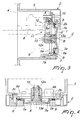
Figure 3 is a sectional view ofFigure 1 , taken along the line III-III; -
Figure 4 is a sectional view ofFigure 1 , taken along the line IV-IV; -
Figure 5 is a head-on rear view of the closure device according to the invention in a second embodiment; -
Figure 6 is a sectional view ofFigure 5 , taken along the line VI-VI; -
Figure 7 is a sectional view ofFigure 5 , taken along the line VII-VII; -
Figure 8 is a head-on rear front view of the closure device according to the invention in a third embodiment; -
Figure 9 is a sectional view ofFigure 8 , taken along the line IX-IX; -
Figure 10 is a head-on rear view of the closure device according to the invention in a fourth embodiment; -
Figure 11 is a sectional view ofFigure 10 , taken along the line XI-XI; -
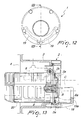
Figure 12 is a head-on front view of the closure device according to the invention in a fifth embodiment; -
Figure 13 is a sectional view ofFigure 12 , taken along the line XIII-XIII; -
Figure 14 is a head-on front view of the closure device according to the invention in a sixth embodiment; -
Figure 15 is a sectional view ofFigure 14 , taken along the line XV-XV. - With reference to the figures, a closure device according to the invention, generally designated by the
reference numeral 1, comprises abody 2, which has a substantially disk-like shape and can be fixed to afiller 3 of a tank, so as to close achamber 4 arranged inside the tank, intended for example to contain combustible liquid to be sent to the engine of a vehicle for its propulsion. - More particularly, the
body 2 comprises afirst part 2a and asecond part 2b, which have different shapes and are mated rigidly, along respective complementary surfaces, for example by way of fixingscrews 2c. - In turn, the
body 2 thus composed can be fixed to thefiller 3 by means of a plurality of connecting screws 5 (for example five, as in the accompanying figures), to be inserted in suitable openings angularly and uniformly arranged on thebody 2, and in female threads which can be coupled thereto and are formed on thefiller 3; according to an alternative solution, shown in the accompanying figures, the connectingscrews 5 are self-threading and engage in holes formed in theport 3. - In the continuation of the present description, except where required by descriptive clarity, no specific reference shall be made to the
first part 2a and/or to thesecond part 2b, but thebody 2 to which they belong shall be referenced. - In order to allow the insertion of a
nozzle 6, whose profile is shown in dot-and-dash lines inFigures 3 ,13 and15 , and which is intended to fill the tank, thebody 2 is perforated, thus forming apassage port 7. - The
body 2 accommodates acover 8, which is elastically articulated to thebody 2 along a first rotation axis A which is substantially parallel to the plane of arrangement of said body. When thenozzle 6 is not inserted, thecover 8 is elastically forced with pressure against thebody 2, detachably mating with the internal inlet of theport 7, thus providing the hermetic seal between theport 7 and thecover 8. Vice versa, the insertion of thenozzle 8 causes the rotation, about the first rotation axis A, of thecover 8, which is thus arranged in the position indicated in dot-and-dash lines inFigures 3 ,13 and15 , in order to allow the filling of the tank. - According to the invention, the
cover 8 has anannular portion 8a, which is substantially flat and abuts, in order to close the tank, against ashoulder 7a which is formed on the internal inlet of theport 7. Between theannular portion 8a and theshoulder 7a, there is an interposedgasket 9, which is compressed by thecover 8 when said cover is mated with theport 7, in order to achieve the desired hermetic seal. - In order to achieve the chosen elastic articulation of the
cover 8 to thebody 2, thedevice 1 comprises atorsion spring 10, whose elastic reaction is such as to force thecover 8 on the gasket 9: in this manner, the provided mating ensures the necessary hermetic seal by way of the elastic deformation of thegasket 9, which is compressed, instead of by means of a simple shape mating, which is used in the apparatuses of the background art. Accordingly, any permanent deformation of thegasket 9 does not compromise the hermetic nature of the closure, achieving the intended aim. - The
gasket 9, as shown in particular inFigures 6 and 7 , has afirst end portion 9a, which is connected to asecond end portion 9c through a central connectingportion 9b. - The
first end portion 9a is clamped between thefirst part 2a and thesecond part 2b, in order to ensure the fixing of thegasket 9 to the body 2 (theend portion 9a is therefore substantially annular). Thesecond end portion 9c, which is substantially curved, is compressed by theannular portion 8a of thecover 8 on theshoulder 7a of theport 7. - In order to obtain the desired hermetic seal between the
cover 8 and theport 7, theend portion 9c is thicker than the adjacent central connectingportion 9b. - Advantageously, the
closure device 1 according to the invention comprises means 11 for adjusting the mating between thecover 8 and theport 7, by means of which any misalignments between the two units involved are compensated during assembly. - In particular, the adjustment means 11 comprise a seat which is articulated to the
body 2 and is adapted for adjustable mating, according to infinite configurations, with thecover 8. In this manner, the fastening of thecover 8 on said seat, to be performed during the assembly of thedevice 1 according to the invention, allows conveniently to compensate for the possible above cited misalignments. - In greater detail, as clearly shown for example in
Figure 3 , the adjustment means 11 comprise abar 12, which constitutes said seat and is articulated at one of its ends to thebody 2 and has, at its other end, ahole 12a, in which astem 13, which supports thecover 8, is inserted. - A
section 13a of thestem 13 is cambered in order to mate with a respective end of thehole 12a (which is substantially goblet-shaped): the resulting mating allows small sliding movements, during the fastening of thestem 13 in thehole 12a, which allow to compensate, during assembly, any misalignments between thecover 8 and theport 7. - With particular reference to
Figures 3 ,13 and15 , thestem 13 has a first axis of symmetry B, while theport 7 has a second axis of symmetry C; in the closed configuration of theport 7, the first axis of symmetry B and the second axis of symmetry C are substantially parallel, so as to form a predefined center distance (eccentricity). - The resulting eccentricity facilitates correct mating between the
cover 8 and theport 7; more specifically, it allows better mating during the rotation of thestem 13 and of thecover 8 about the first rotation axis A, in order to close theport 7. - In fact, in the absence of eccentricity, interferences would inevitably occur in the final part of the approach stroke between the
body 2 and thecover 8 which are at that point close, with unwanted consequent sliding to achieve mating and closure of theport 7. Vice versa, the presence of such center distance allows thecover 8, in the final steps of the closure stroke, to move toward theport 7 with a substantially translational motion, thus avoiding unwanted sliding and impacts. - Conveniently, the
closure device 1 according to the invention comprises means for controlling the pressure that can be detected in thechamber 4 of the tank; said control means can be activated, if dangerous conditions occur, in order to restore in thechamber 4 the normal operating pressure, which can depend on the type and size of the tank, and which must adapt to the safety requirements that thedevice 1 must ensure. - A first danger condition occurs if the pressure inside the
chamber 4 is higher than the operating pressure by at least one first preset increment: this is a situation which can occur in case of high external temperatures, which can indeed lead to a dangerous rise in the pressure of thechamber 4. Currently applicable statutory provisions (particularly directive 70/221/EC, recently modified by 2008/8/EC) require, in cases like this, the presence of devices capable of eliminating overpressures. - A second danger condition occurs if the pressure within the
chamber 4 is lower than the operating pressure by at least one first preset decrement: this possibility can be observed as a consequence of normal operation due to the drawing of fuel by the engine. - More particularly, according to a first constructive solution, on the
body 2 there is a first throughduct 14a, which connects thechamber 4 of the tank to the outside environment. - The control means comprise therefore a control valve (of the double-acting type), which is normally arranged so as to close the first through
duct 14a: the occurrence of the first danger condition or of the second danger condition causes the opening of the control valve, thus placing the outside environment in contact with thechamber 4, which is returned to the operating pressure. - According to an embodiment of substantial practical interest, which however does not limit the application of the invention, the first through
duct 14a and a second throughduct 14b are instead provided on the body 2: as shown in particular byFigures 6 and 7 , both connect thechamber 4 of the tank to the outside environment. - The control means thus comprise a first single-acting
valve 15a and a second single-actingvalve 15b, both of which are normally arranged so as to close respectively the first throughduct 14a and the second throughduct 14b. - The occurrence of the first danger condition opens the first single-acting
valve 15a (which is in practice a vent valve), allowing to eliminate the overpressure that occurs within thechamber 4, which is connected to the outside environment by means of the first throughduct 14a. - Likewise, the occurrence of the second danger condition opens the second single-acting
valve 15b (which is a suction valve), allowing to restore the normal operating pressure within thechamber 4, which is connected to the outside environment by means of the second throughduct 14b. - In order to obviate a possible malfunction of the control means, the
safety device 1 according to the invention can comprise safety means 16 for restoring the operating pressure within thechamber 4. The safety means 16 are indeed activated in case of a malfunction of the control means, for example in the case of an obstruction provided along the first throughduct 14a which does not allow to connect thechamber 4 to the outside environment, with the risk of seeing the overpressure inside the tank rise dangerously. - In particular, on the
body 2 there is a firstadditional duct 17, also provided so as to connect thechamber 4 of the tank to the outside environment. - According to an embodiment of substantial practical interest, the safety means 16 comprise a safety valve (also of the double-acting type), which can be normally arranged so as to close a first duct which is connected to a
first end portion 17a of the first additional duct 17: if the pressure of thechamber 4 reaches a value which exceeds the operating value by at least one second preset increment or a value which is lower by at least one second preset decrement, the safety valve is arranged so as to connect thechamber 4 to the outside environment, in order to restore the correct pressure value inside thechamber 4. - The first duct preferably has a considerable length, in order to maintain a substantial separation distance between said safety valve and the tank, so that any impurities that exit from the tank cannot contaminate and/or block the double-acting valve.
- The second preset increment is conveniently greater than the first one, so as to cause the activation of the safety means 16 only in case of malfunction of the control means if the first danger condition occurs.
- Likewise, the second preset decrement is greater than the first one, again so as to cause the activation of the safety means 16 only in case of malfunction of the control means if the second danger condition occurs.
- According to a third solution, shown in
Figures 8 and 9 , the safety means 16 instead comprise a third single-acting valve, which is normally arranged so as to close the first duct, which is connected to thefirst end portion 17a of the first additional duct 17: the third valve is arranged so as to connect thechamber 4 to the outside environment only if the pressure of thechamber 4 reaches a value which is higher than the operating value by at least the second preset increment (which is greater than the first increment) in order to eliminate the overpressure. - In order to avoid problems linked to negative pressures occurring within the tank and not eliminated by way of the control means, the control means can also comprise a fourth single-acting valve, which is normally arranged so as to close a second duct which is connected to a second end portion of a second additional duct: the fourth valve is arranged so as to connect the
chamber 4 to the outside environment only if the pressure of thechamber 4 reaches a value which is lower than the operating value by at least the second preset decrement (greater than the first one) in order to eliminate the negative pressure. - Advantageously, the
body 2 comprises achannel 18, which is arranged in series to the first throughduct 14a and leads, by means of itsthird end portion 18a, to a circuit provided with the means for absorbing the pollutants that can be present in the vapors emitted by the fuel contained in thechamber 4 of the tank. - As described in the previous paragraphs, the first through
duct 14a in fact allows to eliminate any overpressures that occur in thechamber 4 by connecting it to the outside environment. Accordingly, the vapors of the fuel generated inside the tank during normal operation are released into the outside environment. - In order to reduce the content of pollutants, therefore, the vapor comes into contact, before reaching the outside environment, with absorption means, which comprise for example an activated-charcoal filter arranged along the
channel 18 which is crossed by the vapors before they arrive outside. - With particular reference to
Figures 12 and 13 , theclosure device 1 according to the invention can be provided with aprotrusion 19 which lies outside thebody 2 and has anabutment 19a for mating with atooth 6a of thenozzle 6, which is thus detachably fixed on theprotrusion 19 during the tank filling operations, so as to not require the presence of the operator. - It should be noted that as a consequence of the presence of the
protrusion 19, during the filling operations thenozzle 6 is kept in a substantially further extracted position and therefore is only partially inserted in thefiller 3, differently from what occurs in the solutions of the - In fact, in the background art and in the solution of
Figure 3 , the coupling of thenozzle 6 to thefiller 3 occurs by means of thetooth 6a of thenozzle 6, which provides a shape mating with arespective abutment 3a formed along the outer inlet of thefiller 3; as shown clearly by the comparison ofFigures 3 and13 , in this case the resulting configuration corresponds to a deeper insertion of thenozzle 6 in thefiller 3. - The
closure device 1 according to the invention, and the presence of theprotrusion 19 in particular, thus allow to use per se known anti-siphoning apparatuses, such as amesh 20, which are shorter than standard meshes, offering an important advantage against the risk of attempted fuel theft. - It is in fact known that anti-siphoning devices are constituted substantially by the
mesh 20, such as the one shown inFigures 13 and15 , which hinders an attempt to insert a hose by means of which the fuel contained in the tank is to be aspirated. - The hose can be inserted only by an extent which corresponds to the length of the
mesh 20, which in any case must be sized so as to allow the insertion of thenozzle 6 for fueling. - The
closure device 1 according to the invention, by being able to use asmall mesh 20, is thus more protected against fraudulent attempts to remove fuel, offering a shorter stroke for the insertion of a suction hose. - Finally, it is possible to complete the
device 1 with adome 21, to be arranged outside thebody 2, substantially covering it, by mating with aprotrusion 21a, as a further protection against attempts to access the tank. Theprotrusion 21a, once thedome 21 has been removed to proceed with fueling, allows thenozzle 6 to rest in a substantially extracted configuration, thus achieving the same advantages achieved with theprotrusion 19. - If one wishes to protect oneself not only against attempted fuel theft but also against the possible insertion of substances such as sugar or the like in the tank, or more generally to prevent access to the inside of the
filler 3, thedome 21 has ablock 22 for the insertion of a key with which thedome 21 is locked on thebody 2. - As shown by
Figure 15 , aplate 23 is articulated to thedome 21 and is normally arranged so as to close theblock 22 and is capable of rotating in order to be arranged in the position shown in dot-and-dash lines to allow the insertion of the key. - The operation of the closure device according to the invention, in the various described embodiments, is evident from what has been described and illustrated, and in particular it is evident that the
torsion spring 10 makes theannular portion 8a of thecover 8 press against theshoulder 7a, compressing thegasket 9 interposed between them; the provided mating thus ensures the perfect seal between thecover 8 and theport 7 even following small deformations of thegasket 9 or mutual movements of the involved elements. - The various described embodiments, in addition to ensuring a hermetic seal, have elements which are capable of performing various supplemental functions.
- In particular, the control means allow to eliminate dangerous pressure variations occurring within the tank (due to normal operation or particular operating conditions); this is allowed by the opening of a double-acting control valve or of the first and second single-acting
valves duct 14a or on the second throughduct 14b and connect said tank to the outside environment. - In order to respond to a possible malfunction of the control means, if therefore said means are unable to eliminate the overpressure or partial vacuum that may have formed within the
chamber 4, it is possible to provide thedevice 1 with safety means 16, to be arranged on a further additionalfirst duct 17, which is also capable of connecting thechamber 4 to the outside environment, in order to restore the normal operating pressure. - The use of means for absorbing pollutants, such as for example activated-charcoal filters to be arranged along the
channel 18, arranged in series to the first throughduct 14a, further allows to reduce the content of pollutants that are present in the vapors emitted outward during elimination of overpressure. - Finally, as extensively described earlier, the
protrusion 19 and the dome 21 (with theprotrusion 21a) ensure that theclosure device 1 according to the invention is protected against attempts to remove the fuel contained in the tank and against the insertion of substances which damage the correct operation of the engine. - In practice it has been found that the closure device according to the invention fully achieves the intended aim and objects, since the particular mating that is provided, achieved by way of the compression of the gasket interposed between the annular portion of the cover and the shoulder formed at the internal inlet of the port, ensures perfect tightness even following wear and plays which might develop over time between the parts involved.
- The invention thus conceived is susceptible of numerous modifications and variations, all of which are within the scope of the appended claims; all the details may further be replaced with other technically equivalent elements.
- In the exemplary embodiments shown, individual characteristics, given in relation to specific examples, may actually be interchanged with other different characteristics that exist in other exemplary embodiments.
- Moreover, it is noted that anything found to be already known during the patenting process is understood not to be claimed and to be the subject of a disclaimer.
- In practice, the materials used, as well as the dimensions, may be any according to requirements and to the state of the art.
- Where technical features mentioned in any claim are followed by reference signs, those reference signs have been included for the sole purpose of increasing the intelligibility of the claims and accordingly such reference signs do not have any limiting effect on the interpretation of each element identified by way of example by such reference signs.
Claims (18)
- A device for closing a tank, comprising a substantially disk-like body (2) which can be fixed to a filler (3) of a tank to close a chamber (4) delimited by said tank, said body (2) being perforated, so as to form a passage port (7) for the insertion of a nozzle (6) for filling the tank, said body (2) accommodating a cover (8), which is elastically articulated to said body (2) about a first rotation axis (A) which is parallel to the plane of arrangement of said body (2), said cover (8) being elastically movable for detachable mating with the internal inlet of said port (7), for the hermetic seal between said cover (8) and said port (7), characterized in that said cover (8) has a substantially flat annular portion (8a), said annular portion (8a) abutting against a shoulder (7a) which is formed at said internal inlet of said port (7), in order to close the tank, a gasket (9) being interposed between said annular portion (8a) and said shoulder (7a) and being fixed to said shoulder (7a).
- The closure device according to claim 1, characterized in that it comprises a torsion spring (10) for the elastic articulation of said cover (8) to said body (2), the elastic reaction of said spring (10) forcing said cover (8) on said gasket (9).
- The closure device according to claims 1 and 2, characterized in that said body (2) comprises a first part (2a) and a second part (2b), which are mutually differently shaped and jointly connected, a first end portion (9a) of said gasket (9) being clamped between mating surfaces of said first part (2a) and said second part (2b).
- The closure device according to one or more of the preceding claims, characterized in that it comprises means (11) for adjusting the mating between said cover (8) and said port (7), in order to compensate during assembly for any misalignments between said cover (8) and said port (7).
- The closure device according to claim 4, characterized in that said adjustment means (11) comprise a seat which is articulated to said body (2) and is suitable for adjustable coupling, according to infinite configurations, with said cover (8), the fastening of said cover (8) on said seat, during assembly, compensating for any misalignments.
- The closure device according to claim 5, characterized in that said adjustment means (11) comprise a bar (12), which is articulated at one of its ends to said body (2) and has a hole (12a) which constitutes said seat, at its other end, for the insertion of a stem (13) which supports said cover (8), a section (13a) of said stem (13) being cambered for mating with a respective end of said hole (12a) of said bar (12), the fastening of said stem (13) on said bar (12) producing the sliding of said cambered section (13a) on said respective end of said hole (12a), in order to compensate for any misalignments.
- The closure device according to one or more of the preceding claims, characterized in that said stem (13) comprises a first axis of symmetry (B), said port (7) comprising a second axis of symmetry (C), said first axis of symmetry (B) and said second axis of symmetry (C), when said cover (8) is arranged in the closure position, being arranged in a substantially parallel configuration, so as to form a preset center distance, said center distance facilitating the mating of said cover (8) with said port (7), in order to close the tank.
- The closure device according to one or more of the preceding claims, characterized in that it comprises means for controlling the pressure that can be detected in the chamber (4) of the tank, said control means being automatically activatable to restore the operating pressure within the chamber (4) if a first danger condition occurs in which the pressure that can be detected in the chamber (4) of the tank is higher than the operating pressure by at least one first preset increment and if a second danger condition occurs in which the pressure that can be detected in the chamber (4) of the tank is lower than the operating pressure by at least one first preset decrement.
- The closure device according to claim 8, characterized in that on said body (2) there is a first through duct (14a), the outside environment being connected to the chamber (4) of the tank by means of said first through duct (14a), said control means comprising a double-acting control valve, which is normally arranged so as to close said first through duct (14a), the occurrence of one of said first and second danger conditions causing the opening of said control valve.
- The closure device according to claim 8 and as an alternative to claim 9, characterized in that on said body (2) there are a first through duct (14a) and a second through duct (14b), each one of said through ducts (14a, 14b) connecting the chamber (4) of the tank to the outside environment, said control means comprising a first single-acting valve (15a) and a second single-acting valve (15b), both of which are normally arranged so as to close respectively said first through duct (14a) and said second through duct (14b), the occurrence of said first danger condition causing the opening of said first single-acting valve (15a), the occurrence of said second danger condition causing the opening of said second single-acting valve (15b).
- The closure device according to one or more of the preceding claims, characterized in that it comprises safety means (16) which are adapted to restore the operating pressure within the chamber (4) of the tank and can be activated automatically in case of malfunction of said control means.
- The closure device according to claim 11, characterized in that on said body there is a first additional duct (17) for connection between the outside environment and the chamber (4) of the tank, said safety means (16) comprising a double-acting safety valve, which is normally arranged so as to close said first additional duct (17), the opening of said safety valve being produced by a pressure of the chamber (4) of the tank which is higher than the operating pressure by at least one second preset increment and by a pressure of the chamber (4) of the tank which is lower than the operating pressure by at least one second preset decrement, said second preset increment and said second preset decrement being respectively greater than said first preset increment and said first preset decrement.
- The closure device according to claim 11 and as an alternative to claim 12, characterized in that on said body (2) there is a first additional duct (17) for connection between the outside environment and the chamber (4) of the tank, said closure means (16) comprising a third single-acting valve, which is normally arranged so as to close said first additional duct (17), a pressure of the chamber (4) of the tank which is higher than the operating pressure by at least one second preset increment causing the opening of said third single-acting valve, said second preset increment being greater than said first preset increment.
- The closure device according to one or more of the preceding claims, characterized in that said body (2) comprises a channel (18) which is arranged in series to said first through duct (14a) and leads to means for absorbing the pollutants contained in the vapors emitted by the fuel contained in the chamber (4) of the tank.
- The closure device according to claim 14, characterized in that said absorption means comprise an activated-charcoal filter, said channel (18) leading to said filter.
- The closure device according to one or more of the preceding claims, characterized in that it comprises a protrusion (19) which protrudes outward from said body (2) in order to support the nozzle (6) during the operations for filling the tank.
- The closure device according to one or more of the preceding claims, characterized in that it comprises an anti-siphoning mesh (20) which is shorter than a standard mesh and is arranged inside said filler (3), the nozzle (6), supported by said protrusion (19), being only partially inserted in said filler (3) and therefore not interfering with the bottom of said mesh (20).
- The closure device according to one or more of the preceding claims, characterized in that it comprises a dome (21), which can engage a respective protrusion (21a) in order to cover said body (2), said dome (21) having a block (22) for the insertion of a key in order to lock said dome (21) on said body (2).
Priority Applications (1)
| Application Number | Priority Date | Filing Date | Title |
|---|---|---|---|
| EP08425052A EP2085261A1 (en) | 2008-01-31 | 2008-01-31 | Device for closing a tank automatically |
Applications Claiming Priority (1)
| Application Number | Priority Date | Filing Date | Title |
|---|---|---|---|
| EP08425052A EP2085261A1 (en) | 2008-01-31 | 2008-01-31 | Device for closing a tank automatically |
Publications (2)
| Publication Number | Publication Date |
|---|---|
| EP2085261A1 true EP2085261A1 (en) | 2009-08-05 |
| EP2085261A8 EP2085261A8 (en) | 2010-01-06 |
Family
ID=39563470
Family Applications (1)
| Application Number | Title | Priority Date | Filing Date |
|---|---|---|---|
| EP08425052A Withdrawn EP2085261A1 (en) | 2008-01-31 | 2008-01-31 | Device for closing a tank automatically |
Country Status (1)
| Country | Link |
|---|---|
| EP (1) | EP2085261A1 (en) |
Cited By (3)
| Publication number | Priority date | Publication date | Assignee | Title |
|---|---|---|---|---|
| WO2010043874A1 (en) * | 2008-10-15 | 2010-04-22 | Tiss Limited | Fuel tank inlet device |
| EP3272567A1 (en) * | 2016-07-21 | 2018-01-24 | F.A.R.M.A. S.r.l. Fabricia Accessori Ricambi Moto E Auto | Safety assembly for tank fillers |
| JP2022540648A (en) * | 2019-07-11 | 2022-09-16 | マーティンリア インターナショナル ユーエス インク. | Composite spring for capless door |
Citations (9)
| Publication number | Priority date | Publication date | Assignee | Title |
|---|---|---|---|---|
| EP0296618A2 (en) * | 1987-06-25 | 1988-12-28 | Temtec Fahrzeugtechnik Entwicklungsgesellschaft mbH | Self-closing fuel tank seal |
| US4917157A (en) * | 1989-02-27 | 1990-04-17 | General Motors Corporation | Vehicle tank vapor vent valve assembly |
| US4966299A (en) * | 1989-07-11 | 1990-10-30 | Chrysler Corporation | Fuel assembly having a vapor vent with a hinged float valve |
| US5431199A (en) * | 1993-11-30 | 1995-07-11 | Benjey, Robert P | Redundant seal for vehicle filler neck |
| US5467621A (en) * | 1994-02-10 | 1995-11-21 | Trilby, Ltd. | Lockable closure for a fuel tank filler pipe |
| DE19605922A1 (en) * | 1995-02-17 | 1996-08-22 | Daimler Benz Ag | Device for ventilating motor vehicle fuel tanks |
| US6415827B1 (en) * | 1998-07-10 | 2002-07-09 | Stant Manufacturing Inc. | Filler neck closure assembly |
| DE10336776A1 (en) * | 2003-08-08 | 2005-03-10 | Alfmeier Praez Ag | Automatic closure lid for fuel tank filler on road vehicle has sealing ring on spring-loaded sealing cap with locking element mounted off-center in plug in enlarged end of filler neck |
| GB2417239A (en) * | 2004-08-19 | 2006-02-22 | P & C Fabrications | Preventing the theft of liquids from tanks |
-
2008
- 2008-01-31 EP EP08425052A patent/EP2085261A1/en not_active Withdrawn
Patent Citations (9)
| Publication number | Priority date | Publication date | Assignee | Title |
|---|---|---|---|---|
| EP0296618A2 (en) * | 1987-06-25 | 1988-12-28 | Temtec Fahrzeugtechnik Entwicklungsgesellschaft mbH | Self-closing fuel tank seal |
| US4917157A (en) * | 1989-02-27 | 1990-04-17 | General Motors Corporation | Vehicle tank vapor vent valve assembly |
| US4966299A (en) * | 1989-07-11 | 1990-10-30 | Chrysler Corporation | Fuel assembly having a vapor vent with a hinged float valve |
| US5431199A (en) * | 1993-11-30 | 1995-07-11 | Benjey, Robert P | Redundant seal for vehicle filler neck |
| US5467621A (en) * | 1994-02-10 | 1995-11-21 | Trilby, Ltd. | Lockable closure for a fuel tank filler pipe |
| DE19605922A1 (en) * | 1995-02-17 | 1996-08-22 | Daimler Benz Ag | Device for ventilating motor vehicle fuel tanks |
| US6415827B1 (en) * | 1998-07-10 | 2002-07-09 | Stant Manufacturing Inc. | Filler neck closure assembly |
| DE10336776A1 (en) * | 2003-08-08 | 2005-03-10 | Alfmeier Praez Ag | Automatic closure lid for fuel tank filler on road vehicle has sealing ring on spring-loaded sealing cap with locking element mounted off-center in plug in enlarged end of filler neck |
| GB2417239A (en) * | 2004-08-19 | 2006-02-22 | P & C Fabrications | Preventing the theft of liquids from tanks |
Cited By (4)
| Publication number | Priority date | Publication date | Assignee | Title |
|---|---|---|---|---|
| WO2010043874A1 (en) * | 2008-10-15 | 2010-04-22 | Tiss Limited | Fuel tank inlet device |
| GB2476636A (en) * | 2008-10-15 | 2011-06-29 | Tiss Ltd | Fuel tank inlet device |
| EP3272567A1 (en) * | 2016-07-21 | 2018-01-24 | F.A.R.M.A. S.r.l. Fabricia Accessori Ricambi Moto E Auto | Safety assembly for tank fillers |
| JP2022540648A (en) * | 2019-07-11 | 2022-09-16 | マーティンリア インターナショナル ユーエス インク. | Composite spring for capless door |
Also Published As
| Publication number | Publication date |
|---|---|
| EP2085261A8 (en) | 2010-01-06 |
Similar Documents
| Publication | Publication Date | Title |
|---|---|---|
| CA2583411C (en) | Capless automotive fueling system | |
| US4000828A (en) | Gas tank cap with roll-over valving | |
| US6561211B2 (en) | Fuel tank vent control valve | |
| US9725203B2 (en) | Cap-free neck end for a filler neck | |
| US7814925B2 (en) | Relief valve device | |
| US7677277B2 (en) | Fuel tank cap with integrated carbon canister | |
| US20090071543A1 (en) | Fuel Vent Valve And Improvement Thereof | |
| EP2085261A1 (en) | Device for closing a tank automatically | |
| DE112013001029B4 (en) | Fuel nozzle-receiving assembly | |
| US20130312841A1 (en) | Fuel valve | |
| US8869845B2 (en) | Pressurized gas dispensing device, assembly including such a device and a control device, and container provided with such a dispensing device | |
| JP6625117B2 (en) | Fuel tank assembly with trigger vent | |
| US6318423B1 (en) | Plug neck for a filler neck of a fuel tank | |
| EP1504943B1 (en) | Fuel tank with bubble extraction container for motor vehicle | |
| CN210760250U (en) | Automobile fuel tank overpressure opening protection oil filling cover | |
| US20250381840A1 (en) | Valve assembly for a fuel tank | |
| WO2019206460A1 (en) | Fuel tank isolation valve having connection architecture and pressure sensing device | |
| US12280657B2 (en) | Pressure relief assembly and a valve assembly that uses the pressure relief assembly | |
| CN219432398U (en) | Ventilating device | |
| US7047997B2 (en) | Fuel tank vent valve | |
| JP2025502113A (en) | Single-Stage High-Efficiency Steam Management Valve | |
| US20050022898A1 (en) | Fuel tank vent system | |
| CN219673406U (en) | Rollover valve with safety valve | |
| CN222310380U (en) | Capless refueling system with pressure control function | |
| JP2519041Y2 (en) | Sealing device for fuel tank filling port |
Legal Events
| Date | Code | Title | Description |
|---|---|---|---|
| PUAI | Public reference made under article 153(3) epc to a published international application that has entered the european phase |
Free format text: ORIGINAL CODE: 0009012 |
|
| AK | Designated contracting states |
Kind code of ref document: A1 Designated state(s): AT BE BG CH CY CZ DE DK EE ES FI FR GB GR HR HU IE IS IT LI LT LU LV MC MT NL NO PL PT RO SE SI SK TR |
|
| AX | Request for extension of the european patent |
Extension state: AL BA MK RS |
|
| RIN1 | Information on inventor provided before grant (corrected) |
Inventor name: MAINARDI, FRANCO |
|
| 17P | Request for examination filed |
Effective date: 20100205 |
|
| AKX | Designation fees paid |
Designated state(s): AT BE BG CH CY CZ DE DK EE ES FI FR GB GR HR HU IE IS IT LI LT LU LV MC MT NL NO PL PT RO SE SI SK TR |
|
| 17Q | First examination report despatched |
Effective date: 20110707 |
|
| STAA | Information on the status of an ep patent application or granted ep patent |
Free format text: STATUS: THE APPLICATION IS DEEMED TO BE WITHDRAWN |
|
| 18D | Application deemed to be withdrawn |
Effective date: 20111118 |