EP2081929B1 - Substituted 3-isobutyl-9, 10-dimethoxy-1,3,4,6,7,11b-hexahydro-2h-pyrido[2,1-a]isoquinolin-2-ol compounds and methods relating thereto - Google Patents
Substituted 3-isobutyl-9, 10-dimethoxy-1,3,4,6,7,11b-hexahydro-2h-pyrido[2,1-a]isoquinolin-2-ol compounds and methods relating thereto Download PDFInfo
- Publication number
- EP2081929B1 EP2081929B1 EP07864160A EP07864160A EP2081929B1 EP 2081929 B1 EP2081929 B1 EP 2081929B1 EP 07864160 A EP07864160 A EP 07864160A EP 07864160 A EP07864160 A EP 07864160A EP 2081929 B1 EP2081929 B1 EP 2081929B1
- Authority
- EP
- European Patent Office
- Prior art keywords
- compound
- dimethoxy
- isobutyl
- isoquinolin
- hexahydro
- Prior art date
- Legal status (The legal status is an assumption and is not a legal conclusion. Google has not performed a legal analysis and makes no representation as to the accuracy of the status listed.)
- Active
Links
- 0 CC(C)CC(CN(CC1)C(C2)c(cc3OC)c1cc3OC)C2O* Chemical compound CC(C)CC(CN(CC1)C(C2)c(cc3OC)c1cc3OC)C2O* 0.000 description 1
Images

Classifications
-
- C—CHEMISTRY; METALLURGY
- C07—ORGANIC CHEMISTRY
- C07D—HETEROCYCLIC COMPOUNDS
- C07D471/00—Heterocyclic compounds containing nitrogen atoms as the only ring hetero atoms in the condensed system, at least one ring being a six-membered ring with one nitrogen atom, not provided for by groups C07D451/00 - C07D463/00
- C07D471/02—Heterocyclic compounds containing nitrogen atoms as the only ring hetero atoms in the condensed system, at least one ring being a six-membered ring with one nitrogen atom, not provided for by groups C07D451/00 - C07D463/00 in which the condensed system contains two hetero rings
-
- C—CHEMISTRY; METALLURGY
- C07—ORGANIC CHEMISTRY
- C07D—HETEROCYCLIC COMPOUNDS
- C07D471/00—Heterocyclic compounds containing nitrogen atoms as the only ring hetero atoms in the condensed system, at least one ring being a six-membered ring with one nitrogen atom, not provided for by groups C07D451/00 - C07D463/00
- C07D471/02—Heterocyclic compounds containing nitrogen atoms as the only ring hetero atoms in the condensed system, at least one ring being a six-membered ring with one nitrogen atom, not provided for by groups C07D451/00 - C07D463/00 in which the condensed system contains two hetero rings
- C07D471/04—Ortho-condensed systems
-
- A—HUMAN NECESSITIES
- A61—MEDICAL OR VETERINARY SCIENCE; HYGIENE
- A61P—SPECIFIC THERAPEUTIC ACTIVITY OF CHEMICAL COMPOUNDS OR MEDICINAL PREPARATIONS
- A61P25/00—Drugs for disorders of the nervous system
-
- A—HUMAN NECESSITIES
- A61—MEDICAL OR VETERINARY SCIENCE; HYGIENE
- A61P—SPECIFIC THERAPEUTIC ACTIVITY OF CHEMICAL COMPOUNDS OR MEDICINAL PREPARATIONS
- A61P25/00—Drugs for disorders of the nervous system
- A61P25/14—Drugs for disorders of the nervous system for treating abnormal movements, e.g. chorea, dyskinesia
-
- A—HUMAN NECESSITIES
- A61—MEDICAL OR VETERINARY SCIENCE; HYGIENE
- A61P—SPECIFIC THERAPEUTIC ACTIVITY OF CHEMICAL COMPOUNDS OR MEDICINAL PREPARATIONS
- A61P43/00—Drugs for specific purposes, not provided for in groups A61P1/00-A61P41/00
Definitions
- This invention relates generally to substituted 3-isobutyl-9,10-dimethoxy-1,3,4,6,7,11b-hexahydro-2H-pyrido[2,1-a]isoquinolin-2ol compounds and their preparation. Also disclosed are methods of treating disorders by administration of such compounds to a warm-blooded animal in need thereof.
- VMAT2 vesicular monoamine transporter-2
- TBZ Side effects associated with TBZ include sedation, depression, akathisia, and parkinsonism. Inhibition of VMAT2 by TBZ results in depletion of brain monoamines in vivo ( Pettibone, D.J. et al., Eur. J. Pharmacol. (1984) 102:431-6 ). TBZ also inhibits presynaptic and postsynaptic dopamine receptors in rat brain ( Login, I.S., et al., (1982) Ann. Neurology 12:257-62 ; Reches, et al, J. Pharmacol. Exp. Ther. (1983) 225:515-521 ). This off-target activity of TBZ may be responsible for some of the observed side effects.
- TBZ which contains two chiral centers and is a racemic mix of two stereoisomers, is rapidly and extensively metabolized in vivo to its reduced form, 3-isobutyl-9,10-dimethoxy-1,3,4,6,7,11b-hexahydro-2H-pyrido[2,1-a]isoquinolin-2-ol, also known as dihydrotetrabenazine (HTBZ).
- HTBZ is thought to exist as four individual isomers: ( ⁇ ) alpha-HTBZ and ( ⁇ ) beta-HTBZ.
- the 2 R , 3 R , 11b R or (+) alpha-HTBZ is believed to be the absolute configuration of the active metabolite ( Chirality 1997 9:59-62 ).
- Tetrabenazine Despite its success in treating hyperkinetic disorders, tetrabenazine has a fairly low and variable bioavailability. Tetrabenazine administration to humans is complicated by extensive first pass metabolism and little or no tetrabenazine is observed in the urine.
- the present invention provides a tetrabenazine analog that exposes the body to a single stereoisomer of dihydrotetrabenazine, exhibits greater selectivity for VMAT2 than tetrabenazine, exhibits a longer half-life than tetrabenazine, and may exhibit lower variability in dose required from patient to patient.
- this invention is generally directed to substituted 3-isobutyl-9,10-dimethoxy-1,3,4,6,7,11b-hexahydro-2H-pyrido[2,1-a]isoquinolin-2-ol compounds, individual enantiomers thereof, as well as to methods for their preparation and use, and to pharmaceutical compositions containing the same.
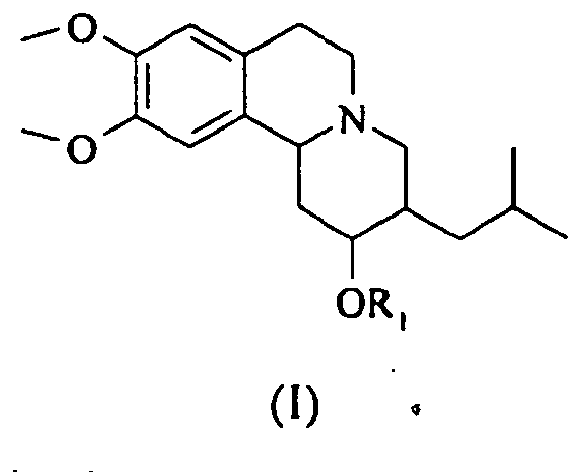
- the substituted 3-isobutyl-9,10-dimethoxy-1,3,4,6,7,11b-hexahydro-2H-pyrido[2,1-a]isoquinolin-2-ol compounds of this invention have the following general structure (I): including stereoisomers and pharmaceutically acceptable salts and solvates thereof, wherein R 1 is as defined below.
- the substituted 3-isobutyl-9,10-dimethoxy-1,3,4,6,7,11b-hexahydro-2H-pyrido[2,1-a]isoquinolin-2-ol compounds of this invention have utility over a wide range of therapeutic applications, and may be used to treat a variety of disorders including the family of hyperkinetic movement disorders. Additionally these compounds may prove useful in the treatment of other disease states or conditions which are associated with inhibition of the vesicular monoamine transporter 2 (VMAT2).
- VMAT2 vesicular monoamine transporter 2
- the methods disclosed include administering an effective amount of a substituted 3-isobutyl-9,10-dimethoxy-1,3,4,6,7,11b-hexahydro-2H-pyrido[2,1-a]isoquinolin-2-ol, preferably in the form of a pharmaceutical composition, to a mammal in need thereof.
- pharmaceutical compositions are disclosed containing one or more substituted 3-isobutyl-9,10-dimethoxy-1,3,4,6,7,11b-hexahydro-2H-pyrido[2,1-a]isoquinolin-2-ol compounds of this invention in combination with a pharmaceutically acceptable carrier and/or diluent.
- the present invention is directed generally to substituted 3-isobutyl-9,10-dimethoxy-1,3,4,6,7,11b-hexahydro-2H-pyrido[2,1-a]isoquinolin-2-ol compounds.
- alkyl means a straight chain or branched, noncyclic or cyclic, unsaturated or saturated aliphatic hydrocarbon containing from 1 to 10 carbon atoms, while the term “C 1-4 alkyl” has the same meaning as alkyl but contains from 1 to 4 carbon atoms. "C 1-6 alkyl” has the same meaning as alkyl but contains from 1 to 6 carbon atoms.
- saturated straight chain alkyls include methyl, ethyl, n-propyl, n-butyl, n-pentyl, n-hexyl, and the like; while saturated branched alkyls include isopropyl, sec- butyl, isobutyl, tert- butyl, isopentyl, and the like.
- saturated cyclic alkyls include cyclopropyl, cyclobutyl, cyclopentyl, cyclohexyl, -CH 2 -cyclopropyl, -CH 2 - cyclobutyl, -CH 2 -cyclopentyl, -CH 2 -cyclohexyl; while unsaturated cyclic alkyls include cyclopentenyl and cyclohexenyl.
- Cyclic alkyls include di- and poly-homocyclic rings such as decalin and adamantyl. Unsaturated alkyls contain at least one double or triple bond between adjacent carbon atoms (referred to as an "alkenyl" or "alkynyl", respectively).
- Representative straight chain and branched alkenyls include ethylenyl, propylenyl, 1-butenyl, 2-butenyl, isobutylenyl, 1-pentenyl, 2-pentenyl, 3-methyl-1-butenyl, 2-methyl-2-butenyl, 2,3-dimethyl-2-butenyl; while representative straight chain and branched alkynyls include acetylenyl, propynyl, 1-butynyl, 2-butynyl, 1-pentynyl, 2-pentynyl, 3-methyl-1 butynyl.
- C 1-6 alkanediyl means a divalent C 1-6 alkyl from which two hydrogen atoms are taken from the same carbon atom or from different carbon atoms, such as -CH 2 -, -CH 2 CH 2 -,-CH(CH 3 )- -CH 2 CH 2 CH 2 -, -CH(CH 3 )CH 2 CH 2 -, -CH 2 C(CH 3 ) 2 CH 2 -.
- amino acid residue means an amino acid structure which lacks the hydroxyl of the ⁇ -carboxyl group.
- the -C 1-6 alkanediyl-NH 2 of structure (III) is (S)-1-amino-2-methyl-propan-1-yl as shown in structure (IV).
- R 1 of structure (I) is an amino acid residue as shown in structure (VI).
- Structure (VII) shows an embodiment of structure (VI) where the amino acid residue is valine.
- compounds of the present invention may exist as the racemic mixture, as a diastereomeric pair or as the individual enantiomer or mix of enantiomers.
- Structure (VIII) shows the ring numbering for the substituted 3-isobutyl-9,10-dimethoxy-1,3,4,6,7,1b-hexahydro-2H-pyrido[2,1-a]isoquinolin-2-ol compounds of the invention.
- Stereocenters are located at the 2, 3, and 11b positions of the ring system.
- Compounds of the present invention include the 2 R , 3 R , 11b R configuration as well as the 2 R , 3R, 11b S , the 2 R , 3 S , 11b R , the 2 S , 3 R , 11b R , the 2 R , 3 S , 11b S , the 2 S , 3 R , 11b S , the 2 S , 3 R , 11b S , the 2 S , 3 S , 11b R , and the 2 S , 3 S , 11b S .
- the 2 R, 3 R , 11b R and 2 S , 3 S , 11b S enantiomers are shown in structures (IX) and (X), respectively.
- the compounds of the present invention may be prepared by known organic synthesis techniques, including the methods described in more detail in the Examples.
- the compounds of structure (I) above may be made by the following reaction schemes, wherein all substituents are as defined above unless indicated otherwise.
- the remaining stereoisomers may be synthesized by taking any or all of the previously generated stereoisomers and reacting them with a dehydrating agent such as phosphorous pentachloride to form the unsaturated compound which is then stereoselectively rehydrated by, for instance, a hydroboration procedure using borane-THF to form a borane complex which is oxidized to the appropriate dihydrotetrabenazine with hydrogen peroxide ( Clarke et al., WO2005077946 ).
- the racemic products can be further separated by chiral chromatography into the individual enantiomers by chiral chromatography.
- the chloroformate intermediate c may be generated by treating a with phosgene or triphosgene. Treatment of c with an alcohol in the presence of a base such as DMAP generates the carbonate product d . Alternatively, the carbonate d can be generated directly by treating the alcohol a with a pyrocarbonate under DMAP catalysis.
- Dihydrotetrabenazine a is condensed with a BOC protected amino acid using 1-(3-dimethylaminopropyl)-3-ethylcarbodiimide hydrochloride (EDCI) and dimethylaminopyridine (DMAP) in dimethylformamide and methylene chloride, followed by deprotection of the BOC functionality with, for instance, a 50/50 trifluoroacetic acid/methylene chloride solution to give e .
- EDCI 1-(3-dimethylaminopropyl)-3-ethylcarbodiimide hydrochloride
- DMAP dimethylaminopyridine
- dihydrotetrabenazine a may be condensed with a CBZ-protected amino acid using DCC (1,3-dicyclohexylcarbodiimide) followed by deprotection of the CBZ functionality by hydrogenation under appropriate conditions.
- DCC 1,3-dicyclohexylcarbodiimide
- Compounds of the present invention exhibit greater selectivity for VMAT2 than tetrabenazine. As a result, they may provide desirable properties of tetrabenazine without all of the undesirable side effects.
- certain compounds of this invention such as, for example, compound 2-1 , unexpectedly provide a longer duration of action than tetrabenazine. This may be particularly beneficial because it may allow an administration regimen that requires fewer doses per day than tetrabenazine. For example, while tetrabenazine is typically administered 2-3 times per day, certain compounds of this invention, such as, for example, compound 2-1 , may be therapeutically effective when administered only once per day. Thus, because of the unexpectedly longer duration of action afforded by these compounds, once daily dosing may be attainable.
- Compounds of the present invention include the following carbonates:
- the compounds of the present invention may generally be utilized as the free acid or free base. Alternatively, the compounds of this invention may be used in the form of acid or base addition salts. Acid addition salts of the free amino compounds of the present invention may be prepared by methods well known in the art, and may be formed from organic and inorganic acids. Suitable organic acids include maleic, fumaric, benzoic, ascorbic, succinic, methanesulfonic, acetic, trifluoroacetic, oxalic, propionic, tartaric, salicylic, citric, gluconic, lactic, mandelic, cinnamic, aspartic, stearic, palmitic, glycolic, glutamic, and benzenesulfonic acids.
- Suitable inorganic acids include hydrochloric, hydrobromic, sulfuric, phosphoric, and nitric acids.
- Base addition salts included those salts that form with the carboxylate anion and include salts formed with organic and inorganic cations such as those chosen from the alkali and alkaline earth metals (for example, lithium, sodium, potassium, magnesium, barium and calcium), as well as the ammonium ion and substituted derivatives thereof (for example, dibenzylammonium, benzylammonium, 2-hydroxyethylammonium).
- the term "pharmaceutically acceptable salt" of structure (I) is intended to encompass any and all acceptable salt forms.
- the compounds of structure (I) may have chiral centers and may occur as racemates, racemic mixtures and as individual enantiomers or diastereomers. All such isomeric forms are included within the present invention, including mixtures thereof. Furthermore, some of the crystalline forms of the compounds of structure (I) may exist as polymorphs, which are included in the present invention. In addition, some of the compounds of structure (I) may also form solvates with water or other organic solvents. Such solvates are similarly included within the scope of this invention.
- the compounds of this invention and their salts may reduce the supply of monoamines in the central nervous system by inhibiting the human monoamine transporter isoform 2 (VMAT2).
- VMAT2 human monoamine transporter isoform 2
- these compounds and their salts may have utility over a wide range of therapeutic applications, and may be used to treat a variety of disorders which are caused by or linked to inhibition of the human monoamine transporter isoform 2. These disorders include hyperkinetic disorders .
- conditions which may be treated by compounds of the current invention include treatment of hyperkinetic disorders such as Huntington's disease, tardive dyskinesia, Tourette's syndrome, and tics.
- the compounds of this invention and their salts may be hydrolyzed in the body of a mammal to compounds that may inhibit the human monoamine transporter isoform 2.
- these compounds and their salts may have additional utility in altering the in vivo properties of the metabolite in a mammal such as the maximum concentration or duration of action.
- compositions containing one or more monoamine re-uptake inhibitors are disclosed.
- the compounds of the present invention may be formulated as pharmaceutical compositions.
- Pharmaceutical compositions of the present invention comprise a monoamine re-uptake inhibitor of the present invention and a pharmaceutically acceptable carrier and/or diluent.
- the VMAT2 inhibitor is present in the composition in an amount which is effective to treat a particular disorder--that is, in an amount sufficient to reduce the supply of monoamines in the central nervous system, and preferably with acceptable toxicity to the patient. Appropriate concentrations and dosages can be readily determined by one skilled in the art.
- compositions formulated as liquid solutions include saline and sterile water, and may optionally include antioxidants, buffers, bacteriostats and other common additives.
- the compositions can also be formulated as pills, capsules, granules, or tablets which contain, in addition to a VMAT2 inhibitor, diluents, dispersing and surface active agents, binders, and lubricants.
- One skilled in this art may further formulate the VMAT2 inhibitor in an appropriate manner, and in accordance with accepted practices, such as those disclosed in Remington's Pharmaceutical Sciences, Gennaro, Ed., Mark Publishing Co., Easton, PA 1990 .
- a method for treating disorders of the central or peripheral nervous system Such methods include administering a compound of the present invention to a warm-blooded animal in an amount sufficient to treat the condition.
- "treat” includes prophylactic administration.
- Such methods include systemic administration of a VMAT2 inhibitor of this invention, preferably in the form of a pharmaceutical composition as discussed above.
- systemic administration includes oral and parenteral methods of administration.
- suitable pharmaceutical compositions include powders, granules, pills, tablets, and capsules as well as liquids, syrups, suspensions, and emulsions. These compositions may also include flavorants, preservatives, suspending, thickening and emulsifying agents, and other pharmaceutically acceptable additives.
- the compounds of the present invention can be prepared in aqueous injection solutions which may contain, in addition to the VMAT2 inhibitor, buffers, antioxidants, bacteriostats, and other additives commonly employed in such solutions.
- Agilent 1100 series equipped with an auto-sampler, an UV detector (220 nM and 254 nM), a MS detector (APCI);
- HPLC column Phenomenex Synergi-Max RP 80A, 2.0 x 50 mm column;
- HPLC gradient 1.0 mL/minute, from 10% acetonitrile in water to 90% acetonitrile in water in 2.5 minutes, maintaining 90% for 1 minute. Both acetonitrile and water have 0.025% TFA.
- Agilent 1100 series equipped with an auto-sampler, an UV detector (220 nM and 254 nM), a MS detector (APCI);
- HPLC column Phenomenex Synergi-Max RP 80A, 2.0 x 50 mm column;
- HPLC gradient 1.0 mL/minute, from 5% acetonitrile in water to 95% acetonitrile in water in 13.5 minutes, maintaining 95% for 2 minute. Both acetonitrile and water have 0.025% TFA.
- the sample was dissolved in 1 : 1 mixture of Methanol/Acetone. The final concentration was 50 mg/mL.
- Step 1A 3-Dimethylaminomethyl-5-methyl-hexan-2-one
- Step 1B 3-Dimethylaminomethyl-5-methyl-hexan-2-one methiodide
- Step 1D (2R,3R,11bR)-3-Isobutyl-9,10-dimethoxy-1,3,4,6,7,11b-hexahydro-2H-pyrido[2,1-a]isoquinolin-2-ol
- Step 2A (S)-2-Amino-3-methyl-butyric acid (2R,3R,11bR)-3-isobutyl-9,10-dimethoxy-1,3,4,6,7,11b-hexahydro-2H-pyrido[2,1-a]isoquinolin-2-yl ester 2-1
- Step 3A Carbonic acid ethyl ester (2R,3R,11bR)-3-isobutyl-9,10-dimethoxy-1,3,4,6,7,11b-hexahydro-2H-pyrido[2,1-a]isoquinolin-2-yl ester 3-1
- TBZ (1 ⁇ M) was incubated with individual human hepatocytes (1 ⁇ 10 6 cells/mL) at 37 °C with 95% O 2 and 5% CO 2 for 0, 5, 15, 30 and 60 min.
- TBZ in DMSO was added to achieve 1.0 ⁇ M (DMSO was less than 0.5.% v/v). All concentrations and cell contents were relative to the final incubation volume of 100 ⁇ L.
- the incubation was terminated by mixing 100 ⁇ L of ice-cold acetonitrile in 1% formic acid containing dextromethorphan (1.0 ⁇ M) as internal standard for LC/MS analysis. Precipitated proteins were removed by centrifugation (1500-2500 ⁇ g for 30 min at 15 °C).
- samples were separated with a gradient HPLC method by Acquity UPLC systems consisting of a pump, a column heater (40 °C), and a vacuum degasser/mobile phase tray.
- Mobile phase A was water in 0.1% formic acid and mobile phase B was acetonitrile in 0.1% formic acid.
- the gradient elution was as follows: mobile phase B: 0-10 % at 0-0.75 min, 40-90 % at 1.25-1.5 min, 90-0% at 1.75-2.0min, and run time was 3 min.
- the reverse phase column was a BEH C18 column (50 ⁇ 2.1 mm, 1.7 ⁇ m). Flow rate was 0.8 mL/min and injection volume was 7.5 ⁇ L.
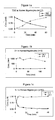
- Figures 1a, 1b, and 1c show the conversion of tetrabenazine, compound 2-1 and compound 3-1 in human hepatocytes to HTBZ in the case of tetrabenazine and to 1d.1 in the case of compounds 2-1 and 3-1 .
- Tetrabenazine and compound 3-1 showed this conversion to be rapid while compound 2-1 was comparatively slow.
- pooled human liver microsomes (0.1 or 0.5 mg/mL; n>10; mixed gender) were incubated at 37 °C with the test compound in the presence of an NADPH-generating system containing 50 mM, pH 7.4 potassium phosphate buffer, 3 mM magnesium chloride, 1 mM EDTA, 1 mM NADP, 5 mM G-6-P, and 1 Unit/mL G-6-PD.
- Incubations were conducted in six modified 2.0-mL, 96-well, deep-well plates in 1 ⁇ M of each compound (0.01% DMSO) with a total volume of 250 ⁇ l. Each plate, representing a single time point, contained 96 Titertube® Micro Tubes allowing for duplicates of 48 compounds at each time point (0, 5, 10, 20, 40, and 60 minutes). Reaction was stopped by the addition of an appropriate stop reagent (0.3 mL of acetonitrile containing a proprietary internal standard). Precipitated proteins were removed by centrifugation for 15 min at 3000 rpm, and the supernatant fluid ( ⁇ 0.1 mL) was analyzed by LC/MS for the % of parent compound remaining.
- Samples were separated with a gradient HPLC method by Agilent LC systems consisting of a pump, a column heater (40°C), and a vacuum degasser/mobile phase tray.
- Mobile phase A was water in 0.1% formic acid and mobile phase B was acetonitrile in 0.1% formic acid.
- the gradient elution was as follows: mobile phase B: 0-30 % at 0-0.30 min, 30-98 % at 0.7-1.1 min, 98-0% at 1.50-1.51min, and run time was 3 min for 3-1 ; mobile phase B: 5-98 % at 0.5-2.5 min, 98-5 % at 4.0-4.1 min, and run time was 6.5 min for 2-1 .
- the reverse phase column was a Luna C18 column (20 ⁇ 2 mm, 5 ⁇ m) for 3-1 and Synergi C18 column (150 ⁇ 2 mm, 5 ⁇ m) for 2-1 .
- Flow rate was 0.55 mL/min for 3-1 and 0.4 mL/min for 2-1 and injection volume was 20 ⁇ L.
- the samples were monitored with API-3000 mass spectrometer and ESI ion source in positive mode, TBZ m/z 318.4 > 220.4, HTBZ m/z 320.3 > 302.3, and dextromethorphan m/z 272.2 > 147.2.
- Figures 2a through 2f show the conversion of compound 2-1 and compound 3-1 in rat, dog, and human liver microsomes to Id.1 .
- conversion of compound 2-1 to 1d.1 was slower than the conversion seen in the case of compound 3-1 to compound 1d.1 .
- single oral dose (10 mg/kg) of 2-1 and 3-1 in 10% PEG in 0.25% methylcellulose in milli Q water was administered to rats (3 rats/dose) for a pharmacokinetic evaluation.
- Serial sampling was used to collect blood samples, which were taken from each treated animal at nine time points ranging from pre-dose to 24 hours post dose (0, 0.25, 0.5, 1, 2, 4, 6, 8 and 24 hours) for the oral administration.
- Plasma samples were stored at -80 °C or below until analysis.
- a single oral dose (6.1 mg/kg for 3-1 and 10 mg/kg for 2-1 ) in 10% PEG in 0.25% methylcellulose in milli Q water was administered to dogs (3 dogs/dose) for a pharmacokinetic evaluation.
- Serial sampling was used to collect blood samples, which were taken from each treated animal at nine time points ranging from pre-dose to 24 hours post dose (0, 0.25, 0.5, 1, 1.5, 2, 4, 6, 8, 12, 24, 36 and 48 hours) for the oral administration.
- Plasma samples were stored at -80 °C or below until analysis.
- Plasma samples were thawed on ice, and 50 ⁇ L of plasma was transferred to a 96-well plate. Plasma proteins were precipitated by addition of pre-chilled 150 ⁇ L acetonitrile (ACN) containing 75 ng/mL internal standard. Additional 50 ⁇ L of ACN/water (60:40) was added into each sample. Calibration curve samples were prepared by a serial dilution in ACN/water (60:40). Fifty microliter of each standard sample was transferred to a 96-well plate followed by adding 150 gel acetonitrile (ACN) containing 75 ng/mL internal standard and 50 ⁇ L blank rat plasma. The plates were capped, mixed and centrifuged at 3000 rpm for 20 min.
- ACN gel acetonitrile
- the supernatant was collected and injected into a LC-MS/MS system for quantification.
- the non-validated assay method showed good linearity, specificity and accuracy for 3-1, 2-1 and 1d.1 over the concentration range of 1 to 1000 ng/mL and the low limit of quantification of 3-1 , 2-1 and 1d.1 were all at 1 ng/mL.
- Three sets of QC samples (4, 40, 400, 800 ng/ml) for 3-1 , 2-1 and 1d.1 were used as quality control for the studies needed and prepared in a same way as the standards. Quantification was performed by fitting peak area ratios to a weighted (1/x 2 ) linear calibration curve.
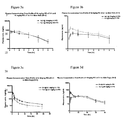
- Figure 3a shows that the rat plasma concentration time profile of compound Id.1 from 3-1 and 1d.1 administered orally are indistinguishable. No 3-1 was detected in rat plasma after oral administration of 3-1 .
- Figure 3b shows the rat plasma concentration time profile of compound 1d.1 and 2-1 after oral administration of 2-1 .
- Figure 3c shows the dog plasma concentration time profile of compound 1d.1 and 3-1 after oral administration of 3-1 .
- Figure 3d shows the dog plasma concentration time profile of compound 1d.1 and 2-1 after oral administration of 2-1 .
- VMAT2 VESICULAR MONOAMINE TRANSPORTER ISOFORM 2 (VMAT2) BINDING ASSAY (ADAPTED FROM TENG, ET AL., J. NEUROCHEM. 71, 258-65, 1998)
- Rat striata from three rats are pooled and homogenized in 0.32 M sucrose.
- the homogenate is then centrifuged at 2,000xg for 10 min at 4 °C and the resulting supernatant is centrifuged at 10,000xg for 30 min at 4 °C.
- the resulting pellet containing the enriched synaptosomal fraction (2 mL) is subjected to osmotic shock by addition of 7 mL of distilled H 2 O, and subsequently the suspension is homogenized.
- the osmolarity is restored by the addition of 0.9 mL of 0.25 M HEPES and 0.9 mL of 1.0 M neutral L-(+)-tartaric acid dipotassium salt buffer (pH 7.5), followed by a 20 min centrifugation (20,000xg at 4 °C). The supernatant is then centrifuged for 60 min (55,000x at 4 °C) and the resulting supernatant is centrifuged for 45 min (100,000xg at 4 °C).
- the resulting pellet is resuspended in 25 mM HEPES, 100 mM L-(+)-tartaric acid dipotassium salt, 5 mM MgCl 2 , 10 mM NaCl, 0.05 mM EGTA, pH 7.5 to a protein concentration of 1-2 mg/mL and stored at -80 °C for up to 3 weeks without appreciable loss of binding activity.
- binding buffer 25 mM HEPES, 100mM L-(+)-tartaric acid dipotassium salt, 5 mM MgCl2, 10 mM NaCl, 0.05 mM EGTA, 0.1 mM EDTA, 1.7 mM ascorbic acid, pH 7.4.
- Rats (Sprague-Dawley, 100-300 g) are adapted to single housing for at least 3 days prior to testing. Rats are administered test substances by oral, intraperitoneal, subcutaneous or intravenous routes (between 1-100 mg/kg) or vehicle controls. Following a pre-treatment time of 15-60 minutes, rats are placed in a clear cage surrounded by photocell detectors (San Diego Instruments). Rat locomotor activity is detected by breaks in the photocell beams and activity is defined as the number of beam breaks per session. Observation periods range from 15 min to 2 hours. Novel compound effects are compared with the effects of vehicle and positive control (diazepam at 3 mg/kg) with one-way ANOVA, followed by Student's Neuman-Keul's post hoc analyses. 8-10 rats are used per test condition.
Landscapes
- Chemical & Material Sciences (AREA)
- Organic Chemistry (AREA)
- Health & Medical Sciences (AREA)
- Life Sciences & Earth Sciences (AREA)
- General Health & Medical Sciences (AREA)
- General Chemical & Material Sciences (AREA)
- Medicinal Chemistry (AREA)
- Nuclear Medicine, Radiotherapy & Molecular Imaging (AREA)
- Bioinformatics & Cheminformatics (AREA)
- Pharmacology & Pharmacy (AREA)
- Engineering & Computer Science (AREA)
- Animal Behavior & Ethology (AREA)
- Chemical Kinetics & Catalysis (AREA)
- Public Health (AREA)
- Veterinary Medicine (AREA)
- Biomedical Technology (AREA)
- Neurology (AREA)
- Neurosurgery (AREA)
- Psychology (AREA)
- Pharmaceuticals Containing Other Organic And Inorganic Compounds (AREA)
- Nitrogen Condensed Heterocyclic Rings (AREA)
Description
- This invention relates generally to substituted 3-isobutyl-9,10-dimethoxy-1,3,4,6,7,11b-hexahydro-2H-pyrido[2,1-a]isoquinolin-2ol compounds and their preparation. Also disclosed are methods of treating disorders by administration of such compounds to a warm-blooded animal in need thereof.
- 3-Isobutyl-9,10-dimethoxy-1,3,4,6,7,11b-hexahydro-2H-pyrido[2,1-a]isoquinolin-2-one, also known as tetrabenazine (TBZ), has been used as a drug for decades. Tetrabenazine is a potent, reversible inhibitor of catecholamine uptake by vesicular monoamine transporter-2 (VMAT2) (IC50 = 3.2 nM) (Scherman, et al, Proc.Natl. Acad. Sci. USA, (1983) 80:584-8) and is currently used in the treatment of various hyperkinetic movement disorders. Side effects associated with TBZ include sedation, depression, akathisia, and parkinsonism. Inhibition of VMAT2 by TBZ results in depletion of brain monoamines in vivo (Pettibone, D.J. et al., Eur. J. Pharmacol. (1984) 102:431-6). TBZ also inhibits presynaptic and postsynaptic dopamine receptors in rat brain (Login, I.S., et al., (1982) Ann. Neurology 12:257-62; Reches, et al, J. Pharmacol. Exp. Ther. (1983) 225:515-521). This off-target activity of TBZ may be responsible for some of the observed side effects.
- TBZ, which contains two chiral centers and is a racemic mix of two stereoisomers, is rapidly and extensively metabolized in vivo to its reduced form, 3-isobutyl-9,10-dimethoxy-1,3,4,6,7,11b-hexahydro-2H-pyrido[2,1-a]isoquinolin-2-ol, also known as dihydrotetrabenazine (HTBZ). HTBZ is thought to exist as four individual isomers: (±) alpha-HTBZ and (±) beta-HTBZ. The 2R, 3R, 11bR or (+) alpha-HTBZ is believed to be the absolute configuration of the active metabolite (Chirality 1997 9:59-62). Despite its success in treating hyperkinetic disorders, tetrabenazine has a fairly low and variable bioavailability. Tetrabenazine administration to humans is complicated by extensive first pass metabolism and little or no tetrabenazine is observed in the urine.
- There is a need in the art for analogs of tetrabenazine that provide the advantageous properties of tetrabenazine without exposing the body to all of stereoisomers of dihydrotetrabenazine. There is also a need for analogs of tetrabenazine that exhibit a longer half-life than tetrabenazine. There is likewise a need in the art for analogs of tetrabenazine that exhibit greater selectivity for VMAT2 than tetrabenazine. The present invention provides a tetrabenazine analog that exposes the body to a single stereoisomer of dihydrotetrabenazine, exhibits greater selectivity for VMAT2 than tetrabenazine, exhibits a longer half-life than tetrabenazine, and may exhibit lower variability in dose required from patient to patient.
- A. Brossi et al., Helvetica Chimica Acta 1958, Vol. 41, No. 4, pages 1793 to 1806 describe the synthesis of 2-hydroxy-hydrobenzo[a]chinolizines; M. Kilbourn et al., Chirality 1997, Vol. 9, No. 1, pages 59 to 62 disclose the synthesis of tetrabenazine and dihydrotetrabenazine derivatives and separation of the enantiomers by chiral column liquid chromatography; G. Aranda et al., European Journal of Medicinal Chemistry, Vol. 25, 1990, pages 369 to 374 describe the synthesis of an iodinated derivative of tetrabenazine.
- In brief, this invention is generally directed to substituted 3-isobutyl-9,10-dimethoxy-1,3,4,6,7,11b-hexahydro-2H-pyrido[2,1-a]isoquinolin-2-ol compounds, individual enantiomers thereof, as well as to methods for their preparation and use, and to pharmaceutical compositions containing the same. More specifically, the substituted 3-isobutyl-9,10-dimethoxy-1,3,4,6,7,11b-hexahydro-2H-pyrido[2,1-a]isoquinolin-2-ol compounds of this invention have the following general structure (I):

- The substituted 3-isobutyl-9,10-dimethoxy-1,3,4,6,7,11b-hexahydro-2H-pyrido[2,1-a]isoquinolin-2-ol compounds of this invention have utility over a wide range of therapeutic applications, and may be used to treat a variety of disorders including the family of hyperkinetic movement disorders. Additionally these compounds may prove useful in the treatment of other disease states or conditions which are associated with inhibition of the vesicular monoamine transporter 2 (VMAT2).
- The methods disclosed include administering an effective amount of a substituted 3-isobutyl-9,10-dimethoxy-1,3,4,6,7,11b-hexahydro-2H-pyrido[2,1-a]isoquinolin-2-ol, preferably in the form of a pharmaceutical composition, to a mammal in need thereof. Thus, in still a further embodiment, pharmaceutical compositions are disclosed containing one or more substituted 3-isobutyl-9,10-dimethoxy-1,3,4,6,7,11b-hexahydro-2H-pyrido[2,1-a]isoquinolin-2-ol compounds of this invention in combination with a pharmaceutically acceptable carrier and/or diluent.
- These and other aspects of the invention will be apparent upon reference to the following detailed description. To this end, various references are set forth herein which describe in more detail certain background information, procedures, compounds and/or compositions.
- The problem of the present invention is solved on the basis of claims 1 to 12.
-
-
Figures 1a, 1b, and 1c comprise three graphs showing the conversion of tetrabenazine, compound 2-1 and compound 3-1 to their respective metabolites in human hepatocytes. -
Figures 2a - 2f comprise six graphs showing the stability profile of compounds 3-1 and 2-1 in rat, dog and human liver microsomes. -
Figures 3a - 3d comprise four graphs showing the pharmacokinetic properties of compounds 2-1 and 3-1 in dogs and rats and of 1d.1 in the rat. - As mentioned above, the present invention is directed generally to substituted 3-isobutyl-9,10-dimethoxy-1,3,4,6,7,11b-hexahydro-2H-pyrido[2,1-a]isoquinolin-2-ol compounds. The compounds of this invention have the following structure (I):

wherein R1 is -C(=O)-O-alkyl; or
wherein R1 is -C(=O)-C1-6alkanediyl-NH2, and wherein said C1-6alkanediyl is -CH2-; -CH2CH2-, -CH(CH3)-, -CH2CH2CH2-, -CH(CH3)CH2CH2-, -CH2C(CH3)2CH2- -CH[CH(CH3)2]-, -CHCH2[CH(CH3)2]-, or -C(CH3)2- and is optionally substituted with a group selected from -NH-C(=NH)NH2, -CO2H, -CO2Me, -SH, -C(O)NH2, -NH2, -SCH3 phenyl, -OH, 4-hydroxy-phenyl, imidazolyl and indolyl. - As used herein, the above terms have the following meaning:
- "alkyl" means a straight chain or branched, noncyclic or cyclic, unsaturated or saturated aliphatic hydrocarbon containing from 1 to 10 carbon atoms, while the term "C1-4alkyl" has the same meaning as alkyl but contains from 1 to 4 carbon atoms. "C1-6alkyl" has the same meaning as alkyl but contains from 1 to 6 carbon atoms. Representative saturated straight chain alkyls include methyl, ethyl, n-propyl, n-butyl, n-pentyl, n-hexyl, and the like; while saturated branched alkyls include isopropyl, sec-butyl, isobutyl, tert-butyl, isopentyl, and the like. Representative saturated cyclic alkyls include cyclopropyl, cyclobutyl, cyclopentyl, cyclohexyl, -CH2-cyclopropyl, -CH2- cyclobutyl, -CH2-cyclopentyl, -CH2-cyclohexyl; while unsaturated cyclic alkyls include cyclopentenyl and cyclohexenyl. Cyclic alkyls include di- and poly-homocyclic rings such as decalin and adamantyl. Unsaturated alkyls contain at least one double or triple bond between adjacent carbon atoms (referred to as an "alkenyl" or "alkynyl", respectively). Representative straight chain and branched alkenyls include ethylenyl, propylenyl, 1-butenyl, 2-butenyl, isobutylenyl, 1-pentenyl, 2-pentenyl, 3-methyl-1-butenyl, 2-methyl-2-butenyl, 2,3-dimethyl-2-butenyl; while representative straight chain and branched alkynyls include acetylenyl, propynyl, 1-butynyl, 2-butynyl, 1-pentynyl, 2-pentynyl, 3-methyl-1 butynyl.
- "C1-6alkanediyl" means a divalent C1-6alkyl from which two hydrogen atoms are taken from the same carbon atom or from different carbon atoms, such as -CH2-, -CH2CH2-,-CH(CH3)- -CH2CH2CH2-, -CH(CH3)CH2CH2-, -CH2C(CH3)2CH2-.
- "Amino acid residue" means an amino acid structure which lacks the hydroxyl of the α-carboxyl group. For example the alanine residue is -C(=O)-CH(NH2)CH3.
- In an embodiment, R1 of structure (I) is -C(=O)O-alkyl as shown in structure (II) and in another embodiment, R1 of structure (I) is -C(=O)-C1-6alkanediyl-NH2 as shown in structure (III).

- In an embodiment, the -C1-6alkanediyl-NH2 of structure (III) is (S)-1-amino-2-methyl-propan-1-yl as shown in structure (IV). Structure (V) shows an embodiment of structure (I) where R1 is -C(=O)-C1-6alkanediyl-NH2 and the C1-6alkanediyl is substituted with -COOH.

- In additional embodiments, R1 of structure (I) is an amino acid residue as shown in structure (VI). Structure (VII) shows an embodiment of structure (VI) where the amino acid residue is valine.

- In an embodiment, compounds of the present invention may exist as the racemic mixture, as a diastereomeric pair or as the individual enantiomer or mix of enantiomers. Structure (VIII) shows the ring numbering for the substituted 3-isobutyl-9,10-dimethoxy-1,3,4,6,7,1b-hexahydro-2H-pyrido[2,1-a]isoquinolin-2-ol compounds of the invention. Stereocenters are located at the 2, 3, and 11b positions of the ring system. Compounds of the present invention include the 2R, 3R, 11bR configuration as well as the 2R, 3R, 11bS, the 2R, 3S, 11bR, the 2S, 3R, 11bR, the 2R, 3S, 11bS, the 2S, 3R, 11bS, the 2S, 3S, 11bR, and the 2S, 3S, 11bS. The 2R, 3R, 11bR and 2S, 3S, 11bS enantiomers are shown in structures (IX) and (X), respectively.

- The compounds of the present invention may be prepared by known organic synthesis techniques, including the methods described in more detail in the Examples. In general, the compounds of structure (I) above may be made by the following reaction schemes, wherein all substituents are as defined above unless indicated otherwise.

- Reduction of a racemic mix of R,R and S,S tetrabenazine with a borohydride reducing agent gives dihydrotetrabenazine a. When the reducing agent is lithium tri-sec-butyl borohydride (L-Selectride), predominantly the 2S, 3R, 11bR and 2R, 3S, 11bS isomers are generated. Use of sodium borohydride results in a mix of all 4 stereoisomers. The remaining stereoisomers may be synthesized by taking any or all of the previously generated stereoisomers and reacting them with a dehydrating agent such as phosphorous pentachloride to form the unsaturated compound which is then stereoselectively rehydrated by, for instance, a hydroboration procedure using borane-THF to form a borane complex which is oxidized to the appropriate dihydrotetrabenazine with hydrogen peroxide (
Clarke et al., WO2005077946 ). The racemic products can be further separated by chiral chromatography into the individual enantiomers by chiral chromatography.
- The chloroformate intermediate c may be generated by treating a with phosgene or triphosgene. Treatment of c with an alcohol in the presence of a base such as DMAP generates the carbonate product d. Alternatively, the carbonate d can be generated directly by treating the alcohol a with a pyrocarbonate under DMAP catalysis.

- Dihydrotetrabenazine a is condensed with a BOC protected amino acid using 1-(3-dimethylaminopropyl)-3-ethylcarbodiimide hydrochloride (EDCI) and dimethylaminopyridine (DMAP) in dimethylformamide and methylene chloride, followed by deprotection of the BOC functionality with, for instance, a 50/50 trifluoroacetic acid/methylene chloride solution to give e. Alternatively, dihydrotetrabenazine a may be condensed with a CBZ-protected amino acid using DCC (1,3-dicyclohexylcarbodiimide) followed by deprotection of the CBZ functionality by hydrogenation under appropriate conditions.
- Compounds of the present invention exhibit greater selectivity for VMAT2 than tetrabenazine. As a result, they may provide desirable properties of tetrabenazine without all of the undesirable side effects. In addition, as shown in
Figures 3a - 3d , certain compounds of this invention, such as, for example, compound 2-1, unexpectedly provide a longer duration of action than tetrabenazine. This may be particularly beneficial because it may allow an administration regimen that requires fewer doses per day than tetrabenazine. For example, while tetrabenazine is typically administered 2-3 times per day, certain compounds of this invention, such as, for example, compound 2-1, may be therapeutically effective when administered only once per day. Thus, because of the unexpectedly longer duration of action afforded by these compounds, once daily dosing may be attainable. - Compounds of the present invention include the following esters:
- (S)-2-Amino-3-methyl-butyric acid 3-isobutyl-9,10-dimethoxy-1,3,4,6,7,11b-hexahydro-2H-pyrido[2,1-a]isoquinolin-2-yl ester
- Compounds of the present invention include the following carbonates:
- Carbonic acid ethyl ester 3-isobutyl-9,10-dimethoxy-1,3,4,6,7,11b-hexahydro-2H-pyrido[2,1-a]isoquinolin-2-yl ester;
- Carbonic acid butyl ester 3-isobutyl-9,10-dimethoxy-1,3,4,6,7,11b-hexahydro-2H-pyrido[2,1-a]isoquinolin-2-yl ester;
- Carbonic acid pentyl ester 3-isobutyl-9,10-dimethoxy-1,3,4,6,7,11b-hexahydro-2H-pyrido[2,1-a]isoquinolin-2-yl ester;
- Carbonic acid isobutyl ester 3-isobutyl-9,10-dimethoxy-1,3,4,6,7,11b-hexahydro-2H-pyrido[2,1-a]isoquinolin-2-yl ester;
- Carbonic acid sec-butyl ester 3-isobutyl-9,10-dimethoxy-1,3,4,6,7,1b-hexahydro-2H-pyrido[2,1-a]isoquinolin-2-yl ester;
- Carbonic acid 3-methyl-butyl ester 3-isobutyl-9,10-dimethoxy-1,3,4,6,7,11b-hexahydro-2H-pyrido[2,1-a]isoquinolin-2-yl ester; and
- Carbonic acid tert-butyl ester 3-isobutyl-9,10-dimethoxy-1,3,4,6,7,11b-hexahydro-2H-pyrido[2,1-a]isoquinolin-2-yl ester.
- The compounds of the present invention may generally be utilized as the free acid or free base. Alternatively, the compounds of this invention may be used in the form of acid or base addition salts. Acid addition salts of the free amino compounds of the present invention may be prepared by methods well known in the art, and may be formed from organic and inorganic acids. Suitable organic acids include maleic, fumaric, benzoic, ascorbic, succinic, methanesulfonic, acetic, trifluoroacetic, oxalic, propionic, tartaric, salicylic, citric, gluconic, lactic, mandelic, cinnamic, aspartic, stearic, palmitic, glycolic, glutamic, and benzenesulfonic acids. Suitable inorganic acids include hydrochloric, hydrobromic, sulfuric, phosphoric, and nitric acids. Base addition salts included those salts that form with the carboxylate anion and include salts formed with organic and inorganic cations such as those chosen from the alkali and alkaline earth metals (for example, lithium, sodium, potassium, magnesium, barium and calcium), as well as the ammonium ion and substituted derivatives thereof (for example, dibenzylammonium, benzylammonium, 2-hydroxyethylammonium). Thus, the term "pharmaceutically acceptable salt" of structure (I) is intended to encompass any and all acceptable salt forms.
- With regard to stereoisomers, the compounds of structure (I) may have chiral centers and may occur as racemates, racemic mixtures and as individual enantiomers or diastereomers. All such isomeric forms are included within the present invention, including mixtures thereof. Furthermore, some of the crystalline forms of the compounds of structure (I) may exist as polymorphs, which are included in the present invention. In addition, some of the compounds of structure (I) may also form solvates with water or other organic solvents. Such solvates are similarly included within the scope of this invention.
- As mentioned above, the compounds of this invention and their salts may reduce the supply of monoamines in the central nervous system by inhibiting the human monoamine transporter isoform 2 (VMAT2). As such, these compounds and their salts may have utility over a wide range of therapeutic applications, and may be used to treat a variety of disorders which are caused by or linked to inhibition of the human
monoamine transporter isoform 2. These disorders include hyperkinetic disorders . - In an embodiment, conditions which may be treated by compounds of the current invention include treatment of hyperkinetic disorders such as Huntington's disease, tardive dyskinesia, Tourette's syndrome, and tics.
- In another embodiment of the invention, the compounds of this invention and their salts may be hydrolyzed in the body of a mammal to compounds that may inhibit the human
monoamine transporter isoform 2. As such, these compounds and their salts may have additional utility in altering the in vivo properties of the metabolite in a mammal such as the maximum concentration or duration of action. - In another embodiment of the invention, pharmaceutical compositions containing one or more monoamine re-uptake inhibitors are disclosed. For the purposes of administration, the compounds of the present invention may be formulated as pharmaceutical compositions. Pharmaceutical compositions of the present invention comprise a monoamine re-uptake inhibitor of the present invention and a pharmaceutically acceptable carrier and/or diluent. The VMAT2 inhibitor is present in the composition in an amount which is effective to treat a particular disorder--that is, in an amount sufficient to reduce the supply of monoamines in the central nervous system, and preferably with acceptable toxicity to the patient. Appropriate concentrations and dosages can be readily determined by one skilled in the art.
- Pharmaceutically acceptable carriers and/or diluents are familiar to those skilled in the art. For compositions formulated as liquid solutions, acceptable carriers and/or diluents include saline and sterile water, and may optionally include antioxidants, buffers, bacteriostats and other common additives. The compositions can also be formulated as pills, capsules, granules, or tablets which contain, in addition to a VMAT2 inhibitor, diluents, dispersing and surface active agents, binders, and lubricants. One skilled in this art may further formulate the VMAT2 inhibitor in an appropriate manner, and in accordance with accepted practices, such as those disclosed in Remington's Pharmaceutical Sciences, Gennaro, Ed., Mark Publishing Co., Easton, PA 1990.
- Also disclosed is a method for treating disorders of the central or peripheral nervous system. Such methods include administering a compound of the present invention to a warm-blooded animal in an amount sufficient to treat the condition. In this context, "treat" includes prophylactic administration. Such methods include systemic administration of a VMAT2 inhibitor of this invention, preferably in the form of a pharmaceutical composition as discussed above. As used herein, systemic administration includes oral and parenteral methods of administration. For oral administration, suitable pharmaceutical compositions include powders, granules, pills, tablets, and capsules as well as liquids, syrups, suspensions, and emulsions. These compositions may also include flavorants, preservatives, suspending, thickening and emulsifying agents, and other pharmaceutically acceptable additives. For parental administration, the compounds of the present invention can be prepared in aqueous injection solutions which may contain, in addition to the VMAT2 inhibitor, buffers, antioxidants, bacteriostats, and other additives commonly employed in such solutions.
- Retention time, tR, in minutes
- Platform: Agilent 1100 series: equipped with an auto-sampler, an UV detector (220 nM and 254 nM), a MS detector (APCI);
- HPLC column: Phenomenex Synergi-Max RP 80A, 2.0 x 50 mm column;
- HPLC gradient: 1.0 mL/minute, from 10% acetonitrile in water to 90% acetonitrile in water in 2.5 minutes, maintaining 90% for 1 minute. Both acetonitrile and water have 0.025% TFA.
- Platform: Agilent 1100 series: equipped with an auto-sampler, an UV detector (220 nM and 254 nM), a MS detector (APCI);
- HPLC column: Phenomenex Synergi-Max RP 80A, 2.0 x 50 mm column;
- HPLC gradient: 1.0 mL/minute, from 5% acetonitrile in water to 95% acetonitrile in water in 13.5 minutes, maintaining 95% for 2 minute. Both acetonitrile and water have 0.025% TFA.
- Platform: Gilson 215 Auto-sampler, Dionex Thermostatted Column Compartment TCC-100 held at 30 °C, Dionex PDA-100 Photodiode Array Detector (220 nm and 254 nm), Dionex P680 HPLC pump, Thermo Finnigan MSQ single quad Mass Spectrometer (APCI)
- HPLC column: Phenomenex Gemini 5µ C18 110A, 4.6 x 150 mm
- HPLC gradient: 2.5 mL/min, from 5% acetonitrile in water to 90% acetonitrile in water in 9.86 minutes, from 90% acetonitrile in water to 95% acetonitrile in water in 0.1 minutes, hold at 95% for 1.19 minutes. Both acetonitrile and water have 0.04% NH4OH.
- Platform: Gilson 215 Auto-sampler, Dionex Thermostatted Column Compartment TCC-100 held at 30 °C, Dionex PDA-100 Photodiode Array Detector (220 nm and 254 nm), Dionex P680 HPLC pump, Thermo Finnigan MSQ single quad Mass Spectrometer (APCI)
- HPLC column: Phenomenex Gemini 5µ C18 110A, 3.0 x 150 mm
- HPLC gradient: 1.5 mL/min, from 5% acetonitrile in water to 90% acetonitrile in water in 9.86 minutes, from 90% acetonitrile in water to 95% acetonitrile in water in 0.1 minutes, hold at 95% for 1.19 minutes. Both acetonitrile and water have 0.04% NH4OH
-
- Platform: Berger Multigram II SFC system from Autochem
- Column: Chiralcel OD-H, 2.1 x 25 cm, SFC column
- Modifier: 20% methanol
- Flow rate: 60 mL/min
- Pressure: 100 bar
- Oven temperature: 35 °C
- Loading: approximately 14 mg/injection (methanol)
-
- Platform: Berger Multigram 11 SFC system from Autochem
- Column: chiralpak AS -H, 2.1 x 25 cm, SFC column
- Modifier: 20% methanol
- Flow rate: 60 mL/min
- Pressure: 100bar
- Oven Temperature: 35°C
- Loading: 40 mg / injection (MeOH)
-
- Column: Chiralpak IA, 2.1 x 25 cm, SFC column
- Modifier: 28 % (MethanoUAcetone = 7 : 3)
- Flow rate: 55 mL/min
- Pressure: 100 bar
- Oven Temperature: 35°C
- Loading: 50 mg / injection
- The sample was dissolved in 1 : 1 mixture of Methanol/Acetone. The final concentration was 50 mg/mL.
- Dimethylamine HCl (90 g, 1.1 mol), 5-methyl-2-hexanone (450 mL, 3.3 mol), and paraformaldehyde (50 g, 1.7 mol) were suspended in MeOH (80 mL) and concentrated HCl (200 µL) was added. The reaction mixture was heated to 80 °C for 12 hours. The mixture was allowed to cool to room temperature and 10% NaOH was added until basic. The entire mixture was extracted with Et2O (100 mL, 2X). The organic layer was dried over MgSO4 and concentrated. The crude reaction mixture was columned via flash column chromatography (0.5:9.5 MeOH:CH2Cl2) to give 30 g (175 mmol) of 3-dimethylaminomethyl-5-methyl-hexan-2-one 1a in a 16% yield.
- To a round bottom flask was added 3-dimethylaminomethyl-5-methyl-hexan-2-one 1a (30 g, 175 mmol) and EtOAc (300 mL) followed by methyl iodide (22 mL, 351 mmol). The mixture was stirred overnight and a white precipitate formed. The precipitate was filtered, washed with Et2O (150 mL, 3X) and dried to yield 3-dimethylaminomethyl-5-methyl-hexan-2-one methiodide 1b (44.9g, 81% yield) as a fluffy white solid.
- To a round bottom flask was added 6,7-dimethoxy-3,4-dihydroisoquinoline (13 g, 67.8 mmol), 3-dimethylaminomethyl-5-methyl-hexan-2-one methiodide 1b (26 g, 81.4 mmol) and EtOH (130 mL). The suspension was heated to 80 °C overnight. The reaction mixture was allowed to cool to room temperature and H2O (200 mL) was added forming a precipitate. The EtOH was removed in vacuo and CH2Cl2 (400 mL) was added. A 10% NaOH solution was added to the mixture until basic. The aqueous layer was then extracted 3X with CH2Cl2 (250 mL). The organic layers were combined, dried over MgSO4 and concentrated. The crude reaction mixture was purified via flash column chromatography (0.5:9.5 Acetone:CH2Cl2) and further recrystallized from EtOAc and Hexanes to give 16.1 g (5.1 mmol) of a racemic mix of (3S,11bS) and (3R,11bR)-3-isobutyl-9,10-dimethoxy-1,3,4,6,7,11b-hexahydro-pyrido[2,1-a]isoquinolin-2-one 1c (tetrabenazine, TBZ) in a 75% yield. The enantiomers of tetrabenazine were separated by SFC utilizing a Chiralpak AD-H column with 15% CAN/MeOH plus 0.5% DMEA at 2.5 mL/min at 100 bar and 35 °C to yield 4.3 g of (3R,11bR)-tetrabenazine Ic.1 and 4.3 g of (3S,11bS)-tetrabenazine 1c.2. (3R,11bR)-tetrabenazine 1c.1: MS calcd: (317); Found 318.7 (M + H). (3S,11bS)-tetrabenazine 1c.2: MS calcd: (317); Found 318.7 (M+H).
- (3R,11bR)-Tetrabenazine 1c.1 (2 g, 6.3 mmol) was dissolved in EtOH (70 mL) and cooled to 0 °C. Sodium borohydride (261 mg, 6.9 mmol) was then added in portions at 0 °C. The reaction was complete after 30 minutes and quenched with saturated NH4Cl (4 mL). The white precipitate formed was filtered and washed with EtOH (5 mL, 2X). The EtOH was removed in vacuo and the aqueous layer extracted 3X with CH2Cl2 (50 mL). The organic layers were combined, dried over MgSO4 and concentrated. The crude product was purified via flash column chromatography (0.5:9.5 MeOH:CH2Cl2) to give 1.6 g (5 mmol) of (2R,3R,11bR)-3-isobutyl-9,10-dimethoxy-1,3,4,6,7,11b-hexahydro-2H-pyrido[2,1-a]isoquinolin-2-ol ((2R,3R,11bR)-dihydrotetrabenazine) Id.1 and 410 mg (1.3 mmol) of (2S,3R,11bR)-3-isobutyl-9,10-dimethoxy-1,3,4,6,7,11b-hexahydro-2H-pyrido[2,1-a]isoquinolin-2-ol ((2S,3R,11bR)-dihydrotetrabenazine) 1d.2. (2R,3R,11bR)-Dihydrotetrabenazine 1d.1: MS calcd: (319); Found 320.3 (M + H). (2S,3R,11bR)-Dihydrotetrabenazine 1d.2: MS calcd: (319); Found 320.3 (M + H).
- (2R,3R,11bR)-3-Isobutyl-9,10-dimethoxy-1,3,4,6,7,11b-hexahydro-2H-pyrido[2,1-a]isoquinolin-2-ol 1d.1 (200 mg, 0.63 mmol) was dissolved in 3 mL anhydrous CH2Cl2 and DMAP (75.0 mg, 0.63 mmol) and Cbz-L-valine (190 mg, 0.75 mmol) were added and the mixture stirred for 5 min. DCC (155 mg, 0.75 mmol) was added and a white precipitate formed immediately. The mixture was stirred overnight then filtered and concentrated. Purification via flash column chromatography (0.2: 9.8, MeOH:CH2Cl2) gave 360 mg (0.63 mmol) of 2-benzyloxycarbonylamino-3-methyl-butyric acid (2R,3R,11bR)-3-isobutyl-9,10-dimethoxy-1,3,4,6,7,11b-hexahydro-2H-pyrido[2,1-a]isoquinolin-2-yl ester 2a as a pale yellow solid in quantitative yield. Compound 2a (163 mg, 0.29 mmol) was dissolved in MeOH (10 mL) and Pd/C was added and the mixture was purged with H2. The mixture was stirred overnight, filtered through celite and concentrated. Purification via flash column chromatography (0.5: 9.5, MeOH:CH2Cl2) gave 105 mg (0.25 mmol) of (S)-2-amino-3-methyl-butyric acid (2R,3R,11bR)-3-isobutyl-9,10-dimethoxy-1,3,4,6, 7,11b-hexahydro-2H-pyrido[2,1-a]isoquinolin-2-yl ester 2-1 in 85% yield. MS calcd: (419); Found 419.3 (M + H)
- Additional compounds synthesized by the same procedure using different amino acids include:
- (R)-2-Amino-4-methyl-pentanoic acid (2R,3R,11bR)-3-isobutyl-9,10-dimethoxy-1,3,4,6,7,11b-hexahydro-2H-pyrido[2,1-a]isoquinolin-2-yl ester 2-2. MS calcd: (433); Found 433.4 (M + H)
- (S)-2-Amino-4-methyl-pentanoic acid (2R,3R,11bR)-3-isobutyl-9,10-dimethoxy-1,3,4,6,7,11b-hexahydro-2H-pyrido[2,1-a]isoquinolin-2-yl ester 2-3. MS calcd: (433); Found 433.4 (M + H)
- (S)-2-Amino-succinic acid 1-((2R,3R,11bR)-3-isobuty)-9,10-dimethoxy-1,3,4,6,7,11b-hexahydro-2H-pyrido[2,l-a]isoquinolin-2-yl) ester 4-methyl ester 2-4. MS calcd: (449); Found 449.3 (M + H)
- 2-Amino-2-methyl-propionic acid (2R,3R,11bR)-3-isobutyl-9,10-dimethoxy-1,3,4,6,7,11b-hexahydro-2H-pyrido[2,1-a]isoquinolin-2-yl ester 2-5. MS calcd: (405); Found 405.3 (M + H)
- (R)-2-Amino-propionic acid (2R,3R,11bR)-3-isobutyl-9,10-dimethoxy-1,3,4,6,7,11b-hexahydro-2H-pyrido[2,1-a]isoquinolin-2-yl ester 2-6. MS calcd: (391); Found 391.3 (M + H)
- (S)-2-Amino-propionic acid (2R,3R,11bR)-3-isobutyl-9,10-dimethoxy-1,3,4,6,7,11b-hexahydro-2H-pyrido[2,1-a]isoquinolin-2-yl ester 2-7. MS calcd: (391); Found 391.3 (M + H)
- (R)-2-Amino-3-methyl-butyric acid (2R,3R,11bR)-3-isobutyl-9,10-dimethoxy-1,3,4,6,7,11b-hexahydro-2H-pyrido[2,1-a]isoquinolin-2-yl ester 2-8. MS calcd: (419); Found 419.4 (M + H)
- Amino-acetic acid (2R,3R,11bR)-3-isobutyl-9,10-dimethoxy-1,3,4,6,7,11b-hexahydro-2H-pyrido[2,1-a]isoquinolin-2-yl ester 2-9. MS calcd: (377); Found 377.3 (M + H)
- (2R,3R,11bR)-3-Isobutyl-9,10-dimethoxy-1,3,4,6,7,11b-hexahydro-2H-pyrido[2,1-a]isoquinolin-2-ol 1d.1 (100 mg, 0.31 mmol) was dissolved in 3 mL anhydrous CH2Cl2 and DMAP (1.0 mg, 0.01 mmol) and pyridine (51 µL, 0.63 mmol) were added followed by dropwise addition of ethyl chloroformate (45 uL, 0.47 mmol). The reaction was allowed to stir overnight and diluted with CH2Cl2 (10 mL) and extracted from sat NH4Cl (5 mL). The organic layer was dried over MgSO4 and concentrated. The crude product was purified via flash column chromatography (1:9, acetone:CH2Cl2) to give 88 mg (2.25 mmol) of 3-1 as a pale yellow foam in 72% yield. MS calcd: (392); Found 392.3 (M + H).
- Also prepared by the above procedure were:
- Carbonic acid methyl ester (2R,3R,11bR)-3-isobutyl-9,10-dimethoxy-1,3,4,6,7,11b-hexahydro-2H-pyrido[2,1-a]isoquinolin-2-yl ester 3-2 in 37% yield. MS calcd: (378); Found 378.1 (M + H)
- Carbonic acid butyl ester (2R,3R,11bR)-3-isobutyl-9,10-dimethoxy-1,3,4,6,7,11 b-hexahydro-2H-pyrido[2,1-a]isoquinolin-2-yl ester 3-3 in 46% yield. MS calcd: (420); Found 420.1 (M + H)
- Cryopreserved human hepatocytes from 12 individual donors were thawed according to the supplier's instruction and pooled. Cell viability was determined to be more than 85%. TBZ (1 µM) was incubated with individual human hepatocytes (1 × 10⁶ cells/mL) at 37 °C with 95% O2 and 5% CO2 for 0, 5, 15, 30 and 60 min. TBZ in DMSO was added to achieve 1.0 µM (DMSO was less than 0.5.% v/v). All concentrations and cell contents were relative to the final incubation volume of 100 µL. The incubation was terminated by mixing 100 µL of ice-cold acetonitrile in 1% formic acid containing dextromethorphan (1.0 µM) as internal standard for LC/MS analysis. Precipitated proteins were removed by centrifugation (1500-2500 × g for 30 min at 15 °C).
- Briefly, samples were separated with a gradient HPLC method by Acquity UPLC systems consisting of a pump, a column heater (40 °C), and a vacuum degasser/mobile phase tray. Mobile phase A was water in 0.1% formic acid and mobile phase B was acetonitrile in 0.1% formic acid. The gradient elution was as follows: mobile phase B: 0-10 % at 0-0.75 min, 40-90 % at 1.25-1.5 min, 90-0% at 1.75-2.0min, and run time was 3 min. The reverse phase column was a BEH C18 column (50×2.1 mm, 1.7 µm). Flow rate was 0.8 mL/min and injection volume was 7.5 µL. The samples were monitored with API-3000 mass spectrometer and ES1 ion source in positive mode, TBZ m/z 318.4 > 220.4, HTBZ m/z 320.3 > 302.3, and dextromethorphan m/z 272.2 > 147.2.
-
Figures 1a, 1b, and 1c show the conversion of tetrabenazine, compound 2-1 and compound 3-1 in human hepatocytes to HTBZ in the case of tetrabenazine and to 1d.1 in the case of compounds 2-1 and 3-1. Tetrabenazine and compound 3-1 showed this conversion to be rapid while compound 2-1 was comparatively slow. - Briefly, pooled human liver microsomes (0.1 or 0.5 mg/mL; n>10; mixed gender) were incubated at 37 °C with the test compound in the presence of an NADPH-generating system containing 50 mM, pH 7.4 potassium phosphate buffer, 3 mM magnesium chloride, 1 mM EDTA, 1 mM NADP, 5 mM G-6-P, and 1 Unit/mL G-6-PD.
- Incubations were conducted in six modified 2.0-mL, 96-well, deep-well plates in 1 µM of each compound (0.01% DMSO) with a total volume of 250 µl. Each plate, representing a single time point, contained 96 Titertube® Micro Tubes allowing for duplicates of 48 compounds at each time point (0, 5, 10, 20, 40, and 60 minutes). Reaction was stopped by the addition of an appropriate stop reagent (0.3 mL of acetonitrile containing a proprietary internal standard). Precipitated proteins were removed by centrifugation for 15 min at 3000 rpm, and the supernatant fluid (~0.1 mL) was analyzed by LC/MS for the % of parent compound remaining.
- Samples were separated with a gradient HPLC method by Agilent LC systems consisting of a pump, a column heater (40°C), and a vacuum degasser/mobile phase tray. Mobile phase A was water in 0.1% formic acid and mobile phase B was acetonitrile in 0.1% formic acid. The gradient elution was as follows: mobile phase B: 0-30 % at 0-0.30 min, 30-98 % at 0.7-1.1 min, 98-0% at 1.50-1.51min, and run time was 3 min for 3-1; mobile phase B: 5-98 % at 0.5-2.5 min, 98-5 % at 4.0-4.1 min, and run time was 6.5 min for 2-1. The reverse phase column was a Luna C18 column (20×2 mm, 5 µm) for 3-1 and Synergi C18 column (150×2 mm, 5 µm) for 2-1. Flow rate was 0.55 mL/min for 3-1 and 0.4 mL/min for 2-1 and injection volume was 20 µL. The samples were monitored with API-3000 mass spectrometer and ESI ion source in positive mode, TBZ m/z 318.4 > 220.4, HTBZ m/z 320.3 > 302.3, and dextromethorphan m/z 272.2 > 147.2.
-
Figures 2a through 2f show the conversion of compound 2-1 and compound 3-1 in rat, dog, and human liver microsomes to Id.1. In each of the species, conversion of compound 2-1 to 1d.1 was slower than the conversion seen in the case of compound 3-1 to compound 1d.1. - In brief, single oral dose (10 mg/kg) of 2-1 and 3-1 in 10% PEG in 0.25% methylcellulose in milli Q water was administered to rats (3 rats/dose) for a pharmacokinetic evaluation. Serial sampling was used to collect blood samples, which were taken from each treated animal at nine time points ranging from pre-dose to 24 hours post dose (0, 0.25, 0.5, 1, 2, 4, 6, 8 and 24 hours) for the oral administration. Plasma samples were stored at -80 °C or below until analysis.
- In brief, a single oral dose (6.1 mg/kg for 3-1 and 10 mg/kg for 2-1) in 10% PEG in 0.25% methylcellulose in milli Q water was administered to dogs (3 dogs/dose) for a pharmacokinetic evaluation. Serial sampling was used to collect blood samples, which were taken from each treated animal at nine time points ranging from pre-dose to 24 hours post dose (0, 0.25, 0.5, 1, 1.5, 2, 4, 6, 8, 12, 24, 36 and 48 hours) for the oral administration. Plasma samples were stored at -80 °C or below until analysis.
- Plasma samples were thawed on ice, and 50 µL of plasma was transferred to a 96-well plate. Plasma proteins were precipitated by addition of pre-chilled 150 µL acetonitrile (ACN) containing 75 ng/mL internal standard. Additional 50 µL of ACN/water (60:40) was added into each sample. Calibration curve samples were prepared by a serial dilution in ACN/water (60:40). Fifty microliter of each standard sample was transferred to a 96-well plate followed by adding 150 gel acetonitrile (ACN) containing 75 ng/mL internal standard and 50 µL blank rat plasma. The plates were capped, mixed and centrifuged at 3000 rpm for 20 min. The supernatant was collected and injected into a LC-MS/MS system for quantification. The non-validated assay method showed good linearity, specificity and accuracy for 3-1, 2-1 and 1d.1 over the concentration range of 1 to 1000 ng/mL and the low limit of quantification of 3-1, 2-1 and 1d.1 were all at 1 ng/mL. Three sets of QC samples (4, 40, 400, 800 ng/ml) for 3-1, 2-1 and 1d.1 were used as quality control for the studies needed and prepared in a same way as the standards. Quantification was performed by fitting peak area ratios to a weighted (1/x2) linear calibration curve.
- Descriptive pharmacokinetics were derived and evaluated based on the plasma concentrations of 3-1, 2-1 and 1d.1 from each individual rat. Pharmacokinetic parameters were determined using Non-Compartmcntal Analysis of the plasma concentration-time profiles of 3-1, 2-1 and 1d.1 in WinNonlin pharmacokinetic modeling software Professional Version 5.0.1 program (Pharsight Corporation, Mountain View, CA).
-
Figure 3a shows that the rat plasma concentration time profile of compound Id.1 from 3-1 and 1d.1 administered orally are indistinguishable. No 3-1 was detected in rat plasma after oral administration of 3-1. -
Figure 3b shows the rat plasma concentration time profile of compound 1d.1 and 2-1 after oral administration of 2-1. -
Figure 3c shows the dog plasma concentration time profile of compound 1d.1 and 3-1 after oral administration of 3-1. -
Figure 3d shows the dog plasma concentration time profile of compound 1d.1 and 2-1 after oral administration of 2-1. - These figures show that the plasma half-life of 1d.1 upon oral administration of compound 2-1 is 2-3 times greater than upon oral administration of compound 3-1.
- Rat striata from three rats are pooled and homogenized in 0.32 M sucrose. The homogenate is then centrifuged at 2,000xg for 10 min at 4 °C and the resulting supernatant is centrifuged at 10,000xg for 30 min at 4 °C. The resulting pellet containing the enriched synaptosomal fraction (2 mL) is subjected to osmotic shock by addition of 7 mL of distilled H2O, and subsequently the suspension is homogenized. The osmolarity is restored by the addition of 0.9 mL of 0.25 M HEPES and 0.9 mL of 1.0 M neutral L-(+)-tartaric acid dipotassium salt buffer (pH 7.5), followed by a 20 min centrifugation (20,000xg at 4 °C). The supernatant is then centrifuged for 60 min (55,000x at 4 °C) and the resulting supernatant is centrifuged for 45 min (100,000xg at 4 °C). The resulting pellet is resuspended in 25 mM HEPES, 100 mM L-(+)-tartaric acid dipotassium salt, 5 mM MgCl2, 10 mM NaCl, 0.05 mM EGTA, pH 7.5 to a protein concentration of 1-2 mg/mL and stored at -80 °C for up to 3 weeks without appreciable loss of binding activity. Immediately before use, the final pellet is resuspended in binding buffer (25 mM HEPES, 100mM L-(+)-tartaric acid dipotassium salt, 5 mM MgCl2, 10 mM NaCl, 0.05 mM EGTA, 0.1 mM EDTA, 1.7 mM ascorbic acid, pH 7.4). [3H]-dihydrotetrabenazine (DHTBZ) Binding
- Aliquots of the vesicle suspension (0.16 mL, 15 µg of protein/mL) are incubated with competitor compounds (ranging from 1E-6M to 1E-12M) and 2 nM [3H]-dihydrotetrabenazine (HTBZ; specific activity: 20 Ci/mmol, American Radiolabeled Chemicals, Inc) for 1 h at room temperature in a total volume of 0.5 mL. The reaction is terminated by rapid filtration of the samples onto Whatman GF/F filters using a Brandel cell harvester. Nonspecific binding is determined using 20 µM tetrabenazine (TBZ). Filters are previously soaked for 2 h with ice-cold polyethyleneimine (0.5%). After the filters are washed three times with the ice-cold buffer, they are placed into scintillation vials with 10 mL scintillation cocktail. Bound radioactivity is determined by scintillation spectrometry.
- The procedure was adapted from that described previously (Near, (1986), Mol. Pharmacol. 30: 252-7). Homogenates from Sprague-Dawley rat forebrain were prepared by homogenization and washing by centrifugation as described previously (Hoare et al., (2003) Peptides 24:1881-97). In a total volume of 0.2 mL in low-binding 96-well plates (Coming #3605), twelve concentrations of HTBZ isomer or analog were competed against 6 nM 3H-dihydrotetrabenezine (American Radiolabeled Chemicals, Kd 2.6nM) on rat forebrain homegenate (100 µg membrane protein per well), in VMAT2 binding buffer (Dulbecco's phosphate buffered saline, 1mM EDTA, pH 7.4). Following incubation at 25 °C for two hours, bound radioligand was collected by rapid filtration onto GF/B glass fiber filters using a Unifilter-96 Harvester (PerkinElmer). Filter plates were pre-treated for 10 minutes with 0.1% polyethylenimine and following harvesting washed with 800 µl VMAT2 binding buffer. Bound radioligand was quantified by scintillation counting using a Topcount NXT (PerkinElmer).
Table 1. VMAT2 affinity from competition binding studies Compound pKi (n) Ki (nM) 2R, 3R, 11bR-HTBZ 8.7 ± 0.2 (6) 1.9 2S, 3R, 11bR -HTBZ 7.9 ± 0.1 (5) 13 2S, 3S, 11bS-HTBZ 6.7 ± 0.1 (3) 202 2R, 3S, 11bS-HTBZ 6.1 ± 0.1 (4) 714 Compound 3-1 7.9 ± 0.1 (2) 14 Compound 2-1 6.7 ± 0.2 (2) 187 - The four HTBZ stereoisomers and compounds of the present invention were tested for receptor specificity by screening against a panel of 80 receptors, ion channels and transporters (High-throughput profile, Cerep, S.A.). Subsequently, the compounds were tested in selected competition binding assays over a range of concentrations to determine their affinity for the receptors described below.
(a) Dopamine D2S receptor: - Reference: Grandy et al., (1989) Proc. Natl. Acad. Sci. USA 86: 9762-6
- Source: Human recombinant (CHO cells)
- Ligand: [3H]spiperone, 1.0 nM
- Incubation time/temperature: 90 min / 25°C
- Incubation buffer: 50mM HEPES, 100mM NaCl, 1mM EDTA, 3mM MgCl2, pH 7.4
- Non-specific ligand: clozapine (10µM)
- Kd: 27 pM
- Bmax: 6.9 pmol/mg
- Specific binding: 600 cpm
- Quantitation method: Scintillation counting
- 2R, 3R, 11bR-HTBZ and the two structural analogs of 2R, 3R, 11bR-HTBZ, compounds 2-1 and 3-1, demonstrated selectivity for VMAT2. In contrast, the 2S, 3S, 11bS and 2R, 3S, 11bS HTBZ stereoisomers exhibited high affinity binding to D2(S). The 2S, 3R, 11bR HTBZ showed some minor inhibition at the dopamine receptors tested. This off-target activity of certain HTBZ isomers might contribute to some of the side effects observed with TBZ.
- Rats (Sprague-Dawley, 100-300 g) are adapted to single housing for at least 3 days prior to testing. Rats are administered test substances by oral, intraperitoneal, subcutaneous or intravenous routes (between 1-100 mg/kg) or vehicle controls. Following a pre-treatment time of 15-60 minutes, rats are placed in a clear cage surrounded by photocell detectors (San Diego Instruments). Rat locomotor activity is detected by breaks in the photocell beams and activity is defined as the number of beam breaks per session. Observation periods range from 15 min to 2 hours. Novel compound effects are compared with the effects of vehicle and positive control (diazepam at 3 mg/kg) with one-way ANOVA, followed by Student's Neuman-Keul's post hoc analyses. 8-10 rats are used per test condition.
- Rats (Sprague-Dawley, 100-300 g) are adapted to single housing for at least 3 days prior to testing. Rats are administered test substances by oral, intraperitoneal, subcutaneous or intravenous routes (between 1-100 mg/kg) or vehicle controls. Following a pre-treatment time of 15 minutes, rats are placed in a clear cage for observation of ptosis. Ptosis is evaluated on a 4 point scale: Eyes fully open = 0, eyes ¼ closed = 1, eyes ½ closed = 2, eyes % closed = 4, eyes fully closed = 4. Measurements are taken at 15 minute intervals up to 3 hours after administration of compounds. Novel compound effects are compared with the effects of vehicle with one-way ANOVA, followed by Student's Neuman-Keul's post hoc analyses. 8-10 rats are used per test condition.
(b) Dopamine D4.4 receptor:
Reference: Van Tol et al. (1992) Nature, 358: 149-152.
Source: Human recombinant (CHO cells)
Ligand: [3H]spiperone, 0.3 nM
Incubation time/temperature: 60 min./22°C
Non-specific ligand: (+)butaclamol (10 µM)
Kd: 0.19 nM
Quantitation method: Scintillation counting
| Table 2. Receptor selectivity binding data | ||||||
| 2R, 3R, 11bR-HTBZ | 2S, 3R, 11bR-HTBZ | 2S, 3S, 11bS-HTBZ | 2R, 3S, 11bS-HTBZ | 3-1 | 2-1 | |
| D2S (h) | -6% inhibition at 10 uM | 17% inhibition at 30 uM | 192 | 57 | 15% inhibition at 10 | 2% inhibition at 10 uM |
| D4.4 (h) | 0% inhibition at 1 | 30% inhibition at 10 | 9% inhibition at 1 uM | 67 | 15% inhibition at 10 uM | 13% inhibition at 10 uM |
| Values shown are either Ki (nM) or % inhibition at the concentration tested. | ||||||
Claims (12)
- A compound having the following structure:

- A compound having the following structure:
wherein said C1-6alkanediyl is -CH2-; -CH2CH2-, -CH(CH3)-, -CH2CH2CH2-, - CH(CH3)CH2CH2-, -CH2C(CH3)2CH2- -CH[CH(CH3)2]-, -CHCH2[CH(CH3)2]-, or - C(CH3)2- and is optionally substituted with a group selected from -NH-C(=NH)NH2, -CO2H, -CO2Me, -SH, -C(O)NH2, -NH2, -SCH3 phenyl, -OH, 4-hydroxy-phenyl, imidazolyl and indolyl. - The compound of claim 2, wherein the compound is 2-Amino-3-methyl-butyric acid-3-isobutyl-9,10-dimethoxy-1,3,4,6,7,11b-hexahydro-2H-pyrido[2,1-a]isoquinolin-2-yl ester or a stereoisomer, pharmaceutically acceptable salt or solvate thereof.
- The compound of claim 3, wherein the compound is 2-Amino-3-methyl-butyric acid (2R,3R,11bR)-3-isobutyl-9,10-dimethoxy-1,3,4,6,7,11b-hexahydro-2H-pyrido[2,1-a]isoquinolin-2-yl ester or a stereoisomer, pharmaceutically acceptable salt or solvate thereof.
- The compound of claim 4, wherein the compound is (S)-2-Amino-3-methyl-butyric acid (2R,3R,11bR)-3-isobutyl-9,10-dimethoxy-1,3,4,6,7,11b-hexahydro-2H-pyrido[2,1-a]isoquinolin-2-yl ester or a pharmaceutically acceptable salt or solvate thereof.
- A pharmaceutical composition comprising a compound according to any one of claims 1 to 5 and a pharmaceutically acceptable carrier or diluent.
- The pharmaceutical composition of claim 6, wherein the compound is (S)-2-Amino-3-methyl-butyric acid (2R,3R,11bR)-3-isobutyl-9,10-dimethoxy-1,3,4,6,7,11b-hexahydro-2H-pyrido[2,1-a]isoquinolin-2-yl ester or a pharmaceutically acceptable salt or solvate thereof.
- Use of the pharmaceutical composition according to claim 6 for the preparation of a medicament for the treatment of hyperkinetic disorders comprising administering to a subject in need thereof a pharmaceutically effective amount.
- The use according to claim 8, wherein the hyperkinetic disorder is Huntington's disease, tardive dyskinesia, Tourette's syndrome or tics.
- The pharmaceutical composition according to claim 6 for use in the treatment of hyperkinetic disorders comprising administering to a subject in need thereof a pharmaceutically effective amount.
- The pharmaceutical composition according to claim 10, wherein the hyperkinetic disorder is Huntington's disease, tardive dyskinesia, Tourette's syndrome or tics.
- The compound of claim 2, wherein the compound has the following structure:

Priority Applications (2)
| Application Number | Priority Date | Filing Date | Title |
|---|---|---|---|
| PL07864160T PL2081929T3 (en) | 2006-11-08 | 2007-11-08 | Substituted 3-isobutyl-9, 10-dimethoxy-1,3,4,6,7,11b-hexahydro-2h-pyrido[2,1-a]isoquinolin-2-ol compounds and methods relating thereto |
| CY20131100232T CY1113838T1 (en) | 2006-11-08 | 2013-03-19 | Substituted Compounds 3-Isobutyl-9,10-Dimethoxy-1,3,4,6,7,11b-HYDRO-2H-PYRID [2,1-a] ISKINOLIN-2-ALL AND METHOD |
Applications Claiming Priority (2)
| Application Number | Priority Date | Filing Date | Title |
|---|---|---|---|
| US86494406P | 2006-11-08 | 2006-11-08 | |
| PCT/US2007/084176 WO2008058261A1 (en) | 2006-11-08 | 2007-11-08 | Substituted 3-isobutyl-9, 10-dimethoxy-1,3,4,6,7,11b-hexahydro-2h-pyrido[2,1-a] isoquinolin-2-ol compounds and methods relating thereto |
Publications (2)
| Publication Number | Publication Date |
|---|---|
| EP2081929A1 EP2081929A1 (en) | 2009-07-29 |
| EP2081929B1 true EP2081929B1 (en) | 2013-01-09 |
Family
ID=39110526
Family Applications (1)
| Application Number | Title | Priority Date | Filing Date |
|---|---|---|---|
| EP07864160A Active EP2081929B1 (en) | 2006-11-08 | 2007-11-08 | Substituted 3-isobutyl-9, 10-dimethoxy-1,3,4,6,7,11b-hexahydro-2h-pyrido[2,1-a]isoquinolin-2-ol compounds and methods relating thereto |
Country Status (16)
| Country | Link |
|---|---|
| US (2) | US8039627B2 (en) |
| EP (1) | EP2081929B1 (en) |
| JP (1) | JP5290185B2 (en) |
| KR (1) | KR101500766B1 (en) |
| CN (1) | CN101553487B (en) |
| AU (1) | AU2007317242B2 (en) |
| BR (1) | BRPI0718247B1 (en) |
| CA (1) | CA2668689C (en) |
| DK (1) | DK2081929T3 (en) |
| EA (1) | EA018378B1 (en) |
| ES (1) | ES2402220T3 (en) |
| IL (1) | IL198250A0 (en) |
| MX (1) | MX2009004910A (en) |
| PL (1) | PL2081929T3 (en) |
| PT (1) | PT2081929E (en) |
| WO (1) | WO2008058261A1 (en) |
Families Citing this family (73)
| Publication number | Priority date | Publication date | Assignee | Title |
|---|---|---|---|---|
| DK2081929T3 (en) | 2006-11-08 | 2013-04-15 | Neurocrine Biosciences Inc | Substituted 3-isobutyl-9,10-dimethoxy-1,3,4,6,7,11B-hexahydro-2H-pyrido [2,1-A] isoquinolin-2-ol compounds and methods thereof |
| CA2736409C (en) | 2008-09-18 | 2017-07-11 | Auspex Pharmaceutical, Inc. | Benzoquinoline inhibitors of vesicular monoamine transporter 2 |
| CA2801061A1 (en) | 2010-06-01 | 2011-12-08 | Auspex Pharmaceuticals, Inc. | Benzoquinolone inhibitors of vmat2 |
| WO2012000308A1 (en) * | 2010-06-29 | 2012-01-05 | 中国药科大学 | A method for resolution of tetrabenazine |
| US8351329B2 (en) * | 2010-09-14 | 2013-01-08 | Cisco Technology, Inc. | Universal load-balancing tunnel encapsulation |
| CN102285984B (en) * | 2010-11-25 | 2012-10-10 | 江苏威凯尔医药科技有限公司 | Preparation method of (2R, 3R, 11bR)-dihydrotetrabenazine and relevant compounds |
| WO2012081031A1 (en) * | 2010-12-15 | 2012-06-21 | Enaltec Labs Pvt. Ltd. | Process for preparing tetrabenazine |
| CA2883641C (en) | 2012-09-18 | 2021-09-14 | Auspex Pharmaceuticals, Inc. | Formulations pharmacokinetics of deuterated benzoquinoline inhibitors of vesicular monoamine transporter 2 |
| US9550780B2 (en) | 2012-09-18 | 2017-01-24 | Auspex Pharmaceuticals, Inc. | Formulations pharmacokinetics of deuterated benzoquinoline inhibitors of vesicular monoamine transporter 2 |
| WO2014120654A1 (en) | 2013-01-31 | 2014-08-07 | Auspex Pharmaceuticals, Inc. | Benzoquinolone inhibitors of vmat2 |
| HK1221645A1 (en) * | 2013-09-27 | 2017-06-09 | Auspex Pharmaceuticals, Inc. | Benzoquinolone inhibitors of vmat2 |
| CN105873589B (en) * | 2013-12-03 | 2019-11-01 | 奥斯拜客斯制药有限公司 | Process for producing benzoquinoline compound |
| CA2936823A1 (en) * | 2014-01-27 | 2015-07-30 | Auspex Pharmaceuticals, Inc. | Benzoquinoline inhibitors of vesicular monoamine transporter 2 |
| CA2938581C (en) | 2014-02-07 | 2023-02-28 | Neurocrine Biosciences, Inc. | Pharmaceutical compositions comprising an antipsychotic drug and a vmat2 inhibitor and uses thereof |
| WO2015120110A2 (en) | 2014-02-07 | 2015-08-13 | Auspex Pharmaceuticals, Inc. | Novel pharmaceutical formulations |
| KR102421235B1 (en) | 2014-02-13 | 2022-07-15 | 인사이트 코포레이션 | Cyclopropylamines as lsd1 inhibitors |
| HUE057839T2 (en) * | 2014-05-06 | 2022-06-28 | Neurocrine Biosciences Inc | Valbenazine dosage regimen for the treatment of hyperkinetic movement disorders |
| KR102586138B1 (en) | 2015-02-06 | 2023-10-05 | 뉴로크린 바이오사이언시즈 인코퍼레이티드 | [9,10-dimethoxy-3-(2-methylpropyl)-1H,2H,3H,4H,6H,7H,11bH-pyrido-[2,1-a]isoquinolin-2-yl]methanol and Compounds, compositions and methods related thereto |
| CN114767672A (en) | 2015-03-06 | 2022-07-22 | 奥斯拜客斯制药有限公司 | Deutetrabenazine, or compositions comprising deutetrabenazine |
| UA122688C2 (en) | 2015-04-03 | 2020-12-28 | Інсайт Корпорейшн | HETEROCYCLIC COMPOUNDS AS LSD1 INHIBITORS |
| WO2016210180A2 (en) * | 2015-06-23 | 2016-12-29 | Neurocrine Biosciences, Inc. | Vmat2 inhibitors for treating neurological diseases or disorders |
| JP7427363B2 (en) | 2015-08-12 | 2024-02-05 | インサイト・ホールディングス・コーポレイション | LSD1 inhibitor salt |
| MX383906B (en) | 2015-10-09 | 2025-03-14 | Teva Pharmaceuticals Int Gmbh | Combination of deuterated levodopa with carbidopa and opicapone for the treatment of Parkinson's disease |
| IL284874B2 (en) * | 2015-10-30 | 2023-10-01 | Neurocrine Biosciences Inc | Valbenazine salts and polymorphs thereof |
| LT3394057T (en) * | 2015-12-23 | 2022-06-27 | Neurocrine Biosciences, Inc. | SYNTHETIC METHOD FOR THE PRODUCTION OF (S)-(2R,3R,11BR)-3-ISOBUTYL-9,10-DIMETHOXY-2,3,4,6,7,11B-HEXAHYDRO-1H-PYRIDO[2,1-A ]ISOCHINOLIN-2-YLO 2-AMINO-3-METHYLBUTANOATO DI(4-METHYL BENZENESULFONATE) |
| US10479787B2 (en) | 2016-04-22 | 2019-11-19 | Lupin Limited | Process for preparation of tetrabenazine and deutetrabenazine |
| EP3473623B1 (en) * | 2016-06-29 | 2020-07-15 | Crystal Pharmaceutical (Suzhou) Co., Ltd. | Crystal forms of nbi-98854, preparation method therefor and use thereof |
| RU2019110048A (en) * | 2016-10-06 | 2020-11-06 | Ассиа Кемикал Индастрис Лтд. | SOLID FORMS OF VALBENAZINE |
| TW202345829A (en) | 2016-12-02 | 2023-12-01 | 美商紐羅克里生物科學有限公司 | Use of valbenazine for treating schizophrenia or schizoaffective disorder |
| WO2018130345A1 (en) | 2017-01-10 | 2018-07-19 | Sandoz Ag | Crystalline valbenazine free base |
| KR20230169457A (en) | 2017-01-27 | 2023-12-15 | 뉴로크린 바이오사이언시즈 인코퍼레이티드 | Methods for the administration of certain vmat2 inhibitors |
| CA3054238A1 (en) | 2017-02-27 | 2018-08-30 | Sandoz Ag | Crystalline forms of valbenazine salts |
| WO2018164996A1 (en) | 2017-03-06 | 2018-09-13 | Neurocrine Biosciences, Inc. | Dosing regimen for valbenazine |
| US11813232B2 (en) | 2017-03-15 | 2023-11-14 | Auspex Pharmaceuticals, Inc. | Analogs of deutetrabenazine, their preparation and use |
| GB201705304D0 (en) | 2017-04-01 | 2017-05-17 | Adeptio Pharmaceuticals Ltd | Pharmaceutical compositions |
| GB201705303D0 (en) | 2017-04-01 | 2017-05-17 | Adeptio Pharmaceuticals Ltd | Pharmaceutical compositions |
| GB201705306D0 (en) | 2017-04-01 | 2017-05-17 | Adeptio Pharmaceuticals Ltd | Pharmaceutical compositions |
| GB201705305D0 (en) | 2017-04-01 | 2017-05-17 | Adeptio Pharmaceuticals Ltd | Pharmaceutical compositions |
| RU2768738C2 (en) * | 2017-04-01 | 2022-03-24 | Адептио Фармасьютикалз Лимитед | USE OF (−)-α-DIHYDROTETRABENAZINE OR A COMBINATION THEREOF WITH (+)-α-DIHYDROTETRABENAZINE IN THE TREATMENT OF HYPERKINETIC MOVEMENT DISORDER, AS WELL AS CORRESPONDING METHODS |
| GB201705302D0 (en) | 2017-04-01 | 2017-05-17 | Adeptio Pharmaceuticals Ltd | Pharmaceutical compositions |
| JOP20190239A1 (en) | 2017-04-19 | 2019-10-09 | Neurocrine Biosciences Inc | Vmat2 inhibitor compounds and compositions thereof |
| US20200179352A1 (en) | 2017-04-26 | 2020-06-11 | Neurocrine Biosciences, Inc. | Use of valbenazine for treating levodopa-induced dyskinesia |
| RS66714B1 (en) | 2017-09-21 | 2025-05-30 | Neurocrine Biosciences Inc | High dosage valbenazine formulation and compositions, methods, and kits related thereto |
| MX2020003421A (en) * | 2017-10-10 | 2020-07-20 | Neurocrine Biosciences Inc | Methods for the administration of certain vmat2 inhibitors. |
| KR20250070134A (en) | 2017-10-10 | 2025-05-20 | 뉴로크린 바이오사이언시즈 인코퍼레이티드 | Methods for the administration of certain vmat2 inhibitors |
| CA3081709A1 (en) * | 2017-11-08 | 2019-05-16 | Yuhua Li | Esters of dihydrotetrabenazine |
| WO2019104141A1 (en) | 2017-11-22 | 2019-05-31 | Teva Pharmaceuticals Usa, Inc. | Solid state form of valbenazine |
| EP3733666B1 (en) | 2017-12-26 | 2022-09-21 | Crystal Pharmaceutical (Suzhou) Co., Ltd. | Crystal form of valbenazine di-p-toluenesulfonate, preparation method thereof and use thereof |
| CN110092785A (en) * | 2018-01-31 | 2019-08-06 | 广东东阳光药业有限公司 | A kind of dynamic resolution method of tetrabenazine |
| GB201808464D0 (en) | 2018-05-23 | 2018-07-11 | Adeptio Pharmaceuticals Ltd | Pharmaceutical compounds for use in treating huntington's disease |
| EP3806856A1 (en) * | 2018-06-14 | 2021-04-21 | Neurocrine Biosciences, Inc. | Vmat2 inhibitor compounds, compositions, and methods relating thereto |
| MA53239A (en) | 2018-08-15 | 2022-05-04 | Neurocrine Biosciences Inc | METHODS OF ADMINISTRATION OF CERTAIN VMAT2 INHIBITORS |
| WO2020047198A1 (en) | 2018-08-31 | 2020-03-05 | Incyte Corporation | Salts of an lsd1 inhibitor and processes for preparing the same |
| EP3860599B1 (en) | 2018-10-04 | 2024-05-15 | Adeptio Pharmaceuticals Limited | (+)-alpha-dihydrotetrabenazine dosage regimen for treating movement disorders |
| CA3065236A1 (en) | 2018-12-27 | 2020-06-27 | Apotex Inc. | Novel crystalline form of valbenazine dibesylate |
| WO2020213014A1 (en) | 2019-04-19 | 2020-10-22 | Mylan Laboratories Limited | An improved process for the preparation of valbenazine and its salts |
| US10689380B1 (en) | 2019-07-30 | 2020-06-23 | Farmhispania S.A. | Crystalline forms of valbenazine ditosylate |
| CN114302883B (en) * | 2019-08-12 | 2022-09-06 | 山东绿叶制药有限公司 | VMAT2 inhibitor and preparation method and application thereof |
| US10940141B1 (en) | 2019-08-23 | 2021-03-09 | Neurocrine Biosciences, Inc. | Methods for the administration of certain VMAT2 inhibitors |
| IL291221B2 (en) | 2019-09-13 | 2026-05-01 | Neurocrine Biosciences Inc | Methods for the synthesis of wolbenzen |
| CN110698397A (en) * | 2019-10-28 | 2020-01-17 | 南京红杉生物科技有限公司 | Tetrabenazine intermediate and its synthetic method, application and intermediate product for synthesis |
| PE20240822A1 (en) | 2021-03-22 | 2024-04-18 | Neurocrine Biosciences Inc | VMAT2 INHIBITORS AND METHODS OF USE |
| WO2022232060A1 (en) | 2021-04-26 | 2022-11-03 | Neurocrine Biosciences, Inc. | Processes for the synthesis of valbenazine |
| CA3220946A1 (en) | 2021-06-30 | 2023-01-05 | Angel S. Angelov | Valbenazine for use in the add-on treatment of schizophrenia |
| US20240342160A1 (en) | 2021-06-30 | 2024-10-17 | Neurocrine Biosciences, Inc. | Valbenazine for use in the treatment of dyskinesia due to cerebral palsy |
| AU2023232134A1 (en) | 2022-03-07 | 2024-10-03 | Neurocrine Biosciences, Inc. | Valbenazine, a vmat2 inhibitor, as a free base a tosylate or ditosylate salt, for use in the treatment of chorea associated with huntington's disease |
| JP2025531352A (en) | 2022-09-21 | 2025-09-19 | ニューロクライン バイオサイエンシーズ,インコーポレイテッド | Hexahydro-2H-pyrido[2,1-A]isoquinoline VMAT2 inhibitors and methods of use |
| WO2025038959A1 (en) | 2023-08-17 | 2025-02-20 | Neurocrine Biosciences, Inc. | Methods for the administration of certain vmat2 inhibitors |
| WO2025038938A1 (en) | 2023-08-17 | 2025-02-20 | Neurocrine Biosciences, Inc. | Valbenazine for use in the treatment of huntington's chorea |
| WO2025096823A1 (en) | 2023-11-01 | 2025-05-08 | Neurocrine Biosciences, Inc. | Improvement, maintenance or reduction of decline of motor function associated with huntington disease using valbenazine |
| WO2025188830A1 (en) | 2024-03-06 | 2025-09-12 | Neurocrine Biosciences, Inc. | Methods for the administration of certain vmat2 inhibitors |
| WO2025199234A1 (en) | 2024-03-20 | 2025-09-25 | Neurocrine Biosciences, Inc. | Vmat2 inhibitors and methods of use |
| WO2026050236A1 (en) | 2024-08-27 | 2026-03-05 | Neurocrine Biosciences, Inc. | Muscarinic receptor agonist in combination with a vesicular monoamine transporter 2 inhibitor, for use in the treatment of a neurological or psychiatric disorder |
Family Cites Families (13)
| Publication number | Priority date | Publication date | Assignee | Title |
|---|---|---|---|---|
| US3209005A (en) | 1965-09-28 | Hexahydro-llbh-benzo[a] quinolizines and processes therefor | ||
| US2843591A (en) | 1958-07-15 | Method for preparing same | ||
| US2852518A (en) | 1957-05-23 | 1958-09-16 | Parke Davis & Co | Di-substituted quinoline compounds |
| WO1991016920A1 (en) | 1990-05-07 | 1991-11-14 | Vical, Inc. | Lipid prodrugs of salicylate and nonsteroidal anti-inflammatory drugs |
| US6610841B1 (en) | 1997-12-18 | 2003-08-26 | Gilead Sciences, Inc. | Nucleotide-based prodrugs |
| US7045543B2 (en) | 2001-11-05 | 2006-05-16 | Enzrel Inc. | Covalent conjugates of biologically-active compounds with amino acids and amino acid derivatives for targeting to physiologically-protected sites |
| GB2410947B (en) | 2004-02-11 | 2008-09-17 | Cambridge Lab Ltd | Pharmaceutical compounds |
| WO2006053067A2 (en) | 2004-11-09 | 2006-05-18 | Prestwick Pharmaceuticals, Inc. | Combination of amantadine and a tetrabenazine compound for treating hyperkinetic disorders |
| EP1907017A4 (en) | 2005-06-29 | 2011-05-04 | Univ Columbia | USE OF DTBZ IN THE IMAGING OF ENDOCRINE PANCREAS AND THE MASS OF BETA CELLS IN TYPE 1 DIABETES |
| GB0514501D0 (en) | 2005-07-14 | 2005-08-24 | Cambridge Lab Ireland Ltd | Pharmaceutical compounds |
| GB0516168D0 (en) | 2005-08-05 | 2005-09-14 | Cambridge Lab Ireland Ltd | Pharmaceutical compounds |
| ATE415968T1 (en) | 2005-08-06 | 2008-12-15 | Cambridge Lab Ireland Ltd | 3,11B-CIS-DIHYDROTETRABANEZINE FOR THE TREATMENT OF SCHIZOPHRENIA AND OTHER PSYCHOSES |
| DK2081929T3 (en) | 2006-11-08 | 2013-04-15 | Neurocrine Biosciences Inc | Substituted 3-isobutyl-9,10-dimethoxy-1,3,4,6,7,11B-hexahydro-2H-pyrido [2,1-A] isoquinolin-2-ol compounds and methods thereof |
-
2007
- 2007-11-08 DK DK07864160.2T patent/DK2081929T3/en active
- 2007-11-08 CA CA2668689A patent/CA2668689C/en active Active
- 2007-11-08 BR BRPI0718247-3A patent/BRPI0718247B1/en active IP Right Grant
- 2007-11-08 US US11/937,445 patent/US8039627B2/en active Active
- 2007-11-08 ES ES07864160T patent/ES2402220T3/en active Active
- 2007-11-08 PL PL07864160T patent/PL2081929T3/en unknown
- 2007-11-08 KR KR1020097011731A patent/KR101500766B1/en active Active
- 2007-11-08 EP EP07864160A patent/EP2081929B1/en active Active
- 2007-11-08 EA EA200970461A patent/EA018378B1/en unknown
- 2007-11-08 PT PT78641602T patent/PT2081929E/en unknown
- 2007-11-08 MX MX2009004910A patent/MX2009004910A/en active IP Right Grant
- 2007-11-08 JP JP2009536493A patent/JP5290185B2/en active Active
- 2007-11-08 AU AU2007317242A patent/AU2007317242B2/en active Active
- 2007-11-08 WO PCT/US2007/084176 patent/WO2008058261A1/en not_active Ceased
- 2007-11-08 CN CN2007800395790A patent/CN101553487B/en active Active
-
2009
- 2009-04-21 IL IL198250A patent/IL198250A0/en active IP Right Grant
-
2011
- 2011-09-20 US US13/237,709 patent/US8357697B2/en active Active
Also Published As
| Publication number | Publication date |
|---|---|
| CA2668689C (en) | 2015-12-29 |
| AU2007317242B2 (en) | 2013-08-01 |
| JP5290185B2 (en) | 2013-09-18 |
| CN101553487A (en) | 2009-10-07 |
| US20080167337A1 (en) | 2008-07-10 |
| WO2008058261A1 (en) | 2008-05-15 |
| EA200970461A1 (en) | 2009-12-30 |
| AU2007317242A1 (en) | 2008-05-15 |
| MX2009004910A (en) | 2009-07-24 |
| BRPI0718247A2 (en) | 2014-01-07 |
| JP2010509366A (en) | 2010-03-25 |
| IL198250A0 (en) | 2009-12-24 |
| EP2081929A1 (en) | 2009-07-29 |
| PL2081929T3 (en) | 2013-06-28 |
| BRPI0718247B1 (en) | 2021-09-21 |
| US8357697B2 (en) | 2013-01-22 |
| PT2081929E (en) | 2013-04-15 |
| DK2081929T3 (en) | 2013-04-15 |
| CN101553487B (en) | 2012-06-13 |
| KR20090079257A (en) | 2009-07-21 |
| KR101500766B9 (en) | 2024-09-25 |
| ES2402220T8 (en) | 2021-12-23 |
| ES2402220T3 (en) | 2013-04-29 |
| CA2668689A1 (en) | 2008-05-15 |
| US20120077839A1 (en) | 2012-03-29 |
| EA018378B1 (en) | 2013-07-30 |
| KR101500766B1 (en) | 2015-03-16 |
| US8039627B2 (en) | 2011-10-18 |
Similar Documents
| Publication | Publication Date | Title |
|---|---|---|
| AU2007317242B2 (en) | Substituted 3-isobutyl-9, 10-dimethoxy-1,3,4,6,7,11B-hexahydro-2H-pyrido[2,1-a] isoquinolin-2-ol compounds and methods relating thereto | |
| EP2982674B1 (en) | Pyridinylpyrazoloquinoline compound | |
| KR20200083553A (en) | Substituted pyrrolopyrimidine JAK inhibitors and methods of making and using the same | |
| JP2006522088A (en) | Salts of tricyclic inhibitors of poly (ADP-ribose) polymerase | |
| JP3708957B2 (en) | (-)-Ezerolin, (-)-N1-noretheroline and (-)-N1-benzylnoretheroline substituted phenzelines and phenylcarbamates: use as specific acetylcholinesterase inhibitors | |
| JP2009519330A (en) | 1'-aza-L-nucleoside deazapurine analogues | |
| CA3163933A1 (en) | Antagonists of the muscarinic acetylcholine receptor m4 | |
| EP0759027B1 (en) | Bicyclic amidine derivatives as inhibitors of nitric oxide synthetase | |
| JP2010517958A (en) | 6-Benzyl-2,3,4,7-tetrahydro-indolo [2,3-c] quinoline compounds useful as PDE5 inhibitors | |
| IL260298A (en) | 6,7,8,9-tetrahydro-5h-pyrido [2,3-d] azepine substances and their use as dopamine d3 ligands | |
| EA021765B1 (en) | Quinazolinedione derivatives, preparation thereof and various therapeutic uses thereof | |
| CA2561639A1 (en) | Novel urea derivatives and their medical use | |
| EP3472155B1 (en) | Deuterated compounds for treating pain | |
| CN118302418A (en) | Aromatic heterocyclic compound and its application | |
| ZA200404226B (en) | Citric acid salt of a therapeutic compound and pharmaceutical compositions thereof. | |
| KR20180020119A (en) | New 5-type phosphodiesterase inhibitors and uses thereof | |
| EP3980401B1 (en) | Purine derivatives, as nr2b negative modulators and the use thereof as medicament, in particular for treating depressive disorders | |
| EP3867245B1 (en) | 4-pyrimidin-5-ylmethyl-morpholine derivatives and the use thereof as medicament | |
| WO2018023009A1 (en) | Deuterated lurasidone | |
| EA052032B1 (en) | New compounds as dual androgen receptor and phosphodiesterase inhibitors | |
| EP4692096A1 (en) | Macrocyclic compound, and pharmaceutical composition and use thereof | |
| JP2008525384A (en) | Aryl piperazine derivatives and their use as 5-HT1A receptor ligands | |
| HK40000945B (en) | 6,7,8,9-tetrahydro-5h-pyrido[2,3-d]azepine dopamine d3 ligands | |
| HK40033047A (en) | Imidazopyridine derivatives and the use thereof as medicament | |
| CA3008653A1 (en) | Bruton's tyrosine kinase inhibitors |
Legal Events
| Date | Code | Title | Description |
|---|---|---|---|
| PUAI | Public reference made under article 153(3) epc to a published international application that has entered the european phase |
Free format text: ORIGINAL CODE: 0009012 |
|
| 17P | Request for examination filed |
Effective date: 20090427 |
|
| AK | Designated contracting states |
Kind code of ref document: A1 Designated state(s): AT BE BG CH CY CZ DE DK EE ES FI FR GB GR HU IE IS IT LI LT LU LV MC MT NL PL PT RO SE SI SK TR |
|
| AX | Request for extension of the european patent |
Extension state: AL BA HR MK RS |
|
| 17Q | First examination report despatched |
Effective date: 20090813 |
|
| GRAP | Despatch of communication of intention to grant a patent |
Free format text: ORIGINAL CODE: EPIDOSNIGR1 |
|
| GRAS | Grant fee paid |
Free format text: ORIGINAL CODE: EPIDOSNIGR3 |
|
| GRAA | (expected) grant |
Free format text: ORIGINAL CODE: 0009210 |
|
| AK | Designated contracting states |
Kind code of ref document: B1 Designated state(s): AT BE BG CH CY CZ DE DK EE ES FI FR GB GR HU IE IS IT LI LT LU LV MC MT NL PL PT RO SE SI SK TR |
|
| AX | Request for extension of the european patent |
Extension state: AL BA HR MK RS |
|
| REG | Reference to a national code |
Ref country code: GB Ref legal event code: FG4D |
|
| REG | Reference to a national code |
Ref country code: AT Ref legal event code: REF Ref document number: 592695 Country of ref document: AT Kind code of ref document: T Effective date: 20130115 Ref country code: CH Ref legal event code: EP |
|
| REG | Reference to a national code |
Ref country code: IE Ref legal event code: FG4D |
|
| REG | Reference to a national code |
Ref country code: DE Ref legal event code: R096 Ref document number: 602007028012 Country of ref document: DE Effective date: 20130307 |
|
| REG | Reference to a national code |
Ref country code: SE Ref legal event code: TRGR |
|
| REG | Reference to a national code |
Ref country code: CH Ref legal event code: NV Representative=s name: ING. MARCO ZARDI C/O M. ZARDI AND CO. S.A., CH |
|
| REG | Reference to a national code |
Ref country code: RO Ref legal event code: EPE |
|
| REG | Reference to a national code |
Ref country code: PT Ref legal event code: SC4A Free format text: AVAILABILITY OF NATIONAL TRANSLATION Effective date: 20130405 Ref country code: DK Ref legal event code: T3 |
|
| REG | Reference to a national code |
Ref country code: NL Ref legal event code: T3 |
|
| REG | Reference to a national code |
Ref country code: ES Ref legal event code: FG2A Ref document number: 2402220 Country of ref document: ES Kind code of ref document: T3 Effective date: 20130429 |
|
| REG | Reference to a national code |
Ref country code: GR Ref legal event code: EP Ref document number: 20130400580 Country of ref document: GR Effective date: 20130418 |
|
| PG25 | Lapsed in a contracting state [announced via postgrant information from national office to epo] |
Ref country code: SI Free format text: LAPSE BECAUSE OF FAILURE TO SUBMIT A TRANSLATION OF THE DESCRIPTION OR TO PAY THE FEE WITHIN THE PRESCRIBED TIME-LIMIT Effective date: 20130109 |
|
| REG | Reference to a national code |
Ref country code: EE Ref legal event code: FG4A Ref document number: E007862 Country of ref document: EE Effective date: 20130402 |
|
| REG | Reference to a national code |
Ref country code: PL Ref legal event code: T3 |
|
| PG25 | Lapsed in a contracting state [announced via postgrant information from national office to epo] |
Ref country code: LV Free format text: LAPSE BECAUSE OF FAILURE TO SUBMIT A TRANSLATION OF THE DESCRIPTION OR TO PAY THE FEE WITHIN THE PRESCRIBED TIME-LIMIT Effective date: 20130109 |
|
| PG25 | Lapsed in a contracting state [announced via postgrant information from national office to epo] |
Ref country code: SK Free format text: LAPSE BECAUSE OF FAILURE TO SUBMIT A TRANSLATION OF THE DESCRIPTION OR TO PAY THE FEE WITHIN THE PRESCRIBED TIME-LIMIT Effective date: 20130109 |
|
| PLBE | No opposition filed within time limit |
Free format text: ORIGINAL CODE: 0009261 |
|
| 26N | No opposition filed |
Effective date: 20131010 |
|
| REG | Reference to a national code |
Ref country code: HU Ref legal event code: AG4A Ref document number: E017676 Country of ref document: HU |
|
| REG | Reference to a national code |
Ref country code: DE Ref legal event code: R097 Ref document number: 602007028012 Country of ref document: DE Effective date: 20131010 |
|
| PG25 | Lapsed in a contracting state [announced via postgrant information from national office to epo] |
Ref country code: MT Free format text: LAPSE BECAUSE OF FAILURE TO SUBMIT A TRANSLATION OF THE DESCRIPTION OR TO PAY THE FEE WITHIN THE PRESCRIBED TIME-LIMIT Effective date: 20130109 |
|
| REG | Reference to a national code |
Ref country code: FR Ref legal event code: PLFP Year of fee payment: 9 |
|
| REG | Reference to a national code |
Ref country code: FR Ref legal event code: PLFP Year of fee payment: 10 |
|
| REG | Reference to a national code |
Ref country code: FR Ref legal event code: PLFP Year of fee payment: 11 |
|
| PLAA | Information modified related to event that no opposition was filed |
Free format text: ORIGINAL CODE: 0009299DELT |
|
| PLBE | No opposition filed within time limit |
Free format text: ORIGINAL CODE: 0009261 |
|
| STAA | Information on the status of an ep patent application or granted ep patent |
Free format text: STATUS: NO OPPOSITION FILED WITHIN TIME LIMIT |
|
| REG | Reference to a national code |
Ref country code: CH Ref legal event code: PK Free format text: BERICHTIGUNGEN |
|
| REG | Reference to a national code |
Ref country code: EE Ref legal event code: HH1A Ref document number: E007862 Country of ref document: EE |
|
| R26N | No opposition filed (corrected) |
Effective date: 20131010 |
|
| RIN2 | Information on inventor provided after grant (corrected) |
Inventor name: GANO, KYLE, W. Inventor name: HARRIOTT, NICOLE |
|
| REG | Reference to a national code |
Ref country code: GB Ref legal event code: S13A Free format text: APPLICATION FILED; APPLICATION UNDER RULE 10(2) FOR INVENTOR TO BE MENTIONED FILED ON 16 DECEMBER 2021 BY NEUROCRINE BIOSCIENCES, INC. |
|
| REG | Reference to a national code |
Ref country code: GB Ref legal event code: S13A Free format text: APPLICATION ALLOWED; IN A DECISION OF THE COMPTROLLER DATED 10 MARCH 2022, THE COMPTROLLER FOUND THAT NICOLE HARRIOTT SHOULD BE MENTIONED AS A JOINT INVENTOR IN RESPECT OF GRANTED PATENT EP(UK)2081929. THE COMPTROLLER ORDERED THAT AN ADDENDUM SLIP BE PREPARED FOR THE GRANTED PATENT ACCORDINGLY. |
|
| P01 | Opt-out of the competence of the unified patent court (upc) registered |
Effective date: 20230517 |
|
| REG | Reference to a national code |
Ref country code: CH Ref legal event code: U11 Free format text: ST27 STATUS EVENT CODE: U-0-0-U10-U11 (AS PROVIDED BY THE NATIONAL OFFICE) Effective date: 20251201 |
|
| PGFP | Annual fee paid to national office [announced via postgrant information from national office to epo] |
Ref country code: PT Payment date: 20251027 Year of fee payment: 19 |
|
| PGFP | Annual fee paid to national office [announced via postgrant information from national office to epo] |
Ref country code: HU Payment date: 20251029 Year of fee payment: 19 |
|
| PGFP | Annual fee paid to national office [announced via postgrant information from national office to epo] |
Ref country code: NL Payment date: 20251126 Year of fee payment: 19 Ref country code: LU Payment date: 20251126 Year of fee payment: 19 |
|
| PGFP | Annual fee paid to national office [announced via postgrant information from national office to epo] |
Ref country code: IS Payment date: 20251107 Year of fee payment: 19 Ref country code: DE Payment date: 20251128 Year of fee payment: 19 |
|
| PGFP | Annual fee paid to national office [announced via postgrant information from national office to epo] |
Ref country code: LT Payment date: 20251020 Year of fee payment: 19 Ref country code: GB Payment date: 20251127 Year of fee payment: 19 |
|
| PGFP | Annual fee paid to national office [announced via postgrant information from national office to epo] |
Ref country code: MC Payment date: 20251023 Year of fee payment: 19 |
|
| PGFP | Annual fee paid to national office [announced via postgrant information from national office to epo] |
Ref country code: AT Payment date: 20251128 Year of fee payment: 19 |
|
| PGFP | Annual fee paid to national office [announced via postgrant information from national office to epo] |
Ref country code: IT Payment date: 20251119 Year of fee payment: 19 Ref country code: FI Payment date: 20251125 Year of fee payment: 19 Ref country code: DK Payment date: 20251125 Year of fee payment: 19 |
|
| PGFP | Annual fee paid to national office [announced via postgrant information from national office to epo] |
Ref country code: FR Payment date: 20251125 Year of fee payment: 19 |
|
| PGFP | Annual fee paid to national office [announced via postgrant information from national office to epo] |
Ref country code: TR Payment date: 20251023 Year of fee payment: 19 Ref country code: BE Payment date: 20251127 Year of fee payment: 19 Ref country code: GR Payment date: 20251126 Year of fee payment: 19 |
|
| PGFP | Annual fee paid to national office [announced via postgrant information from national office to epo] |
Ref country code: SE Payment date: 20251127 Year of fee payment: 19 Ref country code: CH Payment date: 20251201 Year of fee payment: 19 |
|
| PGFP | Annual fee paid to national office [announced via postgrant information from national office to epo] |
Ref country code: CZ Payment date: 20251023 Year of fee payment: 19 Ref country code: CY Payment date: 20251029 Year of fee payment: 19 Ref country code: IE Payment date: 20251127 Year of fee payment: 19 |
|
| PGFP | Annual fee paid to national office [announced via postgrant information from national office to epo] |
Ref country code: PL Payment date: 20251024 Year of fee payment: 19 Ref country code: BG Payment date: 20251113 Year of fee payment: 19 |
|
| PGFP | Annual fee paid to national office [announced via postgrant information from national office to epo] |
Ref country code: EE Payment date: 20251024 Year of fee payment: 19 |
|
| PGFP | Annual fee paid to national office [announced via postgrant information from national office to epo] |
Ref country code: RO Payment date: 20251028 Year of fee payment: 19 |
|
| PGFP | Annual fee paid to national office [announced via postgrant information from national office to epo] |
Ref country code: ES Payment date: 20251201 Year of fee payment: 19 |