EP2081566B1 - Improved biological effects of compositions comprising rosmarinic acid - Google Patents
Improved biological effects of compositions comprising rosmarinic acid Download PDFInfo
- Publication number
- EP2081566B1 EP2081566B1 EP07819621A EP07819621A EP2081566B1 EP 2081566 B1 EP2081566 B1 EP 2081566B1 EP 07819621 A EP07819621 A EP 07819621A EP 07819621 A EP07819621 A EP 07819621A EP 2081566 B1 EP2081566 B1 EP 2081566B1
- Authority
- EP
- European Patent Office
- Prior art keywords
- composition
- rosmarinic acid
- enzyme
- microorganism
- milk
- Prior art date
- Legal status (The legal status is an assumption and is not a legal conclusion. Google has not performed a legal analysis and makes no representation as to the accuracy of the status listed.)
- Not-in-force
Links
Images


Classifications
-
- A—HUMAN NECESSITIES
- A61—MEDICAL OR VETERINARY SCIENCE; HYGIENE
- A61K—PREPARATIONS FOR MEDICAL, DENTAL OR TOILETRY PURPOSES
- A61K35/00—Medicinal preparations containing materials or reaction products thereof with undetermined constitution
- A61K35/66—Microorganisms or materials therefrom
- A61K35/74—Bacteria
- A61K35/741—Probiotics
- A61K35/744—Lactic acid bacteria, e.g. enterococci, pediococci, lactococci, streptococci or leuconostocs
- A61K35/747—Lactobacilli, e.g. L. acidophilus or L. brevis
-
- A—HUMAN NECESSITIES
- A23—FOODS OR FOODSTUFFS; TREATMENT THEREOF, NOT COVERED BY OTHER CLASSES
- A23L—FOODS, FOODSTUFFS OR NON-ALCOHOLIC BEVERAGES, NOT OTHERWISE PROVIDED FOR; PREPARATION OR TREATMENT THEREOF
- A23L31/00—Edible extracts or preparations of fungi; Preparation or treatment thereof
-
- A—HUMAN NECESSITIES
- A23—FOODS OR FOODSTUFFS; TREATMENT THEREOF, NOT COVERED BY OTHER CLASSES
- A23L—FOODS, FOODSTUFFS OR NON-ALCOHOLIC BEVERAGES, NOT OTHERWISE PROVIDED FOR; PREPARATION OR TREATMENT THEREOF
- A23L33/00—Modifying nutritive qualities of foods; Dietetic products; Preparation or treatment thereof
- A23L33/10—Modifying nutritive qualities of foods; Dietetic products; Preparation or treatment thereof using additives
-
- A—HUMAN NECESSITIES
- A23—FOODS OR FOODSTUFFS; TREATMENT THEREOF, NOT COVERED BY OTHER CLASSES
- A23L—FOODS, FOODSTUFFS OR NON-ALCOHOLIC BEVERAGES, NOT OTHERWISE PROVIDED FOR; PREPARATION OR TREATMENT THEREOF
- A23L33/00—Modifying nutritive qualities of foods; Dietetic products; Preparation or treatment thereof
- A23L33/10—Modifying nutritive qualities of foods; Dietetic products; Preparation or treatment thereof using additives
- A23L33/105—Plant extracts, their artificial duplicates or their derivatives
-
- A—HUMAN NECESSITIES
- A23—FOODS OR FOODSTUFFS; TREATMENT THEREOF, NOT COVERED BY OTHER CLASSES
- A23L—FOODS, FOODSTUFFS OR NON-ALCOHOLIC BEVERAGES, NOT OTHERWISE PROVIDED FOR; PREPARATION OR TREATMENT THEREOF
- A23L33/00—Modifying nutritive qualities of foods; Dietetic products; Preparation or treatment thereof
- A23L33/10—Modifying nutritive qualities of foods; Dietetic products; Preparation or treatment thereof using additives
- A23L33/135—Bacteria or derivatives thereof, e.g. probiotics
-
- A—HUMAN NECESSITIES
- A23—FOODS OR FOODSTUFFS; TREATMENT THEREOF, NOT COVERED BY OTHER CLASSES
- A23L—FOODS, FOODSTUFFS OR NON-ALCOHOLIC BEVERAGES, NOT OTHERWISE PROVIDED FOR; PREPARATION OR TREATMENT THEREOF
- A23L33/00—Modifying nutritive qualities of foods; Dietetic products; Preparation or treatment thereof
- A23L33/10—Modifying nutritive qualities of foods; Dietetic products; Preparation or treatment thereof using additives
- A23L33/14—Yeasts or derivatives thereof
-
- A—HUMAN NECESSITIES
- A23—FOODS OR FOODSTUFFS; TREATMENT THEREOF, NOT COVERED BY OTHER CLASSES
- A23L—FOODS, FOODSTUFFS OR NON-ALCOHOLIC BEVERAGES, NOT OTHERWISE PROVIDED FOR; PREPARATION OR TREATMENT THEREOF
- A23L5/00—Preparation or treatment of foods or foodstuffs, in general; Food or foodstuffs obtained thereby; Materials therefor
-
- A—HUMAN NECESSITIES
- A61—MEDICAL OR VETERINARY SCIENCE; HYGIENE
- A61K—PREPARATIONS FOR MEDICAL, DENTAL OR TOILETRY PURPOSES
- A61K31/00—Medicinal preparations containing organic active ingredients
- A61K31/21—Esters, e.g. nitroglycerine, selenocyanates
- A61K31/215—Esters, e.g. nitroglycerine, selenocyanates of carboxylic acids
- A61K31/216—Esters, e.g. nitroglycerine, selenocyanates of carboxylic acids of acids having aromatic rings, e.g. benactizyne, clofibrate
-
- A—HUMAN NECESSITIES
- A61—MEDICAL OR VETERINARY SCIENCE; HYGIENE
- A61K—PREPARATIONS FOR MEDICAL, DENTAL OR TOILETRY PURPOSES
- A61K35/00—Medicinal preparations containing materials or reaction products thereof with undetermined constitution
- A61K35/66—Microorganisms or materials therefrom
- A61K35/74—Bacteria
- A61K35/741—Probiotics
- A61K35/744—Lactic acid bacteria, e.g. enterococci, pediococci, lactococci, streptococci or leuconostocs
- A61K35/745—Bifidobacteria
-
- A—HUMAN NECESSITIES
- A61—MEDICAL OR VETERINARY SCIENCE; HYGIENE
- A61K—PREPARATIONS FOR MEDICAL, DENTAL OR TOILETRY PURPOSES
- A61K36/00—Medicinal preparations of undetermined constitution containing material from algae, lichens, fungi or plants, or derivatives thereof, e.g. traditional herbal medicines
- A61K36/18—Magnoliophyta (angiosperms)
- A61K36/185—Magnoliopsida (dicotyledons)
- A61K36/53—Lamiaceae or Labiatae (Mint family), e.g. thyme, rosemary or lavender
-
- A—HUMAN NECESSITIES
- A61—MEDICAL OR VETERINARY SCIENCE; HYGIENE
- A61K—PREPARATIONS FOR MEDICAL, DENTAL OR TOILETRY PURPOSES
- A61K38/00—Medicinal preparations containing peptides
- A61K38/16—Peptides having more than 20 amino acids; Gastrins; Somatostatins; Melanotropins; Derivatives thereof
- A61K38/43—Enzymes; Proenzymes; Derivatives thereof
- A61K38/46—Hydrolases (3)
- A61K38/465—Hydrolases (3) acting on ester bonds (3.1), e.g. lipases, ribonucleases
-
- A—HUMAN NECESSITIES
- A61—MEDICAL OR VETERINARY SCIENCE; HYGIENE
- A61P—SPECIFIC THERAPEUTIC ACTIVITY OF CHEMICAL COMPOUNDS OR MEDICINAL PREPARATIONS
- A61P17/00—Drugs for dermatological disorders
-
- A—HUMAN NECESSITIES
- A23—FOODS OR FOODSTUFFS; TREATMENT THEREOF, NOT COVERED BY OTHER CLASSES
- A23L—FOODS, FOODSTUFFS OR NON-ALCOHOLIC BEVERAGES, NOT OTHERWISE PROVIDED FOR; PREPARATION OR TREATMENT THEREOF
- A23L31/00—Edible extracts or preparations of fungi; Preparation or treatment thereof
- A23L31/10—Yeasts or derivatives thereof
-
- A—HUMAN NECESSITIES
- A23—FOODS OR FOODSTUFFS; TREATMENT THEREOF, NOT COVERED BY OTHER CLASSES
- A23L—FOODS, FOODSTUFFS OR NON-ALCOHOLIC BEVERAGES, NOT OTHERWISE PROVIDED FOR; PREPARATION OR TREATMENT THEREOF
- A23L33/00—Modifying nutritive qualities of foods; Dietetic products; Preparation or treatment thereof
- A23L33/10—Modifying nutritive qualities of foods; Dietetic products; Preparation or treatment thereof using additives
- A23L33/125—Modifying nutritive qualities of foods; Dietetic products; Preparation or treatment thereof using additives containing carbohydrate syrups; containing sugars; containing sugar alcohols; containing starch hydrolysates
-
- A—HUMAN NECESSITIES
- A23—FOODS OR FOODSTUFFS; TREATMENT THEREOF, NOT COVERED BY OTHER CLASSES
- A23L—FOODS, FOODSTUFFS OR NON-ALCOHOLIC BEVERAGES, NOT OTHERWISE PROVIDED FOR; PREPARATION OR TREATMENT THEREOF
- A23L7/00—Cereal-derived products; Malt products; Preparation or treatment thereof
-
- A—HUMAN NECESSITIES
- A23—FOODS OR FOODSTUFFS; TREATMENT THEREOF, NOT COVERED BY OTHER CLASSES
- A23V—INDEXING SCHEME RELATING TO FOODS, FOODSTUFFS OR NON-ALCOHOLIC BEVERAGES AND LACTIC OR PROPIONIC ACID BACTERIA USED IN FOODSTUFFS OR FOOD PREPARATION
- A23V2002/00—Food compositions, function of food ingredients or processes for food or foodstuffs
Definitions
- the present invention relates to compositions comprising rosmarinic acid or extracts containing rosmarinic acid and to the use of a hydrolytic enzyme or of microorganisms containing or capable of producing hydrolytic enzymes in these compositions.
- the invention also pertains to methods for improving the biological effects of compositions containing rosmarinic acid and its derivatives.
- Rosmarinic acid is a polyphenol found in a number of natural sources including rosemary, oregano, marjoram, thyme, peppermint, comfrey, parsley, balm, sage, hyssop, basil, lavender etc. These plants have been reported as herbal remedies with antioxidant, anti-inflammatory, anticarcinogenic, and hepatoprotective properties. These biological effects have been related to the presence of polyphenols, notably rosmarinic acid, flavones, and flavanols which were identified in rosemary leaves, for instance.
- compositions comprising rosmarinic acid or plant extracts comprising said rosmarinic acid There is no way described in the art as to how to improve the biological effects of compositions comprising rosmarinic acid or plant extracts comprising said rosmarinic acid.
- US 2004/037901 A1 discloses the use of an aqueous extract of a plant of the Rosmarinus, in particular Rosmarinus officinalis, for treating adverse effects of skin aging by stimulating the synthesis of collagen and by inhibiting the expression of extracellular matrix proteases, in particular metalloproteinases, including type 1 metalloproteinases.
- compositions for the protection of articulation comprising an extract of Prunella asiatica Nakai containing 2.0 wt. % of rosmarinic acid and 0.1 wt. % of caffeic acid as active ingredients.
- compositions for treating heart diseases comprising, among others, rosmarinic acids sodium, 3,4-dihydroxyphenyllactate and salvianolic acid (A, B, C, D, E or F).
- compositions for the referred purpose said compositions comprising rosmarinic acid or salvianolic acid (C or D) and lactobacillus.
- the compositions disclosed therein can be formulated as pellet, pill, capsule, granule, tablet, suspension, injection, syrup, tincture, powder, tea, topical solution, nebula, suppository microcapsule, or other pharmaceutically acceptable form.
- US 2004/009244 A1 discloses pharmceutical, cosmetic or food compositions comprising Melissa leaf extract for inhibiting metalloproteinase activity and the use thereof for treating a variety of diseases, including skin aging. Further, it is also indicated that Melissa extracts contain caffeic acid and derivatives thereof, rosmarinic acid being the most abundant component of the leaf extract.
- WO 96/39859 A discloses a method of making caffeic acid and/or quinic acid by treating plant material containing chlorogenic acid with a hydrolytic enzyme in an aqueous environment, further disclosing a variety of micro-organism-derived enzymes suitable for said purpose.
- compositions comprising rosmarinic acid or plant extracts comprising said rosmarinic acid and derivatives thereof.
- the present invention relates to a composition
- a composition comprising rosmarinic acid and/or derivatives thereof in combination with a microorganism containing or producing a hydrolytic enzyme, wherein the microorganism is a probiotic.
- the invention in a second aspect, relates to a composition comprising rosmarinic acid and/or derivatives thereof in combination with a hydrolysis product thereof.
- a composition according to any of claims 1 to 11 for use in improving or preventing damages to the skin is also part of the present invention.
- the invention encompasses the cosmetic use of a composition according to any of claims 1 to 11.
- the invention also provides a method of preparing a composition comprising rosmarinic acid and/or derivatives thereof having an increased biological effect comprising the steps of:
- compositions comprising rosmarinic acid and derivatives thereof.
- the compositions may be "food compositions” or “topical compositions".
- food compositions is meant any consumable product which can be used for nutritional, pharmaceutical and/or cosmetic purposes.
- topical compositions is meant any composition that can be applied to the skin, coat, nails or hair of a subject for pharmaceutical and/or cosmetic purposes.
- the compositions are food compositions.
- Rosmarinic acid ( Fig. 1 ) and its derivatives are commonly found in plants such as rosemary, oregano, marjoram, thyme, peppermint, comfrey, parsley, balm, sage, hyssop, basil, lavender, perilla etc.
- rosmarinic acid any compound comprising at least a rosmarinic acid moiety. These include oligomers, polymers, glucosides of rosmarinic acid etc.
- Rosmarinic acid and its derivatives may be provided as pure compounds or by various herbs such as perilla ( Perilla frutescens L .), sage ( Salvia officinalis L. ), mint ( Mentha arvense L. ), basil ( Ocimum basilicum L .), thyme (Thymus vulgaris L.), Chinese bitter-sweet ( Celastrus hindsii ) etc.
- perilla Perilla frutescens L .
- sage Salvia officinalis L.
- mint Mentha arvense L.
- basil Ocimum basilicum L .
- thyme Thymus vulgaris L.
- Chinese bitter-sweet Celastrus hindsii
- rosemary Rosmarinus officinalis L .
- composition of the present invention preferably comprises plant extracts comprising rosmarinic acid and/or its derivatives.
- the extracts are present in the composition in an amount ranging from 0.01g to 20g on a dry matter basis.
- the present invention thus provides a composition comprising rosmarinic acid and/or derivatives thereof in combination with a microorganism containing or producing a hydrolytic enzyme (e.g. esterase) capable of hydrolysing rosmarinic acid or its derivatives.
- a hydrolytic enzyme e.g. esterase
- the composition may further comprise the hydrolysis products of rosmarinic acid and/or its derivatives with said enzyme.
- these may include caffeic acid, 3,4-dihydroxy phenyllactic acid etc. and mixtures thereof.
- compositions of the present invention may be dry, moist, or semi-moist compositions.
- dry are meant compositions having a water activity below 0.6.
- si-moist compositions having a water activity between 0.6 and 0.9 and by “moist” are meant compositions having a water activity above 0.9.
- compositions may comprise suitable food or pharmaceutical carriers.
- suitable food or pharmaceutical carriers include milk, yogurt, cheese, fermented milk, milk-based fermented products, ice creams, fermented cereal-based products, milk-based powders, formulae for children and infants, foods for animal, in particular pets, tablets or lozenges, liquid bacterial suspensions, oral supplements in dry form and oral supplements in liquid form.
- the composition may be a food composition in the form of complete nutritional foods, drinks, mineral waters, soups, food supplements and replacement foods, solutions, sprays, powders, tablets, capsules, nutritional bars, liquid bacterial suspensions, confectionery, milk-based or fermented milk-based products, yogurts, milk-based powders, enteral nutrition products, compositions for children and/or infants, cereal-based products or fermented cereal-based products, soy-based products, ice creams, chocolate, coffee, "culinary" products such as mayonnaise, tomato puree or salad dressings, pet food etc.
- the composition may also be intended for animals.
- compositions and in particular of food supplements are possible. They are formulated by means of the usual methods for producing sugar-coated tablets, gelatine capsules, gels, emulsions, tablets, capsules or solutions.
- the composition comprising rosmarinic acid and/or a derivative thereof in combination with a hydrolytic enzyme or with a microorganism containing or producing said enzyme may be incorporated into any other forms of food supplements or of enriched foods, for example food bars, or compacted or non-compacted powders.
- the powders can be diluted with water, in a fizzy drink, dairy products or soy-derived products or can be incorporated into food bars.
- the composition may be a topical composition in the form of aqueous, aqueous-alcoholic or oily solutions, of dispersions of the solution type or dispersions of the lotion or serum type, of emulsions that have a liquid or semi-liquid consistency of the milk type, obtained by dispersion of a fatty phase in an aqueous phase (O/W) or vice-versa (W/O), or of suspensions or emulsion that have a soft, semi-solid or solid consistency of the cream, aqueous gel or anhydrous gel type or else of microemulsions, of microcapsules, or microparticles or of vesicular dispersions of ionic and/or non-ionic type.
- a topical composition in the form of aqueous, aqueous-alcoholic or oily solutions, of dispersions of the solution type or dispersions of the lotion or serum type, of emulsions that have a liquid or semi-liquid consistency of the milk type, obtained by dispersion of
- compositions of the invention may comprise the usual excipients and constituents, e.g. fatty and/or aqueous constituents, humectifying agents, thickeners, preserving agents, texturing, flavouring and/or coating agents, antioxidants, dyes that are usual in the food and/or topical domain.
- excipients and constituents e.g. fatty and/or aqueous constituents, humectifying agents, thickeners, preserving agents, texturing, flavouring and/or coating agents, antioxidants, dyes that are usual in the food and/or topical domain.
- the hydrolytic enzyme present in the composition is an esterase.
- the underlying principle of the present invention is that certain hydrolytic enzymes are capable of cleaving rosmarinic acid ( Fig. 1 ) into caffeic acid ( Fig. 2 ) and 3,4-dihydroxy phenyllactic acid ( Fig. 3 ) which are more readily bioavailable than rosmarinic acid.
- Fig. 1 rosmarinic acid
- caffeic acid Fig. 2
- Fig. 3 3,4-dihydroxy phenyllactic acid
- the present invention allows the process of converting rosmarinic acid into caffeic acid and 3,4-dihydroxy phenyllactic acid described above to occur either in the food matrix itself, in the product for topical application itself, or at an early stage of the digestion process in vivo or upon topical application, thus increasing the bioefficacy of compositions comprising rosmarinic acid and/or its derivatives.
- compositions of the invention containing rosmarinic acid and/or its derivatives have improved biological effects.
- composition of the present invention may comprise a microorganism containing or producing such a hydrolytic enzyme.
- the amount of enzyme or microorganism present in the composition of the invention is such that at least 10%, preferably at least 30%, more preferably at least 50% of rosmarinic acid ( Fig. 1 ) can be hydrolysed into caffeic acid ( Fig. 2 ) and 3,4-dihydroxy phenyllactic acid ( Fig. 3 ). This can be easily determined by the skilled person by methods known in the art.
- the hydrolytic enzyme may be present in the composition in an amount ranging from 0.01 to 1000 U/g.
- the microorganism When used in the composition, it is preferably present in an amount ranging from 1x10 3 to 1x10 12 cfu/g.
- the microorganism used in the composition of the invention may be selected from bacteria, yeasts or fungi.
- the microorganism is a probiotic microorganism. More preferably, it is selected from Lactobacillus johnsonii (CNCM I-1225), Bifidobacterium longum (ATCC BAA-999), Bifidobacterium lactis (CNCM I-3446) or mixtures thereof.
- a composition comprising rosmarinic acid or plant extracts comprising rosmarinic acid and/or derivatives thereof in combination with a hydrolysis product thereof.
- the hydrolysis product is obtainable by enzymatic cleavage of rosmarinic acid and/or derivatives thereof.
- Such hydrolysis product may be selected from caffeic acid, 3,4-dihydroxy phenyllactic acid etc. and mixtures thereof.
- compositions of the invention are particularly useful in improving or preventing damages to the skin. Indeed, they have been found to be particularly useful in inhibiting the expression of matrix metalloproteinase.
- the matrix metalloproteinase is of type 1.
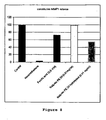
- Figure 8 shows the effect of hydrolysis on an extract comprising rosmarinic acid in the constitutive MMP1 release. It can be seen that compared to a control, to ferulic acid, and to an extract comprising rosmarinic acid (not hydrolysed), at least partially hydrolysed rosmarinic acid has a considerably effect on the constitutive MMP1 release which makes it particularly useful in improving and/or preventing damages to the skin.
- the composition of the invention may be used cosmetically.
- the compositions may be designed for oral consumption or for topical applications.
- cosmetic use is meant a non-therapeutic use which may improve the aesthetic aspect or comfort of the skin, coat and/or hair of humans or pets.
- the cosmetic use may include preventing damages to, and/or improving the skin, coat and/or hair of humans or pets.
- Such damages include in particular actinic and ageing damages of the skin such as dryness, irregular pigmentation (notably freckling, lentigines, guttate hypomelanosis and persistent hyperpigmentation), wrinkling (notably fine surface lines and deep furrows), stellate pseudoscars, elastosis, inelasticity, telangiectasia, venous lakes, comedones, sebaceous hyperplasia, acrochordon and seborrhea keratosis.
- actinic and ageing damages of the skin such as dryness, irregular pigmentation (notably freckling, lentigines, guttate hypomelanosis and persistent hyperpigmentation), wrinkling (notably fine surface lines and deep furrows), stellate pseudoscars, elastosis, inelasticity, telangiectasia, venous lakes, comedones, se
- the cosmetic use may also have particular benefits on hair and coat, such as an improved hair or coat density, fibre diameter, colour, oiliness, glossiness, sebum production and may help to prevent hair or coat loss.
- the composition of the invention may assume any form of food composition described above.
- it is in the form of dietary supplements, which may be in liquid or dry form, such as solutions, sprays, tablets, capsules, gelatine capsules, lozenges, powders, gels, emulsions etc. More preferably it is in the form of a capsule.
- the composition may assume the form of a topical composition which can be in the form of aqueous, aqueous-alcoholic or oily solutions, of dispersions of the solution type or dispersions of the lotion or serum type, of emulsions that have a liquid or semi-liquid consistency of the milk type, obtained by dispersion of a fatty phase in an aqueous phase (O/W) or vice-versa (W/O), or of suspensions or emulsion that have a soft, semi-solid or solid consistency of the cream, aqueous gel or anhydrous gel type or else of microemulsions, of microcapsules, or microparticles or of vesicular dispersions of ionic and/or non-ionic type.
- a topical composition which can be in the form of aqueous, aqueous-alcoholic or oily solutions, of dispersions of the solution type or dispersions of the lotion or serum type, of emulsions that have a liquid or semi-liquid consistency of the
- compositions are prepared according to usual methods known to the skilled person.
- these topical compositions are designed such that the enzyme and/or microorganism interact with the rosmarinic acid only upon topical application.
- compositions for topical applications can in particular constitute cleansing, protective, treatment or care creams for the face, for the hands, for the feet, for the major anatomical folds or for the body (for example day creams, night creams, makeup-removing creams, foundation creams, sun creams), makeup products such as fluid foundations, makeup-removal milks, protective or care milks for the body, aftersun milks, skincare lotions, gels or foams, such as cleansing or disinfecting lotions, sun lotions, artificial tanning lotions, bath compositions, deodorant compositions containing a bactericidal agent, aftershave gels or lotions, depilatory creams, or compositions for insect bites, soaps, cleansing cakes, creams, gels, emulsions or mousses, aerosol compositions for hair etc.
- cleansing, protective, treatment or care creams for the face, for the hands, for the feet, for the major anatomical folds or for the body for example day creams, night creams, makeup-removing creams, foundation cream
- hydrolytic enzyme or a microorganism containing or producing a hydrolytic enzyme for hydrolysing rosmarinic acid Fig. 1
- the hydrolysis of rosmarinic acid into caffeic acid ( Fig. 2 ) and 3,4-dihydroxy phenyllactic acid ( Fig. 3 ) may depend on the amount of enzyme used, the pH and the temperature at which the hydrolysis is carried out and the amount of rosmarinic acid present.
- a hydrolytic enzyme or a microorganism containing or producing said hydrolytic enzyme in a composition comprising rosmarinic acid and/or its derivatives for improving the bioefficacy of said composition is thus provided by the present invention.
- a microorganism is preferably selected from bacteria, yeasts or fungi. More preferably it is a probiotic microorganism. Most preferably, it is selected from Lactobacillus johnsonii (CNCM 1-1225), Bifidobacterium longum (ATCC BAA-999), Bifidobacterium lactis (CNCM I-3446) or mixtures thereof.
- a method of preparing a composition comprising rosmarinic acid and/or its derivatives having an increased bioefficacy is given.
- the method comprises the first step of providing rosmarinic acid and/or its derivatives.
- This may be provided by various herbs such as rosemary, oregano, marjoram, thyme, perilla, peppermint, comfrey, parsley, balm, sage, hyssop, basil, lavender etc. or mixtures thereof, or by extraction of natural sources.
- rosmarinic acid is provided in an amount ranging from 0.01g to 10g on a dry matter basis.
- hydrolytic enzyme or a microorganism containing or producing said hydrolytic enzyme is provided.
- the enzyme When used as such, it is preferably provided in an amount ranging from 0.01-1000 U/g.
- the microorganism is used, it is preferably provided in an amount ranging from 1x10 3 to 1x10 12 cfu/g.
- the microorganism may be selected from bacteria, yeasts or fungi.
- the microorganism is a probiotic. More preferably, it is selected from Lactobacillus johnsonii (CNCM I-1225), Bifidobacterium longum (ATCC BAA-999), Bifidobacterium lactis (CNCM I-3446) or mixtures thereof.
- the third step of the method then consists in mixing the rosmarinic acid and/or derivatives thereof and the hydrolytic enzyme and/or microorganism containing or producing said enzyme with further ingredients to produce said composition, such that hydrolysis of rosmarinic acid occurs in the composition or in vivo.
- the process of converting rosmarinic acid into caffeic acid and 3,4-dihydroxy phenyllactic acid described above may thus occur either in the food matrix itself, in the product for topical application itself, or at an early stage of the digestion process in vivo or upon topical application thus increasing the bioefficacy of said compositions comprising rosmarinic acid and/or its derivatives.
- Further ingredients may include any ingredients used in the manufacture of food products, of topical compositions and functional ingredients. These include carbohydrates, proteins, lipids, fibres, vitamins, prebiotics, minerals, plant extracts etc.
- the resulting composition may be in any form such as those compositions described above.
- the present invention further encompasses a method for improving the health of a subject, comprising the step of administering a composition according to any of claims 1 to 15. Administration may be topical or oral.
- composition of the invention indeed may act as an anti-oxidant, as an anti-inflammatory and antihypertensive. Further, it has positive effects in the prevention or treatment of cardiovascular and cerebrovascular diseases, in the prevention of type 2 diabetes, and in brain degenerative diseases.
- compositions according to the present invention may be administered for treating and/or preventing damages of the skin which are, for example, produced by a stress situation e.g. by means of a chemical, biological or a physical stress, e.g. by exposure to oxidants or carcinogens, exposure to bacteria, viruses, fungi, lipids derived from surrounding cells and/or microbes, or exposure to UV-irradiation.
- a stress situation e.g. by means of a chemical, biological or a physical stress, e.g. by exposure to oxidants or carcinogens, exposure to bacteria, viruses, fungi, lipids derived from surrounding cells and/or microbes, or exposure to UV-irradiation.
- These damages further comprise actinic keratoses, purpura, cherry angiodema, basal cell carcinoma and squamous cell carcinoma, skin burning and/or blistering, epidermal hyperplasia, inflammation, immune suppression, and cancer, e.g. non-melanoma and melanoma skin cancers.
- compositions according to the present invention on skin of humans or pets, can be measured by using conventional methods including minimal erythemal dose (MED), colorimetry, transepidermal water loss, DNA repair, measure of interleukins and proteoglycans production, or collagenase activity, barrier function or cell renewal.
- MED minimal erythemal dose
- a composition according to the invention is thus useful in improving and preventing damages to the skin.
- compositions of the present invention may easily be orally administered with food material, special clinical food may be administered containing a high amount of the objective substances.
- a composition in the form of a hard capsule has the following formulation: Compound mg per capsule Rosemary extract 500 Lactobacillus johnsonii 5x10 8 cfu Excipient for the core Microcrystalline Cellulose 70 Encompress TM 60 Magnesium stearate 3 Anhydrous colloidal Silica 1 Coating agent Gum-lac 5 Talc 61 Sucrose 250 polyvidone 6 titanium dioxide 0.3 colouring agent 5
- composition can be administered to the individual in an amount of 2 to 3 capsules daily.
- a food recipe was prepared by mixing rosemary extract (or rosmarinic acid) with Lactobacillus johnsonii (La1, CNCM I-1225) in the proportion of 1x10 5 to 1x10 12 cfu of bacteria to 1 g to 10 g of the rosemary extract (or rosmarinic acid).
- the resulting mixture was added or blended with any suitable carrier, for example a fermented milk, a yoghurt, a fresh cheese, a renneted milk, a confectionery bar, breakfast cereal flakes or bars, a drink, milk powder, soy-based product, non-milk fermented product or a nutritional supplement for clinical nutrition.
- Figure 5 shows the generation of caffeic acid at the pH values of 5.0, 6.0, 7.0 and 8.0. At pH 8.0, rosmarinic acid was completely transformed after 2 h reaction time while the reaction rate was very low at pH 6.0 and no hydrolysis was observed at pH 5.0.
- the bacterium was grown in MRS medium for 16 hours at 37 °C under anaerobic conditions. After centrifugation, the cell pellets were washed 3 times with 10ml of sodium phosphate buffer (50 mM, pH 8). The cells (0.60 g) were suspended in 1ml sodium phosphate buffer (50 mM, pH 8) and rosmarinic acid was added (5 mg/mL) and the mixture was incubated at 45 °C during 24 h. An aliquot was withdrawn every 1 ⁇ 2 hour for kinetic study. After centrifugation, the supernatants were analysed by HPLC. After 4 h incubation, all rosmarinic acid was transformed into caffeic acid and 3,4-dihydroxy phenyllactic acid.
- the bacterium was grown in MRS + 0.05% cystein medium for 16 hours at 37 °C under anaerobic conditions. After centrifugation, the cell pellets were washed 3 times with 10 ml of sodium phosphate buffer (50 mM, pH 8). The cells (0.60 g) were suspended in 1ml sodium phosphate buffer (50 mM, pH 8) and rosmarinic acid was added (5mg/mL) and the mixture was incubated at 45°C during 24h. An aliquot was withdrawn every 1 ⁇ 2 hour for kinetic study. After centrifugation, the supernatants were analysed by HPLC. After 24 h incubation, more than 50% of rosmarinic acid was transformed into caffeic acid and 3,4-dihydroxy phenyllactic acid.
- MMP-1 matrix metalloproteinase dosage
- the fibroblast cells were placed in a cultivating medium in 96-well plates. After pre-cultivating for 24h, the medium was replaced with a medium containing the product to be tested (or no product for the reference). Each experimental condition was carried out in triplicate (using 3 cultivating wells). After cultivating for 24 hours in presence (or absence) of product to be tested, the cultivating medium was removed and replaced by a buffer solution (EBSS) and the cells were kept away from any light source. At the end of the incubation, the EBSS solution was replaced by a medium containing the compound to be tested and the plates were placed at 37°C, 5% CO 2 . After a 48h treatment, the culture supernatant was collected for ELISA MMP-1 dosage. The cell viability was then evaluated on a cell layer by measuring the reduction of MTT by dehydrogenases of viable cells according to standard procedure.
- EBSS buffer solution
- the MMP-1 dosage (human interstitial collagenase) was realised by ELISA using a "BIOTRACK human MMP-1, ELISA system, Amersham RPN2610" kit, according to the instructions of the provider.
- the counting data was transferred and processed with the PRISM software (Graph Pad Software).
- the inter-group comparisons were carried out by analysis of variance (ANOVA) using Dunnett's multiple comparison test.
- the hydrolysed Naturex is obtained by treating the natural extract comprising rosmarinic acid with a probiotic strain of Lactobacillus johnsonii (CNCM I-1225). Rosmarinic acid was at least partially transformed into caffeic acid and 3,4-dihydroxy phenyllactic acid during the incubation.
- % reference Reference 1 100 Naturex PE 20 Control N PE20 C 0.01 mg/ml 99 0.001 mg/ml 93 Naturex PE 20 Hydrolyzed N PE20 H 0.01 mg/ml 54* 0.001 mg/ml 73
- results shown in the table above evidence the skin benefits provided by at least partially hydrolysed rosmarinic acid compared to non-hydrolysed rosmarinic acid. More particularly, it shows the inhibitory effect of the compositions of the invention on the expression of MMP-1.
Landscapes
- Health & Medical Sciences (AREA)
- Life Sciences & Earth Sciences (AREA)
- Chemical & Material Sciences (AREA)
- Mycology (AREA)
- Engineering & Computer Science (AREA)
- Microbiology (AREA)
- Polymers & Plastics (AREA)
- Nutrition Science (AREA)
- Food Science & Technology (AREA)
- Medicinal Chemistry (AREA)
- Pharmacology & Pharmacy (AREA)
- Animal Behavior & Ethology (AREA)
- General Health & Medical Sciences (AREA)
- Public Health (AREA)
- Veterinary Medicine (AREA)
- Epidemiology (AREA)
- Natural Medicines & Medicinal Plants (AREA)
- Molecular Biology (AREA)
- Botany (AREA)
- Bioinformatics & Cheminformatics (AREA)
- Emergency Medicine (AREA)
- Gastroenterology & Hepatology (AREA)
- Biotechnology (AREA)
- Proteomics, Peptides & Aminoacids (AREA)
- Medical Informatics (AREA)
- Alternative & Traditional Medicine (AREA)
- Immunology (AREA)
- Chemical Kinetics & Catalysis (AREA)
- Organic Chemistry (AREA)
- Nuclear Medicine, Radiotherapy & Molecular Imaging (AREA)
- Dermatology (AREA)
- General Chemical & Material Sciences (AREA)
- Acyclic And Carbocyclic Compounds In Medicinal Compositions (AREA)
- Cosmetics (AREA)
- Enzymes And Modification Thereof (AREA)
- Food Preservation Except Freezing, Refrigeration, And Drying (AREA)
- Medicines Containing Material From Animals Or Micro-Organisms (AREA)
- Coloring Foods And Improving Nutritive Qualities (AREA)
Abstract
Description
- The present invention relates to compositions comprising rosmarinic acid or extracts containing rosmarinic acid and to the use of a hydrolytic enzyme or of microorganisms containing or capable of producing hydrolytic enzymes in these compositions. The invention also pertains to methods for improving the biological effects of compositions containing rosmarinic acid and its derivatives.
- Rosmarinic acid is a polyphenol found in a number of natural sources including rosemary, oregano, marjoram, thyme, peppermint, comfrey, parsley, balm, sage, hyssop, basil, lavender etc. These plants have been reported as herbal remedies with antioxidant, anti-inflammatory, anticarcinogenic, and hepatoprotective properties. These biological effects have been related to the presence of polyphenols, notably rosmarinic acid, flavones, and flavanols which were identified in rosemary leaves, for instance.
- There is no way described in the art as to how to improve the biological effects of compositions comprising rosmarinic acid or plant extracts comprising said rosmarinic acid.
- Al-Sereiti M R et al.: "Pharmacology of rosemary (Rosmarinus officinalis linn) and its therapeutic potentials" Indian Journal of Experimental Biology, vol. 37, February 1999 (1999-02) reports the known use of extracts of rosemary (Rosmarinus officinalis) in food, cosmetics as well as in folk medicine, including its use to treat scalp eczemas, boils and wounds, further indicating that the most important constituents of rosemary extract are caffeic acid and its derivates such as rosmarinic acid.
-
US 2004/037901 A1 discloses the use of an aqueous extract of a plant of the Rosmarinus, in particular Rosmarinus officinalis, for treating adverse effects of skin aging by stimulating the synthesis of collagen and by inhibiting the expression of extracellular matrix proteases, in particular metalloproteinases, includingtype 1 metalloproteinases. - Database WPI Week 200419 Derwent Publications Ltd., London, GB; AN 2004-199501 and
KR 2003 082 764 A - Psotova et al.: "Photoprotective properties of Prunella vulgaris and rosmarinic acid on human keratinocytes" JOURNAL OF PHOTOCHEMISTRY AND PHOTOBIOLOGY B: BIOLOGY, ELSEVIER SCIENCE S.A., BASEL, CH, vol. 84, no. 3, 1 September 2006 (2006-09.01), pages 167-174 reports the photoprotective effects of an aqueous/ethanolic extract of Prunella vulgaris and of rosmarinic acid, indicating the potential beneficial use in photoprotective dermatological preparations.
- Wojciechowski H et al: "Analysis of the components of Lycopus europaeus L. in body fluids during metabolism studies Comparison of capillary electrophoresis and high-performance liquid chromatography" JOURNAL OF CHROMATOGRAPHY A, ELSEVIER, AMSTERDAM, NL, vol. 717, no. 1, 24 November 1995 reports the traditional medical use of extracts of Lycopus europaeus L. (Lamiaceae) against mild forms of hyperthyroidism, further indicating that rosmarinic acid and caffeic acid are some of the main components of said extracts.
-
US 2005/037094 A1 discloses compositions for treating heart diseases, said compositions comprising, among others, rosmarinic acids sodium, 3,4-dihydroxyphenyllactate and salvianolic acid (A, B, C, D, E or F). This document also discloses compositions for the referred purpose, said compositions comprising rosmarinic acid or salvianolic acid (C or D) and lactobacillus. Further, the compositions disclosed therein can be formulated as pellet, pill, capsule, granule, tablet, suspension, injection, syrup, tincture, powder, tea, topical solution, nebula, suppository microcapsule, or other pharmaceutically acceptable form. -
US 2004/009244 A1 discloses pharmceutical, cosmetic or food compositions comprising Melissa leaf extract for inhibiting metalloproteinase activity and the use thereof for treating a variety of diseases, including skin aging. Further, it is also indicated that Melissa extracts contain caffeic acid and derivatives thereof, rosmarinic acid being the most abundant component of the leaf extract. -
US 2006/172402 A1 teaches that hydrolysis of caffeic acid esters (such as chichoric acid, rosmarinic acid and chlorogenic acid) can be accomplished with heat, pressure and mild alkaline solution, or enzymatically by esterases, further indicating that esterases suitable for catalysing the conversion of caffeic acid esters to caffeic acid are known in the art and are present in plants, animals and many microorganisms. -
WO 96/39859 A - There thus remains a need to improve the biological effects of compositions comprising rosmarinic acid or plant extracts comprising said rosmarinic acid and derivatives thereof.
- Accordingly, this object is solved by the features of the independent claims. The dependent claims further develop the central idea of the invention.
- Thus, in a first aspect, the present invention relates to a composition comprising rosmarinic acid and/or derivatives thereof in combination with a microorganism containing or producing a hydrolytic enzyme, wherein the microorganism is a probiotic.
- In a second aspect, the invention relates to a composition comprising rosmarinic acid and/or derivatives thereof in combination with a hydrolysis product thereof.
- A composition according to any of
claims 1 to 11 for use in improving or preventing damages to the skin is also part of the present invention. - Further, the invention encompasses the cosmetic use of a composition according to any of
claims 1 to 11. - The use of a hydrolytic enzyme or a microorganism containing or producing said enzyme in a composition comprising rosmarinic acid and/or its derivatives for improving the biological effect of said composition falls under a further aspect of the invention.
- Further, the invention also provides a method of preparing a composition comprising rosmarinic acid and/or derivatives thereof having an increased biological effect comprising the steps of:
- a. Providing rosmarinic acid and/or derivatives thereof,
- b. Providing a hydrolytic enzyme or a microorganism containing or producing said enzyme, and
- c. Mixing said rosmarinic acid and/or derivatives thereof and hydrolytic enzyme or microorganism containing or producing said enzyme with further ingredients to produce said composition, such that hydrolysis of rosmarinic acid occurs in the composition or in vivo.
- The present invention is further described hereinafter with reference to some of its embodiments shown in the accompanying drawings wherein:
-
Fig. 1 depicts the molecular structure of rosmarinic acid, -
Fig. 2 depicts the molecular structure of caffeic acid, -
Fig. 3 depicts the molecular structure of 3,4-dihydroxy phenyllactic acid, -
Fig. 4 is a graph showing the influence of chlorogenate esterase enzyme amount on the hydrolysis of rosmarinic acid ((▲) 0.01 U/mg, (◆) 0.02 U/mg) and on formation of caffeic acid ((□) 0.01 U/mg, (•) 0.02 U/mg), -
Fig. 5 is a graph showing the influence of pH on the formation of caffeic acid from rosmarinic acid using chlorogenate esterase enzyme at pH 5.0 (•)), pH 6.0 (□), pH 7.0 (▲), and pH 8.0 (◆), -
Fig. 6 is a graph showing the effect of temperature on the hydrolysis of rosmarinic acid (□) and on the formation of caffeic acid (•) at 30 °C, 40 °C, and 50 °C using 0.02 U of enzyme per mg of rosmarinic acid, -
Fig. 7 is a graph showing the influence of substrate concentration on the rate of hydrolysis of rosmarinic acid and yield using (•) 1mg, (◆) 2mg, (Δ) 4 mg, and (□) 6 mg of rosmarinic acid and 0.02 units of enzyme at pH 6.6 and 40 °C, -
Fig. 8 is a graph showing the improved biological effect of an extract containing rosmarinic acid after hydrolysis (Naturex PE20 hydrolysed) compared with an extract comprising rosmarinic acid (Naturex PE20). - The present invention relates to compositions comprising rosmarinic acid and derivatives thereof. The compositions may be "food compositions" or "topical compositions". By "food compositions" is meant any consumable product which can be used for nutritional, pharmaceutical and/or cosmetic purposes. By "topical compositions" is meant any composition that can be applied to the skin, coat, nails or hair of a subject for pharmaceutical and/or cosmetic purposes. Preferably, the compositions are food compositions.
- Rosmarinic acid (
Fig. 1 ) and its derivatives are commonly found in plants such as rosemary, oregano, marjoram, thyme, peppermint, comfrey, parsley, balm, sage, hyssop, basil, lavender, perilla etc. - By "derivatives" of rosmarinic acid is meant any compound comprising at least a rosmarinic acid moiety. These include oligomers, polymers, glucosides of rosmarinic acid etc.
- Rosmarinic acid and its derivatives may be provided as pure compounds or by various herbs such as perilla (Perilla frutescens L.), sage (Salvia officinalis L.), mint (Mentha arvense L.), basil (Ocimum basilicum L.), thyme (Thymus vulgaris L.), Chinese bitter-sweet (Celastrus hindsii) etc. Preferably it is provided by rosemary (Rosmarinus officinalis L.).
- Furthermore, extraction of plants containing a rosmarinic acid source may be carried out using methods known in the art. Indeed, the composition of the present invention preferably comprises plant extracts comprising rosmarinic acid and/or its derivatives. Preferably, the extracts are present in the composition in an amount ranging from 0.01g to 20g on a dry matter basis.
- The present invention thus provides a composition comprising rosmarinic acid and/or derivatives thereof in combination with a microorganism containing or producing a hydrolytic enzyme (e.g. esterase) capable of hydrolysing rosmarinic acid or its derivatives.
- Due to the hydrolytic effect of the enzyme on rosmarinic acid and/or on its derivatives, the composition may further comprise the hydrolysis products of rosmarinic acid and/or its derivatives with said enzyme. These may include caffeic acid, 3,4-dihydroxy phenyllactic acid etc. and mixtures thereof.
- The compositions of the present invention may be dry, moist, or semi-moist compositions. By "dry" are meant compositions having a water activity below 0.6. By "semi-moist" are meant compositions having a water activity between 0.6 and 0.9 and by "moist" are meant compositions having a water activity above 0.9.
- The compositions may comprise suitable food or pharmaceutical carriers. These include milk, yogurt, cheese, fermented milk, milk-based fermented products, ice creams, fermented cereal-based products, milk-based powders, formulae for children and infants, foods for animal, in particular pets, tablets or lozenges, liquid bacterial suspensions, oral supplements in dry form and oral supplements in liquid form.
- Thus, the composition may be a food composition in the form of complete nutritional foods, drinks, mineral waters, soups, food supplements and replacement foods, solutions, sprays, powders, tablets, capsules, nutritional bars, liquid bacterial suspensions, confectionery, milk-based or fermented milk-based products, yogurts, milk-based powders, enteral nutrition products, compositions for children and/or infants, cereal-based products or fermented cereal-based products, soy-based products, ice creams, chocolate, coffee, "culinary" products such as mayonnaise, tomato puree or salad dressings, pet food etc. Thus, the composition may also be intended for animals.
- For ingestion, many embodiments of oral compositions and in particular of food supplements are possible. They are formulated by means of the usual methods for producing sugar-coated tablets, gelatine capsules, gels, emulsions, tablets, capsules or solutions. In particular, the composition comprising rosmarinic acid and/or a derivative thereof in combination with a hydrolytic enzyme or with a microorganism containing or producing said enzyme may be incorporated into any other forms of food supplements or of enriched foods, for example food bars, or compacted or non-compacted powders. The powders can be diluted with water, in a fizzy drink, dairy products or soy-derived products or can be incorporated into food bars.
- Alternatively, the composition may be a topical composition in the form of aqueous, aqueous-alcoholic or oily solutions, of dispersions of the solution type or dispersions of the lotion or serum type, of emulsions that have a liquid or semi-liquid consistency of the milk type, obtained by dispersion of a fatty phase in an aqueous phase (O/W) or vice-versa (W/O), or of suspensions or emulsion that have a soft, semi-solid or solid consistency of the cream, aqueous gel or anhydrous gel type or else of microemulsions, of microcapsules, or microparticles or of vesicular dispersions of ionic and/or non-ionic type.
- The compositions of the invention may comprise the usual excipients and constituents, e.g. fatty and/or aqueous constituents, humectifying agents, thickeners, preserving agents, texturing, flavouring and/or coating agents, antioxidants, dyes that are usual in the food and/or topical domain.
- Preferably, the hydrolytic enzyme present in the composition is an esterase.
- The underlying principle of the present invention is that certain hydrolytic enzymes are capable of cleaving rosmarinic acid (
Fig. 1 ) into caffeic acid (Fig. 2 ) and 3,4-dihydroxy phenyllactic acid (Fig. 3 ) which are more readily bioavailable than rosmarinic acid. Thus, the bioefficacy of compositions comprising rosmarinic acid or plant extracts comprising rosmarinic acid is improved. - By providing a composition comprising said hydrolytic enzyme, the present invention allows the process of converting rosmarinic acid into caffeic acid and 3,4-dihydroxy phenyllactic acid described above to occur either in the food matrix itself, in the product for topical application itself, or at an early stage of the digestion process in vivo or upon topical application, thus increasing the bioefficacy of compositions comprising rosmarinic acid and/or its derivatives.
- Thus, the compositions of the invention containing rosmarinic acid and/or its derivatives have improved biological effects.
- Alternatively or in addition, the composition of the present invention may comprise a microorganism containing or producing such a hydrolytic enzyme.
- The amount of enzyme or microorganism present in the composition of the invention is such that at least 10%, preferably at least 30%, more preferably at least 50% of rosmarinic acid (
Fig. 1 ) can be hydrolysed into caffeic acid (Fig. 2 ) and 3,4-dihydroxy phenyllactic acid (Fig. 3 ). This can be easily determined by the skilled person by methods known in the art. - Depending on the application, the hydrolytic enzyme may be present in the composition in an amount ranging from 0.01 to 1000 U/g.
- When the microorganism is used in the composition, it is preferably present in an amount ranging from 1x10³ to 1x10¹² cfu/g.
- The microorganism used in the composition of the invention may be selected from bacteria, yeasts or fungi. Preferably, the microorganism is a probiotic microorganism. More preferably, it is selected from Lactobacillus johnsonii (CNCM I-1225), Bifidobacterium longum (ATCC BAA-999), Bifidobacterium lactis (CNCM I-3446) or mixtures thereof.
- Under another aspect of the invention, a composition comprising rosmarinic acid or plant extracts comprising rosmarinic acid and/or derivatives thereof in combination with a hydrolysis product thereof is provided. Preferably, the hydrolysis product is obtainable by enzymatic cleavage of rosmarinic acid and/or derivatives thereof. Such hydrolysis product may be selected from caffeic acid, 3,4-dihydroxy phenyllactic acid etc. and mixtures thereof.
- The compositions of the invention are particularly useful in improving or preventing damages to the skin. Indeed, they have been found to be particularly useful in inhibiting the expression of matrix metalloproteinase. Preferably, the matrix metalloproteinase is of
type 1.Figure 8 shows the effect of hydrolysis on an extract comprising rosmarinic acid in the constitutive MMP1 release. It can be seen that compared to a control, to ferulic acid, and to an extract comprising rosmarinic acid (not hydrolysed), at least partially hydrolysed rosmarinic acid has a considerably effect on the constitutive MMP1 release which makes it particularly useful in improving and/or preventing damages to the skin. - According to an embodiment, the composition of the invention may be used cosmetically. In this embodiment, the compositions may be designed for oral consumption or for topical applications.
- By "cosmetic use" is meant a non-therapeutic use which may improve the aesthetic aspect or comfort of the skin, coat and/or hair of humans or pets.
- In this context, the cosmetic use may include preventing damages to, and/or improving the skin, coat and/or hair of humans or pets. Such damages include in particular actinic and ageing damages of the skin such as dryness, irregular pigmentation (notably freckling, lentigines, guttate hypomelanosis and persistent hyperpigmentation), wrinkling (notably fine surface lines and deep furrows), stellate pseudoscars, elastosis, inelasticity, telangiectasia, venous lakes, comedones, sebaceous hyperplasia, acrochordon and seborrhea keratosis.
- The cosmetic use may also have particular benefits on hair and coat, such as an improved hair or coat density, fibre diameter, colour, oiliness, glossiness, sebum production and may help to prevent hair or coat loss.
- When used cosmetically, the composition of the invention may assume any form of food composition described above. Preferably, it is in the form of dietary supplements, which may be in liquid or dry form, such as solutions, sprays, tablets, capsules, gelatine capsules, lozenges, powders, gels, emulsions etc. More preferably it is in the form of a capsule.
- Alternatively, the composition may assume the form of a topical composition which can be in the form of aqueous, aqueous-alcoholic or oily solutions, of dispersions of the solution type or dispersions of the lotion or serum type, of emulsions that have a liquid or semi-liquid consistency of the milk type, obtained by dispersion of a fatty phase in an aqueous phase (O/W) or vice-versa (W/O), or of suspensions or emulsion that have a soft, semi-solid or solid consistency of the cream, aqueous gel or anhydrous gel type or else of microemulsions, of microcapsules, or microparticles or of vesicular dispersions of ionic and/or non-ionic type.
- These compositions are prepared according to usual methods known to the skilled person. In a preferred embodiment, these topical compositions are designed such that the enzyme and/or microorganism interact with the rosmarinic acid only upon topical application.
- Compositions for topical applications can in particular constitute cleansing, protective, treatment or care creams for the face, for the hands, for the feet, for the major anatomical folds or for the body (for example day creams, night creams, makeup-removing creams, foundation creams, sun creams), makeup products such as fluid foundations, makeup-removal milks, protective or care milks for the body, aftersun milks, skincare lotions, gels or foams, such as cleansing or disinfecting lotions, sun lotions, artificial tanning lotions, bath compositions, deodorant compositions containing a bactericidal agent, aftershave gels or lotions, depilatory creams, or compositions for insect bites, soaps, cleansing cakes, creams, gels, emulsions or mousses, aerosol compositions for hair etc.
- Another aspect described herein is the use of hydrolytic enzyme or a microorganism containing or producing a hydrolytic enzyme for hydrolysing rosmarinic acid (
Fig. 1 ). Referring tofigures 4 to 7 , the hydrolysis of rosmarinic acid into caffeic acid (Fig. 2 ) and 3,4-dihydroxy phenyllactic acid (Fig. 3 ) may depend on the amount of enzyme used, the pH and the temperature at which the hydrolysis is carried out and the amount of rosmarinic acid present. - The use of a hydrolytic enzyme or a microorganism containing or producing said hydrolytic enzyme in a composition comprising rosmarinic acid and/or its derivatives for improving the bioefficacy of said composition is thus provided by the present invention. When a microorganism is used for this purpose, it is preferably selected from bacteria, yeasts or fungi. More preferably it is a probiotic microorganism. Most preferably, it is selected from Lactobacillus johnsonii (CNCM 1-1225), Bifidobacterium longum (ATCC BAA-999), Bifidobacterium lactis (CNCM I-3446) or mixtures thereof.
- According to another embodiment of the present invention, a method of preparing a composition comprising rosmarinic acid and/or its derivatives having an increased bioefficacy is given.
- The method comprises the first step of providing rosmarinic acid and/or its derivatives. This may be provided by various herbs such as rosemary, oregano, marjoram, thyme, perilla, peppermint, comfrey, parsley, balm, sage, hyssop, basil, lavender etc. or mixtures thereof, or by extraction of natural sources.
- Preferably, rosmarinic acid is provided in an amount ranging from 0.01g to 10g on a dry matter basis.
- Secondly, a hydrolytic enzyme or a microorganism containing or producing said hydrolytic enzyme is provided.
- When the enzyme is used as such, it is preferably provided in an amount ranging from 0.01-1000 U/g.
- If the microorganism is used, it is preferably provided in an amount ranging from 1x10³ to 1x10¹² cfu/g. The microorganism may be selected from bacteria, yeasts or fungi. According to a preferred embodiment, the microorganism is a probiotic. More preferably, it is selected from Lactobacillus johnsonii (CNCM I-1225), Bifidobacterium longum (ATCC BAA-999), Bifidobacterium lactis (CNCM I-3446) or mixtures thereof.
- The third step of the method then consists in mixing the rosmarinic acid and/or derivatives thereof and the hydrolytic enzyme and/or microorganism containing or producing said enzyme with further ingredients to produce said composition, such that hydrolysis of rosmarinic acid occurs in the composition or in vivo.
- The process of converting rosmarinic acid into caffeic acid and 3,4-dihydroxy phenyllactic acid described above may thus occur either in the food matrix itself, in the product for topical application itself, or at an early stage of the digestion process in vivo or upon topical application thus increasing the bioefficacy of said compositions comprising rosmarinic acid and/or its derivatives.
- Further ingredients may include any ingredients used in the manufacture of food products, of topical compositions and functional ingredients. These include carbohydrates, proteins, lipids, fibres, vitamins, prebiotics, minerals, plant extracts etc.
- The resulting composition may be in any form such as those compositions described above.
- The present invention further encompasses a method for improving the health of a subject, comprising the step of administering a composition according to any of
claims 1 to 15. Administration may be topical or oral. - The composition of the invention indeed may act as an anti-oxidant, as an anti-inflammatory and antihypertensive. Further, it has positive effects in the prevention or treatment of cardiovascular and cerebrovascular diseases, in the prevention of
type 2 diabetes, and in brain degenerative diseases. - Furthermore, the compositions according to the present invention may be administered for treating and/or preventing damages of the skin which are, for example, produced by a stress situation e.g. by means of a chemical, biological or a physical stress, e.g. by exposure to oxidants or carcinogens, exposure to bacteria, viruses, fungi, lipids derived from surrounding cells and/or microbes, or exposure to UV-irradiation.
- These damages further comprise actinic keratoses, purpura, cherry angiodema, basal cell carcinoma and squamous cell carcinoma, skin burning and/or blistering, epidermal hyperplasia, inflammation, immune suppression, and cancer, e.g. non-melanoma and melanoma skin cancers.
- The effect of the compositions according to the present invention, on skin of humans or pets, can be measured by using conventional methods including minimal erythemal dose (MED), colorimetry, transepidermal water loss, DNA repair, measure of interleukins and proteoglycans production, or collagenase activity, barrier function or cell renewal. A composition according to the invention is thus useful in improving and preventing damages to the skin.
- It will be understood that the concept of the present invention may likewise be applied as an adjuvant therapy assisting in presently used medications. Since the compositions of the present invention may easily be orally administered with food material, special clinical food may be administered containing a high amount of the objective substances.
- The present invention is further illustrated by means of the non-limiting examples described below.
- A composition in the form of a hard capsule has the following formulation:
Compound mg per
capsuleRosemary extract 500 Lactobacillus johnsonii 5x10⁸ cfu Excipient for the core Microcrystalline Cellulose 70 Encompress ™60 Magnesium stearate 3 Anhydrous colloidal Silica 1 Coating agent Gum-lac 5 Talc 61 Sucrose 250 polyvidone 6 titanium dioxide 0.3 colouring agent 5 - The composition can be administered to the individual in an amount of 2 to 3 capsules daily.
- A food recipe was prepared by mixing rosemary extract (or rosmarinic acid) with Lactobacillus johnsonii (La1, CNCM I-1225) in the proportion of 1x10⁵ to 1x10¹² cfu of bacteria to 1 g to 10 g of the rosemary extract (or rosmarinic acid). The resulting mixture was added or blended with any suitable carrier, for example a fermented milk, a yoghurt, a fresh cheese, a renneted milk, a confectionery bar, breakfast cereal flakes or bars, a drink, milk powder, soy-based product, non-milk fermented product or a nutritional supplement for clinical nutrition.
- Trials were performed in phosphate buffer (50 mM, pH 6.6) at 40 °C using different amounts of enzyme (0.01 U, 0.02 U and 1 U enzyme/mg rosmarinic acid). As shown in
Figure 4 , the reaction rate was proportional to the enzyme amount and when chlorogenate esterase was used at 1 U/mg of substrate, rosmarinic acid was completely transformed into caffeic acid and 3,4-dihydroxy phenyllactic acid after only 30 min reaction time (data not shown). - The influence of pH on the enzymatic hydrolysis (0.02 U/mg) of rosmarinic acid was studied.
Figure 5 shows the generation of caffeic acid at the pH values of 5.0, 6.0, 7.0 and 8.0. At pH 8.0, rosmarinic acid was completely transformed after 2 h reaction time while the reaction rate was very low at pH 6.0 and no hydrolysis was observed at pH 5.0. - To study the influence of temperature on the reaction rate and on the stability of the products, trials were performed at pH 6.6, in phosphate buffer (50 mM), using enzyme at 0.02 U/mg of substrate and at 30 °C, 40 °C and 50 °C. As shown in
Figure 6 , no significant differences were observed when the reaction took place at 40 °C or 50 °C, whereas at 30 °C the reaction rate was much slower. - The influence of substrate concentration on the reaction rate and yield was investigated at 40 °C, pH 6.6 using 0.02 units of enzyme and 1 mg, 2 mg, 4 mg, or 6 mg of rosmarinic acid.
Figure 7 shows that the reaction rate and yield were strongly influenced by the ratio enzyme/substrate.
Indeed, more than 90 % of rosmarinic acid was hydrolysed after 4 h when 1 mg of substrate was used while only 40 % hydrolysis was observed when 6 mg of substrate were used under the same conditions. - The bacterium was grown in MRS medium for 16 hours at 37 °C under anaerobic conditions. After centrifugation, the cell pellets were washed 3 times with 10ml of sodium phosphate buffer (50 mM, pH 8). The cells (0.60 g) were suspended in 1ml sodium phosphate buffer (50 mM, pH 8) and rosmarinic acid was added (5 mg/mL) and the mixture was incubated at 45 °C during 24 h. An aliquot was withdrawn every ½ hour for kinetic study. After centrifugation, the supernatants were analysed by HPLC. After 4 h incubation, all rosmarinic acid was transformed into caffeic acid and 3,4-dihydroxy phenyllactic acid.
- The bacterium was grown in MRS + 0.05% cystein medium for 16 hours at 37 °C under anaerobic conditions. After centrifugation, the cell pellets were washed 3 times with 10 ml of sodium phosphate buffer (50 mM, pH 8). The cells (0.60 g) were suspended in 1ml sodium phosphate buffer (50 mM, pH 8) and rosmarinic acid was added (5mg/mL) and the mixture was incubated at 45°C during 24h. An aliquot was withdrawn every ½ hour for kinetic study. After centrifugation, the supernatants were analysed by HPLC. After 24 h incubation, more than 50% of rosmarinic acid was transformed into caffeic acid and 3,4-dihydroxy phenyllactic acid.
- The fibroblast cells were placed in a cultivating medium in 96-well plates. After pre-cultivating for 24h, the medium was replaced with a medium containing the product to be tested (or no product for the reference). Each experimental condition was carried out in triplicate (using 3 cultivating wells).
After cultivating for 24 hours in presence (or absence) of product to be tested, the cultivating medium was removed and replaced by a buffer solution (EBSS) and the cells were kept away from any light source.
At the end of the incubation, the EBSS solution was replaced by a medium containing the compound to be tested and the plates were placed at 37°C, 5% CO2.
After a 48h treatment, the culture supernatant was collected for ELISA MMP-1 dosage. The cell viability was then evaluated on a cell layer by measuring the reduction of MTT by dehydrogenases of viable cells according to standard procedure. - The MMP-1 dosage (human interstitial collagenase) was realised by ELISA using a "BIOTRACK human MMP-1, ELISA system, Amersham RPN2610" kit, according to the instructions of the provider.
- The counting data was transferred and processed with the PRISM software (Graph Pad Software). The inter-group comparisons were carried out by analysis of variance (ANOVA) using Dunnett's multiple comparison test.
- The table below shows the constitutive MMP-1 release by fibroblasts. * shows significant differences with respect to the reference (p<0.01). Naturex is a commercially available natural extract comprising rosmarinic acid.
- The hydrolysed Naturex is obtained by treating the natural extract comprising rosmarinic acid with a probiotic strain of Lactobacillus johnsonii (CNCM I-1225). Rosmarinic acid was at least partially transformed into caffeic acid and 3,4-dihydroxy phenyllactic acid during the incubation.
% reference Reference 1 100 Naturex PE 20 Control
N PE20 C0.01 mg/ml 99 0.001 mg/ml 93 Naturex PE 20 Hydrolyzed
N PE20 H0.01 mg/ml 54* 0.001 mg/ml 73 - The results shown in the table above evidence the skin benefits provided by at least partially hydrolysed rosmarinic acid compared to non-hydrolysed rosmarinic acid. More particularly, it shows the inhibitory effect of the compositions of the invention on the expression of MMP-1.
Claims (29)
- Composition comprising rosmarinic acid and/or derivatives thereof in combination with a microorganism containing or producing a hydrolytic enzyme, wherein the microorganism is a probiotic.
- Composition according to claim 1, which comprises the hydrolysis products of rosmarinic acid and/or its derivatives with said enzyme.
- Composition according to any of claims 1 or 2, wherein the enzyme is an esterase.
- Composition according to any of the preceding claims, wherein the enzyme is capable of hydrolysing rosmarinic acid into caffeic acid and 3,4-dihydroxy phenyllactic acid.
- Composition according to any of the preceding claims, wherein the microorganism is selected from bacteria, yeasts or fungi.
- Composition according to any of the preceding claims, wherein the probiotic microorganism is selected from Lactobacillus johnsonii (CNCM I-1225), Bifidobacterium longum (ATCC BAA-999), Bifidobacterium lactis (CNCM I-3446) or mixtures thereof.
- Composition according to any of the preceding claims formulated for use as a nutritional, pharmaceutical or cosmetic product.
- Composition according to any of the preceding claims, wherein said composition is a food composition.
- Composition according to claim 8, wherein the food composition is in the form of complete nutritional foods, drinks, mineral waters, soups, food supplements and replacement foods, solutions, sprays, powders, tablets, capsules, nutritional bars, liquid bacterial suspensions, confectionery, milk-based or fermented milk-based products, yogurts, milk-based powders, enteral nutrition products, compositions for children and/or infants, cereal-based products or fermented cereal-based products, soy-based products, ice creams, chocolate, coffee, "culinary" products such as mayonnaise, tomato puree or salad dressings, pet food.
- Composition according to any of claims 1 to 7, wherein said composition is a topical composition.
- Composition according to claim 10, wherein the composition is in the form of aqueous, aqueous-alcoholic or oily solutions, of dispersions of the solution type or dispersions of the lotion or serum type, of emulsions that have a liquid or semi-liquid consistency of the milk type, obtained by dispersion of a fatty phase in an aqueous phase (O/W) or vice-versa (W/O), or of suspensions or emulsion that have a soft, semi-solid or solid consistency of the_cream, aqueous gel or anhydrous gel type or else of microemulsions, of microcapsules, or microparticles or of vesicular dispersions of ionic and/or non-ionic type.
- Composition according to any of claims 1 to 11 for use in improving or preventing damages to the skin.
- Cosmetic use of a composition according to any of claims 1 to 11.
- Use of a hydrolytic enzyme or a microorganism containing or producing said enzyme in a composition comprising rosmarinic acid and/or its derivatives for improving the bioefficacy of said composition.
- Use according to claim 14, wherein the enzyme is an esterase.
- Use according to any of claims 14 or 15, wherein the microorganism is selected from bacteria, yeasts, or fungi.
- Use according to any of claims 14 to 16, wherein the microorganism is a probiotic.
- Use according to claim 17, wherein the probiotic is selected from Lactobacillus johnsonii (CNCM 1-1225), Bifidobacterium longum (ATCC BAA-999), Bifidobacterium lactis (CNCM 1-3446) or mixtures thereof.
- Use according to any of claims 14 to 18, wherein the composition is a food composition in the form of complete nutritional foods, drinks, mineral waters, soups, food supplements and replacement foods, solutions, sprays, powders, tablets, capsules, nutritional bars, liquid bacterial suspensions, confectionery, milk-based or fermented milk-based products, yogurts, milk-based powders, enteral nutrition products, compositions for children and/or infants, cereal-based products or fermented cereal-based products, soy-based products, ice creams, chocolate, coffee, "culinary" products such as mayonnaise, tomato puree or salad dressings, pet food.
- Use according to any of claims 14 to 19, wherein the composition is a topical composition in the form of aqueous, aqueous-alcoholic or oily solutions, of dispersions of the solution type or dispersions of the lotion or serum type, of emulsions that have a liquid or semi-liquid consistency of the milk type, obtained by dispersion of a fatty phase in an aqueous phase (O/W) or vice-versa (W/O), or of suspensions or emulsion that have a soft, semi-solid or solid consistency of the cream, aqueous gel or anhydrous gel type or else of microemulsions, of microcapsules, or microparticles or of vesicular dispersions of ionic and/or non-ionic type.
- Method of preparing a composition comprising rosmarinic acid and derivatives thereof having an increased bioefficacy comprising the steps of:a. Providing a plant extract comprising rosmarinic acid and/or derivatives thereof,b. Providing a hydrolytic enzyme or a microorganism containing or producing said enzyme, andc. Mixing said rosmarinic acid and/or derivatives thereof and hydrolytic enzyme or microorganism containing or producing said enzyme with further ingredients to produce said composition, such that hydrolysis of rosmarinic acid occurs in the composition or in vivo.
- Method of claim 21, wherein the rosmarinic acid and/or derivatives thereof are provided by various herbs such as rosemary, oregano, marjoram, thyme, perilla, peppermint, comfrey, parsley, balm, sage, hyssop, basil, lavender, by extraction of natural sources or mixtures thereof.
- Method according to any of claims 21 and 22, wherein the enzyme is an esterase.
- Method according to any of claims 21 to 23, wherein the microorganism is selected from bacteria, yeasts, or fungi.
- Method according to any of claims 21 to 24, wherein the microorganism is a probiotic.
- Method according to claim 25, wherein the probiotic microorganism is selected from Lactobacillus johnsonii (CNCM 1-1225), Bifidobacterium longum (ATCC BAA-999), Bifidobacterium lactis (CNCM 1-3446) or mixtures thereof.
- Method according to any of claims 21 to 26, wherein the rosmarinic acid is hydrolysed into caffeic acid, 3,4-dihydroxy phenyllactic acid.
- Method according to any of claims 21 to 27, wherein the further ingredients are selected from carbohydrates, proteins, lipids, vitamins, prebiotics, minerals, plant extracts, fibres, excipients, flavourings.
- Method according to any of claims 21 to 28, wherein the composition is in the form of a food composition such as complete nutritional foods, drinks, mineral waters, soups, food supplements and replacement foods, solutions, sprays, powders, tablets, capsules, nutritional bars, liquid bacterial suspensions, confectionery, milk-based or fermented milk-based products, yogurts, milk-based powders, enteral nutrition products, compositions for children and/or infants, cereal-based products or fermented cereal-based products, soy-based products, ice creams, chocolate, coffee, "culinary" products such as mayonnaise, tomato puree or salad dressings, pet food or in the form of a topical composition such as aqueous, aqueous-alcoholic or oily solutions, of dispersions of the solution type or dispersions of the lotion or serum type, of emulsions that have a liquid or semi-liquid consistency of the milk type, obtained by dispersion of a fatty phase in an aqueous phase (O/W) or vice-versa (W/O), or of suspensions or emulsion that have a soft, semi-solid or solid consistency of the cream, aqueous gel or anhydrous gel type or else of microemulsions, of microcapsules, or microparticles_or of vesicular dispersions of ionic and/or non-ionic type.
Priority Applications (1)
| Application Number | Priority Date | Filing Date | Title |
|---|---|---|---|
| EP07819621A EP2081566B1 (en) | 2006-11-06 | 2007-11-06 | Improved biological effects of compositions comprising rosmarinic acid |
Applications Claiming Priority (4)
| Application Number | Priority Date | Filing Date | Title |
|---|---|---|---|
| EP06023060A EP1917960A1 (en) | 2006-11-06 | 2006-11-06 | Improved biological effects of rosmarinic acid |
| US86961506P | 2006-12-12 | 2006-12-12 | |
| EP07819621A EP2081566B1 (en) | 2006-11-06 | 2007-11-06 | Improved biological effects of compositions comprising rosmarinic acid |
| PCT/EP2007/009602 WO2008055651A1 (en) | 2006-11-06 | 2007-11-06 | Improved biological effects of compositions comprising rosmarinic acid |
Publications (2)
| Publication Number | Publication Date |
|---|---|
| EP2081566A1 EP2081566A1 (en) | 2009-07-29 |
| EP2081566B1 true EP2081566B1 (en) | 2010-03-24 |
Family
ID=37814047
Family Applications (2)
| Application Number | Title | Priority Date | Filing Date |
|---|---|---|---|
| EP06023060A Withdrawn EP1917960A1 (en) | 2006-11-06 | 2006-11-06 | Improved biological effects of rosmarinic acid |
| EP07819621A Not-in-force EP2081566B1 (en) | 2006-11-06 | 2007-11-06 | Improved biological effects of compositions comprising rosmarinic acid |
Family Applications Before (1)
| Application Number | Title | Priority Date | Filing Date |
|---|---|---|---|
| EP06023060A Withdrawn EP1917960A1 (en) | 2006-11-06 | 2006-11-06 | Improved biological effects of rosmarinic acid |
Country Status (14)
| Country | Link |
|---|---|
| US (2) | US8932579B2 (en) |
| EP (2) | EP1917960A1 (en) |
| CN (1) | CN101563078B (en) |
| AR (1) | AR063570A1 (en) |
| AT (1) | ATE461699T1 (en) |
| AU (1) | AU2007316954B2 (en) |
| BR (1) | BRPI0718533B8 (en) |
| CA (1) | CA2668472C (en) |
| CL (1) | CL2007003203A1 (en) |
| DE (1) | DE602007005506D1 (en) |
| ES (1) | ES2344127T3 (en) |
| MX (1) | MX2009004739A (en) |
| TW (1) | TWI494101B (en) |
| WO (1) | WO2008055651A1 (en) |
Cited By (1)
| Publication number | Priority date | Publication date | Assignee | Title |
|---|---|---|---|---|
| RU2552790C1 (en) * | 2014-01-13 | 2015-06-10 | Федеральное государственное бюджетное учреждение науки Институт биологии Коми научного центра Уральского отделения Российской академии наук | Burn-treating composition |
Families Citing this family (18)
| Publication number | Priority date | Publication date | Assignee | Title |
|---|---|---|---|---|
| EP2210504A1 (en) * | 2009-01-27 | 2010-07-28 | Nestec S.A. | Composition comprising chicoric acid and/or derivatives thereof |
| CA2839524C (en) | 2011-06-20 | 2016-05-17 | H.J. Heinz Company | Probiotic compositions and methods |
| EP2863929B1 (en) | 2012-06-22 | 2016-07-20 | Nestec S.A. | Probiotic and polyphenol against neurodegeneration |
| CA2884745A1 (en) * | 2012-09-21 | 2014-03-27 | Nestec S.A. | Composition comprising plant phenols for preventing or reducing tewl and associated disorders and diseases |
| EP2897606B1 (en) * | 2012-09-21 | 2020-05-06 | Société des Produits Nestlé S.A. | Plant phenols and their use in the treatment or prevention of eosinophilic esophagitis |
| CN103083207A (en) * | 2013-01-18 | 2013-05-08 | 吉林农业大学 | Nutrient care solution for skin |
| EP3091851A1 (en) * | 2013-12-20 | 2016-11-16 | Abbott Laboratories | Nutritional composition containing oxidizable oil and rosmarinic acid |
| US20150327718A1 (en) | 2014-02-14 | 2015-11-19 | Remington Designs, Llc | Apparatuses and methods for solute extraction |
| WO2015196099A1 (en) * | 2014-06-19 | 2015-12-23 | Kemin Industries, Inc. | Ingredients for delaying milk fat oxidation |
| MX2017004582A (en) * | 2014-10-08 | 2017-10-12 | Abbott Lab | NUTRITIONAL COMPOSITIONS THAT INCLUDE AN OXIDABLE COMPONENT AND AN EXTRACT OF WATER SOLUBLE PLANTS. |
| WO2016090436A1 (en) * | 2014-12-11 | 2016-06-16 | Saluda Medical Pty Ltd | Method and device for feedback control of neural stimulation |
| CN105475990B (en) * | 2015-11-30 | 2019-10-08 | 杭州鑫伟低碳技术研发有限公司 | A kind of manufacturing method of lucidum spore powder or ganoderma lucidum polysaccharide suspended gel |
| CN106360727B (en) * | 2016-11-22 | 2023-06-27 | 江南大学 | Comprehensive utilization method of a kind of plant |
| CN106578403B (en) * | 2016-12-07 | 2020-12-01 | 江南大学 | Comprehensive utilization method of perilla seed meal |
| EP3780975B1 (en) * | 2018-04-17 | 2022-08-10 | Protea Biopharma N.V. | Sustained energy providing and free radical protective composition |
| KR102040972B1 (en) * | 2018-09-14 | 2019-11-05 | 마이크로바이오주식회사 | Novel Bifidobacterium lactis UBC-U04 with anti-skin aging or anti-wrinkle activity, and compositions using the same |
| CN110172493A (en) * | 2019-05-28 | 2019-08-27 | 湖南中医药大学 | A kind of caffeinic preparation method |
| CN114288333B (en) * | 2021-12-28 | 2022-10-21 | 中国科学院植物研究所 | Rosemary compound essential oil for inhibiting skin melanoma cell proliferation and application thereof |
Family Cites Families (14)
| Publication number | Priority date | Publication date | Assignee | Title |
|---|---|---|---|---|
| ATE172245T1 (en) * | 1992-07-06 | 1998-10-15 | Nestle Sa | MILK BACTERIA |
| US6245363B1 (en) * | 1995-06-07 | 2001-06-12 | Zylepsis Limited | Methods of treating plant materials with hydrolytic enzymes isolated from humicola species |
| FR2755368B1 (en) * | 1996-11-04 | 1999-03-19 | Oreal | RINSABLE COMPOSITION FOR SKIN CARE |
| FR2788435B1 (en) * | 1999-01-15 | 2002-08-02 | Oreal | USE OF AN EXTRACT OF A PLANT OF THE GENUS ROSMARINUS IN COMPOSITIONS FOR TREATING SKIN SIGNS OF AGING |
| EP1110555A1 (en) * | 1999-12-22 | 2001-06-27 | Societe Des Produits Nestle S.A. | Antiadhesive agent for the pathogen flora of the skin |
| EP1151673A3 (en) | 2000-05-03 | 2002-01-02 | Societe Des Produits Nestle S.A. | Confectionery product having a filling |
| WO2002047701A1 (en) * | 2000-12-12 | 2002-06-20 | Angiolab, Inc. | Composition comprising melissa leaf extract for anti-angiogenic and matrix metalloproteinase inhibitory activity |
| KR20030082764A (en) * | 2002-04-18 | 2003-10-23 | 에스케이케미칼주식회사 | Articulation protective ingredients from medicinal plant and their composition |
| AU2003284985A1 (en) * | 2002-10-23 | 2004-05-13 | Rutgers, The State University Of New Jersey | Production of vanillin in microbial cells |
| FR2848851B1 (en) * | 2002-12-20 | 2006-03-10 | PROCESS FOR OBTAINING AN ACTIVE INGREDIENT HAVING SOOTHING CAPABILITIES, ACTIVE INGREDIENT AND OBTAINED COMPOSITIONS | |
| US20050037094A1 (en) * | 2003-07-31 | 2005-02-17 | Xijun Yan | Composition for heart disease, its active ingredients, method to prepare same and uses thereof |
| US20060018867A1 (en) * | 2004-05-12 | 2006-01-26 | Ichimaru Pharcos Co., Ltd | Cosmetic composition and production thereof |
| US20060269508A1 (en) * | 2005-03-29 | 2006-11-30 | Trejo Amy V | Means for regulating the cosmetic appearance and/or health of human keratinous tissue |
| EP2210504A1 (en) * | 2009-01-27 | 2010-07-28 | Nestec S.A. | Composition comprising chicoric acid and/or derivatives thereof |
-
2006
- 2006-11-06 EP EP06023060A patent/EP1917960A1/en not_active Withdrawn
-
2007
- 2007-11-05 AR ARP070104924A patent/AR063570A1/en active IP Right Grant
- 2007-11-06 WO PCT/EP2007/009602 patent/WO2008055651A1/en not_active Ceased
- 2007-11-06 CL CL200703203A patent/CL2007003203A1/en unknown
- 2007-11-06 CN CN200780040651.1A patent/CN101563078B/en not_active Expired - Fee Related
- 2007-11-06 ES ES07819621T patent/ES2344127T3/en active Active
- 2007-11-06 EP EP07819621A patent/EP2081566B1/en not_active Not-in-force
- 2007-11-06 TW TW096141951A patent/TWI494101B/en not_active IP Right Cessation
- 2007-11-06 AT AT07819621T patent/ATE461699T1/en not_active IP Right Cessation
- 2007-11-06 BR BRPI0718533A patent/BRPI0718533B8/en not_active IP Right Cessation
- 2007-11-06 DE DE602007005506T patent/DE602007005506D1/en active Active
- 2007-11-06 US US12/513,631 patent/US8932579B2/en not_active Expired - Fee Related
- 2007-11-06 AU AU2007316954A patent/AU2007316954B2/en not_active Ceased
- 2007-11-06 CA CA2668472A patent/CA2668472C/en not_active Expired - Fee Related
- 2007-11-06 MX MX2009004739A patent/MX2009004739A/en active IP Right Grant
-
2013
- 2013-09-18 US US14/030,611 patent/US9314490B2/en not_active Expired - Fee Related
Cited By (1)
| Publication number | Priority date | Publication date | Assignee | Title |
|---|---|---|---|---|
| RU2552790C1 (en) * | 2014-01-13 | 2015-06-10 | Федеральное государственное бюджетное учреждение науки Институт биологии Коми научного центра Уральского отделения Российской академии наук | Burn-treating composition |
Also Published As
| Publication number | Publication date |
|---|---|
| BRPI0718533A2 (en) | 2013-11-26 |
| ATE461699T1 (en) | 2010-04-15 |
| WO2008055651A1 (en) | 2008-05-15 |
| AU2007316954A1 (en) | 2008-05-15 |
| DE602007005506D1 (en) | 2010-05-06 |
| US9314490B2 (en) | 2016-04-19 |
| EP1917960A1 (en) | 2008-05-07 |
| BRPI0718533B8 (en) | 2021-05-25 |
| MX2009004739A (en) | 2009-07-17 |
| CL2007003203A1 (en) | 2008-07-04 |
| CN101563078B (en) | 2015-01-21 |
| AU2007316954B2 (en) | 2013-04-18 |
| CA2668472C (en) | 2015-04-07 |
| US20140023625A1 (en) | 2014-01-23 |
| CA2668472A1 (en) | 2008-05-15 |
| AR063570A1 (en) | 2009-02-04 |
| EP2081566A1 (en) | 2009-07-29 |
| US8932579B2 (en) | 2015-01-13 |
| BRPI0718533B1 (en) | 2020-08-18 |
| US20100129324A1 (en) | 2010-05-27 |
| TW200829233A (en) | 2008-07-16 |
| CN101563078A (en) | 2009-10-21 |
| ES2344127T3 (en) | 2010-08-18 |
| TWI494101B (en) | 2015-08-01 |
Similar Documents
| Publication | Publication Date | Title |
|---|---|---|
| US9314490B2 (en) | Biological effects of compositions of rosmarinic acid | |
| KR101957193B1 (en) | Compisitiom for anti-inflammation, skin whitening and anti-aging comprising of supernatant of lactic acid bacteria lysate | |
| CN111053716B (en) | Application of Fuzhuan tea extract in preparation of skin conditioning product | |
| US20120301452A1 (en) | Probiotic microorganisms as active agents for enhancing the radiance of the skin's complexion | |
| KR102809560B1 (en) | Composition for alleviating skin damage or moisturizing skin comprising Actinidia polygama extract | |
| KR101800161B1 (en) | Wheat seed extract showing potent inhibiting effect on skin aging, the preparation thereof and the compostion comprising the same | |
| EP3318263B1 (en) | Antioxidant composition and composition for improvement of skin conditions | |
| CN115025129B (en) | Composition containing lactobacillus and use thereof in preventing and/or improving skin aging | |
| KR102311097B1 (en) | Aerobic fermented product of colostrum | |
| TWI794766B (en) | A composition containing lactobacillus spp. and its use for preventing and/or improving anti-aging of skin | |
| KR20180106155A (en) | Whitening and moisturizing functional composition comprising a fermentation material of a natural mixture | |
| US20150297506A1 (en) | Use of probiotic micro-organisms as an agent that promotes the synthesis of melanin | |
| KR102565127B1 (en) | Functional cosmetic composition comprising novel peptides isolated from snake venom as an active ingredient | |
| KR102915693B1 (en) | Functional composition comprising herbal medicine as an active ingredient | |
| KR20200068575A (en) | Cosmetic composition for anti-wrinkle and whitening comprising Lilium longiflorum extract and Allium hookeri extract as active ingredients | |
| KR102249432B1 (en) | Composition for preventing or treating skin inflammation comprising Cocos nucifera extract | |
| KR102021557B1 (en) | Novel lactic acid bacteria and composition and healthfunctional food comprising the same | |
| KR102961866B1 (en) | Viridibacillus sp. JNUCC6 strain having skin whitening and anti-inflammatory activity and uses thereof | |
| HK1115805A (en) | Improved biological effects of rosmarinic acid | |
| KR20250071996A (en) | Method for producing fermented product with increased content of rare ginsenosides mimicking the human digestive system and its use | |
| KR20220169142A (en) | Mass production method of rosmarinic acid using perilla stem cells | |
| HK1178085A (en) | Probiotic microorganisms as active agents for enhancing the radiance of the skin's complexion | |
| HK1178068A (en) | Probiotic microorganisms as active agents against changes in the skin's microrelief |
Legal Events
| Date | Code | Title | Description |
|---|---|---|---|
| PUAI | Public reference made under article 153(3) epc to a published international application that has entered the european phase |
Free format text: ORIGINAL CODE: 0009012 |
|
| 17P | Request for examination filed |
Effective date: 20090429 |
|
| AK | Designated contracting states |
Kind code of ref document: A1 Designated state(s): AT BE BG CH CY CZ DE DK EE ES FI FR GB GR HU IE IS IT LI LT LU LV MC MT NL PL PT RO SE SI SK TR |
|
| RIN1 | Information on inventor provided before grant (corrected) |
Inventor name: BEL-RHLID, RACHID Inventor name: CASTIEL, ISABELLE Inventor name: PAGE, NICOLAS Inventor name: RAAB, THOMAS Inventor name: CRESPY, VANESSA |
|
| 17Q | First examination report despatched |
Effective date: 20090923 |
|
| GRAP | Despatch of communication of intention to grant a patent |
Free format text: ORIGINAL CODE: EPIDOSNIGR1 |
|
| DAX | Request for extension of the european patent (deleted) | ||
| GRAS | Grant fee paid |
Free format text: ORIGINAL CODE: EPIDOSNIGR3 |
|
| GRAA | (expected) grant |
Free format text: ORIGINAL CODE: 0009210 |
|
| AK | Designated contracting states |
Kind code of ref document: B1 Designated state(s): AT BE BG CH CY CZ DE DK EE ES FI FR GB GR HU IE IS IT LI LT LU LV MC MT NL PL PT RO SE SI SK TR |
|
| REG | Reference to a national code |
Ref country code: GB Ref legal event code: FG4D |
|
| REG | Reference to a national code |
Ref country code: CH Ref legal event code: EP |
|
| REG | Reference to a national code |
Ref country code: IE Ref legal event code: FG4D |
|
| REF | Corresponds to: |
Ref document number: 602007005506 Country of ref document: DE Date of ref document: 20100506 Kind code of ref document: P |
|
| REG | Reference to a national code |
Ref country code: NL Ref legal event code: VDEP Effective date: 20100324 |
|
| REG | Reference to a national code |
Ref country code: GR Ref legal event code: EP Ref document number: 20100401486 Country of ref document: GR |
|
| PG25 | Lapsed in a contracting state [announced via postgrant information from national office to epo] |
Ref country code: LT Free format text: LAPSE BECAUSE OF FAILURE TO SUBMIT A TRANSLATION OF THE DESCRIPTION OR TO PAY THE FEE WITHIN THE PRESCRIBED TIME-LIMIT Effective date: 20100324 |
|
| REG | Reference to a national code |
Ref country code: ES Ref legal event code: FG2A Ref document number: 2344127 Country of ref document: ES Kind code of ref document: T3 |
|
| LTIE | Lt: invalidation of european patent or patent extension |
Effective date: 20100324 |
|
| PG25 | Lapsed in a contracting state [announced via postgrant information from national office to epo] |
Ref country code: AT Free format text: LAPSE BECAUSE OF FAILURE TO SUBMIT A TRANSLATION OF THE DESCRIPTION OR TO PAY THE FEE WITHIN THE PRESCRIBED TIME-LIMIT Effective date: 20100324 Ref country code: LV Free format text: LAPSE BECAUSE OF FAILURE TO SUBMIT A TRANSLATION OF THE DESCRIPTION OR TO PAY THE FEE WITHIN THE PRESCRIBED TIME-LIMIT Effective date: 20100324 Ref country code: PL Free format text: LAPSE BECAUSE OF FAILURE TO SUBMIT A TRANSLATION OF THE DESCRIPTION OR TO PAY THE FEE WITHIN THE PRESCRIBED TIME-LIMIT Effective date: 20100324 Ref country code: SI Free format text: LAPSE BECAUSE OF FAILURE TO SUBMIT A TRANSLATION OF THE DESCRIPTION OR TO PAY THE FEE WITHIN THE PRESCRIBED TIME-LIMIT Effective date: 20100324 Ref country code: FI Free format text: LAPSE BECAUSE OF FAILURE TO SUBMIT A TRANSLATION OF THE DESCRIPTION OR TO PAY THE FEE WITHIN THE PRESCRIBED TIME-LIMIT Effective date: 20100324 |
|
| PG25 | Lapsed in a contracting state [announced via postgrant information from national office to epo] |
Ref country code: NL Free format text: LAPSE BECAUSE OF FAILURE TO SUBMIT A TRANSLATION OF THE DESCRIPTION OR TO PAY THE FEE WITHIN THE PRESCRIBED TIME-LIMIT Effective date: 20100324 Ref country code: EE Free format text: LAPSE BECAUSE OF FAILURE TO SUBMIT A TRANSLATION OF THE DESCRIPTION OR TO PAY THE FEE WITHIN THE PRESCRIBED TIME-LIMIT Effective date: 20100324 Ref country code: BE Free format text: LAPSE BECAUSE OF FAILURE TO SUBMIT A TRANSLATION OF THE DESCRIPTION OR TO PAY THE FEE WITHIN THE PRESCRIBED TIME-LIMIT Effective date: 20100324 Ref country code: SE Free format text: LAPSE BECAUSE OF FAILURE TO SUBMIT A TRANSLATION OF THE DESCRIPTION OR TO PAY THE FEE WITHIN THE PRESCRIBED TIME-LIMIT Effective date: 20100324 Ref country code: RO Free format text: LAPSE BECAUSE OF FAILURE TO SUBMIT A TRANSLATION OF THE DESCRIPTION OR TO PAY THE FEE WITHIN THE PRESCRIBED TIME-LIMIT Effective date: 20100324 |
|
| PG25 | Lapsed in a contracting state [announced via postgrant information from national office to epo] |
Ref country code: CZ Free format text: LAPSE BECAUSE OF FAILURE TO SUBMIT A TRANSLATION OF THE DESCRIPTION OR TO PAY THE FEE WITHIN THE PRESCRIBED TIME-LIMIT Effective date: 20100324 Ref country code: SK Free format text: LAPSE BECAUSE OF FAILURE TO SUBMIT A TRANSLATION OF THE DESCRIPTION OR TO PAY THE FEE WITHIN THE PRESCRIBED TIME-LIMIT Effective date: 20100324 Ref country code: BG Free format text: LAPSE BECAUSE OF FAILURE TO SUBMIT A TRANSLATION OF THE DESCRIPTION OR TO PAY THE FEE WITHIN THE PRESCRIBED TIME-LIMIT Effective date: 20100624 Ref country code: IS Free format text: LAPSE BECAUSE OF FAILURE TO SUBMIT A TRANSLATION OF THE DESCRIPTION OR TO PAY THE FEE WITHIN THE PRESCRIBED TIME-LIMIT Effective date: 20100724 |
|
| PLBE | No opposition filed within time limit |
Free format text: ORIGINAL CODE: 0009261 |
|
| STAA | Information on the status of an ep patent application or granted ep patent |
Free format text: STATUS: NO OPPOSITION FILED WITHIN TIME LIMIT |
|
| PG25 | Lapsed in a contracting state [announced via postgrant information from national office to epo] |
Ref country code: PT Free format text: LAPSE BECAUSE OF FAILURE TO SUBMIT A TRANSLATION OF THE DESCRIPTION OR TO PAY THE FEE WITHIN THE PRESCRIBED TIME-LIMIT Effective date: 20100726 Ref country code: DK Free format text: LAPSE BECAUSE OF FAILURE TO SUBMIT A TRANSLATION OF THE DESCRIPTION OR TO PAY THE FEE WITHIN THE PRESCRIBED TIME-LIMIT Effective date: 20100324 |
|
| 26N | No opposition filed |
Effective date: 20101228 |
|
| PG25 | Lapsed in a contracting state [announced via postgrant information from national office to epo] |
Ref country code: MC Free format text: LAPSE BECAUSE OF NON-PAYMENT OF DUE FEES Effective date: 20101130 |
|
| PG25 | Lapsed in a contracting state [announced via postgrant information from national office to epo] |
Ref country code: IE Free format text: LAPSE BECAUSE OF NON-PAYMENT OF DUE FEES Effective date: 20101106 |
|
| PG25 | Lapsed in a contracting state [announced via postgrant information from national office to epo] |
Ref country code: MT Free format text: LAPSE BECAUSE OF FAILURE TO SUBMIT A TRANSLATION OF THE DESCRIPTION OR TO PAY THE FEE WITHIN THE PRESCRIBED TIME-LIMIT Effective date: 20100324 Ref country code: IT Free format text: LAPSE BECAUSE OF NON-PAYMENT OF DUE FEES Effective date: 20101106 |
|
| PG25 | Lapsed in a contracting state [announced via postgrant information from national office to epo] |
Ref country code: CY Free format text: LAPSE BECAUSE OF FAILURE TO SUBMIT A TRANSLATION OF THE DESCRIPTION OR TO PAY THE FEE WITHIN THE PRESCRIBED TIME-LIMIT Effective date: 20100324 |
|
| PG25 | Lapsed in a contracting state [announced via postgrant information from national office to epo] |
Ref country code: LU Free format text: LAPSE BECAUSE OF NON-PAYMENT OF DUE FEES Effective date: 20101106 Ref country code: HU Free format text: LAPSE BECAUSE OF FAILURE TO SUBMIT A TRANSLATION OF THE DESCRIPTION OR TO PAY THE FEE WITHIN THE PRESCRIBED TIME-LIMIT Effective date: 20100925 |
|
| REG | Reference to a national code |
Ref country code: FR Ref legal event code: PLFP Year of fee payment: 9 |
|
| REG | Reference to a national code |
Ref country code: FR Ref legal event code: PLFP Year of fee payment: 10 |
|
| REG | Reference to a national code |
Ref country code: FR Ref legal event code: PLFP Year of fee payment: 11 |
|
| REG | Reference to a national code |
Ref country code: FR Ref legal event code: PLFP Year of fee payment: 12 |
|
| REG | Reference to a national code |
Ref country code: CH Ref legal event code: PFUS Owner name: L'OREAL, CH Free format text: FORMER OWNER: NESTEC S.A., FR |
|
| REG | Reference to a national code |
Ref country code: GB Ref legal event code: 732E Free format text: REGISTERED BETWEEN 20190801 AND 20190807 |
|
| PGFP | Annual fee paid to national office [announced via postgrant information from national office to epo] |
Ref country code: DE Payment date: 20191022 Year of fee payment: 13 |
|
| REG | Reference to a national code |
Ref country code: DE Ref legal event code: R082 Ref document number: 602007005506 Country of ref document: DE Representative=s name: MITSCHERLICH, PATENT- UND RECHTSANWAELTE PARTM, DE Ref country code: DE Ref legal event code: R081 Ref document number: 602007005506 Country of ref document: DE Owner name: L'OREAL, FR Free format text: FORMER OWNERS: L'OREAL, PARIS, FR; NESTEC S.A., VEVEY, CH Ref country code: DE Ref legal event code: R081 Ref document number: 602007005506 Country of ref document: DE Owner name: SOCIETE DES PRODUITS NESTLE S.A., CH Free format text: FORMER OWNERS: L'OREAL, PARIS, FR; NESTEC S.A., VEVEY, CH |
|
| REG | Reference to a national code |
Ref country code: ES Ref legal event code: PC2A Owner name: SOCIETE DES PRODUITS NESTLE S.A. Effective date: 20200130 |
|
| PGFP | Annual fee paid to national office [announced via postgrant information from national office to epo] |
Ref country code: IT Payment date: 20191108 Year of fee payment: 13 Ref country code: FR Payment date: 20191014 Year of fee payment: 13 Ref country code: ES Payment date: 20191202 Year of fee payment: 13 Ref country code: GR Payment date: 20191011 Year of fee payment: 13 |
|
| PGFP | Annual fee paid to national office [announced via postgrant information from national office to epo] |
Ref country code: TR Payment date: 20191105 Year of fee payment: 13 Ref country code: CH Payment date: 20191116 Year of fee payment: 13 |
|
| PGFP | Annual fee paid to national office [announced via postgrant information from national office to epo] |
Ref country code: GB Payment date: 20191108 Year of fee payment: 13 |
|
| REG | Reference to a national code |
Ref country code: DE Ref legal event code: R119 Ref document number: 602007005506 Country of ref document: DE |
|
| REG | Reference to a national code |
Ref country code: CH Ref legal event code: PL |
|
| GBPC | Gb: european patent ceased through non-payment of renewal fee |
Effective date: 20201106 |
|
| PG25 | Lapsed in a contracting state [announced via postgrant information from national office to epo] |
Ref country code: GR Free format text: LAPSE BECAUSE OF NON-PAYMENT OF DUE FEES Effective date: 20210608 |
|
| PG25 | Lapsed in a contracting state [announced via postgrant information from national office to epo] |
Ref country code: CH Free format text: LAPSE BECAUSE OF NON-PAYMENT OF DUE FEES Effective date: 20201130 Ref country code: LI Free format text: LAPSE BECAUSE OF NON-PAYMENT OF DUE FEES Effective date: 20201130 |
|
| PG25 | Lapsed in a contracting state [announced via postgrant information from national office to epo] |
Ref country code: FR Free format text: LAPSE BECAUSE OF NON-PAYMENT OF DUE FEES Effective date: 20201130 Ref country code: IT Free format text: LAPSE BECAUSE OF NON-PAYMENT OF DUE FEES Effective date: 20201106 |
|
| PG25 | Lapsed in a contracting state [announced via postgrant information from national office to epo] |
Ref country code: DE Free format text: LAPSE BECAUSE OF NON-PAYMENT OF DUE FEES Effective date: 20210601 Ref country code: GB Free format text: LAPSE BECAUSE OF NON-PAYMENT OF DUE FEES Effective date: 20201106 |
|
| REG | Reference to a national code |
Ref country code: ES Ref legal event code: FD2A Effective date: 20220131 |
|
| PG25 | Lapsed in a contracting state [announced via postgrant information from national office to epo] |
Ref country code: ES Free format text: LAPSE BECAUSE OF NON-PAYMENT OF DUE FEES Effective date: 20201107 |
|
| PG25 | Lapsed in a contracting state [announced via postgrant information from national office to epo] |
Ref country code: TR Free format text: LAPSE BECAUSE OF NON-PAYMENT OF DUE FEES Effective date: 20201106 |