EP2081355A1 - System and method for network interaction between computing devices - Google Patents
System and method for network interaction between computing devices Download PDFInfo
- Publication number
- EP2081355A1 EP2081355A1 EP20080150416 EP08150416A EP2081355A1 EP 2081355 A1 EP2081355 A1 EP 2081355A1 EP 20080150416 EP20080150416 EP 20080150416 EP 08150416 A EP08150416 A EP 08150416A EP 2081355 A1 EP2081355 A1 EP 2081355A1
- Authority
- EP
- European Patent Office
- Prior art keywords
- computing device
- web
- schema
- interactive content
- secure
- Prior art date
- Legal status (The legal status is an assumption and is not a legal conclusion. Google has not performed a legal analysis and makes no representation as to the accuracy of the status listed.)
- Granted
Links
Images





Classifications
-
- H—ELECTRICITY
- H04—ELECTRIC COMMUNICATION TECHNIQUE
- H04L—TRANSMISSION OF DIGITAL INFORMATION, e.g. TELEGRAPHIC COMMUNICATION
- H04L67/00—Network arrangements or protocols for supporting network services or applications
- H04L67/01—Protocols
- H04L67/02—Protocols based on web technology, e.g. hypertext transfer protocol [HTTP]
Definitions
- the present specification relates generally to communication and more specifically relates to a system and method for network interaction between computing devices.
- Computing devices are becoming smaller and increasingly utilize wireless connectivity. Examples of such computing devices include portable computing devices that include wireless network browsing capability as well as telephony and personal information management capabilities. The smaller size of such client devices necessarily limits their display capabilities. Furthermore the wireless connections to such devices typically have less bandwidth than corresponding wired connections.
- the Wireless Application Protocol (“WAP") was designed to address such issues, but WAP can still provide a very unsatisfactory experience or even completely ineffective experience, particularly where the small client device needs to effect a secure connection with web-sites that host web-pages that are optimized for full traditional desktop browsers.
- An aspect of the specification may provide a system for network interaction between computing devices comprising a network and a first computing device configured to communicate over the network.
- the at least one additional computing device may also be configured to communicate over the network and to provide interactive content.
- the first computing device may be configured to access the interactive content.
- the interactive content may comprise at least one fields that can receive input from the first computing device
- the at least one additional computing device can be further configured to provide a schema corresponding to the interactive content and to identify the input parameters.
- each of the fields can have different input parameters.
- the first computing device can also be configured to access the schema and can be further configured to render the interactive content on the first computing device using the schema.
- the first computing device can be further configured to verify that input provided to each of the at least two fields conforms with the parameters.
- the interactive content can be secure interactive content and the first computing device can be configured to access the secure interactive content via a secure connection.
- the secure connection can be carried by hypertext transfer protocol over secure socket layer.
- the interactive content can be a web-page including interactive fields.
- the fields can comprise information for completing a product order, including a name, an address, and an account number.
- the fields can further comprise a credit card type and the account number can be a credit card number.
- the parameter for the credit card type can comprise a selection of one of a plurality of known credit card types and the parameter for the account number can correspond to a known number format respective to the credit card type.
- the at least one additional computing device can comprise a second computing device for hosting the content and a third computing device for hosting the schema.
- the first computing device can be configured with a network address for the third computing device.
- the third computing device can host a plurality of signatures for different interactive contents.
- the network can comprise the Internet.
- the content that is in a web-page format can be configured for a full web-browser and the first computing device can comprise a mini-browser.
- the first computing device can be a mobile electronic device with the combined functionality of a personal digital assistant, cell phone, email paging device, and a web-browser.
- Another aspect of the present specification provides a first computing device in accordance with the first computing device according to any of the foregoing.
- Another aspect of the present specification provides at least one additional computing device according to any of the foregoing.
- Another aspect of the present specification may provide a first a method for network interaction between computing devices comprising:
- the interactive content can comprise at least two fields, and each of the fields can have different input parameters.
- the method can further comprise rendering the interactive content on the first computing device using the schema.
- the method can further comprise receiving input within the fields at the first computing device.
- the method can further comprise verifying that input is provided to each of the at least two fields conforms with the parameters.
- Another aspect of the specification may comprise a computer readable medium configured to maintain programming instructions in accordance with any of foregoing.
- a wireless client machine may be provided that includes a mini web-browser that is configured to access a secure web-page from a web-server.
- the secure web-page may comprise an interactive form.
- the wireless client machine may also be configured to access a schema that corresponds to the secure web-page.
- the wireless client machine may be configured to render the secure web-page using the contents of the schema.
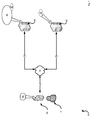
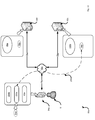
- Figure 1 is schematic representation of a system for network interaction between computing devices.
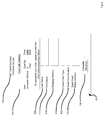
- Figure 2 shows an exemplary secure web-page hosted by the web-server in Figure 1 .
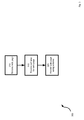
- Figure 3 shows a flow-chart depicting a method of network interaction between computing devices that can be performed on the system of Figure 1 .
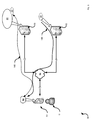
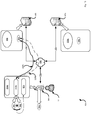
- Figure 4 shows the system of Figure 1 during exemplary performance of part of the method in Figure 3 .
- Figure 5 shows the system of Figure 1 during further exemplary performance of another part of the method in Figure 3 .
- Figure 6 shows the secure web-page of Figure 2 as rendered on the client machine of Figure 1 using the method of Figure 3 .
- Figure 7 shows another system for network interaction between computing devices.
- Figure 8 shows the system of Figure 1 with an exemplary connection.
- Figure 9 shows a flow-chart depicting a method of network interaction between computing devices that can be performed on the system of Figure 7 .
- Figure 10 shows the system of Figure 7 during exemplary performance of part of the method in Figure 9 .
- Figure 11 shows the system of Figure 7 during further exemplary performance of part of the method in Figure 9 .
- Figure 12 shows the system of Figure 7 during further exemplary performance of part of the method in Figure 9 .
- Figure 13 shows another system for network interaction between computing devices.
- system 50 comprises a first computing device in the form of a client machine 54 and a second computing device in the form of a web server 58, and a third computing device in the form of a schema server 62.
- a network 66 interconnects each of the foregoing components.
- Each client machine 54 is typically any type of computing or electronic device that can be used to interact with content available on network 66. Each client machine 54 is operated by a user U. Interaction includes displaying of information on client machine 54 as well as to receive input at client machine 54 that is in turn sent back over network 66.
- client machine 54 is a mobile electronic device with the combined functionality of a personal digital assistant, cell phone, email paging device, and a web-browser.
- Such a mobile electronic device thus includes a keyboard (or other input device(s)), a display, a speaker, (or other output device(s)) and a chassis within which the keyboard, display monitor, speaker are housed.
- the chassis also houses one or more central processing units, volatile memory (e.g. random access memory), persistent memory (e.g. Flash read only memory) and network interfaces to allow machine 54 to communicate over network 66.
- Web server 58 and schema server 62 (which can, if desired, be implemented on a single server) can be based on any well-known server environment including a module that houses one or more central processing units, volatile memory (e.g. random access memory), persistent memory (e.g. hard disk devices) and network interfaces to allow servers 58 and 62 to communicate over network 66.
- server 58 or server 62or both can be a Sun Fire V480 running a UNIX operating system, from Sun Microsystems, Inc. of Palo Alto Calif., and having four central processing units each operating at about nine-hundred megahertz and having about sixteen gigabytes of random access memory.
- this particular server is merely exemplary, and a vast array of other types of computing environments for servers 58 and 62 are contemplated.
- network 66 and the links 70, 74 and 78 associated therewith is not particularly limited and are, in general, based on any combination of architectures that will support interactions between client machine 54 and servers 58 and 62.
- network 66 itself includes the Internet as well as appropriate gateways and backhauls to links 70, 74 and 78. Accordingly, the links 70, 74 and 78 between network 66 and the interconnected components are complementary to functional requirements of those components.
- system 50 includes link 70 between client machine 54 and network 66, link 70 being based in a present embodiment on core mobile network infrastructure (e.g. Global System for Mobile communications ("GSM”); Code Division Multiple Access (“CDMA”); CDMA 2000; 3G) or on wireless local area network (“WLAN”) infrastructures such as the Institute for Electrical and Electronic Engineers (“IEEE”) 802.11 Standard (and its variants) or Bluetooth or the like or hybrids thereof.
- GSM Global System for Mobile communications
- CDMA Code Division Multiple Access
- CDMA 2000 Code Division Multiple Access 2000
- 3G Third Generation
- WLAN wireless local area network
- client machine 54 could be other types of client machines whereby link 70 is a wired connection.
- System 50 also includes link 74 which can be based on a T1, T3, 03 or any other suitable wired or wireless connection between server 58 and network 66.
- System 50 also includes link 78 which can be based on a T1, T3, 03 or any other suitable wired or wireless connection between server 62 and network 66.
- client machine 54 is configured to interact with content available over network 66, including web content on web server 58.
- client machine 54 effects such interaction via a web-browser 82 that is configured to execute on client machine 54.
- web-browser 82 is a mini-browser in the sense that it is configured to re-render web-pages on the relatively small display of client machine 54, and during such re-rendering attempt to render those pages in a format that conveys information, as much as possible, substantially in the same manner as if those web-pages had been rendered on a full browser such as Internet Explorer or Firefox on a traditional desktop or laptop computer.
- Web server 58 is configured to host a web-site 86 that includes, in a present embodiment, a secure web-page 90.
- the non-secure portions of web-site 86 can be based on the Hypertext Transfer Protocol ("HTTP") while secure web-page 90 can be based on, for example, the HTTP over Secure Socket Layer (“SSL”) (“HTTPS”) protocol.
- HTTP Hypertext Transfer Protocol
- SSL Secure Socket Layer
- HTTPS HTTP over Secure Socket Layer
- FIG. 2 shows an exemplary representation of a secure web-page 90.
- the representation in Figure 2 shows how secure web-page 90 would be rendered on a traditional desk-top computer such as a Windows-based computer running the Internet Explorer or Firefox Web-browser as an HTTPS web-page.
- web-site 86 is an e-commerce web-site belonging to a fictional computer equipment retailer named ABC ComTech Corp. Web-site 86 can be browsed to select various computer equipment items for purchase, culminating in the selection of secure web-page 90 which is a checkout screen that can be used to complete the final order for the selected computer equipment and to provide payment and shipping information therefor. Due to security concerns, secure web-page 90 is therefore provided via the HTTPS protocol in order to protect the privacy of the purchaser and reduce the likelihood of identity theft.
- secure web-page 90 includes a plurality of fields including:
- a last name field 108 which is interactive can receive input that identifies the buyer
- a first name field 112 which is interactive can receive input that identifies the buyer
- a shipping address field 116 which is interactive can receive input that identifies the shipping address of the equipment identified in field 104.
- a credit card type field 118 which is interactive and can receive input identifying the type of credit card (e.g. VISA TM , Mastercard TM ) being used to purchase the equipment identified in field 104.
- a credit card number field 122 which is interactive and can receive input identifying a credit card belonging to the entity identified in fields 108 and 112 and corresponds to the type identified in field 118.
- a credit card billing address field 126 which is interactive and can receive input identifying the address to which bills for the credit card identified in credit card field 122 are sent.
- a "complete checkout” button 130 which can be selected once fields 108-126 have been completed.
- credit card number field 122 can be constrained to only permit digits, and can be further constrained to require a certain number of digits that correspond to an expected number of digits for a credit card corresponding to the credit card type identified in credit card type field 118.
- server 86 it is common in a traditional desktop browser scenario that the selection of button 130 the resulting page will be sent to server 86 and will lead to a verification process by server 86 that the data entered in fields 108-126 conforms with certain requirements - in the simplest example the verification process on server 86 will ensure that all fields 108-126 were actually completed, and a more complex verification process server 86 will ensure that fields were completed according to specific restrictions.
- secure web-page 90 as shown in Figure 2 and fields 100-130 are purely exemplary and that secure web-page 90 need not be constrained to the structure or appearance in Figure 2 .
- web-browser 82 is also configured to interact with schema server 62 in order to obtain a schema 94.
- a schema such as schema 94 comprises a file corresponding secure website content such as secure web-page 90.
- a schema can contain instructions to identify each page family on the website (login, signup, etc.), as well as instructions to extract desired objects and elements for each page family.
- a schema can additionally specify the relationship between the objects and attributes (user login field is a global username field, user password field is a global password field), and provide user U the capability of completing secure transactions. Note that not all transactions need to be implemented for a schema to be complete.
- Schema 94 which can be maintained in the form of an extended Markup Language (“XML”) file, or the like, contains data which assists web-browser 82 to render secure web-page 90 on client machine 54.
- Table I shows an exemplary representation of a schema 94 that corresponds to secure web-page 90.
- Field Name column corresponds to the field name in Figure 2 ; the Field Reference column corresponds to the reference character in Figure 2 and the respective field name.
- the Field Name and Field Reference are used by web-browser 82 to identify the various fields in secure-web-page 90. (It should be understood that the Field Name and Field Reference are actually encoded in secure web-page 90 and schema 94 in HTML format).
- the Field Type and Content Parameters columns of Table I are used by web-browser 82 to understand how the corresponding fields in Figure 2 are to be treated by web-browser 82 when web-browser 82 renders those fields. (It should be understood that the Field Type and Content Parameters are actually encoded in schema 94 in a format that is usable by web-browser 82 during rendering of web-page 90).
- Method 300 can be performed using system 50, though it is to be understood that method 300 can be performed on variations of system 50, and likewise it is to be understood that method 300 can be varied.
- a web-page is received. Performance of block 310 is represented in Figure 4 , wherein secure web-page 90 is shown as being carried over an HTTPS connection 140 via link 74, network 66 and link 70 to web-browser 82.
- secure web-page 90 is shown as being carried over an HTTPS connection 140 via link 74, network 66 and link 70 to web-browser 82.
- the contents of secure web-page 90 are requested from web-server 58 and delivered to client machine 54 in substantially the same manner as would be occur if client machine 54 were rendered on a full browser such as Internet Explorer or Firefox on a traditional desktop or laptop computer with full capabilities.
- the programmer of web-page 90 (and for that matter, web-site 86) need not take any steps to optimize secure web-page 90 for the relatively limited display and processing capabilities of client machine 54.
- connection 144 is not particularly limited and can be based on any desired protocol.
- schema server 62 can have a predefined network address on network 66 that is preprogrammed into client machine 54.
- the type of network address is not particularly limited, and can be, for example, any type of network identifier such as an Internet Protocol ("IP") address or a Uniform Resource Locator ("URL"). Any other suitable type of network address is contemplated.
- IP Internet Protocol
- URL Uniform Resource Locator
- Client machine 54 can therefore be programmed to send a request to the address for schema server 62 and request that schema server 62 provide, if available, a schema (e.g. schema 94) that corresponds to secure web-page 90.
- a schema e.g. schema 94
- the request provided by client machine 54 can be formed with any unique identifier for secure web-page 90, but in the context of the Internet the request would most typically be, or derived from, the URL associated with secure web-page 90. In turn, that unique identifier can be used to index schema 94 on schema server 62.
- authentication can be made through connection 144 to validate the origin of schema 94.
- private and public key based authentication can verify that schema 94 is originated from a trusted source.
- system 50 can be implemented so that a plurality of secure web-pages (like secure web-page 90) are hosted over network 66 (either alone by server 58 or by a plurality of web servers like web server 58), and that a corresponding plurality of signatures for each of those secure web-pages can be maintained on schema server 62.
- schema server 62 there can in fact be a plurality of schema servers (like schema server 62) and that client machine 54 can be configured to search for corresponding schema files on one or more of those schema servers.
- schema servers can be hosted by a variety of different parties, including, for example: a) a manufacturer client machine 54, b) a service provider that provides access to network 66 via link 70 on behalf of user U of client machine 54; or c) the entity that hosts web-site 86. In the latter example it can even be desired to simply host schema file 94 directly on web server 58 and thereby obviate the need for schema server 62.
- Block 320 the web-page is rendered using the schema.
- the web-page received at block 310 is rendered using the schema received at block 315.
- Block 320 is in the present example performed by web-browser 82 which renders secure web-page 90 using schema 94.
- web-browser can utilize the Field Type and Parameters data in Table I in order to render fields 108-126 in an interactive format on the display of client machine 54 and ensure compliance with the Parameters as those interactive fields are used to receive input from user U of client machine 54.
- FIG 6 shows exemplary performance of block 320, as secure web-page 90 is now shown in Figure 6 as secure web-page 90' which consists of three separate screens 90'-A, 90'-B and 90'-C.
- secure web-page 90' which consists of three separate screens 90'-A, 90'-B and 90'-C.
- user U input can be provided to scroll between each screen 90'-A, 90'-B and 90'-C.
- fields 108-126 can be completed on screens 90'-B and 90'-C and web-browser 82 will ensure compliance with the Parameters of Table I prior to accepting selection of the "Done" button 130 (equivalent to "Checkout complete” button 130).
- client machine 54 through web-browser 82, is now configured to require input to fields 108-126 that comply with the Parameters in Table I.
- web-browser 82 will require that the credit card number field 122 will contain a sequence of digits that corresponds to an expected sequence of digits from a credit card type from the credit card type field 118. Such verification can therefore occur prior to actually sending the completed form back to web-server 58.
- System 50a is a variant of system 50 and accordingly like elements in system 50a bear like reference characters to elements in system 50, except followed by the suffix "a".
- client machine 54a includes, in addition to web-browser 82a, a transcoding engine 202a and a personal information database 204a.
- Transcoding engine 202a is configured to receive schema 94a and to use schema 94a in order to instruct web-browser 82a how to render web-page 90a on client machine 54a.
- Personal information database 204a includes personal information of user U, including, for example, at least one or more of login credentials, credit card information, gift card information.
- personal information database 204a includes information which should be kept secure during any interaction between client machine 54a and content available on network 66a. It should be understood that the term "personal information database” is used for convenience and that personal information database 204a is a data file that maintains those objects.
- schema server 62a also includes a transcoding engine 208a.
- transcoding engine 208a is configured to intermediate traffic between web-browser 82a and non-secure portions of web-site 86a via connection 212a.
- Connection 212a itself can be a secure or non-secure connection, though typically would be non-secure in accordance with the non-secure portions of content on web-site 86a and thereby decrease overhead associated with connection 212a.
- Transcoding engine 208a is thus configured to, in substantially real-time, transcode non-secure portions of web-site 86a so that they are optimized on behalf of web-browser 82a for immediate display on client machine 54a.
- web-browser 82a is not configured to re-render the non-secure material on web-site 86a itself, but instead rely on transcoding engine 208a.
- a method for network interaction is represented in the form of a flow-chart as indicated generally at 800.
- Method 800 can be performed using system 50a, though it is to be understood that method 800 can be performed on variations of system 50, and likewise it is to be understood that method 800 can be varied. Indeed, those skilled in the art will now recognize that method 800 is a variation of method 300.
- a schema is requested.
- Block 810 is performed by transcoding engine 202a, which establishes a connection with schema server 62a in order to retrieve schema 94a.
- the schema is validated and returned.
- the validation of block 815a (which, it will be appreciated, like certain other aspects of method 800, will be understood to be optional) can be effected by server 62a which can perform a validation operation to confirm that signature 94a matches secure web-site 90a and is otherwise up-to-date. If validation is not achieved then an exception (e.g. an error) can be generated. Assuming validation is achieved, then schema 94a is returned to transcoding engine 202a.
- the schema is loaded.
- Blocks 810 through 820 are represented in Figure 10 , as a secure connection between transcoding engine 202a of client machine 54a and schema 94a of server 82a is indicated at reference 216a such that schema 94a is now loaded onto client machine 54a and available to transcoding engine 202a.
- transcoding engine 202a makes a direct request for secure web-page 90a, bypassing server 62a.
- the secure web-page is returned. More particularly, web server 58a returns web-page 90a to transcoding engine 202a.
- Blocks 825 and 830 are represented in Figure 11 as a secure connection between transcoding engine 202a and secure web-page 90a is indicated at 220a such that secure web-page 90a is now loaded onto client machine 54a and available to transcoding engine 202a.
- transcoding engine 202a makes use of the data contained in schema 94a in order to pass a transcoded version of secure web-page 90a so that secure web-page 90a can be rendered using web-browser 82a in accordance with the parameters prescribed by schema 94a.
- Block 835 is represented in Figure 12 , as transcoded secure web-page 90a' is shown being rendered by web-browser 82a based on a transcoding operation performed by transcoding engine 202a utilizing schema 94a and secure web-page 90a.
- the secure web-page is populated.
- user U provides input to keyboard (or other input device), completing form-fields on transcoded secure web-page 90a' of client machine 54a in accordance with the interactive parameters that have been provided by schema 94a. Where those credentials are maintained within personal information database 204a, web-page 90a' can be automatically populated. then
- the now-completed transcoded secure web-page 90a' is validated. Block 845 can be performed during completion of web-page 90a' or upon receiving input indicating that user U is done completing web-page 90a' or both.
- transcoding engine 202a will return the completed version of web-page 90a' to web-server 58 via secure connection 220a.
- System 50b is a variant of system 50a and accordingly like elements in system 50b bear like reference characters to elements in system 50, except followed by the suffix "b".
- system 50b there is not only a secure connection 220b corresponding to secure connection 220a, but there is also a non-secure connection 224b that is associated with web-page 90b (which may be implemented as a plurality of web-pages, or not, according to the technology employed). It is contemplated that certain fields where security is not considered important (e.g.
- shipping address field 116) may be carried over non-secure connection 224b, whereas fields where security is considered important (e.g. credit card number field 122) would be carried over secure connection 220b.
- Schema 94b therefore can ensure that, when transcoded web-page 90b' is rendered on the client machine 54b that user U does not inadvertently put user U's credit card number in shipping address field 116 and thereby risk exposing that credit card number to inception over non-secure connection 224.
- the non-secure fields can be carried in a connection similar to connection 212a.
- cookies can be employed between web-browser 82a and web server 58a to provide state to the stateless protocol HTTP.
- other HTTP headers may also provide instructions for the browser (character encoding, caching, etc).
- Transcoding engine 202a need not alter the HTTP header in any fashion. Therefore processing of cookies and other HTTP headers can be provided by web-browser 82a, and not altered by server 62a.
Landscapes
- Engineering & Computer Science (AREA)
- Computer Networks & Wireless Communication (AREA)
- Signal Processing (AREA)
- Information Transfer Between Computers (AREA)
Abstract
Description
- The present specification relates generally to communication and more specifically relates to a system and method for network interaction between computing devices.
- Computing devices are becoming smaller and increasingly utilize wireless connectivity. Examples of such computing devices include portable computing devices that include wireless network browsing capability as well as telephony and personal information management capabilities. The smaller size of such client devices necessarily limits their display capabilities. Furthermore the wireless connections to such devices typically have less bandwidth than corresponding wired connections. The Wireless Application Protocol ("WAP") was designed to address such issues, but WAP can still provide a very unsatisfactory experience or even completely ineffective experience, particularly where the small client device needs to effect a secure connection with web-sites that host web-pages that are optimized for full traditional desktop browsers.
- An aspect of the specification may provide a system for network interaction between computing devices comprising a network and a first computing device configured to communicate over the network. The at least one additional computing device may also be configured to communicate over the network and to provide interactive content. The first computing device may be configured to access the interactive content. The interactive content may comprise at least one fields that can receive input from the first computing device
- The at least one additional computing device can be further configured to provide a schema corresponding to the interactive content and to identify the input parameters.
- There can be provided at least two interactive fields, and each of the fields can have different input parameters.
- The first computing device can also be configured to access the schema and can be further configured to render the interactive content on the first computing device using the schema. The first computing device can be further configured to verify that input provided to each of the at least two fields conforms with the parameters.
- The interactive content can be secure interactive content and the first computing device can be configured to access the secure interactive content via a secure connection. The secure connection can be carried by hypertext transfer protocol over secure socket layer.
- The interactive content can be a web-page including interactive fields.
- The fields can comprise information for completing a product order, including a name, an address, and an account number. The fields can further comprise a credit card type and the account number can be a credit card number. The parameter for the credit card type can comprise a selection of one of a plurality of known credit card types and the parameter for the account number can correspond to a known number format respective to the credit card type.
- The at least one additional computing device can comprise a second computing device for hosting the content and a third computing device for hosting the schema. The first computing device can be configured with a network address for the third computing device. The third computing device can host a plurality of signatures for different interactive contents.
- The network can comprise the Internet.
- The content that is in a web-page format can be configured for a full web-browser and the first computing device can comprise a mini-browser.
- The first computing device can be a mobile electronic device with the combined functionality of a personal digital assistant, cell phone, email paging device, and a web-browser.
- Another aspect of the present specification provides a first computing device in accordance with the first computing device according to any of the foregoing.
- Another aspect of the present specification provides at least one additional computing device according to any of the foregoing.
- Another aspect of the present specification may provide a first a method for network interaction between computing devices comprising:
- receiving interactive content at a first computing device from at least one additional computing device; the interactive content including at least one field that can receive input from the first computing device;
- receiving a schema for the interactive content at the first computing device from the at least one additional computing device; the schema identifying the input parameters.
- The interactive content can comprise at least two fields, and each of the fields can have different input parameters.
- The method can further comprise rendering the interactive content on the first computing device using the schema.
- The method can further comprise receiving input within the fields at the first computing device.
- The method can further comprise verifying that input is provided to each of the at least two fields conforms with the parameters.
- Another aspect of the specification may comprise a computer readable medium configured to maintain programming instructions in accordance with any of foregoing.
- The present specification may provide, amongst other things, a method and system for network interaction between computing devices. In one embodiment a wireless client machine may be provided that includes a mini web-browser that is configured to access a secure web-page from a web-server. The secure web-page may comprise an interactive form. The wireless client machine may also be configured to access a schema that corresponds to the secure web-page. The wireless client machine may be configured to render the secure web-page using the contents of the schema.
-
Figure 1 is schematic representation of a system for network interaction between computing devices. -
Figure 2 shows an exemplary secure web-page hosted by the web-server inFigure 1 . -
Figure 3 shows a flow-chart depicting a method of network interaction between computing devices that can be performed on the system ofFigure 1 . -
Figure 4 shows the system ofFigure 1 during exemplary performance of part of the method inFigure 3 . -
Figure 5 shows the system ofFigure 1 during further exemplary performance of another part of the method inFigure 3 . -
Figure 6 shows the secure web-page ofFigure 2 as rendered on the client machine ofFigure 1 using the method ofFigure 3 . -
Figure 7 shows another system for network interaction between computing devices. -
Figure 8 shows the system ofFigure 1 with an exemplary connection. -
Figure 9 shows a flow-chart depicting a method of network interaction between computing devices that can be performed on the system ofFigure 7 . -
Figure 10 shows the system ofFigure 7 during exemplary performance of part of the method inFigure 9 . -
Figure 11 shows the system ofFigure 7 during further exemplary performance of part of the method inFigure 9 . -
Figure 12 shows the system ofFigure 7 during further exemplary performance of part of the method inFigure 9 . -
Figure 13 shows another system for network interaction between computing devices. - Referring now to
Figure 1 , a system for network interaction between computing devices is indicated generally at 50. In apresent embodiment system 50 comprises a first computing device in the form of aclient machine 54 and a second computing device in the form of aweb server 58, and a third computing device in the form of aschema server 62. Anetwork 66 interconnects each of the foregoing components. - Each
client machine 54 is typically any type of computing or electronic device that can be used to interact with content available onnetwork 66. Eachclient machine 54 is operated by a user U. Interaction includes displaying of information onclient machine 54 as well as to receive input atclient machine 54 that is in turn sent back overnetwork 66. In a present embodiment,client machine 54 is a mobile electronic device with the combined functionality of a personal digital assistant, cell phone, email paging device, and a web-browser. Such a mobile electronic device thus includes a keyboard (or other input device(s)), a display, a speaker, (or other output device(s)) and a chassis within which the keyboard, display monitor, speaker are housed. The chassis also houses one or more central processing units, volatile memory (e.g. random access memory), persistent memory (e.g. Flash read only memory) and network interfaces to allowmachine 54 to communicate overnetwork 66. -
Web server 58 and schema server 62 (which can, if desired, be implemented on a single server) can be based on any well-known server environment including a module that houses one or more central processing units, volatile memory (e.g. random access memory), persistent memory (e.g. hard disk devices) and network interfaces to allowservers network 66. For example,server 58 or server 62or both can be a Sun Fire V480 running a UNIX operating system, from Sun Microsystems, Inc. of Palo Alto Calif., and having four central processing units each operating at about nine-hundred megahertz and having about sixteen gigabytes of random access memory. However, it is to be emphasized that this particular server is merely exemplary, and a vast array of other types of computing environments forservers - It should now be understood that the nature of
network 66 and thelinks client machine 54 andservers present embodiment network 66 itself includes the Internet as well as appropriate gateways and backhauls tolinks links network 66 and the interconnected components are complementary to functional requirements of those components. - More specifically,
system 50 includeslink 70 betweenclient machine 54 andnetwork 66, link 70 being based in a present embodiment on core mobile network infrastructure (e.g. Global System for Mobile communications ("GSM"); Code Division Multiple Access ("CDMA"); CDMA 2000; 3G) or on wireless local area network ("WLAN") infrastructures such as the Institute for Electrical and Electronic Engineers ("IEEE") 802.11 Standard (and its variants) or Bluetooth or the like or hybrids thereof. Note that in an exemplary variation ofsystem 50 it is contemplated thatclient machine 54 could be other types of client machines whereby link 70 is a wired connection. -
System 50 also includeslink 74 which can be based on a T1, T3, 03 or any other suitable wired or wireless connection betweenserver 58 andnetwork 66.System 50 also includeslink 78 which can be based on a T1, T3, 03 or any other suitable wired or wireless connection betweenserver 62 andnetwork 66. - As previously stated,
client machine 54 is configured to interact with content available overnetwork 66, including web content onweb server 58. In a present embodiment,client machine 54 effects such interaction via a web-browser 82 that is configured to execute onclient machine 54. As will be explained further below, web-browser 82 is a mini-browser in the sense that it is configured to re-render web-pages on the relatively small display ofclient machine 54, and during such re-rendering attempt to render those pages in a format that conveys information, as much as possible, substantially in the same manner as if those web-pages had been rendered on a full browser such as Internet Explorer or Firefox on a traditional desktop or laptop computer.Web server 58 is configured to host a web-site 86 that includes, in a present embodiment, a secure web-page 90. The non-secure portions of web-site 86 can be based on the Hypertext Transfer Protocol ("HTTP") while secure web-page 90 can be based on, for example, the HTTP over Secure Socket Layer ("SSL") ("HTTPS") protocol. By the same token web-browser 82 will be equipped to access and interact with both web-page 86 and secure web-page 90. -
Figure 2 shows an exemplary representation of a secure web-page 90. The representation inFigure 2 shows how secure web-page 90 would be rendered on a traditional desk-top computer such as a Windows-based computer running the Internet Explorer or Firefox Web-browser as an HTTPS web-page. In the example, web-site 86 is an e-commerce web-site belonging to a fictional computer equipment retailer named ABC ComTech Corp. Web-site 86 can be browsed to select various computer equipment items for purchase, culminating in the selection of secure web-page 90 which is a checkout screen that can be used to complete the final order for the selected computer equipment and to provide payment and shipping information therefor. Due to security concerns, secure web-page 90 is therefore provided via the HTTPS protocol in order to protect the privacy of the purchaser and reduce the likelihood of identity theft. Thus, secure web-page 90 includes a plurality of fields including: - 1) a
title field 100 that identifies the equipment retailer and identifies web-page 90 as a checkout screen; - 2) a
shopping cart field 104 that identifies the equipment that has been selected for purchase and the total cost thereof; - 3) a
last name field 108 which is interactive can receive input that identifies the buyer - 4) a
first name field 112 which is interactive can receive input that identifies the buyer - 5) a
shipping address field 116 which is interactive can receive input that identifies the shipping address of the equipment identified infield 104. - 6) a credit
card type field 118 which is interactive and can receive input identifying the type of credit card (e.g. VISA™, Mastercard™) being used to purchase the equipment identified infield 104. - 7) a credit
card number field 122 which is interactive and can receive input identifying a credit card belonging to the entity identified infields field 118. - 8) a credit card
billing address field 126 which is interactive and can receive input identifying the address to which bills for the credit card identified incredit card field 122 are sent. - 9) a "complete checkout"
button 130 which can be selected once fields 108-126 have been completed. - Note that it is common for interactive fields 108-126 to be constrained so that only certain types of input are permitted. For example, credit
card number field 122 can be constrained to only permit digits, and can be further constrained to require a certain number of digits that correspond to an expected number of digits for a credit card corresponding to the credit card type identified in creditcard type field 118. In addition, it is common in a traditional desktop browser scenario that the selection ofbutton 130 the resulting page will be sent toserver 86 and will lead to a verification process byserver 86 that the data entered in fields 108-126 conforms with certain requirements - in the simplest example the verification process onserver 86 will ensure that all fields 108-126 were actually completed, and a more complexverification process server 86 will ensure that fields were completed according to specific restrictions. - Those skilled in the art will now recognize that secure web-
page 90 as shown inFigure 2 and fields 100-130 are purely exemplary and that secure web-page 90 need not be constrained to the structure or appearance inFigure 2 . - Referring again to
Figure 1 , in a present embodiment, web-browser 82 is also configured to interact withschema server 62 in order to obtain aschema 94. - In general, a schema such as
schema 94 comprises a file corresponding secure website content such as secure web-page 90. A schema can contain instructions to identify each page family on the website (login, signup, etc.), as well as instructions to extract desired objects and elements for each page family. A schema can additionally specify the relationship between the objects and attributes (user login field is a global username field, user password field is a global password field), and provide user U the capability of completing secure transactions. Note that not all transactions need to be implemented for a schema to be complete. -
Schema 94, which can be maintained in the form of an extended Markup Language ("XML") file, or the like, contains data which assists web-browser 82 to render secure web-page 90 onclient machine 54. Table I shows an exemplary representation of aschema 94 that corresponds to secure web-page 90.TABLE I Exemplary content of schema 94 corresponding to exemplary secure web-page 90Field Name Field Reference Field Type Parameters Title Field 100 Non-interactive Display contents only Shopping Cart Field 104 Non-interactive Display contents only Last Name 108 Interactive Name field; Text only First Name 112 Interactive Name field; Text only Shipping Address 116 Interactive Address Format;
Mixed Numeric and Text;
Requires:
Street number;
Street name;
street type;
city name; province or state;
country;
postal or zip codeCredit Card Type 118 Interactive Menu List Credit Card Number 122 Interactive Credit Card Number; Numeric; Formation and Number of digits dependent on selection of Credit Card Type 118Credit Card Billing Address 126 Interactive Address Format;
Mixed Numeric and Text;
Requires:
Street number;
Street name;
street type;
city name;
province or state;
country;
postal or zipcode Checkout Complete 130 Interactive Button indicating form is complete to submit form back to web server; If selected, ensure compliance with Parameters for Fields 108-126 prior to submitting form back to web server; if Parameters for Fields 108-126 are non-compliant then generate error message. - Explaining Table I in greater detail, Field Name column corresponds to the field name in
Figure 2 ; the Field Reference column corresponds to the reference character inFigure 2 and the respective field name. The Field Name and Field Reference are used by web-browser 82 to identify the various fields in secure-web-page 90. (It should be understood that the Field Name and Field Reference are actually encoded in secure web-page 90 andschema 94 in HTML format). The Field Type and Content Parameters columns of Table I are used by web-browser 82 to understand how the corresponding fields inFigure 2 are to be treated by web-browser 82 when web-browser 82 renders those fields. (It should be understood that the Field Type and Content Parameters are actually encoded inschema 94 in a format that is usable by web-browser 82 during rendering of web-page 90). - Referring now to
Figure 3 , a method for network interaction between two computers is represented in the form of a flow-chart as indicated generally at 300.
Method 300 can be performed usingsystem 50, though it is to be understood thatmethod 300 can be performed on variations ofsystem 50, and likewise it is to be understood thatmethod 300 can be varied. - Beginning at block 310 a web-page is received. Performance of
block 310 is represented inFigure 4 , wherein secure web-page 90 is shown as being carried over anHTTPS connection 140 vialink 74,network 66 and link 70 to web-browser 82. At this point it can be noted that the contents of secure web-page 90 are requested from web-server 58 and delivered toclient machine 54 in substantially the same manner as would be occur ifclient machine 54 were rendered on a full browser such as Internet Explorer or Firefox on a traditional desktop or laptop computer with full capabilities. Thus, the programmer of web-page 90 (and for that matter, web-site 86) need not take any steps to optimize secure web-page 90 for the relatively limited display and processing capabilities ofclient machine 54. - Referring again to
Figure 2 , at block 315 a schema web-page is received. Performance ofblock 315 is represented inFigure 5 , whereinschema 94 is shown as being carried over aconnection 144 vialink 78,network 66 and link 70 to web-browser 82. Note that the nature ofconnection 144 is not particularly limited and can be based on any desired protocol. - Also note that the means by which web-
browser 82requests schema 94 is not particularly limited. In one particular embodiment, however, it is contemplated that web-browser 82 will be configured to automatically make network requests overnetwork 66 to request a schema that corresponds to secure web-page 90. For example,schema server 62 can have a predefined network address onnetwork 66 that is preprogrammed intoclient machine 54. The type of network address is not particularly limited, and can be, for example, any type of network identifier such as an Internet Protocol ("IP") address or a Uniform Resource Locator ("URL"). Any other suitable type of network address is contemplated.Client machine 54 can therefore be programmed to send a request to the address forschema server 62 and request thatschema server 62 provide, if available, a schema (e.g. schema 94) that corresponds to secure web-page 90. The request provided byclient machine 54 can be formed with any unique identifier for secure web-page 90, but in the context of the Internet the request would most typically be, or derived from, the URL associated with secure web-page 90. In turn, that unique identifier can be used toindex schema 94 onschema server 62. - As well, authentication can be made through
connection 144 to validate the origin ofschema 94. For an example, private and public key based authentication can verify thatschema 94 is originated from a trusted source. - Those skilled in the art will now recognize that
system 50 can be implemented so that a plurality of secure web-pages (like secure web-page 90) are hosted over network 66 (either alone byserver 58 or by a plurality of web servers like web server 58), and that a corresponding plurality of signatures for each of those secure web-pages can be maintained onschema server 62. Those skilled in the art will now recognize that there can in fact be a plurality of schema servers (like schema server 62) and thatclient machine 54 can be configured to search for corresponding schema files on one or more of those schema servers. Those skilled in the art will now further recognize that schema servers can be hosted by a variety of different parties, including, for example: a) amanufacturer client machine 54, b) a service provider that provides access tonetwork 66 vialink 70 on behalf of user U ofclient machine 54; or c) the entity that hosts web-site 86. In the latter example it can even be desired to simply hostschema file 94 directly onweb server 58 and thereby obviate the need forschema server 62. - Referring again to
Figure 3 , atblock 320 the web-page is rendered using the schema. In other words the web-page received atblock 310 is rendered using the schema received atblock 315.Block 320 is in the present example performed by web-browser 82 which renders secure web-page 90 usingschema 94. Of particular note is that web-browser can utilize the Field Type and Parameters data in Table I in order to render fields 108-126 in an interactive format on the display ofclient machine 54 and ensure compliance with the Parameters as those interactive fields are used to receive input from user U ofclient machine 54. -
Figure 6 shows exemplary performance ofblock 320, as secure web-page 90 is now shown inFigure 6 as secure web-page 90' which consists of three separate screens 90'-A, 90'-B and 90'-C. As rendered on the display ofclient machine 54, user U input can be provided to scroll between each screen 90'-A, 90'-B and 90'-C. Likewise fields 108-126 can be completed on screens 90'-B and 90'-C and web-browser 82 will ensure compliance with the Parameters of Table I prior to accepting selection of the "Done" button 130 (equivalent to "Checkout complete" button 130). Also of note however, and not readily apparent from viewingFigure 6 is thatclient machine 54, through web-browser 82, is now configured to require input to fields 108-126 that comply with the Parameters in Table I. For example, web-browser 82 will require that the creditcard number field 122 will contain a sequence of digits that corresponds to an expected sequence of digits from a credit card type from the creditcard type field 118. Such verification can therefore occur prior to actually sending the completed form back to web-server 58. - Various advantages will now be apparent. One result of the foregoing is that a developer of secure web-
page 90 need only prepare a secure web-page 90 for rendering on a full web-browser without considering the limitations ofmini-browser 82 and yet secure web-page 90 can still be rendered and used onclient 54. Another result is thatschema 94 can be created by any party in order extend the availability of web-page 90 onto a plurality ofclient machines 54 and thereby increase traffic to web-site 86. Another result of the foregoing is that the security ofconnection 140 betweenserver 58 andclient machine 54 is preserved throughout the performance ofmethod 300, and thereby affording privacy to user U ofclient 54. This can be particularly important if, as might occur in the prior art, user U were to inadvertently enter in a credit card number into, for example,last name field 108 which (for whatever reason) was not configured to be sent back toweb server 58 viasecure connection 140 but over an insecure connection (not shown); in this scenario, not only would the transaction fail leading frustration for user U, but also user U's credit card would be sent over an insecure connection thereby exposing the credit card number to theft. - Referring now to
Figure 7 , a system for network interaction between computing devices in accordance with another embodiment is indicated generally at 50a.System 50a is a variant ofsystem 50 and accordingly like elements insystem 50a bear like reference characters to elements insystem 50, except followed by the suffix "a". Of note however is that insystem 50a client machine 54a includes, in addition to web-browser 82a, atranscoding engine 202a and apersonal information database 204a.Transcoding engine 202a is configured to receiveschema 94a and to useschema 94a in order to instruct web-browser 82a how to render web-page 90a onclient machine 54a.Personal information database 204a includes personal information of user U, including, for example, at least one or more of login credentials, credit card information, gift card information. In generalpersonal information database 204a includes information which should be kept secure during any interaction betweenclient machine 54a and content available onnetwork 66a. It should be understood that the term "personal information database" is used for convenience and thatpersonal information database 204a is a data file that maintains those objects. - Also of note in
system 50a is thatschema server 62a also includes atranscoding engine 208a. As best shown inFigure 8 ,transcoding engine 208a is configured to intermediate traffic between web-browser 82a and non-secure portions of web-site 86a viaconnection 212a.Connection 212a itself can be a secure or non-secure connection, though typically would be non-secure in accordance with the non-secure portions of content on web-site 86a and thereby decrease overhead associated withconnection 212a.Transcoding engine 208a is thus configured to, in substantially real-time, transcode non-secure portions of web-site 86a so that they are optimized on behalf of web-browser 82a for immediate display onclient machine 54a. Thus, in thissystem 50a web-browser 82a is not configured to re-render the non-secure material on web-site 86a itself, but instead rely ontranscoding engine 208a. - Assume, while referring to
Figure 8 , that such non-secure portions of web-site 86a reflect various computer equipment items for that can be browsed for purchase (consistent with the example relative to web-site 86 of system 50) via a secure checkout page associated with secure web-page 90a.System 50a can therefore also be used to effect a secure web-checkout using secure web-page 90a. Referring now toFigure 9 , a method for network interaction is represented in the form of a flow-chart as indicated generally at 800.Method 800 can be performed usingsystem 50a, though it is to be understood thatmethod 800 can be performed on variations ofsystem 50, and likewise it is to be understood thatmethod 800 can be varied. Indeed, those skilled in the art will now recognize thatmethod 800 is a variation ofmethod 300. - At block 810 a schema is requested.
Block 810 is performed by transcodingengine 202a, which establishes a connection withschema server 62a in order to retrieveschema 94a. At block 815a the schema is validated and returned. The validation of block 815a (which, it will be appreciated, like certain other aspects ofmethod 800, will be understood to be optional) can be effected byserver 62a which can perform a validation operation to confirm thatsignature 94a matches secure web-site 90a and is otherwise up-to-date. If validation is not achieved then an exception (e.g. an error) can be generated. Assuming validation is achieved, thenschema 94a is returned totranscoding engine 202a. Atblock 820, the schema is loaded. In the present example the schema is loaded intotranscoding engine 202a.Blocks 810 through 820 are represented inFigure 10 , as a secure connection betweentranscoding engine 202a ofclient machine 54a andschema 94a ofserver 82a is indicated atreference 216a such thatschema 94a is now loaded ontoclient machine 54a and available totranscoding engine 202a. - Referring again to
Figure 9 , at block 825 a secure web-page is requested. In this embodiment,transcoding engine 202a makes a direct request for secure web-page 90a, bypassingserver 62a. Atblock 825, the secure web-page is returned. More particularly,web server 58a returns web-page 90a totranscoding engine 202a.Blocks Figure 11 as a secure connection betweentranscoding engine 202a and secure web-page 90a is indicated at 220a such that secure web-page 90a is now loaded ontoclient machine 54a and available totranscoding engine 202a. - Referring again to
Figure 9 , atblock 835 the secure web-page is rendered using the schema. In this embodiment,transcoding engine 202a makes use of the data contained inschema 94a in order to pass a transcoded version of secure web-page 90a so that secure web-page 90a can be rendered using web-browser 82a in accordance with the parameters prescribed byschema 94a.Block 835 is represented inFigure 12 , as transcoded secure web-page 90a' is shown being rendered by web-browser 82a based on a transcoding operation performed by transcodingengine 202a utilizing schema 94a and secure web-page 90a. - Referring again to
Figure 9 , atblock 840, the secure web-page is populated.
In this embodiment, user U provides input to keyboard (or other input device), completing form-fields on transcoded secure web-page 90a' ofclient machine 54a in accordance with the interactive parameters that have been provided byschema 94a. Where those credentials are maintained withinpersonal information database 204a, web-page 90a' can be automatically populated. then Atblock 845, the now-completed transcoded secure web-page 90a' is validated. Block 845 can be performed during completion of web-page 90a' or upon receiving input indicating that user U is done completing web-page 90a' or both. - At
block 850, the completed secure web-page is submitted. In this embodiment, once validation has occurred,transcoding engine 202a will return the completed version of web-page 90a' to web-server 58 viasecure connection 220a. - Referring now to
Figure 13 , a system for network interaction between computing devices in accordance with another embodiment is indicated generally at 50b.System 50b is a variant ofsystem 50a and accordingly like elements insystem 50b bear like reference characters to elements insystem 50, except followed by the suffix "b". Of note however is that insystem 50b there is not only asecure connection 220b corresponding to secureconnection 220a, but there is also anon-secure connection 224b that is associated with web-page 90b (which may be implemented as a plurality of web-pages, or not, according to the technology employed). It is contemplated that certain fields where security is not considered important (e.g. shipping address field 116) may be carried overnon-secure connection 224b, whereas fields where security is considered important (e.g. credit card number field 122) would be carried oversecure connection 220b.Schema 94b therefore can ensure that, when transcoded web-page 90b' is rendered on theclient machine 54b that user U does not inadvertently put user U's credit card number inshipping address field 116 and thereby risk exposing that credit card number to inception over non-secure connection 224. Alternatively, the non-secure fields can be carried in a connection similar toconnection 212a. - Further enhancements and variations will now occur to those skilled in the art. For example, cookies can be employed between web-
browser 82a andweb server 58a to provide state to the stateless protocol HTTP. Furthermore, other HTTP headers may also provide instructions for the browser (character encoding, caching, etc...).Transcoding engine 202a need not alter the HTTP header in any fashion. Therefore processing of cookies and other HTTP headers can be provided by web-browser 82a, and not altered byserver 62a. - The foregoing presents certain exemplary embodiments, but variations or combinations or subsets thereof are contemplated.
Claims (35)
- A system for network interaction between computing devices comprising:a network;a first computing device configured to communicate over said network;at least one additional computing device configured to communicate over said network and to provide interactive content; said first computing device configured to access said interactive content; said interactive content having at least one field that can receive input from said first computing device; said at least one field having an input parameter;said at least one additional computing device further configured to provide a schema corresponding to said interactive content and identifying said input parameter; said first computing device configured to access said schema.
- The system of claim 1 wherein said interactive content has at least one additional field having an additional input parameter different from said input parameter.
- The system of claim 1 or claim 2 wherein said first computing device is configured to render said interactive content on said first computing device using said schema.
- The system of any one of claims 1 to 3 wherein said first computing device is configured to verify that input provided conforms with said parameter.
- The system of any one of claims 1 to 4 wherein said interactive content is secure interactive content and said first computing device is configured to access said secure interactive content via a secure connection.
- The system of any one of claims 1 to 5 wherein said interactive content is a web-page having interactive fields.
- The system of claim 5 or claim 6 wherein said secure connection is arranged to be carried by hypertext transfer protocol over secure socket layer.
- The system of any one of the preceding claims wherein said at least one field comprises information for completing a product order; said at least one field comprising a name, an address, and an account number.
- The system of claim 8 wherein said at least one field further comprises a credit card type and said account number comprises a credit card number.
- The system of claim 9 wherein said parameter for said credit card type comprise a selection of one of a plurality of known credit card types and said parameter for said account number corresponds to a known number format respective to said credit card type.
- The system of any one of the preceding claims wherein said at least one additional computing device comprises a second computing device for hosting said content and a third computing device for hosting said schema.
- The system of claim 11 wherein said first computing device is configured with a network address for said third computing device.
- The system of claim 11 or claim 12 wherein said third computing device hosts a plurality of signatures for different interactive contents.
- The system of any of the preceding claims wherein said network comprises an Internet.
- The system of any of the preceding claims wherein said content comprises a web-page that is configured for a full web-browser and said first computing device comprises a mini-browser.
- The system of any of the preceding claims wherein said first computing device comprises a mobile electronic device having the combined functionality of a personal digital assistant, cell phone, email paging device, and a web-browser.
- A first computing device for the system according to any of the foregoing claims.
- An additional computing device for the system according to any of claims 1 to 17.
- A method for network interaction between computing devices comprising:receiving interactive content at a first computing device from at least one additional computing device; said interactive content having at least one field that can receive input from said first computing device; said fields having an input parameter;receiving a schema for said interactive content at said first computing device from said at least one additional computing device; said schema identifying said input parameters.
- The method of claim 19 wherein said interactive content comprises at least two fields and each of said fields has different input parameters.
- The method of claim 19 or claim 20 further comprising rendering said interactive content on said first computing device using said schema.
- The method of claim 20 or claim 21 when dependent on claim 20 further comprising receiving input within said fields at said first computing device and verifying that input conforms with said parameters.
- The method of any one of claims 19 to 22 wherein said interactive content is secure interactive content and said first computing device accesses said secure interactive content via a secure connection.
- The method of any one of claims 19 to 23 wherein said interactive content is a web-page having interactive fields.
- The method of any one of claims 19 to 24 wherein said secure connection is carried by hypertext transfer protocol over secure socket layer.
- The method of any one of claims 19 to 25 wherein said fields comprise information for completing a product order; said fields comprising a name, an address, and an account number.
- The method of claim 26 wherein said fields further comprise a credit card type and said account number is a credit card number.
- The method of claim 27 wherein said parameter for said credit card type comprises a selection of one of a plurality of known credit card types and said parameter for said account number corresponds to a known number format respective to said credit card type.
- The method of any one of claims 19 to 28 wherein said at least one additional computing device comprises a second computing device for hosting said content and a third computing device for hosting said schema.
- The method of claim 29 wherein said first computing device is configured with a network address for said third computing device.
- The method of claim 29 or claim 30 wherein said third computing device hosts a plurality of signatures for different interactive contents.
- The method of any one of claims 19 to 31 wherein said network comprises an Internet.
- The method of any one of claims 19 to 32 wherein said content web-page is configured for a full web-browser and said first computing device comprises a mini-browser.
- The method of any one of claims 19 to 33 wherein said first computing device is a mobile electronic device with the combined functionality of a personal digital assistant, cell phone, email paging device, and a web-browser.
- A computer readable medium storing computer readable instructions executable by a processor of a computing system to cause said system to implement the steps of the method of any one of claims 19 to 34.
Priority Applications (3)
| Application Number | Priority Date | Filing Date | Title |
|---|---|---|---|
| EP08150416.9A EP2081355B1 (en) | 2008-01-18 | 2008-01-18 | System and method for network interaction between computing devices |
| CA2649959A CA2649959C (en) | 2008-01-18 | 2009-01-15 | System and method for network interaction between computing devices |
| CN200910130786.8A CN101515939B (en) | 2008-01-18 | 2009-01-16 | For carrying out the system and method for network interaction between computing equipment |
Applications Claiming Priority (1)
| Application Number | Priority Date | Filing Date | Title |
|---|---|---|---|
| EP08150416.9A EP2081355B1 (en) | 2008-01-18 | 2008-01-18 | System and method for network interaction between computing devices |
Publications (2)
| Publication Number | Publication Date |
|---|---|
| EP2081355A1 true EP2081355A1 (en) | 2009-07-22 |
| EP2081355B1 EP2081355B1 (en) | 2017-03-15 |
Family
ID=39561742
Family Applications (1)
| Application Number | Title | Priority Date | Filing Date |
|---|---|---|---|
| EP08150416.9A Active EP2081355B1 (en) | 2008-01-18 | 2008-01-18 | System and method for network interaction between computing devices |
Country Status (3)
| Country | Link |
|---|---|
| EP (1) | EP2081355B1 (en) |
| CN (1) | CN101515939B (en) |
| CA (1) | CA2649959C (en) |
Families Citing this family (1)
| Publication number | Priority date | Publication date | Assignee | Title |
|---|---|---|---|---|
| US11157975B2 (en) | 2008-01-18 | 2021-10-26 | Blackberry Limited | System and method for network interaction between computing devices |
Family Cites Families (3)
| Publication number | Priority date | Publication date | Assignee | Title |
|---|---|---|---|---|
| US20040024842A1 (en) * | 2002-07-31 | 2004-02-05 | Sap Aktiengesellschaft | Validation framework for validating markup page input on a client computer |
| CN1547144A (en) * | 2003-12-10 | 2004-11-17 | 北京矽谷学人科技有限公司 | Internet safety payment system |
| US20070288837A1 (en) * | 2006-06-13 | 2007-12-13 | Eaves John M | System and method for providing content management via web-based forms |
-
2008
- 2008-01-18 EP EP08150416.9A patent/EP2081355B1/en active Active
-
2009
- 2009-01-15 CA CA2649959A patent/CA2649959C/en active Active
- 2009-01-16 CN CN200910130786.8A patent/CN101515939B/en active Active
Non-Patent Citations (2)
| Title |
|---|
| A.S.TANENBAUM: "Computer Networks, 4th edition.", 2003, PEARSON EDUCATION, PRENTICE HALL., US, XP002487114 * |
| BERNERS-LEE MIT/W3C D CONNOLLY T: "Hypertext Markup Language - 2.0; rfc1866.txt", IETF STANDARD, INTERNET ENGINEERING TASK FORCE, IETF, CH, 1 November 1995 (1995-11-01), XP015007650, ISSN: 0000-0003 * |
Also Published As
| Publication number | Publication date |
|---|---|
| CA2649959C (en) | 2014-07-22 |
| CN101515939B (en) | 2016-04-13 |
| EP2081355B1 (en) | 2017-03-15 |
| CA2649959A1 (en) | 2009-07-18 |
| CN101515939A (en) | 2009-08-26 |
Similar Documents
| Publication | Publication Date | Title |
|---|---|---|
| US11893610B2 (en) | System and method for network interaction between computing devices | |
| JP5439322B2 (en) | Method and apparatus for conducting electronic transactions | |
| US6944669B1 (en) | Sharing the personal information of a network user with the resources accessed by that network user | |
| US8938402B2 (en) | Methods and apparatus for conducting electronic transactions | |
| US6865680B1 (en) | Method and apparatus enabling automatic login for wireless internet-capable devices | |
| US20030191721A1 (en) | System and method of associating communication devices to secure a commercial transaction over a network | |
| CN106716918B (en) | User authentication method and system | |
| CN103023893B (en) | Access online resources using the resource transfer platform | |
| US20030061387A1 (en) | System and method for transcoding support of web content over secure connections | |
| US20160342674A1 (en) | System and method for managing customer address information in electronic commerce using the internet | |
| EP1161055B1 (en) | System and method of associating devices to secure commercial transactions performed over the internet | |
| US20020133605A1 (en) | Generation and use of rules for reading of data for online account aggregation | |
| US20020133706A1 (en) | Login for online account aggregation | |
| US20130204935A1 (en) | Dynamic sharing of a webservice | |
| EP2081357B1 (en) | Method and apparatus for checkout transition in an e-commerce application | |
| EP2081355B1 (en) | System and method for network interaction between computing devices | |
| US20130144699A1 (en) | Method for Simplifying Use of Commercial Website Interfaces for Secure Customer Purchases | |
| KR20020015544A (en) | An electronic contract system and a method thereof on the network | |
| JP2003091478A (en) | Transaction support system, transaction support method, and program for causing computer to implement transaction support function | |
| KR20010008276A (en) | electronic commerce or joint information ownership support doing a personal wabserver computer system | |
| Kenia | e-Commerce Notes | |
| KR20090107454A (en) | How to provide selective financial information | |
| Radulescu | The development of mobile electronic business applications | |
| Ritu et al. | Research on Online Transaction Protocols for Supporting Credit/Debit Card Transaction | |
| EP3497663A1 (en) | Intermediary server to facilitate restrictive websites |
Legal Events
| Date | Code | Title | Description |
|---|---|---|---|
| PUAI | Public reference made under article 153(3) epc to a published international application that has entered the european phase |
Free format text: ORIGINAL CODE: 0009012 |
|
| 17P | Request for examination filed |
Effective date: 20080118 |
|
| AK | Designated contracting states |
Kind code of ref document: A1 Designated state(s): AT BE BG CH CY CZ DE DK EE ES FI FR GB GR HR HU IE IS IT LI LT LU LV MC MT NL NO PL PT RO SE SI SK TR |
|
| AX | Request for extension of the european patent |
Extension state: AL BA MK RS |
|
| AKX | Designation fees paid |
Designated state(s): AT BE BG CH CY CZ DE DK EE ES FI FR GB GR HR HU IE IS IT LI LT LU LV MC MT NL NO PL PT RO SE SI SK TR |
|
| AXX | Extension fees paid |
Extension state: AL Payment date: 20080118 Extension state: MK Payment date: 20080118 Extension state: BA Payment date: 20080118 Extension state: RS Payment date: 20080118 |
|
| RAP1 | Party data changed (applicant data changed or rights of an application transferred) |
Owner name: FAT FREE MOBILE INC. Owner name: BLACKBERRY LIMITED |
|
| RAP1 | Party data changed (applicant data changed or rights of an application transferred) |
Owner name: BLACKBERRY LIMITED Owner name: FAT FREE MOBILE INC. |
|
| 17Q | First examination report despatched |
Effective date: 20150310 |
|
| REG | Reference to a national code |
Ref country code: DE Ref legal event code: R079 Ref document number: 602008049178 Country of ref document: DE Free format text: PREVIOUS MAIN CLASS: H04L0029060000 Ipc: H04L0029080000 |
|
| RIC1 | Information provided on ipc code assigned before grant |
Ipc: H04L 29/08 20060101AFI20160713BHEP |
|
| GRAP | Despatch of communication of intention to grant a patent |
Free format text: ORIGINAL CODE: EPIDOSNIGR1 |
|
| INTG | Intention to grant announced |
Effective date: 20160908 |
|
| STAA | Information on the status of an ep patent application or granted ep patent |
Free format text: STATUS: GRANT OF PATENT IS INTENDED |
|
| GRAS | Grant fee paid |
Free format text: ORIGINAL CODE: EPIDOSNIGR3 |
|
| GRAA | (expected) grant |
Free format text: ORIGINAL CODE: 0009210 |
|
| STAA | Information on the status of an ep patent application or granted ep patent |
Free format text: STATUS: THE PATENT HAS BEEN GRANTED |
|
| AK | Designated contracting states |
Kind code of ref document: B1 Designated state(s): AT BE BG CH CY CZ DE DK EE ES FI FR GB GR HR HU IE IS IT LI LT LU LV MC MT NL NO PL PT RO SE SI SK TR |
|
| AX | Request for extension of the european patent |
Extension state: AL BA MK RS |
|
| REG | Reference to a national code |
Ref country code: CH Ref legal event code: EP Ref country code: GB Ref legal event code: FG4D |
|
| REG | Reference to a national code |
Ref country code: IE Ref legal event code: FG4D |
|
| REG | Reference to a national code |
Ref country code: AT Ref legal event code: REF Ref document number: 876611 Country of ref document: AT Kind code of ref document: T Effective date: 20170415 |
|
| REG | Reference to a national code |
Ref country code: DE Ref legal event code: R096 Ref document number: 602008049178 Country of ref document: DE |
|
| RAP2 | Party data changed (patent owner data changed or rights of a patent transferred) |
Owner name: BLACKBERRY LIMITED |
|
| REG | Reference to a national code |
Ref country code: NL Ref legal event code: MP Effective date: 20170315 |
|
| REG | Reference to a national code |
Ref country code: LT Ref legal event code: MG4D |
|
| PG25 | Lapsed in a contracting state [announced via postgrant information from national office to epo] |
Ref country code: NO Free format text: LAPSE BECAUSE OF FAILURE TO SUBMIT A TRANSLATION OF THE DESCRIPTION OR TO PAY THE FEE WITHIN THE PRESCRIBED TIME-LIMIT Effective date: 20170615 Ref country code: GR Free format text: LAPSE BECAUSE OF FAILURE TO SUBMIT A TRANSLATION OF THE DESCRIPTION OR TO PAY THE FEE WITHIN THE PRESCRIBED TIME-LIMIT Effective date: 20170616 Ref country code: LT Free format text: LAPSE BECAUSE OF FAILURE TO SUBMIT A TRANSLATION OF THE DESCRIPTION OR TO PAY THE FEE WITHIN THE PRESCRIBED TIME-LIMIT Effective date: 20170315 Ref country code: FI Free format text: LAPSE BECAUSE OF FAILURE TO SUBMIT A TRANSLATION OF THE DESCRIPTION OR TO PAY THE FEE WITHIN THE PRESCRIBED TIME-LIMIT Effective date: 20170315 Ref country code: HR Free format text: LAPSE BECAUSE OF FAILURE TO SUBMIT A TRANSLATION OF THE DESCRIPTION OR TO PAY THE FEE WITHIN THE PRESCRIBED TIME-LIMIT Effective date: 20170315 |
|
| REG | Reference to a national code |
Ref country code: AT Ref legal event code: MK05 Ref document number: 876611 Country of ref document: AT Kind code of ref document: T Effective date: 20170315 |
|
| PG25 | Lapsed in a contracting state [announced via postgrant information from national office to epo] |
Ref country code: LV Free format text: LAPSE BECAUSE OF FAILURE TO SUBMIT A TRANSLATION OF THE DESCRIPTION OR TO PAY THE FEE WITHIN THE PRESCRIBED TIME-LIMIT Effective date: 20170315 Ref country code: BG Free format text: LAPSE BECAUSE OF FAILURE TO SUBMIT A TRANSLATION OF THE DESCRIPTION OR TO PAY THE FEE WITHIN THE PRESCRIBED TIME-LIMIT Effective date: 20170615 Ref country code: SE Free format text: LAPSE BECAUSE OF FAILURE TO SUBMIT A TRANSLATION OF THE DESCRIPTION OR TO PAY THE FEE WITHIN THE PRESCRIBED TIME-LIMIT Effective date: 20170315 |
|
| PG25 | Lapsed in a contracting state [announced via postgrant information from national office to epo] |
Ref country code: NL Free format text: LAPSE BECAUSE OF FAILURE TO SUBMIT A TRANSLATION OF THE DESCRIPTION OR TO PAY THE FEE WITHIN THE PRESCRIBED TIME-LIMIT Effective date: 20170315 |
|
| PG25 | Lapsed in a contracting state [announced via postgrant information from national office to epo] |
Ref country code: CZ Free format text: LAPSE BECAUSE OF FAILURE TO SUBMIT A TRANSLATION OF THE DESCRIPTION OR TO PAY THE FEE WITHIN THE PRESCRIBED TIME-LIMIT Effective date: 20170315 Ref country code: AT Free format text: LAPSE BECAUSE OF FAILURE TO SUBMIT A TRANSLATION OF THE DESCRIPTION OR TO PAY THE FEE WITHIN THE PRESCRIBED TIME-LIMIT Effective date: 20170315 Ref country code: RO Free format text: LAPSE BECAUSE OF FAILURE TO SUBMIT A TRANSLATION OF THE DESCRIPTION OR TO PAY THE FEE WITHIN THE PRESCRIBED TIME-LIMIT Effective date: 20170315 Ref country code: ES Free format text: LAPSE BECAUSE OF FAILURE TO SUBMIT A TRANSLATION OF THE DESCRIPTION OR TO PAY THE FEE WITHIN THE PRESCRIBED TIME-LIMIT Effective date: 20170315 Ref country code: SK Free format text: LAPSE BECAUSE OF FAILURE TO SUBMIT A TRANSLATION OF THE DESCRIPTION OR TO PAY THE FEE WITHIN THE PRESCRIBED TIME-LIMIT Effective date: 20170315 Ref country code: EE Free format text: LAPSE BECAUSE OF FAILURE TO SUBMIT A TRANSLATION OF THE DESCRIPTION OR TO PAY THE FEE WITHIN THE PRESCRIBED TIME-LIMIT Effective date: 20170315 |
|
| PG25 | Lapsed in a contracting state [announced via postgrant information from national office to epo] |
Ref country code: PT Free format text: LAPSE BECAUSE OF FAILURE TO SUBMIT A TRANSLATION OF THE DESCRIPTION OR TO PAY THE FEE WITHIN THE PRESCRIBED TIME-LIMIT Effective date: 20170717 Ref country code: PL Free format text: LAPSE BECAUSE OF FAILURE TO SUBMIT A TRANSLATION OF THE DESCRIPTION OR TO PAY THE FEE WITHIN THE PRESCRIBED TIME-LIMIT Effective date: 20170315 Ref country code: IS Free format text: LAPSE BECAUSE OF FAILURE TO SUBMIT A TRANSLATION OF THE DESCRIPTION OR TO PAY THE FEE WITHIN THE PRESCRIBED TIME-LIMIT Effective date: 20170715 |
|
| REG | Reference to a national code |
Ref country code: DE Ref legal event code: R097 Ref document number: 602008049178 Country of ref document: DE |
|
| PLBE | No opposition filed within time limit |
Free format text: ORIGINAL CODE: 0009261 |
|
| STAA | Information on the status of an ep patent application or granted ep patent |
Free format text: STATUS: NO OPPOSITION FILED WITHIN TIME LIMIT |
|
| REG | Reference to a national code |
Ref country code: FR Ref legal event code: PLFP Year of fee payment: 11 |
|
| PG25 | Lapsed in a contracting state [announced via postgrant information from national office to epo] |
Ref country code: DK Free format text: LAPSE BECAUSE OF FAILURE TO SUBMIT A TRANSLATION OF THE DESCRIPTION OR TO PAY THE FEE WITHIN THE PRESCRIBED TIME-LIMIT Effective date: 20170315 |
|
| 26N | No opposition filed |
Effective date: 20171218 |
|
| PG25 | Lapsed in a contracting state [announced via postgrant information from national office to epo] |
Ref country code: SI Free format text: LAPSE BECAUSE OF FAILURE TO SUBMIT A TRANSLATION OF THE DESCRIPTION OR TO PAY THE FEE WITHIN THE PRESCRIBED TIME-LIMIT Effective date: 20170315 Ref country code: IT Free format text: LAPSE BECAUSE OF FAILURE TO SUBMIT A TRANSLATION OF THE DESCRIPTION OR TO PAY THE FEE WITHIN THE PRESCRIBED TIME-LIMIT Effective date: 20170315 |
|
| REG | Reference to a national code |
Ref country code: CH Ref legal event code: PL |
|
| PG25 | Lapsed in a contracting state [announced via postgrant information from national office to epo] |
Ref country code: LU Free format text: LAPSE BECAUSE OF NON-PAYMENT OF DUE FEES Effective date: 20180118 |
|
| REG | Reference to a national code |
Ref country code: IE Ref legal event code: MM4A |
|
| REG | Reference to a national code |
Ref country code: BE Ref legal event code: MM Effective date: 20180131 |
|
| PG25 | Lapsed in a contracting state [announced via postgrant information from national office to epo] |
Ref country code: CH Free format text: LAPSE BECAUSE OF NON-PAYMENT OF DUE FEES Effective date: 20180131 Ref country code: BE Free format text: LAPSE BECAUSE OF NON-PAYMENT OF DUE FEES Effective date: 20180131 Ref country code: LI Free format text: LAPSE BECAUSE OF NON-PAYMENT OF DUE FEES Effective date: 20180131 |
|
| PG25 | Lapsed in a contracting state [announced via postgrant information from national office to epo] |
Ref country code: IE Free format text: LAPSE BECAUSE OF NON-PAYMENT OF DUE FEES Effective date: 20180118 |
|
| PG25 | Lapsed in a contracting state [announced via postgrant information from national office to epo] |
Ref country code: MC Free format text: LAPSE BECAUSE OF FAILURE TO SUBMIT A TRANSLATION OF THE DESCRIPTION OR TO PAY THE FEE WITHIN THE PRESCRIBED TIME-LIMIT Effective date: 20170315 |
|
| PG25 | Lapsed in a contracting state [announced via postgrant information from national office to epo] |
Ref country code: MT Free format text: LAPSE BECAUSE OF NON-PAYMENT OF DUE FEES Effective date: 20180118 |
|
| PG25 | Lapsed in a contracting state [announced via postgrant information from national office to epo] |
Ref country code: TR Free format text: LAPSE BECAUSE OF FAILURE TO SUBMIT A TRANSLATION OF THE DESCRIPTION OR TO PAY THE FEE WITHIN THE PRESCRIBED TIME-LIMIT Effective date: 20170315 |
|
| PG25 | Lapsed in a contracting state [announced via postgrant information from national office to epo] |
Ref country code: HU Free format text: LAPSE BECAUSE OF FAILURE TO SUBMIT A TRANSLATION OF THE DESCRIPTION OR TO PAY THE FEE WITHIN THE PRESCRIBED TIME-LIMIT; INVALID AB INITIO Effective date: 20080118 |
|
| PG25 | Lapsed in a contracting state [announced via postgrant information from national office to epo] |
Ref country code: CY Free format text: LAPSE BECAUSE OF FAILURE TO SUBMIT A TRANSLATION OF THE DESCRIPTION OR TO PAY THE FEE WITHIN THE PRESCRIBED TIME-LIMIT Effective date: 20170315 |
|
| REG | Reference to a national code |
Ref country code: DE Ref legal event code: R079 Ref document number: 602008049178 Country of ref document: DE Free format text: PREVIOUS MAIN CLASS: H04L0029080000 Ipc: H04L0065000000 |
|
| REG | Reference to a national code |
Ref country code: DE Ref legal event code: R082 Ref document number: 602008049178 Country of ref document: DE Ref country code: DE Ref legal event code: R081 Ref document number: 602008049178 Country of ref document: DE Owner name: MALIKIE INNOVATIONS LTD., IE Free format text: FORMER OWNER: BLACKBERRY LIMITED, WATERLOO, ONTARIO, CA |
|
| PGFP | Annual fee paid to national office [announced via postgrant information from national office to epo] |
Ref country code: GB Payment date: 20260126 Year of fee payment: 19 |
|
| PGFP | Annual fee paid to national office [announced via postgrant information from national office to epo] |
Ref country code: DE Payment date: 20260127 Year of fee payment: 19 |
|
| PGFP | Annual fee paid to national office [announced via postgrant information from national office to epo] |
Ref country code: FR Payment date: 20260126 Year of fee payment: 19 |