EP2081349A1 - Method and system for transcoding avoidance in Border Gateways - Google Patents
Method and system for transcoding avoidance in Border Gateways Download PDFInfo
- Publication number
- EP2081349A1 EP2081349A1 EP08000720A EP08000720A EP2081349A1 EP 2081349 A1 EP2081349 A1 EP 2081349A1 EP 08000720 A EP08000720 A EP 08000720A EP 08000720 A EP08000720 A EP 08000720A EP 2081349 A1 EP2081349 A1 EP 2081349A1
- Authority
- EP
- European Patent Office
- Prior art keywords
- call
- functional entity
- policy decision
- codec
- decision functional
- Prior art date
- Legal status (The legal status is an assumption and is not a legal conclusion. Google has not performed a legal analysis and makes no representation as to the accuracy of the status listed.)
- Withdrawn
Links
- 238000000034 method Methods 0.000 title claims description 21
- 230000002146 bilateral effect Effects 0.000 abstract description 2
- 230000011664 signaling Effects 0.000 description 3
- 230000003247 decreasing effect Effects 0.000 description 1
- 230000001419 dependent effect Effects 0.000 description 1
- 230000000977 initiatory effect Effects 0.000 description 1
Images



Classifications
-
- H—ELECTRICITY
- H04—ELECTRIC COMMUNICATION TECHNIQUE
- H04M—TELEPHONIC COMMUNICATION
- H04M7/00—Arrangements for interconnection between switching centres
- H04M7/006—Networks other than PSTN/ISDN providing telephone service, e.g. Voice over Internet Protocol (VoIP), including next generation networks with a packet-switched transport layer
- H04M7/0072—Speech codec negotiation
-
- H—ELECTRICITY
- H04—ELECTRIC COMMUNICATION TECHNIQUE
- H04L—TRANSMISSION OF DIGITAL INFORMATION, e.g. TELEGRAPHIC COMMUNICATION
- H04L65/00—Network arrangements, protocols or services for supporting real-time applications in data packet communication
- H04L65/10—Architectures or entities
-
- H—ELECTRICITY
- H04—ELECTRIC COMMUNICATION TECHNIQUE
- H04L—TRANSMISSION OF DIGITAL INFORMATION, e.g. TELEGRAPHIC COMMUNICATION
- H04L69/00—Network arrangements, protocols or services independent of the application payload and not provided for in the other groups of this subclass
- H04L69/24—Negotiation of communication capabilities
-
- H—ELECTRICITY
- H04—ELECTRIC COMMUNICATION TECHNIQUE
- H04L—TRANSMISSION OF DIGITAL INFORMATION, e.g. TELEGRAPHIC COMMUNICATION
- H04L65/00—Network arrangements, protocols or services for supporting real-time applications in data packet communication
- H04L65/10—Architectures or entities
- H04L65/1016—IP multimedia subsystem [IMS]
-
- H—ELECTRICITY
- H04—ELECTRIC COMMUNICATION TECHNIQUE
- H04L—TRANSMISSION OF DIGITAL INFORMATION, e.g. TELEGRAPHIC COMMUNICATION
- H04L65/00—Network arrangements, protocols or services for supporting real-time applications in data packet communication
- H04L65/10—Architectures or entities
- H04L65/102—Gateways
- H04L65/1023—Media gateways
- H04L65/103—Media gateways in the network
-
- H—ELECTRICITY
- H04—ELECTRIC COMMUNICATION TECHNIQUE
- H04L—TRANSMISSION OF DIGITAL INFORMATION, e.g. TELEGRAPHIC COMMUNICATION
- H04L65/00—Network arrangements, protocols or services for supporting real-time applications in data packet communication
- H04L65/10—Architectures or entities
- H04L65/102—Gateways
- H04L65/1043—Gateway controllers, e.g. media gateway control protocol [MGCP] controllers
Definitions
- This invention relates to a method and system for transcoding avoidance in Border Gateways according to the preamble of claim 1 respectively claim 6.
- the architecture framework for Next Generation Network NGN describes beside others the functional entities of the gateway connecting different networks.
- the different networks could be either core networks of different network providers or access networks connected to a core network.
- the Service Stratum contains besides others the functional entity Call/Session Control, whereas the Transport Stratum contains in the Resource and Admission Control Area the Policy Decision Functional Entity PD-FE and in the Transport Area the Policy Enforcing Functional Entity PE-FE.
- Network operators do assign a specific codec to be used in the interconnecting network (between networks of different network operators) based on bilateral agreement or specify a specific codec to be used in their core network independent of the codec used in the access network, based on criteria such as bandwidth; see EP 1 758 333 A1 and WO 2007/022818 A1 [1] or to connect IP end devices using different codecs.
- the network element connecting the different networks is hereafter called border gateway BGW.
- Transcoding introduces additional delay and reduces the audio quality caused by converting one coding scheme into another coding scheme.
- WO 2004/006597 A1 / EP 1 586 209 B1 [2] discloses the «Avoidance of transcoding or interruption on live load coding exchange in extant connections».
- This disclosure does not solve the above mentioned problem, since it is restricted to a media gateway MG between a TDM- and a packet-based network and is related to a media change during an extant connection, e.g. voice to fax and vice versa.
- An example would be where person A assures by voice communication with a person B, that the person B will be able to receive a confidential fax and only then sends the fax. This can be done by using a normal telephone apparatus combined with a Fax-Device Gr.3.
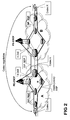
- Fig. 2 shows the end-to-end negotiation between two subscribers A and B, where an A-subscriber initiates a call to a B-subscriber and the call is identified by a call/connection identifier «Call-Id».
- Each IP end device of the subscribers A, B is connected to an access router R of an access network, where the media stream is routed to a border gateway BGW,
- the signalling SIP, SDP is routed via an access router R to the Physical Entity «Call/Session Control Function» PE-CSCF, the latter is called for the sake of simplicity just «Call/Session Controller» PE-CSCF.
- the protocol used between the Call/Session Controller PE-CSCF and the Physical Entity containing a Policy Decision Functional Entity PD-FE, which may or may not be an integrated part of the Border Gateway BGW is enhanced by a new information element 12. Further details see Fig. 3 .
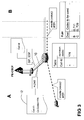
- the information element 12 contains a field «common codec» of type «true/false» or «X/N» or «yes/no", this field is accompanied by another field «Call-Id» identifying the call by a call/connection identifier, see e.g. SIP.
- the logic of the Policy Decision Functional Entity PD-FE is enhanced by a table containing the information «common codec» for each active call identified by the «Call-Id».
- the «Call-Id» is used to generate the appropriate address to access (read/write) the said table.
- a procedure is provided to analyze for each RTP stream, if transcoding is to be applied or not by determining the media type and in case of voice accessing the corresponding element of the said table to get the «common codec» information and set the appropriate flag for the further processing in the Policy Decision Functional Entity PD-FE.
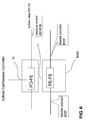
- the protocol 11 used between the Policy Decision Functional Entity PD-FE contained in a separate Physical Entity and the Policy Enforcing Functional Entity PE-FE in the Border Gateway BGW is preferably according to an open standard, see Fig. 5 and 6 .
- An example for such a protocol is H.248 accompanied by SDP or COPS.
- the Policy Decision Functional Entity PD-FE maintains a table to store the new information element «common codec» on a per call basis. If the information «common codec» is true ( «Y», «yes»), then the Policy Decision Function Entity PD-FE ignores the existing rule stored in the Policy Decision Functional Entity PD-FE for applying the assigned codec (for crossing network borders) for this voice call and instructs the Policy Enforcing Functional Entity PE-FE accordingly. That means for the media «voice» no codec information will be sent to the Policy Enforcing Functional Entity when requesting the creation of the appropriate context.
- Fig. 4 shows the new procedure introduced in the Policy Decision Functional Entity PD-FE:
- the Border Gateways BGW includes either only the Policy Enforcing Functional Entity PE-FE and thus provides the voice related signal processing resources or in addition to the Policy Enforcing Functional Entity PE-FE also the Policy Decision Functional Entity PD-FE.
- Session Border Controllers of pre-NGN networks handling media and signalling can be considered as a physical implementation of a NGN Border Gateway containing the Policy Decision Functional Entity PD-FE and the Policy Enforcing Functional Entity PE-FE combined with a Signalling Gateway.
- the Policy Enforcing Functional Entity PE-FE of the Border Gateway BGW providing the signal processing functions for voice, e.g. one or more codecs, is informed either by the integrated or external Policy Decision Functional Entity PD-FE based on the information received from the Call/Session Controller PE-CSCF, where the call set up handling takes place, if a common codec has been negotiated or not.
- the codec could be negotiated between the Policy Decision Functional Entities PD-FE involved in the call.
Landscapes
- Engineering & Computer Science (AREA)
- Computer Networks & Wireless Communication (AREA)
- Signal Processing (AREA)
- Computer Security & Cryptography (AREA)
- Multimedia (AREA)
- Data Exchanges In Wide-Area Networks (AREA)
- Telephonic Communication Services (AREA)
Abstract
The architecture framework for Next Generation Network NGN, as defined by ITU-T and ETSI, includes border gateways (BGW) to connect different networks of different network providers or to connect access networks to the core network. Based on bilateral agreement a specific codec is used in the interconnecting network or a specific codec may be used in the core network independent of the codec used in the access network, respectively. In order to avoid unnecessary transcoding, an information element (12) is introduced which contains the result of an end-to-end negotiation on common codecs.
The information element (12) contains at least a field <<call/connection identifier>> (Call-Id) and a field <<common codec>> is introduced in the information exchange between a Physical Entity Call/Session Controller (PE-CSCF) and a Policy Decision Functional Entity (PD-FE).
The information element (12) contains at least a field <<call/connection identifier>> (Call-Id) and a field <<common codec>> is introduced in the information exchange between a Physical Entity Call/Session Controller (PE-CSCF) and a Policy Decision Functional Entity (PD-FE).
Description
- This invention relates to a method and system for transcoding avoidance in Border Gateways according to the preamble of claim 1 respectively claim 6.
- The architecture framework for Next Generation Network NGN, as defined by ITU-T and ETSI, describes beside others the functional entities of the gateway connecting different networks. The different networks could be either core networks of different network providers or access networks connected to a core network. The Service Stratum contains besides others the functional entity Call/Session Control, whereas the Transport Stratum contains in the Resource and Admission Control Area the Policy Decision Functional Entity PD-FE and in the Transport Area the Policy Enforcing Functional Entity PE-FE. Network operators do assign a specific codec to be used in the interconnecting network (between networks of different network operators) based on bilateral agreement or specify a specific codec to be used in their core network independent of the codec used in the access network, based on criteria such as bandwidth; see
EP 1 758 333 A1 andWO 2007/022818 A1 [1] or to connect IP end devices using different codecs. The network element connecting the different networks is hereafter called border gateway BGW. - A number of different (bit rate) codecs are defined for the transport of voice over IP. However it is not economical feasible to provide all these codecs in IP based devices. That is why network operators provide in their networks network elements with the "transcoding" capability. This makes it possible to "connect" IP end devices with different codecs.
- The above mentioned method suffers from the drawback that unnecessary transcoding may be present. Transcoding introduces additional delay and reduces the audio quality caused by converting one coding scheme into another coding scheme.
- On the other hand an end to end based codec negotiation has been defined (ITU-T, IETF) to agree, if possible, to a codec available in both end devices, considering that transcoding reduces the voice quality by adding delay and decreasing the audio quality.
- Nevertheless this negotiation does not avoid transcoding per se, because the Border Gateways, where the transcoding takes place are not involved in the codec negotiation, see
Fig. 1 BGW. - It is therefore a task of the present invention, to provide a method and a system for avoiding unwanted transcoding causing a reduced voice service quality.
-
WO 2004/006597 A1 /EP 1 586 209 B1 [2] discloses the «Avoidance of transcoding or interruption on live load coding exchange in extant connections». This disclosure does not solve the above mentioned problem, since it is restricted to a media gateway MG between a TDM- and a packet-based network and is related to a media change during an extant connection, e.g. voice to fax and vice versa. An example would be where person A assures by voice communication with a person B, that the person B will be able to receive a confidential fax and only then sends the fax. This can be done by using a normal telephone apparatus combined with a Fax-Device Gr.3. - The object to provide a method and a system for avoiding unwanted transcoding causing a reduced voice service quality is solved by the method steps specified in claim 1 and by a system given with the features in claim 6.
- By the introduction of
- i) an information element containing at least a field «call/connection identifier» Call-Id and a field «common codec» of type «true/false» (Y/N) in the information exchange between a Physical Entity Call/Session Controller PE-CSCF and a Physical Entity containing the Policy Decision Functional Entity PD-FE and by a table in the Policy Decision Functional Entity PD-FE, where the table elements store the information «common codec» on a per call basis and a procedure for the Policy Decision Functional Entity PD-FE whereby
- ii) in the involved border gateway BGW in case of «common codec» = true the transcoding is avoided or in case of «common codec» = false an predefined transcoding is performed according to the rule based on origin and destination , and contained in the the Policy Decision Functional Entity;
- Further advantageous embodiments of the present invention are given in dependent claims.
- The invention will be now described in preferred embodiments with reference to the accompanying figures wherein:
- Figure 1
- Transcoding in the Border Gateways of network A and network B according to the state of the art;
- Figure 2
- Transcoding avoidance in the Border Gateways of network A and network B according to a preferred embodiment of the invention;
- Figure 3
- Protocol elements and table for «common codec»;
- Figure 4
- Media (voice)/RTP - Codec Analysis in the Policy Decision Functional Entity;
- Figure 5
- BGW containing Policy Enforcing Functional Entity and Policy Decision Functional Entity;
- Figure 6
- BGW containing Policy Enforcing Functional Entity and an interface to Policy Decision Functional Entity.
-
Fig. 2 shows the end-to-end negotiation between two subscribers A and B, where an A-subscriber initiates a call to a B-subscriber and the call is identified by a call/connection identifier «Call-Id». - Each IP end device of the subscribers A, B is connected to an access router R of an access network, where the media stream is routed to a border gateway BGW, The signalling SIP, SDP is routed via an access router R to the Physical Entity «Call/Session Control Function» PE-CSCF, the latter is called for the sake of simplicity just «Call/Session Controller» PE-CSCF. The protocol used between the Call/Session Controller PE-CSCF and the Physical Entity containing a Policy Decision Functional Entity PD-FE, which may or may not be an integrated part of the Border Gateway BGW is enhanced by a
new information element 12. Further details seeFig. 3 . Theinformation element 12 contains a field «common codec» of type«true/false» or «X/N» or «yes/no», this field is accompanied by another field «Call-Id» identifying the call by a call/connection identifier, see e.g. SIP. - With reference to
Fig. 3 the logic of the Policy Decision Functional Entity PD-FE is enhanced by a table containing the information «common codec» for each active call identified by the «Call-Id». The «Call-Id» is used to generate the appropriate address to access (read/write) the said table. Furthermore a procedure is provided to analyze for each RTP stream, if transcoding is to be applied or not by determining the media type and in case of voice accessing the corresponding element of the said table to get the «common codec» information and set the appropriate flag for the further processing in the Policy Decision Functional Entity PD-FE. If the Policy Decision Functional Entity PD-FE is not integrated in the Border Gateway BGW, then theprotocol 11 used between the Policy Decision Functional Entity PD-FE contained in a separate Physical Entity and the Policy Enforcing Functional Entity PE-FE in the Border Gateway BGW is preferably according to an open standard, seeFig. 5 and6 . An example for such a protocol is H.248 accompanied by SDP or COPS. - The Policy Decision Functional Entity PD-FE maintains a table to store the new information element «common codec» on a per call basis. If the information «common codec» is true («Y», «yes»), then the Policy Decision Function Entity PD-FE ignores the existing rule stored in the Policy Decision Functional Entity PD-FE for applying the assigned codec (for crossing network borders) for this voice call and instructs the Policy Enforcing Functional Entity PE-FE accordingly. That means for the media «voice» no codec information will be sent to the Policy Enforcing Functional Entity when requesting the creation of the appropriate context.
-
Fig. 4 shows the new procedure introduced in the Policy Decision Functional Entity PD-FE: - For each RTP stream the media type is determined and in case of voice, the corresponding element in said table is accessed to get the «common codec» information and the flags for the further processing are set, i.e. preparing the instruction to be sent to the Policy Enforcing Functional Entity PE-FE.
- The Border Gateways BGW includes either only the Policy Enforcing Functional Entity PE-FE and thus provides the voice related signal processing resources or in addition to the Policy Enforcing Functional Entity PE-FE also the Policy Decision Functional Entity PD-FE.
- Session Border Controllers of pre-NGN networks handling media and signalling can be considered as a physical implementation of a NGN Border Gateway containing the Policy Decision Functional Entity PD-FE and the Policy Enforcing Functional Entity PE-FE combined with a Signalling Gateway.
- The Policy Enforcing Functional Entity PE-FE of the Border Gateway BGW providing the signal processing functions for voice, e.g. one or more codecs, is informed either by the integrated or external Policy Decision Functional Entity PD-FE based on the information received from the Call/Session Controller PE-CSCF, where the call set up handling takes place, if a common codec has been negotiated or not.
- In another embodiment of this invention the codec could be negotiated between the Policy Decision Functional Entities PD-FE involved in the call.
-
- 10
- Resource control protocol, Rs interface; ITU-T Rec. Q.3301.1
- 11
- protocols H.248, SDP, COPS
- 12
- Common codec Information Element
-
- BGW
- Border Gateway
- Call-Id
- Call (Connection) Identifier
- Co-Codec
- Common Codec
- COPS
- Common Open Policy Service, Protocol; IETF RFC 2748
- CSCF
- Call/Session Control Function
- ETSI
- European Technical Standardization Institute
- IETF
- Internet Engineering Task Force
- ITU-T
- International Telecommunication Union
- PD-FE
- Policy Decision Functional Entity
- PE-FE
- Policy Enforcing Functional Entity
- PE-CSCF
- Physical Entity «Call/Session Control Function
- R
- Router
- RFC
- Request For Comment
- RTP
- Real Time Transport Protocol, IETF RFC 1889
- SBC
- Session Border Controller
- SDP
- Session Description Protocol, IETF RFC 2327
- SIP
- Session Initiation Protocol, IETF RFC 2543
- H.248
- MEGACO (Media Gateway Control Protocol), ITU-T/IETF
-
- [1]
WO 2007/022818 A1
«Method for the manipulation of speech packets in an IP-Gatway» Siemens Schweiz AG; CH - 8047 Zürich. - [2]
WO 2004/006597 A1 /EP 1 586 209 B1
«Avoidance of transcoding or interruption on live load coding exchange in extant connections» Siemens Aktiengesellschaft,DE - 80333 Munich
Claims (10)
- Method for avoiding transcoding in a Border Gateway (BGW) of an IP network evaluating the result of a Codec negotiation between two IP end devices (A, B), where- to the IP end devices an A- and a B-subscriber are associated;- each IP end device of the subscribers (A, B) is connected to an access router (R) of an access network,- the A-subscriber initiates a call to the B-subscriber and the call is identified by a call/connection identifier (Call-Id),the method comprising the steps:i) an information element (12) containing at least a field «call/connection identifier» (Call-Id) and a field «common codec» is introduced in the information exchange between a Physical Entity Call/Session Controller (PE-CSCF) and a Policy Decision Functional Entity (PD-FE);ii) the Policy Decision Functional Entity (PD-FE) maintains a table, where each element of the table stores the information «common codec» as received by the Call/Session Controller;iii) in the involved Policy Decision Functional Entity (PD-FE) a procedure is introduced, wherein in case of «common codec» = true a flag with the meaning «transcoding avoidance» is set or in case of «common codec» = false a flag with the meaning «process rule» is set;iv) the Policy Decision Functional Entity informs (PD-FE) the Policy Enforcing Functional Entity (PE-FE) to- create a context for an RTP-stream with transcoding according the indicated codec from the «process rule» or to- create a context for an RTP-stream without transcoding.
- Method according to claim 1;
characterised in that
in step iii) the involved Policy Decision Functional Entity (PD-FE) is integrated in the border Gateway (BGW). - Method according to claim 1;
characterised in that
in step iii) the involved Policy Decision Functional Entity (PD-FE) is external to the border Gateway (BGW). - Method according to one of the claims 1 to 3;
characterised in that
the Codec negotiation is performed by the Policy Decision Functional Entities (PD-FE) in the involved networks. - Method according to one of the claims 1 to 4;
characterised in that
in step i) the information exchange between a Physical Entity Call/Session Controller (PE-CSCF) and a Policy Decision Functional Entity (PD-FE) is based on the protocols H.248 accompanied by SDP. - System for avoiding transcoding in a Border Gateway (BGW) of an IP network evaluating the result of a Codec negotiation between two IP end devices (A, B), where- to the IP end devices an A- and a B-subscriber are associated;- each IP end device of the subscribers (A, B) is connected to an access router (R) of an access network,- the A-subscriber initiates a call to the B-subscriber and the call is identified by a call/connection identifier (Call-Id),characerised in thati) an information element (12) containing at least a field «call/connection identifier» (Call-Id) and a field «common codec» is contained in the information exchange between a Physical Entity Call/Session Controller (PE-CSCF) and a Policy Decision Functional Entity (PD-FE);ii) the Policy Decision Functional Entity (PD-FE) maintains a table, where each element of the table stores the information «common codec» as received by the Call/Session Controller;iii) in the involved Policy Decision Functional Entity (PD-FE) a procedure is introduced, wherein in case of «common codec» = true a flag "transcoding avoidance" is set or in case of «common codec» = false a flag "process rule" is set;iv) the Policy Decision Functional Entity informs (PD-FE) the Policy Enforcing Functional Entity (PE-FE) toBorder Gateway including Policy Decision Functional Entity and Policy Enforcing Functional Entity.- create a context for an RTP-stream with transcoding according the indicated codec from the rule or to- create a context for an RTP-stream without transcoding.
- System according to claim 6;
characterised in that
in step iii) the involved Policy Decision Functional Entity (PD-FE) is integrated in the border Gateway (BGW). - System according to claim 6;
characterised in that
in step iii) the involved Policy Decision Functional Entity (PD-FE) is external to the border Gateway (BGW). - System according to one of the claims 6 to 8;
characterised in that
the Codec negotiation is performed by the Policy Decision Functional Entities (PD-FE) in the involved networks. - System according to one of the claims 6 to 9;
characterised in that
in step i) the information exchange between a Physical Entity Call/Session Controller (PE-CSCF) and a Policy Decision Functional Entity (PD-FE) is based on the protocols H.248 accompanied by SDP.
Priority Applications (2)
| Application Number | Priority Date | Filing Date | Title |
|---|---|---|---|
| EP08000720A EP2081349A1 (en) | 2008-01-16 | 2008-01-16 | Method and system for transcoding avoidance in Border Gateways |
| PCT/EP2008/066064 WO2009089953A1 (en) | 2008-01-16 | 2008-11-24 | Method and system for transcoding avoidance in border gateways |
Applications Claiming Priority (1)
| Application Number | Priority Date | Filing Date | Title |
|---|---|---|---|
| EP08000720A EP2081349A1 (en) | 2008-01-16 | 2008-01-16 | Method and system for transcoding avoidance in Border Gateways |
Publications (1)
| Publication Number | Publication Date |
|---|---|
| EP2081349A1 true EP2081349A1 (en) | 2009-07-22 |
Family
ID=39563561
Family Applications (1)
| Application Number | Title | Priority Date | Filing Date |
|---|---|---|---|
| EP08000720A Withdrawn EP2081349A1 (en) | 2008-01-16 | 2008-01-16 | Method and system for transcoding avoidance in Border Gateways |
Country Status (2)
| Country | Link |
|---|---|
| EP (1) | EP2081349A1 (en) |
| WO (1) | WO2009089953A1 (en) |
Cited By (3)
| Publication number | Priority date | Publication date | Assignee | Title |
|---|---|---|---|---|
| EP3205141A4 (en) * | 2014-10-09 | 2018-03-28 | T-Mobile USA, Inc. | Service capabilities in heterogeneous network |
| US10771509B2 (en) | 2017-03-31 | 2020-09-08 | T-Mobile Usa, Inc. | Terminal interoperation using called-terminal functional characteristics |
| US11799922B2 (en) | 2016-12-21 | 2023-10-24 | T-Mobile Usa, Inc. | Network core facilitating terminal interoperation |
Citations (3)
| Publication number | Priority date | Publication date | Assignee | Title |
|---|---|---|---|---|
| DE80333C (en) | ||||
| WO2004006597A1 (en) | 2002-07-09 | 2004-01-15 | Siemens Aktiengesellschaft | Avoidance of transcoding or interruption on live load coding exchange in extant connections |
| EP1758333A1 (en) | 2005-08-24 | 2007-02-28 | Siemens Schweiz AG | Method for manipulation of voice packets in an IP gateway |
-
2008
- 2008-01-16 EP EP08000720A patent/EP2081349A1/en not_active Withdrawn
- 2008-11-24 WO PCT/EP2008/066064 patent/WO2009089953A1/en not_active Ceased
Patent Citations (5)
| Publication number | Priority date | Publication date | Assignee | Title |
|---|---|---|---|---|
| DE80333C (en) | ||||
| WO2004006597A1 (en) | 2002-07-09 | 2004-01-15 | Siemens Aktiengesellschaft | Avoidance of transcoding or interruption on live load coding exchange in extant connections |
| EP1586209B1 (en) | 2002-07-09 | 2006-05-03 | Siemens Aktiengesellschaft | Avoidance of transcoding or interruption on live load coding exchange in extant connections |
| EP1758333A1 (en) | 2005-08-24 | 2007-02-28 | Siemens Schweiz AG | Method for manipulation of voice packets in an IP gateway |
| WO2007022818A1 (en) | 2005-08-24 | 2007-03-01 | Siemens Schweiz Ag | Method for the manipulation of speech packets in an ip gateway |
Non-Patent Citations (3)
| Title |
|---|
| "Telecommunications and Internet converged Services and Protocols for Advanced Networking (TISPAN); Resource and Admission Control: H.248 Profile for controlling Border Gateway Functions (BGF) in the Resource and Admission Control Subsystem (RACS); Protocol specification; ETSI ES 283 018", ETSI STANDARDS, LIS, SOPHIA ANTIPOLIS CEDEX, FRANCE, vol. TISPAN, no. V2.3.0, 1 November 2007 (2007-11-01), XP014040864, ISSN: 0000-0001 * |
| CHU K: "Latest Draft of G.IP2IP (ver 1.7)", TELECOMMUNICATIONS INDUSTRY ASSOCIATION TR-30.1 MEETING, 21 August 2007 (2007-08-21) - 22 August 2007 (2007-08-22), Arlington, VA, US, pages 1 - 19, XP002487600 * |
| INTERNATIONAL TELECOMMUNICATION UNION: "Resource control protocol no. 1 (rcp1) Protocol at the interface between service control entities and the Policy Decision Physical Entity (PD-PE) (Rs interface)", SERIES Q: SWITCHING AND SIGNALLING SIGNALLING REQUIREMENTS AND PROTOCOLS FOR THE NGN - RESOURCE CONTROL PROTOCOLS Q.3301.1, March 2007 (2007-03-01), GENEVA, CH, pages 1 - 54, XP002487599 * |
Cited By (7)
| Publication number | Priority date | Publication date | Assignee | Title |
|---|---|---|---|---|
| EP3205141A4 (en) * | 2014-10-09 | 2018-03-28 | T-Mobile USA, Inc. | Service capabilities in heterogeneous network |
| US10148703B2 (en) | 2014-10-09 | 2018-12-04 | T-Mobile Usa, Inc. | Service capabilities in heterogeneous network |
| US10701109B2 (en) | 2014-10-09 | 2020-06-30 | T-Mobile Usa, Inc. | Service capabilities in heterogeneous network |
| US10965719B2 (en) | 2014-10-09 | 2021-03-30 | T-Moblle USA, Inc. | Service capabilities in heterogeneous network |
| US11799922B2 (en) | 2016-12-21 | 2023-10-24 | T-Mobile Usa, Inc. | Network core facilitating terminal interoperation |
| US10771509B2 (en) | 2017-03-31 | 2020-09-08 | T-Mobile Usa, Inc. | Terminal interoperation using called-terminal functional characteristics |
| US11444984B2 (en) | 2017-03-31 | 2022-09-13 | T-Mobile Usa, Inc. | Terminal interoperation using called-terminal functional characteristics |
Also Published As
| Publication number | Publication date |
|---|---|
| WO2009089953A1 (en) | 2009-07-23 |
Similar Documents
| Publication | Publication Date | Title |
|---|---|---|
| US7826384B2 (en) | Method and apparatus for negotiating bearer control parameters using property sets | |
| EP1203480B1 (en) | Service parameter interworking method | |
| US7761579B2 (en) | Packet-switched network-to-network interconnection interface | |
| EP1309149B1 (en) | System and method for improving communication between a public switched telephone network and a packet network | |
| CN101160886B (en) | IP intercommunication gateway and method for implementing IP field intercommunication in next generation network | |
| US8139541B2 (en) | Method and system for bypassing media gateways in wireless networks | |
| US9350784B2 (en) | Method and communication system for selecting a transmission mode for transmitting payload data | |
| US8811162B2 (en) | Network element for allocating at least one payload data connection to at least one multiplex connection | |
| US20060227728A1 (en) | Method software product and device for signalling bearer channel modifications by means of a sip protocol | |
| US8457116B2 (en) | Mobile technology | |
| EP1436963B1 (en) | Method, apparatus and computer program for selecting a media gateway control function based on the monitoring of resources of media gateway functions | |
| US20070041357A1 (en) | Interworking of hybrid protocol multimedia networks | |
| WO2009089953A1 (en) | Method and system for transcoding avoidance in border gateways | |
| US20170070477A1 (en) | Method, System and Device for Implementing Interconnection Between IP Domains | |
| KR100913601B1 (en) | Call admission control method for the SIP base Service interworking Control System | |
| EP2651096A1 (en) | HD voice recovery | |
| King et al. | Internet emergency preparedness in the IETF | |
| Olsen | Implementing Cisco Unified Communications Manager, Part 2 (CIPT2)(Authorized Self-Study Guide) | |
| Olsen | Implementing Cisco Unified Communications Manager, Part 2 (CIPT2) Foundation Learning Guide:(CCNP Voice CIPT2 642-457) |
Legal Events
| Date | Code | Title | Description |
|---|---|---|---|
| PUAI | Public reference made under article 153(3) epc to a published international application that has entered the european phase |
Free format text: ORIGINAL CODE: 0009012 |
|
| AK | Designated contracting states |
Kind code of ref document: A1 Designated state(s): AT BE BG CH CY CZ DE DK EE ES FI FR GB GR HR HU IE IS IT LI LT LU LV MC MT NL NO PL PT RO SE SI SK TR |
|
| AX | Request for extension of the european patent |
Extension state: AL BA MK RS |
|
| AKX | Designation fees paid | ||
| STAA | Information on the status of an ep patent application or granted ep patent |
Free format text: STATUS: THE APPLICATION IS DEEMED TO BE WITHDRAWN |
|
| 18D | Application deemed to be withdrawn |
Effective date: 20100123 |
|
| REG | Reference to a national code |
Ref country code: DE Ref legal event code: 8566 |