EP2081116A1 - Performance evaluation simulation - Google Patents
Performance evaluation simulation Download PDFInfo
- Publication number
- EP2081116A1 EP2081116A1 EP08169674A EP08169674A EP2081116A1 EP 2081116 A1 EP2081116 A1 EP 2081116A1 EP 08169674 A EP08169674 A EP 08169674A EP 08169674 A EP08169674 A EP 08169674A EP 2081116 A1 EP2081116 A1 EP 2081116A1
- Authority
- EP
- European Patent Office
- Prior art keywords
- performance evaluation
- unit
- basic process
- throughput
- evaluation simulation
- Prior art date
- Legal status (The legal status is an assumption and is not a legal conclusion. Google has not performed a legal analysis and makes no representation as to the accuracy of the status listed.)
- Withdrawn
Links
Images





Classifications
-
- G—PHYSICS
- G06—COMPUTING OR CALCULATING; COUNTING
- G06F—ELECTRIC DIGITAL DATA PROCESSING
- G06F11/00—Error detection; Error correction; Monitoring
- G06F11/30—Monitoring
- G06F11/34—Recording or statistical evaluation of computer activity, e.g. of down time, of input/output operation ; Recording or statistical evaluation of user activity, e.g. usability assessment
-
- G—PHYSICS
- G06—COMPUTING OR CALCULATING; COUNTING
- G06F—ELECTRIC DIGITAL DATA PROCESSING
- G06F11/00—Error detection; Error correction; Monitoring
- G06F11/30—Monitoring
- G06F11/34—Recording or statistical evaluation of computer activity, e.g. of down time, of input/output operation ; Recording or statistical evaluation of user activity, e.g. usability assessment
- G06F11/3457—Performance evaluation by simulation
-
- G—PHYSICS
- G06—COMPUTING OR CALCULATING; COUNTING
- G06F—ELECTRIC DIGITAL DATA PROCESSING
- G06F11/00—Error detection; Error correction; Monitoring
- G06F11/30—Monitoring
-
- G—PHYSICS
- G06—COMPUTING OR CALCULATING; COUNTING
- G06F—ELECTRIC DIGITAL DATA PROCESSING
- G06F30/00—Computer-aided design [CAD]
- G06F30/30—Circuit design
-
- G—PHYSICS
- G06—COMPUTING OR CALCULATING; COUNTING
- G06F—ELECTRIC DIGITAL DATA PROCESSING
- G06F30/00—Computer-aided design [CAD]
- G06F30/30—Circuit design
- G06F30/32—Circuit design at the digital level
- G06F30/33—Design verification, e.g. functional simulation or model checking
-
- G—PHYSICS
- G06—COMPUTING OR CALCULATING; COUNTING
- G06F—ELECTRIC DIGITAL DATA PROCESSING
- G06F30/00—Computer-aided design [CAD]
- G06F30/30—Circuit design
- G06F30/32—Circuit design at the digital level
- G06F30/33—Design verification, e.g. functional simulation or model checking
- G06F30/3308—Design verification, e.g. functional simulation or model checking using simulation
-
- G—PHYSICS
- G06—COMPUTING OR CALCULATING; COUNTING
- G06F—ELECTRIC DIGITAL DATA PROCESSING
- G06F2117/00—Details relating to the type or aim of the circuit design
- G06F2117/08—HW-SW co-design, e.g. HW-SW partitioning
-
- G—PHYSICS
- G06—COMPUTING OR CALCULATING; COUNTING
- G06F—ELECTRIC DIGITAL DATA PROCESSING
- G06F2201/00—Indexing scheme relating to error detection, to error correction, and to monitoring
- G06F2201/81—Threshold
Definitions
- Embodiments of the present invention relate to a performance evaluation simulation performed on a software model and a hardware model for which process to be performed are provisionally determined from system specifications by using software and hardware, respectively, for performance evaluation.
- a processor, a bus, a memory, and other components for use in electronic equipment may be implemented on one LSI (Large Scale Integration) and, on that LSI (system LSI), a plurality of processes are performed.
- LSI Large Scale Integration
- system LSI system LSI
- Such implementation of a plurality of processes on one LSI is for the purpose of downsizing the LSI and reducing cost and consumption power, for example.
- an easy change is difficult, thereby increasing the difficulty in designing the functions of the LSI.
- SW software
- HW hardware
- the software is written in C language, assembly language, or the like, and is executed on an actual machine model including a target processor, which is a processor implemented on the LSI for performance verification, or on an ISS (Instruction Set Simulator) for the target processor, thereby simulating the operation of the software.
- the hardware is written in RTL (Register Transfer Level) or TLM (Transaction Level Model), which are languages for describing hardware, or in a language obtained by mixing RTM and TLM, thereby simulating the operation of the hardware.
- Japanese Patent Application Laid-open No. 2001-142927 discloses that source codes completed to some extent are analyzed, and each processing unit is subjected to SW/HW division by taking a value of each processing unit as a determination factor, such as a throughput calculated from the number of clock cycles and an amount of consumed power calculated from the description part of a function.
- Japanese Patent Application Laid-open No. H11-259552 discloses that architecture descriptions of a system LSI are converted to modules in units of execution to perform SW/HW division and the execution times of the respective modules obtained by executing simulations based on a benchmark program are compared, thereby determining the validity of SW/HW division.
- a performance evaluation simulation apparatus evaluates performance by performing a simulation on a software model and a hardware model in which a process to be performed is provisionally determined by using software and hardware from specifications of a system.
- the performance evaluation simulation apparatus includes a basic-process-unit dividing unit that makes a division into basic process units, which are execution units of process to be performed in the software model based on an execution log that represents execution history obtained by executing the software model on an actual machine or simulation software; a throughput calculating unit that calculates a throughput of each of the basic process units obtained through division by the basic-process-unit dividing unit, from the number of instruction address strings or the number of address strings for data access kept in the execution log; an arrangement-structure changing unit that compares each throughput calculated by the throughput calculating unit and a predetermined threshold and changes an arrangement structure so that a basic process unit with a throughput exceeding the predetermined threshold is changed from the software model to the hardware model; and a statistical-information generating unit that generates statistical information on which performance evaluation is
- a performance evaluation simulation method for evaluating performance by performing a simulation on a software model and a hardware model in which a process to be performed is provisionally determined by using software and hardware from specifications of a system.
- the performance evaluation simulation method includes making a division into basic process units, which are execution units of process to be performed in the software model based on an execution log that represents execution history obtained by executing the software model on an actual machine or simulation software; calculating a throughput of each of the basic process units obtained through the division, from the number of instruction address strings or the number of address strings for data access kept in the execution log; comparing each of the calculated throughputs and a predetermined threshold; changing an arrangement structure so that a basic process unit with a throughput exceeding the predetermined threshold is changed from the software model to the hardware model; and generating statistical information on which performance evaluation is based by performing a performance evaluation simulation on the basic process unit whose arrangement structure has been changed by the changing to the hardware model and basic process units arranged in the software model, the performance evaluation simulation executing
- an electronic apparatus includes a performance evaluation simulation apparatus that performs a simulation on a process executed on software and hardware from specifications of a system and designs an LSI based on performance evaluations obtained by the performance evaluation simulation apparatus.
- the electronic apparatus includes an accepting unit that accepts a software model and a hardware model; a basic-process-unit dividing unit that makes a division into basic process units, which are execution units of process to be performed in the software model based on an execution log that represents execution history obtained by executing the software model on an actual machine or simulation software; a throughput calculating unit that calculates a throughput of each of the basic process units obtained through division by the basic-process-unit dividing unit, from the number of instruction address strings or the number of address strings for data access kept in the execution log; an arrangement-structure changing unit that compares each throughput calculated by the throughput calculating unit and a predetermined threshold and changes an arrangement structure so that a basic process unit with a throughput exceeding the predetermined threshold is changed from the software model to the hardware model; and
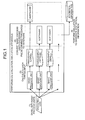
- FIG. 1 is a drawing of general outlines and features of the performance evaluation simulation apparatus according to the first embodiment.
- This performance evaluation simulation apparatus performs a performance evaluation simulation, with an execution log (instruction strings) as an input.
- the execution log represents execution history obtained from the results of dividing specifications of a system LSI into a software model and a hardware model and executing the software model obtained through the division on an actual machine or a target CPU using an ISS (Information Storage System) or the like.
- the general outlines of the performance evaluation simulation apparatus are such that, in the software model and the hardware model, a process to be performed in the software and the hardware is provisionally determined from the specifications of the system, and a performance evaluation is performed on each of the software model and the hardware model.
- main features of this apparatus are such that SW/HW division can be optimally performed at the initial stage of designing, and the validity of SW/HW division can be determined.
- the performance evaluation simulation apparatus Based on the execution log representing execution history obtained by executing the software model on an actual machine or simulation software, the performance evaluation simulation apparatus makes a division into basic process units, which are execution units of process to be performed in the software model (refer to (1) in Fig. 1 ).
- the performance evaluation simulation apparatus receives an input of an execution log representing execution history obtained from the results of dividing specifications of a system LSI into a software model and a hardware model and executing the software model on an actual machine or a target CPU using an ISS or the like. Then, based on the input execution log, the performance evaluation simulation apparatus makes a division into basic process units, which are execution units of process to be executed in the software model.
- a division into basic process units in the case of communication process software, for example, after a task starting point of an OS (Operating System) is found from the pattern of a periodic process, a division is made in units of task. Also, for example, after a process flow among object files is tracked from an instruction address string, and a break is found for division.
- the performance evaluation simulation apparatus calculates the throughput of each basic process unit obtained through division, from the number of instruction address strings or the number of address strings for data access kept in the execution log (refer to (2) in Fig. 1 ). Specifically, in the example above, the performance evaluation simulation apparatus calculates the throughput of each basic process unit obtained through division from the number of instruction address strings representing branch-destination address information at the time of process execution, the number of address strings for data access representing access-destination address information for accessing a database, or other information kept in the execution log.
- the performance evaluation simulation apparatus compares each calculated throughput and a predetermined threshold, and changes an arrangement structure so that a basic process unit with a throughput exceeding the predetermined threshold is changed from the software model to the hardware model (refer to (3) in Fig. 1 ). Specifically, in the example above, the performance evaluation simulation apparatus compares each calculated throughput and a predetermined threshold throughput. Then, as a result of comparison, the performance evaluation simulation apparatus changes the arrangement structure so that a basic process unit with an execution log indicating a throughput exceeding the predetermined threshold throughput is changed from software processing to hardware processing so as to be directly connected to a bus, thereby making a conversion to hardware.
- the performance evaluation simulation apparatus performs a performance evaluation simulation of executing a bus access via an instruction cache and a data cache to measure data required for system operation analysis, thereby generating statistical information on which performance evaluation is based (refer to (4) in Fig. 1 ).
- the performance evaluation simulation apparatus performs a performance evaluation simulation by executing a bus access via an instruction cache and a data cache.
- the performance evaluation simulation apparatus measures an instruction execution time, an instruction fetch time, and a data access time, thereby generating statistical information on which performance evaluation is based, such as a CPU load factor.
- the statistical information generated by this performance evaluation simulation apparatus is used in determining the validity of optimal SW/HW division.
- highly-accurate simulation results can be obtained.
- the performance evaluation simulation apparatus performs a performance evaluation simulation based on the execution log obtained from the results of executing the software model on the actual machine or on the target CPU by using the ISS or the like, among the basic process units obtained through division based on the information kept in the execution log, a basic process unit having a large throughput is converted to hardware for execution of the simulation.
- SW/HW division can be optimally performed at the initial stage of designing and the validity of SW/HW division can be determined.
- the performance evaluation simulation apparatus performs SW/HW division for each process by using the information kept in the execution log. Therefore, compared with the case as in the conventional technology where SW/HW division is performed depending on the degree of completion for each process implemented on the LSI, SW/HW division can be optimally performed at the initial stage of designing. Also, while measuring an instruction execution time, an instruction fetch time, and a data access time, the performance evaluation simulation apparatus performs a simulation by executing a bus access via an instruction cache and a data cache to output highly-accurate statistical information, such as a CPU load factor. Therefore, compared with the case as in the conventional technology where the process times of the respective execution units are compared each other, the validity of SW/HW division can be determined.
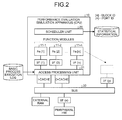
- Fig. 2 is a drawing of the configuration of the performance evaluation simulation apparatus according to the first embodiment.
- a performance evaluation simulation apparatus 10 includes function modules 11-1 to 11-n, a scheduler unit 20, and an access processing unit 21.
- the performance evaluation simulation apparatus 10 is connected via a bus 30 to the external RAM, which is a RAM connected outside of the performance evaluation simulation apparatus 10, and peripheral HW including, for example, an external I/F (interface) and dedicated hardware for a specific purpose.
- peripheral HW including, for example, an external I/F (interface) and dedicated hardware for a specific purpose.
- portions other than a basic process execution log are constructed at a transaction level using the System C language, which is one of hardware description languages for the purpose of use in designing electronic circuitry. Transmission and reception between modules are performed with function calls.
- the connection to the bus 30 is performed by using an interface common to the modules (for example, TLM-I/F).
- the function modules 11-1 to 11-n represent basic process units, which are execution units of process to be performed by the access processing unit 21 in the software model obtained through division based on the execution log.
- the function module 11-1 (Fn[1]) retains, as depicted in Fig. 3 , an address "E050D6E0", instruction/data access "I/D”, and load (read)/store (write) "R/W” in the case of data access.
- an address to be accessed is known, which address is accessed can be known from the RAM storing each hardware address and data. Then, from this address information, it can be known for which HW the performance evaluation simulation apparatus 10 makes an instruction or data access.
- Fig. 3 is a drawing of a relation between accesses to addresses and basic process units in the entire execution log according to the first embodiment.
- the access processing unit 21 Based on the execution log representing execution history obtained by executing the software model on the actual machine or simulation software, the access processing unit 21 makes a division into basic process units, which are execution units of process to be executed in the software model. The access processing unit 21 then calculates the throughput of each basic process unit obtained through division from the number of instruction address strings or the number of address strings for data access kept in the execution log. Thereafter, the access processing unit 21 compares each calculated throughput and a predetermined threshold, and changes an arrangement structure so that a basic process unit with a throughput exceeding the predetermined threshold is changed from the software model to the hardware model. Then, the basic process unit whose arrangement structure has been changed to the hardware model and the basic process units arranged in the software model, the access processing unit 21 performs a performance evaluation simulation of executing a bus access via the instruction cache and the data cache.
- a specific example is as follows. Based on the execution log, the access processing unit 21 makes a division into basic process units, which are execution units of process to be executed in the software model. The access processing unit 21 then calculates the throughput of each basic process unit obtained through division from the number of instruction address strings representing branch-destination address information at the time of process execution, the number of address strings for data access representing access-destination address information for accessing a database, or other information kept in the execution log.
- the access processing unit 21 compares each calculated throughput and a predetermined threshold, and changes the arrangement structure so that a basic process unit with an execution log indicating a throughput exceeding the predetermined threshold throughput is changed from software processing to hardware processing so as to be directly connected to the bus 30, thereby making a conversion to hardware. Then, when accepting a request for process handling from the scheduler unit 20, the access processing unit 21 performs, on the basic process unit whose arrangement structure has been changed to the hardware model for conversion to hardware, a performance evaluation simulation by executing a bus access via the instruction cache (I-cache) and the data cache (D-cache), while measuring an instruction execution time, an instruction fetch time, and a data access time.
- I-cache instruction cache
- D-cache data cache
- the scheduler unit 20 generates, from the simulation process executed by the access processing unit 21, statistical information on which performance evaluation is based. Specifically, in the example above, with an event that occurred as a trigger, the scheduler unit 20 requests a corresponding function module (basic process unit) for process handling. From the simulation results obtained by the access processing unit 21, the scheduler unit 20 then generates statistical information on which performance evaluation is based, such as a CPU load factor.
- This statistical information has stored therein, as depicted in Fig. 4 , for example, an instruction execution time of "100 nanoseconds", an instruction fetch time of "3 nanoseconds", a data access time of "2 nanoseconds", and a CPU load factor of "30%" every basic process unit "Fn[1]".
- the access processing unit 21 manages port IDs (IDentifiers) of interfaces connected to the external RAM, the peripheral HW, and others via the bus 30 and block IDs of the function modules 11-1 to 11-n in a unified manner, and knows the order of the function modules in which they requests of the access processing unit 21 process handling and also knows the arrangement of the function modules.
- Fig. 4 is a drawing of an example of statistical information according to the first embodiment.
- FIG. 5 is a drawing of the LSI development flow. Here, this flow is to design the entire LSI including the process of the performance evaluation simulation apparatus according to the first embodiment.
- a system request is analyzed from the generated specifications (step S602). Then, from the analyzed system request, a scheme of considering an algorism is designed (step S603). Then, with performance evaluation and consideration of SW/HW division, architecture is designed (step S604). Thereafter, an RTL logical design is performed on a hardware part (step S605), and then a physical design of that hardware is performed (step S606). Also, software development is performed on the software part (step S607). Then, the hardware and the software are combined to generate an actual machine model (step S608), and then a product is shipped (step S609).
- FIG. 6 is a flowchart of the simulation process of the performance evaluation simulation apparatus 10 according to the first embodiment.
- the process explained in Fig. 6 is part of the architecture designing at step S604 depicted in Fig. 5 .
- the performance evaluation simulation apparatus 10 divides the specifications into software processing and hardware processing (step S102), and then outputs provisional software, which is a software model, and an operational model, which is a hardware model (steps S103 and S104).
- provisional software which is a software model
- an operational model which is a hardware model
- step S103 and S104 Upon output of an execution log representing execution history obtained from the results of executing the output provisional software on the actual machine or the target CPU using the ISS or the like (steps S105 and S106), based on the execution log, a division is made into basic process units, which are execution units of process to be performed in the software model (step S107).
- the performance evaluation simulation apparatus 10 calculates the throughput of each basic process unit obtained through division from the number of instruction address strings representing branch-destination address information at the time of process execution, the number of address strings for data access representing access-destination address information for accessing a database, or other information kept in the execution log (step S108).
- the performance evaluation simulation apparatus 10 compares each calculated throughput and a predetermined threshold (step S109). Then, as a result of comparison, the performance evaluation simulation apparatus 10 changes the arrangement structure so that a basic process unit with an execution log indicating a throughput exceeding the predetermined threshold throughput is changed from software processing to hardware processing so as to be directly connected to a bus, thereby making a conversion to hardware (step S110).
- the performance evaluation simulation apparatus 10 searches for a function module corresponding to the basic process unit with the throughput exceeding the predetermined threshold throughput based on the block ID, thereby changing the arrangement structure of that function module. That is, the performance evaluation simulation apparatus 10 moves the function module from inside of the CPU to a port capable of direct bus connection, thereby converting the work of the function module from software processing by the CPU to hardware.
- the performance evaluation simulation apparatus 10 performs a performance evaluation simulation by executing a bus access via the instruction cache and the data cache, while measuring an instruction execution time, an instruction fetch time, and a data access time. Thereafter, from the instruction execution time, the instruction fetch time, and the data access time, the performance evaluation simulation apparatus 10 generates statistical information on which performance evaluation is based, such as a CPU load factor (step S111).
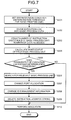
- FIG. 7 is a drawing for explaining the SW/HW division process performed by the performance evaluation simulation apparatus 10 according to the first embodiment.
- the performance evaluation simulation apparatus 10 determines a throughput threshold (predetermined threshold) serving as a SW/HW division condition for the basic process unit (step S201).
- the performance evaluation simulation apparatus 10 then counts the number of instruction address strings and the number of address strings for data access kept in the execution log for the basic process unit obtained through division, and calculates the throughput of the basic process unit from either one of these counts (or from total counts) (steps S202 to S204).
- the performance evaluation simulation apparatus 10 searches for the basic process unit corresponding to the execution log exceeding the threshold based on the block ID (step S206). Then, the performance evaluation simulation apparatus 10 allocates the found basic process unit to a port capable of direct bus connection, and changes the port ID according to the change of the arrangement structure of the basic process unit to hardware (steps S207 and S208).
- the performance evaluation simulation apparatus 10 does not require a cache access to the basic process unit converted to hardware, and requires a direct access to the RAM. However, since no instruction fetch is required for the execution log, an instruction address string is deleted, and only the data access is extracted in performing a simulation (steps S209 and S210).
- the performance evaluation simulation apparatus 10 uses information kept in the execution log to perform SW/HW division for each process. Also, the performance evaluation simulation apparatus 10 performs a simulation by executing a bus access via the instruction cache and the data cache, while measuring the instruction execution time, the instruction fetch time, and the data access time. Therefore, SW/HW division can be optimally performed at the initial stage of designing, and the validity of SW/HW division can be determined.
- the performance evaluation simulation apparatus 10 calculates the throughput of each basic process unit based on either one of the number of instruction address strings or the number of address strings for data access kept in the execution log, or the total numbers thereof, and then changes the arrangement structure so that a basic process unit with a throughput exceeding the predetermined threshold is changed to a hardware model.
- the basic process unit whose arrangement structure has been changed to the hardware model and the basic process units arranged in the software model, the performance evaluation simulation apparatus 10 then performs a performance evaluation simulation of executing a bus access via the instruction cache and the data cache to generate statistical information, such as the instruction execution time, the instruction fetch time, and the data access time.
- the performance evaluation simulation apparatus 10 can optimally perform SW/HW division at the initial stage of designing, and can also determine the validity of SW/HW division.
- Fig. 8 is a drawing of a relation between a time and a CPU throughput when the CPU model periodically performs an event.
- Fig. 9 is a drawing of an event process when part of function modules in the CPU is converted to hardware according to the second embodiment.
- Fig. 10 is a drawing of an example of a UML class according to the second embodiment.
- Fig. 11 is a drawing of an example of description in System C language according to the second embodiment.
- Fig. 12 is a drawing of a relation between degrees of abstraction of a hardware model and a simulation process according to the second embodiment.
- the configuration, functions, and others of the performance evaluation simulation apparatus according to the second embodiment are similar to those according to the first embodiment, and therefore are not explained herein.
- each basic process unit is formed of a whitebox portion having described therein a function unique to each basic process unit according to a process handling unit with combination of plurality of basic process units, and a blackbox portion where a process for collecting statistical information is performed.
- process handling is a process of executing a plurality of basic process units in combination, whilst an event is formed of a combination of process handlings including processes of only basic process units.
- the performance evaluation simulation apparatus 10 calls basic process units Fn[1] and Fn[2] sequentially. Then, when a periodic event B occurs, with the event B as a trigger, the performance evaluation simulation apparatus 10 calls basic process units Fn[2], Fn[3], Fn[1] sequentially. Then, when a periodic event C occurs, with the event C as a trigger, the performance evaluation simulation apparatus 10 calls the basic process unit Fn[1].
- the function module which is a basic process unit
- statistical information is collected by the blackbox portion, such as the instruction execution time, the instruction fetch time, and the data access time.
- the process time for the basic process is determined by "whitebox+blackbox ⁇ the number of calls" and, the longer the process time takes, the larger the CPU throughput.
- a level of priority is provided so that a process is performed with a collision in time being avoided.
- FIG. 9 an event process when part of the function modules in the CPU is converted to hardware is explained.
- the configuration of each basic process unit and others are similar to those depicted in Fig. 8 , and therefore are not explained herein, and an event process when a basic process unit with a large throughput is converted to hardware is explained.
- the performance evaluation simulation apparatus 10 changes the arrangement structure of the basic process unit Fn[3] with a throughput exceeding the predetermined threshold to hardware.
- the process time of the basic process unit Fn[3] converted to hardware is reduced, and also the CPU throughput for the entire event B is reduced.
- the performance evaluation simulation apparatus 10 converts the function module with a large load to hardware, thereby reducing the CPU throughput. Also, since the function module converted to hardware directly accesses the RAM, an instruction execution string is not required, and the address range for data access is also restricted. Therefore, the time is reduced compared with the case of accessing the D-cache (the cache for use at the time of data access), thereby reducing the process time of the blackbox portion and further reducing the process time of the entire process handling.
- the threshold for SW/HW division should be set in consideration of an increase of an implementation area for conversion to hardware, an increase in power consumption, an increase in bus occupancy, and others.
- Figs. 10 and 11 an example of a UML class and an example of description in System C language according to the second embodiment are explained.
- Fig. 12 a relation between a degree of abstraction of the hardware model and a simulation process according to the second embodiment is explained.
- "Fn_*” represents a function module
- "Fn_if” represents a function-module common interface
- "Fn_*.h” represents a header portion of each function module
- Fn_*.cpp” represents source code
- Fn_if.h represents a header portion of the function-module common interface
- Fn_if.cpp represents source code.
- the blackbox portion for performing a process for collecting statistical information is placed in the function-module common interface, and the whitebox portion in which a function unique to each module is described according to the purpose of performance verification and the degree of completion of the hardware model is placed in a process handling of "do_process()" in each function module.
- each function module "Fn_*" instructed for the process handling of "do_process()" from the scheduler unit executes the whitebox portion. Thereafter, the whitebox portion executes the function unique to each module, and then an argument "x" determined for each module is given to call a function of "blackbox()". Then, based on the argument "x", the blackbox portion obtains the execution log of the basic process unit, the number of processes of instruction fetch and/or data access is specified from the execution log to cause a load to occur on the CPU, and also statistical information is collected, such as the instruction execution time.
- the performance evaluation simulation apparatus 10 provides a CPU load irrespectively of execution of the function unique to each basic process unit. Therefore, cache analysis and obtainment of CPU statistical information and the like can be performed.
- the performance evaluation simulation apparatus 10 can perform a performance evaluation simulation and optimum consideration of SW/HW division even the degree of abstraction of the hardware model according to the progress of LSI designing.
- the throughput of the basic process unit in SW/HW division and the predetermined threshold are compared each other to perform a simulation.
- the present invention is not meant to be restricted to this.
- the predetermined threshold of the basic process unit in SW/HW division can be changed with the CPU load factor, and then the predetermined threshold and the throughput can be compared each other to perform a simulation.
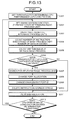
- Fig. 13 is a drawing for explaining the performance evaluation simulation process according to the third embodiment.
- a performance evaluation simulation is performed with all function modules being contained in the target processor to correlate the number of times of instruction execution, the number of times of data loading, and the number of times of data storing in the execution log, and the CPU determination condition (for example, the CPU load factor and the bus occupancy).
- the performance evaluation simulation apparatus 10 sets a threshold for determining a CPU performance based on the CPU load factor or the like (step S301) to determine a predetermined threshold for the basic process unit, which is a SW/HW division condition (step S302). Then, as with the first embodiment, the performance evaluation simulation apparatus 10 counts the number of instruction address strings, the number of address strings for data access, and others kept in the execution log obtained through division into basic process units, and then calculates the throughput of the basic process unit from either one of these counts (or from total counts) (steps S303 to S305).
- the performance evaluation simulation apparatus 10 searches for a basic process unit corresponding to the execution log with a threshold exceeding the threshold based on the block ID (step S307). Then, the performance evaluation simulation apparatus 10 allocates the found basic process unit to a port capable of direct bus connection, and changes the port ID according to the change of the arrangement structure of the basic process unit to hardware (steps S308 and S309).
- the performance evaluation simulation apparatus 10 does not require a cache access to the basic process unit converted to hardware, and requires a direct access to the RAM. However, since no instruction fetch is required for the execution log, an instruction address string is deleted, and only the data access is extracted in performing a simulation (steps S310 and S311). Then, when the CPU-performance determination condition is not satisfied ("Yes" at step S312), the procedure returns to step S302, where the performance evaluation simulation apparatus 10 determines (corrects) the threshold of throughput of the basic process unit.
- the correction range of the threshold of the throughput of the basic process unit may be calculated from a correlation between the throughput of the execution log found in advance and the CPU-performance determination condition.
- the function modules may be converted to hardware one by one in decreasing (or increasing) order of basic process unit to perform a simulation until the CPU-performance determination condition is satisfied.
- the performance evaluation simulation apparatus 10 changes the determination threshold of the basic process unit. With this, a more highly-accurate simulation can be performed to determine the validity of SW/HW division.
- the throughput of the basic process unit in SW/HW division and the predetermined threshold are compared each other to perform a simulation.
- the present invention is not meant to be restricted to this.
- the predetermined threshold of the process handling unit in SW/HW division can be changed with the CPU load factor, and then the predetermined threshold and the throughput can be compared each other to perform a simulation.
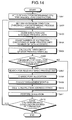
- Fig. 14 is a drawing for explaining the performance evaluation simulation process according to the fourth embodiment.
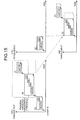
- Fig. 15 is a drawing of an event process when part of process handling in the CPU is converted to hardware according to the fourth embodiment.
- the number of times of instruction execution and the number of times of data access in the execution log and the CPU determination condition are correlated in advance.
- the performance evaluation simulation apparatus 10 sets a threshold for determining a CPU performance based on the CPU load factor or the like (step S401) to determine a predetermined threshold for the process handling unit, which is a SW/HW division condition (step S402). Then, as with the first embodiment, the performance evaluation simulation apparatus 10 counts the number of instruction address strings, the number of address strings for data access, and others kept in the execution log obtained through division into basic process units, and then calculates the throughput of the process handling unit from either one of these counts (or from total counts) (steps S403 to S405).
- the performance evaluation simulation apparatus 10 searches for a basic process unit corresponding to the execution log with a threshold exceeding the threshold based on the block ID (step S407). Then, the performance evaluation simulation apparatus 10 allocates the found basic process unit to a port capable of direct bus connection, and changes the port ID according to the change of the arrangement structure of the process handling unit to hardware (steps S408 and S409).
- the performance evaluation simulation apparatus 10 does not require a cache access to the process handling unit converted to hardware, and requires a direct access to the RAM. However, since no instruction fetch is required for the execution log, an instruction address string is deleted, and only the data access is extracted in performing a simulation (steps S410 and S411). Then, when the CPU-performance determination condition is not satisfied ("Yes" at step S412), the procedure returns to step S402, where the performance evaluation simulation apparatus 10 determines (corrects) the threshold of throughput of the process handling unit.
- the correction range of the threshold of the throughput of the process handling unit may be calculated from a correlation between the number of times of instruction execution and the number of times of data access found in advance in the execution log, and the CPU-performance determination condition.
- the function modules may be converted to hardware one by one in decreasing (or increasing) order of process handling unit to perform a simulation until the CPU-performance determination condition is satisfied.
- the performance evaluation simulation apparatus 10 changes the arrangement structure of the process handling units Fn[3] and Fn[1] with their throughputs exceeding the predetermined threshold to hardware.
- the process time is reduced, and also the CPU throughput in the entire event B is decreased.
- the performance evaluation simulation apparatus 10 converts a function module with a large load to hardware by process handling units, thereby reducing the CPU throughput. Also, since the function module converted to hardware directly accesses the RAM, an instruction execution string is not required, and the address range for data access is also restricted. Therefore, the time is reduced compared with the case of accessing the D-cache (the cache for use at the time of data access), thereby reducing the process time of the blackbox portion and further reducing the process time of the entire process handling.
- the performance evaluation simulation apparatus 10 changes the determination threshold of the process handling unit. With this, a more highly-accurate simulation can be performed to determine the validity of SW/HW division.
- the predetermined threshold of the basic process unit in SW/HW division can be determined in advance.
- the present invention is not meant to be restricted to this.
- the predetermined threshold of the basic process unit in SW/HW division can be determined by using the file size of the execution log.
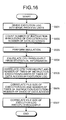
- Fig. 16 is a drawing for explaining the case where the file size of the execution log is used as the threshold of SW/HW division according to the fifth embodiment.
- the performance evaluation simulation apparatus 10 counts the number of instruction address strings and the number of address strings for data access kept in the execution log of the basic process unit obtained through division, performs a simulation with all function modules being contained in the target processor, and, from statistical information obtained by execution of the simulation, calculates the CPU throughput (steps S501 to S504).
- the performance evaluation simulation apparatus 10 uses the calculated CPU throughput to correlate the number of times of instruction execution, the number of times of data loading, and the number of times of data storing in the execution log, and the CPU determination condition (for example, the CPU load factor) (step S505).
- the performance evaluation simulation apparatus 10 then correlates each file size of the execution log obtained through division into basic process units and the number of times of instruction execution and/or the number of times of data access in that file (step S506).
- the performance evaluation simulation apparatus 10 correlates the CPU throughput and the file size of the execution log of the basic process unit (step S507). Based on the process above, the performance evaluation simulation apparatus 10 takes the file size of the execution log as the threshold of SW/HW division.
- the performance evaluation simulation apparatus 10 uses the file size of the execution log as the threshold in SW/HW division. With this, a more highly-accurate simulation can be performed to determine the validity of SW/HW division.
- FIG. 17 is a drawing for explaining a consideration of conversion to multi-core by using an add-on CPU according to the sixth embodiment.
- a new bus model is configured outside of the performance evaluation simulation device to be subjected to performance evaluation and, on the bus, an ADDON-CPU, an I-cache, a D-cache, and peripheral HW as required are disposed, thereby constructing a performance evaluation simulation environment.
- the structures of the ADDON-CPU, the I-cache, and the D-cache are similar to these in CPU, and the process is performed so that a port ID and a block ID for managing the arrangement of each module and the process order do not overlap each other.
- the performance evaluation simulation apparatus 10 separates the relevant function module Fn[n] from the CPU module, places it in the interface in the ADDON-CPU, and changes the port ID of the function module Fn[n]. Then, the statistical information obtained from the simulation execution results is collected individually by the CPU and the ADDON-CPU for cache analysis on effects when the software processing is distributed among a plurality of CPUs.
- the performance evaluation simulation apparatus 10 distributes and outputs the function modules to be converted to hardware in the CPU based on the threshold to the ADDON-CPU.
- the output is in a form of softwarexsoftware.
- the performance evaluation simulation apparatus 10 distributes and outputs the function modules to be converted to hardware in the CPU based on the threshold of SW/HW division to the ADDON-CPU. With this, multi-core where a plurality of CPU core is present in one CPU can be considered.
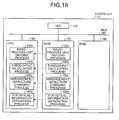
- Fig. 18 is a drawing of a computer that executes a performance evaluation simulation program.
- a computer 110 as a performance evaluation simulation apparatus includes an HDD 130, a CPU 140, a ROM 150, and a RAM 160 that are connected each other via a bus 180.
- performance evaluation simulation programs that achieve functions similar to those of the performance evaluation simulation apparatus 10 explained in the first embodiment are stored in advance: That is, as depicted in Fig. 18 , those programs stored in advance are a basic-process-unit dividing program 150a, a throughput calculating program 150b, an arrangement-structure changing program 150c, and a statistical-information generating program 150d.
- those programs 150a to 150d may be unified or distributed as appropriated.
- the CPU 140 reads these programs 150a to 150d from the ROM 150 for execution.
- they become functioning as a basic-process-unit dividing process 140a, a throughput calculating process 140b, an arrangement-structure changing process 140c, and a statistical-information generating process 140d.
- the processes 140a to 140d correspond to the scheduler unit 20 and the access processing unit 21 depicted in Fig. 2 .
- the CPU 140 executes the performance evaluation simulation programs based on the data recorded on the RAM 160.
- each program 150a to 150d are not necessarily required to be stored in advance in the ROM 150.
- each program may be stored in, for example, a "portable physical medium", such as a flexible disk (FD), a CD-ROM (Compact-Disk Read-Only Memory), a DVD (Digital Versatile Disk), a magneto-optical disk, or an IC (Integrated Circuit) card inserted to the computer 110; a "fixed physical medium”, such as an HDD (Hard Disk Drive) internally or externally provided to the computer 110; or “another computer (or server)” connected to the computer 110 via a public circuit, the Internet, a LAN (Local-Area Network), or a WAN (Wide-Area Network), and may be read by the computer 110 therefrom for execution.
- a "portable physical medium” such as a flexible disk (FD), a CD-ROM (Compact-Disk Read-Only Memory), a DVD (Digital Versatile Disk), a magneto-optical disk,
- effects can be achieved such that SW/HW division can be optimally performed at the initial stage of designing and the validity of SW/HW division can be determined.
Landscapes
- Engineering & Computer Science (AREA)
- Theoretical Computer Science (AREA)
- Computer Hardware Design (AREA)
- Physics & Mathematics (AREA)
- General Engineering & Computer Science (AREA)
- General Physics & Mathematics (AREA)
- Evolutionary Computation (AREA)
- Geometry (AREA)
- Quality & Reliability (AREA)
- Debugging And Monitoring (AREA)
- Stored Programmes (AREA)
- Management, Administration, Business Operations System, And Electronic Commerce (AREA)
Abstract
Description
- Embodiments of the present invention relate to a performance evaluation simulation performed on a software model and a hardware model for which process to be performed are provisionally determined from system specifications by using software and hardware, respectively, for performance evaluation.
- A processor, a bus, a memory, and other components for use in electronic equipment may be implemented on one LSI (Large Scale Integration) and, on that LSI (system LSI), a plurality of processes are performed. Such implementation of a plurality of processes on one LSI is for the purpose of downsizing the LSI and reducing cost and consumption power, for example. However, once the hardware and architecture of the LSI is determined, an easy change is difficult, thereby increasing the difficulty in designing the functions of the LSI.
- In particular, to pursue downsizing and low cost of the LSI, it is important to reduce the process load on the LSI, and each process implemented on the LSI has to be optimally divided to software (hereinafter, "SW") or hardware (hereinafter, "HW"). Therefore, after SW or HW on which the function to be performed on the LSI is to be achieved is provisionally determined at the initial stage of LSI designing, SW/HW performance verification is performed.
- In the performance verification explained above, for example, the software is written in C language, assembly language, or the like, and is executed on an actual machine model including a target processor, which is a processor implemented on the LSI for performance verification, or on an ISS (Instruction Set Simulator) for the target processor, thereby simulating the operation of the software. Also, for example, the hardware is written in RTL (Register Transfer Level) or TLM (Transaction Level Model), which are languages for describing hardware, or in a language obtained by mixing RTM and TLM, thereby simulating the operation of the hardware.
- In this performance verification, when SW/HW division is performed at the initial stage of designing a system LSI, source codes of an application program and specifications of the system LSI are analyzed and divided by using man power to verify the validity of the division based on the number of cycles to be executed or the like. In recent years, various technologies for automatically performing this verification have been disclosed.
- For example, Japanese Patent Application Laid-open No.
2001-142927 - Also, for example, Japanese Patent Application Laid-open No.
H11-259552 - However, in the technologies explained above, it is difficult to optimally perform SW/HW division at the initial stage of designing, and it is also impossible to determine the validity of SW/HW division.
- Specifically, in Japanese Patent Application Laid-open No.
2001-142927 H11-259552 - It is desirable to at least partially solve the problems in the above-described technology.
- According to an aspect of an embodiment, a performance evaluation simulation apparatus evaluates performance by performing a simulation on a software model and a hardware model in which a process to be performed is provisionally determined by using software and hardware from specifications of a system. The performance evaluation simulation apparatus includes a basic-process-unit dividing unit that makes a division into basic process units, which are execution units of process to be performed in the software model based on an execution log that represents execution history obtained by executing the software model on an actual machine or simulation software; a throughput calculating unit that calculates a throughput of each of the basic process units obtained through division by the basic-process-unit dividing unit, from the number of instruction address strings or the number of address strings for data access kept in the execution log; an arrangement-structure changing unit that compares each throughput calculated by the throughput calculating unit and a predetermined threshold and changes an arrangement structure so that a basic process unit with a throughput exceeding the predetermined threshold is changed from the software model to the hardware model; and a statistical-information generating unit that generates statistical information on which performance evaluation is based by performing a performance evaluation simulation on the basic process unit whose arrangement structure has been changed by the arrangement-structure changing unit to the hardware model and basic process units arranged in the software model, the performance evaluation simulation executing a bus access via an instruction cache and a data cache, to measure data required for operation analysis of the system.
- According to another aspect of an embodiment, a performance evaluation simulation method is for evaluating performance by performing a simulation on a software model and a hardware model in which a process to be performed is provisionally determined by using software and hardware from specifications of a system. The performance evaluation simulation method includes making a division into basic process units, which are execution units of process to be performed in the software model based on an execution log that represents execution history obtained by executing the software model on an actual machine or simulation software; calculating a throughput of each of the basic process units obtained through the division, from the number of instruction address strings or the number of address strings for data access kept in the execution log; comparing each of the calculated throughputs and a predetermined threshold; changing an arrangement structure so that a basic process unit with a throughput exceeding the predetermined threshold is changed from the software model to the hardware model; and generating statistical information on which performance evaluation is based by performing a performance evaluation simulation on the basic process unit whose arrangement structure has been changed by the changing to the hardware model and basic process units arranged in the software model, the performance evaluation simulation executing a bus access via an instruction cache and a data cache, to measure data required for operation analysis of the system.
- According to still another aspect of an embodiment, an electronic apparatus includes a performance evaluation simulation apparatus that performs a simulation on a process executed on software and hardware from specifications of a system and designs an LSI based on performance evaluations obtained by the performance evaluation simulation apparatus. The electronic apparatus includes an accepting unit that accepts a software model and a hardware model; a basic-process-unit dividing unit that makes a division into basic process units, which are execution units of process to be performed in the software model based on an execution log that represents execution history obtained by executing the software model on an actual machine or simulation software; a throughput calculating unit that calculates a throughput of each of the basic process units obtained through division by the basic-process-unit dividing unit, from the number of instruction address strings or the number of address strings for data access kept in the execution log; an arrangement-structure changing unit that compares each throughput calculated by the throughput calculating unit and a predetermined threshold and changes an arrangement structure so that a basic process unit with a throughput exceeding the predetermined threshold is changed from the software model to the hardware model; and a statistical-information generating unit that generates statistical information on which performance evaluation is based by performing a performance evaluation simulation on the basic process unit whose arrangement structure has been changed by the arrangement-structure changing unit to the hardware model and basic process units arranged in the software model, the performance evaluation simulation executing a bus access via an instruction cache and a data cache, to measure data required for operation analysis of the system; and an LSI generating unit that implements the software and the hardware on the LSI in a division manner based on the statistical information generated by the statistical-information generating unit.
- Additional advantages of the invention (embodiment) will be set forth in part in the description which follows, and in part will be obvious from the description, or may be learned by practice of the invention. The advantages of the invention may be realized and attained by means of the elements and combinations particularly pointed out in the appended claims.
- It is to be understood that both the foregoing general description and the following detailed description are exemplary and explanatory only and are not restrictive of the invention, as claimed.
-
-
Fig. 1 is a drawing of general outlines and features of a performance evaluation simulation apparatus according to a first embodiment; -
Fig. 2 is a drawing of the configuration of the performance evaluation simulation apparatus according to the first embodiment; -
Fig. 3 is a drawing of a relation between accesses to addresses and basic process units in the entire execution log according to the first embodiment; -
Fig. 4 is a drawing of an example of statistical information according to the first embodiment; -
Fig. 5 is a drawing of an LSI development flow; -
Fig. 6 is a flowchart of a simulation process of the performance evaluation simulation apparatus according to the first embodiment; -
Fig. 7 is a drawing for explaining a SW/HW division process performed by the performance evaluation simulation apparatus according to the first embodiment; -
Fig. 8 is a drawing of a relation between a time and a CPU throughput when a CPU model periodically performs an event; -
Fig. 9 is a drawing of an event process when part of function modules in the CPU is converted to hardware according to a second embodiment; -
Fig. 10 is a drawing of an example of a UML class according to the second embodiment; -
Fig. 11 is a drawing of an example of description in System C language according to the second embodiment; -
Fig. 12 is a drawing of a relation between a degree of abstraction of a hardware model and a simulation process according to the second embodiment; -
Fig. 13 is a drawing for explaining a performance evaluation simulation process according to a third embodiment; -
Fig. 14 is a drawing for explaining a performance evaluation simulation process according to a fourth embodiment; -
Fig. 15 is a drawing of an event process when part of process handlings in the CPU is converted to hardware according to the fourth embodiment; -
Fig. 16 is a drawing for explaining the case where the file size of an execution log is used as the threshold of SW/HW division according to a fifth embodiment; -
Fig. 17 is a drawing for explaining a consideration of conversion to multi-core by using an add-on CPU according to a sixth embodiment; and -
Fig. 18 is a drawing of a computer that executes a performance evaluation simulation program. - With reference to the attached drawings, embodiments of the performance evaluation simulation apparatus according to the present invention are explained in detail below. In the following, general outlines and features of the performance evaluation simulation apparatus according to the present invention, and the configuration and process flow of the performance evaluation simulation apparatus are explained in sequence, and then effects of the embodiments are explained last.
- First, by using
Fig. 1 , general outlines and features of a performance evaluation simulation apparatus according to a first embodiment are explained.Fig. 1 is a drawing of general outlines and features of the performance evaluation simulation apparatus according to the first embodiment. - This performance evaluation simulation apparatus performs a performance evaluation simulation, with an execution log (instruction strings) as an input. The execution log represents execution history obtained from the results of dividing specifications of a system LSI into a software model and a hardware model and executing the software model obtained through the division on an actual machine or a target CPU using an ISS (Information Storage System) or the like.
- In such a configuration, the general outlines of the performance evaluation simulation apparatus are such that, in the software model and the hardware model, a process to be performed in the software and the hardware is provisionally determined from the specifications of the system, and a performance evaluation is performed on each of the software model and the hardware model. In particular, main features of this apparatus are such that SW/HW division can be optimally performed at the initial stage of designing, and the validity of SW/HW division can be determined.
- These main features are now specifically explained. Based on the execution log representing execution history obtained by executing the software model on an actual machine or simulation software, the performance evaluation simulation apparatus makes a division into basic process units, which are execution units of process to be performed in the software model (refer to (1) in
Fig. 1 ). - A specific example is as follows. The performance evaluation simulation apparatus receives an input of an execution log representing execution history obtained from the results of dividing specifications of a system LSI into a software model and a hardware model and executing the software model on an actual machine or a target CPU using an ISS or the like. Then, based on the input execution log, the performance evaluation simulation apparatus makes a division into basic process units, which are execution units of process to be executed in the software model. In this division into basic process units, in the case of communication process software, for example, after a task starting point of an OS (Operating System) is found from the pattern of a periodic process, a division is made in units of task. Also, for example, after a process flow among object files is tracked from an instruction address string, and a break is found for division.
- Then, the performance evaluation simulation apparatus calculates the throughput of each basic process unit obtained through division, from the number of instruction address strings or the number of address strings for data access kept in the execution log (refer to (2) in
Fig. 1 ). Specifically, in the example above, the performance evaluation simulation apparatus calculates the throughput of each basic process unit obtained through division from the number of instruction address strings representing branch-destination address information at the time of process execution, the number of address strings for data access representing access-destination address information for accessing a database, or other information kept in the execution log. - Thereafter, the performance evaluation simulation apparatus compares each calculated throughput and a predetermined threshold, and changes an arrangement structure so that a basic process unit with a throughput exceeding the predetermined threshold is changed from the software model to the hardware model (refer to (3) in
Fig. 1 ). Specifically, in the example above, the performance evaluation simulation apparatus compares each calculated throughput and a predetermined threshold throughput. Then, as a result of comparison, the performance evaluation simulation apparatus changes the arrangement structure so that a basic process unit with an execution log indicating a throughput exceeding the predetermined threshold throughput is changed from software processing to hardware processing so as to be directly connected to a bus, thereby making a conversion to hardware. - Then, on the basic process unit whose arrangement structure has been changed to the hardware model and the basic process units arranged in the software model, the performance evaluation simulation apparatus performs a performance evaluation simulation of executing a bus access via an instruction cache and a data cache to measure data required for system operation analysis, thereby generating statistical information on which performance evaluation is based (refer to (4) in
Fig. 1 ). Specifically, in the example above, on the basic process unit whose arrangement structure has been changed to the hardware model and the basic process units arranged in the hardware model and on the basic process unit whose arrangement structure has been changed to the software model and the basic process units arranged in the software model, the performance evaluation simulation apparatus performs a performance evaluation simulation by executing a bus access via an instruction cache and a data cache. Then, the performance evaluation simulation apparatus measures an instruction execution time, an instruction fetch time, and a data access time, thereby generating statistical information on which performance evaluation is based, such as a CPU load factor. The statistical information generated by this performance evaluation simulation apparatus is used in determining the validity of optimal SW/HW division. Here, by performing a performance evaluation simulation a plurality of number of times, highly-accurate simulation results can be obtained. - In this manner, when the performance evaluation simulation apparatus according to the first embodiment performs a performance evaluation simulation based on the execution log obtained from the results of executing the software model on the actual machine or on the target CPU by using the ISS or the like, among the basic process units obtained through division based on the information kept in the execution log, a basic process unit having a large throughput is converted to hardware for execution of the simulation. As a result, as mentioned above in the main features, SW/HW division can be optimally performed at the initial stage of designing and the validity of SW/HW division can be determined.
- That is, the performance evaluation simulation apparatus performs SW/HW division for each process by using the information kept in the execution log. Therefore, compared with the case as in the conventional technology where SW/HW division is performed depending on the degree of completion for each process implemented on the LSI, SW/HW division can be optimally performed at the initial stage of designing. Also, while measuring an instruction execution time, an instruction fetch time, and a data access time, the performance evaluation simulation apparatus performs a simulation by executing a bus access via an instruction cache and a data cache to output highly-accurate statistical information, such as a CPU load factor. Therefore, compared with the case as in the conventional technology where the process times of the respective execution units are compared each other, the validity of SW/HW division can be determined.
- Next, by using
Fig. 2 , the configuration of the performance evaluation simulation apparatus according to the first embodiment is explained.Fig. 2 is a drawing of the configuration of the performance evaluation simulation apparatus according to the first embodiment. As depicted inFig. 2 , a performanceevaluation simulation apparatus 10 includes function modules 11-1 to 11-n, a scheduler unit 20, and an access processing unit 21. - From an I-cache, which is an instruction cache for reducing a time for obtaining an instruction on an external RAM (Random-Access Memory), and a D cache, which is a data cache for reducing a time of data access, the performance
evaluation simulation apparatus 10 is connected via abus 30 to the external RAM, which is a RAM connected outside of the performanceevaluation simulation apparatus 10, and peripheral HW including, for example, an external I/F (interface) and dedicated hardware for a specific purpose. Also, for example, portions other than a basic process execution log are constructed at a transaction level using the System C language, which is one of hardware description languages for the purpose of use in designing electronic circuitry. Transmission and reception between modules are performed with function calls. Furthermore, the connection to thebus 30 is performed by using an interface common to the modules (for example, TLM-I/F). Thus, unlike signal-level communications as in RTL, arrangement and recombination of the modules can be freely made. - The function modules 11-1 to 11-n represent basic process units, which are execution units of process to be performed by the access processing unit 21 in the software model obtained through division based on the execution log. For example, the function module 11-1 (Fn[1]) retains, as depicted in
Fig. 3 , an address "E050D6E0", instruction/data access "I/D", and load (read)/store (write) "R/W" in the case of data access. In these pieces of information obtained from the execution log input to the performanceevaluation simulation apparatus 10, once an address to be accessed is known, which address is accessed can be known from the RAM storing each hardware address and data. Then, from this address information, it can be known for which HW the performanceevaluation simulation apparatus 10 makes an instruction or data access. In the case of data access, load or store can be known. Still further, in the execution log as a whole, each address is accessed among "xxx.o", "yyy.o", and "zzz.o" (object files), and a portion from the starting point to the ending point of an access among the object files is taken as a break, and is extracted as a basic process unit (Fn[1]).Fig. 3 is a drawing of a relation between accesses to addresses and basic process units in the entire execution log according to the first embodiment. - Based on the execution log representing execution history obtained by executing the software model on the actual machine or simulation software, the access processing unit 21 makes a division into basic process units, which are execution units of process to be executed in the software model. The access processing unit 21 then calculates the throughput of each basic process unit obtained through division from the number of instruction address strings or the number of address strings for data access kept in the execution log. Thereafter, the access processing unit 21 compares each calculated throughput and a predetermined threshold, and changes an arrangement structure so that a basic process unit with a throughput exceeding the predetermined threshold is changed from the software model to the hardware model. Then, the basic process unit whose arrangement structure has been changed to the hardware model and the basic process units arranged in the software model, the access processing unit 21 performs a performance evaluation simulation of executing a bus access via the instruction cache and the data cache.
- A specific example is as follows. Based on the execution log, the access processing unit 21 makes a division into basic process units, which are execution units of process to be executed in the software model. The access processing unit 21 then calculates the throughput of each basic process unit obtained through division from the number of instruction address strings representing branch-destination address information at the time of process execution, the number of address strings for data access representing access-destination address information for accessing a database, or other information kept in the execution log.
- Thereafter, the access processing unit 21 compares each calculated throughput and a predetermined threshold, and changes the arrangement structure so that a basic process unit with an execution log indicating a throughput exceeding the predetermined threshold throughput is changed from software processing to hardware processing so as to be directly connected to the
bus 30, thereby making a conversion to hardware. Then, when accepting a request for process handling from the scheduler unit 20, the access processing unit 21 performs, on the basic process unit whose arrangement structure has been changed to the hardware model for conversion to hardware, a performance evaluation simulation by executing a bus access via the instruction cache (I-cache) and the data cache (D-cache), while measuring an instruction execution time, an instruction fetch time, and a data access time. - The scheduler unit 20 generates, from the simulation process executed by the access processing unit 21, statistical information on which performance evaluation is based. Specifically, in the example above, with an event that occurred as a trigger, the scheduler unit 20 requests a corresponding function module (basic process unit) for process handling. From the simulation results obtained by the access processing unit 21, the scheduler unit 20 then generates statistical information on which performance evaluation is based, such as a CPU load factor. This statistical information has stored therein, as depicted in
Fig. 4 , for example, an instruction execution time of "100 nanoseconds", an instruction fetch time of "3 nanoseconds", a data access time of "2 nanoseconds", and a CPU load factor of "30%" every basic process unit "Fn[1]". Also, the access processing unit 21 manages port IDs (IDentifiers) of interfaces connected to the external RAM, the peripheral HW, and others via thebus 30 and block IDs of the function modules 11-1 to 11-n in a unified manner, and knows the order of the function modules in which they requests of the access processing unit 21 process handling and also knows the arrangement of the function modules.Fig. 4 is a drawing of an example of statistical information according to the first embodiment. - Next, by using
Fig. 5 , an LSI development flow is explained.Fig. 5 is a drawing of the LSI development flow. Here, this flow is to design the entire LSI including the process of the performance evaluation simulation apparatus according to the first embodiment. - As depicted in
Fig. 5 , upon generation of specifications ("Yes" at step S601), a system request is analyzed from the generated specifications (step S602). Then, from the analyzed system request, a scheme of considering an algorism is designed (step S603). Then, with performance evaluation and consideration of SW/HW division, architecture is designed (step S604). Thereafter, an RTL logical design is performed on a hardware part (step S605), and then a physical design of that hardware is performed (step S606). Also, software development is performed on the software part (step S607). Then, the hardware and the software are combined to generate an actual machine model (step S608), and then a product is shipped (step S609). - Next, by using
Fig. 6 , a simulation process by the performanceevaluation simulation apparatus 10 according to the first embodiment is explained.Fig. 6 is a flowchart of the simulation process of the performanceevaluation simulation apparatus 10 according to the first embodiment. Here, the process explained inFig. 6 is part of the architecture designing at step S604 depicted inFig. 5 . - As depicted in
Fig. 6 , upon generation of specifications ("Yes" at step S101), the performanceevaluation simulation apparatus 10 divides the specifications into software processing and hardware processing (step S102), and then outputs provisional software, which is a software model, and an operational model, which is a hardware model (steps S103 and S104). Upon output of an execution log representing execution history obtained from the results of executing the output provisional software on the actual machine or the target CPU using the ISS or the like (steps S105 and S106), based on the execution log, a division is made into basic process units, which are execution units of process to be performed in the software model (step S107). - Then, the performance
evaluation simulation apparatus 10 calculates the throughput of each basic process unit obtained through division from the number of instruction address strings representing branch-destination address information at the time of process execution, the number of address strings for data access representing access-destination address information for accessing a database, or other information kept in the execution log (step S108). - Thereafter, the performance
evaluation simulation apparatus 10 compares each calculated throughput and a predetermined threshold (step S109). Then, as a result of comparison, the performanceevaluation simulation apparatus 10 changes the arrangement structure so that a basic process unit with an execution log indicating a throughput exceeding the predetermined threshold throughput is changed from software processing to hardware processing so as to be directly connected to a bus, thereby making a conversion to hardware (step S110). Here, when changing the arrangement structure of the basic process unit to hardware, the performanceevaluation simulation apparatus 10 searches for a function module corresponding to the basic process unit with the throughput exceeding the predetermined threshold throughput based on the block ID, thereby changing the arrangement structure of that function module. That is, the performanceevaluation simulation apparatus 10 moves the function module from inside of the CPU to a port capable of direct bus connection, thereby converting the work of the function module from software processing by the CPU to hardware. - Then, on the basic process unit whose arrangement structure has been changed to the hardware model and the basic process units arranged in the software model, the performance
evaluation simulation apparatus 10 performs a performance evaluation simulation by executing a bus access via the instruction cache and the data cache, while measuring an instruction execution time, an instruction fetch time, and a data access time. Thereafter, from the instruction execution time, the instruction fetch time, and the data access time, the performanceevaluation simulation apparatus 10 generates statistical information on which performance evaluation is based, such as a CPU load factor (step S111). - Next, by using
Fig. 7 , a SW/HW division process by the performanceevaluation simulation apparatus 10 according to the first embodiment is explained.Fig. 7 is a drawing for explaining the SW/HW division process performed by the performanceevaluation simulation apparatus 10 according to the first embodiment. - As depicted in
Fig. 7 , the performanceevaluation simulation apparatus 10 determines a throughput threshold (predetermined threshold) serving as a SW/HW division condition for the basic process unit (step S201). The performanceevaluation simulation apparatus 10 then counts the number of instruction address strings and the number of address strings for data access kept in the execution log for the basic process unit obtained through division, and calculates the throughput of the basic process unit from either one of these counts (or from total counts) (steps S202 to S204). - Thereafter, when the calculated throughput exceeds the predetermined threshold ("Yes" at step S205), the performance
evaluation simulation apparatus 10 searches for the basic process unit corresponding to the execution log exceeding the threshold based on the block ID (step S206). Then, the performanceevaluation simulation apparatus 10 allocates the found basic process unit to a port capable of direct bus connection, and changes the port ID according to the change of the arrangement structure of the basic process unit to hardware (steps S207 and S208). - Then, the performance
evaluation simulation apparatus 10 does not require a cache access to the basic process unit converted to hardware, and requires a direct access to the RAM. However, since no instruction fetch is required for the execution log, an instruction address string is deleted, and only the data access is extracted in performing a simulation (steps S209 and S210). - With this, according to the first embodiment, the performance
evaluation simulation apparatus 10 uses information kept in the execution log to perform SW/HW division for each process. Also, the performanceevaluation simulation apparatus 10 performs a simulation by executing a bus access via the instruction cache and the data cache, while measuring the instruction execution time, the instruction fetch time, and the data access time. Therefore, SW/HW division can be optimally performed at the initial stage of designing, and the validity of SW/HW division can be determined. - For example, the performance
evaluation simulation apparatus 10 calculates the throughput of each basic process unit based on either one of the number of instruction address strings or the number of address strings for data access kept in the execution log, or the total numbers thereof, and then changes the arrangement structure so that a basic process unit with a throughput exceeding the predetermined threshold is changed to a hardware model. The basic process unit whose arrangement structure has been changed to the hardware model and the basic process units arranged in the software model, the performanceevaluation simulation apparatus 10 then performs a performance evaluation simulation of executing a bus access via the instruction cache and the data cache to generate statistical information, such as the instruction execution time, the instruction fetch time, and the data access time. As a result, the performanceevaluation simulation apparatus 10 can optimally perform SW/HW division at the initial stage of designing, and can also determine the validity of SW/HW division. - Meanwhile, in the first embodiment, a conversion to hardware when a basic process unit obtained through division based on the execution log is taken as one execution unit is explained. However, the present invention is not meant to be restricted to such a conversion to hardware. Alternatively, another conversion to hardware with the basic process unit being formed of a first block and a second block can be considered.
- In the following second embodiment, with reference to
Figs. 8 to 12 , the conversion to hardware with the basic process unit being formed of a first block and a second block according to the second embodiment are explained in detail.Fig. 8 is a drawing of a relation between a time and a CPU throughput when the CPU model periodically performs an event.Fig. 9 is a drawing of an event process when part of function modules in the CPU is converted to hardware according to the second embodiment.Fig. 10 is a drawing of an example of a UML class according to the second embodiment.Fig. 11 is a drawing of an example of description in System C language according to the second embodiment.Fig. 12 is a drawing of a relation between degrees of abstraction of a hardware model and a simulation process according to the second embodiment. Here, the configuration, functions, and others of the performance evaluation simulation apparatus according to the second embodiment are similar to those according to the first embodiment, and therefore are not explained herein. - In the second embodiment, by using
Fig. 8 , the relation between the time and the CPU throughput when the CPU model periodically performs an event is explained. InFig. 8 , each basic process unit is formed of a whitebox portion having described therein a function unique to each basic process unit according to a process handling unit with combination of plurality of basic process units, and a blackbox portion where a process for collecting statistical information is performed. Also, process handling is a process of executing a plurality of basic process units in combination, whilst an event is formed of a combination of process handlings including processes of only basic process units. Here, with the vertical axis inFig. 8 representing "CPU throughput" and the horizontal axis therein representing "time", the relation between the CPU throughput and the time is also explained. - As depicted in
Fig. 8 , for example, when a periodic event A occurs, with the event A as a trigger, the performanceevaluation simulation apparatus 10 calls basic process units Fn[1] and Fn[2] sequentially. Then, when a periodic event B occurs, with the event B as a trigger, the performanceevaluation simulation apparatus 10 calls basic process units Fn[2], Fn[3], Fn[1] sequentially. Then, when a periodic event C occurs, with the event C as a trigger, the performanceevaluation simulation apparatus 10 calls the basic process unit Fn[1]. - In the function module, which is a basic process unit, after the blackbox portion is called according to each process handling by the whitebox portion, statistical information is collected by the blackbox portion, such as the instruction execution time, the instruction fetch time, and the data access time. Also, the process time for the basic process is determined by "whitebox+blackbox×the number of calls" and, the longer the process time takes, the larger the CPU throughput. Also, for each event and basic process unit, a level of priority is provided so that a process is performed with a collision in time being avoided.
- Next, by using
Fig. 9 , an event process when part of the function modules in the CPU is converted to hardware is explained. InFig. 9 , the configuration of each basic process unit and others are similar to those depicted inFig. 8 , and therefore are not explained herein, and an event process when a basic process unit with a large throughput is converted to hardware is explained. - As depicted in
Fig. 9 , the performanceevaluation simulation apparatus 10 changes the arrangement structure of the basic process unit Fn[3] with a throughput exceeding the predetermined threshold to hardware. In conversion of the basic process unit to hardware, as depicted inFig. 9 , the process time of the basic process unit Fn[3] converted to hardware is reduced, and also the CPU throughput for the entire event B is reduced. - That is, the performance
evaluation simulation apparatus 10 converts the function module with a large load to hardware, thereby reducing the CPU throughput. Also, since the function module converted to hardware directly accesses the RAM, an instruction execution string is not required, and the address range for data access is also restricted. Therefore, the time is reduced compared with the case of accessing the D-cache (the cache for use at the time of data access), thereby reducing the process time of the blackbox portion and further reducing the process time of the entire process handling. Here, in association with an increase of the number of function modules to be converted to hardware, the threshold for SW/HW division should be set in consideration of an increase of an implementation area for conversion to hardware, an increase in power consumption, an increase in bus occupancy, and others. - Next, by using
Figs. 10 and 11 , an example of a UML class and an example of description in System C language according to the second embodiment are explained. Also, by usingFig. 12 , a relation between a degree of abstraction of the hardware model and a simulation process according to the second embodiment is explained. InFig. 10 or 11 , "Fn_*" represents a function module, "Fn_if" represents a function-module common interface, "Fn_*.h" represents a header portion of each function module, "Fn_*.cpp" represents source code, "Fn_if.h" represents a header portion of the function-module common interface, and "Fn_if.cpp" represents source code. - Of whitebox and blackbox forming a function module, the blackbox portion for performing a process for collecting statistical information is placed in the function-module common interface, and the whitebox portion in which a function unique to each module is described according to the purpose of performance verification and the degree of completion of the hardware model is placed in a process handling of "do_process()" in each function module.
- Then, each function module "Fn_*" instructed for the process handling of "do_process()" from the scheduler unit executes the whitebox portion. Thereafter, the whitebox portion executes the function unique to each module, and then an argument "x" determined for each module is given to call a function of "blackbox()". Then, based on the argument "x", the blackbox portion obtains the execution log of the basic process unit, the number of processes of instruction fetch and/or data access is specified from the execution log to cause a load to occur on the CPU, and also statistical information is collected, such as the instruction execution time.
- In this manner, according to the second embodiment, the performance
evaluation simulation apparatus 10 provides a CPU load irrespectively of execution of the function unique to each basic process unit. Therefore, cache analysis and obtainment of CPU statistical information and the like can be performed. - That is, as depicted in
Fig. 12 , irrespectively of execution of the function unique to each function module described in the whitebox portion, the performanceevaluation simulation apparatus 10 can perform a performance evaluation simulation and optimum consideration of SW/HW division even the degree of abstraction of the hardware model according to the progress of LSI designing. Third embodiment - In the first embodiment, the case is described in which the throughput of the basic process unit in SW/HW division and the predetermined threshold are compared each other to perform a simulation. However, the present invention is not meant to be restricted to this. Alternatively, the predetermined threshold of the basic process unit in SW/HW division can be changed with the CPU load factor, and then the predetermined threshold and the throughput can be compared each other to perform a simulation.
- In the following third embodiment, by using
Fig. 13 , a performance evaluation simulation process according to the third embodiment is explained.Fig. 13 is a drawing for explaining the performance evaluation simulation process according to the third embodiment. In the third embodiment, a performance evaluation simulation is performed with all function modules being contained in the target processor to correlate the number of times of instruction execution, the number of times of data loading, and the number of times of data storing in the execution log, and the CPU determination condition (for example, the CPU load factor and the bus occupancy). - As depicted in
Fig. 13 , the performanceevaluation simulation apparatus 10 sets a threshold for determining a CPU performance based on the CPU load factor or the like (step S301) to determine a predetermined threshold for the basic process unit, which is a SW/HW division condition (step S302). Then, as with the first embodiment, the performanceevaluation simulation apparatus 10 counts the number of instruction address strings, the number of address strings for data access, and others kept in the execution log obtained through division into basic process units, and then calculates the throughput of the basic process unit from either one of these counts (or from total counts) (steps S303 to S305). - Thereafter, when the calculated throughput exceeds the predetermined threshold ("Yes" at step S306), the performance
evaluation simulation apparatus 10 searches for a basic process unit corresponding to the execution log with a threshold exceeding the threshold based on the block ID (step S307). Then, the performanceevaluation simulation apparatus 10 allocates the found basic process unit to a port capable of direct bus connection, and changes the port ID according to the change of the arrangement structure of the basic process unit to hardware (steps S308 and S309). - Then, the performance
evaluation simulation apparatus 10 does not require a cache access to the basic process unit converted to hardware, and requires a direct access to the RAM. However, since no instruction fetch is required for the execution log, an instruction address string is deleted, and only the data access is extracted in performing a simulation (steps S310 and S311). Then, when the CPU-performance determination condition is not satisfied ("Yes" at step S312), the procedure returns to step S302, where the performanceevaluation simulation apparatus 10 determines (corrects) the threshold of throughput of the basic process unit. Here, the correction range of the threshold of the throughput of the basic process unit may be calculated from a correlation between the throughput of the execution log found in advance and the CPU-performance determination condition. Alternatively, the function modules may be converted to hardware one by one in decreasing (or increasing) order of basic process unit to perform a simulation until the CPU-performance determination condition is satisfied. - In this manner, according to the third embodiment, when the CPU performance determination condition based on the performance evaluation results cannot be satisfied, the performance
evaluation simulation apparatus 10 changes the determination threshold of the basic process unit. With this, a more highly-accurate simulation can be performed to determine the validity of SW/HW division. - In the first embodiment, the case is described in which the throughput of the basic process unit in SW/HW division and the predetermined threshold are compared each other to perform a simulation. However, the present invention is not meant to be restricted to this. Alternatively, the predetermined threshold of the process handling unit in SW/HW division can be changed with the CPU load factor, and then the predetermined threshold and the throughput can be compared each other to perform a simulation.
- In the following fourth embodiment, by using
Figs. 14 and15 , a performance evaluation simulation process according to the fourth embodiment is explained.Fig. 14 is a drawing for explaining the performance evaluation simulation process according to the fourth embodiment.Fig. 15 is a drawing of an event process when part of process handling in the CPU is converted to hardware according to the fourth embodiment. Here, in the fourth embodiment, the number of times of instruction execution and the number of times of data access in the execution log and the CPU determination condition (for example, a CPU load factor) are correlated in advance. - As depicted in
Fig. 14 , the performanceevaluation simulation apparatus 10 sets a threshold for determining a CPU performance based on the CPU load factor or the like (step S401) to determine a predetermined threshold for the process handling unit, which is a SW/HW division condition (step S402). Then, as with the first embodiment, the performanceevaluation simulation apparatus 10 counts the number of instruction address strings, the number of address strings for data access, and others kept in the execution log obtained through division into basic process units, and then calculates the throughput of the process handling unit from either one of these counts (or from total counts) (steps S403 to S405). - Thereafter, when the calculated throughput exceeds the predetermined threshold ("Yes" at step S406), the performance
evaluation simulation apparatus 10 searches for a basic process unit corresponding to the execution log with a threshold exceeding the threshold based on the block ID (step S407). Then, the performanceevaluation simulation apparatus 10 allocates the found basic process unit to a port capable of direct bus connection, and changes the port ID according to the change of the arrangement structure of the process handling unit to hardware (steps S408 and S409). - Then, the performance
evaluation simulation apparatus 10 does not require a cache access to the process handling unit converted to hardware, and requires a direct access to the RAM. However, since no instruction fetch is required for the execution log, an instruction address string is deleted, and only the data access is extracted in performing a simulation (steps S410 and S411). Then, when the CPU-performance determination condition is not satisfied ("Yes" at step S412), the procedure returns to step S402, where the performanceevaluation simulation apparatus 10 determines (corrects) the threshold of throughput of the process handling unit. Here, the correction range of the threshold of the throughput of the process handling unit may be calculated from a correlation between the number of times of instruction execution and the number of times of data access found in advance in the execution log, and the CPU-performance determination condition. Alternatively, the function modules may be converted to hardware one by one in decreasing (or increasing) order of process handling unit to perform a simulation until the CPU-performance determination condition is satisfied. - Also, as depicted in
Fig. 15 , the performanceevaluation simulation apparatus 10 changes the arrangement structure of the process handling units Fn[3] and Fn[1] with their throughputs exceeding the predetermined threshold to hardware. In conversion of the process handling unit to hardware, as depicted inFig. 15 , for each of the process handling units Fn[3] and Fn[1] converted to hardware, the process time is reduced, and also the CPU throughput in the entire event B is decreased. - That is, the performance
evaluation simulation apparatus 10 converts a function module with a large load to hardware by process handling units, thereby reducing the CPU throughput. Also, since the function module converted to hardware directly accesses the RAM, an instruction execution string is not required, and the address range for data access is also restricted. Therefore, the time is reduced compared with the case of accessing the D-cache (the cache for use at the time of data access), thereby reducing the process time of the blackbox portion and further reducing the process time of the entire process handling. - In this manner, according to the fourth embodiment, when the CPU performance determination condition based on the performance evaluation results cannot be satisfied, the performance
evaluation simulation apparatus 10 changes the determination threshold of the process handling unit. With this, a more highly-accurate simulation can be performed to determine the validity of SW/HW division. - In the first embodiment, the case is descried in which a simulation is performed with the predetermined threshold of the basic process unit in SW/HW division being determined in advance. However, the present invention is not meant to be restricted to this. Alternatively, the predetermined threshold of the basic process unit in SW/HW division can be determined by using the file size of the execution log.
- In the following fifth embodiment, by using
Fig. 16 , the case where the file size of the execution log is used as the threshold of SW/HW division according to the fifth embodiment is explained.Fig. 16 is a drawing for explaining the case where the file size of the execution log is used as the threshold of SW/HW division according to the fifth embodiment. - As depicted in
Fig. 16 , the performanceevaluation simulation apparatus 10 counts the number of instruction address strings and the number of address strings for data access kept in the execution log of the basic process unit obtained through division, performs a simulation with all function modules being contained in the target processor, and, from statistical information obtained by execution of the simulation, calculates the CPU throughput (steps S501 to S504). - Then, the performance
evaluation simulation apparatus 10 uses the calculated CPU throughput to correlate the number of times of instruction execution, the number of times of data loading, and the number of times of data storing in the execution log, and the CPU determination condition (for example, the CPU load factor) (step S505). The performanceevaluation simulation apparatus 10 then correlates each file size of the execution log obtained through division into basic process units and the number of times of instruction execution and/or the number of times of data access in that file (step S506). Then, from the results at steps S505 and S506, the performanceevaluation simulation apparatus 10 correlates the CPU throughput and the file size of the execution log of the basic process unit (step S507). Based on the process above, the performanceevaluation simulation apparatus 10 takes the file size of the execution log as the threshold of SW/HW division. - In this manner, according to the fifth embodiment, the performance
evaluation simulation apparatus 10 uses the file size of the execution log as the threshold in SW/HW division. With this, a more highly-accurate simulation can be performed to determine the validity of SW/HW division. Sixth embodiment - In the first embodiment, the case is described in which the validity of optimal SW/HW division is determined by performing a performance evaluation simulation. However, the present invention is not meant to be restricted to this. Alternatively, conversion to multi-core trough SW/SW division can be considered.
- In the following sixth embodiment, by using
Fig. 17 , the consideration of conversion to multi-core by using an add-on CPU is explained.Fig. 17 is a drawing for explaining a consideration of conversion to multi-core by using an add-on CPU according to the sixth embodiment. - Here, a new bus model is configured outside of the performance evaluation simulation device to be subjected to performance evaluation and, on the bus, an ADDON-CPU, an I-cache, a D-cache, and peripheral HW as required are disposed, thereby constructing a performance evaluation simulation environment. Note that the structures of the ADDON-CPU, the I-cache, and the D-cache are similar to these in CPU, and the process is performed so that a port ID and a block ID for managing the arrangement of each module and the process order do not overlap each other.
- As depicted in
Fig. 17 , for example, according to the predetermined threshold of SW/HW division, the performanceevaluation simulation apparatus 10 separates the relevant function module Fn[n] from the CPU module, places it in the interface in the ADDON-CPU, and changes the port ID of the function module Fn[n]. Then, the statistical information obtained from the simulation execution results is collected individually by the CPU and the ADDON-CPU for cache analysis on effects when the software processing is distributed among a plurality of CPUs. - That is, the performance
evaluation simulation apparatus 10 distributes and outputs the function modules to be converted to hardware in the CPU based on the threshold to the ADDON-CPU. As a result, the output is in a form of softwarexsoftware. - In this manner, according to the sixth embodiment, the performance
evaluation simulation apparatus 10 distributes and outputs the function modules to be converted to hardware in the CPU based on the threshold of SW/HW division to the ADDON-CPU. With this, multi-core where a plurality of CPU core is present in one CPU can be considered. - Meanwhile, while the embodiments of the present invention have been explained, the present invention can be implemented with various different embodiments other than the embodiment explained above. Here, different embodiments in (1) the configuration of the performance evaluation simulation apparatus, (2) an electronic apparatus including the performance evaluation simulation apparatus as one design process, and (3) a program are explained.
- (1) Configuration of the performance evaluation simulation apparatus The process procedure, the control procedure, and the information including specific names and various data and parameters (for example, information stored as "the statistical information" depicted in
Fig. 2 ) can be arbitrarily change unless otherwise specified.
Furthermore, each component of each apparatus depicted is conceptual in function, and is not necessarily physically configured as depicted. That is, the specific patterns of distribution and unification of each apparatus are not meant to be restricted to those depicted in the drawings. For example, the access processing unit 21 may be distributed into a basic-process-unit dividing unit that makes a division into basic process units based on an execution log, a throughput calculating unit that calculates a throughput of each basic process unit, an arrangement-structure changing unit that changes an arrangement structure so that a basic process unit is changed to hardware, and a simulation performing unit that performs a performance evaluation simulation. As such, all or part of the components can be functionally or physically distributed or unified in arbitrary units according to various loads and the state of use. Furthermore, all or arbitrary part of the process function performed in each apparatus can be achieved by a CPU and a program analyzed and executed on that CPU, or can be achieved as hardware with a wired logic. - (2) Electronic apparatus including the performance evaluation simulation apparatus as one design process
Still further, in the embodiments explained above, the performance evaluation simulation apparatus for performing optimal SW/HW division for a software model and a hardware model is explained. However, the present invention is not meant to be restricted to this. Alternatively, an electronic apparatus with the performance evaluation simulation apparatus being included as one design process can be thought for processing.
For example, such an electronic apparatus accepts a software model and a hardware model in which a process to be performed is provisionally determined by using software and hardware from specifications of a system, and uses the accepted software model and hardware model to implement software and hardware obtained through re-division on an LSI, based on statistical information generated by performing such a performance evaluation simulation as explained above. - (3) Program
- Meanwhile, in the embodiments explained above, the case is explained in which various processes are achieved by hardware logics. However, the present invention is not meant to be restricted to this. Alternatively, various processes may be achieved by a computer executing a program provided in advance. In the following, by using
Fig. 18 , an example of a computer is explained that executes a performance evaluation simulation program with functions similar to those of the performance evaluation simulation apparatus in each of the embodiments above.Fig. 18 is a drawing of a computer that executes a performance evaluation simulation program. - As depicted in
Fig. 18 , acomputer 110 as a performance evaluation simulation apparatus includes anHDD 130, a CPU 140, aROM 150, and aRAM 160 that are connected each other via abus 180. - In the
ROM 150, performance evaluation simulation programs that achieve functions similar to those of the performanceevaluation simulation apparatus 10 explained in the first embodiment are stored in advance: That is, as depicted inFig. 18 , those programs stored in advance are a basic-process-unit dividing program 150a, a throughput calculating program 150b, an arrangement-structure changing program 150c, and a statistical-information generating program 150d. Here, as with each component of the performanceevaluation simulation apparatus 10 depicted inFig. 2 , theseprograms 150a to 150d may be unified or distributed as appropriated. - Then, the CPU 140 reads these
programs 150a to 150d from theROM 150 for execution. With this, as depicted inFig. 18 , they become functioning as a basic-process-unit dividing process 140a, a throughput calculating process 140b, an arrangement-structure changing process 140c, and a statistical-information generating process 140d. Here, theprocesses 140a to 140d correspond to the scheduler unit 20 and the access processing unit 21 depicted inFig. 2 . - Then, the CPU 140 executes the performance evaluation simulation programs based on the data recorded on the
RAM 160. - Here, these
programs 150a to 150d are not necessarily required to be stored in advance in theROM 150. Alternatively, each program may be stored in, for example, a "portable physical medium", such as a flexible disk (FD), a CD-ROM (Compact-Disk Read-Only Memory), a DVD (Digital Versatile Disk), a magneto-optical disk, or an IC (Integrated Circuit) card inserted to thecomputer 110; a "fixed physical medium", such as an HDD (Hard Disk Drive) internally or externally provided to thecomputer 110; or "another computer (or server)" connected to thecomputer 110 via a public circuit, the Internet, a LAN (Local-Area Network), or a WAN (Wide-Area Network), and may be read by thecomputer 110 therefrom for execution. - According to the performance evaluation simulation apparatus disclosed in the present application, effects can be achieved such that SW/HW division can be optimally performed at the initial stage of designing and the validity of SW/HW division can be determined.
- All examples and conditional language recited herein are intended for pedagogical purposes to aid the reader in understanding the principles of the invention and the concepts contributed by the inventor to furthering the art, and are to be construed as being without limitation to such specifically recited examples and conditions, nor does the organization of such examples in the specification relate to a showing of the superiority and inferiority of the invention. Although the embodiment(s) of the present invention(s) has(have) been described in detail, it should be understood that the various changes, substitutions, and alterations could be made hereto without departing from the spirit and scope of the invention.
Claims (9)
- A performance evaluation simulation apparatus that evaluates performance by performing a simulation on a software model and a hardware model in which a process to be performed is provisionally determined by using software and hardware from specifications of a system, the performance evaluation simulation apparatus comprising:a basic-process-unit dividing unit that makes a division into basic process units, which are execution units of process to be performed in the software model based on an execution log that represents execution history obtained by executing the software model on an actual machine or simulation software;a throughput calculating unit that calculates a throughput of each of the basic process units obtained through division by the basic-process-unit dividing unit, from the number of instruction address strings or the number of address strings for data access kept in the execution log;an arrangement-structure changing unit that compares each throughput calculated by the throughput calculating unit and a predetermined threshold and changes an arrangement structure so that a basic process unit with a throughput exceeding the predetermined threshold is changed from the software model to the hardware model; anda statistical-information generating unit that generates statistical information on which performance evaluation is based by performing a performance evaluation simulation on the basic process unit whose arrangement structure has been changed by the arrangement-structure changing unit to the hardware model and basic process units arranged in the software model, the performance evaluation simulation executing a bus access via an instruction cache and a data cache, to measure data required for operation analysis of the system.
- The performance evaluation simulation apparatus according to claim 1, wherein the statistical-information generating unit generates statistical information on which performance evaluation is based by performing the performance evaluation simulation a predetermined number of times on the basic process unit whose arrangement structure has been changed by the arrangement-structure changing unit to the hardware model and basic process units arranged in the software model, the performance evaluation simulation executing the bus access via the instruction cache and the data cache, to measure the data required for operation analysis of the system.
- The performance evaluation simulation apparatus according to claim 1 or 2, wherein
the basic process unit is formed of a first block and a second block, the first block having described therein a function unique to each basic process unit according to a process handling unit with combination of plurality of basic process units, and the second block where a process for collecting the statistical information is performed, and
in a process handling in combination of a plurality of the basic process units whose arrangement structure has been changed by the arrangement-structure changing unit to the hardware model and the basic process units arranged in the software model, the statistical-information generating unit generates statistical information on which performance evaluation is based by calling the second block upon execution of the function unique to each basic process unit from the first block, exerting a load on the process handling in the called second block, the performance evaluation simulation executing the bus access via the instruction cache and the data cache, to measure the data required for operation analysis of the system. - The performance evaluation simulation apparatus according to claim 1, 2 or 3, further comprising a determination-condition setting unit that sets a determination condition for determining the performance evaluation result of a target processor on which the performance evaluation simulation is to be performed, wherein
when the statistical information obtained after the performance evaluation simulation is performed does not satisfy the determination condition set by the determination-condition setting unit, the arrangement-structure changing unit changes the predetermined threshold, compares the throughput calculated by the throughput calculating unit and the changed predetermined threshold, and changes an arrangement structure so that a basic process unit with a throughput exceeding the predetermined threshold is changed from the software model to the hardware model, and
the statistical-information generating unit generates statistical information on which performance evaluation is based by performing the performance evaluation simulation on the basic process unit whose arrangement structure has been changed by the arrangement-structure changing unit to the hardware model and the basic process units arranged in the software model, the performance evaluation simulation executing the bus access via the instruction cache and the data cache, to measure the data required for operation analysis of the system. - The performance evaluation simulation apparatus according to any preceding claim, further comprising a determination-condition setting unit that sets a determination condition for determining the performance evaluation result of a target processor on which the performance evaluation simulation is to be performed, wherein
the throughput calculating unit calculates a throughput of a process handling unit in combination of a plurality of the basic process units obtained through division by the basic-process-unit dividing unit, from the number of instruction address strings or the number of address strings for data access kept in the execution log,
when the statistical information obtained after the performance evaluation simulation is performed does not satisfy the determination condition set by the determination-condition setting unit, the arrangement-structure changing unit changes the predetermined threshold, compares the throughput calculated by the throughput calculating unit and the changed predetermined threshold, and changes an arrangement structure so that a basic process unit with a throughput exceeding the predetermined threshold is changed from the software model to the hardware model, and
the statistical-information generating unit generates statistical information on which performance evaluation is based by performing the performance evaluation simulation on the process handling unit whose arrangement structure has been changed by the arrangement-structure changing unit to the hardware model and the process handling units arranged in the software model, the performance evaluation simulation executing the bus access via the instruction cache and the data cache, to measure the data required for operation analysis of the system. - The performance evaluation simulation apparatus according to any preceding claim, wherein
the predetermined threshold for use in the arrangement-structure changing unit is determined based on the performance evaluation results for each of the basic process units calculated from the statistical information obtained from the statistical-information generating unit and a file size of the execution log of the basic process unit, and
the arrangement-structure changing unit compares the throughput calculated by the throughput calculating unit and the predetermined threshold determined and changes the arrangement structure of the basic process unit with the throughput exceeding the predetermined threshold from the software model to the hardware model. - The performance evaluation simulation apparatus according to any preceding claim, wherein
a second performance evaluation simulation apparatus is disposed that has functions similar to those of the performance evaluation simulation apparatus that evaluates performance by performing a simulation on the software model and the hardware model in which a process to be performed is provisionally determined by using the software and the hardware from the specifications of the system, and
the arrangement-structure changing unit compares the throughput calculated by the throughput calculating unit and the predetermined threshold, and changes the arrangement structure so that the basic process unit with the throughput exceeding the predetermined threshold is disposed in the second performance evaluation simulation apparatus. - A performance evaluation simulation method for evaluating performance by performing a simulation on a software model and a hardware model in which a process to be performed is provisionally determined by using software and hardware from specifications of a system, the performance evaluation simulation method comprising:making a division into basic process units, which are execution units of process to be performed in the software model based on an execution log that represents execution history obtained by executing the software model on an actual machine or simulation software;calculating a throughput of each of the basic process units obtained through the division, from the number of instruction address strings or the number of address strings for data access kept in the execution log;comparing each of the calculated throughputs and a predetermined threshold;changing an arrangement structure so that a basic process unit with a throughput exceeding the predetermined threshold is changed from the software model to the hardware model; andgenerating statistical information on which performance evaluation is based by performing a performance evaluation simulation on the basic process unit whose arrangement structure has been changed by the changing to the hardware model and basic process units arranged in the software model, the performance evaluation simulation executing a bus access via an instruction cache and a data cache, to measure data required for operation analysis of the system.
- An electronic apparatus including a performance evaluation simulation apparatus that performs a simulation on a process executed on software and hardware from specifications of a system and designs an LSI based on performance evaluations obtained by the performance evaluation simulation apparatus, the electronic apparatus comprising:an accepting unit that accepts a software model and a hardware model;a basic-process-unit dividing unit that makes a division into basic process units, which are execution units of process to be performed in the software model based on an execution log that represents execution history obtained by executing the software model on an actual machine or simulation software;a throughput calculating unit that calculates a throughput of each of the basic process units obtained through division by the basic-process-unit dividing unit, from the number of instruction address strings or the number of address strings for data access kept in the execution log;an arrangement-structure changing unit that compares each throughput calculated by the throughput calculating unit and a predetermined threshold and changes an arrangement structure so that a basic process unit with a throughput exceeding the predetermined threshold is changed from the software model to the hardware model; anda statistical-information generating unit that generates statistical information on which performance evaluation is based by performing a performance evaluation simulation on the basic process unit whose arrangement structure has been changed by the arrangement-structure changing unit to the hardware model and basic process units arranged in the software model, the performance evaluation simulation executing a bus access via an instruction cache and a data cache, to measure data required for operation analysis of the system; andan LSI generating unit that implements the software and the hardware on the LSI in a division manner based on the statistical information generated by the statistical-information generating unit.
Applications Claiming Priority (1)
| Application Number | Priority Date | Filing Date | Title |
|---|---|---|---|
| JP2008001606A JP5034955B2 (en) | 2008-01-08 | 2008-01-08 | Performance evaluation simulation apparatus, performance evaluation simulation method, and performance evaluation simulation program |
Publications (1)
| Publication Number | Publication Date |
|---|---|
| EP2081116A1 true EP2081116A1 (en) | 2009-07-22 |
Family
ID=40497579
Family Applications (1)
| Application Number | Title | Priority Date | Filing Date |
|---|---|---|---|
| EP08169674A Withdrawn EP2081116A1 (en) | 2008-01-08 | 2008-11-21 | Performance evaluation simulation |
Country Status (5)
| Country | Link |
|---|---|
| US (1) | US8214189B2 (en) |
| EP (1) | EP2081116A1 (en) |
| JP (1) | JP5034955B2 (en) |
| KR (1) | KR100986784B1 (en) |
| CN (1) | CN101482891B (en) |
Families Citing this family (22)
| Publication number | Priority date | Publication date | Assignee | Title |
|---|---|---|---|---|
| KR101380936B1 (en) | 2006-10-05 | 2014-04-10 | 스플렁크 인코퍼레이티드 | Time series search engine |
| JP5034955B2 (en) | 2008-01-08 | 2012-09-26 | 富士通株式会社 | Performance evaluation simulation apparatus, performance evaluation simulation method, and performance evaluation simulation program |
| JP5200675B2 (en) * | 2008-06-11 | 2013-06-05 | 富士通株式会社 | SIMULATION DEVICE, SIMULATION METHOD, SIMULATION PROGRAM, AND COMPUTER-READABLE RECORDING MEDIUM CONTAINING THE PROGRAM |
| KR101080974B1 (en) * | 2009-11-24 | 2011-11-09 | 한국과학기술정보연구원 | Emulation System and Method for Computational Simulation based on Computing Resources |
| JP5790431B2 (en) | 2011-11-18 | 2015-10-07 | 富士通株式会社 | Design support apparatus, design support method, and design support program |
| JP6056453B2 (en) * | 2012-12-20 | 2017-01-11 | 富士通株式会社 | Program, data management method, and information processing apparatus |
| US12373497B1 (en) | 2013-04-30 | 2025-07-29 | Splunk Inc. | Dynamic generation of performance state tree |
| US10353957B2 (en) * | 2013-04-30 | 2019-07-16 | Splunk Inc. | Processing of performance data and raw log data from an information technology environment |
| US10997191B2 (en) | 2013-04-30 | 2021-05-04 | Splunk Inc. | Query-triggered processing of performance data and log data from an information technology environment |
| US10346357B2 (en) | 2013-04-30 | 2019-07-09 | Splunk Inc. | Processing of performance data and structure data from an information technology environment |
| CN104426945B (en) * | 2013-08-27 | 2019-08-13 | 腾讯科技(深圳)有限公司 | A kind of method, apparatus and system obtaining application performance data |
| CN103455412B (en) * | 2013-09-23 | 2016-10-19 | 扬州大学 | A Concurrent System Performance Simulation Method Based on Random Process Algebra |
| KR102017284B1 (en) | 2015-05-26 | 2019-09-02 | 삼성전자주식회사 | Booting device and operating method for the same |
| WO2017046941A1 (en) | 2015-09-18 | 2017-03-23 | 三菱電機株式会社 | Architecture generating device and architecture generating program |
| TWI627521B (en) | 2017-06-07 | 2018-06-21 | 財團法人工業技術研究院 | Timing esimation method and simulation apparataus |
| CN109685089B (en) * | 2017-10-18 | 2020-12-22 | 北京京东尚科信息技术有限公司 | System and method for evaluating model performance |
| JP6752393B1 (en) | 2019-11-19 | 2020-09-09 | 三菱電機株式会社 | Design support system and design support program |
| CN112825058B (en) * | 2019-11-21 | 2024-07-16 | 阿里巴巴集团控股有限公司 | Processor performance evaluation method and device |
| US11989456B2 (en) * | 2019-12-31 | 2024-05-21 | Micron Technology, Inc. | Mobile storage random read performance estimation enhancements |
| CN111274109B (en) * | 2020-01-20 | 2023-06-02 | 国网甘肃省电力公司信息通信公司 | Method and system for evaluating system software and hardware topology based on request processing simulation |
| CN112486765B (en) * | 2020-11-25 | 2022-11-11 | 山东中创软件商用中间件股份有限公司 | Java application interface management method, system and device and computer readable storage medium |
| US12367125B1 (en) * | 2024-09-18 | 2025-07-22 | Parry Labs, Llc | Apparatus and method for evaluating software performance |
Citations (7)
| Publication number | Priority date | Publication date | Assignee | Title |
|---|---|---|---|---|
| JPH11259552A (en) | 1998-03-13 | 1999-09-24 | Omron Corp | Simulation method of system specification description |
| JP2001142927A (en) | 1999-11-16 | 2001-05-25 | Matsushita Electric Ind Co Ltd | Semiconductor integrated circuit device design method, circuit power consumption analysis method, and power consumption analysis device |
| US20020022942A1 (en) * | 2000-05-11 | 2002-02-21 | Nec Corporation | Apparatus and method for producing a performance evaluation model |
| WO2002027565A1 (en) * | 2000-09-28 | 2002-04-04 | Cadence Design Systems, Inc. | Performance level modeling and simulation of electronic systems having both hardware and software |
| US20030121010A1 (en) * | 2001-12-21 | 2003-06-26 | Celoxica Ltd. | System, method, and article of manufacture for estimating a potential performance of a codesign from an executable specification |
| US20050256692A1 (en) * | 2002-04-23 | 2005-11-17 | France Telecom | Method of generating a performance model from a functional model |
| US20050261884A1 (en) * | 2004-05-14 | 2005-11-24 | International Business Machines Corporation | Unified modeling language (UML) design method |
Family Cites Families (15)
| Publication number | Priority date | Publication date | Assignee | Title |
|---|---|---|---|---|
| JPH05158740A (en) | 1991-12-09 | 1993-06-25 | Matsushita Electric Ind Co Ltd | Computer performance evaluating device |
| JPH11259553A (en) | 1998-03-13 | 1999-09-24 | Omron Corp | A Design Support Method for a System with Mixed Hardware and Software |
| KR20010006983A (en) | 1999-06-26 | 2001-01-26 | 양세양 | Rapid Prototyping Apparatus and Its Input/Output Probing Method, and Mixed Verification Method Using the Same |
| JP2001344287A (en) * | 2000-06-02 | 2001-12-14 | Nec Microsystems Ltd | Bus Performance Evaluation Method in Algorithm Description |
| JP2002215423A (en) | 2001-01-22 | 2002-08-02 | Hitachi Ltd | Software model creation method |
| KR100921314B1 (en) | 2004-07-12 | 2009-10-13 | 양세양 | High Performance Design Verification Apparatus Using Verification Results Re-use Technique and Its Rapid Verification Method Using the Same |
| JP2006059108A (en) | 2004-08-19 | 2006-03-02 | Mitsubishi Electric Corp | Information system development test support system |
| CN100347683C (en) * | 2005-04-15 | 2007-11-07 | 清华大学 | Structure-irrelevant micro-processor verification and evaluation method |
| JP2007018313A (en) * | 2005-07-08 | 2007-01-25 | Fujitsu Ltd | Circuit design program, circuit design apparatus, circuit design method |
| US20090150136A1 (en) | 2005-10-10 | 2009-06-11 | Sei Yang Yang | Dynamic-based verification apparatus for verification from electronic system level to gate level, and verification method using the same |
| US8781808B2 (en) | 2005-10-10 | 2014-07-15 | Sei Yang Yang | Prediction-based distributed parallel simulation method |
| JP2007310449A (en) | 2006-05-16 | 2007-11-29 | Fujitsu Ltd | Model generation program and model generation method for software / hardware co-design |
| WO2009050768A1 (en) | 2007-10-15 | 2009-04-23 | Fujitsu Limited | Simulation method, design method for electronic device, simulation program, and simulation device |
| JP5034955B2 (en) | 2008-01-08 | 2012-09-26 | 富士通株式会社 | Performance evaluation simulation apparatus, performance evaluation simulation method, and performance evaluation simulation program |
| JP5200675B2 (en) * | 2008-06-11 | 2013-06-05 | 富士通株式会社 | SIMULATION DEVICE, SIMULATION METHOD, SIMULATION PROGRAM, AND COMPUTER-READABLE RECORDING MEDIUM CONTAINING THE PROGRAM |
-
2008
- 2008-01-08 JP JP2008001606A patent/JP5034955B2/en not_active Expired - Fee Related
- 2008-11-21 EP EP08169674A patent/EP2081116A1/en not_active Withdrawn
- 2008-12-08 US US12/314,334 patent/US8214189B2/en not_active Expired - Fee Related
- 2008-12-24 KR KR1020080133542A patent/KR100986784B1/en not_active Expired - Fee Related
- 2008-12-30 CN CN2008101905231A patent/CN101482891B/en not_active Expired - Fee Related
Patent Citations (8)
| Publication number | Priority date | Publication date | Assignee | Title |
|---|---|---|---|---|
| JPH11259552A (en) | 1998-03-13 | 1999-09-24 | Omron Corp | Simulation method of system specification description |
| JP2001142927A (en) | 1999-11-16 | 2001-05-25 | Matsushita Electric Ind Co Ltd | Semiconductor integrated circuit device design method, circuit power consumption analysis method, and power consumption analysis device |
| US6513146B1 (en) * | 1999-11-16 | 2003-01-28 | Matsushita Electric Industrial Co., Ltd. | Method of designing semiconductor integrated circuit device, method of analyzing power consumption of circuit and apparatus for analyzing power consumption |
| US20020022942A1 (en) * | 2000-05-11 | 2002-02-21 | Nec Corporation | Apparatus and method for producing a performance evaluation model |
| WO2002027565A1 (en) * | 2000-09-28 | 2002-04-04 | Cadence Design Systems, Inc. | Performance level modeling and simulation of electronic systems having both hardware and software |
| US20030121010A1 (en) * | 2001-12-21 | 2003-06-26 | Celoxica Ltd. | System, method, and article of manufacture for estimating a potential performance of a codesign from an executable specification |
| US20050256692A1 (en) * | 2002-04-23 | 2005-11-17 | France Telecom | Method of generating a performance model from a functional model |
| US20050261884A1 (en) * | 2004-05-14 | 2005-11-24 | International Business Machines Corporation | Unified modeling language (UML) design method |
Non-Patent Citations (2)
| Title |
|---|
| EGOLF T ET AL: "VHDL-BASED RAPID SYSTEM PROTOTYPING", JOURNAL OF VLSI SIGNAL PROCESSING SYSTEMS FOR SIGNAL, IMAGE, ANDVIDEO TECHNOLOGY, SPRINGER, NEW YORK, NY, US, vol. 14, no. 2, 1 November 1996 (1996-11-01), pages 125 - 154, XP000636671, ISSN: 0922-5773 * |
| HEIN C ET AL: "Rassp Virtual Prototyping Of Dsp Systems", PROCEEDINGS OF THE DESIGN AUTOMATION CONFERENCE. ANAHEIM, JUNE 9 - 13, 1997; [PROCEEDINGS OF THE DESIGN AUTOMATION CONFERENCE], NEW YORK, ACM, US, vol. CONF. 34, 9 June 1997 (1997-06-09), pages 492 - 497, XP010227633, ISBN: 978-0-7803-4093-0 * |
Also Published As
| Publication number | Publication date |
|---|---|
| JP5034955B2 (en) | 2012-09-26 |
| KR100986784B1 (en) | 2010-10-12 |
| JP2009163576A (en) | 2009-07-23 |
| US20090204380A1 (en) | 2009-08-13 |
| KR20090076782A (en) | 2009-07-13 |
| US8214189B2 (en) | 2012-07-03 |
| CN101482891A (en) | 2009-07-15 |
| CN101482891B (en) | 2011-12-28 |
Similar Documents
| Publication | Publication Date | Title |
|---|---|---|
| EP2081116A1 (en) | Performance evaluation simulation | |
| US7249331B2 (en) | Architectural level throughput based power modeling methodology and apparatus for pervasively clock-gated processor cores | |
| US6772106B1 (en) | Retargetable computer design system | |
| TWI468936B (en) | A system and method for the generation of verification programs | |
| US20110209157A1 (en) | Resource allocation method, program, and resource allocation apparatus | |
| Cai et al. | Retargetable profiling for rapid, early system-level design space exploration | |
| Hsieh et al. | Microprocessor power estimation using profile-driven program synthesis | |
| US8397204B2 (en) | System and methodology for development of a system architecture using optimization parameters | |
| Muttillo et al. | Hepsycode-RT: A real-time extension for an ESL HW/SW co-design methodology | |
| CN1430265A (en) | Method for designing system large-scale integrated circuit | |
| Wang et al. | Fast and accurate cache modeling in source-level simulation of embedded software | |
| US6735746B2 (en) | Method and apparatus for TLB entry tracking, collision detection, and address reassignment, in processor testcases | |
| US20230305949A1 (en) | Static and automatic inference of inter-basic block burst transfers for high-level synthesis | |
| Feljan et al. | Towards a model-based approach for allocating tasks to multicore processors | |
| US11593547B1 (en) | Prediction and optimization of multi-kernel circuit design performance using a programmable overlay | |
| Nélis et al. | Methodologies for the wcet analysis of parallel applications on many-core architectures | |
| Wolf et al. | Execution cost interval refinement in static software analysis | |
| US20040088682A1 (en) | Method, program product, and apparatus for cache entry tracking, collision detection, and address reasignment in processor testcases | |
| CN113268436B (en) | Multi-granularity computer simulation operation information acquisition method based on hook points | |
| KR101832583B1 (en) | Power state coverage metric and method for estimating the same | |
| Davis et al. | The RASE (rapid, accurate simulation environment) for chip multiprocessors | |
| Uddin et al. | Signature-based high-level simulation of microthreaded many-core architectures | |
| Martınez et al. | Analytical performance models of parallel programs in clusters | |
| US20120226890A1 (en) | Accelerator and data processing method | |
| EP1989618B1 (en) | Software pipelining |
Legal Events
| Date | Code | Title | Description |
|---|---|---|---|
| PUAI | Public reference made under article 153(3) epc to a published international application that has entered the european phase |
Free format text: ORIGINAL CODE: 0009012 |
|
| AK | Designated contracting states |
Kind code of ref document: A1 Designated state(s): AT BE BG CH CY CZ DE DK EE ES FI FR GB GR HR HU IE IS IT LI LT LU LV MC MT NL NO PL PT RO SE SI SK TR |
|
| AX | Request for extension of the european patent |
Extension state: AL BA MK RS |
|
| 17P | Request for examination filed |
Effective date: 20100120 |
|
| AKX | Designation fees paid |
Designated state(s): DE |
|
| 17Q | First examination report despatched |
Effective date: 20131121 |
|
| STAA | Information on the status of an ep patent application or granted ep patent |
Free format text: STATUS: THE APPLICATION IS DEEMED TO BE WITHDRAWN |
|
| 18D | Application deemed to be withdrawn |
Effective date: 20140402 |