EP2080510A1 - Method for production of liposome preparation - Google Patents
Method for production of liposome preparation Download PDFInfo
- Publication number
- EP2080510A1 EP2080510A1 EP07830480A EP07830480A EP2080510A1 EP 2080510 A1 EP2080510 A1 EP 2080510A1 EP 07830480 A EP07830480 A EP 07830480A EP 07830480 A EP07830480 A EP 07830480A EP 2080510 A1 EP2080510 A1 EP 2080510A1
- Authority
- EP
- European Patent Office
- Prior art keywords
- drug
- liposomes
- liposome
- incorporation
- temperature
- Prior art date
- Legal status (The legal status is an assumption and is not a legal conclusion. Google has not performed a legal analysis and makes no representation as to the accuracy of the status listed.)
- Granted
Links
- 239000002502 liposome Substances 0.000 title claims abstract description 263
- 238000002360 preparation method Methods 0.000 title claims abstract description 86
- 238000004519 manufacturing process Methods 0.000 title claims abstract description 49
- 239000003814 drug Substances 0.000 claims abstract description 263
- 229940079593 drug Drugs 0.000 claims abstract description 263
- 238000010348 incorporation Methods 0.000 claims abstract description 106
- 239000012528 membrane Substances 0.000 claims abstract description 96
- 238000000034 method Methods 0.000 claims abstract description 87
- 239000000725 suspension Substances 0.000 claims abstract description 77
- 238000010438 heat treatment Methods 0.000 claims abstract description 65
- 230000007704 transition Effects 0.000 claims abstract description 49
- 238000011068 loading method Methods 0.000 claims abstract description 45
- 239000000203 mixture Substances 0.000 claims abstract description 28
- 230000008030 elimination Effects 0.000 claims description 14
- 238000003379 elimination reaction Methods 0.000 claims description 14
- 150000002632 lipids Chemical class 0.000 abstract description 92
- 238000011031 large-scale manufacturing process Methods 0.000 abstract description 8
- 230000015556 catabolic process Effects 0.000 abstract description 4
- 238000006731 degradation reaction Methods 0.000 abstract description 4
- 239000012071 phase Substances 0.000 description 74
- 239000000243 solution Substances 0.000 description 52
- 230000004048 modification Effects 0.000 description 29
- 238000012986 modification Methods 0.000 description 29
- XLYOFNOQVPJJNP-UHFFFAOYSA-N water Substances O XLYOFNOQVPJJNP-UHFFFAOYSA-N 0.000 description 29
- 239000002245 particle Substances 0.000 description 28
- 239000002609 medium Substances 0.000 description 26
- LFQSCWFLJHTTHZ-UHFFFAOYSA-N Ethanol Chemical compound CCO LFQSCWFLJHTTHZ-UHFFFAOYSA-N 0.000 description 25
- 229920001477 hydrophilic polymer Polymers 0.000 description 24
- 238000002156 mixing Methods 0.000 description 23
- 230000015572 biosynthetic process Effects 0.000 description 20
- 230000001954 sterilising effect Effects 0.000 description 20
- 238000004659 sterilization and disinfection Methods 0.000 description 20
- 150000003904 phospholipids Chemical class 0.000 description 18
- 238000004513 sizing Methods 0.000 description 15
- 238000003860 storage Methods 0.000 description 15
- -1 cardiolipin Chemical class 0.000 description 14
- 239000000463 material Substances 0.000 description 14
- 230000000052 comparative effect Effects 0.000 description 13
- 238000005516 engineering process Methods 0.000 description 13
- 239000002202 Polyethylene glycol Substances 0.000 description 12
- 238000001816 cooling Methods 0.000 description 12
- 229920001223 polyethylene glycol Polymers 0.000 description 12
- 239000003112 inhibitor Substances 0.000 description 11
- 238000003756 stirring Methods 0.000 description 11
- 239000003607 modifier Substances 0.000 description 10
- 230000000694 effects Effects 0.000 description 9
- 239000011521 glass Substances 0.000 description 8
- 150000002500 ions Chemical class 0.000 description 8
- 238000004904 shortening Methods 0.000 description 8
- GVJHHUAWPYXKBD-UHFFFAOYSA-N d-alpha-tocopherol Natural products OC1=C(C)C(C)=C2OC(CCCC(C)CCCC(C)CCCC(C)C)(C)CCC2=C1C GVJHHUAWPYXKBD-UHFFFAOYSA-N 0.000 description 7
- 238000010586 diagram Methods 0.000 description 7
- 238000004945 emulsification Methods 0.000 description 7
- QGZKDVFQNNGYKY-UHFFFAOYSA-N Ammonia Chemical compound N QGZKDVFQNNGYKY-UHFFFAOYSA-N 0.000 description 6
- QGZKDVFQNNGYKY-UHFFFAOYSA-O Ammonium Chemical compound [NH4+] QGZKDVFQNNGYKY-UHFFFAOYSA-O 0.000 description 6
- 239000008280 blood Substances 0.000 description 6
- HVYWMOMLDIMFJA-DPAQBDIFSA-N cholesterol Chemical compound C1C=C2C[C@@H](O)CC[C@]2(C)[C@@H]2[C@@H]1[C@@H]1CC[C@H]([C@H](C)CCCC(C)C)[C@@]1(C)CC2 HVYWMOMLDIMFJA-DPAQBDIFSA-N 0.000 description 6
- 238000007796 conventional method Methods 0.000 description 6
- 238000000265 homogenisation Methods 0.000 description 6
- 239000000126 substance Substances 0.000 description 6
- CZMRCDWAGMRECN-UGDNZRGBSA-N Sucrose Chemical compound O[C@H]1[C@H](O)[C@@H](CO)O[C@@]1(CO)O[C@@H]1[C@H](O)[C@@H](O)[C@H](O)[C@@H](CO)O1 CZMRCDWAGMRECN-UGDNZRGBSA-N 0.000 description 5
- 229930006000 Sucrose Natural products 0.000 description 5
- 239000007864 aqueous solution Substances 0.000 description 5
- 239000007857 degradation product Substances 0.000 description 5
- 239000005720 sucrose Substances 0.000 description 5
- CIWBSHSKHKDKBQ-JLAZNSOCSA-N Ascorbic acid Chemical compound OC[C@H](O)[C@H]1OC(=O)C(O)=C1O CIWBSHSKHKDKBQ-JLAZNSOCSA-N 0.000 description 4
- 239000000232 Lipid Bilayer Substances 0.000 description 4
- 239000003963 antioxidant agent Substances 0.000 description 4
- 235000006708 antioxidants Nutrition 0.000 description 4
- 235000012000 cholesterol Nutrition 0.000 description 4
- 150000001875 compounds Chemical class 0.000 description 4
- 125000000524 functional group Chemical group 0.000 description 4
- 238000011534 incubation Methods 0.000 description 4
- 230000008569 process Effects 0.000 description 4
- 239000000047 product Substances 0.000 description 4
- 108090000623 proteins and genes Proteins 0.000 description 4
- 239000003381 stabilizer Substances 0.000 description 4
- HZAXFHJVJLSVMW-UHFFFAOYSA-N 2-Aminoethan-1-ol Chemical compound NCCO HZAXFHJVJLSVMW-UHFFFAOYSA-N 0.000 description 3
- PEDCQBHIVMGVHV-UHFFFAOYSA-N Glycerine Chemical compound OCC(O)CO PEDCQBHIVMGVHV-UHFFFAOYSA-N 0.000 description 3
- 229930182558 Sterol Natural products 0.000 description 3
- 239000007983 Tris buffer Substances 0.000 description 3
- 229910021529 ammonia Inorganic materials 0.000 description 3
- 210000004369 blood Anatomy 0.000 description 3
- 210000004027 cell Anatomy 0.000 description 3
- 239000012530 fluid Substances 0.000 description 3
- 150000004676 glycans Chemical class 0.000 description 3
- 239000003966 growth inhibitor Substances 0.000 description 3
- 230000006872 improvement Effects 0.000 description 3
- 238000001727 in vivo Methods 0.000 description 3
- 239000004615 ingredient Substances 0.000 description 3
- 238000011835 investigation Methods 0.000 description 3
- 239000007788 liquid Substances 0.000 description 3
- 230000014759 maintenance of location Effects 0.000 description 3
- 150000002894 organic compounds Chemical class 0.000 description 3
- 239000003960 organic solvent Substances 0.000 description 3
- 230000035699 permeability Effects 0.000 description 3
- 229920001282 polysaccharide Polymers 0.000 description 3
- 239000005017 polysaccharide Substances 0.000 description 3
- 230000009467 reduction Effects 0.000 description 3
- 150000003432 sterols Chemical class 0.000 description 3
- 235000003702 sterols Nutrition 0.000 description 3
- 239000006228 supernatant Substances 0.000 description 3
- 229960001295 tocopherol Drugs 0.000 description 3
- 239000011732 tocopherol Substances 0.000 description 3
- 235000010384 tocopherol Nutrition 0.000 description 3
- 229930003799 tocopherol Natural products 0.000 description 3
- LENZDBCJOHFCAS-UHFFFAOYSA-N tris Chemical compound OCC(N)(CO)CO LENZDBCJOHFCAS-UHFFFAOYSA-N 0.000 description 3
- GVJHHUAWPYXKBD-IEOSBIPESA-N α-tocopherol Chemical compound OC1=C(C)C(C)=C2O[C@@](CCC[C@H](C)CCC[C@H](C)CCCC(C)C)(C)CCC2=C1C GVJHHUAWPYXKBD-IEOSBIPESA-N 0.000 description 3
- PORPENFLTBBHSG-MGBGTMOVSA-N 1,2-dihexadecanoyl-sn-glycerol-3-phosphate Chemical compound CCCCCCCCCCCCCCCC(=O)OC[C@H](COP(O)(O)=O)OC(=O)CCCCCCCCCCCCCCC PORPENFLTBBHSG-MGBGTMOVSA-N 0.000 description 2
- UUUHXMGGBIUAPW-UHFFFAOYSA-N 1-[1-[2-[[5-amino-2-[[1-[5-(diaminomethylideneamino)-2-[[1-[3-(1h-indol-3-yl)-2-[(5-oxopyrrolidine-2-carbonyl)amino]propanoyl]pyrrolidine-2-carbonyl]amino]pentanoyl]pyrrolidine-2-carbonyl]amino]-5-oxopentanoyl]amino]-3-methylpentanoyl]pyrrolidine-2-carbon Chemical compound C1CCC(C(=O)N2C(CCC2)C(O)=O)N1C(=O)C(C(C)CC)NC(=O)C(CCC(N)=O)NC(=O)C1CCCN1C(=O)C(CCCN=C(N)N)NC(=O)C1CCCN1C(=O)C(CC=1C2=CC=CC=C2NC=1)NC(=O)C1CCC(=O)N1 UUUHXMGGBIUAPW-UHFFFAOYSA-N 0.000 description 2
- NLXLAEXVIDQMFP-UHFFFAOYSA-N Ammonia chloride Chemical compound [NH4+].[Cl-] NLXLAEXVIDQMFP-UHFFFAOYSA-N 0.000 description 2
- 229920000945 Amylopectin Polymers 0.000 description 2
- 229920000856 Amylose Polymers 0.000 description 2
- BSYNRYMUTXBXSQ-UHFFFAOYSA-N Aspirin Chemical compound CC(=O)OC1=CC=CC=C1C(O)=O BSYNRYMUTXBXSQ-UHFFFAOYSA-N 0.000 description 2
- 241000589539 Brevundimonas diminuta Species 0.000 description 2
- CURLTUGMZLYLDI-UHFFFAOYSA-N Carbon dioxide Chemical compound O=C=O CURLTUGMZLYLDI-UHFFFAOYSA-N 0.000 description 2
- 229920001661 Chitosan Polymers 0.000 description 2
- HEDRZPFGACZZDS-UHFFFAOYSA-N Chloroform Chemical compound ClC(Cl)Cl HEDRZPFGACZZDS-UHFFFAOYSA-N 0.000 description 2
- 229920000858 Cyclodextrin Polymers 0.000 description 2
- AEMOLEFTQBMNLQ-AQKNRBDQSA-N D-glucopyranuronic acid Chemical compound OC1O[C@H](C(O)=O)[C@@H](O)[C@H](O)[C@H]1O AEMOLEFTQBMNLQ-AQKNRBDQSA-N 0.000 description 2
- 229920002307 Dextran Polymers 0.000 description 2
- MWWSFMDVAYGXBV-RUELKSSGSA-N Doxorubicin hydrochloride Chemical compound Cl.O([C@H]1C[C@@](O)(CC=2C(O)=C3C(=O)C=4C=CC=C(C=4C(=O)C3=C(O)C=21)OC)C(=O)CO)[C@H]1C[C@H](N)[C@H](O)[C@H](C)O1 MWWSFMDVAYGXBV-RUELKSSGSA-N 0.000 description 2
- 102000004190 Enzymes Human genes 0.000 description 2
- 108090000790 Enzymes Proteins 0.000 description 2
- QUSNBJAOOMFDIB-UHFFFAOYSA-N Ethylamine Chemical compound CCN QUSNBJAOOMFDIB-UHFFFAOYSA-N 0.000 description 2
- IAJILQKETJEXLJ-UHFFFAOYSA-N Galacturonsaeure Natural products O=CC(O)C(O)C(O)C(O)C(O)=O IAJILQKETJEXLJ-UHFFFAOYSA-N 0.000 description 2
- JZNWSCPGTDBMEW-UHFFFAOYSA-N Glycerophosphorylethanolamin Natural products NCCOP(O)(=O)OCC(O)CO JZNWSCPGTDBMEW-UHFFFAOYSA-N 0.000 description 2
- HTTJABKRGRZYRN-UHFFFAOYSA-N Heparin Chemical compound OC1C(NC(=O)C)C(O)OC(COS(O)(=O)=O)C1OC1C(OS(O)(=O)=O)C(O)C(OC2C(C(OS(O)(=O)=O)C(OC3C(C(O)C(O)C(O3)C(O)=O)OS(O)(=O)=O)C(CO)O2)NS(O)(=O)=O)C(C(O)=O)O1 HTTJABKRGRZYRN-UHFFFAOYSA-N 0.000 description 2
- 229920000057 Mannan Polymers 0.000 description 2
- BAVYZALUXZFZLV-UHFFFAOYSA-N Methylamine Chemical compound NC BAVYZALUXZFZLV-UHFFFAOYSA-N 0.000 description 2
- PVNIIMVLHYAWGP-UHFFFAOYSA-N Niacin Chemical compound OC(=O)C1=CC=CN=C1 PVNIIMVLHYAWGP-UHFFFAOYSA-N 0.000 description 2
- MWUXSHHQAYIFBG-UHFFFAOYSA-N Nitric oxide Chemical compound O=[N] MWUXSHHQAYIFBG-UHFFFAOYSA-N 0.000 description 2
- 102000004270 Peptidyl-Dipeptidase A Human genes 0.000 description 2
- 108090000882 Peptidyl-Dipeptidase A Proteins 0.000 description 2
- NBIIXXVUZAFLBC-UHFFFAOYSA-N Phosphoric acid Chemical compound OP(O)(O)=O NBIIXXVUZAFLBC-UHFFFAOYSA-N 0.000 description 2
- 102000003923 Protein Kinase C Human genes 0.000 description 2
- 108090000315 Protein Kinase C Proteins 0.000 description 2
- 229920001218 Pullulan Polymers 0.000 description 2
- 239000004373 Pullulan Substances 0.000 description 2
- 229930003427 Vitamin E Natural products 0.000 description 2
- JLPULHDHAOZNQI-JLOPVYAASA-N [(2r)-3-hexadecanoyloxy-2-[(9e,12e)-octadeca-9,12-dienoyl]oxypropyl] 2-(trimethylazaniumyl)ethyl phosphate Chemical class CCCCCCCCCCCCCCCC(=O)OC[C@H](COP([O-])(=O)OCC[N+](C)(C)C)OC(=O)CCCCCCC\C=C\C\C=C\CCCCC JLPULHDHAOZNQI-JLOPVYAASA-N 0.000 description 2
- 238000010521 absorption reaction Methods 0.000 description 2
- 229960001138 acetylsalicylic acid Drugs 0.000 description 2
- 125000000217 alkyl group Chemical group 0.000 description 2
- 229920005603 alternating copolymer Polymers 0.000 description 2
- 125000003277 amino group Chemical group 0.000 description 2
- 150000003863 ammonium salts Chemical class 0.000 description 2
- BFNBIHQBYMNNAN-UHFFFAOYSA-N ammonium sulfate Chemical compound N.N.OS(O)(=O)=O BFNBIHQBYMNNAN-UHFFFAOYSA-N 0.000 description 2
- 229910052921 ammonium sulfate Inorganic materials 0.000 description 2
- 235000011130 ammonium sulphate Nutrition 0.000 description 2
- 239000003242 anti bacterial agent Substances 0.000 description 2
- 229940088710 antibiotic agent Drugs 0.000 description 2
- 239000003146 anticoagulant agent Substances 0.000 description 2
- 229940127219 anticoagulant drug Drugs 0.000 description 2
- 150000007514 bases Chemical class 0.000 description 2
- SQVRNKJHWKZAKO-UHFFFAOYSA-N beta-N-Acetyl-D-neuraminic acid Natural products CC(=O)NC1C(O)CC(O)(C(O)=O)OC1C(O)C(O)CO SQVRNKJHWKZAKO-UHFFFAOYSA-N 0.000 description 2
- 238000004364 calculation method Methods 0.000 description 2
- 239000000679 carrageenan Substances 0.000 description 2
- 229920001525 carrageenan Polymers 0.000 description 2
- 235000010418 carrageenan Nutrition 0.000 description 2
- 229940113118 carrageenan Drugs 0.000 description 2
- 230000010261 cell growth Effects 0.000 description 2
- 238000006243 chemical reaction Methods 0.000 description 2
- 239000003795 chemical substances by application Substances 0.000 description 2
- 150000001841 cholesterols Chemical class 0.000 description 2
- 230000007423 decrease Effects 0.000 description 2
- 238000003745 diagnosis Methods 0.000 description 2
- 235000014113 dietary fatty acids Nutrition 0.000 description 2
- 238000011978 dissolution method Methods 0.000 description 2
- 229960002918 doxorubicin hydrochloride Drugs 0.000 description 2
- 238000002296 dynamic light scattering Methods 0.000 description 2
- 229940088598 enzyme Drugs 0.000 description 2
- 238000001704 evaporation Methods 0.000 description 2
- 238000002474 experimental method Methods 0.000 description 2
- 239000000194 fatty acid Substances 0.000 description 2
- 229930195729 fatty acid Natural products 0.000 description 2
- 238000009472 formulation Methods 0.000 description 2
- WIGCFUFOHFEKBI-UHFFFAOYSA-N gamma-tocopherol Natural products CC(C)CCCC(C)CCCC(C)CCCC1CCC2C(C)C(O)C(C)C(C)C2O1 WIGCFUFOHFEKBI-UHFFFAOYSA-N 0.000 description 2
- 229940097043 glucuronic acid Drugs 0.000 description 2
- 229960002897 heparin Drugs 0.000 description 2
- 229920000669 heparin Polymers 0.000 description 2
- 229940088597 hormone Drugs 0.000 description 2
- 239000005556 hormone Substances 0.000 description 2
- 230000007062 hydrolysis Effects 0.000 description 2
- 238000006460 hydrolysis reaction Methods 0.000 description 2
- 230000002209 hydrophobic effect Effects 0.000 description 2
- 229940125721 immunosuppressive agent Drugs 0.000 description 2
- 238000002347 injection Methods 0.000 description 2
- 239000007924 injection Substances 0.000 description 2
- FZWBNHMXJMCXLU-BLAUPYHCSA-N isomaltotriose Chemical compound O[C@@H]1[C@@H](O)[C@H](O)[C@@H](CO)O[C@@H]1OC[C@@H]1[C@@H](O)[C@H](O)[C@@H](O)[C@@H](OC[C@@H](O)[C@@H](O)[C@H](O)[C@@H](O)C=O)O1 FZWBNHMXJMCXLU-BLAUPYHCSA-N 0.000 description 2
- CHJJGSNFBQVOTG-UHFFFAOYSA-N methylguanidine Chemical compound CNC(N)=N CHJJGSNFBQVOTG-UHFFFAOYSA-N 0.000 description 2
- 108020004707 nucleic acids Proteins 0.000 description 2
- 102000039446 nucleic acids Human genes 0.000 description 2
- 150000007523 nucleic acids Chemical class 0.000 description 2
- XQYZDYMELSJDRZ-UHFFFAOYSA-N papaverine Chemical compound C1=C(OC)C(OC)=CC=C1CC1=NC=CC2=CC(OC)=C(OC)C=C12 XQYZDYMELSJDRZ-UHFFFAOYSA-N 0.000 description 2
- 239000001814 pectin Substances 0.000 description 2
- 229920001277 pectin Polymers 0.000 description 2
- 235000010987 pectin Nutrition 0.000 description 2
- 150000008104 phosphatidylethanolamines Chemical class 0.000 description 2
- 239000002504 physiological saline solution Substances 0.000 description 2
- 239000004417 polycarbonate Substances 0.000 description 2
- 229920000515 polycarbonate Polymers 0.000 description 2
- 229920001451 polypropylene glycol Polymers 0.000 description 2
- WGYKZJWCGVVSQN-UHFFFAOYSA-N propylamine Chemical compound CCCN WGYKZJWCGVVSQN-UHFFFAOYSA-N 0.000 description 2
- 235000019423 pullulan Nutrition 0.000 description 2
- 239000002516 radical scavenger Substances 0.000 description 2
- 230000002441 reversible effect Effects 0.000 description 2
- HFHDHCJBZVLPGP-UHFFFAOYSA-N schardinger α-dextrin Chemical compound O1C(C(C2O)O)C(CO)OC2OC(C(C2O)O)C(CO)OC2OC(C(C2O)O)C(CO)OC2OC(C(O)C2O)C(CO)OC2OC(C(C2O)O)C(CO)OC2OC2C(O)C(O)C1OC2CO HFHDHCJBZVLPGP-UHFFFAOYSA-N 0.000 description 2
- SQVRNKJHWKZAKO-OQPLDHBCSA-N sialic acid Chemical compound CC(=O)N[C@@H]1[C@@H](O)C[C@@](O)(C(O)=O)OC1[C@H](O)[C@H](O)CO SQVRNKJHWKZAKO-OQPLDHBCSA-N 0.000 description 2
- 238000010512 small scale reaction Methods 0.000 description 2
- 150000003431 steroids Chemical class 0.000 description 2
- 238000013268 sustained release Methods 0.000 description 2
- 239000012730 sustained-release form Substances 0.000 description 2
- 238000012360 testing method Methods 0.000 description 2
- 238000012546 transfer Methods 0.000 description 2
- 239000002691 unilamellar liposome Substances 0.000 description 2
- 235000019165 vitamin E Nutrition 0.000 description 2
- 239000011709 vitamin E Substances 0.000 description 2
- 229940046009 vitamin E Drugs 0.000 description 2
- UHVMMEOXYDMDKI-JKYCWFKZSA-L zinc;1-(5-cyanopyridin-2-yl)-3-[(1s,2s)-2-(6-fluoro-2-hydroxy-3-propanoylphenyl)cyclopropyl]urea;diacetate Chemical compound [Zn+2].CC([O-])=O.CC([O-])=O.CCC(=O)C1=CC=C(F)C([C@H]2[C@H](C2)NC(=O)NC=2N=CC(=CC=2)C#N)=C1O UHVMMEOXYDMDKI-JKYCWFKZSA-L 0.000 description 2
- OPCHFPHZPIURNA-MFERNQICSA-N (2s)-2,5-bis(3-aminopropylamino)-n-[2-(dioctadecylamino)acetyl]pentanamide Chemical compound CCCCCCCCCCCCCCCCCCN(CC(=O)NC(=O)[C@H](CCCNCCCN)NCCCN)CCCCCCCCCCCCCCCCCC OPCHFPHZPIURNA-MFERNQICSA-N 0.000 description 1
- TZCPCKNHXULUIY-RGULYWFUSA-N 1,2-distearoyl-sn-glycero-3-phosphoserine Chemical compound CCCCCCCCCCCCCCCCCC(=O)OC[C@H](COP(O)(=O)OC[C@H](N)C(O)=O)OC(=O)CCCCCCCCCCCCCCCCC TZCPCKNHXULUIY-RGULYWFUSA-N 0.000 description 1
- LVNGJLRDBYCPGB-UHFFFAOYSA-N 1,2-distearoylphosphatidylethanolamine Chemical class CCCCCCCCCCCCCCCCCC(=O)OCC(COP([O-])(=O)OCC[NH3+])OC(=O)CCCCCCCCCCCCCCCCC LVNGJLRDBYCPGB-UHFFFAOYSA-N 0.000 description 1
- IIZPXYDJLKNOIY-JXPKJXOSSA-N 1-palmitoyl-2-arachidonoyl-sn-glycero-3-phosphocholine Chemical compound CCCCCCCCCCCCCCCC(=O)OC[C@H](COP([O-])(=O)OCC[N+](C)(C)C)OC(=O)CCC\C=C/C\C=C/C\C=C/C\C=C/CCCCC IIZPXYDJLKNOIY-JXPKJXOSSA-N 0.000 description 1
- LDGWQMRUWMSZIU-LQDDAWAPSA-M 2,3-bis[(z)-octadec-9-enoxy]propyl-trimethylazanium;chloride Chemical compound [Cl-].CCCCCCCC\C=C/CCCCCCCCOCC(C[N+](C)(C)C)OCCCCCCCC\C=C/CCCCCCCC LDGWQMRUWMSZIU-LQDDAWAPSA-M 0.000 description 1
- KSXTUUUQYQYKCR-LQDDAWAPSA-M 2,3-bis[[(z)-octadec-9-enoyl]oxy]propyl-trimethylazanium;chloride Chemical compound [Cl-].CCCCCCCC\C=C/CCCCCCCC(=O)OCC(C[N+](C)(C)C)OC(=O)CCCCCCC\C=C/CCCCCCCC KSXTUUUQYQYKCR-LQDDAWAPSA-M 0.000 description 1
- WALUVDCNGPQPOD-UHFFFAOYSA-M 2,3-di(tetradecoxy)propyl-(2-hydroxyethyl)-dimethylazanium;bromide Chemical compound [Br-].CCCCCCCCCCCCCCOCC(C[N+](C)(C)CCO)OCCCCCCCCCCCCCC WALUVDCNGPQPOD-UHFFFAOYSA-M 0.000 description 1
- PYSRRFNXTXNWCD-UHFFFAOYSA-N 3-(2-phenylethenyl)furan-2,5-dione Chemical compound O=C1OC(=O)C(C=CC=2C=CC=CC=2)=C1 PYSRRFNXTXNWCD-UHFFFAOYSA-N 0.000 description 1
- PJJGZPJJTHBVMX-UHFFFAOYSA-N 5,7-Dihydroxyisoflavone Chemical compound C=1C(O)=CC(O)=C(C2=O)C=1OC=C2C1=CC=CC=C1 PJJGZPJJTHBVMX-UHFFFAOYSA-N 0.000 description 1
- VHRSUDSXCMQTMA-PJHHCJLFSA-N 6alpha-methylprednisolone Chemical compound C([C@@]12C)=CC(=O)C=C1[C@@H](C)C[C@@H]1[C@@H]2[C@@H](O)C[C@]2(C)[C@@](O)(C(=O)CO)CC[C@H]21 VHRSUDSXCMQTMA-PJHHCJLFSA-N 0.000 description 1
- 229930008281 A03AD01 - Papaverine Natural products 0.000 description 1
- 239000005541 ACE inhibitor Substances 0.000 description 1
- NIXOWILDQLNWCW-UHFFFAOYSA-M Acrylate Chemical compound [O-]C(=O)C=C NIXOWILDQLNWCW-UHFFFAOYSA-M 0.000 description 1
- 108010005094 Advanced Glycation End Products Proteins 0.000 description 1
- USFZMSVCRYTOJT-UHFFFAOYSA-N Ammonium acetate Chemical compound N.CC(O)=O USFZMSVCRYTOJT-UHFFFAOYSA-N 0.000 description 1
- 239000005695 Ammonium acetate Substances 0.000 description 1
- ATRRKUHOCOJYRX-UHFFFAOYSA-N Ammonium bicarbonate Chemical compound [NH4+].OC([O-])=O ATRRKUHOCOJYRX-UHFFFAOYSA-N 0.000 description 1
- VHUUQVKOLVNVRT-UHFFFAOYSA-N Ammonium hydroxide Chemical compound [NH4+].[OH-] VHUUQVKOLVNVRT-UHFFFAOYSA-N 0.000 description 1
- 239000004254 Ammonium phosphate Substances 0.000 description 1
- 102100034599 Angiopoietin-related protein 6 Human genes 0.000 description 1
- 108020000948 Antisense Oligonucleotides Proteins 0.000 description 1
- 239000005528 B01AC05 - Ticlopidine Substances 0.000 description 1
- 102000004954 Biglycan Human genes 0.000 description 1
- 108090001138 Biglycan Proteins 0.000 description 1
- PMATZTZNYRCHOR-CGLBZJNRSA-N Cyclosporin A Chemical compound CC[C@@H]1NC(=O)[C@H]([C@H](O)[C@H](C)C\C=C\C)N(C)C(=O)[C@H](C(C)C)N(C)C(=O)[C@H](CC(C)C)N(C)C(=O)[C@H](CC(C)C)N(C)C(=O)[C@@H](C)NC(=O)[C@H](C)NC(=O)[C@H](CC(C)C)N(C)C(=O)[C@H](C(C)C)NC(=O)[C@H](CC(C)C)N(C)C(=O)CN(C)C1=O PMATZTZNYRCHOR-CGLBZJNRSA-N 0.000 description 1
- 229930105110 Cyclosporin A Natural products 0.000 description 1
- 108010036949 Cyclosporine Proteins 0.000 description 1
- ZZZCUOFIHGPKAK-UHFFFAOYSA-N D-erythro-ascorbic acid Natural products OCC1OC(=O)C(O)=C1O ZZZCUOFIHGPKAK-UHFFFAOYSA-N 0.000 description 1
- XULFJDKZVHTRLG-JDVCJPALSA-N DOSPA trifluoroacetate Chemical compound [O-]C(=O)C(F)(F)F.CCCCCCCC\C=C/CCCCCCCCOCC(C[N+](C)(C)CCNC(=O)C(CCCNCCCN)NCCCN)OCCCCCCCC\C=C/CCCCCCCC XULFJDKZVHTRLG-JDVCJPALSA-N 0.000 description 1
- 102000004237 Decorin Human genes 0.000 description 1
- 108090000738 Decorin Proteins 0.000 description 1
- IAYPIBMASNFSPL-UHFFFAOYSA-N Ethylene oxide Chemical compound C1CO1 IAYPIBMASNFSPL-UHFFFAOYSA-N 0.000 description 1
- PIICEJLVQHRZGT-UHFFFAOYSA-N Ethylenediamine Chemical compound NCCN PIICEJLVQHRZGT-UHFFFAOYSA-N 0.000 description 1
- 229920001917 Ficoll Polymers 0.000 description 1
- ZWZWYGMENQVNFU-UHFFFAOYSA-N Glycerophosphorylserin Natural products OC(=O)C(N)COP(O)(=O)OCC(O)CO ZWZWYGMENQVNFU-UHFFFAOYSA-N 0.000 description 1
- 229930186217 Glycolipid Natural products 0.000 description 1
- 229920002683 Glycosaminoglycan Polymers 0.000 description 1
- 101001128694 Homo sapiens Neuroendocrine convertase 1 Proteins 0.000 description 1
- 101000828971 Homo sapiens Signal peptidase complex subunit 3 Proteins 0.000 description 1
- 101000979222 Hydra vulgaris PC3-like endoprotease variant A Proteins 0.000 description 1
- 101000979221 Hydra vulgaris PC3-like endoprotease variant B Proteins 0.000 description 1
- VEXZGXHMUGYJMC-UHFFFAOYSA-N Hydrochloric acid Chemical compound Cl VEXZGXHMUGYJMC-UHFFFAOYSA-N 0.000 description 1
- MHAJPDPJQMAIIY-UHFFFAOYSA-N Hydrogen peroxide Chemical compound OO MHAJPDPJQMAIIY-UHFFFAOYSA-N 0.000 description 1
- 239000004354 Hydroxyethyl cellulose Substances 0.000 description 1
- 229920000663 Hydroxyethyl cellulose Polymers 0.000 description 1
- HEFNNWSXXWATRW-UHFFFAOYSA-N Ibuprofen Chemical compound CC(C)CC1=CC=C(C(C)C(O)=O)C=C1 HEFNNWSXXWATRW-UHFFFAOYSA-N 0.000 description 1
- 239000000867 Lipoxygenase Inhibitor Substances 0.000 description 1
- CERQOIWHTDAKMF-UHFFFAOYSA-M Methacrylate Chemical compound CC(=C)C([O-])=O CERQOIWHTDAKMF-UHFFFAOYSA-M 0.000 description 1
- 238000005481 NMR spectroscopy Methods 0.000 description 1
- 206010028980 Neoplasm Diseases 0.000 description 1
- CBENFWSGALASAD-UHFFFAOYSA-N Ozone Chemical compound [O-][O+]=O CBENFWSGALASAD-UHFFFAOYSA-N 0.000 description 1
- 239000004372 Polyvinyl alcohol Substances 0.000 description 1
- 229920002684 Sepharose Polymers 0.000 description 1
- 102100023789 Signal peptidase complex subunit 3 Human genes 0.000 description 1
- 229920000147 Styrene maleic anhydride Polymers 0.000 description 1
- LEHOTFFKMJEONL-UHFFFAOYSA-N Uric Acid Chemical compound N1C(=O)NC(=O)C2=C1NC(=O)N2 LEHOTFFKMJEONL-UHFFFAOYSA-N 0.000 description 1
- TVWHNULVHGKJHS-UHFFFAOYSA-N Uric acid Natural products N1C(=O)NC(=O)C2NC(=O)NC21 TVWHNULVHGKJHS-UHFFFAOYSA-N 0.000 description 1
- 102000003990 Urokinase-type plasminogen activator Human genes 0.000 description 1
- 108090000435 Urokinase-type plasminogen activator Proteins 0.000 description 1
- 229930003268 Vitamin C Natural products 0.000 description 1
- ATBOMIWRCZXYSZ-XZBBILGWSA-N [1-[2,3-dihydroxypropoxy(hydroxy)phosphoryl]oxy-3-hexadecanoyloxypropan-2-yl] (9e,12e)-octadeca-9,12-dienoate Chemical compound CCCCCCCCCCCCCCCC(=O)OCC(COP(O)(=O)OCC(O)CO)OC(=O)CCCCCCC\C=C\C\C=C\CCCCC ATBOMIWRCZXYSZ-XZBBILGWSA-N 0.000 description 1
- 239000002253 acid Substances 0.000 description 1
- 230000002378 acidificating effect Effects 0.000 description 1
- 150000007513 acids Chemical class 0.000 description 1
- 125000002252 acyl group Chemical group 0.000 description 1
- 230000001919 adrenal effect Effects 0.000 description 1
- 230000002411 adverse Effects 0.000 description 1
- 239000003288 aldose reductase inhibitor Substances 0.000 description 1
- 229940090865 aldose reductase inhibitors used in diabetes Drugs 0.000 description 1
- AWUCVROLDVIAJX-UHFFFAOYSA-N alpha-glycerophosphate Natural products OCC(O)COP(O)(O)=O AWUCVROLDVIAJX-UHFFFAOYSA-N 0.000 description 1
- 229910000147 aluminium phosphate Inorganic materials 0.000 description 1
- 229940043376 ammonium acetate Drugs 0.000 description 1
- 235000019257 ammonium acetate Nutrition 0.000 description 1
- 239000001099 ammonium carbonate Substances 0.000 description 1
- 235000012501 ammonium carbonate Nutrition 0.000 description 1
- 235000019270 ammonium chloride Nutrition 0.000 description 1
- 239000000908 ammonium hydroxide Substances 0.000 description 1
- 235000011114 ammonium hydroxide Nutrition 0.000 description 1
- VBIXEXWLHSRNKB-UHFFFAOYSA-N ammonium oxalate Chemical compound [NH4+].[NH4+].[O-]C(=O)C([O-])=O VBIXEXWLHSRNKB-UHFFFAOYSA-N 0.000 description 1
- 229910000148 ammonium phosphate Inorganic materials 0.000 description 1
- 235000019289 ammonium phosphates Nutrition 0.000 description 1
- 206010002022 amyloidosis Diseases 0.000 description 1
- 229940127282 angiotensin receptor antagonist Drugs 0.000 description 1
- 229940044094 angiotensin-converting-enzyme inhibitor Drugs 0.000 description 1
- 239000005557 antagonist Substances 0.000 description 1
- 229940121363 anti-inflammatory agent Drugs 0.000 description 1
- 239000002260 anti-inflammatory agent Substances 0.000 description 1
- 230000003110 anti-inflammatory effect Effects 0.000 description 1
- 230000002785 anti-thrombosis Effects 0.000 description 1
- 239000002246 antineoplastic agent Substances 0.000 description 1
- 229940127218 antiplatelet drug Drugs 0.000 description 1
- 239000000074 antisense oligonucleotide Substances 0.000 description 1
- 238000012230 antisense oligonucleotides Methods 0.000 description 1
- 239000004019 antithrombin Substances 0.000 description 1
- 229960004676 antithrombotic agent Drugs 0.000 description 1
- 239000003443 antiviral agent Substances 0.000 description 1
- 238000013459 approach Methods 0.000 description 1
- 229920006187 aquazol Polymers 0.000 description 1
- 239000012062 aqueous buffer Substances 0.000 description 1
- 239000012736 aqueous medium Substances 0.000 description 1
- 235000010323 ascorbic acid Nutrition 0.000 description 1
- 229960005070 ascorbic acid Drugs 0.000 description 1
- 239000011668 ascorbic acid Substances 0.000 description 1
- NHJPVZLSLOHJDM-UHFFFAOYSA-N azane;butanedioic acid Chemical compound [NH4+].[NH4+].[O-]C(=O)CCC([O-])=O NHJPVZLSLOHJDM-UHFFFAOYSA-N 0.000 description 1
- NGPGDYLVALNKEG-UHFFFAOYSA-N azanium;azane;2,3,4-trihydroxy-4-oxobutanoate Chemical compound [NH4+].[NH4+].[O-]C(=O)C(O)C(O)C([O-])=O NGPGDYLVALNKEG-UHFFFAOYSA-N 0.000 description 1
- 230000008901 benefit Effects 0.000 description 1
- 239000002876 beta blocker Substances 0.000 description 1
- 230000036765 blood level Effects 0.000 description 1
- 230000036760 body temperature Effects 0.000 description 1
- 201000011510 cancer Diseases 0.000 description 1
- FAKRSMQSSFJEIM-RQJHMYQMSA-N captopril Chemical compound SC[C@@H](C)C(=O)N1CCC[C@H]1C(O)=O FAKRSMQSSFJEIM-RQJHMYQMSA-N 0.000 description 1
- 229960000830 captopril Drugs 0.000 description 1
- 150000001720 carbohydrates Chemical class 0.000 description 1
- 239000001569 carbon dioxide Substances 0.000 description 1
- 229910002092 carbon dioxide Inorganic materials 0.000 description 1
- 229940082638 cardiac stimulant phosphodiesterase inhibitors Drugs 0.000 description 1
- 230000008859 change Effects 0.000 description 1
- 229960001265 ciclosporin Drugs 0.000 description 1
- 238000004140 cleaning Methods 0.000 description 1
- 230000007012 clinical effect Effects 0.000 description 1
- 238000007906 compression Methods 0.000 description 1
- 230000006835 compression Effects 0.000 description 1
- 238000009833 condensation Methods 0.000 description 1
- 230000005494 condensation Effects 0.000 description 1
- 229940039231 contrast media Drugs 0.000 description 1
- 239000002872 contrast media Substances 0.000 description 1
- 230000001054 cortical effect Effects 0.000 description 1
- 238000002425 crystallisation Methods 0.000 description 1
- 229930182912 cyclosporin Natural products 0.000 description 1
- 235000010389 delta-tocopherol Nutrition 0.000 description 1
- 238000013461 design Methods 0.000 description 1
- 229960003957 dexamethasone Drugs 0.000 description 1
- UREBDLICKHMUKA-CXSFZGCWSA-N dexamethasone Chemical compound C1CC2=CC(=O)C=C[C@]2(C)[C@]2(F)[C@@H]1[C@@H]1C[C@@H](C)[C@@](C(=O)CO)(O)[C@@]1(C)C[C@@H]2O UREBDLICKHMUKA-CXSFZGCWSA-N 0.000 description 1
- 238000011026 diafiltration Methods 0.000 description 1
- 238000000502 dialysis Methods 0.000 description 1
- MNNHAPBLZZVQHP-UHFFFAOYSA-N diammonium hydrogen phosphate Chemical compound [NH4+].[NH4+].OP([O-])([O-])=O MNNHAPBLZZVQHP-UHFFFAOYSA-N 0.000 description 1
- UMGXUWVIJIQANV-UHFFFAOYSA-M didecyl(dimethyl)azanium;bromide Chemical compound [Br-].CCCCCCCCCC[N+](C)(C)CCCCCCCCCC UMGXUWVIJIQANV-UHFFFAOYSA-M 0.000 description 1
- HPNMFZURTQLUMO-UHFFFAOYSA-N diethylamine Chemical compound CCNCC HPNMFZURTQLUMO-UHFFFAOYSA-N 0.000 description 1
- ZGSPNIOCEDOHGS-UHFFFAOYSA-L disodium [3-[2,3-di(octadeca-9,12-dienoyloxy)propoxy-oxidophosphoryl]oxy-2-hydroxypropyl] 2,3-di(octadeca-9,12-dienoyloxy)propyl phosphate Chemical compound [Na+].[Na+].CCCCCC=CCC=CCCCCCCCC(=O)OCC(OC(=O)CCCCCCCC=CCC=CCCCCC)COP([O-])(=O)OCC(O)COP([O-])(=O)OCC(OC(=O)CCCCCCCC=CCC=CCCCCC)COC(=O)CCCCCCCC=CCC=CCCCCC ZGSPNIOCEDOHGS-UHFFFAOYSA-L 0.000 description 1
- 239000002612 dispersion medium Substances 0.000 description 1
- 238000004090 dissolution Methods 0.000 description 1
- 238000009826 distribution Methods 0.000 description 1
- 239000003937 drug carrier Substances 0.000 description 1
- 238000012377 drug delivery Methods 0.000 description 1
- 238000010894 electron beam technology Methods 0.000 description 1
- 239000003995 emulsifying agent Substances 0.000 description 1
- 239000000839 emulsion Substances 0.000 description 1
- 210000002889 endothelial cell Anatomy 0.000 description 1
- DQJJMWZRDSGUJP-UHFFFAOYSA-N ethenoxyethene;furan-2,5-dione Chemical compound C=COC=C.O=C1OC(=O)C=C1 DQJJMWZRDSGUJP-UHFFFAOYSA-N 0.000 description 1
- 230000008020 evaporation Effects 0.000 description 1
- 238000013265 extended release Methods 0.000 description 1
- 238000001125 extrusion Methods 0.000 description 1
- 150000004665 fatty acids Chemical class 0.000 description 1
- 239000010408 film Substances 0.000 description 1
- 238000001914 filtration Methods 0.000 description 1
- 238000005558 fluorometry Methods 0.000 description 1
- 230000005251 gamma ray Effects 0.000 description 1
- 235000010382 gamma-tocopherol Nutrition 0.000 description 1
- 239000007789 gas Substances 0.000 description 1
- 238000002523 gelfiltration Methods 0.000 description 1
- 230000036252 glycation Effects 0.000 description 1
- 230000012010 growth Effects 0.000 description 1
- 239000007952 growth promoter Substances 0.000 description 1
- 230000020169 heat generation Effects 0.000 description 1
- 238000004128 high performance liquid chromatography Methods 0.000 description 1
- 239000012510 hollow fiber Substances 0.000 description 1
- 230000036571 hydration Effects 0.000 description 1
- 238000006703 hydration reaction Methods 0.000 description 1
- 125000001165 hydrophobic group Chemical group 0.000 description 1
- 235000019447 hydroxyethyl cellulose Nutrition 0.000 description 1
- 229920003063 hydroxymethyl cellulose Polymers 0.000 description 1
- 229940031574 hydroxymethyl cellulose Drugs 0.000 description 1
- 229960001680 ibuprofen Drugs 0.000 description 1
- 239000005457 ice water Substances 0.000 description 1
- 229960001438 immunostimulant agent Drugs 0.000 description 1
- 239000003022 immunostimulating agent Substances 0.000 description 1
- 230000003308 immunostimulating effect Effects 0.000 description 1
- 229960000905 indomethacin Drugs 0.000 description 1
- CGIGDMFJXJATDK-UHFFFAOYSA-N indomethacin Chemical compound CC1=C(CC(O)=O)C2=CC(OC)=CC=C2N1C(=O)C1=CC=C(Cl)C=C1 CGIGDMFJXJATDK-UHFFFAOYSA-N 0.000 description 1
- 238000001802 infusion Methods 0.000 description 1
- 230000002401 inhibitory effect Effects 0.000 description 1
- 230000002262 irrigation Effects 0.000 description 1
- 238000003973 irrigation Methods 0.000 description 1
- JYTUSYBCFIZPBE-AMTLMPIISA-M lactobionate Chemical compound [O-]C(=O)[C@H](O)[C@@H](O)[C@@H]([C@H](O)CO)O[C@@H]1O[C@H](CO)[C@H](O)[C@H](O)[C@H]1O JYTUSYBCFIZPBE-AMTLMPIISA-M 0.000 description 1
- 229940099584 lactobionate Drugs 0.000 description 1
- 238000010667 large scale reaction Methods 0.000 description 1
- 239000000787 lecithin Substances 0.000 description 1
- 235000010445 lecithin Nutrition 0.000 description 1
- 229940067606 lecithin Drugs 0.000 description 1
- 230000003902 lesion Effects 0.000 description 1
- 239000003446 ligand Substances 0.000 description 1
- 239000007791 liquid phase Substances 0.000 description 1
- 230000007774 longterm Effects 0.000 description 1
- 239000003055 low molecular weight heparin Substances 0.000 description 1
- 238000012423 maintenance Methods 0.000 description 1
- 238000005259 measurement Methods 0.000 description 1
- 238000000691 measurement method Methods 0.000 description 1
- 229960003464 mefenamic acid Drugs 0.000 description 1
- 238000002844 melting Methods 0.000 description 1
- 229960004584 methylprednisolone Drugs 0.000 description 1
- 244000005700 microbiome Species 0.000 description 1
- 239000004005 microsphere Substances 0.000 description 1
- 238000013508 migration Methods 0.000 description 1
- 230000005012 migration Effects 0.000 description 1
- 210000000107 myocyte Anatomy 0.000 description 1
- 239000002105 nanoparticle Substances 0.000 description 1
- 229960003512 nicotinic acid Drugs 0.000 description 1
- 239000011664 nicotinic acid Substances 0.000 description 1
- 235000001968 nicotinic acid Nutrition 0.000 description 1
- 229940021182 non-steroidal anti-inflammatory drug Drugs 0.000 description 1
- 229910052755 nonmetal Inorganic materials 0.000 description 1
- 238000009206 nuclear medicine Methods 0.000 description 1
- 229920001542 oligosaccharide Polymers 0.000 description 1
- 150000002482 oligosaccharides Chemical class 0.000 description 1
- 230000010355 oscillation Effects 0.000 description 1
- 239000003002 pH adjusting agent Substances 0.000 description 1
- 229960001789 papaverine Drugs 0.000 description 1
- 238000005192 partition Methods 0.000 description 1
- 239000000810 peripheral vasodilating agent Substances 0.000 description 1
- 229960002116 peripheral vasodilator Drugs 0.000 description 1
- 239000012466 permeate Substances 0.000 description 1
- 229960002895 phenylbutazone Drugs 0.000 description 1
- VYMDGNCVAMGZFE-UHFFFAOYSA-N phenylbutazonum Chemical compound O=C1C(CCCC)C(=O)N(C=2C=CC=CC=2)N1C1=CC=CC=C1 VYMDGNCVAMGZFE-UHFFFAOYSA-N 0.000 description 1
- 125000002467 phosphate group Chemical group [H]OP(=O)(O[H])O[*] 0.000 description 1
- WTJKGGKOPKCXLL-RRHRGVEJSA-N phosphatidylcholine Chemical compound CCCCCCCCCCCCCCCC(=O)OC[C@H](COP([O-])(=O)OCC[N+](C)(C)C)OC(=O)CCCCCCCC=CCCCCCCCC WTJKGGKOPKCXLL-RRHRGVEJSA-N 0.000 description 1
- 150000003905 phosphatidylinositols Chemical class 0.000 description 1
- 239000002571 phosphodiesterase inhibitor Substances 0.000 description 1
- 239000000106 platelet aggregation inhibitor Substances 0.000 description 1
- 229920001308 poly(aminoacid) Polymers 0.000 description 1
- 229920002432 poly(vinyl methyl ether) polymer Polymers 0.000 description 1
- 108091033319 polynucleotide Proteins 0.000 description 1
- 102000040430 polynucleotide Human genes 0.000 description 1
- 239000002157 polynucleotide Substances 0.000 description 1
- 229920002451 polyvinyl alcohol Polymers 0.000 description 1
- 229920000036 polyvinylpyrrolidone Polymers 0.000 description 1
- 239000001267 polyvinylpyrrolidone Substances 0.000 description 1
- 235000013855 polyvinylpyrrolidone Nutrition 0.000 description 1
- 239000011148 porous material Substances 0.000 description 1
- 229960005205 prednisolone Drugs 0.000 description 1
- OIGNJSKKLXVSLS-VWUMJDOOSA-N prednisolone Chemical compound O=C1C=C[C@]2(C)[C@H]3[C@@H](O)C[C@](C)([C@@](CC4)(O)C(=O)CO)[C@@H]4[C@@H]3CCC2=C1 OIGNJSKKLXVSLS-VWUMJDOOSA-N 0.000 description 1
- 108090000765 processed proteins & peptides Proteins 0.000 description 1
- 102000004196 processed proteins & peptides Human genes 0.000 description 1
- 150000003180 prostaglandins Chemical class 0.000 description 1
- 102000004169 proteins and genes Human genes 0.000 description 1
- 238000004445 quantitative analysis Methods 0.000 description 1
- 230000005855 radiation Effects 0.000 description 1
- 238000005057 refrigeration Methods 0.000 description 1
- 238000011160 research Methods 0.000 description 1
- 230000000717 retained effect Effects 0.000 description 1
- 229920006395 saturated elastomer Polymers 0.000 description 1
- 150000004671 saturated fatty acids Chemical class 0.000 description 1
- 238000000926 separation method Methods 0.000 description 1
- RYMZZMVNJRMUDD-HGQWONQESA-N simvastatin Chemical compound C([C@H]1[C@@H](C)C=CC2=C[C@H](C)C[C@@H]([C@H]12)OC(=O)C(C)(C)CC)C[C@@H]1C[C@@H](O)CC(=O)O1 RYMZZMVNJRMUDD-HGQWONQESA-N 0.000 description 1
- 239000002356 single layer Substances 0.000 description 1
- 239000007787 solid Substances 0.000 description 1
- 239000007921 spray Substances 0.000 description 1
- 229910001220 stainless steel Inorganic materials 0.000 description 1
- 239000010935 stainless steel Substances 0.000 description 1
- 238000004381 surface treatment Methods 0.000 description 1
- 238000003786 synthesis reaction Methods 0.000 description 1
- 230000008685 targeting Effects 0.000 description 1
- 238000010809 targeting technique Methods 0.000 description 1
- 238000002560 therapeutic procedure Methods 0.000 description 1
- 239000010409 thin film Substances 0.000 description 1
- 229960000103 thrombolytic agent Drugs 0.000 description 1
- 230000002537 thrombolytic effect Effects 0.000 description 1
- 229960005001 ticlopidine Drugs 0.000 description 1
- PHWBOXQYWZNQIN-UHFFFAOYSA-N ticlopidine Chemical compound ClC1=CC=CC=C1CN1CC(C=CS2)=C2CC1 PHWBOXQYWZNQIN-UHFFFAOYSA-N 0.000 description 1
- YWYZEGXAUVWDED-UHFFFAOYSA-N triammonium citrate Chemical compound [NH4+].[NH4+].[NH4+].[O-]C(=O)CC(O)(CC([O-])=O)C([O-])=O YWYZEGXAUVWDED-UHFFFAOYSA-N 0.000 description 1
- 238000000108 ultra-filtration Methods 0.000 description 1
- 238000005199 ultracentrifugation Methods 0.000 description 1
- 238000002525 ultrasonication Methods 0.000 description 1
- 229940116269 uric acid Drugs 0.000 description 1
- 229960005356 urokinase Drugs 0.000 description 1
- 229940124549 vasodilator Drugs 0.000 description 1
- 239000003071 vasodilator agent Substances 0.000 description 1
- 235000019154 vitamin C Nutrition 0.000 description 1
- 239000011718 vitamin C Substances 0.000 description 1
- PJVWKTKQMONHTI-UHFFFAOYSA-N warfarin Chemical compound OC=1C2=CC=CC=C2OC(=O)C=1C(CC(=O)C)C1=CC=CC=C1 PJVWKTKQMONHTI-UHFFFAOYSA-N 0.000 description 1
- 229960005080 warfarin Drugs 0.000 description 1
- 235000004835 α-tocopherol Nutrition 0.000 description 1
- 150000003772 α-tocopherols Chemical class 0.000 description 1
- 235000007680 β-tocopherol Nutrition 0.000 description 1
- 150000003781 β-tocopherols Chemical class 0.000 description 1
- 150000003785 γ-tocopherols Chemical class 0.000 description 1
- 150000003789 δ-tocopherols Chemical class 0.000 description 1
Images

Classifications
-
- A—HUMAN NECESSITIES
- A61—MEDICAL OR VETERINARY SCIENCE; HYGIENE
- A61K—PREPARATIONS FOR MEDICAL, DENTAL OR TOILETRY PURPOSES
- A61K9/00—Medicinal preparations characterised by special physical form
- A61K9/10—Dispersions; Emulsions
- A61K9/127—Synthetic bilayered vehicles, e.g. liposomes or liposomes with cholesterol as the only non-phosphatidyl surfactant
- A61K9/1277—Preparation processes; Proliposomes
- A61K9/1278—Post-loading, e.g. by ion or pH gradient
-
- A—HUMAN NECESSITIES
- A61—MEDICAL OR VETERINARY SCIENCE; HYGIENE
- A61K—PREPARATIONS FOR MEDICAL, DENTAL OR TOILETRY PURPOSES
- A61K9/00—Medicinal preparations characterised by special physical form
- A61K9/10—Dispersions; Emulsions
- A61K9/127—Synthetic bilayered vehicles, e.g. liposomes or liposomes with cholesterol as the only non-phosphatidyl surfactant
-
- A—HUMAN NECESSITIES
- A61—MEDICAL OR VETERINARY SCIENCE; HYGIENE
- A61K—PREPARATIONS FOR MEDICAL, DENTAL OR TOILETRY PURPOSES
- A61K9/00—Medicinal preparations characterised by special physical form
- A61K9/10—Dispersions; Emulsions
- A61K9/127—Synthetic bilayered vehicles, e.g. liposomes or liposomes with cholesterol as the only non-phosphatidyl surfactant
- A61K9/1271—Non-conventional liposomes, e.g. PEGylated liposomes or liposomes coated or grafted with polymers
Definitions
- This present invention relates to a method for the production of a liposome preparation with a desired drug loaded in liposomes.
- DDS drug delivery systems
- extended release sustained release
- targeting technologies include sustained release technologies and targeting technologies.
- the former technologies allow gradual release of a drug from its preparation so that the blood level of the drug can be maintained constant over a long term to sustain its effects.
- the latter technologies selectively and efficiently deliver a drug to an inflamed site or cancer cells as a target.
- sealed vesicles such as liposomes, emulsions, lipid microspheres or nanoparticles.
- the incorporation of a drug into liposomes by such a remote loading method is conducted under heat at or above the phase transition point of phospholipids that make up membranes of the liposomes. It is a common practice to heat a mixture of a suspension of liposomes, into which the incorporation of a drug is intended, and a solution of the drug at approx. 65°C for 30 minutes (see, Patent Document 2, etc.).
- the heating in the drug incorporation step becomes a problem whenever an attempt is made to practice this method on an industrial level.
- the drug is generally loaded into liposomes by mixing a suspension of the liposomes, in each of which an ion gradient or pH gradient has been caused to occur between its internal water phase and its external water phase, and a solution of the drug at a temperature equal to or higher than the phase transition point of the lipid membranes of the liposomes.
- the liposome suspension and the drug solution are separately heated beforehand to a temperature equal to or higher than the phase transition point of the lipid membranes of the liposomes and are then mixed together, and after the mixing, the mixture is also maintained in a heated state for a predetermined time until the loading is completed.
- the greater the production scale the longer the time required beforehand for the temperature rise prior to the mixing.
- long-time heating is also needed at the time of the mixing to evenly heat the entirety, leading to a concern that the physiochemical stability of the liposomes and the drug under loading may be affected.
- liposomes with a pH gradient developed therein which are before the loading of a drug therein, are known to be susceptible to the formation of lipid degradation products (lipidolysis) compared with the same liposomes after the loading of the drug therein.
- the step that heats the liposome suspension beforehand prior to the loading of the drug is not preferred.
- the production scale is large, it is necessary to mix the drug little by little into the liposome suspension in order to load the drug evenly into the respective liposome particles, and therefore, a long time is required for the mixing.
- the liposomes in the unloaded form before their contact with the drug remain to exist over a long time during the mixing. This is not preferred either.
- the thermal stability of the liposomes is improved. Nonetheless, any unnecessary thermal history should be avoided, and therefore, the temperature needs to be promptly lowered.
- a large production scale also needs time for a temperature down.
- the production process of liposomes proceeds through steps in multiple stages as mentioned above, and therefore, the time needed for the production is long.
- small-scale production for example, at a laboratory level, the time aspect is not very important because the time to be spent for a temperature rise and a temperature down is short.
- the time to be spent for a temperature rise and a temperature down cannot be ignorable, and the shortening of production time is also essential from the standpoint of production cost.
- the production of liposomes generally includes the step that is performed at a temperature equal to or higher than the phase transition point of lipid membranes, and therefore, requires equipment for raising the temperature and maintaining the temperature. This production, however, also includes a step for which heating at the phase transition point or higher is not desired. The overall process, therefore, needs a step to effect a temperature reduction after effecting a temperature rise. This is one of reasons for the lengthy production process.
- the uniformity in the drug incorporation step exists as a matter of concern.
- An object of the present invention is to develop a simple and easy production method, which in a medium- or large-scale production method, makes it possible to significantly shorten the production time of liposomes to achieve a substantial cost cut-down, to produce a preparation with a uniform amount of incorporated drug from the standpoint of a quality aspect, and further to suppress lipid degradation by a substantial reduction in thermal exposure time.
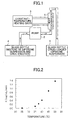
- the drug incorporation step is completed in one minute in a small-scale reaction when heated to a temperature equal to or higher than the phase transition point of lipid membranes (see FIG. 3 ).
- the drug decreases in amount and disperses in the liposome suspension. Therefore, the amount of the drug to be incorporated in the liposomes in the liposome suspension, with which the drug solution then newly come into contact, gradually decreases.
- the charged drug is consumed (incorporated) in its entirety by some of the liposomes before it is distributed to all the liposome particles, and is not incorporated in the remaining liposomes or, even when incorporated, liposome particles with the drug incorporated in smaller amounts occur.
- the drug incorporation step in the present invention is based on the remote loading method. Specifically,
- the production method according to the present invention which has taken into consideration an application to medium- or large-scale production for its practical use is a method that can substantially shorten the production time while maintaining the conventional loading amount and loading efficiency, and can be fully satisfactory from the standpoint of production cost. Further, the production method according to the present invention is a method that induces no irregularity in the amount of incorporated drug among preparations, because the liposome suspension and the drug solution are mixed together into a uniform mixture at a temperature at which no drug incorporation takes place and by using a heat exchanger, the uniform mixture is then heated in a short time to the phase transition point or higher and the drug can hence be incorporated during the feeding of the mixture.
- the method according to the present invention is, therefore, a method that can be fully satisfactory from the standpoint of quality aspect. Furthermore, the degradation of lipids can also be significantly suppressed owing to the substantial shortening of the thermal exposure time.
- the production method according to the present invention can be fully satisfactory from the standpoint of production time, the standpoint of quality aspect such as uniformity in the amount of incorporated drug, and the standpoint of the stability of the preparation.
- a liposome preparation is a drug loaded in liposomes.
- the present invention is a production method of a liposome preparation by a so-called remote loading method that prepares liposomes, into which the incorporation of a drug is intended, beforehand and the drug is then incorporated into the liposomes.
- the present invention is characterized in that a specific drug incorporation step (2) to be described subsequently herein is conducted.
- Liposomes are sealed vesicles formed by phospholipid bilayers, and exist in the form of a suspension in which internal water phases in sealed compartments and an external water phase exist isolated from each other by the bilayers.
- the term "liposomes" as used herein may, therefore, be used with a meaning that encompasses this liposome suspension.
- As liposome membrane structures there are known unilamellar vesicles each formed of a lipid bilayer as a single layer and multilamellar vesicles (MLV). These unilamellar vesicles are known to include SUV (Small Unilamellar Vesicle), LUV (Large Unilamellar Vesicle), and the like. No particular limitation is imposed on the membrane structure in the present invention.
- a phospholipid is generally an amphiphilic substance having, in its molecule, hydrophobic groups formed of long-chain alkyl groups, and a hydrophilic group formed of a phosphate group.
- HSPC hydrogenated soybean phosphatidyl choline
- one or more membrane components other than phospholipids may also be contained insofar as they permit stable formation of liposomes.
- a main membrane material having a phase transition point higher than the in vivo temperature (35 to 37°C) is desired to avoid readily leakage of the loaded drug during storage or in the body such as blood.
- the phase transition point of the main membrane material may be 40°C or higher.
- hydrogenated phospholipids such as HSPC, SM and the like are preferred.
- the above-described other membrane components may include, for example, lipids free of phosphoric acid (other membrane lipids), membrane stabilizers, antioxidants and the like as needed.
- lipids fatty acids and the like can be mentioned.
- membrane stabilizers there can be mentioned, for example, sterols such as cholesterols and saccharides such as glycerol and sucrose, which lower the membrane fluidity.
- sterols such as cholesterols and saccharides such as glycerol and sucrose, which lower the membrane fluidity.
- Illustrative of the antioxidants are ascorbic acid, uric acid, tocopherol homologs such as vitamin E, and the like.
- Tocopherol includes four isomers consisting of ⁇ -, ⁇ -, ⁇ - and ⁇ -tocopherols. They are all usable in the present invention.
- a lipid as a liposome membrane component is used with a meaning which includes all lipids other than drugs, such as phospholipids as main membrane materials, other membrane lipids, and lipids such as sterol as the above-described membrane stabilizers, and further, lipids included in membrane modifiers to be mentioned subsequently herein.
- a phospholipid or phospholipids may amount generally to from 20 to 100 mol%, preferably to from 40 to 100 mol%, and other lipid or lipids may amount generally to from 0 to 80 mol%, preferably to from 0 to 60 mol%.
- membrane modification components which can retain the membrane structures of liposomes and can be included in the liposome preparation, to extent not impairing the object of the present invention.
- membrane modification components hydrophilic polymers and other surface modifiers can be mentioned, for example. No particular limitation is imposed on the time of use of such a membrane modification component insofar as it is used during the liposome preparation step.
- the hydrophilic polymer may preferably be selectively distributed in the outer surface of each liposome membrane, especially from the outer membrane of its lipid bilayer to the side of the external medium from the standpoints of the efficiency of distribution and the protection of the hydrophilic polymer from the influence of the drug existing in the internal water phase.
- hydrophilic polymer When a hydrophilic polymer is used as an its lipid derivative, its lipid region(s) as hydrophobic region(s) is (are) held within each membrane so that hydrophilic high-molecular chains can be stably distributed on the outer surface.
- hydrophilic polymers are polyethylene glycol, polyglycerin, polypropylene glycol, ficoll, polyvinyl alcohol, styrene-maleic anhydride alternating copolymer, divinyl ether-maleic anhydride alternating copolymer, polyvinylpyrrolidone, polyvinyl methyl ether, polyvinylmethyloxazoline, polyethyloxazoline, polyhydroxypropyloxazoline, polyhydroxypropylmethacrylamide, polymethacrylamide, polydimethylacrylamide, polyhydroxypropyl methacrylate, polyhydroxyethyl acrylate, hydroxymethylcellulose, hydroxyethylcellulose,
- water-soluble polysaccharides such as glucuronic acid, sialic acid, dextran, pullulan, amylose, amylopectin, chitosan, mannan, cyclodextrin, pectin and carrageenan, and their derivatives, for example, glycolipids can also be mentioned.
- polyethylene glycol has an effect of improving in-blood retention and is thus preferred.
- PEG polyethylene glycol
- molecular weight of PEG may be generally from 500 to 10,000 daltons, preferably from 1,000 to 7,000 daltons, more preferably from 2,000 to 5,000 daltons.
- in-blood retention means a property that a drug in a state that it is loaded in liposomes of a liposome preparation remains in the blood of a host to which the liposome preparation is administered.
- Examples of the lipids (hydrophobic regions) of the hydrophilic high-molecular lipid derivatives include phospholipids, long-chain aliphatic alcohols, sterols, polyoxypropylene alkyl, glyceryl fatty acid esters, and the like.
- a phospholipid derivative or cholesterol derivative of PEG can be mentioned when the hydrophilic polymer is PEG.
- the phospholipid phosphatidyl ethanolamine can be mentioned as a preferred one, and its acyl chain can be generally a saturated fatty acid of C 14 -C 20 or so, for example, dipalmitoyl, distearoyl, palmitoylstearoyl, or the like.
- the distearoylphosphatidyl ethanolamine derivative of PEG (PEG-DSPE) and the like are readily-available, general-purpose compounds.
- the percent modification of liposomes by a hydrophilic polymer may be generally from 0.1 to 10 mol%, preferably from 0.1 to 5 mol%, more preferably from 0.2 to 3 mol% in terms of the percentage of the amount of the hydrophilic polymer based on the membranes (total lipid). It is to be noted that the lipid in the lipid derivative of the hydrophilic polymer is also included in this total lipid.
- the percent surface modification by such an outer-surface-selective, hydrophilic polymer as described above may be, at a ratio of liposome membrane components to total amount of lipids, generally from 0.1 to 20 mol%, preferably from 0.1 to 5 mol%, more preferably from 0.5 to 5 mol%.
- Examples of other surface modifiers include water-soluble polysaccharides such as glucuronic acid, sialic acid, dextran, pullulan, amylose, amylopectin, chitosan, mannan, cyclodextrin, pectin and carrageenan; compounds having acidic functional groups; and basic compounds having basic functional groups such as amino, amidino and guadinino groups.
- As the basic compounds there can be mentioned compounds such as DOTMA disclosed in Japanese Patent Laid-Open No. Sho 61-161246 , DOTAP disclosed in JP-T-H5-508626 , transfectam disclosed in Japanese Patent Laid-Open No. Hei 2-292246 , TMAG disclosed in Japanese Patent Laid-Open No.
- cationized lipids When the above-described other surface modifiers are substances formed of lipids and compounds having basic functional groups and bonded thereto, they are called "cationized lipids.”
- the lipid region of such a cationized lipid can be stabilized within the lipid bilayer of each liposome, and its basic functional group region can exist on the surface of the lipid bilayer (on the surface of the outer membrane and/or on the surface of the inner membrane) of the carrier.
- jet stream emulsification method that makes use of a velocity change from compression under extreme pressure to perform shear emulsification by a jet stream in a liquid phase
- liposome preparation technology making use of supercritical carbon dioxide
- improved ethanol injection method that can simplify the subsequent sizing step, and so on.
- a liposome preparation step (1) typically includes (i) a step of forming liposomes to afford a coarse liposome suspension, (ii) a sizing step for the coarse liposome suspension, and (iv) a step of exchanging the external medium to obtain a liposome suspension, and preferably further includes (iii) a surface modification step with a hydrophilic polymer between the steps (ii) and (iv).
- desired one of preparation methods such as those described above can be adopted as needed. Further, two or more methods can be chosen instead of choosing only one method, and the same method can be repeated or another method can be additionally conducted.
- the lipid dissolution method is useful as a method oriented toward practical application, and the DRV method is useful as a method for having a drug retained a lot in internal water phases.
- the method that dissolves a lipid under heat by using, for example, ethanol is widely employed.
- the respective steps for the preparation of the liposomes before the external medium exchange step (iii) may preferably be conducted at a temperature equal to or higher than the phase transition point of the main membrane material.
- the term "heating temperature” generally means the phase transition point of a lipid, especially a main membrane material or higher.
- the heating temperature may be from 50 to 80°C, preferably from 60 to 70°C because its phase transition point is around 50°C.
- the phase transition point drops and becomes unclear.
- the phase transition point is around 40°C so that the heating temperature may be from 40 to 70°C, more preferably from 40 to 50°C.
- the heating temperature may desirably be somewhat higher than the phase transition point.
- a lipid homogenization step in the liposome formation step (i), the sizing step (ii), and the surface modification step (iii), and further a subsequent drug incorporation step (2) are conducted by making use of the deformation of liposomes and the liquid-crystallization of lipid membranes, and therefore, require the above-described heating temperature.
- the external medium exchange step (iv), an unloaded drug elimination step in the drug incorporation step (2) and a final sterilization step may desirably be conducted at a low temperature not higher than the phase transition point of the main membrane material.
- low temperature will hereinafter means preferably from 0 to 40°C or so, typically from 5 to 25°C or so when the phase transition point of the main membrane material is, for example, around 50°C.
- the present invention will hereinafter be described based on preferred embodiments, although the present invention shall not be limited specifically to the following embodiments.
- membrane components such as those described above and a water phase are mixed to form liposomes so that a coarse liposome suspension is afforded.
- a water phase to be mixed with the membrane components an aqueous solution with an osmoregulator, pH adjuster and the like dissolved as needed in injection-grade water may be used generally.
- a homogenization step may desirably be conducted before the mixing of the membrane components and the water phase to avoid heterogenization which would otherwise be caused by the plural lipids.
- the membrane components, especially the lipids are completely dissolved in an organic solvent to prepare a lipid solution.
- the organic solvent one having volatility such as, for example, chloroform or ethanol, is generally employed. From the standpoint of a practical application on industrial scale, ethanol, particularly absolute ethanol is preferred.
- the aqueous solution and the homogenized lipid solution may be stirred, for example, after heating them to the above-described heating temperature beforehand.
- a stirrer such as a propeller stirrer may be used in general. This stirring may also be conducted at the above-described heating temperature as needed.
- Particle size control of the coarse liposome suspension namely, the sizing step (ii) is next conducted to obtain a sized liposome solution.
- various known technologies may be used including membrane emulsification and maintenance of shear force.
- membrane emulsification and maintenance of shear force There are, for example, the above-exemplified high-pressure emulsification method, the membrane emulsification method that forcedly pass the coarse liposome suspension a plurality of times through a filter, etc.
- the particle size can be controlled using a membrane filer such as a commercially-available polycarbonate membrane filter.
- a membrane filer such as a commercially-available polycarbonate membrane filter.
- sizing can generally be performed stepwise by combining membrane filters such as 400 nm, 200 nm and 100 nm membrane filters. The particle size control is easy when the coarse liposome suspension is equal to or higher than the phase transition point of the main membrane material in the sizing step.
- the diameters of the particle profiles are generally from 0.02 to 2 ⁇ m, preferably from 0.05 to 0.25 ⁇ m. Using a Zetasizer (Malvern Instruments; 3000HS), this particle size is measured as the average diameter value of the entire particles by the dynamic light scattering method.
- the liposomes sized as described above are preferably subjected to surface modification before the external medium exchange step (iv).
- the surface modification step (iii) is conducted with a view to imparting a function to the outer surfaces of the liposomes, and is carried out by modifying the outer surfaces of the liposomes, for example, with a ligand such as an antibody for imparting a targeting function or with a hydrophilic polymer having a function to improve the in-blood retention.
- Liposomes modified at the outer surfaces thereof with a surface modifier such as a hydrophilic polymer can be provided with physiochemical stability in the production process so that they can be stable treated even under conditions such as heating and cooling during their production.
- the surface modification mixes the sized liposome solution and a surface modifier solution, and then stirs them at the heating temperature.
- the surface modifier solution as a "hydrophilic polymer solution” for the sake of convenience, a description will hereinafter be made about an example that typically uses a lipid derivative of a hydrophilic polymer as a surface modifier, although the following description similarly applies to cases where other surface modifications are performed.
- the mixing of the sized liposome solution and the hydrophilic polymer solution is feasible from immediately after the completion of the sizing step, and the time until the mixing may preferably be as short as permissible. Preferably, the time until the mixing may be within 180 minutes at the latest from immediately after the completion of the preceding step.
- the hydrophilic polymer may be used as an aqueous solution as needed.
- the hydrophilic polymer and sized liposomes may each be maintained preferably in a state heated equal to or higher than the temperature at which the sizing was conducted, that is, the phase transition point of the main membrane material.
- the hydrophilic polymer solution may be added to the sized liposome solution, or vice versa. It is preferred to conduct the mixing under stirring.
- a stirrer such as a propeller stirrer can be used generally.
- the surface modification step (iii) can be conducted using a heat exchanger.
- a heat exchanger As the liposomes after the sizing are unstable, it is desired to conduct the heating in a time not impairing physiochemical stability such as the particle size. From the standpoint of shortening the time, it is also desired to conduct the surface modification step by using a heat exchanger. Details of a method for conducting the surface treatment by using a heat exchanger are described, for example, in Japanese Patent No. 2766691 . The description of this patent is incorporated herein by reference. Because the liposomes immediately after the sizing are unstable, the sized liposome solution can be cooled once through a heat exchanger to or lower than the transition point, and can then be heated again through another heat exchanger to conduct the surface modification step under heat.
- the surface modification step is generally conducted at a heating temperature equal to or higher than the phase transition point of the main membrane material.
- the present inventors have, however, been found that, when an alcohol exists in the surface modification step, the incorporation time of the hydrophilic polymer can be significantly shortened, and moreover, the condition for the incorporation temperature can be lowered.
- the liposomes after the surface modification step it is desired, from the standpoint of the stability of lipids, to lower the temperature condition as much as possible and to shorten the heating time as much as possible.
- Significant advantages can, therefore, be brought about from the feasibility of conducting the surface modification step at a low temperature.
- it is most desired to use the alcohol for the homogenization of lipids in the liposome formation step as the use of the alcohol also makes it possible to most conveniently conduct the homogenization of the lipids.
- the surface modification step (iii) physiochemical stability such as the particle size can be assured, but no assurance can be made for chemical stability such as hydrolysis of lipids. From the standpoint of ensuring chemical stability, it is desired to reduce the thermal exposure time in all the steps for the production of liposomes and a liposome preparation. From the standpoint of this stability of lipids, a shorter heating time is desired, and after the surface modification, the liposomes may desirably be cooled promptly. As a simpler and more convenient cooling method, ice-cooling is preferred. As a method for promptly cooling cooling the liposome after the completion of the surface modification step, the above-described method that uses a heat exchanger is also suited. It is to be noted that the unbonded surface modifier can be eliminated in a subsequent unloaded-drug elimination step. From this standpoint, it is desired to include the unloaded drug elimination step after the surface modification step.
- the external medium exchange step (iv) exchange of the external medium is conducted for remote loading.
- the sized and surface-modified liposomes make it possible to stably conduct the subsequent steps so that they can be conducted under conditions known in common.
- the external medium exchange step (iv) may preferably be conducted at the above-described low temperature to avoid an application of unnecessary heat. Described specifically, when the phase transition point of the main membrane material is around 50°C, for example, 0 to 40°C or so, typically 5 to 25°C or so is preferred. In this step, it is possible to conduct elimination of the alcohol brought in from the liposome formation step (i) and the hydrophilic polymer not incorporated into the liposomes in the surface modification step (iii).
- the production of the liposome preparation provides a final preparation through a sterilization step after the above step (iii) and subjects this final preparation to the drug incorporation step (2) at the time of the preparation at need in the hospital ward.
- the external medium exchange step (iv) exchanges the external water phase out of the internal and external water phases of the liposomes formed of the water phases, which was employed in the liposome formation step (i), to obtain a liposome suspension.
- methods for exchanging the external water phase there are the dialysis method, the ultracentrifugal separation method, the gel filtration method, and the like. These methods are all described in G. Gregoriadis: “Liposome Technology Liposome Preparation and Related Techniques," 2nd edition, Vol. I-III, CRC Press . The descriptions on these methods in this document are incorporated herein by reference.
- a method making use of hollow fibers such as a dialyzer, tangential flow making use of ultrafiltration membranes, diafiltration, and the like.
- the external medium exchange step (iv) in the present invention are to eliminate an organic solvent brought in at the formation step (i) and to form an ion gradient across the internal and external phases of the liposomes to permit remote loading at the drug incorporation step (2).
- the external medium exchange step (iv) is also useful as a step for the elimination of the surface modifier not bonded to the liposomes.
- the remote loading method can be used for common drugs each of which can exist in a charged state when dissolved in an appropriate aqueous medium.
- common drugs each of which can exist in a charged state when dissolved in an appropriate aqueous medium.
- the formation of an ion gradient across the interiors and exteriors of the liposomes allows a drug to permeate through the liposome membranes in accordance with the thus-formed gradient so that the drug can be loaded into the liposomes.
- No particular limitation is imposed on the type of the gradient in the present invention insofar as a desired drug can be incorporated into liposomes prepared beforehand.
- a proton concentration gradient can be preferably mentioned as the ion gradient.
- a pH gradient that the internal (internal water phase) pH of liposome membranes is lower than the external (external water phase) pH.
- a pH ingredient can be formed, specifically, by an ammonium ion ingredient and/or a concentration ingredient of an organic compound having one or more protonizable amino groups.
- liposomes are firstly formed beforehand in an aqueous buffer containing from 0.1 to 0.3 M of an ammonium salt, and the external medium is exchanged with a medium containing no ammonium ions, for example, a sucrose solution to form an ammonium ion gradient between the interiors and exterior of the liposome membranes.
- a medium containing no ammonium ions for example, a sucrose solution to form an ammonium ion gradient between the interiors and exterior of the liposome membranes.
- Internal ammonium ions are equilibrated by ammonia and protons, and the ammonia diffuses through the lipid films and are eliminated from the interiors of the liposomes.
- the equilibrium inside the liposomes continuously shifts toward the formation of protons.
- ammonium salt that can form an ammonium ion concentration gradient
- ammonium sulfate ammonium hydroxide, ammonium acetate, ammonium chloride, ammonium phosphate, ammonium citrate, ammonium succinate, ammonium lactobionate, ammonium carbonate, ammonium tartrate, ammonium oxalate, and the like.
- a technology that incorporates a drug into preformed liposomes by a remote loading method for an ammonium ion concentration gradient is disclosed in U.S. Patent No. 5192549 , and the incorporation of a drug can be conducted with reference to this document. The description of this document is incorporated herein by reference.
- organic compound having one or more protonizable amino groups one having a lower molecular weight is desired.
- methylamine, ethylamine, propylamine, diethylamine, ethylenediamine, aminoethanol or the like can be mentioned, although the organic compound is not limited to it.
- the drug is incorporated by the remote loading method in the present invention.
- the drug is generally incorporated by a drug solution.
- to load a drug into liposomes means to have the drug contained as internal water phases or in internal water phases and that the term “liposome preparation” means liposomes with the drug loaded therein.
- liposome preparation means liposomes with the drug loaded therein.
- loaded means that the drug is held by adhesion on the membranes or is held within the membranes, and in this case, is not necessarily limited to the existence of the drug in a state that it is dissolved in the internal water phases.
- the drug incorporation step (2) in the present invention is conducted at or higher than the phase transition point of the liposome lipid membranes.
- the present invention is characterized in that this drug incorporation step (2) is conducted using rapid heating means. Described specifically, the mixture of the liposome suspension and the drug solution is fully heated in a short time to or higher than the phase transition point of the lipid membranes.
- the rapid heating means has been chosen from the standpoint of production time, from the standpoint of quality such as uniformity and from the standpoint of the physiochemical stability of the preparation.
- the present inventors also found that the incorporation of a drug takes place in one minute when the two solutions are heated to or higher than the phase transition point of the lipid membranes.
- the incorporation of the drug begins from the time of the commencement of the mixing and a uniform percent incorporation of the drug can be hardly obtained among preparations.
- the liposome suspension is transferred into a storage tank in the drug incorporation step in the present invention while maintaining it at or lower than the phase transition point of the lipid(s) which constitute(s) the liposome membranes.
- the liposome suspension may preferably be mixed and stirred with the drug solution still at a temperature equal to or lower than the phase transition point of the lipid membranes to homogenize the drug solution and the liposome suspension beforehand. As this mixing is conducted at or below the phase transition point of the lipid membranes, no incorporation of the drug takes place. Therefore, in the mixture, the drug can be evenly distributed in the external medium of the liposomes.
- the temperature of the mixture may be preferably from 5 to 35°C, more preferably from 10 to 30°C, because an unduly low temperature results in difficult temperature control and cumbersome work while an excessively high temperature may induce the incorporation of the drug into the liposomes even at a temperature lower than the phase transition point of the lipid membranes.
- the rapid heating equipment can rapidly heat the mixture to a predetermined temperature.
- the heating rate may be from 1 to 20°C/sec, preferably from 3 to 10°C/sec.
- a heat exchanger can be used as the rapid heating equipment.
- the heat exchanger can rapidly heat the mixture to the predetermined temperature, and can also readily maintain the heated temperature for a predetermined time. It is also possible to rapidly raise the temperature by using microwaves instead of the heat exchanger.
- the heating method by microwaves or radio-frequency waves is a method that irradiates electromagnetic energy and generates heat by the absorption of the energy. It is internal heat generation by rotation or oscillation of dipoles within molecules as induced by microwaves. This heating method is considerably different in principle from the general heating by conduction of heat. Specifically, the above-described heating method instantaneously heats a mixture in a short time in the course of its feeding to load the drug.
- the heat exchanger for use in the heating step is to perform an exchange of heat between two fluids through a partition, and is used for applications such as heating, evaporation, cooling and condensation.
- the use of the heat exchanger as the heating means in the drug incorporation step makes effective use of this characteristic.
- multitubular cylindrical (capillary) heat exchangers there are well known multitubular cylindrical (capillary) heat exchangers, double-pipe heat exchangers, plate heat exchangers, coil heat exchangers, spiral heat exchangers, jacketed heat exchangers, nonmetal heat exchangers, etc.
- thermal storage heat exchangers in each of which low-temperature and high-temperature fluids are alternately brought into contact with a solid to effect a heat exchange, and the like.
- a multitubular cylindrical heat exchanger No particular limitation is imposed on the heat exchanger, but a multitubular cylindrical heat exchanger, a double-pipe heat exchanger, a plate heat exchanger or the like is preferred.
- the greater the heat transfer area (m 2 ) in a heat exchanger the higher the heat efficiency.
- a multitubular cylindrical heat exchanger consideration is needed from the standpoint of cleaning or the like as the piping becomes too narrow.
- a heat exchanger may be arranged for the purpose of heating before the drug incorporation step which should be conducted under heat, and another heat exchanger may also be arranged for the purpose of cooling as a subsequent cooling step.
- this heat exchanger for the purpose of cooling it is possible to use an air cooler (cooling by air) or an irrigation cooler (cooling by water spray) as an alternative for the above-exemplified heat exchanger.
- the use of a rapid heating equipment such as a heat exchanger in the drug incorporation step can achieve shortening of time, uniformity improvements in production and improvements in physiochemical stability uniformity, and therefore, is effective.
- such heat exchanger is used to rapidly raise the temperature of the drug-liposome mixture, which has been held not higher than the phase transition point of the membrane lipids, to a preset temperature equal to or higher than the phase transition point, so that the liposome membranes is provided with drug permeability to incorporate the drug into the liposomes by the above-mentioned remote loading method.
- rapid heating means such as a heat exchanger is used for the heating, heating in an extremely short time is feasible, and this heating can be effected fully and evenly. Because the drug exists in the same amount around the respective liposome particles at the time of the heating, it is possible to obtain a liposome preparation having a uniform amount of incorporated drug.
- the temperature of heating by the rapid heating means is supposed to be equal to or higher than the phase transition point of the membrane lipid(s) that form(s) the liposomes, and may be set higher preferably by from 0 to 40°C, more preferably by from 5 to 30°C, still more preferably by from 10 to 20°C than the phase transition point.
- the liposomes are provided with sufficient drug permeability so that the incorporation of the drug by the rapid heating means can be effectively conducted.
- the membrane lipid(s) or drug is provided with stability.
- More specific temperature values are set to avoid readily leakage at body temperature when administration into the blood is intended, although they vary depending on the phase transition point of membrane lipid(s) to be used.
- the heating temperature may be set at preferably from 40 to 80°C, more preferably from 45 to 70°C, still more preferably from 50 to 60°C. It is to be noted that, at a temperature lower than 40°C, the liposome membranes can hardly be provided with sufficient drug permeability. At a temperature higher than 80°C, on the other hand, there is a potential problem in that an adverse effect may be given to the membrane lipid(s) or drug even when the temperature lasts in a short time.
- the heating time by the heat exchanger in other words, the residence time in the heat exchanger may be preferably from 3 to 120 seconds, more preferably from 5 to 30 seconds.
- the term "residence time in a heat exchanger” means the time of passage from the inlet to the outlet of the heat exchanger. This residence time in a heat exchanger varies depending on the effective internal cross-sectional area of its tube and the flow rate.
- the rapid heating means is a heat exchanger in the present invention
- the drug can be continuously incorporated unlike the conventional methods. Described specifically, interposition of a heat exchanger in a feed pipe makes it possible to incorporate the drug during the feeding from the storage tank employed in the drug solution homogenization step to another storage tank, and therefore, can substantially shorten the time compared with the conventional methods.
- the pH of the internal water phase is generally lower so that hydrolysis of the lipid(s) tends to occur under exposure to heat.
- use of a temperature down step is desired to avoid thermal exposure as much as possible.
- the preset temperature in the temperature down step may be not higher than the phase transition point of the lipid membranes, preferably from 1 to 25°C, more preferably from 5 to 10°C.
- An unduly low temperature results in difficult temperature control and cumbersome work while an excessively high temperature may induce the incorporation of the drug into the liposomes even at a temperature lower than the phase transition point of the lipid membranes.
- the temperature of a liposome suspension discharged from a heat exchanger can be lowered by submerging a storage tank, in which the liposome suspension is to be stored, in ice water and ice-cooling the storage tank.
- a storage tank in which the liposome suspension is to be stored
- ice water and ice-cooling the storage tank To reduce the thermal exposure time of the drug and lipid membranes as much as possible, shortening of the period of residual heat after the heating is also an important issue. With a view to more positively shortening the period of residual heat, it is possible to use not only a heat exchanger for a temperature rise but also a heat exchanger for a temperature down.
- the liposome suspension after the incorporation of the drug can be promptly cooled, for example, by interposing an additional heat exchanger for a temperature down in a feed pipe on a downstream side of a heat exchanger for drug incorporation.
- the drug incorporation step (2) has been described above based on the example that it is conducted after the external medium exchange step (iv). However, the drug incorporation step (2) may be conducted at any other suitable timing in some instances. For example, it may be applied upon preparation at need in a hospital ward. A preparation to be used for the preparation at need in the hospital ward may desirably be one gone through the external medium exchange step in the remote loading method and having an ion gradient formed therein.
- the incorporation of a drug by making use of a heat exchanger can be used in preparation at need in a hospital ward when the thermal stability of the drug and its stability in an aqueous solution are extremely low.
- a method that dissolves the drug at a temperature lower than the phase transition point in a liposome suspension after the external medium exchange and internally arranges a heat exchanger in a step in the course of feeding of the liposome suspension to a drip infusion route to heat the liposome suspension to or above the phase transition point.
- the heat exchanger in this case may desirably be, for example, of the small and disposal type from the standpoint of the use in the hospital ward.
- the drug may be mixed after dissolving it in another dissolving agent or may be directly dissolved with an empty liposome suspension. Further, after conducting the incorporation of the drug under heat as mentioned above, the drug-incorporated liposome suspension may be cooled to promptly lower its temperature.
- the present invention can be applied to various drugs.
- drugs for therapy for example, there can be mentioned nucleic acids, polynuleotides, genes and analogs thereof, anticancer agents, antibiotics, enzymes, antioxidants, lipid intake inhibitors, hormones, antiinflammatories, steroids, vasodilators, angiotensin converting enzyme inhibitors, angiotensin receptor antagonists, smooth myocyte growth/migration inhibitors, platelet aggregation inhibitors, anticoagulants, chemical mediator t release inhibitors, endothelial cell growth promoters or inhibitors, aldose reductase inhibitors, mesangium cell growth inhibitors, lipoxygenase inhibitors, immunosuppressives, immunostimulants, antiviral agents, Maillard reaction suppressors, amyloidosis inhibitors, nitrogen monoxide synthesis inhibitors, AGFs (Advanced glycation endproducts) inhibitors, radical scavengers, proteins, peptides, glycosaminogly
- adrenal cortical steroids such as prednisolone, methylprednisolone and dexamethasone, and their derivatives
- nonsteroidal antiinflammatory drugs such as aspirin, indometacin, ibuprofen, mefenamic acid and phenylbutazone
- mesangium cell growth inhibitors such as heparin and low molecular heparin
- immunosuppressives such as cyclosporin
- ACE angiotensin converting enzyme
- captopril such as captopril
- AGE advanced glycation endoproduct
- ⁇ antagonists such as biglycan and decorin
- PKC protein kinase C
- prostaglandin preparations such as PGE and PGI
- peripheral vasodilators such as papaverine drugs, nicotinic acid drugs, tocopherol drugs and Ca antagonists
- antithrombotics such as phosphodiesterase inhibitors
- diagnostic media such as X-ray contrast media, ultrasonic diagnostic media, diagnostic media for radioisotope-labeled nuclear medicine and diagnostic media for nuclear magnetic resonance diagnosis.
- the use of the process according to the present invention is suited especially upon loading drugs which are unstable in aqueous solutions, nucleic acids, polynucleotides, genes and the like.
- a high percent load is generally desired, although the desired percent load differs depending on the kind of the,drug.
- a high drug/lipid(s) can be achieved, thereby making it possible to obtain a liposome preparation having a high percent load and effective for clinical applications.
- a high percent drug load of preferably 80% or higher, preferably 90% or higher can be achieved. This percent drug load is a value available as an average value. Nonetheless, such a high percent load means small variations in percent load among individual liposome preparations, and hence, a uniform percent load in all the preparations.
- the liposome suspension after the above-described drug incorporation step is subjected to steps known in common such as the unloaded drug elimination step and the sterilization step.
- the unloaded drug elimination step has for its object of the elimination of the unloaded drug after the drug incorporation step. Basically, an operation similar to the external medium exchange step is conducted, but the unloaded drug elimination step is different in object, that is, in that it eliminates the drug remaining in the external water phase.
- the sterilization step conducts sterilization after the liposome formation step.
- No particular limitation is imposed on the method of sterilization, and usable examples include filter sterilization, autoclave sterilization, dry-heat sterilization, ethylene oxide gas sterilization, radiation (e.g., electron beam, x-ray, ⁇ -ray, or the like) sterilization, sterilization with ozone water, and sterilization making use of hydrogen peroxide solution.
- filter sterilization is most preferred as the sterilization step. In filter sterilization, it is required to pass the liposomes but to prevent filtration of Brevundimonas diminuta (size: approx. 0.3 ⁇ 0.8 ⁇ m) to be used as an indicator microorganism.
- the liposomes are, therefore, required to be substantially smaller particles compared with Brevundimonas diminuta.
- a particle size of around 100 nm is also important for further ensuring the filter sterilization step. It is to be noted that this sterilization step may be omitted depending on the production method.
- the final preparation obtained through the above-described step can be stored at room temperature (generally from 21°C to 25°C), preferably under refrigeration at from 0 to 8°C from the standpoints of the stability of lipid(s) and the physiochemical stability such as particle size.
- room temperature generally from 21°C to 25°C
- preferably under refrigeration at from 0 to 8°C from the standpoints of the stability of lipid(s) and the physiochemical stability such as particle size.
- the thermal history of the liposome preparation according to the present invention in the production process is minimized as much as possible, the degradation of the lipid(s) in the liposome preparation can be inhibited, and therefore, the liposome preparation can be provided with excellent storage stability.
- This storage stability can be assessed in terms of the percent formation of lyso derivative(s) of lipid(s).
- Hydrogenated soybean phosphatidyl choline (HSPC, molecular weight: 790, product of Lipoid GmbH, "SPC3") (70.53 g) and cholesterol (Chol, molecular weight: 386.65, product of Solvay S.A.) (29.50 g) were weighed, followed by the addition of absolute ethanol (100 mL) to dissolve them under heat. To an aliquot (100 mL) of the resultant lipid solution in ethanol, a 250 mM solution of ammonium sulfate (900 mL) which had been heated to approx. 70°C was added, and the resulting mixture was stirred to prepare a coarse liposome suspension.
- the coarse liposome suspension was passed five times through a filter of 100 nm pore size (polycarbonate membranes) to obtain a liposome suspension.
- HPLC high performance liquid chromatograph
- the dispersion medium (external water phase) of the suspension of the PEG-modified liposomes was subjected to an external medium exchange with a 10% solution of sucrose in 10 mM Tris (pH 9.0). At that time, the external water phase was fed in an amount equal to the amount of the discharged solution such that the concentration of the liposome suspension always remained constant.
- the liposome suspension after the external medium exchange was ice-cooled.
- FIG. 1 A schematic diagram for describing a drug incorporation step in this embodiment is shown in FIG. 1 .
- a heat exchanger 1 in this embodiment was a multitubular cylindrical heat exchanger made of stainless steel ("CAPIOX (R) CARDIOPREGEAR CX-CP50," manufactured by TERUMO Kabushiki Kaisha; inner tube diameter: 1 mm, effective internal cross-sectional area: 640 cm 2 ).
- a mixture of the liposome suspension and a drug solution in a glass bottle 4 was fed into the heat exchanger 1 via a pump 2 such that the mixture flew at a constant rate through the heat exchanger 1.
- the heat exchanger 1 was heated by a constant-temperature heating bath 3.
- a drug-incorporated liposome suspension delivered from the heat exchanger 1 was received in a glass bottle 5.
- the lipid (HSPC) in the liposomes after the external medium exchange was quantitated by the high performance liquid chromatograph. Based on the concentration of total lipid as calculated from the quantitated HSPC, a calculation was made to determine the amount of Dox (doxorubicin hydrochloride, molecular weight: 579.99) that gave a Dox/total lipid (mol/mol) of 0.16. Based on the calculation results, a necessary amount of Dox was weighed. Using a 10% solution of sucrose in 10 mM Tris (pH 9.0), a 10 mg/ML solution of Dox (drug solution) was prepared.
- Dox doxorubicin hydrochloride, molecular weight: 579.99
- the drug incorporation rates at respective temperatures (25, 35, 37.5, 40, 45 and 50°C) by the remote loading method were simulatively investigated in small-capacity reaction vessels.
- the aliquots having been heated beforehand to the respective temperatures were added to aliquots (15 mL) of the liposome suspension, the aliquots having been heated beforehand to the corresponding temperatures, respectively.
- Aliquots of each of the resulting mixtures were incubated for 1, 2.5, 5, 7.5, 10 and 20 minutes.
- the percent drug incorporation for the respective incubation times at the incubation temperature of 50°C were determined to investigate the time required for the incorporation of the drug.
- physiological saline was added to each drug-loaded liposome suspension to dilute the suspension 20-fold
- the thus-diluted suspension was ultracentrifuged (1 ⁇ 10 5 g, 2 hours, 10°C) to settle the drug-loaded liposomes, and the corresponding percent drug incorporation (Dox loading efficiency) was determined from the concentration (mg/mL) of the drug in the supernatant in accordance with the below-described formula.
- the percent drug incorporation at 50°C is plotted as a function of the incubation time in FIG. 3 . It was ascertained that at the incubation temperature of 50°C, the percent drug incorporation was substantially saturated in the shortest time (the arrow in the diagram) among the tested times.
- Percent drug incorporation % Concentration of drug in the whole volume mg / mL - Concentration of drug in supernatant after ultracentrifugation mg / mL Concentration of drug in the whole volume mg / mL ⁇ 100
- concentrations (mg/mL) of Dox in the supernatant (unloaded) and the whole volume are quantitative analysis data by fluorometry (Ex 480 nm, Em 580 nm).
- a calibration line was prepared from aliquots of physiological saline, which contained Dox at the respective concentrations.
- the liposome suspension and the drug solution were mixed with each other at approx. 25°C in the glass bottle 4.
- Aliquots (400 mL) of the resulting mixture were fed into the heat exchanger 1 at the respective flow rates shown in Table 1. Those flow rates were determined in accordance with the following formula.
- Flow rate g / s Total weight g of the mixture transferred from the bottle 4 to the glass bottle 5 through the heat exchanger Time s required for the transfer of the mixture from the glass bottle 4 to the glass bottle 5
- the glass bottle 5 which contained the drug-loaded liposome suspension delivered from the heat exchanger 1 was ice-cooled.
- the residence times in the heat exchanger which correspond to the flow ranges of from 4.0 to 11.5 g/s, are from 9.9 to 3.4 seconds.
- the loading efficiency of the drug (Dox) exceeded 90%.
- a liposome suspension and a drug solution can be mixed at a low temperature (around 25°C) where the incorporation of the drug hardly takes place, and can then be heated immediately to a high temperature at which a high loading efficiency is available. It is, therefore, considered that the drug can be evenly incorporated in the liposomes. From the above-described results, it has been found that according to the present invention, a liposome preparation with a drug (Dox) loaded sufficiently from the standpoint of clinical effects can be obtained in an extremely short overall heating time (approx. 3 to 10 seconds) provided that the temperature of a sample at the outlet of the heat exchanger is 45°C or higher.
- Dox drug
- a Dox-loaded liposome preparation was obtained by conducting likewise the steps of Preparation Example 1 except that the total volume (15 L) of the liposome suspension and drug suspension was subjected to the conventional heated stirring/mixing step instead of the drug incorporation step (4) of Preparation Example 1.
- the liposome suspension (9.8 L) subjected to an external medium exchange in the external medium exchange step (3) was placed in a 20-L tank and was heated beforehand from room temperature to 60°C over 20 minutes (in which the heating at 40°C and higher lasted for 10 minutes).
- a predetermined amount of the same Dox solution (10 mg/mL) as in the above-described preparation example was added after heating it to 60°C beforehand.
- this percent incorporation is an average value for all the liposome particles.
- the drug is added in a significantly small amount in this experiment system compared with the amount of the drug which can be incorporated in the liposomes in the mixed liposome suspension, the drug is presumably incorporated in some liposome particles before the drug comes into contact with all the liposome particles so that variations may occur in percent drug incorporation among the liposome particles.
- the individual Dox-loaded liposome preparations formed in Preparation Example 2 and Comparative Example 1 were heated at 40°C for a predetermined time. From the heated Dox-loaded liposome preparations, samples were collected every week, and the percent formation of lipid degradation products (lyso derivatives) were determined by the high performance liquid chromatograph. The results are shown in Table 3 and FIG. 5 . In addition, the measurement results of particle sizes of the liposome preparations at the respective time points are also shown in Table 3.
- the particle sizes are average particle sizes measured by a dynamic light scattering particle analyzer ("Zetasizer 3000,” Malvern Instruments).
- the method of the present invention can raise the temperature of a mixture, which contains liposomes and a drug, in an extremely short time, and therefore, the incorporation of the drug can be completed during feeding through a heat exchanger.
- substantial shortening of thermal exposure was feasible. This shortening presumably led to improvements in the stability of the lipids, and hence, to a reduction in the percent formation of lipid degradation products. Further, no variations were observed in particle size during the storage period at 40°C, and excellent physiochemical stability is suggested on the preparation.
- the method according to the present invention has been found that it can incorporate a drug in an extremely short time while assuring physiochemical stability, it can also improve the stability of lipid(s), and from the standpoint of production time, the standpoint of quality such as the uniformity in the amount of incorporated drug and the standpoint of the stability of the preparation, it is fully satisfactory.
Landscapes
- Health & Medical Sciences (AREA)
- Chemical & Material Sciences (AREA)
- Life Sciences & Earth Sciences (AREA)
- Medicinal Chemistry (AREA)
- Pharmacology & Pharmacy (AREA)
- Epidemiology (AREA)
- Dispersion Chemistry (AREA)
- Animal Behavior & Ethology (AREA)
- General Health & Medical Sciences (AREA)
- Public Health (AREA)
- Veterinary Medicine (AREA)
- Medicinal Preparation (AREA)
- Manufacturing Of Micro-Capsules (AREA)
Abstract
Description
- This present invention relates to a method for the production of a liposome preparation with a desired drug loaded in liposomes.
- In recent years, active research is underway on drug delivery systems (DDS) for the purpose of achieving extended release (sustained release) of drug, prolongation of the life of drug the in vivo half-life of which is short, promotion of absorption of drug at varied lesion sites, or delivery of drug to a target tissue or cells only as intended. DDS technologies include sustained release technologies and targeting technologies. The former technologies allow gradual release of a drug from its preparation so that the blood level of the drug can be maintained constant over a long term to sustain its effects. The latter technologies selectively and efficiently deliver a drug to an inflamed site or cancer cells as a target. As drug carriers for achieving such DDS technologies, it is contemplated to use sealed vesicles such as liposomes, emulsions, lipid microspheres or nanoparticles. For their practical application, however, there are various problems to be overcome.
- Upon using liposomes in DDS, loading efficiency, storage stability and the like of a drug are required. As a method for achieving a high drug loading efficiency, there is a remote loading method that forms liposomes beforehand and loads a drug into the liposomes while making use of an ion gradient or pH gradient which occurs between an internal water phase and an external water phase of each liposome (see
Patent Document 1, etc.). - The incorporation of a drug into liposomes by such a remote loading method is conducted under heat at or above the phase transition point of phospholipids that make up membranes of the liposomes. It is a common practice to heat a mixture of a suspension of liposomes, into which the incorporation of a drug is intended, and a solution of the drug at approx. 65°C for 30 minutes (see,
Patent Document 2, etc.). -
- Patent Document 1: Japanese Patent No.
2659136 - Patent Document 2:
PCT Patent Publication No. WO2005/092388 Pamphlet - Concerning the production of a liposome preparation by a method that includes a drug incorporation step by such a remote loading method as described above, the heating in the drug incorporation step becomes a problem whenever an attempt is made to practice this method on an industrial level. Described specifically, in the remote loading method, the drug is generally loaded into liposomes by mixing a suspension of the liposomes, in each of which an ion gradient or pH gradient has been caused to occur between its internal water phase and its external water phase, and a solution of the drug at a temperature equal to or higher than the phase transition point of the lipid membranes of the liposomes. In the drug incorporation step as described above, the liposome suspension and the drug solution are separately heated beforehand to a temperature equal to or higher than the phase transition point of the lipid membranes of the liposomes and are then mixed together, and after the mixing, the mixture is also maintained in a heated state for a predetermined time until the loading is completed. However, the greater the production scale, the longer the time required beforehand for the temperature rise prior to the mixing. Moreover, at a large production scale, long-time heating is also needed at the time of the mixing to evenly heat the entirety, leading to a concern that the physiochemical stability of the liposomes and the drug under loading may be affected. In particular, liposomes with a pH gradient developed therein, which are before the loading of a drug therein, are known to be susceptible to the formation of lipid degradation products (lipidolysis) compared with the same liposomes after the loading of the drug therein. From this standpoint, the step that heats the liposome suspension beforehand prior to the loading of the drug is not preferred. When the production scale is large, it is necessary to mix the drug little by little into the liposome suspension in order to load the drug evenly into the respective liposome particles, and therefore, a long time is required for the mixing. In other words, the liposomes in the unloaded form before their contact with the drug remain to exist over a long time during the mixing. This is not preferred either. Further, after the completion of the drug incorporation, the thermal stability of the liposomes is improved. Nonetheless, any unnecessary thermal history should be avoided, and therefore, the temperature needs to be promptly lowered. However, a large production scale also needs time for a temperature down.
- On the other hand, the production process of liposomes proceeds through steps in multiple stages as mentioned above, and therefore, the time needed for the production is long. In small-scale production, for example, at a laboratory level, the time aspect is not very important because the time to be spent for a temperature rise and a temperature down is short. When a medium- or large-scale production method is assumed, however, the time to be spent for a temperature rise and a temperature down cannot be ignorable, and the shortening of production time is also essential from the standpoint of production cost. In the medium- or large-scale production method, it is also necessary to take into consideration the equipment for the production process. To maintain the temperature, for example, there is a need to produce by using a tank equipped with a jacket heating device. Such a tank requires a high equipment investment cost. An advance investigation is therefore needed to minimize such steps under a detailed design. The production of liposomes generally includes the step that is performed at a temperature equal to or higher than the phase transition point of lipid membranes, and therefore, requires equipment for raising the temperature and maintaining the temperature. This production, however, also includes a step for which heating at the phase transition point or higher is not desired. The overall process, therefore, needs a step to effect a temperature reduction after effecting a temperature rise. This is one of reasons for the lengthy production process.
- Further, upon industrial practice of the remote loading method, the uniformity in the drug incorporation step exists as a matter of concern.
- An object of the present invention is to develop a simple and easy production method, which in a medium- or large-scale production method, makes it possible to significantly shorten the production time of liposomes to achieve a substantial cost cut-down, to produce a preparation with a uniform amount of incorporated drug from the standpoint of a quality aspect, and further to suppress lipid degradation by a substantial reduction in thermal exposure time.
Especially, as a result of an investigation by the present inventors especially about the drug incorporation step by a remote loading method, it was found that, as will be described as Examples subsequently herein, the drug incorporation step is completed in one minute in a small-scale reaction when heated to a temperature equal to or higher than the phase transition point of lipid membranes (seeFIG. 3 ). However, this fact is available in small-scale reactions. When the production scale became greater, a time of one minute or longer was needed in the step in which a liposome suspension and a drug solution are mixed (see Comparative Examples to be described subsequently herein). It was, hence, appreciated that in such a large-scale reaction, there is indicated a concern about irregularity in the amount of incorporated drug among the liposomes in a preparation. Described specifically, even when a drug is added little by little to a liposome suspension as mentioned above, the drug exist in an excess amount for some of the liposomes in the liposome suspension, with which the drug solution come into contact at a beginning, and is sufficiently incorporated (loaded) in the some liposome. Gradually, however, the drug decreases in amount and disperses in the liposome suspension. Therefore, the amount of the drug to be incorporated in the liposomes in the liposome suspension, with which the drug solution then newly come into contact, gradually decreases. As an alternative, the charged drug is consumed (incorporated) in its entirety by some of the liposomes before it is distributed to all the liposome particles, and is not incorporated in the remaining liposomes or, even when incorporated, liposome particles with the drug incorporated in smaller amounts occur. - If the drug is charged in a large excess, the drug is loaded (incorporated) as much an amount as possible in all the liposome particles so that a uniform preparation may be obtained. However, this approach results in a great deal of unloaded drug, and therefore, is not practical at all. The exhibition of activities by a drug loaded in liposomes stems from the disposition of the liposomes themselves, and irregularity among preparations, such as differences in the amount of introduced drug, is likely to considerably affect their drug activity. It is, therefore, necessary to choose a production process that can assure uniformity.
As described above, with the processes practiced at present, the production of a uniform and stable preparation may be feasible in some instances when the production is small-scale production at a laboratory level. As the production scale increases to medium- or large-scale production, a need arises for a process that requires a considerable time. Due to an increase in the thermal exposure time, the physiochemical stability of the preparation is also concerned. Further, in view of the drug incorporation time in the drug incorporation step, the irregularity in the amount of incorporated drug among preparations is also concerned. From the standpoints of these three matters, specifically the cost aspect, the physiochemical stability of a preparation and the quality aspect, there is a concern about the application of the drug incorporation step to medium- or large-scale production for its practical use. It is, however, the current circumstance that there is not any method which has overcome these concerns and the drug incorporation step has to be practiced under insufficient production conditions. - Based on the above findings, the present invention is provided as will be described hereinafter.
- (1) A method for producing a liposome preparation by using a remote loading method, which includes a drug incorporation step that heats a mixture of a preliminarily prepared suspension of liposomes and a drug by rapid heating means to a temperature from not lower than a phase transition point of membranes of the liposomes to not higher than 80°C to incorporate the drug into the liposomes.
- The drug incorporation step in the present invention is based on the remote loading method. Specifically,
- (2) The method as described above in (1), wherein the drug is incorporated into the liposomes by an ion gradient method.
- (3) The method as described above in (1) or (2), wherein the rapid heating means is a heat exchanger.
The heat exchanger may preferably be a capillary heat exchanger, and the diameters (inner diameters) of the capillaries are generally from 0.5 to 15 mm. - (4) The method as described above in (3), wherein a heat-exchanger residence time in the heat exchanger is from 3 to 120 seconds.
-
- (5) The method as described above in (1) or (2), wherein the rapid heating means is microwave irradiation.
-
- (6) The method as described above in any one of (1) to (5), which includes performing an elimination step for any unloaded drug after the drug incorporation step.
- According to the present invention, the production method according to the present invention which has taken into consideration an application to medium- or large-scale production for its practical use is a method that can substantially shorten the production time while maintaining the conventional loading amount and loading efficiency, and can be fully satisfactory from the standpoint of production cost. Further, the production method according to the present invention is a method that induces no irregularity in the amount of incorporated drug among preparations, because the liposome suspension and the drug solution are mixed together into a uniform mixture at a temperature at which no drug incorporation takes place and by using a heat exchanger, the uniform mixture is then heated in a short time to the phase transition point or higher and the drug can hence be incorporated during the feeding of the mixture. The method according to the present invention is, therefore, a method that can be fully satisfactory from the standpoint of quality aspect. Furthermore, the degradation of lipids can also be significantly suppressed owing to the substantial shortening of the thermal exposure time. For the foregoing, the production method according to the present invention can be fully satisfactory from the standpoint of production time, the standpoint of quality aspect such as uniformity in the amount of incorporated drug, and the standpoint of the stability of the preparation.
-
- [
FIG. 1 ] is a schematic illustration diagram of one embodiment of the drug incorporation step in the method according to the present invention. - [
FIG. 2 ] is a diagram showing drug incorporation rates at respective temperatures. - [
FIG. 3 ] is a diagram showing the percent incorporation of a drug versus drug introduction time at 50°C in an investigation on the percent incorporation of the drug. - [
FIG. 4 ] is a diagram illustrating a relationship of the percent incorporation of a drug to outlet temperature in a drug incorporation step making use of a heat exchanger. - [
FIG. 5 ] is a diagram illustrating the storage stability (percent formation of lyso derivatives) of the respective liposome preparations obtained by the method of the present invention and in Comparative Examples. - The present invention will hereinafter be described in further detail.
A liposome preparation is a drug loaded in liposomes. Although there are several methods for the production of liposome preparations, the present invention is a production method of a liposome preparation by a so-called remote loading method that prepares liposomes, into which the incorporation of a drug is intended, beforehand and the drug is then incorporated into the liposomes. Specifically, the present invention is characterized in that a specific drug incorporation step (2) to be described subsequently herein is conducted.
No particular limitation is imposed on the liposomes to be provided to the drug incorporation step (2) insofar remote loading for the drug can be conducted, but a description will be made first about the liposomes, into which the incorporation of the drug is intended, and their preparation steps (1). - Liposomes are sealed vesicles formed by phospholipid bilayers, and exist in the form of a suspension in which internal water phases in sealed compartments and an external water phase exist isolated from each other by the bilayers. The term "liposomes" as used herein may, therefore, be used with a meaning that encompasses this liposome suspension. As liposome membrane structures, there are known unilamellar vesicles each formed of a lipid bilayer as a single layer and multilamellar vesicles (MLV). These unilamellar vesicles are known to include SUV (Small Unilamellar Vesicle), LUV (Large Unilamellar Vesicle), and the like. No particular limitation is imposed on the membrane structure in the present invention.
- A phospholipid is generally an amphiphilic substance having, in its molecule, hydrophobic groups formed of long-chain alkyl groups, and a hydrophilic group formed of a phosphate group. As phospholipids, there can be mentioned glycerophosphoric acids such as phosphatidyl choline (= lecithin), phosphatidyl glycerol, phosphatidic acid, phosphatidyl ethanolamine, phosphatidyl serine, and phosphatidyl inositol; sphingophospholipids such as sphingomyelin (SM); natural or synthetic diphosphatidyl phospholipids, such as cardiolipin, and their derivatives; and their hydrogenated products, for example, hydrogenated soybean phosphatidyl choline (HSPC); and the like. These phospholipids can be used either singly or in combination.
- In the present invention, one or more membrane components other than phospholipids may also be contained insofar as they permit stable formation of liposomes. From the standpoint of the phospholipid as a main membrane material, use of a main membrane material having a phase transition point higher than the in vivo temperature (35 to 37°C) is desired to avoid readily leakage of the loaded drug during storage or in the body such as blood. Preferably, the phase transition point of the main membrane material may be 40°C or higher. As phospholipids having such phase transition points, hydrogenated phospholipids such as HSPC, SM and the like are preferred.
- The above-described other membrane components may include, for example, lipids free of phosphoric acid (other membrane lipids), membrane stabilizers, antioxidants and the like as needed. As other lipids, fatty acids and the like can be mentioned. As the membrane stabilizers, there can be mentioned, for example, sterols such as cholesterols and saccharides such as glycerol and sucrose, which lower the membrane fluidity. Illustrative of the antioxidants are ascorbic acid, uric acid, tocopherol homologs such as vitamin E, and the like. Tocopherol includes four isomers consisting of α-, β-, γ- and δ-tocopherols. They are all usable in the present invention.
- It is to be noted that in the present invention, the term "a lipid as a liposome membrane component" is used with a meaning which includes all lipids other than drugs, such as phospholipids as main membrane materials, other membrane lipids, and lipids such as sterol as the above-described membrane stabilizers, and further, lipids included in membrane modifiers to be mentioned subsequently herein.
When the total lipid amount of such membrane components is assumed to be 100 mol%, a phospholipid or phospholipids may amount generally to from 20 to 100 mol%, preferably to from 40 to 100 mol%, and other lipid or lipids may amount generally to from 0 to 80 mol%, preferably to from 0 to 60 mol%. - In the present invention, it is also possible to include one or more other membrane modification components, which can retain the membrane structures of liposomes and can be included in the liposome preparation, to extent not impairing the object of the present invention.
As the membrane modification components, hydrophilic polymers and other surface modifiers can be mentioned, for example. No particular limitation is imposed on the time of use of such a membrane modification component insofar as it is used during the liposome preparation step. Concerning the membrane modification with a hydrophilic polymer out of such membrane modification components, the hydrophilic polymer may preferably be selectively distributed in the outer surface of each liposome membrane, especially from the outer membrane of its lipid bilayer to the side of the external medium from the standpoints of the efficiency of distribution and the protection of the hydrophilic polymer from the influence of the drug existing in the internal water phase. In the present invention, it is hence desired to add the hydrophilic polymer after the formation of liposomes, especially after a sizing step. - When a hydrophilic polymer is used as an its lipid derivative, its lipid region(s) as hydrophobic region(s) is (are) held within each membrane so that hydrophilic high-molecular chains can be stably distributed on the outer surface.
Although no particular limitation is imposed on the hydrophilic polymer, illustrative of hydrophilic polymers are polyethylene glycol, polyglycerin, polypropylene glycol, ficoll, polyvinyl alcohol, styrene-maleic anhydride alternating copolymer, divinyl ether-maleic anhydride alternating copolymer, polyvinylpyrrolidone, polyvinyl methyl ether, polyvinylmethyloxazoline, polyethyloxazoline, polyhydroxypropyloxazoline, polyhydroxypropylmethacrylamide, polymethacrylamide, polydimethylacrylamide, polyhydroxypropyl methacrylate, polyhydroxyethyl acrylate, hydroxymethylcellulose, hydroxyethylcellulose, polyaspartamides, synthetic polyamino acids, and the like. In addition, water-soluble polysaccharides such as glucuronic acid, sialic acid, dextran, pullulan, amylose, amylopectin, chitosan, mannan, cyclodextrin, pectin and carrageenan, and their derivatives, for example, glycolipids can also be mentioned. - Among these, polyethylene glycol (PEG) has an effect of improving in-blood retention and is thus preferred. No particular limitation is imposed on the molecular weight of PEG, but its molecular weight may be generally from 500 to 10,000 daltons, preferably from 1,000 to 7,000 daltons, more preferably from 2,000 to 5,000 daltons.
It is to be noted that in the present invention, the term "in-blood retention" means a property that a drug in a state that it is loaded in liposomes of a liposome preparation remains in the blood of a host to which the liposome preparation is administered. - Examples of the lipids (hydrophobic regions) of the hydrophilic high-molecular lipid derivatives include phospholipids, long-chain aliphatic alcohols, sterols, polyoxypropylene alkyl, glyceryl fatty acid esters, and the like. Specifically, a phospholipid derivative or cholesterol derivative of PEG can be mentioned when the hydrophilic polymer is PEG. As the phospholipid, phosphatidyl ethanolamine can be mentioned as a preferred one, and its acyl chain can be generally a saturated fatty acid of C14-C20 or so, for example, dipalmitoyl, distearoyl, palmitoylstearoyl, or the like. For instance, the distearoylphosphatidyl ethanolamine derivative of PEG (PEG-DSPE) and the like are readily-available, general-purpose compounds.
The percent modification of liposomes by a hydrophilic polymer may be generally from 0.1 to 10 mol%, preferably from 0.1 to 5 mol%, more preferably from 0.2 to 3 mol% in terms of the percentage of the amount of the hydrophilic polymer based on the membranes (total lipid). It is to be noted that the lipid in the lipid derivative of the hydrophilic polymer is also included in this total lipid. - In the present invention, the percent surface modification by such an outer-surface-selective, hydrophilic polymer as described above may be, at a ratio of liposome membrane components to total amount of lipids, generally from 0.1 to 20 mol%, preferably from 0.1 to 5 mol%, more preferably from 0.5 to 5 mol%.
- Examples of other surface modifiers include water-soluble polysaccharides such as glucuronic acid, sialic acid, dextran, pullulan, amylose, amylopectin, chitosan, mannan, cyclodextrin, pectin and carrageenan; compounds having acidic functional groups; and basic compounds having basic functional groups such as amino, amidino and guadinino groups. As the basic compounds, there can be mentioned compounds such as DOTMA disclosed in Japanese Patent Laid-Open No.
Sho 61-161246 JP-T-H5-508626 Hei 2-292246 Hei 4-108391 PCT Patent Publication No. WO97/42166 - When the above-described other surface modifiers are substances formed of lipids and compounds having basic functional groups and bonded thereto, they are called "cationized lipids." The lipid region of such a cationized lipid can be stabilized within the lipid bilayer of each liposome, and its basic functional group region can exist on the surface of the lipid bilayer (on the surface of the outer membrane and/or on the surface of the inner membrane) of the carrier. By modifying the liposome membranes with the cationized lipid, the adhesion or the like between the membranes of liposomes and cells can be enhanced.
- As preparation methods of a liposome suspension, various technologies are known such as the hydration method (the Bangham method), the ultrasonication method, the reverse phase evaporation method (Reverse phase evapolation vesicles), the heating method, the lipid dissolution method, the DRV method (Dehydrated/Rehydrated Vesicles), the freezing-melting method, the ethanol injection method, the thin film method, the extrusion method, and the high-pressure emulsification method by a high-pressure discharge emulsifier (TERADA, YOSHIMURA, et al.: "Liposomes in Life Science" (in Japanese), Springer-Verlag Tokyo (1992)). The descriptions on these methods in the documents are incorporated herein by reference.
As technologies developed in recent years, there are also the jet stream emulsification method that makes use of a velocity change from compression under extreme pressure to perform shear emulsification by a jet stream in a liquid phase, the liposome preparation technology making use of supercritical carbon dioxide, the improved ethanol injection method that can simplify the subsequent sizing step, and so on. - In the present invention, a liposome preparation step (1) typically includes (i) a step of forming liposomes to afford a coarse liposome suspension, (ii) a sizing step for the coarse liposome suspension, and (iv) a step of exchanging the external medium to obtain a liposome suspension, and preferably further includes (iii) a surface modification step with a hydrophilic polymer between the steps (ii) and (iv).
Upon conducting these steps, desired one of preparation methods such as those described above can be adopted as needed. Further, two or more methods can be chosen instead of choosing only one method, and the same method can be repeated or another method can be additionally conducted.
Among the foregoing, the lipid dissolution method is useful as a method oriented toward practical application, and the DRV method is useful as a method for having a drug retained a lot in internal water phases. The method that dissolves a lipid under heat by using, for example, ethanol is widely employed. As liposomes generally have a phase transition point, the respective steps for the preparation of the liposomes before the external medium exchange step (iii) may preferably be conducted at a temperature equal to or higher than the phase transition point of the main membrane material. - It is to be noted that in each of the steps to be described hereinafter, the term "heating temperature" generally means the phase transition point of a lipid, especially a main membrane material or higher. When HSPC is used as a phospholipid of a main membrane material, for example, the heating temperature may be from 50 to 80°C, preferably from 60 to 70°C because its phase transition point is around 50°C. When a formulation containing cholesterol in addition to HSPC is used, however, the phase transition point drops and becomes unclear. In the case of a formulation which contains HSPC and cholesterol in 50 mol% proportions respectively, for example, the phase transition point is around 40°C so that the heating temperature may be from 40 to 70°C, more preferably from 40 to 50°C. As it is necessary to take into consideration the physiochemical stability of the lipid membranes at this time, the heating temperature may desirably be somewhat higher than the phase transition point.
In the preparation step (1) of the liposome suspension, a lipid homogenization step in the liposome formation step (i), the sizing step (ii), and the surface modification step (iii), and further a subsequent drug incorporation step (2) are conducted by making use of the deformation of liposomes and the liquid-crystallization of lipid membranes, and therefore, require the above-described heating temperature. To avoid variations in particle size due to the deformation of the liposomes in the steps other than these steps, however, the external medium exchange step (iv), an unloaded drug elimination step in the drug incorporation step (2) and a final sterilization step may desirably be conducted at a low temperature not higher than the phase transition point of the main membrane material.
The term "low temperature" will hereinafter means preferably from 0 to 40°C or so, typically from 5 to 25°C or so when the phase transition point of the main membrane material is, for example, around 50°C. - The present invention will hereinafter be described based on preferred embodiments, although the present invention shall not be limited specifically to the following embodiments.
In the liposome formation step (i), membrane components such as those described above and a water phase are mixed to form liposomes so that a coarse liposome suspension is afforded. As the water phase to be mixed with the membrane components, an aqueous solution with an osmoregulator, pH adjuster and the like dissolved as needed in injection-grade water may be used generally.
When forming liposomes by using another lipid as a membrane stabilizer along with the phospholipid in the step (i), a homogenization step may desirably be conducted before the mixing of the membrane components and the water phase to avoid heterogenization which would otherwise be caused by the plural lipids. No particular limitation is imposed on this homogenization step. In general, however, the membrane components, especially the lipids are completely dissolved in an organic solvent to prepare a lipid solution. As the organic solvent, one having volatility such as, for example, chloroform or ethanol, is generally employed. From the standpoint of a practical application on industrial scale, ethanol, particularly absolute ethanol is preferred. When this dissolution is conducted at a heating temperature equal to or higher than the phase transition point of the main membrane material, a homogeneous lipid solution can be obtained more easily. - For the mixing of the membrane component and the water phase, the aqueous solution and the homogenized lipid solution may be stirred, for example, after heating them to the above-described heating temperature beforehand. For this stirring, a stirrer such as a propeller stirrer may be used in general. This stirring may also be conducted at the above-described heating temperature as needed.
- Particle size control of the coarse liposome suspension, namely, the sizing step (ii) is next conducted to obtain a sized liposome solution. To perform sizing of liposomes to a desired size, various known technologies may be used including membrane emulsification and maintenance of shear force. There are, for example, the above-exemplified high-pressure emulsification method, the membrane emulsification method that forcedly pass the coarse liposome suspension a plurality of times through a filter, etc. These methods are all described in G. Gregoriadis: "Liposome Technology Liposome Preparation and Related Techniques," 2nd edition, Vol. I-III, CRC Press. The descriptions on these methods in this document are incorporated herein by reference.
- When the sizing step is conducted, for example, by the membrane emulsification method, the particle size can be controlled using a membrane filer such as a commercially-available polycarbonate membrane filter. When desired to control the particle size to 100 nm, sizing can generally be performed stepwise by combining membrane filters such as 400 nm, 200 nm and 100 nm membrane filters.
The particle size control is easy when the coarse liposome suspension is equal to or higher than the phase transition point of the main membrane material in the sizing step. - No particular limitation is imposed on the size of the liposomes after the sizing. When the liposomes take a spherical shape or a shape close to the spherical shape, however, the diameters of the particle profiles are generally from 0.02 to 2 µm, preferably from 0.05 to 0.25 µm. Using a Zetasizer (Malvern Instruments; 3000HS), this particle size is measured as the average diameter value of the entire particles by the dynamic light scattering method.
- The liposomes sized as described above are preferably subjected to surface modification before the external medium exchange step (iv). As mentioned above, the surface modification step (iii) is conducted with a view to imparting a function to the outer surfaces of the liposomes, and is carried out by modifying the outer surfaces of the liposomes, for example, with a ligand such as an antibody for imparting a targeting function or with a hydrophilic polymer having a function to improve the in-blood retention. Liposomes modified at the outer surfaces thereof with a surface modifier such as a hydrophilic polymer can be provided with physiochemical stability in the production process so that they can be stable treated even under conditions such as heating and cooling during their production. From the standpoint of obtaining physiochemical stability such as liposome particle size in subsequent steps such as the external medium exchange step (iv) and further, the drug incorporation step (2), it is hence desired to conduct the surface modification step (iii) before these steps, specifically immediately after the liposome sizing step (ii).
- Specifically, the surface modification mixes the sized liposome solution and a surface modifier solution, and then stirs them at the heating temperature. By referring the surface modifier solution as a "hydrophilic polymer solution" for the sake of convenience, a description will hereinafter be made about an example that typically uses a lipid derivative of a hydrophilic polymer as a surface modifier, although the following description similarly applies to cases where other surface modifications are performed. The mixing of the sized liposome solution and the hydrophilic polymer solution is feasible from immediately after the completion of the sizing step, and the time until the mixing may preferably be as short as permissible. Preferably, the time until the mixing may be within 180 minutes at the latest from immediately after the completion of the preceding step.
- The hydrophilic polymer may be used as an aqueous solution as needed. In general, the hydrophilic polymer and sized liposomes may each be maintained preferably in a state heated equal to or higher than the temperature at which the sizing was conducted, that is, the phase transition point of the main membrane material.
As a mixing method, the hydrophilic polymer solution may be added to the sized liposome solution, or vice versa. It is preferred to conduct the mixing under stirring. For the stirring, a stirrer such as a propeller stirrer can be used generally. - The surface modification step (iii) can be conducted using a heat exchanger. As the liposomes after the sizing are unstable, it is desired to conduct the heating in a time not impairing physiochemical stability such as the particle size. From the standpoint of shortening the time, it is also desired to conduct the surface modification step by using a heat exchanger. Details of a method for conducting the surface treatment by using a heat exchanger are described, for example, in Japanese Patent No.
2766691 - As described above, the surface modification step is generally conducted at a heating temperature equal to or higher than the phase transition point of the main membrane material. The present inventors have, however, been found that, when an alcohol exists in the surface modification step, the incorporation time of the hydrophilic polymer can be significantly shortened, and moreover, the condition for the incorporation temperature can be lowered. For the liposomes after the surface modification step, it is desired, from the standpoint of the stability of lipids, to lower the temperature condition as much as possible and to shorten the heating time as much as possible. Significant advantages can, therefore, be brought about from the feasibility of conducting the surface modification step at a low temperature. For making an alcohol exist in the surface modification step, it is most desired to use the alcohol for the homogenization of lipids in the liposome formation step as the use of the alcohol also makes it possible to most conveniently conduct the homogenization of the lipids.
- After the surface modification step (iii), physiochemical stability such as the particle size can be assured, but no assurance can be made for chemical stability such as hydrolysis of lipids. From the standpoint of ensuring chemical stability, it is desired to reduce the thermal exposure time in all the steps for the production of liposomes and a liposome preparation. From the standpoint of this stability of lipids, a shorter heating time is desired, and after the surface modification, the liposomes may desirably be cooled promptly. As a simpler and more convenient cooling method, ice-cooling is preferred. As a method for promptly cooling cooling the liposome after the completion of the surface modification step, the above-described method that uses a heat exchanger is also suited.
It is to be noted that the unbonded surface modifier can be eliminated in a subsequent unloaded-drug elimination step. From this standpoint, it is desired to include the unloaded drug elimination step after the surface modification step. - In the external medium exchange step (iv), exchange of the external medium is conducted for remote loading.
The sized and surface-modified liposomes make it possible to stably conduct the subsequent steps so that they can be conducted under conditions known in common. The external medium exchange step (iv) may preferably be conducted at the above-described low temperature to avoid an application of unnecessary heat. Described specifically, when the phase transition point of the main membrane material is around 50°C, for example, 0 to 40°C or so, typically 5 to 25°C or so is preferred. In this step, it is possible to conduct elimination of the alcohol brought in from the liposome formation step (i) and the hydrophilic polymer not incorporated into the liposomes in the surface modification step (iii). It is to be noted that upon preparing a liposome preparation at need in a hospital ward, the production of the liposome preparation provides a final preparation through a sterilization step after the above step (iii) and subjects this final preparation to the drug incorporation step (2) at the time of the preparation at need in the hospital ward. - The external medium exchange step (iv) exchanges the external water phase out of the internal and external water phases of the liposomes formed of the water phases, which was employed in the liposome formation step (i), to obtain a liposome suspension. As methods for exchanging the external water phase, there are the dialysis method, the ultracentrifugal separation method, the gel filtration method, and the like. These methods are all described in G. Gregoriadis: "Liposome Technology Liposome Preparation and Related Techniques," 2nd edition, Vol. I-III, CRC Press. The descriptions on these methods in this document are incorporated herein by reference. Especially as a production method making use of medium- or large-scale facilities to achieve practical application, there can be mentioned a method making use of hollow fibers such as a dialyzer, tangential flow making use of ultrafiltration membranes, diafiltration, and the like.
- Primary purposes of the external medium exchange step (iv) in the present invention are to eliminate an organic solvent brought in at the formation step (i) and to form an ion gradient across the internal and external phases of the liposomes to permit remote loading at the drug incorporation step (2). When the surface modification step (iii) is conducted as a preceding step, the external medium exchange step (iv) is also useful as a step for the elimination of the surface modifier not bonded to the liposomes.
- The remote loading method can be used for common drugs each of which can exist in a charged state when dissolved in an appropriate aqueous medium. Typically, the formation of an ion gradient across the interiors and exteriors of the liposomes allows a drug to permeate through the liposome membranes in accordance with the thus-formed gradient so that the drug can be loaded into the liposomes. No particular limitation is imposed on the type of the gradient in the present invention insofar as a desired drug can be incorporated into liposomes prepared beforehand. Some specific examples of remote loading will be described hereinafter.
- As an ion gradient to be formed across liposome membranes, there is a Na+/K+ concentration gradient. A technology that adds a drug into preformed liposomes by a remote loading method for a Na+/K+ concentration gradient is disclosed in
JP-T-H07-112968 - In the present invention, a proton concentration gradient can be preferably mentioned as the ion gradient. There can be mentioned an embodiment having a pH gradient that the internal (internal water phase) pH of liposome membranes is lower than the external (external water phase) pH. A pH ingredient can be formed, specifically, by an ammonium ion ingredient and/or a concentration ingredient of an organic compound having one or more protonizable amino groups.
- As a specific example of the method that loads a drug into liposomes by an ammonium ion concentration gradient, liposomes are firstly formed beforehand in an aqueous buffer containing from 0.1 to 0.3 M of an ammonium salt, and the external medium is exchanged with a medium containing no ammonium ions, for example, a sucrose solution to form an ammonium ion gradient between the interiors and exterior of the liposome membranes. Internal ammonium ions are equilibrated by ammonia and protons, and the ammonia diffuses through the lipid films and are eliminated from the interiors of the liposomes. Along with the elimination of the ammonia, the equilibrium inside the liposomes continuously shifts toward the formation of protons. As a result, protons are accumulated within the liposomes, and therefore, a pH gradient is formed between the interiors and exterior of the liposomes. By adding the drug to the liposome suspension having this pH gradient, the drug is loaded into the liposomes.
- No particular limitation is imposed on the ammonium salt that can form an ammonium ion concentration gradient, but there can be mentioned ammonium sulfate, ammonium hydroxide, ammonium acetate, ammonium chloride, ammonium phosphate, ammonium citrate, ammonium succinate, ammonium lactobionate, ammonium carbonate, ammonium tartrate, ammonium oxalate, and the like.
A technology that incorporates a drug into preformed liposomes by a remote loading method for an ammonium ion concentration gradient is disclosed inU.S. Patent No. 5192549 , and the incorporation of a drug can be conducted with reference to this document. The description of this document is incorporated herein by reference.
As the organic compound having one or more protonizable amino groups, one having a lower molecular weight is desired. Specifically, methylamine, ethylamine, propylamine, diethylamine, ethylenediamine, aminoethanol or the like can be mentioned, although the organic compound is not limited to it. - Using the liposome suspension after the external medium exchange step (iv), the drug is incorporated by the remote loading method in the present invention. The drug is generally incorporated by a drug solution.
It is to be noted that the expression "to load a drug into liposomes" means to have the drug contained as internal water phases or in internal water phases and that the term "liposome preparation" means liposomes with the drug loaded therein. The term "loaded" means that the drug is held by adhesion on the membranes or is held within the membranes, and in this case, is not necessarily limited to the existence of the drug in a state that it is dissolved in the internal water phases. - The drug incorporation step (2) in the present invention is conducted at or higher than the phase transition point of the liposome lipid membranes. The present invention is characterized in that this drug incorporation step (2) is conducted using rapid heating means. Described specifically, the mixture of the liposome suspension and the drug solution is fully heated in a short time to or higher than the phase transition point of the lipid membranes. The rapid heating means has been chosen from the standpoint of production time, from the standpoint of quality such as uniformity and from the standpoint of the physiochemical stability of the preparation.
- Employed in conventional methods is the method that stirs and mixes two solutions of a liposome suspension and a drug solution, both of which have been heated to or higher than the phase transition point, in a vessel. In a medium- or large-scale production method, however, the above-mentioned method is not preferred from the standpoint of the physiochemical stability of a drug and liposomes because enormous time is needed for simply preheating and mixing these two solutions. When mixing the preheated two solutions with each other, the greater the production scale, the longer the time required for the mixing. It has also been found that liposomes before the incorporation of a drug, the liposomes having a pH gradient formed thereon, are more susceptible to lipidolysis compared with the liposomes after the incorporation of the drug. Considering in view of this finding, it is not preferred to include a step that provisionally heats liposomes before the incorporation of a drug. Furthermore, in the course of arriving at the present invention, the present inventors also found that the incorporation of a drug takes place in one minute when the two solutions are heated to or higher than the phase transition point of the lipid membranes. In view of this finding, it has been found that, when the two solutions heated to or higher than the phase transition point of the lipid membranes are mixed together using the conventional method, the incorporation of the drug begins from the time of the commencement of the mixing and a uniform percent incorporation of the drug can be hardly obtained among preparations.
- Described specifically, the liposome suspension is transferred into a storage tank in the drug incorporation step in the present invention while maintaining it at or lower than the phase transition point of the lipid(s) which constitute(s) the liposome membranes. Before feeding the liposome suspension and drug suspension to the rapid heating means, the liposome suspension may preferably be mixed and stirred with the drug solution still at a temperature equal to or lower than the phase transition point of the lipid membranes to homogenize the drug solution and the liposome suspension beforehand. As this mixing is conducted at or below the phase transition point of the lipid membranes, no incorporation of the drug takes place. Therefore, in the mixture, the drug can be evenly distributed in the external medium of the liposomes. The temperature of the mixture may be preferably from 5 to 35°C, more preferably from 10 to 30°C, because an unduly low temperature results in difficult temperature control and cumbersome work while an excessively high temperature may induce the incorporation of the drug into the liposomes even at a temperature lower than the phase transition point of the lipid membranes.
- No particular limitation is imposed on the rapid heating equipment insofar as it can rapidly heat the mixture to a predetermined temperature. The heating rate may be from 1 to 20°C/sec, preferably from 3 to 10°C/sec. As the rapid heating equipment, a heat exchanger can be used. The heat exchanger can rapidly heat the mixture to the predetermined temperature, and can also readily maintain the heated temperature for a predetermined time. It is also possible to rapidly raise the temperature by using microwaves instead of the heat exchanger. The heating method by microwaves or radio-frequency waves is a method that irradiates electromagnetic energy and generates heat by the absorption of the energy. It is internal heat generation by rotation or oscillation of dipoles within molecules as induced by microwaves. This heating method is considerably different in principle from the general heating by conduction of heat.
Specifically, the above-described heating method instantaneously heats a mixture in a short time in the course of its feeding to load the drug. - The heat exchanger for use in the heating step is to perform an exchange of heat between two fluids through a partition, and is used for applications such as heating, evaporation, cooling and condensation.
In the present invention, the use of the heat exchanger as the heating means in the drug incorporation step makes effective use of this characteristic. In general, there are well known multitubular cylindrical (capillary) heat exchangers, double-pipe heat exchangers, plate heat exchangers, coil heat exchangers, spiral heat exchangers, jacketed heat exchangers, nonmetal heat exchangers, etc. There are also heating furnaces in each of which one of fluids is fed to an open system, thermal storage heat exchangers (in each of which low-temperature and high-temperature fluids are alternately brought into contact with a solid to effect a heat exchange), and the like. - No particular limitation is imposed on the heat exchanger, but a multitubular cylindrical heat exchanger, a double-pipe heat exchanger, a plate heat exchanger or the like is preferred. The greater the heat transfer area (m2) in a heat exchanger, the higher the heat efficiency. In the case of, for example, a multitubular cylindrical heat exchanger, however, consideration is needed from the standpoint of cleaning or the like as the piping becomes too narrow.
- As a preferred embodiment, a heat exchanger may be arranged for the purpose of heating before the drug incorporation step which should be conducted under heat, and another heat exchanger may also be arranged for the purpose of cooling as a subsequent cooling step. As this heat exchanger for the purpose of cooling, it is possible to use an air cooler (cooling by air) or an irrigation cooler (cooling by water spray) as an alternative for the above-exemplified heat exchanger. The use of a rapid heating equipment such as a heat exchanger in the drug incorporation step can achieve shortening of time, uniformity improvements in production and improvements in physiochemical stability uniformity, and therefore, is effective.
- In the drug incorporation step according to the present invention, such heat exchanger is used to rapidly raise the temperature of the drug-liposome mixture, which has been held not higher than the phase transition point of the membrane lipids, to a preset temperature equal to or higher than the phase transition point, so that the liposome membranes is provided with drug permeability to incorporate the drug into the liposomes by the above-mentioned remote loading method. As rapid heating means such as a heat exchanger is used for the heating, heating in an extremely short time is feasible, and this heating can be effected fully and evenly. Because the drug exists in the same amount around the respective liposome particles at the time of the heating, it is possible to obtain a liposome preparation having a uniform amount of incorporated drug.
- In the present invention, the temperature of heating by the rapid heating means is supposed to be equal to or higher than the phase transition point of the membrane lipid(s) that form(s) the liposomes, and may be set higher preferably by from 0 to 40°C, more preferably by from 5 to 30°C, still more preferably by from 10 to 20°C than the phase transition point. When it is higher by 5°C or more, the liposomes are provided with sufficient drug permeability so that the incorporation of the drug by the rapid heating means can be effectively conducted. When it is not higher than 40°C, the membrane lipid(s) or drug is provided with stability. More specific temperature values are set to avoid readily leakage at body temperature when administration into the blood is intended, although they vary depending on the phase transition point of membrane lipid(s) to be used. As the phase transition point is from 35 to 40°C or so, the heating temperature may be set at preferably from 40 to 80°C, more preferably from 45 to 70°C, still more preferably from 50 to 60°C. It is to be noted that, at a temperature lower than 40°C, the liposome membranes can hardly be provided with sufficient drug permeability. At a temperature higher than 80°C, on the other hand, there is a potential problem in that an adverse effect may be given to the membrane lipid(s) or drug even when the temperature lasts in a short time.
- Further, the heating time by the heat exchanger, in other words, the residence time in the heat exchanger may be preferably from 3 to 120 seconds, more preferably from 5 to 30 seconds. The term "residence time in a heat exchanger" means the time of passage from the inlet to the outlet of the heat exchanger. This residence time in a heat exchanger varies depending on the effective internal cross-sectional area of its tube and the flow rate.
- When the rapid heating means is a heat exchanger in the present invention, the drug can be continuously incorporated unlike the conventional methods. Described specifically, interposition of a heat exchanger in a feed pipe makes it possible to incorporate the drug during the feeding from the storage tank employed in the drug solution homogenization step to another storage tank, and therefore, can substantially shorten the time compared with the conventional methods.
- In the remote loading method, the pH of the internal water phase is generally lower so that hydrolysis of the lipid(s) tends to occur under exposure to heat. From this standpoint, use of a temperature down step is desired to avoid thermal exposure as much as possible. The preset temperature in the temperature down step may be not higher than the phase transition point of the lipid membranes, preferably from 1 to 25°C, more preferably from 5 to 10°C. An unduly low temperature results in difficult temperature control and cumbersome work while an excessively high temperature may induce the incorporation of the drug into the liposomes even at a temperature lower than the phase transition point of the lipid membranes. As one example of the temperature down step, the temperature of a liposome suspension discharged from a heat exchanger can be lowered by submerging a storage tank, in which the liposome suspension is to be stored, in ice water and ice-cooling the storage tank. To reduce the thermal exposure time of the drug and lipid membranes as much as possible, shortening of the period of residual heat after the heating is also an important issue. With a view to more positively shortening the period of residual heat, it is possible to use not only a heat exchanger for a temperature rise but also a heat exchanger for a temperature down. The liposome suspension after the incorporation of the drug can be promptly cooled, for example, by interposing an additional heat exchanger for a temperature down in a feed pipe on a downstream side of a heat exchanger for drug incorporation.
- The drug incorporation step (2) has been described above based on the example that it is conducted after the external medium exchange step (iv). However, the drug incorporation step (2) may be conducted at any other suitable timing in some instances. For example, it may be applied upon preparation at need in a hospital ward. A preparation to be used for the preparation at need in the hospital ward may desirably be one gone through the external medium exchange step in the remote loading method and having an ion gradient formed therein.
- Described specifically, the incorporation of a drug by making use of a heat exchanger can be used in preparation at need in a hospital ward when the thermal stability of the drug and its stability in an aqueous solution are extremely low. There can be mentioned, for example, a method that dissolves the drug at a temperature lower than the phase transition point in a liposome suspension after the external medium exchange and internally arranges a heat exchanger in a step in the course of feeding of the liposome suspension to a drip infusion route to heat the liposome suspension to or above the phase transition point. The heat exchanger in this case may desirably be, for example, of the small and disposal type from the standpoint of the use in the hospital ward. As a dissolving and mixing method in this case, the drug may be mixed after dissolving it in another dissolving agent or may be directly dissolved with an empty liposome suspension. Further, after conducting the incorporation of the drug under heat as mentioned above, the drug-incorporated liposome suspension may be cooled to promptly lower its temperature.
- The present invention can be applied to various drugs. As drugs for therapy, for example, there can be mentioned nucleic acids, polynuleotides, genes and analogs thereof, anticancer agents, antibiotics, enzymes, antioxidants, lipid intake inhibitors, hormones, antiinflammatories, steroids, vasodilators, angiotensin converting enzyme inhibitors, angiotensin receptor antagonists, smooth myocyte growth/migration inhibitors, platelet aggregation inhibitors, anticoagulants, chemical mediator t release inhibitors, endothelial cell growth promoters or inhibitors, aldose reductase inhibitors, mesangium cell growth inhibitors, lipoxygenase inhibitors, immunosuppressives, immunostimulants, antiviral agents, Maillard reaction suppressors, amyloidosis inhibitors, nitrogen monoxide synthesis inhibitors, AGFs (Advanced glycation endproducts) inhibitors, radical scavengers, proteins, peptides, glycosaminoglycans and derivatives thereof, oligosaccharides, polysaccharides, and the like. Specifically, there can be mentioned adrenal cortical steroids such as prednisolone, methylprednisolone and dexamethasone, and their derivatives, nonsteroidal antiinflammatory drugs such as aspirin, indometacin, ibuprofen, mefenamic acid and phenylbutazone, mesangium cell growth inhibitors such as heparin and low molecular heparin, immunosuppressives such as cyclosporin, ACE (angiotensin converting enzyme) inhibitors such as captopril, AGE (advanced glycation endoproduct) inhibitors such as methylguanidine, β antagonists such as biglycan and decorin, PKC (protein kinase C) inhibitors, prostaglandin preparations such as PGE and PGI, peripheral vasodilators such as papaverine drugs, nicotinic acid drugs, tocopherol drugs and Ca antagonists, antithrombotics such as phosphodiesterase inhibitors, ticlopidine and aspirin, anticoagulants such as warfarin, heparin and antithrombin agents, thrombolytics such as urokinase, chemical mediator release inhibitors, antibiotics, antioxidants, enzymes, lipid intake inhibitors, hormones, radical scavengers such as vitamin C, vitamin E and SOD, antisense oligonucleotides having mesangium cell growth inhibiting activity, decoys, genes, and the like.
- As drugs for diagnosis, on the other hand, there can be mentioned in vivo diagnostic media such as X-ray contrast media, ultrasonic diagnostic media, diagnostic media for radioisotope-labeled nuclear medicine and diagnostic media for nuclear magnetic resonance diagnosis. The use of the process according to the present invention is suited especially upon loading drugs which are unstable in aqueous solutions, nucleic acids, polynucleotides, genes and the like.
- For a drug such as that described above, a high percent load is generally desired, although the desired percent load differs depending on the kind of the,drug. According to the incorporation of a drug by the remote loading method, a high drug/lipid(s) can be achieved, thereby making it possible to obtain a liposome preparation having a high percent load and effective for clinical applications.
In the liposome preparation according to the present invention, a high percent drug load of preferably 80% or higher, preferably 90% or higher can be achieved. This percent drug load is a value available as an average value. Nonetheless, such a high percent load means small variations in percent load among individual liposome preparations, and hence, a uniform percent load in all the preparations. - The liposome suspension after the above-described drug incorporation step is subjected to steps known in common such as the unloaded drug elimination step and the sterilization step.
The unloaded drug elimination step has for its object of the elimination of the unloaded drug after the drug incorporation step. Basically, an operation similar to the external medium exchange step is conducted, but the unloaded drug elimination step is different in object, that is, in that it eliminates the drug remaining in the external water phase. - The sterilization step conducts sterilization after the liposome formation step. No particular limitation is imposed on the method of sterilization, and usable examples include filter sterilization, autoclave sterilization, dry-heat sterilization, ethylene oxide gas sterilization, radiation (e.g., electron beam, x-ray, γ-ray, or the like) sterilization, sterilization with ozone water, and sterilization making use of hydrogen peroxide solution.
In the present invention, filter sterilization is most preferred as the sterilization step. In filter sterilization, it is required to pass the liposomes but to prevent filtration of Brevundimonas diminuta (size: approx. 0.3 × 0.8 µm) to be used as an indicator microorganism. The liposomes are, therefore, required to be substantially smaller particles compared with Brevundimonas diminuta. A particle size of around 100 nm is also important for further ensuring the filter sterilization step.
It is to be noted that this sterilization step may be omitted depending on the production method. - The final preparation obtained through the above-described step can be stored at room temperature (generally from 21°C to 25°C), preferably under refrigeration at from 0 to 8°C from the standpoints of the stability of lipid(s) and the physiochemical stability such as particle size.
As the thermal history of the liposome preparation according to the present invention in the production process is minimized as much as possible, the degradation of the lipid(s) in the liposome preparation can be inhibited, and therefore, the liposome preparation can be provided with excellent storage stability. This storage stability can be assessed in terms of the percent formation of lyso derivative(s) of lipid(s). - Examples will next be given to describe the present invention in further detail, but the present invention shall not be limited to these Examples.
- Hydrogenated soybean phosphatidyl choline (HSPC, molecular weight: 790, product of Lipoid GmbH, "SPC3") (70.53 g) and cholesterol (Chol, molecular weight: 386.65, product of Solvay S.A.) (29.50 g) were weighed, followed by the addition of absolute ethanol (100 mL) to dissolve them under heat.
To an aliquot (100 mL) of the resultant lipid solution in ethanol, a 250 mM solution of ammonium sulfate (900 mL) which had been heated to approx. 70°C was added, and the resulting mixture was stirred to prepare a coarse liposome suspension. Using an extruder (manufactured by Lipex Biomembranes Inc.) heated at about 65°C, the coarse liposome suspension was passed five times through a filter of 100 nm pore size (polycarbonate membranes) to obtain a liposome suspension. - While maintaining the thus-obtained liposome suspension in the heated state, a solution of polyethylene glycol 5000-phosphatidiyl ethanolamine (PEG5000-DSPE, molecular weight: 5938, product of NOF Corporation) (7.69 g) in injection-grade water (200 mL) was immediately added to give a PEG incorporation rate of 0.75 mol%, followed by stirring under heat to modify the membrane surfaces (outer surfaces) of the liposomes with PEG. The liposome suspension after completion of the heating was promptly ice-cooled.
It is to be noted that the PEG incorporation rate (mol%) is expressed by the following formula: PEG Incorporation Rate (mol%) = (PEG5000-DSPE/Total Lipid) × 100, in which the total lipid means the total amount of lipid components that form the liposome membranes (HSPC + Chol + PEG5000-DSPE). Each lipid component was quantitated by a high performance liquid chromatograph (HPLC). - Using a filter (a membrane crossflow system manufactured by Sartorius AG: "SARTOCON SLICE" (molecular weight cut-off: 300 K)), the dispersion medium (external water phase) of the suspension of the PEG-modified liposomes was subjected to an external medium exchange with a 10% solution of sucrose in 10 mM Tris (pH 9.0). At that time, the external water phase was fed in an amount equal to the amount of the discharged solution such that the concentration of the liposome suspension always remained constant. The liposome suspension after the external medium exchange was ice-cooled.
- In this preparation example, the incorporation of a drug was conducted using a heat exchanger as rapid heating means. A schematic diagram for describing a drug incorporation step in this embodiment is shown in
FIG. 1 . Used as aheat exchanger 1 in this embodiment was a multitubular cylindrical heat exchanger made of stainless steel ("CAPIOX (R) CARDIOPREGEAR CX-CP50," manufactured by TERUMO Kabushiki Kaisha; inner tube diameter: 1 mm, effective internal cross-sectional area: 640 cm2).
A mixture of the liposome suspension and a drug solution in aglass bottle 4 was fed into theheat exchanger 1 via apump 2 such that the mixture flew at a constant rate through theheat exchanger 1. Theheat exchanger 1 was heated by a constant-temperature heating bath 3. A drug-incorporated liposome suspension delivered from theheat exchanger 1 was received in aglass bottle 5. - The lipid (HSPC) in the liposomes after the external medium exchange was quantitated by the high performance liquid chromatograph. Based on the concentration of total lipid as calculated from the quantitated HSPC, a calculation was made to determine the amount of Dox (doxorubicin hydrochloride, molecular weight: 579.99) that gave a Dox/total lipid (mol/mol) of 0.16. Based on the calculation results, a necessary amount of Dox was weighed. Using a 10% solution of sucrose in 10 mM Tris (pH 9.0), a 10 mg/ML solution of Dox (drug solution) was prepared.
- Using the liposome suspension and drug solution, the drug incorporation rates at respective temperatures (25, 35, 37.5, 40, 45 and 50°C) by the remote loading method were simulatively investigated in small-capacity reaction vessels.
In 50-mL glass vessels, aliquots (8 mL) of the Dox solution (doxorubicin hydrochloride/total lipid = 0.16 mol/mol, 10 mg/mL), the aliquots having been heated beforehand to the respective temperatures, were added to aliquots (15 mL) of the liposome suspension, the aliquots having been heated beforehand to the corresponding temperatures, respectively. Aliquots of each of the resulting mixtures were incubated for 1, 2.5, 5, 7.5, 10 and 20 minutes. The concentration of the unloaded drug at each temperature was determined. Further, presuming that the permeation of a drug follows a first-order kinetics, a function expressed by the following formula was determined, and its gradient was employed as a drug incorporation rate constant.
- where, C: Concentration (mg/mL) of unloaded drug (Dox)
- C0: Initial concentration (mg/mL) of unloaded drug (Dox)
- t: Time (min)
- k: Drug incorporation rate constant (mg/mL/min)
- The results of the drug incorporation rate constants for the respective temperatures are shown in
FIG. 2 . It has been found that the drug incorporation rate sharply increases at and above around 35°C. Accordingly, the phase transition point of the liposome membranes employed in this embodiment is gathered to exist around 35°C, and the drug incorporation step needs to be conducted at or above 35°C. - In the above-described
study 1, the percent drug incorporation for the respective incubation times at the incubation temperature of 50°C were determined to investigate the time required for the incorporation of the drug.
After physiological saline was added to each drug-loaded liposome suspension to dilute the suspension 20-fold, the thus-diluted suspension was ultracentrifuged (1 × 10⁵ g, 2 hours, 10°C) to settle the drug-loaded liposomes, and the corresponding percent drug incorporation (Dox loading efficiency) was determined from the concentration (mg/mL) of the drug in the supernatant in accordance with the below-described formula.
The percent drug incorporation at 50°C is plotted as a function of the incubation time inFIG. 3 . It was ascertained that at the incubation temperature of 50°C, the percent drug incorporation was substantially saturated in the shortest time (the arrow in the diagram) among the tested times. -

- As shown in
FIG. 1 , the liposome suspension and the drug solution were mixed with each other at approx. 25°C in theglass bottle 4. Aliquots (400 mL) of the resulting mixture were fed into theheat exchanger 1 at the respective flow rates shown in Table 1. Those flow rates were determined in accordance with the following formula.
glass bottle 5 which contained the drug-loaded liposome suspension delivered from theheat exchanger 1 was ice-cooled. - Using a column ("
Sepharose 4 Fast Flow," 02.8 cm × 20 cm) substituted fully with a 10% solution of sucrose in 10 mM Tris (pH 9.0), elimination of the unloaded drug was then conducted to eliminate the drug which was not loaded in the liposomes.
Finally, a sterilization step was conducted by passing the liposome suspension, which after the unloaded drug elimination, through a 0.2 µm sterilization filter. - Flow rates and residence times of the respective aliquots of the mixture through the
heat exchanger 1, preset temperatures of the constant-temperature bath 3, outlet temperatures of theheat exchanger 1, and percent drug incorporations are shown in Table 1. The percent drug incorporation is shown as a function of the outlet of theheat exchanger 1 inFIG. 4 . Heating temperatures by the heat exchanger as rapid heating means, that is, temperatures inside the heat exchanger were assumed to be equal to the outlet temperatures of the heat exchanger. -
[Table 1] Flow rate (g/s) Residence time in heat exchanger (s) Preset temp. of constant-temperature bath (°C) Outlet temp. of heat exchanger (°C) Percent drug incorporation (%) Preparation Example 1 4.0 9.9 55 47.8 94.8 Preparation Example 2 6.2 6.4 60 49.0 97.1 Preparation Example 3 8.5 4.7 47.0 92.4 Preparation Example 4 11.5 3.4 65 46.8 96.3 Preparation Example 5 11.5 3.4 50 38.0 22.8 Preparation Example 6 11.5 3.4 55 42.0 52.1 Preparation Example 7 8.5 4.7 44.0 55.3 Preparation Example 8 4.0 9.9 50 44.5 63.4 - As shown in Table 1, the residence times in the heat exchanger, which correspond to the flow ranges of from 4.0 to 11.5 g/s, are from 9.9 to 3.4 seconds. When the outlet temperature of the heat exchanger was higher than 45°C, the loading efficiency of the drug (Dox) exceeded 90%. Different from the conventional method requiring such a long preheating time as shown in Comparative Example 1 to be described subsequently herein, it has been demonstrated that according to the present invention, high loading efficiency can be achieved in an extremely short time without preheating of a drug solution and a liposome suspension before they are brought into contact with each other.
On the other hand, even with the same residence time of 3.4 seconds, an outlet temperature of the heat exchanger lower than 40°C resulted in a low drug loading efficiency at the level of 20% so that no sufficient loading efficiency was available. Further, insofar as the outlet temperature of the heat exchanger was equal to or higher than 40°C, a loading efficiency of the drug (Dox) at the level of from 50 to 60% was successfully obtained by setting relatively long the residence time in the heat exchanger. - From the foregoing, it has been confirmed that, when a mixture obtained by combining the liposome suspension and drug suspension of this Example at a temperature at which incorporation of the drug hardly takes place is heated to a temperature higher than 45°C in a moment by using a heat exchanger, a high loading efficiency of 90% or more can be obtained even in an extremely short time (approx. 3 to 10 seconds), in other words, the incorporation of the drug to a desired concentration can be completed in a short time during feeding through the heat exchanger without preheating.
Because the drug can be incorporated in a short time as described above, it is possible to considerably shorten the time required for the drug incorporation step, and moreover, to substantially reduce thermal exposure. A low formation rate of lyso derivatives during storage, that is, excellent storage stability, which is available from the foregoing possibility, will be demonstrated inTest 1 to be described subsequently herein.
In addition, a liposome suspension and a drug solution can be mixed at a low temperature (around 25°C) where the incorporation of the drug hardly takes place, and can then be heated immediately to a high temperature at which a high loading efficiency is available. It is, therefore, considered that the drug can be evenly incorporated in the liposomes.
From the above-described results, it has been found that according to the present invention, a liposome preparation with a drug (Dox) loaded sufficiently from the standpoint of clinical effects can be obtained in an extremely short overall heating time (approx. 3 to 10 seconds) provided that the temperature of a sample at the outlet of the heat exchanger is 45°C or higher. - A Dox-loaded liposome preparation was obtained by conducting likewise the steps of Preparation Example 1 except that the total volume (15 L) of the liposome suspension and drug suspension was subjected to the conventional heated stirring/mixing step instead of the drug incorporation step (4) of Preparation Example 1. In the heated stirring/mixing, the liposome suspension (9.8 L) subjected to an external medium exchange in the external medium exchange step (3) was placed in a 20-L tank and was heated beforehand from room temperature to 60°C over 20 minutes (in which the heating at 40°C and higher lasted for 10 minutes). To the thus-heated liposome suspension, a predetermined amount of the same Dox solution (10 mg/mL) as in the above-described preparation example was added after heating it to 60°C beforehand. After mixing them together, stirring was conducted at 60°C for 60 minutes (Comparative Example 1), 10 seconds (Comparative Example 2) or 20 seconds (Comparative Example 3) to incorporate the drug. The percent drug incorporations of the thus-obtained Dox-loaded liposome preparations are shown in Table 2.
-
[Table 2] Temperature(°C) Time(s) Percent drug incorporation (%) Comparative Example 1 60 3600 98.1 Comparative Example 2 60 10 90.2 Comparative Example 3 60 20 93.4 - In the heated stirring/mixing conducted in the comparative examples, values higher than 90% were achieved as percent drug incorporations in the respective examples. At the experiment scale of the comparative examples, time of one minute or longer is needed to mix a liposome suspension and a drug solution together so that the liposome suspension and drug solution are in contact with each other in the preheated states, respectively. Presumably, the drug is hence incorporated sequentially in the order of its contact with the liposome suspension, and as a result, the heating time in the drug incorporation step becomes 10 seconds, 20 seconds or longer to provide a sufficient percent incorporation. In other words, the above-described percent incorporation is achieved by spending 10 minutes or longer as an overall heating time including the preheating. Further, this percent incorporation is an average value for all the liposome particles. As the drug is added in a significantly small amount in this experiment system compared with the amount of the drug which can be incorporated in the liposomes in the mixed liposome suspension, the drug is presumably incorporated in some liposome particles before the drug comes into contact with all the liposome particles so that variations may occur in percent drug incorporation among the liposome particles.
- The individual Dox-loaded liposome preparations formed in Preparation Example 2 and Comparative Example 1 were heated at 40°C for a predetermined time. From the heated Dox-loaded liposome preparations, samples were collected every week, and the percent formation of lipid degradation products (lyso derivatives) were determined by the high performance liquid chromatograph. The results are shown in Table 3 and
FIG. 5 . In addition, the measurement results of particle sizes of the liposome preparations at the respective time points are also shown in Table 3. - The particle sizes are average particle sizes measured by a dynamic light scattering particle analyzer ("Zetasizer 3000," Malvern Instruments).
-

- It has been demonstrated that the percent formation of lipid degradation products can be suppressed by using the method of the present invention. Described specifically, the method of the present invention can raise the temperature of a mixture, which contains liposomes and a drug, in an extremely short time, and therefore, the incorporation of the drug can be completed during feeding through a heat exchanger. Compared with the conventional method that requires to conduct preheating for the entirety of prepared empty liposomes before the loading of the drug, substantial shortening of thermal exposure was feasible. This shortening presumably led to improvements in the stability of the lipids, and hence, to a reduction in the percent formation of lipid degradation products. Further, no variations were observed in particle size during the storage period at 40°C, and excellent physiochemical stability is suggested on the preparation.
From the above results, the method according to the present invention has been found that it can incorporate a drug in an extremely short time while assuring physiochemical stability, it can also improve the stability of lipid(s), and from the standpoint of production time, the standpoint of quality such as the uniformity in the amount of incorporated drug and the standpoint of the stability of the preparation, it is fully satisfactory.
Claims (6)
- A method for producing a liposome preparation by using a remote loading method, which comprises a drug incorporation step that heats a mixture of a preliminarily prepared suspension of liposomes and a drug by rapid heating means to a temperature from not lower than a phase transition point of membranes of said liposomes to not higher than 80°C to incorporate said drug into said liposomes.
- The method according to claim 1, wherein said drug is incorporated into said liposomes by an ion gradient method.
- The method according to claim 1 or 2, wherein said rapid heating means is a heat exchanger.
- The method according to claim 3, wherein a heat-exchanger residence time in said heat exchanger is from 3 to 120 seconds.
- The method according to claim 1 or 2, wherein said rapid heating means is microwave irradiation.
- The method according to any one of claims 1 to 5, which comprises performing an elimination step for any unloaded drug after said drug incorporation step.
Applications Claiming Priority (2)
| Application Number | Priority Date | Filing Date | Title |
|---|---|---|---|
| JP2006290298A JP5080779B2 (en) | 2006-10-25 | 2006-10-25 | Method for producing liposome preparation |
| PCT/JP2007/070746 WO2008050807A1 (en) | 2006-10-25 | 2007-10-24 | Method for production of liposome preparation |
Publications (3)
| Publication Number | Publication Date |
|---|---|
| EP2080510A1 true EP2080510A1 (en) | 2009-07-22 |
| EP2080510A4 EP2080510A4 (en) | 2013-05-01 |
| EP2080510B1 EP2080510B1 (en) | 2014-08-20 |
Family
ID=39324601
Family Applications (1)
| Application Number | Title | Priority Date | Filing Date |
|---|---|---|---|
| EP07830480.5A Not-in-force EP2080510B1 (en) | 2006-10-25 | 2007-10-24 | Method for production of liposome preparation |
Country Status (4)
| Country | Link |
|---|---|
| US (1) | US20100021531A1 (en) |
| EP (1) | EP2080510B1 (en) |
| JP (1) | JP5080779B2 (en) |
| WO (1) | WO2008050807A1 (en) |
Cited By (1)
| Publication number | Priority date | Publication date | Assignee | Title |
|---|---|---|---|---|
| CN106062205A (en) * | 2013-12-20 | 2016-10-26 | 基本药品有限责任公司 | Media for cell culture |
Families Citing this family (17)
| Publication number | Priority date | Publication date | Assignee | Title |
|---|---|---|---|---|
| FR2921253B1 (en) * | 2007-09-26 | 2012-11-16 | Lvmh Rech | COSMETIC COMPOSITION IN THE FORM OF EMULSION COMPRISING A CONTINUOUS AQUEOUS PHASE AND A DISPERSED FATTY PHASE AND PROCESS FOR PREPARING THE SAME |
| JPWO2010058840A1 (en) * | 2008-11-20 | 2012-04-19 | テルモ株式会社 | Drug release means from liposome and evaluation method for release |
| EP2630953B1 (en) * | 2010-12-27 | 2017-08-09 | Terumo Kabushiki Kaisha | Liposome composition and process for production thereof |
| WO2012118376A1 (en) * | 2011-03-01 | 2012-09-07 | To-Bbb Holding B.V. | Advanced active liposomal loading of poorly water-soluble substances |
| WO2012133121A1 (en) * | 2011-03-25 | 2012-10-04 | テルモ株式会社 | Long-lasting controlled-release liposome composition and method for producing same |
| CN102274123B (en) * | 2011-09-06 | 2014-04-02 | 广西大学 | Production process for mannanoligosaccharide liposome nano preparation |
| SG11201402108YA (en) | 2011-11-11 | 2014-06-27 | Essential Pharmaceuticals Llc | Kit comprising serum replacement and labile factors |
| WO2013146386A1 (en) * | 2012-03-27 | 2013-10-03 | 学校法人関西医科大学 | Sustained-release local anesthetic preparation |
| WO2014046191A1 (en) | 2012-09-21 | 2014-03-27 | テルモ株式会社 | Local-anesthetic long-lasting sustained-release liposome preparation |
| SI3138555T1 (en) | 2014-04-30 | 2021-06-30 | Fujifilm Corporation | Liposome composition and production method therefor |
| WO2015166987A1 (en) * | 2014-04-30 | 2015-11-05 | 富士フイルム株式会社 | Liposome composition and production method therefor |
| MX381655B (en) * | 2015-05-04 | 2025-03-13 | Versantis AG | METHOD FOR PREPARING VESICLES WITH TRANSMEMBRANE PH GRADIENT. |
| WO2017100580A1 (en) * | 2015-12-10 | 2017-06-15 | Aaron Seitz | Sphingolipid coatings and process for manufacturing sphingolipid coatings effective for inhibiting biofilm formation |
| GB201612108D0 (en) * | 2016-07-12 | 2016-08-24 | Univ Strathclyde | Preperation of non-ionic surfactant vesicles and variants |
| JP7379348B2 (en) | 2017-10-11 | 2023-11-14 | バスト バイオテクノロジー | Compositions and methods for the treatment of fibrosis |
| EP3740211A4 (en) | 2018-01-18 | 2021-04-14 | Endoprotech, Inc | TREATMENT OF MICROVASCULAR DYSFUNCTION |
| AU2019288048B2 (en) | 2018-06-20 | 2022-08-11 | Fujifilm Corporation | Combined medicine comprising gemcitabine-encapsulated liposome composition and immune checkpoint blockade |
Family Cites Families (18)
| Publication number | Priority date | Publication date | Assignee | Title |
|---|---|---|---|---|
| US5077056A (en) * | 1984-08-08 | 1991-12-31 | The Liposome Company, Inc. | Encapsulation of antineoplastic agents in liposomes |
| CA1270198A (en) * | 1984-08-08 | 1990-06-12 | Marcel B. Bally | Encapsulation of antineoplastic agents in liposomes |
| CA1288774C (en) | 1985-01-07 | 1991-09-10 | Deborah A. Eppstein | 1,2-dialkoxy-w-trialkylammonium cationic surfactants |
| IL91664A (en) | 1988-09-28 | 1993-05-13 | Yissum Res Dev Co | Ammonium transmembrane gradient system for efficient loading of liposomes with amphipathic drugs and their controlled release |
| FR2645866B1 (en) | 1989-04-17 | 1991-07-05 | Centre Nat Rech Scient | NEW LIPOPOLYAMINES, THEIR PREPARATION AND THEIR USE |
| JP2766691B2 (en) | 1989-12-11 | 1998-06-18 | テルモ株式会社 | Method and apparatus for modifying liposome surface |
| JP2958076B2 (en) | 1990-08-27 | 1999-10-06 | 株式会社ビタミン研究所 | Multilamellar liposome for gene transfer and gene-captured multilamellar liposome preparation and method for producing the same |
| IS1685B (en) * | 1990-12-11 | 1998-02-24 | Bracco International B.V. | Method of making liposomes that are endowed with enhanced ability to absorb and contain foreign matter |
| US5195549A (en) * | 1991-08-23 | 1993-03-23 | Adams James C | Cleaning device |
| JPH07112968A (en) | 1993-08-26 | 1995-05-02 | Teijin Ltd | Process for producing 1α, 24-dihydroxycholecalciferols |
| EP0825852B1 (en) * | 1995-04-18 | 2004-07-07 | Yissum Research Development Company Of The Hebrew University Of Jerusalem | Liposome drug-loading method and composition |
| CA2202103C (en) * | 1996-04-11 | 2007-01-09 | Toshiaki Tagawa | Method for preparing closed vesicles |
| US6228391B1 (en) | 1996-05-02 | 2001-05-08 | Terumo Kabushiki Kaisha | Amidine derivatives and drug carriers comprising the same |
| ATE238039T1 (en) * | 1998-09-16 | 2003-05-15 | Alza Corp | TOPOISOMERASE INHIBITORS ENCLOSED IN LIPOSOMES |
| US7311924B2 (en) * | 1999-04-01 | 2007-12-25 | Hana Biosciences, Inc. | Compositions and methods for treating cancer |
| EP1190705A4 (en) * | 1999-06-24 | 2009-03-18 | Kyowa Hakko Kogyo Kk | Method of regulating leakage of drug encapsulated in liposomes |
| DE10233506B4 (en) * | 2002-07-24 | 2004-12-09 | Bayer Technology Services Gmbh | Mixer / heat exchanger |
| KR101245990B1 (en) * | 2004-03-26 | 2013-03-20 | 테루모 가부시키가이샤 | Liposome preparation |
-
2006
- 2006-10-25 JP JP2006290298A patent/JP5080779B2/en not_active Expired - Fee Related
-
2007
- 2007-10-24 US US12/446,917 patent/US20100021531A1/en not_active Abandoned
- 2007-10-24 EP EP07830480.5A patent/EP2080510B1/en not_active Not-in-force
- 2007-10-24 WO PCT/JP2007/070746 patent/WO2008050807A1/en not_active Ceased
Cited By (2)
| Publication number | Priority date | Publication date | Assignee | Title |
|---|---|---|---|---|
| CN106062205A (en) * | 2013-12-20 | 2016-10-26 | 基本药品有限责任公司 | Media for cell culture |
| EP3083978A4 (en) * | 2013-12-20 | 2017-08-30 | Bio-Ess Laboratories, LLC | Media for cell culture |
Also Published As
| Publication number | Publication date |
|---|---|
| EP2080510A4 (en) | 2013-05-01 |
| JP5080779B2 (en) | 2012-11-21 |
| JP2008106001A (en) | 2008-05-08 |
| WO2008050807A1 (en) | 2008-05-02 |
| US20100021531A1 (en) | 2010-01-28 |
| EP2080510B1 (en) | 2014-08-20 |
Similar Documents
| Publication | Publication Date | Title |
|---|---|---|
| EP2080510B1 (en) | Method for production of liposome preparation | |
| JP6149041B2 (en) | Single use system for aseptically producing lipid-nucleic acid particles | |
| JP5322476B2 (en) | Liposome production apparatus and liposome production method | |
| EP2571492B1 (en) | Improved liposomal formulations of lipophilic compounds | |
| JP5532921B2 (en) | Liposome | |
| JP4857392B2 (en) | Method for producing liposome and method for dissolving cholesterol | |
| AU2003270102B2 (en) | Non-vesicular cationic lipid formulations | |
| EP1776948B1 (en) | Method of producing liposome-containing preparation | |
| EP3705179B1 (en) | Method and system for producing lipid particles having desired particle diameter | |
| US8951450B2 (en) | Apparatus and method for production of liposomes | |
| JP4791067B2 (en) | Method for producing liposome preparation | |
| WO2011125607A1 (en) | Method for manufacturing hydrophilic polymer-modified liposomes | |
| Gregory | Amphipathic Weak Base Loading into Preformed Liposomes Having a Transmembrane Ammonium Ion Gradient: From the Bench to Approved Doxil | |
| WO2025005221A1 (en) | Apparatus and method for manufacturing composite | |
| HK1182960A (en) | Improved liposomal formulations of lipophilic compounds | |
| HK1182960B (en) | Improved liposomal formulations of lipophilic compounds |
Legal Events
| Date | Code | Title | Description |
|---|---|---|---|
| PUAI | Public reference made under article 153(3) epc to a published international application that has entered the european phase |
Free format text: ORIGINAL CODE: 0009012 |
|
| 17P | Request for examination filed |
Effective date: 20090423 |
|
| AK | Designated contracting states |
Kind code of ref document: A1 Designated state(s): AT BE BG CH CY CZ DE DK EE ES FI FR GB GR HU IE IS IT LI LT LU LV MC MT NL PL PT RO SE SI SK TR |
|
| DAX | Request for extension of the european patent (deleted) | ||
| A4 | Supplementary search report drawn up and despatched |
Effective date: 20130405 |
|
| RIC1 | Information provided on ipc code assigned before grant |
Ipc: A61K 9/127 20060101AFI20130328BHEP |
|
| GRAP | Despatch of communication of intention to grant a patent |
Free format text: ORIGINAL CODE: EPIDOSNIGR1 |
|
| INTG | Intention to grant announced |
Effective date: 20140317 |
|
| GRAS | Grant fee paid |
Free format text: ORIGINAL CODE: EPIDOSNIGR3 |
|
| GRAA | (expected) grant |
Free format text: ORIGINAL CODE: 0009210 |
|
| AK | Designated contracting states |
Kind code of ref document: B1 Designated state(s): AT BE BG CH CY CZ DE DK EE ES FI FR GB GR HU IE IS IT LI LT LU LV MC MT NL PL PT RO SE SI SK TR |
|
| REG | Reference to a national code |
Ref country code: GB Ref legal event code: FG4D |
|
| RIN1 | Information on inventor provided before grant (corrected) |
Inventor name: YAMASHITA, KEIKO Inventor name: YOSHINO, KEISUKE Inventor name: OGATA, YOSHITAKA |
|
| REG | Reference to a national code |
Ref country code: CH Ref legal event code: EP |
|
| REG | Reference to a national code |
Ref country code: AT Ref legal event code: REF Ref document number: 683022 Country of ref document: AT Kind code of ref document: T Effective date: 20140915 |
|
| REG | Reference to a national code |
Ref country code: IE Ref legal event code: FG4D |
|
| REG | Reference to a national code |
Ref country code: DE Ref legal event code: R096 Ref document number: 602007038255 Country of ref document: DE Effective date: 20141002 |
|
| REG | Reference to a national code |
Ref country code: AT Ref legal event code: MK05 Ref document number: 683022 Country of ref document: AT Kind code of ref document: T Effective date: 20140820 |
|
| REG | Reference to a national code |
Ref country code: NL Ref legal event code: VDEP Effective date: 20140820 |
|
| REG | Reference to a national code |
Ref country code: LT Ref legal event code: MG4D |
|
| PG25 | Lapsed in a contracting state [announced via postgrant information from national office to epo] |
Ref country code: FI Free format text: LAPSE BECAUSE OF FAILURE TO SUBMIT A TRANSLATION OF THE DESCRIPTION OR TO PAY THE FEE WITHIN THE PRESCRIBED TIME-LIMIT Effective date: 20140820 Ref country code: ES Free format text: LAPSE BECAUSE OF FAILURE TO SUBMIT A TRANSLATION OF THE DESCRIPTION OR TO PAY THE FEE WITHIN THE PRESCRIBED TIME-LIMIT Effective date: 20140820 Ref country code: GR Free format text: LAPSE BECAUSE OF FAILURE TO SUBMIT A TRANSLATION OF THE DESCRIPTION OR TO PAY THE FEE WITHIN THE PRESCRIBED TIME-LIMIT Effective date: 20141121 Ref country code: PT Free format text: LAPSE BECAUSE OF FAILURE TO SUBMIT A TRANSLATION OF THE DESCRIPTION OR TO PAY THE FEE WITHIN THE PRESCRIBED TIME-LIMIT Effective date: 20141222 Ref country code: SE Free format text: LAPSE BECAUSE OF FAILURE TO SUBMIT A TRANSLATION OF THE DESCRIPTION OR TO PAY THE FEE WITHIN THE PRESCRIBED TIME-LIMIT Effective date: 20140820 Ref country code: BG Free format text: LAPSE BECAUSE OF FAILURE TO SUBMIT A TRANSLATION OF THE DESCRIPTION OR TO PAY THE FEE WITHIN THE PRESCRIBED TIME-LIMIT Effective date: 20141120 Ref country code: LT Free format text: LAPSE BECAUSE OF FAILURE TO SUBMIT A TRANSLATION OF THE DESCRIPTION OR TO PAY THE FEE WITHIN THE PRESCRIBED TIME-LIMIT Effective date: 20140820 |
|
| PG25 | Lapsed in a contracting state [announced via postgrant information from national office to epo] |
Ref country code: IS Free format text: LAPSE BECAUSE OF FAILURE TO SUBMIT A TRANSLATION OF THE DESCRIPTION OR TO PAY THE FEE WITHIN THE PRESCRIBED TIME-LIMIT Effective date: 20141220 Ref country code: LV Free format text: LAPSE BECAUSE OF FAILURE TO SUBMIT A TRANSLATION OF THE DESCRIPTION OR TO PAY THE FEE WITHIN THE PRESCRIBED TIME-LIMIT Effective date: 20140820 Ref country code: AT Free format text: LAPSE BECAUSE OF FAILURE TO SUBMIT A TRANSLATION OF THE DESCRIPTION OR TO PAY THE FEE WITHIN THE PRESCRIBED TIME-LIMIT Effective date: 20140820 |
|
| PG25 | Lapsed in a contracting state [announced via postgrant information from national office to epo] |
Ref country code: NL Free format text: LAPSE BECAUSE OF FAILURE TO SUBMIT A TRANSLATION OF THE DESCRIPTION OR TO PAY THE FEE WITHIN THE PRESCRIBED TIME-LIMIT Effective date: 20140820 |
|
| PG25 | Lapsed in a contracting state [announced via postgrant information from national office to epo] |
Ref country code: RO Free format text: LAPSE BECAUSE OF FAILURE TO SUBMIT A TRANSLATION OF THE DESCRIPTION OR TO PAY THE FEE WITHIN THE PRESCRIBED TIME-LIMIT Effective date: 20140820 Ref country code: CZ Free format text: LAPSE BECAUSE OF FAILURE TO SUBMIT A TRANSLATION OF THE DESCRIPTION OR TO PAY THE FEE WITHIN THE PRESCRIBED TIME-LIMIT Effective date: 20140820 Ref country code: DK Free format text: LAPSE BECAUSE OF FAILURE TO SUBMIT A TRANSLATION OF THE DESCRIPTION OR TO PAY THE FEE WITHIN THE PRESCRIBED TIME-LIMIT Effective date: 20140820 Ref country code: IT Free format text: LAPSE BECAUSE OF FAILURE TO SUBMIT A TRANSLATION OF THE DESCRIPTION OR TO PAY THE FEE WITHIN THE PRESCRIBED TIME-LIMIT Effective date: 20140820 Ref country code: EE Free format text: LAPSE BECAUSE OF FAILURE TO SUBMIT A TRANSLATION OF THE DESCRIPTION OR TO PAY THE FEE WITHIN THE PRESCRIBED TIME-LIMIT Effective date: 20140820 Ref country code: SK Free format text: LAPSE BECAUSE OF FAILURE TO SUBMIT A TRANSLATION OF THE DESCRIPTION OR TO PAY THE FEE WITHIN THE PRESCRIBED TIME-LIMIT Effective date: 20140820 |
|
| REG | Reference to a national code |
Ref country code: DE Ref legal event code: R097 Ref document number: 602007038255 Country of ref document: DE |
|
| PG25 | Lapsed in a contracting state [announced via postgrant information from national office to epo] |
Ref country code: MC Free format text: LAPSE BECAUSE OF FAILURE TO SUBMIT A TRANSLATION OF THE DESCRIPTION OR TO PAY THE FEE WITHIN THE PRESCRIBED TIME-LIMIT Effective date: 20140820 Ref country code: LU Free format text: LAPSE BECAUSE OF FAILURE TO SUBMIT A TRANSLATION OF THE DESCRIPTION OR TO PAY THE FEE WITHIN THE PRESCRIBED TIME-LIMIT Effective date: 20141024 Ref country code: PL Free format text: LAPSE BECAUSE OF FAILURE TO SUBMIT A TRANSLATION OF THE DESCRIPTION OR TO PAY THE FEE WITHIN THE PRESCRIBED TIME-LIMIT Effective date: 20140820 |
|
| REG | Reference to a national code |
Ref country code: CH Ref legal event code: PL |
|
| PLBE | No opposition filed within time limit |
Free format text: ORIGINAL CODE: 0009261 |
|
| STAA | Information on the status of an ep patent application or granted ep patent |
Free format text: STATUS: NO OPPOSITION FILED WITHIN TIME LIMIT |
|
| PG25 | Lapsed in a contracting state [announced via postgrant information from national office to epo] |
Ref country code: BE Free format text: LAPSE BECAUSE OF NON-PAYMENT OF DUE FEES Effective date: 20141031 |
|
| 26N | No opposition filed |
Effective date: 20150521 |
|
| GBPC | Gb: european patent ceased through non-payment of renewal fee |
Effective date: 20141120 |
|
| REG | Reference to a national code |
Ref country code: IE Ref legal event code: MM4A |
|
| PG25 | Lapsed in a contracting state [announced via postgrant information from national office to epo] |
Ref country code: CH Free format text: LAPSE BECAUSE OF NON-PAYMENT OF DUE FEES Effective date: 20141031 Ref country code: LI Free format text: LAPSE BECAUSE OF NON-PAYMENT OF DUE FEES Effective date: 20141031 |
|
| REG | Reference to a national code |
Ref country code: FR Ref legal event code: ST Effective date: 20150630 |
|
| PG25 | Lapsed in a contracting state [announced via postgrant information from national office to epo] |
Ref country code: FR Free format text: LAPSE BECAUSE OF NON-PAYMENT OF DUE FEES Effective date: 20141031 |
|
| PG25 | Lapsed in a contracting state [announced via postgrant information from national office to epo] |
Ref country code: GB Free format text: LAPSE BECAUSE OF NON-PAYMENT OF DUE FEES Effective date: 20141120 Ref country code: IE Free format text: LAPSE BECAUSE OF NON-PAYMENT OF DUE FEES Effective date: 20141024 |
|
| PG25 | Lapsed in a contracting state [announced via postgrant information from national office to epo] |
Ref country code: SI Free format text: LAPSE BECAUSE OF FAILURE TO SUBMIT A TRANSLATION OF THE DESCRIPTION OR TO PAY THE FEE WITHIN THE PRESCRIBED TIME-LIMIT Effective date: 20140820 |
|
| PG25 | Lapsed in a contracting state [announced via postgrant information from national office to epo] |
Ref country code: CY Free format text: LAPSE BECAUSE OF FAILURE TO SUBMIT A TRANSLATION OF THE DESCRIPTION OR TO PAY THE FEE WITHIN THE PRESCRIBED TIME-LIMIT Effective date: 20140820 |
|
| PG25 | Lapsed in a contracting state [announced via postgrant information from national office to epo] |
Ref country code: BE Free format text: LAPSE BECAUSE OF FAILURE TO SUBMIT A TRANSLATION OF THE DESCRIPTION OR TO PAY THE FEE WITHIN THE PRESCRIBED TIME-LIMIT Effective date: 20140820 Ref country code: HU Free format text: LAPSE BECAUSE OF FAILURE TO SUBMIT A TRANSLATION OF THE DESCRIPTION OR TO PAY THE FEE WITHIN THE PRESCRIBED TIME-LIMIT; INVALID AB INITIO Effective date: 20071024 Ref country code: TR Free format text: LAPSE BECAUSE OF FAILURE TO SUBMIT A TRANSLATION OF THE DESCRIPTION OR TO PAY THE FEE WITHIN THE PRESCRIBED TIME-LIMIT Effective date: 20140820 Ref country code: MT Free format text: LAPSE BECAUSE OF FAILURE TO SUBMIT A TRANSLATION OF THE DESCRIPTION OR TO PAY THE FEE WITHIN THE PRESCRIBED TIME-LIMIT Effective date: 20140820 |
|
| PGFP | Annual fee paid to national office [announced via postgrant information from national office to epo] |
Ref country code: DE Payment date: 20210914 Year of fee payment: 15 |
|
| REG | Reference to a national code |
Ref country code: DE Ref legal event code: R119 Ref document number: 602007038255 Country of ref document: DE |
|
| PG25 | Lapsed in a contracting state [announced via postgrant information from national office to epo] |
Ref country code: DE Free format text: LAPSE BECAUSE OF NON-PAYMENT OF DUE FEES Effective date: 20230503 |