EP2079022A1 - A shadow-page deferred-update recovery technique integrating shadow page and deferred update techniques in a storage system - Google Patents
A shadow-page deferred-update recovery technique integrating shadow page and deferred update techniques in a storage system Download PDFInfo
- Publication number
- EP2079022A1 EP2079022A1 EP08170234A EP08170234A EP2079022A1 EP 2079022 A1 EP2079022 A1 EP 2079022A1 EP 08170234 A EP08170234 A EP 08170234A EP 08170234 A EP08170234 A EP 08170234A EP 2079022 A1 EP2079022 A1 EP 2079022A1
- Authority
- EP
- European Patent Office
- Prior art keywords
- page
- log
- log volume
- buffer
- volume
- Prior art date
- Legal status (The legal status is an assumption and is not a legal conclusion. Google has not performed a legal analysis and makes no representation as to the accuracy of the status listed.)
- Withdrawn
Links
Images



Classifications
-
- G—PHYSICS
- G06—COMPUTING OR CALCULATING; COUNTING
- G06F—ELECTRIC DIGITAL DATA PROCESSING
- G06F11/00—Error detection; Error correction; Monitoring
- G06F11/07—Responding to the occurrence of a fault, e.g. fault tolerance
- G06F11/14—Error detection or correction of the data by redundancy in operations
- G06F11/1474—Error detection or correction of the data by redundancy in operations in transactions
-
- G—PHYSICS
- G06—COMPUTING OR CALCULATING; COUNTING
- G06F—ELECTRIC DIGITAL DATA PROCESSING
- G06F16/00—Information retrieval; Database structures therefor; File system structures therefor
- G06F16/20—Information retrieval; Database structures therefor; File system structures therefor of structured data, e.g. relational data
- G06F16/23—Updating
-
- G—PHYSICS
- G06—COMPUTING OR CALCULATING; COUNTING
- G06F—ELECTRIC DIGITAL DATA PROCESSING
- G06F2201/00—Indexing scheme relating to error detection, to error correction, and to monitoring
- G06F2201/80—Database-specific techniques
-
- G—PHYSICS
- G06—COMPUTING OR CALCULATING; COUNTING
- G06F—ELECTRIC DIGITAL DATA PROCESSING
- G06F2201/00—Indexing scheme relating to error detection, to error correction, and to monitoring
- G06F2201/82—Solving problems relating to consistency
Definitions
- the present invention relates to a recovery method using the combination of deferred-update and shadow page schemes and a storage system including the method.
- a 'storage system' is a core software corresponding to a low-level component of a database management system. It has a direct and important influence on the performance of database application programs.
- Such a storage system is responsible for the functions of storing and managing data in a disk, the transaction function, the concurrency control function, and the crash recovery function. Among these functions, the crash recovery function is used to prevent loss of data consistency that may occur due to various errors in the computer system.
- storing a page in the buffer (a buffer page) that has been updated into the database on the disk is deferred until a transaction is committed.
- the updated buffer page is first stored in a deferred update file on the disk until a transaction is committed.
- the process of aborting a transaction is performed in such a way as to delete the deferred update file without an additional undo process because updated buffer pages have not been reflected in the database.
- the process of committing a transaction is as follows.
- the updated buffer pages on a memory are first written (swapped out) to the deferred update file, and then, the updated pages stored in the deferred update file are reflected into the database.
- This two-step process is for being able to redo a transaction when a system failure occurs after storing the updated buffer pages into the deferred update file.
- the deferred update technique has an advantage that disk access performance is not aggravated since the original location of the updated page in the database is not changed, and thus, logically related data remain clustered.
- it has a disadvantage that, since the updated data are not immediately reflected in the database, queries are executed on the database in which the updated data have not been reflected, and thus, the query results could be incorrect.
- This problem can be solved by designing a system to process a query in such a way as to access not only the database but also the deferred update file when the query is executed.
- this solution increases the complexity of the system because it must additionally access the deferred update file, as described above.
- the shadow page technique an updated buffer page is directly stored into the database on the disk.
- the original page (the page before being updated) in the database is left as a shadow page, and the updated buffer page is instead stored in the page that is newly allocated in the database.
- This technique uses two page tables - the shadow page table and the current page table - in order to manage pages in the database.
- the page table is an index that returns the position of the page to be read in the disk.
- the process of starting a transaction (BEGIN) is performed by duplicating the page table (the original page table is called 'the shadow page table' and the duplicated page table 'the current page table').
- the updated buffer page When an updated buffer page needs to be stored in the disk during a transaction, the updated buffer page is stored in the page that is newly allocated in the database, and the current page table points to the newly allocated page. Thereafter, when reading a page that does not exist in the buffer from the database, a page that has been updated recently is accessed by using the current page table.
- the process of aborting a transaction (ABORT) is performed by deleting the updated pages and the current page table, and then restoring to the shadow page table.
- the process of committing a transaction (COMMIT) is performed by swapping out the updated buffer pages to the database and then making the current page table to be the shadow page table.
- the updated buffer page is stored in the database. Accordingly, the shadow page technique has less system complexity compared with the deferred update technique because it processes a query considering only the database (i.e., without considering the deferred update file as well) when the query is executed.
- the page in the database is updated, the page is stored at a new position, rather than at the position of the original page. Thus, disk access performance is degraded because the clustering of logically related data is compromised.
- the present invention has been made keeping in mind the above problems occurring in the prior art.
- the objectives of the present invention is to provide a crash recovery method in a storage system that minimizes the disadvantages of the prior arts - deferred update and shadow page techniques - and adopts only the advantages of these techniques and to provide storage system using the recovery method.
- the present invention provides a storage system including means for carrying out a recovery method, the storage system comprising: a transaction management unit for managing transactions; a buffer management unit for storing an updated page in the buffer into the log volume and reading a page, which has been updated during the transaction, from the log volume and reading a page, which has not been updated during the transaction, from the database; and a recovery management unit for performing a process of committing a transaction, a process of aborting a transaction, and a process of restarting the system in compliance with a command from the transaction management unit.
- the buffer management unit advantageously manages a log table index to identify the locations of the pages stored in the log volume.
- a process of reading a page from the disk during a transaction is performed in such a way that the buffer management unit reads the page from the log volume into the buffer if the page exists in the log volume, and reads the page from the database into the buffer if the page does not exist in the log volume.
- a process of storing an updated buffer page into the disk during a transaction is performed in such a way that the buffer management unit stores an updated buffer page in the corresponding page in the log volume if the page exists in the log volume, and stores the updated buffer page in a page that is newly allocated in the log volume if the page does not exist in the log volume.
- a process of committing a transaction is performed in such a way that the recovery management unit writes (swaps out) the updated buffer pages to the log volume, sets a flag in the log volume to committed , and then, writes each page stored in the log volume into the corresponding page in the database, sets the flag in the log volume to completed , and deletes the pages stored in the log volume and the log table index.
- a process of aborting a transaction is performed in such a way that the recovery management unit deletes the updated pages in the buffer, the pages stored in the log volume, and the log table index.
- a process of restarting a transaction is performed in such a way that the recovery management unit writes each page stored in the log volume into the corresponding page in the database, sets the flag in the log volume to completed , and deletes the pages stored in the log volume if the flag in the log volume is set to commited ; and deletes the pages stored in the log volume if the flag in the log volume is set to completed .
- FIG. 1 is a schematic diagram showing the configuration of a storage system using the recovery method according to a preferred embodiment of the present invention.
- the transaction management unit 110 of the storage system 100 manages various transactions.
- the transactions may be deemed to be generated by an application program 10.
- Buffer management unit 120 is a configuration for realizing file operations of a transaction.
- the buffer management unit 120 basically reads a page (data) P from the database 20 to a buffer 121.
- the buffer management unit 120 according to the present invention temporarily stores the updated buffer pages in the log volume 30, rather than storing the updated buffer pages in the database 20, and stores and manages a log table index 122 in order to manage the log information in the buffer management unit 120.
- the 'log information' is the information to identify the positions of the pages stored in the log volume.
- the above-described log table index is similar to the page table in the shadow page technique, which has been described in conjunction with the prior art.
- the page table used in the prior art shadow page technique manages information of all the pages
- the page table index used in the present embodiment manages the information of only the updated pages. This means that, from the viewpoint of system efficiency, the overhead of managing the log table index is considerably lower than that of managing the page table in the conventional shadow page technique.
- the log table index 122 can be referenced by the buffer management unit 120 during a transaction.
- a page that has been registered in the log table index 122 i.e., the page that is updated during a transaction
- a page that has not been registered in the log table index 122 is read from the database 20. Accordingly, the pages in the buffer 121 are always up-to-date.
- the recovery management unit 130 performs a function of updating the database 20 with pages that are stored in the log volume 30, in compliance with a command from the transaction management unit 110.
- the recovery management unit writes (swaps out) updated buffer pages to the log volume, sets the flag in the log volume to committed , writes each page stored in the log volume 30 onto the corresponding page in the database 20, set the flag in the log volume to completed , and deletes all pages stored in the log volume and the log table index.
- the recovery management unit 130 sets the flag in the log volume 30 to committed in order to indicate that a transaction has been 'committed' when a transaction is committed and sets the flag in the log volume to completed in order to indicate that a transaction has been 'completed' when the transaction is completed, as follows:
- the flag illustrated above is used for guaranteeing that recovery is normally performed even when a system failure repeatedly occurs during the process of restarting the system. This is described in greater detail below.
- a flow that is related to the recovery in the storage system 100 implementing the recovery method according to the present embodiment is described below with reference to a plurality of flowcharts.
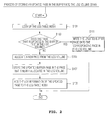
- FIG. 2 shows the process of storing an updated page in the buffer 121 into the log volume 30 when the updated page is selected as a victim during a transaction by the buffer replacement algorithm and should be written on the disk.
- the buffer management unit 120 determines whether the page that is updated in the buffer exists in the log volume 30 at step S103 by looking up the log table index 122 at step S101.
- the buffer management unit 120 allocates a new page in the log volume at step S105, stores the updated buffer page in the allocated page at step S107, and adds the log information of the updated page into the log table index 122 at step S109.
- the 'log information' is used for indexing the positions of the pages stored in the log volume, as described above.
- the buffer management unit 120 writes the updated buffer page onto the corresponding page in the log volume 30 at step S111.
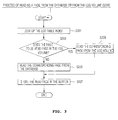
- FIG. 3 shows the process of reading a page that does not exist in the buffer 121 from the database or from the log volume during a transaction.
- the buffer management unit 120 looks up the log table index 122 at step S201, and then determines whether a page to be read exists in the log volume 30 or not at step S203.
- the buffer management unit 120 reads the corresponding page from the database 20 at step S205 and stores the read page in the buffer 121 at step S207.
- the buffer management unit 120 reads the corresponding page from the log volume 30 at step S209 and stores the read page in the buffer 121 at step S207.
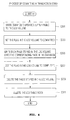
- FIG. 4 is a schematic flowchart showing the process of committing a transaction. It is preferred that this process be performed after the process S100 and/or the process S200.
- the recovery management unit 130 writes (swaps out) updated buffer pages to the log volume at step S301, sets the flag (onCommitFlag), which indicates that the transaction has been committed, in the log volume 30 to committed in compliance with a transaction commit command from the transaction management unit 110 at step S303.
- the recovery management unit 130 writes each page stored in the log volume onto the corresponding page in the database 20 at step S305.
- the recovery management unit 130 sets the flag to completed , which has been set to committed at step S303, at step S307, deletes all pages stored in the log volume at step S309, and deletes the log table index at step S311.
- FIG. 5 is a schematic flowchart showing the process of aborting a transaction.
- the recovery management unit 130 deletes the updated pages in the buffer 121 at step S401 and also deletes the pages stored in the log volume 30 at step S403.
- the recovery management unit 130 deletes corresponding entries in the log table index 121 in the buffer management unit 120 at step S405.
- This process is characterized in that it does not need an undo process that is typically performed along with the process of aborting a transaction.
- FIG. 6 is a schematic flowchart showing the process of restarting a system. This process is the recovery process when a system crashed upon failure.
- the recovery management unit 130 reads the flag value in the log volume at step S501, and determines whether the flag onCommitFlag in the log volume 30 is set to committed at step S503.
- the recovery management unit 130 writes each page stored in the log volume 30 onto the corresponding page in the database at step S505. Because the fact that the flag is set to committed means that a system failure has occurred while writing the pages in the log volume onto the pages in the database 20, the database 20 should again be updated with the pages in the log volume 30.
- the recovery management unit 130 sets the flag to completed at step S507 and deletes the pages stored in the log volume 30 at step S509, thereby completing the recovery process based on the process of restarting the system.
- step S509 the recovery management unit 130 performs the step S509 and terminates the recovery process.
- this step corresponds to the case in which a system failure occurs after the flag is set to completed
- deleting the log table index is needless because the log table index in the memory was automatically deleted when the process was terminated by the system failure.
- a deferred update file does not need to be accessed additionally for query processing, unlike the prior art deferred update technique, and the system efficiency increases. Furthermore, according to the present invention, even when the data in the database is updated, the positions of the updated pages do not change, unlike those in the prior art shadow page technique. Accordingly, disk access performance is not degraded because the clustering of data that are logically related to each other is preserved.
Landscapes
- Engineering & Computer Science (AREA)
- Theoretical Computer Science (AREA)
- Physics & Mathematics (AREA)
- General Engineering & Computer Science (AREA)
- General Physics & Mathematics (AREA)
- Quality & Reliability (AREA)
- Data Mining & Analysis (AREA)
- Databases & Information Systems (AREA)
- Information Retrieval, Db Structures And Fs Structures Therefor (AREA)
Abstract
Disclosed herein is a recovery method in a storage system that integrates shadow page and deferred update techniques. For update operations that occur during a transaction, update of a page in a buffer is not immediately reflected to a database, but is deferred until the transaction is committed. Instead, an updated buffer page is stored in a log volume in the unit of a page. When reading a page that does not exist in the buffer from the disk, the up-to-date page from the database or from the log volume is read. Here, a log table index is used to determine whether the up-to-date page exists in the database or in the log volume and to identify the position of the page stored in the log volume if the up-to-date page exists in the log volume. The invention has the following excellent advantages. It is simple and efficient because the deferred update file does not have to be additionally accessed for correct query processing. Besides, there is no performance degradation because the position of an updated page in the database is not changed, and thus, the original clustering of logically related data is preserved.
Description
- The present invention relates to a recovery method using the combination of deferred-update and shadow page schemes and a storage system including the method.
- Recently, as the computer technology advances, the amount of data that are being stored and managed in the digital form is increasing rapidly. Accordingly, database management systems that are capable of storing and managing data efficiently are employed in various fields.
- A 'storage system' is a core software corresponding to a low-level component of a database management system. It has a direct and important influence on the performance of database application programs. Such a storage system is responsible for the functions of storing and managing data in a disk, the transaction function, the concurrency control function, and the crash recovery function. Among these functions, the crash recovery function is used to prevent loss of data consistency that may occur due to various errors in the computer system.
- There are two frequently used techniques for crash recovery in a storage system: 1) a deferred update technique and 2) a shadow page technique.
- In the deferred update technique, storing a page in the buffer (a buffer page) that has been updated into the database on the disk is deferred until a transaction is committed. Here, when an updated buffer page needs to be stored in the disk, the updated buffer page is first stored in a deferred update file on the disk until a transaction is committed. Thus, the process of aborting a transaction is performed in such a way as to delete the deferred update file without an additional undo process because updated buffer pages have not been reflected in the database.
- The process of committing a transaction is as follows. The updated buffer pages on a memory are first written (swapped out) to the deferred update file, and then, the updated pages stored in the deferred update file are reflected into the database. This two-step process is for being able to redo a transaction when a system failure occurs after storing the updated buffer pages into the deferred update file.
- The deferred update technique has an advantage that disk access performance is not aggravated since the original location of the updated page in the database is not changed, and thus, logically related data remain clustered. However, it has a disadvantage that, since the updated data are not immediately reflected in the database, queries are executed on the database in which the updated data have not been reflected, and thus, the query results could be incorrect. This problem can be solved by designing a system to process a query in such a way as to access not only the database but also the deferred update file when the query is executed. However, this solution increases the complexity of the system because it must additionally access the deferred update file, as described above.
- On the other hand, in the shadow page technique, an updated buffer page is directly stored into the database on the disk. Here, the original page (the page before being updated) in the database is left as a shadow page, and the updated buffer page is instead stored in the page that is newly allocated in the database. This technique uses two page tables - the shadow page table and the current page table - in order to manage pages in the database. Here, the page table is an index that returns the position of the page to be read in the disk. The process of starting a transaction (BEGIN) is performed by duplicating the page table (the original page table is called 'the shadow page table' and the duplicated page table 'the current page table'). When an updated buffer page needs to be stored in the disk during a transaction, the updated buffer page is stored in the page that is newly allocated in the database, and the current page table points to the newly allocated page. Thereafter, when reading a page that does not exist in the buffer from the database, a page that has been updated recently is accessed by using the current page table. The process of aborting a transaction (ABORT) is performed by deleting the updated pages and the current page table, and then restoring to the shadow page table. The process of committing a transaction (COMMIT) is performed by swapping out the updated buffer pages to the database and then making the current page table to be the shadow page table.
- As described above, in the shadow page technique, the updated buffer page is stored in the database. Accordingly, the shadow page technique has less system complexity compared with the deferred update technique because it processes a query considering only the database (i.e., without considering the deferred update file as well) when the query is executed. However, when a page in the database is updated, the page is stored at a new position, rather than at the position of the original page. Thus, disk access performance is degraded because the clustering of logically related data is compromised.
- The present invention has been made keeping in mind the above problems occurring in the prior art. The objectives of the present invention is to provide a crash recovery method in a storage system that minimizes the disadvantages of the prior arts - deferred update and shadow page techniques - and adopts only the advantages of these techniques and to provide storage system using the recovery method.
- In order to accomplish the above objectives, the present invention provides a storage system including means for carrying out a recovery method, the storage system comprising: a transaction management unit for managing transactions; a buffer management unit for storing an updated page in the buffer into the log volume and reading a page, which has been updated during the transaction, from the log volume and reading a page, which has not been updated during the transaction, from the database; and a recovery management unit for performing a process of committing a transaction, a process of aborting a transaction, and a process of restarting the system in compliance with a command from the transaction management unit. Here, the buffer management unit advantageously manages a log table index to identify the locations of the pages stored in the log volume.
- Preferably, a process of reading a page from the disk during a transaction is performed in such a way that the buffer management unit reads the page from the log volume into the buffer if the page exists in the log volume, and reads the page from the database into the buffer if the page does not exist in the log volume.
- Preferably, a process of storing an updated buffer page into the disk during a transaction is performed in such a way that the buffer management unit stores an updated buffer page in the corresponding page in the log volume if the page exists in the log volume, and stores the updated buffer page in a page that is newly allocated in the log volume if the page does not exist in the log volume.
- Preferably, a process of committing a transaction is performed in such a way that the recovery management unit writes (swaps out) the updated buffer pages to the log volume, sets a flag in the log volume to committed, and then, writes each page stored in the log volume into the corresponding page in the database, sets the flag in the log volume to completed, and deletes the pages stored in the log volume and the log table index.
- Preferably, a process of aborting a transaction is performed in such a way that the recovery management unit deletes the updated pages in the buffer, the pages stored in the log volume, and the log table index.
- Preferably, a process of restarting a transaction is performed in such a way that the recovery management unit writes each page stored in the log volume into the corresponding page in the database, sets the flag in the log volume to completed, and deletes the pages stored in the log volume if the flag in the log volume is set to commited; and deletes the pages stored in the log volume if the flag in the log volume is set to completed.
- The above and other objectives, features and advantages of the present invention will be more clearly understood from the following detailed description in conjunction with the accompanying drawings, in which:
-
FIG. 1 is the schematic diagram showing the configuration of a storage system using the recovery method according to a preferred embodiment of the present invention; -
FIG. 2 is the schematic flowchart showing a process of storing an updated buffer page into a log volume according to the preferred embodiment of the present invention; -
FIG. 3 is the schematic flowchart showing a process of reading a page that does not exist in the buffer from a database or from a log volume according to the preferred embodiment of the present invention; -
FIG. 4 is the schematic flowchart showing a process of committing a transaction according to the preferred embodiment of the present invention; -
FIG. 5 is the schematic flowchart showing a process of aborting a transaction according to the preferred embodiment of the present invention; and -
FIG. 6 is the schematic flowchart showing a process of restarting a system according to the preferred embodiment of the present invention. - Detailed characteristics and merits of the invention will become more apparent from the following detailed description taken in conjunction with the accompanying drawings. It should be noted that detailed descriptions of well-known functions and constructions related to the invention will be omitted if they are considered to unnecessarily blur the gist of the present invention.
-
FIG. 1 is a schematic diagram showing the configuration of a storage system using the recovery method according to a preferred embodiment of the present invention. - As shown in
FIG. 1 , thetransaction management unit 110 of thestorage system 100 manages various transactions. Here, the transactions may be deemed to be generated by anapplication program 10. -
Buffer management unit 120 is a configuration for realizing file operations of a transaction. Thebuffer management unit 120 basically reads a page (data) P from thedatabase 20 to abuffer 121. As will be described later, thebuffer management unit 120 according to the present invention temporarily stores the updated buffer pages in thelog volume 30, rather than storing the updated buffer pages in thedatabase 20, and stores and manages alog table index 122 in order to manage the log information in thebuffer management unit 120. Here, the 'log information' is the information to identify the positions of the pages stored in the log volume. - The above-described log table index is similar to the page table in the shadow page technique, which has been described in conjunction with the prior art. However, the page table used in the prior art shadow page technique manages information of all the pages, while the page table index used in the present embodiment manages the information of only the updated pages. This means that, from the viewpoint of system efficiency, the overhead of managing the log table index is considerably lower than that of managing the page table in the conventional shadow page technique.
- The
log table index 122 can be referenced by thebuffer management unit 120 during a transaction. In particular, when thebuffer management unit 120 reads a page to thebuffer 121 as described above, a page that has been registered in the log table index 122 (i.e., the page that is updated during a transaction) is read from thelog volume 30, and a page that has not been registered in thelog table index 122 is read from thedatabase 20. Accordingly, the pages in thebuffer 121 are always up-to-date. - The flow in which updated buffer pages are temporarily stored in the
log volume 30, rather than being stored in thedatabase 20, as described above is similar to that of the prior art deferred update technique. However, in the prior art deferred update technique, not only the database but also the deferred update file must be accessed when a query is executed. Thus, the complexity of the system is high and the system efficiency is low. - Meanwhile, the
recovery management unit 130 performs a function of updating thedatabase 20 with pages that are stored in thelog volume 30, in compliance with a command from thetransaction management unit 110. In particular, when a transaction is committed, the recovery management unit writes (swaps out) updated buffer pages to the log volume, sets the flag in the log volume to committed, writes each page stored in thelog volume 30 onto the corresponding page in thedatabase 20, set the flag in the log volume to completed, and deletes all pages stored in the log volume and the log table index. - As described above, because the pages stored in the
log volume 30 are written onto the corresponding pages in thedatabase 20 when a transaction is committed, logically related data remain clustered. - The
recovery management unit 130 sets the flag in thelog volume 30 to committed in order to indicate that a transaction has been 'committed' when a transaction is committed and sets the flag in the log volume to completed in order to indicate that a transaction has been 'completed' when the transaction is completed, as follows: - 1. When the transaction is committed: onCommitFlag = committed; and
- 2. When the transaction is completed: onCommitFlag = completed
- The flag illustrated above is used for guaranteeing that recovery is normally performed even when a system failure repeatedly occurs during the process of restarting the system. This is described in greater detail below.
- A flow that is related to the recovery in the
storage system 100 implementing the recovery method according to the present embodiment is described below with reference to a plurality of flowcharts. -
FIG. 2 shows the process of storing an updated page in thebuffer 121 into thelog volume 30 when the updated page is selected as a victim during a transaction by the buffer replacement algorithm and should be written on the disk. - As shown in
FIG. 2 , thebuffer management unit 120 determines whether the page that is updated in the buffer exists in thelog volume 30 at step S103 by looking up thelog table index 122 at step S101. - If, as the result of the determination at step S103, the page that is updated in the buffer does not exist in the log volume 30 (NO), the
buffer management unit 120 allocates a new page in the log volume at step S105, stores the updated buffer page in the allocated page at step S107, and adds the log information of the updated page into thelog table index 122 at step S109. Here, the 'log information' is used for indexing the positions of the pages stored in the log volume, as described above. - On the other hand, if, as the result of the determination at step S103, the page that is updated in the buffer exists in the log volume 30 (YES), the
buffer management unit 120 writes the updated buffer page onto the corresponding page in thelog volume 30 at step S111. -
FIG. 3 shows the process of reading a page that does not exist in thebuffer 121 from the database or from the log volume during a transaction. - As shown in
FIG. 3 , thebuffer management unit 120 looks up thelog table index 122 at step S201, and then determines whether a page to be read exists in thelog volume 30 or not at step S203. - If, as the result of the determination at step S203, the page does not exist in the log volume, the
buffer management unit 120 reads the corresponding page from thedatabase 20 at step S205 and stores the read page in thebuffer 121 at step S207. - On the other hand, if, as the result of the determination at step S203, the page exists in the log volume, the
buffer management unit 120 reads the corresponding page from thelog volume 30 at step S209 and stores the read page in thebuffer 121 at step S207. -
FIG. 4 is a schematic flowchart showing the process of committing a transaction. It is preferred that this process be performed after the process S100 and/or the process S200. - The
recovery management unit 130 writes (swaps out) updated buffer pages to the log volume at step S301, sets the flag (onCommitFlag), which indicates that the transaction has been committed, in thelog volume 30 to committed in compliance with a transaction commit command from thetransaction management unit 110 at step S303. - Thereafter, the
recovery management unit 130 writes each page stored in the log volume onto the corresponding page in thedatabase 20 at step S305. - After the step S305 is performed, the
recovery management unit 130 sets the flag to completed, which has been set to committed at step S303, at step S307, deletes all pages stored in the log volume at step S309, and deletes the log table index at step S311. -
FIG. 5 is a schematic flowchart showing the process of aborting a transaction. - Because updated pages in the
buffer 121 have not been reflected in thedatabase 20, therecovery management unit 130 deletes the updated pages in thebuffer 121 at step S401 and also deletes the pages stored in thelog volume 30 at step S403. - Thereafter, the
recovery management unit 130 deletes corresponding entries in thelog table index 121 in thebuffer management unit 120 at step S405. - This process is characterized in that it does not need an undo process that is typically performed along with the process of aborting a transaction.
-
FIG. 6 is a schematic flowchart showing the process of restarting a system. This process is the recovery process when a system crashed upon failure. - The
recovery management unit 130 reads the flag value in the log volume at step S501, and determines whether the flag onCommitFlag in thelog volume 30 is set to committed at step S503. - If, as the result of the determination at step S503, the flag onCommitFlag in the
log volume 30 is set to committed, therecovery management unit 130 writes each page stored in thelog volume 30 onto the corresponding page in the database at step S505. Because the fact that the flag is set to committed means that a system failure has occurred while writing the pages in the log volume onto the pages in thedatabase 20, thedatabase 20 should again be updated with the pages in thelog volume 30. - After the step S505 is performed, the
recovery management unit 130 sets the flag to completed at step S507 and deletes the pages stored in thelog volume 30 at step S509, thereby completing the recovery process based on the process of restarting the system. - On the other hand, if, as the result of the determination at step S503, the flag onCommitFlag in the
log volume 30 is not set to committed, that is, the flag onCommitFlag is set to completed, therecovery management unit 130 performs the step S509 and terminates the recovery process. For reference, this step corresponds to the case in which a system failure occurs after the flag is set to completed - In the process of restarting the system, deleting the log table index is needless because the log table index in the memory was automatically deleted when the process was terminated by the system failure.
- According to the present invention, a deferred update file does not need to be accessed additionally for query processing, unlike the prior art deferred update technique, and the system efficiency increases. Furthermore, according to the present invention, even when the data in the database is updated, the positions of the updated pages do not change, unlike those in the prior art shadow page technique. Accordingly, disk access performance is not degraded because the clustering of data that are logically related to each other is preserved.
- Although the preferred embodiments of the present invention have been disclosed for illustrative purposes, those skilled in the art will appreciate that various modifications, additions and substitutions are possible without departing from the scope and spirit of the invention as disclosed in the accompanying claims.
Claims (14)
- A storage system including a means for carrying out a recovery method, the storage system comprising:a transaction management unit for managing transactions;a buffer management unit for storing an updated page in a buffer into a log volume and reading a page, which has been updated during a transaction, from the log volume and reading a page, which has not been updated during a transaction, from a database; anda recovery management unit for performing a process of committing a transaction, a process of aborting a transaction, and a process of restarting the system in compliance with a command from the transaction management unit.
- The storage system as set forth in claim 1, wherein the buffer management unit manages the "log information" of the pages stored in the log volume by using a log table index.
- The storage system as set forth in claim 2, wherein the "log information" is the information for indexing the locations of pages stored in the log volume.
- The storage system as set forth in any one of claims 2 and 3, wherein:the buffer management unit looks up the log table index and writes the updated buffer page onto the corresponding page in the log volume if the page exists in the log volume; andthe buffer management unit looks up the log table index and stores the updated buffer page in a page that is newly allocated in the log volume, and adds the log information of the updated page to the log table index if the page does not exist in the log volume.
- The storage system as set forth in any one of claims 2 and 3, wherein:the buffer management unit looks up the log table index, reads the page from the log volume, and stores the read page in the buffer if the page exists in the log volume; andthe buffer management unit looks up the log table index, reads the page from the database, and stores the read page in the buffer if the page does not exist in the log volume.
- The storage system as set forth in any one of claims 2 and 3, wherein the recovery management unit performs a process of committing a transaction in such a way as to write (swap out) updated buffer pages to the log volume, set a flag in the log volume to committed, write each page stored in the log volume onto the corresponding page in the database, set the flag to completed, and delete the pages stored in the log volume and the log table index.
- The storage system as set forth in any one of claims 2 and 3, wherein the recovery management unit performs a process of aborting a transaction in such a way as to delete the updated pages in the buffer, the pages stored in the log volume, and the log table index.
- The storage system as set forth in claim 1, wherein:the recovery management unit performs a process of restarting a system in such a way as to write each page stored in the log volume onto a corresponding page in the database, set a flag in the log volume to completed, and delete the pages stored in the log volume if the flag in the log volume is set to committed; and delete the pages stored in the log volume if the flag in the log volume is set to completed
- A recovery method, comprising:the first process of storing an updated buffer page, which has been updated in a buffer, into a log volume instead of storing the page in a database when executing a transaction; andthe second process of reading a page that has been updated from the log volume and a page that has not been updated during the transaction from the database into the buffer when executing a transaction.
- The recovery method as set forth in claim 9, wherein the first process comprises:looking up a log table index and writing the updated buffer page onto the corresponding page in the log volume if the page exists in the log volume; andlooking up the log table index, storing the updated buffer page in the page that is newly allocated in the log volume, and adding the log information of the updated page to the log table index if the page does not exist in the log volume.
- The recovery method as set forth in claim 9, wherein the first process comprises:looking up a log table index, reading the page from the log volume, and storing the read page in the buffer if the page exists in the log volume; andlooking up the log table index, reading the page from the database, and storing the read page in the buffer if the page does not exist in the log volume.
- The database recovery method as set forth in claim 9, further comprising the process of committing a transaction in such a way as to write (swap out) updated buffer pages to the log volume, set a flag in the log volume to committed, write each page stored in the log volume onto the corresponding page in the database, set the flag to completed, and delete the pages stored in the log volume and a log table index identifying the location of the latter pages in the log volume.
- The recovery method as set forth in claim 9, further comprising the process of aborting a transaction in such a way as to delete the updated pages in the buffer, the pages stored in the log volume, and a log table index identifying the location of the latter pages in the log volume.
- The recovery method as set forth in claim 9, further comprising the process of restarting the system in such a way as to write each page stored in the log volume onto the corresponding page in the database, set the flag to completed, and delete the pages stored in the log volume if the flag in the log volume is set to committed; and delete the pages stored in the log volume if the flag in the log volume is set to completed.
Applications Claiming Priority (1)
| Application Number | Priority Date | Filing Date | Title |
|---|---|---|---|
| KR20070135981 | 2007-12-24 |
Publications (1)
| Publication Number | Publication Date |
|---|---|
| EP2079022A1 true EP2079022A1 (en) | 2009-07-15 |
Family
ID=40404895
Family Applications (1)
| Application Number | Title | Priority Date | Filing Date |
|---|---|---|---|
| EP08170234A Withdrawn EP2079022A1 (en) | 2007-12-24 | 2008-11-28 | A shadow-page deferred-update recovery technique integrating shadow page and deferred update techniques in a storage system |
Country Status (2)
| Country | Link |
|---|---|
| US (1) | US8108356B2 (en) |
| EP (1) | EP2079022A1 (en) |
Cited By (2)
| Publication number | Priority date | Publication date | Assignee | Title |
|---|---|---|---|---|
| JP2014164311A (en) * | 2013-02-21 | 2014-09-08 | Nec Corp | Transaction processing apparatus, transaction processing system, transaction processing method, and program |
| US9171023B2 (en) | 2011-09-22 | 2015-10-27 | Retail Logistics Excellence—Relex Oy | Mechanism for updates in a database engine |
Families Citing this family (8)
| Publication number | Priority date | Publication date | Assignee | Title |
|---|---|---|---|---|
| US8843449B2 (en) | 2009-06-16 | 2014-09-23 | Bmc Software, Inc. | Unobtrusive copies of actively used compressed indices |
| JP2011053995A (en) * | 2009-09-03 | 2011-03-17 | Hitachi Ltd | Data processing control method and computer system |
| KR101587995B1 (en) * | 2009-10-28 | 2016-01-22 | 삼성전자주식회사 | Adaptive logging device and method |
| US9348861B2 (en) | 2013-09-10 | 2016-05-24 | International Business Machines Corporation | Capturing change data of deferred updates |
| US9811549B2 (en) * | 2014-11-25 | 2017-11-07 | Sap Se | Applying a database transaction log record directly to a database table container |
| US10268502B2 (en) * | 2017-06-29 | 2019-04-23 | Intel Corporation | Methods and apparatus to perform atomic transactions in nonvolatile memory under hardware transactional memory |
| US10983876B2 (en) | 2018-03-29 | 2021-04-20 | Seagate Technology Llc | Node management of pending and unstable operations |
| WO2022224451A1 (en) * | 2021-04-23 | 2022-10-27 | 株式会社東芝 | Management device, database system, management method, and program |
Citations (1)
| Publication number | Priority date | Publication date | Assignee | Title |
|---|---|---|---|---|
| US7257690B1 (en) * | 2004-10-15 | 2007-08-14 | Veritas Operating Corporation | Log-structured temporal shadow store |
Family Cites Families (22)
| Publication number | Priority date | Publication date | Assignee | Title |
|---|---|---|---|---|
| US4945474A (en) * | 1988-04-08 | 1990-07-31 | Internatinal Business Machines Corporation | Method for restoring a database after I/O error employing write-ahead logging protocols |
| US5280611A (en) * | 1991-11-08 | 1994-01-18 | International Business Machines Corporation | Method for managing database recovery from failure of a shared store in a system including a plurality of transaction-based systems of the write-ahead logging type |
| US5455946A (en) * | 1993-05-21 | 1995-10-03 | International Business Machines Corporation | Method and means for archiving modifiable pages in a log based transaction management system |
| JPH07175700A (en) * | 1993-12-20 | 1995-07-14 | Fujitsu Ltd | Database management method |
| US5870758A (en) * | 1996-03-11 | 1999-02-09 | Oracle Corporation | Method and apparatus for providing isolation levels in a database system |
| US6535997B1 (en) * | 1999-05-19 | 2003-03-18 | International Business Machines Corporation | Data integrity in smartcard transactions |
| US6856993B1 (en) * | 2000-03-30 | 2005-02-15 | Microsoft Corporation | Transactional file system |
| US6801921B2 (en) * | 2000-09-08 | 2004-10-05 | Hitachi, Ltd. | Method and system for managing multiple database storage units |
| US6820099B1 (en) * | 2001-04-13 | 2004-11-16 | Lsi Logic Corporation | Instantaneous data updating using snapshot volumes |
| US6839819B2 (en) * | 2001-12-28 | 2005-01-04 | Storage Technology Corporation | Data management appliance |
| CA2370601A1 (en) * | 2002-02-05 | 2003-08-05 | Ibm Canada Limited-Ibm Canada Limitee | Optimizing log usage for temporary objects |
| US7555504B2 (en) * | 2003-09-23 | 2009-06-30 | Emc Corporation | Maintenance of a file version set including read-only and read-write snapshot copies of a production file |
| US7139851B2 (en) * | 2004-02-25 | 2006-11-21 | Hitachi, Ltd. | Method and apparatus for re-synchronizing mirroring pair with data consistency |
| US7143120B2 (en) * | 2004-05-03 | 2006-11-28 | Microsoft Corporation | Systems and methods for automated maintenance and repair of database and file systems |
| US7490084B2 (en) * | 2004-09-24 | 2009-02-10 | Oracle Corporation | Deferred incorporation of updates for spatial indexes |
| US7440979B2 (en) * | 2005-03-30 | 2008-10-21 | Sap Ag | Snapshots for instant backup in a database management system |
| US7716171B2 (en) * | 2005-08-18 | 2010-05-11 | Emc Corporation | Snapshot indexing |
| US7962709B2 (en) * | 2005-12-19 | 2011-06-14 | Commvault Systems, Inc. | Network redirector systems and methods for performing data replication |
| WO2007075587A2 (en) * | 2005-12-19 | 2007-07-05 | Commvault Systems, Inc. | Systems and methods for performing data replication |
| KR100781515B1 (en) * | 2006-01-10 | 2007-12-03 | 삼성전자주식회사 | Log Information Management System and Method for Transaction Processing |
| JP4940730B2 (en) * | 2006-03-31 | 2012-05-30 | 富士通株式会社 | Database system operation method, database system, database device, and backup program |
| KR100862661B1 (en) * | 2006-11-16 | 2008-10-10 | 삼성전자주식회사 | Delayed logging method and device |
-
2008
- 2008-09-10 US US12/208,014 patent/US8108356B2/en not_active Expired - Fee Related
- 2008-11-28 EP EP08170234A patent/EP2079022A1/en not_active Withdrawn
Patent Citations (1)
| Publication number | Priority date | Publication date | Assignee | Title |
|---|---|---|---|---|
| US7257690B1 (en) * | 2004-10-15 | 2007-08-14 | Veritas Operating Corporation | Log-structured temporal shadow store |
Non-Patent Citations (2)
| Title |
|---|
| GRAY JIM ET AL: "Transaction Processing: Concepts and Techniques", TRANSACTION PROCESSING: CONCEPTS AND TECHNIQUES, XX, XX, 1 January 1900 (1900-01-01), pages 724 - 732, XP002194027 * |
| KENT J ET AL: "OPTIMIZING SHADOW RECOVERY ALGORITHMS", IEEE TRANSACTIONS ON SOFTWARE ENGINEERING, IEEE SERVICE CENTER, LOS ALAMITOS, CA, US, vol. 14, no. 2, 1 February 1988 (1988-02-01), pages 155 - 168, XP000743793, ISSN: 0098-5589 * |
Cited By (2)
| Publication number | Priority date | Publication date | Assignee | Title |
|---|---|---|---|---|
| US9171023B2 (en) | 2011-09-22 | 2015-10-27 | Retail Logistics Excellence—Relex Oy | Mechanism for updates in a database engine |
| JP2014164311A (en) * | 2013-02-21 | 2014-09-08 | Nec Corp | Transaction processing apparatus, transaction processing system, transaction processing method, and program |
Also Published As
| Publication number | Publication date |
|---|---|
| US20090164524A1 (en) | 2009-06-25 |
| US8108356B2 (en) | 2012-01-31 |
Similar Documents
| Publication | Publication Date | Title |
|---|---|---|
| US8108356B2 (en) | Method for recovering data in a storage system | |
| US7363540B2 (en) | Transaction-safe FAT file system improvements | |
| US6732123B1 (en) | Database recovery to any point in time in an online environment utilizing disaster recovery technology | |
| US9058351B2 (en) | Apparatus and method for read optimized bulk data storage | |
| US6519614B1 (en) | Transaction processing system using efficient file update processing and recovery processing | |
| US5287496A (en) | Dynamic, finite versioning for concurrent transaction and query processing | |
| US7174420B2 (en) | Transaction-safe FAT file system | |
| US6612490B1 (en) | Extended card file system | |
| KR100862661B1 (en) | Delayed logging method and device | |
| US10191851B2 (en) | Method for distributed transaction processing in flash memory | |
| JPH0887510A (en) | Database management method | |
| US7240172B2 (en) | Snapshot by deferred propagation | |
| CN1043094C (en) | A method for optimizing memory space in a data base | |
| JPH0683677A (en) | Method and system for increment time-zero backup copy of data | |
| JPH0644010A (en) | Method and system for polling under sub-file in time zero-backup-copy-process | |
| JP2003513357A (en) | Method and apparatus for performing atomic updates using a logical flash memory device | |
| CN113220490A (en) | Transaction persistence method and system for asynchronous write-back persistent memory | |
| KR20110046118A (en) | Adaptive Logging Device and Method | |
| CN118092810A (en) | Method and device for realizing solid state disk snapshot, computer equipment and storage medium | |
| JPH1031604A (en) | Shared memory system and database system | |
| JPH03271841A (en) | Recovery system for data base | |
| JPS62297948A (en) | Database failure recovery method | |
| CN114817138A (en) | Memory persistence method and system | |
| KR20070069295A (en) | Implementation method of FAT file system with journaling applied | |
| JPH0823840B2 (en) | Method and apparatus for updating database |
Legal Events
| Date | Code | Title | Description |
|---|---|---|---|
| PUAI | Public reference made under article 153(3) epc to a published international application that has entered the european phase |
Free format text: ORIGINAL CODE: 0009012 |
|
| AK | Designated contracting states |
Kind code of ref document: A1 Designated state(s): AT BE BG CH CY CZ DE DK EE ES FI FR GB GR HR HU IE IS IT LI LT LU LV MC MT NL NO PL PT RO SE SI SK TR |
|
| AX | Request for extension of the european patent |
Extension state: AL BA MK RS |
|
| AKX | Designation fees paid | ||
| REG | Reference to a national code |
Ref country code: DE Ref legal event code: 8566 |
|
| STAA | Information on the status of an ep patent application or granted ep patent |
Free format text: STATUS: THE APPLICATION IS DEEMED TO BE WITHDRAWN |
|
| 18D | Application deemed to be withdrawn |
Effective date: 20100116 |