EP2076584B1 - Genetic cluster of strains of streptococcus thermophilus having appropriate acidifying and texturizing properties for dairy fermentations - Google Patents
Genetic cluster of strains of streptococcus thermophilus having appropriate acidifying and texturizing properties for dairy fermentations Download PDFInfo
- Publication number
- EP2076584B1 EP2076584B1 EP07820845A EP07820845A EP2076584B1 EP 2076584 B1 EP2076584 B1 EP 2076584B1 EP 07820845 A EP07820845 A EP 07820845A EP 07820845 A EP07820845 A EP 07820845A EP 2076584 B1 EP2076584 B1 EP 2076584B1
- Authority
- EP
- European Patent Office
- Prior art keywords
- strain
- strains
- product
- cncm
- thermophilus
- Prior art date
- Legal status (The legal status is an assumption and is not a legal conclusion. Google has not performed a legal analysis and makes no representation as to the accuracy of the status listed.)
- Not-in-force
Links
Images


Classifications
-
- A—HUMAN NECESSITIES
- A23—FOODS OR FOODSTUFFS; TREATMENT THEREOF, NOT COVERED BY OTHER CLASSES
- A23C—DAIRY PRODUCTS, e.g. MILK, BUTTER OR CHEESE; MILK OR CHEESE SUBSTITUTES; PREPARATION THEREOF
- A23C9/00—Milk preparations; Milk powder or milk powder preparations
- A23C9/12—Fermented milk preparations; Treatment using microorganisms or enzymes
- A23C9/123—Fermented milk preparations; Treatment using microorganisms or enzymes using only microorganisms of the genus lactobacteriaceae; Yoghurt
- A23C9/1238—Fermented milk preparations; Treatment using microorganisms or enzymes using only microorganisms of the genus lactobacteriaceae; Yoghurt using specific L. bulgaricus or S. thermophilus microorganisms; using entrapped or encapsulated yoghurt bacteria; Physical or chemical treatment of L. bulgaricus or S. thermophilus cultures; Fermentation only with L. bulgaricus or only with S. thermophilus
-
- C—CHEMISTRY; METALLURGY
- C12—BIOCHEMISTRY; BEER; SPIRITS; WINE; VINEGAR; MICROBIOLOGY; ENZYMOLOGY; MUTATION OR GENETIC ENGINEERING
- C12N—MICROORGANISMS OR ENZYMES; COMPOSITIONS THEREOF; PROPAGATING, PRESERVING, OR MAINTAINING MICROORGANISMS; MUTATION OR GENETIC ENGINEERING; CULTURE MEDIA
- C12N1/00—Microorganisms; Compositions thereof; Processes of propagating, maintaining or preserving microorganisms or compositions thereof; Processes of preparing or isolating a composition containing a microorganism; Culture media therefor
- C12N1/20—Bacteria; Culture media therefor
-
- C—CHEMISTRY; METALLURGY
- C12—BIOCHEMISTRY; BEER; SPIRITS; WINE; VINEGAR; MICROBIOLOGY; ENZYMOLOGY; MUTATION OR GENETIC ENGINEERING
- C12N—MICROORGANISMS OR ENZYMES; COMPOSITIONS THEREOF; PROPAGATING, PRESERVING, OR MAINTAINING MICROORGANISMS; MUTATION OR GENETIC ENGINEERING; CULTURE MEDIA
- C12N1/00—Microorganisms; Compositions thereof; Processes of propagating, maintaining or preserving microorganisms or compositions thereof; Processes of preparing or isolating a composition containing a microorganism; Culture media therefor
- C12N1/20—Bacteria; Culture media therefor
- C12N1/205—Bacterial isolates
-
- C—CHEMISTRY; METALLURGY
- C12—BIOCHEMISTRY; BEER; SPIRITS; WINE; VINEGAR; MICROBIOLOGY; ENZYMOLOGY; MUTATION OR GENETIC ENGINEERING
- C12N—MICROORGANISMS OR ENZYMES; COMPOSITIONS THEREOF; PROPAGATING, PRESERVING, OR MAINTAINING MICROORGANISMS; MUTATION OR GENETIC ENGINEERING; CULTURE MEDIA
- C12N15/00—Mutation or genetic engineering; DNA or RNA concerning genetic engineering, vectors, e.g. plasmids, or their isolation, preparation or purification; Use of hosts therefor
- C12N15/09—Recombinant DNA-technology
- C12N15/11—DNA or RNA fragments; Modified forms thereof; Non-coding nucleic acids having a biological activity
- C12N15/52—Genes encoding for enzymes or proenzymes
-
- C—CHEMISTRY; METALLURGY
- C12—BIOCHEMISTRY; BEER; SPIRITS; WINE; VINEGAR; MICROBIOLOGY; ENZYMOLOGY; MUTATION OR GENETIC ENGINEERING
- C12R—INDEXING SCHEME ASSOCIATED WITH SUBCLASSES C12C - C12Q, RELATING TO MICROORGANISMS
- C12R2001/00—Microorganisms ; Processes using microorganisms
- C12R2001/01—Bacteria or Actinomycetales ; using bacteria or Actinomycetales
- C12R2001/46—Streptococcus ; Enterococcus; Lactococcus
Definitions
- the invention relates to a genetic cluster of strains of Streptococcus thermophilus ( S. thermophilus ) having appropriate acidifying and texturizing properties for dairy fermentations.
- Bacteriophages are viruses capable of attacking bacteria. During these viral attacks, the bacteriophages infect the bacterial culture, and multiply in order to finally destroy this culture.
- the technological impact on the milk processing industry (production of cheese, yogurt, fermented milk) of these bacteriophages is significant since they can cause a complete cessation of fermentation and therefore prevent the production of these milk-derived products.
- One way of combating the problems linked to the infection of the fermentations by bacteriophages is the use of strains having appropriate sensitivity spectra to the phages.
- producers of dairy ferments have developed strategies to combat the bacteriophages by constructing ferments constituted by several strains having distinct lysotypes, and using several of these ferments in rotation. It is clear that in order to be able to adopt this strategy it is important to possess a diversity of strains having the same functionalities (such as for example acidification, thickening power, flavouring etc.) but distinct lysotypes.
- S. thermophilus are used extensively alone or in combination with other bacteria for the production of fermented food products. They are included in particular in the formulation of the ferments used for producing yogurts. Strains of S. thermophilus are expected to participate in the formation of lactic curd by acidification of milk and in the development of the texture of the fermented product. A distinction is generally drawn between 4 groups of S. thermophilus based on these functional properties: 1) the non-texturixing and non-acidifying strains. 2) the non-texturizing and acidifying strains, 3) the texturizing and non-acidifying strains, and 4) the texturizing and acidifying strains.
- a texturizing strain is a strain making it possible to obtain fermented milks the gels of which can be described by their rheological properties.
- one of the problems which the invention proposes to resolve is to provide novel strains of S. thermophilus which have a lysotype distinct from the strains currently used, in particular strains which are acidifying and texturizing.
- the invention relates to the strains of S. thermophilus in a genetic cluster which have a lysotype distinct from that of the acidifying and texturizing strains of S. thermophilus currently used. Within this cluster novel acidifying and texturizing strains have been identified.
- the invention also describes a method making it possible to predict a strain's membership of a family of strains having identical or related lysotypes. This method analyzes the restriction polymorphism of the epsA-B-C-D region of the genome of S. thermophilus.
- the epsA-B-C-D region is meant the region of the chromosome of S. thermophilus overlapping the epsA to epsD genes of the eps locus.
- the DNA fragment corresponding to this region called the epsAD fragment, can be obtained by PCR reaction on the chromosomic DNA of S. thermophilus using the oligonucleotides of SEQ ID N°1 and SEQ ID N°2 as primers.
- a subject of the present invention is a strain of Streptococcus thermophilus the epsAD fragment of which, after digestion by the restriction enzymes Mnl I, Fok I and Hind III, has a restriction profile characterized by DNA fragments of 344 ⁇ 2 base pairs (bp), 341 ⁇ 2 bp. 305 ⁇ 2 bp, 299 ⁇ 2 bp, 277 ⁇ 2 bp, 210 ⁇ 2 bp, 160 ⁇ 2 bp, 142 ⁇ 2 bp, 100 ⁇ 2 bp, 79 ⁇ 2 bp, 75 ⁇ 2 bp, 66 ⁇ 2 bp, 42 ⁇ 2 bp, 23 ⁇ 2 bp and 9 ⁇ 2 bp.
- the restriction profile of the epsAD fragment is determined by standard sequencing of the epsAD fragment followed by in silico determination of the restriction profile.
- sequencing can be carried out with the CEQ8000 equipment (Beckman) and the in silico determination of the restriction profile can be carried out starting from the sequence of the epsAD fragment using the NEBcutter V2.0 tool accessible on the internet via the website http://tools.neb.com/.
- a strain according to the invention comprises a nucleotide sequence having 100% identity with the nucleotide sequence of SEQ ID N°4.
- a strain according to the invention comprises a nucleotide sequence having 100% identity with the nucleotide sequence of SEQ ID N°5.
- a strain according to the invention is texturizing and acidities rapidly.
- texturizing strain of Streptoccus thermophilus is meant a strain which produces fermented milks having, under the conditions described in the example, a viscosity greater than approximately 35 Pa.s, a thixotropic area of less than approximately 2000 Pa/s and/or a yield point of less than approximately 14 Pa.
- rapidly acidifying strain is meant a strain which under the conditions described in the example, has a Vm of less than -0.0100 upH/min.
- a strain according to the invention is the strain of Streptococcus thermophilus deposited on 14th June 2006 at the Collection Nationale de Cultures de Microorganismes under no. CNCM I-3617 or a mutant strain which is obtained from the latter.
- mutant strains typically in order to obtain such mutant strains, a person skilled in the art can use the usual mutagenesis techniques such as UV irradiation or exposure to mutagenic chemical products (ethyl-methane-sulphonate, nitrosoguanidine, nitrous acid etc.).
- mutagenesis techniques such as UV irradiation or exposure to mutagenic chemical products (ethyl-methane-sulphonate, nitrosoguanidine, nitrous acid etc.).
- a person skilled in the art starting from the restriction profiles described previously and/or from the sequences of SEQ ID N°4 and/or N°5, can identify the strains which belong to the same genetic cluster as the strain CNCM I-3617. Typically in order to do this, he can use PCR and/or hybridization and/or DNA sequencing techniques.
- a subject of the invention is also a bacterial composition comprising at least one strain according to the invention.
- bacterial composition is meant a mixture of different strains, in particular a ferment, or a leaven.
- the mixtures of preferred strains according to the invention are mixtures of Streptococcus thermophilus with other Streptococcus thermophilus, or mixtures of Streptococcus thermophilus with Lactobacillus delbrueckii subsp. bulgaricus, or mixtures of Streptococcus thermophilus with other Lactobacillus and/or with Bifidobacterium, or mixtures of Streptococcus thermophilus with Lactococcus, or mixtures of Streptococcus thermophilus with other strains of lactic bacteria and/or yeasts.
- a subject of the invention is also a manufacturing process for a food product, a food complement, a dietary supplement or a product with probiotic properties, comprising a stage in which a strain according to the invention is used.
- the food product, the food complement, the dietary supplement or the product with probiotic properties is a dairy product, a meat product, a cereal product, a drink, a foam or a powder.
- the food product, the food complement, the dietary supplement or the product with probiotic properties is a dairy product. It is for example a fermented milk, a yogurt, a matured cream, a cheese, a fromage frais, a milk drink, a dairy product retentate, a processed cheese, a cream dessert, a cottage cheese or an infant milk.
- the dairy product comprises milk of animal and/or plant origin.
- a subject of the invention is also a food product, a food complement, a dietary supplement or a product with probiotic properties comprising at least one strain according to the invention or the bacterial composition described previously.
- the invention also describes a method for predicting the lysotype of a strain of S. thermophilus starting from analysis of the restriction polymorphism of the epsA-B-C-D region of its genome, comprising the following stages:
- strains of S. thermophilus the lysotype of which is known are listed in Table 3.
- Table I and Table 3 show some of the strains used for the study. Some of these strains are obtained from the Danisco collection of strains and phages (DGCC: Danisco Global Culture Collection). The preparation of cultures of these strains was carried out according to the standard methods of microbiology. Table 1: Description of some of the strains used for the study Strain Other name Texturizing property a Acidifying property a Related strains b Bibliographical references c CNCM 1-3617 Yes Yes Yes Unknown None CNCM 1-2980 Yes Yes Yes DGCC2056, DGCC8013, DGCC8015 WO2004/085607 CNCM I-2423 MTC310 Yes Yes Sfi39, SY102 F19186, Type I, DGCC945 Lemoine et al .
- the strain CNCM I-3617 belongs to a novel genetic cluster
- epsAD method The tool developed is based on the specific amplification (PCR) of the epsA-B-C-D region followed by the analysis of its restriction polymorphism (RFLP).
- primers have been determined which allow the PCR amplification of this region for the great majority of the strains of S. thermophilus. They have been determined by the alignment of the sequences of the epsAD region (cf. Figure 2 ) and allow the amplification of a DNA fragment of approximately 2480 base pairs (bp).
- the genomic DNA of S. thermophilus is purified using the "DNeasy Tissue Kit" (Qiagen), then the epsAD region is amplified by PCR according to the following parameters:
- the PCR product is checked by electrophoresis on 1.5% agarose gel.
- the size of the amplified product is approximately 2480 bp.
- the sequence of the PCR fragment is determined (according to a method derived from Sanger et al ., 1977) with CEQ8000 equipment (Beckman).
- the sequence is processed by the NEBcutter tool (for example, http://tools.neb.com/) by selecting the restriction enzymes Mnl I, Fok I and Hind III in order to establish its restriction profile in silico, and in particular in order to define the size of the restriction fragments.
- thermophilus the sequence of the epsA-B-C-D genes of which is available. Strain of S. thermophilus GEN13ANK access number of the eps locus, or other reference Size of the Mnl I, Fok I and Hind III digestion fragments of the epsAD region (size in base pairs determined by NEBcutter, hV://tools.neb.com/) MTC310 AF448502 778; 371: 344; 299; 175; 142; 100: 79; 75; 42: 35: 23; 9 Sfi39 AF373595 778; 371; 344; 299; 175; 142; 100: 79; 75: 42: 35; 23: 9 Type I AF410175 778:371:344:299;175;142:100:79:75:42:35:23: 9 IP6757 AJ289861 778:371:299:247.239.175;100:76:75:42:35
- the PCR product can be digested by the restriction enzymes Mnl I, Fok I and Hind III under the following conditions: PCR product 15 to 30 ⁇ L, buffer 2 (New England Biolabs) ⁇ 1, bovine serum albumin (New England Biolabs) ⁇ 1, enzyme Mnl I (New England Biolabs) I unit, enzyme Fok I (New England Biolabs) 1 unit, enzyme Hind III (New England Biolabs) I unit, H 2 O qsf 50 ⁇ L. Incubation at 37°C for 1 hour.
- the restriction fragments are then analyzed by electrophoresis. Electrophoresis on agarose gel can be used. However, in order to remedy the low resolution power of this type of electrophoresis (precision +/- 10%) and the difficulty of visualizing fragments smaller than 100 bp, methods with a higher resolution (+/- 0.1 to 1%) such as micro-fluidic electrophoresis (Agilent) or capillary electrophoresis may be preferred.
- sensitivity of a strain to a bacteriophage is established by the lysis plaque method.
- 100 ⁇ l of a culture of the strain to be tested and 100 ⁇ l of an appropriate dilution of a serum containing the bacteriophage to be studied are used in order to seed 5 ml of an agar medium under surfusion (0.6 % agar weight/volume) M17+glucose supplemented at 10 mM with CaCl 2 .
- the mixture is poured onto the surface of a solidified agar medium (1.5 % agar weight/volume) M17+glucose supplemented at 10 mM with CaCl 2 .
- strain's sensitivity to the bacteriophage is evaluated by the presence of lysis plaques.
- the absence of lysis plaque signifies this strain's resistance to the bacteriophages tested.
- the spectrum of a strain's sensitivity to the bacteriophages, also called lysotype is constituted by all of the sensitivities and resistances to the bacteriophages studied.
- a reference system with approximately sixty phages has been implemented in order to establish the lysotype of the strains of S. thermophilus in the Danisco collection.
- the strains which have the same lysotype have been grouped together in different groups denoted LT-n.
- strain CNCM I-3617 belongs to a novel genetic group called CL-1 which has the very particular lysotype of being resistant to all the bacteriophages tested.
- the genetic knowledge acquired with regard to S. thermophilus has shown that the eps locus is one of the major sites of heterogeneity between strains. This characteristic has already been exploited in part in order to develop the abovementioned genotyping method which uses the diversity in the epsA-B-C-D region which is the proximal region of the eps locus. An even greater diversity appears in the distal region of the eps locus (region encoding the glycosyltransferases, see Figure 1 ). This region gives the specificity of the exopolysaccharide and therefore induces at least in part the specificity of the strain's thickening power.
- the nucleotide sequence of the eps locus of the strain CNCM I-3617 (starting from the epsA gene) was obtained from a synthetic DNA fragment. This fragment was synthesized by PCR on a purified genomic DNA matrix of the strain CNCM I-3617 using two specific primers of conserved genes ( deoD encoding a purine-nucleotide phosphorylase, and orf14.9 of unknown function) generally framing the eps locus in the S. thermophilus described in the literature.
- the sequence of 16037 bp originating from the strain CNCM I-3617 corresponds to the SEQ ID N°3.
- sequences SEQ ID N°4 and SEQ ID N°5 correspond respectively to the positions 6592 to 9391 and 10331 to 113 73 of SEQ ID N°3.
- Figure 4 shows diagrammatically the genetic structure of the eps locus of the strain CNCM I-3617 established by analysis of its nucleotide sequence.
- the part upstream of the epsA open reading frame (ORF), the sequence of the start of the epsA ORF, and the part downstream of the epsT ORF are not known. Analysis of the sequence identifies 20 ORFs which are all oriented in the same direction. Due to their similarity of sequence with other known genes, and/or by the presence of specific protein units within products deduced from these ORFs, it is possible to attribute a putative function to them.
- Table 4 Analysis of the ORFs of the eps locus of the strain CNCM I-3617. The position corresponds to the nucleotides at the start and end of the ORF in the sequence SEQ ID N°3. The probable function is that of the proteins deduced from the ORF sequence. The best similarity is the protein or the deduced protein (the GENBANK access number of the protein sequence is indicated in parentheses) having the greatest similarity with the protein deduced from the ORF.
- the score is the percentage similarity obtained for the best similarity using the "blastp" tool (Protein-protein BLAST, http://www.ncbi.nlm.nih.gov/BLAST/).
- thermophilus Type I 97.0 epsD 1934 to 2674 Polymerization and/or export of polysaccharides Eps5D (AAN63700), S. thermophilus Type V 99.2 epsE 2731 to 4098 Undecaprenyl-phosphate glycosyl- I -phosphate transferase Eps11E (AAN63787), S. thermophilus Type XI 98.9 epsF 4131 to 4574 Rhamnosyltransferase Eps11F (AAN63788), S. thermophilus Type XI 99.3 epsG 4546 to 5073 Epimerase Eps11G (AAN63789). S.
- thermophilus CNRZ368 99.5 epsR 14648 to 15790 Glycosyltransferase EpsR (CAB52235), S. thermophilus CNRZ368 100 epsT 15790 to 16037 unknown EpsT (CAB52234), S. thermophilus CNRZ368 100
- the fermentation support is obtained by supplementing 100 ml of semi-skimmed UHT milk (Le Petit Vendee®) with 3% (weight/volume) of skimmed milk powder (SUP'R TOP®, Eurial Poitouraine).
- the sterility of the solution is obtained by pasteurization for 10 min at 90°C (at the core).
- the fermentation support thus obtained is inoculated with the strain to be tested at a rate of 10 6 cfu/ml, then incubated at 43°C (in a water bath).
- the pH is continuously monitored using a CINAC apparatus (Ysebaert).
- the acidifying properties of the strains of S. thermophilus can be described by the maximum rate of acidification, Vm (pH unit/min (pHu/min)), calculated by the maximum value of the first derivative of the pH curve as a function of time. Under these operating conditions, it is estimated that this variable is characteristic of the strain. Its value is constant whatever the physiological state of the microorganism upon inoculation of the milk and the level of seeding. Two groups of strains are distinguished, the strains with so-called slow acidification, the Vm of which is greater than - 0.0100 pHu/min, and the strains with so-called rapid acidification the Vm of which is les than -0.0100 pHu/min.
- the strain CNCM I-3617 clearly belongs to the group of the so-called rapid acidification strains (fable 5). This property is very often linked to the presence in the genome of the strains of a gene encoding the wall protease PrtS which could be detected in the genome of CNCM 1-3617.
- Table 5 Maximum rate of acidification of different strains of Streptococcus thermophilus evaluated under the operating conditions described.
- the fermentation support is obtained by supplementing 100 ml of semi-skimmed UHT milk (Le Petit Vendeen®) with 3% (weight/volume) of skimmed milk powder (SUP'R TOP®, Eurial Poitouraine).
- the sterility of the solution is obtained by pasteurization for 10 min at 90°C (at the core).
- the fermentation support thus obtained is inoculated with the strain to be tested at a rate of 10 6 cfu/ml, then incubated at 43°C (in a water bath) until a pH of 4.6 is obtained.
- the pH is continuously monitored using a CINAC apparatus (Ysebaert).
- the fermented milks thus obtained are placed in a ventilated oven at 6°C, until they are analyzed.
- the viscosity measurements are carried out at a temperature of 8°C on fermented milks after storage for 1, 7, 14 and 28 days at 6°C.
- the equipment used is a RVF-type Brookfield® viscosimeter (Brookfield Engineering Laboratories, Inc.) mounted on a Helipath stand (Brookfield Engineering Laboratories, Inc.).
- the viscosimeter is equipped with a type C needle and the oscillation speed applied to the needle is 10 rpm.
- the flow measurements are carried out at a temperature of 8°C on previously-stirred fermented milks, after storage for 14 days at 6°C.
- the stress applied in a continuous sweep varies from 0 to 60 Pa for a duration of 1 min according to a linear mode.
- the stress applied in a continuous sweep varies from 60 to 0 Pa for a duration of 1 min according to a linear mode.
- the values taken into account are the thixotropic area and the yield point; the latter is calculated according to the Casson model.
- the texturizing ability of a strain can be evaluated in a first phase by a viscosity measurement of the curd obtained under the operating conditions described above.
- the recognized non-texturizing strains provide viscosity values close to 30 Pa.s while the texturizing strains exceed 40 Pa.s. This texturizing ability can be more or less pronounced (Table 6).
- the strain CNCM 1-2979 produces a curd the viscosity of which reaches 42 Pa.s, and the strain DGCC7966 makes it possible to obtain a clearly higher viscosity, of 70 Pa.s.
- the strain CNCM 1-3617 provides curds the viscosity of which amounts to 54 Pa.s (Table 6).
- the rheological analyses using the AR1000-N rheometer made it possible to measure two rheological descriptors relevant for qualifying fermented milks: the yield point of the product (Pa) and the thixotropic area (Pa/s). These measurements are reported in Table 7 for each of the strains. For the fermented milk with the strain CNCM I-3617, the average values are 11.25 Pa and 352 Pa/s respectively. These values are significantly different from those measured on curds obtained with strains deemed non-texturizing (DGCC7766 or DGCC7919). Tableau 7: Values of yield point and thixotropic area, Casson model, measurements by the AR1000-N on fermented dairy products with different strains after storage for 14 days at 6°C.
- the strain CNCM 1-3617 has several characteristics of interest for the construction of ferments and in particular for ferments used during the production of yogurts or fermented milks. It exhibits a rare combination of functional properties (acidifying and thickening strain) and its lysotype is distinct from that of the other strains used in a standard manner for these applications.
Landscapes
- Life Sciences & Earth Sciences (AREA)
- Health & Medical Sciences (AREA)
- Engineering & Computer Science (AREA)
- Genetics & Genomics (AREA)
- Chemical & Material Sciences (AREA)
- Zoology (AREA)
- Bioinformatics & Cheminformatics (AREA)
- Organic Chemistry (AREA)
- Biotechnology (AREA)
- Wood Science & Technology (AREA)
- Biomedical Technology (AREA)
- Microbiology (AREA)
- General Engineering & Computer Science (AREA)
- General Health & Medical Sciences (AREA)
- Biochemistry (AREA)
- Medicinal Chemistry (AREA)
- Molecular Biology (AREA)
- Tropical Medicine & Parasitology (AREA)
- Virology (AREA)
- Plant Pathology (AREA)
- Biophysics (AREA)
- Physics & Mathematics (AREA)
- Polymers & Plastics (AREA)
- Food Science & Technology (AREA)
- Measuring Or Testing Involving Enzymes Or Micro-Organisms (AREA)
- Micro-Organisms Or Cultivation Processes Thereof (AREA)
- Enzymes And Modification Thereof (AREA)
- Dairy Products (AREA)
Abstract
Description
- The invention relates to a genetic cluster of strains of Streptococcus thermophilus (S. thermophilus) having appropriate acidifying and texturizing properties for dairy fermentations.
- Bacteriophages are viruses capable of attacking bacteria. During these viral attacks, the bacteriophages infect the bacterial culture, and multiply in order to finally destroy this culture. The technological impact on the milk processing industry (production of cheese, yogurt, fermented milk) of these bacteriophages is significant since they can cause a complete cessation of fermentation and therefore prevent the production of these milk-derived products.
- One way of combating the problems linked to the infection of the fermentations by bacteriophages is the use of strains having appropriate sensitivity spectra to the phages. In particular, producers of dairy ferments have developed strategies to combat the bacteriophages by constructing ferments constituted by several strains having distinct lysotypes, and using several of these ferments in rotation. It is clear that in order to be able to adopt this strategy it is important to possess a diversity of strains having the same functionalities (such as for example acidification, thickening power, flavouring etc.) but distinct lysotypes.
- S. thermophilus are used extensively alone or in combination with other bacteria for the production of fermented food products. They are included in particular in the formulation of the ferments used for producing yogurts. Strains of S. thermophilus are expected to participate in the formation of lactic curd by acidification of milk and in the development of the texture of the fermented product. A distinction is generally drawn between 4 groups of S. thermophilus based on these functional properties: 1) the non-texturixing and non-acidifying strains. 2) the non-texturizing and acidifying strains, 3) the texturizing and non-acidifying strains, and 4) the texturizing and acidifying strains. A texturizing strain is a strain making it possible to obtain fermented milks the gels of which can be described by their rheological properties.
- Hitherto only four strains of S. thermophilus corresponding to the criteria of acidifying and texturizing strains have been described in the literature: Sfi39, CNCM 1-2423, CNCM 1-2426 and the strain CNCM 1-2980 described in the Application
WO2004/085607 . - The rarity of such strains (rapid acidification and texturizing) makes it difficult to combat the bacteriophages during the fermentation of the milk. In fact, ideally, the tight against the bacteriophages would involve the combination in the same ferment of strains having similar technological properties but distinct lysotypes, then the use of ferments of this type in rotation. The ferments used in rotation should also have distinct lysotypes but similar technological properties. In the case of the texturizing and rapidly acidifying ferments, this approach is difficult in view of the small number of strains having these functional qualities.
- Thus one of the problems which the invention proposes to resolve is to provide novel strains of S. thermophilus which have a lysotype distinct from the strains currently used, in particular strains which are acidifying and texturizing.
- For this purpose, the invention relates to the strains of S. thermophilus in a genetic cluster which have a lysotype distinct from that of the acidifying and texturizing strains of S. thermophilus currently used. Within this cluster novel acidifying and texturizing strains have been identified.
- The invention also describes a method making it possible to predict a strain's membership of a family of strains having identical or related lysotypes. This method analyzes the restriction polymorphism of the epsA-B-C-D region of the genome of S. thermophilus.
- By the epsA-B-C-D region is meant the region of the chromosome of S. thermophilus overlapping the epsA to epsD genes of the eps locus. The DNA fragment corresponding to this region, called the epsAD fragment, can be obtained by PCR reaction on the chromosomic DNA of S. thermophilus using the oligonucleotides of SEQ ID N°1 and SEQ ID N°2 as primers.
- A subject of the present invention is a strain of Streptococcus thermophilus the epsAD fragment of which, after digestion by the restriction enzymes MnlI, FokI and HindIII, has a restriction profile characterized by DNA fragments of 344±2 base pairs (bp), 341±2 bp. 305±2 bp, 299±2 bp, 277±2 bp, 210±2 bp, 160±2 bp, 142±2 bp, 100±2 bp, 79±2 bp, 75±2 bp, 66±2 bp, 42±2 bp, 23±2 bp and 9±2 bp. The restriction profile of the epsAD fragment is determined by standard sequencing of the epsAD fragment followed by in silico determination of the restriction profile.
- Typically the sequencing can be carried out with the CEQ8000 equipment (Beckman) and the in silico determination of the restriction profile can be carried out starting from the sequence of the epsAD fragment using the NEBcutter V2.0 tool accessible on the internet via the website http://tools.neb.com/.
- Typically a strain according to the invention comprises a nucleotide sequence having 100% identity with the nucleotide sequence of SEQ ID N°4.
- Typically a strain according to the invention comprises a nucleotide sequence having 100% identity with the nucleotide sequence of SEQ ID N°5.
- In order to calculate the percentage identity, a person skilled in the art will for example use the "BLAST 2 Sequences" tool (Tatusova & Madden, 1999; http://www.ncbi.nlm.nih.gov/BLAST/) with the default parameters of the "blastn" program (for alignment of nucleotide sequences) or of the "blastp" program (for alignment of protein sequences). The percentage similarity between two protein sequences is calculated using the BLOSUM62 matrix.
- A strain according to the invention is texturizing and acidities rapidly. By texturizing strain of Streptoccus thermophilus is meant a strain which produces fermented milks having, under the conditions described in the example, a viscosity greater than approximately 35 Pa.s, a thixotropic area of less than approximately 2000 Pa/s and/or a yield point of less than approximately 14 Pa. By rapidly acidifying strain is meant a strain which under the conditions described in the example, has a Vm of less than -0.0100 upH/min.
- A strain according to the invention is the strain of Streptococcus thermophilus deposited on 14th June 2006 at the Collection Nationale de Cultures de Microorganismes under no. CNCM I-3617 or a mutant strain which is obtained from the latter.
- Typically in order to obtain such mutant strains, a person skilled in the art can use the usual mutagenesis techniques such as UV irradiation or exposure to mutagenic chemical products (ethyl-methane-sulphonate, nitrosoguanidine, nitrous acid etc.).
- A person skilled in the art, starting from the restriction profiles described previously and/or from the sequences of SEQ ID N°4 and/or N°5, can identify the strains which belong to the same genetic cluster as the strain CNCM I-3617. Typically in order to do this, he can use PCR and/or hybridization and/or DNA sequencing techniques.
- A subject of the invention is also a bacterial composition comprising at least one strain according to the invention. By bacterial composition is meant a mixture of different strains, in particular a ferment, or a leaven.
- The mixtures of preferred strains according to the invention are mixtures of Streptococcus thermophilus with other Streptococcus thermophilus, or mixtures of Streptococcus thermophilus with Lactobacillus delbrueckii subsp. bulgaricus, or mixtures of Streptococcus thermophilus with other Lactobacillus and/or with Bifidobacterium, or mixtures of Streptococcus thermophilus with Lactococcus, or mixtures of Streptococcus thermophilus with other strains of lactic bacteria and/or yeasts.
- A subject of the invention is also a manufacturing process for a food product, a food complement, a dietary supplement or a product with probiotic properties, comprising a stage in which a strain according to the invention is used.
- Typically the food product, the food complement, the dietary supplement or the product with probiotic properties is a dairy product, a meat product, a cereal product, a drink, a foam or a powder.
- Preferentially the food product, the food complement, the dietary supplement or the product with probiotic properties is a dairy product. It is for example a fermented milk, a yogurt, a matured cream, a cheese, a fromage frais, a milk drink, a dairy product retentate, a processed cheese, a cream dessert, a cottage cheese or an infant milk. Typically the dairy product comprises milk of animal and/or plant origin.
- A subject of the invention is also a food product, a food complement, a dietary supplement or a product with probiotic properties comprising at least one strain according to the invention or the bacterial composition described previously.
- The invention also describes a method for predicting the lysotype of a strain of S. thermophilus starting from analysis of the restriction polymorphism of the epsA-B-C-D region of its genome, comprising the following stages:
- a) amplification of the epsAD fragment by PCR reaction on the chromosomic DNA of S. thermophilus using the oligonucleotides of SEQ ID N° 1 and SEQ ID N°2 as primers:
- b) sequencing of the epsAD fragment;
- c) in silico determination of the restriction profile of the cpsAD fragment after digestion by the restriction enzymes NnlI, FokI and HindIII, and
- d) comparison of the restriction profile obtained in Stage c) with the restriction profiles of the epsAD region of strains of S. thermophilus the lysotype of which is known.
- Examples of strains of S. thermophilus the lysotype of which is known are listed in Table 3.
- The present invention is better illustrated below using the examples which follow. These examples are given only by way of illustration of the subject-matter of the invention, of which they in no way constitute a limitation.
-
-
Figure 1 : Diagrammatic representation of the eps locus of various S. thermophilus having similarities in organization and sequence of the 5' region including the epsA, epsB, epsC and epsD genes. The GENBANK access numbers of the nucleotide sequences are given in parentheses. -
Figure 2 : Alignment of partial sequences of the epsA (A) and epsD (B) genes at the level of the regions targeted by the primers of SEQ ID N°1 (in the epsA gene) and SEQ ID N°2 (in the epsD gene). -
Figure 3 : In silico determination of the profiles obtained according to the epsAD method of the various strains of S. thermophilus the sequence of the eps locus of which is described in the literature. The images of the restriction profiles were generated using the NEBcutter tool (http://tools.neb.com/) with the following parameters : Gel Type = 2% agarose; Marker = 100 bp DNA Ladder; DNA Type = Unmethylated; L = 102 mm. The GENBANK access numbers of these strains are: AF448502 (MTC310), AF373595 (Sfi39), AF410175 (Type I), AJ289861 (IP6757), AF454496 (Type V), Y17900 (NCFB 2393), AJ272341 (F19186), AF454497 (Type VI), NZ_AAGS01000017 (LMD-9), AF454501 (Type XI), AF454498 (Type VII), AF454495 (Type IV), AF454500 (Type X), AF454499 (Type IX), AY057915 (Type III), CP000023 (LMG 18311), CP000024 (CNRZ 1066). AF434993 (MTC360). AF430847 (MTC330), AY061649 (MR-2C), U40830 (Sti6), Z9H171 (CNRZ 368), AF448249 (MR-1C). The eps sequence of the strain CNCM I-2980 is described in the ApplicationWO2004/085607 . -
Figure 4 : Diagrammatic representation of the organization of the eps locus of the strain CNCM 1-3617, corresponding to the sequence SEQ ID N°3. The open reading frames (ORF) represented by vertical hatching (region 1 have significant similarities with the epsA-epsB-epsC-epsD genes situated at the start of the eps locus in the great majority of the strains of S. thermophilus. The ORFs represented by horizontal hatching (region 2) have significant similarities with the eps11E, eps11F, eps11G and eps11H genes of the type XI strain. The ORFs represented by a chequered pattern (region 4) have significant similarities with the eps4F gene of the type IV strain. The grey rectangle betweenregions regions 3 and 5) have no significant similarities with the eps genes described for other S. thermophilus. The two black bands at the bottom of the figure represent the position of the sequences SEQ ID N°4 and SEQ ID N°5. - Table I and Table 3 show some of the strains used for the study. Some of these strains are obtained from the Danisco collection of strains and phages (DGCC: Danisco Global Culture Collection). The preparation of cultures of these strains was carried out according to the standard methods of microbiology.
Table 1: Description of some of the strains used for the study Strain Other name Texturizing propertya Acidifying propertya Related strainsb Bibliographical referencesc CNCM 1-3617 Yes Yes Unknown None CNCM 1-2980 Yes Yes DGCC2056, DGCC8013, DGCC8015 WO2004/085607 CNCM I-2423 MTC310 Yes Yes Sfi39, SY102
F19186, Type I,
DGCC945Lemoine et al. (1997);
Germond et al. (2001 ):
Marshall et al. (2001)CNCM 1-2978 MTC360 Yes No Sfi6, CNCM I-733, CNCM I-734, CNCM I-735, IMDOI, 2, 3, NCFB859, EU21, MR-2C, DGCC7773 Lemoine et al. (1997);
Doco et al. (1990);
Marshall et al. (2001 );
Stingele et al. (1996)CNCM I-2432 Type IV Yes No Unknown Rallu et al. (2002) CNCM 1-2429 Type VII Yes No Unknown Rallu et al. (2002) CNCM 1-2979 Yes No CNRZ368, MR-IC Bourgoin et al. (1999);
Low et al. (1998)DGCC7966 Yes No Unknown None DGCC7919 No Yes Unknown None DGCC7766 No No Unknown None a: on the basis of industrial use and the present study.
b: on the basis of published sequence results of the eps locus and/or the structure of the polysaccharide and data internal to Danisco.
c: on the strain studied and/or on related strains. - The recent determination of the complete sequence of the chromosome of two strains of S. thermophilus CNRZ1066 and LMG18311 shows a high level of conservation of the genetic content and the organization of the genes in this species) Bolotin et al., 2004). One of the rare regions exhibiting major genetic differences between these two strains corresponds to the eps locus which codes for the genes involved in the biosynthesis of exopolysaccharides. Moreover, a great diversity has already been described at the level of this genetic locus (cf.
Figure 1 ) since several eps sequences had been determined for various strains of S. thermophilus (for a journal article, see Broadbent et al., 2003). Flanked by the deoD (coding for a purine-nucleoside phosphorylase) and pgm (coding for a phospho-glucomutase) genes, all the clusters of eps genes in S. thermophilus are composed of a conserved proximal region (from the epsA gene to the epsD gene) and of a highly variable distal region. In spite of a conserved organization of the epsA-B-C-D genes, a significant sequence polymorphism exists in this region. The polymorphism of this region has been used to develop a tool for genetic typing of the strains of S. thermophilus: the epsAD method. - epsAD method: The tool developed is based on the specific amplification (PCR) of the epsA-B-C-D region followed by the analysis of its restriction polymorphism (RFLP). For this purpose primers have been determined which allow the PCR amplification of this region for the great majority of the strains of S. thermophilus. They have been determined by the alignment of the sequences of the epsAD region (cf.
Figure 2 ) and allow the amplification of a DNA fragment of approximately 2480 base pairs (bp). The genomic DNA of S. thermophilus is purified using the "DNeasy Tissue Kit" (Qiagen), then the epsAD region is amplified by PCR according to the following parameters: - Composition of the reaction mixture (50 µL): buffer for the DNA polymerase ×1,
MgCl 2 2 mM,dNTP 200 µM each,genomic DNA 100 to 500 ng, primer EPSA632 (5'-AAATgAATTCAgAgCAAgCACTTg-3' (SEQ ID N°1)) 200 nM, primer EPSD1064 (5'-gTCATgTCAACTTTATTAAggACg-3' (SEQ ID N°2)) 200 nM, DNA polymerase 1.25 units, H2O qsf 50 µL. - predenaturation at 94°C for 1 min
- 35 cycles alternating denaturation at 94°C for 30 s. hybridization at 56°C for 30 s, elongation at 72°C for 3 min
- post-elongation at 72°C for 6 min.
- After amplification, the PCR product is checked by electrophoresis on 1.5% agarose gel. The size of the amplified product is approximately 2480 bp.
- The sequence of the PCR fragment is determined (according to a method derived from Sanger et al., 1977) with CEQ8000 equipment (Beckman). The sequence is processed by the NEBcutter tool (for example, http://tools.neb.com/) by selecting the restriction enzymes MnlI, FokI and HindIII in order to establish its restriction profile in silico, and in particular in order to define the size of the restriction fragments.
- For the strains of S. thermophilus, the sequence of the eps locus of which is partially or completely available in the public databases (GENBANK for example), the in silico analysis of the theoretical restriction products of the PCR fragment of approximately 2480 bp with the restriction enzymes MnlI, FokI and HindIII produces the restriction profiles shown in
Figure 3 . These restriction profiles were established in silico on the basis of the sizes of the restriction fragments provided by the NEBcutter tool (cf. Table 2).Table 2: Size of the DNA fragments determined by in silico digestion of the epsAD fragment by the restriction enzymes MnlI, FokI and HindIII, for the strains of S. thermophilus the sequence of the epsA-B-C-D genes of which is available. Strain of S. thermophilus GEN13ANK access number of the eps locus, or other reference Size of the MnlI, FokI and HindIII digestion fragments of the epsAD region (size in base pairs determined by NEBcutter, hV://tools.neb.com/) MTC310 AF448502 778; 371: 344; 299; 175; 142; 100: 79; 75; 42: 35: 23; 9 Sfi39 AF373595 778; 371; 344; 299; 175; 142; 100: 79; 75: 42: 35; 23: 9 Type I AF410175 778:371:344:299;175;142:100:79:75:42:35:23: 9 IP6757 AJ289861 778:371:299:247.239.175;100:76:75:42:35:23: 9; 3 Type V AF454496 1264; 374; 305: 210: 123; 76; 66; 42; 9; 3 NCFB2393 Y17900 1264; 374: 305: 210; 123; 76; 66; 42; 9; 3 F19186 AJ272341 1264; 374: 305: 210; 123; 76; 66; 42; 9; 3 Type VI AF454497 1236; 305: 277; 210; 100; 76; 75; 66; 42; 23; 9; 3 LMD-9 NZ_AAGS01000017 848; 655; 371; 175; 111; 100; 75; 60; 42; 23; 9; 3 Type XI AF454501 851; 356; 305: 299: 175; 111; 100; 75; 60; 46; 42; 23; 20; 9; 3 CNCM I-3617 SEQ ID N°3 344: 341: 305; 299; 277: 210; 160; 142; 100; 79; 75; 66: 42: 23: 9 Type VII AF454498 486; 341; 305: 299; 277; 210; 160; 100; 76; 75; 66; 42; 23; 9; 3 Type IV AF454495 618; 551: 305; 299; 210; 100; 95; 79; 75; 46; 42; 23; 20; 9 Type X AF454500 571; 356; 305; 299; 277; 210; 100; 79; 75; 66; 60; 42; 23; 9 Type IX AF454499 987; 305; 299; 277; 210; 100; 79; 75: 66; 42; 23; 9 Type III AY057915 341; 305; 299; 277; 247; 239; 210; 160; 100; 76; 75; 66; 42; 23; 9; 3 CNCM 1-2980 WO2004/085607 778; 374; 305; 247; 239; 210; 123; 76; 66; 42; 9; 3 LMG18311 CP000023 778; 371; 299; 247; 239; 210; 100; 76; 75; 42; 23; 9; 3 CNRZ1066 CP000024 778; 371; 299; 247; 239; 175; 100; 76; 75; 42; 35; 23; 9; 3 MTC360 AF434993 778; 371: 299; 247; 239; 175; 100: 76; 75; 42; 35; 23; 9; 3 MTC330 AF430847 778; 371; 299; 247; 239: 175; 100; 76; 75: 42: 35; 23; 9; 3 MR-2C AY061649 778; 371; 299; 247; 239; 175; 100; 76; 75; 42; 35; 23; 9; 3 Sfi6 U40830 778; 371; 299; 247; 239; 175; 100; 76; 75; 42; 35; 23; 9; 3 CNRZ368 Z98171 691; 371; 312; 305: 239; 1 12; 100: 76; 75: 63: 42: 35: 23: 22; 9:3 MR-IC AF448249 691; 371: 312: 305: 239: 112: 100: 76; 75; 63: 42: 35: 23; 22: 9; 3 - Alternatively, the PCR product can be digested by the restriction enzymes MnlI, FokI and HindIII under the following conditions: PCR product 15 to 30 µL, buffer 2 (New England Biolabs) ×1, bovine serum albumin (New England Biolabs) ×1, enzyme MnlI (New England Biolabs) I unit, enzyme FokI (New England Biolabs) 1 unit, enzyme HindIII (New England Biolabs) I unit, H2O qsf 50 µL. Incubation at 37°C for 1 hour.
- The restriction fragments are then analyzed by electrophoresis. Electrophoresis on agarose gel can be used. However, in order to remedy the low resolution power of this type of electrophoresis (precision +/- 10%) and the difficulty of visualizing fragments smaller than 100 bp, methods with a higher resolution (+/- 0.1 to 1%) such as micro-fluidic electrophoresis (Agilent) or capillary electrophoresis may be preferred.
- These methods (in silico analysis of the restriction profile or electrophoresis analysis of the restriction fragments) were applied to several hundreds of strains from the Danisco collection of S. thermophilus strains and the reference strains described in the literature.
- The strains which have the same restriction profile have been grouped together in genetic clusters (or genetic groups) denoted CL-1 to CL-12. Comparison of the restriction profiles was carried out by means of Bionumerics software version 3.5. Table 3 summarizes some of the results obtained.
Tableau 3: Summary of the results of genotyping and lysotyping Strain Genotype Lysotype Owner Texturizing CNCM I-3617 CL-1 Resistant Danisco YES CNCM 1-2423 CL-2 LT-2 Danisco YES CNCM 1-2426 Danisco YES CNCM I-2424 Danisco YES Sfi39 Private collection YES DGCC945 Danisco YES CNCM 1-2432 CL-3 LT-4 Danisco YES CNCM I-2978 CL-4 Danisco YES DGCC7773 Danisco YES CNRZ1066 Public collection YES DGCC7785 Danisco YES DGCC7788 Danisco YES DGCC7966 Danisco YES DGCC47 Danisco YES CNCM I-2980 CL-5 LT-5 Danisco YES DGCC2056 Danisco YES DGCC8013 Danisco YES DGCC8015 Danisco YES DGCC7790 CL-6 LT-6 Danisco YES DGCC7813 Danisco YES CNCM I-2979 Danisco YES CNRZ368 Public collection YES MR-IC University YES CNCM I-2429 CL-7 LT-7 Danisco YES ATCC BAA-491 CL-8 LT-8 Public collection NO DGCC7689 Danisco NO DGCC1086 Danisco NO SMQ-301 CL-9 University NO DGCC7853 Danisco NO DGCC7919 CL-10 LT-10 Danisco NO DGCC7766 CL-1 LT-11 Danisco NO DGCC7809 CL-12 LT-12 Danisco NO - sensitivity of a strain to a bacteriophage is established by the lysis plaque method. 100 µl of a culture of the strain to be tested and 100 µl of an appropriate dilution of a serum containing the bacteriophage to be studied are used in order to seed 5 ml of an agar medium under surfusion (0.6 % agar weight/volume) M17+glucose supplemented at 10 mM with CaCl2. The mixture is poured onto the surface of a solidified agar medium (1.5 % agar weight/volume) M17+glucose supplemented at 10 mM with CaCl2. After incubation overnight at 42°C, the strain's sensitivity to the bacteriophage is evaluated by the presence of lysis plaques. The absence of lysis plaque signifies this strain's resistance to the bacteriophages tested. The spectrum of a strain's sensitivity to the bacteriophages, also called lysotype, is constituted by all of the sensitivities and resistances to the bacteriophages studied. A reference system with approximately sixty phages has been implemented in order to establish the lysotype of the strains of S. thermophilus in the Danisco collection. The strains which have the same lysotype have been grouped together in different groups denoted LT-n.
- Some of the results are given in Table 3. It demonstrates in particular that the strains of the same genetic cluster virtually always have the same lysotype. The strain CNCM I-3617 belongs to a novel genetic group called CL-1 which has the very particular lysotype of being resistant to all the bacteriophages tested.
- The genetic knowledge acquired with regard to S. thermophilus has shown that the eps locus is one of the major sites of heterogeneity between strains. This characteristic has already been exploited in part in order to develop the abovementioned genotyping method which uses the diversity in the epsA-B-C-D region which is the proximal region of the eps locus. An even greater diversity appears in the distal region of the eps locus (region encoding the glycosyltransferases, see
Figure 1 ). This region gives the specificity of the exopolysaccharide and therefore induces at least in part the specificity of the strain's thickening power. This is therefore a region of the chromosome particularly indicated for unambiguously describing the strain CNCM I-3617 and the strains which are related to it. The nucleotide sequence of the eps locus of the strain CNCM I-3617 (starting from the epsA gene) was obtained from a synthetic DNA fragment. This fragment was synthesized by PCR on a purified genomic DNA matrix of the strain CNCM I-3617 using two specific primers of conserved genes (deoD encoding a purine-nucleotide phosphorylase, and orf14.9 of unknown function) generally framing the eps locus in the S. thermophilus described in the literature. The sequence of 16037 bp originating from the strain CNCM I-3617 corresponds to the SEQ ID N°3. - The sequences SEQ ID N°4 and SEQ ID N°5 (cf.
Figure 4 ) correspond respectively to the positions 6592 to 9391 and 10331 to 113 73 of SEQ ID N°3. -
Figure 4 shows diagrammatically the genetic structure of the eps locus of the strain CNCM I-3617 established by analysis of its nucleotide sequence. The part upstream of the epsA open reading frame (ORF), the sequence of the start of the epsA ORF, and the part downstream of the epsT ORF are not known. Analysis of the sequence identifies 20 ORFs which are all oriented in the same direction. Due to their similarity of sequence with other known genes, and/or by the presence of specific protein units within products deduced from these ORFs, it is possible to attribute a putative function to them. - The structural analysis of the eps locus of the strain CNCM I-3617 shows that it possesses an overall organization similar to that of the eps loci already known (cf.
Figure 1 ). - The results of sequence comparison between the potential proteins deduced from the ORFs of the eps locus of CNCM I-3617 and those available in the public of databases (GENBANK) are summarized in Table 4. The eps locus of the strain CNCM 1-3617 codes for proteins potentially involved in the synthesis of polysaccharide such as for example glycosyltransferases.
- On the basis of these data, 6 regions can be distinguished (
region 1 toregion 6, from the 5' end to the 3' end of the eps locus; seeFigure 4 ): - Region 1: this region is formed from 4 ORFs (epsA, epsB, epsC, epsD) for which the deduced proteins exhibit very great similarities (between 95.7 and 99.6%) with the proteins deduced from ORFs situated in the eps locus of strains of S. thermophilus.
- Region 2: this region is formed from 5 ORFs (epsE, epsF, epsG, epsG' and epsH) for which the deduced proteins exhibit very great similarities (between 96.6 and 99.3%) with the proteins deduced from ORFs situated in the eps locus of the type XI strain (GENBANK access no. AF454501).
- Region 3: this region is formed from 3 ORFs (epsJ, epsK and epsL) for which the deduced proteins exhibit sufficient similarities (less than 81%) with proteins described in the literature to assign a probable function to them. However these ORFs are clearly distinct from ORFs already described in the literature.
- Region 4: this region is formed from one ORF (epsM) for which the deduced protein exhibits very great similarities (95.4%) with the protein deduced from the eps4F ORF situated in the eps locus of the type IV strain.
- Region 5: this region is formed from 2 ORFs (epsN and epsO) for which the deduced proteins exhibit sufficient similarities (less than 91%) with proteins of lactobacillae described in the literature to assign a probable function to them. However these ORFs are clearly distinct from ORFs already described in the literature in S. thermophilus.
- Region 6: this region is formed from 5 ORFs (epsP, epsQ, epsS, epsR and epsT) for which the deduced proteins exhibit very great similarities (between 98.9 and 100%) with the proteins deduced from ORFs situated in the eps locus of the strain CNRZ368 (GENBANK access no. Z98171).
- Overall, the distal part of the eps locus resembles a hybrid assembly of genes certain of which had never previously been described.
Table 4: Analysis of the ORFs of the eps locus of the strain CNCM I-3617. The position corresponds to the nucleotides at the start and end of the ORF in the sequence SEQ ID N°3. The probable function is that of the proteins deduced from the ORF sequence. The best similarity is the protein or the deduced protein (the GENBANK access number of the protein sequence is indicated in parentheses) having the greatest similarity with the protein deduced from the ORF. The score is the percentage similarity obtained for the best similarity using the "blastp" tool (Protein-protein BLAST, http://www.ncbi.nlm.nih.gov/BLAST/). ORF Position Probable function Best Similarity Score epsA 1 to 491 Transcriptional Regulator Eps 10A (AAN63761), S. thermophilus Type X 99.4 epsB 492 to 1223 Polymerization and/or export of polysaccharides Eps5B (AAN63698), S. thermophilus Type V 99.6 epsC 1232 to 1924 Polymerization and/or export of polysaccharides Eps IC (AAN63508), S. thermophilus Type I 97.0 epsD 1934 to 2674 Polymerization and/or export of polysaccharides Eps5D (AAN63700), S. thermophilus Type V 99.2 epsE 2731 to 4098 Undecaprenyl-phosphate glycosyl- I -phosphate transferase Eps11E (AAN63787), S. thermophilus Type XI 98.9 epsF 4131 to 4574 Rhamnosyltransferase Eps11F (AAN63788), S. thermophilus Type XI 99.3 epsG 4546 to 5073 Epimerase Eps11G (AAN63789). S. thermophilus Type XI 96.6 epsG' 5089 to 5553 Epimerase Eps11G (AAN63789), S. thermophilus Type XI 96.8 epsH 5644 to 5940 UDP-glucose 6-dehydrogenase Eps11H (AAN63790), S. thermophilus Type XI 98.9 epsJ 6661 to 7812 UDP-galactopyranose mutase Glf(ZP_00045853), Lactobacillus gasseri ATCC 33323 81.1 epsK 7814 to 8896 Glycosyltransferase EpsF (AAG44710), Lactobacillus delbrueckii subsp. bulgaricus Lfi5 64.9 epsL 8896 to 9441 Glycosyltransferase Cpsl (CAC81257), S. thermophilus F19186 65.7 epsM 8896 to 9441 Glycosyltransferase Eps4F (AAN63682), S. thermophilus Type IV 95.4 epsN 9540 to 10370 dTDP-4-dehydrorhamnose rcductase RfbD (YP_619620), Lactobacillus delbrueckii subsp. bulgaricus ATCC 11842 81.4 epsO 10955 to 11563 dTDP-4- dehydrorhamnose 3,5-epimeraseRfbC (NP_964906), Lactobacillus johnsonii NCC 533 90.6 epsP 11580 to 12422 Glycosyltransferase EpsP (CA1352338), S. thermophilus CNRZ368 99.3 epsQ 12519 to 13358 Glycosyltransferase EpsQ (CAB52237), S. thermophilus CNRZ368 98.9 epsS 13355 to 14641 unknown EpsS (CAB52236), S. thermophilus CNRZ368 99.5 epsR 14648 to 15790 Glycosyltransferase EpsR (CAB52235), S. thermophilus CNRZ368 100 epsT 15790 to 16037 unknown EpsT (CAB52234), S. thermophilus CNRZ368 100 - The fermentation support is obtained by supplementing 100 ml of semi-skimmed UHT milk (Le Petit Vendee®) with 3% (weight/volume) of skimmed milk powder (SUP'R TOP®, Eurial Poitouraine). The sterility of the solution is obtained by pasteurization for 10 min at 90°C (at the core). The fermentation support thus obtained is inoculated with the strain to be tested at a rate of 106 cfu/ml, then incubated at 43°C (in a water bath). The pH is continuously monitored using a CINAC apparatus (Ysebaert).
- The acidifying properties of the strains of S. thermophilus can be described by the maximum rate of acidification, Vm (pH unit/min (pHu/min)), calculated by the maximum value of the first derivative of the pH curve as a function of time. Under these operating conditions, it is estimated that this variable is characteristic of the strain. Its value is constant whatever the physiological state of the microorganism upon inoculation of the milk and the level of seeding. Two groups of strains are distinguished, the strains with so-called slow acidification, the Vm of which is greater than - 0.0100 pHu/min, and the strains with so-called rapid acidification the Vm of which is les than -0.0100 pHu/min. The strain CNCM I-3617 clearly belongs to the group of the so-called rapid acidification strains (fable 5). This property is very often linked to the presence in the genome of the strains of a gene encoding the wall protease PrtS which could be detected in the genome of CNCM 1-3617.
Table 5: Maximum rate of acidification of different strains of Streptococcus thermophilus evaluated under the operating conditions described. Strain Maximum rate ( × -1.E5 upH/min) Average Standard deviation prtS gene CNCM I-2429 66 24 absent DGCC7966 68 12 absent CNCM I-2432 80 13 absent DGCC7766 82 13 absent CNCM I-2978 88 12 absent DGCC7773 92 17 absent CNCM I-1979 102 33 absent CNCM I-2423 129 24 present CNCM I-361 144 7 present CNCM I-2980 167 27 present DGCC7919 190 22 present - The fermentation support is obtained by supplementing 100 ml of semi-skimmed UHT milk (Le Petit Vendeen®) with 3% (weight/volume) of skimmed milk powder (SUP'R TOP®, Eurial Poitouraine). The sterility of the solution is obtained by pasteurization for 10 min at 90°C (at the core). The fermentation support thus obtained is inoculated with the strain to be tested at a rate of 106 cfu/ml, then incubated at 43°C (in a water bath) until a pH of 4.6 is obtained. The pH is continuously monitored using a CINAC apparatus (Ysebaert). The fermented milks thus obtained are placed in a ventilated oven at 6°C, until they are analyzed. Two types of rheological measurements are carried out: viscosity and flow. The viscosity measurements are carried out at a temperature of 8°C on fermented milks after storage for 1, 7, 14 and 28 days at 6°C. The equipment used is a RVF-type Brookfield® viscosimeter (Brookfield Engineering Laboratories, Inc.) mounted on a Helipath stand (Brookfield Engineering Laboratories, Inc.). The viscosimeter is equipped with a type C needle and the oscillation speed applied to the needle is 10 rpm. The flow measurements are carried out at a temperature of 8°C on previously-stirred fermented milks, after storage for 14 days at 6°C. The equipment used is an AR1000-N rheometer (TA Instrument) equipped with co-axial cylinders (
Radius 1 = 15 mm,Radius 2 = 13.83 mm, Height = 32 mm, Air gap = 2 mm). For the ascending segment, the stress applied in a continuous sweep varies from 0 to 60 Pa for a duration of 1 min according to a linear mode. For the descending segment, the stress applied in a continuous sweep varies from 60 to 0 Pa for a duration of 1 min according to a linear mode. The values taken into account are the thixotropic area and the yield point; the latter is calculated according to the Casson model. - The texturizing ability of a strain can be evaluated in a first phase by a viscosity measurement of the curd obtained under the operating conditions described above. The recognized non-texturizing strains provide viscosity values close to 30 Pa.s while the texturizing strains exceed 40 Pa.s. This texturizing ability can be more or less pronounced (Table 6). For example the strain CNCM 1-2979 produces a curd the viscosity of which reaches 42 Pa.s, and the strain DGCC7966 makes it possible to obtain a clearly higher viscosity, of 70 Pa.s. The strain CNCM 1-3617 provides curds the viscosity of which amounts to 54 Pa.s (Table 6). This value places this strain among the group of strains with a texturizing ability fully comparable to the industrial strains currently used to devise lactic ferments for the production of yogurts and fermented milks.
Table 6: Viscosity of the fermented milks obtained with the different strains tested, after storage at 6°C for 14 days. Strain Viscosity in Pa.s Average Standard deviation DGCC7966 70.0 Nd DGCC7773 55.0 3.3 CNCM I-3617 54.0 2.5 CNCM I-2980 53.0 2.9 CNCM I-2429 51.0 3.1 CNCM I-2978 49.6 4.2 CNCM I-2432 43.0 4.0 CNCM I-2979 42.2 3.0 CNCM I-2423 42.0 4.6 DGCC7919 28.0 Nd DGCC7766 30.0 Nd Nd: not determined - The rheological analyses using the AR1000-N rheometer made it possible to measure two rheological descriptors relevant for qualifying fermented milks: the yield point of the product (Pa) and the thixotropic area (Pa/s). These measurements are reported in Table 7 for each of the strains. For the fermented milk with the strain CNCM I-3617, the average values are 11.25 Pa and 352 Pa/s respectively. These values are significantly different from those measured on curds obtained with strains deemed non-texturizing (DGCC7766 or DGCC7919).
Tableau 7: Values of yield point and thixotropic area, Casson model, measurements by the AR1000-N on fermented dairy products with different strains after storage for 14 days at 6°C. Strain Yield point (Pa) Thixotropic area (Pa/s) Average Standard deviation Average Standard deviation CNCM I-2980 5.89 0.9 488 107 CNCM I-2423 8.86 0.9 1344 574 CNCM I-2978 10.51 0.4 728 153 CNCM I-3617 11.25 0.4 352 53 CNCM I-2432 12.27 1.3 1245 181 CNCM I-2429 13.32 1.2 1215 255 CNCM I-2979 13.56 Nd 1786 250 DGCC7773 14.00 Nd 60 Nd DGCC7966 15.00 Nd 43 Nd DGCC7919 15.91 0.2 33100 1415 DGCC7766 17.01 0.1 17083 1520 Nd: not determined - The strain CNCM 1-3617 has several characteristics of interest for the construction of ferments and in particular for ferments used during the production of yogurts or fermented milks. It exhibits a rare combination of functional properties (acidifying and thickening strain) and its lysotype is distinct from that of the other strains used in a standard manner for these applications.
-
- Rolotin A, Quinquis B, Renault P, Sorokin A, Ehrlich SD, Kulakauskas S, Lapidus A, Goltsman E, Mazur M, Pusch GD, Fonstein M, Overbeek R, Kyprides N, Purnelle B, Prozzi D, Ngui K, Masuy D, Hancy F, Burteau S, Boutry M, Delcour J, Goffeau A, Hols P (2004).
Complete sequence and comparative genome analysis of the dairy bacterium Streptococcus thermophilus.
Nat Biotechnol. 22(12), 1554-1558. - Bourgoin F, Pluvinet A, Gintz B, Decaris B, Guedon G (1999).
Are horizontal transfers involved in the evolution of the Streptococcus thermophilus exopolysaccharide synthesis loci? Gene. 233(1-2), 151-161. - Broadbent JR, McMahon DJ, Welker DL, Oberg CJ, Moineau S (2003).
Biochemistry, genetics, and applications of exopolysaccharide production in Streptococcus thermophi/us: a review. J Dairy Sci. 86(2), 407-423. - Doco T, Wieruszeski JM, Fournet B, Carcano D, Ramos P, Loones A (1990).
Structure of an exocellular polysaccharide produced by Streptococcus thermophilus. Carbohydr Res. 198(2), 313-321. - Germond JE, Delley M, D'Amico N, Vincent SJ (2001).
Heterologous expression and characterization of the exopolysaccharide from Streptococcus thermophilus Sfi39. Eur J Biochem. 268(19), 5149-5156. - Lemoine J, Chirat F, Wieruszeski JM, Strecker G, Favre N, Neeser JR (1997).
Structural characterization of the exocellular polysaccharides produced by Streptococcus thermophilus SFi39 and SFi 12. Appl Environ Microbiol. 63(9), 3512-3518. - Low D, Ahlgren JA, Home D, McMahon DJ, Oberg CJ, Broadbent JR (1998).
Role of Streptococcus thermophilus MR-1C capsular exopolysaccharide in cheese moisture retention. Appl Environ Microbiol. 64(6), 2147-2151. - Marshall VM, Laws AP, Gu Y, Levander F, Radstrom P, De Vuyst L, Degeest B, Vaningelgem F, Dunn H, Elvin M (200!).
Exopolysaccharide-producing strains of thermophilic lactic acid bacteria cluster into groups according to their EPS structure. Lett Appl Microbiol. 32(6), 433-437. - Rallu F, Taillez P, Ehrlich D, Renault P (2002).
Common scheme of evolution between eps clusters of the food bacteria Streptococcus thermophilus and cps clusters of the pathogenic streptococci. Proc. 6th Am. Soc. Microbiol. Conf. on Streptococcal Genetics, Asheville, NC. Page 112. - Sanger F, Nicklen S, Coulson AR (1977).
DNA sequencing with chain-terminating inhibitors. Proc Natl Acad Sci U S A. 74(12), 5463-5467. - Stingele F, Neeser JR, Mollet B (1996).
Identification and characterization of the eps (Exopolysaccharide) gene cluster from Streptococcus thermophilus Sfi6. - J Bacteriol. 178(6), 1680-1690.
Tatusova TA, Madden TL (1999).
BLAST 2 Sequences, a new tool for comparing protein and nucleotide sequences. FEMS Microbiol Lett. 174(2), 247-250 -
- <110> DANISCO A/S
- <120> Genetic cluster of strains of Streptococcus thermophilus having appropriate acidifying and texturizing properties for dairy fermentations
- <130> 0458
- <160> 5
- <170> PatentIn version 3.3
- <210> 1
<211> 24
<212> DNA
<213> Streptococcus thermophilus - <400> 1
aaatgaattc agagcaagca cttg 24 - <210> 2
<211> 24
<212> DNA
<213> Streptococcus thermophilus - <400> 2
gtcatgtcaa ctttattaag gacg 24 - <210> 3
<211> 16037
<212> DNA
<213> Streptococcus thermophilus - <400> 3


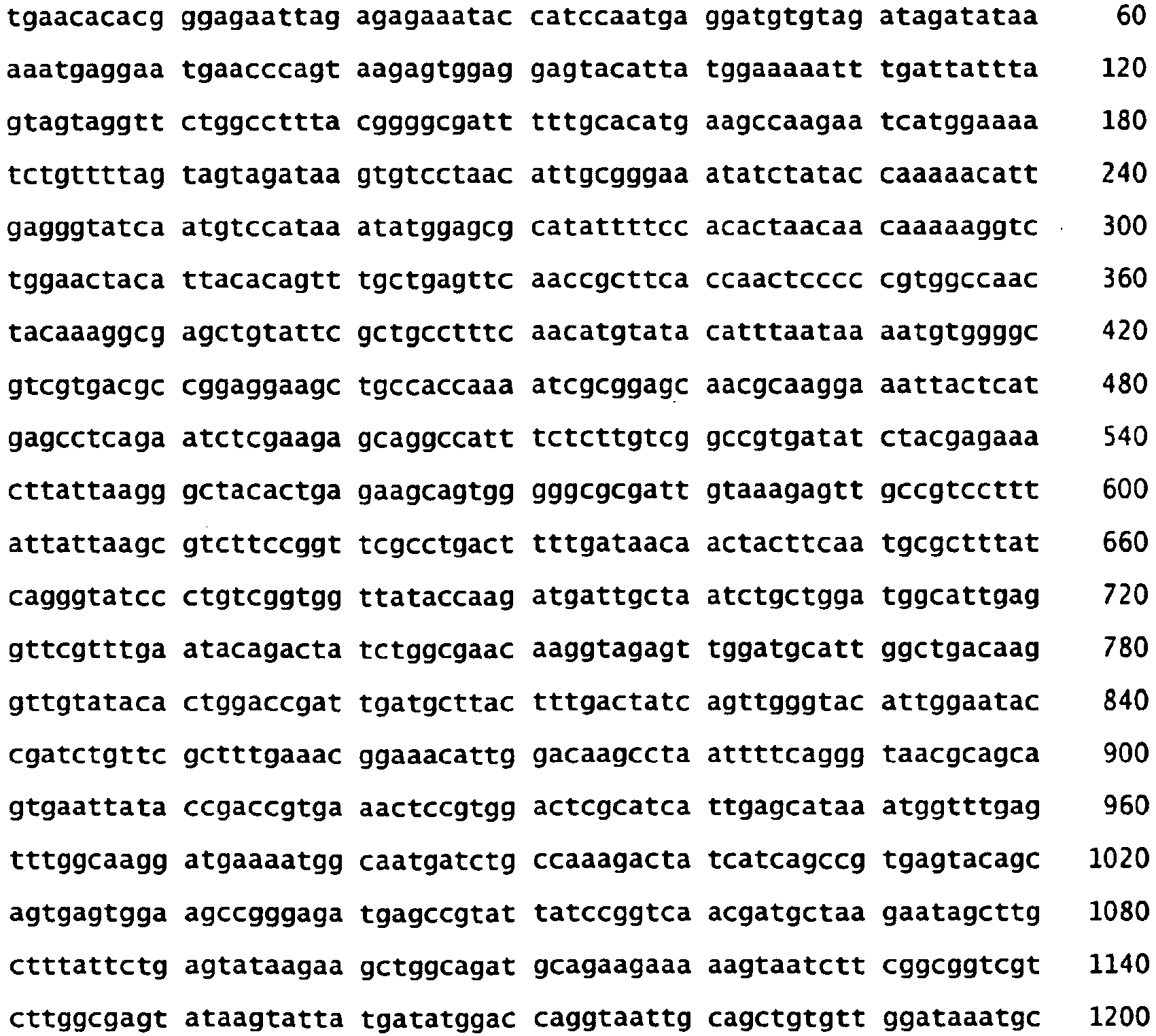
- <210> 4
<211> 2800
<212> DNA
<213> Streptococcus thermophilus - <400> 4

- <210> 5
<211> 1043
<212> DNA
<213> Streptococcus thermophilus - <400> 5


Claims (11)
- Strain of Streptococcus thermophilus deposited on 14th June 2006 at the Collection Nationale de Cultures de Microorganismes under no. CNCM I-3617 or an acidifying and thickening mutant strain which is obtained from the latter, wherein the epsAD fragment of said mutant strain after digestion by the restriction enzymes MnlI, FokI and HindIII, has a restriction profile characterized by DNA fragments of 344±2 bp, 341±2 bp, 305±2 bp, 299±2 bp, 277±2 bp, 210±2 bp, 160±2 bp, 142±2 bp, 100±2 bp, 79±2 bp, 75±2 bp, 66±2 bp, 42±2 bp, 23±2 bp and 9±2 bp and wherein said mutant strain has the same lysotype as strain CNCM I-3617.
- Strain according to claim 1 comprising a nucleotide sequence having 100% identity with the nucleotide sequence of SEQ ID N°4.
- Strain according to one of the claims 1 to 2 comprising a nucleotide sequence having 100% identity with the nucleotide sequence of SEQ ID N°5.
- Strain according to claim 1, wherein the strain is Strain of Streptococcus thermophilus deposited on 14th June 2006 at the Collection Nationale of Culture of Microorganismes under no. CNCM I-3617.
- Bacterial composition comprising at least one strain according to one of the preceding claims.
- Production process for a food product, a food complement, a dietary supplement or a product with probiotic properties comprising at least one stage in which the strain according to any one of the claims 1 to 4 is used.
- Process according to claim 6 in which the food product, the food complement, the dietary supplement or the product with probiotic properties is a dairy product, a meat product, a cereal product, a drink, a foam or a powder.
- Food product, food complement, dietary supplement or product with probiotic properties comprising at least one strain according to any one of claims 1 to 4 or the bacterial composition according to claim 5.
- Food product according to claim 8, wherein the food product is a dairy product comprising at least the strain according to claims 1 to 4 or the bacterial composition according to claim 5.
- Dairy product according to claim 9 characterized in that it is a fermented milk, a yogurt, a matured cream, a cheese, a fromage frais, a milk drink, a dairy product retentate, a processed cheese, a cream dessert, a cottage cheese or an infant milk.
- Dairy product according to claim 9 or 10 characterized in that it comprises milk of animal and/or plant origin.
Priority Applications (1)
| Application Number | Priority Date | Filing Date | Title |
|---|---|---|---|
| PL07820845T PL2076584T3 (en) | 2006-10-03 | 2007-10-02 | Genetic cluster of strains of streptococcus thermophilus having appropriate acidifying and texturizing properties for dairy fermentations |
Applications Claiming Priority (2)
| Application Number | Priority Date | Filing Date | Title |
|---|---|---|---|
| FR0608657A FR2906536B1 (en) | 2006-10-03 | 2006-10-03 | GENETIC CLUSTER OF STREPTOCOCCUS THERMOPHILUS STRAINS HAVING ACIDIFTING AND TEXTURANT PROPERTIES SUITABLE FOR DAIRY FERMENTATION. |
| PCT/EP2007/060463 WO2008040734A1 (en) | 2006-10-03 | 2007-10-02 | Genetic cluster of strains of streptococcus thermophilus having appropriate acidifying and texturizing properties for dairy fermentations |
Publications (2)
| Publication Number | Publication Date |
|---|---|
| EP2076584A1 EP2076584A1 (en) | 2009-07-08 |
| EP2076584B1 true EP2076584B1 (en) | 2012-05-30 |
Family
ID=37775534
Family Applications (1)
| Application Number | Title | Priority Date | Filing Date |
|---|---|---|---|
| EP07820845A Not-in-force EP2076584B1 (en) | 2006-10-03 | 2007-10-02 | Genetic cluster of strains of streptococcus thermophilus having appropriate acidifying and texturizing properties for dairy fermentations |
Country Status (13)
| Country | Link |
|---|---|
| US (1) | US8236550B2 (en) |
| EP (1) | EP2076584B1 (en) |
| CN (1) | CN101595210B (en) |
| AR (1) | AR063029A1 (en) |
| BR (1) | BRPI0717777A2 (en) |
| CL (1) | CL2007002801A1 (en) |
| DK (1) | DK2076584T3 (en) |
| FR (1) | FR2906536B1 (en) |
| MX (1) | MX2009003651A (en) |
| PL (1) | PL2076584T3 (en) |
| RU (1) | RU2009116438A (en) |
| TW (1) | TW200823288A (en) |
| WO (1) | WO2008040734A1 (en) |
Families Citing this family (13)
| Publication number | Priority date | Publication date | Assignee | Title |
|---|---|---|---|---|
| EP2367938B1 (en) | 2008-12-12 | 2014-06-11 | DuPont Nutrition Biosciences ApS | Genetic cluster of strains of streptococcus thermophilus having unique rheological properties for dairy fermentation |
| BRPI1015366A2 (en) * | 2009-06-30 | 2015-09-01 | Chr Hansen As | Method for producing a fermented milk product. |
| EP2459002B2 (en) | 2009-07-10 | 2022-06-08 | Chr. Hansen A/S | Production of cottage cheese by using streptococcus thermophilus |
| PL2473058T5 (en) | 2009-09-01 | 2025-04-28 | Chr. Hansen A/S | Lactic bacterium with modified galactokinase expression for texturizing food products by overexpression of exopolysaccharide |
| EP2529035B1 (en) | 2010-01-28 | 2018-03-14 | Chr. Hansen A/S | Lactic bacterium for texturizing food products selected on basis of phage resistance |
| WO2012052557A1 (en) | 2010-10-22 | 2012-04-26 | Chr. Hansen A/S | Texturizing lactic acid bacteria strains |
| US9462817B2 (en) | 2011-02-28 | 2016-10-11 | Franklin Foods Holdings Inc. | Processes for making cheese products utilizing denatured acid whey proteins |
| US9635870B2 (en) | 2011-02-28 | 2017-05-02 | Franklin Foods Holdings Inc. | Direct-set cheese |
| WO2012145047A1 (en) | 2011-04-20 | 2012-10-26 | Danisco A/S | Production of cheese with s. thermophilus |
| EP3559279B1 (en) | 2016-12-20 | 2024-06-26 | DSM IP Assets B.V. | Streptococcus thermophilus starter cultures |
| EP3630941A1 (en) | 2017-05-31 | 2020-04-08 | Chr. Hansen A/S | Method of producingstreptococcus thermophilus |
| ES3006142T3 (en) | 2019-12-30 | 2025-03-17 | Dsm Ip Assets Bv | Novel use of formate |
| CN112280795A (en) * | 2020-11-17 | 2021-01-29 | 昆明理工大学 | Use of Glycosyltransferase Gene |
Family Cites Families (3)
| Publication number | Priority date | Publication date | Assignee | Title |
|---|---|---|---|---|
| FR2723963B1 (en) * | 1994-08-31 | 1997-01-17 | Gervais Danone Co | PREPARATION OF PRODUCTS FERMENTED BY STREPTOCOCCUS THERMOPHILUS, ENRICHED IN GALACTO-OLIGOSACCHARIDES AND BETA-GALACTOSIDASE |
| FR2852604B1 (en) * | 2003-03-17 | 2005-05-13 | TEXTURING LACTIC ACID BACTERIA | |
| CN1793325A (en) * | 2005-11-30 | 2006-06-28 | 东北农业大学 | Aromatic type direct putting type ferment agent for sour milk |
-
2006
- 2006-10-03 FR FR0608657A patent/FR2906536B1/en not_active Expired - Fee Related
-
2007
- 2007-09-27 AR ARP070104281A patent/AR063029A1/en unknown
- 2007-09-28 CL CL200702801A patent/CL2007002801A1/en unknown
- 2007-10-02 WO PCT/EP2007/060463 patent/WO2008040734A1/en not_active Ceased
- 2007-10-02 EP EP07820845A patent/EP2076584B1/en not_active Not-in-force
- 2007-10-02 DK DK07820845.1T patent/DK2076584T3/en active
- 2007-10-02 PL PL07820845T patent/PL2076584T3/en unknown
- 2007-10-02 MX MX2009003651A patent/MX2009003651A/en not_active Application Discontinuation
- 2007-10-02 US US12/443,903 patent/US8236550B2/en active Active
- 2007-10-02 CN CN2007800417747A patent/CN101595210B/en not_active Expired - Fee Related
- 2007-10-02 BR BRPI0717777-1A2A patent/BRPI0717777A2/en not_active IP Right Cessation
- 2007-10-02 RU RU2009116438/10A patent/RU2009116438A/en not_active Application Discontinuation
- 2007-10-03 TW TW096137159A patent/TW200823288A/en unknown
Also Published As
| Publication number | Publication date |
|---|---|
| CN101595210B (en) | 2013-09-11 |
| TW200823288A (en) | 2008-06-01 |
| PL2076584T3 (en) | 2012-12-31 |
| DK2076584T3 (en) | 2012-07-23 |
| US8236550B2 (en) | 2012-08-07 |
| BRPI0717777A2 (en) | 2014-04-22 |
| EP2076584A1 (en) | 2009-07-08 |
| MX2009003651A (en) | 2009-05-28 |
| RU2009116438A (en) | 2010-11-10 |
| CN101595210A (en) | 2009-12-02 |
| WO2008040734A1 (en) | 2008-04-10 |
| WO2008040734A9 (en) | 2009-09-11 |
| FR2906536A1 (en) | 2008-04-04 |
| CL2007002801A1 (en) | 2008-02-15 |
| AR063029A1 (en) | 2008-12-23 |
| FR2906536B1 (en) | 2008-12-26 |
| US20100184181A1 (en) | 2010-07-22 |
Similar Documents
| Publication | Publication Date | Title |
|---|---|---|
| US8236550B2 (en) | Genetic cluster of strains of Streptococcus thermophilus having appropriate acidifying and texturizing properties for dairy fermentations | |
| EP2034848B1 (en) | Streptococcus thermophilus bacterium | |
| CN103270153B (en) | Textured lactic acid bacteria strains | |
| JP4669835B2 (en) | Lactic acid bacteria that improve texture | |
| JP4448896B2 (en) | Method for producing fermented milk | |
| JP4802216B2 (en) | Bifidobacterium-containing composition and method for producing Bifidobacterium-containing composition | |
| CN105377044B (en) | Streptococcus thermophilus strain | |
| JP5845169B2 (en) | Method for producing fermented food containing Bifidobacterium | |
| Deng et al. | Phenotypic, fermentation characterization, and resistance mechanism analysis of bacteriophage-resistant mutants of Lactobacillus delbrueckii ssp. bulgaricus isolated from traditional Chinese dairy products | |
| EP1883695A1 (en) | Probiotic bifidobacterial species | |
| KR20190044664A (en) | New bacteria | |
| CN109068676A (en) | novel bacteria | |
| CN119790134A (en) | Lactic acid bacteria composition and method for producing fermented milk | |
| JP5351113B2 (en) | Method for producing fermented food containing Bifidobacterium | |
| Yasmine et al. | Characterization of dominant cultivable lactic acid bacteria isolated from west Algerian raw camel’s milk and assessment of their technological properties | |
| Tuncer et al. | Properties of exopolysaccharide producer Streptococcus thermophilus ST 8. 01 isolated from homemade yoghurt |
Legal Events
| Date | Code | Title | Description |
|---|---|---|---|
| PUAI | Public reference made under article 153(3) epc to a published international application that has entered the european phase |
Free format text: ORIGINAL CODE: 0009012 |
|
| 17P | Request for examination filed |
Effective date: 20090414 |
|
| AK | Designated contracting states |
Kind code of ref document: A1 Designated state(s): AT BE BG CH CY CZ DE DK EE ES FI FR GB GR HU IE IS IT LI LT LU LV MC MT NL PL PT RO SE SI SK TR |
|
| 17Q | First examination report despatched |
Effective date: 20090727 |
|
| REG | Reference to a national code |
Ref country code: DE Ref legal event code: R079 Ref document number: 602007023036 Country of ref document: DE Free format text: PREVIOUS MAIN CLASS: C12N0001200000 Ipc: C12N0015520000 |
|
| GRAP | Despatch of communication of intention to grant a patent |
Free format text: ORIGINAL CODE: EPIDOSNIGR1 |
|
| RIC1 | Information provided on ipc code assigned before grant |
Ipc: C12N 15/52 20060101AFI20120112BHEP Ipc: C12N 1/20 20060101ALI20120112BHEP Ipc: C12R 1/46 20060101ALI20120112BHEP Ipc: A23C 9/123 20060101ALI20120112BHEP |
|
| DAX | Request for extension of the european patent (deleted) | ||
| GRAS | Grant fee paid |
Free format text: ORIGINAL CODE: EPIDOSNIGR3 |
|
| GRAA | (expected) grant |
Free format text: ORIGINAL CODE: 0009210 |
|
| AK | Designated contracting states |
Kind code of ref document: B1 Designated state(s): AT BE BG CH CY CZ DE DK EE ES FI FR GB GR HU IE IS IT LI LT LU LV MC MT NL PL PT RO SE SI SK TR |
|
| REG | Reference to a national code |
Ref country code: GB Ref legal event code: FG4D |
|
| REG | Reference to a national code |
Ref country code: CH Ref legal event code: EP |
|
| REG | Reference to a national code |
Ref country code: AT Ref legal event code: REF Ref document number: 560096 Country of ref document: AT Kind code of ref document: T Effective date: 20120615 |
|
| REG | Reference to a national code |
Ref country code: IE Ref legal event code: FG4D |
|
| RAP2 | Party data changed (patent owner data changed or rights of a patent transferred) |
Owner name: DUPONT NUTRITION BIOSCIENCES APS |
|
| REG | Reference to a national code |
Ref country code: NL Ref legal event code: T3 |
|
| REG | Reference to a national code |
Ref country code: NL Ref legal event code: SD Effective date: 20120716 |
|
| REG | Reference to a national code |
Ref country code: DK Ref legal event code: T3 |
|
| REG | Reference to a national code |
Ref country code: DE Ref legal event code: R096 Ref document number: 602007023036 Country of ref document: DE Effective date: 20120726 |
|
| RAP2 | Party data changed (patent owner data changed or rights of a patent transferred) |
Owner name: DUPONT NUTRITION BIOSCIENCES APS |
|
| REG | Reference to a national code |
Ref country code: LT Ref legal event code: MG4D Effective date: 20120530 |
|
| PG25 | Lapsed in a contracting state [announced via postgrant information from national office to epo] |
Ref country code: CY Free format text: LAPSE BECAUSE OF FAILURE TO SUBMIT A TRANSLATION OF THE DESCRIPTION OR TO PAY THE FEE WITHIN THE PRESCRIBED TIME-LIMIT Effective date: 20120530 Ref country code: IS Free format text: LAPSE BECAUSE OF FAILURE TO SUBMIT A TRANSLATION OF THE DESCRIPTION OR TO PAY THE FEE WITHIN THE PRESCRIBED TIME-LIMIT Effective date: 20120930 Ref country code: LT Free format text: LAPSE BECAUSE OF FAILURE TO SUBMIT A TRANSLATION OF THE DESCRIPTION OR TO PAY THE FEE WITHIN THE PRESCRIBED TIME-LIMIT Effective date: 20120530 Ref country code: FI Free format text: LAPSE BECAUSE OF FAILURE TO SUBMIT A TRANSLATION OF THE DESCRIPTION OR TO PAY THE FEE WITHIN THE PRESCRIBED TIME-LIMIT Effective date: 20120530 Ref country code: SE Free format text: LAPSE BECAUSE OF FAILURE TO SUBMIT A TRANSLATION OF THE DESCRIPTION OR TO PAY THE FEE WITHIN THE PRESCRIBED TIME-LIMIT Effective date: 20120530 |
|
| REG | Reference to a national code |
Ref country code: AT Ref legal event code: MK05 Ref document number: 560096 Country of ref document: AT Kind code of ref document: T Effective date: 20120530 |
|
| PG25 | Lapsed in a contracting state [announced via postgrant information from national office to epo] |
Ref country code: GR Free format text: LAPSE BECAUSE OF FAILURE TO SUBMIT A TRANSLATION OF THE DESCRIPTION OR TO PAY THE FEE WITHIN THE PRESCRIBED TIME-LIMIT Effective date: 20120831 Ref country code: SI Free format text: LAPSE BECAUSE OF FAILURE TO SUBMIT A TRANSLATION OF THE DESCRIPTION OR TO PAY THE FEE WITHIN THE PRESCRIBED TIME-LIMIT Effective date: 20120530 Ref country code: LV Free format text: LAPSE BECAUSE OF FAILURE TO SUBMIT A TRANSLATION OF THE DESCRIPTION OR TO PAY THE FEE WITHIN THE PRESCRIBED TIME-LIMIT Effective date: 20120530 |
|
| PG25 | Lapsed in a contracting state [announced via postgrant information from national office to epo] |
Ref country code: BE Free format text: LAPSE BECAUSE OF FAILURE TO SUBMIT A TRANSLATION OF THE DESCRIPTION OR TO PAY THE FEE WITHIN THE PRESCRIBED TIME-LIMIT Effective date: 20120530 |
|
| REG | Reference to a national code |
Ref country code: PL Ref legal event code: T3 |
|
| PG25 | Lapsed in a contracting state [announced via postgrant information from national office to epo] |
Ref country code: SK Free format text: LAPSE BECAUSE OF FAILURE TO SUBMIT A TRANSLATION OF THE DESCRIPTION OR TO PAY THE FEE WITHIN THE PRESCRIBED TIME-LIMIT Effective date: 20120530 Ref country code: RO Free format text: LAPSE BECAUSE OF FAILURE TO SUBMIT A TRANSLATION OF THE DESCRIPTION OR TO PAY THE FEE WITHIN THE PRESCRIBED TIME-LIMIT Effective date: 20120530 Ref country code: CZ Free format text: LAPSE BECAUSE OF FAILURE TO SUBMIT A TRANSLATION OF THE DESCRIPTION OR TO PAY THE FEE WITHIN THE PRESCRIBED TIME-LIMIT Effective date: 20120530 Ref country code: AT Free format text: LAPSE BECAUSE OF FAILURE TO SUBMIT A TRANSLATION OF THE DESCRIPTION OR TO PAY THE FEE WITHIN THE PRESCRIBED TIME-LIMIT Effective date: 20120530 Ref country code: EE Free format text: LAPSE BECAUSE OF FAILURE TO SUBMIT A TRANSLATION OF THE DESCRIPTION OR TO PAY THE FEE WITHIN THE PRESCRIBED TIME-LIMIT Effective date: 20120530 |
|
| PG25 | Lapsed in a contracting state [announced via postgrant information from national office to epo] |
Ref country code: PT Free format text: LAPSE BECAUSE OF FAILURE TO SUBMIT A TRANSLATION OF THE DESCRIPTION OR TO PAY THE FEE WITHIN THE PRESCRIBED TIME-LIMIT Effective date: 20121001 |
|
| PLBE | No opposition filed within time limit |
Free format text: ORIGINAL CODE: 0009261 |
|
| STAA | Information on the status of an ep patent application or granted ep patent |
Free format text: STATUS: NO OPPOSITION FILED WITHIN TIME LIMIT |
|
| PG25 | Lapsed in a contracting state [announced via postgrant information from national office to epo] |
Ref country code: ES Free format text: LAPSE BECAUSE OF FAILURE TO SUBMIT A TRANSLATION OF THE DESCRIPTION OR TO PAY THE FEE WITHIN THE PRESCRIBED TIME-LIMIT Effective date: 20120910 |
|
| 26N | No opposition filed |
Effective date: 20130301 |
|
| PG25 | Lapsed in a contracting state [announced via postgrant information from national office to epo] |
Ref country code: MC Free format text: LAPSE BECAUSE OF NON-PAYMENT OF DUE FEES Effective date: 20121031 |
|
| REG | Reference to a national code |
Ref country code: CH Ref legal event code: PL |
|
| REG | Reference to a national code |
Ref country code: DE Ref legal event code: R097 Ref document number: 602007023036 Country of ref document: DE Effective date: 20130301 |
|
| PG25 | Lapsed in a contracting state [announced via postgrant information from national office to epo] |
Ref country code: LI Free format text: LAPSE BECAUSE OF NON-PAYMENT OF DUE FEES Effective date: 20121031 Ref country code: BG Free format text: LAPSE BECAUSE OF FAILURE TO SUBMIT A TRANSLATION OF THE DESCRIPTION OR TO PAY THE FEE WITHIN THE PRESCRIBED TIME-LIMIT Effective date: 20120830 Ref country code: CH Free format text: LAPSE BECAUSE OF NON-PAYMENT OF DUE FEES Effective date: 20121031 |
|
| PG25 | Lapsed in a contracting state [announced via postgrant information from national office to epo] |
Ref country code: MT Free format text: LAPSE BECAUSE OF FAILURE TO SUBMIT A TRANSLATION OF THE DESCRIPTION OR TO PAY THE FEE WITHIN THE PRESCRIBED TIME-LIMIT Effective date: 20120530 |
|
| PG25 | Lapsed in a contracting state [announced via postgrant information from national office to epo] |
Ref country code: LU Free format text: LAPSE BECAUSE OF NON-PAYMENT OF DUE FEES Effective date: 20121002 |
|
| PG25 | Lapsed in a contracting state [announced via postgrant information from national office to epo] |
Ref country code: HU Free format text: LAPSE BECAUSE OF FAILURE TO SUBMIT A TRANSLATION OF THE DESCRIPTION OR TO PAY THE FEE WITHIN THE PRESCRIBED TIME-LIMIT Effective date: 20071002 |
|
| REG | Reference to a national code |
Ref country code: FR Ref legal event code: CD Owner name: DUPONT NUTRITION BIOSCIENCES APS, DK Effective date: 20140924 |
|
| PGFP | Annual fee paid to national office [announced via postgrant information from national office to epo] |
Ref country code: GB Payment date: 20150930 Year of fee payment: 9 |
|
| PGFP | Annual fee paid to national office [announced via postgrant information from national office to epo] |
Ref country code: PL Payment date: 20150908 Year of fee payment: 9 |
|
| PGFP | Annual fee paid to national office [announced via postgrant information from national office to epo] |
Ref country code: IE Payment date: 20151012 Year of fee payment: 9 |
|
| REG | Reference to a national code |
Ref country code: FR Ref legal event code: PLFP Year of fee payment: 10 |
|
| GBPC | Gb: european patent ceased through non-payment of renewal fee |
Effective date: 20161002 |
|
| REG | Reference to a national code |
Ref country code: IE Ref legal event code: MM4A |
|
| PG25 | Lapsed in a contracting state [announced via postgrant information from national office to epo] |
Ref country code: GB Free format text: LAPSE BECAUSE OF NON-PAYMENT OF DUE FEES Effective date: 20161002 |
|
| REG | Reference to a national code |
Ref country code: FR Ref legal event code: PLFP Year of fee payment: 11 |
|
| PG25 | Lapsed in a contracting state [announced via postgrant information from national office to epo] |
Ref country code: IE Free format text: LAPSE BECAUSE OF NON-PAYMENT OF DUE FEES Effective date: 20161002 |
|
| PG25 | Lapsed in a contracting state [announced via postgrant information from national office to epo] |
Ref country code: PL Free format text: LAPSE BECAUSE OF NON-PAYMENT OF DUE FEES Effective date: 20161002 |
|
| REG | Reference to a national code |
Ref country code: FR Ref legal event code: PLFP Year of fee payment: 12 |
|
| PGFP | Annual fee paid to national office [announced via postgrant information from national office to epo] |
Ref country code: NL Payment date: 20200915 Year of fee payment: 14 Ref country code: FR Payment date: 20200914 Year of fee payment: 14 Ref country code: TR Payment date: 20200930 Year of fee payment: 14 |
|
| PGFP | Annual fee paid to national office [announced via postgrant information from national office to epo] |
Ref country code: DK Payment date: 20201012 Year of fee payment: 14 Ref country code: DE Payment date: 20200922 Year of fee payment: 14 Ref country code: IT Payment date: 20200911 Year of fee payment: 14 |
|
| REG | Reference to a national code |
Ref country code: DE Ref legal event code: R119 Ref document number: 602007023036 Country of ref document: DE |
|
| REG | Reference to a national code |
Ref country code: DK Ref legal event code: EBP Effective date: 20211031 |
|
| REG | Reference to a national code |
Ref country code: NL Ref legal event code: MM Effective date: 20211101 |
|
| PG25 | Lapsed in a contracting state [announced via postgrant information from national office to epo] |
Ref country code: TR Free format text: LAPSE BECAUSE OF NON-PAYMENT OF DUE FEES Effective date: 20211002 |
|
| PG25 | Lapsed in a contracting state [announced via postgrant information from national office to epo] |
Ref country code: NL Free format text: LAPSE BECAUSE OF NON-PAYMENT OF DUE FEES Effective date: 20211101 Ref country code: DE Free format text: LAPSE BECAUSE OF NON-PAYMENT OF DUE FEES Effective date: 20220503 |
|
| PG25 | Lapsed in a contracting state [announced via postgrant information from national office to epo] |
Ref country code: FR Free format text: LAPSE BECAUSE OF NON-PAYMENT OF DUE FEES Effective date: 20211031 |
|
| PG25 | Lapsed in a contracting state [announced via postgrant information from national office to epo] |
Ref country code: IT Free format text: LAPSE BECAUSE OF NON-PAYMENT OF DUE FEES Effective date: 20211002 Ref country code: DK Free format text: LAPSE BECAUSE OF NON-PAYMENT OF DUE FEES Effective date: 20211031 |