EP2075125A1 - Corona treated polyethylene films - Google Patents
Corona treated polyethylene films Download PDFInfo
- Publication number
- EP2075125A1 EP2075125A1 EP07024680A EP07024680A EP2075125A1 EP 2075125 A1 EP2075125 A1 EP 2075125A1 EP 07024680 A EP07024680 A EP 07024680A EP 07024680 A EP07024680 A EP 07024680A EP 2075125 A1 EP2075125 A1 EP 2075125A1
- Authority
- EP
- European Patent Office
- Prior art keywords
- polyethylene
- corona treated
- polyethylene surface
- produced
- metallocene
- Prior art date
- Legal status (The legal status is an assumption and is not a legal conclusion. Google has not performed a legal analysis and makes no representation as to the accuracy of the status listed.)
- Withdrawn
Links
- -1 polyethylene Polymers 0.000 title claims abstract description 74
- 239000004698 Polyethylene Substances 0.000 title claims abstract description 72
- 229920000573 polyethylene Polymers 0.000 title claims abstract description 72
- 238000000034 method Methods 0.000 claims abstract description 22
- 239000012968 metallocene catalyst Substances 0.000 claims description 12
- 238000007789 sealing Methods 0.000 claims description 11
- 125000003454 indenyl group Chemical group C1(C=CC2=CC=CC=C12)* 0.000 claims description 6
- 229910052723 transition metal Inorganic materials 0.000 claims description 6
- 150000003624 transition metals Chemical class 0.000 claims description 6
- 125000004432 carbon atom Chemical group C* 0.000 claims description 5
- 238000004806 packaging method and process Methods 0.000 claims description 4
- 229910052710 silicon Inorganic materials 0.000 claims description 4
- 239000010703 silicon Substances 0.000 claims description 4
- 229910052736 halogen Inorganic materials 0.000 claims description 3
- 150000002367 halogens Chemical class 0.000 claims description 3
- XYFCBTPGUUZFHI-UHFFFAOYSA-N Phosphine Natural products P XYFCBTPGUUZFHI-UHFFFAOYSA-N 0.000 claims description 2
- QCWXUUIWCKQGHC-UHFFFAOYSA-N Zirconium Chemical group [Zr] QCWXUUIWCKQGHC-UHFFFAOYSA-N 0.000 claims description 2
- NOQWABVRFAHTQD-UHFFFAOYSA-L [Cl-].[Cl-].C12=CC=CCC2CCC1[Zr+2]C1C2=CC=CCC2CC1 Chemical compound [Cl-].[Cl-].C12=CC=CCC2CCC1[Zr+2]C1C2=CC=CCC2CC1 NOQWABVRFAHTQD-UHFFFAOYSA-L 0.000 claims description 2
- 125000003342 alkenyl group Chemical group 0.000 claims description 2
- 125000002877 alkyl aryl group Chemical group 0.000 claims description 2
- 125000000217 alkyl group Chemical group 0.000 claims description 2
- 125000003118 aryl group Chemical group 0.000 claims description 2
- AYLOLAANSIXPJA-UHFFFAOYSA-N diphenoxysilicon Chemical compound C=1C=CC=CC=1O[Si]OC1=CC=CC=C1 AYLOLAANSIXPJA-UHFFFAOYSA-N 0.000 claims description 2
- 229910052732 germanium Inorganic materials 0.000 claims description 2
- GNPVGFCGXDBREM-UHFFFAOYSA-N germanium atom Chemical compound [Ge] GNPVGFCGXDBREM-UHFFFAOYSA-N 0.000 claims description 2
- 229910000073 phosphorus hydride Inorganic materials 0.000 claims description 2
- 229910052726 zirconium Inorganic materials 0.000 claims description 2
- 230000000052 comparative effect Effects 0.000 description 16
- 239000010410 layer Substances 0.000 description 11
- 229920005989 resin Polymers 0.000 description 9
- 239000011347 resin Substances 0.000 description 9
- 238000003851 corona treatment Methods 0.000 description 7
- 229920001684 low density polyethylene Polymers 0.000 description 7
- 239000004702 low-density polyethylene Substances 0.000 description 7
- LIKMAJRDDDTEIG-UHFFFAOYSA-N 1-hexene Chemical compound CCCCC=C LIKMAJRDDDTEIG-UHFFFAOYSA-N 0.000 description 6
- 238000009826 distribution Methods 0.000 description 6
- 238000000576 coating method Methods 0.000 description 5
- 239000000463 material Substances 0.000 description 5
- 239000002344 surface layer Substances 0.000 description 5
- VXNZUUAINFGPBY-UHFFFAOYSA-N 1-Butene Chemical compound CCC=C VXNZUUAINFGPBY-UHFFFAOYSA-N 0.000 description 4
- KWKAKUADMBZCLK-UHFFFAOYSA-N 1-octene Chemical compound CCCCCCC=C KWKAKUADMBZCLK-UHFFFAOYSA-N 0.000 description 4
- 239000011248 coating agent Substances 0.000 description 3
- 239000000203 mixture Substances 0.000 description 3
- 239000002356 single layer Substances 0.000 description 3
- WSSSPWUEQFSQQG-UHFFFAOYSA-N 4-methyl-1-pentene Chemical compound CC(C)CC=C WSSSPWUEQFSQQG-UHFFFAOYSA-N 0.000 description 2
- IJGRMHOSHXDMSA-UHFFFAOYSA-N Atomic nitrogen Chemical compound N#N IJGRMHOSHXDMSA-UHFFFAOYSA-N 0.000 description 2
- VGGSQFUCUMXWEO-UHFFFAOYSA-N Ethene Chemical compound C=C VGGSQFUCUMXWEO-UHFFFAOYSA-N 0.000 description 2
- 239000005977 Ethylene Substances 0.000 description 2
- 239000000853 adhesive Substances 0.000 description 2
- 230000001070 adhesive effect Effects 0.000 description 2
- 238000004458 analytical method Methods 0.000 description 2
- QVGXLLKOCUKJST-UHFFFAOYSA-N atomic oxygen Chemical compound [O] QVGXLLKOCUKJST-UHFFFAOYSA-N 0.000 description 2
- 239000012792 core layer Substances 0.000 description 2
- 238000005227 gel permeation chromatography Methods 0.000 description 2
- 229920001903 high density polyethylene Polymers 0.000 description 2
- 239000004700 high-density polyethylene Substances 0.000 description 2
- 239000000976 ink Substances 0.000 description 2
- 238000004519 manufacturing process Methods 0.000 description 2
- 239000000155 melt Substances 0.000 description 2
- TVMXDCGIABBOFY-UHFFFAOYSA-N n-Octanol Natural products CCCCCCCC TVMXDCGIABBOFY-UHFFFAOYSA-N 0.000 description 2
- 239000001301 oxygen Substances 0.000 description 2
- 229910052760 oxygen Inorganic materials 0.000 description 2
- 239000003348 petrochemical agent Substances 0.000 description 2
- 229920003023 plastic Polymers 0.000 description 2
- 239000004033 plastic Substances 0.000 description 2
- 239000000126 substance Substances 0.000 description 2
- RELMFMZEBKVZJC-UHFFFAOYSA-N 1,2,3-trichlorobenzene Chemical compound ClC1=CC=CC(Cl)=C1Cl RELMFMZEBKVZJC-UHFFFAOYSA-N 0.000 description 1
- ZAMOUSCENKQFHK-UHFFFAOYSA-N Chlorine atom Chemical group [Cl] ZAMOUSCENKQFHK-UHFFFAOYSA-N 0.000 description 1
- UFHFLCQGNIYNRP-UHFFFAOYSA-N Hydrogen Chemical compound [H][H] UFHFLCQGNIYNRP-UHFFFAOYSA-N 0.000 description 1
- 239000004712 Metallocene polyethylene (PE-MC) Substances 0.000 description 1
- CBENFWSGALASAD-UHFFFAOYSA-N Ozone Chemical compound [O-][O+]=O CBENFWSGALASAD-UHFFFAOYSA-N 0.000 description 1
- 239000004743 Polypropylene Substances 0.000 description 1
- DLQZGRLCYQJIDQ-UHFFFAOYSA-L [Cl-].[Cl-].C=C.C12=CC=CCC2CCC1[Zr+2]C1C2=CC=CCC2CC1 Chemical compound [Cl-].[Cl-].C=C.C12=CC=CCC2CCC1[Zr+2]C1C2=CC=CCC2CC1 DLQZGRLCYQJIDQ-UHFFFAOYSA-L 0.000 description 1
- 230000004888 barrier function Effects 0.000 description 1
- DQXBYHZEEUGOBF-UHFFFAOYSA-N but-3-enoic acid;ethene Chemical compound C=C.OC(=O)CC=C DQXBYHZEEUGOBF-UHFFFAOYSA-N 0.000 description 1
- 239000003054 catalyst Substances 0.000 description 1
- 239000000460 chlorine Chemical group 0.000 description 1
- 229910052801 chlorine Chemical group 0.000 description 1
- 238000005034 decoration Methods 0.000 description 1
- 239000006185 dispersion Substances 0.000 description 1
- 230000005684 electric field Effects 0.000 description 1
- 239000005038 ethylene vinyl acetate Substances 0.000 description 1
- 239000004715 ethylene vinyl alcohol Substances 0.000 description 1
- 125000000219 ethylidene group Chemical group [H]C(=[*])C([H])([H])[H] 0.000 description 1
- 239000007789 gas Substances 0.000 description 1
- 239000001257 hydrogen Substances 0.000 description 1
- 229910052739 hydrogen Inorganic materials 0.000 description 1
- 125000000654 isopropylidene group Chemical group C(C)(C)=* 0.000 description 1
- 229920002521 macromolecule Polymers 0.000 description 1
- 125000002496 methyl group Chemical group [H]C([H])([H])* 0.000 description 1
- 229910052757 nitrogen Inorganic materials 0.000 description 1
- 229920001200 poly(ethylene-vinyl acetate) Polymers 0.000 description 1
- 229920013716 polyethylene resin Polymers 0.000 description 1
- 229920006254 polymer film Polymers 0.000 description 1
- 229920000098 polyolefin Polymers 0.000 description 1
- 229920001155 polypropylene Polymers 0.000 description 1
- 238000002360 preparation method Methods 0.000 description 1
- QQONPFPTGQHPMA-UHFFFAOYSA-N propylene Natural products CC=C QQONPFPTGQHPMA-UHFFFAOYSA-N 0.000 description 1
- 125000004805 propylene group Chemical group [H]C([H])([H])C([H])([*:1])C([H])([H])[*:2] 0.000 description 1
- 230000001105 regulatory effect Effects 0.000 description 1
- 239000000565 sealant Substances 0.000 description 1
- 239000000758 substrate Substances 0.000 description 1
- 229920001169 thermoplastic Polymers 0.000 description 1
- 239000004416 thermosoftening plastic Substances 0.000 description 1
- VPGLGRNSAYHXPY-UHFFFAOYSA-L zirconium(2+);dichloride Chemical compound Cl[Zr]Cl VPGLGRNSAYHXPY-UHFFFAOYSA-L 0.000 description 1
Images

Classifications
-
- B—PERFORMING OPERATIONS; TRANSPORTING
- B32—LAYERED PRODUCTS
- B32B—LAYERED PRODUCTS, i.e. PRODUCTS BUILT-UP OF STRATA OF FLAT OR NON-FLAT, e.g. CELLULAR OR HONEYCOMB, FORM
- B32B27/00—Layered products comprising a layer of synthetic resin
- B32B27/32—Layered products comprising a layer of synthetic resin comprising polyolefins
- B32B27/322—Layered products comprising a layer of synthetic resin comprising polyolefins comprising halogenated polyolefins, e.g. PTFE
-
- B—PERFORMING OPERATIONS; TRANSPORTING
- B32—LAYERED PRODUCTS
- B32B—LAYERED PRODUCTS, i.e. PRODUCTS BUILT-UP OF STRATA OF FLAT OR NON-FLAT, e.g. CELLULAR OR HONEYCOMB, FORM
- B32B38/00—Ancillary operations in connection with laminating processes
- B32B38/0008—Electrical discharge treatment, e.g. corona, plasma treatment; wave energy or particle radiation
-
- B—PERFORMING OPERATIONS; TRANSPORTING
- B32—LAYERED PRODUCTS
- B32B—LAYERED PRODUCTS, i.e. PRODUCTS BUILT-UP OF STRATA OF FLAT OR NON-FLAT, e.g. CELLULAR OR HONEYCOMB, FORM
- B32B2309/00—Parameters for the laminating or treatment process; Apparatus details
- B32B2309/02—Temperature
- B32B2309/025—Temperature vs time profiles
-
- B—PERFORMING OPERATIONS; TRANSPORTING
- B32—LAYERED PRODUCTS
- B32B—LAYERED PRODUCTS, i.e. PRODUCTS BUILT-UP OF STRATA OF FLAT OR NON-FLAT, e.g. CELLULAR OR HONEYCOMB, FORM
- B32B2323/00—Polyalkenes
- B32B2323/04—Polyethylene
-
- B—PERFORMING OPERATIONS; TRANSPORTING
- B32—LAYERED PRODUCTS
- B32B—LAYERED PRODUCTS, i.e. PRODUCTS BUILT-UP OF STRATA OF FLAT OR NON-FLAT, e.g. CELLULAR OR HONEYCOMB, FORM
- B32B37/00—Methods or apparatus for laminating, e.g. by curing or by ultrasonic bonding
- B32B37/06—Methods or apparatus for laminating, e.g. by curing or by ultrasonic bonding characterised by the heating method
-
- B—PERFORMING OPERATIONS; TRANSPORTING
- B32—LAYERED PRODUCTS
- B32B—LAYERED PRODUCTS, i.e. PRODUCTS BUILT-UP OF STRATA OF FLAT OR NON-FLAT, e.g. CELLULAR OR HONEYCOMB, FORM
- B32B37/00—Methods or apparatus for laminating, e.g. by curing or by ultrasonic bonding
- B32B37/10—Methods or apparatus for laminating, e.g. by curing or by ultrasonic bonding characterised by the pressing technique, e.g. using action of vacuum or fluid pressure
-
- C—CHEMISTRY; METALLURGY
- C08—ORGANIC MACROMOLECULAR COMPOUNDS; THEIR PREPARATION OR CHEMICAL WORKING-UP; COMPOSITIONS BASED THEREON
- C08F—MACROMOLECULAR COMPOUNDS OBTAINED BY REACTIONS ONLY INVOLVING CARBON-TO-CARBON UNSATURATED BONDS
- C08F4/00—Polymerisation catalysts
- C08F4/42—Metals; Metal hydrides; Metallo-organic compounds; Use thereof as catalyst precursors
- C08F4/44—Metals; Metal hydrides; Metallo-organic compounds; Use thereof as catalyst precursors selected from light metals, zinc, cadmium, mercury, copper, silver, gold, boron, gallium, indium, thallium, rare earths or actinides
- C08F4/60—Metals; Metal hydrides; Metallo-organic compounds; Use thereof as catalyst precursors selected from light metals, zinc, cadmium, mercury, copper, silver, gold, boron, gallium, indium, thallium, rare earths or actinides together with refractory metals, iron group metals, platinum group metals, manganese, rhenium technetium or compounds thereof
- C08F4/62—Refractory metals or compounds thereof
- C08F4/64—Titanium, zirconium, hafnium or compounds thereof
- C08F4/659—Component covered by group C08F4/64 containing a transition metal-carbon bond
- C08F4/65916—Component covered by group C08F4/64 containing a transition metal-carbon bond supported on a carrier, e.g. silica, MgCl2, polymer
-
- C—CHEMISTRY; METALLURGY
- C08—ORGANIC MACROMOLECULAR COMPOUNDS; THEIR PREPARATION OR CHEMICAL WORKING-UP; COMPOSITIONS BASED THEREON
- C08F—MACROMOLECULAR COMPOUNDS OBTAINED BY REACTIONS ONLY INVOLVING CARBON-TO-CARBON UNSATURATED BONDS
- C08F4/00—Polymerisation catalysts
- C08F4/42—Metals; Metal hydrides; Metallo-organic compounds; Use thereof as catalyst precursors
- C08F4/44—Metals; Metal hydrides; Metallo-organic compounds; Use thereof as catalyst precursors selected from light metals, zinc, cadmium, mercury, copper, silver, gold, boron, gallium, indium, thallium, rare earths or actinides
- C08F4/60—Metals; Metal hydrides; Metallo-organic compounds; Use thereof as catalyst precursors selected from light metals, zinc, cadmium, mercury, copper, silver, gold, boron, gallium, indium, thallium, rare earths or actinides together with refractory metals, iron group metals, platinum group metals, manganese, rhenium technetium or compounds thereof
- C08F4/62—Refractory metals or compounds thereof
- C08F4/64—Titanium, zirconium, hafnium or compounds thereof
- C08F4/659—Component covered by group C08F4/64 containing a transition metal-carbon bond
- C08F4/6592—Component covered by group C08F4/64 containing a transition metal-carbon bond containing at least one cyclopentadienyl ring, condensed or not, e.g. an indenyl or a fluorenyl ring
- C08F4/65922—Component covered by group C08F4/64 containing a transition metal-carbon bond containing at least one cyclopentadienyl ring, condensed or not, e.g. an indenyl or a fluorenyl ring containing at least two cyclopentadienyl rings, fused or not
- C08F4/65927—Component covered by group C08F4/64 containing a transition metal-carbon bond containing at least one cyclopentadienyl ring, condensed or not, e.g. an indenyl or a fluorenyl ring containing at least two cyclopentadienyl rings, fused or not two cyclopentadienyl rings being mutually bridged
Definitions
- the present invention relates to a method for obtaining a heat seal between two polyethylene surfaces, at least one of which being corona treated.
- Polyethylene is a thermoplastic commodity widely used in consumer products. While its mechanical, chemical and processing properties make it the material of choice in a wide range of applications, its chemical inertness and low surface energy pose problems in applications that require printing, coating, bonding or adhesion with other substrates. This is especially the case for example in packaging applications when information regarding contents must be conveyed or surface decoration is required for aesthetic reasons. For these applications it is therefore necessary to subject the polyethylene to a surface-modifying treatment that increases the surface energy.
- corona treatment also known as corona discharge treatment.
- the film passes through a highly charged electrical field that bombards the surface of the film in the presence of oxygen. This bombardment converts the oxygen into ozone, which oxidizes the surface of the film, creating sites for anchorage of adhesives, inks or coatings.
- the corona treatment is usually performed at a point within the take up section of a blown or a cast film production prior to the steps of printing or coating the film.
- a drawback of corona treatment is that the treatment affects the seal strength of the treated surface of the film. This is observed when an attempt is made either to heat seal two corona treated surfaces or to seal the treated side to itself as in a pouch. This is also the case if an attempt is made to seal the treated surface to an untreated surface. In each case, even if a seal is formed, the seal is too weak. The seal tends to break if the film surface is used as a sealable surface for example in the production of bags or heavy-duty sacks and the like.
- heat sealing refers to the technique of sealing by heat and pressure together.
- polyethylene surface refers either to the surface of a monolayer film or to the surface layer of a multilayer film wherein said surface is a polyethylene.
- the present invention provides a method for obtaining a heat seal between two polyethylene surfaces, the method comprising the steps of:
- the metallocene catalysed polyethylene used in the present invention is produced with a metallocene having the general formula R (THI) 2 MQ Z-2 wherein
- THI is an unsubstituted tetrahydrogenated indenyl group.
- M is a group IVb transition metal, more preferably M is zirconium.
- Q is an alkyl radical having from 1-4 carbon atoms or a halogen, more preferably Q is methyl or chlorine.
- R is a substituted or unsubstituted C 1 -C 4 alkylidene radical, more preferably ethylidene or isopropylidene.
- the metallocene catalyst used is a bridged bis (tetrahydro-indenyl) zirconium dichloride, more preferably ethylene bis (tetrahydro-indenyl) zirconium dichloride.
- the melt index of the metallocene catalysed polyethylene can be regulated by the amount of hydrogen injected in the reactor.
- the melt index (MI 2 ) of the polyethylene ranges from 0.2 g/10 min to 10 g/10 min when measured according to ASTM D 1238, conditions 190°C/2.16 kg.
- the metallocene catalysed polyethylene may have a density of at least 0.900 g/cm 3 , preferably of at least 0.918 glcm 3 , more preferably of at least 0.923 g/cm 3 . It has a density of at most 0.965 g/cm 3 , preferably of at most 0.960 g/cm 3 , more preferably of at most 0.950 g/cm 3 , even more preferably of at most 0.940 g/cm 3 . The density is measured at 23°C following the method described in ASTM D 1505.
- the desired density is obtained by copolymerisation of ethylene with a suitable amount of a comonomer selected from the group consisting of propylene, 1-butene, 1-hexene, 1-octene and 4-methyl-1-pentene, the preferred comonomer being 1-butene, 1-hexene, 1-octene, the most preferable comonomer being 1-hexene.
- a comonomer selected from the group consisting of propylene, 1-butene, 1-hexene, 1-octene and 4-methyl-1-pentene
- the metallocene catalysed polyethylene may have a monomodal molecular weight distribution.
- the molecular weight distribution is defined by a parameter, known as the dispersion index (D), which is the ratio between the average molecular weight by weight (Mw) and the average molecular weight by number (Mn).
- D dispersion index
- Mw average molecular weight by weight
- Mn average molecular weight by number
- the metallocene catalysed polyethylene used in the present invention has a molecular weight distribution of less than 4, preferably between 2 and 3, more preferably between 2.2 to 2.7.
- the molecular weights are determined by gel permeation chromatography (GPC).
- the metallocene catalysed polyethylene is also characterised by a long chain branching structure.
- LCBI rheological long -chain branching index
- the dynamic rheological analysis is performed at 190°C under nitrogen and the strain amplitude is 10%. Results are reported according to ASTM D 4440.
- the LCBI of the metallocene catalysed polyethylene used in the present invention is at least 0.14, more preferably at least 0.50, even more preferably at least 1, most preferably at least 2.
- Corona treatment of polymer film surfaces is well known. It is an electrical process that uses ionized air to increase the surface energy of plastic surface in order to allow improved wettability and adhesion of inks, coatings and adhesives. The treated surface demonstrates improved printing and coating quality. Usually, corona treatment is carried out such as to provide a surface tension of 35 to 50 mN/m.
- only one metallocene catalysed polyethylene surface is corona treated.
- both metallocene catalysed polyethylene surfaces are corona treated.
- the corona treated polyethylene surface is the surface of a monolayer film.
- the corona treated polyethylene surface is the surface layer of a multilayer film, the surface layer having been corona treated on its upper side.
- multilayer film it is meant a film having from 2 to 7 layers or even more.
- the film may have a three-layer structure A/C/A wherein "A" may be either of the same composition or may be of different composition provided that when "A" is corona treated, then "A” is a metallocene catalysed polyethylene.
- the core layer C can be either a tie layer such as for example a layer of ethylene vinyl acetate or can be any polyolefins such as polyethylene, polypropylene or mixture thereof.
- One or more inner layers may also be present between layers A and C.
- the multilayer structure may also include a laminate.
- the multilayer film is made by coextruding the resins of the different layers.
- the multilayer film is produced by a coextrusion blown film process.
- the sealing occurs between two polyethylene surfaces, the polyethylene of each surface being produced with a metallocene catalyst and at least one surface is corona treated.
- both polyethylene surfaces are metallocene catalysed polyethylene such as previously defined.
- the polyethylene surface which is not corona treated and to which the corona treated polyethylene is sealed to, may be the polyethylene surface of either a monolayer or a multilayer film.
- the sealing temperature of the polyethylene surfaces may range from 120°C to 160°C.
- the present invention further provides a packaging comprising a heat seal obtained by the method of the invention.
- a packaging one can cite for example bags or heavy-duty sacks.
- the heat seal occurs between the polyethylene surfaces of two films.
- a film is first folded over itself and the corona treated polyethylene surface is either sealed to itself or sealed to the backside surface of the film, provided that the backside surface of the film is made of a metallocene catalysed polyethylene.
- the present invention also provides the use of a corona treated polyethylene as a heat sealing surface to a second polyethylene surface characterised in that both polyethylenes are metallocene catalysed polyethylenes, preferably both polyethylenes being produced with the metallocene catalyst having the general formula R(THI) 2 MQ Z-2 wherein THI, R, Q, M and Z have the meaning stated above.
- Films 150 mm long and 100 mm wide were heat sealed to each other during 2.5 seconds at a pressure of 40 N at different temperature, by steps of 10°C. The films were maintained during 40 hours at 23°C, 50% humidity. The seal strength was measured on a 15 mm width sample at 200 mm/min according to the ASTM F88-00 method.
- Example 1 the corona treated polyethylene surface of the film F1, wherein the polyethylene is produced with a metallocene catalyst, was heat sealed to the metallocene catalysed polyethylene surface of the film F2 (example identified hereafter as Mc/M).
- Comparative example 1 the corona treated polyethylene surface of the film F1, wherein the polyethylene is produced with a metallocene catalyst, was heat sealed to the low density polyethylene surface of the film F4 (comparative example identified hereafter as Mc/L).
- Comparative example 2 the corona treated low density polyethylene surface of the film F3 was heat sealed to the metallocene catalysed polyethylene surface of the film F2 (comparative example identified hereafter as Lc/M).
- Comparative example 3 the corona treated low density polyethylene surface of the film F3 was heat sealed to the low density polyethylene surface of the film F4 (comparative example identified hereafter as Lc/L).
- Example 2 the corona treated polyethylene surface of the film F1, wherein the polyethylene is produced with a metallocene catalyst, was heat sealed to itself (example identified hereafter as Mc/Mc).
- Comparative example 4 the corona treated low density polyethylene surface of the film F3 was heat sealed to the corona treated metallocene catalysed polyethylene surface of the film F1 (comparative example identified hereafter as Lc/Mc).
- Comparative example 5 the corona treated low density polyethylene surface of the film F3 was heat sealed to itself (comparative example identified as Lc/Lc).
Landscapes
- Physics & Mathematics (AREA)
- Engineering & Computer Science (AREA)
- Plasma & Fusion (AREA)
- Thermal Sciences (AREA)
- Treatments Of Macromolecular Shaped Articles (AREA)
Abstract
Description
- The present invention relates to a method for obtaining a heat seal between two polyethylene surfaces, at least one of which being corona treated.
- Polyethylene is a thermoplastic commodity widely used in consumer products. While its mechanical, chemical and processing properties make it the material of choice in a wide range of applications, its chemical inertness and low surface energy pose problems in applications that require printing, coating, bonding or adhesion with other substrates. This is especially the case for example in packaging applications when information regarding contents must be conveyed or surface decoration is required for aesthetic reasons. For these applications it is therefore necessary to subject the polyethylene to a surface-modifying treatment that increases the surface energy.
- The most common method to increase the surface energy of a plastic surface is corona treatment, also known as corona discharge treatment. During the corona treatment, the film passes through a highly charged electrical field that bombards the surface of the film in the presence of oxygen. This bombardment converts the oxygen into ozone, which oxidizes the surface of the film, creating sites for anchorage of adhesives, inks or coatings. The corona treatment is usually performed at a point within the take up section of a blown or a cast film production prior to the steps of printing or coating the film.
- A drawback of corona treatment is that the treatment affects the seal strength of the treated surface of the film. This is observed when an attempt is made either to heat seal two corona treated surfaces or to seal the treated side to itself as in a pouch. This is also the case if an attempt is made to seal the treated surface to an untreated surface. In each case, even if a seal is formed, the seal is too weak. The seal tends to break if the film surface is used as a sealable surface for example in the production of bags or heavy-duty sacks and the like.
- It is an object of the present invention to enhance the seal strength between two polyethylene surfaces, at least one of which polyethylene surfaces being corona treated.
- The term "heat sealing" as used herein refers to the technique of sealing by heat and pressure together.
- The term "polyethylene surface" as used herein refers either to the surface of a monolayer film or to the surface layer of a multilayer film wherein said surface is a polyethylene.
- The present invention provides a method for obtaining a heat seal between two polyethylene surfaces, the method comprising the steps of:
- a) providing a first polyethylene surface, wherein the polyethylene is produced with a metallocene catalyst,
- b) providing a second polyethylene surface, wherein the polyethylene is produced with a metallocene catalyst,
- c) corona treating at least one of the polyethylene surfaces and
- d) heat sealing the first polyethylene surface and the second polyethylene surface together.
- Preferably, the metallocene catalysed polyethylene used in the present invention is produced with a metallocene having the general formula
R (THI)2 MQZ-2
wherein - THI is a tetrahydrogenated indenyl group which may be substituted or not,
- R is a substituted or unsubstituted C1-C4 alkylidene radical, a dialkyl germanium, a dialkyl silicon, a diaryl silicon, a dialkoxysilane, a diphenoxysilane, or an alkyl phosphine or amine radical bridging two tetrahydrogenated indenyl groups,
- Q is a hydrocarbyl radical such as aryl, alkyl, alkenyl, alkylaryl, or arylalkyl radical having from 1-20 carbon atoms, hydrocarboxy radical having 1-20 carbon atoms or halogen and can be the same or different from each other,
- M is a group IVb, Vb or Vlb transition metal, and
- Z is the valence of the transition metal.
- Preferably, THI is an unsubstituted tetrahydrogenated indenyl group.
- Preferably, M is a group IVb transition metal, more preferably M is zirconium.
- Preferably, Q is an alkyl radical having from 1-4 carbon atoms or a halogen, more preferably Q is methyl or chlorine.
- Preferably, R is a substituted or unsubstituted C1-C4 alkylidene radical, more preferably ethylidene or isopropylidene.
Preferably, the metallocene catalyst used is a bridged bis (tetrahydro-indenyl) zirconium dichloride, more preferably ethylene bis (tetrahydro-indenyl) zirconium dichloride. - The melt index of the metallocene catalysed polyethylene can be regulated by the amount of hydrogen injected in the reactor. The melt index (MI2) of the polyethylene ranges from 0.2 g/10 min to 10 g/10 min when measured according to ASTM D 1238, conditions 190°C/2.16 kg.
- The metallocene catalysed polyethylene may have a density of at least 0.900 g/cm3, preferably of at least 0.918 glcm3, more preferably of at least 0.923 g/cm3. It has a density of at most 0.965 g/cm3, preferably of at most 0.960 g/cm3, more preferably of at most 0.950 g/cm3, even more preferably of at most 0.940 g/cm3. The density is measured at 23°C following the method described in ASTM D 1505.
- As known in the art, the desired density is obtained by copolymerisation of ethylene with a suitable amount of a comonomer selected from the group consisting of propylene, 1-butene, 1-hexene, 1-octene and 4-methyl-1-pentene, the preferred comonomer being 1-butene, 1-hexene, 1-octene, the most preferable comonomer being 1-hexene.
- The metallocene catalysed polyethylene may have a monomodal molecular weight distribution. The molecular weight distribution is defined by a parameter, known as the dispersion index (D), which is the ratio between the average molecular weight by weight (Mw) and the average molecular weight by number (Mn). Preferably, the metallocene catalysed polyethylene used in the present invention has a molecular weight distribution of less than 4, preferably between 2 and 3, more preferably between 2.2 to 2.7. The molecular weights are determined by gel permeation chromatography (GPC).
- The metallocene catalysed polyethylene is also characterised by a long chain branching structure.
Preferably, the mPE resin used in the present invention has a rheological long -chain branching index, LCBI, such as defined by R.N. Shroff and H. Mavridis in Macromolecules 2001, 34, 7362-7367 by the equation:
where η0 is the limiting, zero-shear viscosity at 190°C and [η] is the intrinsic viscosity in trichlorobenzene at 135°C.
The LCBI is calculated from the best fitting by least squares analysis of the rheological curve (complex viscosity versus frequency) as described inUS-A-6114486 with the following generalized Cross equation, i.e. η = η0 / (1+ (γ t0)n) wherein n is the power law index of the material characterizing the shear thinning behaviour of the material, t0 is the characteristic relaxation time of the material, η0 is the zero-shear viscosity, η and γ are the measured viscosity and shear rate data respectively. The dynamic rheological analysis is performed at 190°C under nitrogen and the strain amplitude is 10%. Results are reported according to ASTM D 4440. - Preferably, the LCBI of the metallocene catalysed polyethylene used in the present invention is at least 0.14, more preferably at least 0.50, even more preferably at least 1, most preferably at least 2.
- Corona treatment of polymer film surfaces is well known. It is an electrical process that uses ionized air to increase the surface energy of plastic surface in order to allow improved wettability and adhesion of inks, coatings and adhesives. The treated surface demonstrates improved printing and coating quality. Usually, corona treatment is carried out such as to provide a surface tension of 35 to 50 mN/m.
- According to one embodiment, only one metallocene catalysed polyethylene surface is corona treated.
- According to another embodiment, both metallocene catalysed polyethylene surfaces are corona treated.
- According to one embodiment, the corona treated polyethylene surface is the surface of a monolayer film.
- According to another embodiment, the corona treated polyethylene surface is the surface layer of a multilayer film, the surface layer having been corona treated on its upper side. By multilayer film, it is meant a film having from 2 to 7 layers or even more. For example, the film may have a three-layer structure A/C/A wherein "A" may be either of the same composition or may be of different composition provided that when "A" is corona treated, then "A" is a metallocene catalysed polyethylene. The core layer C can be either a tie layer such as for example a layer of ethylene vinyl acetate or can be any polyolefins such as polyethylene, polypropylene or mixture thereof. One can cite for example a high density polyethylene resin which imparts the stiffness to the film. One or more inner layers may also be present between layers A and C. One can cite for example a gas barrier layer containing for example ethylene vinyl alcohol (EVOH). The multilayer structure may also include a laminate. The multilayer film is made by coextruding the resins of the different layers. Preferably, the multilayer film is produced by a coextrusion blown film process.
- In the present invention, the sealing occurs between two polyethylene surfaces, the polyethylene of each surface being produced with a metallocene catalyst and at least one surface is corona treated. Preferably both polyethylene surfaces are metallocene catalysed polyethylene such as previously defined.
- The polyethylene surface, which is not corona treated and to which the corona treated polyethylene is sealed to, may be the polyethylene surface of either a monolayer or a multilayer film.
- The sealing temperature of the polyethylene surfaces may range from 120°C to 160°C.
- The present invention further provides a packaging comprising a heat seal obtained by the method of the invention. As packaging, one can cite for example bags or heavy-duty sacks.
- According to one embodiment, the heat seal occurs between the polyethylene surfaces of two films.
- According to another embodiment, a film is first folded over itself and the corona treated polyethylene surface is either sealed to itself or sealed to the backside surface of the film, provided that the backside surface of the film is made of a metallocene catalysed polyethylene.
- The present invention also provides the use of a corona treated polyethylene as a heat sealing surface to a second polyethylene surface characterised in that both polyethylenes are metallocene catalysed polyethylenes, preferably both polyethylenes being produced with the metallocene catalyst having the general formula
R(THI)2 MQZ-2
wherein THI, R, Q, M and Z have the meaning stated above. - The following resins were used:
- * A metallocene polyethylene resin was prepared by using ethylene bis (4,5,6,7,tetrahydro-1-indenyl) zirconium dichloride. Said catalyst was activated and supported. The resin had a density of 0.923 g/cm3, a MI2 of 0.9 g/10min, a molecular weight distribution of 2, a long chain branching index (LCBI) of 0.60 and a surface tension of 32 mN/m. The resin was used
- on one hand as such and identified hereinafter "M" and
- on the other hand previously corona treated on one side and identified hereinafter "Mc". The surface tension of the corona treated resin was 40 mN/m.
- * A commercially available low-density polyethylene produced by a high pressure polymerisation process sold by Total Petrochemicals having a density of 0.924 glcm3, a MI2 of 0.8 g/10min. a molecular weight distribution of 5.6 and a surface tension of 30 mN/m known under the reference 1008FE24. The resin was used:
- on one hand as such and identified "L" and
- on the other hand previously corona treated on one side and identified hereinafter "Lc". The surface tension of the corona treated resin was 36 mN/m.
- * A commercially available high-density polyethylene sold by Total Petrochemicals under the reference HL717 having a density of 0.958 g/cm3, a MI2 of 0.26 g/10min, a molecular weight distribution of 12 and a long chain branching index (LCBI) of 0.4.
- Four blown coextruded three-layers A/B/A films (F1-F4) were prepared and characterised by
- either two identical surface layers (A) made of "M" (F2) and "L" (F4) or two different surface layers, one made of "Mc" and the other one made of "M" (F1) or one made of "Lc" and the other one made of "L" (F3),
- one core layer (B) made of HL717.
- The following films were thus produced:
- F1: Mc/HL717/M,
- F2: M/HL717/M,
- F3: Lc/HL717/L and
- F4: L/HL717/L.
-
Films 150 mm long and 100 mm wide were heat sealed to each other during 2.5 seconds at a pressure of 40 N at different temperature, by steps of 10°C. The films were maintained during 40 hours at 23°C, 50% humidity. The seal strength was measured on a 15 mm width sample at 200 mm/min according to the ASTM F88-00 method. - Example 1: the corona treated polyethylene surface of the film F1, wherein the polyethylene is produced with a metallocene catalyst, was heat sealed to the metallocene catalysed polyethylene surface of the film F2 (example identified hereafter as Mc/M).
- Comparative example 1: the corona treated polyethylene surface of the film F1, wherein the polyethylene is produced with a metallocene catalyst, was heat sealed to the low density polyethylene surface of the film F4 (comparative example identified hereafter as Mc/L).
- Comparative example 2: the corona treated low density polyethylene surface of the film F3 was heat sealed to the metallocene catalysed polyethylene surface of the film F2 (comparative example identified hereafter as Lc/M).
- Comparative example 3: the corona treated low density polyethylene surface of the film F3 was heat sealed to the low density polyethylene surface of the film F4 (comparative example identified hereafter as Lc/L).
- Example 2: the corona treated polyethylene surface of the film F1, wherein the polyethylene is produced with a metallocene catalyst, was heat sealed to itself (example identified hereafter as Mc/Mc).
- Comparative example 4: the corona treated low density polyethylene surface of the film F3 was heat sealed to the corona treated metallocene catalysed polyethylene surface of the film F1 (comparative example identified hereafter as Lc/Mc).
- Comparative example 5: the corona treated low density polyethylene surface of the film F3 was heat sealed to itself (comparative example identified as Lc/Lc).
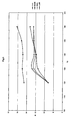
- The seal strength between the sealant surfaces was measured by the force (in Newtons) necessary for separating those surfaces. The results of tables I and II have been respectively plotted in
figures I and II .Table 1 Seal strength (N) Example 1
(Mc/M)Comparative example 1
(Mc/L)Comparative example 2
(Lc/M)Comparative example 3
(Lc/L)Sealing temperature (°C) 120 14.6 9.1 9.2 9.2 130 15.0 12.4 12.8 11.5 140 14.9 12.1 12.4 11.9 150 15.2 12.5 12.4 12.7 160 16.2 12.5 12.5 13.3 Table 2 Seal strength (N) Example 2
(Mc/Mc)Comparative example 4
(Lc/Mc)Comparative example 5
(Lc/Lc)Sealing temperature (°C) 120 12.5 8.9 8.9 130 13.6 12.3 11.1 140 13.9 12.6 11.8 150 14.4 12.9 11.9 160 14.1 12.7 12.3
Claims (10)
- A method for obtaining a heat seal between two polyethylene surfaces, the method comprising the steps of:a) providing a first polyethylene surface, wherein the polyethylene is produced with a metallocene catalyst,b) providing a second polyethylene surface, wherein the polyethylene is produced with a metallocene catalyst,c) corona treating at least one of the polyethylene surfaces andd) heat sealing the first polyethylene surface and the second polyethylene surface together.
- A method according to claim 1 wherein the first polyethylene surface and the second polyethylene surface are both corona treated.
- A method according to claim 1 or 2 characterised in that the corona treated polyethylene surface is produced with a metallocene catalyst having the general formula
R (THI)2 MQZ-2
whereinTHI is a tetrahydrogenated indenyl group which may be substituted or not,R is a substituted or unsubstituted C1-C4 alkylidene radical, a dialkyl germanium, a dialkyl silicon, a diaryl silicon, a dialkoxysilane, a diphenoxysilane, or an alkyl phosphine or amine radical bridging two tetrahydrogenated indenyl groups,Q is a hydrocarbyl radical such as aryl, alkyl, alkenyl, alkylaryl, or arylalkyl radical having from 1-20 carbon atoms, hydrocarboxy radical having 1-20 carbon atoms or halogen and can be the same or different from each other,M is a group IVb, Vb or Vlb transition metal, andZ is the valence of the transition metal. - A method according to claim 3, wherein THI is an unsubstituted tetrahydrogenated indenyl group.
- A method according to claim 3, wherein M is a group lVb transition metal.
- A method according to claim 3, wherein M is zirconium.
- A method according to claims 1 to 6, wherein the metallocene is a bridged bis (tetrahydro-indenyl) zirconium dichloride.
- A method according to claim 1, wherein the polyethylene surface, which is not corona treated is produced with a metallocene catalyst having the general formula mentioned in claim 3.
- A packaging comprising a heat seal obtained by the method of any one of the preceding claims.
- Use of a corona treated polyethylene as a heat sealing surface to a second polyethylene surface characterised in that both polyethylenes are metallocene catalysed polyethylenes.
Priority Applications (2)
| Application Number | Priority Date | Filing Date | Title |
|---|---|---|---|
| EP07024680A EP2075125A1 (en) | 2007-12-19 | 2007-12-19 | Corona treated polyethylene films |
| PCT/EP2008/068106 WO2009077622A2 (en) | 2007-12-19 | 2008-12-19 | Corona treated polyethylene films |
Applications Claiming Priority (1)
| Application Number | Priority Date | Filing Date | Title |
|---|---|---|---|
| EP07024680A EP2075125A1 (en) | 2007-12-19 | 2007-12-19 | Corona treated polyethylene films |
Publications (1)
| Publication Number | Publication Date |
|---|---|
| EP2075125A1 true EP2075125A1 (en) | 2009-07-01 |
Family
ID=39370984
Family Applications (1)
| Application Number | Title | Priority Date | Filing Date |
|---|---|---|---|
| EP07024680A Withdrawn EP2075125A1 (en) | 2007-12-19 | 2007-12-19 | Corona treated polyethylene films |
Country Status (2)
| Country | Link |
|---|---|
| EP (1) | EP2075125A1 (en) |
| WO (1) | WO2009077622A2 (en) |
Citations (8)
| Publication number | Priority date | Publication date | Assignee | Title |
|---|---|---|---|---|
| GB2040799A (en) * | 1978-09-19 | 1980-09-03 | British Cellophane Ltd | Heat-sealable antistatic polypropylene films |
| WO1997013640A1 (en) * | 1995-10-13 | 1997-04-17 | W.R. Grace & Co.-Conn. | Oxygen-permeable multilayer film containing antifog agent, packaging process using same, and packaged product comprising same |
| WO1997044178A1 (en) * | 1996-05-20 | 1997-11-27 | Union Camp Corporation | Coextruded blown film and products made using the same |
| US6114486A (en) | 1996-03-05 | 2000-09-05 | The Dow Chemical Company | Rheology-modified polyolefins |
| WO2001003921A1 (en) * | 1999-07-08 | 2001-01-18 | Mobil Oil Corporation | Multilayer oriented films with metallocene catalyzed polyethylene skin layer |
| EP1225201A1 (en) * | 2001-01-12 | 2002-07-24 | ATOFINA Research | High shrink polyethylene films |
| EP1593696A2 (en) * | 2000-03-30 | 2005-11-09 | Total Petrochemicals Research Feluy | Metallocene-produced polyethylene for glossy plastic containers |
| EP1810992A1 (en) * | 2000-06-22 | 2007-07-25 | Univation Technologies, LLC | Polyethylene blends |
-
2007
- 2007-12-19 EP EP07024680A patent/EP2075125A1/en not_active Withdrawn
-
2008
- 2008-12-19 WO PCT/EP2008/068106 patent/WO2009077622A2/en not_active Ceased
Patent Citations (8)
| Publication number | Priority date | Publication date | Assignee | Title |
|---|---|---|---|---|
| GB2040799A (en) * | 1978-09-19 | 1980-09-03 | British Cellophane Ltd | Heat-sealable antistatic polypropylene films |
| WO1997013640A1 (en) * | 1995-10-13 | 1997-04-17 | W.R. Grace & Co.-Conn. | Oxygen-permeable multilayer film containing antifog agent, packaging process using same, and packaged product comprising same |
| US6114486A (en) | 1996-03-05 | 2000-09-05 | The Dow Chemical Company | Rheology-modified polyolefins |
| WO1997044178A1 (en) * | 1996-05-20 | 1997-11-27 | Union Camp Corporation | Coextruded blown film and products made using the same |
| WO2001003921A1 (en) * | 1999-07-08 | 2001-01-18 | Mobil Oil Corporation | Multilayer oriented films with metallocene catalyzed polyethylene skin layer |
| EP1593696A2 (en) * | 2000-03-30 | 2005-11-09 | Total Petrochemicals Research Feluy | Metallocene-produced polyethylene for glossy plastic containers |
| EP1810992A1 (en) * | 2000-06-22 | 2007-07-25 | Univation Technologies, LLC | Polyethylene blends |
| EP1225201A1 (en) * | 2001-01-12 | 2002-07-24 | ATOFINA Research | High shrink polyethylene films |
Non-Patent Citations (1)
| Title |
|---|
| R.N. SHROFF; H. MAVRIDIS, MACROMOLECULES, vol. 34, 2001, pages 7362 - 7367 |
Also Published As
| Publication number | Publication date |
|---|---|
| WO2009077622A3 (en) | 2010-06-24 |
| WO2009077622A2 (en) | 2009-06-25 |
Similar Documents
| Publication | Publication Date | Title |
|---|---|---|
| EP1994091B1 (en) | Mono- or multilayer films comprising high density polyethylene | |
| EP2473349B1 (en) | Multilayer polypropylene films and methods of making and using same | |
| EP2300530B1 (en) | Crosslinked films and articles prepared from the same | |
| EP1934281B1 (en) | Polyolefin based peelable seals | |
| EP2344333B1 (en) | High mir linear polyethylenes and coextruded films therefrom | |
| EP1919706B1 (en) | Film | |
| CN104220512A (en) | Polymers, polymer blends, and articles made therefrom | |
| EP2454087B1 (en) | Coated substrates and packages prepared therefrom | |
| EP2204409A1 (en) | Polyolefin based peelable seals | |
| EP1216824B1 (en) | Sealant for polypropylene and easily openable hermetically sealed package including the same | |
| EP3317104B1 (en) | Methods of preparing a peelable seal layer | |
| EP2216367A1 (en) | High impact resistance polyethylene | |
| EP3713764B1 (en) | Polyolefin based films with matte surface and improved sealing performance | |
| EP1641879B1 (en) | Peelable polyethylene films | |
| WO2008100720A1 (en) | Extrusion coated polyolefin based compositions for heat sealable coatings | |
| KR20000075475A (en) | Seals of polyethylene to a substrate | |
| EP1275664B1 (en) | Linear high density polyethylene resins and films, methods and systems for making same | |
| US8337743B2 (en) | Process for producing a polyethylene-polypropylene multilayer blown film | |
| EP2554375B1 (en) | Film | |
| EP4678398A1 (en) | Multilayer stretched film | |
| EP3769963A1 (en) | Laminated body and liquid packaging bag | |
| WO2009077622A2 (en) | Corona treated polyethylene films | |
| EP1283224B1 (en) | High density polyethylene barrier grade resins and films, methode for making same | |
| WO2020014138A1 (en) | Polyethylene cast films and methods for making the same | |
| US20090130408A1 (en) | High-strength high-clarity heat-shrinkable film |
Legal Events
| Date | Code | Title | Description |
|---|---|---|---|
| PUAI | Public reference made under article 153(3) epc to a published international application that has entered the european phase |
Free format text: ORIGINAL CODE: 0009012 |
|
| AK | Designated contracting states |
Kind code of ref document: A1 Designated state(s): AT BE BG CH CY CZ DE DK EE ES FI FR GB GR HU IE IS IT LI LT LU LV MC MT NL PL PT RO SE SI SK TR |
|
| AX | Request for extension of the european patent |
Extension state: AL BA HR MK RS |
|
| 17P | Request for examination filed |
Effective date: 20100104 |
|
| 17Q | First examination report despatched |
Effective date: 20100205 |
|
| AKX | Designation fees paid |
Designated state(s): AT BE BG CH CY CZ DE DK EE ES FI FR GB GR HU IE IS IT LI LT LU LV MC MT NL PL PT RO SE SI SK TR |
|
| AXX | Extension fees paid |
Extension state: MK Payment date: 20100104 Extension state: HR Payment date: 20100104 Extension state: BA Payment date: 20100104 Extension state: AL Payment date: 20100104 |
|
| D17P | Request for examination filed (deleted) | ||
| REG | Reference to a national code |
Ref country code: DE Ref legal event code: 8566 |
|
| STAA | Information on the status of an ep patent application or granted ep patent |
Free format text: STATUS: THE APPLICATION IS DEEMED TO BE WITHDRAWN |
|
| 18D | Application deemed to be withdrawn |
Effective date: 20100105 |