EP2073422B1 - Error control mechanism - Google Patents
Error control mechanism Download PDFInfo
- Publication number
- EP2073422B1 EP2073422B1 EP07291612.5A EP07291612A EP2073422B1 EP 2073422 B1 EP2073422 B1 EP 2073422B1 EP 07291612 A EP07291612 A EP 07291612A EP 2073422 B1 EP2073422 B1 EP 2073422B1
- Authority
- EP
- European Patent Office
- Prior art keywords
- data
- dat
- mech1
- fec
- access node
- Prior art date
- Legal status (The legal status is an assumption and is not a legal conclusion. Google has not performed a legal analysis and makes no representation as to the accuracy of the status listed.)
- Not-in-force
Links
Images
Classifications
-
- H—ELECTRICITY
- H04—ELECTRIC COMMUNICATION TECHNIQUE
- H04L—TRANSMISSION OF DIGITAL INFORMATION, e.g. TELEGRAPHIC COMMUNICATION
- H04L1/00—Arrangements for detecting or preventing errors in the information received
- H04L1/004—Arrangements for detecting or preventing errors in the information received by using forward error control
-
- H—ELECTRICITY
- H04—ELECTRIC COMMUNICATION TECHNIQUE
- H04L—TRANSMISSION OF DIGITAL INFORMATION, e.g. TELEGRAPHIC COMMUNICATION
- H04L1/00—Arrangements for detecting or preventing errors in the information received
- H04L2001/0092—Error control systems characterised by the topology of the transmission link
Definitions
- the present invention relates to a method to control errors on transmission of data and related access node.
- this coding is added at the video head-end and removed at the subscriber set-up box or end-user terminal.
- the application of the Forward Error Control, called hereafter shortly FEC, allows recovering potentially lost video packets at the terminal side.
- the transmission path typically consists of one the one hand a common transmission path from head-end to the access node and on the other hand an individual path per user from the access node to the user's terminal (composed of an access link, often referred to as the "last mile", and a home network).
- the FEC is applied in the head-end irrespective, in terms of error characteristics, of the "quality" of the last mile or the home network.
- the FEC that is applied by the head-end should cover the worst-case conditions. Assume for example an access network that contains both fiber access links as well as DSL access links, then the above method will send the FEC also over the fiber link, where protection might not be needed.
- fixed wireless broadband access technologies such as WIMAX might require a different level of error protection compared to DSL last mile technology. Even for DSL lines, measurements from the field show that the quality can widely differ between different lines.
- Forward error correction FEC is a system of error control for data transmission, whereby the sender adds redundant data to its messages or data. This allows the receiver of the data to detect and correct errors within some bound without the need to ask the sender for additional data.
- the advantage of forward error correction over a retransmission scheme is that there is no need for a return channel, at the cost of higher bandwidth requirements on average, and is therefore applied in situations where retransmissions are relatively costly or impossible. It depends on the circumstances (mainly the Round Trip Time (RTT) and the availability of free bandwidth to transmit the overhead bit rate) which of the two schemes, FEC or a retransmission scheme, has the best performance.
- RTT Round Trip Time
- An Optical transmission network with asynchronous mapping and demapping and digital wrapper frame for the same is described in US2004156325 .
- an optical transmission network which is inherently asynchronous due to the utilization of a variable overhead ratio (V-OHR) is disclosed.
- V-OHR variable overhead ratio
- the network architecture makes extensive use of OEO regeneration, i.e., deals with any electronic reconditioning to correct for transmission impairments, such as, for example, FEC encoding, decoding and re-encoding, signal reshaping retiming as well as signal regeneration.
- the optical transmission network includes a plesiochronous clocking system with intermediate nodes designed to operate asynchronously with a single local frequency clock without complicated network synchronization schemes employing high cost clocking devices such as phase locked loop (PLL) control with crystal oscillators and other expensive system components.
- the asynchronous network operation provides for asynchronous remapping or remapping of any client signal utilizing any type of transmission protocol where the line side rate or frequency is always the same frequency for the payload signal and the local frequency at an intermediate node is set to a local reference clock in accordance with the payload type and its overhead ratio, i.e., the overhead ratio is varied to meet the desired difference between the line rate or frequency and the desired client signal payload rate or frequency for the particular client signal payload type.
- An object of the present invention is to provide a method to control errors on transmission of data being transmitted from a head-end to an end-user terminal in an access network and related access node, such as the above know methods to control error on transmission of data but whereby bandwidth savings and optimal protection for different access and home-network technologies can be reached.
- this object is achieved by the insight that in an access network different kind of levels of protection mechanisms over the different stages between the network elements knows its advantages. Indeed, by applying a first protection mechanism e.g. a forward error control mechanism by the head-end, effective protection is provided between the head-end and the access node. Furthermore, by involving the access node in the first protection mechanism e.g. by removing by the access node the FEC completely before the last mile and home network, a more adapted protection mechanism i.e. a second protection mechanism can be applied between the access node and the end-user. In this way, the access node determines the most suitable protection mechanism for the last mile between the access node and the end-user terminal.
- a first protection mechanism e.g. a forward error control mechanism by the head-end
- effective protection is provided between the head-end and the access node.
- a more adapted protection mechanism i.e. a second protection mechanism
- a method of error control in transmission of data that is transmitted from a head-end to an end-user terminal comprising the steps of applying by the head-end a first protection mechanism and thereby transmitting by the head-end to access node a first data stream that comprises the original data and first reconstruction data.
- Such first reconstruction data is generated based upon the original data and is associated to this original data.
- the method further comprises by an access node, that is coupled between the head-end and the terminal, terminating the first protection mechanism and thereby:
- the strength of the second protection mechanism depends on the loss characteristics of the last mile link and the home network of the end user.
- the first protection mechanism is accomplished by a forward error control mechanism whereby the first reconstruction data is in fact forward error control data that is generated by the head-end, based upon the data, and forwarded together with the data towards the terminal.
- the forward error control data is used by the access node to reconstruct the data.
- a further embodiment is that the second protection mechanism is accomplished by a retransmission mechanism whereby the second reconstruction data is in fact retransmission data.
- the present described method to control error on transmission of data knows especially its advantages when deploying triple play services over digital subscriber line DSL networks.
- the data in the method is accomplished by means of triple play content data such as video content data.
- the term 'coupled' should not be interpreted as being limitative to direct connections only.
- the scope of the expression 'a device A coupled to a device B' should not be limited to devices or systems wherein an output of device A is directly connected to an input of device B. It means that there exists a path between an output of A and an input of B which may be a path including other devices or means.
- the Access Network comprises a head-end HE being coupled to an access node AN which is on its turn coupled to a plurality of end-user terminals T1, T2, ..., Tn.
- Data DAT has to be transmitted by the head-end HE to the terminal T1 via the access node AN.
- the Access Network is a DSL access network and that the data DAT is the content to provide a triple play service such as video content to an end-user terminal e.g. T1.
- a first protection mechanism MECH1 is applied.
- the head-end HE comprises means to apply this first protection mechanism MECH1 (not shown in the Figure) while transmitting the data DAT to the terminal T1.
- this first protection mechanism MECH1 (not shown in the Figure) while transmitting the data DAT to the terminal T1.
- a Forward Error Correction Mechanism For the actual described embodiment it is preferred to apply a Forward Error Correction Mechanism. However, it has to be clear that this is only an example and that another protection mechanism might as well be applied by the head-end HE.
- forward error correction data MECH1(FEC) is generated by the head-end HE according to the first protection mechanism MECH1 and based upon the to be transmitted information i.e. data DAT.
- the first reconstruction data i.e. forward error correction data MECH1(FEC) is associated to the data DAT.
- the head-end HE transmits a first data stream DAT+MECH1(FEC) (See Figure 1 ) that comprises the data DAT and the forward error correction data MECH1 (FEC).
- the first data stream DAT+MECH1(FEC) is transmitted by the head-end HE towards the terminal T1.
- the access node AN terminates already here the first protection mechanism MECH1. Effective protection has indeed been provided between the head-end HE and the access node. However, more customized protection is required between the access node AN and the terminal T1.
- the access node is the appropriate point in the network to introduce this customized protection.
- the access node can measure the line characteristics. In addition, it is also the last fan-out point for multicast content.
- the access node decides, based on its knowledge of the last mile and taking into account the home network characteristics, the most appropriate second protection mechanism MECH2.
- the decision of the access node AN, which second protection mechanism MECH2 to select can also be based on feedback from the subscriber terminal e.g. T1.
- the access node AN comprises an extractor EXTR, a constructor CONSTR and a transmitter TR.
- the Extractor EXTR is coupled to an input of the access node AN and receives e.g. the first data stream DAT+MECH1(FEC)).
- the extractor EXTR is coupled to the constructor CONSTR.
- the constructor CONSTR is on its turn coupled to the transmitter TR which is coupled to an output of the access node AN. This output is coupled to the terminal T1
- the extractor EXTR is included in the access node AN to terminate i.e. to stop the first protection mechanism MECH1 in the Access node AN.
- the first reconstruction data MECH1(FEC) i.e. the forward error control data MECH1(FEC) is extracted from the first data stream DAT+MECH1(FEC) and is provided to the constructor CONSTR.
- the constructor CONSTR is included in the access node AN to re-construct the data DAT based upon received degraded data DAT' and the received degraded forwarded error control data MECH1(FEC)'. Hereby reconstructed data DAT-CONSTR is generated.
- the received data DAT' (and forwarded error control data MECH 1(FEC)') by the access node AN is in fact the data DAT (and forwarded error control data MECH1(FEC)) which has been degraded during transmission e.g. wrong bits received at the access node AN, bits even not being received or missing packets from the data DAT.
- this fact is not the aim of the present application.
- the aim of the present application is that a first protection mechanism is applied at the head-end HE to protect data intended for the terminal T1 and that this first protection mechanism MECH1 is already stopped at the level of the access node AN to reconstruct i.e. to repair the received data already at that point, in stead of further forwarding the received first data stream DAT'+MECH1 (FEC)' towards the terminal T1.
- the reconstructed data DAT-CONSTR that was generated by the constructor CONSTR is provided to the transmitter TR of the access node AN in order to be transmitted to the terminal T1.
- the access node AN applies at this stage a selected second protection mechanism MECH2. It is preferred, but not limited, for this actual described embodiment to select and describe a retransmission mechanism. According to such a retransmission mechanism, a receiver of information requests to the transmitter of the information to retransmit part of the information that was not properly received.
- the transmitter TR is included in the access node AN to transmit to the terminal T1 a second data stream DAT-CONSTR+MECH2(RETR).
- This second data stream DAT-CONSTR+MECH2(RETR) includes the information that has to be transmitted i.e. the reconstructed data DAT-CONSTR and second reconstruction data MECH2(RETR).
- the second reconstruction data MECH2(RETR) is generated according to the second protection mechanism MECH2 and is based upon the reconstructed data DAT-CONSTR. This means that in the event when the terminal T1 is receiving degraded reconstructed data, the terminal requests according to the second protection mechanism to the access node AN second reconstruction data MECH2(RETR) in order to be able to repair the received degraded reconstruction data.
- This requested second reconstruction data MECH2(RETR) is transmitted by the access node AN within the second data stream DAT-CONTR+MECH2(RETR) together with reconstructed data DAT-CONTR to the terminal T1.
- the selected protection mechanism MECH2 is adapted to the last mile and home network characteristics.
- the type of protection mechanism MECH2 is selected in function of the requirements of the last mile technology in use.
Landscapes
- Engineering & Computer Science (AREA)
- Computer Networks & Wireless Communication (AREA)
- Signal Processing (AREA)
- Detection And Prevention Of Errors In Transmission (AREA)
Description
- The present invention relates to a method to control errors on transmission of data and related access node.
- An error control mechanism is already known in the art. Indeed, triple play services over Digital Subscriber Line DSL networks are being more and more deployed. In order to provide end-users with a good video service, the number of visual errors that can be seen on the TV should be limited to a minimum. The tolerable upper bound is typically of the order of magnitude of one error per hour. The bit error rates of e.g. DSL lines 10-7 do not allow achieving this targeted video quality without additional measures. One of the known solutions is to apply forward error correction FEC to the transmitted video content, e.g. according to Standards such as e.g. RFC2733, being published on the Public Internet with link-reference: http://www.faqs.org/rfcs/rfc2733.html.
- In a typical implementation this coding is added at the video head-end and removed at the subscriber set-up box or end-user terminal. The application of the Forward Error Control, called hereafter shortly FEC, allows recovering potentially lost video packets at the terminal side.
- In an IPTV context the transmission path typically consists of one the one hand a common transmission path from head-end to the access node and on the other hand an individual path per user from the access node to the user's terminal (composed of an access link, often referred to as the "last mile", and a home network).
- It has to be explained that the FEC is applied in the head-end irrespective, in terms of error characteristics, of the "quality" of the last mile or the home network. As such, the FEC that is applied by the head-end should cover the worst-case conditions. Assume for example an access network that contains both fiber access links as well as DSL access links, then the above method will send the FEC also over the fiber link, where protection might not be needed. Similarly, fixed wireless broadband access technologies such as WIMAX might require a different level of error protection compared to DSL last mile technology. Even for DSL lines, measurements from the field show that the quality can widely differ between different lines.
- Forward error correction FEC is a system of error control for data transmission, whereby the sender adds redundant data to its messages or data. This allows the receiver of the data to detect and correct errors within some bound without the need to ask the sender for additional data. The advantage of forward error correction over a retransmission scheme is that there is no need for a return channel, at the cost of higher bandwidth requirements on average, and is therefore applied in situations where retransmissions are relatively costly or impossible. It depends on the circumstances (mainly the Round Trip Time (RTT) and the availability of free bandwidth to transmit the overhead bit rate) which of the two schemes, FEC or a retransmission scheme, has the best performance.
- However, as described in the above mention Standard, in the last paragraph of Chapter 12 - Security Considerations of RFC2733, is that FEC indeed also has its impact on the network congestion. Adding FEC in the face of increasing network losses is a bad idea, as it can lead to increased congestions and eventual congestion collapse if done on a widespread basis. As a result, the amount of FEC must not be substantially increased in use when network losses increase. Hereby it becomes clear that applying FEC also knows its disadvantages.
- An Optical transmission network with asynchronous mapping and demapping and digital wrapper frame for the same is described in
US2004156325 . Therein, an optical transmission network which is inherently asynchronous due to the utilization of a variable overhead ratio (V-OHR) is disclosed. The network architecture makes extensive use of OEO regeneration, i.e., deals with any electronic reconditioning to correct for transmission impairments, such as, for example, FEC encoding, decoding and re-encoding, signal reshaping retiming as well as signal regeneration. The optical transmission network includes a plesiochronous clocking system with intermediate nodes designed to operate asynchronously with a single local frequency clock without complicated network synchronization schemes employing high cost clocking devices such as phase locked loop (PLL) control with crystal oscillators and other expensive system components. The asynchronous network operation provides for asynchronous remapping or remapping of any client signal utilizing any type of transmission protocol where the line side rate or frequency is always the same frequency for the payload signal and the local frequency at an intermediate node is set to a local reference clock in accordance with the payload type and its overhead ratio, i.e., the overhead ratio is varied to meet the desired difference between the line rate or frequency and the desired client signal payload rate or frequency for the particular client signal payload type. - An object of the present invention is to provide a method to control errors on transmission of data being transmitted from a head-end to an end-user terminal in an access network and related access node, such as the above know methods to control error on transmission of data but whereby bandwidth savings and optimal protection for different access and home-network technologies can be reached.
- According to the invention, this object is achieved by the insight that in an access network different kind of levels of protection mechanisms over the different stages between the network elements knows its advantages. Indeed, by applying a first protection mechanism e.g. a forward error control mechanism by the head-end, effective protection is provided between the head-end and the access node. Furthermore, by involving the access node in the first protection mechanism e.g. by removing by the access node the FEC completely before the last mile and home network, a more adapted protection mechanism i.e. a second protection mechanism can be applied between the access node and the end-user. In this way, the access node determines the most suitable protection mechanism for the last mile between the access node and the end-user terminal.
- In this way a method of error control in transmission of data that is transmitted from a head-end to an end-user terminal is defined in an access network, comprising the steps of applying by the head-end a first protection mechanism and thereby transmitting by the head-end to access node a first data stream that comprises the original data and first reconstruction data. Such first reconstruction data is generated based upon the original data and is associated to this original data. The method further comprises by an access node, that is coupled between the head-end and the terminal, terminating the first protection mechanism and thereby:
- extracting the first reconstruction data from the first data stream; and
- reconstructing reconstructed data by the access node according to the first protection mechanism and being based upon the, possibly error, received data and the first reconstruction data; and
- applying by the node a second protection mechanism and thereby transmitting by the access node to the terminal a second data stream that comprises the reconstructed data and second reconstruction data. The second reconstruction data is generated based upon the reconstructed data and is associated thereto.
- It has to be remarked that the strength of the second protection mechanism depends on the loss characteristics of the last mile link and the home network of the end user.
- Another characteristic feature of the present invention is that the first protection mechanism is accomplished by a forward error control mechanism whereby the first reconstruction data is in fact forward error control data that is generated by the head-end, based upon the data, and forwarded together with the data towards the terminal. However, since the access node already terminates the forward error control mechanism, the forward error control data is used by the access node to reconstruct the data.
- A further embodiment is that the second protection mechanism is accomplished by a retransmission mechanism whereby the second reconstruction data is in fact retransmission data.
- Finally the present described method to control error on transmission of data, knows especially its advantages when deploying triple play services over digital subscriber line DSL networks. Hereby the data in the method is accomplished by means of triple play content data such as video content data.
- It is to be noticed that the term 'comprising', used in the claims, should not be interpreted as being limitative to the means listed thereafter. Thus, the scope of the expression 'a device comprising means A and B' should not be limited to devices consisting only of components A and B. It means that with respect to the present invention, the only relevant components of the device are A and B.
- Similarly, it is to be noticed that the term 'coupled', also used in the claims, should not be interpreted as being limitative to direct connections only. Thus, the scope of the expression 'a device A coupled to a device B' should not be limited to devices or systems wherein an output of device A is directly connected to an input of device B. It means that there exists a path between an output of A and an input of B which may be a path including other devices or means.
- The above and other objects and features of the invention will become more apparent and the invention itself will be best understood by referring to the following description of an embodiment taken in conjunction with the accompanying drawings wherein
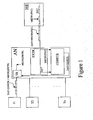
Figure 1 represents an Access network. - The working of the device according to the present invention in accordance with its telecommunication environment that is shown in this
Figure 1 will be explained by means of a functional description of the different blocks shown therein. Based on this description, the practical implementation of the blocks will be obvious to a person skilled in the art and will therefore not be described in details. In addition, the principle working of the method to control error on transmission of data being transmitted from a head-end to and end-user terminal in an access network will be described in further detail. - Referring to the
Figure 1 , an Access network is described. The Access Network comprises a head-end HE being coupled to an access node AN which is on its turn coupled to a plurality of end-user terminals T1, T2, ..., Tn. Data DAT has to be transmitted by the head-end HE to the terminal T1 via the access node AN. Presume that the Access Network is a DSL access network and that the data DAT is the content to provide a triple play service such as video content to an end-user terminal e.g. T1. In order to provide the end-users in the Access Network a good quality service, a first protection mechanism MECH1 is applied. The head-end HE comprises means to apply this first protection mechanism MECH1 (not shown in the Figure) while transmitting the data DAT to the terminal T1. For the actual described embodiment it is preferred to apply a Forward Error Correction Mechanism. However, it has to be clear that this is only an example and that another protection mechanism might as well be applied by the head-end HE. In the event when implementing such a forward error correction mechanism, forward error correction data MECH1(FEC) is generated by the head-end HE according to the first protection mechanism MECH1 and based upon the to be transmitted information i.e. data DAT. The first reconstruction data i.e. forward error correction data MECH1(FEC) is associated to the data DAT. In this way the head-end HE transmits a first data stream DAT+MECH1(FEC) (SeeFigure 1 ) that comprises the data DAT and the forward error correction data MECH1 (FEC). The first data stream DAT+MECH1(FEC) is transmitted by the head-end HE towards the terminal T1. - However, the first data stream DAT+MECH1(FEC) is firstly received by the access node AN. It has to be explained that according to the present application the access node AN terminates already here the first protection mechanism MECH1. Effective protection has indeed been provided between the head-end HE and the access node. However, more customized protection is required between the access node AN and the terminal T1. The access node is the appropriate point in the network to introduce this customized protection. The access node can measure the line characteristics. In addition, it is also the last fan-out point for multicast content. The access node decides, based on its knowledge of the last mile and taking into account the home network characteristics, the most appropriate second protection mechanism MECH2. The decision of the access node AN, which second protection mechanism MECH2 to select can also be based on feedback from the subscriber terminal e.g. T1.
- The working of the access node AN will be further described in the following paragraph.
- The access node AN comprises an extractor EXTR, a constructor CONSTR and a transmitter TR.
- The Extractor EXTR is coupled to an input of the access node AN and receives e.g. the first data stream DAT+MECH1(FEC)). The extractor EXTR is coupled to the constructor CONSTR. The constructor CONSTR is on its turn coupled to the transmitter TR which is coupled to an output of the access node AN. This output is coupled to the terminal T1
- The extractor EXTR is included in the access node AN to terminate i.e. to stop the first protection mechanism MECH1 in the Access node AN. Hereby, the first reconstruction data MECH1(FEC) i.e. the forward error control data MECH1(FEC) is extracted from the first data stream DAT+MECH1(FEC) and is provided to the constructor CONSTR.
- The constructor CONSTR is included in the access node AN to re-construct the data DAT based upon received degraded data DAT' and the received degraded forwarded error control data MECH1(FEC)'. Hereby reconstructed data DAT-CONSTR is generated.
- It has to be explained that the received data DAT' (and forwarded error control data MECH 1(FEC)') by the access node AN is in fact the data DAT (and forwarded error control data MECH1(FEC)) which has been degraded during transmission e.g. wrong bits received at the access node AN, bits even not being received or missing packets from the data DAT. However, this fact is not the aim of the present application. The aim of the present application is that a first protection mechanism is applied at the head-end HE to protect data intended for the terminal T1 and that this first protection mechanism MECH1 is already stopped at the level of the access node AN to reconstruct i.e. to repair the received data already at that point, in stead of further forwarding the received first data stream DAT'+MECH1 (FEC)' towards the terminal T1.
- The reconstructed data DAT-CONSTR that was generated by the constructor CONSTR is provided to the transmitter TR of the access node AN in order to be transmitted to the terminal T1.
- It has to be remarked here that the received first reconstruction data MECH1 (FEC)' will not be further forwarded to the terminal T1.
- The access node AN applies at this stage a selected second protection mechanism MECH2. It is preferred, but not limited, for this actual described embodiment to select and describe a retransmission mechanism. According to such a retransmission mechanism, a receiver of information requests to the transmitter of the information to retransmit part of the information that was not properly received.
- The transmitter TR is included in the access node AN to transmit to the terminal T1 a second data stream DAT-CONSTR+MECH2(RETR). This second data stream DAT-CONSTR+MECH2(RETR) includes the information that has to be transmitted i.e. the reconstructed data DAT-CONSTR and second reconstruction data MECH2(RETR). The second reconstruction data MECH2(RETR) is generated according to the second protection mechanism MECH2 and is based upon the reconstructed data DAT-CONSTR. This means that in the event when the terminal T1 is receiving degraded reconstructed data, the terminal requests according to the second protection mechanism to the access node AN second reconstruction data MECH2(RETR) in order to be able to repair the received degraded reconstruction data. This requested second reconstruction data MECH2(RETR) is transmitted by the access node AN within the second data stream DAT-CONTR+MECH2(RETR) together with reconstructed data DAT-CONTR to the terminal T1.
- In this way the access node AN is involved in the protection process for the second stage of the forwarding process. The selected protection mechanism MECH2 is adapted to the last mile and home network characteristics. The type of protection mechanism MECH2 is selected in function of the requirements of the last mile technology in use.
- A final remark is that embodiments of the present invention are described above in terms of functional blocks. From the functional description of these blocks, given above, it will be apparent for a person skilled in the art of designing electronic devices how embodiments of these blocks can be manufactured with well-known electronic components. A detailed architecture of the contents of the functional blocks hence is not given.
- While the principles of the invention have been described above in connection with specific apparatus, it is to be clearly understood that this description is made only by way of example and not as a limitation on the scope of the invention, as defined in the appended claims.
Claims (8)
- A method of error control in transmission of data (DAT), said data being transmitted from a head-end (HE) to an end-user terminal (Ti) in an access network, said access network also comprising and access node (AN) being coupled between said head-end (HE) and said terminal (Ti), the method comprising the steps of:said head-end (HE) applying a first protection mechanism (MECH1) to generate first reconstruction data (MECH1 (FEC)) based upon said data (DAT) and being associated to said data (DAT),- said head-end (HE) transmitting to said access node (AN) a first data stream (DAT+MECH1(FEC)) comprising said data (DAT) and said first reconstruction data (MECH1 (FEC)),- said access node (AN) receiving said first data stream (DAT+MECH1 (FEC));- said access node (AN) extracting said first reconstruction data (MECH1(FEC)') and said data (DAT') from said first data stream (DAT+MECH1 (FEC)); and- said access node (AN) reconstructing reconstructed data (DAT-CONSTR) according to said first protection mechanism (MECH1) based upon said data (DAT') and said first received reconstruction data (MECH1 (FEC)') and- said access node (AN) selecting for a second stage between said access node (AN) and said terminal (Ti) a second protection mechanism (MECH2) based upon second stage technology requirements; and- said access node (AN) applying said second protection mechanism (MECH2) to generate second reconstruction data (MECH2(RETR)) based upon said reconstructed data (DAT-CONSTR) and being associated to said reconstructed data (DAT-CONSTR),- said access node (AN) transmitting to said terminal (Ti) a second data stream (DAT-CONSTR+MECH2(RETR)) comprising said reconstructed data (DAT-CONSTR) and said second reconstruction data (MECH2(RETR)).
- The method of error control in transmission of data (DAT) according to claim 1, wherein said first protection mechanism (MECH1) is accomplished by a forward error control mechanism whereby said first reconstruction data (MECH1(FEC)) is forward error control data (FEC).
- The method of error control in transmission of data (DAT) according to anyone of claim 1 and claim2, wherein said second protection mechanism (MECH2) is accomplished by a retransmission mechanism whereby said second reconstruction data (MECH2(RETR)) is retransmission data (RETR).
- The method of error control in transmission of data (DAT) according to any previous claim, wherein said data (DAT) is triple play content data such as video content data.
- The method of error control in transmission of data (DAT) according to any previous claim, wherein said Access node (AN) is an access node in a digital subscriber line access network.
- An access node (AN) in an access network being coupled between a head-end (HE) and end-user terminal (Ti) to forward data (DAT), being received from said head-end (HE) towards said terminal (Ti), said access node (AN) comprising:- an extractor (EXTR) to extract first reconstruction data (MECH1(FEC)') and said data (DAT') from a first data stream (DAT+MECH1(FEC)), said first data stream (DAT+MECH1(FEC)) being transmitted by said head-end (HE) to said terminal (T1) and comprises said data (DAT) and said first reconstruction data (MECH1(FEC)), said first reconstruction data (MECH1(FEC)) being generated based upon said data (DAT) while applying a first protection mechanism (MECH1) and being associated to said data (DAT); and- a constructor (CONSTR) to re-construct, according to said first protection mechanism (MECH1), reconstructed data (DAT-CONSTR) based upon said data (DAT') and said received first reconstruction data (MECH 1(FEC)'); and- a transmitter (TR) to transmit to said terminal (Ti) while applying a second protection mechanism (MECH2), a second data stream (DAT+MECH2(RETR)) comprising said reconstructed data (DAT-CONSTR) and second reconstruction data (MECH2(RETR)) being associated to said reconstructed data (DAT-CONSTR), said second protection mechanism (MECH2) being selected by said access node (AN) for a second stage between said access node (AN) and said terminal (T1) based upon second stage technology requirements.
- The access node (AN) according to claim 6, wherein said first protection mechanism (MECH1) is accomplished by a forward error control mechanism whereby said first reconstruction data (MECH1(FEC)) is forward error control data (FEC).
- The access node (AN) according to anyone of claim 6 and claim 7, wherein said second protection mechanism (MECH2) is accomplished by a retransmission mechanism whereby said second reconstruction data (MECH2(RETR)) is retransmission data (RETR).
Priority Applications (1)
| Application Number | Priority Date | Filing Date | Title |
|---|---|---|---|
| EP07291612.5A EP2073422B1 (en) | 2007-12-21 | 2007-12-21 | Error control mechanism |
Applications Claiming Priority (1)
| Application Number | Priority Date | Filing Date | Title |
|---|---|---|---|
| EP07291612.5A EP2073422B1 (en) | 2007-12-21 | 2007-12-21 | Error control mechanism |
Publications (2)
| Publication Number | Publication Date |
|---|---|
| EP2073422A1 EP2073422A1 (en) | 2009-06-24 |
| EP2073422B1 true EP2073422B1 (en) | 2015-06-24 |
Family
ID=39321443
Family Applications (1)
| Application Number | Title | Priority Date | Filing Date |
|---|---|---|---|
| EP07291612.5A Not-in-force EP2073422B1 (en) | 2007-12-21 | 2007-12-21 | Error control mechanism |
Country Status (1)
| Country | Link |
|---|---|
| EP (1) | EP2073422B1 (en) |
Family Cites Families (3)
| Publication number | Priority date | Publication date | Assignee | Title |
|---|---|---|---|---|
| US5428629A (en) * | 1990-11-01 | 1995-06-27 | Motorola, Inc. | Error check code recomputation method time independent of message length |
| US6108331A (en) * | 1998-07-10 | 2000-08-22 | Upstate Systems Tec, Inc. | Single medium wiring scheme for multiple signal distribution in building and access port therefor |
| US7286487B2 (en) * | 2002-11-18 | 2007-10-23 | Infinera Corporation | Optical transmission network with asynchronous mapping and demapping and digital wrapper frame for the same |
-
2007
- 2007-12-21 EP EP07291612.5A patent/EP2073422B1/en not_active Not-in-force
Also Published As
| Publication number | Publication date |
|---|---|
| EP2073422A1 (en) | 2009-06-24 |
Similar Documents
| Publication | Publication Date | Title |
|---|---|---|
| EP3940974B1 (en) | Transmission method and device for data stream | |
| KR101363541B1 (en) | Method and apparatus for encoding and decoding data | |
| US9258084B2 (en) | Method and implementation for network coefficents selection | |
| KR100680671B1 (en) | Method of generating data for error correction and computer readable recording medium storing generating device and generating program | |
| US8219589B2 (en) | Method for communicating data in xDSL using data retransmission | |
| TWI418172B (en) | Method, device and system for transmitting data in xDSL system | |
| CN101179362A (en) | An automatic retransmission request mechanism suitable for mobile streaming applications | |
| US20040177153A1 (en) | Method and device for preserving pacing information across a transport medium | |
| EP1791285A1 (en) | Hybrid ARQ apparatus and corresponding method, wherein the FEC redundancy is adapted based on the number of retransmissions of a packet | |
| JP5404976B2 (en) | Adapter system for Ethernet networks | |
| KR20110097917A (en) | On Demand Error Control | |
| Michel et al. | Quirl: Flexible quic loss recovery for low latency applications | |
| US6460154B1 (en) | Data error correction system | |
| JP5372248B2 (en) | Maintaining time division multiplexing through pseudowire connections during network failures | |
| EP2073422A1 (en) | Error control mechanism | |
| US7515570B2 (en) | Cell shaping device, communication system having the shaping device and shaping method | |
| RU2706879C1 (en) | Method of transmitting data over packet communication networks with the possibility of recovering data when they are lost due to presence of connection errors in communication networks | |
| US7289507B2 (en) | Method and network element for a safety transport of ethernet frames over a transport SDH/SONET network | |
| CN100539512C (en) | Realize the method that data link is adjusted in the SDH transmission network | |
| KR100719895B1 (en) | Packet combining device and method for wireless asynchronous transmission mode network | |
| Ivchenko et al. | for High-Speed Packet Networks | |
| Epple et al. | Implementation concepts for a bridging protocol for the high data rate slow-fading Free-Space Optical Channel | |
| CN1731782B (en) | Method, related receiver and related transmitter for data stream quality control | |
| Wan | Throughput optimisation of a satellite communication link for a robust packet service | |
| Martini et al. | Controlling joint optimization of wireless video transmission: the PHOENIX basic demonstration platform |
Legal Events
| Date | Code | Title | Description |
|---|---|---|---|
| PUAI | Public reference made under article 153(3) epc to a published international application that has entered the european phase |
Free format text: ORIGINAL CODE: 0009012 |
|
| AK | Designated contracting states |
Kind code of ref document: A1 Designated state(s): AT BE BG CH CY CZ DE DK EE ES FI FR GB GR HU IE IS IT LI LT LU LV MC MT NL PL PT RO SE SI SK TR |
|
| AX | Request for extension of the european patent |
Extension state: AL BA HR MK RS |
|
| 17P | Request for examination filed |
Effective date: 20091228 |
|
| AKX | Designation fees paid |
Designated state(s): AT BE BG CH CY CZ DE DK EE ES FI FR GB GR HU IE IS IT LI LT LU LV MC MT NL PL PT RO SE SI SK TR |
|
| 17Q | First examination report despatched |
Effective date: 20100212 |
|
| RAP1 | Party data changed (applicant data changed or rights of an application transferred) |
Owner name: ALCATEL LUCENT |
|
| 111Z | Information provided on other rights and legal means of execution |
Free format text: AT BE BG CH CY CZ DE DK EE ES FI FR GB GR HU IE IS IT LI LT LU LV MC MT NL PL PT RO SE SI SK TR Effective date: 20130410 |
|
| RAP1 | Party data changed (applicant data changed or rights of an application transferred) |
Owner name: ALCATEL LUCENT |
|
| D11X | Information provided on other rights and legal means of execution (deleted) | ||
| GRAP | Despatch of communication of intention to grant a patent |
Free format text: ORIGINAL CODE: EPIDOSNIGR1 |
|
| INTG | Intention to grant announced |
Effective date: 20141208 |
|
| GRAP | Despatch of communication of intention to grant a patent |
Free format text: ORIGINAL CODE: EPIDOSNIGR1 |
|
| RIN1 | Information on inventor provided before grant (corrected) |
Inventor name: DE VLEESCHAUWER, DANNY Inventor name: VANDAELE, PIET MICHEL ALBERT Inventor name: SHARPE, RANDALL Inventor name: T'JOENS, YVES |
|
| GRAS | Grant fee paid |
Free format text: ORIGINAL CODE: EPIDOSNIGR3 |
|
| INTG | Intention to grant announced |
Effective date: 20150424 |
|
| GRAA | (expected) grant |
Free format text: ORIGINAL CODE: 0009210 |
|
| AK | Designated contracting states |
Kind code of ref document: B1 Designated state(s): AT BE BG CH CY CZ DE DK EE ES FI FR GB GR HU IE IS IT LI LT LU LV MC MT NL PL PT RO SE SI SK TR |
|
| REG | Reference to a national code |
Ref country code: GB Ref legal event code: FG4D |
|
| REG | Reference to a national code |
Ref country code: CH Ref legal event code: EP |
|
| REG | Reference to a national code |
Ref country code: AT Ref legal event code: REF Ref document number: 733306 Country of ref document: AT Kind code of ref document: T Effective date: 20150715 |
|
| REG | Reference to a national code |
Ref country code: IE Ref legal event code: FG4D |
|
| REG | Reference to a national code |
Ref country code: DE Ref legal event code: R096 Ref document number: 602007041874 Country of ref document: DE |
|
| PG25 | Lapsed in a contracting state [announced via postgrant information from national office to epo] |
Ref country code: LT Free format text: LAPSE BECAUSE OF FAILURE TO SUBMIT A TRANSLATION OF THE DESCRIPTION OR TO PAY THE FEE WITHIN THE PRESCRIBED TIME-LIMIT Effective date: 20150624 Ref country code: FI Free format text: LAPSE BECAUSE OF FAILURE TO SUBMIT A TRANSLATION OF THE DESCRIPTION OR TO PAY THE FEE WITHIN THE PRESCRIBED TIME-LIMIT Effective date: 20150624 |
|
| REG | Reference to a national code |
Ref country code: AT Ref legal event code: MK05 Ref document number: 733306 Country of ref document: AT Kind code of ref document: T Effective date: 20150624 |
|
| REG | Reference to a national code |
Ref country code: LT Ref legal event code: MG4D |
|
| PG25 | Lapsed in a contracting state [announced via postgrant information from national office to epo] |
Ref country code: GR Free format text: LAPSE BECAUSE OF FAILURE TO SUBMIT A TRANSLATION OF THE DESCRIPTION OR TO PAY THE FEE WITHIN THE PRESCRIBED TIME-LIMIT Effective date: 20150925 Ref country code: LV Free format text: LAPSE BECAUSE OF FAILURE TO SUBMIT A TRANSLATION OF THE DESCRIPTION OR TO PAY THE FEE WITHIN THE PRESCRIBED TIME-LIMIT Effective date: 20150624 Ref country code: BG Free format text: LAPSE BECAUSE OF FAILURE TO SUBMIT A TRANSLATION OF THE DESCRIPTION OR TO PAY THE FEE WITHIN THE PRESCRIBED TIME-LIMIT Effective date: 20150924 |
|
| REG | Reference to a national code |
Ref country code: NL Ref legal event code: MP Effective date: 20150624 |
|
| REG | Reference to a national code |
Ref country code: FR Ref legal event code: PLFP Year of fee payment: 9 |
|
| PG25 | Lapsed in a contracting state [announced via postgrant information from national office to epo] |
Ref country code: EE Free format text: LAPSE BECAUSE OF FAILURE TO SUBMIT A TRANSLATION OF THE DESCRIPTION OR TO PAY THE FEE WITHIN THE PRESCRIBED TIME-LIMIT Effective date: 20150624 |
|
| PG25 | Lapsed in a contracting state [announced via postgrant information from national office to epo] |
Ref country code: CZ Free format text: LAPSE BECAUSE OF FAILURE TO SUBMIT A TRANSLATION OF THE DESCRIPTION OR TO PAY THE FEE WITHIN THE PRESCRIBED TIME-LIMIT Effective date: 20150624 Ref country code: PT Free format text: LAPSE BECAUSE OF FAILURE TO SUBMIT A TRANSLATION OF THE DESCRIPTION OR TO PAY THE FEE WITHIN THE PRESCRIBED TIME-LIMIT Effective date: 20151026 Ref country code: IS Free format text: LAPSE BECAUSE OF FAILURE TO SUBMIT A TRANSLATION OF THE DESCRIPTION OR TO PAY THE FEE WITHIN THE PRESCRIBED TIME-LIMIT Effective date: 20151024 Ref country code: AT Free format text: LAPSE BECAUSE OF FAILURE TO SUBMIT A TRANSLATION OF THE DESCRIPTION OR TO PAY THE FEE WITHIN THE PRESCRIBED TIME-LIMIT Effective date: 20150624 Ref country code: PL Free format text: LAPSE BECAUSE OF FAILURE TO SUBMIT A TRANSLATION OF THE DESCRIPTION OR TO PAY THE FEE WITHIN THE PRESCRIBED TIME-LIMIT Effective date: 20150624 Ref country code: ES Free format text: LAPSE BECAUSE OF FAILURE TO SUBMIT A TRANSLATION OF THE DESCRIPTION OR TO PAY THE FEE WITHIN THE PRESCRIBED TIME-LIMIT Effective date: 20150624 Ref country code: RO Free format text: LAPSE BECAUSE OF NON-PAYMENT OF DUE FEES Effective date: 20150624 Ref country code: SK Free format text: LAPSE BECAUSE OF FAILURE TO SUBMIT A TRANSLATION OF THE DESCRIPTION OR TO PAY THE FEE WITHIN THE PRESCRIBED TIME-LIMIT Effective date: 20150624 |
|
| REG | Reference to a national code |
Ref country code: DE Ref legal event code: R097 Ref document number: 602007041874 Country of ref document: DE |
|
| PG25 | Lapsed in a contracting state [announced via postgrant information from national office to epo] |
Ref country code: IT Free format text: LAPSE BECAUSE OF FAILURE TO SUBMIT A TRANSLATION OF THE DESCRIPTION OR TO PAY THE FEE WITHIN THE PRESCRIBED TIME-LIMIT Effective date: 20150624 Ref country code: DK Free format text: LAPSE BECAUSE OF FAILURE TO SUBMIT A TRANSLATION OF THE DESCRIPTION OR TO PAY THE FEE WITHIN THE PRESCRIBED TIME-LIMIT Effective date: 20150624 |
|
| PLBE | No opposition filed within time limit |
Free format text: ORIGINAL CODE: 0009261 |
|
| STAA | Information on the status of an ep patent application or granted ep patent |
Free format text: STATUS: NO OPPOSITION FILED WITHIN TIME LIMIT |
|
| PG25 | Lapsed in a contracting state [announced via postgrant information from national office to epo] |
Ref country code: BE Free format text: LAPSE BECAUSE OF NON-PAYMENT OF DUE FEES Effective date: 20151231 |
|
| 26N | No opposition filed |
Effective date: 20160329 |
|
| PG25 | Lapsed in a contracting state [announced via postgrant information from national office to epo] |
Ref country code: MC Free format text: LAPSE BECAUSE OF FAILURE TO SUBMIT A TRANSLATION OF THE DESCRIPTION OR TO PAY THE FEE WITHIN THE PRESCRIBED TIME-LIMIT Effective date: 20150624 Ref country code: LU Free format text: LAPSE BECAUSE OF FAILURE TO SUBMIT A TRANSLATION OF THE DESCRIPTION OR TO PAY THE FEE WITHIN THE PRESCRIBED TIME-LIMIT Effective date: 20151221 |
|
| REG | Reference to a national code |
Ref country code: CH Ref legal event code: PL |
|
| PG25 | Lapsed in a contracting state [announced via postgrant information from national office to epo] |
Ref country code: SI Free format text: LAPSE BECAUSE OF FAILURE TO SUBMIT A TRANSLATION OF THE DESCRIPTION OR TO PAY THE FEE WITHIN THE PRESCRIBED TIME-LIMIT Effective date: 20150624 |
|
| REG | Reference to a national code |
Ref country code: IE Ref legal event code: MM4A |
|
| PG25 | Lapsed in a contracting state [announced via postgrant information from national office to epo] |
Ref country code: LI Free format text: LAPSE BECAUSE OF NON-PAYMENT OF DUE FEES Effective date: 20151231 Ref country code: CH Free format text: LAPSE BECAUSE OF NON-PAYMENT OF DUE FEES Effective date: 20151231 Ref country code: IE Free format text: LAPSE BECAUSE OF NON-PAYMENT OF DUE FEES Effective date: 20151221 |
|
| REG | Reference to a national code |
Ref country code: FR Ref legal event code: PLFP Year of fee payment: 10 |
|
| PG25 | Lapsed in a contracting state [announced via postgrant information from national office to epo] |
Ref country code: BE Free format text: LAPSE BECAUSE OF FAILURE TO SUBMIT A TRANSLATION OF THE DESCRIPTION OR TO PAY THE FEE WITHIN THE PRESCRIBED TIME-LIMIT Effective date: 20150624 |
|
| PGFP | Annual fee paid to national office [announced via postgrant information from national office to epo] |
Ref country code: FR Payment date: 20161222 Year of fee payment: 10 |
|
| PG25 | Lapsed in a contracting state [announced via postgrant information from national office to epo] |
Ref country code: HU Free format text: LAPSE BECAUSE OF FAILURE TO SUBMIT A TRANSLATION OF THE DESCRIPTION OR TO PAY THE FEE WITHIN THE PRESCRIBED TIME-LIMIT; INVALID AB INITIO Effective date: 20071221 |
|
| PG25 | Lapsed in a contracting state [announced via postgrant information from national office to epo] |
Ref country code: NL Free format text: LAPSE BECAUSE OF FAILURE TO SUBMIT A TRANSLATION OF THE DESCRIPTION OR TO PAY THE FEE WITHIN THE PRESCRIBED TIME-LIMIT Effective date: 20150624 Ref country code: SE Free format text: LAPSE BECAUSE OF FAILURE TO SUBMIT A TRANSLATION OF THE DESCRIPTION OR TO PAY THE FEE WITHIN THE PRESCRIBED TIME-LIMIT Effective date: 20150624 Ref country code: CY Free format text: LAPSE BECAUSE OF FAILURE TO SUBMIT A TRANSLATION OF THE DESCRIPTION OR TO PAY THE FEE WITHIN THE PRESCRIBED TIME-LIMIT Effective date: 20150624 |
|
| PG25 | Lapsed in a contracting state [announced via postgrant information from national office to epo] |
Ref country code: TR Free format text: LAPSE BECAUSE OF FAILURE TO SUBMIT A TRANSLATION OF THE DESCRIPTION OR TO PAY THE FEE WITHIN THE PRESCRIBED TIME-LIMIT Effective date: 20150624 Ref country code: MT Free format text: LAPSE BECAUSE OF FAILURE TO SUBMIT A TRANSLATION OF THE DESCRIPTION OR TO PAY THE FEE WITHIN THE PRESCRIBED TIME-LIMIT Effective date: 20150624 |
|
| PGFP | Annual fee paid to national office [announced via postgrant information from national office to epo] |
Ref country code: DE Payment date: 20171211 Year of fee payment: 11 |
|
| PGFP | Annual fee paid to national office [announced via postgrant information from national office to epo] |
Ref country code: GB Payment date: 20171221 Year of fee payment: 11 |
|
| REG | Reference to a national code |
Ref country code: FR Ref legal event code: ST Effective date: 20180831 |
|
| PG25 | Lapsed in a contracting state [announced via postgrant information from national office to epo] |
Ref country code: FR Free format text: LAPSE BECAUSE OF NON-PAYMENT OF DUE FEES Effective date: 20180102 |
|
| REG | Reference to a national code |
Ref country code: DE Ref legal event code: R082 Ref document number: 602007041874 Country of ref document: DE Representative=s name: MENZIETTI WETZEL, DE Ref country code: DE Ref legal event code: R081 Ref document number: 602007041874 Country of ref document: DE Owner name: PROVENANCE ASSET GROUP LLC, PITTSFORD, US Free format text: FORMER OWNER: ALCATEL LUCENT, BOULOGNE BILLANCOURT, FR |
|
| REG | Reference to a national code |
Ref country code: GB Ref legal event code: 732E Free format text: REGISTERED BETWEEN 20190418 AND 20190426 |
|
| REG | Reference to a national code |
Ref country code: DE Ref legal event code: R119 Ref document number: 602007041874 Country of ref document: DE |
|
| GBPC | Gb: european patent ceased through non-payment of renewal fee |
Effective date: 20181221 |
|
| PG25 | Lapsed in a contracting state [announced via postgrant information from national office to epo] |
Ref country code: DE Free format text: LAPSE BECAUSE OF NON-PAYMENT OF DUE FEES Effective date: 20190702 |
|
| PG25 | Lapsed in a contracting state [announced via postgrant information from national office to epo] |
Ref country code: GB Free format text: LAPSE BECAUSE OF NON-PAYMENT OF DUE FEES Effective date: 20181221 |