EP2070784A1 - A pedal assembly for vehicles - Google Patents
A pedal assembly for vehicles Download PDFInfo
- Publication number
- EP2070784A1 EP2070784A1 EP08253386A EP08253386A EP2070784A1 EP 2070784 A1 EP2070784 A1 EP 2070784A1 EP 08253386 A EP08253386 A EP 08253386A EP 08253386 A EP08253386 A EP 08253386A EP 2070784 A1 EP2070784 A1 EP 2070784A1
- Authority
- EP
- European Patent Office
- Prior art keywords
- retainer
- pedal
- coupler
- actuator
- brake
- Prior art date
- Legal status (The legal status is an assumption and is not a legal conclusion. Google has not performed a legal analysis and makes no representation as to the accuracy of the status listed.)
- Granted
Links
Images







Classifications
-
- B—PERFORMING OPERATIONS; TRANSPORTING
- B60—VEHICLES IN GENERAL
- B60T—VEHICLE BRAKE CONTROL SYSTEMS OR PARTS THEREOF; BRAKE CONTROL SYSTEMS OR PARTS THEREOF, IN GENERAL; ARRANGEMENT OF BRAKING ELEMENTS ON VEHICLES IN GENERAL; PORTABLE DEVICES FOR PREVENTING UNWANTED MOVEMENT OF VEHICLES; VEHICLE MODIFICATIONS TO FACILITATE COOLING OF BRAKES
- B60T7/00—Brake-action initiating means
- B60T7/02—Brake-action initiating means for personal initiation
- B60T7/04—Brake-action initiating means for personal initiation foot actuated
- B60T7/06—Disposition of pedal
-
- G—PHYSICS
- G05—CONTROLLING; REGULATING
- G05G—CONTROL DEVICES OR SYSTEMS INSOFAR AS CHARACTERISED BY MECHANICAL FEATURES ONLY
- G05G1/00—Controlling members, e.g. knobs or handles; Assemblies or arrangements thereof; Indicating position of controlling members
- G05G1/30—Controlling members actuated by foot
- G05G1/36—Mounting units comprising an assembly of two or more pedals, e.g. for facilitating mounting
-
- B—PERFORMING OPERATIONS; TRANSPORTING
- B60—VEHICLES IN GENERAL
- B60W—CONJOINT CONTROL OF VEHICLE SUB-UNITS OF DIFFERENT TYPE OR DIFFERENT FUNCTION; CONTROL SYSTEMS SPECIALLY ADAPTED FOR HYBRID VEHICLES; ROAD VEHICLE DRIVE CONTROL SYSTEMS FOR PURPOSES NOT RELATED TO THE CONTROL OF A PARTICULAR SUB-UNIT
- B60W10/00—Conjoint control of vehicle sub-units of different type or different function
- B60W10/18—Conjoint control of vehicle sub-units of different type or different function including control of braking systems
- B60W10/184—Conjoint control of vehicle sub-units of different type or different function including control of braking systems with wheel brakes
-
- B—PERFORMING OPERATIONS; TRANSPORTING
- B60—VEHICLES IN GENERAL
- B60W—CONJOINT CONTROL OF VEHICLE SUB-UNITS OF DIFFERENT TYPE OR DIFFERENT FUNCTION; CONTROL SYSTEMS SPECIALLY ADAPTED FOR HYBRID VEHICLES; ROAD VEHICLE DRIVE CONTROL SYSTEMS FOR PURPOSES NOT RELATED TO THE CONTROL OF A PARTICULAR SUB-UNIT
- B60W2540/00—Input parameters relating to occupants
- B60W2540/12—Brake pedal position
-
- Y—GENERAL TAGGING OF NEW TECHNOLOGICAL DEVELOPMENTS; GENERAL TAGGING OF CROSS-SECTIONAL TECHNOLOGIES SPANNING OVER SEVERAL SECTIONS OF THE IPC; TECHNICAL SUBJECTS COVERED BY FORMER USPC CROSS-REFERENCE ART COLLECTIONS [XRACs] AND DIGESTS
- Y10—TECHNICAL SUBJECTS COVERED BY FORMER USPC
- Y10T—TECHNICAL SUBJECTS COVERED BY FORMER US CLASSIFICATION
- Y10T74/00—Machine element or mechanism
- Y10T74/20—Control lever and linkage systems
- Y10T74/20528—Foot operated
-
- Y—GENERAL TAGGING OF NEW TECHNOLOGICAL DEVELOPMENTS; GENERAL TAGGING OF CROSS-SECTIONAL TECHNOLOGIES SPANNING OVER SEVERAL SECTIONS OF THE IPC; TECHNICAL SUBJECTS COVERED BY FORMER USPC CROSS-REFERENCE ART COLLECTIONS [XRACs] AND DIGESTS
- Y10—TECHNICAL SUBJECTS COVERED BY FORMER USPC
- Y10T—TECHNICAL SUBJECTS COVERED BY FORMER US CLASSIFICATION
- Y10T74/00—Machine element or mechanism
- Y10T74/20—Control lever and linkage systems
- Y10T74/20528—Foot operated
- Y10T74/20534—Accelerator
-
- Y—GENERAL TAGGING OF NEW TECHNOLOGICAL DEVELOPMENTS; GENERAL TAGGING OF CROSS-SECTIONAL TECHNOLOGIES SPANNING OVER SEVERAL SECTIONS OF THE IPC; TECHNICAL SUBJECTS COVERED BY FORMER USPC CROSS-REFERENCE ART COLLECTIONS [XRACs] AND DIGESTS
- Y10—TECHNICAL SUBJECTS COVERED BY FORMER USPC
- Y10T—TECHNICAL SUBJECTS COVERED BY FORMER US CLASSIFICATION
- Y10T74/00—Machine element or mechanism
- Y10T74/20—Control lever and linkage systems
- Y10T74/20528—Foot operated
- Y10T74/2054—Signal
-
- Y—GENERAL TAGGING OF NEW TECHNOLOGICAL DEVELOPMENTS; GENERAL TAGGING OF CROSS-SECTIONAL TECHNOLOGIES SPANNING OVER SEVERAL SECTIONS OF THE IPC; TECHNICAL SUBJECTS COVERED BY FORMER USPC CROSS-REFERENCE ART COLLECTIONS [XRACs] AND DIGESTS
- Y10—TECHNICAL SUBJECTS COVERED BY FORMER USPC
- Y10T—TECHNICAL SUBJECTS COVERED BY FORMER US CLASSIFICATION
- Y10T74/00—Machine element or mechanism
- Y10T74/20—Control lever and linkage systems
- Y10T74/20576—Elements
- Y10T74/20636—Detents
- Y10T74/20672—Lever engaging rack
- Y10T74/20708—Pedal controlled
-
- Y—GENERAL TAGGING OF NEW TECHNOLOGICAL DEVELOPMENTS; GENERAL TAGGING OF CROSS-SECTIONAL TECHNOLOGIES SPANNING OVER SEVERAL SECTIONS OF THE IPC; TECHNICAL SUBJECTS COVERED BY FORMER USPC CROSS-REFERENCE ART COLLECTIONS [XRACs] AND DIGESTS
- Y10—TECHNICAL SUBJECTS COVERED BY FORMER USPC
- Y10T—TECHNICAL SUBJECTS COVERED BY FORMER US CLASSIFICATION
- Y10T74/00—Machine element or mechanism
- Y10T74/20—Control lever and linkage systems
- Y10T74/20576—Elements
- Y10T74/20888—Pedals
Definitions
- the present invention relates to pedal assemblies for vehicles, and more particularly to park brake retainer devices for such pedal assemblies.
- Pedal assemblies are known and basically include an actuator or "accelerator” pedal and a brake pedal.
- the actuator/accelerator pedal is coupled with a motor, typically either an electric motor or an internal combustion engine, so as to regulate vehicle speed.
- the brake pedal is coupled with a braking mechanism and is operable by a vehicle operator to slow and/or stop the vehicle during use.
- the brake pedal includes a park brake configured to retain the brake pedal at a fixed or "park” position so that the braking mechanism prevents an unattended vehicle from "rolling away" during vehicle use.
- the present invention is a pedal assembly for a vehicle, the vehicle including a motor and a braking mechanism.
- the pedal assembly comprises an actuator pedal movably coupled with the vehicle so as to be displaceable between an initial position and a maximum displaced position, the actuator pedal being operatively connected with the motor.
- a brake pedal is movably coupled with the vehicle so as to be displaceable between an initial position and a park position.
- the brake pedal is operatively coupled with the braking mechanism so as to actuate the braking mechanism in the brake park position.
- a brake retainer mechanism includes a coupler connected with the brake pedal and a retainer movably coupled with the vehicle so as to be angularly displaceable about an axis.
- the retainer is configured to be releasably engageable with the coupler and configured to be releasably engageable with the actuator pedal so as to substantially prevent angular displacement of the retainer in a first direction about the retainer axis.
- the brake pedal is releasably retained at the park position when each of the coupler and the actuator pedal is engaged with the retainer.
- the present invention is again a pedal assembly for a vehicle, the vehicle including a motor and a braking mechanism.
- the pedal assembly comprises an actuator pedal movably coupled with the vehicle so as to be displaceable between an initial position and a maximum displaced position, the actuator pedal being operatively connected with the motor.
- At least one of the retainer and the actuator pedal may be configured to engage with the other one of the retainer and the actuator pedal when the actuator pedal is located at least generally proximal to the actuator pedal initial position such that the actuator pedal prevents angular displacement of the retainer in a first direction about the retainer axis; and at least one of the retainer and the actuator pedal may be configured to disengage from the other one of the retainer and actuator pedal when the actuator pedal displaces from the initial position toward the maximum displaced position such that the retainer is angularly displaceable in the first direction about the retainer axis. At least one of the coupler and the retainer may be configured to disengage from the other one of the coupler and the retainer when the retainer disengages from the actuator pedal.
- the pedal assembly may further comprise a biasing member configured to bias the brake pedal toward the brake pedal initial position such that the brake pedal displaces toward the brake pedal initial position when the coupler is disengaged from the retainer.
- the brake pedal biasing member is configured to displace the brake pedal such that the coupled retainer angularly displaces about the retainer axis until the coupler disengages from the retainer.
- the brake pedal is displaceable between the initial position and a maximum displacement position, the park position being disposed generally between the initial and maximum displacement positions, the brake pedal being configured to operate the braking mechanism in each one of the park and maximum displacement positions; and at least one of the coupler and the retainer is configured to disengage from the other one of the coupler and the retainer when the brake pedal displaces from the park position toward the maximum displacement position.
- At least one of the coupler and the retainer may be configured to disengage from the other one of the coupler and the retainer when the retainer is disengaged from the actuator pedal; and the pedal assembly may further comprise a biasing member configured to bias the brake pedal toward the brake pedal initial position such that the brake pedal displaces toward the brake initial position when the coupler disengages from the retainer.
- the brake pedal may be displaceable between the initial position and a maximum displacement position, the park position being disposed generally between the initial and maximum displacement positions, the brake pedal being configured to operate the braking mechanism in each one of the park and maximum displacement positions; and at least one of the coupler and the retainer may be configured to disengage from the other one of the coupler and the retainer when the brake pedal displaces from the park position toward the maximum displacement positions.
- the pedal retainer may include a first portion engageable with the actuator pedal such that the actuator pedal prevents angular displacement of the retainer about the retainer axis; and a second portion connected with the first portion and engageable with the brake pedal when the brake pedal is disposed at the park position such that the brake pedal is retained at the park position when the actuator pedal is engaged with the retainer first portion.
- the retainer first portion may be generally circular and has a first outside diameter and the retainer second body portion is generally circular and has a second outside diameter, the first outside diameter being substantially larger than the second outside diameter.
- the retainer first portion may include a generally circular disk and the second portion includes a generally circular cylinder coupled with the disk, each one of the disk and cylinder being centered about the retainer axis and rotatable about the axis as a single unit.
- Each one of the retainer first and second portions may have one of a plurality of generally outwardly-extending teeth and a plurality of inwardly-extending notches, the one of the teeth and notches being spaced circumferentially about the retainer axis, the one of the teeth and notches of the retainer first portion being engageable with the actuator pedal and the one of the teeth and notches of the retainer second portion being engageable with the coupler.
- the coupler may include at least one tooth separately engageable with each one of the one of the plurality of teeth and the plurality of notches of the retainer second portion.
- Each of the one of the retainer first and second portions may have a plurality of ratchet teeth.
- the ratchet teeth of the retainer first portion are each generally angled in first direction about the retainer axis such that engagement of the retainer first portion and the actuator pedal prevents rotation of the retainer in the first angular direction about the retainer axis and permits rotation of the retainer in the second angular direction; and the ratchet teeth of the retainer second portion are each generally angled in a second direction about the retainer axis such that engagement of the retainer second portion and the coupler prevents displacement of the brake pedal toward the break pedal initial position and permits displacement of the brake pedal generally away from the brake initial position.
- each one of the retainer first and second portions includes a plurality of generally radially outwardly extending projections spaced circumferentially about the retainer axis, each projection including a generally radial contact surface and a generally circumferential slide surface;
- the actuator pedal includes a stop separately contactable with each one of the contact surfaces of the first retainer portion projections so as to prevent rotation of the retainer in the first angular direction about the retainer axis;
- the coupler has at least one catch surface separately disposable against the contact surface of each one of the second retainer portion projections so as to releasably couple the brake pedal with the retainer.
- Each projection contact surface may have a radially inner end and a radially outer end; the projection slide surfaces of the retainer first portion may each extend in the first angular direction from the radial inner end of a separate one of the contact surfaces to the radial outer end of an adjacent contact surface such that first portion projections are configured to permit the retainer to angularly displace in the second angular direction when the retainer is engaged with the actuator pedal stop; and the projection slide surfaces of the retainer second portion may each extend in the second angular direction from the radial inner end of a separate one of the contact surfaces to the radial outer end of an adjacent contact surface such that second portion projections are configured to permit the coupler to slidably displace along the slide surface between adjacent contact surfaces so that the brake pedal is displaceable in a direction generally away from the initial position when the coupler is engaged with the retainer.
- the retainer first and second portions may be one of mounted to a common shaft, directly connected together, and integrally formed.
- the coupler is moveable between an engaged position and a nonengaged position, the coupler being configured to engage with the retainer in the engaged position when the brake pedal is at the park position and being spaced from the retainer in the nonengaged position; and the brake pedal is configured to displace the coupler between the engaged and nonengaged positions.
- the brake pedal may be freely displaceable between the initial position and the park position when the coupler is located at the nonengaged position.
- the retainer may include a plurality of teeth and the coupler has at least one tooth engageable with at least one of the retainer teeth when the coupler is disposed at the engaged position ant eh brake pedal is at the park position.
- the brake pedal includes a main pedal member and a park brake member movably coupled with the main pedal member, the park brake member being operatively connected with the coupler and the configured to displace the coupler between the engaged and nonengaged positions.
- the park brake member may be moveable between initial and actuation positions; the coupler may be pivotally connected with the brake main member; and the brake retainer mechanism may further include a linkage configured to displace the coupler toward the coupler engaged position when the park brake displaces toward the actuation position.
- the linkage may be further configured to displace the coupler toward the coupler nonengaged position when the park brake displaces toward the park brake initial position.
- the linkage includes a shaft rotatably coupled with the brake main member, the coupler being connected with the shaft such that rotation of the shaft displaces the coupler between the engaged and nonengaged positions; a crank connected with the shaft; and a connector having a first end coupled with the park brake member and a second end coupled with the crank such that displacement of the park brake member pivots the crank so as to pivot the coupler between the engaged and nonengaged positions.
- the connector link may include an upper shaft having a first end connected with the park brake and an opposing second end; and a lower shaft having first end attached to the crank and an opposing second end, the lower shaft second end being movably connected with the upper shaft second end such that the coupler is movable while the park brake member remains generally stationary with respect to brake main pedal member.
- the brake pedal may further include a first biasing member configured to bias the brake main pedal member toward the brake pedal initial position and a second biasing member configured to bias the park brake member toward the park brake initial position.
- the brake pedal includes a main pedal member and a park brake member movably coupled with the main pedal member, the park brake member being operatively connected with the coupler and configured to displace the coupler between the engaged and nonengaged positions.
- the brake pedal includes a main body having a first end pivotally connected with the vehicle so as to be pivotable about a brake pedal axis, an opposing second end, and a longitudinal centerline extending generally between the first and second ends and perpendicular to the axis; and the coupler includes a body with a first end pivotally connected with the brake pedal main body and an opposing second end engageable with the retainer, the coupler body extending generally perpendicularly with respect to the brake body centerline.
- the actuator pedal includes a stop, the stop being separately contactable with each one of the teeth of the retainer first body portion and the actuator pedal is configured to prevent rotation of the retainer in the first angular direction about the retainer axis when the stop contacts one of the teeth.
- the actuator pedal includes a main body pivotally connected with the vehicle so as to be angularly displaceable about an actuator pedal axis when moving between the initial and maximum displacement positions, the main body portion being configured to support an end of a connective member extend between the actuator pedal and the motor; and a stop connected with the pedal main body such that angular displacement of the main body moves the stop between an engaged position and a nonengaged position, at least a portion of the stop being disposed against a portion of the retainer member when the stop is located at the stop engaged position such that the actuator pedal prevents angular displacement of the retainer about the retainer axis.
- the stop may have a body connected with the actuator pedal main body and a contact pin connected with the stop body so as to be spaced from and extending generally parallel to the actuator pedal axis, the pin being contactable with the retainer when the stop is located at the stop engaged position so as to prevent angular displacement of the retainer about the retainer axis and being spaced from the retainer when the stop is at the stop nonengaged position such that the retainer is freely rotatable about the retainer axis.
- the actuator pedal may include a biasing member configured to bias the actuator pedal main body toward the initial position.
- the actuator pedal axis may extend at least generally parallel to the retainer axis.
- a base is connectable with the vehicle and configured to mount the actuator pedal, the brake pedal, and the brake retainer mechanism to the vehicle.
- the present invention is again a pedal assembly for a vehicle, the vehicle including a motor and a braking mechanism.
- the pedal assembly comprises an actuator pedal movably coupled with the vehicle so as to be displaceable between an initial position and a maximum displaced position, the actuator pedal being operatively connected with the motor.
- a brake pedal is movably coupled with the vehicle so as to be displaceable between an initial position and a park position, the brake pedal being operatively coupled with the braking mechanism so as to actuate the braking mechanism in the brake park position.
- a coupler connected with the brake pedal and a retainer is movably coupled with the vehicle so as to be angularly displaceable about an axis.
- the retainer includes first and second generally cylindrical portions, each cylindrical portion having a plurality of teeth.
- the actuator pedal is engageable with at least one of the teeth of the retainer first portion so as to prevent angular displacement of the retainer about the retainer axis.
- the coupler is engageable with at least one of the teeth of the retainer second portion such that the brake pedal is releasably retained at the park position when the actuator pedal is engaged with the retainer.
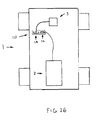
- a pedal assembly 10 for a vehicle 1 the vehicle 1 including a motor 2 and a braking mechanism 3 (see Figs. 26 and 27 ).
- the pedal assembly 10 basically comprises an actuator pedal 12, a brake pedal 14, and a brake retainer mechanism 16.
- the actuator pedal 12 is movably coupled with the vehicle 1 so as to be displaceable between an initial position A 1 (e.g., Fig. 3 ) and a maximum displaced position A MD ( Fig. 5B ), and is operatively connected with the motor 2. Specifically, the actuator pedal 12 is configured such that displacement of the actuator pedal 12 from the initial position A I toward the maximum displacement position A MD increases motor speed, the motor 2 being any appropriate type of vehicle motor such as an internal combustion engine, an electric motor, a hydraulic motor, etc.
- the brake pedal 14 is movably coupled with the vehicle 1 so as to be displaceable between an initial position B I and a park position B p , and preferably also to a maximum displaced position B MD ( Fig. 24 ), as described below.
- the brake pedal 14 is operatively coupled with the braking mechanism 3 so as to actuate the mechanism 3 in the brake park position B P , and preferably actuates the mechanism 3 in a plurality of positions between the initial and maximum displaced positions B I , B MD .
- the brake retainer mechanism 16 includes a coupler 18 connected with the brake pedal 14 and a retainer 20 movably coupled with the vehicle 1 so as to be angularly displaceable about an axis 21.
- the pedal assembly 10 further comprises a base 11 mounted to the vehicle 1, with each component 12, 14, 16 being connected with and/or disposed within the base 11, but each such component may be separately or/and directly mounted to the vehicle 1.
- the retainer 20 is configured to releasably engage with the coupler 18 and configured to releasably engage with the actuator pedal 12 so as to substantially prevent angular displacement of the retainer 20 about the retainer axis 21.
- the brake pedal 16 is releasably retained at the park position B P when the coupler 18 is engaged with the retainer 20 and the retainer 20 is "rotationally fixed" by the actuator pedal 12, as described in greater detail below.
- the retainer 20 and/or the actuator pedal 12 are/is configured to engage with the other one of the retainer 20 and actuator pedal 12 when the actuator pedal 12 is located at least generally proximal to the actuator pedal initial position A I .
- the actuator pedal 12 prevents angular displacement 12 of the retainer in a first direction 21 a about the retainer axis 21.
- at least one of the retainer 20 and the actuator pedal 12 is configured to disengage from the other one of the retainer 20 and the actuator pedal 12 when the actuator pedal 12 displaces from the initial position A I toward the maximum displacement position A MD .
- the retainer 20 is angularly displaceable in the first direction 21 a about the retainer axis 21, permitting the coupler 18 to disengage from the retainer 20.
- the pedal assembly 10 further comprises a biasing member 22 configured to bias the brake pedal 14 toward the brake pedal initial position B I .
- the brake pedal 14 displaces toward the brake pedal initial position B I whenever the coupler 18 is disengaged from the retainer 20, as discussed below.
- the brake pedal biasing member 22 is configured to displace the brake pedal 14 such that the coupled retainer 20 angularly displaces about the retainer axis 21, specifically in the first direction 21a, until the coupler 18 disengages from the retainer 20.
- the biasing member 22 enables the brake pedal 14 to be disengaged from the retainer 20 by movement of the actuator pedal 12.
- the brake pedal 14 is preferably displaceable between the initial position B I , and the maximum displacement position B MD , with the park position B P being disposed generally between the initial and maximum displacement positions B I , B MD .
- at least one of the coupler 18 and the retainer 20 is further configured to disengage from the other one of the coupler 18 and the retainer 20 when the brake pedal 14 displaces from the park position B P toward the maximum displacement position B MD .
- the brake pedal 14 is also disengageable from retainer 20, so as to be thereafter freely displaceable, by a user/driver displacing or "pushing" the pedal 14 toward the maximum displacement position B MD .
- the pedal retainer 20 preferably includes a first portion 26 engageable with the actuator pedal 12 and a second portion 28 connected with the first portion 26 and engageable with the coupler 18.
- the retainer first and second portions 26, 28 are separately formed and connected by being directly mounted to a common shaft 25, but may alternatively be directly connected together or even integrally formed.
- the retainer first portion 26 is configured to engage with the actuator pedal 12 such that the actuator pedal 12 thereby prevents angular displacement of the retainer 20 about the retainer axis 21.
- the retainer second portion 28 is configured to engage with the coupler 18 when the brake pedal 14 is disposed at the park position B P , such that the brake pedal 14 is retained at the park position B P when the actuator pedal 12 is engaged with the retainer first portion 26.
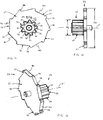
- the retainer first and second portions 26, 28 are each generally circular and respectively have first and second outside diameters OD 1 , OD 2 , the first outside diameter OD 1 being substantially larger than the second outside diameter OD 2 , as best shown in Fig. 12 .
- the retainer first portion 26 is preferably substantially radially larger than the retainer second portion 28.
- the retainer first portion 26 includes a generally circular disk 27 and the second portion 28 includes a generally circular cylinder 29 coupled with the disk 27, each one of the disk 27 and cylinder 29 being centered about the retainer axis 21 and rotatable about the axis 21 as a single unit.
- the disks 27, 29 of the two retainer portions 26, 28 are preferably rotationally mounted to a frame 13 of the base 11, which is preferably formed as a bended plate 15 having U-shaped channels 17, with the shaft 25 extending between two walls 15a, 15b of the frame plate 15.
- each one of the retainer first and second portions 26, 28 preferably has a plurality of generally outwardly-extending projections or teeth 30, 32, respectively, but may alternatively have a plurality of inwardly-extending notches (not shown), the teeth 30, 32 or notches being spaced circumferentially about the retainer axis 21.
- the teeth 30 (or notches) of the retainer first portion 26 are engageable with the actuator pedal 12 and the teeth 32 (or notches) of the retainer second portion 28 are engageable with the coupler 18.
- the actuator pedal 12 includes a stop 34 separately engageable with each one of the plurality of teeth 30 of the retainer first portion 26 and the coupler 18 includes at least one contact surface 36, and preferably a plurality of contact surfaces 36 each provided by a separate tooth 37, each separately engageable with each one of the plurality of teeth 32 (or notches) of the retainer second portion 28.
- the actuator pedal 12 is configured to prevent rotation of the retainer 20 in the first angular direction 21 a about the retainer axis 21 when the stop 34 contacts one of the teeth 30, as discussed in greater detail below.
- each of the projections/teeth 30, 32 is configured as a ratchet tooth 36 having a generally radial contact surface 38 and a generally circumferential slide surface 40.
- each ratchet tooth contact surface 38 has a radially inner end 38a and a radially outer end 38b, and each ratchet tooth slide surface 40 extends circumferentially from the outer end 38b of the tooth contact surface 38 to the inner end 38a of one adjacent tooth 36.
- the first and second retainer portions 26, 28 are constructed or formed such that the ratchet teeth 36 of the two portions 26, 28 are angled in opposing directions about the retainer axis 21, as follows.
- the teeth 30 of the retainer first portion 26 are each generally angled in the first direction 21a about the retainer axis 21, such that engagement of the retainer first portion 26 and the actuator pedal 12 prevents rotation of the retainer 20 in the first angular direction 2 1 a but permits rotation of the retainer in a second, opposing angular direction 21b.
- the ratchet teeth slide surfaces 40 of the retainer first portion 26 each extend in the second angular direction 21b from the radial outer end 38b of each tooth contact surface 38 to the radial inner end 38a of the contact surface 38 of one adjacent tooth 30.
- the teeth 30 of the retainer first portion 26 are configured to permit the retainer 20 to angularly displace in the second angular direction when the retainer 20 is engaged with the actuator pedal stop 34. That is, the actuator pedal stop 34 is separately contactable with each one of the contact surfaces 38 of the first retainer portion teeth 30, so as to prevent rotation of the retainer 20 in the first angular direction 21 a about the retainer axis 21, but the stop 34 is slidably displaceable along the teeth slide surfaces 40 to permit rotation of the retainer 20 in the second angular direction 21 b.
- the ratchet teeth 32 of the retainer second portion 28 are each generally angled in the second direction 21 b about the retainer axis 21, such that engagement of the retainer second portion 28 and the coupler 18 prevents displacement of the brake pedal 14 toward the break pedal initial position B I but permits displacement of the brake pedal 14 generally away from the brake initial position B I .
- the ratchet teeth slide surfaces 40 of the retainer second portion 26 each extend in the first angular direction 21 a from the radial outer end 38b of each tooth contact surface 38 to the radial inner end 38a of the contact surface 38 of one adjacent tooth 30.
- the teeth 32 of the retainer second portion 26 are configured to permit the coupler 18 to slidably displace along the slide surface 40 between adjacent contact surfaces 38 so that the brake pedal 14 is displaceable in a direction generally away from the initial position B I when the coupler 18 is engaged with the retainer 20. That is, the coupler catch surface(s) 36 are separately disposeable against the contact surface 38 of each one of the second retainer portion teeth 32 so as to releasably couple the brake pedal 14 with the retainer 20, while the coupler 18 will slide against one or more slide surfaces 40 when the brake pedal 14 is displaced toward the maximum displacement position B M .
- the coupler 18 is preferably formed so as to be moveable between an engaged position C E ( Figs. 7 , 20 , 23 and 24 ) and a nonengaged position C N ( Figs. 6 , 18, 19, 21 , 22 and 25 ), preferably by means of the brake pedal 14 as discussed below.
- the coupler 18 is configured to engage with the retainer 20 in the engaged position C E , but preferably only when the brake pedal 14 is located at the park position B P . As such, the brake pedal 14 is thereby fixed or retained if the retainer 20 is also concurrently engaged with the actuator pedal 12.
- the coupler 18 is and remains spaced from the retainer 20 when disposed in the nonengaged position C N , regardless of the location of the brake pedal 14.
- the brake pedal 14 is freely displaceable between the initial and park positions B I , B P , and preferably between the initial and maximum displacement positions B M , when the coupler 18 is located at the nonengaged position C N .
- the coupler 18 preferably includes an elongated body 46 and a hub 47 pivotally coupled with a main body 50 of the brake pedal 14, as described below, by means of a shaft 48.
- the elongated body 46 extends generally perpendicularly with respect to the brake pedal body 50 and has a first end 46a pivotally connected with the brake pedal main body 50 so as to be rotatable about an axis 49 and an opposing second end 46b engageable with the retainer 20. More specifically, the coupler body second end 46b preferably includes at least one and most preferably a plurality of the teeth 37 (e.g., three teeth 37), as described above, each providing a contact surface 36 separately engageable with each one of the teeth 32 of the retainer second portion 28, as discussed in detail above.
- the brake pedal 14 preferably includes a main pedal member 50 and a park brake member 52 movably coupled with the main pedal member 50.
- the main pedal member 50 is preferably pivotably mounted to the vehicle 1 and operatively connected with the braking mechanism 3, preferably by means of a connective member 4 (e.g., a rod or cable) having an end 4a attached to the pedal main member 50.
- a connective member 4 e.g., a rod or cable
- the brake pedal 14 may alternatively be operatively coupled with the braking mechanism 3 by any other appropriate means, such as for example, by means of a sensor configured to sense brake pedal position and coupled with an actuator for controlling the braking mechanism (structure not shown).
- the brake pedal main pedal member or main body 50 preferably has a first end 50a pivotally connected with the vehicle 1 so as to be angularly displaceable about a brake pedal axis 14a, an opposing second or “free" end 50b, and a longitudinal centerline 51 extending generally between the first and second ends 50a, 50b and perpendicular to the pedal axis 14a.
- the pedal first end 50a is preferably mounted to a shaft 54 extending between two walls 15b, 15c of the bended plate frame 15, as described above, so as to be disposed within one of the frame U-shaped channels 17.
- the brake pedal main member/body 50 may alternatively be linearly displaceably coupled with the vehicle 1, or both pivotally and slidably coupled to the vehicle 1, by any appropriate means.
- the park brake member 52 is preferably pivotally connected with the brake main body 50 so as to be angularly displaceable about a generally horizontal axis 52a. Also, the park brake 52 is operatively connected with the coupler 18 and is configured to displace the coupler 18 between the engaged and nonengaged positions C E , C N . As such, the park brake member 52 functions to connect the coupler 18 with the retainer 20, such that the brake pedal 14 is thereby retained at the park position B P by action of the park brake member 52. More specifically, the park brake member 52 is movable with respect to the main brake pedal member 50 between initial and actuation positions P I , P A and the coupler 18 is pivotally connected with the brake pedal main member 50.
- the brake retainer mechanism 16 preferably also includes a linkage 56 configured to at least displace the coupler 18 toward the coupler engaged position C E when the park brake 52 displaces toward the actuation position P A .
- the linkage 56 is also configured to alternatively displace the coupler 18 toward the coupler nonengaged position C N when the park brake 52 moves back toward the park brake initial position P I .
- the brake pedal 14 further includes park brake biasing member 53 configured to bias the park brake member 52 toward the park brake initial position P I .
- the park brake biasing member 53 causes the park brake member 52 to return to the initial position P I , thereby moving the coupler 18 to the nonengaged position C N through the linkage 56, as described below, while the brake main pedal member 50 moves back toward the brake initial position B I .
- the linkage 56 preferably includes the shaft 48 rotatably coupled with the brake main member 50, as discussed above, and further includes a crank 60 connected with the shaft 58 and a connector 62 extending between and operatively coupling the crank 60 and the park brake member 52.
- the coupler body 46 is connected with the shaft 48 such that rotation of the shaft 48 pivotally displaces the coupler 18 between the engaged and nonengaged positions C E , C N .
- the shaft 48 has opposing ends 48a, 48b and the coupler 18 and crank 60 are each mounted at least generally proximal to a separate one of the ends 48a, 48b, respectively.
- the connector 62 has a first end 62a coupled with the park brake member 52 and a second end 62b coupled with the crank 60. With such a linkage structure, displacement of the park brake member 52 pivots the crank 60, and thus the shaft 48, so as to thereby pivot the coupler 18 between the engaged and nonengaged positions C E , C N .
- the connector 62 includes upper and lower shafts 64, 66 movably connected together, and a biasing member (not shown) configured to bias the two shafts 64, 66 generally away from each other.
- the upper shaft 64 has a first, upper end 64a connected with the park brake member 52 and an opposing second, lower end 64b.
- the lower shaft 66 has a first, lower end 66a attached to the crank 60 and an opposing second, upper end 66b.
- the lower shaft second end 66b is movably connected with the upper shaft second end 64b such that the coupler 18 is movable while the park brake member 52 remains generally stationary with respect to brake main pedal member 50.
- the pedal assembly 10 preferably includes a linkage 56 that is formed and functions as described above, it is within the scope of the present invention to provide the pedal assembly 10 with any other appropriate mechanism/structure for operatively coupling the park brake 52 with the coupler 18.
- the actuator pedal 12 preferably includes a main body 70 connected with the vehicle 1, the stop 34 being connected with the body 70 and engageable with the retainer 20.
- the body 70 is preferably pivotally connected with the vehicle 1 such that angular displacement of the main body 70 moves the stop 34 between an engaged position S E and one or more nonengaged positions S N .
- the stop 34 is preferably configured such that at least a portion of the stop 34 is disposed against the first portion 26 of the retainer member 20 when the stop 34 is located at the stop engaged position S E , so that the actuator pedal 12 prevents angular displacement of the retainer 20 about the retainer axis 21.
- the stop 34 is engaged with the retainer 20 so as to prevent rotation of the retainer 20 in the first angular direction 21 a, as described above and in further detail below.
- the pedal body 70 is pivotally mounted within a generally rectangular housing 76 by means of a stub shaft portion (not shown) of the body 70 disposed within the bearing opening (not shown) of the housing 76.
- the housing 76 is preferably attached to one end 15a of the bended plate frame 15, so as to position the actuator pedal 12 with respect to the brake pedal 14 and the retainer 20.
- the main body 70 is angularly displaceable about a generally horizontal actuator pedal axis 12a when moving between the initial and maximum displacement positions A I , A MD , as described above, the actuator pedal axis 12a being generally parallel with the brake pedal axis 14a. As depicted in Fig.
- the actuator pedal 12 further includes a biasing member 75 configured to bias the actuator pedal main body 70 toward the initial position A I .
- the biasing member 75 includes a coil spring 77 having a first end 77a disposed against an inner surface of the housing 76 and a second end 77b disposed against the pedal body 70, but may be provided by any other appropriate component (e.g., a torsion spring, etc.).
- the actuator pedal 12 is preferably operatively coupled with the motor 2 by means of a position sensor 78 mounted to the housing 76.
- the position sensor 78 is configured to sense the angular position of the main body 70 with respect to the pedal axis 12a and is electrically coupled with either a throttle mechanism (not shown) of a gas motor 2 or a variable resistor (e.g., a potentiometer) or other device for controlling speed of an electric motor 2. In either case, the speed of the motor 2 is adjusted based upon the angular position of the actuator pedal body 70 about the axis 12a.
- the actuator pedal stop 34 preferably includes a body 82 connected with the pedal main body 70 so as to be rotatable about the pedal axis 12a and a contact pin 84.
- the stop body 82 is generally elongated and extends generally radially with respect to the pedal axis 12a and the pin 84 is connected with the body 82 so as to be spaced from and extending generally parallel to the actuator pedal axis 12a. Further, the stop pin 84 is directly contactable with the retainer 20, specifically the retainer first portion 26, when the stop 34 is located at the stop engaged position S E so as to thereby prevent angular displacement of the retainer 20 about the retainer axis 21. Alternatively, the stop pin 84 is spaced from the retainer 20 when the stop 34 is at a stop nonengaged position S N , such that the retainer 20 is then freely rotatable about the retainer axis 21.
- the stop pin 84 disposeable against one of the contact surfaces 38 of the retainer ratchet teeth 30, so as to prevent rotation of the retainer 20 in the first angular direction 21 a.
- the retainer 20 is capable of rotating in the second direction 21 b, during which movement the stop pin 84 slides along one or more ratchet teeth slide surfaces 40.
- the pedal assembly 10 functions generally as follows. A vehicle operator will use the actuator pedal 12 to regulate vehicle speed by pushing against the actuator pedal body 70 to a greater or lesser extent, such that the pedal body 70 remains at a displaced position, as depicted in Figs.
- the actuator pedal stop 34 remains disengaged from the retainer 20 and the retainer 20 is freely rotatable about the axis 21.
- the operator releases the actuator pedal 12 such that the pedal 12 is biased to the pedal initial position A I .
- the actuator stop 34 engages with the retainer first portion 26, such that the stop pin 84 moves into contact with one of the ratchet teeth 36, as depicted in Fig. 19 .
- the retainer 20 is prevented from rotating about the retainer axis 21.
- the brake pedal 14 is freely moveable between the initial and maximum displaced positions B I , B MD to slow and/or completely stop the vehicle 1, as depicted in Fig. 19 .
- the operator may activate the park brake 52 to displace the coupler 18 from the nonengaged position C N to the engaged position C E , thus causing one or more coupler teeth 37 to engage with at least one and preferably at least two teeth 32 of the retainer second portion 28, as shown in Figs 20 and 23 .
- the brake pedal 14 is releasably fixed in the park position B P by the simultaneous interaction of the coupler 18 with the retainer second portion 28 and the actuator pedal stop with the retainer first portion 26, such that the vehicle 1 is maintained in a parked state.
- the brake pedal 14 is released from the parked position B P in one of two manners.
- the brake pedal 14 may be released merely by displacing the actuator pedal 12 from the initial position A I ,i.e., pushing the actuator pedal 12 to accelerate the vehicle 1.
- the stop 34 displaces generally away from the retainer 20, thereby disengaging the stop pin 84 from the first portion teeth 30.
- the brake pedal biasing member 22 causes the brake pedal 14 to displace from the park position B P toward the initial position B I, such that the coupler 18 pulls the retainer 20 to angularly displace in the first direction 21 a until the coupler teeth 37 disengage from the teeth 32 of the retainer second portion 28. Thereafter, the brake pedal 14 continues pivoting about the brake pedal axis 14a until reaching the brake pedal initial position B I .
- the vehicle operator may release the brake pedal 14 from the park position by pushing the brake pedal 14 from the park position toward the maximum displaced position B MD, as depicted in Fig. 24 .
Landscapes
- Engineering & Computer Science (AREA)
- Transportation (AREA)
- Mechanical Engineering (AREA)
- Physics & Mathematics (AREA)
- General Physics & Mathematics (AREA)
- Automation & Control Theory (AREA)
- Braking Elements And Transmission Devices (AREA)
- Mechanical Control Devices (AREA)
Abstract
Description
- The present invention relates to pedal assemblies for vehicles, and more particularly to park brake retainer devices for such pedal assemblies.
Pedal assemblies are known and basically include an actuator or "accelerator" pedal and a brake pedal. The actuator/accelerator pedal is coupled with a motor, typically either an electric motor or an internal combustion engine, so as to regulate vehicle speed. The brake pedal is coupled with a braking mechanism and is operable by a vehicle operator to slow and/or stop the vehicle during use. Often, the brake pedal includes a park brake configured to retain the brake pedal at a fixed or "park" position so that the braking mechanism prevents an unattended vehicle from "rolling away" during vehicle use. - In one aspect, the present invention is a pedal assembly for a vehicle, the vehicle including a motor and a braking mechanism. The pedal assembly comprises an actuator pedal movably coupled with the vehicle so as to be displaceable between an initial position and a maximum displaced position, the actuator pedal being operatively connected with the motor. A brake pedal is movably coupled with the vehicle so as to be displaceable between an initial position and a park position. The brake pedal is operatively coupled with the braking mechanism so as to actuate the braking mechanism in the brake park position. Further, a brake retainer mechanism includes a coupler connected with the brake pedal and a retainer movably coupled with the vehicle so as to be angularly displaceable about an axis. The retainer is configured to be releasably engageable with the coupler and configured to be releasably engageable with the actuator pedal so as to substantially prevent angular displacement of the retainer in a first direction about the retainer axis. As such, the brake pedal is releasably retained at the park position when each of the coupler and the actuator pedal is engaged with the retainer.
In another aspect, the present invention is again a pedal assembly for a vehicle, the vehicle including a motor and a braking mechanism. The pedal assembly comprises an actuator pedal movably coupled with the vehicle so as to be displaceable between an initial position and a maximum displaced position, the actuator pedal being operatively connected with the motor. A - At least one of the retainer and the actuator pedal may be configured to engage with the other one of the retainer and the actuator pedal when the actuator pedal is located at least generally proximal to the actuator pedal initial position such that the actuator pedal prevents angular displacement of the retainer in a first direction about the retainer axis; and at least one of the retainer and the actuator pedal may be configured to disengage from the other one of the retainer and actuator pedal when the actuator pedal displaces from the initial position toward the maximum displaced position such that the retainer is angularly displaceable in the first direction about the retainer axis. At least one of the coupler and the retainer may be configured to disengage from the other one of the coupler and the retainer when the retainer disengages from the actuator pedal. The pedal assembly may further comprise a biasing member configured to bias the brake pedal toward the brake pedal initial position such that the brake pedal displaces toward the brake pedal initial position when the coupler is disengaged from the retainer. In some embodiments when the actuator pedal disengages from the retainer while the retainer is engaged with the coupler, the brake pedal biasing member is configured to displace the brake pedal such that the coupled retainer angularly displaces about the retainer axis until the coupler disengages from the retainer.
- In some embodiments the brake pedal is displaceable between the initial position and a maximum displacement position, the park position being disposed generally between the initial and maximum displacement positions, the brake pedal being configured to operate the braking mechanism in each one of the park and maximum displacement positions; and at least one of the coupler and the retainer is configured to disengage from the other one of the coupler and the retainer when the brake pedal displaces from the park position toward the maximum displacement position.
- In some embodiments at least one of the coupler and the retainer may be configured to disengage from the other one of the coupler and the retainer when the retainer is disengaged from the actuator pedal; and the pedal assembly may further comprise a biasing member configured to bias the brake pedal toward the brake pedal initial position such that the brake pedal displaces toward the brake initial position when the coupler disengages from the retainer.
- The brake pedal may be displaceable between the initial position and a maximum displacement position, the park position being disposed generally between the initial and maximum displacement positions, the brake pedal being configured to operate the braking mechanism in each one of the park and maximum displacement positions; and at least one of the coupler and the retainer may be configured to disengage from the other one of the coupler and the retainer when the brake pedal displaces from the park position toward the maximum displacement positions.
- The pedal retainer may include a first portion engageable with the actuator pedal such that the actuator pedal prevents angular displacement of the retainer about the retainer axis; and a second portion connected with the first portion and engageable with the brake pedal when the brake pedal is disposed at the park position such that the brake pedal is retained at the park position when the actuator pedal is engaged with the retainer first portion.
- The retainer first portion may be generally circular and has a first outside diameter and the retainer second body portion is generally circular and has a second outside diameter, the first outside diameter being substantially larger than the second outside diameter.
- The retainer first portion may include a generally circular disk and the second portion includes a generally circular cylinder coupled with the disk, each one of the disk and cylinder being centered about the retainer axis and rotatable about the axis as a single unit.
- Each one of the retainer first and second portions may have one of a plurality of generally outwardly-extending teeth and a plurality of inwardly-extending notches, the one of the teeth and notches being spaced circumferentially about the retainer axis, the one of the teeth and notches of the retainer first portion being engageable with the actuator pedal and the one of the teeth and notches of the retainer second portion being engageable with the coupler.
- The coupler may include at least one tooth separately engageable with each one of the one of the plurality of teeth and the plurality of notches of the retainer second portion.
- Each of the one of the retainer first and second portions may have a plurality of ratchet teeth. In some embodiments the ratchet teeth of the retainer first portion are each generally angled in first direction about the retainer axis such that engagement of the retainer first portion and the actuator pedal prevents rotation of the retainer in the first angular direction about the retainer axis and permits rotation of the retainer in the second angular direction; and the ratchet teeth of the retainer second portion are each generally angled in a second direction about the retainer axis such that engagement of the retainer second portion and the coupler prevents displacement of the brake pedal toward the break pedal initial position and permits displacement of the brake pedal generally away from the brake initial position.
- In some embodiments each one of the retainer first and second portions includes a plurality of generally radially outwardly extending projections spaced circumferentially about the retainer axis, each projection including a generally radial contact surface and a generally circumferential slide surface; the actuator pedal includes a stop separately contactable with each one of the contact surfaces of the first retainer portion projections so as to prevent rotation of the retainer in the first angular direction about the retainer axis; and the coupler has at least one catch surface separately disposable against the contact surface of each one of the second retainer portion projections so as to releasably couple the brake pedal with the retainer.
- Each projection contact surface may have a radially inner end and a radially outer end; the projection slide surfaces of the retainer first portion may each extend in the first angular direction from the radial inner end of a separate one of the contact surfaces to the radial outer end of an adjacent contact surface such that first portion projections are configured to permit the retainer to angularly displace in the second angular direction when the retainer is engaged with the actuator pedal stop; and the projection slide surfaces of the retainer second portion may each extend in the second angular direction from the radial inner end of a separate one of the contact surfaces to the radial outer end of an adjacent contact surface such that second portion projections are configured to permit the coupler to slidably displace along the slide surface between adjacent contact surfaces so that the brake pedal is displaceable in a direction generally away from the initial position when the coupler is engaged with the retainer.
- The retainer first and second portions may be one of mounted to a common shaft, directly connected together, and integrally formed.
- In some embodiments the coupler is moveable between an engaged position and a nonengaged position, the coupler being configured to engage with the retainer in the engaged position when the brake pedal is at the park position and being spaced from the retainer in the nonengaged position; and the brake pedal is configured to displace the coupler between the engaged and nonengaged positions. The brake pedal may be freely displaceable between the initial position and the park position when the coupler is located at the nonengaged position. The retainer may include a plurality of teeth and the coupler has at least one tooth engageable with at least one of the retainer teeth when the coupler is disposed at the engaged position ant eh brake pedal is at the park position. In some embodiments the brake pedal includes a main pedal member and a park brake member movably coupled with the main pedal member, the park brake member being operatively connected with the coupler and the configured to displace the coupler between the engaged and nonengaged positions.
- The park brake member may be moveable between initial and actuation positions; the coupler may be pivotally connected with the brake main member; and the brake retainer mechanism may further include a linkage configured to displace the coupler toward the coupler engaged position when the park brake displaces toward the actuation position. The linkage may be further configured to displace the coupler toward the coupler nonengaged position when the park brake displaces toward the park brake initial position. In some embodiments the linkage includes a shaft rotatably coupled with the brake main member, the coupler being connected with the shaft such that rotation of the shaft displaces the coupler between the engaged and nonengaged positions; a crank connected with the shaft; and a connector having a first end coupled with the park brake member and a second end coupled with the crank such that displacement of the park brake member pivots the crank so as to pivot the coupler between the engaged and nonengaged positions.
- The connector link may include an upper shaft having a first end connected with the park brake and an opposing second end; and a lower shaft having first end attached to the crank and an opposing second end, the lower shaft second end being movably connected with the upper shaft second end such that the coupler is movable while the park brake member remains generally stationary with respect to brake main pedal member.
- The brake pedal may further include a first biasing member configured to bias the brake main pedal member toward the brake pedal initial position and a second biasing member configured to bias the park brake member toward the park brake initial position.
- In some embodiments the brake pedal includes a main pedal member and a park brake member movably coupled with the main pedal member, the park brake member being operatively connected with the coupler and configured to displace the coupler between the engaged and nonengaged positions.
- In some embodiments the brake pedal includes a main body having a first end pivotally connected with the vehicle so as to be pivotable about a brake pedal axis, an opposing second end, and a longitudinal centerline extending generally between the first and second ends and perpendicular to the axis; and the coupler includes a body with a first end pivotally connected with the brake pedal main body and an opposing second end engageable with the retainer, the coupler body extending generally perpendicularly with respect to the brake body centerline.
- In some embodiments the actuator pedal includes a stop, the stop being separately contactable with each one of the teeth of the retainer first body portion and the actuator pedal is configured to prevent rotation of the retainer in the first angular direction about the retainer axis when the stop contacts one of the teeth.
- In some embodiments the actuator pedal includes a main body pivotally connected with the vehicle so as to be angularly displaceable about an actuator pedal axis when moving between the initial and maximum displacement positions, the main body portion being configured to support an end of a connective member extend between the actuator pedal and the motor; and a stop connected with the pedal main body such that angular displacement of the main body moves the stop between an engaged position and a nonengaged position, at least a portion of the stop being disposed against a portion of the retainer member when the stop is located at the stop engaged position such that the actuator pedal prevents angular displacement of the retainer about the retainer axis. The stop may have a body connected with the actuator pedal main body and a contact pin connected with the stop body so as to be spaced from and extending generally parallel to the actuator pedal axis, the pin being contactable with the retainer when the stop is located at the stop engaged position so as to prevent angular displacement of the retainer about the retainer axis and being spaced from the retainer when the stop is at the stop nonengaged position such that the retainer is freely rotatable about the retainer axis. The actuator pedal may include a biasing member configured to bias the actuator pedal main body toward the initial position. The actuator pedal axis may extend at least generally parallel to the retainer axis.
- In some embodiments a base is connectable with the vehicle and configured to mount the actuator pedal, the brake pedal, and the brake retainer mechanism to the vehicle.
- In another aspect, the present invention is again a pedal assembly for a vehicle, the vehicle including a motor and a braking mechanism. The pedal assembly comprises an actuator pedal movably coupled with the vehicle so as to be displaceable between an initial position and a maximum displaced position, the actuator pedal being operatively connected with the motor. A brake pedal is movably coupled with the vehicle so as to be displaceable between an initial position and a park position, the brake pedal being operatively coupled with the braking mechanism so as to actuate the braking mechanism in the brake park position. Further, a coupler connected with the brake pedal and a retainer is movably coupled with the vehicle so as to be angularly displaceable about an axis. The retainer includes first and second generally cylindrical portions, each cylindrical portion having a plurality of teeth. The actuator pedal is engageable with at least one of the teeth of the retainer first portion so as to prevent angular displacement of the retainer about the retainer axis. Furthermore, the coupler is engageable with at least one of the teeth of the retainer second portion such that the brake pedal is releasably retained at the park position when the actuator pedal is engaged with the retainer.
- The foregoing summary, as well as the detailed description of the preferred embodiments of the present invention, will be better understood when read in conjunction with the appended drawings. For the purpose of illustrating the invention, there is shown in the drawings, which are diagrammatic, embodiments that are presently preferred. It should be understood, however, that the present invention is not limited to the precise arrangements and instrumentalities shown. In the drawings:
-
Fig. 1 is a front elevational view of a pedal assembly in accordance with the present invention; -
Fig. 2 is a rear perspective view of the pedal assembly; -
Fig. 3 is a side elevational view of the pedal assembly; -
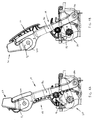
Figs. 4A and 4B , collectivelyFig. 4 , are each a side elevational view of the pedal assembly showing a brake pedal in an initial position and in a park position, respectively; -
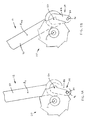
Figs. 5A and 5B , collectivelyFig. 5 , are each a more diagrammatic, broken away view of the pedal assembly showing an actuator pedal in an initial position and a maximum displacement position, respectively; -
Fig. 6 is broken-away, side elevational view of the brake pedal, a retainer and a coupler, showing the brake pedal in the initial position; -
Fig. 7 is another view of the components ofFig. 7 , showing the coupler engaged with the retainer and the pedal in the park position; -
Fig. 8 is an enlarged, broken-away front elevational view of the pedal assembly; -
Fig. 9 is an enlarged, broken-away rear perspective view of the pedal assembly; -
Fig. 10 is a more diagrammatic, broken-away perspective view of a lower portion of the actuator pedal; -
Fig. 11 is a side plan view of the retainer; -
Fig. 12 is a front plan view of the retainer; -
Fig. 13 is a perspective view of the retainer; -
Fig. 14 is a side plan view of the coupler; -
Fig. 15 is a bottom plan view of the coupler; -
Fig. 16 is a perspective view of the coupler; -
Fig. 17 is a rear perspective view of the brake pedal; -
Fig. 18 is a side elevational view of the brake pedal, the coupler, the retainer, and an actuator stop, showing the brake pedal at the initial position and the actuator stop and coupler at nonengaged positions; -
Fig. 19 is another view of the components ofFig. 18 , showing the brake pedal at the initial position, the coupler moving toward the engaged position, and the actuator stop at the engaged position; -
Fig. 20 is another view of the components ofFig. 18 , showing the brake pedal at the park position and both the coupler and the actuator stop at engaged positions; -
Fig. 21 is another view of the components ofFig. 18 , showing the brake pedal moving toward the initial position, the coupler at the non-engaged position, and the actuator stop at the engaged position; -
Fig. 22 is another view of the components ofFig. 18 , showing the brake pedal at the initial position, and both the coupler and actuator stops displaced to non-engaged positions; -
Fig. 23 is a another view of the components ofFig. 18 , showing the brake pedal at the park position and both the coupler and the actuator stop at engaged positions; -
Fig. 24 is another view of the components ofFig. 18 , showing the brake pedal at the park position, the actuator stop at engaged position, and the coupler moving toward the nonengaged position; -
Fig. 25 is another view of the components ofFig. 18 , moving toward the initial position, the coupler at the nonengaged postion and the actuator stop at the engaged position; -
Fig. 26 is a more diagrammatic view of a vehicle incorporating the pedal assembly; and -
Fig. 27 is a perspective view of an exemplary vehicle incorporating the pedal assembly. - Certain terminology is used in the following description for convenience only and is not limiting. The words "right", left", "lower", "upper", "upward", "down" and "downward" designate directions in the drawings to which reference is made. The words "inner", "inwardly" and "outer", "outwardly" refer to directions toward and away from, respectively, a designated centerline or a geometric center of an element being described, the particular meaning being readily apparent from the context of the description. Further, as used herein, the word "connected" is intended to include direct connections between two members without any other members interposed therebetween and indirect connections between members in which one or more other members are interposed therebetween. Furthermore, the term "position" is used herein to indicate a position, location, configuration, orientation, etc., of one or more components of the lock assembly and each is depicted in the drawings with reference to a randomly selected point on the item being described. Such movement reference points in the drawing figures are randomly selected for convenience only and have no particular relevance to the present invention. The terminology includes the words specifically mentioned above, derivatives thereof, and words of similar import.
Referring now to the drawings in detail, wherein like numbers are used to indicate like elements throughout, there is shown inFigs. 1-27 apedal assembly 10 for a vehicle 1, the vehicle 1 including a motor 2 and a braking mechanism 3 (seeFigs. 26 and27 ). Thepedal assembly 10 basically comprises anactuator pedal 12, abrake pedal 14, and a brake retainer mechanism 16. Theactuator pedal 12 is movably coupled with the vehicle 1 so as to be displaceable between an initial position A1 (e.g.,Fig. 3 ) and a maximum displaced position AMD (Fig. 5B ), and is operatively connected with the motor 2. Specifically, theactuator pedal 12 is configured such that displacement of theactuator pedal 12 from the initial position AI toward the maximum displacement position AMD increases motor speed, the motor 2 being any appropriate type of vehicle motor such as an internal combustion engine, an electric motor, a hydraulic motor, etc. Thebrake pedal 14 is movably coupled with the vehicle 1 so as to be displaceable between an initial position BI and a park position Bp, and preferably also to a maximum displaced position BMD (Fig. 24 ), as described below. Thebrake pedal 14 is operatively coupled with thebraking mechanism 3 so as to actuate themechanism 3 in the brake park position BP, and preferably actuates themechanism 3 in a plurality of positions between the initial and maximum displaced positions BI, BMD. Further, the brake retainer mechanism 16 includes acoupler 18 connected with thebrake pedal 14 and aretainer 20 movably coupled with the vehicle 1 so as to be angularly displaceable about anaxis 21. Preferably, thepedal assembly 10 further comprises a base 11 mounted to the vehicle 1, with eachcomponent
Furthermore, theretainer 20 is configured to releasably engage with thecoupler 18 and configured to releasably engage with theactuator pedal 12 so as to substantially prevent angular displacement of theretainer 20 about theretainer axis 21. As such, the brake pedal 16 is releasably retained at the park position BP when thecoupler 18 is engaged with theretainer 20 and theretainer 20 is "rotationally fixed" by theactuator pedal 12, as described in greater detail below. More specifically, theretainer 20 and/or theactuator pedal 12 are/is configured to engage with the other one of theretainer 20 andactuator pedal 12 when theactuator pedal 12 is located at least generally proximal to the actuator pedal initial position AI. When theretainer 20 andactuator pedal 12 are so engaged, theactuator pedal 12 preventsangular displacement 12 of the retainer in a first direction 21 a about theretainer axis 21. Also, at least one of theretainer 20 and theactuator pedal 12 is configured to disengage from the other one of theretainer 20 and theactuator pedal 12 when theactuator pedal 12 displaces from the initial position AI toward the maximum displacement position AMD. As such, theretainer 20 is angularly displaceable in the first direction 21 a about theretainer axis 21, permitting thecoupler 18 to disengage from theretainer 20. That is, at least one of theretainer 20 and thecoupler 18 is preferably configured to disengage from the other one of theretainer 20 and thecoupler 18 when theretainer 20 disengages from theactuator pedal 12, as described in further detail below.
Preferably, thepedal assembly 10 further comprises a biasingmember 22 configured to bias thebrake pedal 14 toward the brake pedal initial position BI. With such a biasingmember 22, thebrake pedal 14 displaces toward the brake pedal initial position BI whenever thecoupler 18 is disengaged from theretainer 20, as discussed below. As such, when theactuator pedal 12 disengages from theretainer 20 while theretainer 20 is engaged with thecoupler 18, the brakepedal biasing member 22 is configured to displace thebrake pedal 14 such that the coupledretainer 20 angularly displaces about theretainer axis 21, specifically in the first direction 21a, until thecoupler 18 disengages from theretainer 20. Thus, the biasingmember 22 enables thebrake pedal 14 to be disengaged from theretainer 20 by movement of theactuator pedal 12. With this structural arrangement, when a user or driver operates the actuator pedal 12 (i.e., to accelerate the vehicle 1 from a parked position), thebrake mechanism 3 is automatically deactivated or "released".
As discussed above, thebrake pedal 14 is preferably displaceable between the initial position BI, and the maximum displacement position BMD, with the park position BP being disposed generally between the initial and maximum displacement positions BI, BMD. Preferably, at least one of thecoupler 18 and theretainer 20 is further configured to disengage from the other one of thecoupler 18 and theretainer 20 when thebrake pedal 14 displaces from the park position BP toward the maximum displacement position BMD. As such, thebrake pedal 14 is also disengageable fromretainer 20, so as to be thereafter freely displaceable, by a user/driver displacing or "pushing" the pedal 14 toward the maximum displacement position BMD. - Referring now to
Figs. 1-13 and18-25 , thepedal retainer 20 preferably includes afirst portion 26 engageable with theactuator pedal 12 and asecond portion 28 connected with thefirst portion 26 and engageable with thecoupler 18. Preferably, the retainer first andsecond portions first portion 26 is configured to engage with theactuator pedal 12 such that theactuator pedal 12 thereby prevents angular displacement of theretainer 20 about theretainer axis 21. The retainersecond portion 28 is configured to engage with thecoupler 18 when thebrake pedal 14 is disposed at the park position BP, such that thebrake pedal 14 is retained at the park position BP when theactuator pedal 12 is engaged with the retainerfirst portion 26. Preferably, the retainer first andsecond portions Fig. 12 . Thus, the retainerfirst portion 26 is preferably substantially radially larger than the retainersecond portion 28. - Most preferably, the retainer
first portion 26 includes a generallycircular disk 27 and thesecond portion 28 includes a generallycircular cylinder 29 coupled with thedisk 27, each one of thedisk 27 andcylinder 29 being centered about theretainer axis 21 and rotatable about theaxis 21 as a single unit. Further, thedisks retainer portions frame 13 of the base 11, which is preferably formed as abended plate 15 havingU-shaped channels 17, with the shaft 25 extending between twowalls 15a, 15b of theframe plate 15.
Furthermore, each one of the retainer first andsecond portions teeth teeth retainer axis 21. The teeth 30 (or notches) of the retainerfirst portion 26 are engageable with theactuator pedal 12 and the teeth 32 (or notches) of the retainersecond portion 28 are engageable with thecoupler 18. Preferably, theactuator pedal 12 includes astop 34 separately engageable with each one of the plurality ofteeth 30 of the retainerfirst portion 26 and thecoupler 18 includes at least onecontact surface 36, and preferably a plurality of contact surfaces 36 each provided by aseparate tooth 37, each separately engageable with each one of the plurality of teeth 32 (or notches) of the retainersecond portion 28. Thereby, theactuator pedal 12 is configured to prevent rotation of theretainer 20 in the first angular direction 21 a about theretainer axis 21 when thestop 34 contacts one of theteeth 30, as discussed in greater detail below.
Preferably, each of the projections/teeth ratchet tooth 36 having a generallyradial contact surface 38 and a generallycircumferential slide surface 40. Specifically, each ratchettooth contact surface 38 has a radially inner end 38a and a radially outer end 38b, and each ratchettooth slide surface 40 extends circumferentially from the outer end 38b of thetooth contact surface 38 to the inner end 38a of oneadjacent tooth 36. Most preferably, the first andsecond retainer portions ratchet teeth 36 of the twoportions retainer axis 21, as follows. Theteeth 30 of the retainerfirst portion 26 are each generally angled in the first direction 21a about theretainer axis 21, such that engagement of the retainerfirst portion 26 and theactuator pedal 12 prevents rotation of theretainer 20 in the first angular direction 2 1 a but permits rotation of the retainer in a second, opposing angular direction 21b. Specifically, the ratchet teeth slidesurfaces 40 of the retainerfirst portion 26 each extend in the second angular direction 21b from the radial outer end 38b of eachtooth contact surface 38 to the radial inner end 38a of thecontact surface 38 of oneadjacent tooth 30. As such, theteeth 30 of the retainerfirst portion 26 are configured to permit theretainer 20 to angularly displace in the second angular direction when theretainer 20 is engaged with theactuator pedal stop 34. That is, theactuator pedal stop 34 is separately contactable with each one of the contact surfaces 38 of the firstretainer portion teeth 30, so as to prevent rotation of theretainer 20 in the first angular direction 21 a about theretainer axis 21, but thestop 34 is slidably displaceable along the teeth slidesurfaces 40 to permit rotation of theretainer 20 in the second angular direction 21 b.
In contrast, theratchet teeth 32 of the retainersecond portion 28 are each generally angled in the second direction 21 b about theretainer axis 21, such that engagement of the retainersecond portion 28 and thecoupler 18 prevents displacement of thebrake pedal 14 toward the break pedal initial position BI but permits displacement of thebrake pedal 14 generally away from the brake initial position BI. Specifically, the ratchet teeth slidesurfaces 40 of the retainersecond portion 26 each extend in the first angular direction 21 a from the radial outer end 38b of eachtooth contact surface 38 to the radial inner end 38a of thecontact surface 38 of oneadjacent tooth 30. As such, theteeth 32 of the retainersecond portion 26 are configured to permit thecoupler 18 to slidably displace along theslide surface 40 between adjacent contact surfaces 38 so that thebrake pedal 14 is displaceable in a direction generally away from the initial position BI when thecoupler 18 is engaged with theretainer 20. That is, the coupler catch surface(s) 36 are separately disposeable against thecontact surface 38 of each one of the secondretainer portion teeth 32 so as to releasably couple thebrake pedal 14 with theretainer 20, while thecoupler 18 will slide against one or more slide surfaces 40 when thebrake pedal 14 is displaced toward the maximum displacement position BM.
Referring toFigs 6, 7 ,14-25 , thecoupler 18 is preferably formed so as to be moveable between an engaged position CE (Figs. 7 ,20 ,23 and 24 ) and a nonengaged position CN (Figs. 6 ,18, 19, 21 ,22 and 25 ), preferably by means of thebrake pedal 14 as discussed below. Thecoupler 18 is configured to engage with theretainer 20 in the engaged position CE, but preferably only when thebrake pedal 14 is located at the park position BP. As such, thebrake pedal 14 is thereby fixed or retained if theretainer 20 is also concurrently engaged with theactuator pedal 12. Further, thecoupler 18 is and remains spaced from theretainer 20 when disposed in the nonengaged position CN, regardless of the location of thebrake pedal 14. As such, thebrake pedal 14 is freely displaceable between the initial and park positions BI, BP, and preferably between the initial and maximum displacement positions BM, when thecoupler 18 is located at the nonengaged position CN.
As best shown inFigs. 6, 7 and14-16 , thecoupler 18 preferably includes anelongated body 46 and ahub 47 pivotally coupled with amain body 50 of thebrake pedal 14, as described below, by means of ashaft 48. Theelongated body 46 extends generally perpendicularly with respect to thebrake pedal body 50 and has afirst end 46a pivotally connected with the brake pedalmain body 50 so as to be rotatable about anaxis 49 and an opposing second end 46b engageable with theretainer 20. More specifically, the coupler body second end 46b preferably includes at least one and most preferably a plurality of the teeth 37 (e.g., three teeth 37), as described above, each providing acontact surface 36 separately engageable with each one of theteeth 32 of the retainersecond portion 28, as discussed in detail above.
Referring now toFigs. 1-4 and17 , thebrake pedal 14 preferably includes amain pedal member 50 and apark brake member 52 movably coupled with themain pedal member 50. Themain pedal member 50 is preferably pivotably mounted to the vehicle 1 and operatively connected with thebraking mechanism 3, preferably by means of a connective member 4 (e.g., a rod or cable) having an end 4a attached to the pedalmain member 50. As such, pivotal displacement of thebrake pedal 14 pushes or pulls theconnective member 4 so as to actuatebraking mechanism 3. However, thebrake pedal 14 may alternatively be operatively coupled with thebraking mechanism 3 by any other appropriate means, such as for example, by means of a sensor configured to sense brake pedal position and coupled with an actuator for controlling the braking mechanism (structure not shown). Further, the brake pedal main pedal member ormain body 50 preferably has afirst end 50a pivotally connected with the vehicle 1 so as to be angularly displaceable about abrake pedal axis 14a, an opposing second or "free" end 50b, and alongitudinal centerline 51 extending generally between the first andsecond ends 50a, 50b and perpendicular to thepedal axis 14a. The pedalfirst end 50a is preferably mounted to ashaft 54 extending between twowalls 15b, 15c of thebended plate frame 15, as described above, so as to be disposed within one of the frameU-shaped channels 17. However, the brake pedal main member/body 50 may alternatively be linearly displaceably coupled with the vehicle 1, or both pivotally and slidably coupled to the vehicle 1, by any appropriate means. - Furthermore, the
park brake member 52 is preferably pivotally connected with the brakemain body 50 so as to be angularly displaceable about a generallyhorizontal axis 52a. Also, thepark brake 52 is operatively connected with thecoupler 18 and is configured to displace thecoupler 18 between the engaged and nonengaged positions CE, CN. As such, thepark brake member 52 functions to connect thecoupler 18 with theretainer 20, such that thebrake pedal 14 is thereby retained at the park position BP by action of thepark brake member 52. More specifically, thepark brake member 52 is movable with respect to the mainbrake pedal member 50 between initial and actuation positions PI, PA and thecoupler 18 is pivotally connected with the brake pedalmain member 50. Further, the brake retainer mechanism 16 preferably also includes alinkage 56 configured to at least displace thecoupler 18 toward the coupler engaged position CE when thepark brake 52 displaces toward the actuation position PA. Preferably, thelinkage 56 is also configured to alternatively displace thecoupler 18 toward the coupler nonengaged position CN when thepark brake 52 moves back toward the park brake initial position PI.
Preferably, thebrake pedal 14 further includes parkbrake biasing member 53 configured to bias thepark brake member 52 toward the park brake initial position PI. As such, when thecoupler 18 is disengaged from theretainer 20, the parkbrake biasing member 53 causes thepark brake member 52 to return to the initial position PI, thereby moving thecoupler 18 to the nonengaged position CN through thelinkage 56, as described below, while the brakemain pedal member 50 moves back toward the brake initial position BI. More specifically, thelinkage 56 preferably includes theshaft 48 rotatably coupled with the brakemain member 50, as discussed above, and further includes a crank 60 connected with the shaft 58 and aconnector 62 extending between and operatively coupling thecrank 60 and thepark brake member 52. As discussed above, thecoupler body 46 is connected with theshaft 48 such that rotation of theshaft 48 pivotally displaces thecoupler 18 between the engaged and nonengaged positions CE, CN. Theshaft 48 has opposing ends 48a, 48b and thecoupler 18 and crank 60 are each mounted at least generally proximal to a separate one of the ends 48a, 48b, respectively.
Further, theconnector 62 has a first end 62a coupled with thepark brake member 52 and a second end 62b coupled with thecrank 60. With such a linkage structure, displacement of thepark brake member 52 pivots thecrank 60, and thus theshaft 48, so as to thereby pivot thecoupler 18 between the engaged and nonengaged positions CE, CN. Preferably, theconnector 62 includes upper andlower shafts 64, 66 movably connected together, and a biasing member (not shown) configured to bias the twoshafts 64, 66 generally away from each other. The upper shaft 64 has a first,upper end 64a connected with thepark brake member 52 and an opposing second, lower end 64b. Thelower shaft 66 has a first, lower end 66a attached to the crank 60 and an opposing second, upper end 66b. The lower shaft second end 66b is movably connected with the upper shaft second end 64b such that thecoupler 18 is movable while thepark brake member 52 remains generally stationary with respect to brakemain pedal member 50. As such, "push back" is minimized on thepark brake member 52, and thus on a user's foot disposed thereon.
With the above structure, when thepark brake member 52 is initially displaced toward the actuation position PA, the connector upper shaft 64 first displaces downwardly toward thecrank 60 while thelower shaft 66 remains generally stationary as the biasing member compresses between the portions of the two shafts (not depicted). When the biasing member is sufficiently compressed, the movement of the upper shaft 64 is transferred through the biasing member such that the upper andlower shafts 64, 66 displace generally as a single unit. Thereafter, further movement of thepark brake member 52 toward the actuation position PA causes theconnector 62 to pivot thecrank 60 in a generally downward direction, such that thecrank 60 rotates theshaft 48 about theshaft axis 49 in afirst direction 49a, causing thecoupler 18 to pivotally displace toward the engaged position CE and into engagement with theretainer 20. Alternatively, when thecoupler 18 is disengaged from theretainer 20, the parkbrake biasing member 53 displaces thepark brake member 52 toward the park brake initial position PI, causing the connector upper shaft 64 to displace generally upwardly in a direction away from thecrank 60. As the upper shaft 64 moves upwardly, thelower shaft 66 is pulled upwardly with the shaft 64, causing thecrank 60 to be pivoted generally upwardly. Such movement of thecrank 60 rotates theshaft 48 in a second direction 49b about theaxis 49, which pivotally displaces thecoupler 18 away from theretainer 20 to the nonengaged position CN. Although thepedal assembly 10 preferably includes alinkage 56 that is formed and functions as described above, it is within the scope of the present invention to provide thepedal assembly 10 with any other appropriate mechanism/structure for operatively coupling thepark brake 52 with thecoupler 18.
Referring now toFigs. 1 ,2 ,5 ,8 and10 , theactuator pedal 12 preferably includes amain body 70 connected with the vehicle 1, thestop 34 being connected with thebody 70 and engageable with theretainer 20. Thebody 70 is preferably pivotally connected with the vehicle 1 such that angular displacement of themain body 70 moves thestop 34 between an engaged position SE and one or more nonengaged positions SN. Thestop 34 is preferably configured such that at least a portion of thestop 34 is disposed against thefirst portion 26 of theretainer member 20 when thestop 34 is located at the stop engaged position SE, so that theactuator pedal 12 prevents angular displacement of theretainer 20 about theretainer axis 21. Specifically, when theactuator pedal 12 is disposed at the pedal initial position AI, thestop 34 is engaged with theretainer 20 so as to prevent rotation of theretainer 20 in the first angular direction 21 a, as described above and in further detail below.
Preferably, thepedal body 70 is pivotally mounted within a generallyrectangular housing 76 by means of a stub shaft portion (not shown) of thebody 70 disposed within the bearing opening (not shown) of thehousing 76. Thehousing 76 is preferably attached to oneend 15a of thebended plate frame 15, so as to position theactuator pedal 12 with respect to thebrake pedal 14 and theretainer 20. Further, themain body 70 is angularly displaceable about a generally horizontalactuator pedal axis 12a when moving between the initial and maximum displacement positions AI, AMD, as described above, theactuator pedal axis 12a being generally parallel with thebrake pedal axis 14a. As depicted inFig. 10 , theactuator pedal 12 further includes a biasingmember 75 configured to bias the actuator pedalmain body 70 toward the initial position AI. Most preferably, the biasingmember 75 includes acoil spring 77 having afirst end 77a disposed against an inner surface of thehousing 76 and a second end 77b disposed against thepedal body 70, but may be provided by any other appropriate component (e.g., a torsion spring, etc.).
Furthermore, theactuator pedal 12 is preferably operatively coupled with the motor 2 by means of aposition sensor 78 mounted to thehousing 76. Specifically, theposition sensor 78 is configured to sense the angular position of themain body 70 with respect to thepedal axis 12a and is electrically coupled with either a throttle mechanism (not shown) of a gas motor 2 or a variable resistor (e.g., a potentiometer) or other device for controlling speed of an electric motor 2. In either case, the speed of the motor 2 is adjusted based upon the angular position of theactuator pedal body 70 about theaxis 12a.
Referring toFigs. 5 ,10 and18-25 , the actuator pedal stop 34 preferably includes abody 82 connected with the pedalmain body 70 so as to be rotatable about thepedal axis 12a and acontact pin 84. Thestop body 82 is generally elongated and extends generally radially with respect to thepedal axis 12a and thepin 84 is connected with thebody 82 so as to be spaced from and extending generally parallel to theactuator pedal axis 12a. Further, thestop pin 84 is directly contactable with theretainer 20, specifically the retainerfirst portion 26, when thestop 34 is located at the stop engaged position SE so as to thereby prevent angular displacement of theretainer 20 about theretainer axis 21. Alternatively, thestop pin 84 is spaced from theretainer 20 when thestop 34 is at a stop nonengaged position SN, such that theretainer 20 is then freely rotatable about theretainer axis 21. More specifically, when theactuator pedal 12 is located in the initial position AI, thestop pin 84 disposeable against one of the contact surfaces 38 of theretainer ratchet teeth 30, so as to prevent rotation of theretainer 20 in the first angular direction 21 a. However, theretainer 20 is capable of rotating in the second direction 21 b, during which movement thestop pin 84 slides along one or more ratchet teeth slide surfaces 40.
Referring toFigs. 4-7 and18-25 , with the structure described above, thepedal assembly 10 functions generally as follows. A vehicle operator will use theactuator pedal 12 to regulate vehicle speed by pushing against theactuator pedal body 70 to a greater or lesser extent, such that thepedal body 70 remains at a displaced position, as depicted inFigs. 5B ,18 and 21 . As such, the actuator pedal stop 34 remains disengaged from theretainer 20 and theretainer 20 is freely rotatable about theaxis 21. However, once the operator desires to stop the vehicle 1, the operator releases theactuator pedal 12 such that thepedal 12 is biased to the pedal initial position AI. As the pedal 12 moves toward the initial position AI, theactuator stop 34 engages with the retainerfirst portion 26, such that thestop pin 84 moves into contact with one of theratchet teeth 36, as depicted inFig. 19 . Once theactuator pedal stop 34 is engaged with theretainer 20, theretainer 20 is prevented from rotating about theretainer axis 21. Thereafter, thebrake pedal 14 is freely moveable between the initial and maximum displaced positions BI, BMD to slow and/or completely stop the vehicle 1, as depicted inFig. 19 . Once the vehicle 1 is stopped, the operator may activate thepark brake 52 to displace thecoupler 18 from the nonengaged position CN to the engaged position CE, thus causing one ormore coupler teeth 37 to engage with at least one and preferably at least twoteeth 32 of the retainersecond portion 28, as shown inFigs 20 and23 . At this point, thebrake pedal 14 is releasably fixed in the park position BP by the simultaneous interaction of thecoupler 18 with the retainersecond portion 28 and the actuator pedal stop with the retainerfirst portion 26, such that the vehicle 1 is maintained in a parked state. - Thereafter, the
brake pedal 14 is released from the parked position BP in one of two manners. First, as shown inFig. 21 , thebrake pedal 14 may be released merely by displacing theactuator pedal 12 from the initial position AI,i.e., pushing theactuator pedal 12 to accelerate the vehicle 1. As the pedal 12 moves from the initial position AI toward the maximum displaced position AMD, thestop 34 displaces generally away from theretainer 20, thereby disengaging thestop pin 84 from thefirst portion teeth 30. At this point, the brakepedal biasing member 22 causes thebrake pedal 14 to displace from the park position BP toward the initial position BI, such that thecoupler 18 pulls theretainer 20 to angularly displace in the first direction 21 a until thecoupler teeth 37 disengage from theteeth 32 of the retainersecond portion 28. Thereafter, thebrake pedal 14 continues pivoting about thebrake pedal axis 14a until reaching the brake pedal initial position BI.
Alternatively, the vehicle operator may release thebrake pedal 14 from the park position by pushing thebrake pedal 14 from the park position toward the maximum displaced position BMD, as depicted inFig. 24 . As thebrake pedal 14 moves toward the maximum displaced position BMD, thecoupler teeth 37 move out of engagment with theteeth 32 of the retainersecond portion 28. Thereafter, thepark brake member 52 is displaced toward the park brake intial position PI by action of the parkbrake biasing memember 53, while the brake pedalmain body member 50 is movable toward the initial position BI by thebrake biasing member 22, as indicated inFig. 25 .
It will be appreciated by those skilled in the art that changes could be made to the embodiments described above without departing from the broad inventive concept thereof. It is understood, therefore, that this invention is not limited to the particular embodiments disclosed, but it is intended to cover modifications within the spirit and scope of the present invention as generally defined in the appended claims.
Claims (15)
- A pedal assembly for a vehicle, the vehicle including a motor and a braking mechanism, the pedal assembly comprising:an actuator pedal movably coupled with the vehicle so as to be displaceable between an initial position and a maximum displaced position, the actuator pedal being operatively connected with the motor;a brake pedal movably coupled with the vehicle so as to be displaceable between an initial position and a park position, the brake pedal being operatively coupled with the braking mechanism so as to actuate the braking mechanism in the brake park position; anda brake retainer mechanism including a coupler connected with the brake pedal and a retainer movably coupled with the vehicle so as to be angularly displaceable about an axis, the retainer being configured to releasably engage with the coupler and with the actuator pedal so as to substantially prevent angular displacement of the retainer in a first direction about the retainer axis such that the brake pedal is releasably retained at the park position when each of the coupler and the actuator pedal is engaged with the retainer.
- The pedal assembly as recited in claim 1 wherein:at least one of the retainer and the actuator pedal is configured to engage with the other one of the retainer and the actuator pedal when the actuator pedal is located at least generally proximal to the actuator pedal initial position such that the actuator pedal prevents angular displacement of the retainer in a first direction about the retainer axis; andat least one of the retainer and the actuator pedal is configured to disengage from the other one of the retainer and actuator pedal when the actuator pedal displaces from the initial position toward the maximum displaced position such that the retainer is angularly displaceable in the first direction about the retainer axis.
- The pedal assembly as recited in claim 2 wherein at least one of the coupler and the retainer is configured to disengage from the other one of the coupler and the retainer when the retainer disengages from the actuator pedal.
- The pedal assembly as recited in claim 3 further comprising a biasing member configured to bias the brake pedal toward the brake pedal initial position such that the brake pedal displaces toward the brake pedal initial position when the coupler is disengaged from the retainer.
- The pedal assembly as recited in claim 4 where when the actuator pedal disengages from the retainer while the retainer is engaged with the coupler, the brake pedal biasing member is configured to displace the brake pedal such that the coupled retainer angularly displaces about the retainer axis until the coupler disengages from the retainer.
- The pedal assembly as recited in claim 3 wherein:the brake pedal is displaceable between the initial position and a maximum displacement position, the park position being disposed generally between the initial and maximum displacement positions, the brake pedal being configured to operate the braking mechanism in each one of the park and maximum displacement positions; andat least one of the coupler and the retainer is configured to disengage from the other one of the coupler and the retainer when the brake pedal displaces from the park position toward the maximum displacement position.
- The pedal assembly as recited in claim 1 wherein:at least one of the coupler and the retainer is configured to disengage from the other one of the coupler and the retainer when the retainer is disengaged from the actuator pedal; andthe pedal assembly further comprises a biasing member configured to bias the brake pedal toward the brake pedal initial position such that the brake pedal displaces toward the brake initial position when the coupler disengages from the retainer.
- The pedal assembly as recited in claim 1 wherein:the brake pedal is displaceable between the initial position and a maximum displacement position, the park position being disposed generally between the initial and maximum displacement positions, the brake pedal being configured to operate the braking mechanism in each one of the park and maximum displacement positions; andat least one of the coupler and the retainer is configured to disengage from the other one of the coupler and the retainer when the brake pedal displaces from the park position toward the maximum displacement positions.
- The pedal assembly as recited in claim 1 wherein the pedal retainer includes:a first portion engageable with the actuator pedal such that the actuator pedal prevents angular displacement of the retainer about the retainer axis; anda second portion connected with the first portion and engageable with the brake pedal when the brake pedal is disposed at the park position such that the brake pedal is retained at the park position when the actuator pedal is engaged with the retainer first portion.
- The pedal assembly as recited in claim 9 wherein the retainer first portion is generally circular and has a first outside diameter and the retainer second body portion is generally circular and has a second outside diameter, the first outside diameter being substantially larger than the second outside diameter.
- The pedal assembly as recited in claim 9 wherein the retainer first portion includes a generally circular disk and the second portion includes a generally circular cylinder coupled with the disk, each one of the disk and cylinder being centered about the retainer axis and rotatable about the axis as a single unit.
- The pedal assembly as recited in claim 9 wherein each one of the retainer first and second portions has one of a plurality of generally outwardly-extending teeth and a plurality of inwardly-extending notches, the one of the teeth and notches being spaced circumferentially about the retainer axis, the one of the teeth and notches of the retainer first portion being engageable with the actuator pedal and the one of the teeth and notches of the retainer second portion being engageable with the coupler.
- The pedal assembly as recited in claim 12 wherein the coupler includes at least one tooth separately engageable with each one of the one of the plurality of teeth and the plurality of notches of the retainer second portion.
- The pedal assembly as recited in claim 12 wherein each of the one of the retainer first and second portions has a plurality of ratchet teeth.
- A pedal assembly for a vehicle, the vehicle including a motor and a braking mechanism, the pedal assembly comprising:an actuator pedal movably coupled with the vehicle so as to be displaceable between an initial position and a maximum displaced position, the actuator pedal being operatively connected with the motor;a brake pedal movably coupled with the vehicle so as to be displaceable between an initial position and a park position, the brake pedal being operatively coupled with the braking mechanism so as to actuate the braking mechanism in the brake park position; anda coupler connected with the brake pedal;a retainer movably coupled with the vehicle so as to be angularly displaceable about an axis and including a first and second generally cylindrical portions, each cylindrical portion having a plurality of teeth, the actuator pedal being engageable with at least one of the teeth of the retainer first portion so as to prevent angular displacement of the retainer about the retainer axis and the coupler being engageable with at least one of the teeth of the retainer second portion such that the brake pedal is releasably retained at the park position when the actuator pedal is engaged with the retainer.
Applications Claiming Priority (1)
| Application Number | Priority Date | Filing Date | Title |
|---|---|---|---|
| US12/001,172 US8205523B2 (en) | 2007-12-10 | 2007-12-10 | Pedal assembly for vehicles |
Publications (2)
| Publication Number | Publication Date |
|---|---|
| EP2070784A1 true EP2070784A1 (en) | 2009-06-17 |
| EP2070784B1 EP2070784B1 (en) | 2012-09-05 |
Family
ID=40405076
Family Applications (1)
| Application Number | Title | Priority Date | Filing Date |
|---|---|---|---|
| EP08253386A Active EP2070784B1 (en) | 2007-12-10 | 2008-10-17 | A pedal assembly for vehicles |
Country Status (4)
| Country | Link |
|---|---|
| US (1) | US8205523B2 (en) |
| EP (1) | EP2070784B1 (en) |
| ES (1) | ES2393142T3 (en) |
| PT (1) | PT2070784E (en) |
Families Citing this family (7)
| Publication number | Priority date | Publication date | Assignee | Title |
|---|---|---|---|---|
| WO2014028651A1 (en) | 2012-08-14 | 2014-02-20 | Kongsberg Power Product Systems I, Inc. | Pedal apparatus for a vehicle |
| USD916632S1 (en) * | 2018-08-10 | 2021-04-20 | Ka Group Ag | Pedal apparatus |
| USD913877S1 (en) * | 2018-08-10 | 2021-03-23 | Ka Group Ag | Pedal apparatus |
| USD903556S1 (en) * | 2018-08-10 | 2020-12-01 | Ka Group Ag | Pedal apparatus |
| USD917354S1 (en) * | 2018-08-10 | 2021-04-27 | Ka Group Ag | Pedal apparatus |
| US12568879B2 (en) * | 2020-12-26 | 2026-03-10 | Globe (jiangsu) Co., Ltd. | Work vehicle |
| JP7815797B2 (en) * | 2022-01-26 | 2026-02-18 | 株式会社デンソー | Brake pedal device |
Citations (4)
| Publication number | Priority date | Publication date | Assignee | Title |
|---|---|---|---|---|
| US6415681B1 (en) * | 1999-11-17 | 2002-07-09 | Orscheln Products Llc | Pedal assembly |
| WO2004068254A2 (en) * | 2003-01-24 | 2004-08-12 | Club Car, Inc. | Modular pedal assembly for vehicles |
| US20060169549A1 (en) * | 1999-03-02 | 2006-08-03 | Lang Joseph A | Golf car having disk brakes and flexible brake lines |
| WO2007053559A2 (en) * | 2005-11-01 | 2007-05-10 | Textron Inc. | Modular pedal box assembly |
Family Cites Families (9)
| Publication number | Priority date | Publication date | Assignee | Title |
|---|---|---|---|---|
| US2905024A (en) * | 1955-08-04 | 1959-09-22 | American Forging & Socket Co | Brake system |
| JPS5465931A (en) * | 1977-11-04 | 1979-05-28 | Yamaha Motor Co Ltd | Apparatus for peleasing parking brake |
| US4497395A (en) * | 1981-05-22 | 1985-02-05 | Toyota Jidosha Kabushiki Kaisha | Anti creep vehicle braking system allowing further additional braking action application |
| US4872368A (en) * | 1988-07-28 | 1989-10-10 | Orscheln Co. | Push-to-release cable operating apparatus |
| US5588335A (en) * | 1995-04-28 | 1996-12-31 | Strait; Daniel L. | Torsion lock parking brake actuator with push down release |
| JP2002538042A (en) * | 1999-03-02 | 2002-11-12 | テクストロン インコーポレイテッド | Golf car having disc brake and one-point latch brake |
| KR100395329B1 (en) * | 2001-08-16 | 2003-08-21 | 기아자동차주식회사 | Brake System of Vehicles |
| US7051614B2 (en) * | 2003-11-25 | 2006-05-30 | Intier Automotive Closures Inc. | Quiet apply push to release parking brake pedal |
| US20070234837A1 (en) * | 2006-03-30 | 2007-10-11 | Russell Ronald A | Automotive shift lever |
-
2007
- 2007-12-10 US US12/001,172 patent/US8205523B2/en active Active
-
2008
- 2008-10-17 PT PT08253386T patent/PT2070784E/en unknown
- 2008-10-17 ES ES08253386T patent/ES2393142T3/en active Active
- 2008-10-17 EP EP08253386A patent/EP2070784B1/en active Active
Patent Citations (4)
| Publication number | Priority date | Publication date | Assignee | Title |
|---|---|---|---|---|
| US20060169549A1 (en) * | 1999-03-02 | 2006-08-03 | Lang Joseph A | Golf car having disk brakes and flexible brake lines |
| US6415681B1 (en) * | 1999-11-17 | 2002-07-09 | Orscheln Products Llc | Pedal assembly |
| WO2004068254A2 (en) * | 2003-01-24 | 2004-08-12 | Club Car, Inc. | Modular pedal assembly for vehicles |
| WO2007053559A2 (en) * | 2005-11-01 | 2007-05-10 | Textron Inc. | Modular pedal box assembly |
Also Published As
| Publication number | Publication date |
|---|---|
| PT2070784E (en) | 2012-11-27 |
| ES2393142T3 (en) | 2012-12-18 |
| EP2070784B1 (en) | 2012-09-05 |
| US20090145260A1 (en) | 2009-06-11 |
| US8205523B2 (en) | 2012-06-26 |
Similar Documents
| Publication | Publication Date | Title |
|---|---|---|
| EP2070784B1 (en) | A pedal assembly for vehicles | |
| AU2009213100B2 (en) | Modular pedal assembly for vehicles | |
| US5533420A (en) | Parking brake system including an internal clutch spring | |
| US8245596B2 (en) | Parking brake | |
| US6886677B2 (en) | Interlock of parking brake and drive control pedals for utility vehicle | |
| CN104602978B (en) | Pedal equipment for vehicle | |
| US7762050B1 (en) | Bail-free machine control devices and methods | |
| US5555773A (en) | Parking brake system | |
| US5911765A (en) | Control pedal disabling device | |
| JPH1035441A (en) | Vehicle emergency stop safety device | |
| US4977789A (en) | Vehicle shift lever assembly | |
| JP3411956B2 (en) | Portable reaper with movable blade braking device | |
| JP2001180327A (en) | Electric accelerator pedal assembly for car | |
| EP1457103A1 (en) | Throttle | |
| JPH11190232A (en) | Electric throttle device | |
| CN213056703U (en) | Accelerator pedal and brake pedal mistake-proofing pedaling mechanism and vehicle | |
| JPH08508081A (en) | Gearbox actuator | |
| US8127883B2 (en) | Safety interlock system for hand operated accelerator control devices | |
| JP3930109B2 (en) | Shift lever device | |
| JPS6342053Y2 (en) | ||
| JP2563428Y2 (en) | Shift lever device | |
| JPH0958427A (en) | Parking brake operating device | |
| JPH10217793A (en) | Shift lever device | |
| JPH0411131U (en) | ||
| JPH11220923A (en) | Portable reaper |
Legal Events
| Date | Code | Title | Description |
|---|---|---|---|
| PUAI | Public reference made under article 153(3) epc to a published international application that has entered the european phase |
Free format text: ORIGINAL CODE: 0009012 |
|
| AK | Designated contracting states |
Kind code of ref document: A1 Designated state(s): AT BE BG CH CY CZ DE DK EE ES FI FR GB GR HR HU IE IS IT LI LT LU LV MC MT NL NO PL PT RO SE SI SK TR |
|
| AX | Request for extension of the european patent |
Extension state: AL BA MK RS |
|
| 17P | Request for examination filed |
Effective date: 20091216 |
|
| 17Q | First examination report despatched |
Effective date: 20100115 |
|
| AKX | Designation fees paid |
Designated state(s): AT BE BG CH CY CZ DE DK EE ES FI FR GB GR HR HU IE IS IT LI LT LU LV MC MT NL NO PL PT RO SE SI SK TR |
|
| GRAP | Despatch of communication of intention to grant a patent |
Free format text: ORIGINAL CODE: EPIDOSNIGR1 |
|
| GRAS | Grant fee paid |
Free format text: ORIGINAL CODE: EPIDOSNIGR3 |
|
| REG | Reference to a national code |
Ref country code: DE Ref legal event code: R079 Ref document number: 602008018542 Country of ref document: DE Free format text: PREVIOUS MAIN CLASS: B60T0007040000 Ipc: G05G0001360000 |
|
| GRAA | (expected) grant |
Free format text: ORIGINAL CODE: 0009210 |
|
| RAP1 | Party data changed (applicant data changed or rights of an application transferred) |
Owner name: CLUB CAR, LLC |
|
| RIC1 | Information provided on ipc code assigned before grant |
Ipc: B60W 10/18 20120101ALI20120723BHEP Ipc: B60T 7/04 20060101ALI20120723BHEP Ipc: B60T 7/06 20060101ALI20120723BHEP Ipc: G05G 1/36 20080401AFI20120723BHEP Ipc: B60W 10/06 20060101ALI20120723BHEP |
|
| AK | Designated contracting states |
Kind code of ref document: B1 Designated state(s): AT BE BG CH CY CZ DE DK EE ES FI FR GB GR HR HU IE IS IT LI LT LU LV MC MT NL NO PL PT RO SE SI SK TR |
|
| REG | Reference to a national code |
Ref country code: GB Ref legal event code: FG4D |
|
| REG | Reference to a national code |
Ref country code: CH Ref legal event code: EP |
|
| REG | Reference to a national code |
Ref country code: AT Ref legal event code: REF Ref document number: 574377 Country of ref document: AT Kind code of ref document: T Effective date: 20120915 |
|
| REG | Reference to a national code |
Ref country code: IE Ref legal event code: FG4D |
|
| REG | Reference to a national code |
Ref country code: DE Ref legal event code: R096 Ref document number: 602008018542 Country of ref document: DE Effective date: 20121031 |
|
| REG | Reference to a national code |
Ref country code: PT Ref legal event code: SC4A Free format text: AVAILABILITY OF NATIONAL TRANSLATION Effective date: 20121112 |
|
| REG | Reference to a national code |
Ref country code: ES Ref legal event code: FG2A Ref document number: 2393142 Country of ref document: ES Kind code of ref document: T3 Effective date: 20121218 |
|
| REG | Reference to a national code |
Ref country code: AT Ref legal event code: MK05 Ref document number: 574377 Country of ref document: AT Kind code of ref document: T Effective date: 20120905 |
|
| REG | Reference to a national code |
Ref country code: NL Ref legal event code: VDEP Effective date: 20120905 |
|
| PG25 | Lapsed in a contracting state [announced via postgrant information from national office to epo] |
Ref country code: AT Free format text: LAPSE BECAUSE OF FAILURE TO SUBMIT A TRANSLATION OF THE DESCRIPTION OR TO PAY THE FEE WITHIN THE PRESCRIBED TIME-LIMIT Effective date: 20120905 Ref country code: LT Free format text: LAPSE BECAUSE OF FAILURE TO SUBMIT A TRANSLATION OF THE DESCRIPTION OR TO PAY THE FEE WITHIN THE PRESCRIBED TIME-LIMIT Effective date: 20120905 Ref country code: HR Free format text: LAPSE BECAUSE OF FAILURE TO SUBMIT A TRANSLATION OF THE DESCRIPTION OR TO PAY THE FEE WITHIN THE PRESCRIBED TIME-LIMIT Effective date: 20120905 Ref country code: CY Free format text: LAPSE BECAUSE OF FAILURE TO SUBMIT A TRANSLATION OF THE DESCRIPTION OR TO PAY THE FEE WITHIN THE PRESCRIBED TIME-LIMIT Effective date: 20120905 Ref country code: FI Free format text: LAPSE BECAUSE OF FAILURE TO SUBMIT A TRANSLATION OF THE DESCRIPTION OR TO PAY THE FEE WITHIN THE PRESCRIBED TIME-LIMIT Effective date: 20120905 Ref country code: NO Free format text: LAPSE BECAUSE OF FAILURE TO SUBMIT A TRANSLATION OF THE DESCRIPTION OR TO PAY THE FEE WITHIN THE PRESCRIBED TIME-LIMIT Effective date: 20121205 |
|
| REG | Reference to a national code |
Ref country code: LT Ref legal event code: MG4D Effective date: 20120905 |
|
| PG25 | Lapsed in a contracting state [announced via postgrant information from national office to epo] |
Ref country code: SI Free format text: LAPSE BECAUSE OF FAILURE TO SUBMIT A TRANSLATION OF THE DESCRIPTION OR TO PAY THE FEE WITHIN THE PRESCRIBED TIME-LIMIT Effective date: 20120905 Ref country code: GR Free format text: LAPSE BECAUSE OF FAILURE TO SUBMIT A TRANSLATION OF THE DESCRIPTION OR TO PAY THE FEE WITHIN THE PRESCRIBED TIME-LIMIT Effective date: 20121206 Ref country code: SE Free format text: LAPSE BECAUSE OF FAILURE TO SUBMIT A TRANSLATION OF THE DESCRIPTION OR TO PAY THE FEE WITHIN THE PRESCRIBED TIME-LIMIT Effective date: 20120905 Ref country code: LV Free format text: LAPSE BECAUSE OF FAILURE TO SUBMIT A TRANSLATION OF THE DESCRIPTION OR TO PAY THE FEE WITHIN THE PRESCRIBED TIME-LIMIT Effective date: 20120905 |
|
| PG25 | Lapsed in a contracting state [announced via postgrant information from national office to epo] |
Ref country code: RO Free format text: LAPSE BECAUSE OF FAILURE TO SUBMIT A TRANSLATION OF THE DESCRIPTION OR TO PAY THE FEE WITHIN THE PRESCRIBED TIME-LIMIT Effective date: 20120905 Ref country code: BE Free format text: LAPSE BECAUSE OF FAILURE TO SUBMIT A TRANSLATION OF THE DESCRIPTION OR TO PAY THE FEE WITHIN THE PRESCRIBED TIME-LIMIT Effective date: 20120905 Ref country code: EE Free format text: LAPSE BECAUSE OF FAILURE TO SUBMIT A TRANSLATION OF THE DESCRIPTION OR TO PAY THE FEE WITHIN THE PRESCRIBED TIME-LIMIT Effective date: 20120905 Ref country code: CZ Free format text: LAPSE BECAUSE OF FAILURE TO SUBMIT A TRANSLATION OF THE DESCRIPTION OR TO PAY THE FEE WITHIN THE PRESCRIBED TIME-LIMIT Effective date: 20120905 Ref country code: IS Free format text: LAPSE BECAUSE OF FAILURE TO SUBMIT A TRANSLATION OF THE DESCRIPTION OR TO PAY THE FEE WITHIN THE PRESCRIBED TIME-LIMIT Effective date: 20130105 Ref country code: NL Free format text: LAPSE BECAUSE OF FAILURE TO SUBMIT A TRANSLATION OF THE DESCRIPTION OR TO PAY THE FEE WITHIN THE PRESCRIBED TIME-LIMIT Effective date: 20120905 |
|
| PG25 | Lapsed in a contracting state [announced via postgrant information from national office to epo] |
Ref country code: SK Free format text: LAPSE BECAUSE OF FAILURE TO SUBMIT A TRANSLATION OF THE DESCRIPTION OR TO PAY THE FEE WITHIN THE PRESCRIBED TIME-LIMIT Effective date: 20120905 Ref country code: PL Free format text: LAPSE BECAUSE OF FAILURE TO SUBMIT A TRANSLATION OF THE DESCRIPTION OR TO PAY THE FEE WITHIN THE PRESCRIBED TIME-LIMIT Effective date: 20120905 Ref country code: MC Free format text: LAPSE BECAUSE OF NON-PAYMENT OF DUE FEES Effective date: 20121031 |
|
| REG | Reference to a national code |
Ref country code: CH Ref legal event code: PL |
|
| PLBE | No opposition filed within time limit |
Free format text: ORIGINAL CODE: 0009261 |
|
| STAA | Information on the status of an ep patent application or granted ep patent |
Free format text: STATUS: NO OPPOSITION FILED WITHIN TIME LIMIT |
|
| REG | Reference to a national code |
Ref country code: IE Ref legal event code: MM4A |
|
| PG25 | Lapsed in a contracting state [announced via postgrant information from national office to epo] |
Ref country code: BG Free format text: LAPSE BECAUSE OF FAILURE TO SUBMIT A TRANSLATION OF THE DESCRIPTION OR TO PAY THE FEE WITHIN THE PRESCRIBED TIME-LIMIT Effective date: 20121205 Ref country code: LI Free format text: LAPSE BECAUSE OF NON-PAYMENT OF DUE FEES Effective date: 20121031 Ref country code: DK Free format text: LAPSE BECAUSE OF FAILURE TO SUBMIT A TRANSLATION OF THE DESCRIPTION OR TO PAY THE FEE WITHIN THE PRESCRIBED TIME-LIMIT Effective date: 20120905 Ref country code: IE Free format text: LAPSE BECAUSE OF NON-PAYMENT OF DUE FEES Effective date: 20121017 Ref country code: CH Free format text: LAPSE BECAUSE OF NON-PAYMENT OF DUE FEES Effective date: 20121031 |
|
| 26N | No opposition filed |
Effective date: 20130606 |
|
| PG25 | Lapsed in a contracting state [announced via postgrant information from national office to epo] |
Ref country code: IT Free format text: LAPSE BECAUSE OF FAILURE TO SUBMIT A TRANSLATION OF THE DESCRIPTION OR TO PAY THE FEE WITHIN THE PRESCRIBED TIME-LIMIT Effective date: 20120905 |
|
| REG | Reference to a national code |
Ref country code: DE Ref legal event code: R097 Ref document number: 602008018542 Country of ref document: DE Effective date: 20130606 |
|
| PG25 | Lapsed in a contracting state [announced via postgrant information from national office to epo] |
Ref country code: MT Free format text: LAPSE BECAUSE OF FAILURE TO SUBMIT A TRANSLATION OF THE DESCRIPTION OR TO PAY THE FEE WITHIN THE PRESCRIBED TIME-LIMIT Effective date: 20120905 |
|
| PG25 | Lapsed in a contracting state [announced via postgrant information from national office to epo] |
Ref country code: TR Free format text: LAPSE BECAUSE OF FAILURE TO SUBMIT A TRANSLATION OF THE DESCRIPTION OR TO PAY THE FEE WITHIN THE PRESCRIBED TIME-LIMIT Effective date: 20120905 |
|
| PG25 | Lapsed in a contracting state [announced via postgrant information from national office to epo] |
Ref country code: LU Free format text: LAPSE BECAUSE OF NON-PAYMENT OF DUE FEES Effective date: 20121017 |
|
| PG25 | Lapsed in a contracting state [announced via postgrant information from national office to epo] |
Ref country code: HU Free format text: LAPSE BECAUSE OF FAILURE TO SUBMIT A TRANSLATION OF THE DESCRIPTION OR TO PAY THE FEE WITHIN THE PRESCRIBED TIME-LIMIT Effective date: 20081017 |
|
| REG | Reference to a national code |
Ref country code: FR Ref legal event code: PLFP Year of fee payment: 9 |
|
| PGFP | Annual fee paid to national office [announced via postgrant information from national office to epo] |
Ref country code: ES Payment date: 20160922 Year of fee payment: 9 |
|
| PGFP | Annual fee paid to national office [announced via postgrant information from national office to epo] |
Ref country code: PT Payment date: 20161003 Year of fee payment: 9 |
|
| REG | Reference to a national code |
Ref country code: FR Ref legal event code: PLFP Year of fee payment: 10 |
|
| PG25 | Lapsed in a contracting state [announced via postgrant information from national office to epo] |
Ref country code: PT Free format text: LAPSE BECAUSE OF NON-PAYMENT OF DUE FEES Effective date: 20180417 |
|
| REG | Reference to a national code |
Ref country code: FR Ref legal event code: PLFP Year of fee payment: 11 |
|
| REG | Reference to a national code |
Ref country code: ES Ref legal event code: FD2A Effective date: 20181221 |
|
| PG25 | Lapsed in a contracting state [announced via postgrant information from national office to epo] |
Ref country code: ES Free format text: LAPSE BECAUSE OF NON-PAYMENT OF DUE FEES Effective date: 20171018 |
|
| PGFP | Annual fee paid to national office [announced via postgrant information from national office to epo] |
Ref country code: GB Payment date: 20250828 Year of fee payment: 18 |
|
| PGFP | Annual fee paid to national office [announced via postgrant information from national office to epo] |
Ref country code: FR Payment date: 20250821 Year of fee payment: 18 |
|
| PGFP | Annual fee paid to national office [announced via postgrant information from national office to epo] |
Ref country code: DE Payment date: 20250819 Year of fee payment: 18 |