EP2068570A1 - A service transmitting method of mobile multi-media broadcasting network - Google Patents
A service transmitting method of mobile multi-media broadcasting network Download PDFInfo
- Publication number
- EP2068570A1 EP2068570A1 EP06840698A EP06840698A EP2068570A1 EP 2068570 A1 EP2068570 A1 EP 2068570A1 EP 06840698 A EP06840698 A EP 06840698A EP 06840698 A EP06840698 A EP 06840698A EP 2068570 A1 EP2068570 A1 EP 2068570A1
- Authority
- EP
- European Patent Office
- Prior art keywords
- configuration information
- service
- multiplexing configuration
- receiving terminal
- updating indication
- Prior art date
- Legal status (The legal status is an assumption and is not a legal conclusion. Google has not performed a legal analysis and makes no representation as to the accuracy of the status listed.)
- Pending
Links
Images
Classifications
-
- H—ELECTRICITY
- H04—ELECTRIC COMMUNICATION TECHNIQUE
- H04W—WIRELESS COMMUNICATION NETWORKS
- H04W72/00—Local resource management
- H04W72/30—Resource management for broadcast services
Definitions
- the present invention relates to digital mobile communication field, specifically relates to a service transmitting method of mobile multimedia broadcasting network.
- DVB-H Digital Video Broadcast Handheld
- Media FLO Media Forward Link Only
- CMMB China Mobile Multimedia Broadcast
- a broadcasting channel can support transmissions of a plurality of services by multiplexing on the premise of satisfying the requirements on service qualities so that the utilization efficiency of radio resource can be greatly increased.
- the terminal needs information which we call multiplexing configuration information and can exactly describe the broadcast channel resource each service used in the present broadcast frame to receive one or more services needed rapidly and exactly.
- Multiplexing configuration information is generated by the sending terminal when multiplexing occurs an d is sent to the terminal in one same broadcast frame.
- Multiplexing configuration information and service data use different time slices, so as to reduce the number of spending information in service data or in other words to increase the proportion of services payload data on time slices, so that lengths of time slices can be further reduced, which leads to reducing of the working time of the receiving terminal.
- the receiving terminal can receive the service needed normally only by acquiring the multiplexing information time slice and the service time slice needed in each frame. If the times of reading spending time slices by the receiving terminal can be reduced, the working time of the receiving terminal can also be further reduced so that the design of mobile multimedia broadcasting system can have a better feature of current saving.
- Various mobile multimedia broadcasting technologies have designs for this point. Below are two common methods:
- the services most commonly used by users are the real-time services which are continuously broadcasted such as television and audio broadcast.
- the feature of this kind of service in the broadcasting process is that the average data rate can be considered to be fixed and as long as the coverage area or service quality is not adjusted by broadcast operator, the broadcast channel resource (the size of time slice) needed by this kind of service can also be fixed.
- the object of the present invention is to provide a service transmitting method of mobile multimedia broadcasting network to reduce the working time of the receiving module in the mobile multimedia broadcasting system receiving terminal and to better save current.
- the updating indication comprises a fixed rate service configuration updating indication and a variable rate service configuration updating indication.
- the sending side of the mobile multimedia broadcasting system sends an updating indication of multiplexing configuration information to the receiving terminal in advance of one frame when the multiplexing configuration information needs to be changed.
- the receiving terminal caches the original multiplexing configuration information.
- the receiving terminal acquires the service needed by using the saved multiplexing configuration information if there is no updating indication.
- the present invention provides a method in the mobile multimedia broadcasting network that can not only reduce the times that the receiving terminal acquires multiplexing configuration information but can also reduce the number of auxiliary spending information using the auxiliary spending information and the properties of the service needed by the receiving terminal, so that the working time of the receiving module in the receiving terminal of the mobile multimedia broadcasting system receiving terminal is reduced, which renders that current can be better saved, the processing complexity of the receiving terminal can be reduced and less auxiliary multiplexing information is used.
- the mobile multimedia broadcasting network system is mainly composed by a mobile multimedia broadcasting transmitting system and a mobile multimedia broadcasting receiving system (terminal), the interface between the two is the wireless air interface.
- the mobile multimedia broadcasting service is sent from the transmitting system to the mobile multimedia broadcasting receiving system via the air interface in form of electromagnetic signal.
- the mobile multimedia broadcasting network system provides the receiving terminal with multiplexed signals.
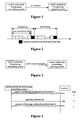
- the structure of a broadcast frame is shown as figure 2 , wherein in a broadcast frame a multiplexing information time slice is located in front of each service time slice.
- the generating time of a broadcast frame is generally fixed or in other words the time period of a broadcast frame is fixed, for example, a broadcast frame is generated every 1 second.
- services are classified into fixed rate services and variable rate services and service type information is sent to inform the receiving terminal of the service type of each service.
- There can be many sending methods such as adding service type information in multiplexing configuration information for each service.
- the service type description of each service is sent from the mobile multimedia broadcasting transmitting system to the receiving terminal, which is shown as the informing flow in figure 3 .
- multiplexing processing is implemented to the fixed rate services and variable rate services respectively.
- the fixed rate services it only needs to add an updating indication of multiplexing configuration information in the corresponding service time slice for indicating whether multiplexing configuration information is updated.
- the variable rate service the multiplexing configuration information in a next frame of the service can be provided in addition to the updating indication.
- the updated multiplexing configuration information and updating indication provided to the receiving terminal by the mobile multimedia broadcasting network system are sent from the mobile multimedia broadcasting transmitting system to the receiving terminal, whose flow is shown as follows:
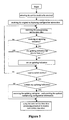
- Figure 5 schematically shows the updated multiplexing configuration information and updating indication process procedure of the receiving terminal in the receiving process of the fixed rate services.
- the mobile multimedia broadcasting receiving terminal After powering on, the mobile multimedia broadcasting receiving terminal needs to receive multiplexing configuration information to acquire a certain service needed.
- the receiving terminal In the process of receiving mobile multimedia broadcasting services with a fixed rate, when processing service time slices of each frame, the receiving terminal needs to process configuration updating indication until the first update appears. Then the receiving terminal sends an updating indication (which indicates that configuration information is changed and updating is needed) and since then it will not process the updating indication in service time slices any more.
- the receiving terminal When wishing to turn to receive other services, the receiving terminal only needs to make use of the saved multiplexing configuration information A and does not need to receive multiplexing configuration information again, if it has cached the original multiplexing configuration information A and there is no updating indication; the receiving terminal needs to receive the multiplexing configuration information B over again, if it has not cached the original multiplexing configuration information or it receives an updating indication.
- the present invention can reduce the times of acquiring multiplexing configuration information by the terminal and can also reduce the number of auxiliary spending information and the processing complexity of the receiving terminal.
Landscapes
- Engineering & Computer Science (AREA)
- Computer Networks & Wireless Communication (AREA)
- Signal Processing (AREA)
- Mobile Radio Communication Systems (AREA)
- Two-Way Televisions, Distribution Of Moving Picture Or The Like (AREA)
- Time-Division Multiplex Systems (AREA)
Abstract
Description
- The present invention relates to digital mobile communication field, specifically relates to a service transmitting method of mobile multimedia broadcasting network.
- In recent years, technologies and standards of digital mobile multimedia broadcasting have developed rapidly, such as DVB-H (Digital Video Broadcast Handheld) of Europe, Media FLO (Media Forward Link Only) of the USA, CMMB (China Mobile Multimedia Broadcast) of China and so on.
- Compared with analog technologies, one of the advantages of the digital mobile multimedia broadcasting network is that a broadcasting channel can support transmissions of a plurality of services by multiplexing on the premise of satisfying the requirements on service qualities so that the utilization efficiency of radio resource can be greatly increased. We call the data obtained by multiplexing of a plurality of services within a certain time a broadcast frame. For the receiving terminal, as there are a plurality of services on a broadcast frame, the terminal needs information which we call multiplexing configuration information and can exactly describe the broadcast channel resource each service used in the present broadcast frame to receive one or more services needed rapidly and exactly. Multiplexing configuration information is generated by the sending terminal when multiplexing occurs an d is sent to the terminal in one same broadcast frame.
- In consideration of reducing the receiving power consumption of a mobile multimedia receiving terminal, all mobile multimedia broadcasting technologies have adopted various methods to reduce the working time of the receiving terminal. In addition to service data compression, another two methods are also widely used:
- Time slicing technology, in which a broadcast frame is further divided into a plurality of time slices and one time slice only bears one service, thus the receiving terminal only needs to receive the time slice needed and needless to receive the whole broadcast frame, if only needing to receive one service.
- Multiplexing configuration information and service data use different time slices, so as to reduce the number of spending information in service data or in other words to increase the proportion of services payload data on time slices, so that lengths of time slices can be further reduced, which leads to reducing of the working time of the receiving terminal.
- There are many design methods for broadcast frames used by various mobile multimedia broadcasting technologies, but basic constitutions of broadcast frames are similar.
- We call the time slice in which multiplexing configuration information is located multiplexing information time slice and the time slice in which a service is located service time slice. In this manner, the receiving terminal can receive the service needed normally only by acquiring the multiplexing information time slice and the service time slice needed in each frame. If the times of reading spending time slices by the receiving terminal can be reduced, the working time of the receiving terminal can also be further reduced so that the design of mobile multimedia broadcasting system can have a better feature of current saving. Various mobile multimedia broadcasting technologies have designs for this point. Below are two common methods:
- Method A: adding interval time indication information in the service time slice, the information used to indicate the time when the next service time slice of the present service appears. This technology has been applied in DVB-H system. The problem of this method is that when a broadcast frame bears services having variable rate, each interval time may be varied and the receiving terminal needs to acquire interval time indication information from each service time slice no matter whether data rate of the service currently received by the receiving terminal is variable or not.
- Method B: auxiliary multiplexing information with a fixed length is added in the service time slice, for a broadcast frame has a fixed time length (such as 1 sec.). Whether multiplexing configuration information of the present service will be changed in the next frame and corresponding multiplexing configuration information or filling are provided in the auxiliary multiplexing information, according to which the receiving terminal can receive the service needed. Only when needing to receive other services, the receiving terminal needs to receive the multiplexing information time slice. However, this method also has a problem of increasing the processing complexity of the receiving terminal.
- For a mobile multimedia broadcasting network, the services most commonly used by users are the real-time services which are continuously broadcasted such as television and audio broadcast. The feature of this kind of service in the broadcasting process is that the average data rate can be considered to be fixed and as long as the coverage area or service quality is not adjusted by broadcast operator, the broadcast channel resource (the size of time slice) needed by this kind of service can also be fixed.
- If this kind of service application is prevailing, the existing methods not only increase additional spending but the procedure of receiving processing of the receiving terminal is also relatively complex.
- The object of the present invention is to provide a service transmitting method of mobile multimedia broadcasting network to reduce the working time of the receiving module in the mobile multimedia broadcasting system receiving terminal and to better save current.
- The technical solution of the present invention is as follows:
- A service transmitting method of mobile multimedia broadcasting network, characterized in, comprising the following steps:
- (1) a sending side of a mobile multimedia broadcasting system generates a broadcast frame in a fixed time period, implements multiplexing to different services according to service types and generates multiplexing configuration information, wherein a corresponding updating indication of the multiplexing configuration information is added in each service information slice as auxiliary spending information for indicating whether multiplexing configuration information of a next frame is updated;
- (2) the sending side of the mobile multimedia broadcasting system firstly sends multiplexing configuration information to a receiving terminal at the beginning of a frame and sends the updating indication of the multiplexing configuration information to the receiving terminal in advance when the multiplexing configuration information needs to be changed;
- (3) when using services of the mobile multimedia broadcasting system, the receiving terminal firstly receives a multiplexing configuration information, then acquires the service needed according to the received multiplexing configuration information, and monitors whether the multiplexing configuration information is going to change by monitoring the updating indication; the receiving terminal stops monitoring and records the update situations once monitors a decided updating indication;
- (4) when other services in addition to the current service needs to be received, the receiving terminal inquires whether situations of multiplexing configuration information update are recorded; if yes, the receiving terminal re-acquires multiplexing configuration information according to which the service needed is acquired, removes the recorded update situations and re-starts to monitor the updating indication of multiplexing configuration information.
- The updating indication comprises a fixed rate service configuration updating indication and a variable rate service configuration updating indication.
- In the step (2), the sending side of the mobile multimedia broadcasting system sends an updating indication of multiplexing configuration information to the receiving terminal in advance of one frame when the multiplexing configuration information needs to be changed.
In the step (3), it is further comprised that the receiving terminal caches the original multiplexing configuration information.
In the step (4), when other service in addition to the current service needs to be received, the receiving terminal acquires the service needed by using the saved multiplexing configuration information if there is no updating indication. - The present invention provides a method in the mobile multimedia broadcasting network that can not only reduce the times that the receiving terminal acquires multiplexing configuration information but can also reduce the number of auxiliary spending information using the auxiliary spending information and the properties of the service needed by the receiving terminal, so that the working time of the receiving module in the receiving terminal of the mobile multimedia broadcasting system receiving terminal is reduced, which renders that current can be better saved, the processing complexity of the receiving terminal can be reduced and less auxiliary multiplexing information is used.
-
-
Figure 1 is a diagram schematically showing the constitution of the mobile multimedia broadcasting system. -
Figure 2 is a diagram schematically showing the structure of multiplexing frame in the mobile multimedia broadcasting system. -
Figure 3 is diagram schematically showing the process of informing service types. -
Figure 4 is a flow chart of sending the updated multiplexing configuration information and updating indication bit. -
Figure 5 is a process procedure of updating multiplexing configuration information and updating indication bit when the terminal uses a fixed rate service. - The present invention will be described in details in combination with the figures. If not conflict, the embodiments and the details of the embodiments below can be combined.
- As shown in
figure 1 , the mobile multimedia broadcasting network system is mainly composed by a mobile multimedia broadcasting transmitting system and a mobile multimedia broadcasting receiving system (terminal), the interface between the two is the wireless air interface. The mobile multimedia broadcasting service is sent from the transmitting system to the mobile multimedia broadcasting receiving system via the air interface in form of electromagnetic signal. - The mobile multimedia broadcasting network system provides the receiving terminal with multiplexed signals. The structure of a broadcast frame is shown as
figure 2 , wherein in a broadcast frame a multiplexing information time slice is located in front of each service time slice. In the sending side of the mobile multimedia broadcasting system, the generating time of a broadcast frame is generally fixed or in other words the time period of a broadcast frame is fixed, for example, a broadcast frame is generated every 1 second. - In the sending side of the mobile multimedia broadcasting system, services are classified into fixed rate services and variable rate services and service type information is sent to inform the receiving terminal of the service type of each service. There can be many sending methods such as adding service type information in multiplexing configuration information for each service.
- In the mobile multimedia broadcasting network system, the service type description of each service is sent from the mobile multimedia broadcasting transmitting system to the receiving terminal, which is shown as the informing flow in
figure 3 . - In the process of multiplexing, multiplexing processing is implemented to the fixed rate services and variable rate services respectively. For the fixed rate services, it only needs to add an updating indication of multiplexing configuration information in the corresponding service time slice for indicating whether multiplexing configuration information is updated. For the variable rate service, the multiplexing configuration information in a next frame of the service can be provided in addition to the updating indication.
- As shown in
figure 4 , the updated multiplexing configuration information and updating indication provided to the receiving terminal by the mobile multimedia broadcasting network system are sent from the mobile multimedia broadcasting transmitting system to the receiving terminal, whose flow is shown as follows: - Flow a: the mobile multimedia broadcasting transmitting system sends the original multiplexing configuration information A;
- Flow b: the mobile multimedia broadcasting transmitting system sends "updating indication bit" to the receiving terminal in advance of one frame;
- Flow c: the mobile multimedia broadcasting system sends the updated multiplexing configuration information B to the terminals within its service area in the multiplexing information time slice.
-
Figure 5 schematically shows the updated multiplexing configuration information and updating indication process procedure of the receiving terminal in the receiving process of the fixed rate services. After powering on, the mobile multimedia broadcasting receiving terminal needs to receive multiplexing configuration information to acquire a certain service needed. In the process of receiving mobile multimedia broadcasting services with a fixed rate, when processing service time slices of each frame, the receiving terminal needs to process configuration updating indication until the first update appears. Then the receiving terminal sends an updating indication (which indicates that configuration information is changed and updating is needed) and since then it will not process the updating indication in service time slices any more. When wishing to turn to receive other services, the receiving terminal only needs to make use of the saved multiplexing configuration information A and does not need to receive multiplexing configuration information again, if it has cached the original multiplexing configuration information A and there is no updating indication; the receiving terminal needs to receive the multiplexing configuration information B over again, if it has not cached the original multiplexing configuration information or it receives an updating indication. - It can be seen from the above embodiments, compared with the prior art, the present invention can reduce the times of acquiring multiplexing configuration information by the terminal and can also reduce the number of auxiliary spending information and the processing complexity of the receiving terminal.
- The descriptions above are only preferable embodiments of the present invention, which are not used to restrict the present invention. For those skilled in the art, the present invention may have various changes and variations. Any amendments, equivalent substitutions, improvements etc. within the spirit and principle of the present invention are all concluded in the scope of protection of the present invention.
Claims (8)
- A service transmitting method of mobile multimedia broadcasting network, characterized in, comprising the following steps:(1) a sending side of a mobile multimedia broadcasting system generates a broadcast frame in a fixed time period, implements multiplexing to different services according to service types and generates multiplexing configuration information, wherein a corresponding updating indication of the multiplexing configuration information is added in each service information slice as auxiliary overhead information for indicating whether multiplexing configuration information of a next frame is updated;(2) the sending side of the mobile multimedia broadcasting system firstly sends multiplexing configuration information to a receiving terminal at the beginning of a frame and sends the updating indication of the multiplexing configuration information to the receiving terminal in advance when the multiplexing configuration information needs to be changed;(3) when using services of the mobile multimedia broadcasting system, the receiving terminal firstly receives a multiplexing configuration information, then acquires the service needed according to the received multiplexing configuration information, and monitors whether the multiplexing configuration information is going to change by monitoring the updating indication; the receiving terminal stops monitoring and records the update situations once a decided updating indication is monitored;(4) when other services in addition to the current service needs to be received, the receiving terminal inquires whether situations of multiplexing configuration information update are recorded; if yes, the receiving terminal re-acquires multiplexing configuration information according to which the service needed is acquired, removes the recorded update situations and re-starts to monitor the updating indication of multiplexing configuration information.
- According to the method in claim 1, characterized in, in the step (1), the mobile multimedia broadcasting system further informs the receiving terminal of the service type of each service by sending a service type notice.
- According to the method in claim 2, characterized in, the service type notice is achieved by adding service type information in multiplexing configuration information.
- According to the method in claim 1, characterized in, the service types comprise fixed rate services and variable rate services.
- According to the method in claim 4, characterized in, the updating indication comprises a fixed rate service configuration updating indication and a variable rate service configuration updating indication.
- According to the method in claim 1, characterized in, in the step (2), the sending side of the mobile multimedia broadcasting system sends an updating indication of multiplexing configuration information to the receiving terminal in advance of one frame when the multiplexing configuration information needs to be changed.
- According to the method in claim 1, characterized in, in the step (3), it is further comprised that the receiving terminal caches the original multiplexing configuration information.
- According to the method in claim 7, characterized in, in the step (4), when other service in addition to the current service needs to be received, the receiving terminal acquires the service needed by using the saved multiplexing configuration information if there is no updating indication.
Applications Claiming Priority (2)
| Application Number | Priority Date | Filing Date | Title |
|---|---|---|---|
| CN200610152341.6A CN100531473C (en) | 2006-09-26 | 2006-09-26 | Service transmission method in mobile media broadcasting network |
| PCT/CN2006/003668 WO2008037137A1 (en) | 2006-09-26 | 2006-12-29 | A service transmitting method of mobile multi-media broadcasting network |
Publications (2)
| Publication Number | Publication Date |
|---|---|
| EP2068570A1 true EP2068570A1 (en) | 2009-06-10 |
| EP2068570A4 EP2068570A4 (en) | 2013-04-10 |
Family
ID=38071970
Family Applications (1)
| Application Number | Title | Priority Date | Filing Date |
|---|---|---|---|
| EP06840698.2A Pending EP2068570A4 (en) | 2006-09-26 | 2006-12-29 | A service transmitting method of mobile multi-media broadcasting network |
Country Status (4)
| Country | Link |
|---|---|
| US (1) | US8059575B2 (en) |
| EP (1) | EP2068570A4 (en) |
| CN (1) | CN100531473C (en) |
| WO (1) | WO2008037137A1 (en) |
Families Citing this family (7)
| Publication number | Priority date | Publication date | Assignee | Title |
|---|---|---|---|---|
| CN100536620C (en) | 2006-09-29 | 2009-09-02 | 中兴通讯股份有限公司 | Method for reducing number of receiving overhead information in terminal of mobile multimedia broadcast |
| CN101771945B (en) * | 2008-12-26 | 2012-10-10 | 中兴通讯股份有限公司 | Method and system for updating MBMS service control signaling |
| CN101998262B (en) * | 2009-08-13 | 2015-09-16 | 中兴通讯股份有限公司 | The collocation method of multicast broadcast multicast service notification information and device |
| CN102209260A (en) * | 2010-03-30 | 2011-10-05 | 联芯科技有限公司 | Configuration method and system for audio/ video decoding configuration information and mobile terminal thereof |
| WO2012164840A1 (en) | 2011-05-31 | 2012-12-06 | 日本電気株式会社 | Wireless transmission device, wireless transmission system, and method for controlling wireless transmission device |
| CN103139866B (en) * | 2011-11-29 | 2018-01-26 | 中兴通讯股份有限公司 | The access barred control information update method and terminal of a kind of extension |
| JP6330170B2 (en) | 2013-05-05 | 2018-05-30 | ランティック ドイチュラント ゲーエムベーハー | Time division for low power mode |
Family Cites Families (6)
| Publication number | Priority date | Publication date | Assignee | Title |
|---|---|---|---|---|
| CN1496142A (en) * | 2002-08-16 | 2004-05-12 | 北京三星通信技术研究有限公司 | Conversion method of MBMS point-to-point channel and point-to-multipoint channel |
| US7440425B2 (en) * | 2003-09-04 | 2008-10-21 | Samsung Electronics Co., Ltd. | Apparatus and method for reducing paging channel loading for broadcast multicast services in a wireless network |
| US7372823B2 (en) * | 2004-03-22 | 2008-05-13 | Lucent Technologies Inc. | Method of transmitting broadcast-multicast services parameters messages in a wireless communications system |
| FR2875092A1 (en) * | 2004-09-07 | 2006-03-10 | France Telecom | PROTECTION AND CONTROL OF DIFFUSION OF CONTENT ON TELECOMMUNICATIONS NETWORKS |
| KR20060044098A (en) * | 2004-11-11 | 2006-05-16 | 엘지전자 주식회사 | Channel automatic tuning device and control method thereof |
| KR101203062B1 (en) * | 2005-03-10 | 2012-11-21 | 엘지전자 주식회사 | Method for Transmitting Overhead Message in Mobile Communication System |
-
2006
- 2006-09-26 CN CN200610152341.6A patent/CN100531473C/en not_active Expired - Fee Related
- 2006-12-29 EP EP06840698.2A patent/EP2068570A4/en active Pending
- 2006-12-29 WO PCT/CN2006/003668 patent/WO2008037137A1/en not_active Ceased
- 2006-12-29 US US12/440,452 patent/US8059575B2/en active Active
Also Published As
| Publication number | Publication date |
|---|---|
| EP2068570A4 (en) | 2013-04-10 |
| CN100531473C (en) | 2009-08-19 |
| US20100043031A1 (en) | 2010-02-18 |
| WO2008037137A1 (en) | 2008-04-03 |
| US8059575B2 (en) | 2011-11-15 |
| CN1960519A (en) | 2007-05-09 |
Similar Documents
| Publication | Publication Date | Title |
|---|---|---|
| US8081587B2 (en) | Method, subscriber device and radio communication system for transmitting user data messages | |
| EP1909524B1 (en) | Methods and apparatuses for transmitting/receiving paging information in a wireless communication system | |
| EP1764934A2 (en) | Method for generating a frame in an orthogonal frequency division multiple access communication system | |
| KR20050044939A (en) | Mobile multimedia terminal for dvb-t and large and small cell communication | |
| EP1420593A3 (en) | Receiver | |
| CN101534449A (en) | Receiving and transmitting method of a mobile digital broadcast television and used terminal | |
| JP2002527942A (en) | Frame control method and apparatus | |
| US8290504B2 (en) | Method for realizing broadcast communication and data communication in a cellular network | |
| US8059575B2 (en) | Service transmitting method of mobile multi-media broadcasting network | |
| CN100352276C (en) | Method for scheduling resources of frequency spectrum shared by digital TV broadcast system and wireless communication system | |
| EP2903307B1 (en) | Method for implementing trunking service, evolved node b and terminal | |
| EP1825617A2 (en) | Method and system for multiplex data communication | |
| US8233421B2 (en) | Method for reducing times of receiving overhead information by mobile multimedia broadcast terminal | |
| CN101155007B (en) | Method for sharing frequency spectrum between high-power launching pad and low-power launching pad | |
| CN100488267C (en) | A method for informing update state of mobile multimedia broadcasting terminal control information table | |
| CN100531399C (en) | A controlled information table classification transmission method for mobile multimedia broadcasting network | |
| Nakahara et al. | Efficient use of frequencies in terrestrial ISDB system | |
| EP1946583B1 (en) | Associated paging indicator | |
| CN201263184Y (en) | Mobile television receiving terminal | |
| CN100558165C (en) | Method and device for transmitting television programs | |
| KR20060055216A (en) | Method and system for paging message transmission and reception in broadband wireless access system | |
| CN100550717C (en) | A method for reducing the number of times mobile multimedia broadcast terminal receives overhead information | |
| KR100810361B1 (en) | Frame Generation Method in Orthogonal Frequency Division Multiple Access Communication System | |
| CN2924959Y (en) | DMB receiving terminal | |
| CN114205036A (en) | Dormant dual-mode FM-CDR emergency broadcast message receiving method |
Legal Events
| Date | Code | Title | Description |
|---|---|---|---|
| PUAI | Public reference made under article 153(3) epc to a published international application that has entered the european phase |
Free format text: ORIGINAL CODE: 0009012 |
|
| STAA | Information on the status of an ep patent application or granted ep patent |
Free format text: STATUS: REQUEST FOR EXAMINATION WAS MADE |
|
| 17P | Request for examination filed |
Effective date: 20090304 |
|
| AK | Designated contracting states |
Kind code of ref document: A1 Designated state(s): AT BE BG CH CY CZ DE DK EE ES FI FR GB GR HU IE IS IT LI LT LU LV MC NL PL PT RO SE SI SK TR |
|
| AX | Request for extension of the european patent |
Extension state: AL BA HR MK RS |
|
| RIC1 | Information provided on ipc code assigned before grant |
Ipc: H04W 84/00 20090101AFI20090518BHEP |
|
| DAX | Request for extension of the european patent (deleted) | ||
| A4 | Supplementary search report drawn up and despatched |
Effective date: 20130308 |
|
| RIC1 | Information provided on ipc code assigned before grant |
Ipc: H04W 76/00 20090101AFI20130304BHEP Ipc: H04W 72/00 20090101ALI20130304BHEP |