EP2066781B1 - Target genes for strain-specific diagnostic of ehrlichia ruminantium and use thereof - Google Patents
Target genes for strain-specific diagnostic of ehrlichia ruminantium and use thereof Download PDFInfo
- Publication number
- EP2066781B1 EP2066781B1 EP06831849A EP06831849A EP2066781B1 EP 2066781 B1 EP2066781 B1 EP 2066781B1 EP 06831849 A EP06831849 A EP 06831849A EP 06831849 A EP06831849 A EP 06831849A EP 2066781 B1 EP2066781 B1 EP 2066781B1
- Authority
- EP
- European Patent Office
- Prior art keywords
- erum
- strain
- ruminantium
- seq
- primers
- Prior art date
- Legal status (The legal status is an assumption and is not a legal conclusion. Google has not performed a legal analysis and makes no representation as to the accuracy of the status listed.)
- Not-in-force
Links
- 241000606675 Ehrlichia ruminantium Species 0.000 title claims abstract description 86
- 108090000623 proteins and genes Proteins 0.000 title claims abstract description 57
- 238000011895 specific detection Methods 0.000 claims abstract description 8
- 238000000034 method Methods 0.000 claims description 15
- 238000012408 PCR amplification Methods 0.000 claims description 9
- 230000003321 amplification Effects 0.000 claims description 8
- 238000003199 nucleic acid amplification method Methods 0.000 claims description 8
- 108700028369 Alleles Proteins 0.000 claims description 5
- 241000894006 Bacteria Species 0.000 claims description 5
- FWMNVWWHGCHHJJ-SKKKGAJSSA-N 4-amino-1-[(2r)-6-amino-2-[[(2r)-2-[[(2r)-2-[[(2r)-2-amino-3-phenylpropanoyl]amino]-3-phenylpropanoyl]amino]-4-methylpentanoyl]amino]hexanoyl]piperidine-4-carboxylic acid Chemical compound C([C@H](C(=O)N[C@H](CC(C)C)C(=O)N[C@H](CCCCN)C(=O)N1CCC(N)(CC1)C(O)=O)NC(=O)[C@H](N)CC=1C=CC=CC=1)C1=CC=CC=C1 FWMNVWWHGCHHJJ-SKKKGAJSSA-N 0.000 claims description 4
- 238000002405 diagnostic procedure Methods 0.000 abstract description 4
- 230000002068 genetic effect Effects 0.000 abstract description 2
- 238000001514 detection method Methods 0.000 description 35
- 239000002773 nucleotide Substances 0.000 description 30
- 125000003729 nucleotide group Chemical group 0.000 description 30
- 230000002238 attenuated effect Effects 0.000 description 28
- 239000003550 marker Substances 0.000 description 25
- 241000605312 Ehrlichia canis Species 0.000 description 18
- 239000000047 product Substances 0.000 description 14
- 210000004369 blood Anatomy 0.000 description 12
- 239000008280 blood Substances 0.000 description 12
- 239000013642 negative control Substances 0.000 description 12
- 241000282472 Canis lupus familiaris Species 0.000 description 11
- 230000000692 anti-sense effect Effects 0.000 description 11
- 241000892220 Ehrlichia ruminantium str. Gardel Species 0.000 description 10
- 241001374115 Ehrlichia ruminantium str. Welgevonden Species 0.000 description 10
- 238000006243 chemical reaction Methods 0.000 description 10
- 239000013068 control sample Substances 0.000 description 10
- 238000012217 deletion Methods 0.000 description 10
- 230000037430 deletion Effects 0.000 description 10
- 241000605280 Anaplasma platys Species 0.000 description 9
- 241000282465 Canis Species 0.000 description 9
- 238000004458 analytical method Methods 0.000 description 9
- 230000035772 mutation Effects 0.000 description 9
- LTINZAODLRIQIX-FBXRGJNPSA-N cefpodoxime proxetil Chemical compound N([C@H]1[C@@H]2N(C1=O)C(=C(CS2)COC)C(=O)OC(C)OC(=O)OC(C)C)C(=O)C(=N/OC)\C1=CSC(N)=N1 LTINZAODLRIQIX-FBXRGJNPSA-N 0.000 description 8
- 210000004027 cell Anatomy 0.000 description 7
- 229940051998 ehrlichia canis Drugs 0.000 description 7
- 101150064138 MAP1 gene Proteins 0.000 description 6
- 210000001616 monocyte Anatomy 0.000 description 6
- 108091093088 Amplicon Proteins 0.000 description 5
- 241000894007 species Species 0.000 description 5
- TWRXJAOTZQYOKJ-UHFFFAOYSA-L Magnesium chloride Chemical compound [Mg+2].[Cl-].[Cl-] TWRXJAOTZQYOKJ-UHFFFAOYSA-L 0.000 description 4
- 241001465754 Metazoa Species 0.000 description 4
- 238000010222 PCR analysis Methods 0.000 description 4
- 241000606651 Rickettsiales Species 0.000 description 4
- 230000037029 cross reaction Effects 0.000 description 4
- 239000012634 fragment Substances 0.000 description 4
- 230000037433 frameshift Effects 0.000 description 4
- 239000000523 sample Substances 0.000 description 4
- 239000013598 vector Substances 0.000 description 4
- 241000606665 Anaplasma marginale Species 0.000 description 3
- 241000605314 Ehrlichia Species 0.000 description 3
- 239000000427 antigen Substances 0.000 description 3
- 230000000890 antigenic effect Effects 0.000 description 3
- 108091007433 antigens Proteins 0.000 description 3
- 102000036639 antigens Human genes 0.000 description 3
- 201000010099 disease Diseases 0.000 description 3
- 208000037265 diseases, disorders, signs and symptoms Diseases 0.000 description 3
- 238000007857 nested PCR Methods 0.000 description 3
- 239000008188 pellet Substances 0.000 description 3
- 238000012163 sequencing technique Methods 0.000 description 3
- 230000000405 serological effect Effects 0.000 description 3
- 239000006228 supernatant Substances 0.000 description 3
- 230000008685 targeting Effects 0.000 description 3
- 238000002255 vaccination Methods 0.000 description 3
- 108020004465 16S ribosomal RNA Proteins 0.000 description 2
- QKNYBSVHEMOAJP-UHFFFAOYSA-N 2-amino-2-(hydroxymethyl)propane-1,3-diol;hydron;chloride Chemical compound Cl.OCC(N)(CO)CO QKNYBSVHEMOAJP-UHFFFAOYSA-N 0.000 description 2
- 241000238876 Acari Species 0.000 description 2
- 241000283690 Bos taurus Species 0.000 description 2
- KCXVZYZYPLLWCC-UHFFFAOYSA-N EDTA Chemical compound OC(=O)CN(CC(O)=O)CCN(CC(O)=O)CC(O)=O KCXVZYZYPLLWCC-UHFFFAOYSA-N 0.000 description 2
- 238000002965 ELISA Methods 0.000 description 2
- 241000605310 Ehrlichia chaffeensis Species 0.000 description 2
- 241000588724 Escherichia coli Species 0.000 description 2
- LFQSCWFLJHTTHZ-UHFFFAOYSA-N Ethanol Chemical compound CCO LFQSCWFLJHTTHZ-UHFFFAOYSA-N 0.000 description 2
- 241000282849 Ruminantia Species 0.000 description 2
- FAPWRFPIFSIZLT-UHFFFAOYSA-M Sodium chloride Chemical compound [Na+].[Cl-] FAPWRFPIFSIZLT-UHFFFAOYSA-M 0.000 description 2
- 108020004566 Transfer RNA Proteins 0.000 description 2
- 239000003795 chemical substances by application Substances 0.000 description 2
- 238000004925 denaturation Methods 0.000 description 2
- 230000036425 denaturation Effects 0.000 description 2
- 239000000499 gel Substances 0.000 description 2
- 238000011534 incubation Methods 0.000 description 2
- 208000015181 infectious disease Diseases 0.000 description 2
- 238000003780 insertion Methods 0.000 description 2
- 230000037431 insertion Effects 0.000 description 2
- 238000007403 mPCR Methods 0.000 description 2
- 229910001629 magnesium chloride Inorganic materials 0.000 description 2
- 239000000203 mixture Substances 0.000 description 2
- 150000007523 nucleic acids Chemical group 0.000 description 2
- 244000045947 parasite Species 0.000 description 2
- 230000001717 pathogenic effect Effects 0.000 description 2
- 239000013641 positive control Substances 0.000 description 2
- 108020004418 ribosomal RNA Proteins 0.000 description 2
- 238000012216 screening Methods 0.000 description 2
- 229960005486 vaccine Drugs 0.000 description 2
- 238000012800 visualization Methods 0.000 description 2
- XLYOFNOQVPJJNP-UHFFFAOYSA-N water Substances O XLYOFNOQVPJJNP-UHFFFAOYSA-N 0.000 description 2
- KDELTXNPUXUBMU-UHFFFAOYSA-N 2-[2-[bis(carboxymethyl)amino]ethyl-(carboxymethyl)amino]acetic acid boric acid Chemical compound OB(O)O.OB(O)O.OB(O)O.OC(=O)CN(CC(O)=O)CCN(CC(O)=O)CC(O)=O KDELTXNPUXUBMU-UHFFFAOYSA-N 0.000 description 1
- 229920000936 Agarose Polymers 0.000 description 1
- 241000238679 Amblyomma Species 0.000 description 1
- 241000606646 Anaplasma Species 0.000 description 1
- 241000238421 Arthropoda Species 0.000 description 1
- 108020000946 Bacterial DNA Proteins 0.000 description 1
- 102000006303 Chaperonin 60 Human genes 0.000 description 1
- 108010058432 Chaperonin 60 Proteins 0.000 description 1
- 108020004705 Codon Proteins 0.000 description 1
- 108091035707 Consensus sequence Proteins 0.000 description 1
- 238000007400 DNA extraction Methods 0.000 description 1
- 108010014303 DNA-directed DNA polymerase Proteins 0.000 description 1
- 102000016928 DNA-directed DNA polymerase Human genes 0.000 description 1
- 102000016911 Deoxyribonucleases Human genes 0.000 description 1
- 108010053770 Deoxyribonucleases Proteins 0.000 description 1
- 238000009007 Diagnostic Kit Methods 0.000 description 1
- 108010067770 Endopeptidase K Proteins 0.000 description 1
- 206010014979 Epidemic typhus Diseases 0.000 description 1
- 239000006142 Luria-Bertani Agar Substances 0.000 description 1
- 241000124008 Mammalia Species 0.000 description 1
- 108091034117 Oligonucleotide Proteins 0.000 description 1
- 241001674048 Phthiraptera Species 0.000 description 1
- 101100352588 Schizosaccharomyces pombe (strain 972 / ATCC 24843) map1 gene Proteins 0.000 description 1
- 208000031726 Spotted Fever Group Rickettsiosis Diseases 0.000 description 1
- 108010006785 Taq Polymerase Proteins 0.000 description 1
- 241000700605 Viruses Species 0.000 description 1
- 239000011543 agarose gel Substances 0.000 description 1
- 238000000246 agarose gel electrophoresis Methods 0.000 description 1
- AVKUERGKIZMTKX-NJBDSQKTSA-N ampicillin Chemical compound C1([C@@H](N)C(=O)N[C@H]2[C@H]3SC([C@@H](N3C2=O)C(O)=O)(C)C)=CC=CC=C1 AVKUERGKIZMTKX-NJBDSQKTSA-N 0.000 description 1
- 229960000723 ampicillin Drugs 0.000 description 1
- 238000000137 annealing Methods 0.000 description 1
- 244000052616 bacterial pathogen Species 0.000 description 1
- 210000000601 blood cell Anatomy 0.000 description 1
- 210000000349 chromosome Anatomy 0.000 description 1
- 230000000052 comparative effect Effects 0.000 description 1
- 239000002299 complementary DNA Substances 0.000 description 1
- 238000011109 contamination Methods 0.000 description 1
- 239000012228 culture supernatant Substances 0.000 description 1
- 230000009089 cytolysis Effects 0.000 description 1
- 238000001085 differential centrifugation Methods 0.000 description 1
- 230000029087 digestion Effects 0.000 description 1
- 239000012895 dilution Substances 0.000 description 1
- 238000010790 dilution Methods 0.000 description 1
- 239000012153 distilled water Substances 0.000 description 1
- 208000000292 ehrlichiosis Diseases 0.000 description 1
- 238000001962 electrophoresis Methods 0.000 description 1
- 208000028104 epidemic louse-borne typhus Diseases 0.000 description 1
- 238000011049 filling Methods 0.000 description 1
- 238000009472 formulation Methods 0.000 description 1
- 238000011331 genomic analysis Methods 0.000 description 1
- 201000009162 human monocytic ehrlichiosis Diseases 0.000 description 1
- 238000009396 hybridization Methods 0.000 description 1
- 210000004201 immune sera Anatomy 0.000 description 1
- 229940042743 immune sera Drugs 0.000 description 1
- 238000002649 immunization Methods 0.000 description 1
- 238000003119 immunoblot Methods 0.000 description 1
- 238000000126 in silico method Methods 0.000 description 1
- 229940031551 inactivated vaccine Drugs 0.000 description 1
- 230000002458 infectious effect Effects 0.000 description 1
- 230000003834 intracellular effect Effects 0.000 description 1
- 238000002955 isolation Methods 0.000 description 1
- BPHPUYQFMNQIOC-NXRLNHOXSA-N isopropyl beta-D-thiogalactopyranoside Chemical compound CC(C)S[C@@H]1O[C@H](CO)[C@H](O)[C@H](O)[C@H]1O BPHPUYQFMNQIOC-NXRLNHOXSA-N 0.000 description 1
- 244000144972 livestock Species 0.000 description 1
- 108020004999 messenger RNA Proteins 0.000 description 1
- 238000002156 mixing Methods 0.000 description 1
- 238000012544 monitoring process Methods 0.000 description 1
- 108020004707 nucleic acids Proteins 0.000 description 1
- 102000039446 nucleic acids Human genes 0.000 description 1
- 244000052769 pathogen Species 0.000 description 1
- 108090000765 processed proteins & peptides Proteins 0.000 description 1
- 102000004196 processed proteins & peptides Human genes 0.000 description 1
- 238000007894 restriction fragment length polymorphism technique Methods 0.000 description 1
- 238000012502 risk assessment Methods 0.000 description 1
- 238000011896 sensitive detection Methods 0.000 description 1
- 239000011780 sodium chloride Substances 0.000 description 1
- 239000000243 solution Substances 0.000 description 1
- 238000000527 sonication Methods 0.000 description 1
- 201000004284 spotted fever Diseases 0.000 description 1
- 230000001018 virulence Effects 0.000 description 1
- 238000012070 whole genome sequencing analysis Methods 0.000 description 1
Images




Classifications
-
- C—CHEMISTRY; METALLURGY
- C12—BIOCHEMISTRY; BEER; SPIRITS; WINE; VINEGAR; MICROBIOLOGY; ENZYMOLOGY; MUTATION OR GENETIC ENGINEERING
- C12Q—MEASURING OR TESTING PROCESSES INVOLVING ENZYMES, NUCLEIC ACIDS OR MICROORGANISMS; COMPOSITIONS OR TEST PAPERS THEREFOR; PROCESSES OF PREPARING SUCH COMPOSITIONS; CONDITION-RESPONSIVE CONTROL IN MICROBIOLOGICAL OR ENZYMOLOGICAL PROCESSES
- C12Q1/00—Measuring or testing processes involving enzymes, nucleic acids or microorganisms; Compositions therefor; Processes of preparing such compositions
- C12Q1/68—Measuring or testing processes involving enzymes, nucleic acids or microorganisms; Compositions therefor; Processes of preparing such compositions involving nucleic acids
- C12Q1/6876—Nucleic acid products used in the analysis of nucleic acids, e.g. primers or probes
- C12Q1/6888—Nucleic acid products used in the analysis of nucleic acids, e.g. primers or probes for detection or identification of organisms
- C12Q1/689—Nucleic acid products used in the analysis of nucleic acids, e.g. primers or probes for detection or identification of organisms for bacteria
Definitions
- Rickettsiae are intracellular pathogenic bacteria responsible for various diseases on Humans and animals. Rickettsiae are transmitted by arthropods, most frequently ticks, lice and mites, and cause major illnesses such as epidemic typhus or Rocky Moutain spotted fever.
- the genus Ehrlichia comprises other species pathogenic for humans and mammals such as E. chaffeensis, responsible for Human monocytic ehrlichiosis, E. canis, the causing agent of canine monocytic ehrlichiosis.
- Ehrlichia ruminantium formerly known as Cowdria ruminantium
- Cowdria ruminantium is the causing agent of heartwater or cowdriosis, an economically important disease of domestic ruminants.
- Heartwater can cause up to 80 % mortality in susceptible animals.
- E. ruminantium is transmitted by Amblyomma ticks and is present in Sub-Saharan Africa and surrounding islands, including Madagascar.
- Heartwater is also present in several Caribbean islands and is threatening the American mainland.
- Vaccination against heartwater has long been based on "infection and treatment”. Naive animals are inoculated with blood containing virulent organisms, a procedure which carries a high risk of uncontrolled clinical reactions and the inadvertent spread of undesirable parasites and viruses.
- a first generation cowdriosis inactivated vaccine based on cell-cultured derived elementary bodies was developed. Although representing a considerable improvement and the first heartwater vaccine acceptable for widespread use, the level of protection conferred is still not fully satisfactory. Indeed, all animals develop a clinical reaction at challenge despite vaccination. Furthermore, livestock also faces challenge by genetically and antigenically diverse strains.
- E. ruminantium The diversity of E. ruminantium was demonstrated at the antigenic level by cross-immunisation studies. Variable antigens were identified by ELISA and immunoblot using cross-absorbed immune sera.
- Genomic polymorphism was also detected using RAPD and RFLP markers. This DNA polymorphism was shown to correlate with antigenic polymorphism.
- ELISA-based and serological diagnostics have been developed using the Map 1 and the GroEL ( WO 9914233 ) antigens.
- Other peptides for serological diagnostic have been described ( US 2002004051 , US 20020132789 , WO 02/066652 ). Although they have dramatically improved specificity, they still display cross reaction with E. canis and E. chaffeensis.
- PCR-based diagnostic methods represent methods of choice for the sensitive and specific detection of Ehrlichia in clinically reactive or asymptomatic carrier ruminants, as well as in vectors.
- hosts and vectors can be co-infested by several parasites and the diversity of pathogen species is further complicated by the existence of extensive intra-species diversity.
- it is important to provide means and diagnostic tools allowing not only to identify E. ruminantium but also to differentiate between different strains.
- An object of the invention is thus the use of the following set of genes:
- the reference sequences used herein to define the target genes Erum 1-5 and Erum 7-9 are those identified in the Gardel strain; the reference sequences used herein to define the target genes Erum6 and Erum10 are those identified in the Welgevonden strain.
- allelic forms that will be considered herein, having in view strain-specific detection, are in particular those resulting from large insertions and/or deletions that lead to a frameshift or to a truncated version of the original gene.
- the invention thus provides a method for the strain-specific detection of Ehrlichia ruminantium wherein said method comprises determining, for each of the genes Erum 1 to Erum10 defined above, whether said gene is present in the bacteria to be tested, and under which allelic form.
- the method of the invention is carried out by performing PCR amplification of all the target genes Erum 1 to Erum10, and checking, for each of these genes, the presence of one or more amplification product(s), and the size of said amplification product(s).
- Target genes Erum 1 to Erum10 preferred target regions are as follows:
- PCR analysis i.e. simultaneous gel visualization of ten individual PCR reactions, each one targeting only one of the genes Erum1 to Erum10 defined above.
- the ten target genes can also be analysed by multiplex PCR, by a single PCR reaction involving simultaneous amplification of all the genes using a mixture of primers and visualization of the pattern on electrophoresis gel, or by a combination of multiplex PCR reactions, each one concerning a subset of the target genes listed above.
- Non-limitative examples of PCR primers allowing to carry out the method of the invention are given in Table 2 below.
- Other suitable PCR primers can easily be designed by one of skill in the art, on the basis of the information provided by the present invention.
- oligonucleotide design software suitable for obtaining PCR primers of the invention, one can mention the software Vector NTI Advance 9.0 (Invitrogene).
- the invention also comprises diagnostic kits for discriminating between strains of E. ruminantium wherein said kits comprise PCR primers for all the target genes Erum 1 to Erum10.
- the method of the invention is useful in particular to discriminate between strains of E. ruminantium other than strain Gardel and strain Welgevonden. It is also useful to discriminate between strain Gardel and strains of E. ruminantium other than strain Welgevonden, or conversely, between strain Welgevonden and strains of E. ruminantium other than strain Garde1. Furthermore, it also allows for discriminating between a virulent strain of E. ruminantium and its attenuated counterpart.
- the method of the invention can be performed either on whole bacteria previously lysed, or on nucleic acid (genomic DNA, cDNA or mRNA) isolated from said bacteria. It is suitable for use at various stages of the life cycle of E. ruminantium, more specifically but not limited to the domestic-ruminants infectious stage, vector-interaction stage or reservoir animals-interaction stage.
- Preferred utilisations of the method of the invention include the detection of Ehrlichia ruminantium in a given territory, the strain specific identification of Ehrlichia ruminantium in a given territory, the discrimination between strains of Ehrlichia ruminantium in a given territory or between different geographical regions, the analysis of strain movements within a region or between geographically distinct regions, the differential presence of strains of Ehrlichia ruminantium according to vector species and/or populations or the early detection and risk assessment in regions where potential vectors are present but where the disease has not been recorded yet.
- Plasmidic DNA from recombinant E. coli strains was extracted according to the alkaline lysis method and inserts were sequenced on both strands using universal forward and reverse M13 primers and the ET DYEnamic terminator kit (Amersham). Sequences were obtained with ABI 373 et ABI 377 automated sequencers (Applied Biosystems). Data were analysed and contigs were assembled using Phred-Phrap and Consed software packages (http://www.genome.washington.edu). Gaps were filled in through primer-directed sequencing using custom made primers. A total of about 20000 raw sequence runs were generated and analysed for each E. ruminantium strain to generate a full length consensus sequence with a coverage of 6x to 7x.
- E. ruminantium strain Gardel and E. ruminantium strain Welgevonden are virulent pathogenic strains causing heartwater in Guadeloupe Island (French West Indies) and South Africa, respectively.
- the genome of E. ruminantium strains Gardel and Welgevonden is arranged as a circular chromosome of 1499920 bp and 1512977 bp, respectively.
- the respective G+C contents for the strains Gardel and Welgevonden is 27.51 % and 27.48 %.
- the genome of E. ruminantium strain Gardel comprises 948 coding sequences of an average size of 1018 bp which represent a total coding surface of 63 % of the whole genome.
- ruminantium strain Welgevonden bears 957 genes of the same average size of 1018 bp.
- the genome surface of this strain devoted to coding sequences is 62 %. Both genomes comprise 36 transfer RNAs (tRNA) and 3 ribosomal RNAs (rRNA).
- ruminantium strain Gardel which is affected by mutations and differs from its native counterpart in E. ruminantium strain Welgevonden is presented in Table I (SEQ ID NO 7). This is a truncated version of the native gene in E. ruminantium strain Welgevonden (Table 1, SEQ ID NO 8). The genome of E. ruminantium strain Welgevonden also bears mutated genes, with respect to their allelic variant counterparts in the genome of E. ruminantium strain Gardel. Three of these CDS which are affected by mutations generating a truncated version of the genes are presented in Table 1 (SEQ ID NO 9 to SEQ ID NO 12).
- the native full length allele of these CDS present in the genome of E. ruminantium strain Gardel are shown in Table 1 (SEQ ID NO 13 to SEQ ID NO 15).
- Table 1 One series of CDS in E. ruminantium strain Welgevonden (SEQ ID NO 11 and SEQ ID NO 12), whose native full length alleles are found in the genome of E. ruminantium strain Gardel (Table 1, SEQ ID NO 15) was affected by mutations generating a frameshift. Table 1.
- DNA is extracted from elementary bodies of E. ruminantium, as described by Perez et al. (1997). E. ruminantium strains are grown in BUEC cells as described above. Elementary bodies are purified from the culture supernatant by differential centrifugation and resuspended in 350 ⁇ l of PBS to which is added 150 ⁇ l of buffer containing 25 mM Tris-HCl (pH 8.0), 10 mM MgCl2 and 125 ⁇ g of DNase in order to remove contaminating host cell DNA. After incubation for 90 min. at 37°C, the reaction is stopped by addition of 25 mM EDTA.
- PCR amplification of amplicons is performed by mixing 250 ng of E. ruminantium DNA, 2.5 U of Taq DNA polymerase, 200 nM of each dNTP, 1 ⁇ M of each, sense and antisense, primer and 3 mM MgCl 2 in a final volume of 50 ⁇ l. Amplification is done under the following conditions: 5 min denaturation at 94°C, followed by 30 cycles of amplification with with a 1-min denaturation, 45 sec of annealing at 45°C and 2 min extension at 72°C. An extra extension step of 10 min at 72°C is added after completion of the 30 cycles. PCR products, i.e. amplicons, are analysed by 1% agarose gel electrophoresis in Tris-borate-EDTA buffer.
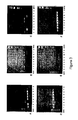
- 1 Molecular weight marker (100-bp ladder); 2: Erga with primers P-Erum 1-A + P-Erum 1-B; 3: Erwe with primers P-Erum 1-A + P-Erum 1-B; 4: Control sample with primers P-Erum 1-A + P-Erum 1-B; 5: Erga with primers P-Erum 2-A + P-Erum 2-B; 6: Erwe with primers P-Erum 2-A + P-Erum 2-B; 7: Control sample with primers P-Erum 2-A + P-Erum 2-B; 8: Erga with primers P-Erum 3-A + P-Erum 3-B; 9: Erwe with primers P-Erum 3-A + P-Erum 3-B; 10: Control sample with primers P-Erum 3-A + P-Erum 3-B; 11: Erga with primers P-Erum 4-A + P-Erum 4-B; 12: Erwe with primers P-Erum 4-A + P-Erum 4-B; 13: Control sample with primers
- 1 Molecular weight marker (100-bp ladder); 2: Erga with primers P-Erum 7-A + P-Erum 7-B; 3: Erwe with primers P-Erum 7-A + P-Erum 7-B; 4: Control sample with primers P-Erum 7-A + P-Erum 7-B; 5: Erga with primers P-Erum 9-A + P-Erum 9-B; 6: Erwe with primers P-Erum 9-A + P-Erum 9-B; 7: Control sample with primers P-Erum 9-A + P-Erum 9-B; 8: Erga with primers P-Erum 10-A + P-Erum 10-B; 9: Erwe with primers P-Erum 10-A + P-Erum 10-B; 10: Control sample with primers P-Erum 10-A + P-Erum 10-B; 11: Molecular weight marker (1 Eco RI- Hind III); 12: Molecular weight marker (100-bp ladder); 13: Erga with primers P-
- the pairs P-Erum 7-A + P-Erum 7-B, P-Erum 8-A + P-Erum 8-B, P-Erum 9-A + P-Erum 7-B and P-Erum 10-A + P-Erum 10-B targeting the truncated genes yielded PCR products of the respective expected size of 2791 bp, 552 bp+ 1071 bp, 1361 bp and 1095 bp on strain Gardel and 2395 bp, 492 bp, 1178 bp and 1691 bp on strain Welgevonden, respectively (Table 3, Fig. 2 ).
- An additional band of 480 bp is observed on strain Gardel with the pair P-Erum 8-A + P-Erum 8-B. This additional band is most likely due to a single low specificity response occurring in Erga.
- the primer pairs P-1350-A + P-1350-B, P-4510-A + P-4510-B, P-5750-A + P-5750-B and P-7420-A + P-7420-B yielded PCR products of the respective expected size of 2791, 552+1071, 1361 and 1095 on strain Gardel and 2395, 492, 1178 and 1691 on strain Welgevonden, respectively (Table 3, Fig. 1 and Fig. 2 ). An additional band of 480 bp is observed on strain Gardel with the pair P-4510-A + P-4510-B. This additional band is most likely due to a single low specificity response occurring in strain Gardel. Table 3. Strain-specific differential PCR screening of E.
- EXAMPLE 4 DIFFERENTIAL STRAIN-SPECIFIC PCR DETECTION AND IDENTIFICATION OF STRAINS OF E. RUMINANTIUM DIFFERENT THAN STRAIN GARDEL AND STRAIN WELGEVONDEN
- the use primers listed in Table 2 were used for the specific identification and discrimination of E ruminantium strains other than strain Gardel and strain Welgevonden.
- the strains others than Gardel and Welgevonden presented in this example are strains Umpala (Mozambique), Senegal (Senegal), Bankouma (Burkina Faso) , Bekuy (Burkina Faso), Lamba (Burkina Faso), Banan 1 (Burkina Faso) and Banan 2 (Burkina Faso). These strains are presented here to illustrate samples from different parts of Sub-Saharan Africa and the Caribbean.
- DNA is extracted from elementary bodies of E. ruminantium and PCR amplification performed as described in Example 3.
- EXAMPLE 5 DIFFERENTIAL SPECIFIC PCR DETECTION AND IDENTIFICATION OF ATTENUATED AND DIFFERING DERIVATES OF STRAINS GARDEL AND SENEGAL
- the primers listed in Table 2 also allow the specific identification of attenuated variants of known strains of E. ruminantium.
- DNA is extracted from elementary bodies of E. ruminantium and PCR amplification performed as described in Example 3.
- the strain Gatt differs from the parental virulent strain Gardel by the products from primers pairs P-Erum 6-A + P-Erum 6-B and P-Erum 7-A + P-Erum 7-B, whereas the strain Gardel CTVM differs from the parental strain Gardel by the product from the primers pair P-Erum 6-A + P-Erum 6-B.
- the primers pair P-Erum 7-A + P-Erum 7-B allows for discrimination between the strain Gardel CTVM and the attenuated Gardel strain Gatt.
- a similar situation is observed between the parental virulent strain Senegal and its attenuated derivate Satt (Table 5, Fig. 4 ).
- the virulent strain Senegal and the attenuated strains Satt differ by the PCR product from the primer pairs P-Erum 2-A + P-Erum 2-B, P-Erum 3-A + P-Erum 3-B, P-Erum 6-A + P-Erum 6-B and P-Erum 7-A + P-Erum 7-B.
- Table 5 Differential identification of attenuated Gardel and Senegal strains of E.
- Fig. 6 indicates that the samples used indeed contain DNA from A. platys and E. canis as demonstrated by their recognition by 16S rDNA-specific primers and primers for nested PCR specific to each species.
- the pairs of primers described in Table 2 are strictly specific to E. ruminantium and display no cross-reaction with other related Rickettsiales since no specific PCR product could be detected on E. canis, A. platys and A. marginale ( Fig. 7 and Fig.8 ). Whereas no PCR products are detectable on whatever pair of primers was used, PCR products were visible on A. platys and E. canis.
- the tools provided by the invention allow thus both for specific detection of E. ruminantium, even in presence of contaminating related Ricketssiales, for specific discrimination between different strains of E. ruminantium and for specific discrimination between a virulent strains and its vaccinal attenuated derivates. This in turn allows for monitoring of vaccination.
Landscapes
- Chemical & Material Sciences (AREA)
- Life Sciences & Earth Sciences (AREA)
- Analytical Chemistry (AREA)
- Proteomics, Peptides & Aminoacids (AREA)
- Organic Chemistry (AREA)
- Health & Medical Sciences (AREA)
- Wood Science & Technology (AREA)
- Engineering & Computer Science (AREA)
- Zoology (AREA)
- Microbiology (AREA)
- Bioinformatics & Cheminformatics (AREA)
- Molecular Biology (AREA)
- Physics & Mathematics (AREA)
- Immunology (AREA)
- Biotechnology (AREA)
- Biochemistry (AREA)
- Biophysics (AREA)
- General Engineering & Computer Science (AREA)
- General Health & Medical Sciences (AREA)
- Genetics & Genomics (AREA)
- Measuring Or Testing Involving Enzymes Or Micro-Organisms (AREA)
- Investigating Or Analysing Biological Materials (AREA)
- Medicines Containing Antibodies Or Antigens For Use As Internal Diagnostic Agents (AREA)
- Dental Preparations (AREA)
Abstract
Description
- Rickettsiae are intracellular pathogenic bacteria responsible for various diseases on Humans and animals. Rickettsiae are transmitted by arthropods, most frequently ticks, lice and mites, and cause major illnesses such as epidemic typhus or Rocky Moutain spotted fever. The genus Ehrlichia comprises other species pathogenic for humans and mammals such as E. chaffeensis, responsible for Human monocytic ehrlichiosis, E. canis, the causing agent of canine monocytic ehrlichiosis.
- Another species, Ehrlichia ruminantium, formerly known as Cowdria ruminantium, is the causing agent of heartwater or cowdriosis, an economically important disease of domestic ruminants. Heartwater can cause up to 80 % mortality in susceptible animals. E. ruminantium is transmitted by Amblyomma ticks and is present in Sub-Saharan Africa and surrounding islands, including Madagascar. Heartwater is also present in several Caribbean islands and is threatening the American mainland.
- Vaccination against heartwater has long been based on "infection and treatment". Naive animals are inoculated with blood containing virulent organisms, a procedure which carries a high risk of uncontrolled clinical reactions and the inadvertent spread of undesirable parasites and viruses. A first generation cowdriosis inactivated vaccine based on cell-cultured derived elementary bodies was developed. Although representing a considerable improvement and the first heartwater vaccine acceptable for widespread use, the level of protection conferred is still not fully satisfactory. Indeed, all animals develop a clinical reaction at challenge despite vaccination. Furthermore, livestock also faces challenge by genetically and antigenically diverse strains.
- Diversity of E. ruminantium is a key problem which has been recognized for a long time, but insufficient information is available for optimum vaccine formulation and specific diagnostic. Serological diagnostic tests of heartwater using crude antigens from whole bacteria detect false positive reactions due to common antigenic determinants
- The diversity of E. ruminantium was demonstrated at the antigenic level by cross-immunisation studies. Variable antigens were identified by ELISA and immunoblot using cross-absorbed immune sera.
- Genetic diversity was later demonstrated when sequencing the
Map 1 gene which showed a high degree of sequence heterogeneity concentrated in three hypervariable regions. Genomic polymorphism was also detected using RAPD and RFLP markers. This DNA polymorphism was shown to correlate with antigenic polymorphism. - ELISA-based and serological diagnostics have been developed using the
Map 1 and the GroEL (WO 9914233 US 2002004051 ,US 20020132789 ,WO 02/066652 - PCR-based diagnostic methods represent methods of choice for the sensitive and specific detection of Ehrlichia in clinically reactive or asymptomatic carrier ruminants, as well as in vectors. However, in the field, hosts and vectors can be co-infested by several parasites and the diversity of pathogen species is further complicated by the existence of extensive intra-species diversity. Thus, it is important to provide means and diagnostic tools allowing not only to identify E. ruminantium but also to differentiate between different strains.
- Sequences allowing differential diagnostic of E. ruminantium strain Gardel and E. ruminantium strain Welgevonden have been previously described by the inventors. They have shown, through complete genome sequencing and comparative genomic analysis that several genes were only found in either strain Gardel or strain Welgevonden, without counterpart in the other strain, and that several other genes, while being present in both strains differed between them by one or several mutations, such as large insertions and/or deletions that result in a frameshift and/or in a truncated version of the original gene. These genes were therefore primary targets to develop specific, multitarget diagnostic methods to differentiate between these two strains (
WO 2006/045338 ; Frutos et al., Journal of Bacteriology. 188: 2533-2542, 2006). - The inventors have now found that the use of a particular combination of some of the target genes described in
WO 2006/045338 allowed not only to discriminate between strains Gardel and Welgevonden, but also in a more general way, to detect specifically E. ruminantium and to discriminate between a broad range of strains of E. ruminantium other than Gardel and Welgevonden including strains for which no genomic sequence data are available. - An object of the invention is thus the use of the following set of genes:
- Erum1, defined by the sequence SEQ ID NO: 6
- Erum2, defined by the sequence SEQ ID NO: 3
- Erum3, defined by the sequence SEQ ID NO: 1
- Erum4, defined by the sequence SEQ ID NO: 4
- Erum5, defined by the sequence SEQ ID NO: 2
- Erum6, defined by the sequence SEQ ID NO: 5
- Erum7, defined by the sequence SEQ ID NO: 13
- Erum8, defined by the sequence SEQ ID NO: 15
- Erum9, defined by the sequence SEQ ID NO: 14
- Erum10, defined by the sequence SEQ ID NO: 8,
as targets for the strain-specific detection of Ehrlichia ruminantium. - The reference sequences used herein to define the target genes Erum 1-5 and Erum 7-9 are those identified in the Gardel strain; the reference sequences used herein to define the target genes Erum6 and Erum10 are those identified in the Welgevonden strain.
- However, it is to be understood that each of these genes actually exists under different allelic forms, depending on the strain of Ehrlichia ruminantium. The allelic forms that will be considered herein, having in view strain-specific detection, are in particular those resulting from large insertions and/or deletions that lead to a frameshift or to a truncated version of the original gene.
- The invention thus provides a method for the strain-specific detection of Ehrlichia ruminantium wherein said method comprises determining, for each of the
genes Erum 1 to Erum10 defined above, whether said gene is present in the bacteria to be tested, and under which allelic form. - Advantageously, the method of the invention is carried out by performing PCR amplification of all the target genes Erum 1 to Erum10, and checking, for each of these genes, the presence of one or more amplification product(s), and the size of said amplification product(s).
- Within the target genes Erum 1 to Erum10, preferred target regions are as follows:
- For
Erum 1, the target region can consist of the whole sequence SEQ ID NO: 6, or of a portion thereof; in particular the target region can be defined within the portion spanning fromnucleotide 1 to nucleotide 173 of SEQ ID NO: 6. - For
Erum 2, the target region can consist of the whole sequence SEQ ID NO: 3, or of a portion thereof; in particular the target region can be defined within the portion spanning fromnucleotide 1 to nucleotide 218 of SEQ ID NO: 3. - For
Erum 3, the target region can consist of the whole sequence SEQ ID NO: 1, or of a portion thereof; in particular the target region can be defined within the portion spanning fromnucleotide 1 to nucleotide 509 of SEQ ID NO: 1. - For
Erum 4, the target region can consist of the whole sequence SEQ ID NO: 4, or of a portion thereof; in particular the target region can be defined within the portion spanning from nucleotide 56 to nucleotide 698 of SEQ ID NO: 4. - For
Erum 5, the target region can consist of the whole sequence SEQ ID NO: 2, or of a portion thereof; in particular the target region can be defined within the portion spanning fromnucleotide 1 to nucleotide 239 of SEQ ID NO: 2. - For
Erum 6, the target region can consist of the whole sequence SEQ ID NO: 5, or of a portion thereof; in particular the target region can be defined within the portion spanning fromnucleotide 3 to nucleotide 130 of SEQ ID NO: 5. - For
Erum 7, a preferred target region is located within the portion spanning fromnucleotide 1 to nucleotide 1981 of SEQ ID NO: 13; another preferred target region is located within the portion spanning from nucleotide 2378 to nucleotide 3252 of SEQ ID NO: 13. - For
Erum 8, a preferred target region is located within the portion spanning fromnucleotide 1 to nucleotide 926 of SEQ ID NO: 15; another preferred target region is located within the portion spanning from nucleotide 1816 to nucleotide 3570 of SEQ ID NO: 15. - For
Erum 9, a preferred target region is located within the portion spanning fromnucleotide 1 to nucleotide 1307 of SEQ ID NO: 14; another preferred target region is located within the portion spanning from nucleotide 151 to nucleotide 1836 of SEQ ID NO: 14. - For
Erum 10, a preferred target region is located within the portion spanning fromnucleotide 1 to nucleotide 598 of SEQ ID NO: 8; another preferred target region is located within the portion spanning from nucleotide 792 to nucleotide 3522 of SEQ ID NO: 8; still another target region is located within the portion spanning from nucleotide 599 to nucleotide 791 of SEQ ID NO: 8. - Various techniques for detection of target nucleic acid sequences based on PCR amplification are available in the art.
- These methods include in particular combined PCR analysis, i.e. simultaneous gel visualization of ten individual PCR reactions, each one targeting only one of the genes Erum1 to Erum10 defined above. The ten target genes can also be analysed by multiplex PCR, by a single PCR reaction involving simultaneous amplification of all the genes using a mixture of primers and visualization of the pattern on electrophoresis gel, or by a combination of multiplex PCR reactions, each one concerning a subset of the target genes listed above.
- Non-limitative examples of PCR primers allowing to carry out the method of the invention are given in Table 2 below. Other suitable PCR primers can easily be designed by one of skill in the art, on the basis of the information provided by the present invention. By way of non-limitative example of oligonucleotide design software suitable for obtaining PCR primers of the invention, one can mention the software Vector NTI Advance 9.0 (Invitrogene).
- The invention also comprises diagnostic kits for discriminating between strains of E. ruminantium wherein said kits comprise PCR primers for all the
target genes Erum 1 to Erum10. - The method of the invention is useful in particular to discriminate between strains of E. ruminantium other than strain Gardel and strain Welgevonden. It is also useful to discriminate between strain Gardel and strains of E. ruminantium other than strain Welgevonden, or conversely, between strain Welgevonden and strains of E. ruminantium other than strain Garde1. Furthermore, it also allows for discriminating between a virulent strain of E. ruminantium and its attenuated counterpart.
- The method of the invention can be performed either on whole bacteria previously lysed, or on nucleic acid (genomic DNA, cDNA or mRNA) isolated from said bacteria. It is suitable for use at various stages of the life cycle of E. ruminantium, more specifically but not limited to the domestic-ruminants infectious stage, vector-interaction stage or reservoir animals-interaction stage. Preferred utilisations of the method of the invention include the detection of Ehrlichia ruminantium in a given territory, the strain specific identification of Ehrlichia ruminantium in a given territory, the discrimination between strains of Ehrlichia ruminantium in a given territory or between different geographical regions, the analysis of strain movements within a region or between geographically distinct regions, the differential presence of strains of Ehrlichia ruminantium according to vector species and/or populations or the early detection and risk assessment in regions where potential vectors are present but where the disease has not been recorded yet.
- Specifically exemplified herein is the identification of E. ruminantium strains based on the specific amplification patterns of the ten target genes defined above,
- For each strain, purified DNA was broken by sonication to generate fragments of differing sizes. After filling up the ends with Klenow polymerase, DNA fragments ranging from 0.5 kb to 4 kb were separated in a 0.8% agarose gel and collected after gelase (Epicentre) digestion of a cut agarose band. Blunt-end DNA fragments were inserted into pBluescript II KS (Stratagene) digested with EcoRV and dephosphorylated. Ligation was performed with the Fast-Link DNA Ligation kit (Epicentre) and competent DH10B E. coli were transformed prior to colony isolation on LB-agar+ Ampicillin + Xgal +IPTG. About 15000 clones were isolated for each strain of E. ruminantium. Plasmidic DNA from recombinant E. coli strains was extracted according to the alkaline lysis method and inserts were sequenced on both strands using universal forward and reverse M13 primers and the ET DYEnamic terminator kit (Amersham). Sequences were obtained with ABI 373 et ABI 377 automated sequencers (Applied Biosystems). Data were analysed and contigs were assembled using Phred-Phrap and Consed software packages (http://www.genome.washington.edu). Gaps were filled in through primer-directed sequencing using custom made primers. A total of about 20000 raw sequence runs were generated and analysed for each E. ruminantium strain to generate a full length consensus sequence with a coverage of 6x to 7x.
- E. ruminantium strain Gardel and E. ruminantium strain Welgevonden are virulent pathogenic strains causing heartwater in Guadeloupe Island (French West Indies) and South Africa, respectively. The genome of E. ruminantium strains Gardel and Welgevonden is arranged as a circular chromosome of 1499920 bp and 1512977 bp, respectively. The respective G+C contents for the strains Gardel and Welgevonden is 27.51 % and 27.48 %. The genome of E. ruminantium strain Gardel comprises 948 coding sequences of an average size of 1018 bp which represent a total coding surface of 63 % of the whole genome. The genome of E. ruminantium strain Welgevonden bears 957 genes of the same average size of 1018 bp. The genome surface of this strain devoted to coding sequences is 62 %. Both genomes comprise 36 transfer RNAs (tRNA) and 3 ribosomal RNAs (rRNA).
- The differential analysis of the whole genomes of E. ruminantium strains Gardel and Welgevonden showed the presence of coding sequences which are present in only one of the strains and not in the other. Some of the CDS which are unique to E. ruminantium strain Gardel and found only in the genome of this strain are presented in Table 1 (
Seq ID NO 1 to Seq ID NO 5). One of the CDS which is unique to E. ruminantium strain Welgevonden and found only in the genome of this strain is presented in Table 1 (Seq ID NO 6). Since these sequences are unique to one or the other strain, they clearly represent targets for the differential detection of E. ruminantium strain Gardel versus E. ruminantium strain Welgevonden. - The differential analysis of the whole genomes of E. ruminantium strains Gardel and Welgevonden also showed the presence of coding sequences which are affected by one or several mutations in one of the two strains and for which a non-mutated, functionally active and normal allele is present in the genome of the other strain. Mutations yielded a stop codon which may result in shorter but still predicted CDS depending upon the size of the remaining fragments. Truncated genes resulting in a single CDS are denominated partial CDS, whereas those resulting in two or more predicted CDS are described as fragmented CDS. These coding sequences are presented in Table 1. One Such CDS in the genome of E. ruminantium strain Gardel which is affected by mutations and differs from its native counterpart in E. ruminantium strain Welgevonden is presented in Table I (SEQ ID NO 7). This is a truncated version of the native gene in E. ruminantium strain Welgevonden (Table 1, SEQ ID NO 8). The genome of E. ruminantium strain Welgevonden also bears mutated genes, with respect to their allelic variant counterparts in the genome of E. ruminantium strain Gardel. Three of these CDS which are affected by mutations generating a truncated version of the genes are presented in Table 1 (
SEQ ID NO 9 to SEQ ID NO 12). The native full length allele of these CDS present in the genome of E. ruminantium strain Gardel are shown in Table 1 (SEQ ID NO 13 to SEQ ID NO 15). One series of CDS in E. ruminantium strain Welgevonden (SEQ ID NO 11 and SEQ ID NO 12), whose native full length alleles are found in the genome of E. ruminantium strain Gardel (Table 1, SEQ ID NO 15) was affected by mutations generating a frameshift.Table 1. Target genes for strain-specific differential diagnostic of E. ruminantium Target gene Gene in Gardel Status Gene in Welgevonden Status Erum 3 ERGA_CDS_05600
(SEQ ID No 1)Unique gene None Sequence absent
(full deletion)Erum 5ERGA_CDS_07600
(SEQ ID No 2)Unique gene None Sequence absent
(full deletion)Erum 2ERGA_CDS_04990
(SEQ ID No 3)Unique gene None Partial deletion Erum 4 ERGA_CDS_05610
(SEQ ID No 4)Unique gene None Extensive mutations Erum 6 None Partial deletion ERWE_CDS_08340
(SEQ ID No 5)Unique gene Erum 1 ERGA_CDS_04350
(SEQ ID No 6)Unique gene None Extensive mutations Erum 10 ERGA_CDS_07340
(SEQ ID No 7)Partial deletion ERWE_CDS_07420
(SEQ ID No 8)Full length gene Erum 7 ERGA_CDS_01350
(SEQ ID No 13)Full length gene ERWE_CDS_01390
(SEQ ID No 9)Partial deletion Erum 9 ERGA_CDS_05750
(SEQ ID No 14)Full length gene ERWE_CDS_05840 (SEQ ID No 10) Partial deletion Erum 8 ERGA_COS_04510
(SEQ ID No 15)Full length gene ERWE_CDS_04590
(SEQ ID No 11)Frameshift (partial deletion) ERWE_CDS_04600
(SEQ ID No 12) - Differential PCR identification of strains Gardel and Welgevonden of E. ruminantium was achieved using primers described in Table 2.
Table 2 tTarget gene Primer name SEQ ID Orientation Size
(mer)CDS Erum 1 P-Erum 1-A SEQ ID #16 Sense 21 ERGA_CDS_04350 Erum 1 P-Erum 1-B SEQ ID #17 Antisense 21 ERGA_CDS_04350 Erum 2 P-Erum 2-A SEQ ID #18 Sense 25 ERGA_CDS_4990 Erum 2 P-Erum 2-B SEQ ID #19 Antisense 23 ERGA_CDS_4990 Erum 3 P-Erum 3-A SEQ ID #20 Sense 20 ERGA_CDS_05600 Erum 3 P- Erum 3-B SEQ ID #21 Antisense 20 ERGA_CDS_05600 Erum 4 P-Erum 4-A SEQ ID #22 Sense 19 ERGA_CDS_05610 Erum 4 P-Erum 4-B SEQ ID #23 Antisense 22 ERGA_CDS_05610 Erum 5 P-Erum 5-A SEQ ID #24 Sense 23 ERGA_CDS_07600 Erum 5 P-Erum 5-B SEQ ID #25 Antisense 19 ERGA_CDS_07600 Erum 6 P-Erum 6-A SEQ ID #26 Sense 26 ERWE_CDS_08340 Erum 6 P-Erum 6-B SEQ ID #27 Antisense 23 ERWE_CDS_08340 Erum 7 P-Erum 7-A SEQ ID #28 Sense 25 ERGA_CDS_01350 ERWE_CDS_01390 Erum 7 P-Erum 7-B SEQ ID #29 Antisense 25 ERGA_CDS_01350 ERWE_CDS_01390 ERGA_CDS_04510 Erum 8 P-Erum 8-A SEQ ID #30 Sense 25 ERWE_CDS_04590 ERWE_CDS_04600 ERGA_CDS_04510 Erum 8 P-Erum 8-B SEQ ID #31 Antisense 25 ERWE_CDS_04590 ERWE_CDS_04600 Erum 9 P-Erum 9-A SEQ ID #32 Sense 25 ERGA_CDS_05750 ERWE_CDS_05840 Erum 9 P-Erum 9-B SEQ ID #33 Antisense 25 ERGA_CDS_05750 ERWE_CDS_05840 Erum 10 P-Erum 10-A SEQ ID #34 Sense 25 ERGA_CDS_07340 ERWE_CDS_07420 Erum 10 P-Erum 10-B SEQ ID #35 Antisense 25 ERGA_CDS_07340 ERWE CDS 07420 - DNA is extracted from elementary bodies of E. ruminantium, as described by Perez et al. (1997). E. ruminantium strains are grown in BUEC cells as described above. Elementary bodies are purified from the culture supernatant by differential centrifugation and resuspended in 350 µl of PBS to which is added 150 µl of buffer containing 25 mM Tris-HCl (pH 8.0), 10 mM MgCl2 and 125 µg of DNase in order to remove contaminating host cell DNA. After incubation for 90 min. at 37°C, the reaction is stopped by addition of 25 mM EDTA. Elementary bodies are washed three times in water and lysed by overnight incubation at 55°C in a solution of 100 mM Tris-HCl (pH 8.0), 150 mM NaCl, 25 mM EDTA, 1.5% SDS and 250 µg/ml of proteinase K. Bacterial DNA is extracted with phenol-choloroform, precipitated with cold ethanol an resuspended in sterile distilled water. Contamination with cell DNA is evaluate by slot blot hybridization using labeled bovine DNA as a probe and dilutions of bovine DNA (12.5 ng and 25 ng) as positive controls.
- PCR amplification of amplicons is performed by mixing 250 ng of E. ruminantium DNA, 2.5 U of Taq DNA polymerase, 200 nM of each dNTP, 1 µM of each, sense and antisense, primer and 3 mM MgCl2 in a final volume of 50 µl. Amplification is done under the following conditions: 5 min denaturation at 94°C, followed by 30 cycles of amplification with with a 1-min denaturation, 45 sec of annealing at 45°C and 2 min extension at 72°C. An extra extension step of 10 min at 72°C is added after completion of the 30 cycles. PCR products, i.e. amplicons, are analysed by 1% agarose gel electrophoresis in Tris-borate-EDTA buffer.
- The results are summarized in Table 3,
Figure 1, and Figure 2 . - 1: Molecular weight marker (100-bp ladder); 2: Erga with primers P-Erum 1-A + P-Erum 1-B; 3: Erwe with primers P-Erum 1-A + P-Erum 1-B; 4: Control sample with primers P-Erum 1-A + P-Erum 1-B; 5: Erga with primers P-Erum 2-A + P-Erum 2-B; 6: Erwe with primers P-Erum 2-A + P-Erum 2-B; 7: Control sample with primers P-Erum 2-A + P-Erum 2-B; 8: Erga with primers P-Erum 3-A + P-Erum 3-B; 9: Erwe with primers P-Erum 3-A + P-Erum 3-B; 10: Control sample with primers P-Erum 3-A + P-Erum 3-B; 11: Erga with primers P-Erum 4-A + P-Erum 4-B; 12: Erwe with primers P-Erum 4-A + P-Erum 4-B; 13: Control sample with primers P-Erum 4-A + P-Erum 4-B; 14: Erga with primers P-Erum 5-A + P-Erum 5-B; 15: Erwe with primers P-Erum 5-A + P-Erum 5-B; 16: Control sample with primers P-Erum 5-A + P-Erum 5-B; 17: Ergs with primers P-Erum 6-A + P-Erum 6-B; 18 : Erwe with primers P-Erum 6-A + P-Erum 6-B; 19: Control sample with primers P-Erum 6-A + P-Erum 6-B; 20: Molecular weight marker (1 EcoRI-HindIII).
- 1: Molecular weight marker (100-bp ladder); 2: Erga with primers P-Erum 7-A + P-Erum 7-B; 3: Erwe with primers P-Erum 7-A + P-Erum 7-B; 4: Control sample with primers P-Erum 7-A + P-Erum 7-B; 5: Erga with primers P-Erum 9-A + P-Erum 9-B; 6: Erwe with primers P-Erum 9-A + P-Erum 9-B; 7: Control sample with primers P-Erum 9-A + P-Erum 9-B; 8: Erga with primers P-Erum 10-A + P-Erum 10-B; 9: Erwe with primers P-Erum 10-A + P-Erum 10-B; 10: Control sample with primers P-Erum 10-A + P-Erum 10-B; 11: Molecular weight marker (1 EcoRI-HindIII); 12: Molecular weight marker (100-bp ladder); 13: Erga with primers P-Erum 8-A + P-Erum 8-B; 14: Erwe with primers P-Erum 8-A + P-Erum 8-B; 15: Control sample with primers P-Erum 8-A + P-Erum 8-B
- As shown in Table 3,
Fig.1 and Fig. 2 , all the pairs of primers described in Table 3 allowed for differential indentification and discrimination of strains Gardel and Welgevonden. The PCR reactions yielded the results expected from in silico prediction of amplicons (Table 3). The pairs P-Erum 1-A + P-Erum 1-B, P-Erum 2-A + P-Erum 2-B, P-Erum 3-A + P-Erum 3-B, P-Erum 4-A + P-Erum 4-B, P-Erum 5-A + P-Erum 5-B, which target unique genes present only in strain Gardel generated the expected unique amplicons of 172 bp, 217 bp, 508 bp, 642 bp and 238 bp, respectively, on strain Gardel while generating no bands on strain Welgevonden (Table 3,Fig. 1 ). The pair of primers P-Erum 6-A + P-Erum 6-B which target a unique gene only present in strain Welgevonden yielded, as expected, a single amplicon of 127 bp while no PCR product was obtained on strain Gardel (Table 3,Fig. 1 ). The pairs P-Erum 7-A + P-Erum 7-B, P-Erum 8-A + P-Erum 8-B, P-Erum 9-A + P-Erum 7-B and P-Erum 10-A + P-Erum 10-B targeting the truncated genes yielded PCR products of the respective expected size of 2791 bp, 552 bp+ 1071 bp, 1361 bp and 1095 bp on strain Gardel and 2395 bp, 492 bp, 1178 bp and 1691 bp on strain Welgevonden, respectively (Table 3,Fig. 2 ). An additional band of 480 bp is observed on strain Gardel with the pair P-Erum 8-A + P-Erum 8-B. This additional band is most likely due to a single low specificity response occurring in Erga. - The primer pairs P-1350-A + P-1350-B, P-4510-A + P-4510-B, P-5750-A + P-5750-B and P-7420-A + P-7420-B yielded PCR products of the respective expected size of 2791, 552+1071, 1361 and 1095 on strain Gardel and 2395, 492, 1178 and 1691 on strain Welgevonden, respectively (Table 3,
Fig. 1 and Fig. 2 ). An additional band of 480 bp is observed on strain Gardel with the pair P-4510-A + P-4510-B. This additional band is most likely due to a single low specificity response occurring in strain Gardel.Table 3. Strain-specific differential PCR screening of E. ruminantium strain Gardel and strain Welgevonden Primer combination Strain Gardel Welgevonden Expected Observed Expected Observed P-Erum 1-A + P-Erum 1-B 172 172 None None P-Erum 2-A + P-Erum 2-B 217 217 None None P-Erum 3-A + P-Erum 3-B 508 508 None None P-Erum 4-A + P-Erum 4-B 642 642 None None P-Erum 5-A + P-Erum 5-B 238 238 None None P-Erum 6-A + P-Erum 6-B None None 127 127 P-Erum 7-A + P-Erum 7-B 2791 2791 2395 2395 P-Erum 8-A + P-Erum 8-B 552+1071 552+1071+ 480 492 492 P-Erum 9-A + P-Erum 9-B 1361 1361 1178 1178 P-Erum 10-A + P-Erum 10-B 1095 1095+300 1691 1691 - The use primers listed in Table 2 were used for the specific identification and discrimination of E ruminantium strains other than strain Gardel and strain Welgevonden. The strains others than Gardel and Welgevonden presented in this example are strains Umpala (Mozambique), Senegal (Senegal), Bankouma (Burkina Faso) , Bekuy (Burkina Faso), Lamba (Burkina Faso), Banan 1 (Burkina Faso) and Banan 2 (Burkina Faso). These strains are presented here to illustrate samples from different parts of Sub-Saharan Africa and the Caribbean.
- DNA is extracted from elementary bodies of E. ruminantium and PCR amplification performed as described in Example 3.
- The results are shown in Table 4,
Fig. 3 andFig. 4 : -
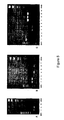
- A. PCR detection with primers P-Erum 1-A + P-Erum 1-B
- B. PCR detection with primers P-Erum 3-A + P-Erum 3-B
- C. PCR detection with primers P-Erum 2-A + P-Erum 2-B
- D. PCR detection with primers P-Erum 4-A + P-Erum 4-B
- E. PCR detection with primers P-Erum 6-A + P-Erum 6-B
- F. PCR detection with primers P-Erum 5-A + P-Erum 5-B
MW1: Molecular weight marker (100pb DNA ladder); MW2: Molecular weight marker (1 HindIII/EcoRI); 1: Strain Senegal attenuated (Satt); 2: Strain Gardel CTVM; 3: Strain Bankouma; 4: Strain Bekuy; 5: Strain Lamba, 6:Strain Banan 1; 7:Strain Banan 2; NC: Negative control; G. Strain Gardel; W: Strain Welgevonden. -
- A. PCR detection with primers P-Erum 7-A + P-Erum 7-B
- B. PCR detection with primers P-Erum 8-A + P-Erum 8-B
- C. PCR detection with primers P-Erum 9-A + P-Erum 9-B
- D. PCR detection with primers P-Erum 10-A + P-Erum 10-B
- As shown in Table 4,
Fig. 3 andFig. 4 , the combined use of all the pairs of primers described in Table 2 allowed for differential identification and discrimination of strains other than strains Garde1 and Welgevonden. The PCR reactions results are summarized in Table 4. The pairs P-Erum 1-A + P-Erum 1-B, P-Erum 2-A + P-Erum 2-B, P-Erum 3-A + P-Erum 3-B, P-Erum 4-A + P-Erum 4-B, P-Erum 5-A + P-Erum 5-B which target unique genes present only in strain Gardel and the pair P-Erum 6-A + P-Erum 6-B which targets a unique gene only present in strain Welgevonden all yieleded differing patterns of PCR products depending on the strain (Table 4,Fig 3 ). Differing patterns depending upon the strain were also observed using the pairs P-Erum 7-A + P-Erum 7-B, P-Erum 8-A + P-Erum 8-B, P-Erum 9-A + P-Erum 7-B and P-Erum 10-A + P-Erum 10-B which target the truncated genes (Table 4,Fig. 3 ). - It is however the overall analysis of all the PCR patterns yielded by all the pairs of primers described in Table 2 which provides a strain specific diagnostic. The strains Bekuy and Lamba which were isolated in Burkina Faso from the nearby villages of Bekuy and Lamba, respectively, are most likely to be two isolates of the same strain. Furthermore, these strains display the same map-1 genotype determined by PCR amplification and sequencing of the map-1 gene. All the other strains display differing map-1 genotypes. This further indicates that strains Bekuy and Lamba are two isolate of the same strain. The identical overall pattern obtained for these two strains with all the pairs of primers described in Table 2 also further demonstrate the strain-specificity of the subject of the invention and its ability to identify different strains and separate isolates of the same strain.
Table 4: Strain-specific differential PCR screening of E. ruminantium Primer combination Strain Gardel Welgevonden Umpala Senegal Bankouma Bekuy Lamba Banan1 Banan2 P-Erum 1-A
+
P-Erum 1-B172 None 172 172 Multibands 172 172 172 Multibands P-Erum 2-A
+
P-Erum 2-B217 None 515 500 + 900 280+500+1200 500+900 500+900 500+900 500+1200 P-Erum 3-A
+
P-Erum 3-B508 None 508 None 560 508+1900 508+1900 None 508 P-Erum 4-A
+
P-Erum 4-B642 None 642 642 642 a 642 642 642 642 P-Erum 5-A
+
P-Erum 5-B238 None 238 None 238 238 238 238 238 P-Erum 6-A
+
P-Erum 6-BNone 127 None 127 None 127 127 127 None P-Erum 7-A
+
P-Erum 7-B2791 2395 2791+ 500 2395 2395 2395 2395 2395 None P-Erum 8-A
+
P-Erum 8-B552+1071 +480 492 1200 + 500a 492 492 492 492 492 552+1071 +480 P-Erum 9-A
+
P-Erum 9-B1361 1178 1361 1000 1000 1000 1000 1000 1178+1361 P-Erum 10-A
+
P-Erum 10-B1095+300 1691 820 820 820 820 820 820 1095 a: presence of additional multiple bands is observed - The primers listed in Table 2 also allow the specific identification of attenuated variants of known strains of E. ruminantium.
- The following variants were tested:
- attenuated derivates of strains Gardel and Senegal denominated Gatt (for Gardel-attenuated) and Satt (for Senegal-attenuated), respectively. The strain Gatt was obtained from the virulent strain Gardel through 248 successive passages BUEC cells whereas strain Satt was obtained from the virulent strain Senegal following 64 passages on BUEC cells. Both the Gatt and Satt strains display an attenuated phenotype characterized by a lack of virulence.
- strain Gardel CTVM, which is a subset of strain Gardel maintained in a differing cell environment, and was reported has having undergone mutations in the map1 operon and displaying a diverging phenotype (Bekker et al., 2004).
- DNA is extracted from elementary bodies of E. ruminantium and PCR amplification performed as described in Example 3.
- The results are shown in Table 5,
Figure 4 , andFigure 5 . -
- A. PCR detection with primers P-Erum 7-A + P-Erum 7-B
- B. PCR detection with primers P-Erum 8-A + P-Erum 8-B
- C. PCR detection with primers P-Erum 9-A + P-Erum 9-B
- D. PCR detection with primers P-Erum 10-A + P-Erum 10-B
MW1: Molecular weight marker (100pb DNA ladder); MW2: Molecular weight marker (1 HindIIIlEcoRI); 1: Strain Bankouma; 2: Strain Bekuy; 3: Strain Lamba; 4:Strain Banan 1; 5:Strain Banan 2; 6: Strain Gardel attenuated (Gatt); 7: Strain Gardel CTVM; 8: Strain Senegal; 9: Strain Senegal attenuated (Satt); NC: Negative control; G. Strain Gardel; W: Strain Welgevonden. -
- A. PCR analysis of virulent and attenuated strains with primers P-Erum 1-A + P-Erum 1-B MW1: Molecular weight marker (100-pb DNA ladder); MW2: Molecular weight marker (1 HindIII/EcoRI); 1: Strain Gardel attenuated (Gatt); 2: Strain Gardel; 3: Negative control.
- B. PCR analysis of virulent and attenuated strains with primers P-Erum 2-A + P-Erum 2-B and P-Erum 6-A + P-Erum 6-B
MW1: Molecular weight marker (100-pb DNA ladder); MW2: Molecular weight marker (1 HindIII/EcoRI); Analysis with P-Erum 2-A + P-Erum 2-B of 1: Strain Gardel attenuated (Gatt); 2: Strain Gardel; 3: Negative control; Analysis with P-Erum 6-A + P-Erum 6-B of 4:
Strain Gardel attenuated (Gatt); 5: Strain Gardel; 6: Strain Welgevonden; 3: Negative control. - C. PCR analysis of virulent and attenuated strains with primers P-Erum 3-A + P-Erum 3-B, P-Erum 4-A + P-Erum 4-B and P-Erum 5-A + P-Erum 5-B
MW1: Molecular weight marker (100-pb DNA ladder); MW2: Molecular weight marker (1 HindIII/EcoRI); Analysis with P-Erum 4-A + P-Erum 4-B of 1: Strain Gardel attenuated (Gatt); 2: Strain Gardel; 3: Negative control; Analysis with P-Erum 5-A + P-Erum 5-B of 4: Strain Gardel attenuated (Gatt); 5: Strain Gardel; 6: Negative control; Analysis with P-Erum 3-A + P-Erum 3-B of 7: Strain Gardel attenuated (Gatt); 8: Strain Gardel; 9: Strain Gardel; 10: Negative control. - As shown in Table 5,
Fig. 4 andFig. 5 , the combined use of all the pairs of primers described in Table 2 also allowed for the differential identification and discrimination of variants and attenuated derivates of known strains. The PCR reactions results are summarized in Table 5. The overall PCR patterns generated on the strain Gardel and and two of its derivates, the strain Gardel CTVM and the attenuated strain Gatt show the presence of slight variations -Table 5,Fig. 4 ,Fig. 5 ). Furthermore, each strain is characterized by a specific pattern. The strain Gatt differs from the parental virulent strain Gardel by the products from primers pairs P-Erum 6-A + P-Erum 6-B and P-Erum 7-A + P-Erum 7-B, whereas the strain Gardel CTVM differs from the parental strain Gardel by the product from the primers pair P-Erum 6-A + P-Erum 6-B. Similarly, the primers pair P-Erum 7-A + P-Erum 7-B allows for discrimination between the strain Gardel CTVM and the attenuated Gardel strain Gatt. A similar situation is observed between the parental virulent strain Senegal and its attenuated derivate Satt (Table 5,Fig. 4 ). The virulent strain Senegal and the attenuated strains Satt differ by the PCR product from the primer pairs P-Erum 2-A + P-Erum 2-B, P-Erum 3-A + P-Erum 3-B, P-Erum 6-A + P-Erum 6-B and P-Erum 7-A + P-Erum 7-B.Table 5: Differential identification of attenuated Gardel and Senegal strains of E. ruminantium Primer combination Strain Gardel
(Virulent)Gatt
(attenuated Gardel)Gardel CTVM Senegal Satt
(attenuated Senegal)P-Erum 1-A
+
P-Erum 1-B172 172 172 172 172 P-Erum 2-A
+
P-Erum 2-B217 217 217 500 + 900 500 + 900+210 P-Erum 3-A
+
P-Erum 3-B508 508 508 None 508+1900 P-Erum 4-A
+
P-Erum 4-B642 642 642 642 642 P-Erum 5-A
+
P-Erum 5-B238 238 238 None 238 P-Erum 6-A
+
P-Erum 6-BNone 127 127 127 127 P-Erum 7-A
+
P-Erum 7-B2791 None 2791 2395 2395+700+300 P-Erum 8-A
+
P-Erum 8-B552+1071+ 480 552+1071+ 480 552+1071+ 480 492 492 P-Erum 9-A
+
P-Erum 9-B1361 1361 1361 1000 1000 P-Erum 10-A
+
P-Erum 10-B1095+300 1095+300 1095+300 820 820 - To verify the specificity assessment of the primers listed in Table 2, they were tested on Rickettsiales belonging to other species and genera than E. ruminantium i.e. Ehrlichia canis, Anaplasma platys and Anaplasma marginale.
- DNA extraction and PCR amplification were performed as described in Example 3.
- The results are shown in
Figures 6 ,7 , and8 . -
- A. PCR detection with probe EHR16S specific to Ehrlichia spp. 16S rDNA
MW: Molecular weight marker (100-bp ladder); 1, 2 and 3: DNA isolated from blood samples from dogs infected with Anaplasma platys, 4, 5 and 8: DNA isolated from blood samples from dogs infected with Ehrlichia canis; 6: Ehrlichia canis positive control; 7: Negative control; 9 and 10: Control DNA isolated from blood samples from non-infected dogs. - B. PCR detection with Nested PCR probes specific to Anaplasma platys MW: Molecular weight marker (100-bp ladder); 1, 2 and 3: DNA isolated from blood samples from dogs infected with Anaplasma platys.
- C. PCR detection with Nested PCR probes specific to Ehrlichia canis
MW: Molecular weight marker (100-bp ladder); 4, 5and 8: DNA isolated from blood samples from dogs infected with Ehrlichia canis; 11: DNA from canine monocytes cultures infected with E. canis (supernatant); 12: DNA from canine monocytes cultures infected with E. canis (pellet). -
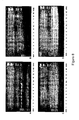
- A. PCR detection with primers P-Erum 1-A + P-Erum 1-B
- B. PCR detection with primers P-Erum 2-A + P-Erum 2-B
- C. PCR detection with primers P-Erum 3-A + P-Erum 3-B
- D. PCR detection with primers P-Erum 4-A + P-Erum 4-B
- E. PCR detection with primers P-Erum 5-A + P-Erum 5-B
- F. PCR detection with primers P-Erum 6-A + P-Erum 6-B
MW1: Molecular weight marker (100pb DNA ladder); MW2: Molecular weight marker (1 HindIII/EcoRI); 1, 2 and 3: DNA isolated from blood samples from dogs infected with Anaplasma platys, 4, 5 and 8: DNA isolated from blood samples from dogs infected with Ehrlichia canis; 9 and 10: Control DNA isolated from blood samples from non-infected dogs, 11: DNA from canine monocytes cultures infected with E. canis (supernatant); 12: DNA from canine monocytes cultures infected with E. canis (pellet); Am: DNA from Anaplasma marginale; G: DNA from strain Gardel; NC: Negative control. -
- A. PCR detection with primers P-Erum 7-A + P-Erum 7-B
- B. PCR detection with primers P-Erum 8-A + P-Erum 8-B
- C. PCR detection with primers P-Erum 9-A + P-Erum 9-B
- D. PCR detection with primers P-Erum 10-A + P-Erum 10-B
MW1: Molecular weight marker (100pb DNA ladder); MW2: Molecular weight marker (1 HindIII/EcoRI); 1, 2 and 3: DNA isolated from blood samples from dogs infected with Anaplasma platys, 4, 5 and 8: DNA isolated from blood samples from dogs infected with Ehrlichia canis; 9 and 10: Control DNA isolated from blood samples from non-infected dogs, 11: DNA from canine monocytes cultures infected with E. canis (supernatant); 12: DNA from canine monocytes cultures infected with E. canis (pellet); Am: DNA from Anaplasma margina/e; G: DNA from strain Gardel; W: DNA from strain Welgevonden; NC: Negative control. -
Fig. 6 indicates that the samples used indeed contain DNA from A. platys and E. canis as demonstrated by their recognition by 16S rDNA-specific primers and primers for nested PCR specific to each species. As shown inFig. 7 andFig. 8 , the pairs of primers described in Table 2 are strictly specific to E. ruminantium and display no cross-reaction with other related Rickettsiales since no specific PCR product could be detected on E. canis, A. platys and A. marginale (Fig. 7 andFig.8 ). Whereas no PCR products are detectable on whatever pair of primers was used, PCR products were visible on A. platys and E. canis. However, all these PCR products are generated by cross-reactions with canine blood cells as shown by the detection of these same bands on non-infected canine cells (Fig. 7 andFig. 8 ). This demonstrate that the primers described in Table 2 and targeting the target genes described in Table 1 allow for specific identification of E. ruminantium and discrimination between strains of E. ruminantium even when other Rickettsiales are present. - The tools provided by the invention allow thus both for specific detection of E. ruminantium, even in presence of contaminating related Ricketssiales, for specific discrimination between different strains of E. ruminantium and for specific discrimination between a virulent strains and its vaccinal attenuated derivates. This in turn allows for monitoring of vaccination.
-
- <110>
- - CENTRE DE COOPERATION INTERNATIONALE EN RECHERCHE AGRONOMIQUE POUR LE DEVELOPPEMENT (CIRAD)
- - CENTRE NATIONAL DE LA RECHERCHE SCIENTIFIQUE
- - FRUTOS, Roger
- - VACHIERY, Nathalie
- - LEFRANCOIS, Thierry
- - FERRAZ, Conception
- - DEMAILLE, Jacques
- - MARTINEZ, Dominique
- <120> TARGET GENES FOR STRAIN-SPECIFIC DIAGNOSTIC OF EHRLICHIA RUMINANTIUM AND USE THEREOF
- <130> MJP/mad-F1367-12/WO
- <160> 35
- <170> PatentIn version 3.3
- <210> 1
<211> 630
<212> DNA
<213> Ehrlichia ruminantium - <400> 1

- <210> 2
<211> 303
<212> DNA
<213> Ehrlichia ruminantium - <400> 2


- <210> 3
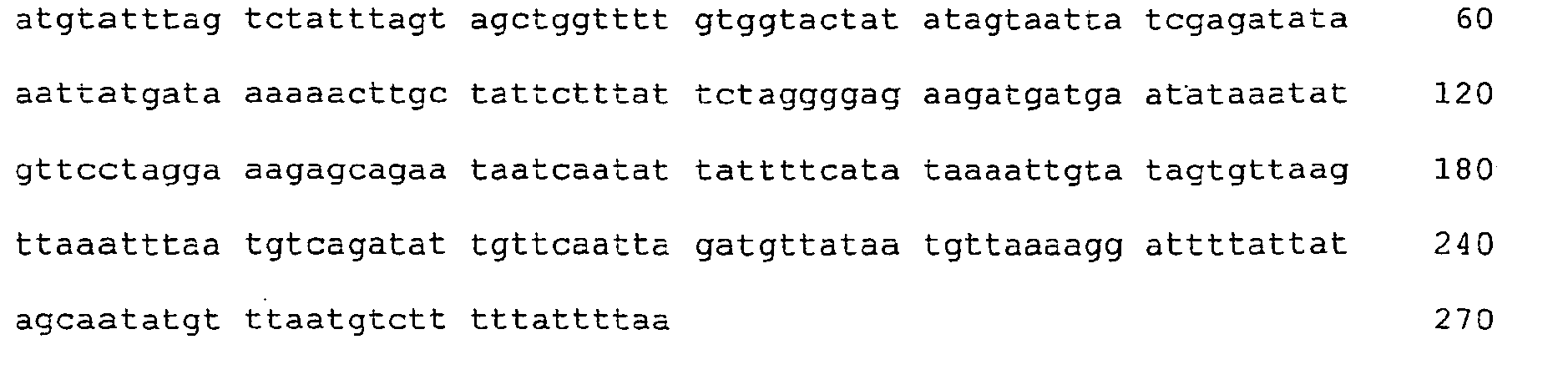
<211> 270
<212> DNA
<213> Ehrlichia ruminantium - <400> 3
- <210> 4
<211> 828
<212> DNA
<213> Ehrlichia ruminantium - <400> 4

- <210> 5
<211> 225
<212> DNA
<213> Ehrlichia ruminantium - <400> 5

- <210> 6
<211> 186
<212> DNA
<213> Ehrlichia ruminantium - <400> 6

- <210> 7
<211> 3522
<212> DNA
<213> Ehrlichia ruminantium - <400> 7


- <210> 8
<211> 4122
<212> DNA
<213> Ehrlichia ruminantium - <400> 8


- <210> 9
<211> 2856
<212> DNA
<213> Ehrlichia ruminantium - <400> 9


- <210> 10
<211> 1659
<212> DNA
<213> Ehrlichia ruminantium - <400> 10
 <210> 11
<211> 873
<212> DNA
<213> Ehrlichia ruminantium - <400> 11


- <210> 12
<211> 1740
<212> DNA
<213> Ehrlichia ruminantium - <400> 12


- <210> 13
<211> 3252
<212> DNA
<213> Ehrlichia ruminantium - <400> 13


- <210> 14
<211> 1836
<212> DNA
<213> Ehrlichia ruminantium - <400> 14


- <210> 15
<211> 3570
<212> DNA
<213> Ehrlichia ruminantium - <400> 15


- <210> 16
<211> 21
<212> DNA
<213> Ehrlichia ruminantium - <400> 16
atgagtcaca gttttattga g 21 - <210> 17
<211> 21
<212> DNA
<213> Ehrlichia ruminantium - <400> 17
cactcaaaat cacaagaagt a 21 - <210> 18
<211> 25
<212> DNA
<213> Ehrlichia ruminantium - <400> 18
atgtatttag tctatttagt agctg 25 - <210> 19
<211> 23
<212> DNA
<213> Ehrlichia ruminantium - <400> 19
ataacatcta attgaacaat atc 23 - <210> 20
<211> 20
<212> DNA
<213> Ehrlichia ruminantium - <400> 20
atgaaaggat ctttatctgc 20 - <210> 21
<211> 20
<212> DNA
<213> Ehrlichia ruminantium - <400> 21
ccttcttctt cttcattatg 20 - <210> 22
<211> 19
<212> DNA
<213> Ehrlichia ruminantium - <400> 22
aagaattaca tgatgcagc 19 - <210> 23
<211> 22
<212> DNA
<213> Ehrlichia ruminantium - <400> 23
tcttctcttg ttatactctc tg 22 - <210> 24
<211> 23
<212> DNA
<213> Ehrlichia ruminantium - <400> 24
atggatttaa ataaactaat aaa 23 - <210> 25
<211> 19
<212> DNA
<213> Ehrlichia ruminantium - <400> 25
gcattttctc tacctacga 19 - <210> 26
<211> 26
<212> DNA
<213> Ehrlichia ruminantium - <400> 26
gtacatagta tgtctttata taaaag 26 - <210> 27
<211> 23
<212> DNA
<213> Ehrlichia ruminantium - <400> 27
ccaaatatat aaatgatcta ttc 23 - <210> 28
<211> 25
<212> DNA
<213> Ehrlichia ruminantium - <400> 28
tccaccagag atgttatttg taaag 25 - <210> 29
<211> 25
<212> DNA
<213> Ehrlichia ruminantium - <400> 29
caacagaact ttcagtatta aaagc 25 - <210> 30
<211> 25
<212> DNA
<213> Ehrlichia ruminantium - <400> 30
gttaagtgtg aaatgtattg tttag 25 - <210> 31
<211> 25
<212> DNA
<213> Ehrlichia ruminantium - <400> 31
cactttctgt taattcaaaa gtaga 25 - <210> 32
<211> 25
<212> DNA
<213> Ehrlichia ruminantium - <400> 32
gtaggccaaa aagtataggt aatag 25 - <210> 33
<211> 25
<212> DNA
<213> Ehrlichia ruminantium - <400> 33
caacaaatac atcatcttca agttg 25 - <210> 34
<211> 25
<212> DNA
<213> Ehrlichia ruminantium - <400> 34
agggttactt attgtagtca gagtg 25 - <210> 35
<211> 25
<212> DNA
<213> Ehrlichia ruminantium - <400> 35
cctcttcgta tacaggatta ccatt 25
Claims (3)
- Use of the following set of target genes :Erum1, defined by the sequence SEQ ID NO: 6Erum2, defined by the sequence SEQ ID NO: 3Erum3, defined by the sequence SEQ ID NO: 1Erum4, defined by the sequence SEQ ID NO: 4Erum5, defined by the sequence SEQ ID NO: 2Erum6, defined by the sequence SEQ ID NO: 5Erum7, defined by the sequence SEQ ID NO: 13Erum8, defined by the sequence SEQ ID NO: 15Erum9, defined by the sequence SEQ ID NO: 14Erum10, defined by the sequence SEQ ID NO: 8,
for the strain-specific detection of Ehrlichia ruminantium. - A method for the strain-specific detection of Ehrlichia ruminantium wherein said method comprises detecting, for each of the genes Erum1 to Erum10 defined by the sequences SEQ ID NO: 6, 3, 1, 4, 2, 5, 13, 15, 14 and 8 respectively, whether an allele of said gene is present in the bacteria to be tested, and determining the form of said allele.
- A method of claim 2, which comprises performing PCR amplification of all the target genes Erum 1 to Erum10 defined by the sequences SEQ ID NO: 6, 3, 1, 4, 2, 5, 13, 15, 14 and 8 respectively, and checking, for each of these genes, the presence of one or more amplification product(s), and the size of said amplification product(s).
Applications Claiming Priority (1)
| Application Number | Priority Date | Filing Date | Title |
|---|---|---|---|
| PCT/IB2006/003870 WO2008038062A1 (en) | 2006-09-25 | 2006-09-25 | Target genes for strain-specific diagnostic of ehrlichia ruminantium and use thereof |
Publications (2)
| Publication Number | Publication Date |
|---|---|
| EP2066781A1 EP2066781A1 (en) | 2009-06-10 |
| EP2066781B1 true EP2066781B1 (en) | 2010-09-22 |
Family
ID=37942149
Family Applications (1)
| Application Number | Title | Priority Date | Filing Date |
|---|---|---|---|
| EP06831849A Not-in-force EP2066781B1 (en) | 2006-09-25 | 2006-09-25 | Target genes for strain-specific diagnostic of ehrlichia ruminantium and use thereof |
Country Status (6)
| Country | Link |
|---|---|
| US (1) | US8206908B2 (en) |
| EP (1) | EP2066781B1 (en) |
| AT (1) | ATE482266T1 (en) |
| BR (1) | BRPI0622024A2 (en) |
| DE (1) | DE602006017122D1 (en) |
| WO (1) | WO2008038062A1 (en) |
Families Citing this family (1)
| Publication number | Priority date | Publication date | Assignee | Title |
|---|---|---|---|---|
| US9580758B2 (en) | 2013-11-12 | 2017-02-28 | Luc Montagnier | System and method for the detection and treatment of infection by a microbial agent associated with HIV infection |
Family Cites Families (2)
| Publication number | Priority date | Publication date | Assignee | Title |
|---|---|---|---|---|
| AU2931692A (en) * | 1991-10-23 | 1993-05-21 | Baylor College Of Medicine | Fingerprinting bacterial strains using repetitive dna sequence amplification |
| DE602004025392D1 (en) | 2004-10-22 | 2010-03-18 | Cirad | CHIA RUMINANTIUM AND USE THEREOF |
-
2006
- 2006-09-25 EP EP06831849A patent/EP2066781B1/en not_active Not-in-force
- 2006-09-25 BR BRPI0622024-0A patent/BRPI0622024A2/en not_active IP Right Cessation
- 2006-09-25 DE DE602006017122T patent/DE602006017122D1/en active Active
- 2006-09-25 AT AT06831849T patent/ATE482266T1/en not_active IP Right Cessation
- 2006-09-25 US US12/442,613 patent/US8206908B2/en not_active Expired - Fee Related
- 2006-09-25 WO PCT/IB2006/003870 patent/WO2008038062A1/en not_active Ceased
Also Published As
| Publication number | Publication date |
|---|---|
| DE602006017122D1 (en) | 2010-11-04 |
| US8206908B2 (en) | 2012-06-26 |
| ATE482266T1 (en) | 2010-10-15 |
| BRPI0622024A2 (en) | 2011-12-20 |
| EP2066781A1 (en) | 2009-06-10 |
| WO2008038062A1 (en) | 2008-04-03 |
| US20090301880A1 (en) | 2009-12-10 |
Similar Documents
| Publication | Publication Date | Title |
|---|---|---|
| Mokrousov et al. | Phylogenetic reconstruction within Mycobacterium tuberculosis Beijing genotype in northwestern Russia | |
| Sekeyova et al. | Phylogeny of Rickettsia spp. inferred by comparing sequences of'gene D', which encodes an intracytoplasmic protein. | |
| Roux et al. | Differentiation of spotted fever group rickettsiae by sequencing and analysis of restriction fragment length polymorphism of PCR-amplified DNA of the gene encoding the protein rOmpA | |
| Schnittger et al. | Ribosomal small-subunit RNA gene-sequence analysis of Theileria lestoquardi and a Theileria species highly pathogenic for small ruminants in China | |
| Roux et al. | Phylogenetic analysis of members of the genus Rickettsia using the gene encoding the outer-membrane protein rOmpB (ompB). | |
| US20120021412A1 (en) | Compositions and Methods for Detecting Pathogen Specific Nucleic Acids in Urine | |
| Hidalgo et al. | Molecular detection and characterization of furunculosis and other Aeromonas fish infections | |
| Marianelli et al. | Molecular characterization of the rpoB gene in Brucella species: new potential molecular markers for genotyping | |
| AU2006214444B8 (en) | Compositions and methods for detecting pathogen specific nucleic acids in urine | |
| KR101802417B1 (en) | A multiplex PCR primer set, a composition and a kit comprising the same for diagnosing Mycobacterium tuberculosis and non-tuberculous mycobacteria | |
| Aktas et al. | Sequence polymorphism in the ribosomal DNA internal transcribed spacers differs among Theileria species | |
| Posteraro et al. | Molecular tools for differentiating probiotic and clinical strains of Saccharomyces cerevisiae | |
| McBride et al. | A conserved, transcriptionally active p28 multigene locus of Ehrlichia canis | |
| ANZAI et al. | Development of a PCR test for rapid diagnosis of contagious equine metritis | |
| HK1000072B (en) | Specific detection of mycobacterium tuberculosis | |
| Harrus et al. | Isolation and genetic characterization of a Bartonella strain closely related to Bartonella tribocorum and Bartonella elizabethae in Israeli commensal rats | |
| Kvitt et al. | Photobacterium damselae ssp. piscicida: detection by direct amplification of 16S rRNA gene sequences and genotypic variation as determined by amplified fragment length polymorphism (AFLP) | |
| Zhang et al. | Multiplex PCR assay simplifies serotyping and sequence typing of Listeria monocytogenes associated with human outbreaks | |
| Wodecka et al. | First isolation of Borrelia lusitaniae DNA from Ixodes ricinus ticks in Poland | |
| WO2002022872A1 (en) | Multiplex pcr method and kit and oligonucleotides for detection and identification of mycobacteria using the multiplex pcr method | |
| Friis et al. | A role for the tet (O) plasmid in maintaining Campylobacter plasticity | |
| US8206908B2 (en) | Target genes for strain-specific diagnostic of Ehrlichia ruminantium and use thereof | |
| Winstanley et al. | Flagellin gene variation between clinical and environmental isolates of Burkholderia pseudomallei contrasts with the invariance among clinical isolates | |
| Bricker | Characterization of the three ribosomal RNA operons rrnA, rrnB, and rrnC, from Brucella melitensis | |
| Kim et al. | Determination of the most closely related bacillus isolates to Bacillus anthracis by multilocus sequence typing |
Legal Events
| Date | Code | Title | Description |
|---|---|---|---|
| PUAI | Public reference made under article 153(3) epc to a published international application that has entered the european phase |
Free format text: ORIGINAL CODE: 0009012 |
|
| 17P | Request for examination filed |
Effective date: 20090330 |
|
| AK | Designated contracting states |
Kind code of ref document: A1 Designated state(s): AT BE BG CH CY CZ DE DK EE ES FI FR GB GR HU IE IS IT LI LT LU LV MC NL PL PT RO SE SI SK TR |
|
| AX | Request for extension of the european patent |
Extension state: AL BA HR MK RS |
|
| 17Q | First examination report despatched |
Effective date: 20090716 |
|
| RIN1 | Information on inventor provided before grant (corrected) |
Inventor name: MARTINEZ, DOMINIQUE Inventor name: FERRAZ, CONCEPTION Inventor name: FRUTOS, ROGER Inventor name: VACHIERY, NATHALIE Inventor name: LEFRANCOIS, THIERRY Inventor name: DEMAILLE, JACQUES |
|
| GRAP | Despatch of communication of intention to grant a patent |
Free format text: ORIGINAL CODE: EPIDOSNIGR1 |
|
| DAX | Request for extension of the european patent (deleted) | ||
| GRAS | Grant fee paid |
Free format text: ORIGINAL CODE: EPIDOSNIGR3 |
|
| GRAA | (expected) grant |
Free format text: ORIGINAL CODE: 0009210 |
|
| AK | Designated contracting states |
Kind code of ref document: B1 Designated state(s): AT BE BG CH CY CZ DE DK EE ES FI FR GB GR HU IE IS IT LI LT LU LV MC NL PL PT RO SE SI SK TR |
|
| REG | Reference to a national code |
Ref country code: GB Ref legal event code: FG4D |
|
| REG | Reference to a national code |
Ref country code: CH Ref legal event code: EP |
|
| REG | Reference to a national code |
Ref country code: IE Ref legal event code: FG4D |
|
| REF | Corresponds to: |
Ref document number: 602006017122 Country of ref document: DE Date of ref document: 20101104 Kind code of ref document: P |
|
| REG | Reference to a national code |
Ref country code: CH Ref legal event code: NV Representative=s name: ISLER & PEDRAZZINI AG |
|
| REG | Reference to a national code |
Ref country code: NL Ref legal event code: T3 |
|
| PG25 | Lapsed in a contracting state [announced via postgrant information from national office to epo] |
Ref country code: LT Free format text: LAPSE BECAUSE OF FAILURE TO SUBMIT A TRANSLATION OF THE DESCRIPTION OR TO PAY THE FEE WITHIN THE PRESCRIBED TIME-LIMIT Effective date: 20100922 Ref country code: FI Free format text: LAPSE BECAUSE OF FAILURE TO SUBMIT A TRANSLATION OF THE DESCRIPTION OR TO PAY THE FEE WITHIN THE PRESCRIBED TIME-LIMIT Effective date: 20100922 Ref country code: AT Free format text: LAPSE BECAUSE OF FAILURE TO SUBMIT A TRANSLATION OF THE DESCRIPTION OR TO PAY THE FEE WITHIN THE PRESCRIBED TIME-LIMIT Effective date: 20100922 |
|
| LTIE | Lt: invalidation of european patent or patent extension |
Effective date: 20100922 |
|
| PG25 | Lapsed in a contracting state [announced via postgrant information from national office to epo] |
Ref country code: PL Free format text: LAPSE BECAUSE OF FAILURE TO SUBMIT A TRANSLATION OF THE DESCRIPTION OR TO PAY THE FEE WITHIN THE PRESCRIBED TIME-LIMIT Effective date: 20100922 Ref country code: SI Free format text: LAPSE BECAUSE OF FAILURE TO SUBMIT A TRANSLATION OF THE DESCRIPTION OR TO PAY THE FEE WITHIN THE PRESCRIBED TIME-LIMIT Effective date: 20100922 |
|
| PG25 | Lapsed in a contracting state [announced via postgrant information from national office to epo] |
Ref country code: SE Free format text: LAPSE BECAUSE OF FAILURE TO SUBMIT A TRANSLATION OF THE DESCRIPTION OR TO PAY THE FEE WITHIN THE PRESCRIBED TIME-LIMIT Effective date: 20100922 Ref country code: GR Free format text: LAPSE BECAUSE OF FAILURE TO SUBMIT A TRANSLATION OF THE DESCRIPTION OR TO PAY THE FEE WITHIN THE PRESCRIBED TIME-LIMIT Effective date: 20101223 Ref country code: LV Free format text: LAPSE BECAUSE OF FAILURE TO SUBMIT A TRANSLATION OF THE DESCRIPTION OR TO PAY THE FEE WITHIN THE PRESCRIBED TIME-LIMIT Effective date: 20100922 |
|
| PG25 | Lapsed in a contracting state [announced via postgrant information from national office to epo] |
Ref country code: MC Free format text: LAPSE BECAUSE OF NON-PAYMENT OF DUE FEES Effective date: 20100930 |
|
| PG25 | Lapsed in a contracting state [announced via postgrant information from national office to epo] |
Ref country code: EE Free format text: LAPSE BECAUSE OF FAILURE TO SUBMIT A TRANSLATION OF THE DESCRIPTION OR TO PAY THE FEE WITHIN THE PRESCRIBED TIME-LIMIT Effective date: 20100922 Ref country code: RO Free format text: LAPSE BECAUSE OF FAILURE TO SUBMIT A TRANSLATION OF THE DESCRIPTION OR TO PAY THE FEE WITHIN THE PRESCRIBED TIME-LIMIT Effective date: 20100922 Ref country code: IT Free format text: LAPSE BECAUSE OF FAILURE TO SUBMIT A TRANSLATION OF THE DESCRIPTION OR TO PAY THE FEE WITHIN THE PRESCRIBED TIME-LIMIT Effective date: 20100922 Ref country code: IS Free format text: LAPSE BECAUSE OF FAILURE TO SUBMIT A TRANSLATION OF THE DESCRIPTION OR TO PAY THE FEE WITHIN THE PRESCRIBED TIME-LIMIT Effective date: 20110122 Ref country code: PT Free format text: LAPSE BECAUSE OF FAILURE TO SUBMIT A TRANSLATION OF THE DESCRIPTION OR TO PAY THE FEE WITHIN THE PRESCRIBED TIME-LIMIT Effective date: 20110124 Ref country code: SK Free format text: LAPSE BECAUSE OF FAILURE TO SUBMIT A TRANSLATION OF THE DESCRIPTION OR TO PAY THE FEE WITHIN THE PRESCRIBED TIME-LIMIT Effective date: 20100922 Ref country code: CZ Free format text: LAPSE BECAUSE OF FAILURE TO SUBMIT A TRANSLATION OF THE DESCRIPTION OR TO PAY THE FEE WITHIN THE PRESCRIBED TIME-LIMIT Effective date: 20100922 |
|
| PG25 | Lapsed in a contracting state [announced via postgrant information from national office to epo] |
Ref country code: BE Free format text: LAPSE BECAUSE OF FAILURE TO SUBMIT A TRANSLATION OF THE DESCRIPTION OR TO PAY THE FEE WITHIN THE PRESCRIBED TIME-LIMIT Effective date: 20100922 |
|
| PG25 | Lapsed in a contracting state [announced via postgrant information from national office to epo] |
Ref country code: IE Free format text: LAPSE BECAUSE OF NON-PAYMENT OF DUE FEES Effective date: 20100925 Ref country code: ES Free format text: LAPSE BECAUSE OF FAILURE TO SUBMIT A TRANSLATION OF THE DESCRIPTION OR TO PAY THE FEE WITHIN THE PRESCRIBED TIME-LIMIT Effective date: 20110102 |
|
| PLBE | No opposition filed within time limit |
Free format text: ORIGINAL CODE: 0009261 |
|
| STAA | Information on the status of an ep patent application or granted ep patent |
Free format text: STATUS: NO OPPOSITION FILED WITHIN TIME LIMIT |
|
| 26N | No opposition filed |
Effective date: 20110623 |
|
| PG25 | Lapsed in a contracting state [announced via postgrant information from national office to epo] |
Ref country code: DK Free format text: LAPSE BECAUSE OF FAILURE TO SUBMIT A TRANSLATION OF THE DESCRIPTION OR TO PAY THE FEE WITHIN THE PRESCRIBED TIME-LIMIT Effective date: 20100922 |
|
| REG | Reference to a national code |
Ref country code: DE Ref legal event code: R097 Ref document number: 602006017122 Country of ref document: DE Effective date: 20110623 |
|
| PGFP | Annual fee paid to national office [announced via postgrant information from national office to epo] |
Ref country code: CH Payment date: 20110923 Year of fee payment: 6 |
|
| PG25 | Lapsed in a contracting state [announced via postgrant information from national office to epo] |
Ref country code: CY Free format text: LAPSE BECAUSE OF FAILURE TO SUBMIT A TRANSLATION OF THE DESCRIPTION OR TO PAY THE FEE WITHIN THE PRESCRIBED TIME-LIMIT Effective date: 20100922 |
|
| PG25 | Lapsed in a contracting state [announced via postgrant information from national office to epo] |
Ref country code: BG Free format text: LAPSE BECAUSE OF FAILURE TO SUBMIT A TRANSLATION OF THE DESCRIPTION OR TO PAY THE FEE WITHIN THE PRESCRIBED TIME-LIMIT Effective date: 20100922 Ref country code: LU Free format text: LAPSE BECAUSE OF NON-PAYMENT OF DUE FEES Effective date: 20100925 Ref country code: HU Free format text: LAPSE BECAUSE OF FAILURE TO SUBMIT A TRANSLATION OF THE DESCRIPTION OR TO PAY THE FEE WITHIN THE PRESCRIBED TIME-LIMIT Effective date: 20110323 |
|
| PG25 | Lapsed in a contracting state [announced via postgrant information from national office to epo] |
Ref country code: TR Free format text: LAPSE BECAUSE OF FAILURE TO SUBMIT A TRANSLATION OF THE DESCRIPTION OR TO PAY THE FEE WITHIN THE PRESCRIBED TIME-LIMIT Effective date: 20100922 |
|
| PGFP | Annual fee paid to national office [announced via postgrant information from national office to epo] |
Ref country code: GB Payment date: 20120927 Year of fee payment: 7 |
|
| PGFP | Annual fee paid to national office [announced via postgrant information from national office to epo] |
Ref country code: FR Payment date: 20120913 Year of fee payment: 7 Ref country code: DE Payment date: 20120921 Year of fee payment: 7 |
|
| PGFP | Annual fee paid to national office [announced via postgrant information from national office to epo] |
Ref country code: NL Payment date: 20120920 Year of fee payment: 7 |
|
| PG25 | Lapsed in a contracting state [announced via postgrant information from national office to epo] |
Ref country code: BG Free format text: LAPSE BECAUSE OF FAILURE TO SUBMIT A TRANSLATION OF THE DESCRIPTION OR TO PAY THE FEE WITHIN THE PRESCRIBED TIME-LIMIT Effective date: 20101222 |
|
| REG | Reference to a national code |
Ref country code: NL Ref legal event code: V1 Effective date: 20140401 |
|
| REG | Reference to a national code |
Ref country code: CH Ref legal event code: PL |
|
| GBPC | Gb: european patent ceased through non-payment of renewal fee |
Effective date: 20130925 |
|
| REG | Reference to a national code |
Ref country code: DE Ref legal event code: R119 Ref document number: 602006017122 Country of ref document: DE Effective date: 20140401 |
|
| REG | Reference to a national code |
Ref country code: FR Ref legal event code: ST Effective date: 20140530 |
|
| PG25 | Lapsed in a contracting state [announced via postgrant information from national office to epo] |
Ref country code: CH Free format text: LAPSE BECAUSE OF NON-PAYMENT OF DUE FEES Effective date: 20130930 Ref country code: GB Free format text: LAPSE BECAUSE OF NON-PAYMENT OF DUE FEES Effective date: 20130925 Ref country code: LI Free format text: LAPSE BECAUSE OF NON-PAYMENT OF DUE FEES Effective date: 20130930 |
|
| PG25 | Lapsed in a contracting state [announced via postgrant information from national office to epo] |
Ref country code: FR Free format text: LAPSE BECAUSE OF NON-PAYMENT OF DUE FEES Effective date: 20130930 Ref country code: DE Free format text: LAPSE BECAUSE OF NON-PAYMENT OF DUE FEES Effective date: 20140401 Ref country code: NL Free format text: LAPSE BECAUSE OF NON-PAYMENT OF DUE FEES Effective date: 20140401 |