EP2066632B1 - Benzophenone derivatives useful for inhibiting formation of microtubule - Google Patents
Benzophenone derivatives useful for inhibiting formation of microtubule Download PDFInfo
- Publication number
- EP2066632B1 EP2066632B1 EP07808403.5A EP07808403A EP2066632B1 EP 2066632 B1 EP2066632 B1 EP 2066632B1 EP 07808403 A EP07808403 A EP 07808403A EP 2066632 B1 EP2066632 B1 EP 2066632B1
- Authority
- EP
- European Patent Office
- Prior art keywords
- compound
- synthesis
- phenyl
- methanone
- trimethoxyphenyl
- Prior art date
- Legal status (The legal status is an assumption and is not a legal conclusion. Google has not performed a legal analysis and makes no representation as to the accuracy of the status listed.)
- Active
Links
- 0 CC(C1*C1)C(C1)C(C2)C2C1C1C(C)CCC2C1C2 Chemical compound CC(C1*C1)C(C1)C(C2)C2C1C1C(C)CCC2C1C2 0.000 description 11
- URPXWBLTUHFLRS-MZECIPTHSA-N C/C=C/S/C=C\[N+2]=C/C Chemical compound C/C=C/S/C=C\[N+2]=C/C URPXWBLTUHFLRS-MZECIPTHSA-N 0.000 description 1
Classifications
-
- C—CHEMISTRY; METALLURGY
- C07—ORGANIC CHEMISTRY
- C07D—HETEROCYCLIC COMPOUNDS
- C07D207/00—Heterocyclic compounds containing five-membered rings not condensed with other rings, with one nitrogen atom as the only ring hetero atom
- C07D207/02—Heterocyclic compounds containing five-membered rings not condensed with other rings, with one nitrogen atom as the only ring hetero atom with only hydrogen or carbon atoms directly attached to the ring nitrogen atom
- C07D207/30—Heterocyclic compounds containing five-membered rings not condensed with other rings, with one nitrogen atom as the only ring hetero atom with only hydrogen or carbon atoms directly attached to the ring nitrogen atom having two double bonds between ring members or between ring members and non-ring members
- C07D207/32—Heterocyclic compounds containing five-membered rings not condensed with other rings, with one nitrogen atom as the only ring hetero atom with only hydrogen or carbon atoms directly attached to the ring nitrogen atom having two double bonds between ring members or between ring members and non-ring members with only hydrogen atoms, hydrocarbon or substituted hydrocarbon radicals, directly attached to ring carbon atoms
- C07D207/33—Heterocyclic compounds containing five-membered rings not condensed with other rings, with one nitrogen atom as the only ring hetero atom with only hydrogen or carbon atoms directly attached to the ring nitrogen atom having two double bonds between ring members or between ring members and non-ring members with only hydrogen atoms, hydrocarbon or substituted hydrocarbon radicals, directly attached to ring carbon atoms with substituted hydrocarbon radicals, directly attached to ring carbon atoms
- C07D207/333—Radicals substituted by oxygen or sulfur atoms
-
- C—CHEMISTRY; METALLURGY
- C07—ORGANIC CHEMISTRY
- C07D—HETEROCYCLIC COMPOUNDS
- C07D213/00—Heterocyclic compounds containing six-membered rings, not condensed with other rings, with one nitrogen atom as the only ring hetero atom and three or more double bonds between ring members or between ring members and non-ring members
- C07D213/02—Heterocyclic compounds containing six-membered rings, not condensed with other rings, with one nitrogen atom as the only ring hetero atom and three or more double bonds between ring members or between ring members and non-ring members having three double bonds between ring members or between ring members and non-ring members
- C07D213/04—Heterocyclic compounds containing six-membered rings, not condensed with other rings, with one nitrogen atom as the only ring hetero atom and three or more double bonds between ring members or between ring members and non-ring members having three double bonds between ring members or between ring members and non-ring members having no bond between the ring nitrogen atom and a non-ring member or having only hydrogen or carbon atoms directly attached to the ring nitrogen atom
- C07D213/60—Heterocyclic compounds containing six-membered rings, not condensed with other rings, with one nitrogen atom as the only ring hetero atom and three or more double bonds between ring members or between ring members and non-ring members having three double bonds between ring members or between ring members and non-ring members having no bond between the ring nitrogen atom and a non-ring member or having only hydrogen or carbon atoms directly attached to the ring nitrogen atom with hetero atoms or with carbon atoms having three bonds to hetero atoms with at the most one bond to halogen, e.g. ester or nitrile radicals, directly attached to ring carbon atoms
- C07D213/62—Oxygen or sulfur atoms
- C07D213/69—Two or more oxygen atoms
-
- A—HUMAN NECESSITIES
- A61—MEDICAL OR VETERINARY SCIENCE; HYGIENE
- A61P—SPECIFIC THERAPEUTIC ACTIVITY OF CHEMICAL COMPOUNDS OR MEDICINAL PREPARATIONS
- A61P35/00—Antineoplastic agents
-
- C—CHEMISTRY; METALLURGY
- C07—ORGANIC CHEMISTRY
- C07C—ACYCLIC OR CARBOCYCLIC COMPOUNDS
- C07C49/00—Ketones; Ketenes; Dimeric ketenes; Ketonic chelates
- C07C49/76—Ketones containing a keto group bound to a six-membered aromatic ring
- C07C49/84—Ketones containing a keto group bound to a six-membered aromatic ring containing ether groups, groups, groups, or groups
-
- C—CHEMISTRY; METALLURGY
- C07—ORGANIC CHEMISTRY
- C07D—HETEROCYCLIC COMPOUNDS
- C07D207/00—Heterocyclic compounds containing five-membered rings not condensed with other rings, with one nitrogen atom as the only ring hetero atom
- C07D207/02—Heterocyclic compounds containing five-membered rings not condensed with other rings, with one nitrogen atom as the only ring hetero atom with only hydrogen or carbon atoms directly attached to the ring nitrogen atom
- C07D207/30—Heterocyclic compounds containing five-membered rings not condensed with other rings, with one nitrogen atom as the only ring hetero atom with only hydrogen or carbon atoms directly attached to the ring nitrogen atom having two double bonds between ring members or between ring members and non-ring members
- C07D207/32—Heterocyclic compounds containing five-membered rings not condensed with other rings, with one nitrogen atom as the only ring hetero atom with only hydrogen or carbon atoms directly attached to the ring nitrogen atom having two double bonds between ring members or between ring members and non-ring members with only hydrogen atoms, hydrocarbon or substituted hydrocarbon radicals, directly attached to ring carbon atoms
- C07D207/33—Heterocyclic compounds containing five-membered rings not condensed with other rings, with one nitrogen atom as the only ring hetero atom with only hydrogen or carbon atoms directly attached to the ring nitrogen atom having two double bonds between ring members or between ring members and non-ring members with only hydrogen atoms, hydrocarbon or substituted hydrocarbon radicals, directly attached to ring carbon atoms with substituted hydrocarbon radicals, directly attached to ring carbon atoms
- C07D207/335—Radicals substituted by nitrogen atoms not forming part of a nitro radical
-
- C—CHEMISTRY; METALLURGY
- C07—ORGANIC CHEMISTRY
- C07D—HETEROCYCLIC COMPOUNDS
- C07D213/00—Heterocyclic compounds containing six-membered rings, not condensed with other rings, with one nitrogen atom as the only ring hetero atom and three or more double bonds between ring members or between ring members and non-ring members
- C07D213/02—Heterocyclic compounds containing six-membered rings, not condensed with other rings, with one nitrogen atom as the only ring hetero atom and three or more double bonds between ring members or between ring members and non-ring members having three double bonds between ring members or between ring members and non-ring members
- C07D213/04—Heterocyclic compounds containing six-membered rings, not condensed with other rings, with one nitrogen atom as the only ring hetero atom and three or more double bonds between ring members or between ring members and non-ring members having three double bonds between ring members or between ring members and non-ring members having no bond between the ring nitrogen atom and a non-ring member or having only hydrogen or carbon atoms directly attached to the ring nitrogen atom
- C07D213/24—Heterocyclic compounds containing six-membered rings, not condensed with other rings, with one nitrogen atom as the only ring hetero atom and three or more double bonds between ring members or between ring members and non-ring members having three double bonds between ring members or between ring members and non-ring members having no bond between the ring nitrogen atom and a non-ring member or having only hydrogen or carbon atoms directly attached to the ring nitrogen atom with substituted hydrocarbon radicals attached to ring carbon atoms
- C07D213/44—Radicals substituted by doubly-bound oxygen, sulfur, or nitrogen atoms, or by two such atoms singly-bound to the same carbon atom
- C07D213/46—Oxygen atoms
- C07D213/50—Ketonic radicals
-
- C—CHEMISTRY; METALLURGY
- C07—ORGANIC CHEMISTRY
- C07D—HETEROCYCLIC COMPOUNDS
- C07D213/00—Heterocyclic compounds containing six-membered rings, not condensed with other rings, with one nitrogen atom as the only ring hetero atom and three or more double bonds between ring members or between ring members and non-ring members
- C07D213/02—Heterocyclic compounds containing six-membered rings, not condensed with other rings, with one nitrogen atom as the only ring hetero atom and three or more double bonds between ring members or between ring members and non-ring members having three double bonds between ring members or between ring members and non-ring members
- C07D213/04—Heterocyclic compounds containing six-membered rings, not condensed with other rings, with one nitrogen atom as the only ring hetero atom and three or more double bonds between ring members or between ring members and non-ring members having three double bonds between ring members or between ring members and non-ring members having no bond between the ring nitrogen atom and a non-ring member or having only hydrogen or carbon atoms directly attached to the ring nitrogen atom
- C07D213/60—Heterocyclic compounds containing six-membered rings, not condensed with other rings, with one nitrogen atom as the only ring hetero atom and three or more double bonds between ring members or between ring members and non-ring members having three double bonds between ring members or between ring members and non-ring members having no bond between the ring nitrogen atom and a non-ring member or having only hydrogen or carbon atoms directly attached to the ring nitrogen atom with hetero atoms or with carbon atoms having three bonds to hetero atoms with at the most one bond to halogen, e.g. ester or nitrile radicals, directly attached to ring carbon atoms
- C07D213/62—Oxygen or sulfur atoms
- C07D213/63—One oxygen atom
- C07D213/64—One oxygen atom attached in position 2 or 6
-
- C—CHEMISTRY; METALLURGY
- C07—ORGANIC CHEMISTRY
- C07D—HETEROCYCLIC COMPOUNDS
- C07D231/00—Heterocyclic compounds containing 1,2-diazole or hydrogenated 1,2-diazole rings
- C07D231/02—Heterocyclic compounds containing 1,2-diazole or hydrogenated 1,2-diazole rings not condensed with other rings
- C07D231/10—Heterocyclic compounds containing 1,2-diazole or hydrogenated 1,2-diazole rings not condensed with other rings having two or three double bonds between ring members or between ring members and non-ring members
- C07D231/12—Heterocyclic compounds containing 1,2-diazole or hydrogenated 1,2-diazole rings not condensed with other rings having two or three double bonds between ring members or between ring members and non-ring members with only hydrogen atoms, hydrocarbon or substituted hydrocarbon radicals, directly attached to ring carbon atoms
-
- C—CHEMISTRY; METALLURGY
- C07—ORGANIC CHEMISTRY
- C07D—HETEROCYCLIC COMPOUNDS
- C07D233/00—Heterocyclic compounds containing 1,3-diazole or hydrogenated 1,3-diazole rings, not condensed with other rings
- C07D233/54—Heterocyclic compounds containing 1,3-diazole or hydrogenated 1,3-diazole rings, not condensed with other rings having two double bonds between ring members or between ring members and non-ring members
-
- C—CHEMISTRY; METALLURGY
- C07—ORGANIC CHEMISTRY
- C07D—HETEROCYCLIC COMPOUNDS
- C07D233/00—Heterocyclic compounds containing 1,3-diazole or hydrogenated 1,3-diazole rings, not condensed with other rings
- C07D233/54—Heterocyclic compounds containing 1,3-diazole or hydrogenated 1,3-diazole rings, not condensed with other rings having two double bonds between ring members or between ring members and non-ring members
- C07D233/64—Heterocyclic compounds containing 1,3-diazole or hydrogenated 1,3-diazole rings, not condensed with other rings having two double bonds between ring members or between ring members and non-ring members with substituted hydrocarbon radicals attached to ring carbon atoms, e.g. histidine
-
- C—CHEMISTRY; METALLURGY
- C07—ORGANIC CHEMISTRY
- C07D—HETEROCYCLIC COMPOUNDS
- C07D239/00—Heterocyclic compounds containing 1,3-diazine or hydrogenated 1,3-diazine rings
- C07D239/02—Heterocyclic compounds containing 1,3-diazine or hydrogenated 1,3-diazine rings not condensed with other rings
- C07D239/24—Heterocyclic compounds containing 1,3-diazine or hydrogenated 1,3-diazine rings not condensed with other rings having three or more double bonds between ring members or between ring members and non-ring members
- C07D239/26—Heterocyclic compounds containing 1,3-diazine or hydrogenated 1,3-diazine rings not condensed with other rings having three or more double bonds between ring members or between ring members and non-ring members with only hydrogen atoms, hydrocarbon or substituted hydrocarbon radicals, directly attached to ring carbon atoms
-
- C—CHEMISTRY; METALLURGY
- C07—ORGANIC CHEMISTRY
- C07D—HETEROCYCLIC COMPOUNDS
- C07D249/00—Heterocyclic compounds containing five-membered rings having three nitrogen atoms as the only ring hetero atoms
- C07D249/02—Heterocyclic compounds containing five-membered rings having three nitrogen atoms as the only ring hetero atoms not condensed with other rings
- C07D249/08—1,2,4-Triazoles; Hydrogenated 1,2,4-triazoles
-
- C—CHEMISTRY; METALLURGY
- C07—ORGANIC CHEMISTRY
- C07D—HETEROCYCLIC COMPOUNDS
- C07D261/00—Heterocyclic compounds containing 1,2-oxazole or hydrogenated 1,2-oxazole rings
- C07D261/02—Heterocyclic compounds containing 1,2-oxazole or hydrogenated 1,2-oxazole rings not condensed with other rings
- C07D261/06—Heterocyclic compounds containing 1,2-oxazole or hydrogenated 1,2-oxazole rings not condensed with other rings having two or more double bonds between ring members or between ring members and non-ring members
- C07D261/08—Heterocyclic compounds containing 1,2-oxazole or hydrogenated 1,2-oxazole rings not condensed with other rings having two or more double bonds between ring members or between ring members and non-ring members with only hydrogen atoms, hydrocarbon or substituted hydrocarbon radicals, directly attached to ring carbon atoms
-
- C—CHEMISTRY; METALLURGY
- C07—ORGANIC CHEMISTRY
- C07D—HETEROCYCLIC COMPOUNDS
- C07D263/00—Heterocyclic compounds containing 1,3-oxazole or hydrogenated 1,3-oxazole rings
- C07D263/02—Heterocyclic compounds containing 1,3-oxazole or hydrogenated 1,3-oxazole rings not condensed with other rings
- C07D263/30—Heterocyclic compounds containing 1,3-oxazole or hydrogenated 1,3-oxazole rings not condensed with other rings having two or three double bonds between ring members or between ring members and non-ring members
- C07D263/32—Heterocyclic compounds containing 1,3-oxazole or hydrogenated 1,3-oxazole rings not condensed with other rings having two or three double bonds between ring members or between ring members and non-ring members with only hydrogen atoms, hydrocarbon or substituted hydrocarbon radicals, directly attached to ring carbon atoms
-
- C—CHEMISTRY; METALLURGY
- C07—ORGANIC CHEMISTRY
- C07D—HETEROCYCLIC COMPOUNDS
- C07D277/00—Heterocyclic compounds containing 1,3-thiazole or hydrogenated 1,3-thiazole rings
- C07D277/02—Heterocyclic compounds containing 1,3-thiazole or hydrogenated 1,3-thiazole rings not condensed with other rings
- C07D277/20—Heterocyclic compounds containing 1,3-thiazole or hydrogenated 1,3-thiazole rings not condensed with other rings having two or three double bonds between ring members or between ring members and non-ring members
- C07D277/22—Heterocyclic compounds containing 1,3-thiazole or hydrogenated 1,3-thiazole rings not condensed with other rings having two or three double bonds between ring members or between ring members and non-ring members with only hydrogen atoms, hydrocarbon or substituted hydrocarbon radicals, directly attached to ring carbon atoms
- C07D277/24—Radicals substituted by oxygen atoms
-
- C—CHEMISTRY; METALLURGY
- C07—ORGANIC CHEMISTRY
- C07D—HETEROCYCLIC COMPOUNDS
- C07D277/00—Heterocyclic compounds containing 1,3-thiazole or hydrogenated 1,3-thiazole rings
- C07D277/02—Heterocyclic compounds containing 1,3-thiazole or hydrogenated 1,3-thiazole rings not condensed with other rings
- C07D277/20—Heterocyclic compounds containing 1,3-thiazole or hydrogenated 1,3-thiazole rings not condensed with other rings having two or three double bonds between ring members or between ring members and non-ring members
- C07D277/22—Heterocyclic compounds containing 1,3-thiazole or hydrogenated 1,3-thiazole rings not condensed with other rings having two or three double bonds between ring members or between ring members and non-ring members with only hydrogen atoms, hydrocarbon or substituted hydrocarbon radicals, directly attached to ring carbon atoms
- C07D277/28—Radicals substituted by nitrogen atoms
-
- C—CHEMISTRY; METALLURGY
- C07—ORGANIC CHEMISTRY
- C07D—HETEROCYCLIC COMPOUNDS
- C07D277/00—Heterocyclic compounds containing 1,3-thiazole or hydrogenated 1,3-thiazole rings
- C07D277/02—Heterocyclic compounds containing 1,3-thiazole or hydrogenated 1,3-thiazole rings not condensed with other rings
- C07D277/20—Heterocyclic compounds containing 1,3-thiazole or hydrogenated 1,3-thiazole rings not condensed with other rings having two or three double bonds between ring members or between ring members and non-ring members
- C07D277/22—Heterocyclic compounds containing 1,3-thiazole or hydrogenated 1,3-thiazole rings not condensed with other rings having two or three double bonds between ring members or between ring members and non-ring members with only hydrogen atoms, hydrocarbon or substituted hydrocarbon radicals, directly attached to ring carbon atoms
- C07D277/30—Radicals substituted by carbon atoms having three bonds to hetero atoms with at the most one bond to halogen, e.g. ester or nitrile radicals
-
- C—CHEMISTRY; METALLURGY
- C07—ORGANIC CHEMISTRY
- C07D—HETEROCYCLIC COMPOUNDS
- C07D277/00—Heterocyclic compounds containing 1,3-thiazole or hydrogenated 1,3-thiazole rings
- C07D277/02—Heterocyclic compounds containing 1,3-thiazole or hydrogenated 1,3-thiazole rings not condensed with other rings
- C07D277/20—Heterocyclic compounds containing 1,3-thiazole or hydrogenated 1,3-thiazole rings not condensed with other rings having two or three double bonds between ring members or between ring members and non-ring members
- C07D277/32—Heterocyclic compounds containing 1,3-thiazole or hydrogenated 1,3-thiazole rings not condensed with other rings having two or three double bonds between ring members or between ring members and non-ring members with hetero atoms or with carbon atoms having three bonds to hetero atoms with at the most one bond to halogen, e.g. ester or nitrile radicals, directly attached to ring carbon atoms
- C07D277/38—Nitrogen atoms
- C07D277/40—Unsubstituted amino or imino radicals
-
- C—CHEMISTRY; METALLURGY
- C07—ORGANIC CHEMISTRY
- C07D—HETEROCYCLIC COMPOUNDS
- C07D307/00—Heterocyclic compounds containing five-membered rings having one oxygen atom as the only ring hetero atom
- C07D307/02—Heterocyclic compounds containing five-membered rings having one oxygen atom as the only ring hetero atom not condensed with other rings
- C07D307/34—Heterocyclic compounds containing five-membered rings having one oxygen atom as the only ring hetero atom not condensed with other rings having two or three double bonds between ring members or between ring members and non-ring members
- C07D307/38—Heterocyclic compounds containing five-membered rings having one oxygen atom as the only ring hetero atom not condensed with other rings having two or three double bonds between ring members or between ring members and non-ring members with substituted hydrocarbon radicals attached to ring carbon atoms
- C07D307/40—Radicals substituted by oxygen atoms
- C07D307/46—Doubly bound oxygen atoms, or two oxygen atoms singly bound to the same carbon atom
-
- C—CHEMISTRY; METALLURGY
- C07—ORGANIC CHEMISTRY
- C07D—HETEROCYCLIC COMPOUNDS
- C07D307/00—Heterocyclic compounds containing five-membered rings having one oxygen atom as the only ring hetero atom
- C07D307/02—Heterocyclic compounds containing five-membered rings having one oxygen atom as the only ring hetero atom not condensed with other rings
- C07D307/34—Heterocyclic compounds containing five-membered rings having one oxygen atom as the only ring hetero atom not condensed with other rings having two or three double bonds between ring members or between ring members and non-ring members
- C07D307/38—Heterocyclic compounds containing five-membered rings having one oxygen atom as the only ring hetero atom not condensed with other rings having two or three double bonds between ring members or between ring members and non-ring members with substituted hydrocarbon radicals attached to ring carbon atoms
- C07D307/52—Radicals substituted by nitrogen atoms not forming part of a nitro radical
-
- C—CHEMISTRY; METALLURGY
- C07—ORGANIC CHEMISTRY
- C07D—HETEROCYCLIC COMPOUNDS
- C07D333/00—Heterocyclic compounds containing five-membered rings having one sulfur atom as the only ring hetero atom
- C07D333/02—Heterocyclic compounds containing five-membered rings having one sulfur atom as the only ring hetero atom not condensed with other rings
- C07D333/04—Heterocyclic compounds containing five-membered rings having one sulfur atom as the only ring hetero atom not condensed with other rings not substituted on the ring sulphur atom
- C07D333/06—Heterocyclic compounds containing five-membered rings having one sulfur atom as the only ring hetero atom not condensed with other rings not substituted on the ring sulphur atom with only hydrogen atoms, hydrocarbon or substituted hydrocarbon radicals, directly attached to the ring carbon atoms
- C07D333/14—Radicals substituted by singly bound hetero atoms other than halogen
- C07D333/20—Radicals substituted by singly bound hetero atoms other than halogen by nitrogen atoms
-
- C—CHEMISTRY; METALLURGY
- C07—ORGANIC CHEMISTRY
- C07D—HETEROCYCLIC COMPOUNDS
- C07D333/00—Heterocyclic compounds containing five-membered rings having one sulfur atom as the only ring hetero atom
- C07D333/02—Heterocyclic compounds containing five-membered rings having one sulfur atom as the only ring hetero atom not condensed with other rings
- C07D333/04—Heterocyclic compounds containing five-membered rings having one sulfur atom as the only ring hetero atom not condensed with other rings not substituted on the ring sulphur atom
- C07D333/06—Heterocyclic compounds containing five-membered rings having one sulfur atom as the only ring hetero atom not condensed with other rings not substituted on the ring sulphur atom with only hydrogen atoms, hydrocarbon or substituted hydrocarbon radicals, directly attached to the ring carbon atoms
- C07D333/22—Radicals substituted by doubly bound hetero atoms, or by two hetero atoms other than halogen singly bound to the same carbon atom
-
- C—CHEMISTRY; METALLURGY
- C07—ORGANIC CHEMISTRY
- C07D—HETEROCYCLIC COMPOUNDS
- C07D401/00—Heterocyclic compounds containing two or more hetero rings, having nitrogen atoms as the only ring hetero atoms, at least one ring being a six-membered ring with only one nitrogen atom
- C07D401/02—Heterocyclic compounds containing two or more hetero rings, having nitrogen atoms as the only ring hetero atoms, at least one ring being a six-membered ring with only one nitrogen atom containing two hetero rings
- C07D401/10—Heterocyclic compounds containing two or more hetero rings, having nitrogen atoms as the only ring hetero atoms, at least one ring being a six-membered ring with only one nitrogen atom containing two hetero rings linked by a carbon chain containing aromatic rings
-
- C—CHEMISTRY; METALLURGY
- C07—ORGANIC CHEMISTRY
- C07D—HETEROCYCLIC COMPOUNDS
- C07D403/00—Heterocyclic compounds containing two or more hetero rings, having nitrogen atoms as the only ring hetero atoms, not provided for by group C07D401/00
- C07D403/02—Heterocyclic compounds containing two or more hetero rings, having nitrogen atoms as the only ring hetero atoms, not provided for by group C07D401/00 containing two hetero rings
- C07D403/10—Heterocyclic compounds containing two or more hetero rings, having nitrogen atoms as the only ring hetero atoms, not provided for by group C07D401/00 containing two hetero rings linked by a carbon chain containing aromatic rings
-
- C—CHEMISTRY; METALLURGY
- C07—ORGANIC CHEMISTRY
- C07D—HETEROCYCLIC COMPOUNDS
- C07D405/00—Heterocyclic compounds containing both one or more hetero rings having oxygen atoms as the only ring hetero atoms, and one or more rings having nitrogen as the only ring hetero atom
- C07D405/02—Heterocyclic compounds containing both one or more hetero rings having oxygen atoms as the only ring hetero atoms, and one or more rings having nitrogen as the only ring hetero atom containing two hetero rings
- C07D405/10—Heterocyclic compounds containing both one or more hetero rings having oxygen atoms as the only ring hetero atoms, and one or more rings having nitrogen as the only ring hetero atom containing two hetero rings linked by a carbon chain containing aromatic rings
-
- C—CHEMISTRY; METALLURGY
- C07—ORGANIC CHEMISTRY
- C07D—HETEROCYCLIC COMPOUNDS
- C07D405/00—Heterocyclic compounds containing both one or more hetero rings having oxygen atoms as the only ring hetero atoms, and one or more rings having nitrogen as the only ring hetero atom
- C07D405/02—Heterocyclic compounds containing both one or more hetero rings having oxygen atoms as the only ring hetero atoms, and one or more rings having nitrogen as the only ring hetero atom containing two hetero rings
- C07D405/12—Heterocyclic compounds containing both one or more hetero rings having oxygen atoms as the only ring hetero atoms, and one or more rings having nitrogen as the only ring hetero atom containing two hetero rings linked by a chain containing hetero atoms as chain links
-
- C—CHEMISTRY; METALLURGY
- C07—ORGANIC CHEMISTRY
- C07D—HETEROCYCLIC COMPOUNDS
- C07D407/00—Heterocyclic compounds containing two or more hetero rings, at least one ring having oxygen atoms as the only ring hetero atoms, not provided for by group C07D405/00
- C07D407/02—Heterocyclic compounds containing two or more hetero rings, at least one ring having oxygen atoms as the only ring hetero atoms, not provided for by group C07D405/00 containing two hetero rings
- C07D407/10—Heterocyclic compounds containing two or more hetero rings, at least one ring having oxygen atoms as the only ring hetero atoms, not provided for by group C07D405/00 containing two hetero rings linked by a carbon chain containing aromatic rings
-
- C—CHEMISTRY; METALLURGY
- C07—ORGANIC CHEMISTRY
- C07D—HETEROCYCLIC COMPOUNDS
- C07D409/00—Heterocyclic compounds containing two or more hetero rings, at least one ring having sulfur atoms as the only ring hetero atoms
- C07D409/02—Heterocyclic compounds containing two or more hetero rings, at least one ring having sulfur atoms as the only ring hetero atoms containing two hetero rings
- C07D409/10—Heterocyclic compounds containing two or more hetero rings, at least one ring having sulfur atoms as the only ring hetero atoms containing two hetero rings linked by a carbon chain containing aromatic rings
-
- C—CHEMISTRY; METALLURGY
- C07—ORGANIC CHEMISTRY
- C07D—HETEROCYCLIC COMPOUNDS
- C07D413/00—Heterocyclic compounds containing two or more hetero rings, at least one ring having nitrogen and oxygen atoms as the only ring hetero atoms
- C07D413/02—Heterocyclic compounds containing two or more hetero rings, at least one ring having nitrogen and oxygen atoms as the only ring hetero atoms containing two hetero rings
- C07D413/04—Heterocyclic compounds containing two or more hetero rings, at least one ring having nitrogen and oxygen atoms as the only ring hetero atoms containing two hetero rings directly linked by a ring-member-to-ring-member bond
-
- C—CHEMISTRY; METALLURGY
- C07—ORGANIC CHEMISTRY
- C07D—HETEROCYCLIC COMPOUNDS
- C07D413/00—Heterocyclic compounds containing two or more hetero rings, at least one ring having nitrogen and oxygen atoms as the only ring hetero atoms
- C07D413/02—Heterocyclic compounds containing two or more hetero rings, at least one ring having nitrogen and oxygen atoms as the only ring hetero atoms containing two hetero rings
- C07D413/10—Heterocyclic compounds containing two or more hetero rings, at least one ring having nitrogen and oxygen atoms as the only ring hetero atoms containing two hetero rings linked by a carbon chain containing aromatic rings
-
- C—CHEMISTRY; METALLURGY
- C07—ORGANIC CHEMISTRY
- C07D—HETEROCYCLIC COMPOUNDS
- C07D417/00—Heterocyclic compounds containing two or more hetero rings, at least one ring having nitrogen and sulfur atoms as the only ring hetero atoms, not provided for by group C07D415/00
- C07D417/02—Heterocyclic compounds containing two or more hetero rings, at least one ring having nitrogen and sulfur atoms as the only ring hetero atoms, not provided for by group C07D415/00 containing two hetero rings
- C07D417/04—Heterocyclic compounds containing two or more hetero rings, at least one ring having nitrogen and sulfur atoms as the only ring hetero atoms, not provided for by group C07D415/00 containing two hetero rings directly linked by a ring-member-to-ring-member bond
-
- C—CHEMISTRY; METALLURGY
- C07—ORGANIC CHEMISTRY
- C07D—HETEROCYCLIC COMPOUNDS
- C07D417/00—Heterocyclic compounds containing two or more hetero rings, at least one ring having nitrogen and sulfur atoms as the only ring hetero atoms, not provided for by group C07D415/00
- C07D417/02—Heterocyclic compounds containing two or more hetero rings, at least one ring having nitrogen and sulfur atoms as the only ring hetero atoms, not provided for by group C07D415/00 containing two hetero rings
- C07D417/10—Heterocyclic compounds containing two or more hetero rings, at least one ring having nitrogen and sulfur atoms as the only ring hetero atoms, not provided for by group C07D415/00 containing two hetero rings linked by a carbon chain containing aromatic rings
Definitions
- the present invention relates to novel benzophenone derivatives, a pharmaceutically acceptable salt thereof, a hydrate thereof or a solvate thereof and a pharmacological composition including the benzophenone derivatives.
- the benzophenone derivative has an inhibition activity of microtubule formation and can be used to treat a normal proliferative state of a malignant tumor by killing the actively proliferating cells.
- Microtubules serve a very important role in regulation of cell architecture, division and metabolism.
- the microtubule system of eukaryotic cells includes a dynamic state of assembly and disassembly that forms microtubules in both tumor cells and normal cells by polymerization of different kinds of tubulin dimers.
- tubulins are polymerized into microtubules to form a mitotic spindle. Subsequently, when the use of the mitotic spindle is terminated, it is depolymerized. Inhibition of the microtubule formation inhibits normal dynamic reorganization of the microtubule network that is essential for vital interphase and mitotic cellular functions.
- drugs for inhibiting cell proliferation in the tumor cells by discontinuing polymerization or depolymerization of microtubules occupy a part of the most effective chemotherapeutic drugs used for cancers ( US Patent No. 6,962,929 ; WO 04/002965 ; WO 04/054498 ; WO 99/34788 ; and US Patent No. 6,720,331 ).
- Cell toxicity and antitumor characteristics included in the benzophenone derivatives of the present invention are derived from the ability to promote cell death (programmed cell suicide) by inhibiting microtubule assembly from tubulin dimers so as to prevent microtubule polymerization.
- Psoriasis a common chronic skin disease characterized by the presence of dry scales and plaques, is regarded as a result of abnormal cell proliferation. The disease results from hyperproliferation of the epidermis and incomplete differentiation of keratinocyte. Psoriasis is often generated in the scalp, elbows, knees, back, hips, nails, eyebrows, and genitals, and may range in severity from mild to extremely debilitating. In the end, psoriasis is progressed to psoriatic arthritis, pustular psoriasis, or exfoliative psoriatic dermatitis. Treatments for psoriasis have yet to be established. Milder cases are often treated with topical corticosteroids. However, more sever cases may be treated with antiproliferative agents, such as the antimetabolite (methotrexate), a DNA synthesis inhibitor (hydroxyurea), and a microtubule disrupter (colchicines).
- diseases associated with an abnormally high level of cell proliferation include restenosis, where vascular smooth muscle cells are involved, inflammatory disease such as glomerulonephritis, transplant rejection, where endothelial cells are involved, infectious disease such as HIV infection and malaria, where specific immune cells and other infected cells are involved, and the like.
- Infectious and parasitic pathogens per se e.g., bacteria, trypanosomes, fungi, etc. are also subjected to selective proliferative control using the compositions and compounds of the present invention (see WO 98/05315 ).
- WO 2004/078144 A2 discloses diphenylethylene compounds and compositions comprising a diphenlyethylene compound as well as methods for preventing or treating various diseases or disorders by administering to a subject in need thereof one or more diphenylethylene compounds.
- the present inventors have earnestly and intensively conducted research to treat the above-mentioned diseases. As a result, the present inventors have developed a novel derivative different from the well-known compounds, and completed the present invention.
- the present invention has been made in view of the above problems, and it is an object of the present invention to provide compounds which directly or indirectly are toxic to actively dividing cells, and are useful in the treatment of malignant tumors, viral or bacterial infections, vascular restenosis, inflammatory diseases, autoimmune diseases, or psoriasis.
- a pharmacological composition having inhibiting function of a microtubule formation including a compound represented by the formula I, a pharmaceutically acceptable salt thereof, a hydrate thereof or a solvate thereof.
- R 1 , R 2 , R 3 , R 4 , and R 5 may be identical to or different from each other, may form a dioxane or dioxolane ring by connecting with adjacent carbons, and are each independently hydrogen, hydroxyl, hydroxyalkyl, fluoro, bromo, chloro, substituted or unsubstituted C 1-6 alkyl, C 1-3 alkoxy, formyl, [1,3]dioxane, or a functional group represented by the following structural formula 1, wherein, q is 1 or 2, and R 6 and R 7 are each independently hydrogen or C 1-3 alkyl; Z is O, S, CH 2 , or a functional group represented by the following structural formula 2, wherein, R 8 is hydrogen or C 1-3 alkyl; X is C or N, provided that when X is C, Rb is hydrogen, C 1-3 alkoxy, substituted or unsubsti
- the compound of the present invention is represented by the following formula I, a pharmaceutically acceptable salt thereof, a hydrate thereof, or a solvate thereof.
- R 1 , R 2 , R 3 , R 4 , and R 5 may be identical to or different from each other, may form a dioxane or dioxolane ring by connecting with adjacent carbons, and are each independently hydrogen, hydroxyl, hydroxyalkyl, fluoro, bromo, chloro, substituted or unsubstituted C 1-6 alkyl, C 1-3 alkoxy, formyl, [1,3]dioxane, or a functional group represented by the following structural formula 1, wherein, q is 1 or 2, and R 6 and R 7 are each independently hydrogen or C 1-3 alkyl; Z is O, S, or a functional group represented by the following structural formula 2, wherein, R 8 is hydrogen or C 1-3 alkyl; X is C or N, provided that when X is C, Rb is hydrogen, C 1-3 alkoxy
- R 1 , R 2 , R 3 , R 4 , and R 5 may be identical to or different from each other, and are each independently hydroxyl, hydroxyalkyl, fluoro, bromo, substituted or unsubstituted C 1-6 alkyl, C 1-3 alkoxy, formyl, or a functional group represented by the following structural formula 1, wherein, q is 1 or 2, and R 6 and R 7 are each independently hydrogen or C 1-3 alkyl; Z is O, S, CH 2 , or a functional group represented by the following structural formula 2, wherein, R 8 is hydrogen or C 1-3 alkyl; X is C or N, provided that when X is C, Rb is hydrogen, C 1-3 alkoxy, substituted or unsubstituted C 1-6 alkyl, or a functional group represented by the structural formula 1, and when X is N, Rb does not exist; Ra is
- the group of compounds, which the group of compounds according to the present invention is based on, can be characterized by formula I, in which Rc or Rd is a functional group selected from the group consisting of the following structural formulas, an isomer thereof, a pharmaceutically acceptable salt thereof, a hydrate thereof, or a solvate thereof is more preferable.
- R 16 is hydrogen, amino, aminoacyl, or C 1-3 alkyl.
- a preferable compound of the present invention is a compound represented by the formula I, in which Rc or Rd is a functional group selected from the group consisting of the following structural formula, , a pharmaceutically acceptable salt thereof, a hydrate thereof, or a solvate thereof.
- R 16 is hydrogen, amino, or C 1-3 alkyl.
- a compound not part of the present invention is a compound represented by the formula I, in which Rc or Rd is a functional group selected from the group consisting of the following structural formulas, an isomer thereof, a pharmaceutically acceptable salt thereof, a hydrate thereof, or a solvate thereof. wherein, R 15 is the same as defined above.
- Yet another preferable compound of the present invention is a compound represented by the formula I, in which Ra is a functional group selected from the group consisting of the following structural formulas, a pharmaceutically acceptable salt thereof, a hydrate thereof, or a solvate thereof.
- R 17 is substituted or unsubstituted C 1-6 alkyl, C 1-3 alkoxy, thiol, amino, nitro, thiomethyl, carboxylic acid, methylcarboxylate, or CF 3 .
- the group of compounds, which the group of compounds according to the present invention is based on, can be characterized by a compound represented by the formula I, an isomer thereof, a pharmaceutically acceptable salt thereof, a hydrate thereof, or a solvate thereof, in which Ra is a functional group selected from the group consisting of the following structural formulas, wherein, R 17 is methyl, amino, nitro, thiomethyl, carboxylic acid, methylcarboxylate, or CF 3 , in which Rc or Rd is a functional group selected from the group consisting of the following structural formulas.
- R 15 is hydrogen, hydroxyl, nitro, substituted or unsubstituted C 1-6 alkyl, C 1-3 alkoxy, fluoro, nitrile, -NR 11 R 12 , -COO-R 10 , or -SO 2 -R 10 , wherein R 10 , R 11 , and R 12 are each independently the same as defined above; and R 16 is hydrogen, amino, aminoacyl, or C 1-3 alkyl.
- the group of compounds, which the group of compounds according to the present invention is based on, can be characterized by a compound represented by the formula I, an isomer thereof, a pharmaceutically acceptable salt thereof, a hydrate thereof, or a solvate thereof, in which Ra is a functional group selected from the group consisting of the following structural formula, wherein, R 11 and R 12 are each independently the same as defined above, in which Rc or Rd is a functional group selected from the group consisting of the following structural formulas. wherein, R 15 and R 16 are each independently the same as defined above.
- a Still more preferable compound of the present invention is a compound represented by the formula I, in which Ra is a functional group selected from the group consisting of the following structural formula, a pharmaceutically acceptable salt thereof, a hydrate thereof, or a solvate thereof.
- a compound represented by the formula I, in which Ra is NH 2 , an isomer thereof, a pharmaceutically acceptable salt thereof, a hydrate thereof, or a solvate thereof is not part of the invention.
- the compound represented by the formula I may contain at least one asymmetric carbon atom, thus the compound may exist as at least two or more of stereoisomors.
- Such steroisomers for example, a stereoisomer mixture of the compound represented by the formula I, or an appropriate salt or derivative thereof can be separated by a conventional technique such as fractional crystallization, column chromatography, or HPLC.
- Each enantiomer of the compound represented by the formula I can be separated by HPLC separation of a corresponding racemate using a chiral support.
- the corresponding racemate is reacted with an appropriate photoactive acid or base to form a mixture, and the mixture is separated by fractional crystallization or column chromatography. All isomers are included in the scope of the present invention.
- Examples of the pharmaceutically acceptable salt of a compound represented by the formula I include inorganic salts (e.g ., sulfite, hydrochloride, phosphate, hydrobromide, etc.), organic salts (maleate, succinate, acetate, toluenesulfonate, mesylate, benzenesulfonate, tartrate, citrate, etc.), alkaline metal salts such as lithium, sodium or potassium, or alkali earth metal salts such as calcium or magnesium.
- inorganic salts e.g sulfite, hydrochloride, phosphate, hydrobromide, etc.
- organic salts maleate, succinate, acetate, toluenesulfonate, mesylate, benzenesulfonate, tartrate, citrate, etc.
- alkaline metal salts such as lithium, sodium or potassium
- alkali earth metal salts such as calcium or magnesium.
- Preferable specific examples of the compound of the present invention include compounds listed in Tables 1 to 10, pharmaceutically acceptable salts thereof, hydrates thereof, or solvates thereof.
- the compounds of the present invention represented by the formula I can be prepared by a method widely known in a variety of literature ( Jing-Ping Liou, et al., Journal of Medicinal Chemistry, 2002, 45, 2556-2562 ; Jing-Ping Liou, et al., Journal of Medicinal Chemistry, 2004, 47, 2897-2905 ; and Pettit, G. R., et al., Journal of Medicinal Chemistry, 2000, 43, 2731-2737 ).
- the method for preparing the compound represented by the formula I will be described in greater detail, together with reaction equations.
- R 1 , R 2 , R 3 , R 4 , R 5 , Ra, Rb, Rc, Rd, and Re are each independently the same as defined above.
- L is a leaving group, and preferably methoxymethylamine or halogen (e.g., chloro).
- the reaction 1 is preferably carried out by, first, adding magnesium or n-butyllithium (n-BuLi) to Compound II as a starting material, and then, mixing Compound III, Compound V or Compound VII thereto.
- the reaction using Compound III uses a solvent of tetrahydrofuran or ether, and has a reaction temperature of -100 to 70°C, preferably -78 to 20°C.
- the obtained compound represented by Compound IV is subjected to an oxidation reaction using various oxidants to obtain the desired Compound I (the compound represented by the formula I).
- the oxidant pyridinium dichromate (PDC), pyridinium chromate (PCC) or the like can be used.
- PDC pyridinium dichromate
- PCC pyridinium chromate
- the solvent tetrahydrofuran, ether, methylenechloride or the like can be used, and preferably tetrahydrofuran or ether.
- a reaction temperature at this step is 0 to 70°C, and preferably 0 to 40°C.
- the reaction using Compound V uses a solvent of tetrahydrofuran, dimethylformamide (DMF), acetonitrile (CH 3 CN) or the like, and preferably tetrahydrofuran. Moreover, a reaction temperature at this reaction is -100 to 70°C, and preferably -78 to 20°C.
- the compound of the present invention represented by the formula I can also be prepared by a method known in a variety of literature, as shown in the following reaction 2 ( Doo Ok Jang, et al., JTetrahedron Lett., 2006, 47, 6063-6066 ; and D.C. Waite, et al., Organic Process research & Development, 1998, 2, 116-120 ).
- R 1 , R 2 , R 3 , R 4 , R 5 , Ra, Rb, Rc, Rd, and Re are each independently the same as defined above.
- Y is a leaving group, and preferably hydroxyl or halogen (e.g., chloro).
- the reaction 2 is preferably carried out by adding a Lewis acid or an organometal, and then mixing Compound IX or Compound X thereto.
- a Lewis acid aluminum chloride (AlCl 3 ), zinc chloride (ZnCl 2 ), tin chloride (SnCl 4 ) or the like can be used.
- the solvent sulfuric acid, methylenechloride, dimethylacetamide, dimethylformamide (DMF), dimethylsulfoxide (DMSO) or the like can be used.
- a reaction temperature is -20 to 150°C, and preferably 0 to 80°C.
- Compound I of the present invention can be prepared by the above reaction 1 or 2.
- reaction 1 or 2 In the following reactions 3, 4, 5, and 6, more specific methods for preparing the compounds disclosed in this application will be described.
- the reaction 3 is a typical process for preparing Compound III. Boronic acid is bonded to Compound 1 or Compound 2 by a Suzuki reaction ( Morris, G. A., et al., Tetrahedron Lett., 2001, 42, 2093 ) to prepare Compound 3 or Compound 4.
- the reaction 4 is a specific process for synthesizing Compounds 218, 220, 223, and 226 not part of the present invention.
- the other compounds of the present invention can also be prepared according to the above reaction.
- Metal magnesium is added to Compound 10, and iodide in a catalytic amount is added thereto to obtain Compound 11.
- Compound 11 is reacted with a variety of aldehydes obtained in the reaction 3 to obtain Compound 12, Compound 13, or Compound 14.
- benzhydrol derivatives are subjected to an oxidation reaction using various oxidants to prepare Compound 223 or Compound 226 of the present invention.
- a typical deprotection reaction is carried out to prepare Compound 218 or Compound 220 of the present invention.
- the reaction 5 is a typical synthesis process of Compounds 227, 278, 296, 289, 279, 283, 300, 301, 288, 293, 302, 303, 311, and 312 not part of the present invention.
- the other compound of the present invention can also be prepared according to the above reaction.
- Compound 18 obtained from Compound 17 is reacted with Compound 11 of the reaction 4 to obtain Compound 19.
- the above compounds according to the present invention are prepared by a reaction described in a literature using a variety of commercially available ZnBr derivatives and a palladium catalyst ( Michael R. Reeder, et al., Organic Process research & Development, 2003, 7, 696-699 ).
- the reaction 6 is a typical synthesis process of Compounds 443 and 469.
- the other compounds of the present invention can also be prepared according to the above reaction.
- Compound 11 of the reaction 4 is reacted with a variety of aldehydes to prepare Compound 20 and Compound 23.
- benzhydrol derivatives are subjected to an oxidation reaction using various oxidants, as in the reaction 3, to obtain Compound 21.
- Boronic acid is bonded to Compound 21 by the Suzuki reaction ( Morris, G. A., et al., Tetrahedron Lett., 2001, 42, 2093 ) to prepare Compound 22.
- Compound 22 is reacted with various amines or heterocyclic rings to prepare Compound 443 of the present invention ( Francois D. Bellamy, et al., Journal of Medicinal Chemistry, 1991, 34, 1545-1552 ).
- the compound thus obtained was dissolved in DMF (2 ml), and piperidine (1 ml) was added thereto. The mixture was stirred for 2 hours at room temperature.
- the compound thus obtained was dissolved in DMF (3 ml), and piperidine (1 drop) was added thereto at room temperature. The mixture was stirred for 1 hour at room temperature. After completion of the reaction, the solvent was removed by vacuum evaporation.
- N-(4-iodo-2-(3,4,5-trimethoxybenzoyl)phenyl)acetamide (Compound 19, 100 mg, 0.22 mmol) was dissolved in 1,2-dimethoxyethane (12 ml), and 1-(tert-butoxycarbonyl)-1H-pyrrole-2-yl boronic acid (51 mg, 0.24 mmol) and Pd(dppf)Cl 2 (9 mg, 0.01 mmol) were added thereto. The mixture was stirred. To this reaction mixture, sodium carbonate (46 mg, 0.44 mmol) dissolved in water (4 ml) was added, and the resulting mixture was refluxed with stirring for 24 hours.
- Oxazole (1.07 g, 15.5 mmol) as a starting material was dissolved in tetrahydrofuran (20 ml), and the solution was cooled to -78°C. Then, n-butyllithium (5 ml) was slowly added to the solution. The mixture was stirred at -78°C for 20, and zinc chloride (15.5 ml) was added thereto. Then, the temperature of the resulting mixture was elevated to room temperature.
- Methyl magnesiumbromide was added to Compound 322 to obtain 1-(5-(furan-2-yl)-2-(1H-1,2,4-triazol-1-yl)phenyl)-1-(3,4,5-trimethoxyphenyl)ethanol.
- 1-(5-(furan-2-yl)-2-(1H-1,2,4-triazol-1-yl)phenyl)-1-(3,4,5-trimethoxyphenyl)ethanol 25 mg, 0.06 mmol
- acetic acid 3 ml
- the solution was refluxed for 5 hours.
- the reaction solution was vacuum concentrated.
- the concentrated reaction solution was extracted with a saturated aqueous ammonium chloride solution (5 ml) and EtOAc (20 ml).
- Phenyl magnesium bromide as a starting material was added to a benzaldehyde substituted with furan and triazole to obtain a Formula IV derivative.
- Compound 444 was obtained by subjecting the Formula IV derivative to the oxidation reaction.
- the fluoro group of Compound 463 was substituted with a hydroxyl group to obtain (2-hydroxy-4-(thiazol-2-yl)phenyl)(3,4,5-trimethoxyphenyl)methanone.
- (2-hydroxy-4-(thiazol-2-yl)phenyl)(3,4,5-trimethoxyphenyl) methanone 70 mg, 0.19 mmol
- dichloromethane 3 ml
- methanesulfonyl chloride 32 mg, 0.28 mmol
- triethylamine 38 mg, 0.38 mmol
- Trifluoroacetic acid (3 ml) was added to (3,4-dimethoxy-5-((methoxymethoxy)methyl)phenyl)(2-(4-methoxybenzylamine)-4-(thiazol-2-yl)phenyl)methanone (127 mg, 0.23 mmol) as a starting material at room temperature. The mixture was stirred for 6 hours at room temperature. After completion of the reaction, the reaction mixture was diluted with an EtOAc solution. The organic layer was washed with saturated sodium carbonate, water, and brine. The extracted organic layer was dried over anhydrous MgSO 4 , and the solid substance was filtered off. The filtrate was vacuum evaporated to remove the solvent.
- 1,2,4-Triazole was added to (2-fluoro-5-(2-methylthiazol-4-yl)phenyl) (3,4,5-trimethoxyphenyl)methanone obtained in the same manner as in the synthesis of Compound 463 to synthesize Compound 596.
- N-(4-(1H-pyrrole-2-yl)-2-(3,4,5-trimethoxybenzoyl)phenyl)acetamide (20 mg, 0.05 mmol) was dissolved in methanol (3 ml), and NaOMe (30 ⁇ l, 0.5 mmol, 1.0 M/tetrahydrofuran) was added thereto at room temperature. The mixture was refluxed with stirring for 3 hours at 80°C. After completion of the reaction, the reaction mixture was cooled to room temperature, and diluted with an EtOAc solution. The organic layer was washed with water, and brine. The extracted organic layer was dried over anhydrous MgSO 4 , and the solid substance was filtered off. The filtrate was vacuum concentrated.
- a 10% FBS-contained RPMI1640 badge was used for culturing HL60 cells.
- the test substance was prepared by dissolving in DMSO to a concentration of 10 mg/ml, and continuously diluting with PBS to a final concentration of 100 ⁇ g/ml to 0.03 ⁇ g/ml.
- 180 ⁇ l of the badge containing 6.0 x 10 4 cells/ml of cells and 20 ⁇ l of continuously diluted test substance were added. The mixture was cultured at 37°C with 5% CO 2 atmosphere for 3 days.
- HTS-Tubulin Polymerization Assay Kit (Cytoskeleton, CDS01) was used, and a turbidity was measured using Molecular Device SPECTRA MAX Plus model.
- the test substance was dissolved in DMSO, and then diluted. All reagents were added to a microplate, which has been cooled to 0°C. An absorbance measured at 340 nm was standardized. The polymerization was carried out at 37°C.
- Tables 11 to 13 are lists of anticancer activity and inhibition effect of a microtubule formation of each compound.
- the benzophenone derivative according to the present invention has an inhibition activity of microtubule formation, and can be used as a therapeutic agent for malignant tumors by killing the actively proliferating cells, viral or bacterial infections, vascular restenosis, inflammatory diseases, autoimmune diseases, and psoriasis.
Landscapes
- Chemical & Material Sciences (AREA)
- Organic Chemistry (AREA)
- Health & Medical Sciences (AREA)
- Chemical Kinetics & Catalysis (AREA)
- General Chemical & Material Sciences (AREA)
- Medicinal Chemistry (AREA)
- Nuclear Medicine, Radiotherapy & Molecular Imaging (AREA)
- Pharmacology & Pharmacy (AREA)
- Life Sciences & Earth Sciences (AREA)
- Animal Behavior & Ethology (AREA)
- General Health & Medical Sciences (AREA)
- Public Health (AREA)
- Veterinary Medicine (AREA)
- Pharmaceuticals Containing Other Organic And Inorganic Compounds (AREA)
- Plural Heterocyclic Compounds (AREA)
- Pyridine Compounds (AREA)
- Thiazole And Isothizaole Compounds (AREA)
Description
- The present invention relates to novel benzophenone derivatives, a pharmaceutically acceptable salt thereof, a hydrate thereof or a solvate thereof and a pharmacological composition including the benzophenone derivatives. The benzophenone derivative has an inhibition activity of microtubule formation and can be used to treat a normal proliferative state of a malignant tumor by killing the actively proliferating cells.
- Tumor diseases characterized in abnormally controlled cell proliferation are a leading cause of death for humans and other mammals. Cancer chemotherapy has provided novel and effective drugs to treat such diseases, and as a result, it was proved that the medicine for inhibiting formation of microtubules is also effective in inhibiting proliferation of tumor cells (see Mol Cancer Ther. 5, 60∼67, 2006; J. Med. Chem., 48, 6107-6116, 2005; PNAS, 102, 4353-4358, 2005; Curr Pharm Des. 11, 1655-77, 2005; Cell. Mol. Life Sci. 62, 3039-3056, 2005; and Nature Cancer Reviews 4; 253-265, 2005). Microtubules serve a very important role in regulation of cell architecture, division and metabolism. The microtubule system of eukaryotic cells includes a dynamic state of assembly and disassembly that forms microtubules in both tumor cells and normal cells by polymerization of different kinds of tubulin dimers. In tumor cells, tubulins are polymerized into microtubules to form a mitotic spindle. Subsequently, when the use of the mitotic spindle is terminated, it is depolymerized. Inhibition of the microtubule formation inhibits normal dynamic reorganization of the microtubule network that is essential for vital interphase and mitotic cellular functions. In addition, drugs for inhibiting cell proliferation in the tumor cells by discontinuing polymerization or depolymerization of microtubules occupy a part of the most effective chemotherapeutic drugs used for cancers (
US Patent No. 6,962,929 ;WO 04/002965 WO 04/054498 WO 99/34788 US Patent No. 6,720,331 ). Cell toxicity and antitumor characteristics included in the benzophenone derivatives of the present invention are derived from the ability to promote cell death (programmed cell suicide) by inhibiting microtubule assembly from tubulin dimers so as to prevent microtubule polymerization. - Psoriasis, a common chronic skin disease characterized by the presence of dry scales and plaques, is regarded as a result of abnormal cell proliferation. The disease results from hyperproliferation of the epidermis and incomplete differentiation of keratinocyte. Psoriasis is often generated in the scalp, elbows, knees, back, hips, nails, eyebrows, and genitals, and may range in severity from mild to extremely debilitating. In the end, psoriasis is progressed to psoriatic arthritis, pustular psoriasis, or exfoliative psoriatic dermatitis. Treatments for psoriasis have yet to be established. Milder cases are often treated with topical corticosteroids. However, more sever cases may be treated with antiproliferative agents, such as the antimetabolite (methotrexate), a DNA synthesis inhibitor (hydroxyurea), and a microtubule disrupter (colchicines).
- Other diseases associated with an abnormally high level of cell proliferation include restenosis, where vascular smooth muscle cells are involved, inflammatory disease such as glomerulonephritis, transplant rejection, where endothelial cells are involved, infectious disease such as HIV infection and malaria, where specific immune cells and other infected cells are involved, and the like. Infectious and parasitic pathogens per se (e.g., bacteria, trypanosomes, fungi, etc.) are also subjected to selective proliferative control using the compositions and compounds of the present invention (see
WO 98/05315 -
WO 2004/078144 A2 discloses diphenylethylene compounds and compositions comprising a diphenlyethylene compound as well as methods for preventing or treating various diseases or disorders by administering to a subject in need thereof one or more diphenylethylene compounds. - The present inventors have earnestly and intensively conducted research to treat the above-mentioned diseases. As a result, the present inventors have developed a novel derivative different from the well-known compounds, and completed the present invention.
- Therefore, the present invention has been made in view of the above problems, and it is an object of the present invention to provide compounds which directly or indirectly are toxic to actively dividing cells, and are useful in the treatment of malignant tumors, viral or bacterial infections, vascular restenosis, inflammatory diseases, autoimmune diseases, or psoriasis.
- It is another object of the present invention to provide a novel benzophenone derivative as an inhibitor of a microtubule formation, a pharmaceutically acceptable salt thereof, a hydrate thereof or a solvate thereof.
- It is yet another object of the present invention to provide a pharmacological composition including a benzophenone derivative, a pharmaceutically acceptable salt thereof, a hydrate thereof, or a solvate thereof as an effective component.
- In accordance with an aspect of the present invention, the above and other objects can be accomplished by the provision of a compound represented by the following formula I, a pharmaceutically acceptable salt thereof, a hydrate thereof or a solvate thereof.
- In accordance with another aspect of the present invention, there is provided a pharmacological composition having inhibiting function of a microtubule formation including a compound represented by the formula I, a pharmaceutically acceptable salt thereof, a hydrate thereof or a solvate thereof.
- The group of compounds, which the group of compounds according to the present invention is based on, can be characterized by
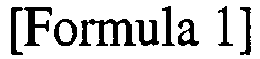


Z is O, S, CH2, or a functional group represented by the following structural formula 2,
X is C or N, provided that when X is C, Rb is hydrogen, C1-3 alkoxy, substituted or unsubstituted C1-6 alkyl, or a functional group represented by the structural formula 1, and when X is N, Rb does not exist;
Ra is hydrogen, fluoro, -CONH2, -COOH, nitro, -O-R9 (wherein, R9 is hydrogen, substituted or unsubstituted C1-6 alkyl, phenyl, -SO2-R10, or -CO2R10, wherein R10 is substituted or unsubstituted C1-6 alkyl, or substituted or unsubstituted phenyl), -CO-R10 or -COO-R10 (wherein, R10 is the same as defined above), or a functional group represented by the following structural formula 3,
or a C5 or C6 heterocyclic ring arbitrarily containing at least one hetero atom selected from the group consisting of O, S, and N (the ring may not have a substituent, or may be arbitrarily substituted with at least one of substituted or unsubstituted C1-6 alkyl, C1-3 alkoxy, thiol, amino, nitro, thiomethyl, carboxylic acid, methylcarboxylate, -CF3, or -NR13R14, wherein R13 and R14 are each independently substituted or unsubstituted C1-6 alkyl, hydroxyalkyl, CO-R10, - COO-R10, or -SO2-R10, wherein R10 is the same as defined above);
Rc and Rd are each independently hydrogen, a C5 or C6 heterocyclic ring arbitrarily containing at least one hetero atom selected from the group consisting of O, S, and N (the ring may not have a substituent, or may be arbitrarily substituted with at least one of substituted or unsubstituted C1-6 alkyl, C1-3 alkoxy, or -NR13R14, wherein R13 and R14 are the same as defined above), or a R15-substituted phenyl (wherein, R15 is hydrogen, hydroxyl, nitro, substituted or unsubstituted C1-6 alkyl, C1-3 alkoxy, fluoro, nitrile, -NR11R12, -COO-R10, or - SO2-R10, wherein R10, R11, and R12 are the same as defined above), provided that Rc and Rd may not be hydrogen simultaneously; and
Re is hydrogen or halogen (preferably, fluorine or bromine). - The compound of the present invention is represented by the following formula I, a pharmaceutically acceptable salt thereof, a hydrate thereof, or a solvate thereof.


Z is O, S, or a functional group represented by the following structural formula 2,
X is C or N, provided that when X is C, Rb is hydrogen, C1-3 alkoxy, substituted or unsubstituted C1-6 alkyl, or a functional group represented by the structural formula 1, and when X is N, Rb does not exist;
Ra is hydrogen, fluoro, -CONH2, -COOH, nitro, -O-R9, -CO-R10 or - COO-R10, wherein R9 is hydrogen, substituted or unsubstituted C1-6 alkyl, phenyl, -SO2-R10, or -CO2R10, and wherein R10 is substituted or unsubstituted C1-6 alkyl, or substituted or unsubstituted phenyl, or a functional group represented by the following structural formula 3,
or a C5 or C6 heterocyclic ring arbitrarily containing at least one hetero atom selected from the group consisting of O, S, and N, wherein the ring may not have a substituent, or may be arbitrarily substituted with at least one of substituted or unsubstituted C1-6 alkyl, C1-3 alkoxy, thiol, amino, nitro, thiomethyl, carboxylic acid, methylcarboxylate, -CF3, or -NR13R14, wherein R13 and R14 are each independently substituted or unsubstituted C1-6 alkyl, hydroxyalkyl, CO-R10, - COO-R10, or -SO2-R10, wherein R10 is substituted or unsubstituted C1-6 alkyl, or substituted or unsubstituted phenyl ;
Rd is hydrogen, a C5 or C6 heterocyclic ring arbitrarily containing at least one hetero atom selected from the group consisting of O, S, and N (the ring may not have a substituent, or may be arbitrarily substituted with at least one of substituted or unsubstituted C1-6 alkyl, C1-3 alkoxy, or -NR13R14, or a R15-substituted phenyl, wherein R15 is hydrogen, hydroxyl, nitro, substituted or unsubstituted C1-6 alkyl, C1-3 alkoxy, fluoro, nitrile, -NR11R12, -COO-R10, or - SO2-R10, wherein R10 is substituted or unsubstituted C1-6 alkyl, or substituted or unsubstituted phenyl, wherein R11 and R12 are each independently formyl, C1-3 alkoxy, pyridine, pyrimidine, substituted or unsubstituted C1-6 alkyl, hydroxyalkyl, -CO-R10, -COO-R10, or -SO2-R10, and wherein R13 and R14 are each independently substituted or unsubstituted C1-6 alkyl, hydroxyalkyl, CO-R10, -COO-R10, or -SO2-R10,
and Rc is a functional group selected from the group consisting of the following formulas 4:
and Re is hydrogen or halogen. - The group of compounds, which a part of the group of compounds according to the present invention is based on, can be characterized by


Z is O, S, CH2, or a functional group represented by the following structural formula 2,
X is C or N, provided that when X is C, Rb is hydrogen, C1-3 alkoxy, substituted or unsubstituted C1-6 alkyl, or a functional group represented by the structural formula 1, and when X is N, Rb does not exist;
Ra is hydrogen, fluoro, -CONH2, -COOH, nitro, -O-R9 (wherein, R9 is hydrogen, substituted or unsubstituted C1-6 alkyl, -SO2-R10, or -CO2R10, wherein R10 is substituted or unsubstituted C1-6 alkyl, or substituted or unsubstituted phenyl), or a functional group represented by the following structural formula 3,
or a C5 or C6 heterocyclic ring arbitrarily containing at least one hetero atom selected from the group consisting of O, S, and N (the ring may not have a substituent, or may be arbitrarily substituted with at least one of substituted or unsubstituted C1-6 alkyl, C1-3 alkoxy, amino, nitro, thiomethyl, carboxylic acid, methylcarboxylate, -CF3, or -NR13R14, wherein R13 and R14 are each independently substituted or unsubstituted C1-6 alkyl);
Rc and Rd are each independently hydrogen, a C5 or C6 heterocyclic ring arbitrarily containing at least one hetero atom selected from the group consisting of O, S, and N (the ring may not have a substituent, or may be arbitrarily substituted with at least one of substituted or unsubstituted C1-6 alkyl, C1-3 alkoxy, or -NR13R14, wherein R13 and R14 are the same as defined above), or a R15-substituted phenyl (wherein, R15 is hydroxyl, nitro, substituted or unsubstituted C1-6 alkyl, C1-3 alkoxy, fluoro, nitrile, -NR11R12, -COO-R10, or -SO2-R10, wherein R10, R11, and R12 are the same as defined above), provided that Rc and Rd may not be hydrogen simultaneously; and
Re is hydrogen. - The group of compounds, which the group of compounds according to the present invention is based on, can be characterized by formula I, in which Rc or Rd is a functional group selected from the group consisting of the following structural formulas, an isomer thereof, a pharmaceutically acceptable salt thereof, a hydrate thereof, or a solvate thereof is more preferable.

- A preferable compound of the present invention is a compound represented by the formula I, in which Rc or Rd is a functional group selected from the group consisting of the following structural formula, , a pharmaceutically acceptable salt thereof, a hydrate thereof, or a solvate thereof.

- A compound not part of the present invention is a compound represented by the formula I, in which Rc or Rd is a functional group selected from the group consisting of the following structural formulas, an isomer thereof, a pharmaceutically acceptable salt thereof, a hydrate thereof, or a solvate thereof.


- Yet another preferable compound of the present invention is a compound represented by the formula I, in which Ra is a functional group selected from the group consisting of the following structural formulas, a pharmaceutically acceptable salt thereof, a hydrate thereof, or a solvate thereof.

- The group of compounds, which the group of compounds according to the present invention is based on, can be characterized by a compound represented by the formula I, an isomer thereof, a pharmaceutically acceptable salt thereof, a hydrate thereof, or a solvate thereof, in which Ra is a functional group selected from the group consisting of the following structural formulas,

in which Rc or Rd is a functional group selected from the group consisting of the following structural formulas.
R16 is hydrogen, amino, aminoacyl, or C1-3 alkyl.
The group of compounds, which the group of compounds according to the present invention is based on, can be characterized by a compound represented by the formula I, an isomer thereof, a pharmaceutically acceptable salt thereof, a hydrate thereof, or a solvate thereof, in which Ra is a functional group selected from the group consisting of the following structural formula,
in which Rc or Rd is a functional group selected from the group consisting of the following structural formulas.

- A Still more preferable compound of the present invention is a compound represented by the formula I, in which Ra is a functional group selected from the group consisting of the following structural formula, a pharmaceutically acceptable salt thereof, a hydrate thereof, or a solvate thereof.

- Particularly, a compound represented by the formula I, in which Ra is NH2, an isomer thereof, a pharmaceutically acceptable salt thereof, a hydrate thereof, or a solvate thereof is not part of the invention.
- Moreover, a compound of the present invention represented by the formula I, in which R1, R2, R3, R4 and R5 are fluorine, a pharmaceutically acceptable salt thereof, a hydrate thereof, or a solvate thereof is particularly preferable.
- Especially, a compound of the present invention represented by the formula I, in which R2, R3 and R4 are methoxy, a pharmaceutically acceptable salt thereof, a hydrate thereof, or a solvate thereof is preferable.
- The compound represented by the formula I may contain at least one asymmetric carbon atom, thus the compound may exist as at least two or more of stereoisomors. Such steroisomers, for example, a stereoisomer mixture of the compound represented by the formula I, or an appropriate salt or derivative thereof can be separated by a conventional technique such as fractional crystallization, column chromatography, or HPLC. Each enantiomer of the compound represented by the formula I can be separated by HPLC separation of a corresponding racemate using a chiral support. On the other hand, the corresponding racemate is reacted with an appropriate photoactive acid or base to form a mixture, and the mixture is separated by fractional crystallization or column chromatography. All isomers are included in the scope of the present invention.
- Examples of the pharmaceutically acceptable salt of a compound represented by the formula I include inorganic salts (e.g., sulfite, hydrochloride, phosphate, hydrobromide, etc.), organic salts (maleate, succinate, acetate, toluenesulfonate, mesylate, benzenesulfonate, tartrate, citrate, etc.), alkaline metal salts such as lithium, sodium or potassium, or alkali earth metal salts such as calcium or magnesium.
- Preferable specific examples of the compound of the present invention include compounds listed in Tables 1 to 10, pharmaceutically acceptable salts thereof, hydrates thereof, or solvates thereof.
- The compounds listed in tables 1 to 10, namely compounds 200, 203, 206, 207, 211 to 214, 216, 218, 220, 223 to 229, 231 to 249, 253, 255, 256, 257, 260 to 269, 271 to 279, 281 to 286, 288 to 291, 293 to 298, 300 to 303, 306 to 309, 311 to 318, 320 to 324, 326 to 342, 346 to 348, 350, 352, 354, 357, 359, 360, 363 to 397, 399 to 403, 406, 408 to 411, 420 to 422, 425 to 427, 429, 434, 455 to 457, 469, 474 to 477, 479, 480, 482, 483, 485, 486, 492 to 494, 497, 499, 502, 503, 506 to 509, 511 to 513, 525, 531, 538, 547, 550, 554, 560, 561, 563, 564, 568, 570, 581, 583, 587, 588, 590, 591, 594 to 598 and 601, are not belonging to the inventive compounds.
[Table 1] Compound Structure Compound Structure Compound Structure Compound 200 
Compound 220 
Compound 233 
Compound 203 
Compound 223 
Compound 234 
Compound 206 
Compound 224 
Compound 235 
Compound 207 
Compound 225 
Compound 236 
Compound 211 
Compound 226 
Compound 237 
Compound 212 
Compound 227 
Compound 238 
Compound 213 
Compound 228 
Compound 239 
Compound 214 
Compound 229 
Compound 240 
Compound 216 
Compound 231 
Compound 241 
Compound 218 
Compound 232 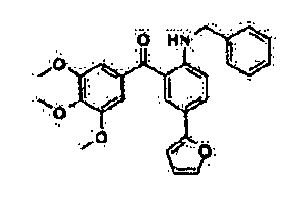
Compound 242 
[Table 2] Compound Structure Compound Structure Compound Structure Compound 243 
Compound 257 
Compound 269 
Compound 244 
Compound 260 
Compound 271 
Compound 245 
Compound 261 
Compound 272 
Compound 246 
Compound 262 
Compound 273 
Compound 247 
Compound 263 
Compound 274 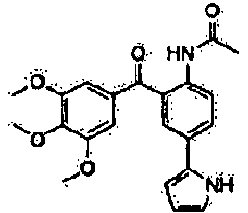
Compound 246 
Compound 264 
Compound 275 
Compound 249 
Compound 265 
Compound 276 
Compound 253 
Compound 266 
Compound 277 
Compound 255 
Compound 267 
Compound 278 
Compound 256 
Compound 268 
Compound 279 
[Table 3] Compound Structure Compound Structure Compound Structure Compound 281 
Compound 293 
Compound 306 
Compound 282 
Compound 294 
Compound 307 
Compound 283 
Compound 295 
Compound 308 
Compound 284 
Compound 296 
Compound 309 
Compound 285 
Compound 297 
Compound 311 
Compound 286 
Compound 298 
Compound 312 
Compound 288 
Compound 300 
Compound 313 
Compound 289 
Compound 301 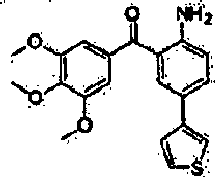
Compound 314 
Compound 290 
Compound 302 
Compound 315 
Compound 291 
Compound 303 
Compound 316 
[Table 4] Compound Structure Compound Structure Compound Structure Compound 317 
Compound 329 
Compound 339 
Compound 318 
Compound 330 
Compound 340 
Compound 320 
Compound 331 
Compound 341 
Compound 321 
Compound 332 
Compound 342 
Compound 322 
Compound 333 
Compound 346 
Compound 323 
Compound 334 
Compound 347 
Compound 324 
Compound 335 
Compound 348 
Compound 326 
Compound 336 
Compound 350 
Compound 327 
Compound 337 
Compound 352 
Compound 328 
Compound 338 
Compound 354 
[Table 5] Compound Structure Compound Structure Compound Structure Compound 357 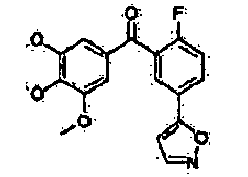
Compound 370 
Compound 380 
Compound 359 
Compound 371 
Compound 381 
Compound 360 
Compound 372 
Compound 382 
Compound 363 
Compound 373 
Compound 383 
Compound 364 
Compound 374 
Compound 384 
Compound 365 
Compound 375 
Compound 385 
Compound 366 
Compound 376 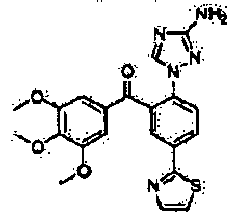
Compound 386 
Compound 367 
Compound 377 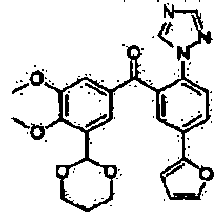
Compound 387 
Compound 368 
Compound 378 
Compound 388 
Compound 369 
Compound 379 
Compound 389 
[Table 6] Compound Structure Compound Structure Compound Structure Compound 390 
Compound 401 
Compound 422 
Compound 391 
Compound 402 
Compound 425 
Compound 392 
Compound 403 
Compound 426 
Compound 393 
Compound 406 
Compound 427 
Compound 394 
Compound 408 
Compound 429 
Compound 395 
Compound 409 
Compound 434 
Compound 396 
Compound 410 
Compound 437 
Compound 397 
Compound 411 
Compound 443 
Compound 399 
Compound 420 
Compound 444 
Compound 400 
Compound 421 
Compound 446 
[Table 7] Compound Structure Compound Structure Compound Structure Compound 455 
Compound 476 
Compound 493 
Compound 456 
Compound 477 
Compound 494 
Compound 457 
Compound 479 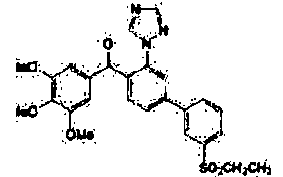
Compound 495 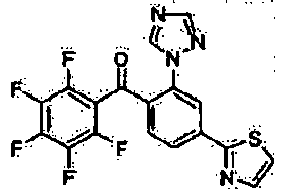
Compound 458 
Compound 480 
Compound 497 
Compound 462 
Compound 482 
Compound 499 
Compound 463 
Compound 483 
Compound 500 
Compound 464 
Compound 484 
Compound 501 
Compound 469 
Compound 485 
Compound 502 
Compound 474 
Compound 486 
Compound 503 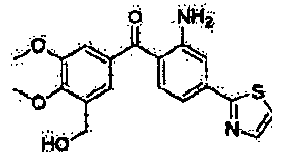
Compound 475 
Compound 492 
Compound 505 
[Table 8] Compound Structure Compound Structure Compound 506 
Compound 516 
Compound 507 
Compound 517 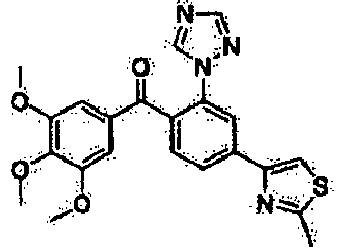
Compound 508 
Compound 518 
Compound 509 
Compound 510 
Compound 511 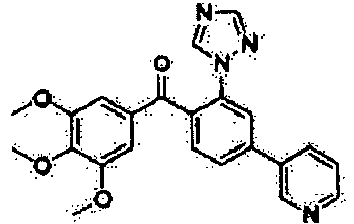
Compound 512 
Compound 513 
Compound 514 
Compound 515 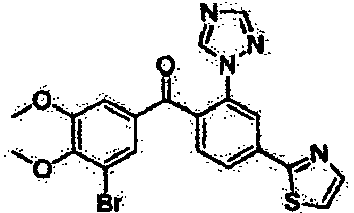
[Table 9] Compound Structure Compound Structure Compound 519 
Compound 560 
Compound 525 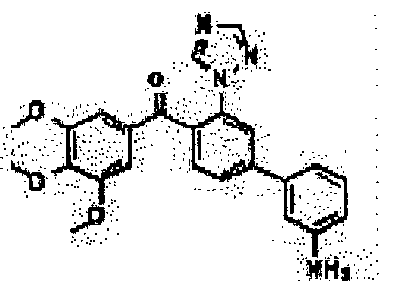
Compound 561 
Compound 531 
Compound 562 
Compound 534 
Compound 563 
Compound 538 
Compound 564 
Compound 547 
Compound 568 
Compound 550 
Compound 570 
Compound 554 
Compound 571 
[Table 10] Compound Structure Compound Structure Compound 581 
Compound 596 
Compound 583 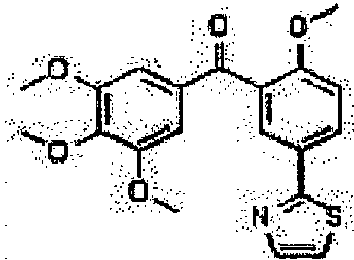
Compound 597 
Compound 587 
Compound 598 
Compound 588 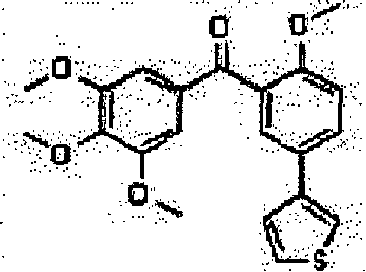
Compound 539 
Compound 590 
Compound 601 
Compound 591 
Compound 602 
Compound 594 
Compound 595 
- The compounds of the present invention represented by the formula I can be prepared by a method widely known in a variety of literature (Jing-Ping Liou, et al., Journal of Medicinal Chemistry, 2002, 45, 2556-2562; Jing-Ping Liou, et al., Journal of Medicinal Chemistry, 2004, 47, 2897-2905; and Pettit, G. R., et al., Journal of Medicinal Chemistry, 2000, 43, 2731-2737). The method for preparing the compound represented by the formula I will be described in greater detail, together with reaction equations.

- The reaction 1 is preferably carried out by, first, adding magnesium or n-butyllithium (n-BuLi) to Compound II as a starting material, and then, mixing Compound III, Compound V or Compound VII thereto.
- Among the above reactions, the reaction using Compound III uses a solvent of tetrahydrofuran or ether, and has a reaction temperature of -100 to 70°C, preferably -78 to 20°C. The obtained compound represented by Compound IV is subjected to an oxidation reaction using various oxidants to obtain the desired Compound I (the compound represented by the formula I). As the oxidant, pyridinium dichromate (PDC), pyridinium chromate (PCC) or the like can be used. As the solvent, tetrahydrofuran, ether, methylenechloride or the like can be used, and preferably tetrahydrofuran or ether. Furthermore, a reaction temperature at this step is 0 to 70°C, and preferably 0 to 40°C.
- The reaction using Compound V uses a solvent of tetrahydrofuran, dimethylformamide (DMF), acetonitrile (CH3CN) or the like, and preferably tetrahydrofuran. Moreover, a reaction temperature at this reaction is -100 to 70°C, and preferably -78 to 20°C.
- For the reaction using Compound VII, a method widely known for preparing Compound VII from Compound VI can be used (Welch, W. M., et al., Bioorg. med. Chem. Lett., 2001, 11, 177-182).
- The compound of the present invention represented by the formula I can also be prepared by a method known in a variety of literature, as shown in the following reaction 2 (Doo Ok Jang, et al., JTetrahedron Lett., 2006, 47, 6063-6066; and D.C. Waite, et al., Organic Process research & Development, 1998, 2, 116-120).

- The reaction 2 is preferably carried out by adding a Lewis acid or an organometal, and then mixing Compound IX or Compound X thereto. As the Lewis acid used herein, aluminum chloride (AlCl3), zinc chloride (ZnCl2), tin chloride (SnCl4) or the like can be used. As the solvent, sulfuric acid, methylenechloride, dimethylacetamide, dimethylformamide (DMF), dimethylsulfoxide (DMSO) or the like can be used. Furthermore, a reaction temperature is -20 to 150°C, and preferably 0 to 80°C.
- In general, Compound I of the present invention can be prepared by the above reaction 1 or 2. In the following reactions 3, 4, 5, and 6, more specific methods for preparing the compounds disclosed in this application will be described.

- The reaction 3 is a typical process for preparing Compound III. Boronic acid is bonded to Compound 1 or Compound 2 by a Suzuki reaction (Morris, G. A., et al., Tetrahedron Lett., 2001, 42, 2093) to prepare Compound 3 or Compound 4.

- The reaction 4 is a specific process for synthesizing Compounds 218, 220, 223, and 226 not part of the present invention. The other compounds of the present invention can also be prepared according to the above reaction. Metal magnesium is added to Compound 10, and iodide in a catalytic amount is added thereto to obtain Compound 11. Thus obtained Compound 11 is reacted with a variety of aldehydes obtained in the reaction 3 to obtain Compound 12, Compound 13, or Compound 14. Thus obtained benzhydrol derivatives are subjected to an oxidation reaction using various oxidants to prepare Compound 223 or Compound 226 of the present invention. In other cases, a typical deprotection reaction is carried out to prepare Compound 218 or Compound 220 of the present invention.


- The reaction 5 is a typical synthesis process of Compounds 227, 278, 296, 289, 279, 283, 300, 301, 288, 293, 302, 303, 311, and 312 not part of the present invention. The other compound of the present invention can also be prepared according to the above reaction. Compound 18 obtained from Compound 17 is reacted with Compound 11 of the reaction 4 to obtain Compound 19. From thus obtained Compound 19, the above compounds according to the present invention are prepared by a reaction described in a literature using a variety of commercially available ZnBr derivatives and a palladium catalyst (Michael R. Reeder, et al., Organic Process research & Development, 2003, 7, 696-699). When the ZnBr derivative and palladium catalyst are not commercially available, they can be synthesized in accordance with the literature. Thus obtained Compounds 277, 296, 279, 300, 288, 302, and 311 are deprotected in an acidic or alkaline condition to obtain Compounds 278, 289, 283, 301, 293, 303, and 312, respectively.

- The reaction 6 is a typical synthesis process of Compounds 443 and 469. The other compounds of the present invention can also be prepared according to the above reaction. Compound 11 of the reaction 4 is reacted with a variety of aldehydes to prepare Compound 20 and Compound 23. Thus obtained benzhydrol derivatives are subjected to an oxidation reaction using various oxidants, as in the reaction 3, to obtain Compound 21. Boronic acid is bonded to Compound 21 by the Suzuki reaction (Morris, G. A., et al., Tetrahedron Lett., 2001, 42, 2093) to prepare Compound 22. Compound 22 is reacted with various amines or heterocyclic rings to prepare Compound 443 of the present invention (Francois D. Bellamy, et al., Journal of Medicinal Chemistry, 1991, 34, 1545-1552).
- Now, the preparation of benzophenone derivative compounds, especially of the present invention, will be described in more detail with reference to the following Examples. These examples are provided only for illustrating the present invention and should not be construed as limiting the scope and spirit of the present invention.
- First, to 1-bromo-3,4,5-trimethoxy benzene as a starting material, magnesium was added, as shown in Reaction 1, and then a substituted aldehyde is added thereto through the Suzuki reaction, as shown in Reaction 3, to obtain (2-methoxy-5-(pyridin-3-yl)phenyl)(3,4,5-trimethoxyphenyl)methanol. Thus obtained (2-Methoxy-5-(pyridin-3-yl)phenyl)(3,4,5-trimethoxyphenyl)methanol (28 mg, 0.07 mmol) was dissolved in dichloromethane (5 ml), whereto 4 Å molecular sieves (20 mg) and pyridinium chlorochromate (PCC) (24 mg, 0.11 mmol) were added at room temperature. The resulting mixture was stirred for 3 hours. After completion of the reaction, the precipitates were filtered out from the reaction mixture using Celite. The filtrate was vacuum evaporated to remove the solvent. Then, the resulting residue was purified by column chromatography (SiO2, n-Hex/EA=2/1→1/1) to obtain Compound 200 (8 mg, 30%) in a form of white foam.
1H NMR (CDCl3+D2O) δ 8.82 (s, 1H), 8.56 (d, 1H), 7.85 (d, 1H), 7.70 (d, 1H), 7.56 (s, 1H), 7.35 (dd, 1H), 7.13 (s, 2H), 7.12 (d, 1H), 3.93 (s, 3H), 3.84 (s, 6H), 3.82 (s, 3H). - (5-Furan-2-yl)-2-methoxyphenyl)(3,4,5-trimethoxyphenyl)methanol (59 mg, 0.16 mmol) obtained in the same manner as in the synthesis of Compound 200 was acidified with PCC to obtain Compound 203 (15 mg, 25%) in a form of white foam.
1H NMR (CDCl3) δ 7.76 (d, 1H), 7.63 (s, 1H), 7.43 (s, 1H), 7.12 (s, 2H), 7.70 (d, 1H), 6.55 (s, 1H), 6.45 (s, 1H), 3.93 (s, 3H), 3.83 (s, 6H), 3.79 (s, 3H). - In the same manner as in the synthesis of Compound 203, Compound 206 (50 mg, 38%) in a form of a white solid was obtained.
1H NMR (CDCl3) δ 7.44 (s, 1H), 7.35 (s, 1H), 7.18 (s, 1H), 7.12 (s, 2H), 6.59 (s, 1H), 6.46 (s, 1H), 3.97 (s, 3H), 3.92 (s, 3H), 3.83 (s, 6H), 3.78 (s, 3H). - In the same manner as in the synthesis of Compound 203, Compound 207 (34 mg, 24%) in a form of a white solid was obtained.
1H NMR (CDCl3) δ 8.83 (b, 1H), 8.58 (b, 1H), 7.85 (d, 1H), 7.36 (b, 1H), 7.22 (s, 1H), 7.12 (s, 2H), 7.08 (s, 1H), 3.98 (s, 3H), 3.91 (s, 3H), 3.83 (s, 6H), 3.80 (s, 3H). - In the same manner as in the synthesis of Compound 203, Compound 211 (31 mg, 67%) in a form of a white solid was obtained.
1H NMR (CDCl3) δ 8.43 (s, 1H), 8.18 (d, 1H), 7.89 (d, 1H), 7.75 (d, 1H), 7.62∼7.58 (m, 2H), 7.13 (m, 3H), 3.94 (s, 3H), 3.85 (s, 6H), 3.84 (s, 3H). - Compound 211 [(4-methoxy-5'-nitrobiphenyl-3-yl)(3,4,5-trimethoxyphenyl) methanone] (29 mg, 0.07 mmol), was dissolved in ethanol(4 ml), and SnCl2.2H2O (77 mg, 0.34 mmol) was added thereto. 3 Drops of concentrated hydrochloric acid was added to the reaction mixture, and then the resulting mixture was refluxed with stirring for 3 hours. After completion of the reaction, the resulting reaction mixture was vacuum concentrated. To this concentrated reaction mixture, water (10 ml) and a saturated aqueous sodium hydrogen carbonate solution were added, and the resulting solution was extracted with EtOAc (40 ml). The organic layer was washed with brine and dried over anhydrous MgSO4. The solid substance was filtered off, and the filtrate was vacuum concentrated to obtain Compound 212 (26 mg, 94%) in a form of a white solid.
1H NMR (CDCl3) δ 7.66 (d, 1H), 7.54 (s, 1H), 7.21 (t, 1H), 7.13 (s, 2H), 7.04 (d, 1H), 6.98 (d, 1H), 6.92 (s, 1H), 6.69 (d, 1H). - In the same manner as in the synthesis of Compound 203, Compound 213 (95 mg, 80%) in a form of a white solid was obtained.
1H NMR (CDCl3) δ 7.63 (d, 1H), 7.52 (s, 1H), 7.48 (d, 2H), 7.14 (s, 1H), 7.04 (d, 1H), 6.94 (d, 2H), 3.92 (s, 3H), 3.83 (s, 6H), 3.82 (s, 3H), 3.78 (s, 3H). - In the same manner as in the synthesis of Compound 203, Compound 214 (82 mg, 74%) in a form of a white solid was obtained.
1H NMR (CDCl3) δ 7.65 (d, 1H), 7.55 (s, 1H), 7.31∼7.27 (m, 2H), 7.17 (s, 2H), 7.05 (d, 1H), 7.00 (t, 1H), 6.96 (d, 1H), 3.92 (s, 3H), 3.85 (s, 6H), 3.81 (s, 3H), 3.79 (s, 3H). - In the same manner as in the synthesis of Compound 203, Compound 216 (44 mg, 40%) in a form of a white solid was obtained.
1H NMR (CDCl3) δ 7.62 (d, 1H), 7.55 (s, 1H), 7.49 (d, 2H), 7.12 (s, 2H), 7.02 (d, 1H), 6.95 (d, 2H), 4.03 (q, 2H), 3.92 (s, 3H), 3.84 (s, 6H), 3.82 (s, 3H), 1.18 (t, 3H). - As shown in Reaction 4, Compound 11 was added to a substituted benzaldehyde obtained through the Suzuki reaction of Reaction 3 to obtain Compound 12. Compound 15 [(6'-(tert-butyldimethylsilyloxy)-4-methoxybiphenyl-3-yl)(3,4,5-trimethoxyphenyl)methanone] (138 mg, 0.27 mmol) obtained by the oxidation of Compound 12 was dissolved in anhydrous tetrahydrofuran (5 ml). To this reaction solution, tetrabutylammonium fluoride (1 M, 0.8 ml, 5 mmol) dissolved in anhydrous tetrahydrofuran (5 ml) was added slowly. The reaction mixture was stirred for 2 hours at room temperature. After completion of the reaction, water (10 ml) was added to the reaction mixture, and the resulting solution was extracted with EtOAc (30 ml). The organic layer was washed with brine, and dried over anhydrous MgSO4. The solid substance was filtered off, and the filtrate was vacuum concentrated. The resulting residue was purified by column chromatography (SiO2, n-Hex/EA=5/1) to obtain Compound 218 (106 mg, 99%).
1H NMR (CDCl3) δ 7.62 (dd, J = 8.5, 2.1 Hz, 1H), 7.49 (d, J = 2.1 Hz, 1H), 7.26∼7.22 (m, 3H), 7.15 (s, 2H), 7.12 (d, J = 8.5 Hz, 1H), 6.98 (m, 2H), 3.94 (s, 3H), 3.86 (s, 6H), 3.84 (s, 3H). MS (ESI) m/z 395 (M+ + H). - As shown in Reaction 4, in the same manner as in the synthesis of Compound 218, Compound 220 (120 mg, 99%) having the tert-butyldimethylsilyl group removed was obtained in a form of a white solid.
1H NMR (CDCl3) δ 11.77 (s, 1H), 7.82 (d, J = 2.3 Hz, 1H), 7.71 (dd, J = 8.6, 2.3 Hz, 1H), 7.38 (d, J = 8.7 Hz, 2H), 7.13 (d, J = 8.6 Hz, 1H), 6.99 (s, 2H), 6.93 (d, J = 8.7 Hz, 2H), 3.95 (s, 3H), 3.89 (s, 6H), 3.82 (s, 3H). MS (ESI) m/z 393 (M+ - H). - The compound [(4'-methoxy-4-nitrobiphenyl-3-yl)(3,4,5-trimethoxyphenyl) methanol](145 mg, 0.34 mmol) obtained in the same manner as in the synthesis of Compound 218 was dissolved in dichloromethane (8 ml), whereto 4 Å molecular sieves (300 mg) and pyridinium dichromate (PDC) (192 mg, 0.51 mmol) were added. The reaction mixture was stirred for 4 hours at room temperature. After completion of the reaction, the precipitates were filtered off using Celite. The filtrate was vacuum evaporated to remove the solvent. The resulting residue was purified by column chromatography (SiO2, n-Hex/EA=9/1→2/1) to obtain Compound 223 (115 mg, 80%) in a form of a solid.
1H NMR (CDCl3) δ 8.28 (d, J = 8.6 Hz, 1H), 7.82 (dd, J = 8.6, 2.0 Hz, 1H), 7.63 (d, J = 2.0 Hz, 1H), 7.60 (d, J = 8.8 Hz, 2H), 7.04 (d, 2H), 7.01 (d, J = 8.8 Hz, 2H), 3.93 (s, 3H), 3.87 (s, 3H), 3.83 (s, 6H). MS (ESI) m/z 424 (M+ + H). - In the same manner as in the synthesis of Compound 223, Compound 224 (50 mg, 77%) in a form of a white solid was obtained.
1H NMR (CDCl3) δ 8.26 (d, J = 8.7 Hz, 1H), 7.90 (dd, J = 8.7, 1.9 Hz, 1H), 7.72 (d, J = 1.9 Hz, 1H), 7.58 (d, J = 1.5 Hz, 1H), 7.03 (s, 2H), 6.92 (d, J = 3.5 Hz, 1H), 6.57 (dd, J = 3.4, 1.7 Hz, 1H), 3.93 (s, 3H), 3.82 (s, 6H). - Compound 224 [(5-(furan-2-yl)-2-nitrophenyl)(3,4,5-trimethoxyphenyl) methanone] (49 mg, 0.13 mmol) was dissolved in ethanol (6 ml), and SnCl2.2H2O (144 mg, 0.64 mmol) was added thereto. 2 to 3 Drops of concentrated hydrochloric acid was added to the reaction mixture, and then the reaction mixture was refluxed with stirring for 4 hours. After completion of the reaction, the resulting reaction mixture was vacuum concentrated. To this concentrated reaction mixture, water (10 ml) and a saturated aqueous sodium hydrogen carbonate solution were added, and the resulting solution was extracted with EtOAc (40 ml). The organic layer was washed with brine and dried over anhydrous MgSO4. The solid substance was filtered off, and the filtrate was vacuum concentrated. The resulting residue was purified by column chromatography (SiO2, n-Hex/EA=10/1→5/1) to obtain Compound 225 (26 mg, 94%) in a form of a yellow solid.
1H NMR (DMSO-d6) δ 7.70 (d, J = 2.1 Hz, 1H), 7.63 (dd, J = 8.7, 2.1 Hz, 1H), 7.37 (d, J = 1.6 Hz, 1H), 6.98 (s, NH2, 2H), 6.91 (d, J = 8.7 Hz, 1H), 6.91 (s, 2H), 6.58 (d, J = 3.3 Hz, 1H), 6.47 (dd, J = 3.3, 1.8 Hz, 1H), 3.78 (s, 6H), 3.76 (s, 3H). MS (ESI) m/z 354 (M+ + H). - In the same manner as in the synthesis of Compound 225, Compound 223 [(4'-methoxy-4-nitrobiphenyl-3-yl)(3,4,5-trimethoxyphenyl)methanone] was subjected to the reduction reaction to obtain Compound 226 (52 mg, 53%) in a form of a yellow solid.
1H NMR (CDCl3) δ 7.70 (d, J = 2.2 Hz, 1H), 7.56 (dd, J = 8.5, 2.1 Hz, 1H), 7.36 (d, J = 8.7 Hz, 2H), 6.93 (m, 3H), 3.93 (s, 3H), 3.87 (s, 6H), 3.82 (s, 3H). MS (ESI) m/z 394 (M+ + H). - Compound 203[(5-(furan-2-yl)-2-methoxyphenyl)(3,4,5-trimethoxyphenyl) methanone] (20 mg, 0.05 mmol)was dissolved in ethanol (5 ml), hydroxylamine•HCl (6 mg, 0.08 mmol) was added thereto. A solution of sodium hydroxide (4 mg, 0.1 mmol) in water (3 ml) was added to the reaction mixture, and then the resulting solution was refluxed with stirring for 24 hours. After completion of the reaction, the reaction mixture was vacuum concentrated. Then, the concentrated reaction mixture was extracted with water (10 ml) and EtOAc (20 ml). The organic layer was washed with brine, and dried over anhydrous MgSO4. The solid substance was filtered off, and the filtrate was vacuum concentrated. The resulting residue was purified by column chromatography (SiO2, n-Hex/EA=7/1) to obtain Compound 227 (10 mg, 52%).
1H NMR (CDCl3) δ 7.74 (d, 1H), 7.47 (s, 1H), 7.42 (s, 1H), 7.08 (d, 1H), 6.78 (s, 2H), 6.54 (s, 1H), 6.45 (s, 1H), 3.86 (s, 3H), 3.81 (s, 3H), 3.78 (s, 6H). MS (ESI) m/z 384 (M+ + H). - In the same manner as in the synthesis of Compound 223, Compound 228 (890 mg, 72%) in a form of a white solid was obtained.
1H NMR (CDCl3) δ 7.46 (dd, J = 8.5, 2.1 Hz, 1H), 7.31 (m, 2H), 7.14 (s, 2H), 6.99 (d, J = 8.5 Hz, 1H), 6.20~6.16 (m, 2H), 3.92 (s, 3H), 3.85 (s, 6H), 3.80 (s, 3H), 1.42 (s, 9H). MS (ESI) m/z 468 (M+ + H). - Compound 228 [(4-methoxy-3-(3,4,5-trimethoxybenzoyl)phenyl)-1H-pyrrole-1-carboxylic acid tert-butyl ester] (850 mg, 1.82 mmol) was dissolved in methanol (7 ml), and NaOMe (589 mg, 10.91 mmol) was added thereto. The mixture was stirred for 2 hours at room temperature. After completion of the reaction, the reaction mixture was extracted with water (10 ml) and EtOAc (30 ml). The organic layer was washed with brine, and dried over anhydrous MgSO4. The solid substance was filtered off, and the filtrate was vacuum concentrated. The resulting residue was purified by column chromatography (SiO2, n-Hex/EA=3/1→1/1) to obtain Compound 229 (420 mg, 63%) in a form of a white foam.
1H NMR (CDCl3) δ 7.58 (dd, J = 8.7, 2.4 Hz, 1H), 7.43 (d, J = 2.3 Hz, 1H), 7.12~7.07 (m, 3H), 7.01 (d, J = 8.6 Hz, 1H), 6.85 (m, 1H), 6.45 (m, 1H), 6.29 (m, 1H), 3.93 (s, 3H), 3.83 (s, 6H), 3.78 (s, 3H). MS (ESI) m/z 368 (M+ + H). - Compound 225 [(2-amino-5-(furan-2-yl)phenyl)(3,4,5-trimethoxyphenyl) methanone] (40 mg, 0.11 mmol) was dissolved in dichloromethane (5 ml), and an excessive amount of pyridine and acetylchloride (11 mg, 0.13 mmol) were sequentially added thereto. The reaction mixture was stirred for 3 days at room temperature, and vacuum concentrated. The resulting residue was purified by column chromatography (SiO2, n-Hex/EA=3/1→1/1) to obtain Compound 231 (20 mg, 46%).
1H NMR (CDCl3) δ 10.45 (brs, NH, 1H), 8.59 (d, J = 8.7 Hz, 1H), 7.90 (d, J = 2.0 Hz, 1H), 7.83 (dd, J = 8.7, 2.0 Hz, 1H), 7.42 (d, J = 1.0 Hz, 1H), 7.03 (s, 2H), 6.57 (d, J = 3.2 Hz, 1H), 6.45 (dd, J = 3.2, 1.7 Hz, 1H), 3.97 (s, 3H), 3.87 (s, 6H), 2.22 (s, 3H). - Compound 225 [(2-amino-5-(furan-2-yl)phenyl)(3,4,5-trimethoxyphenyl) methanone] (46 mg, 0.13 mmol) was dissolved in N,N-dimethylformamide (DMF) (5 ml), potassium carbonate (54 mg, 0.39 mmol) and benzylbromide (27 mg, 0.16 mmol) were added thereto. The reaction mixture was stirred for 3 days at room temperature, and vacuum concentrated. The resulting reaction mixture was extracted with water (5 ml) and EtOAc (10 ml). The organic layer was dried over anhydrous MgSO4. The solid substance was filtered off, and the filtrate was vacuum concentrated. The resulting residue was purified by column chromatography (SiO2, n-Hex/EA=10/1) to obtain Compound 232 (15 mg, 26%).
1H NMR (CDCl3) δ 7.92 (d, J = 2.1 Hz, 1H), 7.75 (dd, J = 8.7, 2.1 Hz, 1H), 7.40-7.27 (m, 8H), 6.89 (s, 2H), 6.47 (d, J = 3.4 Hz, 1H), 6.43 (m, 1H), 4.55 (s, 2H), 3.97 (s, 3H), 3.89 (s, 6H). - As shown in Reaction 1, first, magnesium was added to 2-(5-bromo-2,3-dimethoxyphenyl)-1,3-dioxane as a starting material, which substituted an aldehyde group with an acetyl group. Then, Compound (III) derivative was substituted thereto to synthesize (3-(1,3-dioxan-2-yl)-4,5-dimethoxyphenyl)(5-(furan-2-yl)-2-methoxyphenyl)methanol. Thus obtained (3-(1,3-dioxan-2-yl)-4,5-dimethoxyphenyl)(5-(furan-2-yl)-2-methoxyphenyl)methanol (1.7 g, 4.0 mmol) was dissolved in 40 ml of anhydrous dichloromethane, whereto 4 Å molecular sieves (0.6 g) and pyridinium dichromate (PDC) (2.24 g, 6.0 mmol) were added sequentially at 0°C. The mixture was reacted at room temperature for 24 hours. After completion of the reaction, diethylether (150 ml) was added to the reaction mixture, and the precipitates were filtered off using Celite. An organic layer was extracted out from the filtrate using brine, and the organic layer was dried over Na2SO3. The solvent was removed, and the resulting residue was purified by column chromatography (SiO2, n-Hex/EA=1/1) to synthesize Compound 233 (1.02 g, 60%).
1H NMR (CDCl3) δ 7.77 (dd, J = 8.50, 2.29 Hz, 1H), 7.62 (m, 2H), 7.56 (d, J = 2.02 Hz, 1H), 7.43 (d, J = 1.53 Hz, 1H), 7.02 (d, J = 8.70 Hz, 1H), 6.55 (d, J = 3.17 Hz, 1H), 6.45 (dd, J = 3.32, 1.76 Hz, 1H), 5.80 (s, 1H), 4.18 (m, 2H), 3.98 (m, 2H), 3.94 (s, 3H), 3.91 (s, 3H), 3.76 (s, 3H), 2.15 (m, 2H), 1.59 (bs , 1H). - Compound 233 [(3-(1,3-dioxan-2-yl)-4,5-dimethoxyphenyl)(5-(furan-2-yl)-2-methoxyphenyl)methanone] (262 mg, 0.62 mmol) was dissolved in 6 ml of a mixed solution of tetrahydrofuran and methanol (5/1). 1 N hydrochloric acid (0.2 ml, 0.20 mmol) was added dropwise thereto. The mixture was reacted for 24 hours at room temperature, and an organic layer was extracted out using dichloromethane and brine, and the organic layer was dried over Na2SO3. The solvent was removed, and the resulting residue was purified by column chromatography (SiO2, n-Hex/EA=2/1→1/1) to obtain Compound 234 (105 mg, 47%) in a form of a solid.
1H NMR (CDCl3) δ 10.39 (s, 1H), 7.86 (d, J = 2.00 Hz, 1H), 7.78 (dd, J =8.68, 2.20 Hz, 1H), 7.68 (d, J = 2.00 Hz, 1H), 7.62 (d, J = 2.24 Hz, 1H), 7.43 (s, 1H), 7.03 (d, J = 8.72 Hz, 1H), 6.55 (d, J = 3.32 Hz, 1H), 6.45 (dd, J = 3.32, 1.80 Hz, 1H), 4.10 (s, 3H), 4.00 (s, 3H), 3.76 (s, 3H). - Compound 225 [(2-amino-5-(furan-2-yl)phenyl)(3,4,5-trimethoxyphenyl) methanone] (20.9 mg, 0.06 mmol) was dissolved in dichloromethane (3 ml), and pyridine (5.74 µl), methanesulfonyl chloride (5.94 µl) were added thereto at room temperature. The mixture was stirred at room temperature for 12 hours. Pyridine (5.74 µl) and methanesulfonyl chloride (20 µl) was further added to the reaction mixture, and the resulting mixture was stirred at room temperature for 3 days. After completion of the reaction, the solvent was removed by vacuum evaporation, and the resulting residue was purified by column chromatography (SiO2, CH2Cl2/MeOH=5/1→3/1) to obtain Compound 235 (16.9 mg, 66.5%) in a form of a bright yellow solid.
1H NMR (CDCl3) δ 9.863 (S, 1H), 7.974 (dd, J = 1.80 Hz, 1H), 7.867-7.807 (m, 2H), 7.448 (d, J = 1.38 Hz, 1H), 7.026 (s, 2H), 6.601 (d, J = 3.31 Hz, 1H), 6.471 (dd, J = 3.34, 1.74 Hz, 1H), 3.979 (s, 3H), 3.879 (s, 6H), 3.099 (s, 3H). - Compound 225 [(2-amino-5-(furan-2-yl)phenyl)(3,4,5-trimethoxyphenyl) methanone] (14.9 mg, 0.04 mmol) was dissolved in dichloromethane (3 ml), and pyridine(5.74 µl) and succinic anhydride (5.05 mg) were added thereto at room temperature. The mixture was stirred at room temperature for 3 days. After completion of the reaction, the solvent was removed by vacuum evaporation. The resulting residue was purified by column chromatography (SiO2, CH2Cl2/MeOH=10/1) to obtain Compound 236 (~10 mg, 52.6%) in a form of a bright yellow solid.
1H NMR (CDCl3) δ 10.590 (s, 1H), 8.579 (d, J = 8.76 Hz, 1H), 7.907 (d, J = 2.08 Hz, 1H), 7.830 (dd, J = 8.72, 2.08 Hz, 1H), 7.431 (d, J = 1.60 Hz, 1H), 7.031 (s, 2H), 6.582 (d, J = 3.24 Hz, 1H), 6.456 (dd, J = 3.40, 1.88 Hz, 1H), 3.973 (s, 3H), 3.872 (s, 6H), 2.777 (m, 4H). - Compound 225 [(2-amino-5-(furan-2-yl)phenyl)(3,4,5-trimethoxyphenyl) methanone] (30 mg, 0.08 mmol) was dissolved in dichloromethane (5 ml), and Fmoc-glycine (30 mg, 0.10 mmol), N-(3-dimethylaminopropyl)-N'-ethylcarboimide (EDC) (33 mg, 0.17 mmol) and N,N-dimethylaminopyridine (DMAP) (10 mg, 0.08 mmol) were added thereto. The mixture was stirred at room temperature for 3 days. The reaction mixture was vacuum concentrated, and the resulting residue was purified by column chromatography (SiO2, n-Hex/EA=5/1→1/1) to obtain a compound. The compound thus obtained was dissolved in DMF (2 ml), and piperidine (1 ml) was added thereto. The mixture was stirred for 2 hours at room temperature. The reaction mixture was vacuum concentrated, and the resulting residue was purified by column chromatography (SiO2, n-Hex/EA=2/1) to obtain Compound 237 (1.62 mg, 20%).
1H NMR (CDCl3) δ 8.17 (m, 1H), 7.83 (m, 1H), 7.74 (s, 1H), 7.45 (d, J = 1.2 Hz, 1H), 7.19 (s, 2H), 7.15 (m, 1H), 6.85 (brs, NH2, 2H), 6.61 (d, J = 3.1 Hz, 1H), 6.47 (dd, J = 3.3, 1.7 Hz, 1H), 4.32 (m, 2H), 3.92∼3.84 (m, 9H). - Compound 225 [(2-amino-5-(furan-2-yl)phenyl)(3,4,5-trimethoxyphenyl) methanone] (27.6 mg, 0.08 mmol) and potassium carbonate (32.4 mg) were dissolved in DMF (3 ml), and allyl bromide (10 µl) was added thereto at room temperature. The mixture was stirred for 5 hours at 130°C. After completion of the reaction, the solvent was removed by vacuum evaporation. The resulting residue was purified by column chromatography (SiO2, CH2Cl2/MeOH=10/1) to obtain Compound 238 (10.7 mg, 35%) in a form of yellow oil.
1H NMR (CDCl3) δ 7.946 (d, J = 2.12 Hz, 1H), 7.740 (dd, J = 8.73, 2.10 Hz, 1H), 7.389 (dd, J = 1.56, 0.67 Hz, 1H), 7.082 (d, J = 8.76 Hz, 1H), 6.964 (s, 2H), 6.450-6.402 (m, 2H), 6.019-5.977 (m, 1H), 5.389-5.258 (m, 2H), 3.975 (m, 6H), 3.896 (s, 6H). - Compound 225 [(2-amino-5-(furan-2-yl)phenyl)(3,4,5-trimethoxyphenyl) methanone] (25 mg, 0.07 mmol), Fmoc-valine (28.5 mg), and N,N-dimethylaminopyridine (8.6 mg) were dissolved in dichloromethane (3 ml), and N-(3-dimethylaminopropyl)-N'-ethylcarboimide (EDC) (26.8 mg) was added thereto at room temperature. The mixture was stirred for 2 days at room temperature. After completion of the reaction, the solvent was removed by vacuum evaporation. The resulting residue was purified by column chromatography (SiO2, CH2Cl2/MeOH=1/1) to obtain a bright yellow solid compound. The compound thus obtained was dissolved in DMF (3 ml), and piperidine (1 drop) was added thereto at room temperature. The mixture was stirred for 1 hour at room temperature. After completion of the reaction, the solvent was removed by vacuum evaporation. The resulting residue was purified by column chromatography (SiO2, CH2Cl2/MeOH=1/1→1/2) to obtain Compound 239 (6.84 mg, 42%, 2 steps) in a form of yellow oil.
1H NMR (CDCl3) δ 11.401 (s, 1H), 8.649 (d, J = 8.28 Hz, 1H), 7.889 (d, J = 1.68 Hz, 1H), 7.832 (m, 2H), 7.427 (d, J = 1.36 Hz, 1H), 7.113 (s, 2H), 6.579 (d, J = 3.36 Hz, 1H), 6.454 (dd, J = 3.24, 1.72 Hz, 1H), 3.963 (s, 3H), 3.828 (m, 7H), 2.437 (s, 1H), 1.083-0.961 (m, 6H). - Compound 15 derivative [(2-(tert-butyldimethylsilyloxy)-5-(furan-2-yl)phenyl)(3,4,5-trimethoxyphenyl)methanone] (137 mg, 0.29 mmol) obtained according to Reaction 3 was dissolved in tetrahydrofuran (5 ml), and tetrabutylammonium fluoride (229 mg, 0.88 mmol) was added thereto. The mixture was stirred at room temperature. After completion of the reaction, water (10 ml) was added to the reaction mixture, and the resulting solution was extracted with EtOAc (10 ml). The organic layer was washed with brine, and dried over anhydrous MgSO4. The solid substance was filtered off, and the filtrate was vacuum concentrated. The resulting residue was purified by column chromatography (SiO2, n-Hex/EA=10/1→3/1) to obtain Compound 240 (100 mg, 97%).
1H NMR (CDCl3) δ 11.89 (s, OH, 1H), 8.02 (d, J = 2.2 Hz, 1H), 7.80 (dd, J = 8.7, 2.2 Hz, 1H), 7.41 (s, 1H), 7.11 (d, J = 8.7 Hz, 1H), 7.01 (s, 2H), 6.49 (d, J = 3.2 Hz, 1H), 6.44 (dd, J = 3.3, 1.7 Hz, 1H), 3.96 (s, 3H), 3.91 (s, 6H). - Compound 240 [(5-(furan-2-yl)-2-hydroxyphenyl)(3,4,5-trimethoxyphenyl) methanone] (13 mg, 0.04 mmol) was dissolved in dichloromethane (4 ml), and an excessive amount of triethylamine and methanesulfonyl chloride (5 mg, 0.04 mmol) were sequentially added thereto. After stirring the reaction mixture for 4 hours at room temperature, the resulting residue was purified by column chromatography (SiO2, n-Hex/EA=3/1→1/1) to obtain Compound 241 (12 mg, 75%).
1H NMR (CDCl3) δ 7.83 (dd, J = 8.6, 2.3 Hz, 1H), 7.74 (d, J = 2.2 Hz, 1H), 7.55 (d, J = 8.6 Hz, 1H), 7.48 (d, J = 1.6 Hz, 1H), 7.09 (s, 2H), 6.70 (d, J = 3.3 Hz, 1H), 6.49 (dd, J = 3.3, 1.7 Hz, 1H), 3.95 (s, 3H), 3.85 (s, 6H), 3.04 (s, 3H). - Compound 240 [(5-(furan-2-yl)-2-hydroxyphenyl)(3,4,5-trimethoxyphenyl) methanone] (23 mg, 0.07 mmol) and N,N-dimethylethyleneamine•HCl (11.2 mg) were dissolved in DMF (3 ml), and sodium hydride (6.5 mg) was added thereto at 0°C. The mixture was stirred for 2 hours at 130°C. After completion of the reaction, the reaction mixture was cooled to room temperature and diluted with an EtOAc solution. The organic layer was washed with a saturated ammonium chloride solution and brine. The extracted organic layer was dried over anhydrous MgSO4, and the solid substance was filtered out. The filtrate was vacuum dried to obtain Compound 242 (12 mg, 43.5%) in a form of a yellow solid.
1H NMR (CDCl3) δ 7.757 (dd, J = 8.65, 2.33 Hz, 1H), 7.661 (d, J = 2.27 Hz, 1H), 7.431 (dd, J = 2.03, 1.44 Hz, 1H), 7.066 (s, 2H), 7.015 (d, J = 8.74 Hz, 1H), 6.562 (d, J = 3.20 Hz, 1H), 6.453 (dd, J = 3.32, 1.72 Hz, 1H), 4.116 (t, J = 5.67 Hz, 2H), 3.923 (s, 3H), 3.831 (s, 6H), 2.571 (t, J = 5.28 Hz, 2H), 2.213 (s, 6H). - Compound 240 [(5-(furan-2-yl)-2-hydroxyphenyl)(3,4,5-trimethoxyphenyl) methanone] (27 mg, 0.08 mmol) and potassium carbonate (52.5 mg) were dissolved in acetone (5 ml), and methyl 2-bromoacetate (21.7 µl) was added thereto at room temperature. The mixture was stirred for 10 hours at 130°C. After completion of the reaction, the reaction mixture was cooled to room temperature, and the precipitates were filtered off using Celite. Then, the remaining solvent was removed by vacuum evaporation. The resulting residue was purified by column chromatography (SiO2, CH2Cl2/MeOH=2/1) to obtain Compound 243 (10 mg, 30.9%) in a form of yellow oil.
1H NMR (CDCl3) δ 7.729 (dd, J = 8.66, 2.19 Hz, 1H), 7.664 (d, J = 2.26 Hz, 1H), 7.436 (dd, J = 2.21, 0.58 Hz, 1H), 7.184 (s, 2H), 6.858 (d, J = 8.69 Hz, 1H), 6.572 (dd, J = 3.33, 0.56 Hz, 1H), 6.454 (dd, J = 3.35, 1.76 Hz, 1H), 4.626 (s, 2H), 3.391 (s, 3H), 3.864 (s, 6H), 3.737 (s, 3H). - Compound 243 [2-(4-(furan-2-yl)-2-(3,4,5-trimethoxybenzoyl)phenoxy) acetic acid methyl ester] (8 mg, 0.02 mmol) was dissolved in methanol/water (2 ml, 4/1), and lithium hydroxide (2.25 mg) was added thereto at room temperature. The mixture was stirred for 12 hours. After completion of the reaction, the reaction mixture was diluted with dichloromethane, and the organic layer was discarded. The obtained aqueous layer was adjusted to about pH 2 with a 1 M hydrochloric acid solution, and the resulting solution was extracted with an EtOAc solution. The organic layer was washed with brine. The extracted EtOAc layer was dried over anhydrous MgSO4, and the solid substance was filtered off. The filtrate was vacuum dried to obtain Compound 244 (5.4 mg, 69.2%) in a form of a yellow solid.
1H NMR (CDCl3) δ 7.833 (dd, J = 8.65, 2.14 Hz, 1H), 7.747 (d, J = 2.14 Hz, 1H), 7.449 (d, J = 1.45 Hz, 1H), 7.168 (s, 2H), 7.122 (d, J = 8.68 Hz, 1H), 6.593 (d, J = 3.29 Hz, 1H), 6.469 (dd, J = 3.34, 1.87 Hz, 1H), 4.823 (s, 2H), 4.976 (s, 3H), 3.869 (s, 6H). - As shown in Reaction 1, (5-(furan-2-yl)-2-methoxyphenyl)(phenyl) methanol (61 mg, 0.22 mmol) obtained by adding a substituted benzaldehyde to phenyl magnesium as a starting material was dissolved in dichloromethane (8 ml), and 4 Å molecular sieves (100 mg) and pyridinium dichromate (PDC) (123 mg, 0.33 mmol) were added thereto. The reaction mixture was stirred for 4 hours at room temperature. After completion of the reaction, the precipitates were filtered off using Celite. The remaining solvent was removed by vacuum evaporation. Then, the resulting residue was purified by column chromatography (SiO2, n-Hex/EA=10/1→4/1) to obtain Compound 245 (15 mg, 25%).
1H NMR (CDCl3) δ 7.85~7.83 (m, 2H), 7.77 (dd, J = 8.7, 2.2 Hz, 1H), 7.65 (d, J = 2.2 Hz, 1H), 7.56 (m, 1H), 7.46~7.42 (m, 3H), 7.02 (d, J = 8.7 Hz, 1H), 6.55 (d, J = 3.3 Hz, 1H), 6.45 (dd, J = 3.3, 1.7 Hz, 1H), 3.75 (s, 3H). - In the same manner as in the synthesis of Compound 245, Compound 246 (20 mg, 22%) was obtained.
1H NMR (CDCl3) δ 7.83 (d, J = 8.8 Hz, 2H), 7.75 (dd, J = 8.6, 2.2 Hz, 1H), 7.61 (d, J = 2.2 Hz, 1H), 7.42 (d, J = 1.5 Hz, 1H), 7.01 (d, J = 8.7 Hz, 1H), 6.91 (d, J = 8.8 Hz, 2H), 6.54 (d, J = 3.3 Hz, 1H), 6.44 (dd, J = 3.2, 1.8 Hz, 1H), 3.85 (s, 3H), 3.78 (s, 3H). - In the same manner as in the synthesis of Compound 245, Compound 247 (20 mg, 22%) was obtained.
1H NMR (CDCl3) δ 7.74 (dd, J = 8.7, 2.1 Hz, 1H), 7.60~7.58 (m, 2H), 7.41 (s, 1H), 7.30 (d, J = 8.4 Hz, 1H), 7.00 (d, J = 8.7 Hz, 1H), 6.82 (d, J = 8.4 Hz, 1H), 6.53 (d, J = 3.3 Hz, 1H), 6.43 (m, 1H), 3.93 (s, 6H), 3.77 (s, 3H). - In the same manner as in the synthesis of Compound 245, Compound 248 (35 mg, 36%) was obtained.
1H NMR (CDCl3) δ 7.74 (dd, J = 8.7, 2.3 Hz, 1H), 7.59 (d, J = 2.3 Hz, 1H), 7.42 - 7.40 (m, 2H), 7.36 (dd, J = 8.2, 1.6 Hz, 1H), 7.00 (d, J = 8.7 Hz, 1H), 6.81 (d, J = 8.1 Hz, 1H), 6.53 (d, J = 3.3 Hz, 1H), 6.44 (dd, J = 3.3, 1.7 Hz, 1H), 6.04 (s, 2H), 3.77 (s, 3H). - Compound 234 [(5-5-(furan-2-yl)-2-methoxybenzoyl)-2,3-dimethoxybenzaldehyde] (16 mg, 0.44 mmol) was dissolved in 1% acetic acid/methanol (10 ml), and NaBH3CN (2.74 mg, 0.44 mmol) was added thereto at 0°C. The mixture was reacted for 24 hours at room temperature. Using EtOAc and water, an organic layer was extracted out. The organic layer was dried over Na2SO3, and the remaining solvent was removed. The resulting residue was purified by column chromatography (SiO2, n-Hex/EA=2/1→1/1) to obtain Compound 249 (16 mg, 99%).
1H NMR (CDCl3) δ 7.76 (dd, J = 8.69, 2.36 Hz, 1H), 7.60 (d, J = 2.29 Hz, 1H), 7.57 (d, J = 1.96 Hz, 1H), 7.43 (m, 1H), 7.30 (d, J = 1.99 Hz, 1H), 7.02 (d, J = 8.70 Hz, 1H), 6.55 (d, J = 3.23 Hz, 1H), 6.45 (dd, J = 3.37, 1.78 Hz, 1H), 4.65 (s, 2H), 3.98 (s, 3H), 3.92 (s, 3H), 3.78 (s, 3H). - To 5-(5-(furan-2-yl)-2-methoxybenzoyl)-2,3-dimethoxybenzaldehyde (92 mg, 0.25 mmol) in anhydrous THF (3.0 mL) was added 2.0 M methylamine in methanol (0.20 mL, 0.40 mmol) at room temperature. After 2 hours, sodium cyanoborohydride (25 mg, 0.40 mmol) was added to the reaction mixture. The mixture was stirred for 6 hours at room temperature. After completion of the reaction, a saturated ammonium chloride solution was added, and diluted with EtOAc solution. The organic layer was washed with water and brine. The extracted organic layer was dried over anhydrous MgSO4, and the solid substance was filtered off. Then, the filtrate was vacuum dried to remove the solvent. The resulting residue was purified by column chromatography (SiO2, n-Hex/EA=1/1) to obtain Compound 253 (32 mg, 34%) in a form of oil.
1H NMR (CDCl3) δ 7.800 (dd, J = 8.70, 2.34 Hz, 1H), 7.640 (m, 2H), 7.621 (dd, J = 7.96, 2.22 Hz, 1H), 7.433 (q, J = 1.68 Hz, 2H), 7.140 (d, J = 1.92 Hz, 1H), 7.042 (d, J = 8.70 Hz, 1H), 6.560 (m, 1H), 6.460 (dd, J = 3.36, 1.73 Hz, 1H), 4.098 (s, 3H), 3.943 (s, 3H), 3.770 (s, 3H), 2.522 (brs, 1H), 2.424 (d, J = 5.78 Hz, 3H). MS (ESI) m/z 382 (M+ + H). - In the same manner as in the synthesis of Compound 245, Compound 255 (76.2 mg, 51%) was obtained.
1H NMR (CDCl3) δ 7.739 (dd, 1H), 7.604 (dd, 1H), 7.412 (d, 1H), 7.263 (dd, 1H), 7.109 (d, 1H), 7.002 (d, 1H), 6.5269 (d, 1H), 6.432 (dd, 1H), 5.251 (s, 2H), 3.932 (s, 3H), 3.768 (s, 3H), 3.501 (s, 3H). - Compound 255 [(5-(furan-2-yl)-2-methoxyphenyl)(3-methoxy-4-(methoxymethoxy)phenyl)methanone] (53 mg, 0.144 mmol) was dissolved in methanol (3 ml), and 6 M hydrochloride (500 µl) was added thereto at room temperature. The mixture was stirred for 2 days at room temperature. After completion of the reaction, the reaction mixture was diluted with dichloromethane. The organic layer was washed with water and brine. The extracted organic layer was dried over anhydrous MgSO4, and the solid substance was filtered off. The filtrate was vacuum dried to obtain Compound 256 (38 mg, 81.4%) in a form of a white solid.
1H NMR (CDCl3) δ 7.741 (dd, 1H), 7.602 (m, 2H), 7.421 (m, 1H), 7.006 (d, 1H), 6.884 (d, 1H), 6.536 (dd, 1H), 6.440 (dd, 1H), 6.240 (brs, 1H), 3.945 (s, 3H), 3.771 (s, 3H). - Compound 256 [(5-(furan-2-yl)-2-methoxyphenyl)(4-hydroxy-3-methoxyphenyl)methanone] (32 mg, 0.01 mmol) and p-formamide (9.05 mg) were dissolved in tetrahydrofuran (5 ml), and dimethylamine (0.1 ml) was added thereto at room temperature. The mixture was stirred for 30 hours at 70°C. After completion of the reaction, the reaction mixture was cooled to room temperature, and the solvent was removed by vacuum evaporation. The resulting residue was purified by column chromatography (SiO2, n-Hex/EA=1/2) to obtain Compound 257 (12.6 mg, 37.8%) in a form of a white solid.
1H NMR (CDCl3) δ 7.423 (dd, 1H), 7.589 (d, 1H), 7.463 (d, 1H), 7.422 (d, 1H), 7.081 (dd, 1H), 7.010 (d, 1H), 6.537 (d, 1H), 6.444 (dd, 1H), 3.895 (s, 3H), 3.777 (s, 3H), 3.699 (s, 2H), 2.368 (s, 6H). - In the same manner as in the synthesis of Compound 245, Compound 260 (142 mg, 62%) was obtained.
1H NMR (CDCl3) δ 8.23 (d, J = 8.7 Hz, 1H), 7.86 (dd, J = 8.7, 1.8 Hz, 1H), 7.68 (d, J = 1.7 Hz, 1H), 7.64 (d, J = 1.6 Hz, 1H), 7.55 (s, 1H), 7.09~7.01 (m, 2H), 6.88 (d, J = 3.4 Hz, 1H), 6.53 (dd, J = 3.4, 1.7 Hz, 1H), 5.25 (s, 2H), 3.95 (s, 3H), 3.47 (s, 3H). - In the same manner as in the synthesis of Compound 256), Compound 261 (102.4 mg, 81.6%) in a form of a yellow oil was obtained, except that Compound 260 [(5-(furan-2-yl)-2-nitrophenyl)(3-methoxy-4-(methoxymethoxyphenyl) methanone) (142 mg, 0.37 mmol) was used.
1H NMR (CDCl3) δ 8.235 (d, 1H), 7.861 (dd, 1H), 7.681 (d, 1H), 7.638 (d, 1H), 7.554 (d, 1H), 7.023 (dd, 1H), 6.890 (d, 1H), 6.840 (d, 1H), 6.538 (dd, 1H). - (5-Bromo-2,4-dimethoxyphenyl)(3,4,5-trimethoxyphenyl)methanone (61 mg, 0.15 mmol) obtained in the same manner as in the synthesis of Compound 203 was dissolved in 1,2-dimethoxyethane (DME) (12 ml), and furan-2-boronic acid (22 mg, 0.19 mmol) and Pd(dppf)Cl2 (6 mg, 0.007 mmol) were added thereto. The mixture was stirred. To this reaction mixture, sodium carbonate (47 mg, 0.44 mmol) dissolved in water (4 ml) was added, and the resulting mixture was refluxed with stirring for 24 hours. After completion of the reaction, water (20 ml) was added to the reaction mixture, and the resulting solution was extracted with EtOAc (40 ml). The organic layer was washed with brine, and dried over anhydrous MgSO4. The solid substance was filtered off, and the filtrate was vacuum concentrated. The resulting residue was purified by column chromatography (SiO2, n-Hex/EA=5/1→3/1) to obtain Compound 262 (6 mg, 10%).
MS (ESI) m/z 399 (M+ + H). - Compound 257 [(3-((dimethylamino)methyl)-4-hydroxy-5-methoxyphenyl) (5-(furan-2-yl)-2-methoxyphenyl)methanone] (34.1 mg, 0.09 mmol), triphenylphosphine (12 mg) and methanol (10 drops) were dissolved in tetrahydrofuran (5 ml), diisopropyl azodiimide diisopropyl azodicarboxylate(44.3 µl) was added thereto at room temperature. The mixture was stirred for 12 hours at room temperature. After completion of the reaction, the solvent was removed by vacuum evaporation. The resulting residue was purified by column chromatography (SiO2, CH2Cl2/MeOH=10/1) to obtain Compound 263 (12.5 mg, 35.1%) in a form of a white solid.
1H NMR (CDCl3) δ 7.769 (dd, 1H), 7.633 (d, 1H), 7.594 (d, 1H), 7.458 (d, 1H), 7.424 (d, 1H), 7.018 (dd, 1H), 6.544 (d, 1H), 6.448 (dd, 1H), 3.937 (s, 3H), 3.916 (s, 3H), 3.733 (s, 2H), 2.242 (s, 6H). MS (ESI) m/z 396 (M+ + H). - In the same manner as in the synthesis of Compound 245, Compound 264 (18 mg, 11%) was obtained.
1H NMR (CDCl3) δ 7.76 (dd, J = 8.6, 1.3 Hz, 1H), 7.60 (s, 1H), 7.53 (s, 2H), 7.43 (s, 1H), 7.01 (m, 1H), 6.54 (m, 1H), 6.45 (m, 1H), 3.77 (s, 6H), 2.29 (s, 6H). MS (ESI) m/z 337 (M+ + H). - In the same manner as in the synthesis of Compound 245, Compound 265 (133 mg, 49%) was obtained.
1H NMR (CDCl3) δ 7.75 (m, 1H), 7.60 (s, 1H), 7.53 (s, 2H), 7.42 (s, 1H), 7.01 (m, 1H), 6.54 (m, 1H), 6.44 (m, 1H), 5.01 (s, 2H), 3.76 (s, 3H), 3.60 (s, 3H), 2.30 (s, 6H). MS (ESI) m/z 367 (M+ + H). - Compound 265 [(5-(furan-2-yl)-2-methoxyphenyl)(4-(methoxymethoxy)-3,5-dimethylphenyl)methanone] (110 mg, 0.30 mmol) was dissolved in methanol (5 ml), and concentrated hydrochloric acid (1 ml) was added thereto. The reaction mixture was stirred for 4 hours at room temperature. After completion of the reaction, the reaction mixture was vacuum concentrated. The resulting residue was extracted with water (10 ml) and EtOAc (20 ml). The organic layer was washed with brine, and dried over anhydrous MgSO4. The solid substance was filtered off, and the filtrate was vacuum concentrated to obtain Compound 266 (110 mg, 99%).
1H NMR (CDCl3) δ 7.94 (m, 1H), 7.68 (s, 1H), 7.58 (s, 2H), 7.43 (s, 1H), 7.02 (d, J = 8.7 Hz, 1H), 6.54 (m, 1H), 6.45 (m, 1H), 5.08 (b, OH, 1H), 3.80 (s, 3H), 2.26 (s, 6H). - Compound 266 [(5-(furan-2-yl)-2-methoxyphenyl)(4-hydroxy-3,5-dimethylphenyl)methanone] (33.1 mg, 0.09 mmol) and N,N-dimethylethyleneamine·HCl (15.6 mg) were dissolved in DMF (2 ml), and sodium hydride (9 mg) was added thereto. The mixture was stirred for 1 hour at 130°C. After completion of the reaction, the reaction mixture was cooled to room temperature, and diluted with an EtOAc solution. The organic layer was washed with a saturated ammonium chloride solution, water, and brine. The extracted EtOAc layer was dried over anhydrous MgSO4, and the solid substance was filtered off. The filtrate was vacuum dried to remove the solvent. The resulting residue was purified by column chromatography (SiO2, CH2Cl2/MeOH=10/1) to obtain Compound 267 (25.5 mg, 72%) in a form of a yellow solid.
1H NMR (CDCl3) δ 7.750 (dd, J = 8.67, 2.30 Hz, 1H), 7.581 (d, J = 2.27 Hz, 1H), 7.514 (s, 2H), 7.419 (d, J = 1.39 Hz, 1H), 7.009 (d, J = 8.70 Hz, 1H), 6.536 (d, J = 3.29 Hz, 1H), 6.440 (dd, J = 3.32, 1.87 Hz, 1H), 3.986 (t, J = 5.76 Hz, 2H), 3.762 (s, 3H), 2.862 (t, J = 5.66 Hz, 2H), 2.459 (s, 6H), 2.298 (s, 6H). MS (ESI) m/z 394 (M+ + H). - Compound 256 [(5-(furan-2-yl)-2-methoxyphenyl)(4-hydroxy-3-methoxyphenyl)methanone] (140 mg, 0.38 mmol) and potassium carbonate (157.6 mg) were dissolved in acetone (10 ml), and allyl bromide (160 µl) was added thereto at room temperature. The mixture was stirred for 12 hours at 80°C. After completion of the reaction, the reaction mixture was cooled to room temperature. The precipitates were filtered off by vacuum filtration, and the solvent was removed. The resulting residue was purified by column chromatography (SiO2, n-Hex/EA=1/2) to obtain Compound 268 (108.4 mg, 78.3%) in a form of colorless oil.
1H NMR (CDCl3) δ 7.788 (dd, J = 8.66, 2.26 Hz, 1H), 7.651 (m, 2H), 7.465 (d, J = 1.32 Hz, 1H), 7.324 (dd, J = 8.41, 1.91 Hz, 1H), 7.052 (d, J = 8.69 Hz, 1H), 6.873 (d, J = 8.42 Hz, 1H), 6.584 (d, J = 3.26 Hz, 1H), 6.486 (dd, J = 3.29, 1.84 Hz, 1H), 6.140-6.084 (m, 1H), 5.464 (dd, J = 17.3, 1.37 Hz, 1H), 5.360 (dd, J = 10.4, 1.13 Hz, 1H), 4.716 (d, J = 5.38 Hz, 2H), 3.976 (s, 3H), 3.817 (s, 3H). MS (ESI) m/z 365 (M+ + H). - Compound 268 [(4-(allyloxy)-3-methoxyphenyl)(5-(furan-2-yl)-2-methoxyphenyl)methanone] (108 mg, 0.3 mmol) was dissolved in p-xylene (5 ml), and the solution was stirred in a pressurized high-temperature reactor at 140°C for 12 hours. After completion of the reaction the reaction mixture was cooled to room temperature, and the solvent was removed by vacuum evaporation. The resulting residue was purified by column chromatography (SiO2, n-Hex/EA=3/1→2/1) to obtain Compound 269 (61.4 mg, 56.9%) in a form of a yellow oil.
1H NMR (CDCl3) δ 7.753 (dd, J = 8.64, 1.87 Hz, 1H), 7.614 (d, J = 1.80 Hz, 1H), 7.425 (m, 2H), 7.194 (m, 1H), 7.009 (d, J = 8.66 Hz, 1H), 6.540 (d, J = 3.20 Hz, 1H), 6.449 (d, J = 1.56 Hz, 1H), 6.222 (s, 1H), 5.971-5.904 (m, 1H), 5.033-4.994 (m, 2H), 3.928 (s, 3H), 3.766 (s, 3H), 3.372 (d, J = 6.29 Hz, 2H). MS (ESI) m/z 365 (M+ + H). - As shown in Reaction 1, first, magnesium was added to 1-bromo-3,4,5-trimethoxybenzene as a starting material. Then, Compound (VII) derivative was added thereto to obtain a compound [N-(5-fluoro-2-(3,4,5-trimethoxybenzoyl)phenyl)acetamide. Thus obtained compound [N-(5-fluoro-2-(3,4,5-trimethoxybenzoyl)phenyl)acetamide] (36.2mg, 0.1 mmol) was dissolved in DMF (2 ml), and 1,2,4-triazole·Na (28.5 mg) was added thereto at room temperature. The mixture was heated with stirring for 2 hours. After completion of the reaction, the reaction mixture was cooled to room temperature and diluted with an EtOAc solution. The organic layer was washed with water, and brine. The extracted organic layer was dried over anhydrous MgSO4, and the solid substance was filtered off. The remaining solvent was removed by vacuum evaporation. The resulting residue was purified by column chromatography (SiO2, n-Hex/EA=2/1→1/1) to obtain Compound 271 (25.6 mg, 65%).
1H NMR (CDCl3) δ 10.812 (s, 1H), 9.077 (s, 1H), 8.788 (s, 1H), 8.144 (s, 1H), 7.767 (d, J = 8.36 Hz, 1H), 7.564 (d, J = 8.52 Hz, 1H), 6.956 (s, 2H), 3.954 (s, 3H), 3.879 (s, 6H), 2.264 (s, 3H). MS (ESI) m/z 397 (M+ + H). - In the same manner as in the synthesis of Compound 278, Compound 272 was synthesized.
1H NMR (CDCl3) δ 8.786 (s, 1H), 8.145 (s, 1H), 7.648 (d, J = 8.62 Hz, 1H), 7.187 (d, J = 2.02 Hz, 1H), 6.949-6.901 (m, 3H), 3.928 (s, 3H), 3.879 (s, 6H). MS (ESI) m/z 355 (M+ + H). - As shown in Reaction 5, Compound 18 obtained from 2-amino-5-iodobenzoic acid (Compound 17) as a starting material was reacted with Compound 11 to obtain N-(4-iodo-2-(3,4,5-trimethoxybenzoyl)phenyl)acetamide (Compound 19). Thus obtained N-(4-iodo-2-(3,4,5-trimethoxybenzoyl)phenyl)acetamide (Compound 19, 100 mg, 0.22 mmol) was dissolved in 1,2-dimethoxyethane (12 ml), and 1-(tert-butoxycarbonyl)-1H-pyrrole-2-yl boronic acid (51 mg, 0.24 mmol) and Pd(dppf)Cl2 (9 mg, 0.01 mmol) were added thereto. The mixture was stirred. To this reaction mixture, sodium carbonate (46 mg, 0.44 mmol) dissolved in water (4 ml) was added, and the resulting mixture was refluxed with stirring for 24 hours. After completion of the reaction, water (20 ml) was added to the reaction mixture, and the resulting solution was extracted with dichloromethane (30 ml). The organic layer was washed with brine, and dried over anhydrous MgSO4. The solid substance was filtered off, and the filtrate was vacuum concentrated. The resulting residue was purified by column chromatography (SiO2, n-Hex/EA=5/1→3/1) to obtain Compound 273 (68 mg, 63%).
1H NMR (CDCl3) δ 10.42 (s, NH, 1H), 8.56 (d, J = 8.3 Hz, 1H), 7.58 (m, 2H), 7.29 (m, 1H), 7.00 (s, 2H), 6.19 (m, 1H), 6.13 (m, 1H), 3.93 (s, 3H), 3.88 (s, 6H), 2.22 (s, 3H), 1.41 (s, 9H). - Compound 273 [(2-(4-acetamido-3-(3,4,5-trimethoxybenzoyl)phenyl)-1H-pyrrole-1-carboxylic acid tert-butyl ester] (68 mg, 0.14 mmol) was dissolved in tetrahydrofuran (10 ml), and a solution of NaOMe (45 mg, 0.83 mmol) dissolved in methanol (2 ml) was added thereto. The reaction mixture was stirred for 12 hours at room temperature. After completion of the reaction, water (20 ml) was added to the reaction mixture, and the resulting solution was extracted with EtOAc (30 ml). The organic layer was washed with brine, and dried over anhydrous MgSO4. The solid substance was filtered off, and the filtrate was vacuum concentrated. The resulting residue was purified by column chromatography (SiO2, n-Hex/EA=3/1→1/1) to obtain Compound 274 (16 mg, 30%).
1H NMR (CDCl3) δ 10.33 (s, NH, 1H), 8.70 (brs, NH, 1H), 8.56 (d, J = 8.3 Hz, 1H), 7.70 (m, 2H), 7.02 (s, 2H), 6.85 (s, 1H), 6.43 (s, 1H), 6.27 (s, 1H), 3.96 (s, 3H), 3.86 (s, 6H), 2.22 (s, 3H). MS (ESI) m/z 395 (M+ + H). - Compound 269 [(3-allyl-4-hydroxy-5-methoxyphenyl)(5-(furan-2-yl)-2-methoxyphenyl)methanone] (24.5 mg, 0.07 mmol) and potassium carbonate (27.9 mg) were dissolved in acetone (5 ml), and iodomethane (228.5 mg) was added thereto at room temperature. The mixture was stirred for 4 hours at 80°C. After completion of the reaction, the reaction mixture was cooled to room temperature, and the precipitates were filtered off by vacuum filtration. The remaining solvent was removed, and the resulting residue was purified by column chromatography (SiO2, n-Hex/EA=2/1→1/1) to obtain Compound 275 (26.3 mg, 99%) in a form of colorless oil.
1H NMR (CDCl3) δ 7.763 (dd, J = 8.68, 2.24 Hz, 1H), 7.624 (d, J = 2.22 Hz, 1H), 7.450 -7.429 (m, 2H), 7.179 (d, J = 1.98 Hz, 1H), 7.013 (d, J = 8.70 Hz, 1H), 6.544 (d, J = 3.20 Hz, 1H), 6.449 (dd, J = 3.34, 1.92 Hz, 1H), 5.946-5.878 (m, 1H), 5.019-4.959 (m, 2H), 3.893 (s, 3H), 3.889 (s, 3H), 3.765 (s, 3H), 3.369 (d, J = 6.39 Hz, 2H). MS (ESI) m/z 379 (M+ + H). - Compound 275 [(3-allyl-4,5-dimethoxyphenyl)((5-(furan-2-yl)-2-methoxyphenyl)methanone) (23.9 mg, 0.06 mmol) and N-methylmorpholine-N-oxide (14.8 mg) were dissolved in acetone/water(5 ml, v/v 4:1), and OSO4 (100 µl) was added thereto at room temperature. The mixture was stirred for 12 hours at room temperature. After completion of the reaction, sodium sulfite was added to the reaction mixture, and the resulting mixture was stirred for 1 hour at room temperature. The mixture was diluted with an EtOAc solution, and the organic layer was washed with water, and brine. The extracted organic layer was dried over anhydrous MgSO4, and the solid substance was filtered off. The filtrate was vacuum dried to remove the solvent, and the resulting residue was purified by column chromatography (SiO2, n-Hex/EA=1/2) to obtain Compound 276 (31.9 mg, 99%) in a form of a yellow solid.
1H NMR (CDCl3) δ 7.773 (dd, J = 8.64, 2.20 Hz, 1H), 7.622 (d, J = 2.16 Hz, 1H), 7.498 (d, J = 1.72 Hz, 1H), 7.434 (m, 1H), 7.182 (d, J = 1.80 Hz, 1H), 7.025 (d, J = 8.72 Hz, 1H), 6.553 (d, J = 3.32 Hz, 1H), 6.453 (dd, J = 3.28, 1.80 Hz, 1H), 3.939 (s, 3H), 3.915 (s, 3H), 3.861-3.847 (m, 1H), 3.779 (s, 3H), 3.747 (m, 2H), 3.616-3.579 (m, 1H), 3.491-3.396 (m, 1H). MS (ESI) m/z 413 (M+ + H). - As shown in Reaction 5, Compound 19 [(N-(4-iodo-2-(3,4,5-trimethoxybenzoyl)phenyl)acetamide) (96.7 mg, 0.21 mol) was dissolved in tetrahydrofuran (10 ml), and tetrakis triphenylphosphine palladium (Pd(PPh3)4) (24.3 mg, 10 mole%) and 2-thiazol-ZnBr (552.3 µl) were added thereto at room temperature. The mixture was stirred for 12 hours at 70°C. After completion of the reaction, the reaction mixture was cooled to room temperature, and the solvent was removed by vacuum evaporation. Then, the resulting residue was purified by column chromatography (SiO2, n-Hex/EA=2/1→1/2) to obtain Compound 277(40 mg, 46.2%) in a form of a gray solid.
MS (ESI) m/z 413 (M+ + H). - Compound 277 [N-(4-(thiazol-2-yl)-2-(3,4,5-trimethoxybenzoyl)phenyl) acetamide] (15.6 mg, 0.04 mmol) was dissolved in methanol (3 ml), and NaOMe(10.2 mg) was added thereto at room temperature. The mixture was stirred for 2 hours at 100°C. After completion of the reaction, the reaction mixture was cooled to room temperature, and the solvent was removed by vacuum evaporation. The resulting residue was purified by column chromatography (SiO2, n-Hex/EA=1/1) to obtain Compound 278 (10 mg, 95%) in a form of a yellow solid.
1H NMR (acetone-d6) δ 8.224 (d, J = 8.22 Hz, 1H), 7.919 (dd, J = 8.70, 2.16 Hz, 1H), 7.721 (d, J = 3.24 Hz, 1H), 7.422 (d, J = 3.29 Hz, 1H), 7.137 (brs, 2H), 7.035 (s, 2H), 7.016 (d, J = 8.72 Hz, 1H). MS (ESI) m/z 371 (M+ + H). - In the same manner as in the synthesis of Compound 277, Compound 279 (63.4 mg, 67%) was obtained.
1H NMR (CDCl3) δ 10.444 (s, 1H), 8.591 (d, J = 8.48 Hz, 1H), 7.823-7.789 (m, 2H), 7.256 (dd, J = 4.88, 0.76 Hz, 1H), 7.221 (dd, J = 3.52, 0.92 Hz, 1H), 7.066-7.039 (m, 3H), 3.970 (s, 3H), 3.879 (s, 6H), 2.225 (s, 3H). MS (ESI) m/z 412 (M+ + H). - Compound 231 [N-(4-furan-2-yl)-2-(3,4,5-trimethoxybenzoyl)phenyl] acetamide] (100 mg, 0.25 mmol) was dissolved in tetrahydrofuran (10 ml), and the solution was cooled to 0°C. Then, sodium hydride (60%, 30 mg, 0.76 mmol) and iodomethane (90 mg, 0.63 mmol) were added to the solution. The reaction mixture was stirred at 0°C for 2 hours, and ice water (5 ml) was slowly added dropwise thereto to terminate the reaction. The reaction mixture was extracted with water (10 ml), and EtOAc (20 ml). The organic layer was washed with brine, and dried over anhydrous MgSO4. The solid substance was filtered off, and the filtrate was vacuum concentrated. The resulting residue was purified by column chromatography (SiO2, n-Hex/EA=3/1→1/2) to obtain Compound 281 (75 mg, 73%).
1H NMR (CDCl3) δ 7.82 (dd, J = 8.25, 2.0 Hz, 1H), 7.72 (d, J = 2.0 Hz, 1H), 7.47 (d, J = 1.6 Hz, 1H), 7.29 (d, J = 8.25 Hz, 1H), 7.05 (s, 2H), 6.71 (d, J = 3.4 Hz, 1H), 6.48 (dd, J = 3.4, 1.7 Hz, 1H), 3.92 (s, 3H), 3.80 (s, 6H), 3.06 (s, 3H), 1.86 (s, 3H). MS (ESI) m/z 410 (M+ + H). - In the same manner as in the synthesis of Compound 278, Compound 282 was obtained.
1H NMR (acetone-d6) δ 8.38 (b, 1H), 7.92 (b, 1H), 7.80 (m, 1H), 7.49 (b, 1H), 6.97~6.92 (m, 3H), 6.54 (m, 1H), 6.45 (m, 1H), 3.86 ~3.84 (m, 9H), 3.02 (s, 3H). MS (ESI) m/z 368 (M+ + H). - In the same manner as in the synthesis of Compound 278, Compound 283 (22 mg, 40.6%) was obtained.
1H NMR (CDCl3) δ 7.798 (d, J = 2.17 Hz, 1H), 7.579 (dd, J = 8.47, 2.14 Hz, 1H), 7.158 (dd, J = 3.61, 1.11 Hz, 1H), 7.086 (dd, J = 3.61, 1.11 Hz, 1H), 7.021-6.987 (m, 3H), 6.833 (d, J = 7.18 Hz, 1H), 3.950 (s, 3H), 3.887 (s, 6H). MS (ESI) m/z 370 (M+ + H). - N-(4-formyl-2-(3,4,5-trimethoxybenzoyl)phenyl)acetamide (55.6 mg, 0.16 mmol) as a starting material and sodium carbonate (66.3 mg) were dissolved in methanol (5 ml), and tosylmethyl isocyanate (93.7 mg) was added thereto at room temperature. The mixture was stirred for 7 hours at 80°C. After completion of the reaction, the reaction mixture was cooled to room temperature, and the solvent was removed by vacuum evaporation. The resulting residue was purified by column chromatography (SiO2, n-Hex/EA= 1/1→1/2) to obtain Compound 284 (15.3 mg, 26.9%) in a form of a yellow solid.
1H NMR (CDCl3) δ 7.894 (s, 1H), 7.852 (d, J = 2.03 Hz, 1H), 7.592 (dd, J = 8.64, 2.06 Hz, 1H), 7.163 (s, 1H), 6.959 (s, 2H), 6.887 (d, J = 8.57 Hz, 1H), 3.974 (s, 3H), 3.877 (s, 6H). MS (ESI) m/z 355 (M+ + H). - In the same manner as in the synthesis of Compound 277, a compound was obtained from Compound 19 derivative of Reaction 5 by introducing 2-tiazole. And, in the same manner as in the synthesis of Compound 249, aldehyde group of thus obtained compound was subjected to the reduction reaction to synthesize Compound 285.
- MS (ESI) m/z 413 (M+ + H).
- In the same manner as in the synthesis of Compound 278, Compound 286 was obtained.
1H NMR (CDCl3) δ 8.52 (s, 1H), 7.95 (m, 2H), 7.50 (s, 1H), 7.38 (d, J = 3.98 Hz, 1H), 7.34 (d, J = 2.02 Hz, 1H), 6.88 (d, J = 8.85 Hz, 1H), 4.78 (s, 2H), 3.98 (s, 3H), 3.92 (m, 5H), 1.26 (bs, 3H). - In the same manner as in the synthesis of Compound 277, Compound 288 (500 mg, 93%) was obtained.
1H NMR (CDCl3) δ 10.59 (s, NH, 1H), 8.67 (d, J = 8.7 Hz, 1H), 8.60 (d, J = 4.5 Hz, 1H), 8.35 (d, J = 2.0 Hz, 1H), 8.16 (dd, J = 8.7, 1.8 Hz, 1H), 7.72 (m, 1H), 7.64 (d, J = 8.1 Hz, 1H), 7.21∼7.18 (m, 1H), 7.04 (s, 2H), 3.94 (s, 3H), 3.85 (s, 6H), 2.22 (s, 3H). - Compound 296 [N-(4-(oxazol-2-yl)-2-(3,4,5-trimethoxybenzoyl)phenyl) acetamide] (594 mg, 1.50 mmol) was dissolved in methanol (30 ml), and NaOMe (810 mg) was added thereto at room temperature. The mixture was stirred for 3 hours at 80°. After completion of the reaction, the solvent was removed by vacuum evaporation. The resulting residue was purified by column chromatography (SiO2, n-Hex/EA=3/1→1/5) to obtain Compound 289(450 mg, 84.7%) in a form of a yellow solid.
1H NMR (acetone-d6) δ 8.233 (d, J = 2.04 Hz, 1H), 7.932 (dd, J = 8.73, 2.05 Hz, 1H), 7.859 (d, J = 0.67 Hz, 1H), 7.169 (brs, 2H), 7.153 (s, 1H), 7.031 (d, J = 8.77 Hz, 1H), 7.014 (s, 2H), 3.874 (s, 3H), 3.848 (s, 6H). MS (ESI) m/z 355 (M+ + H). - To 1-bromo-3,4,5-trimethoxybenzene as a starting material, magnesium was added, as shown in Reaction 1, and a substituted benzaldehyde was added thereto to obtain a Formula IV derivative. Thus obtained Formula IV derivative was oxidized to obtain (5-chloro-2-nitrophenyl)(3,4,5-trimethoxyphenyl)methanone. Thus obtained (5-chloro-2-nitrophenyl)(3,4,5-trimethoxyphenyl)methanone (59.2 mg, 0.17 mmol) was dissolved in DMF (3 ml), and imidazole·Na (22.7 mg) was added thereto at room temperature. The mixture was stirred for 6 hours at 130°C. After completion of the reaction, the reaction mixture was cooled to room temperature, and diluted with an EtOAc solution. The organic layer was washed with a saturated ammonium chloride solution, water, and brine. The extracted organic layer was dried over anhydrous MgSO4, and the solid substance was filtered off. Then, the filtrate was vacuum dried to remove the solvent. The resulting residue was purified by column chromatography (SiO2, n-Hex/EA=1/2) to obtain Compound 290 (17 mg, 26.4%) in a form of a yellow solid.
1H NMR (CDCl3) δ 8.407 (d, J = 8.86 Hz, 1H), 8.357 (brs, 1H), 7.883 (dd, J = 8.85, 2.46 Hz, 1H), 7.636 (d, J = 2.45 Hz, 1H), 7.606 (brs, 1H), 7.274 (brs, 1H), 6.994 (s, 2H), 3.879 (s, 3H), 3.804 (s, 6H). - In the same manner as in the synthesis of Compound 290, Compound 291 (85 mg, 51%) was obtained.
1H NMR (CD3OD+CDCl3) δ 9.28 (s, 1H), 8.44 (d, J = 9.0 Hz, 1H), 8.25 (dd, J = 9.0, 2.4 Hz, 1H), 8.20 (s, 1H), 8.08 (d, J = 2.4 Hz, 1H), 7.05 (s, 2H), 3.89 (s, 3H), 3.81 (s, 6H). MS (ESI) m/z 385 (M+ + H). - In the same manner as in the synthesis of Compound 289, Compound 293 (260 mg, 58%) was obtained.
1H NMR (acetone-d6) δ 8.53 (m, 1H), 8.44 (d, J = 2.2 Hz, 1H), 8.08 (dd, J = 8.7, 2.1 Hz, 1H), 7.74∼7.71 (m, 2H), 7.16 (m, 1H), 7.04 (s, 2H), 7.01 (d, J = 8.7 Hz, 1H), 6.92 (b, NH2, 2H), 3.88 (s, 6H), 3.84 (s, 3H). MS (ESI) m/z 365 (M+ + H). - N-(4-(2-bromoacetyl)-2-(3,4,5-trimethoxybenzoyl)phenyl)acetamide (10 mg, 22 mmol) obtained from Compound 19 of Reaction 5 was dissolved in 3 ml of 95% ethanol, and thiourea (7.6 mg, 100 mmol) was added thereto. The mixture was reacted for 2 hours at room temperature, and then for 24 hours with heating. The solvent was removed by vacuum evaporation, the resulting residue was purified by column chromatography (SiO2, n-Hex/EA=1/1→1/2) to obtain Compound 294 (9.7 mg, 100%).
1H NMR (CDCl3) δ 10.46 (s, 1H), 8.59 (d, J = 8.76 Hz, 1H), 8.01 (d, J = 2.04 Hz, 1H), 7.94 (dd, J = 8.76, 2.04 Hz, 1H), 7.02 (s, 2H), 6.62 (s, 1H), 5.74 (bs, 2H), 3.96 (s, 3H), 3.87 (s, 6H), 2.22 (s, 3H). - In the same manner as in the synthesis of Compound 294, Compound 295 was obtained.
1H NMR (CDCl3) δ 10.45 (s, 1H), 8.69 (d, J = 8.64 Hz, 1H), 8.19 (d, J = 8.64 Hz, 1H), 8.12 (s, 1H), 7.30 (s, 1H), 7.02 (s, 2H), 3.96 (s, 3H), 3.87 (s, 6H), 2.98 (s, 3H), 3.96 (s, 3H), 2.23 (s, 3H). - Oxazole (1.07 g, 15.5 mmol) as a starting material was dissolved in tetrahydrofuran (20 ml), and the solution was cooled to -78°C. Then, n-butyllithium (5 ml) was slowly added to the solution. The mixture was stirred at -78°C for 20, and zinc chloride (15.5 ml) was added thereto. Then, the temperature of the resulting mixture was elevated to room temperature. Pd(PPh3)4 (330.5 mg) and Compound 19 [(N-(4-iodo-2-(3,4,5-trimethoxybenzoyl)phenyl)acetamide) (1.3 g, 2.86 mmol) of Reaction 5 were added to the reaction mixture, and the resulting mixture was stirred for 12 hours at 70°C. After completion of the reaction, the reaction mixture was cooled to room temperature, and diluted with an EtOAc solution. The organic layer was washed with a saturated ammonium chloride solution, water, and brine. The extracted organic layer was dried over anhydrous MgSO4, and the solid substance was filtered off. The filtrate was vacuum dried to remove the solvent, and the resulting residue was purified by column chromatography (SiO2, n-Hex/EA=1/1→1/5) to obtain Compound 296 (650 mg, 57.7%) in a form of a yellow solid.
1H NMR (CDCl3) δ 10.61 (s, 1H), 8.738 (d, J = 8.40 Hz, 1H), 8.322 (d, J = 2.04 Hz, 1H), 8.235 (dd, J = 8.76, 2.00 Hz, 1H), 7.694 (s, 1H), 7.216 (s, 1H), 7.015 (s, 2H), 3.984 (s, 3H), 3.871 (s, 6H), 2.252 (s, 3H). MS (ESI) m/z 397 (M+ + H). - Compound 294 [N-(4-(2-aminothiazol-5-yl)-2-(3,4,5-trimethoxybenzoyl) phenyl)acetamide] (8 mg, 19 mmol) was dissolved in 3 ml of 35% hydrochloric acid, and the solution was heated with stirring for 3 hours. After cooling, the reaction solution was poured into ice water. The resulting solution was neutralized with 6 N sodium hydroxide, and extracted with dichloromethane. The organic layer was dried over Na2SO3, and the solid substance was filtered off. The filtrate was vacuum evaporated to remove the solvent, and the resulting residue was purified by column chromatography (SiO2, n-Hex/EA=1/1→1/2) to obtain Compound 297 (5 mg, 65%).
1H NMR (acetone-d6) δ 8.13 (d, J = 2.07 Hz, 1H), 7.77 (dd, J = 8.67, 2.07 Hz, 1H), 7.01 (s, 2H), 6.90 (d, J = 8.67 Hz, 1H), 6.79 (bs, 2H), 6.62 (s, 1H), 6.30 (bs, 2H), 3.88 (s, 6H), 3.84 (s, 3H). - In the same manner as in the synthesis of Compound 297, Compound 298 was obtained.
1H NMR (acetone-d6) δ 8.27 (d, J = 2.09 Hz, 1H), 7.88 (dd, J = 8.62, 2.09 Hz, 1H), 7.40 (s, 1H), 7.04 (s, 2H), 6.96 (d, J = 8.62 Hz, 1H), 6.86 (bs, 2H), 3.88 (s, 6H), 3.84 (s, 3H), 2.65 (s, 3H). - In the same manner as in the synthesis of Compound 277, Compound 300 (70 mg, 77%) was obtained.
1H NMR (acetone-d6) δ 10.03 (b, NH, 1H), 8.37 (d, J = 8.6 Hz, 1H), 7.93 (dd, J = 8.6, 2.1 Hz, 1H), 7.90 (d, J = 2.0 Hz, 1H), 7.74 (m, 1H), 7.55 (m, 1H), 7.49 (m, 1H), 7.12 (s, 2H), 3.85 (s, 9H), 2.08 (s, 3H). - In the same manner as in the synthesis of Compound 289, Compound 301 was obtained.
1H NMR (acetone-d6) δ 7.81 (d, J = 2.0 Hz, 1H), 7.67 (dd, J = 8.5, 2.0 Hz, 1H), 7.45 (m, 2H), 7.31 (m, 1H), 7.00 (s, 2H), 6.97 (d, J = 8.6 Hz, 1H), 6.76 (b, NH2, 2H), 3.86 (s, 6H), 3.81 (s, 3H). MS (ESI) m/z 370 (M+ + H). - In the same manner as in the synthesis of Compound 277, Compound 302 was obtained.
1H NMR (CDCl3) δ 10.641 (s, 1H), 8.664 (d, J = 8.76 Hz, 1H), 8.368 (d, J = 2.12 Hz, 1H), 8.211 (dd, J = 8.76, 2.16 Hz, 1H), 7.581 (m, 1H), 7.228 (d, J = 7.40 Hz, 1H), 7.040 (s, 2H), 6.646 (d, J = 8.20 Hz, 1H), 3.936 (s, 3H), 3.881 (s, 3H), 3.851 (s, 6H), 2.233 (s, 3H). MS (ESI) m/z 437 (M+ + H). - In the same manner as in the synthesis of Compound 289, Compound 303 was obtained.
- 1H NMR (CDCl3) δ 8.434 (d, J = 2.16 Hz, 1H), 8.072 (dd, J = 8.72, 2.20 Hz, 1H), 7.629 (m, 1H), 7.283 (m, 1H), 7.019-6.985 (m, 4H), 6.559 (m, 1H), 3.858 (s, 6H), 3.830 (s, 3H), 3.825 (s, 3H). MS (ESI) m/z 395 (M+ + H).
- Compound 240 [(5-(furan-2-yl)-2-hydroxyphenyl)(3,4,5-trimethoxyphenyl) methanone] (31 mg, 0.08 mmol), benzeneboronic acid (21 mg, 0.17 mmol), Cu(OAc)2 (16 mg, 0.08 mmol), triethylamine(44 mg, 0.44 mmol), and 4 Å molecular sieves (50 mg) were dissolved in dichloromethane (8 ml), and the mixture was stirred at room temperature. After terminating the reaction by adding an aqueous sodium hydroxide solution, water(10 ml) was added to the reaction mixture, and the resulting solution was extracted with dichloromethane (20 ml). The organic layer was washed with brine, and dried over anhydrous MgSO4. The solid substance was filtered off, and the filtrate was vacuum concentrated. The resulting residue was purified by column chromatography (SiO2, n-Hex/EA=6/1) to obtain Compound 306 (6 mg, 17%).
1H NMR (acetone-d6) δ 7.87 (dd, J = 8.6, 2.2 Hz, 1H), 7.82 (d, J = 2.2 Hz, 1H), 7.65 (d, J = 1.4 Hz, 1H), 7.35∼7.31 (m, 2H), 7.14 (s, 2H), 7.10 ∼ 7.07 (m, 2H), 6.96 (d, J = 8.7 Hz, 2H), 6.91 (d, J = 3.3 Hz, 1H), 6.57 (dd, J = 3.3, 1.7 Hz, 1H), 3.81 (s, 6H), 3.79 (s, 3H). MS (ESI) m/z 431 (M+ + H). - Compound 278 [(2-amino-5-(thiazol-2-yl)phenyl)(3,4,5-trimethoxyphenyl) methanone] (34.7 mg, 0.09 mmol) was dissolved in dichloromethane (3 ml), and pyridine(9.1 µl) and propionyl chloride (12.3 µl) were added thereto at room temperature. The mixture was stirred for 12 hours at room temperature. After completion of the reaction, the solvent was removed by vacuum evaporation. The resulting residue was purified by column chromatography (SiO2, n-Hex/EA=1/1→1/2) to obtain Compound 307 (28 mg, 70%) in a form of a gray solid.
1H NMR (acetone-d6) δ 10.357 (s, 1H), 8.551 (d, J = 8.72 Hz, 1H), 8.285 (d, J = 2.20 Hz, 1H), 8.182 (dd, J = 8.72, 2.12 Hz, 1H), 7.852 (d, J = 3.24 Hz, 1H), 7.618 (d, J = 3.28 Hz, 1H), 7.141 (s, 2H), 3.864 (s, 9H), 2.422 (q, J = 7.48 Hz, 2H), 1.147 (t, J = 7.52 Hz, 3H). MS (ESI) m/z 427 (M+ + H). - In the same manner as in the synthesis of Compound 307, Compound 308 (6 mg, 18.3%) was obtained.
1H NMR (CDCl3) 10.106 (s, 1H), 8.350 (d, J = 2.16 Hz, 1H), 8.149 (dd, J = 8.68, 2.12 Hz, 1H), 7.888 (d, J = 8.72 Hz, 1H), 7.836 (d, J = 3.20 Hz, 1H), 7.339 (d, J = 3.28 Hz, 1H), 7.039 (s, 2H), 3.980 (s, 3H), 3.884 (s, 6H), 3.148 (s, 3H). MS (ESI) m/z 449 (M+ + H). - In the same manner as in the synthesis of Compound 307, Compound 309 (18 mg, 70%) was obtained.
1H NMR (CDCl3) δ 10.063 (s, 1H), 8.509 (d, J = 8.80 Hz, 1H), 8.258 (d, J = 1.08 Hz, 1H), 8.137 (dd, 1H), 7.814 (d, 1H), 7.305 (d, 1H), 7.038 (s, 2H), 3.969 (s, 3H), 3.869 (s, 6H), 3.808 (s, 3H). MS (ESI) m/z 429 (M+ + H). - In the same manner as in the synthesis of Compound 296, Compound 311 (12 mg, 18.7%) in a form of a gray solid was obtained.
1H NMR (CDCl3) δ 10.508 (s, 1H), 8.687 (d, J = 8.68 Hz, 1H), 7.938 (d, J = 2.12 Hz, 1H), 7.804 (dd, J = 8.68, 2.12 Hz, 1H), 7.094 (s, 1H), 6.992 (s, 2H), 6.959 (s, 1H), 3.971 (s, 3H), 3.869 (s, 6H), 3.733 (s, 3H). MS (ESI) m/z 368 (M+ + H). - In the same manner as in the synthesis of Compound 289, Compound 312 (6.2 mg, 56.4%) in a form of yellow oil was obtained.
1H NMR (CDCl3) δ 7.713 (d, J = 2.07 Hz, 1H), 7.616 (dd, J = 8.48, 2.09 Hz, 1H), 7.047 (d, J = 1.14 Hz, 1H), 6.911 (s, 2H), 6.888 (d, J = 1.09 Hz, 1H), 6.833 (d, J = 8.57 Hz, 1H), 6.147 (brs, 2H), 3.942 (s, 3H), 3.862 (s, 6H), 3.625 (s, 3H). MS (ESI) m/z 410 (M+ + H). - (Z)-N-(4-(1-hydroxy-3-oxoprop-1-enyl)-2-(3,4,5-trimethoxybenzoyl) phenyl)acetamide (13 mg, 0.03 mmol) obtained from Compound 19 of Reaction 5 through a two step reaction was dissolved in 3 ml of ethanol, and hydrazine·H2O (excessive amount) was added thereto. The reaction mixture was heated for 3 hours, and then vacuum concentrated. The resulting residue was extracted with a saturated aqueous sodium bicarbonate solution (2 ml) and EtOAc (10 ml). The organic layer was washed with brine, and dried over anhydrous MgSO4. The solid substance was filtered off, and the filtrate was vacuum dried to remove the solvent. The resulting residue was purified by column chromatography (SiO2, n-Hex/EA=3/1→1/10) to obtain Compound 313 (5 mg, 42%) in a form of a solid.
1H NMR (acetone-d6) δ 10.17 (s, NH, 1H), 8.42 (dd, J = 8.6, 3.6 Hz, 1H), 8.14 (d, J = 1.7 Hz, 1H), 8.05 (dd, J = 8.6, 2.0 Hz, 1H), 7.73 (s, 1H), 7.12 (s, 2H), 6.69 (s, 1H), 3.85 (s, 9H), 2.10 (s, 3H). - Compound 278 [(2-amino-5-(thiazol-2-yl)phenyl)(3,4,5-trimethoxyphenyl) methanone] (5.2 mg, 13.5 mmol) was dissolved in 2 ml of dichloromethane, and 3-chloro-propionyl chloride (5 ml, 51 mmol) and pyridine (5 ml, 62 mmol) were added thereto. The mixture was reacted for 3 hours at room temperature. An organic layer was extracted using EtOAc and water, and the organic layer was dried over Na2SO3. The solid substance was filtered off, and the filtrate was vacuum dried to remove the solvent. The resulting residue was purified by column chromatography (SiO2, n-Hex/EA=2/1→1/1) to obtain Compound 314 (6.2 mg, 99%) in a form of a solid.
1H NMR (CDCl3) δ 10.77 (s, 1H), 8.74 (d, 1H), 8.31 (d, 1H), 8.14 (dd, 1H), 7.83 (d, 1H), 7.33 (d, 1H), 7.05 (s, 2H), 3.98 (s, 3H), 3.90 (t, 2H), 3.88 (s, 6H), 2.92 (t, 2H). - In the same manner as in the synthesis of Compound 314, Compound 315 was obtained.
1H NMR (CDCl3) δ 8.55 (d, 1H, J = 8.8 Hz), 8.27 (d, 1H, J = 2.1 Hz), 8.19 (dd, 1H, J = 2.1 Hz, 8.8 Hz), 7.84 (d, 1H, J = 3.3 Hz), 7.33 (d, 1H, J = 3.3 Hz), 7.04 (s, 2H), 4.02-3.99 (m, 2H), 3.97 (s, 3H), 3.87 (s, 6H), 2.04-1.96 (m, 1H), 1.00 (s, 3H), 0.99 (s, 3H). MS (ESI) m/z 471 (M+ + H). - Compound 278 [(2-amino-5-(thiazol-2-yl)phenyl)(3,4,5-trimethoxyphenyl) methanone] (20 mg, 0.054 mmol) was dissolved in formic acid (2 ml), and the solution was refluxed with stirring for 20 hours. After completion of the reaction, the reaction solution was cooled to room temperature, and cold water was poured thereto. An organic layer was extracted out using EtOAc and water, and the organic layer was dried over anhydrous MgSO4. The solid substance was filtered out, and the filtrate was vacuum dried to remove the solvent. The resulting residue was purified by column chromatography (SiO2, n-Hex/EA=2/1→1/1) to obtain Compound 316 (12.87 mg, 60%) in a form of a yellow solid.
1H NMR (acetone-d6) δ 8.62 (d, 1H, J = 8.6 Hz), 8.52 (s, 1H), 8.25 (s, 1H), 8.19 (dd, 1H, J = 2.1 Hz, 8.6 Hz), 7.85 (d, 1H, J = 3.2 Hz), 7.62 (d, 2H, J = 3.2 Hz), 7.16 (s, 2H), 3.86 (s, 9H). MS (ESI) m/z 399 (M+ + H). - First, magnesium was added to 1-bromo-3,4,5-trimethoxybenzene as a starting material, as shown in Reaction 1, and a substituted benzaldehyde was added thereto to obtain formula IV derivative. Thus obtained formula IV derivative was oxidized, and methylpiperazine was added thereto to obtain (5-bromo-2-(4-methylpiperazin-1-yl)phenyl)(3,4,5-trimethoxyphenyl)methanone. Thus obtained (5-bromo-2-(4-methylpiperazin-1-yl)phenyl)(3,4,5-trimethoxyphenyl)methanone (65 mg, 0.14 mmol), furan-2-boronic acid (24 mg, 0.22 mmol), and Pd(dppf)Cl2 (6 mg, 0.007 mmol) were dissolved in 1,2-dimethoxyethane (6 ml), and sodium carbonate (31 mg, 0.29 mmol) dissolved in water (2 ml) was added dropwise. The mixture was refluxed with stirring for 12 hours. After completion of the reaction, the reaction mixture was cooled to room temperature, and diluted with an EtOAc solution. The organic layer was washed with a saturated aqueous ammonium chloride solution, water, and brine. The extracted organic layer was dried over anhydrous MgSO4, and the solid substance was filtered out. The filtrate was vacuum evaporated to remove the solvent. The resulting residue was purified by column chromatography (SiO2, CH2Cl2/MeOH=30/1) to obtain Compound 317 (14 mg, 23%) in a form of oil.
1H NMR (CDCl3) δ 7.74 (dd, J = 8.5, 2.2 Hz, 1H), 7.67 (d, J = 2.1 Hz, 1H), 7.43 (d, J = 1.4 Hz, 1H), 7.08 (m, 3H), 6.58 (d, J = 3.3 Hz, 1H), 6.45 (dd, J = 3.3, 1.7 Hz, 1H), 3.93 (s, 3H), 3.82 (s, 6H), 3.00 (m, 4H), 2.18 (m, 7H). MS (ESI) m/z 437 (M++H). - Compound 278 [(2-amino-5-(thiazol-2-yl)phenyl)(3,4,5-trimethoxyphenyl) methanone] (25 mg, 0.07 mmol) was dissolved in 2 ml of pyridine, and hydroxylamine·HCl (9 mg, 0.13 mmol) was added thereto. The reaction mixture was refluxed for 24 hours. After completion of the reaction, the reaction mixture was cooled to room temperature, and vacuum concentrated. The resulting residue was purified by column chromatography (SiO2, n-Hex/EA=3/1→1/1) to obtain Compound 318 (12 mg, 44%).
1H NMR (acetone-d6) δ 10.20 (s, OH, 1H), 7.62 (dd, J = 8.5, 2.1 Hz, 1H), 7.57 (d, J = 3.2 Hz, 1H), 7.45 (d, J = 2.1 Hz, 1H), 7.26 (d, J = 3.2 Hz, 1H), 6.82 (d, J = 8.5 Hz, 1H), 6.69 (b, NH2, 2H), 6.58 (s, 2H), 3.77 (s, 6H), 3.76 (s, 3H). MS (ESI) m/z 386 (M+ + H). - In the same manner as in the synthesis of Compound 314, Compound 320 was obtained.
1H NMR (acetone-d6) δ 10.0 (bs, 1H), 8.40 (d, 1H, J = 8.8 Hz), 8.27 (d, 1H, J = 2.1 Hz), 8.15 (dd, 1H, J = 2.1 Hz, 8.8 Hz), 7.79 (d, 1H, J = 3.3 Hz), 7.56 (d, 2H, J = 3.3 Hz), 7.10 (s, 2H), 4.14-4.10 (m, 2H), 3.82 (s, 9H), 1.65-1.61 (m, 2H), 1.37-1.26 (m, 6H), 0.86-0.82 (m, 3H). MS (ESI) m/z 499 (M+ + H). - Compound 278 [(2-amino-5-(thiazol-2-yl)phenyl)(3,4,5-trimethoxyphenyl) methanone] (10 mg, 0.027 mmol) and 4-methoxybenzenesulfonyl chloride (8.34 mg, 0.040 mmol) were dissolved in dichloromethane, and pyridine (4.35 µl, 0.054 mmol)was added thereto. The mixture was refluxed with stirring for 3 days. After completion of the reaction, the reaction mixture was diluted with dichloromethane, and washed with a saturated sodium bicarbonate solution. The organic layer was dried over anhydrous MgSO4, and the solid substance was filtered off. The filtrate was vacuum concentrated, and the resulting residue was purified by column chromatography (SiO2, n-Hex/EA=1/2) to obtain Compound 321 (8.61 mg, 52.9%) in a form of a yellow oil.
1H NMR (CDCl3) δ 9.84 (s, 1H), 8.16 (bs, 2H), 7.88 (d, 2H, J = 7.0 Hz), 7.66 (d, 2H, J = 8.9 Hz), 7.26 (bs, 1H), 6.76 (s, 2H), 6.72 (d, 2H, J = 8.9 Hz), 3.96 (s, 3H), 3.82 (s, 6H), 3.70 (s, 3H). MS (ESI) m/z 541 (M+ + H). - In the same manner as in the synthesis of Compound 347, triazole was added to Compound 327, which is a derivative of Compound 21, as shown in Reaction 6, to obtain Compound 322 (6.2 mg, 56.4%).
1H NMR (acetone-d6) δ 8.71 (s, 1H), 8.08 (dd, J = 8.5, 2.0 Hz, 1H), 7.94 (d, J = 2.0 Hz, 1H), 7.84 (m, 2H), 7.73 (d, J = 1.2 Hz, 1H), 7.12 (d, J = 3.3 Hz, 1H), 7.00 (s, 2H), 6.63 (dd, J = 3.3, 1.7 Hz, 1H), 3.78 (s, 9H). MS (ESI) m/z 406 (M+ + H). - Compound 327 [(2-fluoro-5-(furan-2-yl)phenyl)(3,4,5-trimethoxyphenyl) methanone] (43 mg, 0.12 mmol) was dissolved in N,N-dimethylformamide (DMF) (2 ml), and potassium carbonate (83 mg, 0.60 mmol) and ethanolamine (22 mg, 0.36 mmol) were added thereto. The mixture was refluxed with stirring for 3 hours. After completion of the reaction, the reaction mixture was vacuum concentrated. Water (5 ml) was added to the concentrated reaction mixture, and the resulting solution was extracted with EtOAc (10 ml). The organic layer was washed with a 1 N aqueous hydrochloric acid solution, and brine, and dried over anhydrous MgSO4. The solid substance was filtered off, and the filtrate was vacuum concentrated. The resulting residue was purified by column chromatography (SiO2, n-Hex/EA=3/1→1/1) to obtain Compound 323 (7 mg, 15%).
1H NMR (acetone-d6) δ 8.67 (b, NH, 1H), 7.93 (d, J = 2.1 Hz, 1H), 7.76 (dd, J = 8.8, 2.1 Hz, 1H), 7.48 (d, J = 1.4 Hz, 1H), 6.98 (m, 3H), 6.54 (d, J = 3.2 Hz, 1H), 6.45 (dd, J = 3.3, 1.7 Hz, 1H), 3.86∼3.83 (m, 11H), 3.45 (m, 2H). MS (ESI) m/z 398 (M+ + H). - Compound 294 [N-(4-(2-aminothiazol-5-yl)-2-(3,4,5-trimethoxybenzoyl) phenyl)acetamide] (14.8 mg, 34.6 mmol) was dissolved in 7 ml of toluene, and formic acid (3 ml, 78 mmol) was added thereto. The mixture was heated with stirring for 24 hours. Water (5 ml) was added to the reaction mixture, and the resulting solution was extracted with EtOAc (10 ml). The organic layer was dried over Na2SO3, and the solid substance was filtered out. The filtrate was vacuum evaporated to remove the solvent. The resulting residue was purified by column chromatography(SiO2, n-Hex/EA=2/1→1/1) to obtain Compound 324 (11.6 mg, 74%).
1H NMR (CDCl3) δ 10.54 (s, 1H), 9.52 (bs, 1H), 8.64 (d, 1H), 8.50 (s, 1H), 8.10 (d, 1H), 8.00 (dd, 1H), 7.11 (s, 1H), 7.04 (s, 2H), 3.96 (s, 3H), 3.87 (s, 6H), 2.24 (s, 3H). - 1 N hydrochloric acid was added to Compound 278 (2-amino-5-(thiazol-2-yl)phenyl)(3,4,5-trimethoxyphenyl)methanone to obtain Compound 326.
MS (ESI) m/z 357 (M+ + H). - First, magnesium was added to 1-bromo-3,4,5-trimethoxybenzene as a starting material, as shown in Reaction 5, and benzaldehyde having a 2-fluoro substituent group was added thereto to obtain Compound 20 derivative. Thus obtained Compound 20 derivative was oxidized to obtain (5-bromo-2-fluorophenyl)(3,4,5-trimethoxyphenyl)methanone. Thus obtained (5-bromo-2-fluorophenyl)(3,4,5-trimethoxyphenyl)methanone (250 mg, 0.68 mmol), furan-2-boronic acid (114 mg, 1.02 mmol), and Pd(dppf)Cl2(28 mg, 0.03 mmol) were dissolved in 1,2-dimethoxyethane (3 ml), and sodium carbonate (143 mg, 1.35 mmol) dissolved in water (1 ml) was added thereto. The reaction mixture was reacted using a microwave (200°C, 500 s). After completion of the reaction, water (10 ml) was added to the reaction mixture, and the resulting solution was extracted with EtOAc (20 ml). The organic layer was washed with brine, and dried over anhydrous MgSO4. The solid substance was filtered off, and the filtrate was vacuum concentrated. The resulting residue was purified with a column chromatography (SiO2, n-Hex/EA=5/1→3/1) to obtain Compound 327 (180 mg, 74%).
1H NMR (CDCl3) δ 7.82 (m, 2H), 7.47 (d, J = 1.6 Hz, 1H), 7.20 (dd, J = 9.3 Hz, 1H), 7.13 (s, 2H), 6.65 (d, J = 3.3 Hz, 1H), 6.57 (dd, J = 3.3, 1.7 Hz, 1H), 3.95 (s, 3H), 3.86 (s, 6H). MS (ESI) m/z 357 (M+ + H). - Compound 327 [(2-fluoro-5-(furan-2-yl)phenyl)(3,4,5-trimethoxyphenyl) methanone] (24 mg, 0.07 mmol) was dissolved in N,N-dimethylformamide (2 ml), and potassium carbonate (46 mg, 0.34 mmol) and methoxylamine·HCl (17 mg, 0.20 mmol) were added thereto. The mixture was refluxed for 24 hours. After completion of the reaction, the reaction mixture was vacuum concentrated, and water (5 ml) was added thereto. The resulting solution was extracted wit EtOAc (10 ml). The organic layer was washed with brine, and dried over anhydrous MgSO4. The solid substance was filtered off, and the filtrate was vacuum concentrated. The resulting residue was purified by column chromatography (SiO2, n-Hex/EA=7/1→3/1) to obtain Compound 328 (3 mg, 11 %).
1H NMR (acetone-d6) δ 7.40 (dd, J = 8.7, 2.2 Hz, 1H), 7.58 (d, J = 2.2 Hz, 1H), 7.54 (d, J = 1.5 Hz, 1H), 7.16 (s, 2H), 7.12 (b, NH, 1H), 7.11 (d, J = 8.7 Hz, 1H), 6.70 (d, J = 3.3 Hz, 1H), 6.50 (dd, J = 3.3, 1.7 Hz, 1H), 3.82 (s, 9H), 2.75 (s, 6H). - In the same manner as in the synthesis of Compound 322, Compound 329 was obtained.
1H NMR (acetone-d6) δ 8.65 (s, 1H), 8.06 (dd, J = 8.4,2.0 Hz, 1H), 7.92 (d, J = 2.0 Hz, 1H), 7.84 (s, 1H), 7.81 (d, J = 8.4 Hz, 1H), 7.73 (d, J = 1.6 Hz, 1H), 7.12 (d, J = 3.3 Hz, 1H), 7.01 (s, 2H), 6.63 (dd, J = 3.3, 1.7 Hz, 1H), 3.78 (s, 6H). MS (ESI) m/z 392 (M+ + H). - Compound 327 [(2-fluoro-5-(furan-2-yl)phenyl)(3,4,5-trimethoxyphenyl) methanone] (40 mg, 0.11 mmol) was dissolved in DMF (4 ml), and potassium carbonate (77 mg, 0.56 mmol) and dimethylamine (2.0 M, 170 µl, 0.34 mmol) were added thereto. The mixture was refluxed for 24 hours. After completion of the reaction, the reaction mixture was vacuum concentrated, and water (5 ml) was added thereto. The resulting solution was extracted with EtOAc (10 ml). The organic layer was washed with brine, and dried over anhydrous MgSO4. The solid substance was vacuum concentrated. The resulting residue was purified by column chromatography (SiO2, n-Hex/EA=3/1) to obtain Compound 330 (10 mg, 24%).
1H NMR (CDCl3) δ 7.68 (dd, J = 8.40, 2.14 Hz, 1H), 7.59 (d, J = 2.14 Hz 1H), 7.40 (d, 1H), 7.16 (s, 2H), 7.11 (d, J = 9.36 Hz, 1H), 6.49 (d, J = 3.2 Hz, 1H), 6.42 (dd, J = 3.2, 1.6 Hz, 1H), 3.94 (s, 3H), 3.84 (s, 6H), 2.79 (s, 6H). MS (ESI) m/z 382 (M+ + H). - (5-(furan-2-yl)-2-hydroxyphenyl)(3,4,5-trimethoxyphenyl)methanone(52.3 mg, 0.15 mmol), which substituted a 2-fluoro group of Compound 327 with a hydroxyl group, and cesium carbonate (7.2 mg) were dissolved in DMF (3 ml), and methyl-2-chloro-2,2-difluoroacetate (24 µl) was added thereto at room temperature. The mixture was stirred for 3 hours at 130°C. After completion of the reaction, the reaction mixture was cooled to room temperature, and diluted with an EtOAc solution. The organic layer was washed with a saturated aqueous ammonium chloride solution, water, and brine. The extracted organic layer was dried over anhydrous MgSO4, and the solid substance was filtered out. The filtrate was vacuum evaporated to remove the solvent. The resulting residue was purified by column chromatography (SiO2, n-Hex/EA=3/1→1/1) to obtain Compound 331 (174.1 mg, 42%) in a form of a yellow solid.
1H NMR (CDCl3) δ 7.739 (dd, J = 8.56, 1.94 Hz, 1H), 7.585 (d, J = 1.80 Hz, 1H), 7.432 (d, J = 1.40 Hz, 1H), 7.099 (d, J = 8.58 Hz, 1H), 6.625 (s, 2H), 6.573 (dd, J = 3.33, 0.49 Hz, 1H), 6.456 (dd, J = 3.35, 1.75 Hz, 1H), 3.932 (s, 3H), 3.796 (s, 6H), 2.943 (d, J = 2.71 Hz, 1H). MS (ESI) m/z 405 (M+ + H). - (5-(furan-2-yl)-2-hydroxyphenyl)(3,4,5-trimethoxyphenyl)methanone (190.7 mg, 0.55 mmol), which substituted a 2-fluoro group of Compound 327 with a hydroxyl group, and potassium carbonate (228.9 mg) were dissolved in DMF (3 ml), and allyl bromide (232.6 µl) was added thereto at room temperature. The mixture was stirred for 1 hour at 130°C. After completion of the reaction, the reaction mixture was cooled to room temperature, and diluted with an EtOAc solution. The organic layer was washed with a saturated aqueous ammonium chloride solution, water, and brine. The extracted organic layer was dried over anhydrous MgSO4, and the solid substance was filtered off. The filtrate was vacuum evaporated to remove the solvent. The crude product was dissolved in p-xylene (5 ml), and the reaction solution was stirred for 5 hours with a high-temperature, high-pressure reaction at 140°C. After completion of the reaction, the reaction solution was cooled to room temperature, and the solvent was removed by vacuum evaporation. The resulting residue was purified by column chromatography (SiO2, n-Hex/EA=3/1→1/1) to obtain Compound 332 (93.5 mg, 43.2%) in a form of a yellow solid.
1H NMR (CDCl3) δ 12.242 (s, 1H), 7.899 (d, J = 2.20 Hz, 1H), 7.688 (d, J = 1.92 Hz, 1H), 7.400 (d, J = 1.36 Hz, 1H), 7.007 (s, 2H), 6.482 (dd, J = 3.28, 0.6 Hz, 1H), 6.433 (dd, J = 3.36, 1.76 Hz, 1H), 6.109-6.024 (m, 1H), 5.027-5.131 (m, 2H), 3.972 (s, 3H), 3.899 (s, 6H), 3.525 (d, J = 6.60 Hz, 1H). MS (ESI) m/z 395 (M+ + H). - Compound 332 [(3-allyl-5-(furan-2-yl)-2-hydroxyphenyl)(3,4,5-trimethoxyphenyl)methanone] (93 mg, 0.24 mmol) and cesium carbonate (156.4 mg) were dissolved in DMF (3 ml), and methyl-2-chloro-2,2-difluoroacetate (38.4 µl) was added thereto at room temperature. The mixture was stirred for 3 hours at 130°C. After completion of the reaction, the reaction mixture was cooled to room temperature, and diluted with an EtOAc solution. The organic layer was washed with a saturated aqueous ammonium chloride solution, water, and brine. The extracted organic layer was dried over anhydrous MgSO4, and the solid substance was filtered off. The filtrate was vacuum evaporated to remove the solvent. The resulting residue was purified by column chromatography (SiO2, n-Hex/EA=1/1→1/3) to obtain Compound 333 (92.6 mg, 86.8%) in a form of a yellow solid.
1H NMR (CDCl3) δ 7.563 (d, J = 1.81 Hz, 1H), 7.453 (d, J = 1.87 Hz, H), 7.421 (d, J = 2.12 Hz, 1H), 6.622 (s, 2H), 6.554 (d, J = 3.32 Hz, 1H), 6.443 (dd, J = 3.39, 1.81 Hz, 1H), 6.059-5.992 (m , 1H), 5.197-5.146 (m, 2H), 3.875 (s, 3H), 3.781 (s, 6H), 3.479 (dd, J = 6.26, 0.66 Hz, 2H), 3.125 (d, J = 2.30 Hz, 1H). MS (ESI) m/z 445 (M+ + H). - In the same manner as in the synthesis of Compound 314, Compound 334 was obtained.
1H NMR (CDCl3) δ 10.03 (s, 1H), 8.50 (d, 1H), 8.25 (d, 1H), 8.12 (d, 1H), 7.81 (d, 1H), 7.30 (d, 1H), 7.04 (s, 2H), 3.35 (m, 2H), 3.97 (s, 3H), 3.87 (s, 6H), 3.65 (m, 2H), 3.41 (s, 3H). - In the same manner as in the synthesis of Compound 307, Compound 335 was obtained.
1H NMR (CDCl3) δ 10.09 (s, NH), 8.63 (d, J = 4.08 Hz, 1H), 8.43 (s, 1H), 8.20 (d, J = 8.8 Hz, 1H), 7.90 (d, J = 8.8 Hz, 1H), 7.75 (t, 1H), 7.65 (d, J = 7.88 Hz, 1H), 7.25 (m, 1H), 7.05 (s, 2H), 3.96 (s, 3H), 3.87 (s, 6H), 3.13 (s, 3H). MS (ESI) m/z 443 (M+ + H). - In the same manner as in the synthesis of Compound 323, Compound 336 was obtained.
1H NMR (acetone-d6) δ 8.04∼8.00 (m, 2H), 7.86 (d, J = 2.0 Hz, 1H), 7.77 (d, J = 8.8 Hz, 1H), 7.70 (s, 1H), 7.37 (d, J = 1.6 Hz, 1H), 7.06 (d, J = 3.28 Hz, 1H), 6.94 (s, 2H), 6.61 (d, J = 3.6 Hz, 1H), 6.30 (dd, J = 2.4, 1.76 Hz, 1H), 3.75 (s, 3H), 3.74 (s, 6H). MS (ESI) m/z 405 (M+ + H). - In the same manner as in the synthesis of Compound 289, Compound 337 was obtained from Compound 338 by deprotection, as shown in Reaction 5.
1H NMR (CDCl3) δ 7.71 (d, J = 2.1 Hz, 1H), 7.55 (dd, J = 8.5, 2.1 Hz, 1H), 7.17 (t, J = 7.8 Hz, 1H), 6.96 (s, 2H), 6.89 (d, J = 7.6 Hz, 1H), 6.81 (m, 2H), 6.67 (dd, J = 7.8, 1.4 Hz, 1H), 3.93 (s, 3H), 3.87 (s, 6H). MS (ESI) m/z 379 (M+ + H). - Compound 19 [N-(4-iodo-2-(3,4,5-trimethoxybenzoyl)phenyl)acetamide] (100 mg, 0.22 mmol) of Reaction 5, 3-aminophenyl boronic acid (45 mg, 0.33 mmol), and Pd(dppf)Cl2(9 mg, 0.01 mmol) were dissolved in 1,2-dimethoxyethane (3 ml), and sodium carbonate (46 mg, 0.44 mmol) dissolved in water (1 ml) was added thereto. The reaction mixture was reacted using a microwave (200°C, 500 s). After completion of the reaction, water (10 ml) was added to the reaction mixture, and the resulting solution was extracted with EtOAc (20 ml). The organic layer was washed with brine, and dried over anhydrous MgSO4. The solid substance was filtered off, and the filtrate was vacuum concentrated. The resulting residue was purified by column chromatography (SiO2, n-Hex/EA=3/1→1/1) to obtain Compound 338 (34 mg, 37%).
1H NMR (acetone-d6) δ 10.10 (b, NH), 8.39 (d, J = 8.5 Hz, 1H), 7.82∼7.77 (m, 2H), 7.11 (m, 3H), 6.92 (m, 1H), 6.83 (d, 1H), 6.63 (dd, 1H), 4.75 (b, NH2), 3.84 (s, 9H), 2.09 (s, 3H). - In the same manner as in the synthesis of Compound 338, Compound 339 was obtained.
1H NMR (CDCl3) δ 10.46 (s, NH), 9.20 (s, 1H), 8.89 (b, 2H), 8.76 (d, J = 8.5 Hz, 1H), 7.79 (m, 2H), 6.99 (s, 2H), 3.96 (s, 3H), 3.86 (s, 6H), 2.25 (s, 3H). MS (ESI) m/z 408 (M+ + H). - In the same manner as in the synthesis of Compound 289, Compound 340 was obtained from Compound 339 by the deprotection, as shown in Reaction 5.
1H NMR (CDCl3) δ 9.14 (s, 1H), 8.86 (b, 2H), 7.76 (d, J = 2.0 Hz, 1H), 7.56 (dd, J = 8.5, 2.0 Hz, 1H), 6.93 (s, 2H), 6.91 (d, J = 8.7 Hz, 1H), 3.95 (s, 3H), 3.87 (s, 6H). MS (ESI) m/z 366 (M+ + H). - In the same manner as in the synthesis of Compound 323, Compound 341 was obtained.
1H NMR (CDCl3) δ 7.91 (d, J = 1.8 Hz, 1H), 7.68 (dd, J = 8.8, 1.9 Hz, 1H), 7.35 (s, 1H), 6.93 (s, 2H), 6.86 (d, J = 8.8 Hz, 1H), 6.39 (m, 1H), 6.35 (m, 1H), 3.94 (s, 3H), 3.86 (m, 8H), 3.43 (m, 2H), 1.98 (m, 2H). MS (ESI) m/z 412 (M+ + H). - Compound 289 [(2-amino-5-(oxazol-2-yl)phenyl)(3,4,5-trimethoxyphenyl) methanone] (∼5 mg, 0.014 mmol) was dissolved in dichloromethane (1 ml), and pyridine (excessive amount) and methanesulfonyl chloride (excessive amount) were added thereto at room temperature. The mixture was stirred for 2 days at room temperature. After completion of the reaction, the reaction mixture was diluted with an EtOAc solution. The organic layer was washed with 1 M hydrochloride, water, and brine. The extracted organic layer was dried over anhydrous MgSO4, and the solid substance was filtered off. The filtrate was vacuum evaporated to remove the solvent. The resulting residue was purified by column chromatography (SiO2, n-Hex/EA=2/1→1/2) to obtain Compound 342 (2.91 mg, 48.1%) in a form of a white solid.
1H NMR (CDCl3) δ 10.175 (s, 1H), 8.393 (d, J = 2.04 Hz, 1H), 8.240 (dd, J = 8.72, 2.08 Hz, 1H), 7.9001 (d, J = 8.76 Hz, 1H), 7.704 (d, J = 0.76 Hz, 1H), 7.216 (d, J = 0.76 Hz, H), 7.012 (s, 2H), 3.978 (s, 3H), 3.877 (s, 6H), 3.164 (s, 3H). MS (ESI) m/z 433 (M+ + H). - In the same manner as in the synthesis of Compound 347, Compound 346 was obtained.
1H NMR (CDCl3) δ 8.73 (m, 1H), 8.70 (dd, J = 8.4, 1.9 Hz, 1H), 8.31 (s, 1H), 8.22 (d, J = 2.0 Hz, 1H), 7.93 (s, 1H), 7.83 (m, 2H), 7.76 (d, J = 8.4 Hz, 1H), 7.35 (m, 1H), 6.98 (s, 2H), 3.89 (s, 3H), 3.80 (s, 6H). MS (ESI) m/z 417 (M+ + H). - First, magnesium was added to 1-bromo-3,4,5-trimethoxybenzene as a starting material, as shown in Reaction 1, and a Compound V derivative (2-fluoro-5-iodobenzoyl chloride) was added thereto to obtain Compound I derivative. Thus obtained Compound I derivative was substituted with thiazol-2-ZnBr to obtain (2-fluoro-5-(thiazol-2-yl)phenyl)(3,4,5-trimethoxyphenyl)methanone. Thus obtained (2-fluoro-5-(thiazol-2-yl)phenyl)(3,4,5-trimethoxyphenyl)methanone (30 mg, 0.08 mmol) was dissolved in N,N-dimethylformamide (3 ml), and 1,2,4-triazole·Na (22 mg, 0.24 mmol) was added thereto. The mixture was heated for 3 hours. After completion of the reaction, the reaction mixture was vacuum concentrated. The resulting residue was purified by column chromatography (SiO2, n-Hex/EA=1/1→1/2) to obtain Compound 347 (16 mg, 47%) in a form of a white solid.
1H NMR (CDCl3) δ 8.32 (s, 1H), 8.29 (dd, J = 8.3, 2.0 Hz, 1H), 8.16 (d, J = 2.0 Hz, 1H), 7.93 (m, 2H), 7.74 (d, J = 8.4 Hz, 1H), 7.44 (d, J = 3.27 Hz, 1H), 6.98 (s, 2H), 3.89 (s, 3H), 3.80 (s, 6H). MS (ESI) m/z 423 (M+ + H). - (2-Fluoro-5-(thiazol-2-yl)phenyl)(3,4,5-trimethoxyphenyl)methanone (37 mg, 0.10 mmol), which is a starting material of Compound 347, was dissolved in DMF (3 ml), and potassium carbonate (68 mg, 0.50 mmol) and 3-amino-1-propanol (22 mg, 0.30 mmol) were added thereto. The mixture was heated for 3 hours. After completion of the reaction, the reaction mixture was vacuum concentrated. A saturated aqueous ammonium chloride solution (10 ml) was added to the concentrated reaction mixture, and the resulting solution was extracted with EtOAc (20 ml). The organic layer was washed with brine, and dried over anhydrous MgSO4. The solid substance was filtered off, and the filtrate was vacuum concentrated. The resulting residue was purified by column chromatography (SiO2, n-Hex/EA=2/1→1/2) to obtain Compound 348 (20 mg, 47%) in a form of a yellow solid.
1H NMR (CDCl3) δ 8.75 (brs, NH), 8.21 (d, J = 2.17 Hz, 1H), 8.08 (m, 1H), 7.73 (d, J = 3.3 Hz, 1H), 7.17 (d, J = 3.3 Hz, 1H), 6.95 (s, 2H), 6.90 (d, J = 8.9 Hz, 1H), 3.95 (s, 3H), 3.86 (m, 8H), 3.47 (t, J = 6.6 Hz, 2H), 2.00 (m, 2H). MS (ESI) m/z 429 (M+ + H). - In the same manner as in the synthesis of Compound 338, Compound 350 was obtained through the Suzuki reaction.
1H NMR (acetone-d6) δ 10.17 (b, NH), 8.65 (b, 2H), 8.50 (dd, J = 8.6, 3.7 Hz, 1H), 8.04 (dd, J = 8.6, 2.2 Hz, 1H), 8.00 (d, J = 2.1 Hz, 1H), 7.69 (b, 2H), 7.13 (s, 2H), 3.85 (s, 9H), 2.12 (s, 3H). MS (ESI) m/z 407 (M+ + H). - In the same manner as in the synthesis of Compound 289, Compound 352 was obtained from Compound 351 by the deprotection, as shown in Reaction 5.
1H NMR (acetone-d6) δ 8.51 (dd, J = 4.6, 1.6 Hz, 2H), 7.95 (d, J = 2.2 Hz, 1H), 7.78 (dd, J = 8.7, 2.3 Hz, 1H), 7.48 (dd, J = 4.6, 1.6 Hz, 2H), 7.06 (d, J = 8.7 Hz, 1H), 7.01 (s, 2H), 6.97 (b, NH2), 3.87 (s, 6H), 3.83 (s, 3H). MS (ESI) m/z 365 (M+ + H). - In the same manner as in the synthesis of Compound 330, Compound 354 was obtained.
1H NMR (acetone-d6) δ 8.04 (dd, J = 8.3, 2.08 Hz, 1H), 7.90 (d, J = 2.0 Hz, 1H), 7.71 (s, 1H), 7.63 (d, J = 8.3 Hz, 1H), 7.61 (s, 1H), 7.20 (s, 1H), 7.09 (d, J = 3.36 Hz, 1H), 7.02 (s, 2H), 6.87 (d, 1H), 6.62 (dd, J = 3.36, 1.7 Hz, 1H), 3.78 (s, 9H). MS (ESI) m/z 405 (M+ + H). - Compound 357 was synthesized from Compound 21 derivative [(2-fluoro-5-iodophenyl)(3,4,5-trimethoxyphenyl)methanone] of Reaction 6 by the two step reaction.
MS (ESI) m/z 358 (M+ + H). - In the same manner as in the synthesis of Compound 347, Compound 359 was obtained.
1H NMR (CDCl3) δ 8.376-8.350 (m, 2H), 8.262 (d, J = 1.88 Hz, 1H), 7.965 (s, 1H), 7.788-7.759 (m, 2H), 7.310 (s, 1H), 6.982 (s, 2H), 3.908 (s, 3H), 3.808 (s, 6H). MS (ESI) m/z 407 (M+ + H). - In the same manner as in the synthesis of Compound 348, Compound 360 was obtained.
1H NMR (CDCl3) δ 8.292 (m, 1H), 8.134 (m, 1H), 7.641 (d, J = 1.45 Hz, 1H), 7.161 (s, 1H), 6.922-6.903 (m, 3H), 3.949 (s, 3H), 3.847-3.808 (m, 8H), 3.480 (t, J = 3.31 Hz, 2H), 2.002 (m, 2H). MS (ESI) m/z 413 (M+ + H). - In the same manner as in the synthesis of Compound 348, Compound 363 was obtained.
1H NMR (acetone-d6) δ 7.81 (d, 1H, J=2.2 Hz), 7.73 (dd, 1H, J=2.2 Hz, 8.8 Hz), 6.95 (s, 2H), 6.94 (d, 1H, J=7.2 Hz), 6.70 (d, 1H, J=2.6 Hz), 6.25 (d, 1H, J=5.7 Hz), 6.07 (dd, 1H, J=2.6 Hz, 5.7 Hz), 3.85 (s, 3H), 3.82 (s, 6H), 3.76-3.71 (m, 2H), 3.46-3.41 (m, 2H), 1.96-1.88 (m, 2H). MS (ESI) m/z 411 (M+ + H). - (3-allyl-5-(furan-2-yl)-2-methoxyphenyl)(3,4,5-trimethoxyphenyl) methanone, which substituted a hydroxyl group of Compound 332 with a methyl group, was treated in the same manner as in the synthesis of Compound 276 to obtain Compound 364.
MS (ESI) m/z 443 (M+ + H). - In the same manner as in the synthesis of Compound 383, Compound 365 was synthesized through the Suzuki reaction.
1H NMR (CDCl3) δ 9.141 (brs, 1H), 8.742 (brs, 2H), 8.269 (dd, J = 8.05, 1.78 Hz, 1H), 8.192 (d, J = 1.79 Hz, 1H), 7.936 (d, J = 3.26 Hz, 1H), 7.584 (d, J = 8.04 Hz, 1H), 7.440 (d, J = 3.26 Hz, 1H), 7.010 (s, 2H), 3.909 (s, 3H), 3.802 (s, 6H). MS (ESI) m/z 434 (M+ + H). - Compound 327 [(2-fluoro-5-(furan-2-yl)phenyl)(3,4,5-trimethoxyphenyl) methanone] (40 mg, 0.11 mmol) was dissolved in N,N-dimethylformamide (3 ml), and sodium hydride (60%, 14 mg, 0.34 mmol) and 2-aminopyrazine (32 mg, 0.34 mmol) was added thereto. The mixture was refluxed for 4 hours. After completion of the reaction, the reaction mixture was vacuum concentrated, and water (5 ml) was added thereto. The resulting solution was extracted with EtOAc (10 ml). The organic layer was washed with brine, and dried over anhydrous MgSO4. The solid substance was filtered off, and the filtrate was vacuum concentrated. The resulting residue was purified by column chromatography (SiO2, n-Hex/EA=5/1→3/1) to obtain Compound 366 (5 mg, 11%) in a form of a solid.
1H NMR (acetone-d6) δ 10.23 (b, NH), 8.63 (dd, J = 8.8, 3.7 Hz, 1H), 8.35 (s, 1H), 8.16 (s, 1H), 8.04 (d, J = 1.0 Hz, 1H), 7.99 (d, J = 2.1 Hz, 1H), 7.93 (dd, J = 8.8, 2.1 Hz, 1H), 7.59 (d, J = 1.0 Hz, 1H), 7.12 (s, 2H), 6.80 (d, J = 3.7 Hz, 1H), 6.53 (dd, J = 3.3, 1.7 Hz, 1H), 3.85 (s, 9H). MS (ESI) m/z 432 (M+ + H). - In the same manner as in the synthesis of Compound 366, Compound 367 was obtained.
1H NMR (acetone-d6) δ 8.72 (d, 1H, J = 8.8 Hz), 8.24 (d, 1H, J = 1.3 Hz), 8.00 (d, 1H, J = 2.2 Hz), 7.90 (dd, 1H, J = 2.2 Hz, 8.8 Hz), 7.67-7.65 (m, 1H), 7.57 (s, 1H), 7.11 (s, 2H), 6.99 (d, 1H, J = 8.3 Hz), 6.91-6.88 (m, 1H), 6.75 (d, 1H, J = 3.3 Hz), 6.52 (dd, 1H, J = 2.0 Hz, 3.3 Hz), 3.86 (s, 9H). MS (ESI) m/z 431 (M+ + H). - In the same manner as in the synthesis of Compound 323, Compound 368 was obtained.
1H NMR (CDCl3) δ 8.38 (bs, 1H), 7.89 (d, J = 4.40 Hz, 1H), 7.74 (s, 1H), 7.67 (dd, J = 8.86, 4.40 Hz, 1H), 7.34 (d, J = 1.38 Hz, 1H), 7.00 (s, 1H), 6.91 (s, 2H), 6.85 (d, J = 8.86 Hz, 1H), 6.40 (dd, J = 3.22, 1,38 Hz, 1H), 6.35 (d, J = 3.22 Hz, 1H), 3.94 (s, 3H), 3.86 (s, 6H), 3.62 (t, J = 6.72 Hz, 2H), 3.05 (t, J = 6.72 Hz, 2H). - In the same manner as in the synthesis of Compound 330, Compound 369 was obtained.
1H NMR (PDCl3) δ 7.67 (dd, J = 8.80, 2.14 Hz, 1H), 7.59 (d, J = 2.14 Hz, 1H), 7.37 (s, 1H), 7.24 (s, 2H), 6.91 (d, J = 8.80 Hz, 1H), 6.42 (m, 2H), 4.50 (m, 1H), 3.96 (s, 3H), 3.87 (s, 6H), 3.52 (m, 2H), 3.31 (m, 1H), 2.95 (d, J = 11.12 Hz, 1H), 2.09 (m, 1H), 2.01 (m, 2H). - In the same manner as in the synthesis of Compound 330, Compound 370 was obtained.
1H NMR (CDCl3) δ 7.66 (dd, J = 8.7, 1.9 Hz, 1H), 7.61 (d, J = 2.1 Hz, 1H), 7.39 (s, 1H), 7.19 (s, 2H), 7.08 (m, 1H), 6.46 (d, J = 2.8 Hz, 1H), 6.42 (dd, J = 3.2, 1.7 Hz, 1H), 3.95 (s, 3H), 3.86 (m, 8H), 3.50 (m, 1H), 3.29 (m, 1H), 2.84 (m, 1H), 2.06 (m, 2H), 1.86 (m, 1H), 1.73 (m, 1H). MS (ESI) m/z 438 (M+ + H). - In the same manner as in the synthesis of Compound 330, Compound 371 was obtained.
1H NMR (PDCl3) δ 7.75 (dd, J = 8.4, 2.1 Hz, 1H), 7.67 (d, J = 2.1 Hz, 1H), 7.44 (m, 1H), 7.07 (m, 3H), 6.58 (d, J = 3.2 Hz, 1H), 6.45 (dd, J = 3.3, 1.7 Hz, 1H), 3.93 (s, 3H), 3.82 (s, 6H), 3.64 (m, 3H), 3.03 (m, 4H), 2.49∼2.36 (m, 6H). MS (ESI) m/z 467 (M+ + H). - (5-(thiazol-2-yl)-2-vinylphenyl)(3,4,5-trimethoxyphenyl)methanone (85 mg, 0.223 mmol) as a starting material was dissolved in acetone/water (10 ml), and NMMO (1.5 ml) and OsO4 (1 ml) were added thereto at room temperature. The mixture was stirred for 24 hours at room temperature. After completion of the reaction, sodium sulfite was added to the reaction mixture. The resulting mixture was stirred for 1 hour, and extracted with EtOAc (10 ml). The organic layer was washed with brine, and dried over anhydrous MgSO4. The solid substance was filtered off, and the filtrate was vacuum concentrated. The resulting residue was purified by column chromatography (SiO2, n-Hex/ EA=5/1→3/1) to obtain Compound 372 (67.7 mg, 73%) in a form of a white solid.
1H NMR (CD3OD) δ 7.759 (d, J = 2.24 Hz, 1H), 7.486-7.470 (m, 2H), 7.118 (s, 2H), 6.692 (t, J = 3.26 Hz, 1H), 6.445 (dd, J = 3.32, 1.73 Hz, 1H), 3.889 (m, 1H), 3.808 (s, 3H), 3.761 (s, 6H), 3.577 (s, 3H), 3.498 (m, 2H), 2.938 (dd, J = 13.7, 5.0 Hz, 1H), 2.729 (dd, J = 13.7, 8.14 Hz, 1H). - Compound 372 [(2-(1,2-dihydroxyethyl)-5-(thiazol-2-yl)phenyl)(3,4,5-trimethoxyphenyl)methanone] (44 mg, 0.1 mmol) was dissolved in acetone/water (3 ml, 2/1), and NaIO4 (45.3 mg), potassium permanganate (1.6 mg), and sodium bicarbonate (0.42 mg) were added thereto at room temperature. The mixture was stirred for 7 hours at room temperature. After completion of the reaction, the reaction mixture was extracted with EtOAc (10 ml). The organic layer was washed with brine, and dried over anhydrous MgSO4. The solid substance was filtered off, and the filtrate was vacuum concentrated to obtain Compound 373 (21 mg, 52.6%) in a form of oil.
1H NMR (CD3OD) δ 8.149 (dd, J = 8.25, 1.71 Hz, 1H), 8.107 (d, J = 8.18 Hz, 1H), 7.953 (d, J = 1.59 Hz, 1H), 7.891 (d, J = 3.13 Hz, 1H), 7.668 (d, J = 3.29 Hz, 1H), 3.780 (s, 3H), 3.733 (s, 6H). MS (ESI) m/z 400 (M+ + H). - Compound 373 [4-(thiazol-2-yl)-2-(3,4,5-trimethoxybenzoyl)benzoic acid] (18 mg, 0.045 mmol) and potassium carbonate (18.8 mg) were dissolved in DMF (3 ml), and iodomethane (14 µl) was added thereto at room temperature. The mixture was heated for 2 hours. After completion of the reaction, the reaction mixture was cooled to room temperature, and diluted with an EtOAc solution. The organic layer was washed with a saturated aqueous ammonium chloride solution, water, and brine. The extracted organic layer dried over anhydrous MgSO4, and the solid substance was filtered off. The filtrate was vacuum concentrated. The resulting residue was purified by column chromatography (SiO2, n-Hex/EA=2/→1/2) to obtain Compound 374(15.3 mg, 82%) in a form of a white solid.
1H NMR (CDCl3) δ 8.179 (dd, J = 8.14, 1.69 Hz, 1H), 8.123 (d, J = 8.16 Hz, 1H), 7.991 (d, J = 1.55 Hz, 1H), 7.931 (d, J = 3.15 Hz, 1H), 7.446 (d, J = 3.19 Hz, 1H), 7.046 (s, 2H), 3.917 (s, 3H), 3.816 (s, 6H), 3.707 (s, 3H). MS (ESI) m/z 414 (M+ + H). - A compound [4-(thiazol-2-yl)-2-(3,4,5-trimethoxybenzoyl)benzaldehyde] (21.7 mg, 0.06 mmol) obtained by oxidizing Compound 372 and potassium carbonate (23.2 mg) were dissolved in methanol (5 ml), and TosMIC (33.1 mg) was added thereto at room temperature. The mixture was refluxed for 4 hours. After completion of the reaction, the reaction mixture was cooled to room temperature, and vacuum concentrated. The resulting residue was purified by column chromatography (SiO2, n-Hex/ EA=2/1→1/1) to obtain Compound 375 (11.3 mg, 47.9%) in a form of a white solid.
1H NMR (CDCl3) δ 8.213 (dd, J = 8.26, 1.65 Hz, 1H), 7.998 (d, J = 1.56 Hz, 1H), 7.919 (d, J = 3.13 Hz, 1H), 7.870 (d, J = 8.26 Hz, 1H), 8.267 (s, 1H), 7.422 (d, J = 3.12 Hz, 1H), 7.211 (s, 1H), 7.073 (s, 2H), 3.916 (s, 3H), 3.801 (s, 6H). MS (ESI) m/z 423 (M+ + H). - In the same manner as in the synthesis of Compound 366, Compound 376 (9 mg, 15.4%) was obtained.
1H NMR (CDCl3) δ 8.243 (dd, J = 8.40, 2.04 Hz, 1H), 8.117 (d, J = 2.01 Hz, 1H), 8.026 (s, 1H), 7.914 (d, J = 3.27 Hz, 1H), 7.720 (t, J = 8.91 Hz, 1H), 7.129 (s, 2H), 3.955 (s, 3H), 3.864 (s, 6H). MS (ESI) m/z 438 (M+ + H). - In the same manner as in the synthesis of Compound 347, triazole was added to (3-(1,3-Dioxan-2-yl)-4,5-dimethoxyphenyl)(2-fluoro-5-(furan-2-yl)phenyl)methanone prepared according to Reaction 6 using Compound 233 as a starting material to obtain Compound 377.
MS (ESI) m/z 462 (M+ + H). - Deprotected aldehyde derivative was obtained from Compound 377. Then, in the same manner as in the synthesis of Compound 249, Compound 378 was obtained by the reduction reaction.
1H NMR (CDCl3) δ 8.36 (s, 1H), 7.94 (dd, 1H, J = 2.0, 8.4 Hz), 7.88 (s, 1H), 7.85 (d, 1H, J = 2.0 Hz), 7.62 (d, 1H, J = 8.4 Hz), 7.53 (d, 1H, J = 1.6 Hz), 7.441 (d, 1H, J = 2.0 Hz), 7.17 (d, 2H, J = 2.0 Hz), 6.80 (d, 1H, J = 3.3 Hz), 6.53 (dd, 1H, J = 1.7, 3.3 Hz), 4.60 (s, 2H), 3.94 (s, 3H), 3.89 (s, 3H). MS (ESI) m/z 406 (M+ + H). - Compound 327 [(2-fluoro-5-(furan-2-yl)phenyl)(3,4,5-trimethoxyphenyl)methanone] (70 mg, 0.20 mmol) and 1,2,3-triazole (34.2 µl, 0.59 mmol) were dissolved in N,N-dimethylformamide (3 ml), and potassium carbonate (81.4 mg, 0.59 mmol) was added thereto. The mixture was stirred for 24 hours at about 120°C. After completion of the reaction, the reaction mixture was diluted with EtOAc, and washed with a saturated aqueous ammonium chloride solution. The organic layer was dried over anhydrous MgSO4, and the solid substance was filtered off. The filtrate was vacuum concentrated, and the resulting residue was purified by column chromatography (SiO2, n-Hex/EA=7/3) to obtain Compound 379 (12.1 mg, 15.2 %) in a form of a yellow solid.
1H NMR (CDCl3) δ 7.97 (dd, 1H, J = 2.0, 8.3 Hz), 7.87 (d, 1H, J = 2.0 Hz), 7.78 (s, 1H), 7.69 (d, 1H, J = 8.3 Hz), 7.64 (s, 1H), 7.54 (d, 1H, J = 1.5 Hz), 6.97 (s, 1H), 6.81 (d, 1H, J = 3.3 Hz), 6.54 (dd, 1H, J = 1.7, 3.3 Hz), 3.89 (s, 3H), 3.80 (s, 3H). MS (ESI) m/z 406 (M+ + H). - In the same manner as in the synthesis of Compound 348, Compound 380 was obtained.
1H NMR (acetone-d6) δ 8.53-8.50 (m, 2H), 8.20 (dd, 1H, J = 2.2 Hz, 8.9 Hz), 7.74-7.72 (m, 2H), 7.17-7.14 (m, 1H), 7.02-7.01 (m, 3H), 3.87 (s, 6H), 3.84 (s, 3H), 3.78-3.74 (m, 2H), 3.51-3.47 (m, 2H), 2.02-1.90 (m, 2H). MS (ESI) m/z 423 (M+ + H). - In the same manner as in the synthesis of Compound 379, Compound 381 was obtained.
1H NMR (acetone-d6) δ 8.69-8.68 (m, 1H), 8.50 (dd, 1H, J = 2.1, 8.4 Hz), 8.40 (d, 1H, J = 2.1 Hz), 8.31 (s, 1H), 8.10 (d, 1H, J = 7.3 Hz), 7.90-7.80 (m, 2H), 7.65 (s, 1H), 7.40-7.39 (m, 1H), 6.98 (s, 2H), 3.74 (s, 9H). MS (ESI) m/z 417 (M+ + H). - In the same manner as in the synthesis of Compound 323, Compound 382 was obtained.
1H NMR (PDCl3) δ 7.91 (d, J = 2.0 Hz, 1H), 7.69 (dd, J = 8.8, 2.0 Hz, 1H), 7.35 (d, 1H), 6.94 (s, 2H), 6.84 (d, J = 8.8 Hz, 1H), 6.40 (m, 1H), 6.36 (m, 1H), 3.94 (s, 3H), 3.87 (s, 6H), 3.73 (m, 1H), 3.34 (m, 1H), 1.87∼1.73 (m, 4H). MS (ESI) m/z 426 (M+ + H). - 4-(Furan-2-yl)-2-(3,4,5-trimethoxybenzoyl)phenyl trifluoromethanesulfonic acid was obtained from Compound 327 by substituting with a hydroxyl group, and then substituting with a trifluoromethanesulfonic acid group. Thus obtained 4-(furan-2-yl)-2-(3,4,5-trimethoxybenzoyl)phenyl trifluoromethanesulfonic acid (100 mg, 0.20 mmol), 3-pyridine boronic acid (38 mg, 0.31 mmol) and Pd(dppf)Cl2 (8 mg, 0.01 mmol) were dissolved in 1,2-dimethoxyethane (3 ml), and sodium carbonate (44 mg, 0.41 mmol) dissolved in water (1 ml) was added thereto. The mixture was reacted using a sealed tube (150°C, 1 hour). After completion of the reaction, water (10 ml) was added to the reaction mixture, and the resulting solution was extracted with EtOAc (20 ml). The organic layer was washed with brine, and dried over anhydrous MgSO4. The solid substance was filtered off, and the filtrate was vacuum concentrated. The resulting residue was purified by column chromatography (SiO2, n-Hex/EA=3/1→1/2) to obtain Compound 383 (19 mg, 23%).
1H NMR (CDCl3) δ 8.57 (m, 1H), 8.45 (m, 1H), 7.89 (dd, J = 8.0, 1.8 Hz, 1H), 7.83 (d, J = 1.8 Hz, 1H), 7.62 (m, 1H), 7.50 (m, 2H), 7.19 (m, 1H), 6.97 (s, 2H), 6.76 (d, J = 3.3 Hz, 1H), 6.51 (dd, J = 3.3, 1.8 Hz, 1H), 3.86 (s, 3H), 3.77 (s, 6H). MS (ESI) m/z 416 (M+ + H). - In the same manner as in the synthesis of Compound 330, Compound 384 was obtained.
1H NMR (CDCl3) δ 7.63 (dd, J = 8.8, 2.2 Hz, 1H), 7.56 (d, J = 2.2 Hz, 1H), 7.35 (t, J = 1.1 Hz, 1H), 7.21 (s, 2H), 6.82 (d, J = 8.8 Hz, 1H), 6.40 (m, 2H), 3.94 (s, 3H), 3.85 (s, 6H), 3.33 (m, 2H), 3.18 (t, J = 8.7 Hz, 1H), 3.11 (td, J = 8.7, 1.8 Hz, 1H), 2.80 (m, 1H), 2.25 (s, 6H), 2.07 (m, 1H), 1.82 (m, 1H). MS (ESI) m/z 451 (M+ + H). - In the same manner as in the synthesis of Compound 330, Compound 385 was obtained.
1H NMR (CDCl3) δ 7.65 (dd, J = 8.8, 2.2 Hz, 1H), 7.57 (d, J = 2.2 Hz, 1H), 7.31 (t, J = 1.1 Hz, 1H), 7.21 (s, 2H), 6.84 (d, J = 8.8 Hz, 1H), 6.41 (m, 2H), 3.96 (s, 3H), 3.87 (s, 6H), 3.34 (m, 4H), 3.13 (td, J = 10.2, 1.9 Hz, 1H), 2.34 (s, 6H), 2.13 (m, 1H), 1.91 (m, 1H). MS (ESI) m/z 451 (M+ + H). - In the same manner as in the synthesis of Compound 330, Compound 386 was obtained.
1H NMR (PDCl3) δ 7.71 (dd, J = 8.7, 2.1 Hz, 1H), 7.63 (d, J = 2.1 Hz, 1H), 7.40 (d, J = 1.4 Hz, 1H), 7.20 (s, 2H), 7.12 (m, 1H), 6.49 (d, J = 3.3 Hz, 1H), 6.44 (dd, J = 3.3, 1.7 Hz, 1H), 4.63 (s, 1H), 3.97 (s, 3H), 3.87 (s, 6H), 3.52 (m, 2H), 3.21 (m, 2H), 2.26 (m, 1H), 1.96 (s, 3H), 1.94 (m, 1H). MS (ESI) m/z 465 (M+ + H). - In the same manner as in the synthesis of Compound 330, Compound 387 was obtained.
1H NMR (PDCl3) δ 7.69 (d, J = 8.6 Hz, 1H), 7.62 (d, J = 1.7 Hz, 1H), 7.39 (d, 1H), 7.20 (s, 2H), 7.00 (m, 1H), 6.47 (s, 1H), 6.43 (t, J = 1.5 Hz, 1H), 4.60 (s, 1H), 3.97 (s, 3H), 3.87 (s, 6H), 3.47 (m, 2H), 3.19 (m, 2H), 2.23 (m, 1H), 1.95 (s, 3H), 1.92 (m, 1H). MS (ESI) m/z 465 (M+ + H). - Compound 386 [(S)-N-(1-(4-(furan-2-yl)-2-(3,4,5-trimethoxybenzoyl) phenyl)pyrrolidin-3-yl)acetamide] (10 mg, 21 mmol) was dissolved in methanol (3 ml), and 1 N potassium hydroxide (1 ml) was added thereto. The mixture was heated with stirring for 24 hours, and the solvent water removed in vacuo. The resulting residue was purified by column chromatography (SiO2, CH2C12/MeOH=8/1) to obtain Compound 388 (5.3 mg, 60%).
1H NMR (CDCl3) δ 7.64 (dd, J = 8.8, 2.1 Hz, 1H), 7.58 (d, J = 2.1 Hz, 1H), 7.37 (t, J = 2.4 Hz, 1H), 7.23 (s, 2H), 6.82 (d, J = 8.8 Hz, 2H), 6.42 (m, 2H), 3.96 (s, 3H), 3.87 (s, 6H), 3.70 (m, 1H), 3.37 (m, 2H), 3.17 (m, 1H), 3.05 (m, 1H), 2.14 (m, 1H), 1.90 (m, 1H). MS (ESI) m/z 423 (M+ + H). - In the same manner as in the synthesis of Compound 388, Compound 389 was obtained.
1H NMR (CDCl3) δ 7.63 (dd, J = 8.8, 2.1 Hz, 1H), 7.58 (d, J = 2.1 Hz, 1H), 7.37 (t, J = 2.1 Hz, 1H), 7.22 (s, 2H), 6.81 (d, J = 8.8 Hz, 2H), 6.42 (m, 2H), 3.95 (s, 3H), 3.86 (s, 6H), 3.73 (m, 1H), 3.38 (m, 2H), 3.14 (m, 2H), 2.16 (m, 1H), 1.95 (m, 1H). MS (ESI) m/z 423 (M+ + H). - In the same manner as in the synthesis of Compound 330, Compound 390 was obtained.
1H- NMR (CDCl3) δ 7.77 (dd, J = 8.50, 2.21 Hz, 1H), 7.68 (d, J = 2.21 Hz, 1H), 7.45 (d, J = 1.50 Hz, 1H), 7.21 (d, J = 8.50 Hz, 1H), 7.08 (s, 2H), 6.61 (d, J = 3.41 Hz, 2H), 6.47 (dd, J = 3.41, 1.50 Hz, 1H), 3.94 (s, 3H), 3.82 (s, 6H), 3.49 (m, 4H), 3.01 (m, 4H). - In the same manner as in the synthesis of Compound 347, Compound 391 was obtained.
1H NMR (acetone-d6) δ 8.70 (s, 1H), 8.04 (dd, J = 8.4, 2.2 Hz, 1H), 7.90 (d, J = 2.1 Hz, 1H), 7.84 (s, 1H), 7.82 (d, J = 8.4 Hz, 1H), 7.67 (m, 1H), 7.58 (m, 1H), 7.19 (m, 1H), 7.01 (s, 2H), 3.78 (s, 9H). MS (ESI) m/z 422 (M+ + H). - In the same manner as in the synthesis of Compound 383, Compound 392 was synthesized through the Suzuki reaction.
1H NMR (CDCl3) δ 8.56 (m, 2H), 8.21 (m, 1H), 8.11 (s, 1H), 7.90 (d, J = 3.1 Hz, 1H), 7.58 (m, 1H), 7.41 (d, J = 3.1 Hz, 1H), 7.26 (m, 2H), 6.97 (s, 2H), 3.88 (s, 6H), 3.77 (s, 3H). MS (ESI) m/z 433 (M+ + H). - In the same manner as in the synthesis of Compound 383, Compound 393 was synthesized through the Suzuki reaction.
1H NMR (CDCl3) δ 8.16 (dd, J = 8.0, 1.8 Hz, 1H), 8.04 (d, J = 1.8 Hz, 1H), 7.88 (d, J = 3.2 Hz, 1H), 7.56 (d, J = 8.0 Hz, 1H), 7.37 (d, J = 3.2 Hz, 1H), 7.23 (m, 2H), 6.96 (s, 2H), 6.78 (m, 2H), 3.86 (s, 3H), 3.76 (s, 9H), 3.75 (s, 3H). MS (ESI) m/z 462 (M+ + H). - In the same manner as in the synthesis of Compound 383, Compound 394 was synthesized through the Suzuki reaction.
1H NMR (CDCl3) δ 8.15 (dd, J = 8.0, 1.8 Hz, 1H), 8.11 (d, J = 1.6 Hz, 1H), 8.05 (m, 1H), 7.87 (d, J = 3.2 Hz, 1H), 7.57 (dd, J = 7.2, 1.8 Hz, 1H), 7.52 (d, J = 8.0 Hz, 1H), 7.36 (d, J = 3.1 Hz, 1H), 7.04 (s, 2H), 6.90 (m, 1H), 3.89 (s, 3H), 3.80 (s, 9H), 3.57 (s, 3H). MS (ESI) m/z 463 (M+ + H). - In the same manner as in the synthesis of Compound 383, Compound 395 was synthesized through the Suzuki reaction.
1H NMR (CDCl3) δ 8.14 (dd, J = 8.1, 1.8 Hz, 1H), 8.02 (d, J = 1.8 Hz, 1H), 7.88 (d, J = 3.2 Hz, 1H), 7.62 (d, J = 8.1 Hz, 1H), 7.36 (d, J = 3.2 Hz, 1H), 7.20 (m, 2H), 7.06 (m, 1H), 6.98 (s, 2H), 3.86 (s, 3H), 3.76 (s, 6H). MS (ESI) m/z 438 (M+ + H). - Compound 373 [4-(thiazol-2-yl)-2-(3,4,5-trimethoxybenzoyl)benzoic acid] (16 mg, 0.04 mmol) and potassium carbonate (27.6 mg) were dissolved in N,N-dimethylformamide (3 ml), and methoxymethyl chloride (15.2 µl) was added thereto at room temperature. The mixture was heated with stirring for 30 minutes. After completion of the reaction, the reaction mixture was cooled to room temperature, and diluted with an EtOAc solution. The organic layer was washed with a saturated aqueous ammonium chloride solution, water, and brine. The extracted organic layer was dried over anhydrous MgSO4, and the solid substance was filtered off. The filtrate was vacuum concentrated. The resulting residue was purified by column chromatography (SiO2, n-Hex/EA=3/1→1/1) to obtain Compound 396 (5.94 mg, 33.6%) in a form of oil.
1H NMR (CDCl3) δ 8.204 (d, J = 0.86 Hz, 2H), 7.989 (t, J = 1.10 Hz, 1H), 7.948 (d, J = 3.27 Hz, 1H), 7.469 (d, J = 3.21 Hz, 1H), 5.290 (s, 2H), 3.915 (s, 3H), 3.817 (s, 6H), 3.623 (s, 3H). MS (ESI) m/z 444 (M+ + H). - Compound 373 [4-(thiazol-2-yl)-2-(3,4,5-trimethoxybenzoyl)benzoic acid] (13 mg, 0.03 mmol), glycine methyl ester(6.27 mg), and N,N-dimethylaminopyridine (4.4 mg) were dissolved in dichloromethane (3 ml), and EDC (17.3 mg) was added thereto at room temperature. The mixture was stirred for 24 hours at room temperature. After completion of the reaction, the reaction mixture was vacuum concentrated. The resulting residue was purified by column chromatography (SiO2, n-Hex/EA=1/3→1/5) to obtain Compound 397(2.33 mg, 16.5%) in a form of oil.
1H NMR (CDCl3) δ 8.047 (dd, J = 7.89, 1.36 Hz, 1H), 7.967 (t, J = 0.66 Hz, 1H), 7.913-7.882 (m ,2H), 7.684 (d, J = 3.16 Hz, 1H), 6.672 (s, 2H), 4.556 (d, J = 17.7 Hz, 1H), 3.836 (s, 3H), 3.810 (s, 6H), 3.772 (s, 3H), 3.703 (d, J = 17.7 Hz, 1H). MS (ESI) m/z 471 (M+ + H). - Compound 322 [(5-(furan-2-yl)-2-(1H-1,2,4-triazol-1-yl)phenyl)(3,4,5-trimethoxyphenyl)methanone] (50 mg, 0.12 mmol) was dissolved in toluene (3 ml), and a Lawesson reagent (100 mg, 0.25 mmol) was added thereto. The mixture was refluxed for 2 hours. After completion of the reaction, the reaction mixture was vacuum concentrated, and extracted with EtOAc (20 ml) and water (10 ml). The organic layer was washed with brine, and dried over anhydrous MgSO4. The solid substance was filtered off, and the filtrate was vacuum concentrated. The resulting residue was purified by column chromatography (SiO2, n-Hex/EA=2/1→1/1) to obtain Compound 399 (15 mg, 30%).
1H NMR (CDCl3) δ 8.14 (s, 1H), 7.88 (dd, J = 8.3, 2.0 Hz, 1H), 7.85 (s, 1H), 7.83 (d, J = 2.0 Hz, 1H), 7.58 (d, J = 8.3 Hz, 1H), 7.52 (d, J = 1.5 Hz, 1H), 7.04 (s, 2H), 6.79 (d, J = 3.3 Hz, 1H), 6.52 (dd, J = 3.3, 1.7 Hz, 1H), 3.90 (s, 3H), 3.80 (s, 6H). MS (ESI) m/z 422 (M+ + H). - In the same manner as in the synthesis of Compound 347, Compound 400 was synthesized.
MS (ESI) m/z 406 (M+ + H). - (2-Fluoro-5-(thiazol-2-yl)phenyl)(3,4,5-trimethoxyphenyl)methanone (100 mg, 0.27 mmol) as a starting material of Compound 347 and triethyl orthoformate (134.2 µl, 0.81 mmol) were dissolved in acetic acid (5 ml), and NaN3 (52.5 mg, 0.81 mmol) was added thereto. The mixture was stirred at room temperature for 3 hours. After completion of the reaction, the reaction mixture was diluted with EtOAc, and the resulting solution was washed with water, and brine. The organic layer was dried over anhydrous MgSO4, and the solid substance was filtered off. The filtrate was vacuum concentrated. The resulting residue was purified by column chromatography (SiO2, n-Hex/EA=6/4→4/6) to obtain Compound 401 (8.2 mg, 7.8 %) in a form of a yellow solid.
1H NMR (CDCl3) δ 8.88 (s, 1H), 8.33 (dd, J=2.0 Hz, 8.3 Hz, 1H), 8.23 (d, J=2.0 Hz, 1H), 7.96 (d, J=3.2 Hz, 1H), 7.76 (d, J=8.3 Hz, 1H), 7.49 (d, J=3.2 Hz, 1H), 6.99 (s, 2H), 3.92 (s, 3H), 3.81 (s, 6H). MS (ESI) m/z 424 (M+ + H). - (2-Fluoro-5-(thiophen-2-yl)phenyl)(3,4,5-trimethoxyphenyl)methanone (75 mg, 0.20 mmol) as a starting material of Compound 391 and 3-aminophenol (135 mg, 0.60 mmol) was dissolved in DMF (2 ml), and sodium hydride (26.4 mg, 0.60 mmol; 55% in paraffin liquid) was added thereto. The mixture was stirred at about 60°C for 3 hours. After completion of the reaction, the reaction mixture was diluted with EtOAc, and the resulting solution was washed with a saturated aqueous sodium bicarbonate solution. The organic layer was dried over anhydrous MgSO4, and the solid substance was filtered off. The filtrate was vacuum concentrated. The resulting residue was purified by column chromatography (SiO2, n-Hex/EA=7/3) to obtain Compound 402 (57.2 mg, 61.6 %) in a form of an oil.
MS (ESI) m/z 462 (M+ + H). - In the same manner as in the synthesis of Compound 402, Compound 403(67.1 mg, 40 %) in a form of clear oil was obtained.
1H NMR (acetone-d6) δ 8.66-8.65 (m, 1H), 8.28-8.28 (m, 2H), 7.97 (d, J=7.1 Hz, 1H), 7.88-7.86 (m, 1H), 7.33-7.31 (m, 1H), 7.18 (s, 2H), 7.12 (d, J=8.5 Hz, 1H), 7.00 (t, J=8.0 Hz, 1H), 6.44-6.41 (m, 1H),6.32-6.31 (m, 1H), 6.23-6.20 (m, 1H), 4.79 (bs, NH2), 3.83 (s, 6H), 3.81 (s, 3H). MS (ESI) m/z 457 (M+ + H). - Methyl magnesiumbromide was added to Compound 322 to obtain 1-(5-(furan-2-yl)-2-(1H-1,2,4-triazol-1-yl)phenyl)-1-(3,4,5-trimethoxyphenyl)ethanol. Thus obtained 1-(5-(furan-2-yl)-2-(1H-1,2,4-triazol-1-yl)phenyl)-1-(3,4,5-trimethoxyphenyl)ethanol (25 mg, 0.06 mmol) was dissolved in acetic acid (3 ml). The solution was refluxed for 5 hours. The reaction solution was vacuum concentrated. The concentrated reaction solution was extracted with a saturated aqueous ammonium chloride solution (5 ml) and EtOAc (20 ml). The organic layer was washed with brine, and dried over anhydrous MgSO4. The solid substance was filtered off, and the filtrate was vacuum concentrated. The resulting residue was purified by column chromatography (SiO2, n-Hex/EA=1/1→1/2) to obtain Compound 406 (8 mg, 33%) in a form of oil.
1H NMR (acetone-d6) δ 8.34 (s, 1H), 7.92 (dd, J = 8.3, 2.0 Hz, 1H), 7.84 (d, J = 2.0 Hz, 1H), 7.82 (s, 1H), 7.72 (d, J = 1.6 Hz, 1H), 7.62 (d, J = 8.3 Hz, 1H), 7.07 (d, J = 3.4 Hz, 1H), 6.62 (dd, J = 3.4, 1.7 Hz, 1H), 6.47 (s, 2H), 5.80 (s, 1H), 5.42 (s, 1H), 3.70 (s, 6H), 3.68 (s, 3H). MS (ESI) m/z 404 (M+ + H). - Compound 373 [4-(thiazol-2-yl)-2-(3,4,5-trimethoxybenzoyl)benzoic acid] (9.5 mg, 0.02 mmol) was dissolved in toluene (1 ml), and thionyl chloride (5 drops) was added thereto at room temperature. The mixture was stirred for 2 hours at 100°C. After completion of the reaction, the reaction mixture was cooled to room temperature, and the solvent was removed by vacuum evaporation. The resulting residue was dissolved in tetrahydrofuran (2 ml), and ammonia water (1 ml) was added thereto at room temperature. The mixture was stirred for 30 minutes. After completion of the reaction, the reaction mixture was cooled to room temperature, and the solvent was removed by vacuum evaporation. The resulting residue was purified by column chromatography (SiO2, n-Hex/EA=1/5→1/10) to obtain Compound 408 (2.1 mg, 22.9%) in a form of a white solid.
1H NMR (CDCl3) δ 8.099 (dd, J = 7.90, 1.49 Hz, 1H), 7.989 (d, J = 1.44 Hz, 1H), 7.902 (d, J = 3.27 Hz, 1H), 7.847 (d, J = 7.88 Hz, 1H), 7.672 (d, J = 3.28 Hz, 1H). MS (ESI) m/z 399 (M+ + H). - In the same manner as in the synthesis of Compound 457, Compound 409(27.1 mg, 32%) in a form of a white solid was obtained through the Suzuki reaction.
1H NMR (CDCl3) δ 8.744 (brs, 1H), 8.283 (s, 1H), 7.916 (s, 1H), 7.758 (s, 1H), 7.758 (dd, J = 8.34, 1.99 Hz, 1H), 7.639-7.595 (m, 2H), 6.958-6.942 (m, 3H), 6.662 (m, 1H), 6.346 (m, 1H), 3.888 (s, 3H), 3.795 (s, 6H). MS (ESI) m/z 405 (M+ + H). - In the same manner as in the synthesis of Compound 347, a chloride group of (2-chloro-5-(thiazol-2-yl)pyridin-3-yl)(3,4,5-trimethoxyphenyl)methanone as a starting material was substituted with a triazole group to obtain Compound 410.
MS (ESI) m/z 424 (M+ + H). - (2-Chloro-5-(thiazol-2-yl)pyridin-3-yl)(3,4,5-trimethoxyphenyl)methanone (39 mg, 0.1 mmol) as a starting material was dissolved in methanol(3 ml), and NaOMe (16.2 mg) was added thereto at room temperature. The mixture was stirred for 3 hours at 80°C. After completion of the reaction, the reaction mixture was cooled to room temperature, and the solvent was removed by vacuum evaporation. The resulting residue was purified by column chromatography (SiO2, n-Hex/EA=2/1→1/2) to obtain Compound 411 (10 mg, 25.9%) in a form of a solid.
1H NMR (CDCl3) δ 8.908 (d, J = 2.42 Hz, 1H), 8.254 (d, J = 2.44 Hz, 1H), 7.878 (d, J = 3.28 Hz, 1H), 7.366 (d, J = 3.28 Hz, 1H), 7.094 (s, 2H), 3.993 (s, 3H), 3.949 (s, 3H), 3.853 (s, 6H). MS (ESI) m/z 387 (M+ + H). - (2-chloro-5-(thiazol-2-yl)pyridin-3-yl)(3,4,5-trimethoxyphenyl)methanone (33.3 mg, 0.09 mmol) as a starting material was dissolved in 2-propanol (5 ml), and 4-aminophenol (12.1 mg) was added thereto at room temperature. The mixture was stirred for 3 hours using a high-temperature, high-pressure reactor at 140°C. After completion of the reaction, the reaction mixture was cooled to room temperature, and the solvent was removed by vacuum evaporation. The resulting residue was purified by column chromatography (SiO2, n-Hex/EA=1/1→1/5) to obtain Compound 420 (25.9 mg, 62%) in a form of a red solid.
1H NMR (CDCl3) δ 10.684 (s, 1H), 8.924 (d, J = 2.24 Hz, 1H), 8.604 (d, J = 2.28 Hz, 1H), 7.802 (d, J = 3.28 Hz, 1H), 7.489 (d, J = 8.68 Hz, 1H), 7.287 (d, J = 3.28 Hz, 1H), 6.978 (s, 2H), 6.862 (d, J = 8.72 Hz, 1H), 3.975 (s, 3H), 3.907 (s, 6H). MS (ESI) m/z 464 (M+ + H). - In the same manner as in the synthesis of Compound 348, Compound 421 (19.4 mg, 88.4 %) in a form of a yellow solid was obtained
1H NMR (CDCl3) δ 8.84 (d, J = 2.4 Hz, 1H), 8.62 (s, 1H), 7.78 (d, J = 3.2 Hz, 1H), 7.73 (d, J = 3.2 Hz, 1H), 6.92 (s, 2H), 3.96 (s, 3H), 3.89 (s, 6H), 3.89 (m, 2H), 3.73 (t, J = 5.4 Hz, 2H), 1.93 (m, 2H). MS (ESI) m/z 430 (M+ + H). - In the same manner as in the synthesis of Compound 348, Compound 422 (106.6 mg, 81.3 %)in a form of a yellow solid was obtained.
1H NMR (CDCl3) δ 9.16 (s, 1H), 8.92 (d, J = 2.2 Hz, 1H), 8.50 (d, J = 2.2 Hz, 1H), 7.77 (d, J = 3.2 Hz, 1H), 7.33 (m, 5H), 7.23 (d, J = 3.2Hz, 1H), 6.93 (s, 2H), 4.89 (d, J = 5.5 Hz, 2H), 3.96 (s, 3H), 3.88 (s, 6H). MS (ESI) m/z 462 (M+ + H). - First, magnesium was added to 1-bromo-pentafluorobenzene as a starting material, as shown in Reaction 1, and a substituted benzaldehyde was added thereto to obtain (5-(furan-2-yl)-2-methoxyphenyl)(pentafluorophenyl)methanol. Thus obtained (5-(furan-2-yl)-2-methoxyphenyl)(pentafluorophenyl)methanol (117 mg, 0.32 mmol) was dissolved in dichloromethane (10 ml), and 4 Å molecular sieves (150 mg) and pyridinium dichromate (PDC) (179 mg, 0.47 mmol) were added sequentially at 0°C. The mixture reacted at room temperature for 24 hours. After completion of the reaction, the precipitates were filtered off using Celite. The resulting residue was purified by column chromatography (SiO2, n-Hex/EA=9/1) to obtain Compound 425 (30 mg, 25%).
1H NMR (acetone-d6) δ 8.11 (d, J = 2.3 Hz, 1H), 8.02 (dd, J = 8.7, 2.3 Hz, 1H), 7.64 (d, J = 1.4 Hz, 1H), 7.28 (d, J = 8.7 Hz, 1H), 6.87 (d, J = 3.3 Hz, 1H), 6.56 (dd, J = 3.3, 1.9 Hz, 1H), 3.80 (s, 3H). MS (ESI) m/z 369 (M+ + H). - (2-Chloro-5-(thiazol-2-yl)pyridin-3-yl)(3,4,5-trimethoxyphenyl)methanone (65 mg, 0.16 mmol) as a starting material was dissolved in isopropyl alcohol (3 ml), and ammonia water (10 ml) was added thereto. The mixture was heated for 3 hours in a Steel Bomb. After completion of the reaction, the reaction mixture was vacuum concentrated, and extracted with dichloromethane (30 ml) and water (10 ml). The organic layer was washed with brine, and dried over anhydrous MgSO4. The solid substance filtered off, and the filtrate was vacuum concentrated. The resulting residue was purified by column chromatography(SiO2, n-Hex/ EA=1/1) to obtain a desired yellow solid compound (24.0 mg, 38.84 %).
1H NMR (CDCl3) δ 8.85 (s, 1H), 8.48 (d, J = 2.0 Hz, 1H), 7.79 (d, J = 3.3 Hz, 1H), 7.27 (d, J = 3.3 Hz, 1H), 6.94 (s, 2H), 3.96 (s, 3H), 3.89 (s, 6H). MS (ESI) m/z 372 (M+ + H). - Compound 426 [(2-amino-5-(thiazol-2-yl)pyridin-3-yl)(3,4,5-trimethoxyphenyl)methanone] (14.3 mg, 0.038 mmol) was dissolved in dichloromethane (3 ml), and pyridine (3.1 µl, 0.038 mmol) was added thereto. Acetylchloride (2.7 µl, 0.038 mmol) was added to the mixture, and the resulting mixture was stirred for 5 minutes. After completion of the reaction, the reaction mixture was vacuum concentrated, and extracted with dichloromethane (20 ml) and water(10 ml). The organic layer was washed with brine, and dried over anhydrous MgSO4. The solid substance was filtered off, and the filtrate was vacuum concentrated. The resulting residue was purified by column chromatography (SiO2, n-Hex/EA=2/1) to obtain a desired yellow solid compound (24.0 mg, 38.84 %).
1H NMR (CDCl3) δ 9.62 (s, 1H), 9.09 (s, 1H), 8.45 (s, 1H), 7.88 (d, J = 3.2 Hz, 1H), 7.40 (s, J = 3.2 Hz, 1H), 7.09 (s, 2H), 3.97 (s, 3H), 3.88 (s, 6H), 2.31 (s, 3H). MS (ESI) m/z 414 (M+ + H). - In the same manner as in the synthesis of Compound 425, Compound 429 was obtained.
1H NMR (acetone-d6) δ 8.35 (d, J = 2.4 Hz, 1H), 8.24 (dd, J = 8.7, 2.4 Hz, 1H), 7.83 (d, J = 3.2 Hz, 1H), 7.59 (d, J = 3.2 Hz, 1H), 7.30 (d, J = 8.7 Hz, 1H), 3.79 (s, 3H). MS (ESI) m/z 386 (M+ + H). - In the same manner as in the synthesis of Compound 457, Compound 434 was synthesized by subjecting (3-((dimethylamino)methyl-2-hydroxy-5-iodophenyl)(3,4,5-trimethoxyphenyl)methanone as a starting material and furan-2-boronic acid to the Suzuki reaction.
1H NMR (CDCl3) δ 7.761 (brs, 1H), 7.410 (s, 1H), 7.087 (s, 2H), 6.605 (s, 1H), 6.447 (m, 1H), 3.954 (s, 3H), 3.877 (s, 6H), 3.837 (s, 2H), 2.502 (s, 6H). MS (ESI) m/z 412 (M+ + H). - In the same manner as in the synthesis of Compound 425, Compound 437 was obtained.
1H NMR (acetone-d6) δ 7.97 (t, J = 8.1 Hz, 1H), 7.81 (m, 1H), 7.75 (dd, J = 8.3, 1.5 Hz, 1H), 7.63 (dd, J = 12.6, 1.5 Hz, 1H), 7.26 (d, J = 3.1 Hz, 1H), 6.67 (m, 1H). MS (ESI) m/z 357 (M++ H). - First, magnesium was added to 1-bromo-3,4,5-trimethoxybenzene as a starting material, as shown in Reaction 6, and 4-bromo-2-fluorobenzaldehyde was added thereto to obtain Compound 20. Thus obtained Compound 20 was oxidized to obtain Compound 21. In the same manner as in the synthesis of Compound 457, thus obtained Compound 21 and furan-2-boronic acid were subjected to the Suzuki reaction to obtain Compound 22. In the same manner as in the synthesis of Compound 455, triazole was added to Compound 22 to obtain Compound 443.
1H NMR (acetone-d6) δ 8.78 (s, 1H), 8.07 (d, J = 1.6 Hz, 1H), 7.98 (dd, J = 8.1, 1.6 Hz, 1H), 7.85 (s, 1H), 7.79 (d, J = 1.6 Hz, 1H), 7.70 (d, J = 8.1 Hz, 1H), 7.20 (d, J = 3.2 Hz, 1H), 6.98 (s, 2H), 6.67 (dd, J = 3.4, 1.8 Hz, 1H), 3.78 (s, 6H), 3.77 (s, 3H). MS (ESI) m/z 406 (M+ + H). - Phenyl magnesium bromide as a starting material was added to a benzaldehyde substituted with furan and triazole to obtain a Formula IV derivative. In the same manner as in the synthesis of Compound 425, Compound 444 was obtained by subjecting the Formula IV derivative to the oxidation reaction.
1H NMR (acetone-d6) δ 8.80 (s, 1H), 8.09 (d, J = 1.6 Hz, 1H), 7.99 (dd, J = 8.2 Hz, 1H), 7.78 (d, J = 1.4 Hz, 1H), 7.76 (s, 1H), 7.71∼7.66 (m, 3H), 7.54 (t, 1H), 7.42∼7.38 (m, 2H), 7.21 (d, J = 3.3 Hz, 1H), 6.67 (dd, J = 3.5, 1.8 Hz, 1H). MS (ESI) m/z 316 (M++ H). - In the same manner as in the synthesis of Compound 425, Compound 446 was synthesized.
1H NMR (acetone-d6) δ 8.90 (s, 1H), 8.07∼8.04 (m, 2H), 7.96 (m, 2H), 7.82 (d, J = 1.6 Hz, 1H), 7.28 (d, J = 3.3 Hz, 1H), 6.69 (dd, J = 3.4, 1.8 Hz, 1H). MS (ESI) m/z 406 (M+ + H). - In the same manner as in the synthesis of Compound 457, Compound 21 of Reaction 6 and pyrimidine were subjected to the Suzuki reaction to obtain a Compound 22 derivative [(2-fluoro-4-(pyrimidin-5-yl)phenyl)(3,4,5-trimethoxyphenyl)methanone]. Thus obtained Compound 22 derivative [(2-fluoro-4-(pyrimidin-5-yl)phenyl)(3,4,5-trimethoxyphenyl)methanone] (50 mg, 0.13 mmol) was dissolved in N,N-dimethylformamide (5 ml), and 1,2,4-triazole·Na (37 mg, 0.41 mmol) was added thereto. The mixture was heated for 1 hour. After completion of the reaction, the reaction mixture was vacuum concentrated, and extracted with water (5 ml) and EtOAc (10 ml). The organic layer was washed with brine, and dried over anhydrous MgSO4. The solid substance was filtered off, and the filtrate was vacuum concentrated. The resulting residue was purified by column chromatography (SiO2, n-Hex/EA=1/2→1/9) to obtain Compound 455 (20 mg, 37%).
1H NMR (CDCl3) δ 9.30 (s, 1H), 9.07 (s, 2H), 8.34 (s, 1H), 7.96 (s, 1H), 7.89 (d, J = 0.9 Hz, 1H), 7.80 (dd, J = 7.9, 1.2 Hz, 1H), 7.75 (d, J = 7.9 Hz, 1H), 6.96 (s, 2H), 3.89 (s, 3H), 3.81 (s, 6H). - In the same manner as in the synthesis of Compound 455, Compound 456 was synthesized.
1H NMR (acetone-d6) δ 8.92 (s, 1H), 8.78 (s, 1H), 8.01 (d, J = 1.6 Hz, 1H), 7.93 (dd, J = 8.0, 1.6 Hz, 1H), 7.85 (s, 1H), 7.69 (d, J = 8.0 Hz, 1H), 7.52 (dd, J = 7.7, 1.6 Hz, 1H), 7.28 (t, J = 7.5 Hz, 1H), 7.07 (dd, J = 8.2, 0.9 Hz, 1H), 7.03 (m, 3H), 3.79 (s, 6H), 3.78 (s, 3H). - Sodium carbonate (40 mg, 0.38 mmol) was dissolved in water (1 ml), and then a solution of Compound 21 [(4-bromo-2-fluorophenyl)(3,4,5-trimethoxyphenyl)methanone] (70 mg, 0.19 mmol) of Reaction 6, 2-hydroxybenzeneboronic acid(39 mg, 0.28 mmol), and Pd(dppf)Cl2 (8 mg, 0.01 mmol) dissolved in 1,2-dimethoxyethane (3 ml) was added thereto. The mixture was heated (150°C) for 2 hours using a sealed tube. After completion of the reaction, water (10 ml) was added to the reaction mixture, and the resulting solution was extracted with EtOAc (20 ml). The organic layer was washed with brine, and dried over anhydrous MgSO4. The solid substance was filtered off, and the filtrate was vacuum concentrated. The resulting residue was purified by column chromatography (SiO2, n-Hex/EA=7/1→4/1) to obtain Compound 457 (70 mg, 96%) in a form of a solid
1H NMR (CDCl3) δ 7.62 (dd, J = 7.6 Hz, 1H), 7.46 (dd, J = 7.9, 1.2 Hz, 1H), 7.41 (dd, J = 11.0, 1.0 Hz, 1H), 7.33 (dd, J = 7.6, 1.3 Hz, 1H), 7.28 (t, 1H), 7.15 (s, 2H), 7.03 (t, J = 7.5 Hz, 1H), 7.98 (dd, J = 8.0 Hz, 1H), 5.29 (b, OH), 3.95 (s, 3H), 3.87 (s, 6H). - In the same manner as in the synthesis of Compound 457, Compound 458 was synthesized.
1H NMR (CDCl3) δ 7.97 (dd, J = 2.8, 1.6 Hz, 1H), 7.67 (dd, J = 8.0, 1.6 Hz, 1H), 7.62∼7.54 (m, 4H), 7.10 (s, 2H), 3.79 (s, 3H), 3.78 (s, 6H). - In the same manner as in the synthesis of Compound 455, Compound 462 was synthesized from Compound 458 by adding triazole.
1H NMR (acetone-d6) δ 8.81 (s, 1H), 8.13 (d, J = 1.6 Hz, 1H), 8.09 (dd, J = 2.9, 1.3 Hz, 1H), 8.01 (dd, J = 8.1, 1.7 Hz, 1H), 7.84 (s, 1H), 7.75 (dd, J= 5.0, 1.3 Hz, 1H), 7.70∼7.67 (m, 2H), 6.98 (s, 2H), 3.78 (s, 3H), 3.77 (s, 6H). - First, Compound 25 and 2-bromothiazole were subjected to the Suzuki reaction, as shown in Reaction 6, to obtain 4-thiazol-2-fluorobenzaldehyde. 3,4,5-Trimethoxybenzene magnesiumbromide was added to 4-thiazol-2-fluorobenzaldehyde to obtain Compound 23. In the same manner as in the synthesis of Compound 425, thus obtained Compound 23 was subjected to the oxidation reaction to obtain Compound 463.
1H NMR (CDCl3) δ 7.95 (d, J = 3.2 Hz, 1H), 7.87∼7.82 (m, 2H), 7.62 (dd, J = 7.7 Hz, 1H), 7.46 (d, J = 3.2 Hz, 1H), 7.12 (s, 2H), 3.95 (s, 3H), 3.87 (s, 6H). MS (ESI) m/z 374 (M++ H). - In the same manner as in the synthesis of Compound 455, Compound 464 was synthesized from Compound 463 by adding triazole.
1H NMR (CDCl3) δ 8.38 (s, 1H), 8.26 (d, J = 1.2 Hz, 1H), 8.13 (dd, J = 8.0, 1.4 Hz, 1H), 7.96 (d, J = 3.2 Hz, 1H), 7.93 (s, 1H), 7.67 (d, J = 8.0 Hz, 1H), 7.49 (d, J = 3.2 Hz, 1H), 6.97 (s, 2H), 3.89 (s, 3H), 3.80 (s, 6H). - In the same manner as in the synthesis of Compound 425, Compound 23 was subjected to an oxidation reaction to obtain Compound 463, as shown in Reaction 6. Then, in the same manner as in the synthesis of Compound 348, 3-amino-1-propanol was added to Compound 463 to synthesize Compound 469.
MS (ESI) m/z 430 (M+ + H). - In the same manner as in the synthesis of Compound 455, triazole was added to (4-fluoro-4'-methoxybiphenyl-3-yl)(3,4,5-trimethoxyphenyl)methanone (84 mg, 0.21 mmol) to obtain Compound 474 (31.8 mg, 34%) in a form of a white solid.
1H NMR (CDCl3) δ 8.304 (s, 1H), 7.928 (s, 1H), 7.849 (dd, J = 8.33, 2.12 Hz, 1H), 7.746 (d, J = 2.06 Hz, 1H), 7.671 (d, J = 8.32 Hz, 1H), 7.588 (d, J = 2.02 Hz, 1H), 7.568 (m, 2H), 7.023-6.992 (m, 4H), 3.893 (s, 3H), 3.866 (s, 3H), 3.810 (s, 6H). MS (ESI) m/z 446 (M+ + H). - In the same manner as in the synthesis of Compound 443, 475 was synthesized, as shown in Reaction 6.
1H NMR (CDCl3) δ 8.01 (d, J = 2.2 Hz, 1H), 7.65 (dd, J = 8.7, 2.2 Hz, 1H), 7.08 (d, J = 8.7 Hz, 1H), 6.99 (d, J = 16.2 Hz, 1H), 6.90 (d, J = 16.2 Hz, 1H), 6.73 (s, 2H), 3.99 (s, 3H), 3.92 (s, 6H), 3.88 (s, 3H). MS (ESI) m/z 435 (M+ + H). - Compound 21 was synthesized, and then triazole was added thereto, as shown in Reaction 6. Then, in the same manner as in the synthesis of Compound 457, Compound 476 was synthesized through the Suzuki reaction.
1H NMR. (acetone-d6) δ 8.83 (s, 1H), 8.77 (s, NH), 8.06 (d, J = 1.5 Hz, 1H), 7.95 (dd, J = 8.0, 1.5 Hz, 1H), 7.87 (s, 1H), 7.80 (s, 1H), 7.77 (d, J = 8.0 Hz, 1H), 7.66 (d, J = 7.7 Hz, 1H), 7.54 (t, J = 7.9 Hz, 1H), 7.45 (d, J = 7.9 Hz, 1H), 7.00 (s, 2H), 3.78 (s, 9H), 3.07 (s, 3H). MS (ESI) m/z 509 (M++ H). - In the same manner as in the synthesis of Compound 443, Compound 477 was synthesized, as shown in Reaction 6.
1H NMR (acetone-d6) δ 8.84 (s, 1H), 8.61 (s, OH), 8.02 (d, J = 1.7 Hz, 1H), 7.92 (dd, J = 8.0, 1.7 Hz, 1H), 7.84 (s, 1H), 7.72 (d, J = 8.0 Hz, 1H), 7.37~7.29 (m, 3H), 7.00∼6.94 (m, 3H), 3.79 (s, 9H). MS (ESI) m/z 432 (M+ + H). - In the same manner as in the synthesis of Compound 443, Compound 479 was synthesized, as shown in Reaction 6.
1H NMR (CDCl3) δ 8.37 (s, 1H), 8.21 (d, J = 1.2 Hz, 1H), 7.98∼7.94 (m, 3H), 7.89 (s, 1H), 7.82 (d, J = 8.0 Hz, 1H), 7.74∼7.69 (m, 2H), 6.96 (s, 2H), 3.88 (s, 3H), 3.80 (s, 6H), 3.18 (q, J = 7.4 Hz, 2H), 1.31 (t, J = 7.4 Hz, 3H). MS (ESI) m/z 508 (M+ + H). - In the same manner as in the synthesis of Compound 476, Compound 480 was synthesized.
1H NMR (CDCl3) δ 8.37 (s, 2H), 8.12 (d, J = 7.6 Hz, 1H), 7.96 (s, 1H), 7.88 (m, 2H), 7.84 (d, J = 8.0 Hz, 1H), 7.70 (d, J = 7.9 Hz, 1H), 7.60 (t, J = 7.6 Hz, 1H), 6.99 (s, 2H), 3.97 (s, 3H), 3.90 (s, 3H), 3.82 (s, 6H). MS (ESI) m/z 474 (M+ + H). - In the same manner as in the synthesis of Compound 443, Compound 482 was synthesized, as shown in Reaction 6.
1H NMR (CDCl3) δ 8.36 (brs, 1H), 8.10 (d, J = 8.4 Hz, 2H), 7.97 (brs, 1H), 7.89 (m, 3H), 7.83 (dd, J = 8.0, 1.4 Hz, 1H), 7.73 (d, J = 8.0 Hz, 1H), 6.98 (s, 2H), 3.91 (s, 3H), 3.82 (s, 6H), 3.12 (s, 3H). MS (ESI) m/z 494 (M+ + H). - In the same manner as in the synthesis of Compound 443, Compound 483 was synthesized, as shown in Reaction 6.
1H NMR (CDCl3) δ 8.44 (brs, 1H), 8.01 (s, 1H), 7.96 (s, 1H), 7.83 (s, 1H), 7.79 (d, J = 8.0 Hz, 1H), 7.65 (d, J = 7.9 Hz, 1H), 7.53~7.40 (m, 4H), 6.99 (s, 2H), 3.90 (s, 3H), 3.82 (s, 6H), 2.21 (s, 3H). MS (ESI) m/z 473 (M+ + H). - The fluoro group of Compound 463 was substituted with a hydroxyl group to obtain (2-hydroxy-4-(thiazol-2-yl)phenyl)(3,4,5-trimethoxyphenyl)methanone. Thus obtained (2-hydroxy-4-(thiazol-2-yl)phenyl)(3,4,5-trimethoxyphenyl) methanone (70 mg, 0.19 mmol) was dissolved in dichloromethane (3 ml), and methanesulfonyl chloride (32 mg, 0.28 mmol) and triethylamine (38 mg, 0.38 mmol) were added thereto. The mixture was heated for 24 hours. After completion of the reaction, the reaction mixture was cooled, and vacuum concentrated. Then, the resulting residue was purified by column chromatography (SiO2, n-Hex/EA=3/1→1/1) to obtain Compound 484 (20 mg, 23%) in a form of a solid.
1H NMR (CDCl3) δ 8.12 (s, 1H), 8.02∼7.95 (m, 2H), 7.57 (d, J = 7.9 Hz, 1H), 7.46 (m, 1H), 7.07 (s, 2H), 3.94 (s, 3H), 3.85 (s, 6H), 3.11 (s, 3H). MS (ESI) m/z 450 (M+ + H). - Compound 347 [(5-(thiazol-2-yl)-2-(1H-1,2,4-triazol-1-yl)phenyl)(3,4,5-trimethoxyphenyl)methanone] (41.7 mg, 0.1 mmol) was dissolved in DMF (3 ml), and 1,2,4-triazole·Na (27 mg) was added thereto at room temperature. The mixture was reacted at 130°C for 12 hours. After completion of the reaction, the reaction mixture was cooled to room temperature, and diluted with an EtOAc solution. The organic layer was washed with a saturated ammonium chloride solution, water, and brine. The extracted organic layer was dried over anhydrous MgSO4, and the solid substance was filtered off. The filtrate was vacuum evaporated to remove the solvent. The resulting residue was purified by column chromatography (SiO2, CH2Cl2/MeOH=40/1→10/1) to obtain Compound 485 (78.7 mg, 73%) in a form of a white solid.
1H NMR (CDCl3) δ 8.375 (brs, 1H), 8.345 (dd, J = 10.5, 8.40, 1H), 8.173 (d, J = 2.10 Hz, 1H), 7.965 (m, 2H), 7.773 (d, J = 8.40 Hz, 1H), 7.476 (d, J = 3.0 Hz, 1H), 3.857 (s, 6H). MS (ESI) m/z 409 (M+ + H). - In the same manner as in the synthesis of Compound 457, Compound 21 derivative of Reaction 6 was subjected to the Suzuki reaction to synthesize Compound 486.
1H NMR (CDCl3) δ 7.71∼7.68 (m, 2H), 7.44∼7.38 (m, 3H), 7.26∼7.23 (m, 2H), 7.13 (s, 2H), 7.03 (s, NH), 3.94 (s, 3H), 3.86 (s, 6H), 3.04 (s, 3H). - (2-Amino-4-bromophenyl)(3,4,5-trimethoxyphenyl)methanone (85 mg, 0.23 mmol) obtained by adding amine to Compound 21 of Reaction 6, 3-thiophene boronic acid (44.5 mg), Pd(dppf)2Cl2 (9.4 mg), and sodium carbonate (48.7 mg) were dissolved in water (3 ml), and after 10 minutes DME (9 ml) was added thereto. The mixture was stirred for 1 hour with a high-temperature, highpressure reactor at 140°C. After completion of the reaction, the reaction mixture was cooled to room temperature, and diluted with an EtOAc solution. The organic layer was washed with a saturated ammonium chloride, water, and brine. The extracted organic layer was dried over anhydrous MgSO4, and the solid substance was filtered off. The filtrate was vacuum evaporated to remove the solvent. The resulting residue was purified by column chromatography (SiO2, n-Hex/EA=2/1→1/2) to obtain Compound 492 (27.2 mg, 32%) in a form of a white solid.
1H NMR (acetone-d6) δ 7.810 (dd, J = 2.91, 4.29 Hz, 1H), 7.579 (dd, J = 5.07, 8.01 Hz, 1H), 7.537 (s, 1H), 7.508 (dd, J = 5.07, 6.45 Hz, 1H), 7.239 (d, J = 1.77 Hz, 1H), 6.959-6.925 (m, 3H), 3.866 (s, 6H), 3.809 (s, 3H). MS (ESI) m/z 370 (M+ + H). - In the same manner as in the synthesis of Compound 492, Compound 493 was synthesized through the Suzuki reaction.
1H NMR (acetone-d6) δ 7.678 (dd, J = 1.80, 0.72 Hz, 1H), 7.514 (d, J = 8.43 Hz, 1H), 7.242 (d, J = 1.65 Hz, 1H), 6.947-6.888 (m, 6H), 6.574 (dd, J = 3.45, 1.83 Hz, 1H). 3.856 (s, 6H), 3.801 (s, 3H). MS (ESI) m/z 354 (M++ H). - In the same manner as in the synthesis of Compound 492, Compound 494 was synthesized through the Suzuki reaction.
1H NMR (acetone-d6) δ 7.671-7.656 (m, 1H), 7.591 (d, J = 8.34 Hz, 1H), 7.489-7.456 (m, 2H), 7.394-7.356 (m, 1H), 7.179 (d, J = 1.80 Hz, 1H), 6.953 (s, 2H), 6.897-6.850 (m, 3H), 3.878 (s, 6H), 3.821 (s, 3H), 3.042 (s, 3H). MS (ESI) m/z 457 (M+ + H). - In the same manner as in the synthesis of Compound 425, Compound 495 was synthesized.
1H NMR (acetone-d6) δ 8.98 (s, 1H), 8.34∼8.29 (m, 2H), 8.02∼7.97 (m, 3H), 7.84 (d, J = 3.2 Hz, 1H). MS (ESI) m/z 423 (M+ + H). - Compound 499 [(2-(4-methoxybenzylamino)-4-(thiazol-2-yl)phenyl)(3,4,5-trimethoxyphenyl)methanone] (401.5 mg, 0.82 mmol) was added to trifluoroacetic acid (3 ml), and the mixture was stirred for 6 hours at room temperature. After completion of the reaction, the reaction mixture was diluted with an EtOAc solution. The organic layer was washed with saturated sodium bicarbonate, water, and brine. The extracted organic layer was dried over anhydrous MgSO4, and the solid substance was filtered off. The filtrate was vacuum evaporated to remove the solvent. The resulting residue was purified by column chromatography (SiO2, n-Hex/EA=2/1→1/2) to obtain Compound 497 (187 mg, 61.5%) in a form of a yellow solid.
1H NMR (acetone-d6) δ 7.945 (d, J = 3.21 Hz, 1H), 7.718 (d, J = 3.21 Hz, 1H), 7.626-7.584 (m, 2H), 7.222 (dd, J = 1.77, 8.34 Hz, 1H), 6.970 (s, 2H), 3.885 (s, 6H), 3.832 (s, 3H). MS (ESI) m/z 371 (M+ + H). - Compound 463 [(2-fluoro-4-(thiazol-2-yl)phenyl)(3,4,5-trimethoxyphenyl) methanone] (408 mg, 1.09 mmol) and potassium carbonate (453.05 mg) were dissolved in DMF (5 ml), and 4-methoxybenzylamine (213.6 µl) was added thereto at room temperature. The mixture was stirred for 5 hours at 130°C. After completion of the reaction, the reaction mixture was diluted with an EtOAc solution. The organic layer was washed with a saturated aqueous ammonium chloride solution, water, and brine. The extracted organic layer was dried over anhydrous MgSO4, and the solid substance was filtered off. The filtrate was vacuum evaporated to remove the solvent. The resulting residue was purified by column chromatography (SiO2, n-Hex/EA=2/1→1/2) to obtain Compound 499 (401.5 mg, 75%) in a form of a yellow solid.
MS (ESI) m/z 491 (M+ + H). - In the same manner as in the synthesis of Compound 425, Compound 500 was synthesized.
1H NMR (CDCl3) δ 8.48 (s, 1H), 8.27 (d, J = 1.3 Hz, 1H), 8.11 (dd, J = 8.0, 1.4 Hz, 1H), 7.97 (d, J = 3.2 Hz, 1H), 7.90 (s, 1H), 7.65 (d, J = 8.0 Hz, 1H), 7.49 (d, J = 3.2 Hz, 1H), 7.40 (d, J = 2.0 Hz, 1H), 7.22 (d, J = 2.0 Hz, 1H), 4.62 (s, 2H), 4.52 (s, 2H), 3.89 (s, 3H), 3.86 (s, 3H), 3.33 (s, 3H). MS (ESI) m/z 467 (M+ + H). - Compound 500 [(3,4-dimethoxy-5-((methoxymethoxy)methyl)phenyl)(4-(thiazol-2-yl)-2-(1H-1,2,4-triazol-1-yl)phenyl)methanone] (20 mg, 0.04 mmol) was dissolved in anhydrous tetrahydrofuran (1 ml), and the solution was cooled to 0°C. 6 N hydrochloric acid (1 ml) was added dropwise to the reaction solution, and then the mixture was stirred for 5 hours at room temperature. After completion of the reaction, water (3 ml) was added to the reaction mixture, and the resulting solution was extracted with EtOAc (6 ml). The organic layer was washed with brine, and dried over anhydrous MgSO4. The solid substance was filtered off, and the filtrate was vacuum concentrated to obtain Compound 501 (10 mg, 59%).
1H NMR (CDCl3) δ 8.56 (s, 1H), 8.27 (d, J = 1.4 Hz, 1H), 8.13 (dd, J = 8.0, 1.6 Hz, 1H), 7.97 (d, J = 3.3 Hz, 1H), 7.91 (s, 1H), 7.67 (d, J = 8.0 Hz, 1H), 7.50 (d, J = 3.3 Hz, 1H), 7.42 (d, J = 2.0 Hz, 1H), 7.16 (d, J = 2.0 Hz, 1H), 4.59 (s, 2H), 3.92 (s, 6H), 3.87 (s, 3H). MS (ESI) m/z 423 (M+ + H). - In the same manner as in the synthesis of Compound 501, Compound 502 was synthesized.
1H NMR (acetone-d6) δ 7.933 (d, J = 3.24 Hz, 1H), 7.709 (d, J = 3.24 Hz, 1H), 7.549 (m, 1H), 7.499 (d, J = 1.56 Hz, 1H), 7.361 (d, J = 2.04 Hz, 1H), 7.232 (d, J = 2.01 Hz, 1H), 7.56 (dd, J = 1.68, 8.28 Hz, 1H), 4.702 (s, 2H), 3.902-3.844 (m, 8H), 3.516-3.462 (m, 2H). MS (ESI) m/z 414 (M+ + H). - Trifluoroacetic acid (3 ml) was added to (3,4-dimethoxy-5-((methoxymethoxy)methyl)phenyl)(2-(4-methoxybenzylamine)-4-(thiazol-2-yl)phenyl)methanone (127 mg, 0.23 mmol) as a starting material at room temperature. The mixture was stirred for 6 hours at room temperature. After completion of the reaction, the reaction mixture was diluted with an EtOAc solution. The organic layer was washed with saturated sodium carbonate, water, and brine. The extracted organic layer was dried over anhydrous MgSO4, and the solid substance was filtered off. The filtrate was vacuum evaporated to remove the solvent. The resulting residue was purified by column chromatography (SiO2, n-Hex/EA=2/1→1/2) to obtain Compound 503 (10 mg, 11.7%) in a form of a yellow solid.
1H NMR (acetone-d6) δ 7.924 (d, J = 3.21 Hz, 1H), 7.696 (d, J = 3.24 Hz, 1H), 7.586-7.557 (m, 2H), 7.397 (d, J = 2.04 Hz, 1H), 7.257 (d, J = 2.04 Hz, 1H), 7.189 (dd, J = 1.74, 8.37), 4.718 (s, 2H), 3.907 (s, 3H), 3.883 (s, 3H). MS (ESI) m/z 371 (M+ + H). - 2-Bromo-1-(3-fluoro-4-(3,4,5-trimethoxybenzoyl)phenyl)ethanone (360 mg, 0.88 mmol) obtained from Compound 21 of Reaction 6 was dissolved in 95% ethanol (15 ml), and urea chloride thiourea (336.2 mg) was added thereto at room temperature. The mixture was stirred for 2 hours at 80°C. After completion of the reaction, the reaction mixture was diluted with an EtOAc solution. The organic layer was washed with water, and brine. The extracted organic layer was dried over anhydrous MgSO4, and the solid substance was filtered off. The filtrate was vacuum evaporated to remove the solvent. The resulting residue was purified by column chromatography (SiO2, CH2Cl2/MeOH=30/1→20/1) to obtain Compound 505 (218.7 mg, 64%) in a form of a white solid.
1H NMR (DMSO-d6) δ 7.792-7.708 (m, 2H), 7.569 (t, J = 7.62 Hz, 1H), 7.353 (s, 1H), 7.196 (s, 2H), 7.051 (s, 2H), 3.782 (s, 6H), 3.766 (s, 3H). MS (ESI) m/z 389 (M+ + H). - In the same manner as in the synthesis of Compound 443, Compound 506 was synthesized, as shown in Reaction 6.
1H NMR (acetone-d6) δ 8.88 (s, 1H), 8.30 (d, J = 0.5 Hz, 1H), 8.21 (m, 2H), 8.05 (dd, J = 8.0, 1.8 Hz, 1H), 7.85∼7.75 (m, 4H), 6.98 (s, 2H), 3.76 (s, 9H). MS (ESI) m/z 441 (M+ + H). - In the same manner as in the synthesis of Compound 443, Compound 507 was synthesized, as shown in Reaction 6.
1H NMR (CDCl3) δ 8.50 (s, 1H), 8.00 (brs, 1H), 7.81∼7.78 (m, 2H), 7.65 (d, J = 8.0 Hz, 1H), 7.29 (s, 2H), 7.08 (s, 1H), 6.98 (s, 2H), 3.89 (s, 3H), 3.81 (s, 6H), 2.40 (s, 6H). MS (ESI) m/z 444 (M+ + H). - In the same manner as in the synthesis of Compound 443, Compound 508 was synthesized, as shown in Reaction 6.
1H NMR (acetone-d6) δ 8.91 (s, 1H), 8.70 (d, J = 0.4 Hz, 1H), 8.36 (m, 2H), 8.28 (dd, J = 1.8, 0.4 Hz, 1H), 8.11 (dd, J = 8.0, 1.8 Hz, 1H), 7.88∼7.81 (m, 4H), 7.02 (s, 2H), 3.79 (s, 9H). MS (ESI) m/z 461 (M+ + H). - In the same manner as in the synthesis of Compound 501, Compound 509(74.5 mg, 82.14 %) was obtained in a form of a white solid.
1H NMR (CDCl3) δ 8.41(s, 1H), 8.27(dd, J=8.4, 2.1, 1H), 8.16(d, J=1.8, 1H), 7.93(d, J=3.0, 1H), 7.90(s, 1H), 7.72(d, J=8.4, 1H), 7.46(d, J=2.1, 1H), 7.46(d, J=3.3, 1H), 7.20(d, J=2.1, 1H), 4.60(s, 1H), 3.93(s, 3H), 3.89(s, 6H). MS (ESI) m/z 423 (M+ + H). - Compound 463 [(2-fluoro-4-(thiazol-2-yl)phenyl)(3,4,5-trimethoxyphenyl) methanone] (55 mg, 0.15 mmol) and potassium carbonate (60.9 mg) were dissolved in DMF (3 ml), and 1,2,3-triazole (12.4 µl) was added thereto at room temperature. The mixture was stirred for 12 hours at 130°C. After completion of the reaction, the reaction mixture was diluted with an EtOAc solution. The organic layer was washed with a saturated aqueous ammonium chloride solution, water, and brine. The extracted organic layer was dried over anhydrous MgSO4, and the solid substance was filtered off. The filtrate was vacuum evaporated to remove the solvent. The resulting residue was purified by column chromatography (SiO2, n-Hex/EA=1/1→1/5) to obtain Compound 510 (14.3 mg, 23%) in a form of a white solid.
1H NMR (CDCl3) δ 8.303 (d, J = 1.62 Hz, 1H), 8.195 (dd, J = 8.04, 1.68 Hz, 1H), 7.978 (d, J = 3.24 Hz, 1H), 7.872 (d, J = .08 Hz, 1H), 7.721-7.676 (m, 2H), 7.501 (d, J = 3.24 Hz, 1H), 6.968 (s, 2H), 3.893 (s, 3H), 3.814 (s, 6H). MS (ESI) m/z 423 (M+ + H). - In the same manner as in the synthesis of Compound 443, Compound 511 was synthesized, as shown in Reaction 6.
1H NMR (CDCl3) δ 9.07(s, 1H), 8.77(s, 1H), 8.36(s, 1H), 8.25(d, J=7.8, 1H), 7.96(s, 1H), 7.93(s, 1H), 7.83(dd, J=8.0, 1.2, 1H), 7.76(d, J=7.8, 1H), 7.69(s, 1H), 6.89(s, 2H), 3.91(s, 3H), 3.83(s, 6H). MS (ESI) m/z 417 (M++ H). - In the same manner as in the synthesis of Compound 443, Compound 512 was synthesized, as shown in Reaction 6.
1H NMR (CDCl3) δ 8.51(s, 1H), 8.32(s, 1H), 7.94(s, 1H), 7.90(s, 1H), 7.73(m, 3H), 6.90(s, 2H), 6.89(d, J=6.3, 1H), 4.02(s, 3H), 3.89(s, 3H), 3.82(s, 6H). MS (ESI) m/z 447 (M+ + H). - As shown in Reaction 6, Compound 21 was synthesized, and then triazole was added thereto. Then, in the same manner as in the synthesis of Compound 457, Compound 513 was synthesized through the Suzuki reaction.
1H NMR (acetone-d6) δ 8.90 (s, 1H), 8.19 (dd, J = 1.8, 0.4 Hz, 1H), 8.04 (dd, J = 8.0, 1.8 Hz, 1H), 7.84 (s, 1H), 7.76 (dd, J = 8.0, 0.4 Hz, 1H), 7.61∼7.58 (m, 2H), 7.15 (m, 1H), 6.99 (s, 2H), 3.77 (s, 9H). MS (ESI) m/z 452 (M++ H). - As shown in Reaction 6, 1-bromo-3,4-dimethoxybenzene as a starting material was added to Compound 24 to obtain a Compound 23 derivative. Thus obtained Compound 23 derivative was oxidized using PDC to obtain (3,4-dimethoxyphenyl)(2-fluoro-4-(thiazol-2-yl)phenyl)methanone. Thus obtained (3,4-dimethoxyphenyl)(2-fluoro-4-(thiazol-2-yl)phenyl)methanone (70 mg, 0.20 mmol) was dissolved in a mixed solution of tetrahydrofuran and water (2 ml/2 ml), and N-bromosuccinimide (NBS) (36.3 mg, 0.20 mmol) was added thereto. The mixture was stirred for 30 minutes at room temperature. After completion of the reaction, the reaction mixture was extracted with dichloromethane, and the filtrate was vacuum evaporated. The resulting residue was purified by column chromatography (SiO2, n-Hex/EA=1/3→1/2) to obtain Compound 514 (72.0 mg, 83.6%) in a form of a yellow solid.
1H NMR (CDCl3) δ 7.94 (d, J = 3.3 Hz, 1H), 7.90 (s, 1H), 7.80 (dd, J = 8.1, 1.8 Hz, 1H), 7.75~7.68 (m, 2H), 7.45 (d, J = 3.3 Hz, 1H), 6.45 (s, 1H), 3.98 (s, 3H), 3.69 (s, 3H). MS (ESI) m/z 421 (M+ - H), 423 (M+ + H). - Compound 514 [(3-bromo-4,5-dimethoxyphenyl)(2-fluoro-4-(thiazol-2-yl)phenyl)methanone] (31 mg, 0.07 mmol) was dissolved in DMF (3 ml), and 1,2,4-triazole (10.0 mg, 0.15 mmol) and potassium carbonate (20 mg, 0.15 mmol) were added thereto. The mixture was heat refluxed with stirring for 8 hours. After completion of the reaction, the reaction mixture was vacuum evaporated. The resulting residue was purified by column chromatography (SiO2, n-Hex/EA=1/3→1/2) to obtain Compound 515 (15.4 mg, 44.5%) in a white solid.
MS (ESI) m/z 470 (M+ - H), 472 (M+ + H). - In the same manner as in the synthesis of Compound 515, 1,2,4-triazole was added to Compound 21 of Reaction 6. Then, tributyl(1-ethoxyvinyl)tin was added to the mixture, and the resulting mixture was reacted to obtain (4-(1-ethoxyvinyl)-2-(1H-1,2,4-triazol-1-yl)phenyl)(3,4,5-trimethoxyphenyl)methanone. Thus obtained (4-(1-ethoxyvinyl)-2-(1H-1,2,4-triazol-1-yl)phenyl)(3,4,5-trimethoxyphenyl)methanone was dissolved in a mixed solution of tetrahydrofuran and water (1/1), and N-bromosuccinimide (NBS) was added thereto. The mixture was stirred for 3 hours at room temperature. After completion of the reaction, the reaction mixture was extracted with EtOAc. The organic layer was washed with a saturated aqueous Na2SO3 solution, water, and brine. The extracted organic layer was dried over anhydrous MgSO4, and the solid substance was filtered off. The filtrate was vacuum evaporated to remove the solvent. The resulting residue was purified by column chromatography (SiO2, n-Hex/EA=3/1→1/2) to obtain 1-(3-(1H-1,2,4-triazol-1-yl)-4-(3,4,5-trimethoxybenzoyl)phenyl)-2-bromoethanone. Thus obtained 1-(3-(1H-1,2,4-triazol-1-yl)-4-(3,4,5-trimethoxybenzoyl)phenyl)-2-bromoethanone (65 mg, 0.14 mmol) was dissolved in 3 ml of 95% ethanol, and thiourea (16 mg) was added thereto. The mixture was refluxed for 2 hours. After completion of the reaction, the reaction mixture was cooled to room temperature, and vacuum evaporated to remove the solvent. The resulting residue was purified by column chromatography (SiO2, CH2Cl2/MeOH=30/1→10/1) to obtain Compound 516 (29.3 mg, 48%).
1H NMR (DMSO-d6) δ 9.03 (s, 1H), 8.15 (d, J = 1.5 Hz, 1H), 8.05 (dd, J = 8.0, 1.5 Hz, 1H), 7.96 (s, 1H), 7.65 (d, J = 8.0 Hz, 1H), 7.42 (s, 1H), 6.85 (s, 2H), 3.72 (s, 6H), 3.70 (s, 3H). MS (ESI) m/z 438 (M+ + H). - In the same manner as in the synthesis of Compound 516, Compound 517 was synthesized.
1H NMR (CDCl3) δ 8.78 (s, 1H), 8.29 (d, J = 1.5 Hz, 1H), 8.12 (dd, J = 8.0, 1.5 Hz, 1H), 7.98 (s, 1H), 7.66 (m, 2H), 6.97 (s, 2H), 3.90 (s, 6H), 3.81 (s, 3H), 2.93 (s, 3H). MS (ESI) m/z 437 (M+ + H). - In the same manner as in the synthesis of Compounds 495 and 516, Compound 518 was synthesized.
MS (ESI) m/z 438 (M++ 1). - In the same manner as in the synthesis of Compound 516 using bromobenzene as a starting material, Compound 519 was synthesized.
1H NMR (DMSO-d6) δ 9.003 (s, 1H), 8.155 (d, J = 1.53 Hz, 1H), 8.055 (dd, J = 7.98, 1.50 Hz, 1H), 7.882 (s, 1H), 7.645-7.533 (m, 4H), 7.467-7.375 (m, 3H), 7.217 (s, 2H). MS (ESI) m/z 348 (M+ + H). - As shown in Reaction 6, Compound 21 was synthesized, and triazole was added thereto to obtain (4-bromo-2-(1H-1,2,4-triazol-1-yl)phenyl)(3,4,5-trimethoxyphenyl)methanone. Then, thus obtained (4-bromo-2-(1H-1,2,4-triazol-1-yl)phenyl)(3,4,5-trimethoxyphenyl)methanone and 3-aminobenzeneboronic acid were subjected to the Suzuki reaction to obtain Compound 525.
1H NMR (DMSO-d6) δ 9.12 (s, 1H), 7.97 (m, 2H), 7.84 (dd, J = 8.1, 1.8 Hz, 1H), 7.69 (d, J = 8.1 Hz, 1H), 7.18 (t, J = 7.8 Hz, 1H), 7.04∼7.00 (m, 2H), 6.89 (s, 2H), 6.69~6.65 (m, 1H), 5.26 (brs, NH2), 3.74 (s, 6H), 3.72 (s, 3H). MS (ESI) m/z 431 (M++ H). - 1-(3-(1H-1,2,4-triazol-1-yl)-4-(3,4,5-trimethoxybenzoyl)phenyl)-2-bromoethanone (80.2 mg, 0.2 mmol) obtained as a synthetic intermediate of Compound 516 was dissolved in acetonitrile (5 ml), and 1-acetylguanidine (25.6 mg) was added thereto at room temperature. Then, the mixture was stirred for 3 hours at 90°C. After completion of the reaction, the reaction mixture was cooled to room temperature, and vacuum dried to remove the solvent. The resulting residue was purified by column chromatography (SiO2, CH2Cl2/MeOH=20/1→10/1) to obtain Compound 531(29.3 mg, 48%) in a yellow solid.
1H NMR (300 MHz, Acetone-d6) δ 8.694 (s, 1H), 8.079 (m, 1H), 8.077 (m, 1H), 7.831 (s, 1H), 7.621-7.599 (m, 2H), 6.977 (s, 2H), 3.788 (s, 6H), 3.772 (s, 3H). MS (ESI) m/z 463 (M+ + H). - To (2-fluoro-4-(thiazol-5-yl)phenyl)(3,4,5-trimethoxyphenyl)methanone obtained in the same manner as in the synthesis of Compound 463 of Reaction 6 using 5-bromothiazole as a starting material, 1,2,4-triazole was added in the same manner as in the synthesis of Compound 455 to synthesize Compound 534.
1H NMR (Acetone-d6) δ 9.12 (s, 1H), 8.84 (s, 1H), 8.52 (s, 1H), 8.16 (d, J = 1.8 Hz, 1H), 7.97 (dd, J = 8.0, 1.8 Hz, 1H), 7.86 (s, 1H), 7.74 (d, J = 8.0 Hz, 1H), 7.00 (s, 2H), 3.79 (s, 6H), 3.78 (s, 3H). MS (ESI) m/z 423 (M++ H). - In the same manner as in the synthesis of Compound 455, triazole was added to Compound 463 to obtain (4-Hydroxy-3,5-dimethoxyphenyl)(4-(thiazol-2-yl)-2-(1H-1,2,4-triazol-1-yl)phenyl)methanone. Thus obtained (4-hydroxy-3,5-dimethoxyphenyl)(4-(thiazol-2-yl)-2-(1H-1,2,4-triazol-1-yl)phenyl)methanone (33.6 mg, 0.08 mmol) and Cs2CO3 (52.1 mg) were dissolved in N,N-dimethylformamide (3 ml), and methyl 2-chloro-2,2-difluoroacetate (11.4 µl) was added thereto at room temperature. The mixture was stirred for 1 hour at 130°C. The reaction mixture was diluted with an EtOAC solution. The organic layer was washed with water, and brine, and dried over anhydrous MgSO4. The solid substance was filtered off, and the filtrate was vacuum dried to remove the solvent. The resulting residue was purified by column chromatography (SiO2, Hex/EtOAc=1/1→1/5) to obtain Compound 538(19.9 mg, 54%) in a white solid.
1H NMR (Acetone-d6) δ 8.913 (s, 1H), 8.385∼8.378 (m, 1H), 8.270 (dd, J = 8.04, 1.68 Hz, 1H), 8.036 (d, J = 3.21 Hz, 1H), 7.868~7.800 (m, 3H), 7.081 (s, 2H), 3.845 (s, 6H), 3.819 (d, J = 11.4 Hz, 1H). MS (ESI) m/z 459 (M+ + H). - In the same manner as in the synthesis of Compound 538, Compound 547 was synthesized.
1H NMR (Acetone-d6) δ 8.770 (s, 1H), 8.199 (dd, J = 1.59, 0.33 Hz, 1H), 8.130 (dd, J = 8.07, 1.62 Hz, 1H), 7.843 (s, 1H), 7.671 (dd, J = 8.07, 0.39 Hz, 1H), 7.336 (d, J = 0.72 Hz, 1H), 7.029 (s, 2H), 6.605 (brs, 2H), 3.843 (s, 7H). MS (ESI) m/z 474 (M+ + H). - As shown in Reaction 6, triazole was added to 5'-fluoro-4'-(3,4,5-trimethoxybenzoyl)biphenyl-3-sulfonamide obtained in the same manner as in the synthesis of Compound 463 to synthesize Compound 550.
1H NMR (CDCl3) δ 8.90 (s, 1H), 8.33 (t, J = 1.8 Hz, 1H), 8.08 (d, J = 1.8 Hz, 1H), 8.05 (dd, J = 1.8, 1.2 Hz, 1H), 8.02 (dd, J = 8.1, 1.8 Hz, 1H), 7.98 (dd, J = 1.8, 1.2 Hz, 1H), 7.95 (s, 1H), 7.80 (d, J = 8.1 Hz, 1H), 7.72 (t, J = 7.8 Hz, 1H), 6.99 (s, 2H), 3.81 (s, 3H), 3.80 (s, 6H). MS (ESI) m/z 495 (M+ + H). - (4-(4-((methoxymethoxy)methyl)thiazol-2-yl)-2-(1H-1,2,4-triazol-1-yl) phenyl)(3,4,5-trimethoxyphenyl)methanone(30 mg, 0.06 mmol) obtained in the same manner as in the synthesis of Compound 464 was dissolved in anhydrous tetrahydrofuran (2 ml), and 6 N hydrochloric acid (1 ml) was added thereto. Then, the mixture was stirred for 24 hours at room temperature. After completion of the reaction, the reaction mixture was extracted with water (2 ml) and EtOAc (6 ml). The organic layer was washed with brine, and dried over anhydrous MgSO4. The solid substance was filtered off, and the filtrate was vacuum concentrated. The resulting residue was purified by column chromatography (SiO2, n-Hex/EA=1/1→1/99) to obtain Compound 554 (106 mg, 99%).
1H NMR (CDCl3 + MeOH-d4) δ 8.84 (1H), 8.33 (d, J = 1.56 Hz, 1H), 8.20 (dd, J = 8.0, 1.68 Hz, 1H), 7.94 (s, 1H), 7.74 (d, J = 8.0 Hz, 1H), 7.53 (s, 1H), 6.97 (s, 2H), 4.79 (s, 2H), 3.82 (s, 3H), 3.79 (s, 6H). MS (ESI) m/z 453 (M+ + H). - Compound 516 (36.9 mg, 0.08 mmol) was dissolved in dichloromethane (3 ml), and pyridine (8.2 µl) and acetylbromide (9.4 µl) were added thereto. The mixture was stirred for 24 hours at room temperature. After completion of the reaction, the reaction mixture was vacuum dried. The resulting residue was purified by column chromatography (SiO2, CH2Cl2/MeOH=20/1→10/1) to obtain Compound 560 (13.1 mg, 32.4%) in a white solid.
1H NMR (CDCl3) δ 8.726 (d, J = 4.80 Hz, 1H), 8.346 (s, 1H), 8.082 (d, J = 1.60 Hz, 1H), 7.970~7.943 (m, 2H), 7.625 (m, 1H), 7.343 (s, 1H), 6.973 (s, 2H). MS (ESI) m/z 480 (M++ H). - In the same manner as in the synthesis of Compound 560, Compound 561 was synthesized.
1H NMR (DMSO-d6) δ 12.029 (s, 1H), 9.029 (s, 1H), 8.236 (d, J = 1.60 Hz, 1H), 8.118 (dd, J = 8.00, 1.60 Hz, 1H), 7.966 (s, 1H), 7.960 (s, 1H), 7.686 (d, J = 8.00 Hz, 1H), 6.845 (s, 2H), 3.852 (s, 3H), 3.750 (s, 6H), 3.705 (s, 3H). MS (ESI) m/z 496 (M+ + H). - In the same manner as in the synthesis of Compound 464, Compound 562 was synthesized.
1H NMR (CDCl3) δ 8.94 (d, J = 2.0 Hz, 1H), 8.51 (s, 1H), 8.26 (d, J = 1.6 Hz, 1H), 8.13 (dd, J = 8.0, 1.6 Hz, 1H), 7.95 (s, 1H), 7.80 (d, J = 2.0 Hz, 1H), 7.66 (d, J = 8.4 Hz, 1H), 6.97 (s, 2H), 3.88 (s, 3H), 3.80 (s, 6H). MS (ESI) m/z 423 (M+ + H). - In the same manner as in the synthesis of Compound 464, Compound 563 was synthesized.
1H NMR (CDCl3) δ 8.56 (s, 1H), 8.24 (d, J = 1.5 Hz, 1H), 8.09 (dd, J = 8.0, 1.5 Hz, 1H), 7.97 (s, 1H), 7.67 (s, 1H), 7.64 (d, J = 8.0 Hz, 1H), 6.97 (s, 2H), 3.89 (s, 3H), 3.83 (s, 6H), 1.75 (s, 6H). MS (ESI) m/z 481 (M+ + H). - In the same manner as in the synthesis of Compound 554, Compound 564 was synthesized.
1H NMR (MeOH-d4 + CDCl3) δ 8.53 (s, 1H), 8.20 (d, J = 1.6 Hz, 1H), 8.08 (dd, J = 8.0, 1.6 Hz, 1H), 7.93 (s, 1H), 7.78 (s, 1H), 7.65 (d, J = 8.0 Hz, 1H), 6.99 (s, 2H), 4.96 (s, 2H), 3.89 (s, 3H), 3.81 (s, 6H). MS (ESI) m/z 453 (M+ + H). - First, magnesium was added to 1-bromo-3,4,5-trimethoxybenzene as a starting material, as shown in Reaction 6, and then 3-bromobenzaldehyde was added thereto to obtain a compound. Thus obtained compound was oxidized using PDC to obtain a Compound 21 derivative [(3-bromophenyl)(3,4,5-trimethoxyphenyl) methanone]. Thus obtained compound and thiophen-3-boronic acid were subjected to the Suzuki reaction, in the same manner as in the synthesis of Compound 457, to obtain Compound 568.
MS (ESI) m/z 355 (M++ H). - Using (3-bromophenyl)(3,4,5-trimethoxyphenyl)methanone, which is a synthetic intermediate of Compound 568, as a starting material, aminothiazole was introduced in the same manner as in the synthesis of Compound 516 to obtain Compound 570.
MS (ESI) m/z 371 (M+ + H). - First, magnesium was added to 1-bromo-3,4,5-trimethoxybenzene as a starting material, as shown in Reaction 6, and then 4-bromobenzaldehyde was added thereto to obtain a compound. Thus obtained compound was oxidized using PDC to obtain a Compound 21 derivative [(4-bromophenyl)(3,4,5-trimethoxyphenyl) methanone]. Using thus obtained compound as a starting material aminothiazole was introduced in the same manner as in the synthesis of Compound 516 to obtain Compound 571 in a form of a white solid.
1H NMR (Acetone-d6) δ 8.12 (d, J = 8.3 Hz, 2H), 7.92 (d, J = 8.6 Hz, 2H), 7.46 (s, 1H), 7.12 (s, 2H), 3.87 (s, 6H), 3.84 (s, 3H). - First, magnesium was added to 1-bromo-3,4,5-trimethoxybenzene as a starting material, as shown in Reaction 6, and then 3-iodobenzoyl chloride was added thereto to obtain a Compound 21 derivative [(3-iodophenyl)(3,4,5-trimethoxyphenyl)methanone]. Thus obtained compound (88 mg, 0.250 mmol) was dissolved in tetrahydrofuran (2.5 ml), and 2-(tributylstannyl)thiazole (135 µl, 0.425 mmol) and Pd(PPh3)2Cl2 (8.79 mg, 0.012 mmol) were slowly added thereto at room temperature. The mixture was refluxed for 2 hours. After completion of the reaction, the reaction mixture was diluted with EtOAc, and an aqueous sodium bicarbonate solution was added thereto. An organic layer was extracted out from the resulting solution. The organic layer was washed with water, and brine, and dried over anhydrous MgSO4. The solid substance was filtered off, and the filtrate was vacuum concentrated. The resulting residue was purified by column chromatography(SiO2, n-Hex/EA=2/1→1/1) to obtain Compound 581 (20 mg, 22%) in a form of a yellow solid.
1H NMR (CDCl3) δ 8.36 (dd, J = 0.28 Hz, 1H), 8.21 (dt, J = 4.76 Hz, 1H), 7.89 (d, J = 3.36 Hz, 1H), 7.89~7.82 (m, 1H), 7.06~7.56 (m, 1H), 7.381 (d, J = 3.28 Hz, 1H), 7.09 (s, 2H), 3.94 (s, 3H), 3.86 (s, 6H). MS (ESI) m/z 336 (M+1). - First, magnesium was added to 1-bromo-3,4,5-trimethoxybenzene as a starting material, as shown in Reaction 6, and then 2-fluoro-5-iodobenzoyl chloride was added thereto to obtain a Compound 21 derivative [(2-fluoro-5-iodophenyl)(3,4,5-trimethoxyphenyl)methanone]. Using NaOMe, the fluoro group of thus obtained compound was substituted with a methoxy group to obtain (2-methoxy-5-iodophenyl)(3,4,5-trimethoxyphenyl)methanone. Thus obtained (2-methoxy-5-iodophenyl)(3,4,5-trimethoxyphenyl)methanone (320 mg, 0.75 mmol) was dissolved in tetrahydrofuran (50 ml), and 2-(tributylstannyl)thiazole (475 mg, 1.27 mmol) and Pd(PPh3)2Cl2 (26 mg, 0.04 mmol) were slowly added thereto at room temperature. The mixture was heat refluxed for 8 hours. After completion of the reaction, the reaction mixture was extracted with water and EtOAc. The organic layer was washed with brine, and dried over anhydrous MgSO4. The solid substance was filtered off, and the filtrate was vacuum concentrated. The resulting residue was purified by column chromatography (SiO2, n-Hex/EA=1/2) to obtain Compound 583 (140 mg, 49%).
1H NMR (PDCl3) δ 8.11 (dd, J = 2.32, 8.68 Hz, 1H), 7.93 (d, J = 2.24 Hz, 1H), 7.83 (d, J = 3.68 Hz, 1H), 7.30 (d, J = 3.28 Hz, 1H), 7.13 (s, 2H), 7.09 (d, J= 8.68 Hz, 1H), 3.94 (s, 3H), 3.84 (s, 9H). MS (ESI) m/z 358 (M++ H). - In the same manner as in the synthesis of Compound 581, Compound 587 was obtained in a form of a white solid.
1H NMR (PDCl3) δ 8.45 (s, 1H), 8.29 (d, J = 8 Hz, 1H), 7.89~7.87 (m, 1H), 7.82 (s, 1H), 7.77~7.75 (m, 1H), 7.35 (s, 1H), 7.08 (s, 2H), 3.9 (s, 3H), 3.87 (s, 6H). MS (ESI) m/z 340 (M+1). - (2-Methoxy-5-iodophenyl)(3,4,5-trimethoxyphenyl)methanone, which is a synthetic intermediate of Compound 583, and thiophen-3-boronic acid were subjected to the Suzuki reaction, in the same manner as in the synthesis of Compound 457, to obtain Compound 588.
MS (ESI) m/z 385 (M+ + H). - In the same manner as in the synthesis of Compound 583, Compound 590 was obtained.
1H NMR (CDCl3) δ 8.17 (dd, J = 2.20, 8.72 Hz, 1H), 8.02 (d, J = 2.16 Hz, 1H), 7.69 (s, 1H), 7.11 (s, 2H), 3.94 (s, 3H), 3.85 (s, 3H), 3.84 (s, 6H). MS (ESI) m/z 370 (M+ + H). - (3-Iodophenyl)(3,4,5-trimethoxyphenyl)methanone, which is which is a synthetic intermediate of Compound 581, and (1-(tert-butoxycarbonyl)-1H-pyrrole-2-yl)boronic acid were subjected to the Suzuki reaction in the same manner as in the synthesis of Compound 457 to obtain Compound 591.
MS (ESI) m/z 338 (M+ + H). - In the same manner as in the synthesis of Compound 583, Compound 594 was obtained.
1H NMR (CDCl3) δ 7.71 (dd, J = 2.36, 8.62 Hz, 1H), 7.59 (d, J = 2.36 Hz, 1H), 7.25 (m, 2H), 7.14 (s, 2H), 7.06 (m, 2H), 3.95 (s, 3H), 3.85 (s, 6H), 3.81 (s, 3H). MS (ESI) m/z 385 (M+ + H). - (2-Fluoro-5-(2-methylthiazol-4-yl)phenyl)(3,4,5-trimethoxyphenyl) methanone (50 mg, 0.13 mmol) as a synthetic intermediate of Compound 596 was dissolved in NaOMe (2 ml) and methanol (5 ml). The solution was heat refluxed for 3 hours. After completion of the reaction, the reaction solution was extracted with water and dichloromethane, and the organic layer was vacuum concentrated. The resulting residue was purified by column chromatography (SiO2, n-Hex/EA=1/1) to obtain Compound 595 (41 mg, 80%).
MS (ESI) m/z 400 (M+ + H). - 1,2,4-Triazole was added to (2-fluoro-5-(2-methylthiazol-4-yl)phenyl) (3,4,5-trimethoxyphenyl)methanone obtained in the same manner as in the synthesis of Compound 463 to synthesize Compound 596.
1H NMR (Acetone-d6) δ 8.71 (s, 1H), 8.35 (dd, J = 8.4, 2.0 Hz, 1H), 8.23 (d, J = 2.0 Hz, 1H), 8.02 (s, 1H), 7.84 (d, J = 8.4 Hz, 1H), 7.84 (s,1H), 7.01 (s, 2H), 3.78 (s, 9H), 2.75 (s, 3H). MS (ESI) m/z 437 (M+ + H). - In the same manner as in the synthesis of Compound 457, Compound 19 shown in Reaction 5 and (1-(tert-butoxycarbonyl)-1H-pyrrole-2-yl)boronic acid were subjected to the Suzuki reaction to obtain N-(4-(1H-pyrrole-2-yl)-2-(3,4,5-trimethoxybenzoyl)phenyl)acetamide. Thus obtained N-(4-(1H-pyrrole-2-yl)-2-(3,4,5-trimethoxybenzoyl)phenyl)acetamide (20 mg, 0.05 mmol) was dissolved in methanol (3 ml), and NaOMe (30 µl, 0.5 mmol, 1.0 M/tetrahydrofuran) was added thereto at room temperature. The mixture was refluxed with stirring for 3 hours at 80°C. After completion of the reaction, the reaction mixture was cooled to room temperature, and diluted with an EtOAc solution. The organic layer was washed with water, and brine. The extracted organic layer was dried over anhydrous MgSO4, and the solid substance was filtered off. The filtrate was vacuum concentrated. The resulting residue was purified by column chromatography (SiO2, n-Hex/EA=2/1→1/2) to obtain Compound 597 (8 mg, 45%) in a form of a yellow solid.
1H NMR (CDCl3) δ 7.74 (s, 1H), 7.62-7.60 (m, 1H), 6.97 (s, 1H), 6.92 (d, J = 8.64 Hz, 1H), 6.69∼6.68 (m, 1H), 6.61 (s, 1H), 6.26∼6.25 (m. 1H), 6.07~6.05 (m, 1H), 3.86~3.82 (m. 9H). MS (ESI) m/z 353 (M+1). - In the same manner as in the synthesis of Compound 457, (2-methoxy-5-iodophenyl)(3,4,5-trimethoxyphenyl)methanone as a synthetic intermediate Compound 583 and pyrazoleboronic acid pinacole ester were subjected to the Suzuki reaction to obtain Compound 598.
MS (ESI) m/z 369 (M+ + H). - In the same manner as in the synthesis of Compound 443 shown in Reaction 6, Compound 599 was obtained.
MS (ESI) m/z 405 (M+ + H). - In the same manner as in the synthesis of Compound 240, Compound 601 was obtained.
MS (ESI) m/z 372 (M++ H). - In the same manner as in the synthesis of Compound 443 shown in Reaction 6, Compound 602 was obtained.
1H NMR (CDCl3) δ 8.53 (s, 1H), 8.36 (s, 1H), 8.27 (dd, J = 1.16, 8.04 Hz, 1H), 8.01 (s, 1H), 7.84 (s, 1H), 7.72 (d, J = 8.00 Hz, 1H), 7.37 (s, 1H), 6.99 (s, 2H), 3.93 (s, 3H), 3.86 (s, 6H). MS (ESI) m/z 407 (M+ + H). - A 10% FBS-contained RPMI1640 badge was used for culturing HL60 cells. The test substance was prepared by dissolving in DMSO to a concentration of 10 mg/ml, and continuously diluting with PBS to a final concentration of 100 µg/ml to 0.03 µg/ml. In a 96-well microplate, 180 µl of the badge containing 6.0 x 10⁴ cells/ml of cells and 20 µl of continuously diluted test substance were added. The mixture was cultured at 37°C with 5% CO2 atmosphere for 3 days. After completion of the cultivation, 50 µl of a solution of 1.25 mg/ml MTT (3-(4,5-dimethylthiazol-2-yl)-2,5-diphenyltetrazolium bromide) dissolved in PBS was added to all wells, and the resulting mixture was reacted at 37°C for 3 hours. Thus formed formazan crystals were dissolved in 150 µl of DMSO, and an absorbance was measured at 570 nm.
- In order to measure the inhibition effect of a tubulin polymer formation, HTS-Tubulin Polymerization Assay Kit (Cytoskeleton, CDS01) was used, and a turbidity was measured using Molecular Device SPECTRA MAX Plus model. The test substance was dissolved in DMSO, and then diluted. All reagents were added to a microplate, which has been cooled to 0°C. An absorbance measured at 340 nm was standardized. The polymerization was carried out at 37°C.
- (See J. Med. Chem., 42, 3789-3799, 1999; Cancer Res., 64, 4621-4628, 2004; Mol. Pharmacol., 65, 77-84, 2004)
- The following Tables 11 to 13 are lists of anticancer activity and inhibition effect of a microtubule formation of each compound.
[Table 11] Compound HL60 Growth Inhibition (µM) Tubulin Polymerization Inhibition (µM) 200 0.13 203 0.035 3.2 206 0.145 209 0.54 213 0.137 5.9 224 0.11 2.5 225 0.058 8.07 226 0.37 1.07 231 0.12 3.03 235 0.28 4.47 237 0.27 6.03 238 0.34 6.74 241 0.09 4.48 249 0.12 6.68 264 0.48 8.23 265 0.39 7.43 269 1.69 7.92 272 1.34 >10 277 0.11 278 0.03 3.91 279 0.13 282 0.15 283 0.048 286 0.07 1.34 289 0.007 2.31 293 0.017 296 1.23 1.33 294 0.10 297 0.035 3.61 298 0.16 2.60 300 0.17 301 0.08 308 0.19 2.51 316 0.14 1.39 322 0.17 2.37 323 0.17 2.01 327 0.09 335 0.22 5.57 337 0.19 341 0.11 4.33 346 0.10 3.37 347 0.03 3.22 348 0.10 3.95 354 0.11 359 0.10 7.71 363 0.11 2.47 [Table 121 Compound HL60 Growth Inhibition (µM) Tubulin Polymerization Inhibition (µM) 365 0.07 1.84 372 0.11 8.57 374 0.1 2.15 375 0.04 1.70 379 0.11 5.41 380 0.11 3.11 391 0.12 3.45 399 0.11 401 0.03 2.66 409 0.03 3.31 410 0.10 442 0.033 4.51 443 0.08 446 0.17 5.53 455 3.10 457 11.58 458 3.18 462 0.033 4.64 464 0.09 8.70 476 0.025 479 0.025 484 4.24 486 0.16 494 0.12 506 0.16 511 0.10 [Table 13] Compound HL60 Growth Inhibition (µM) 519 25 525 0.09 531 0.33 534 0.06 538 0.28 547 0.03 550 0.02 554 0.09 560 0.09 561 0.32 562 0.08 563 0.25 564 0.09 568 0.36 570 0.12 571 0.11 581 0.04 583 0.01 587 0.04 588 0.12 590 0.01 591 0.20 594 0.12 595 0.12 596 0.23 597 0.22 598 0.39 599 0.14 601 0.09 602 0.17 - As seen from the above, the benzophenone derivative according to the present invention has an inhibition activity of microtubule formation, and can be used as a therapeutic agent for malignant tumors by killing the actively proliferating cells, viral or bacterial infections, vascular restenosis, inflammatory diseases, autoimmune diseases, and psoriasis.
- Although the preferred embodiments of the present invention have been disclosed for illustrative purposes, those skilled in the art will appreciate that various modifications, additions and substitutions are possible, without departing from the scope and spirit of the invention as disclosed in the accompanying claims.
Claims (5)
- A compound represented by the following formula I, a pharmaceutically acceptable salt thereof, a hydrate thereof or a solvate thereof:


Z is O, S, or a functional group represented by the following structural formula 2,
X is C or N, provided that when X is C, Rb is hydrogen, C1-3 alkoxy, substituted or unsubstituted C1-6 alkyl, or a functional group represented by the structural formula 1, and when X is N, Rb does not exist;
Ra is hydrogen, fluoro, -CONH2, -COOH, nitro, -O-R9, -CO-R10 or -COO-R10 wherein, R9 is hydrogen, substituted or unsubstituted C1-6 alkyl, phenyl, -SO2-R10, or -CO2R10, and wherein R10 is substituted or unsubstituted C1-6 alkyl, or substituted or unsubstituted phenyl, or a functional group represented by the following structural formula 3,
or a C5 or C6 heterocyclic ring arbitrarily containing at least one hetero atom selected from the group consisting of O, S, and N, wherein the ring may not have a substituent, or may be arbitrarily substituted with at least one of substituted or unsubstituted C1-6 alkyl, C1-3 alkoxy, thiol, amino, nitro, thiomethyl, carboxylic acid, methylcarboxylate, -CF3, or -NR13R14, wherein R13 and R14 are each independently substituted or unsubstituted C1-6 alkyl, hydroxyalkyl, CO-R10, -COO-R10, or -SO2-R10, wherein R10 is substituted or unsubstituted C1-6 alkyl, or substituted or unsubstituted phenyl ;
Rd is hydrogen, a C5 or C6 heterocyclic ring arbitrarily containing at least one hetero atom selected from the group consisting of O, S, and N (the ring may not have a substituent, or may be arbitrarily substituted with at least one of substituted or unsubstituted C1-6 alkyl, C1-3 alkoxy, or -NR13R14, or a R15-substituted phenyl, wherein R15 is hydrogen, hydroxyl, nitro, substituted or unsubstituted C1-6 alkyl, C1-3 alkoxy, fluoro, nitrile, -NR11R12, -COO-R10, or -SO2-R10, wherein R10 is substituted or unsubstituted C1-6 alkyl, or substituted or unsubstituted phenyl, wherein R11 and R12 are each independently formyl, C1-3 alkoxy, pyridine, pyrimidine, substituted or unsubstituted C1-6 alkyl, hydroxyalkyl, -CO-R10, -COO-R10, or -SO2-R10, and wherein R13 and R14 are each independently substituted or unsubstituted C1-6 alkyl, hydroxyalkyl, CO-R10, -COO-R10, or -SO2-R10,
and Rc is a functional group selected from the group consisting of the following formulas 4:

and Re is hydrogen or halogen. - The compound according to claim 1, a pharmaceutically acceptable salt thereof, a hydrate thereof, or a solvate thereof, wherein Ra is a functional group selected from the group consisting of the following structural formula.

- The compound according to claim 1, a pharmaceutically acceptable salt thereof, a hydrate thereof, or a solvate thereof, wherein R2, R3 and R4 are each independently methoxy.
- The compound according to claim 1, wherein the compound is selected from the following compounds, a pharmaceutically acceptable salt thereof, a hydrate thereof, or a solvate thereof:Compound 443(4-(furan-2-yl)-2-(1H-1,2,4-triazol-1-yl)phenyl)(3,4,5-trimethoxyphenyl) methanone;Compound 462(4-(thiophen-3-yl)-2-(1H-1,2,4,-triazol-1-yl)phenyl)(3,4,5-trimethoxyphenyl)methanone;Compound 464(4-(thiazol-2-yl)-2-(1H-1,2,4-triazol-1-yl)phenyl)(3,4,5-trimethoxyphenyl) methanone;Compound 516(4-(2-aminothiazol-4-yl)-2-(1H-1,2,4-triazol-1-yl)phenyl)(3,4,5-trimethoxyphenyl)methanone; andCompound 517(4-(2-methylthiazol-4-yl)-2-(1H-1,2,4-triazol-1-yl)phenyl)(3,4,5-trimethoxyphenyl)methanone.
- A pharmacological composition having a function of inhibiting a microtubule formation, comprising the compound according to claim 1, a pharmaceutically acceptable salt thereof, a hydrate thereof or a solvate thereof as an effective component, and a pharmaceutically acceptable carrier or excipient, for use in a method for the treatment of malignant tumors, viral or bacterial infections, vascular restenosis, inflammatory diseases, autoimmune diseases, or psoriasis.
Applications Claiming Priority (2)
| Application Number | Priority Date | Filing Date | Title |
|---|---|---|---|
| KR20060094019 | 2006-09-27 | ||
| PCT/KR2007/004625 WO2008038955A1 (en) | 2006-09-27 | 2007-09-21 | Benzophenone derivatives useful for inhibiting formation of microtubule |
Publications (3)
| Publication Number | Publication Date |
|---|---|
| EP2066632A1 EP2066632A1 (en) | 2009-06-10 |
| EP2066632A4 EP2066632A4 (en) | 2011-04-27 |
| EP2066632B1 true EP2066632B1 (en) | 2013-09-04 |
Family
ID=39230347
Family Applications (1)
| Application Number | Title | Priority Date | Filing Date |
|---|---|---|---|
| EP07808403.5A Active EP2066632B1 (en) | 2006-09-27 | 2007-09-21 | Benzophenone derivatives useful for inhibiting formation of microtubule |
Country Status (5)
| Country | Link |
|---|---|
| US (1) | US8053439B2 (en) |
| EP (1) | EP2066632B1 (en) |
| KR (1) | KR100932093B1 (en) |
| ES (1) | ES2437079T3 (en) |
| WO (1) | WO2008038955A1 (en) |
Families Citing this family (19)
| Publication number | Priority date | Publication date | Assignee | Title |
|---|---|---|---|---|
| US8263585B2 (en) | 2007-05-04 | 2012-09-11 | Novartis Ag | Organic compounds |
| US8268834B2 (en) * | 2008-03-19 | 2012-09-18 | Novartis Ag | Pyrazine derivatives that inhibit phosphatidylinositol 3-kinase enzyme |
| PT2272845E (en) * | 2008-03-26 | 2015-06-01 | Chong Kun Dang Pharm Corp | Benzophenone thiazole derivatives useful for inhibiting formation of microtubule and method for producing the same |
| DK2303021T3 (en) | 2008-06-16 | 2019-04-08 | Univ Tennessee Res Found | RELATIONSHIPS FOR TREATING CANCER |
| US9447049B2 (en) | 2010-03-01 | 2016-09-20 | University Of Tennessee Research Foundation | Compounds for treatment of cancer |
| US8822513B2 (en) | 2010-03-01 | 2014-09-02 | Gtx, Inc. | Compounds for treatment of cancer |
| US9029408B2 (en) | 2008-06-16 | 2015-05-12 | Gtx, Inc. | Compounds for treatment of cancer |
| KR101939704B1 (en) * | 2010-03-01 | 2019-01-17 | 지티엑스, 인코포레이티드 | Compounds for treatment of cancer |
| US11084811B2 (en) | 2010-03-01 | 2021-08-10 | Oncternal Therapeutics, Inc. | Compounds for treatment of cancer |
| GB2486631A (en) * | 2010-12-01 | 2012-06-27 | Univ Sheffield | Phenol/quinone boronic acids/esters and method of preparation thereof |
| CN105163584B (en) | 2013-03-05 | 2019-06-04 | 田纳西大学研究基金会 | Compounds for the treatment of cancer |
| CN103524320A (en) * | 2013-09-11 | 2014-01-22 | 西安交通大学 | Substituted benzophenone and preparation method thereof |
| US9980953B2 (en) * | 2016-09-26 | 2018-05-29 | Chong Kun Dang Pharmaceutical Corp. | Combined composition for preventing or treating cancer comprising a benzophenone thiazole derivatives as a VDA and topoisomerase inhibitor |
| CN106632000B (en) * | 2016-12-19 | 2019-04-26 | 湖北工业大学 | Application of diaryl ketone compounds in the preparation of antitumor drugs |
| CN108283641A (en) * | 2017-12-27 | 2018-07-17 | 湖北工业大学 | Diaryl ketone series compound is used to prepare antitumor drug |
| MD3762368T2 (en) | 2018-03-08 | 2022-07-31 | Incyte Corp | Aminopyrazine diol compounds as pi3k-y inhibitors |
| KR102264110B1 (en) | 2018-05-30 | 2021-06-11 | 이화여자대학교 산학협력단 | Novel biphenyl derivative compound and use thereof |
| US11046658B2 (en) | 2018-07-02 | 2021-06-29 | Incyte Corporation | Aminopyrazine derivatives as PI3K-γ inhibitors |
| CN115477626B (en) * | 2021-06-16 | 2024-08-02 | 上海璃道医药科技有限公司 | N-substituted phenylsulfonamide compounds and uses thereof |
Family Cites Families (17)
| Publication number | Priority date | Publication date | Assignee | Title |
|---|---|---|---|---|
| BE757702A (en) * | 1969-10-20 | 1971-04-19 | Sandoz Sa | PYRIDO (2,3-D) DERIVATIVES PYRIMIDINE, THEIR PREPARATION AND MEDICINAL PRODUCTS CONTAINING THEM. |
| IL38234A0 (en) * | 1970-12-23 | 1972-01-27 | Sparamedica Ag | Benzodiazepine derivatives,their manufacture and pharmaceutical compositions containing them |
| US3900501A (en) * | 1970-12-23 | 1975-08-19 | Hoffmann La Roche | Benzophenone intermediates for 7-lower alkanoyl benzodiazepines |
| JPS57167979A (en) * | 1981-04-08 | 1982-10-16 | Kanzaki Paper Mfg Co Ltd | Phthalide derivative, its preparation, recording material using it |
| US4579679A (en) * | 1981-05-18 | 1986-04-01 | Chevron Research Company | Electroactive polymers |
| JPS58150566A (en) * | 1982-03-03 | 1983-09-07 | Yoshitomi Pharmaceut Ind Ltd | Novel imidazole derivative |
| ES2201313T3 (en) | 1996-07-19 | 2004-03-16 | Tularik, Inc. | PENTAFLUOROBENCENOSULFONAMIDAS AND ANALOGS. |
| US6943194B1 (en) | 1998-01-09 | 2005-09-13 | Arizona Board Of Regents, Acting For And On Behalf Of Arizona State University | Synthesis of phenstatin and prodrugs thereof |
| WO2000050398A2 (en) * | 1999-02-24 | 2000-08-31 | F. Hoffmann-La Roche Ag | Phenyl- and pyridinyl derivatives as neurokinin 1 antagonists |
| US6777578B2 (en) | 2000-04-27 | 2004-08-17 | Arizona Board Of Regents | Hydroxyphenstatin and the prodrugs thereof |
| US6720331B2 (en) | 2001-04-03 | 2004-04-13 | National Sun Yat-Sen University | 1-substituted 1,2,3,4-tetrahydro-β-carboline and 3,4-dihydro-β-carboline and analogs as antitumor agents |
| HRP20050092A2 (en) | 2002-06-29 | 2005-02-28 | Zentaris Gmbh | Arylcarbonylpiperazines and heteroarylcarbonylpiperazines and the use thereof for treating benign and malignant tumour diseases |
| DE60316688T2 (en) | 2002-08-02 | 2008-07-17 | Nereus Pharmaceuticals, Inc., San Diego | DEHYDROPHENYLAHISTINES AND ANALOGS THEREOF AND A PROCESS FOR THE PRODUCTION OF DEHYDROPHENYLAHISTINES AND ANALOGUE THEREOF |
| BRPI0408005A (en) * | 2003-03-05 | 2006-02-14 | Celgene Corp | compound, pharmaceutical composition, methods for inhibiting angiogenesis, pde4 activity in a cell and cancer cell proliferation, for inhibiting or reducing tubulin polymerization or tubulin stability in a cell, to treat or ameliorate an inflammatory disorder, a cancer and a central nervous system disorder and to target, block or destroy tumor vasculature function and tumor vessel endothelium |
| US7977387B2 (en) | 2003-07-24 | 2011-07-12 | Leo Pharma A/S | Aminobenzophenone compounds |
| WO2005100301A1 (en) * | 2004-03-31 | 2005-10-27 | Eli Lilly And Company | 2-aryloxyethyl glycine derivatives and their use as glycine transport inhibitors |
| CN101115728B (en) | 2004-12-13 | 2012-12-19 | 利奥制药有限公司 | Triazole substituted aminobenzophenone compounds |
-
2007
- 2007-08-21 KR KR1020070083856A patent/KR100932093B1/en active Active
- 2007-09-21 US US12/441,601 patent/US8053439B2/en active Active
- 2007-09-21 ES ES07808403.5T patent/ES2437079T3/en active Active
- 2007-09-21 WO PCT/KR2007/004625 patent/WO2008038955A1/en not_active Ceased
- 2007-09-21 EP EP07808403.5A patent/EP2066632B1/en active Active
Also Published As
| Publication number | Publication date |
|---|---|
| WO2008038955A1 (en) | 2008-04-03 |
| KR20080028763A (en) | 2008-04-01 |
| KR100932093B1 (en) | 2009-12-16 |
| US8053439B2 (en) | 2011-11-08 |
| US20090275575A1 (en) | 2009-11-05 |
| EP2066632A1 (en) | 2009-06-10 |
| ES2437079T3 (en) | 2014-01-08 |
| EP2066632A4 (en) | 2011-04-27 |
Similar Documents
| Publication | Publication Date | Title |
|---|---|---|
| US8053439B2 (en) | Benzophenone derivatives useful for inhibiting formation of microtubule | |
| US8865736B2 (en) | Antibacterial agents | |
| KR101507173B1 (en) | ACTIVATING AGENT FOR PEROXISOME PROLIFERATOR ACTIVATED RECEPTOR δ | |
| US5432181A (en) | Substituted heteroaryl analogs of 4,6-di-tertiary-butyl-5-hydroxy-1,3-pyrimidines useful as antiinflammatory agents | |
| CA2026143C (en) | Triazole compounds, their production and use | |
| JP2005533858A (en) | Compound | |
| WO1996011902A1 (en) | Pharmaceutically active substituted aromatic compounds | |
| AU2007292816A1 (en) | Benzo-fused compounds for use in treating metabolic disorders | |
| KR100814109B1 (en) | Rhodanine derivative, preparation method thereof and pharmaceutical composition containing same as active ingredient | |
| JP2006523701A (en) | Biaryl-substituted thiazoles, oxazoles, and imidazoles as sodium channel blockers | |
| US9527812B2 (en) | N-heterocyclic carbene-catalyzed synthesis of 2-aryl indoles | |
| US8063088B2 (en) | Imidazolidine derivatives | |
| WO2003097576A2 (en) | Diamino-functional chalcones | |
| AU2005301626B2 (en) | Carboxylic acid derivative containing thiazole ring and pharmaceutical use thereof | |
| EP1200414B1 (en) | Process for the preparation of substituted pyrimidines | |
| WO2001030771A1 (en) | Thiazolidinedione derivatives | |
| JP2001192386A (en) | New triazol derivative and antifungal agent containing the same as active ingredient | |
| KR20030034169A (en) | Method for producing △1-pyrrolines | |
| US8236954B2 (en) | Processes for preparing benzimidazole thiophenes | |
| CN103304559B (en) | One class is containing thiazole derivative and method for making and the purposes of pyrazoline and thiophene (or furans) structure | |
| JP2005298333A (en) | Novel triazole derivative and antimycotic agent having the same as active ingredient | |
| JP2013180955A (en) | Tissue transglutaminase inhibitor, chalcone derivative, and pharmaceutical application thereof | |
| US8071782B2 (en) | Synthesis of 1,3,4-trisubstituted and 1,3,4,5-tetrasubstituted pyrazoles | |
| Abood et al. | Synthesis and Characterization of new 3-(4-acetylphenyl)-2-(4-nitrophenyl) thiazolidin-4-one derivatives | |
| WO2025206106A1 (en) | Methods for producing 3-phenylcyclohexenone compound and derivative thereof |
Legal Events
| Date | Code | Title | Description |
|---|---|---|---|
| PUAI | Public reference made under article 153(3) epc to a published international application that has entered the european phase |
Free format text: ORIGINAL CODE: 0009012 |
|
| 17P | Request for examination filed |
Effective date: 20090321 |
|
| AK | Designated contracting states |
Kind code of ref document: A1 Designated state(s): DE ES FR GB IT |
|
| AX | Request for extension of the european patent |
Extension state: AL BA HR MK RS |
|
| RIN1 | Information on inventor provided before grant (corrected) |
Inventor name: SHIN JAE-SU Inventor name: YU HYUN-JUNG Inventor name: KONG SUN-JU Inventor name: CHOI HO-JIN Inventor name: KIM YOUNG-HOON Inventor name: KIM SOO-JIN Inventor name: CHOI NAM-SONG Inventor name: LEE SUNG-SOOK Inventor name: YANG HYUN-MO Inventor name: KIM YOUNG-MI Inventor name: LIM IN-TAEK Inventor name: KWON YOUNG-MIN Inventor name: LEE JAE-KWANG Inventor name: AHN SOON-KIL Inventor name: MOON SEUNG-KEE |
|
| A4 | Supplementary search report drawn up and despatched |
Effective date: 20110329 |
|
| 17Q | First examination report despatched |
Effective date: 20120419 |
|
| DAX | Request for extension of the european patent (deleted) | ||
| GRAP | Despatch of communication of intention to grant a patent |
Free format text: ORIGINAL CODE: EPIDOSNIGR1 |
|
| INTG | Intention to grant announced |
Effective date: 20130410 |
|
| GRAS | Grant fee paid |
Free format text: ORIGINAL CODE: EPIDOSNIGR3 |
|
| GRAA | (expected) grant |
Free format text: ORIGINAL CODE: 0009210 |
|
| AK | Designated contracting states |
Kind code of ref document: B1 Designated state(s): DE ES FR GB IT |
|
| REG | Reference to a national code |
Ref country code: GB Ref legal event code: FG4D |
|
| REG | Reference to a national code |
Ref country code: DE Ref legal event code: R096 Ref document number: 602007032701 Country of ref document: DE Effective date: 20131031 |
|
| REG | Reference to a national code |
Ref country code: ES Ref legal event code: FG2A Ref document number: 2437079 Country of ref document: ES Kind code of ref document: T3 Effective date: 20140108 |
|
| REG | Reference to a national code |
Ref country code: DE Ref legal event code: R097 Ref document number: 602007032701 Country of ref document: DE |
|
| PLBE | No opposition filed within time limit |
Free format text: ORIGINAL CODE: 0009261 |
|
| STAA | Information on the status of an ep patent application or granted ep patent |
Free format text: STATUS: NO OPPOSITION FILED WITHIN TIME LIMIT |
|
| 26N | No opposition filed |
Effective date: 20140605 |
|
| REG | Reference to a national code |
Ref country code: DE Ref legal event code: R097 Ref document number: 602007032701 Country of ref document: DE Effective date: 20140605 |
|
| REG | Reference to a national code |
Ref country code: DE Ref legal event code: R082 Ref document number: 602007032701 Country of ref document: DE Representative=s name: GLEISS GROSSE SCHRELL UND PARTNER MBB PATENTAN, DE |
|
| REG | Reference to a national code |
Ref country code: DE Ref legal event code: R081 Ref document number: 602007032701 Country of ref document: DE Owner name: CHONG KUN DANG PHARMACEUTICAL CORP., KR Free format text: FORMER OWNER: CHONG KUN DANG PHARMACEUTICAL CORP., SEOUL/SOUL, KR Effective date: 20141020 Ref country code: DE Ref legal event code: R082 Ref document number: 602007032701 Country of ref document: DE Representative=s name: GLEISS GROSSE SCHRELL UND PARTNER MBB PATENTAN, DE Effective date: 20141020 |
|
| REG | Reference to a national code |
Ref country code: GB Ref legal event code: 732E Free format text: REGISTERED BETWEEN 20141106 AND 20141112 |
|
| REG | Reference to a national code |
Ref country code: ES Ref legal event code: PC2A Owner name: CHONG KUN DANG HOLDINGS CORP. Effective date: 20141128 |
|
| REG | Reference to a national code |
Ref country code: FR Ref legal event code: TP Owner name: CHONG KUN DANG PHARMACEUTICAL CORP., KR Effective date: 20141104 Ref country code: FR Ref legal event code: CD Owner name: CHONG KUN DANG PHARMACEUTICAL CORP., KR Effective date: 20141104 |
|
| REG | Reference to a national code |
Ref country code: ES Ref legal event code: PC2A Owner name: CHONG KUN DANG PHARMACEUTICAL CORP. Effective date: 20141210 |
|
| REG | Reference to a national code |
Ref country code: FR Ref legal event code: PLFP Year of fee payment: 10 |
|
| REG | Reference to a national code |
Ref country code: FR Ref legal event code: PLFP Year of fee payment: 11 |
|
| REG | Reference to a national code |
Ref country code: FR Ref legal event code: PLFP Year of fee payment: 12 |
|
| P01 | Opt-out of the competence of the unified patent court (upc) registered |
Effective date: 20230420 |
|
| PGFP | Annual fee paid to national office [announced via postgrant information from national office to epo] |
Ref country code: FR Payment date: 20250624 Year of fee payment: 19 |
|
| PGFP | Annual fee paid to national office [announced via postgrant information from national office to epo] |
Ref country code: DE Payment date: 20250624 Year of fee payment: 19 |
|
| PGFP | Annual fee paid to national office [announced via postgrant information from national office to epo] |
Ref country code: IT Payment date: 20250624 Year of fee payment: 19 |
|
| PGFP | Annual fee paid to national office [announced via postgrant information from national office to epo] |
Ref country code: GB Payment date: 20250707 Year of fee payment: 19 |
|
| PGFP | Annual fee paid to national office [announced via postgrant information from national office to epo] |
Ref country code: ES Payment date: 20251008 Year of fee payment: 19 |