EP2066614B1 - Method for removing iodide compound from organic acid - Google Patents
Method for removing iodide compound from organic acid Download PDFInfo
- Publication number
- EP2066614B1 EP2066614B1 EP07790454.8A EP07790454A EP2066614B1 EP 2066614 B1 EP2066614 B1 EP 2066614B1 EP 07790454 A EP07790454 A EP 07790454A EP 2066614 B1 EP2066614 B1 EP 2066614B1
- Authority
- EP
- European Patent Office
- Prior art keywords
- silver
- resin
- cation
- iodide
- particle size
- Prior art date
- Legal status (The legal status is an assumption and is not a legal conclusion. Google has not performed a legal analysis and makes no representation as to the accuracy of the status listed.)
- Active
Links
Images

Classifications
-
- C—CHEMISTRY; METALLURGY
- C07—ORGANIC CHEMISTRY
- C07C—ACYCLIC OR CARBOCYCLIC COMPOUNDS
- C07C51/00—Preparation of carboxylic acids or their salts, halides or anhydrides
- C07C51/42—Separation; Purification; Stabilisation; Use of additives
- C07C51/47—Separation; Purification; Stabilisation; Use of additives by solid-liquid treatment; by chemisorption
-
- B—PERFORMING OPERATIONS; TRANSPORTING
- B01—PHYSICAL OR CHEMICAL PROCESSES OR APPARATUS IN GENERAL
- B01J—CHEMICAL OR PHYSICAL PROCESSES, e.g. CATALYSIS OR COLLOID CHEMISTRY; THEIR RELEVANT APPARATUS
- B01J31/00—Catalysts comprising hydrides, coordination complexes or organic compounds
- B01J31/02—Catalysts comprising hydrides, coordination complexes or organic compounds containing organic compounds or metal hydrides
- B01J31/06—Catalysts comprising hydrides, coordination complexes or organic compounds containing organic compounds or metal hydrides containing polymers
- B01J31/08—Ion-exchange resins
-
- B—PERFORMING OPERATIONS; TRANSPORTING
- B01—PHYSICAL OR CHEMICAL PROCESSES OR APPARATUS IN GENERAL
- B01J—CHEMICAL OR PHYSICAL PROCESSES, e.g. CATALYSIS OR COLLOID CHEMISTRY; THEIR RELEVANT APPARATUS
- B01J45/00—Ion-exchange in which a complex or a chelate is formed; Use of material as complex or chelate forming ion-exchangers; Treatment of material for improving the complex or chelate forming ion-exchange properties
-
- C—CHEMISTRY; METALLURGY
- C07—ORGANIC CHEMISTRY
- C07C—ACYCLIC OR CARBOCYCLIC COMPOUNDS
- C07C51/00—Preparation of carboxylic acids or their salts, halides or anhydrides
- C07C51/42—Separation; Purification; Stabilisation; Use of additives
-
- C—CHEMISTRY; METALLURGY
- C07—ORGANIC CHEMISTRY
- C07C—ACYCLIC OR CARBOCYCLIC COMPOUNDS
- C07C53/00—Saturated compounds having only one carboxyl group bound to an acyclic carbon atom or hydrogen
- C07C53/08—Acetic acid
Definitions
- the present invention relates to a method for removing an iodide compound having 1 to 12 carbon atoms or a mixture thereof from acetic acid. Particularly, the present invention relates to a method for refining acetic acid synthesized with a methanol carbonylation method, by removing an iodide compound having 1 to 12 carbon atoms or a mixture thereof contained therein.
- a method for carbonylating methanol with carbon monoxide in the presence of a rhodium catalyst to produce acetic acid is well known as so-called "Monsant method".
- One is a method in which acetic acid is used as a solvent, methanol of a raw material is added to the acetic acid, a rhodium compound as a catalyst is dissolved therein and a carbon monoxide gas is fed into the reaction mixture (homogeneous catalytic reaction).
- the other is a method in which a solid catalyst having a rhodium compound carried on a carrier is suspended in the reaction mixture instead of dissolving the rhodium compound into it (heterogeneous catalytic reaction).
- an iodide compound such as methyl iodide is added into the reaction mixture as a cocatalyst (reaction promoter), so that about several tens to several hundreds of ppb ( ⁇ g/kg) of the iodide compound remains in the acetic acid produced by the carbonylation method even after the acetic acid has been refined by distillation.
- the iodide compound remaining in the acetic acid in such a manner acts as a catalyst poison to a VAM (vinyl acetate monomer) synthetic catalyst when the acetic acid is used as a raw material of VAM for instance, and accordingly needs to be removed into a level of about several parts per billion.
- VAM vinyl acetate monomer
- the former method has a disadvantage that it is not easy to prepare an ion-exchange resin so as to have the active site only on the surface, and that if the inside of the ion-exchange resin particle is consequently not used effectively, an exchange capacity per unit volume of resin becomes small.
- the latter method has a disadvantage that when the apparatus is operated at a high temperature, the active site is more rapidly decomposed and released, and silver ion is also more rapidly released.
- a method which starts an iodide removal operation at a low temperature, and every step of time when an iodide compound is detected in a discharged liquor due to decrease of an iodide removal rate, increases the temperature, so as to reduce the release of an active site and the release of silver ion (Japanese Patent Application Laid-Open No. H09-291059 ).
- the method also have a disadvantage that it is a complicated operation to increase the temperature step by step, and that the active site unavoidably decomposes and is released and silver ion is unavoidably released, because the exchange resin finally contacts with a high-temperature liquid by any means.
- the released active site and silver ion become impurities in a product of acetic acid, which is not preferable.
- an object of the present invention is to obtain a silver utilization equivalent to that in the case of passing the liquid at a temperature as high as over 50°C, even when passing the liquid at a temperature of 50°C or lower, and preferably 40°C or lower.
- Treatment temperature Silver ion leaching rate Active site decomposition rate (°C) (%/year) (%/year) 40 0.06 0.01 50 0.12 0.1 60 0.23 1.0 70 0.46 10.0
- the present invention provides a method for adsorbing/removing an iodide compound having 1 to 12 carbon atoms or a mixture thereof from acetic acid containing the iodide compound as an impurity by passing the acetic acid through a packed bed of a cation-exchange resin having silver ion carried thereon at 50°C or lower, wherein the cation-exchange resin is a macroporous-type resin with an average particle size of 0.3 to 0.6 mm, preferably 0.3 to 0.5 mm, more preferably 0.3 to 0.45 mm, and an average pore size of 15 to 28 nm, preferably 20 to 28 nm, and silver ion substitutes for 40 to 60%, preferably 50 to 60%, of the active sites, and thereby solves the above described problem.
- the cation-exchange resin is a macroporous-type resin with an average particle size of 0.3 to 0.6 mm, preferably 0.3 to 0.5 mm, more preferably 0.3 to 0.45
- US 5 801 279 A relates to a process of removing iodine compounds from organic media by contacting the media with a cation exchange resin in which at least 1% of the active sites have been converted to the silver or mercury form.
- EP 0 196 173 A1 relates to a method of removing iodide compounds from a non-aqueous organic medium using a macroreticulated strong acid cation exchange resin.
- EP 0 484 020 A2 relates to a process for purifying acetic acid and/or acetic anhydride by contact with a strong acid cation exchange resin which has 4-12% cross-linking and 1 % of its active sites converted to the silver form.
- EP 0 296 584 A2 describes a method of producing silver(I)-exchanged macroreticular resins suitable for the removal of halides from carboxylic acids.
- EP 0 687 662 A2 relates to a process for producing high purity acetic acid by reacting methanol with carbon monoxide in the presence of a rhodium catalyst, iodide salts, and methyl iodide.
- WO 00/56454 A1 relates to a macroporous, strong-acid polysiloxane ion exchange resin, wherein at least 1% of the active sites have been converted to the silver or mercury form, for the removal of iodides from non-aqueous organic media.
- EP 0 535 605 A2 relates to a process for removing iodide impurities from liquid carboxylic acids and/or carboxylic anhydrides using ion exchange resins, in which thiol functional groups have been exchanged with silver, palladium or mercury.
- a cation-exchange resin is generally prepared by the steps of: preparing particles of styrene/divinylbenzene copolymer of a mother material, which is produced with the use of 4 to 20 wt.% of divinylbenzene as a crosslinking agent; and introducing a strongly-acidic sulfonate group into the particle as a cation-exchange group (active site).
- the generally used particulate ion-exchange resin normally has a particle size distribution in which particles with a particle size of 0.3 to 1 mm occupy 95% or more, and has an average particle size (diameter of 50% particles passing with wet sieving method) of about 0.5 to 0.8 mm.
- a cation-exchange resin having been conventionally used for removing an iodide compound from an organic acid is a macroporous-type (macroreticular or MR type) resin having a large specific surface area originating in pores even in a dry state.
- MR type macroreticular or MR type
- gel-type resin which acquires pores produced only after having been immersed and swelled in water, but it cannot be preferably used because of being little swollen in the organic acid containing little water and not acquiring effective pores.
- a macroporous-type resin forms macropores in itself by adding an immiscible solvent to itself in a polymerization step, and removing the solvent after the polymerization step.
- formed macropores have an average pore size normally in a range of about 5 to 100 nm.
- the present inventors examined a relationship between the average particle size and an adsorption rate for an iodide compound, through using macroporous-type cation-exchange resins with different average particle sizes, and making resins carry silver ion thereon to prepare adsorbents. As a result of this, the present inventors found that the adsorption rate for the iodide compound largely increases along with the decrease of the average particle size. It is generally expected that the adsorption rate increases by decreasing the particle size of the adsorbent, because an outer surface area per unit filled volume increases inversely proportionally,to the particle size of the adsorbent.
- the conscious use of the resin with the small average particle size is advantageous, because even though the outer surface area increases a little, the pressure drop at the packed column filled with that resin also increases by decreasing the size of the resin.
- the adsorption rate for the iodide compound showed about twice the amount in the case of the adsorbent with the normal particle size, in an early stage of adsorption (when silver utilization was about 1%), about 2.9 times the amount when the silver utilization was about 20%, and about 12 times the amount when the silver utilization was 40%.
- a method according to the present invention is based on the above described knowledge obtained from the experiment, and is specifically a method for removing an iodide compound having 1 to 12 carbon atoms or a mixture thereof in acetic acid by the steps of: preparing an adsorbent having silver ion carried on a macroporous-type cation-exchange resin with an average particle size of 0.3 to 0.6 mm, preferably 0.3 to 0.5 mm, more preferably 0.3 to 0.45 mm; preparing an adsorption column filled with the adsorbent; and passing acetic acid containing the iodide compound as an impurity through the adsorption column.
- the average particle size exceeds 0.6 mm, a sufficient adsorption rate is not obtained at 50°C or lower, and when an average particle size is less than 0.3 mm, the pressure drop at the adsorption column increases.
- the cation-exchange resin with an average particle size of 0.3 to 0.6 mm, it is acceptable to remove large particles in a commercially available cation-exchange resin with a sieve, or to previously prepare a polystyrene resin with a small size and sulfonate it.
- Any macroporous-type cation-exchange resin can be used without a problem in particular, as long as it is a strongly acidic resin having a sulfonate group as an ion exchange group.
- the macroporous-type cation-exchange resin having an extremely small average pore size tends to relatively reduce its adsorption capacity, because of increasing the resistance of an iodide compound in diffusing into the particles.
- the macroporous-type cation-exchange resin having an extremely large average pore size tends to relatively reduce its adsorption rate, because of reducing its specific surface area.
- the average pore size is preferably in a range of 15 to 28 nm, more preferably in a range of 20 to 28 nm.
- a weakly acidic cation-exchange resin having a carboxyl group as an ion-exchange group is not preferable because carried silver ion tends to be released when the acetic acid is passed through the resin.
- the cation-exchange resin It is recommended for making the cation-exchange resin carry silver ion to temporarily convert sulfonate groups in the resin completely into an acidic form (hydrogen form) by using a strong acid such as hydrochloric acid and sulfuric acid and then convert 40 to 60% of the total active sites in hydrogen form into a silver form by using an aqueous solution such as silver nitrate or silver acetate.
- a strong acid such as hydrochloric acid and sulfuric acid
- an aqueous solution such as silver nitrate or silver acetate.
- the present inventors found that when the cation-exchange resin having more than 60% of the silver form adsorbs in iodide compound, for instance, at 40°C (which is a typical treatment temperature anticipated in a method according to the present invention), the adsorption rate decreases.
- the present inventors assume the cause in the following way.
- a mechanism in which an cation-exchange resin having silver ion carried thereon removes an iodide compound having 1 to 12 carbon atoms or a mixture thereof contained in acetic acid is considered to be that at first, the iodide compound is converted into hydrogen iodide and ester compounds through an esterification reaction while using an acid center (active site of acid form) of the cation-exchange resin as a catalyst, subsequently the hydrogen iodide reacts with silver ion to form silver iodide, and the iodide compound is thereby fixed on the adsorbent and removed from the product.
- a cation-exchange resin having silver ion carried thereon is charged into an adsorption column for removing an iodide compound having 1 to 12 carbon atoms or a mixture thereof from acetic acid.
- a height of the packed bed shall be preferably about 1 to 5 times the diameter of the packed bed.
- the temperature of the acetic acid when passed through a packed bed of a silver ion-carrying resin shall be 50°C or lower and preferably be 40°C or lower. It is the most preferable to pass the liquid at about 40°C.
- an active site (ion exchange group) of a resin and silver ion carried thereon are leached out more rapidly.
- a method according to the present invention employs a resin having a high adsorption rate, and accordingly effectively makes use of carried silver ion even at a low temperature of 50°C or lower, and particularly about 40°C in the treatment.
- a method according to the present invention also has advantages of having a large removal capacity until the adsorption for the iodide compound reaches a breakthrough point and discharging a small amount of silver ion into the acetic acid during treatment, which will be described later.
- the reason is considered such that while silver ion which had been carried on a resin but has temporarily been released into a liquid caused by solid-liquid equilibrium or the decomposition of the active site is again adsorbed by an ion exchange group of an acid form in a downstream side, the resin employed in the present invention has a large outer surface area because of - having a small size, and rapidly re-adsorbs the silver ion.
- Cation-exchange resins A to F shown below were prepared, and were used as base resins for preparing an adsorbent.
- An adsorbent was prepared by making the above described resins A to F carry silver ion so as to have a predetermined silver substitution rate (30 to 90%) with respect to the total ion-exchange capacity of the above each resin.
- the inner temperature of an adsorption column was controlled by circulating warm water into the adjacent jacket outside the column.
- the concentration of decyl iodide in the effluent from the adsorption column was measured by a gas chromatography installed with an electron capture detector (ECD-GC), and a period of time until the concentration reaches 10 ppb was determined to be breakthrough time.
- ECD-GC electron capture detector
- an amount (by mole) of adsorbed decyl iodide was determined from a volume of a liquid passed through until the resin reaches the breakpoint, and the ratio of the adsorbed amount with respect to the amount (by mole) of carried silver ion was determined to be a silver utilization (%).
- FIG. 1 The result of the above described test 1 (RUN NO. 1) to 3 are shown in FIG. 1 . Numeric values noted upside the plotted data are run numbers. It is understood from FIG. 1 that when an adsorbent based on a resin with a normal average particle size is used for the test, a breakthrough time and a silver utilization depend on a temperature of a passing liquid, and when the temperature of the passing liquid is 50°C or lower (tests 1 to 2), the silver utilization is less than 30% at the breakthrough point.
Landscapes
- Chemical & Material Sciences (AREA)
- Organic Chemistry (AREA)
- Engineering & Computer Science (AREA)
- Oil, Petroleum & Natural Gas (AREA)
- Chemical Kinetics & Catalysis (AREA)
- Materials Engineering (AREA)
- Organic Low-Molecular-Weight Compounds And Preparation Thereof (AREA)
- Solid-Sorbent Or Filter-Aiding Compositions (AREA)
- Treatment Of Liquids With Adsorbents In General (AREA)
- Catalysts (AREA)
Description
- The present invention relates to a method for removing an iodide compound having 1 to 12 carbon atoms or a mixture thereof from acetic acid. Particularly, the present invention relates to a method for refining acetic acid synthesized with a methanol carbonylation method, by removing an iodide compound having 1 to 12 carbon atoms or a mixture thereof contained therein.
- A method for carbonylating methanol with carbon monoxide in the presence of a rhodium catalyst to produce acetic acid is well known as so-called "Monsant method". There are two methods for the carbonylation method. One is a method in which acetic acid is used as a solvent, methanol of a raw material is added to the acetic acid, a rhodium compound as a catalyst is dissolved therein and a carbon monoxide gas is fed into the reaction mixture (homogeneous catalytic reaction). The other is a method in which a solid catalyst having a rhodium compound carried on a carrier is suspended in the reaction mixture instead of dissolving the rhodium compound into it (heterogeneous catalytic reaction). However, in both cases, an iodide compound such as methyl iodide is added into the reaction mixture as a cocatalyst (reaction promoter), so that about several tens to several hundreds of ppb (µg/kg) of the iodide compound remains in the acetic acid produced by the carbonylation method even after the acetic acid has been refined by distillation. The iodide compound remaining in the acetic acid in such a manner acts as a catalyst poison to a VAM (vinyl acetate monomer) synthetic catalyst when the acetic acid is used as a raw material of VAM for instance, and accordingly needs to be removed into a level of about several parts per billion.
- There is a method for removing an iodide compound remaining in acetic acid by passing the acetic acid through a packed bed of a macroporous-type cation-exchange resin having silver ion or mercury,ion exchanged and carried (Japanese Patent Publication No.
H05-021031 - In order to solve the above described problem several methods have been investigated. One is a method in which an ion exchange resin having an active site only on a surface is used, which method is developed through having paid particular attention to the point that the diffusion of an iodide compound in adsorbent particles limits an adsorption rate (Japanese Patent Application Laid-Open No.
H09-291058 2003-527963 - In addition, a method is proposed which starts an iodide removal operation at a low temperature, and every step of time when an iodide compound is detected in a discharged liquor due to decrease of an iodide removal rate, increases the temperature, so as to reduce the release of an active site and the release of silver ion (Japanese Patent Application Laid-Open No.
H09-291059 - For this reason, such an adsorbent is demanded as to be able to maintain an adsorption rate that provides a sufficient silver utilization even without being operated at a high temperature which accelerates the release of an active site and silver ion. As a result of investigations by the present inventors, it was found that the release rates of the active site and silver ion exponentially increase as the treatment temperature increases from 40°C to 70°C. Specifically, as the temperature increases by every 10°C, a silver ion leaching rate becomes about twice and an active site decomposition rate becomes about 10 times, as is shown in Table 1. When the temperature is 50°C or lower in particular, the decomposition rate of the active site is 0.1% per year or less, which is in a negligible range, but when the temperature exceeds 50°C, the decomposition of the active site becomes not negligible.
- Accordingly, an object of the present invention is to obtain a silver utilization equivalent to that in the case of passing the liquid at a temperature as high as over 50°C, even when passing the liquid at a temperature of 50°C or lower, and preferably 40°C or lower.
[Table 1] Treatment temperature Silver ion leaching rate Active site decomposition rate (°C) (%/year) (%/year) 40 0.06 0.01 50 0.12 0.1 60 0.23 1.0 70 0.46 10.0 - The present invention provides a method for adsorbing/removing an iodide compound having 1 to 12 carbon atoms or a mixture thereof from acetic acid containing the iodide compound as an impurity by passing the acetic acid through a packed bed of a cation-exchange resin having silver ion carried thereon at 50°C or lower, wherein the cation-exchange resin is a macroporous-type resin with an average particle size of 0.3 to 0.6 mm, preferably 0.3 to 0.5 mm, more preferably 0.3 to 0.45 mm, and an average pore size of 15 to 28 nm, preferably 20 to 28 nm, and silver ion substitutes for 40 to 60%, preferably 50 to 60%, of the active sites, and thereby solves the above described problem.
-
US 5 801 279 A relates to a process of removing iodine compounds from organic media by contacting the media with a cation exchange resin in which at least 1% of the active sites have been converted to the silver or mercury form. -
EP 0 196 173 A1 relates to a method of removing iodide compounds from a non-aqueous organic medium using a macroreticulated strong acid cation exchange resin. -
EP 0 484 020 A2 relates to a process for purifying acetic acid and/or acetic anhydride by contact with a strong acid cation exchange resin which has 4-12% cross-linking and 1 % of its active sites converted to the silver form. -
EP 0 296 584 A2 describes a method of producing silver(I)-exchanged macroreticular resins suitable for the removal of halides from carboxylic acids. -
EP 0 687 662 A2 relates to a process for producing high purity acetic acid by reacting methanol with carbon monoxide in the presence of a rhodium catalyst, iodide salts, and methyl iodide. -
WO 00/56454 A1 -
EP 0 535 605 A2 relates to a process for removing iodide impurities from liquid carboxylic acids and/or carboxylic anhydrides using ion exchange resins, in which thiol functional groups have been exchanged with silver, palladium or mercury. -
-
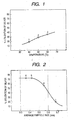
FIG. 1 shows a relationship between a silver utilization and a temperature of a passing liquid in the case of using a conventional adsorbent; -
FIG. 2 shows a relationship between a silver utilization and an average particle size of adsorbents; -
FIG. 3 shows a relationship between a silver utilization and an average pore size in an adsorbent; and -
FIG. 4 shows a relationship between a silver utilization and a silver substitution rate in an adsorbent. - A cation-exchange resin is generally prepared by the steps of: preparing particles of styrene/divinylbenzene copolymer of a mother material, which is produced with the use of 4 to 20 wt.% of divinylbenzene as a crosslinking agent; and introducing a strongly-acidic sulfonate group into the particle as a cation-exchange group (active site). The generally used particulate ion-exchange resin normally has a particle size distribution in which particles with a particle size of 0.3 to 1 mm occupy 95% or more, and has an average particle size (diameter of 50% particles passing with wet sieving method) of about 0.5 to 0.8 mm.
- A cation-exchange resin having been conventionally used for removing an iodide compound from an organic acid is a macroporous-type (macroreticular or MR type) resin having a large specific surface area originating in pores even in a dry state. In contrast to this, there is a gel-type resin which acquires pores produced only after having been immersed and swelled in water, but it cannot be preferably used because of being little swollen in the organic acid containing little water and not acquiring effective pores.
- A macroporous-type resin forms macropores in itself by adding an immiscible solvent to itself in a polymerization step, and removing the solvent after the polymerization step. Thus formed macropores have an average pore size normally in a range of about 5 to 100 nm. The average pore size in the above description is determined from a BET specific surface area, apparent density and a value of true density, by the following expression.

- d: average pore size (nm)
- S: BET specific surface area (m2/g)
- da: apparent density (g/mL)
- ds: true density (g/mL)
- The present inventors examined a relationship between the average particle size and an adsorption rate for an iodide compound, through using macroporous-type cation-exchange resins with different average particle sizes, and making resins carry silver ion thereon to prepare adsorbents. As a result of this, the present inventors found that the adsorption rate for the iodide compound largely increases along with the decrease of the average particle size. It is generally expected that the adsorption rate increases by decreasing the particle size of the adsorbent, because an outer surface area per unit filled volume increases inversely proportionally,to the particle size of the adsorbent. However, it cannot be always said that the conscious use of the resin with the small average particle size is advantageous, because even though the outer surface area increases a little, the pressure drop at the packed column filled with that resin also increases by decreasing the size of the resin. However, as a result of a detailed examination according to the present inventors, when having employed the adsorbent of the cation-exchange resin having silver ion carried thereon and having the decreased particle size and the external surface area 1.6 times larger than the adsorbent with a normal particle size, and having made the adsorbent adsorb the iodide compound, the adsorption rate for the iodide compound showed about twice the amount in the case of the adsorbent with the normal particle size, in an early stage of adsorption (when silver utilization was about 1%), about 2.9 times the amount when the silver utilization was about 20%, and about 12 times the amount when the silver utilization was 40%. The reason why such an unexpected result was obtained is not clear, but it is assumed that while silver iodide selectively precipitates around an outer surface of the adsorbent as the adsorption of the iodide compound proceeds, and the silver iodide precipitate obstructs the iodide compound from diffusing into pores and decreases the adsorption rate for the iodide compound, the increase in the outer surface area of the cation-exchange resin due to the decrease of the particle size effectively compensates the decrease.
- A method according to the present invention is based on the above described knowledge obtained from the experiment, and is specifically a method for removing an iodide compound having 1 to 12 carbon atoms or a mixture thereof in acetic acid by the steps of: preparing an adsorbent having silver ion carried on a macroporous-type cation-exchange resin with an average particle size of 0.3 to 0.6 mm, preferably 0.3 to 0.5 mm, more preferably 0.3 to 0.45 mm; preparing an adsorption column filled with the adsorbent; and passing acetic acid containing the iodide compound as an impurity through the adsorption column. When the average particle size exceeds 0.6 mm, a sufficient adsorption rate is not obtained at 50°C or lower, and when an average particle size is less than 0.3 mm, the pressure drop at the adsorption column increases. In order to obtain the cation-exchange resin with an average particle size of 0.3 to 0.6 mm, it is acceptable to remove large particles in a commercially available cation-exchange resin with a sieve, or to previously prepare a polystyrene resin with a small size and sulfonate it.
- Any macroporous-type cation-exchange resin can be used without a problem in particular, as long as it is a strongly acidic resin having a sulfonate group as an ion exchange group. But, the macroporous-type cation-exchange resin having an extremely small average pore size tends to relatively reduce its adsorption capacity, because of increasing the resistance of an iodide compound in diffusing into the particles. On the other hand, the macroporous-type cation-exchange resin having an extremely large average pore size tends to relatively reduce its adsorption rate, because of reducing its specific surface area. Generally, the average pore size is preferably in a range of 15 to 28 nm, more preferably in a range of 20 to 28 nm. In addition, the macroporous-type cation-exchange resin with an extremely low cross-linking degree (for instance, 5% or less) intensely causes swell and shrank, and has poor physical strength, which are not preferable. In addition, a weakly acidic cation-exchange resin having a carboxyl group as an ion-exchange group is not preferable because carried silver ion tends to be released when the acetic acid is passed through the resin.
- It is recommended for making the cation-exchange resin carry silver ion to temporarily convert sulfonate groups in the resin completely into an acidic form (hydrogen form) by using a strong acid such as hydrochloric acid and sulfuric acid and then convert 40 to 60% of the total active sites in hydrogen form into a silver form by using an aqueous solution such as silver nitrate or silver acetate. When the silver form is less than 40%, the cation-exchange resin acquires a too small adsorption capacity for an iodide compound. By the way, the present inventors found that when the cation-exchange resin having more than 60% of the silver form adsorbs in iodide compound, for instance, at 40°C (which is a typical treatment temperature anticipated in a method according to the present invention), the adsorption rate decreases. The present inventors assume the cause in the following way. Specifically, a mechanism in which an cation-exchange resin having silver ion carried thereon removes an iodide compound having 1 to 12 carbon atoms or a mixture thereof contained in acetic acid is considered to be that at first, the iodide compound is converted into hydrogen iodide and ester compounds through an esterification reaction while using an acid center (active site of acid form) of the cation-exchange resin as a catalyst, subsequently the hydrogen iodide reacts with silver ion to form silver iodide, and the iodide compound is thereby fixed on the adsorbent and removed from the product. In the process, when a treatment temperature is higher than 50°C, even a small amount of acid centers can provide a sufficient esterification reaction rate, but when the treatment temperature is 50°C or lower, a large amount of acid centers need to be left in order to provide the sufficient esterification reaction rate. In brief, it is assumed that when the cation-exchange resin is highly substituted into a silver form, the resin has little acidic centers thereon, which decreases the esterification reaction rate for the iodide compound and also decreases the adsorption rate.
- A cation-exchange resin having silver ion carried thereon is charged into an adsorption column for removing an iodide compound having 1 to 12 carbon atoms or a mixture thereof from acetic acid. A height of the packed bed shall be preferably about 1 to 5 times the diameter of the packed bed. A space velocity in a step of adsorbing and removing the iodide compound in the acetic acid by passing the acetic acid through the packed bed of the silver ion-carrying resin has to be within a condition conventionally used in general, and is normally a condition of LHSV = about 6 to 10 (which means that the quantity of the passing liquid per hour is 6 to 10 times the bed volume of the resin).
- The temperature of the acetic acid when passed through a packed bed of a silver ion-carrying resin shall be 50°C or lower and preferably be 40°C or lower. It is the most preferable to pass the liquid at about 40°C. As described above, when the temperature of the passing liquid exceeds 50°C, an active site (ion exchange group) of a resin and silver ion carried thereon are leached out more rapidly. A method according to the present invention employs a resin having a high adsorption rate, and accordingly effectively makes use of carried silver ion even at a low temperature of 50°C or lower, and particularly about 40°C in the treatment.
- A method according to the present invention also has advantages of having a large removal capacity until the adsorption for the iodide compound reaches a breakthrough point and discharging a small amount of silver ion into the acetic acid during treatment, which will be described later. The reason is considered such that while silver ion which had been carried on a resin but has temporarily been released into a liquid caused by solid-liquid equilibrium or the decomposition of the active site is again adsorbed by an ion exchange group of an acid form in a downstream side, the resin employed in the present invention has a large outer surface area because of - having a small size, and rapidly re-adsorbs the silver ion.
- Cation-exchange resins A to F shown below were prepared, and were used as base resins for preparing an adsorbent.
- A. Cation-
exchange resin Amberlyst 15 made by Rohm and Haas Company (with average particle size of 0.68 mm and average pore size of 24 nm) - B. The above-described
Amberlyst 15 of which the average particle size was adjusted into 0.55 mm by screening - C. Newly synthesized particulate cation-exchange resin by the present inventors (with average particle size of 0.42 mm and average pore size of 24 nm)
- D. Newly synthesized particulate cation-exchange resin by the present inventors (with average particle size of 0.36 mm and average pore size of 24 nm)
- E. Cation-exchange resin DIAION RCP160M (with average pore size of 10 nm) made by Mitsubishi Chemical Corporation, of which the average particle size was adjusted into 0.52 mm by screening
- F. Amberlyst XH2071 (with average pore size of 30 nm) of which the average particle size was adjusted into 0.52 mm by screening
- An adsorbent was prepared by making the above described resins A to F carry silver ion so as to have a predetermined silver substitution rate (30 to 90%) with respect to the total ion-exchange capacity of the above each resin.
- In each flow test, an adsorbent in an amount of 5 mL prepared in the above described item (1) was filled in a column (10 mmφ x 100 mmH), and acetic acid containing 25 ppm decyl iodide (C10H21I) was passed through the column at a flowing rate of 60 mL/hour (LHSV=12). At this time, the inner temperature of an adsorption column was controlled by circulating warm water into the adjacent jacket outside the column. The concentration of decyl iodide in the effluent from the adsorption column was measured by a gas chromatography installed with an electron capture detector (ECD-GC), and a period of time until the concentration reaches 10 ppb was determined to be breakthrough time. In addition, an amount (by mole) of adsorbed decyl iodide was determined from a volume of a liquid passed through until the resin reaches the breakpoint, and the ratio of the adsorbed amount with respect to the amount (by mole) of carried silver ion was determined to be a silver utilization (%).
- The result of a flow test is shown in Table 2.
[Table 2] RUN NO. Base resin Average particle size Average pore size Silver substitution rate Temperature of passing liquid Break-through time Silver utilization mm nm % °C hr % 1 A 0.68 24 50 40 144 18.9 2 A 0.68 24 50 50 216 28.4 3 A 0.68 24 50 60 264 34.7 4 B 0.55 24 50 40 456 55.6 5 C 0.42 24 50 40 552 72.5 6 D 0.36 24 50 40 552 72.6 7 E 0.52 10 50 40 312 41.0 8 F 0.52 30 50 40 288 37.9 9 C 0.42 24 30 40 216 45.0 10 C 0.42 24 40 40 360 59.2 11 C 0.42 24 70 40 720 67.6 12 C 0.42 24 90 40 840 61.3 - The result of the above described test 1 (RUN NO. 1) to 3 are shown in
FIG. 1 . Numeric values noted upside the plotted data are run numbers. It is understood fromFIG. 1 that when an adsorbent based on a resin with a normal average particle size is used for the test, a breakthrough time and a silver utilization depend on a temperature of a passing liquid, and when the temperature of the passing liquid is 50°C or lower (tests 1 to 2), the silver utilization is less than 30% at the breakthrough point. - The result of the above described tests 4 to 6 and the test 1 are shown in
FIG. 2 . Numeric values noted upside the plotted data are run numbers. It is understood fromFIG. 2 that when conditions other than the adsorbent size are the same, the breakthrough time and the silver utilization are largely increased by reducing an average size of resin particles. It is also understood that the silver utilization in the resin with the average particle size of 0.68 mm is greatly different from that of 0.55 mm, and that when the resin has an average particle size of 0.6 mm or smaller, the silver utilization is about 40% or more. - The result of the above described test 4 and the tests 7 to 8 are shown in
FIG. 3 . Numeric values noted upside the plotted data are run numbers. It is understood fromFIG. 3 that when conditions other than the pore size are approximately the same, resins with a too large average pore size (30 nm) and a too small average pore size (10 nm) give degraded breakthrough time and silver utilization. It is also understood that when the resin has the average pore size in a range of 15 to 28 nm in particular, the silver utilization is about 50% or more. - The result of the above described
test 5 and thetests 9 to 12 are shown inFIG. 4 . Numeric values noted upside the plotted data are run numbers. It is understood fromFIG. 4 that a silver utilization increases along with the increase of a silver substitution rate before the silver substitution rate reaches 50%, but the silver utilization contrarily decreases after the silver substitution rate has exceeded 60%.
Claims (3)
- A method for adsorbing and removing an iodide compound which is an alkyl iodide having 1 to 12 carbon atoms or a mixture thereof from acetic acid containing the iodide compound as an impurity by passing the acetic acid through a packed bed of a cation-exchange resin at 50°C or lower, wherein the cation-exchange resin is a macroporous-type resin with an average particle size of 0.3 to 0.6 mm and an average pore size of 15 to 28 nm, and wherein the resin has sulfonate groups and silver substitutes for 40 to 60% of the sulfonate groups.
- The method of Claim 1, wherein the macroporous-type resin has an average particle size of 0.3 to 0.5 mm.
- The method of Claim 1, wherein the macroporous-type resin has an average particle size of 0.3 to 0.45 mm.
Priority Applications (1)
| Application Number | Priority Date | Filing Date | Title |
|---|---|---|---|
| PL07790454T PL2066614T3 (en) | 2006-09-25 | 2007-06-29 | A method of removing an iodide compound from an organic acid |
Applications Claiming Priority (2)
| Application Number | Priority Date | Filing Date | Title |
|---|---|---|---|
| JP2006258437A JP4995522B2 (en) | 2006-09-25 | 2006-09-25 | Method for removing iodine compounds from organic acids |
| PCT/JP2007/063513 WO2008038446A1 (en) | 2006-09-25 | 2007-06-29 | Method for removing iodide compound from organic acid |
Publications (2)
| Publication Number | Publication Date |
|---|---|
| EP2066614A1 EP2066614A1 (en) | 2009-06-10 |
| EP2066614B1 true EP2066614B1 (en) | 2014-09-17 |
Family
ID=38515731
Family Applications (1)
| Application Number | Title | Priority Date | Filing Date |
|---|---|---|---|
| EP07790454.8A Active EP2066614B1 (en) | 2006-09-25 | 2007-06-29 | Method for removing iodide compound from organic acid |
Country Status (15)
| Country | Link |
|---|---|
| US (1) | US7985878B2 (en) |
| EP (1) | EP2066614B1 (en) |
| JP (1) | JP4995522B2 (en) |
| KR (1) | KR101067233B1 (en) |
| CN (1) | CN101516822B (en) |
| AU (1) | AU2007301397B2 (en) |
| BR (1) | BRPI0716953B1 (en) |
| CA (1) | CA2664293C (en) |
| MY (1) | MY145420A (en) |
| NO (1) | NO342345B1 (en) |
| PL (1) | PL2066614T3 (en) |
| RU (1) | RU2440968C2 (en) |
| TW (1) | TWI422571B (en) |
| WO (1) | WO2008038446A1 (en) |
| ZA (1) | ZA200901512B (en) |
Families Citing this family (14)
| Publication number | Priority date | Publication date | Assignee | Title |
|---|---|---|---|---|
| EP1312387B1 (en) * | 2000-08-25 | 2014-05-21 | Kaneka Corporation | Method for removal of bacterial toxins from a bacterial toxin-containing fluid |
| JP4977592B2 (en) * | 2007-12-14 | 2012-07-18 | オルガノ株式会社 | Iodine recovery method and iodine recovery device from iodine-containing waste liquid |
| US7588690B1 (en) * | 2009-02-10 | 2009-09-15 | The Purolite Company | Method of iodide removal |
| US20110086929A1 (en) * | 2009-10-13 | 2011-04-14 | Brotech Corporation, doing business as The Purolite Company | Method of iodide removal |
| RU2013135468A (en) * | 2010-12-30 | 2015-02-10 | Селаниз Интернэшнл Корпорейшн | CLEANING ACID ACID PRODUCT FLOWS |
| CN104001485B (en) * | 2014-05-22 | 2015-10-21 | 宁波工程学院 | A modified macroporous resin adsorbent and a treatment method for removing iodine in brine |
| MX2017004287A (en) | 2014-10-02 | 2017-07-19 | Celanese Int Corp | Process for producing acetic acid. |
| RS59401B1 (en) | 2015-01-30 | 2019-11-29 | Celanese Int Corp | Processes for producing acetic acid |
| KR102493740B1 (en) | 2015-01-30 | 2023-01-30 | 셀라니즈 인터내셔날 코포레이션 | Method for producing acetic acid |
| US9561994B2 (en) | 2015-01-30 | 2017-02-07 | Celanese International Corporation | Processes for producing acetic acid |
| US9487464B2 (en) | 2015-01-30 | 2016-11-08 | Celanese International Corporation | Processes for producing acetic acid |
| US9505696B2 (en) | 2015-02-04 | 2016-11-29 | Celanese International Corporation | Process to control HI concentration in residuum stream |
| US10413840B2 (en) | 2015-02-04 | 2019-09-17 | Celanese International Coporation | Process to control HI concentration in residuum stream |
| US9512056B2 (en) | 2015-02-04 | 2016-12-06 | Celanese International Corporation | Process to control HI concentration in residuum stream |
Family Cites Families (12)
| Publication number | Priority date | Publication date | Assignee | Title |
|---|---|---|---|---|
| US4615806B1 (en) * | 1985-03-07 | 1994-05-03 | Hoechst Co American | Removal of iodide compounds from non-aqueous organic media |
| JPS62153248A (en) * | 1985-12-26 | 1987-07-08 | Kyowa Yuka Kk | Purification of ethyl acetate |
| EP0296584B1 (en) * | 1987-06-24 | 1992-03-25 | Union Carbide Corporation | Removal of halides from carboxylic acids |
| GB9023634D0 (en) * | 1990-10-31 | 1990-12-12 | British Petroleum Co Plc | Process for purifying acetic acid and/or acetic anhydride |
| JP2548469B2 (en) * | 1991-09-30 | 1996-10-30 | ワイケイケイ株式会社 | buckle |
| US5220058A (en) * | 1991-09-30 | 1993-06-15 | Union Carbide Chemicals & Plastics Technology Corporation | Iodide removal process |
| SG44317A1 (en) * | 1994-06-15 | 1997-12-19 | Daicel Chem | Process for producing high purity acetic acid |
| JP3306227B2 (en) * | 1994-07-06 | 2002-07-24 | ダイセル化学工業株式会社 | Method for producing acetic acid and / or acetic anhydride |
| JP3281258B2 (en) | 1996-04-26 | 2002-05-13 | ダイセル化学工業株式会社 | Operating method for removing iodine compounds contained in organic medium |
| US6211408B1 (en) * | 1999-03-24 | 2001-04-03 | Celanese International Corporation | Method of removing iodides from non-aqueous organic media utilizing silver or mercury exchanged macroporous organofunctional polysiloxane resins |
| US6657078B2 (en) * | 2001-02-07 | 2003-12-02 | Celanese International Corporation | Low energy carbonylation process |
| JP4502729B2 (en) * | 2004-07-02 | 2010-07-14 | 千代田化工建設株式会社 | Method for removing iodine from organic acids |
-
2006
- 2006-09-25 JP JP2006258437A patent/JP4995522B2/en active Active
-
2007
- 2007-06-29 EP EP07790454.8A patent/EP2066614B1/en active Active
- 2007-06-29 CA CA2664293A patent/CA2664293C/en active Active
- 2007-06-29 PL PL07790454T patent/PL2066614T3/en unknown
- 2007-06-29 KR KR1020097005147A patent/KR101067233B1/en active Active
- 2007-06-29 BR BRPI0716953A patent/BRPI0716953B1/en active IP Right Grant
- 2007-06-29 US US12/441,476 patent/US7985878B2/en active Active
- 2007-06-29 RU RU2009115647/04A patent/RU2440968C2/en active
- 2007-06-29 AU AU2007301397A patent/AU2007301397B2/en active Active
- 2007-06-29 CN CN2007800344572A patent/CN101516822B/en active Active
- 2007-06-29 WO PCT/JP2007/063513 patent/WO2008038446A1/en not_active Ceased
- 2007-07-19 TW TW096126385A patent/TWI422571B/en active
-
2009
- 2009-03-03 ZA ZA2009/01512A patent/ZA200901512B/en unknown
- 2009-03-05 MY MYPI20090908A patent/MY145420A/en unknown
- 2009-03-13 NO NO20091108A patent/NO342345B1/en unknown
Also Published As
| Publication number | Publication date |
|---|---|
| BRPI0716953B1 (en) | 2016-10-11 |
| WO2008038446A1 (en) | 2008-04-03 |
| TWI422571B (en) | 2014-01-11 |
| NO20091108L (en) | 2009-03-13 |
| JP4995522B2 (en) | 2012-08-08 |
| RU2440968C2 (en) | 2012-01-27 |
| CN101516822B (en) | 2013-04-24 |
| ZA200901512B (en) | 2010-02-24 |
| PL2066614T3 (en) | 2015-03-31 |
| KR101067233B1 (en) | 2011-09-22 |
| RU2009115647A (en) | 2010-11-10 |
| CN101516822A (en) | 2009-08-26 |
| EP2066614A1 (en) | 2009-06-10 |
| CA2664293A1 (en) | 2008-04-03 |
| JP2008074808A (en) | 2008-04-03 |
| AU2007301397B2 (en) | 2012-09-13 |
| AU2007301397A1 (en) | 2008-04-03 |
| TW200815335A (en) | 2008-04-01 |
| CA2664293C (en) | 2011-11-22 |
| BRPI0716953A2 (en) | 2013-02-19 |
| NO342345B1 (en) | 2018-05-07 |
| MY145420A (en) | 2012-02-15 |
| US20090259072A1 (en) | 2009-10-15 |
| KR20090052352A (en) | 2009-05-25 |
| US7985878B2 (en) | 2011-07-26 |
Similar Documents
| Publication | Publication Date | Title |
|---|---|---|
| US7985878B2 (en) | Method for removing iodide compound from organic acid | |
| US9662646B2 (en) | Aldehyde adsorbent, method for removing aldehyde, method for producing acetic acid, and method for regenerating aldehyde adsorbent | |
| CN87106904A (en) | Regeneration method of carboxylation catalyst solution for removing corrosive metals | |
| US9409163B2 (en) | Purification of acetic acid product streams | |
| CN101918350A (en) | Improved process and apparatus for carbonylation with reduced catalyst loss | |
| JPH07309800A (en) | Method for producing organic carboxylic acid | |
| EP0685445A1 (en) | Process for removing iodine-containing compounds from acetic acid | |
| JP4077253B2 (en) | Method for producing carbonyl compound | |
| CA2913866C (en) | Method for producing carbonyl compound | |
| US12440832B2 (en) | Liquid phase removal of trace of iodide from an organic media using tertiary amine ion exchange adsorbent | |
| JPH11279095A (en) | Method for producing bisphenol A | |
| HK1184484B (en) | Purification of acetic acid product streams |
Legal Events
| Date | Code | Title | Description |
|---|---|---|---|
| PUAI | Public reference made under article 153(3) epc to a published international application that has entered the european phase |
Free format text: ORIGINAL CODE: 0009012 |
|
| 17P | Request for examination filed |
Effective date: 20090309 |
|
| AK | Designated contracting states |
Kind code of ref document: A1 Designated state(s): AT BE BG CH CY CZ DE DK EE ES FI FR GB GR HU IE IS IT LI LT LU LV MC MT NL PL PT RO SE SI SK TR |
|
| AX | Request for extension of the european patent |
Extension state: AL BA HR MK RS |
|
| 17Q | First examination report despatched |
Effective date: 20090723 |
|
| DAX | Request for extension of the european patent (deleted) | ||
| GRAP | Despatch of communication of intention to grant a patent |
Free format text: ORIGINAL CODE: EPIDOSNIGR1 |
|
| RIC1 | Information provided on ipc code assigned before grant |
Ipc: C07C 51/54 20060101AFI20140102BHEP Ipc: C07C 51/47 20060101ALI20140102BHEP |
|
| INTG | Intention to grant announced |
Effective date: 20140130 |
|
| GRAS | Grant fee paid |
Free format text: ORIGINAL CODE: EPIDOSNIGR3 |
|
| GRAA | (expected) grant |
Free format text: ORIGINAL CODE: 0009210 |
|
| AK | Designated contracting states |
Kind code of ref document: B1 Designated state(s): AT BE BG CH CY CZ DE DK EE ES FI FR GB GR HU IE IS IT LI LT LU LV MC MT NL PL PT RO SE SI SK TR |
|
| RAP1 | Party data changed (applicant data changed or rights of an application transferred) |
Owner name: CHIYODA CORPORATION |
|
| REG | Reference to a national code |
Ref country code: GB Ref legal event code: FG4D |
|
| REG | Reference to a national code |
Ref country code: CH Ref legal event code: EP |
|
| REG | Reference to a national code |
Ref country code: IE Ref legal event code: FG4D |
|
| REG | Reference to a national code |
Ref country code: AT Ref legal event code: REF Ref document number: 687631 Country of ref document: AT Kind code of ref document: T Effective date: 20141015 |
|
| REG | Reference to a national code |
Ref country code: DE Ref legal event code: R096 Ref document number: 602007038594 Country of ref document: DE Effective date: 20141030 |
|
| PG25 | Lapsed in a contracting state [announced via postgrant information from national office to epo] |
Ref country code: SE Free format text: LAPSE BECAUSE OF FAILURE TO SUBMIT A TRANSLATION OF THE DESCRIPTION OR TO PAY THE FEE WITHIN THE PRESCRIBED TIME-LIMIT Effective date: 20140917 Ref country code: GR Free format text: LAPSE BECAUSE OF FAILURE TO SUBMIT A TRANSLATION OF THE DESCRIPTION OR TO PAY THE FEE WITHIN THE PRESCRIBED TIME-LIMIT Effective date: 20141218 Ref country code: LT Free format text: LAPSE BECAUSE OF FAILURE TO SUBMIT A TRANSLATION OF THE DESCRIPTION OR TO PAY THE FEE WITHIN THE PRESCRIBED TIME-LIMIT Effective date: 20140917 Ref country code: FI Free format text: LAPSE BECAUSE OF FAILURE TO SUBMIT A TRANSLATION OF THE DESCRIPTION OR TO PAY THE FEE WITHIN THE PRESCRIBED TIME-LIMIT Effective date: 20140917 |
|
| REG | Reference to a national code |
Ref country code: NL Ref legal event code: VDEP Effective date: 20140917 |
|
| REG | Reference to a national code |
Ref country code: LT Ref legal event code: MG4D |
|
| PG25 | Lapsed in a contracting state [announced via postgrant information from national office to epo] |
Ref country code: LV Free format text: LAPSE BECAUSE OF FAILURE TO SUBMIT A TRANSLATION OF THE DESCRIPTION OR TO PAY THE FEE WITHIN THE PRESCRIBED TIME-LIMIT Effective date: 20140917 Ref country code: CY Free format text: LAPSE BECAUSE OF FAILURE TO SUBMIT A TRANSLATION OF THE DESCRIPTION OR TO PAY THE FEE WITHIN THE PRESCRIBED TIME-LIMIT Effective date: 20140917 |
|
| REG | Reference to a national code |
Ref country code: AT Ref legal event code: MK05 Ref document number: 687631 Country of ref document: AT Kind code of ref document: T Effective date: 20140917 |
|
| PG25 | Lapsed in a contracting state [announced via postgrant information from national office to epo] |
Ref country code: NL Free format text: LAPSE BECAUSE OF FAILURE TO SUBMIT A TRANSLATION OF THE DESCRIPTION OR TO PAY THE FEE WITHIN THE PRESCRIBED TIME-LIMIT Effective date: 20140917 |
|
| REG | Reference to a national code |
Ref country code: PL Ref legal event code: T3 |
|
| PG25 | Lapsed in a contracting state [announced via postgrant information from national office to epo] |
Ref country code: CZ Free format text: LAPSE BECAUSE OF FAILURE TO SUBMIT A TRANSLATION OF THE DESCRIPTION OR TO PAY THE FEE WITHIN THE PRESCRIBED TIME-LIMIT Effective date: 20140917 Ref country code: IS Free format text: LAPSE BECAUSE OF FAILURE TO SUBMIT A TRANSLATION OF THE DESCRIPTION OR TO PAY THE FEE WITHIN THE PRESCRIBED TIME-LIMIT Effective date: 20150117 Ref country code: SK Free format text: LAPSE BECAUSE OF FAILURE TO SUBMIT A TRANSLATION OF THE DESCRIPTION OR TO PAY THE FEE WITHIN THE PRESCRIBED TIME-LIMIT Effective date: 20140917 Ref country code: PT Free format text: LAPSE BECAUSE OF FAILURE TO SUBMIT A TRANSLATION OF THE DESCRIPTION OR TO PAY THE FEE WITHIN THE PRESCRIBED TIME-LIMIT Effective date: 20150119 Ref country code: EE Free format text: LAPSE BECAUSE OF FAILURE TO SUBMIT A TRANSLATION OF THE DESCRIPTION OR TO PAY THE FEE WITHIN THE PRESCRIBED TIME-LIMIT Effective date: 20140917 Ref country code: RO Free format text: LAPSE BECAUSE OF FAILURE TO SUBMIT A TRANSLATION OF THE DESCRIPTION OR TO PAY THE FEE WITHIN THE PRESCRIBED TIME-LIMIT Effective date: 20140917 Ref country code: ES Free format text: LAPSE BECAUSE OF FAILURE TO SUBMIT A TRANSLATION OF THE DESCRIPTION OR TO PAY THE FEE WITHIN THE PRESCRIBED TIME-LIMIT Effective date: 20140917 |
|
| PG25 | Lapsed in a contracting state [announced via postgrant information from national office to epo] |
Ref country code: AT Free format text: LAPSE BECAUSE OF FAILURE TO SUBMIT A TRANSLATION OF THE DESCRIPTION OR TO PAY THE FEE WITHIN THE PRESCRIBED TIME-LIMIT Effective date: 20140917 |
|
| REG | Reference to a national code |
Ref country code: DE Ref legal event code: R097 Ref document number: 602007038594 Country of ref document: DE |
|
| PLBE | No opposition filed within time limit |
Free format text: ORIGINAL CODE: 0009261 |
|
| STAA | Information on the status of an ep patent application or granted ep patent |
Free format text: STATUS: NO OPPOSITION FILED WITHIN TIME LIMIT |
|
| PG25 | Lapsed in a contracting state [announced via postgrant information from national office to epo] |
Ref country code: DK Free format text: LAPSE BECAUSE OF FAILURE TO SUBMIT A TRANSLATION OF THE DESCRIPTION OR TO PAY THE FEE WITHIN THE PRESCRIBED TIME-LIMIT Effective date: 20140917 |
|
| 26N | No opposition filed |
Effective date: 20150618 |
|
| PG25 | Lapsed in a contracting state [announced via postgrant information from national office to epo] |
Ref country code: IT Free format text: LAPSE BECAUSE OF FAILURE TO SUBMIT A TRANSLATION OF THE DESCRIPTION OR TO PAY THE FEE WITHIN THE PRESCRIBED TIME-LIMIT Effective date: 20140917 |
|
| PG25 | Lapsed in a contracting state [announced via postgrant information from national office to epo] |
Ref country code: SI Free format text: LAPSE BECAUSE OF FAILURE TO SUBMIT A TRANSLATION OF THE DESCRIPTION OR TO PAY THE FEE WITHIN THE PRESCRIBED TIME-LIMIT Effective date: 20140917 |
|
| PG25 | Lapsed in a contracting state [announced via postgrant information from national office to epo] |
Ref country code: MC Free format text: LAPSE BECAUSE OF FAILURE TO SUBMIT A TRANSLATION OF THE DESCRIPTION OR TO PAY THE FEE WITHIN THE PRESCRIBED TIME-LIMIT Effective date: 20140917 |
|
| REG | Reference to a national code |
Ref country code: CH Ref legal event code: PL |
|
| PG25 | Lapsed in a contracting state [announced via postgrant information from national office to epo] |
Ref country code: LU Free format text: LAPSE BECAUSE OF FAILURE TO SUBMIT A TRANSLATION OF THE DESCRIPTION OR TO PAY THE FEE WITHIN THE PRESCRIBED TIME-LIMIT Effective date: 20150629 |
|
| REG | Reference to a national code |
Ref country code: IE Ref legal event code: MM4A |
|
| REG | Reference to a national code |
Ref country code: FR Ref legal event code: ST Effective date: 20160229 |
|
| PG25 | Lapsed in a contracting state [announced via postgrant information from national office to epo] |
Ref country code: IE Free format text: LAPSE BECAUSE OF NON-PAYMENT OF DUE FEES Effective date: 20150629 Ref country code: CH Free format text: LAPSE BECAUSE OF NON-PAYMENT OF DUE FEES Effective date: 20150630 Ref country code: LI Free format text: LAPSE BECAUSE OF NON-PAYMENT OF DUE FEES Effective date: 20150630 |
|
| PG25 | Lapsed in a contracting state [announced via postgrant information from national office to epo] |
Ref country code: FR Free format text: LAPSE BECAUSE OF NON-PAYMENT OF DUE FEES Effective date: 20150630 |
|
| PG25 | Lapsed in a contracting state [announced via postgrant information from national office to epo] |
Ref country code: MT Free format text: LAPSE BECAUSE OF FAILURE TO SUBMIT A TRANSLATION OF THE DESCRIPTION OR TO PAY THE FEE WITHIN THE PRESCRIBED TIME-LIMIT Effective date: 20140917 |
|
| PG25 | Lapsed in a contracting state [announced via postgrant information from national office to epo] |
Ref country code: HU Free format text: LAPSE BECAUSE OF FAILURE TO SUBMIT A TRANSLATION OF THE DESCRIPTION OR TO PAY THE FEE WITHIN THE PRESCRIBED TIME-LIMIT; INVALID AB INITIO Effective date: 20070629 Ref country code: BG Free format text: LAPSE BECAUSE OF FAILURE TO SUBMIT A TRANSLATION OF THE DESCRIPTION OR TO PAY THE FEE WITHIN THE PRESCRIBED TIME-LIMIT Effective date: 20140917 |
|
| PG25 | Lapsed in a contracting state [announced via postgrant information from national office to epo] |
Ref country code: TR Free format text: LAPSE BECAUSE OF FAILURE TO SUBMIT A TRANSLATION OF THE DESCRIPTION OR TO PAY THE FEE WITHIN THE PRESCRIBED TIME-LIMIT Effective date: 20140917 |
|
| PG25 | Lapsed in a contracting state [announced via postgrant information from national office to epo] |
Ref country code: BE Free format text: LAPSE BECAUSE OF FAILURE TO SUBMIT A TRANSLATION OF THE DESCRIPTION OR TO PAY THE FEE WITHIN THE PRESCRIBED TIME-LIMIT Effective date: 20140917 |
|
| REG | Reference to a national code |
Ref country code: DE Ref legal event code: R082 Ref document number: 602007038594 Country of ref document: DE Representative=s name: WEICKMANN & WEICKMANN PATENT- UND RECHTSANWAEL, DE |
|
| REG | Reference to a national code |
Ref country code: DE Ref legal event code: R081 Ref document number: 602007038594 Country of ref document: DE Owner name: KELLOGG BROWN & ROOT LLC, HOUSTON, US Free format text: FORMER OWNER: CHIYODA CORP., YOKOHAMA-SHI, JP |
|
| REG | Reference to a national code |
Ref country code: GB Ref legal event code: 732E Free format text: REGISTERED BETWEEN 20230928 AND 20231004 |
|
| PGFP | Annual fee paid to national office [announced via postgrant information from national office to epo] |
Ref country code: PL Payment date: 20250613 Year of fee payment: 19 Ref country code: DE Payment date: 20250627 Year of fee payment: 19 |
|
| PGFP | Annual fee paid to national office [announced via postgrant information from national office to epo] |
Ref country code: GB Payment date: 20250627 Year of fee payment: 19 |