EP2066057A2 - Communication apparatus and controlling method thereof - Google Patents
Communication apparatus and controlling method thereof Download PDFInfo
- Publication number
- EP2066057A2 EP2066057A2 EP08019542A EP08019542A EP2066057A2 EP 2066057 A2 EP2066057 A2 EP 2066057A2 EP 08019542 A EP08019542 A EP 08019542A EP 08019542 A EP08019542 A EP 08019542A EP 2066057 A2 EP2066057 A2 EP 2066057A2
- Authority
- EP
- European Patent Office
- Prior art keywords
- stream
- transmission rate
- transmission
- power
- per bit
- Prior art date
- Legal status (The legal status is an assumption and is not a legal conclusion. Google has not performed a legal analysis and makes no representation as to the accuracy of the status listed.)
- Withdrawn
Links
- 238000004891 communication Methods 0.000 title claims abstract description 49
- 238000000034 method Methods 0.000 title claims abstract description 35
- 230000005540 biological transmission Effects 0.000 claims abstract description 157
- 238000004590 computer program Methods 0.000 claims 3
- 239000000284 extract Substances 0.000 claims 1
- 230000006870 function Effects 0.000 description 10
- 230000014509 gene expression Effects 0.000 description 9
- 230000007423 decrease Effects 0.000 description 5
- 238000012545 processing Methods 0.000 description 5
- 238000010586 diagram Methods 0.000 description 2
- 238000012937 correction Methods 0.000 description 1
- 238000012986 modification Methods 0.000 description 1
- 230000004048 modification Effects 0.000 description 1
- 230000003287 optical effect Effects 0.000 description 1
Images


Classifications
-
- H—ELECTRICITY
- H04—ELECTRIC COMMUNICATION TECHNIQUE
- H04L—TRANSMISSION OF DIGITAL INFORMATION, e.g. TELEGRAPHIC COMMUNICATION
- H04L1/00—Arrangements for detecting or preventing errors in the information received
- H04L1/0001—Systems modifying transmission characteristics according to link quality, e.g. power backoff
- H04L1/0002—Systems modifying transmission characteristics according to link quality, e.g. power backoff by adapting the transmission rate
-
- H—ELECTRICITY
- H04—ELECTRIC COMMUNICATION TECHNIQUE
- H04B—TRANSMISSION
- H04B7/00—Radio transmission systems, i.e. using radiation field
- H04B7/02—Diversity systems; Multi-antenna system, i.e. transmission or reception using multiple antennas
- H04B7/04—Diversity systems; Multi-antenna system, i.e. transmission or reception using multiple antennas using two or more spaced independent antennas
- H04B7/06—Diversity systems; Multi-antenna system, i.e. transmission or reception using multiple antennas using two or more spaced independent antennas at the transmitting station
-
- H—ELECTRICITY
- H04—ELECTRIC COMMUNICATION TECHNIQUE
- H04B—TRANSMISSION
- H04B7/00—Radio transmission systems, i.e. using radiation field
- H04B7/005—Control of transmission; Equalising
-
- H—ELECTRICITY
- H04—ELECTRIC COMMUNICATION TECHNIQUE
- H04L—TRANSMISSION OF DIGITAL INFORMATION, e.g. TELEGRAPHIC COMMUNICATION
- H04L1/00—Arrangements for detecting or preventing errors in the information received
- H04L1/02—Arrangements for detecting or preventing errors in the information received by diversity reception
- H04L1/06—Arrangements for detecting or preventing errors in the information received by diversity reception using space diversity
-
- H—ELECTRICITY
- H04—ELECTRIC COMMUNICATION TECHNIQUE
- H04W—WIRELESS COMMUNICATION NETWORKS
- H04W28/00—Network traffic management; Network resource management
- H04W28/02—Traffic management, e.g. flow control or congestion control
- H04W28/10—Flow control between communication endpoints
-
- H—ELECTRICITY
- H04—ELECTRIC COMMUNICATION TECHNIQUE
- H04W—WIRELESS COMMUNICATION NETWORKS
- H04W52/00—Power management, e.g. Transmission Power Control [TPC] or power classes
- H04W52/04—Transmission power control [TPC]
- H04W52/54—Signalisation aspects of the TPC commands, e.g. frame structure
- H04W52/60—Signalisation aspects of the TPC commands, e.g. frame structure using different transmission rates for TPC commands
Definitions
- the present invention relates to a determination of transmission rate in communication using a MIMO (Multiple-Input Multiple-Output) technique.
- MIMO Multiple-Input Multiple-Output
- a plurality of transmission rates is defined for a wireless LAN complying with the IEEE802.11 series standard.
- One of the transmission rates is selectively used based on the presence/absence of an error and the received signal intensity.
- Techniques such as IEEE802.11n using MIMO have been used recently, which implement high-speed transmission by transmitting a plurality of streams to a partner device.
- Japanese Patent Laid-Open No. 2005-175542 discloses a method of determining the transmission mode in a communication apparatus based on IEEE802.11n.
- the plurality of streams of MIMO do not necessarily adopt the same transmission power and modulation scheme.
- the power per bit may be different between the streams. For this reason, even when the transmission rate is changed to a lower one due to a poorer communication condition, the situation may be worse when the power per bit is considered.
- the transmission rate sometimes needs to be determined again. That is, a time is required until determination of a transmission rate that allows stable communication.
- the present invention has been made in consideration of the above-described problem, and provides a technique of enabling to more quickly determine an appropriate transmission rate in communication using the MIMO technique.
- the present invention in its first aspect provides a communication apparatus as specified in claims 1 to 5.
- the present invention in its second aspect provides a controlling method of a communication apparatus as specified in claims 6 to 10.
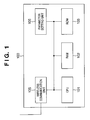
- Fig. 1 is a block diagram showing the internal arrangement of a communication apparatus according to the first embodiment
- Fig. 2 is a flowchart of transmission rate selection of the communication apparatus according to the first embodiment
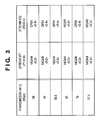
- Fig. 3 is a view showing an example of a table (two streams);
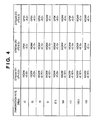
- Fig. 4 is a view showing another example of a table (three streams).
- Fig. 5 is a flowchart of transmission rate selection of a communication apparatus according to the second embodiment.
- FIG. 1 is a block diagram showing the internal arrangement of a communication apparatus according to the first embodiment.
- Reference numeral 101 denotes a central processing unit (CPU); 102, a RAM; 103, a ROM; 105, a wireless communication unit; and 106, a parameter setting unit.
- CPU central processing unit
- RAM random access memory
- ROM read-only memory
- 106 a parameter setting unit
- the CPU 101 controls the units of a communication apparatus 100 by executing control programs stored in the ROM 103.
- the RAM 102 is used to temporarily store communication parameters to be described later and also serves as the work memory of the CPU 101.
- the parameter setting unit 106 is a functional unit for setting communication parameters, and sets communication parameters determined by the CPU 101 or communication parameters input by the user via an external setting unit (not shown).
- the wireless communication unit 105 is a functional unit which performs wireless communication with another wireless communication apparatus (a station in general).
- the wireless communication unit 105 operates based on the communication parameters set by the parameter setting unit 106.
- the power per bit in each modulation scheme, when assigning data to each subcarrier is examined below.
- QPSK, 16QAM, or 64QAM is used as the modulation scheme
- the number of transmission bits per symbol in each subcarrier is QPSK: 2 bits 16QAM: 4 bits 64QAM: 6 bits
- m be the number of data subcarriers in one stream.
- the number of transmission bits per symbol in the stream is 2m (bits), 4m (bits), or 6m (bits).
- Subcarriers include pilot subcarriers for signal correction as well as those assigned to data.
- the power per bit data in each modulation scheme is QPSK : m / m + 4 ⁇ P / 2 ⁇ m 16 ⁇ QAM : m / m + 4 ⁇ P / 4 ⁇ m 64 ⁇ QAM : m / m + 4 ⁇ P / 6 ⁇ m
- P (W) is the power of a stream.
- the gain by convolution coding is taken into consideration.
- the power per bit is QPSK : ( m / m + 4 ⁇ P / 2 ⁇ m ) ⁇ b / a 16 ⁇ QAM : m / m + 4 ⁇ P / 4 ⁇ m ) ⁇ b / a 64 ⁇ QAM : m / m + 4 ⁇ P / 6 ⁇ m ) ⁇ b / a
- the modulation scheme and transmission power can change between a plurality of streams. However, they use the same number of subcarriers and the same convolution coding rate. Hence, when common elements are removed from expressions (4), (5), and (6), the relative power per bit is obtained as QPSK : P 16 ⁇ QAM : P / 2 64 ⁇ QAM : P / 3 This allows determination of stream with the smaller power.
- FIG. 2 is a flowchart of transmission rate selection of the communication apparatus according to the first embodiment. Note that the following sequence is implemented by causing the CPU 101 in the communication apparatus 100 to execute a transmission rate determination program stored in the ROM 103.
- step S301 calibration is performed to check the state of communication with an external communication apparatus which is currently communicating or is going to communicate.
- step S302 power is allocated to each stream based on the calibration result in step S301. For example, 60% of power is allocated to a stream ST1, and 40% is allocated to a stream ST2.
- step S303 the relative power per bit of each stream at each transmission rate is derived based on the power allocation determined in step S302. More specifically, the relative power per bit of each stream is derived from expressions (7), (8), and (9) described above based on the power allocation to the streams and the plurality of available modulation schemes. The result is stored in the RAM 102 as a table. When the power allocation determined in step S302 is changed, the table is updated.
- Fig. 3 is a view showing an example of the table generated in step S303.
- Fig. 3 shows the relative power per bit in ⁇ > below each modulation scheme.
- step S304 it is determined whether transmission rate change is necessary. More specifically, when the error rate or the number of times of retransmission per unit time exceeds a threshold value designated in advance, it is determined that transmission rate change is necessary. If it is determined that transmission rate change is necessary, the process advances to step S305.
- step S305 a transmission rate lower than the current transmission rate by one step is selected. For example, if the current transmission rate is "78 Mbps", "65 Mbps" is selected first.
- step S306 the relative power per bit of each stream for the current transmission rate is compared with that for the transmission rate selected in step S305. If any one of the streams exhibits a decrease in the relative power per bit, the transmission rate is determined to be inappropriate. The process returns to step S305. On the other hand, if it is determined that the relative power per bit remains unchanged or increases for all streams, the process advances to step S307.
- the relative powers per bit of the "stream ST1" at the current transmission rate "78 Mbps” and the selected transmission rate “65 Mbps” are 78 Mbps: 0.22 65 Mbps: 0.33
- the relative powers per bit of the "stream ST2" at the current transmission rate "78 Mbps” and the selected transmission rate “65 Mbps” are 78 Mbps: 0.66 65 Mbps: 0.50 That is, the relative power per bit lowers in the stream ST2. It is therefore determined that the transmission rate "65 Mbps” is inappropriate.
- a transmission rate lower by one more step i.e., "58.5 Mbps" is selected. Since the relative power per bit at the transmission rate "58.5 Mbps" remains unchanged or increases for both the streams ST1 and ST2, the process advances to step S307.
- step S307 the transmission rate selected in step S306 is determined as the transmission rate after change.
- a modulation scheme corresponding to the selected transmission rate is set for the wireless communication unit 105.
- Determining the transmission rate after change in the above-described way always enables stable communication as compared to the transmission rate before change.
- Three Streams (3-Input 3-Output)
- the processing for three streams is almost the same as that for two streams described above. This will be described again with reference to Fig. 2 . In this case, however, a table as shown in Fig. 4 is generated, as will be described later.
- step S301 calibration is performed to check the state of communication with an external communication apparatus which is currently communicating or is going to communicate.
- step S302 power is allocated to each stream based on the calibration result in step S301. For example, 50% of power is allocated to the stream ST1, 30% is allocated to the stream ST2, and 20% is allocated to a stream ST3.
- step S303 the relative power per bit of each stream at each transmission rate is derived based on the power allocation determined in step S302. More specifically, the relative power per bit of each stream is derived based on the power allocation to the streams and expressions (7), (8), and (9) described above. The result is stored in the RAM 102 as a table.
- Fig. 4 is a view showing an example of the table generated in step S303.
- Fig. 4 shows the relative power per bit in ⁇ > below each modulation scheme.
- step S304 it is determined whether transmission rate change is necessary. More specifically, when the error rate or the number of times of retransmission per unit time exceeds a threshold value designated in advance, it is determined that transmission rate change is necessary. If it is determined that transmission rate change is necessary, the process advances to step S305.
- step S305 a transmission rate lower than the current transmission rate by one step is selected. For example, if the current transmission rate is "136.5 Mbps", "117 Mbps" is selected first.
- step S306 the relative power per bit of each stream for the current transmission rate is compared with that for the transmission rate selected in step S305. If any one of the streams exhibits a decrease in the relative power per bit, the transmission rate is determined to be inappropriate. The process returns to step S305. On the other hand, if it is determined that the relative power per bit remains unchanged or increases for all streams, the process advances to step S307. Since the relative power per bit at the transmission rate "117 Mbps" remains unchanged or increases for all the streams ST1 to ST3, the process advances to step S307.
- step S307 the transmission rate selected in step S306 is determined as the transmission rate after change.
- a modulation scheme corresponding to the selected transmission rate is set for the wireless communication unit 105.
- Determining the transmission rate after change in the above-described way always enables stable communication as compared to the transmission rate before change.
- IEEE802.11n An example for IEEE802.11n has been described above. However, the embodiment is applicable even when the modulation scheme, convolution coding rate, number of subcarriers, and transmission power change between streams in OFDM-MIMO. In this case, the relative power per bit is derived using expressions (4) to (6).
- a table is generated after determining the power allocation to each stream, and a transmission rate is selected.
- tables may be generated in advance in correspondence with several power allocations and stored in the ROM 103.
- FIG. 5 is a flowchart of transmission rate selection of the communication apparatus according to the second embodiment. Note that the following sequence is implemented by causing a CPU 101 in a communication apparatus 100 to execute a transmission rate determination program stored in a ROM 103.
- step S301 calibration is performed to check the state of communication with an external communication apparatus which is currently communicating or is going to communicate.
- step S302 power is allocated to each stream based on the calibration result in step S301. For example, 60% of power is allocated to a stream ST1, and 40% is allocated to a stream ST2.
- step S303 the relative power per bit of each stream at each transmission rate is derived based on the power allocation determined in step S302. More specifically, the relative power per bit of each stream is derived based on the power allocation to the streams and expressions (7), (8), and (9) described above. The result is stored in the RAM 102 as a table.
- step S304 it is determined whether transmission rate change is necessary. More specifically, when the error rate or the number of times of retransmission per unit time exceeds a threshold value designated in advance, it is determined that transmission rate change is necessary. If it is determined that transmission rate change is necessary, the process advances to step S401.
- a stream which has caused an error during transmission has a minimum relative power per bit at a high probability.
- step S401 out of the current streams, a stream having the minimum relative power per bit is determined.
- the stream with the minimum relative power per bit will be called a stream STmin.
- the stream ST1 is determined as the stream STmin.
- step S402 referring to a table, transmission rates each of which is lower than the current transmission rate and has a relative power larger than that of STmin determined in step S401 as the relative power of the same stream as the stream STmin are extracted.
- transmission rates each having a relative power per bit larger than 0.2 are extracted. That is, "58.8 Mbps" and "39 Mbps" are extracted.
- the transmission rates each having a relative power larger than that of STmin are extracted here due to the following reason.
- At a relative power equal to or smaller than that of STmin there is little possibility of improving the error occurrence in the same stream during transmission even at a lower transmission rate. That is, the error occurrence during transmission is improved at a high possibility by extracting transmission rates each having a relative power larger than that of STmin.
- step S403 the relative power per bit for one of the transmission rates extracted in step S402 is compared with those of streams except the stream STmin. This comparison is done in descending order of transmission rates extracted in step S402 to determine a transmission rate as high as possible as a new transmission rate. If any one of the streams exhibits a decrease in the relative power per bit, the transmission rate is determined to be inappropriate. The process returns to step S402. On the other hand, if it is determined that the relative power per bit remains unchanged or increases for all streams, the process advances to step S307. In this example, the relative power per bit is compared for a stream except the stream STmin (ST1), i.e., the stream ST2. Since the relative power is 0.4 at both "78 Mbps" and "58.5 Mbps", "58.5 Mbps" is determined to be appropriate.
- step S307 the transmission rate selected in step S403 is determined as the transmission rate after change.
- a modulation scheme corresponding to the selected transmission rate is set for a wireless communication unit 105.
- Determining the transmission rate after change in the above-described way always enables stable communication as compared to the transmission rate before change.
- step S301 calibration is performed to check the state of communication with an external communication apparatus which is currently communicating or is going to communicate.
- step S302 power is allocated to each stream based on the calibration result in step S301. For example, 50% of power is allocated to the stream ST1, 30% is allocated to the stream ST2, and 20% is allocated to a stream ST3.
- step S303 the relative power per bit of each stream at each transmission rate is derived based on the power allocation determined in step S302. More specifically, the relative power per bit of each stream is derived based on the power allocation to the streams and expressions (7), (8), and (9) described above. The result is stored in the RAM 102 as a table.
- step S304 it is determined whether transmission rate change is necessary. More specifically, when the error rate or the number of times of retransmission per unit time exceeds a threshold value designated in advance, it is determined that transmission rate change is necessary. If it is determined that transmission rate change is necessary, the process advances to step S401.
- a stream with an error occurred during transmission has a minimum relative power per bit at a high probability.
- step S401 out of the current streams, a stream having the minimum relative power per bit is determined.
- the stream with the minimum relative power per bit will be called the stream STmin.
- the streams ST2 and ST3 are determined as the stream STmin.
- step S402 referring to a table, a transmission rate which is lower than the current transmission rate and has a relative power larger than that of STmin determined in step S401 is extracted.
- transmission rates each having a relative power per bit larger than 0.1 are extracted. That is, "52 Mbps”, “65 Mbps”, “78 Mbps”, “97.5 Mbps", and "117 Mbps” are extracted.
- the transmission rates each having a relative power larger than that of STmin are extracted here due to the following reason. At a relative power equal to or smaller than that of STmin, there is little possibility of improving the error occurrence in the same stream during transmission even at a lower transmission rate. That is, the error occurrence during transmission is improved at a high possibility by extracting transmission rates each having a relative power larger than that of STmin.
- step S403 the relative power per bit for one of the transmission rates extracted in step S402 is compared with those of streams except the stream STmin. This comparison is done in descending order of transmission rates extracted in step S402 to determine a transmission rate as high as possible as a new transmission rate. If any one of the streams exhibits a decrease in the relative power per bit, the transmission rate is determined to be inappropriate. The process returns to step S402. On the other hand, if it is determined that the relative power per bit remains unchanged or increases for all streams, the process advances to step S307. In this example, the relative power per bit is compared for a stream except the stream STmin (ST2 and ST3), i.e., the stream ST1. Since the relative power is 0.167 at both "156 Mbps" and "117 Mbps", "117 Mbps" is determined to be appropriate.
- step S307 the transmission rate selected in step S403 is determined as the transmission rate after change.
- a modulation scheme corresponding to the selected transmission rate is set for a wireless communication unit 105.
- relative powers "per bit” of the respective streams are obtained and compared.
- relative powers not “per bit” but “per predetermined number of bits” may be obtained and compared.
- a transmission rate having an unchanged or larger relative power per bit is determined as the transmission rate after change.
- a transmission rate having a larger relative power per bit may be determined as the transmission rate after change. In this case, the error occurrence rate decreases as compared to the case that a transmission rate having an unchanged relative power is selected. Hence, the possibility of transmission rate re-selection becomes lower.
- the present invention is also achieved even by supplying a program which implements the functions of the above-described embodiments to the system or apparatus directly or from a remote site and causing the system or apparatus to read out and execute the supplied program code.
- the program code itself which is installed in a computer to implement the functional processing of the present invention by the computer, is also incorporated in the technical scope of the present invention.
- the program can take any form such as an object code, a program to be executed by an interpreter, or script data to be supplied to the OS as long as the functions of the program can be obtained.
- Examples of the recording medium to supply the program are a floppy® disk, hard disk, optical disk (CD, DVD), magnetooptical disk, magnetic tape, nonvolatile memory card, and ROM.
- the functions of the above-described embodiments are implemented when the computer executes the readout program.
- the functions of the above-described embodiments are also implemented when, e.g., the OS running on the computer partially or wholly executes actual processing based on the instructions of the program.
- the program read out from the recording medium is written in the memory of a function expansion board inserted into the computer or a function expansion unit connected to the computer. Then, the CPU of the function expansion board or function expansion unit partially or wholly executes actual processing based on the instructions of the program, thereby implementing the functions of the above-described embodiments.
Landscapes
- Engineering & Computer Science (AREA)
- Computer Networks & Wireless Communication (AREA)
- Signal Processing (AREA)
- Quality & Reliability (AREA)
- Mobile Radio Communication Systems (AREA)
- Radio Transmission System (AREA)
Abstract
Description
- The present invention relates to a determination of transmission rate in communication using a MIMO (Multiple-Input Multiple-Output) technique.
- A plurality of transmission rates is defined for a wireless LAN complying with the IEEE802.11 series standard. One of the transmission rates is selectively used based on the presence/absence of an error and the received signal intensity. Techniques such as IEEE802.11n using MIMO have been used recently, which implement high-speed transmission by transmitting a plurality of streams to a partner device. For example, Japanese Patent Laid-Open No.
2005-175542 - However, the plurality of streams of MIMO do not necessarily adopt the same transmission power and modulation scheme. In some cases, the power per bit may be different between the streams. For this reason, even when the transmission rate is changed to a lower one due to a poorer communication condition, the situation may be worse when the power per bit is considered. In the conventional transmission rate changing method, the transmission rate sometimes needs to be determined again. That is, a time is required until determination of a transmission rate that allows stable communication.
- The present invention has been made in consideration of the above-described problem, and provides a technique of enabling to more quickly determine an appropriate transmission rate in communication using the MIMO technique.
- The present invention in its first aspect provides a communication apparatus as specified in claims 1 to 5.
- The present invention in its second aspect provides a controlling method of a communication apparatus as specified in claims 6 to 10.
- According to the present invention, it is possible to provide a technique that enables more efficient determination of an appropriate transmission rate in communication, using the MIMO technique.
- Further features of the present invention will become apparent from the following description of exemplary embodiments with reference to the attached drawings.
- The accompanying drawings, which are incorporated in and constitute a part of the specification, illustrate embodiments of the invention and, together with the description, serve to explain the principles of the invention.
-
Fig. 1 is a block diagram showing the internal arrangement of a communication apparatus according to the first embodiment; -
Fig. 2 is a flowchart of transmission rate selection of the communication apparatus according to the first embodiment; -
Fig. 3 is a view showing an example of a table (two streams); -
Fig. 4 is a view showing another example of a table (three streams); and -
Fig. 5 is a flowchart of transmission rate selection of a communication apparatus according to the second embodiment. - Preferred embodiments of the present invention will now be described in detail with reference to the accompanying drawings. Note that the following embodiments are not intended to limit the scope of the invention but are merely examples.
- (First Embodiment) As a communication apparatus according to the first embodiment of the present invention, a communication apparatus complying with the IEEE802.11e standard will be exemplified below. Note that OFDM-MIMO is used in the IEEE802.11e standard.
- <Apparatus Arrangement>
Fig. 1 is a block diagram showing the internal arrangement of a communication apparatus according to the first embodiment. -
Reference numeral 101 denotes a central processing unit (CPU); 102, a RAM; 103, a ROM; 105, a wireless communication unit; and 106, a parameter setting unit. - The
CPU 101 controls the units of acommunication apparatus 100 by executing control programs stored in theROM 103. TheRAM 102 is used to temporarily store communication parameters to be described later and also serves as the work memory of theCPU 101. - The
parameter setting unit 106 is a functional unit for setting communication parameters, and sets communication parameters determined by theCPU 101 or communication parameters input by the user via an external setting unit (not shown). - The
wireless communication unit 105 is a functional unit which performs wireless communication with another wireless communication apparatus (a station in general). Thewireless communication unit 105 operates based on the communication parameters set by theparameter setting unit 106. - <Relative Power Per Bit of Each Stream> The following description will be made assuming that one of QPSK, 16QAM, and 64QAM is used as the primary modulation scheme of each stream used in MIMO. However, the embodiment is applicable to any other modulation scheme.
- The power per bit in each modulation scheme, when assigning data to each subcarrier is examined below. When QPSK, 16QAM, or 64QAM is used as the modulation scheme, the number of transmission bits per symbol in each subcarrier is
QPSK: 2 bits
16QAM: 4 bits
64QAM: 6 bits Let m be the number of data subcarriers in one stream. The number of transmission bits per symbol in the stream is 2m (bits), 4m (bits), or 6m (bits). - Subcarriers include pilot subcarriers for signal correction as well as those assigned to data. When the number of pilot subcarriers is four, the power per bit data in each modulation scheme is


where P (W) is the power of a stream. The gain by convolution coding is taken into consideration. Letting "a/b" be the convolution coding rate, the power per bit is


- In IEEE802.11n, the modulation scheme and transmission power can change between a plurality of streams. However, they use the same number of subcarriers and the same convolution coding rate. Hence, when common elements are removed from expressions (4), (5), and (6), the relative power per bit is obtained as


- Next, the power ratio between the transmission rates is obtained using expressions (4), (5), and (6). Since the number of subcarriers and transmission power are the same although the transmission rate changes,



- For convolution coding rates of 1/2 and 3/4, we obtain
Coding rate 1/2 3/4 QPSK: 1.00 0.66 16QAM: 0.50 0.33 64QAM: 0.33 0.22 - In IEEE802.11n, the sum of powers used by the plurality of streams in use has a constant value. Assume that two streams are used. Letting P1 and P2 be the power ratios assigned to them, the sum of powers is


- Two Streams (2-Input 2-Output)
Fig. 2 is a flowchart of transmission rate selection of the communication apparatus according to the first embodiment. Note that the following sequence is implemented by causing theCPU 101 in thecommunication apparatus 100 to execute a transmission rate determination program stored in theROM 103. - In step S301, calibration is performed to check the state of communication with an external communication apparatus which is currently communicating or is going to communicate.
- In step S302, power is allocated to each stream based on the calibration result in step S301. For example, 60% of power is allocated to a stream ST1, and 40% is allocated to a stream ST2.
- In step S303, the relative power per bit of each stream at each transmission rate is derived based on the power allocation determined in step S302. More specifically, the relative power per bit of each stream is derived from expressions (7), (8), and (9) described above based on the power allocation to the streams and the plurality of available modulation schemes. The result is stored in the
RAM 102 as a table. When the power allocation determined in step S302 is changed, the table is updated. -
Fig. 3 is a view showing an example of the table generated in step S303. - For example, if the stream ST1 is modulated by 16QAM, the relative power per bit is 1/2 of the power (= 0.6) of the stream ST1 based on expression (8), i.e., "0.3". If the stream ST2 is modulated by 16QAM, the relative power per bit is 1/2 of the power (= 0.4) of the stream ST2, i.e., "0.2".
Fig. 3 shows the relative power per bit in <> below each modulation scheme. - In step S304, it is determined whether transmission rate change is necessary. More specifically, when the error rate or the number of times of retransmission per unit time exceeds a threshold value designated in advance, it is determined that transmission rate change is necessary. If it is determined that transmission rate change is necessary, the process advances to step S305.
- In step S305, a transmission rate lower than the current transmission rate by one step is selected. For example, if the current transmission rate is "78 Mbps", "65 Mbps" is selected first.
- In step S306, the relative power per bit of each stream for the current transmission rate is compared with that for the transmission rate selected in step S305. If any one of the streams exhibits a decrease in the relative power per bit, the transmission rate is determined to be inappropriate. The process returns to step S305. On the other hand, if it is determined that the relative power per bit remains unchanged or increases for all streams, the process advances to step S307.
- For example, the relative powers per bit of the "stream ST1" at the current transmission rate "78 Mbps" and the selected transmission rate "65 Mbps" are
78 Mbps: 0.22
65 Mbps: 0.33 The relative powers per bit of the "stream ST2" at the current transmission rate "78 Mbps" and the selected transmission rate "65 Mbps" are
78 Mbps: 0.66
65 Mbps: 0.50 That is, the relative power per bit lowers in the stream ST2. It is therefore determined that the transmission rate "65 Mbps" is inappropriate. In step S305, a transmission rate lower by one more step, i.e., "58.5 Mbps" is selected. Since the relative power per bit at the transmission rate "58.5 Mbps" remains unchanged or increases for both the streams ST1 and ST2, the process advances to step S307. - In step S307, the transmission rate selected in step S306 is determined as the transmission rate after change. A modulation scheme corresponding to the selected transmission rate is set for the
wireless communication unit 105. - Determining the transmission rate after change in the above-described way always enables stable communication as compared to the transmission rate before change.
- . Three Streams (3-Input 3-Output) The processing for three streams is almost the same as that for two streams described above. This will be described again with reference to
Fig. 2 . In this case, however, a table as shown inFig. 4 is generated, as will be described later. - In step S301, calibration is performed to check the state of communication with an external communication apparatus which is currently communicating or is going to communicate.
- In step S302, power is allocated to each stream based on the calibration result in step S301. For example, 50% of power is allocated to the stream ST1, 30% is allocated to the stream ST2, and 20% is allocated to a stream ST3.
- In step S303, the relative power per bit of each stream at each transmission rate is derived based on the power allocation determined in step S302. More specifically, the relative power per bit of each stream is derived based on the power allocation to the streams and expressions (7), (8), and (9) described above. The result is stored in the
RAM 102 as a table. -
Fig. 4 is a view showing an example of the table generated in step S303. - For example, if the stream ST1 is modulated by 16QAM, the relative power per bit is 1/2 of the power (= 0.5) of the stream ST1 based on expression (8), i.e., "0.25". If the stream ST2 is modulated by 16QAM, the relative power per bit is 1/2 of the power (= 0.3) of the stream ST2, i.e., "0.15".
Fig. 4 shows the relative power per bit in <> below each modulation scheme. - In step S304, it is determined whether transmission rate change is necessary. More specifically, when the error rate or the number of times of retransmission per unit time exceeds a threshold value designated in advance, it is determined that transmission rate change is necessary. If it is determined that transmission rate change is necessary, the process advances to step S305.
- In step S305, a transmission rate lower than the current transmission rate by one step is selected. For example, if the current transmission rate is "136.5 Mbps", "117 Mbps" is selected first.
- In step S306, the relative power per bit of each stream for the current transmission rate is compared with that for the transmission rate selected in step S305. If any one of the streams exhibits a decrease in the relative power per bit, the transmission rate is determined to be inappropriate. The process returns to step S305. On the other hand, if it is determined that the relative power per bit remains unchanged or increases for all streams, the process advances to step S307. Since the relative power per bit at the transmission rate "117 Mbps" remains unchanged or increases for all the streams ST1 to ST3, the process advances to step S307.
- In step S307, the transmission rate selected in step S306 is determined as the transmission rate after change. A modulation scheme corresponding to the selected transmission rate is set for the
wireless communication unit 105. - Determining the transmission rate after change in the above-described way always enables stable communication as compared to the transmission rate before change.
- An example for IEEE802.11n has been described above. However, the embodiment is applicable even when the modulation scheme, convolution coding rate, number of subcarriers, and transmission power change between streams in OFDM-MIMO. In this case, the relative power per bit is derived using expressions (4) to (6).
- In the above description, a table is generated after determining the power allocation to each stream, and a transmission rate is selected. However, tables may be generated in advance in correspondence with several power allocations and stored in the
ROM 103. - (Second Embodiment) In the second embodiment, a method of more efficiently determining a transmission rate after change in changing the transmission rate. The apparatus arrangement (
Fig. 1 ) and usable transmission rates (Figs. 2 and3 ) are the same as in the first embodiment, and a description thereof will not be repeated. - <Operation of Apparatus> Two Streams (2-Input 2-Output)
Fig. 5 is a flowchart of transmission rate selection of the communication apparatus according to the second embodiment. Note that the following sequence is implemented by causing aCPU 101 in acommunication apparatus 100 to execute a transmission rate determination program stored in aROM 103. - In step S301, calibration is performed to check the state of communication with an external communication apparatus which is currently communicating or is going to communicate.
- In step S302, power is allocated to each stream based on the calibration result in step S301. For example, 60% of power is allocated to a stream ST1, and 40% is allocated to a stream ST2.
- In step S303, the relative power per bit of each stream at each transmission rate is derived based on the power allocation determined in step S302. More specifically, the relative power per bit of each stream is derived based on the power allocation to the streams and expressions (7), (8), and (9) described above. The result is stored in the
RAM 102 as a table. - In step S304, it is determined whether transmission rate change is necessary. More specifically, when the error rate or the number of times of retransmission per unit time exceeds a threshold value designated in advance, it is determined that transmission rate change is necessary. If it is determined that transmission rate change is necessary, the process advances to step S401.
- A stream which has caused an error during transmission has a minimum relative power per bit at a high probability. Hence, in step S401, out of the current streams, a stream having the minimum relative power per bit is determined. The stream with the minimum relative power per bit will be called a stream STmin. When the current transmission rate is "78 Mbps", the stream ST1 is determined as the stream STmin.
- In step S402, referring to a table, transmission rates each of which is lower than the current transmission rate and has a relative power larger than that of STmin determined in step S401 as the relative power of the same stream as the stream STmin are extracted. In this example, transmission rates each having a relative power per bit larger than 0.2 are extracted. That is, "58.8 Mbps" and "39 Mbps" are extracted. The transmission rates each having a relative power larger than that of STmin are extracted here due to the following reason. At a relative power equal to or smaller than that of STmin, there is little possibility of improving the error occurrence in the same stream during transmission even at a lower transmission rate. That is, the error occurrence during transmission is improved at a high possibility by extracting transmission rates each having a relative power larger than that of STmin.
- In step S403, the relative power per bit for one of the transmission rates extracted in step S402 is compared with those of streams except the stream STmin. This comparison is done in descending order of transmission rates extracted in step S402 to determine a transmission rate as high as possible as a new transmission rate. If any one of the streams exhibits a decrease in the relative power per bit, the transmission rate is determined to be inappropriate. The process returns to step S402. On the other hand, if it is determined that the relative power per bit remains unchanged or increases for all streams, the process advances to step S307. In this example, the relative power per bit is compared for a stream except the stream STmin (ST1), i.e., the stream ST2. Since the relative power is 0.4 at both "78 Mbps" and "58.5 Mbps", "58.5 Mbps" is determined to be appropriate.
- In step S307, the transmission rate selected in step S403 is determined as the transmission rate after change. A modulation scheme corresponding to the selected transmission rate is set for a
wireless communication unit 105. - Determining the transmission rate after change in the above-described way always enables stable communication as compared to the transmission rate before change.
- Three Streams (3-Input 3-Output) In step S301, calibration is performed to check the state of communication with an external communication apparatus which is currently communicating or is going to communicate.
- In step S302, power is allocated to each stream based on the calibration result in step S301. For example, 50% of power is allocated to the stream ST1, 30% is allocated to the stream ST2, and 20% is allocated to a stream ST3.
- In step S303, the relative power per bit of each stream at each transmission rate is derived based on the power allocation determined in step S302. More specifically, the relative power per bit of each stream is derived based on the power allocation to the streams and expressions (7), (8), and (9) described above. The result is stored in the
RAM 102 as a table. - In step S304, it is determined whether transmission rate change is necessary. More specifically, when the error rate or the number of times of retransmission per unit time exceeds a threshold value designated in advance, it is determined that transmission rate change is necessary. If it is determined that transmission rate change is necessary, the process advances to step S401.
- A stream with an error occurred during transmission has a minimum relative power per bit at a high probability. Hence, in step S401, out of the current streams, a stream having the minimum relative power per bit is determined. The stream with the minimum relative power per bit will be called the stream STmin. When the current transmission rate is "156 Mbps", the streams ST2 and ST3 are determined as the stream STmin.
- In step S402, referring to a table, a transmission rate which is lower than the current transmission rate and has a relative power larger than that of STmin determined in step S401 is extracted. In this example, transmission rates each having a relative power per bit larger than 0.1 are extracted. That is, "52 Mbps", "65 Mbps", "78 Mbps", "97.5 Mbps", and "117 Mbps" are extracted. The transmission rates each having a relative power larger than that of STmin are extracted here due to the following reason. At a relative power equal to or smaller than that of STmin, there is little possibility of improving the error occurrence in the same stream during transmission even at a lower transmission rate. That is, the error occurrence during transmission is improved at a high possibility by extracting transmission rates each having a relative power larger than that of STmin.
- In step S403, the relative power per bit for one of the transmission rates extracted in step S402 is compared with those of streams except the stream STmin. This comparison is done in descending order of transmission rates extracted in step S402 to determine a transmission rate as high as possible as a new transmission rate. If any one of the streams exhibits a decrease in the relative power per bit, the transmission rate is determined to be inappropriate. The process returns to step S402. On the other hand, if it is determined that the relative power per bit remains unchanged or increases for all streams, the process advances to step S307. In this example, the relative power per bit is compared for a stream except the stream STmin (ST2 and ST3), i.e., the stream ST1. Since the relative power is 0.167 at both "156 Mbps" and "117 Mbps", "117 Mbps" is determined to be appropriate.
- In step S307, the transmission rate selected in step S403 is determined as the transmission rate after change. A modulation scheme corresponding to the selected transmission rate is set for a
wireless communication unit 105. - The above-described selection enables more efficient selection as compared to the first embodiment.
- In the first and second embodiments described above, relative powers "per bit" of the respective streams are obtained and compared. However, relative powers not "per bit" but "per predetermined number of bits" may be obtained and compared. A transmission rate having an unchanged or larger relative power per bit is determined as the transmission rate after change. However, a transmission rate having a larger relative power per bit may be determined as the transmission rate after change. In this case, the error occurrence rate decreases as compared to the case that a transmission rate having an unchanged relative power is selected. Hence, the possibility of transmission rate re-selection becomes lower.
- (Other Embodiments) The embodiments of the present invention have been described above in detail. The present invention is applicable to a system including a plurality of devices or an apparatus including a single device.
- The present invention is also achieved even by supplying a program which implements the functions of the above-described embodiments to the system or apparatus directly or from a remote site and causing the system or apparatus to read out and execute the supplied program code. Hence, the program code itself, which is installed in a computer to implement the functional processing of the present invention by the computer, is also incorporated in the technical scope of the present invention.
- In this case, the program can take any form such as an object code, a program to be executed by an interpreter, or script data to be supplied to the OS as long as the functions of the program can be obtained.
- Examples of the recording medium to supply the program are a floppy® disk, hard disk, optical disk (CD, DVD), magnetooptical disk, magnetic tape, nonvolatile memory card, and ROM.
- The functions of the above-described embodiments are implemented when the computer executes the readout program. The functions of the above-described embodiments are also implemented when, e.g., the OS running on the computer partially or wholly executes actual processing based on the instructions of the program.
- Alternatively, the program read out from the recording medium is written in the memory of a function expansion board inserted into the computer or a function expansion unit connected to the computer. Then, the CPU of the function expansion board or function expansion unit partially or wholly executes actual processing based on the instructions of the program, thereby implementing the functions of the above-described embodiments.
- While the present invention has been described with reference to exemplary embodiments, it is to be understood that the invention is not limited to the disclosed exemplary embodiments. The scope of the following claims is to be accorded the broadest interpretation so as to encompass all such modifications and equivalent structures and functions.
Claims (12)
- A communication apparatus (100) which communicates with an external device by a multiple-input multiple-output technique of performing transmission using a plurality of streams (ST1, ST2, ST3), the apparatus comprising:a change means (106, S304) which changes the transmission rate; anda determination means (106, S307) which determines, based on a transmission power to be allocated to each stream and the modulation scheme of each stream, the transmission rate to be changed by said change means so as to make a power per bit of each stream at the transmission rate after change remain unchanged or increase.
- The apparatus according to claim 1, further comprising a generation means which generates, based on the transmission power to be allocated to each stream and the modulation scheme of each stream, a table comprising information about the transmission rate and the power per bit of each stream.
- The apparatus according to claim 1, wherein said determination means extracts, out of a plurality of sets of modulation schemes, sets of modulation schemes corresponding to a transmission rate which is lower than the transmission rate before change and has a power larger than a minimum power of each stream before change, and selects, from the extracted sets of modulation schemes, a set of modulation schemes in which the power per bit after change is not less than the power per bit before change for each stream.
- The apparatus according to claim 2, wherein said generation means updates the table when the transmission power to be allocated to each stream is updated.
- The apparatus according to claim 1, further comprising a setting means which sets the transmission power to be allocated to each stream by executing calibration for the external device.
- A controlling method of a communication apparatus (100) which communicates with an external device by a multiple-input multiple-output technique of performing transmission using a plurality of streams (ST1, ST2, ST3), the method comprising the step of:when changing (106, S304) the transmission rate, determining (106, S307), based on a transmission power to be allocated to each stream and the modulation scheme of each stream, the transmission rate to be changed so as to make a power per bit of each stream at the transmission rate after change remain unchanged or increase.
- The method according to claim 6, further comprising the step of generating, based on the transmission power to be allocated to each stream and the modulation scheme of each stream, a table comprising information about the transmission rate and the power per bit of each stream.
- The method according to claim 6, wherein in the step of determining the transmission rate, sets of modulation schemes corresponding to a transmission rate which is lower than the transmission rate before change and has a power larger than a minimum power of each stream before change is extracted out of a plurality of sets of modulation schemes, and a set of modulation schemes in which the power per bit after change is not less than the power per bit before change for each stream is selected from the extracted sets of modulation schemes.
- The method according to claim 7, further comprising the step of updating the table when the transmission power to be allocated to each stream is updated.
- The method according to claim 6, further comprising the step of setting the transmission power to be allocated to each stream by executing calibration for the external device.
- A computer-readable recording medium storing a computer program which causes a computer to, when changing the transmission rate, determine, based on a transmission power to be allocated to each stream and the modulation scheme of each stream, the transmission rate to be changed so as to make a power per bit of each stream at the transmission rate after change remain unchanged or increase.
- A computer program stored in a computer-readable recording medium, the computer program causing a computer to, when changing the transmission rate, determine, based on a transmission power to be allocated to each stream and the modulation scheme of each stream, the transmission rate to be changed so as to make a power per bit of each stream at the transmission rate after change remain unchanged or increase.
Applications Claiming Priority (1)
| Application Number | Priority Date | Filing Date | Title |
|---|---|---|---|
| JP2007307894A JP5111074B2 (en) | 2007-11-28 | 2007-11-28 | COMMUNICATION DEVICE AND ITS CONTROL METHOD |
Publications (2)
| Publication Number | Publication Date |
|---|---|
| EP2066057A2 true EP2066057A2 (en) | 2009-06-03 |
| EP2066057A3 EP2066057A3 (en) | 2011-07-20 |
Family
ID=40436483
Family Applications (1)
| Application Number | Title | Priority Date | Filing Date |
|---|---|---|---|
| EP08019542A Withdrawn EP2066057A3 (en) | 2007-11-28 | 2008-11-07 | Communication apparatus and controlling method thereof |
Country Status (6)
| Country | Link |
|---|---|
| US (1) | US20090135943A1 (en) |
| EP (1) | EP2066057A3 (en) |
| JP (1) | JP5111074B2 (en) |
| KR (1) | KR101034425B1 (en) |
| CN (1) | CN101448311B (en) |
| RU (1) | RU2402175C2 (en) |
Families Citing this family (5)
| Publication number | Priority date | Publication date | Assignee | Title |
|---|---|---|---|---|
| CN102264124B (en) * | 2010-05-28 | 2014-03-05 | 富士通株式会社 | Bit and power distribution method and device as well as communication system |
| CN103986564A (en) * | 2014-05-09 | 2014-08-13 | 北京奇天揽胜科技有限公司 | Message transmitting method and device for wireless local area network |
| CN106653285B (en) * | 2015-10-30 | 2019-04-09 | 瑞昱半导体股份有限公司 | Spiral Stacked Integrated Transformer and Inductor |
| KR102571442B1 (en) | 2017-02-07 | 2023-08-29 | 삼성전자주식회사 | Electronic apparatus and signal sending/receiving method thereof |
| CN118270985B (en) * | 2023-04-12 | 2025-04-04 | 重庆鑫景特种玻璃有限公司 | A spinel glass-ceramic, chemically strengthened glass-ceramic and applications thereof |
Citations (1)
| Publication number | Priority date | Publication date | Assignee | Title |
|---|---|---|---|---|
| JP2005175542A (en) | 2003-12-05 | 2005-06-30 | Nippon Telegr & Teleph Corp <Ntt> | Transmission mode selection method |
Family Cites Families (26)
| Publication number | Priority date | Publication date | Assignee | Title |
|---|---|---|---|---|
| US4639914A (en) * | 1984-12-06 | 1987-01-27 | At&T Bell Laboratories | Wireless PBX/LAN system with optimum combining |
| JPH05102943A (en) * | 1991-10-04 | 1993-04-23 | Nippon Telegr & Teleph Corp <Ntt> | Spread spectrum transmission system |
| JP3258615B2 (en) * | 1996-11-15 | 2002-02-18 | キヤノン株式会社 | Communication system and control method thereof |
| US6067458A (en) * | 1997-07-01 | 2000-05-23 | Qualcomm Incorporated | Method and apparatus for pre-transmission power control using lower rate for high rate communication |
| US6760311B1 (en) * | 1998-11-20 | 2004-07-06 | Ericsson Inc. | Thermal transmission control of wireless data modem |
| JP3344373B2 (en) * | 1999-07-09 | 2002-11-11 | 日本電気株式会社 | Mobile packet communication system |
| US6385462B1 (en) * | 2000-05-26 | 2002-05-07 | Motorola, Inc. | Method and system for criterion based adaptive power allocation in a communication system with selective determination of modulation and coding |
| US6832095B2 (en) * | 2000-07-26 | 2004-12-14 | Interdigital Technology Corporation | Fast adaptive power control adapter for a variable multirate communication system |
| US6802035B2 (en) * | 2000-09-19 | 2004-10-05 | Intel Corporation | System and method of dynamically optimizing a transmission mode of wirelessly transmitted information |
| US6779147B2 (en) * | 2001-09-25 | 2004-08-17 | Qualcomm, Incorporated | Method and apparatus for efficient use of communication resources in a CDMA communication system |
| US20030135797A1 (en) * | 2002-01-15 | 2003-07-17 | Sunghyun Choi | Method and apparatus for enhancing the transmission of error in the IEEE 802.11e systems |
| US6636568B2 (en) * | 2002-03-01 | 2003-10-21 | Qualcomm | Data transmission with non-uniform distribution of data rates for a multiple-input multiple-output (MIMO) system |
| JP2004040232A (en) * | 2002-06-28 | 2004-02-05 | Matsushita Electric Ind Co Ltd | Wireless communication system, wireless transmitting device, and wireless receiving device |
| US8320301B2 (en) * | 2002-10-25 | 2012-11-27 | Qualcomm Incorporated | MIMO WLAN system |
| US7058367B1 (en) * | 2003-01-31 | 2006-06-06 | At&T Corp. | Rate-adaptive methods for communicating over multiple input/multiple output wireless systems |
| RU2267863C2 (en) * | 2003-08-21 | 2006-01-10 | Корпорация "Самсунг Электроникс" | Method for adaptive distribution of temporal-frequency resource, adaptive modulation, encoding and power adjustment in communication system |
| US20050136844A1 (en) * | 2003-12-09 | 2005-06-23 | Giesberts Pieter-Paul S. | Method and apparatus for automatic data rate control using channel correlation in a wireless communication system |
| JP2005175742A (en) * | 2003-12-10 | 2005-06-30 | Konica Minolta Photo Imaging Inc | Playback device |
| US20050143027A1 (en) * | 2003-12-26 | 2005-06-30 | Hiddink Gerrit W. | Method and apparatus for automatic data rate control in a wireless communication system |
| GB2410152B (en) * | 2004-01-15 | 2006-03-22 | Toshiba Kk | Radio communications system using adaptive modulation, radio transmission apparatus and radio receiving apparatus |
| JP4230933B2 (en) * | 2004-02-03 | 2009-02-25 | 株式会社エヌ・ティ・ティ・ドコモ | Receiver, transmitter, wireless communication system, and power distribution method |
| CN1805302A (en) * | 2005-01-11 | 2006-07-19 | 松下电器产业株式会社 | Transmitting power and rate control method and apparatus implementing same |
| JP4366323B2 (en) * | 2005-03-15 | 2009-11-18 | キヤノン株式会社 | COMMUNICATION DEVICE AND ITS CONTROL METHOD |
| KR20060105304A (en) * | 2005-04-04 | 2006-10-11 | 삼성전자주식회사 | Method and apparatus for efficient scheduling in mobile communication system |
| JP4681960B2 (en) * | 2005-06-17 | 2011-05-11 | キヤノン株式会社 | COMMUNICATION DEVICE, COMMUNICATION DEVICE COMMUNICATION METHOD, AND COMPUTER PROGRAM |
| CN100349388C (en) * | 2005-10-20 | 2007-11-14 | 上海交通大学 | Minimum emissive power adaptive modulation method of multiinput multioutput system |
-
2007
- 2007-11-28 JP JP2007307894A patent/JP5111074B2/en not_active Expired - Fee Related
-
2008
- 2008-11-07 EP EP08019542A patent/EP2066057A3/en not_active Withdrawn
- 2008-11-12 US US12/269,401 patent/US20090135943A1/en not_active Abandoned
- 2008-11-26 CN CN2008101784468A patent/CN101448311B/en not_active Expired - Fee Related
- 2008-11-27 RU RU2008146898/09A patent/RU2402175C2/en not_active IP Right Cessation
- 2008-11-28 KR KR1020080120144A patent/KR101034425B1/en not_active Expired - Fee Related
Patent Citations (1)
| Publication number | Priority date | Publication date | Assignee | Title |
|---|---|---|---|---|
| JP2005175542A (en) | 2003-12-05 | 2005-06-30 | Nippon Telegr & Teleph Corp <Ntt> | Transmission mode selection method |
Also Published As
| Publication number | Publication date |
|---|---|
| KR20090055514A (en) | 2009-06-02 |
| EP2066057A3 (en) | 2011-07-20 |
| KR101034425B1 (en) | 2011-05-12 |
| US20090135943A1 (en) | 2009-05-28 |
| JP5111074B2 (en) | 2012-12-26 |
| RU2008146898A (en) | 2010-06-10 |
| JP2009135603A (en) | 2009-06-18 |
| RU2402175C2 (en) | 2010-10-20 |
| CN101448311B (en) | 2012-04-18 |
| CN101448311A (en) | 2009-06-03 |
Similar Documents
| Publication | Publication Date | Title |
|---|---|---|
| US8892045B2 (en) | Signal transmission method and system for transmitting signal by using interference control method and/or transmission power control method | |
| US7421039B2 (en) | Method and system employing antenna arrays | |
| CN101517922B (en) | Beamforming method, system and device | |
| CN106413052B (en) | A kind of method, apparatus and system for distributing uplink power | |
| US20150103689A1 (en) | Suppression of interferences between cells | |
| US7466749B2 (en) | Rate selection with margin sharing | |
| EP2066057A2 (en) | Communication apparatus and controlling method thereof | |
| KR20120061956A (en) | A method and apparatus for uplink power control in a wireless communication network | |
| CN109104761A (en) | A kind of information configuring methods, power regulating method, base station and mobile terminal | |
| CN102083181A (en) | Power control method and device | |
| US20140141831A1 (en) | Method for controlling power of uplink multiple-input multiple-output channel, and user equpment | |
| EP3965482A1 (en) | Transmitting power determination method and apparatus and communication device | |
| CN102281621A (en) | Method, base station and user terminal for implementing transmission power control in wireless network | |
| CN103957587A (en) | Method of selecting E-TFC by UE, and user equipment | |
| WO2024169876A1 (en) | Csi transmitting method, ue, and readable storage medium | |
| US9807787B2 (en) | Method for performing uplink transmission control of an electronic device, and associated apparatus | |
| CN101167268B (en) | Communication control apparatus and communication control method | |
| CN108418624A (en) | A kind of method and device carrying out cognition satellite communication in unauthorized frequency range | |
| CN102083187B (en) | Method, system and device for transmitting uplink information and processing uplink information | |
| KR101153852B1 (en) | Method and apparatus for providing multicast communication and unicast communication with common resource | |
| US9166668B2 (en) | Apparatus and method for adding burst of single-input multiple-output mode or collaborative spatial multiplexing mode to frame in spatial multiplexing system | |
| CN115866724B (en) | A data transmission method, apparatus and device | |
| JP4544938B2 (en) | COMMUNICATION DEVICE AND ITS CONTROL METHOD | |
| KR20240038356A (en) | Base station appratus, bandwidth part operation method | |
| JP4656310B2 (en) | Scheduling method and mobile communication system |
Legal Events
| Date | Code | Title | Description |
|---|---|---|---|
| PUAI | Public reference made under article 153(3) epc to a published international application that has entered the european phase |
Free format text: ORIGINAL CODE: 0009012 |
|
| AK | Designated contracting states |
Kind code of ref document: A2 Designated state(s): AT BE BG CH CY CZ DE DK EE ES FI FR GB GR HR HU IE IS IT LI LT LU LV MC MT NL NO PL PT RO SE SI SK TR |
|
| AX | Request for extension of the european patent |
Extension state: AL BA MK RS |
|
| PUAL | Search report despatched |
Free format text: ORIGINAL CODE: 0009013 |
|
| AK | Designated contracting states |
Kind code of ref document: A3 Designated state(s): AT BE BG CH CY CZ DE DK EE ES FI FR GB GR HR HU IE IS IT LI LT LU LV MC MT NL NO PL PT RO SE SI SK TR |
|
| AX | Request for extension of the european patent |
Extension state: AL BA MK RS |
|
| 17P | Request for examination filed |
Effective date: 20120120 |
|
| RIC1 | Information provided on ipc code assigned before grant |
Ipc: H04L 1/06 20060101ALI20120215BHEP Ipc: H04L 1/00 20060101AFI20120215BHEP |
|
| AKX | Designation fees paid |
Designated state(s): DE FR GB NL |
|
| GRAP | Despatch of communication of intention to grant a patent |
Free format text: ORIGINAL CODE: EPIDOSNIGR1 |
|
| STAA | Information on the status of an ep patent application or granted ep patent |
Free format text: STATUS: THE APPLICATION HAS BEEN WITHDRAWN |
|
| 18W | Application withdrawn |
Effective date: 20130416 |