EP2065034A2 - Enteric-coated glucosinolates and beta-thioglucosidases - Google Patents
Enteric-coated glucosinolates and beta-thioglucosidases Download PDFInfo
- Publication number
- EP2065034A2 EP2065034A2 EP08104379A EP08104379A EP2065034A2 EP 2065034 A2 EP2065034 A2 EP 2065034A2 EP 08104379 A EP08104379 A EP 08104379A EP 08104379 A EP08104379 A EP 08104379A EP 2065034 A2 EP2065034 A2 EP 2065034A2
- Authority
- EP
- European Patent Office
- Prior art keywords
- enteric
- particles
- glucosinolate
- coated
- beta
- Prior art date
- Legal status (The legal status is an assumption and is not a legal conclusion. Google has not performed a legal analysis and makes no representation as to the accuracy of the status listed.)
- Withdrawn
Links
- 125000004383 glucosinolate group Chemical group 0.000 title claims abstract description 133
- 239000002245 particle Substances 0.000 claims abstract description 172
- 239000000203 mixture Substances 0.000 claims abstract description 85
- 239000002702 enteric coating Substances 0.000 claims abstract description 34
- 238000009505 enteric coating Methods 0.000 claims abstract description 34
- 150000002540 isothiocyanates Chemical class 0.000 claims abstract description 29
- 108010058651 thioglucosidase Proteins 0.000 claims abstract description 29
- 239000002775 capsule Substances 0.000 claims abstract description 25
- 210000000813 small intestine Anatomy 0.000 claims abstract description 25
- 239000002243 precursor Substances 0.000 claims abstract description 24
- GMMLNKINDDUDCF-JRWRFYLSSA-N [(2s,3r,4s,5s,6r)-3,4,5-trihydroxy-6-(hydroxymethyl)oxan-2-yl] (1e)-5-[(r)-methylsulfinyl]-n-sulfooxypentanimidothioate Chemical group C[S@@](=O)CCCC\C(=N/OS(O)(=O)=O)S[C@@H]1O[C@H](CO)[C@@H](O)[C@H](O)[C@H]1O GMMLNKINDDUDCF-JRWRFYLSSA-N 0.000 claims abstract description 23
- RUQCCAGSFPUGSZ-OBWQKADXSA-N Glucoraphanin Natural products C[S@](=O)CCCCC(=NS(=O)(=O)O)S[C@@H]1O[C@H](CO)[C@@H](O)[C@H](O)[C@H]1O RUQCCAGSFPUGSZ-OBWQKADXSA-N 0.000 claims abstract description 22
- 238000000034 method Methods 0.000 claims abstract description 19
- 238000000576 coating method Methods 0.000 claims description 75
- 239000011248 coating agent Substances 0.000 claims description 69
- 235000013305 food Nutrition 0.000 claims description 27
- 239000003085 diluting agent Substances 0.000 claims description 16
- PEDCQBHIVMGVHV-UHFFFAOYSA-N Glycerine Chemical compound OCC(O)CO PEDCQBHIVMGVHV-UHFFFAOYSA-N 0.000 claims description 15
- DNIAPMSPPWPWGF-UHFFFAOYSA-N Propylene glycol Chemical compound CC(O)CO DNIAPMSPPWPWGF-UHFFFAOYSA-N 0.000 claims description 15
- 239000000546 pharmaceutical excipient Substances 0.000 claims description 14
- CIWBSHSKHKDKBQ-JLAZNSOCSA-N Ascorbic acid Chemical compound OC[C@H](O)[C@H]1OC(=O)C(O)=C1O CIWBSHSKHKDKBQ-JLAZNSOCSA-N 0.000 claims description 12
- XLYOFNOQVPJJNP-UHFFFAOYSA-N water Substances O XLYOFNOQVPJJNP-UHFFFAOYSA-N 0.000 claims description 12
- 229920001800 Shellac Polymers 0.000 claims description 11
- 239000004208 shellac Substances 0.000 claims description 11
- ZLGIYFNHBLSMPS-ATJNOEHPSA-N shellac Chemical compound OCCCCCC(O)C(O)CCCCCCCC(O)=O.C1C23[C@H](C(O)=O)CCC2[C@](C)(CO)[C@@H]1C(C(O)=O)=C[C@@H]3O ZLGIYFNHBLSMPS-ATJNOEHPSA-N 0.000 claims description 11
- 229940113147 shellac Drugs 0.000 claims description 11
- 235000013874 shellac Nutrition 0.000 claims description 11
- GUBGYTABKSRVRQ-QKKXKWKRSA-N Lactose Natural products OC[C@H]1O[C@@H](O[C@H]2[C@H](O)[C@@H](O)C(O)O[C@@H]2CO)[C@H](O)[C@@H](O)[C@H]1O GUBGYTABKSRVRQ-QKKXKWKRSA-N 0.000 claims description 10
- 239000003248 enzyme activator Substances 0.000 claims description 10
- 239000008101 lactose Substances 0.000 claims description 9
- 238000005563 spheronization Methods 0.000 claims description 9
- 229920000168 Microcrystalline cellulose Polymers 0.000 claims description 7
- 229940016286 microcrystalline cellulose Drugs 0.000 claims description 7
- 235000019813 microcrystalline cellulose Nutrition 0.000 claims description 7
- 239000008108 microcrystalline cellulose Substances 0.000 claims description 7
- 229960005070 ascorbic acid Drugs 0.000 claims description 6
- 235000010323 ascorbic acid Nutrition 0.000 claims description 6
- 239000011668 ascorbic acid Substances 0.000 claims description 6
- FBPFZTCFMRRESA-FSIIMWSLSA-N D-Glucitol Natural products OC[C@H](O)[C@H](O)[C@@H](O)[C@H](O)CO FBPFZTCFMRRESA-FSIIMWSLSA-N 0.000 claims description 5
- FBPFZTCFMRRESA-JGWLITMVSA-N D-glucitol Chemical compound OC[C@H](O)[C@@H](O)[C@H](O)[C@H](O)CO FBPFZTCFMRRESA-JGWLITMVSA-N 0.000 claims description 5
- 239000008194 pharmaceutical composition Substances 0.000 claims description 5
- 239000000600 sorbitol Substances 0.000 claims description 5
- 229920002494 Zein Polymers 0.000 claims description 4
- 235000014113 dietary fatty acids Nutrition 0.000 claims description 4
- 239000003925 fat Substances 0.000 claims description 4
- 239000000194 fatty acid Substances 0.000 claims description 4
- 229930195729 fatty acid Natural products 0.000 claims description 4
- 150000004665 fatty acids Chemical class 0.000 claims description 4
- 239000005019 zein Substances 0.000 claims description 4
- 229940093612 zein Drugs 0.000 claims description 4
- 229920002134 Carboxymethyl cellulose Polymers 0.000 claims description 3
- 229920002472 Starch Polymers 0.000 claims description 3
- 235000010410 calcium alginate Nutrition 0.000 claims description 3
- 239000000648 calcium alginate Substances 0.000 claims description 3
- 229960002681 calcium alginate Drugs 0.000 claims description 3
- OKHHGHGGPDJQHR-YMOPUZKJSA-L calcium;(2s,3s,4s,5s,6r)-6-[(2r,3s,4r,5s,6r)-2-carboxy-6-[(2r,3s,4r,5s,6r)-2-carboxylato-4,5,6-trihydroxyoxan-3-yl]oxy-4,5-dihydroxyoxan-3-yl]oxy-3,4,5-trihydroxyoxane-2-carboxylate Chemical compound [Ca+2].O[C@@H]1[C@H](O)[C@H](O)O[C@@H](C([O-])=O)[C@H]1O[C@H]1[C@@H](O)[C@@H](O)[C@H](O[C@H]2[C@H]([C@@H](O)[C@H](O)[C@H](O2)C([O-])=O)O)[C@H](C(O)=O)O1 OKHHGHGGPDJQHR-YMOPUZKJSA-L 0.000 claims description 3
- 239000001768 carboxy methyl cellulose Substances 0.000 claims description 3
- 235000010948 carboxy methyl cellulose Nutrition 0.000 claims description 3
- 239000008112 carboxymethyl-cellulose Substances 0.000 claims description 3
- 229940105329 carboxymethylcellulose Drugs 0.000 claims description 3
- 235000019895 oat fiber Nutrition 0.000 claims description 3
- 239000008107 starch Substances 0.000 claims description 3
- 235000019698 starch Nutrition 0.000 claims description 3
- 239000004375 Dextrin Substances 0.000 claims description 2
- 229920001353 Dextrin Polymers 0.000 claims description 2
- 235000019425 dextrin Nutrition 0.000 claims description 2
- 108090000790 Enzymes Proteins 0.000 abstract description 23
- 102000004190 Enzymes Human genes 0.000 abstract description 23
- 150000001875 compounds Chemical class 0.000 abstract description 3
- 239000013543 active substance Substances 0.000 description 22
- SUVMJBTUFCVSAD-UHFFFAOYSA-N sulforaphane Chemical compound CS(=O)CCCCN=C=S SUVMJBTUFCVSAD-UHFFFAOYSA-N 0.000 description 16
- 239000007788 liquid Substances 0.000 description 15
- 238000006243 chemical reaction Methods 0.000 description 13
- 239000012530 fluid Substances 0.000 description 13
- 235000015872 dietary supplement Nutrition 0.000 description 11
- 239000007921 spray Substances 0.000 description 11
- 239000003795 chemical substances by application Substances 0.000 description 10
- SUVMJBTUFCVSAD-JTQLQIEISA-N 4-Methylsulfinylbutyl isothiocyanate Natural products C[S@](=O)CCCCN=C=S SUVMJBTUFCVSAD-JTQLQIEISA-N 0.000 description 8
- 239000003814 drug Substances 0.000 description 8
- 238000001035 drying Methods 0.000 description 8
- 239000004615 ingredient Substances 0.000 description 8
- 210000002784 stomach Anatomy 0.000 description 8
- 229960005559 sulforaphane Drugs 0.000 description 8
- 235000015487 sulforaphane Nutrition 0.000 description 8
- 239000003826 tablet Substances 0.000 description 7
- 230000000968 intestinal effect Effects 0.000 description 6
- 241000196324 Embryophyta Species 0.000 description 5
- 230000002496 gastric effect Effects 0.000 description 5
- 238000004519 manufacturing process Methods 0.000 description 5
- 238000012545 processing Methods 0.000 description 5
- 239000000126 substance Substances 0.000 description 5
- 235000012905 Brassica oleracea var viridis Nutrition 0.000 description 4
- LFQSCWFLJHTTHZ-UHFFFAOYSA-N Ethanol Chemical compound CCO LFQSCWFLJHTTHZ-UHFFFAOYSA-N 0.000 description 4
- 229920003134 Eudragit® polymer Polymers 0.000 description 4
- 206010028980 Neoplasm Diseases 0.000 description 4
- 230000002378 acidificating effect Effects 0.000 description 4
- 230000015572 biosynthetic process Effects 0.000 description 4
- 229920002301 cellulose acetate Polymers 0.000 description 4
- 238000007796 conventional method Methods 0.000 description 4
- 230000000694 effects Effects 0.000 description 4
- 210000004051 gastric juice Anatomy 0.000 description 4
- 239000008240 homogeneous mixture Substances 0.000 description 4
- 239000000463 material Substances 0.000 description 4
- XNGIFLGASWRNHJ-UHFFFAOYSA-L phthalate(2-) Chemical compound [O-]C(=O)C1=CC=CC=C1C([O-])=O XNGIFLGASWRNHJ-UHFFFAOYSA-L 0.000 description 4
- 230000008569 process Effects 0.000 description 4
- -1 sulforaphane Chemical class 0.000 description 4
- 235000003899 Brassica oleracea var acephala Nutrition 0.000 description 3
- 235000011299 Brassica oleracea var botrytis Nutrition 0.000 description 3
- 240000003259 Brassica oleracea var. botrytis Species 0.000 description 3
- 240000004073 Brassica oleracea var. viridis Species 0.000 description 3
- OKTJSMMVPCPJKN-UHFFFAOYSA-N Carbon Chemical compound [C] OKTJSMMVPCPJKN-UHFFFAOYSA-N 0.000 description 3
- 229920000623 Cellulose acetate phthalate Polymers 0.000 description 3
- VVQNEPGJFQJSBK-UHFFFAOYSA-N Methyl methacrylate Chemical compound COC(=O)C(C)=C VVQNEPGJFQJSBK-UHFFFAOYSA-N 0.000 description 3
- 239000011230 binding agent Substances 0.000 description 3
- 229940081734 cellulose acetate phthalate Drugs 0.000 description 3
- 230000029087 digestion Effects 0.000 description 3
- 238000005538 encapsulation Methods 0.000 description 3
- 239000000706 filtrate Substances 0.000 description 3
- 238000009472 formulation Methods 0.000 description 3
- 238000011534 incubation Methods 0.000 description 3
- 239000006187 pill Substances 0.000 description 3
- 230000003389 potentiating effect Effects 0.000 description 3
- 239000000243 solution Substances 0.000 description 3
- 239000013589 supplement Substances 0.000 description 3
- 229920002126 Acrylic acid copolymer Polymers 0.000 description 2
- 229920000178 Acrylic resin Polymers 0.000 description 2
- 239000004925 Acrylic resin Substances 0.000 description 2
- 235000017647 Brassica oleracea var italica Nutrition 0.000 description 2
- 241000219193 Brassicaceae Species 0.000 description 2
- 208000024172 Cardiovascular disease Diseases 0.000 description 2
- 229920002845 Poly(methacrylic acid) Polymers 0.000 description 2
- OFOBLEOULBTSOW-UHFFFAOYSA-N Propanedioic acid Natural products OC(=O)CC(O)=O OFOBLEOULBTSOW-UHFFFAOYSA-N 0.000 description 2
- PPBRXRYQALVLMV-UHFFFAOYSA-N Styrene Chemical compound C=CC1=CC=CC=C1 PPBRXRYQALVLMV-UHFFFAOYSA-N 0.000 description 2
- 244000128884 Zier Kohl Species 0.000 description 2
- 238000010521 absorption reaction Methods 0.000 description 2
- NWVHJWLIIAEGQF-UHFFFAOYSA-N acetic acid;cyclohex-3-ene-1,2-dicarboxylic acid Chemical compound CC(O)=O.OC(=O)C1CCC=CC1C(O)=O NWVHJWLIIAEGQF-UHFFFAOYSA-N 0.000 description 2
- 239000000654 additive Substances 0.000 description 2
- 230000004888 barrier function Effects 0.000 description 2
- 230000008901 benefit Effects 0.000 description 2
- 235000013361 beverage Nutrition 0.000 description 2
- 229920001222 biopolymer Polymers 0.000 description 2
- 235000015895 biscuits Nutrition 0.000 description 2
- 201000011510 cancer Diseases 0.000 description 2
- 231100000357 carcinogen Toxicity 0.000 description 2
- 239000003183 carcinogenic agent Substances 0.000 description 2
- 235000013339 cereals Nutrition 0.000 description 2
- 239000012084 conversion product Substances 0.000 description 2
- 229920001577 copolymer Polymers 0.000 description 2
- 230000006378 damage Effects 0.000 description 2
- 238000004090 dissolution Methods 0.000 description 2
- 238000002036 drum drying Methods 0.000 description 2
- 230000002255 enzymatic effect Effects 0.000 description 2
- 239000000284 extract Substances 0.000 description 2
- 238000001125 extrusion Methods 0.000 description 2
- 235000020650 eye health related herbal supplements Nutrition 0.000 description 2
- 235000019197 fats Nutrition 0.000 description 2
- 210000001035 gastrointestinal tract Anatomy 0.000 description 2
- 239000007903 gelatin capsule Substances 0.000 description 2
- 230000036541 health Effects 0.000 description 2
- 238000004128 high performance liquid chromatography Methods 0.000 description 2
- 229920013819 hydroxyethyl ethylcellulose Polymers 0.000 description 2
- 229920003088 hydroxypropyl methyl cellulose Polymers 0.000 description 2
- 229920000639 hydroxypropylmethylcellulose acetate succinate Polymers 0.000 description 2
- 238000010348 incorporation Methods 0.000 description 2
- 230000000977 initiatory effect Effects 0.000 description 2
- 239000011976 maleic acid Substances 0.000 description 2
- 210000004962 mammalian cell Anatomy 0.000 description 2
- 230000007246 mechanism Effects 0.000 description 2
- 229920003145 methacrylic acid copolymer Polymers 0.000 description 2
- 235000016709 nutrition Nutrition 0.000 description 2
- 230000035764 nutrition Effects 0.000 description 2
- 229940126701 oral medication Drugs 0.000 description 2
- 239000004033 plastic Substances 0.000 description 2
- 229920003023 plastic Polymers 0.000 description 2
- 229940100467 polyvinyl acetate phthalate Drugs 0.000 description 2
- 230000000717 retained effect Effects 0.000 description 2
- 238000009987 spinning Methods 0.000 description 2
- 238000001694 spray drying Methods 0.000 description 2
- 238000005507 spraying Methods 0.000 description 2
- 239000000758 substrate Substances 0.000 description 2
- VZCYOOQTPOCHFL-UHFFFAOYSA-N trans-butenedioic acid Natural products OC(=O)C=CC(O)=O VZCYOOQTPOCHFL-UHFFFAOYSA-N 0.000 description 2
- 229940088594 vitamin Drugs 0.000 description 2
- 235000013343 vitamin Nutrition 0.000 description 2
- 239000011782 vitamin Substances 0.000 description 2
- 229930003231 vitamin Natural products 0.000 description 2
- 238000009736 wetting Methods 0.000 description 2
- 229940112011 white mustard seed extract Drugs 0.000 description 2
- IIZPXYDJLKNOIY-JXPKJXOSSA-N 1-palmitoyl-2-arachidonoyl-sn-glycero-3-phosphocholine Chemical compound CCCCCCCCCCCCCCCC(=O)OC[C@H](COP([O-])(=O)OCC[N+](C)(C)C)OC(=O)CCC\C=C/C\C=C/C\C=C/C\C=C/CCCCC IIZPXYDJLKNOIY-JXPKJXOSSA-N 0.000 description 1
- GUBGYTABKSRVRQ-XLOQQCSPSA-N Alpha-Lactose Chemical compound O[C@@H]1[C@@H](O)[C@@H](O)[C@@H](CO)O[C@H]1O[C@@H]1[C@@H](CO)O[C@H](O)[C@H](O)[C@H]1O GUBGYTABKSRVRQ-XLOQQCSPSA-N 0.000 description 1
- 235000011303 Brassica alboglabra Nutrition 0.000 description 1
- 235000004221 Brassica oleracea var gemmifera Nutrition 0.000 description 1
- 235000004219 Brassica oleracea var medullosa Nutrition 0.000 description 1
- 235000004222 Brassica oleracea var ramosa Nutrition 0.000 description 1
- 244000064816 Brassica oleracea var. acephala Species 0.000 description 1
- 241000220240 Brassica oleracea var. alboglabra Species 0.000 description 1
- 244000308368 Brassica oleracea var. gemmifera Species 0.000 description 1
- 244000304217 Brassica oleracea var. gongylodes Species 0.000 description 1
- 244000308366 Brassica oleracea var. medullosa Species 0.000 description 1
- 235000001138 Brassica oleracea var. palmifolia Nutrition 0.000 description 1
- 240000002000 Brassica oleracea var. ramosa Species 0.000 description 1
- 235000004214 Brassica oleracea var. sabauda Nutrition 0.000 description 1
- 241001332183 Brassica oleracea var. sabauda Species 0.000 description 1
- 229930091371 Fructose Natural products 0.000 description 1
- 239000005715 Fructose Substances 0.000 description 1
- RFSUNEUAIZKAJO-ARQDHWQXSA-N Fructose Chemical compound OC[C@H]1O[C@](O)(CO)[C@@H](O)[C@@H]1O RFSUNEUAIZKAJO-ARQDHWQXSA-N 0.000 description 1
- 108010010803 Gelatin Proteins 0.000 description 1
- WQZGKKKJIJFFOK-GASJEMHNSA-N Glucose Natural products OC[C@H]1OC(O)[C@H](O)[C@@H](O)[C@@H]1O WQZGKKKJIJFFOK-GASJEMHNSA-N 0.000 description 1
- 241000124008 Mammalia Species 0.000 description 1
- 240000004658 Medicago sativa Species 0.000 description 1
- 235000010624 Medicago sativa Nutrition 0.000 description 1
- 229920001410 Microfiber Polymers 0.000 description 1
- 208000022873 Ocular disease Diseases 0.000 description 1
- 239000004743 Polypropylene Substances 0.000 description 1
- 244000088415 Raphanus sativus Species 0.000 description 1
- 235000006140 Raphanus sativus var sativus Nutrition 0.000 description 1
- 208000007107 Stomach Ulcer Diseases 0.000 description 1
- NINIDFKCEFEMDL-UHFFFAOYSA-N Sulfur Chemical compound [S] NINIDFKCEFEMDL-UHFFFAOYSA-N 0.000 description 1
- 208000025865 Ulcer Diseases 0.000 description 1
- 235000010724 Wisteria floribunda Nutrition 0.000 description 1
- 239000002253 acid Substances 0.000 description 1
- 230000002411 adverse Effects 0.000 description 1
- 150000001413 amino acids Chemical class 0.000 description 1
- 238000004458 analytical method Methods 0.000 description 1
- 239000003963 antioxidant agent Substances 0.000 description 1
- 235000006708 antioxidants Nutrition 0.000 description 1
- 238000013459 approach Methods 0.000 description 1
- 238000003556 assay Methods 0.000 description 1
- WQZGKKKJIJFFOK-VFUOTHLCSA-N beta-D-glucose Chemical compound OC[C@H]1O[C@@H](O)[C@H](O)[C@@H](O)[C@@H]1O WQZGKKKJIJFFOK-VFUOTHLCSA-N 0.000 description 1
- 230000000975 bioactive effect Effects 0.000 description 1
- 239000013060 biological fluid Substances 0.000 description 1
- 230000036760 body temperature Effects 0.000 description 1
- 230000000711 cancerogenic effect Effects 0.000 description 1
- 239000007894 caplet Substances 0.000 description 1
- 238000004587 chromatography analysis Methods 0.000 description 1
- 239000008199 coating composition Substances 0.000 description 1
- 239000011247 coating layer Substances 0.000 description 1
- 239000003086 colorant Substances 0.000 description 1
- 239000007891 compressed tablet Substances 0.000 description 1
- 238000013270 controlled release Methods 0.000 description 1
- 230000003111 delayed effect Effects 0.000 description 1
- 238000001784 detoxification Methods 0.000 description 1
- 235000005911 diet Nutrition 0.000 description 1
- 230000037213 diet Effects 0.000 description 1
- 238000003618 dip coating Methods 0.000 description 1
- 201000010099 disease Diseases 0.000 description 1
- 208000037265 diseases, disorders, signs and symptoms Diseases 0.000 description 1
- 238000009826 distribution Methods 0.000 description 1
- 230000002526 effect on cardiovascular system Effects 0.000 description 1
- 238000002474 experimental method Methods 0.000 description 1
- 239000000945 filler Substances 0.000 description 1
- 239000012467 final product Substances 0.000 description 1
- 239000000796 flavoring agent Substances 0.000 description 1
- 235000013355 food flavoring agent Nutrition 0.000 description 1
- 230000037406 food intake Effects 0.000 description 1
- 235000003599 food sweetener Nutrition 0.000 description 1
- 238000004108 freeze drying Methods 0.000 description 1
- 235000012055 fruits and vegetables Nutrition 0.000 description 1
- 230000006870 function Effects 0.000 description 1
- 229920000159 gelatin Polymers 0.000 description 1
- 239000008273 gelatin Substances 0.000 description 1
- 235000019322 gelatine Nutrition 0.000 description 1
- 235000011852 gelatine desserts Nutrition 0.000 description 1
- 244000048394 giant Jersey kale Species 0.000 description 1
- 239000011521 glass Substances 0.000 description 1
- GKUMMDFLKGFCKH-AHMUMSBHSA-N glucoerucin Chemical compound CSCCCC\C(=N\OS(O)(=O)=O)S[C@@H]1O[C@H](CO)[C@@H](O)[C@H](O)[C@H]1O GKUMMDFLKGFCKH-AHMUMSBHSA-N 0.000 description 1
- DJOJPSRRKWYLCC-URYVQPGZSA-N glucoerucin Natural products CSCCCCC(=N/S(=O)(=O)O)S[C@@H]1O[C@H](CO)[C@@H](O)[C@H](O)[C@H]1O DJOJPSRRKWYLCC-URYVQPGZSA-N 0.000 description 1
- HWABDHHTQMTFMW-OOLORDSESA-N glucoraphenin Chemical compound CS(=O)C=CCC\C(S[C@@H]1O[C@H](CO)[C@@H](O)[C@H](O)[C@H]1O)=N\S(O)(=O)=O HWABDHHTQMTFMW-OOLORDSESA-N 0.000 description 1
- ZFLXCZJBYSPSKU-YYSSDTNZSA-N glucoraphenin Natural products C[S@](=O)C=CCCC(=NOS(=O)(=O)O)S[C@@H]1O[C@H](CO)[C@@H](O)[C@H](O)[C@H]1O ZFLXCZJBYSPSKU-YYSSDTNZSA-N 0.000 description 1
- 239000008103 glucose Substances 0.000 description 1
- 244000005709 gut microbiome Species 0.000 description 1
- 230000007407 health benefit Effects 0.000 description 1
- 238000007654 immersion Methods 0.000 description 1
- 229910052500 inorganic mineral Inorganic materials 0.000 description 1
- 230000001788 irregular Effects 0.000 description 1
- 239000010410 layer Substances 0.000 description 1
- 235000010445 lecithin Nutrition 0.000 description 1
- 239000000787 lecithin Substances 0.000 description 1
- 229940067606 lecithin Drugs 0.000 description 1
- 239000007937 lozenge Substances 0.000 description 1
- 239000003658 microfiber Substances 0.000 description 1
- 239000011707 mineral Substances 0.000 description 1
- 238000002156 mixing Methods 0.000 description 1
- 230000004048 modification Effects 0.000 description 1
- 238000012986 modification Methods 0.000 description 1
- 230000001613 neoplastic effect Effects 0.000 description 1
- 150000002825 nitriles Chemical class 0.000 description 1
- 239000002417 nutraceutical Substances 0.000 description 1
- 235000021436 nutraceutical agent Nutrition 0.000 description 1
- 235000015097 nutrients Nutrition 0.000 description 1
- 150000002923 oximes Chemical class 0.000 description 1
- 239000008363 phosphate buffer Substances 0.000 description 1
- 229920001155 polypropylene Polymers 0.000 description 1
- 239000000843 powder Substances 0.000 description 1
- 235000013406 prebiotics Nutrition 0.000 description 1
- 239000006041 probiotic Substances 0.000 description 1
- 235000018291 probiotics Nutrition 0.000 description 1
- 239000000047 product Substances 0.000 description 1
- 230000001737 promoting effect Effects 0.000 description 1
- 108090000623 proteins and genes Proteins 0.000 description 1
- 102000004169 proteins and genes Human genes 0.000 description 1
- 235000019633 pungent taste Nutrition 0.000 description 1
- 230000009257 reactivity Effects 0.000 description 1
- 230000008707 rearrangement Effects 0.000 description 1
- 239000007787 solid Substances 0.000 description 1
- 239000002904 solvent Substances 0.000 description 1
- 239000012798 spherical particle Substances 0.000 description 1
- 230000002269 spontaneous effect Effects 0.000 description 1
- 239000007858 starting material Substances 0.000 description 1
- 235000000346 sugar Nutrition 0.000 description 1
- 239000011593 sulfur Substances 0.000 description 1
- 229910052717 sulfur Inorganic materials 0.000 description 1
- 238000013268 sustained release Methods 0.000 description 1
- 239000012730 sustained-release form Substances 0.000 description 1
- 239000003765 sweetening agent Substances 0.000 description 1
- 239000012085 test solution Substances 0.000 description 1
- 231100000331 toxic Toxicity 0.000 description 1
- 230000002588 toxic effect Effects 0.000 description 1
- 125000005591 trimellitate group Chemical group 0.000 description 1
- 231100000397 ulcer Toxicity 0.000 description 1
- 238000001291 vacuum drying Methods 0.000 description 1
- 235000013311 vegetables Nutrition 0.000 description 1
- 238000005303 weighing Methods 0.000 description 1
Images


Classifications
-
- A—HUMAN NECESSITIES
- A61—MEDICAL OR VETERINARY SCIENCE; HYGIENE
- A61K—PREPARATIONS FOR MEDICAL, DENTAL OR TOILETRY PURPOSES
- A61K9/00—Medicinal preparations characterised by special physical form
- A61K9/14—Particulate form, e.g. powders, Processes for size reducing of pure drugs or the resulting products, Pure drug nanoparticles
- A61K9/16—Agglomerates; Granulates; Microbeadlets ; Microspheres; Pellets; Solid products obtained by spray drying, spray freeze drying, spray congealing,(multiple) emulsion solvent evaporation or extraction
- A61K9/1605—Excipients; Inactive ingredients
- A61K9/1629—Organic macromolecular compounds
- A61K9/1652—Polysaccharides, e.g. alginate, cellulose derivatives; Cyclodextrin
-
- A—HUMAN NECESSITIES
- A61—MEDICAL OR VETERINARY SCIENCE; HYGIENE
- A61K—PREPARATIONS FOR MEDICAL, DENTAL OR TOILETRY PURPOSES
- A61K31/00—Medicinal preparations containing organic active ingredients
- A61K31/33—Heterocyclic compounds
- A61K31/335—Heterocyclic compounds having oxygen as the only ring hetero atom, e.g. fungichromin
- A61K31/365—Lactones
- A61K31/375—Ascorbic acid, i.e. vitamin C; Salts thereof
-
- A—HUMAN NECESSITIES
- A61—MEDICAL OR VETERINARY SCIENCE; HYGIENE
- A61K—PREPARATIONS FOR MEDICAL, DENTAL OR TOILETRY PURPOSES
- A61K31/00—Medicinal preparations containing organic active ingredients
- A61K31/70—Carbohydrates; Sugars; Derivatives thereof
- A61K31/7028—Compounds having saccharide radicals attached to non-saccharide compounds by glycosidic linkages
-
- A—HUMAN NECESSITIES
- A61—MEDICAL OR VETERINARY SCIENCE; HYGIENE
- A61K—PREPARATIONS FOR MEDICAL, DENTAL OR TOILETRY PURPOSES
- A61K38/00—Medicinal preparations containing peptides
- A61K38/16—Peptides having more than 20 amino acids; Gastrins; Somatostatins; Melanotropins; Derivatives thereof
- A61K38/43—Enzymes; Proenzymes; Derivatives thereof
- A61K38/46—Hydrolases (3)
- A61K38/47—Hydrolases (3) acting on glycosyl compounds (3.2), e.g. cellulases, lactases
-
- A—HUMAN NECESSITIES
- A61—MEDICAL OR VETERINARY SCIENCE; HYGIENE
- A61K—PREPARATIONS FOR MEDICAL, DENTAL OR TOILETRY PURPOSES
- A61K9/00—Medicinal preparations characterised by special physical form
- A61K9/48—Preparations in capsules, e.g. of gelatin, of chocolate
- A61K9/50—Microcapsules having a gas, liquid or semi-solid filling; Solid microparticles or pellets surrounded by a distinct coating layer, e.g. coated microspheres, coated drug crystals
- A61K9/5005—Wall or coating material
- A61K9/5063—Compounds of unknown constitution, e.g. material from plants or animals
-
- A—HUMAN NECESSITIES
- A61—MEDICAL OR VETERINARY SCIENCE; HYGIENE
- A61P—SPECIFIC THERAPEUTIC ACTIVITY OF CHEMICAL COMPOUNDS OR MEDICINAL PREPARATIONS
- A61P1/00—Drugs for disorders of the alimentary tract or the digestive system
- A61P1/04—Drugs for disorders of the alimentary tract or the digestive system for ulcers, gastritis or reflux esophagitis, e.g. antacids, inhibitors of acid secretion, mucosal protectants
-
- A—HUMAN NECESSITIES
- A61—MEDICAL OR VETERINARY SCIENCE; HYGIENE
- A61P—SPECIFIC THERAPEUTIC ACTIVITY OF CHEMICAL COMPOUNDS OR MEDICINAL PREPARATIONS
- A61P27/00—Drugs for disorders of the senses
- A61P27/02—Ophthalmic agents
-
- A—HUMAN NECESSITIES
- A61—MEDICAL OR VETERINARY SCIENCE; HYGIENE
- A61P—SPECIFIC THERAPEUTIC ACTIVITY OF CHEMICAL COMPOUNDS OR MEDICINAL PREPARATIONS
- A61P35/00—Antineoplastic agents
-
- A—HUMAN NECESSITIES
- A61—MEDICAL OR VETERINARY SCIENCE; HYGIENE
- A61P—SPECIFIC THERAPEUTIC ACTIVITY OF CHEMICAL COMPOUNDS OR MEDICINAL PREPARATIONS
- A61P39/00—General protective or antinoxious agents
-
- A—HUMAN NECESSITIES
- A61—MEDICAL OR VETERINARY SCIENCE; HYGIENE
- A61P—SPECIFIC THERAPEUTIC ACTIVITY OF CHEMICAL COMPOUNDS OR MEDICINAL PREPARATIONS
- A61P9/00—Drugs for disorders of the cardiovascular system
Definitions
- the present invention relates to a composition comprising enteric-coated glucosinolate and enteric-coated beta-thioglucosidase enzyme particles.
- the present invention further provides a method of converting glucosinolate to isothiocyanate in the small intestine comprising orally administering to a subject an enteric-coated chemoprotectant precursor composition comprising enteric-coated glucosinolate and beta-thioglucosidase particles.
- uncoated glucosinolate and beta-thioglucosidase particles may be provided in an enteric-coated capsule.
- the enteric coating targets the chemoprotectant precursor composition for release in the small intestine where beta-thioglucosidase converts the glucosinolate to chemoprotectant isothiocyanate. More specifically, the chemoprotectant precursor composition comprises enteric-coated glucoraphanin and its conversion enzyme myrosinase.
- Cruciferous vegetables contain phytochemicai precursors to potent chemoprotectants, especially the precursor glucoraphanin (which is also known as sulforaphane glucosinolate or 4-methylsulfinylbutyl glucosinolate) and its associated enzymatic conversion product sulforaphane, that appear to trigger carcinogen detoxification mechanisms when delivered to mammalian cells.
- glucoraphanin which is also known as sulforaphane glucosinolate or 4-methylsulfinylbutyl glucosinolate
- Glucosinolates are found in dicotyledenous plants and most commonly in the Brassicaceae (Cruciferae) family.
- Glucosinolates are sulfur-containing compounds of the general structure: Glucosinolates includes an R-group derived from amino acids and a thioglucosidic link to a sulphonated oxime. The thioglucosidic bonds of the glucosinolates are hydrolyzed by beta-thioglucosidases into unstable glucosinolate aglycones, which undergo spontaneous rearrangement into isothiocyanates, such as sulforaphane.
- glucoraphanin In addition to reducing the risk of certain cancers, glucoraphanin, through its bioactive conversion product sulforaphane, has recently been shown effective in destroying organisms responsible for causing the majority of stomach ulcers and may provide novel approaches for reducing the risk of developing cardiovascular and ocular diseases. Efforts are being made to gain approval for making label claims on food products either naturally high in these agents or for foods containing added crucifer chemoprotectants. Products containing chemoprotectant additives, although without such label claims, are already on the market.
- isothiocyanates particularly sulforaphane
- isothiocyanates typically are not used in food products or supplements due to their extremely pungent taste.
- Isothiocyanates also have high chemical reactivity, which makes isothiocyanates poor candidates for encapsulation.
- glucosinolates are generally provided in food products and health supplements instead.
- Administration of glucosinolates without the converting enzymes still results in the formation of isothiocyanates by gut microflora but at substantially reduced levels. While the dosage of glucosinolates may be increased to reduce this problem, there is considerable cost in doing so.
- isothiocyanates are not well absorbed in the stomach but instead are more readily absorbed in the small intestine. Additionally, the formation of isothiocyanates in the gut can lead to loss of isothiocyanates due to the low pH-favored formation of non-health promoting derivatives, especially nitriles.
- the present invention provides enteric-coated glucosinolate and beta-thioglucosidase enzyme particles which are prepared separately or in combination by conventional methods.
- Enteric-coated glucosinolates and beta-thioglucosidase enzyme particles may be prepared together under conditions designed to substantially reduce the rate of reaction between the glucosinolate and beta-thioglucosidase enzyme.
- uncoated glucosinolate and beta-thioglucosidase particles may be incorporated into enteric coated capsules, tablets, or the like.
- the enteric coating Upon digestion, the enteric coating remains intact while passing through the stomach and only dissolves in the small intestine to release the beta-thioglucosidase and glucosinolate particles.
- the beta-thioglucosidase enzyme converts glucosinolates into chemoprotectant isothiocyanates within the small intestine.
- the enteric coating allows the glucosinolates and their conversion enzymes to arrive intact in the small intestine where absorption of isothiocyanates is believed to be most efficient.
- the glucosinolates are glucoraphanin and the beta-thioglucosidase enzymes are myrosinase, which converts glucoraphanin into sulforaphane, a potent chemoprotectant.
- the method of coating the glucosinolate and beta-thioglucosidase particles can be carried out by any means known in the art.
- the following method can be used: (1) preparing a homogenous mixture containing active agent, coating excipient, and optionally diluent; (2) adding liquid, such as water, propylene glycol, glycerol, sorbitol, and mixtures thereof, to the dry mixture to form a wet mass suitable for wet extrusion; (3) granulating and extruding the wet mass to form extrudate; (4) forming particles from the extrudate; and (5) drying the particles.
- the particles in step (4) are formed by spheronization.
- the particles formed in step (4) are substantially-spherical in shape.
- the particles thus formed can then be coated with an enteric coating.
- Enteric coatings include any barrier known in the art that is applied to oral medications, food supplements, or the like that prevents the release of the active agent before it reaches the small intestine. Enteric coatings prevent the destruction of the active agent by the acidic environment of the stomach.
- uncoated particles may be filled into capsules, which are then coated with an enteric coating.
- the enteric coating on the particles or capsules provides for the release of the glucosinolate and beta-thioglucosidase enzyme particles in the small intestine where beta-thioglucosidase converts glucosinolates into isothiocyanates.
- Suitable enteric coatings include shellac, methacrylic acid copolymers and their derivatives, cellulose acetate, styrol maleic acid copolymers, polymethacrylic acid/acrylic acid copolymer, hydroxylpropyl methyl cellulose phthalate, polyvinyl acetate phthalate, hydroxyethyl ethyl cellulose phthalate, hydroxypropyl methyl cellulose acetate succinate, cellulose acetate tetrahydrophthalate, acrylic resin, timellitate, zein, calcium alginate, fatty acids, fats, and combinations thereof, among others.
- suitable commercially available enteric coatings include, but are not limited to, MARCOAT® 125 from Emerson Resources, Inc. (Norristown, PA), EUDRAGIT® from Degussa, or Cellulose Acetate Phthalate, NF (“CAP”) from Eastman Chemical Co. (Kingston, TN), or the like.
- food products and pharmaceuticals include the enteric-coated glucosinolate and beta-thioglucosidase particles.
- the enteric-coated glucosinolate and beta-thioglucosidase particles of the invention may be used in a wide variety of food applications, pharmaceuticals, or the like.
- the enteric-coated glucosinoiate and beta-thioglucosidase particles may be incorporated directly or may be further processed, as desired, before incorporation into food products or pharmaceuticals.
- Food products into which the enteric-coated glucosinolate and beta-thioglucosidase particles may be incorporated include food supplements, nutrition bars, cereals, biscuits, drinks, shakes, pills, tablets, powdered beverage mixes, and the like.
- Supplements include dietary supplements, nutritional supplements, herbal supplements, and the like.
- the present invention further provides a method of converting glucosinolate to isothiocyanate in the small intestine comprising orally administering to a subject an enteric-coated chemoprotectant precursor composition comprising enteric-coated glucosinolate and beta-thioglucosidase particles.
- enteric-coated chemoprotectant precursor composition comprising enteric-coated glucosinolate and beta-thioglucosidase particles.
- uncoated glucosinolate and beta-thioglucosidase particles may be provided in an enteric-coated capsule.
- the enteric coating targets the chemoprotectant precursor composition for release in the small intestine where beta-thioglucosidase converts the glucosinolate to chemoprotectant isothiocyanate.
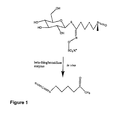
- FIG. 1 provides the principal reaction for conversion of glucoraphanin to sulforaphane.
- FIG. 2 provides a flowchart illustrating one embodiment of the process of the invention.
- FIG. 3 provides a flowchart illustrating another embodiment of the process of the invention.
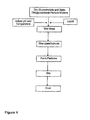
- FIG. 4 provides a flowchart illustrating another embodiment of the process of the invention.
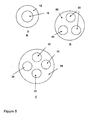
- FIG. 5 illustrates several embodiments of coated particles.
- Part A illustrates a single particle, such as comprising either glucosinolate or beta-thioglucosidase, is coated with a coating.
- Part B illustrates a plurality of particles of a single type, such as comprising either glucosinolate or beta-thioglucosidase, coated together with a coating.
- Part C illustrates a plurality of particles of more than one type, comprising both glucosinolate and beta-thioglucosidase, coated with a layer of coating.
- the present invention is directed to enteric-coated glucosinolate and beta-thioglucosidase enzyme particles.
- the glucosinolate may be glucoraphanin, glucoraphenin, glucoerucin, the like, or a combination thereof.
- the glucosinolate is glucoraphanin and the beta-thioglucosidase enzyme is myrosinase, which converts glucoraphanin to sulforaphane, a chemoprotectant.
- the enteric-coated glucosinolates and beta-thioglucosidase enzyme particles can be produced separately or in combination by conventional methods. Alternatively, uncoated glucosinolate and beta-thioglucosidase particles can be combined and incorporated in enteric-coated capsules.
- the present invention is further directed to a method of converting glucosinolate to isothiocyanate in the small intestine comprising orally administering to a subject an enteric-coated chemoprotectant precursor composition comprising enteric-coated glucosinolate particles and enteric-coated beta-thioglucosidase particles.
- an enteric-coated chemoprotectant precursor composition comprising enteric-coated glucosinolate particles and enteric-coated beta-thioglucosidase particles.
- the glucosinolate particles and beta-thioglucosidase particles may be coated or uncoated and provided in an enteric-coated capsule.
- enteric-coated formulation comprising glucosinolate and beta-thioglucosidase particles
- enteric coating allows glucosinolates and the beta-thioglucosidases to arrive intact in the small intestine where absorption of isothiocyanates is believed to be most efficient.
- the enzyme from the provided enteric-coated beta-thioglucosidase particles or the beta-thioglucosidase particles from the provided enteric-coated capsules are released and convert the provided glucosinolate particles into chemoprotectant isothiocyanates.
- the glucosinolate is glucoraphanin and the beta-thioglucosidase enzyme is myrosinase, which converts glucoraphanin into sulforaphane, a potent chemoprotectant.
- myrosinase which converts glucoraphanin into sulforaphane, a potent chemoprotectant. The principal reaction is illustrated in FIG. 1 .
- chemoprotectants and “chemoprotectant compounds” refer to agents of plant origin that are effective for reducing the susceptibility of mammals to the toxic and neoplastic effects of carcinogens.
- Chemoprotectant “precursors” refer to agents which give rise to chemoprotectants by enzymatic and/or chemical means. Talalay, P. et al., J. Nutr., 131 (11 Suppl.): 30275-30335 (2001 ). Examples of such chemoprotectant precursors include alkyl glucosinolates, such as glucoraphanin.
- active agent means glucosinolates, preferably glucoraphanin and/or beta-thioglucosidase enzyme, preferably myrosinase, or a mixture thereof.
- effective amount is an amount of active agent which provides the desired effect or benefit upon consumption. Generally, about 1 to about 100 mg of glucosinolate, preferably glucoraphanin, and about 1 to about 100 mg of beta-thioglucosidase, preferably myrosinase, per single serving of the food product or pharmaceutical composition would be considered to be effective.
- Glucosinolates derived from crucifer seeds or sprouts are useful starting materials.
- Crucifer seeds and sprouts have been found to be an especially good source of chemoprotectant precursors.
- Crucifer seeds or sprouts which are especially useful include broccoli, kale, collard, curly kale, marrowstem kale, thousand head kale, Chinese kale, cauliflower, Portuguese kale, Brussels sprouts, kohlrabi, Jersey kale, savoy cabbage, collards, borecole, radish, and the like as well as mixtures thereof.
- crucifier seeds or seeds and sprouts of broccoli are utilized.
- Glucosinolate extracts or isolates may generally be prepared by any means known in the art and can include the methods disclosed in co-pending U.S. Application Serial Nos. 11/617,934, filed December 29, 2006 , and 11/199,752, filed August 9, 2005 and 11/761,883 filed 12 June 2007 , which are commonly assigned to the assignee herein and which are incorporated by reference as if reproduced in their entirety herein.
- glucosinolate and beta-thioglucosidase particles are prepared by the method comprising: (1) preparing a homogenous mixture of active agent, coating excipient, optionally diluent, and optionally enzyme activator; (2) adding liquid, such as water, propylene glycol, glycerol, sorbitol, or mixtures thereof, preferably water, to the dry mixture to form a wet mass suitable for wet extrusion; (3) granulating and extruding the wet mass to form extrudate; (4) forming particles from the extrudate; and (5) drying the particles.
- liquid such as water, propylene glycol, glycerol, sorbitol, or mixtures thereof, preferably water
- the glucosinolate and beta-thioglucosidase particles are produced and coated separately to prevent reaction between the glucosinolates and beta-thioglucosidase enzymes during processing.
- the coated beta-thioglucosidase and glucosinolate particles may be mixed together, preferably in a ratio of about 1:100 to about 100:1, more preferably about 1:10 to about 10:1, although other ratios may be used if desired.
- the ratio used may depend on the relative purities of the beta-thioglucosidase and glucosinolate sources used. This ratio provides an enzyme to substrate ratio for the conversion reaction to occur at a sufficient rate while the enzyme and substrate reside in the small intestine.
- glucosinolate and beta-thioglucosidase particles can be produced separately and then combined to form a mixture after drying step (5) and prior to coating.
- the beta-thioglucosidase and glucosinolate particles are combined in a ratio of about 1:100 to about 100:1, preferably about 1:10 to about 10:1, although other ratios of beta-thioglucosidase and glucosinolate particles may be used if desired.
- glucosinolate and beta-thioglucosidase particles can be produced together beginning at step (1) if processing conditions are adjusted and/or maintained to substantially reduce the likelihood of the beta-thioglucosidase enzymes catalyzing the conversion of glucosinolates into isothioglucosidases.
- glucosinolates and beta-thioglucosidases can be combined when forming the dry homogenous mixture of step (1) if, when adding liquid in step (2), the pH is adjusted to about 2 to about 3 and the temperature is adjusted to about 0 to about 15°C in order to substantially reduce the rate of conversion of glucosinolates to isothiocyanates. The temperature in this range should be maintained until the glucosinolate and beta-thioglucosidase particles are dried.
- the active agents are glucosinolate, beta-thioglucosidase, or a mixture thereof.
- the active agents are generally in the form of a dried extract, isolate, purified isolate, semi-purified isolate, or the like.
- the glucosinolate is glucoraphanin and the beta-thioglucosidase enzyme is myrosinase.
- the coating excipient can comprise microcrystalline cellulose, lactose, oat fiber, carboxy methyl cellulose, derivatives thereof, the like, or mixtures thereof.
- the coating excipient is a spheronizing agent.
- the spheronizing agent may be any spheronizing agent known in the art such as microcrystalline cellulose and its derivatives, oat fiber, carboxy methyl cellulose, derivatives thereof, the like, or mixtures thereof. More preferably, the spheronizing agent is microcrystalline cellulose, such as Microcrystalline Cellulose GP-1030 from FMC BioPolymer (Philadelphia, PA). The spheronizing agent provides plasticity to the mixture to enable particle formation and provides strength to the particles once formed.
- the particles may optionally include diluent.
- the diluent may include any inert, food grade or pharmaceutically-acceptable substance, such as lactose, starch, dextrin, water, glycerol, sorbitol, propylene glycol, the like, or a mixture thereof.
- the diluent may also function as a binder. Lactose may serve as a coating excipient or a diluent.
- the diluent is lactose.
- an enzyme activator may be included in the active agent mixture.
- the enzyme activator may comprise ascorbic acid and its derivatives.
- the enzyme activator is ascorbic acid.
- the enzyme activator increases the rate of reaction between beta-thioglucosidase and glucosinolate.
- glucosinolate and beta-thioglucosidase particles may be desirable to prepare separately, such as illustrated in FIGS. 2 and 3 , or in combination, such as illustrated in FIG. 4 .
- an active agent mixture comprising beta-thioglucosidase
- about 1 to about 50 percent beta-thioglucosidase is mixed with about 50 to about 99 percent composition comprising coating excipient and optionally diluent to form a dry beta-thioglucosidase mixture.
- about 20 to about 30 percent beta-thloglucosidase is mixed with about 70 to about 80 percent composition comprising coating excipient and optionally diluent.
- the mixture also includes about 0.001 to about 10 percent enzyme activator, preferably ascorbic acid.
- an active agent mixture comprising glucosinolate
- about 1 to about 50 percent glucosinolate is mixed with about 50 to about 99 percent composition comprising coating excipient and optionally diluent to form a dry glucosinolate mixture.
- about 20 to about 30 percent glucosinolate is mixed with about 70 to about 80 percent composition comprising coating excipient and optionally diluent.
- the mixture is prepared by combining about 0.5 to about 50 percent beta-thioglucosidase, about 0.5 to about 50 percent glucosinolate, and about 1 to about 99 percent composition comprising coating excipient and optionally diluent.
- the mixture is prepared by combining about 0.5 to about 25 percent beta-thioglucosidase, about 0.5 to about 25 percent glucosinolate, and about 50 to about 99 percent composition comprising coating excipient and optionally diluent.
- beta-thioglucosidase is mixed with 10 to about 15 percent glucosinolate, and about 70 to about 80 percent composition comprising coating excipient and optionally diluent.
- the mixture also includes about 0.001 to about 10 percent enzyme activator, preferably ascorbic acid.
- the ingredients of the active agent mixture can be combined in any convenient order.
- the resulting mixture is stirred, mixed, blended, or agitated by any convenient means until a homogenous dry mixture is formed.
- the active agent mixture may also have introduced optional ingredients or components, such as, for example, nutrients, vitamins, colorants, nutraceutical additives, antioxidants, probiotics, prebiotics, sweetening agents, flavoring agents, processing agents, or the like so long as they do not adversely affect the processing or stability properties in a significant manner.
- these optional ingredients or components comprise about 0.1 to about 10 percent.
- the homogenous dry mixture is formed prior to wetting with a liquid, although the dry ingredients and liquid may be combined and mixed without first forming a homogenous dry mixture.
- a better and more homogenous mixture (dough) is formed when the homogenous dry mixture is formed prior to wetting.
- the dry mixture is wetted with a liquid, such as water, glycerol, propylene glycol, sorbitol, alcohol, the like, or mixtures thereof.
- the liquid is water at a temperature of about 0 to about 15°C.
- the amount of liquid added to the dry mixture is the minimum amount required to prepare an extrudable mass.
- the size of the particles produced during spheronization is largely determined by the amount of liquid added to produce the wet mass.
- the amount of liquid also affects the particle size distribution and plastic deformability characteristics of the particles.
- the particles must have sufficient plasticity to allow deformation during collisions but yet be strong enough to not break apart during spheronization (i.e., too much liquid causes the extruded mass to not break to form spherical particles while too little liquid causes the wet mass to crumble and break into a fine powder upon spheronizing).
- the beta-thioglucosidase mixture is wetted with a liquid to a wet mass percentage of about 10 to about 50 percent, preferably about 20 to about 40 percent, to form an active agent wet mass.
- the glucosinolate mixture is wetted with a liquid to a wet mass percentage of about 10 to about 50 percent, preferably about 20 to about 40 percent, to form an active agent wet mass.
- the glucosinolate and beta-thioglucosidase mixture is wetted with a liquid to a wet mass percentage of about 10 to about 50 percent, preferably about 20 to about 40 percent, to form an active agent wet mass.
- the active agent wet mass is then granulated and extruded using a conventional granulator, such as the MG-55 Single-Screw Multi-Granulator distributed by LCI Corporation (Charlotte, NC).
- a conventional granulator such as the MG-55 Single-Screw Multi-Granulator distributed by LCI Corporation (Charlotte, NC).
- Each active agent wet mass is separately fed through the hopper and granulated at a screw rotational speed of about 20 to about 100 rpm though the extruder fitted with the appropriate die (or screen) to form a cylindrical extrudate.
- the diameter of the extrudate determines size of the particles.
- a 0.8mm/0.8T dome die is used to form the extrudate.
- the extrudate is then formed into particles by any conventional method, such as by fluidized bet coating, spinning disc, spray drying, or the like.
- the particles so formed may be any shape, such as spherical, spheroidal, angular, tabular, irregular, ellipsoidal, discoidal, rod shaped, or the like, although it is preferable that the particles are substantially uniform in size and shape.
- the particles are about 100 to about 1500 ⁇ m in diameter, more preferably about 200 to about 800 ⁇ m in diameter.
- the particles are formed by spheronization. Spheronization is a commonly used method for producing particles suitable for coating.
- spheronized particles have a uniform size and shape and have a low surface area to volume ratio.
- the spheronized particles may be spheres, spheroids, rounded rods, or the like, although preferably the spheronized particles are sphere-shaped.
- Spheronized particles also have a smooth surface that is ideal for coating.
- Spheronized particles can be uniformly coated with a minimum amount of coating material. Such uniform coating assists in providing uniform release among the particles in the small intestine.
- the extrudate is processed in conventional spheronizing equipment, e.g., Marumerizer model QJ-230T, manufactured by Fuji Paudal (Osaka, Japan) and distributed by LCI Corporation (Charlotte, NC).
- the spheronizing equipment breaks the cylindrical extrudate into small particles and tends to round the particles.
- the speed used for the rotating friction disk in the spheronizing equipment depends on the desired particle size of the particles. Generally, the production of smaller particles requires higher speeds than the production of larger particles.
- the extrudates are separately spheronized at a disk speed of about 500 to about 3000 rpm for about 1 to about 5 minutes or until the particles are substantially uniform in both size and shape. After about 1 to about 5 minutes, the wet particles are discharged into an appropriate receptacle.
- the particles thus-formed are ideally suited for coating because of the substantially smooth, uniform shape.
- the wet particles are collected and dried by any conventional means known in the art, such as by fluid bed drying, drum drying, freeze drying, tray drying, conventional oven, or the like.
- the wet particles are dried by fluidizing.
- the particles can be fluidized at about 35°C to about 70°C for about 10 to about 60 minutes in a conventional fluid bed dryer, such as a Mini-Glatt (distributed by Glatt Air Techniques, Inc., Ramsey, NJ).
- the particles thus-formed can then be coated to modify the release properties of the particles, such as with a delayed release coating, sustained release coating, controlled release coating, targeted release coating, enteric coating, and the like, or combinations thereof.
- the coating may further comprise lecithin, which serves as an anti-sticking agent.
- the particles are coating is an enteric coating.
- Enteric coatings include any barrier known in the art that is applied to oral medications, food supplements, or the like that prevents the release of the active agent before it reaches the small intestine. Enteric coatings prevent the destruction of the active agent by the acidic environment of the stomach.
- enteric coatings are stable at very acidic pH, such as in the stomach, and break down rapidly in mildly acidic or higher pH, such as in the small intestine.
- Suitable enteric coatings include, but are not limited to a shellac, such as MARCOAT ® 125 from Emerson Resources, Inc. (Norristown, PA), methacrylic acid copolymers and their derivatives, such as EUDRAGIT ® from Degussa, cellulose acetate, such as Cellulose Acetate Phthalate, NF (“CAP”) from Eastman Chemical Co.
- MARCOAT ® 125 from Emerson Resources, Inc. (Norristown, PA)
- EUDRAGIT ® from Degussa
- cellulose acetate such as Cellulose Acetate Phthalate, NF (“CAP") from Eastman Chemical Co.
- CAP Cellulose Acetate Phthalate
- styrol maleic acid copolymers polymethacrylic acid/acrylic acid copolymer, hydroxylpropyl methyl cellulose phthalate, polyvinyl acetate phthalate, hydroxyethyl ethyl cellulose phthalate, hydroxypropyl methyl cellulose acetate succinate, cellulose acetate tetrahydrophthalate, acrylic resin, trimellitate, zein, calcium alginate, fatty acids, fats, and combinations thereof, among others.
- the enteric coating is formed or deposited on the exterior surfaces of the particles in a manner in which the enteric coating substantially encapsulates the particles.
- Encapsulation or equivalent language means the enteric coating formed on the particles covers essentially the entire outer surface of the particles. The extent of encapsulation by the enteric coating must be sufficient such that the active agents are not overly exposed immediately to the gastric juices of the stomach upon consumption so that the glucosinolate and beta-thioglucosidase particles are released prior to the small intestine.
- the coating is of uniform thickness to provide substantially a uniform rate of release among the particles.
- uniform thickness is intended to mean that the thickness of the coating does not vary more than about 50 percent, and preferably not more than about 25 percent.
- the coating is generally applied to provide a coating of about 10 to about 40 percent based on the weight of the dried particles.
- Non-limiting examples of coated particles are illustrated in FIG. 5 .
- the particles may be coated so that only a single particle 10, such as comprising either glucosinolate or beta-thioglucosidase, is coated with a coating 12, as shown in FIG. 5A , or so that a plurality of particles 20 of a single type, such as comprising either glucosinolate or beta-thioglucosidase, are coated together with a coating 22, as shown in FIG. 5B .
- glucosinolate particles 30 and beta-thioglucosidase particles 32 be combined and coated together with a coating 34, as shown in FIG. 5C .
- the particles are coated with an enteric coating composition by suspending the particles in a fluid bed and spraying them with the coating composition, followed by drying, and recovering the coated particles.
- Such fluid bed coating systems can include top spray systems, bottom spray systems, tangential (rotor) spray systems, and the like.
- Suitable multi-purpose fluid bed processors also are generally known for particle coating applications that enable different types of spray nozzle inserts to be readily installed in a common spray system, so that the same processor can be operated to apply a coating variously as a top spray, Wurster spray, or tangential spray.
- a coating system comprising a rotary drum coater also could be used.
- other coating or application systems including coextrusion and film processing, could also be used. These coating processes can be run continuously or batch style.
- Suitable equipment for applying the coating on particles with these types of spray systems are commercially available.
- suitable top spray and bottom spray fluid bed coaters available from Glatt Air Techniques, Inc. (Ramsey, NJ), can be used or readily adapted for use in applying the coating of the particles.
- additional coating layers may be applied which may, if desired, contain different combinations of release-modifying coatings or ingredients.
- the enteric coating Upon ingestion or placement in a very low pH environment (such as in gastric juice in the stomach), the enteric coating does not readily dissolve. Instead, the enteric coating dissolves at a higher pH, such as in the small intestine. As the enteric coating begins to dissolve, the glucosinolates and beta-thioglucosidase enzymes are released so that beta-thioglucosidases catalyze the conversion of glucosinolate to isothiocyanates.
- the particles are dried by any means known in the art, such as by fluidizing, drum drying, tray drying, vacuum drying, conventional oven, or the like, although fluidizing is preferred. Generally, the particles should contain less than about 5 percent moisture.
- the enteric-coated particles of the invention may be formulated into a variety of compositions, such as compressed tablets, pills, capsules, lozenges, pharmaceuticals, or the like.
- the enteric-coated particles of the invention can be further processed into tablets by combining the particles with conventional tablet binders, such as starch, gelatin, sugar (such as glucose, fructose, lactose, and the like), the like, or mixtures thereof.
- the tablet binders should be food grade or pharmaceutically-acceptable ingredients.
- the proportions of the beta-thioglucosidase and glucosinolate particles are not particularly limited as long as sufficient amounts of each respective component is present in the composition to sustain their respective intended purpose.
- beta-thioglucosidase and glucosinolate particles should be included such that the desired conversion of glucosinolates into isothiocyanates by the beta-thioglucosidase enzymes is achieved upon release of the particles in the small intestine.
- the beta-thioglucosidase particles and glucosinolate particles of the invention should be provided in a ratio of about 100:1 to about 1:100, preferably 10:1 to about 1:10.
- the thickness of the coating on the compositions should be sufficient to provide the desired release of both the glucosinolate and beta-thioglucosidase particles so that both components are available for reaction in the small intestine at substantially the same time.
- the coating is of uniform thickness to provide substantially a uniform rate of release among the particles.
- uniform thickness is intended to mean that the thickness of the coating does not vary more than about 50 percent, and preferably not more than about 25 percent.
- the coating is greater than about 10 microns thick, preferably about 20 to about 40 microns.
- the enteric-coated particles of the invention may also be incorporated into food products.
- the enteric-coated glucosinolate and beta-thioglucosidase particles may be incorporated directly into food products or may be further processed, as desired, before incorporation into food products or pharmaceuticals.
- Food products into which the enteric-coated glucosinolate and beta-thioglucosidase particles may be incorporated include food supplements, nutrition bars, cereals, biscuits, drinks, shakes, pills, tablets, powdered beverage mixes, and the like, as well as mixtures thereof.
- Supplements include dietary supplements, nutritional supplements, herbal supplements, and the like, as well as mixtures thereof.
- food products containing the enteric-coated beta-thioglucosidase and glucosinolate particles of the invention contain a ratio of beta-thioglucosidase to glucosinolate particles of about 100:1 to about 1:100, preferably 10:1 to about 1:10.
- the food products or pharmaceuticals contain about 1 to about 100 mg of glucosinolate particles, preferably glucoraphanin, and about 1 to about 100 mg of beta-thioglucosidase particles, preferably myrosinase, per single serving of the food product or pharmaceutical.
- an effective amount of uncoated glucosinolate and beta-thioglucosidase particles can be filled into capsules, such as gelatin capsules, plant-based capsules, or the like.
- the uncoated beta-thioglucosidase particles and uncoated glucosinolate particles can be mixed together, preferably in a ratio of about 1:100 to about 100:1, more preferably about 1:10 to about 10:1, although other ratios may be used if desired.
- the uncoated particles can be mixed with filler ingredients, such as lactose, or other medicaments, such as vitamins, minerals, or the like, before being filled into capsules.
- the capsules, tablets, or caplets are then coated with an enteric coating by any conventional method, such as by dip coating, spray coating, brush coating, pan coating, fluidized bed coating, enrobing, or the like.
- the coating is greater than about 10 microns thick, preferably about 20 to about 40 microns.
- the coating is applied to provide a coating of about 5 to about 15 percent, preferably about 8 to about 12 weight percent. Again, it is preferable that the coating be of uniform thickness to provide substantially a uniform rate of release among the particles.
- Example 1 Enteric-Coated Glucosinolate and Myrosinase Particles
- glucosinolate and beta-thiogiucosidase particles can generally be carried out using four sequential steps.
- the first of these steps is the formulation and creation of a compactable mixture.
- the mixture is fed into a granulator/extruder to create a compact extrudate.
- the resulting extrudate is then fed into the spheronization equipment to form glucosinolate or beta-thioglucosidase particles.
- the particles are recovered and then dried in a fluidized bed.
- the homogenously combined dry mixture was then slowly wetted with cold water (about 20°C) using a disposable 5 ml pipette to a wet mass percentage of 36 percent.
- the Hobart mixer speed setting was increased for twenty seconds to form a wet mass.
- the glucosinolate and myrosinase mixtures were then separately processed in a granulator, a MG-55 Single-Screw Multi Granulator distributed by LCl Corporation (Charlotte, N.C.).
- the mixtures were slowly fed into a hopper and separately granulated/extruded at a screw rotational speed of 50 rpm though a 0.8 mm/0.8 T dome die.
- the glucosinolate and myrosinase extrudates produced in the granulator were then separately placed in the spheronization equipment, a Marumerizer (model QJ-230T distributed by LCl Corporation). Once the 2.0 mm friction disk was up to 1500 rpm, the extrudates were separately fed through the hopper/lid and spheronized for three minutes or until uniform particles were created. The resulting wet particles were then collected.
- a Mini-Glatt distributed by Glatt Air Techniques, Inc. (Ramsey, N.J.)
- the glucosinolate and myrosinase particles were then stored in separate opaque containers at 4°C.
- the Mini-Glatt was initiated at a starting temperature determined for each sample.
- the particles were placed in the chamber and allowed to fluidize.
- the coating material was then delivered into the Mini-Glatt and onto the fluidized particles using a Flocon 1003 pump manufactured by Roto-Consulta (Lucerne, Switzerland).
- the Mini-Glatt settings for coating the myrosinase particles and glucosinolate particles were as detailed in Table 1 below.
- Table 1 Mini-Glatt Settings Myrosinase Particles Glucosinolate Particles Inlet air pressure 0.7 bar at 24°C 0.7 bar at 40°C Spray air pressure 1.0 bar 1.0 bar Pump rate 0.6 ml/min (setting 5) 0.48 ml/min (setting 4)
- the coating solutions were slowly applied to the particles until a coating of 30 percent was achieved.
- the coated particles were additionally fluidized following coating to assure a dried final product.
- the coated particles were then stored in opaque containers at 4°C.
- the extent of dissolution in the gastrointestinal tract was estimated using simulated biological fluids. Simulated gastric juice (pH 1.2) and simulated intestinal fluid (pH 6.8) test solutions were prepared according to USP Edition 29, p. 3171, which is hereby incorporated by reference. To simulate gastric and intestinal digestion, 50 mg of encapsulate produced in Part B of this example was weighed into 15 ml polypropylene centrifuge tubes. Then 10 ml of simulated gastric or intestinal fluid solution warmed to 37°C was added and the tubes capped. The tubes were rotated end-over-end at 20 rpm and at 37°C for one hour and then drained through a glass microfiber filter (VWR grade 691 (West Chester, PA)) to remove the undissolved material.
- VWR grade 691 West Chester, PA
- the filtrate was collected.
- myrosinase-containing encapsulates myrosinase activity of filtrates was analyzed by the direct spectrophotometric assay ( Palmieri et al., Analytical Biochemistry, 123: 320-324 (1982 ), which is incorporated herein by reference).
- analysis of the filtrates was performed by HPLC as described in West et al., J. Chromatography A, 966: 227-232 (2002 ), which is incorporated herein by reference.
- Example 2 Enteric-Coated Capsules Containing Uncoated Glucosinolates and Myrosinase
- Gelatin capsules from Wonder Laboratories (White House, TN) were coated with either EUDRAGIT ® coatings from Degussa or Cellulose Acetate Phthalate ("CAP") from Eastman Chemical Co. (Kingston, T.N.) using a ProCoater from Torpac (Fairfield, N.J.).
- EUDRAGIT ® and CAP coatings are resistant to stomach acid. Generally, the coatings are applied to provide a coating of about 8 to about 12 percent.
- Glucosinolates and beta-thioglucosidases were stable, as measured by HPLC, during the coating process.
- the coated capsules were tested according to the Torpac method (Fairfield, NJ) and remained stable in 0.1 N HCl for over 2 hours at 37°C but fully dissolved in pH 6.8 phosphate buffer in 30 minutes at 37°C.
Landscapes
- Health & Medical Sciences (AREA)
- Life Sciences & Earth Sciences (AREA)
- Public Health (AREA)
- Chemical & Material Sciences (AREA)
- Medicinal Chemistry (AREA)
- Veterinary Medicine (AREA)
- Pharmacology & Pharmacy (AREA)
- Animal Behavior & Ethology (AREA)
- General Health & Medical Sciences (AREA)
- Bioinformatics & Cheminformatics (AREA)
- Engineering & Computer Science (AREA)
- Epidemiology (AREA)
- Organic Chemistry (AREA)
- Nuclear Medicine, Radiotherapy & Molecular Imaging (AREA)
- General Chemical & Material Sciences (AREA)
- Chemical Kinetics & Catalysis (AREA)
- Zoology (AREA)
- Gastroenterology & Hepatology (AREA)
- Immunology (AREA)
- Proteomics, Peptides & Aminoacids (AREA)
- Molecular Biology (AREA)
- Botany (AREA)
- Heart & Thoracic Surgery (AREA)
- Ophthalmology & Optometry (AREA)
- Toxicology (AREA)
- Cardiology (AREA)
- Medicinal Preparation (AREA)
- Medicines That Contain Protein Lipid Enzymes And Other Medicines (AREA)
- Acyclic And Carbocyclic Compounds In Medicinal Compositions (AREA)
Abstract
Description
- The present invention relates to a composition comprising enteric-coated glucosinolate and enteric-coated beta-thioglucosidase enzyme particles. The present invention further provides a method of converting glucosinolate to isothiocyanate in the small intestine comprising orally administering to a subject an enteric-coated chemoprotectant precursor composition comprising enteric-coated glucosinolate and beta-thioglucosidase particles. In another aspect, uncoated glucosinolate and beta-thioglucosidase particles may be provided in an enteric-coated capsule. The enteric coating targets the chemoprotectant precursor composition for release in the small intestine where beta-thioglucosidase converts the glucosinolate to chemoprotectant isothiocyanate. More specifically, the chemoprotectant precursor composition comprises enteric-coated glucoraphanin and its conversion enzyme myrosinase.
- It is generally agreed that diet plays a large role in controlling the risk of developing cancers and other diseases and conditions, such as ulcers and cardiovascular disease, and that increased consumption of fruits and vegetables may reduce cancer incidences in humans. The presence of certain minor chemical components in plants may provide protection mechanisms when delivered to mammalian cells. Moreover, providing pharmaceuticals, nutritional supplements, or foods fortified or supplemented with cancer-fighting chemical components derived from plants may provide additional health benefits. An important trend in the U.S. food industry is to promote health conscious food products.
- Cruciferous vegetables contain phytochemicai precursors to potent chemoprotectants, especially the precursor glucoraphanin (which is also known as sulforaphane glucosinolate or 4-methylsulfinylbutyl glucosinolate) and its associated enzymatic conversion product sulforaphane, that appear to trigger carcinogen detoxification mechanisms when delivered to mammalian cells. Glucosinolates are found in dicotyledenous plants and most commonly in the Brassicaceae (Cruciferae) family. Glucosinolates are sulfur-containing compounds of the general structure:

- In addition to reducing the risk of certain cancers, glucoraphanin, through its bioactive conversion product sulforaphane, has recently been shown effective in destroying organisms responsible for causing the majority of stomach ulcers and may provide novel approaches for reducing the risk of developing cardiovascular and ocular diseases. Efforts are being made to gain approval for making label claims on food products either naturally high in these agents or for foods containing added crucifer chemoprotectants. Products containing chemoprotectant additives, although without such label claims, are already on the market.
- Even though isothiocyanates, particularly sulforaphane, are increasingly recognized as important wellness-enablers, isothiocyanates typically are not used in food products or supplements due to their extremely pungent taste. Isothiocyanates also have high chemical reactivity, which makes isothiocyanates poor candidates for encapsulation.
- To overcome the problems inherent in isothiocyanates, glucosinolates are generally provided in food products and health supplements instead. Administration of glucosinolates without the converting enzymes still results in the formation of isothiocyanates by gut microflora but at substantially reduced levels. While the dosage of glucosinolates may be increased to reduce this problem, there is considerable cost in doing so. It is also believed that isothiocyanates are not well absorbed in the stomach but instead are more readily absorbed in the small intestine. Additionally, the formation of isothiocyanates in the gut can lead to loss of isothiocyanates due to the low pH-favored formation of non-health promoting derivatives, especially nitriles.
- Therefore, there remains a need for more optimal formulations designed to deliver isothiocyanates to the small intestine where the isothiocyanates can be readily absorbed. The present invention fulfills these, as well as other needs, as will be apparent from the following description of embodiments of the present invention.
- The present invention provides enteric-coated glucosinolate and beta-thioglucosidase enzyme particles which are prepared separately or in combination by conventional methods. Enteric-coated glucosinolates and beta-thioglucosidase enzyme particles may be prepared together under conditions designed to substantially reduce the rate of reaction between the glucosinolate and beta-thioglucosidase enzyme. In another aspect, uncoated glucosinolate and beta-thioglucosidase particles may be incorporated into enteric coated capsules, tablets, or the like. Upon digestion, the enteric coating remains intact while passing through the stomach and only dissolves in the small intestine to release the beta-thioglucosidase and glucosinolate particles. The beta-thioglucosidase enzyme converts glucosinolates into chemoprotectant isothiocyanates within the small intestine. The enteric coating allows the glucosinolates and their conversion enzymes to arrive intact in the small intestine where absorption of isothiocyanates is believed to be most efficient. Preferably, the glucosinolates are glucoraphanin and the beta-thioglucosidase enzymes are myrosinase, which converts glucoraphanin into sulforaphane, a potent chemoprotectant.
- Generally, the method of coating the glucosinolate and beta-thioglucosidase particles can be carried out by any means known in the art. Thus, for example, the following method can be used: (1) preparing a homogenous mixture containing active agent, coating excipient, and optionally diluent; (2) adding liquid, such as water, propylene glycol, glycerol, sorbitol, and mixtures thereof, to the dry mixture to form a wet mass suitable for wet extrusion; (3) granulating and extruding the wet mass to form extrudate; (4) forming particles from the extrudate; and (5) drying the particles. In a preferred aspect, the particles in step (4) are formed by spheronization. In a particularly preferred aspect, the particles formed in step (4) are substantially-spherical in shape.
- The particles thus formed can then be coated with an enteric coating. Enteric coatings include any barrier known in the art that is applied to oral medications, food supplements, or the like that prevents the release of the active agent before it reaches the small intestine. Enteric coatings prevent the destruction of the active agent by the acidic environment of the stomach. Alternatively, uncoated particles may be filled into capsules, which are then coated with an enteric coating. The enteric coating on the particles or capsules provides for the release of the glucosinolate and beta-thioglucosidase enzyme particles in the small intestine where beta-thioglucosidase converts glucosinolates into isothiocyanates.
- Suitable enteric coatings include shellac, methacrylic acid copolymers and their derivatives, cellulose acetate, styrol maleic acid copolymers, polymethacrylic acid/acrylic acid copolymer, hydroxylpropyl methyl cellulose phthalate, polyvinyl acetate phthalate, hydroxyethyl ethyl cellulose phthalate, hydroxypropyl methyl cellulose acetate succinate, cellulose acetate tetrahydrophthalate, acrylic resin, timellitate, zein, calcium alginate, fatty acids, fats, and combinations thereof, among others. Examples of suitable commercially available enteric coatings include, but are not limited to, MARCOAT® 125 from Emerson Resources, Inc. (Norristown, PA), EUDRAGIT® from Degussa, or Cellulose Acetate Phthalate, NF ("CAP") from Eastman Chemical Co. (Kingston, TN), or the like.
- In another aspect, food products and pharmaceuticals are provided that include the enteric-coated glucosinolate and beta-thioglucosidase particles. The enteric-coated glucosinolate and beta-thioglucosidase particles of the invention may be used in a wide variety of food applications, pharmaceuticals, or the like. The enteric-coated glucosinoiate and beta-thioglucosidase particles may be incorporated directly or may be further processed, as desired, before incorporation into food products or pharmaceuticals. Food products into which the enteric-coated glucosinolate and beta-thioglucosidase particles may be incorporated include food supplements, nutrition bars, cereals, biscuits, drinks, shakes, pills, tablets, powdered beverage mixes, and the like. Supplements include dietary supplements, nutritional supplements, herbal supplements, and the like.
- The present invention further provides a method of converting glucosinolate to isothiocyanate in the small intestine comprising orally administering to a subject an enteric-coated chemoprotectant precursor composition comprising enteric-coated glucosinolate and beta-thioglucosidase particles. In another aspect, uncoated glucosinolate and beta-thioglucosidase particles may be provided in an enteric-coated capsule. The enteric coating targets the chemoprotectant precursor composition for release in the small intestine where beta-thioglucosidase converts the glucosinolate to chemoprotectant isothiocyanate.
-
FIG. 1 provides the principal reaction for conversion of glucoraphanin to sulforaphane. -
FIG. 2 provides a flowchart illustrating one embodiment of the process of the invention. -
FIG. 3 provides a flowchart illustrating another embodiment of the process of the invention. -
FIG. 4 provides a flowchart illustrating another embodiment of the process of the invention. -
FIG. 5 illustrates several embodiments of coated particles. Part A illustrates a single particle, such as comprising either glucosinolate or beta-thioglucosidase, is coated with a coating. Part B illustrates a plurality of particles of a single type, such as comprising either glucosinolate or beta-thioglucosidase, coated together with a coating. Part C illustrates a plurality of particles of more than one type, comprising both glucosinolate and beta-thioglucosidase, coated with a layer of coating. - The present invention is directed to enteric-coated glucosinolate and beta-thioglucosidase enzyme particles. Generally, the glucosinolate may be glucoraphanin, glucoraphenin, glucoerucin, the like, or a combination thereof. In a preferable aspect, the glucosinolate is glucoraphanin and the beta-thioglucosidase enzyme is myrosinase, which converts glucoraphanin to sulforaphane, a chemoprotectant. The enteric-coated glucosinolates and beta-thioglucosidase enzyme particles can be produced separately or in combination by conventional methods. Alternatively, uncoated glucosinolate and beta-thioglucosidase particles can be combined and incorporated in enteric-coated capsules.
- The present invention is further directed to a method of converting glucosinolate to isothiocyanate in the small intestine comprising orally administering to a subject an enteric-coated chemoprotectant precursor composition comprising enteric-coated glucosinolate particles and enteric-coated beta-thioglucosidase particles. Alternatively, the glucosinolate particles and beta-thioglucosidase particles may be coated or uncoated and provided in an enteric-coated capsule.
- A significant advantage of an enteric-coated formulation comprising glucosinolate and beta-thioglucosidase particles is that the enteric coating allows glucosinolates and the beta-thioglucosidases to arrive intact in the small intestine where absorption of isothiocyanates is believed to be most efficient. Upon delivery to the small intestine, the enzyme from the provided enteric-coated beta-thioglucosidase particles or the beta-thioglucosidase particles from the provided enteric-coated capsules are released and convert the provided glucosinolate particles into chemoprotectant isothiocyanates. Preferably, the glucosinolate is glucoraphanin and the beta-thioglucosidase enzyme is myrosinase, which converts glucoraphanin into sulforaphane, a potent chemoprotectant. The principal reaction is illustrated in
FIG. 1 . - As used herein, "chemoprotectants" and "chemoprotectant compounds" refer to agents of plant origin that are effective for reducing the susceptibility of mammals to the toxic and neoplastic effects of carcinogens. Chemoprotectant "precursors" refer to agents which give rise to chemoprotectants by enzymatic and/or chemical means. Talalay, P. et al., J. Nutr., 131 (11 Suppl.): 30275-30335 (2001). Examples of such chemoprotectant precursors include alkyl glucosinolates, such as glucoraphanin.
- As used herein, "active agent" means glucosinolates, preferably glucoraphanin and/or beta-thioglucosidase enzyme, preferably myrosinase, or a mixture thereof.
- As used herein, "effective amount" is an amount of active agent which provides the desired effect or benefit upon consumption. Generally, about 1 to about 100 mg of glucosinolate, preferably glucoraphanin, and about 1 to about 100 mg of beta-thioglucosidase, preferably myrosinase, per single serving of the food product or pharmaceutical composition would be considered to be effective.
- Glucosinolates derived from crucifer seeds or sprouts are useful starting materials. Crucifer seeds and sprouts have been found to be an especially good source of chemoprotectant precursors. Crucifer seeds or sprouts which are especially useful include broccoli, kale, collard, curly kale, marrowstem kale, thousand head kale, Chinese kale, cauliflower, Portuguese kale, Brussels sprouts, kohlrabi, Jersey kale, savoy cabbage, collards, borecole, radish, and the like as well as mixtures thereof. In a very important aspect, crucifier seeds or seeds and sprouts of broccoli are utilized.
- Glucosinolate extracts or isolates may generally be prepared by any means known in the art and can include the methods disclosed in co-pending
U.S. Application Serial Nos. 11/617,934, filed December 29, 2006 11/199,752, filed August 9, 2005 11/761,883 filed 12 June 2007
which are commonly assigned to the assignee herein and which are incorporated by reference as if reproduced in their entirety herein. - Generally, glucosinolate and beta-thioglucosidase particles are prepared by the method comprising: (1) preparing a homogenous mixture of active agent, coating excipient, optionally diluent, and optionally enzyme activator; (2) adding liquid, such as water, propylene glycol, glycerol, sorbitol, or mixtures thereof, preferably water, to the dry mixture to form a wet mass suitable for wet extrusion; (3) granulating and extruding the wet mass to form extrudate; (4) forming particles from the extrudate; and (5) drying the particles. Those of ordinary skill in the art will understand that there are several processes known in the art for forming particles from extrudate, particularly forming particles that are suitable for coating, such as fluidized bed coating, spinning disc, spray drying, and the like. The dried particles may then be coated with an enteric coating, or may be filled in a capsule that is then coated with a release modifying coating, preferably an enteric coating.
- In one embodiment, as shown in
FIG. 2 , the glucosinolate and beta-thioglucosidase particles are produced and coated separately to prevent reaction between the glucosinolates and beta-thioglucosidase enzymes during processing. Once coated, the coated beta-thioglucosidase and glucosinolate particles may be mixed together, preferably in a ratio of about 1:100 to about 100:1, more preferably about 1:10 to about 10:1, although other ratios may be used if desired. One of skill in the art that the ratio used may depend on the relative purities of the beta-thioglucosidase and glucosinolate sources used. This ratio provides an enzyme to substrate ratio for the conversion reaction to occur at a sufficient rate while the enzyme and substrate reside in the small intestine. - In another embodiment, as shown in
FIG. 3 , glucosinolate and beta-thioglucosidase particles can be produced separately and then combined to form a mixture after drying step (5) and prior to coating. Generally, the beta-thioglucosidase and glucosinolate particles are combined in a ratio of about 1:100 to about 100:1, preferably about 1:10 to about 10:1, although other ratios of beta-thioglucosidase and glucosinolate particles may be used if desired. - In another embodiment, as shown in
FIG. 4 , glucosinolate and beta-thioglucosidase particles can be produced together beginning at step (1) if processing conditions are adjusted and/or maintained to substantially reduce the likelihood of the beta-thioglucosidase enzymes catalyzing the conversion of glucosinolates into isothioglucosidases. In this aspect, glucosinolates and beta-thioglucosidases can be combined when forming the dry homogenous mixture of step (1) if, when adding liquid in step (2), the pH is adjusted to about 2 to about 3 and the temperature is adjusted to about 0 to about 15°C in order to substantially reduce the rate of conversion of glucosinolates to isothiocyanates. The temperature in this range should be maintained until the glucosinolate and beta-thioglucosidase particles are dried. - The active agents are glucosinolate, beta-thioglucosidase, or a mixture thereof. The active agents are generally in the form of a dried extract, isolate, purified isolate, semi-purified isolate, or the like. Preferably, the glucosinolate is glucoraphanin and the beta-thioglucosidase enzyme is myrosinase.
- The coating excipient can comprise microcrystalline cellulose, lactose, oat fiber, carboxy methyl cellulose, derivatives thereof, the like, or mixtures thereof. Preferably, the coating excipient is a spheronizing agent. The spheronizing agent may be any spheronizing agent known in the art such as microcrystalline cellulose and its derivatives, oat fiber, carboxy methyl cellulose, derivatives thereof, the like, or mixtures thereof. More preferably, the spheronizing agent is microcrystalline cellulose, such as Microcrystalline Cellulose GP-1030 from FMC BioPolymer (Philadelphia, PA). The spheronizing agent provides plasticity to the mixture to enable particle formation and provides strength to the particles once formed.
- The particles may optionally include diluent. The diluent may include any inert, food grade or pharmaceutically-acceptable substance, such as lactose, starch, dextrin, water, glycerol, sorbitol, propylene glycol, the like, or a mixture thereof. The diluent may also function as a binder. Lactose may serve as a coating excipient or a diluent. Preferably, the diluent is lactose.
- Optionally, an enzyme activator may be included in the active agent mixture. The enzyme activator may comprise ascorbic acid and its derivatives. Preferably, the enzyme activator is ascorbic acid. Upon digestion and dissolution of the enteric coating, the enzyme activator increases the rate of reaction between beta-thioglucosidase and glucosinolate.
- As described above, it may be desirable to prepare glucosinolate and beta-thioglucosidase particles separately, such as illustrated in
FIGS. 2 and3 , or in combination, such as illustrated inFIG. 4 . - Generally, to prepare an active agent mixture comprising beta-thioglucosidase, about 1 to about 50 percent beta-thioglucosidase is mixed with about 50 to about 99 percent composition comprising coating excipient and optionally diluent to form a dry beta-thioglucosidase mixture. Preferably, about 20 to about 30 percent beta-thloglucosidase is mixed with about 70 to about 80 percent composition comprising coating excipient and optionally diluent. In a particularly preferred aspect, the mixture also includes about 0.001 to about 10 percent enzyme activator, preferably ascorbic acid.
- Generally, to prepare an active agent mixture comprising glucosinolate, about 1 to about 50 percent glucosinolate is mixed with about 50 to about 99 percent composition comprising coating excipient and optionally diluent to form a dry glucosinolate mixture. Preferably, about 20 to about 30 percent glucosinolate is mixed with about 70 to about 80 percent composition comprising coating excipient and optionally diluent.
- Generally, to prepare an active agent mixture comprising both glucosinolate and beta-thioglucosidase, the mixture is prepared by combining about 0.5 to about 50 percent beta-thioglucosidase, about 0.5 to about 50 percent glucosinolate, and about 1 to about 99 percent composition comprising coating excipient and optionally diluent. Preferably, the mixture is prepared by combining about 0.5 to about 25 percent beta-thioglucosidase, about 0.5 to about 25 percent glucosinolate, and about 50 to about 99 percent composition comprising coating excipient and optionally diluent. More preferably, about 10 to about 15 percent beta-thioglucosidase is mixed with 10 to about 15 percent glucosinolate, and about 70 to about 80 percent composition comprising coating excipient and optionally diluent. In a particularly preferred aspect, the mixture also includes about 0.001 to about 10 percent enzyme activator, preferably ascorbic acid.
- The ingredients of the active agent mixture can be combined in any convenient order. The resulting mixture is stirred, mixed, blended, or agitated by any convenient means until a homogenous dry mixture is formed.
- The active agent mixture may also have introduced optional ingredients or components, such as, for example, nutrients, vitamins, colorants, nutraceutical additives, antioxidants, probiotics, prebiotics, sweetening agents, flavoring agents, processing agents, or the like so long as they do not adversely affect the processing or stability properties in a significant manner. Generally, these optional ingredients or components comprise about 0.1 to about 10 percent.
- Preferably, the homogenous dry mixture is formed prior to wetting with a liquid, although the dry ingredients and liquid may be combined and mixed without first forming a homogenous dry mixture. Generally, a better and more homogenous mixture (dough) is formed when the homogenous dry mixture is formed prior to wetting. The dry mixture is wetted with a liquid, such as water, glycerol, propylene glycol, sorbitol, alcohol, the like, or mixtures thereof. Preferably, the liquid is water at a temperature of about 0 to about 15°C. The amount of liquid added to the dry mixture is the minimum amount required to prepare an extrudable mass. When spheronization is used to prepare the particles, the size of the particles produced during spheronization is largely determined by the amount of liquid added to produce the wet mass. The amount of liquid also affects the particle size distribution and plastic deformability characteristics of the particles. The particles must have sufficient plasticity to allow deformation during collisions but yet be strong enough to not break apart during spheronization (i.e., too much liquid causes the extruded mass to not break to form spherical particles while too little liquid causes the wet mass to crumble and break into a fine powder upon spheronizing).
- Generally, the beta-thioglucosidase mixture is wetted with a liquid to a wet mass percentage of about 10 to about 50 percent, preferably about 20 to about 40 percent, to form an active agent wet mass.
- Generally, the glucosinolate mixture is wetted with a liquid to a wet mass percentage of about 10 to about 50 percent, preferably about 20 to about 40 percent, to form an active agent wet mass.
- Generally, the glucosinolate and beta-thioglucosidase mixture is wetted with a liquid to a wet mass percentage of about 10 to about 50 percent, preferably about 20 to about 40 percent, to form an active agent wet mass.
- The active agent wet mass is then granulated and extruded using a conventional granulator, such as the MG-55 Single-Screw Multi-Granulator distributed by LCI Corporation (Charlotte, NC). Each active agent wet mass is separately fed through the hopper and granulated at a screw rotational speed of about 20 to about 100 rpm though the extruder fitted with the appropriate die (or screen) to form a cylindrical extrudate. Generally, the diameter of the extrudate determines size of the particles. Preferably, a 0.8mm/0.8T dome die is used to form the extrudate.
- The extrudate is then formed into particles by any conventional method, such as by fluidized bet coating, spinning disc, spray drying, or the like. The particles so formed may be any shape, such as spherical, spheroidal, angular, tabular, irregular, ellipsoidal, discoidal, rod shaped, or the like, although it is preferable that the particles are substantially uniform in size and shape. Preferably, the particles are about 100 to about 1500 µm in diameter, more preferably about 200 to about 800 µm in diameter. In a particularly preferred aspect, the particles are formed by spheronization. Spheronization is a commonly used method for producing particles suitable for coating. Generally, spheronized particles have a uniform size and shape and have a low surface area to volume ratio. The spheronized particles may be spheres, spheroids, rounded rods, or the like, although preferably the spheronized particles are sphere-shaped. Spheronized particles also have a smooth surface that is ideal for coating. Spheronized particles can be uniformly coated with a minimum amount of coating material. Such uniform coating assists in providing uniform release among the particles in the small intestine. The extrudate is processed in conventional spheronizing equipment, e.g., Marumerizer model QJ-230T, manufactured by Fuji Paudal (Osaka, Japan) and distributed by LCI Corporation (Charlotte, NC). The spheronizing equipment breaks the cylindrical extrudate into small particles and tends to round the particles. The speed used for the rotating friction disk in the spheronizing equipment depends on the desired particle size of the particles. Generally, the production of smaller particles requires higher speeds than the production of larger particles. The extrudates are separately spheronized at a disk speed of about 500 to about 3000 rpm for about 1 to about 5 minutes or until the particles are substantially uniform in both size and shape. After about 1 to about 5 minutes, the wet particles are discharged into an appropriate receptacle. The particles thus-formed are ideally suited for coating because of the substantially smooth, uniform shape.
- The wet particles are collected and dried by any conventional means known in the art, such as by fluid bed drying, drum drying, freeze drying, tray drying, conventional oven, or the like. Preferably, the wet particles are dried by fluidizing. For example, the particles can be fluidized at about 35°C to about 70°C for about 10 to about 60 minutes in a conventional fluid bed dryer, such as a Mini-Glatt (distributed by Glatt Air Techniques, Inc., Ramsey, NJ).
- The particles thus-formed can then be coated to modify the release properties of the particles, such as with a delayed release coating, sustained release coating, controlled release coating, targeted release coating, enteric coating, and the like, or combinations thereof. The coating may further comprise lecithin, which serves as an anti-sticking agent. Preferably, the particles are coating is an enteric coating. Enteric coatings include any barrier known in the art that is applied to oral medications, food supplements, or the like that prevents the release of the active agent before it reaches the small intestine. Enteric coatings prevent the destruction of the active agent by the acidic environment of the stomach. Typically, enteric coatings are stable at very acidic pH, such as in the stomach, and break down rapidly in mildly acidic or higher pH, such as in the small intestine. Suitable enteric coatings include, but are not limited to a shellac, such as MARCOAT® 125 from Emerson Resources, Inc. (Norristown, PA), methacrylic acid copolymers and their derivatives, such as EUDRAGIT® from Degussa, cellulose acetate, such as Cellulose Acetate Phthalate, NF ("CAP") from Eastman Chemical Co. (Kingston, TN), styrol maleic acid copolymers, polymethacrylic acid/acrylic acid copolymer, hydroxylpropyl methyl cellulose phthalate, polyvinyl acetate phthalate, hydroxyethyl ethyl cellulose phthalate, hydroxypropyl methyl cellulose acetate succinate, cellulose acetate tetrahydrophthalate, acrylic resin, trimellitate, zein, calcium alginate, fatty acids, fats, and combinations thereof, among others.
- The enteric coating is formed or deposited on the exterior surfaces of the particles in a manner in which the enteric coating substantially encapsulates the particles. "Encapsulation" or equivalent language means the enteric coating formed on the particles covers essentially the entire outer surface of the particles. The extent of encapsulation by the enteric coating must be sufficient such that the active agents are not overly exposed immediately to the gastric juices of the stomach upon consumption so that the glucosinolate and beta-thioglucosidase particles are released prior to the small intestine.
- Preferably, the coating is of uniform thickness to provide substantially a uniform rate of release among the particles. Generally, "uniform thickness" is intended to mean that the thickness of the coating does not vary more than about 50 percent, and preferably not more than about 25 percent. The coating is generally applied to provide a coating of about 10 to about 40 percent based on the weight of the dried particles.
- Non-limiting examples of coated particles are illustrated in
FIG. 5 . The particles may be coated so that only asingle particle 10, such as comprising either glucosinolate or beta-thioglucosidase, is coated with acoating 12, as shown inFIG. 5A , or so that a plurality ofparticles 20 of a single type, such as comprising either glucosinolate or beta-thioglucosidase, are coated together with acoating 22, as shown inFIG. 5B . It may also be desired thatglucosinolate particles 30 and beta-thioglucosidase particles 32 be combined and coated together with acoating 34, as shown inFIG. 5C . - In one embodiment, the particles are coated with an enteric coating composition by suspending the particles in a fluid bed and spraying them with the coating composition, followed by drying, and recovering the coated particles. Such fluid bed coating systems can include top spray systems, bottom spray systems, tangential (rotor) spray systems, and the like. Suitable multi-purpose fluid bed processors also are generally known for particle coating applications that enable different types of spray nozzle inserts to be readily installed in a common spray system, so that the same processor can be operated to apply a coating variously as a top spray, Wurster spray, or tangential spray. A coating system comprising a rotary drum coater also could be used. Of course, other coating or application systems, including coextrusion and film processing, could also be used. These coating processes can be run continuously or batch style. Suitable equipment for applying the coating on particles with these types of spray systems are commercially available. For example, suitable top spray and bottom spray fluid bed coaters available from Glatt Air Techniques, Inc. (Ramsey, NJ), can be used or readily adapted for use in applying the coating of the particles. If desired, additional coating layers may be applied which may, if desired, contain different combinations of release-modifying coatings or ingredients.
- Upon ingestion or placement in a very low pH environment (such as in gastric juice in the stomach), the enteric coating does not readily dissolve. Instead, the enteric coating dissolves at a higher pH, such as in the small intestine. As the enteric coating begins to dissolve, the glucosinolates and beta-thioglucosidase enzymes are released so that beta-thioglucosidases catalyze the conversion of glucosinolate to isothiocyanates.
- After coating, the particles are dried by any means known in the art, such as by fluidizing, drum drying, tray drying, vacuum drying, conventional oven, or the like, although fluidizing is preferred. Generally, the particles should contain less than about 5 percent moisture.
- The enteric-coated particles of the invention may be formulated into a variety of compositions, such as compressed tablets, pills, capsules, lozenges, pharmaceuticals, or the like. In one particular aspect, the enteric-coated particles of the invention can be further processed into tablets by combining the particles with conventional tablet binders, such as starch, gelatin, sugar (such as glucose, fructose, lactose, and the like), the like, or mixtures thereof. The tablet binders should be food grade or pharmaceutically-acceptable ingredients. In preparing these compositions, the proportions of the beta-thioglucosidase and glucosinolate particles are not particularly limited as long as sufficient amounts of each respective component is present in the composition to sustain their respective intended purpose. Namely, sufficient beta-thioglucosidase and glucosinolate particles should be included such that the desired conversion of glucosinolates into isothiocyanates by the beta-thioglucosidase enzymes is achieved upon release of the particles in the small intestine. Preferably, the beta-thioglucosidase particles and glucosinolate particles of the invention should be provided in a ratio of about 100:1 to about 1:100, preferably 10:1 to about 1:10. The thickness of the coating on the compositions should be sufficient to provide the desired release of both the glucosinolate and beta-thioglucosidase particles so that both components are available for reaction in the small intestine at substantially the same time. Preferably, the coating is of uniform thickness to provide substantially a uniform rate of release among the particles. Generally, "uniform thickness" is intended to mean that the thickness of the coating does not vary more than about 50 percent, and preferably not more than about 25 percent. Generally, the coating is greater than about 10 microns thick, preferably about 20 to about 40 microns.
- The enteric-coated particles of the invention may also be incorporated into food products. The enteric-coated glucosinolate and beta-thioglucosidase particles may be incorporated directly into food products or may be further processed, as desired, before incorporation into food products or pharmaceuticals. Food products into which the enteric-coated glucosinolate and beta-thioglucosidase particles may be incorporated include food supplements, nutrition bars, cereals, biscuits, drinks, shakes, pills, tablets, powdered beverage mixes, and the like, as well as mixtures thereof. Supplements include dietary supplements, nutritional supplements, herbal supplements, and the like, as well as mixtures thereof. Preferably, food products containing the enteric-coated beta-thioglucosidase and glucosinolate particles of the invention contain a ratio of beta-thioglucosidase to glucosinolate particles of about 100:1 to about 1:100, preferably 10:1 to about 1:10. Generally, the food products or pharmaceuticals contain about 1 to about 100 mg of glucosinolate particles, preferably glucoraphanin, and about 1 to about 100 mg of beta-thioglucosidase particles, preferably myrosinase, per single serving of the food product or pharmaceutical.
- In another aspect, an effective amount of uncoated glucosinolate and beta-thioglucosidase particles can be filled into capsules, such as gelatin capsules, plant-based capsules, or the like. The uncoated beta-thioglucosidase particles and uncoated glucosinolate particles can be mixed together, preferably in a ratio of about 1:100 to about 100:1, more preferably about 1:10 to about 10:1, although other ratios may be used if desired. Optionally, the uncoated particles can be mixed with filler ingredients, such as lactose, or other medicaments, such as vitamins, minerals, or the like, before being filled into capsules. The capsules, tablets, or caplets are then coated with an enteric coating by any conventional method, such as by dip coating, spray coating, brush coating, pan coating, fluidized bed coating, enrobing, or the like. Generally, the coating is greater than about 10 microns thick, preferably about 20 to about 40 microns. Generally, the coating is applied to provide a coating of about 5 to about 15 percent, preferably about 8 to about 12 weight percent. Again, it is preferable that the coating be of uniform thickness to provide substantially a uniform rate of release among the particles.
- The following examples are intended to illustrate the invention and not to limit it. Unless noted otherwise, percentages and ratios throughout the specification are by weight.
- The production of glucosinolate and beta-thiogiucosidase particles can generally be carried out using four sequential steps. The first of these steps is the formulation and creation of a compactable mixture. Following this step, the mixture is fed into a granulator/extruder to create a compact extrudate. The resulting extrudate is then fed into the spheronization equipment to form glucosinolate or beta-thioglucosidase particles. The particles are recovered and then dried in a fluidized bed.
- Refined lactose from Davisco Foods International, Inc. (Eden Prairie, Minnesota) at 35 percent and Microcrystalline Cellulose GP-1030 from FMC BioPolymer (Philadelphia, PA) at 45 percent were combined with white mustard seed extract (Palmieri et al., J. Agric. Food Chem., 34: 138-140 (1986)) at 20 percent. The white mustard seed extract contains myrosinase, with a specific activity of 300 nmol/min/mg protein. The dry ingredients were first tumbled together in a closed plastic weighing vessel and then placed in a Hobart stand mixer (model N-50, manufactured by Hobart Manufacturing Company (Troy, OH)) and mixed until homogenous. Under continuous mixing, the homogenously combined dry mixture was then slowly wetted with cold water (about 20°C) using a disposable 5 ml pipette to a wet mass percentage of 36 percent. After water addition, the Hobart mixer speed setting was increased for twenty seconds to form a wet mass.
- Refined lactose at 28.5 percent and Microcrystalline Cellulose GP-1030 at 52.0 percent were combined with glucosinolate (produced by the method described in
U.S. Application Serial No. 11/199,752 to West et al. , which is incorporated herein by reference in its entirety) at a weight percentage of 19.5 percent with the same method as described above. The mixture was wetted with cold water to a wet mass percentage of 36 percent. After water addition, the Hobart mixer speed was increased to "2" for twenty seconds to form a wet mass. - The glucosinolate and myrosinase mixtures were then separately processed in a granulator, a MG-55 Single-Screw Multi Granulator distributed by LCl Corporation (Charlotte, N.C.). The mixtures were slowly fed into a hopper and separately granulated/extruded at a screw rotational speed of 50 rpm though a 0.8 mm/0.8 T dome die.
- The glucosinolate and myrosinase extrudates produced in the granulator were then separately placed in the spheronization equipment, a Marumerizer (model QJ-230T distributed by LCl Corporation). Once the 2.0 mm friction disk was up to 1500 rpm, the extrudates were separately fed through the hopper/lid and spheronized for three minutes or until uniform particles were created. The resulting wet particles were then collected. A Mini-Glatt (distributed by Glatt Air Techniques, Inc. (Ramsey, N.J.)), was set up for drying and warmed to 40°C. Once warmed, the wet particles were separately placed in the chamber and fluidized for approximately fifty-five minutes until dry. The glucosinolate and myrosinase particles were then stored in separate opaque containers at 4°C.
- The Mini-Glatt was initiated at a starting temperature determined for each sample. The particles were placed in the chamber and allowed to fluidize. A coating material of MARCOAT® 125, a solution of shellac in an ethanol/water solvent system produced by Emerson Resources, Inc. (Norristown, PA), was mixed and then measured to provide a 30 percent coating by solids weight percentage. The coating material was then delivered into the Mini-Glatt and onto the fluidized particles using a Flocon 1003 pump manufactured by Roto-Consulta (Lucerne, Switzerland). The Mini-Glatt settings for coating the myrosinase particles and glucosinolate particles were as detailed in Table 1 below.
Table 1: Mini-Glatt Settings Myrosinase Particles Glucosinolate Particles Inlet air pressure 0.7 bar at 24°C 0.7 bar at 40°C Spray air pressure 1.0 bar 1.0 bar Pump rate 0.6 ml/min (setting 5) 0.48 ml/min (setting 4) - The coating solutions were slowly applied to the particles until a coating of 30 percent was achieved. The coated particles were additionally fluidized following coating to assure a dried final product. The coated particles were then stored in opaque containers at 4°C.
- The extent of dissolution in the gastrointestinal tract was estimated using simulated biological fluids. Simulated gastric juice (pH 1.2) and simulated intestinal fluid (pH 6.8) test solutions were prepared according to USP Edition 29, p. 3171, which is hereby incorporated by reference. To simulate gastric and intestinal digestion, 50 mg of encapsulate produced in Part B of this example was weighed into 15 ml polypropylene centrifuge tubes. Then 10 ml of simulated gastric or intestinal fluid solution warmed to 37°C was added and the tubes capped. The tubes were rotated end-over-end at 20 rpm and at 37°C for one hour and then drained through a glass microfiber filter (VWR grade 691 (West Chester, PA)) to remove the undissolved material.
- The filtrate was collected. For myrosinase-containing encapsulates, myrosinase activity of filtrates was analyzed by the direct spectrophotometric assay (Palmieri et al., Analytical Biochemistry, 123: 320-324 (1982), which is incorporated herein by reference). For glucosinolate-containing encapsulates, analysis of the filtrates was performed by HPLC as described in West et al., J. Chromatography A, 966: 227-232 (2002), which is incorporated herein by reference.
- Duplicate batches of shellac-coated myrosinase particles and uncoated myrosinase particles (i.e., controls) were examined. No activity for the uncoated myrosinase was detected after one hour incubation in simulated gastric juice. However, shellac-coated myrosinase retained 56-85 percent of their initial activity under the same conditions. In both experiments, shellac-coated myrosinase dissolved to release 95-103 percent of the initial activity after one hour incubation in simulated intestinal fluid.
- Uncoated glucosinolate particles dissolved completely and rapidly in simulated gastric and intestinal fluids, whereas shellac-coated glucosinolate particles still retained 50-59 percent of the glucosinolates after immersion for one hour in simulated gastric fluid at body temperature. Importantly, the shellac-coated glucosinolate particles released 100 percent of the glucosinolates in simulated intestinal fluid.
- Gelatin capsules from Wonder Laboratories (White House, TN) were coated with either EUDRAGIT® coatings from Degussa or Cellulose Acetate Phthalate ("CAP") from Eastman Chemical Co. (Kingston, T.N.) using a ProCoater from Torpac (Fairfield, N.J.). EUDRAGIT® and CAP coatings are resistant to stomach acid.
Generally, the coatings are applied to provide a coating of about 8 to about 12 percent. Glucosinolates and beta-thioglucosidases were stable, as measured by HPLC, during the coating process. The coated capsules were tested according to the Torpac method (Fairfield, NJ) and remained stable in 0.1 N HCl for over 2 hours at 37°C but fully dissolved in pH 6.8 phosphate buffer in 30 minutes at 37°C. - While the invention has been described in terms of preferred embodiments, those skilled in the art will recognize that the invention can be practiced with modification within the spirit and scope of the appended claims.
Claims (17)
- An enteric-coated chemoprotectant precursor composition comprising:(1) about 0.5 to about 50 weight percent glucosinolate;(2) about 0.5 to about 50 weight percent beta-thioglucosidase; and(3) about 1 to about 99 weight percent composition comprising coating excipient and optionally diluent,wherein the chemoprotectant precursor composition is encapsulated with enteric coating.
- The enteric-coated chemoprotectant precursor composition of Claim 1, wherein the beta-thioglucosidase particles are myrosinase particles and the glucosinolate particles are glucoraphanin particles.
- The enteric-coated chemoprotectant precursor composition of Claim 1 or 2, further comprising enzyme activator selected from the group consisting of ascorbic acid and its derivatives, or a combination thereof.
- The enteric-coated chemoprotectant precursor composition of Claim 3, wherein the enzyme activator is present in an amount of about 0.001 to about 10 weight percent.
- The enteric-coated chemoprotectant precursor composition of any one of Claims 1 to 4, wherein the coating excipient is selected from the group consisting of microcrystalline cellulose and its derivatives, oat fiber, carboxy methyl cellulose, or a combination thereof.
- The enteric-coated chemoprotectant precursor composition of any one of Claims 1 to 5, wherein the diluent is selected from the group consisting of lactose, starch, dextrin, water, glycerol, sorbitol, propylene glycol, or a combination thereof.
- The enteric-coated chemoprotectant precursor composition of any one of Claims 1 to 6, wherein the enteric coating is selected from the group consisting of shellac, calcium alginate, zein, fatty acids, fats, or a combination thereof.
- A food product or a pharmaceutical composition comprising an effective amount of the enteric-coated chemoprotectant precursor composition of any one of Claims 1 to 7.
- The food product of Claim 8, wherein the glucosinolate is glucoraphanin and the beta-thioglucosinolate is myrosinase.
- The pharmaceutical composition of Claim 8, wherein the glucosinolate is glucoraphanin and the beta-thioglucosinolate is myrosinase.
- An enteric-coated capsule comprising a chemoprotectant precursor mixture, the chemoprotectant mixture comprising uncoated beta-thioglucosidase particles and uncoated glucosinolate particles in a ratio of about 1:100 to about 100:1, wherein the mixture is contained within an enteric-coated capsule.
- The enteric-coated capsule of Claim 11, wherein the beta-thioglucosidase is myrosinase and the glucosinolate is glucoraphanin.
- The enteric-coated capsule of Claim 11 or 12, wherein the chemoprotectant precursor mixture further comprises about 0.001 to about 10 weight percent enzyme activator selected from the group consisting of ascorbic acid and its derivatives, or a combination thereof.
- The enteric-coated capsule of Claim 11, wherein the chemoprotectant mixture comprises uncoated beta-thioglucosidase particles and uncoated glucosinolate particles in a ratio of about 1:10 to about 10:1.
- The enteric-coated capsule of any one of Claims 11 to 14, wherein the enteric coating is selected from the group consisting of shellac, zein, fatty acids, fats, or a combination thereof.
- The enteric-coated chemoprotectant precursor composition according to any one of Claims 1 to 7, the food product of Claim 8 or 9, the pharmaceutical composition of Claims 8 or 9 or the enteric-coated capsule of any one of Claims 11 to 15 for use in a method of converting glucosinolate to isothiocyanate in the small intenstine wherein beta-thioglucosidase and glucosinolate are released from the enteric-coated beta-thioglucosidase particles and enteric-coated glucosinolate particles, respectively, in the small intestine where beta-thioglucosidase converts glucosinolate to isothiocyanate.
- The composition, food product, pharmaceutical composition of the enteric-coated capsule according to Claim 16, wherein the beta-thioglucosidase particles and glucosinolate particles are formed by spheronization.
Applications Claiming Priority (1)
| Application Number | Priority Date | Filing Date | Title |
|---|---|---|---|
| US11/761,843 US20080311192A1 (en) | 2007-06-12 | 2007-06-12 | Enteric-Coated Glucosinolates And Beta-Thioglucosidases |
Publications (2)
| Publication Number | Publication Date |
|---|---|
| EP2065034A2 true EP2065034A2 (en) | 2009-06-03 |
| EP2065034A3 EP2065034A3 (en) | 2011-08-31 |
Family
ID=40120394
Family Applications (1)
| Application Number | Title | Priority Date | Filing Date |
|---|---|---|---|
| EP08104379A Withdrawn EP2065034A3 (en) | 2007-06-12 | 2008-06-11 | Enteric-coated glucosinolates and beta-thioglucosidases |
Country Status (11)
| Country | Link |
|---|---|
| US (1) | US20080311192A1 (en) |
| EP (1) | EP2065034A3 (en) |
| CN (1) | CN101332295A (en) |
| AR (1) | AR066965A1 (en) |
| AU (1) | AU2008202521B8 (en) |
| BR (1) | BRPI0801686A2 (en) |
| CA (1) | CA2634785A1 (en) |
| MX (1) | MX2008007591A (en) |
| NO (1) | NO20082693L (en) |
| NZ (1) | NZ568974A (en) |
| RU (1) | RU2477126C2 (en) |
Cited By (2)
| Publication number | Priority date | Publication date | Assignee | Title |
|---|---|---|---|---|
| DE102010022587A1 (en) | 2010-05-28 | 2011-12-01 | Wilfried Rühle | Gastric juice-resistant composition for oral ingestion of plant-based components, useful for preventing colorectal cancer, comprises glucosinolate, and a construct of glucan-melanin-chitin complex coated with plant-based component |
| WO2013057675A1 (en) | 2011-10-18 | 2013-04-25 | Soria Natural, S. A. | Alkenylglucosinolate detoxifying composition |
Families Citing this family (43)
| Publication number | Priority date | Publication date | Assignee | Title |
|---|---|---|---|---|
| EP2213280A1 (en) * | 2009-01-30 | 2010-08-04 | DSM IP Assets B.V. | Formulations comprising glucosinolate and myrosinase |
| US9901551B2 (en) * | 2009-04-20 | 2018-02-27 | Ambra Bioscience Llc | Chemosensory receptor ligand-based therapies |
| US8828953B2 (en) * | 2009-04-20 | 2014-09-09 | NaZura BioHealth, Inc. | Chemosensory receptor ligand-based therapies |
| US8927007B2 (en) * | 2010-09-17 | 2015-01-06 | Paul Talalay | Formulations for treatment with glucosinolates |
| BR112013009635A2 (en) | 2010-10-19 | 2016-07-12 | Elcelyx Therapeutics Inc | chemosensory receptor ligand-based therapies |
| NZ589578A (en) * | 2010-11-29 | 2013-03-28 | Comvita Ltd | Cancer Chemoprotective Product including glucosinolate and myrosinase |
| US9962361B2 (en) | 2011-01-03 | 2018-05-08 | The William M. Yarbrough Foundation | Isothiocyanate functional surfactants, formulations incorporating the same, and associated methods of use |
| US11407713B2 (en) | 2011-01-03 | 2022-08-09 | The William M. Yarbrough Foundation | Isothiocyanate functional surfactants, formulations incorporating the same, and associated methods of use |
| US10273205B2 (en) | 2011-01-03 | 2019-04-30 | The William M. Yarbrough Foundation | Isothiocyanate functional surfactants, formulations incorporating isothiocyanate functional surfactants and associated methods for treating biofilms |
| US10647668B2 (en) | 2011-01-03 | 2020-05-12 | The William M. Yarbrough Foundation | Isothiocyanate functional surfactant and associated method of use |
| US10640464B2 (en) | 2011-01-03 | 2020-05-05 | The William M. Yarbrough Foundation | Use of isothiocyanate functional surfactants as Nrf2 inducers to treat epidermolysis bullosa simplex and related diseases |
| US8933119B2 (en) | 2011-01-03 | 2015-01-13 | The William M. Yarbrough Foundation | Method for treating phytophotodermatitis |
| US11279674B2 (en) | 2011-01-03 | 2022-03-22 | The William M. Yarbrough Foundation | Isothiocyanate functional surfactant and associated method of use |
| US10308599B2 (en) | 2011-01-03 | 2019-06-04 | The William M. Yarbrough Foundation | Isothiocyanate functional surfactants, formulations incorporating the same, and associated methods of use |
| US8865765B2 (en) | 2011-01-12 | 2014-10-21 | The William M. Yarbrough Foundation | Method for treating eczema |
| US9532969B2 (en) | 2011-02-08 | 2017-01-03 | The William M. Yarbrough Foundation | Method for treating psoriasis |
| CN103458921B (en) * | 2011-02-22 | 2016-05-11 | 考迪尔种子公司 | Spray-dired myrosin and for the production of the purposes of isothiocyanates |
| CN102526750A (en) * | 2012-01-06 | 2012-07-04 | 安徽黄山胶囊股份有限公司 | Plant colonic-coated hollow capsule |
| US9017666B2 (en) | 2012-06-05 | 2015-04-28 | Jarrow Formulas, Inc. | Broccoli based nutritional supplements |
| RU2666953C2 (en) * | 2012-07-05 | 2018-09-13 | Нутрамакс Лабораториз, Инк. | Compositions comprising a sulforaphane or a sulforaphane precursor and milk thistle extract or powder |
| US9949943B2 (en) | 2012-07-26 | 2018-04-24 | The William M. Yarbrough Foundation | Method for treating neurodegenerative diseases |
| US8865772B2 (en) | 2012-07-26 | 2014-10-21 | The William M. Yarbrough Foundation | Method for treating skin cancer |
| US10434081B2 (en) | 2012-07-26 | 2019-10-08 | The William M. Yarbrough Foundation | Inhibitors of macrophage migration inhibitory factor |
| US10441561B2 (en) | 2012-07-26 | 2019-10-15 | The William M. Yanbrough Foundation | Method for treating benign prostatic hyperplasia (BPH), prostatitis, and prostate cancer |
| US9839621B2 (en) | 2012-07-26 | 2017-12-12 | The William M. Yarbrough Foundation | Method for treating bladder cancer |
| US10335387B2 (en) | 2012-07-26 | 2019-07-02 | The William M. Yarbrough Foundation | Method for treating infectious diseases with isothiocyanate functional compounds |
| US10434082B2 (en) | 2012-07-26 | 2019-10-08 | The William M. Yarbrough Foundation | Isothiocyanate functional compounds augmented with secondary antineoplastic medicaments and associated methods for treating neoplasms |
| US10080734B2 (en) | 2012-07-26 | 2018-09-25 | The William M. Yarbrough Foundation | Method for treating autism and other neurodevelopmental disorders |
| CN102993246A (en) * | 2012-12-19 | 2013-03-27 | 北京利德曼生化股份有限公司 | Method for synthesizing isopropyl-beta-D-thiogalactoside |
| EP2968990A4 (en) * | 2013-03-15 | 2016-08-24 | Nutramax Lab Inc | Sulforaphane/sulforaphane precursor and phytosterol/phytostanol compositions |
| HUE052366T2 (en) | 2013-06-26 | 2021-04-28 | Mustgrow Biologics Corp | Compositions containing pesticide precursors, and methods of preparation and use |
| CN103694286B (en) * | 2013-12-12 | 2016-04-20 | 济南尚博生物科技有限公司 | Prepare the method for isopropyl-β-D-thiogalactoside(IPTG) |
| CN103694285B (en) * | 2013-12-12 | 2016-04-20 | 济南尚博生物科技有限公司 | A kind of preparation method of isopropyl-β-D-thiogalactoside(IPTG) |
| CN103709209B (en) * | 2013-12-12 | 2016-07-27 | 济南尚博生物科技有限公司 | The preparation method of isopropyl-β-D-thiogalactoside |
| CN103694284B (en) * | 2013-12-12 | 2016-04-20 | 济南尚博生物科技有限公司 | A kind of preparation technology of isopropyl-β-D-thiogalactoside |
| EP3123874B1 (en) | 2015-07-28 | 2018-05-02 | Fundacíon Tecnalia Research & Innovation | Formulations comprising glucosinolates and myrosinase |
| CN105963310B (en) * | 2016-06-30 | 2020-05-05 | 深圳福山生物科技有限公司 | glucoraphanin composition and application thereof |
| JP7057070B2 (en) * | 2017-06-21 | 2022-04-19 | カゴメ株式会社 | Powdered foods, methods for producing them, and methods for promoting myrosinase activity in powdered foods. |
| CN108524312B (en) * | 2018-04-26 | 2019-11-22 | 珀莱雅化妆品股份有限公司 | A kind of sulforaphane pickering microemulsion and preparation method thereof |
| WO2020161653A2 (en) * | 2019-02-07 | 2020-08-13 | Benny Antony | Mustard extract enriched with sinigrin having increased bioactivity and bioavailability of allyl isothiocyanate |
| US11801273B2 (en) | 2020-12-23 | 2023-10-31 | Church & Dwight Co., Inc. | Compositions and methods to increase production of isothiocyanates |
| EP4464326A1 (en) | 2023-05-17 | 2024-11-20 | KWIZDA Pharma GmbH | Preparation of pharmaceutical dosage form of horseradish and kapucinhercense |
| CN118852290B (en) * | 2024-09-24 | 2025-02-28 | 华东师范大学 | A probe for detecting myrosinase and its preparation method and application |
Citations (2)
| Publication number | Priority date | Publication date | Assignee | Title |
|---|---|---|---|---|
| US20070031583A1 (en) | 2005-08-08 | 2007-02-08 | Parker Francis J | Organic-oil-based food product |
| US7371419B1 (en) | 2006-12-29 | 2008-05-13 | Kraft Foods Holdings, Inc. | Method of enriching glucoraphanin in radish seed preparations |
Family Cites Families (40)
| Publication number | Priority date | Publication date | Assignee | Title |
|---|---|---|---|---|
| US3493652A (en) * | 1962-09-14 | 1970-02-03 | Charles W Hartman | Controlled release medicament |
| US4083836A (en) * | 1974-05-17 | 1978-04-11 | Alfa-Laval Ab | Production of rapeseed protein concentrate for human consumption |
| US5043178A (en) * | 1988-02-09 | 1991-08-27 | Kraft General Foods, Inc. | Method for the extraction of roasted and ground coffee |
| US5077071A (en) * | 1989-09-06 | 1991-12-31 | Epe Incorporated | Oil extrusion process |
| US5725895B1 (en) * | 1995-09-15 | 2000-10-10 | Hopkins J School Of Medicine | Method of preparing food product from cruciferous seeds |
| US5686108A (en) * | 1995-09-27 | 1997-11-11 | Amway Corporation | Brassica vegetable supplement and process for manufacture |
| US6086936A (en) * | 1995-12-14 | 2000-07-11 | Kal Kan Foods, Inc. | High temperature/ultra-high pressure sterilization of foods |
| DE19653677C1 (en) * | 1996-12-16 | 1997-09-18 | Fritz Kortschack | Stabilising meat and sausage products made in presence of microorganisms during drying and storage |
| US6242018B1 (en) * | 1997-04-11 | 2001-06-05 | Johns Hopkins School Of Medicine | Cancer Chemoprotective food products |
| US6521818B1 (en) * | 1998-07-01 | 2003-02-18 | John Hopkins School Of Medicine | Development of novel highly chemoprotectant crucifer germplasm |
| US6348220B1 (en) * | 1999-04-09 | 2002-02-19 | Rutgers, The State University Of New Jersey | Phenethylisothiocyanate nutraceutical compositions and methods |
| AU4550100A (en) * | 1999-05-05 | 2000-11-21 | Herzog, Leslie J. | Food product |
| US6361812B1 (en) * | 1999-11-18 | 2002-03-26 | The Procter & Gamble Co. | Products comprising an isothiocyanate preservative system and methods of their use |
| US20030180352A1 (en) * | 1999-11-23 | 2003-09-25 | Patel Mahesh V. | Solid carriers for improved delivery of active ingredients in pharmaceutical compositions |
| US20030091518A1 (en) * | 1999-12-20 | 2003-05-15 | Gilles Pauly | Cosmetic and/or pharmaceutical preparations |
| IT1317033B1 (en) * | 2000-05-30 | 2003-05-26 | Istituto Di Medicina Speriment | METHOD OF EXTRACTION OF PHARMACEUTICAL ACTIVITY PRODUCTS FROM PLANTS SPERMATOPHYTES, PRODUCTS SO OBTAINED AND THEIR USE IN MEDICINE, IN |
| AU2001271824A1 (en) * | 2000-07-05 | 2002-01-14 | Johns Hopkins School Of Medicine | Prevention and treatment of neurodegenerative diseases by glutathione and phase ii detoxification enzymes |
| GB0020331D0 (en) * | 2000-08-17 | 2000-10-04 | Imperial College | Enzyme |
| JP5132865B2 (en) * | 2000-08-21 | 2013-01-30 | ジェド ダブリュ. ファーヒー | Treatment of Helicobacter with isothiocyanate |
| AU2001290165A1 (en) * | 2000-09-15 | 2002-03-26 | Kgk Synergize | Components of canola for the treatment of cancer |
| US6436450B1 (en) * | 2000-12-08 | 2002-08-20 | Access Business Group International Llc | Brassica vegetable composition and method for manufacture of same |
| US20020147155A1 (en) * | 2001-04-06 | 2002-10-10 | Foster Warren G. | Prevention and treatment of endometriosis with aryl hydrocarbon receptor binding ligands |
| WO2003004619A2 (en) * | 2001-07-05 | 2003-01-16 | The Regents Of The University Of California | Nucleic acids encoding glucosinolate biosynthesis enzymes and methods of their use |
| US7407986B2 (en) * | 2001-12-18 | 2008-08-05 | Brassica Foundation For Chemoprotection Research, Inc. | Prevention and treatment of oxidative stress disorders by glutathione and phase II detoxification enzymes |
| NZ516876A (en) * | 2002-01-28 | 2004-05-28 | New Zealand Botan Oils Ltd | A method of producing an oil extract from the seeds of the plants meadowfoam, brassicas and crambe and its use in skin conditions e.g. eczema, psoriasis and burns |
| AU2003205737A1 (en) * | 2002-02-15 | 2003-09-04 | Humboldt Universitaet | Compositions comprising lycopene for the treatment and prevention of angiogenesis associated pathologies |
| US20030194455A1 (en) * | 2002-04-12 | 2003-10-16 | Poulenger Usa, Inc. | Whole ground oriental mustard biopesticide |
| US20040001817A1 (en) * | 2002-05-14 | 2004-01-01 | Giampapa Vincent C. | Anti-aging nutritional supplement |
| US6824796B2 (en) * | 2002-06-21 | 2004-11-30 | Access Business Group International Llc | Extraction of non-polar isothiocyanates from plants |
| DE10308298A1 (en) * | 2003-02-26 | 2004-09-09 | Kullmer, Thomas, Priv. Doz. Dr. med. | Production of a plant preparation useful for treating cancer comprises extracting glucosinolates from plant material and enzymatically hydrolyzing the glucosinolates to isothiocyanates |
| NL1023179C2 (en) * | 2003-04-14 | 2004-10-18 | Bejo Zaden Bv | Brassica variants with high levels of anti-carcinogenic glucosinolates. |
| GB0317985D0 (en) * | 2003-07-31 | 2003-09-03 | Unilever Plc | Plant and plant extracts and their use |
| CA2436711A1 (en) * | 2003-08-07 | 2005-02-07 | Shiro Sakai | Fractionation of allyl isothiocyanate, p-hydroxybenzyl-isothiocyanate, protein and fiber from mustard |
| US20050123560A1 (en) * | 2003-12-04 | 2005-06-09 | Sinnott Robert A. | High purity and water dispersible extract and formulations of larrea tridentata leaf resin, and methods of making and using the same |
| IL159729A0 (en) * | 2004-01-06 | 2004-06-20 | Doron I Friedman | Non-aqueous composition for oral delivery of insoluble bioactive agents |
| US7378123B2 (en) * | 2004-05-07 | 2008-05-27 | Wisconsin Alumni Research | Methods involving whey protein isolates |
| US20060127996A1 (en) * | 2004-12-14 | 2006-06-15 | Johns Hopkins University | Method of extraction of isothiocyanates into oil from glucosinolate-containing plants and method of producing products with oil containing isothiocyanates extracted from glucosinolate-containing plants |
| WO2006102236A1 (en) * | 2005-03-18 | 2006-09-28 | Caudill Seed Inc. | Cancer chemoprotective compositions and natural oils and methods for making same |
| US7744937B2 (en) * | 2005-08-09 | 2010-06-29 | Kraft Foods Global Brands Llc | Chemoprotectants from crucifer seeds and sprouts |
| CA2641950A1 (en) * | 2006-02-10 | 2007-08-23 | Mannatech, Inc. | All natural multivitamin and multimineral dietary supplement formulations for enhanced absorption and biological utilization |
-
2007
- 2007-06-12 US US11/761,843 patent/US20080311192A1/en not_active Abandoned
-
2008
- 2008-06-06 AU AU2008202521A patent/AU2008202521B8/en not_active Ceased
- 2008-06-09 NZ NZ568974A patent/NZ568974A/en not_active IP Right Cessation
- 2008-06-10 CA CA002634785A patent/CA2634785A1/en not_active Abandoned
- 2008-06-11 RU RU2008124142/15A patent/RU2477126C2/en not_active IP Right Cessation
- 2008-06-11 EP EP08104379A patent/EP2065034A3/en not_active Withdrawn
- 2008-06-11 CN CNA2008102103558A patent/CN101332295A/en active Pending
- 2008-06-11 AR ARP080102490A patent/AR066965A1/en unknown
- 2008-06-11 NO NO20082693A patent/NO20082693L/en unknown
- 2008-06-12 MX MX2008007591A patent/MX2008007591A/en not_active Application Discontinuation
- 2008-06-12 BR BRPI0801686-0A patent/BRPI0801686A2/en not_active IP Right Cessation
Patent Citations (2)
| Publication number | Priority date | Publication date | Assignee | Title |
|---|---|---|---|---|
| US20070031583A1 (en) | 2005-08-08 | 2007-02-08 | Parker Francis J | Organic-oil-based food product |
| US7371419B1 (en) | 2006-12-29 | 2008-05-13 | Kraft Foods Holdings, Inc. | Method of enriching glucoraphanin in radish seed preparations |
Non-Patent Citations (5)
| Title |
|---|
| PALMIERI ET AL., ANALYTICAL BIOCHEMISTRV, vol. 123, 1982, pages 320 - 324 |
| PALMIERI ET AL., J. AQRIC. FOOD CHEM., vol. 34, 1986, pages 138 - 140 |
| TALALAY, P. ET AL., J. NUTR., vol. 131, no. 11, 2001, pages 30275 - 30335 |
| VALLEJO F ET AL: "In vitro gastrointestinal digestion study of broccoli inflorescence phenolic compounds, glucosinolates, and vitamin C", MEDICINAL & AROMATIC PLANTS ABSTRACTS, SCIENTIFIC PUBLISHERS, SCIENTIFIC PUBLISHERS, NEW DELHI - INDIA, vol. 27, no. 2, 1 March 2005 (2005-03-01), XP018004452, ISSN: 0250-4367 * |
| WEST ET AL., J. CHROMATOGRAPHY A, vol. 966, 2002, pages 227 - 232 |
Cited By (2)
| Publication number | Priority date | Publication date | Assignee | Title |
|---|---|---|---|---|
| DE102010022587A1 (en) | 2010-05-28 | 2011-12-01 | Wilfried Rühle | Gastric juice-resistant composition for oral ingestion of plant-based components, useful for preventing colorectal cancer, comprises glucosinolate, and a construct of glucan-melanin-chitin complex coated with plant-based component |
| WO2013057675A1 (en) | 2011-10-18 | 2013-04-25 | Soria Natural, S. A. | Alkenylglucosinolate detoxifying composition |
Also Published As
| Publication number | Publication date |
|---|---|
| RU2008124142A (en) | 2009-12-20 |
| AU2008202521B2 (en) | 2013-08-15 |
| EP2065034A3 (en) | 2011-08-31 |
| NZ568974A (en) | 2009-11-27 |
| NO20082693L (en) | 2008-12-15 |
| AU2008202521A1 (en) | 2009-01-08 |
| CA2634785A1 (en) | 2008-12-12 |
| RU2477126C2 (en) | 2013-03-10 |
| AU2008202521B8 (en) | 2013-09-12 |
| US20080311192A1 (en) | 2008-12-18 |
| MX2008007591A (en) | 2009-02-23 |
| AR066965A1 (en) | 2009-09-23 |
| BRPI0801686A2 (en) | 2010-01-26 |
| CN101332295A (en) | 2008-12-31 |
Similar Documents
| Publication | Publication Date | Title |
|---|---|---|
| AU2008202521B8 (en) | Enteric-coated glucosinolates and beta-thioglucosidases | |
| US4935247A (en) | Composition for the oral administration of pharmaceuticals | |
| EP0619733B1 (en) | System for delivering an active substance for sustained release | |
| EP0159891B1 (en) | Granular product of dried microorganism cells and manufacturing method therefor | |
| EP0285682B1 (en) | Process for the manufacture of vitamin preparations | |
| CA2382218A1 (en) | Microencapsulated and controlled-release formulations of isoflavone from enriched fractions of soy and other plants | |
| CA2540235C (en) | Pharmaceutical use of a composition containing fenofibrate | |
| KR20000076475A (en) | Process for the preparation of pellets with a content of up to 90wt% of a pharmaceutical active ingredient | |
| EP2213280A1 (en) | Formulations comprising glucosinolate and myrosinase | |
| EP3977865A1 (en) | Sodium excretion particles | |
| EP1278514B1 (en) | Microencapsulated and controlled-release herbal formulations | |
| EP4108095A1 (en) | Microcapsules containing gamma-aminobutyric acid | |
| US7189416B2 (en) | Method for stable and controlled delivery of (-)-hydroxycitric acid | |
| US20140079786A1 (en) | Fiber Spheres | |
| EP2749273B1 (en) | Solid oral preparation with modified release | |
| WO2022078823A1 (en) | Nutraceutical or pharmaceutical composition comprising a modified starch | |
| CS390791A3 (en) | Preparation with a controlled release of flecainide acetate | |
| Cao et al. | Rumen bypass and biodistribution of l-carnitine from dual-layered coated pellets in cows, in vitro and in vivo | |
| US20030181414A1 (en) | Multiparticulate enteric coated and multiparticulate enteric coated prolonged release formulations containing NADH | |
| JP2024093842A (en) | Sustained functional food and its manufacturing method | |
| WO1987006098A1 (en) | Method for the preparation of a sustained release pharmaceutical composition and the composition prepared thereby | |
| KR20010067732A (en) | The composition and preparation method of stablized enteric coated nattokinase | |
| CN1692910A (en) | Oral prepn. of disodium adenosine triphosphate |
Legal Events
| Date | Code | Title | Description |
|---|---|---|---|
| PUAI | Public reference made under article 153(3) epc to a published international application that has entered the european phase |
Free format text: ORIGINAL CODE: 0009012 |
|
| AK | Designated contracting states |
Kind code of ref document: A2 Designated state(s): AT BE BG CH CY CZ DE DK EE ES FI FR GB GR HR HU IE IS IT LI LT LU LV MC MT NL NO PL PT RO SE SI SK TR |
|
| AX | Request for extension of the european patent |
Extension state: AL BA MK RS |
|
| RAP1 | Party data changed (applicant data changed or rights of an application transferred) |
Owner name: KRAFT FOODS GLOBAL BRANDS LLC |
|
| PUAL | Search report despatched |
Free format text: ORIGINAL CODE: 0009013 |
|
| AK | Designated contracting states |
Kind code of ref document: A3 Designated state(s): AT BE BG CH CY CZ DE DK EE ES FI FR GB GR HR HU IE IS IT LI LT LU LV MC MT NL NO PL PT RO SE SI SK TR |
|
| AX | Request for extension of the european patent |
Extension state: AL BA MK RS |
|
| RIC1 | Information provided on ipc code assigned before grant |
Ipc: A61K 38/47 20060101ALI20110728BHEP Ipc: A61K 31/375 20060101ALI20110728BHEP Ipc: A61K 9/50 20060101ALI20110728BHEP Ipc: A61K 31/7028 20060101ALI20110728BHEP Ipc: A61K 9/16 20060101AFI20110728BHEP |
|
| 17P | Request for examination filed |
Effective date: 20120227 |
|
| AKX | Designation fees paid |
Designated state(s): AT BE BG CH CY LI |
|
| RBV | Designated contracting states (corrected) |
Designated state(s): AT BE BG CH CY CZ DE DK EE ES FI FR GB GR HR HU IE IS IT LI LT LU LV MC MT NL NO PL PT RO SE SI SK TR |
|
| 17Q | First examination report despatched |
Effective date: 20120508 |
|
| RAP1 | Party data changed (applicant data changed or rights of an application transferred) |
Owner name: KRAFT FOODS GROUP BRANDS LLC |
|
| STAA | Information on the status of an ep patent application or granted ep patent |
Free format text: STATUS: THE APPLICATION IS DEEMED TO BE WITHDRAWN |
|
| 18D | Application deemed to be withdrawn |
Effective date: 20170103 |