EP2064546B1 - Multinetwork nerve cell assay platform with parallel recording capability - Google Patents
Multinetwork nerve cell assay platform with parallel recording capability Download PDFInfo
- Publication number
- EP2064546B1 EP2064546B1 EP07872615A EP07872615A EP2064546B1 EP 2064546 B1 EP2064546 B1 EP 2064546B1 EP 07872615 A EP07872615 A EP 07872615A EP 07872615 A EP07872615 A EP 07872615A EP 2064546 B1 EP2064546 B1 EP 2064546B1
- Authority
- EP
- European Patent Office
- Prior art keywords
- recording
- wells
- amplifying
- network analysis
- analysis plate
- Prior art date
- Legal status (The legal status is an assumption and is not a legal conclusion. Google has not performed a legal analysis and makes no representation as to the accuracy of the status listed.)
- Not-in-force
Links
Images

Classifications
-
- G—PHYSICS
- G01—MEASURING; TESTING
- G01N—INVESTIGATING OR ANALYSING MATERIALS BY DETERMINING THEIR CHEMICAL OR PHYSICAL PROPERTIES
- G01N33/00—Investigating or analysing materials by specific methods not covered by groups G01N1/00 - G01N31/00
- G01N33/48—Biological material, e.g. blood, urine; Haemocytometers
- G01N33/50—Chemical analysis of biological material, e.g. blood, urine; Testing involving biospecific ligand binding methods; Immunological testing
- G01N33/5005—Chemical analysis of biological material, e.g. blood, urine; Testing involving biospecific ligand binding methods; Immunological testing involving human or animal cells
- G01N33/5008—Chemical analysis of biological material, e.g. blood, urine; Testing involving biospecific ligand binding methods; Immunological testing involving human or animal cells for testing or evaluating the effect of chemical or biological compounds, e.g. drugs, cosmetics
- G01N33/5014—Chemical analysis of biological material, e.g. blood, urine; Testing involving biospecific ligand binding methods; Immunological testing involving human or animal cells for testing or evaluating the effect of chemical or biological compounds, e.g. drugs, cosmetics for testing toxicity
-
- A—HUMAN NECESSITIES
- A61—MEDICAL OR VETERINARY SCIENCE; HYGIENE
- A61P—SPECIFIC THERAPEUTIC ACTIVITY OF CHEMICAL COMPOUNDS OR MEDICINAL PREPARATIONS
- A61P25/00—Drugs for disorders of the nervous system
-
- B—PERFORMING OPERATIONS; TRANSPORTING
- B01—PHYSICAL OR CHEMICAL PROCESSES OR APPARATUS IN GENERAL
- B01L—CHEMICAL OR PHYSICAL LABORATORY APPARATUS FOR GENERAL USE
- B01L3/00—Containers or dishes for laboratory use, e.g. laboratory glassware; Droppers
- B01L3/50—Containers for the purpose of retaining a material to be analysed, e.g. test tubes
- B01L3/508—Rigid containers without fluid transport within
- B01L3/5085—Rigid containers without fluid transport within for multiple samples, e.g. microtitration plates
-
- G—PHYSICS
- G01—MEASURING; TESTING
- G01N—INVESTIGATING OR ANALYSING MATERIALS BY DETERMINING THEIR CHEMICAL OR PHYSICAL PROPERTIES
- G01N33/00—Investigating or analysing materials by specific methods not covered by groups G01N1/00 - G01N31/00
- G01N33/48—Biological material, e.g. blood, urine; Haemocytometers
- G01N33/50—Chemical analysis of biological material, e.g. blood, urine; Testing involving biospecific ligand binding methods; Immunological testing
- G01N33/5005—Chemical analysis of biological material, e.g. blood, urine; Testing involving biospecific ligand binding methods; Immunological testing involving human or animal cells
- G01N33/5008—Chemical analysis of biological material, e.g. blood, urine; Testing involving biospecific ligand binding methods; Immunological testing involving human or animal cells for testing or evaluating the effect of chemical or biological compounds, e.g. drugs, cosmetics
- G01N33/502—Chemical analysis of biological material, e.g. blood, urine; Testing involving biospecific ligand binding methods; Immunological testing involving human or animal cells for testing or evaluating the effect of chemical or biological compounds, e.g. drugs, cosmetics for testing non-proliferative effects
- G01N33/5032—Chemical analysis of biological material, e.g. blood, urine; Testing involving biospecific ligand binding methods; Immunological testing involving human or animal cells for testing or evaluating the effect of chemical or biological compounds, e.g. drugs, cosmetics for testing non-proliferative effects on intercellular interactions
-
- G—PHYSICS
- G01—MEASURING; TESTING
- G01N—INVESTIGATING OR ANALYSING MATERIALS BY DETERMINING THEIR CHEMICAL OR PHYSICAL PROPERTIES
- G01N33/00—Investigating or analysing materials by specific methods not covered by groups G01N1/00 - G01N31/00
- G01N33/48—Biological material, e.g. blood, urine; Haemocytometers
- G01N33/50—Chemical analysis of biological material, e.g. blood, urine; Testing involving biospecific ligand binding methods; Immunological testing
- G01N33/5005—Chemical analysis of biological material, e.g. blood, urine; Testing involving biospecific ligand binding methods; Immunological testing involving human or animal cells
- G01N33/5008—Chemical analysis of biological material, e.g. blood, urine; Testing involving biospecific ligand binding methods; Immunological testing involving human or animal cells for testing or evaluating the effect of chemical or biological compounds, e.g. drugs, cosmetics
- G01N33/5044—Chemical analysis of biological material, e.g. blood, urine; Testing involving biospecific ligand binding methods; Immunological testing involving human or animal cells for testing or evaluating the effect of chemical or biological compounds, e.g. drugs, cosmetics involving specific cell types
- G01N33/5058—Neurological cells
-
- G—PHYSICS
- G01—MEASURING; TESTING
- G01N—INVESTIGATING OR ANALYSING MATERIALS BY DETERMINING THEIR CHEMICAL OR PHYSICAL PROPERTIES
- G01N33/00—Investigating or analysing materials by specific methods not covered by groups G01N1/00 - G01N31/00
- G01N33/48—Biological material, e.g. blood, urine; Haemocytometers
- G01N33/50—Chemical analysis of biological material, e.g. blood, urine; Testing involving biospecific ligand binding methods; Immunological testing
- G01N33/5005—Chemical analysis of biological material, e.g. blood, urine; Testing involving biospecific ligand binding methods; Immunological testing involving human or animal cells
- G01N33/5008—Chemical analysis of biological material, e.g. blood, urine; Testing involving biospecific ligand binding methods; Immunological testing involving human or animal cells for testing or evaluating the effect of chemical or biological compounds, e.g. drugs, cosmetics
- G01N33/5082—Supracellular entities, e.g. tissue, organisms
-
- B—PERFORMING OPERATIONS; TRANSPORTING
- B01—PHYSICAL OR CHEMICAL PROCESSES OR APPARATUS IN GENERAL
- B01L—CHEMICAL OR PHYSICAL LABORATORY APPARATUS FOR GENERAL USE
- B01L2300/00—Additional constructional details
- B01L2300/02—Identification, exchange or storage of information
- B01L2300/023—Sending and receiving of information, e.g. using Bluetooth®
-
- B—PERFORMING OPERATIONS; TRANSPORTING
- B01—PHYSICAL OR CHEMICAL PROCESSES OR APPARATUS IN GENERAL
- B01L—CHEMICAL OR PHYSICAL LABORATORY APPARATUS FOR GENERAL USE
- B01L2300/00—Additional constructional details
- B01L2300/06—Auxiliary integrated devices, integrated components
- B01L2300/0627—Sensor or part of a sensor is integrated
- B01L2300/0636—Integrated biosensor, microarrays
-
- B—PERFORMING OPERATIONS; TRANSPORTING
- B01—PHYSICAL OR CHEMICAL PROCESSES OR APPARATUS IN GENERAL
- B01L—CHEMICAL OR PHYSICAL LABORATORY APPARATUS FOR GENERAL USE
- B01L2300/00—Additional constructional details
- B01L2300/06—Auxiliary integrated devices, integrated components
- B01L2300/0627—Sensor or part of a sensor is integrated
- B01L2300/0645—Electrodes
-
- B—PERFORMING OPERATIONS; TRANSPORTING
- B01—PHYSICAL OR CHEMICAL PROCESSES OR APPARATUS IN GENERAL
- B01L—CHEMICAL OR PHYSICAL LABORATORY APPARATUS FOR GENERAL USE
- B01L2300/00—Additional constructional details
- B01L2300/08—Geometry, shape and general structure
- B01L2300/0809—Geometry, shape and general structure rectangular shaped
- B01L2300/0829—Multi-well plates; Microtitration plates
-
- G—PHYSICS
- G01—MEASURING; TESTING
- G01N—INVESTIGATING OR ANALYSING MATERIALS BY DETERMINING THEIR CHEMICAL OR PHYSICAL PROPERTIES
- G01N2500/00—Screening for compounds of potential therapeutic value
- G01N2500/04—Screening involving studying the effect of compounds C directly on molecule A (e.g. C are potential ligands for a receptor A, or potential substrates for an enzyme A)
-
- G—PHYSICS
- G01—MEASURING; TESTING
- G01N—INVESTIGATING OR ANALYSING MATERIALS BY DETERMINING THEIR CHEMICAL OR PHYSICAL PROPERTIES
- G01N2800/00—Detection or diagnosis of diseases
- G01N2800/28—Neurological disorders
- G01N2800/2857—Seizure disorders; Epilepsy
Definitions
- This invention pertains to neural networks, and particularly to multinetwork, multielectrode assay devices capable of completely parallel, non-multiplexed recording of action potential signals.
- Networks in culture are spontaneously active and produce action potential (AP) patterns that change in a predictable and reproducible manner in response to physical and chemical/pharmacological perturbations of their environment.
- AP action potential
- By growing such networks on arrays of substrate integrated microelectrodes Glass electrodes (Gross et al., 1977; Gross 1994), intimate contact with the electrodes can be achieved, providing high signal-to-noise ratios, long-term stability, and an operational lifetime of several months.
- the monitoring of many nerve cells in such networks yields rich spatio-temporal patterns, subtle sup-population responses, and general fault tolerance, as all data analysis is based on nerve cell groups rather than single neurons.
- Claverol-Timt reflex et al., 2005 discloses a neuronal network analysis plate comprising multielectrode arrays with elastomeric microstructured overlays for extracellular recordings from patterned neurons.
- a major temporal and financial burden associated with drug development and toxicology assessment is the lack of physiological assay platforms that are positioned between the biochemist and the animal or human experiments in order to provide rapid, quantitative data on neuroactive/neurotoxic responses.
- What is lacking in the art is a platform that uses the complex and sensitive neurophysiological network dynamics (provided by the simultaneous recording of action potentials from hundreds of nerve cells), for determination of pharmacological and toxicological responses.
- By employing many networks in parallel in an automated, robotic system it would be highly desirable to develop a highly-efficient screening of compounds that would substantially accelerate research in these areas, and drastically reduce the number of animals required by present testing and evaluation procedures.
- the central nervous system tissue from embryos of one pregnant mouse (usually 10-12) can produce cell pools that allow the seeding of over 1000 networks. This represents an extraordinary efficiency in tissue utilization.
- the present invention relates generally to the field of neuronal networks.
- this invention relates to multinetwork, multiwell assay plates having alternating columns for cell culture and for the recording circuitry. These assay plates allow the parallel, non-multiplexed recording of action potential signals from numerous active nerve cell networks simultaneously.
- the current invention provides devices employing highly-sensitive neurophysiological network dynamics to detect and quantitate a variety of pharmacological and toxicological responses in vitro.
- the multiwell, multielectrode assay devices have a minimum of at least 2 separate neural networks per plate, each of these networks being served by a number of microelectrodes sufficient to allow a statistical description of major changes in network activity patterns. Depending on the size of the network, this can range from ten to several hundred. As an example, a 3 mm diameter planar network can be monitored effectively by 32 microelectrodes. Pluralities of two or more such networks may be arranged in tandem, in parallel, or in series within a given system to be served by the robot. One or more recording stations may preferably be included with the sample platform of the robotic liquid handling system allowing simultaneous recording from numerous networks before and during their exposure to pharmacological agents.
- the signals collected by the microelectrodes are passed first to "insertion" VLSI or miniaturized preamplifiers.
- the preamplifiers can be added to one or more sides of the multinetwork plate to provide the action potential data recorded extracellularly from each electrode.
- the current invention utilizes tried and proven passive thin film microelectrode leads coupled to VLSI operational amplifiers. Other solutions use discontinuous laser scanning methods that have not been proven to work and cause loss of data inherent to the scanning procedure.
- the current invention is particularly advantageous because it utilizes, within a single assay plate, alternating columns of wells for cell culture and for the recording and amplification circuitry.
- Each column of wells in the plate containing cultured cells is immediately adjacent to a column of wells containing respective recording circuitrv.
- the preamplifier circuitry is within 10 - 20 mm of the recording electrodes.
- the use of an industry standardized 24 or 96 well plate is ideal because it permits the parallel, non-multiplexed recording from up to 48 active nerve cell networks. This is also convenient due to the ease of obtaining these plates. Any standardized well plate could be used with any desired number of nerve cell networks.
- ITO indium-tin oxide
- the use of glass plates and transparent indium-tin oxide ("ITO") conductors also permits optical evaluation of network health via phase contrast microscopy and the use of fluorescence techniques.
- the methodology requires primarily mature nerve cell networks (achieved 3 to 4 weeks after the initial seeding of cells). Therefore, many such multi-array plates must be used to provide a continuous supply of networks for routine assays and analyses. It is essential to make these plates as simple, rugged, and cheap as possible.
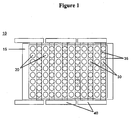
- Figure 1 shows a top view of one embodiment, a 48-network analysis plate utilizing a commercially available 96 well assay plate.
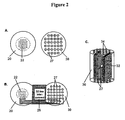
- Figure 2A shows a top view of an embodiment of a recording well adjacent to an amplification well
- Figure 2B shows a top view of an embodiment of a recording well adjacent to an amplification well and having an interconnect passing between the two wells
- Figure 2C shows a side view of an embodiment of an amplification well with "insertion" VLSI preamplifiers.
- Figure 3A shows a top view of one embodiment, a 16-network analysis plate utilizing a commercially available 24 well assay plate, with exemplary measurements; and Figure 3B shows a side view of an embodiment of a network analysis plate, with exemplary measurements.
- the present invention relates to neuronal networks useful for detecting and quantitating pharmacological and toxicological responses in vitro.
- the present invention pertains to a 48-network analysis plate with amplification circuitry in an adapted commercial 96-well format.
- One aspect of the present invention is a neuronal network analysis plate that utilizes a commercially available 24 or 96 well assay plate.
- the network analysis plate includes alternating rows of wells dedicated to either (a) cell culture and recording or (b) connection and amplification.
- each row of 8 wells dedicated to cell culture and containing the electrodes and recording equipment is immediately adjacent to a row of 8 wells that contains respective connection and amplification equipment.
- the amplification equipment included in each amplification well preferably includes two VLSI amplifiers.
- the first stage signal amplification takes place within 8 - 10 mm of the electrode recording craters.
- An eight well bus bar contacts the top of each amplification well and carries the amplified signal to connectors for second stage amplification.
- the network analysis plate 10 utilizes a standard 96 well assay plate 15.
- the network analysis plate 10 contains alternating rows of recording wells 20 and amplifying wells 30.
- the amplifying wells 30 are contacted by bus bars 35 which carry the amplified signals to the connectors 40.
- the connectors 40 then carry the amplified signals to the second stage amplification equipment.
- the recording wells 20 contain viable nerve cell networks.
- the nerve cell networks themselves can be prepared in an expert cell culture lab and shipped to the final location to be used for experiments. At the origin, the networks should receive a quality control check that includes morphological and electrophysiological evaluations. The latter will provide a settings file that contains the location of discriminated active units, their signal to noise ratios, and the network firing pattern. This file can be opened at the destination for immediate evaluation of the product after shipping.
- the nerve cell networks in the open wells are preferably maintained by a robotic platform which is responsible for maintaining osmolarity, feeding, and medium changes, as well as the application of test compounds.
- the activity of the neuronal network is monitored by a series of electrodes. Preferably, thirty-two (32) electrodes are used with the nerve cell network contained within the recording well 20.
- a recording well 20 is shown adjacent to an amplifying well 30.
- the neural cell network 22 that is interspersed with electrodes for recording the action potential signals.
- Within amplifying well 30 are thirty-two gold pads 27 that serve as contacts.
- a 32-line interconnect 25 is shown which connects the electrodes from the neural cell network 22 to each of the gold pads 27 in the amplifying well 30.
- the amplifying well 30 is shown to have two VLSI amplifiers 32. The gold pads 27 at the bottom of the amplifying well 30 make contact with the VLSI amplifiers 32, which then make contact with the upper contact pads 34.
- the upper contact pads 34 then make contact with the bus bars 35 shown in Figure 1 .
- the bus bars 35 carry the amplified signals to the connectors 40, as shown in Figure 1 , which then carry the amplified signals to any preferred second stage amplification equipment.
- the VLSI amplifiers 32 shown in Figure 2 are 16 channel VLSI amplifiers that are capable of fitting within a cylindrical well that is 6 mm in diameter and 10 mm tall.
- the network analysis plate 100 utilizes a standard 24 well assay plate 105 having a 16 network platform.
- the network analysis plate 100 contains alternating rows of recording wells 120 and amplifying wells 130.
- the amplifying wells 130 are contacted by bus bars or bus lines 135, which are preferably 128 Ch and include power.
- the bus lines 135 carry the amplified signals to the connectors 140.
- the arrows illustrated in Figure 3A superimposed on the bus lines 135 show the direction in which the signals pass to the connectors 140.
- the recording wells 120 contain viable nerve cell networks.
- the network recording area 125 is preferably in the center of the recording well 120.
- a set of 32 thin film conductors 150 connect the electrodes in the network recording areas 125 to the amplifying wells 130.
- the amplifying wells 130 are shown to contain two analog preamplifiers 155 each.
- Figure 3A illustrates a side view of an embodiment of a network analysis plate utilizing a standard 24 well assay plate 105. Exemplary measurements are shown, particularly with regard to the recording wells 120.
- One preferred embodiment of the present invention is a neuronal network analysis plate comprising a plurality of recording wells organized into a plurality of recording rows. Each recording well contains a neural cell network and a plurality of electrodes for recording signals from the neural cell network.
- the neuronal network analysis plate also comprises a plurality of amplifying wells organized into a plurality of amplifying rows. Each amplifying well contains one or more amplifiers for amplifying recording signals from the recording wells. The plurality of recording rows and the plurality of amplifying rows are alternating such that each recording well is adjacent to a corresponding amplifying well.
- the neuronal network analysis plate also comprises a plurality of interconnects. Each interconnect connects the electrodes of a recording well with the amplifiers of a corresponding amplifying well.
- the plurality of recording wells in the neuronal network analysis plate can comprise 48 recording wells organized into 6 recording rows and the plurality of amplifying wells can comprise 48 amplifying wells organized into 6 amplifying rows.
- the neuronal network analysis plate utilizes the wells of a standard 96 well plate having 12 rows of 8 wells each.
- the neuronal network analysis plate can also comprise 16 recording wells organized into 4 recording rows and 8 amplifying wells organized into 2 amplifying rows.
- This neuronal network analysis plate may utilize the wells of a standard 24 well plate having 6 rows of 4 wells each.
- the neuronal network analysis plate further comprises a plurality of bus bars in contact with the amplifiers in the amplifying wells.
- the bus bars can be connected to connectors, and the connectors can be connected to secondary amplification equipment.
- the neuronal network analysis plate can also further comprise a robotic liquid handling system that is capable of interacting with the plate to maintain osmolarity in the wells, feed and change the medium in the recording wells to maintain the neural cell networks, and apply any test compounds.
- a further preferred embodiment is a method for parallel, non-multiplexed recording of action potential signals from active nerve cell networks exposed to one or more agents.
- the method comprises first preparing an embodiment of the neuronal network analysis plate, then exposing the recording wells of the neuronal network analysis plate to the agents, and finally recording the signals that are amplified by the amplifying wells of the neuronal network analysis plate.
- the final step can involve recording the signals amplified by the secondary amplification equipment.
- the agents can be pharmacological agents or any test compounds.
- a further preferred embodiment is a method for detecting and quantifying pharmacological and toxicological responses of neural cells to one or more agents in vitro.
- the method comprises first preparing an embodiment of the neuronal network analysis plate, then exposing the recording wells of the neuronal network analysis plate to the agents, and finally recording the signals that are amplified by the amplifying wells of the neuronal network analysis plate.
- the final step can involve recording the signals amplified by the secondary amplification equipment.
- the final step can involve the analysis of the recorded signals, which allows the user to quantify the pharmacological and toxicological responses of the neural cells to the one or more agents.
- the agents can be pharmacological agents or any test compounds.
Landscapes
- Health & Medical Sciences (AREA)
- Engineering & Computer Science (AREA)
- Life Sciences & Earth Sciences (AREA)
- Biomedical Technology (AREA)
- Immunology (AREA)
- Chemical & Material Sciences (AREA)
- Hematology (AREA)
- Urology & Nephrology (AREA)
- Molecular Biology (AREA)
- Cell Biology (AREA)
- General Health & Medical Sciences (AREA)
- Toxicology (AREA)
- Analytical Chemistry (AREA)
- Medicinal Chemistry (AREA)
- Bioinformatics & Cheminformatics (AREA)
- General Physics & Mathematics (AREA)
- Tropical Medicine & Parasitology (AREA)
- Food Science & Technology (AREA)
- Biotechnology (AREA)
- Physics & Mathematics (AREA)
- Biochemistry (AREA)
- Pathology (AREA)
- Microbiology (AREA)
- Neurosurgery (AREA)
- Neurology (AREA)
- Chemical Kinetics & Catalysis (AREA)
- Clinical Laboratory Science (AREA)
- General Chemical & Material Sciences (AREA)
- Organic Chemistry (AREA)
- Pharmacology & Pharmacy (AREA)
- Animal Behavior & Ethology (AREA)
- Public Health (AREA)
- Veterinary Medicine (AREA)
- Nuclear Medicine, Radiotherapy & Molecular Imaging (AREA)
- Apparatus Associated With Microorganisms And Enzymes (AREA)
- Measuring Or Testing Involving Enzymes Or Micro-Organisms (AREA)
- Investigating Or Analyzing Materials By The Use Of Electric Means (AREA)
- Medicines That Contain Protein Lipid Enzymes And Other Medicines (AREA)
Abstract
Description
- This invention pertains to neural networks, and particularly to multinetwork, multielectrode assay devices capable of completely parallel, non-multiplexed recording of action potential signals.
- In the last decade, substantial and crucial progress has been made in the validation of primary neuronal cell cultures as pharmacological research platforms. Networks in culture are spontaneously active and produce action potential (AP) patterns that change in a predictable and reproducible manner in response to physical and chemical/pharmacological perturbations of their environment. By growing such networks on arrays of substrate integrated microelectrodes (Gross et al., 1977; Gross 1994), intimate contact with the electrodes can be achieved, providing high signal-to-noise ratios, long-term stability, and an operational lifetime of several months. The monitoring of many nerve cells in such networks yields rich spatio-temporal patterns, subtle sup-population responses, and general fault tolerance, as all data analysis is based on nerve cell groups rather than single neurons. Realistic applications to the fields of toxicology, pharmacology, and drug development are emerging (Gross et al., 1997; Morefield et al., 2000; Gramowski et al., 2000; Keefer et al., 2001a,b, Gross and Gopal, 2006).
- It also has been shown that such networks function as biosensors, as they respond to any compound that can alter the normal function of the nervous system and do not require a-priori knowledge (or "fingerprints") of the agents encountered (Gross et al., 1997, Gross and Pancrazio, 2006). They represent "broad-band" biosensors of interest to the military and homeland security. A stand-alone automated sensor station prototype already exists at the Naval Research Laboratory (NRL/UNT collaboration under DARPA Activities Detection Program). As complex, spontaneously active systems, the networks also embody the mystery of pattern generation, processing, and storage, and therewith, the initial steps and strategies of information processing.
- Two-network arrays for simultaneous recording from two separate networks (32 electrodes each) are now in routine use at select institutions. However, this approach is still far from what is needed for efficient exploration and applications of network dynamics. Statistical evaluations of interculture repeatability, multiple drug and sequential concentration applications, and of the temporal evolution of toxic responses are tedious and far too slow for present industrial and even research requirements.
- Claverol-Timturé et al., 2005, discloses a neuronal network analysis plate comprising multielectrode arrays with elastomeric microstructured overlays for extracellular recordings from patterned neurons.
- A major temporal and financial burden associated with drug development and toxicology assessment is the lack of physiological assay platforms that are positioned between the biochemist and the animal or human experiments in order to provide rapid, quantitative data on neuroactive/neurotoxic responses. What is lacking in the art is a platform that uses the complex and sensitive neurophysiological network dynamics (provided by the simultaneous recording of action potentials from hundreds of nerve cells), for determination of pharmacological and toxicological responses. By employing many networks in parallel in an automated, robotic system, it would be highly desirable to develop a highly-efficient screening of compounds that would substantially accelerate research in these areas, and drastically reduce the number of animals required by present testing and evaluation procedures. The central nervous system tissue from embryos of one pregnant mouse (usually 10-12) can produce cell pools that allow the seeding of over 1000 networks. This represents an extraordinary efficiency in tissue utilization.
-
- Gramowski, Schiffmann and Gross, "Quantification of acute neurotoxic effects of trimethyltin using neuronal networks cultured on microelectrode arrays," NeuroToxicology, 21:331-42, 2000.
- Gross and Gopal, Emerging histiotypic properties of cultured neuronal networks. In: M. Taketani and M. Baudry (eds) Advances in Network Electrophysiology using MultiElectrode Arrays. Springer, pp 193-214. 2006.
- Gross and Pancrazio Neuronal Network Biosensors. In: Smart Biosensor Technology (G.K. Knopf and A.S. Bassi, eds), Taylor and Francis Publishers, CRC Press.pp 177-201, 2006.
- Gross, Rieske, Kreutzberg and Meyer, "A new fixed-array multimicroelectrode system designed for longterm monitoring of extracellular single unit neuronal activity in vitro," Neurosci. Lett., 6:101-05,1977.
- Gross, "Internal dynamics of randomized mammalian neuronal networks in culture," In:Enabling Technologies for Cultured Neural Networks, Stenger and McKenna (Eds.), Academic Press, NY, pp. 277-317, 1994.
- Gross, Harsch, Rhoades and Gopel, "Odor, drug, and toxin analysis with neuronal networks in vitro: extracellular array recording of network responses," Biosensors and Bioelectronics, 12:373-93,1997.
- Keefer, Gramowski and Gross, "NMDA receptor dependent periodic oscillations in cultured spinal cord networks," J. Neurophysiol., 86:3030-3042, 2001a.
- Keefer, Gramowski, Stenger, Pancrazio and Gross, "Characterization of acute neurotoxic effects of trimethylolpropane phosphate via neuronal network biosensors," Biosensors and Bioelectronics 16: 513-52, 2001b.
- Morefield et al., "Drug evaluation using neuronal networks cultured on microelectrode arrays, "Biosensors and Bioelectronics 15 : 383-396, 2000.
- Claverol-Timturé et al., "Multielectrode arrays with elastomeric microstructured overlays for extracellular recordings from patterned neurons," J. Neural Eng. 2 : L1-L7, 2005.
- The present invention relates generally to the field of neuronal networks. In particular, this invention relates to multinetwork, multiwell assay plates having alternating columns for cell culture and for the recording circuitry. These assay plates allow the parallel, non-multiplexed recording of action potential signals from numerous active nerve cell networks simultaneously.
- Generally, the current invention provides devices employing highly-sensitive neurophysiological network dynamics to detect and quantitate a variety of pharmacological and toxicological responses in vitro. The multiwell, multielectrode assay devices have a minimum of at least 2 separate neural networks per plate, each of these networks being served by a number of microelectrodes sufficient to allow a statistical description of major changes in network activity patterns. Depending on the size of the network, this can range from ten to several hundred. As an example, a 3 mm diameter planar network can be monitored effectively by 32 microelectrodes. Pluralities of two or more such networks may be arranged in tandem, in parallel, or in series within a given system to be served by the robot. One or more recording stations may preferably be included with the sample platform of the robotic liquid handling system allowing simultaneous recording from numerous networks before and during their exposure to pharmacological agents.
- The signals collected by the microelectrodes are passed first to "insertion" VLSI or miniaturized preamplifiers. The closer the preamplifier or first stage preamplification circuitry is to the electrode, the better. This reduces noise and is optimal for microvolt recording. In some embodiments, the preamplifiers can be added to one or more sides of the multinetwork plate to provide the action potential data recorded extracellularly from each electrode. The current invention utilizes tried and proven passive thin film microelectrode leads coupled to VLSI operational amplifiers. Other solutions use discontinuous laser scanning methods that have not been proven to work and cause loss of data inherent to the scanning procedure.
- The current invention is particularly advantageous because it utilizes, within a single assay plate, alternating columns of wells for cell culture and for the recording and amplification circuitry. Each column of wells in the plate containing cultured cells is immediately adjacent to a column of wells containing respective recording circuitrv. Thus, the preamplifier circuitry is within 10 - 20 mm of the recording electrodes. The use of an industry standardized 24 or 96 well plate is ideal because it permits the parallel, non-multiplexed recording from up to 48 active nerve cell networks. This is also convenient due to the ease of obtaining these plates. Any standardized well plate could be used with any desired number of nerve cell networks. The use of glass plates and transparent indium-tin oxide ("ITO") conductors also permits optical evaluation of network health via phase contrast microscopy and the use of fluorescence techniques. The use of glass plates with passive conductors, but without integrated amplification circuitry on the plate, drastically reduces fabrication costs and allows sterilization via autoclaving. The methodology requires primarily mature nerve cell networks (achieved 3 to 4 weeks after the initial seeding of cells). Therefore, many such multi-array plates must be used to provide a continuous supply of networks for routine assays and analyses. It is essential to make these plates as simple, rugged, and cheap as possible.
-
Figure 1 shows a top view of one embodiment, a 48-network analysis plate utilizing a commercially available 96 well assay plate. -
Figure 2A shows a top view of an embodiment of a recording well adjacent to an amplification well;Figure 2B shows a top view of an embodiment of a recording well adjacent to an amplification well and having an interconnect passing between the two wells; andFigure 2C shows a side view of an embodiment of an amplification well with "insertion" VLSI preamplifiers. -
Figure 3A shows a top view of one embodiment, a 16-network analysis plate utilizing a commercially available 24 well assay plate, with exemplary measurements; andFigure 3B shows a side view of an embodiment of a network analysis plate, with exemplary measurements. - The present invention relates to neuronal networks useful for detecting and quantitating pharmacological and toxicological responses in vitro. In particular, the present invention pertains to a 48-network analysis plate with amplification circuitry in an adapted commercial 96-well format.
- One aspect of the present invention is a neuronal network analysis plate that utilizes a commercially available 24 or 96 well assay plate. The network analysis plate includes alternating rows of wells dedicated to either (a) cell culture and recording or (b) connection and amplification. For the exemplary 96 well plate, each row of 8 wells dedicated to cell culture and containing the electrodes and recording equipment is immediately adjacent to a row of 8 wells that contains respective connection and amplification equipment. The amplification equipment included in each amplification well preferably includes two VLSI amplifiers. Thus, the first stage signal amplification takes place within 8 - 10 mm of the electrode recording craters. An eight well bus bar contacts the top of each amplification well and carries the amplified signal to connectors for second stage amplification.
- With regard to
Figure 1 , an embodiment of anetwork analysis plate 10 is illustrated. Thenetwork analysis plate 10 utilizes a standard 96well assay plate 15. Thenetwork analysis plate 10 contains alternating rows ofrecording wells 20 and amplifyingwells 30. The amplifyingwells 30 are contacted bybus bars 35 which carry the amplified signals to theconnectors 40. Theconnectors 40 then carry the amplified signals to the second stage amplification equipment. - The
recording wells 20 contain viable nerve cell networks. The nerve cell networks themselves can be prepared in an expert cell culture lab and shipped to the final location to be used for experiments. At the origin, the networks should receive a quality control check that includes morphological and electrophysiological evaluations. The latter will provide a settings file that contains the location of discriminated active units, their signal to noise ratios, and the network firing pattern. This file can be opened at the destination for immediate evaluation of the product after shipping. The nerve cell networks in the open wells are preferably maintained by a robotic platform which is responsible for maintaining osmolarity, feeding, and medium changes, as well as the application of test compounds. The activity of the neuronal network is monitored by a series of electrodes. Preferably, thirty-two (32) electrodes are used with the nerve cell network contained within therecording well 20. - With reference to
Figure 2A , arecording well 20 is shown adjacent to an amplifying well 30. Within recording well 20 is theneural cell network 22 that is interspersed with electrodes for recording the action potential signals. Within amplifying well 30 are thirty-twogold pads 27 that serve as contacts. With reference toFigure 2B , a 32-line interconnect 25 is shown which connects the electrodes from theneural cell network 22 to each of thegold pads 27 in the amplifying well 30. With reference toFigure 2C , the amplifying well 30 is shown to have twoVLSI amplifiers 32. Thegold pads 27 at the bottom of the amplifying well 30 make contact with theVLSI amplifiers 32, which then make contact with theupper contact pads 34. Theupper contact pads 34 then make contact with the bus bars 35 shown inFigure 1 . As discussed above, the bus bars 35 carry the amplified signals to theconnectors 40, as shown inFigure 1 , which then carry the amplified signals to any preferred second stage amplification equipment. - Preferably, the
VLSI amplifiers 32 shown inFigure 2 are 16 channel VLSI amplifiers that are capable of fitting within a cylindrical well that is 6 mm in diameter and 10 mm tall. - With regard to
Figure 3A , an alternate embodiment of anetwork analysis plate 100 is illustrated, with exemplary measurements between components. Thenetwork analysis plate 100 utilizes a standard 24well assay plate 105 having a 16 network platform. Thenetwork analysis plate 100 contains alternating rows ofrecording wells 120 and amplifyingwells 130. The amplifyingwells 130 are contacted by bus bars orbus lines 135, which are preferably 128 Ch and include power. Thebus lines 135 carry the amplified signals to theconnectors 140. The arrows illustrated inFigure 3A superimposed on thebus lines 135 show the direction in which the signals pass to theconnectors 140. Therecording wells 120 contain viable nerve cell networks. Thenetwork recording area 125 is preferably in the center of therecording well 120. A set of 32thin film conductors 150 connect the electrodes in thenetwork recording areas 125 to the amplifyingwells 130. The amplifyingwells 130 are shown to contain twoanalog preamplifiers 155 each. -
Figure 3A illustrates a side view of an embodiment of a network analysis plate utilizing a standard 24well assay plate 105. Exemplary measurements are shown, particularly with regard to therecording wells 120. - One preferred embodiment of the present invention is a neuronal network analysis plate comprising a plurality of recording wells organized into a plurality of recording rows. Each recording well contains a neural cell network and a plurality of electrodes for recording signals from the neural cell network. The neuronal network analysis plate also comprises a plurality of amplifying wells organized into a plurality of amplifying rows. Each amplifying well contains one or more amplifiers for amplifying recording signals from the recording wells. The plurality of recording rows and the plurality of amplifying rows are alternating such that each recording well is adjacent to a corresponding amplifying well. The neuronal network analysis plate also comprises a plurality of interconnects. Each interconnect connects the electrodes of a recording well with the amplifiers of a corresponding amplifying well.
- In additional preferred embodiments, the plurality of recording wells in the neuronal network analysis plate can comprise 48 recording wells organized into 6 recording rows and the plurality of amplifying wells can comprise 48 amplifying wells organized into 6 amplifying rows. Alternatively, the neuronal network analysis plate utilizes the wells of a standard 96 well plate having 12 rows of 8 wells each. The neuronal network analysis plate can also comprise 16 recording wells organized into 4 recording rows and 8 amplifying wells organized into 2 amplifying rows. This neuronal network analysis plate may utilize the wells of a standard 24 well plate having 6 rows of 4 wells each. In a further preferred embodiment, the neuronal network analysis plate further comprises a plurality of bus bars in contact with the amplifiers in the amplifying wells. The bus bars can be connected to connectors, and the connectors can be connected to secondary amplification equipment. The neuronal network analysis plate can also further comprise a robotic liquid handling system that is capable of interacting with the plate to maintain osmolarity in the wells, feed and change the medium in the recording wells to maintain the neural cell networks, and apply any test compounds.
- A further preferred embodiment is a method for parallel, non-multiplexed recording of action potential signals from active nerve cell networks exposed to one or more agents. The method comprises first preparing an embodiment of the neuronal network analysis plate, then exposing the recording wells of the neuronal network analysis plate to the agents, and finally recording the signals that are amplified by the amplifying wells of the neuronal network analysis plate. Alternatively, if secondary amplification equipment is used, the final step can involve recording the signals amplified by the secondary amplification equipment. The agents can be pharmacological agents or any test compounds.
- A further preferred embodiment is a method for detecting and quantifying pharmacological and toxicological responses of neural cells to one or more agents in vitro. The method comprises first preparing an embodiment of the neuronal network analysis plate, then exposing the recording wells of the neuronal network analysis plate to the agents, and finally recording the signals that are amplified by the amplifying wells of the neuronal network analysis plate. Alternatively, if secondary amplification equipment is used, the final step can involve recording the signals amplified by the secondary amplification equipment. Also, the final step can involve the analysis of the recorded signals, which allows the user to quantify the pharmacological and toxicological responses of the neural cells to the one or more agents. A person of skill in the art would understand how to analyze and compare recorded action potential signals to better understand the pharmacological and toxicological response of a neural cell network to different agents. The agents can be pharmacological agents or any test compounds.
Claims (13)
- A neuronal network analysis plate (10) comprising:a plurality of recording wells (20) organized into a plurality of recording rows, wherein each recording well contains a neural cell network (22) and a plurality of electrodes for recording action potential signals from the neural cell network;a plurality of amplifying wells (30) organized into a plurality of amplifying rows, wherein each amplifying well contains one or more amplifiers (32) for amplifying recording signals from the recording wells, wherein the plurality of recording rows and the plurality of amplifying rows are alternating such that each recording well is adjacent to a corresponding amplifying well; anda plurality of interconnects (25), wherein each interconnect connects the electrodes of a recording well with the amplifiers of a corresponding amplifying well.
- The neuronal network analysis plate of claim 1, wherein the plurality of recording wells comprises 48 recording wells organized into 6 recording rows, and wherein the plurality of amplifying wells comprises 48 amplifying wells organized into 6 amplifying rows.
- The neuronal network analysis plate of claim 2, wherein the neuronal network analysis plate utilizes the wells of a standard 96 well plate having 12 rows of 8 wells each.
- The neuronal network analysis plate of claim 1, wherein the plurality of recording wells comprises 16 recording wells organized into 4 recording rows, and wherein the plurality of amplifying wells comprises 8 amplifying wells organized into 2 amplifying rows.
- The neuronal network analysis plate of claim 4, wherein the neuronal network analysis plate utilizes the wells of a standard 24 well plate having 6 rows of 4 wells each.
- The neuronal network analysis plate of claim 1, further comprising a plurality of bus bars (35) in contact with the amplifiers in the amplifying wells.
- The neuronal network analysis plate of claim 6, wherein the bus bars are connected to connectors (40), and wherein the connectors are connected to secondary amplification equipment.
- A robotic liquid handling system comprising the neuronal network analysis plate of claim 1.
- A method for parallel, non-multiplexed recording of action potential signals from active nerve cell networks exposed to one or more agents, comprising:preparing the neuronal network analysis plate of claim 1 or claim 7;exposing the recording wells of the neuronal network analysis plate to the one or more agents; andrecording the signals amplified by the amplifying wells of the neuronal network analysis plate.
- The method of claim 9, wherein the one or more agents are one or more pharmacological agents.
- A method for detecting and quantifying pharmacological and toxicological responses of neural cells to one or more agents in vitro, comprising:preparing the neuronal network analysis plate of claim 1 or claim 7;exposing the recording wells of the neuronal network analysis plate to the one or more agents; andrecording the signals amplified by the amplifying wells of the neuronal network analysis plate.
- The method of claim 11, wherein the one or more agents are one or more pharmacological agents.
- The method of claim 11, further comprising the step of analyzing the recorded signals to quantify the pharmacological and toxicological responses of the neural cells to the one or more agents.
Applications Claiming Priority (2)
| Application Number | Priority Date | Filing Date | Title |
|---|---|---|---|
| US84539906P | 2006-09-18 | 2006-09-18 | |
| PCT/US2007/019780 WO2008100287A2 (en) | 2006-09-18 | 2007-09-12 | Multinetwork nerve cell assay platform with parallel recording capability |
Publications (2)
| Publication Number | Publication Date |
|---|---|
| EP2064546A2 EP2064546A2 (en) | 2009-06-03 |
| EP2064546B1 true EP2064546B1 (en) | 2010-11-03 |
Family
ID=39690646
Family Applications (1)
| Application Number | Title | Priority Date | Filing Date |
|---|---|---|---|
| EP07872615A Not-in-force EP2064546B1 (en) | 2006-09-18 | 2007-09-12 | Multinetwork nerve cell assay platform with parallel recording capability |
Country Status (7)
| Country | Link |
|---|---|
| US (1) | US8460921B2 (en) |
| EP (1) | EP2064546B1 (en) |
| JP (1) | JP5232785B2 (en) |
| AT (1) | ATE487135T1 (en) |
| DE (1) | DE602007010321D1 (en) |
| ES (1) | ES2355528T3 (en) |
| WO (1) | WO2008100287A2 (en) |
Families Citing this family (5)
| Publication number | Priority date | Publication date | Assignee | Title |
|---|---|---|---|---|
| US9279801B2 (en) | 2013-07-26 | 2016-03-08 | Axion Biosystems, Inc. | Devices, systems and methods for high-throughput electrophysiology |
| DE102014003432B3 (en) * | 2014-03-11 | 2015-05-07 | NeuroProof GmbH | Method for testing neuroactive substances |
| US10067117B2 (en) | 2014-08-12 | 2018-09-04 | Axion Biosystems, Inc. | Cell-based biosensor array and associated methods for manufacturing the same |
| CA3187265A1 (en) * | 2020-06-17 | 2021-12-23 | President And Fellows Of Harvard College | Apparatuses for cell mapping via impedance measurements and methods to operate the same |
| CA3187430A1 (en) | 2020-06-17 | 2021-12-23 | President And Fellows Of Harvard College | Systems and methods for patterning and spatial electrochemical mapping of cells |
Family Cites Families (9)
| Publication number | Priority date | Publication date | Assignee | Title |
|---|---|---|---|---|
| JPH08149998A (en) * | 1994-11-28 | 1996-06-11 | Nippon Telegr & Teleph Corp <Ntt> | Device and method for determining effect of drug or the like on cells |
| CA2369478A1 (en) * | 1999-04-15 | 2000-10-26 | Devgen Nv | Compound screening methods |
| US20030154501A1 (en) * | 1999-04-15 | 2003-08-14 | Devgen, N.V. | Compound screening method |
| US7615356B2 (en) * | 2000-07-10 | 2009-11-10 | Vertex Pharmaceuticals (San Diego) Llc | Ion channel assay methods |
| US7312043B2 (en) * | 2000-07-10 | 2007-12-25 | Vertex Pharmaceuticals (San Diego) Llc | Ion channel assay methods |
| WO2002099408A1 (en) * | 2001-06-05 | 2002-12-12 | Matsushita Electric Industrial Co., Ltd. | Signal detecting sensor provided with multi-electrode |
| US8048289B2 (en) * | 2004-09-10 | 2011-11-01 | Molecular Devices, Llc | Parallel patch clamp system |
| US8560041B2 (en) * | 2004-10-04 | 2013-10-15 | Braingate Co., Llc | Biological interface system |
| US20070017530A1 (en) * | 2005-06-10 | 2007-01-25 | Syed Naweed I | Detecting electrical activity and assessing agents for the ability to influence electrical activity |
-
2007
- 2007-09-12 EP EP07872615A patent/EP2064546B1/en not_active Not-in-force
- 2007-09-12 ES ES07872615T patent/ES2355528T3/en active Active
- 2007-09-12 US US12/441,703 patent/US8460921B2/en not_active Expired - Fee Related
- 2007-09-12 JP JP2009528265A patent/JP5232785B2/en not_active Expired - Fee Related
- 2007-09-12 AT AT07872615T patent/ATE487135T1/en not_active IP Right Cessation
- 2007-09-12 DE DE602007010321T patent/DE602007010321D1/en active Active
- 2007-09-12 WO PCT/US2007/019780 patent/WO2008100287A2/en not_active Ceased
Also Published As
| Publication number | Publication date |
|---|---|
| WO2008100287A3 (en) | 2008-12-18 |
| US8460921B2 (en) | 2013-06-11 |
| DE602007010321D1 (en) | 2010-12-16 |
| US20090291466A1 (en) | 2009-11-26 |
| JP5232785B2 (en) | 2013-07-10 |
| ATE487135T1 (en) | 2010-11-15 |
| ES2355528T3 (en) | 2011-03-28 |
| WO2008100287A2 (en) | 2008-08-21 |
| JP2010518885A (en) | 2010-06-03 |
| EP2064546A2 (en) | 2009-06-03 |
Similar Documents
| Publication | Publication Date | Title |
|---|---|---|
| Jones et al. | The potential of microelectrode arrays and microelectronics for biomedical research and diagnostics | |
| Johnstone et al. | Microelectrode arrays: a physiologically based neurotoxicity testing platform for the 21st century | |
| Jäckel et al. | Combination of high-density microelectrode array and patch clamp recordings to enable studies of multisynaptic integration | |
| Morin et al. | Investigating neuronal activity with planar microelectrode arrays: achievements and new perspectives | |
| Novellino et al. | Development of micro-electrode array based tests for neurotoxicity: assessment of interlaboratory reproducibility with neuroactive chemicals | |
| JP6337113B2 (en) | Devices, systems, and methods for high-throughput electrophysiology | |
| US20180120294A1 (en) | Microfluidic Devices for Cells or Organ based Multimodal Activation and Monitoring system | |
| US8460921B2 (en) | Multinetwork nerve cell assay platform with parallel recording capability | |
| Wolf et al. | Automated platform for sensor-based monitoring and controlled assays of living cells and tissues | |
| US7236888B2 (en) | Method to measure the activation state of signaling pathways in cells | |
| Rudolph et al. | Cell and tissue based technologies for environmental detection and medical diagnostics | |
| Lee et al. | Repeated and on-demand intracellular recordings of cardiomyocytes derived from human-induced pluripotent stem cells | |
| Keighron et al. | Electrochemistry of single-vesicle events | |
| US10793820B2 (en) | Miniaturized, automated in-vitro tissue bioreactor | |
| EP4264248B1 (en) | Systems, devices and methods for cell analysis using chemfet sensor arrays | |
| Zhang et al. | Brain organoids-on-chip for neural diseases modeling: History, challenges and trends | |
| Zhao et al. | Technical applications of microelectrode array and patch clamp recordings on human induced pluripotent stem cell-derived cardiomyocytes | |
| Thewes et al. | CMOS-based biosensor arrays | |
| Obien et al. | CMOS-based high-density microelectrode arrays: technology and applications | |
| Bakker et al. | Classification of cortical microcircuits based on micro-electrode-array data from slices of rat barrel cortex | |
| EP1251904A1 (en) | Assays for the detection of agents that affect cognition | |
| EP1336101B1 (en) | A method to measure the activation state of signaling pathways in cells | |
| WO2003087293A1 (en) | Apparatus and method for biochemical analysis | |
| Kraushaar | Compound Testing of Human-Induced Pluripotent Stem Cell-Derived Cardiomyocytes Using Multi-Well Microelectrode Arrays | |
| US20070017530A1 (en) | Detecting electrical activity and assessing agents for the ability to influence electrical activity |
Legal Events
| Date | Code | Title | Description |
|---|---|---|---|
| PUAI | Public reference made under article 153(3) epc to a published international application that has entered the european phase |
Free format text: ORIGINAL CODE: 0009012 |
|
| 17P | Request for examination filed |
Effective date: 20090319 |
|
| AK | Designated contracting states |
Kind code of ref document: A2 Designated state(s): AT BE BG CH CY CZ DE DK EE ES FI FR GB GR HU IE IS IT LI LT LU LV MC MT NL PL PT RO SE SI SK TR |
|
| AX | Request for extension of the european patent |
Extension state: AL BA HR MK RS |
|
| DAX | Request for extension of the european patent (deleted) | ||
| GRAP | Despatch of communication of intention to grant a patent |
Free format text: ORIGINAL CODE: EPIDOSNIGR1 |
|
| GRAS | Grant fee paid |
Free format text: ORIGINAL CODE: EPIDOSNIGR3 |
|
| GRAA | (expected) grant |
Free format text: ORIGINAL CODE: 0009210 |
|
| AK | Designated contracting states |
Kind code of ref document: B1 Designated state(s): AT BE BG CH CY CZ DE DK EE ES FI FR GB GR HU IE IS IT LI LT LU LV MC MT NL PL PT RO SE SI SK TR |
|
| REG | Reference to a national code |
Ref country code: GB Ref legal event code: FG4D |
|
| REG | Reference to a national code |
Ref country code: CH Ref legal event code: EP |
|
| REG | Reference to a national code |
Ref country code: IE Ref legal event code: FG4D |
|
| REF | Corresponds to: |
Ref document number: 602007010321 Country of ref document: DE Date of ref document: 20101216 Kind code of ref document: P |
|
| REG | Reference to a national code |
Ref country code: NL Ref legal event code: VDEP Effective date: 20101103 |
|
| REG | Reference to a national code |
Ref country code: ES Ref legal event code: FG2A Ref document number: 2355528 Country of ref document: ES Kind code of ref document: T3 Effective date: 20110328 |
|
| LTIE | Lt: invalidation of european patent or patent extension |
Effective date: 20101103 |
|
| PG25 | Lapsed in a contracting state [announced via postgrant information from national office to epo] |
Ref country code: LT Free format text: LAPSE BECAUSE OF FAILURE TO SUBMIT A TRANSLATION OF THE DESCRIPTION OR TO PAY THE FEE WITHIN THE PRESCRIBED TIME-LIMIT Effective date: 20101103 |
|
| PG25 | Lapsed in a contracting state [announced via postgrant information from national office to epo] |
Ref country code: FI Free format text: LAPSE BECAUSE OF FAILURE TO SUBMIT A TRANSLATION OF THE DESCRIPTION OR TO PAY THE FEE WITHIN THE PRESCRIBED TIME-LIMIT Effective date: 20101103 Ref country code: PT Free format text: LAPSE BECAUSE OF FAILURE TO SUBMIT A TRANSLATION OF THE DESCRIPTION OR TO PAY THE FEE WITHIN THE PRESCRIBED TIME-LIMIT Effective date: 20110303 Ref country code: BG Free format text: LAPSE BECAUSE OF FAILURE TO SUBMIT A TRANSLATION OF THE DESCRIPTION OR TO PAY THE FEE WITHIN THE PRESCRIBED TIME-LIMIT Effective date: 20110203 Ref country code: IS Free format text: LAPSE BECAUSE OF FAILURE TO SUBMIT A TRANSLATION OF THE DESCRIPTION OR TO PAY THE FEE WITHIN THE PRESCRIBED TIME-LIMIT Effective date: 20110303 Ref country code: AT Free format text: LAPSE BECAUSE OF FAILURE TO SUBMIT A TRANSLATION OF THE DESCRIPTION OR TO PAY THE FEE WITHIN THE PRESCRIBED TIME-LIMIT Effective date: 20101103 Ref country code: LV Free format text: LAPSE BECAUSE OF FAILURE TO SUBMIT A TRANSLATION OF THE DESCRIPTION OR TO PAY THE FEE WITHIN THE PRESCRIBED TIME-LIMIT Effective date: 20101103 Ref country code: SE Free format text: LAPSE BECAUSE OF FAILURE TO SUBMIT A TRANSLATION OF THE DESCRIPTION OR TO PAY THE FEE WITHIN THE PRESCRIBED TIME-LIMIT Effective date: 20101103 Ref country code: NL Free format text: LAPSE BECAUSE OF FAILURE TO SUBMIT A TRANSLATION OF THE DESCRIPTION OR TO PAY THE FEE WITHIN THE PRESCRIBED TIME-LIMIT Effective date: 20101103 Ref country code: SI Free format text: LAPSE BECAUSE OF FAILURE TO SUBMIT A TRANSLATION OF THE DESCRIPTION OR TO PAY THE FEE WITHIN THE PRESCRIBED TIME-LIMIT Effective date: 20101103 |
|
| PG25 | Lapsed in a contracting state [announced via postgrant information from national office to epo] |
Ref country code: GR Free format text: LAPSE BECAUSE OF FAILURE TO SUBMIT A TRANSLATION OF THE DESCRIPTION OR TO PAY THE FEE WITHIN THE PRESCRIBED TIME-LIMIT Effective date: 20110204 |
|
| PG25 | Lapsed in a contracting state [announced via postgrant information from national office to epo] |
Ref country code: CZ Free format text: LAPSE BECAUSE OF FAILURE TO SUBMIT A TRANSLATION OF THE DESCRIPTION OR TO PAY THE FEE WITHIN THE PRESCRIBED TIME-LIMIT Effective date: 20101103 Ref country code: EE Free format text: LAPSE BECAUSE OF FAILURE TO SUBMIT A TRANSLATION OF THE DESCRIPTION OR TO PAY THE FEE WITHIN THE PRESCRIBED TIME-LIMIT Effective date: 20101103 Ref country code: BE Free format text: LAPSE BECAUSE OF FAILURE TO SUBMIT A TRANSLATION OF THE DESCRIPTION OR TO PAY THE FEE WITHIN THE PRESCRIBED TIME-LIMIT Effective date: 20101103 |
|
| PG25 | Lapsed in a contracting state [announced via postgrant information from national office to epo] |
Ref country code: DK Free format text: LAPSE BECAUSE OF FAILURE TO SUBMIT A TRANSLATION OF THE DESCRIPTION OR TO PAY THE FEE WITHIN THE PRESCRIBED TIME-LIMIT Effective date: 20101103 Ref country code: SK Free format text: LAPSE BECAUSE OF FAILURE TO SUBMIT A TRANSLATION OF THE DESCRIPTION OR TO PAY THE FEE WITHIN THE PRESCRIBED TIME-LIMIT Effective date: 20101103 Ref country code: RO Free format text: LAPSE BECAUSE OF FAILURE TO SUBMIT A TRANSLATION OF THE DESCRIPTION OR TO PAY THE FEE WITHIN THE PRESCRIBED TIME-LIMIT Effective date: 20101103 Ref country code: PL Free format text: LAPSE BECAUSE OF FAILURE TO SUBMIT A TRANSLATION OF THE DESCRIPTION OR TO PAY THE FEE WITHIN THE PRESCRIBED TIME-LIMIT Effective date: 20101103 |
|
| PLBE | No opposition filed within time limit |
Free format text: ORIGINAL CODE: 0009261 |
|
| STAA | Information on the status of an ep patent application or granted ep patent |
Free format text: STATUS: NO OPPOSITION FILED WITHIN TIME LIMIT |
|
| 26N | No opposition filed |
Effective date: 20110804 |
|
| REG | Reference to a national code |
Ref country code: DE Ref legal event code: R097 Ref document number: 602007010321 Country of ref document: DE Effective date: 20110804 |
|
| PGFP | Annual fee paid to national office [announced via postgrant information from national office to epo] |
Ref country code: IT Payment date: 20110915 Year of fee payment: 5 |
|
| PG25 | Lapsed in a contracting state [announced via postgrant information from national office to epo] |
Ref country code: MC Free format text: LAPSE BECAUSE OF NON-PAYMENT OF DUE FEES Effective date: 20110930 |
|
| REG | Reference to a national code |
Ref country code: CH Ref legal event code: PL |
|
| REG | Reference to a national code |
Ref country code: IE Ref legal event code: MM4A |
|
| PG25 | Lapsed in a contracting state [announced via postgrant information from national office to epo] |
Ref country code: LI Free format text: LAPSE BECAUSE OF NON-PAYMENT OF DUE FEES Effective date: 20110930 Ref country code: CH Free format text: LAPSE BECAUSE OF NON-PAYMENT OF DUE FEES Effective date: 20110930 Ref country code: IE Free format text: LAPSE BECAUSE OF NON-PAYMENT OF DUE FEES Effective date: 20110912 |
|
| PG25 | Lapsed in a contracting state [announced via postgrant information from national office to epo] |
Ref country code: MT Free format text: LAPSE BECAUSE OF FAILURE TO SUBMIT A TRANSLATION OF THE DESCRIPTION OR TO PAY THE FEE WITHIN THE PRESCRIBED TIME-LIMIT Effective date: 20101103 |
|
| PG25 | Lapsed in a contracting state [announced via postgrant information from national office to epo] |
Ref country code: CY Free format text: LAPSE BECAUSE OF EXPIRATION OF PROTECTION Effective date: 20101103 Ref country code: LU Free format text: LAPSE BECAUSE OF NON-PAYMENT OF DUE FEES Effective date: 20110912 |
|
| PG25 | Lapsed in a contracting state [announced via postgrant information from national office to epo] |
Ref country code: IT Free format text: LAPSE BECAUSE OF NON-PAYMENT OF DUE FEES Effective date: 20120912 |
|
| PG25 | Lapsed in a contracting state [announced via postgrant information from national office to epo] |
Ref country code: TR Free format text: LAPSE BECAUSE OF FAILURE TO SUBMIT A TRANSLATION OF THE DESCRIPTION OR TO PAY THE FEE WITHIN THE PRESCRIBED TIME-LIMIT Effective date: 20101103 |
|
| PG25 | Lapsed in a contracting state [announced via postgrant information from national office to epo] |
Ref country code: HU Free format text: LAPSE BECAUSE OF FAILURE TO SUBMIT A TRANSLATION OF THE DESCRIPTION OR TO PAY THE FEE WITHIN THE PRESCRIBED TIME-LIMIT Effective date: 20101103 |
|
| PGFP | Annual fee paid to national office [announced via postgrant information from national office to epo] |
Ref country code: ES Payment date: 20130828 Year of fee payment: 7 Ref country code: DE Payment date: 20130904 Year of fee payment: 7 |
|
| PGFP | Annual fee paid to national office [announced via postgrant information from national office to epo] |
Ref country code: GB Payment date: 20130911 Year of fee payment: 7 Ref country code: FR Payment date: 20130910 Year of fee payment: 7 |
|
| REG | Reference to a national code |
Ref country code: DE Ref legal event code: R119 Ref document number: 602007010321 Country of ref document: DE |
|
| GBPC | Gb: european patent ceased through non-payment of renewal fee |
Effective date: 20140912 |
|
| REG | Reference to a national code |
Ref country code: DE Ref legal event code: R119 Ref document number: 602007010321 Country of ref document: DE Effective date: 20150401 |
|
| REG | Reference to a national code |
Ref country code: FR Ref legal event code: ST Effective date: 20150529 |
|
| PG25 | Lapsed in a contracting state [announced via postgrant information from national office to epo] |
Ref country code: GB Free format text: LAPSE BECAUSE OF NON-PAYMENT OF DUE FEES Effective date: 20140912 Ref country code: DE Free format text: LAPSE BECAUSE OF NON-PAYMENT OF DUE FEES Effective date: 20150401 |
|
| PG25 | Lapsed in a contracting state [announced via postgrant information from national office to epo] |
Ref country code: FR Free format text: LAPSE BECAUSE OF NON-PAYMENT OF DUE FEES Effective date: 20140930 |
|
| REG | Reference to a national code |
Ref country code: ES Ref legal event code: FD2A Effective date: 20160204 |
|
| PG25 | Lapsed in a contracting state [announced via postgrant information from national office to epo] |
Ref country code: ES Free format text: LAPSE BECAUSE OF NON-PAYMENT OF DUE FEES Effective date: 20140913 |