EP2064200B1 - Derivatives of 2-phenyl-3-hydroxyquinoline-4(1h)-one and methods of their preparation and utilization - Google Patents
Derivatives of 2-phenyl-3-hydroxyquinoline-4(1h)-one and methods of their preparation and utilization Download PDFInfo
- Publication number
- EP2064200B1 EP2064200B1 EP07785502.1A EP07785502A EP2064200B1 EP 2064200 B1 EP2064200 B1 EP 2064200B1 EP 07785502 A EP07785502 A EP 07785502A EP 2064200 B1 EP2064200 B1 EP 2064200B1
- Authority
- EP
- European Patent Office
- Prior art keywords
- substituted
- halogen
- general formula
- hydroxy
- group
- Prior art date
- Legal status (The legal status is an assumption and is not a legal conclusion. Google has not performed a legal analysis and makes no representation as to the accuracy of the status listed.)
- Not-in-force
Links
Classifications
-
- C—CHEMISTRY; METALLURGY
- C07—ORGANIC CHEMISTRY
- C07D—HETEROCYCLIC COMPOUNDS
- C07D215/00—Heterocyclic compounds containing quinoline or hydrogenated quinoline ring systems
- C07D215/02—Heterocyclic compounds containing quinoline or hydrogenated quinoline ring systems having no bond between the ring nitrogen atom and a non-ring member or having only hydrogen atoms or carbon atoms directly attached to the ring nitrogen atom
- C07D215/16—Heterocyclic compounds containing quinoline or hydrogenated quinoline ring systems having no bond between the ring nitrogen atom and a non-ring member or having only hydrogen atoms or carbon atoms directly attached to the ring nitrogen atom with hetero atoms or with carbon atoms having three bonds to hetero atoms with at the most one bond to halogen, e.g. ester or nitrile radicals, directly attached to ring carbon atoms
- C07D215/20—Oxygen atoms
- C07D215/22—Oxygen atoms attached in position 2 or 4
- C07D215/233—Oxygen atoms attached in position 2 or 4 only one oxygen atom which is attached in position 4
-
- A—HUMAN NECESSITIES
- A61—MEDICAL OR VETERINARY SCIENCE; HYGIENE
- A61P—SPECIFIC THERAPEUTIC ACTIVITY OF CHEMICAL COMPOUNDS OR MEDICINAL PREPARATIONS
- A61P31/00—Antiinfectives, i.e. antibiotics, antiseptics, chemotherapeutics
-
- A—HUMAN NECESSITIES
- A61—MEDICAL OR VETERINARY SCIENCE; HYGIENE
- A61P—SPECIFIC THERAPEUTIC ACTIVITY OF CHEMICAL COMPOUNDS OR MEDICINAL PREPARATIONS
- A61P35/00—Antineoplastic agents
-
- A—HUMAN NECESSITIES
- A61—MEDICAL OR VETERINARY SCIENCE; HYGIENE
- A61P—SPECIFIC THERAPEUTIC ACTIVITY OF CHEMICAL COMPOUNDS OR MEDICINAL PREPARATIONS
- A61P37/00—Drugs for immunological or allergic disorders
-
- C—CHEMISTRY; METALLURGY
- C07—ORGANIC CHEMISTRY
- C07D—HETEROCYCLIC COMPOUNDS
- C07D401/00—Heterocyclic compounds containing two or more hetero rings, having nitrogen atoms as the only ring hetero atoms, at least one ring being a six-membered ring with only one nitrogen atom
- C07D401/02—Heterocyclic compounds containing two or more hetero rings, having nitrogen atoms as the only ring hetero atoms, at least one ring being a six-membered ring with only one nitrogen atom containing two hetero rings
- C07D401/04—Heterocyclic compounds containing two or more hetero rings, having nitrogen atoms as the only ring hetero atoms, at least one ring being a six-membered ring with only one nitrogen atom containing two hetero rings directly linked by a ring-member-to-ring-member bond
Definitions
- the invention describes derivatives of 2-phenyl-3-hydroxyquinoline-4(1 H )-one, which show biological activity.
- Ring closure to 3-methoxy-4quinolones (7) is achieved upon subsequent N -acylation by benzoylchloride and under subsequent activity of sodium methanolate.
- Derivatives of quinolone (8) shown in the Scheme 2 are produced upon subsequent demethylation by hydrogen bromide.
- Patent WO 94/02145 describes preparation of 2-aryl-4-quinoline unsubstituted in position 3 and their use to inhibit tumor-cell growth in mammalian subject.
- the invention discloses derivatives of 2-phenyl-3-hydroxyquinoline-4(1 H )-one of the general formula (II), where X represents a nitro group or a amino group, and Y represents an oxygen atom substituted by carbon chain C 1 to C 6 where the alkyl may be substituted by halogen, hydroxy, or alkoxy group with carbon atom number 1-4; an oxygen atom substituted by phenyl group where the phenyl may be substituted by halogen, hydroxy, or alkoxy group with carbon atom number 1-4; a sulfur atom substituted by carbon chain C 1 to C 6 where the alkyl may be substituted by halogen, hydroxy, or alkoxy group with carbon atom number 1-4; a sulfur atom substituted by phenyl group where the phenyl may be substituted by halogen, hydroxy, or alkoxy group with carbon atom number 1-4; a nitrogen atom substituted by hydrogen; a nitrogen atom substituted by hydrogen and carbon chain C 1 to C 6
- the invention discloses also include the derivative of the general formula III where R indicates a hydrogen or a carbon chain C 1 to C 6 , which may be substituted by halogen, hydroxy, C 1 to C 4 alkoxy or C 1 to C 4 alkylamino group, formyl or acetyl group, or saturated or unsaturated heterocyclic ring with 5 to 6 atoms, where the ring atoms may be further substitued
- the invention discloses also include the method of preparation of the derivatives of 2-phenyl-3-hydroxyquinoline-4(1 H )-one of the general formula (II), whereby the compounds of the general formula (II), where X is a nitro group and Y is a halogen, are prepared by ring closure of 2-(4-halogen-3-nitrophenyl)-2-oxoethyl 2-aminobenzoate in acids such as polyphosphoric acid, trifluoracetic acid or formic acid, or in solvents with high boiling point such as N -methylpyrrolidone or N -cyclohexylpyrrolidone at temperatures from 50 to 200 °C, usually at 100°C temperature (Scheme 4);
- the invention discloses also include the Method of preparation of the derivatives of 2-phenyl-3-hydroxyquinoline-4(1 H )-one of the general formula (II), where X is a nitro group and Y is a variably substituted nitrogen atom, which are prepared by reaction of a suitably substituted amino compound with a compound of the general formula (II), where X is a nitro group and Y is a halogen in surplus of the reacting amino compound or in the mixture of the amino compound with N -methyl-pyrrolidone at 70 to 150°C temperature, usually at the boiling point of the reacting mixture (Scheme 5);
- the invention discloses further include the method of preparation of the derivatives of 2-phenyl-3-hydroxyquinoline-4(1 H )-one of the general formula (II), where X is a nitro group and Y is a nitrogen atom comprising a part of unsaturated heterocycle, or a substituted sulphur or oxygen atom, which are prepared by reaction of a suitably substituted heterocycle or thiocompound with a compound of the general formula (II), where X is a nitro group and Y is a halogen in N -methyl-pyrrolidone or an alcohol with higher boiling point at the presence of strong bases such as sodium hydride or sodium alcoholate, at 70 to 220 °C temperature, usually at the boiling point of the reacting mixture (Scheme 5);
- the invention discloses include the method of preparation of the derivatives of 2-phenyl-3-hydroxyquinoline-4(1 H )-one of the general formula (III).
- Compounds of the general formula (III) are prepared from a compound of the general formula (II), where X is a nitro group and Y is a nitrogen atom substituted by a hydrogen atom and another substituent according to the description given in the first paragraph of the chapter " Disclosure of Invention ", by action of hydrogen in organic acids such as formic acid or acetic acid, at the presence of catalysts of hydrogenation, such as the Raney nickel, platinum or palladium on activated carbon, where first the nitro group is reduced and then followed by ring closure to the corresponding compound of the general formula (III) at the temperature 0 to 105 °C temperature, usually at the boiling point of the reacting mixture (Scheme 6)
- the invention discloses also include the method of use of the derivatives according to the requirements 1 and 2 for treatment of tumorous diseases, diseases with pathological proliferation and diseases featuring pathological activation of the immunity system, for example the autoimmune and hypersensitivity diseases
- the final product was obtained using the same procedure as in the example 2, using 3-amino-1-propanol in N -methylpyrrolidone. Yield: 65 % by theory, melting point 233 to 236 °C, MS: m/z 355.9 [M+H] + .
- reaction mixture was then cooled down to 20°C and acidified to pH 6 by diluted acid HCl (1:3).
- the separated product was filtered off, washed three times with ethanol and dried. It was recrystallized from 2-methoxyethanol. Yield: 94 % by theory, melting point 322 to 324 °C, MS: 390.9 [M+H] + .
- MTT cytotoxic test on cell lines derived from normal tissues and tumours.
- NIH 3T3 mouse fibroblasts
- K562 human myeloid leukaemia
- K562-tax human myeloid leukaemia resistant to taxol and the overexpressing protein of the PgP multiple drug resistance
- CEM T-lymphoblastic leukaemia
- CEM-DNR-bulk T-lymphoblastic leuk
- the proliferation response of isolated lymphocytes to polyclonal mitogens belongs to the most important parameters of specific cell immunity. Most of the human lymphocytes occur in quiet state. Antigens or polyclonal mitogens, however, are capable of activating lymphatic cells, which is accompanied by dramatic changes of their cell metabolism (enhanced mitochondrial activity, protein and nucleic acid synthesis, formation of blastic cells and proliferations). Substances having the capability to suppress such processes show immunosuppressive activity in clinical conditions and, therefore, these tests can be used for screening tests of immunosuppressive activity in vitro. On this account, we use the above-mentioned MTT test, which evaluates both the survival and the proliferation activity of quiet vs. polyclonal-mitogen (concavaline A, 5 ⁇ g/ml)-stimulated human lymphocytes to screen the immunosuppressive activity of new substances ( Jegorov et al., J. Mass. Spetrom., 2006 ).
- Derivatives of the general formula (II) and (III) according to the ivention show a wide spectrum of biological activities, for example the cytostatic, antiproliferation and immunosuppressive activity, and they are suitable for production of pharmaceutical and diagnostic applications or can be used as intermediate products in production of other derivatives of the same group.
Landscapes
- Organic Chemistry (AREA)
- Chemical & Material Sciences (AREA)
- Health & Medical Sciences (AREA)
- Life Sciences & Earth Sciences (AREA)
- General Health & Medical Sciences (AREA)
- Nuclear Medicine, Radiotherapy & Molecular Imaging (AREA)
- General Chemical & Material Sciences (AREA)
- Pharmacology & Pharmacy (AREA)
- Chemical Kinetics & Catalysis (AREA)
- Animal Behavior & Ethology (AREA)
- Medicinal Chemistry (AREA)
- Public Health (AREA)
- Veterinary Medicine (AREA)
- Communicable Diseases (AREA)
- Oncology (AREA)
- Engineering & Computer Science (AREA)
- Bioinformatics & Cheminformatics (AREA)
- Immunology (AREA)
- Pharmaceuticals Containing Other Organic And Inorganic Compounds (AREA)
Description
- The invention describes derivatives of 2-phenyl-3-hydroxyquinoline-4(1H)-one, which show biological activity.
- So far, derivatives of 2-phenyl-3-hydroxyquinoline-4(1H)-one referred to in the present invention have not been described in literature. Derivatives of 2-phenyl-3-hydroxyquinoline-4(1H)-one of the general formula I have been described in the literature

- A derivative substituted by chlorine atom in the position 6 of the quinolone skeleton has been described in the paper by Spence et al. (J. Chem. Soc., 1971, 3712-3719.). Preparation of this derivative is further described, which is based on o-nitrobenzaldehyde (1), which upon reaction with bromacetonphenon using the Darzens reaction yields trans-1-benzoyl-2-(o-nitrophenyl)ethylene epoxide (2), which under the activity of hydrogen chloride gives rise to 6-chlorine-1,3-dihydroxy-2-phenylquinoline-4(1H)-one (3), which upon subsequent reduction by dithionite yields 6-chlorine-2-phenyl-3-hydroxyquinoline-4(1H)-one (4), as shown in the Scheme 1.

- Sui et al. (Eur. J. Med. Chem., 1999, 34, 381.) described preparation of substituted derivatives containing hydroxy group in the position 5 and 7 and a combination of substituents of e.g. hydrogen atom, halogen atom or trifluormethyl group or hydroxy group in the position 3', 4'and 5'. These derivatives are inhibitors of procaryotic topoisomerase II and DNA gyrase. Preparation of these derivatives is based on substituted aniline (5), which yields a ketone (6) by Susagawa's acylation with suitable acetonitrile. Ring closure to 3-methoxy-4quinolones (7) is achieved upon subsequent N-acylation by benzoylchloride and under subsequent activity of sodium methanolate. Derivatives of quinolone (8) shown in the Scheme 2 are produced upon subsequent demethylation by hydrogen bromide.

- Hradil et al. (Collect. Czech. Chem. Commun., 1995, 60, 1357) described preparation of derivatives containing combinations of substituents such as hydrogen atoms, halogen atoms, nitro- or amino groups or amino groups substituted by isopropyl in the position 2', 3', 4'and 5'. Preparation of these derivatives is based on a suitable substituted salt of anthranilic acid (9), which upon reaction with bromacetonphenon yields phenacyl esters (10), which yield quinolone derivatives (11) upon ring closure with polyphosphoric acid - (Scheme 3).

- Patent
WO 94/02145 - The invention discloses derivatives of 2-phenyl-3-hydroxyquinoline-4(1H)-one of the general formula (II),

X represents a nitro group or a amino group, and
Y represents an oxygen atom substituted by carbon chain C1 to C6 where the alkyl may be substituted by halogen, hydroxy, or alkoxy group with carbon atom number 1-4; an oxygen atom substituted by phenyl group where the phenyl may be substituted by halogen, hydroxy, or alkoxy group with carbon atom number 1-4; a sulfur atom substituted by carbon chain C1 to C6 where the alkyl may be substituted by halogen, hydroxy, or alkoxy group with carbon atom number 1-4; a sulfur atom substituted by phenyl group where the phenyl may be substituted by halogen, hydroxy, or alkoxy group with carbon atom number 1-4; a nitrogen atom substituted by hydrogen; a nitrogen atom substituted by hydrogen and carbon chain C1 to C6 where the alkyl may be substituted by halogen, hydroxy, or alkoxy group with carbon atom number 1-4; a nitrogen atom substituted independently by carbon chain C1 to C6 where the alkyl may be substituted by halogen, hydroxy, or alkoxy group with carbon atom number 1-4 and carbon chain C1 to C6 where the alkyl may be substituted by halogen, hydroxy, or alkoxy group with carbon atom number 1-4;, or may constitute a saturated or unsaturated heterocyclic ring with 5 to 7 atoms, where the individual ring atoms comprise carbon atoms, of which any can be replaced by a nitrogen or oxygen atom. - The invention discloses also include the derivative of the general formula III

- The invention discloses also include the method of preparation of the derivatives of 2-phenyl-3-hydroxyquinoline-4(1H)-one of the general formula (II), whereby the compounds of the general formula (II), where X is a nitro group and Y is a halogen, are prepared by ring closure of 2-(4-halogen-3-nitrophenyl)-2-oxoethyl 2-aminobenzoate in acids such as polyphosphoric acid, trifluoracetic acid or formic acid, or in solvents with high boiling point such as N-methylpyrrolidone or N-cyclohexylpyrrolidone at temperatures from 50 to 200 °C, usually at 100°C temperature (Scheme 4);

- The invention discloses also include the Method of preparation of the derivatives of 2-phenyl-3-hydroxyquinoline-4(1H)-one of the general formula (II), where X is a nitro group and Y is a variably substituted nitrogen atom, which are prepared by reaction of a suitably substituted amino compound with a compound of the general formula (II), where X is a nitro group and Y is a halogen in surplus of the reacting amino compound or in the mixture of the amino compound with N-methyl-pyrrolidone at 70 to 150°C temperature, usually at the boiling point of the reacting mixture (Scheme 5);

- The invention discloses further include the method of preparation of the derivatives of 2-phenyl-3-hydroxyquinoline-4(1H)-one of the general formula (II), where X is a nitro group and Y is a nitrogen atom comprising a part of unsaturated heterocycle, or a substituted sulphur or oxygen atom, which are prepared by reaction of a suitably substituted heterocycle or thiocompound with a compound of the general formula (II), where X is a nitro group and Y is a halogen in N-methyl-pyrrolidone or an alcohol with higher boiling point at the presence of strong bases such as sodium hydride or sodium alcoholate, at 70 to 220 °C temperature, usually at the boiling point of the reacting mixture (Scheme 5);
- Finally, the invention discloses include the method of preparation of the derivatives of 2-phenyl-3-hydroxyquinoline-4(1H)-one of the general formula (III). Compounds of the general formula (III) are prepared from a compound of the general formula (II), where X is a nitro group and Y is a nitrogen atom substituted by a hydrogen atom and another substituent according to the description given in the first paragraph of the chapter "Disclosure of Invention ", by action of hydrogen in organic acids such as formic acid or acetic acid, at the presence of catalysts of hydrogenation, such as the Raney nickel, platinum or palladium on activated carbon, where first the nitro group is reduced and then followed by ring closure to the corresponding compound of the general formula (III) at the temperature 0 to 105 °C temperature, usually at the boiling point of the reacting mixture (Scheme 6)

- The invention discloses also include the method of use of the derivatives according to the requirements 1 and 2 for treatment of tumorous diseases, diseases with pathological proliferation and diseases featuring pathological activation of the immunity system, for example the autoimmune and hypersensitivity diseases
- The essence of the methods according to the invention is further demonstrated in the following examples. These examples have an illustrative character and do not limit the extend of the invention in any case.
- 2-(4-Chlorine-3-nitrophenyl)-2-oxoethyl 2-aminobenzoate (44.8 mmol) was suspended in polyphosphoric acid (167.3 g). The reaction mixture was heated to 100 °C and stirred for ninety minutes at this temperature. The mixture was then poured into water with crushed ice (700 ml). The separated product was filtered off, washed with water into neutral reaction of filtrate and dried
Yield: 84 % by theory, melting point 284 to 287 °C: MS: m/z 319.9 [M(35Cl)+H]+. - 2-(4-Chlorine-3-nitrophenyl)-3-hydroxyquinoline-4(1H)-one (0.63 mmol) was dissolved in mixture of piperidine (6.3 mmol) and N-methylpyrrolidone (1ml). The mixture was stirred at 110 °C temperature for two hours. The mixture was then cooled down to 20°C, water was added (20 ml) and pH was adjusted to pH 7 by diluted HCl (1:3). The separated solid was filtered off, washed with water and dried. The product was crystallized from 2-methoxyethanol.
Yield: 95 % by theory, melting point 264 to 267 °C, MS: m/z 365.9 [M+H]+. - The final product was obtained using the same procedure as in the example 2, using 3-amino-1-propanol in N-methylpyrrolidone.
Yield: 65 % by theory, melting point 233 to 236 °C, MS: m/z 355.9 [M+H]+. - The final product was obtained using the same procedure as in example 2, using N-(2-hydroxyethyl)-piperazine in N-methylpyrrolidone.
Yield: 76% by theory, melting point 218-221 °C, MS: m/z 410.9 [M+H]+. - 3-Hydroxy-2-(4-{4-[2-(2-hydroxyethoxy)ethyl]piperazine-1-yl}-3-nitrophenyl)quinoline-4(1H)-one
- The final product was obtained using the same procedure as in example 2, using 1-[2-(hydroxyethoxy)-ethyl]piperazine in N-methylpyrrolidone.
Yield: 91 % by theory, melting point 203 to 204 °C, MS: m/z 454.9 [M+H]+. - The final product was obtained using the same procedure as in example 2, using ethylamine in N-methyl pyrrolidone.
Yield: 95 % by theory, melting point 282 to 285 °C, MS: m/z 326.0 [M+H]+. - Thiophenol (1.95 mmol) was dissolved in butanol (8.0 ml), and sodium hydride (1.95 mmol) was added to the resulting solution. After five minutes of stirring, 2-(4-chlorine-3-nitrophenyl)-3-hydroxyquinoline-4(1H)-one (1.94 mmol) was added into the reaction mixture and the mixture was refluxed for six hours.
- The reaction mixture was then cooled down to 20°C and acidified to pH 6 by diluted acid HCl (1:3). The separated product was filtered off, washed three times with ethanol and dried. It was recrystallized from 2-methoxyethanol.
Yield: 94 % by theory, melting point 322 to 324 °C, MS: 390.9 [M+H]+. - Imidazole (0.48 mmol) was dissolved in N-methylpyrrolidone (1.0 ml). Sodium hydride (0.48 mmol) was added to the solution, and after five minutes also 2-(4-chlorine-3-nitrophenyl)-3-hydroxyquinoline-4(1H)-one (0.4 mmol). The reaction mixture was stirred for two hours at the boiling point It was then poured onto crushed ice and pH adjusted to pH 7 by diluted HCl (1:3). The separated product was filtered off, washed twice with water and dried up. It was recrystallized from 2-methoxyethanol.
Yield: 92 % by theory, melting point 278 to 280 °C, MS: m/z 349.0 [M+H]+. - 3-Hydroxy-2-{4-[(3-hydroxypropyl)amino]-3-nitrophenyl}quinoline-4(1H)one (4.5 mmol) was suspended in formic acid (27 ml), and catalyzed 5% Pd/C (0.1 g) was added into the reaction mixture. The apparatus was blown by nitrogen, and hydrogen was then forced into the reaction mixture. The mixture was heated to boiling under reflux for six hours time. After cooling the catalyst was filtered off and the mixture was thickened on a vacuum evaporator to form viscous oil. The oil was dissolved in added water. The mixture was then neutralized to pH 7 by NaHCO3 solution. The separated solid was filtered off, washed with water and dried. It was recrystallized from mixture of N-methylpyrrolidone - ethylacetate.
Yield: 95 %, melting point 215 to 217°C, MS: m/z 364.0 [M+H]+. - In order to evaluate antitumour activity of the new prepared substances in vitro, we used the MTT cytotoxic test on cell lines derived from normal tissues and tumours. In particular, they included the NIH 3T3 (mouse fibroblasts), K562 (human myeloid leukaemia), K562-tax (human myeloid leukaemia resistant to taxol and the overexpressing protein of the PgP multiple drug resistance), CEM (T-lymphoblastic leukaemia), CEM-DNR-bulk (T-lymphoblastic leukaemia resistant to doxorubicine, lacking the expression of target gene for inhibitors of topoisomerase II alpha) and the line A549 (human lung adenocarcinoma). The expression characteristics, profiles of sensitivity to classic antitumour drugs and the methodology of the cytotoxic MTT test have been repeatedly published (Nosková V. et al., Neoplasma 2002,arek J. et al., Med. Chem., 2003, D
 ubák P., et al., Bioorg Med. Chem., 2006).
- Results from the tests are summarized in Table 1. The tested substances showed generally higher cytotoxicity to tumour cells than to non-tumour ones (NIM 3T3 fibroblasts).
Table 1: In vitro antitumour activity of the tested substances. Cytotoxic and antiproliferation activity MTT test (IC50, µM) Substa nce of formula Y substitution CEM CEM-DNR-BULK K 562 K562-TAX A 549 X= NO2 x SD x SD x SD x SD x SD II Cl 2.6 0.10 3.5 0.52 2.3 0.36 3.2 0.41 4.2 2.01 II 
1.4 0.77 3.4 0.45 0.7 0.02 2.1 0.62 1.7 1.22 II 
1.6 1.02 3.0 0.29 0.7 0.03 2.0 0.73 1.6 1.03 II 
3.1 0.66 10.5 0.72 3.1 0.36 3.3 0.17 2.8 0.18 II 
4.3 2.09 85.0 20.11 10.9 0.83 41.4 3.77 31.0 16.53 II -NH(CH2)2OH 2.7 0.15 98.8 53.82 7.3 4.05 44.9 4.55 46.8 8.89 II -NH(CH2)3OH 1.4 0.77 46.3 4.27 6.2 3.83 12.9 0.93 12.4 0.76 II -NH(CH2)4OH 0.7 0.04 15.1 1.15 1.8 1.33 8.6 1.90 5.7 4.48 II -NH(CH2)5OH 1.0 0.50 10.8 0.75 2.8 1.88 5.7 3.96 5.3 3.95 II -N(CH2CH2OH)2 0.3 0.02 142.9 22.05 186.6 53.46 198.0 28.22 224.5 31.35 II -N(CH2CH2CH3)2 0.7 0.06 2.2 0.27 0.6 0.08 1.2 0.63 1.1 0.56 II -NHCH(CH3)2 1.6 0.64 6.8 2.89 2.1 2.56 3.0 0.49 2.8 0.10 II -N(CH3)(CH2CH3) 1.7 0.98 129.1 16.08 0.7 0.03 162.7 16.37 66.5 57.81 II 
6.5 0.78 2.5 0.4 0.6 0.1 0.93 0.67 7.2 3.1 II 
2.1 0.34 3.2 0.24 9.3 0.13 5.2 0.75 4.3 2.1 II X = NH2 II 
4.5 0.56 16.3 4.8 170 24.6 4.2 0.60 7.9 4.12 II 
0.45 0.1 7.3 2.1 67 13.2 6.9 2.34 123.2 37.1 III R substitution -(CH2)5CH3 2.8 0.81 54 21.2 8.5 1.01 35 12.50 44.3 12.5 III -(CH2)2S(CH2)2OH)OH 0.8 0.10 2.2 0.35 3.1 0.25 4.5 0.76 3.6 0.51 III -(CH2)2N(C2H5)2 5.2 2.67 71.2 12.56 2.1 1.24 6.5 2.45 3.5 1.23 III 
1.0 0.23 12.43 4.32 4.3 1.56 123.1 28.1 2.1 0.67 - The proliferation response of isolated lymphocytes to polyclonal mitogens belongs to the most important parameters of specific cell immunity. Most of the human lymphocytes occur in quiet state. Antigens or polyclonal mitogens, however, are capable of activating lymphatic cells, which is accompanied by dramatic changes of their cell metabolism (enhanced mitochondrial activity, protein and nucleic acid synthesis, formation of blastic cells and proliferations). Substances having the capability to suppress such processes show immunosuppressive activity in clinical conditions and, therefore, these tests can be used for screening tests of immunosuppressive activity in vitro. On this account, we use the above-mentioned MTT test, which evaluates both the survival and the proliferation activity of quiet vs. polyclonal-mitogen (concavaline A, 5 µg/ml)-stimulated human lymphocytes to screen the immunosuppressive activity of new substances (Jegorov et al., J. Mass. Spetrom., 2006).
- Results from the tests are summarized in Table 2. Selected substances showed preferential inhibition activity to the stimulated vs. quiet lymphocytes, which is conformable with the expected immunosuppressive activity of substances.
Table 2: Immunosuppressive activity of the new substances. Substance of formula Y substitution Inhibition of lymphocyte activation with ConA (IC50, µM) X = NO2 x SD II Cl 3.8 0.33 II 
1.5 0.17 II 
6.3 0.54 II 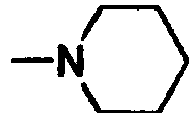
2.7 0.22 II 
5.8 0.62 II -NH(CH2)2OH 3.8 0.51 II -NH(CH2)3OH 0.8 0.09 II -NH(CH2)4OH 1.1 0.09 II -NH(CH2)5OH 0.6 0.08 II -N(CH2CH2OH)2 0.9 0.11 II -N(CH2CH2CH3)2 0.9 0.13 II -NHCH(CH3)2 4.8 0.42 II -N(CH3)(CH2CH3) 5.7 0.55 II 
0.5 0.1 R substitution III -CH2CH2NHCHO 1.1 0.45 III 
0.8 0.12 III 
1.25 0.01 III 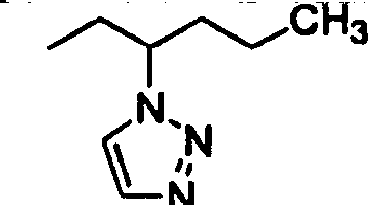
4.6 1.3 III 
4.2 1.1 III 
3.7 1.25 - Derivatives of the general formula (II) and (III) according to the ivention show a wide spectrum of biological activities, for example the cytostatic, antiproliferation and immunosuppressive activity, and they are suitable for production of pharmaceutical and diagnostic applications or can be used as intermediate products in production of other derivatives of the same group.
Claims (14)
- Derivatives of 2-phenyl-3-hydroxyquinoline-4(1H)-one of the general formula (II),

X represents a nitro group or amino group, and
Y represents an oxygen atom substituted by carbon chain C1 to C6 where the alkyl may be substituted by halogen, hydroxy, or alkoxy group with carbon atom number 1-4; an oxygen atom substituted by phenyl group where the phenyl may be substituted by halogen, hydroxy, or alkoxy group with carbon atom number 1-4; a sulfur atom substituted by carbon chain C1 to C6 where the alkyl may be substituted by halogen, hydroxy, or alkoxy group with carbon atom number 1-4; a sulfur atom substituted by phenyl group where the phenyl may be substituted by halogen, hydroxy, or alkoxy group with carbon atom number 1-4; a nitrogen atom substituted by hydrogen; a nitrogen atom substituted by hydrogen and carbon chain C1 to C6 where the alkyl may be substituted by halogen, hydroxy, or alkoxy group with carbon atom number 1-4; a nitrogen atom substituted independently by carbon chain C1 to C6 where the alkyl may be substituted by halogen, hydroxy, or alkoxy group with carbon atom number 1-4 and carbon chain C1 to C6 where the alkyl may be substituted by halogen, hydroxy, or alkoxy group with carbon atom number 1-4; or may form a saturated or unsaturated heterocyclic ring with 5 to 7 atoms, whereby the individual ring atoms comprise carbon atoms, of which any can be substituted by nitrogen or oxygen atom. - Derivatives of 2-phenyl-3-hydroxyquinoline-4(1H)-one of the general formula (III)

- Method of preparation of the derivatives according to the claim 1, characterized in that the compound of the general formula (II), where Y is a halogen Atom, is prepared by ring closure of 2-(4-halogen-3-nitrophenyl)-2-oxoethyl 2-aminobenzoate in acids, N-methylpyrrolidone or N-cyclohexylpyrrolidone.
- Method of preparation according to the claim 3, characterized in that the acid is the polyphosphoric, trifluoracetic or formic acid.
- Method according to any of the claims 3 to 4, characterized in that the ring closur is carried out at 50 to 200°C temperature,
- Method according to any of the claims 3 to 5 featuring that the ring closure is is carried out preferably at 100 °C temperature.
- Method of preparation of the derivatives according to the claim 1, characterized in that the compounds of the general formula (II), where Y is variously substituted nitrogen atom, are prepared by reaction of substituted amino compound with a compound of the general formula (II), where X is a nitro group and Y is a halogen, in surplus of the reacting amino compound or in a mixture of the amino compound with N-methylpyrrolidone,
- Method according to th: claim 7, characterized in that the reaction proceeds, at 70 to 150°C temperature.
- Method of preparation of the derivatives according to the claim 1, characterized in that the compounds of the general formula (II), where Y is an atom of nitrogen, which is a part of the unsaturated heterocycle ot a substituted sulphur or oxygen atom, are prepared by reaction of substituted heterocycle or thiocompound with a compound of the general formula (II), where X is a nitro group and Y is a halogen in N-methyl-pyrrolidone and the presence of sodium hydride or sodium alcoholate.
- Method according to the claim 9, characterized in that the reaction, proceeds at 70 to 220 °C temperature.
- Method of preparation of the derivatives according to the claim 2, characterized in that the compounds of the general formula (II) are prepared from a compound of the general formula (II) where X a nitro group and Y is a nitrogen atom substituted by a hydrogen atom and another substituent according to the description in the claim 1, by action of hydrogen in formic acid at the presence of catalysts of hydrogenation, where first the nitro group is reduced and then followed by subsequent ring closure to the corresponding compound of the general formula (III).
- Method according to the claim 11, characterized in that the catalyst of hydrogenation is the Raney nickel, platinum or palladium on activated carbon.
- Method according to any of the claims 11 to 12, characterized in that the hydrogenation and subsequent ring closure proceed at 0 to 105 °C temperature.
- Method according to any of the claims 7, 9, 11 to 13, characterized in that the reaction proceeds at the boiling point of the reaction mixture.
Applications Claiming Priority (2)
| Application Number | Priority Date | Filing Date | Title |
|---|---|---|---|
| CZ20060546A CZ300589B6 (en) | 2006-09-04 | 2006-09-04 | Derivatives of 2-phenyl-3-hydroxyquinolin-4(1H)-one, process of their preparation and use |
| PCT/CZ2007/000075 WO2008028427A1 (en) | 2006-09-04 | 2007-07-26 | Derivatives of 2-phenyl-3-hydroxyquinoline-4(1h)-one and methods of their preparation and utilization |
Publications (2)
| Publication Number | Publication Date |
|---|---|
| EP2064200A1 EP2064200A1 (en) | 2009-06-03 |
| EP2064200B1 true EP2064200B1 (en) | 2013-09-04 |
Family
ID=38951344
Family Applications (1)
| Application Number | Title | Priority Date | Filing Date |
|---|---|---|---|
| EP07785502.1A Not-in-force EP2064200B1 (en) | 2006-09-04 | 2007-07-26 | Derivatives of 2-phenyl-3-hydroxyquinoline-4(1h)-one and methods of their preparation and utilization |
Country Status (4)
| Country | Link |
|---|---|
| US (1) | US8299092B2 (en) |
| EP (1) | EP2064200B1 (en) |
| CZ (1) | CZ300589B6 (en) |
| WO (1) | WO2008028427A1 (en) |
Families Citing this family (13)
| Publication number | Priority date | Publication date | Assignee | Title |
|---|---|---|---|---|
| FR2956816B1 (en) * | 2010-03-01 | 2012-05-18 | Univ Joseph Fourier | USE OF QUINOLONES FOR THE PREPARATION OF MEDICAMENTS, NEW QUINOLONES AND THEIR METHOD OF SYNTHESIS |
| CZ304527B6 (en) * | 2010-06-16 | 2014-06-18 | Univerzita Palackého v Olomouci | 2-Phenyl-3-hydroxyquinolin-4(1H)-one-8-carboxamide derivatives, process for their preparation and use |
| GB201020076D0 (en) * | 2010-11-26 | 2011-01-12 | Liverpool School Tropical Medicine | Antimalarial compounds |
| CZ303009B6 (en) * | 2010-12-15 | 2012-02-22 | Univerzita Palackého | Complexes of copper with 2-phenyl-3-hydroxyqunolin-4(1H)-one, process for their preparation and use of the complexes as medicaments in antitumor therapy |
| CZ2012242A3 (en) | 2012-04-10 | 2013-09-04 | Univerzita Palackého | Use of copper complexes containing 2-phenyl-3-hydroquinolin-4(1H)-one and derivatives of 1,10-fenanthrolin for preparing medicaments intended for treating tumor diseases |
| EP2877461B1 (en) | 2012-07-27 | 2018-05-09 | Emory University | Heterocyclic flavone derivatives, compositions, and methods related thereto |
| US9682948B2 (en) | 2012-11-05 | 2017-06-20 | Emory University | 7,8-dihydoxyflavone and 7,8-substituted flavone derivatives, compositions, and methods related thereto |
| CN103787966B (en) * | 2012-11-05 | 2016-06-15 | 清华大学 | A kind of compound and the application in preparing medicine for parasitic disease thereof |
| CZ307534B6 (en) * | 2015-09-25 | 2018-11-14 | Univerzita Palackého v Olomouci | 3-Hydroxy-2-phenylquinoline-4(1H)-one derivatives with increased solubility, the method of their preparation and use |
| CN107661333B (en) * | 2016-07-27 | 2020-12-29 | 清华大学 | Use of compounds in the treatment of lung cancer |
| PL3833343T3 (en) | 2018-08-07 | 2024-06-24 | Emory University | Heterocyclic flavone derivatives, compositions, and methods related thereto |
| DK4426434T3 (en) * | 2021-11-02 | 2025-11-10 | Flare Therapeutics Inc | PPARG INVERSE AGONISTS AND USES THEREOF |
| WO2023172845A1 (en) * | 2022-03-08 | 2023-09-14 | Flare Therapeutics Inc. | Pparg inverse agonists and uses thereof |
Family Cites Families (1)
| Publication number | Priority date | Publication date | Assignee | Title |
|---|---|---|---|---|
| AU4780793A (en) * | 1992-07-22 | 1994-02-14 | Genelabs Technologies, Inc. | 2-aryl-4-quinolones as antitumor compounds |
-
2006
- 2006-09-04 CZ CZ20060546A patent/CZ300589B6/en not_active IP Right Cessation
-
2007
- 2007-07-26 EP EP07785502.1A patent/EP2064200B1/en not_active Not-in-force
- 2007-07-26 US US12/439,723 patent/US8299092B2/en not_active Expired - Fee Related
- 2007-07-26 WO PCT/CZ2007/000075 patent/WO2008028427A1/en not_active Ceased
Also Published As
| Publication number | Publication date |
|---|---|
| US20100022587A1 (en) | 2010-01-28 |
| EP2064200A1 (en) | 2009-06-03 |
| CZ2006546A3 (en) | 2008-06-04 |
| US8299092B2 (en) | 2012-10-30 |
| CZ300589B6 (en) | 2009-06-24 |
| WO2008028427A1 (en) | 2008-03-13 |
Similar Documents
| Publication | Publication Date | Title |
|---|---|---|
| US8299092B2 (en) | Derivatives of 2-phenyl-3-hydroxyquinoline-4(1H)-one and methods of their preparation and utilization | |
| EP2841431B1 (en) | Dihydrate of benzothiophene compound and process for producing the same | |
| DE60117859T2 (en) | HAZARDOUS SUBSTITUTED IMIDAZOCHINOLINETHERS AND THE MEDICAMENTS THEREOF. | |
| EP0385237B1 (en) | 2-(1-piperazinyl)-4-phenylcycloalkanopyridine derivatives, processes for the production thereof, and pharmaceutical composition containing the same | |
| KR101931224B1 (en) | Substituted pyrazolopyrimidines as glucocerebrosidase activators | |
| EP0555824A1 (en) | N-alpha-arylsulfonylated benzimidazolylalaninamide derivatives, medicaments based thereon and process for their preparation | |
| US6143760A (en) | Substituted 4-oxo-napthyridine-3-carboxamides: GABA brain receptor ligands | |
| EP0509398B1 (en) | Quinoxalines, process for their preparation and their use | |
| JP2000128865A (en) | New dihydro and tetrahydro-quinoline compound, their production and pharmaceutical composition containing the same | |
| EP2050747A1 (en) | Dimers of harmol or of its derivatives and uses thereof | |
| JP6704422B2 (en) | Quinazoline derivative salt and method for producing the same | |
| JP2023503217A (en) | Compound that induces expression of anti-aging gene KLOTHO and use thereof | |
| EP2291352B1 (en) | N-acylthiourea and n-acylurea inhibitors of the hedgehog protein signalling pathway | |
| EP4144725B1 (en) | 1,5-dihydro-2,4-benzodiazepine-3-one derivative and application thereof | |
| KR20170023184A (en) | Substituted 2-thioxo-imidazolidin-4-ones and spiro analogues thereof, active anti-cancer ingredient, pharmaceutical composition, medicinal preparation, method for treating prostate cancer | |
| EP1529041B1 (en) | Novel prodrugs of 1-methyl-2-(4-amidinophenylaminomethyl)-benzimidazol-5-yl-carboxylic acid-(n-2-pyridil-n-2-hydroxycarbonylethyl)-amide, production and use thereof as medicaments | |
| WO1999010347A1 (en) | Substituted 4-oxo-napthyridine-3-carboxamides as gaba brain receptor ligands | |
| EP0145010B1 (en) | Carbostyril derivatives | |
| CN103446154A (en) | Applications of coumarin derivatives in preventing and curing serious brain diseases | |
| EP0657166A1 (en) | Combination containing a quinoxaline and a nucleoside | |
| EP0645390A1 (en) | Trisubstituted pyrimido 5,4-d pyrimidines for modulating multidrug resistance, drugs containing these compounds and processes for their preparation | |
| EP3447045B1 (en) | 1-(1-hydroxy-2,3-dihydro-1h-inden-5-yl)-urea derivatives and related compounds kcnq 2-5 channel activators for treating dysuria | |
| EP3221307B1 (en) | Novel 1,3,5 -triazine based pi3k inhibitors as anticancer agents and a process for the preparation thereof | |
| KR102421065B1 (en) | Method for preparing novel quinone-indolizine hybrid derivatives and anticancer composition containing the same | |
| CN118652251A (en) | A 5-azaindole compound, a pharmaceutical composition and its application |
Legal Events
| Date | Code | Title | Description |
|---|---|---|---|
| PUAI | Public reference made under article 153(3) epc to a published international application that has entered the european phase |
Free format text: ORIGINAL CODE: 0009012 |
|
| 17P | Request for examination filed |
Effective date: 20090302 |
|
| AK | Designated contracting states |
Kind code of ref document: A1 Designated state(s): AT BE BG CH CY CZ DE DK EE ES FI FR GB GR HU IE IS IT LI LT LU LV MC MT NL PL PT RO SE SI SK TR |
|
| AX | Request for extension of the european patent |
Extension state: AL BA HR MK RS |
|
| 17Q | First examination report despatched |
Effective date: 20120508 |
|
| DAX | Request for extension of the european patent (deleted) | ||
| GRAP | Despatch of communication of intention to grant a patent |
Free format text: ORIGINAL CODE: EPIDOSNIGR1 |
|
| GRAJ | Information related to disapproval of communication of intention to grant by the applicant or resumption of examination proceedings by the epo deleted |
Free format text: ORIGINAL CODE: EPIDOSDIGR1 |
|
| GRAP | Despatch of communication of intention to grant a patent |
Free format text: ORIGINAL CODE: EPIDOSNIGR1 |
|
| INTG | Intention to grant announced |
Effective date: 20130412 |
|
| GRAS | Grant fee paid |
Free format text: ORIGINAL CODE: EPIDOSNIGR3 |
|
| GRAA | (expected) grant |
Free format text: ORIGINAL CODE: 0009210 |
|
| AK | Designated contracting states |
Kind code of ref document: B1 Designated state(s): AT BE BG CH CY CZ DE DK EE ES FI FR GB GR HU IE IS IT LI LT LU LV MC MT NL PL PT RO SE SI SK TR |
|
| REG | Reference to a national code |
Ref country code: GB Ref legal event code: FG4D |
|
| REG | Reference to a national code |
Ref country code: CH Ref legal event code: EP |
|
| REG | Reference to a national code |
Ref country code: AT Ref legal event code: REF Ref document number: 630433 Country of ref document: AT Kind code of ref document: T Effective date: 20130915 |
|
| REG | Reference to a national code |
Ref country code: IE Ref legal event code: FG4D |
|
| REG | Reference to a national code |
Ref country code: DE Ref legal event code: R096 Ref document number: 602007032684 Country of ref document: DE Effective date: 20131031 |
|
| REG | Reference to a national code |
Ref country code: AT Ref legal event code: MK05 Ref document number: 630433 Country of ref document: AT Kind code of ref document: T Effective date: 20130904 |
|
| REG | Reference to a national code |
Ref country code: NL Ref legal event code: VDEP Effective date: 20130904 |
|
| PG25 | Lapsed in a contracting state [announced via postgrant information from national office to epo] |
Ref country code: LT Free format text: LAPSE BECAUSE OF FAILURE TO SUBMIT A TRANSLATION OF THE DESCRIPTION OR TO PAY THE FEE WITHIN THE PRESCRIBED TIME-LIMIT Effective date: 20130904 Ref country code: CY Free format text: LAPSE BECAUSE OF FAILURE TO SUBMIT A TRANSLATION OF THE DESCRIPTION OR TO PAY THE FEE WITHIN THE PRESCRIBED TIME-LIMIT Effective date: 20130731 Ref country code: SE Free format text: LAPSE BECAUSE OF FAILURE TO SUBMIT A TRANSLATION OF THE DESCRIPTION OR TO PAY THE FEE WITHIN THE PRESCRIBED TIME-LIMIT Effective date: 20130904 Ref country code: AT Free format text: LAPSE BECAUSE OF FAILURE TO SUBMIT A TRANSLATION OF THE DESCRIPTION OR TO PAY THE FEE WITHIN THE PRESCRIBED TIME-LIMIT Effective date: 20130904 |
|
| REG | Reference to a national code |
Ref country code: NL Ref legal event code: VDEP Effective date: 20130904 |
|
| REG | Reference to a national code |
Ref country code: LT Ref legal event code: MG4D |
|
| PG25 | Lapsed in a contracting state [announced via postgrant information from national office to epo] |
Ref country code: LV Free format text: LAPSE BECAUSE OF FAILURE TO SUBMIT A TRANSLATION OF THE DESCRIPTION OR TO PAY THE FEE WITHIN THE PRESCRIBED TIME-LIMIT Effective date: 20130904 Ref country code: GR Free format text: LAPSE BECAUSE OF FAILURE TO SUBMIT A TRANSLATION OF THE DESCRIPTION OR TO PAY THE FEE WITHIN THE PRESCRIBED TIME-LIMIT Effective date: 20131205 Ref country code: PL Free format text: LAPSE BECAUSE OF FAILURE TO SUBMIT A TRANSLATION OF THE DESCRIPTION OR TO PAY THE FEE WITHIN THE PRESCRIBED TIME-LIMIT Effective date: 20130904 Ref country code: SI Free format text: LAPSE BECAUSE OF FAILURE TO SUBMIT A TRANSLATION OF THE DESCRIPTION OR TO PAY THE FEE WITHIN THE PRESCRIBED TIME-LIMIT Effective date: 20130904 Ref country code: FI Free format text: LAPSE BECAUSE OF FAILURE TO SUBMIT A TRANSLATION OF THE DESCRIPTION OR TO PAY THE FEE WITHIN THE PRESCRIBED TIME-LIMIT Effective date: 20130904 |
|
| PG25 | Lapsed in a contracting state [announced via postgrant information from national office to epo] |
Ref country code: CY Free format text: LAPSE BECAUSE OF FAILURE TO SUBMIT A TRANSLATION OF THE DESCRIPTION OR TO PAY THE FEE WITHIN THE PRESCRIBED TIME-LIMIT Effective date: 20130904 Ref country code: BE Free format text: LAPSE BECAUSE OF FAILURE TO SUBMIT A TRANSLATION OF THE DESCRIPTION OR TO PAY THE FEE WITHIN THE PRESCRIBED TIME-LIMIT Effective date: 20130904 |
|
| PG25 | Lapsed in a contracting state [announced via postgrant information from national office to epo] |
Ref country code: EE Free format text: LAPSE BECAUSE OF FAILURE TO SUBMIT A TRANSLATION OF THE DESCRIPTION OR TO PAY THE FEE WITHIN THE PRESCRIBED TIME-LIMIT Effective date: 20130904 Ref country code: CZ Free format text: LAPSE BECAUSE OF FAILURE TO SUBMIT A TRANSLATION OF THE DESCRIPTION OR TO PAY THE FEE WITHIN THE PRESCRIBED TIME-LIMIT Effective date: 20130904 Ref country code: RO Free format text: LAPSE BECAUSE OF FAILURE TO SUBMIT A TRANSLATION OF THE DESCRIPTION OR TO PAY THE FEE WITHIN THE PRESCRIBED TIME-LIMIT Effective date: 20130904 Ref country code: SK Free format text: LAPSE BECAUSE OF FAILURE TO SUBMIT A TRANSLATION OF THE DESCRIPTION OR TO PAY THE FEE WITHIN THE PRESCRIBED TIME-LIMIT Effective date: 20130904 Ref country code: NL Free format text: LAPSE BECAUSE OF FAILURE TO SUBMIT A TRANSLATION OF THE DESCRIPTION OR TO PAY THE FEE WITHIN THE PRESCRIBED TIME-LIMIT Effective date: 20130904 Ref country code: IS Free format text: LAPSE BECAUSE OF FAILURE TO SUBMIT A TRANSLATION OF THE DESCRIPTION OR TO PAY THE FEE WITHIN THE PRESCRIBED TIME-LIMIT Effective date: 20140104 |
|
| PG25 | Lapsed in a contracting state [announced via postgrant information from national office to epo] |
Ref country code: ES Free format text: LAPSE BECAUSE OF FAILURE TO SUBMIT A TRANSLATION OF THE DESCRIPTION OR TO PAY THE FEE WITHIN THE PRESCRIBED TIME-LIMIT Effective date: 20130904 |
|
| REG | Reference to a national code |
Ref country code: DE Ref legal event code: R097 Ref document number: 602007032684 Country of ref document: DE |
|
| PG25 | Lapsed in a contracting state [announced via postgrant information from national office to epo] |
Ref country code: PT Free format text: LAPSE BECAUSE OF FAILURE TO SUBMIT A TRANSLATION OF THE DESCRIPTION OR TO PAY THE FEE WITHIN THE PRESCRIBED TIME-LIMIT Effective date: 20140106 |
|
| PLBE | No opposition filed within time limit |
Free format text: ORIGINAL CODE: 0009261 |
|
| STAA | Information on the status of an ep patent application or granted ep patent |
Free format text: STATUS: NO OPPOSITION FILED WITHIN TIME LIMIT |
|
| 26N | No opposition filed |
Effective date: 20140605 |
|
| PG25 | Lapsed in a contracting state [announced via postgrant information from national office to epo] |
Ref country code: IT Free format text: LAPSE BECAUSE OF FAILURE TO SUBMIT A TRANSLATION OF THE DESCRIPTION OR TO PAY THE FEE WITHIN THE PRESCRIBED TIME-LIMIT Effective date: 20130904 |
|
| REG | Reference to a national code |
Ref country code: DE Ref legal event code: R097 Ref document number: 602007032684 Country of ref document: DE Effective date: 20140605 |
|
| PG25 | Lapsed in a contracting state [announced via postgrant information from national office to epo] |
Ref country code: DK Free format text: LAPSE BECAUSE OF FAILURE TO SUBMIT A TRANSLATION OF THE DESCRIPTION OR TO PAY THE FEE WITHIN THE PRESCRIBED TIME-LIMIT Effective date: 20130904 |
|
| REG | Reference to a national code |
Ref country code: DE Ref legal event code: R119 Ref document number: 602007032684 Country of ref document: DE |
|
| PG25 | Lapsed in a contracting state [announced via postgrant information from national office to epo] |
Ref country code: LU Free format text: LAPSE BECAUSE OF FAILURE TO SUBMIT A TRANSLATION OF THE DESCRIPTION OR TO PAY THE FEE WITHIN THE PRESCRIBED TIME-LIMIT Effective date: 20140726 |
|
| REG | Reference to a national code |
Ref country code: CH Ref legal event code: PL |
|
| REG | Reference to a national code |
Ref country code: IE Ref legal event code: MM4A |
|
| REG | Reference to a national code |
Ref country code: FR Ref legal event code: ST Effective date: 20150331 |
|
| PG25 | Lapsed in a contracting state [announced via postgrant information from national office to epo] |
Ref country code: LI Free format text: LAPSE BECAUSE OF NON-PAYMENT OF DUE FEES Effective date: 20140731 Ref country code: CH Free format text: LAPSE BECAUSE OF NON-PAYMENT OF DUE FEES Effective date: 20140731 Ref country code: DE Free format text: LAPSE BECAUSE OF NON-PAYMENT OF DUE FEES Effective date: 20150203 |
|
| REG | Reference to a national code |
Ref country code: DE Ref legal event code: R119 Ref document number: 602007032684 Country of ref document: DE Effective date: 20150203 |
|
| PG25 | Lapsed in a contracting state [announced via postgrant information from national office to epo] |
Ref country code: FR Free format text: LAPSE BECAUSE OF NON-PAYMENT OF DUE FEES Effective date: 20140731 |
|
| PG25 | Lapsed in a contracting state [announced via postgrant information from national office to epo] |
Ref country code: IE Free format text: LAPSE BECAUSE OF NON-PAYMENT OF DUE FEES Effective date: 20140726 |
|
| PGFP | Annual fee paid to national office [announced via postgrant information from national office to epo] |
Ref country code: GB Payment date: 20150722 Year of fee payment: 9 |
|
| PG25 | Lapsed in a contracting state [announced via postgrant information from national office to epo] |
Ref country code: MC Free format text: LAPSE BECAUSE OF FAILURE TO SUBMIT A TRANSLATION OF THE DESCRIPTION OR TO PAY THE FEE WITHIN THE PRESCRIBED TIME-LIMIT Effective date: 20130904 |
|
| PG25 | Lapsed in a contracting state [announced via postgrant information from national office to epo] |
Ref country code: BG Free format text: LAPSE BECAUSE OF FAILURE TO SUBMIT A TRANSLATION OF THE DESCRIPTION OR TO PAY THE FEE WITHIN THE PRESCRIBED TIME-LIMIT Effective date: 20130904 |
|
| PG25 | Lapsed in a contracting state [announced via postgrant information from national office to epo] |
Ref country code: MT Free format text: LAPSE BECAUSE OF FAILURE TO SUBMIT A TRANSLATION OF THE DESCRIPTION OR TO PAY THE FEE WITHIN THE PRESCRIBED TIME-LIMIT Effective date: 20130904 |
|
| PG25 | Lapsed in a contracting state [announced via postgrant information from national office to epo] |
Ref country code: TR Free format text: LAPSE BECAUSE OF FAILURE TO SUBMIT A TRANSLATION OF THE DESCRIPTION OR TO PAY THE FEE WITHIN THE PRESCRIBED TIME-LIMIT Effective date: 20130904 Ref country code: HU Free format text: LAPSE BECAUSE OF FAILURE TO SUBMIT A TRANSLATION OF THE DESCRIPTION OR TO PAY THE FEE WITHIN THE PRESCRIBED TIME-LIMIT; INVALID AB INITIO Effective date: 20070726 |
|
| GBPC | Gb: european patent ceased through non-payment of renewal fee |
Effective date: 20160726 |
|
| PG25 | Lapsed in a contracting state [announced via postgrant information from national office to epo] |
Ref country code: GB Free format text: LAPSE BECAUSE OF NON-PAYMENT OF DUE FEES Effective date: 20160726 |