EP2063577A1 - A method for transmitting and analyzing data in the wireless communication network and the apparatus thereof - Google Patents
A method for transmitting and analyzing data in the wireless communication network and the apparatus thereof Download PDFInfo
- Publication number
- EP2063577A1 EP2063577A1 EP07800762A EP07800762A EP2063577A1 EP 2063577 A1 EP2063577 A1 EP 2063577A1 EP 07800762 A EP07800762 A EP 07800762A EP 07800762 A EP07800762 A EP 07800762A EP 2063577 A1 EP2063577 A1 EP 2063577A1
- Authority
- EP
- European Patent Office
- Prior art keywords
- data packet
- header
- sub
- data
- segmentation
- Prior art date
- Legal status (The legal status is an assumption and is not a legal conclusion. Google has not performed a legal analysis and makes no representation as to the accuracy of the status listed.)
- Granted
Links
Images





Classifications
-
- H—ELECTRICITY
- H04—ELECTRIC COMMUNICATION TECHNIQUE
- H04W—WIRELESS COMMUNICATION NETWORKS
- H04W28/00—Network traffic management; Network resource management
- H04W28/02—Traffic management, e.g. flow control or congestion control
- H04W28/06—Optimizing the usage of the radio link, e.g. header compression, information sizing, discarding information
-
- H—ELECTRICITY
- H04—ELECTRIC COMMUNICATION TECHNIQUE
- H04L—TRANSMISSION OF DIGITAL INFORMATION, e.g. TELEGRAPHIC COMMUNICATION
- H04L69/00—Network arrangements, protocols or services independent of the application payload and not provided for in the other groups of this subclass
- H04L69/22—Parsing or analysis of headers
-
- H—ELECTRICITY
- H04—ELECTRIC COMMUNICATION TECHNIQUE
- H04L—TRANSMISSION OF DIGITAL INFORMATION, e.g. TELEGRAPHIC COMMUNICATION
- H04L12/00—Data switching networks
- H04L12/54—Store-and-forward switching systems
- H04L12/56—Packet switching systems
- H04L12/5601—Transfer mode dependent, e.g. ATM
- H04L2012/5603—Access techniques
Definitions
- the present invention relates to a communication network, and more particularly, to a method and a device of transmitting and parsing data in a wireless communication network.
- ARQ automatic retransmission request
- the header defined by the many definition schemes of transmitted data packet header in the prior art is far from optimal, and effective utilization of transmission time interval cannot be achieved.
- the present invention provides optimized definitions of a header structure of a transmitted data packet in a sending device of a communication network, which reduces header overheads and makes fuller use of limited TTI.
- a method of processing a to-be-transmitted data packets based on transmission time interval in a sending device of a communication network comprising the steps of: a. according to said transmission time interval, determining a transmission queue of component data packets corresponding to the transmission time based on to-be-transmitted data packets; b.
- generating a sub-header for each component data packet in the transmission queue in accordance with needs, which comprises the following information of the component data packet: original data packet ID for indicating the original data packet which the component data packet belongs to; segmentation processing ID for indicating times of segmentation happened to the original data packet in order to generating the component data packet, and the data segment which said component data packet belongs to after each segmentation; data amount ID for indicating the data amount of the data portion of the component data packet; c. generating a transmitted data packet based on each of said generated sub-headers and data portions of the respective component data packets in said transmission queue, whose header portion contains component number indicating information for indicating the number of component data packets contained in said transmitted data packet.
- a processing device for processing to-be-transmitted data packets based on transmission time interval in a sending device of a communication network, comprising: determining means for, according to said transmission time interval, determining a transmission queue of component data packets corresponding to the transmission time based on the to-be-transmitted data packets; first generating means for generating a sub-header for each component data packet in the transmission queue in accordance with needs, which comprises the following information of the component data packet: original data packet ID for indicating the original data packet which the component data packet belongs to; segmentation processing ID for indicating times of segmentation happened to the original data packet in order to generating the component data packet, and the data segment which said component data packet belongs to after each segmentation; data amount ID for indicating the data amount of the data portion of the component data packet; second generating means for generating a transmitted data packet based on each of said generated sub-headers and data portions of the respective component data packets in said transmission queue, whose header portion contains component
- a method of parsing a transmitted data packet based on transmission time interval in a receiving device of a communication network comprising the steps of: 1) extracting component number indicating information from the header portion of said transmitted data packet; 2) extracting a first-order sub-header from the header portion of said transmitted data packet; 3) according to segmentation processing information contained in the first-order sub-header, judging whether or not times of segmentation happened to the original data packet in order to obtain the component data packet corresponding to the first-order sub-header is zero; 4) if times of segmentation happened to the original data packet in order to obtain the component data packet corresponding to the first-order sub-header is not zero, extracting the corresponding data portion from the data portion of the transmitted data packet and storing it to a buffer; 5) using the next sub-header to the first-order sub-header in the header portion of the transmitted data packet as a new first-order sub-header, and repeating steps 2) and 3).
- a parsing device for parsing a received transmitted data packet based on transmission time interval in a receiving device of a communication network, comprising: extracting means for extracting component number indicating information from the header portion of said transmitted data packet, wherein said extracting means is further used for extracting a first-order sub-header from the header portion of said transmitted data packet; judging means for, according to segmentation processing information contained in the first-order sub-header, judging whether or not times of segmentation happened to the original data packet in order to obtain the component data packet corresponding to the first-order sub-header is zero, wherein said judging means is further used for extracting a corresponding data portion from the data portion of the transmitted data packet and storing it to a buffer if times of segmentation happened to the original data packet in order to obtain the component data packet corresponding to the first-order sub-header is not zero; the parsing device further comprising controlling means for using the next sub-header to the first-order sub-
- Fig. 1 is a layout view of a communication network according to an embodiment of the present invention, in which merely a base station I and user equipment II are shown for the purpose of conciseness. Due to the bi-directionality of communication, base station I and user equipment II each comprise a sending device a and a receiving device b according to the present invention, and sending device a comprises a processing device 1 according to the present invention, and receiving device b comprises a parsing device 2 according to the present invention.
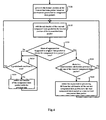
- Fig. 2 is a flowchart of a method of processing a to-be-transmitted data packet based on transmission time interval in the sending device of the communication network according to an embodiment of the present invention.
- the method will be described with reference to Fig. 2 and in conjunction with Fig. 1 . Take downlink transmission as an example. The method starts with step S10.
- step S10 said processing device 1 determines a transmission queue of component data packet(s) corresponding to the transmission time interval, i.e. the transmission queue of component data packet(s) to be transmitted in said TTI.
- processing device 1 in sending device a of base station I determines from to-be-transmitted data packets (the following description will not distinguish between retransmission queue and conventional transmission queue for the purpose of conciseness) component data packet(s) that can be transmitted in said TTI.
- the determined queue of component data packet(s) to be transmitted in the TTI may comprise the following circumstances:
- step S10 The detailed procedure of step S10 will be described with reference to Fig. 3 and in conjunction with Figs. 1 and 2 .
- step S102 it is judged whether the data amount of a first-order data packet (which might be an original data packet or a data segment) in the to-be-transmitted data packets is larger than said transmittable data amount. If the data amount of said first-order data packet is larger than said transmittable data amount, it means that the first-order data packet in the to-be-transmitted data packets cannot be transmitted totally in the current TTI. Thus, it is necessary to go to step S103 in order to make full use of the TTI.
- a first-order data packet which might be an original data packet or a data segment
- the first-order data packet is segmented into a first data segment that is added to the transmission queue and a second data segment that acts as a new first-order data packet, wherein the data amount of said first data segment is equal to the transmittable data amount. Since the TTI is too small, the queue of component data packet(s) that will be used for generating a transmitted data packet merely comprises said first data segment, and after segmentation, the first-order data packet in the to-be-transmitted data packets becomes said second data segment obtained from the segmentation which waits for the arrival of the next TTI.
- step S103' If the data amount of said first-order data packet is smaller than or equal to said transmittable data amount, it means that at least the first-order data packet in the to-be-transmitted data packets can be transmitted in the current TTI. Thus, the procedure goes to step S103'.
- Step S 102 is repeated.
- processing device 1 performs corresponding processing on the respective to-be-transmitted data packets until the TTI runs out, thereby obtaining a component data packet transmission queue comprising one or more component data packets for generating a transmission data packet. Then, the procedure goes to step S11.
- step S11 a sub-header is generated for each component data packet in the transmission queue in accordance with needs, which contains the following information of the component data packet:
- a to-be-transmitted data packet corresponding to the component data packet is the second data segment obtained from the last segmentation.
- the solution based on the present invention will generate a sub-header for each of the two data segments generated from the segmentation.
- said judgment can be fulfilled by judging whether or not the to-be-transmitted data packet has such a sub-header.
- said segmentation processing ID has the following situations:
- Fig. 4 is a specific flowchart of step S12 shown in Fig. 2 .
- Step S12 starts with sub-step S121:
- step S123 if the judgment result is that times of segmentation happened to the original data packet in order to obtain said component data packet is not zero, then the flow goes to step S124':
- step S123 if the judgment result is that there is no segmentation happened to the original data packet in order to obtain the component data packet, then the flow goes to step S124:
- each component data packet in the transmission queue its data portion is added to the data portion of the transmitted data packet in the same position relationship as its sub-header in the header portion of the transmitted data packet, to finally generate a complete transmitted data packet.
- Fig. 5 is a block diagram of a processing device for processing to-be-transmitted data packets based on transmission time interval in the sending device of the communication network according to an embodiment of the present invention. The method will be described with reference to Fig. 5 and in conjunction with Fig. 1 .
- Processing device 1 comprises determining means 10, first generating means 11, second generating means 12 and second judging means 13.
- determining means 10 comprises calculating means 101, first judging means 103, segmenting means 103 and first controlling means 104;
- second generating means 12 comprises component number determining means 120, adding means 121, third judging means 122, second controlling means 123, switching means 124 and deleting means 125. Take downlink transmission as an example.
- Determining means 10 determines a transmission queue of component data packet(s) corresponding to the transmission time interval, i.e. a transmission queue of component data packet(s) to be transmitted in the TTI.
- processing device 1 in sending device a of base station I determines from to-be-transmitted data packets (the following description will not distinguish between retransmission queue and conventional transmission queue for the purpose of conciseness) component data packet(s) that can be transmitted in said TTI.
- the queue of determined component data packet(s) to be transmitted in the TTI may comprise the following circumstances:
- First judging means 102 judges whether the data amount of a first-order data packet (which might be an original data packet or a data segment) in the to-be-transmitted data packets is larger than said transmittable data amount. If the data amount of said first-order data packet is larger than said transmittable data amount, it means that the first-order data packet in the to-be-transmitted data packets cannot be transmitted totally in the current TTI.
- a first-order data packet which might be an original data packet or a data segment
- segmenting means 103 segments the first-order data packet into a first data segment that is added to the transmission queue and a second data segment that acts as a new first-order data packet, wherein the data amount of said first data segment is equal to the transmittable data amount. Since the TTI is too small, the queue of component data packet(s) that will be used for generating a transmitted data packet merely comprises said first data segment, and after segmentation, the first-order data packet in the to-be-transmitted data packets becomes said second data segment obtained from the segmentation which waits for the arrival of the next TTI.
- the difference between the transmittable data amount and the data amount of the first-order data packet is used as the new transmittable data amount, and the next data packet to the first-order data packet acts as a new first-order data packet, then, the first controlling means 104 controls the first judging means 102 to judge whether or not the data amount of the new first-order data packet is larger than the new transmittable data amount.
- processing device 1 performs corresponding processing on the respective to-be-transmitted data packets until the TTI runs out, thereby obtains a component data packet transmission queue comprising one or more component data packets for generating a transmitted data packet.
- the First generating means 11 generates a sub-header for each component data packet in the transmission queue in accordance with needs, which contains the following information of the component data packet:
- a judging means that is not shown in Fig. 5 .
- the judging means judges whether or not the to-be-transmitted data packet corresponding to the component data packet is the second data segment obtained from the last segmentation.
- the solution based on the present invention will generate a sub-header for each of the two data segments generated from a segmentation.
- said judgment can be fulfilled by judging whether or not the to-be-transmitted data packet has such a sub-header.
- said segmentation processing ID has the following situations:
- first generating means 11 has generated sub-headers for the respective component data packets used for constituting the transmitted data packet which will be transmitted in the current TTI.
- Second generating means 12 generates a transmitted data packet based on each of said sub-headers generated by first generating means 11 and data portion of respective component data packets in said transmitted queue. Second generating means 12 will be described in detail with reference to Fig. 7 and in conjunction with Fig. 5 .
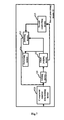
- Fig. 7 is a specific block diagram of second generating means 12 shown in Fig. 5 .
- component number determining means 121 determines component number indicating information for indicating the number of component data packets contained in said transmitted data packet and adds it to the header portion of the transmitted data packet.
- Adding means 121 adds the sub-header that was previously generated for the current component data packet (i.e. the first-order component data packet) in the transmission queue (hereinafter, "the sub-header that was previously generated for the current component data packet" will be referred to as “the sub-header of the component data packet" for the conciseness reason) to the header portion of the transmitted data packet.
- a third judging means 122 judges whether or not times of segmentation happened to the corresponding original data packet in order to obtain this component data packet is zero.
- the present invention is aimed at reducing header overheads as much as possible. If the previously generated sub-headers are added to the header potion of the transmitted data packet in order without any alteration, the present invention also has the advantage of less header overheads over the prior art, whereas such an advantage can be further increased.
- the present invention selectively deletes those segmentation processing IDs, which indicate no segmentation, in respective sub-headers (preferably, the segmentation processing ID may merely comprise the segmentation processing time ID for the situation of no segmentation) so as to reduce the number of bits occupied by the header portion of the transmitted data packet, and release them to the data portion.
- the third judging means 122 judges whether or not a predefined condition is met.
- Said predefined condition is that in the header portion of the transmitted data packet, the segmentation processing ID contained in the previous sub-header to the sub-header of the current component data packet indicates that times of segmentation happened to the original data packet in order to obtain the component data packet corresponding to the previous sub-header is not zero, or indicates that the sub-header of the current component data packet is already at the top of the header portion of the transmitted data packet;
- second controlling means 123 uses the next component data packet to the current data packet in the transmission queue as a new current component data packet and controls adding means 121 and third judging means 122 to perform corresponding operations on said new current component data packet.
- switching means 124 switches the sub-header of the current component data packet with the previous sub-header to the sub-header of the current component data packet in the header portion of the transmitted data packet. Then, the third judging means 122 continues to judge whether or not the predefined condition is met.
- the third judging means 122 judges whether or not there is a characteristic sub-header before the sub-header corresponding to the current component data packet in the header portion of said transmitted data packet.
- the segmentation processing ID contained in said characteristic sub-header indicates that there is no segmentation happened to the original data packet in order to obtain the component data packet corresponding to the characteristic sub-header.
- deleting means 125 deletes the segmentation processing ID from the sub-header corresponding to said current component data packet
- second controlling means 123 uses the next component data packet to the current component data packet in the transmission queue as a new current component data packet, and then the controls adding means 121 and the third judging means 122 to perform corresponding operations on the new current component data packet.
- second controlling means 123 uses the next component data packet to the current component data packet in the transmission queue as a new current component data packet to control adding means 121 and third judging means 122 to perform corresponding subsequent operations on it.
- adding means 121 adds its data portion to the data portion of the transmitted data packet in the same position relationship as its sub-header in the header portion of the transmitted data packet, to finally generate a complete transmitted data packet.
- Fig. 8 is a flowchart of a method of parsing a transmitted data packet based on transmission time interval in a receiving device of the communication network according to an embodiment of the present invention.
- the method starts with step S21 in which component number indicating information is extracted from the header portion of the transmitted data packet. Only according to said component number indicating information, will the receiver end correctly perform subsequent processing on the received transmitted data packet, otherwise the receiver end cannot know when to finish parsing the transmitted data packet (i.e. whether or not the parsing process has reached the terminal point of the transmitted data packet). Then, the flow goes to step S22.
- step S22 a first-order sub-header is extracted from the header portion of said transmitted data packet. Then, the flow goes to step S23.
- step S23 according to segmentation processing information contained in the first-order sub-header, it is judged whether or not times of segmentation happened to the original data packet in order to obtain the component data packet corresponding to said first-order sub-header is zero.
- the optimized data packet structure defining manner, in a transmitted data packet, all component data packets following a component data packet for which a first "segmentation processing ID" indicates no segmentation are all complete original data packets.
- step S24 the data portion corresponding to it is extracted from the data portion of the transmitted data packet and stored into a buffer to be combined with subsequent corresponding component data packet(s) to restore the original data packet.
- step S25 the next sub-header to the first-order sub-header in the header portion of the transmitted data packet is used as a new first-order sub-header in step S25. And steps S22 and S23 are repeated.
- step S24' the data portion of each component data packet following the data portion of said component data packet is extracted to be sent.
- the receiver end parses sub-headers according to the extracted component number indicating information, it extracts the corresponding data portion according to the data amount ID in each sub-header.
- the processing on the transmitted data packet ends with parsing N (N is a decimal value corresponding to the component number indicating information) sub-headers and extracting N data portions.
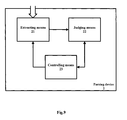
- Fig. 9 is a block diagram of a parsing device of parsing a transmitted data packet based on transmission time interval in the receiving device of the communication network according to an embodiment of the present invention, comprising a extracting means 21, a judging means 22, a parsing device 23 and a controlling means 24.
- Said extracting means 21 extracts component number indicating information from the header portion of the transmitted data packet. Only according to said component number indicating information, will the receiver end correctly perform subsequent processing on the received transmitted data packet, otherwise the receiver end cannot know when to finish parsing the transmitted data packet (i.e. whether or not the parsing process has reached the terminal point of the transmitted data packet).
- extracting means 21 extracts a first-order sub-header from the header portion of said transmitted data packet.
- judging means 22 judges whether or not times of segmentation happened to the original data packet in order to obtain the component data packet corresponding to the first-order sub-header is zero.
- the optimized data packet structure defining manner, in a transmitted data packet, all component data packets following the component data packet for which a first "segmentation processing ID" indicates no segmentation are all complete original data packets.
- extracting means 21 extracts the corresponding data portion from the data portion of the transmitted data packet and stores it into a buffer.
- said controlling means 23 uses the next sub-header to the first-order sub-header in the header portion of the transmitted data packet as a new first-order sub-header and controls the respective means mentioned above to perform corresponding operations on the new first-order sub-header.
- the extracting means 21 extracts a corresponding data portion from the data portion of the component data packet.
- the receiver end parses sub-headers according to the extracted component number indicating information, it extracts a corresponding data portion according to a data amount ID in each sub-header.
- the processing on the transmitted data packet ends with parsing N (N is a decimal value corresponding to the component number indicating information) sub-headers and extracting N data portions.
Landscapes
- Engineering & Computer Science (AREA)
- Computer Networks & Wireless Communication (AREA)
- Signal Processing (AREA)
- Computer Security & Cryptography (AREA)
- Data Exchanges In Wide-Area Networks (AREA)
- Mobile Radio Communication Systems (AREA)
Abstract
Description
- The present invention relates to a communication network, and more particularly, to a method and a device of transmitting and parsing data in a wireless communication network.
- It is necessary to first explain several concepts before starting to describe the background and the technical solution of the present invention:
- to-be-transmitted data packets: data packets waiting to be sent in a sending device, comprising original data packets and data segments, wherein said to-be-transmitted data packets come from retransmission queue besides conventional transmission queue, and to-be-transmitted data packets in retransmission queue usually has a higher priority level;
- transmission time interval (TTI): one kind of wireless transmission resource, and only after transmission time interval is allocated, will data packets in to-be-transmitted data packets be transmitted;
- original data packets: data packets that have not been segmented, such as ARQ SDU;
- component data packets: original data packets or data segments for constituting a to-be-transmitted data packet;
- transmitted data packets: data packets being transmitted in one TTI;
- data segments: a kind of data packets obtained from segmenting an original data packet or a data segment.
- It has been decided that automatic retransmission request (ARQ) is the most important function of RLC sub-layer in a system based on long-term evolution (LTE). One of the agreements about the ARQ is that segmentation or concatenation should be applied for the to-be-transmitted data packet according to the TB (Transmission Block) size, so as to make full use of the limited TTI.
- It can be understood that, how to make the header portion of a transmitted data packet occupy number of bits as little as possible under the precondition of ensuring the receiver can receive and parse the transmitted data packet correctly is of critical importance to the limited TTI and the limited TB.
- Although there are many structure definition schemes of transmitted data packet in the prior art, all of them contain relatively serious deficiencies. For example:
- too many fields are needed to indicate one component data packet in the header of a transmitted data packet;
- some of existing schemes do not work if segmentation happens to a data segment other than an original data packet;
- some of existing schemes use one unnecessary "F" field to indicate each data segment;
- the use of TSN or SSN causes large header overheads.
- Apparently, the header defined by the many definition schemes of transmitted data packet header in the prior art is far from optimal, and effective utilization of transmission time interval cannot be achieved.
- To overcome the above problems in the prior art, the present invention provides optimized definitions of a header structure of a transmitted data packet in a sending device of a communication network, which reduces header overheads and makes fuller use of limited TTI.
- According to a first aspect of the present invention, provided is a method of processing a to-be-transmitted data packets based on transmission time interval in a sending device of a communication network, comprising the steps of: a. according to said transmission time interval, determining a transmission queue of component data packets corresponding to the transmission time based on to-be-transmitted data packets; b. generating a sub-header for each component data packet in the transmission queue in accordance with needs, which comprises the following information of the component data packet: original data packet ID for indicating the original data packet which the component data packet belongs to; segmentation processing ID for indicating times of segmentation happened to the original data packet in order to generating the component data packet, and the data segment which said component data packet belongs to after each segmentation; data amount ID for indicating the data amount of the data portion of the component data packet; c. generating a transmitted data packet based on each of said generated sub-headers and data portions of the respective component data packets in said transmission queue, whose header portion contains component number indicating information for indicating the number of component data packets contained in said transmitted data packet.
- According to a second aspect of the present invention, provided is a processing device for processing to-be-transmitted data packets based on transmission time interval in a sending device of a communication network, comprising: determining means for, according to said transmission time interval, determining a transmission queue of component data packets corresponding to the transmission time based on the to-be-transmitted data packets; first generating means for generating a sub-header for each component data packet in the transmission queue in accordance with needs, which comprises the following information of the component data packet: original data packet ID for indicating the original data packet which the component data packet belongs to; segmentation processing ID for indicating times of segmentation happened to the original data packet in order to generating the component data packet, and the data segment which said component data packet belongs to after each segmentation; data amount ID for indicating the data amount of the data portion of the component data packet; second generating means for generating a transmitted data packet based on each of said generated sub-headers and data portions of the respective component data packets in said transmission queue, whose header portion contains component number indicating information for indicating the number of component data packets contained in said transmitted data packet.
- According to a third aspect of the present invention, provided is a method of parsing a transmitted data packet based on transmission time interval in a receiving device of a communication network, comprising the steps of: 1) extracting component number indicating information from the header portion of said transmitted data packet; 2) extracting a first-order sub-header from the header portion of said transmitted data packet; 3) according to segmentation processing information contained in the first-order sub-header, judging whether or not times of segmentation happened to the original data packet in order to obtain the component data packet corresponding to the first-order sub-header is zero; 4) if times of segmentation happened to the original data packet in order to obtain the component data packet corresponding to the first-order sub-header is not zero, extracting the corresponding data portion from the data portion of the transmitted data packet and storing it to a buffer; 5) using the next sub-header to the first-order sub-header in the header portion of the transmitted data packet as a new first-order sub-header, and repeating steps 2) and 3).
- According to a fourth aspect of the present invention, provided is a parsing device for parsing a received transmitted data packet based on transmission time interval in a receiving device of a communication network, comprising: extracting means for extracting component number indicating information from the header portion of said transmitted data packet, wherein said extracting means is further used for extracting a first-order sub-header from the header portion of said transmitted data packet; judging means for, according to segmentation processing information contained in the first-order sub-header, judging whether or not times of segmentation happened to the original data packet in order to obtain the component data packet corresponding to the first-order sub-header is zero, wherein said judging means is further used for extracting a corresponding data portion from the data portion of the transmitted data packet and storing it to a buffer if times of segmentation happened to the original data packet in order to obtain the component data packet corresponding to the first-order sub-header is not zero; the parsing device further comprising controlling means for using the next sub-header to the first-order sub-header in the header portion of the transmitted data packet as a new first-order sub-header to control said extracting means and said judging means to perform corresponding operations on the new first-order sub-header.
-
-
Fig. 1 is a layout view of a communication network according to an embodiment of the present invention; -
Fig. 2 is a flowchart of a method of processing a to-be-transmitted data packet based on transmission time in a sending device of the communication network according to an embodiment of the present invention; -
Fig. 3 is a specific flowchart of step S10 shown inFig. 2 ; -
Fig. 4 is a specific flowchart of step S12 shown inFig. 2 ; -
Fig. 5 is a block diagram of a processing device for processing a to-be-transmitted data packet based on transmission time in the sending device of the communication network according to an embodiment of the present invention; -
Fig. 6 is a specific block diagram of determining means 5 shown inFig. 5 ; -
Fig. 7 is a specific block diagram of second generating means 12 shown inFig. 5 ; -
Fig. 8 is a flowchart of a method of parsing a transmitted data packet based on transmission time interval in a receiving device of the communication network according to an embodiment of the present invention; and -
Fig. 9 is a block diagram of a parsing device for parsing a transmitted data packet based on transmission time interval in the receiving device of the communication network according to an embodiment of the present invention. - Hereinafter, the present invention will be described in detail with reference to the accompanying drawings.
-
Fig. 1 is a layout view of a communication network according to an embodiment of the present invention, in which merely a base station I and user equipment II are shown for the purpose of conciseness. Due to the bi-directionality of communication, base station I and user equipment II each comprise a sending device a and a receiving device b according to the present invention, and sending device a comprises aprocessing device 1 according to the present invention, and receiving device b comprises aparsing device 2 according to the present invention. -
Fig. 2 is a flowchart of a method of processing a to-be-transmitted data packet based on transmission time interval in the sending device of the communication network according to an embodiment of the present invention. Hereinafter, the method will be described with reference toFig. 2 and in conjunction withFig. 1 . Take downlink transmission as an example. The method starts with step S10. - In step S10, said
processing device 1 determines a transmission queue of component data packet(s) corresponding to the transmission time interval, i.e. the transmission queue of component data packet(s) to be transmitted in said TTI. According to the TTI,processing device 1 in sending device a of base station I determines from to-be-transmitted data packets (the following description will not distinguish between retransmission queue and conventional transmission queue for the purpose of conciseness) component data packet(s) that can be transmitted in said TTI. According to the relationship between the transmittable data amount corresponding to the TTI and the size of original data packet or the size of data segment, the determined queue of component data packet(s) to be transmitted in the TTI may comprise the following circumstances: - the queue comprises only one component data packet that is a data segment or an original data packet;
- the first component data packet in the queue is a data segment or an original data packet, which is followed by zero to multiple original data packets, and the end of the queue is zero or one data segment.
- The detailed procedure of step S10 will be described with reference to
Fig. 3 and in conjunction withFigs. 1 and2 . The step starts with sub-step S101 in which a transmittable data amount in the transmission time is calculated based on the TTI. For example, the calculation is conducted according to the following expression:
"data transmission rate * TTI = transmittable data amount." After that, the procedure goes to step S102. - In step S102, it is judged whether the data amount of a first-order data packet (which might be an original data packet or a data segment) in the to-be-transmitted data packets is larger than said transmittable data amount. If the data amount of said first-order data packet is larger than said transmittable data amount, it means that the first-order data packet in the to-be-transmitted data packets cannot be transmitted totally in the current TTI. Thus, it is necessary to go to step S103 in order to make full use of the TTI.
- In step S103, the first-order data packet is segmented into a first data segment that is added to the transmission queue and a second data segment that acts as a new first-order data packet, wherein the data amount of said first data segment is equal to the transmittable data amount. Since the TTI is too small, the queue of component data packet(s) that will be used for generating a transmitted data packet merely comprises said first data segment, and after segmentation, the first-order data packet in the to-be-transmitted data packets becomes said second data segment obtained from the segmentation which waits for the arrival of the next TTI.
- If the data amount of said first-order data packet is smaller than or equal to said transmittable data amount, it means that at least the first-order data packet in the to-be-transmitted data packets can be transmitted in the current TTI. Thus, the procedure goes to step S103'.
- In step S103', the first-order data packet is added to the transmission queue as a component data packet, and calculation is conducted according to the following expression:
"transmittable data amount - data amount of the first-order data packet = new transmittable data amount." - That is, the difference between the transmittable data amount and the data amount of the first-order data packet is used as the new transmittable data amount, and the next data packet to the first-order data packet acts as a new first-order data packet. Step
S 102 is repeated. - Thus,
processing device 1 performs corresponding processing on the respective to-be-transmitted data packets until the TTI runs out, thereby obtaining a component data packet transmission queue comprising one or more component data packets for generating a transmission data packet. Then, the procedure goes to step S11. - In step S11, a sub-header is generated for each component data packet in the transmission queue in accordance with needs, which contains the following information of the component data packet:
- original data packet ID for indicating the original data packet which the component data packet belongs to. Preferably, said original data packet ID is a sequence number that is capable of uniquely determining an original data packet;
- segmentation processing ID for indicating times of segmentation happened to the original data packet in order to obtain said component data packet, and the data segment which said component data packet belongs to after each segmentation, wherein when an original data packet that has not been segmented appears in the transmission queue as a component data packet, its segmentation processing ID indicates no segmentation;
- data amount ID for indicating the data amount of data portion of said component data packet, so that the receiver end will be clear about the starting point and the terminal point of data portion of a component data packet during parsing.
- Subsequently, various situations of said component data packet are determined through a step that is not shown in
Fig. 2 . In this step, it is judged whether or not a to-be-transmitted data packet corresponding to the component data packet is the second data segment obtained from the last segmentation. Specifically, the solution based on the present invention will generate a sub-header for each of the two data segments generated from the segmentation. Thus, said judgment can be fulfilled by judging whether or not the to-be-transmitted data packet has such a sub-header. - Corresponding to the different situations of the component data packet, said segmentation processing ID has the following situations:
- 1. where the component data packet is an original data packet:
- its segmentation processing ID merely comprises a segmentation processing time ID for indicating times of segmentation happened to the original data packet, which is indicated by the original data packet ID, in order to obtain the component data packet. Suppose the ID comprises 3 bits, then 000 indicates no segmentation, 001 indicates the first time segmentation, and the rest is reasoned out by analogy;
- 2. where the component data packet is a data segment:
- its segmentation processing ID comprises a segmentation processing time ID for indicating times of segmentation happened to the original data packet, which is indicated by the original data packet ID, in order to obtain the component data packet. Suppose the ID comprises 3 bits, then 000 indicates no segmentation, 001 indicates the first time segmentation, and the rest is reasoned out by analogy; and
- data segment ID for indicating the data segment which this data segment belongs to after each segmentation during the process of obtaining this data segment by the original data packet. For example, when the first-order data packet is an original data packet, and the whole original data packet cannot be transmitted in the TTI since the TTI is relatively small, so this original data packet (to-be-transmitted data packet) needs to be segmented into a first data segment and a second data segment. Correspondingly, the segmentation processing time ID = 001, and the data segment IDs in the sub-headers of the first data segment and the second data segment are 0 and 1 respectively (indicating whether the data segment is a first data segment or a second data segment after the segmentation).When the next TTI comes, if the data amount of the first-order data packet (the second data segment after the first segmentation) in the to-be-transmitted data packets is still larger than the transmittable data amount, a second segmentation is needed for said second data segment, which generates a new first data segment a and a new second data segment b. Correspondingly, the segmentation processing time ID = 010, and the data segment IDs in the sub-headers of the new first data segment a and the new second data segment b are 10 and 11 respectively (take "10" as an example, wherein "1" indicates that after the first segmentation, said new first data segment a belongs to the second data segment, and "0" indicates that, after the second segmentation, i.e. the current segmentation, the data segment a belongs to the first data segment). And the situation of multiple times of segmentation is reasoned out by analogy.
- So far, sub-headers have been generated for the respective component data packets used for constituting the transmitted data packet transmitted in the current TTI. The procedure goes to step S12:
- In step S12, a transmitted data packet is generated based on each of said generated sub-headers and data portion of respective component data packets in said transmitted queue. The specific flow of step S12 will be described in conjunction with
Fig. 4 . -
Fig. 4 is a specific flowchart of step S12 shown inFig. 2 . Step S12 starts with sub-step S121: - In sub-step S121, based on the number of component data packets (or generated sub-headers) in said transmission queue, component number indicating information is determined for indicating the number of component data packets contained in said transmitted data packet and then is added to the header portion of the transmitted data packet. Then, the flow goes to step S122;
- In sub-step S122, the sub-header that was previously generated for the current component data packet (i.e. the first-order component data packet) in the transmission queue (hereinafter, "the sub-header that was previously generated for the current component data packet" will be referred to as "the sub-header of the component data packet" for the conciseness reason) is added to the header portion of the transmitted data packet. Then, the flow goes to step sub-step S123:
- In sub-step S123, it is judged, according to the segmentation processing ID contained in the sub-header of the component data packet, whether or not times of segmentation happened to the corresponding original data packet in order to obtain said component data packet is zero. Here, it is necessary to briefly illustrate the technical object of step S123 and subsequent steps. The present invention is aimed at reducing header overheads as much as possible. If the previously generated sub-headers are added to the header potion of the transmitted data packet in order simply and without any alteration, the present invention also has the advantage of less header overheads over the prior art, whereas such an advantage can be increased through step S123 and its subsequently steps. In short, the present invention selectively deletes those segmentation processing IDs, which indicate no segmentation, in respective sub-headers (preferably, the segmentation processing ID may merely comprise the segmentation processing time ID for the situation of no segmentation) so as to reduce the number of bits occupied by the header portion of the transmitted data packet, and releases them to the data portion.
- After step S123, if the judgment result is that times of segmentation happened to the original data packet in order to obtain said component data packet is not zero, then the flow goes to step S124':
- In step S124', it is judged whether or not a predefined condition is met. Said predefined condition is that in the header portion of the transmitted data packet, the segmentation processing ID contained in the previous sub-header to the sub-header of the current component data packet indicates that times of segmentation happened to the original data packet in order to obtain a component data packet corresponding to the previous sub-header is not zero, or indicates that the sub-header of the current component data packet is at the top of the header portion of the transmitted data packet;
- If the judgment result of step S124' is that the predefined condition is met, then the next component data packet to the current data packet in the transmission queue acts as a new current component data packet, and steps S122 and S123 as well as subsequently operations are performed on the new current component data packet.
- If the judgment result of step S124' is that the predefined condition is not met, then the flow goes to step S125'. In step S125', the sub-header of the current component data packet is switched with the previous sub-header to the sub-header of the current component data packet in the header portion of the transmitted data packet. Then, the flow returns to step S124 to continue to make judgment.
- After step S123, if the judgment result is that there is no segmentation happened to the original data packet in order to obtain the component data packet, then the flow goes to step S124:
- In step S124, it is judged whether or not there is a characteristic sub-header before the sub-header corresponding to the current component data packet in the header portion of said transmitted data packet. The segmentation processing ID contained in said characteristic sub-header indicates that there is no segmentation happened to the original data packet in order to obtain the component data packet corresponding to the characteristic sub-header. That is to say, in a transmission queue corresponding to one transmission time interval (TTI), since there might be multiple original data packets that act as component data packets and all segmentation processing IDs in the sub-headers generated for them indicate no segmentation, simply by moving headers of all component data packets, of which the segmentation processing ID indicates that the segmentation time is not zero, to the top of the header portion (like step S125') and with the help of the component number indicating information, the receiver end is aware of such a signal from the characteristic sub-header that "all component data packets corresponding to (N - M) sub-headers from here are original data packets and can be forwarded directly." Here, N is the component number indicating information, and M is the number of non-original data packets at the top of the transmitted data packet (the segmentation processing ID in its sub-header, specifically the segmentation processing time ID indicates the segmentation processing time is not zero).
- If the judgment result of step S124 is that in the header portion of said transmitted data packet, there is a characteristic sub-header previous to the sub-header corresponding to the current component data packet (there is already said signal that assists the receiver end in correct parsing), then the flow goes to step S125 to delete the segmentation processing ID from the sub-header corresponding to said current component data packet and use the next component data packet to the current component data packet in the transmission queue as a new current component data packet. And steps S122 and S123 as well as subsequent operations are performed to the new current component data packet.
- If the judgment of step S124 is that in the header portion of said transmitted data packet, there is no characteristic sub-header previous to the sub-header corresponding to the current component data packet (there is already said signal that assists the receiver end in correct parsing), then the next component data packet to the current component data packet in the transmission queue is used as a new current component data packet, and steps S122 and S123 as well as subsequent operations are performed to the new current component data packet.
- Correspondingly, for each component data packet in the transmission queue, its data portion is added to the data portion of the transmitted data packet in the same position relationship as its sub-header in the header portion of the transmitted data packet, to finally generate a complete transmitted data packet.
-
Fig. 5 is a block diagram of a processing device for processing to-be-transmitted data packets based on transmission time interval in the sending device of the communication network according to an embodiment of the present invention. The method will be described with reference toFig. 5 and in conjunction withFig. 1 .Processing device 1 comprises determiningmeans 10, first generating means 11, second generating means 12 and second judging means 13. Preferably, determiningmeans 10 comprises calculating means 101, first judging means 103, segmenting means 103 and first controlling means 104; second generating means 12 comprises component number determining means 120, adding means 121, third judging means 122, second controlling means 123, switching means 124 and deletingmeans 125. Take downlink transmission as an example. - Determining means 10 determines a transmission queue of component data packet(s) corresponding to the transmission time interval, i.e. a transmission queue of component data packet(s) to be transmitted in the TTI. According to the TTI,
processing device 1 in sending device a of base station I determines from to-be-transmitted data packets (the following description will not distinguish between retransmission queue and conventional transmission queue for the purpose of conciseness) component data packet(s) that can be transmitted in said TTI. According to the size relationship between the transmittable data amount corresponding to the TTI and the original data packet or the data segment, the queue of determined component data packet(s) to be transmitted in the TTI may comprise the following circumstances: - where the queue comprises only one component data packet that is a data segment or an original data packet;
- the first component data packet in the queue is a data segment or an original data packet, which is followed by zero to multiple original data packets, and the end of the queue is zero or one data segment.
- The detailed block layout diagram of determining
means 10 will be described with reference toFig. 6 and in conjunction withFigs. 1 and5 . Calculating means 101 calculates a transmittable data amount in the transmission time interval based on the TTI. For example, the calculation is conducted according to the following expression:
"data transmission rate * TTI = transmittable data amount." After that, the calculation result is provided to first judging means 102. - First judging means 102 judges whether the data amount of a first-order data packet (which might be an original data packet or a data segment) in the to-be-transmitted data packets is larger than said transmittable data amount. If the data amount of said first-order data packet is larger than said transmittable data amount, it means that the first-order data packet in the to-be-transmitted data packets cannot be transmitted totally in the current TTI.
- For the situation in which the data amount of the first-order data packet is larger than the transmittable data amount, segmenting means 103 segments the first-order data packet into a first data segment that is added to the transmission queue and a second data segment that acts as a new first-order data packet, wherein the data amount of said first data segment is equal to the transmittable data amount. Since the TTI is too small, the queue of component data packet(s) that will be used for generating a transmitted data packet merely comprises said first data segment, and after segmentation, the first-order data packet in the to-be-transmitted data packets becomes said second data segment obtained from the segmentation which waits for the arrival of the next TTI.
- If the data amount of said first-order data packet is smaller than or equal to said transmittable data amount, it means that at least the first-order data packet in the to-be-transmitted data packets can be transmitted in the current TTI. Thus, the first controlling means 104 adds the first-order data packet to the transmission queue as a component data packet and conducts calculation according to the following expression (said first controlling means 104 comprises a calculation means which, however, is not shown in the figure for conciseness reason):
"transmittable data amount - data amount of the first-order data packet = new transmittable data amount." - That is, the difference between the transmittable data amount and the data amount of the first-order data packet is used as the new transmittable data amount, and the next data packet to the first-order data packet acts as a new first-order data packet, then, the first controlling means 104 controls the first judging means 102 to judge whether or not the data amount of the new first-order data packet is larger than the new transmittable data amount.
- Thus,
processing device 1 performs corresponding processing on the respective to-be-transmitted data packets until the TTI runs out, thereby obtains a component data packet transmission queue comprising one or more component data packets for generating a transmitted data packet. - The First generating means 11 generates a sub-header for each component data packet in the transmission queue in accordance with needs, which contains the following information of the component data packet:
- original data packet ID for indicating the original data packet which the component data packet belongs to. Preferably, said original data packet ID is a sequence number that is capable of uniquely determining an original data packet;
- segmentation processing ID for indicating times of segmentation happened to the original data packet in order to obtain the component data packet, and the data segment which said component data packet belongs to after each segmentation, wherein when an original data packet that has not been segmented appears in the transmission queue as a component data packet, its segmentation processing ID indicates no segmentation;
- data amount ID for indicating the data amount of data portion of the component data packet, so that the receiver end will be clear about the starting point and the terminal point of data portion of the component data packet during parsing.
- Subsequently, various situations of said component data packet are determined by a judging means that is not shown in
Fig. 5 . The judging means judges whether or not the to-be-transmitted data packet corresponding to the component data packet is the second data segment obtained from the last segmentation. Specifically, the solution based on the present invention will generate a sub-header for each of the two data segments generated from a segmentation. Thus, said judgment can be fulfilled by judging whether or not the to-be-transmitted data packet has such a sub-header. - Corresponding to the different situations of the component data packet, said segmentation processing ID has the following situations:
- 1. where the component data packet is an original data packet:
its segmentation processing ID merely comprises a segmentation processing time ID for indicating times of segmentation happened to the original data packet, which is indicated by the original data packet ID, in order to obtain the component data packet. Suppose the ID comprises 3 bits, then 000 indicates no segmentation, 001 indicates the first time segmentation, and the rest is reasoned out by analogy; - 2. where the component data packet is a data segment:
its segmentation processing ID comprises a segmentation processing time ID for indicating times of segmentation happened to the original data packet, which is indicated by the original data packet ID, in order to obtain the component data packet. Suppose the ID comprises 3 bits, then 000 indicates no segmentation, 001 indicates the first time segmentation, and the rest is reasoned out by analogy; and data segment ID for indicating the data segment which the data segment belongs to after each segmentation during the process of obtaining the data segment by the original data packet. For example, when the first-order data packet is an original data packet, and the whole original data packet cannot be transmitted in the TTI since the TTI is relatively small, so this original data packet (a to-be-transmitted data packet) needs to be segmented into a first data segment and a second data segment. Correspondingly, the segmentation processing time ID = 001, and the data segment IDs in the sub-headers of the first data segment and the second data segment are 0 and 1 respectively (indicating whether the data segment is a first data segment or a second data segment after the segmentation). After the next TTI comes, if the data amount of the first-order data packet (the second data segment after the first segmentation) in the to-be-transmitted data packets is still larger than the transmittable data amount, a second segmentation is needed for said second data segment, which generates a new first data segment a and a new second data segment b. Correspondingly, the segmentation processing time ID = 010, and the data segment IDs in the sub-headers of the new first data segment a and the new second data segment b are 10 and 11 respectively (take "10" as an example, wherein "1" indicates that after the first segmentation, said new first data segment a belongs to the second data segment, and "0" indicates that, after the second segmentation, i.e. the current segmentation, the data segment a is the first data segment). And the situation of multiple times of segmentation is reasoned out by analogy. - So far, first generating means 11 has generated sub-headers for the respective component data packets used for constituting the transmitted data packet which will be transmitted in the current TTI.
- Second generating means 12 generates a transmitted data packet based on each of said sub-headers generated by first generating means 11 and data portion of respective component data packets in said transmitted queue. Second generating means 12 will be described in detail with reference to
Fig. 7 and in conjunction withFig. 5 . -
Fig. 7 is a specific block diagram of second generating means 12 shown inFig. 5 . - Based on the number of component data packets (or generated sub-headers) in said transmission queue, component number determining means 121 determines component number indicating information for indicating the number of component data packets contained in said transmitted data packet and adds it to the header portion of the transmitted data packet.
- Adding means 121 adds the sub-header that was previously generated for the current component data packet (i.e. the first-order component data packet) in the transmission queue (hereinafter, "the sub-header that was previously generated for the current component data packet" will be referred to as "the sub-header of the component data packet" for the conciseness reason) to the header portion of the transmitted data packet.
- According to the segmentation processing ID contained in the sub-header of the component data packet, a third judging means 122 judges whether or not times of segmentation happened to the corresponding original data packet in order to obtain this component data packet is zero. Here, it is necessary to briefly illustrate the technical object of the present invention. The present invention is aimed at reducing header overheads as much as possible. If the previously generated sub-headers are added to the header potion of the transmitted data packet in order without any alteration, the present invention also has the advantage of less header overheads over the prior art, whereas such an advantage can be further increased. In short, the present invention selectively deletes those segmentation processing IDs, which indicate no segmentation, in respective sub-headers (preferably, the segmentation processing ID may merely comprise the segmentation processing time ID for the situation of no segmentation) so as to reduce the number of bits occupied by the header portion of the transmitted data packet, and release them to the data portion.
- If the judgment result is that times of segmentation happened to the original data packet in order to obtain the component data packet is not zero, then the third judging means 122 judges whether or not a predefined condition is met. Said predefined condition is that in the header portion of the transmitted data packet, the segmentation processing ID contained in the previous sub-header to the sub-header of the current component data packet indicates that times of segmentation happened to the original data packet in order to obtain the component data packet corresponding to the previous sub-header is not zero, or indicates that the sub-header of the current component data packet is already at the top of the header portion of the transmitted data packet;
- If the predefined condition is met, then second controlling means 123 uses the next component data packet to the current data packet in the transmission queue as a new current component data packet and controls adding means 121 and third judging means 122 to perform corresponding operations on said new current component data packet.
- If the judgment result is that the predefined condition is not met, then switching means 124 switches the sub-header of the current component data packet with the previous sub-header to the sub-header of the current component data packet in the header portion of the transmitted data packet. Then, the third judging means 122 continues to judge whether or not the predefined condition is met.
- If the judgment result is that there is no segmentation happened to the original data packet in order to obtain the component data packet, then the third judging means 122 judges whether or not there is a characteristic sub-header before the sub-header corresponding to the current component data packet in the header portion of said transmitted data packet. The segmentation processing ID contained in said characteristic sub-header indicates that there is no segmentation happened to the original data packet in order to obtain the component data packet corresponding to the characteristic sub-header. That is to say, in a transmission queue corresponding to one TTI, since there might be multiple original data packets that act as component data packets and all segmentation processing IDs generated for them in the sub-headers indicate no segmentation, simply by moving headers of all component data packets, of which the segmentation processing ID indicates no segmentation, to the top of the header portion (like step S125') and with the help of the component number indicating information, the receiver end is aware of such a signal from the characteristic sub-header that "all component data packets corresponding to (N - M) sub-headers from here are original data packets and can be forwarded directly." Wherein, N is the component number indicating information, and M is the number of the non-original data packet(s) at the top of the transmitted data packet (the segmentation processing ID in its sub-header, specifically the segmentation processing time ID indicates the segmentation processing time is not zero).
- If the judgment result is that in the header portion of said transmitted data packet, there is a characteristic sub-header previous to the sub-header corresponding to the current component data packet (there is already said signal that assists the receiver end in correct parsing), then deleting means 125 deletes the segmentation processing ID from the sub-header corresponding to said current component data packet, and second controlling means 123 uses the next component data packet to the current component data packet in the transmission queue as a new current component data packet, and then the controls adding means 121 and the third judging means 122 to perform corresponding operations on the new current component data packet.
- If the judgment result is that in the header portion of said transmitted data packet, there is no characteristic sub-header previous to the sub-header corresponding to the current component data packet (there is already said signal that assists the receiver end in correct parsing), then second controlling means 123 uses the next component data packet to the current component data packet in the transmission queue as a new current component data packet to control adding means 121 and third judging means 122 to perform corresponding subsequent operations on it.
- Correspondingly, for each component data packet in the transmission queue, adding means 121 adds its data portion to the data portion of the transmitted data packet in the same position relationship as its sub-header in the header portion of the transmitted data packet, to finally generate a complete transmitted data packet.
-
Fig. 8 is a flowchart of a method of parsing a transmitted data packet based on transmission time interval in a receiving device of the communication network according to an embodiment of the present invention. The method starts with step S21 in which component number indicating information is extracted from the header portion of the transmitted data packet. Only according to said component number indicating information, will the receiver end correctly perform subsequent processing on the received transmitted data packet, otherwise the receiver end cannot know when to finish parsing the transmitted data packet (i.e. whether or not the parsing process has reached the terminal point of the transmitted data packet). Then, the flow goes to step S22. - In step S22, a first-order sub-header is extracted from the header portion of said transmitted data packet. Then, the flow goes to step S23.
- In step S23, according to segmentation processing information contained in the first-order sub-header, it is judged whether or not times of segmentation happened to the original data packet in order to obtain the component data packet corresponding to said first-order sub-header is zero. According to the optimized data packet structure defining manner, in a transmitted data packet, all component data packets following a component data packet for which a first "segmentation processing ID" indicates no segmentation are all complete original data packets.
- When times of segmentation happened to the component data packet corresponding to the first-order sub-header is not zero, in step S24, the data portion corresponding to it is extracted from the data portion of the transmitted data packet and stored into a buffer to be combined with subsequent corresponding component data packet(s) to restore the original data packet.
- Then, the next sub-header to the first-order sub-header in the header portion of the transmitted data packet is used as a new first-order sub-header in step S25. And steps S22 and S23 are repeated.
- When times of segmentation happened to the original data packet in order to obtain said component data packet corresponding to the first-order sub-header is zero, in step S24', the data portion of each component data packet following the data portion of said component data packet is extracted to be sent.
- After the receiver end parses sub-headers according to the extracted component number indicating information, it extracts the corresponding data portion according to the data amount ID in each sub-header. The processing on the transmitted data packet ends with parsing N (N is a decimal value corresponding to the component number indicating information) sub-headers and extracting N data portions.
-
Fig. 9 is a block diagram of a parsing device of parsing a transmitted data packet based on transmission time interval in the receiving device of the communication network according to an embodiment of the present invention, comprising a extractingmeans 21, a judging means 22, aparsing device 23 and a controlling means 24. - Said extracting
means 21 extracts component number indicating information from the header portion of the transmitted data packet. Only according to said component number indicating information, will the receiver end correctly perform subsequent processing on the received transmitted data packet, otherwise the receiver end cannot know when to finish parsing the transmitted data packet (i.e. whether or not the parsing process has reached the terminal point of the transmitted data packet). - Subsequently, extracting means 21 extracts a first-order sub-header from the header portion of said transmitted data packet.
- According to segmentation processing information contained in the first-order sub-header, judging means 22 judges whether or not times of segmentation happened to the original data packet in order to obtain the component data packet corresponding to the first-order sub-header is zero. According to the optimized data packet structure defining manner, in a transmitted data packet, all component data packets following the component data packet for which a first "segmentation processing ID" indicates no segmentation are all complete original data packets.
- When times of segmentation happened to original data packet to obtain the component data packet corresponding to the first-order sub-header is not zero, extracting means 21 extracts the corresponding data portion from the data portion of the transmitted data packet and stores it into a buffer.
- Then, said controlling means 23 uses the next sub-header to the first-order sub-header in the header portion of the transmitted data packet as a new first-order sub-header and controls the respective means mentioned above to perform corresponding operations on the new first-order sub-header.
- When times of segmentation happened to the original data packet in order to obtain said component data packet corresponding to the first-order sub-header is zero, the extracting
means 21 extracts a corresponding data portion from the data portion of the component data packet. - After the receiver end parses sub-headers according to the extracted component number indicating information, it extracts a corresponding data portion according to a data amount ID in each sub-header. The processing on the transmitted data packet ends with parsing N (N is a decimal value corresponding to the component number indicating information) sub-headers and extracting N data portions.
- As the embodiments of the present invention have been described, it is to be understood that the present invention is not limited to the above specific embodiments. Various modifications or alternations may be made by those skilled in the art within the scope as defined in the appended claims.
Claims (29)
- A method of processing to-be-transmitted data packets based on transmission time interval in a sending device of a wireless communication network, comprising the steps of:a) according to said transmission time interval, determining a transmission queue of component data packets corresponding to the transmission time based on a to-be-transmitted data packet;b) generating a sub-header for each component data packet in said transmission queue in accordance with needs, which comprises the following information of the component data packet:- original data packet ID for indicating the original data packet which the component data packet belongs to;- segmentation processing ID for indicating times of segmentation happened to said original data packet in order to obtain said component data packet, and the data segment which said component data packet belongs to after each segmentation;- data amount ID for indicating the data amount of the data portion of said component data packet;c) generating a transmitted data packet based on each of said generated sub-headers and data portions of the respective component data packets in said transmission queue, whose header portion contains component number indicating information for indicating the number of component data packets contained in said transmitted data packet.
- The method according to claim 1, characterized in that said step a further comprises:a1) according to said transmission time interval, calculating the transmittable data amount in said transmission time interval;a2) judging whether or not the data amount of the first-order data packet in the to-be-transmitted data packets is larger than said transmittable data amount;a3) if the data amount of said first-order data packet is larger than said transmittable data amount, segmenting the first-order data packet into a first data segment and a second data segment, adding said first data segment into the transmission queue and using said second data segment as a new first-order data packet, wherein the data amount of said first data segment is equal to the transmittable data amount.
- The method according to claim 2, characterized in that said step b comprises:
b') generating sub-headers for said first data segment and said second data segment respectively, each of the generated sub-header containing:original data packet ID for indicating an original data packet which the data segment belongs to;segmentation processing ID for indicating times of segmentation happened to the original data packet in order to obtain the data segment, and the data segment which said data segment belongs to after each segmentation;data amount indicating information for indicating the data amount of the data portion of said data segment;wherein said segmentation processing ID comprises:segmentation processing time ID for indicating times of segmentation happened to the original data packet in order to obtain said data segment;data segment ID for indicating the data segment which said data segment belongs to after each segmentation during the processing of obtaining said data segment by the original data packet. - The method according to claim 2, characterized in that said step a further comprises:a3') if the data amount of said first-order data packet is less than or equal to said transmittable data amount, adding said first-order data packet into the transmission queue as a component data packet, using the difference between said transmittable data amount and the data amount of said first-order data packet as a new transmittable data amount, taking the next data packet to said first-order data packet as a new first-order data packet, and repeating step a2.
- The method according to claims 3, characterized in that said step b further comprises:- judging whether or not the to-be-transmitted data packet corresponding to the component data packet is the second data segment obtained from the previous segmentation processing;- if said to-be-transmitted data packet is the second data segment obtained from the previous segmentation, generating a sub-header for the component data packet based on the previously generated sub-header for said to-be-transmitted data packet;
said step b' further comprises:- if said to-be-transmitted data packet is the second data segment obtained from the previous segmentation, then generating sub-headers for said first data segment and said second data segment obtained from the current segmentation based on the previously generated sub-header for said to-be-transmitted data packet. - The method according to any one of claims 1 to 5, characterized in that said step c comprises:- generating a header portion of said transmitted data packet based on sub-headers generated for respective component data packets in said transmission queue, said header portion comprising component number indicating information for indicating the number of component data packets contained in said transmitted data packet.
- The method according to any one of claims 1 to 6, characterized in that said step c comprises:c1) adding the sub-header of the current component data packet in the transmission queue into the header portion of the transmitted data packet;c2) according to the segmentation processing ID contained in the sub-header of the component data packet, judging whether or not times of segmentation happened to the corresponding original data packet in order to obtain said component data packet is zero;c3) if times of segmentation happened to said corresponding original data packet in order to obtain said component data packet is not zero, judging whether or not a predefined condition is met;c4) if the predefined condition is met, taking the next component data packet to the current component data packet in the transmission queue as a new current component data packet, and performing c1)-c2) and corresponding subsequent operations on it;c5) adding the data portion of each component data packet to the data portion of the transmitted data packet in the same position relationship as the sub-header of said each component data packet in said transmission queue in the header portion of the transmitted data packet.
- The method according to claim 7, characterized by further comprising:c4') if the predefined condition is not met, switching the sub-header of said current component data packet with the previous sub-header to the sub-header of said current component data packet in the header portion of the transmitted data packet, and returning to step c3).
- The method according to claim 7, characterized by further comprising:c3') if times of segmentation happened to the original data packet in order to obtain said component data packet is zero, judging whether or not in the header portion of said transmitted data packet, there is a characteristic sub-header previous to the sub-header corresponding to said current component data packet, the segmentation processing ID contained in said characteristic sub-header indicating no segmentation happened to an original data packet in order to obtain the component data packet corresponding to the characteristic sub-header;- if there is said characteristic sub-header, deleting the segmentation processing ID thereof from the sub-header corresponding to said current component data packet, taking the next component data packet to said current component data packet in the transmission queue as a new current component data packet, and performing c1-c2 and corresponding subsequent operations on it;- if there is no said characteristic sub-header, taking the next component data packet to said current component data packet in the transmission queue as a new current component data packet, and performing c1-c2 and corresponding subsequent operations on it.
- The method according to any one of claims 7 to 9, characterized in that said predefined condition is that in the header portion of the transmitted data packet, the segmentation processing ID contained in the previous sub-header to the sub-header of said current component data packet indicates that times of segmentation happened to an original data packet in order to obtain the component data packet corresponding to the previous sub-header is not zero, or indicates that the sub-header of said current component data packet is already at the top of the header portion of the transmitted data packet.
- The method according to any one of claims 1 to 10, characterized in that said component data packet and said to-be-transmitted data packet each comprise an original data packet and/or data segments obtained from segmenting an original data packet or data segment.
- A processing device for processing to-be-transmitted data packets based on transmission time interval in a sending device of a wireless communication network, comprising:determining means for, according to said transmission time interval, determining a transmission queue of component data packets corresponding to the transmission time based on a to-be-transmitted data packet;first generating means for generating a sub-header for each component data packet in said transmission queue in accordance with needs, which comprises the following information of the component data packet:- original data packet ID for indicating the original data packet which the component data packet belongs to;- segmentation processing ID for indicating times of segmentation happened to said original data packet in order to obtain said component data packet, and the data segment which said component data packet belongs to after each segmentation;- data amount ID for indicating the data amount of the data portion of said component data packet;second generating means for generating a transmitted data packet based on each of said generated sub-headers and data portions of the respective component data packets in said transmission queue, whose header portion contains component number indicating information for indicating the number of component data packets contained in said transmitted data packet.
- The processing device according to claim 12, characterized in that said determining means further comprises:calculating means for calculating a transmittable data amount in the transmission time according to said transmission time interval;first judging means for judging whether or not the data amount of the first-order data packet in the to-be-transmitted data packets is larger than said transmittable data amount;segmenting means for, if the data amount of said first-order data packet is larger than said transmittable data amount, segmenting the first-order data packet into a first data segment and a second data segment, adding said first data segment into the transmission queue and using said second data segment as a new first-order data packet,wherein the data amount of said first data segment is equal to the transmittable data amount.
- The processing device according to claim 13, characterized in that said first generating means is further used for generating sub-headers for said first data segment and said second data segment respectively, each of the generated sub-header containing:original data packet ID for indicating an original data packet which the data segment belongs to;segmentation processing ID for indicating times of segmentation happened to the original data packet in order to obtain the data segment, and the data segment which said data segment belongs to after each segmentation;data amount indicating information for indicating the data amount of the data portion of said data segment;wherein said segmentation processing ID comprises:segmentation processing time ID for indicating times of segmentation happened to the original data packet in order to obtain said data segment;data segment ID for indicating the data segment which said data segment belongs to after each segmentation during the processing of obtaining the data segment by the original data packet.
- The processing device according to claim 13, characterized in that said determining means further comprises:first controlling means for, if the data amount of said first-order data packet is less than or equal to said transmittable data amount, adding said first-order data packet into the transmission queue as a component data packet, using the difference between the transmittable data amount and the data amount of said first-order data packet as a new transmittable data amount, taking the next data packet to said first-order data packet as a new first-order data packet, and controlling said judging means to perform operations on the new first-order data packet.
- The processing device according to any one of claims 15, characterized by further comprising:second judging means for judging whether or not the to-be-transmitted data packet corresponding to the component data packet is the second data segment obtained from the previous segmentation processing,wherein said first generating means is further used for, if said to-be-transmitted data packet is the second data segment obtained from the previous segmentation, generating a sub-header for the component data packet based on the previously generated sub-header for said to-be-transmitted data packet;
and if said to-be-transmitted is the second data segment obtained from the previous segmentation, then generating sub-headers for the first data segment and the second data segment obtained from the current segmentation based on the previously generated sub-headers for said to-be-transmitted data packet. - The processing device according to any one of claims 12 to 16, characterized in that said second generating means comprises:Component number determining means for generating a header portion of said transmitted data packet based on sub-headers generated for respective component data packets in said transmission queue, said header portion comprising component number indicating information for indicating the number of component data packets contained in said transmitted data packet.
- The processing device according to any one of claims 12 to 17, characterized in that said second generating means further comprises:adding means for adding the sub-header of the current component data packet in the transmission queue to the header portion of the transmitted data packet;third judging means for, according to the segmentation processing ID contained in the sub-header of the component data packet, judging whether or not times of segmentation happened to a corresponding original data packet in order to obtain the component data packet is zero;wherein said third judging means is further used for, if times of segmentation happened to said corresponding original data packet in order to obtain said component data packet is not zero, judging whether or not a predefined condition is met;
second controlling means for, if the predefined condition is met, taking the next component data packet to the current component data packet in the transmission queue as a new current component data packet, and performing c1-c2 and corresponding subsequent operations on it;
wherein said adding means is further used for adding the data portion of each component data packet to the data portion of the transmitted data packet in the same position relationship as the sub-header of said each component data packet in said transmission queue in the header portion of the transmitted data packet. - The processing device according to claim 18, characterized in that
said second generating means further comprises:switching means for, if the predefined condition is not met, switching the sub-header of said current component data packet with the previous sub-header to the sub-header of said current component data packet in the header portion of the transmitted data packet;and third judging means is further used for, after said switching, judging whether or not the predefined condition is met. - The processing device according to claim 18, characterized in that
said third judging means is further used for, if times of segmentation happened to the original data packet in order to obtain said component data packet is zero, judging whether or not in the header portion of said transmitted data packet, there is a characteristic sub-header previous to the sub-header corresponding to the current component data packet, a segmentation processing ID contained in said characteristic sub-header indicating no segmentation happened to an original data packet in order to obtain the component data packet corresponding to the characteristic sub-header;
said second generating means further comprises deleting means for, if there is said characteristic sub-header, deleting the segmentation processing ID thereof from a sub-header corresponding to said current component data packet;
said second controlling means is further used for, if there is no said characteristic sub-header, taking the next component data packet to the current component data packet in the transmission queue as a new current component data packet, and controlling said adding means and said third judging means to perform corresponding operations on the new current component data packet;
and after deleting the segmentation processing ID thereof from the sub-header corresponding to said current component data packet, taking the next component data packet to the current component data packet in the transmission queue as a new current component data packet, and controlling said adding means and said third judging means to perform corresponding operations on the new current component data packet. - The processing device according to any one of claims 18 to 20, characterized in that said predefined condition is that in the header portion of the transmitted data packet, the segmentation processing ID contained in the previous sub-header to the sub-header of said current component data packet indicates that times of segmentation happened to an original data packet in order to obtain the component data packet corresponding to the previous sub-header is not zero, or indicates that the sub-header of said current component data packet is already at the top of the header portion of the transmitted data packet.
- The processing device according to any one of claims 12 to 21, characterized in that said component data packet and said to-be-transmitted data packet each comprise an original data packet and/or data segments obtained from segmenting an original data packet or data segment.
- A method of parsing a transmitted based on transmission time interval in a receiving device of a wireless communication network, comprising the steps of:I) extracting component number indicating information from the header portion of said transmitted data packet;II) extracting the first-order sub-header from the header portion of said transmitted data packet;III) according to segmentation processing information contained in said first-order sub-header, judging whether or not times of segmentation happened to an original data packet in order to obtain the component data packet corresponding to said first-order sub-header is zero;IV) if times of segmentation happened to the original data packet in order to obtain the component data packet corresponding to said first-order sub-header is not zero, extracting the corresponding data portion from the data portion of said transmitted data packet and storing it to a buffer;V) using the next sub-header to said fist-order sub-header in the header portion of said transmitted data packet as a new first-order sub-header, and repeating steps II) and III).
- The method according to claim 23, characterized by further comprising:IV') if times of segmentation happened to the original data packet in order to obtain the corresponding component data packet is zero, extracting data portions of respective component data packets following to the data portion of said component data packet in the transmitted data packet according to the component number indicating information of said transmitted data packet, for sending.
- A parsing device for parsing a received transmitted data packet based on transmission time interval in a receiving device of a wireless communication network, comprising:extracting means for extracting component number indicating information from the header portion of said transmitted data packet,wherein said extracting means is further used for extracting the first-order sub-header from the header portion of said transmitted data packet;
judging means for, according to the segmentation processing information contained in said first-order sub-header, judging whether or not times of segmentation happened to the original data packet in order to obtain the component data packet corresponding to said first-order sub-header is zero,
wherein said extracting means is further used for extracting the corresponding data portion from the data portion of said transmitted data packet and storing it into a buffer if times of segmentation happened to the original data packet in order to obtain the component data packet corresponding to said first-order sub-header is not zero;
the parsing device further comprising controlling means for using the next sub-header to the first-order sub-header in the header portion of said transmitted data packet as a new first-order sub-header to control said extracting means and said judging means to perform corresponding operations on the new first-order sub-header. - The parsing device according to claim 25, characterized in that said extracting means is further used for,
if times of segmentation happened to the original data packet in order to obtain the corresponding component data packet is zero, extracting data portions of respective component data packets following to the data portion of said component data packet in the transmitted data packet according to the component number indicating information of said transmitted data packet, for sending. - A sending device in a wireless communication network, characterized by comprising a processing device according to any one of claims 12 to 22.
- A receiving device in a wireless communication network, characterized by comprising a parsing device according to claim 25 or 26.
- A communication device in a wireless communication network, characterized by comprising a sending device according to claim 27 and a receiving device according to claim 28.
Priority Applications (1)
| Application Number | Priority Date | Filing Date | Title |
|---|---|---|---|
| PL07800762T PL2063577T3 (en) | 2006-08-23 | 2007-08-22 | A method for transmitting and analyzing data in the wireless communication network and the apparatus thereof |
Applications Claiming Priority (2)
| Application Number | Priority Date | Filing Date | Title |
|---|---|---|---|
| CN200610030361A CN100576822C (en) | 2006-08-23 | 2006-08-23 | Data transmission and analysis method and device in wireless communication network |
| PCT/CN2007/002542 WO2008025250A1 (en) | 2006-08-23 | 2007-08-22 | A method for transmitting and analyzing data in the wireless communication network and the apparatus thereof |
Publications (3)
| Publication Number | Publication Date |
|---|---|
| EP2063577A1 true EP2063577A1 (en) | 2009-05-27 |
| EP2063577A4 EP2063577A4 (en) | 2011-12-07 |
| EP2063577B1 EP2063577B1 (en) | 2012-12-26 |
Family
ID=39129477
Family Applications (1)
| Application Number | Title | Priority Date | Filing Date |
|---|---|---|---|
| EP07800762A Not-in-force EP2063577B1 (en) | 2006-08-23 | 2007-08-22 | A method for transmitting and analyzing data in the wireless communication network and the apparatus thereof |
Country Status (8)
| Country | Link |
|---|---|
| US (1) | US8345657B2 (en) |
| EP (1) | EP2063577B1 (en) |
| JP (1) | JP5208945B2 (en) |
| KR (1) | KR101443054B1 (en) |
| CN (1) | CN100576822C (en) |
| ES (1) | ES2401906T3 (en) |
| PL (1) | PL2063577T3 (en) |
| WO (1) | WO2008025250A1 (en) |
Families Citing this family (15)
| Publication number | Priority date | Publication date | Assignee | Title |
|---|---|---|---|---|
| US8417942B2 (en) * | 2007-08-31 | 2013-04-09 | Cisco Technology, Inc. | System and method for identifying encrypted conference media traffic |
| US8837598B2 (en) * | 2007-12-28 | 2014-09-16 | Cisco Technology, Inc. | System and method for securely transmitting video over a network |
| US20090169001A1 (en) * | 2007-12-28 | 2009-07-02 | Cisco Technology, Inc. | System and Method for Encryption and Secure Transmission of Compressed Media |
| CN102273176B (en) * | 2009-01-14 | 2015-01-07 | 熵敏通讯股份有限公司 | System and method for retransmission and fragmentation in a communication network |
| CN102647768B (en) * | 2011-02-18 | 2014-06-18 | 电信科学技术研究院 | Message transmitting method and device based on LTE-LAN(long term evolution-local area network) |
| JP2014093655A (en) * | 2012-11-02 | 2014-05-19 | Sony Corp | Information processing device, information processing method, and program |
| CN103001863B (en) * | 2012-11-27 | 2015-09-09 | 中国科学院声学研究所 | Packet quick copy method, packet read method |
| CN103856453B (en) * | 2012-11-30 | 2016-12-21 | 中国科学院沈阳自动化研究所 | A kind of data transmission method towards semiconductor production line handling system |
| WO2016015222A1 (en) * | 2014-07-29 | 2016-02-04 | 华为技术有限公司 | Data encryption and transmission method and device |
| CN105187370B (en) * | 2015-06-05 | 2019-11-12 | 北京奇虎科技有限公司 | Data processing method and system |
| CN105187533A (en) * | 2015-09-10 | 2015-12-23 | 浪潮软件股份有限公司 | Data transmission method and device |
| CN106936538A (en) * | 2015-12-29 | 2017-07-07 | 北京大唐高鸿数据网络技术有限公司 | The method that MAC layer data transmission efficiency is improved in vehicular ad hoc net |
| US10341070B2 (en) | 2016-08-12 | 2019-07-02 | Mediatek Inc. | Method and apparatus of data transmission by setting segmentation threshold based on transmission time interval |
| WO2018145301A1 (en) * | 2017-02-10 | 2018-08-16 | 广东欧珀移动通信有限公司 | Data transmission method and apparatus |
| CN118540672A (en) * | 2024-06-12 | 2024-08-23 | 中国第一汽车股份有限公司 | Charging message communication method, device and electronic device |
Family Cites Families (15)
| Publication number | Priority date | Publication date | Assignee | Title |
|---|---|---|---|---|
| JPH08223217A (en) * | 1995-02-08 | 1996-08-30 | Nippon Telegr & Teleph Corp <Ntt> | Wireless packet multiplexing method |
| DE19820233B4 (en) * | 1998-05-06 | 2004-08-05 | Siemens Ag | Method for transmitting user data in telecommunication systems with wireless telecommunication based on a predetermined air interface protocol between telecommunication devices, in particular voice and / or packet data in DECT systems |
| JP2000216791A (en) * | 1999-01-27 | 2000-08-04 | Oki Electric Ind Co Ltd | Multi-line usage information transfer device |
| JP2001016209A (en) * | 1999-06-25 | 2001-01-19 | Sony Corp | Information processing apparatus and method, and computer readable medium |
| US6427169B1 (en) | 1999-07-30 | 2002-07-30 | Intel Corporation | Parsing a packet header |
| KR100662286B1 (en) * | 2000-11-30 | 2007-01-02 | 엘지전자 주식회사 | Method of transmitting protocol data unit in radio link control layer and radio communication system having radio link control layer |
| CN1134918C (en) * | 2001-08-06 | 2004-01-14 | 华为技术有限公司 | Packet Data Scheduling Method Based on Mobile Station Capabilities |
| US7492789B2 (en) * | 2003-02-28 | 2009-02-17 | Freescale Semiconductor, Inc. | Method and system for dynamic aggregation in a wireless network |
| CA2513345C (en) | 2003-06-18 | 2010-08-10 | Nippon Telegraph And Telephone Corporation | Wireless packet communication method and wireless packet communication apparatus |
| CN1774898B (en) * | 2003-07-30 | 2012-02-01 | 日本电信电话株式会社 | Radio packet communication method and device |
| US8718089B2 (en) * | 2003-09-08 | 2014-05-06 | Toshiba America Research Inc. | Aggregation and fragmentation of multiplexed downlink packets |
| JP2005086438A (en) * | 2003-09-08 | 2005-03-31 | Nec Corp | Packet transmission terminal |
| US7571242B2 (en) * | 2003-10-24 | 2009-08-04 | Alcatel Lucent | Method for accelerated packet processing |
| US8090857B2 (en) * | 2003-11-24 | 2012-01-03 | Qualcomm Atheros, Inc. | Medium access control layer that encapsulates data from a plurality of received data units into a plurality of independently transmittable blocks |
| US20070297375A1 (en) * | 2006-06-27 | 2007-12-27 | Motorola, Inc. | System and method for data transmission in an ad hoc communication network |
-
2006
- 2006-08-23 CN CN200610030361A patent/CN100576822C/en not_active Expired - Lifetime
-
2007
- 2007-08-22 WO PCT/CN2007/002542 patent/WO2008025250A1/en not_active Ceased
- 2007-08-22 ES ES07800762T patent/ES2401906T3/en active Active
- 2007-08-22 US US12/438,210 patent/US8345657B2/en active Active
- 2007-08-22 PL PL07800762T patent/PL2063577T3/en unknown
- 2007-08-22 KR KR1020097003626A patent/KR101443054B1/en not_active Expired - Fee Related
- 2007-08-22 EP EP07800762A patent/EP2063577B1/en not_active Not-in-force
- 2007-08-22 JP JP2009524887A patent/JP5208945B2/en active Active
Also Published As
| Publication number | Publication date |
|---|---|
| JP5208945B2 (en) | 2013-06-12 |
| KR20090053791A (en) | 2009-05-27 |
| JP2010502059A (en) | 2010-01-21 |
| PL2063577T3 (en) | 2013-06-28 |
| CN101132346A (en) | 2008-02-27 |
| EP2063577A4 (en) | 2011-12-07 |
| US8345657B2 (en) | 2013-01-01 |
| WO2008025250A1 (en) | 2008-03-06 |
| US20100008350A1 (en) | 2010-01-14 |
| EP2063577B1 (en) | 2012-12-26 |
| CN100576822C (en) | 2009-12-30 |
| KR101443054B1 (en) | 2014-09-22 |
| ES2401906T3 (en) | 2013-04-25 |
Similar Documents
| Publication | Publication Date | Title |
|---|---|---|
| EP2063577B1 (en) | A method for transmitting and analyzing data in the wireless communication network and the apparatus thereof | |
| KR100722312B1 (en) | Method and apparatus for managing polling requests in data communications | |
| US7423963B2 (en) | Apparatus and method for controlling packet data transmission between BSC and BTS | |
| US20020181437A1 (en) | Data link transmission control methods, mobile communication systems, data link transmission control apparatus, base stations, mobile stations, mobile station control programs, and computer-readable recording media | |
| US20080123673A1 (en) | Method for transmitting packet and system for mobile communication thereof and mobile station | |
| JP2003283471A (en) | Base station device and packet transmission method | |
| US20110188464A1 (en) | Communication apparatus and transmission data generation method | |
| CN101267288A (en) | System and method for prioritization of retransmission of protocol data units to assist radio-link-control retransmission | |
| JP2003521155A (en) | Wireless network system and method | |
| CN109120544A (en) | The transfer control method of Intrusion Detection based on host end flow scheduling in a kind of data center network | |
| RU2460214C2 (en) | Status message initiation in wireless communication system | |
| CN106230564B (en) | Method for storing and arranging re-fragmentation data of acknowledged transmission mode of radio link control layer | |
| EP1821441A1 (en) | Transmission device, reception device, and transmitting/receiving method therefor | |
| US7746953B1 (en) | Method and apparatus for asynchronous incremental redundancy transmission in a communication system | |
| KR100624618B1 (en) | Parallel transmission / reception method of data and control information using control payload data unit | |
| CN116318353A (en) | Communication method of communication satellite terminal and storage medium | |
| CN120389835A (en) | Frame preemption method, sending device and receiving device for sending node and receiving node in time-sensitive network | |
| US10582410B2 (en) | Predicting downlink throughput | |
| EP1770930A1 (en) | System and method of unacknowledged network layer service access point identifier (NSAPI) recovery in sub-network dependent convergence protocol (SNDCP) communication | |
| JPWO2004091148A1 (en) | Mobile terminal and wireless access point in wireless access system | |
| JP2011044800A (en) | Communication device, communication system and communication method | |
| US8432934B2 (en) | Multi-rate multi-receiver multi-response aggregation | |
| KR101376583B1 (en) | Apparatus and method for nack configuration in mobile communication system | |
| US20120269194A1 (en) | Repeating device, communication system, communication method and recording medium for recording program | |
| US11853261B2 (en) | Coded-caching in a wireless communication network |
Legal Events
| Date | Code | Title | Description |
|---|---|---|---|
| PUAI | Public reference made under article 153(3) epc to a published international application that has entered the european phase |
Free format text: ORIGINAL CODE: 0009012 |
|
| 17P | Request for examination filed |
Effective date: 20090323 |
|
| AK | Designated contracting states |
Kind code of ref document: A1 Designated state(s): AT BE BG CH CY CZ DE DK EE ES FI FR GB GR HU IE IS IT LI LT LU LV MC MT NL PL PT RO SE SI SK TR |
|
| AX | Request for extension of the european patent |
Extension state: AL BA HR MK RS |
|
| RIN1 | Information on inventor provided before grant (corrected) |
Inventor name: YOU, MINGLI Inventor name: YANG, TAO Inventor name: LIU, JINC/O ALCATEL-LUCENT SHANGHAI BELL CO.LTD. Inventor name: WEN, PINGPING |
|
| REG | Reference to a national code |
Ref country code: DE Ref legal event code: R079 Ref document number: 602007027663 Country of ref document: DE Free format text: PREVIOUS MAIN CLASS: H04L0012560000 Ipc: H04L0029060000 |
|
| A4 | Supplementary search report drawn up and despatched |
Effective date: 20111109 |
|
| RIC1 | Information provided on ipc code assigned before grant |
Ipc: H04L 29/06 20060101AFI20111103BHEP |
|
| RAP1 | Party data changed (applicant data changed or rights of an application transferred) |
Owner name: ALCATEL LUCENT |
|
| GRAP | Despatch of communication of intention to grant a patent |
Free format text: ORIGINAL CODE: EPIDOSNIGR1 |
|
| DAX | Request for extension of the european patent (deleted) | ||
| GRAS | Grant fee paid |
Free format text: ORIGINAL CODE: EPIDOSNIGR3 |
|
| GRAA | (expected) grant |
Free format text: ORIGINAL CODE: 0009210 |
|
| AK | Designated contracting states |
Kind code of ref document: B1 Designated state(s): AT BE BG CH CY CZ DE DK EE ES FI FR GB GR HU IE IS IT LI LT LU LV MC MT NL PL PT RO SE SI SK TR |
|
| REG | Reference to a national code |
Ref country code: GB Ref legal event code: FG4D |
|
| REG | Reference to a national code |
Ref country code: CH Ref legal event code: EP |
|
| REG | Reference to a national code |
Ref country code: AT Ref legal event code: REF Ref document number: 590967 Country of ref document: AT Kind code of ref document: T Effective date: 20130115 |
|
| REG | Reference to a national code |
Ref country code: DE Ref legal event code: R096 Ref document number: 602007027663 Country of ref document: DE Effective date: 20130228 |
|
| REG | Reference to a national code |
Ref country code: ES Ref legal event code: FG2A Ref document number: 2401906 Country of ref document: ES Kind code of ref document: T3 Effective date: 20130425 |
|
| PG25 | Lapsed in a contracting state [announced via postgrant information from national office to epo] |
Ref country code: FI Free format text: LAPSE BECAUSE OF FAILURE TO SUBMIT A TRANSLATION OF THE DESCRIPTION OR TO PAY THE FEE WITHIN THE PRESCRIBED TIME-LIMIT Effective date: 20121226 Ref country code: LT Free format text: LAPSE BECAUSE OF FAILURE TO SUBMIT A TRANSLATION OF THE DESCRIPTION OR TO PAY THE FEE WITHIN THE PRESCRIBED TIME-LIMIT Effective date: 20121226 Ref country code: SE Free format text: LAPSE BECAUSE OF FAILURE TO SUBMIT A TRANSLATION OF THE DESCRIPTION OR TO PAY THE FEE WITHIN THE PRESCRIBED TIME-LIMIT Effective date: 20121226 |
|
| REG | Reference to a national code |
Ref country code: AT Ref legal event code: MK05 Ref document number: 590967 Country of ref document: AT Kind code of ref document: T Effective date: 20121226 |
|
| REG | Reference to a national code |
Ref country code: LT Ref legal event code: MG4D |
|
| REG | Reference to a national code |
Ref country code: NL Ref legal event code: VDEP Effective date: 20121226 |
|
| PG25 | Lapsed in a contracting state [announced via postgrant information from national office to epo] |
Ref country code: SI Free format text: LAPSE BECAUSE OF FAILURE TO SUBMIT A TRANSLATION OF THE DESCRIPTION OR TO PAY THE FEE WITHIN THE PRESCRIBED TIME-LIMIT Effective date: 20121226 Ref country code: LV Free format text: LAPSE BECAUSE OF FAILURE TO SUBMIT A TRANSLATION OF THE DESCRIPTION OR TO PAY THE FEE WITHIN THE PRESCRIBED TIME-LIMIT Effective date: 20121226 Ref country code: GR Free format text: LAPSE BECAUSE OF FAILURE TO SUBMIT A TRANSLATION OF THE DESCRIPTION OR TO PAY THE FEE WITHIN THE PRESCRIBED TIME-LIMIT Effective date: 20130327 |
|
| REG | Reference to a national code |
Ref country code: PL Ref legal event code: T3 |
|
| PG25 | Lapsed in a contracting state [announced via postgrant information from national office to epo] |
Ref country code: SK Free format text: LAPSE BECAUSE OF FAILURE TO SUBMIT A TRANSLATION OF THE DESCRIPTION OR TO PAY THE FEE WITHIN THE PRESCRIBED TIME-LIMIT Effective date: 20121226 Ref country code: IS Free format text: LAPSE BECAUSE OF FAILURE TO SUBMIT A TRANSLATION OF THE DESCRIPTION OR TO PAY THE FEE WITHIN THE PRESCRIBED TIME-LIMIT Effective date: 20130426 Ref country code: BG Free format text: LAPSE BECAUSE OF FAILURE TO SUBMIT A TRANSLATION OF THE DESCRIPTION OR TO PAY THE FEE WITHIN THE PRESCRIBED TIME-LIMIT Effective date: 20130326 Ref country code: BE Free format text: LAPSE BECAUSE OF FAILURE TO SUBMIT A TRANSLATION OF THE DESCRIPTION OR TO PAY THE FEE WITHIN THE PRESCRIBED TIME-LIMIT Effective date: 20121226 Ref country code: CZ Free format text: LAPSE BECAUSE OF FAILURE TO SUBMIT A TRANSLATION OF THE DESCRIPTION OR TO PAY THE FEE WITHIN THE PRESCRIBED TIME-LIMIT Effective date: 20121226 Ref country code: EE Free format text: LAPSE BECAUSE OF FAILURE TO SUBMIT A TRANSLATION OF THE DESCRIPTION OR TO PAY THE FEE WITHIN THE PRESCRIBED TIME-LIMIT Effective date: 20121226 Ref country code: AT Free format text: LAPSE BECAUSE OF FAILURE TO SUBMIT A TRANSLATION OF THE DESCRIPTION OR TO PAY THE FEE WITHIN THE PRESCRIBED TIME-LIMIT Effective date: 20121226 |
|
| PG25 | Lapsed in a contracting state [announced via postgrant information from national office to epo] |
Ref country code: PT Free format text: LAPSE BECAUSE OF FAILURE TO SUBMIT A TRANSLATION OF THE DESCRIPTION OR TO PAY THE FEE WITHIN THE PRESCRIBED TIME-LIMIT Effective date: 20130426 Ref country code: NL Free format text: LAPSE BECAUSE OF FAILURE TO SUBMIT A TRANSLATION OF THE DESCRIPTION OR TO PAY THE FEE WITHIN THE PRESCRIBED TIME-LIMIT Effective date: 20121226 Ref country code: RO Free format text: LAPSE BECAUSE OF FAILURE TO SUBMIT A TRANSLATION OF THE DESCRIPTION OR TO PAY THE FEE WITHIN THE PRESCRIBED TIME-LIMIT Effective date: 20121226 |
|
| REG | Reference to a national code |
Ref country code: GB Ref legal event code: 732E Free format text: REGISTERED BETWEEN 20130926 AND 20131002 |
|
| PG25 | Lapsed in a contracting state [announced via postgrant information from national office to epo] |
Ref country code: DK Free format text: LAPSE BECAUSE OF FAILURE TO SUBMIT A TRANSLATION OF THE DESCRIPTION OR TO PAY THE FEE WITHIN THE PRESCRIBED TIME-LIMIT Effective date: 20121226 |
|
| PLBE | No opposition filed within time limit |
Free format text: ORIGINAL CODE: 0009261 |
|
| STAA | Information on the status of an ep patent application or granted ep patent |
Free format text: STATUS: NO OPPOSITION FILED WITHIN TIME LIMIT |
|
| REG | Reference to a national code |
Ref country code: FR Ref legal event code: GC Effective date: 20131018 |
|
| PG25 | Lapsed in a contracting state [announced via postgrant information from national office to epo] |
Ref country code: CY Free format text: LAPSE BECAUSE OF FAILURE TO SUBMIT A TRANSLATION OF THE DESCRIPTION OR TO PAY THE FEE WITHIN THE PRESCRIBED TIME-LIMIT Effective date: 20121226 |
|
| 26N | No opposition filed |
Effective date: 20130927 |
|
| REG | Reference to a national code |
Ref country code: DE Ref legal event code: R097 Ref document number: 602007027663 Country of ref document: DE Effective date: 20130927 |
|
| REG | Reference to a national code |
Ref country code: CH Ref legal event code: PL |
|
| PG25 | Lapsed in a contracting state [announced via postgrant information from national office to epo] |
Ref country code: LI Free format text: LAPSE BECAUSE OF NON-PAYMENT OF DUE FEES Effective date: 20130831 Ref country code: MC Free format text: LAPSE BECAUSE OF FAILURE TO SUBMIT A TRANSLATION OF THE DESCRIPTION OR TO PAY THE FEE WITHIN THE PRESCRIBED TIME-LIMIT Effective date: 20121226 Ref country code: CH Free format text: LAPSE BECAUSE OF NON-PAYMENT OF DUE FEES Effective date: 20130831 |
|
| REG | Reference to a national code |
Ref country code: IE Ref legal event code: MM4A |
|
| PG25 | Lapsed in a contracting state [announced via postgrant information from national office to epo] |
Ref country code: IE Free format text: LAPSE BECAUSE OF NON-PAYMENT OF DUE FEES Effective date: 20130822 |
|
| PG25 | Lapsed in a contracting state [announced via postgrant information from national office to epo] |
Ref country code: MT Free format text: LAPSE BECAUSE OF FAILURE TO SUBMIT A TRANSLATION OF THE DESCRIPTION OR TO PAY THE FEE WITHIN THE PRESCRIBED TIME-LIMIT Effective date: 20121226 Ref country code: TR Free format text: LAPSE BECAUSE OF FAILURE TO SUBMIT A TRANSLATION OF THE DESCRIPTION OR TO PAY THE FEE WITHIN THE PRESCRIBED TIME-LIMIT Effective date: 20121226 |
|
| PG25 | Lapsed in a contracting state [announced via postgrant information from national office to epo] |
Ref country code: LU Free format text: LAPSE BECAUSE OF NON-PAYMENT OF DUE FEES Effective date: 20130822 Ref country code: HU Free format text: LAPSE BECAUSE OF FAILURE TO SUBMIT A TRANSLATION OF THE DESCRIPTION OR TO PAY THE FEE WITHIN THE PRESCRIBED TIME-LIMIT; INVALID AB INITIO Effective date: 20070822 |
|
| REG | Reference to a national code |
Ref country code: FR Ref legal event code: PLFP Year of fee payment: 9 |
|
| REG | Reference to a national code |
Ref country code: FR Ref legal event code: PLFP Year of fee payment: 10 |
|
| PGFP | Annual fee paid to national office [announced via postgrant information from national office to epo] |
Ref country code: DE Payment date: 20160822 Year of fee payment: 10 Ref country code: GB Payment date: 20160819 Year of fee payment: 10 Ref country code: IT Payment date: 20160825 Year of fee payment: 10 |
|
| PGFP | Annual fee paid to national office [announced via postgrant information from national office to epo] |
Ref country code: FR Payment date: 20160822 Year of fee payment: 10 |
|
| PGFP | Annual fee paid to national office [announced via postgrant information from national office to epo] |
Ref country code: ES Payment date: 20160810 Year of fee payment: 10 |
|
| PGFP | Annual fee paid to national office [announced via postgrant information from national office to epo] |
Ref country code: PL Payment date: 20171214 Year of fee payment: 11 |
|
| REG | Reference to a national code |
Ref country code: DE Ref legal event code: R119 Ref document number: 602007027663 Country of ref document: DE |
|
| GBPC | Gb: european patent ceased through non-payment of renewal fee |
Effective date: 20170822 |
|
| REG | Reference to a national code |
Ref country code: FR Ref legal event code: ST Effective date: 20180430 |
|
| PG25 | Lapsed in a contracting state [announced via postgrant information from national office to epo] |
Ref country code: DE Free format text: LAPSE BECAUSE OF NON-PAYMENT OF DUE FEES Effective date: 20180301 Ref country code: GB Free format text: LAPSE BECAUSE OF NON-PAYMENT OF DUE FEES Effective date: 20170822 |
|
| PG25 | Lapsed in a contracting state [announced via postgrant information from national office to epo] |
Ref country code: IT Free format text: LAPSE BECAUSE OF NON-PAYMENT OF DUE FEES Effective date: 20170822 Ref country code: FR Free format text: LAPSE BECAUSE OF NON-PAYMENT OF DUE FEES Effective date: 20170831 |
|
| REG | Reference to a national code |
Ref country code: ES Ref legal event code: FD2A Effective date: 20181029 |
|
| PG25 | Lapsed in a contracting state [announced via postgrant information from national office to epo] |
Ref country code: ES Free format text: LAPSE BECAUSE OF NON-PAYMENT OF DUE FEES Effective date: 20170823 |
|
| PG25 | Lapsed in a contracting state [announced via postgrant information from national office to epo] |
Ref country code: PL Free format text: LAPSE BECAUSE OF NON-PAYMENT OF DUE FEES Effective date: 20180822 |